
Sedona Museums & Galleries 2026: Complete Cultural Guide
Sedona stands as one of America’s premier arts destinations, where red rock landscapes inspire a creative community of international caliber. This comprehensive guide navigates the city’s museums, galleries, and cultural institutions for travelers planning 2026 visits, from Tlaquepaque’s Spanish-colonial courtyards to contemporary exhibition spaces showcasing Southwestern masterworks.
Key Takeaways: Sedona Cultural Scene 2026
- Gallery Concentration Excellence: Over 80 art galleries operate within walking distance across Tlaquepaque Arts & Shopping Village, Uptown Sedona, and Hillside Sedona areas, with free admission to browse most exhibition spaces daily throughout 2026.
- First Friday Gallery Walks 2026: Monthly evening art receptions occur the first Friday of each month from February through November 2026, offering complimentary wine, hors d’oeuvres, artist meet-and-greets, and live music from 5pm-8pm across participating galleries with free trolley transportation between locations.
- Museum Admission Investment: The Sedona Heritage Museum charges $10 for adults with children under 13 entering free, while the Sedona Arts Center gallery maintains no admission fee for browsing exhibitions representing over 100 regional artists.
- Cultural Events Calendar: The 2026 cultural calendar features the 45th Annual Friends Juried Art Exhibition March 6-April 15, Sedona Plein Air Festival October 16-24, and seasonal celebrations including Day of the Dead festivities November 1-2 at Tlaquepaque.
- Art Class Opportunities: Sedona Arts Center offers year-round workshops in painting, ceramics, photography, and mixed media for all skill levels throughout 2026, with classes ranging from single-day sessions to multi-week immersive programs taught by award-winning regional instructors.
- Native American Art Authenticity: Galleries throughout Sedona feature authenticated works by Hopi, Navajo, Yavapai, Apache, and Sinagua artists, with pieces ranging from traditional pottery and jewelry to contemporary interpretations commanding prices from $50 handcrafted items to $50,000+ museum-quality ceremonial pieces.
People Also Ask About Sedona Museums & Galleries 2026
How Much Does It Cost to Visit Sedona Art Galleries in 2026?
Most Sedona art galleries maintain free admission for browsing in 2026. Tlaquepaque Arts & Shopping Village, housing over 40 galleries, charges no entrance fee and operates Monday-Thursday 10am-5pm, Friday-Sunday 10am-6pm. The Sedona Arts Center gallery showcasing 100+ local artists remains free to enter Tuesday-Saturday 10am-5pm and Sunday 12pm-5pm. The Sedona Heritage Museum represents the primary paid cultural attraction at $10 for adults and free admission for children under 13, open daily 11am-3pm. Individual galleries at Hozho Distinctive Shops, Hillside Sedona, and Uptown locations maintain standard business hours with complimentary entry, though artwork purchases span from $100 affordable prints to $100,000+ museum-acquisition pieces. First Friday gallery receptions February through November offer free wine, refreshments, and artist access from 5pm-8pm on the first Friday of each month with no ticket requirement.
What Are the Best Art Galleries in Sedona for 2026 Visitors?
Mountain Trails Gallery at Tlaquepaque ranks among Sedona’s premier representational art destinations for 2026, featuring 30+ award-winning artists creating bronze sculptures, oil paintings, and handcrafted jewelry with artists frequently working live in the gallery daily. Exposures International Gallery of Fine Art specializes in high-end contemporary and traditional works spanning paintings, sculptures, and outdoor installations with price points from $5,000 to $500,000. Rowe Fine Art Gallery distinguishes itself with a live tree growing through the gallery space and sculptor Ken Rowe creating pieces on-site regularly. Goldenstein Gallery excels in Impressionist-Expressionist works and rotating thematic exhibitions. Renee Taylor Gallery operates three locations within Tlaquepaque showcasing fine art paintings, Vue Gallery featuring kinetic wind sculptures by Lyman Whitaker, and Renee Taylor Jewelry presenting contemporary wearable art. Honshin Fine Art Gallery presents holistic art expressions combining Eastern philosophies with Western techniques. The Sedona Arts Center gallery provides the largest single collection of local artist works with tax-free purchasing benefits as a nonprofit institution.
When Is the Best Time to Experience Sedona’s Art Scene in 2026?
First Friday in the Galleries events February through November 2026 deliver the most concentrated art experience, with 20+ participating galleries hosting simultaneous receptions from 5pm-8pm featuring artist demonstrations, live music, wine tastings, and complimentary refreshments on the first Friday of each month. The Sedona Plein Air Festival October 16-24, 2026 brings nationally recognized landscape painters to create works outdoors in real-time with demonstrations, exhibitions, and sales throughout the week. Spring months March through May offer comfortable temperatures for gallery walking with major exhibitions including the 45th Annual Friends Juried Art Exhibition March 6-April 15 at Sedona Arts Center. Fall months September through November provide fewer crowds than peak winter season while maintaining full gallery schedules and comfortable weather for outdoor sculpture viewing. The holiday season November-December features special ceramics sales, artisan markets, and festive gallery displays though with increased visitor numbers. Midweek Tuesday-Thursday visits allow unhurried conversations with gallery staff and artists during less crowded periods throughout 2026.
Does Sedona Have Museums Beyond Art Galleries in 2026?
The Sedona Heritage Museum serves as the city’s primary history museum at 735 Jordan Road, preserving pioneer heritage from 1876 to present through Jordan family homestead buildings, apple-packing sheds, historic farm equipment, movie set structures from John Wayne westerns, and photographic archives documenting early settlement. Operating daily 11am-3pm with $10 adult admission and free entry for children under 13, the museum complex spans Jordan Historical Park with self-guided tours through landmark buildings, tent house replicas, and telegraph office exhibits. The Museum of Northern Arizona located 30 miles north in Flagstaff provides comprehensive natural history and indigenous culture exhibitions worth a 2026 day trip from Sedona. Verde Valley Archaeology Center in nearby Camp Verde showcases Sinagua and Yavapai-Apache cultural heritage. Sedona proper focuses primarily on contemporary and historical art rather than natural history or science museums, though the Sedona Arts Center hosts rotating cultural exhibitions addressing African American artistic traditions through programs like Vision & Sound: An African American Experience. Plans for a dedicated Fine Arts Museum of Sedona remain in development stages for future completion beyond 2026.
Extended multi-day tours – 5+ days
Featured Sedona Multi-Day Tour Packages

3 days
Sedona 3-Day Discovery Tour
- ✓ Comprehensive Sedona experience
- ✓ Expert local guides included
- ✓ All accommodation included
- ✓ Transportation provided

5 days
Sedona 5-Day Highlights Experience
- ✓ Comprehensive Sedona experience
- ✓ Expert local guides included
- ✓ All accommodation included
- ✓ Transportation provided
7 days
Sedona 7-Day Cultural Journey
- ✓ Comprehensive Sedona experience
- ✓ Expert local guides included
- ✓ All accommodation included
- ✓ Transportation provided

10 days
Sedona 10-Day Complete Adventure
- ✓ Comprehensive Sedona experience
- ✓ Expert local guides included
- ✓ All accommodation included
- ✓ Transportation provided
Multi-day tour packages powered by TourRadar. Prices and availability subject to change.
Introduction: Sedona’s Cultural Identity 2026
Sedona evolved from remote ranching settlement to internationally recognized arts capital through deliberate cultural development spanning seven decades. When Walt Disney animator Max Ernst and European artists settled here in the 1950s, they established creative foundations that now support one of America’s highest concentrations of galleries per capita. The 1958 founding of Sedona Arts Center formalized the community’s artistic commitment, while Tlaquepaque Arts & Shopping Village’s 1971 opening provided architectural framework echoing traditional Mexican artisan communities.
Today’s cultural landscape balances multiple artistic traditions. Southwestern realism capturing red rock grandeur coexists with contemporary abstract works, Native American cultural expressions, impressionist landscapes, bronze Western sculptures, and experimental mixed media. Over 80 galleries operate within a three-mile radius, supported by resident artists numbering in the hundreds and visiting creators drawn by landscape inspiration and commercial viability.
The 2026 cultural calendar maintains year-round programming despite seasonal visitor fluctuations. Summer monsoon months July-August and autumn foliage September-November inspire plein air painters working outdoors. Winter months December-February bring gallery exhibitions featuring recent acquisitions and artist retrospectives. Spring months March-May host major juried competitions and festival events attracting national participation.
Gallery pricing reflects Sedona’s dual market serving both serious collectors pursuing investment-grade acquisitions and travelers seeking authentic souvenirs. Original oil paintings range from $800 emerging artist works to $85,000 established master pieces. Bronze sculptures span $2,500 small editions to $250,000 monumental commissions. Native American pottery starts at $200 for contemporary functional ware and extends to $40,000+ for historic ceremonial pieces. Photography prints begin at $150 for limited editions. Jewelry encompasses $50 silver earrings through $15,000 custom turquoise statement pieces.
Sedona’s geographic isolation 120 miles from Phoenix creates protected market conditions supporting premium gallery pricing while limiting competition from major metropolitan art districts. Collectors appreciate direct artist access unavailable in urban gallery systems. The absence of Arizona state sales tax on original art purchases provides 8-10% savings compared to neighboring states. Free admission to most galleries removes financial barriers to browsing, though high-end establishments may request appointments for private collection viewings.
Cultural tourism represents Sedona’s second-largest economic driver after outdoor recreation, with art-focused visitors averaging longer stays and higher daily expenditures than general tourists. The First Friday in the Galleries program alone attracts 2,000+ monthly participants during peak season, generating substantial gallery sales and restaurant revenue. Annual events like the Sedona Plein Air Festival bring $2 million+ in visitor spending across lodging, dining, and art purchases during single-week periods.
Understanding Sedona’s gallery geography prevents missed opportunities. Tlaquepaque concentrates 40+ galleries within Spanish-colonial architecture along Oak Creek. Uptown Sedona’s Highway 89A corridor features galleries interspersed with shops and restaurants across walkable blocks. Hillside Sedona’s shopping center houses contemporary galleries with parking convenience. Hozho Distinctive Shops offers intimate gallery spaces in pueblo-style architecture. West Sedona provides studio galleries where artists create on-site in working environments. Each district presents distinct architectural character and artistic focus.
Tlaquepaque Arts & Shopping Village 2026
Tlaquepaque Arts & Shopping Village anchors Sedona’s gallery district as a Mexican-colonial architectural complex built in 1971 on Oak Creek’s banks at 336 State Route 179. Developer Abe Miller designed the village after visiting Tlaquepaque near Guadalajara, Mexico, creating stucco walls, cobblestone walkways, arched entryways, and courtyards where giant sycamore trees predate construction by decades. The name translates to “the best of everything” from Nahuatl origins, setting aspirational standards the complex maintains through curated gallery and shop selection.
Over 40 galleries and specialty shops operate within Tlaquepaque’s interconnected courtyards and arcades in 2026. Mountain Trails Gallery presents representational Western art including bronze sculptures, landscape paintings, and wildlife subjects with artists working in-gallery demonstrating sculpting and painting techniques Tuesday through Saturday. Rowe Fine Art Gallery features bronze sculptures, paintings, and the landmark live tree growing through the gallery interior. Exposures International Gallery of Fine Art showcases museum-quality contemporary works, outdoor sculptures, and rotating exhibitions. Renee Taylor Gallery, Vue Gallery, and Renee Taylor Jewelry occupy three separate Tlaquepaque locations under unified ownership, each specializing respectively in traditional paintings, kinetic wind sculptures, and contemporary jewelry design.
Additional notable Tlaquepaque galleries include Honshin Fine Art Gallery presenting Eastern philosophy-influenced works and monthly poetry readings; Navarro Gallery & Sculpture Garden featuring bronze works in courtyard settings; Andrea Smith Galleries showcasing contemporary paintings and mixed media; Creative Gateways Gallery specializing in glass art and ceramics; and Goldenstein Gallery focusing on impressionist and expressionist paintings with seasonal thematic exhibitions.
Tlaquepaque operates Monday through Thursday 10am-5pm and Friday through Sunday 10am-6pm throughout 2026, with individual gallery hours varying slightly. Entry remains free with no admission charge for exploring courtyards and browsing galleries. Free parking lots surround the property with additional parking across State Route 179, including designated RV and tour bus spaces in the Portal Lane lot northwest of the main complex. Wheelchair accessibility exists throughout most walkways though cobblestone surfaces create uneven footing in some courtyards.
Four restaurants operate on Tlaquepaque property: El Rincon for Mexican cuisine, René at Tlaquepaque for fine dining, Cucina Rustica for Italian fare, and Oak Creek Brewery & Grill for casual American dining with craft beer selections. Outdoor courtyard seating under sycamore shade provides dining atmosphere unique to Sedona. Restaurant hours extend beyond gallery times, typically opening 11am and serving through 9pm or later depending on season and demand.
The Chapel of Tlaquepaque occupies a small sanctuary within the complex, available for weddings and private events through advance booking. Wedding packages accommodate intimate ceremonies of 2-6 guests through the “Simply I Do” program and larger celebrations up to 100 guests with approved vendors from Tlaquepaque’s preferred partner list. Multiple outdoor courtyards serve as ceremony sites surrounded by sycamore trees and fountain features.
First Friday in the Galleries events activate Tlaquepaque on the first Friday of each month from February through November 2026, with participating galleries hosting 5pm-8pm receptions featuring wine, appetizers, artist meet-and-greets, live music, and special exhibition openings. February through April and September through November represent peak First Friday attendance months with comfortable evening temperatures. Summer months June through August continue programming despite heat, while December through January see reduced gallery participation during slower winter season.
Seasonal events throughout 2026 include Cinco de Mayo celebrations May 2 with mariachi music and Mexican cultural demonstrations from 1pm-4pm, Day of the Dead festivities November 1-2 featuring altar displays, marigold decorations, traditional dancing, and cultural performances, and holiday markets November through December showcasing artisan gifts and decorations. The Marigold Mural Project runs October 1-November 2, allowing visitors to paint tribute tiles creating collaborative Day of the Dead artwork.
Shopping beyond fine art galleries includes Esteban’s Pottery featuring handcrafted ceramics, Quilts Ltd Gallery presenting textile arts and contemporary quilts, multiple jewelry boutiques offering Southwestern and contemporary designs, clothing shops specializing in resort wear and artisan fashions, and specialty food shops selling local honey, hot sauces, and gourmet products. Browsers can easily spend 2-4 hours exploring Tlaquepaque’s full offerings without feeling rushed.
Photography policies vary by gallery but most prohibit interior photos to protect artists’ copyrights and prevent unauthorized reproduction. Courtyard photography remains permitted and provides Instagram-worthy backgrounds with red rock vistas, sycamore canopies, fountain features, and Spanish-colonial architecture. Sunset timing creates dramatic lighting on stucco walls and red rocks visible from courtyard viewpoints.
Pet policies welcome leashed dogs in outdoor courtyards but prohibit animals inside galleries and restaurants per health regulations. Water bowls appear in multiple courtyard locations during warmer months. Service animals receive full access throughout the property following ADA requirements.
Sedona Heritage Museum 2026
The Sedona Heritage Museum occupies Jordan Historical Park at 735 Jordan Road in uptown Sedona, preserving pioneer settlement history from 1876 through present day. The museum complex centers on Walter and Ruth Jordan’s farmhouse, originally a one-room 1930 cabin expanded to current size by 1947. National Register of Historic Places listing protects three landmark buildings, a tent house replica, and a restored movie set telegraph office from John Wayne’s 1947 film “Angel and the Badman.”
Museum admission costs $10 for adults in 2026, with children under 13 entering free. Check the official website for current rates as pricing may vary. Operating hours maintain daily 11am-3pm schedules throughout the year including weekends and most holidays, though closure occurs on major holidays like Thanksgiving and Christmas. Self-guided tours allow visitors to proceed at personal pace through exhibits typically requiring 1-3 hours depending on interest depth.
The Jordan House main building presents pioneer life exhibits through original furnishings, household implements, and period photographs in the restored one-room 1930 cabin core. Additional rooms added in 1937 and 1947 showcase evolving homestead life including laundry equipment, school room setups, and family living spaces. One room commemorates nearly 100 feature films produced in Sedona from the 1920s through 1970s Golden Age of westerns, displaying movie posters, production photographs, and memorabilia from productions starring John Wayne, James Stewart, Elvis Presley, and other Hollywood legends who worked against red rock backdrops.
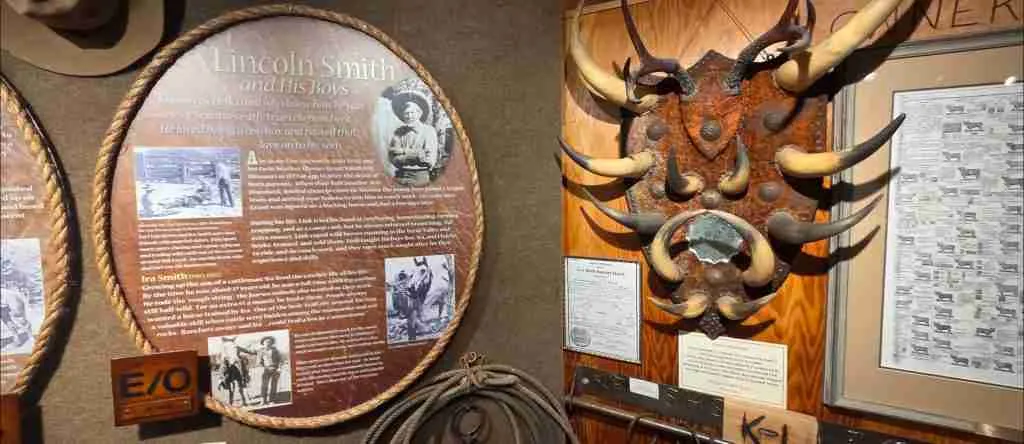
The Real Cowboys exhibit demonstrates authentic ranch work contrasting Hollywood portrayals, featuring working saddles, branding irons, ropes, chaps, and tools used by actual Sedona-area cattle operations. The Schnebly Family room honors Carl and Sedona Schnebly, for whom the town received its name in 1902 when Carl established the post office and named it after his wife. Exhibits trace the family’s arrival, homesteading challenges, and contributions to community development.
The Apple Packing Shed preserves Sedona’s early 20th century agricultural economy when Oak Creek’s microclimate supported commercial apple orchards. Original sorting equipment, packing crates, harvesting tools, and processing machinery demonstrate how Sedona apples shipped throughout Arizona and neighboring states during the 1930s-1950s period before tourism supplanted agriculture as the primary economic driver. Living apple trees on museum grounds maintain heritage varieties from the Jordan family’s original orchard.
The Tractor Shed displays agricultural equipment including vintage tractors, plows, cultivators, and mechanical implements used by pioneer farmers working the challenging red rock soil. The Telegraph Office from the “Angel and the Badman” movie set recreates period communication technology that connected remote Sedona to wider world. The Tent House replica demonstrates temporary shelter used by earliest settlers before permanent structures could be completed.
Irrigation and water exhibits explain the critical importance of Oak Creek water management for agriculture and settlement survival in high desert conditions. Early irrigation ditch systems, water wheels, and pump mechanisms show technological solutions pioneers employed. The US Forest Service exhibit provided by Friends of the Forest organization details land management history and conservation efforts protecting Sedona’s surrounding Coconut National Forest lands.
QR codes throughout the museum property provide smartphone access to extended information about rooms, artifacts, family histories, and site significance. Audio tour equipment is available at the front desk for visitors preferring guided narration through exhibits. Free Wi-Fi enables QR code access and allows visitors to share photos from exterior locations where photography remains permitted.
The museum gift shop offers locally crafted items including jewelry featuring the museum’s apple logo design, pens crafted from apple and peach wood grown on museum grounds, hand-painted and appliquéd vests, pottery, paintings, books about Sedona history, and vintage-style souvenirs. Sales support museum operations as a 501(c)3 nonprofit organization operated by the Sedona Historical Society.
Panoramic red rock views from museum grounds provide picnic opportunities with tables scattered across Jordan Historical Park lawn areas. Wedding ceremonies occur regularly on the property with rental packages available for private events. The historic barn accommodates up to 100 guests for receptions with 800 square feet of space, 12-foot ceilings, heating but no air conditioning, and rustic charm suited to Western-themed celebrations.
Special events throughout 2026 include Monday at the Museum educational programs 11am-1pm on select Mondays featuring craft demonstrations like woodcarving, weaving, and pioneer skills workshops. Christmas in the Park transforms museum grounds with vintage holiday decorations, caroling, and period craft demonstrations in early December. The Fall Arts & Crafts Fair in October showcases local artisans demonstrating traditional techniques and selling handcrafted goods.
Visitor reviews consistently praise the museum’s volunteer staff knowledge and enthusiasm for local history. Criticism occasionally surfaces regarding limited Native American perspective in exhibits focusing primarily on white settler narratives. The museum acknowledges these concerns and works to incorporate broader cultural context through temporary exhibits and educational programming addressing indigenous peoples’ prior habitation and ongoing cultural presence.
Parking is free in the museum lot with additional street parking available along Jordan Road. The site sits approximately 1 mile from Uptown Sedona’s main commercial district, requiring brief vehicle transport or 15-20 minute walks from central galleries and restaurants. Brin’s Mesa Trailhead directly adjacent to the museum provides hiking access for visitors combining cultural tourism with outdoor recreation.
Sedona Arts Center 2026
The Sedona Arts Center functions as the community’s premier arts education and exhibition institution at 15 Art Barn Road in uptown Sedona. Founded in 1958 by visionary artists and civic leaders, the nonprofit organization converted a former apple warehouse into what locals call the Art Barn, establishing Sedona’s first formal arts education venue. More than six decades of operations have produced thousands of student artists and exhibited tens of thousands of artworks by regional creators.
The Fine Art Gallery showcasing local and regional artist works maintains free admission for browsing in 2026, operating Tuesday through Saturday 10am-5pm and Sunday 12pm-5pm, with Monday closures year-round. The gallery represents over 100 artists across painting, sculpture, jewelry, ceramics, fiber arts, photography, and mixed media categories. Monthly rotating exhibitions ensure fresh content for repeat visitors throughout the year. Tax-free purchasing as a 501(c)3 nonprofit provides approximately 10% savings compared to for-profit galleries, with additional 10% membership discounts available for Sedona Arts Center members.
Special exhibitions in 2026 include the 45th Annual Friends Juried Art Exhibition running March 6 through April 15, featuring competitively selected works by regional artists with awards and recognition ceremonies. Vision & Sound: An African American Experience continues as an ongoing exhibition and educational program expanding cultural dialogue beyond traditional Southwestern art narratives. The Big Gay Art Show presents LGBTQ+ artists celebrating creative expression through vibrant juried exhibition programming in June. Form + Function ceramics showcases coincide with First Friday receptions throughout the year.
The School of the Arts offers year-round classes, workshops, and immersive programs for all ages and skill levels throughout 2026. Single-day workshops provide intensive experiences in specific techniques like watercolor landscapes, portrait drawing, pottery wheel throwing, jewelry metalsmithing, and photography composition. Multi-week classes delve deeper into mediums with progressive skill development through 4-8 week sessions. Intensive retreat programs offer immersive multi-day experiences with visiting master artists teaching specialized techniques.
Popular class categories include painting (oil, acrylic, watercolor), drawing (graphite, charcoal, pastel), ceramics (wheel throwing, hand building, glazing), photography (digital, film, composition, editing), jewelry making (metalsmithing, beading, stone setting), mixed media (collage, assemblage, experimental), fiber arts (weaving, felting, quilting), and sculpture (clay, bronze, found object). Outdoor plein air painting classes capitalize on Sedona landscape inspiration with instructors guiding students to red rock vistas and Oak Creek settings.
Online classes and workshops enable remote participation for students unable to travel to Sedona, offering live instruction via video platforms in watercolor, drawing, mixed media, and art business development subjects. Recorded sessions allow flexible scheduling across time zones. Digital learning expanded significantly post-pandemic and continues as permanent programming supporting broader geographic participation.
The Sedona Entrepreneurial Artist Development (SEAD) program helps working artists build sustainable careers through business planning, marketing strategies, pricing guidance, copyright protection, gallery representation navigation, and financial management workshops. Professional development programming recognizes that artistic talent alone rarely produces viable livelihoods without complementary business skills.
First Friday receptions occur monthly with the Arts Center participating in the broader Sedona gallery walk program, hosting 4pm-6pm events featuring exhibition openings, live music, artist demonstrations, and refreshments. The Arts Center typically maintains earlier hours than commercial galleries during First Friday events to accommodate families and early diners.
The Gallery Shop sells artworks directly benefiting represented artists, with pieces ranging from $25 small gift items through $15,000 major works. Paintings span $150 emerging artist studies to $8,000 established master canvases. Ceramics range from $40 functional mugs to $2,500 sculptural vessels. Jewelry starts at $30 earrings and extends to $3,000 statement necklaces. Photography prints begin at $100 for limited editions. Sculpture encompasses $200 small bronzes through $12,000 major commissions.
Major annual events include the Sedona Plein Air Festival October 16-24, 2026, drawing nationally recognized landscape painters to create works outdoors throughout the week with demonstrations, exhibitions, wet paint sales, and awards ceremonies. The festival attracts serious collectors purchasing works created on-site documenting specific Sedona locations and lighting conditions. Participating artists compete for $50,000+ in prize money across multiple categories.
Membership benefits at various tiers provide gallery purchase discounts, class registration priority, free or discounted workshop admission, exhibition opportunities, newsletter subscriptions, and invitations to members-only preview events. Individual memberships start at $50 annually while patron levels reaching $1,000+ include naming recognition and enhanced benefits. Membership revenue supports operational costs, scholarship programs enabling low-income student access, and facility maintenance.
The ceramics department operates dedicated kilns, wheels, hand-building studios, and glazing facilities supporting ongoing pottery classes and artist production. Regular ceramics sales showcase student and instructor works with proceeds supporting program expenses. Demonstrations during First Friday events and special ceramics weekends allow public viewing of throwing, hand-building, and firing processes.
Parking is free with spaces available immediately behind the Arts Center building and along Art Barn Road. Overflow parking exists in adjacent areas during major events. The location sits in uptown Sedona’s core within easy walking distance of galleries, restaurants, and shops. Wheelchair accessibility accommodates visitors with mobility challenges throughout gallery and classroom spaces.
Notable Sedona Galleries and Art Districts 2026
Uptown Sedona Gallery District
Uptown Sedona’s Highway 89A corridor concentrates galleries, shops, and restaurants across several walkable blocks between the “Y” junction with State Route 179 and the Chapel of the Holy Cross turnoff. Goldenstein Gallery at 150 State Route 179 specializes in impressionist and expressionist paintings with rotating thematic exhibitions showcasing regional and national artists. Located at the prominent Highway 179 and 89A intersection, the gallery offers convenient access for first-time Sedona visitors orienting themselves to the arts district.
Touchstone Gallery in Sinagua Plaza at 320 North State Route 89A presents contemporary Southwestern works including paintings, sculptures, and jewelry with emphasis on established regional artists. The gallery participates actively in First Friday receptions with extended evening hours and refreshments monthly. Zonies Galleria at 215 North State Route 89A showcases eclectic contemporary works spanning multiple mediums and price points accessible to various collector budgets.
The Sedona Arts Center anchors the eastern edge of the uptown district at 15 Art Barn Road, providing the nonprofit institutional presence among primarily commercial galleries. Uptown parking challenges during peak season months make early morning or late afternoon visits preferable for avoiding congestion and securing convenient parking spots near target galleries.
Hillside Sedona Shopping Center
Hillside Sedona at 671 State Route 179 provides contemporary gallery space in a pueblo-style architectural shopping complex with convenient parking and climate-controlled interiors suited to summer heat. Multiple galleries occupy Hillside spaces including establishments specializing in Native American jewelry, contemporary paintings, and decorative arts. The shopping center model allows extended browsing through multiple galleries without outdoor exposure between venues, appealing to visitors during summer temperatures exceeding 100 degrees or winter cold snaps.
Hillside restaurants including Cucina Rustica, ChocolaTree Organic Eatery, and others provide dining options allowing multi-hour gallery visits with meal breaks. The complex sits along State Route 179’s gallery row approximately 1 mile south of the Highway 89A junction, requiring vehicle transport from uptown or Tlaquepaque unless visitors commit to 15-20 minute walks along busy highway shoulders.
Hozho Distinctive Shops & Galleries
Hozho Distinctive Shops & Galleries at 431 State Route 179 offers intimate pueblo-style architecture housing galleries, jewelry shops, and specialty boutiques in a concentrated complex. The center emphasizes Native American arts, Southwestern jewelry, and cultural pieces alongside contemporary gallery exhibitions. First Friday participation includes 5pm-8pm extended hours with refreshments and artist presentations monthly February through November.
Hozho’s smaller scale compared to Tlaquepaque or Hillside creates boutique atmosphere with personalized attention from gallery staff and opportunities for extended artist conversations during less crowded periods. Free parking surrounding the property provides convenient access though limited spaces during peak visitor seasons.
West Sedona Gallery Studios
West Sedona along Highway 89A west of the commercial center houses working artist studios and galleries where creators produce works on-site in accessible environments. The Melting Point at 1449 West State Route 89A in Harkins Plaza specializes in fused glass art, offering classes where visitors create their own pieces alongside browsing finished works for purchase. Sedona Artist Market at 2081 West State Route 89A provides collective gallery space for multiple local artists selling paintings, photography, ceramics, and handcrafted items.
Rovang Ceramics at 2020 Contractors Road operates as working pottery studio where Eric Rovang creates functional and sculptural ceramics using sustainable architecture principles in his Thunder Mountain Ranch studio location. Studio visits often reveal works in progress and allow conversations about ceramic techniques, glazing processes, and inspiration drawn from red rock landscapes.
West Sedona’s gallery density remains lower than central districts but offers authentic studio experiences unavailable in commercial gallery settings. Visitors witness creation processes, interact directly with working artists, and often negotiate pricing more flexibly than in formal gallery representation arrangements.
First Friday in the Galleries 2026
First Friday in the Galleries transforms Sedona’s art scene into evening celebration on the first Friday of each month from February through November 2026. The Sedona Gallery Association coordinates this free community event bringing galleries across multiple districts to life with extended hours typically 5pm-8pm, though some venues operate 4pm-7pm schedules. No admission fees apply and anyone may attend regardless of purchasing intentions.
Participating galleries span Tlaquepaque Arts & Shopping Village, Hozho Distinctive Shops, Uptown Sedona, Hillside Sedona, and West Sedona locations. Each venue hosts artist receptions featuring the creator whose works are exhibited, providing opportunities for visitors to discuss techniques, inspirations, and processes directly with painters, sculptors, jewelers, and other artists. Live music performances occur in multiple galleries and Tlaquepaque courtyards, ranging from classical guitar and violin to jazz ensembles and acoustic folk artists.
Wine and hors d’oeuvres appear at most participating galleries, with quality varying from simple cheese and crackers to elaborate catered spreads with local wines and craft cocktails. Some galleries partner with nearby restaurants providing upscale appetizers and professional beverage service. Visitors may sample refreshments freely without purchasing obligations, though social expectations encourage art appreciation and thoughtful engagement rather than treating events solely as free food sources.
Special exhibitions time their openings to coincide with First Friday dates, ensuring fresh content monthly and providing artists with concentrated audience exposure. Galleries unveil new artist representations, debut themed collections, and introduce emerging talents during First Friday receptions rather than mid-month quieter periods. Collectors seeking first opportunity at new works attend opening receptions where best pieces often sell before broader public viewing.
The Sedona Trolley provides free transportation between gallery districts during First Friday events, allowing visitors to explore multiple areas without parking hassles or impaired driving risks after wine consumption. Trolley routes connect Tlaquepaque, Uptown Sedona, and other districts on continuous loops throughout evening hours. Service frequency increases during peak attendance months March through May and September through November when comfortable evening temperatures draw largest crowds.
February marks the season opening after January winter lull, featuring galleries refreshed from holiday season with new inventory and artists motivated by renewed visitor activity. March, April, and May represent peak First Friday attendance months with pleasant evening temperatures in the 60s and 70s encouraging extended outdoor strolling between galleries. June, July, and August continue programming despite heat, with galleries emphasizing climate-controlled interior spaces and refreshing beverages.
September, October, and November deliver ideal First Friday weather conditions with crisp autumn evenings, changing foliage colors, and reduced summer crowds. October’s First Friday coincides with Sedona Plein Air Festival programming, creating extraordinary art concentration with festival artists’ outdoor works complementing gallery exhibitions. November concludes the First Friday season before December holiday shopping emphasis shifts gallery focus toward gift sales rather than fine art exhibitions.
Serious collectors arrive early at 5pm to preview new works before casual browsers and tour groups descend by 6pm. Artists typically remain in attendance throughout 5pm-8pm periods though may take brief breaks. Peak crowding occurs 6pm-7pm when galleries reach capacity and conversation volume makes extended discussions challenging. Later 7pm-8pm periods see crowds thinning while artists and serious buyers remain for closing conversations and purchases.
Dress codes remain casual with resort-casual attire appropriate throughout Sedona’s relaxed social environment. Comfortable walking shoes prove essential for navigating cobblestone surfaces at Tlaquepaque and moving between venues. Evening temperatures from March through May and September through November may require light jackets or sweaters as desert conditions cool quickly after sunset.
Photography policies during First Friday events mirror daily gallery rules with most venues prohibiting interior photography to protect copyrights. Outdoor courtyard photos at Tlaquepaque remain acceptable and provide shareable social media content documenting the experience. Artists may permit photographing themselves during conversations though asking permission demonstrates courtesy.
Children may attend First Friday events with appropriate supervision, though the wine-focused adult social atmosphere and breakable high-value artworks create environments where parental vigilance becomes essential. Some families with art-interested children find early 5pm-6pm timing suitable before crowds peak and before children’s evening routines require attention. The Sedona Arts Center often provides more family-friendly First Friday programming than commercial galleries focused on adult collectors.
Native American Art and Cultural Galleries 2026
Sedona’s geographic position near multiple Native American reservations and historic pueblos creates authentic indigenous art market conditions unavailable in many Southwestern cities. Hopi, Navajo, Yavapai-Apache, and Sinagua cultural traditions influence contemporary artists producing works ranging from traditional forms to modern interpretations incorporating ancient techniques with contemporary aesthetics.
Garland’s in Tlaquepaque specializes in museum-quality Native American jewelry spanning historic Navajo silver work from the 1920s-1940s through contemporary award-winning artists creating investment-grade pieces. Squash blossom necklaces range from $3,000 authentic vintage examples to $85,000 rare historic pieces with documented provenance. Concho belts start at $2,500 for contemporary works and extend to $45,000 for early 20th century masterworks. Individual bracelets span $800 contemporary silver designs through $25,000 rare turquoise and silver historic cuffs.
Garland’s authentication processes include artist verification, materials analysis, and provenance documentation for high-value pieces. Staff expertise assists collectors in understanding quality variations, artist signatures, stone authenticity, and market values. The gallery publishes educational materials explaining Southwestern jewelry traditions, artist biographies, and collecting guidance for newcomers navigating the Native American arts market.
Kachina House specializes in Hopi kachina dolls carved from cottonwood root representing spiritual beings from Hopi religious traditions. Contemporary kachinas by active carvers range from $200 simple tourist-quality pieces to $8,000 museum-grade works by recognized masters exhibiting intricate detail, authentic ceremonial accuracy, and artistic innovation. Antique kachinas predating 1940 command $5,000-$75,000 depending on rarity, condition, carver attribution, and ceremonial significance.
Authentic kachina identification requires expertise distinguishing quality hand-carved cottonwood works from mass-produced imports or artificial materials. Reputable galleries provide artist attribution, tribal verification, and materials authentication preventing unwitting purchase of fraudulent items marketed as authentic Native American crafts. The Indian Arts and Crafts Act of 1990 prohibits misrepresenting non-Native production as indigenous-created, making gallery integrity essential for legal and ethical collecting.
Pottery galleries showcase works by contemporary pueblo artists from Hopi, Acoma, Santa Clara, San Ildefonso, and other Southwestern tribes. Traditional forms include wedding vases, seed pots, storyteller figures, and ceremonial vessels created using ancestral coiling and firing techniques. Prices range from $200 small contemporary pieces by emerging potters to $50,000+ museum-acquisition works by deceased masters whose production ended decades ago.
Navajo rugs and weavings appear in multiple Sedona galleries with quality variations from $500 small tourist-grade rugs to $125,000 masterwork Two Grey Hills or Ganado Red tapestries requiring months or years of weaving. Understanding regional styles including Two Grey Hills geometric patterns, Ganado Red bold designs, Teec Nos Pos elaborate borders, and contemporary pictorial weavings helps collectors appreciate artistic traditions and value factors including tightness of weave, natural dye usage, wool quality, and design complexity.
Paintings by Native American artists working in contemporary styles alongside traditional subjects appear throughout Sedona galleries. Artists like Tony Abeyta, Dan Namingha, and others of indigenous heritage create works commanding $5,000-$250,000 depending on size, medium, artist recognition, and subject matter. These contemporary fine art paintings distinguish themselves from tourist-oriented Southwestern clichés through sophisticated technique, individual artistic vision, and critical recognition within broader contemporary art markets.
Educational opportunities include artist demonstrations during First Friday events, gallery talks explaining cultural contexts and artistic traditions, and occasional lectures by Native American artists discussing their creative processes and cultural heritage. The Sedona Arts Center’s Vision & Sound: An African American Experience program expands cultural dialogue beyond Native American traditions, acknowledging diverse artistic voices often marginalized in Southwestern art narratives dominated by Anglo and Native themes.
Collectors purchasing Native American arts should request documentation including artist names, tribal affiliations, materials verification, and authentication certificates for significant purchases. Reputable galleries provide these materials automatically while less scrupulous operations may resist documentation requests signaling potential authenticity concerns. The investment market for museum-quality Native American arts has appreciated substantially over recent decades, making authenticated provenance essential for future resale value.
Art Classes and Workshops 2026
Sedona’s arts education ecosystem extends beyond Sedona Arts Center to include private studios, visiting master workshops, plein air painting excursions, and specialty technique classes throughout 2026. Educational programming serves multiple constituencies including serious amateur artists developing long-term practices, vacationers seeking creative experiences during Sedona visits, and beginning students exploring artistic interests for the first time.
The Sedona Arts Center School of the Arts provides the most comprehensive year-round programming with classes meeting weekly throughout multi-week sessions. Eight-week beginner painting classes introduce oil, acrylic, or watercolor fundamentals through progressive lessons building from basic color theory and brushwork through landscape composition and finishing techniques. Intermediate and advanced classes assume foundational knowledge and focus on personal style development, complex subject matter, and exhibition-quality finishing.
Ceramics courses span wheel throwing basics for beginners learning to center clay and pull cylinder forms through advanced hand-building techniques creating sculptural vessels and figurative works. Glazing workshops teach chemical formulation, application techniques, and firing methods producing varied surface effects. Raku firing classes introduce Japanese-influenced techniques involving rapid high-temperature firing and post-firing reduction creating metallic and crackle glazes impossible through conventional firing.
Photography classes address both technical camera operation and artistic composition, with digital photography courses teaching exposure, lighting, and post-processing while film photography workshops maintain traditional darkroom practices for photographers valuing analog processes. Landscape photography excursions lead students to optimal Sedona locations during prime lighting conditions, teaching location scouting, golden hour timing, and compositional strategies maximizing red rock dramatic potential.
Jewelry metalsmithing introduces sawing, filing, soldering, stone setting, and finishing techniques creating original silver or gold pieces. Beginning classes produce simple pendants and earrings while advanced students create complex multi-stone settings and fabricated designs requiring precision metalwork. Beading classes offer lower barrier entry into jewelry creation, teaching stringing, wire wrapping, and design principles without expensive metalworking equipment requirements.
Private studios throughout Sedona offer specialized instruction in niche techniques. The Melting Point teaches fused glass art through single-day and multi-session classes creating bowls, plates, jewelry, and sculptural pieces using glass cutting, layering, and kiln firing. Red Rock Baskets provides willow and reed basket weaving instruction preserving traditional crafts with contemporary applications. Various studios teach encaustic painting using heated beeswax, alcohol ink techniques, silk painting, and other specialty mediums not covered in general arts center curricula.
Workshop intensives bring visiting master artists to Sedona for concentrated multi-day instruction. These immersive experiences typically run 3-5 days with 6-8 hour daily sessions providing advanced technical instruction, personalized critiques, and professional development guidance. Workshop topics vary annually based on instructor availability and student demand, covering subjects like portrait painting, plein air landscape techniques, bronze sculpture, botanical watercolor, and experimental mixed media.
Plein air painting classes and excursions capitalize on Sedona’s landscape inspiration by teaching outdoor painting techniques at scenic locations. Instructors guide students through equipment selection, composition strategies, color mixing for atmospheric perspective, and working quickly to capture changing light conditions. Popular painting destinations include Cathedral Rock, Red Rock Crossing, Oak Creek Canyon, Airport Mesa, and Bell Rock where dramatic formations provide compelling subject matter.
Art business workshops through the SEAD program teach marketing, pricing, gallery representation, copyright protection, and financial management skills transforming hobbyists into professional practicing artists. Topics include building artist websites, social media marketing, approaching galleries, writing artist statements, photographing artwork, and maintaining business records. Guest speakers from successful regional galleries, established artists, and arts administrators share industry insights and networking connections.
Class costs vary by duration, materials, and instructor qualifications. Single-day workshops typically range $85-$150 including basic materials. Weekend intensives span $300-$600 for two full days with materials. Eight-week classes cost $250-$450 depending on materials requirements, with ceramics and jewelry courses commanding higher fees covering clay, glazes, metals, and kiln firing costs. Private instruction runs $75-$150 per hour for one-on-one personalized teaching from professional artists.
Registration typically opens 4-6 weeks before class start dates, with popular workshops and sought-after instructors filling quickly. Sedona Arts Center members receive priority registration windows and tuition discounts. Cancellation policies vary but generally require 7-14 days advance notice for refunds minus administrative fees. Minimum enrollment thresholds mean some classes cancel if insufficient students register, with affected students receiving full refunds or transfers to alternative courses.
Materials lists provided before class start dates specify required supplies students must purchase independently versus materials included in course fees. Art supply stores in Sedona and nearby Flagstaff stock recommended materials, though ordering online often provides cost savings for students willing to plan ahead. Instructors may sell specialized materials directly to students at cost during classes for unique items difficult to source commercially.
Sedona Plein Air Festival 2026
The Sedona Plein Air Festival October 16-24, 2026 brings nationally recognized landscape painters to Sedona for nine days of outdoor painting, demonstrations, exhibitions, and sales. Founded to celebrate Sedona’s dramatic scenery through direct observation painting, the festival attracts award-winning artists from across North America competing for over $50,000 in prize money while creating works documenting specific Sedona locations and lighting conditions.
Participating artists paint outdoors at locations including Cathedral Rock, Bell Rock, Airport Mesa, Oak Creek Canyon, Red Rock State Park, and dozens of other scenic vistas during weeklong residencies. Collectors and art enthusiasts observe artists working in-progress, with completed paintings available for purchase throughout the festival. “Wet paint” sales occur as works come off easels, offering unique opportunities to acquire pieces created at documented times and places commemorating specific Sedona experiences.
Quick Draw competitions challenge artists to complete paintings within 2-3 hour time limits, demonstrating rapid observation skills and confident execution under pressure. Spectators watch creation processes from initial drawing through final brushstrokes, with completed works auctioned immediately following competitions. Quick Draw events typically occur at high-profile locations like Tlaquepaque courtyards or Airport Mesa, drawing crowds of several hundred observers during weekend afternoon sessions.
Demonstration sessions scheduled throughout festival days allow artists to explain techniques, materials choices, composition decisions, and color mixing strategies while creating works publicly. These educational components provide value beyond entertainment, teaching attendees about professional plein air painting practices applicable to their own artistic pursuits. Question-and-answer periods following demonstrations give attendees direct access to accomplished professionals rarely available in typical gallery exhibition contexts.
The main exhibition opening midweek showcases selected works by all participating artists in a professional gallery setting, with judging determining award recipients and purchase prizes. Opening night receptions draw serious collectors, local arts patrons, and festival sponsors for preview access before public viewing begins. Award categories typically include Best of Show, First through Third Place, and Patrons’ Choice awards recognizing popular favorites voted by attendees.
Collectors purchasing festival artworks receive documentation including GPS coordinates where works were created, specific date and time of painting, and artist statements about location selection and creative approach. This provenance enhances value for collectors interested in specific Sedona landmarks or memorable festival moments. Paintings range from $1,500 small studies to $25,000 major statement pieces by established masters, with average prices around $3,000-$8,000 for quality works by nationally recognized artists.
Workshops and artist talks provide educational programming throughout the festival week. Participating artists teach specialized techniques in 1-3 day intensive sessions covering topics like dramatic lighting, atmospheric perspective, rapid sketching, color harmony, and compositional strategies for landscape painting. Workshop fees separate from festival attendance run $250-$650 depending on duration and instructor prominence, with advance registration required due to limited class sizes.
Festival tickets provide access to artist painting locations, demonstrations, exhibitions, and opening receptions. Multi-day passes offer better value than single-day admission for visitors attending multiple events throughout the week. VIP packages include exclusive artist dinners, private studio tours, and preview access to artwork before public sales begin. Free community events include specific demonstration sessions and educational talks open to all regardless of ticket purchase.
Lodging during festival week books months in advance as collectors, artists, and art enthusiasts from across North America converge on Sedona. Early hotel reservations through spring and summer months ensure accommodation availability and often secure better rates than last-minute bookings during this peak cultural tourism period. Some visitors coordinate festival attendance with autumn foliage viewing, creating combined cultural and natural beauty experiences.
The festival generates significant economic impact through hotel occupancy, restaurant patronage, art purchases, workshop fees, and general visitor spending. Local businesses benefit from increased foot traffic, with galleries beyond festival venues experiencing sales lifts from art-focused visitors exploring broader Sedona offerings. The event reinforces Sedona’s reputation as serious arts destination rather than simply tourist-oriented gallery town.
Photography and Scenic Art Galleries 2026
Photography galleries throughout Sedona showcase landscape work documenting red rock formations, desert flora, dramatic skies, and seasonal variations from spring wildflower blooms through winter snow dustings on crimson cliffs. Large-format printing technologies enable gallery-quality presentations of images spanning 40-inch to 8-foot dimensions creating impactful installations impossible with traditional photographic processes.
Greg Lawson Photography Gallery operates two Sedona locations showcasing Lawson’s internationally recognized landscape and abstract works. The main gallery presents museum-quality prints in custom frames while the “Tasting Room” gallery features smaller pieces at accessible price points for collectors building initial photography collections. Limited edition prints range from $500 for small formats to $15,000 for large signature pieces, with edition sizes typically limited to 100 numbered prints ensuring scarcity value.
Price factors in photography collecting include edition size (smaller editions command higher prices), print size (larger formats cost more due to materials and display impact), photographer recognition (established names justify premium pricing), printing quality (archival materials and professional color management add value), and subject rarity (unique moments or difficult-to-access locations increase desirability). Understanding these variables helps collectors evaluate photography market pricing and make informed purchasing decisions.
Black and white photography galleries present both traditional silver gelatin darkroom prints and contemporary digital conversions to monochrome. Collectors often prefer traditional darkroom work for its archival qualities and handcrafted nature, though modern digital techniques produce exceptional tonal ranges and fine detail reproduction. Some photographers offer both traditional and digital processes at different price points serving varied collector preferences and budgets.
Abstract photography using intentional camera movement, long exposures, multiple exposures, or post-processing manipulation creates painterly effects blurring lines between photography and painting. These experimental works appeal to collectors seeking photographic authenticity combined with artistic interpretation transcending straightforward documentary approaches. Prices often align with paintings of similar sizes as collectors judge artistic merit beyond technical photographic execution.
Wildlife and nature close-up photography requires specialized equipment and field patience capturing dramatic animal behavior or intricate botanical details. Galleries selling these works often provide background stories about photographic challenges, rare species documented, or technical approaches enabling successful captures. Educational context enhances collector appreciation beyond visual appeal alone.
Custom framing represents significant cost components in photography presentation, with archival matting, UV-protective glazing, and museum-quality frames adding $200-$2,000 to final prices depending on print size and framing complexity. Some galleries include framing in quoted prices while others price prints separately from framing, requiring buyers to clarify total costs before committing to purchases. Installation services for large-format works may incur additional fees for professional hanging ensuring proper wall mounting and security.
Southwestern and Western Art Traditions 2026
Southwestern art encompasses diverse traditions from mission revival architecture paintings to contemporary interpretations of desert landscapes, Native American cultural subjects, cowboy and ranching themes, and abstract works inspired by regional color palettes and atmospheric conditions. Sedona galleries maintain strong Southwestern art concentrations reflecting regional identity and collector demand for authentic place-based works.
Traditional cowboy and Western art depicts ranching life, working horses, cattle drives, and frontier historical scenes through realistic bronze sculptures and oil paintings. Artists following traditions established by Frederic Remington and Charles Russell create contemporary works celebrating Western heritage and vanishing ranch culture. Quality bronze sculptures range from $2,500 small maquettes to $125,000 life-size horses and riders requiring months of sculpting, mold-making, bronze casting, and patina finishing.
Contemporary Western artists reinterpret traditional subjects through modernist approaches, abstract compositions, or stylized renderings departing from photorealistic conventions. These works appeal to collectors appreciating Western themes without desiring literal historical recreations, allowing contemporary artistic voices while maintaining regional cultural connections. Galleries specializing in contemporary Western art include Mountain Trails Gallery, Rowe Fine Art Gallery, and multiple Tlaquepaque establishments.
Landscape painting traditions dominate Southwestern art markets with endless variations depicting red rock formations, desert flora including saguaro cacti and ocotillo, dramatic cloud formations, seasonal changes, and atmospheric lighting effects. Artists working en plein air directly from observation create immediate works capturing specific moments, while studio painters compose from sketches, photographs, and memory producing more deliberate compositions.
Impressionist and post-impressionist approaches to Southwestern landscapes emphasize color harmonies, broken brushwork, and atmospheric effects rather than precise detail. Artists like those represented at Goldenstein Gallery work in traditions established by early Taos and Santa Fe school painters, valuing expressive color and gestural mark-making conveying emotional responses to landscape rather than documentary accuracy.
Mission revival and pueblo architecture paintings document historic and contemporary Southwestern buildings including Spanish colonial churches, adobe homes, pueblo villages, and vernacular ranch structures. These architectural subjects provide geometric compositional elements and cultural historical context beyond pure landscape works. Artists balancing architectural accuracy with painterly interpretation create works appealing to collectors valuing both artistic quality and regional historical documentation.
Desert botanical subjects including barrel cacti, prickly pear, cholla, ocotillo, and seasonal wildflowers appear in paintings, sculptures, and photographic works throughout Sedona galleries. Detailed botanical illustrations serve scientific documentation purposes while artistic interpretations emphasize color relationships, structural patterns, and abstract design possibilities inherent in desert plant forms. Spring wildflower seasons inspire specialized exhibitions showcasing desert bloom paintings created during brief March-April flowering windows.
Mixed media works incorporating found objects, natural materials, textiles, and unconventional surfaces expand Southwestern art beyond traditional painting and sculpture categories. Artists using rusted metal, weathered wood, stone, and other regional materials create assemblages and installations reflecting desert landscape character through materials themselves rather than purely representational imagery.
Sculpture Gardens and Outdoor Art 2026
Outdoor sculpture installations throughout Sedona allow large-scale bronze, stone, and metal works to interact with natural surroundings creating distinctive viewing experiences impossible in indoor gallery confines. Red rock backdrops, changing natural light throughout day and seasons, and integration with landscape elements elevate outdoor sculpture beyond gallery pedestal presentations.
Tlaquepaque courtyards feature permanent and rotating outdoor sculptures positioned among sycamore trees, fountain installations, and Spanish-colonial architecture. Bronze figurative works, abstract metal pieces, and stone carvings populate walkways and plaza spaces where visitors encounter art naturally during gallery browsing rather than seeking dedicated sculpture venues. These installations create photographic opportunities with red rocks visible beyond courtyard walls framing sculpture against dramatic natural scenery.
Navarro Gallery & Sculpture Garden specializes in outdoor bronze works displayed in landscaped garden settings adjacent to indoor gallery spaces. The sculpture garden allows viewing large-scale pieces in natural light conditions revealing surface patinas, dimensional qualities, and spatial relationships impossible to appreciate in conventional gallery interiors. Seasonal plantings complement sculpture installations with blooming flowers, autumn foliage, and winter structural plants creating changing contexts throughout the year.
Kinetic wind sculptures by Lyman Whitaker appear at Vue Gallery and other Sedona locations, utilizing Sedona’s consistent breezes to activate rotating copper forms creating mesmerizing movement patterns. These engineering-art hybrids require careful balance and bearing precision enabling rotation in light winds while withstanding occasional strong gusts without damage. Prices for Whitaker works range from $3,000 small garden pieces to $35,000 monumental installations reaching 12+ feet in height.
Stone sculpture appears less frequently than bronze in Sedona galleries due to weight, fragility, and transportation challenges, though quality examples include marble figurative works, granite abstractions, and carved alabaster pieces. Local sandstone from regional quarries occasionally appears in outdoor installations though softness limits long-term durability in exposed positions. Collectors purchasing stone sculpture should verify weather resistance if planning outdoor display in climates with freeze-thaw cycles potentially damaging porous materials.
Installation services for large outdoor sculptures include site preparation, foundation work, mounting hardware, leveling, and securing against wind or seismic movement. Professional installation typically adds $500-$5,000 to sculpture costs depending on size, weight, and site complexity. Some galleries include local installation in purchase prices while others arrange services separately through specialized contractors experienced in sculpture placement.
Maintenance requirements for outdoor bronze include periodic cleaning, wax protective coating application, and patina preservation preventing green corrosion in humid climates or water exposure. Galleries selling outdoor bronze works should provide maintenance instructions and recommend professional conservation services for valuable pieces requiring expert care. Buyers planning long-term outdoor display should budget for ongoing maintenance ensuring investment protection.
Contemporary and Abstract Art Galleries 2026
Contemporary art galleries presenting abstract, conceptual, and experimental works exist alongside traditional Southwestern representational galleries, serving collectors seeking modern artistic expressions beyond regional landscape and Western themes. These galleries often rotate exhibitions monthly, providing fresh content appealing to repeat visitors and local residents alongside tourists seeking varied artistic perspectives.
Exposures International Gallery of Fine Art specializes in museum-quality contemporary works spanning abstract paintings, modern sculpture, conceptual installations, and cutting-edge artist expressions. The gallery represents both regional artists working in contemporary idioms and nationally recognized names exhibiting in major metropolitan markets. Price points reflect serious collector focus with works ranging from $5,000 emerging artist pieces to $500,000 blue-chip contemporary masters.
Abstract expressionist paintings utilizing gestural mark-making, color field techniques, and non-representational compositions challenge viewers seeking meaning beyond literal subject identification. Artists working in these traditions create emotional, spiritual, or purely aesthetic experiences through paint manipulation, color relationships, and compositional dynamics rather than depicting recognizable forms. Collectors appreciating abstract work often develop relationships with specific artists whose work resonates personally across multiple pieces and years.
Mixed media contemporary works incorporating unconventional materials, found objects, text elements, photographic transfers, and assemblage techniques expand beyond traditional painting and sculpture categories. Artists using these approaches often address conceptual themes, social commentary, or experimental material explorations impossible within conventional medium constraints. Gallery staff familiar with contemporary art history and theory help collectors understand artistic intentions and contextual frameworks informing these less accessible works.
Minimalist sculpture and installation works emphasizing simplified forms, industrial materials, and spatial relationships appear in select Sedona galleries serving sophisticated contemporary collectors. These pieces often require significant display space and architectural integration considerations making them suitable primarily for collectors with substantial residential or commercial installation venues. Prices reflect material costs, fabrication complexity, and artist recognition with pieces ranging from $8,000 small works to $200,000+ major installations.
Contemporary realism painting maintains representational accuracy while incorporating modern compositional approaches, conceptual frameworks, or technical innovations distinguishing work from traditional academic realism. Artists working in these hybrid territories appeal to collectors appreciating recognizable subjects rendered with exceptional skill while valuing contemporary artistic sensibilities beyond historical style imitation.
Jewelry and Wearable Art Galleries 2026
Jewelry galleries throughout Sedona range from traditional Southwestern silver and turquoise establishments through contemporary design studios creating innovative wearable art pieces pushing beyond conventional jewelry categories. Price ranges accommodate $50 silver earring purchases through $75,000 museum-quality historic Native American necklaces, serving diverse collector budgets and aesthetic preferences.
Renee Taylor Jewelry in Tlaquepaque specializes in contemporary jewelry design featuring precious metals, gemstones, and innovative construction techniques creating wearable sculpture. Custom design services allow collectors to commission unique pieces incorporating personal stone selections, meaningful symbols, or specific design preferences impossible to find in ready-made inventory. Custom jewelry timelines typically require 6-12 weeks for completion depending on design complexity and stone sourcing requirements.
Traditional Southwestern jewelry emphasizes silver, turquoise, coral, and shell materials worked through techniques including stamping, overlay, inlay, and stone setting perfected by Native American artists over generations. Squash blossom necklaces represent iconic Southwestern jewelry forms commanding $2,000-$85,000 depending on age, artist attribution, stone quality, and silver craftsmanship. Collectors seeking authentic Native American jewelry should verify artist tribal affiliation and purchase from reputable galleries providing documentation.
Contemporary interpretations of Southwestern jewelry traditions incorporate modern design aesthetics while referencing traditional forms, materials, and cultural symbolism. These hybrid works appeal to collectors appreciating cultural connections without requiring strict adherence to historical precedents, allowing innovative artistic expressions within regional jewelry traditions.
Gemstone jewelry galleries feature faceted stones including diamonds, rubies, sapphires, emeralds, and semi-precious varieties set in gold or platinum. High-end jewelry stores in Sedona serve affluent tourists and residents seeking investment-quality pieces comparable to metropolitan jewelry districts but within resort vacation contexts. Appraisal services, custom design consultations, and gemological expertise assist collectors making significant jewelry investments.
Artisan jewelry created by regional metalsmiths working in small studio environments produces one-of-a-kind pieces or very limited production runs. These makers often sell directly from studios or through cooperative galleries like the Sedona Arts Center, offering more affordable price points than high-end gallery representation while maintaining quality craftsmanship and original design. Prices typically range $75-$3,000 for artisan jewelry depending on materials, complexity, and artist recognition.
Bead and stone necklaces, bracelets, and earrings created through stringing, wire wrapping, and knotting techniques provide entry-level collecting opportunities at $30-$500 price points. These accessible pieces allow tourists to acquire Sedona-made wearable art without significant financial commitments while supporting local artists and craftspeople. Quality variations span mass-produced imported beadwork through carefully hand-selected stone combinations by skilled designers.
Art Collecting Guidance and Investment Considerations 2026
Collecting art in Sedona requires understanding market dynamics, authentication practices, pricing factors, and long-term value considerations distinguishing purchases as decorative acquisitions versus investment-grade assets. Reputable galleries provide education supporting informed collector decisions rather than pressure sales tactics compromising buyer confidence and satisfaction.
Provenance documentation establishes artwork history including prior ownership, exhibition records, publication history, and artist authentication. Investment-grade pieces require comprehensive provenance supporting authenticity and market value, especially for works by deceased artists or pieces commanding five-figure prices. Documentation should include artist certificates, gallery invoices, exhibition labels, and any published references to specific works.
Artist recognition factors include exhibition history in respected venues, museum collections holding works, critical reviews in art publications, awards and honors received, gallery representation quality, and secondary market sales records. Emerging artists with limited recognition offer lower entry prices with appreciation potential as careers develop, while established masters command premium pricing reflecting proven market acceptance and limited future production.
Condition assessment examines surface quality, structural integrity, restoration history, and preservation status affecting both aesthetic presentation and financial value. Paintings should display vibrant unfaded colors, intact original surfaces without flaking or cracking, and structural stability in stretchers and canvases. Bronze sculptures require examination for casting quality, patina consistency, and damage-free surfaces. Collectors purchasing significant works should request condition reports from independent conservators before completing transactions.
Price negotiation practices in Sedona galleries typically allow 10-15% discounts for cash purchases, though policies vary by gallery and artwork. Major purchases often include negotiation opportunities especially when collectors acquire multiple pieces or establish ongoing relationships with specific galleries. Payment plans spreading costs over several months accommodate collectors managing cash flow while securing desired works before other buyers claim them.
Shipping and insurance arrangements require attention for valuable artwork transported from galleries to collector homes. Professional art shipping companies provide crating, insurance, and white-glove delivery protecting investments during transit. Insurance costs typically run 1-3% of declared value for domestic shipments with higher rates for international destinations. Installation services ensure proper hanging, lighting, and display maximizing aesthetic impact while protecting artwork from environmental damage.
Tax considerations for art collecting include state sales tax exemptions on original artwork in Arizona providing 8-10% savings, charitable donation deductions for collectors donating works to qualified museums, and capital gains implications if selling appreciated artworks after holding periods. Collectors should consult tax advisors about specific situations as regulations vary based on purchase amounts, holding periods, and individual financial circumstances.
Authentication concerns arise particularly with Native American arts, historic works, and pieces attributed to deceased artists. The Indian Arts and Crafts Act protects consumers from misrepresentation requiring sellers to verify tribal affiliation and artist identity for works marketed as Native American created. Buyers should request written documentation of artist tribal enrollment or membership for significant Native American art purchases.
Forgery risks exist in secondary markets and less reputable galleries, making purchase from established Sedona galleries with decades-long track records safer than buying from unknown sources, online platforms without authentication guarantees, or individual sellers lacking expertise. Major investment purchases warrant independent expert authentication especially for works by highly sought artists commanding five-figure prices where forgery becomes financially motivated.
Sedona Gallery Etiquette and Visiting Tips 2026
Gallery visiting etiquette in Sedona follows general art world conventions with some Southwestern casual relaxation. Dress codes remain informal with resort casual attire acceptable in all but the most formal establishments. Comfortable walking shoes prove essential for navigating Tlaquepaque cobblestones and moving between galleries across multiple districts during extended browsing sessions.
Photography restrictions protect artist copyrights and gallery business interests, with most establishments prohibiting interior photos. Visitors should always request permission before photographing artwork even in galleries with permissive policies, as specific pieces may have restrictions based on artist preferences or copyright agreements. Outdoor courtyard and exterior architecture photography generally receives approval providing respectful frames excluding gallery interiors visible through doorways and windows.
Children visiting galleries require active supervision preventing accidental damage to artwork and disturbing other patrons through noise or energetic behavior inappropriate for quiet gallery environments. Parents seeking family-friendly cultural experiences often find better success at the Sedona Arts Center where educational programming and community focus create more welcoming atmospheres for young visitors than commercial galleries focused on serious collectors.
Touching artwork damages surfaces, transfers oils from skin, and risks structural harm especially to delicate ceramics, textiles, and works on paper. Galleries universally prohibit touching pieces regardless of medium, with bronze sculptures representing rare exceptions where patina develops character through hand contact over decades. When uncertain about touch policies, always ask rather than assuming permission.
Engaging gallery staff through questions and conversations enriches visiting experiences beyond silent browsing. Knowledgeable staff provide artist backgrounds, technical insights, pricing information, and collection guidance helping visitors understand works more deeply. Building relationships with gallery personnel often yields advance notice of new acquisitions, upcoming exhibitions, and private viewing opportunities unavailable to casual drop-in visitors.
Browsing without purchasing remains completely acceptable in Sedona galleries welcoming visitors regardless of buying intentions. Staff appreciate when browsers clearly communicate early in conversations whether seriously considering purchases or simply enjoying art exposure. This transparency allows staff to calibrate attention levels appropriately, providing detailed information for genuine prospects while respecting browsers’ preferences for independent exploration.
Price inquiries receive direct honest responses in Sedona galleries eschewing pretentious practices requiring appointments or established client relationships before discussing costs. Visitors may ask prices for any displayed work receiving immediate answers or offers to check with gallery owners if staff lack authority to quote prices on particular pieces. Price list availability varies with some galleries providing printed sheets while others prefer individual inquiries allowing conversations about specific interests.
Food and beverages belong outside galleries except during First Friday receptions when wine and refreshments appear as event hospitality. Visitors should never bring personal drinks or snacks into galleries where spills risk damaging artwork worth thousands or tens of thousands of dollars. Nearby restaurants and cafes throughout Sedona’s gallery districts provide convenient refreshment breaks during extended art viewing sessions.
Cell phone usage should minimize disruption through silent modes, brief conversations conducted outside gallery spaces, and photography only with explicit permission. Lengthy phone conversations or business calls conducted loudly in gallery environments create awkward situations disturbing other visitors and gallery staff attempting to provide attentive service.
Seasonal Considerations for Gallery Visiting 2026
Sedona’s gallery scene varies seasonally with peak visitor periods, artist residencies, exhibition schedules, and special events creating distinct experiences across the calendar year. Understanding these patterns helps visitors time trips maximizing cultural opportunities while managing crowd levels and accommodation costs.
Spring months March, April, and May deliver ideal gallery visiting conditions with comfortable temperatures, blooming desert wildflowers, and major cultural events including the Sedona Arts Center’s 45th Annual Friends Juried Art Exhibition March 6-April 15. First Friday attendance peaks during these months as pleasant evening weather encourages outdoor strolling between galleries. Hotel rates climb during spring break periods and Easter week but remain below summer and autumn peak pricing.
Summer months June, July, and August see reduced visitor numbers due to temperatures frequently exceeding 100 degrees, creating opportunities for unhurried gallery visits and easier parking availability. Air-conditioned gallery interiors provide comfortable refuges from heat while First Friday events continue through August albeit with reduced participation compared to spring and autumn months. Monsoon thunderstorms July through August bring dramatic afternoon cloud formations inspiring photography and painting subjects though occasionally disrupting outdoor activities.
Autumn months September, October, and November represent peak Sedona cultural tourism season with the Sedona Plein Air Festival October 16-24 attracting art enthusiasts worldwide. Comfortable temperatures, changing foliage colors along Oak Creek, and reduced summer heat create optimal conditions for gallery walking and outdoor sculpture viewing. Hotel availability tightens considerably during October requiring advance reservations. First Friday events reach maximum attendance September through November before winter slowdown.
Winter months December, January, and February bring cooler temperatures, occasional snow dusting on red rocks, and thinner crowds allowing intimate gallery experiences. Holiday season December features special exhibitions, ceramics sales, and artisan markets though some galleries reduce hours or close briefly between Christmas and New Year’s. January and February represent slowest visitor periods with best hotel availability and rates but reduced First Friday participation as some galleries pause events during winter quiet.
Holiday weekends throughout the year including Memorial Day, Fourth of July, and Labor Day bring increased visitor numbers, fuller galleries, and heightened First Friday attendance when events coincide with long weekends. Presidents’ Day weekend in February and Martin Luther King Jr. weekend in January create winter visitation spikes interrupting otherwise quiet season patterns.
Weather considerations beyond temperature include summer monsoon potential disrupting outdoor activities with sudden afternoon thunderstorms bringing heavy rain, lightning, and flash flood risks in slot canyons and washes. Spring can bring occasional windstorms creating dusty conditions though rarely severely impacting gallery visiting. Winter very occasionally sees snow accumulation closing some roads and creating photogenic red rock contrasts though accumulations rarely exceed a few inches and melt quickly.
Beyond Galleries: Additional Cultural Attractions 2026
Sedona’s cultural landscape extends beyond visual arts galleries to include performing arts venues, cultural centers, literary events, and indigenous heritage sites providing comprehensive cultural tourism experiences. The Sedona Performing Arts Center hosts concerts, theater productions, dance performances, and film screenings throughout the year in a 500-seat venue serving as northern Arizona’s premier performing arts destination outside Flagstaff Symphony Hall.
The Mary D. Fisher Theatre operated by the Sedona International Film Festival presents independent films, foreign language cinema, documentaries, and film festival selections year-round. The annual Sedona International Film Festival in February brings independent filmmakers, actors, and industry professionals for a week-long celebration of cinema with premiere screenings, panel discussions, and awards ceremonies. The festival attracts film enthusiasts from across North America and provides unique cultural programming beyond visual arts focus.
The Sedona Public Library offers author talks, literary events, art exhibitions in community spaces, and cultural programming complementing commercial gallery offerings. The library’s Arizona Room maintains historical archives, genealogical resources, and local history materials serving researchers exploring Sedona’s settlement and development. Free admission and community-oriented programming make the library accessible alternative to commercial gallery circuit.
Chapel of the Holy Cross provides architectural and spiritual cultural experience with the distinctive modernist Catholic chapel built into red rock formations in 1956. The non-denominational space welcomes visitors of all faiths or no faith seeking contemplative environment and dramatic architectural integration with natural landscape. Sculpture and stained glass installations contribute artistic elements to primarily spiritual purpose.
Red Rock State Park and other protected natural areas incorporate interpretive centers, cultural exhibits, and educational programming addressing ecology, geology, and human history of Sedona region. The visitor center at Red Rock State Park presents exhibits on Sinagua and Yavapai-Apache indigenous peoples, pioneer settlement history, and contemporary conservation efforts protecting red rock landscapes. Nature-based cultural interpretation complements urban gallery focus providing comprehensive understanding of place.
Palatki and Honanki cliff dwellings north of Sedona preserve Sinagua culture archaeological sites with pictograph panels, stone structures, and interpretive displays explaining indigenous habitation from approximately 1150-1425 CE. Access requires advance reservations through Red Rock Ranger District but provides authentic indigenous cultural heritage experiences beyond gallery-purchased contemporary Native American arts. Guided tours explain archaeological findings, cultural practices, and preservation challenges protecting fragile sites from increasing visitation pressure.
Verde Valley Wine Trail connects Sedona to nearby Cottonwood, Cornville, and Jerome areas where over 25 wineries produce Arizona wines from grapes thriving in high-elevation desert terroir. Several wineries incorporate art galleries, sculpture gardens, and cultural events combining oenological and artistic experiences. Page Springs Cellars, Javelina Leap Vineyard, and Alcantara Vineyards represent notable stops offering tastings, tours, and art exhibitions within working winery environments.
Frequently Asked Questions: Sedona Museums & Galleries 2026
Are Sedona Art Galleries Free to Enter in 2026?
Most Sedona art galleries maintain free admission for browsing throughout 2026, including all Tlaquepaque galleries, Uptown Sedona establishments, Hillside Sedona locations, and Hozho galleries. The Sedona Arts Center gallery charges no entry fee for viewing exhibitions though classes and workshops require separate tuition payments. The Sedona Heritage Museum represents the primary paid cultural attraction at $10 for adults and free admission for children under 13. First Friday in the Galleries events February through November offer complimentary wine, refreshments, and artist access from 5pm-8pm on the first Friday of each month with no ticket requirement. Visitors can experience Sedona’s entire gallery district spending nothing beyond optional artwork purchases, dining, and lodging costs.
Can I Buy Affordable Art in Sedona Under $500 in 2026?
Affordable art options exist throughout Sedona’s gallery scene despite the city’s reputation for high-end collecting. The Sedona Arts Center gallery sells works starting at $25 for small handcrafted items, with paintings available from $150, ceramics from $40, jewelry from $30, and photography prints from $100. Tlaquepaque galleries occasionally offer small works, prints, and secondary pieces by represented artists in the $200-$500 range alongside five-figure major works. West Sedona studio galleries and cooperative spaces like Sedona Artist Market provide lower price points with original works from $100-$500 by emerging local artists. Jewelry options span $50 silver earrings through $500 handcrafted necklaces in multiple galleries. Photography limited edition prints, small ceramics, glass art pieces, and works on paper frequently fall within $300-$500 ranges. Collectors on modest budgets can build meaningful Sedona art collections through patient selective purchasing at accessible price points.
How Much Time Should I Allocate for Sedona Gallery Visiting in 2026?
A single-day gallery visit covering Tlaquepaque’s 40+ galleries typically requires 3-4 hours for leisurely browsing with breaks for courtyard rest and refreshments. Adding Uptown Sedona galleries extends the itinerary to 5-6 hours as a full-day cultural immersion. Serious art collectors or enthusiasts planning comprehensive gallery coverage across Tlaquepaque, Uptown, Hillside, and Hozho districts should allocate 2-3 full days allowing unhurried conversations with gallery staff, return visits to preferred establishments, and attendance at evening First Friday events if trip timing aligns with first Friday of the month. The Sedona Heritage Museum requires 1-3 hours depending on interest depth in pioneer history exhibits. Sedona Plein Air Festival during October 16-24 warrants 2-5 days for attending demonstrations, exhibitions, Quick Draw competitions, and workshop sessions. Weekend trips allow Friday evening First Friday participation, Saturday full-day gallery touring, and Sunday morning final purchases before departure. Midweek Tuesday-Thursday visits offer quieter galleries with more staff attention though missing First Friday social atmosphere.
Should I Hire an Art Consultant or Guide for Sedona Galleries in 2026?
Most Sedona gallery visitors successfully navigate the art scene independently using gallery district maps, First Friday schedules, and gallery staff assistance without requiring professional guide services. However, serious collectors pursuing investment-grade acquisitions, first-time Native American art buyers concerned about authentication, or visitors with limited time seeking curated gallery selections may benefit from professional art consulting. Independent art consultants familiar with Sedona’s gallery landscape provide services including customized gallery itineraries matching collector interests, authentication verification for Native American and Southwestern art purchases, price negotiation assistance, and ongoing collection development guidance. Consultant fees typically run $150-$300 per hour or flat rates for day-long guided experiences. Gallery staff relationships built through independent visiting often provide comparable guidance without consultant fees, though consultants offer unbiased perspectives independent of gallery sales commissions. Collectors making purchases exceeding $10,000 should consider independent appraisals verifying authentication and fair market value regardless of consultant involvement.
How Do Sedona Gallery Prices Compare to Major Metropolitan Art Markets in 2026?
Sedona gallery pricing generally aligns with or slightly exceeds major metropolitan markets for comparable quality and artist recognition, reflecting destination market dynamics, limited competition, and affluent tourist demographic. Southwestern regional artists command highest prices in Sedona home market compared to diminished recognition in distant metropolitan centers. Nationally recognized artists represented by both Sedona and major city galleries typically price identically across locations per contractual gallery agreements preventing underpricing regional markets. Native American arts particularly authentic historical pieces command premium Sedona pricing due to proximity to reservation sources and strong collector demand. Original bronze Western sculptures and Southwestern landscape paintings reach peak market values in Sedona compared to lower demand in non-Western urban markets. Contemporary abstract and experimental works may cost more in metropolitan gallery districts like New York’s Chelsea or Los Angeles’s Arts District where deeper collector pools support higher turnover justifying aggressive pricing. Sedona’s tax-free original art purchases in Arizona provide 8-10% effective discount compared to sales tax burdens in California, New York, and other high-tax states. Overall, Sedona represents fair-value market for quality work though premium pricing exists for tourist-oriented establishments marketing to vacation buyers with limited price comparison opportunities.
What Are the Best Galleries for Contemporary Art in Sedona 2026?
Exposures International Gallery of Fine Art leads Sedona’s contemporary art scene with museum-quality works by nationally recognized artists working in abstract, conceptual, and experimental idioms with prices ranging $5,000-$500,000. The gallery rotates exhibitions monthly bringing fresh contemporary content serving sophisticated collectors beyond traditional Southwestern landscape focus. Honshin Fine Art Gallery presents Eastern philosophy-influenced contemporary works combining traditional materials with innovative approaches creating meditative artistic experiences. The Sedona Arts Center gallery showcases local contemporary artists exploring diverse mediums and conceptual frameworks through monthly rotating exhibitions with more accessible price points than commercial high-end galleries. Vue Gallery features kinetic wind sculptures by Lyman Whitaker representing engineering-art hybrid contemporary expressions. Rowe Fine Art Gallery includes contemporary reinterpretations of Western themes alongside traditional works, providing modernist perspectives on regional subjects. Collectors seeking cutting-edge contemporary art may find limited Sedona options compared to major metropolitan centers, though quality contemporary galleries exist serving regional collector base interested in modern artistic expressions beyond tourist-oriented Southwestern clichés.
Can I Commission Custom Artwork from Sedona Artists in 2026?
Many Sedona artists accept commissions for custom paintings, sculptures, jewelry, and other works created to collector specifications regarding size, subject, color palette, and conceptual approach. Bronze sculptors frequently work on commission creating pieces designed for specific architectural installations, corporate collections, or memorial purposes with production timelines spanning 6-18 months from initial consultation through final patina application and installation. Painters accept commissions depicting specific landscapes, architectural subjects, or abstract compositions scaled to collector wall dimensions and interior design requirements. Custom jewelry designers create unique pieces incorporating client-selected gemstones, meaningful symbols, or personal design preferences with 6-12 week timelines typical. Commission processes typically begin with initial consultations establishing design parameters, followed by preliminary sketches or maquettes for approval, deposit payments securing artist production time, creation periods with progress updates, and final delivery with remaining balance payments. Commission fees generally exceed comparable ready-made work prices by 20-30% reflecting custom design effort, client communication time, and production schedule accommodations. Galleries representing commissioning artists often facilitate arrangements though collectors may approach artists directly through studio visits or First Friday conversations initiating custom project discussions.
Are There Art Appraisal Services Available in Sedona 2026?
Professional art appraisal services operate in Sedona providing authentication, valuation, and condition assessment supporting insurance documentation, estate planning, charitable donations, and divorce settlements requiring objective artwork valuations. Independent appraisers certified through professional organizations like the American Society of Appraisers or International Society of Appraisers offer expertise across painting, sculpture, Native American arts, and photography genres. Appraisal fees typically run $150-$300 per hour with 2-4 hours required for comprehensive reports documenting provenance research, comparative market analysis, condition assessment, and fair market value determinations. Insurance appraisals documenting replacement value generally exceed estate or donation appraisals establishing fair market value due to different valuation standards. Collectors purchasing significant works should consider independent appraisals within 30 days of acquisition establishing baseline documentation for insurance coverage. Gallery-provided valuations serve initial guidance but lack independence required for legal and insurance purposes where potential conflicts of interest arise from galleries’ sales commission incentives. Estate executors managing deceased collectors’ holdings benefit from professional appraisals before selling works ensuring heirs receive fair market value rather than accepting first offers from interested buyers potentially undervaluing pieces.
What Photography Policies Apply in Sedona Galleries 2026?
Interior photography policies vary by gallery with most establishments prohibiting photos protecting artist copyrights, preventing unauthorized reproduction, and maintaining gallery aesthetic atmosphere without constant camera use by visitors. Tlaquepaque outdoor courtyard photography remains permitted and encouraged providing social media content featuring Spanish-colonial architecture, fountain installations, and red rock vistas visible beyond walls. Visitors should always request permission before photographing artwork even in galleries with seemingly permissive attitudes, as specific pieces may carry restrictions based on artist preferences or licensing agreements. Cell phone photography often receives more tolerance than professional camera equipment suggesting commercial intentions raising copyright concerns. Photographing artwork for personal reference while considering purchases typically gains approval if discretely requested, while obvious documentation of entire gallery inventories raises concerns about competitor intelligence gathering or unauthorized reproduction planning. First Friday events generally relax photography restrictions as social atmosphere and wine consumption create casual environments, though asking permission before photographing remains courteous practice. Outdoor sculpture installations in public spaces fall under fair use provisions allowing photography for personal non-commercial purposes. Commercial photography requiring model releases, property permissions, or publication licensing must arrange advance approvals with galleries and represented artists establishing usage terms and compensation when applicable.
How Can I Learn About Upcoming Sedona Gallery Exhibitions in 2026?
The Sedona Gallery Association website maintains First Friday event calendars listing participating galleries, featured artists, and special exhibitions opening monthly. Individual gallery websites and social media accounts announce upcoming shows, artist receptions, and new inventory acquisitions providing direct information sources for tracking specific gallery programming. The Sedona Arts Center publishes exhibition schedules, class offerings, and special events through email newsletters, website calendars, and social media channels reaching subscribers with regular updates. Local publications including Sedona Monthly magazine and Kudos lifestyle magazine feature gallery exhibition reviews, artist profiles, and cultural event listings in print and online formats. The Visit Sedona tourism website maintains cultural events calendar aggregating gallery openings, First Friday dates, and major arts festivals like the Sedona Plein Air Festival providing comprehensive cultural tourism planning resources. Signing up for gallery email lists during initial visits ensures ongoing exhibition announcements and First Friday reminders tailored to specific gallery interests. Social media following on Instagram and Facebook provides real-time updates, behind-scenes content, and artist feature posts keeping collectors and art enthusiasts connected to Sedona gallery scene developments between in-person visits. Building relationships with specific gallery staff often yields personal notifications of incoming works matching collector interests before public announcements, providing competitive advantage for sought-after artists or limited edition releases.