Schindler’s Factory Museum Krakow Guide: Understanding Nazi Occupation History
Oskar Schindler’s Enamel Factory stands as one of Poland’s most powerful historical museums, transforming the site where a German industrialist saved over 1,000 Jewish lives into an immersive documentation of Krakow’s experience under Nazi occupation. Through recreated streets, authentic artifacts, multimedia installations, and Schindler’s preserved office, the museum presents the complex story of survival, complicity, and moral choice during World War II’s darkest chapter.
Key Takeaways
- Beyond Schindler’s Story: While honoring Oskar Schindler’s rescue efforts, the museum comprehensively documents Krakow’s entire wartime experience, including the occupation’s beginning, ghetto establishment, deportations, resistance movements, and liberation
- Immersive Exhibition Design: The permanent exhibition “Kraków under Nazi Occupation 1939-1945” recreates period environments including authentic streets, a ghetto apartment, and administrative offices, allowing visceral understanding of daily life under occupation
- Original Factory Location: The museum occupies the actual enamelware factory (Lipowa 4) where Schindler employed Jewish workers, preserving his office and factory floor as historical spaces
- Advanced Booking Essential: Daily visitor limits (to preserve exhibition quality) require advance ticket purchase, particularly for weekends and summer months when on-site availability is minimal
- Emotional Impact: The exhibition’s combination of personal testimonies, original artifacts, and multimedia presentations creates powerful emotional experience requiring 1.5-2 hours minimum and emotional preparation for difficult content
- Educational Resources: Audio guides, guided tours, and extensive wall texts in Polish and English provide comprehensive context, making the museum accessible to visitors with varying knowledge levels
People Also Ask About Schindler’s Factory Museum
What Actually Happened at Schindler’s Factory During World War II?
Oskar Schindler, a Sudeten German businessman and Nazi Party member, established the Deutsche Emaillewaren-Fabrik (German Enamelware Factory) in Krakow in 1939, initially as profit-driven enterprise exploiting cheap Jewish labor during the Nazi occupation. The factory produced metal cookware and field mess kits for the German Wehrmacht, qualifying as essential war production. Schindler employed Jewish workers from the Krakow Ghetto because they received minimal wages that went directly to Nazi authorities rather than the workers themselves, making them extremely profitable labor. However, between 1942-1943, as mass deportations from the ghetto to death camps intensified, Schindler transformed from opportunistic businessman to active rescuer. He began bribing SS officials, falsifying worker lists as “essential skilled labor,” and protecting his Jewish employees from deportation. By 1944, with the Soviet advance approaching and Plaszow concentration camp facing liquidation, Schindler compiled the famous list of approximately 1,200 Jews to transfer to a new factory in Brünnlitz (Czechoslovakia), saving them from almost certain death. The Lipowa 4 factory thus served dual purpose: legitimate war production facility and covert rescue operation where Schindler used his Nazi connections and bribery to protect workers.
How Does the Museum Differ from “Schindler’s List” Film?
Steven Spielberg’s 1993 film “Schindler’s List” focuses primarily on Oskar Schindler’s personal transformation and rescue efforts, creating heroic narrative centered on one man’s moral awakening. The museum takes broader historical approach, positioning Schindler’s story within comprehensive documentation of Krakow’s entire wartime experience. While the film shows Schindler’s factory primarily through dramatic scenes, the museum preserves the actual industrial space and presents systematic historical evidence – documents, photographs, personal testimonies – rather than cinematic interpretation. The museum also addresses complex aspects less emphasized in the film: collaboration by some Poles, economic exploitation of Jewish labor before rescue efforts began, and diverse experiences of Krakow’s non-Jewish population under occupation. Additionally, the exhibition challenges simplified good-versus-evil narratives by examining how ordinary people navigated impossible moral choices. The film’s emotional arc centers on Schindler’s redemption; the museum distributes focus across multiple narratives including victims, bystanders, perpetrators, and the small number who risked their lives helping. Both are powerful educational tools serving different purposes – the film creates emotional identification with specific characters, while the museum provides historical complexity and systematic documentation.
What Are the Most Important Sections of the Permanent Exhibition?
The exhibition “Kraków under Nazi Occupation 1939-1945” divides into themed sections chronologically tracing the war’s progression. The opening section recreates September 1939 Krakow streets at the moment of German invasion, using period newspapers, posters, and civilian accounts to establish the occupation’s sudden disruption of normal life. The “City Under Occupation” section documents Nazi administration, showing how Germans systematically dismantled Polish institutions, implemented terror policies, and established Krakow as capital of the General Government (occupied Polish territories). The “Terror” section examines mass arrests, executions, and the Sonderaktion Krakau (arrest of Krakow’s university professors), demonstrating how Nazis targeted Polish intellectual and political leadership. The “Ghetto” section proves most emotionally powerful – recreating a ghetto apartment with authentic furniture, personal belongings, and photographs while documenting forced relocation, overcrowding, starvation, and eventual liquidation. The “Work Makes You Free” section addresses forced labor, including Plaszow concentration camp and Schindler’s factory, showing how Jewish workers navigated impossible choices between collaboration with German industry and resistance. Schindler’s preserved office occupies a separate section, displaying his desk, safe, and personal items alongside documentation of rescue activities. The “Liberation” section chronicles Soviet arrival, Polish suffering under occupation (including the intelligentsia’s decimation and Warsaw Uprising’s destruction), and immediate post-war period. Each section combines original artifacts, multimedia presentations, recreated environments, and wall texts that balance historical fact with human stories.
Why Should You Visit Schindler’s Factory Even If You’ve Seen “Schindler’s List”?
The museum provides historical depth and complexity impossible in a three-hour film. Where “Schindler’s List” necessarily simplifies history into dramatic narrative, the museum presents systematic documentation showing war’s progression, occupation’s bureaucratic mechanisms, and diverse experiences across different population groups. The exhibition addresses Krakow’s specific wartime experience – how this particular city, designated Nazi administrative capital rather than destroyed like Warsaw, developed unique occupation character mixing terror with attempted normalcy. Visitors gain understanding of daily life under occupation: what people ate (ration cards displayed), where they worked (labor documentation), how they resisted (underground press examples), and how ordinary Polish Christians experienced German rule beyond Jewish persecution. The museum also complicates Schindler’s story – showing his initial profit motivation, his Nazi Party membership and complex relationship with SS officials, and the gradual transformation from opportunist to rescuer. This nuanced portrayal proves more historically valuable than simplified film heroism. Additionally, the museum’s physical location in the actual factory creates tangible connection to events – standing in Schindler’s office or on the factory floor where Jewish workers labored provides visceral historical presence impossible to achieve through film. The exhibition’s use of original artifacts (personal letters, identity documents, household objects) grounds abstract historical knowledge in material reality, making the past concrete and immediate.
Extended multi-day tours – 5+ days
Featured Krakow Multi-Day Tour Packages

3 days
Krakow 3-Day Discovery Tour
- ✓ Comprehensive Krakow experience
- ✓ Expert local guides included
- ✓ All accommodation included
- ✓ Transportation provided

5 days
Krakow 5-Day Highlights Experience
- ✓ Comprehensive Krakow experience
- ✓ Expert local guides included
- ✓ All accommodation included
- ✓ Transportation provided
7 days
Krakow 7-Day Cultural Journey
- ✓ Comprehensive Krakow experience
- ✓ Expert local guides included
- ✓ All accommodation included
- ✓ Transportation provided

10 days
Krakow 10-Day Complete Adventure
- ✓ Comprehensive Krakow experience
- ✓ Expert local guides included
- ✓ All accommodation included
- ✓ Transportation provided
Multi-day tour packages powered by TourRadar. Prices and availability subject to change.
Introduction: The Museum’s Purpose and Significance
The Oskar Schindler’s Enamel Factory Museum occupies a unique position in Holocaust education and World War II memorialization. Unlike museums built specifically as educational institutions, this site preserves the actual location where historical events occurred – German industrialist Oskar Schindler employed Jewish workers from the Krakow Ghetto and Plaszow concentration camp, ultimately saving approximately 1,200 lives through bribes, deception, and exploitation of his Nazi connections. The Deutsche Emaillewaren-Fabrik, established at Lipowa 4 in 1939, produced enamel cookware and metal products for the German Wehrmacht throughout the war, functioning simultaneously as legitimate war industry and covert rescue operation.
The museum’s establishment in 2010 as a branch of the Historical Museum of the City of Krakow reflected deliberate curatorial philosophy: while honoring Schindler’s rescue efforts, the institution would document Krakow’s entire wartime experience, positioning individual stories within broader historical context. This approach avoids reducing complex history to heroic narrative, instead examining how occupation affected diverse populations – Jews facing extermination, Polish Christians experiencing terror and cultural destruction, German administrators implementing genocidal policies, and ordinary people navigating impossible moral choices.
The permanent exhibition “Kraków under Nazi Occupation 1939-1945” employs innovative museological techniques including recreated period environments, multimedia installations, interactive displays, and careful juxtaposition of official Nazi documentation with victims’ personal testimonies. Visitors walk through reconstructed 1939 Krakow streets, enter a ghetto apartment with authentic furnishings, examine Schindler’s preserved office, and engage with touchscreen displays showing wartime maps, population statistics, and deportation records. This immersive approach transforms abstract historical knowledge into visceral understanding, making the past immediate and emotionally accessible.
The museum attracts approximately 300,000 visitors annually, making it one of Poland’s most visited historical institutions. Interest stems partially from Steven Spielberg’s 1993 film “Schindler’s List,” which introduced global audiences to Schindler’s story and sparked international fascination with his rescue efforts. However, the museum deliberately expands beyond film narrative, offering historical complexity that cinema cannot achieve. Where the film creates dramatic arc centered on Schindler’s moral transformation, the museum presents systematic documentation showing occupation’s bureaucratic mechanisms, diverse victim experiences, and the gradual progression from invasion to genocide.
This guide approaches the museum through multiple perspectives – examining its historical context, analyzing exhibition design, exploring Oskar Schindler’s complex biography, and providing practical visiting strategies. Understanding the museum requires engaging with difficult questions: How do we memorialize rescue efforts without minimizing the millions who were not saved? How can museums balance emotional impact with historical accuracy? What responsibilities do visitors have when engaging with genocide history? These questions remain unresolved, making the museum not just historical site but active space for ethical reflection.
Historical Context: Krakow Under Nazi Occupation
September 1939: Invasion and Occupation Begins
Germany invaded Poland on September 1, 1939, triggering World War II. Krakow fell to German forces on September 6 with minimal military resistance, preserving the city’s architectural fabric unlike Warsaw’s extensive destruction. This preservation proved strategically calculated – Nazi planners designated Krakow as capital of the General Government (Generalgouvernement), the administrative region governing occupied Polish territories not directly annexed into the German Reich. Hans Frank, a Nazi lawyer and close Hitler associate, established his headquarters in Krakow’s Wawel Castle, transforming the former residence of Polish kings into the seat of brutal occupation government.
The occupation imposed immediate terror. Mass arrests targeted Polish intellectuals, political leaders, and cultural figures whom Nazis viewed as potential resistance organizers. The infamous Sonderaktion Krakau (Special Action Krakow) on November 6, 1939, arrested 184 professors and academics from Jagiellonian University, Krakow’s ancient institution of higher learning. Most were deported to Sachsenhausen concentration camp, where many died. This action demonstrated Nazi strategy: decapitate Polish society by eliminating educated classes, leaving a leaderless population easier to subjugate and exploit.
Daily life transformed overnight. German became the official language, street signs changed, Polish cultural institutions closed, schools discontinued teaching Polish history and literature, and strict curfews limited movement. Food rationing began immediately, with Germans receiving substantially larger allocations than Poles, and Jews receiving starvation rations. The city’s Jewish population of approximately 60,000 (one-quarter of Krakow’s total) faced particular persecution from occupation’s first days – synagogue desecration, arbitrary arrests, forced labor conscription, and property confiscation.
Establishment of the Krakow Ghetto (March 1941)
On March 3, 1941, German authorities established the Krakow Ghetto in Podgórze, a district across the Vistula River from the historic Kazimierz Jewish quarter. This location choice proved deliberate – removing Jews from central Krakow to peripheral industrial district while keeping them accessible for forced labor exploitation. Approximately 20,000 Jews were forcibly relocated into an area designed for 3,000, creating desperate overcrowding. The ghetto was enclosed by walls designed to resemble Jewish tombstones – a grotesque symbolism suggesting the imprisoned population’s fate.
Ghetto conditions rapidly deteriorated. Families crowded into single rooms, sanitation collapsed, food rations provided approximately 300 calories daily (starvation level), and disease spread unchecked. The Jewish Council (Judenrat), forced to implement Nazi directives, faced impossible choices between collaboration and resistance. Daily life became struggle for survival – smuggling food, bartering possessions for bread, hiding the sick to avoid deportation, and maintaining human dignity in dehumanizing conditions.
The ghetto functioned simultaneously as concentration area and labor pool. German industries, including Schindler’s factory, employed Jewish workers who marched daily from the ghetto to various worksites under guard, returning each evening. This labor system proved economically advantageous for German employers – Jewish workers received minimal wages paid to Nazi authorities rather than the workers themselves, creating profitable exploitation rationalized as war production necessity.
Plaszow Concentration Camp
In October 1942, Germans established Plaszow as forced labor camp on the site of two former Jewish cemeteries southeast of Krakow. Commandant Amon Göth, portrayed in “Schindler’s List” as sadistic murderer, ruled through random violence, arbitrary executions, and systematic brutality. The camp held approximately 25,000 prisoners at peak capacity, functioning as both labor exploitation center and stepping stone to extermination camps.
Plaszow supplied workers to German industries throughout the Krakow region, including Schindler’s factory. Camp conditions proved deliberately lethal – inadequate food, exposure to elements, disease, executions for trivial infractions, and systematic violence designed to dehumanize prisoners while extracting maximum labor. Göth personally murdered hundreds of prisoners, shooting them from his villa balcony for sport. This combination of industrial exploitation and gratuitous violence characterized Nazi labor camps – prisoners were simultaneously economic assets and subhuman beings whose suffering and death mattered nothing to their captors.
Liquidation and Deportations
Between March 1943 and March 1944, the Krakow Ghetto was systematically liquidated. Periodic “actions” (Aktionen) deported thousands to Auschwitz-Birkenau extermination camp or murdered them in the ghetto streets. The final liquidation on March 13-14, 1943, saw SS and Ukrainian auxiliary forces shooting anyone too old, sick, or young to work, while able-bodied survivors were transferred to Plaszow. This process repeated the pattern implemented across occupied Poland – concentrating Jews in ghettos, exploiting their labor, then murdering them when extraction of economic value was no longer possible or convenient.
Oskar Schindler’s rescue operation occurred within this context of systematic genocide. By employing Jewish workers and bribing SS officials to protect them from deportation, Schindler created temporary sanctuary. However, this protection remained precarious – dependent on continued bribery, maintenance of the factory’s “essential war industry” status, and Schindler’s personal relationships with corruptible Nazi officials. The famous “Schindler’s List” of approximately 1,200 names compiled in 1944 represented workers transferred to his new factory in Brünnlitz as Plaszow faced liquidation, saving them from deportation to death camps.
Liberation and Aftermath
Soviet forces liberated Krakow on January 18, 1945. Of the city’s pre-war Jewish population of approximately 60,000, only a few thousand survived – those saved by Schindler and other rescuers, those who fled east before ghetto establishment, and the tiny number who survived death camps. The broader Polish population suffered catastrophically – intellectuals murdered, political leaders executed, resistance fighters killed, and approximately six million Polish citizens (half of them Jewish) dead from Nazi occupation policies.
Post-war Krakow struggled with trauma, loss, and the challenge of rebuilding society. Schindler’s factory continued operations briefly under Polish state control before eventual closure. The building fell into disrepair, serving various industrial purposes and gradually deteriorating. Not until the 21st century did systematic efforts to preserve the site as historical museum begin, culminating in the 2010 opening of the current permanent exhibition.
Oskar Schindler: Complex Biography of an Unlikely Rescuer
Early Life and Nazi Party Membership
Oskar Schindler was born April 28, 1908, in Zwittau (Svitavy), Moravia, then part of the Austro-Hungarian Empire, later Czechoslovakia. His ethnic German (Sudeten German) identity positioned him within the minority German population in majority Czech territory. Schindler’s early adulthood showed little indication of future heroism – he was a mediocre student, failed in several business ventures, engaged in extramarital affairs, and demonstrated primarily interest in material success and social advancement.
In 1939, before the German invasion of Poland, Schindler joined the Nazi Party and worked for Abwehr (German military intelligence), gathering information on Polish infrastructure and military installations. This collaboration with Nazi aggression positioned him as active participant in the coming occupation, not neutral bystander. His motivations combined opportunism (Nazi Party membership opened business opportunities), ethnic identification (Sudeten Germans often supported annexation by Germany), and personal ambition (intelligence work provided adventure and status).
Establishment of the Enamelware Factory
Following the German occupation of Krakow, Schindler acquired a former Jewish-owned enamelware factory at Lipowa 4 through Treuhänder (trusteeship) program that “Aryanized” Jewish businesses – transferring ownership to Germans while providing minimal or no compensation to dispossessed Jewish owners. This acquisition exemplified Nazi economic policy: systematic theft of Jewish property rationalized through legal mechanisms. Schindler recognized business opportunity in war production – metal cookware and field mess kits for Wehrmacht created guaranteed demand and profit.
Initially, Schindler employed Jewish workers purely for economic advantage. Jewish labor cost substantially less than Polish or German workers because wages went to Nazi authorities rather than workers themselves. This exploitation proved financially lucrative – the factory became profitable quickly, enabling Schindler’s lavish lifestyle including expensive cars, black market goods, parties, and bribes to maintain relationships with Nazi officials. The early phase of factory operation showed no rescue motivation, only profit-driven exploitation of genocidal policies.
Transformation from Profiteer to Rescuer
Schindler’s transformation remains historically debated and psychologically complex. No single moment of moral awakening can be definitively identified, contrary to dramatic narratives that require clear turning points. More likely, gradual exposure to ghetto liquidations, witnessing arbitrary violence, forming personal relationships with Jewish workers (particularly accountant Itzhak Stern), and recognizing the systematic nature of genocide combined to shift his perspective from exploitation to protection.
By 1942-1943, Schindler actively intervened to protect his workers. He bribed SS officials to prevent deportations, falsified worker lists to include family members without factory skills, paid for extra food rations smuggled into Plaszow, and used his Nazi connections to shield employees from “selections” (periodic culling of prisoners deemed no longer productive). These actions required substantial financial resources (profits from the factory), personal risk (discovery would have meant arrest and likely execution), and skillful manipulation of Nazi bureaucracy.
The motivations for this transformation remain unclear and probably mixed. Moral awakening certainly played a role – witnessing genocide appears to have triggered ethical response. Personal relationships with Jewish workers humanized victims, making their murder unconscionable. Economic self-interest continued – protecting skilled workers maintained factory productivity. Ego and desire for admiration may have contributed – Schindler enjoyed the gratitude and status his protection provided. The historical truth likely involves all these factors operating simultaneously, creating complex motivation that resists simple categorization as purely heroic or self-interested.
The Famous List and Brünnlitz Transfer
In 1944, with Soviet forces advancing and Plaszow facing liquidation, Schindler compiled the list of approximately 1,200 Jewish workers to transfer to a new factory in Brünnlitz, Moravia (his home region). This list, compiled with assistance from Itzhak Stern and other Jewish administrators, determined life and death – those included would travel to Brünnlitz where Schindler could continue protecting them, while those excluded faced deportation to Auschwitz and almost certain death.
The Brünnlitz factory nominally produced ammunition, justifying it as essential war industry. In reality, it produced virtually nothing – Schindler deliberately sabotaged production, ensuring defective products while maintaining appearance of compliance. He spent his entire fortune bribing officials, purchasing food on the black market, and funding the workers’ survival. By war’s end, Schindler was bankrupt, having converted wealth accumulated through exploitation into the resources necessary for rescue.
Post-War Life and Recognition
After the war, Schindler’s life proved anticlimactic. He immigrated to Argentina, attempted various business ventures that failed, returned to Germany nearly penniless, and survived partially on donations from “Schindlerjuden” (Schindler Jews) – the survivors he had saved. His marriage deteriorated (though never formally ended), and he struggled with alcoholism and depression. The heroic wartime rescuer became failed businessman dependent on those he had rescued.
In 1962, Yad Vashem (Israel’s Holocaust memorial institution) recognized Schindler as Righteous Among the Nations, the highest honor for non-Jews who risked their lives to save Jews during the Holocaust. A tree was planted in his honor on the Avenue of the Righteous at Yad Vashem, and survivors established financial support for his later years. Schindler died in poverty in Germany on October 9, 1974, and was buried in Jerusalem at his request – one of only two Nazi Party members buried there, honored for actions that transcended his initial collaboration with evil.
Steven Spielberg’s 1993 film “Schindler’s List,” based on Thomas Keneally’s 1982 novel “Schindler’s Ark,” brought global attention to Schindler’s story. The film’s success transformed him into iconic rescuer, though this simplified complex biography into redemption narrative. The historical Schindler remains more complicated – Nazi collaborator turned rescuer, profiteer who spent his fortune saving lives, morally ambiguous figure whose actions were unquestionably good despite mixed motivations.
The Museum’s Permanent Exhibition: Section by Section Guide
Section 1: September 1939 – Invasion and Occupation
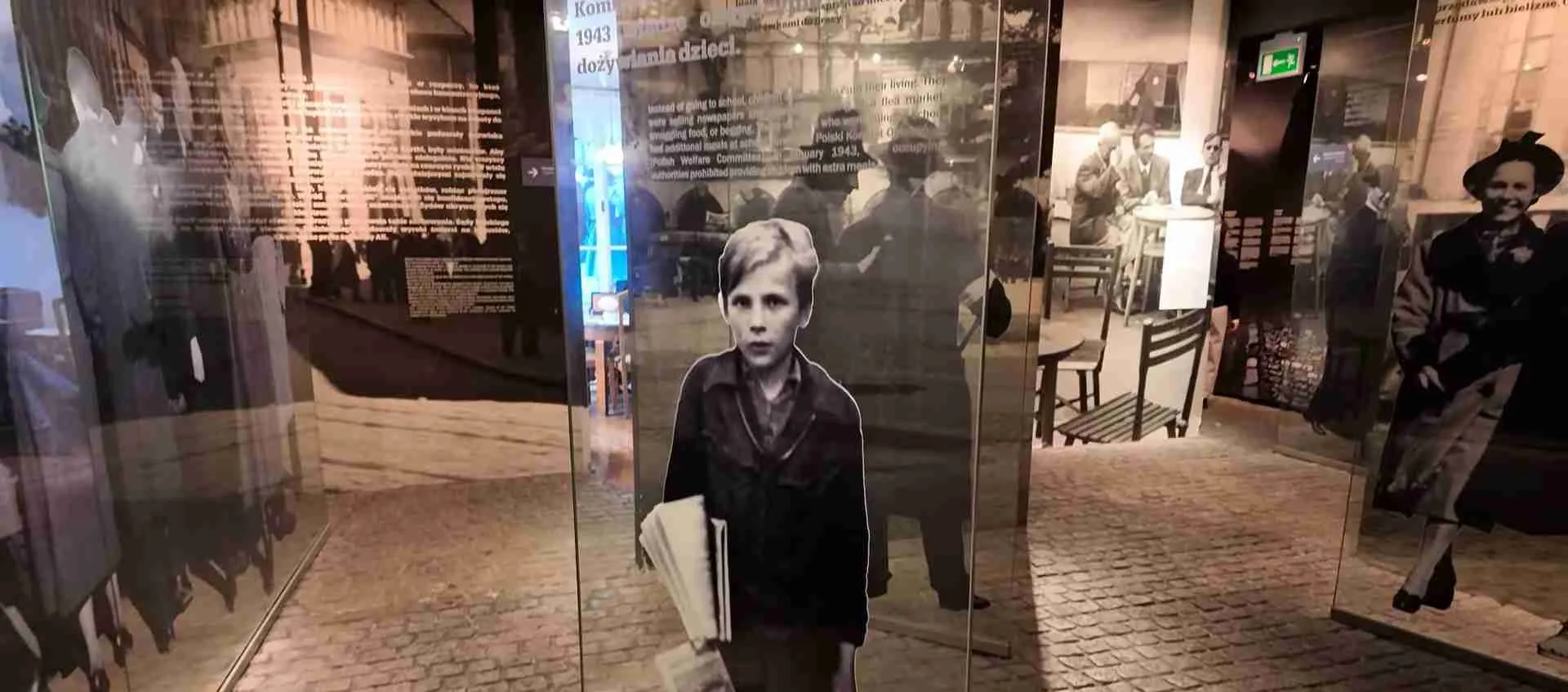
Visitors enter through a recreation of Krakow streets at the moment of German invasion. Period newspapers display headlines announcing war, posters show mobilization orders, and audio recordings play radio broadcasts from September 1939. This immersive environment establishes the suddenness of occupation – normal life interrupted by military conquest. Display cases show civilian items (ration cards, identification documents, personal photographs) alongside German administrative decrees implementing occupation policies.
The section documents the first days of terror – mass arrests, executions, and the Sonderaktion Krakau arrest of Jagiellonian University professors. Original photographs show German troops occupying Wawel Castle, Hans Frank establishing his government, and public executions designed to intimidate the population. Wall texts explain Nazi racial ideology that categorized Poles as inferior but useful labor, and Jews as vermin to be eliminated. This ideological framework undergirded all subsequent policies.
Section 2: City Under Occupation
This section examines daily life under Nazi rule for Krakow’s non-Jewish Polish population. Recreated shop fronts show German-language signage replacing Polish. Display cases contain forced labor documents, food ration cards (showing vastly different allocations for Germans versus Poles), and propaganda materials promoting collaboration. Interactive displays show prewar Krakow population demographics compared to wartime changes as Germans relocated Poles and brought in German administrators.
The exhibition addresses collaboration and resistance. Some Poles cooperated with German authorities – serving as informers, profiting from Jewish dispossession, or simply focusing on survival. Others joined underground resistance (Armia Krajowa – Home Army), published illegal newspapers, and risked execution to help Jews. The museum avoids simple moral judgments, instead showing how ordinary people faced impossible choices in totalitarian conditions. Original underground press materials, resistance photographs, and execution records document both poles of behavior.
Section 3: Terror
The most graphic section documents systematic violence. Photographs show public executions, torture chambers, and mass grave sites. Wall texts list names of murdered Polish intellectuals, cultural figures, and resistance members. Audio testimonies from survivors describe arbitrary arrests, interrogation methods, and the pervasive fear that governed daily life. The exhibition includes statistics on population losses – by war’s end, Krakow lost one-third of its population through execution, deportation, forced labor, and death camps.
This section serves crucial function: preventing exclusive focus on Jewish victims while acknowledging the specific genocidal intent toward Jews. Poles experienced brutal occupation including mass murder and cultural destruction, but retained possibilities (however limited) for survival through compliance. Jews faced systematic extermination regardless of behavior – compliance or resistance made no difference when Nazi ideology designated entire group for elimination. The museum’s careful balance acknowledges both Polish suffering and the Holocaust’s unique character as industrialized genocide.
Section 4: The Ghetto
The ghetto section provides the exhibition’s emotional core. Visitors enter a recreated ghetto apartment – cramped room with authentic period furniture, family photographs on walls, meager food rations displayed on table, and clothing hanging from hooks. This mundane domesticity – attempts to maintain human dignity in dehumanizing conditions – proves more emotionally powerful than abstract statistics. Audio recordings play testimonies from ghetto survivors describing daily life, while projected images show ghetto streets, deportation scenes, and family photographs.
Display cases contain artifacts that make abstract history tangible: children’s toys from the ghetto, identity documents stamped with “Jude” (Jew), ration cards providing starvation calories, letters smuggled from the ghetto, and photographs showing the descent from normal pre-war life to ghetto desperation. Interactive displays show ghetto maps, population statistics (tracking deportations and murders), and the bureaucratic mechanisms that managed genocide – demonstrating how ordinary administrative procedures facilitated mass murder.
The section does not shy from graphic content. Photographs show deportation scenes, bodies of murdered Jews, and the ghetto’s final liquidation. Wall texts include testimony from perpetrators, bystanders, and victims, showing varied perspectives on events. This comprehensive approach prevents simplistic narratives, forcing visitors to grapple with the complexity of how genocide occurred in plain view of Krakow’s non-Jewish population.
Section 5: Plaszow Concentration Camp
This section documents Plaszow’s establishment, operation, and role in the Holocaust infrastructure. Scale models show camp layout, photographs depict commandant Amon Göth and his villa from which he shot prisoners, and survivor testimonies describe daily terror. The exhibition explains Plaszow’s dual function – extracting forced labor while serving as way station to extermination camps. Display cases show prisoner uniforms, work documents, and personal items confiscated upon arrival.
The section addresses Göth specifically, examining how ordinary individuals became mass murderers. Photographs show Göth in social settings – smiling, relaxed, seemingly normal – juxtaposed with documentation of his crimes (estimates suggest he personally murdered hundreds). This juxtaposition raises disturbing questions about evil’s banality and how ideological indoctrination enabled ordinary people to commit extraordinary atrocities.
Section 6: Oskar Schindler’s Factory and Rescue Efforts
Schindler’s preserved office occupies the museum’s physical and thematic center. Visitors see his actual desk, safe (used to store bribe money and valuables), telephone, and personal items. The space feels frozen in time – as though Schindler just stepped out, expected to return momentarily. This atmospheric preservation creates powerful connection to historical figure, making him real person rather than cinematic character.
Display cases surround the office showing documentation of rescue activities: correspondence with SS officials (requesting exemptions from deportation for specific workers), receipts for bribes paid to maintain protection, worker lists showing names that appear on “Schindler’s List,” and testimonies from survivors describing their experiences in the factory. The exhibition addresses Schindler’s complexity – showing his initial profit motivation, Nazi Party membership, and exploitation of Jewish labor alongside documented rescue efforts. This balanced presentation prevents hagiography, acknowledging moral ambiguity.
Interactive displays allow visitors to explore individual stories from “Schindler’s Jews” – reading brief biographies, seeing photographs, and learning their post-war lives. This personalization counters the dehumanizing statistics, showing rescued individuals as complete human beings with names, families, and continuing life stories. The installation emphasizes that rescue saved not just 1,200 individuals but countless descendants – survivors’ children, grandchildren, and great-grandchildren who exist because Schindler acted.
Section 7: Work Makes You Free – Forced Labor System
This section examines the broader forced labor system of which Schindler’s factory was one small part. German industries throughout occupied Poland employed Jewish forced labor, exploiting genocidal policies for profit. The exhibition shows how major German corporations – IG Farben, Krupp, Siemens – deliberately used concentration camp labor, working prisoners to death while maximizing profit.
Display cases contain labor documents, wage records (showing that Jewish workers received no payment), safety violation reports (documenting industrial accidents from exhaustion and inadequate equipment), and testimonies describing work conditions. The section addresses uncomfortable question: How do we evaluate Schindler’s protection when most German employers exploited then murdered their Jewish workers? The museum suggests that while Schindler initially operated similarly to other industrialists, his eventual choice to prioritize workers’ lives over profit distinguished him from the vast majority who continued exploitation until workers’ deaths.
Section 8: Resistance and Underground
The Polish resistance receives dedicated section documenting underground press, sabotage operations, intelligence gathering, and attempts to help Jews. Display cases show weapons, forged documents, printing equipment for illegal newspapers, and photographs of resistance fighters. The exhibition acknowledges that while some Poles risked everything to help Jews, others collaborated with Germans or remained passive bystanders. This nuanced presentation avoids both demonizing all Poles and lionizing all as resisters.
The section includes difficult material about Poles who betrayed Jews – informing Germans about hiding places, demanding payment for help, or murdering Jews attempting to escape ghettos. The museum’s willingness to address Polish complicity proves controversial in contemporary Poland where nationalist narratives emphasize Polish victimhood and resistance while minimizing collaboration. The exhibition navigates this politically sensitive terrain by presenting documented evidence while avoiding sweeping moral judgments.
Section 9: Liberation and Aftermath
The final section documents Soviet liberation in January 1945 and immediate post-war period. Photographs show Soviet troops entering Krakow, liberated concentration camp survivors, and destroyed infrastructure. Display cases contain testimonies describing liberation day – the mixture of relief, grief for murdered family members, and uncertainty about futures in devastated Poland.
The section addresses post-war challenges: survivors returning to find homes occupied, possessions stolen, and communities destroyed. Polish-Jewish relations proved complex – some Poles welcomed returning Jews, others resented them, and periodic pogroms (most famously the July 1946 Kielce pogrom) showed continued antisemitism. The exhibition ends not with triumphant liberation narrative but with acknowledgment of ongoing challenges, unresolved grief, and the long shadow cast by genocide.
Museum Architecture and Design Philosophy
The exhibition design, created by architectural firm Nizio Design International, employs sophisticated spatial strategies to create immersive historical experience. Rather than traditional museum approach (glass cases with artifacts and explanatory labels in neutral white galleries), the design recreates period environments that visitors physically enter. Walking through recreated 1939 Krakow streets, entering the ghetto apartment, standing in Schindler’s office – these spatial experiences create visceral understanding impossible through conventional displays.
The color palette reinforces atmosphere – black-and-white photography dominates, evoking period aesthetics while also symbolizing moral simplicity impossible in nuanced history. Strategic use of red (in certain sections) creates visual accents highlighting particularly significant or emotionally powerful content. Lighting proves deliberately atmospheric – low levels, spotlights on key artifacts, shadows creating gravity appropriate to the subject matter. Audio design includes period music, radio broadcasts, testimonial recordings, and soundscapes (marching boots, gunshots, train whistles) that immerse visitors in sensory reconstruction of wartime experience.
The exhibition employs multimedia extensively – video projections show archival footage, interactive touchscreens provide access to detailed information, and 3D models allow exploration of ghetto and camp layouts. This technological integration serves pedagogical purpose: accommodating different learning styles (visual, auditory, kinesthetic) and allowing visitors to control information depth – skimming highlights or diving into detailed individual stories.
The design philosophy balances education with emotional impact. The museum wants visitors to understand historical facts but also to feel emotional connection to victims, recognition of perpetrators’ humanity (and thus capacity for evil present in all humans), and moral responsibility to prevent future genocides. This dual emphasis on cognition and emotion distinguishes the museum from purely academic historical presentations or purely emotional memorial sites.
Practical Information: Planning Your Visit
Location and Access
The museum occupies the historical factory at Lipowa 4, approximately 2 kilometers southeast of Krakow’s Main Market Square. Walking from the Old Town takes 25-30 minutes via Stradomska Street through Kazimierz district. Tram routes 3, 6, 8, 9, 10, 19, and 24 stop at nearby stations (Plac Bohaterów Getta or Lipowa), with 5-minute walk to museum entrance. Tram tickets cost approximately 5-7 PLN for single journey.
The museum provides wheelchair accessibility with elevators connecting all floors and adapted restrooms on the ground floor. Audio guides include induction loops for hearing-impaired visitors. Braille buttons in elevators assist visually impaired access, though the predominantly visual exhibition design proves less accessible for blind visitors.
Tickets and Entry
Tickets cost 40 PLN for adults, 35 PLN for students and seniors, with 80 PLN family tickets available. Guided tours in English add 30 PLN per person, or 300 PLN for private group tours. Advance booking is essential – daily visitor limits preserve exhibition quality, and on-site ticket availability proves minimal, particularly weekends and summer months. The official website (muzeumkrakowa.pl/en/branches/oskar-schindlers-enamel-factory) processes online bookings up to six hours before visit time.
Monday admission is free, but advance booking proves impossible and tickets sell out rapidly at the on-site ticket office (which opens morning of visit). Free Monday visits work best for flexible travelers willing to arrive early and potentially wait for available time slots. The ticket office limits sales to five tickets per person.
The museum closes the first Tuesday of each month for maintenance. Additional closures occur on certain dates due to Poland’s energy-saving legislation – for 2025, check the official website for specific closure dates as they vary annually.
Opening Hours
Monday: 10:00-15:00 (limited hours, free admission)
Tuesday-Sunday: 9:00-19:00
Closed: First Tuesday of each month and select dates for energy conservation
The museum enforces entry time slots to prevent overcrowding. Tickets specify exact entry time, with 15-minute window for admission. Once inside, visitors may remain as long as desired, though 1.5-2 hours proves typical for thorough viewing.
Guided Tours vs. Independent Visiting
Guided tours (90 minutes) provide historical context, explain artifact significance, and answer questions that solitary exploration cannot address. Guides prove particularly valuable for visitors with limited Holocaust knowledge or those wanting deeper engagement with historical complexities. Tours operate Tuesday-Sunday at scheduled times (Monday tours unavailable due to free admission and crowd control).
Independent visiting allows personal pacing and emotional processing. Some visitors find guided groups overwhelming, preferring to engage with difficult content privately. Audio guides (available in multiple languages) offer compromise – professional narration providing context while maintaining individual pacing. Wall texts throughout the exhibition provide comprehensive English translations, making independent visiting viable for non-Polish speakers.
Time Requirements
Minimum visit requires 1.5 hours to see all exhibition sections without extended engagement. Thorough viewing with careful reading of wall texts, examination of artifacts, and viewing of all multimedia content takes 2-2.5 hours. Visitors should not rush – the subject matter demands thoughtful engagement, and emotional processing requires time. Planning 2-3 hours provides appropriate schedule without exhausting time pressure.
Emotional Preparation
The exhibition contains graphic content including photographs of executions, deportations, and death camp victims. Testimonies describe violence, torture, and murder. While the museum avoids gratuitous display, historical documentation necessarily includes disturbing material. Visitors should prepare emotionally for difficult content and recognize that experiencing distress proves normal response to genocide documentation.
The museum provides seating areas throughout where visitors can rest and process emotions. Security staff receive training to assist visitors experiencing distress. There is no shame in needing breaks, leaving sections, or cutting visits short if content proves overwhelming. Engaging with Holocaust history creates legitimate emotional impact that visitors should honor rather than suppress.
Children and Family Visits
The museum does not establish minimum age restrictions but recommends parental discretion. Graphic content including execution photographs, deportation scenes, and explicit violence descriptions may prove traumatic for young children. Teenagers with Holocaust education background generally manage content appropriately, though parents should prepare them for emotional impact.
Educational programs for school groups provide age-appropriate modifications, but general admission offers no content filtering. Parents visiting with children should preview sections, potentially skipping most graphic displays while engaging with less disturbing elements like Schindler’s office and recreated 1939 streets.
Photography Policy
Photography is prohibited throughout the museum to protect artifacts from flash damage and preserve respectful atmosphere. Some visitors find the prohibition frustrating, but the policy maintains appropriate gravity for genocide memorial. The museum shop sells books with exhibition photographs for those wanting visual documentation.
Museum Amenities
The museum provides coat check for bags and outerwear (recommended as exhibition viewing requires substantial walking). Restrooms are located on the ground floor near the entrance. A small shop sells books on Holocaust history, World War II in Poland, Schindler’s biography, and educational materials. No café operates within the museum, but Kazimierz district nearby offers numerous dining options.
Combining Schindler’s Factory with Related Sites
Podgórze District and Ghetto Remains
The former Krakow Ghetto in Podgórze lies 10 minutes’ walk from the museum. Ghetto Heroes Square (Plac Bohaterów Getta) features 70 empty metal chairs symbolizing Jewish families deported to death camps – a powerful memorial by artists Piotr Lewicki and Kazimierz Łatak. Fragments of the ghetto wall remain on Lwowska Street, showing the tombstone-shaped design that enclosed the Jewish district.
The Under the Eagle Pharmacy Museum (Plac Bohaterów Getta 18) occupies the pharmacy operated by Tadeusz Pankiewicz, the only non-Jewish Pole permitted to remain in the ghetto. Pankiewicz used his pharmacy to smuggle medicine, food, and information while documenting ghetto life in his memoir “The Krakow Ghetto Pharmacy.” The museum recreates the pharmacy interior and displays artifacts from ghetto daily life.
Plaszow Memorial
The former Plaszow concentration camp site (3 kilometers southeast) operates as memorial and archaeological site. While buildings were demolished by retreating Nazis, the terrain preserves camp layout. Visitors can see Amon Göth’s villa (exterior only, privately owned), walk the paths prisoners followed, and visit monuments commemorating murdered Jews and Poles. The site lacks comprehensive interpretation, making guided tours valuable for understanding the landscape’s historical significance.
Kazimierz Jewish Quarter
Kazimierz, Krakow’s historic Jewish quarter (15-minute walk from the museum), preserves synagogues, Jewish cemeteries, and streets where pre-war Jewish community thrived. The Old Synagogue houses a museum of Jewish culture, the Galicia Jewish Museum presents photographic exhibitions on Jewish heritage, and streets like Szeroka maintain historical atmosphere. Combining Schindler’s Factory with Kazimierz provides comprehensive understanding – Kazimierz shows vibrant pre-war Jewish life, the museum documents its destruction.
Auschwitz-Birkenau Memorial
Auschwitz-Birkenau, located 70 kilometers west of Krakow, represents the ultimate destination for Jews deported from Krakow Ghetto. The memorial and museum preserve the concentration and extermination camp complex where 1.1 million people (mostly Jews) were murdered. Visiting Auschwitz after Schindler’s Factory provides complete narrative arc – from occupation beginning, through ghetto establishment, to industrialized genocide. Organized tours from Krakow provide transportation and required guided tours through the Auschwitz complex.
Understanding Schindler’s Legacy
Oskar Schindler’s story raises profound questions about heroism, morality, and historical memory. How do we evaluate his rescue efforts given his initial Nazi collaboration and profit from forced labor? Does the good he ultimately accomplished erase earlier exploitation? Should we celebrate individual rescuers when millions were not saved? These questions lack simple answers, but engaging with them proves essential for historical understanding.
Schindler represents morally complex rescuer – neither saint nor purely opportunist, but ordinary person who made extraordinary choices when confronted with genocide. His initial Nazi membership and profit motivation make his ultimate rescue more rather than less significant, demonstrating that people can change, that moral transformation remains possible even for those complicit in evil systems. If only pre-existing heroes could become rescuers, the lesson would be that heroism requires exceptional pre-disposition. Schindler’s transformation suggests that ordinary people facing extraordinary evil can choose differently than they initially did.
The museum’s presentation of Schindler avoids hagiography while acknowledging his actions saved lives. This balanced approach proves historically responsible – neither condemning him for early opportunism nor erasing the moral complexity of a Nazi who became rescuer. Visitors leave understanding that history involves nuanced individuals rather than simple heroes and villains, and that moral choices occur within complex circumstances that resist easy judgment.
Frequently Asked Questions
How Long Does It Take to Tour Schindler’s Factory Museum?
A thorough visit requires 1.5-2 hours minimum to view all exhibition sections, read wall texts, examine artifacts, and watch multimedia presentations. Guided tours last approximately 90 minutes and provide comprehensive overview with historical context. Visitors particularly interested in Holocaust history or those taking extensive time with testimonies and interactive displays may spend 2.5-3 hours. The museum deserves unhurried attention given the subject matter’s gravity – rushing diminishes educational value and prevents appropriate emotional processing. Plan arriving with sufficient time rather than squeezing the visit between other activities. The museum does not limit time once inside, so visitors spending longer than expected face no pressure to leave.
Is Advance Booking Really Necessary?
Yes, absolutely essential. Daily visitor limits preserve exhibition quality and prevent overcrowding in the recreated environments. Weekend time slots sell out weeks in advance, particularly during summer months (May-September). Attempting on-site ticket purchase proves unreliable except very early weekday mornings during low season. The museum’s popularity means disappointed visitors unable to enter despite traveling to the site. Online booking through the official website (muzeumkrakowa.pl) operates up to six hours before visit time. For flexible travelers, Monday free admission offers possibility of same-day entry, but requires arriving when the ticket office opens and accepting potentially long waits. For guaranteed entry at preferred time, advance booking 1-2 weeks ahead (3-4 weeks for peak season weekends) proves necessary.
Can You Visit Schindler’s Factory with Young Children?
The museum establishes no minimum age but recommends parental discretion. Exhibition content includes graphic photographs of executions, deportations, and death camp victims, explicit testimonies describing violence, and emotionally intense recreations of ghetto conditions. Young children (under 12) may find the content traumatic, confusing, or boring depending on their maturity and historical knowledge. Teenagers with Holocaust education background generally manage appropriately, though parents should prepare them for disturbing material. Educational programs for school groups provide age-appropriate modifications, but general admission offers no content filtering. Parents visiting with children should preview sections, potentially skipping graphic displays while engaging with less disturbing elements. The recreated 1939 streets and Schindler’s office prove accessible for younger visitors, while the ghetto and terror sections contain content requiring maturity to process appropriately.
How Does This Museum Compare to Other Holocaust Museums?
Schindler’s Factory distinguishes itself through several unique features. Unlike purpose-built museums (United States Holocaust Memorial Museum, Yad Vashem), it occupies the actual historical site where events occurred, creating tangible connection to history. The focus on specific city (Krakow) rather than entire Holocaust provides granular detail showing how genocide operated at local level – specific streets, documented individuals, particular events. The immersive exhibition design (recreated environments rather than traditional museum galleries) creates visceral experience different from conventional displays. The inclusion of broader Polish wartime experience beyond exclusively Jewish victimhood provides context often absent from Holocaust-focused institutions. The museum’s relatively recent opening (2010) allowed incorporation of sophisticated multimedia and interactive technologies. However, it lacks the comprehensive scope of larger institutions – visitors seeking overview of Holocaust across Europe should visit broader museums, while those wanting deep understanding of occupation’s local impact and Schindler’s specific rescue operation will find this museum invaluable.
Is the Museum Appropriate for Jewish Visitors Seeking Meaningful Memorial Experience?
Yes, with some caveats. The museum treats Jewish victimhood with appropriate gravity, honors destroyed communities, and preserves evidence of genocide for educational purposes. Many Jewish visitors report powerful, meaningful experiences engaging with this history in the actual location where events occurred. However, the museum’s broader scope (including non-Jewish Polish suffering) means it does not function exclusively as Jewish memorial. Some visitors prefer institutions focused exclusively on Jewish experience (Galicia Jewish Museum nearby provides this alternative). The museum also confronts uncomfortable questions about Polish complicity and bystander behavior that prove difficult for some visitors. Observant Jews should note the museum operates Saturdays and major Jewish holidays without special accommodations. Overall, the museum provides respectful, educational engagement with Holocaust history appropriate for Jewish visitors seeking to understand the destruction of Polish Jewry, though individual responses vary based on personal expectations and emotional needs.
What Should You Not Do When Visiting?
Do not take photographs – the prohibition protects artifacts and maintains respectful atmosphere appropriate for genocide memorial. Do not touch artifacts or lean on display cases. Do not speak loudly or engage in casual conversation that disrupts other visitors’ contemplative engagement. Do not bring large bags (coat check available). Do not eat or drink in exhibition spaces. Do not make Holocaust jokes or show insensitivity to the subject matter. Do not rush – the museum deserves thoughtful attention. Do not visit if emotionally unprepared for disturbing content including graphic violence documentation. Do not assume the museum exclusively celebrates Schindler – it presents complex history that includes his moral ambiguities. Do not expect entertainment – this is educational memorial requiring serious intellectual and emotional engagement.
How Much Historical Knowledge Do You Need Before Visiting?
Basic World War II knowledge helps – understanding that Germany invaded Poland in 1939, implemented Nazi occupation, and systematically murdered Jews provides essential context. However, the museum’s extensive wall texts, multimedia presentations, and chronological structure make it accessible to visitors with minimal prior knowledge. Exhibition design assumes some visitors arrive with limited understanding and provides comprehensive historical background. That said, visitors with substantial Holocaust knowledge will find additional depth through detailed testimonies, specific documentation, and nuanced examination of moral complexities that surface-level presentations avoid. Guided tours prove particularly valuable for those with limited background, providing structured narrative and opportunity to ask clarifying questions. The museum successfully serves both audiences – introducing novices to Holocaust history while offering sophisticated engagement for knowledgeable visitors.
Can You Visit Independently If You Don’t Speak Polish?
Yes, completely viable. All wall texts include English translations, audio guides operate in multiple languages (English, German, French, Spanish, Italian, Russian, Hebrew), and museum staff speak English. The predominantly visual nature of exhibits – photographs, artifacts, recreated environments – communicates across language barriers. Interactive touchscreens include English interfaces. Guided tours in English run regularly Tuesday-Sunday. The only limitation affects reading original documents (letters, administrative records, personal testimonies) displayed in Polish or German without translation, but these represent supplementary rather than essential content. International visitors report no difficulty navigating the museum independently or understanding the historical narrative without Polish language skills.
Why Visit Schindler’s Factory When “Schindler’s List” Tells His Story?
The film and museum serve different educational purposes. “Schindler’s List” creates dramatic narrative centered on Schindler’s moral transformation, using cinematic techniques (character development, emotional arc, simplified history) to create accessible, engaging story. The museum provides historical documentation impossible in a three-hour film – showing broader occupation context, examining moral complexity, presenting victims as real individuals rather than dramatic characters, and grounding history in material evidence (artifacts, documents, photographs). The museum occupies the actual factory where events occurred, creating tangible connection to history that film cannot replicate. Additionally, the museum addresses aspects the film simplifies or omits – Schindler’s initial opportunism, the broader Polish experience under occupation, and the systematic mechanisms enabling genocide. Visitors who loved the film gain deeper understanding visiting the museum; those who found the film emotionally manipulative appreciate the museum’s more documentary approach. Both prove valuable educational tools addressing different learning styles and needs.
How Does the Museum Handle Controversial Aspects of Polish-Jewish History?
The museum navigates politically sensitive terrain by presenting documented evidence while avoiding sweeping moral judgments. It acknowledges that some Poles risked everything helping Jews (Righteous Among the Nations), while others collaborated with Germans, informed on hidden Jews, or remained passive bystanders. This nuanced presentation avoids both demonizing all Poles and lionizing all as resisters – recognizing instead that individuals made varied choices under totalitarian conditions. The exhibition proves somewhat controversial in contemporary Poland where nationalist narratives emphasize exclusively Polish victimhood and heroism while minimizing collaboration. The museum’s willingness to display evidence of Polish complicity demonstrates scholarly integrity, though this occasionally generates political criticism. The institution maintains that honest historical engagement requires acknowledging uncomfortable truths alongside heroism, and that Polish honor is better served through comprehensive truth than selective memory. Jewish visitors generally appreciate this balanced approach, while some Polish visitors find examination of collaboration painful or unfair given broader Polish suffering under Nazi occupation.