
Saronic Islands Day Cruise from Athens 2026: Hydra, Poros & Aegina Complete Guide
The classic Saronic Islands day cruise from Athens delivers three distinct Greek islands in a single day, departing Piraeus port at 8:00 AM and returning by evening. Hydra’s car-free cobblestone streets, Poros’ pine-covered hills overlooking narrow straits, and Aegina’s ancient Temple of Aphaia create the perfect introduction to Greek island life without requiring overnight stays or complex ferry schedules.
Key Takeaways: Saronic Islands Cruise 2026
- Three Islands in One Day: Visit Hydra (1.5 hours free time), Poros (50 minutes), and Aegina (2 hours) with organized cruise departing 8:00 AM from Athens, returning approximately 7:15 PM to the capital
- All-Inclusive Experience 2026: Standard cruise tickets at €131 per person include round-trip boat transport, buffet lunch with Mediterranean dishes, Greek folklore show with live music and traditional dancing, and onboard multilingual guides providing island history and cultural context
- VIP Upgrade Value: Premium packages at €260 adults / €165 children add hotel pickup/drop-off service, private check-in with fast-track boarding, exclusive VIP lounge access, upgraded buffet in separated dining area, unlimited beverages, and complimentary walking tour options on Hydra or panoramic bus tour on Aegina
- Temple of Aphaia Optional Tour: Aegina’s 5th-century BC Doric temple requires €10 entrance fee (not included in cruise ticket) plus optional guided bus tour purchased onboard, offering 45-minute exploration of one of Greece’s best-preserved ancient sanctuaries with panoramic Saronic Gulf views
- Year-Round Operations: Cruises operate daily throughout 2026 including winter months, though sea conditions in November-March can create rougher passages and occasional itinerary modifications when strong winds affect the Saronic Gulf
- Booking Timeline: Reserve 1-2 weeks ahead for April-October peak season, though last-minute availability (2-3 days before) remains common during November-March winter months when tourism decreases and cruise boats operate below full capacity
People Also Ask About Saronic Islands Cruise 2026
How much does the Saronic Islands day cruise from Athens cost in 2026?
Standard Saronic Islands day cruise tickets cost €131 per person in 2026, covering round-trip boat transport from Piraeus port, Mediterranean buffet lunch served onboard, Greek folklore entertainment with live musicians and traditional dancers, and approximately 11 hours of island exploration across Hydra, Poros, and Aegina (check booking platforms for current rates as pricing may vary by operator and season). VIP upgrade packages increase the cost to €260 for adults and €165 for children but add substantial value through hotel transfers eliminating the need to reach Piraeus independently, private check-in bypassing standard boarding queues, exclusive VIP lounge access with comfortable seating and climate control, upgraded buffet service in a separated premium dining area, unlimited filter coffee and soft drinks throughout the journey, and complimentary guided walking tour on Hydra or panoramic bus tour on Aegina. Additional costs not included in either package comprise the Temple of Aphaia entrance fee at €10 per person, optional guided archaeological tours purchased onboard, personal beverages beyond VIP package inclusions, and souvenirs or shopping on the islands.
What’s the schedule for the Hydra Poros Aegina cruise in 2026?
The 2026 Saronic Islands cruise follows this daily schedule: 8:00 AM departure from Marina Zeas or Marina Flisvos in Piraeus (pickup locations specified during booking confirmation), first island arrival approximately 11:00-11:15 AM depending on which island the route visits first, with the order varying between Hydra-Poros-Aegina or Aegina-Poros-Hydra without changing the allocated time at each destination. Island stops allocate approximately 1 hour 30 minutes on Hydra for exploring the car-free port town and waterfront promenade, 50 minutes on Poros for walking the main town and shopping along the harbor, and 2 hours on Aegina providing time for either the Temple of Aphaia excursion or independent exploration of Aegina Town’s pistachio markets and waterfront cafes. Lunch service occurs during the sailing segment between islands, typically between Poros and Aegina or during the return journey. The cruise returns to Piraeus approximately 7:00-7:30 PM, though precise timing varies based on sea conditions, port authority regulations, and the specific route taken that day.
Is the Saronic Islands cruise worth it for first-time Greece visitors in 2026?
The Saronic Islands day cruise delivers excellent value for first-time Greece visitors spending limited time in Athens, efficiently packing authentic Greek island experiences into a single organized day without requiring ferry research, hotel bookings, or complex logistics planning. The €131 standard ticket (€11-13 per hour of experience) compares favorably against independent ferry costs (€30-45 round-trip per island), separate lunch expenses (€15-25 per person), and the time investment required to coordinate three islands independently using public ferries that operate on varying schedules with potential delays or cancellations. The cruise format particularly benefits travelers with 2-4 days in Greece who want island exposure but cannot dedicate multiple days to island-hopping, families with children who appreciate organized schedules and onboard facilities including bathrooms and shaded seating, and cruise ship passengers on Athens port calls who need guaranteed return timing to meet strict ship departure schedules. However, independent travelers with flexible schedules, extended Greece itineraries (7+ days), or strong preferences for slow-paced exploration might find greater satisfaction spending 1-2 full days on a single island like Hydra or Aegina using regular ferry services.
Can you swim during the Saronic Islands day cruise in 2026?
Swimming opportunities during the standard Saronic Islands cruise remain extremely limited to nonexistent, as the itinerary prioritizes island port visits and cultural exploration over beach time or water activities. The cruise boats dock at the main harbors of Hydra, Poros, and Aegina where passengers disembark to explore the towns, creating logistical challenges for changing into swimwear, finding suitable swimming beaches within walking distance of the ports, and returning to the boat within the allocated 50-120 minute island stops. Hydra’s main town surrounds a working harbor where swimming proves impractical, though determined swimmers can walk 15-20 minutes to nearby rocky swimming areas if willing to sacrifice shopping and sightseeing time. Poros’ 50-minute stop provides insufficient time to reach beaches, while Aegina’s 2-hour allocation theoretically permits quick swimming near town but realistically requires choosing between beach time, the Temple of Aphaia tour, or town exploration. Alternative cruise options specifically designed for swimming exist — some operators offer Saronic Gulf cruises to Agistri, Moni, and Aegina focusing on beach stops and swimming time rather than cultural sightseeing, though these differ from the classic Hydra-Poros-Aegina itinerary.
Extended multi-day tours – 5+ days
Featured Hydra Multi-Day Tour Packages
4 days
4-Day Athens Escape Acropolis, Sounio, Hydra & Culinary Experiences
- ✓ Comprehensive Hydra tour
- ✓ Expert local guides included
- ✓ All accommodation arranged
- ✓ Transportation provided
4 days
4-Day Tour: Athens, Delphi, Meteora & Saronic Islands Cruise
- ✓ Comprehensive Hydra tour
- ✓ Expert local guides included
- ✓ All accommodation arranged
- ✓ Transportation provided
5 days
Dreaming of Classical Greece
- ✓ Comprehensive Hydra tour
- ✓ Expert local guides included
- ✓ All accommodation arranged
- ✓ Transportation provided

7 days
Best of Athens & Classical Greece – 7 days
- ✓ Comprehensive Hydra tour
- ✓ Expert local guides included
- ✓ All accommodation arranged
- ✓ Transportation provided
Multi-day tour packages powered by TourRadar. Prices and availability subject to change.
Introduction to Saronic Islands Day Cruises 2026
The Saronic Islands day cruise represents one of Athens’ most popular and enduring tourist experiences, operating continuously since the 1960s as a convenient introduction to Greek island culture for travelers based in the capital. The Gulf’s proximity to Athens — the nearest islands sit just 20-30 nautical miles from Piraeus port — enables comprehensive three-island exploration within standard daylight hours, departing morning and returning evening while maintaining generous time allocations at each destination. This geographic accessibility combined with diverse island character creates the perfect day trip formula: Hydra’s artistic heritage and car-free authenticity, Poros’ picturesque setting between island and mainland, and Aegina’s archaeological significance and agricultural fame deliver distinctly different experiences showcasing the variety that makes Greek islands globally celebrated.
The cruise format solves practical challenges that complicate independent island-hopping from Athens. Ferry schedules between Saronic Islands operate infrequently compared to major Cycladic routes, often requiring overnight stays to visit multiple destinations or accepting very limited same-day options with tight connections and inflexible timing. The organized cruise eliminates ferry research, ticket purchasing complexity, schedule coordination anxiety, and the risk of missing connections that strand travelers on islands overnight without accommodation reservations. The all-inclusive structure — lunch, entertainment, multilingual guides, climate-controlled indoor seating, onboard facilities — creates comfortable, predictable experience particularly valued by families with children, older travelers, cruise ship passengers on Athens port calls with strict return timing requirements, and first-time Greece visitors unfamiliar with Greek ferry systems.
The 2026 Saronic Islands cruise market features approximately 8-10 major operators including established companies like Evermore Cruises (operating since 1965), Athens Day Cruise, and various partnerships between shipping companies. These operators maintain similar itineraries, pricing structures, and service standards, competing primarily through vessel quality, crew hospitality, food quality, and entertainment production values rather than route differentiation or price competition. The standardization benefits travelers by ensuring baseline quality regardless of booking platform, though subtle differences in boat age, maintenance standards, crew training, and lunch menu variety create meaningful experience variations that customer reviews help identify.
The islands themselves hold deeper significance beyond tourist appeal. Hydra achieved UNESCO consideration status for its preserved 18th-19th century architecture and maritime heritage, representing one of Greece’s best-preserved historical island towns where traditional donkeys remain the primary transport due to complete motorized vehicle prohibition. Poros’ strategic position controlling the narrow strait separating the Saronic Gulf from the Gulf of Argolida gave it historical naval importance, while its pine forests and protected anchorages made it favored refuge for ancient Greek fleets. Aegina’s Temple of Aphaia forms part of the “Sacred Triangle” with the Parthenon and Temple of Poseidon at Sounion, representing crucial Archaic period architecture predating classical Athens’ golden age, plus the island served as Greece’s first capital (1826-1828) immediately following independence from Ottoman rule.
Understanding the cruise’s structure, timing, and limitations enables realistic expectations and optimal planning. The experience prioritizes breadth over depth — glimpses of three islands rather than comprehensive exploration of one. Time allocations permit walking main port areas, basic shopping, café stops, and perhaps one significant activity (temple tour on Aegina, museum visit on Hydra) but not thorough island exploration or beach relaxation. The boat journey itself comprises 4-5 hours of the 11-hour total, creating substantial sailing time where onboard entertainment, lunch service, and deck relaxation fill the schedule. Passengers seeking intensive cultural immersion, extensive photography opportunities, or peaceful island atmosphere might find the pace rushed and the crowds (150-300 passengers per boat depending on vessel) overwhelming, while those appreciating organized efficiency, social atmosphere, and maximum sightseeing density within limited time find the cruise perfectly suited to their priorities.
Hydra Island Experience and Time Allocation 2026
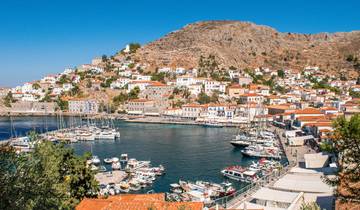
Hydra receives approximately 1 hour 30 minutes of allocated free time when visited as part of the Saronic Islands day cruise, typically arriving as either the first stop (11:00-11:15 AM) or second stop (1:00-2:00 PM depending on lunch timing and route order). The cruise boats anchor in Hydra’s protected horseshoe harbor, one of the Mediterranean’s most photographed ports where neoclassical stone mansions cascade down hillsides in tiers, their ochre and white facades creating striking contrast against the deep blue harbor waters and barren mountain backdrop. Passengers disembark via gangway directly onto the harbor’s marble quayside, immediately immersed in Hydra’s unique atmosphere where the complete absence of motorized vehicles creates peaceful environment interrupted only by conversations, footsteps on cobblestones, and occasional donkey bells.
The car-free policy — enforced since the 1950s and now protected by presidential decree — makes Hydra Greece’s most distinctive island, where donkeys, mules, and human porters remain the only transport options beyond walking. This creates both charming authenticity and practical challenges. The narrow marble-paved streets climbing from the harbor prove steep and uneven, requiring confident mobility and appropriate footwear, though the compact town means most attractions sit within 10-15 minutes walk from the harbor. Visitors with mobility limitations should concentrate on the relatively flat harbor promenade and main commercial streets radiating from the port, where cafes, galleries, jewelry shops, and souvenir stores cluster in renovated ground floors of historical mansions.
The 90-minute time allocation creates strategic choices about how to spend limited Hydra time. Walking the full harbor promenade from the western end (clock tower and fishing boat moorings) to the eastern extremity (lighthouse and swimming rocks) requires 25-30 minutes round-trip at comfortable pace, leaving approximately one hour for shopping, café stops, museum visits, or photography. Climbing to the hilltop cannons overlooking the harbor — a favorite photography location offering spectacular panoramic views — requires 20-25 minutes ascent plus return time, consuming nearly half the island allocation. The Historical Archives Museum of Hydra and the Ecclesiastical Museum both warrant 20-30 minute visits for those interested in island maritime history and religious art, though their locations away from the main harbor area require additional walking time.
Hydra’s artistic heritage — the island attracted and inspired artists, writers, and musicians from the 1960s onward including Leonard Cohen who owned property here for decades — manifests in numerous galleries showcasing contemporary Greek art, traditional crafts, and nautical-themed works. These galleries welcome browsers without purchase pressure, offering air-conditioned respite from summer heat and cultural engagement beyond simple shopping. The main commercial streets (particularly Tombazi Street climbing from the harbor’s central point) feature high-quality jewelry boutiques, natural sponge vendors, ceramics shops, and boutiques selling resort wear and leather goods, with prices generally higher than Athens but quality and craftsmanship justifying premiums for serious shoppers.
Café culture dominates Hydra’s social life, with waterfront establishments offering coffee, fresh orange juice, ice cream, and light refreshments at prices reflecting captive tourist market (€4-7 for coffee, €6-10 for fresh juice, €5-8 for ice cream). The harbor setting and people-watching opportunities justify the premium for many visitors, though those on tight budgets should note that prices increase progressively from inland cafes (slightly cheaper) to prime harbor front positions (most expensive). The cruise’s buffet lunch typically serves during sailing segments, meaning Hydra stop occurs either before or after the main meal, influencing whether visitors seek coffee (morning arrival) or afternoon refreshments (post-lunch arrival).
Photography opportunities abound throughout Hydra’s compact port area. The classic shot — harbor view from the western mole looking across the horseshoe bay toward the eastern heights with traditional boats in foreground and white houses climbing the hillsides — requires walking to the harbor’s western edge, approximately 10 minutes from cruise ship docking area. Golden hour light (early morning or late afternoon) illuminates the facades beautifully, though cruise timing (typically midday when boats arrive) creates harsher light and strong shadows requiring photography skill to manage effectively. The narrow streets climbing from harbor offer intimate architectural details — ornate doorways, balconies overflowing with bougainvillea, traditional shutters, marble fountains — rewarding photographers who explore beyond the obvious harbor panorama.
Poros Island Visit and Strategic Planning 2026
Poros receives the shortest time allocation of the three islands at approximately 50 minutes, reflecting its smaller size, more limited tourist infrastructure, and primary role as a scenic sailing waypoint rather than comprehensive cultural destination. The island actually consists of two sections — volcanic Sfairia (where Poros Town sits) and larger Kalavria connected by narrow isthmus — though cruise passengers typically see only Poros Town during the brief stop. The cruise boat docks at the main harbor quay directly adjacent to the waterfront promenade, allowing efficient disembarkation and immediate access to the compact commercial center.
The dramatic approach to Poros provides the island’s most memorable moment: the narrow strait separating Poros from the Peloponnese mainland creates channel barely 200 meters wide at points, with the cruise boat navigating carefully between island and mainland shores lined with pine forests reaching nearly to the water’s edge. Poros Town rises in tiers from the waterfront, white-washed buildings punctuated by the iconic clock tower on the hilltop — the island’s most recognizable landmark built in 1927 and visible from considerable distance across the Saronic Gulf. This scenic setting, often compared to smaller versions of Santorini’s cliff-side architecture, delivers spectacular photographs from the boat deck as the vessel approaches and departs.
The 50-minute allocation severely limits exploration options, requiring strategic decisions about priorities. The waterfront promenade extending east and west from the main harbor features cafes, tavernas, souvenir shops, and ferry ticket offices, with most cruise passengers concentrating their brief time along this easily accessible strip. Walking the promenade’s full length (approximately 400-500 meters in either direction) requires 15-20 minutes round-trip, leaving 30-35 minutes for browsing shops, having a quick coffee or snack, or photographing the harbor scene. Attempting to climb to the clock tower proves unrealistic given the time constraint — the steep ascent requires 20-25 minutes each way, consuming nearly the entire island allocation and leaving no time for the town itself.
Shopping on Poros focuses on standard Greek tourist items — ceramics, olive oil products, honey, natural sponges, resort clothing, jewelry — at prices comparable to or slightly below Hydra but without the same boutique quality or artisan craftsmanship. The abbreviated stop creates pressure to make quick purchasing decisions, benefiting shoppers who know exactly what they seek but frustrating browsers who prefer leisurely consideration. Several bakeries near the harbor sell fresh traditional pastries and sweets, offering affordable snacks (€2-4) for passengers who skipped the onboard breakfast or want to sample local specialties.
The limited time makes Poros feel rushed to many cruise passengers, with common complaints in reviews citing insufficient opportunity to experience the island beyond superficial harbor walk. However, the brief stop serves strategic purpose in the overall cruise structure: it provides midpoint break during sailing between Hydra and Aegina, offers bathroom and refreshment opportunities (onboard facilities remain available but some passengers prefer shore facilities), and creates gentle introduction to island-hopping rhythm without overwhelming first-time visitors with too many extended stops. The lunch service typically occurs immediately after Poros departure during the sailing segment to Aegina, capitalizing on the transit time while passengers remain relatively fresh and enthusiastic rather than tired from multiple island walks.
Photographers should prioritize the boat approach and departure for capturing Poros’ scenic beauty. The narrow strait navigation creates intimate proximity to both shores, allowing excellent photos of the pine-covered mainland across the channel, the colorful harbor buildings rising in tiers, and the clock tower dominating the skyline. The island’s compact geography means most photography opportunities occur from the waterfront rather than requiring uphill climbs that Hydra’s best viewpoints demand. The brief stop prevents golden hour photography (arriving and departing during midday hours), creating harsher light conditions but also reducing shadow problems in the narrow streets.
Aegina Island and Temple of Aphaia Options 2026
Aegina receives the longest allocation at approximately 2 hours free time, reflecting the island’s archaeological significance, larger size, and diverse activities accommodating different passenger interests. The cruise boats dock at Aegina’s main harbor in the island’s principal town (also called Aegina), where the waterfront promenade bustles with local life, fish markets, fruit and vegetable stalls, cafes, tavernas, and Greece’s most famous pistachio vendors selling the island’s signature agricultural product. The arrival time typically falls between 2:00-4:00 PM depending on the specific route order and whether lunch service occurred during the sailing segment or at Poros.
The 2-hour window creates meaningful choice between two primary activities, each consuming most or all of the allocated time:
Option 1: Temple of Aphaia Archaeological Excursion
The Temple of Aphaia archaeological tour operates as optional add-on purchased onboard the cruise boat (not included in standard €131 ticket price), costing approximately €25-30 per person for the guided bus tour plus €10 per person entrance fee to the archaeological site paid directly at the temple entrance. The excursion departs from the harbor immediately after boat docking, transporting passengers in air-conditioned coach buses for the 25-minute drive to the hilltop sanctuary located 13 kilometers east of Aegina Town. The organized tour includes multilingual guide narration during the bus journey explaining Aegina’s history, agricultural economy (pistachio cultivation), and the temple’s architectural and mythological significance.
The Temple of Aphaia itself ranks among Greece’s best-preserved ancient sanctuaries, a Doric temple constructed approximately 500 BC predating the Parthenon by several decades. The site occupies a pine-forested hilltop 160 meters above sea level, commanding spectacular panoramic views across the Saronic Gulf to Athens, the Peloponnese, and neighboring islands. Twenty of the original 32 columns remain standing, supporting reconstructed portions of the entablature and creating the sense of the temple’s original architectural power despite the absence of the roof and the famous pedimental sculptures now displayed in Munich’s Glyptothek museum. The temple’s excellent preservation state allows clear appreciation of Archaic period architecture — the slightly bulging columns (entasis), the precisely cut limestone blocks fitted without mortar, the geometric precision of the layout.
The guided tour allocates approximately 45 minutes at the temple site, providing sufficient time for walking the perimeter, visiting the small on-site museum displaying architectural fragments and inscriptions, photographing the columns against the sea views, and absorbing the peaceful atmosphere despite the steady flow of tour groups. The bus returns to Aegina harbor approximately 1 hour 45 minutes after departure, leaving 15-20 minutes for quick harbor walk or pistachio shopping before the boat’s final departure. Some tour variants include brief stops at Agios Nektarios Monastery (impressive modern Orthodox church built 1904-1910 with impressive bell towers) or panoramic viewpoints overlooking the island’s countryside, though these additions reduce temple exploration time.
The temple excursion appeals to history enthusiasts, archaeology buffs, photography lovers (the hilltop setting and sea views create stunning images), and travelers seeking deeper cultural engagement beyond waterfront shopping. However, the structured timing eliminates flexibility — passengers commit to the full tour duration with no option to return early, missing opportunities to explore Aegina Town’s markets, sample local cuisine at traditional tavernas, or relax at waterfront cafes observing local island life.
Option 2: Independent Aegina Town Exploration
Passengers declining the Temple of Aphaia tour gain 2 hours complete freedom to explore Aegina Town at their own pace, prioritizing shopping, eating, cultural sites, or simply absorbing the authentic island atmosphere. The harbor area concentrates most attractions within easy walking distance: the daily fish market where local fishermen sell their morning catch; the adjacent fruit and vegetable market featuring Aegina’s pistachios in every form (raw, roasted, salted, sweetened, incorporated into pastries, ice cream, and nougat); the Archaeological Museum of Aegina displaying finds from the island’s ancient capital and Temple of Aphaia; and the waterfront promenade lined with cafes and seafood tavernas.
Pistachio shopping dominates many visitors’ Aegina experience. The island produces PDO-protected pistachios (Protected Designation of Origin) considered among the world’s finest, with unique flavor profile resulting from Aegina’s volcanic soil, Mediterranean climate, and centuries of cultivation expertise. Prices range €15-25 per kilogram depending on quality grade and vendor, with most tourists purchasing 250-500 gram packages (€4-12) as gifts or personal consumption. The vacuum-sealed packages travel well and maintain freshness for several months, making them practical souvenirs. Beyond raw nuts, pistachio products include nougatina (pistachio nougat), pistachio paste, pistachio butter, and various pastries and sweets, with vendors offering generous free samples encouraging purchases.
The Archaeological Site of Kolona — remains of the Temple of Apollo and ancient harbor works — sits approximately 10 minutes walk from the main harbor, accessible to independent explorers with 30-45 minutes to spare from the 2-hour allocation. The site lacks the dramatic preservation of the Temple of Aphaia but provides interesting context for Aegina’s ancient maritime power and includes a small museum with pottery, sculpture fragments, and explanatory panels. Entrance costs €3-4 per person. The compact ruins and museum require 30-40 minutes for basic exploration, fitting comfortably within the time budget while leaving over an hour for harbor area activities.
Dining options in Aegina Town range from simple souvlaki stands and bakeries (€3-6 for sandwiches, pastries, or quick meals) to full-service waterfront tavernas serving traditional Greek cuisine including exceptional fresh seafood (€15-25 for main courses, €10-15 for Greek salad and appetizers). The 2-hour window permits leisurely taverna lunch for passengers who skipped or weren’t satisfied by the cruise boat’s buffet service, though ordering, eating, and paying within the timeframe requires efficiency — arrive promptly, order quickly, and budget 75-90 minutes total for the meal including service. Many passengers instead choose lighter options like souvlaki, fresh-squeezed juice from the market stalls, or trying pistachio ice cream from the numerous gelato shops lining the waterfront.
Complete Cruise Pricing Breakdown 2026
Understanding the full cost structure for the Saronic Islands day cruise requires examining the base ticket price, optional upgrades, excluded expenses, and comparing booking channels that affect final out-of-pocket spending.
Standard Class Ticket: €131 Per Person
The standard Saronic Islands cruise ticket costs €131 per adult in 2026, positioning this full-day experience as a moderate budget item within typical Athens vacation spending (check booking platforms or operator websites for current rates as seasonal variations may apply). Children under 11 years typically receive discounted rates at approximately €80-95, while infants under 2 years often travel free when sharing parent seating though specific policies vary by operator. This base price includes round-trip boat transport from Piraeus port to all three islands (approximately 11 hours total including sailing time and island stops), Mediterranean-style buffet lunch served in the main dining area with options typically including Greek salad, chicken or fish main course, pasta, bread, and dessert, Greek folklore entertainment featuring live traditional music and costumed dancers performing during the return journey, and multilingual tour guides providing commentary in English, Greek, German, French, and often Spanish or Italian depending on passenger composition.
The buffet lunch quality varies by operator but generally provides adequate rather than exceptional dining, with mass-produced food serving 150-300 passengers creating inevitable compromises in freshness and presentation compared to restaurant meals. Vegetarian options exist (Greek salad, pasta, bread) though vegan passengers face more limited choices as many dishes incorporate dairy products. Passengers with significant dietary restrictions (gluten-free, severe allergies, religious requirements) should contact operators during booking to assess whether the standard buffet accommodates their needs or if they should pack supplementary food.
VIP Class Upgrade: €260 Adult / €165 Child
VIP class tickets cost €260 for adults and €165 for children in 2026, representing €129 premium over standard class for adults and €70-85 premium for children. This upgrade delivers tangible value through multiple enhancements rather than just superior seating. The VIP package includes round-trip hotel transfer service from central Athens accommodations to Piraeus port and return, eliminating the €20-30 taxi cost or logistical complexity of using Athens metro (requiring luggage management, station navigation, walking from metro exit to cruise terminal). Private check-in with fast-track boarding bypasses standard passenger queues that can extend 20-30 minutes during peak season, allowing VIP passengers to board first and select premium deck positions before general boarding commences.
Exclusive VIP lounge access provides separated climate-controlled indoor seating area with comfortable upholstered chairs or sofas rather than standard bench seating, reducing crowding and noise levels especially appreciated during the hot summer months when deck areas become uncomfortably warm. The upgraded buffet service in the VIP dining room features enhanced menu with additional dishes, superior ingredient quality, better presentation, and table service rather than self-service queue lines. Unlimited filter coffee and soft drinks throughout the journey add convenience and value (standard class pays per beverage from bars, typically €3-5 each), with VIP passengers enjoying bottomless coffee refills and complimentary water, cola, orange soda, and lemonade.
The VIP package includes either a guided walking tour of Hydra (45 minutes, highlighting architectural and historical points) or a panoramic bus tour of Aegina (visiting viewpoints and St. Nektarios Monastery without entering the Temple of Aphaia archaeological site), allowing VIP passengers to experience organized cultural content beyond independent wandering. The complimentary tour option represents approximately €15-20 value if purchased separately, contributing to the overall VIP value proposition.
The VIP upgrade makes economic sense for specific traveler profiles: couples or small groups where the hotel transfer value (€20-30 per person otherwise) significantly offsets the €129 premium; travelers prioritizing comfort who value the lounge access and enhanced buffet enough to justify the cost; passengers with limited mobility who benefit from fast-track boarding and superior seating; and visitors seeking comprehensive experience who want the included guided tour. However, budget-conscious travelers, solo passengers where the €129 premium creates large percentage increase over the €131 base fare, and independent explorers who prefer self-guided island discovery rather than organized tours find less value in the upgrade.
Additional Costs Not Included in Either Package
Several expenses remain passenger responsibility regardless of ticket class. The Temple of Aphaia entrance fee costs €10 per person (€5 during November-March winter season), payable in cash at the site entrance and not included in either standard or VIP cruise tickets. The guided archaeological tour of the temple (bus transport, guide services) adds approximately €25-30 per person when purchased onboard, creating total temple visit cost of €35-40 per person for those choosing this optional excursion.
Personal beverages beyond the VIP package’s unlimited basic offerings incur additional charges. Standard class passengers pay €3-5 for coffee, €4-7 for soft drinks, €5-8 for beer, and €6-10 for wine or spirits at the onboard bars. VIP passengers receive free basic beverages but pay for premium options like specialty coffees, fresh orange juice, or specific wine brands. Total beverage spending varies dramatically by personal consumption patterns, ranging €0 for passengers content with onboard water fountains to €30-50 for those enjoying multiple alcoholic drinks throughout the day.
Shopping and dining on the islands remain entirely optional but represent significant variable costs for many passengers. Pistachio purchases on Aegina typically run €10-30 per passenger for modest quantities, while serious shoppers buying gifts and personal stock can spend €50-100+. Cafes on Hydra charge €4-10 for beverages and light snacks. Taverna meals on Aegina cost €15-30 per person including drinks if passengers choose to eat beyond or instead of the cruise buffet. Souvenirs across all three islands range from inexpensive items (€5-15 for ceramics, postcards, small crafts) to significant purchases (€50-200+ for quality jewelry, artworks, leather goods).
Detailed Schedule and Timing Breakdown 2026
The Saronic Islands cruise operates on a fixed daily schedule designed to maximize island time while maintaining reliable Athens return timing for passengers with evening plans or connecting transport. The departure time, sailing durations, and island allocations remain consistent year-round, though weather conditions and port authority regulations occasionally create minor variations.
Morning Departure and First Island Arrival
Standard class passengers arrive at the designated Piraeus port terminal (Marina Zeas or Marina Flisvos depending on operator) by 7:30-7:45 AM for boarding that begins 7:45 AM. VIP class passengers with hotel transfers receive pickup between 7:00-7:30 AM depending on accommodation location, arriving at port for priority boarding through dedicated VIP check-in approximately 7:40-7:45 AM. The cruise boat departs precisely at 8:00 AM regardless of latecomers, as the vessel operates on strict port authority schedule and cannot delay departure for individual passengers.
The sailing route to the first island covers 17-20 nautical miles (approximately 31-37 kilometers) depending on whether Hydra or Aegina receives first stop priority. When Hydra comes first, the sailing duration runs 2 hours 45 minutes to 3 hours depending on sea conditions and vessel speed, with arrival approximately 11:00-11:15 AM. Alternatively, when Aegina receives first priority, the sailing time reduces to approximately 1 hour 45 minutes (17 nautical miles from Piraeus), arriving roughly 9:45-10:00 AM. The route order varies by operator preference, day-to-day operational decisions, and sometimes weather conditions affecting different areas of the Saronic Gulf, though the total time allocation at each island remains consistent regardless of sequence.
During the initial sailing segment, the boat provides welcome announcements in multiple languages explaining onboard facilities (bathrooms, bars, sun deck areas, indoor lounges), reviewing the day’s schedule and island time allocations, introducing the crew and entertainment staff, and encouraging passengers to assemble in the main lounge for initial orientation. The onboard bars open shortly after departure, serving coffee, pastries, and beverages (charged separately for standard class, included for VIP passengers). Many passengers use the first sailing segment for establishing preferred deck positions, meeting fellow travelers, enjoying coffee and breakfast items, and watching the Athens coastline recede as the boat enters open Saronic Gulf waters.
Island Stop Sequence and Transition Management
The three islands receive these time allocations regardless of visitation order: Hydra 1 hour 30 minutes of free exploration time, Poros 50 minutes, Aegina 2 hours. The actual elapsed time between departure from one island and arrival at the next ranges 45-75 minutes depending on distances and sailing conditions. Passengers receive 10-minute warnings before re-boarding via announcements in multiple languages and crew members physically calling to shore-side passengers near the gangway, with departure occurring precisely at the scheduled time regardless of stragglers. Missing boat departure at any island creates serious problems — passengers must arrange independent ferry transport to the next island (if possible given ferry schedules) or directly to Athens, incurring additional costs (€15-30 ferry tickets) and potentially missing subsequent islands entirely.
The buffet lunch service typically occurs during one of the sailing segments between islands rather than at dock, capitalizing on transit time when passengers remain on board and creating efficient use of the journey hours. Common patterns include serving lunch during the Hydra-to-Poros or Poros-to-Aegina sailing segments, allowing passengers who visited the first island to eat while traveling to the next destination. The meal service extends 45-60 minutes from initial announcement to final dessert availability, with passengers moving through buffet lines, finding seating in dining areas or on deck, and returning for seconds or desserts at their own pace.
Entertainment programming typically reserves the Greek folklore show for the final sailing segment from the last island back to Piraeus, creating crescendo finale to the day’s experience. The show features traditional Greek music performed by live musicians (bouzouki, guitar, accordion), costumed dancers performing regional folk dances, and audience participation segments where passengers receive instruction in simple steps and join the dancing. The performance lasts approximately 45 minutes, beginning once the boat departs the final island and completing before the final approach to Piraeus harbor provides cityscape views as the boat returns to Athens.
Evening Return and Disembarkation Logistics
The cruise boat departs the final island stop (either Hydra or Aegina depending on route direction) approximately 5:00-6:00 PM, beginning the return sailing to Piraeus that requires 1 hour 45 minutes to 3 hours depending on which island serves as final stop. The boat docks at the Piraeus terminal approximately 7:00-7:30 PM, with precise timing varying by 15-30 minutes based on sea conditions, port traffic, and docking queue position if multiple vessels return simultaneously. Disembarkation proceeds through the same gangway used for boarding, with VIP passengers often receiving priority disembarkation though the difference proves minimal given that all passengers depart simultaneously into the same terminal area.
Standard class passengers navigate independently from the port terminal to their Athens accommodations via taxi (€20-30 to central Athens, 30-45 minutes depending on traffic), metro (€1.40 per person, 40-50 minutes including walking and transfers), or hotel shuttle services arranged separately. VIP passengers board pre-arranged transfer coaches that depart the terminal approximately 15-20 minutes after boat docking, reaching central Athens hotels 8:00-8:30 PM depending on traffic conditions and drop-off sequence. The return timing works well for passengers planning dinner reservations (9:00 PM or later typical for Athens dining), evening entertainment, or simply resting at hotels, though it eliminates possibilities for sunset activities, rooftop bar golden hour sessions, or other time-sensitive evening plans requiring presence in Athens before 8:00 PM.
Onboard Experience: Facilities, Food, and Entertainment 2026
The cruise boat experience significantly impacts overall satisfaction, with vessel quality, crew hospitality, food standards, and entertainment production values varying between operators despite similar itineraries and pricing. Understanding what to expect helps set realistic expectations and identify which operators deliver superior onboard experiences justifying their selection.
Vessel Design and Passenger Facilities
Saronic Islands cruise boats range from purpose-built modern ferries with extensive amenities to older converted vessels showing decades of service wear, with passenger capacity spanning 150-400 depending on operator and specific ship. The larger vessels provide more extensive facilities — multiple bar locations (main lounge bar, outdoor sun deck bar, sometimes additional service points), separated dining areas (VIP dining room, main cafeteria-style dining hall, outdoor deck dining), climate-controlled indoor lounges with upholstered seating, outdoor deck spaces with bench seating and sun protection from awnings or covered areas, onboard boutique shops selling souvenirs and Greek products, and multiple bathroom facilities distributed throughout the vessel.
Bathroom quality varies dramatically between operators, with newer boats featuring modern facilities comparable to restaurant bathrooms (flush toilets, running water sinks, hand soap, paper towels, adequate space and lighting) while older vessels sometimes provide more basic accommodation with maintenance and cleanliness issues becoming problematic during long operational days with 200+ passengers. Passengers with high facility standards should research operator reviews carefully, as bathroom conditions earn frequent mentions in customer feedback and represent significant comfort factors during the 11-hour journey.
Sun deck areas provide open-air seating and standing room with metal bench seating, safety railings, and partial shade from canvas awnings or structural overhangs, accommodating passengers seeking fresh air, photography opportunities, and coastal views during sailing segments. However, summer afternoon sun creates uncomfortably hot conditions on fully exposed deck areas, driving passengers to seek indoor air-conditioned lounges or shaded deck sections that reach capacity during peak heat hours (1:00-4:00 PM typically). The vessel rocks more noticeably on open decks compared to lower, central areas, affecting passengers prone to seasickness who should select seats accordingly.
Indoor lounges offer climate-controlled refuge featuring upholstered bench seating arranged theater-style facing forward or along windows providing sea views, sometimes supplemented by tables allowing passengers to play cards, use devices, or spread out belongings. The lounges serve multiple functions throughout the day — morning assembly area for orientation announcements, midday dining space when weather drives passengers indoors, afternoon entertainment venue for the folklore show, and general relaxation areas during sailing segments. VIP lounges maintain lower passenger density through restricted access, providing quieter, more comfortable environment but potentially reducing social interaction and festive atmosphere that some passengers enjoy in the more crowded standard areas.
Buffet Lunch Quality and Service Standards
The included buffet lunch represents a significant value component of the cruise ticket, theoretically providing €15-20 equivalent meal that contributes to overall cost-effectiveness. However, quality varies substantially between operators based on their catering standards, ingredient sourcing, kitchen facilities, and crew training. Standard class buffets typically feature Greek salad (tomatoes, cucumbers, onions, feta cheese, olives, olive oil dressing), main protein options (roasted chicken pieces, baked fish, sometimes beef or pork dishes), pasta or rice side dishes, bread rolls, and dessert (often fruit or simple cake), served cafeteria-style with passengers moving through buffet line, filling plates, and finding seating in designated dining areas or on deck.
The food preparation occurs in onboard galley kitchens with limited space and equipment, creating necessary reliance on pre-prepared items, simple cooking methods (roasting, baking rather than complex techniques), and dishes that tolerate holding at temperature for the extended service period as 200+ passengers move through lines. This reality creates acceptable rather than exceptional cuisine — the food proves edible, generally tasty in a simple way, provides adequate nutrition and calories, but rarely impresses gourmets or creates memorable culinary experiences. Passengers should calibrate expectations accordingly, viewing the lunch as convenient practical sustenance included in the ticket price rather than a highlight of the day’s experience.
VIP class buffets upgrade the standard offerings through better ingredient quality (fresher vegetables, higher-grade meats and fish, imported cheeses), expanded menu variety (additional appetizers, multiple main course options, more sophisticated desserts), superior presentation (individual plating, garnishes, decorative serving vessels rather than industrial steam trays), and table service rather than self-service queuing. The separated VIP dining room reduces crowding and noise, allows more leisurely eating pace, and provides dedicated servers who clear tables, refill beverages, and attend to passenger requests. These enhancements justify portion of the VIP upgrade cost for passengers prioritizing dining comfort and quality, though the fundamental constraints of shipboard catering still prevent restaurant-caliber cuisine regardless of ticket class.
Passengers with dietary restrictions face challenges with standard buffet service. Vegetarians find adequate options (Greek salad, pasta, bread, possibly vegetable dishes) though not extensive variety. Vegans encounter difficulties as many seemingly plant-based dishes contain dairy products, with safest options typically limited to plain salad, bread, and fruit. Gluten-free passengers can eat the salad and proteins but must avoid pasta, bread, and many desserts. Those with severe allergies, religious dietary requirements, or very restrictive preferences should pack supplementary food or plan to eat on the islands rather than relying solely on the buffet, as operators cannot guarantee accommodation of all dietary needs given the mass-service constraints.
Greek Folklore Entertainment and Cultural Programming
The Greek folklore show represents the cruise’s primary entertainment offering, performed during the return sailing segment from the final island to Piraeus as passengers relax after the day’s island exploration. The production features traditional Greek music performed by live musicians playing bouzouki (long-necked string instrument central to Greek folk music), guitar, accordion, and sometimes additional instruments like clarinet or percussion. The musicians perform classic Greek folk songs and popular modern pieces in traditional styles, creating authentic cultural atmosphere while accommodating tourist audience preferences for recognizable melodies and danceable rhythms.
The dance component features 2-4 professional dancers wearing traditional regional costumes performing choreographed sequences representing different areas of Greece — island dances from the Aegean, mountain dances from Epirus, urban dances from Athens and Thessaloniki. The performances demonstrate varying tempos, formations, and steps, from slow graceful movements to energetic leaping and spinning, engaging audiences through visual spectacle and cultural authenticity. The dancers periodically pause to explain dance origins, demonstrate basic steps, and invite passenger participation in simple circle dances where audience members join hands and follow the leader’s movements.
The audience participation segments create high-energy festive atmosphere as passengers attempt traditional dance steps, laugh at their mistakes, and enjoy the communal experience. The crew encourages participation without pressure, allowing shy passengers to observe while extroverts join enthusiastically. The dancing typically begins with simple slow steps (syrtaki-style movements familiar from “Zorba” imagery) before increasing complexity and tempo, accommodating various skill levels and physical abilities. Photography and video recording receive explicit permission, with dancers sometimes pausing to pose for group photos and the musicians encouraging passengers to share experiences on social media.
The 45-minute show concludes as the boat approaches Piraeus harbor, timing the finale to coincide with the final sailing segment entering Athens’ port approaches where city skyline views provide photogenic backdrop to the conclusion of the day’s journey. The production quality varies by operator — some companies employ highly skilled professional dancers and musicians creating genuinely impressive performances, while others deliver more modest entertainment adequate but not exceptional. Customer reviews frequently mention entertainment quality, helping identify operators investing in superior cultural programming versus those providing minimal effort performers.
Booking Strategies and Optimal Timing for 2026
Strategic booking decisions affect both price and experience quality, with advance reservation timelines, seasonal considerations, operator selection, and booking platform choices all influencing final satisfaction with the Saronic Islands cruise.
Advance Booking Timeline by Season 2026
April through October represents peak tourist season in Athens when the Saronic Islands cruise operates at or near capacity most days, particularly during July-August summer holiday period when European tourists and cruise ship passengers create maximum demand. During these months, booking 1-2 weeks in advance proves prudent to secure preferred dates and avoid sold-out situations, though last-minute availability (2-3 days before) often exists for solo travelers or couples willing to accept whatever operator has space. Large groups (6+ people) and families requiring specific arrangements (children’s meals, accessible seating) should book minimum 2-3 weeks ahead to ensure availability and allow operators time to accommodate special requests.
The VIP class tickets sell out faster than standard class due to limited VIP lounge capacity (typically 30-50 seats versus 150-300 standard seats), requiring earlier booking — 2-3 weeks minimum during peak season, potentially 3-4 weeks for July-August weekends when demand peaks. Travelers prioritizing VIP experience should book immediately upon finalizing Athens dates rather than waiting to see weather forecasts or researching alternatives, as VIP availability can evaporate while standard tickets remain plentiful.
November through March winter season sees dramatically reduced tourism in Athens, with cruise boats operating below capacity and accepting bookings right up to departure day or even walk-up passengers the morning of the cruise. This period allows maximum booking flexibility — travelers can wait for favorable weather forecasts before committing, book just 2-3 days ahead without availability concerns, and potentially negotiate last-minute discounts through direct operator contact or hotel concierge services maintaining relationships with cruise companies. However, the winter season creates trade-offs: rougher sea conditions affecting passenger comfort, shorter daylight hours limiting island exploration time, cooler temperatures reducing deck enjoyment, and some island facilities (shops, restaurants, museums) operating on reduced winter schedules or closing entirely during slow months.
Optimal Booking Timing Considering Weather Patterns
Mediterranean weather in the Saronic Gulf follows predictable seasonal patterns that should influence booking timing and expectations. May, June, and September deliver optimal conditions — pleasant temperatures (20-28°C), calmer seas compared to summer meltemi wind period, longer daylight hours supporting full island exploration, and moderate tourist crowds creating lively but not overwhelming atmosphere. These shoulder season months represent the sweet spot for cruise quality, combining favorable weather with manageable passenger numbers and full operational services without the heat, crowds, and occasional rough seas of peak summer.
July and August bring guaranteed warm weather (28-35°C) and peak tourist energy but also create challenges: the meltemi wind system generates afternoon winds and choppy seas that make sailing less comfortable, particularly for seasickness-prone passengers; extreme heat on boat decks drives everyone indoors during midday hours, creating crowded air-conditioned lounges; island ports fill with tourists from multiple cruise boats creating congested conditions; and the sheer passenger volume (boats running at full capacity) reduces personal space and increases queuing for facilities, buffet lines, and bathrooms.
Winter months (November-March) present significant variability — some days deliver beautiful crisp weather, calm seas, and magical island atmospheres devoid of summer tourist hordes, while other days suffer from rain, cold temperatures, rough seas, and generally miserable conditions unsuitable for enjoyable cruising. The weather unpredictability makes advance booking risky during winter — travelers might reserve weeks ahead only to face storm conditions on cruise day, creating wasted expense and disappointing experience. The last-minute booking capacity during winter months allows strategic approach: monitor weather forecasts 3-5 days out, book only when favorable conditions appear likely, accept the risk that predictions prove wrong, and maintain backup Athens activities if the cruise becomes untenable.
Operator Selection and Quality Differentiation
The Saronic Islands cruise market features multiple operators offering nearly identical itineraries at similar prices, creating challenges for travelers trying to identify meaningful quality differences. The standardization exists because all operators serve the same three islands, depart from Piraeus, maintain similar schedules to coordinate with port authority allocations, and target the same tourist market with comparable expectations. However, subtle but significant variations in vessel age and condition, crew training and hospitality, food quality, entertainment production values, and operational reliability create meaningful experience differences that customer reviews help identify.
Researching operator reviews on TripAdvisor, Google Reviews, and booking platforms reveals patterns indicating superior versus mediocre performers. Consistently positive feedback about specific elements — crew friendliness and attentiveness, buffet food quality and variety, entertainment production value, bathroom cleanliness and maintenance, on-time departure/return reliability — signals operators investing in quality standards beyond minimum requirements. Recurring negative themes — dirty bathrooms, sparse or poor-quality food, mechanical breakdowns, rude or indifferent crew, late returns causing passengers to miss evening commitments — identify operators cutting corners or maintaining aging vessels beyond reasonable service life.
Established operators with decades of experience (Evermore Cruises operating since 1965, Athens Day Cruise consortium) typically maintain higher standards through institutional knowledge, staff training programs, and reputation concerns motivating quality maintenance. Newer operators or those with inconsistent review patterns may deliver satisfactory experiences but carry higher risk of disappointing variations in quality depending on specific boat assigned, crew on duty, or operational decisions that day. The price differences between operators remain minimal (€5-15 per person typically), making quality differentiation the primary selection criteria rather than cost optimization.
Direct Booking versus Aggregator Platforms
Saronic Islands cruises can be reserved through multiple channels: direct operator websites, phone contact with cruise companies, aggregator platforms (GetYourGuide, Viator, TripAdvisor Experiences), Athens hotel concierge services, or travel agency packages including the cruise with other Athens activities. Each channel offers distinct advantages and limitations affecting price, customer service, confirmation reliability, and cancellation flexibility.
Direct booking through operator websites typically delivers lowest pricing by eliminating aggregator commission fees (10-15% of ticket cost), allows detailed communication about special requests (dietary needs, accessibility requirements, preferred seating), and creates direct relationship with the operator for any issues requiring resolution. However, direct booking requires researching multiple operators individually, comparing options without centralized platform facilitating side-by-side review, and trusting individual operator customer service rather than leveraging aggregator platform’s standardized refund policies and dispute resolution mechanisms.
Aggregator platforms (GetYourGuide, Viator) increase prices €10-20 per person through commission fees but provide valuable services justifying the premium for many travelers: instant confirmation after booking, unified customer service in multiple languages handling questions and issues, standardized cancellation policies more flexible than many operators’ direct booking terms, centralized review aggregation allowing easy quality comparison between operators, and simplified booking process requiring single account rather than separate relationships with each operator. The platforms also offer customer protection through refund guarantees if operators fail to deliver promised services, providing recourse beyond the limited options available when booking directly with small cruise companies.
Hotel concierge services represent traditional booking channel particularly used by older travelers or those unfamiliar with online booking. The concierge contacts preferred operators on guest behalf, arranges pickup if needed, and handles payment processing, adding convenience for hotel guests but typically including €5-10 per person service fee built into quoted price. The personal service and Greek-language communication capability benefits travelers uncomfortable with online booking or language barriers, though the convenience premium and potential limitation to operators maintaining concierge relationships might restrict access to the full market of available options.
What to Bring and Practical Preparation 2026
Proper packing and preparation prevent common discomforts and disappointments that affect unprepared cruise passengers, with specific items and knowledge particularly important for maximizing the 11-hour day trip experience.
Essential Items and Recommended Equipment
Comfortable walking shoes represent the single most important item given the 3-4 hours total time spent walking on islands, often on uneven cobblestones (Hydra), marble paving (Poros waterfront), and mixed surfaces (Aegina). Athletic shoes, walking sandals with ankle support, or quality sneakers prove ideal, while fashion shoes with smooth soles, high heels, or flimsy flip-flops create foot pain, blisters, and slip hazards on polished marble surfaces especially when wet from sea spray or rain. Many first-time cruise passengers underestimate walking involved and suffer painful consequences from poor footwear choices.
Sun protection proves essential during April-October sailing season when Mediterranean sun intensity creates serious burn risks, particularly amplified by water reflection from the sea surrounding the boat. High SPF sunscreen (50+ recommended), wide-brimmed hat secured with chin strap (wind on boat decks blows unsecured hats overboard), polarized sunglasses, and lightweight long-sleeve sun shirt provide multilayer protection. The boat’s sun decks offer limited shade from small canvas awnings that fill quickly, forcing many passengers into direct sun exposure for extended periods. Reapply sunscreen every 2 hours and after any swimming if the cruise includes beach stops.
Light jacket or sweater addresses the air-conditioning in indoor lounges which can feel uncomfortably cold during hot summer days, plus provides warmth during morning departure (8:00 AM starts can be cool even in summer) and evening return when sea breezes create chilly conditions particularly for passengers sitting on open decks. The temperature differential between sun-baked deck areas (potentially 35-40°C in summer) and air-conditioned lounges (20-22°C) creates thermal shock requiring clothing flexibility to remain comfortable throughout the day.
Small day bag or backpack carries personal items, purchases from islands, water bottle (onboard water fountains allow refills), camera equipment, medications, and layer clothing items removed during hot periods. The bag should remain small enough to fit under seats or in overhead racks without blocking aisles, though large enough to accommodate pistachio purchases and souvenirs accumulated during island stops. Security concerns remain minimal on the cruise boat — petty theft occurs rarely, though valuables should never be left completely unattended on deck while passengers use bathrooms or explore other boat areas.
Photography Equipment and Strategy
Camera equipment decisions balance photographic ambition against practical carrying constraints during the walking-intensive day. Smartphones in waterproof cases handle most passengers’ documentation needs adequately, offering good image quality for social media sharing, easy operation, and minimal weight burden. The waterproof protection proves important given sea spray on boat decks and potential for accidental water contact or rain during shoulder season months.
Dedicated cameras (mirrorless or DSLR) deliver superior image quality particularly in challenging light conditions (morning departure, evening return golden hours) and allow creative control through manual settings and interchangeable lenses. However, the equipment weight becomes burdensome during 3-4 hours walking on islands, the need to constantly monitor valuable gear creates anxiety and limits relaxation, and the risk of theft or damage in crowded boat areas and island streets requires constant vigilance. Serious photographers should bring cameras and accept these trade-offs, while casual shooters might find smartphones more practical for the cruise context.
Key photographic moments include Hydra harbor approach (photograph from boat deck as vessel enters the horseshoe bay, typically 10-15 minutes before docking), Poros narrow strait navigation (dramatic proximity to both shores creates intimate landscape shots), Aegina Temple of Aphaia if taking that excursion (allocate 20-30 minutes pure photography time within the 45-minute temple visit), and the Greek folklore show during return journey (performers often pause for photography and encourage social media sharing). The midday island visits create harsh light conditions challenging for photography, requiring skill to manage bright highlights and deep shadows, though the reliable sunshine ensures vibrant colors and clear skies in images.
Money and Payment Considerations
Cash requirements vary based on planned activities and personal spending patterns. Passengers taking only the basic cruise without optional temple tour or significant shopping can manage with minimal cash — perhaps €20-40 for a coffee or light snack on islands, potential souvenir impulse purchase, and emergency taxi if missing boat return to Athens. Those planning Temple of Aphaia visit need €35-40 cash for entrance fee and tour ticket (often sold onboard for cash), while serious pistachio shoppers or souvenir buyers should budget €50-100+ depending on planned purchases.
Most island merchants accept credit cards for purchases above €10-20 minimums, though some smaller vendors and market stalls operate cash-only. ATMs exist on all three islands near the main harbors, allowing cash withdrawal if needed, though transaction fees (€3-5 typically) and potential poor exchange rates make pre-trip cash preparation more economical. Euros remain the exclusive currency with no practical use for US dollars, British pounds, or other foreign currency except at rare tourist shops accepting major currencies at unfavorable exchange rates.
Tipping culture aboard Greek cruise boats differs from ocean cruise ship norms — gratuities remain optional rather than expected, with passengers who experienced exceptional crew service leaving €5-10 total per person in tip jars near gangway during disembarkation. The voluntary nature means passengers shouldn’t feel obligated, though recognizing outstanding crew effort through modest tips creates positive relationships and acknowledges service quality. VIP passengers sometimes tip more generously (€10-20 per person) given the enhanced service and dedicated attention provided in premium class.
Alternative Saronic Gulf Cruise Options 2026
Beyond the classic Hydra-Poros-Aegina itinerary, alternative cruise formats serve different priorities and passenger preferences, offering swimming-focused experiences, luxury sailing, or different island combinations that might better match individual travel goals.
Swimming-Focused Cruises to Agistri, Moni, and Aegina
Alternative Saronic Gulf cruises targeting beach lovers and swimmers visit Agistri Island, Moni islet, and Aegina, replacing Hydra and Poros with destinations offering better swimming opportunities and beach access. These cruises depart Athens at similar 8:00 AM timing but prioritize 2-3 extended beach stops (1.5-2 hours each) where passengers swim, snorkel, sunbathe, and use water sports equipment often included in ticket price (paddleboards, kayaks). The boats anchor in calm bays with crystal-clear water allowing swimming directly from boat via ladders, providing beach alternatives without requiring dinghy service to shore.
Agistri island features pine-covered hills descending to turquoise waters, beautiful pebble and sand beaches, and more relaxed tourism atmosphere than the busier ports of Hydra and Poros. Moni islet — uninhabited except for wild peacocks and goats — offers pristine swimming coves with exceptional water clarity and complete natural environment devoid of development. This itinerary appeals to active travelers, families with children seeking beach time, and passengers prioritizing swimming over cultural sightseeing, though it sacrifices the architectural beauty and historical depth that Hydra and Poros provide.
Pricing for swimming-focused cruises runs comparable to standard cultural cruises (€120-160 per person including lunch), with similar VIP upgrade options, though the target demographic skews younger and more active compared to the cultural cruise’s broader age range. Reviews emphasize fun, energetic atmosphere with DJ music, party vibe, and emphasis on enjoyment over education, creating very different experience from the traditional folklore show and island town exploration of the classic cruise.
Private Yacht Charters and Small-Group Sailing
Private yacht charters and small-group sailing tours (8-12 passengers maximum) offer premium alternatives to large cruise boat experiences, trading mass tourism for intimate sailing, flexible scheduling, and personalized service at substantially higher cost. These options appeal to couples seeking romantic experience, friend groups wanting privacy, and travelers willing to pay premium prices for superior quality and customization.
Private sailing yacht charters (typically crewed with captain and sometimes cook/hostess) cost €800-1,500 for full-day Saronic Islands itinerary accommodating 6-10 passengers depending on yacht size, translating to €80-250 per person when groups maximize capacity. The charter includes customized route with flexible island choices and time allocations, gourmet lunch prepared fresh onboard using quality ingredients, unlimited beverages including wine and beer, personal attention from crew, and exclusive use of the yacht without sharing space with strangers. The experience delivers romantic sailing atmosphere, peaceful environment for conversation and relaxation, and freedom to adjust plans based on group preferences emerging during the day.
Small-group sailing tours operated commercially (passengers book individual spots joining other travelers) cost €180-250 per person and maintain 8-12 passenger maximum, creating middle ground between mass cruise boats and full private charters. These tours deliver superior personalized service compared to large cruise boats, more flexible timing and route options, better quality food and beverage service, and intimate group dynamics fostering social connections, while distributing charter costs across more passengers making the experience accessible to couples and solo travelers unable to justify full private charter expenses.
Frequently Asked Questions About Saronic Islands Cruise 2026
Do I need to book the Saronic Islands cruise in advance or can I buy tickets the day of departure in 2026?
Advance booking proves essential during April-October peak season when cruises frequently sell out 1-2 weeks before departure, particularly for July-August summer period and weekends throughout the season when demand peaks from both Athens tourists and cruise ship passengers on port calls. Same-day ticket purchases become increasingly difficult from May onward, with walk-up availability limited to occasional last-minute cancellations or operators running multiple boats that haven’t reached capacity. November-March winter season allows more flexibility with last-minute booking possible 2-3 days before or even same-day purchases when weather forecasts appear favorable, though this risks finding no availability if waiting too long or multiple tour groups book simultaneously. The safest approach books 1-2 weeks ahead during peak season, 3-5 days ahead during shoulder season, allowing confirmation of preferred date while maintaining some flexibility for weather considerations through standard 24-hour free cancellation policies most operators and booking platforms provide.
What happens if weather is bad on my scheduled Saronic Islands cruise date in 2026?
Greek port authorities monitor weather conditions and sea state daily, prohibiting cruise boat departures when wind speeds exceed safety thresholds (typically 6-7 Beaufort scale, approximately 50-60 km/h winds) or wave heights create dangerous navigation conditions. When operators cancel cruises due to weather, passengers receive full refund or free rescheduling to alternative dates during their Athens stay, with notification typically occurring the evening before or early morning of the cruise day (6:00-7:00 AM) once final weather assessments complete. The cancellation represents operator decision based on safety and comfort rather than passenger choice, meaning travelers cannot demand refunds for marginal weather they consider acceptable if operators proceed with the cruise as scheduled. Rough sea conditions create uncomfortable experiences even when technically safe for navigation — choppy waters cause seasickness for prone passengers, limit deck access and outdoor enjoyment, spray water onto decks requiring indoor congregation in crowded lounges, and sometimes force boats to skip island stops or reduce visit duration, though operators continue cruises rather than cancel when conditions remain within acceptable parameters.
Can I bring my own food and drinks on the Saronic Islands cruise in 2026?
Cruise operators officially prohibit outside food and beverages to protect their onboard catering and bar revenue, though enforcement varies by operator and crew strictness on the specific cruise day. Most operators permit small personal snacks (energy bars, fruit, crackers) and bottled water particularly for passengers with dietary restrictions, medical needs (diabetes requiring regular snacking), or young children with particular food preferences, though bringing substantial meals or large quantities of snacks or beverages may receive crew objection. Alcoholic beverages face strictest prohibition as they compete directly with profitable bar sales, with security sometimes checking bags during boarding though practices remain inconsistent. The buffet lunch included in all cruise tickets provides adequate calories for most passengers, making outside food primarily relevant for those with serious dietary restrictions (vegan, gluten-free, severe allergies) whom the standard buffet cannot accommodate, families with very young children who require specific foods, or extremely budget-conscious travelers trying to minimize all discretionary spending by avoiding onboard bar purchases throughout the long day.
Is the Saronic Islands cruise suitable for elderly passengers or those with mobility limitations in 2026?
The cruise accommodates elderly passengers and those with moderate mobility limitations reasonably well, though specific challenges require consideration before booking. Boarding and disembarking uses gangways connecting the boat to dock, typically featuring moderate inclines (15-20 degrees) with handrails providing support but requiring confident walking ability and decent balance navigating the moving surface as the boat rocks gently even when docked. Island disembarkation repeats this process three times throughout the day, with some harbors featuring steeper or longer gangways depending on water levels and dock configurations. Passengers using wheelchairs face significant barriers as most cruise boats lack wheelchair accessibility — narrow aisles, stairs between decks, bathroom facilities too small for wheelchairs, and gangway access requiring independent walking create insurmountable challenges for wheelchair users. Those using walking aids like canes or walkers can manage if they can handle gangway crossings and extended walking on islands (1-2 hours at Hydra and Aegina), though the cobblestone streets particularly on Hydra create uneven surfaces requiring careful navigation. The VIP class upgrade benefits mobility-limited passengers through priority boarding avoiding crowds and queues, superior seating with more comfort during long sitting periods, and closer proximity to bathrooms reducing walking distance throughout the boat.
How much walking is involved during the Saronic Islands cruise in 2026?
The cruise involves substantial walking totaling 3-5 hours throughout the day depending on passenger choices and energy levels. Hydra’s 1.5-hour allocation typically generates 1.5-2 kilometers walking exploring the harbor promenade and climbing narrow streets, with optional climbs to higher viewpoints adding another 0.5-1 kilometer of steep uphill walking. Poros’ brief 50-minute stop involves 0.5-1 kilometer walking the waterfront and main commercial streets, while Aegina’s 2-hour allocation creates 2-3 kilometers walking if exploring town independently or requires 1.5-2 kilometers at the Temple of Aphaia site for those taking the archaeological tour. The total daily walking distance ranges 4-7 kilometers (2.5-4.3 miles) spread across the islands plus boat deck walking between lounges, bathrooms, and outdoor areas throughout the day. The walking occurs on varied surfaces including smooth harbor promenades, uneven cobblestones, marble stairs, dirt paths at archaeological sites, creating demands on feet, ankles, and knees that require appropriate footwear and reasonable fitness levels. Passengers with limited walking capacity can minimize distance by staying close to harbors, choosing cafes for extended sitting breaks, declining the Temple of Aphaia tour which involves most concentrated walking, and selecting prime deck or lounge seats on the boat where they can remain relatively stationary during sailing segments.
Will I get seasick on the Saronic Islands cruise in 2026?
Seasickness susceptibility varies dramatically between individuals, with some passengers experiencing no discomfort even in moderately rough seas while others feel nauseous in completely calm conditions purely from boat motion perception. The Saronic Gulf generally features calmer conditions than open Aegean waters, with protected routes between islands creating relatively gentle sailing most days, though meltemi winds during July-August and winter storms November-March can generate choppy seas and noticeable boat rocking affecting sensitive passengers. The cruise boats’ substantial size (150-400 passenger capacity, often 30-40 meters length) provides stability reducing motion compared to smaller vessels, with lower interior deck areas experiencing less movement than upper exposed decks where ocean swells create more pronounced rocking. Passengers prone to seasickness should take preventive medication (Dramamine, Bonine, scopolamine patches) 30-60 minutes before departure following package directions, choose seating in central lower deck areas where motion feels least pronounced, focus on the horizon rather than reading or screen time which exacerbates symptoms, consume light foods avoiding heavy meals, alcohol, or excessive coffee that increase nausea risk, and stay hydrated throughout the journey. Fresh air on deck helps many passengers feel better than remaining in enclosed air-conditioned lounges, though others find indoor stability more comfortable, requiring personal experimentation to identify optimal coping strategies.
Can children enjoy the Saronic Islands cruise or is it better suited for adults in 2026?
The cruise accommodates children adequately though it prioritizes adult interests through cultural sightseeing and historical content rather than child-specific entertainment or activities. Children ages 8-16 generally enjoy the boat experience, island exploration, and Greek dancing participation during the folklore show, finding sufficient stimulation through the varied activities, new environments, and social atmosphere to maintain engagement throughout the 11-hour day. Younger children ages 4-7 face challenges with the extended duration, limited kid-specific activities, substantial walking requirements, and long periods sitting on the boat during sailing segments, creating potential for boredom, fatigue, and behavioral issues that stress parents and disturb other passengers. Toddlers and infants present maximum challenges through the combination of very long day, limited child-friendly facilities (changing tables, play areas), difficulty keeping active toddlers safely contained on the boat, and potential for crying or tantrums disturbing the peaceful atmosphere other passengers expect. Families should honestly assess their children’s temperament, attention span, and ability to handle long structured days before booking, considering that the cruise provides no child care, limited child menus, and no activities specifically designed for entertaining young children during the substantial boat time between islands.
What’s the difference between standard class and VIP class on the Saronic Islands cruise in 2026?
VIP class delivers tangible upgrades beyond just superior seating, justifying the €129 adult premium (€260 VIP versus €131 standard) through multiple enhanced services and amenities. The hotel transfer service (worth €20-30 per person if arranged independently) provides air-conditioned coach pickup from central Athens accommodations with drop-off directly at the cruise terminal and reverse service returning passengers to hotels after disembarkation, eliminating metro or taxi navigation. Private check-in with fast-track boarding bypasses the standard passenger queues that extend 20-30 minutes during busy periods, allowing VIP guests to board first, select preferred deck seating positions, and settle in comfortably before general boarding creates crowded conditions. The exclusive VIP lounge provides separated climate-controlled indoor space with upholstered seating accommodating 30-50 passengers rather than the 150-300 using standard areas, creating quieter, more spacious, less crowded environment throughout the day. The upgraded buffet served in the VIP dining room features superior ingredients, expanded menu variety, better presentation, and dedicated table service rather than self-service queuing, plus unlimited filter coffee and soft drinks throughout the journey (standard class pays €3-5 per beverage). The complimentary guided tour option (walking tour of Hydra or panoramic bus tour of Aegina) adds cultural content worth €15-20 if purchased separately. The combination creates substantially superior experience for the €129 premium, delivering best value for couples and small groups where the hotel transfer savings and comfort enhancements justify the upgrade cost.
Can I visit the Temple of Aphaia independently instead of taking the organized tour on the cruise in 2026?
Independent Temple of Aphaia visits prove theoretically possible but practically challenging given the 2-hour Aegina allocation and the temple’s location 13 kilometers from Aegina harbor. Local buses run from Aegina Town to the temple site approximately every 90 minutes during summer season (less frequently in winter), with the journey requiring 25-30 minutes each direction plus potential waiting time at the bus stop (€2.40 round-trip per person). Taxis provide faster option (15-20 minutes each direction, €25-35 round-trip negotiated rate, maximum 4 passengers per vehicle), though finding return taxis at the relatively remote temple site can prove difficult requiring advance arrangement. The organized cruise tour solves these logistics through dedicated bus departing immediately upon boat docking, air-conditioned comfortable transport, multilingual guide narration, and guaranteed return to harbor with adequate time buffer before boat departure. The tour’s €25-30 cost plus €10 entrance fee (€35-40 total) compares competitively with independent taxi costs (€30-35 round-trip plus €10 entrance) while eliminating timing uncertainty and language barriers. Independent temple visits make sense only for experienced travelers comfortable navigating Greek bus systems, accepting tight timing risks that might cause missing the boat departure if buses run late, and willing to sacrifice Aegina Town exploration entirely since the temple round-trip consumes the full 2-hour island allocation.
What are the bathroom facilities like on the Saronic Islands cruise boats in 2026?
Bathroom quality varies significantly between operators based on vessel age, maintenance standards, and passenger capacity relative to facility quantity. Modern cruise boats operated by premium operators provide adequate bathroom facilities with flush toilets, running water sinks, soap dispensers, hand dryers or paper towels, adequate lighting, and reasonable cleanliness maintained throughout the day despite heavy use from 150-300 passengers. Older vessels sometimes feature more basic facilities with maintenance issues becoming apparent during long operational days — toilets that flush inconsistently, sinks with limited water pressure, soap dispensers that empty and aren’t refilled, paper towel shortages during afternoon hours, and general cleanliness degrading as bathrooms serve hundreds of users without adequate cleaning intervals. The worst-case scenarios involve dirty, poorly maintained bathrooms creating unpleasant experiences that significantly impact overall cruise satisfaction, with this issue earning frequent mentions in negative customer reviews identifying which operators maintain insufficient standards. Passengers with high bathroom standards should research operator-specific reviews carefully, looking for explicit mentions of facility quality as this indicates whether that operator invests in passenger comfort or cuts corners in areas affecting daily experience. VIP class passengers sometimes access separated VIP bathrooms serving only the 30-50 VIP passengers rather than the full boat population, maintaining better conditions through lower usage volume, though not all operators provide VIP-dedicated facilities.