San Antonio Missions UNESCO World Heritage Guide: History, Culture & Visitor Experience
Five Spanish colonial missions along the San Antonio River basin represent the most complete concentration of Spanish frontier missionary architecture in North America, inscribed as a UNESCO World Heritage Site in recognition of their exceptional cultural significance. These Franciscan complexes transformed nomadic indigenous communities into settled agricultural societies while demonstrating remarkable cultural interchange between Spanish colonizers and Coahuiltecan peoples. Visitors today explore active Catholic parishes, original irrigation systems, and baroque stonework that illustrate three centuries of Southwestern heritage.
Key Takeaways
- UNESCO Recognition and Significance: The San Antonio Missions became Texas’s first and only UNESCO World Heritage Site on July 5, 2015, encompassing five frontier mission complexes established between 1718 and 1731 that exemplify Spanish colonial efforts to evangelize, colonize, and defend New Spain’s northern frontier.
- Cultural Interchange Achievement: The missions demonstrate exceptional interweaving of Spanish and Coahuiltecan cultures through architectural elements combining Catholic symbols with indigenous natural designs, water distribution systems developed through collaborative engineering, and the transformation of nomadic hunter-gatherers into successful settled agriculturists within one generation.
- Architectural and Engineering Excellence: Mission San José’s Rose Window represents one of the finest examples of Spanish Colonial Baroque stonework in North America, while the preserved acequia irrigation systems at Mission Espada continue operating after nearly three centuries, demonstrating sophisticated hydraulic engineering adapted to Texas conditions.
- Active Living Heritage: All four missions within San Antonio Missions National Historical Park function as active Catholic parishes holding regular services, maintaining continuous religious traditions established in the 18th century and creating unique opportunities for visitors to experience functional historic worship spaces.
- Free Public Access: Admission to all five missions remains free, with the National Park Service providing ranger-led tours, interpretive programs, and educational exhibits at visitor centers, while the Mission Reach Trail offers pedestrian and bicycle connections along a 12.4-kilometer stretch of the San Antonio River.
- Comprehensive Historical Narrative: The missions preserve complete mission communities including churches, granaries, workshops, living quarters, farmlands, and water systems, offering the most intact example of the Spanish mission system’s social, economic, and religious components anywhere in the United States.
People Also Ask About San Antonio Missions UNESCO World Heritage
Why Are the San Antonio Missions a UNESCO World Heritage Site?
The San Antonio Missions achieved UNESCO World Heritage designation because they represent an exceptional example of cultural interchange between Spanish colonizers and indigenous Coahuiltecan peoples, demonstrating how the Spanish Crown’s evangelization and colonization efforts fundamentally transformed Native American societies from nomadic hunter-gatherers to settled agricultural communities. The five mission complexes along the San Antonio River basin constitute the most complete concentration of Spanish frontier missionary architecture in North America, preserving not only religious structures but entire self-sustaining communities with churches, granaries, workshops, living quarters, farmlands, and sophisticated irrigation systems. The missions illustrate the fusion of Spanish Catholic symbols with indigenous design elements inspired by nature, visible in decorative stonework, architectural features, and community organization patterns. UNESCO recognized that these missions contributed to permanent cultural changes affecting all involved parties while establishing the foundation for modern San Antonio’s ethnically diverse society, making them globally significant examples of colonial cultural exchange and architectural achievement.
What Makes Mission San José Different from Other San Antonio Missions?
Mission San José distinguishes itself as the largest and most architecturally elaborate of the San Antonio missions, earning the designation “Queen of the Missions” through its exceptional Spanish Colonial Baroque features and comprehensive restoration. Founded in 1720 by Father Antonio Margil de Jesús, Mission San José housed more than 300 indigenous residents at its height, operating as a fully self-sufficient community with extensive granaries, workshops, and living quarters surrounding a massive limestone church. The mission’s Rose Window represents the finest example of Spanish Colonial Baroque stonework in the United States, featuring intricately carved limestone that combines religious symbolism with artistic mastery, though its creator remains unknown despite romantic legends attributing it to sculptor Pedro Huizar. Mission San José underwent a $2.2 million restoration in 2011 that refinished interior domes, walls, and altar backdrops, making it the most extensively restored mission in the complex and the best representation of how these frontier communities appeared during their operational peak in the mid-18th century.
Which Mission Is the Oldest Unrestored Stone Church in America?
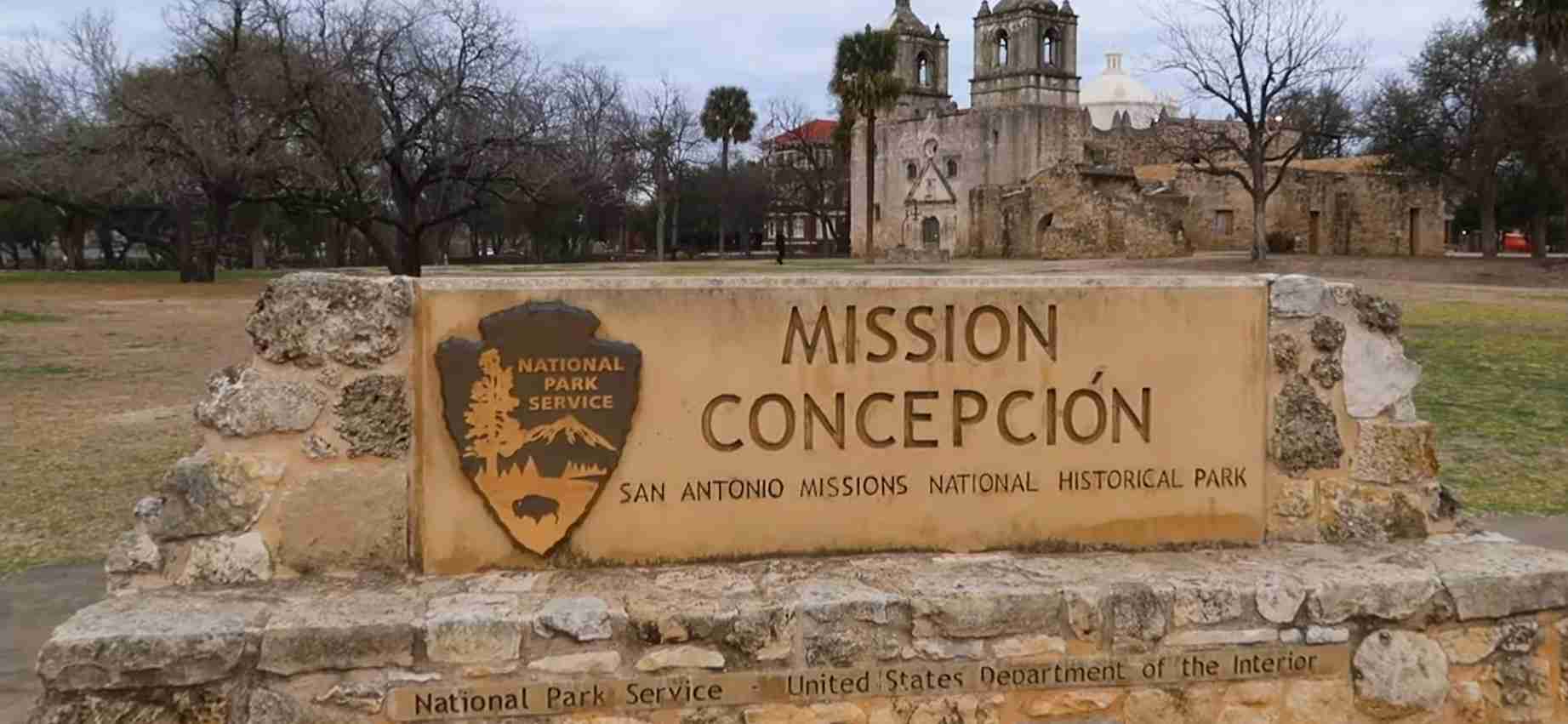
Mission Concepción holds the distinction of being the oldest unrestored stone church in America, completed in 1755 and maintaining its original structural integrity without major reconstruction for nearly three centuries. The mission’s massive stone walls still bear remnants of original frescoes painted by indigenous artisans, offering glimpses into the fusion of Spanish Catholic imagery with Native American artistic techniques that characterized the cultural interchange at these frontier outposts. Mission Concepción’s preservation stems from its solid construction using local limestone and the relatively stable climate of southern Texas, which protected the structure from the deterioration that affected many other colonial-era buildings. The church’s symmetrical design, small carefully placed windows that filter natural light, and intact architectural elements make it an invaluable resource for understanding authentic Spanish Colonial religious architecture without the interpretive challenges introduced by later restoration work. Visitors to Mission Concepción experience an unaltered 18th-century worship space that maintains the atmosphere and visual character that indigenous converts and Franciscan friars would have encountered during the mission’s active years.
How Did the Missions Transform Coahuiltecan Culture?
The San Antonio Missions fundamentally transformed Coahuiltecan society from autonomous bands of nomadic hunter-gatherers into concentrated agricultural communities integrated into Spanish colonial governance, resulting in the complete disappearance of traditional Coahuiltecan culture by the time of mission secularization in 1824. Before the missions, Coahuiltecan peoples lived in small autonomous groups of 100 to 300 individuals, moving seasonally to exploit different food sources, carrying possessions on their backs, and occupying temporary brush huts adapted to warm climates and mobile lifestyles. The mission system concentrated these dispersed bands into permanent settlements where they learned European-style irrigation farming of corn, beans, and wheat, livestock ranching, and crafts including weaving, blacksmithing, carpentry, and masonry, transitioning to sedentary agricultural life within a single generation. Franciscan missionaries structured daily life around mandatory Catholic instruction, prayers three times daily, and labor in mission fields and workshops, while teaching Spanish language, customs, and governance systems that replaced traditional cultural practices. Disease introduced by European contact had already depleted Coahuiltecan populations before the missions, and pressures from Apache and Comanche raiders made the protected mission communities appealing despite the cultural assimilation demands, ultimately leading to the complete integration of remaining Coahuiltecan peoples into Spanish-speaking mestizo communities without preservation of their original languages, religious practices, or social structures.
Extended multi-day tours – 5+ days
Featured Texas Multi-Day Tour Packages
5 days
Dia de Los Muertos in San Antonio
- ✓ Comprehensive Texas tour
- ✓ Expert local guides included
- ✓ All accommodation arranged
- ✓ Transportation provided
7 days
Great Texas Stories: A Journey Through Cities, Nature, and Adventure
- ✓ Booking needs min. 2 travelers
8 days
Big Bend Exploring and Hiking (Women-Only)
- ✓ Comprehensive Texas tour
- ✓ Expert local guides included
- ✓ All accommodation arranged
- ✓ Transportation provided
Multi-day tour packages powered by TourRadar. Prices and availability subject to change.
Introduction: Spanish Colonial Heritage on the Texas Frontier
The San Antonio Missions stand as North America’s most complete example of Spanish frontier missionary architecture and the Spanish Crown’s systematic approach to colonization, evangelization, and territorial defense in New Spain’s northern reaches. Established by Franciscan missionaries between 1718 and 1731 along a 12.4-kilometer stretch of the San Antonio River basin, these five mission complexes transformed the landscape and indigenous societies of southern Texas through an ambitious program combining religious conversion, agricultural development, and military protection. The missions served as self-sustaining communities where Spanish friars and indigenous Coahuiltecan peoples engaged in cultural interchange that produced architectural elements blending Catholic symbolism with indigenous natural designs, agricultural systems adapting Spanish irrigation techniques to Texas conditions, and social structures merging European governance with Native American labor organization.
UNESCO’s inscription of the San Antonio Missions as a World Heritage Site in 2015 recognized their exceptional universal value as examples of cultural exchange that fundamentally altered all participating societies while creating foundations for modern San Antonio’s ethnically diverse community. The designation acknowledged not only the missions’ architectural and engineering achievements but also their role in documenting the complex, often painful process through which Spanish colonialism encountered and transformed indigenous cultures. Today, four of the five missions operate as units of San Antonio Missions National Historical Park, while Mission San Antonio de Valero—better known as the Alamo—serves separately as a state historic site. All five missions maintain active Catholic parishes, continuing religious traditions established three centuries ago and providing visitors with rare opportunities to experience functional historic worship spaces.
The missions preserve comprehensive mission communities including churches, granaries, workshops, living quarters, farmlands, defensive walls, and water distribution systems, offering scholars and visitors complete documentation of how the Spanish mission system operated as an integrated social, economic, and religious enterprise. The surviving acequia irrigation systems, particularly at Mission Espada, continue operating after nearly three centuries, demonstrating sophisticated hydraulic engineering that enabled agriculture in semi-arid Texas. The Rose Window at Mission San José exemplifies the artistic achievements possible in frontier conditions, representing some of the finest Spanish Colonial Baroque stonework in the United States. Mission Concepción’s status as the oldest unrestored stone church in America provides unaltered insights into 18th-century construction techniques and decorative programs.
Understanding the San Antonio Missions requires examining their multiple dimensions: as instruments of Spanish imperial expansion, as sites of cultural transformation and loss for indigenous peoples, as architectural and engineering achievements, as religious institutions maintaining continuous worship traditions, and as UNESCO World Heritage Sites preserving irreplaceable evidence of colonial encounter. This guide explores each mission’s unique characteristics, the broader historical context of Spanish frontier colonization, the architectural and cultural interchange that produced these distinctive structures, and practical information for experiencing these remarkable sites that continue shaping San Antonio’s identity three centuries after their establishment.
UNESCO World Heritage Designation and Global Significance
The San Antonio Missions received UNESCO World Heritage Site designation on July 5, 2015, becoming Texas’s first and only site recognized for exceptional universal value among 24 World Heritage Sites in the United States. The inscription acknowledged the missions’ demonstration of cultural interchange between Spanish colonizers and indigenous Coahuiltecan peoples, their role in establishing the Spanish colonial presence in the northern frontier of New Spain, and their preservation of complete mission communities rather than isolated structures. UNESCO evaluators emphasized Criterion (ii) of the World Heritage criteria, which recognizes properties that exhibit important interchange of human values over time or within cultural areas, determining that the San Antonio Missions illustrate exceptional examples of cultural fusion through architectural decoration combining Catholic symbols with indigenous natural designs, water distribution systems developed through collaborative engineering between Spanish and Native American knowledge, and community organization integrating European and indigenous social structures.
The nomination process involved extensive documentation of the missions’ outstanding universal value, comparative analysis with other Spanish colonial missions throughout the Americas, and demonstration of adequate protection measures through the National Park Service’s management of four missions and the Alamo’s status as a Texas state historic site. The successful designation required proving that the San Antonio Missions represent the best-preserved and most complete examples of Spanish frontier missions in the United States, surpassing the better-known California missions in architectural integrity and completeness of preserved community infrastructure. The five missions together tell a comprehensive story of Spanish colonization strategies that individual missions in other regions cannot convey, with Mission San José’s architectural elaboration, Mission Concepción’s unrestored authenticity, Mission Espada’s operational irrigation system, and Mission San Juan’s agricultural focus each contributing unique elements to the overall narrative.
World Heritage designation brought increased international recognition, enhanced tourism, and additional resources for preservation and interpretation. Economic impact studies conducted before the designation predicted increased visitation and tourism revenue, which materialized as the missions attracted visitors interested in experiencing UNESCO-recognized cultural heritage. The designation also imposed responsibilities for maintaining the sites’ outstanding universal value, requiring ongoing conservation work, visitor management strategies that protect fragile historic fabric, and interpretive programs that accurately convey the complex colonial history including indigenous perspectives on cultural transformation and loss. The World Heritage status elevated the San Antonio Missions from regional historic sites to globally significant cultural properties worthy of preservation for all humanity.
The missions join other World Heritage Sites representing Spanish colonial heritage in the Americas, including the historic centers of Mexico City, Quito, Cartagena, and Havana, but distinguish themselves as frontier rather than urban examples of Spanish colonization. Unlike missions in more densely populated regions of New Spain, the San Antonio complexes operated in contested territory subject to raids from Apache and Comanche groups, requiring defensive architecture and military protection that influenced their design and operation. This frontier character, combined with the completeness of preserved mission infrastructure and the documentation of cultural interchange with nomadic rather than sedentary indigenous peoples, provides the missions’ distinctive contribution to understanding Spanish colonial systems across diverse geographic and cultural contexts.
Historical Context: Spanish Colonization of the Texas Frontier
Spanish interest in Texas emerged from broader imperial strategies to defend and expand New Spain’s northern frontier against French encroachment from Louisiana and to secure territorial claims through establishment of permanent settlements. The Spanish Crown authorized Franciscan missionaries to establish religious outposts that would convert indigenous populations to Catholicism while creating loyal subject communities capable of supporting Spanish territorial control. This mission system, developed through two centuries of colonial experience in Mexico and South America, combined religious evangelization with economic development, military defense, and cultural assimilation, operating under joint financing between the Spanish government and the Franciscan order made possible by Spain’s union of church and state.
The first San Antonio mission, Mission San Antonio de Valero, was founded on May 1, 1718, by Franciscan friar Antonio de Olivares near the headwaters of the San Antonio River, initiating Spanish presence in the region. The establishment of Presidio San Antonio de Béxar shortly afterward provided military protection for the mission and demonstrated the integrated civil-religious-military structure characterizing Spanish frontier colonization. The location along the San Antonio River offered crucial water resources for irrigation agriculture, while the river basin’s geography provided some defensive advantages and connections to established Spanish settlements in Mexico. Between 1718 and 1731, five missions were established in the San Antonio area, with three missions relocated from eastern Texas where they had failed due to hostile indigenous groups and inadequate water resources.
The missions primarily targeted Coahuiltecan peoples, collective Spanish designation for diverse nomadic hunter-gatherer groups inhabiting southern Texas and northern Mexico who spoke different languages and maintained distinct cultural practices. These autonomous bands, typically numbering 100 to 300 individuals, followed seasonal migration patterns exploiting different food sources throughout the year, carried minimal possessions suited to mobile lifestyles, and occupied temporary brush huts adapted to warm climates. European diseases had already devastated Coahuiltecan populations before the missions, reducing their numbers and making them more vulnerable to raids from Apache and Comanche groups who had adopted horses and developed mobile raiding strategies. The missions offered Coahuiltecan peoples food security through irrigation agriculture, protection from raiders through fortified compounds and Spanish military support, and integration into Spanish colonial society, though at the cost of abandoning traditional cultures, languages, and lifeways.
The mission period extended from 1718 through 1824, encompassing more than a century of operation under changing political circumstances. The missions reached their peak populations and productivity in the mid-18th century, with Mission San José housing over 300 indigenous residents at its height. Beginning in 1793, the Spanish government initiated partial secularization, withdrawing financial support and ordering mission lands and livestock divided among indigenous converts who had been trained in agriculture and crafts. Only Mission San Antonio de Valero was fully secularized before Mexican independence in 1821, with the other four missions maintaining Franciscan presence as parish priests even after secularization of their economic functions. Full secularization came in 1824 after Mexican independence, when all Franciscan missionaries departed and the mission buildings began deteriorating through abandonment, though their churches continued serving local Catholic communities.
The transformation of Mission San Antonio de Valero into the Alamo military barracks and its role in the 1836 Texas Revolution represents a later chapter in the missions’ history, demonstrating how colonial religious infrastructure was repurposed for military and political purposes. The thirteen-day siege of the Alamo in February-March 1836, where 188 Texas rebels fought Mexican General Antonio López de Santa Anna’s army of approximately 5,000 troops, transformed the former mission into a symbol of Texan independence and American frontier mythology. This transformation from religious to military to patriotic symbol illustrates the multiple layers of meaning and use that historic structures accumulate across centuries, with the Alamo’s fame sometimes overshadowing the broader story of Spanish colonial missions and their impacts on indigenous societies.
Mission San Antonio de Valero: The Alamo
Mission San Antonio de Valero, founded in 1718 as the first San Antonio mission, achieved global fame as the Alamo following the 1836 battle during the Texas Revolution, but its original role as a Spanish frontier mission established patterns followed by later missions in the chain. Father Antonio de Olivares selected the site near San Pedro Springs for its abundant water supply, establishing a mission compound that initially served Coahuiltecan groups willing to accept Spanish protection and Catholic instruction. The mission relocated to its present downtown location in 1724, where construction of the stone church began but was never completed during the mission’s active religious period. The unfinished church, with walls completed only to the cornices by the time the mission was secularized in 1793, became the iconic structure that served as a fortress during the 1836 siege.
The mission’s conversion to military use began in the early 1800s when Spanish cavalry from Álamo de Parras, Coahuila occupied the former religious compound, giving the site its familiar name. The Alamo Company’s presence transformed the mission from a religious and agricultural community into a military barracks, a function it maintained through various political transitions. During the Texas Revolution, the improvised fortress consisted of the former mission church, surrounding walls, and additional defensive positions constructed by the defenders. The famous battle of February 23 to March 6, 1836 resulted in the deaths of all 188 defenders including William B. Travis, James Bowie, and Davy Crockett, though their resistance became a rallying point for Texan independence forces who defeated Santa Anna weeks later at San Jacinto.
The church façade, one of the most recognizable structures in American history, received its distinctive upper portion in 1849 when the U.S. Army reconstructed the damaged building for use as a warehouse. The curved parapet that defines the Alamo’s silhouette was not part of the original Spanish mission design but rather a 19th-century American addition, demonstrating how the structure evolved through successive uses and modifications. The four sculptural niches on the façade, occupied by statues of St. Francis and St. Dominic with two remaining empty, represent original Spanish baroque decorative elements that survived the battle damage and subsequent alterations. The State of Texas purchased the Alamo in 1883, initiating its transformation into a historic shrine commemorating Texas independence rather than Spanish colonial mission heritage.
Today the Alamo operates separately from San Antonio Missions National Historical Park, managed by the Alamo Trust under the Texas General Land Office. Admission remains free, though enhanced tours and special programs carry fees. More than 2.5 million visitors annually explore the church, museum exhibits on the Texas Revolution and Texas history, and the Alamo Gardens. The site’s interpretation has gradually expanded beyond Texas Revolution mythology to acknowledge its Spanish mission origins and the complex colonial history preceding the 1836 battle. The Alamo’s inclusion in the UNESCO World Heritage designation recognizes its foundational role in the mission chain despite its later transformation, though its separate management creates interpretive challenges in presenting the unified story of Spanish colonial missions.
The Alamo’s unfinished state during the mission period reflects challenges facing frontier religious establishments operating far from Spanish colonial centers with limited resources and skilled craftsmen. The mission never achieved the architectural elaboration of Mission San José, completed decades later when the mission system was more established and indigenous labor forces were better trained in European construction techniques. Understanding the Alamo requires recognizing its dual significance as both the origin point of Spanish colonization in San Antonio and the site where Mexican governmental authority over Texas ended, making it a palimpsest of colonial, independence, and mythmaking histories that continue influencing how Americans understand frontier heritage and national identity.
Mission Nuestra Señora de la Purísima Concepción de Acuña: Architectural Authenticity
Mission Concepción holds the distinction of being the oldest unrestored stone church in America, offering unaltered insights into 18th-century Spanish Colonial religious architecture and decorative programs. Originally established in eastern Texas in 1716, the mission relocated to San Antonio in 1731 seeking better water resources and security from hostile groups. Construction of the present stone church began shortly after relocation, with completion in 1755 producing a structure that has survived nearly three centuries without major reconstruction. The mission’s exceptional preservation stems from solid limestone construction using local materials, the relatively stable southern Texas climate, and continuous use as a Catholic parish that maintained the building without the deterioration affecting abandoned structures.
The church exemplifies Spanish Colonial religious architecture adapted to frontier conditions, featuring massive stone walls that provide thermal mass for temperature regulation in Texas’s hot climate, small carefully placed windows that control interior light while maintaining defensive strength, and a symmetrical design reflecting baroque principles simplified for construction by indigenous labor under Franciscan direction. The twin bell towers, though incomplete compared to original plans, demonstrate the ambitious architectural vision guiding frontier missions. The church’s proportions, with its substantial width relative to length, reflect practical considerations for accommodating large congregations of indigenous converts while maintaining structural stability with available construction technology.
Mission Concepción’s most remarkable features are the remnants of original frescoes painted by indigenous artisans on interior walls and ceilings. These delicate traces of vibrant religious imagery combining Spanish Catholic iconography with Native American artistic techniques provide invaluable evidence of cultural interchange occurring within mission communities. The frescoes, which once covered extensive wall surfaces with colorful geometric patterns, religious scenes, and decorative motifs, now survive as faint outlines and fragments where original pigments have adhered to limestone plaster. Conservation challenges for these irreplaceable artworks include controlling interior humidity, preventing biological growth, and protecting surfaces from visitor contact while maintaining the church’s function as an active worship space.
The mission complex beyond the church includes foundations and partial walls of the convento where Franciscan friars lived, granary structures for storing agricultural produce, and perimeter walls defining the original mission compound. Archaeological investigations have revealed details of daily life including workshops for blacksmithing and carpentry, living quarters for indigenous neophytes organized around the central plaza, and irrigation channels bringing water from the San Antonio River to mission farmlands. The mission’s location just south of downtown San Antonio, closer to the urban core than the other three park missions, makes it readily accessible while presenting preservation challenges from urban development pressures.
Mission Concepción’s unrestored condition provides scholars and visitors with authentic 18th-century fabric unmarred by later interpretive additions or reconstructions that affect even well-intentioned preservation work at other missions. Architectural historians can examine original construction techniques including the use of irregular fieldstones set in lime mortar, adobe brick for interior partitions, and the integration of timber elements for roof supports. The weathering patterns, structural settling, and material deterioration visible at Mission Concepción document how these frontier buildings responded to three centuries of Texas weather, offering lessons for conserving similar historic structures. The National Park Service’s stewardship emphasizes stabilization and preservation rather than restoration, maintaining the church’s authenticity as a primary interpretive value.
Mission San José y San Miguel de Aguayo: Queen of the Missions
Mission San José distinguishes itself as the largest, most architecturally elaborate, and most extensively restored of the San Antonio missions, earning designation as the “Queen of the Missions” through exceptional Spanish Colonial Baroque features and comprehensive documentation of mission community organization. Founded in 1720 by Father Antonio Margil de Jesús, an experienced Franciscan missionary who had worked throughout New Spain, Mission San José represented an ambitious expansion of Spanish presence in the San Antonio area. Father Margil identified three indigenous groups willing to join the mission and appointed their leaders as governor, judge, and sheriff of the new community, demonstrating the Spanish practice of co-opting indigenous leadership structures into colonial governance while training converts in European civic organization.
At its height in the mid-18th century, Mission San José housed approximately 350 indigenous residents in 84 two-room quarters arranged around the mission’s central plaza and surrounded by fortified walls. The mission operated as a fully self-sufficient community with extensive granaries storing surplus agricultural production, workshops for blacksmithing, carpentry, and textile production, a mill for grinding corn and wheat, and defensive bastions at the compound corners providing protection from Apache and Comanche raids. The massive limestone church, constructed primarily between 1768 and 1782, represents the culmination of mission architectural achievement in Texas, demonstrating how indigenous labor forces trained in European construction techniques could produce sophisticated baroque buildings under Franciscan direction.
The Rose Window stands as Mission San José’s most celebrated architectural feature and one of the finest examples of Spanish Colonial Baroque stonework in the United States. Located on the south wall of the church rather than the traditional west façade position, this intricately carved limestone window features elaborate floral and geometric patterns surrounding a central rosette. The window’s creator remains unknown despite romantic legends attributing it to Pedro Huizar, a Spanish carpenter and surveyor who supposedly carved it as a memorial to his sweetheart Rosa, lost at sea while traveling to join him in Texas. While this story lacks historical documentation, the window’s artistic achievement demonstrates the high level of skill present in frontier mission communities, whether through European-trained craftsmen, talented indigenous artisans learning baroque techniques, or collaborative efforts combining both traditions.
The church façade features six carved saints positioned above the entrance, representing Spanish baroque decorative programs intended to inspire religious devotion while teaching Catholic doctrine to indigenous converts through visual symbolism. The saints include figures significant to Franciscan spirituality and Mexican Catholic tradition, with careful placement conveying theological messages about intercession, virtue, and the communion of saints. Additional decorative elements combine Catholic symbols including pomegranates representing fertility and resurrection, shells used in baptism ceremonies, and thorned roses symbolizing paradise’s splendor alongside humanity’s fallen condition. These symbols served crucial communication functions in communities where Franciscan missionaries, European immigrants, and indigenous peoples spoke different languages, making visual iconography essential for teaching and transmitting religious messages.
Mission San José underwent major restoration beginning in the 1930s through Works Progress Administration programs and continuing through a $2.2 million renovation completed in 2011 that refinished interior domes, walls, and altar backdrops. This extensive restoration work makes Mission San José the most complete representation of how Spanish frontier missions appeared during their operational period, though it also means the structure contains more interpretive reconstruction than the unaltered Mission Concepción. The restored quarters surrounding the plaza, the rebuilt defensive walls, and the reconstructed granary provide visitors with comprehensive understanding of mission community layout and function, demonstrating the integration of religious, residential, agricultural, defensive, and craft activities within a single fortified compound.
The National Park Service’s main visitor center for San Antonio Missions National Historical Park is located adjacent to Mission San José, offering exhibits, an interpretive film available in English and Spanish, and ranger-led programs explaining mission history and cultural significance. The visitor center serves as the primary orientation point for visitors exploring the mission chain, providing maps, historical context, and practical information for touring all four park missions. Mission San José’s combination of architectural grandeur, comprehensive restoration, interpretive facilities, and active parish functions makes it the most visited mission in the park aside from the Alamo, offering the most accessible introduction to Spanish colonial mission heritage for general audiences.
Mission San Juan Capistrano: Agricultural Community
Mission San Juan Capistrano, established at its present location in 1731 after relocation from eastern Texas, emphasized agricultural production and craft development, operating as a working farm community that supplied food and goods to the broader mission system and Spanish settlements. The mission originally served indigenous groups in eastern Texas beginning in 1716 but relocated to San Antonio seeking improved water access and security. At its peak, Mission San Juan maintained extensive farmlands along the San Antonio River growing corn, beans, squash, melons, and sweet potatoes using irrigation systems fed by acequias channeling river water to fields. The mission also developed substantial ranching operations with cattle, sheep, goats, and horses grazing on surrounding grasslands, providing meat, hides, wool, and transportation animals.
The mission complex reflects its agricultural focus through relatively modest religious architecture compared to Mission San José, with resources concentrated on productive facilities including granaries, workshops, and irrigation infrastructure rather than elaborate church decoration. The stone church, though smaller and simpler than San José’s baroque masterpiece, maintains structural integrity and continues functioning as an active Catholic parish. The church’s straightforward design, with thick stone walls, small windows, and minimal ornamentation, represents typical frontier mission architecture where practical considerations of construction difficulty, material availability, and limited skilled labor shaped building programs more than aesthetic ambitions.
Mission San Juan’s emphasis on craft production made it a center for textile manufacturing within the mission chain, with workshops producing woven cloth from wool and cotton grown on mission lands. Indigenous residents learned European weaving techniques using looms introduced by Spanish craftsmen, creating fabrics for clothing, bedding, and trade. Blacksmithing operations produced iron tools, hardware, and implements essential for agriculture and construction, demonstrating the missions’ goal of creating self-sufficient communities capable of maintaining themselves without ongoing supply from Spanish colonial centers. The mission’s carpentry workshops built furniture, doors, windows, and structural elements for expanding mission buildings and served as training centers where indigenous apprentices learned European woodworking techniques.
The mission’s irrigation system, fed by the Espada acequia that also served Mission Espada downstream, enabled reliable crop production in semi-arid southern Texas where rainfall patterns made unirrigated agriculture precarious. The acequia system, combining Spanish hydraulic engineering knowledge with indigenous understanding of local hydrology, transformed the mission’s relationship with the San Antonio River from opportunistic use of seasonal flows to controlled water distribution supporting planned agricultural cycles. The infrastructure required for acequia construction and maintenance, including channels, gates, dams, and aqueducts, represents significant engineering achievement accomplished by indigenous labor under Spanish direction, demonstrating technology transfer occurring within the mission system.
Archaeological investigations at Mission San Juan have revealed extensive evidence of daily life in a working mission community, including foundations of living quarters arranged around the central plaza, workshop areas with debris from blacksmithing and carpentry, granary structures for storing harvested crops, and refuse middens containing food remains, broken tools, and discarded pottery. These archaeological resources complement the standing structures in documenting how mission communities functioned as integrated systems combining religious instruction, agricultural production, craft manufacturing, and social organization. The National Park Service maintains Mission San Juan as a unit of San Antonio Missions National Historical Park, providing interpretive programs emphasizing the mission’s agricultural and craft heritage alongside its religious and cultural significance.
Mission San Francisco de la Espada: Irrigation Heritage
Mission Espada, the southernmost of the San Antonio missions, preserves the best-surviving example of colonial irrigation infrastructure in the United States, with the Espada acequia and aqueduct continuing to deliver water nearly three centuries after construction. Established in eastern Texas in 1690 and relocated to San Antonio in 1731, the mission occupied the most remote position in the defensive chain of missions along the San Antonio River, making it particularly vulnerable to raids from Apache and Comanche groups while also providing the final agricultural settlement protecting Spanish interests on the frontier. The mission’s distance from central Spanish authority meant it operated with greater autonomy than missions closer to Presidio San Antonio de Béxar, developing self-reliance in agriculture, defense, and community organization.
The Espada acequia system represents sophisticated hydraulic engineering adapted to Texas conditions, channeling water from the San Antonio River through 8 kilometers of canals to irrigate mission farmlands producing corn, beans, cotton, and vegetables. The system’s most remarkable feature is the stone aqueduct carrying the acequia across Piedras Creek, a multi-arched structure built with limestone blocks that continues functioning after 290 years. The aqueduct demonstrates mastery of Roman engineering principles adapted through Spanish colonial experience, with precise calculations of water flow, structural loading, and foundation stability required to create a permanent crossing that would withstand flooding, structural settling, and centuries of use. The acequia’s continued operation provides living evidence of technology transfer between Spanish engineers and indigenous laborers who constructed and maintained these systems.
The mission church, though damaged by fire in 1826 that destroyed most mission buildings, retains its chapel, granary, and sections of compound walls demonstrating original construction techniques. The surviving structures illustrate typical mission building methods using local limestone, adobe brick, and timber elements combined with lime mortar. The church’s unusual door and stone archway, distinctive architectural features that have become photographic icons of the mission, reflect practical considerations of security, climate control, and structural stability while maintaining baroque decorative intentions within frontier limitations. The espadaña or freestanding bell wall, a common feature in Spanish colonial churches where full bell towers proved too difficult or expensive to construct, rises above the church roof providing space for bells while avoiding the structural challenges of tower construction.
Mission Espada developed extensive farming operations supporting both the mission community and broader Spanish settlements, with archaeological evidence revealing crop storage facilities, workshops for processing agricultural products, and irrigation channels distributing water throughout mission lands. The mission’s agricultural focus shaped its physical layout, with greater proportions of the compound dedicated to granaries, workshops, and storage facilities relative to religious and residential structures compared to missions emphasizing other functions. The integration of acequia maintenance into mission routines required indigenous residents to develop expertise in hydraulic management, channel cleaning, gate operation, and infrastructure repair, skills they applied to agricultural development throughout the San Antonio area.
The mission grounds include the Tree of Life (Árbol de Vida), a contemporary art installation collecting personal stories and memories from San Antonio community members, demonstrating how historic mission sites continue serving as gathering places and cultural touchstones for modern descendants of the diverse populations that created and transformed these communities. This integration of contemporary interpretation with historic preservation reflects evolving approaches to heritage management that acknowledge ongoing cultural significance alongside architectural and archaeological values. The National Park Service provides guided tours of Mission Espada on the first Saturday of each month, with self-guided walking tours available during regular park hours, allowing visitors to explore the irrigation system, historic structures, and grounds at their own pace while learning about the mission’s agricultural and engineering heritage.
Spanish Colonial Baroque Architecture and Indigenous Influences
The architecture of the San Antonio Missions exemplifies Spanish Colonial Baroque style adapted to frontier conditions and executed through collaboration between Spanish-trained craftsmen and indigenous laborers learning European construction techniques. Baroque architecture, popular in Spain and throughout Europe during the 17th and 18th centuries, emphasized ornate decoration, dramatic visual effects, emotional engagement through sensory experience, and integration of multiple art forms including sculpture, painting, and architecture. The Franciscan missionaries who directed mission construction sought to create visually compelling structures that would inspire religious devotion among indigenous converts while demonstrating Spanish cultural sophistication and permanent colonial presence, making elaborate churches valuable investments despite the challenges of frontier construction.
The missions employed local materials readily available in the San Antonio area, particularly limestone quarried from nearby deposits along creek beds and the San Antonio River, clay for adobe brick and roof tiles, and timber for structural supports and roof framing. This reliance on local materials distinguished the San Antonio missions from colonial architecture in wealthier regions of New Spain where imported materials and more varied stone types created different aesthetic effects. The abundance of workable limestone enabled construction of permanent stone structures rather than the adobe and timber buildings common in areas lacking suitable stone, giving the San Antonio missions greater durability and architectural presence than many other frontier outposts.
Indigenous labor, primarily from Coahuiltecan groups who had no prior building traditions or construction expertise, learned European masonry, carpentry, and decorative carving techniques through hands-on training by Spanish craftsmen traveling between missions. This technology transfer occurred rapidly, with indigenous workers progressing from basic masonry to sophisticated stonework capable of executing baroque decorative programs within one or two generations. The Rose Window at Mission San José demonstrates the high skill levels achieved by mission craftsmen, whether Spanish masters, trained indigenous artisans, or collaborative teams combining both expertise. The fusion of Spanish baroque design principles with execution by indigenous labor produced distinctive architectural character marking the San Antonio missions as products of cultural interchange rather than pure transplants of Spanish building traditions.
The decorative programs adorning mission churches combined Catholic symbolism with indigenous artistic sensibilities, creating hybrid visual languages that communicated religious messages across cultural and linguistic barriers. The elaborate façade carvings at Mission San José include saints significant to Franciscan spirituality, symbolic elements from Catholic tradition including pomegranates, shells, and roses, and geometric patterns reflecting indigenous aesthetic preferences. These decorative elements served didactic functions, teaching complex theological concepts through visual imagery to communities where spoken language barriers complicated verbal instruction. The integration of indigenous natural designs inspired by native flora and fauna alongside Catholic symbols represents conscious adaptation of European iconographic programs to frontier contexts where making Christianity comprehensible to nomadic hunter-gatherers required visual communication strategies.
The mission compounds’ defensive architecture reflects the frontier context where raids from Apache and Comanche groups threatened isolated settlements, requiring fortifications integrating military and religious functions. The thick perimeter walls, defensive bastions at compound corners, and limited entry points demonstrate how mission designers addressed security concerns without compromising the religious and agricultural purposes driving mission establishment. These defensive features distinguished frontier missions from religious establishments in pacified regions of New Spain, creating architectural types specific to contested territories where Spanish colonization faced active indigenous resistance. The integration of soldiers’ quarters within or adjacent to mission compounds, the positioning of missions at intervals providing mutual support, and the strategic locations along water sources illustrate comprehensive colonial planning addressing multiple objectives through single architectural programs.
Acequia Irrigation Systems: Engineering Achievement
The acequia irrigation systems serving the San Antonio missions represent remarkable hydraulic engineering achievements that transformed semi-arid Texas landscape into productive agricultural regions supporting permanent settlement. The acequias combined Spanish irrigation knowledge developed through centuries of experience in Mediterranean climates with indigenous understanding of local hydrology, creating water distribution networks that enabled reliable crop production despite irregular rainfall patterns. The five missions shared water from the San Antonio River through a coordinated system of channels, gates, dams, and distribution points that required sophisticated planning, precise construction, and ongoing maintenance by mission communities working cooperatively to manage shared water resources.
The Espada acequia, serving both Mission San Juan and Mission Espada, extends approximately 8 kilometers from its diversion point on the San Antonio River, demonstrating the scale and complexity of colonial irrigation infrastructure. The system required accurate surveying to maintain proper channel gradients ensuring water flow without excessive velocity causing erosion, engineering calculations determining channel dimensions for required water volumes, and construction techniques creating watertight channels preventing excessive seepage losses. The stone aqueduct carrying the acequia across Piedras Creek represents the system’s most technically demanding element, with multi-arched construction supporting the water channel above flood-prone creek beds using principles adapted from Roman aqueduct engineering transmitted through Spanish architectural traditions.
Construction of the acequia systems required mobilizing indigenous labor forces for extensive excavation, stone quarrying and placement, channel lining, and structural building under Spanish engineering direction. The labor demands for irrigation infrastructure exceeded those for religious buildings, with kilometers of channels requiring excavation, maintenance access paths, control structures, and defensive measures protecting water supplies from contamination or sabotage. The indigenous workers who built these systems acquired expertise in hydraulic engineering, surveying, masonry, and water management that they applied to agricultural development throughout the region, making the acequia systems vehicles for technology transfer extending beyond the mission communities themselves.
The continued operation of portions of the Espada acequia after nearly 300 years demonstrates remarkable durability in hydraulic infrastructure design and construction quality. The system continues delivering water to modern agricultural users through traditional channels and gates, making it one of the oldest continuously operating irrigation systems in the United States. This functional continuity provides valuable lessons for contemporary water management, demonstrating sustainable approaches to water distribution in semi-arid regions that modern engineering might productively study. The acequia associations that organized cooperative water management among users established governance patterns influencing Texas water law and irrigation practice, extending the missions’ impact on regional development far beyond their colonial religious purposes.
The preservation and interpretation of the acequia systems presents unique challenges, as these linear features extending across multiple properties require coordination among government agencies, private landowners, and water users maintaining functional portions. The National Park Service works with local communities to protect acequia remnants within park boundaries while interpreting the broader systems that connected missions to water sources and agricultural lands. Archaeological investigations along acequia routes reveal construction techniques, modification episodes, and use patterns documenting how these systems evolved across centuries, providing evidence of adaptation to changing environmental conditions, water availability fluctuations, and agricultural practices.
Cultural Interchange and Indigenous Transformation
The San Antonio Missions exemplify complex cultural interchange between Spanish colonizers and indigenous Coahuiltecan peoples that fundamentally transformed both societies while creating new hybrid cultures combining European and Native American elements. The UNESCO World Heritage designation specifically recognizes this cultural interchange as the missions’ most significant universal value, demonstrating how frontier colonization produced cultural fusion rather than simple replacement of indigenous traditions with European imports. The interchange manifested in architectural decoration combining Catholic and indigenous symbols, agricultural systems blending Spanish irrigation techniques with Native American crop knowledge, social organization merging European governance with indigenous labor patterns, and religious syncretism incorporating indigenous spiritual concepts into Catholic practice.
The transformation experienced by Coahuiltecan peoples entering the missions represents one of the most rapid and complete cultural changes documented in the historical record, with nomadic hunter-gatherers becoming settled agricultural communities within a single generation. This transformation required abandoning traditional seasonal migration patterns, adopting sedentary lifestyles concentrated in mission compounds, learning European farming and ranching techniques, acquiring craft skills including masonry, carpentry, blacksmithing, and weaving, converting to Catholicism with regular prayer and mass attendance, adopting Spanish language and governance systems, and accepting Franciscan authority over daily routines and community decisions. The speed and completeness of this transformation reflected multiple pressures including disease devastation reducing indigenous populations, Apache and Comanche raids threatening traditional territories, food security offered by irrigation agriculture, and Spanish military protection available within mission compounds.
The interchange operated in multiple directions despite fundamental power imbalances favoring Spanish colonizers, with indigenous peoples influencing mission architecture, agricultural practices, and community organization even as they adopted European technologies and religious beliefs. The decorative elements combining Catholic symbols with indigenous natural designs reflect indigenous artisans’ contributions to baroque architectural programs, creating visual languages distinct from purely Spanish baroque expression. The adaptation of Spanish irrigation techniques to Texas hydrology incorporated indigenous knowledge of local water sources, soil conditions, and climate patterns, producing acequia systems that succeeded where purely transplanted Mediterranean approaches might have failed. The integration of indigenous foods including corn, beans, squash, and native fruits into mission agriculture created agricultural systems more suited to Texas environments than exclusive reliance on European crops.
The cultural interchange occurred within colonial power structures that severely disadvantaged indigenous peoples, making it essential to recognize the violence, coercion, and cultural destruction accompanying even voluntary indigenous participation in mission communities. The Franciscan friars exercised authoritarian control over indigenous converts, imposing mandatory religious instruction, restricting movement outside mission compounds, punishing resistance or traditional practices, and separating children from families for intensive Catholic education. Disease continued devastating indigenous populations within mission communities despite improved nutrition from agriculture, with crowded living conditions facilitating epidemic spread and exposure to European pathogens against which indigenous peoples lacked immunity. The requirement to abandon traditional cultural practices including languages, religious ceremonies, social structures, and material culture represented profound losses that cannot be romanticized as simple cultural exchange or mutual benefit.
By the time of mission secularization in 1824, traditional Coahuiltecan culture had effectively disappeared, with remaining indigenous descendants fully integrated into Spanish-speaking mestizo communities without preservation of original languages, religious practices, or cultural identities. This cultural extinction represents the ultimate outcome of the mission system’s transformative power, demonstrating that however remarkable the cultural interchange producing mission architecture and communities, the fundamental direction was toward indigenous assimilation into Spanish colonial society rather than preservation or equal blending of cultures. Contemporary interpretation of the missions must acknowledge both the architectural and cultural achievements produced through Spanish-indigenous interchange and the profound losses experienced by indigenous peoples whose traditional ways of life were irrevocably destroyed through colonization processes the missions embodied.
Daily Life in Mission Communities
Daily life in the San Antonio missions revolved around strict schedules combining religious observance, agricultural labor, craft production, and education in European customs under Franciscan oversight. Indigenous residents, called neophytes after receiving baptism, rose before dawn for morning prayers and mass, attended Catholic instruction sessions teaching church doctrine and Spanish language, worked in mission fields and workshops through morning and afternoon periods, participated in additional prayer services at midday and evening, and retired to their quarters in the two-room residential units arranged around the mission plaza. This regimented routine represented radical departure from traditional Coahuiltecan daily patterns, which followed seasonal rhythms dictating food gathering activities and involved autonomous decision-making within small family bands rather than communal labor directed by religious authorities.
Agricultural work occupied most neophytes’ time during growing and harvest seasons, with labor organized in work groups cultivating mission fields using irrigation agriculture techniques taught by Spanish friars and experienced indigenous farmers. The fields produced corn, beans, wheat, cotton, vegetables, and fruit crops that fed mission communities while generating surpluses for trade with Spanish settlements and other missions. Ranching operations required neophytes to learn livestock management including cattle herding, sheep and goat tending, horse training, and animal husbandry, skills that many indigenous peoples quickly mastered and applied beyond mission contexts. The agricultural calendar structured mission life with planting seasons, cultivation periods requiring weeding and irrigation management, and harvest times demanding intensive labor from entire communities.
Craft workshops within mission compounds trained indigenous workers in European manufacturing techniques producing goods for mission use and trade. Blacksmith shops taught metalworking for tools, hardware, and weapons, creating essential items unavailable through gathering or simple manufacturing. Carpentry workshops produced furniture, doors, windows, agricultural implements, and construction elements, transferring woodworking skills to indigenous peoples whose traditional material culture utilized minimal wood products. Textile workshops taught spinning, weaving, and garment construction using wool from mission sheep and cotton from mission fields, creating fabrics replacing traditional clothing made from animal hides. These workshops functioned simultaneously as training centers, production facilities, and sites of cultural transformation where indigenous workers internalized European craft traditions and work disciplines.
Religious instruction permeated daily life through mandatory attendance at three daily masses, catechism classes teaching Catholic doctrine, preparation for sacraments including baptism, confirmation, marriage, and last rites, and participation in religious festivals and processions marking the church calendar. The Franciscan friars emphasized visual teaching methods given language barriers between Spanish missionaries and Coahuiltecan converts, using church decoration, religious art, dramatic religious theater, and processional ceremonies to communicate theological concepts and proper religious behavior. The missions’ baroque churches served as theatrical spaces where religious instruction occurred through sensory experience including visual splendor, musical performances, incense and candle smoke, and choreographed liturgical actions designed to create emotional engagement with Catholic faith.
Social organization within mission communities combined Spanish governance models with adapted indigenous leadership structures, with elected positions including governor, judge, and sheriff filled by indigenous residents under Franciscan supervision. This governance system taught European civic concepts while providing indigenous leaders with authority over daily community management, creating buffer positions between Spanish friars and common neophytes. Marriage patterns within missions encouraged permanent unions blessed by Catholic marriage sacraments, replacing traditional Coahuiltecan marriage customs with European models emphasizing monogamy, religious sanction, and permanent commitment. The residential quarters arranged around the mission plaza housed nuclear families in two-room units, introducing European domestic arrangements contrasting with traditional Coahuiltecan housing and family organization.
Mission Secularization and Subsequent History
The secularization of the San Antonio missions occurred in two phases reflecting changing political circumstances in New Spain and independent Mexico. Partial secularization began in 1793 when the Spanish Crown, facing financial pressures from European wars and questioning the missions’ continued utility, withdrew government funding and ordered mission lands and livestock distributed among indigenous residents who had received sufficient training in agriculture and crafts to function as independent farmers and ranchers. This policy intended to transition missions from religious institutions dependent on government support to self-sustaining parishes served by secular clergy, freeing Franciscan missionaries for frontier work in unconverted regions while establishing indigenous communities as productive Spanish subjects capable of defending and settling contested territories.
Only Mission San Antonio de Valero achieved full secularization under Spanish rule, with the mission compound converted to military barracks that became the Alamo. The other four San Antonio missions experienced partial secularization that distributed economic resources while maintaining Franciscan friars as parish priests serving indigenous and Spanish settler communities. This intermediate status reflected the missions’ continued importance as Catholic worship centers and the practical difficulties of recruiting secular clergy willing to serve remote frontier parishes. The indigenous residents who received land allotments during partial secularization became the first private landowners in the San Antonio area, establishing property ownership patterns that influenced subsequent regional development.
Full secularization followed Mexican independence in 1821, with the new government completing the process initiated under Spanish rule. In 1824, all Franciscan missionaries departed the San Antonio missions, transferring their religious duties to diocesan priests while indigenous landowners assumed complete control over former mission agricultural lands. The departure of Franciscan oversight removed the organizational structure maintaining mission buildings, agricultural systems, and community cohesion, initiating a period of decline as structures deteriorated without coordinated maintenance. The mission churches continued functioning as parish centers serving local Catholic populations, but the surrounding compounds, workshops, granaries, and residential quarters fell into disrepair as residents dispersed to individual farmsteads and as changing economic conditions made mission-style cooperative agriculture less viable.
The 19th century brought varied uses and abuses to the abandoned mission structures, with treasure hunters damaging buildings searching for legendary Spanish gold, souvenir collectors removing architectural elements, and squatters occupying deteriorating quarters. Mission San José suffered particularly extensive damage when troops from both Mexican and Texan forces used the compound as military barracks during the 1835-1836 Texas Revolution, with soldiers’ modifications and combat damage accelerating structural decay. The U.S. Army similarly occupied several missions after Texas annexation, adapting religious buildings for military purposes that contributed to their deterioration. These military occupations transformed missions from religious establishments into contested political symbols, with their Spanish colonial heritage subordinated to narratives of Texas independence and American expansion.
Restoration efforts began in the early 20th century as preservationists recognized the missions’ historical and architectural significance. The Works Progress Administration funded extensive reconstruction at Mission San José during the 1930s, rebuilding collapsed walls, reconstructing the granary and residential quarters, and stabilizing the church structure. These early restorations, guided by archaeological evidence and historical documentation where available, established the mission as a model for Spanish colonial preservation while also introducing some interpretive elements not strictly based on original construction. The establishment of San Antonio Missions National Historical Park in 1983 brought National Park Service resources and expertise to preservation and interpretation, ensuring long-term protection for Mission Concepción, Mission San José, Mission San Juan, and Mission Espada under federal management.
Visiting the San Antonio Missions: Practical Information
The San Antonio Missions offer free admission to all visitors, with San Antonio Missions National Historical Park operating four missions open daily from sunrise to sunset and visitor centers at Mission San José and Mission Espada maintaining hours from 9 AM to 5 PM. The National Park Service provides ranger-led tours focusing on Mission San José, offered daily without advance reservations, while interpretive programs, special events, and educational activities occur throughout the year. The Alamo, managed separately from the national historical park, maintains its own visitation schedule with the grounds open daily and guided tours available for fees beyond the free general admission.
The Mission Reach Trail provides an 12.4-kilometer pedestrian and bicycle path connecting all four park missions along the San Antonio River, offering scenic approaches emphasizing the missions’ relationship with the water resources that enabled their agricultural operations. The trail features native landscaping, interpretive signage explaining mission history and ecology, rest areas with benches and water fountains, and connections to the broader San Antonio River Walk system extending into downtown. Visitors can explore all four park missions in a single day by bicycle, typically requiring 3-4 hours for cycling and basic touring, or take 6-8 hours for comprehensive walking tours allowing extended time at each site. Those preferring automobile access can drive between missions via city streets, with parking available at each mission.
Each mission offers distinct interpretive experiences emphasizing different aspects of Spanish colonial heritage. Mission San José, as the largest and most restored mission, provides the most comprehensive introduction to mission architecture and community organization, with the main visitor center offering exhibits, an orientation film available in English and Spanish, bookstore, and ranger assistance. Mission Concepción showcases authentic 18th-century architecture and original frescoes without restoration modifications, appealing to visitors interested in unaltered historic structures. Mission San Juan emphasizes agricultural heritage and craft production, with interpretive programs demonstrating traditional farming and artisan techniques. Mission Espada features the remarkable acequia system and aqueduct, highlighting Spanish hydraulic engineering achievement.
All four mission churches function as active Catholic parishes celebrating regular mass and sacramental services, requiring visitors to respect religious activities and observe appropriate behavior in sacred spaces. Mass schedules vary by mission, with most celebrating services on Saturday evenings and Sunday mornings, though daily masses also occur at some missions. Visitors should consult current schedules before planning visits if they wish to attend services or to avoid peak worship times if they prefer quiet contemplation of architectural features. The active parish status adds living dimension to the missions’ heritage, demonstrating continuity of religious traditions across three centuries and providing opportunities to experience historic churches as functional sacred spaces rather than museum exhibits.
Photography is permitted throughout the missions except during religious services, with the baroque architecture, decorative elements, and landscape settings providing exceptional opportunities for architectural and cultural heritage photography. The missions’ limestone construction creates dramatic effects in early morning and late afternoon light, when low sun angles emphasize texture and architectural details while avoiding harsh midday shadows. The integration of historic structures with natural landscapes along the San Antonio River offers compositional opportunities combining built heritage with ecological contexts. Visitors should remain respectful of worshippers, avoid disrupting ranger programs, and follow National Park Service guidelines protecting fragile architectural features from contact damage.
The missions host special events throughout the year celebrating their cultural heritage and continuing community connections, including the Semana de las Misiones (Week of the Missions) in early August featuring lectures, music and dance performances, craft demonstrations, and food representing the diverse cultural traditions that created and transformed mission communities. Religious festivals including Holy Week observances, feast days for patron saints, and seasonal celebrations draw participants from throughout San Antonio, demonstrating how the missions continue serving as gathering places and cultural touchstones. These events provide opportunities to experience the missions as living cultural landscapes rather than static historic sites, emphasizing ongoing significance alongside historical importance.
Conservation Challenges and Preservation Efforts
Preserving the San Antonio Missions presents complex challenges requiring balance between maintaining historic fabric, accommodating active religious use, providing public access, and managing environmental threats to 300-year-old structures. The National Park Service applies conservation principles prioritizing minimal intervention, reversibility of treatments, compatibility with historic materials, and distinction between original fabric and later restoration work. These principles guide decisions about structural stabilization, weather protection, material replacement, and interpretive reconstruction, with each intervention requiring careful evaluation of preservation benefits against potential impacts on historic authenticity.
The limestone construction that gives the missions their distinctive appearance and exceptional durability also presents conservation challenges as porous stone absorbs moisture, supports biological growth, and deteriorates through freeze-thaw cycles, salt crystallization, and chemical weathering. Conservation treatments address these threats through controlled cleaning removing harmful deposits without damaging stone surfaces, consolidation of friable limestone using compatible materials that stabilize deteriorating areas, and application of breathable water repellents reducing moisture penetration while allowing vapor transmission. The delicate frescoes at Mission Concepción require particularly careful environmental monitoring controlling interior humidity and temperature to prevent pigment loss and biological growth while maintaining the building’s function as an active church.
Climate change presents emerging threats to mission preservation through increased temperature extremes, changing precipitation patterns affecting irrigation systems and flooding risks, and potential increases in severe weather events stressing historic structures. Conservation planning must address these long-term threats through monitoring programs tracking environmental impacts on historic fabric, adaptation strategies protecting vulnerable features, and documentation ensuring knowledge preservation even if physical structures deteriorate. The missions’ location in an urban environment creates additional pressures from vibration, air pollution, groundwater changes, and development encroachment requiring ongoing vigilance and coordination with city planning to protect mission settings and viewsheds.
The acequia irrigation systems present unique preservation challenges as linear features extending across multiple properties with portions still functioning for agricultural water delivery. Preservation requires cooperation among government agencies, private landowners, water users, and conservation organizations to protect remaining acequia segments while respecting property rights and continuing agricultural traditions. Archaeological documentation of acequia routes, construction techniques, and modification episodes provides evidence supporting preservation decisions and interpretation even where physical remains have disappeared. The tension between preserving historic irrigation systems and accommodating modern water management illustrates broader challenges of heritage conservation in living landscapes where historic features remain functionally integrated into contemporary life.
The UNESCO World Heritage designation brings both resources and responsibilities for mission preservation, with international recognition attracting funding, expertise, and public attention while imposing obligations to maintain the sites’ outstanding universal value. World Heritage status requires periodic reporting on conservation conditions, management plans addressing identified threats, and commitment to preserving not only individual structures but the broader cultural landscape encompassing mission compounds, agricultural lands, irrigation systems, and visual settings. The designation makes mission preservation a matter of international heritage stewardship rather than merely local or national concern, elevating preservation standards and accountability while providing access to international conservation expertise and best practices developed at comparable World Heritage Sites.
Educational Programs and Community Engagement
The San Antonio Missions support extensive educational programming connecting students and community members with Spanish colonial heritage through curriculum-aligned materials, ranger-led tours, Junior Ranger programs, and hands-on activities demonstrating mission life and technologies. The National Park Service develops educational resources for teachers incorporating mission history into Texas history, U.S. history, and cultural studies curricula, providing lesson plans, primary source materials, and virtual learning opportunities expanding access beyond physical visitation. School groups visiting the missions participate in guided programs tailored to different grade levels, exploring topics including Spanish colonization strategies, indigenous cultures and transformation, architectural analysis, agricultural systems, and heritage preservation.
The Junior Ranger program engages children ages 5-12 in self-guided exploration using activity booklets covering mission history, architecture, ecology, and cultural heritage, with participants earning badges after completing activities and discussing their learning with park rangers. This program introduces young visitors to national park stewardship concepts while making heritage education interactive and age-appropriate. Family programs including special events, hands-on demonstrations, and seasonal activities provide multigenerational learning opportunities emphasizing the missions’ relevance to contemporary life and cultural identity. The integration of Spanish-language programming reflects the missions’ importance to Hispanic heritage and San Antonio’s majority-Hispanic population, ensuring accessibility for diverse communities maintaining cultural connections to Spanish colonial history.
Community engagement extends beyond formal education through volunteer programs, public archaeology projects, living history demonstrations, and collaborative interpretation involving descendant communities. The missions partner with local cultural organizations, universities, and heritage groups to develop programming representing multiple perspectives on Spanish colonization, indigenous experiences, and ongoing cultural legacies. These partnerships address the challenge of interpreting complex colonial histories that include both remarkable cultural achievements and profound injustices, requiring presentations acknowledging indigenous losses and suffering alongside architectural and engineering accomplishments. Descendant community involvement ensures indigenous perspectives inform interpretation, countering historical narratives that romanticize Spanish colonization or minimize its devastating impacts on Native American peoples.
Public archaeology programs allow community members to participate in excavations revealing new evidence of mission life, construction techniques, and cultural practices, democratizing archaeological knowledge while training volunteers in scientific methods. These programs make archaeological research transparent and accessible, demonstrating how material evidence informs understanding of historical events and cultural processes. The missions’ archaeological resources include intact deposits from three centuries of occupation, modification, and use, offering opportunities for ongoing research advancing knowledge about Spanish colonial systems, indigenous responses to colonization, and cultural interchange processes. Public involvement in archaeological investigation builds community investment in heritage preservation while expanding participation in heritage interpretation beyond professional historians and archaeologists.
The Missions in American Cultural Identity and Memory
The San Antonio Missions occupy complex positions in American cultural identity, serving simultaneously as symbols of Spanish colonial heritage, sites of indigenous cultural transformation and loss, architectural treasures demonstrating frontier achievement, active religious centers maintaining Catholic traditions, and contested spaces where different communities project divergent historical narratives. The Alamo’s transformation from Spanish mission to Texas Revolution shrine illustrates how historic sites accumulate multiple layers of meaning through successive uses and interpretations, with each layer influencing how contemporary Americans understand national identity, frontier mythology, and cultural heritage. The tension between the Alamo’s prominence in Texas independence narratives and its origins as a Spanish colonial religious establishment demonstrates challenges of presenting comprehensive historical interpretations that acknowledge all aspects of contested pasts.
The missions’ recognition as a UNESCO World Heritage Site elevates their significance from regional to global heritage, positioning them as properties of concern to all humanity rather than exclusively American national treasures. This international framework encourages interpretation emphasizing universal values of cultural interchange, architectural achievement, and heritage preservation while potentially de-emphasizing nationalist narratives focusing on Texas independence or American expansion. The shift from purely nationalist interpretation to global heritage framing creates opportunities for more inclusive histories acknowledging Spanish, Mexican, indigenous, and contemporary Hispanic contributions to San Antonio’s development alongside Anglo-American narratives dominating traditional Texas history.
For Hispanic communities in San Antonio and throughout the Southwest, the missions represent tangible connections to Spanish and Mexican heritage predating Anglo-American settlement, providing physical evidence of Hispanic presence and contributions often marginalized in dominant historical narratives. The missions’ Catholic identity resonates with religious traditions maintained by majority-Hispanic populations, making these sites significant not only as historic monuments but as active expressions of living cultural and spiritual heritage. The continuation of Catholic worship in mission churches demonstrates cultural continuity across political transitions from Spanish to Mexican to American governance, illustrating how religious institutions and practices persisted through regime changes that disrupted other aspects of cultural life.
Indigenous perspectives on the missions confront difficult histories of colonization, forced cultural transformation, and the destruction of Coahuiltecan traditional ways of life, requiring interpretation that acknowledges both the missions’ architectural significance and the profound losses indigenous peoples experienced through Spanish colonization. Contemporary indigenous communities and descendant groups increasingly participate in mission interpretation, contributing perspectives emphasizing indigenous agency, resistance, and survival alongside narratives of cultural destruction and assimilation. This multivocal interpretation reflects broader movements in heritage practice toward inclusive histories representing diverse stakeholders rather than single authoritative narratives, acknowledging that historic sites hold different meanings for different communities based on their varied relationships to complex pasts.
The missions’ integration into broader narratives about American religious diversity, immigration, cultural pluralism, and national identity demonstrates their continuing relevance beyond purely historical interest. As the United States becomes increasingly diverse and debates over immigration, cultural identity, and historical memory intensify, the missions offer case studies in cultural interchange, colonization impacts, and heritage preservation with contemporary resonance. The missions’ three-century history spanning Spanish, Mexican, and American periods illustrates how cultural landscapes reflect multiple historical layers requiring interpretation that honors complexity rather than simplification, acknowledges contested meanings rather than asserting singular truths, and recognizes ongoing cultural significance alongside historical importance.
Frequently Asked Questions
How Long Does It Take to Visit All the San Antonio Missions?
Visiting all five San Antonio missions requires 4-8 hours depending on your pace and depth of exploration. A quick tour focusing on the main churches and plazas at the four National Park Service missions takes 3-4 hours by car, allowing 30-45 minutes at each site for basic touring and photography. Comprehensive visits including detailed examination of architectural features, participation in ranger-led programs, exploration of grounds and acequia systems, and time at visitor centers require 6-8 hours for the four park missions. Adding the Alamo to your itinerary extends total time to 5-9 hours, as the Alamo typically requires 1-2 hours depending on crowd levels and whether you take guided tours. Visitors using the Mission Reach Trail by bicycle typically complete the 12.4-kilometer route with stops at all four park missions in 4-5 hours, while walking the entire trail takes 7-9 hours including mission touring time. Many visitors choose to explore the missions over multiple days, dedicating full attention to one or two missions per visit, particularly if attending religious services, participating in special programs, or conducting photography during optimal lighting conditions.
Can You Attend Mass at the Mission Churches?
All four missions within San Antonio Missions National Historical Park function as active Catholic parishes celebrating regular mass and sacramental services open to public participation. Each mission maintains its own schedule of services, typically including Saturday evening vigil masses, Sunday morning masses, and in some cases daily masses on weekdays. Visitors wishing to attend services should consult current schedules available on the Archdiocese of San Antonio website or by contacting individual parishes, as times vary by mission and season. The Alamo does not hold regular Catholic services, having been fully secularized and converted to a state historic site, though occasional special religious observances occur there. Attending mass in a mission church offers unique opportunities to experience these historic structures as functional sacred spaces rather than museum exhibits, witnessing continuity of Catholic worship traditions across three centuries. Visitors attending services should observe appropriate behavior in sacred spaces including modest dress, silencing mobile devices, refraining from photography during worship, and following liturgical cues regarding standing, kneeling, and participating in responses. Non-Catholic visitors are welcome to attend masses as respectful observers, though reception of communion is reserved for practicing Catholics according to Church teaching.
What Is the Best Time of Year to Visit the San Antonio Missions?
Spring and fall offer the most comfortable weather for exploring the San Antonio missions, with March through May and October through November providing moderate temperatures ranging from 60-80°F and lower humidity compared to summer months. These shoulder seasons also typically feature fewer crowds than peak summer visitation periods, allowing more contemplative experiences of mission architecture and grounds. Summer visits from June through September encounter intense heat with temperatures frequently exceeding 95°F and high humidity, requiring early morning or late afternoon touring to avoid midday heat stress, though summer also provides the longest daylight hours for extended visits. Winter months from December through February offer pleasant daytime temperatures typically between 50-70°F with occasional cold fronts bringing brief periods of colder weather, making winter an excellent time for comfortable outdoor exploration with minimal crowd competition. The San Antonio climate allows year-round visitation without seasonal closures, though summer heat and occasional winter freezes may affect touring comfort.
Are the Missions Wheelchair Accessible?
The San Antonio Missions offer varying levels of wheelchair accessibility depending on specific areas and structures within each mission compound. The main churches at all four park missions feature accessible entrances and interior routes allowing wheelchair users to experience primary worship spaces and view major architectural features. The visitor centers at Mission San José and Mission Espada maintain full accessibility including parking, entrance routes, exhibit areas, and restroom facilities designed to accommodate visitors with mobility limitations. Many outdoor areas including plazas, some pathways, and portions of grounds provide accessible routes, though uneven historic paving, steps, and unpaved areas limit access to certain locations. The Mission Reach Trail includes accessible paved segments with gentle grades suitable for wheelchair users, though some portions feature steeper grades or surface irregularities that may challenge manual wheelchair operation. Visitors with specific accessibility needs should contact park offices before visiting to discuss available accommodations, accessible routes at their missions of interest, and any assistance the National Park Service can provide for enhanced access. The preservation of historic structures sometimes conflicts with modern accessibility standards, as modifications required for complete accessibility might damage irreplaceable historic fabric, requiring balanced approaches that maximize access while protecting heritage values.
Is Photography Allowed Inside the Mission Churches?
Photography is permitted inside the mission churches except during religious services, when visitors should refrain from photography to respect worshippers and maintain the sacred character of liturgical celebrations. Outside service times, visitors may photograph architectural features, decorative elements, and interior spaces for personal use, though flash photography may be restricted to protect delicate historic surfaces including original frescoes at Mission Concepción. The National Park Service requests that photographers respect ongoing religious use of the churches, avoid disturbing other visitors, protect fragile architectural features by not touching or leaning on historic elements, and refrain from commercial photography without appropriate permits. The missions’ baroque architecture, decorative stonework, and interior lighting create exceptional photographic opportunities, particularly during early morning and late afternoon when natural light enhances architectural details and creates dramatic effects. Exterior photography is unrestricted during park hours, with the landscape settings along the San Antonio River, historic acequia systems, and mission compounds offering diverse compositional opportunities combining architectural, cultural, and natural heritage subjects. Visitors planning extensive photography should consult park regulations and consider attending ranger programs explaining architectural features and historical contexts that can inform photographic interpretation of these remarkable sites.
What Should Visitors Bring When Touring the Missions?
Visitors should bring comfortable walking shoes suitable for extended periods on uneven surfaces including historic paving, unpaved paths, and occasional steps, as touring the mission compounds requires considerable walking even at individual sites. Sun protection including broad-spectrum sunscreen, wide-brimmed hats, and sunglasses is essential year-round in San Antonio’s intense sunlight, particularly during summer months when heat stress poses serious health risks. Adequate hydration supplies including reusable water bottles are crucial, with water fountains available at visitor centers though not necessarily at all mission locations, and summer touring requiring more water than visitors typically anticipate. Weather-appropriate clothing should accommodate San Antonio’s climate extremes including summer heat and humidity requiring light, breathable fabrics and occasional winter cold fronts requiring layering options. Cameras and photography equipment enable capturing the missions’ architectural beauty and landscape settings, with consideration given to low-light interior photography capabilities for church interiors. Binoculars enhance viewing of architectural details on church facades and towers, carved decorative elements, and wildlife in mission grounds and along the San Antonio River. Cash or payment methods for visitor center bookstores and any special programs charging fees, though general admission remains free throughout the park.
How Do the San Antonio Missions Compare to California Missions?
The San Antonio missions predate most California missions by several decades, with the San Antonio chain established between 1718-1731 compared to California’s first mission founded at San Diego in 1769, making the Texas missions earlier examples of Spanish frontier colonization. The San Antonio missions operated in contested territory with constant threats from Apache and Comanche raids, requiring more substantial defensive architecture including fortified walls and military support compared to California missions that functioned in somewhat more stable conditions after initial pacification. The Texas missions preserve more complete irrigation systems, agricultural landscapes, and community infrastructure than most California missions, with the Espada acequia representing one of the oldest continuously operating irrigation systems in the United States. The San Antonio missions served nomadic hunter-gatherer Coahuiltecan peoples with no prior building traditions, while California missions often worked with more sedentary indigenous groups including some with existing architectural experience, affecting the cultural interchange processes and construction approaches at each location. Mission San José’s architectural elaboration matches or exceeds the finest California missions including Mission San Juan Capistrano and Mission San Carlos Borromeo de Carmelo, demonstrating comparable baroque achievement despite frontier conditions. The collective UNESCO World Heritage designation recognizing all five San Antonio missions acknowledges their exceptional preservation and completeness compared to California’s 21 missions, which were not nominated as a unified World Heritage Site.
What Happened to the Coahuiltecan People?
The Coahuiltecan peoples who populated southern Texas before Spanish colonization experienced cultural extinction through the mission system’s transformative effects, European diseases, and integration into Spanish-speaking mestizo communities, with no surviving Coahuiltecan language speakers or communities maintaining distinct Coahuiltecan cultural identities by the mid-19th century. Disease introduced by European contact devastated Coahuiltecan populations before and during the mission period, with smallpox, measles, and other epidemics killing substantial percentages of indigenous peoples who lacked immunity to Old World pathogens. The mission system concentrated surviving Coahuiltecan bands into sedentary agricultural communities where they adopted Spanish language, Catholic religion, European material culture, and colonial social organization within one or two generations, abandoning traditional nomadic lifeways, indigenous languages, and cultural practices under Franciscan direction and pressure. Raids from Apache and Comanche groups who had adopted horses and developed mobile warfare strategies threatened Coahuiltecan communities outside mission protection, making mission membership attractive despite cultural assimilation demands and contributing to the collapse of autonomous Coahuiltecan societies. By mission secularization in 1824, remaining individuals of Coahuiltecan descent had integrated into Hispanic communities as Spanish-speaking Catholics without preservation of indigenous languages or distinct ethnic identities, making Coahuiltecan culture one of many indigenous traditions extinguished through colonization processes throughout the Americas. Contemporary descendants of Coahuiltecan peoples may maintain genealogical connections to mission-era ancestors without preserving traditional languages, religious practices, or cultural systems that defined Coahuiltecan societies before Spanish contact.
Why Is Mission San José Called the Queen of the Missions?
Mission San José earned the designation “Queen of the Missions” through its exceptional size, architectural elaboration, comprehensive restoration, and status as the best-preserved example of Spanish frontier mission achievement in the San Antonio chain. Founded in 1720 by Father Antonio Margil de Jesús, Mission San José grew to become the largest mission in the system, housing over 300 indigenous residents at its height and operating as a fully self-sufficient community with extensive agricultural lands, workshops, granaries, and defensive structures. The mission’s limestone church, constructed primarily between 1768 and 1782, represents the pinnacle of Spanish Colonial Baroque architecture in Texas, featuring elaborate stone carving including the famous Rose Window, sculptural decoration on the façade with six carved saints, and sophisticated construction techniques demonstrating mastery of European architectural traditions adapted to frontier conditions. The comprehensive restoration undertaken during the 1930s through Works Progress Administration programs and continued through a $2.2 million renovation completed in 2011 makes Mission San José the most complete reconstruction of mission community layout and function, providing visitors with the best available representation of how Spanish frontier missions appeared and operated during their active periods. The mission’s combination of architectural grandeur, historical significance, physical completeness, and accessibility through the National Park Service visitor center and interpretive programs establishes it as the flagship site for understanding San Antonio’s mission heritage and Spanish colonial history in Texas.
Can You Walk or Bike Between All the Missions?
The Mission Reach Trail provides a dedicated pedestrian and bicycle path connecting all four missions within San Antonio Missions National Historical Park along a 12.4-kilometer route following the San Antonio River, making walking or biking between missions the most scenic and historically appropriate way to experience the mission chain. The paved trail features gentle grades suitable for most fitness levels, with rest areas, water fountains, and interpretive signage explaining mission history, ecology, and the river’s role in supporting mission agriculture through irrigation systems. Biking the entire Mission Reach Trail with stops for basic touring at each mission typically requires 4-5 hours, while walking the complete route takes 7-9 hours including time for mission exploration, making single-day walking tours ambitious but achievable for fit visitors. The trail connects to the broader San Antonio River Walk system extending into downtown where the Alamo is located, though the distance from Mission Espada to the Alamo totals approximately 14 kilometers requiring substantial cycling or walking time. Visitors can access the trail from multiple points along its route, allowing partial segments connecting two or three missions rather than requiring complete through-trips. The trail’s riparian landscape along the San Antonio River provides ecological context for understanding how the missions’ acequia irrigation systems captured and distributed water to agricultural fields, making the walking or biking experience more meaningful than automobile touring that misses these environmental connections. The National Park Service maintains the trail in cooperation with the San Antonio River Authority, ensuring year-round access with regular maintenance and safety patrols, though users should observe standard trail safety practices including carrying water, using sun protection, and remaining aware of other trail users.