
Salzburg Photography Guide: Mastering Iconic & Hidden Perspectives
Key Takeaways
- Salzburg’s compact UNESCO World Heritage center offers extraordinary photographic diversity from baroque architecture to alpine panoramas within 2-kilometer walking radius
- Morning light (7:00-10:00 AM) illuminates fortress and Old Town from east, while golden hour (two hours before sunset) creates warm tones on baroque façades and mountain backdrops
- Elevated perspectives from Kapuzinerberg, Mönchsberg, and fortress ramparts transform standard street-level compositions into dramatic three-dimensional urban landscapes
- Wide-angle lenses (16-35mm) capture architectural context and spatial relationships, while telephoto compression (70-200mm) isolates baroque details and alpine backgrounds
- Salzburg’s distinctive green copper dome oxidation, ochre building façades, and cobalt river create consistent color palette for cohesive portfolio development
- Hidden viewpoints beyond tourist concentration points—Steingasse medieval quarter, Müllner Steg bridge, Kapuzinerberg forest paths—deliver unique perspectives unavailable to casual visitors
Understanding Salzburg’s Photographic Appeal
Salzburg presents photographers with a rare convergence of architectural harmony, dramatic topography, and sublime light quality that elevates it among Europe’s most photogenic cities. The UNESCO World Heritage historic center compresses 1,200+ years of architectural evolution into a walkable baroque masterpiece, where every corner reveals carefully composed urban vistas framed by alpine peaks. The Salzach River bisects the composition, creating natural leading lines and reflection opportunities, while the dominating Hohensalzburg Fortress provides vertical interest and multiple perspective options from street level to elevated ramparts.
The city’s photographic distinction stems from exceptional preservation of baroque architectural unity—no modern high-rises disrupt sightlines, no advertising billboards compete for visual attention, and stringent heritage protection maintains color palette consistency across the historic core. This creates photographer-friendly conditions where nearly any Old Town street view delivers aesthetically pleasing results, while dedicated compositional effort and perspective selection transform good shots into extraordinary captures. The challenge lies not in finding photogenic subjects but in discovering unique interpretations of frequently photographed locations through creative viewpoints, optimal lighting timing, and technical mastery.
Salzburg’s seasonal transformations create distinct photographic opportunities: spring blossoms in Mirabell Gardens add pastel foreground elements, summer’s extended twilight allows nighttime cityscape work, autumn foliage frames the fortress in warm earth tones, and winter snow creates high-contrast minimalist compositions. The alpine climate produces dynamic weather patterns with dramatic cloud formations, occasional fog creating ethereal atmospheres in river valleys, and post-storm clearing delivering crystalline air quality for sharp mountain backgrounds. Understanding these natural cycles allows photographers to plan visits during optimal conditions while remaining adaptable to spontaneous atmospheric moments.
People Also Ask About Salzburg Photography
What makes Salzburg architecturally photogenic?
Salzburg’s photographic appeal emerges from baroque architectural homogeneity creating visual coherence across the entire historic center. Unlike cities with mixed architectural periods creating jarring stylistic contrasts, Salzburg underwent concentrated baroque reconstruction during the 17th-18th centuries under powerful prince-archbishops who enforced unified aesthetic vision. The resulting streetscapes display consistent building heights (typically 4-5 stories), harmonious ochre and cream façade coloring, coordinated roof angles and materials (red clay tiles), and ornamental details (wrought-iron signs, window surrounds, decorative elements) that create pleasing repetition with subtle variation.
The ecclesiastical architectural centerpieces—Salzburg Cathedral with twin towers, Collegiate Church, St. Peter’s Abbey—employ dramatic baroque elements including massive domes, elaborate sculptural programs, and monumental scale designed to inspire awe. These structures anchor photographic compositions while surrounding merchant buildings provide textural variety and human-scale context. The narrow medieval street pattern inherited from earlier periods creates natural compositional framing, where buildings channel views toward architectural highlights and limit sky intrusion, maintaining viewer attention on built environment rather than empty atmospheric space.
Which lenses work best for Salzburg photography?
Wide-angle lenses spanning 16-35mm focal lengths prove essential for capturing Salzburg’s architectural context and spatial relationships within narrow Old Town streets where buildings rise 15-20 meters with minimal setback. The 24mm focal length delivers particularly versatile results, providing sufficient width for fortress-to-foreground compositions while avoiding the extreme distortion of ultra-wide perspectives that can appear gimmicky. Photographers working in tight quarters like Getreidegasse benefit from 16-18mm extremes to encompass building heights, though careful level maintenance prevents excessive converging verticals that appear unnatural.
Telephoto zoom lenses (70-200mm) serve critical roles in Salzburg photography through perspective compression bringing distant alpine backgrounds into apparent proximity with urban foregrounds, isolating baroque architectural details (statuary, frescoes, ornamental elements) from complex environments, and capturing fortress elements from elevated viewpoints where physical approach proves impossible. The 85-135mm range excels for fortress rampart photography where moderate telephoto compression creates dramatic layered compositions of Old Town rooftops extending toward mountain ranges, while 200mm reaches distant Untersberg peaks for background inclusion.
Standard zoom lenses (24-70mm or 24-105mm) provide practical all-around coverage for photographers preferring minimal lens changes during walking tours. This range handles 80% of Salzburg photographic situations from moderate wide-angle street scenes to portrait-length detail isolation, though specialist situations (extreme architectural width, distant mountain compression) demand purpose-specific glass. Prime lens enthusiasts find 24mm, 35mm, and 85mm focal lengths covering essential perspectives with superior optical quality and wider maximum apertures beneficial for low-light cathedral interiors and evening cityscape work.
When does the best light occur for Salzburg photography?
Morning light between 7:00-10:00 AM provides optimal illumination for fortress and Old Town photography, with the rising sun in the east casting warm directional light across baroque façades while creating dimensional shadows that reveal architectural depth. The fortress receives particularly beautiful morning illumination from elevated eastern viewpoints like Kapuzinerberg, where the structure’s mass catches raking sidelight emphasizing its dramatic hilltop position. Morning sessions also capture the Salzach River reflecting blue sky before afternoon haze builds, creating clean mirror compositions when water conditions remain calm.
Golden hour—the two-hour window before sunset—delivers Salzburg’s most celebrated photographic light, transforming the ochre building façades into glowing warmth while the setting sun in the west backlights the alpine ranges creating atmospheric depth. The specific timing varies dramatically by season: summer golden hour begins 7:00-8:00 PM with extended twilight lasting past 9:00 PM, while winter’s early sunset (4:00-4:30 PM December-January) compresses golden hour into brief 3:30-4:30 PM windows demanding precise timing. The western fortress ramparts become crowded during summer golden hour as photographers gather for iconic sunset compositions, suggesting alternative viewpoint exploration or shoulder-season visits for working space.
Overcast conditions often dismissed by novice photographers actually deliver excellent results in Salzburg through soft, even illumination eliminating harsh shadows and highlights that challenge camera dynamic range. Baroque architectural details emerge clearly under cloud cover, stained glass windows in churches photograph without exterior blowout, and green spaces like Mirabell Gardens show saturated color without the dull appearance caused by direct overhead sun. Dramatic weather—approaching storms, breaking clouds, post-rain atmosphere—creates dynamic sky interest and theatrical lighting effects impossible during clear stable conditions, rewarding photographers who embrace variable weather rather than avoiding it.
How do I photograph Salzburg’s fortress effectively?
Hohensalzburg Fortress photography divides into two distinct approaches: external compositions from city viewpoints establishing context and grandeur, and internal perspectives from fortress ramparts capturing commanding views across Salzburg. External fortress photography benefits from elevated positions providing separation from foreground buildings—Kapuzinerberg forest paths, Mönchsberg Museum terrace, and Müllner Steg bridge deliver unobstructed angles impossible from street level. The classic composition layers fortress ramparts against alpine backgrounds using moderate telephoto compression (70-100mm) to visually connect the architecture with its mountain setting.
Morning and late afternoon sidelighting reveals the fortress’s three-dimensional form through shadow modeling, while midday overhead sun flattens the structure into silhouette lacking visual interest. Incorporating foreground elements—church spires, baroque domes, bridge railings—creates depth and scale reference preventing the fortress from appearing as floating mass disconnected from urban fabric. Winter snow covering the fortress walls and surrounding hills creates high-contrast minimalist compositions particularly striking in black and white conversion, while summer’s green hillside vegetation provides complementary color contrast to ochre stone architecture.
Internal fortress photography from ramparts focuses on capturing the commanded territory spanning Old Town rooftops, river valley, and alpine horizon. Wide-angle perspectives (16-24mm) encompass the full panoramic sweep, though careful composition prevents excessive sky dominance that weakens architectural presence. The north-facing ramparts overlook Old Town’s densest baroque streetscape with cathedral domes and church spires creating vertical punctuation, photographed optimally during morning when front-lighting reveals detail. South-facing positions frame alpine ranges as dramatic backdrops, strongest during afternoon when mountain faces receive illumination and atmospheric clarity peaks after morning moisture dispersal.
Extended multi-day tours – 5+ days
Featured Salzburg Multi-Day Tour Packages
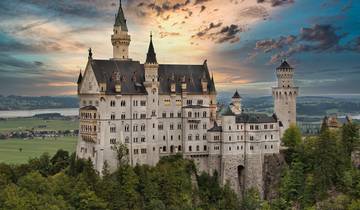
7 days
7 Days by Train in Munich & Zurich: Alpine Dreams & Bavarian Charms
- ✓ Comprehensive Salzburg tour
- ✓ Expert local guides included
- ✓ All accommodation arranged
- ✓ Transportation provided
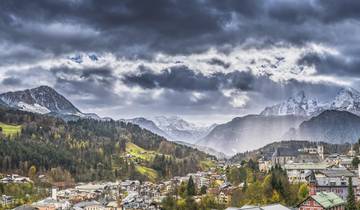
5 days
5 Days in Salzburg: History, Mountains, and City Highlights
- ✓ Comprehensive Salzburg tour
- ✓ Expert local guides included
- ✓ All accommodation arranged
- ✓ Transportation provided
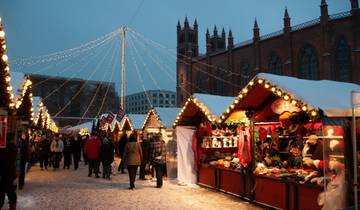
7 days
Christmas in Central Europe, Vienna to Berlin
- ✓ Comprehensive Salzburg tour
- ✓ Expert local guides included
- ✓ All accommodation arranged
- ✓ Transportation provided

7 days
Christmas in Central Europe, Berlin to Vienna
- ✓ Comprehensive Salzburg tour
- ✓ Expert local guides included
- ✓ All accommodation arranged
- ✓ Transportation provided
Multi-day tour packages powered by TourRadar. Prices and availability subject to change.
Essential Salzburg Photography Locations
Makartsteg Pedestrian Bridge: Classic River Compositions
The Makartsteg (Mozart Bridge) crossing the Salzach River between Staatsbrücke and Mozartsteg provides Salzburg’s most accessible iconic composition: the Old Town waterfront with baroque spires and fortress rising behind, reflected in calm river water during morning hours. The bridge’s midpoint offers unobstructed sightlines upstream and downstream, eliminating the railing interference that plagues Staatsbrücke photography. Position yourself slightly off-center using the bridge’s gentle curve to create dynamic leading lines toward the fortress, while including the distinctive green copper dome of Kollegienkirche (Collegiate Church) as baroque architectural anchor.
Wide-angle lenses (16-24mm) capture the full riverside architectural sweep from foreground bridge elements through middle-ground buildings to background fortress and mountains, creating comprehensive context. Alternatively, telephoto compression (85-135mm) from the bridge’s western end isolates the fortress-cathedral-spire grouping, bringing distant alpine peaks into apparent proximity for dramatic backdrop. The bridge serves double duty for morning fortress photography (looking south) and evening Old Town architectural work (looking north) as the sun’s path shifts optimal lighting direction.
Morning sessions 7:00-9:00 AM deliver calm water reflections before pedestrian bridge traffic creates ripples, and before tour groups arrive diminishing compositional control. The river reflection success depends entirely on wind conditions—even light breezes destroy mirror quality, making early arrival essential to capture brief calm windows. Evening golden hour transforms the scene with warm light on baroque façades and potential dramatic skies behind the fortress, though water reflections prove less reliable due to afternoon wind patterns. Include the bridge’s decorative railings and love-lock installations as foreground framing elements adding depth and human interest to architectural compositions.
Kapuzinerberg: Elevated Fortress Perspectives
Kapuzinerberg, the forested hill opposite Hohensalzburg Fortress across the Salzach valley, delivers Salzburg’s finest elevated photography perspectives combining fortress drama, Old Town context, and alpine backgrounds in layered compositions. Multiple viewpoint clearings along the hilltop trails offer varying angles and distances from the fortress, allowing focal length experimentation from wide establishing shots to telephoto-compressed architectural details. The steep 15-minute ascent via the medieval “Imberg” staircase (hidden behind Steingasse #9) or gentler southern approach from Linzer Gasse filters casual tourists, ensuring working space even during peak visitor seasons.
The primary viewpoint terrace near Kapuzinerkloster monastery provides frontal fortress perspective across the river valley, optimal during morning when eastern sun illuminates the fortress façade while blue sky backgrounds remain clean. Telephoto lenses (100-200mm) compress the fortress against alpine peaks creating dramatic scale relationships, while including Old Town rooftops in the mid-ground establishes urban context preventing isolated architectural monument appearance. The elevated position places the photographer at similar elevation to fortress ramparts, creating eye-level architectural engagement rather than the upward-looking perspective from valley floor that diminishes the structure’s commanding presence.
Additional viewpoints scattered along the hilltop forest paths offer creative variations: southern positions include Mönchsberg cliff in composition creating Salzburg’s distinctive dual-hill topography, while northern clearings frame the fortress against Gaisberg mountain backdrop emphasizing the alpine setting. The forest environment provides natural framing opportunities through pine branches, creating depth and seasonal variation as spring green, summer fullness, autumn color, and winter snow transform the same viewpoint across annual cycles. Sunset photography from Kapuzinerberg captures the fortress silhouetted against western sky colors, though morning sessions generally deliver superior results with directional lighting revealing architectural form.
Mönchsberg Museum Terrace: Panoramic Urban Vistas
The Museum der Moderne rooftop terrace on Mönchsberg cliff presents Salzburg’s most comprehensive panoramic vista, sweeping across the entire Old Town from elevated western position. This viewpoint excels for wide-angle panoramic sequences capturing the city’s baroque urban fabric in its totality, showing the organic medieval street pattern overlaid with baroque architectural unity. The 360-degree access encompasses fortress views to the south, cathedral dome dominance to the east, river valley extending north, and alpine ranges framing all horizons—a photographer’s dream location for comprehensive city documentation.
The terrace positioning 60 meters above Old Town streets creates ideal separation for establishing geographic relationships between major landmarks: cathedral spires, fortress mass, church domes, river course, and mountain backdrop all read clearly in spatial hierarchy. Telephoto compression (70-135mm) isolates architectural groupings like the cathedral-Residenz-St. Peter’s Abbey complex, while wide-angle perspectives (16-24mm) encompass the full urban landscape showing Salzburg’s unique position nestled between river valley floor and surrounding mountains. The modern museum building provides compositional contrast when included, juxtaposing contemporary architecture against historic cityscape for interpretive commentary on temporal layers.
Access requires museum entry (admission charged) or elevator ride from the Old Town level (fee applies), making this viewpoint less frequented than ground-level tourist concentrations. The terrace remains accessible during museum hours (Tuesday-Sunday, varying seasonal schedules), with evening access limited unlike public-space viewpoints available after museum closure. Lighting conditions favor afternoon sessions when western sun illuminates the Old Town from behind the photographer’s position, though morning backlight creates silhouette opportunities for dramatic interpretation. The covered museum café allows weather protection while maintaining window photography options during rain—valuable backup location when atmospheric conditions prevent outdoor viewpoint work.
Getreidegasse: Baroque Street Photography
Getreidegasse, Salzburg’s famous shopping street, presents architectural photography challenges through extreme narrowness (4-6 meters width) compressed between 5-story buildings creating canyon-like proportion. Wide-angle lenses prove essential (16-24mm) to encompass building heights from street level, though this perspective introduces strong converging verticals requiring either acceptance as characteristic perspective or correction in post-processing. The distinctive wrought-iron guild signs hanging above storefronts create Salzburg’s most recognizable street photography element—photographed as silhouettes against bright sky or captured with building detail depending on exposure strategy.
The street’s east-west orientation produces dramatic lighting variations throughout the day: morning sun penetrates from the eastern end creating strong directional light with deep shadows, midday overhead sun briefly illuminates the street floor between tall buildings, and evening golden hour glows through the western entrance. The narrowness creates exposure challenges with extreme contrast between sunlit and shadowed areas—HDR techniques, graduated neutral density filters, or deliberate silhouette exposure address this technical difficulty. Overcast conditions solve the contrast problem through even illumination, allowing faithful architectural detail capture without blown highlights or blocked shadows.
Human activity photography opportunities abound as crowds flow through the pedestrian street, though achieving clean architectural shots requires very early morning timing (7:00-8:00 AM) before tourist influx. The street’s length (approximately 200 meters) allows compositional variety from wide establishing shots showing the full corridor to detail studies of specific architectural elements, signs, and storefronts. Mozart’s Birthplace at #9 provides a notable yellow building that anchors compositions and serves as recognizable reference point. Long-exposure techniques during evening create dynamic crowd motion blur contrasting with static architecture, while elevated positions from upper-floor windows (hotel rooms, restaurants) offer unique downward perspectives impossible from street level.
Residenzplatz: Baroque Square Grandeur
Residenzplatz represents Salzburg’s grandest baroque square, providing open space for comprehensive architectural photography of the Residenz Palace, cathedral, and surrounding buildings without the compositional constraints of narrow medieval streets. The monumental Residenzbrunnen (fountain) serves as dramatic foreground element creating depth and baroque ornamental interest, while the square’s generous dimensions allow telephoto compression isolating specific architectural features from comfortable working distances. The unified baroque architectural ensemble surrounding the square demonstrates ecclesiastical power’s physical manifestation through coordinated scale, ornament, and symbolic positioning.
Cathedral photography from Residenzplatz benefits from the slight elevation change as the square rises toward the cathedral steps, creating natural upward perspective that enhances the church’s vertical emphasis. The twin bell towers frame the central dome in balanced composition following baroque architectural principles, while the elaborate façade sculpture program provides rich detail for telephoto extraction. Morning light illuminates the cathedral’s western façade optimally, though the square’s openness means afternoon and evening light also deliver clean illumination unlike shaded narrow streets. Including the fountain in cathedral compositions creates foreground interest and establishes scale reference showing the cathedral’s impressive proportions.
The square hosts seasonal markets (Christmas, Easter) adding temporary photographic variety through decorative stalls, festive lighting, and crowd activity, though these elements obscure the architectural purity preferred by some photographers. Carriage horses stationed along the square perimeter introduce living elements and tourism atmosphere, compositionally useful for documentary interpretation or avoided for pure architectural work depending on artistic intent. Night photography transforms the square through strategic building illumination emphasizing architectural features and creating dramatic shadows, while the fountain receives underwater lighting creating ethereal aquatic glow—these artificial lighting elements require long-exposure techniques and tripod stabilization for sharp results.
Advanced Photographic Techniques for Salzburg
Mastering Baroque Architectural Detail
Salzburg’s baroque architecture rewards close examination and photographic isolation of ornamental elements—sculptural programs, stucco decoration, frescoed ceilings, wrought-iron work—that collectively create the style’s characteristic exuberance. Telephoto lenses (85-200mm) allow detail extraction from comfortable distances without requiring building access or extreme perspectives, isolating statuary groupings from cluttered surroundings and emphasizing the craftsmanship invested in decorative programs. The golden atlantes (muscular figures) supporting balconies, cherub clusters adorning pediments, and allegorical sculptures representing virtues and vices all deserve individual photographic attention beyond their ensemble architectural function.
Interior baroque photography in churches and palaces demands technical adaptations for mixed lighting conditions combining natural window light with artificial illumination. Cathedral interiors like Salzburg Cathedral and St. Peter’s Abbey present extreme dynamic range between brilliant stained glass windows and dark nave shadows—HDR bracketing (minimum three exposures spanning 4-6 stops) captures full tonal range for processing into balanced results showing both highlight and shadow detail. Tripods prove essential for the slow shutter speeds (1/4 to several seconds) required in dim interior conditions, with careful timing avoiding tourist movement during exposures or employing long exposures that render moving people as ghostly traces.
Ceiling frescoes represent baroque interior highlights, requiring extreme wide-angle lenses (14-20mm) shot straight upward to encompass entire painted programs without excessive distortion. The resulting circular perspective creates immersive viewer experience matching the baroque intention of overwhelming sensory engagement, though this technique produces strong barrel distortion requiring post-processing correction for architectural accuracy. Raking light from windows creates dimensional modeling on stucco decoration revealing the sculptural relief depth that disappears under flat frontal illumination—study natural light direction and timing for optimal dimensional revelation of three-dimensional decorative elements.
River and Reflection Photography
The Salzach River provides constant photographic companion flowing through Salzburg’s center, offering reflection compositions that double architectural impact and create compositional symmetry. Successful river reflections require completely calm water conditions occurring primarily during early morning hours (6:00-8:00 AM) before wind develops and before boat traffic creates ripples. Scout reflection compositions the evening before to determine precise positioning, then return at dawn to capture brief calm windows—reflection photography demands patience and sometimes multiple attempts across several mornings to achieve perfect conditions.
Polarizing filters complicate river photography by eliminating reflections when rotated toward maximum polarization—useful for showing underwater detail or removing water-surface glare, but counterproductive for reflection work. Remove polarizers for reflection photography, instead using neutral density filters if extended exposures become necessary to smooth minor water movement into mirror-like surfaces. The exposure balance between bright sky reflections and darker actual architecture requires graduated neutral density filters placing the dark portion over the sky/reflection area while allowing full exposure for the building subjects, preventing the common error of overexposed sky destroying reflection detail.
Unconventional reflection sources beyond the main river offer creative opportunities: puddles after rain reflecting fortress or baroque buildings, cafe window glass showing interior-exterior juxtapositions, wet cobblestone streets after morning cleaning creating transient mirror surfaces. These ephemeral reflection sources appear and vanish within hours, demanding opportunistic photography during limited availability windows. Long-exposure techniques during blue hour (30 minutes after sunset) smooth water motion into glass-like surfaces while retaining sufficient ambient light for architectural detail, creating ethereal atmospheric compositions impossible during daylight hours.
Seasonal Transformation Documentation
Salzburg’s dramatic seasonal transformations create opportunities for serial photography documenting identical compositions across annual cycles, revealing how light quality, vegetation, weather patterns, and human activity reshape familiar locations. Mirabell Gardens exemplify this approach through spring tulip explosions, summer rose blooms, autumn leaf color, and winter snow-covered geometric beds—four distinct visual experiences from identical camera positions. Establishing consistent viewpoints, focal lengths, and compositional framing across seasons requires careful documentation and return visits at seasonal transition peaks.
Winter photography introduces high-contrast monochrome potential through snow-covered rooftops, streets, and mountain backgrounds creating simplified compositions emphasizing form over color. The low winter sun angle (maximum 25-degree elevation December solstice) produces extended morning and afternoon golden hour periods with warm directional light even during midday hours, though the compressed 8-hour daylight window (8:00 AM-4:00 PM) limits shooting time. Snow coverage transforms familiar scenes by eliminating color distraction and reducing visual information to essential architectural forms, while post-storm crystal-clear atmospheric conditions reveal distant alpine details invisible during warmer humid months.
Autumn foliage in Salzburg concentrates in elevated viewpoints like Kapuzinerberg and Mönchsberg where deciduous trees frame fortress and city views in warm earth tones (yellow, orange, brown) contrasting with the baroque ochre architecture. Peak autumn color timing varies annually based on weather patterns, approximating mid-to-late October in typical years with earlier onset following dry summers and delayed coloring after wet conditions. The golden foliage serves as natural warm filter enhancing the inherent warmth of baroque façades, creating harmonious color palettes unified through yellow-orange-brown relationships. Overcast conditions intensify autumn color saturation by eliminating the desaturating effect of direct sunlight, making gray-sky days optimal for foliage photography despite conventional wisdom favoring blue skies.
Night Photography and Blue Hour
Salzburg night photography transforms familiar daytime scenes through strategic architectural illumination emphasizing baroque details, fortress flood-lighting creating dramatic hilltop beacon, and ambient street lighting adding warm atmosphere to urban spaces. Blue hour—the 30-45 minute window after sunset when ambient skylight balances artificial illumination—provides optimal timing for night cityscapes, maintaining sufficient sky detail preventing dead-black sky holes while allowing building lights to register with impact. The specific blue hour timing varies seasonally from approximately 8:30-9:15 PM in summer to 4:30-5:15 PM in winter, demanding seasonal adjustment to shooting schedules.
Tripod stabilization proves mandatory for night photography’s extended exposures ranging from several seconds to 30+ seconds depending on desired aperture and ISO settings. Modern cameras’ improved high-ISO performance allows faster shutter speeds (1/15 to 1 second) for handheld stability or moving-subject freezing, though tripod work delivers optimal technical quality through base ISO usage and careful aperture selection for maximum depth of field. The fortress illumination employs warm-toned tungsten lighting creating golden glow, while many churches utilize cooler LED or fluorescent illumination—mixed color temperatures require either acceptance of natural appearance or white balance correction choosing one light source as neutral reference.
Star trail photography over Salzburg combines foreground architectural illumination with long exposures (30 minutes to several hours) tracking star movement across the sky as Earth rotates. The fortress provides ideal foreground subject through its hilltop prominence and evening illumination, while positioning south of the city allows northern sky star trail arcs circling Polaris. This specialized technique requires dark-sky conditions (new moon phase, minimal light pollution), clear weather, and either extremely long single exposures or multiple shorter exposures stacked in post-processing to build cumulative star trails. Urban light pollution limits magnitude of visible stars compared to dark-sky locations, though dramatic fortress silhouette against star-streaked sky creates compelling compositions unique to Salzburg’s topographic drama.
Hidden and Alternative Perspectives
Steingasse Medieval Quarter
Steingasse, Salzburg’s narrow medieval street on the right bank, survives from earlier architectural periods predating baroque reconstruction, offering authentic medieval atmosphere largely missed by tourists concentrating in the Old Town. The cramped passage (2-3 meters width) lined with tall buildings creates intimate street photography opportunities emphasizing vertical perspective, textured stone walls, wrought-iron details, and the human scale absent from grand baroque squares. The street’s curves and elevation changes create constantly shifting compositions as photographers move through the space, revealing new arrangements of doors, windows, passageways, and architectural details.
Evening photography in Steingasse benefits from traditional lantern-style street lighting creating warm pools of illumination against dark building masses, producing dramatic chiaroscuro effects reminiscent of Renaissance painting. The narrow passage funnels views toward either end, creating natural compositional framing where building walls converge toward vanishing points emphasizing depth perception. Hidden courtyards accessible through archways provide intimate spaces with ancient wells, worn stone steps, and vegetation growing from walls—atmospheric details communicating medieval Salzburg’s daily life environments beyond the monumental baroque showpieces.
The street’s western end emerges at Platzl, the artisan quarter featuring traditional workshops (violin makers, goldsmiths, bookbinders) photographed through shop windows showing craftspeople at work. These documentary opportunities capture living heritage continuation connecting past traditions with contemporary practice, adding human narrative dimension to architectural and landscape photography. The area receives minimal tourist traffic despite proximity to major attractions, allowing relaxed photographic exploration without crowd management complications. Morning side-light penetrates the east-west oriented street creating directional modeling on textured stonework, while midday overhead sun briefly illuminates the street floor creating high-contrast conditions suitable for bold graphic interpretation.
Müllner Steg and North Bank Riverside
Müllner Steg, a footbridge spanning the Salzach north of the main tourist zone, provides elevated river-crossing perspective framing fortress and Old Town without the heavy tourist traffic overwhelming Makartsteg and Staatsbrücke. The bridge’s orientation creates different compositional angles isolating the fortress against northern mountain backgrounds while including the river’s broad sweep and right-bank architectural elements. The less-polished surroundings—working riverfront rather than tourist promenade—add documentary authenticity often missing in conventionally beautiful locations, showing Salzburg’s functional urban fabric beyond preserved historic showpieces.
The north bank riverside path (Müllner Hauptstraße area) creates foreground opportunities for fortress compositions using riverside vegetation, moored boats, and waterfront buildings as depth-creating elements. The elevation slightly above river level provides visual separation from water surface preventing merging of building foundations with river, while maintaining low perspective that emphasizes the fortress’s commanding hilltop position. Morning light illuminates the fortress beautifully from these northern positions, with sun rising in the east casting warm glow across the southern architectural mass while photographer benefits from front-lighting angles.
Augustiner Bräu brewery’s historic buildings and beer garden on the north bank represent working architectural heritage contrasting with museum-preserved Old Town—photographing everyday use of historic structures communicates cultural continuity beyond static preservation. The monastery brewery’s 400-year-old cellars, vaulted stone chambers, and traditional beer service create atmospheric interior photography opportunities, while the chestnut tree-shaded beer garden provides natural canopy filtering dappled light onto gathering crowds. This documentation of living tradition adds cultural depth to pure architectural and landscape photography, showing how heritage structures actively shape contemporary community life.
Nonnberg Abbey Hillside Approaches
The steep hillside paths ascending to Nonnberg Abbey from multiple Old Town starting points provide progressively elevated fortress viewpoints rewarding the 15-20 minute uphill walk with unique perspectives unavailable from standard tourist locations. The southern approach via Kaigasse and Nonnbergsteige staircase creates increasingly dramatic over-the-shoulder views back across the Old Town with each upward turn, allowing photographers to select preferred elevation for optimal fortress-to-Old Town-to-Alps layering. The physical effort filters casual visitors, ensuring working space and quiet contemplation impossible in crowded valley-floor locations.
The abbey church and courtyard perched on the hillside provide peaceful photography opportunities in the cloistered environment where most buildings remain off-limits but the church interior welcomes quiet visitors. The Romanesque church architecture predates Salzburg’s baroque transformation, offering comparative perspective on earlier architectural periods through simpler forms, medieval frescoes, and ancient stone construction. The hilltop position creates natural elevated platform for downward views across Old Town rooftops with the fortress rising to similar elevation creating lateral relationship rather than upward-looking perspective from street level.
The alternative descent path via Stieglkeller brewery terrace delivers spectacular southern fortress viewpoint from near-equal elevation, creating dramatic profile perspective showing the fortress’s full mass and fortification walls. This viewpoint receives far less traffic than valley-floor tourist concentrations, rewarding the walking effort with superior working conditions and unique compositional possibilities. The brewery terrace itself provides foreground interest through traditional architecture, outdoor seating areas, and mountain backdrop framing—a complete compositional environment rather than pure lookout platform. Morning light from the east illuminates both fortress and Old Town optimally from this southern elevated position, making sunrise timing ideal for this alternative viewpoint circuit.
Camera Settings and Technical Considerations
Exposure Strategies for High-Contrast Scenes
Salzburg’s architectural photography frequently encounters extreme contrast situations—brilliant baroque church interiors against dark side chapels, fortress ramparts silhouetted against bright sky, narrow street canyons with sunlit upper levels and shadowed bases—exceeding camera sensors’ dynamic range capture capability in single exposures. HDR bracketing techniques address this limitation through multiple exposures at different brightness levels (typically ±2 stops from metered exposure) merged in post-processing to retain both highlight and shadow detail. Modern cameras’ in-body HDR modes automate this process though dedicated software (Photomatix, Aurora HDR, Lightroom) provides superior control over tone-mapping producing natural-looking results avoiding the garish over-processed appearance plaguing amateur HDR work.
Graduated neutral density filters offer optical solution to sky-ground brightness differences, placing dark filter portion over bright sky while leaving foreground at full exposure. The rigid rectangular filter format works well for relatively flat horizons but proves challenging with irregular skylines like Salzburg’s spired baroque roofscape—the dark filter portion darkens building tops alongside sky creating unnatural appearance. Blended exposures in post-processing provide more flexible control, manually masking desired areas from different exposures for seamless integration respecting complex subject boundaries.
Shadow recovery and highlight retention through raw file processing extend dynamic range considerably beyond JPEG capture, particularly with modern high-dynamic-range sensors. Expose for highlights (ensuring bright areas don’t clip to pure white losing all detail) then lift shadow values in raw processing, accepting some shadow noise increase in exchange for preserving delicate highlight textures in clouds, white building façades, and bright reflections. The “expose to the right” technique deliberately overexposes (within highlight-preservation limits) to maximize signal captured in the image data, providing cleanest information for shadow lifting without excessive noise amplification.
Focus and Depth of Field Management
Architectural photography demands front-to-back sharpness from foreground elements through middle-ground subjects to background mountains, requiring careful aperture selection and focus point placement. The hyperfocal distance technique sets focus at the distance where depth of field extends from half that distance to infinity, maximizing sharp coverage across the scene. For wide-angle lenses (16-24mm) at f/11, hyperfocal distance falls approximately 2-4 meters, meaning focusing on an object at that distance renders everything from 1-2 meters to infinity acceptably sharp. Online calculators or smartphone apps determine specific hyperfocal distances for different focal length and aperture combinations.
Focus stacking extends depth of field beyond optical limits through multiple exposures focused at different distances, then merged in post-processing (Photoshop, Helicon Focus) to create composite image sharp throughout. This technique proves particularly valuable for extreme foreground-to-background situations like photographing ornate fountain details with fortress background—single exposures fail to achieve adequate depth of field even at f/16-f/22, while focus stacking achieves impossible sharpness without diffraction quality loss from extreme apertures. The technique requires tripod stability ensuring precise frame-to-frame alignment, and static subjects preventing movement between focus positions.
Smaller apertures (f/11-f/16) provide increased depth of field while maintaining excellent optical quality for most lenses, though extreme apertures (f/22-f/32) introduce diffraction softening that degrades sharpness throughout the frame. The optimal aperture balances adequate depth of field against maintained sharpness, typically falling around f/8-f/11 for most architectural situations. Wide-angle lenses inherently provide greater depth of field than telephoto focal lengths, allowing wider apertures (f/5.6-f/8) for similar depth coverage—valuable in low-light interior situations requiring faster shutter speeds or lower ISOs for optimal quality.
Motion Control and Stabilization
Tripod use proves essential for Salzburg photography spanning from slow-shutter interior work to precise compositional control to HDR bracketing alignment. Sturdy tripods withstand the walking cobblestone streets, steep approaches to viewpoints, and occasional wind on exposed fortress ramparts without shaking during exposures. Carbon fiber models reduce carrying weight during extensive walking sessions, while compact travel tripods sacrifice some stability for reduced bulk—photographers must balance portability against performance based on personal tolerance for carrying weight versus absolute sharpness requirements.
The shutter speed rule-of-thumb (1/focal length minimum for sharp handheld results) applies differently with image stabilization technology, allowing 2-4 stops slower speeds while maintaining sharpness. A 50mm lens traditionally requires 1/50 second minimum shutter speed, but modern stabilization enables sharp results at 1/12-1/6 second. However, architectural photography benefits from tripod use even at theoretically safe handheld speeds for maximizing sharpness and enabling precise composition refinement impossible with handheld camera holding. Wide-angle lenses tolerate slower handheld speeds (wider angles reduce camera shake visibility) while telephoto focal lengths demand faster speeds (longer lenses magnify shake motion).
Remote shutter releases or camera self-timers eliminate shutter-press vibration during tripod-mounted long exposures, creating final stability component for maximum sharpness. Mirror lockup (on DSLR cameras) or electronic first curtain shutter (mirrorless) prevents internal mirror slap vibration degrading sharpness during exposures. These technical refinements become critical for large prints requiring maximum resolution detail, while web-resolution outputs tolerate more relaxed standards. Night photography and interior work demand such precautions regardless of output size due to extended exposure times amplifying any vibration sources.
Post-Processing Workflow for Salzburg Images
Color Palette Enhancement and Harmony
Salzburg’s distinctive color palette—ochre and cream baroque façades, green oxidized copper domes, cobalt blue Salzach River, terracotta roof tiles—provides natural color harmony requiring enhancement rather than invention in post-processing. Selective color adjustment tools (Lightroom HSL panel, Photoshop Hue/Saturation) refine specific color ranges independently, intensifying the ochre yellows in building façades while preserving skin tones, enhancing the distinctive green copper domes while preventing oversaturation of natural vegetation, deepening river blues without affecting sky tonality. This targeted approach maintains realistic appearance while emphasizing the inherent color relationships defining Salzburg’s visual character.
The warm Mediterranean-influenced façade colors benefit from slight yellow-orange enhancement creating sunny inviting atmosphere, though excessive warming destroys credibility and creates unnatural candy-colored appearance. The green copper oxidation represents Salzburg’s most distinctive color note—the Collegiate Church dome and various church towers display this characteristic patina requiring careful saturation to make the feature prominent without garish unrealism. River blue enhancement through saturation increase and blue hue shift (toward cyan rather than purple-blue) creates attractive water color, though this treatment becomes obviously artificial if pushed too far beyond natural appearance.
Black and white conversion offers alternative interpretation emphasizing form, texture, light quality, and compositional structure without color distraction. Salzburg’s baroque architecture shows particularly well in monochrome through emphasis on sculptural decoration, ornamental detail, and dramatic light-shadow interplay defining the style’s theatrical character. Custom black and white conversions using color channel mixing (Lightroom Black & White panel, Photoshop Channel Mixer) allow independent control over how each original color converts to grayscale values—darkening blue channel creates dramatic skies while lightening yellow channel emphasizes building façades, creating tonal separation despite similar brightness in color versions.
Perspective Correction and Architectural Accuracy
Wide-angle architectural photography inevitably introduces converging verticals—the optical phenomenon where parallel vertical lines (building sides) appear to lean inward when camera tilts upward to encompass building height. This perspective distortion appears natural to human vision but creates unstable unsettling feeling in photographs, leading most architectural photographers to correct convergence restoring vertical parallel lines. Lightroom’s Transform panel and Photoshop’s Adaptive Wide Angle filter automate this correction detecting vertical and horizontal lines then adjusting image geometry to restore parallelism.
Perfect vertical correction sometimes creates unnatural appearance removing all perspective cues, making buildings appear to lean backward despite technically accurate vertical parallel lines. Subtle residual convergence (5-10% of original distortion) often creates more pleasing results maintaining slight perspective feeling while eliminating the extreme leaning appearance of uncorrected images. Manual correction fine-tuning after automatic processing achieves optimal balance between technical accuracy and natural appearance. The correction process crops image periphery due to geometric transformation, requiring original composition including extra space around primary subjects to maintain desired framing after perspective adjustment.
Horizontal correction addresses tilted horizon lines from unleveled camera positions during capture—particularly common during handheld photography on sloped streets and hillside viewpoints. Small rotation adjustments (1-3 degrees) straighten horizons and building horizontals without obvious appearance changes, while larger corrections suggest re-shooting with better camera leveling. Some composition benefit from deliberately unlevel horizons creating dynamic diagonal energy, though architectural documentation generally favors stable horizontal-vertical grid aligned with frame edges establishing orderly calm atmosphere appropriate to subject matter.
Detail Enhancement and Sharpening
Salzburg’s ornate baroque architectural detail—sculptural programs, stucco decoration, wrought-iron work, fresco painting—rewards careful sharpening enhancing texture visibility and detail clarity. Lightroom’s Detail panel provides comprehensive sharpening controls: Amount (strength), Radius (affected pixel width), Detail (fine texture emphasis), and Masking (selective application). The standard workflow applies moderate global sharpening (Amount 40-60, Radius 0.8-1.2) emphasizing edges and detail, then uses Masking slider (hold Alt/Option while dragging) to limit sharpening to high-detail areas while protecting smooth skies and water from artifical texture amplification.
Clarity adjustment—midtone contrast enhancement around edges—provides powerful tool for emphasizing architectural detail and dimensional modeling, particularly effective for baroque stucco decoration and sculptural relief elements. Moderate clarity increases (+10 to +30) enhance three-dimensional appearance revealing form through enhanced edge contrast, though excessive clarity (+50+) creates obvious artificial appearance with exaggerated halos around details. Negative clarity (-10 to -30) softens images creating atmospheric dreamy interpretation, occasionally appropriate for romantic architectural scenes but generally contrary to documentary architectural photography’s clarity goals.
Texture adjustment (distinct from clarity) affects fine surface detail without impacting edge contrast, useful for emphasizing stone texture, tile patterns, and weathering without the harsh appearance of excessive clarity. Combined clarity and texture adjustments allow nuanced control over different detail scales—clarity for larger architectural forms and modeling, texture for surface qualities and material character. Output sharpening as final workflow step addresses specific display requirements: screen viewing demands different sharpening than print output, with print requiring more aggressive sharpening compensating for ink diffusion in paper fibers reducing apparent sharpness.
Photographic Storytelling and Portfolio Development
Creating Narrative Sequences
Individual excellent photographs combine into powerful narratives when sequenced deliberately to guide viewer experience through Salzburg’s spaces, scales, and atmospheres. A successful portfolio sequence might begin with wide establishing shot showing geographic context (fortress and Old Town from Kapuzinerberg), progress through architectural details revealing baroque character (façade sculptures, wrought-iron signs, stucco decoration), explore interior sacred spaces (cathedral nave, abbey cloister), then conclude with human-scale moments (café scenes, street musicians, market activity). This structure mirrors experiential journey from overview through examination to intimate encounter, creating satisfying narrative arc.
Variation in perspective, scale, and subject matter maintains viewer engagement across multiple images preventing monotonous repetition. Alternate wide panoramic vistas with intimate details, mix architectural documentation with candid human moments, intersperse color work with black and white interpretation—the variety creates rhythm and pacing in portfolio presentation. However, excessive variety fragments coherence into disjointed collection lacking unified vision, demanding balance between diversity maintaining interest and consistency establishing recognizable photographic voice. Successful Salzburg portfolios often unite diverse images through consistent color palette treatment, repeated golden hour light quality, or persistent compositional approach establishing visual signature.
Thematic organization provides alternative to geographic or chronological sequencing, grouping images around conceptual threads: baroque architectural ornament across different buildings, seasonal transformation of recurring locations, contrast between sacred and secular spaces, interplay of preservation and living use. These thematic approaches reward thoughtful viewing revealing relationships and patterns invisible in random sequence, demonstrating photographic intelligence beyond technical competence. The selection and sequencing process transforms individual captures into coherent artistic statement, differentiating compelling portfolios from simple image collections.
Developing Personal Photographic Vision
Salzburg’s heavily photographed status—appearing in countless tourist snapshots, professional portfolios, and commercial imagery—demands conscious effort developing personal vision beyond replicating familiar views. Study existing Salzburg photography to understand standard approaches and iconic compositions, then deliberately pursue alternative interpretations through unconventional perspectives, unexpected timing, creative technique application, or conceptual frameworks. The goal becomes not capturing Salzburg as it appears in promotional materials, but revealing personal vision of the city’s essence through distinctive visual language.
Constraints paradoxically liberate creativity by forcing innovation within boundaries: commit to photographing Salzburg exclusively in black and white, restrict work to single focal length (50mm), document only architectural details without full building context, capture the city solely during blue hour transitions, focus entirely on human activity against architectural backdrops. These self-imposed limitations prevent defaulting to standard approaches while developing deep expertise in chosen specialization. The resulting focused body of work often carries more impact than scattered attempts covering every photographic possibility.
Technical mastery serves creative vision rather than existing as end goal—perfect exposure, composition, and sharpness mean nothing without compelling subject interpretation or emotional resonance. The most successful Salzburg photography transcends documentation to communicate atmosphere, emotion, cultural significance, or personal response to the environment. This transformation requires moving beyond technical optimization (“Is this sharp?”) to artistic evaluation (“Does this communicate my experience?”). Salzburg’s profound beauty and photographic richness provide ideal environment for developing this artistic consciousness, rewarding photographers who approach the city with genuine engagement beyond surface-level prettiness.
Conservation and Ethical Photography Practices
Respecting Sacred Spaces and Cultural Sites
Salzburg’s numerous churches, abbeys, and sacred spaces welcome photography with varying restrictions requiring respectful observation. Active worship services prohibit photography disruption through shutter noise, flash usage, or physical movement through ceremonial spaces—observe timing to avoid services or photograph from inconspicuous positions using silent shutter modes. Some locations prohibit all photography (Nonnberg Abbey interiors, certain cathedral chapels), with posted signs or verbal guidance from staff requiring compliance regardless of technical feasibility for unauthorized captures. The distinction between public documentation rights and private property/sacred space restrictions demands respect for institutional authority over their environments.
Flash photography damages historical paintings, frescoes, and delicate materials through cumulative light exposure and heat generation, leading most museums and churches to prohibit flash usage. Modern cameras’ high-ISO capability eliminates technical need for flash in interior situations, allowing natural-light photography preserving authentic atmospheric quality while protecting cultural heritage. Tripod usage receives similarly variable permission, with many locations prohibiting tripods to prevent physical space occupation inconveniencing other visitors or creating safety hazards in crowded environments. Monopods offer compromise providing stabilization with smaller footprint, though even these require location-specific permission.
Commercial photography (work intended for sale, advertising, publication) typically requires advance permission and sometimes fees from property owners and administrators, distinct from personal photography exemptions. The boundary proves murky with contemporary social media blurring personal/commercial distinctions—photographers building professional portfolios through Instagram or selling prints through stock agencies exist in gray area requiring judgment about disclosure and permission-seeking. Ethical practice leans toward transparency with property owners about intended usage rather than exploiting personal photography exemptions for professional benefit without compensation or permission.
Environmental Impact and Sustainable Photography Tourism
Popular photography locations experience environmental pressure from excessive foot traffic compacting soil, trampling vegetation, and eroding pathways, particularly at elevated viewpoints like Kapuzinerberg and Mönchsberg trails. Staying on established paths rather than creating shortcuts prevents additional erosion and vegetation damage, while avoiding sensitive areas during wet conditions (when soil compaction proves worst) protects trail integrity. Photography tourism’s growth concentrates impact at specific iconic viewpoints—diversifying location exploration distributes impact across broader geography while discovering less-documented perspectives rewarding creative effort.
Leave-no-trace principles apply to photography: carry out all materials brought to locations, don’t rearrange natural elements for compositional convenience then abandon the alteration, respect wildlife and vegetation encountered during photography sessions. The temptation to improve foregrounds by moving rocks, bending branches, or placing props creates artificial scenes while damaging natural environments—skilled photography works with existing conditions rather than manipulating nature for convenience. Time investment finding optimal natural compositions develops artistic skill while protecting environmental integrity.
Supporting local Salzburg economy through accommodation, dining, and appropriate fee payment for locations charging photography access contributes to sustainable tourism benefiting the community hosting visitors. Photography tourism generates economic value for destinations, creating incentive for conservation and heritage protection when managed sustainably. However, unchecked growth creates overtourism damaging the very qualities attracting visitors—individual responsibility for minimizing negative impact and maximizing positive economic contribution supports long-term destination viability for future photographers and general visitors alike.
Frequently Asked Questions About Salzburg Photography
Do I need photography permits for Salzburg?
Personal photography throughout Salzburg’s public spaces requires no permits—streets, squares, bridges, and publicly accessible viewpoints allow free photography for non-commercial purposes. However, many interior spaces including churches, museums, and private properties enforce photography restrictions ranging from no-flash policies to complete prohibition. Always check posted signs and ask permission when uncertainty exists about photography allowances. Commercial photography intended for sale, advertising, or publication typically requires property owner permission and sometimes location fees, with enforcement varying by property and specific usage.
What camera gear should I bring to Salzburg?
A versatile zoom lens (24-70mm or 24-105mm) covers most Salzburg photography situations from street scenes to architectural details, while adding a wide-angle zoom (16-35mm) enables comprehensive architectural interiors and dramatic fortress perspectives. Telephoto capability (70-200mm) proves valuable for detail isolation and alpine background compression, though not absolutely essential for successful photography. Compact travel-oriented zoom lenses (18-200mm) sacrifice optical quality for convenience—acceptable compromise for casual photography though serious work benefits from specialized lenses. Tripods enhance technical quality for interiors, night work, and contemplative composition, though many locations prohibit tripod usage requiring verification before reliance.
Can I photograph inside Salzburg’s churches and museums?
Photography policies vary by specific location—Salzburg Cathedral allows photography without flash during non-service hours, while other churches prohibit all photography or restrict it to specific areas. Museums implement varying policies from complete prohibition (some special exhibitions) to allowed non-flash photography throughout permanent collections. Always verify current policy through posted signage or staff inquiry before photographing, as policies change and enforcement varies. Respectful compliance with institutional restrictions maintains goodwill and protects photographer access for future visits, while unauthorized photography risks ejection and potential equipment confiscation.
When should I visit Salzburg for optimal photography light?
September-October delivers Salzburg’s most reliable weather with stable high-pressure systems, comfortable temperatures, and extended golden hour light, while spring (April-May) offers blooming gardens and fresh green vegetation though more variable weather. Summer provides longest daylight hours and warmest temperatures but faces afternoon thunderstorm patterns and peak tourist crowds complicating photography. Winter creates unique opportunities through snow-covered scenes and dramatic low-angle light, though short daylight windows (8:00 AM-4:30 PM December) compress photography schedules. Golden hour timing varies seasonally from 7:00-9:00 PM summer to 3:30-4:30 PM winter, requiring seasonal schedule adjustment.
How do I avoid crowds in my Salzburg photos?
Early morning photography (6:30-8:30 AM) precedes tourist influx at major locations like fortress and Old Town streets, providing clean architectural shots without human intrusion. Off-season visits (November-March excluding Christmas market weeks) dramatically reduce tourist density though weather limitations apply. Long-exposure techniques during midday or evening blur moving crowds into ghostly traces or eliminate them entirely through exposure times exceeding several minutes. Alternative viewpoint exploration finds less-documented perspectives avoiding concentrated tourist presence at standard photographic locations. Ultimately, some crowd presence proves unavoidable at iconic locations during peak seasons, requiring either acceptance as authentic contemporary context or timing adjustments accessing locations during low-traffic windows.
Is Salzburg better photographed in color or black and white?
Salzburg’s distinctive color palette—ochre baroque façades, green copper domes, cobalt river—argues for color photography capturing these signature elements. However, black and white interpretation emphasizes baroque architectural form, ornamental detail, and dramatic light-shadow relationships without color distraction, often revealing structure and composition invisible when color dominates attention. The ideal approach captures in color (preserving maximum post-processing flexibility) then evaluates whether individual images benefit from color or monochrome treatment based on specific strengths. Many successful Salzburg portfolios mix both approaches, using color for atmospheric scenes where palette proves essential and black and white for architectural details where form and texture dominate.
What makes a unique Salzburg photograph given how heavily photographed the city is?
Unique Salzburg photography emerges from unconventional perspective selection beyond standard tourist viewpoints, creative technical approaches (long exposure, intentional camera movement, focus experimentation), alternative timing capturing unusual atmospheric conditions or light quality, and conceptual frameworks revealing personal interpretation rather than objective documentation. The city rewards exploration beyond obvious locations through hidden viewpoints, overlooked architectural details, and candid human moments showing living culture beyond preserved facades. Developing personal vision through consistent aesthetic choices, thematic focus, or technical signature distinguishes compelling work from generic documentation. Most importantly, genuine engagement with Salzburg beyond checklist photography creates authentic images communicating real experience and emotional response.
Do I need special insurance for photography equipment in Salzburg?
Standard homeowner’s or renter’s insurance often provides limited coverage for camera equipment, though frequently with restrictions on travel use and theft away from home. Specialized photography equipment insurance through providers like insuremyequipment.com or TCP (The Committee for Photography Insurance) offers comprehensive worldwide coverage including theft, damage, and loss with faster replacement and fewer restrictions. Salzburg itself presents minimal equipment security risk compared to major cities, though basic precautions apply: never leave equipment visible in parked vehicles, maintain awareness in crowded tourist areas, use inconspicuous bags rather than obvious camera bags advertising valuable contents. Most photographers visit Salzburg without incident, though insurance provides peace of mind proportional to equipment value and replacement difficulty.
How should I organize my Salzburg photography workflow?
Successful photography trips balance shooting intensity with review and backup discipline—allocate daily time for card downloads, file backup to separate media (external drive, cloud storage), preliminary culling eliminating obvious failures, and quick processing evaluation identifying exceptional captures worthy of priority editing. This systematic approach prevents overwhelming post-trip processing backlogs while maintaining energy and attention for continued shooting. Organize files by date and location using Lightroom catalog structure or folder hierarchy, adding keywords describing content (fortress, baroque, cathedral, etc.) enabling later retrieval. The workflow investment during travel pays dividends through maintained shooting momentum and simplified post-trip editing identifying strongest images while memories remain fresh.
Can I use drone photography in Salzburg?
Austrian drone regulations restrict unmanned aerial vehicle operation in urban areas, particularly near the Old Town UNESCO World Heritage site and fortress military areas. Commercial drone photography requires permits from aviation authorities and property owners, while recreational flying faces severe restrictions in Salzburg’s historic center and surrounding controlled airspace. The regulations exist to protect heritage sites, ensure public safety, and prevent aviation hazards near the Salzburg Airport. Photographers seeking aerial perspectives should explore legal elevated viewpoints (Kapuzinerberg, Mönchsberg, fortress ramparts) delivering dramatic angles without regulatory complications, or hire licensed drone operators familiar with local regulations and permit requirements for commercial aerial photography needs.
Key Takeaways
- Salzburg’s compact UNESCO World Heritage center offers extraordinary photographic diversity from baroque architecture to alpine panoramas within 2-kilometer walking radius
- Morning light (7:00-10:00 AM) illuminates fortress and Old Town from east, while golden hour (two hours before sunset) creates warm tones on baroque façades and mountain backdrops
- Elevated perspectives from Kapuzinerberg, Mönchsberg, and fortress ramparts transform standard street-level compositions into dramatic three-dimensional urban landscapes
- Wide-angle lenses (16-35mm) capture architectural context and spatial relationships, while telephoto compression (70-200mm) isolates baroque details and alpine backgrounds
- Salzburg’s distinctive green copper dome oxidation, ochre building façades, and cobalt river create consistent color palette for cohesive portfolio development
- Hidden viewpoints beyond tourist concentration points—Steingasse medieval quarter, Müllner Steg bridge, Kapuzinerberg forest paths—deliver unique perspectives unavailable to casual visitors
Understanding Salzburg’s Photographic Appeal
Salzburg presents photographers with a rare convergence of architectural harmony, dramatic topography, and sublime light quality that elevates it among Europe’s most photogenic cities. The UNESCO World Heritage historic center compresses 1,200+ years of architectural evolution into a walkable baroque masterpiece, where every corner reveals carefully composed urban vistas framed by alpine peaks. The Salzach River bisects the composition, creating natural leading lines and reflection opportunities, while the dominating Hohensalzburg Fortress provides vertical interest and multiple perspective options from street level to elevated ramparts.
The city’s photographic distinction stems from exceptional preservation of baroque architectural unity—no modern high-rises disrupt sightlines, no advertising billboards compete for visual attention, and stringent heritage protection maintains color palette consistency across the historic core. This creates photographer-friendly conditions where nearly any Old Town street view delivers aesthetically pleasing results, while dedicated compositional effort and perspective selection transform good shots into extraordinary captures. The challenge lies not in finding photogenic subjects but in discovering unique interpretations of frequently photographed locations through creative viewpoints, optimal lighting timing, and technical mastery.
Salzburg’s seasonal transformations create distinct photographic opportunities: spring blossoms in Mirabell Gardens add pastel foreground elements, summer’s extended twilight allows nighttime cityscape work, autumn foliage frames the fortress in warm earth tones, and winter snow creates high-contrast minimalist compositions. The alpine climate produces dynamic weather patterns with dramatic cloud formations, occasional fog creating ethereal atmospheres in river valleys, and post-storm clearing delivering crystalline air quality for sharp mountain backgrounds. Understanding these natural cycles allows photographers to plan visits during optimal conditions while remaining adaptable to spontaneous atmospheric moments.
People Also Ask About Salzburg Photography
What makes Salzburg architecturally photogenic?
Salzburg’s photographic appeal emerges from baroque architectural homogeneity creating visual coherence across the entire historic center. Unlike cities with mixed architectural periods creating jarring stylistic contrasts, Salzburg underwent concentrated baroque reconstruction during the 17th-18th centuries under powerful prince-archbishops who enforced unified aesthetic vision. The resulting streetscapes display consistent building heights (typically 4-5 stories), harmonious ochre and cream façade coloring, coordinated roof angles and materials (red clay tiles), and ornamental details (wrought-iron signs, window surrounds, decorative elements) that create pleasing repetition with subtle variation.
The ecclesiastical architectural centerpieces—Salzburg Cathedral with twin towers, Collegiate Church, St. Peter’s Abbey—employ dramatic baroque elements including massive domes, elaborate sculptural programs, and monumental scale designed to inspire awe. These structures anchor photographic compositions while surrounding merchant buildings provide textural variety and human-scale context. The narrow medieval street pattern inherited from earlier periods creates natural compositional framing, where buildings channel views toward architectural highlights and limit sky intrusion, maintaining viewer attention on built environment rather than empty atmospheric space.
Which lenses work best for Salzburg photography?
Wide-angle lenses spanning 16-35mm focal lengths prove essential for capturing Salzburg’s architectural context and spatial relationships within narrow Old Town streets where buildings rise 15-20 meters with minimal setback. The 24mm focal length delivers particularly versatile results, providing sufficient width for fortress-to-foreground compositions while avoiding the extreme distortion of ultra-wide perspectives that can appear gimmicky. Photographers working in tight quarters like Getreidegasse benefit from 16-18mm extremes to encompass building heights, though careful level maintenance prevents excessive converging verticals that appear unnatural.
Telephoto zoom lenses (70-200mm) serve critical roles in Salzburg photography through perspective compression bringing distant alpine backgrounds into apparent proximity with urban foregrounds, isolating baroque architectural details (statuary, frescoes, ornamental elements) from complex environments, and capturing fortress elements from elevated viewpoints where physical approach proves impossible. The 85-135mm range excels for fortress rampart photography where moderate telephoto compression creates dramatic layered compositions of Old Town rooftops extending toward mountain ranges, while 200mm reaches distant Untersberg peaks for background inclusion.
Standard zoom lenses (24-70mm or 24-105mm) provide practical all-around coverage for photographers preferring minimal lens changes during walking tours. This range handles 80% of Salzburg photographic situations from moderate wide-angle street scenes to portrait-length detail isolation, though specialist situations (extreme architectural width, distant mountain compression) demand purpose-specific glass. Prime lens enthusiasts find 24mm, 35mm, and 85mm focal lengths covering essential perspectives with superior optical quality and wider maximum apertures beneficial for low-light cathedral interiors and evening cityscape work.
When does the best light occur for Salzburg photography?
Morning light between 7:00-10:00 AM provides optimal illumination for fortress and Old Town photography, with the rising sun in the east casting warm directional light across baroque façades while creating dimensional shadows that reveal architectural depth. The fortress receives particularly beautiful morning illumination from elevated eastern viewpoints like Kapuzinerberg, where the structure’s mass catches raking sidelight emphasizing its dramatic hilltop position. Morning sessions also capture the Salzach River reflecting blue sky before afternoon haze builds, creating clean mirror compositions when water conditions remain calm.
Golden hour—the two-hour window before sunset—delivers Salzburg’s most celebrated photographic light, transforming the ochre building façades into glowing warmth while the setting sun in the west backlights the alpine ranges creating atmospheric depth. The specific timing varies dramatically by season: summer golden hour begins 7:00-8:00 PM with extended twilight lasting past 9:00 PM, while winter’s early sunset (4:00-4:30 PM December-January) compresses golden hour into brief 3:30-4:30 PM windows demanding precise timing. The western fortress ramparts become crowded during summer golden hour as photographers gather for iconic sunset compositions, suggesting alternative viewpoint exploration or shoulder-season visits for working space.
Overcast conditions often dismissed by novice photographers actually deliver excellent results in Salzburg through soft, even illumination eliminating harsh shadows and highlights that challenge camera dynamic range. Baroque architectural details emerge clearly under cloud cover, stained glass windows in churches photograph without exterior blowout, and green spaces like Mirabell Gardens show saturated color without the dull appearance caused by direct overhead sun. Dramatic weather—approaching storms, breaking clouds, post-rain atmosphere—creates dynamic sky interest and theatrical lighting effects impossible during clear stable conditions, rewarding photographers who embrace variable weather rather than avoiding it.
How do I photograph Salzburg’s fortress effectively?
Hohensalzburg Fortress photography divides into two distinct approaches: external compositions from city viewpoints establishing context and grandeur, and internal perspectives from fortress ramparts capturing commanding views across Salzburg. External fortress photography benefits from elevated positions providing separation from foreground buildings—Kapuzinerberg forest paths, Mönchsberg Museum terrace, and Müllner Steg bridge deliver unobstructed angles impossible from street level. The classic composition layers fortress ramparts against alpine backgrounds using moderate telephoto compression (70-100mm) to visually connect the architecture with its mountain setting.
Morning and late afternoon sidelighting reveals the fortress’s three-dimensional form through shadow modeling, while midday overhead sun flattens the structure into silhouette lacking visual interest. Incorporating foreground elements—church spires, baroque domes, bridge railings—creates depth and scale reference preventing the fortress from appearing as floating mass disconnected from urban fabric. Winter snow covering the fortress walls and surrounding hills creates high-contrast minimalist compositions particularly striking in black and white conversion, while summer’s green hillside vegetation provides complementary color contrast to ochre stone architecture.
Internal fortress photography from ramparts focuses on capturing the commanded territory spanning Old Town rooftops, river valley, and alpine horizon. Wide-angle perspectives (16-24mm) encompass the full panoramic sweep, though careful composition prevents excessive sky dominance that weakens architectural presence. The north-facing ramparts overlook Old Town’s densest baroque streetscape with cathedral domes and church spires creating vertical punctuation, photographed optimally during morning when front-lighting reveals detail. South-facing positions frame alpine ranges as dramatic backdrops, strongest during afternoon when mountain faces receive illumination and atmospheric clarity peaks after morning moisture dispersal.
Essential Salzburg Photography Locations
Makartsteg Pedestrian Bridge: Classic River Compositions
The Makartsteg (Mozart Bridge) crossing the Salzach River between Staatsbrücke and Mozartsteg provides Salzburg’s most accessible iconic composition: the Old Town waterfront with baroque spires and fortress rising behind, reflected in calm river water during morning hours. The bridge’s midpoint offers unobstructed sightlines upstream and downstream, eliminating the railing interference that plagues Staatsbrücke photography. Position yourself slightly off-center using the bridge’s gentle curve to create dynamic leading lines toward the fortress, while including the distinctive green copper dome of Kollegienkirche (Collegiate Church) as baroque architectural anchor.
Wide-angle lenses (16-24mm) capture the full riverside architectural sweep from foreground bridge elements through middle-ground buildings to background fortress and mountains, creating comprehensive context. Alternatively, telephoto compression (85-135mm) from the bridge’s western end isolates the fortress-cathedral-spire grouping, bringing distant alpine peaks into apparent proximity for dramatic backdrop. The bridge serves double duty for morning fortress photography (looking south) and evening Old Town architectural work (looking north) as the sun’s path shifts optimal lighting direction.
Morning sessions 7:00-9:00 AM deliver calm water reflections before pedestrian bridge traffic creates ripples, and before tour groups arrive diminishing compositional control. The river reflection success depends entirely on wind conditions—even light breezes destroy mirror quality, making early arrival essential to capture brief calm windows. Evening golden hour transforms the scene with warm light on baroque façades and potential dramatic skies behind the fortress, though water reflections prove less reliable due to afternoon wind patterns. Include the bridge’s decorative railings and love-lock installations as foreground framing elements adding depth and human interest to architectural compositions.
Kapuzinerberg: Elevated Fortress Perspectives
Kapuzinerberg, the forested hill opposite Hohensalzburg Fortress across the Salzach valley, delivers Salzburg’s finest elevated photography perspectives combining fortress drama, Old Town context, and alpine backgrounds in layered compositions. Multiple viewpoint clearings along the hilltop trails offer varying angles and distances from the fortress, allowing focal length experimentation from wide establishing shots to telephoto-compressed architectural details. The steep 15-minute ascent via the medieval “Imberg” staircase (hidden behind Steingasse #9) or gentler southern approach from Linzer Gasse filters casual tourists, ensuring working space even during peak visitor seasons.
The primary viewpoint terrace near Kapuzinerkloster monastery provides frontal fortress perspective across the river valley, optimal during morning when eastern sun illuminates the fortress façade while blue sky backgrounds remain clean. Telephoto lenses (100-200mm) compress the fortress against alpine peaks creating dramatic scale relationships, while including Old Town rooftops in the mid-ground establishes urban context preventing isolated architectural monument appearance. The elevated position places the photographer at similar elevation to fortress ramparts, creating eye-level architectural engagement rather than the upward-looking perspective from valley floor that diminishes the structure’s commanding presence.
Additional viewpoints scattered along the hilltop forest paths offer creative variations: southern positions include Mönchsberg cliff in composition creating Salzburg’s distinctive dual-hill topography, while northern clearings frame the fortress against Gaisberg mountain backdrop emphasizing the alpine setting. The forest environment provides natural framing opportunities through pine branches, creating depth and seasonal variation as spring green, summer fullness, autumn color, and winter snow transform the same viewpoint across annual cycles. Sunset photography from Kapuzinerberg captures the fortress silhouetted against western sky colors, though morning sessions generally deliver superior results with directional lighting revealing architectural form.
Mönchsberg Museum Terrace: Panoramic Urban Vistas
The Museum der Moderne rooftop terrace on Mönchsberg cliff presents Salzburg’s most comprehensive panoramic vista, sweeping across the entire Old Town from elevated western position. This viewpoint excels for wide-angle panoramic sequences capturing the city’s baroque urban fabric in its totality, showing the organic medieval street pattern overlaid with baroque architectural unity. The 360-degree access encompasses fortress views to the south, cathedral dome dominance to the east, river valley extending north, and alpine ranges framing all horizons—a photographer’s dream location for comprehensive city documentation.
The terrace positioning 60 meters above Old Town streets creates ideal separation for establishing geographic relationships between major landmarks: cathedral spires, fortress mass, church domes, river course, and mountain backdrop all read clearly in spatial hierarchy. Telephoto compression (70-135mm) isolates architectural groupings like the cathedral-Residenz-St. Peter’s Abbey complex, while wide-angle perspectives (16-24mm) encompass the full urban landscape showing Salzburg’s unique position nestled between river valley floor and surrounding mountains. The modern museum building provides compositional contrast when included, juxtaposing contemporary architecture against historic cityscape for interpretive commentary on temporal layers.
Access requires museum entry (admission charged) or elevator ride from the Old Town level (fee applies), making this viewpoint less frequented than ground-level tourist concentrations. The terrace remains accessible during museum hours (Tuesday-Sunday, varying seasonal schedules), with evening access limited unlike public-space viewpoints available after museum closure. Lighting conditions favor afternoon sessions when western sun illuminates the Old Town from behind the photographer’s position, though morning backlight creates silhouette opportunities for dramatic interpretation. The covered museum café allows weather protection while maintaining window photography options during rain—valuable backup location when atmospheric conditions prevent outdoor viewpoint work.
Getreidegasse: Baroque Street Photography
Getreidegasse, Salzburg’s famous shopping street, presents architectural photography challenges through extreme narrowness (4-6 meters width) compressed between 5-story buildings creating canyon-like proportion. Wide-angle lenses prove essential (16-24mm) to encompass building heights from street level, though this perspective introduces strong converging verticals requiring either acceptance as characteristic perspective or correction in post-processing. The distinctive wrought-iron guild signs hanging above storefronts create Salzburg’s most recognizable street photography element—photographed as silhouettes against bright sky or captured with building detail depending on exposure strategy.
The street’s east-west orientation produces dramatic lighting variations throughout the day: morning sun penetrates from the eastern end creating strong directional light with deep shadows, midday overhead sun briefly illuminates the street floor between tall buildings, and evening golden hour glows through the western entrance. The narrowness creates exposure challenges with extreme contrast between sunlit and shadowed areas—HDR techniques, graduated neutral density filters, or deliberate silhouette exposure address this technical difficulty. Overcast conditions solve the contrast problem through even illumination, allowing faithful architectural detail capture without blown highlights or blocked shadows.
Human activity photography opportunities abound as crowds flow through the pedestrian street, though achieving clean architectural shots requires very early morning timing (7:00-8:00 AM) before tourist influx. The street’s length (approximately 200 meters) allows compositional variety from wide establishing shots showing the full corridor to detail studies of specific architectural elements, signs, and storefronts. Mozart’s Birthplace at #9 provides a notable yellow building that anchors compositions and serves as recognizable reference point. Long-exposure techniques during evening create dynamic crowd motion blur contrasting with static architecture, while elevated positions from upper-floor windows (hotel rooms, restaurants) offer unique downward perspectives impossible from street level.
Residenzplatz: Baroque Square Grandeur
Residenzplatz represents Salzburg’s grandest baroque square, providing open space for comprehensive architectural photography of the Residenz Palace, cathedral, and surrounding buildings without the compositional constraints of narrow medieval streets. The monumental Residenzbrunnen (fountain) serves as dramatic foreground element creating depth and baroque ornamental interest, while the square’s generous dimensions allow telephoto compression isolating specific architectural features from comfortable working distances. The unified baroque architectural ensemble surrounding the square demonstrates ecclesiastical power’s physical manifestation through coordinated scale, ornament, and symbolic positioning.
Cathedral photography from Residenzplatz benefits from the slight elevation change as the square rises toward the cathedral steps, creating natural upward perspective that enhances the church’s vertical emphasis. The twin bell towers frame the central dome in balanced composition following baroque architectural principles, while the elaborate façade sculpture program provides rich detail for telephoto extraction. Morning light illuminates the cathedral’s western façade optimally, though the square’s openness means afternoon and evening light also deliver clean illumination unlike shaded narrow streets. Including the fountain in cathedral compositions creates foreground interest and establishes scale reference showing the cathedral’s impressive proportions.
The square hosts seasonal markets (Christmas, Easter) adding temporary photographic variety through decorative stalls, festive lighting, and crowd activity, though these elements obscure the architectural purity preferred by some photographers. Carriage horses stationed along the square perimeter introduce living elements and tourism atmosphere, compositionally useful for documentary interpretation or avoided for pure architectural work depending on artistic intent. Night photography transforms the square through strategic building illumination emphasizing architectural features and creating dramatic shadows, while the fountain receives underwater lighting creating ethereal aquatic glow—these artificial lighting elements require long-exposure techniques and tripod stabilization for sharp results.
Advanced Photographic Techniques for Salzburg
Mastering Baroque Architectural Detail
Salzburg’s baroque architecture rewards close examination and photographic isolation of ornamental elements—sculptural programs, stucco decoration, frescoed ceilings, wrought-iron work—that collectively create the style’s characteristic exuberance. Telephoto lenses (85-200mm) allow detail extraction from comfortable distances without requiring building access or extreme perspectives, isolating statuary groupings from cluttered surroundings and emphasizing the craftsmanship invested in decorative programs. The golden atlantes (muscular figures) supporting balconies, cherub clusters adorning pediments, and allegorical sculptures representing virtues and vices all deserve individual photographic attention beyond their ensemble architectural function.
Interior baroque photography in churches and palaces demands technical adaptations for mixed lighting conditions combining natural window light with artificial illumination. Cathedral interiors like Salzburg Cathedral and St. Peter’s Abbey present extreme dynamic range between brilliant stained glass windows and dark nave shadows—HDR bracketing (minimum three exposures spanning 4-6 stops) captures full tonal range for processing into balanced results showing both highlight and shadow detail. Tripods prove essential for the slow shutter speeds (1/4 to several seconds) required in dim interior conditions, with careful timing avoiding tourist movement during exposures or employing long exposures that render moving people as ghostly traces.
Ceiling frescoes represent baroque interior highlights, requiring extreme wide-angle lenses (14-20mm) shot straight upward to encompass entire painted programs without excessive distortion. The resulting circular perspective creates immersive viewer experience matching the baroque intention of overwhelming sensory engagement, though this technique produces strong barrel distortion requiring post-processing correction for architectural accuracy. Raking light from windows creates dimensional modeling on stucco decoration revealing the sculptural relief depth that disappears under flat frontal illumination—study natural light direction and timing for optimal dimensional revelation of three-dimensional decorative elements.
River and Reflection Photography
The Salzach River provides constant photographic companion flowing through Salzburg’s center, offering reflection compositions that double architectural impact and create compositional symmetry. Successful river reflections require completely calm water conditions occurring primarily during early morning hours (6:00-8:00 AM) before wind develops and before boat traffic creates ripples. Scout reflection compositions the evening before to determine precise positioning, then return at dawn to capture brief calm windows—reflection photography demands patience and sometimes multiple attempts across several mornings to achieve perfect conditions.
Polarizing filters complicate river photography by eliminating reflections when rotated toward maximum polarization—useful for showing underwater detail or removing water-surface glare, but counterproductive for reflection work. Remove polarizers for reflection photography, instead using neutral density filters if extended exposures become necessary to smooth minor water movement into mirror-like surfaces. The exposure balance between bright sky reflections and darker actual architecture requires graduated neutral density filters placing the dark portion over the sky/reflection area while allowing full exposure for the building subjects, preventing the common error of overexposed sky destroying reflection detail.
Unconventional reflection sources beyond the main river offer creative opportunities: puddles after rain reflecting fortress or baroque buildings, cafe window glass showing interior-exterior juxtapositions, wet cobblestone streets after morning cleaning creating transient mirror surfaces. These ephemeral reflection sources appear and vanish within hours, demanding opportunistic photography during limited availability windows. Long-exposure techniques during blue hour (30 minutes after sunset) smooth water motion into glass-like surfaces while retaining sufficient ambient light for architectural detail, creating ethereal atmospheric compositions impossible during daylight hours.
Seasonal Transformation Documentation
Salzburg’s dramatic seasonal transformations create opportunities for serial photography documenting identical compositions across annual cycles, revealing how light quality, vegetation, weather patterns, and human activity reshape familiar locations. Mirabell Gardens exemplify this approach through spring tulip explosions, summer rose blooms, autumn leaf color, and winter snow-covered geometric beds—four distinct visual experiences from identical camera positions. Establishing consistent viewpoints, focal lengths, and compositional framing across seasons requires careful documentation and return visits at seasonal transition peaks.
Winter photography introduces high-contrast monochrome potential through snow-covered rooftops, streets, and mountain backgrounds creating simplified compositions emphasizing form over color. The low winter sun angle (maximum 25-degree elevation December solstice) produces extended morning and afternoon golden hour periods with warm directional light even during midday hours, though the compressed 8-hour daylight window (8:00 AM-4:00 PM) limits shooting time. Snow coverage transforms familiar scenes by eliminating color distraction and reducing visual information to essential architectural forms, while post-storm crystal-clear atmospheric conditions reveal distant alpine details invisible during warmer humid months.
Autumn foliage in Salzburg concentrates in elevated viewpoints like Kapuzinerberg and Mönchsberg where deciduous trees frame fortress and city views in warm earth tones (yellow, orange, brown) contrasting with the baroque ochre architecture. Peak autumn color timing varies annually based on weather patterns, approximating mid-to-late October in typical years with earlier onset following dry summers and delayed coloring after wet conditions. The golden foliage serves as natural warm filter enhancing the inherent warmth of baroque façades, creating harmonious color palettes unified through yellow-orange-brown relationships. Overcast conditions intensify autumn color saturation by eliminating the desaturating effect of direct sunlight, making gray-sky days optimal for foliage photography despite conventional wisdom favoring blue skies.
Night Photography and Blue Hour
Salzburg night photography transforms familiar daytime scenes through strategic architectural illumination emphasizing baroque details, fortress flood-lighting creating dramatic hilltop beacon, and ambient street lighting adding warm atmosphere to urban spaces. Blue hour—the 30-45 minute window after sunset when ambient skylight balances artificial illumination—provides optimal timing for night cityscapes, maintaining sufficient sky detail preventing dead-black sky holes while allowing building lights to register with impact. The specific blue hour timing varies seasonally from approximately 8:30-9:15 PM in summer to 4:30-5:15 PM in winter, demanding seasonal adjustment to shooting schedules.
Tripod stabilization proves mandatory for night photography’s extended exposures ranging from several seconds to 30+ seconds depending on desired aperture and ISO settings. Modern cameras’ improved high-ISO performance allows faster shutter speeds (1/15 to 1 second) for handheld stability or moving-subject freezing, though tripod work delivers optimal technical quality through base ISO usage and careful aperture selection for maximum depth of field. The fortress illumination employs warm-toned tungsten lighting creating golden glow, while many churches utilize cooler LED or fluorescent illumination—mixed color temperatures require either acceptance of natural appearance or white balance correction choosing one light source as neutral reference.
Star trail photography over Salzburg combines foreground architectural illumination with long exposures (30 minutes to several hours) tracking star movement across the sky as Earth rotates. The fortress provides ideal foreground subject through its hilltop prominence and evening illumination, while positioning south of the city allows northern sky star trail arcs circling Polaris. This specialized technique requires dark-sky conditions (new moon phase, minimal light pollution), clear weather, and either extremely long single exposures or multiple shorter exposures stacked in post-processing to build cumulative star trails. Urban light pollution limits magnitude of visible stars compared to dark-sky locations, though dramatic fortress silhouette against star-streaked sky creates compelling compositions unique to Salzburg’s topographic drama.
Hidden and Alternative Perspectives
Steingasse Medieval Quarter
Steingasse, Salzburg’s narrow medieval street on the right bank, survives from earlier architectural periods predating baroque reconstruction, offering authentic medieval atmosphere largely missed by tourists concentrating in the Old Town. The cramped passage (2-3 meters width) lined with tall buildings creates intimate street photography opportunities emphasizing vertical perspective, textured stone walls, wrought-iron details, and the human scale absent from grand baroque squares. The street’s curves and elevation changes create constantly shifting compositions as photographers move through the space, revealing new arrangements of doors, windows, passageways, and architectural details.
Evening photography in Steingasse benefits from traditional lantern-style street lighting creating warm pools of illumination against dark building masses, producing dramatic chiaroscuro effects reminiscent of Renaissance painting. The narrow passage funnels views toward either end, creating natural compositional framing where building walls converge toward vanishing points emphasizing depth perception. Hidden courtyards accessible through archways provide intimate spaces with ancient wells, worn stone steps, and vegetation growing from walls—atmospheric details communicating medieval Salzburg’s daily life environments beyond the monumental baroque showpieces.
The street’s western end emerges at Platzl, the artisan quarter featuring traditional workshops (violin makers, goldsmiths, bookbinders) photographed through shop windows showing craftspeople at work. These documentary opportunities capture living heritage continuation connecting past traditions with contemporary practice, adding human narrative dimension to architectural and landscape photography. The area receives minimal tourist traffic despite proximity to major attractions, allowing relaxed photographic exploration without crowd management complications. Morning side-light penetrates the east-west oriented street creating directional modeling on textured stonework, while midday overhead sun briefly illuminates the street floor creating high-contrast conditions suitable for bold graphic interpretation.
Müllner Steg and North Bank Riverside
Müllner Steg, a footbridge spanning the Salzach north of the main tourist zone, provides elevated river-crossing perspective framing fortress and Old Town without the heavy tourist traffic overwhelming Makartsteg and Staatsbrücke. The bridge’s orientation creates different compositional angles isolating the fortress against northern mountain backgrounds while including the river’s broad sweep and right-bank architectural elements. The less-polished surroundings—working riverfront rather than tourist promenade—add documentary authenticity often missing in conventionally beautiful locations, showing Salzburg’s functional urban fabric beyond preserved historic showpieces.
The north bank riverside path (Müllner Hauptstraße area) creates foreground opportunities for fortress compositions using riverside vegetation, moored boats, and waterfront buildings as depth-creating elements. The elevation slightly above river level provides visual separation from water surface preventing merging of building foundations with river, while maintaining low perspective that emphasizes the fortress’s commanding hilltop position. Morning light illuminates the fortress beautifully from these northern positions, with sun rising in the east casting warm glow across the southern architectural mass while photographer benefits from front-lighting angles.
Augustiner Bräu brewery’s historic buildings and beer garden on the north bank represent working architectural heritage contrasting with museum-preserved Old Town—photographing everyday use of historic structures communicates cultural continuity beyond static preservation. The monastery brewery’s 400-year-old cellars, vaulted stone chambers, and traditional beer service create atmospheric interior photography opportunities, while the chestnut tree-shaded beer garden provides natural canopy filtering dappled light onto gathering crowds. This documentation of living tradition adds cultural depth to pure architectural and landscape photography, showing how heritage structures actively shape contemporary community life.
Nonnberg Abbey Hillside Approaches
The steep hillside paths ascending to Nonnberg Abbey from multiple Old Town starting points provide progressively elevated fortress viewpoints rewarding the 15-20 minute uphill walk with unique perspectives unavailable from standard tourist locations. The southern approach via Kaigasse and Nonnbergsteige staircase creates increasingly dramatic over-the-shoulder views back across the Old Town with each upward turn, allowing photographers to select preferred elevation for optimal fortress-to-Old Town-to-Alps layering. The physical effort filters casual visitors, ensuring working space and quiet contemplation impossible in crowded valley-floor locations.
The abbey church and courtyard perched on the hillside provide peaceful photography opportunities in the cloistered environment where most buildings remain off-limits but the church interior welcomes quiet visitors. The Romanesque church architecture predates Salzburg’s baroque transformation, offering comparative perspective on earlier architectural periods through simpler forms, medieval frescoes, and ancient stone construction. The hilltop position creates natural elevated platform for downward views across Old Town rooftops with the fortress rising to similar elevation creating lateral relationship rather than upward-looking perspective from street level.
The alternative descent path via Stieglkeller brewery terrace delivers spectacular southern fortress viewpoint from near-equal elevation, creating dramatic profile perspective showing the fortress’s full mass and fortification walls. This viewpoint receives far less traffic than valley-floor tourist concentrations, rewarding the walking effort with superior working conditions and unique compositional possibilities. The brewery terrace itself provides foreground interest through traditional architecture, outdoor seating areas, and mountain backdrop framing—a complete compositional environment rather than pure lookout platform. Morning light from the east illuminates both fortress and Old Town optimally from this southern elevated position, making sunrise timing ideal for this alternative viewpoint circuit.
Camera Settings and Technical Considerations
Exposure Strategies for High-Contrast Scenes
Salzburg’s architectural photography frequently encounters extreme contrast situations—brilliant baroque church interiors against dark side chapels, fortress ramparts silhouetted against bright sky, narrow street canyons with sunlit upper levels and shadowed bases—exceeding camera sensors’ dynamic range capture capability in single exposures. HDR bracketing techniques address this limitation through multiple exposures at different brightness levels (typically ±2 stops from metered exposure) merged in post-processing to retain both highlight and shadow detail. Modern cameras’ in-body HDR modes automate this process though dedicated software (Photomatix, Aurora HDR, Lightroom) provides superior control over tone-mapping producing natural-looking results avoiding the garish over-processed appearance plaguing amateur HDR work.
Graduated neutral density filters offer optical solution to sky-ground brightness differences, placing dark filter portion over bright sky while leaving foreground at full exposure. The rigid rectangular filter format works well for relatively flat horizons but proves challenging with irregular skylines like Salzburg’s spired baroque roofscape—the dark filter portion darkens building tops alongside sky creating unnatural appearance. Blended exposures in post-processing provide more flexible control, manually masking desired areas from different exposures for seamless integration respecting complex subject boundaries.
Shadow recovery and highlight retention through raw file processing extend dynamic range considerably beyond JPEG capture, particularly with modern high-dynamic-range sensors. Expose for highlights (ensuring bright areas don’t clip to pure white losing all detail) then lift shadow values in raw processing, accepting some shadow noise increase in exchange for preserving delicate highlight textures in clouds, white building façades, and bright reflections. The “expose to the right” technique deliberately overexposes (within highlight-preservation limits) to maximize signal captured in the image data, providing cleanest information for shadow lifting without excessive noise amplification.
Focus and Depth of Field Management
Architectural photography demands front-to-back sharpness from foreground elements through middle-ground subjects to background mountains, requiring careful aperture selection and focus point placement. The hyperfocal distance technique sets focus at the distance where depth of field extends from half that distance to infinity, maximizing sharp coverage across the scene. For wide-angle lenses (16-24mm) at f/11, hyperfocal distance falls approximately 2-4 meters, meaning focusing on an object at that distance renders everything from 1-2 meters to infinity acceptably sharp. Online calculators or smartphone apps determine specific hyperfocal distances for different focal length and aperture combinations.
Focus stacking extends depth of field beyond optical limits through multiple exposures focused at different distances, then merged in post-processing (Photoshop, Helicon Focus) to create composite image sharp throughout. This technique proves particularly valuable for extreme foreground-to-background situations like photographing ornate fountain details with fortress background—single exposures fail to achieve adequate depth of field even at f/16-f/22, while focus stacking achieves impossible sharpness without diffraction quality loss from extreme apertures. The technique requires tripod stability ensuring precise frame-to-frame alignment, and static subjects preventing movement between focus positions.
Smaller apertures (f/11-f/16) provide increased depth of field while maintaining excellent optical quality for most lenses, though extreme apertures (f/22-f/32) introduce diffraction softening that degrades sharpness throughout the frame. The optimal aperture balances adequate depth of field against maintained sharpness, typically falling around f/8-f/11 for most architectural situations. Wide-angle lenses inherently provide greater depth of field than telephoto focal lengths, allowing wider apertures (f/5.6-f/8) for similar depth coverage—valuable in low-light interior situations requiring faster shutter speeds or lower ISOs for optimal quality.
Motion Control and Stabilization
Tripod use proves essential for Salzburg photography spanning from slow-shutter interior work to precise compositional control to HDR bracketing alignment. Sturdy tripods withstand the walking cobblestone streets, steep approaches to viewpoints, and occasional wind on exposed fortress ramparts without shaking during exposures. Carbon fiber models reduce carrying weight during extensive walking sessions, while compact travel tripods sacrifice some stability for reduced bulk—photographers must balance portability against performance based on personal tolerance for carrying weight versus absolute sharpness requirements.
The shutter speed rule-of-thumb (1/focal length minimum for sharp handheld results) applies differently with image stabilization technology, allowing 2-4 stops slower speeds while maintaining sharpness. A 50mm lens traditionally requires 1/50 second minimum shutter speed, but modern stabilization enables sharp results at 1/12-1/6 second. However, architectural photography benefits from tripod use even at theoretically safe handheld speeds for maximizing sharpness and enabling precise composition refinement impossible with handheld camera holding. Wide-angle lenses tolerate slower handheld speeds (wider angles reduce camera shake visibility) while telephoto focal lengths demand faster speeds (longer lenses magnify shake motion).
Remote shutter releases or camera self-timers eliminate shutter-press vibration during tripod-mounted long exposures, creating final stability component for maximum sharpness. Mirror lockup (on DSLR cameras) or electronic first curtain shutter (mirrorless) prevents internal mirror slap vibration degrading sharpness during exposures. These technical refinements become critical for large prints requiring maximum resolution detail, while web-resolution outputs tolerate more relaxed standards. Night photography and interior work demand such precautions regardless of output size due to extended exposure times amplifying any vibration sources.
Post-Processing Workflow for Salzburg Images
Color Palette Enhancement and Harmony
Salzburg’s distinctive color palette—ochre and cream baroque façades, green oxidized copper domes, cobalt blue Salzach River, terracotta roof tiles—provides natural color harmony requiring enhancement rather than invention in post-processing. Selective color adjustment tools (Lightroom HSL panel, Photoshop Hue/Saturation) refine specific color ranges independently, intensifying the ochre yellows in building façades while preserving skin tones, enhancing the distinctive green copper domes while preventing oversaturation of natural vegetation, deepening river blues without affecting sky tonality. This targeted approach maintains realistic appearance while emphasizing the inherent color relationships defining Salzburg’s visual character.
The warm Mediterranean-influenced façade colors benefit from slight yellow-orange enhancement creating sunny inviting atmosphere, though excessive warming destroys credibility and creates unnatural candy-colored appearance. The green copper oxidation represents Salzburg’s most distinctive color note—the Collegiate Church dome and various church towers display this characteristic patina requiring careful saturation to make the feature prominent without garish unrealism. River blue enhancement through saturation increase and blue hue shift (toward cyan rather than purple-blue) creates attractive water color, though this treatment becomes obviously artificial if pushed too far beyond natural appearance.
Black and white conversion offers alternative interpretation emphasizing form, texture, light quality, and compositional structure without color distraction. Salzburg’s baroque architecture shows particularly well in monochrome through emphasis on sculptural decoration, ornamental detail, and dramatic light-shadow interplay defining the style’s theatrical character. Custom black and white conversions using color channel mixing (Lightroom Black & White panel, Photoshop Channel Mixer) allow independent control over how each original color converts to grayscale values—darkening blue channel creates dramatic skies while lightening yellow channel emphasizes building façades, creating tonal separation despite similar brightness in color versions.
Perspective Correction and Architectural Accuracy
Wide-angle architectural photography inevitably introduces converging verticals—the optical phenomenon where parallel vertical lines (building sides) appear to lean inward when camera tilts upward to encompass building height. This perspective distortion appears natural to human vision but creates unstable unsettling feeling in photographs, leading most architectural photographers to correct convergence restoring vertical parallel lines. Lightroom’s Transform panel and Photoshop’s Adaptive Wide Angle filter automate this correction detecting vertical and horizontal lines then adjusting image geometry to restore parallelism.
Perfect vertical correction sometimes creates unnatural appearance removing all perspective cues, making buildings appear to lean backward despite technically accurate vertical parallel lines. Subtle residual convergence (5-10% of original distortion) often creates more pleasing results maintaining slight perspective feeling while eliminating the extreme leaning appearance of uncorrected images. Manual correction fine-tuning after automatic processing achieves optimal balance between technical accuracy and natural appearance. The correction process crops image periphery due to geometric transformation, requiring original composition including extra space around primary subjects to maintain desired framing after perspective adjustment.
Horizontal correction addresses tilted horizon lines from unleveled camera positions during capture—particularly common during handheld photography on sloped streets and hillside viewpoints. Small rotation adjustments (1-3 degrees) straighten horizons and building horizontals without obvious appearance changes, while larger corrections suggest re-shooting with better camera leveling. Some composition benefit from deliberately unlevel horizons creating dynamic diagonal energy, though architectural documentation generally favors stable horizontal-vertical grid aligned with frame edges establishing orderly calm atmosphere appropriate to subject matter.
Detail Enhancement and Sharpening
Salzburg’s ornate baroque architectural detail—sculptural programs, stucco decoration, wrought-iron work, fresco painting—rewards careful sharpening enhancing texture visibility and detail clarity. Lightroom’s Detail panel provides comprehensive sharpening controls: Amount (strength), Radius (affected pixel width), Detail (fine texture emphasis), and Masking (selective application). The standard workflow applies moderate global sharpening (Amount 40-60, Radius 0.8-1.2) emphasizing edges and detail, then uses Masking slider (hold Alt/Option while dragging) to limit sharpening to high-detail areas while protecting smooth skies and water from artifical texture amplification.
Clarity adjustment—midtone contrast enhancement around edges—provides powerful tool for emphasizing architectural detail and dimensional modeling, particularly effective for baroque stucco decoration and sculptural relief elements. Moderate clarity increases (+10 to +30) enhance three-dimensional appearance revealing form through enhanced edge contrast, though excessive clarity (+50+) creates obvious artificial appearance with exaggerated halos around details. Negative clarity (-10 to -30) softens images creating atmospheric dreamy interpretation, occasionally appropriate for romantic architectural scenes but generally contrary to documentary architectural photography’s clarity goals.
Texture adjustment (distinct from clarity) affects fine surface detail without impacting edge contrast, useful for emphasizing stone texture, tile patterns, and weathering without the harsh appearance of excessive clarity. Combined clarity and texture adjustments allow nuanced control over different detail scales—clarity for larger architectural forms and modeling, texture for surface qualities and material character. Output sharpening as final workflow step addresses specific display requirements: screen viewing demands different sharpening than print output, with print requiring more aggressive sharpening compensating for ink diffusion in paper fibers reducing apparent sharpness.
Photographic Storytelling and Portfolio Development
Creating Narrative Sequences
Individual excellent photographs combine into powerful narratives when sequenced deliberately to guide viewer experience through Salzburg’s spaces, scales, and atmospheres. A successful portfolio sequence might begin with wide establishing shot showing geographic context (fortress and Old Town from Kapuzinerberg), progress through architectural details revealing baroque character (façade sculptures, wrought-iron signs, stucco decoration), explore interior sacred spaces (cathedral nave, abbey cloister), then conclude with human-scale moments (café scenes, street musicians, market activity). This structure mirrors experiential journey from overview through examination to intimate encounter, creating satisfying narrative arc.
Variation in perspective, scale, and subject matter maintains viewer engagement across multiple images preventing monotonous repetition. Alternate wide panoramic vistas with intimate details, mix architectural documentation with candid human moments, intersperse color work with black and white interpretation—the variety creates rhythm and pacing in portfolio presentation. However, excessive variety fragments coherence into disjointed collection lacking unified vision, demanding balance between diversity maintaining interest and consistency establishing recognizable photographic voice. Successful Salzburg portfolios often unite diverse images through consistent color palette treatment, repeated golden hour light quality, or persistent compositional approach establishing visual signature.
Thematic organization provides alternative to geographic or chronological sequencing, grouping images around conceptual threads: baroque architectural ornament across different buildings, seasonal transformation of recurring locations, contrast between sacred and secular spaces, interplay of preservation and living use. These thematic approaches reward thoughtful viewing revealing relationships and patterns invisible in random sequence, demonstrating photographic intelligence beyond technical competence. The selection and sequencing process transforms individual captures into coherent artistic statement, differentiating compelling portfolios from simple image collections.
Developing Personal Photographic Vision
Salzburg’s heavily photographed status—appearing in countless tourist snapshots, professional portfolios, and commercial imagery—demands conscious effort developing personal vision beyond replicating familiar views. Study existing Salzburg photography to understand standard approaches and iconic compositions, then deliberately pursue alternative interpretations through unconventional perspectives, unexpected timing, creative technique application, or conceptual frameworks. The goal becomes not capturing Salzburg as it appears in promotional materials, but revealing personal vision of the city’s essence through distinctive visual language.
Constraints paradoxically liberate creativity by forcing innovation within boundaries: commit to photographing Salzburg exclusively in black and white, restrict work to single focal length (50mm), document only architectural details without full building context, capture the city solely during blue hour transitions, focus entirely on human activity against architectural backdrops. These self-imposed limitations prevent defaulting to standard approaches while developing deep expertise in chosen specialization. The resulting focused body of work often carries more impact than scattered attempts covering every photographic possibility.
Technical mastery serves creative vision rather than existing as end goal—perfect exposure, composition, and sharpness mean nothing without compelling subject interpretation or emotional resonance. The most successful Salzburg photography transcends documentation to communicate atmosphere, emotion, cultural significance, or personal response to the environment. This transformation requires moving beyond technical optimization (“Is this sharp?”) to artistic evaluation (“Does this communicate my experience?”). Salzburg’s profound beauty and photographic richness provide ideal environment for developing this artistic consciousness, rewarding photographers who approach the city with genuine engagement beyond surface-level prettiness.
Conservation and Ethical Photography Practices
Respecting Sacred Spaces and Cultural Sites
Salzburg’s numerous churches, abbeys, and sacred spaces welcome photography with varying restrictions requiring respectful observation. Active worship services prohibit photography disruption through shutter noise, flash usage, or physical movement through ceremonial spaces—observe timing to avoid services or photograph from inconspicuous positions using silent shutter modes. Some locations prohibit all photography (Nonnberg Abbey interiors, certain cathedral chapels), with posted signs or verbal guidance from staff requiring compliance regardless of technical feasibility for unauthorized captures. The distinction between public documentation rights and private property/sacred space restrictions demands respect for institutional authority over their environments.
Flash photography damages historical paintings, frescoes, and delicate materials through cumulative light exposure and heat generation, leading most museums and churches to prohibit flash usage. Modern cameras’ high-ISO capability eliminates technical need for flash in interior situations, allowing natural-light photography preserving authentic atmospheric quality while protecting cultural heritage. Tripod usage receives similarly variable permission, with many locations prohibiting tripods to prevent physical space occupation inconveniencing other visitors or creating safety hazards in crowded environments. Monopods offer compromise providing stabilization with smaller footprint, though even these require location-specific permission.
Commercial photography (work intended for sale, advertising, publication) typically requires advance permission and sometimes fees from property owners and administrators, distinct from personal photography exemptions. The boundary proves murky with contemporary social media blurring personal/commercial distinctions—photographers building professional portfolios through Instagram or selling prints through stock agencies exist in gray area requiring judgment about disclosure and permission-seeking. Ethical practice leans toward transparency with property owners about intended usage rather than exploiting personal photography exemptions for professional benefit without compensation or permission.
Environmental Impact and Sustainable Photography Tourism
Popular photography locations experience environmental pressure from excessive foot traffic compacting soil, trampling vegetation, and eroding pathways, particularly at elevated viewpoints like Kapuzinerberg and Mönchsberg trails. Staying on established paths rather than creating shortcuts prevents additional erosion and vegetation damage, while avoiding sensitive areas during wet conditions (when soil compaction proves worst) protects trail integrity. Photography tourism’s growth concentrates impact at specific iconic viewpoints—diversifying location exploration distributes impact across broader geography while discovering less-documented perspectives rewarding creative effort.
Leave-no-trace principles apply to photography: carry out all materials brought to locations, don’t rearrange natural elements for compositional convenience then abandon the alteration, respect wildlife and vegetation encountered during photography sessions. The temptation to improve foregrounds by moving rocks, bending branches, or placing props creates artificial scenes while damaging natural environments—skilled photography works with existing conditions rather than manipulating nature for convenience. Time investment finding optimal natural compositions develops artistic skill while protecting environmental integrity.
Supporting local Salzburg economy through accommodation, dining, and appropriate fee payment for locations charging photography access contributes to sustainable tourism benefiting the community hosting visitors. Photography tourism generates economic value for destinations, creating incentive for conservation and heritage protection when managed sustainably. However, unchecked growth creates overtourism damaging the very qualities attracting visitors—individual responsibility for minimizing negative impact and maximizing positive economic contribution supports long-term destination viability for future photographers and general visitors alike.
Frequently Asked Questions About Salzburg Photography
Do I need photography permits for Salzburg?
Personal photography throughout Salzburg’s public spaces requires no permits—streets, squares, bridges, and publicly accessible viewpoints allow free photography for non-commercial purposes. However, many interior spaces including churches, museums, and private properties enforce photography restrictions ranging from no-flash policies to complete prohibition. Always check posted signs and ask permission when uncertainty exists about photography allowances. Commercial photography intended for sale, advertising, or publication typically requires property owner permission and sometimes location fees, with enforcement varying by property and specific usage.
What camera gear should I bring to Salzburg?
A versatile zoom lens (24-70mm or 24-105mm) covers most Salzburg photography situations from street scenes to architectural details, while adding a wide-angle zoom (16-35mm) enables comprehensive architectural interiors and dramatic fortress perspectives. Telephoto capability (70-200mm) proves valuable for detail isolation and alpine background compression, though not absolutely essential for successful photography. Compact travel-oriented zoom lenses (18-200mm) sacrifice optical quality for convenience—acceptable compromise for casual photography though serious work benefits from specialized lenses. Tripods enhance technical quality for interiors, night work, and contemplative composition, though many locations prohibit tripod usage requiring verification before reliance.
Can I photograph inside Salzburg’s churches and museums?
Photography policies vary by specific location—Salzburg Cathedral allows photography without flash during non-service hours, while other churches prohibit all photography or restrict it to specific areas. Museums implement varying policies from complete prohibition (some special exhibitions) to allowed non-flash photography throughout permanent collections. Always verify current policy through posted signage or staff inquiry before photographing, as policies change and enforcement varies. Respectful compliance with institutional restrictions maintains goodwill and protects photographer access for future visits, while unauthorized photography risks ejection and potential equipment confiscation.
When should I visit Salzburg for optimal photography light?
September-October delivers Salzburg’s most reliable weather with stable high-pressure systems, comfortable temperatures, and extended golden hour light, while spring (April-May) offers blooming gardens and fresh green vegetation though more variable weather. Summer provides longest daylight hours and warmest temperatures but faces afternoon thunderstorm patterns and peak tourist crowds complicating photography. Winter creates unique opportunities through snow-covered scenes and dramatic low-angle light, though short daylight windows (8:00 AM-4:30 PM December) compress photography schedules. Golden hour timing varies seasonally from 7:00-9:00 PM summer to 3:30-4:30 PM winter, requiring seasonal schedule adjustment.
How do I avoid crowds in my Salzburg photos?
Early morning photography (6:30-8:30 AM) precedes tourist influx at major locations like fortress and Old Town streets, providing clean architectural shots without human intrusion. Off-season visits (November-March excluding Christmas market weeks) dramatically reduce tourist density though weather limitations apply. Long-exposure techniques during midday or evening blur moving crowds into ghostly traces or eliminate them entirely through exposure times exceeding several minutes. Alternative viewpoint exploration finds less-documented perspectives avoiding concentrated tourist presence at standard photographic locations. Ultimately, some crowd presence proves unavoidable at iconic locations during peak seasons, requiring either acceptance as authentic contemporary context or timing adjustments accessing locations during low-traffic windows.
Is Salzburg better photographed in color or black and white?
Salzburg’s distinctive color palette—ochre baroque façades, green copper domes, cobalt river—argues for color photography capturing these signature elements. However, black and white interpretation emphasizes baroque architectural form, ornamental detail, and dramatic light-shadow relationships without color distraction, often revealing structure and composition invisible when color dominates attention. The ideal approach captures in color (preserving maximum post-processing flexibility) then evaluates whether individual images benefit from color or monochrome treatment based on specific strengths. Many successful Salzburg portfolios mix both approaches, using color for atmospheric scenes where palette proves essential and black and white for architectural details where form and texture dominate.
What makes a unique Salzburg photograph given how heavily photographed the city is?
Unique Salzburg photography emerges from unconventional perspective selection beyond standard tourist viewpoints, creative technical approaches (long exposure, intentional camera movement, focus experimentation), alternative timing capturing unusual atmospheric conditions or light quality, and conceptual frameworks revealing personal interpretation rather than objective documentation. The city rewards exploration beyond obvious locations through hidden viewpoints, overlooked architectural details, and candid human moments showing living culture beyond preserved facades. Developing personal vision through consistent aesthetic choices, thematic focus, or technical signature distinguishes compelling work from generic documentation. Most importantly, genuine engagement with Salzburg beyond checklist photography creates authentic images communicating real experience and emotional response.
Do I need special insurance for photography equipment in Salzburg?
Standard homeowner’s or renter’s insurance often provides limited coverage for camera equipment, though frequently with restrictions on travel use and theft away from home. Specialized photography equipment insurance through providers like insuremyequipment.com or TCP (The Committee for Photography Insurance) offers comprehensive worldwide coverage including theft, damage, and loss with faster replacement and fewer restrictions. Salzburg itself presents minimal equipment security risk compared to major cities, though basic precautions apply: never leave equipment visible in parked vehicles, maintain awareness in crowded tourist areas, use inconspicuous bags rather than obvious camera bags advertising valuable contents. Most photographers visit Salzburg without incident, though insurance provides peace of mind proportional to equipment value and replacement difficulty.
How should I organize my Salzburg photography workflow?
Successful photography trips balance shooting intensity with review and backup discipline—allocate daily time for card downloads, file backup to separate media (external drive, cloud storage), preliminary culling eliminating obvious failures, and quick processing evaluation identifying exceptional captures worthy of priority editing. This systematic approach prevents overwhelming post-trip processing backlogs while maintaining energy and attention for continued shooting. Organize files by date and location using Lightroom catalog structure or folder hierarchy, adding keywords describing content (fortress, baroque, cathedral, etc.) enabling later retrieval. The workflow investment during travel pays dividends through maintained shooting momentum and simplified post-trip editing identifying strongest images while memories remain fresh.
Can I use drone photography in Salzburg?
Austrian drone regulations restrict unmanned aerial vehicle operation in urban areas, particularly near the Old Town UNESCO World Heritage site and fortress military areas. Commercial drone photography requires permits from aviation authorities and property owners, while recreational flying faces severe restrictions in Salzburg’s historic center and surrounding controlled airspace. The regulations exist to protect heritage sites, ensure public safety, and prevent aviation hazards near the Salzburg Airport. Photographers seeking aerial perspectives should explore legal elevated viewpoints (Kapuzinerberg, Mönchsberg, fortress ramparts) delivering dramatic angles without regulatory complications, or hire licensed drone operators familiar with local regulations and permit requirements for commercial aerial photography needs.