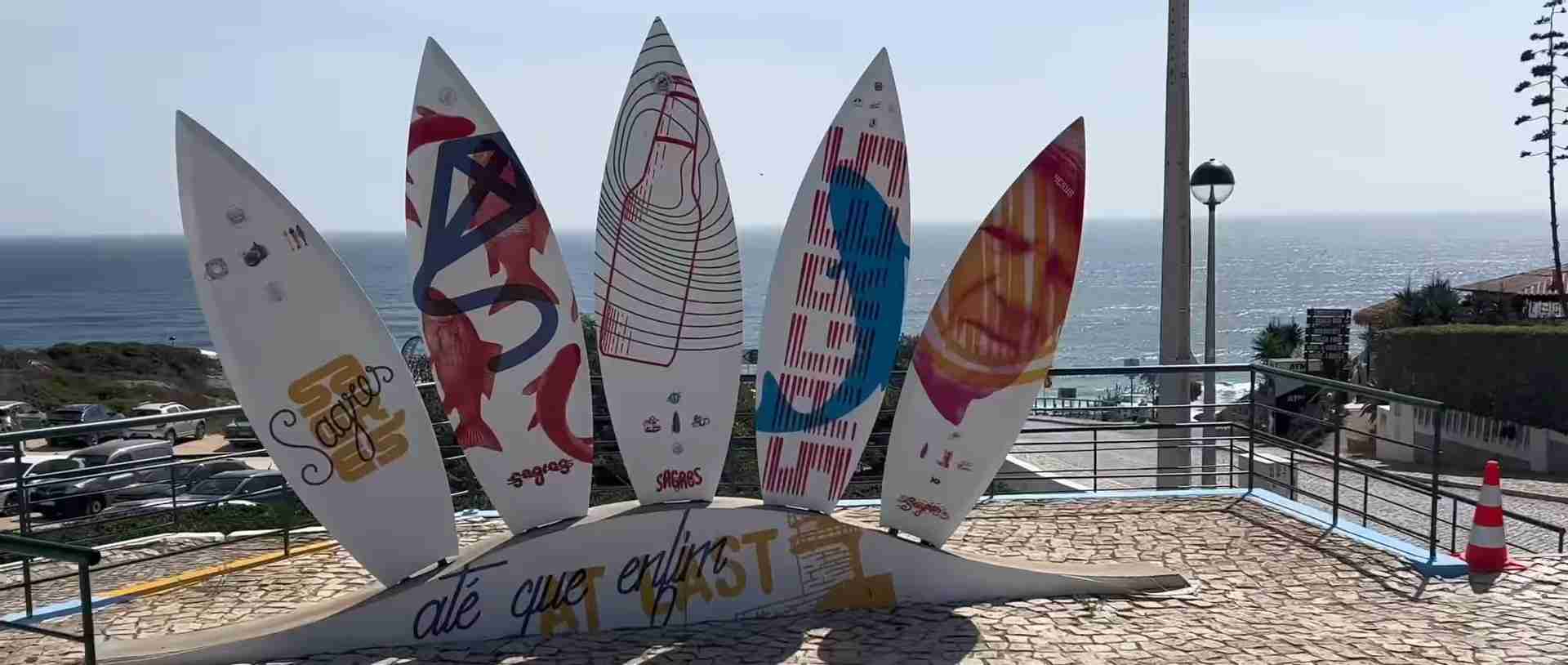
Sagres Day Trip from Lagos, Algarve 2026: End of the World Guide
Sagres stands at the southwestern tip of Europe where dramatic cliffs plunge into the Atlantic, earning its historical reputation as the “End of the World.” This day trip from Lagos takes you to Prince Henry the Navigator’s legendary fortress, the windswept lighthouse at Cabo de São Vicente, and some of the Algarve’s most spectacular coastline—all achievable in a single unforgettable day with proper planning.
Key Takeaways
- Budget-Friendly Journey 2026: Complete day trips cost €35-42 per person using public buses, including Sagres Fortress admission, lunch, and both major attractions with stunning cliff-edge views
- Frequent Bus Service: Vamus Route 47 connects Lagos to Sagres approximately nine times daily on weekdays (five on weekends) with 55-minute journeys and €6 one-way fares—reliable public transportation eliminates rental car necessity
- Two Essential Stops: Sagres Fortress (€10 admission, 40-minute visit) features the enigmatic 43-meter wind compass and Prince Henry’s chapel, while Cabo de São Vicente offers free access to Europe’s southwestern extremity with one of the continent’s most powerful lighthouses
- Fortress Price Increase 2026: Sagres Fortress admission rose from €3 to €10 in January 2025 (seniors and youth pay €5, children under 12 enter free)—budget accordingly for this significant heritage site cost adjustment
- Extended Timing Options 2026: The 6km distance between Sagres and Cabo de São Vicente allows flexible exploration—three buses daily continue directly to the cape, or walk the dramatic coastal route in 1-2 hours for photography opportunities
- Windswept Conditions Year-Round: Sagres experiences strong Atlantic winds regardless of season—bring windproof layers, secure hats and cameras, and prepare for temperatures 5-8°C cooler than Lagos despite full sunshine
People Also Ask About Sagres Day Trips 2026
How much does a day trip from Lagos to Sagres cost in 2026?
Day trips from Lagos to Sagres range €35-70 per person depending on transportation choices and dining preferences. Budget travelers spend €35-42 using round-trip public buses (€12 total), Sagres Fortress admission (€10), lunch at local cafes (€8-12), and coffee or snacks (€5-8). Mid-range visitors spending €45-70 might take an Uber one direction (€35-40) combined with bus return, enjoy restaurant meals (€15-22), and budget for additional refreshments. The cape itself requires no entrance fee, making this exceptional value for experiencing Europe’s southwestern extremity.
Is one day enough to visit Sagres and Cape St. Vincent in 2026?
One day provides ample time to thoroughly experience both Sagres and Cabo de São Vicente when properly planned. Most visitors allocate 40-60 minutes at Sagres Fortress exploring the wind compass, chapel, and clifftop ramparts, then spend 45-75 minutes at Cabo de São Vicente photographing the lighthouse and dramatic coastline. The 6km distance between sites takes 10 minutes by car, taxi, or continuing bus, or 1-2 hours walking the spectacular coastal route. Factor 55 minutes each direction for Lagos-Sagres bus travel, 90-120 minutes for lunch and town exploration, leaving 4-5 hours of quality sightseeing time within a 7-8 hour day trip window comfortably catching morning departure and early evening return buses.
What time do buses run from Lagos to Sagres in 2026?
Vamus Route 47 operates approximately nine daily departures Monday-Friday and five departures on weekends and holidays throughout 2026, with the first service typically departing Lagos around 7:00 AM and the final return from Sagres around 6:30 PM. Three weekday services continue beyond Sagres to Cabo de São Vicente (10 minutes additional), eliminating the need for taxis or walking between the fortress and cape. Journey time averages 55 minutes depending on intermediate stops. Schedules vary seasonally with increased frequency May-September peak months, so verify current timetables at Lagos bus station ticket office or the Vamus website before departure—purchasing tickets at the station rather than aboard ensures seat availability during summer crowds.
Can you walk from Sagres to Cape St. Vincent in 2026?
The 6km coastal walk from Sagres Fortress to Cabo de São Vicente follows partially along the renowned Fisherman’s Trail (part of the Rota Vicentina network) and takes 1-2 hours depending on pace and photography stops. The route traverses dramatic cliff-edge paths marked with blue and green stripes on wooden poles, offering spectacular Atlantic vistas, wildflower-covered headlands, and access to secluded viewpoints impossible to reach by vehicle. Strong winds make this walk challenging—wear sturdy footwear with ankle support, avoid cliff edges (many sections remain unfenced), and carry water as no facilities exist between sites. Three daily buses continuing from Sagres to the cape provide convenient one-way alternatives, allowing you to walk one direction and ride the other, maximizing both scenic experience and time efficiency during your 2026 visit.
Extended multi-day tours – 5+ days
Featured Algarve Multi-Day Tour Packages
4 days
Algarve Discovery Tour
- ✓ Booking needs min. 2 travelers

8 days
Walking in Portugal – Remote Coastal Trails
- ✓ Comprehensive Algarve tour
- ✓ Expert local guides included
- ✓ All accommodation arranged
- ✓ Transportation provided
7 days
Costa Vicentina: Natural Park self-guided bike tour
- ✓ Comprehensive Algarve tour
- ✓ Expert local guides included
- ✓ All accommodation arranged
- ✓ Transportation provided
7 days
Algarve – a holiday full of wine
- ✓ Comprehensive Algarve tour
- ✓ Expert local guides included
- ✓ All accommodation arranged
- ✓ Transportation provided
Multi-day tour packages powered by TourRadar. Prices and availability subject to change.
Introduction: Portugal’s End of the World Journey from Lagos 2026
Sagres occupies a mythical position in Portuguese history and European imagination—the windswept promontory where Prince Henry the Navigator established his legendary navigation school in the 15th century, launching the Age of Discovery that would redraw world maps forever. Ancient mariners called this coastline Promontorium Sacrum, the Sacred Promontory, believing the cliffs marked civilization’s western boundary where the known world ended and monsters lurked in uncharted seas. Today’s visitors discover that reputation deserved—standing at Cabo de São Vicente watching Atlantic swells crash against 75-meter cliffs, feeling winds that have traveled unobstructed across 5,000 kilometers of open ocean, creates visceral understanding of why explorers considered this Europe’s ultimate edge.
From Lagos, this journey transports you 30 kilometers westward to Portugal’s southwestern tip, where dramatic landscapes, profound historical significance, and raw natural beauty converge. The Sagres Fortress rises from barren headlands surrounded on three sides by sheer cliffs, its massive walls protecting the enigmatic 43-meter stone wind compass that Prince Henry’s scholars may have used for celestial navigation studies. Six kilometers further west, the Cabo de São Vicente lighthouse has guided shipping since 1846 from cliffs so high and exposed that its beam reaches 60 kilometers out to sea—one of Europe’s most powerful maritime signals still operating today.
The 2026 Sagres experience balances rich historical exploration with spectacular coastal scenery. Modern infrastructure makes the journey remarkably accessible—frequent public buses eliminate rental car necessity, the fortress underwent recent renovations improving visitor facilities while preserving 15th-century authenticity, and the cape remains freely accessible to all who make the pilgrimage. Whether you’re drawn by Age of Discovery history, photography opportunities of limestone cliffs and endless ocean horizons, or simply the profound experience of standing at continental Europe’s southwestern extremity, this day trip delivers experiences that justify its “End of the World” mystique.
This comprehensive guide provides everything needed to maximize your 2026 Sagres day trip from Lagos: verified transportation schedules and costs, fortress and cape exploration strategies, dining recommendations balancing budget and quality, seasonal timing advice, and practical tips for handling the formidable winds that define this landscape. You’ll discover how to experience both major attractions plus hidden viewpoints, secluded beaches, and coastal trails within a single day’s adventure—creating memories of dramatic seascapes and historical resonance that persist long after returning to Lagos.
Understanding the Lagos-Sagres Route 2026
The 30-kilometer journey from Lagos to Sagres traverses the western Algarve’s increasingly wild coastal landscapes as you approach the Atlantic’s full force. The route follows the N125 highway west for 20 kilometers through coastal towns including Praia da Luz and Burgau, then turns southwest on the N268 through increasingly barren terrain toward Vila do Bispo before the final descent to Sagres. This geographical transition from developed resort coastline to windswept headlands mirrors the journey from comfortable familiarity to the raw edge of Europe.
Sagres itself occupies a small, flat-topped promontory jutting into the ocean, with the fortified headland at its southern tip and the modern town spreading northward. The landscape appears almost lunar—low scrubland vegetation bent permanently landward by prevailing winds, limestone cliffs rising 40-60 meters from crashing surf, and an enormous sky that dominates visual perception. The Sagres peninsula protects a small harbor on its eastern flank where fishing boats shelter, while the western and southern coasts bear the Atlantic’s full fury.
Cabo de São Vicente extends 6 kilometers further northwest along increasingly dramatic coastline. Here the cliffs reach 75 meters, the vegetation shrinks to ground-hugging species, and the sense of isolation intensifies. The cape forms the southwestern corner where Portugal’s south coast meets its west coast—a geographical pivot point that made it crucial for navigation before GPS satellites. Standing here, no land exists between you and the Americas across 5,000 kilometers of open ocean.
This route’s historical significance cannot be overstated. Prince Henry the Navigator (Infante Dom Henrique) chose Sagres around 1420 as headquarters for his systematic exploration efforts, gathering cartographers, astronomers, shipbuilders, and experienced mariners to solve navigation problems preventing southward progress along Africa’s coast. While romantic myths of a formal “navigation school” likely exaggerate the organized academic nature of Henry’s enterprise, Sagres undeniably served as an intellectual hub where empirical navigation knowledge accumulated, improved ship designs emerged, and successive expeditions pushed further into previously uncharted waters.
From Sagres, Portuguese caravels departed on voyages that would ultimately circumnavigate Africa, reach India, discover Brazil, and establish the first global maritime empire. The promontory’s isolation provided strategic advantages—easy to defend, positioned to catch departing ships with intelligence and supplies, and remote enough for experimental work away from competitors’ eyes. The fortress walls you’ll explore in 2026 stand on foundations from Henry’s era, and the wind compass may incorporate astronomical observation elements from those groundbreaking decades.
Transportation Options Lagos to Sagres 2026
Public Bus Service: Vamus Route 47 (Best Budget Option)
Vamus operates Route 47 connecting Lagos bus station (Terminal Rodoviário de Lagos) to Sagres approximately nine times daily on weekdays and five times on weekends throughout 2026. The journey takes 55-65 minutes depending on the number of intermediate stops, with fares costing €6 per person one-way. Three weekday services continue beyond Sagres town center to Cabo de São Vicente, adding 10 minutes and reaching the lighthouse area. This frequent, reliable service eliminates rental car necessity for day-trippers prioritizing budget efficiency.
Lagos bus station sits on Avenida dos Descobrimentos along the waterfront, within 10-minute walk from the historic Old Town center. Purchase tickets at the station ticket office rather than from drivers (Sagres-bound passengers cannot buy aboard). The ticket office opens before the first departure and staff provide printed schedules showing all daily services—request this timetable as departure times shift seasonally and between weekday/weekend patterns. The first service typically departs around 7:00 AM, with the final Sagres-to-Lagos return around 6:30 PM, though these times warrant verification closer to your travel date.
The bus makes multiple stops along the route including Praia da Luz, Burgau, Vila do Bispo, and several points within Sagres itself. The main Sagres stop sits near the tourist information office (Posto de Turismo) in the town center, approximately 15 minutes’ walk from Sagres Fortress. For Cabo de São Vicente services, the bus continues west through increasingly empty landscape to terminate near the lighthouse parking area. Return services depart from the same stops in reverse—in Sagres, board at the stop opposite the tourist office where outbound buses arrived.
Summer months (June-September) see the highest frequencies with additional midday services accommodating beach-goers and day-trippers. Winter schedules (October-April) reduce to core commuter times with wider gaps between services. Weekends operate reduced timetables year-round, typically five services instead of nine. This schedule pattern means careful timing matters—missing your intended return bus could leave you waiting 2-3 hours for the next service, particularly on weekend afternoons.
Advantages of bus transportation include rock-bottom cost (€12 round-trip versus €70-90 for Uber/taxi), no parking concerns at crowded fortress or cape sites, zero navigation stress allowing you to enjoy coastal scenery during transit, and environmental sustainability. The main disadvantage involves schedule inflexibility—your departure and return times lock to the timetable, limiting spontaneous exploration or extended stays at particularly appealing locations. The bus also requires walking between Sagres town center, fortress, and beaches, adding 30-45 minutes total walking time to your day.
Uber and Taxi Services (Best Flexibility Option)
Uber operates reliably between Lagos and Sagres with typical fares ranging €35-40 one-way for the 30-kilometer journey taking approximately 30 minutes by car. Traditional taxis cost slightly more at €40-45 one-way. This transportation option provides maximum flexibility for departure timing, door-to-door convenience eliminating all walking between sites, and ability to stop at beaches, viewpoints, or restaurants not served by bus routes. Round-trip costs reach €70-80 for Uber or €80-90 for taxis.
Lagos taxi ranks sit at the train station, main bus station, and several Old Town squares. Uber pickup functions seamlessly via the app from any Lagos accommodation. For Sagres returns, pre-booking return rides proves wise particularly in peak season when demand exceeds available vehicles—exchange phone numbers with your outbound driver to arrange a specific pickup time and location. Uber requires cell service for booking, which works throughout the route though signal strength occasionally drops along the N268’s most remote sections.
The cost-effectiveness equation shifts based on group size. Solo travelers or couples spending €70-80 for Uber round-trip gain significant convenience and flexibility compared to €12-24 total bus fares for the same passengers. Groups of three-four can split Uber costs to €18-20 per person each way, bringing prices closer to bus levels while retaining all convenience advantages. Families with children particularly benefit from door-to-door transportation eliminating tiring walks with young travelers.
Uber provides crucial advantages for sunset photography at Cabo de São Vicente—the last return bus departs around 3:00-4:00 PM, hours before the dramatic evening light that makes the cape famous. An Uber allows you to remain through sunset (summer sunsets occur 8:30-9:00 PM) and return to Lagos afterward. Similarly, spontaneous beach visits at Praia do Tonel or Praia do Beliche become feasible with on-demand transportation impossible to achieve on fixed bus schedules.
Rental Car (Best Freedom Option)
Renting a car for the Lagos-Sagres day trip costs €30-50 per day for economy vehicles during 2026, plus fuel expenses (approximately €8-10 for the round-trip on current petrol prices). This option delivers maximum freedom for multiple stops, flexible timing, spontaneous route deviations, and ability to explore the broader Costa Vicentina coastline including dramatic beaches like Praia da Bordeira and Carrapateira north of Sagres. The A22 motorway connecting Faro to Lagos has been completely toll-free since January 2025, eliminating previous transponder complexities for this route.
The drive from Lagos follows N125 west then N268 south—well-maintained roads with clear signage requiring no navigation expertise. Journey time runs 35-40 minutes in normal traffic. Free parking exists at both major attractions: a large lot sits immediately outside Sagres Fortress entrance, while Cabo de São Vicente features an expansive parking area rarely reaching capacity even during summer peaks. Parking in Sagres town center requires more searching during lunch hours but generally remains available within 2-3 blocks of restaurants and the harbor area.
Car rental advantages extend beyond simple transportation between Lagos and the two main Sagres attractions. The coastal N268 passes numerous stunning beaches and viewpoints worthy of stops—Praia do Beliche sits in a dramatic cove between Sagres and the cape, while the small Fortaleza do Beliche offers remarkable cliff views with minimal visitor crowds. Further north, the entire Parque Natural do Sudoeste Alentejano e Costa Vicentina contains some of Portugal’s most spectacular and undeveloped coastline, with empty beaches backed by wildflower meadows and hiking trails.
Disadvantages include driving responsibility (Portuguese drivers can be aggressive, though rural coastal roads see light traffic), parking fees in Lagos before departure and after return (€2-3 per hour in most zones), and the administrative tasks of vehicle pickup and dropoff consuming 30-45 minutes of your day. Fuel costs and rental fees split across 3-4 passengers approach bus-level costs per person while retaining all flexibility benefits.
Organized Tours (Best Hands-Off Option)
Several Lagos-based operators offer half-day guided tours to Sagres and Cabo de São Vicente throughout 2026, typically priced €35-55 per person for 4-5 hour small-group experiences including hotel pickup, driver-guide commentary, fortress admission, and stops at both major sites. These tours solve all logistics while adding historical and cultural context through professional guides, making them attractive for visitors preferring structured experiences over independent exploration.
Tours typically depart Lagos 9:00-10:00 AM, spend 45-60 minutes at Sagres Fortress with guided historical explanations, continue to Cabo de São Vicente for 45 minutes of cliff-edge exploration and photography, and return to Lagos by 2:00-3:00 PM. Some operators include brief stops at Praia do Beliche or fishing harbor photo opportunities. Small-group tours usually carry 6-8 passengers in comfortable minivans, while private tours serve couples or families exclusively at premium prices (€180-250 total for 2-4 people).
Tour advantages include zero planning required, entertaining historical commentary bringing the landscape alive, guaranteed transportation regardless of public bus schedules, and social interaction with fellow travelers. Disadvantages involve fixed schedules with limited time at each location, inability to linger at sites that particularly interest you, mandatory stops at places of less personal interest, and costs approximately double independent bus travel. Tours work best for visitors prioritizing education and convenience over flexibility and budget.
Sagres Fortress: Prince Henry’s Legacy 2026
The Fortaleza de Sagres stands on a wind-battered promontory jutting into the Atlantic, its massive defensive walls cutting across the narrow neck of land connecting the headland to the Sagres mainland. The fortress occupies approximately 5 hectares of exposed rock and scrubland surrounded on three sides by 40-meter limestone cliffs plunging to churning surf below. This strategic location offers commanding views along the coast in both directions while remaining defensible from a single fortified wall facing landward—perfect for Prince Henry’s 15th-century navigation headquarters requiring security, isolation, and unobstructed horizons.
Entry in 2026 costs €10 for adults, representing a significant increase from the €3 fee charged through 2024 (the price rose to €10 in January 2025 as part of national heritage site adjustments). Seniors over 65 and youth aged 12-18 pay reduced admission of €5, while children under 12 enter free. The fortress opens daily at 9:30 AM, closing at 5:30 PM between October and April, and remaining open until 8:00 PM during the May-September peak season. Last admission occurs 30 minutes before closing time, allowing sufficient exploration before staff begin clearing the site.
Purchase tickets at the entrance gatehouse, a modern facility constructed to historical proportions. Staff provide basic site maps marking the main features, though the fortress layout remains intuitive enough that most visitors navigate successfully without them. The ticket also grants access to a small but well-curated exhibition inside the fortress walls documenting the Age of Discovery, Prince Henry’s role, and the fortress’s tumultuous history through illustrated panels and maritime artifacts.
The Rosa dos Ventos: Sagres’s Greatest Mystery
The fortress’s most enigmatic feature—and primary draw for many visitors—is the enormous Rosa dos Ventos (wind compass or compass rose) carved into the flat rocky ground near the center of the complex. This perfect circle measures 43 meters in diameter, formed from beach pebbles set on edge creating radiating lines dividing the circle into 32 segments. The sheer precision and scale stagger first-time viewers—the circle’s geometric perfection visible from the ramparts above testifies to sophisticated mathematical and surveying knowledge.
The wind compass’s exact purpose and construction date remain disputed by historians. Uncovered during 1919 archaeological excavations after centuries buried under accumulated soil and vegetation, the structure may date from Prince Henry’s 15th-century occupation or from later periods. Theories about its function range from pragmatic navigation training tool helping pilots visualize wind directions and sailing routes, to astronomical observation platform for measuring celestial positions, to simply an enormous sundial for timekeeping.
What historians confirm: the Age of Discovery required unprecedented attention to wind patterns, compass bearings, and celestial navigation as Portuguese explorers ventured beyond sight of familiar coastlines into seas where traditional navigation landmarks ceased to exist. Whether this specific wind compass served Prince Henry’s scholars or represents later commemoration of their work, the structure powerfully symbolizes the navigation science revolution that occurred here. Standing at its center, you occupy the geographical and intellectual focal point from which European exploration radiated outward to encompass the globe.
The wind compass experiences peak crowding 11:00 AM-2:00 PM when tour buses and day-trippers converge. Visit immediately at 9:30 AM opening or after 4:00 PM for relatively solitary experiences with this remarkable structure, allowing time to walk the full circle and contemplate the navigational challenges Henry’s generation confronted. The exposed location means strong winds constantly buffet visitors—secure any loose clothing, hats, or camera equipment before walking the perimeter.
Nossa Senhora da Graça Chapel
The small, whitewashed Capela de Nossa Senhora da Graça (Chapel of Our Lady of Grace) sits near the fortress’s southern edge overlooking the ocean. This modest structure dates from 1570, replacing Prince Henry’s original 1459 chapel destroyed during Sir Francis Drake’s devastating 1587 raid on Sagres when English forces systematically razed Portuguese fortifications along the Algarve coast. The current chapel underwent restoration after the catastrophic 1755 earthquake that damaged or destroyed most Algarve coastal structures.
The chapel’s exterior displays classic Portuguese simplicity—white walls, red-tile roof, minimal ornamentation. A simple cross surmounts the facade, and narrow arched windows puncture walls built thick enough to withstand Atlantic storms. The interior remains closed to casual visitors outside special religious observances, though its small scale means exterior views reveal most architectural features of interest. Two baroque statues originally housed here—Saint Vincent and Francis Xavier—were transferred to Lagos after the earthquake for safekeeping.
The chapel’s primary significance lies in continuity rather than architectural grandeur. For over 500 years, Christian worship has occurred on this headland, from Prince Henry’s private devotions before launching expeditions into unknown waters, through centuries of mariners seeking blessings before dangerous voyages, to modern weddings and baptisms continuing the tradition. The structure anchors the fortress’s spiritual dimension alongside its military and scientific functions—a reminder that 15th-century exploration mixed religious mission with political ambition and commercial opportunity.
Defensive Ramparts and Cliff Views
The fortress’s defensive walls stretch approximately 350 meters across the promontory’s neck, standing 6-7 meters high with a walkable top providing commanding views over both the approach road and the wild headland beyond. Portuguese military engineers repeatedly strengthened these fortifications over centuries, responding to successive threats from North African raiders, Spanish conflicts, and Drake’s 1587 attack that proved earlier defenses inadequate. The current configuration largely dates from 16th-17th century reconstructions, though some masonry may incorporate 15th-century foundations.
Walking the ramparts—accessed by stone staircases at either end of the main wall—rewards with spectacular panoramas. To the east, the view encompasses Sagres town, the protected harbor where fishing boats still moor, and Praia da Mareta’s golden beach curving northward. Westward, the coastline grows increasingly dramatic with cliffs rising higher and vegetation surrendering to bare rock. On clear days, Cabo de São Vicente’s lighthouse appears as a white exclamation point 6 kilometers distant.
The southern and western fortress perimeter follows natural cliff edges where fortification proved unnecessary—no invading force could scale 40-meter vertical limestone walls with Atlantic swells crashing at their base. Visitors can walk much of this cliff-edge perimeter on rough paths, though strong winds and unfenced drops require caution. The experience of standing on these exposed cliff tops, feeling wind that has traveled unobstructed across thousands of kilometers of ocean, hearing surf thunder against rocks far below, and seeing nothing but water to the horizon creates profound understanding of why mariners considered this the world’s edge.
Multiple overlook points punctuate the cliff perimeter, some marked by worn stone platforms where cannons once aimed seaward to defend against naval attack. These positions offer superlative photography opportunities—dramatic vertical cliffs creating natural leading lines, surf patterns changing with tides and swells, fishing boats tiny against vast ocean, and layers of rock strata revealing millions of years of geological history. Sunset visits (possible during May-September extended hours) transform the cliffs to gold and amber as the sun descends toward the Atlantic horizon.
Exhibition Hall and Visitor Facilities
A modern exhibition building constructed to harmonize with historical architecture houses interpretive displays about the Age of Discovery, Prince Henry’s navigation advances, and the fortress’s military history. Illustrated panels in Portuguese and English explain astronomical navigation techniques, caravel design improvements that enabled oceanic voyages, and the systematic knowledge accumulation that made Portuguese exploration supremely successful during the 15th-16th centuries.
Display cases contain navigation instruments including astrolabes, quadrants, and compasses showing how 15th-century mariners determined latitude and course. Maps trace Portuguese exploration routes—successive voyages pushing further along Africa’s coast, Vasco da Gama’s 1498 India route via the Cape of Good Hope, and Cabral’s 1500 Brazil discovery. The exhibition effectively contextualizes the fortress’s role within the broader Age of Discovery rather than presenting Sagres in isolation.
Visitor facilities include clean restrooms near the entrance (the only facilities available within the fortress complex), a small cafe selling beverages, snacks, and ice cream at premium prices reflecting the captive location, and a gift shop offering books, postcards, navigation-themed souvenirs, and local crafts. Shaded seating areas near the exhibition building provide welcome respite from sun and wind, particularly valuable during summer when the exposed headland offers zero natural shade.
The fortress grounds require 40-60 minutes for thorough exploration at moderate pace—15-20 minutes at the wind compass, 10-15 minutes walking ramparts and viewing cliff edges, 15-20 minutes in the exhibition hall, and 10 minutes for photographs and gift shop browsing. Visitors particularly interested in military history or Age of Discovery details can easily spend 90 minutes absorbing all information available. The windswept nature of the site makes it less suitable for very young children or mobility-impaired visitors, as uneven rocky ground and unfenced cliff edges present genuine hazards requiring constant supervision.
Cabo de São Vicente: Europe’s Southwestern Edge 2026
Six kilometers northwest of Sagres Fortress, Cabo de São Vicente thrusts into the Atlantic at the point where Portugal’s south coast pivots to become the west coast—the mathematical southwestern extremity of continental Europe. The cape’s Portuguese name honors Saint Vincent of Saragossa, a 4th-century Christian martyr whose remains were supposedly discovered in sea caves beneath these cliffs centuries after his death. Romans knew this promontory as Promontorium Sacrum—the Sacred Cape—attributing mystical properties to a location where the setting sun appeared to extinguish itself daily in endless ocean.
Unlike Sagres Fortress, Cabo de São Vicente remains entirely free to visit. The site is accessible 24 hours daily year-round, with the lighthouse courtyard interior open limited hours (typically 10:00 AM-6:00 PM on most days) housing small museum exhibits, gift shop, and toilets. The vast majority of visitors never enter the lighthouse complex, instead gravitating to the dramatic cliff edges, viewpoints, and the remarkable sense of standing at continental Europe’s ultimate western reach.
The cape’s scale exceeds Sagres—cliffs tower 75 meters above the surf, roughly double the height of fortress walls, creating vertiginous perspectives when peering over edges to watch waves explode against rock formations far below. The lighthouse compound occupies the flattest high ground, while the surrounding cape extends as irregular rocky fingers separated by narrow inlets where Atlantic swells funnel and amplify. Walking these fingers requires caution as wind gusts can reach 60-80 kilometers per hour even on otherwise calm days, and many cliff edges remain completely unfenced.
The Lighthouse: Guiding Ships Since 1846
The Farol do Cabo de São Vicente has guided maritime traffic since 1846, replacing an earlier signal system dating to the 16th century. The current lighthouse tower rises approximately 28 meters above the cliff top—though perched atop 75-meter cliffs, this places its light source 103 meters above mean sea level. The lighthouse’s Fresnel lens system generates one of Europe’s most powerful beams, visible 60 kilometers out to sea under optimal atmospheric conditions. The light pattern—four white flashes every 20 seconds—allows navigators to positively identify the cape even when multiple lighthouse beacons appear on horizons.
The lighthouse compound includes the main tower, keeper’s quarters (converted to small museum and administrative space), and auxiliary buildings enclosed within white-painted walls creating a protected courtyard against relentless winds. Red paint trims windows and doors in traditional Portuguese coastal style, while the tower itself gleams brilliant white visible from kilometers away in any direction. Two massive fog horns flank the main tower, used during the frequent fog events that shroud this coast when Atlantic moisture meets cool Portuguese currents.
The lighthouse museum presents maritime history artifacts, photographs documenting shipwrecks along this treacherous coast, and exhibits explaining lighthouse technology evolution from open flames to electric arc lamps to modern LED systems. Lighthouse keepers lived here with families in isolation until automation arrived in the 1980s—their accounts describe winters of astonishing ferocity when Atlantic storms made even short walks outside dangerous. The museum’s small scale means visits consume 15-20 minutes maximum.
Photography enthusiasts discover the lighthouse compound offers carefully composed shots—the white tower against deep blue sky, red trim creating color accents, and surrounding cliff edges providing natural framing. The compound’s protected interior provides the cape’s only windbreak, making it valuable for regrouping, using facilities, and shelter before returning to fully exposed cliff-edge exploration.
Cliff-Edge Exploration and Viewpoints
The cape’s primary attraction requires no admission fee, museum entry, or structured tour—simply walking to various cliff-edge viewpoints to experience the raw power of ocean meeting land at Europe’s southwestern corner. Multiple rough paths radiate from the lighthouse parking area toward different promontories, each offering distinct perspectives and photographic compositions. The most popular route leads left (west) from the lighthouse toward an elevated rocky outcrop where dozens of visitors typically gather for photographs with the lighthouse behind them and only ocean ahead.
This western viewpoint provides the classic Cabo de São Vicente experience—standing on a rocky platform jutting into empty air with 75-meter drops on three sides, wind roaring with enough force to lean into, and absolutely nothing between you and the Americas visible across 5,000 kilometers of Atlantic Ocean. The psychological impact surprises most first-time visitors. Modern GPS-saturated consciousness intellectually understands Earth’s geography, but visceral bodily experience of standing at a continental edge where no further land exists westward for thousands of kilometers creates primal awe that photographs cannot capture.
The eastern promontories receive fewer visitors despite offering equally dramatic scenery and better angles for lighthouse photography. Paths lead right from the parking area toward rocky fingers extending seaward, some accessible via informal trails requiring mild scrambling over uneven terrain. These positions reveal the full 6-kilometer coastline back toward Sagres—a succession of cliffs, small beaches accessible only by sea, and layers of sedimentary rock telling geological stories spanning hundreds of millions of years.
Marine wildlife appears regularly from these cliff-top vantage points. Atlantic dolphins often hunt in waters near the cape where upwelling currents concentrate fish populations. Pelagic seabirds including shearwaters, gannets, and the occasional albatross ride wind currents along the cliffs. During spring and autumn migration periods, birdwatchers document hundreds of species passing this southwestern continental corner as they transit between European breeding grounds and African wintering areas. Binoculars prove valuable for wildlife watching, though even naked eye observers can spot dolphins’ distinctive dorsal fins and feeding frenzies attracting diving seabirds.
The “Last Bratwurst Before America” Phenomenon
An unexpected cultural element colors the Cabo de São Vicente experience—multiple food trucks in the parking area have adopted variations on the slogan “Last/First Bratwurst Before America,” serving grilled sausages, burgers, and beverages to visitors making their continental-edge pilgrimage. This quirky tradition began decades ago when German tourists (who dominate Northern European tourism to the Algarve) demanded familiar foods at this remote location, and enterprising vendors obliged with bratwurst stands that achieved cult status.
The “last bratwurst” phenomenon now forms part of the authentic Cabo de São Vicente experience rather than commercialized intrusion. Multiple reviews and travel accounts specifically mention grabbing bratwurst at Europe’s edge as a memorable moment combining natural grandeur with absurdist humor. The stands also sell cold drinks, fresh-squeezed orange juice, coffee, pastéis de nata (Portuguese custard tarts), and other refreshments appreciated after walking wind-battered cliff edges. Prices run €4-6 for sausages, €2-3 for beverages—reasonable considering the remote location.
Small souvenir stalls supplement the food trucks, selling keychains, magnets, postcards, Portuguese wool sweaters (surprisingly practical purchases given the wind chill), and navigation-themed tchotchkes. The commercial activity concentrates around the parking area; walking 100 meters toward any cliff edge returns you to complete wilderness with just rock, sea, wind, and sky.
Sunset at the End of the World
Cabo de São Vicente enjoys fame as one of Europe’s supreme sunset viewing locations—the western orientation allows unobstructed views of the sun descending directly into the Atlantic horizon, while the elevated cliff-top position extends the sunset window as the sun appears to touch water minutes before astronomical sunset. During summer months (May-August), hundreds of visitors gather for this daily spectacle, arriving 30-60 minutes before sunset to secure prime viewing positions.
The sunset experience dramatically varies by season. Summer sunsets occur late (8:30-9:00 PM in July-August) after long golden-hour periods that transform the limestone cliffs to honey and amber tones. The cape’s western faces receive direct illumination creating extraordinary contrasts between sunlit rock and shadowed water. Winter sunsets happen early (5:30-6:00 PM in December-January) often accompanied by dramatic cloud formations and storm light that can prove more photographically interesting than clear summer evenings, though wind chill makes winter sunset watching genuinely uncomfortable without serious layering.
Spring and autumn shoulder seasons (April-May, September-October) offer ideal sunset conditions—moderate timing (7:00-8:00 PM), smaller crowds than summer peaks, and weather patterns producing photogenic cloud formations without severe discomfort. These months also feature better marine wildlife activity and wildflower blooms across the cape’s vegetation, adding foreground interest to sunset compositions.
Sunset viewing requires transportation planning if using public buses, as the last return service to Sagres and Lagos departs the cape around 3:00-4:00 PM, hours before sunset. Visitors using Uber, taxis, rental cars, or staying overnight in Sagres enjoy flexibility to remain through sunset and blue hour without transportation stress. Solo travelers and photographers willing to commit several hours can walk the 6-kilometer coastal route from Sagres to the cape in late afternoon, watch sunset, and return via the 8:00-9:00 PM route back to Sagres following marked trails with headlamps (though this requires navigation confidence and proper equipment).
Exploring Sagres Town 2026
Sagres town itself occupies surprisingly small geographical footprint—the main commercial area concentrates along two primary streets with the small central square (Praça da República) forming the social hub. The town has expanded significantly from its tiny fishing village origins as tourism grew, but development remains modest and relatively tasteful compared to eastern Algarve resort towns. Sagres retains working-port authenticity alongside tourism infrastructure, with fishing boats still departing daily and commercial fishermen coexisting with surf schools and restaurants.
The population barely exceeds 2,000 permanent residents, swelling to 5,000-6,000 during summer peaks when seasonal workers, long-term surfers, and tourists fill accommodations. This modest scale means Sagres lacks major shopping, nightlife, or cultural attractions beyond the fortress and cape—the town functions primarily as practical base camp for accessing dramatic coastline rather than destination in itself. For day-trippers from Lagos, Sagres town serves mainly as lunch location, bus transfer point, and brief respite from wind-battered headlands.
Porto da Baleeira: The Working Harbor
The Porto da Baleeira (Baleeira Harbor) occupies a sheltered inlet on the Sagres peninsula’s eastern flank, protected from Atlantic swells by the main headland. This working fishing port maintains daily operations unchanged by tourism—colorful trawlers and smaller boats depart before dawn for Atlantic fishing grounds, returning afternoon with catches destined for Sagres restaurants and regional markets. The harbor’s practical, unglamorous character provides authentic contrast to the dramatic natural scenery elsewhere.
Visitors can walk the harbor mole (breakwater) for different perspectives on Sagres—the town rising above the harbor, the fortress visible on the southern headland, and boats bobbing at moorings. Fish auction activity occasionally occurs at the harbor building where commercial catches are weighed, graded, and sold to buyers, though timing remains unpredictable and auction access is generally limited to trade participants. Several harbor-front restaurants specialize in ultra-fresh seafood with catches often coming directly from boats moored steps away.
The harbor also serves as departure point for boat tours operating along the Costa Vicentina—these range from 1-2 hour coastal cruises viewing cliffs and sea caves from water level (€30-45 per person), to half-day fishing charters (€60-90 per person), to full-day expeditions north toward Carrapateira and the Alentejo coast (€120-150 per person). Morning departures typically occur 9:00-10:00 AM, though schedules vary by operator, season, and weather conditions which frequently force cancellations given the exposed coastline’s unpredictable nature.
Sagres Beaches: Praia da Mareta and Praia do Tonel
Two substantial beaches flank Sagres town, each offering distinct character and experiences. Praia da Mareta curves along the peninsula’s protected northeast flank, a 500-meter crescent of golden sand backed by low cliffs with the town rising behind. This beach’s eastern orientation and partial shelter from prevailing winds make it Sagres’s most popular swimming and sunbathing location. Facilities include seasonal lifeguards, beach bar/restaurants, restroom facilities, and beach equipment rentals. Summer waters attract families and less-experienced swimmers, while consistent small-to-moderate swells year-round draw beginner surfers and bodyboarders.
Praia do Tonel occupies the opposite side of the peninsula, facing full Atlantic force on the southwestern coast. This dramatic beach sits in a small bay flanked by towering cliffs, accessible via steep wooden staircases descending from parking areas above. Tonel’s western exposure receives consistent, powerful swells making it prime intermediate-advanced surfing territory while simultaneously creating dangerous swimming conditions for anyone not experienced with strong currents and dumping shore break. The beach attracts dedicated surfers and photographers more than casual swimmers.
Both beaches lie within 20-minute walk from Sagres town center or the fortress, making them feasible additions to day-trip itineraries for travelers with time flexibility. Mareta sits closest to the town center (10-minute walk), while Tonel requires 15-20 minutes including the steep descent. Neither beach visit fits comfortably within tight bus-schedule day trips, but visitors using rental cars or staying later can easily incorporate beach time. The beaches showcase yet another dimension of Sagres’s natural diversity—within 2 kilometers you experience exposed Atlantic fury at Tonel and sheltered swimming at Mareta, demonstrating how coastal orientation determines conditions on these western headlands.
Dining in Sagres 2026: Fresh Seafood and Portuguese Flavors
Sagres dining emphasizes ultra-fresh seafood and traditional Portuguese preparations reflecting the town’s fishing heritage and relatively isolated location. The limited population means restaurant choices number dozens rather than hundreds, but quality generally remains high and prices moderate compared to tourist-heavy eastern Algarve towns. Most establishments focus on grilled fish, seafood rice dishes, and cataplanas (traditional copper-pot stews) rather than international cuisine, though a few spots cater to the international surf crowd with pizza, burgers, and fusion options.
Budget travelers can eat satisfying lunches for €8-12 by seeking out daily specials (prato do dia) at local tascas and cafes—these typically include soup or salad, main course, drink, and sometimes dessert or coffee. Mid-range restaurant meals with fresh grilled fish or seafood rice run €15-25 per person for main courses, reaching €25-35 per person including appetizers, drinks, and dessert. Fine dining or elaborate seafood platters at upscale establishments cost €35-50 per person. Overall, expect to spend 20-30% less than comparable meals in Lagos or Albufeira.
Essential Sagres Dishes to Try
Grilled fish dominates Sagres menus, prepared simply with olive oil, sea salt, and garlic allowing fish quality to shine. Servers present whole fish at your table before grilling—common choices include sea bass (robalo), sea bream (dourada), and sardines (sardinhas). This theatrical element ensures freshness and allows selection of specific fish by size and appearance. Expect €15-22 for most fish priced by weight (typically 300-400 grams per portion), served with boiled potatoes and vegetables or salad.
Cataplana de Marisco represents Algarve’s signature seafood stew, prepared in distinctive hinged copper pots resembling oversize clams. The dish combines shellfish (clams, mussels, prawns, sometimes crab or lobster), tomatoes, onions, garlic, white wine, and fresh coriander simmered until shellfish opens and broth develops rich complexity. Cataplanas typically serve 2-3 people sharing from the communal pot (€45-65 total), making them excellent value for groups. The dramatic presentation—servers open the hinged pot tableside releasing aromatic steam—adds entertainment value.
Arroz de Marisco (seafood rice) appears on virtually every Sagres menu, cooked soupy rather than dry like Spanish paella, with generous portions meant for sharing. This hearty dish combines rice cooked in seafood broth with prawns, clams, mussels, and sometimes fish or squid, flavored with tomatoes, garlic, and coriander. Single portions (serving 1-2 people) cost €18-25, while larger versions feeding 3-4 people run €40-50. The substantial nature makes arroz de marisco complete meals requiring no additional courses.
Percebes (goose barnacles) represent a Sagres specialty rarely found outside southwestern Portugal due to the dangerous harvesting required—collectors risk their lives scaling wave-battered cliffs at low tide to gather these odd crustaceans clinging to rocks. The result, priced €25-35 per portion, tastes briny and intensely oceanic with texture somewhere between scallop and soft-shell crab. Eating percebes involves breaking through tough exterior skin to extract small amounts of meat—labor-intensive consumption making them sharing plates rather than solo meals. This love-it-or-hate-it delicacy provides adventurous eaters bragging rights.
Restaurant Recommendations by Budget
Budget travelers seeking maximum value should prioritize A Tasca (Rua Comandante Matoso), a no-frills local favorite famous for enormous portions of perfectly grilled fresh fish at surprisingly low prices. Daily lunch specials run €9-12 including soup, main course, and drink. The informal atmosphere and Portuguese-only menu intimidate some visitors, but pointing at the day’s fish selection and trusting the kitchen delivers authentic experiences. Expect waits during peak lunch hours (1:00-2:30 PM) as locals and savvy tourists pack the small dining room.
Mid-range diners appreciate Restaurante O Telheiro do Infante (near the fortress) combining quality seafood, reasonable prices (€18-28 for mains), and pleasant ambiance with some outdoor seating. The menu balances traditional preparations with contemporary presentations, and the wine list includes excellent regional selections. Vila Velha (Rua Patrão António Faustino) offers similar quality with particularly strong meat options alongside seafood—the restaurant excels at perfectly grilled pork and beef complementing their fresh fish offerings.
Upscale dining centers on A Sagres (Praça da República) occupying prime central square position with outdoor tables ideal for people-watching. This slightly formal establishment emphasizes refined presentations and attentive service, with main courses €25-35 and full meals reaching €45-60 per person including wine and dessert. The elevated prices buy refined atmosphere and more complex preparations than simple grilled fish, making it appropriate for special occasions within Sagres’s generally casual dining scene.
Pizza and international food appear at several spots catering to surfers and young travelers. Mum’s (Praça da República) serves decent pizzas, burgers, and pasta €10-18 per person in a relaxed setting with late hours. The Hangout (Rua Comandante Matoso) functions as social hub with vegetarian options, breakfast dishes, and international menu pleasing various dietary restrictions—expect €12-20 per person for satisfying meals in lively atmosphere.
Practical Dining Tips for Day-Trippers 2026
Portuguese lunch service runs 12:00-3:00 PM with peak crowding 1:00-2:00 PM when locals take extended midday meals. Arriving 12:00-12:30 PM ensures table availability at popular spots without reservations. Many restaurants close 3:00-7:00 PM between lunch and dinner service, limiting afternoon snack options to cafes and bars. Day-trippers should plan substantial lunch as their main Sagres meal, possibly supplementing with morning pastries and afternoon coffee but not expecting full restaurant meals outside standard service hours.
Cash remains essential despite 2026—several restaurants especially smaller tascas and harbor-front establishments still operate cash-only. ATMs exist in Sagres town center, but bringing sufficient cash from Lagos eliminates withdrawal fees and ensures payment capability everywhere. Budget €30-40 cash per person for lunch including drinks to cover various scenarios without shortfall stress.
The “couvert” tradition places bread, olives, butter, and sometimes cheese on tables before meals—this appears complimentary but actually costs €3-5 per person when left on the table. Refusing couvert immediately upon seating or returning untouched items before ordering prevents charges. Once you taste any couvert, it becomes billable. This system confuses foreign visitors but represents standard Portuguese restaurant practice, not deceptive pricing.
Portion sizes in Portuguese restaurants typically far exceed Northern European or American norms. Main courses often constitute complete meals needing no appetizers. Asking for half-portions (meia dose) is perfectly acceptable and usually provides sufficient food for normal appetites at roughly 60-70% of full-portion prices. Sharing dishes between diners is common and restaurants accommodate this readily. Ordering full appetizers plus full mains for each diner often results in excessive food waste.
Day Trip Itinerary Suggestions 2026
Budget Day Trip by Public Bus (€35-42 per person)
This itinerary maximizes value using only public buses, targeting €35-42 total per-person costs while experiencing both major attractions and quality local dining. The schedule works with typical weekday bus frequencies; weekend trips require adjusting departure times around reduced service.
7:00 AM: Depart Lagos on first Sagres bus (€6 one-way). Bring coffee and pastries for breakfast during the 55-minute journey while watching coastal scenery transition from developed resorts to wild headlands.
8:00 AM: Arrive Sagres town center, disembark at Posto de Turismo stop. Walk 15 minutes south following signs toward Fortaleza de Sagres through the quiet town before crowds arrive.
8:20 AM-9:20 AM: Explore Sagres Fortress (€10 admission) during peaceful early-morning period with minimal visitors. Spend time at the wind compass understanding its scale and mystery, walk ramparts for cliff views, visit the chapel and exhibition hall, and photograph the dramatic setting without crowds obstructing compositions. Early timing provides optimal light for photography and coolest temperatures before midday sun intensifies.
9:30 AM: Walk back to Sagres town center (15 minutes), arriving around 9:45 AM. Optional coffee break at central square cafe before the bus connection, or use this time for brief town exploration and harbor walk if energy permits.
10:30 AM: Catch bus continuation to Cabo de São Vicente (one of three daily services reaching the cape). The 10-minute ride costs nothing additional if you retained your Sagres ticket stub for the through-service.
10:45 AM-12:15 PM: Explore Cabo de São Vicente thoroughly during 90 minutes allocated. Walk multiple cliff-edge viewpoints photographing the lighthouse, dramatic coastline, and endless Atlantic horizons. Visit the lighthouse museum if it’s open, use facilities, and purchase the famous “last bratwurst before America” or other refreshments from food trucks (€5-8). The morning timing ensures good light angles for photography and avoids afternoon crowds.
12:30 PM: Catch midday bus back to Sagres (approximately 12:30-12:45 PM departure, verify exact timing at ticket office). Return to town center, arriving around 1:00 PM.
1:00 PM-2:30 PM: Lunch at A Tasca or similar budget restaurant enjoying daily special (prato do dia) for €9-12 per person. This substantial midday meal becomes your primary Sagres dining experience, so order confidently—fresh grilled fish with soup, salad, potatoes, and drink provides authentic Portuguese lunch at remarkable value.
2:45 PM-4:00 PM: Buffer period for final Sagres exploration—walk to Praia da Mareta for beach views, browse shops in town center, return to harbor for photographs, or simply relax in the central square with coffee. This flexible time absorbs schedule variations and provides breathing room before departure.
4:15 PM-4:30 PM: Catch return bus to Lagos (verify exact departure time, typically around 4:15-4:30 PM on weekdays). The 55-minute journey returns you to Lagos around 5:15-5:30 PM.
Total costs: Bus €12 round-trip, Sagres Fortress €10, lunch €10, coffee/snacks €6 = €38 per person plus any optional purchases.
Mid-Range Day Trip with Mixed Transportation (€50-70 per person)
This itinerary combines bus outbound with Uber/taxi return, providing schedule flexibility for extended exploration while keeping costs moderate. The later departure allows leisurely Lagos breakfast and more relaxed pacing.
9:00 AM: Depart Lagos on second or third Sagres bus service (€6 one-way), arriving around 10:00 AM. The later start means fortress and cape both see visitor activity, but mid-morning remains less crowded than afternoon peaks.
10:15 AM-11:30 AM: Drive or take taxi directly to Cabo de São Vicente first (€10-12 by taxi, or €10-15 by Uber from Sagres town). Reverse order from the budget itinerary, visiting the cape during still-reasonable morning light and temperatures, then working back toward Sagres for lunch. Spend 75 minutes exploring cliff edges, lighthouse compound, and viewpoints thoroughly.
11:45 AM: Taxi or Uber back to Sagres (€10-12), arriving at Sagres Fortress around noon. Alternatively, arrange driver to drop you directly at the fortress entrance, saving the walk from town center.
12:00 PM-1:15 PM: Explore Sagres Fortress during 75 minutes allocated, slightly less than morning-only visit but sufficient given your later departure allows flexibility. The midday timing means more visitor activity but also dramatic sun angles highlighting cliff formations and ocean colors.
1:30 PM-3:00 PM: Extended lunch at mid-range Sagres restaurant (Restaurante O Telheiro do Infante or Vila Velha) enjoying full Portuguese meal with appetizer, main course grilled fish or seafood rice, wine, and dessert. Budget €25-30 per person for this leisurely meal becoming the centerpiece of your day trip experience rather than rushed refueling.
3:15 PM-4:30 PM: Post-lunch exploration flexibility—walk to Praia da Mareta for beach time, hike coastal trails near the fortress, visit the harbor, or browse Sagres shops. This buffer absorbs the extended lunch and prevents feeling rushed before departure.
4:45 PM-5:00 PM: Pre-arranged Uber pickup returns you to Lagos (€35-40). Alternatively, if you used rental car, drive back at your preferred timing possibly incorporating stops at Praia do Beliche or other viewpoints along the route.
Total costs: Bus €6 one-way, Sagres-Cape taxi €20-25 round-trip, Sagres Fortress €10, lunch €27, Uber return €37 = approximately €100 per person split costs, or €60-65 per person if traveling as couple or group splitting taxi fares.
Photography-Focused Day Trip with Rental Car (€45-60 per person)
This itinerary prioritizes optimal light conditions, multiple viewpoints, and flexibility for spontaneous stops at dramatic coastal locations. Rental car provides essential freedom for photographers requiring specific timing and location access impossible on bus schedules.
6:30 AM: Depart Lagos in rental car (€40-50 split among occupants, plus €8 fuel) targeting sunrise arrival at Cabo de São Vicente. The 40-minute drive reaches the cape around 7:10 AM, approximately 30 minutes before sunrise providing setup time.
7:15 AM-8:30 AM: Photograph sunrise at Cabo de São Vicente from multiple cliff-edge positions as early light reveals textures, creates long shadows, and generates warm color temperature. The lighthouse’s white structure reflects golden light beautifully. Zero other visitors typically present at sunrise, guaranteeing unobstructed compositions and peaceful experience.
8:45 AM: Drive to Sagres Fortress (10 minutes), arriving shortly after 9:30 AM opening. Photograph the fortress in morning side-light emphasizing dimensional relief of walls and creating defined shadows across the wind compass.
9:30 AM-11:00 AM: Extended fortress exploration during optimal photography hours when sun angles create dramatic cliff shadows and illuminate ocean surfaces beautifully. The early timing means fewer tourists in your compositions.
11:15 AM-12:30 PM: Drive north on N268 then west on minor roads to Praia do Beliche and small Fortaleza do Beliche. These locations see minimal tour bus traffic but offer exceptional cliff views and dramatic beach access down steep trails. Photograph the small fortress ruins and vertigo-inducing perspectives from cliff edges.
12:45 PM-2:00 PM: Lunch at Sagres harbor-front restaurant enjoying fresh seafood with harbor views. Mid-range meal costs €20-28 per person.
2:15 PM-3:30 PM: Drive to Praia do Tonel photographing the dramatic beach setting and surf conditions from clifftop viewpoints. Walk down to beach level if surf and conditions permit for unique low-angle perspectives of cliffs and waves.
3:45 PM-5:00 PM: Return to Cabo de São Vicente positioning for late-afternoon light. The sun angle has changed 180 degrees from morning, illuminating different cliff faces and creating entirely different color palette. Photograph from western promontories catching lighthouse from new angles.
5:15 PM: Drive back to Lagos (40 minutes), arriving around 6:00 PM. Alternatively, extend to capture sunset if timing permits and you’re willing to drive back in darkness.
Total costs: Rental car €50 split 2-3 people = €17-25 per person, fuel €8 split = €3-4 per person, Sagres Fortress €10, lunch €24, incidentals €8 = €62-71 per person for couple, less per person with more passengers splitting car costs.
Practical Tips for Your Sagres Day Trip 2026
Managing the Wind: Clothing and Equipment Essentials
Sagres’s legendary winds require preparation levels that surprise many first-time visitors arriving from sheltered Lagos. Wind speeds of 30-50 kilometers per hour occur routinely even on calm days, with gusts reaching 60-80 kilometers per hour during typical conditions. These sustained strong winds create effective temperatures 5-8°C below actual air temperature through wind chill, meaning a pleasant 22°C afternoon feels like 15°C exposed on cliff edges.
Layer clothing to allow adjustment as you move between town (relatively sheltered), fortress (exposed), and cape (extremely exposed). Start with light base layer, add insulating mid-layer fleece or light sweater, and top with windproof outer shell jacket. Avoid cotton base layers which retain moisture; synthetic or merino wool fabrics perform better managing perspiration. Even summer visits benefit from light windbreaker—July afternoon temperatures may reach 28°C in Sagres town, but dropping to 20°C effective temperature on windy cliff edges makes light jackets welcome.
Secure all loose items ruthlessly before approaching cliff edges. Hats, scarves, lightweight bags, and unsecured camera straps become projectiles in sudden gusts. Baseball caps blow off repeatedly; either wear caps backward, use chin straps, or switch to beanies that fit snugly. Sunglasses require retention straps or stay in pockets—standard frames blow off easily. Tripods need sandbags or weights preventing wind-induced movement, especially when extended to full height.
Sun protection requires serious attention despite wind making temperatures feel moderate. The southwestern coastal position receives intense UV exposure, and wind prevents you from feeling sunburn developing until damage occurs. Apply SPF 30+ sunscreen to all exposed skin even on overcast days, reapplying every 90-120 minutes. Lip balm with SPF prevents painfully chapped lips from combined sun and wind exposure. Sunglasses become both glare protection and wind shields keeping eyes from constant tearing in heavy wind.
Photography Considerations and Best Practices
Sagres and Cabo de São Vicente rank among Portugal’s most photographed locations, offering dramatic compositions combining vertical cliffs, Atlantic expanse, historical structures, and remarkable light quality. Successful photography requires understanding timing, equipment protection, and composition strategies specific to this environment.
Light angles shift dramatically throughout the day, creating entirely different photographic opportunities morning versus afternoon versus sunset. Morning sun illuminates the fortress’s southern walls and the cape’s eastern cliff faces, generating warm tones and long shadows. Midday light creates harsh contrasts less favorable for landscape photography but excellent for capturing ocean color intensity. Late afternoon and sunset provide golden light on western-facing cliffs and the classic cape sunset shots that dominate Instagram feeds.
Equipment protection from wind-blown sand, salt spray, and moisture requires vigilance. Keep UV filters on all lenses not for optical improvement but as sacrificial protective layers against abrasive particles. Carry microfiber cloths for constant lens cleaning—wind carries fine salt particles inland from surf even hundreds of meters from cliff edges. Change lenses in sheltered positions rather than exposed to wind which introduces debris into camera bodies. Use camera straps looped twice around wrists when working near cliff edges, preventing dropped equipment tragedies.
Composition strategies should emphasize scale and context. The cliff heights, wave patterns, and horizon lines provide inherent drama, but including human figures for scale transforms good photos to great ones—hikers on trails, tourists at viewpoints, or boats far below emphasize the landscape’s vertical relief and vast dimensions. Wide-angle lenses (16-35mm full-frame equivalent) capture environmental context, while telephoto lenses (70-200mm or longer) compress cliff-ocean-sky layers and isolate compelling details from chaotic wider scenes.
Drone photography requires regulatory awareness and flight skill. Portugal permits recreational drone flight under 120 meters altitude with visual line of sight, but specific restrictions apply near populated areas, military installations, and national parks. The Sagres Fortress and cape both attract significant visitor traffic making drone operation potentially hazardous to people below. Wind conditions often exceed safe drone operation limits. If flying drones, launch from completely clear areas away from cliff edges and people, maintain constant visual contact, and be prepared to abort flights immediately if winds shift or strengthen.
Safety Precautions at Cliff Edges
The dramatic cliff-edge access that makes Sagres and Cabo de São Vicente visually spectacular also creates genuine fall hazards requiring constant awareness. Both locations feature numerous unfenced cliff edges with 40-75 meter vertical drops to rocks and surf below. Strong gusts can literally push people off balance, particularly when leaning forward to peer over edges or photograph downward. Every year, search and rescue teams respond to incidents involving visitors injured or killed in falls from these cliffs.
Maintain conservative distances from all cliff edges—at least 2-3 meters back from visible drop-offs, more during particularly windy conditions. Apparent solid ground near edges sometimes consists of unstable overhangs that can collapse under weight. Stay on established paths rather than venturing onto virgin ground where stability remains uncertain. Never sit with legs dangling over edges or lean forward over drops for dramatic selfies—the risk-reward calculation favors extreme caution.
Supervise children constantly in these environments. The combination of exciting scenery, desire to see over edges, and unpredictable winds creates scenarios where momentary inattention can result in tragedy. Consider using child harnesses or wrist links for very young children, and establish firm rules about staying within arm’s reach of adults at all times. If children prove unable or unwilling to follow safety instructions, abort the cliff-edge portions of your day trip—the fortress interior and town areas provide safer alternatives.
Weather conditions dramatically affect safety margins. Wet rock surfaces from rain or sea spray become slippery when combined with strong winds. Fog reduces visibility making spatial orientation difficult and obscuring cliff edges that were obvious minutes earlier. If weather deteriorates significantly, return to more sheltered areas rather than pushing through to complete planned itineraries. The dramatic scenery will still exist on future visits under safer conditions.
Seasonal Timing and Weather Considerations 2026
Sagres experiences pronounced seasonal variations affecting both practical comfort and photographic opportunities during day trips. Summer months (June-September) bring peak visitors, warmest temperatures, longest daylight hours, and most reliable weather but also strongest winds and highest accommodation/restaurant prices in the region.
Summer advantages include extended fortress hours (open until 8:00 PM May-September versus 5:30 PM winter), multiple daily bus services accommodating flexible schedules, guaranteed restaurant availability, and warmest ocean temperatures (18-20°C) if swimming appeals. Disadvantages include crowded conditions at both fortress and cape particularly 10:00 AM-4:00 PM, higher dining prices, occasional extreme heat in sheltered town areas reaching 32-35°C, and relentless Portuguese trade winds (Nortada) blowing 35-50 kilometers per hour daily.
Spring and autumn shoulder seasons (April-May, October-November) provide optimal conditions for many visitors. Temperatures remain pleasant (16-22°C), visitor numbers drop dramatically reducing fortress and cape crowding to manageable levels, accommodation and dining prices decrease 20-40% below summer peaks, and weather patterns often produce photogenic clouds and dramatic light. Winds moderate slightly though remain significant factor requiring windproof clothing. Ocean temperatures cool to 15-17°C, limiting swimming appeal but barely affecting most day-trip activities.
Winter months (December-March) see few international tourists, lowest prices, and dramatic storm systems generating enormous Atlantic swells and extraordinary wave action against cliffs. These months appeal particularly to photographers seeking moody, powerful seascapes and visitors willing to embrace authentic Portuguese coastal character over comfortable Mediterranean tourism. Challenges include short daylight hours (sunset around 5:30-6:00 PM limiting afternoon exploration), reduced bus frequencies, restaurants with irregular winter schedules or complete closure, fortress closing early (5:30 PM), and genuinely cold conditions (10-15°C air temperature, 5-8°C effective temperature with wind chill requiring serious layering).
Mobile Connectivity and Emergency Information
Mobile phone coverage throughout the Lagos-Sagres route and both major attractions remains generally reliable on Portugal’s three major carriers (MEO, Vodafone, NOS). Signal strength occasionally drops along the most remote N268 sections between Vila do Bispo and Sagres, but complete dead zones remain rare. Sagres town, fortress, and cape all maintain strong signals suitable for navigation apps, internet research, photography backup, and emergency calls.
Download offline maps before departure if using smartphone navigation, as even good coverage can experience momentary dropouts during critical navigation moments. Google Maps, Maps.me, and similar apps support offline map packages for the Algarve region consuming minimal storage space. Pre-download ensures navigation capability even if data connectivity fails. GPS satellite signals work independently of cellular networks, so position tracking continues even without internet access.
Emergency services in Portugal respond to 112 calls (European standard emergency number). Operators speak English and dispatch ambulance, fire, or police as situations require. The nearest hospital with emergency department (Serviço de Urgência) operates in Lagos at Centro Hospitalar do Algarve (approximately 30-40 minutes from Sagres by ambulance). Minor medical issues can be addressed at Sagres Centro de Saúde (health center) during business hours for non-emergency care.
Portuguese National Maritime Authority (Autoridade Marítima Nacional) coordinates search and rescue operations for cliff-edge accidents or marine incidents. Witnesses to accidents should call 112 providing precise location details. Cliff rescue operations require specialized teams with rappelling equipment and often helicopter support from Lagos or Faro bases. Response times for these complex rescues can extend 30-60 minutes even in good conditions.
Extended Exploration: Beyond Sagres and the Cape 2026
Praia do Beliche and Fortaleza do Beliche
Halfway between Sagres and Cabo de São Vicente, the small Fortaleza do Beliche overlooks Praia do Beliche from dramatic cliff-top position. This miniature fortress dates from the 17th century, built to defend the coastline during conflicts with Spain when Sagres’s military significance extended beyond the main fortress. The structure fell into ruin after military utility ended, with partial restoration occurring in recent decades converting portions to restaurant space while preserving the atmospheric decay of most walls and ramparts.
The fortress ruins themselves warrant brief exploration for the spectacular cliff-edge views they command—perspectives encompassing both Sagres peninsula to the east and Cabo de São Vicente lighthouse to the west reveal the full 10-kilometer coastline in single panoramas. The fortress terrace provides one of the finest photo opportunities along the entire southwestern coast, with ancient stonework framing modern lighthouse juxtaposed against timeless cliff-and-ocean vistas.
Praia do Beliche drops nearly vertically below the fortress, accessed via wooden staircases descending through rock formations. The beach occupies a small sandy cove enclosed by towering cliffs creating amphitheater effect. This natural shelter provides refuge from the persistent winds that make other nearby beaches uncomfortable, though Atlantic swells still reach the shore generating surf conditions unsuitable for casual swimming. The beach attracts intermediate surfers and adventurous sunbathers willing to make the steep descent.
Accessing Beliche requires a car as no public buses serve this location. The turnoff from the main N268 road is well-marked, with paved access road leading to parking areas above the fortress and beach. Visitors incorporating Beliche into day-trip itineraries should allocate 30-45 minutes for fortress exploration, photography, and potentially beach descent. The location sees a fraction of Sagres fortress or cape visitor numbers despite comparable scenic drama.
The Fisherman’s Trail: Coastal Hiking Opportunities
The Trilho dos Pescadores (Fisherman’s Trail) forms part of the extensive Rota Vicentina network documenting traditional coastal paths between fishing communities. The trail runs 230 kilometers from Santiago do Cacém in the Alentejo south to Cabo de São Vicente, following the coast through the Parque Natural do Sudoeste Alentejano e Costa Vicentina. The Sagres sections offer day-hikers spectacular coastal walking without committing to multi-day trekking.
The Sagres Fortress to Cabo de São Vicente segment covers approximately 6 kilometers requiring 1.5-2 hours walking time for moderately fit hikers. The route follows cliff-top paths marked with blue-and-green striped markers on wooden posts and rocks, traversing relatively flat terrain with gentle elevation changes. Views throughout encompass dramatic cliffs, isolated beaches, Atlantic vistas, and spring wildflower displays that carpet the headlands in yellows, purples, and whites (peak bloom March-May).
Additional trail segments accessible from Sagres include the northward route toward Vila do Bispo (10 kilometers, 2.5-3 hours) passing Praia do Martinhal, Praia do Ingrina, and multiple remote beaches rarely visited by vehicle-dependent tourists. These segments reveal the Costa Vicentina’s true wild character—empty coastline stretching to distant horizons, seabird colonies nesting in cliff faces, and the profound silence broken only by wind and surf.
Trail hiking requires more preparation than simple fortress and cape visits. Bring substantial water (2 liters per person minimum—no water sources exist along coastal sections), sun protection (no shade anywhere), navigation tools (GPS or downloaded maps—cell signals can be intermittent), and emergency supplies (first aid, whistle, emergency blanket). Wear hiking boots rather than casual shoes as rough terrain and exposed roots create ankle-twisting hazards. Start early to avoid midday heat and ensure sufficient time before sunset. Inform someone of your hiking plans including expected return time.
Remote Beaches: Telheiro, Castelejo, Cordoama
The coastline north of Sagres contains some of the Algarve’s most spectacular and least-developed beaches—sweeping crescents of golden sand backed by weathered cliffs, surrounded by protected parkland, accessible only by rough access roads or hiking trails. These beaches see tiny fractions of tourists compared to eastern Algarve resort beaches despite offering superior natural beauty and authentic Portuguese character.
Praia do Telheiro sits 8 kilometers north of Sagres via minor roads through Vila do Bispo. This isolated beach stretches nearly 500 meters along a dramatic bay flanked by tall cliffs, with powerful Atlantic swells creating consistent surf breaks attracting dedicated surfers. The beach remains completely undeveloped—no restaurants, bars, lifeguards, or facilities exist beyond a basic parking area. The isolation and raw natural beauty reward the rough access, though swimming remains hazardous for anyone not experienced with strong currents.
Praia do Castelejo extends further north (15 kilometers from Sagres) as an even more remote and spectacular beach backed by towering ochre cliffs. This beach earned protected status within the Costa Vicentina Natural Park, limiting all development to preserve natural landscapes. A single small beach restaurant operates seasonally, otherwise the beach remains pristine. The access road descends steeply through dramatic rock formations—drivers require confidence on narrow, winding routes.
Praia da Cordoama sits adjacent to Castelejo, accessible via the same approach road with separate beach parking. This slightly smaller beach occupies an amphitheater-like setting enclosed by vertical cliffs that amplify wave sound to thunderous levels. The beach’s protected status and remote location mean summer crowds that pack eastern Algarve beaches never materialize here—even August weekends see only modest numbers willing to drive the challenging access roads.
Visiting these remote beaches requires rental cars, as no public transportation serves these locations. The rough access roads demand careful driving, particularly the final descents which involve steep grades, tight switchbacks, and surfaces that deteriorate after winter rains. Budget 45-60 minutes driving time from Lagos to reach these beaches, plus return journey. Pack complete provisions including food, water, sun protection, and first aid—zero facilities exist at most locations. These beaches suit experienced ocean swimmers and surfers comfortable with powerful swells and undertows; casual swimmers should admire from shore rather than risking the challenging conditions.
Lagos Day Trip Alternatives: Comparing Sagres to Other Destinations
Lagos’s central western Algarve position enables numerous compelling day-trip options beyond Sagres. Understanding Sagres’s distinctive appeal compared to alternatives helps travelers allocate limited time optimally during Algarve visits.
Ponta da Piedade represents Lagos’s signature natural attraction, featuring spectacular sandstone cliff formations, sea caves, and hidden beaches accessible by boat tours, kayaking, or cliff-top walking trails. This destination requires only 20 minutes from Lagos center (walkable or short bus ride) versus Sagres’s 1-hour bus journey, making it more accessible for travelers with tight schedules. The limestone formations create more intricate, photogenic compositions than Sagres’s plain vertical cliffs. However, Ponta da Piedade lacks Sagres’s historical significance, remote “end of world” character, and raw Atlantic drama—the formations feel intimate and sculptural rather than monumental and sublime.
Silves, the ancient Moorish capital of the Algarve, offers rich medieval history centered on its remarkably preserved red sandstone castle dominating the town. The castle, cathedral, and charming historic center provide cultural depth absent from nature-focused Sagres. Silves sits 30 kilometers inland from Lagos (40 minutes by bus or car) through orange groves and rural landscapes, creating entirely different ambiance from coastal destinations. Travelers prioritizing historical architecture and medieval atmosphere over dramatic coastline should consider Silves over Sagres.
Monchique mountain town occupies the Serra de Monchique approximately 40 kilometers north of Lagos, offering cool forest hiking, mountain villages, and panoramic Algarve views from Fóia peak (902 meters—the Algarve’s highest point). The mountain environment contrasts completely with coastal destinations, providing respite from summer beach-town intensity and beach-dominated itineraries. Monchique requires full-day commitment with morning departure and late-afternoon return. Choose Monchique over Sagres when seeking mountain rather than ocean scenery, or when coastal weather deteriorates making cliff-edge exploration unpleasant.
Tavira, in the eastern Algarve, preserves authentic Portuguese character relatively undiluted by tourism development. The historic center features numerous churches, Roman bridge, castle ruins, and access to stunning barrier-island beaches via ferry. Tavira sits 100 kilometers from Lagos requiring 1.5-hour train journey each direction, consuming significant day-trip time in transit. The reward justifies the journey for travelers seeking traditional Portuguese town atmosphere impossible to find in western Algarve resort areas. Sagres and Tavira serve entirely different purposes—dramatic natural landscapes versus preserved architectural heritage.
Sagres’s unique value proposition combines several elements rare in single destinations: profound historical significance (Prince Henry’s navigation headquarters), geographical symbolism (continental Europe’s southwestern extremity), dramatic Atlantic coastline relatively undeveloped compared to eastern Algarve, and achievable day-trip logistics from Lagos. Visitors prioritizing raw natural drama, Age of Discovery history, and powerful end-of-world psychological experience should choose Sagres over prettier but less historically significant alternatives.
Cultural Context: Understanding Sagres’s Place in Portuguese History
Sagres occupies outsized position in Portuguese national consciousness relative to its tiny modern population and remote location. The promontory’s association with Prince Henry the Navigator and the Age of Discovery transformed it from geographical footnote to symbolic heartland of Portuguese maritime identity. Understanding this cultural weight enriches the physical experience of visiting the fortress and cape.
Prince Henry (Infante Dom Henrique, 1394-1460) never held the title “Navigator”—the honorific emerged centuries after his death, applied by historians recognizing his systematic approach to exploration. Henry spent much of his later life based at Sagres after participating in Portugal’s conquest of Ceuta in Morocco (1415) revealed the wealth flowing through African gold trade routes. Rather than pursuing additional military glory, Henry dedicated himself to acquiring geographical and navigational knowledge that would enable Portuguese ships to access African wealth directly.
The “navigation school” tradition—romantic notion of formal academy with classrooms and curriculum—likely exaggerates the organized nature of Henry’s enterprise. More accurately, Sagres functioned as intellectual and logistical hub where Henry gathered experienced mariners, Jewish and Arab mathematicians, Majorcan cartographers, and Portuguese shipwrights to solve practical problems preventing southward progress along Africa’s coast. The collaboration produced incremental but crucial advances: improved caravel designs enabling upwind sailing, better celestial navigation methods, systematic chart updating incorporating exploration data, and psychological confidence that oceanic voyaging was survivable.
Successive expeditions under Henry’s patronage pushed progressively further south—Cape Bojador (1434), Senegal River (1444), Cape Verde (1456)—each voyage extending European geographical knowledge into regions where classical authorities like Ptolemy provided no guidance. Henry died at Sagres in 1460 without seeing the ultimate fruits of his systematic approach, but the infrastructure and knowledge he created enabled subsequent Portuguese achievements: Bartolomeu Dias rounding the Cape of Good Hope (1488), Vasco da Gama reaching India (1498), and Pedro Cabral discovering Brazil (1500).
This history explains why Portuguese consider Sagres sacred ground despite minimal remaining 15th-century structures. The fortress walls enclose the intellectual birthplace of Portugal’s global maritime empire—the brief period when a small Iberian kingdom transformed from regional player to superpower controlling trade routes spanning four continents. Standing at the wind compass or cliff edges where Henry contemplated unknown seas creates tangible connection to that transformative era.
The irony—perhaps tragedy—of Portuguese exploration lies in the empire’s ultimate unsustainability. The wealth extracted from Asian spice trade, Brazilian gold, and African slave commerce enriched Portugal for two centuries before competing powers with larger populations and industrial capacity (Britain, France, Netherlands) eclipsed Portuguese influence. By the early 20th century, Portugal had become Europe’s poorest nation, clinging to African colonies while metropolitan development stagnated. The Carnation Revolution (1974) finally ended colonial wars and Portugal’s authoritarian Estado Novo regime, beginning transformation toward modern European integration.
Contemporary Portuguese relationship with exploration history remains complex—national pride in maritime achievements coexists with recognition that empire depended on slavery, exploitation, and violence. Sagres represents the heroic exploration narrative without confronting uncomfortable aspects of what exploration enabled. Thoughtful visitors appreciate both the genuine achievements in navigation and cartography developed here, and the problematic purposes those achievements ultimately served.
Frequently Asked Questions About Sagres Day Trips 2026
Is Sagres worth visiting from Lagos for just one day?
Sagres absolutely justifies a full day trip from Lagos for travelers interested in dramatic coastal scenery, Age of Discovery history, or experiencing the psychological power of standing at continental Europe’s southwestern edge. The combination of Sagres Fortress with its enigmatic wind compass and Prince Henry heritage, plus Cabo de São Vicente’s spectacular cliff-edge lighthouse setting, delivers experiences unavailable anywhere else in the Algarve. One day provides sufficient time to thoroughly explore both major attractions, enjoy quality Portuguese lunch, and appreciate the wild coastal character without feeling rushed. Budget travelers spend just €35-42 per person for memorable experiences mixing history, nature, and Portuguese culture. The journey makes less sense for travelers primarily interested in beaches (Lagos offers superior swimming options), shopping (Sagres has minimal retail), or nightlife (the town is quiet even during summer). Consider your interests—if dramatic landscapes, historical resonance, and end-of-world mystique appeal, Sagres becomes essential; if your priorities lie elsewhere, allocate the day to different destinations.
How early should I leave Lagos to visit Sagres in 2026?
The ideal Lagos departure time depends on your transportation choice and photography interests. Budget travelers using public buses should catch the 7:00 AM first service arriving Sagres around 8:00 AM, providing early access to the fortress before tour buses arrive and optimal morning light for photography. This early start also maximizes total time at destinations before catching return buses around 4:00-5:00 PM. Mid-morning departures (9:00-10:00 AM bus services) work for travelers prioritizing relaxed pacing over crowd avoidance, though fortress and cape both see significantly more visitors 11:00 AM-3:00 PM. Rental car users gain flexibility to depart Lagos 6:30-7:00 AM targeting sunrise arrival at Cabo de São Vicente (photographers), 8:00-9:00 AM for leisurely morning start reaching fortress around opening time, or 9:30-10:30 AM accepting moderate crowds but still completing full itinerary before late-afternoon return. Very early departures prove unnecessary if your primary interest focuses on afternoon sunset at the cape, in which case 2:00-3:00 PM Lagos departure positions you perfectly for late-day photography while sunrise enthusiasts should leave before dawn.
Can I visit both Sagres Fortress and Cape St. Vincent without a car in 2026?
Yes, visiting both attractions using only public buses remains entirely feasible with proper schedule planning. Three Vamus Route 47 weekday services continue beyond Sagres town to Cabo de São Vicente (typically morning, midday, and early-afternoon departures), eliminating the 6-kilometer gap that otherwise requires walking, taxi, or hitching. The optimal strategy involves catching one of these through-services from Lagos to the cape first (10-minute continuation past Sagres), exploring the lighthouse area for 60-90 minutes, returning on the next Sagres-bound bus, then walking or taking a brief taxi ride from Sagres town center to the fortress. Alternatively, take any Lagos-Sagres bus, explore the fortress first, then catch the cape-bound continuation from Sagres town center. Weekend service reduces to five daily buses with fewer cape continuations, making timing tighter but still manageable. The main constraint involves fixed schedule adherence—missing your intended bus means waiting 2-3 hours for the next service, so verify exact departure times at Lagos bus station before traveling and arrive at stops 10 minutes early. Budget €12-15 total including potential taxi supplements for the 15-minute walk between Sagres town and fortress if energy or time runs short.
What’s the best time of year to visit Sagres from Lagos in 2026?
Spring months (April-May) and early autumn (September-October) provide optimal conditions balancing pleasant weather, manageable crowds, moderate prices, and photogenic light. Spring temperatures range 16-22°C with wildflowers covering the headlands in spectacular color displays peaking late March through May. September-October maintains summer warmth (18-24°C) while tourist numbers decline dramatically after school terms resume, creating peaceful exploration at fortress and cape. These shoulder seasons also see frequent dramatic cloud formations generating remarkable photogenic skies impossible during summer’s monotonous blue. Summer (June-August) offers guaranteed sunshine, warmest temperatures, longest daylight hours, and most frequent bus services but brings peak crowding, highest prices, relentless strong winds, and harsh midday light less favorable for photography. Winter (November-March) attracts visitors seeking authentic character over comfort—dramatic storm systems, enormous Atlantic swells, lowest prices, and zero crowds come at the cost of short daylight hours, cold temperatures (10-15°C), irregular restaurant schedules, and reduced fortress hours (closing 5:30 PM). Photography enthusiasts often prefer winter for moody, powerful seascapes, while general tourists favor spring-autumn balance. Avoid July-August if you dislike crowds; visit these months only if schedule constraints leave no alternatives.
Are there restaurants near Cabo de São Vicente in 2026?
Cabo de São Vicente features no traditional restaurants at the lighthouse site itself—the remote location 6 kilometers from Sagres town center means no permanent dining establishments operate at the cape. However, several food trucks stationed in the lighthouse parking area serve basic hot meals, snacks, and beverages throughout the day year-round. These mobile vendors offer grilled sausages including the famous “last bratwurst before America” (€5-6), hamburgers (€6-8), fresh orange juice (€3-4), coffee, and various snacks capitalizing on the steady stream of day-trippers. Quality remains decent for food truck fare, prices prove reasonable given the captive location, and the quirky “last bratwurst” tradition forms part of the authentic cape experience. The lighthouse compound’s small cafe inside the courtyard (when open) sells limited beverage selection and packaged snacks at premium prices. Serious meals require returning to Sagres town 10 minutes away, where dozens of restaurants serve lunch 12:00-3:00 PM and dinner 7:00-10:00 PM. Plan cape visits as morning or afternoon excursions with lunch in Sagres rather than expecting restaurant dining at the lighthouse. Pack water and light snacks if food truck options don’t appeal or if you’re visiting outside typical meal hours when vendors may be closed.
How long does it take to explore Sagres Fortress in 2026?
Thorough Sagres Fortress exploration requires 40-60 minutes for most visitors at moderate pace covering all major features. Allow 15-20 minutes examining the 43-meter wind compass from various angles, understanding its scale and mystery, and considering theories about its function. Allocate 10-15 minutes walking the defensive ramparts for panoramic views over the town, harbor, and coastline in both directions. Spend 15-20 minutes exploring cliff-edge perimeter paths photographing dramatic ocean vistas, examining geological formations, and experiencing the windswept headland atmosphere that defined Prince Henry’s headquarters. Reserve 10-15 minutes for the small exhibition hall documenting Age of Discovery history, navigation techniques, and fortress military history through illustrated panels and artifacts. Final 5-10 minutes covers exterior chapel photography, gift shop browsing, and facility use before exiting. Visitors particularly interested in Portuguese maritime history or military architecture can easily extend to 75-90 minutes reading all exhibition materials thoroughly and exploring every accessible rampart and defensive position. Conversely, those prioritizing outdoor scenery over historical interpretation can complete fortress circuit in 30-35 minutes focusing on wind compass and cliff views while skipping exhibition hall entirely. Budget 50 minutes as safe average allowing complete experience without rushing, extending time if exploration begins revealing unexpected fascinations.
Is Sagres suitable for families with young children in 2026?
Sagres presents mixed suitability for families with young children, requiring careful assessment of children’s ages, behavior patterns, and family risk tolerance. The fortress and cape both feature extensive unfenced cliff edges with 40-75 meter vertical drops—genuinely hazardous environments requiring constant child supervision. Active, impulsive, or disobedient children unwilling to follow strict stay-back rules should not visit cliff-edge areas regardless of parental supervision capability; one momentary lapse creates tragedy scenarios. Well-behaved children who reliably follow safety instructions and stay within arm’s reach of parents can safely experience both attractions with appropriate precautions including physical restraint if necessary. The wind compass, exhibition hall, and protected inner fortress areas present minimal hazards suitable for all ages. Consider child-specific challenges: the persistent strong winds prove uncomfortable for sensitive children, zero playground facilities exist at either attraction, the historical content holds minimal interest for children under 10-12 years, bathroom facilities are limited (fortress entrance and lighthouse compound only), and the exposed locations offer no shade during hot weather. Praia da Mareta provides family-friendly beach alternative 10 minutes’ walk from Sagres center—sheltered swimming, lifeguards, beach facilities, and safe play areas make it superior family option compared to fortress and cape. Many families split day trips: one parent explores dramatic cliff edges with older children while the other supervises younger children at safer locations, then switching. Honest self-assessment of your children’s behavior and your supervision capabilities should determine whether Sagres fortress and cape suit your family’s circumstances.
What should I bring for a day trip to Sagres in 2026?
Essential items for comfortable, safe Sagres day trips include windproof jacket (mandatory year-round—even summer requires light windbreaker for cliff edges), sun protection (SPF 30+ sunscreen, sunglasses, hat with secure retention), substantial water supply (2 liters per person minimum—limited purchase opportunities between Lagos and Sagres), camera equipment with lens cleaning cloths (salt spray requires constant maintenance), and comfortable walking shoes with ankle support (not sandals or flip-flops given uneven rocky terrain). Additional recommended items include layered clothing allowing adjustment between sheltered and exposed areas (base layer, mid-layer fleece, outer windproof shell), cash for restaurants and admission fees (many establishments remain cash-only despite 2026), charged mobile phone with offline maps downloaded, basic first aid supplies (band-aids, pain relievers, antihistamines), and light snacks supplementing planned restaurant meals. Photography enthusiasts should add tripod with weights or sandbags preventing wind movement, multiple batteries (wind chill drains battery life faster), microfiber lens cloths for constant cleaning, and plastic bags protecting equipment from salt spray. Families with children need additional items including child entertainment for bus rides, extra snacks and water (children’s consumption rates exceed adult planning), backup clothing layers, wrist links or harnesses for very young children near cliff edges, and realistic assessment whether the destination suits your children’s safety behavior. Leave unnecessary valuables in Lagos accommodations rather than carrying them to remote cliff-edge locations where wind and crowds create loss risks. The exposed, remote nature of Sagres and Cabo de São Vicente means thorough preparation prevents discomfort, safety issues, or missed photo opportunities that adequate supplies could have prevented.
Can I see dolphins or whales from Sagres cliffs in 2026?
Marine wildlife sightings from Sagres and Cabo de São Vicente clifftops occur regularly but unpredictably, with common dolphins appearing most frequently and larger cetaceans requiring more luck. Common dolphins (Delphinus delphis) hunt in pods of 10-30 individuals along this coastline year-round, feeding on schools of sardines, mackerel, and other fish concentrated by upwelling currents near the continental shelf edge. Patient observers scanning ocean surfaces for 30-60 minutes often spot distant dorsal fins, splashing activity indicating feeding frenzies, or closer approaches within 100-200 meters of shore. Binoculars dramatically improve dolphin-watching success, though naked-eye sightings occur regularly from elevated viewpoints. Bottlenose dolphins appear less frequently but demonstrate more acrobatic surface behavior when present. Spring and autumn months see increased dolphin activity as fish migrations peak, though summer viewing remains productive. Larger whale species including fin whales, minke whales, and occasional orcas pass this coastal corner during migrations, but sightings from shore require exceptional luck as most animals remain well offshore beyond reliable visual range. Sperm whales occasionally approach closer to continental shelf edges where deep water allows their preferred squid hunting, creating rare but spectacular close-approach sightings. Dedicated whale watchers should book boat tours from Sagres harbor rather than relying on cliff-top observations—boats position directly where cetaceans feed while cliffs offer only fixed viewpoints dependent on animals approaching shore. Seabird diversity exceeds cetacean sighting reliability, with shearwaters, gannets, cormorants, and gulls constantly visible along the cliffs. Spring and autumn migration periods bring hundreds of species through this southwestern funnel as birds transit between European breeding grounds and African wintering areas.
Are there guided tours from Lagos to Sagres worth taking in 2026?
Guided tours provide valuable service for specific traveler profiles but represent unnecessary expense for independent travelers comfortable with public buses and basic research. Tours excel at delivering historical and cultural context through professional guides explaining Age of Discovery significance, Prince Henry’s contributions, navigation techniques developed at Sagres, and geological features visible along the route. This educational component transforms physical sites into compelling narratives impossible to extract from simply visiting fortress and cape independently. Tours also solve all logistics—hotel pickup, transportation, coordinated timing, admission fees, and guaranteed return to Lagos—appealing to travelers prioritizing convenience over budget or flexibility. The social aspect connects travelers with fellow visitors potentially forming friendships and sharing experiences throughout the day. However, tours cost €40-60 per person (roughly triple independent bus costs) while constraining schedule flexibility—you’re locked to the tour’s timing, spending exactly the allocated minutes at each location regardless of personal interest levels. Tours make limited or no stops at secondary attractions like Beliche fortress or remote beaches that rental car users access freely. The group setting means lowest-common-denominator pacing serving average fitness and interest levels rather than your specific preferences. Guided tours suit travelers who value education and convenience over budget, don’t mind group settings, and feel uncomfortable navigating foreign public transportation systems. Independent travelers researching this comprehensive guide already possess sufficient knowledge to explore Sagres successfully without guided interpretation, making tour premiums difficult to justify financially. Consider your personal travel style, budget constraints, and comfort level with independent exploration before committing to tour bookings.