Sagrada Familia vs UNESCO Churches: Why It Reigns Supreme
Key Takeaways
- Unique active construction: Only major UNESCO church still being built, completion in 2026 after 144 years
- Revolutionary architecture: No straight lines or right angles – nature-inspired design unlike any other cathedral
- Unmatched visitor experience: 4.7 million annual visitors, surpassing Notre Dame and St. Peter’s pre-fire/pandemic numbers
- Living laboratory: Modern construction techniques completing 19th-century vision using 21st-century technology
- Spiritual innovation: Colored light symphony through stained glass creates unique worship atmosphere
- Accessibility advantage: Full access with modern amenities, unlike restricted ancient cathedrals
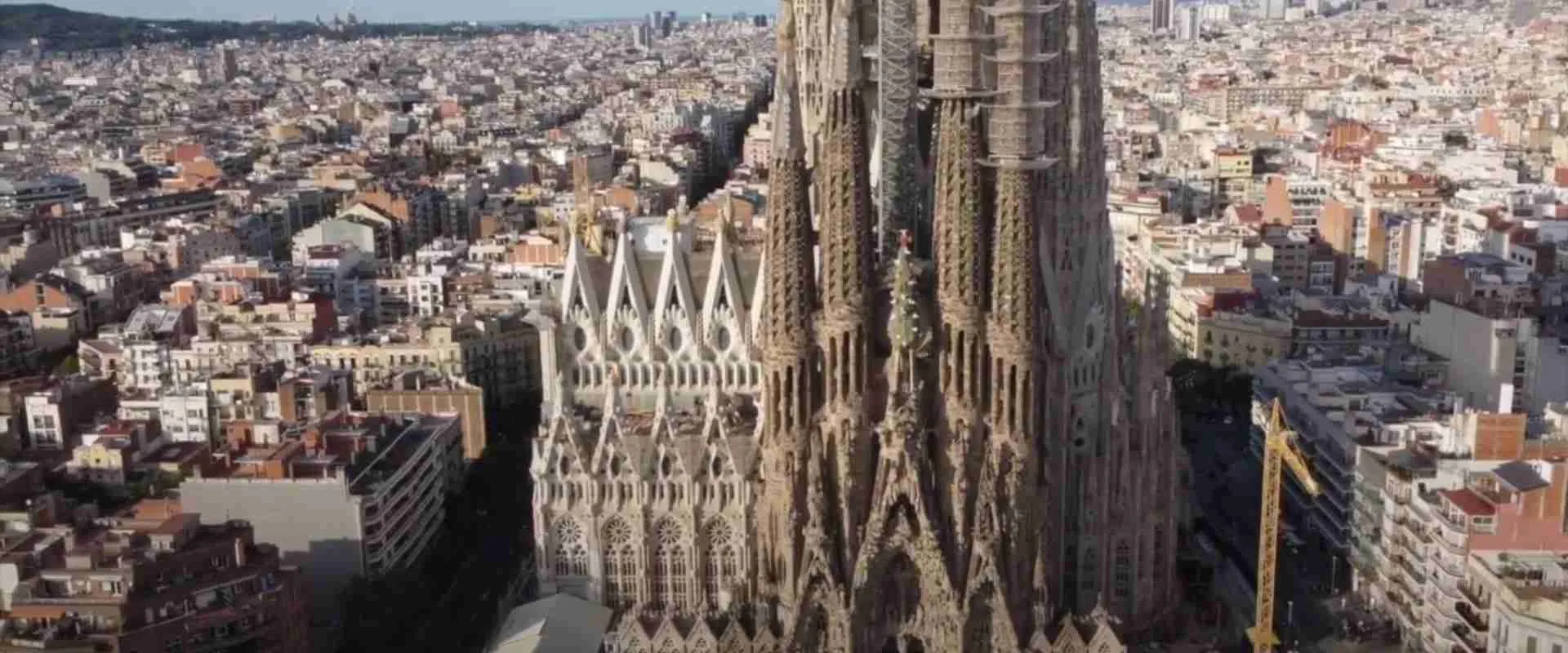
While other magnificent churches represent the pinnacle of their respective eras, the Sagrada Família transcends time itself – a 19th-century vision becoming reality through 21st-century innovation. As the world’s only major cathedral still under active construction, reaching completion in 2026, it offers something no other UNESCO religious site can: the chance to witness architectural history in the making.
The Sagrada Família vs Notre Dame de Paris: Gothic Revolution vs Evolution
Architectural Philosophy
Notre Dame de Paris, completed in 1345, represents the absolute pinnacle of French Gothic architecture with its flying buttresses, pointed arches, and mathematical precision. The Sagrada Família, however, revolutionizes these Gothic principles through nature-inspired innovation. Where Notre Dame employs straight lines and geometric perfection, Gaudí eliminated both – creating the world’s only major cathedral without a single right angle or straight line.
The structural differences are profound. Notre Dame’s flying buttresses transfer weight externally, while Gaudí’s hyperboloid columns distribute loads organically, like trees in a forest. This allows the Sagrada Família’s interior to soar without the heavy, dark atmosphere common to Gothic cathedrals.
Light and Color Experience
Notre Dame’s famous rose windows create beautiful but traditional colored light patterns. The Sagrada Família’s stained glass system, however, functions as a divine symphony – east-facing blues and greens representing birth gradually transitioning to west-facing warm reds, yellows, and oranges symbolizing passion and resurrection. The effect creates an ever-changing kaleidoscope impossible in traditional Gothic design.
Current Accessibility
Following the devastating 2019 fire, Notre Dame remains closed for restoration until 2024. Even when reopened, many areas will remain restricted. The Sagrada Família, conversely, offers full interior access, tower experiences, museum visits, and even active construction viewing – providing a complete cultural experience unavailable at most historic sites.
Sagrada Família vs St. Peter’s Basilica: Innovation vs Tradition
Scale and Grandeur
St. Peter’s Basilica in Vatican City holds the title of largest church in the world by interior volume, accommodating 60,000 people. Upon completion in 2026, however, the Sagrada Família will become the world’s tallest church at 172.5 meters, surpassing even St. Peter’s dome.
More importantly, the spiritual impact differs dramatically. St. Peter’s overwhelming scale emphasizes human smallness before divine majesty. The Sagrada Família’s forest-like interior creates intimacy within grandeur – making visitors feel part of nature’s cathedral rather than dwarfed by architectural dominance.
Artistic Integration
St. Peter’s houses masterpieces by Michelangelo, Bernini, and other Renaissance masters as separate artworks within architectural space. Gaudí conceived the Sagrada Família as total artistic integration – every surface, column, window, and detail forms part of a unified artistic vision where architecture becomes sculpture becomes spiritual experience.
Visitor Experience
St. Peter’s requires modest dress but allows free entry to the main basilica. Climbing the dome costs extra and involves significant physical challenge. The Sagrada Família’s timed entry system, while requiring advance booking, ensures optimal viewing conditions without overcrowding, and elevator access to towers accommodates varied physical capabilities.
Sagrada Família vs Westminster Abbey: Living Faith vs Historical Monument
Active vs Historical Worship
Westminster Abbey functions primarily as a historical monument and royal ceremonial site, with limited regular worship services. The Sagrada Família maintains active Catholic worship alongside tourism – Sunday masses in multiple languages demonstrate its continuing spiritual purpose rather than mere architectural preservation.
Construction Philosophy
Westminster Abbey represents incremental construction over centuries, with various architectural styles layered through different periods. The Sagrada Família maintains unified artistic vision despite its 144-year construction timeline, with modern architects faithfully interpreting Gaudí’s original designs using advanced construction techniques.
Sagrada Família vs Cologne Cathedral: Medieval Vision vs Modern Innovation
Construction Timeline Comparison
Cologne Cathedral’s construction spanned 632 years (1248-1880), making it one of history’s longest building projects. The Sagrada Família’s 144-year timeline, while extensive, demonstrates how modern techniques can realize complex medieval-era ambitions more efficiently than historical periods allowed.
The key difference lies in continuity of vision. Cologne Cathedral’s design evolved through multiple architectural periods and styles. Gaudí’s detailed models and calculations allow contemporary architects to maintain design integrity while employing 21st-century construction technology.
Structural Innovation
Cologne Cathedral pushes Gothic architecture to its technical limits with the world’s largest façade and massive twin spires. The Sagrada Família transcends Gothic limitations entirely through mathematical modeling, computer-aided design, and structural innovations impossible during medieval construction.
What Makes Sagrada Família Absolutely Unique Among UNESCO Sites
The Only UNESCO Site Still Being Built
Every other major UNESCO religious site represents completed historical achievement. The Sagrada Família offers the extraordinary experience of witnessing active creation of a future UNESCO masterpiece. Visitors observe 21st-century craftsmen and engineers realizing 19th-century artistic vision – a living bridge between past imagination and future reality.
Nature-Inspired Sacred Architecture
While other great churches employ geometric precision, the Sagrada Família derives its entire architectural vocabulary from natural forms. Columns branch like trees, vaults curve like leaves, and facades flow like water – creating the world’s only major cathedral that feels grown rather than built.
This biomimetic approach extends beyond aesthetics to structural function. Gaudí studied how trees support weight and how water flows to create load-bearing systems that eliminate traditional architectural constraints while achieving unprecedented spatial effects.
Technological Integration
Contemporary construction employs 3D modeling, computer-aided design, and precision stone-cutting technology to achieve Gaudí’s complex geometric calculations. This makes the Sagrada Família a unique fusion of 19th-century artistic vision and 21st-century technical capability – impossible to replicate at any historical site.
Visitor Experience Comparison: Why Sagrada Família Delivers More
Complete Access vs Restricted Areas
Many UNESCO church sites restrict access to key areas due to preservation concerns or ongoing restoration. The Sagrada Família provides comprehensive access including interior, towers, museum, construction viewing, and active worship participation – delivering the most complete cultural experience available at any major religious site.
Educational Value
While other great churches offer historical education, the Sagrada Família provides unique architectural education through its museum, construction viewing, and detailed explanations of innovative building techniques. Visitors learn not just about past achievements, but about contemporary artistic and engineering challenges.
Photography and Documentation
Many UNESCO religious sites restrict photography or charge additional fees. The Sagrada Família encourages photography throughout the interior and exterior, recognizing that sharing its beauty helps spread appreciation for Gaudí’s vision and ongoing construction achievement.
Cultural Impact: Global Recognition vs Universal Appeal
Visitor Numbers and International Draw
Pre-pandemic, the Sagrada Família attracted 4.7 million annual visitors, surpassing many longer-established UNESCO sites. This demonstrates its unique appeal across cultures and religions – drawing visitors interested in architecture, spirituality, art history, and engineering innovation.
Artistic Influence
While other great churches influenced their respective historical periods, the Sagrada Família continues inspiring contemporary architects, engineers, and artists worldwide. Its innovative structural solutions and aesthetic approaches appear in modern buildings globally, making it a living influence rather than historical reference.
The Completion Factor: Why 2026 Changes Everything
Historical Significance
The 2026 completion, coinciding with Gaudí’s death centenary, creates a unique moment in architectural history. Visitors in 2025-2026 witness the transition from construction site to completed masterpiece – an experience impossible at any other major religious monument.
Upon completion, the Sagrada Família will become the world’s tallest church, visible across Barcelona and serving as a beacon for both residents and visitors. This urban integration surpasses most UNESCO religious sites, which often feel separated from contemporary city life.
Future Legacy
While other UNESCO churches represent past architectural achievements, the completed Sagrada Família will demonstrate how contemporary society can honor traditional artistic vision while employing modern innovation. This makes it a model for future heritage preservation and artistic completion projects worldwide.
Planning Your UNESCO Church Comparison Tour
Itinerary Recommendations
For travelers planning to compare multiple UNESCO religious sites, begin with the Sagrada Família to understand revolutionary architectural possibilities, then visit traditional sites like Notre Dame (when reopened), St. Peter’s, or Westminster Abbey to appreciate how Gaudí transcended conventional sacred architecture.
This sequence enhances appreciation for both innovative and traditional approaches, demonstrating the evolution of sacred space design from medieval through contemporary periods.
Booking Strategy
Unlike many UNESCO sites with walk-up access, the Sagrada Família requires advance booking. Reserve tickets 2-3 months ahead, especially for tower access and guided tours. This planning requirement, while initially inconvenient, ensures optimal viewing conditions impossible at overcrowded historical sites.
Conclusion: Why Sagrada Família Stands Alone
Comparing the Sagrada Família to other UNESCO religious sites reveals not just differences in architectural style, but fundamental differences in conception and experience. While magnificent churches like Notre Dame, St. Peter’s, Westminster Abbey, and Cologne Cathedral represent the pinnacle of their respective eras, they remain essentially historical monuments preserving past achievements.
The Sagrada Família transcends historical preservation by continuing the creative process. It demonstrates how contemporary society can honor artistic vision while pushing technical boundaries – creating something genuinely new rather than merely preserving something old. This makes it unique among UNESCO World Heritage sites: a living bridge between past inspiration and future possibility.
Your visit to the Sagrada Família in 2025 offers an opportunity available nowhere else in the world – to witness the completion of a masterpiece that began in 1882, employing 21st-century innovation to realize 19th-century artistic vision. This temporal convergence, combined with architectural innovation unmatched by any other sacred building, establishes the Sagrada Família not just as another beautiful church, but as a completely unique cultural experience.
While other UNESCO religious sites deserve respect and admiration for their historical significance and artistic achievement, none offers the combination of innovation, accessibility, ongoing creation, and pure originality that defines Gaudí’s ultimate masterpiece. In the constellation of world heritage sacred architecture, the Sagrada Família stands alone – not just as another star, but as something entirely unprecedented in human artistic expression.
Frequently Asked Questions
How does Sagrada Família compare in size to other major churches?
Upon completion in 2026, it will be the world’s tallest church at 172.5 meters, surpassing St. Peter’s Basilica’s dome and becoming taller than any cathedral worldwide.
Is Sagrada Família more expensive than other UNESCO church sites?
Entry costs €26-36 vs free entry to many UNESCO churches, but includes audioguide, museum access, and comprehensive experience unavailable elsewhere.
Can I visit multiple UNESCO churches in Barcelona?
Barcelona has several UNESCO sites including Sagrada Família, Hospital de Sant Pau, Park Güell, and Palau de la Música Catalana for a complete heritage tour.
What makes Gaudí’s architecture different from Gothic cathedrals?
Gaudí eliminated straight lines and right angles, using nature-inspired forms, hyperboloid columns, and organic structures unlike traditional Gothic geometry.
Why is Sagrada Família taking so long to complete compared to medieval cathedrals?
Complex calculations and unique design require precision impossible in medieval times, plus construction relies on visitor donations rather than royal/church funding.
Is photography allowed unlike other major churches?
Yes, personal photography is encouraged throughout Sagrada Família, while many UNESCO religious sites restrict or prohibit photography in key areas.
How does the spiritual experience compare to traditional cathedrals?
The forest-like interior and colored light symphony create unique spiritual atmosphere combining natural beauty with sacred space, unlike traditional cathedral environments.
Will completion in 2026 change the visitor experience?
The Jesus Tower completion will add panoramic viewing opportunities and complete Gaudí’s architectural vision, while maintaining current accessibility and touring options.
How does crowd management compare to other UNESCO sites?
Timed entry ensures optimal viewing conditions without overcrowding experienced at many popular UNESCO sites with unrestricted access.
What UNESCO churches should I visit after Sagrada Família?
Visit traditional Gothic (Notre Dame when reopened), Renaissance (St. Peter’s), and English Gothic (Westminster Abbey) to appreciate how Gaudí revolutionized sacred architecture.