Rüdesheim Travel Guide: Rhine Valley Wine Town
Key Takeaways:
- Rüdesheim am Rhein stands as one of Germany’s most celebrated wine towns, positioned at the gateway to the UNESCO-listed Upper Middle Rhine Valley where steep vineyard slopes meet the legendary river
- The Drosselgasse, a narrow cobblestone alley lined with wine taverns and live music venues, has attracted visitors for over a century and remains the heartbeat of Rüdesheim’s tourism identity
- The Niederwald Monument, featuring the imposing Germania statue overlooking the Rhine, commemorates German unification and offers panoramic views accessible via historic cable car
- Rüdesheim’s winemaking heritage spans over 1,000 years, with Riesling varietals cultivated on impossibly steep terraced hillsides that define the regional landscape
- The town serves as the starting point for exploring the Rhine Gorge’s most dramatic section, where medieval castles crown virtually every hilltop and cliff
- Mechanical music museums, historic monasteries, and traditional wine estates provide cultural depth beyond the festive atmosphere of the town center
Gateway to Germany’s Most Romantic River Landscape
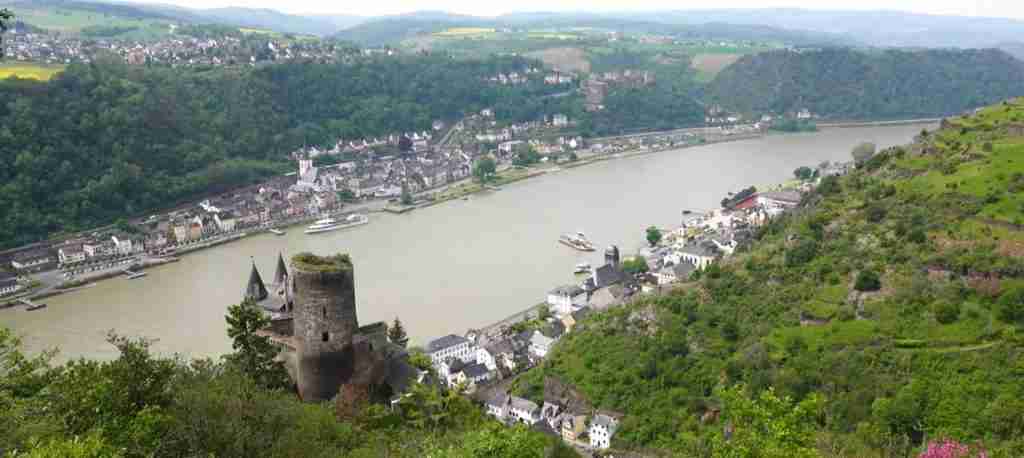
Rüdesheim am Rhein occupies a privileged position in German geography and cultural imagination. This compact wine town of approximately 10,000 residents commands a sweeping bend in the Rhine River where the waterway transitions from a broad, navigable shipping channel into the narrow, castle-studded gorge that inspired generations of Romantic artists, poets, and composers. The town marks the southern entrance to the UNESCO World Heritage Upper Middle Rhine Valley, a designation recognizing the 65-kilometer stretch between Koblenz and Rüdesheim as one of Europe’s most significant cultural landscapes.
The physical setting explains Rüdesheim’s enduring appeal. Behind the town, steep vineyard slopes rise sharply from the river’s edge, their terraced faces catching maximum sunlight throughout the growing season. These south-facing hillsides create the microclimate essential for cultivating Riesling grapes, producing wines that have earned international recognition for their complexity and minerality. The river itself functions as a massive thermal regulator, moderating temperature extremes and extending the growing season into late autumn when the grapes develop the concentrated flavors prized by wine enthusiasts worldwide.
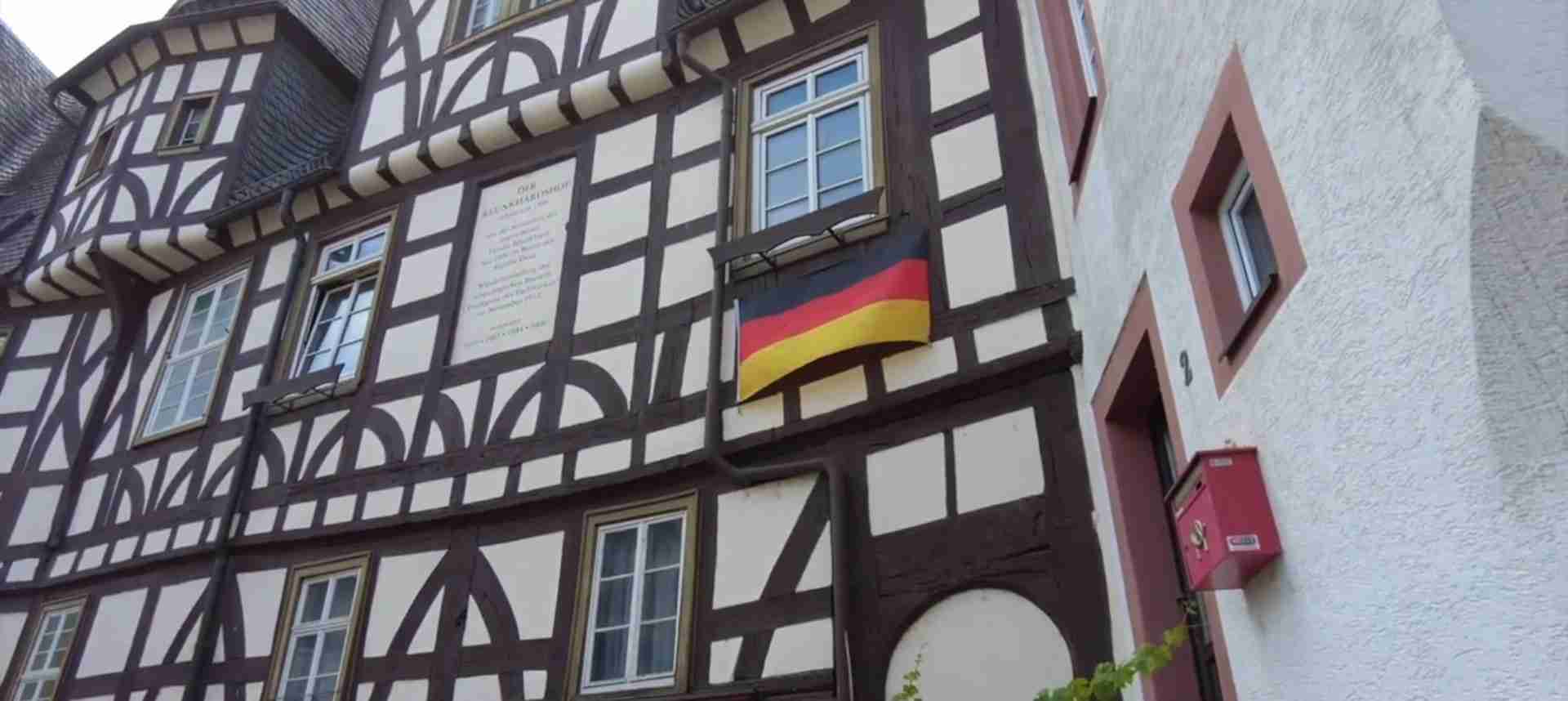
Walking through Rüdesheim’s historic center reveals layers of history compressed into narrow lanes and half-timbered facades. Roman legions recognized this location’s strategic importance nearly two millennia ago, establishing fortifications to control river traffic. Medieval merchants transformed the settlement into a prosperous trading post where Rhine wines were loaded onto barges bound for markets across Northern Europe. The same geographic advantages that attracted Roman commanders and medieval traders continue drawing visitors today, though tourism rather than commerce drives the local economy.
People Also Ask About Rüdesheim
What makes Rüdesheim wine special?
Rüdesheim’s wines derive their distinctive character from the unique combination of steep slate hillsides, abundant sunshine, and Rhine River influence that defines the Rheingau wine region. The vineyards surrounding Rüdesheim rank among Germany’s steepest, with gradients reaching 60 degrees on some slopes. This extreme terrain forces viticulturalists to work the land entirely by hand, as no machinery can navigate the precipitous gradients. The effort yields rewards in grape quality, as the steep angles maximize sun exposure while the dark slate soils absorb heat during daylight hours and release it slowly through cool evenings, extending ripening periods and developing complex flavor profiles.
Riesling dominates Rüdesheim’s production, accounting for approximately 80% of planted vines. The grape variety responds exceptionally well to the local terroir, producing wines ranging from bone-dry to lusciously sweet depending on harvest timing and winemaker intent. The most celebrated Rüdesheim vineyards, including Rüdesheimer Berg Schlossberg and Berg Roseneck, produce Rieslings commanding premium prices and international critical acclaim. These single-vineyard designations, similar to French grand cru classifications, recognize exceptional terroir characteristics passed down through centuries of cultivation.
Why is the Drosselgasse famous?
The Drosselgasse earned its reputation as Germany’s most celebrated entertainment street through a combination of historical accident, strategic marketing, and genuine atmosphere that visitors find irresistible. This 144-meter lane, barely 2 meters wide at its narrowest point, became the center of Rüdesheim’s hospitality industry during the late 19th century when steamship tourism brought unprecedented numbers of visitors to Rhine Valley towns. Wine taverns and restaurants filled every available space along the alley, creating an intimate streetscape where music, conversation, and clinking glasses spilled from open doors throughout the evening hours.
The Drosselgasse’s appeal transcends simple commerce. Live musicians perform traditional German folk songs in many establishments, encouraging singalong participation that dissolves barriers between strangers. Visitors seated at communal tables share wine, stories, and laughter in environments designed to foster conviviality. The concentrated atmosphere amplifies enjoyment, creating memorable experiences that inspire return visits and enthusiastic recommendations. Marketing campaigns beginning in the early 20th century positioned the Drosselgasse as the quintessential German wine experience, an image reinforced through decades of tourism promotion.
How did the Germania monument get built?
The Niederwald Monument, crowned by the Germania statue, arose from the wave of nationalist sentiment following German unification in 1871. The Franco-Prussian War’s conclusion brought the previously fragmented German states together under Prussian leadership, creating the German Empire that would shape European politics until World War I. Commemorating this momentous achievement required a monument matching the occasion’s historical significance, leading to an architectural competition that attracted designs from throughout the newly unified nation.
Construction began in 1877 under the direction of sculptor Johannes Schilling and architect Karl Weissbach. The project required establishing a massive platform on the Niederwald ridge overlooking the Rhine, followed by assembling the monument’s component pieces. The Germania figure alone stands 10.5 meters tall, forged from bronze castings weighing over 30 tons. She holds the recovered imperial crown in her raised right hand while her left grasps a sword resting against the ground. The base below incorporates allegorical figures representing war and peace, along with inscriptions commemorating the unification events. Kaiser Wilhelm I personally unveiled the completed monument in 1883 before assembled dignitaries and massive crowds.
What is the best viewpoint in Rüdesheim?
The Niederwald plateau above Rüdesheim offers commanding perspectives that rank among the Rhine Valley’s finest vantage points. From the Germania monument’s terrace, visitors overlook the Rhine’s sweeping curve past Bingen, the legendary Mäuseturm tower standing midstream, and the vineyard-covered hillsides extending toward the distant horizon. On clear days, visibility extends for dozens of kilometers along the river valley, revealing the castle-studded landscape that inspired 19th-century Romantics to extol the Rhine’s beauty.
Reaching this viewpoint adds to its appeal. The Seilbahn Rüdesheim, a gondola lift system operating since 1954, carries passengers directly from the town’s edge over the vineyard slopes to the Niederwald plateau. The 10-minute ascent provides continuously changing perspectives as the town recedes below and the river landscape unfolds in all directions. Walking trails from the upper station connect to the monument, various overlooks, and forest paths extending throughout the surrounding nature reserve. The combination of scenic transportation and spectacular destination creates an experience far exceeding a simple viewpoint visit.
Extended multi-day tours – 5+ days
Featured Rhine Valley Multi-Day Tour Packages
3 days
Rhine Valley 3-Day Discovery Tour
- ✓ Comprehensive Rhine Valley experience
- ✓ Expert local guides included
- ✓ All accommodation included
- ✓ Transportation provided

5 days
Rhine Valley 5-Day Highlights Experience
- ✓ Comprehensive Rhine Valley experience
- ✓ Expert local guides included
- ✓ All accommodation included
- ✓ Transportation provided

7 days
Rhine Valley 7-Day Cultural Journey
- ✓ Comprehensive Rhine Valley experience
- ✓ Expert local guides included
- ✓ All accommodation included
- ✓ Transportation provided
10 days
Rhine Valley 10-Day Complete Adventure
- ✓ Comprehensive Rhine Valley experience
- ✓ Expert local guides included
- ✓ All accommodation included
- ✓ Transportation provided
Multi-day tour packages powered by TourRadar. Prices and availability subject to change.
A Wine Heritage Spanning Millennia
Viticulture in the Rüdesheim area predates written records, with archaeological evidence suggesting grape cultivation during the Roman occupation nearly two thousand years ago. The Romans recognized the Rheingau’s potential for wine production, planting vineyards along the river slopes and establishing the agricultural patterns that persist today. When the empire collapsed, Carolingian rulers maintained and expanded vineyard holdings, recognizing wine’s economic and ceremonial importance in medieval society.
The ecclesiastical orders transformed Rüdesheim winemaking during the Middle Ages. Benedictine and Cistercian monasteries acquired extensive vineyard holdings throughout the Rheingau, applying systematic cultivation methods that dramatically improved wine quality. Monks documented grape varieties, fermentation techniques, and optimal harvest conditions, creating the knowledge foundation supporting today’s wine industry. The nearby Eberbach Abbey, founded in 1136, became the Rheingau’s most influential wine estate, pioneering viticulture practices adopted throughout the region.
Rüdesheim’s Berg vineyards occupy the steepest, most prestigious slopes. The term “Berg” designates hillside sites with exceptional sun exposure and slate-rich soils, conditions producing the region’s most concentrated wines. These vineyards demanded extraordinary engineering efforts, with stone walls supporting narrow terraces carved into near-vertical hillsides. Generations of vintners maintained and expanded this infrastructure, creating the dramatic landscape visible today. The labor intensity explains why Berg wines commanded premium prices throughout history, a tradition continuing in contemporary markets.
The Rheingau wine classification system developed during the 19th century codified quality distinctions that wine merchants had recognized informally for centuries. Prussia’s 1867 vineyard survey categorized sites according to soil composition, sun exposure, and historical reputation, establishing hierarchies that influenced German wine law for generations. Rüdesheim’s Berg sites earned the highest classifications, confirming their status among Germany’s greatest vineyard locations. This documented excellence attracts wine enthusiasts specifically to taste wines from these celebrated slopes.
The Drosselgasse Experience
No visit to Rüdesheim bypasses the Drosselgasse, however varied individual reactions to this concentrated entertainment district prove. The narrow lane channels visitors between half-timbered buildings housing wine taverns, restaurants, souvenir shops, and small hotels. Music emanates from multiple establishments simultaneously, creating a soundscape mixing traditional German folk songs, accordion melodies, and convivial singing. The atmosphere intensifies during peak hours when crowds pack the confined space and spontaneous celebrations erupt among strangers bonded by shared enjoyment.
The Drosselgasse’s development as a tourist destination began during the Rhine Romanticism era of the early 19th century. Writers including Heinrich Heine and Lord Byron celebrated the Rhine Valley’s beauty in widely read works, inspiring affluent travelers to experience the scenery firsthand. Steamship companies launched regular passenger services connecting Rhine towns to major cities, making Rüdesheim accessible to visitors who previously found the journey impractical. Local entrepreneurs recognized the opportunity, opening establishments catering specifically to tourist expectations of authentic German hospitality.
Wine taverns along the Drosselgasse serve primarily Rheingau wines, allowing visitors to sample regional varieties in atmospheric surroundings. Many establishments offer flights featuring multiple wines, enabling comparison between different producers and vineyard designations. Riesling dominates the selections, presented in the traditional green-stemmed glasses associated with Rhine wine service. Food menus emphasize regional specialties designed to complement the wines: meat platters, cheese selections, and heartier dishes including schnitzel and sauerbraten.
The Drosselgasse divides opinion among visitors and locals alike. Enthusiasts praise the unique atmosphere, welcoming spirit, and concentrated accessibility of German wine culture. Critics dismiss the street as overly commercialized, tourist-trapped, and disconnected from authentic regional character. Both perspectives contain validity, making the Drosselgasse experience dependent largely on individual expectations and attitudes. Approaching the lane as entertainment rather than cultural education generally produces positive experiences, while seeking profound authenticity invites disappointment.
The Niederwald Monument and Germania
The Niederwald Monument ranks among Germany’s most significant nationalist landmarks, its scale and symbolism reflecting the euphoric atmosphere surrounding German unification in 1871. The monument complex occupies a commanding position on the forested ridge above Rüdesheim, visible from considerable distances along the Rhine Valley. The setting deliberately references Romantic landscape ideals, positioning nationalist symbolism within the natural beauty that 19th-century Germans associated with their emerging national identity.
The Germania figure crowning the monument personifies the German nation in female form, a common 19th-century allegorical tradition. Her posture and attributes convey specific messages: the raised crown represents recovered national sovereignty, the sheathed sword signals peaceful strength, and her steady gaze toward France recalls the recent military victory that enabled unification. The figure’s scale impresses visitors even today, her bronze form rising dramatically against the sky visible from viewpoints throughout the surrounding countryside.
The monument’s base incorporates additional sculptural elements expanding the commemorative program. Allegorical figures representing war and peace flank the central plinth, accompanied by representations of the Rhine and Mosel rivers. Relief panels depict key events from the unification campaign, including the proclamation of the German Empire at Versailles. Inscriptions record dates and declarations significant to nationalist narratives, creating a comprehensive memorial addressing the achievement from multiple perspectives.
Historical context shapes contemporary interpretation of the Niederwald Monument. The aggressive nationalism celebrated in 1883 contributed to the catastrophic conflicts that devastated Germany and Europe in the 20th century. Modern visitors often approach the monument with awareness of this troubled legacy, finding in the grandiose symbolism cautionary lessons about nationalism’s dangers alongside appreciation for artistic achievement. The monument’s preservation reflects Germany’s complex relationship with its past, maintaining historical artifacts while encouraging critical reflection on their meaning.
Ascending the Vineyards: The Seilbahn Experience
The Seilbahn Rüdesheim provides one of Germany’s most scenic cable car journeys, carrying passengers from the town’s western edge directly over the steep vineyard slopes to the Niederwald plateau. The system began operation in 1954, replacing earlier funicular railways that served visitors since the late 19th century. Modern gondolas accommodate two passengers each, allowing intimate perspectives on the landscape unfolding below and around the ascending cabin.
The journey offers continuously changing viewpoints impossible to replicate through other means. Departure occurs from a station near the Rhine’s edge, with initial perspectives encompassing the town’s historic core, the river, and the hills beyond. As the gondola rises, vineyard patterns become apparent: narrow terraces following contour lines, access paths zigzagging between levels, and workers tending vines during growing season. The steepness becomes viscerally apparent when looking directly down at the precipitous slopes falling away below the cabin.
Approaching the upper station, the Rhine Valley reveals itself in panoramic splendor. The river curves past Bingen on the opposite bank, with the famous Mäuseturm tower standing midstream at the point where the Nahe River joins the Rhine. Vineyards blanket virtually every visible hillside, their geometric patterns contrasting with forested ridges above. On exceptionally clear days, distant landmarks including castle ruins punctuate the horizon, hinting at the medieval heritage concentrated throughout this valley.
The upper station connects to walking trails throughout the Niederwald nature reserve. Paths lead to the Germania monument, various viewpoints, and forest routes extending for kilometers through mixed woodland. Many visitors combine the cable car ascent with a walking descent through the vineyards, following marked trails that pass wine estates, historic chapels, and scenic overlooks. This approach maximizes exposure to the landscape while providing physical engagement with the terrain that mere observation cannot match.
Mechanical Music: The Siegfried Collection
The Siegfried’s Mechanical Music Cabinet presents one of the world’s finest collections of self-playing musical instruments, housed in the historic Brömserhof courtyard building near Rüdesheim’s town center. The museum’s assemblage includes musical automata, orchestrions, player pianos, and phonographs spanning centuries of acoustic engineering innovation. Guided tours demonstrate these remarkable machines in operation, filling the historic rooms with melodies produced through purely mechanical means.
The collection reflects humanity’s long fascination with automated music reproduction. Medieval craftsmen built the earliest musical automata, incorporating sound-producing mechanisms into clocks and decorative objects designed to delight noble patrons. The technology evolved through centuries of refinement, eventually producing instruments capable of reproducing complex orchestral arrangements without human performers. The museum’s examples trace this progression, from simple music boxes to elaborate orchestrions containing hundreds of pipes, bells, drums, and mechanical devices coordinated through intricate programming systems.
The orchestrion represents the collection’s most impressive category. These massive instruments combined multiple sound sources, including organ pipes, percussion instruments, and even violin-like mechanisms, within single ornate cabinets. Operators fed perforated rolls or cards into reading mechanisms that controlled valves and strikers, producing music that astounded early 20th-century audiences. Before electronic recording became widespread, orchestrions provided public entertainment in restaurants, cafes, and dance halls, bringing orchestral music to venues unable to employ live musicians.
Museum guides demonstrate instruments during tours, activating mechanisms dormant between performances. The experience differs fundamentally from recorded music: visitors watch hammers strike strings, see pipes activate, and observe the intricate choreography of mechanical components producing coordinated sound. The craftsmanship displayed in ornate casework, the ingenuity of programming systems, and the surprising musical quality these machines achieve combine to create genuinely memorable museum experiences. Photography enthusiasts particularly appreciate the instruments’ decorative details, often featuring carved figures, painted panels, and gilded ornamentation.
Eberbach Abbey: Cistercian Wine Heritage
A short journey from Rüdesheim brings visitors to Kloster Eberbach, the former Cistercian monastery that shaped Rheingau wine culture for nearly nine centuries. Founded in 1136 by monks from Clairvaux, the monastery became one of medieval Europe’s most prosperous religious houses, its wealth derived primarily from extensive vineyard holdings and systematic wine production. The architectural complex survives remarkably intact, offering insight into monastic life and the viticulture practices that established the Rheingau’s reputation.
The Cistercian order applied systematic approaches to wine production that transformed regional practices. Monks documented grape varieties, fermentation techniques, and storage requirements, creating technical knowledge foundations supporting quality improvements. They pioneered the identification of superior vineyard sites, developing the concept of terroir that remains central to wine evaluation. The extensive cellar facilities constructed at Eberbach, including the legendary lay brothers’ dormitory converted to wine storage, enabled production on scales exceeding anything previously attempted in the region.
Eberbach’s architectural heritage reflects monastic values and practical requirements. The Romanesque basilica, completed in the mid-12th century, demonstrates Cistercian principles favoring unadorned simplicity and harmonious proportions over decorative excess. The cloister, chapter house, and refectory survive with varying degrees of original character, together illustrating the spatial organization of monastic communities. The cellar facilities impress through sheer scale, their vaulted chambers providing the consistent temperatures essential for wine storage and aging.
Contemporary visitors encounter Eberbach as both heritage site and functioning wine enterprise. The Hessische Staatsweingüter, successor to the original monastic wine operations, maintains vineyard holdings and produces wines carrying the Eberbach designation. Tours include cellar visits, tastings, and access to normally restricted architectural spaces. Film enthusiasts recognize the cloister and other locations from scenes in “The Name of the Rose,” the 1986 adaptation of Umberto Eco’s medieval mystery novel featuring Sean Connery.
The Castle-Studded Rhine Gorge
Rüdesheim marks the southern entrance to the most dramatic section of the Rhine Valley, where the river narrows between steep cliffs crowned with medieval castle ruins. The 65 kilometers between Rüdesheim and Koblenz contain over 40 castles in various states of preservation, creating the concentrated fortress landscape that defines Rhine Romanticism imagery. Understanding this landscape requires recognizing the strategic and economic factors that produced such intensive fortification.
The Rhine Gorge’s geography channeled medieval trade through a confined corridor, creating toll collection opportunities that feudal lords exploited ruthlessly. Castle construction accelerated during the 12th and 13th centuries as competing nobles established fortifications controlling river traffic. Each lord demanded payment from passing merchants, with multiple tolls sometimes required within sight of each other. The density of surviving castles reflects this competitive environment, where geographical advantage translated directly into revenue potential.
The castles served military and residential functions beyond simple toll collection. Strategic positions controlled land routes as well as river traffic, enabling lords to project power throughout surrounding territories. Residential quarters, often expanded and refined over centuries, housed noble families and their retinues in varying degrees of comfort. Many castles withstood sieges, their defensive positions and massive walls repelling attackers who lacked the resources for prolonged operations.
Destruction came primarily during the Thirty Years’ War and subsequent French campaigns in the 17th century. Armies devastated the Rhine Valley repeatedly, deliberately demolishing fortifications to prevent their use by enemies. The romantic ruins visible today resulted largely from this systematic destruction, their shattered profiles actually inspiring 19th-century artists who found aesthetic appeal in the contrast between human ambition and nature’s reclamation. Preservation and restoration efforts since that era have stabilized many sites while maintaining their evocative character.
Photographing Rüdesheim and the Rhine Valley
Rüdesheim and its surroundings offer photographic opportunities spanning architectural details, sweeping landscapes, and intimate cultural moments. Serious photographers find subjects ranging from macro images of vineyard details to panoramic compositions encompassing kilometers of river valley. Understanding the area’s visual characteristics helps visitors anticipate opportunities and plan shooting strategies.
Morning light from the east illuminates Rüdesheim’s waterfront facades and the castle-studded hills across the Rhine, creating warm tones that complement the town’s golden-hued architecture. This lighting favors shots from the riverbank promenade looking across the water toward Bingen and the hills beyond. The famous Mäuseturm tower, positioned midstream at the Bingen Loch narrows, appears silhouetted against bright morning skies or warmly lit as the sun rises higher.
The Niederwald plateau provides the primary elevated viewpoint, accessible via the Seilbahn cable car or walking trails. The classic composition frames the Germania monument against the Rhine Valley background, though countless alternative perspectives reward exploration. The terrace directly before the monument offers the widest panoramas, while positions along the ridge capture different foreground elements and lighting angles. Late afternoon sun raking across the vineyard slopes creates dramatic shadow patterns particularly effective in landscape compositions.
The Drosselgasse presents challenging shooting conditions: narrow confines, variable lighting, and crowd management issues during busy periods. Early morning visits, before crowds arrive, allow architectural and detail photography impossible during peak hours. Evening shooting captures the lane’s atmospheric character, with warm light spilling from open doorways and the energy of gathered visitors. Long exposures from stable positions can produce creative blur effects emphasizing movement and activity.
Vineyard photography reaches its visual peak during autumn harvest season, when golden and russet foliage covers the hillsides. The steep terraces create strong geometric patterns that photograph effectively from both elevated and ground-level perspectives. Workers tending vines provide human interest elements, though courtesy requires asking permission before photographing individuals. Winter visits reveal the vineyard architecture more clearly, with bare vines exposing the stone wall systems supporting the terraces.
Traditional Wine Culture and Tasting Experiences
Experiencing Rüdesheim’s wine culture extends well beyond Drosselgasse taverns to include historic wine estates, contemporary tasting rooms, and opportunities for direct engagement with winemaking families. The diversity of tasting options allows visitors to calibrate experiences according to interest depth, time availability, and budget considerations.
Historic wine estates scattered throughout Rüdesheim and surrounding communities offer intimate tasting experiences in atmospheric settings. Many families have cultivated the same vineyards for generations, maintaining traditions while adapting to contemporary market expectations. Visits often include cellar tours, vineyard walks, and personalized introductions to current vintage offerings. Appointments improve access to smaller operations where walk-in visits may prove difficult to accommodate.
The Rheingau wine region established formal wine education programs accessible to visitors seeking deeper understanding. Structured tastings at designated wine forums introduce regional characteristics, grape varieties, and quality classifications in systematic presentations. Participants learn to identify Riesling expressions from different vineyard designations, understanding how site-specific factors influence flavor profiles. These educational sessions particularly benefit visitors planning more extensive Rheingau exploration.
Wine festivals punctuate the calendar throughout the growing season, with the Rüdesheim Weinfest ranking among the region’s most celebrated celebrations. Temporary wine stands fill the town center, presenting offerings from dozens of producers alongside regional food specialties. Live entertainment creates festive atmospheres encouraging extended celebration. Visitors should recognize that festival pricing often exceeds normal tasting room rates, reflecting the entertainment context rather than production costs.
Purchasing wine directly from producers offers quality and value advantages over retail channels. Many estates welcome visitors to their sales rooms, offering current releases alongside library vintages unavailable elsewhere. Shipping arrangements facilitate delivery for visitors unable to transport significant quantities personally. The direct connection between producer and consumer enhances appreciation for wines that embody specific vineyard characteristics and winemaking philosophies.
Conservation and Contemporary Challenges
The UNESCO World Heritage designation recognizing the Upper Middle Rhine Valley imposes preservation obligations affecting communities throughout the region. Rüdesheim’s historic character, vineyard landscape, and relationship with surrounding features contributed to the designation criteria, requiring ongoing protection efforts that sometimes conflict with development pressures.
Vineyard preservation faces particular challenges as traditional viticulture economics struggle against market forces favoring larger, mechanizable operations. The steep hillside vineyards defining Rüdesheim’s landscape require entirely manual cultivation, involving labor costs far exceeding those of flatter regions. Younger generations often reject the physically demanding work, leaving aging viticulturalists without successors. Abandoned vineyard sections becoming overgrown with scrub vegetation would fundamentally alter the landscape character that UNESCO recognition seeks to protect.
Climate change presents both opportunities and threats for Rheingau viticulture. Warming temperatures advance harvest dates and increase sugar accumulation, potentially enhancing wine quality in some vintages. However, extreme weather events, including the devastating floods that struck the Rhine Valley in 2021, demonstrate climate instability’s destructive potential. Longer-term projections suggest grape varieties currently thriving may become unsuitable for the region, requiring adaptation strategies that could transform traditional wine character.
Tourism management balances economic dependence against quality-of-life impacts for residents. The concentrated visitor presence along the Drosselgasse and waterfront creates congestion, noise, and commercialization pressures that extend beyond the obvious tourist districts. Local authorities experiment with visitor distribution strategies, encouraging exploration of less-crowded areas while maintaining the concentrated attractions that draw most visitors initially.
Beyond the Town Center
Rüdesheim rewards visitors who venture beyond the Drosselgasse to discover quieter corners and surrounding attractions. The Rhine promenade extending along the waterfront provides pleasant walking with river views, passing wine estates, historic buildings, and quieter restaurant terraces. The town’s western districts contain residential neighborhoods maintaining traditional character largely unmarked by tourist-oriented development.
Assmannshausen, a smaller wine village accessible by boat, foot, or bus from Rüdesheim, offers contrasting character emphasizing Germany’s rare red wine production. The steep vineyards rising above Assmannshausen specialize in Spätburgunder, the German name for Pinot Noir, producing red wines considered among the country’s finest. The village atmosphere feels more intimate than Rüdesheim’s busy center, with wine taverns serving primarily serious enthusiasts rather than day-tripping crowds.
The Rheingau Riesling Route traces scenic roads through wine villages between Rüdesheim and Wiesbaden, connecting historic estates, viewpoints, and tasting opportunities. Cyclists particularly appreciate this route, which follows relatively gentle gradients despite passing through dramatically hilly terrain. Wine-focused itineraries along the route allow systematic exploration of different sub-regions and producer styles impossible to experience from Rüdesheim alone.
River cruises departing Rüdesheim provide the quintessential Rhine experience, passing beneath castle-crowned cliffs while commentary identifies landmarks and recounts associated legends. Multiple operators offer varying cruise lengths, from brief sightseeing loops to full-day journeys reaching Koblenz and the famous Deutsches Eck confluence. The perspective from the water differs fundamentally from shoreside views, revealing relationships between fortifications, settlements, and the river that land-based observation cannot replicate.
Practical Considerations for Visitors
Rüdesheim’s compact dimensions allow thorough exploration without transportation requirements within the town itself. The historic center, Drosselgasse, waterfront, and cable car station all fall within comfortable walking distances. However, reaching surrounding attractions including Eberbach Abbey, the Rheingau wine villages, and Rhine castles requires vehicle access or strategic use of public transportation options.
River cruise passengers constitute a significant portion of Rüdesheim’s visitors, arriving in waves when ships dock at the town pier. The sudden influx of hundreds of visitors creates temporary congestion that recedes when ships depart. Land-based visitors can avoid these peak periods by timing town center activities for early morning or late afternoon when cruise schedules typically keep passengers elsewhere.
Accommodation options range from historic wine estates offering guest rooms to modern hotels positioned near the waterfront and town center. Staying overnight allows experiencing Rüdesheim’s evening atmosphere after day visitors depart, including illuminated views of the river and surrounding hills. The Drosselgasse particularly rewards evening exploration when cooler temperatures and relaxed schedules encourage extended tavern visits.
Seasonal considerations significantly influence the Rüdesheim experience. Wine festivals concentrate during late summer and autumn, culminating in harvest season activities running September through October. Christmas markets transform the town center during December, offering atmospheric holiday experiences. Summer brings the largest visitor numbers and highest accommodation rates, while shoulder seasons provide more moderate conditions for exploration.
UNESCO World Heritage Significance
The Upper Middle Rhine Valley achieved UNESCO World Heritage inscription in 2002, recognizing the unique combination of geological formation, human modification, and cultural association that distinguishes this landscape. The 65-kilometer valley segment between Koblenz and Rüdesheim satisfied inscription criteria relating to outstanding natural beauty, exemplary land use patterns, and exceptional cultural significance accumulated over two millennia.
The geological foundation created the preconditions for everything that followed. The Rhine carved its gorge through resistant slate formations during millions of years of erosion, creating the steep valley walls that forced human activity into concentrated patterns. The same slate that resisted erosion provides the terroir supporting distinctive wine production, its mineral content contributing to flavor characteristics that distinguish Rheingau wines globally.
Human modification transformed the natural landscape into a cultural achievement without precedent elsewhere. The vineyard terraces climbing nearly vertical hillsides represent engineering accomplishments comparable to more celebrated agricultural landscapes, maintained through centuries of continuous cultivation despite extraordinary labor requirements. The castle concentrations along the river demonstrate how medieval societies exploited geographical advantages for defensive and economic purposes, creating the romantic imagery that later inspired artistic movements across Europe.
Cultural associations elevate the physical landscape into symbolic significance transcending local importance. Romantic era artists, writers, and composers invested the Rhine Valley with emotional meaning that influenced European cultural development. Wagner set portions of his Ring Cycle along the Rhine, drawing on legendary associations that continue shaping visitor expectations. This accumulated cultural significance, perhaps more than physical characteristics alone, explains the valley’s exceptional status among world heritage landscapes.
FAQ: Essential Questions About Rüdesheim
How long do visitors need in Rüdesheim?
A focused half-day allows covering the main attractions: Drosselgasse, cable car ascent to the Niederwald Monument, and waterfront stroll. Full appreciation of the town’s wine culture, including estate visits and meaningful tasting experiences, requires overnight stays allowing extended afternoon and evening exploration. Visitors using Rüdesheim as a base for wider Rheingau exploration benefit from multiple nights permitting day trips to surrounding attractions.
What is the connection between Rüdesheim and the Loreley?
The Loreley Rock, site of the legendary siren whose singing lured sailors to destruction, stands approximately 25 kilometers downstream from Rüdesheim within the UNESCO-designated valley segment. River cruises and driving routes from Rüdesheim pass the Loreley, making the town a convenient starting point for exploring this famous landmark. The romantic associations linking Rüdesheim’s wine culture with the Loreley legend contributed to both locations becoming iconic Rhine tourism destinations.
Can visitors access the actual Germania statue?
The Niederwald Monument grounds are freely accessible, allowing visitors to approach the Germania statue’s base and explore the surrounding terrace. The statue itself cannot be climbed or entered. The viewing terrace provides excellent perspectives for photography and valley observation. Guided tours occasionally available through tourist offices provide historical context enriching the self-guided visit experience.
What wines should first-time visitors try?
Rüdesheim’s signature wines are dry Rieslings from the Berg vineyard designations, particularly Berg Schlossberg and Berg Roseneck. These wines exhibit the mineral intensity and concentrated flavors produced by the steep hillside sites. Visitors preferring sweeter styles should request Spätlese or Auslese designations, which maintain Riesling character while offering riper, more accessible flavor profiles. Tasting flights comparing multiple styles and producers provide educational introductions to regional diversity.
Is the Drosselgasse worth visiting?
The Drosselgasse provides experiences unavailable elsewhere, however visitors should calibrate expectations appropriately. Those seeking intimate wine appreciation in quiet settings should visit alternative venues, as the Drosselgasse offers convivial entertainment rather than contemplative tasting. Those embracing the festive atmosphere find the lane delivers memorable experiences unlike anything in more refined settings. Evening visits typically prove more enjoyable than crowded midday periods.
How does river cruising compare with land-based visits?
River cruises provide perspectives impossible from shoreside positions, revealing spatial relationships between castles, settlements, and the river that define the valley’s character. However, cruise schedules limit time in individual destinations, typically allowing only two to three hours before reboarding. Land-based visitors control their own schedules, enabling extended exploration and flexibility to adjust plans based on discoveries. Many visitors combine approaches, using cruises for the river experience while basing extended stays in Rüdesheim or other valley towns.
What happens in Rüdesheim during winter?
Christmas markets transform Rüdesheim’s character during December, when seasonal decorations and mulled wine stands replace summer tourist activities. The Seilbahn typically operates year-round weather permitting, offering different perspectives on the dormant vineyard landscape. Wine estate tasting rooms remain open throughout winter, often with more personalized attention than during peak seasons. Accommodation rates decrease substantially outside summer months, making extended stays more affordable.
Are the vineyards accessible to visitors?
Walking trails pass through Rüdesheim’s vineyards, particularly routes connecting the town with the Niederwald plateau. Visitors should remain on marked paths, as the steep terrain presents genuine hazards and wandering damages cultivated vines. Some wine estates offer vineyard tours as part of tasting experiences, providing guided access with educational commentary. The descent from Niederwald to town via vineyard trails provides intimate landscape engagement impossible from other perspectives.
What are the best photography locations?
The Niederwald terrace provides the classic panoramic viewpoint, particularly effective during afternoon lighting. The Rhine promenade offers water-level perspectives featuring boats, the Mäuseturm tower, and surrounding hills. The cable car ascent allows aerial photographs impossible to replicate otherwise. Within town, the historic buildings surrounding the church and along quieter lanes away from the Drosselgasse provide architectural subjects without tourist crowds. Dawn and dusk periods offer the most distinctive lighting conditions.
Is Rüdesheim appropriate for families with children?
Rüdesheim offers several family-friendly attractions beyond the adult-focused wine experiences. The cable car ascent delights children, as do the walking trails and viewpoints at Niederwald. The Siegfried Mechanical Music Collection fascinates visitors of all ages with its operational musical automata. River cruises provide engaging experiences for children. However, the Drosselgasse’s atmosphere and much of the surrounding wine tourism targets adult visitors, requiring parents to balance itineraries incorporating appropriate activities for all family members.