Rose Valley & Kazanlak Bulgaria: UNESCO Thracian Tomb & Rose Festival Guide
Central Bulgaria’s Rose Valley unites two extraordinary legacies: the ancient Thracian civilization preserved in UNESCO-protected burial chambers, and three centuries of cultivating Rosa damascena for the world’s finest rose oil. The town of Kazanlak stands at the intersection of these traditions, where visitors explore 4th-century BC tombs adorned with Hellenistic frescoes and witness the harvest of blooms that produce what perfumers call “liquid gold.” This convergence of archaeological significance and agricultural heritage creates Bulgaria’s most culturally layered destination.
Key Takeaways: Rose Valley & Kazanlak Essential Knowledge
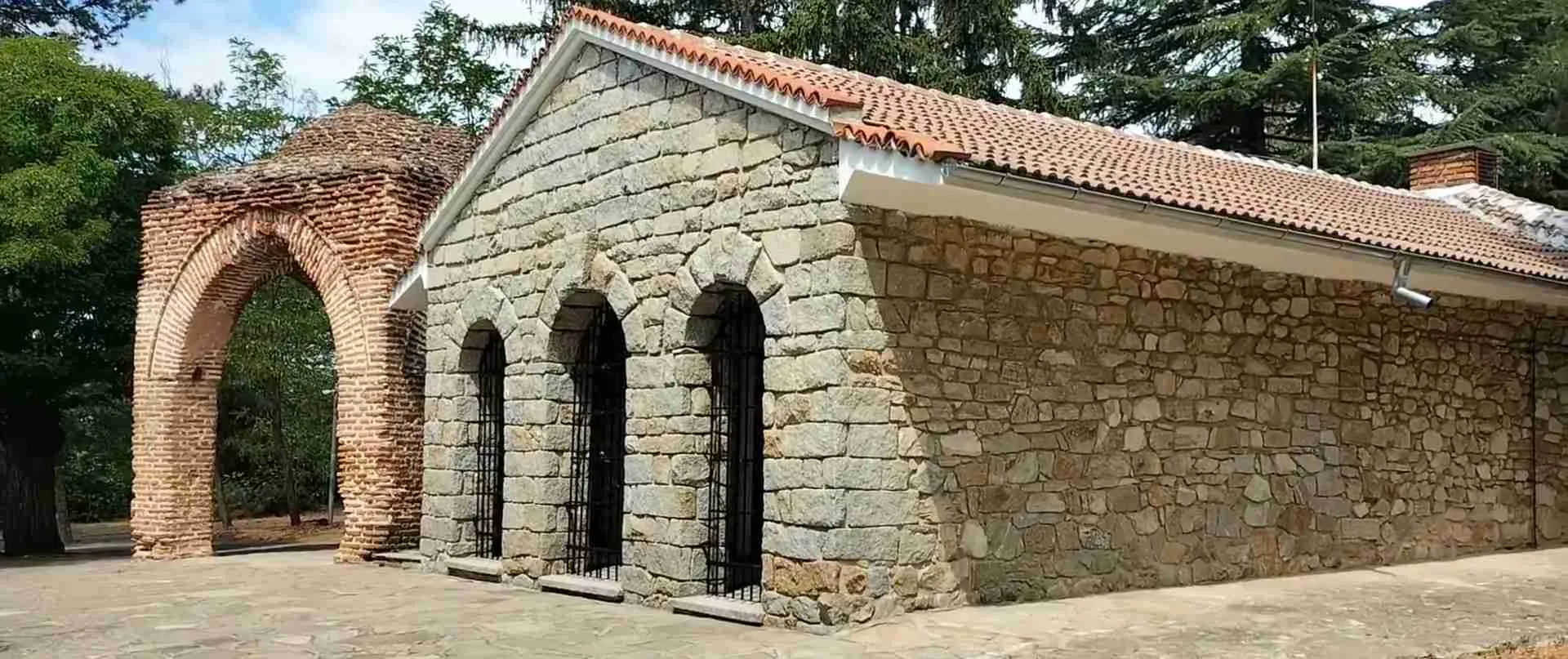
- UNESCO World Heritage Recognition: The Thracian Tomb of Kazanlak earned UNESCO inscription in 1979 under criteria (i), (iii), and (iv) for its exceptional 4th-century BC Hellenistic frescoes depicting burial rituals. The original tomb remains closed for preservation, but an exact-scale replica adjacent to the site provides access to the architectural structure and painted murals representing one of Europe’s most significant ancient art collections.
- Valley of Thracian Kings Archaeological Complex: Over 1,500 burial mounds concentrate in the Kazanlak Valley, with approximately 300 excavated to date. Six major tombs welcome visitors including Golyama Kosmatka containing King Seuthes III’s treasures, Ostrusha featuring a 60-ton monolithic burial chamber, and Shushmanets displaying Ionic and Doric columns representing Thracian cosmological beliefs. These sites collectively preserve the funerary architecture and artistic achievements of the Odrysian Thracian kingdom that flourished from the 5th to 3rd centuries BC.
- Rose Oil Production Heritage: Bulgaria produces approximately 70 percent of the world’s rose oil from Rosa damascena cultivation spanning over 300 years. The Rose Valley’s unique microclimate between the Balkan Mountains and Sredna Gora range provides optimal conditions for cultivating oil-bearing roses. Producing one kilogram of rose oil requires approximately 3,500 kilograms of hand-picked petals harvested during a three-week period in May and June when essential oil concentration peaks at dawn.
- Annual Rose Festival Tradition: Kazanlak’s Rose Festival celebrates its 122nd consecutive year, having begun in 1903. The festival occurs during the first weekend of June, coinciding with peak harvest season. Events include the Coronation of the Rose Queen ceremony, traditional rose-picking demonstrations in working fields, distillery tours showing the double-distillation process, international folklore performances, and the Festival Parade featuring dance ensembles representing Bulgaria’s regional traditions.
- Museum of Roses Global Distinction: The world’s only museum dedicated exclusively to rose oil production houses over 15,000 exhibits documenting Bulgarian rose cultivation since 1650. The museum occupies the original Rose Institute building in Kazanlak and displays historical distillation equipment, export vessels from the 18th century, laboratory instruments from Bulgaria’s first rose oil testing facility established in 1912, and documentation of the industry that transformed the regional economy.
- Seuthopolis Archaeological Legacy: The ancient Thracian capital city of Seuthopolis, founded by King Seuthes III in the early 3rd century BC, was comprehensively excavated between 1948 and 1954 before being submerged beneath the Koprinka Reservoir. The archaeological work revealed complete city planning including fortification walls, residential districts, temples, and palatial structures, providing scholars with unprecedented understanding of Thracian urban civilization before the site was deliberately flooded for hydroelectric development.
People Also Ask About Rose Valley & Kazanlak Bulgaria
What makes the Thracian Tomb of Kazanlak significant enough for UNESCO World Heritage status?
The Thracian Tomb of Kazanlak represents the masterpiece of Thracian creative art and stands as the only tomb of its architectural type anywhere in the world with preserved original frescoes. Discovered accidentally in 1944 by soldiers digging a shelter, the tomb dates to the late 4th century BC during the Hellenistic period and served as part of a vast necropolis surrounding Seuthopolis, the capital city of Thracian King Seuthes III.
The tomb’s UNESCO inscription under criteria (i), (iii), and (iv) recognizes three exceptional qualities. First, the murals demonstrate artistic mastery representing the pinnacle of Hellenistic funerary art, with techniques and compositional sophistication that provide rare evidence of painting traditions otherwise lost when the great Hellenistic capitals were destroyed. Second, the frescoes testify to the advanced cultural development achieved in Thrace, depicting complex burial rituals and social customs with detail that illuminates Thracian civilization. Third, the tomb represents a significant evolutionary stage in Hellenistic funerary architecture and decoration, bridging Greek artistic traditions with indigenous Thracian religious practices.
The painted murals in the round burial chamber consist of two friezes. The outer frieze portrays a funeral feast showing a married couple reclining on a dining couch, attended by servants carrying gifts, female musicians playing instruments, and a procession including horsemen, horses, and a chariot. The inner frieze depicts a chariot race, a common funerary motif symbolizing the journey to the afterlife. These paintings are Bulgaria’s best-preserved artistic masterpieces from the Hellenistic period and among Europe’s most significant examples of ancient secular painting to survive intact.
To protect the 2,300-year-old frescoes from deterioration caused by humidity, temperature fluctuations, and carbon dioxide from human breath, the original tomb has been permanently closed to public access since shortly after its discovery. A full-scale replica constructed adjacent to the original tomb allows visitors to experience the architectural structure and view accurate reproductions of the frescoes, ensuring preservation of the authentic monument while maintaining educational access.
How did Bulgaria become the world’s leading rose oil producer?
Bulgaria’s dominance in rose oil production stems from a unique convergence of geography, climate, agricultural expertise, and three centuries of specialized cultivation. Rosa damascena, the oil-bearing Damask rose, was introduced to Bulgaria during the 17th century by Ottoman Turks who recognized the region’s potential for rose cultivation. The Rose Valley’s specific location between the Balkan Mountains to the north and the Sredna Gora range to the south creates a microclimate with characteristics essential for producing exceptional rose oil.
The valley’s mild winters allow rose plants to establish strong root systems without frost damage, while spring temperatures gradually warm the plants toward their May-June blooming period. Critical to rose oil quality, the air humidity and precipitation patterns during the blooming weeks create optimal conditions for essential oil development within the petals. Morning dew preserves the volatile compounds, which is why rose harvest begins before dawn when dew coats the blossoms and oil concentration reaches its peak. The mountainous terrain provides natural protection from harsh winds while allowing sufficient air circulation to prevent fungal diseases that plague rose cultivation in other regions.
Beyond natural advantages, Bulgarian rose growers developed the double-distillation method that distinguishes their product. After the initial steam distillation produces rose water containing suspended oil droplets, Bulgarian producers perform a second distillation that extracts additional oil from the rose water, increasing yield by approximately three times compared to single-distillation methods. This technical innovation, combined with meticulous hand-harvesting that selects only fully opened blooms at peak fragrance, creates rose oil with a complexity and intensity unmatched by rose oil from other origins.
The European Commission granted Bulgarian rose oil Protected Designation of Origin status in September 2014, officially recognizing that rose oil produced in Bulgaria’s Rose Valley possesses unique characteristics directly attributable to the region’s geographical environment and traditional production methods. This protection ensures that only rose oil produced from Rosa damascena grown and processed within the designated Rose Valley region can be marketed as “Bulgarian rose oil,” preserving the reputation and economic value of the authentic product.
When is the best time to visit Rose Valley to see rose cultivation?
The optimal period for experiencing active rose cultivation spans late May through mid-June when Rosa damascena reaches peak bloom and harvest operations occur throughout the Rose Valley. Rose picking begins during the last week of May and continues for approximately three weeks, with the exact timing varying slightly each year based on spring weather patterns. Harvest starts at dawn, typically between 4:30 AM and 5:00 AM, and concludes by mid-morning around 10:00 AM before the sun’s heat causes essential oils to evaporate from the petals.
Visitors who wish to witness actual rose picking in commercial fields should arrive in the Rose Valley during the first two weeks of June. Many rose farms near Kazanlak welcome visitors during harvest season, with some offering hands-on picking experiences where visitors can participate in gathering blooms alongside professional pickers. The physical act of rose harvesting requires careful technique—flowers must be grasped near the base of the bloom and twisted gently to detach the entire flower head without damaging the petals, as bruised petals yield lower-quality oil.
The Kazanlak Rose Festival, established in 1903, deliberately coincides with peak harvest season and occurs during the first weekend of June. Festival dates for recent years include June 6-8. The festival schedule integrates agricultural demonstrations with cultural celebrations, so visitors during festival weekend experience both traditional rose picking ceremonies in heritage fields and the broader cultural programming including folk performances, craft markets, distillery tours, and the signature events of the Rose Queen Coronation and Festival Parade.
Outside the harvest season, the Rose Valley remains accessible for visitors interested primarily in the Thracian archaeological sites, though the agricultural landscape lacks the visual impact and fragrance of blooming rose fields. The Museum of Roses in Kazanlak operates year-round and provides comprehensive education about rose cultivation history and production techniques regardless of season. Distilleries including the Damascena Complex welcome visitors throughout the year, with demonstrations of the distillation process using preserved rose petals even outside harvest season, though the authentic experience of witnessing fresh roses being processed into oil occurs only during the May-June harvest period.
Can visitors enter the original UNESCO Thracian Tomb or only the replica?
The original Thracian Tomb of Kazanlak has been permanently closed to public entry since shortly after its 1944 discovery to preserve the irreplaceable 2,300-year-old frescoes from environmental damage. Access to the authentic tomb is restricted to specialized researchers and conservation experts who enter under strictly controlled conditions for scientific documentation and preservation work. This protective measure reflects UNESCO World Heritage conservation standards that prioritize long-term preservation of exceptional cultural properties over public accessibility when the two objectives conflict.
The decision to close the original tomb stems from documented conservation challenges. Human presence introduces moisture through respiration, alters temperature and humidity levels, and contributes carbon dioxide that accelerates deterioration of ancient plaster and pigments. Even brief exposure to these factors caused visible changes to the frescoes during the early years after discovery when the tomb remained open to visitors. Conservation assessments determined that continued public access would inevitably destroy the paintings within decades, whereas closure could preserve them for millennia.
To resolve the conflict between preservation requirements and educational value, Bulgarian authorities constructed a full-scale replica immediately adjacent to the original tomb in Tyulbeto Park where both structures are located. The replica reproduces the tomb’s architecture with exact dimensions—the narrow entrance corridor, rectangular antechamber, and round burial chamber with its distinctive beehive-vaulted ceiling. The frescoes are recreated using high-resolution photographic documentation and traditional painting techniques that match the color palette and compositional details of the originals.
Visitors enter the replica tomb and experience the spatial qualities of the ancient monument while viewing reproductions that convey the artistic achievement of the Hellenistic frescoes. Interpretive displays in the visitor center adjacent to both tombs include photographs documenting the original tomb’s discovery, archaeological excavation process, fresco conservation work, and detailed analysis of the painted scenes. The admission fee of 6 BGN for adults and 2 BGN for students covers access to the replica tomb, the protected park setting containing the original tomb’s protective structure, and the interpretive exhibitions. The site operates daily from 9:00 AM to 5:00 PM.
Extended multi-day tours – 5+ days
Featured Bulgaria Multi-Day Tour Packages
8 days
Wonders of Bulgaria (16 destinations)
- ✓ Comprehensive Bulgaria tour
- ✓ Expert local guides included
- ✓ All accommodation arranged
- ✓ Transportation provided
5 days
From Sofia to Bucharest (10 destinations)
- ✓ Comprehensive Bulgaria tour
- ✓ Expert local guides included
- ✓ All accommodation arranged
- ✓ Transportation provided
7 days
Best of Bulgaria Roundtrip
- ✓ Comprehensive Bulgaria tour
- ✓ Expert local guides included
- ✓ All accommodation arranged
- ✓ Transportation provided
10 days
Legends of Emperors and Crusaders , Wines, Traditional Cuisine. Museum Towns and Villages
- ✓ Booking needs min. 2 travelers
Multi-day tour packages powered by TourRadar. Prices and availability subject to change.
Introduction: Where Ancient Thrace Meets Bulgaria’s Rose Heritage
The Kazanlak Valley in central Bulgaria preserves one of Europe’s most concentrated archaeological landscapes, where over 1,500 Thracian burial mounds document a civilization that flourished two millennia before Bulgaria’s Slavic settlement. Among these earthen monuments stands the UNESCO World Heritage Thracian Tomb of Kazanlak, distinguished by Hellenistic frescoes that survived intact when comparable paintings in the great cities of the ancient Mediterranean world crumbled to dust. Archaeological investigation has revealed tombs containing golden wreaths, silver vessels inscribed with royal names, bronze armor, and architectural features including monolithic burial chambers weighing dozens of tons—evidence of a sophisticated culture whose artistic and engineering achievements rivaled the classical Greek and early Roman civilizations.
The same valley that served as the necropolis for Thracian kings transformed centuries later into Bulgaria’s rose-growing center, cultivating Rosa damascena for an industry that began during Ottoman rule and evolved into a globally dominant position. The Rose Valley between the Balkan Mountains and Sredna Gora range possesses microclimatic conditions that produce rose oil of exceptional quality, leading perfume manufacturers from Paris to New York to specify Bulgarian rose oil as the standard for fine fragrance. The town of Kazanlak functions as both the archaeological center where Thracian heritage is studied and preserved, and the economic capital of rose oil production where distilleries process millions of kilograms of hand-picked petals each May and June.
This dual heritage creates unusual layering in the cultural landscape. Rose fields planted in orderly rows stretch across valley floors where Thracian settlements once stood. Modern distilleries producing rose oil operate within sight of ancient burial mounds concealing underground chambers decorated with 2,300-year-old paintings. Museums dedicated to rose cultivation history and Thracian archaeological discoveries stand blocks apart in Kazanlak’s town center. The annual Rose Festival celebrating contemporary agricultural traditions incorporates Thracian cultural symbolism in its ceremonies and performances, acknowledging the deep historical continuity of human activity in the valley.
Visitors to Rose Valley and Kazanlak encounter heritage interpretation that spans from the Bronze Age Thracian tribes mentioned in Homer’s Iliad through the Hellenistic kingdom of Seuthes III, from Ottoman-era introduction of rose cultivation through 20th-century industrialization of rose oil production, reaching the contemporary designation of Bulgarian rose oil as a Protected Geographic Indication product. The valley’s archaeological sites, agricultural landscapes, museums, and cultural celebrations collectively present a regional identity built on honoring both ancient and ongoing contributions to human civilization. Understanding Rose Valley requires recognizing that its significance derives not from a single heritage element but from the accumulation and interaction of multiple historical layers across millennia.
The geographic concentration of heritage assets makes Rose Valley accessible as a cohesive destination. The Thracian Tomb of Kazanlak, Museum of Roses, multiple excavated burial mounds, and active rose distilleries all lie within a compact area centered on Kazanlak, allowing visitors to experience both archaeological and agricultural heritage within a single day trip from Sofia or Plovdiv, or explored more thoroughly during multi-day stays. The valley’s significance earned it consideration as a serial UNESCO World Heritage nomination that would expand the protected area beyond the single Kazanlak Tomb to encompass the broader archaeological landscape including Golyama Kosmatka, Ostrusha, Shushmanets, Helvetia, and Griffins’ tombs as components of an integrated Thracian royal necropolis.
Understanding the Thracian Civilization of the Kazanlak Valley
The Thracians comprised numerous tribes inhabiting southeastern Europe from the Bronze Age through their gradual absorption into the Roman Empire during the 1st and 2nd centuries AD. Greek historian Herodotus described the Thracians as the most numerous people after the Indians, praising their warrior culture while noting their political fragmentation prevented them from unifying into a single powerful state. Homer’s Iliad mentions Thracian allies fighting alongside Troy against the Greeks, providing the earliest written reference to these peoples whose territory stretched from the Danube River south to the Aegean Sea and from the Black Sea west into the Balkan mountain ranges.
During the 5th and 4th centuries BC, several Thracian kingdoms achieved political centralization and cultural sophistication. The Odrysian kingdom, which controlled the Kazanlak region, emerged as the most powerful Thracian state under rulers including Cotys I, Amatokos II, and Seuthes III. These monarchs established capital cities, minted coins, commissioned monumental architecture, and maintained diplomatic relations with Greek city-states and the expanding Macedonian kingdom. The concentration of elaborate burial mounds in the Kazanlak Valley indicates this area served as a royal necropolis for the Odrysian dynasty, with each generation of rulers constructing increasingly impressive tombs to honor deceased family members and demonstrate dynastic power.
Thracian culture blended indigenous traditions with influences from Greek and Persian civilizations encountered through trade, diplomacy, and military conflict. Thracians adopted elements of Greek art, architecture, and religious practices while maintaining distinctive beliefs and customs. Their religious worldview centered on concepts of immortality and the continuation of life after death, beliefs that motivated the construction of elaborate tombs furnished with grave goods the deceased would require in the afterlife. Archaeological evidence shows Thracian elites were buried with weapons, jewelry, ceremonial vessels, and sometimes horses and dogs sacrificed to accompany their owners, reflecting social hierarchies and material wealth achieved through military success and control of trade routes.
The Thracian artistic tradition demonstrated sophisticated metalworking techniques that produced golden wreaths, silver rhytons (drinking vessels shaped as animal heads), bronze armor with decorative embossing, and jewelry incorporating filigree and granulation techniques. Greek writers praised Thracian craftsmanship while acknowledging these artisans often worked in Greek-influenced styles, making attribution of specific objects to Thracian versus Greek manufacture difficult. The frescoes in the Kazanlak Tomb represent rare evidence of Thracian painting traditions, as most ancient paintings on wood panels or walls perished over centuries. The survival of these frescoes provides insight into artistic capabilities that written sources mention but for which little physical evidence otherwise exists.
Thracian society featured a hereditary aristocracy that controlled large estates worked by dependent populations, with wealth concentrated in the hands of warrior elites who commissioned the elaborate tombs and luxury goods discovered by archaeologists. Kings granted land to loyal nobles in exchange for military service, creating a feudal-like system that persisted until Roman conquest dismantled Thracian political structures. The gradual Romanization of Thrace during the 1st through 3rd centuries AD transformed the region’s culture, language, and material life, though elements of Thracian identity persisted in rural areas into the early medieval period before Slavic migration fundamentally altered the region’s ethnic composition.
Modern understanding of Thracian civilization derives primarily from archaeological evidence supplemented by limited written sources from Greek and Roman authors who viewed Thracians as barbarians—militarily formidable but culturally inferior. The archaeological discoveries in the Kazanlak Valley beginning in the 1940s revolutionized scholarly assessment of Thracian achievements, revealing a level of artistic sophistication, architectural expertise, and material wealth comparable to classical Greek civilization. The ongoing excavation and interpretation of Thracian sites continues revealing new information about this culture that dominated southeastern Europe for over a millennium yet left no written records in their own language to explain their worldview, political history, or cultural achievements from an indigenous perspective.
UNESCO World Heritage: The Thracian Tomb of Kazanlak
The Thracian Tomb of Kazanlak earned UNESCO World Heritage inscription in 1979 as one of Bulgaria’s first protected cultural properties under criteria (i), (iii), and (iv). The designation recognizes the tomb as a masterpiece of human creative genius (criterion i), bearing exceptional testimony to the cultural traditions of Thracian civilization (criterion iii), and representing an outstanding example of Hellenistic funerary architecture and painted decoration (criterion iv). The tomb’s global significance rests on the survival of its original painted frescoes, which provide scholars with evidence of Hellenistic painting traditions otherwise lost when major cities of the ancient Mediterranean world were destroyed.
Discovery occurred accidentally on April 19, 1944, when Bulgarian soldiers excavating a trench for military shelter struck the tomb’s vaulted ceiling. Archaeological teams immediately documented the find, recognizing its exceptional significance based on the intact frescoes and undisturbed burial chamber. The tomb dates to the late 4th century BC, approximately 300 BC, corresponding to the reign of Thracian King Seuthes III who ruled the Odrysian kingdom from his capital at nearby Seuthopolis. The tomb’s location within an extensive necropolis containing hundreds of burial mounds indicates the deceased belonged to the Thracian elite, possibly a member of the royal family or high-ranking noble.
The tomb’s architecture follows the tholos design, a beehive-shaped structure with a circular burial chamber covered by a corbelled dome. A narrow entrance corridor measuring approximately 6 feet long leads to a small rectangular antechamber, which opens into the round burial chamber with a diameter of approximately 10 feet. The entire structure was constructed using carefully fitted bricks and then covered with an earthen mound that protected it from the elements and marked the burial location. The engineering achievement of creating a stable vaulted ceiling using brickwork without mortar demonstrates advanced construction techniques, with the dome’s weight distributed through the corbelling method where each successive brick course projects slightly inward until meeting at the apex.
The frescoes that distinguish this tomb from others in the valley cover the walls and ceiling of both the antechamber and burial chamber. The painting technique employs natural pigments including red ochre, yellow ochre, black, and white applied to wet plaster in the true fresco method where pigments chemically bond with the plaster as it dries. This technique contributes to the paintings’ remarkable preservation, as the pigments became integrated into the plaster matrix rather than sitting as a surface layer vulnerable to flaking. The artists displayed sophisticated understanding of perspective, proportion, human anatomy, and compositional balance, indicating training in Greek artistic traditions adapted to serve Thracian funerary customs.
The outer frieze in the burial chamber depicts a funeral banquet scene central to understanding Thracian burial practices. A Thracian couple reclines on a dining couch in the traditional Greek symposium pose, with the man’s hand extended toward his wife in a gesture of farewell or affection. Servants approach carrying various offerings including a horse, gifts, and ritual objects. Three female musicians play instruments including a double flute, creating the ceremonial atmosphere appropriate for funeral rites. A groom leads horses and a chariot, symbolizing the deceased’s status and providing transportation for the journey to the afterlife. The scene combines Greek artistic conventions with distinctively Thracian elements including the specific costume details, ritual objects, and the emphasis on horses reflecting Thracian culture’s equestrian traditions.
The inner frieze depicts a chariot race with two chariots drawn by horses at full gallop, their drivers leaning forward in racing posture. Chariot races served as funeral games honoring deceased heroes in both Greek and Thracian traditions, connecting the deceased to epic heroes whose funerals included elaborate athletic competitions. The dynamic composition captures the movement of the racing horses and chariots, demonstrating the artist’s ability to convey motion and drama within the confined space of the circular frieze.
Conservation challenges emerged almost immediately after the tomb’s discovery. Early visitors to the original chamber introduced moisture, temperature fluctuations, and carbon dioxide that began degrading the ancient plaster and pigments. Conservators implemented protective measures including climate control systems and access restrictions, but monitoring demonstrated that continued human presence would inevitably destroy the frescoes. The decision to permanently close the original tomb to public access represents UNESCO World Heritage conservation principles prioritizing long-term preservation over short-term educational accessibility.
The replica tomb constructed adjacent to the original provides educational access while protecting the authentic monument. Built using traditional construction methods at exact scale, the replica recreates the spatial experience of entering the ancient tomb. The reproduced frescoes employ high-resolution documentation and traditional painting techniques to convey the original compositions’ artistic sophistication. Interpretive panels in the replica explain the iconography, painting techniques, and cultural significance of the various scenes depicted, helping visitors understand what they are viewing without requiring them to decode the complex symbolism independently.
The protected site in Tyulbeto Park includes both the original tomb sealed within its protective structure and the accessible replica, surrounded by landscaped grounds that preserve the setting’s archaeological character. The visitor center provides comprehensive exhibits about the tomb’s discovery, the Thracian civilization that created it, the conservation challenges that necessitated closing the original, and the ongoing archaeological research in the broader Valley of Thracian Kings. The integration of protected monument, accessible replica, and interpretive programming creates a model for heritage management that balances preservation imperatives with educational missions.
Exploring Other Thracian Tombs in the Valley of Thracian Kings
The Kazanlak Valley contains over 1,500 burial mounds, creating one of Europe’s densest concentrations of ancient funerary monuments. Archaeological investigation has examined approximately 300 of these mounds, revealing tombs ranging from simple pit graves to elaborate multi-chambered structures rivaling the UNESCO-inscribed Kazanlak Tomb in architectural sophistication. Six major tombs currently welcome visitors, each offering distinct architectural features and historical contexts that collectively illustrate the evolution of Thracian funerary practices across several centuries.
Golyama Kosmatka: The Tomb of King Seuthes III
Golyama Kosmatka represents one of Bulgaria’s most significant archaeological discoveries. Excavated in 2004 by archaeologist Georgi Kitov, the tomb revealed an unprecedented collection of golden and silver artifacts including a remarkable bronze head portrait believed to represent King Seuthes III. The burial mound measures 90 meters in diameter and 20 meters in height, making it one of the valley’s largest tumuli. The tomb’s 13-meter entrance corridor leads through two antechambers before reaching a round chamber with a 4.5-meter corbelled dome protected by a massive marble door weighing several tons.
The marble door features relief carvings of a Medusa head and the sun god Helios, demonstrating the Greek artistic influences integrated into Thracian royal iconography. Beyond this door lies the rectangular burial chamber hewn from a single 60-ton granite monolith, an engineering achievement that required quarrying, transporting, and precisely positioning this massive stone block. The burial chamber contained over 70 objects including a golden wreath of remarkable craftsmanship, silver vessels including one inscribed “To Seuthes,” bronze armor, weapons, and ceremonial drinking vessels. These grave goods confirm the tomb’s royal status and provide tangible evidence of the material wealth accumulated by Thracian monarchs.
The bronze head portrait discovered in the antechamber represents one of ancient art’s most striking survivals. Cast using sophisticated lost-wax technique, the life-sized head depicts a bearded man with intense expression and individualized features suggesting genuine portraiture rather than idealized representation. The inscription “To Seuthes” on multiple artifacts found in the tomb supports identification of the portrait as King Seuthes III, who ruled the Odrysian kingdom from approximately 330 to 300 BC and founded the capital city of Seuthopolis located nearby. This portrait provides rare evidence of Thracian royal appearance and represents one of few surviving large-scale bronze sculptures from the Hellenistic period.
Golyama Kosmatka operates as a visitor site with guided tours explaining the tomb’s architecture, the discovery process, and the historical significance of the artifacts. The site includes interpretive displays showing photographs and descriptions of the golden wreath, silver vessels, bronze armor, and the iconic head portrait, though the original artifacts are preserved in museum collections in Sofia and Kazanlak. Tours operate daily with admission coordinated through the site management office, and English-language guides are available by advance arrangement.
Ostrusha Tomb: The Monolithic Burial Chamber
The Ostrusha Tomb distinguished itself through its unique monolithic burial chamber carved from a single massive granite block estimated to weigh 60 tons, with a roof stone weighing an additional 30 tons. This architectural feature represents extraordinary engineering capability, as moving and positioning stones of this mass required coordination of hundreds of workers using ramps, rollers, and lever systems. The tomb dates to the 4th century BC and occupies a burial mound 80 meters in diameter and 17 meters high, similar in scale to Golyama Kosmatka.
The interior of the monolithic chamber revealed painted decoration on the ceiling, including a remarkable image of a woman rendered in gold leaf—a rare use of precious metal in ancient wall painting. The architectural design includes a corridor entrance and antechamber leading to the central chamber, following the standard Thracian tomb typology. Though robbed in antiquity, archaeological investigation recovered sufficient artifacts and architectural elements to reconstruct the tomb’s original appearance and burial customs.
The technical achievement of creating the monolithic chamber involved quarrying the granite block, transporting it to the burial mound location, positioning it precisely within the earth structure, and carving the interior chamber space. The roof stone required similar engineering prowess to maneuver into position atop the chamber walls. These tasks demanded metallurgical knowledge to forge tools capable of working granite, organizational capacity to mobilize large labor forces, and mathematical understanding to calculate structural stability and weight distribution.
Visitor access to Ostrusha allows examination of the monolithic construction and remaining painted decoration. The site interpretation emphasizes the engineering achievements represented by the massive stone components and the social organization required to complete such projects. Guides discuss the quarrying locations in the nearby Sredna Gora mountains where geologists have identified granite sources matching the tomb’s stone composition, revealing that the builders transported these enormous blocks several kilometers to the burial site.
Shushmanets Temple-Tomb: Cosmological Architecture
Shushmanets represents the valley’s largest burial mound with a diameter of 100 meters and height of 20 meters, exceeding even Golyama Kosmatka in scale. The structure dates to the 4th century BC and demonstrates the transition from simple burial chambers to elaborate temple-tombs reflecting Thracian religious beliefs. The architectural design incorporates two distinctive columns representing Thracian cosmological concepts, distinguishing Shushmanets from other valley tombs.
The entrance corridor leads to an antechamber featuring an Ionic column, showing clear Greek architectural influence. The column capital displays the characteristic volute scrolls of Ionic order, indicating Thracian architects had studied Greek temple architecture and adapted these elements for funerary contexts. The round burial chamber contains a Doric column topped with a large disc symbolizing the sun, a central element in Thracian religious cosmology. These columns represent Thracian beliefs about the structure of the universe and the connection between earthly and divine realms.
Archaeological excavation revealed evidence of animal sacrifice in the antechamber, including the remains of four horses and two dogs. These sacrifices reflect Thracian funeral customs documented in both archaeological contexts and ancient literary sources describing elaborate burial ceremonies. The horses particularly connect to Thracian culture’s equestrian emphasis, as Thracian cavalry earned fame throughout the ancient Mediterranean world. The sacrificed animals were intended to accompany the deceased into the afterlife, serving the same functions they performed in life.
Shushmanets suffered robbery in antiquity, with thieves removing the burial chamber’s contents and damaging architectural elements while searching for valuables. Despite this disturbance, the tomb’s architectural features survived sufficiently intact to reveal the original design concepts. Modern conservation work has stabilized the structure and made it accessible to visitors. The site interpretation focuses on the cosmological symbolism of the columns and the evidence of animal sacrifice, providing insight into Thracian religious practices that complement the artistic evidence from the Kazanlak Tomb’s frescoes.
Additional Tombs: Helvetia, Griffins, and Golyama Arsenalka
Three additional tombs in the valley opened to visitors following conservation work funded by European Economic Area and Norway grants. The Helvetia Tomb dates to the 5th century AD, representing late Roman or early Byzantine period rather than classical Thracian era, and demonstrates the continuity of tumulus burial traditions over many centuries. The Griffins’ Tomb features decorative elements including griffin motifs that gave the site its modern name, though ancient robbery damaged much of the original decoration. Golyama Arsenalka presents another example of elaborate Thracian funerary architecture with multi-chamber design.
These sites collectively illustrate the variety of architectural approaches, decorative programs, and construction techniques employed in Thracian burial monuments across five centuries from the 5th through 1st centuries BC. Some tombs emphasize architectural grandeur through massive stone construction, others feature painted decoration, and several combine both approaches. The chronological range reveals how Thracian funerary practices evolved in response to changing political circumstances, increased contact with Greek and Roman civilizations, and dynastic succession within the Odrysian kingdom.
Visitor access to these additional tombs varies by season and conservation requirements. The standard admission fee of approximately 5 BGN covers entry to each tomb, with combination tickets available for visiting multiple sites. Guided tours explaining the archaeological context and historical significance are recommended for understanding the architectural features and limited surviving decoration. The Valley of Thracian Kings represents an ongoing archaeological research zone where new discoveries continue periodically, and excavation of previously uninvestigated mounds occasionally reveals new tombs that may eventually become accessible to visitors.
Rose Valley: Bulgaria’s Liquid Gold Legacy
Rosa damascena cultivation in Bulgaria began during the 17th century when Ottoman administrators recognized the Rose Valley’s potential for growing oil-bearing roses. Written documentation confirms commercial-scale rose oil production existed by 1650, though local tradition suggests earlier introduction. The industry expanded dramatically during the 18th century as European perfume manufacturers discovered Bulgarian rose oil’s exceptional quality. The first recorded export occurred in 1740 when a French perfume company purchased Bulgarian rose oil, beginning trade relationships that continue connecting Bulgarian rose growers with luxury perfume houses in Paris, Grasse, and internationally.
The Rose Valley’s geography creates ideal conditions for Rosa damascena cultivation that cannot be replicated elsewhere. The valley extends approximately 130 kilometers between the Balkan Mountains and Sredna Gora range in central Bulgaria, with Kazanlak positioned at its geographic center. This enclosed valley configuration produces a specific microclimate characterized by mild winters preventing frost damage to rose root systems, sufficient spring rainfall supporting plant growth, and particular patterns of air humidity and temperature during May-June blooming period that maximize essential oil development in rose petals.
The morning microclimate proves especially critical to rose oil quality. Temperature inversion during night hours traps cooler air in the valley, maintaining dew on rose blooms through dawn when essential oil concentration peaks. As the sun rises, air temperature gradually warms but the mountain barriers slow wind penetration, allowing several hours of optimal harvesting conditions before heat causes volatile compounds to evaporate. This precise combination of altitude, topography, and climate occurs in very few locations worldwide, explaining why Bulgarian rose oil maintains its dominant market position despite attempts to establish competitive rose cultivation in other countries.
Rosa damascena differs fundamentally from ornamental garden roses familiar to most people. The plant produces smaller flowers with more petals packed densely in each bloom, creating higher surface area for essential oil development. The fragrance demonstrates intense complexity combining honey-sweet notes with green, fruity, and spicy undertones that simple floral roses lack. This complexity makes rosa damascena oil irreplaceable in fine perfumery, as synthetic substitutes or roses grown elsewhere fail to replicate the multi-layered aroma profile. Perfume compositions built on Bulgarian rose oil as a base note achieve sophistication impossible with alternative ingredients.
The economic significance of rose cultivation transformed the Rose Valley’s social and economic structures. During the 19th and early 20th centuries, rose growing provided the primary income for valley residents, with land values determined largely by rose planting density. A 1,000 square meter plot planted with rosa damascena commanded premium prices reflecting the guaranteed annual income from rose petal sales. Families passed rosa damascena plants to subsequent generations as valuable inheritable assets. The industry supported ancillary businesses including copper vessel manufacture for distillation equipment, barrel cooperage for oil storage and transport, and trading companies connecting Bulgarian producers with international perfume manufacturers.
Socialist-era industrialization during the mid-20th century transformed rose cultivation from small family farms to large state agricultural enterprises. The communist government invested heavily in rose cultivation infrastructure, expanding planted acreage, mechanizing certain cultivation tasks, and establishing research institutions to develop improved propagation techniques and pest management strategies. While this modernization increased total production volume, some traditional quality-focused practices were sacrificed for efficiency. The post-1989 transition to market economy saw state farms dissolved and land privatized, with some parcels returning to traditional family cultivation while others consolidated into larger private commercial operations.
Contemporary Bulgarian rose cultivation employs traditional hand-harvesting combined with modern distillation technology. Rose picking remains entirely manual because mechanical harvesting damages petals, reducing oil yield and quality. Pickers work systematically through rose fields during the three-week harvest season, collecting only fully opened blooms at peak fragrance. Harvesting occurs exclusively during early morning hours from approximately 5:00 AM until 10:00 AM, requiring pickers to work intensively during this limited time window. The physical demands and time constraints of rose harvesting make it one of Bulgaria’s most labor-intensive agricultural operations.
The European Commission’s 2014 designation of Bulgarian rose oil as a Protected Designation of Origin product provides legal protection against imitation products and ensures consumers receive authentic Bulgarian rose oil meeting quality standards. This protection requires that oil labeled “Bulgarian rose oil” must be produced from rosa damascena grown within the designated Rose Valley region and processed using approved distillation methods. The designation recognizes that rose oil’s characteristics derive inseparably from the geographic environment where the roses grow, similar to how Champagne must come from France’s Champagne region or Parmigiano-Reggiano must come from specific Italian provinces.
Museum of Roses: Documenting Three Centuries of Production
The Museum of Roses in Kazanlak holds the distinction as the world’s only museum dedicated exclusively to rose oil production history and technology. Established in 1967 as a small exhibition within the Iskra Historical Museum complex, the rose collection grew to encompass over 15,000 artifacts documenting Bulgarian rose cultivation from the 17th century through contemporary industrial production. The museum achieved independent status in 1969 and occupies the original Rose Institute building, a structure historically significant as the research center where Bulgarian scientists developed improved rose varieties and refined distillation techniques.
The museum’s permanent exhibitions trace rose cultivation’s introduction during Ottoman rule, the industry’s 18th and 19th century expansion driven by European perfume demand, socialist-era industrialization transforming production methods, and contemporary challenges including climate change impacts on blooming schedules and competition from synthetic fragrance alternatives. Original documents including export contracts, correspondence between Bulgarian producers and French perfume houses, government regulations governing rose oil quality standards, and financial records showing the industry’s economic importance provide primary source evidence of rose oil’s role in Bulgarian economic development.
Historical distillation equipment represents the museum’s most significant collection, including copper stills from the 18th century showing early distillation technology, improved designs from the 19th century incorporating Bulgarian innovations, and 20th-century industrial distillation systems capable of processing tons of rose petals per day. The evolution from simple single-distillation apparatus to the double-distillation method that distinguishes Bulgarian rose oil production demonstrates technological refinement driven by quality competition and commercial pressures. Visitors observe the engineering principles underlying steam distillation and understand why double distillation increases yield by extracting additional oil from the rose water byproduct of initial distillation.
Storage and transport vessels illustrate how rose oil was packaged and shipped to international markets before modern container systems. Small copper vessels sealed with wax preserved oil during overland transport to Black Sea or Mediterranean ports. Specialized wooden crates protected the valuable cargo during sea voyages to western European destinations. Export documentation shows the complex logistics networks connecting Bulgarian producers with consumers thousands of kilometers distant. These artifacts reveal that rose oil trade was sufficiently valuable to justify elaborate packaging and transport arrangements despite 18th and 19th century shipping limitations.
The museum recreates a traditional rose warehouse showing how producers stored rose petals between harvest and distillation, managed temperature and humidity to prevent petal deterioration, and organized the intensive processing operations that converted perishable organic material into stable essential oil. A reconstructed rose oil testing laboratory reproduces the 1912 facility where chemists evaluated oil quality through specific gravity measurement, chemical composition analysis, and fragrance assessment. These quality control measures protected Bulgarian rose oil’s reputation by ensuring exports met consistent standards and detecting any adulteration with lower-quality oils or synthetic compounds.
Contemporary exhibits address current challenges facing the Bulgarian rose industry including climate change effects on blooming timing, labor shortages as younger generations pursue urban employment rather than agricultural work, competition from synthetic rose fragrances in mass-market perfumes, and agricultural pest threats to rose cultivation. The museum presents these issues alongside historical contexts, showing that Bulgarian rose growers have repeatedly adapted to changing conditions while maintaining the essential quality standards that sustain market dominance. Interactive exhibits explain the chemical composition of rose essential oil, demonstrate how perfumers use rose oil in fragrance creation, and allow visitors to smell authentic Bulgarian rose oil and compare it to synthetic rose fragrances to understand quality differences.
The museum shop offers opportunity to purchase authentic Bulgarian rose products including rose oil, rose water, rose-based cosmetics, rose jam, rose liqueur, and dried rose petals. Product selection emphasizes items produced by local Rose Valley manufacturers using traditional methods. Prices reflect rose oil’s value, with small quantities of pure essential oil costing substantially more than diluted products or rose water. The shop provides authentication certificates confirming products contain genuine Bulgarian rose oil meeting Protected Designation of Origin standards, important documentation given prevalence of imitation products in international markets.
The Museum of Roses operates year-round with daily hours from 9:00 AM to 6:00 PM Tuesday through Sunday, closed Mondays. Admission costs 10 BGN for adults and 6 BGN for students, with reduced pricing on the second Sunday of each month. English-language interpretive materials are available, and guided tours in English, German, Russian, and other languages can be arranged by advance reservation. The museum’s location at 1 Voynishka Street in central Kazanlak places it within walking distance of other cultural attractions including the Iskra Historical Museum and the Kazanlak Tomb site in Tyulbeto Park.
The Rose Festival: Annual Celebration of Tradition and Culture
The Kazanlak Rose Festival marks its 122nd year of continuous celebration, having begun in 1903 when local rose growers established an annual gathering to celebrate the harvest season and promote Bulgarian rose oil in international markets. The festival occurs during the first weekend of June, deliberately timed to coincide with peak blooming when rose fields display maximum visual impact and harvest operations are actively underway. Festival dates typically span Friday through Sunday, with 2025 events scheduled for June 6-8, and future years following the same first-weekend-of-June pattern.
The Coronation of the Rose Queen represents the festival’s signature ceremony, held Friday evening on Seuthopolis Square in central Kazanlak. This beauty pageant selects a young woman who serves as the Rose Festival and Bulgarian rose oil ambassador for the coming year, traveling internationally to promote Bulgarian rose products and representing the region’s rose-growing heritage at trade events and cultural celebrations. The coronation ceremony combines pageantry with cultural performances including traditional music and dance. Major musical acts perform following the coronation, with recent festivals featuring international artists attracting audiences beyond the local rose-growing community.
Traditional rose-picking ceremonies allow festival visitors to experience harvest practices firsthand. The municipality organizes special transport to working rose fields where commercial harvest operations demonstrate proper picking technique. Visitors can participate in gathering rose blooms under guidance from experienced pickers, learning the careful hand motions required to detach flowers without damaging petals or plants. These early-morning excursions depart Kazanlak around 5:00 AM to reach fields during optimal harvesting hours when dew coats the blooms. Participation typically requires advance reservation through festival organizing committee as field access is coordinated with rose growers whose crops remain under production.
Rose distillery tours operate throughout festival weekend, with facilities including the Damascena Complex opening for public visitation. Tours demonstrate the steam distillation process using fresh rose petals harvested that morning, allowing visitors to observe the transformation from raw agricultural product to refined essential oil. Guides explain the double-distillation method that distinguishes Bulgarian production, show the specialized copper equipment used in processing, discuss quality control measures ensuring oil purity, and illustrate the quantity of raw material required—approximately 3,500 kilograms of petals per kilogram of oil. The intense rose fragrance permeating distilleries during active processing provides sensory experience unavailable outside harvest season.
The Festival Parade on Sunday represents the event’s visual climax, with thousands of participants processing through Kazanlak’s central streets. Dance ensembles representing Bulgaria’s regional folk traditions perform choreographed routines in traditional costume, preserving cultural practices that predate the modern Bulgarian state. Musical groups play instruments including bagpipes, drums, and stringed instruments accompanying the dancers. Theatrical presentations dramatize rose harvest traditions and Thracian historical themes. Children’s groups, school bands, and civic organizations contribute floats and performances. The parade route stretches along main boulevards, with premium viewing areas requiring advance ticket purchase while other sections remain freely accessible to the public.
Craft markets and food vendors operate throughout festival weekend in parks and squares surrounding the main events. Local artisans sell rose-based products including cosmetics, soaps, perfumes, culinary items such as rose jam and rose liqueur, and decorative objects incorporating rose motifs. Traditional Bulgarian crafts including woodcarving, pottery, textile weaving, and metalwork provide shopping opportunities beyond rose-specific products. Food stalls offer Bulgarian cuisine with rose-influenced dishes alongside standard regional specialties. These commercial activities create festival atmosphere extending beyond the scheduled main events, with activity continuing from morning through late evening.
The international folklore festival component brings dance and music ensembles from numerous countries to perform alongside Bulgarian groups. Recent festivals have featured performers from Romania, Turkey, Greece, Serbia, Macedonia, and more distant countries including Asian and South American nations. These international performances reflect the Rose Festival’s evolution from local agricultural celebration to cultural event with broader international participation and tourism appeal. The variety of performance traditions provides audiences with comparative context for understanding Bulgarian folklore within global performance culture.
Accommodation during Rose Festival weekend requires advance booking as Kazanlak’s limited hotel capacity fills months before the event. Sofia-based tour operators offer organized packages including transportation, reserved seating for the parade and coronation ceremony, distillery tours, and festival meals, allowing visitors from elsewhere in Bulgaria or internationally to attend without arranging individual logistics. Day-trip options from Sofia, Plovdiv, or Veliko Tarnovo enable participation in festival events without overnight accommodation, though the early morning rose-picking experiences require lodging proximity to Kazanlak.
Rose Oil Production and Distilleries: From Petal to Perfume
Rosa damascena blooms for approximately three weeks annually, typically from late May through mid-June, creating an intensive harvest season requiring coordinated labor mobilization across the Rose Valley. Individual rose bushes do not bloom simultaneously—flowers open progressively over the blooming period, requiring daily harvesting to capture each flower at peak fragrance before petals begin deteriorating. This biological pattern means pickers must visit each field multiple times during the season, selectively gathering newly-opened blooms while leaving unopened buds to develop for subsequent harvest.
Harvest timing within each day follows strict parameters determined by essential oil chemistry. Darkness and cool night temperatures cause essential oils to accumulate in rose petals, reaching maximum concentration around dawn. As morning sun warms the flowers, volatile compounds begin evaporating, progressively reducing oil content through the morning hours. By midday, remaining essential oil concentration has dropped to perhaps half the dawn peak. This daily cycle requires harvest operations to concentrate in the 5:00 AM to 10:00 AM window when oil content justifies the labor investment of hand-picking.
Proper picking technique requires grasping each flower at its base where petals connect to the hip (seed pod), then twisting gently to detach the entire flower head. This motion preserves petal integrity while cleanly separating the bloom. Rough handling, pulling rather than twisting, or grasping petals themselves causes bruising that damages oil-bearing cells and initiates enzymatic reactions degrading oil quality. Experienced pickers develop rhythmic efficiency, harvesting hundreds of flowers per hour while maintaining the careful touch necessary for quality preservation. The physical demands of bending to reach low-growing rose bushes and working at intensive pace for four to five hours creates genuine agricultural labor requiring strength and endurance.
Transportation from field to distillery must occur rapidly as harvested roses begin deteriorating immediately. Large-scale commercial operations position distillation facilities adjacent to major rose-growing areas, minimizing transport time and distance. Smaller producers may need to transport roses to centralized distilleries, creating pressure to complete processing within hours of harvest. Roses arriving at distilleries enter the production process immediately, with scheduling coordinated to match harvest delivery volumes. This time sensitivity means distilleries operate continuously during the three-week harvest season, processing tons of roses daily through round-the-clock shifts.
The distillation process employs steam to extract essential oils from rose petals. Workers load fresh roses into large copper stills, add water, and heat the mixture. Steam carries volatile essential oil molecules upward through condensation apparatus where cooling converts steam back to liquid. This liquid contains rose water (water infused with rose fragrance) and small quantities of rose oil that float on the water surface due to oil’s lower density. Initial distillation produces crude rose oil plus large volumes of rose water as byproducts.
Bulgarian producers distinguish themselves through double distillation, a refinement that significantly increases total oil yield. The rose water produced during initial distillation contains dissolved and suspended essential oil molecules that single distillation leaves behind. By redistilling this rose water, producers extract additional oil that would otherwise be lost. This second distillation increases total oil recovery by approximately three times compared to single distillation, directly impacting profitability given the value of rose oil relative to processing costs. The double-distillation innovation developed in Bulgaria during the 18th or early 19th century, giving Bulgarian producers competitive advantage that persists today.
The extraordinary ratio of raw material to finished product—3,500 kilograms of rose petals yielding 1 kilogram of oil—explains rose oil’s high market value. A single rose flower weighs perhaps 2 grams, meaning approximately 1.75 million individual flowers are required to produce one kilogram of oil. Given that hand-picking flowers at dawn represents labor-intensive agricultural work, that roses bloom only three weeks annually, and that the Rose Valley’s specific climate conditions cannot be duplicated elsewhere, the scarcity and difficulty of producing rose oil justifies its designation as “liquid gold.”
Quality assessment involves multiple analytical techniques including measurement of specific gravity (density), chemical composition analysis via gas chromatography to identify constituent compounds, and organoleptic evaluation where trained assessors smell the oil and judge its fragrance characteristics against standards. Adulteration with lower-quality oils, synthetic compounds, or other essential oils can be detected through these analytical methods. Bulgarian producers maintain strict quality standards to preserve the reputation that sustains premium pricing, as any widespread quality failures would damage the market position built over three centuries.
The Damascena Complex represents the Rose Valley’s largest and most visitor-accessible distillery operation. Located several kilometers from Kazanlak center, the facility includes commercial distillation operations producing rose oil for export, a rose-themed museum and visitor center, gardens planted with various rose varieties, and retail space selling rose products. Tours operate year-round, though visits during May-June harvest season allow observation of active distillation using fresh roses, while off-season tours demonstrate the process using preserved petals or video documentation. No advance reservation is typically required for individual visitors, though group tours benefit from prior arrangement to ensure guide availability.
Several smaller distilleries in villages surrounding Kazanlak welcome visitors by appointment, offering more intimate experiences at working facilities where family operations continue traditional production methods. These smaller producers may allow more hands-on participation in processing steps and provide detailed explanation of technical aspects that large commercial facilities abbreviate for general audiences. Arranging visits to smaller distilleries typically requires Bulgarian language communication or working through local tourism offices in Kazanlak that maintain relationships with rose-growing families.
Seuthopolis: The Submerged Thracian Capital
Seuthopolis stood as the capital city of the Odrysian Thracian kingdom under King Seuthes III who ruled from approximately 330 to 300 BC. The city occupied a strategic location in the Kazanlak Valley near the Tundzha River, controlling agricultural land and trade routes through the region. Archaeological investigation revealed that Seuthopolis exemplified Hellenistic urban planning principles adapted to Thracian political and social structures, with the city organized around a central palace complex, surrounded by residential districts, defensive walls, and religious sanctuaries.
Discovery occurred in 1948 during surveys conducted before construction of the Georgi Dimitrov Dam (renamed Koprinka Dam after 1989) designed to create a reservoir for irrigation and hydroelectric power generation. Archaeological teams recognized immediately that the ancient city lying within the future reservoir area represented exceptional historical significance, as few Thracian urban settlements had been systematically excavated. The communist Bulgarian government allocated six years for emergency excavation before flooding, creating race-against-time conditions as archaeologists worked to document Seuthopolis before it disappeared beneath the reservoir.
Excavation revealed the city’s complete street plan, residential architecture, public buildings, fortification system, and royal palace. The urban layout followed geometric principles with orthogonal street grid creating regular blocks for residential and commercial structures. The fortification walls extended approximately 750 meters in circumference, enclosing an area of roughly 5 hectares. Defensive towers at regular intervals provided positions for archers and siege defenders. The main gate featured elaborate stonework indicating the entrance’s ceremonial as well as defensive functions.
The palace complex occupied the city’s center, demonstrating the political centralization characteristic of Hellenistic kingdoms. Excavated remains included throne room foundations, residential quarters, administrative spaces, and storage facilities. Architectural fragments showed Greek-influenced decorative elements including carved stone capitals, painted plaster wall decoration, and mosaic flooring. The palace’s scale and sophistication indicated Seuthes III commanded substantial resources and employed Greek-trained architects and craftsmen to create a capital worthy of a Hellenistic monarch.
Residential districts revealed social stratification within Thracian society. Larger houses with multiple rooms and courtyards belonged to aristocratic or wealthy merchant families, while smaller single-room dwellings housed working-class populations. Construction techniques employed stone foundations supporting mud-brick walls with timber roof framing, methods typical of ancient Balkan architecture balancing material availability with structural requirements. Artifacts recovered from residential contexts included pottery, metal tools and weapons, jewelry, and items demonstrating trade connections with Greek cities, Persian territories, and other Thracian regions.
Religious sanctuaries discovered during excavation provided insight into Thracian religious practices. One sanctuary dedicated to the Thracian goddess Bendis featured altar remains and votive offerings including small bronze figurines, pottery vessels, and dedicatory inscriptions. Another structure served as sanctuary to the Great Gods, a mystery cult imported from the Greek island of Samothrace. These religious buildings demonstrate that Seuthopolis functioned as ceremonial center where Thracian traditional worship coexisted with imported Greek religious practices, reflecting the cultural hybridization occurring throughout Hellenistic period kingdoms.
Inscriptions discovered at Seuthopolis provided crucial evidence for understanding Thracian political institutions and Greek language adoption by Thracian elites. Several inscriptions in Greek documented royal decrees, property transactions, and dedications to deities. One significant inscription detailed arrangements between King Seuthes III and Greek mercenaries he employed, specifying land grants the king provided as payment for military service. These documents reveal that Thracian monarchs conducted official business in Greek, employed literate administrators trained in Hellenistic bureaucratic practices, and granted landed estates to create loyal military supporters—governance patterns paralleling those of Alexander the Great’s Macedonian kingdom and successor states.
The excavation generated detailed documentation including measured architectural drawings, artifact catalogs, photographic records, and scholarly analysis preparing findings for publication. Recognizing that the physical site would be lost to flooding, the archaeological team prioritized creating comprehensive records that would allow future scholars to study Seuthopolis through documentation even after the actual city disappeared. This documentation proved prescient as the Koprinka Reservoir was indeed filled in 1954, submerging Seuthopolis beneath meters of water where it remains today.
Periodic proposals to reveal Seuthopolis through construction of an underwater barrier dam that would isolate the archaeological site from the surrounding reservoir have circulated since the 1990s, with architectural designs depicting a circular wall creating a protected zone where pumps would remove water and expose the ancient city to air. These proposals generate periodic media attention but face practical challenges including enormous construction costs, engineering complexity of creating watertight barriers in reservoir conditions, and limited tourism infrastructure to accommodate visitors even if the site were exposed. As of current date, Seuthopolis remains beneath the Koprinka Reservoir with no active plans for exposure or underwater archaeological investigation.
The submerged city represents a controversial heritage loss that raises questions about development priorities versus archaeological preservation. Had the dam project been delayed or redesigned to avoid the Seuthopolis area, one of the Hellenistic period’s best-preserved Thracian cities would remain accessible for ongoing research and public visitation, potentially becoming a major archaeological tourism attraction. The decision to flood the site reflects mid-20th century priorities favoring economic development over heritage conservation, an approach that would face greater scrutiny under contemporary UNESCO World Heritage frameworks and heritage impact assessment protocols.
Planning Your Visit to Rose Valley and Kazanlak
Rose Valley and Kazanlak occupy central Bulgaria approximately 200 kilometers east of Sofia along the primary highway connecting the capital to the Black Sea coast. The journey from Sofia requires about 2.5 to 3 hours by car or bus, with regular bus service operating from Sofia’s Central Bus Station to Kazanlak throughout the day. Train connections also link Sofia and Kazanlak, though rail service typically requires longer travel time than bus due to the indirect route the railway follows through the Balkan Mountains. Visitors based in Plovdiv, Bulgaria’s second city, can reach Kazanlak in approximately 90 minutes via highway routes north through the Balkan foothills.
Day trip feasibility depends on visitor priorities and season. Travelers interested primarily in the Thracian archaeological sites can comfortably visit the Kazanlak Tomb replica, Museum of Roses, and one or two additional tombs such as Golyama Kosmatka within a single day trip from Sofia or Plovdiv. However, experiencing active rose harvest and distillation operations during May-June requires overnight accommodation in Kazanlak due to the early morning timing of harvest activities. Rose Festival weekend attracts such concentrated visitation that day-trip logistics become impractical, making overnight stays advisable for festival participation.
Kazanlak offers accommodation ranging from basic guesthouses to mid-range hotels, though overall capacity remains limited compared to major Bulgarian tourist destinations. Advance booking becomes essential during Rose Festival weekend when demand far exceeds available rooms. Alternative accommodation can be arranged in nearby towns including Shipka, located approximately 12 kilometers north where the famous Shipka Memorial sits, or Stara Zagora, a larger city 40 kilometers south with more extensive hotel infrastructure. Rental apartments provide another option, with local homeowners offering rooms or full apartments through booking platforms and local tourism offices.
Transportation within the Kazanlak area requires planning as public transport between villages and specific archaeological sites operates infrequently. Rental cars provide maximum flexibility for visiting dispersed locations including the various Thracian tombs, rose distilleries outside Kazanlak center, and the Shipka Pass memorial. Taxis available in Kazanlak can be hired for half-day or full-day excursions to multiple sites, though negotiating prices in advance is advisable. Organized tours from Sofia or Plovdiv include transportation to all major attractions, eliminating logistics concerns for visitors prioritizing convenience over independent exploration.
The Thracian Tomb of Kazanlak replica in Tyulbeto Park operates daily from 9:00 AM to 5:00 PM with admission of 6 BGN for adults and 2 BGN for students. The Museum of Roses maintains hours from 9:00 AM to 6:00 PM Tuesday through Sunday, closed Mondays, with admission of 10 BGN adults and 6 BGN students. Individual Thracian tombs including Golyama Kosmatka, Ostrusha, and Shushmanets charge approximately 5 BGN admission each. Photography is generally permitted at archaeological sites though specific restrictions may apply to protect sensitive artifacts or structures. Guided tours at major sites are available in Bulgarian with English-language guides arranged by advance request through site management or tourism offices.
Rose distillery visits during harvest season require timing to coincide with active processing operations. The Damascena Complex operates regular public tour schedules during May and June, with multiple daily departure times accommodating visitor flow. Smaller family distilleries require appointment arrangements, typically coordinated through Kazanlak tourism information offices that maintain relationships with rose-growing families willing to host visitors. Distillery visits outside harvest season limit demonstration of actual rose oil production, instead relying on preserved roses, video documentation, or explanatory presentations describing processes visitors cannot observe directly.
Language considerations affect visitor experience, as English proficiency in Kazanlak and surrounding villages remains limited outside major hotels and organized tour services. Archaeological site interpretive materials include English translations, and the Museum of Roses provides English captions for exhibits. However, interacting with distillery operators, arranging visits to working rose fields, or seeking assistance from local tourism offices may require Bulgarian language capability or working with guides who can translate. Visitors without Bulgarian language skills should strongly consider organized tours or hiring guides to facilitate communication and enhance understanding of the cultural context being explored.
Seasonal considerations extend beyond rose harvest timing. Summer temperatures in the Rose Valley frequently exceed 30°C (86°F), making midday archaeological site visits uncomfortable during July and August. Spring (April-early June) and autumn (September-October) offer pleasant weather for outdoor exploration while avoiding peak summer heat. Winter visits remain feasible for indoor attractions including the Museum of Roses and certain accessible Thracian tombs, though some outdoor archaeological sites may have reduced hours or seasonal closures. The Kazanlak Tomb replica operates year-round as it occupies a protected structure unaffected by weather conditions.
Combining Rose Valley exploration with visits to other central Bulgarian attractions creates efficient multi-day itineraries. The Shipka Pass and Shipka Memorial Church, commemorating Bulgaria’s 1877-78 liberation from Ottoman rule, lie just north of Kazanlak and merit a half-day visit. The controversial Buzludzha Monument, a communist-era structure now abandoned but architecturally striking, occupies a mountain peak visible from many points in the Rose Valley. Koprivshtitsa, a preserved 19th-century town exemplifying Bulgarian National Revival architecture, lies approximately 90 kilometers west of Kazanlak. These sites collectively create a central Bulgaria circuit encompassing Thracian archaeology, rose cultivation heritage, and 19th-century Bulgarian national history.
Cultural Significance and Heritage Conservation
The Rose Valley’s dual heritage of ancient Thracian civilization and traditional rose cultivation creates complex questions about heritage conservation priorities, resource allocation, and the relationship between archaeological and living cultural traditions. The UNESCO World Heritage inscription of the Kazanlak Tomb represents international recognition of one element within a broader cultural landscape, yet the inscription’s limited scope—protecting a single tomb rather than the entire Valley of Thracian Kings—reflects the incremental approach UNESCO World Heritage listing often follows.
The 2012 initiative to pursue UNESCO World Heritage inscription for additional Thracian tombs as a serial extension of the existing site would recognize that the Kazanlak Valley’s significance derives not from the single UNESCO-protected tomb but from the cumulative archaeological evidence preserved across dozens of excavated and hundreds of unexcavated burial mounds. A serial nomination including Golyama Kosmatka, Ostrusha, Shushmanets, Helvetia, and Griffins’ tombs would better represent the valley’s archaeological significance by encompassing the range of architectural types, chronological periods, and artistic achievements preserved in multiple monuments rather than isolated in one example.
The Seuthopolis controversy continues generating discussion about cultural heritage versus development priorities and whether 20th-century decisions to flood archaeological sites would be considered acceptable under contemporary heritage frameworks. The comprehensive excavation and documentation of Seuthopolis before flooding provides consolation that scholarly knowledge was preserved through records, yet the physical loss of an intact Thracian city represents heritage destruction that permanent UNESCO inscription would have prevented. The submerged city serves as cautionary example of irreversible heritage loss occurring when development projects proceed without adequate consideration of archaeological significance.
Rose cultivation heritage faces distinct conservation challenges as living agricultural tradition dependent on economic viability. Unlike static archaeological sites where conservation involves physical preservation and controlled public access, maintaining rose cultivation heritage requires ensuring that contemporary rose growing remains economically sustainable so farmers continue planting rosa damascena rather than converting land to more profitable crops. The Protected Designation of Origin status for Bulgarian rose oil contributes to economic sustainability by protecting premium pricing, but labor costs, climate change impacts on blooming patterns, and competition from synthetic fragrances threaten long-term viability of traditional cultivation practices.
Younger generations’ migration from agricultural work to urban employment creates succession concerns for rose cultivation knowledge transmission. The skilled practices of rose field management, proper harvesting technique, and distillation process mastery require years to develop and have traditionally passed from parents to children within farming families. As fewer young people choose agricultural careers, the knowledge base supporting traditional rose cultivation contracts, potentially leading to technical degradation even if commercial production continues. UNESCO’s Intangible Cultural Heritage framework could potentially recognize Bulgarian rose cultivation as endangered traditional knowledge deserving international protection and support for knowledge transmission programs.
Tourism development presents opportunities and risks for heritage conservation. Tourism generates revenue supporting archaeological site maintenance, creates employment motivating residents to remain in the region, and builds public constituencies advocating for heritage protection. However, excessive tourism can damage fragile archaeological remains, commercialize cultural traditions into simplified performances for tourist consumption, and prioritize visitor convenience over conservation requirements. The Rose Festival’s evolution from local agricultural celebration to major tourism event illustrates these tensions—tourism growth supports the local economy but potentially distances the festival from its agricultural roots as entertainment programming expands beyond traditional rose-related activities.
The Museum of Roses exemplifies successful heritage institution combining preservation, education, and economic functions. The museum safeguards historical artifacts documenting rose industry evolution, educates visitors about rose cultivation significance, sells authentic products supporting local producers, and generates admission revenue funding operations and acquisition of additional historical materials. This multipurpose institution model demonstrates how cultural heritage facilities can sustain themselves financially while fulfilling conservation and educational missions. Expansion of similar institutions interpreting other aspects of Rose Valley heritage—such as a comprehensive Thracian museum beyond the single-site focus of individual tomb interpretive centers—would strengthen overall heritage infrastructure.
Climate change introduces uncertainty to both archaeological and agricultural heritage conservation. Increasing temperatures and shifting precipitation patterns affect rose blooming schedules, potentially disrupting the precise timing that rose harvest traditions depend upon. Archaeological sites face accelerated weathering from more extreme temperature fluctuations and precipitation events. Heritage conservation planning must increasingly incorporate climate adaptation strategies including microclimate monitoring, structural stabilization against extreme weather, and agricultural research developing rosa damascena varieties resilient to changing conditions while maintaining essential oil characteristics that determine oil quality.
Photography Opportunities in Rose Valley and Kazanlak
The Rose Valley presents exceptional photography opportunities combining landscape, cultural, and architectural subjects across multiple seasons and times of day. Rose fields during peak bloom in late May and June create the valley’s signature images, with orderly rows of flowering rose bushes extending across fields toward the mountain ranges defining the valley’s boundaries. The intense pink of rosa damascena blossoms against the green foliage and mountain backdrop produces vibrant color compositions, particularly during early morning when low-angle sunlight illuminates blooms while morning mist often lingers in valley hollows.
Photographing rose harvest operations requires dawn timing to capture authentic agricultural work rather than staged demonstrations. Arriving at working rose fields before 6:00 AM allows documentation of pickers beginning their work as morning light strengthens. The combination of traditional dress sometimes worn by pickers, the repetitive motions of rose gathering, baskets gradually filling with blooms, and atmospheric early morning light creates narrative photography opportunities showing traditional agricultural practices persisting in contemporary Bulgaria. Respectful approach to agricultural workers is essential—these are professionals engaged in labor-intensive work, not performers staging scenes for photographers.
Rose distillation photography captures industrial heritage and traditional technology. Copper stills present striking metallic surfaces catching light, steam from distillation apparatus creates atmospheric effects, and workers managing the process add human elements to industrial scenes. The contrast between traditional copper equipment and modern industrial distillation facilities shows evolution of rose oil production technology. Closeup photography of rose petals in distillation apparatus, condensation equipment, and collected rose oil provides detailed documentation of production stages difficult to observe without access to working facilities.
Thracian burial mounds across the valley landscape create archaeological photography subjects emphasizing the region’s deep historical layering. Individual mounds rising from agricultural fields demonstrate the integration of ancient monuments into working farmland. Patterns of multiple mounds visible from elevated viewpoints illustrate the density of archaeological features across the valley. Interior photography within accessible tombs such as the Kazanlak Tomb replica, Golyama Kosmatka, and Shushmanets requires available-light or carefully controlled artificial lighting to capture architectural details, painted decoration, and spatial qualities without damaging sensitive ancient materials.
The Museum of Roses collection includes photogenic historical artifacts that document rose oil industry evolution. Antique copper distillation equipment displays beautiful metalwork craftsmanship. Export vessels and packaging materials show the global reach of Bulgarian rose oil trade. Photographs and documents from museum archives provide visual research materials about rose cultivation history. Museum management typically permits photography for personal use while restricting commercial photography requiring permission and potentially fees.
Rose Festival events offer cultural photography opportunities including traditional costume, dance performances, ceremonial activities, and crowd scenes. The Rose Queen coronation combines pageantry and tradition. The Festival Parade provides processions of colorful traditional dress, choreographed dance formations, musical performances, and community celebration. Rose-picking demonstrations during festival weekend are more accessible than working harvest operations but may feel staged compared to authentic agricultural work. The combination of formal festival events and informal market activity, craft demonstrations, and social gatherings creates varied subject matter from documentary to fine-art approaches.
Landscape photography benefits from elevated viewpoints providing overviews of the valley’s geography. The Shipka Pass road climbing north from Kazanlak toward Shipka Memorial offers multiple pull-offs with valley views. The Buzludzha Monument summit provides 360-degree panoramas encompassing the Rose Valley, though access requires hiking or 4×4 vehicle navigation on deteriorating roads. Dawn and dusk lighting creates dramatic effects as horizontal light illuminates the valley while mountain slopes fall into shadow, emphasizing the topographic features that create the rose-growing microclimate.
Seasonal variation offers distinct photographic content beyond the May-June rose bloom period. Spring (April-early May) features wildflowers across valley fields before rose cultivation dominates the landscape. Autumn (September-October) transforms deciduous trees and vineyard foliage, creating warm color palettes. Winter snow occasionally blankets the valley, transforming the cultural landscape and emphasizing the Balkan Mountains’ dramatic presence. These non-rose seasons provide opportunities to photograph the valley’s broader agricultural activities, village life, and natural environment without the intense focus on rose cultivation that concentrates during harvest season.
Technical considerations for Rose Valley photography include protecting equipment from rose petal dust during harvest season, managing high contrast between bright blooms and darker foliage or shadow areas, timing to capture optimal light quality during early morning and late afternoon hours when rose fields display best, and obtaining permissions when photographing working agricultural operations, distillery interiors, or museum collections. Wide-angle lenses capture landscape vistas and architectural contexts, while medium telephoto focal lengths isolate individual subjects from busy backgrounds and allow discreet documentation of cultural activities without intruding on participants.
Frequently Asked Questions About Rose Valley & Kazanlak
How much time should visitors allocate to explore Rose Valley and Kazanlak thoroughly?
A thorough exploration of Rose Valley and Kazanlak’s heritage attractions requires a minimum of two full days, with three days optimal for visitors wishing to experience both archaeological and rose cultivation heritage without rushing. A single day allows visits to the Kazanlak Tomb replica, Museum of Roses, and perhaps one additional Thracian tomb such as Golyama Kosmatka, but precludes experiencing rose harvest operations, distillery tours, or multiple archaeological sites. Two days enables coverage of major Thracian tombs, museum visits, a rose distillery tour, and potentially observing dawn rose harvest if visiting during May-June blooming season. Three days allows comprehensive exploration including multiple tombs, both the Museum of Roses and local Iskra Historical Museum, visits to several rose distilleries comparing large commercial operations with family producers, observation of rose harvest and processing, excursions to nearby attractions including Shipka Memorial, and sufficient time to absorb the cultural context rather than merely checking sites off lists.
Visitors attending the Rose Festival should allocate three to four days to combine festival participation with heritage site exploration. Festival events concentrate during Friday evening through Sunday afternoon, but attending early morning rose-picking ceremonies, visiting multiple distilleries actively processing roses, exploring Thracian archaeological sites, and participating in festival cultural programming while allowing time for rest and informal exploration of Kazanlak’s town center and craft markets requires extended stay. The intensive schedule of festival events combined with the physical demands of dawn rose harvest observation makes attempting comprehensive coverage in a compressed timeframe counterproductive.
Day trip limitations from Sofia or Plovdiv restrict what can be accomplished in approximately six to eight hours of actual on-site time after accounting for travel. A Sofia-based day trip realistically allows the Kazanlak Tomb replica visit, Museum of Roses, and either one additional tomb or a distillery tour before return travel. Observing dawn rose harvest from Sofia requires departure around 3:00 AM to reach rose fields by 5:00 AM start time, making day-trip participation in harvest observation extremely demanding though technically feasible for determined visitors. Plovdiv as base reduces travel time by approximately one hour each direction, marginally expanding day-trip possibilities.
What is the significance of the double-distillation method used in Bulgarian rose oil production?
The double-distillation method represents a technical innovation that fundamentally distinguishes Bulgarian rose oil production from single-distillation approaches used elsewhere and directly contributes to Bulgaria’s dominant position in global rose oil markets. The process involves two sequential steam distillation stages that together extract significantly more essential oil from rose petals than single distillation achieves, increasing yield by approximately three times while improving oil quality through removal of impurities.
Initial distillation processes fresh rose petals through steam, causing essential oil molecules to volatilize and rise with water vapor. The vapor passes through condensation apparatus where cooling converts it to liquid form. This condensate consists primarily of rose water—water saturated with dissolved rose fragrance—plus small quantities of rose oil floating on the water surface due to oil’s lower specific gravity. Workers separate the visible oil layer mechanically. This completes the first distillation stage, yielding what is termed crude rose oil.
However, the rose water separated after first distillation contains substantial dissolved and suspended essential oil molecules that single-distillation processes discard as waste byproduct. Bulgarian producers recognized they could recover this additional oil by subjecting the rose water to second distillation. The rose water is heated again, causing remaining essential oil molecules to volatilize a second time. The resulting vapor undergoes condensation, yielding additional pure rose oil previously lost in the rose water. This second distillation extracts oil that single-distillation would have discarded, approximately tripling total yield from the same quantity of input rose petals.
The quality improvement from double distillation derives from the second distillation’s purification effect. Crude oil from first distillation contains water-soluble compounds and other impurities that affect fragrance character. The second distillation produces cleaner oil with more refined fragrance profile emphasizing the rose’s characteristic honey-sweet notes while reducing green or harsh undertones. This quality enhancement combined with increased yield creates economic advantage that helped Bulgarian rose oil dominate luxury perfume production even as rose cultivation expanded to other countries.
The historical development of double distillation in Bulgaria occurred gradually during the 18th and early 19th centuries as producers experimented with improving yields to increase profitability. Once the technique’s advantages became apparent, knowledge spread among Rose Valley distillers who collectively refined the method’s technical parameters including optimal temperatures, distillation duration, and equipment design. This shared technical knowledge became part of regional production tradition, transmitted from experienced distillers to apprentices over generations, creating accumulated expertise that new market entrants in other countries could not rapidly replicate even when the basic double-distillation principle became known internationally.
Are there any Thracian tombs beyond Kazanlak that visitors can access?
Bulgaria contains numerous Thracian tombs beyond the Kazanlak Valley, with several significant examples accessible to visitors in different regions of the country. The Thracian Tomb of Sveshtari in northeastern Bulgaria earned UNESCO World Heritage inscription in 1985, six years after the Kazanlak Tomb, recognizing its exceptional decorative program featuring caryatid figures carved in high relief supporting the burial chamber’s ceiling—unique architectural elements found nowhere else in Thracian funerary architecture. Sveshtari dates to the 3rd century BC and belonged to the Getae Thracian tribe rather than the Odrysian kingdom centered in the Kazanlak region.
The Aleksandrovo Tomb near Haskovo in southern Bulgaria preserves extraordinary frescoes depicting hunting scenes, warfare, and ceremonial activities with remarkable preservation of color and detail. Discovered in 2000, the tomb dates to the 4th century BC and demonstrates artistic achievements comparable to the Kazanlak Tomb’s paintings. The original tomb remains closed for conservation, but an exact replica constructed on-site allows visitor access to the architectural space and reproduced frescoes. The Aleksandrovo frescoes are particularly notable for their narrative complexity and the amount of information they convey about Thracian military equipment, hunting practices, and ceremonial customs.
The Tomb of the Thracian King near Mogila (the Mogilan Mound) in the Stara Zagora region contains a monumental burial complex discovered in 2007 and tentatively identified as the tomb of King Cotys I who ruled Thrace in the early 4th century BC. The architectural scale exceeds most other Thracian tombs, with elaborate corridor systems, multiple chambers, and sophisticated drainage engineering. Though located relatively close to the Kazanlak Valley, the Mogilan Mound represents a distinct chronological period and potentially different branch of Thracian royal lineage.
Several tombs near Plovdiv, Bulgaria’s second city, are accessible within urban contexts making them convenient for visitors based in southern Bulgaria. These include tombs within the ancient Thracian city of Philippopolis (modern Plovdiv’s predecessor) that demonstrate the integration of Thracian architecture with later Roman modifications as the city transitioned from Thracian to Roman control during the 1st century BC.
The geographic distribution of accessible Thracian tombs across Bulgaria allows visitors to compare architectural styles, decorative approaches, and burial customs across different Thracian tribes, chronological periods, and degrees of Greek or Roman influence. The UNESCO recognition of both the Kazanlak Tomb and Sveshtari Tomb as World Heritage sites indicates that Bulgaria possesses multiple examples of exceptional Thracian funerary architecture, though the concentration and variety of tombs in the Valley of Thracian Kings around Kazanlak remains unmatched elsewhere in the country.
What other rose-growing regions exist in Bulgaria beyond the Kazanlak Valley?
The Karlovo Valley, located approximately 50 kilometers west of the Kazanlak Valley, represents Bulgaria’s second major rose-growing region and historically competed with Kazanlak for primacy in rose oil production. Karlovo occupies a parallel valley between the Balkan Mountains and Sredna Gora range, possessing similar microclimatic conditions that favor rosa damascena cultivation. The town of Karlovo functions as regional center for rose cultivation, processing, and trade, with distilleries, rose-product manufacturers, and agricultural services concentrated there.
Karlovo hosts its own Rose Festival, deliberately scheduled one week earlier than Kazanlak’s festival to avoid direct date conflict and create extended rose-festival season across the region. The Karlovo Rose Festival dates typically fall during the last weekend of May, corresponding to slightly earlier blooming in Karlovo’s marginally warmer microclimate. The event follows similar format to Kazanlak’s festival with rose queen pageant, parade, traditional rose-picking ceremonies, and distillery tours, though operating at somewhat smaller scale reflecting Karlovo’s smaller size compared to Kazanlak.
Historical rivalry between Karlovo and Kazanlak rose producers centered on claims of whose valley produced superior oil quality and which region could claim historical primacy in initiating Bulgarian rose cultivation. These competing claims reflect genuine uncertainty about whether rosa damascena was introduced first to Karlovo or Kazanlak during the Ottoman period, with evidence supporting both regions’ early adoption of rose cultivation by the mid-17th century. Contemporary production recognizes both regions as integral components of Bulgaria’s rose-growing heritage, with the Protected Designation of Origin for Bulgarian rose oil encompassing both valleys as a unified geographic zone.
Smaller rose-growing areas exist in other Bulgarian valleys possessing appropriate microclimatic conditions, including portions of the Struma Valley in southwestern Bulgaria and certain sub-Balkan valleys in northern Bulgaria. These smaller production zones contribute to total Bulgarian rose oil output but lack the concentrated production, historical continuity, and cultural infrastructure of the Kazanlak and Karlovo valleys. Rose cultivation outside the two main valleys operates at smaller commercial scale, often as diversified component of mixed agricultural operations rather than specialized rose monoculture.
The geographic concentration of rose cultivation in these specific valleys rather than widespread distribution across Bulgaria’s agricultural regions demonstrates that rosa damascena requires precise environmental conditions that occur naturally in relatively few locations. Attempts to expand rose cultivation to other Bulgarian regions generally resulted in reduced oil yields or inferior oil quality, confirming that the Rose Valley’s significance derives from genuinely exceptional geographic characteristics rather than simply historical accident.
Can visitors participate in rose picking rather than only observing?
Hands-on participation in commercial rose picking is possible during harvest season, though availability and access vary significantly between organized festival demonstrations and actual working agricultural operations. The Rose Festival in Kazanlak includes structured rose-picking experiences where participants join professional pickers in designated rose fields for educational demonstrations. These festival experiences typically occur during organized morning excursions departing Kazanlak around 5:00 AM, transporting participants to nearby rose farms that have agreed to accommodate visitors. Participants receive basic instruction in proper picking technique, then gather roses alongside professional pickers for limited duration before returning to town for other festival activities.
The structured festival experiences balance authentic participation with practical limitations. Rose harvest represents serious agricultural work where productivity directly impacts farmer income—dozens of inexperienced visitors working in rose fields inevitably reduces harvest efficiency compared to professional pickers working uninterrupted. Festival organizers negotiate arrangements with cooperating farmers who accept some productivity loss in exchange for festival participation fees, tourism promotion, or civic goodwill. The compromise typically limits visitor participation to one or two hours in small groups rather than full morning harvest sessions, preventing excessive disruption to commercial operations.
Outside festival periods, participating in actual commercial rose picking requires direct arrangements with rose-growing families, typically facilitated through Kazanlak tourism offices or guesthouse operators with personal connections to the rose-growing community. These arrangements function as agritourism experiences where visitors lodge with farming families and participate in harvest operations as working guests rather than tourists observing from the sidelines. Visitors contribute labor to the harvest effort, learning skilled techniques through hands-on practice under experienced pickers’ supervision. This immersive approach provides authentic agricultural experience but requires accepting the physical demands and early-morning schedule of genuine farm work.
Technical instruction proves necessary for effective rose picking as improper technique damages both harvested roses and plants remaining in the field. The proper motion involves grasping the rose flower at its base where petals meet the hip, twisting gently to detach the entire flower head cleanly without pulling or jerking that might damage the stem or dislodge petals. Bruised petals yield lower-quality oil, and damaged plants show reduced productivity in subsequent growing seasons. Experienced pickers develop efficient rhythms working systematically through rose bushes, maintaining the careful touch necessary while achieving harvest rates measured in hundreds of flowers per hour. First-time pickers typically achieve perhaps one-quarter the productivity of professionals, though the skill gap narrows as technique improves through practice.
The physical demands of rose picking should not be underestimated. The work requires continuous bending to reach rose bushes planted at ground level, repetitive hand motions grasping and twisting individual flowers, and sustained focus maintaining proper technique despite fatigue. Harvest continues for four to five hours from dawn through mid-morning, covering substantial field areas as pickers move through rows of rose plants. The romantic image of rose gathering contrasts with the agricultural reality of intensive physical labor performed under time pressure to capture maximum essential oil content before morning sun reduces oil concentration in blooms.
Compensation arrangements for visitor participation vary widely. Festival-organized experiences typically operate as ticketed activities where participants pay for the structured educational experience rather than receiving payment for contributed labor. Agritourism arrangements with farming families may involve reduced lodging fees in exchange for harvest participation, recognizing that visitors provide some productive labor despite lower efficiency compared to professional pickers. Purely commercial picking work opportunities where visitors are employed as paid seasonal agricultural labor are rare, as the skilled, time-sensitive nature of rose harvest makes training inexperienced workers inefficient unless they commit to multi-week employment allowing skill development.
What is the current status of the proposal to create a serial UNESCO site from multiple Kazanlak Valley tombs?
The initiative to pursue expanded UNESCO World Heritage recognition for the Valley of Thracian Kings as a serial property incorporating multiple tombs beyond the single Kazanlak Tomb remains under development as of current information, with no definitive timeline for submission of a formal nomination to UNESCO’s World Heritage Committee. The Kazanlak municipality announced in 2012 that it was preparing documentation to nominate five additional tombs—Golyama Kosmatka, Ostrusha, Shushmanets, Helvetia, and Griffins—as components of an expanded serial property that would more comprehensively represent the valley’s archaeological significance.
The serial nomination approach offers several advantages over the current single-tomb inscription. First, it recognizes that the valley’s exceptional value derives from the concentration of multiple monuments rather than one isolated example, better reflecting archaeological reality. Second, serial inscription provides UNESCO protection to additional vulnerable sites, creating stronger legal frameworks for conservation and development control around protected monuments. Third, expanded recognition could strengthen tourism infrastructure by directing visitors to multiple sites rather than concentrating all attention on the single UNESCO-inscribed tomb, distributing economic benefits and visitor pressure across the archaeological landscape.
Preparing a UNESCO World Heritage nomination requires extensive documentation including detailed property descriptions, analysis demonstrating Outstanding Universal Value, comprehensive management plans, evidence of legal protection frameworks, and comparative analysis showing how the nominated property differs from existing World Heritage sites. For a serial nomination encompassing multiple tombs, this documentation must address each component property individually while also explaining how the components function as an integrated whole expressing coherent cultural significance. The preparation process typically requires several years of work by archaeological specialists, heritage managers, and UNESCO documentation experts.
Challenges facing the nomination include defining appropriate boundaries for the expanded site that encompass the nominated tombs plus adequate buffer zones preventing incompatible development near protected monuments, establishing coordinated management systems across multiple properties that may have different ownership patterns or administrative jurisdictions, and demonstrating how the expanded serial property meets UNESCO’s test for Outstanding Universal Value at global comparative level rather than merely national or regional significance. The existence of two separate UNESCO-inscribed Thracian tombs in Bulgaria (Kazanlak and Sveshtari) creates comparative context that the nomination must address by explaining what additional values the Kazanlak Valley serial property provides beyond the two already-protected examples.
Funding represents practical limitation as preparing professional-quality UNESCO nominations requires significant financial resources for archaeological research, documentation preparation, translation into UNESCO working languages, and advocacy efforts navigating UNESCO’s complex evaluation procedures. Bulgarian government budget constraints and competing priorities for cultural heritage funding mean that nomination preparation may proceed slowly or intermittently depending on resource availability. International partnerships with UNESCO advisory bodies such as ICOMOS (International Council on Monuments and Sites) or collaboration with other countries preparing similar nominations could potentially provide technical support and knowledge-sharing reducing individual costs.
Visitor implications of expanded UNESCO recognition would likely include improved infrastructure at component tombs, enhanced interpretive programming explaining connections among the various sites, potentially expanded operating hours or improved access arrangements at currently less-developed sites, and increased international tourist visitation attracted by UNESCO designation. However, these benefits would materialize gradually following inscription rather than immediately, as implementing improved management and tourism services requires time and investment beyond the nomination itself.
How does climate change affect rose cultivation and blooming patterns in the Rose Valley?
Climate change impacts on Rose Valley rose cultivation manifest through multiple interconnected effects including shifting blooming schedules, altered precipitation patterns affecting plant health and essential oil production, increasing temperature extremes stressing plants, and changes in pest and disease patterns that threaten crop viability. These impacts create adaptive challenges for Bulgarian rose growers whose production methods evolved over three centuries under relatively stable climatic conditions that are now changing more rapidly than agricultural practices can easily accommodate.
Blooming schedule shifts represent the most immediately observable climate impact. Rising temperatures during late winter and early spring cause rosa damascena plants to break dormancy earlier and progress through flowering stages on accelerated timeline compared to historical patterns. Bloom dates that traditionally occurred during the last week of May and first two weeks of June have shifted toward mid-May in recent warm years, disrupting established harvest schedules, labor arrangements, and the Rose Festival timing that has operated on fixed early-June dates for over a century. When blooms peak significantly before festival weekend, the visual impact and agricultural authenticity of festival rose-picking demonstrations diminish as peak harvest has already passed.
Unpredictable blooming timing complicates labor mobilization as harvest requires concentrated manual labor during the brief blooming period. Rose growers historically knew approximately when to arrange seasonal workers and organize harvest logistics based on decades of consistent blooming patterns. Increasing variability in bloom timing caused by weather fluctuations makes labor planning difficult—bringing workers too early means paying them during unproductive waiting periods, while delaying too long risks missing optimal harvest windows when oil concentration peaks. This uncertainty increases production costs and risks inefficient harvest compromising oil yield.
Precipitation pattern changes affect rosa damascena health and oil production quality. The plant requires winter and spring rainfall supporting vegetative growth and root development preparing plants for intensive flowering. Drought stress during critical growth phases reduces flower production and may diminish essential oil concentration in surviving blooms. Conversely, excessive rainfall or heavy rain during blooming period can physically damage delicate flowers, promote fungal diseases, and wash away the morning dew that preserves essential oils until harvest. The Rose Valley’s historical advantage derived partly from reliable spring moisture patterns that are becoming less predictable under changing climate conditions.
Temperature extremes present increasing challenges. Winter cold snaps following warm periods can damage plants that broke dormancy early, killing flower buds and reducing the coming season’s bloom. Heat waves during blooming period accelerate essential oil evaporation from petals, shrinking the optimal harvest window and potentially forcing harvest operations earlier in the morning when darkness and dew still persist. Extreme summer heat following harvest stresses plants during their recovery period, potentially affecting vigor and flower production in subsequent years. Rosa damascena evolved for temperate climate conditions, and increasing frequency of extreme temperatures pushes plants toward their physiological tolerance limits.
Pest and disease patterns shift as warmer temperatures allow insect pests to complete more life cycles per year and survive winters that previously limited populations. Rose-specific pests including aphids, spider mites, and certain caterpillars show increased abundance and extended active seasons. Fungal diseases favored by warm, humid conditions including powdery mildew and black spot may become more prevalent. Managing these threats requires increased pesticide applications that raise production costs, create environmental concerns, and potentially affect organic rose cultivation that some producers maintain as quality differentiation strategy.
Adaptation strategies under investigation include developing rosa damascena varieties with improved heat tolerance and more flexible blooming triggers that maintain stable harvest timing despite weather variability, implementing irrigation systems in fields that previously relied on natural rainfall, adjusting planting densities or row orientations to optimize microclimate around individual plants, and potentially relocating rose cultivation to higher elevations where cooler temperatures might restore conditions resembling historical valley climate. However, Protected Designation of Origin requirements restricting Bulgarian rose oil to the designated Rose Valley region limit geographic adaptation options, as moving production significantly would invalidate the PDO designation that protects premium pricing.
Long-term viability of Rose Valley rose cultivation under continued climate change remains uncertain. If warming trends make the region unsuitable for quality rosa damascena production, Bulgaria’s three-century heritage and global market position could erode. However, the Rose Valley’s exceptional geographic configuration providing natural climate moderation may make it more resilient than alternative rose-growing regions elsewhere in Bulgaria or globally, potentially reinforcing rather than undermining Bulgarian dominance as climate change makes rose cultivation more challenging everywhere. This represents active research area where agricultural scientists, climatologists, and rose industry stakeholders collaborate studying climate impacts and testing adaptive strategies to sustain this distinctive cultural and economic heritage.
What artifacts from Thracian tombs can visitors see in museums beyond the tomb sites themselves?
Major collections of Thracian artifacts including finds from the Kazanlak Valley tombs are preserved in several Bulgarian museum institutions, with the most comprehensive collections housed in the National History Museum in Sofia and the Iskra Historical Museum in Kazanlak. These collections include the portable grave goods removed from tombs during archaeological excavation—objects too valuable and vulnerable to remain in situ at the tomb sites where they were discovered. Viewing museum collections provides essential complement to tomb site visits, as the architectural contexts preserved at sites and the artifact assemblages in museums together constitute the complete archaeological record of Thracian funerary practices.
The National History Museum in Sofia dedicates extensive gallery space to Thracian archaeology including multiple halls displaying artifacts chronologically from Bronze Age Thracian cultures through the Hellenistic period when the Odrysian kingdom reached its zenith. The museum’s Thracian holdings include some of Bulgaria’s most spectacular archaeological treasures, among them the Panagyurishte gold treasure consisting of ceremonial vessels made of pure gold with total weight exceeding 6 kilograms, the Valchitran gold treasure featuring vessels and decorative objects from Bronze Age date, and numerous examples of Thracian metalwork including rhytons (drinking vessels) in silver and bronze shaped as animal heads, horse trappings showing exceptional craftsmanship, and jewelry employing sophisticated techniques including granulation and filigree.
Specific artifacts from the Kazanlak Valley tombs in the National History Museum’s collection include the remarkable bronze head portrait from Golyama Kosmatka believed to represent King Seuthes III, among ancient art’s most striking survivals. This life-sized portrait head displays individualized features suggesting genuine portraiture rather than idealized representation, providing rare visual evidence of how a Thracian monarch actually appeared. The museum also houses the golden wreath from Golyama Kosmatka, an object of extraordinary craftsmanship showing the sophisticated metalworking techniques Thracian artisans mastered. Additional Golyama Kosmatka finds including silver vessels, bronze armor elements, and ceremonial objects appear in the museum’s permanent exhibitions.
The Iskra Historical Museum in Kazanlak maintains collections focused specifically on the Kazanlak region’s history including Thracian, Roman, Byzantine, and more recent periods. The museum’s Thracian galleries display artifacts from local tombs including pottery vessels that accompanied burials, bronze and iron weapons and tools, jewelry and personal ornaments, and architectural fragments from tomb structures. The proximity to archaeological sites makes the Iskra Museum valuable complement to tomb visits, allowing visitors to examine authentic artifacts from tombs they toured earlier the same day. The museum also houses the Museum of Roses within its complex, enabling integrated exploration of both Thracian heritage and rose cultivation history in single location.
Regional museums throughout Bulgaria display Thracian artifacts from their respective areas, creating distributed collection networks. The Stara Zagora Regional History Museum, located approximately 40 kilometers from Kazanlak, includes Thracian artifacts from that region. The Plovdiv Regional Archaeological Museum houses extensive Thracian collections from southern Bulgaria’s rich archaeological landscape. These regional institutions provide geographic context showing how Thracian material culture varied across different tribal territories and chronological periods, complementing the narrative of centralized royal power represented by the elaborate tombs in the Valley of Thracian Kings.
Visitors should note that certain spectacular Thracian treasures discovered in Bulgaria appear in temporary international exhibitions circulating among major world museums. These touring exhibitions introduce global audiences to Thracian civilization but mean that specific artifacts may be absent from Bulgarian museums during loan periods lasting months or years. Checking museum websites before visiting confirms current exhibitions and whether specific objects are presently displayed. The National History Museum’s website provides exhibition information and highlights featured objects, while the Iskra Museum’s information is available through Kazanlak municipal tourism resources.
Photography policies in Bulgarian museums vary by institution and specific collections. The National History Museum typically permits photography for personal use without flash while prohibiting commercial photography and photography of certain especially valuable or vulnerable objects. The Iskra Museum maintains similar policies. Visitors should observe posted photography restrictions and request permission from museum staff when uncertain about whether photography is permitted in specific galleries. The goal remains protecting vulnerable artifacts from light damage while allowing visitors to document their museum experiences for personal memories and educational purposes.
What regional Bulgarian cuisine should visitors try while exploring Rose Valley?
Bulgarian cuisine in the Rose Valley region reflects both national culinary traditions and local specialties emphasizing agricultural products including rose-derived ingredients that distinguish this region from other Bulgarian areas. Visitors exploring Kazanlak and surrounding villages encounter traditional Bulgarian dishes prepared with regional variations plus distinctive rose-flavored foods and beverages that transform the valley’s signature agricultural product into culinary ingredients.
Shopska salad represents Bulgaria’s most iconic dish, a fresh vegetable salad combining tomatoes, cucumbers, onions, and peppers topped with grated sirene (Bulgarian white cheese similar to feta) and dressed with sunflower oil and vinegar. Though found throughout Bulgaria, the Rose Valley versions benefit from vegetables grown in the region’s agricultural fields. Kyopolou, a roasted eggplant and pepper spread, appears as appetizer or side dish. Bulgarian yogurt, renowned for its distinctive taste and probiotic cultures, accompanies many meals and appears in cold soups including tarator, a refreshing cucumber and yogurt soup particularly welcome during hot summer months.
Grilled meat dishes form centerpieces of traditional Bulgarian meals. Kebapche consists of grilled spiced meat rolls (usually pork or beef mixture) served with shopska salad and bread. Kyufte are Bulgarian-style meatballs larger and flatter than Western meatballs, also grilled and served with traditional sides. These grilled meats appear at family meals, restaurants, and festival food stalls during the Rose Festival. Kavarma, a stew of meat and vegetables slow-cooked in clay pot, represents home-style cooking found at traditional restaurants and guesthouses.
Rose-derived culinary products provide the Rose Valley’s distinctive contribution to Bulgarian cuisine. Rose jam made from rose petals cooked with sugar creates an intensely floral preserve spread on bread, stirred into yogurt, or served as dessert topping. The flavor proves surprisingly sophisticated, with the rosa damascena petals’ complex fragrance translating into multi-layered sweetness differing from simple floral sugars. Rose liqueur, produced by macerating rose petals in neutral spirits and sweetening the resulting infusion, functions as digestive drink or cocktail ingredient. The liqueur’s deep pink color and intense rose aroma make it distinctive among fruit brandies common in Bulgarian cuisine.
Rose water appears as flavoring agent in various dishes both sweet and savory. Baklava and other pastries sometimes incorporate rose water adding floral notes complementing nuts and honey. Rice pudding flavored with rose water represents traditional dessert. Rose water added to Turkish coffee creates aromatic variant of the standard preparation. These rose-flavored preparations exemplify how agricultural products become integrated into culinary traditions over generations of use.
Banitsa, a traditional Bulgarian pastry, deserves special mention. Made from filo dough layered with cheese (sirene) filling and baked until golden, banitsa appears at breakfast, as snack throughout the day, and as light meal. Variations include spinach banitsa, pumpkin banitsa during autumn, and sweet versions with apples or nuts. Fresh banitsa from bakeries in Kazanlak provides inexpensive introduction to Bulgarian pastry traditions. The crispy layers contrasting with creamy cheese filling demonstrate the satisfaction achievable through simple, quality ingredients properly prepared.
Bulgarian wines from the region surrounding the Rose Valley warrant attention, as central Bulgaria includes important wine-growing areas. The Thracian Lowland wine region produces both international grape varieties including Cabernet Sauvignon and Merlot, and indigenous Bulgarian varieties such as Mavrud and Rubin. Wine accompanies traditional meals, with Bulgarian tradition favoring red wines even with fish or lighter dishes. Local wineries occasionally offer tastings, though the wine tourism infrastructure remains less developed compared to established wine regions elsewhere in Bulgaria.
Traditional Bulgarian breakfast typically consists of banitsa with yogurt (boza, a fermented grain drink, sometimes substitutes), providing sustaining combination of carbohydrates and protein. Alternatives include mekitsi (fried dough similar to beignets) dusted with powdered sugar or served with jam, and sirene meshana (scrambled eggs with sirene cheese). These breakfast options appear at guesthouses and small restaurants, offering authentic local start to days exploring archaeological sites and rose fields.
Restaurants in Kazanlak range from traditional mehanas (taverns) serving Bulgarian dishes in rustic settings often featuring folk music and traditional decor, to contemporary restaurants offering both Bulgarian and international cuisine. The traditional mehanas provide most authentic culinary experiences, with dishes prepared using recipes passed through generations and served in portions reflecting Bulgarian hospitality traditions favoring abundance. Prices at even the better Kazanlak restaurants remain moderate by Western European standards, making dining out accessible option for multiple meals daily rather than special-occasion luxury.
Conclusion
Rose Valley and Kazanlak embody the layered complexity of Bulgarian heritage where ancient civilizations and living traditions coexist within a unified cultural landscape. The Thracian tombs scattered across the valley preserve artistic and architectural achievements from the Hellenistic period when the Odrysian kingdom controlled southeastern Europe, while rose fields perpetuate three centuries of agricultural tradition producing the world’s finest rose oil. These seemingly disparate heritage elements share geographic space and increasingly intertwine as tourism development emphasizes the region’s dual significance, archaeological museums incorporate rose history exhibitions, and the Rose Festival programming includes Thracian cultural references alongside agricultural celebrations.
The UNESCO World Heritage inscription of the Thracian Tomb of Kazanlak provides international recognition to one element within this cultural landscape, yet that single designation captures only fraction of the valley’s heritage value. The broader Valley of Thracian Kings archaeological complex containing dozens of significant burial mounds, the Museum of Roses documenting industrial heritage, the living tradition of rose cultivation maintaining agricultural practices refined over generations, and the Rose Festival perpetuating community celebrations all contribute to regional identity and cultural significance. Understanding Rose Valley requires recognizing these multiple heritage dimensions and their interactions rather than isolating individual elements as discrete attractions.
Visitors who allocate sufficient time to explore both archaeological and agricultural heritage gain insight into how historical continuity manifests in landscapes where human activity spanning millennia leaves visible traces. The burial mounds rising from rose fields, distilleries operating within sight of ancient tombs, and museums interpreting both Thracian civilization and rose industry history collectively demonstrate that heritage preservation encompasses not only protecting monuments from the past but sustaining living traditions linking past and present through continuous practice. Rose Valley’s significance derives as much from this continuity as from the exceptional quality of individual heritage elements preserved within the landscape.
The challenges facing heritage conservation in Rose Valley—from climate change impacts on rose cultivation to archaeological site management under increasing tourism pressure, from succession questions in agricultural knowledge transmission to debates about expanding UNESCO protection—illustrate broader tensions in heritage management worldwide. Balancing preservation with economic development, maintaining traditional practices while adapting to changing conditions, and protecting heritage assets while ensuring public access create complex decisions without simple solutions. Rose Valley’s experiences navigating these challenges provide insights applicable to other regions confronting similar heritage conservation questions.
For visitors, Rose Valley offers destinations that reward return visits as seasonal changes, ongoing archaeological discoveries, and evolving heritage interpretation create different experiences across multiple trips. The May-June rose harvest represents optimal timing for experiencing both archaeological sites and active agriculture, but the valley maintains interest throughout the year through museum collections, accessible tomb sites, and landscapes reflecting the deep historical layering that defines the region’s cultural character. Whether visitors arrive during Rose Festival weekend or off-season quieter periods, allocating time to explore both Thracian heritage and rose cultivation traditions provides comprehensive understanding of this distinctive region where Bulgaria’s ancient past and living traditions converge.