Nesebar Day Trip from Sofia or Burgas 2026: UNESCO Black Sea Old Town Guide
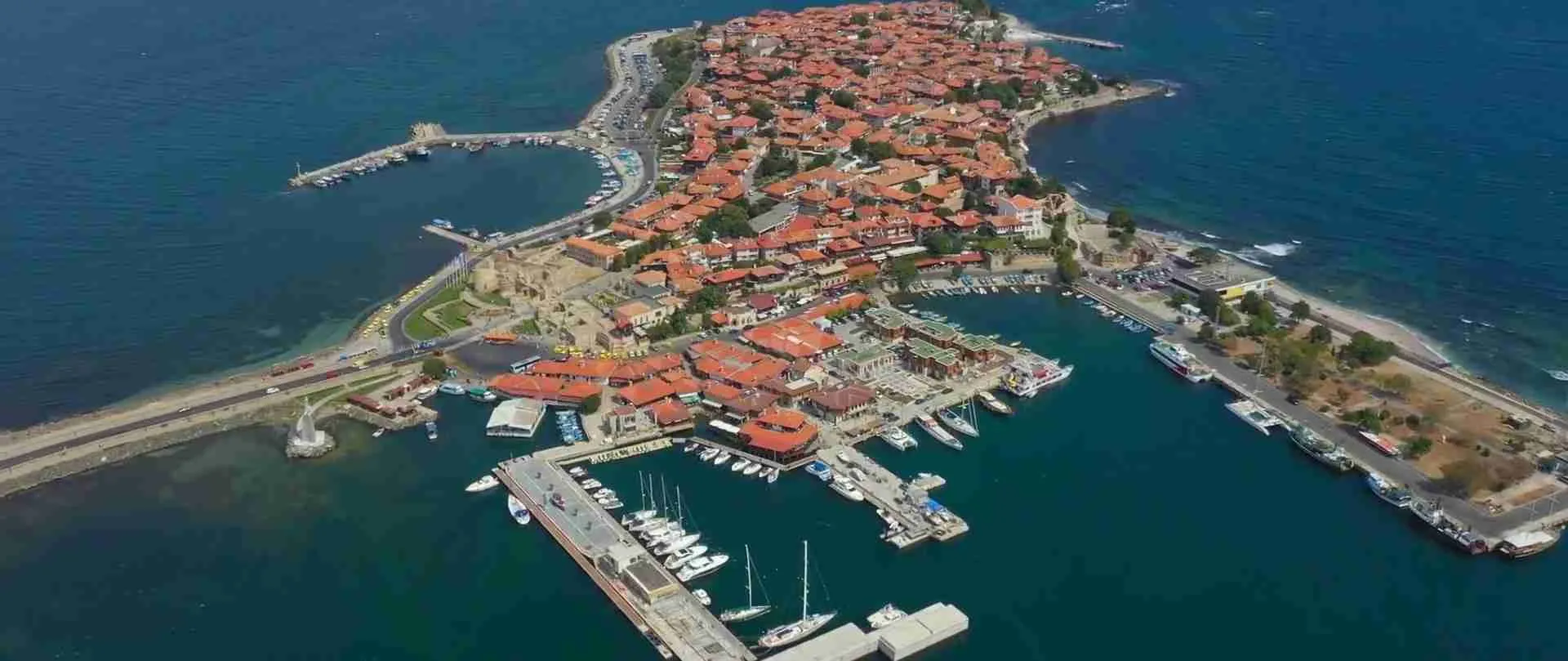
Nesebar stands as one of Bulgaria’s most captivating destinations, where 3,000 years of history unfold across a rocky peninsula jutting into the Black Sea. This UNESCO World Heritage Site preserves an extraordinary collection of Byzantine churches, medieval fortifications, and traditional wooden architecture, all within a compact Old Town easily explored in a single day from either Sofia or the nearby coastal city of Burgas.
Key Takeaways: Nesebar Day Trip 2026
- UNESCO Recognition: Inscribed in 1983 under criteria (iii) and (iv), Nesebar represents a millennium of architectural and spiritual heritage with 40+ historic churches and monuments concentrated on a 850-meter-long peninsula.
- Transportation from Sofia 2026: Direct buses operate daily covering 360 kilometers in 6-7 hours for $42-50 round trip, with departures from Sofia Central Bus Station starting at 7:00 AM allowing full-day visits.
- Transportation from Burgas 2026: Frequent buses run every 30 minutes for the 30-kilometer journey taking 45-60 minutes, costing $4-12 round trip, making Nesebar an effortless excursion from Bulgaria’s Black Sea coast hub.
- Day Trip Budget from Sofia 2026: Budget travelers spend $65-90 per person including transport, museum entries, and meals; mid-range visitors invest $85-115; luxury experiences with private transport and guided tours range $240-350.
- Day Trip Budget from Burgas 2026: Budget travelers need $30-50 per person; mid-range visitors spend $55-90; luxury day trips with private transfers and premium dining cost $160-230.
- Optimal Visiting Strategy 2026: Arrive by 10:00 AM to explore before midday crowds, visit churches and museums during 9:00 AM-7:00 PM summer hours, and allow 5-6 hours for comprehensive Old Town exploration including dining with sea views.
People Also Ask About Nesebar Day Trip 2026
Is Nesebar worth visiting as a day trip from Sofia in 2026?
Nesebar rewards the 6-7 hour journey from Sofia with one of Europe’s most concentrated collections of medieval architecture within a UNESCO World Heritage Site accessible entirely on foot. The compact Old Town delivers Byzantine churches spanning the 5th-17th centuries, archaeological treasures from Thracian and Greek periods, and authentic Black Sea atmosphere in a peninsula setting that requires no internal transportation. Day trippers from Sofia typically depart at 7:00 AM, arrive by 1:00-2:00 PM, explore 5-6 hours including lunch, and return via evening bus, making this Bulgaria’s premier long-distance day excursion.
How much does a Nesebar day trip cost from Sofia in 2026?
Round-trip bus transport from Sofia costs $42-50, combination museum tickets run $10-15, lunch ranges $10-30 depending on restaurant choice, and additional entrance fees for optional sites add $5-15, bringing total costs to $65-90 for budget travelers, $85-115 for mid-range comfort, and $240-350 for luxury experiences with private transport and guided tours.
What’s the best way to reach Nesebar from Burgas in 2026?
Public buses operate every 30 minutes between Burgas and Nesebar from 5:50 AM to 11:15 PM daily, covering 30 kilometers in 45-60 minutes for $2-6 one-way. Buses depart from Burgas South station and arrive at Nesebar’s bus terminal adjacent to the Old Town entrance, requiring no additional transportation. Burgas Airport also offers direct bus service for $2-3 taking 46 minutes, while taxis complete the journey in 25-30 minutes for $18-23.
Can you visit Nesebar’s main attractions in one day in 2026?
The Old Town’s 850-meter length and concentrated heritage enable comprehensive exploration in 5-6 hours. Visitors comfortably tour the Archaeological Museum, Church of St. Stephen with its exceptional frescoes, Church of Christ Pantocrator’s ceramic facade, Church of St. John the Baptist’s cruciform architecture, ancient Thracian fortifications, and traditional Revival-era houses, plus lunch at seaside restaurants, within a single day from either Sofia or Burgas.
Extended multi-day tours – 5+ days
Featured Bulgaria Multi-Day Tour Packages

3 days
Bulgaria 3-Day Discovery Tour
- ✓ Comprehensive Bulgaria experience
- ✓ Expert local guides included
- ✓ All accommodation included
- ✓ Transportation provided

5 days
Bulgaria 5-Day Highlights Experience
- ✓ Comprehensive Bulgaria experience
- ✓ Expert local guides included
- ✓ All accommodation included
- ✓ Transportation provided

7 days
Bulgaria 7-Day Cultural Journey
- ✓ Comprehensive Bulgaria experience
- ✓ Expert local guides included
- ✓ All accommodation included
- ✓ Transportation provided
10 days
Bulgaria 10-Day Complete Adventure
- ✓ Comprehensive Bulgaria experience
- ✓ Expert local guides included
- ✓ All accommodation included
- ✓ Transportation provided
Multi-day tour packages powered by TourRadar. Prices and availability subject to change.
Introduction: Discovering Bulgaria’s Black Sea Pearl 2026
Nesebar occupies one of Bulgaria’s most dramatic natural settings, where a narrow isthmus connects the modern mainland district to a rocky peninsula crowned with 3,000 years of continuous habitation. Originally established by Thracian tribes as Mesembria in the late Bronze Age, the settlement evolved into a prosperous Greek colony by the 6th century BC, served as a vital Byzantine spiritual center for a millennium, survived Ottoman rule as a maritime trade hub, and emerged from Bulgaria’s National Revival period with distinctive wooden architecture that complements its medieval stone churches. The Ancient City of Nesebar earned UNESCO World Heritage inscription in 1983 under criteria (iii) as an exceptional testimony to Black Sea cultural traditions and (iv) as an outstanding architectural ensemble harmonizing with its peninsula geography, with a minor boundary modification in 2023 expanding protection to 34.71 hectares.
Modern Nesebar functions as two distinct experiences separated by a 350-meter causeway built where the original ancient isthmus once stood. The New Town sprawls along the mainland shore with contemporary hotels, restaurants, and residential development catering to Black Sea tourism, while the Old Town preserves its UNESCO-designated historic core across the peninsula, where automobile access remains restricted and pedestrian cobblestone streets wind past 40+ churches representing nine centuries of architectural evolution. This physical separation protects the heritage zone from modern intrusion while positioning day-trippers arriving from Sofia or Burgas for immediate immersion into Nesebar’s layered history upon crossing the causeway entrance marked by the ancient city walls and the iconic Old Mill windmill silhouetted against the sea.
Day trips to Nesebar in 2026 accommodate two distinct travel patterns based on origin city. Sofia-based visitors face a substantial 360-kilometer journey requiring 6-7 hours by bus or train, demanding early departure times around 7:00 AM for arrival by 1:00-2:00 PM, followed by intensive 5-6 hour exploration before evening return buses depart around 6:00-7:00 PM. This commitment suits travelers seeking Bulgaria’s most significant coastal heritage site as a long-distance excursion from the capital, comparable to day trips from London to Bath or Rome to Pompeii. Burgas-based visitors enjoy dramatically different logistics, with the coastal city positioned just 30 kilometers north of Nesebar enabling effortless 45-60 minute bus rides departing every 30 minutes throughout the day, allowing spontaneous visits, multiple trips during extended stays, and flexible timing without advance planning pressure.
The 2026 visiting season divides into distinct periods affecting crowd levels, weather conditions, and church opening hours. Peak summer months from June through August bring 9:00 AM-7:00 PM museum schedules, maximum tourist density particularly on cruise ship days when thousands of passengers flood the peninsula for 2-3 hours, temperatures reaching 28-32°C (82-90°F) moderated by Black Sea breezes, and extended daylight for photography until 8:30 PM. Shoulder seasons in May and September offer 9:00 AM-5:00 PM winter hours already implemented, smaller crowds enabling peaceful church contemplation, pleasant 20-25°C (68-77°F) temperatures, and occasional rainfall requiring light jacket preparation. Winter visits from October through April reward cold-weather travelers with near-solitary exploration of medieval spaces, 9:00 AM-5:00 PM limited schedules with some sites closed, dramatically reduced restaurant options, and atmospheric peninsula walks devoid of summer’s overwhelming tourist presence.
Strategic day-trip planning in 2026 accounts for Nesebar’s concentrated geography and seasonal crowd patterns. The Old Town’s 850-meter peninsula length enables thorough exploration on foot within 5-6 hours including museum visits, church tours, lunch, and photography stops, with no internal transportation required beyond comfortable walking shoes for cobblestone navigation. Morning arrival between 9:00-10:00 AM positions visitors ahead of midday tour groups and cruise passengers who typically flood the site 11:00 AM-2:00 PM, securing peaceful church experiences and prime restaurant seating for lunch. The UNESCO core contains approximately 40 historic churches, though only 8-10 maintain regular public access as museums or active worship spaces, with a multi-site combination ticket offering economical access to major monuments including the Archaeological Museum, Church of St. Stephen, Church of Christ Pantocrator, Church of St. John the Baptist, and Ethnographic Museum.
Transportation from Sofia to Nesebar 2026
Sofia to Nesebar transportation in 2026 operates via two primary modes spanning 360 kilometers across Bulgaria from the capital’s mountain-valley setting to the Black Sea coast, with buses providing the most practical option for day-trippers seeking direct service without connections.
Direct Bus Service Sofia to Nesebar 2026
Multiple bus companies operate daily direct service between Sofia Central Bus Station and Nesebar, with journey times averaging 6-7 hours depending on intermediate stops and highway conditions. Buses depart Sofia’s main terminal located 2.1 kilometers south of the city center, accessible via Metro Line 2 to the Central Bus Station stop or buses 213, 305, and 404 from central districts. Major operators including Kaleia, Grup Plus – Etap Adresss, and Pinkbus maintain competing schedules with 1-4 daily departures typically concentrated in morning hours between 7:00-9:00 AM, enabling arrival in Nesebar by early afternoon for maximum exploration time before evening return services departing around 6:00-7:00 PM.
Round-trip bus tickets cost $42-50 when purchased in advance through company websites or booking platforms like Omio, Busbud, and Bookaway, with prices varying by operator, season, and advance purchase timing. Check the official website for current rates as pricing may vary. Same-day tickets purchased at the bus station typically cost $50-75 when space remains available, particularly during peak summer months when advance booking becomes essential. Buses arrive at Nesebar’s main terminal positioned immediately adjacent to the causeway connecting New Town to Old Town, placing passengers within 350 meters of the UNESCO heritage zone entrance with no additional transportation required.
Modern coach buses typically feature air conditioning essential for summer travel, reclining seats, onboard toilets, free Wi-Fi on select services, and limited luggage storage beneath passenger compartments. The route traverses central Bulgaria via the Trakia Highway to Burgas before continuing north along the Black Sea coast, offering landscape transitions from Sofia’s surrounding mountains through Thracian plains to coastal terrain. Travel tip: Select left-side seats when departing Sofia for optimal views of the Balkan mountain ranges visible during the first 2 hours, and right-side seats for the coastal approach revealing Black Sea vistas in the journey’s final hour.
Train Service Sofia to Nesebar via Burgas 2026
Bulgarian Railways (BDZh) operates indirect train service requiring transfer in Burgas, with 5 daily departures from Sofia Central Railway Station to Burgas taking 5-6 hours, followed by 30-60 minute bus connection from Burgas to Nesebar. Total journey time reaches 7-8 hours including transfer waiting time, making this option slower than direct buses while offering marginally lower costs. Train tickets cost $12-28 one-way, positioning round-trip rail travel at $24-56 compared to $42-50 for direct bus service, but the time penalty and connection hassle typically outweigh the modest savings for day-trippers operating under tight schedules.
Sofia to Burgas trains traverse Bulgaria’s interior via Plovdiv and Karnobat, providing scenic valley and plain landscapes through larger windows than buses offer, with second-class compartments offering basic seating and first-class providing marginal comfort upgrades. Upon arrival at Burgas Railway Station, passengers must navigate 1-2 kilometers to Burgas South Bus Station for Nesebar-bound buses departing every 30 minutes, adding logistical complexity compared to direct bus service delivering passengers adjacent to Nesebar’s Old Town. Day-trippers rarely choose this option due to extended travel time consuming valuable exploration hours.
Private Car and Organized Tour Options Sofia to Nesebar 2026
Private vehicles complete the 360-kilometer drive in 3.5-4 hours via the A1/A2 Trakia Highway, Bulgaria’s primary east-west motorway connecting Sofia to the Black Sea coast. Rental cars from Sofia Airport or city center agencies cost $35-60 per day for economy vehicles, plus $60-95 in fuel for the round trip, $8-12 in highway tolls, and Nesebar parking fees around $5-10 for day visitors. Total driving costs reach approximately $108-177 for the round trip, economical for groups of 3-4 passengers splitting expenses but expensive for solo travelers or couples compared to $42-50 per person bus fares.
The driving route follows the Trakia Highway (A1) east from Sofia through the Rose Valley and Thracian plains, connecting to the A2 near Karnobat for the final coastal approach to Burgas, then continuing north on the E87 coastal road to Nesebar. Navigation requires attention to Bulgarian road signage and highway exits, though the route remains straightforward with minimal turn complexity. Nesebar’s Old Town restricts vehicle access, requiring drivers to park in designated lots near the causeway entrance, then walk 350 meters across the isthmus to reach the UNESCO heritage zone.
Organized day tours from Sofia to Nesebar operate during peak summer months, typically combining the UNESCO site with nearby attractions like Sozopol or the Thracian Rusalka Rock Sanctuary. Tour packages cost $120-180 per person including round-trip private coach transportation, English-speaking guide, entrance fees to major churches, and occasionally lunch, appealing to travelers prioritizing convenience and historical interpretation over independent exploration. Tours typically depart Sofia 7:00-8:00 AM, spend 4-5 hours in Nesebar and surrounding areas, and return to Sofia by 7:00-8:00 PM, providing structured itineraries that sacrifice flexibility for comprehensive narration.
Transportation from Burgas to Nesebar 2026
Burgas to Nesebar transportation in 2026 operates as one of Bulgaria’s most frequent and economical local bus routes, connecting the Black Sea coast’s primary city with its most visited heritage site across just 30 kilometers of coastal roadway.
Public Bus Service Burgas to Nesebar 2026
Burgas Bus company operates the primary service between Burgas South station and Nesebar with buses departing every 30 minutes throughout the day from 5:50 AM to 11:15 PM daily, providing unmatched frequency and flexibility for day-trippers. Journey time ranges from 45-60 minutes depending on intermediate stops in the resort areas of Sunny Beach and Sveti Vlas, with direct services completing the route faster than local buses serving multiple beach hotels. One-way tickets cost $2-6, positioning round-trip transportation at $4-12, making this Bulgaria’s most affordable UNESCO World Heritage Site access.
Burgas South Bus Station (Avtogara Yug) sits approximately 2 kilometers south of the city center, accessible via local buses from downtown districts or taxi rides costing $3-5. The modern terminal provides ticket counters, waiting areas, restrooms, and small shops for last-minute provisions, with clearly marked platforms for Nesebar-bound services. Buses arrive at Nesebar’s main terminal immediately adjacent to the causeway leading to Old Town, positioning passengers within 350-meter walking distance of the UNESCO heritage zone entrance with no additional transportation required. Return buses depart Nesebar every 30 minutes until late evening, enabling spontaneous extension of visits without rigid schedule pressure.
Modern buses feature air conditioning, comfortable seating, and large windows providing coastal views during the 30-kilometer journey north along the Black Sea. The route follows the E87 highway through major resort developments including Sunny Beach, Bulgaria’s largest beach resort positioned directly between Burgas and Nesebar, with the dramatic approach to Nesebar revealing the Old Town peninsula and its churches silhouetted against the sea from 2-3 kilometers distance. Travel tip: Sit on the right side when traveling from Burgas to Nesebar for optimal sea views and left side for the return journey to maximize coastal scenery during both directions.
Burgas Airport Direct Service to Nesebar 2026
Burgas Airport (BOJ) provides direct bus connections to Nesebar via the same Burgas Bus company operating the city route, with services departing from the airport’s ground transportation terminal every 30 minutes. Journey time reaches 46 minutes covering approximately 25 kilometers via the airport access road to the coastal E87 highway, then north to Nesebar. One-way tickets cost $2-3, making airport-to-heritage-site transportation remarkably economical compared to most European destinations. This direct service enables arriving international passengers to reach Nesebar without entering Burgas city proper, ideal for travelers prioritizing coastal heritage over urban exploration.
Airport taxis provide faster alternatives completing the journey in 25-30 minutes for $18-23, appealing to groups of 3-4 passengers splitting costs or travelers with tight schedules prioritizing speed over economy. Pre-booked airport transfers from hotels or tour operators charge $30-45 for private vehicles, offering door-to-door service with English-speaking drivers and luggage assistance unavailable on public buses.
Private Car and Taxi Options Burgas to Nesebar 2026
Private vehicles complete the 30-kilometer drive in 33-40 minutes via the E87 coastal highway, with rental cars from Burgas Airport or city agencies costing $25-40 per day plus $5-8 in fuel for the round trip. Total driving costs approximate $30-48 excluding parking, comparable to bus fares for solo travelers but increasingly economical for couples or small groups. The straightforward route follows the well-signed E87 north through Sunny Beach resort, with Nesebar clearly marked on highway signage 10 kilometers before arrival.
Taxis from central Burgas charge $18-23 for the one-way journey, positioning round-trip private car service at $36-46, competitive with bus fares when traveling in pairs while providing door-to-door convenience and flexible departure timing. Rideshare services operate sporadically in Burgas with limited coverage to Nesebar, making traditional taxis or pre-booked transfers more reliable for day-trip transportation.
Nesebar’s Old Town prohibits private vehicle access beyond the causeway entrance, requiring all drivers to utilize designated parking lots positioned near the isthmus. Parking fees range $5-10 per day depending on season and lot proximity, with spaces typically available except during peak summer weekends when cruise ships add thousands of visitors. The 350-meter walk from parking areas to the heritage zone entrance remains manageable with day-trip bags, though summer heat encourages light packing.
Nesebar UNESCO World Heritage Status and Significance 2026
The Ancient City of Nesebar gained UNESCO World Heritage inscription in 1983 during the organization’s 7th session, recognized under criteria (iii) for bearing exceptional testimony to Black Sea civilization over three millennia and criteria (iv) as an outstanding architectural ensemble where natural peninsula geography harmonizes with the built environment accumulated across successive empires. The inscription encompasses 34.71 hectares of core heritage zone on the peninsula plus 1,237.99 hectares of buffer zone protecting approaches and sight lines, with a minor boundary modification inscribed in 2023 refining protection parameters.
Criterion (iii) recognition acknowledges Nesebar’s role as a remarkable spiritual center of Christianity spanning a thousand years, evidenced by 40+ churches constructed between the 5th-17th centuries representing Byzantine, Medieval Bulgarian, and Ottoman-era architectural traditions. This concentrated collection survives as one of Europe’s most complete assemblages of pre-modern ecclesiastical architecture in its original urban context, avoiding the destruction that eliminated comparable ensembles in Constantinople, Thessaloniki, and other major Byzantine centers. The churches document architectural evolution from early Byzantine basilicas with massive walls and austere interiors through Middle Byzantine cruciform structures introducing domes and elaborate ceramic decoration to late medieval single-nave buildings adapted to Ottoman restrictions on Christian construction.
Criterion (iv) designation emphasizes Nesebar’s exceptional preservation of Bulgarian National Revival domestic architecture from the 18th-19th centuries, where two-story wooden houses exhibit the distinctive Black Sea coastal style featuring projecting upper floors supported by carved wooden brackets, external wooden staircases, and enclosed balconies overlooking narrow streets. This residential architecture creates a harmonious whole with medieval churches and ancient fortifications, forming an urban ensemble where each historical layer complements rather than obscures its predecessors. The peninsula’s rocky promontory linked to the mainland by a narrow isthmus imposed natural constraints that focused development vertically rather than horizontally, preserving compact urban fabric largely unchanged since the late medieval period.
The UNESCO designation faces ongoing conservation challenges common to living historic towns balancing heritage protection with economic development. World Heritage Committee monitoring missions in 2010 and 2012 expressed deep concern regarding development pressures threatening the site’s Outstanding Universal Value, particularly new construction within the buffer zone conflicting with traditional scale and materials. Bulgaria’s Ministry of Culture implemented stricter planning controls and completed a comprehensive Management Plan in 2013 with participatory community input, establishing conservation policies integrating urban and regional planning tools. The 2023 boundary modification refined protection zones addressing development encroachment identified during previous monitoring cycles, though tension persists between heritage conservation and tourism development providing economic foundation for the modern town.
Exploring Nesebar Old Town 2026: Churches and Monuments
Nesebar’s UNESCO-designated Old Town occupies a rocky peninsula measuring 850 meters long by 300 meters wide, connected to the mainland New Town by a 350-meter artificial causeway built where ancient Thracian and Greek engineers constructed the original isthmus. This compact dimension enables comprehensive exploration on foot within 4-5 hours, with all major churches, museums, and archaeological sites accessible via pedestrian cobblestone streets that exclude automobiles beyond the causeway entrance. The peninsula’s oval shape and limited access points create natural circulation patterns guiding visitors through the heritage zone in logical sequences, though wandering the atmospheric back lanes reveals hidden churches, traditional houses, and sea-view vantage points missed by hurried tour groups following guide flags through main thoroughfares.
Church of St. Stephen: Nesebar’s Fresco Masterpiece 2026
The Church of St. Stephen stands as Nesebar’s most artistically significant monument, housing exceptional 16th-century frescoes covering interior walls from floor to dome with over 1,000 square meters of biblical narrative painted by anonymous masters during the late Byzantine tradition. Originally constructed as a three-nave basilica in the 11th century, the church received its celebrated fresco program around 1599 when Ottoman authorities briefly relaxed restrictions on Christian artistic expression, enabling the creation of this comprehensive pictorial Bible depicting scenes from Christ’s life, the Holy Virgin’s miracles, the Last Judgment, and saints venerated in the Eastern Orthodox tradition.
The frescoes demonstrate the Nesebar School’s distinctive characteristics, blending conservative Byzantine iconography with emerging Renaissance influences visible in more naturalistic figures and architectural details framing narrative scenes. The western wall presents an overwhelming Last Judgment spanning the entire surface, with Christ enthroned in majesty surrounded by apostles while below, the saved ascend to paradise and the damned descend to intricately depicted torments. The northern and southern walls progress chronologically through Christ’s life from Nativity through Crucifixion to Resurrection, interspersed with miracles and parables. The apse preserves a traditional Pantocrator Christ blessing from the dome, while the lower apse features the Virgin Platytera flanked by archangels.
Entry to St. Stephen costs 9 lev ($5) providing access to the complete interior during summer hours from 9:00 AM to 7:00 PM (June-August) and winter schedule 9:00 AM to 5:00 PM (September-May), with the church functioning as a museum rather than active worship space. Photography restrictions prohibit camera use inside to protect the delicate fresco pigments from flash damage, though this policy varies inconsistently with some guards permitting photos while others enforce strictly. The church occupies a central location on ul. Ribarska, the main thoroughfare running the peninsula’s length, positioned approximately 400 meters from the causeway entrance and easily identified by exterior signage and tour groups congregating at the entrance.
Church of Christ Pantocrator: Ceramic Facade Excellence 2026
The Church of Christ Pantocrator exemplifies medieval Bulgarian brick architecture, constructed in the 13th-14th century when Nesebar flourished as a wealthy Byzantine provincial capital attracting Constantinopolitan artisans who introduced sophisticated decorative techniques to Black Sea construction traditions. The church’s exterior presents Nesebar’s most photographed ecclesiastical facade, where contrasting red brick and white limestone create complex geometric patterns through blind arches, meander motifs, ceramic inserts, and decorative niches that transform structural walls into elaborate visual compositions catching sunlight differently throughout the day.
The architectural program follows the cross-in-square plan typical of Middle Byzantine church construction, with a central dome rising above four supporting piers and corner bays creating the cruciform interior space. The exterior decoration concentrates on the eastern and northern facades visible from main pedestrian approaches, employing the “concealed brick” technique where alternating brick and stone courses hide interior structural elements behind decorative screens. Ceramic rosettes, green-glazed bowls embedded in masonry, and terra-cotta ornamental tiles punctuate the facade in rhythmic patterns, anticipating Islamic architectural traditions later employed in Ottoman mosques while maintaining distinctly Byzantine Christian visual vocabulary.
The church no longer functions for worship, instead operating as an art gallery during tourist season displaying rotating exhibitions of contemporary Bulgarian painters and sculptors. This secular adaptation enables extended public access beyond religious service restrictions, with the gallery open 9:00 AM-7:00 PM during summer and reduced hours in shoulder seasons. Self-guided audio tours available for €11 ($12) provide English-language architectural and historical interpretation via smartphone app or rented devices, though the exterior facade rewards contemplation without additional interpretation.
Church of St. John the Baptist: Byzantine Architecture Preserved 2026
The Church of St. John the Baptist represents Nesebar’s best-preserved example of 10th-century ecclesiastical architecture, constructed during Bulgaria’s First Empire when the city served as a significant Byzantine provincial capital before Ottoman conquest. The cruciform domed church demonstrates textbook Middle Byzantine structural engineering, where two cylindrical barrel vaults intersect at right angles supporting a central dome raised on a drum above the crossing, while the eastern end terminates in three semicircular apses housing the altar sanctuary. Four massive pillars support the dome at the intersection, creating defined spatial divisions between naos, narthex, and sanctuary that characterize mature Byzantine liturgical planning.
The exterior facade employs austere limestone construction without the elaborate ceramic decoration visible on later churches like Christ Pantocrator, reflecting earlier Byzantine aesthetic priorities emphasizing structural mass and spiritual gravitas over surface ornament. The masonry alternates large ashlar blocks at foundations and corners with smaller coursed rubble in wall surfaces, a technique providing stability against Black Sea earthquakes while enabling relatively rapid construction. The dome rises on an octagonal drum pierced with narrow windows that flood the interior crossing with natural light, demonstrating sophisticated understanding of structural forces distributing the dome’s weight through pendentives to supporting pillars and perimeter walls.
Interior access costs 5 lev ($3) during operating hours 10:30 AM-2:00 PM and 2:30 PM-7:00 PM, with the church maintained as a museum space preserving fragmentary frescoes on interior walls, though most painted decoration has deteriorated over the millennium since original application. The architectural structure itself constitutes the primary interest, offering clear views of Byzantine engineering principles rarely visible in churches modified by later renovations or modern reconstructions. The church occupies ul. Mitropolitska, the secondary thoroughfare parallel to main street Ribarska, positioned approximately 500 meters from the causeway entrance in the Old Town’s eastern residential quarter.
Church of St. John Aliturgetos: Earthquake Monument 2026
The Church of St. John Aliturgetos (“Unconsecrated”) presents Nesebar’s most poignant architectural monument, a late 14th-century structure severely damaged by the catastrophic 1913 earthquake that destroyed the dome and upper walls while leaving the ornate facade intact. The church’s Greek name describes its status—never completed or consecrated before disaster struck, it remains architecturally significant for the elaborate exterior decoration surviving as testament to late medieval Bulgarian decorative ambitions. The facade demonstrates the apex of Nesebar ceramic technique, where red brick courses alternate with white limestone blocks creating intricate geometric patterns, blind arches frame ceramic insert panels, and niches hold decorative rosettes, all arranged in rhythmic vertical divisions emphasizing the unfinished height.
The architectural program intended a cross-in-square domed church following established Middle Byzantine precedents, but construction halted or proceeded slowly through the Ottoman period when authorities restricted Christian building activities, leaving the structure incomplete when the 1913 seismic event collapsed portions never fully stabilized. Modern conservation secured the surviving walls and facade while leaving the damaged sections exposed, creating an inadvertent ruin that attracts photographers seeking dramatic compositions of Byzantine architecture fragmenting against blue sky and sea backgrounds. The absence of roof and upper walls enables clear views of construction techniques including the concealed brick system and ceramic panel installation methods normally hidden within finished masonry.
The church functions as an open-air monument with no entrance fee or restricted access, allowing visitors to approach the facade closely and photograph freely throughout daylight hours. The preserved southern and western facades face toward ul. Ribarska, the main pedestrian thoroughfare, positioning the monument approximately 500 meters from the causeway entrance near the Archaeological Museum. The dramatic partial preservation makes this Nesebar’s most Instagram-worthy church, attracting photographers during golden hour when low-angle sunlight illuminates the brick-and-stone patterns with enhanced contrast.
Church of the Holy Savior (Sveti Spas): Ottoman-Era Frescoes 2026
The Church of the Holy Savior represents Nesebar’s only ecclesiastical construction during the Ottoman period, built in 1609 when temporary relaxation of building restrictions enabled this modest single-nave structure measuring just 11.7 meters long by 5.7 meters wide. The diminutive scale reflects Ottoman policies limiting Christian architecture’s visual prominence while permitting minimal worship spaces, resulting in the compact proportions and low-profile exterior that characterize Bulgarian churches constructed under Islamic rule. Despite restricted dimensions, the interior preserves exceptional early 17th-century wall paintings depicting the Life of Christ and the Holy Virgin, executed by local masters maintaining Byzantine fresco traditions two centuries after Constantinople’s fall while incorporating emerging post-Byzantine stylistic elements.
The fresco program covers all interior wall surfaces with narrative scenes arranged in traditional hierarchical sequence, beginning with the Pantocrator Christ in the apse semi-dome, progressing through Christ’s life on the upper walls, and concluding with saints and martyrs in lower registers. The Virgin Platytera occupies the central apse position, painted in the compassionate Eleusa (“tender”) style emphasizing maternal affection over imperial majesty. The anonymous artists employed a distinctive Nesebar School palette dominated by ochres, umbers, and lapis blues, with figures rendered in the increasingly stylized manner characterizing post-Byzantine provincial painting as the tradition evolved isolated from Constantinopolitan workshops after 1453.
The church functions as a museum-gallery rather than active worship space, charging 3 lev ($2) admission during summer hours 9:00 AM-7:00 PM and winter schedule 9:00 AM-5:00 PM. The intimate scale enables close examination of fresco details difficult to appreciate in larger churches where paintings occupy remote upper walls or dome surfaces, making Sveti Spas particularly rewarding for visitors interested in Byzantine artistic techniques and iconographic conventions. The church occupies a quiet residential lane off the main thoroughfares, positioned approximately 600 meters from the causeway entrance in the Old Town’s eastern quarter near the Church of St. John the Baptist.
Ancient Fortifications and City Walls 2026
Nesebar’s fortification system spans nearly three millennia of military engineering, with surviving walls incorporating Thracian foundations from the site’s earliest settlement period, Greek ashlar masonry from the 6th century BC colonial fortifications, Roman-Byzantine renovation layers from the imperial era, and medieval Bulgarian reinforcements from the 13th-14th centuries when the city periodically changed hands between Bulgarian and Byzantine control. The most substantial surviving section occupies the northern shoreline where approximately 100 meters of wall face survives to its original 10-meter height, demonstrating the massive scale of ancient defenses designed to protect the peninsula’s narrow landward approach from siege engines and naval assault.
The fortification architecture employed the Hellenistic technique of dual parallel walls filled with rubble core, with the outer face constructed from large limestone ashlar blocks precisely cut and fitted without mortar in the Greek manner, while the inner face utilized smaller coursed masonry bonded with lime mortar. Square and semicircular towers projected at intervals along the circuit, providing flanking positions for defenders to target attackers approaching the curtain walls. The main land gate pierced the western wall where the ancient isthmus connected peninsula to mainland, protected by massive towers and multiple defensive gateways forcing attackers through a series of killing zones before reaching the city interior. Modern visitors enter through this same location, now a broad causeway replacing the original narrow isthmus, with fragmentary gate towers visible adjacent to the modern roadway.
Access to the fortification remains requires no entrance fee, with walls integrated into the public pedestrian network enabling close approach and photography throughout. The northern wall section provides the most impressive views, accessible via waterfront promenades that run the peninsula’s perimeter. Informational panels in Bulgarian and English explain construction phases and defensive functions, though signage varies in condition with some panels faded or damaged. The fortifications reward sunset photography when low-angle light illuminates the ancient masonry against dark sea backgrounds, creating dramatic compositions popular with serious photographers visiting Nesebar for landscape and architectural imagery.
Nesebar Museums and Cultural Attractions 2026
Beyond the celebrated churches forming Nesebar’s architectural heritage, the UNESCO site preserves several specialized museums providing deeper context for the peninsula’s multi-layered history spanning Thracian origins through Greek colonization, Roman-Byzantine imperial administration, medieval Bulgarian kingdoms, Ottoman rule, and National Revival cultural renaissance. These museum collections complement the ecclesiastical monuments with artifacts, explanatory exhibits, and cultural context unavailable from architecture alone.
Archaeological Museum Nesebar 2026
The Archaeological Museum occupies a prominent location at the causeway entrance to Old Town, positioning this modern facility as the logical first stop for day-trippers seeking historical orientation before exploring the peninsula’s scattered monuments. The museum’s collection spans 3,000 years of continuous habitation, beginning with Thracian artifacts from the Bronze Age settlement predating Greek colonization, progressing through Hellenistic pottery and sculpture from the prosperous Greek trading port, Roman-era inscriptions and architectural fragments, Byzantine ecclesiastical treasures, and medieval Bulgarian ceramics and metalwork. The exhibition design follows chronological sequence across two floors, enabling visitors to grasp historical progression from ancient Mesembria through modern Nesebar while examining representative artifacts from each period.
Highlights include the extensive icon collection housed in basement galleries, preserving painted panel icons from the 12th-18th centuries representing Eastern Orthodox spiritual art traditions as practiced in Black Sea coastal communities. These devotional paintings demonstrate the evolution from austere Byzantine hieratic styles toward more expressive post-Byzantine manners incorporating Western Renaissance influences, visible in increasingly naturalistic figure rendering and architectural backgrounds. The icon gallery provides essential preparation for visiting the Old Town churches, as most church interiors have lost their original iconostasis screens and movable panels now preserved in museum conditions. Additional notable exhibits include 6th century BC Greek amphorae recovered from maritime excavations revealing ancient trade networks connecting Mesembria to Aegean centers, Byzantine gold jewelry demonstrating sophisticated metalworking techniques, and stone architectural fragments displaying carved decoration from demolished churches and secular buildings.
Museum admission costs 3 lev ($2) during operating hours 9:00 AM-7:00 PM in summer season (June-August) and 9:00 AM-5:00 PM during winter months (September-May), with combination tickets offering economical access to multiple sites detailed in a later section. The museum provides English-language exhibit labels and printed guidebooks for self-guided visits, though no audio guides or docent tours operate regularly. Photography without flash is generally permitted in most galleries, enabling documentation of artifacts for later reference, though policies vary and visitors should verify at admission counter. The museum shop sells scholarly publications on Nesebar’s history and architecture, reproduction icons, and local craft items, providing more substantive souvenirs than the tourist trinket shops proliferating throughout the Old Town pedestrian streets.
Ethnographic Museum Nesebar 2026
The Ethnographic Museum occupies a meticulously restored 1840 Revival-era house exemplifying the distinctive Black Sea coastal domestic architecture that contributes to Nesebar’s UNESCO designation alongside its celebrated churches. The two-story wooden structure demonstrates characteristic period features including projecting upper floor supported by carved wooden brackets, external staircases accessing residential levels, enclosed balconies with latticework screens, and interior rooms arranged around central living areas with built-in seating platforms. This architectural preservation enables visitors to experience authentic Revival-period domestic space while examining ethnographic collections illustrating daily life, traditional crafts, and regional customs of Bulgarian Black Sea communities during the 18th-19th centuries.
The museum collection displays traditional costumes showing regional variations in embroidery patterns and textile techniques, household implements including copper vessels, ceramic storage jars, and wooden furnishing, tools representing traditional crafts like fishing equipment, winemaking apparatus, and textile production tools, and documentary materials including vintage photographs, magazines, and printed ephemera. Room arrangements recreate period domestic settings with mannequins dressed in traditional costume positioned amid authentic furnishings, enabling visitors to visualize daily life routines within Revival-era houses. Seasonal exhibitions rotate selections from reserve collections, highlighting specific crafts like lace-making, wood-carving, or liturgical textile production.
Admission costs 3 lev ($2) during summer hours 9:00 AM-7:00 PM and winter schedule 9:00 AM-5:00 PM, with the modest entry fee providing access to both museum collections and the architecturally significant historic house itself. The Ethnographic Museum attracts fewer visitors than the Archaeological Museum or major churches, resulting in uncrowded gallery spaces conducive to leisurely examination of exhibits without tour group congestion. The museum occupies ul. Mesembria in the Old Town’s northern residential quarter, approximately 500 meters from the causeway entrance and easily combined with visits to nearby churches like St. John the Baptist and St. John Aliturgetos during systematic peninsula exploration.
Combination Tickets and Multi-Site Access 2026
Nesebar’s major museums and churches participate in a combination ticket program offering economical access to 7 heritage sites for one bundled price, sold at the Archaeological Museum, Church of St. Stephen, and other participating locations. The multi-site ticket includes the Archaeological Museum, Church of St. Stephen, Church of Christ Pantocrator (when functioning as gallery), Church of St. John the Baptist, Church of the Holy Savior, Ethnographic Museum, and typically one additional site varying by season. Individual entry fees total approximately 33 lev ($18) when purchased separately for all seven sites, while combination tickets reduce costs to an estimated 25-30 lev ($14-16), generating savings of $4-5 for visitors planning comprehensive exploration.
The combination ticket suits day-trippers arriving from Sofia or Burgas with 5-6 hours available for intensive heritage site touring, as the bundled pass incentivizes visiting multiple locations to maximize value while the compact Old Town geography enables efficient site-to-site movement without transportation. Budget-conscious visitors arriving from Burgas for repeated visits may prefer individual admissions, buying single tickets to 2-3 priority churches during initial exploration, then returning on subsequent days for additional sites without pressure to see everything in one marathon session. The ticket remains valid for single-day use only, requiring completion of all site visits before 5:00 PM or 7:00 PM closing times depending on season.
Dining in Nesebar 2026: Restaurants and Cafes
Nesebar’s Old Town concentrates approximately 40-50 restaurants, cafes, and taverns within the compact 850-meter-long peninsula, creating intense competition for tourist patronage while generating predictable patterns of inflated prices, aggressive solicitation, and variable quality common to heavily visited heritage sites worldwide. Strategic restaurant selection enables authentic Bulgarian dining experiences with Black Sea seafood specialties and regional wines, while careless choices result in overpriced mediocre meals at establishments prioritizing volume over quality in locations maximizing tourist foot traffic.
Traditional Bulgarian Taverns (Mehanas) 2026
Authentic mehanas serving traditional Bulgarian cuisine occupy side streets away from main thoroughfares, identifiable by Bulgarian-language signage, local clientele, and absence of multilingual photo menus depicting every dish. These family-run establishments offer shopska salad (tomatoes, cucumbers, onions, and grated white cheese) for 8-12 lev ($4-7), grilled meats like kebapche (seasoned ground meat cylinders) and kyufte (spiced meatballs) for 12-18 lev ($7-10) per portion, traditional stews like kavarma (slow-cooked meat with vegetables) for 15-22 lev ($8-12), and local fish like Black Sea bonito or mackerel grilled whole for 20-30 lev ($11-17) depending on size. Complete meals with appetizer, main course, and local beer or wine cost approximately 35-50 lev ($19-28) per person, substantially less than tourist-oriented restaurants on waterfront promenades charging 50-80 lev ($28-45) for comparable quality.
Notable traditional restaurants receiving consistent positive reviews include establishments along ul. Ribarska’s northern sections away from the causeway entrance, where lower foot traffic reduces tourist density while proximity to residential neighborhoods ensures local patronage maintaining quality standards. Mehanas typically open 11:00 AM-11:00 PM daily during tourist season, with reduced hours or complete closure during winter months when visitor numbers collapse. Reservations rarely prove necessary except peak summer weekends, though calling ahead for English-speaking staff assistance helps non-Bulgarian speakers navigate menus emphasizing regional specialties unfamiliar to international visitors.
Seafood Restaurants with Sea Views 2026
Waterfront restaurants occupying the peninsula’s perimeter promenades command premium prices for dramatic Black Sea panoramas, with terrace seating overlooking rocky shorelines, anchored fishing boats, and sunset horizons. These establishments target the day-trip and resort vacation market with multilingual menus, English-speaking staff, and familiar Mediterranean preparations alongside Bulgarian specialties. Typical pricing reaches 25-35 lev ($14-19) for appetizers like fried calamari or fish soup, 40-60 lev ($22-33) for grilled fish priced by weight, 35-50 lev ($19-28) for seafood pasta or risotto, and 15-25 lev ($8-14) for Greek-influenced salads. Complete meals with wine cost 70-120 lev ($39-67) per person, positioning these restaurants in the mid-range to upscale category compared to inland mehanas.
The premium pricing compensates for prime locations with unobstructed sea views, particularly along the southern shore where western-facing terraces capture sunset light illuminating church domes and traditional houses in golden hour glow. Tables with optimal views require advance reservation during July-August peak season, particularly for sunset dinner service 7:00-9:00 PM when lingering daylight extends dining outdoors until 9:30 PM. Day-trippers from Sofia timing arrival for midday reaching Nesebar around 1:00-2:00 PM can secure terrace seating for lunch without reservations, avoiding evening crowds while experiencing waterfront ambiance during afternoon hours when tour groups depart and tourist density temporarily decreases.
Quick Meals and Budget Options 2026
Budget-conscious day-trippers operating under tight time schedules benefit from quick-service options concentrated near the causeway entrance and along main pedestrian streets, including banitsa stalls selling traditional cheese-filled pastry for 3-5 lev ($2-3) per piece, kebab shops offering grilled meat wraps for 8-12 lev ($4-7), pizza-by-the-slice vendors charging 5-8 lev ($3-4) per portion, and bakeries with sandwiches and savory pastries for 6-10 lev ($3-6). These establishments enable 15-20 minute meal breaks costing 10-18 lev ($6-10) per person, preserving exploration time while maintaining modest budgets.
Cafes serving coffee, soft drinks, and desserts proliferate throughout the Old Town, with prices ranging from 4-6 lev ($2-3) for espresso or cappuccino in simple establishments to 8-12 lev ($4-7) at premium cafes with waterfront terraces. Ice cream shops charge 3-5 lev ($2-3) per scoop, appealing for afternoon refreshment during summer heat. Street food vendors stationed near major churches and museums sell grilled corn (4-6 lev/$2-3), fresh fruit cups (5-8 lev/$3-4), and bottled water (2-4 lev/$1-2), providing portable sustenance for continuous walking tours.
Shopping and Souvenirs in Nesebar 2026
Nesebar’s Old Town hosts approximately 100+ tourist-oriented shops concentrated along main pedestrian thoroughfares, with merchandise ranging from authentic Bulgarian handicrafts and regional products to mass-produced souvenirs imported from China and Turkey. Discerning shoppers identify quality local goods by examining craftsmanship, asking about origins, and patronizing artisan workshops where makers produce items on-site rather than general tourist shops stocking identical inventory found in every Bulgarian coastal resort.
Authentic Bulgarian handicrafts available in Nesebar include hand-embroidered textiles preserving traditional regional patterns, particularly tablecloths, napkins, and decorative wall hangings employing geometric and floral motifs characteristic of Revival-era needlework. Prices range from 30-60 lev ($17-33) for small items to 150-300 lev ($83-167) for large tablecloths requiring extensive handwork hours. Ceramics produced in Bulgarian pottery centers like Troyan showcase distinctive glazing techniques and folk art decoration, with bowls, plates, and vessels costing 20-80 lev ($11-44) depending on size and complexity. Wood carvings depicting religious icons, architectural details, and folk scenes reflect Bulgarian Orthodox artistic traditions, priced 40-120 lev ($22-67) for display-quality pieces.
Rose oil products represent Bulgaria’s signature contribution to perfumery and cosmetics, with the Rose Valley near Kazanlak producing approximately 70% of global rose oil supply. Nesebar shops stock rose-based soaps (8-15 lev/$4-8), perfumes (25-80 lev/$14-44), and cosmetic creams (20-50 lev/$11-28), though authenticity varies widely with some products containing minimal actual rose oil content. Purchasing from established shops displaying producer certifications reduces counterfeit risk. Lavender products from Bulgarian lavender cultivation provide complementary aromatics at similar price points.
Religious items including reproduction icons, crosses, prayer ropes, and liturgical accessories appeal to Orthodox Christian visitors and collectors of religious art. Icon reproductions printed on wood panels with aged varnish finishes cost 15-40 lev ($8-22) for small formats, while hand-painted icons by contemporary iconographers reach 200-800 lev ($111-444) depending on size and artistic quality. The Archaeological Museum gift shop stocks higher-quality reproductions with documented source images, offering superior authenticity compared to general tourist shops selling generic Orthodox imagery.
Practical Information for Nesebar Day Trips 2026
Successful Nesebar day trips in 2026 require attention to timing, seasonal conditions, physical preparations, and logistical details differentiating this compact heritage site from larger urban destinations.
Optimal Arrival Timing and Crowd Management 2026
Nesebar experiences pronounced daily crowd patterns driven by tour bus and cruise ship arrivals, with the Old Town’s 850-meter compact dimensions amplifying congestion impacts. Optimal arrival timing reaches Nesebar between 9:00-10:00 AM, when churches and museums open for the day while tour groups remain en route, enabling peaceful exploration of major monuments before midday crowds materialize. The period 11:00 AM-2:00 PM represents peak congestion when organized tours, cruise passengers, and independent day-trippers converge simultaneously, creating bottlenecks at popular churches like St. Stephen and along narrow main thoroughfares. Crowd levels diminish 3:00-5:00 PM as tour buses depart for hotel returns and cruise ships sail, offering a second window for relatively peaceful exploration.
Sofia-based day-trippers accepting 6-7 hour bus journeys typically arrive Nesebar around 1:00-2:00 PM via morning departures, missing the optimal 9:00-10:00 AM window but capable of extending visits through the quieter late afternoon period. Burgas-based visitors enjoy flexibility to target exact crowd-avoidance windows via frequent bus departures every 30 minutes, enabling 8:00-9:00 AM arrival for maximum peace or late afternoon visits avoiding midday congestion entirely. Cruise ship schedules published on Burgas port websites identify days when 2,000-4,000 additional visitors flood Nesebar for 2-3 hour shore excursions, marking these dates for avoidance if possible.
Walking and Physical Preparation 2026
Nesebar’s Old Town topography features irregular cobblestone streets, uneven stone surfaces, occasional steps between levels, and minimal street-level signage, requiring appropriate footwear and reasonable mobility. Comfortable closed-toe walking shoes with good traction prove essential, as smooth-soled sandals or dress shoes slip dangerously on polished stones particularly after rain or morning dew. The compact peninsula dimension limits total walking distance to approximately 2-3 kilometers for thorough exploration including all major churches and waterfront circuits, manageable for most visitors regardless of fitness level, though the cobblestone surfaces stress ankles and knees more than smooth pavement.
Summer heat reaching 28-32°C (82-90°F) during July-August peak season demands sun protection including hats, sunscreen, and frequent hydration breaks, as much of the pedestrian network offers minimal shade between buildings. Morning and late afternoon visits reduce heat exposure compared to midday exploration, while sea breezes moderating coastal temperatures make Nesebar noticeably cooler than inland locations. Water fountains providing potable drinking water exist near major churches and along waterfront promenades, though carrying bottled water purchased at entrance shops proves more reliable. Cafes positioned every 50-100 meters along tourist routes provide air-conditioned refuge and restroom access during extended walking sessions.
Currency, ATMs, and Payment Methods 2026
Bulgaria employs the lev (BGN) as national currency, with exchange rates fluctuating around 1.80 lev per US dollar and 1.95 lev per euro as of 2026. While some tourist-oriented businesses accept euros directly, exchange rates typically disadvantage customers by 10-15% compared to official bank rates, making lev conversion advisable for day-trip expenses. ATMs operated by major Bulgarian banks cluster near the causeway entrance and along main pedestrian streets in Old Town, dispensing leva at favorable exchange rates plus minimal foreign transaction fees imposed by issuing banks. Withdrawing sufficient cash for day expenses upon arrival eliminates multiple ATM visits while minimizing transaction fees.
Credit cards enjoy widespread acceptance at established restaurants, museum ticket counters, and upscale shops, though small family taverns, street food vendors, church admission booths, and handicraft stalls often operate cash-only or impose minimum purchase requirements for card transactions. Carrying 100-200 lev ($55-110) in mixed denominations covers typical day-trip expenses including museum admissions, lunch, snacks, and souvenirs even for travelers preferring card payments for major purchases. Small denomination bills (5, 10, 20 lev) facilitate transactions at churches charging 3-9 lev admission where vendors cannot easily provide change for 50 or 100 lev notes.
Restrooms, Facilities, and Services 2026
Public restrooms in Nesebar Old Town operate primarily on pay-per-use basis, with facilities positioned near the causeway entrance, Archaeological Museum, major church complexes, and waterfront promenades charging 1-2 lev ($0.50-1) per use. These paid facilities generally maintain acceptable cleanliness standards with regular attendant service during tourist season, though quality varies by location and time of day. Restaurant and cafe patrons access establishment restrooms free when making purchases, making coffee or drink stops strategic for restroom breaks rather than relying solely on paid public facilities. Facilities meet basic European standards with modern fixtures, though toilet paper availability varies and carrying personal tissues provides backup for inadequately stocked locations.
Free Wi-Fi operates at varying reliability throughout Old Town, with restaurants, cafes, and some hotels offering network access to customers, though connection speeds and stability vary dramatically by provider and load. The Archaeological Museum and several churches provide free Wi-Fi enabling map consultation and information searches during visits, useful for travelers without Bulgarian SIM cards or international roaming plans. Tourist information center near the causeway entrance maintains inconsistent hours and staffing, but when operating provides free maps, English-language brochures, and basic assistance with transportation questions.
Photography and Visiting Etiquette 2026
Nesebar’s churches implement varying photography policies ranging from complete prohibitions at St. Stephen where flash damage threatens valuable frescoes to unrestricted photography at ruined monuments like St. John Aliturgetos functioning as open-air sites. Signs posted at church entrances indicate photography rules, though enforcement varies by attendant presence and visitor compliance. Flash photography specifically damages historic pigments through accelerated chemical degradation, explaining strict prohibitions in fresco-decorated churches regardless of ambient light conditions. Photography restrictions frustrate visitors accustomed to smartphone documentation of travel experiences, but respect for conservation requirements protects irreplaceable Byzantine and medieval artwork for future generations.
Active Orthodox churches maintaining regular worship services request modest dress covering shoulders and knees, with some locations providing shawls or wrap skirts for improperly dressed visitors. Museum churches functioning as heritage sites rather than active worship spaces generally lack strict dress requirements, though respectful attire remains appropriate for religious spaces regardless of current function. Male visitors should remove hats when entering churches following Orthodox etiquette, while female visitors may cover heads with scarves though this practice has become optional in modern Bulgaria except during formal services.
Day Trip Budgets for Nesebar 2026
Daily costs for Nesebar day trips from Sofia or Burgas vary substantially based on origin city, transportation choices, dining preferences, and attraction admission patterns, with travelers selecting budget, mid-range, or luxury approaches according to personal priorities and available resources.
Budget Day Trip from Sofia to Nesebar 2026
Budget-conscious travelers from Sofia minimize costs through advance bus ticket purchase at $42-50 round trip rather than same-day premium fares, combination museum ticket providing access to 7 sites for approximately $14-16 instead of individual admissions totaling $18, simple traditional mehana lunch for $10-15 including main course and drink, and snacks from bakeries or street vendors adding $5-8 throughout the day. Total day trip costs reach $65-90 per person.
This budget approach requires advance planning to secure lowest bus fares, acceptance of 6-7 hour each-way travel consuming 12-14 hours total for transportation alone, intensive site touring to maximize combination ticket value, and modest dining at family-run establishments rather than waterfront restaurants. Budget travelers benefit from Nesebar’s compact geography enabling comprehensive exploration without paid transportation within Old Town, free admission to fortification walls and exterior church architecture, and numerous free viewpoints for Black Sea photography along waterfront promenades.
Mid-Range Day Trip from Sofia to Nesebar 2026
Mid-range travelers balance reasonable costs with enhanced comfort through confirmed bus reservations at $42-50 round trip, selective admission to 3-4 priority churches at individual ticket prices totaling $15-20, seafood lunch at waterfront restaurant with sea views for $20-30, coffee and refreshment breaks at terrace cafes adding $10-15, and souvenir purchases of authentic handicrafts budgeted $20-30. Total costs approximate $85-115 per person.
This mid-range approach provides comfortable travel conditions with confirmed seating, flexibility to visit preferred churches without combination ticket pressure to see all included sites, memorable dining experience at establishments maximizing Black Sea atmosphere, and leisure time for cafe breaks interspersed with intensive walking tours. Mid-range travelers accept the substantial investment of 12-14 hours total travel time from Sofia as worthwhile for accessing Bulgaria’s premier coastal heritage site, particularly when combining Nesebar with overnight stays in Burgas or nearby beach resorts spreading total costs across multiple days.
Luxury Day Trip from Sofia to Nesebar 2026
Luxury day-trippers eliminate time and discomfort factors through private car service or organized tour packages priced $120-180 per person including round-trip transportation in air-conditioned vehicles, English-speaking driver or guide providing historical interpretation, entrance fees to major churches, and occasionally lunch. Additional costs include premium seafood dining at upscale waterfront establishments for $40-60, private guided walking tour of Old Town churches with art historian or archaeologist for $60-80, quality souvenir purchases at Archaeological Museum shop or certified artisan galleries totaling $50-100, and refreshments at prime location cafes adding $20-30. Total luxury day trip costs range $240-350 per person.
This luxury approach maximizes comfort, minimizes physical demands through door-to-door transportation, provides expert interpretation enhancing heritage site appreciation, and delivers premium dining experiences unavailable to budget travelers. Luxury visitors benefit most from organized tour packages combining Nesebar with nearby attractions like Sozopol or Rusalka Rock Sanctuary, spreading transportation costs across multiple destinations while maintaining high service standards throughout.
Budget Day Trip from Burgas to Nesebar 2026
Budget travelers from Burgas capitalize on proximity advantages through frequent public bus service costing $4-12 round trip, combination museum ticket at $14-16, traditional mehana lunch for $10-15, and snacks adding $5-8. Total costs reach just $30-50 per person, making Nesebar Bulgaria’s most economical UNESCO World Heritage Site access for travelers already positioned on the Black Sea coast.
The dramatic cost reduction compared to Sofia-based trips stems entirely from eliminated long-distance transportation, as attraction admission, dining, and incidental expenses remain identical regardless of origin city. Burgas-based travelers gain additional advantages through flexibility enabling multiple visits spreading exploration across several days rather than forced marathon touring during single long-distance journey, spontaneous departure timing responding to weather conditions and personal energy levels, and ability to target optimal crowd-avoidance windows through strategic 8:00-9:00 AM or 4:00-5:00 PM arrival times.
Mid-Range Day Trip from Burgas to Nesebar 2026
Mid-range Burgas-based visitors spend $12-25 on flexible bus or taxi transportation, $15-20 for selective church admissions, $20-30 on waterfront restaurant lunch, $10-15 at cafes and refreshment stops, and $20-30 on souvenirs, totaling approximately $55-90 per person. This mid-range budget enables relaxed exploration without budget constraints while avoiding luxury premium pricing, appealing to travelers seeking balance between economy and comfort during short-distance day trips.
Luxury Day Trip from Burgas to Nesebar 2026
Luxury Burgas visitors invest $40-60 in private transfers providing door-to-door convenience, $60-80 for guided tours with expert interpretation, $40-60 on premium dining experiences, and $20-30 on upscale cafe refreshments, reaching total costs around $160-230 per person. While substantially more expensive than budget or mid-range approaches, luxury Burgas-based trips cost significantly less than equivalent Sofia-based luxury experiences due to eliminated long-distance transportation premiums.
Combining Nesebar with Nearby Attractions 2026
Nesebar’s position on Bulgaria’s central Black Sea coast enables combination with nearby heritage sites, beach resorts, and natural attractions for travelers extending single-day itineraries into multi-destination excursions.
Sunny Beach: Bulgaria’s Largest Resort 2026
Sunny Beach (Slanchev Bryag) occupies the 8-kilometer sandy beach directly north of Nesebar, representing Bulgaria’s largest coastal resort development with 300+ hotels, countless restaurants and nightclubs, and beach facilities accommodating hundreds of thousands of summer visitors. The resort targets package tourism, party-seeking youth travelers, and families with children, creating an atmosphere contrasting sharply with Nesebar’s heritage focus. Buses connect Nesebar and Sunny Beach every 15-30 minutes for 2-3 lev ($1-2) per ride, enabling easy beach access from the UNESCO town for travelers seeking to combine cultural touring with Black Sea swimming and sunbathing.
Sunny Beach offers water sports including jet ski rentals at 60-100 lev ($33-55) per hour, parasailing at 80-120 lev ($44-67) per session, and banana boat rides at 30-50 lev ($17-28) per person, plus extensive beach club infrastructure with umbrellas and loungers typically priced 15-25 lev ($8-14) per day. The resort’s commercial emphasis provides abundant dining options at all price points from cheap kebab stands to upscale seafood restaurants, though quality varies dramatically and aggressive solicitation frustrates discerning diners. Day-trippers from Sofia combining Nesebar heritage touring with Sunny Beach recreation typically allocate 4-5 hours for UNESCO site exploration, then 2-3 hours at the beach before evening bus returns, though this compressed schedule suits swimmers more than serious heritage tourists.
Sozopol: Ancient Greek Colony South 2026
Sozopol rivals Nesebar as Bulgaria’s second major Black Sea heritage town, positioned 75 kilometers south of Nesebar and 35 kilometers south of Burgas. Founded as Greek colony Apollonia in the 7th century BC, Sozopol preserves an atmospheric Old Town occupying a peninsula similar to Nesebar’s geography, with Revival-era wooden houses, small Orthodox churches, and archaeological remnants from Greek and Roman periods. The town attracts fewer visitors than Nesebar despite comparable historical significance, offering more authentic atmosphere with Bulgarian-oriented restaurants and shops alongside tourist facilities.
Buses from Burgas to Sozopol operate hourly from Burgas South station for 6-10 lev ($3-6) one-way, taking approximately 45 minutes. Visitors can combine Sozopol and Nesebar as dual-day-trip destinations during multi-day Burgas stays, with each town rewarding separate full-day visits rather than rushed half-day combinations attempting to see both in single outings. Organized tours from Sofia occasionally combine both heritage towns in single long-distance excursions, though the 16-18 hour total journey with 150 kilometers between sites stretches feasibility for day trips, better suited to overnight stays in Burgas splitting exploration across two days.
Pomorie: Salt Production and Mud Baths 2026
Pomorie occupies a narrow peninsula 18 kilometers north of Nesebar, distinguished by active salt production utilizing ancient evaporation techniques practiced since Thracian times. The town’s Salt Museum details 2,000+ years of solar salt harvesting in the region, with demonstrations of traditional methods and explanatory exhibits about the industry’s economic importance. Pomorie also maintains therapeutic mud bath facilities extracting mineral-rich black mud from coastal lagoons, offered at sanatoriums providing treatments for various ailments. Buses between Burgas and Nesebar stop in Pomorie, enabling brief visits though the town lacks the architectural heritage and tourist infrastructure making Nesebar and Sozopol compelling full-day destinations.
Safety and Health Considerations Nesebar 2026
Nesebar presents minimal crime and safety concerns compared to larger Bulgarian cities, with the small UNESCO zone’s compact geography, heavy tourist presence, and police patrols creating secure conditions for day-trippers. Petty theft targeting distracted tourists occurs occasionally, particularly pickpocketing in crowded areas when cruise ships discharge thousands of passengers simultaneously, but violent crime affecting tourists remains extremely rare. Standard travel precautions including securing valuables in front pockets or concealed travel pouches, maintaining awareness in crowds, and avoiding isolated areas after dark prove sufficient for safe visits.
Medical facilities in Nesebar consist of small clinics handling minor ailments and injuries, with serious medical situations requiring ambulance transport to larger hospitals in Burgas 30 kilometers south. Pharmacies stocked with common medications, first aid supplies, and sun protection products operate along main pedestrian streets in Old Town, with pharmacists often speaking basic English sufficient for common health needs. Travelers with chronic conditions requiring specific medications should carry adequate supplies for day trips as Bulgarian pharmacies stock different brands and formulations than Western pharmacies.
Summer heat reaching 28-32°C (82-90°F) during July-August peak season poses dehydration and heat exhaustion risks for visitors unaccustomed to sustained walking in high temperatures, particularly for day-trippers from Sofia arriving around 1:00-2:00 PM during maximum afternoon heat. Symptoms including excessive thirst, headache, dizziness, and fatigue indicate dehydration requiring immediate rest in shaded or air-conditioned locations, increased water consumption, and postponement of further walking until symptoms resolve. Elderly visitors and those with cardiovascular conditions should schedule rest breaks every 60-90 minutes during intensive walking tours, utilizing the numerous cafes providing air-conditioned refuge and restroom access throughout the Old Town pedestrian network.
Weather and Best Times to Visit Nesebar 2026
Nesebar’s Black Sea coastal location moderates temperature extremes compared to inland Bulgaria, creating distinct seasonal visiting conditions affecting comfort, crowd levels, and monument accessibility.
Peak summer season from June through August delivers maximum warmth with daily highs reaching 28-32°C (82-90°F) cooled by persistent sea breezes, minimal rainfall averaging 30-40mm monthly, 14-15 hours daylight enabling extended evening photography until 8:30-9:00 PM, and maximum tourist density creating crowded conditions particularly 11:00 AM-2:00 PM when tour groups converge. Summer visits reward sun-seekers combining heritage touring with beach recreation, photographers capitalizing on long golden hours, and travelers accepting crowds as inevitable trade-off for optimal weather. Museum and church hours extend to 9:00 AM-7:00 PM daily, maximizing access time though queues form at popular sites during midday peaks.
Shoulder seasons in May and September/October offer compelling alternatives with pleasant temperatures averaging 20-25°C (68-77°F), reduced tourist density enabling peaceful church contemplation, lower accommodation and dining costs in nearby Burgas, moderate rainfall requiring light jacket preparation, and reduced museum hours implementing winter 9:00 AM-5:00 PM schedules beginning September 1st. Shoulder season visits particularly suit heritage-focused travelers prioritizing architectural appreciation over beach activities, photographers seeking to document churches without crowds obscuring compositions, and budget-conscious visitors capitalizing on off-peak pricing across all travel segments. May provides spring wildflowers and clear light, while September delivers warm seas maintaining swimming temperatures through month’s end.
Winter months from November through March transform Nesebar into a near-deserted heritage zone with daily temperatures ranging 5-12°C (41-54°F), frequent rainfall and occasional snow, strong winds off the Black Sea creating raw conditions, and dramatically reduced tourist services with many restaurants closed until April. Winter visits reward cold-weather enthusiasts seeking solitary exploration of medieval architecture in atmospheric conditions, serious photographers documenting churches without tourist interference, and travelers combining Nesebar with winter stays at Burgas cultural attractions rather than beach-focused summer itineraries. Some churches close entirely during winter beyond basic weekend access, requiring flexibility in site touring and advance verification of opening schedules. The Archaeological Museum maintains year-round operations with 9:00 AM-5:00 PM winter hours, providing weather refuge and essential historical context regardless of season.
Day Trip Itineraries: Sample Schedules 2026
Sofia to Nesebar Full Day Itinerary 2026
7:00 AM: Depart Sofia Central Bus Station via direct bus to Nesebar, settling into window seat for 6-hour journey across Bulgaria. Bring water, snacks, and reading material for extended travel. 1:00 PM: Arrive Nesebar bus terminal, walk 350 meters across causeway to Old Town entrance, photograph iconic windmill marking peninsula approach. 1:15 PM: Enter Archaeological Museum for 45-minute orientation visit, examining chronological exhibits spanning 3,000 years and icon collection preparing for church visits. Purchase combination ticket for 7 sites at museum ticket counter. 2:00 PM: Lunch at traditional mehana on quieter back street, ordering shopska salad and grilled fish with local wine for 35-50 lev per person. 3:00 PM: Tour Church of St. Stephen, dedicating 45 minutes to comprehensive fresco examination, the UNESCO site’s artistic highlight. 3:45 PM: Walk northern waterfront promenade photographing ancient fortification walls against sea backgrounds. 4:15 PM: Visit Church of Christ Pantocrator, admiring ceramic facade exterior decoration and interior gallery exhibitions. 4:45 PM: Explore Church of St. John the Baptist for Byzantine architectural study, then photograph damaged Church of St. John Aliturgetos. 5:30 PM: Coffee break at waterfront cafe with sea views, resting before return journey. 6:00 PM: Return to bus terminal for evening departure to Sofia. 6:30-7:00 PM: Depart Nesebar on return bus, arriving Sofia around 12:30-1:00 AM after 6-hour journey.
This intensive schedule maximizes the limited 5.5 hours available between arrival and departure, prioritizing major churches and museums while accepting minimal leisure time and rushed pacing necessary for long-distance day trips. Travelers extend exploration by 1-2 hours using later bus departures arriving Sofia around 2:00-3:00 AM, worthwhile for dedicated heritage enthusiasts but exhausting for casual visitors.
Burgas to Nesebar Half Day Morning Itinerary 2026
8:00 AM: Depart Burgas South Bus Station via public bus, arriving Nesebar 45 minutes later ahead of tour group crowds. 8:45 AM: Enter Old Town, photograph empty cobblestone streets and churches in morning light without tourist congestion. 9:00 AM: Archaeological Museum opens – spend 45 minutes examining collection systematically. 9:45 AM: Church of St. Stephen for comprehensive fresco study in peaceful conditions before crowds arrive. 10:30 AM: Walk perimeter fortification walls, photographing ancient masonry and sea views. 11:00 AM: Visit 2-3 additional churches based on interests – Byzantine architecture at St. John the Baptist, Ottoman-era frescoes at Church of the Holy Savior, ceramic decoration at Christ Pantocrator. 12:00 PM: Early lunch at mehana before midday rush, or grab quick banitsa and coffee for budget option. 12:30 PM: Leisurely return bus to Burgas, arriving 1:15 PM with afternoon available for other activities.
This morning schedule capitalizes on Burgas proximity and frequent bus service, enabling optimal 8:00-9:00 AM arrival targeting peaceful exploration before 11:00 AM-2:00 PM peak crowds. Burgas-based travelers extend via afternoon return buses for full-day visits, or repeat on subsequent days focusing on sites missed during initial exploration.
Burgas to Nesebar Sunset Photography Itinerary 2026
3:00 PM: Depart Burgas as tour groups complete visits and crowds thin. 3:45 PM: Arrive Nesebar, heading directly to quieter back streets avoiding residual midday congestion. 4:00-5:30 PM: Comprehensive church circuit visiting 4-5 major sites during peaceful late afternoon period with optimal side-lighting for architectural photography. 5:30-6:30 PM: Position for golden hour photography along western-facing waterfront promenades, capturing church domes and traditional houses illuminated by low-angle sunset light. 6:30-7:30 PM: Continue photography through blue hour as artificial lighting illuminates churches and streets, creating dramatic twilight compositions. 7:30-8:30 PM: Dinner at waterfront restaurant with lingering daylight and sea views, celebrating successful photography session. 8:45 PM: Return bus to Burgas with final images in memory cards and atmospheric impressions for long-term memories.
This specialized schedule targets serious photographers seeking optimal lighting conditions and minimal crowds, taking advantage of summer’s extended daylight enabling outdoor photography until 8:30 PM and frequent bus service accommodating late returns.
Frequently Asked Questions About Nesebar Day Trips 2026
How long should I spend in Nesebar for a day trip?
Comprehensive Nesebar exploration including the Archaeological Museum, 4-5 major churches, fortification walls, waterfront walks, and lunch requires 5-6 hours for thorough but not rushed touring. Day-trippers arriving from Sofia around 1:00-2:00 PM typically manage 5-hour visits before evening bus departures, sufficient for major highlights though requiring strategic prioritization over exhaustive site coverage. Burgas-based visitors with flexible schedules benefit from 4-5 hour focused visits targeting optimal crowd-avoidance windows, or extend to full-day 7-8 hour explorations combining heritage sites with beach activities at adjacent Sunny Beach resort.
Is Nesebar wheelchair accessible for visitors with mobility limitations?
Nesebar presents significant accessibility challenges due to cobblestone streets, uneven surfaces, steps between levels, and historic church thresholds not adapted for wheelchair access. The Archaeological Museum near the causeway entrance provides ramp access and elevator to basement icon galleries, functioning as the UNESCO site’s most accessible facility. Most churches require navigating steps and narrow doorways incompatible with standard wheelchairs, though exterior facade appreciation remains possible from street level. Visitors with mobility limitations can explore waterfront promenades using the smoother stone paving along the peninsula perimeter, accessing sea views and fortification walls without navigating difficult Old Town interior streets. Burgas-based travelers with disabilities may find Sozopol’s flatter topography and broader streets somewhat more manageable, though neither Black Sea heritage town achieves modern accessibility standards.
Can I swim at beaches near Nesebar during a day trip?
Nesebar’s rocky peninsula shoreline lacks sandy beaches suitable for comfortable swimming, but adjacent Sunny Beach resort positioned 2 kilometers north offers 8 kilometers of fine sand and extensive beach infrastructure. Buses connect Nesebar and Sunny Beach every 15-30 minutes for 2-3 lev ($1-2) per ride, enabling heritage touring followed by 1-2 hours beach time before return transportation. Day-trippers from Sofia attempting to combine both experiences face tight time constraints limiting beach visits to brief afternoon swims rather than extended sunbathing sessions, while Burgas-based visitors enjoy flexibility for separate beach-focused and heritage-focused excursions across multiple days.
Are guided tours of Nesebar worth the cost compared to self-guided exploration?
Guided tours provide historical interpretation and architectural analysis enhancing appreciation beyond what casual visitors extract from self-guided wandering, particularly for Byzantine church architecture and fresco iconography requiring expertise to understand fully. Tours priced $60-80 for 2-3 hours with English-speaking art historians or archaeologists appeal to heritage enthusiasts prioritizing deep understanding over independent discovery. Budget travelers and those comfortable with museum exhibits and informational signage achieve satisfactory understanding through self-guided exploration saving $60-80 per person, redirecting those funds toward extended stays enabling multiple visits or upgraded dining experiences. The Archaeological Museum provides essential historical foundation for self-guided visitors, while church information panels in English offer basic architectural details sufficient for general interest tourists.
What should I wear for a Nesebar day trip considering church visits and summer heat?
Comfortable walking shoes with good traction prove essential for irregular cobblestone surfaces throughout the Old Town pedestrian network, with broken-in athletic shoes or hiking sandals with ankle support preferable to fashion footwear causing blisters or slips. Light breathable clothing in natural fabrics manages summer temperatures reaching 28-32°C (82-90°F), while shoulders and knees should remain covered when entering active Orthodox churches showing respect for religious spaces, easily achieved via lightweight long pants or knee-length skirts plus t-shirts or blouses covering shoulders. Carrying a compact daypack holds water bottles, sun protection, camera equipment, and light jacket for air-conditioned museum relief from outdoor heat. Sun hats, sunglasses, and high-SPF sunscreen prevent burns during extended outdoor walking tours, while evening temperature drops of 5-8°C during shoulder seasons warrant light sweater for return bus journeys.
Can I visit Nesebar in winter months, and what changes during off-season?
Winter visits from November through March remain possible though dramatically different from peak summer experiences, with museums and churches implementing reduced 9:00 AM-5:00 PM schedules or complete closures during weekdays, many restaurants shuttering until April, near-empty streets creating atmospheric but isolated conditions, and cold temperatures reaching 5-12°C (41-54°F) with frequent rain and strong winds requiring substantial cold-weather preparation. Winter rewards travelers seeking solitary heritage experiences, serious photographers documenting churches without crowds, and culture enthusiasts combining Nesebar with Burgas’s museums and indoor attractions rather than beach-focused itineraries. The Archaeological Museum maintains year-round operations, while major churches like St. Stephen preserve weekend access even when weekday hours contract. Budget travelers benefit from dramatically reduced accommodation costs in Burgas enabling multi-day stays exploring the region’s winter character unavailable during overwhelming summer tourism.
How much money should I budget for a Nesebar day trip from Burgas?
Budget travelers from Burgas spend approximately $30-50 per person including round-trip bus transportation $4-12, combination museum ticket $14-16, mehana lunch $10-15, and snacks $5-8. Mid-range comfort with selective church admissions, waterfront restaurant dining, and cafe refreshments totals $55-90 per person. Luxury experiences incorporating private transfers, guided tours, and premium dining reach $160-230 per person. These Burgas-based costs represent dramatic reductions compared to equivalent Sofia day trips where long-distance transportation adds $40-60 per person to baseline expenses, making Nesebar Bulgaria’s most economical UNESCO World Heritage Site for travelers already positioned on the Black Sea coast.
What’s the best way to avoid crowds at Nesebar’s most popular churches?
Arriving between 9:00-10:00 AM positions visitors ahead of midday tour groups and cruise passengers who typically flood the site 11:00 AM-2:00 PM, enabling peaceful exploration of St. Stephen’s frescoes and Christ Pantocrator’s facade before congestion develops. Late afternoon visits from 3:00-5:00 PM target the post-departure window after tour buses return to hotels and cruise ships sail, offering a second opportunity for relatively uncrowded access. Burgas-based visitors exploit flexible scheduling to hit exact crowd-avoidance windows, while Sofia day-trippers typically arrive during peak 1:00-2:00 PM congestion due to fixed long-distance bus schedules, accepting crowds as trade-off for accessing the UNESCO site from Bulgaria’s capital. Checking cruise ship schedules on Burgas port websites identifies days when 2,000-4,000 shore excursion passengers compound normal tourist volumes, marking those dates for avoidance if scheduling flexibility permits.
Are credit cards widely accepted in Nesebar, or should I carry cash?
Established restaurants, museum ticket counters, and upscale shops accept credit cards reliably, while family taverns, street food vendors, church admission booths, small handicraft stalls, and some cafes operate cash-only or impose minimum purchase requirements rendering cards impractical for small transactions. Carrying 100-200 lev ($55-110) in mixed denominations covers typical day-trip expenses even for travelers preferring cards for major purchases, with ATMs near the causeway entrance providing convenient lev withdrawals upon arrival. Small bills (5, 10, 20 lev) facilitate smooth transactions at 3-9 lev church admissions where vendors cannot easily change 50 or 100 lev notes, reducing frustration from inadequate change availability at small-volume ticket booths.
Can I combine Nesebar with other UNESCO World Heritage Sites in one day?
Bulgaria’s UNESCO sites scatter across the country at distances prohibiting multi-site day trips from single base locations. Sozopol’s ancient Greek heritage occupies the coast 75 kilometers south of Nesebar, technically reachable in combined day trips though the 150-kilometer round trip between sites plus individual exploration time demands 12-14 hours making this rushed and exhausting rather than satisfying. The Rila Monastery near Sofia and Kazanlak Thracian Tomb in central Bulgaria each lie 200+ kilometers from Nesebar, placing them beyond realistic day-trip combination possibilities. Travelers seeking multiple UNESCO experiences should plan multi-day Bulgaria itineraries with overnight stays in Sofia, Plovdiv, and Burgas, dedicating separate full days to each heritage site rather than attempting compressed combinations sacrificing depth for checkbox coverage.