
Road Trip Guide 2026: Navigating the Byzantine Coastline and Hidden Delta Lagoons from Ravenna
Radiating outward from one of Italy’s most dazzling art cities, this circular road trip links two millennia of layered heritage into a single unforgettable loop: the golden tesserae of Ravenna’s UNESCO-inscribed mosaics, the shimmering rose-pink salt pans where flamingos wade in formation, and the reed-fringed lagoons of the Po Delta where eel-smoking traditions survive in medieval stone factories. In roughly 220 kilometres of driving across the dead-flat Emilia-Romagna and Ferrara provinces, you move from sixth-century Byzantine apses to stilted fishing huts adrift on the Valli di Comacchio, discovering the Adriatic coast’s best-kept cultural secrets along the way.
Key Takeaways
- Total loop distance: approximately 220 kilometres from Ravenna covering both the coastal route south (Sant’Apollinare in Classe, Cervia) and the delta circuit north (Comacchio, Pomposa, Mesola, Goro). The entire route is flat, well-signposted, and comfortable on standard roads — no motorway tolls required for the core circuit.
- Budget overview 2026: Budget travellers spending €100-145 per person daily (two sharing), mid-range travellers €165-255, and luxury visitors €295-470. A five-day road trip costs approximately €500-725 per person at budget level, €825-1,275 mid-range, or €1,475-2,350 in luxury style.
- Minimum versus ideal duration: Three days covers the headline stops — Ravenna mosaics, Cervia salt pans, and Comacchio lagoon boat tour. Five days allows proper depth at every major stop plus Pomposa Abbey and the wild Po river mouth. Seven days transforms the trip into a fully immersive cultural and natural heritage experience.
- Essential pre-bookings: The Ravenna five-monument diocesan ticket (from €12.50 per adult, valid seven days) requires timed-entry reservations for the Mausoleum of Galla Placidia and the Neonian Baptistery — book at ravennamosaici.it well before arrival, especially April through September. The Comacchio lagoon boat tour (€16 adults) operates on fixed departure times and fills quickly in summer.
- Optimal timing 2026: Late April through early June and the entire month of September offer the ideal combination — mild temperatures, lower crowds, active flamingo and migratory bird populations in the delta, and the spectacular salt harvest season at Cervia (late August–September). July–August brings beach crowds to the coastal resorts and peak mosquito activity in the wetlands.
- Car is non-negotiable: Ravenna is well connected by rail from Bologna (75 minutes) and Ferrara (50 minutes), but the delta, lagoon dikes, and coastal salt marshes are only accessible by private vehicle — or by bicycle on the extensive flat cycling paths that parallel many route sections.
People Also Ask About This Road Trip 2026
How much does the Ravenna Byzantine coast and Po Delta road trip cost per day in 2026?
Budget travellers sharing a double room and eating at local trattorias spend approximately €100-145 per person daily in 2026, including a compact car rental split between two people, fuel, parking, and attraction tickets. Mid-range travellers staying at three-star hotels with agriturismo options and sitting down for full restaurant meals should budget €165-255 per person daily. Luxury visitors choosing four-star boutique hotels and fine dining reach €295-470 per person daily. These ranges reflect the full per-person cost for two people sharing accommodation; accommodation costs are divided by two before being added to individual meal, transport, and attraction expenses. Car rental is included in all tiers because private transport is essential for the delta and coastal sections of this itinerary.
How many days do you need for the Ravenna to Po Delta road trip in 2026?
Three days represent the absolute minimum to experience the three headline zones — Ravenna’s Byzantine monuments, the Cervia salt coast, and the Comacchio lagoons — without feeling rushed. Five days is the ideal balance for most travellers: it adds Pomposa Abbey, Mesola’s deer reserve, and the wild Po river mouth while leaving time to linger at each location. Seven days suits those who want to explore secondary delta branches, cycle the dike paths, participate in birdwatching excursions, and extend into the Veneto delta territory. Avoid compressing the entire 220-kilometre loop into a single day; the distances are short but the sites deserve time that a drive-by cannot provide.
What are the best stops on the Byzantine coastline road trip from Ravenna in 2026?
The non-negotiable highlights in 2026 are: the five-monument UNESCO ticket covering Basilica di San Vitale, Mausoleum of Galla Placidia, Basilica di Sant’Apollinare Nuovo, Neonian Baptistery, and Archbishop’s Chapel; Basilica di Sant’Apollinare in Classe (8 kilometres south, €6) and the adjacent Classis Museum for Byzantine harbour archaeology; the Cervia salt pans and MUSA Salt Museum for the extraordinary flamingo-watching and artisanal salt culture; Comacchio’s Trepponti bridge and the Manifattura dei Marinati eel-smoking factory museum; the Valli di Comacchio lagoon boat tour departing from Stazione Foce; and Pomposa Abbey near Codigoro, where the Benedictine monk Guido d’Arezzo invented the modern system of musical notation in the eleventh century.
When is the best time to drive this route in 2026?
September 2026 is the single best month: the Cervia salt harvest peaks in late August and early September, filling the pans with a pink glow and bringing open-day guided tours of the saltworks; temperatures drop to comfortable driving levels (22-26°C); flamingo populations in the delta remain at summer highs; the Manifattura dei Marinati begins its annual eel-cooking season in October; and hotels throughout the region drop prices by 30-40% compared to August peaks. Late April and May offer the second-best window — spring migration brings extraordinary birding to the delta oases and the Byzantine monuments are manageable before summer tour groups arrive. Avoid mid-July through August unless beach resort stays are part of your plan; the coastal towns are packed and the lagoon mosquitoes are at their most aggressive.
Extended multi-day tours – 5+ days
Featured Emilia Romagna Multi-Day Tour Packages
3 days
Emilia Romagna 3-Day Discovery Tour
- ✓ Comprehensive Emilia Romagna experience
- ✓ Expert local guides included
- ✓ All accommodation included
- ✓ Transportation provided
5 days
Emilia Romagna 5-Day Highlights Experience
- ✓ Comprehensive Emilia Romagna experience
- ✓ Expert local guides included
- ✓ All accommodation included
- ✓ Transportation provided

7 days
Emilia Romagna 7-Day Cultural Journey
- ✓ Comprehensive Emilia Romagna experience
- ✓ Expert local guides included
- ✓ All accommodation included
- ✓ Transportation provided
10 days
Emilia Romagna 10-Day Complete Adventure
- ✓ Comprehensive Emilia Romagna experience
- ✓ Expert local guides included
- ✓ All accommodation included
- ✓ Transportation provided
Multi-day tour packages powered by TourRadar. Prices and availability subject to change.
Introduction: Where Byzantine Gold Meets Delta Wilderness 2026
For most visitors to the Adriatic coast, Ravenna registers as a single day-trip from Rimini or Bologna — a stop for mosaics before the beach. This road trip makes the case for a different approach entirely. Ravenna is not the destination; it is the starting point of a 220-kilometre arc that encompasses some of northern Italy’s most undervisited and geographically distinct landscapes, linking a city of imperial grandeur to one of Europe’s most ecologically significant river deltas.
The historical thread connecting every stop on this route is the Byzantine presence. When Emperor Honorius moved the capital of the Western Roman Empire from Milan to Ravenna in 402 AD — choosing the city for its defensive lagoons and access to the Adriatic — he began a transformation that would give the Italian coast its most extraordinary concentration of early Christian art. Ravenna served successively as capital of the Western Roman Empire, the Ostrogothic Kingdom, and the Byzantine Exarchate. For three centuries, the mosaicists, architects, and bishops of Ravenna created the monuments now collectively inscribed as the UNESCO World Heritage Site “Early Christian Monuments of Ravenna,” comprising eight buildings from the fifth and sixth centuries.
The route southward from Ravenna follows the ancient Via Romea, the pilgrim road that once connected Venice to Rome. Within eight kilometres, the Basilica di Sant’Apollinare in Classe stands in cultivated fields where the ancient Roman port of Classis once sheltered hundreds of warships — the largest naval base of the Roman Adriatic. Continuing south, the medieval walled city of Cervia preserves an artisanal salt-making tradition that has shaped the local economy for two thousand years; the salt pans here turned rose-pink each summer from the algae and halophyte microorganisms that attract flamingos from the Camargue.
North and east of Ravenna, the landscape shifts dramatically. The Po Delta — jointly managed as a Regional Park by Emilia-Romagna and the Veneto regions — comprises 85,000 hectares of lagoons, dike roads, fishing valleys, and river branches that spread in a broad fan into the Adriatic. Comacchio, the principal town of the delta, stands on thirteen connected islands in a brackish lagoon, connected by bridges and trestle-walks; its identity is inseparable from the eel, the migratory species that has driven the local economy for centuries and which still enters the Valli lagoons each autumn in vast runs. North of Comacchio, the Romanesque tower of Pomposa Abbey rises above reclaimed farmland, marking the site of one of medieval Italy’s great scholarly monasteries. Beyond it, the Este castle at Mesola guards the edge of the Gran Bosco — the last remnant of the ancient Padane forest — and at the chain’s end, the river branches finally dissolve into the sea at Goro and Gorino.
This guide provides the complete planning information for driving this loop in 2026: verified attraction prices, accommodation options at all budget levels, detailed day-by-day itineraries, the best timing by month, and all the practical logistics for navigating this extraordinary but little-understood corner of northern Italy.
Planning Your Byzantine Coastline and Delta Road Trip 2026
The Route Structure and Distances 2026
The full loop from Ravenna covers approximately 220 kilometres and divides naturally into two distinct arms. The southern arm follows the coast and the Via Romea southward through Sant’Apollinare in Classe, the Classis archaeological zone, and Cervia, with an optional extension to Cesenatico (35 kilometres from Ravenna) or Bellaria-Igea Marina. The northern arm tracks northward and eastward through the Po Delta: Marina di Ravenna and Porto Corsini on the coast, Comacchio and the Valli lagoons, Pomposa Abbey on the SS309 Romea, Mesola, and the river mouth communities of Goro and Gorino. Drivers completing both arms in sequence cover the full 220 kilometres; those focusing exclusively on one arm can complete it in a comfortable day from a Ravenna base.
Key driving distances from Ravenna city centre:
- Sant’Apollinare in Classe: 8 kilometres, 12 minutes
- Cervia: 25 kilometres, 30 minutes via SP71 coastal road
- Cesenatico: 35 kilometres, 40 minutes
- Marina di Ravenna: 10 kilometres, 15 minutes
- Comacchio: 50 kilometres, 50 minutes via SS309 Romea
- Pomposa Abbey: 63 kilometres, 1 hour via SS309
- Mesola: 75 kilometres, 1 hour 10 minutes
- Goro: 85 kilometres, 1 hour 20 minutes
All roads on this circuit are free of motorway tolls. The SS309 Strada Romea — the backbone of the northern arm — runs dead-straight across reclaimed agricultural land parallel to the coast, with the Po Delta parkland to the east. Speed limits on rural roads throughout Emilia-Romagna are 90 km/h; the terrain is entirely flat. Total driving time for the complete loop (without stops) is approximately three hours.
Car Rental in 2026: Booking Strategies and Costs
Ravenna does not have a major car rental hub at the train station; the nearest reliable option is the station parking lot (Hertz, Europcar, and Avis each maintain desks near Piazza Farini). For a wider choice and significantly lower rates, collect the car from Bologna Guglielmo Marconi Airport (90 minutes by direct train from Ravenna) and drive north. Alternatively, Ferrara station offers several rental agencies and is a natural starting point for the delta circuit if you are arriving from Venice.
Compact car rental rates in 2026 for the Ravenna–Bologna area start at approximately €30-50 per day for a standard compact (Fiat 500, Volkswagen Polo, or equivalent) including basic CDW insurance. Mid-size vehicles run €50-80 per day. Premium and SUV options reach €80-150 per day. Booking six to eight weeks in advance consistently reduces rates by 20-35% compared to last-minute bookings. The route requires no four-wheel drive — all roads including the delta dike tracks are sealed — but a higher-clearance vehicle is an advantage for the unmade tracks in the Ortazzino and Bevano river-mouth nature reserves if you plan to explore those on foot.
Fuel in Italy in 2026 runs approximately €1.80-1.95 per litre for unleaded petrol (benzina) and €1.70-1.85 for diesel (gasolio). The 220-kilometre loop consumes roughly 15-18 litres in a compact car, totalling €27-35 in fuel for the entire circuit — a negligible cost split between two or more travellers.
Bicycle Option: The Ferrara–Ravenna Cycle Route
For travellers willing to travel at slower pace, the Ravenna–Ferrara cycling route runs parallel to the entire northern arm of this road trip, passing through the delta dike roads and connecting Ravenna to Comacchio and beyond. The terrain is perfectly flat and the cycling infrastructure in Emilia-Romagna is excellent. Electric bicycle rental agencies in Ravenna city centre charge €25-40 per day for e-bikes. The delta section between Comacchio and Pomposa includes dedicated cycling paths along the valley dikes that are inaccessible by car — an experience that rewards the slower mode of travel with closer contact with the birdlife and water landscapes. That said, covering both the southern and northern arms by bicycle requires at least seven days; this guide focuses on the car-based route while noting cycling options within each section.
Ravenna: Your Byzantine Starting Point 2026
The Eight UNESCO Monuments: What to See and How Long to Allow
Ravenna’s UNESCO World Heritage inscription — “Early Christian Monuments of Ravenna,” reference number 788, inscribed December 1996 — encompasses eight buildings from the fifth and sixth centuries AD, representing the most extraordinary surviving concentration of Byzantine mosaic art in the Western world. They divide into two management systems: five diocesan monuments operated by Ravenna Mosaici (booking at ravennamosaici.it), and three state monuments managed by Fondazione RavennAntica and the Ministry of Culture.
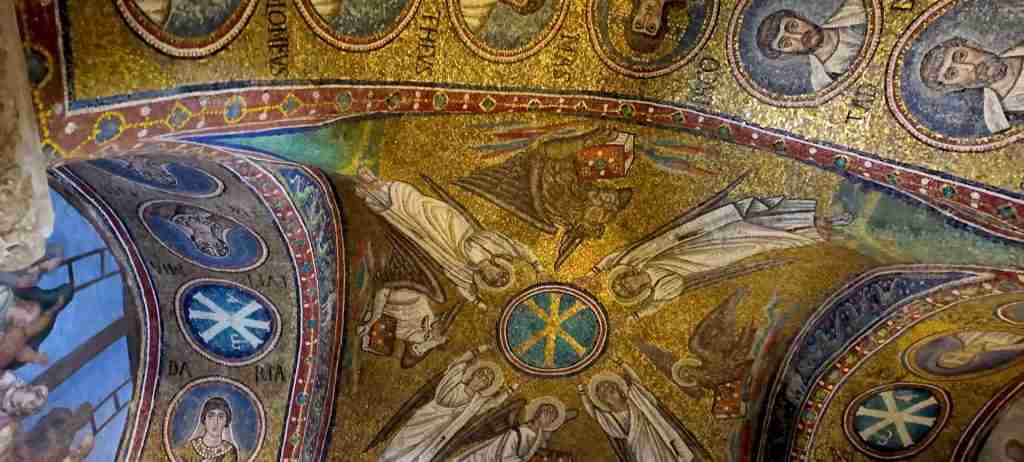
The five diocesan monuments covered by the combined ticket are the Basilica di San Vitale, the Mausoleum of Galla Placidia, the Basilica di Sant’Apollinare Nuovo, the Neonian Baptistery, and the Archbishop’s Chapel with the Archiepiscopal Museum. The combined ticket costs from €12.50 per adult in 2026, valid for seven days with one entry per monument; check ravennamosaici.it for current rates as pricing may adjust seasonally. The Mausoleum of Galla Placidia and the Neonian Baptistery require timed-entry reservations (included in the ticket price, supplemented by €2 for slot management) — book these when purchasing the ticket to avoid disappointment.
Opening hours for the main season (8 March to 2 November 2026): Basilica di San Vitale, Sant’Apollinare Nuovo, and the Archiepiscopal Museum open daily 9:00–19:00, last entry 18:30. The Mausoleum of Galla Placidia and the Neonian Baptistery share those hours with timed-entry slots.
The three separately ticketed state monuments are the Mausoleum of Theodoric (managed by Fondazione RavennAntica), the Basilica di Sant’Apollinare in Classe (8 kilometres south, covered in the next section), and the Archiepiscopal Chapel accessible through the diocesan ticket. The Mausoleum of Theodoric — the extraordinary ten-sided funerary monument built in 520 AD for the Ostrogothic king, capped with a single 230-tonne Istrian limestone monolith — is located a 20-minute walk from the city centre and combines naturally with the Basilica di Sant’Apollinare Nuovo into a morning circuit.
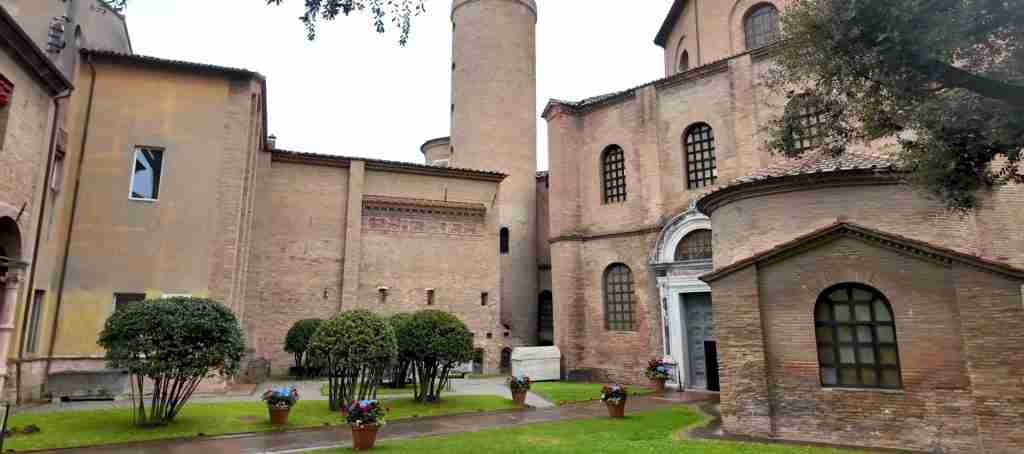
Practical visitor advice for 2026: the diocesan monuments are clustered within a 600-metre radius in the historic centre, making the five-monument circuit walkable in three to four hours with sufficient time to appreciate each interior without rushing. The Basilica di San Vitale and the adjacent Mausoleum of Galla Placidia form the essential pairing — San Vitale’s octagonal dome contains the full-height apse mosaic depicting Emperor Justinian and Empress Theodora, arguably the most photographed mosaic image in the world, while Galla Placidia’s tiny cross-shaped interior creates the most intimate mosaic experience of the group. Arrive at Galla Placidia in the morning, when natural light enters through the alabaster windows and transforms the deep lapis-blue vault into an incandescent dome of gold stars and doves.
Beyond the UNESCO Circuit: Ravenna’s Additional Highlights
Dante Alighieri’s tomb stands in a small neoclassical temple in Piazza San Francesco, marking the resting place of the poet who spent the last three years of his life in Ravenna exile and completed the Paradiso here. Entry is free; the tiny interior is open daily. The adjacent Basilica di San Francesco contains Roman floor mosaics visible through a submerged crypt — flooded by the water table that sits just two metres below Ravenna’s streets, a hydrological reality that has shaped the city’s identity for two millennia.
The Museo Nazionale di Ravenna, housed in the former Benedictine monastery of San Vitale, holds the most comprehensive collection of Byzantine artifacts in Italy outside of a church context: sixth-century ivory diptychs, early medieval relief sculptures, Roman floor mosaics salvaged from the ancient city, and late antique textiles. Admission runs approximately €6-8 per adult; check cultura.gov.it for current pricing. The combined ticket pairing the national museum with the Mausoleum of Theodoric and Sant’Apollinare in Classe offers the best value for state monument coverage.
Allow a minimum of one full day in Ravenna for a first visit, two days if you want to visit all eight UNESCO monuments properly and include the national museum. The historic centre’s pedestrian zone and excellent café culture make Ravenna a genuinely pleasant base — an underrated quality given that the city sees considerably fewer overnight visitors than its artistic significance warrants.
The Byzantine Coastline Route South of Ravenna 2026
Basilica di Sant’Apollinare in Classe and the Classis Museum 2026
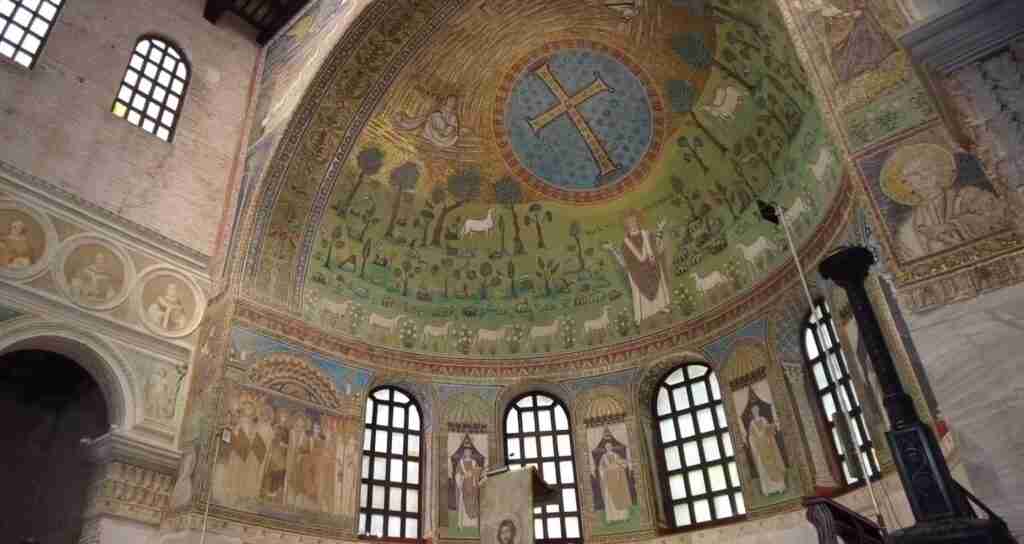
Eight kilometres south of Ravenna’s centre, the Basilica di Sant’Apollinare in Classe stands in open farmland that was once the sea floor of the Roman harbour of Classis — the largest Adriatic naval base of antiquity, capable of sheltering 250 warships. The basilica, consecrated in 549 AD by Archbishop Maximian, is the largest surviving example of a Paleo-Christian basilica in Italy and contains the most complete original mosaic cycle of any of Ravenna’s eight UNESCO monuments. Its apse mosaic, depicting the first Bishop of Ravenna in an idealised green paradise surrounded by twelve sheep representing the apostles, is widely considered the highest achievement of Byzantine mosaic art in Italy.
Admission in 2026: €6 per adult, €2 reduced (18-25 year olds), free for under-18s. Opening hours: Monday to Saturday 8:30–19:30; Sunday and religious holidays 13:00–19:30; last entry 30 minutes before closing. Free on the first Sunday of each month and on several public holidays including 25 April and 2 June. Book through ravennantica.org or on arrival at the ticket office; a combined ticket with the Classis Museum (Museo Classis Ravenna) is available and strongly recommended.
The Classis Museum, 400 metres from the basilica on Via Marabina, opened in 2019 and represents Ravenna’s most ambitious recent cultural investment. The museum occupies a purpose-built contemporary structure and tells the complete story of the ancient city of Classis — from its foundation as a Republican-era harbour in the first century BC, through its imperial golden age as the principal naval base of the Mediterranean, to its abandonment after the Lombard conquest of 751 AD and its gradual disappearance beneath the sediment of the advancing coastline. The displays include ship timber fragments from excavated ancient hulls, amphorae from the Mediterranean trade routes, and a remarkable sequence of sixth-century mosaic floors salvaged from churches that once stood in the port district. A combined ticket (Sant’Apollinare in Classe + Classis Museum) costs €9 per adult; check ravennantica.org for current pricing.
Plan 90 minutes for the basilica alone, plus an additional hour for the Classis Museum — this pairing works perfectly as a morning excursion from Ravenna before continuing south to Cervia.
Cervia: The Salt City and Its Pink Lagoons 2026
Twenty-five kilometres south of Ravenna, Cervia is one of the most architecturally coherent small cities on the northern Adriatic: a perfectly preserved eighteenth-century planned town built in 1697 when the original medieval salt-workers’ settlement was demolished and reconstructed on a new grid, with a central canal lined by former salt warehouses now converted into restaurants and cultural venues. The entire inner city was built to serve a single purpose — the production, storage, and export of Cervia’s distinctive “sweet salt” (sale dolce di Cervia), a coarse sea salt with unusually low bitterness due to the particular mineral composition of the local brine that has earned it Slow Food Presidium status since 2004.
The MUSA Salt Museum (Museo del Sale) in the restored Torre Warehouse on Via Nazario Sauro holds the most engaging documentation of salt-making culture in the Adriatic. Admission is €2 per adult, €1 for ages 13-18. Opening hours shift seasonally: in summer (1 June to 15 September) the museum opens evenings only, from 8:30pm to midnight — taking advantage of the extraordinary light over the salt pans at dusk. In the shoulder seasons (17 September to 31 May), it opens Saturdays, Sundays, and public holidays from 14:30 to 19:00. Free admission on the first Sunday of each month.
The Cervia salt pans cover 827 hectares immediately south of the town centre and are a designated nature reserve. This is the only remaining operational artisanal saltworks on the northern Adriatic — all others having converted to industrial production in the twentieth century — and it hosts one of Italy’s most reliable flamingo colonies: the Phoenicopterus roseus flamingos, which arrive from the Camargue in spring and remain through October, turning the shallower pans a characteristic pink as the brine concentration rises. The salt harvest period (late August through September) is the best time for visitors: the pans reach peak salinity, the flamingo numbers peak, and the tourist authority organises open-day tours with boats and guided walks through the working saltworks. Book salt harvest tours at turismo.comunecervia.it.
Beyond the salt culture, Cervia repays a half-day exploration of its historic centre: the Palazzo Comunale on Piazza Garibaldi, the canal port with its eighteenth-century warehouses, the fish market, and the archaeological finds at the small Magazzino del Sale Darsena museum. The beach resort strip of Milano Marittima, Cervia’s Adriatic seafront extension, is one of the most popular on the coast and offers good mid-range hotel options if you want to base yourself here rather than in Ravenna for the southern arm of the trip.
Optional Extension: Cesenatico and Bellaria-Igea Marina 2026
Ten kilometres south of Cervia, Cesenatico is a genuine surprise for those who dismiss the Romagna coast as pure beach-resort territory. The canal port — designed by Leonardo da Vinci in 1502 on commission from Cesare Borgia — preserves its original straight-line geometry and is now home to the Museo della Marineria, a remarkable open-air maritime museum displaying 22 traditional Adriatic working vessels (trabaccoli, bragozzi, and bragozzo da regata) moored in the Leonardian canal in full sail. The museum entrance costs €7 per adult; indoor sections cover the history of Adriatic fishing and navigation from Roman times through the twentieth century. Combined with a meal at one of the fish restaurants lining the canal port, Cesenatico offers a three-hour detour with exceptional cultural and culinary content.
Bellaria-Igea Marina, 8 kilometres south of Cesenatico, has a smaller cultural footprint but a significant literary connection: Federico Fellini spent his boyhood summers here and referenced Bellaria’s seafront repeatedly in his films. The Fellini connection brings an unexpected dimension to the coastline for cinema enthusiasts — the filmmaker was born in Rimini (18 kilometres further south) but the northern Romagna coast shaped his visual imagination throughout his career.
The Po Delta Lagoon Circuit 2026: North and East from Ravenna
Marina di Ravenna and the Coastal Pineta 2026
Ten kilometres east of Ravenna’s historic centre, Marina di Ravenna sits at the northern end of a 20-kilometre pineta — the ancient coastal pine forest that once stretched continuously from Ravenna to Rimini and which still survives in fragments as a protected natural environment. The pineta served as windbreaks protecting the Adriatic plains from coastal erosion and salt spray; today its remnants form the green buffer between the beach resort strip and the agricultural hinterland. A cycling path runs through the Pineta di Ravenna from Marina di Ravenna south toward Punta Marina and beyond, threading between umbrella pines, sand dunes, and the occasional brackish pool that marks the transition zone between land and sea.
Marina di Ravenna is also the departure point for boat excursions up the Porto Corsini canal to the Adriatic, though the more dramatic boat experiences are available further north at Comacchio and in the delta proper.
Comacchio: The Delta’s Floating City 2026
Comacchio stands as the most visually distinctive town on the entire northern Adriatic coast, a city of thirteen interconnected islands surrounded by brackish lagoon water and connected by bridges and pedestrian walkways. Its popular designation as “Little Venice” understates how different the experience is: where Venice is overwhelmingly grand, Comacchio is intimate, working-class, and genuinely lived-in. The seventeenth-century Trepponti bridge — a five-arched trestle bridge where three canals converge in a single structure with staircases descending to water-level on five sides — is the town’s signature architectural image and one of the most photographed structures in Emilia-Romagna.
The eel (anguilla) is Comacchio’s defining product, cultural identity, and historical foundation. The brackish Valli lagoons surrounding the town function as natural fish farming systems where migratory eels enter from the Adriatic each spring, fatten on the abundant lagoon resources through summer, and attempt to return to the sea in autumn — historically intercepted in vast quantities by lavorieri, the elaborate wooden weir systems designed to funnel descending eels into collection chambers. The autumn eel run (October–November) was once so commercially significant that the Vatican levied papal taxes on the Comacchio catch, and the Este dukes of Ferrara drew a substantial portion of their wealth from Valle fishing rights. The tradition continues today on a smaller scale, with the Manifattura dei Marinati preserving both the working practice and the museum documentation of this extraordinary economic history.
The Manifattura dei Marinati (Via Mazzini 200, Comacchio) is the essential cultural stop within the town. The complex — a restored seventeenth-century industrial building directly on the canal — functions simultaneously as an active fish-processing laboratory (marinated eel is a Slow Food Presidium product), a museum documenting the eel-fishing and marinating cycle, and the visitor centre for the Po Delta Regional Park. The tour includes the Sala dei Fuochi with its twelve original wood-burning chimneys used for smoking eels, the Calata (the boat-loading dock where fishermen delivered their catch), the vat room for marination in wine vinegar, and an audiovisual room documenting the seasonal eel run. Admission: €5 per adult, €3.50 for groups of 25+ and ages 11-17, free for under-11s accompanied by parents. Opening hours (March–June and September–October): Tuesday to Sunday 9:30–13:00 and 15:00–18:30; July–August: daily same hours.
Beyond the Manifattura, Comacchio rewards a leisurely half-day walk through the canal streets, the fish market (Mercato Ittico), the seventeenth-century loggia, and the small Museo Delta Antico which traces the ancient history of the delta territory from prehistoric times through the Roman period. The town’s canal-side restaurants serve the full repertoire of delta cuisine: anguilla marinata, brodetto (fish stew), fried acquadelle (whitebait), and the local flat pasta called garganelli — plan a lunch or dinner here as part of the experience.
Valli di Comacchio: The Lagoon Boat Tour 2026
Three kilometres south of Comacchio, the Stazione Foce on the Valle di Comacchio lagoon is the departure point for the most memorable experience of the entire road trip: a 90-minute guided boat tour through the fishing valleys, visiting the ancient bosco di capanne (cluster of stilted fishing huts over water), observing the lavoriero weir system, and crossing the open lagoon where grey herons, egrets, cormorants, and (seasonally) flamingos gather in numbers that evoke the pre-industrial Adriatic wetlands.
Boat tours operate with Po Delta Tourism (podeltatourism.it): departures at 11:00am and 15:00pm from 1 March through early June; at 11:00am and 18:00pm from 9 June through 31 August; returning to 11:00am and 15:00pm through early November, then weekends and holiday eves only through January. Admission: €16 per adult, €13 for ages 7-16, free for under-7s. Booking is strongly recommended in summer — call +39 0533 81302 or email [email protected]. The tour is conducted partly in Italian; nature observation requires no translation.
Spring (April–June) and early autumn (September–October) are the best seasons for birdwatching from the boat: the lagoon hosts breeding colonies of Mediterranean gulls, little terns, and avocets in spring, and the flamingo numbers peak as autumn draws near. September also coincides with the beginning of the eel migration — the sight of eels gathering at the lavoriero is genuinely extraordinary, the natural phenomenon that built Comacchio’s entire civilisation.
Pomposa Abbey: Where Musical Notation Was Born 2026
Sixty-three kilometres northeast of Ravenna on the SS309 Strada Romea, the Abbazia di Pomposa rises without warning from the flat agricultural plain — a 48-metre Romanesque campanile (1063 AD) visible for kilometres across reclaimed fields that were lagoon floor as recently as the twelfth century. The abbey complex, founded in the sixth or seventh century on what was then the wooded “Insula Pomposia” surrounded by Po branches and protected from the sea, reached its cultural apex in the eleventh century as one of the great centres of Benedictine scholarship in northern Italy.
The cultural significance of Pomposa exceeds its physical scale. The Benedictine monk Guido d’Arezzo — who entered the monastery in approximately 1025 and remained until forced to leave for health reasons — developed here the system of musical notation using the four-line staff (tetragramma) and the solfège syllable names (ut, re, mi, fa, sol, la) that remain the foundation of Western music theory to the present day. Guido’s innovation transformed the transmission of liturgical music from purely oral tradition to written notation, making it possible to learn and replicate compositions without having heard them sung — a development of incalculable cultural consequence. The abbey’s connection to this invention gives Pomposa a claim on significance that reaches far beyond its regional context.
The interior of the Basilica di Santa Maria contains an extensive fresco cycle from the mid-fourteenth century — scenes from the Old and New Testaments in three superimposed registers covering the nave walls — along with a remarkable Romanesque opus sectile marble floor from the sixth through twelfth centuries. The atrium (narthex) and the Palazzo della Ragione (the Abbot’s judicial hall) complete the complex. Admission in 2026: €5 per adult, €7 with printed guide, €2 for ages 18-25, free for under-18s. Open Tuesday to Sunday 8:30–19:30, ticket office closes 18:45; Monday the church remains accessible for worship only. Payments by digital card only (no cash accepted). Free admission on the first Sunday of each month and on 25 April, 2 June, and 4 November.
Mesola and the Gran Bosco 2026
Twelve kilometres north of Pomposa on the SS309, Mesola is a quiet town anchored by the Castello della Mesola — a late sixteenth-century Este hunting lodge built by Alfonso II d’Este, Duke of Ferrara, in 1578 as a retreat in the delta forests. The castle’s four corner towers and central courtyard are accessible for visits; the surrounding territory was originally a deer hunting reserve maintained by the Este court.
Immediately north of the castle, the Gran Bosco della Mesola — a 1,058-hectare forest reserve — is the last surviving fragment of the great primeval Padane forest that once stretched continuously across the Po plain. The forest shelters the Mesola red deer (Cervus elaphus italicus), a genetically distinct subspecies endemic to this reserve and found nowhere else in the world, along with roe deer, fallow deer, and a rich understorey bird community. The reserve opens for guided visits and self-guided trails from the visitor centre at the castle; check parcodeltapo.it for seasonal schedules and guided tour times. The best viewing of red deer occurs in September and October during the rutting season, when the stags’ calls echo across the forest from dawn.
Goro and the Po River Mouth 2026
The road trip’s most remote and atmospheric destination lies at its furthest point from Ravenna — the fishing communities of Goro and Gorino at the Po di Goro river mouth, where the delta finally meets the Adriatic. Goro is one of Italy’s principal mussel and clam aquaculture centres; the Sacca di Goro lagoon behind the barrier island hosts an intensive bivalve farming operation that supplies much of the northern Italian market. The village itself is unpretentious and working: fishing boats moored against the quay, processing sheds, and a handful of restaurants serving clams (vongole veraci) and mussels in preparations of extraordinary simplicity and freshness.
Gorino, on the opposite bank of the Po di Goro, is reached by a small ferry (the traghetto) — a ten-minute crossing that deposits you in the Veneto delta territory. Po Delta Tourism operates motorboat excursions from Porto Garibaldi (8 kilometres south of Goro on the coast) that travel north along the coast to the river mouth and up the main Po di Venezia branch, offering close views of the active delta dynamics: sand bars shifting between seasons, cormorant roosts on navigation markers, and the extraordinary visual experience of standing at the point where Italy’s largest river dissolves into the sea.
Accommodation Along the Route 2026: Where to Stay
Ravenna: Base City Options 2026
Ravenna works well as a base for both route arms given its central position in the loop, and offers the widest accommodation range of any stop on the circuit. Budget options in 2026 include several B&B and locanda-style guesthouses in the historic centre within ten minutes’ walk of the UNESCO monuments; rates for a double room run €60-90 per night. The Residenza Galletti Abbiosi (Via di Roma) and the Palazzo Bezzi guesthouse offer characterful historic-building accommodation at mid-range rates of €100-140 per night for a double.
Mid-range three-star hotels cluster around Piazza del Popolo and the station area; Hotel Bisanzio and Hotel Ravenna are reliable choices at €100-160 per night for a standard double. For luxury accommodation within Ravenna’s historic centre, the options are limited but high quality: the Palazzo Bezzi suite category and Hotel M14 both offer boutique four-star experiences at €180-250 per night for superior doubles.
Agriturismo accommodation in the countryside between Ravenna and the delta offers excellent mid-range value: working farms converted to rural hospitality, with breakfast using their own produce, at €80-130 per double room. The SP71 road between Ravenna and Cervia passes several excellent agriturismo options set in the coastal pineta.
Comacchio and the Delta: Staying in the Lagoon 2026
Staying overnight in Comacchio rather than returning to Ravenna each evening transforms the experience of the delta section. The town itself has a small selection of B&B accommodation at €60-100 per double night; La Comacina and La Locanda del Salinaro are consistently well-reviewed. For a more immersive delta experience, several agriturismo and casale properties on the valley dike roads between Comacchio and Pomposa offer double rooms at €70-120 per night with direct access to bird observation points and cycling paths.
Cervia-Milano Marittima, 25 kilometres south of Ravenna, is an excellent base for the southern arm of the trip, with an enormous range of hotel accommodation from budget to luxury concentrated in Milano Marittima’s pine-shaded resort streets. Budget options start at €55-80 per double night in shoulder season; mid-range three- and four-star hotels run €100-180 per night; luxury five-star properties on the beachfront reach €250-400 per night.
Pomposa and Northern Delta: Rural Stays 2026
The northern delta area around Pomposa, Mesola, and Goro has the most limited accommodation infrastructure on the route — a feature of its undiscovered nature rather than a drawback for travellers seeking genuine rural Italy. A handful of agriturismo operations within the Gran Bosco territory and along the SS309 Romea offer double rooms at €70-110 per night. The town of Codigoro (8 kilometres from Pomposa) has a basic hotel or two for budget travellers. For comfort comparable to Ravenna, the option is to make Comacchio a base and day-trip northward, or accept a longer daily drive from Ravenna.
Road Trip Costs 2026: Complete Daily Budget Breakdown
Budget Tier Costs 2026: €100-145 Per Person Daily
Budget travellers on this road trip share a compact rental car, stay in B&Bs and basic hotels, eat piadina and pizza al taglio for lunch, and cook or opt for fixed-menu trattorias for dinner. The full daily breakdown for two people sharing all costs:
- Accommodation (budget B&B, double room): €60-90 per room — per person €30-45
- Meals (breakfast at café €4-6, piadina lunch €8-12, trattoria dinner €18-25, coffee €3-5): €33-48 per person
- Car rental compact (€30-50/day split between two): €15-25 per person
- Fuel and parking (split): €8-12 per person
- Attractions (averaged over 5 days — five-monument Ravenna ticket, Sant’Apollinare, Pomposa, Manifattura, boat tour totalling approximately €56 per person): €11-14 per day
Total: approximately €100-145 per person daily for budget comfort. A five-day trip at budget level costs approximately €500-725 per person.
Mid-Range Tier Costs 2026: €165-255 Per Person Daily
Mid-range travellers stay in three-star hotels or agriturismos with breakfast included, eat sit-down lunches at local restaurants, and enjoy full restaurant dinners with wine. The daily breakdown:
- Accommodation (3-star hotel or agriturismo, double room): €100-160 per room — per person €50-80
- Meals (B&B breakfast included, lunch at osteria €18-25, dinner at restaurant with wine €35-55, coffee and snacks €7-10): €60-90 per person
- Car rental mid-size (€50-80/day split): €25-40 per person
- Fuel and parking: €10-15 per person
- Attractions (more sites, Classis Museum combined ticket, salt pan tour, guided visits): €20-30 per day
Total: approximately €165-255 per person daily for mid-range comfort, assuming two people sharing hotel accommodation. A five-day trip at mid-range level costs approximately €825-1,275 per person.
Luxury Tier Costs 2026: €295-470 Per Person Daily
Luxury travellers stay in four-star boutique hotels and premium agriturismos, dine at the region’s best restaurants (starred and near-starred), hire private guides for Ravenna’s mosaics, and select premium car categories. The daily breakdown:
- Accommodation (4-star hotel or boutique agriturismo, double room): €180-280 per room — per person €90-140
- Meals (hotel breakfast €15-20, upscale lunch €30-45, fine dining dinner with wine €60-90, coffee and gelato €10-15): €115-170 per person
- Car rental premium (€80-150/day split): €40-75 per person
- Fuel and parking: €10-15 per person
- Attractions (private mosaic guide, exclusive salt pan dawn tour, private boat in delta): €40-70 per day
Total: approximately €295-470 per person daily for luxury travel. A five-day trip at luxury level costs approximately €1,475-2,350 per person.
Attraction Costs Summary 2026
The complete attraction spend for a five-day road trip covering all major sites (per person, without guided tours):
- Ravenna five-monument diocesan ticket: from €12.50 per adult (valid seven days; check ravennamosaici.it for current rates)
- Basilica di Sant’Apollinare in Classe: €6
- Classis Museum (combined with Sant’Apollinare): €9 for combined ticket, a saving versus separate entry
- Pomposa Abbey and Museum Pomposiano: €5 (€7 with printed guide)
- Manifattura dei Marinati Comacchio: €5
- Valle di Comacchio lagoon boat tour: €16
- MUSA Salt Museum Cervia: €2
Total attraction spend for the full five-day circuit: approximately €55-60 per person — an exceptional cost-to-experience ratio given the calibre of sites involved. Budget travellers visiting on free days (first Sunday of the month is free at most state-managed sites) can reduce this to under €25 per person.
Seasonal Price Variations 2026
Accommodation prices on the Ravenna–Cervia–Comacchio circuit fluctuate significantly by season. In the peak summer period (15 June–31 August), coastal properties in Cervia and Milano Marittima carry supplements of 40-80% over their September rates, driven by beach resort demand. Ravenna city centre hotels maintain more stable pricing year-round, with a modest peak supplement of 15-25% in July–August. The delta agriturismo properties are largely insulated from beach seasonality and vary only moderately — expect 10-20% lower rates in November–March compared to spring and autumn.
The sweetest pricing window for this trip in 2026 is mid-September to mid-October: the salt harvest season is active, flamingo numbers are at their autumn peak, the eel run is beginning in the delta, the Manifattura dei Marinati reopens its smoking chimneys, and accommodation prices across the region are 20-40% below August levels.
Food and Dining on the Byzantine Coast and Po Delta 2026
What to Eat: The Definitive Delta and Romagna Pantry
The cuisine of this road trip divides sharply between the Romagna tradition (south of Ravenna) and the delta tradition (north and east). Both are extraordinary in their own terms and equally underappreciated on the national stage.
In the Romagna zone — Ravenna city, Cervia, Cesenatico — the piadina romagnola is the defining street food: a thin unleavened flatbread folded around fillings that range from prosciutto di Parma and squacquerone cheese to grilled vegetables and tuna. Piadina from a proper piadineria costs €3.50-6 and constitutes a full meal. Pasta options include the garganelli (ridged egg pasta tubes, classically paired with ragù), strozzapreti (hand-rolled pasta twists), and the extraordinary passatelli in brodo — pasta cylinders made from breadcrumbs, Parmigiano, and lemon zest, served in capon broth, a dish so specific to this territory that it defies comparison.
In the delta zone — Comacchio, Pomposa, Mesola, Goro — the menu is dominated by freshwater and brackish-water fish. Anguilla marinata (marinated eel, a Slow Food Presidium product) eaten as an antipasto with bread is the mandatory entry point; the vinegar-cured flesh has a richness and complexity that confounds anyone who encounters eel only as a sushi topping. Brodetto comacchiese is the definitive Comacchio fish stew — a single-fish preparation (unlike the mixed-fish brodetto of Romagna) made with eel, vinegar, onions, and tomato, cooked in a terracotta pan. Moeche (soft-shell crabs), vongole veraci from Goro, and marinated anchovies (alici marinate) from the Adriatic complete the essential tasting list.
Where to Eat: Neighbourhood and Price Breakdown 2026
In Ravenna, the best-value restaurant zone is the area around Via Corrado Ricci and the covered market at Piazza Andrea Costa. Trattoria Spiga (Via Rasponi) consistently delivers the local pasta canon at €12-18 per primo, €15-25 per secondo — a full meal with house wine runs €35-50 per person. For a more substantial splurge, Osteria del Tempo Perso near San Vitale offers the full Ravenna cuisine including the local stuffed pasta in broth at mid-range prices of €50-70 per person with wine.
In Cervia, the canal-side restaurants on Via XX Settembre and Via Nazario Sauro serve fresh fish grilled or fried at prices that remain surprisingly reasonable for a resort town: lunch menus at €20-30 per person including wine, full dinner at €40-60 per person. The Mulino dei Salinari cooperative restaurant near the salt pans offers the most direct connection between table and production — their salt-pan tours include tasting sessions using Cervia sale dolce.
In Comacchio, the best approach is the restaurant attached to or near the Manifattura dei Marinati, which serves the delta fish repertoire in its proper context. Budget for a full Comacchio fish lunch at €30-45 per person with wine. At the river mouth, the restaurant Il Portico in Goro is widely considered the best clam and mussel kitchen on the entire northern Adriatic — arrival by boat on the Po Delta Tourism motorboat excursion from Porto Garibaldi makes for the definitive approach.
General food budget guidance for 2026:
- Piadina lunch from a piadineria: €5-8 per person
- Trattoria fixed menu (primo, secondo, dessert, house wine): €25-35 per person
- Mid-range restaurant à la carte with wine: €40-60 per person
- Fine dining or specialized fish restaurant: €70-120 per person
- Café breakfast (cornetto + cappuccino): €2.50-4.50
- Gelato: €2.50-4 per cone (two scoops)
Day-by-Day Itineraries 2026: 3-Day, 5-Day, and 7-Day Options
3-Day Highlights Itinerary 2026
Day 1 — Ravenna: The Byzantine City. Arrive in Ravenna, collect the rental car, and begin with the five-monument diocesan circuit. Start at the Mausoleum of Galla Placidia (pre-book a morning time slot) and walk directly to the adjacent Basilica di San Vitale for the full apse mosaic experience. Cross the historic centre to the Basilica di Sant’Apollinare Nuovo and then the Neonian Baptistery. Afternoon: the Archbishop’s Chapel completes the diocesan five. Optional evening walk to Dante’s tomb and dinner at a canal-side trattoria. Estimated attraction cost: from €12.50 (five-monument ticket). Accommodation: Ravenna centre, approximately €30-80 per person.
Day 2 — Byzantine Coast South: Sant’Apollinare and Cervia. Morning drive to Sant’Apollinare in Classe — 20 minutes from Ravenna. Allow 90 minutes for the basilica and combine with the Classis Museum (combined ticket €9 per adult). Lunch in Classe or continue to Cervia. Afternoon: arrive Cervia, walk the historic walled city and canal port, then visit the MUSA Salt Museum in the evening (summer hours: from 8:30pm). If visiting outside summer, the afternoon opening allows a combined museum visit and salt pan viewing. Estimated attraction cost: €11 per person (Sant’Apollinare + Classis combined + MUSA). Accommodation: Cervia or return to Ravenna, approximately €28-80 per person.
Day 3 — Po Delta: Comacchio Lagoon Loop. Morning drive north on SS309 to Comacchio (50 minutes from Ravenna). Walk the bridges and canal streets, visit the Manifattura dei Marinati (€5), and lunch in the town. Afternoon: drive 3 kilometres to Stazione Foce for the 15:00 Valle di Comacchio boat tour (€16, 90 minutes). Evening return to Ravenna. Estimated attraction cost: €21 per person. Total 3-day attraction spend: approximately €44-45 per person.
5-Day Complete Circuit Itinerary 2026
Day 1 — Ravenna Mosaics. Full day in Ravenna: five-monument diocesan circuit in the morning, Mausoleum of Theodoric in the afternoon, evening stroll to Dante’s tomb and dinner.
Day 2 — Byzantine Coast South. Sant’Apollinare in Classe and Classis Museum in the morning (allow 2.5 hours combined), drive south to Cervia for lunch. Afternoon: salt pan visit and MUSA museum. Optional extension to Cesenatico and the Museo della Marineria (€7 additional).
Day 3 — Comacchio and the Lagoon. Drive north to Comacchio in the morning. Walk the town, visit the Manifattura dei Marinati and the Museo Delta Antico. Afternoon lagoon boat tour at Stazione Foce. Evening dinner in Comacchio — anguilla marinata and brodetto comacchiese.
Day 4 — Pomposa Abbey and Mesola. Morning drive north on SS309 to Pomposa Abbey (allow 90 minutes for the complex). Continue to Mesola for the Este castle and Gran Bosco deer reserve — afternoon self-guided walk in the ancient forest, aiming for the 16:00-18:00 window when deer are most active near the forest edge.
Day 5 — Goro River Mouth and Return. Morning drive to Goro for the motorboat excursion from nearby Porto Garibaldi (departure times vary by season — book at podeltatourism.it). Lunch at Il Portico in Goro for the freshest clams on the northern Adriatic. Afternoon return drive to Ravenna via SS309.
Total five-day mid-range cost estimate: approximately €165-255 per person daily, summing to €825-1,275 per person for the complete circuit. Note that Day 4 (Pomposa and Mesola) and Day 5 (Goro) carry lower attraction costs than the earlier days — the forest walk and river mouth excursion are the main activities, and accommodation for these nights in rural agriturismo tends to run below the trip average.
7-Day Extended Itinerary 2026
The seven-day option adds two extra days of depth to the five-day circuit. Day 6 works best as an immersive natural day in the delta: hire bicycles from Comacchio or Argenta and cycle the dike paths of the Valle Bertuzzi and Valle Canneviè, crossing flooded rice fields and lagoon margins inaccessible by car. The Oasi di Punte Alberete — a stand of white poplars inundated by freshwater flooding between Ravenna and Comacchio, accessible by boat — is the most visually ethereal stop on the entire route and should anchor Day 6’s programme.
Day 7 is best used for the Veneto delta territory north of Goro: the ferry to Gorino and a drive along the Po di Venezia levee road to Porto Tolle, where the delta splits into its final multiple branches. The Sacca di Scardovari — a large lagoon on the Veneto side dedicated to mussel aquaculture — is visible from the levee road, with fishing boats working the long rows of submerged mussel ropes. Return via the Rosolina ferry across the main Po to reconnect with the SS309 southbound.
When to Drive This Route in 2026: Seasonal Planning Guide
Spring 2026 (April–May): Bird Migration and Mild Conditions
April through May represents the secondary sweet spot for this road trip. Spring bird migration through the Po Delta brings exceptional species diversity to the Valli di Comacchio and the river-mouth oases: black-tailed godwits, marsh harriers, spoonbills, glossy ibis, and the first flamingos of the season arrive from their African wintering grounds. Water levels in the lagoons are at spring highs, making boat tours particularly atmospheric. Temperatures range from 14°C to 22°C — comfortable for walking and cycling. The Byzantine monuments in Ravenna are busy with Italian school groups in May but manageable compared to July-August; April visits encounter far fewer crowds. The Cervia salt pans begin their production cycle in spring but have not yet accumulated the brine concentration that turns them pink — for pink pans, September remains the target.
Summer 2026 (June–August): Peaks and Cautions
June offers the last comfortable month before summer peaks: temperatures reach 25-30°C, the beach resorts are busy but not yet overwhelmed, and the delta’s natural spectacles are at their most photogenic with reflective water and long evenings. July and August bring temperatures of 30-36°C, intense beach tourism along the Cervia and Cesenatico coast, and the delta mosquito populations that make evenings in the wetlands challenging without repellent and cover. The Valli di Comacchio boat tours run evening departures in summer that offset some of the heat, and the MUSA museum’s evening-only summer hours (8:30pm–midnight) are specifically designed around the more pleasant end of the summer day.
Autumn 2026 (September–November): The Best Season
September through October is unambiguously the finest period for this itinerary. The Cervia salt harvest reaches its peak in late August through September: the pans achieve maximum concentration, the salt crystals are hand-harvested by the last artisanal salt workers in Italy using traditional wooden tools (the rastel), and the flamingos are present in their largest autumn numbers before departing south. The Manifattura dei Marinati begins its smoking season — the twelve chimneys of the Sala dei Fuochi are lit in October, and on weekdays it is sometimes possible to observe the smoking process in action.
The eel run in the Valli di Comacchio traditionally begins with the first autumn cold fronts in October, when mature silver eels (argentate) abandon the lagoons and make for the sea and their eventual spawning grounds in the Sargasso Sea. The lavoriero weir systems fill with extraordinary quantities of migrating eels during peak runs in October and November — a natural phenomenon that formed the economic foundation of Comacchio for more than two thousand years.
November brings the end of the tourism season and significant reduction in opening hours at many sites — Pomposa Abbey reduces to winter hours (10:00–16:00, Tuesday to Sunday), and the Valli di Comacchio boat tours operate weekend-only. Temperatures are cool (8-15°C) but rarely cold. The delta is at its most atmospheric in late November: the fallen reed stems turn gold, migratory ducks fill the lagoons, and the entire landscape has an end-of-season melancholy that makes the Byzantine mosaics — glowing gold in quiet interiors — all the more affecting.
Winter 2026 (December–March): Quiet and Atmospheric
Winter reduces the itinerary to its essentials but rewards the rare visitor who comes. The Ravenna UNESCO monuments are entirely crowd-free; the mosaic interiors can be experienced in complete silence except for the footsteps of other visitors. The delta in January and February hosts its peak winter bird concentrations — hen harriers hunting over the reed beds, flocks of wigeons and pochards on the open water, and bitterns stalking the reedsides. Many delta restaurants and agriturismo properties close for winter; plan accommodation in Ravenna and make the delta excursions as day trips. The Manifattura dei Marinati maintains winter opening (Tuesday to Saturday 9:30–13:00 and 14:30–18:00; Sunday 10:00–17:00), making a winter visit to Comacchio fully viable.
Driving and Navigation Tips 2026: Roads, Parking, and Logistics
ZTL Zones and City Centre Driving 2026
Ravenna’s historic centre is encircled by a Zona a Traffico Limitato (ZTL) with camera enforcement throughout the day. The ZTL boundary runs around the central pedestrian area — permitted access is restricted to residents and authorised vehicles. Visitors arriving by car should park in the designated peripheral car parks (Parcheggio Largo Firenze north of the centre and the Bassette car park near the sports stadium are the largest, both free) and walk or use the city’s free bicycle hire scheme (Ravenna in Bici stations throughout the historic zone). Hotels within the ZTL can arrange temporary access permits for guest check-in. Receiving a ZTL violation notice in the mail two months after a holiday is a preventable frustration — confirm the car park status before driving into the historic centre.
Comacchio’s historic island centre is pedestrian-only; the town car parks on the mainland approach roads are all free and a five-minute walk from the Trepponti bridge. Cervia’s central piazza area has restricted access during summer; park in the designated blue-line spaces on the peripheral streets or use the beachfront car parks at Milano Marittima.
Road Conditions and Navigation 2026
The SS309 Strada Romea between Ravenna and the northern delta is a single-carriageway national road carrying a mix of cars, lorries, and (in summer) bicycles and mopeds. Speed limit 90 km/h; the road runs dead-straight for long stretches with passing places at intervals. The dike roads within the delta — the argini (embankments) that separate the valley fishing lakes — are narrow single-track sealed roads with grass verges; passing oncoming vehicles requires one party to reverse to a wider section. These roads are entirely safe but require patience and attentive driving at low speeds. Offline navigation maps (Google Maps downloaded area, or Maps.me) are recommended as data connectivity in the more remote delta sections can be intermittent.
The ferry crossings on the northern delta — at Gorino between the Emilia-Romagna and Veneto shores, and at several points across the Po branches — are small car ferries (traghetti) operating on passenger demand during daylight hours. Most are free of charge or cost a nominal fee (€1-3 per car). Check seasonal operating hours as some ferry services suspend during winter months.
Parking Costs 2026
Parking is free at virtually all stops on this route outside the major city centres. Ravenna’s central area charges €1.50-2.00 per hour at blue-line spaces; peripheral car parks are free. Cervia beach resort strip charges €2-3 per hour in summer at beachfront car parks. All other stops on the circuit — Sant’Apollinare in Classe, Comacchio, Pomposa, Mesola, Goro — have free car parks directly at the main sites.
Hidden Gems and Off-the-Beaten-Path Stops
The Bevano River Mouth: Italy’s Last Wild Coast
Fifteen kilometres south of Ravenna on the coastal SP71, a dirt track leads through the Pineta di Classe nature reserve to the mouth of the Bevano river — arguably the most pristine stretch of natural coastline remaining in northern Italy. The Bevano estuary is protected as a Ramsar wetland and nature reserve; no access roads reach the beach, which is accessible only on foot or by bicycle along the 4-kilometre track through the pineta. The combination of ancient pine forest, dune systems, brackish pools, and wild beach is extraordinary in a coast otherwise lined with resort infrastructure. The Ortazzo and Ortazzino nature reserves to the south of the Bevano protect additional wetland oases; guided visits depart seasonally from the Classe park visitor centre.
Argenta and the Oasi di Campotto
Thirty kilometres west of Comacchio on the SS16, the small town of Argenta is the gateway to the Oasi di Campotto — one of the finest freshwater birdwatching sites in northern Italy, a remnant of the vast freshwater marshes that once covered the southern Po plain before land reclamation. The museum at the former Campotto hunting lodge (Museo delle Valli d’Argenta) documents the natural history and cultural heritage of the valley wetlands; the reserve trails offer excellent bittern, purple heron, and kingfisher encounters in spring and summer. This detour adds a freshwater dimension to a trip otherwise focused on the brackish and salt environments of the coast and delta.
Valle Bertuzzi: The Forgotten Lagoon
Directly east of Comacchio on the coast road, the Valle Bertuzzi is the largest of the Comacchio fishing valleys and the least visited. Accessible from the road through Porto Garibaldi, the valley’s public areas are limited but the views from the dike roads — across an expanse of shallow water and reed islands that stretches uninterrupted to the horizon — give the most powerful sense of what the entire Po Delta once looked like before the great land reclamation projects of the twentieth century. Dawn in the Valle Bertuzzi, with mist rising from the water and flocks of avocets and stilts working the mudflats, is one of the defining natural experiences of northern Italy for anyone willing to rise early.
Mesola’s Deer at Dusk
The Gran Bosco della Mesola’s guided visits depart from the Este castle at set times. For the most powerful experience, book the late afternoon tour (departing at approximately 16:00–17:00 depending on season) and follow the forest tracks in the hour before sunset. The Mesola red deer — smaller and lighter than the Central European subspecies, adapted to the coastal forest environment over centuries of isolation — emerge from the forest interior to graze the woodland clearings as the light fades. No fencing separates visitors from the animals; the deer are habituated to guided groups and can be approached within metres on foot. This experience is entirely off the tourist trail and costs nothing beyond the standard reserve admission.
The Fishing Huts of Porto Garibaldi
Porto Garibaldi, on the Adriatic coast 8 kilometres south of Goro, is the northern delta’s main fishing port and the departure point for Po Delta Tourism boat excursions. The harbour front preserves a row of the characteristic trabocco-style square fishing nets (bilancioni), mounted on wooden derrick structures over the water — a system for dip-net fishing characteristic of the northern Adriatic that has disappeared from most of its original range. The bilancioni are operational fishing structures; visiting fishermen observe them at work during morning and late afternoon. The sight of these structures against the harbour at sunset — wooden frames silhouetted against the Adriatic sky — is one of the visual signatures of the delta.
Frequently Asked Questions
Do I need to book Ravenna’s UNESCO monument tickets in advance in 2026?
Yes — advance booking is strongly recommended and practically mandatory for the Mausoleum of Galla Placidia and the Neonian Baptistery, which operate on compulsory timed entry slots. These slots sell out weeks in advance during peak periods (April–September). Book the full five-monument combined ticket at ravennamosaici.it and select specific entry times for Galla Placidia and the Neonian Baptistery when prompted. The other three diocesan monuments (San Vitale, Sant’Apollinare Nuovo, Archbishop’s Chapel) are flexible-entry and can be visited any time during opening hours without pre-booking.
Is it possible to do this road trip without a car in 2026?
The southern arm (Ravenna to Sant’Apollinare in Classe and Cervia) is theoretically manageable by public transport: Sant’Apollinare in Classe is served by city bus line 4 from Ravenna, and direct trains run Ravenna–Cervia (30 minutes, €3.80). However, the northern delta circuit — Comacchio, Pomposa, Mesola, Goro — has only limited public transport connections and the lagoon dike roads and fishing valley access points require private wheels. For travellers without a car, the recommended approach is to base in Ravenna, use public transport for Sant’Apollinare and Cervia, and book a guided day tour from Ravenna for the Comacchio–Pomposa circuit; several operators offer these April through October.
Are there mosquitoes in the Po Delta and when are they worst in 2026?
Yes, and they can be significant. The delta wetlands host active mosquito populations from late May through October, peaking in mid-July through August when warm temperatures, standing water, and little wind create ideal breeding conditions. The main culprits are Culex species that bite at dusk and evening. Defence is straightforward: DEET-based repellent (30–50% concentration), long sleeves and trousers after 18:00, and avoiding standing near reedbeds or stagnant water in the evening. The boat tours operate on open water where a sea breeze keeps populations manageable during boat tours. September and October see significantly reduced mosquito activity as temperatures drop. The lagoon is not a malaria zone — the mosquitoes are a nuisance, not a health risk.
What is the best route to combine this road trip with a broader Italian itinerary in 2026?
This road trip pairs naturally with Ferrara (50 kilometres northwest of Comacchio, UNESCO World Heritage City since 1995), which offers one of Italy’s finest Renaissance planned cities and is a logical overnight stop when completing the northern delta arm. Bologna (90 kilometres southwest of Ravenna) is the natural entry and exit point for international travellers — the Guglielmo Marconi Airport has connections throughout Europe and the train to Ravenna takes 80 minutes. For a broader heritage focus, the route can extend north into the Veneto toward the Po delta villages of Porto Tolle and Rosolina, then continue to Chioggia (the fishing city known as “Piccola Venezia” with historical accuracy) before reaching Venice, 150 kilometres from Ravenna. The Adriatic Heritage Route — from Ravenna through Chioggia to Venice — is one of Italy’s most rewarding overland journeys and covers the complete geographic range of the Byzantine Adriatic tradition.
Can I visit the Cervia salt pans and see flamingos year-round in 2026?
Flamingos are present at the Cervia salt pans from approximately March through November, with peak numbers from July through September when the brine concentration is highest and food (primarily brine shrimp artemia salina and halophyte microorganisms) is most abundant. The population fluctuates from a few dozen to several hundred birds depending on conditions. Between December and February, the pans are empty of flamingos — the birds return to the French Camargue and Spanish lagoons for winter. The MUSA museum is open year-round (with different seasonal hours) and the salt pan landscape remains photogenic even in winter when the production cycle is inactive. Flamingo sightings are not guaranteed at any specific time; the September salt harvest window offers the best statistical chance of substantial numbers combined with the most visually dramatic pan conditions.
How far in advance should I book the Valli di Comacchio boat tours in 2026?
For summer visits (June–August), book at least two weeks in advance — ideally three to four weeks for weekend departures, which fill the fastest. Shoulder season (April–May, September–October) departures are bookable a week ahead, but the September combination of flamingos plus early eel run makes that month extremely popular; book early September slots at least two to three weeks out. Contact Po Delta Tourism directly at podeltatourism.it or by phone at +39 0533 81302. Group bookings (25+) require a minimum of 10 days advance notice for special pricing.
What is the Manifattura dei Marinati and is it worth visiting in 2026?
The Manifattura dei Marinati is simultaneously an active eel-processing facility, an industrial heritage museum, and the visitor centre for the Po Delta Regional Park — a combination that makes it one of the most distinctive cultural experiences on the entire northern Adriatic. The restored seventeenth-century factory building preserves its original twelve smoking chimneys in the Sala dei Fuochi (Fire Room), the wooden loading dock (Calata) where fishing boats arrived with their catch, and the marination cellars with their original vinegar vats. Eel smoking is operational October through December; visiting during the season means observing the full production cycle. Outside the smoking season, the museum tour documents the process thoroughly with historical equipment, photographs, and an audiovisual presentation. For visitors with any interest in food culture, industrial heritage, or the delta’s economic history, this is absolutely worth the €5 admission.
Is Pomposa Abbey easily combined with Comacchio in a single day in 2026?
Yes, this combination works well and is the standard approach on the five-day itinerary. From Ravenna, drive north on SS309 to Pomposa (63 kilometres, 1 hour): allow 90 minutes for the abbey and museum pomposiano. Continue north 12 kilometres to Mesola for a brief castle visit (30 minutes), then return south 37 kilometres to Comacchio for the afternoon lagoon boat tour departing from Stazione Foce at 15:00 or 18:00 (summer). Total driving for the day: approximately 130 kilometres — manageable in the flat delta landscape. The day works better driving north in the morning (Ravenna → Pomposa → Mesola → Comacchio) than the reverse, as it positions you at the boat tour for the afternoon departure.
What are the hidden costs travellers forget to budget for on this road trip in 2026?
The most commonly overlooked costs are: the €2 per slot mandatory reservation supplement for Galla Placidia and the Neonian Baptistery in Ravenna (included when booking the combined ticket through ravennamosaici.it but easy to miss when budgeting); ZTL parking fines in Ravenna city centre (€100-150 if you drive into the restricted zone — use the peripheral car parks); the payment-card-only policy at Pomposa Abbey (no cash accepted, so carry a contactless card); summer parking supplements at Cervia and Milano Marittima coastal car parks (€2-3 per hour in July–August compared to free in shoulder season); and ferry crossing fees for the Gorino and Veneto delta crossing (nominal, €1-3 per car). Total hidden costs for a five-day trip are unlikely to exceed €20-30 per person if these items are anticipated.
Can this road trip be driven in reverse order (delta first, coastline second) in 2026?
The loop works equally well in either direction. The clockwise version (Ravenna south to Cervia, then looping north through the delta) is marginally preferable because it builds anticipation from the cultural density of Ravenna and the Byzantine monuments toward the increasing wildness of the delta — a narrative arc that mirrors the transition from imperial Mediterranean civilisation to the untamed margins of the Po plain. The counter-clockwise version (north to Comacchio and Pomposa first, then south to Cervia) works well for travellers arriving from Ferrara or the Veneto, as it integrates naturally with connections from the north. Both sequences are equally practical; driving conditions and attraction opening hours do not differ by direction.