
Ferrara Best Tours & Walking Routes 2026: Secret Spots & Lesser-Known Treasures
Ferrara rewards visitors who walk its streets slowly, peer through half-open gates, and follow the medieval alleys that wind away from the main squares into a city that feels almost untouched by the twenty-first century. Italy’s finest Renaissance urban experiment — recognized as a UNESCO World Heritage Site since 1995 — is entering one of its most consequential years as a destination, with the imminent closure of the iconic Castello Estense for restoration, a landmark Warhol exhibition at Palazzo dei Diamanti, and the long-awaited reopening of Palazzo Massari’s legendary museums. This guide covers every tour type, walking route, cycling path, and secret corner worth seeking out in 2026, along with verified prices, MyFE Card logistics, and the practical information needed to plan a visit that goes far beyond the standard highlights.
- UNESCO World Heritage: “Ferrara, City of the Renaissance, and its Po Delta,” inscribed 1995 (criteria ii, iv, vi) and extended to include Pomposa Abbey and the Po Delta in 1999, reference number 733.
- Critical 2026 Notice — Castello Estense: The castle closes for a multi-year seismic restoration at the end of June 2026. Visitors arriving from July onward will not be able to enter the interior, though the moated exterior remains one of Europe’s most photogenic monuments. Verify the latest status at castelloestense.it before booking.
- Major 2026 Opening: Palazzo Massari is expected to reopen in 2026 after thirteen years of closure since the 2012 earthquake, reuniting the Museo Boldini and the city’s extraordinary nineteenth-century collections with the public for the first time in over a decade.
- Best Value Pass: The MyFE Tourist Card at €10 for two days or €12 for three days covers free entry to the Castello Estense (while open), Palazzo Schifanoia, Palazzina Marfisa d’Este, Museo della Cattedrale, Pinacoteca Nazionale, Museo Archeologico Nazionale, MEIS, and more — saving visitors €37–49 in individual admission fees and eliminating the city’s nightly lodging tax.
- Guided Tour Costs in 2026: Organized group walking tours run approximately €15 per person for a two-hour circuit; private licensed guides charge €120 for groups of up to four people for a two-hour route, making the per-person cost €30 for a full group. Free tip-based walking tours operate through GuruWalk.
- Cycling Advantage: Ferrara’s flat terrain, car-free historic centre, and nine-kilometre Renaissance wall circuit make cycling the single most efficient way to connect the major sights. Bike rental costs €10–12 per day for a standard city bicycle, €25 for an electric model.
People Also Ask About Ferrara Tours and Walking Routes 2026
What are the best guided walking tours of Ferrara in 2026?
The most accessible guided walking tour option in 2026 is the weekly Saturday group tour organized through the Visit Ferrara consortium, which runs for two hours and meets at the Castello Estense courtyard at 15:00 at a cost of approximately €15 per person. Private tours offer more depth: Ferrara Discovery Tours, led by licensed guide Elisabetta Gulino, runs a two-hour private circuit through the medieval city and Jewish Ghetto for €120 for groups of up to four (roughly €30 per person in a full group), with Palazzo Schifanoia, Castello Estense, and cycling variants available at the same base rate. Free tip-based tours operate through GuruWalk and represent a solid orientation option for first-time visitors on a tight schedule. Booking at least a week ahead is advisable for private tours; the Saturday group tour is a first-come basis. Note that from July 2026, tours based at the Castello Estense interior will redirect to alternative starting points given the closure.
Is the Castello Estense open to visitors in 2026?
The Castello Estense is open through approximately June 30, 2026, after which it closes for a comprehensive seismic restoration programme estimated to take three to four years and costing €16 million. The decision to restore the castle stems from structural damage caused by the 2012 earthquake. During the restoration, the moated exterior remains fully visible and photographable, and the city is actively promoting other Este sites — Palazzo Schifanoia, Palazzina Marfisa d’Este, and the reopened Palazzo Massari — as alternatives. Visitors planning a summer or autumn 2026 trip should not expect interior access; those arriving before the end of June can still purchase tickets (€12 full, €10 reduced, free with MyFE Card) at the castle entrance. Check castelloestense.it for the precise final opening date.
What are Ferrara’s best lesser-known spots beyond the main monuments?
Ferrara’s most rewarding hidden corners include the Monastero di Sant’Antonio in Polesine, a cloistered convent near the city walls where extraordinary fifteenth-century frescoes by painters of the Ferrarese school cover every surface — visits require advance arrangement but reward patient planners uniquely. The medieval covered street of Via delle Volte, while appearing on tourist maps, remains largely deserted at most hours and delivers an atmospheric walk through five hundred years of commercial history. The Jewish Cemetery on Via delle Vigne, made famous by Giorgio Bassani’s novel The Garden of the Finzi-Continis, preserves one of the most evocative burial grounds in northern Italy. The Certosa di Ferrara, Ferrara’s monumental neoclassical cemetery founded in 1813, contains extraordinary funerary sculpture rarely mentioned in standard itineraries. The Palazzina di Marfisa d’Este is probably the most consistently underrated interior in the city, with vivid ceiling frescoes and original sixteenth-century furnishings in a compact, unhurried space.
How much does a day of touring Ferrara cost in 2026?
A self-guided day walking the streets and visiting two museums (such as Palazzo Schifanoia’s cumulative ticket at €15 plus MEIS at €10) costs approximately €25 in admissions. Add a bicycle for the full day at €10–12 and a lunch at a local trattoria for €12–18 and the total falls in the €50–55 range per person. An organized day combining a group walking tour (€15) with two museum entries and lunch sits between €55 and €65. The MyFE Card at €10 (two days) or €12 (three days) transforms the economics entirely: visitors spending two or more nights and visiting four or more museums save €37–49 in entrance fees against the card price, plus eliminate the nightly lodging tax of €2 per person. Check ferrarainfo.com for the current MyFE Card pricing and purchase points at the Castello Estense, Museo della Cattedrale, and Palazzo Schifanoia ticket offices.
Extended multi-day tours – 5+ days
Featured Emilia Romagna Multi-Day Tour Packages
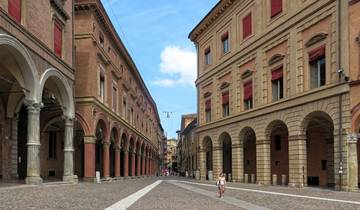
5 days
5 Day Bologna: The Heart of Italy
- ✓ Comprehensive Emilia Romagna tour
- ✓ Expert local guides included
- ✓ All accommodation arranged
- ✓ Transportation provided
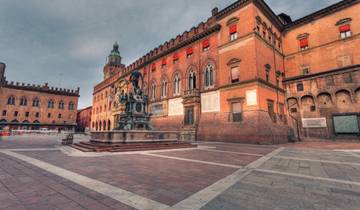
4 days
Discovering Bologna
- ✓ Comprehensive Emilia Romagna tour
- ✓ Expert local guides included
- ✓ All accommodation arranged
- ✓ Transportation provided
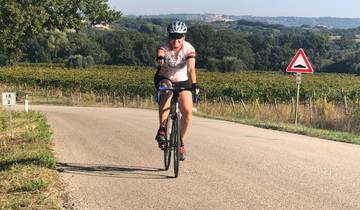
8 days
Taste of Italy, Emilia-Romagna Culinary Cycling – Classic Self Guided 8day
- ✓ Comprehensive Emilia Romagna tour
- ✓ Expert local guides included
- ✓ All accommodation arranged
- ✓ Transportation provided
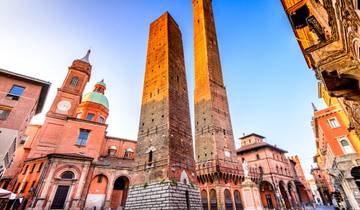
4 days
Bologna Gourmet, Good Food and History 4 Days Tour
- ✓ Comprehensive Emilia Romagna tour
- ✓ Expert local guides included
- ✓ All accommodation arranged
- ✓ Transportation provided
Multi-day tour packages powered by TourRadar. Prices and availability subject to change.
Ferrara in 2026: UNESCO Heritage and a Year of Significant Change
Few Italian cities carry their architectural inheritance as lightly as Ferrara. Where other Renaissance centres have become stage sets for mass tourism, Ferrara remains stubbornly, pleasingly itself: a university city where residents still commute by bicycle along the same streets Ludovico Ariosto walked, where the Este ducal palaces stand between apartment buildings and neighbourhood bars, and where the medieval ghetto is not a theme park but a living district with its own rhythms and residents. UNESCO recognized this quality of preservation when it inscribed the city as a World Heritage Site in 1995, citing criteria ii (outstanding influence on Italian Renaissance urban planning and European city design for centuries afterward), iv (the best-preserved example of Renaissance town planning anywhere in the world), and vi (direct association with the Este court’s extraordinary contribution to Renaissance humanist culture). The inscription extended in 1999 to incorporate the Pomposa Abbey and the Po Delta wetlands, creating a heritage zone that stretches from the medieval city core to the flat, bird-rich marshes of the Adriatic coast.
The year 2026 opens with a set of circumstances that make Ferrara simultaneously more challenging and more interesting to visit than usual. The Castello Estense — the moated fourteenth-century castle that has defined the city’s skyline for six hundred years — enters its final weeks of public accessibility before a long-overdue seismic restoration, the latest chapter in the city’s post-2012 earthquake recovery. For visitors arriving before the end of June, this represents a last opportunity to walk the castle’s noble halls, descend to its dungeons, and climb the Torre dei Leoni. For visitors arriving afterward, the castle’s dramatic exterior remains fully present and the city’s remaining heritage richness is considerable enough to sustain multiple days without it.
Set against the castle’s closure are two major cultural events that give 2026 its own character. Palazzo dei Diamanti — the diamond-stone-façaded palace that anchors the Renaissance Addizione Erculea — hosts the year’s most ambitious temporary exhibition, dedicated to Andy Warhol’s “Ladies and Gentlemen” portraits series until July 19, 2026, attracting audiences from across Italy. Meanwhile, Palazzo Massari, which houses the Museo Boldini and the city’s nineteenth-century art collections, is expected to reopen in 2026 after thirteen years of closure forced by the 2012 earthquake. Giovanni Boldini’s dazzling portraits, long inaccessible, returning to public view represents a genuinely exceptional cultural moment for the city.
The strategic picture for the visitor is therefore clear. Anyone planning a Ferrara trip before July 1, 2026 should prioritize the Castello Estense interior as a non-negotiable first stop. Anyone arriving afterward should build an itinerary around the extraordinary alternative heritage: the Renaissance Addizione, the Jewish Ghetto, the wall circuit, Palazzo Schifanoia’s incomparable frescoes, and the lesser-known palaces that the closure may inadvertently spotlight. Both categories of visitor will benefit from the city’s excellent MyFE Card and from a walking approach that treats Ferrara as a place to inhabit, not merely to photograph.
The Medieval Heart Walking Route 2026
Ferrara’s medieval zone occupies the southern and central parts of the historic centre, its irregular street grid contrasting directly with the planned rationality of the Renaissance Addizione to the north. A thorough walk through the medieval core takes two to three hours at a comfortable pace and encompasses the city’s most concentrated cluster of major monuments.
Castello Estense — The Symbolic Starting Point and Its Imminent Closure
The logical starting point for any Ferrara walking route is Largo Castello, the broad open space surrounding the moated quadrilateral of the Castello Estense. Built on orders from Niccolò II d’Este following a popular uprising in 1385, the castle evolved over two centuries from a military fortress into one of the most sophisticated ducal residences in Renaissance Italy. Bartolino da Novara designed the original defensive structure with its four massive corner towers; subsequent Este lords transformed the interior into a palace of frescoed apartments, hanging gardens, and princely chapels.
The castle is open until approximately June 30, 2026 (tickets: €12 full, €10 reduced for groups of fifteen or more and over-65s, free with MyFE Card; Tower supplement €2 except with MyFE Card). The exhibition “Gianfranco Goberti. La magia della pittura” occupies the castle interior until June 29, 2026. Visitors planning to enter should book a time slot in advance at comune.ferrara.it/prenotazionemusei — the slot system runs smoothly and eliminates queuing. The castle closes on Tuesdays.
Even after the interior closes, the castle’s exterior forms the essential anchor of any Ferrara walking tour. The four towers, the moat, the drawbridges, and the crenellated roofline compose one of Italy’s most immediately recognizable medieval silhouettes. Walking the perimeter of the moat at dusk, when the castello’s brick walls glow red-orange, remains a fundamental Ferrara experience regardless of the restoration status.
Piazza Cattedrale and the Cathedral of San Giorgio
A four-minute walk south from the Castello leads to Piazza Cattedrale, the tight urban square that brings together the twin anchors of Ferrarese civic and religious power: the Cathedral of San Giorgio and the Palazzo Municipale. The cathedral’s façade, begun in 1135 by Nicholaus and completed over the following century, represents a distinctive fusion of Romanesque structure and Gothic detail — three portals surmounted by a loggia of arcaded galleries, with the famous Months lunettes carved into the doorway arches. The interior reopened after extensive earthquake restoration in 2024, making it once again fully accessible and fully extraordinary. Entry to the cathedral itself is free.
The attached Museo della Cattedrale (Tue–Sun 9:30–13:00 / 15:00–18:00; €6, free with MyFE Card) houses objects that no visitor with any interest in Ferrarese art should skip: the organ shutters painted by Cosimo Tura depicting Saint George and the Annunciation, an astonishing marble lunette of Madonna and Child attributed to Jacopo della Quercia, and the illuminated Este Bible. The museum occupies former church spaces just off the main piazza and takes approximately forty minutes to explore properly.
Via delle Volte — The Medieval Covered Street
Running roughly parallel to the Po river about two blocks north of Piazza Cattedrale, Via delle Volte is one of the most atmospheric medieval streets in northern Italy and one of the most consistently overlooked by first-time visitors. The street takes its name from the series of arched bridges — volte — connecting the upper floors of buildings on opposite sides, creating a covered walkway that once sheltered the commercial transactions of medieval Ferrara’s merchant district. The bridges linked the warehouses and workshops that backed onto the river with the residences of the merchants who traded from them.
Walking Via delle Volte today means moving through roughly 800 metres of uninterrupted medieval atmosphere: the arches overhead change in style from simple pointed vaults to elaborate brick configurations, the paving beneath shows the unevenness of centuries of settlement, and the side alleys leading off in both directions reveal courtyards and doorways that could belong to any era between the thirteenth and the twentieth century. The street connects at its eastern end to Via del Gambero and at its western end to the port area around Piazza Travaglio. There is no admission charge and no ticket to buy; it is simply a street, and that is its magic.
Palazzo Municipale and the Civic Centre
The Palazzo Municipale occupies the western flank of Piazza Cattedrale and has served continuously as the seat of Ferrara’s civic government since the thirteenth century. The façade integrates additions from multiple periods — a marble staircase of 1481, Este-period loggie, and Renaissance windows — into a composition that functions as a compressed architectural history of the city’s governance. The courtyard (accessible during office hours, free of charge) contains two monumental bronze figures of the Este marquises Borso and Niccolò III d’Este, works moved from their original positions but still commanding in scale.
The square between the castle and the cathedral is formally known as Piazza Trento e Trieste and functions as the living room of the city. The café terraces fill throughout the day; the market occupies the space on certain mornings; the student population that gives Ferrara its youthful energy gathers here naturally. For a walking route, this square serves as both a geographical anchor and a rest point, with the arcaded buildings offering shade at any season.
The Addizione Erculea Route 2026 — Renaissance Urban Planning on Foot
In 1492, Duke Ercole I d’Este commissioned the Ferrarese architect Biagio Rossetti to execute one of the most ambitious urban projects of the Renaissance: a planned northern expansion of Ferrara that would more than double the city’s area and establish an entirely new rationalist urban model. The Addizione Erculea, as the expansion became known, introduced concepts of perspective, symmetry, and visual hierarchy to city planning that influenced European urbanism for the following four centuries. UNESCO’s criteria iv specifically recognizes this innovation. Walking the Addizione today means tracing one of history’s most direct encounters with the Renaissance idea made physical.
Corso Ercole I d’Este — Europe’s First Planned Boulevard
The spine of the Addizione is Corso Ercole I d’Este, a straight boulevard running almost exactly north from Piazza Ariostea to the city walls, designed by Rossetti to terminate in a visual endpoint at the monumental Porta degli Angeli. The street is wide enough to allow sunlight to reach both sides simultaneously, which was not accidental: Rossetti understood that light, space, and linearity together created the psychological effect of grandeur that the Este court required for their new city image.
Walking Corso Ercole from the south, the visual experience shifts with each step: the perspective deepens, the buildings on either side present consistent pilasters and regular window rhythms, and the axis aligns the distant city gate with the street below in a calculated demonstration of Renaissance perspectival thinking made architectural. The corso remains largely residential and institutional, with relatively few commercial interruptions, which preserves its designed quality better than similar Renaissance streets in more touristically pressured cities. Allow thirty minutes to walk it properly at a pace that permits observation of the building details.
Palazzo dei Diamanti — The Diamond-Studded Masterpiece
At the northern end of Corso Ercole, positioned at its intersection with Corso della Giovecca, Palazzo dei Diamanti is Ferrara’s most architecturally distinctive building: a palace whose entire exterior is encrusted with 8,500 diamond-shaped rusticated stones in pink marble, creating a surface that shifts in appearance with every change of light and angle of observation. Biagio Rossetti designed the palace from 1493 for Sigismondo d’Este; the diamond motif echoes the Este heraldic device and transforms the outer wall from a defensive surface into a permanent declaration of aristocratic identity.
In 2026, the piano nobile level hosts the Pinacoteca Nazionale (Tue–Sun 9:00–14:00; €6, free first Sunday of month, free with MyFE Card), which preserves an important collection of Ferrarese painting from the fifteenth and sixteenth centuries — including works by Garofalo, Ortolano, Dosso Dossi, and Benvenuto Tisi. The ground floor’s large exhibition space simultaneously hosts “Andy Warhol. Ladies and Gentlemen” until July 19, 2026 (standard ticket €16, guided tour supplement €10 per person on Saturdays, Sundays, and holidays with radioguide included; hours 9:30–18:30 ticket / 9:30–19:30 rooms, open every day; MyFE Card gives reduced admission). The Warhol show has attracted over 50,000 visitors since its March 2026 opening, confirming Palazzo dei Diamanti’s status as one of Italy’s serious temporary exhibition venues. Book tickets online in advance at palazzodiamanti.it to select an entry slot.
Palazzo Prosperi-Sacrati and the Este Palaces of the Addizione
Directly opposite Palazzo dei Diamanti at the famous incrocio — the crossroads that Rossetti deliberately placed at the geometric heart of the Addizione — stands Palazzo Prosperi-Sacrati, begun simultaneously in 1493 and designed as a visual counterpart to the diamond palace. Where Palazzo dei Diamanti uses its rusticated surface for texture, Palazzo Prosperi-Sacrati deploys classical ornamentation: a particularly elegant marble portal with a carved canopy balanced by a perfectly proportioned loggia above. The building currently houses Ferrara’s main library and can be entered during library hours to view the courtyard.
Other significant Este palaces along and near the Addizione include Palazzo Bentivoglio on Via Garibaldi and the series of noble residences along Corso della Giovecca that were built to Rossetti’s specifications as part of the original urban development plan. Walking these streets attentively reveals how systematically the Este transformed their city into a three-dimensional advertisement for humanist culture: the proportions of doorways, the alignment of cornices, and the spacing of windows were calculated effects, not happy accidents.
Piazza Ariostea and Casa Ariosto
At the southern terminus of Corso Ercole, Piazza Ariostea opens as the primary public square of the Addizione — a large rectangular space originally intended for tournaments and civic ceremony. The central column bearing a statue of Ariosto (moved here in 1833 after a century atop the city’s clock tower) anchors a space that now functions as a neighbourhood park and informal sports ground. The piazza’s human-scale informality makes it one of Ferrara’s most likeable public spaces.
A short walk away on Via Ariosto stands Casa Ariosto, the modest house where Ludovico Ariosto spent the last years of his life (he moved here in 1527) and where he completed the third edition of Orlando Furioso. The house is now a small museum containing period furnishings and Ariosto documentation. Admission is free or by voluntary donation; check current hours with the tourist information office (Largo Castello 1, tel. 0532 419190). Ariosto’s relationship with Ferrara was characteristically complex — he repeatedly sought Este patronage, repeatedly received inadequate reward, and yet produced in the Orlando Furioso the definitive literary monument of the Este court’s patronage culture.
Ferrara’s Secret Spots and Hidden Gems Worth Discovering
Ferrara’s reputation as an undervisited city relative to its architectural importance means that even the semi-official tourist circuit is rarely crowded. But beyond that circuit lies a second layer of the city that rewards determination and curiosity: spaces that appear on few itineraries, buildings that are genuinely difficult to find without local knowledge, and routes that deliver the sensation of discovering a city for the first time even on a second visit.
Monastero di Sant’Antonio in Polesine — Frescoes in a Living Convent
The Monastero di Sant’Antonio in Polesine, on the island formed by two branches of the Po river south of the historic centre, is one of the genuine secret masterpieces of northern Italian art. The monastery was founded in 1266 by the Blessed Beatrice II d’Este and has been continuously inhabited by cloistered nuns ever since — making it a genuinely active religious community, not a decommissioned historic site. The three small chapels attached to the monastery contain cycles of frescoes from the mid-fifteenth century that include works attributed to Borso d’Este’s court painters and represent an extraordinary concentration of early Ferrarese painting in an entirely intact devotional setting.
Access requires advance arrangement (telephone the convent directly; visits are possible at limited hours and only with a small group; a modest donation to the convent is expected). The visit lasts approximately thirty minutes and leaves the kind of impression that lasts indefinitely. The experience of standing in chapels where the same community has prayed for 750 years, surrounded by frescoes that have survived every political upheaval in that period, is unlike anything available at the major monuments.
Certosa di Ferrara — A Monumental Cemetery Hiding in Plain Sight
Founded in 1813 on the grounds of the former San Cristoforo alla Certosa monastery, the Certosa di Ferrara is Ferrara’s monumental cemetery and one of the finest examples of neoclassical funerary architecture in Italy. Its cloistered galleries, arcaded walks, and monumental chapels contain an extraordinary collection of nineteenth-century sculpture — portrait busts, allegorical figures, and marble sarcophagi — that amounts to a comprehensive survey of Ferrarese neoclassical and romantic taste. Notable tombs include those of the composer Gaetano Donizetti (though his remains were later moved to Bergamo), various Este-associated families, and a significant section dedicated to the city’s Jewish community.
The cemetery is free to enter and is open daily (hours vary by season; check ferrarainfo.com for current times). The space occupies a full city block in the northern part of the historic centre and takes at least an hour to explore properly. Almost no foreign tourist visits it and its atmosphere — silent, architecturally rich, entirely unexpected — makes it one of Ferrara’s most memorable discoveries.
Palazzina di Marfisa d’Este — The Most Overlooked Renaissance Interior
The Palazzina di Marfisa d’Este on Corso della Giovecca is Ferrara’s most consistently underrated historic interior. Built in the 1550s for Francesco d’Este and later inhabited by Marfisa d’Este (the niece of Alfonso II), the palazzina preserves a suite of rooms decorated with ceiling frescoes by the Filippi family — Sebastiano and Cesare — that rank among the finest examples of late Ferrarese Mannerist decorative painting in existence. The frescoes cover loggie, entrance halls, and principal rooms with allegories, grotesques, heraldic devices, and mythological scenes in a programme of remarkable coherence and visual richness.
Admission is included in the cumulative ticket with Palazzo Schifanoia (€15 full, €10 reduced; free with MyFE Card). Opening hours: Tuesday to Sunday 9:30–13:00 / 15:00–18:00, closed Monday. Because most visitors focus on Schifanoia’s famous Hall of the Months, the Palazzina is frequently quiet even during peak hours — a small palazzo with consistently uncrowded rooms.
The Jewish Cemetery and the Garden of the Finzi-Continis
The Jewish Cemetery of Ferrara on Via delle Vigne, outside the eastern city walls, is one of the most evocative and beautifully maintained Jewish burial grounds in Italy. In use from approximately 1626, the cemetery contains thousands of tombstones spanning four centuries, with Hebrew inscriptions, symbolic carving, and the muted grandeur of a community that was one of the most prosperous and culturally significant in Renaissance Italy and one of the most catastrophically affected by Fascist racial laws in the twentieth century. Giorgio Bassani immortalized the cemetery in The Garden of the Finzi-Continis (1962), which placed its fictional family estate adjacent to this real burial ground; the novel’s emotional landscape maps almost exactly onto the physical landscape of the cemetery and the city walls nearby.
Access to the cemetery is free, though visits should be treated with appropriate respect for an active religious site. The area around the walls south of the cemetery was specifically the model for Bassani’s garden setting; walking this stretch of wall on a quiet afternoon — ideally at the golden hour when the light through the trees has the quality Bassani’s prose describes — is one of the more moving walks available anywhere in Emilia-Romagna.
Guided Walking Tours in Ferrara 2026 — From Free to Private
Ferrara is small enough that a determined self-guided visitor can cover its essential monuments in a full day, but the city’s layers of historical complexity — the Este dynastic narrative, the Renaissance urban theory, the Jewish cultural history, the literary associations with Ariosto and Bassani — reward guided interpretation strongly. The guided tour market in Ferrara is well organized and offers clear options across every budget.
Saturday Group Tours with Official Licensed Guides
The Visit Ferrara consortium organizes a weekly public walking tour on Saturdays, departing at 15:00 from the Castello Estense courtyard (meeting point: from the large well, or under the loggia in case of rain). The tour lasts two hours, covers the essential medieval and Renaissance monuments of the historic centre, and is led by officially licensed guides authorized by the Emilia-Romagna region. The price is approximately €15 per person. The tour is designed for individuals, couples, and small groups who want a structured introduction to the city rather than a personalized private experience. No advance booking is required; arrive ten to fifteen minutes early at the meeting point. Following the Castello Estense closure in late June 2026, check with the Visit Ferrara consortium (visitferrara.eu) for revised meeting points and tour routes.
Private Licensed Guides — Ferrara Discovery Tours and Other Operators
For visitors who want an immersive, personalized walking experience, Ferrara Discovery Tours (run by licensed guide Elisabetta Gulino, available in Italian, English, German, and Spanish) offers the best-established private tour option in the city. Standard routes include:
- Medieval city and Jewish Ghetto walking tour: 2 hours, meeting point at Castello Estense courtyard. Price: €120 for groups of 1–4 people, plus €10 per additional person. Admission fees not included.
- Castello Estense guided tour: 1.5 hours. Price: €120 for 1–4 people / €150 for 5–24 people (includes whisper receivers), plus entry fee (€12 full / €10 reduced / free with MyFE Card). Note: only available while the castle is open, through approximately June 30, 2026.
- Palazzo Schifanoia guided tour: 1.5 hours. Price: €120 for 1–4 people / €150 for 5–24 people, plus entry.
- Ferrara by bike: 2 hours. Price: €120 for 1–4 people plus €10 per additional person; bicycle rental extra at €5 per bike (from Todisco Bike, via del Podestà 4).
- Customized tours: €60 per hour for groups of 1–4, plus €10 per additional person.
All Ferrara Discovery Tours bookings through the Visit Ferrara consortium website (visitferrara.eu) or directly with the guide (inferrara.it). Reservation is mandatory for all private tours.
Multiple other operators on Viator and GetYourGuide offer private walking tours of Ferrara in the three-hour range, with prices starting from approximately €200–250 for small groups. These platforms are useful for last-minute bookings when direct reservation is not possible.
Free Walking Tours via GuruWalk
Ferrara is listed on the GuruWalk platform (guruwalk.com/ferrara), which coordinates tip-based free walking tours with local guides. These tours represent excellent value for budget-conscious visitors and for those who prefer a more informal, conversational walking experience. The model is strictly tip-based: there is no fixed price, and visitors pay what they consider appropriate at the end. Availability varies by season; the platform shows current tour schedules and meeting points. As a general principle, tip-based tours in Italian cities attract better guides at the beginning and end of high season, when competition for tips encourages quality; in peak midsummer, results can be variable.
Self-Guided Audio Tours and Digital Resources
The MEIS museum (discussed in the Jewish Heritage section below) organizes guided tours of the Jewish Ghetto and Jewish Cemetery by bicycle as part of its community outreach programme — check meis.museum for availability and booking. The city’s tourist information office at Largo Castello 1 (tel. 0532 419190) provides free printed maps of recommended walking circuits in multiple languages, and the ferrarainfo.com website maintains updated downloadable itinerary PDFs organized by theme (medieval route, Renaissance Addizione, literary Ferrara, Este residences). These printed and digital resources are more than adequate for confident independent walkers.
The Visite guidate a orari fissi programme at the Castello Estense operates guided tours of the castle interior every Saturday, Sunday, and Monday at fixed times, at a supplementary cost of €10 per adult with radio guide (€7 for ages 7–18, free under 7). Entry fee is additional. Book through inferrara.it.
Cycling Ferrara 2026 — The City of Bicycles
No other Italian city of comparable size and cultural weight has organized itself so thoroughly around the bicycle. Ferrara’s flatness, the breadth of its car-free historic centre, the quality of its dedicated cycle paths, and the local culture of cycling — approximately one bicycle per resident, one of the highest ratios in Europe — combine to make the two-wheeled approach not just viable but optimal for covering multiple sites efficiently. The cycling infrastructure around the historic centre is safe, well-signed, and segregated from motor traffic on the major routes.
The City Walls Circuit — Ferrara’s Nine-Kilometre Signature Ride
The most distinctive cycling experience in Ferrara is the complete circuit of the Renaissance city walls, a nine-kilometre loop that follows the top of the earthwork ramparts built between 1492 and 1518 under the Este dynasty. The walls are among the best-preserved Renaissance fortifications in Europe: broad enough at the top to accommodate two cyclists side by side, planted with mature trees that create a canopy of shade in summer, and punctuated with bastions offering elevated views over both the historic centre and the surrounding flatlands. The circuit takes approximately 45 minutes to ride without stops, or up to two hours with pauses at the more scenic bastions and the sections near the Jewish Cemetery and the Certosa.
Cyclists access the walls via ramps at multiple points around the perimeter; the tourist information office map indicates the main access points. The Montagnone — the highest point of the rampart near the Porta degli Angeli — offers the best panoramic views of the city. The walls section between the Porta Paola and the Porta Reno, passing near the Certosa, is the quietest and most atmospherically rewarding stretch.
Historic Centre Cycling Route
Within the historic centre, the most useful cycling circuit connects the major monuments along the following sequence: Castello Estense → Piazza Cattedrale → Via delle Volte → MEIS → Jewish Cemetery → City Walls access point → Porta degli Angeli → Palazzo dei Diamanti → Piazza Ariostea → Palazzo Schifanoia → Palazzina Marfisa d’Este → Castello Estense. Covering this full circuit takes approximately 90 minutes of riding with brief stops at each monument; budgeting a full day allows proper visits to interiors at three or four of these sites. The route is almost entirely flat and uses designated cycle paths or pedestrianized streets for the majority of its length.
Bike Rental in Ferrara 2026 — Where to Hire and Prices
Several rental operators serve the historic centre:
- Todisco Bike (Via del Podestà 4, adjacent to Piazza Municipio): open daily including weekends and holidays, 9:00–19:00. The most convenient location for the historic centre. Competitive daily rates; home or hotel delivery available. Check todisco.bike for current pricing.
- Orange27 (Hotel Maxxim, Via Ripagrande 21, and Hotel Princess, Via Mascheraio 39): Standard city bicycle €8 for half day (8:00–14:00 or 14:00–21:00), €12 for full day (8:00–21:00). Electric bicycle €15 for half day, €25 for full day. Return deadline 21:00. Contact via orange27.it.
- Officine Ricicletta (Via A. Boito 8): A cooperative social enterprise that also serves as the most affordable option for multi-day rentals. Monday–Saturday, seasonal hours (opening from mid-March); group packages available. Approximately €10–12 per day.
- Ferrara Store (Piazza della Repubblica 23/25): €10 per day; tel. 0532 242759.
- Decathlon Rent: From €12 per day for city bicycles; also stocks mountain bikes and road bikes for riders wanting to reach the Po Delta.
All rental operators provide standard bicycle locks, helmets on request, and basic route maps. Ferrara Store and Todisco Bike are particularly well-positioned for visitors staying near the castle; Ricicletta is the preferred choice for travellers near the railway station.
Electric Bike Options for Longer-Range Routes
Electric bicycles transform the potential range of a Ferrara cycling day, making it realistic to cover not just the historic centre and walls but to extend into the flat agricultural landscape around the city, toward Comacchio and the Po Delta, or along the dedicated cycle path that connects Ferrara to the coastal Lidi. Orange27’s e-bike option at €25 per day is the most accessible in the centre; for longer Po Delta cycling itineraries, specialist rental shops and tour operators (including Visit Ferrara consortium partners) offer e-bikes with route support. The 60-kilometre Po Delta cycling route to Comacchio is manageable on a quality e-bike in approximately three to four hours each way; the terrain is entirely flat throughout.
The Jewish Heritage Route 2026 — Ghetto, Synagogues, and MEIS
Ferrara’s Jewish community has shaped the city for over five hundred years, from its period of Renaissance flourishing under Este protection to its catastrophic diminishment under Fascist racial laws and deportation. This history produced a physical landscape of ghetto streets, synagogues, family palaces, and cemeteries that together constitute one of the most complete and emotionally significant Jewish heritage circuits in Italy — and one of the least visited relative to its importance. The Jewish heritage route connects naturally with the MEIS, Italy’s national museum of Jewish history, which gives this tradition institutional expression of international quality.
The Old Ghetto of Ferrara — Via Mazzini and the Quarter’s Architecture
The Jewish ghetto was established in Ferrara in 1627 under Papal authority, following the Este’s loss of the city to the papacy in 1598. The ghetto’s boundaries enclosed a dense area between Via Mazzini, Via Vignatagliata, Via Contrari, and Via degli Adelardi — a compact district whose narrow streets, tightly spaced buildings, and intimate scale still communicate the conditions of enforced urban concentration, even as the neighbourhood has long since returned to general residential use.
Via Mazzini remains the most evocative street in the former ghetto. Walking its length reveals the characteristic ghetto architecture of Ferrara: buildings of four and five storeys (necessary when horizontal expansion was forbidden), workshops at street level, the remains of well-heads and communal spaces, and at number 95, the entrance to the Synagogue complex that still serves Ferrara’s tiny but active Jewish community. The street is also the address of a number of the shops and restaurants that maintain the neighbourhood’s cultural identity, including bakeries offering traditional ferrarese Jewish pastries — coppia ferrarese, brazadela, and other sweets — during the appropriate holy day seasons.
Ferrara’s Synagogues — Three Congregations in One Building
The building at Via Mazzini 95 contains three distinct synagogues representing the three congregations that coexisted in Ferrara’s ghetto: the Italian, German, and Levantine rites. All three spaces are preserved and are accessible to visitors, though access requires advance arrangement through the Jewish community or through tour operators specializing in Jewish heritage circuits. The Italian-rite synagogue contains particularly fine eighteenth-century furnishings, carved woodwork, and decorative metalwork; the German-rite synagogue preserves a different spatial organization reflecting different liturgical tradition. The three spaces together constitute one of the most complete multiple-congregation synagogue complexes surviving in Italy.
Guided visits to the synagogues are organized periodically by the local Jewish community (Comunità Ebraica di Ferrara; tel. 0532 247004) and by Visit Ferrara. Independent visits by appointment only. Visits are also offered as part of some specialized Jewish heritage walking tours available through Ferrara Discovery Tours and MEIS programming.
MEIS — The National Museum of Italian Judaism and the Shoah
The Museo Nazionale dell’Ebraismo Italiano e della Shoah (MEIS) at Via Piangipane 81 occupies the former city jail — a deliberate institutional choice that transforms a former space of segregation and exclusion into one of cultural encounter and memory. The museum houses two permanent exhibitions: “Ebrei, una storia italiana,” which traces the 2,000-year continuous presence of Jewish communities in Italy from ancient Rome to the Renaissance, using artefacts, video reconstructions, and archival material; and “1938: l’umanità negata,” a multimedia examination of the racial laws and their effects. The current temporary exhibition, “Sotto lo stesso cielo,” runs through June 2026.
Tickets: €10 full, €8 reduced (ages 6–18, university students); free with MyFE Card. Fixed guided tours operate every Saturday and Sunday at 11:30, now included in the entry price (previously a supplement). The museum also organizes bicycle tours of the Jewish Ferrara circuit as part of its programming — check meis.museum for the current schedule. The museum is accessible by bicycle from the historic centre in approximately ten minutes; the route passes through streets adjacent to the former ghetto, making the journey itself part of the interpretive experience. Opening hours vary by season; check meis.museum for current times.
The Jewish Cemetery and the Literary Landscape
The Jewish Cemetery on Via delle Vigne (accessed via the city walls near the Porta San Giorgio) dates from the early seventeenth century and represents both an extraordinary collection of four centuries of memorial art and the physical setting of Bassani’s most famous literary work. Giorgio Bassani’s novel The Garden of the Finzi-Continis (1962) uses this cemetery and the wall landscape adjacent to it as the emotional geography for its story of an aristocratic Jewish family’s destruction. The garden of the novel’s title was fictional, but its position — implied just outside the Mura degli Angeli, adjacent to this real cemetery — is mapped precisely enough that reading Bassani before visiting the wall circuit here transforms an already beautiful landscape walk into something considerably more resonant.
Access to the cemetery is free; respectful behaviour is expected. The MEIS organizes guided bicycle visits to the cemetery as part of its Jewish heritage cycling programme. The cemetery is accessible from the historic centre by bicycle in approximately fifteen minutes.
The Arts Circuit 2026 — Palazzo dei Diamanti, Schifanoia, and the Boldini Reopening
Ferrara’s museum landscape in 2026 is defined by a combination of historic permanence and new opportunity: the ongoing excellence of Palazzo Schifanoia’s frescoes and the Pinacoteca Nazionale’s Ferrarese painting, the excitement of the Warhol exhibition at Palazzo dei Diamanti, and the historic significance of Palazzo Massari’s expected return to public access. Together, these institutions make Ferrara one of the most rewarding art destinations in northern Italy for 2026.
Andy Warhol at Palazzo dei Diamanti Through July 19, 2026
The exhibition “Andy Warhol. Ladies and Gentlemen” at Palazzo dei Diamanti (open until July 19, 2026; daily 9:30–19:30; tickets €16 full; book at palazzodiamanti.it) brings together the celebrated series of portraits Warhol created in 1975–76 for a Milan gallery owner who requested works representing drag performers and gender-nonconforming individuals. The series — approximately 250 works in various media — is among the most significant of Warhol’s career and rarely exhibited with this completeness outside a major metropolitan institution. The palazzo’s ground-floor exhibition space, which has hosted some of the most ambitious temporary shows in Italy over the past two decades, provides an ideal setting: high ceilings, controlled lighting, and the extraordinary contrast of Warhol’s saturated Pop colours against the building’s Renaissance shell. Over 50,000 visitors attended in the first two months following the March 2026 opening.
The Pinacoteca Nazionale on the palazzo’s upper floors (€6, free with MyFE Card, free first Sunday of month) houses the permanent collection and is accessible independently of the temporary exhibition ticket, though a combined visit on the same day is both possible and worthwhile.
Palazzo Schifanoia — The Hall of the Months and the Este Pleasure Palace
Palazzo Schifanoia on Via Scandiana stands as the most artistically important secular monument in Ferrara and one of the masterpieces of fifteenth-century Italian painting. The palace was built from the 1380s as an Este pleasure residence — its name derives from schivar la noia, meaning “to escape boredom” — and was extensively decorated under Borso d’Este in the 1460s and 1470s. The famous Salone dei Mesi (Hall of the Months) contains the most ambitious decorative fresco cycle of the Ferrarese Renaissance: twelve months of the year, each organized in three horizontal bands depicting the triumph of the month’s associated classical deity, the zodiacal decans governing that month’s days, and genre scenes from the Este court’s daily life below.
The Hall of the Months frescoes, attributed primarily to Francesco del Cossa and Ercole de’ Roberti with contributions from other court painters, survive in partial condition — several months were destroyed in the sixteenth century — but the surviving sections are among the most vivid and informative records of fifteenth-century aristocratic culture in existence. The March, April, and May sections by del Cossa are particularly extraordinary, combining astronomical symbolism with minute observations of contemporary costume, sport, and agricultural practice in a way that no other single room in Italy matches.
Cumulative ticket for Palazzo Schifanoia and Palazzina Marfisa d’Este: €15 full, €10 reduced; free with MyFE Card. Hours: 10:00–19:00, closed Monday. The cumulative ticket is exceptional value given that both sites are significant and the combined visit takes approximately two and a half hours.
Palazzo Massari and Museo Boldini — The 2026 Reopening
The anticipated reopening of Palazzo Massari’s museum complex in 2026 represents the most culturally significant event in Ferrara’s heritage landscape in more than a decade. The palazzo on Corso Porta Mare, a patrician residence adapted for civic use in the nineteenth century, housed the Museo Boldini and the Collezione Farina — Ferrara’s extraordinary collection of nineteenth-century painting — until the 2012 earthquake caused structural damage that forced closure. The Museo Boldini in particular holds irreplaceable importance: Giovanni Boldini (1842–1931) was born in Ferrara and became one of the most sought-after portrait painters in late nineteenth-century Paris, his clients including Verdi, Sargent, and most of the European aristocracy. Works of Boldini’s work and works by Ferrara’s other major nineteenth-century painters, combined with the Collezione Farina and the De Pisis collection, give the reopened complex a claim to being one of the most distinctive nineteenth-century art collections in Italy.
At the time of this article’s completion, the reopening was announced for 2026 in official city communications. Verify the current status and ticket information at the Comune di Ferrara website (comune.ferrara.it) or through the tourist information office, as the opening date may have been confirmed or adjusted since the original announcement.
Pinacoteca Nazionale and Spazio Antonioni
Within the same building complex as the Warhol temporary exhibition, the Pinacoteca Nazionale (€6, free with MyFE Card, free first Sunday of month; Tue–Sun 9:00–14:00) preserves works by Garofalo (the “Raphael of Ferrara”), Ortolano, Dosso Dossi, and other masters of the Ferrarese school. The collection’s particular strength lies in its sixteenth-century Ferrarese panel paintings — a tradition that combined Venetian colour, Flemish precision, and a distinctive atmospheric quality that influenced northern Italian painting for generations.
Spazio Antonioni, also accessible with the MyFE Card, dedicates its permanent display to the film director Michelangelo Antonioni, born in Ferrara in 1912. The space traces Antonioni’s visual intelligence — his capacity to find in flat Po Valley landscapes the psychological depth his films demanded — through a combination of film excerpts, photographs, scripts, and personal objects. It represents a genuinely unusual addition to the arts circuit: a museum of a filmmaker’s vision rather than a filmmaker’s life, and all the more interesting for that distinction.
Day Excursions from Ferrara 2026 — Po Delta and Beyond
Ferrara sits at the pivot between the historic and the natural landscape of the Po Valley, and the UNESCO inscription of the Po Delta alongside the city itself reflects this dual character. Day excursions from the city extend the visit into one of Europe’s most significant wetland ecosystems, into the picturesque canal town of Comacchio, and to Pomposa Abbey, the Benedictine complex where the theoretical foundations of Western musical notation were first developed.
The Po Delta Natural Park
The Parco Regionale del Delta del Po extends across the territories south and east of Ferrara toward the Adriatic coast, encompassing a mosaic of river branches, lagoons, salt marshes, and woodland areas of exceptional ecological richness. The delta hosts over three hundred bird species throughout the year, with particularly spectacular concentrations of migratory waders in spring and autumn and permanent colonies of flamingos, herons, and egrets at the Valli di Comacchio and the Valle Bertuzzi lagoons. Cycling is the optimal way to explore the delta’s flat, quiet roads; the Visit Ferrara consortium and several specialist operators run guided cycling tours of the delta landscape.
The driving or cycling distance from Ferrara to the main delta access points ranges from 20 to 50 kilometres. The tourist information infrastructure within the park is well developed, with visitor centres at Comacchio, Ostellato, and Mesola providing maps, cycle route information, and birdwatching guide services. The Centre visit at Ca’ Vendramin and Boscone della Mesola (the last fragment of primary Po Valley forest) are particularly worthwhile stops for naturalist visitors.
Comacchio — The Little Venice of the Delta
Comacchio, 35 kilometres southeast of Ferrara, is the most picturesque town in the Po Delta and the most accessible day excursion from the city. Built across a series of small islands connected by bridges over the lagoon canals, Comacchio is most famous for its Trepponti — a five-arched staircase bridge from 1631 that crosses three canals simultaneously in a confident baroque gesture — and for the marinade, the traditional preservation technique that transforms local eel (anguilla) into one of the region’s most characteristic culinary products.
The town’s compact historic centre is easily explored on foot in two hours. The Manifattura dei Marinati, the historic eel-processing facility on the main canal, now functions as a museum explaining the lagoon’s fishing tradition and remains one of the most authentic industrial heritage experiences in Emilia-Romagna. Direct bus connections from Ferrara railway station reach Comacchio in approximately 50 minutes; cycling the dedicated cycle path takes about three hours each way and offers an outstanding flat-terrain ride through delta landscape.
Pomposa Abbey — A UNESCO Day Trip
Pomposa Abbey, approximately 50 kilometres northeast of Ferrara in the Po Delta UNESCO extension zone, is a Benedictine monastery of the sixth to seventh century whose fame rests on two achievements of extraordinary importance. Its campanile (bell tower), built in 1001 under Abbot Guido delle Peverare, is one of the finest examples of Romanesque tower design in northern Italy, rising 48 metres with a decorative elegance that increases from the severe base to the ornate upper section. More significantly, Guido d’Arezzo, the Benedictine monk who invented the modern system of musical notation (the solmization syllables do, re, mi, fa, sol, la — derived from a Latin hymn to Saint John), spent time at Pomposa in the eleventh century and reportedly developed his innovations here.
The abbey church preserves an extraordinary cycle of fourteenth-century frescoes covering all three walls of the nave, including scenes from the New Testament, the Apocalypse, and the Last Judgement, attributed to painters from the Bolognese and Riminese schools. The refectory contains additional well-preserved frescoes of the same period. Admission is free for the church and a modest fee for the museum. Pomposa is best reached by car from Ferrara (approximately 55 minutes) or by cycling the dedicated cycle path along the Po di Volano river — an excellent and largely flat 55-kilometre route.
Practical Planning for Ferrara Tours and Walking Routes 2026
Ferrara’s compact size — the historic centre is navigable on foot within 30 minutes end to end — means that logistical planning is simpler than in larger Italian cities. The main considerations for 2026 visitors are the Castello Estense closure timing, the MyFE Card value calculation, museum booking, and transport connections.
MyFE Tourist Card 2026 — The Smart Visitor’s Pass
The MyFE Card is the single most cost-effective planning decision for any visitor spending more than one night in Ferrara. The three price tiers are: €10 for two consecutive days (includes one night’s lodging tax exemption), €12 for three days (two nights’ exemption), and €18 for six days (five nights’ exemption).
Museums covered with free entry include: Castello Estense (while open, through approximately June 30, 2026), Palazzo Schifanoia, Palazzina Marfisa d’Este, Museo della Cattedrale, Pinacoteca Nazionale, Museo Archeologico Nazionale, Spazio Antonioni, Casa Romei, and MEIS. The card also provides reduced admission to Palazzo dei Diamanti temporary exhibitions (including the current Warhol show) and discounts at affiliated restaurants, taxi services, and the Bologna airport bus shuttle.
At standard admission prices, visiting the Castello Estense (€12), Schifanoia+Marfisa combo (€15), MEIS (€10), and Museo della Cattedrale (€6) alone costs €43 — more than four times the price of the two-day card. Adding the Pinacoteca (€6) brings the total to €49. The nightly lodging tax exemption (€2 per person per night) adds further savings for overnight visitors. The MyFE Card is available at the Castello Estense ticket office, Museo della Cattedrale, and Palazzo Schifanoia ticket offices; it can also be purchased online at ferrarainfo.com. After the Castello closure, the card continues to cover the remaining museums and represents strong value for any two-night stay.
Opening Hours, Booking, and Seasonal Tips
Museum booking is free and handled through comune.ferrara.it/prenotazionemusei for the civic museums (Castello Estense, Schifanoia, Palazzina Marfisa d’Este, Museo della Cattedrale). Booking is strongly recommended rather than mandatory, but weekend visits without a pre-reserved slot can result in timed entry waits of thirty minutes or more during busy periods. Palazzo dei Diamanti requires separate booking through palazzodiamanti.it; online booking is strongly recommended and gives priority access to timed slots over walk-up ticket purchases.
Ferrara’s museums observe standard Italian public holiday closures (Christmas Day; consult individual sites for any additional closures). State museums — Pinacoteca Nazionale and Museo Archeologico Nazionale — offer free entry on the first Sunday of every month. The Castello Estense closes on Tuesdays; Palazzo Schifanoia closes on Mondays; the Palazzina Marfisa d’Este closes on Mondays. MEIS hours vary by season; check meis.museum. The Cathedral (free entry) is open daily with a midday closure.
The ideal visiting season for Ferrara walking and cycling is April through June and September through October: temperatures are moderate, daylight hours are generous, and the tourist numbers — already modest by Italian city standards — are at manageable levels. July and August are hot (frequently 32–35°C) but navigable with an early morning start and a midday break; the wall circuit cycling route is particularly rewarding in the evening summer light. The Christmas market period in December transforms the Piazza Cattedrale and surrounding streets into one of northern Italy’s most atmospheric winter markets.
Getting Around and Transport Between Sites
The historic centre is entirely navigable on foot or by bicycle. No cars are permitted within the ZTL (limited traffic zone) encompassing most of the tourist sites; visitors arriving by car should park in the designated areas outside the historic walls and continue on foot or by rental bicycle. The railway station is a 15-minute walk or 5-minute bicycle ride from the Castello Estense via Viale Cavour. Bus connections to Comacchio and the Lidi (coastal resorts) depart from the main bus terminal adjacent to the railway station; journey times are 50–60 minutes. The airport shuttle to Bologna Marconi Airport (approximately 60 minutes) departs from the same terminal. Ferrara has no underground metro; the compact geography makes one unnecessary.
The Castello Estense Closure — What Visitors Need to Know in 2026
The decision to close the Castello Estense for seismic restoration is the consequence of structural damage inflicted by the 2012 Po Valley earthquake, which affected buildings across much of southern Ferrara province. The restoration programme, funded by €16 million from regional and provincial sources, is expected to take three to four years and will address the seismic vulnerabilities of the castle’s foundations and towers while also improving the internal visitor circulation. The Province of Ferrara, which owns the building, has awarded the restoration contract following a European tender procedure that attracted 46 bids; the actual construction timetable should be confirmed on the Provincia di Ferrara website once the contract is active.
For visitors arriving in July 2026 or later: the castle’s exterior, moat, drawbridges, and all four towers remain fully visible and highly photogenic from Largo Castello and the surrounding streets. The internal museum and the tower climb will not be accessible. Alternative Este-associated sites that offer comparable atmospheric richness include Palazzo Schifanoia (the Este pleasure palace par excellence), Palazzina Marfisa d’Este (the finest surviving Este residential interior in the city), and Casa Romei (the home of Giovanni Romei, son-in-law of Niccolò III d’Este, with late Gothic and early Renaissance decoration). All three are covered by the MyFE Card. Guided tours that previously centred on the castle have pivoted to routes that treat the exterior as a visual landmark while focusing interior content on these alternative sites.
Frequently Asked Questions About Ferrara Tours and Walking Routes 2026
How long does it take to walk Ferrara’s historic centre properly?
A thorough walk covering the main monuments of both the medieval core and the Renaissance Addizione, with time for the interior of three to four sites, takes a full day of seven to eight hours including breaks. A focused half-day walk of two to three hours covers the essential circuit from the Castello to Piazza Cattedrale, Via delle Volte, and Palazzo dei Diamanti without entering any paid interiors. The advantage of Ferrara’s compact scale is that it rewards the slow, exploratory approach: stopping at unexpected corners, following a side street for no particular reason, and sitting at a café terrace between monuments is genuinely part of the visit rather than time subtracted from it.
What is the best walking route for a first-time visitor with just one day?
For a single full day, the optimal route for a first-timer starts at the Castello Estense (interior or exterior depending on closure status; book in advance if visiting while open), continues south to Piazza Cattedrale and the Museo della Cattedrale, then east along Via delle Volte. From the eastern end of Via delle Volte, head north along Via Ragno to the Ghetto streets (Via Mazzini), then west along Corso della Giovecca to Palazzo dei Diamanti. Walk south along Corso Ercole I d’Este to Piazza Ariostea, then east to Palazzo Schifanoia for the afternoon, ending at Palazzina Marfisa d’Este before dinner in the Via delle Volte neighbourhood. This route combines all the major architectural periods and fits comfortably in eight hours at a relaxed pace.
Is Ferrara suitable for cycling with children?
Ferrara is one of the most family-friendly cycling destinations in Italy. The flat terrain, dedicated cycle paths, car-free historic centre, and large parks along the city walls create conditions that are entirely manageable for children from approximately seven years old. Most rental operators (Todisco Bike, Ricicletta, Orange27) offer children’s bicycles and seat attachments for younger children. The nine-kilometre wall circuit is the ideal family cycling route: flat, safe, scenic, and with multiple rest points in the shade of the planted trees. Allow two to three hours for the full wall circuit with children, with stops at the Montagnone viewpoint and the sections near the Certosa.
Can the Castello Estense interior still be visited in 2026?
Yes, but only until approximately June 30, 2026. The castle has been open continuously through the first half of 2026 following a series of extensions to the public access agreement between the Municipality and the Province. The final exhibition (“Gianfranco Goberti. La magia della pittura”) runs until June 29, 2026. Visitors planning trips in June 2026 should book time slots at comune.ferrara.it/prenotazionemusei immediately, as the final weeks of access are likely to see increased demand. Visitors arriving in July 2026 or later should not expect interior access; the castle exterior remains fully visible throughout the restoration period. Check castelloestense.it for any updates to the closure timeline, as Italian public works projects sometimes encounter procedural delays that extend access periods.
What hidden gems are most worth adding to a two-day Ferrara itinerary?
The four additions that most transform a standard two-day Ferrara visit into something genuinely distinctive are: the Monastero di Sant’Antonio in Polesine (book in advance; unique fifteenth-century frescoes in a living convent), the Jewish Cemetery on Via delle Vigne (free, emotionally powerful, connects the city to its Bassani literary landscape), the Certosa di Ferrara (the monumental cemetery with extraordinary nineteenth-century sculpture, almost never visited by foreign tourists), and a bicycle ride along the city walls in late afternoon light. All four cost nothing or next to nothing and are within easy cycling distance of the main tourist circuit.
Is the MyFE Card worth buying if the Castello Estense is closed?
Yes, definitively. Even without Castello Estense access, the card at €12 for three days covers free entry to Palazzo Schifanoia (which alone would cost €15 for the cumulative Schifanoia+Marfisa ticket), MEIS (€10), Museo della Cattedrale (€6), Pinacoteca Nazionale (€6), Spazio Antonioni, and Casa Romei, plus reduced admission to Palazzo dei Diamanti exhibitions (including Warhol). The combined saving against individual ticket prices for these sites alone is approximately €29–35 on a three-day visit. The card also eliminates the lodging tax of €2 per person per night, adding further value. Purchase at the Schifanoia ticket office, Museo della Cattedrale, or at ferrarainfo.com.
What food and neighbourhood walking route connects best with the cultural itinerary?
Ferrara’s food culture maps directly onto the historic walking circuit in a way few Italian cities match. The medieval quarter around Via delle Volte and Via Adelardi is the neighbourhood for traditional osterie serving cappellacci di zucca (pumpkin-filled pasta), salama da sugo (a slow-cooked pork salame unique to Ferrara), and coppie ferraresi (the twisted bread rolls that are the city’s edible emblem). The bakeries and food shops on Via Mazzini in the former ghetto district carry the Jewish-Ferrarese tradition of baked sweets and flavoured breads. A food-focused walking detour from the standard itinerary takes approximately 90 minutes and the most authentic establishments are concentrated within three blocks of Piazza Cattedrale.
How do I get from Bologna to Ferrara for a day trip?
Ferrara is 35 kilometres from Bologna and is served by frequent regional trains from Bologna Centrale throughout the day (journey time 30–40 minutes depending on service; standard ticket approximately €5–6). The first train from Bologna allows arrival in Ferrara by 7:00; last return trains run until after 22:00. The train deposits visitors at Ferrara Centrale, a 15-minute walk or five-minute bicycle ride from the Castello Estense. Ferrara is fully manageable as a day trip from Bologna, though the depth of its heritage rewards an overnight stay. The TPER bus company also connects Ferrara and Bologna (approximately 60 minutes), useful if combining the visit with a stop at the Aeroporto Bologna Marconi.
Are there tours that specifically focus on Ferrara’s Renaissance architecture?
Yes. Ferrara Discovery Tours offers architecture-specific private tours on request, focusing on Biagio Rossetti’s Addizione Erculea and the Este palace programme: the standard rate of €60 per hour for groups of up to four people applies. The Visit Ferrara consortium Saturday tour necessarily covers the architectural highlights of both the medieval and Renaissance periods in its two-hour circuit. For deeper architectural study, the Officina Urbana Ferrara organization and the University of Ferrara’s architecture faculty periodically run open heritage days and architectural walks that are advertised on ferrarainfo.com — these are worth checking for visitors with specific scholarly or professional interests in Renaissance urbanism.
What are the best night walks or evening experiences in Ferrara?
Ferrara reveals an entirely different character after dark. The most atmospheric evening walk begins at the lit moat of the Castello Estense — the castle’s towers reflect in the water with particular beauty in the hour after sunset — and continues along Corso Ercole I d’Este to Piazza Ariostea, where the broad Renaissance boulevard in late evening light has the quality of a stage set. Via delle Volte after 20:00, when most tourists have left, delivers the genuine medieval atmosphere of the covered arches by lamplight. Palazzo dei Diamanti occasionally offers extended evening hours for temporary exhibitions (the Warhol Night opening in May 2026 demonstrated the palazzo’s suitability for evening cultural events); check palazzodiamanti.it for any scheduled evening openings in the current programme. The city’s osterie and bars around Piazza Travaglio and the Via del Gambero area fill from 19:00 onward with students and residents creating the kind of unpretentious neighbourhood atmosphere that makes Ferrara such a pleasurable place to linger.