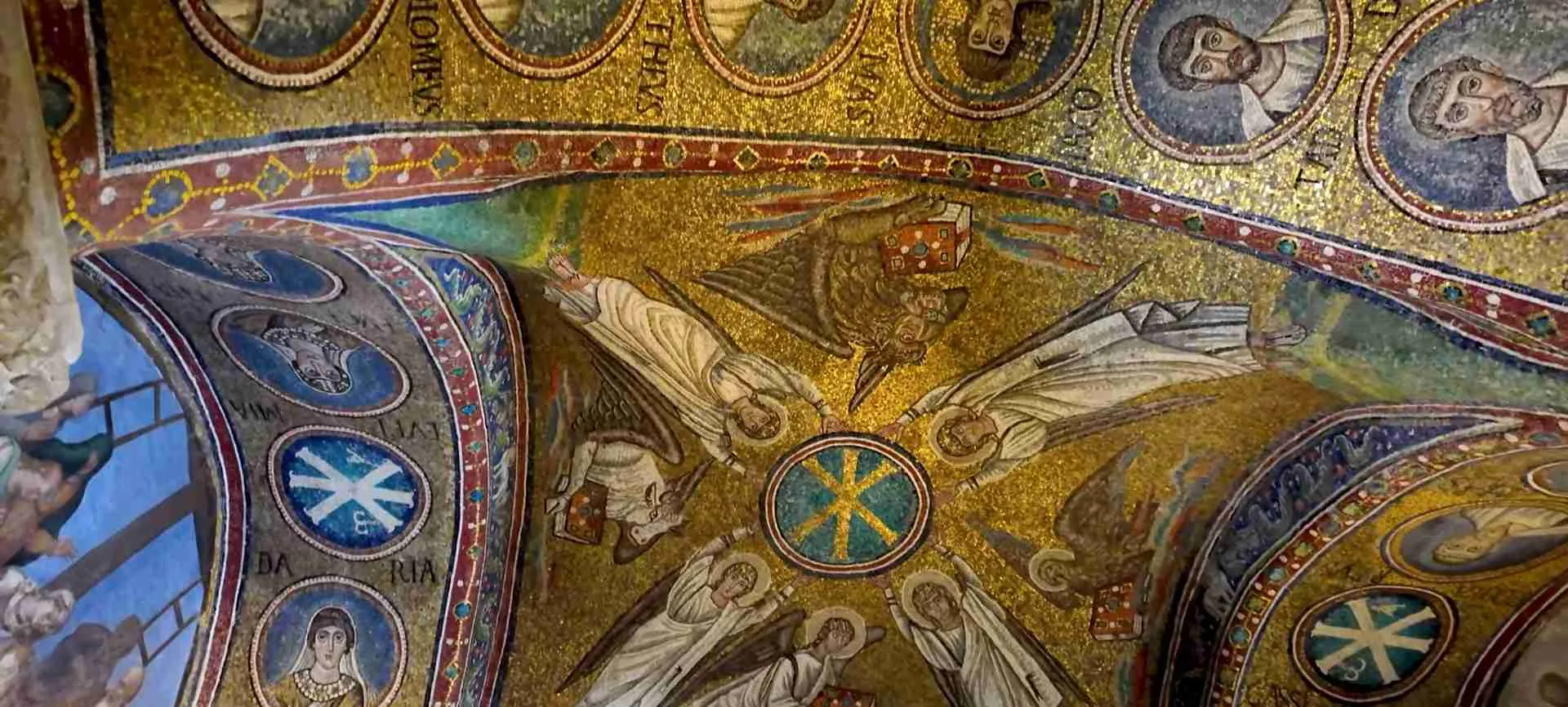
Ravenna Travel Guide 2026: Golden Mosaics UNESCO Guide
Ravenna preserves the world’s finest collection of Byzantine mosaics across eight UNESCO World Heritage monuments built between the 5th and 6th centuries AD, when the city served as capital of the Western Roman Empire, the Ostrogothic Kingdom, and the Byzantine Empire. This 2026 guide provides verified monument pricing, combination ticket strategies, guided tour options, and self-guided walking routes through early Christian art that inspired Gustav Klimt, Dante Alighieri, and generations of artists captivated by glittering gold tesserae.
Key Takeaways for Ravenna 2026
- Eight UNESCO monuments inscribed in 1996 include San Vitale Basilica, Galla Placidia Mausoleum, two baptisteries, three basilicas/chapels, and Theodoric’s Mausoleum, all within 2 kilometers of city center
- Combination tickets range €10.50-€14.50 for 2-5 monuments in 2026, valid for 7 days with one entry per site; time-slot reservations are mandatory for all monuments particularly Galla Placidia and Neonian Baptistery
- Guided walking tours cost €35-70 per person for group experiences or €99-300 for private tours including monument entries, while self-guided visits using combination tickets require 3-5 hours to cover main sites
- Five monuments in city center (San Vitale, Sant’Apollinare Nuovo, Archiepiscopal Museum, Galla Placidia, Neonian Baptistery) cluster within 800 meters and work on single combination ticket
- Three outlying monuments (Sant’Apollinare in Classe 5km south, Theodoric Mausoleum 1.5km north, Arian Baptistery separate ticket) require additional transport or extended walking
- Peak season March-November sees increased tour group density especially cruise ship days; winter months offer reduced crowds and €5-10 lower accommodation costs with slightly restricted monument hours
People Also Ask About Ravenna Mosaics 2026
How much does it cost to visit Ravenna’s UNESCO monuments in 2026?
Ravenna’s UNESCO monument costs in 2026 range from €10.50 for basic 2-site access to €14.50 for comprehensive 5-monument coverage. The 2-monument pass (€10.50, €9.50 children 6-18) includes Basilica of San Vitale and Basilica of Sant’Apollinare Nuovo. The 4-monument pass costs €12.50 and adds the Mausoleum of Galla Placidia and Neonian Baptistery. The complete 5-monument pass at €14.50 also includes the Archiepiscopal Museum with Archbishop’s Chapel. All combination tickets provide 7-day validity with single entry per monument. Three monuments require separate admission: Arian Baptistery €2, Sant’Apollinare in Classe €5, and Mausoleum of Theodoric €5, though a €10 combination covers these three plus the National Museum. Total maximum cost for all eight UNESCO sites reaches approximately €25 per person when purchased separately versus €14.50 for the main five on combination ticket.
Do I need advance reservations for Ravenna mosaics in 2026?
Yes, time-slot reservations are mandatory for all major Ravenna UNESCO monuments in 2026, not only for the Mausoleum of Galla Placidia and Neonian Baptistery but now extended to Basilica of San Vitale, Sant’Apollinare Nuovo, and the Archiepiscopal Museum. Reservations are free when purchasing tickets online through the official Opera di Religione website or authorized vendors, with visitors selecting specific entry times during checkout. Walk-up ticket purchases at monument bookshops still require choosing available time slots, though peak season visitors risk limited same-day availability. The Galla Placidia Mausoleum books out fastest, often filling 2-3 days in advance during summer months and cruise ship arrival days. Outside peak season (December-February), same-day reservations typically remain available, but advance booking eliminates uncertainty and allows optimal visit timing around other planned activities.
How long does it take to see all of Ravenna’s UNESCO monuments in 2026?
Visiting all eight Ravenna UNESCO monuments requires 6-8 hours total when accounting for monument viewing time, walking between sites, queuing at time-slot entries, and rest breaks. The five city center monuments (San Vitale, Galla Placidia, Sant’Apollinare Nuovo, Neonian Baptistery, Archiepiscopal Museum) cluster within 800 meters and require 3-4 hours to visit thoroughly: 30-40 minutes each for San Vitale and Sant’Apollinare Nuovo, 15-20 minutes for Galla Placidia (strict 5-minute maximum occupancy due to microclimate preservation, though visitors often queue multiple times), 20-25 minutes for the Baptistery, and 45-60 minutes for the Archiepiscopal Museum including the ivory throne collection. The three outlying sites add 2-3 hours: Sant’Apollinare in Classe (5km south, 30-40 minutes inside plus 20-minute bus ride), Theodoric’s Mausoleum (1.5km north, 20-30 minutes), and Arian Baptistery (15 minutes). Ambitious visitors complete all eight in one intensive day, though two days at a relaxed pace allows deeper appreciation of mosaic artistry and iconographic details plus time for Ravenna’s excellent regional cuisine.
What is the best combination ticket for Ravenna in 2026?
The 5-monument pass at €14.50 offers the best value for comprehensive Ravenna UNESCO monument access in 2026, including Basilica of San Vitale, Mausoleum of Galla Placidia, Basilica of Sant’Apollinare Nuovo, Neonian Baptistery, and the Archiepiscopal Museum with Archbishop’s Chapel. This ticket covers the five most important mosaic sites and represents €5-7 savings compared to hypothetical individual admissions if they existed (these five monuments can only be visited on combination tickets). The 4-monument pass (€12.50) excludes the Archiepiscopal Museum but includes the other four major sites, suitable for visitors on extremely tight schedules. The 2-monument pass (€10.50) provides minimal coverage of San Vitale and Sant’Apollinare Nuovo, insufficient for understanding Ravenna’s mosaic evolution across Roman, Ostrogothic, and Byzantine periods. Budget-conscious travelers allocate €14.50 for the 5-monument pass, add €2 for Arian Baptistery if interested in Arian Christianity comparative theology, and consider the €10 combination for Sant’Apollinare in Classe, Theodoric Mausoleum, and National Museum if staying two days. The complete UNESCO experience costs €26.50 when combining the 5-monument pass (€14.50), Arian Baptistery (€2), and the outlying three-site combination (€10).
Extended multi-day tours – 5+ days
Featured Emilia Romagna Multi-Day Tour Packages
3 days
Emilia Romagna 3-Day Discovery Tour
- ✓ Comprehensive Emilia Romagna experience
- ✓ Expert local guides included
- ✓ All accommodation included
- ✓ Transportation provided
5 days
Emilia Romagna 5-Day Highlights Experience
- ✓ Comprehensive Emilia Romagna experience
- ✓ Expert local guides included
- ✓ All accommodation included
- ✓ Transportation provided
7 days
Emilia Romagna 7-Day Cultural Journey
- ✓ Comprehensive Emilia Romagna experience
- ✓ Expert local guides included
- ✓ All accommodation included
- ✓ Transportation provided
10 days
Emilia Romagna 10-Day Complete Adventure
- ✓ Comprehensive Emilia Romagna experience
- ✓ Expert local guides included
- ✓ All accommodation included
- ✓ Transportation provided
Multi-day tour packages powered by TourRadar. Prices and availability subject to change.
Introduction: Ravenna’s UNESCO Byzantine Heritage 2026
Ravenna occupies an improbable position in European art history: a relatively small city of 160,000 residents preserving the most extensive early Christian and Byzantine mosaic cycle in the Western world. Between 402 and 751 AD, Ravenna served as capital for three successive powers—the Western Roman Empire after Emperor Honorius relocated from Milan for defensive advantages provided by surrounding marshlands, the Ostrogothic Kingdom under Theodoric the Great following the Western Empire’s collapse in 476, and finally the Byzantine Empire when Emperor Justinian reconquered Italy in 540. Each regime commissioned spectacular churches and mausoleums decorated with mosaic programs that represent the artistic pinnacle of their eras, creating a concentrated timeline of late antique and early medieval artistic development unmatched elsewhere.
The eight UNESCO monuments inscribed in December 1996 under the designation “Early Christian Monuments of Ravenna” span 250 years of construction from the early 5th century Mausoleum of Galla Placidia through the mid-6th century Basilica of San Vitale. UNESCO recognized these buildings under Criteria II (important interchange of values on architecture and town planning development) and Criteria III (unique testimony to cultural tradition or civilization). The inscription citation emphasizes how these monuments demonstrate “great artistic skill, including a wonderful blend of Graeco-Roman tradition, Christian iconography and oriental and Western styles,” representing the fusion point where classical Mediterranean culture met Eastern Byzantine influences to create a distinctly early medieval aesthetic.
In practical 2026 terms, Ravenna operates as a manageable destination requiring 1-2 days for comprehensive UNESCO monument coverage. The city center’s compact medieval layout concentrates five major mosaic sites within comfortable walking distance, while three additional monuments lie 1.5-5 kilometers outside the historic core. Modern Ravenna balances heritage tourism with contemporary Italian life—locals shop at covered markets, students populate university cafés, and the Adriatic beaches 10 kilometers east attract summer visitors creating a living city rather than a museumified monument zone. This authentic atmosphere, combined with prices 30-40% below Venice or Florence, positions Ravenna as exceptional value for cultural travelers seeking world-class art without overwhelming tourist infrastructure.
Planning Ravenna visits for 2026 requires understanding the city’s seasonal patterns and monument access protocols. Peak season runs March through November when extended monument hours (typically 9:00 AM-7:00 PM) coincide with moderate temperatures and increased tour group presence, particularly Tuesday-Thursday cruise ship arrival days. Winter months (December-February) bring reduced hours (often 9:00 AM-5:00 PM), minimal crowds, and 20-30% lower accommodation rates, though all major monuments maintain regular operations except December 25 and January 1. The mandatory time-slot reservation system introduced to manage post-pandemic visitor flows remains in effect throughout 2026, requiring advance planning but ensuring manageable crowd densities that enhance rather than obstruct mosaic viewing.
The artistic and historical significance of Ravenna’s mosaics extends beyond mere beauty into art historical innovation. Byzantine mosaic technique reached its Western apex in Ravenna, where workshops developed methods of glass tesserae production that captured light with unprecedented brilliance. The famous “Ravenna blue” seen throughout the monuments results from cobalt-infused glass that oxidizes differently than contemporary Byzantine mosaics in Constantinople or Jerusalem. The iconographic programs preserved in Ravenna provide rare evidence of early Christian symbolic language—the Good Shepherd imagery predating formalized Christian iconography, Arian theological positions depicted before their condemnation as heresy, and imperial propaganda mosaics showing Emperor Justinian and Empress Theodora in San Vitale that represent some of the most important Byzantine imperial portraiture surviving anywhere. These aren’t merely decorative surfaces but theological arguments, political statements, and artistic experiments frozen in thousands of tiny glass cubes.
Eight UNESCO Monuments Overview 2026
The UNESCO designation “Early Christian Monuments of Ravenna” comprises eight buildings constructed between the early 5th and mid-6th centuries during Ravenna’s period as capital city. These monuments divide into two geographic and ticket clusters: five city center monuments accessible on the main combination ticket, and three outlying monuments requiring separate tickets or an alternate combination pass. Understanding this structure enables efficient visit planning and budget allocation for the €26.50 total maximum cost to access all eight UNESCO sites.
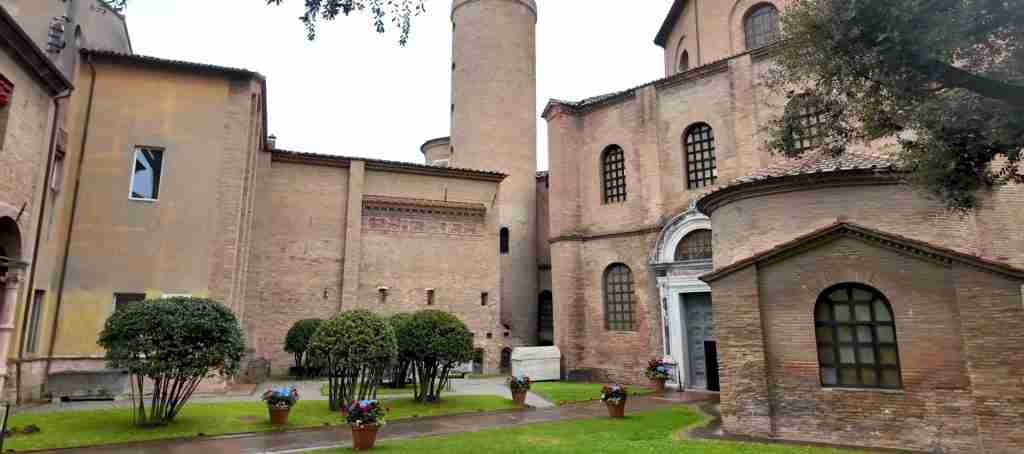
Basilica of San Vitale represents the architectural and artistic culmination of Ravenna’s UNESCO monuments. Consecrated in 548 AD under Byzantine rule, this octagonal church fuses Roman engineering (massive brick walls, centralized plan) with Eastern aesthetic sensibilities (complex capital designs, extensive mosaic coverage). The mosaic programs in the presbytery and apse rank among Christianity’s most important artworks: the famous panels depicting Emperor Justinian and Empress Theodora with retinues provide rare contemporary portraits of 6th-century Byzantine court life, while the Old Testament narratives on the lunettes demonstrate sophisticated theological typology linking Abraham and Abel to Christ’s sacrifice. The building’s unusual octagonal geometry creates spatial dynamics unlike basilica-plan churches, with light filtering through alabaster windows to illuminate the gold tesserae mosaics in constantly shifting patterns.
Mausoleum of Galla Placidia, despite its modest exterior dimensions (approximately 12×10 meters), contains the most emotionally affecting mosaic program in Ravenna. Built circa 425-450 AD during the Western Roman period, the mausoleum features deep blue backgrounds studded with gold stars creating a nocturnal firmament effect, with lunette mosaics showing Christ as Good Shepherd, the martyrdom of St. Lawrence, and deer drinking from water sources (early Christian resurrection symbolism). The building’s function remains debated—while named for Galla Placidia (sister of Emperor Honorius), no evidence confirms it as her burial site. The structure’s importance lies in preserving intact 5th-century mosaic work predating Byzantine stylistic influences, showing pure late Roman artistic traditions. Strict conservation protocols limit occupancy to 15-20 people with 5-minute maximum stays due to moisture damage from visitor breath affecting the ancient plaster substrate.
Basilica of Sant’Apollinare Nuovo presents the most extensive narrative mosaic cycle in Ravenna across its 26-meter nave walls. Originally constructed as Theodoric’s Palatine chapel during Ostrogothic rule (early 6th century), the church was reconsecrated under Byzantine control with strategic mosaic alterations reflecting theological shifts from Arian to Orthodox Christianity. The upper register mosaics depict Christ’s miracles and Passion, while the famous lower register shows two processions: male martyrs approaching Christ and female martyrs approaching the Virgin Mary, both originating from architectural representations of Theodoric’s palace and the port of Classe. The procession figures demonstrate Byzantine aesthetic principles at their most refined—flat, frontal, hieratic poses with minimal modeling yet extraordinary decorative splendor in garments and crowns.
Neonian Baptistery (Orthodox Baptistery) stands as Ravenna’s oldest surviving monument, with construction initiated in the late 4th/early 5th century and mosaic decoration completed under Bishop Neon in the mid-5th century. The octagonal structure features a dome mosaic program showing Christ’s baptism at center surrounded by the twelve apostles in a procession format similar to Sant’Apollinare Nuovo but predating it by 50-75 years. The lower registers display intricate acanthus scrollwork and architectural perspectives in mosaic and stucco, demonstrating how 5th-century workshops integrated multiple decorative techniques. This baptistery established the octagonal plan and dome mosaic format that became standard for early Christian baptisteries throughout the Mediterranean world.
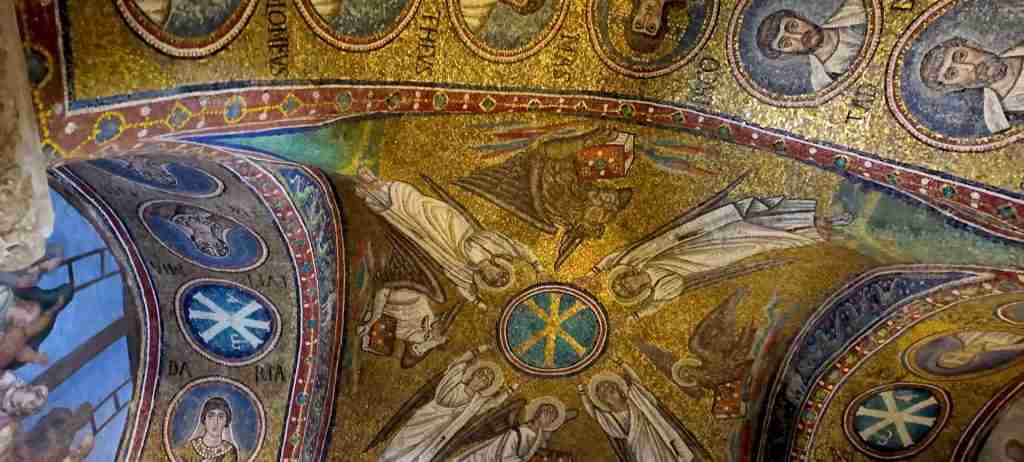
Archiepiscopal Museum complex includes the Archbishop’s Chapel (Oratory of St. Andrew), constructed early 6th century as the private chapel for Ravenna’s archbishops. This small cruciform space contains remarkable vault and lunette mosaics showing Christ as Warrior trampling the serpent and lion (unusual militant Christian iconography), plus decorative programs featuring birds and vegetation in late Roman style. The museum also houses the Ivory Throne of Archbishop Maximian, carved circa 545-553 with scenes from Christ’s life and stories of Joseph, representing the finest surviving early medieval ivory work. The Medieval Room on the second floor restricts access to six visitors at a time due to space constraints.
Arian Baptistery, built late 5th/early 6th century during Theodoric’s Ostrogothic reign, demonstrates Arian Christian theological positions before this branch of Christianity was condemned as heresy. The dome mosaic depicts Christ’s baptism similar to the Orthodox Baptistery but with subtle iconographic differences reflecting Arian beliefs about Christ’s nature as created by and subordinate to God the Father rather than co-eternal. The mosaic’s simplified style compared to Orthodox monuments may reflect Arian aesthetic preferences or merely the workshop’s skill level. This monument requires separate €2 admission and maintains limited morning-only hours in most seasons.
Mausoleum of Theodoric, constructed circa 520 AD by the Ostrogothic king Theodoric as his burial monument, stands architecturally distinct from Ravenna’s other UNESCO sites. This circular two-story structure uses massive Istrian limestone blocks rather than brick, with a monolithic 300-ton limestone dome forming the roof—the only surviving example of a barbarian king’s tomb from this period. The building contains no mosaics but demonstrates Ostrogothic architectural traditions fusing Roman monumentality with northern European structural approaches. Located 1.5 kilometers north of city center, it requires separate €5 admission or inclusion in the €10 three-site combination with Sant’Apollinare in Classe and the National Museum.
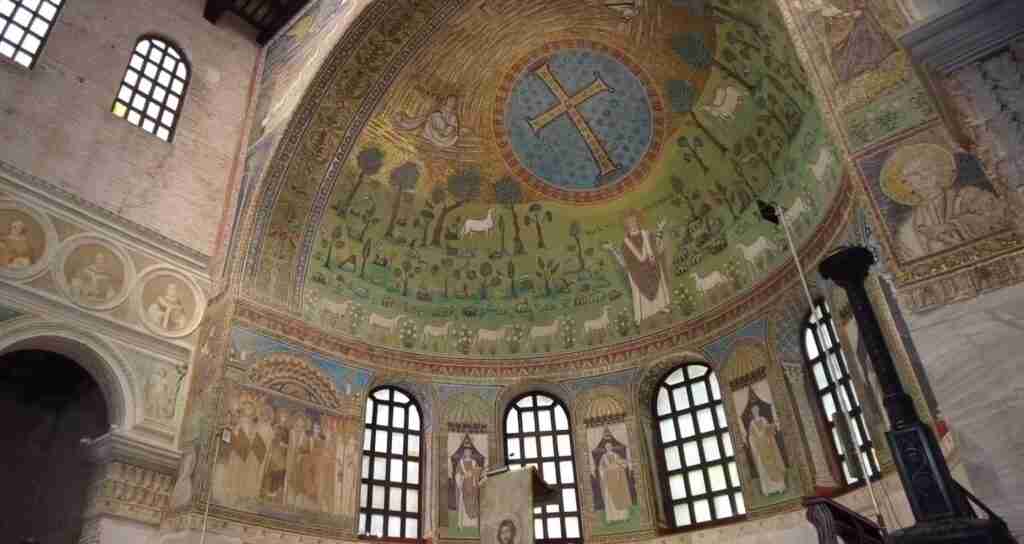
Basilica of Sant’Apollinare in Classe, situated 5 kilometers south of Ravenna in the ancient port district of Classe, represents the final major commission of Ravenna’s UNESCO period. Consecrated in 549 AD during Byzantine rule, this basilica features a vast apse mosaic showing the Transfiguration of Christ represented symbolically through a jeweled cross in a starred heaven with St. Apollinaris as orant figure below, surrounded by twelve sheep symbolizing apostles in a paradisiacal landscape. The mosaic demonstrates full Byzantine aesthetic principles applied to Western architectural traditions. The cylindrical bell tower, added in the 10th century, demonstrates Ravenna’s later Romanesque period and provides visual landmark for approaching the site. Access requires separate €5 admission or the €10 three-site combination ticket, plus bus transport (Line 4, €1.50, 15 minutes) or taxi (€12-15) from city center.
Monument Admission Costs and Combination Tickets 2026
Ravenna’s UNESCO monument admission in 2026 operates through a combination ticket system for the five city center sites, with separate ticketing for the three outlying monuments. The primary combination tickets are the 5-monument pass at €14.50, the 4-monument pass at €12.50, and the 2-monument basic pass at €10.50. Check the official Opera di Religione website (ravennamosaici.it) for current pricing as rates may adjust seasonally. All combination tickets provide 7-day validity from first use with single entry per monument, allowing flexible multi-day visit planning without additional ticket costs.
The 5-monument pass (€14.50 adults, reduced €4 for children 6-10 and qualifying categories) includes Basilica of San Vitale, Mausoleum of Galla Placidia, Basilica of Sant’Apollinare Nuovo, Neonian Baptistery, and Archiepiscopal Museum with Archbishop’s Chapel. This comprehensive option provides access to the five most significant mosaic collections representing all three of Ravenna’s capital periods (Western Roman, Ostrogothic, Byzantine). Reduced rate tickets apply to children aged 6-10, religious and consecrated persons, military and armed forces members, ICOM members, persons with certified disabilities and required companions, and Ravenna municipal residents with ID. Free admission is granted to children aged 0-5, licensed tourist guides exercising professional duties, teachers accompanying school groups (one free per 10 students), and group leaders (one free per 20 paying visitors for non-school groups).
The 4-monument pass (€12.50 adults) covers Basilica of San Vitale, Mausoleum of Galla Placidia, Basilica of Sant’Apollinare Nuovo, and Neonian Baptistery, excluding only the Archiepiscopal Museum from the full five-site package. This option suits travelers on extremely tight schedules who can allocate only 2-3 hours for monument visits, though sacrificing the Archiepiscopal Museum’s exceptional ivory throne and warrior Christ mosaics represents a significant artistic loss for just €2 savings. The 2-monument pass (€10.50 adults, €9.50 children 6-18) provides minimal coverage of San Vitale and Sant’Apollinare Nuovo only, insufficient for comprehensive understanding of Ravenna’s mosaic evolution but viable for travelers with severe time or budget constraints needing to sample rather than systematically study the monuments.
The three UNESCO monuments not included in these combination passes require separate admission or an alternate combination ticket. The Arian Baptistery charges €2 entry (some sources indicate €3 during peak season) with limited morning hours typically 9:00 AM-12:00 PM Monday-Friday and 9:00 AM-12:00 PM/2:00 PM-5:00 PM Saturday-Sunday. Sant’Apollinare in Classe and the Mausoleum of Theodoric each cost €5 for individual admission, or both are included with the National Museum in a €10 three-site combination ticket. These three outlying sites offer free admission on the first Sunday of each month following Italy’s national free museum day policy, though this applies only to state-managed monuments (Sant’Apollinare in Classe and Theodoric Mausoleum) and not the diocesan-managed Arian Baptistery.
Purchasing combination tickets can be done online through the official Opera di Religione website or authorized vendors (Tiqets, GetYourGuide, Viator), or in person at the ticket offices and bookshops located at Basilica of Sant’Apollinare Nuovo and the Archiepiscopal Museum. Online purchase includes free time-slot reservation selection, essential for guaranteed entry at preferred times. The digital tickets arrive via email and can be presented on smartphones at monument entrances, or printed if preferred. All combination tickets include 20% discount at monument bookshops selling mosaic reproductions, art books, and scholarly publications about early Christian art.
Budget allocation for complete UNESCO monument access totals €26.50 when combining the 5-monument pass (€14.50), Arian Baptistery (€2), and the three-site outlying combination (€10). Visitors prioritizing only the finest mosaic artworks can limit spending to the 5-monument pass at €14.50, covering San Vitale, Galla Placidia, Sant’Apollinare Nuovo, Neonian Baptistery, and the Archiepiscopal Museum—the core masterpieces that justify Ravenna’s UNESCO designation and international art historical significance. The outlying monuments add architectural and historical context but contain either minimal mosaic work (Theodoric Mausoleum has none) or are less accessible (Sant’Apollinare in Classe requires bus transport), making them optional rather than essential for time-constrained travelers.
Guided Tour Options and Pricing 2026
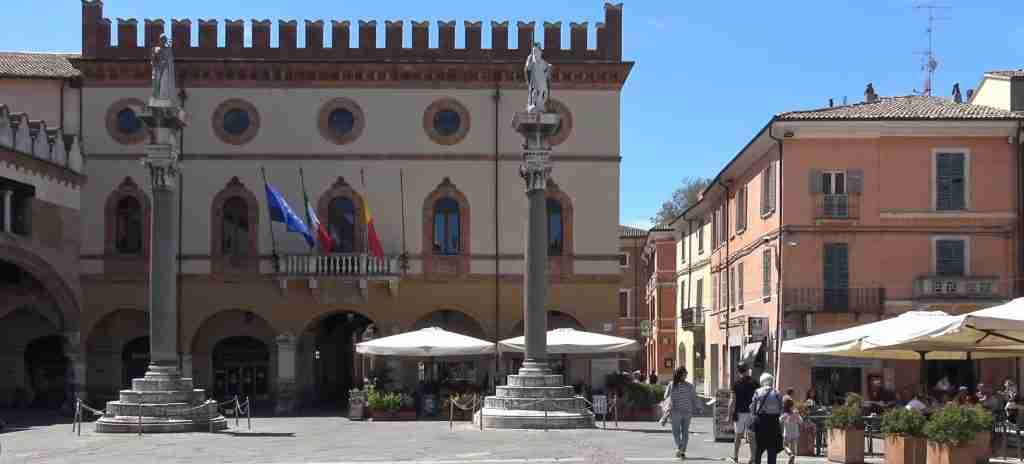
Guided tours of Ravenna’s UNESCO monuments in 2026 range from €35 per person for group walking tours to €300+ for comprehensive private day experiences. The standard 3-hour group walking tour departing from Piazza del Popolo covers 4-5 UNESCO sites (typically San Vitale, Galla Placidia, Sant’Apollinare Nuovo, Neonian Baptistery, plus Dante’s tomb) with English-speaking licensed guides for €35-70 per person including monument admission. These tours operate daily at 10:00 AM and 3:00 PM during peak season (March-November) with reduced schedules in winter, accommodating 10-25 participants per guide with headset systems for groups exceeding 15 people to maintain audio clarity in echoing church interiors.
Private guided tours provide personalized pacing, customized itineraries, and dedicated guide attention for individuals, couples, families, or small groups at €99-300 per person depending on duration and inclusions. A basic 2-hour private tour covering 3 monuments (San Vitale, Galla Placidia, Sant’Apollinare Nuovo) costs €150-200 for 1-2 people (€75-100 per person couples rate). Comprehensive 3-hour private tours visiting 5 monuments including the Archiepiscopal Museum cost €200-280 for 2 people or €120-180 per person for groups of 3-6. Full-day private experiences (5-6 hours) incorporating all eight UNESCO sites plus Dante’s tomb, lunch at traditional piadina restaurants, and mosaic workshop demonstrations range €250-350 per person with minimum 2-person bookings.
Specialized thematic tours command premium pricing for expert guides and unique access. Food and mosaic combination tours operated by companies like Taste Bologna cost €99 per person (minimum 2 people) for 3-4 hour experiences including guided monument visits (San Vitale and Galla Placidia with skip-the-line entry), traditional piadina or crescione tastings with Sangiovese wine, and full lunch featuring seasonal fish or meat dishes at family-run trattorias. These tours blend cultural and culinary exploration, ideal for travelers wanting comprehensive Ravenna immersion beyond pure monument viewing.
Art history deep-dive tours led by specialized guides with advanced degrees in Byzantine studies or early Christian iconography cost €120-200 per person for 3-hour experiences (2-6 person groups) focusing on mosaic technique analysis, theological symbolism interpretation, and comparison between Arian and Orthodox iconographic programs. These tours serve serious art history enthusiasts, academic groups, or professionals in fields relating to conservation, religious art, or Byzantine civilization who need expert-level commentary beyond general tourist narratives.
Shore excursion tours for cruise passengers docking at Ravenna port operate as guaranteed return-to-ship packages for €80-150 per person depending on whether transport from port is included or travelers meet guides in city center. These 3-4 hour experiences prioritize essential monuments (San Vitale, Galla Placidia, Sant’Apollinare Nuovo) within tight cruise ship schedules, typically departing 9:00 AM and returning passengers to port by 2:00 PM for 3:00 PM all-aboard times. Private shore excursions offer more flexibility at €200-300 per person for parties of 2-4, allowing customization of departure times and monument selection based on personal interests.
Self-guided audio tour options provide budget alternative at €5-15 for smartphone apps or physical audio guide rental. The official Ravenna tourism audio guide costs €10 for 24-hour access covering all eight UNESCO monuments plus Dante’s tomb and the city center, with GPS-triggered commentary at each location. Commercial apps like Rick Steves Audio Europe offer free Ravenna tours with basic monument information, while premium apps (GPSmyCity, Vox City Guide) provide more detailed content for €7-12. These self-guided options work well for independent travelers comfortable navigating monument logistics and time-slot reservations without guide assistance, though they sacrifice the interpretive depth and iconographic analysis that trained guides provide when explaining complex theological symbolism in mosaic programs.
Booking guided tours requires 24-72 hours advance reservation for group tours, while private tours need 3-7 days notice to ensure guide availability and coordinate specific itinerary requests. Peak season dates (Easter week, July-August, September weekends) may require 2-3 weeks advance booking. Cancellation policies typically allow full refunds for cancellations 24-48 hours before departure, with some operators offering flexible rebooking rather than refunds for last-minute cancellations due to illness or travel delays. Tour prices generally include monument admission but sometimes list this as separate line item; verify whether quoted rates are all-inclusive or require adding admission costs.
Self-Guided Walking Routes 2026
Self-guided exploration of Ravenna’s city center UNESCO monuments requires 3-4 hours at comfortable pace covering approximately 2 kilometers of walking distance between the five main sites. The optimal route begins at Basilica of San Vitale, proceeds to Galla Placidia Mausoleum in the same complex, continues to the Archiepiscopal Museum 400 meters east, then visits the Neonian Baptistery adjacent to the cathedral, and concludes at Sant’Apollinare Nuovo 500 meters northeast. This sequence follows chronological construction order (early 5th century to mid-6th century) and groups geographically proximate monuments to minimize walking.
Start at Basilica of San Vitale (Via San Vitale 17) upon opening at 9:00 AM to avoid tour group congestion that builds 10:30 AM-12:00 PM. Present your combination ticket and time-slot reservation at the entrance, then proceed counterclockwise around the ambulatory to reach the presbytery and apse mosaics. Spend 30-40 minutes studying the Justinian and Theodora panels, the Old Testament narrative lunettes, and the intricate capital carvings showing Byzantine influence on classical Corinthian orders. The natural light through alabaster windows creates optimal mosaic illumination in early morning hours when eastern sun enters the building.
Exit San Vitale and walk 50 meters through the gardens to the Mausoleum of Galla Placidia, a separate structure sharing the same grounds. The mandatory time-slot for Galla Placidia often requires queuing 5-10 minutes even with reservations as the building’s 15-20 person capacity fills quickly. Once inside, the 5-minute maximum stay enforced by attendants allows time to study the Good Shepherd mosaic, the St. Lawrence martyrdom scene, and the nocturnal blue star field covering the barrel vaults. Many visitors queue multiple times (allowed with valid ticket) to see different mosaics as the small space makes comprehensive viewing in a single 5-minute entry challenging. Budget 25-35 minutes total for Galla Placidia including queuing time.
Walk east 400 meters along Via Argentario to Piazza Arcivescovado to reach the Archiepiscopal Museum. This facility houses the Archbishop’s Chapel on the first floor and the Ivory Throne of Maximian plus religious art collections on upper floors. Ascend immediately to the chapel to see the warrior Christ mosaic and barrel vault decorations while relatively uncrowded, then proceed to the throne room where six-person maximum occupancy restrictions may create brief waits. The Medieval Room and other museum galleries contain illuminated manuscripts, liturgical objects, and architectural fragments that provide context for Ravenna’s ecclesiastical power during the Byzantine period. Allow 45-60 minutes for comprehensive museum exploration or 30 minutes for chapel and throne highlights only.
The Neonian Baptistery stands adjacent to the Archiepiscopal Museum in the same piazza, requiring only 2-minute walk across the square. Enter through the side door after presenting tickets and time-slot reservation. The octagonal interior focuses attention on the dome mosaic depicting Christ’s baptism surrounded by apostle procession. Study the lower registers showing stucco-and-mosaic architectural perspectives that demonstrate 5th-century workshop integration of multiple decorative techniques. The baptistery visit requires 20-25 minutes including time to examine the restored 19th-century sections that demonstrate historical conservation approaches versus modern practices.
From the baptistery, walk 500 meters northeast along Via di Roma to reach Basilica of Sant’Apollinare Nuovo. This route passes through Ravenna’s shopping district with cafés, bakeries, and gelato shops providing rest stops if needed. The basilica’s 26-meter nave creates dramatic space for viewing the famous mosaic processions on both side walls. Walk slowly along the north wall to study the female martyrs approaching the Virgin Mary, then return along the south wall to see the male martyrs approaching Christ. The upper register mosaics depicting Christ’s miracles and Passion require neck craning but reward detailed observation. Budget 30-40 minutes for thorough nave and apse viewing.
Practical considerations for self-guided walking include comfortable footwear for marble and mosaic floors that can be slippery, especially in Galla Placidia where ancient stone has been polished smooth by centuries of foot traffic. Dress codes apply to all monuments as active religious sites: knees and shoulders must be covered, no ripped or transparent clothing, no shorts or sleeveless tops. Backpacks and large bags are prohibited inside some monuments; small bags undergo security inspection. Photography is permitted without flash in all monuments for personal use only, though tripods, monopods, selfie sticks, and professional equipment require special permission from the Opera di Religione administration.
Rest facilities exist at the Archiepiscopal Museum (first floor and second floor) and Sant’Apollinare Nuovo (ground floor near entrance), but not at San Vitale, Galla Placidia, or the Neonian Baptistery. Plan maximum 90-minute stretches between toilet access. Water fountains and vending machines are absent from monument interiors; carry water bottles particularly in summer when interior temperatures reach 25-30°C despite thick masonry walls.
Outlying UNESCO Monuments Access 2026
The three UNESCO monuments outside Ravenna’s city center—Sant’Apollinare in Classe, Mausoleum of Theodoric, and Arian Baptistery—require additional transport or extended walking beyond the compact five-monument core. Sant’Apollinare in Classe, located 5 kilometers south in the ancient port district, necessitates public bus, taxi, or bicycle transport as the 60-75 minute walk along busy roads lacks pedestrian amenities. AMT bus Line 4 departs from Ravenna’s train station (Via Farini) every 30-60 minutes 6:30 AM-8:00 PM with reduced evening and Sunday service, costing €1.50 per ride or included in the €4.50 AMT day pass covering unlimited urban transport.
Sant’Apollinare in Classe basilica opens 10:00 AM-5:00 PM November-February and 9:00 AM-7:00 PM March-October, with last entry 30 minutes before closing. The €5 separate admission or inclusion in the €10 three-site combination ticket (with Theodoric Mausoleum and National Museum) provides access to the vast basilica interior featuring the Transfiguration apse mosaic and 6th-century marble capitals. The site includes a small museum documenting the basilica’s archaeological history and the ancient port of Classe, plus the Romanesque bell tower offering views across the agricultural plain to the Adriatic Sea visible 2 kilometers east. Budget 40-60 minutes for basilica and museum, or 20-30 minutes for apse mosaic viewing only. The bus return to Ravenna center departs from the stop directly in front of the basilica, with schedules posted at the stop and available on AMT’s website (startromagna.it).
Mausoleum of Theodoric stands 1.5 kilometers north of city center in a public park setting accessible by 20-25 minute walk from Piazza del Popolo via Via delle Industrie and Viale delle Industrie, or by taxi (€8-10 from center). No direct bus serves the mausoleum, though AMT Line 2 stops 500 meters away at the intersection of Viale Santi Baldini and Via Pomposa. The mausoleum operates 8:30 AM-7:30 PM March-October and 8:30 AM-4:30 PM November-February with last entry 30 minutes before closing. Admission costs €5 separately or is included in the three-site combination ticket.
The two-story structure permits climbing to the upper level where Theodoric’s porphyry sarcophagus originally rested before its removal and the space’s conversion to a chapel during medieval centuries. The monolithic limestone dome covering the upper story represents the monument’s primary architectural interest—300 tons of Istrian limestone transported from quarries across the Adriatic, then lifted into position using engineering techniques that remain partially mysterious to modern scholars. The surrounding park provides benches and shade for rest stops, making the site pleasant for summer visits when city center monuments can feel oppressively warm and crowded. Budget 20-30 minutes for the mausoleum plus 40-50 minutes round-trip walking time, or 60-75 minutes total if combining the visit with Sant’Apollinare in Classe on the three-site ticket.
Arian Baptistery (Piazzetta degli Ariani) lies within the city center 600 meters north of Sant’Apollinare Nuovo, reachable by 10-minute walk through residential neighborhoods. The small octagonal structure operates limited hours typically 9:00 AM-12:00 PM Monday-Friday and 9:00 AM-12:00 PM/2:00 PM-5:00 PM Saturday-Sunday, though these hours vary seasonally and sometimes close entirely during winter months or for conservation work. The €2-3 separate admission (not included in any combination ticket) provides access to the dome mosaic depicting Christ’s baptism with iconographic details reflecting Arian theological positions.
The baptistery visit requires only 15-20 minutes as the small interior contains limited decoration beyond the dome mosaic, though the Arian-Orthodox comparison rewards visitors who previously studied the Neonian Baptistery to identify theological and artistic differences between the two 5th-6th century baptismal spaces. The adjacent Church of Santo Spirito (former Arian cathedral) maintains free public access during non-service hours and contains later medieval decorations showing the building’s conversion from Arian to Orthodox use after Justinian’s Byzantine reconquest. Combined Arian Baptistery and Santo Spirito viewing requires 25-35 minutes total.
Bicycle rental provides efficient transport for accessing all three outlying monuments in a single morning or afternoon. Ravenna operates a bike-share system (Mi Muovo in Bici) with stations throughout the city center charging €1 per hour or €5 per day, plus €20 refundable deposit. Private rental shops near the train station offer standard bikes at €10-15 per day or electric-assist bikes at €20-30 per day, superior to bike-share for multi-monument circuits as they allow flexible departure/return without station availability concerns. Cycling from city center to Sant’Apollinare in Classe requires 20-25 minutes via dedicated bike paths along former railway rights-of-way, making bicycle the most time-efficient transport mode for comprehensive eight-monument UNESCO coverage in a single day.
Optimal Visiting Schedules and Monument Hours 2026
Ravenna’s monument opening hours in 2026 operate on two seasonal schedules: extended summer hours from approximately March 7 to November 2 when monuments open 9:00 AM-7:00 PM daily, and reduced winter hours from November 3 to March 6 when monuments operate 9:00 AM-5:00 PM. These dates vary slightly year-to-year and represent approximate changeover periods rather than exact dates. The five main combination ticket monuments (San Vitale, Galla Placidia, Sant’Apollinare Nuovo, Neonian Baptistery, Archiepiscopal Museum) maintain identical hours as they’re administered by a single organization (Opera di Religione della Diocesi di Ravenna-Cervia), while the three outlying state-managed monuments may vary.
Morning visits starting at 9:00 AM opening provide optimal conditions for photography and crowd avoidance. The first 90 minutes (9:00-10:30 AM) see minimal tour group presence as most organized tours depart hotels 9:30-10:00 AM and require transport time to reach monuments. Independent travelers arriving at opening enjoy near-exclusive access to San Vitale, Galla Placidia, and other monuments, critical for detailed mosaic photography and contemplative viewing. Natural light conditions in morning hours favor the east-facing apse mosaics in San Vitale and Sant’Apollinare Nuovo, when direct sunlight through windows illuminates gold tesserae with maximum brilliance.
Late afternoon visits (4:00-7:00 PM summer, 3:00-5:00 PM winter) offer secondary optimal timing. Tour groups typically depart by 4:00 PM for hotel returns and dinner preparations, leaving monuments relatively quiet in final hours. However, the compressed winter closing time at 5:00 PM permits limited late afternoon access, requiring arrival by 3:30 PM to complete multiple monuments before closure. Summer’s 7:00 PM closing allows 4:00-6:30 PM visits to cover 2-3 monuments comfortably.
Tuesday-Thursday represent peak tour group days when cruise ships dock at Ravenna port and disgorge hundreds of passengers onto charter buses heading for UNESCO monuments. These days see maximum congestion 10:30 AM-3:00 PM, particularly at San Vitale and Galla Placidia where interior spatial constraints intensify crowding effects. Independent travelers should avoid Tuesday-Thursday midday monument visits if possible, or arrive at 9:00 AM opening to complete core monuments before cruise passenger arrivals. Monday and Friday experience lighter tour group presence, while weekends see increased Italian domestic tourism and local family visitors but fewer large organized groups.
Lunch breaks 12:30-2:00 PM reduce monument crowding as many visitors exit for meals, though monuments remain open without midday closure. Strategic timing positions lunch between morning monument cluster (San Vitale, Galla Placidia, Archiepiscopal Museum completed 9:00 AM-12:00 PM) and afternoon monuments (Neonian Baptistery, Sant’Apollinare Nuovo visited 2:00-4:00 PM), distributing visits across lower-density time windows.
Special closures affect monuments on December 25 (Christmas) and January 1 (New Year’s Day) when all sites close. Easter Sunday maintains normal operations, as do other Italian national holidays (April 25 Liberation Day, May 1 Labor Day, June 2 Republic Day, August 15 Ferragosto, November 1 All Saints’ Day). Unexpected closures for conservation emergencies or religious ceremonies occur occasionally; check official websites or call ahead (+39 0544 541688 Opera di Religione information line) if traveling specifically for monument visits during holiday periods or winter months when maintenance schedules may affect access.
The time-slot reservation system prevents advance schedule planning beyond booking specific entry windows. Most monuments enforce 30-minute entry windows (e.g., 10:00-10:30 AM reservation allows entry anytime within that period) with ticket validity extending throughout the day once entry is completed. This flexibility permits adjusting visit order based on crowd observations—if Sant’Apollinare Nuovo appears congested at your scheduled time, proceed to less crowded monuments and return later using your same-day valid ticket. Galla Placidia represents the primary exception as its strict microclimate occupancy limits and 5-minute stay maximum require adhering to reserved time slots without flexibility.
Mosaic Art and Iconography Understanding 2026
Understanding Byzantine mosaic technique and early Christian iconography transforms Ravenna monument visits from aesthetic appreciation to intellectual engagement with theological arguments frozen in glass tesserae. The mosaics employ tesserae (small glass or stone cubes) set at varying angles into wet plaster to create uneven surfaces that catch and reflect light in constantly shifting patterns as viewers move through spaces. This technical approach differs fundamentally from flat wall painting, creating jewel-like luminosity that seemed miraculous to medieval viewers and continues to captivate contemporary audiences.
The color palette in Ravenna mosaics derives from specific glass production techniques developed in late antique workshops. The famous “Ravenna blue” used extensively in Galla Placidia and other monuments results from cobalt-infused glass that achieved deeper, more stable blue tones than contemporary Byzantine production in Constantinople. Gold tesserae consist of thin gold leaf sandwiched between glass layers, creating reflective surfaces that dominate apse and vault decorations, symbolizing divine light and heavenly realms in Christian cosmology. Green tesserae typically used for landscape elements combine copper compounds with glass, while red and purple tesserae derive from manganese or iron oxide additives.
Iconographic programs in Ravenna’s monuments serve multiple functions beyond decoration: theological instruction for largely illiterate congregations, political propaganda legitimizing ruling powers, and liturgical frameworks structuring religious ceremonies. The Justinian and Theodora panels in San Vitale demonstrate political function most clearly—these mosaics depict the Byzantine emperor and empress presenting gifts to the church, establishing their piety and legitimate authority over Italy despite governing from distant Constantinople and never actually visiting Ravenna. The positioning of Justinian’s panel opposite Theodora’s creates visual symmetry while the emperor’s placement next to the apse associates imperial power with Christ’s divine authority shown above in the dome mosaic.
Early Christian symbolic language appears throughout Ravenna’s 5th-century monuments before the standardization of Christian iconography in later Byzantine centuries. The Good Shepherd image in Galla Placidia depicts Christ as youthful, beardless shepherd tending sheep in a pastoral landscape—a carryover from Greco-Roman bucolic traditions adapted to Christian themes. Later Byzantine convention replaced this with the mature, bearded Pantocrator image showing Christ as divine judge and king. The peacocks, doves, deer, and vegetation covering Galla Placidia’s lunettes carry specific symbolic meanings: peacocks represent resurrection and immortality (their flesh was believed not to decay), doves symbolize the Holy Spirit and Christian souls, deer drinking from water sources reference Psalm 42 and baptismal regeneration.
Arian-Orthodox theological differences manifest in subtle iconographic variations between the Arian Baptistery and Neonian Baptistery. Both show Christ’s baptism in the Jordan River, but the Arian version depicts Christ as more human and subordinate to the Holy Spirit descending from above, reflecting Arian doctrine that Christ was created by God the Father rather than co-eternal and co-equal. The Orthodox version presents Christ with more divine authority and equal relationship to the Father and Spirit, demonstrating trinitarian doctrine. These distinctions require close observation and theological knowledge to identify, but represent how mosaic programs encoded complex doctrinal positions in visual form accessible to believers who couldn’t read theological texts.
Narrative cycles in Sant’Apollinare Nuovo’s nave mosaics demonstrate how early Christian art organized biblical stories for instructional purposes. The upper registers show Christ’s miracles and Passion in chronological sequence, allowing believers to “read” the gospel narratives by walking along the nave. The lower register processions of martyrs create eternal liturgical ceremonies in mosaic, showing holy figures perpetually approaching Christ and the Virgin Mary with crowns and gifts—a visual analogue to the earthly liturgy performed below by priests and congregation. This integration of art and liturgy transformed church buildings into multimedia theological environments where architecture, mosaic decoration, and ritual action combined to create immersive religious experiences.
Food, Dining, and Culinary Culture 2026
Ravenna’s location in Emilia-Romagna positions the city at the intersection of Adriatic seafood traditions and inland agricultural products, creating distinctive culinary identity centered on piadina flatbread, fresh pasta, and coastal fish preparations. Traditional piadina—unleavened flatbread cooked on ceramic griddles—appears at street food stalls and casual restaurants throughout the city, served with prosciutto di Parma, squacquerone soft cheese, and arugula for €5-8 per portion. Authentic piadinerie (piadina specialists) like Piadina del Melarancio (Via IV Novembre) and Ca’ de Ven (Via Corrado Ricci 24) offer multiple filling combinations in atmospheric settings where locals gather for quick lunches.
Cappelletti in brodo (small filled pasta in capon broth) represents Romagna’s signature first course, served at traditional trattorias for €10-14 per portion. The hand-folded pasta filled with pork, Parmigiano-Reggiano, and nutmeg swims in rich golden broth, providing comfort food ideally suited to cold winter months when monument visiting chills visitors in the unheated basilicas. Summer months favor passatelli in brodo—breadcrumb, egg, and Parmigiano dumplings in broth—offering lighter alternative to meat-filled cappelletti.
Seafood preparations reflect Ravenna’s historical identity as Adriatic port city, though the ancient harbor of Classe silted up centuries ago and modern beaches lie 10 kilometers east. Restaurants along Via Cavour and around Piazza del Popolo serve grilled Adriatic fish, sautéed vongole (clams) with pasta, and brodetto (fish stew) for €16-28 per main course. Osteria del Tempo Perso (Via Gamba 12) and Trattoria Al Gallo 1909 (Via Maggiore 87) maintain reputations for high-quality seafood at moderate prices (€35-50 per person for three courses with wine).
Sangiovese wine from nearby Romagna hills appears on every restaurant wine list, available by glass (€4-7) or half-liter carafe (€12-16). This ruby-red varietal pairs naturally with piadina, cured meats, and aged cheeses that dominate Romagnolo appetizer courses. Albana di Romagna white wine offers alternative for seafood dishes, though Verdicchio from adjacent Marche region appears more frequently on wine lists. Local Pagadebit white wine, named for its reliable harvests that allowed farmers to “pay debts,” provides budget option at €3-5 per glass.
Dining schedules follow traditional Italian patterns: lunch service 12:30-2:30 PM and dinner 7:30-10:30 PM, with most restaurants closing between services. Making reservations for dinner Friday-Saturday nights prevents wait times at popular spots, though weekday availability generally accommodates walk-ins. Trattorias and osterias maintain more flexible timing, often serving continuously 12:00 PM-3:00 PM and 6:30-11:00 PM, better accommodating travelers on monument-visiting schedules that conflict with rigid Italian meal times.
Market dining at Mercato Coperto (Via Sighinolfi, 600 meters northeast of Piazza del Popolo) provides alternative to sit-down restaurants. The covered market operates Monday-Saturday 7:00 AM-2:00 PM with vendors selling produce, cheeses, cured meats, and prepared foods. Several stalls offer standing counters where locals consume panini, seafood preparations, and wine by the glass at prices 30-40% below restaurant equivalents. The market atmosphere—crowded, noisy, authentically Italian—appeals to travelers seeking local rather than tourist-oriented dining experiences.
Budget dining strategies include piadina lunches (€8-12 for flatbread, drink, and small side), aperitivo culture (€8-12 for cocktail with complimentary buffet access 6:00-8:00 PM at bars around Piazza del Popolo), and pizza by the slice at bakeries for €3-5 per portion. These approaches reduce food costs to €25-35 daily versus €50-70 for full restaurant lunch and dinner. Groceries and picnic assembly at Conad City supermarket (Via Cavour) enables further savings for travelers prioritizing monument admission budgets over dining experiences.
Accommodation Strategies and Lodging 2026
Ravenna accommodation in 2026 ranges from €60-90 per night for budget hotels and B&Bs to €140-220 for upscale options, with prices varying 20-30% between peak season (March-October) and winter months. The city’s compact size makes location less critical than in larger Italian destinations—walking from even peripheral hotels to monument clusters rarely exceeds 15-20 minutes. However, positioning within or adjacent to the historic center (defined by the medieval walls and Via di Roma axis) reduces walking time and provides evening access to dining and nightlife without taxi expenses.
Budget-conscious travelers find adequate accommodation at Hotel Centrale Byron (Via IV Novembre 14, €65-85 double with breakfast) positioned 400 meters from San Vitale and 300 meters from the train station, offering basic rooms in historic building with limited amenities but unbeatable central location. B&B Casa Masoli (Via Giacomo Matteotti 32, €60-75 double with breakfast) provides three guest rooms in converted townhouse with hospitable owners offering local knowledge and dining recommendations that enhance stays beyond mere lodging provision.
Mid-range hotels dominating the €90-140 price tier include Hotel Centrale (Via IV Novembre 5, €100-130 double with breakfast) offering recently renovated rooms, modern bathrooms, and professional service 200 meters from Piazza del Popolo. Hotel Diana (Via Girolamo Rossi 47, €95-125 double with breakfast) combines courtyard gardens, bar facilities, and century-old building character with contemporary comfort upgrades. Hotel Bisanzio (Via Salara 30, €110-140 double with breakfast) attracts guests seeking boutique atmosphere with Byzantine-inspired décor referencing the city’s heritage, though smaller rooms may challenge travelers with extensive luggage.
Upscale options serving business travelers and luxury-oriented tourists include NH Ravenna (Piazza Mameli 1, €130-180 double with breakfast) offering chain-hotel reliability, full-service restaurant, fitness facilities, and location facing Theodoric’s Palace archaeological park. Palazzo Bezzi (Via Galla Placidia 29, €140-220 double with breakfast) operates as four-star superior property in restored palazzo with period details, contemporary design elements, and position 300 meters from San Vitale providing easy monument access.
Apartment rentals through Airbnb and Vrbo cost €70-120 per night for one-bedroom units suitable for couples or small families, offering kitchen facilities that enable grocery shopping and meal preparation to reduce dining expenses. Multi-day stays (4+ nights) often negotiate 10-15% discounts, bringing weekly apartment costs to €420-700 versus €630-1,540 for equivalent hotel stays. Apartments concentrate in residential neighborhoods 500-800 meters from monument clusters, requiring 10-15 minute walks to reach San Vitale and other UNESCO sites but providing authentic Italian neighborhood experiences unavailable in tourist-focused hotel zones.
Booking strategies for 2026 include advance reservations 2-3 months ahead for Easter week (late March/early April), major summer months (July-August), and September weekends when autumn tourism peaks before winter low season. Last-minute bookings (1-2 weeks ahead) during November-February secure 20-30% discounts as hotels reduce rates to attract winter visitors. Shoulder season months (March, May, June, October) offer balance of moderate weather, reduced crowds, and reasonable accommodation rates 10-15% below summer highs.
Alternative lodging in nearby coastal towns (Lido di Classe, Lido di Dante, Marina di Ravenna) provides beach access and typically lower rates (€50-80 per night summer, €40-60 winter) but requires car rental or public bus transport (€1.50 per ride, 20-30 minutes) to reach monuments. These coastal accommodations suit travelers combining cultural tourism with beach holidays, or families wanting children’s recreational options alongside monument visits. However, the additional transport costs, time, and logistical complexity generally offset nominal savings for visitors focused purely on UNESCO monument exploration.
Transportation and Getting Around 2026
Ravenna’s city center operates as pedestrian-friendly zone where walking suffices for monument-to-monument transport within the five-site core cluster. The historic center’s compact 1.5-kilometer north-south and 1-kilometer east-west dimensions enable crossing the entire monumental zone on foot in 20-25 minutes. Flat topography eliminates climbing challenges present in hillside Italian cities, making Ravenna accessible for travelers with moderate mobility limitations who struggle with Siena’s slopes or Bergamo’s stairs.
Public bus service operated by START Romagna (formerly AMT) connects the train station, historic center, outlying UNESCO monuments, and coastal beaches through urban and suburban lines. Single tickets cost €1.50 valid for 75 minutes of unlimited transfers, purchased from tabacchi (tobacco shops) displaying START Romagna signage, the train station ticket office, or increasingly from drivers for €2 cash (exact change required). The €4.50 day pass covering unlimited urban transport represents better value for travelers visiting Sant’Apollinare in Classe (requiring round-trip Line 4 bus), exploring Theodoric Mausoleum area, or making multiple trips between hotels and monuments.
Key bus routes for monument access include Line 4 (train station to Sant’Apollinare in Classe via city center, every 30-60 minutes 6:30 AM-8:00 PM), Line 2 (circular route passing near Theodoric Mausoleum and train station, every 20-30 minutes), and Lines 70-80 serving coastal beaches for travelers combining UNESCO visits with Adriatic seaside time. Bus schedules and real-time arrival information are available on START Romagna’s website (startromagna.it) and mobile app, essential for planning multi-monument days requiring coordination between walking and bus segments.
Bicycle rental and bike-share provide efficient alternatives to walking for accessing outlying monuments or covering city center distances quickly. Ravenna’s bike-share system Mi Muovo in Bici operates docking stations throughout the historic center and train station area, charging €1 per hour or €5 per day plus €20 refundable security deposit. Users register online or at station kiosks, receive access codes, and unlock bikes from any station with return to any station when trips end. The flat terrain and dedicated bike lanes along major streets make cycling safer and more pleasant than in many Italian cities where aggressive traffic and cobblestones create hazards.
Private bicycle rental shops near the train station (Coop San Vitale at Via Faentina 75, Cooperativa Sociale Il Mappamondo at Via Guerrino Gordini 46) rent standard bikes for €10-15 per day or electric-assist bikes for €20-30 per day, superior to bike-share for full-day use as they avoid hourly charges accumulating beyond the €5 daily maximum and provide consistent bike quality versus variable bike-share fleet conditions. Rental includes locks, helmets, and basic maintenance support. Cycling from city center to Sant’Apollinare in Classe requires 20-25 minutes on dedicated bike paths following former railway corridors, making bicycle the fastest transport option for comprehensive eight-monument UNESCO coverage in single-day itineraries.
Taxi service from the train station rank or by phone/app request (Radiotaxi Ravenna +39 0544 33888, myTaxi app) costs €10-15 for city center destinations, €12-18 to Sant’Apollinare in Classe, and €8-10 to Theodoric Mausoleum. Taxis prove economical for groups of 3-4 splitting fares, particularly when loaded with luggage or during inclement weather when walking and cycling become unpleasant. Uber and other ride-sharing services don’t operate in Ravenna as of 2026, leaving traditional taxis as the sole on-demand motorized transport option.
Car rental at the train station from Hertz, Avis, Europcar costs €40-70 per day for compact vehicles, unnecessary for monument visiting within Ravenna but useful for exploring surrounding Emilia-Romagna region (Ferrara, Comacchio Po Delta, San Marino, Rimini). The historic center’s limited traffic zone (ZTL) prohibits private vehicle access 7:30 AM-7:30 PM except for residents and hotel guests with permits, with automatic cameras photographing license plates and generating €80-120 fines for unauthorized entries. Hotels outside the ZTL provide parking (€8-15 per day) with easy bus or bike access to monuments, avoiding both fines and the hassle of navigating narrow medieval streets in rental vehicles.
Arrival at Ravenna by train from Bologna (1 hour 15 minutes, €8-15 depending on train type), Rimini (1 hour, €5-10), or Venice (3 hours, €15-30) deposits travelers at the centrally located train station 800 meters from San Vitale. Regional trains operate hourly throughout the day with additional service during peak commuting hours, allowing day-trip visits from Bologna, Rimini, or Ferrara without overnight accommodation. High-speed trains don’t serve Ravenna directly; Bologna Centrale serves as the connection point where travelers transfer from Frecciarossa/Italo high-speed service to regional trains for the final hour to Ravenna.
Multi-Day Itinerary Planning 2026
A two-day comprehensive Ravenna itinerary balances monument visits, dining experiences, and exploration time without exhausting pace. Day one focuses on the five city center UNESCO monuments plus Dante’s tomb and downtown exploration, while day two covers the three outlying monuments, additional cultural sites, and relaxed appreciation of mosaic details missed during initial visits. This schedule assumes mid-March to October visiting with extended monument hours; winter visits require compressed schedules to accommodate 5:00 PM closings.
Day One Morning (9:00 AM-1:00 PM): Begin at Basilica of San Vitale at 9:00 AM opening, proceeding to Galla Placidia Mausoleum in the same complex. Complete these two masterpiece monuments before 10:30 AM tour group arrivals. Walk to the Archiepiscopal Museum 400 meters east, spending 60 minutes with the Archbishop’s Chapel and Ivory Throne. Exit the museum at 12:00 PM and walk 100 meters to the Neonian Baptistery for 20-minute visit. Lunch 12:30-2:00 PM at piadineria or trattoria near Piazza del Popolo (€15-25 per person). Day costs: €14.50 5-monument pass, €20 lunch = €34.50 per person excluding accommodation.
Day One Afternoon (2:00 PM-7:00 PM): Visit Basilica of Sant’Apollinare Nuovo at 2:30 PM after lunch, spending 40 minutes with the nave mosaic processions. Walk to Dante’s tomb and surrounding Franciscan cloisters (free admission, 20 minutes). Explore Ravenna’s historic center streets, Via Cavour shopping district, and Piazza del Popolo civic buildings (2 hours). Aperitivo 6:00-7:00 PM at bar offering buffet with drink purchase (€10-12). Dinner 8:00 PM at trattoria (€35-45 per person). Day one total: €34.50 monuments/lunch, €10-12 aperitivo, €35-45 dinner = €79.50-91.50 per person excluding accommodation.
Day Two Morning (9:00 AM-1:00 PM): Take Line 4 bus to Sant’Apollinare in Classe (€1.50, 20 minutes), visiting the basilica and small museum (60 minutes). Return bus to city center (€1.50). Walk or taxi to Theodoric Mausoleum (€8-10 taxi for 2-4 people, or 25-minute walk). Visit mausoleum and park (30 minutes). Walk 1 kilometer south to Arian Baptistery, visiting the baptistery and adjacent Church of Santo Spirito (20 minutes, €2 admission). Lunch at market or casual restaurant (€12-18 per person). Day two morning costs: €10 three-site combination (Classe, Theodoric, National Museum) or €12 if purchased separately, €2 Arian Baptistery, €3 bus, €12-18 lunch, €0-10 taxi = €27-45 per person depending on transport choices.
Day Two Afternoon (2:00 PM-6:00 PM): Return to Galla Placidia if desired for second viewing of details (valid on day-one ticket if within 7-day window). Visit National Museum in San Vitale complex (€6, 60 minutes) for Byzantine ivories, sarcophagi, and archaeological context. Alternative options include mosaic workshop visits (demonstrations at Annafietta Mosaic School, usually free observation during afternoon hours), exploring the Covered Market area, or relaxing at cafés reviewing notes and processing two days of intensive monument viewing. Aperitivo and dinner as preferred (€45-60). Day two total: €27-45 monuments/lunch, €45-60 dinner/drinks = €72-105 per person excluding accommodation.
Two-day combined costs: €151.50-196.50 per person for all eight UNESCO monuments, meals, local transport, and modest evening entertainment excluding accommodation. Adding accommodation at mid-range hotels (€100-130 per night) brings total trip cost to €351.50-456.50 per person for two nights/two days comprehensive Ravenna experience, positioning the city as exceptional value compared to Venice (€500-800 equivalent experience) or Florence (€450-650).
Alternative one-day intensive itinerary: Arrive 8:30 AM, visit five city center monuments 9:00 AM-1:00 PM (San Vitale, Galla Placidia, Archiepiscopal Museum, Neonian Baptistery, Sant’Apollinare Nuovo), quick lunch 1:00-1:45 PM, bike rental for afternoon to visit Sant’Apollinare in Classe, Theodoric Mausoleum, and Arian Baptistery 2:00-5:00 PM, return bikes and depart 6:00 PM. This compressed schedule permits all eight UNESCO monuments in approximately 8 hours but sacrifices contemplative viewing and detailed artistic appreciation for efficient coverage. Day-trip costs: €26.50 all monuments, €15 bike rental, €25 meals/snacks = €66.50 per person, viable for travelers based in Bologna, Rimini, or Ferrara making day excursions to Ravenna without accommodation expenses.
Photography and Documentation 2026
Photography policies in Ravenna’s UNESCO monuments permit personal non-flash photography throughout all eight sites without additional fees or advance permissions as of 2026. Flash photography remains strictly prohibited in all monuments as cumulative light exposure damages 1,500-year-old mosaics by causing glass tesserae deterioration and plaster substrate degradation. Museum guards actively monitor for flash usage and intervene immediately when detected, issuing warnings for first offenses and expulsion for repeated violations. Professional photography requiring tripods, monopods, reflectors, or artificial lighting necessitates advance written permission from Opera di Religione administration (request via email to [email protected]) with fees varying by commercial usage scope.
Mosaic photography challenges include low light levels in church interiors designed for candlelight and oil lamp illumination, high dynamic range between brightly lit mosaics and shadowy architectural elements, and reflective glass tesserae creating hotspots when direct sunlight enters. Successful photography requires understanding these technical constraints and adapting equipment and technique accordingly. Modern cameras with high ISO capability (ISO 3200-12800) enable handheld shooting at shutter speeds fast enough to avoid motion blur (1/60-1/125 second typical). Alternatively, compact tripods or monopods—while prohibited inside monuments—can be used in surrounding gardens and courtyards for exterior architectural photography.
Optimal photography timing exploits natural light entering through windows and oculi at specific times. Morning 9:00-11:00 AM provides best light in San Vitale’s apse when eastern windows illuminate the Justinian and Theodora panels with direct sun, creating maximum gold tesserae brilliance. Sant’Apollinare Nuovo’s nave receives ideal light 10:00 AM-12:00 PM when southern windows create strong side-lighting emphasizing mosaic relief and texture. Galla Placidia’s limited windows provide consistent dim lighting throughout the day, requiring highest ISO settings (6400-12800) or very wide apertures (f/1.4-2.0) for sharp handheld images.
Camera equipment recommendations include fast prime lenses (35mm f/1.4, 50mm f/1.4) for low-light handheld shooting, or image-stabilized zoom lenses (24-70mm f/2.8 with IS/VR) enabling flexible framing while maintaining adequate shutter speeds. Full-frame sensors outperform crop-sensor cameras in low light through superior high-ISO noise performance. Compact cameras and smartphones struggle with the technical demands of mosaic photography, producing acceptably sharp images only in monuments with good natural light (Sant’Apollinare Nuovo, sections of San Vitale) while failing in darker spaces (Galla Placidia, Arian Baptistery, crypt areas).
Composition strategies for mosaic photography include: isolating individual mosaic panels for detail shots showing tesserae placement and color gradations; wide-angle views establishing spatial context and architectural relationships; and medium shots balancing mosaic details with surrounding decorative elements. Avoid centering the entire mosaic in frame—instead position key elements on rule-of-thirds intersections for dynamic compositions. Shoot both horizontal and vertical orientations to capture nave processions and vertical architectural elements appropriately.
Post-processing mosaic images requires careful highlight recovery to prevent blown-out gold tesserae, shadow lifting to reveal details in darker architectural areas, and color temperature adjustment to compensate for mixed lighting from windows and electric spotlights. RAW format shooting provides maximum post-processing latitude compared to JPEG. Be conservative with saturation increases that make mosaics appear artificially vivid—the “Ravenna blue” and gold tones should look rich but naturalistic rather than cartoonishly oversaturated.
Video recording follows identical policies as still photography: permitted for personal use without flash or professional equipment, prohibited for commercial purposes without advance permission. The 5-minute maximum occupancy in Galla Placidia complicates video documentation as this duration barely allows walking through the space while recording, much less setting up compositions and recording explanatory narration. Quick establishing shots and mosaic details prove more feasible than comprehensive video tours in this monument.
Frequently Asked Questions About Ravenna Mosaics 2026
Can I visit all Ravenna UNESCO monuments in one day in 2026?
Yes, visiting all eight Ravenna UNESCO monuments in a single day is physically possible but requires early start, efficient transport, and compressed viewing time per monument. The realistic schedule begins at 9:00 AM when monuments open and concludes 6:00-7:00 PM after 8-9 hours including walking, bus transport to Sant’Apollinare in Classe, and brief rest/meal breaks. The five city center monuments (San Vitale, Galla Placidia, Sant’Apollinare Nuovo, Neonian Baptistery, Archiepiscopal Museum) require 3-4 hours when visited consecutively, while the three outlying monuments (Sant’Apollinare in Classe, Theodoric Mausoleum, Arian Baptistery) add 2.5-3 hours including transport time. However, this intensive pace sacrifices detailed mosaic appreciation for monument checklist completion. The mosaics reward slow, contemplative viewing to understand iconographic programs and appreciate technical artistry—rushing through in 15-20 minutes per monument misses the artistic and theological complexity that makes Ravenna significant. Two-day schedules allowing 4-5 hours of monument time each day provide superior experience for travelers prioritizing understanding over coverage.
Are the Ravenna monument combination tickets worth buying in 2026?
Yes, Ravenna’s combination tickets offer substantial value and in fact represent the only way to access the five main city center UNESCO monuments, which don’t sell individual admission tickets. The 5-monument pass at €14.50 provides access to Basilica of San Vitale, Mausoleum of Galla Placidia, Basilica of Sant’Apollinare Nuovo, Neonian Baptistery, and Archiepiscopal Museum—the core masterpieces justifying Ravenna’s UNESCO designation and international art historical importance. Compared to hypothetical individual admissions if they existed, this combination represents approximately 40-50% savings. The 7-day validity period allows flexible multi-day visiting without repurchasing tickets. The only scenario where combination tickets don’t provide value is for travelers with extreme time constraints visiting only one monument, though this approach would miss the mosaic evolution across Roman, Ostrogothic, and Byzantine periods that constitutes Ravenna’s primary cultural significance. Even visitors with only 2-3 hours in Ravenna should purchase the 2-monument pass (€10.50) covering San Vitale and Galla Placidia, the two most important monuments, rather than attempting to experience Ravenna through exterior architectural appreciation only.
What should I wear when visiting Ravenna’s churches and monuments in 2026?
Ravenna’s UNESCO monuments enforce dress codes as active religious sites: knees and shoulders must be covered for all genders, no ripped or see-through clothing, and no garments with offensive slogans or imagery. Practical interpretation means no shorts (short skirts also prohibited), no sleeveless tops or tank tops, no visible undergarments through sheer fabrics, and no beachwear. Comfortable walking shoes are essential as monument floors consist of marble, mosaic, and stone that can be slippery, particularly in Galla Placidia where 1,500 years of foot traffic polished ancient paving to mirror smoothness. Modest sundresses or knee-length shorts paired with cardigans or wraps to cover shoulders satisfy dress codes while remaining comfortable in summer temperatures reaching 30-35°C. Many travelers carry lightweight scarves or shawls in day bags, deploying them only when entering monuments to comply with shoulder coverage requirements without wearing long sleeves throughout hot days. Winter visits require layering as monuments lack heating and interior temperatures drop to 8-12°C in January-February, creating sharp contrast with exterior sun warming to 12-15°C midday. Guards at monument entrances enforce dress codes strictly—visitors in prohibited clothing are refused entry without refunds, making compliance essential for maximizing pre-purchased combination ticket value.
Is Ravenna accessible for visitors with mobility limitations in 2026?
Ravenna’s UNESCO monuments present mixed accessibility for visitors with mobility limitations, wheelchairs, or difficulty walking. The city center’s flat topography and compact layout enable easy navigation between monuments without the hills, stairs, and cobblestones that challenge mobility in cities like Siena or Perugia. Most monuments provide ground-floor access without steps, though interior spatial configurations create challenges. Basilica of San Vitale and Sant’Apollinare Nuovo feature flat entrances and wide aisles accommodating wheelchairs, though some side chapels and elevated sections remain inaccessible. The Mausoleum of Galla Placidia has raised entrance threshold requiring assistance to navigate wheelchairs over 15cm step, while the small interior dimensions (12×10 meters) create tight quarters when other visitors occupy the space. The Neonian Baptistery’s octagonal interior provides good wheelchair circulation, but the Archiepiscopal Museum includes second-floor galleries requiring stair climbing (no elevator), excluding wheelchair users from the Medieval Room and parts of the ivory throne collection. Sant’Apollinare in Classe offers excellent ground-floor accessibility with wide nave and flat surfaces. Theodoric Mausoleum features exterior access but the upper level requires climbing 20+ stairs, limiting wheelchair users to ground floor. The Arian Baptistery’s small size creates similar constraints as Galla Placidia. Visitors with mobility limitations should contact the Opera di Religione office (+39 0544 541688) in advance to discuss specific needs and identify which monuments provide satisfactory access for their particular situation. While Ravenna isn’t fully accessible, it offers better conditions than many Italian heritage cities.
How crowded are Ravenna’s UNESCO monuments in 2026?
Ravenna’s monument crowding varies significantly by season, day of week, and time of day, ranging from nearly private viewing experiences to claustrophobic congestion. Peak crowding occurs Tuesday-Thursday 10:30 AM-3:00 PM when cruise ships dock at Ravenna port and discharge hundreds of passengers onto charter buses heading for UNESCO monuments. During these windows, Galla Placidia queues extend 20-30 minutes despite time-slot reservations, San Vitale’s presbytery fills with 40-60 people simultaneously reducing individual mosaic visibility, and Sant’Apollinare Nuovo’s nave becomes difficult to navigate. However, cruise passenger groups move quickly through monuments (15-20 minutes per site), creating temporary surges rather than all-day congestion. Morning arrivals at 9:00 AM opening and late afternoon visits after 4:00 PM experience minimal crowds with 10-15 visitors maximum per monument, allowing contemplative viewing and detailed photography. Weekend days see increased Italian domestic tourism but fewer large tour groups, creating moderate density levels. Winter months (November-February) provide the lowest annual crowding with single-digit visitor counts common outside holiday periods, though reduced monument hours (9:00 AM-5:00 PM) compress available visiting time. The time-slot reservation system implemented post-pandemic continues in 2026, preventing overwhelming crowding by distributing entries throughout operating hours, though popular time slots (10:00 AM-2:00 PM) still fill to capacity. Strategic scheduling around cruise ship arrival days and tour group peak hours enables high-quality experiences even during popular March-October visiting season.
Can I take photos of Ravenna’s mosaics in 2026?
Yes, personal photography is permitted throughout all eight Ravenna UNESCO monuments without additional fees or advance permissions, though strict no-flash policies apply to prevent cumulative light damage to 1,500-year-old mosaics. Flash photography results in immediate intervention by monument guards with warnings or expulsion for repeated violations. The prohibition extends to all forms of artificial lighting including LED panels, ring lights, and smartphone flash functions. Handheld photography using available natural and artificial light is encouraged for personal documentation and memory preservation. Professional photography requiring tripods, monopods, reflectors, artificial lighting, or serving commercial purposes (publication, advertising, stock imagery) requires advance written permission from Opera di Religione administration with variable fees depending on usage scope. Video recording follows identical policies: permitted for personal use without flash or professional equipment, prohibited for commercial purposes without authorization. The primary photography challenge involves low light levels in church interiors—modern cameras with high ISO capability (3200-12800) or wide-aperture lenses (f/1.4-2.8) produce best results for handheld shooting. Optimal photography timing coincides with natural light entering through windows: morning 9:00-11:00 AM for San Vitale’s apse mosaics, midday 10:00 AM-1:00 PM for Sant’Apollinare Nuovo’s nave. Compact cameras and smartphones struggle in dim monument interiors, producing acceptable results only in well-lit spaces while failing in darker areas like Galla Placidia and the Arian Baptistery where dedicated cameras with superior low-light performance prove essential for sharp, detailed mosaic documentation.
Should I book a guided tour or visit Ravenna monuments independently in 2026?
The decision between guided tours and independent visiting depends on priorities regarding interpretive depth, schedule flexibility, and budget. Guided tours (€35-70 per person for groups, €99-300 for private experiences) provide expert iconographic analysis explaining theological symbolism that enriches mosaic viewing beyond aesthetic appreciation—guides identify Arian-Orthodox doctrinal differences, explain Byzantine imperial propaganda in the Justinian mosaics, and decode early Christian symbolic language that appears cryptic to untrained viewers. This interpretive layer transforms monuments from beautiful but opaque decorations into coherent theological arguments and political statements frozen in glass tesserae. Tours also navigate logistical complexities including time-slot reservations, optimal monument sequencing, and crowd avoidance strategies. However, guided tours operate on fixed schedules limiting individual pacing—travelers wanting extended time studying specific mosaics or photographing details may feel rushed by group momentum. Independent visiting using the €14.50 combination ticket plus guidebook or audio guide (€5-10) reduces costs while providing complete schedule flexibility and contemplative viewing at personal pace. Self-guided travelers should invest in quality background reading (The Mosaics of Ravenna by Giuseppe Bovini, Ravenna: Capital of Empire, Crucible of Europe by Judith Herrin) or comprehensive audio guides to access interpretive content comparable to guided tour commentary. The optimal compromise for many travelers combines a 2-3 hour guided tour on day one providing orientation and iconographic foundation, followed by independent return visits on day two for detailed study, photography, and personal reflection at monuments that particularly resonated during the introductory tour.
What is the best season to visit Ravenna in 2026?
Spring (April-May) and autumn (September-October) offer optimal conditions for Ravenna monument visits in 2026, combining moderate temperatures (15-24°C), extended monument hours (9:00 AM-7:00 PM), lower crowd density than summer peak, and reduced accommodation costs compared to July-August highs. Spring sees flowering gardens surrounding San Vitale and blooming wisteria on Via Cavour’s medieval buildings creating photogenic contexts for monument photography. Autumn provides golden light enhancing mosaic brilliance through windows and fewer tour groups as cruise season winds down. Summer (June-August) brings maximum monument hours and guaranteed weather but also peak tourist density, elevated accommodation rates (30-40% above shoulder season), and 30-35°C temperatures making midday monument visiting uncomfortable in unheated church interiors. Winter (November-March) offers dramatic cost savings (accommodation 40-50% below summer, minimal competition for time-slot reservations, nearly private viewing experiences) but reduced monument hours (9:00 AM-5:00 PM), cold interior temperatures (8-12°C in unheated basilicas), and weather uncertainty requiring flexible backup plans. However, the mosaics appear equally spectacular year-round as they’re entirely indoors and protected from seasonal degradation. The first Sunday of each month provides additional winter incentive as Sant’Apollinare in Classe and Theodoric Mausoleum offer free admission following Italy’s national museum policy, reducing total UNESCO costs from €26.50 to €16.50 if timing visits for this monthly opportunity. Ultimately, Ravenna functions successfully in all seasons with appropriate preparation for weather and crowd patterns, making scheduling flexibility based on broader Italy travel itinerary more important than targeting a single optimal month.
How does Ravenna compare to other Italian mosaic sites in 2026?
Ravenna preserves the Western world’s finest and most extensive early Christian and Byzantine mosaic collections, surpassing other Italian sites in both artistic quality and comprehensive coverage of the 5th-6th century transition period. Venice’s San Marco Basilica contains magnificent Byzantine mosaics but dates primarily to the 11th-13th centuries representing later Byzantine aesthetic, making it chronologically distinct from Ravenna’s earlier work. Rome’s early Christian churches (Santa Maria Maggiore, Santa Pudenziana, Santa Prassede) preserve important 4th-5th century mosaics comparable in date to Ravenna but exist as scattered individual monuments rather than Ravenna’s concentrated cluster of eight UNESCO sites enabling comparative study of artistic evolution. Sicily’s Norman-Byzantine mosaics at Monreale Cathedral and Palermo’s Palatine Chapel represent 12th-century syntheses of Byzantine technique with Western themes, technically accomplished but lacking Ravenna’s historical uniqueness as capital city commissioning works during actual late Roman, Ostrogothic, and Byzantine rule. Aquileia in Friuli preserves a vast early Christian floor mosaic (4th century) notable for size and preservation but limited to floor decoration versus Ravenna’s wall and vault mosaics demonstrating full spatial integration. Ravenna’s distinction lies in the concentration of eight monuments within 2 kilometers, the chronological coverage spanning 250 years of critical European transition, the artistic quality representing workshop mastery at its peak, and the completeness of iconographic programs showing full theological and political narratives rather than fragmentary survivals. Visitors seeking comprehensive understanding of early Christian mosaic art find Ravenna essential and irreplaceable, while those prioritizing later Byzantine work may find Venice or Sicily equally rewarding for different historical periods.
Are there any free days or discount tickets for Ravenna monuments in 2026?
Free admission opportunities at Ravenna’s UNESCO monuments remain limited in 2026 as most sites operate under diocesan rather than state management, excluding them from Italy’s national first-Sunday-of-month free museum policy. However, Sant’Apollinare in Classe and the Mausoleum of Theodoric, managed by the Italian Ministry of Culture, offer free admission on the first Sunday of each month throughout the year, applying to all visitors regardless of age or residency. The Arian Baptistery occasionally participates in free access during special heritage events but doesn’t maintain consistent free Sunday access. The five main combination ticket monuments (San Vitale, Galla Placidia, Sant’Apollinare Nuovo, Neonian Baptistery, Archiepiscopal Museum) never offer free general admission, though reduced-rate tickets at €4 apply to children ages 6-10, religious and consecrated persons, military members, ICOM members, certified disabled persons with companions, and Ravenna municipal residents with ID proof. Children under 6 receive free admission year-round. Licensed tourist guides exercising professional duties access monuments free without tickets. Student discounts require ISIC (International Student Identity Card) or Italian university identification, typically reducing 5-monument pass from €14.50 to €11.50 (approximately 20% discount). Senior citizen discounts (age 65+) don’t automatically apply; EU residents over 65 may qualify for reduced rates at state-managed monuments only. Group discounts of 10-15% activate for organized parties of 15+ people when booked through tour operators or educational institutions. The most effective cost reduction strategy combines first-Sunday free access to Sant’Apollinare in Classe and Theodoric Mausoleum (saving €10 versus normal €5 each) with the standard €14.50 five-monument combination ticket, reducing total eight-UNESCO-site cost from €26.50 to €16.50—a 38% savings requiring only schedule coordination around monthly free Sunday timing.