Siena Hidden Gems Guide: Secret Spots & Lesser-Known Treasures
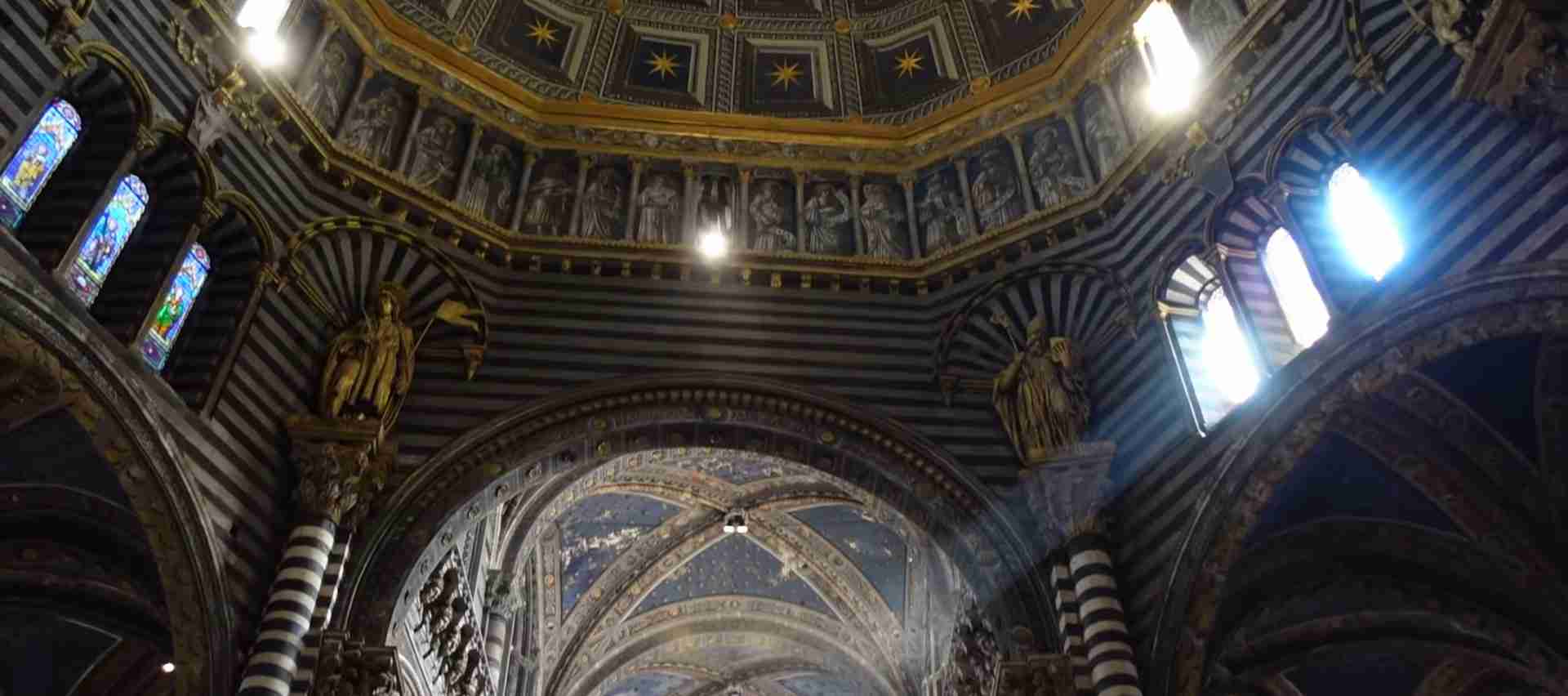
Siena’s greatest treasures extend far beyond Piazza del Campo and the famous Duomo complex, revealing themselves through medieval gardens with panoramic city views, accidentally discovered cathedral crypts preserving 13th-century frescoes, and neighborhood courtyards where authentic contrada culture flourishes away from tourist crowds. This comprehensive guide unveils the secret spots, overlooked museums, and local favorites that transform surface-level Siena visits into deeper explorations of Tuscany’s most perfectly preserved medieval city.
Key Takeaways: Discovering Siena’s Secret Treasures
- Orto de’ Pecci medieval garden provides one of Siena’s finest panoramic viewpoints showing the Torre del Mangia and historic skyline, located just 200 meters outside Porta Tufi with free park access, resident animals including donkeys and peacocks, and an attached restaurant serving authentic Tuscan cuisine away from tourist pricing
- The Cathedral crypt discovered accidentally in 1999 contains 180 square meters of remarkably preserved 13th-century frescoes depicting biblical narratives in vivid colors, accessible only through OPA Si Pass tickets that include the entire Duomo complex
- Santa Maria della Scala complex opposite the Duomo operated as one of Europe’s oldest hospitals for over 900 years until the 1980s, now functioning as a museum displaying Sienese art masterpieces, archaeological collections, and Pellegrinaio Hall frescoes showing medieval hospital life
- Fontebranda fountain in the northwestern district represents Siena’s oldest functioning water source from 1246, intimately connected to Saint Catherine’s childhood neighborhood and demonstrating medieval urban water engineering through its triple-arched Gothic brick structure
- Contrade museums scattered throughout Siena’s 17 neighborhood territories offer free or low-cost access to authentic local culture, displaying historical costumes, Palio victory banners, and community archives revealing how these medieval allegiances shape contemporary Sienese identity
- The “Facciatone” panorama platform atop the New Cathedral’s unfinished facade provides 360-degree views across Siena’s terracotta rooftops and surrounding Tuscan countryside after climbing 131 steps, included in standard cathedral complex tickets but overlooked by most visitors concentrating on the main Duomo
People Also Ask About Siena Hidden Gems
What is the best hidden viewpoint in Siena?
Orto de’ Pecci garden delivers Siena’s finest overlooked panoramic viewpoint, combining sweeping vistas of the medieval skyline including Torre del Mangia and the Duomo with peaceful green spaces featuring grazing animals and medieval vegetable patches. Located just 200 meters beyond Porta Tufi gate southwest of Piazza del Campo, this former agricultural commons functions as both historical site and public park with completely free access throughout daylight hours. The elevated position creates photograph-perfect compositions showing layers of terracotta rooftops cascading down Siena’s three hills, while the quiet atmosphere contrasts dramatically with crowded paid towers like Torre del Mangia. Alternative hidden viewpoints include the terrace beside San Domenico basilica overlooking the cathedral valley, the monastery garden near Sant’Agostino church, and various wall-circuit positions around Siena’s medieval perimeter accessible without fees or restricted hours.
Are there any hidden museums in Siena worth visiting?
Santa Maria della Scala museum complex opposite the Duomo ranks as Siena’s most significant overlooked cultural institution, housing extraordinary Renaissance frescoes in the Pellegrinaio Hall, underground archaeological museums displaying Etruscan and Roman artifacts, and temporary exhibition spaces occupying the former hospital wards and chapels. Despite its central location and exceptional artistic holdings including works by Domenico di Bartolo depicting medieval hospital operations, Santa Maria della Scala attracts far fewer visitors than the adjacent cathedral, creating uncrowded exploration conditions throughout most seasons. Entry costs approximately €9-11 depending on temporary exhibitions, substantially less than combined Duomo tickets while offering comparable artistic significance. The individual contrade museums scattered through Siena’s 17 neighborhoods provide even more obscure cultural experiences, typically operating limited hours but occasionally offering free access during Palio preparation periods when neighborhood pride intensifies.
What secret spots do locals visit in Siena?
Sienese residents favor the Fortezza Medicea park for evening passeggiate and weekend family gatherings, offering expansive lawns, tree-shaded walking paths, and rampart viewpoints without the tourist density concentrating around Piazza del Campo and Via di Città. The public swimming pool complex near Acquacalda district northeast of the historic center attracts locals during summer months seeking respite from heat while tourists cluster at monuments. Neighborhood bars and cafes outside the central tourist zones serve authentic Tuscan cuisine at residential pricing, particularly establishments in the Fontebranda, Porta Romana, and San Prospero areas where contrada members gather for daily social interaction. The Wednesday morning market near Fortezza Medicea functions primarily as a local shopping venue rather than tourist attraction, with vendors selling produce, clothing, and household goods to Sienese families. These authentic daily-life spaces reveal contemporary Siena beyond the museum-like historic center preservation.
Can you visit the Cathedral crypt separately from the main Duomo?
No, the Cathedral crypt cannot be visited independently and requires purchasing either the basic Cathedral ticket (€8) or the comprehensive OPA Si Pass (€18+) that grants access to the entire complex including cathedral, Piccolomini Library, baptistery, crypt, museum, and Facciatone panorama. The crypt’s 1999 rediscovery and subsequent restoration positioned it as an integral component of the cathedral visiting experience rather than a standalone attraction, with its 13th-century frescoes providing crucial context for understanding Siena’s medieval artistic development. Visitors enter the crypt through interior cathedral passages rather than separate exterior entrances, necessitating cathedral admission regardless of interest only in the underground chambers. The combination ticket system actually benefits visitors by encouraging comprehensive exploration of multiple related sites rather than fragmenting the artistic and architectural narrative across separate admissions, though it prevents crypt-only visits for travelers with limited time or budgets.
Extended multi-day tours – 5+ days
Featured Siena Multi-Day Tour Packages

3 days
The Essence of Tuscany: Florence & Tuscany in 3 Days
- ✓ Comprehensive Siena tour
- ✓ Expert local guides included
- ✓ All accommodation arranged
- ✓ Transportation provided
3 days
3-Day Tuscany Highlights Tour: Explore Pisa, San Gimignano, Siena, and Florence
- ✓ Booking needs min. 2 travelers
4 days
Siena & Wine
- ✓ Comprehensive Siena tour
- ✓ Expert local guides included
- ✓ All accommodation arranged
- ✓ Transportation provided

6 days
Timeless Tuscany: A Tuscan Villa Experience
- ✓ Comprehensive Siena tour
- ✓ Expert local guides included
- ✓ All accommodation arranged
- ✓ Transportation provided
Multi-day tour packages powered by TourRadar. Prices and availability subject to change.
Introduction: Beyond Siena’s Famous Facades
Siena’s UNESCO World Heritage designation celebrating its extraordinary medieval preservation paradoxically creates exploration challenges for curious travelers seeking experiences beyond the justifiably famous Piazza del Campo and Duomo complex. The city’s compact 1.5-kilometer historic center concentrates remarkable architecture and artistic treasures so densely that visitors following standard tourist circuits encounter continuous sensory overload while missing equally significant sites located just minutes away from main thoroughfares. Understanding which overlooked attractions reward investigation and which truly merit their obscurity requires distinguishing between genuinely hidden gems offering unique value and simply less-visited monuments overshadowed by nearby masterpieces.
The concept of “hidden gems” in Siena demands careful definition since virtually every medieval palace, neighborhood church, and narrow vicolo contains historical significance and architectural merit worthy of scholarly attention. This guide prioritizes locations and experiences meeting specific criteria: accessibility without specialized permissions or reservations, substantial aesthetic or cultural value justifying deliberate visitation rather than accidental discovery during aimless wandering, and relative freedom from tour group crowds that diminish contemplative appreciation. These parameters exclude private palace courtyards requiring resident permission, obscure museum collections with erratic opening schedules, and merely “quiet” spaces that lack intrinsic interest beyond their peaceful atmosphere. The selected hidden gems combine authentic significance with practical visitability for independent travelers allocating precious exploration hours strategically.
Siena’s layout across three hills radiating from Piazza del Campo creates natural exploration zones that most tourists never penetrate beyond the central commercial axis connecting the campo to the Duomo. The northwestern district surrounding Fontebranda fountain and San Domenico basilica, the southeastern zone beyond Porta Romana gate, and the northeastern sector approaching Sant’Agostino church each maintain distinct neighborhood characters and contain overlooked attractions rewarding deliberate investigation. The contrade system dividing Siena into 17 fiercely loyal territorial units adds another layer of hidden culture, as each neighborhood operates museums, maintains private social clubs, and displays identity markers through street decorations that reveal themselves only to attentive observers willing to stray from main tourist corridors.
Seasonal and temporal factors affect hidden gem accessibility and atmosphere significantly throughout the year. Summer months bring maximum tourist density to famous sites while leaving less-known attractions relatively peaceful, though afternoon heat makes extensive walking less pleasant. Spring and autumn shoulder seasons provide ideal exploration conditions with moderate crowds and comfortable temperatures for discovering distant neighborhoods and elevated viewpoints. Winter dramatically reduces visitor numbers citywide but also contracts some museum hours and closes seasonal restaurants, requiring verification of current operating schedules before planning visits to peripheral attractions. Time of day matters equally, as morning hours before 10:00 AM and late afternoons after 4:00 PM deliver optimal lighting conditions for panoramic viewpoints while avoiding midday tour group peaks at adjacent major monuments.
Orto de’ Pecci: Medieval Garden Sanctuary
Orto de’ Pecci occupies a remarkable position just 200 meters beyond Porta Tufi gate in Siena’s southwestern district, functioning as a preserved medieval agricultural commons that once supplied produce to the city’s hospital system and now serves as a public park combining historical interpretation, community gathering space, and outstanding panoramic viewpoints. The garden’s full Italian name “All’Orto de’ Pecci” reflects its historical association with the Pecci family and the broader network of urban gardens that sustained Siena’s population during medieval and Renaissance periods. Walking from Piazza del Campo requires only 10-15 minutes descending through the Pantera (Panther) contrada territory via Via di Pantaneto and exiting through the ancient gate, yet this brief journey transports visitors from tourist-dense streets to genuinely peaceful agricultural landscapes where chickens, donkeys, peacocks, and goats graze freely.
The garden stretches across several terraced levels following the hillside’s natural slope, with manicured lawn areas suitable for picnicking alternating with working vegetable plots demonstrating traditional Tuscan cultivation methods using heritage seed varieties. Medieval fruit orchards containing apple, pear, and fig trees occupy the garden’s edges, their seasonal blooms and harvests marking agricultural rhythms that have governed this land for eight centuries. A small goldfish pond near the main entrance provides focal interest for children while adults appreciate the carefully maintained flower beds displaying roses, lavender, and native Tuscan wildflowers. The restaurant All’Orto de’ Pecci operates within the garden complex, occupying a low stone building with outdoor terrace seating that serves authentic cucina toscana at prices reflecting local rather than tourist demographics, with full pranzo meals costing €15-22 per person including primi, secondi, and house wine.
The panoramic views from Orto de’ Pecci’s elevated southern edge rank among Siena’s finest unrestricted vantage points, showcasing the complete medieval skyline including Torre del Mangia’s distinctive crown, the Duomo’s striped campanile, and the layered terracotta rooftops cascading across the three historic hills. The perspective differs fundamentally from paid tower viewpoints like Torre del Mangia or the Facciatone, as Orto de’ Pecci sits outside the city walls looking inward across the entire centro storico rather than viewing outward from within. This external position creates photographic compositions impossible to achieve from interior monuments, particularly effective during golden hour when western sun illuminates the eastern-facing historic center facades. Amateur and professional photographers favor early morning sessions when mist often fills the valley between the garden and the city walls, creating ethereal atmospheric effects unique to this location.
Accessing Orto de’ Pecci requires no admission fee, advance reservation, or restricted visiting hours beyond standard park conventions of sunrise to sunset availability. The informal nature means no ticketing infrastructure, guided tour pressure, or time limits constrain exploration, allowing visitors to spend 20 minutes capturing photographs or three hours enjoying picnic lunches and reading beneath shade trees according to personal preference. The restaurant functions independently from the garden with its own operating hours typically 12:00 PM-3:00 PM for lunch and 7:00 PM-10:00 PM for dinner, closed Mondays, though the garden itself remains accessible continuously. Winter months see reduced local usage but the garden never formally closes, providing year-round refuge for travelers seeking escape from the historic center’s intensity.
The cultural significance extends beyond mere scenic beauty, as Orto de’ Pecci represents Siena’s medieval agricultural self-sufficiency systems that enabled the independent republic to survive prolonged sieges and political isolation. Understanding how urban gardens integrated with hospital operations, monastic communities, and wealthy family estates illuminates the practical foundation supporting Siena’s artistic and political achievements during its golden age. The preservation of working cultivation plots rather than converting the entire space to decorative parkland demonstrates continuing commitment to maintaining living history rather than creating sterile monument landscapes. Local families using Orto de’ Pecci for weekend gatherings, elderly couples conducting daily walks, and children playing on the lawns create authentic contemporary usage that connects past and present more organically than most formal museums manage.
Cathedral Crypt: Rediscovered Medieval Masterpiece
The Siena Cathedral crypt languished forgotten beneath the Duomo’s floor for over 700 years until accidental discovery during 1999 restoration work revealed 180 square meters of extraordinarily preserved 13th-century frescoes covering walls, columns, and vaulted ceilings in what constitutes one of medieval Italy’s most significant recent archaeological finds. The crypt’s original construction during the mid-1200s predates the current cathedral’s completion, serving as foundation level for the ambitious Romanesque-Gothic structure rising above. Subsequent building phases buried and sealed the crypt completely, preserving the frescoes in near-perfect condition through centuries of darkness while the elaborate marble floor and Renaissance artworks overhead attracted millions of visitors completely unaware of the treasure lying beneath their feet.
The fresco cycle depicts biblical narratives from both Old and New Testaments with vivid colors maintaining remarkable intensity despite their age, created by anonymous Sienese artists whose technical mastery demonstrates the sophisticated painting traditions flourishing in mid-13th-century Tuscany before Duccio and Simone Martini achieved international fame. Scenes include the Passion of Christ with detailed Crucifixion and Resurrection sequences, episodes from the life of the Virgin Mary, and various prophets and saints arranged in narrative progression around the crypt’s perimeter. The artistic style reveals Byzantine influences common to pre-Renaissance Italian painting while also showing movement toward the greater naturalism that would characterize Sienese School innovations during subsequent decades. Art historians consider the crypt frescoes crucial evidence for understanding the transitional period between rigid medieval conventions and the humanistic approaches emerging in early 14th-century Siena.
Physical access to the crypt occurs through interior cathedral passages near the main entrance, with directional signage guiding visitors down stone staircases into the underground chambers illuminated by carefully positioned spotlights that enhance the frescoes’ colors without causing conservation damage. The intimate scale creates dramatically different atmospheric experiences compared to the cathedral’s vast nave overhead, with low vaulted ceilings and narrow spaces fostering contemplative silence and close examination of artistic details impossible in the main church’s grandeur. Climate control systems maintain stable temperature and humidity protecting the delicate pigments, resulting in noticeably cooler temperatures that provide welcome relief during summer months while requiring light jackets during winter visits.
Visiting the crypt requires purchasing tickets granting access to the entire cathedral complex rather than offering standalone crypt admission, positioning it within the comprehensive OPA Si Pass (approximately €18-24 depending on season and floor visibility) or the basic cathedral ticket (€8) that includes crypt access along with the main Duomo and Piccolomini Library. This integration means travelers interested primarily in the crypt must invest in broader cathedral admission, though the exceptional artistic quality throughout the complex justifies the expense for anyone appreciating medieval and Renaissance art. The crypt’s inclusion in standard tickets rather than commanding premium surcharges reflects a visitor-friendly approach prioritizing accessibility over revenue maximization, particularly beneficial since many tourists purchase Duomo passes unaware of the crypt’s existence and discover it as an unexpected bonus enhancing their cathedral experience.
Strategic visiting timing helps avoid the crypt’s limited capacity constraints, as the underground chambers accommodate fewer simultaneous visitors than the vast cathedral nave, occasionally creating brief queues during peak midday hours. Arriving at opening time (typically 10:00 AM) or late afternoon (after 5:00 PM) provides optimal conditions for unhurried contemplation without crowding pressure. The cathedral complex requires modest dress covering shoulders and knees, enforced more strictly in recent seasons though rarely preventing entry for minor violations like sleeveless tops over which jackets can be added. Photography without flash is permitted in the crypt as throughout the cathedral complex, enabling documentation of the frescoes’ extraordinary details for later study and sharing.
Santa Maria della Scala: Historic Hospital Complex
Santa Maria della Scala occupies the entire block opposite Siena Cathedral’s main facade, functioning as one of Europe’s oldest continuously operating hospitals from the 9th century through 1980s before conversion into a vast museum complex preserving Sienese artistic treasures, archaeological collections, and architectural spaces demonstrating medieval healthcare and charitable operations across a millennium of service. The hospital’s strategic location on the Via Francigena pilgrimage route connecting Canterbury to Rome positioned it as a crucial waystation where exhausted pilgrims, abandoned infants, and sick travelers received care regardless of ability to pay, embodying Christian charitable ideals while simultaneously serving the Sienese Republic’s civic welfare objectives. The scale rivals major cathedral complexes, with multiple levels extending both above and below ground level, interconnected chapels and wards, administrative halls covered with instructional frescoes, and storage areas now converted to exhibition galleries.
The Pellegrinaio Hall represents Santa Maria della Scala’s artistic highlight, a vast rectangular ward measuring approximately 30 by 10 meters with walls completely covered by mid-15th-century fresco cycles painted by Domenico di Bartolo, Vecchietta, and other leading Sienese masters. These remarkable paintings depict the hospital’s daily operations with documentary precision rare in medieval art: nurses tending patients in tidy beds, administrators distributing charitable donations, surgeons treating wounds, and officials receiving abandoned babies at the hospital’s revolving wheel. The frescoes function simultaneously as artistic masterpieces demonstrating sophisticated Renaissance painting techniques and invaluable historical records showing medieval healthcare practices, clothing styles, architectural interiors, and social interactions with accuracy impossible to achieve from written sources alone. The vivid colors, expressive faces, and architectural perspective create immersive viewing experiences transporting observers into 15th-century Siena’s daily life.
The underground archaeological museum occupies former storage areas and cisterns beneath the hospital wards, displaying extensive Etruscan and Roman collections including funerary urns, bronze votive offerings, ceramic vessels, and architectural fragments excavated from Siena and surrounding territory. These artifacts reveal the pre-medieval settlements preceding Siena’s famous medieval flowering, demonstrating continuous occupation extending back to Etruscan times despite the city’s limited prominence during the Roman era. The cool underground galleries provide welcome temperature relief during summer months while their exhibition design using modern display cases and lighting creates dramatic presentations enhancing relatively modest archaeological objects’ visual impact. Rotating temporary exhibitions occupy additional underground spaces, frequently showcasing contemporary art installations that create thought-provoking dialogues between ancient artifacts and modern creative expressions.
Chapel and ward spaces throughout the complex preserve original architectural features including vaulted ceilings decorated with frescoed religious imagery, carved stone doorways displaying medieval craftsmanship, and small altarpieces by lesser-known Sienese painters whose works rarely achieve museum prominence despite their technical competence and devotional sincerity. The oratory of Santa Caterina della Notte contains particularly moving frescoes depicting Saint Catherine of Siena’s mystical visions and charitable works, appropriate since Catherine frequently visited Santa Maria della Scala to care for hospital patients during her lifetime. These intimate spaces offer contemplative alternatives to the grand Pellegrinaio Hall, rewarding visitors who thoroughly explore the complex’s full extent rather than limiting visits to famous highlights.
Admission to Santa Maria della Scala costs approximately €9-11 depending on active temporary exhibitions, substantially less than combined cathedral complex tickets while offering comparable artistic significance and considerably less crowding. The museum operates standard hours typically 10:30 AM-6:30 PM with variations by season and occasional Monday closures, requiring verification of current schedules particularly during winter months. The entrance faces Piazza del Duomo directly opposite the cathedral’s main facade, creating convenient combination visits though the artistic density in both institutions argues for allocating separate days to each rather than attempting rushed coverage of both in single afternoons. Modest dress codes apply as with all Siena religious sites though enforcement is minimal, and photography without flash is permitted throughout most galleries enabling documentation of the extraordinary Pellegrinaio frescoes.
Fontebranda: Medieval Water Source
Fontebranda fountain occupies a prominent position in Siena’s northwestern Fontebranda district named for this crucial water source, functioning as the city’s oldest surviving public fountain constructed in its current Gothic brick form during 1246 though water engineering at this location dates to earlier centuries. The fountain’s distinctive three-arched facade creates architectural drama rare among utilitarian infrastructure, with each arch originally serving separate functions: the highest arch for drawing drinking water into vessels, the middle arch for watering horses and livestock, and the lowest arch for washing clothes and other heavy water usage that might contaminate drinking supplies. This sophisticated separation demonstrates medieval Siena’s advanced understanding of sanitation and public health decades before many European cities recognized water quality’s importance for preventing disease outbreaks.
The fountain’s intimate connection to Saint Catherine of Siena adds spiritual significance to its practical engineering achievement, as Catherine grew up in the Fontebranda neighborhood and tradition holds she drew water from this fountain during her childhood and early adult life before entering the Dominican tertiary order. Pilgrims visiting sites associated with Catherine’s life include Fontebranda as an essential stop alongside her birthplace house and the Basilica di San Domenico containing her relics. The fountain thus functions simultaneously as working public infrastructure (locals still occasionally fill water bottles from its spouts), historical monument demonstrating medieval urban planning, and pilgrimage destination connecting physical landscape to spiritual biography. This layered significance creates richer appreciation than monuments serving single purposes.
The architectural details reward close examination, particularly the carved stone reliefs decorating the brick structure and the sophisticated interior vaulting visible through the three arched openings. The continuous flow of water from multiple spouts maintains the fountain’s function across eight centuries, supplied by the same underground springs that originally motivated construction at this precise location. The sound of falling water creates pleasant acoustic atmosphere contrasting with the relative quiet of this residential neighborhood located away from commercial tourist zones. The small piazza surrounding Fontebranda includes benches where visitors rest while contemplating the fountain’s enduring presence, imagining centuries of Sienese residents conducting daily water collection rituals at this exact spot.
Reaching Fontebranda requires a 10-15 minute walk northwest from Piazza del Campo descending through the Onda (Wave) contrada territory via Via di Fontebranda, passing local bars and small shops serving neighborhood residents rather than tourists. The route itself provides cultural value as one of few remaining authentically residential zones within the historic center, where laundry hangs from upper-floor windows and elderly residents conduct daily shopping at corner groceries perpetuating lifestyles largely extinct in Siena’s more tourist-dominated districts. The Basilica di San Domenico rises on the hilltop immediately above Fontebranda, enabling efficient combination visits to the fountain, the basilica containing Saint Catherine’s relics, and the adjacent overlook terrace providing outstanding free views toward the Duomo across the intervening valley.
The fountain operates continuously without admission charges, restrictions, or formal visiting hours, accessible at any time visitors wish to seek it out. The lack of commercial development or organized tour infrastructure maintains authentic atmosphere rare among Siena’s major historical sites, though this also means no explanatory signage beyond basic plaques identifying the structure’s name and construction date. Independent travelers comfortable with unmediated historical experiences appreciate Fontebranda’s understated presentation, while those preferring comprehensive interpretation may find the minimal context frustrating. Photographing the fountain’s Gothic arches framed by surrounding medieval buildings creates compositions capturing Siena’s architectural cohesion, particularly effective during late afternoon when western sun illuminates the brick facade’s warm tones against shadowed background buildings.
Contrade Museums and Neighborhood Culture
Siena’s 17 contrade (neighborhood districts) each maintain private museums displaying their unique histories, Palio racing traditions, and community identities through collections of historical costumes, victory banners, photographs documenting century of competitions, ceremonial objects used in neighborhood rituals, and archived documents recording internal governance and social activities. These small museums occupy converted spaces within each contrada’s social club headquarters or affiliated buildings, typically consisting of 2-4 rooms containing display cases, walls hung with silk Palio banners won across decades, and explanatory materials (primarily Italian language) describing that specific neighborhood’s characteristics and achievements. Access policies vary dramatically by contrada, with some operating regular weekend hours charging €2-4 admission, others opening only by appointment or during Palio preparation weeks, and a few remaining effectively private clubs rarely welcoming non-members.
The Museo della Tartuca (Tortoise contrada) represents one of the most accessible and professionally curated contrade museums, located in Via Tommaso Pendola occupying a restored medieval building with climate-controlled display spaces and descriptive panels available in English alongside Italian. The collection documents Tartuca’s 11 Palio victories since 1600, displaying the distinctive yellow and blue silk banners painted by renowned artists commissioned specifically for each race. Historical costumes worn by drummers, flag bearers, and jockeys during the pre-race historical parade demonstrate the elaborate attention to period accuracy demanded by Sienese tradition. Photographs spanning the 20th century show evolving neighborhood demographics, urban changes affecting Tartuca territory, and social gatherings reinforcing community bonds independent of Palio competition. The museum typically opens Saturday and Sunday afternoons 3:00 PM-6:00 PM during spring through autumn, closing during winter months.
The Torre (Tower) contrada museum occupies rooms above its social club headquarters near Porta Romana, displaying one of Siena’s finest collections of historical Palio memorabilia including banners from Torre’s 5 victories between 1700-2000. The neighborhood’s relatively modest racing record compared to more successful contrade like Oca or Lupa paradoxically creates more intimate museum atmosphere, as fewer visitors discover this location and remaining collection pieces receive greater individual attention than they might in larger institutions. The social club bar visible through internal windows provides glimpses into authentic contrada daily life as neighborhood members gather for coffee, card games, and conversations planning upcoming events. Access typically requires advance contact via email or phone requesting visiting appointments, though during June and August weeks preceding Palio races the museum often opens spontaneously as neighborhood activity intensifies.
The Oca (Goose) contrada museum benefits from Oca’s exceptional Palio success with over 60 victories making it one of Siena’s most frequently winning neighborhoods, creating extensive banner collections spanning four centuries of racing history. Located in Via del Castoro in the southeastern historic district, the museum occupies the entire second floor of Oca’s social club building with rooms dedicated to different historical periods and thematic displays showing costume evolution, jockey equipment development, and changing artistic styles in commissioned Palio banners. The neighborhood’s pride in its racing heritage translates to particularly enthusiastic volunteer docents who often provide impromptu tours explaining displayed objects and recounting legendary race moments with theatrical flair. Operating hours tend toward weekend afternoons though schedules remain flexible, with the best visiting strategy involving inquiry at the ground-floor bar where members can confirm current accessibility.
Understanding contrade culture deepens appreciation for these museums beyond simple collections of old banners and costumes, as the objects represent living traditions still governing significant aspects of contemporary Sienese identity. Contrada membership passes through families across generations, determining neighborhood loyalty, social relationships, marriage patterns, and political allegiances that shape local elections and civic affairs. The territorial boundaries defining each contrada have remained essentially unchanged since medieval times, preserved through street plaques marking borders, ceramic emblems mounted on buildings, and metal fountain decorations displaying each neighborhood’s symbolic animal. Walking between contrade while observing these identity markers transforms aimless wandering into cultural interpretation, revealing the invisible network of loyalties underlying Siena’s surface tourism veneer.
Visiting contrade museums during non-Palio periods enables quiet contemplation of displayed materials without the frenetic energy characterizing the weeks surrounding July and August races when neighborhoods mobilize completely for competition. However, timing visits during Palio preparation weeks (late June and early August) provides extraordinary cultural access as private dinners, flag-throwing practices, and blessing ceremonies occur in streets and squares throughout participating neighborhoods. Museums may open spontaneously with extended hours as contrada members gather to view historical banners inspiring current competitors, creating opportunities for conversations with locals explaining neighborhood traditions and racing strategies. This dual timing strategy—visiting some contrade during quiet periods for contemplative museum experiences and others during Palio weeks for immersive cultural participation—optimizes the hidden gems potential these overlooked institutions offer.
Facciatone Panorama: Cathedral’s Unfinished Ambition
The Facciatone panorama platform occupies the top of Siena Cathedral’s “New Cathedral” facade, the massive unfinished extension begun in 1339 intending to double the Duomo’s size before the Black Death of 1348 halted construction permanently and subsequent structural instability forced abandonment of the ambitious expansion project. The surviving exterior walls rising to full height create dramatic visual presence beside the completed cathedral, their incomplete state revealing medieval construction techniques through exposed brick courses and empty window openings never filled with glass or decorative elements. The climbing passage ascends 131 steps through the hollow wall interior, emerging onto a platform perched approximately 50 meters above Piazza del Duomo with 360-degree views encompassing Siena’s complete historic center, Fortezza Medicea, surrounding countryside, and distant hills extending toward San Gimignano and Chianti wine regions.
The panoramic perspective differs fundamentally from Torre del Mangia’s viewpoint across Piazza del Campo, as the Facciatone positions viewers amid the cathedral complex looking outward across the entire city rather than standing at the civic center looking toward religious monuments. The elevation slightly exceeds Torre del Mangia’s platform, providing marginally extended visible radius while the Facciatone’s location on the historic center’s southeastern edge creates compositional opportunities showing how Siena’s three hills converge toward the campo depression. The unfinished wall architecture creates dramatic foreground elements for photographs, with Gothic arches framing distant landscape views and exposed brickwork adding textural interest impossible in completed tower structures. Serious photographers favor golden hour sessions when low-angle sunlight illuminates terracotta rooftops and casts long shadows defining architectural details across the cityscape.
Access to the Facciatone requires purchasing comprehensive cathedral complex tickets (OPA Si Pass at approximately €18-24) rather than standalone panorama admission, bundling the viewpoint with cathedral, crypt, baptistery, and museum entries. This integration means budget-conscious travelers prioritizing only panoramic views pay substantially more than the €5 Torre del Mangia climb despite the Facciatone delivering arguably superior photographic opportunities. However, visitors already planning complete cathedral complex exploration gain the viewpoint essentially free as part of their comprehensive ticket, while those purchasing basic cathedral tickets (€8) can upgrade to full passes for modest additional cost if impressed by the Duomo’s interior artistry. The ticket structure encourages thorough cathedral complex coverage rather than cherry-picking individual components, benefiting travelers allocating sufficient time for Siena’s premier artistic monument.
The climbing experience itself provides historical interest through passage within the medieval wall structure, with visible construction techniques including brick bonding patterns, wooden beam insertions, and internal scaffolding attachment points revealing how 14th-century masons built such ambitious monuments without modern equipment. The relatively narrow spiral staircases demand single-file traffic during busy periods, occasionally creating brief bottlenecks when ascending and descending streams meet. Physical fitness requirements remain moderate despite 131 steps, as regular landing platforms provide rest opportunities and the climb’s distribution across multiple staircase sections prevents the unrelenting vertical ascent characterizing some Italian tower experiences. The platform area at the summit accommodates approximately 20-30 people comfortably, rarely reaching capacity except during peak summer afternoon hours when combination with other tour group activities creates temporary crowding.
The Facciatone’s relative obscurity compared to Torre del Mangia stems partially from its integration within cathedral complex tickets rather than standalone prominence, and partially from visitor psychology favoring the famous civic tower over an architectural afterthought despite the superior views. Many tourists purchasing cathedral passes remain unaware the ticket includes panorama access, discovering the Facciatone only through accidental observation of directional signs or recommendations from cathedral staff. This creates paradoxical situations where the less-crowded viewpoint offering better photography opportunities gets overlooked in favor of the queue-plagued alternative tower. Savvy travelers prioritize the Facciatone for quality panoramas while accepting they must invest in comprehensive cathedral admission, then treat Torre del Mangia as optional supplementary experience if time and energy permit rather than the default primary viewpoint choice.
Lesser-Known Churches Beyond San Domenico
Siena’s religious architecture extends far beyond the famous Duomo and the free Basilica di San Domenico, encompassing dozens of parish churches, monastic chapels, and former oratories displaying Gothic facades, Renaissance altarpieces, and Baroque renovations that would constitute major attractions in less art-dense cities. The Basilica di San Francesco occupies a commanding hilltop position in the southeastern historic district, its 13th-century Gothic structure housing important Sienese School frescoes though centuries of modifications, war damage, and 20th-century restorations diminished its medieval character compared to better-preserved contemporaries. The interior features a vast single nave characteristic of mendicant order architecture, with side chapels containing frescoed cycles by Ambrogio and Pietro Lorenzetti showing scenes from Franciscan saints’ lives. The basilica operates free admission during standard church hours (typically morning 7:30 AM-12:00 PM and afternoon 3:30 PM-7:00 PM), attracting minimal tourist traffic despite its artistic holdings and historical significance.
The Church of Sant’Agostino serves the northeastern contrade from its elevated position near Porta San Marco, representing another medieval monastic foundation extensively renovated during the 17th and 18th centuries when Baroque aesthetics supplanted original Gothic severity. The interior frescoes by Francesco di Giorgio Martini, Ambrogio Lorenzetti, and other Sienese masters justify investigation for anyone systematically studying the city’s artistic development, while the relative visitor scarcity creates contemplative atmosphere impossible at the perpetually crowded Duomo. The adjacent Piccolomini altarpiece by Perugino demonstrates Renaissance artistic exchanges between Siena and Umbria, positioned in a side chapel easily overlooked during cursory visits. The church maintains irregular opening hours dependent on available custodian volunteers, generally accessible mornings before noon but requiring flexible timing and potential return attempts if finding doors locked during initial visits.
Santa Maria in Provenzano occupies the Giraffe contrada’s heart near Piazza Matteotti, its imposing Baroque facade contrasting dramatically with Siena’s predominantly Gothic architectural character. The church serves as goal finish line for the July 2nd Palio race dedicated to the Virgin of Provenzano, drawing immense crowds during race days but remaining peaceful during ordinary periods. The interior houses the venerated 15th-century terracotta bust of the Madonna di Provenzano whose purported miraculous properties inspired the church’s construction and the July Palio’s dedication to her feast day. The ornate Baroque decorations create opulent atmosphere unusual in typically austere Sienese churches, offering stylistic contrast valuable for understanding how Counter-Reformation artistic preferences infiltrated even fiercely independent republican Siena. Free admission during standard hours (morning 7:00 AM-12:30 PM and afternoon 3:00 PM-7:00 PM) with no special restrictions encourages spontaneous visits when passing through this well-located neighborhood.
The Santuario di Santa Caterina preserves the Benincasa family home where Catherine of Siena was born in 1347, transformed during subsequent centuries into an extensive sanctuary complex containing Catherine’s childhood bedroom, family kitchen, small oratory where she experienced mystical visions, and portrait gallery displaying artistic interpretations of the saint across five centuries. The sanctuary functions more as pilgrimage destination than artistic monument, attracting Catherine devotees seeking spiritual connection to one of Catholicism’s most influential female saints and Italy’s patron saint. However, the preserved medieval domestic architecture provides rare glimpse into 14th-century Sienese residential life, with low-ceilinged rooms, narrow staircases, and simple furnishings demonstrating the modest circumstances of Catherine’s dyer merchant family. Free admission throughout daylight hours makes this accessible to casual visitors curious about Catherine’s historical context beyond the famous Basilica di San Domenico relics, located just five minutes walking from the basilica creating easy combination visits.
These lesser-known churches collectively reveal Siena’s religious fabric extending beyond isolated artistic masterpieces into comprehensive network of neighborhood worship centers, monastic institutions, and pilgrimage sites that shaped civic life across centuries. Understanding how parish churches anchored contrada identities, how mendicant orders influenced urban development patterns, and how Marian devotion manifested through specific church dedications provides sociological context enriching visits to famous monuments by positioning them within broader religious culture rather than treating them as isolated aesthetic objects. The free or minimal-cost access encourages exploratory visiting across multiple sites, gradually building comprehensive understanding impossible through single-monument concentration regardless how spectacular individual examples might be.
Secret Courtyards and Urban Oases
Siena’s dense medieval urban fabric conceals numerous semi-private courtyards, small gardens, and quiet piazzas that interrupt the overwhelming architectural intensity with breathing spaces offering rest, contemplation, and glimpses into residential life beyond the tourist veneer. The Chiostro di San Domenico (San Domenico Cloister) adjacent to the Basilica di San Domenico provides one such refuge, a simple arcaded courtyard with central well accessible through side entrances from the basilica interior. The bare brick walls and exposed timber roof beams demonstrate Cistercian aesthetic restraint characteristic of Dominican architecture, creating meditative atmosphere enhanced by the courtyard’s quiet isolation from street traffic. Free access during basilica opening hours (typically 7:30 AM-6:30 PM) encourages brief contemplative pauses during neighborhood exploration, particularly valuable during summer heat when the shaded arcade offers temperature relief.
The small piazza before Santa Maria in Provenzano church creates unexpected openness in the northeastern district’s tight medieval streets, its irregular shape accommodating market activities, contrada gatherings, and simple resting for residents and observant visitors discovering this neighborhood focal point. The Giraffe contrada fountain occupies one corner displaying the neighborhood’s distinctive giraffe emblem, while elderly locals occupy benches beneath shade trees conducting daily social rituals that have governed this space for generations. The absence of cafes or commercial establishments maintains authentic residential character rare in tourist-accessible areas, though this also means no services for travelers seeking refreshments or facilities. The piazza functions best as waypoint during broader neighborhood exploration rather than standalone destination, providing context for understanding how contrade organize their territories around symbolic centers reinforcing community identity.
The Vicolo dell’Oro (Golden Alley) connecting Via di Città to Via Banchi di Sopra demonstrates how even Siena’s narrowest passages contain architectural interest, its medieval buildings leaning so close together that second-floor residents could theoretically pass objects between windows spanning the vicolo. The name derives from medieval goldsmith shops once concentrated along this passage, their secure location deep within the urban fabric protecting valuable inventory while the narrow access restricted potential thieves’ escape routes. Contemporary residential usage transforms the vicolo into living history where laundry lines, potted plants, and modern plumbing modifications overlay medieval structural bones without entirely obscuring their character. Wandering such passages reveals Siena’s three-dimensional complexity, as main thoroughfares connect through networks of steep stairs, covered walkways, and alleyways creating multiple navigation options that defeated enemy armies attempting to penetrate the city’s defensive core.
The courtyard at Palazzo Chigi-Saracini hosts the prestigious Chigiana Musical Academy in a restored Gothic palace displaying extraordinary architectural details including frescoed ceilings, carved stone doorways, and a small museum displaying musical instruments and portraits of historical academy performers. While the palace interior requires advance arrangements for formal tours, the entrance courtyard remains publicly accessible during weekday office hours, allowing brief glimpses of aristocratic architectural grandeur substantially grander than the austere merchant palaces dominating most Sienese streetscapes. The academy occasionally presents free concerts in the palazzo’s performance spaces, with schedules posted at the entrance and on the institution’s website, providing rare opportunities to experience Renaissance palace interiors in their intended cultural context rather than as empty museums.
Discovering these hidden urban spaces requires willingness to explore beyond marked tourist routes, accepting that not every passage leads to spectacular discoveries but the accumulated experiences of penetrating Siena’s medieval maze create authentic urban appreciation impossible through exclusive concentration on famous monuments. The best strategy involves allocating specific exploration time without rigid itineraries, wandering through unfamiliar contrade while maintaining general directional awareness preventing complete disorientation. Carrying offline maps or enabling phone location services provides security against getting genuinely lost while still permitting exploratory freedom. The hidden courtyards and quiet piazzas reward patient observers who pause to notice architectural details, watch local interactions, and absorb atmospheric qualities rather than rushing toward next scheduled attraction.
Seasonal Events and Temporary Exhibitions
Siena’s cultural calendar extends beyond the famous July and August Palio races to encompass numerous seasonal festivals, temporary art exhibitions, and neighborhood celebrations that reveal hidden aspects of local culture unavailable during ordinary visiting periods. The Settimana Musicale Senese (Siena Music Week) occurs annually during late July and early August, presenting classical concerts in historic churches, palazzo courtyards, and outdoor piazzas throughout the city. While major performances at prestigious venues require ticket purchases, the festival includes numerous free concerts at smaller churches and public spaces, particularly afternoon recitals showcasing conservatory students and emerging professional musicians. These musical events populate lesser-known locations like Sant’Agostino church, Loggia della Mercanzia, and various contrada museums with temporary performance setups, providing cultural access to spaces normally locked or underutilized.
The Siena Jazz International Summer Workshop transforms the city each July into a global jazz education hub, bringing hundreds of students and professional musicians for intensive master classes, ensemble rehearsals, and evening performances. While the formal workshop requires enrollment and tuition, the associated concerts and jam sessions occur at bars, clubs, and outdoor venues throughout the historic center and peripheral neighborhoods, creating impromptu musical discoveries for attentive wanderers. The jazz festival’s international character introduces cosmopolitan energy contrasting with Siena’s typically provincial atmosphere, particularly evident in the late-night sessions at venues outside the tourist core where local jazz enthusiasts mingle with visiting musicians in authentic cultural exchanges.
Temporary art exhibitions at Santa Maria della Scala occupy converted hospital wards and underground galleries with rotating contemporary art installations, archaeological special displays, and historical photography retrospectives. These exhibitions change every 3-6 months, requiring verification of current programming before visits but potentially offering unique cultural experiences unavailable during other seasons. The museum’s flexible exhibition spaces accommodate projects ranging from multimedia installations to traditional painting surveys, frequently highlighting Tuscan artists maintaining the region’s creative traditions through contemporary media. Combined tickets typically bundle temporary exhibitions with permanent collections for marginally higher prices than base admission, encouraging comprehensive coverage of the entire complex rather than limiting visits to famous Pellegrinaio frescoes.
The contrade organize numerous private celebrations and public events throughout the year beyond the Palio races, including baptisms, weddings, saint feast days, and internal competitions that structure neighborhood social calendars. While many events remain genuinely private reserved for contrada members, some celebrations welcome respectful outside observers who happen upon activities while exploring. The blessing of horses ceremonies occurring in each competing contrada’s church on Palio mornings create particularly atmospheric scenes as neighborhood members pack their parish churches while jockeys and horses receive religious sanctification before racing. These brief ceremonies (typically 15-20 minutes) occur between 8:00-10:00 AM on race days, accessible to anyone arriving early and observing from rear pews without interfering with the emotional rituals unfolding at the altars.
Planning visits to coincide with specific cultural events requires advance research through Siena tourism office resources, individual institution websites, and local event calendars published in Italian-language newspapers and online platforms. The flexible approach accepts that spontaneous discoveries often exceed pre-planned itineraries in delivering authentic cultural encounters, as stumbling upon neighborhood festivals, impromptu musical performances, or temporary art openings creates serendipitous experiences impossible to schedule deliberately. Balancing structured planning with exploratory flexibility optimizes both reliable access to desired attractions and openness to unexpected opportunities characterizing the most memorable travel experiences.
Practical Strategies for Hidden Gem Exploration
Successfully discovering Siena’s hidden gems requires strategic time allocation balancing famous attractions demanding scheduled visits against flexible exploration enabling spontaneous discoveries in overlooked neighborhoods and quiet monuments. A recommended approach dedicates structured morning hours to ticketed attractions like the Duomo complex or Palazzo Pubblico museum where advance planning maximizes limited time and avoids queue frustrations, then allocates afternoon and early evening hours to unscheduled wandering through peripheral districts where hidden gems concentrate. This rhythm respects the reality that major monuments justify their fame through exceptional quality while acknowledging that comprehensive Siena understanding requires moving beyond these concentrated tourism zones into authentic neighborhood contexts.
Comfortable walking shoes become essential equipment for hidden gem hunting, as Siena’s steep hills, uneven cobblestones, and extensive distances between dispersed attractions create physical demands exceeding flat urban sightseeing. The elevation changes separating Fontebranda district from Sant’Agostino area or the Duomo zone from Orto de’ Pecci garden involve substantial climbing and descending that accumulates across full exploration days. Water bottles, sun protection, and layered clothing addressing Siena’s dramatic daily temperature swings (cool mornings and evenings, hot midday hours during summer) prevent discomfort derailing planned exploration. Small backpacks distribute weight better than shoulder bags during extended walking while accommodating purchases from artisan shops and picnic supplies for consuming in gardens and quiet piazzas.
Language capabilities significantly affect hidden gem accessibility, as many lesser-known attractions operate without English signage or multilingual staff available at major monuments. Basic Italian phrases requesting opening hours, admission procedures, and directional assistance enable interactions with contrada museum volunteers, church custodians, and neighborhood shopkeepers who lack English proficiency but welcome respectful foreign visitors. Translation apps providing offline functionality prove valuable when encountering information placards or asking questions requiring more sophisticated vocabulary than phrase-book basics supply. However, the genuinely hidden gems reward travelers comfortable with linguistic uncertainty, as their authentic local character stems partially from catering to Sienese residents rather than international tourism.
Photography considerations influence optimal visiting timing for viewpoint locations like Orto de’ Pecci and the Facciatone panorama, as morning light favors eastward views while afternoon/evening golden hours illuminate western perspectives. Weather patterns create additional variables, with morning fog occasionally obscuring valley landscapes while providing atmospheric effects enhancing rather than diminishing photographic interest. Serious photographers scout locations during sub-optimal lighting to identify compositional opportunities, then return during premium hours for final captures. Casual photographers benefit from simply visiting viewpoints during late afternoon (4:00-7:00 PM) when probability of good light peaks regardless of specific orientation.
Budgeting for hidden gem exploration involves minimal direct costs since many overlooked attractions charge no admission (Fontebranda, Orto de’ Pecci, most churches) while others demand modest fees (€2-4 contrada museums, €9-11 Santa Maria della Scala) substantially less than major monuments. However, the dispersed locations create indirect expenses through meal stops, refreshment breaks, and occasional taxi usage when fatigue or time constraints prevent walking between distant neighborhoods. Travelers allocating €10-20 daily for miscellaneous hidden gem costs accommodate these incidental expenses while maintaining overall budget control. The cost-benefit analysis favors hidden gem allocation since the reduced crowding, authentic atmospheres, and often superior photographic opportunities deliver satisfaction levels exceeding purely financial investment comparisons.
Frequently Asked Questions: Siena Hidden Treasures
What is the best hidden gem in Siena for avoiding crowds?
Orto de’ Pecci garden provides Siena’s finest crowd-free hidden gem experience, combining exceptional panoramic viewpoints, peaceful green spaces with resident animals, and authentic Tuscan restaurant facilities while maintaining genuine obscurity among tourists concentrating around Piazza del Campo and the Duomo. The 200-meter walk beyond Porta Tufi gate creates psychological distance discouraging casual tourists despite minimal actual effort required, resulting in visitor densities perhaps 5-10% of nearby famous monuments even during peak summer seasons. Alternative crowd-free options include the Facciatone panorama platform where comprehensive cathedral ticket requirements deter many visitors despite superior views, and peripheral neighborhood churches like Sant’Agostino serving primarily local parishioners rather than tourist pilgrims.
Can you visit Santa Maria della Scala without visiting the cathedral?
Yes, Santa Maria della Scala operates as completely independent museum with separate admission, ticketing, and entrance from the adjacent cathedral despite their physical proximity facing Piazza del Duomo. Visitors interested exclusively in the hospital complex’s artistic and historical collections purchase Santa Maria della Scala tickets (€9-11) without investing in cathedral passes, enabling budget-conscious or time-limited travelers to prioritize this overlooked institution offering comparable artistic significance with far fewer crowds. The combination ticket bundling both attractions does not exist, requiring separate purchases if visiting both. The spatial independence means exploration sequencing remains flexible, allowing morning cathedral visits followed by afternoon Santa Maria della Scala coverage or reverse ordering according to personal preference and crowd avoidance strategies.
Are Siena’s hidden gems accessible during winter?
Most Siena hidden gems maintain year-round accessibility though with reduced hours and occasional winter closures requiring verification before planning visits during November through February periods. Orto de’ Pecci garden remains perpetually accessible as an open park though the attached restaurant closes Monday and reduces operating hours during cold months. Santa Maria della Scala museum typically maintains standard schedules with possible Monday closures and 4:00-5:00 PM winter closing times rather than 6:00-7:00 PM summer hours. Individual contrada museums operate more erratically during winter when neighborhood activity declines outside Palio preparation periods, with some suspending public access entirely until spring reopening. The major benefit of winter hidden gem exploration involves dramatically reduced tourist numbers creating solitary experiences at locations crowded during summer, though shorter daylight hours compress available exploration time.
How much time should I allocate for exploring Siena’s hidden gems?
Comprehensive hidden gem coverage requires minimum two full days beyond time allocated to famous attractions like Piazza del Campo and the Duomo complex, allowing thorough Santa Maria della Scala exploration (2-3 hours), multiple contrada museum visits (30-60 minutes each), Orto de’ Pecci garden time (1-2 hours), and extensive neighborhood wandering discovering courtyards, fountains, and lesser churches. Travelers allocating only single days to Siena should prioritize 1-2 hidden gems matching specific interests—art enthusiasts selecting Santa Maria della Scala, panorama seekers choosing Facciatone viewpoint, or cultural anthropologists investigating contrada museums—rather than attempting rushed superficial coverage of numerous sites. The flexible nature of most hidden gems rewards spontaneous allocation of found time rather than rigid scheduling, as discovering unexpectedly open contrada museums or stumbling upon neighborhood festivals creates authentic experiences impossible to mandate through advance itinerary planning.
Which hidden gem provides the best photography opportunities?
Orto de’ Pecci garden delivers Siena’s premier hidden gem photography location, offering panoramic skyline compositions impossible from interior city monuments, golden hour lighting conditions illuminating the eastern-facing historic center, and foreground interest through medieval agricultural landscapes framing background architecture. The external position looking inward across city walls creates uniquely comprehensive perspectives showing Siena’s three-hill topography, layered rooftop textures, and prominent monuments in single frames without the fragmented views characterizing tower-top vantage points. The Facciatone panorama platform provides competitive photographic opportunities with 360-degree coverage and dramatic unfinished Gothic facade foreground elements, though the elevated position sometimes diminishes architectural detail compared to Orto de’ Pecci’s more moderate elevation. Santa Maria della Scala’s Pellegrinaio Hall frescoes challenge photography through low interior lighting requiring high ISO settings or tripod stability, though the artistic masterpieces justify technical effort for serious photographers documenting Sienese art.
Do I need to speak Italian to enjoy Siena’s hidden gems?
English language capabilities enhance but don’t prevent hidden gem appreciation, as the visual and atmospheric qualities of gardens, panoramas, and architectural spaces transcend linguistic requirements while contrada museums and lesser-known churches often lack English interpretive materials. Santa Maria della Scala provides comprehensive English signage and informational panels throughout its galleries, making it fully accessible to non-Italian speakers. Orto de’ Pecci requires no language skills beyond basic directional awareness, as the garden’s appeal derives from visual and sensory experiences rather than textual interpretation. Contrada museums present greater challenges with predominantly Italian explanatory text and volunteer docents rarely speaking English, though the displayed banners, costumes, and photographs communicate neighborhood pride and racing traditions through visual impact transcending language barriers. Basic Italian courtesies (greetings, thank you, excuse me) facilitate friendly interactions with local custodians and residents encountered during neighborhood exploration regardless of deeper linguistic proficiency.
Can children enjoy Siena’s hidden gems?
Several Siena hidden gems provide excellent family-friendly experiences accommodating children’s interests and energy levels better than the crowded, artifact-dense major museums. Orto de’ Pecci garden engages children through free-roaming peacocks, friendly donkeys, chickens, and goats creating petting zoo atmosphere, plus open lawn spaces enabling active play impossible in restrictive monument settings. The restaurant’s outdoor terrace welcomes families with children more comfortably than formal dining establishments in the tourist core. The Facciatone climb appeals to adventurous children enjoying the tower-ascending experience while the summit panoramas provide orientation helping them visualize Siena’s geographic layout. Santa Maria della Scala’s underground archaeological galleries spark curiosity through ancient artifacts and mysterious subterranean passages, though the extensive Pellegrinaio frescoes depicting medical procedures may bore young children lacking art historical interest. Contrada museums’ focus on racing, competition, and colorful pageantry resonates with children’s interests more effectively than religious art museums’ spiritual content.
What is the most underrated hidden gem in Siena?
The Cathedral crypt represents Siena’s most dramatically underrated hidden gem, combining exceptional 13th-century artistic quality rivaling famous Duomo attractions overhead with near-complete tourist obscurity as most visitors focus exclusively on the main cathedral nave, Piccolomini Library, and marble floor while never discovering the extraordinary frescoed chambers beneath their feet. The 1999 rediscovery and subsequent public opening should have elevated the crypt to marquee attraction status, yet it maintains minimal profile even among travelers purchasing comprehensive cathedral tickets granting automatic access. The discrepancy between artistic significance (primary evidence for pre-Duccio Sienese painting) and visitor awareness (perhaps 20-30% of cathedral ticket holders actually descend to view the crypt) creates the definitive hidden gem paradox where exceptional value hides in plain sight at Tuscany’s second-most-visited religious monument. Correcting this undervaluation requires only descending the clearly marked staircases near the cathedral entrance rather than overlooking these passages while rushing toward the famous marble floor.
Are there any hidden food experiences in Siena?
The restaurant All’Orto de’ Pecci attached to the medieval garden provides Siena’s finest hidden culinary experience, serving authentic cucina toscana emphasizing seasonal local ingredients at prices reflecting neighborhood resident clientele (€15-22 full meals) rather than tourist-zone premiums reaching €30-40 for equivalent fare. The rustic outdoor terrace surrounded by grazing animals and vegetable plots creates atmospheric dining impossible in historic center establishments, while the family-run operation maintains traditional recipes and preparation methods increasingly rare in commercialized restaurants. The Wednesday morning market near Fortezza Medicea enables assembling picnic supplies from local vendors selling fresh produce, regional cheeses, cured meats, and artisan bread at wholesale prices substantially below tourist-oriented shops, creating budget-friendly self-catered meals consumable in Orto de’ Pecci garden or other quiet public spaces. Neighborhood bakeries, bars, and small groceries outside the central commercial zone serve local residents their daily needs, welcoming travelers seeking authentic interactions and fair pricing alongside genuinely Tuscan food culture.
How do I find out about temporary exhibitions and events at hidden gem locations?
Santa Maria della Scala publishes current temporary exhibition schedules on its official website (santamariadellascala.com) updated regularly as new shows install in converted hospital galleries, typically running 3-6 month durations before rotating to new programming. The Siena tourism office website and physical visitor center at Piazza del Duomo distribute printed monthly event calendars listing museum exhibitions, concerts, neighborhood festivals, and cultural programming across the city’s institutions. Individual contrada museums rarely maintain web presences though their parent neighborhood associations sometimes post event information on social media pages accessible through searching specific contrada names. The most reliable strategy for discovering spontaneous cultural events involves daily observation of poster boards and announcement placards at Piazza del Campo, outside popular cafes, and on church doors where organizers concentrate promotional materials targeting local audiences. Asking hotel staff, shopkeepers, and restaurant servers about current happenings occasionally uncovers neighborhood celebrations and temporary exhibitions unknown to centralized tourism information sources.