Rano Raraku 2026: The Moai Quarry Where Statues Were Born
Key Takeaways
- Rano Raraku served as the primary moai quarry where 95% of Easter Island’s 900+ statues were carved directly from volcanic tuff between 1250-1500 CE
- The volcanic crater contains 397 moai in various completion stages, from barely outlined figures to nearly finished 21-meter giants abandoned mid-carving
- Access requires Rapa Nui National Park tickets at $80 for international visitors in 2026, valid for 10 consecutive days with one Rano Raraku entry included
- Optimal visiting windows run March-May and September-November 2026 when temperatures stay 18-24°C with minimal rainfall and manageable tourist volumes
- The quarry walking circuit covers 2-3 kilometers with significant elevation changes, requiring 2.5-4 hours for comprehensive exploration including interior and exterior slopes
- Strategic timing around 7:30-9:00 AM provides ideal photography lighting on exterior slopes while afternoon visits 3:00-5:30 PM illuminate interior crater moai effectively
Introduction to Rano Raraku’s Sacred Significance
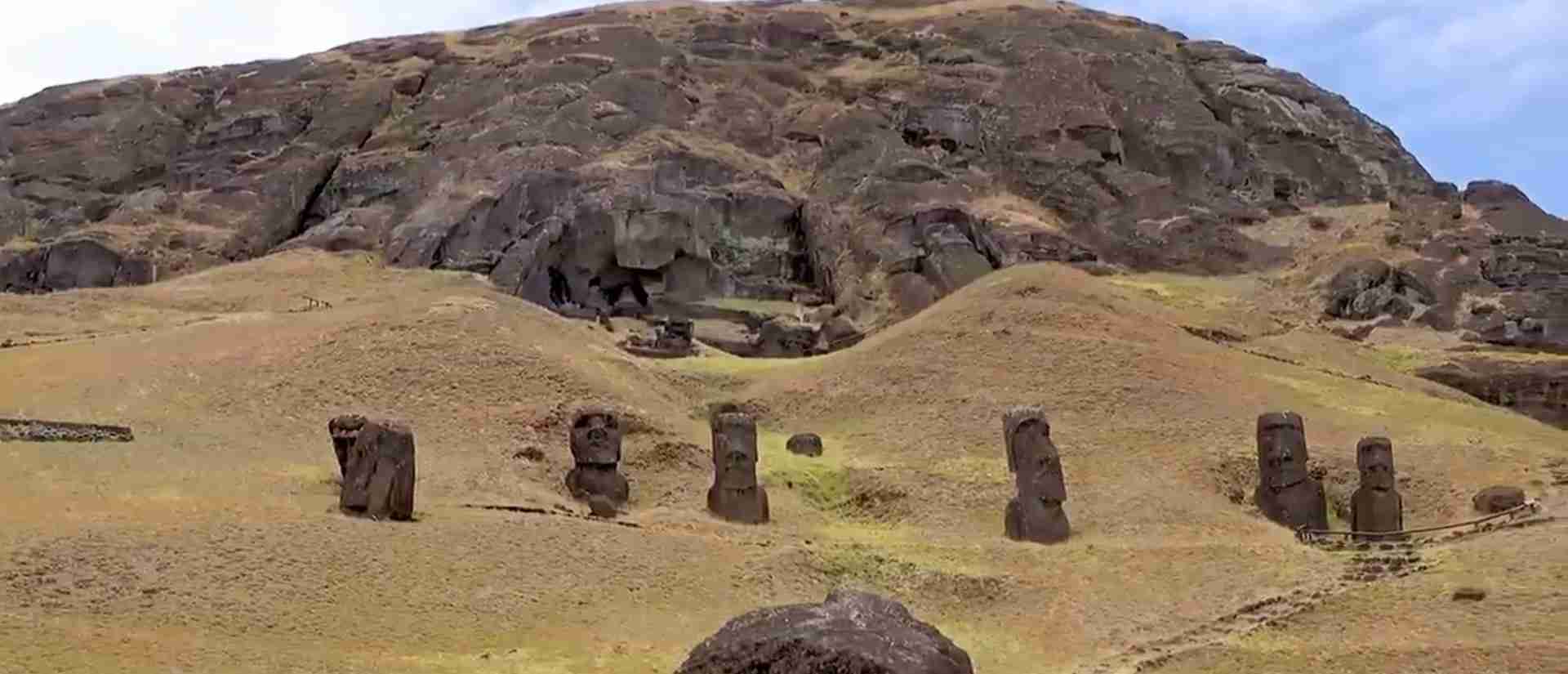
Rano Raraku stands as the birthplace of Easter Island’s most iconic legacy. This volcanic crater on the island’s southeastern coast functioned as the exclusive quarry where Rapa Nui craftsmen carved nearly every moai statue found across the island over a 250-year period. The site preserves an extraordinary archaeological record: 397 statues frozen at various stages of completion, from initial outlines barely scratched into the rock face to nearly finished colossal figures measuring 21 meters tall and weighing 200+ tons.
The crater’s volcanic tuff provided ideal carving properties—soft enough to work with basalt hand tools yet sturdy enough to support massive structures during the delicate extraction process. Rapa Nui sculptors developed sophisticated techniques here, carving figures face-down while still attached to the bedrock, then carefully separating and lowering them down the crater slopes for final finishing and transportation. This method created the surreal landscape visitors encounter today: dozens of moai heads protruding from hillsides where centuries of erosion buried their bodies, creating the mistaken impression of disembodied heads rather than complete buried statues.
Planning your 2026 Rano Raraku visit requires understanding both the site’s archaeological significance and practical logistics. The quarry sits within Rapa Nui National Park, approximately 18 kilometers from Hanga Roa along the island’s southeastern coastal road. Access regulations implemented in 2024 continue through 2026, limiting entries and requiring advance coordination with park authorities for optimal experiences. This guide provides comprehensive planning information covering costs, timing strategies, transportation options, and detailed visiting protocols to maximize your encounter with this sacred archaeological wonder.
People Also Ask About Rano Raraku 2026
How much does it cost to visit Rano Raraku in 2026?
Rano Raraku access requires Rapa Nui National Park tickets priced at $80 for international visitors in 2026 (check conaf.cl or Ma’u Henua official channels for current rates as pricing may vary). This single ticket grants 10 consecutive days of park access including one entry each to Rano Raraku, Orongo, and unlimited visits to other archaeological sites across the island. Chilean residents pay reduced rates of approximately $20-25. Children under 12 enter free when accompanied by ticket-holding adults. The park accepts cash payments in Chilean pesos, US dollars, or credit cards at the Mataveri Airport ticket office and Ma’u Henua office in Hanga Roa.
Transportation to Rano Raraku adds $60-100 per day for rental vehicles (cars, 4x4s, or motorcycles) or $120-180 for private guided tours including multiple archaeological sites. Budget-conscious travelers can join group tours at $50-80 per person covering 3-4 major sites including Rano Raraku. These prices reflect 2026 rates for Easter Island’s tourism infrastructure, which remains significantly higher than mainland Chile due to the island’s remote location and limited service providers.
When is the best time to visit Rano Raraku in 2026?
March through May 2026 provides optimal Rano Raraku visiting conditions with temperatures ranging 18-24°C, minimal rainfall averaging 80-100mm monthly, and moderate tourist volumes following peak summer crowds. September through November 2026 offers similar advantages with comfortable 17-22°C temperatures and lower precipitation before December’s summer tourist surge. These shoulder seasons deliver ideal photography lighting, manageable site congestion, and pleasant hiking conditions for the quarry’s 2-3 kilometer walking circuit.
Within each day, early morning visits 7:30-9:00 AM capture stunning side-lighting on exterior moai while temperatures remain cool for the uphill climb. Late afternoon sessions 3:00-5:30 PM illuminate the interior crater statues beautifully and coincide with softer light for photography. Midday visits 11:00 AM-2:00 PM face harsh overhead lighting that flattens moai features and uncomfortable heat exposure on exposed volcanic slopes. Strategic timing maximizes both visual impact and physical comfort during your quarry exploration.
Can you climb on the moai at Rano Raraku in 2026?
Climbing, touching, or leaning against moai statues at Rano Raraku remains strictly prohibited under Rapa Nui National Park regulations enforced throughout 2026. Park rangers conduct regular patrols and issue immediate fines starting at $500 for contact violations, with repeat offenders facing park expulsion and potential legal prosecution. The volcanic tuff comprising these statues suffers permanent damage from oils, pressure, and weathering acceleration caused by human contact—deterioration visible on previously touched surfaces shows irreversible erosion patterns.
Designated viewing paths keep visitors 2-3 meters from most moai, though several exterior slope statues allow closer approach within 1 meter while maintaining the no-contact rule. Interior crater moai require viewing from established trails along the rim and designated access points on interior slopes. These restrictions protect archaeological integrity while ensuring future generations can experience Rano Raraku’s extraordinary cultural heritage. Visitors should bring telephoto lenses or zoom cameras for detailed moai documentation while respecting conservation protocols that preserve this UNESCO World Heritage site.
How long does it take to explore Rano Raraku in 2026?
Comprehensive Rano Raraku exploration requires 2.5-4 hours covering the complete circuit including exterior slopes, crater rim, and interior basin sections. The standard trail spans approximately 2-3 kilometers with elevation changes totaling 150-200 meters, manageable for visitors with moderate fitness levels. Quick visits focusing solely on exterior moai and partial rim views occupy 1.5-2 hours but miss the spectacular interior crater statues and panoramic vantage points that make Rano Raraku exceptional among Easter Island’s archaeological sites.
Photography enthusiasts and archaeology buffs should allocate 4-5 hours for detailed documentation, including time for different lighting angles as sun positions shift throughout your visit. The site lacks shade structures and rest facilities beyond basic benches at the entrance area, so plan water, sun protection, and energy snacks accordingly. Park regulations prohibit food consumption beyond the entrance zone to prevent wildlife attraction and litter issues, though water bottles remain permitted on trails. Combining Rano Raraku with nearby Ahu Tongariki creates efficient full-day itineraries, as these sites sit just 2 kilometers apart along the southeastern coastal route.
Extended multi-day tours – 5+ days
Featured Easter Island Multi-Day Tour Packages
4 days
Chile: Easter Island – The Mysteries of Rapa Nui in 4 DAYS
- ✓ Comprehensive Easter Island tour
- ✓ Expert local guides included
- ✓ All accommodation arranged
- ✓ Transportation provided

4 days
Easter Island Experience 4D/3N
- ✓ Comprehensive Easter Island tour
- ✓ Expert local guides included
- ✓ All accommodation arranged
- ✓ Transportation provided
4 days
Easter Island: Archeology & Sunset with Moais
- ✓ Comprehensive Easter Island tour
- ✓ Expert local guides included
- ✓ All accommodation arranged
- ✓ Transportation provided
4 days
Easter Island Discovery (4 Days)
- ✓ Comprehensive Easter Island tour
- ✓ Expert local guides included
- ✓ All accommodation arranged
- ✓ Transportation provided
Multi-day tour packages powered by TourRadar. Prices and availability subject to change.
Essential Planning Information 2026
Understanding Rapa Nui National Park Access in 2026
Rapa Nui National Park ticket purchases occur at two official locations: Mataveri Airport’s dedicated Ma’u Henua office immediately upon arrival, or the main Ma’u Henua administrative office in Hanga Roa on Avenida Atamu Tekena. The airport office operates during all international flight arrivals, providing convenient immediate purchase options before leaving the terminal. The Hanga Roa office maintains Monday-Friday 9:00 AM-5:00 PM hours with Saturday 9:00 AM-1:00 PM service, closed Sundays and Chilean national holidays.
International visitor tickets cost $80 in 2026, valid for 10 consecutive days from first use. The ticket includes one entry each to restricted sites Rano Raraku and Orongo ceremonial village, plus unlimited access to Ahu Tongariki, Ahu Vinapu, Ahu Akivi, Ahu Tahai complex, and dozens of additional archaeological sites across the island. Chilean residents present national ID for reduced $20-25 rates. Children under 12 accompanied by ticket-holding adults enter free but require registration at entrance points. The park accepts Chilean pesos (CLP), US dollars (USD), and major credit cards, though cash provides faster processing during busy arrival periods.
Your ticket includes a detailed park map identifying all accessible sites, entrance points, restricted zones, and current trail conditions. Park regulations require carrying this ticket at all times during site visits, as rangers conduct random checks and entrance verification at major locations. Lost tickets require repurchase at full cost with no refunds or replacements issued. Digital photos of tickets serve as backup documentation but don’t replace physical tickets for entrance validation. Laminating or protecting tickets in waterproof holders prevents damage during Easter Island’s frequent light rain showers and coastal wind exposure.
Rano Raraku Specific Regulations 2026
Rano Raraku operates under enhanced protection protocols implemented in 2024 and continuing through 2026. Your park ticket permits one entry to Rano Raraku during the 10-day validity period—re-entry requires purchasing a new park ticket. This single-entry policy controls daily visitor numbers and reduces cumulative impact on the volcanic crater’s fragile archaeological features. Park authorities track entries through ticket scanning at the Rano Raraku entrance station, marking tickets as used to prevent multiple entries.
Daily visiting hours run 9:00 AM-6:00 PM with last entry at 5:30 PM, providing 30-minute buffer for exiting before closure. Rangers enforce strict departure requirements, escorting remaining visitors from trails at closing time. Earlier sunrise arrivals or post-sunset sessions require special permits arranged minimum 48 hours in advance through Ma’u Henua offices—these permits cost $150-250 additional and suit professional photographers or researchers with specific documentation needs. Standard tourists find regular hours sufficient for comprehensive exploration without permit complications.
Group size restrictions limit organized tours to maximum 25 participants with mandatory certified guides for groups exceeding 8 people. Independent visitors explore freely within marked trail systems but must maintain designated paths throughout the site. Drone operation remains prohibited across all Rapa Nui National Park zones including Rano Raraku, with violators facing equipment confiscation and $1,000+ fines. Tripod usage receives permission for photography purposes but cannot block trails or impede other visitor movement. Video recording for commercial purposes requires advance authorization and additional permits from Ma’u Henua administration.
Planning Your Rano Raraku Visit in 2026
Optimal Seasonal Timing for 2026
Easter Island’s subtropical climate creates distinct seasonal advantages for Rano Raraku visits throughout 2026. March-May shoulder season delivers ideal conditions with average daily temperatures 18-24°C, moderate rainfall 80-120mm monthly, and comfortable humidity levels 65-75%. These months follow the January-February peak summer period when temperatures exceed 27°C and tourist numbers strain site capacity. The autumn shoulder season provides uncrowded trail access, comfortable hiking temperatures, and excellent photography lighting as the sun angle lowers toward the southern winter solstice.
September-November 2026 presents the second optimal window with similar temperature patterns 17-23°C and decreased precipitation following the winter rainy season. These spring months precede the December-February summer surge that brings both cruise ship passengers and international holiday travelers. Accommodation rates drop 20-30% during shoulder seasons compared to peak summer pricing, and rental vehicle availability improves significantly. Flight options increase during these periods as airlines add capacity for moderate demand rather than the limited high-season schedules.
June-August winter season brings increased rainfall averaging 150-180mm monthly with cooler temperatures 14-19°C and stronger winds affecting the exposed volcanic crater. Rano Raraku’s lack of shelter structures makes winter visits uncomfortable during rain events and wind gusts exceeding 40 km/h. However, winter delivers the lowest tourist volumes and cheapest accommodation rates if weather risks remain acceptable. December-February summer peak brings optimal weather with minimal rain and warm 23-28°C temperatures but faces maximum crowding, highest prices, and advance booking requirements 4-6 months ahead for quality accommodations and tours.
Daily Timing Strategies for Best Experiences
Morning visits 7:30-9:00 AM capture Rano Raraku’s exterior slopes during optimal side-lighting conditions when low-angle sunlight from the east creates dramatic shadows across moai features. This timing produces the most photogenic exterior views while temperatures remain cool 16-20°C for the uphill approach from the entrance station. Early arrivals encounter minimal crowds as most tour groups begin operations 9:30-10:00 AM, providing peaceful contemplation opportunities among the scattered exterior statues. The morning light particularly enhances the famous “buried head” moai where erosion has covered bodies over centuries, creating striking compositions as shadows define facial features.
Midday sessions 11:00 AM-2:00 PM face challenging overhead lighting that flattens three-dimensional moai features and creates harsh contrasts difficult for photography. Surface temperatures on dark volcanic rock exceed 35°C during summer months, making extended trail time uncomfortable without continuous hydration. The complete absence of shade structures across Rano Raraku’s slopes intensifies midday heat exposure. However, midday timing works for visitors prioritizing crowd avoidance over optimal photography, as tour groups typically depart for lunch services 12:30-2:30 PM, leaving trails relatively empty during these hours.
Late afternoon visits 3:00-5:30 PM deliver spectacular interior crater lighting as westward sun angles illuminate the quarry’s inner slopes and the reed-filled lake occupying the crater floor. This timing produces warm golden-hour light 4:30-5:30 PM that enhances volcanic tuff’s reddish-brown tones and creates glowing backlight on moai silhouettes along the crater rim. Temperatures cool from daily peaks, making the uphill sections more comfortable than midday equivalents. Afternoon visits work exceptionally well for comprehensive exploration strategies: photograph exterior moai during ascent while light remains neutral, then concentrate on interior crater views as afternoon progresses into golden hour. Park closure at 6:00 PM provides sunset departure timing along the coastal road back to Hanga Roa.
Budget Planning for 2026 Rano Raraku Visits
Essential Cost Components
Rapa Nui National Park tickets at $80 comprise the primary Rano Raraku access cost for 2026 international visitors. This investment covers 10-day park access including Rano Raraku entry plus Orongo ceremonial village and unlimited visits to remaining archaeological sites. Dividing the $80 cost across typical 4-5 day Easter Island stays yields effective $16-20 daily rates for comprehensive archaeological access—exceptional value considering individual site quality and quantity. Chilean residents pay approximately $20-25 with proper documentation, while children under 12 enter free when accompanied by paying adults.
Transportation represents the second major cost variable. Rental car options range $60-100 daily depending on vehicle type (compact sedan vs. 4×4 vs. motorcycle) and rental duration (single day vs. multi-day discounts). The 18-kilometer distance from Hanga Roa to Rano Raraku takes 20-25 minutes via the paved southeastern coastal road, easily manageable in standard sedans without off-road capabilities. Rental vehicles provide flexibility for combining Rano Raraku with nearby Ahu Tongariki (2 km) and Ahu Te Pito Kura (8 km) in efficient full-day archaeological circuits. Fuel costs add minimal expense as the island’s compact size limits total driving distances—full-day exploration consumes approximately $10-15 in gasoline.
Guided tour alternatives cost $120-180 for private services or $50-80 per person for group tours typically including 3-4 major sites. Private tours offer customized timing, extended site durations, and expert interpretation tailored to personal interests. Group tours follow fixed schedules with standard 45-60 minute Rano Raraku stops and mandatory coordination with other participants’ needs and abilities. Budget-conscious travelers achieve significant savings through rental vehicles, especially when splitting costs among 2-4 people, while tour services benefit solo travelers or those preferring professional guidance without driving responsibilities.
Sample 2026 Budget Scenarios
Budget independent approach: National park ticket $80, rental car $70 daily (split 2 people = $35 each), fuel $12 (split = $6 each), picnic supplies $15-20 per person. Total day cost: $136-141 per person when combining Rano Raraku with Ahu Tongariki and coastal exploration. This strategy maximizes archaeological access while minimizing service costs through self-guided exploration and packed meals.
Mid-range guided experience: National park ticket $80, small group tour $65 per person (6-8 participants), included bottled water and light snacks, professional guide interpretation. Total day cost: $145 per person for structured visits to Rano Raraku, Ahu Tongariki, and 1-2 additional sites. This approach balances cost control with expert knowledge and social interaction opportunities among fellow travelers.
Premium private service: National park ticket $80, private guide and vehicle $160 (split 2 people = $80 each), catered picnic lunch $35 per person, extended timing flexibility. Total day cost: $195 per person for customized archaeological exploration with personalized attention, flexible schedules, and enhanced comfort provisions. This option suits travelers prioritizing educational depth, photography flexibility, and individualized experiences over cost optimization.
Transportation Options for 2026 Access
Rental Vehicle Strategies
Rental cars provide maximum flexibility for Rano Raraku access with daily rates $60-100 depending on vehicle category and rental duration. Compact sedans at $60-75 daily handle the paved southeastern coastal road effectively despite rougher unpaved sections leading to remote archaeological sites elsewhere on the island. Mid-size SUVs and 4×4 vehicles cost $80-100 daily but offer minimal advantages for Rano Raraku access given the quality paved route. Motorcycle rentals at $50-65 daily appeal to solo travelers comfortable with two-wheel transport, though Easter Island’s frequent winds create challenging riding conditions along exposed coastal segments.
Rental agencies concentrate in Hanga Roa with offices along Avenida Atamu Tekena and near the airport. Peak season (December-February) requires advance reservations 4-6 weeks ahead to secure preferred vehicle types, while shoulder seasons (March-May, September-November) offer walk-in availability from multiple agencies. International driver’s licenses receive recognition, though some agencies accept valid home country licenses for rentals under 30 days. Minimum age requirements typically specify 23 years with at least 2 years driving experience, though younger drivers (21-22) qualify at some agencies with additional daily surcharges $10-15.
Fuel availability across Easter Island remains excellent with multiple stations in Hanga Roa operating extended hours. Gasoline prices run approximately $1.50-1.80 per liter ($5.70-6.80 per gallon), reflecting the island’s remote location and shipping costs from mainland Chile. Full-day archaeological circuits including Rano Raraku, Ahu Tongariki, and northern sites consume 10-15 liters total—budget $15-25 for comprehensive daily exploration. Most rental agreements include basic liability insurance with optional comprehensive coverage adding $15-25 daily. Inspect vehicles thoroughly at pickup, documenting existing damage through photos to avoid disputes at return. The volcanic rock roads create higher puncture risks, so verify spare tire condition and jack functionality before departing rental lots.
Organized Tour Services
Group tours departing Hanga Roa operate on fixed schedules with morning departures 9:00-9:30 AM and afternoon options 2:00-2:30 PM. Standard half-day tours cost $50-80 per person covering Rano Raraku plus Ahu Tongariki with 45-60 minutes at each location. Full-day tours at $90-140 per person add northern sites like Anakena Beach, Ahu Akivi, and Ahu Te Pito Kura for comprehensive archaeological exposure. These group services accommodate 8-15 participants in comfortable minibuses with air conditioning, certified guides providing historical and cultural interpretation in multiple languages (Spanish, English, French common options), and included bottled water.
Private tour services cost $120-180 for 2-4 hour focused visits or $200-300 for full-day customized itineraries. Private arrangements allow flexible timing, extended site durations, personalized guide attention, and route modifications based on interests and photography priorities. Guides with specialized expertise (archaeology, anthropology, Rapa Nui culture) command premium rates $250-400 but deliver exceptional educational depth. These private services particularly benefit serious photography enthusiasts requiring specific lighting conditions, researchers needing detailed site information, or travelers with mobility considerations requiring adjusted pacing.
Tour operators require advance booking during peak season (December-February) minimum 2-3 weeks ahead for popular departure times. Shoulder seasons (March-May, September-November) offer same-day or next-day availability from multiple operators. Reputable operators include Aku Aku Turismo, Kia Koe Tour, Mahinatur, and Rapa Nui Travel, all maintaining offices along Hanga Roa’s main streets with online booking platforms. Verify what inclusions come standard (park tickets rarely included—verify explicitly) and whether meal stops form part of full-day itineraries. Cancellation policies vary but typically allow full refunds for cancellations 24-48 hours in advance, with weather-related cancellations receiving rescheduling or refund options.
Comprehensive Visiting Strategies 2026
Trail System Navigation
Rano Raraku’s marked trail system divides into three primary sections: exterior slopes, crater rim, and interior basin. The exterior slope trail begins at the entrance station and ascends gradually through scattered moai in various completion stages, including the famous “buried head” specimens where erosion has covered bodies over centuries. This section spans approximately 800 meters with 60-80 meter elevation gain, taking 25-35 minutes at moderate pace with frequent photo stops. The volcanic tuff pathway offers good footing in dry conditions but becomes slippery during rain—tread carefully on steeper segments where loose gravel creates sliding hazards.
The crater rim trail continues from the exterior slope summit, circling approximately two-thirds of the volcanic crater’s perimeter. This elevated vantage point provides panoramic views across the interior quarry where dozens of moai stand in various orientations and completion stages. The rim trail covers roughly 1 kilometer with minimal elevation change, taking 20-30 minutes for complete circuit. Multiple observation points along the rim offer different perspectives on interior moai clusters and the reed-filled lake occupying the crater floor. Benches at key viewpoints provide rest opportunities and contemplation settings for absorbing the site’s archaeological and spiritual significance.
Interior basin access trails descend from designated rim entry points, dropping 40-50 meters to the crater floor via switchback paths carved into volcanic slopes. The interior section contains some of Rano Raraku’s most impressive moai, including several nearly complete giants measuring 15-18 meters still attached to bedrock. Interior exploration covers 600-800 meters with return ascent to the rim requiring 15-20 minutes of moderate uphill effort. The crater floor’s reed beds and small lake create unique ecosystem conditions supporting native bird species and providing photogenic foreground elements for moai compositions. Total circuit time covering all three sections ranges 2.5-4 hours depending on pace, photography stops, and rest breaks.
Photography Optimization Strategies
Morning light 7:30-9:00 AM delivers optimal conditions for exterior slope moai, particularly the buried head specimens. Side-lighting from low sun angles creates dramatic shadows defining facial features and emphasizing the statues’ three-dimensional qualities. Wide-angle lenses (16-35mm focal length) capture context showing multiple moai against volcanic slopes, while telephoto zooms (70-200mm) isolate individual statues against clean backgrounds. Polarizing filters reduce glare from volcanic rock surfaces and enhance contrast between dark stone and lighter sky tones.
Interior crater photography peaks during afternoon hours 3:00-5:30 PM when westward sun illuminates the quarry’s inner slopes. This timing produces warm light that enhances volcanic tuff’s reddish-brown coloration and creates glowing rim-light on moai silhouettes. Standard zoom lenses (24-70mm) handle most interior compositions, balancing moai detail against crater context. The reed-filled lake provides reflection opportunities during calm conditions—arrive at golden hour (one hour before sunset) for mirror-like water surfaces doubling moai images. HDR bracketing techniques help manage high contrast ratios between bright sky and shadowed volcanic rock, particularly useful for rim silhouette compositions.
Drone photography remains prohibited across Rapa Nui National Park, with violations resulting in equipment confiscation and substantial fines. Ground-based elevated perspectives require creative positioning using natural terrain features or careful composition including volcanic slope foregrounds. Tripods receive permission for photography use but cannot block marked trails or impede other visitors. Early morning or late afternoon visits minimize tourist interference in compositions compared to midday peak hours when 40-60 visitors may populate visible trail sections. Respect no-touch regulations by maintaining required distances from moai—telephoto lenses provide intimate detail shots without physical contact that damages archaeological surfaces.
Sample 2026 Itineraries
Half-Day Focused Rano Raraku Experience
8:00 AM: Depart Hanga Roa via rental car with packed breakfast and water supplies. Drive duration 20-25 minutes covering 18 kilometers along southeastern coastal road.
8:30 AM: Arrive Rano Raraku entrance station. Present national park ticket for scanning and entry validation. Receive brief orientation from entrance staff regarding current trail conditions and regulations.
8:45 AM: Begin exterior slope trail ascent, photographing scattered moai during optimal morning side-lighting. Focus on famous buried head specimens and partially carved figures still attached to rock face. Duration 45-60 minutes with frequent photo stops.
9:45 AM: Reach crater rim and complete rim circuit trail. Multiple photo opportunities capturing interior quarry overview and distant ocean views. Duration 30-40 minutes.
10:30 AM: Descend into interior crater via marked access trail. Explore crater floor moai including nearly complete giants and observe reed-bed ecosystem. Duration 45-60 minutes.
11:30 AM: Ascend from crater interior and complete return via exterior slopes. Stop for final photo opportunities of missed compositions during ascent.
12:00 PM: Depart Rano Raraku. Drive 2 kilometers to Ahu Tongariki for complementary platform visit featuring 15 restored moai. Duration 30-45 minutes.
1:00 PM: Return to Hanga Roa. Total excursion 5 hours covering Easter Island’s two premier archaeological sites during optimal morning lighting conditions.
Park ticket $80, rental car $70 (split 2 = $35), fuel $12 (split = $6), packed breakfast $12-15. Total day cost: $133-136 per person (excluding accommodation).
Full-Day Southeastern Archaeological Circuit
7:30 AM: Depart Hanga Roa for sunrise visit to Ahu Tongariki. Arrive 8:00 AM for optimal morning light on 15-moai platform with ocean backdrop. Duration 45-60 minutes with extensive photography.
9:00 AM: Short drive (2 km) to Rano Raraku entrance. Enter during quiet early period before tour group arrivals 9:30-10:00 AM.
9:15 AM: Complete comprehensive Rano Raraku circuit covering exterior slopes, crater rim, and interior basin over 3 hours. Extended photography time capitalizing on late-morning light transitions and crowd-free trails.
12:15 PM: Depart Rano Raraku. Drive to Anakena Beach (14 km, 20 minutes) for lunch break and beach relaxation.
1:00 PM: Picnic lunch at Anakena with swimming opportunity in Easter Island’s most protected beach. Visit Ahu Nau Nau platform featuring restored moai with original topknots. Duration 90 minutes.
2:30 PM: Drive to Ahu Te Pito Kura (8 km from Anakena) to visit the largest successfully transported moai (9.8 meters) and the legendary “navel of the world” stone. Duration 30 minutes.
3:15 PM: Return journey to Hanga Roa (25 km, 35-40 minutes) with optional stops at coastal viewpoints and Papa Vaka petroglyphs.
4:30 PM: Arrive Hanga Roa. Total circuit 9 hours covering five major archaeological sites with balanced photography, education, and relaxation components.
Park ticket $80, rental car $70 (split 2 = $35), fuel $18 (split = $9), packed lunch $15-20, Anakena snacks $8-12. Total day cost: $147-156 per person (excluding accommodation).
Photography-Focused Two-Visit Strategy
Day 1 Morning Session:
7:00 AM: Depart Hanga Roa for early Rano Raraku access ahead of official 9:00 AM opening (coordinate special early access permit through Ma’u Henua, additional cost $150-200).
7:30 AM: Begin photography on exterior slopes during premium golden hour lighting. Low sun angle creates maximum shadows and three-dimensional modeling on moai features. Extended 90-minute session with tripod setups and bracketed exposures.
9:00 AM: Complete rim circuit and initial interior crater documentation as regular visitors begin arriving.
10:00 AM: Depart for complementary site visits and midday activities. Return park ticket remains valid for afternoon Rano Raraku visit on different day within 10-day validity period. Note: Standard park tickets allow single Rano Raraku entry; this two-visit strategy requires special arrangement or second park ticket purchase.
Day 3 Afternoon Session:
3:00 PM: Return to Rano Raraku for dedicated afternoon light photography focused on interior crater. Extended 2.5-hour session capturing optimal 3:00-5:30 PM lighting on interior slopes and crater floor moai.
4:30-5:30 PM: Golden hour photography on crater rim with backlit moai silhouettes and glowing volcanic tuff surfaces. Reed-bed lake reflections during calm evening conditions.
5:45 PM: Final compositions during departure as last light illuminates exterior slopes from western angles impossible during morning visits.
Park ticket $80 (or second ticket $80 if separate visits), early access permit $175, rental car $70 × 2 days (split 2 = $35 × 2), fuel $24 total (split = $12), packed meals $30-40 total. Total two-session cost: $332-422 per person depending on permit requirements (excluding accommodation across multiple days).
Booking and Reservations 2026
Essential Advance Planning
Rapa Nui National Park tickets require no advance booking—purchase upon Easter Island arrival at Mataveri Airport Ma’u Henua office or main Hanga Roa location. However, peak season visits (December-February) benefit from arriving early in your trip to secure tickets before exploring archaeological sites. Weekend visits during Chilean holiday periods may encounter limited Ma’u Henua office hours, so weekday ticket purchases provide reliability.
Rental vehicle reservations require 4-6 weeks advance booking during peak season to secure preferred vehicle types at competitive rates. Major agencies include Oceanic Rent a Car, Insular Rent a Car, and Kia Koe Rent a Car, all maintaining online booking platforms with English-language interfaces. Shoulder season (March-May, September-November) offers walk-in availability, though advance reservations still guarantee vehicle availability and lock current rates against potential increases. Compare total costs including insurance options, fuel policies (full-to-full vs. same-to-same), and mileage limitations before finalizing reservations.
Organized tours book through operator websites, hotel concierge services, or direct office visits in Hanga Roa. Peak season requires 2-3 weeks advance booking for preferred dates and departure times, while shoulder seasons accommodate same-day or next-day arrangements. Private tour services book faster than group options due to limited guide availability—arrange private tours 3-4 weeks ahead during busy periods. Request confirmation emails documenting departure times, meeting locations, included services, and cancellation policies to prevent disputes or miscommunication.
Official Information Resources
Ma’u Henua indigenous community organization manages Rapa Nui National Park operations and maintains official information channels. Their website (ma-u-henua.org) provides current ticket prices, operating hours, special regulations, and visitor guidelines in Spanish and English. The organization periodically updates access policies and conservation measures, so check official communications within 2-3 weeks of your planned visit for latest requirements.
Chilean National Forestry Corporation (CONAF) previously managed the park but transferred operations to Ma’u Henua in 2016. Some outdated information may still reference CONAF, so verify all details through Ma’u Henua’s direct channels. The Hanga Roa office location on Avenida Atamu Tekena provides in-person assistance for complex questions about permits, special access requests, or regulation clarifications. Staff members speak Spanish primarily, with English support available during peak tourist seasons.
Easter Island tourism websites (chiletravel.com, easterisland.travel) aggregate general visitor information including accommodation options, transportation services, and tour operators. However, official park regulations and current requirements come exclusively from Ma’u Henua channels. For questions about archaeological research access, professional filming permits, or special event coordination, contact Ma’u Henua administration minimum 4-6 weeks ahead to allow processing time for complex authorization requests.
Practical Tips for 2026 Visits
Essential Preparations
Hydration requirements exceed normal travel conditions due to Rano Raraku’s exposed volcanic slopes, lack of shade, and subtropical climate. Carry 2-3 liters of water per person for comprehensive site exploration, particularly during summer months (December-February) when temperatures reach 25-28°C. The quarry provides no water sources beyond entrance facilities, and park regulations prohibit leaving trails to access emergency supplies. Water bladder packs distribute weight better than handheld bottles during extended hiking, leaving hands free for photography and safer navigation on uneven volcanic surfaces.
Sun protection remains critical across all seasons given Easter Island’s location at 27°S latitude with strong UV exposure year-round. Broad-spectrum sunscreen (SPF 50+) requires application 30 minutes before trail departure with reapplication every 90-120 minutes during extended visits. Wide-brimmed hats provide superior protection compared to baseball caps by shielding ears, neck, and facial sides from intense overhead sun. Lightweight long-sleeve shirts with UPF ratings offer comfortable coverage without overheating, particularly important given the complete absence of shade structures throughout the trail system. Sunglasses with UV400 protection reduce glare from reflective volcanic surfaces and protect against wind-blown dust particles during breezy conditions.
Footwear selection impacts both comfort and safety during Rano Raraku exploration. Closed-toe shoes with grippy soles handle volcanic rock surfaces effectively, particularly on steeper exterior slope sections where loose gravel creates slipping hazards. Hiking boots provide ankle support beneficial for uneven terrain, though trail-running shoes or sturdy athletic footwear suffice for visitors without ankle concerns. Avoid sandals, flip-flops, or smooth-soled fashion shoes that compromise safety on rocky surfaces. Easter Island’s frequent rain showers make waterproof footwear valuable, as volcanic rock becomes notably slippery when wet.
On-Site Behavior Guidelines
Park rangers enforce strict no-touch policies protecting moai from degradation caused by human contact. Maintain required 2-3 meter distances from statues except at specifically designated closer approach points. Rangers issue immediate fines starting at $500 for contact violations, with repeat offenders facing park expulsion and potential legal consequences. The soft volcanic tuff comprising moai surfaces shows permanent damage from pressure and oils transferred during touching—visible deterioration on previously contacted areas demonstrates irreversible harm caused by seemingly harmless contact.
Trail discipline protects both archaeological features and crater ecosystem integrity. Remain on marked pathways throughout your visit, resisting temptation to create shortcuts or approach off-trail moai for better photographs. Stepping on unmarked areas accelerates erosion, damages root systems holding slopes stable, and disturbs archaeological deposits potentially containing unexcavated artifacts. Rangers monitor trail compliance through regular patrols and security camera systems covering key sections. Violations result in warnings for first offenses, with repeat issues triggering fines and possible park access revocation for remaining ticket validity.
Respect other visitors by minimizing noise, avoiding trail blockages during photography stops, and yielding to uphill hikers on narrow sections. The site’s spiritual significance to Rapa Nui culture warrants contemplative behavior rather than loud conversations or disruptive actions. Food consumption remains restricted to entrance areas to prevent wildlife attraction and litter problems—the crater’s bird populations quickly learn to associate humans with food sources, creating management challenges. Smoking remains prohibited throughout park zones, with cigarette litter particularly problematic in the dry volcanic environment. Pack out all trash including small items like wrappers or receipts that easily escape notice but accumulate environmental impact.
Understanding Moai Creation Process
Quarrying and Carving Techniques
Rapa Nui sculptors carved moai face-down while still attached to the volcanic bedrock, beginning work from the statue’s back and sides. This approach allowed carvers to see the emerging figure’s profile and make adjustments before committing to final separation from the rock face. Teams of craftsmen worked simultaneously on different statue sections using basalt hand tools called toki that could slowly chip away volcanic tuff through repeated striking and scraping. The average moai required an estimated 5-6 months of continuous work by 5-6 skilled carvers, though larger specimens demanded years of effort by expanded teams.
The volcanic tuff composing Rano Raraku offered ideal carving properties: soft enough to work with primitive stone tools yet strong enough to support massive structures during the delicate extraction process. Carvers deliberately left statues thicker than final intended dimensions, allowing for damage tolerance during separation and transport phases. Strategic weakening of the bedrock keel connecting statues to the crater allowed careful separation using wooden levers and controlled rope tension. This process occasionally failed, leaving partially separated moai abandoned after cracks appeared in critical structural zones.
After separation, teams lowered statues down exterior slopes using rope systems and earthen ramps constructed from excavated material. The exterior slopes’ numerous buried moai resulted from temporary “parking” where finished statues awaited final surface detailing and transportation to destination ahu platforms. Some statues stood upright in pits for years during the finishing process, gradually buried by downslope erosion that created the famous “head-only” appearance visible today. The 397 statues remaining at Rano Raraku represent approximately 40% of total moai production, with the other 500+ successfully transported to platforms across the island before the carving tradition ceased around 1500-1550 CE.
The Mystery of Abandoned Carving
Rano Raraku’s most compelling feature remains the abandoned moai in various completion stages, from barely outlined figures to nearly finished colossal statues measuring 21 meters and weighing 200+ tons. The largest unfinished moai, nicknamed “El Gigante,” would have stood 21.6 meters tall and weighed approximately 270 tons if completed—nearly double the size of successfully transported statues. Its presence suggests Rapa Nui sculptors continuously pushed technical boundaries, though this particular specimen may have exceeded transportation capabilities with available technology.
The quarry’s sudden abandonment around 1500-1550 CE coincides with broader changes in Rapa Nui society documented through archaeological evidence. Theories explaining the cessation of moai carving include environmental degradation limiting rope material availability, societal reorganization following resource depletion, the introduction of new religious practices diminishing moai importance, or conflict between rival clans disrupting the cooperative efforts required for statue production. No single explanation commands universal acceptance among researchers, though most scholars acknowledge multiple factors likely contributed to this fundamental cultural shift.
The frozen-in-time quality of Rano Raraku’s abandoned work sites preserves exceptional evidence about carving techniques, production organization, and technical problem-solving. Partially completed statues display tool marks revealing specific carving sequences, while abandoned toki tools scattered across work areas indicate sudden rather than gradual cessation of activities. The site functions as an outdoor museum preserving 500+ years of sculptural evolution, from early simple forms to late-period elaborate works featuring detailed hands, anatomical features, and decorative elements. This archaeological record makes Rano Raraku invaluable for understanding Easter Island’s cultural development and the sophisticated society that created one of humanity’s most recognizable artistic achievements.
Conservation Challenges and Efforts
Natural Deterioration Processes
Volcanic tuff’s relative softness that enabled moai carving also creates vulnerability to natural weathering processes. Wind-driven rain erodes surfaces gradually, smoothing details carved 500-700 years ago and accelerating deterioration on exposed faces. Salt spray from ocean winds affects coastal moai transported from the quarry, though Rano Raraku’s inland location provides some protection from marine corrosion. Temperature fluctuations between day and night create expansion-contraction cycles that open micro-fissures in volcanic rock, potentially leading to catastrophic structural failures if cracks propagate through critical load-bearing sections.
Biological colonization presents additional challenges as lichens, mosses, and algae establish on moai surfaces. These organisms produce acids during metabolic processes that chemically attack volcanic tuff, accelerating degradation beyond simple mechanical weathering. The crater’s reed-filled lake creates humid microenvironments around interior moai that promote biological growth faster than exterior specimens experience. However, removal techniques risk greater damage than the organisms themselves cause, creating management dilemmas about appropriate intervention levels.
Erosion around partially buried exterior moai continues the process that created their distinctive head-only appearance. Downslope sediment movement gradually covers more of these statues’ bodies while simultaneously exposing previously protected surfaces to weathering. Some conservation approaches involve stabilizing slopes around vulnerable moai to prevent further burial, though other philosophies argue that ongoing natural processes form part of the site’s authenticity and should proceed without intervention. These competing conservation philosophies create ongoing debates among stakeholders about Rano Raraku’s management priorities.
Human Impact Management
Tourist traffic creates measurable impacts despite careful trail routing and access limitations. Foot traffic compacts volcanic soils around heavily visited moai, altering drainage patterns and potentially destabilizing slopes through changed water infiltration. Even prohibited touching leaves invisible damage through oil transfer from human skin that creates preferential weathering zones attracting moisture and biological colonization. The implementation of single-entry policies and daily visitor limitations during 2024 aims to reduce cumulative impacts while maintaining public access to this significant cultural heritage site.
Photography equipment and visitor behavior require ongoing management. Tripod legs scratch volcanic rock surfaces when improperly positioned, while visitors seeking optimal photo angles sometimes stray from designated trails, creating informal paths that accelerate erosion. Park rangers provide educational information during patrols, emphasizing that conservation depends on collective visitor responsibility rather than enforcement alone. Warning signs in multiple languages explain site vulnerabilities and request respectful behavior, though compliance remains imperfect despite good intentions from most visitors.
Climate change projections suggest increasing challenges for Rano Raraku conservation. Rising temperatures may increase weathering rates through more extreme temperature fluctuations and changed precipitation patterns. More intense storm events could accelerate erosion on vulnerable slopes where partial moai rest. Ma’u Henua administration collaborates with international conservation experts and UNESCO World Heritage monitoring programs to develop adaptive management strategies addressing these emerging threats while maintaining the site’s accessibility and cultural significance for both Rapa Nui community and global visitors.
FAQ About Rano Raraku
Why are so many moai heads buried at Rano Raraku?
The buried appearance results from centuries of downslope erosion covering moai bodies rather than sculptors carving head-only statues. Archaeological excavations reveal complete bodies beneath surface soil, with some buried sections extending 5-7 meters deep. The statues originally stood fully exposed in temporary positions around the quarry slopes while awaiting final surface detailing and transportation to destination platforms. Gradual erosion from rainfall washing volcanic material downhill slowly buried lower sections while heads remained visible, creating the iconic partially buried appearance visible today across exterior slopes.
What happened to the moai that were never finished?
The 397 unfinished moai at Rano Raraku represent abandoned work following the cessation of statue carving around 1500-1550 CE. These statues remain in various completion stages: some barely outlined in rock faces, others nearly finished except for fine detail work, and several completely carved but still attached to bedrock awaiting separation. The sudden abandonment preserves exceptional evidence about carving techniques and production organization. No evidence suggests intentional destruction or deliberate abandonment as part of cultural practices—rather, external factors like resource scarcity, social reorganization, or shifting religious priorities halted the carving tradition while numerous projects remained incomplete.
Can you visit Rano Raraku without a guide?
Independent visitors explore Rano Raraku freely within marked trail systems without mandatory guides. The site features clear pathways, informational signs at key points (Spanish and English text), and regular ranger presence providing security and basic assistance. Self-guided exploration allows flexible timing, personalized pacing, and photography freedom without group coordination constraints. However, guided visits offer substantial educational value through expert interpretation of archaeological features, cultural context, and technical details difficult to appreciate through independent observation alone. Many visitors find guided tours valuable for initial orientation then return independently for extended photography or contemplation sessions.
What is the best camera equipment for Rano Raraku photography?
A versatile zoom lens covering wide-angle to short telephoto range (such as 24-105mm or 24-70mm with additional 70-200mm) handles most photographic situations effectively. Wide-angle lenses (16-35mm) capture context shots showing multiple moai against volcanic crater backgrounds, while telephoto zooms (70-200mm or longer) isolate individual statues and compress perspective for dramatic compositions. Polarizing filters reduce glare from volcanic rock and enhance sky contrast, particularly valuable during midday when direct sun creates harsh lighting. Bring extra batteries as volcanic dust and temperature fluctuations drain power faster than normal conditions, and carry lens cleaning supplies for managing volcanic dust particles that accumulate on front elements. Tripods receive permission for photography use provided they don’t block trails—valuable for low-light conditions during golden hour sessions.
Are there restroom facilities at Rano Raraku?
Basic restroom facilities operate at the entrance station near the ticket validation point. The site provides portable toilets maintained by park staff, cleaned regularly throughout operating hours. No facilities exist along trails or at interior locations, so visitors should plan accordingly before beginning the 2-3 hour exploration circuit. The nearest permanent restrooms beyond basic entrance facilities are at Hanga Roa services approximately 18 kilometers away. Visitors with specific medical needs requiring frequent facility access should plan shorter visits or coordinate with park rangers about accommodation options.
What wildlife can you observe at Rano Raraku?
The crater’s reed-filled lake attracts native bird species including the endemic Rapa Nui starling and various wetland species finding rare freshwater habitat on Easter Island. Chile’s national bird, the Andean condor, does not occur on Easter Island despite the park’s Chilean administration. Seabirds frequently fly over the crater during daily fishing runs between inland roosting areas and ocean feeding grounds. The site supports limited reptile and insect populations adapted to volcanic environment conditions. Introduced cattle and horses formerly grazed near the crater but received removal from park zones during conservation efforts implemented in the 2010s. Marine mammals do not reach the inland crater location, though distant ocean views from rim viewpoints occasionally reveal whale spouts during migration seasons (July-October).
How does Rano Raraku compare to other Easter Island sites?
Rano Raraku offers unique value among Easter Island’s archaeological sites as the primary production location preserving unfinished moai and complete carving records. Ahu Tongariki provides restored platform context showing transported moai in original ceremonial settings, while Rano Raraku reveals the creation process itself. The combination of 397 statues in various completion stages, spectacular volcanic crater setting, and evidence of 250+ years of continuous sculptural activity makes Rano Raraku archaeologically richer than single-platform sites. Most visitors identify Rano Raraku as the island’s most impressive and photographically rewarding location, though comprehensive understanding benefits from visiting both quarry and restored ahu platforms to appreciate the complete cultural achievement these monuments represent.
Is Rano Raraku accessible for visitors with mobility limitations?
Rano Raraku’s trail system presents moderate physical challenges including uphill sections, uneven volcanic surfaces, and total elevation changes of 150-200 meters. The entrance area and initial exterior slope sections accommodate visitors with moderate mobility limitations, allowing partial site access without completing the full rim and interior crater circuits. Wheelchair access remains impossible given terrain characteristics—no paved paths or accessibility modifications exist for significant sections. Visitors with mobility concerns should plan for shorter visits focused on accessible lower sections, arrange private tours allowing flexible pacing and rest stops, or consider binocular-based viewing from lower vantage points to appreciate distant interior crater moai. Park staff provides assistance coordinating modified visits when contacted in advance through Ma’u Henua offices.
What is the crater lake’s significance at Rano Raraku?
The reed-filled lake occupying Rano Raraku’s crater floor provides rare permanent freshwater on Easter Island, making it culturally significant beyond its archaeological context. Traditional Rapa Nui communities used the crater lake as water source and the surrounding reeds (totora) for construction materials including traditional boats. The lake’s ecosystem supports native plant species and wetland birds finding limited habitat elsewhere on the volcanic island. Archaeological evidence suggests the quarry workforce maintained seasonal camps near the crater, utilizing lake water during extended carving projects. Today the lake serves ecological functions supporting island biodiversity while providing photographic foreground elements that enhance crater compositions during calm conditions when reflections double visual impact of interior moai.
How many moai were successfully transported from Rano Raraku?
Approximately 500-550 moai were successfully transported from Rano Raraku quarry to destination ahu platforms across Easter Island before carving traditions ceased around 1500-1550 CE. The 397 statues remaining at the quarry represent roughly 40% of total production—meaning more moai left the quarry than stayed behind. Transport methods remain debated among researchers, with theories including upright “walking” using rope teams rocking statues forward, horizontal log rolling, and sledge systems using wooden runners and lubricants. Archaeological evidence supports multiple transport methods varying by statue size, destination distance, and available resources during different production periods. The successful transport of 10-15 ton average statues over distances reaching 18 kilometers using Neolithic technology represents remarkable engineering achievements demonstrating sophisticated problem-solving by Rapa Nui culture.