
How to Get to Easter Island 2026: Flights, Costs & Planning
Key Takeaways
- LATAM Airlines operates the exclusive commercial service to Easter Island with flights from Santiago (Chile) and occasional Lima (Peru) connections departing 5-7 times weekly
- Round-trip flights from Santiago cost $550-900 economy class in 2026 depending on booking timing, with advance purchases 8-12 weeks ahead securing lowest available fares
- The 5.5-hour flight crosses 3,700 kilometers of open Pacific Ocean to Mataveri Airport (IPC), one of the world’s most remote commercial airports serving just 2-3 daily flights
- International travelers require valid passports with minimum 6 months validity, while Chilean citizens use national ID cards for domestic travel to this special territory
- On-island transportation options include rental cars ($60-100 daily), motorcycles ($50-65), bicycles ($15-25), organized tours ($50-300), or taxi services ($15-40 per trip)
- Peak season flights (December-February) require booking 12-16 weeks in advance to secure seats and avoid 40-60% price premiums during sold-out periods
Introduction to Easter Island Access
Reaching Easter Island presents unique challenges given its position as one of Earth’s most isolated inhabited territories. Located 3,700 kilometers west of continental Chile and 4,000 kilometers east of Tahiti, Rapa Nui sits in the vast Pacific Ocean with no neighboring land masses within 2,000 kilometers. This extreme remoteness means commercial aviation provides the only practical access method for travelers, with maritime routes limited to infrequent research vessels, private yachts undertaking multi-week passages, and occasional cruise ships making brief stops without guaranteed shore access for independent travelers.
LATAM Airlines maintains monopoly status on Easter Island commercial flights, operating the exclusive scheduled service connecting this Chilean territory to mainland South America. This single-carrier situation creates limited competition affecting pricing flexibility and schedule options, though Chilean government oversight prevents excessive fare manipulation. The airline typically operates 5-7 weekly flights depending on seasonal demand, with increased frequency during peak summer months (December-February) and reduced schedules during slower winter periods (June-August). Understanding this constrained access environment proves essential for planning successful Easter Island visits in 2026.
Your transportation planning extends beyond simply securing flights to Easter Island. On-island mobility requires advance consideration, as limited vehicle rental availability during peak periods and the absence of public transportation systems necessitate strategic planning for archaeological site access. Mataveri Airport sits just 3 kilometers from Hanga Roa—the island’s only town—creating minimal arrival complications, though prearranged transportation ensures smooth transfers particularly for evening arrival flights when taxi availability becomes inconsistent. This comprehensive guide addresses every transportation aspect from initial flight booking through on-island mobility strategies, providing actionable information for efficient 2026 travel planning.
People Also Ask About Getting to Easter Island 2026
How much do flights to Easter Island cost in 2026?
Round-trip flights from Santiago to Easter Island range $550-900 economy class in 2026, with advance booking 8-12 weeks ahead securing lower fares typically $550-700 (check latam.com for current rates as pricing varies by season and availability). Last-minute bookings within 2-4 weeks of departure face premium pricing $750-900, while peak season travel (December-February) commands highest rates $800-1,200 even with advance planning. Shoulder season periods (March-May, September-November) offer optimal pricing opportunities with fares consistently 20-30% below peak rates for comparable booking windows.
Business class upgrades add $800-1,200 to economy fares, totaling $1,400-2,100 for premium cabin round-trips from Santiago. These higher fares include priority boarding, enhanced meal service, increased luggage allowances, and larger seats with better recline—meaningful comfort improvements for 5.5-hour flights. Multi-city itineraries combining Easter Island with other Chilean destinations (Torres del Paine, Atacama Desert) sometimes generate better overall value than simple round-trips when booked as connected packages. Flights originating from Lima (Peru) when available cost $750-1,100 round-trip, offering alternatives for travelers already in northern South America.
How long is the flight to Easter Island in 2026?
Direct flights from Santiago to Easter Island take 5 hours 30-45 minutes westbound, covering 3,700 kilometers across open Pacific Ocean. Return flights from Easter Island to Santiago require 4 hours 45 minutes to 5 hours due to prevailing easterly winds providing tailwind assistance. LATAM operates these routes with Boeing 787 Dreamliner aircraft configured for 220-250 passengers in economy and business configurations, featuring modern amenities including personal entertainment screens, USB charging ports, and improved cabin pressurization reducing jet lag effects.
Flights from Lima to Easter Island (when scheduled) take approximately 5 hours 15 minutes covering similar Pacific distances. No direct connections exist from North America, Europe, or other continents—all international travelers route through Santiago or Lima regardless of origin point. This routing requirement adds 8-16 hours to total journey times from major North American cities, 16-24 hours from European capitals, and 20-30 hours from Asian departure points when including connection times and Santiago layovers. Planning adequate connection buffers (minimum 3-4 hours) prevents missed Easter Island flights due to delayed international arrivals into Santiago.
Do I need a visa to visit Easter Island in 2026?
Easter Island follows Chilean visa requirements as a special territory within Chile’s national boundaries. Citizens from 95+ countries including United States, Canada, United Kingdom, European Union member states, Australia, New Zealand, Japan, and South Korea enter Chile visa-free for tourism stays up to 90 days. This visa exemption automatically covers Easter Island visits, requiring only valid passports with minimum 6 months remaining validity beyond planned departure dates. Immigration processing occurs at Santiago’s Arturo Merino Benítez International Airport for international arrivals, with domestic-style processing for the Santiago-Easter Island segment.
Chilean citizens use national ID cards (Cédula de Identidad) for domestic travel including Easter Island flights, though passports provide additional identification backup. Travelers from countries requiring Chilean visas must obtain authorization before arriving in Santiago—Easter Island provides no separate visa processing facilities. Visa requirements and eligible countries occasionally change, so verify current regulations through Chilean consulates or official government websites (extranjeria.gob.cl) 8-12 weeks before departure. Travelers planning extended stays beyond 90 days require special visa categories obtained through Chilean diplomatic missions before travel.
When is the cheapest time to fly to Easter Island in 2026?
April-May and September-October 2026 provide optimal pricing for Easter Island flights, with economy fares typically $550-700 round-trip from Santiago when booked 8-12 weeks ahead. These shoulder season months avoid peak summer crowds (December-February) and winter weather concerns (June-August) while maintaining excellent visiting conditions. Flight availability improves during these periods as demand decreases from summer peaks, and airlines occasionally offer promotional fares 15-25% below standard rates to fill capacity during slower periods.
Within each booking window, Tuesday-Wednesday departures and returns generally cost $50-100 less than Friday-Sunday weekend travel, with midweek flights attracting primarily independent travelers rather than weekend vacation crowds. Red-eye or early morning flights occasionally offer modest savings $30-60 compared to preferred midday departure times. However, Easter Island’s single daily flight schedule (occasionally 2 during peak season) limits timing flexibility compared to major routes with hourly departures. Setting flexible date searches when booking helps identify optimal fare days within acceptable travel windows.
Extended multi-day tours – 5+ days
Featured Easter Island Multi-Day Tour Packages

4 days
Chile: Easter Island – The Mysteries of Rapa Nui in 4 DAYS
- ✓ Comprehensive Easter Island tour
- ✓ Expert local guides included
- ✓ All accommodation arranged
- ✓ Transportation provided

4 days
Easter Island Experience 4D/3N
- ✓ Comprehensive Easter Island tour
- ✓ Expert local guides included
- ✓ All accommodation arranged
- ✓ Transportation provided
4 days
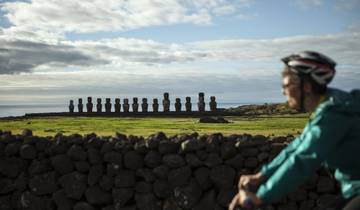
Easter Island: Archeology & Sunset with Moais
- ✓ Comprehensive Easter Island tour
- ✓ Expert local guides included
- ✓ All accommodation arranged
- ✓ Transportation provided

4 days
Easter Island Discovery (4 Days)
- ✓ Comprehensive Easter Island tour
- ✓ Expert local guides included
- ✓ All accommodation arranged
- ✓ Transportation provided
Multi-day tour packages powered by TourRadar. Prices and availability subject to change.
Flight Options and Schedules 2026
LATAM Airlines Service Overview
LATAM Airlines operates exclusive commercial service to Easter Island under Chilean government concession agreements ensuring reliable year-round access to this remote territory. The carrier maintains 5-7 weekly flights depending on seasonal demand, with daily service during peak summer months (December-February) and 5-day schedules during slower winter periods (June-August). Flight numbers vary but commonly use LA841/842 series for Santiago routes, departing Santiago mid-morning (9:00-11:00 AM typical windows) with afternoon arrivals at Mataveri Airport around 1:00-3:00 PM local time accounting for time zone changes.
Return flights from Easter Island to Santiago typically depart afternoon-evening (3:00-6:00 PM range) with late evening arrivals in Santiago (9:00 PM-12:00 AM) when accounting for the 2-hour eastward time shift during winter months or 1-hour shift during Chilean summer daylight saving periods. This scheduling pattern allows same-day connections from Santiago to domestic Chilean destinations for travelers combining Easter Island with mainland explorations. International connections from Santiago generally require overnight stays given late evening arrival times insufficient for same-day transcontinental departures.
LATAM occasionally operates seasonal Lima-Easter Island-Santiago triangular routes during peak periods, with 1-2 weekly frequencies providing alternatives for travelers based in northern South America. These flights add approximately 90 minutes to total journey time compared to direct Santiago service but offer convenient access for Peruvian residents and travelers exploring both countries. The airline deploys Boeing 787-8 or 787-9 Dreamliner aircraft on Easter Island routes, representing modern wide-body equipment with enhanced passenger comfort features suitable for 5+ hour Pacific crossings over open water without alternative landing options.
Booking Strategies for 2026
Optimal booking windows for Easter Island flights run 8-12 weeks before departure dates, balancing advance planning with fare evolution patterns. Booking too early (4-6 months ahead) sometimes results in higher initial fares that decrease as departure approaches, while waiting until 2-4 weeks before travel risks sold-out flights during peak periods or 40-60% premium pricing even when seats remain available. The 8-12 week window typically captures post-initial-release pricing adjustments while maintaining good seat selection and confirmed availability.
Peak season flights (December-February) require extended booking windows of 12-16 weeks due to limited seat inventory and high demand from both Chilean domestic travelers and international tourists. Shoulder seasons (March-May, September-November) allow shorter 6-8 week booking windows with less urgency, though advance planning still ensures preferred departure dates and times. Off-peak winter months (June-August) occasionally permit last-minute bookings 2-4 weeks ahead without severe pricing penalties, though weather variability during winter creates potential schedule disruption risks.
Multi-city itineraries sometimes generate better value than simple round-trips when incorporating additional Chilean destinations. For example, flying into Santiago with Easter Island mid-trip, then continuing to Torres del Paine before final Santiago departure occasionally produces lower total costs than separate round-trip segments. LATAM’s regional South American network allows creative routing through Buenos Aires, Lima, or other gateway cities potentially capturing promotional fares or alliance benefits. However, these complex itineraries require careful connection buffer planning given single-daily Easter Island frequencies leaving minimal schedule flexibility for recovery from delays.
Alternative Connection Routes
Papeete (Tahiti) historically offered alternative Easter Island connections via LATAM or Air Tahiti Nui partnerships, though 2024-2026 operations show irregular scheduling with extended suspended periods. When operating, these Tahiti flights occur 1-2 times monthly rather than weekly, serving primarily regional Pacific Island residents and cruise repositioning passengers. The route covers approximately 4,000 kilometers requiring 4.5-5 hours flight time, with economy fares $600-900 one-way reflecting limited competition and low frequency. Travelers considering Tahiti connections should verify current operation status within 4-6 weeks of planned travel, as schedule changes occur with limited advance notice.
Cruise ship arrivals provide alternative access though with significant limitations. Norwegian Cruise Line, Princess Cruises, and specialty adventure operators include Easter Island on longer South Pacific or South America itineraries 8-10 times annually. These visits typically allow 8-12 hours ashore—sufficient for major archaeological site visits but insufficient for comprehensive island exploration. Cruise access costs $2,500-8,000+ per person depending on cabin category and cruise duration, significantly exceeding flight-based visit costs unless South Pacific cruising represents primary travel objective. Shore access requires tender boat operations weather permitting, with occasionally canceled landings during rough sea conditions.
Private yacht passages reach Easter Island irregularly throughout the year, with typical routing from South American west coast (Valparaíso, Coquimbo) requiring 12-18 days under sail or 8-12 days under power. Hanga Roa’s small harbor accommodates vessels up to 40-50 meters but provides limited services beyond basic fuel, water, and provisions. Yacht arrivals face Chilean customs and immigration procedures requiring advance notification and proper documentation. This maritime access option suits experienced blue-water sailors undertaking long Pacific passages rather than typical travelers seeking straightforward Easter Island access for archaeological tourism.
Cost Breakdown for 2026 Travel
Flight Pricing Scenarios
Budget advance booking scenario: Santiago-Easter Island round-trip economy class $550-650 when purchased 8-12 weeks ahead during shoulder seasons (March-May, September-November). This price point represents optimal value balancing advance planning requirements with competitive fare access. Add checked baggage fees $30-50 per bag each way if exceeded LATAM’s standard 23kg allowance, though most leisure travelers manage within standard limits when packing efficiently. Seat selection charges $15-35 per segment for preferred seating, though standard seat assignments cost nothing.
Standard peak season pricing: Santiago-Easter Island round-trip economy class $750-900 during December-February summer high season or Chilean holiday periods (Fiestas Patrias September 18-19, Easter week). These elevated fares reflect high demand and limited seat inventory as LATAM operates at or near capacity during peak periods. Booking 12-16 weeks ahead secures best available peak season rates, with last-minute bookings 2-4 weeks pre-departure reaching $1,000-1,200 as remaining seats command premium pricing. Business class during peak season costs $1,600-2,200 round-trip from Santiago.
Premium flexibility scenario: Refundable economy class fares cost $900-1,200 round-trip providing cancellation and change flexibility without fees, suitable for travelers with uncertain schedules or complex itineraries requiring modification options. Standard economy fares permit date changes for $75-150 per change plus applicable fare differences, while basic economy fares (when offered) provide lowest prices $500-600 but eliminate changes and seat selection. Travel insurance adding $50-100 per person provides medical coverage and trip interruption protection often more valuable than fare flexibility for typical travelers.
Airport Taxes and Fees
Chilean airport taxes total approximately $30-40 per person included within published ticket prices for domestic flights including Easter Island routes. Mataveri Airport charges $30 departure tax for international passengers departing Easter Island, though this applies only to rare international flights (occasional Tahiti connections) rather than standard Santiago routes classified as domestic Chilean service. Santiago’s Arturo Merino Benítez International Airport assesses departure taxes $30-35 for international flights, relevant when departing Chile at trip conclusion but separate from Easter Island flight costs.
Airport concession fees, security charges, and fuel surcharges comprise additional components of total ticket prices, though LATAM displays all-inclusive pricing rather than itemized breakdowns for most markets. Travelers occasionally see line-item details during booking showing base fare plus taxes/fees/surcharges totaling published price. These transparency variations reflect booking market differences (Chilean vs. international websites) but don’t affect total costs. Credit card foreign transaction fees add 1-3% for international purchases using non-Chilean cards, though some travel-focused credit cards waive these charges.
Luggage Allowances and Restrictions
LATAM’s standard economy allowance includes one checked bag up to 23kg (50 lbs) plus one carry-on bag 8kg maximum and personal item (purse, laptop bag, small backpack). This allowance accommodates most leisure travelers’ requirements for 4-7 day Easter Island visits with typical clothing, toiletries, and equipment needs. Overweight bags (23-32kg) incur $50-75 fees per segment, while second checked bags cost $80-120 each way. Business class passengers receive two 23kg checked bags plus enhanced carry-on allowances.
Special equipment like surfboards, diving gear, or professional photography equipment requires advance declaration and incurs variable charges $100-200 per item round-trip depending on size and weight. Easter Island’s outdoor activities make sporting equipment common among visitors—declaring these items during booking rather than at airport prevents delays and ensures proper handling. Lithium battery restrictions apply to camera equipment and electronics, with power banks limited to 100Wh (27,000mAh) in carry-on baggage only. Larger professional battery systems require advance approval and potentially cargo shipment.
Scuba diving cylinders and camping fuel/stoves face absolute prohibition from aircraft holds and cabins. Divers planning underwater activities rent tanks on-island through local dive operators rather than transporting personal cylinders. Similarly, camping enthusiasts purchase fuel locally at Hanga Roa hardware stores rather than attempting aircraft transport of flammable materials. These restrictions reflect standard aviation safety protocols applying universally across international commercial aviation regardless of carrier or destination.
Getting Around Easter Island 2026
Rental Vehicle Options
Rental cars represent the most popular on-island transportation option, providing independence for archaeological site access and flexible timing without tour group coordination. Daily rates range $60-100 depending on vehicle type (compact sedan, SUV, 4×4) and rental duration (single day vs. multi-day discounts). Compact sedans at $60-75 daily handle the island’s 45 kilometers of paved roads effectively including access to major sites like Rano Raraku, Ahu Tongariki, and Orongo. SUVs and 4×4 vehicles at $80-100 daily offer minimal advantages for site access but provide enhanced comfort and cargo space for families or groups with extensive equipment.
Major rental agencies in Hanga Roa include Oceanic Rent a Car, Insular Rent a Car, Kia Koe Rent a Car, and several smaller operations along Avenida Atamu Tekena. Peak season (December-February) requires advance reservations 4-6 weeks ahead to secure vehicles, while shoulder seasons (March-May, September-November) offer walk-in availability most days. Rental agreements typically include basic liability insurance with optional comprehensive coverage adding $15-25 daily. Inspect vehicles thoroughly at pickup, documenting existing damage through photos to prevent disputes at return—the volcanic rock roads create higher-than-normal wear patterns sometimes attributed to renter negligence.
Fuel availability remains excellent with multiple stations in Hanga Roa operating extended hours 8:00 AM-10:00 PM daily. Gasoline costs approximately $1.50-1.80 per liter ($5.70-6.80 per gallon) reflecting Easter Island’s remote location and shipping costs from mainland Chile. A full tank costs $40-60 and provides 500+ kilometers range—far exceeding the island’s 45km paved road network. Most archaeological circuits consume just 10-15 liters daily, making fuel costs minor compared to rental rates. Agencies typically provide full-tank vehicles and expect full-tank returns, with $40-60 refueling charges if returned empty.
Motorcycle and Bicycle Rentals
Motorcycles and scooters rent for $50-65 daily, offering economical alternatives for solo travelers comfortable with two-wheel transport. Easter Island’s strong coastal winds create challenging riding conditions along exposed segments, particularly the southeastern route to Rano Raraku where gusts regularly exceed 40 km/h. However, experienced riders find motorcycles provide nimble parking at crowded sites and engaging open-road experiences across volcanic landscapes. Rental agencies require motorcycle licenses or equivalent endorsements, helmets (provided), and minimum age 21 with 2+ years riding experience.
Bicycle rentals at $15-25 daily suit budget-conscious travelers with strong fitness levels and time flexibility. The island’s compact size makes cycling feasible for reaching nearby sites within 5-10 kilometers of Hanga Roa (Ahu Tahai, Ahu Vinapu, Ahu Akivi), though longer distances to Rano Raraku (18 km) or Anakena Beach (20 km) require significant effort given hilly terrain and persistent winds. Electric-assist bicycles available at some shops ($35-45 daily) reduce exertion while maintaining cycling’s intimate landscape connection. Safety concerns include limited shoulder space on roads shared with vehicles, strong winds affecting balance, and minimal roadside services if mechanical issues occur distant from town.
Combination strategies work well: rent cars for long-distance archaeological sites (Rano Raraku, Anakena) while using bicycles for nearby Hanga Roa explorations and sunset viewing at Ahu Tahai. This approach optimizes costs while maintaining flexibility and minimizing environmental impact from excessive vehicle use. Several agencies offer multi-day discounts: 3-day car rentals at $170-270 total versus $180-300 for three separate daily rentals. Similarly, 5-day bicycle packages cost $60-100 total compared to $75-125 for five separate days at daily rates.
Organized Tours and Transfers
Airport transfers from Mataveri Airport to Hanga Roa hotels cost $10-15 per person in shared shuttles coordinated by accommodation providers, or $25-40 for private taxi service. The 3-kilometer distance takes just 5-7 minutes, though flight arrival timing affects immediate availability. Most hotels arrange complimentary or low-cost pickup services when flight details are provided during booking confirmation. Return airport transfers follow similar pricing, with hotels typically arranging departures 2.5-3 hours before flight times ensuring adequate check-in buffer for LATAM’s strict boarding procedures.
Half-day organized tours cost $50-80 per person covering 2-3 major sites (typical combinations: Rano Raraku + Ahu Tongariki, or Orongo + Ahu Tahai + Ahu Vinapu). Morning departures 9:00-9:30 AM return by 1:00-2:00 PM, while afternoon options 2:00-2:30 PM conclude by 6:00-7:00 PM. Full-day tours at $90-140 per person visit 5-6 sites across the island including lunch stops at Anakena Beach or other scenic locations. These group services accommodate 8-15 participants in comfortable minibuses with air conditioning, certified guides providing historical and cultural interpretation in Spanish and English, and included bottled water.
Private tour services range $120-180 for half-day (4 hours) or $200-300 for full-day (8 hours) customized itineraries. Private arrangements allow flexible timing, extended site durations, personalized guide attention focusing on specific interests (photography, archaeology, Rapa Nui culture), and route modifications responding to weather or crowd conditions. Specialized guides with academic backgrounds in archaeology or anthropology command premium rates $250-400 but deliver exceptional educational depth. Private tours particularly benefit serious photography enthusiasts requiring specific lighting conditions, researchers needing detailed site information, or travelers with mobility limitations requiring adjusted pacing and rest schedules.
Planning Your 2026 Arrival
Santiago Connection Strategies
International travelers reaching Santiago from North America, Europe, or other continents require overnight stays before continuing to Easter Island given flight timing patterns. LATAM’s Easter Island departures occur mid-morning (9:00-11:00 AM typical windows), while most international flights arrive Santiago in evening or night hours insufficient for same-day connections. Budget 18-24 hours in Santiago allowing jet lag recovery, Chilean customs/immigration processing, and stress-free connection timing without racing through unexpected delays.
Santiago’s Arturo Merino Benítez International Airport (SCL) provides multiple accommodation options. On-site airport hotels (Holiday Inn Express, Diego de Almagro) cost $90-140 per night with direct terminal connections ideal for very short layovers under 12 hours. Nearby airport zone hotels ($70-110 nightly) sit 5-10 minutes away with free shuttle services operating 24 hours. Downtown Santiago hotels ($80-200+ depending on category) provide better restaurant options and city exploration opportunities for layovers exceeding 24 hours, requiring 30-45 minute taxi/Uber/metro connections to airport ($20-30 or metro $2-3 per person).
Domestic transfer procedures at Santiago airport involve checking in at LATAM’s domestic counters separate from international terminal operations. Allow minimum 3-4 hour connection buffers between international arrivals and Easter Island departures to accommodate customs processing, terminal transfers, baggage re-check requirements, and potential international flight delays. Travelers with checked bags must clear customs, collect luggage, then re-check bags for Easter Island flights even when through-booked itineraries theoretically allow direct transfer—Chilean regulations mandate this procedure for international arrivals regardless of final destination within Chile.
Mataveri Airport Arrival Procedures
Mataveri Airport (IPC) operates as one of Earth’s most remote commercial airports, featuring a single 3,318-meter runway built to NASA specifications allowing emergency Space Shuttle landings during the program’s active years. The terminal building handles 2-3 daily flights maximum (1-2 LATAM arrivals plus occasional departures), creating manageable passenger volumes compared to major hub chaos. Arrivals proceed through simple procedures: deplane via airstairs directly onto tarmac, walk 50-100 meters to terminal building, collect checked baggage from manual belt system, exit to ground transportation area.
No formal customs or immigration processing occurs at Mataveri for arrivals from Santiago given the domestic flight classification within Chile’s territorial system. However, bags pass through basic agricultural inspection checking for prohibited food items, plants, or biological materials potentially threatening Easter Island’s fragile ecosystem. These inspections take 5-10 minutes per passenger with straightforward procedures for compliant travelers. Visitors should avoid packing fresh fruits, vegetables, seeds, or soil-containing items that trigger inspection delays or confiscation.
Ground transportation from arrivals area includes pre-arranged hotel shuttles (confirm during booking), taxi services with posted rate boards ($15-25 depending on destination within Hanga Roa), and rental car agency representatives meeting flights with paperwork and vehicle keys. The terminal’s compact size means all services sit within 20-30 meters of baggage claim, eliminating navigation confusion common at larger airports. Airport facilities include basic restrooms, small snack bar with irregular hours, and minimal seating beyond departure gate areas. Plan to depart terminal quickly given limited comfort amenities and the short 3-kilometer distance to Hanga Roa where full services await.
Departure Procedures and Timing
LATAM requires check-in 2.5-3 hours before Easter Island departure flights despite the domestic classification and small airport facility. This extended requirement reflects limited staff, manual processing systems, and thorough security screening procedures operating at relaxed pace compared to automated mainland operations. Early arrivals may find check-in counters not yet open—verify exact opening times (typically 3 hours pre-departure) when receiving flight confirmations or hotel checkout planning.
Check-in procedures involve presenting documents (Chilean ID or passport), checking bags with manual weighing and tagging, receiving boarding passes, and proceeding to security screening. The process takes 15-30 minutes depending on simultaneous arrivals of other passengers and staff efficiency variations. Security screening uses walk-through metal detectors and X-ray bag inspection with occasional manual bag searches for items triggering electronic alerts. Remove liquids, electronics, and metals before screening to expedite processing, though the relaxed pace rarely creates pressure even for slower-moving travelers.
Departure gates provide minimal amenities: basic seating for 150-200 passengers, small restrooms, and limited food/beverage options from small shop selling snacks, sandwiches, and drinks at premium prices reflecting captive audience and shipping costs. Free WiFi operates intermittently with variable speeds insufficient for video streaming or large file uploads. The boarding process begins 30-45 minutes before scheduled departure with walk across tarmac to aircraft, allowing final photos of parked Boeing 787 Dreamliner against volcanic landscape backdrop—Instagram-worthy perspective not available at jetway-based airports.
Travel Insurance and Safety Considerations 2026
Recommended Insurance Coverage
Comprehensive travel insurance costs $50-100 per person for typical 5-7 day Easter Island trips, providing medical coverage, trip cancellation/interruption protection, baggage loss coverage, and emergency evacuation services. Medical coverage proves particularly important given Easter Island’s limited healthcare facilities and extreme remoteness requiring evacuation to Santiago for serious medical emergencies. Policies should include minimum $100,000 medical coverage and $250,000 emergency medical evacuation—standard tier policies from major providers (World Nomads, Allianz, Travel Guard) meet these thresholds.
Trip cancellation coverage reimburses prepaid non-refundable costs if unexpected circumstances prevent travel: family emergencies, sudden illness, severe weather affecting airports, or personal situations requiring itinerary changes. Easter Island’s single-carrier LATAM monopoly and high flight costs make this protection valuable—a cancelled $800 flight represents significant financial loss without insurance recovery. Coverage typically reimburses 80-100% of non-refundable costs for covered reasons, though policies vary in specific situations qualifying for reimbursement. Review policy details carefully regarding pre-existing medical conditions, adventure activity coverage, and claim filing procedures before purchase.
Baggage coverage compensates for lost, stolen, or delayed luggage containing clothing and essential items. Standard policies provide $1,000-2,500 per person for lost baggage and $100-500 for delays exceeding 12-24 hours requiring emergency purchases of toiletries and clothing. Given LATAM’s generally reliable baggage handling and the single-flight direct routing, serious baggage issues occur infrequently though remain possible during Santiago connections or system-wide disruptions. Valuable items like cameras, laptops, and jewelry require additional riders or separate policies as standard coverage excludes or severely limits high-value electronics and personal property.
Health and Medical Considerations
Easter Island’s Hospital Hanga Roa provides basic medical services including emergency care, general practice consultations, basic surgery, and dental services. However, serious medical emergencies requiring specialized treatment, intensive care, or complex surgical procedures necessitate evacuation to Santiago via medical charter flight costing $25,000-50,000+ without insurance coverage. This extreme remoteness makes comprehensive travel insurance with high medical evacuation limits essential rather than optional for Easter Island visits, particularly for older travelers, those with pre-existing conditions, or visitors planning adventurous activities.
No mandatory vaccinations apply to Chile or Easter Island for travelers from most countries, though routine immunizations (tetanus, hepatitis A/B) provide sensible precautions for any international travel. The island lacks tropical diseases like malaria, yellow fever, or dengue affecting other Pacific regions, making vaccine requirements minimal. Chilean health authorities do not require COVID-19 vaccination certificates or testing for entry as of 2024-2026 policy, though this could change if new variants emerge requiring public health responses. Verify current requirements through official Chilean government health sources 8-12 weeks before departure.
Prescription medications should accompany travelers in sufficient quantities for entire trip duration plus 3-5 day emergency buffer allowing for unexpected delays. Keep medications in original labeled containers with doctor prescriptions readily available if questioned during agricultural inspections at Mataveri Airport. Easter Island’s single pharmacy stocks common medications (pain relievers, antibiotics, basic prescription drugs) but may lack specialized medications requiring specific brands or formulations. Travel with comprehensive supplies rather than depending on local availability for critical medications managing chronic conditions.
Weather and Flight Disruption Planning
LATAM’s Easter Island flights occasionally face delays or cancellations due to strong winds affecting takeoffs and landings at Mataveri Airport. The single runway orientation and volcanic terrain create challenging wind shear conditions during storms or high-pressure systems generating sustained winds exceeding 50 km/h. Most disruptions resolve within 2-6 hours as weather systems pass, allowing delayed but same-day completion of scheduled flights. However, severe events 2-3 times annually require overnight delays when conditions exceed Boeing 787 operational limitations.
Plan flexible itineraries allowing 24-hour buffers before critical onward connections from Santiago or international departures. Booking return flights with same-day Santiago connections to North America or Europe creates risk of missed connections if Easter Island departures delay. Instead, schedule overnight Santiago stays before international flights providing disruption buffers and reducing stress from tight connection anxiety. This conservative approach costs one additional hotel night ($70-140) but prevents much more expensive rebooking of international flights or extended unplanned stays if delays occur.
Travel insurance with trip delay coverage reimburses additional hotel and meal costs during extended weather delays exceeding policy thresholds (typically 6-12 hours). This protection proves valuable given Easter Island’s elevated accommodation costs during unplanned extended stays and the lack of control travelers have over weather-related disruptions. LATAM provides limited compensation for weather delays (considered acts of nature outside airline control), though occasionally offers hotel accommodations for significant overnight delays. Don’t assume airline-covered support during disruptions—verify actual provisions and plan self-sufficiency with credit cards, travel insurance, and flexible scheduling allowing recovery from unexpected complications.
Sample 2026 Transportation Budgets
Budget Independent Traveler
Round-trip flight Santiago-Easter Island: $600 (advance booking, shoulder season, economy class). Airport transfers Mataveri-Hanga Roa hotel: $20 (shared shuttle each way = $10 × 2). Rental car 3 days: $180 (compact sedan $60 daily). Bicycle rental 2 days: $40 (city exploration days). Fuel: $25 (car usage across 3 days). Total transportation: $865 per person.
This budget approach prioritizes cost efficiency through advance flight booking during shoulder seasons, rental vehicle cost sharing when traveling as couple or small group (divide car costs by 2-4 people), and strategic bicycle use for nearby Hanga Roa activities minimizing car rental days. The 3-day car rental covers major site visits (Rano Raraku, Ahu Tongariki, Anakena, Orongo) while 2 bicycle days handle sunset viewings at Ahu Tahai, town restaurants, and local cultural sites within 5-kilometer radius.
Mid-Range Flexible Approach
Round-trip flight Santiago-Easter Island: $800 (peak season or moderate advance booking). Private airport transfers: $60 (dedicated taxi both directions). Rental SUV 5 days: $450 (4×4 vehicle $90 daily with multi-day discount). Fuel: $40 (extended daily driving). Half-day guided tour: $70 (cultural interpretation supplement to independent exploration). Total transportation: $1,420 per person.
This mid-range budget provides enhanced comfort through private airport transfers avoiding shared shuttle coordination, larger SUV accommodating more passengers and gear comfortably, extended rental period eliminating schedule pressure, and one guided tour complementing self-directed exploration with expert insights. The approach suits travelers prioritizing flexibility and comfort while accepting moderate cost increases for enhanced convenience. Split between 2 people, the rental and fuel costs become $245 per person versus $230 in budget scenario—minimal incremental increase for significant comfort improvements.
Premium Curated Experience
Round-trip flight Santiago-Easter Island: $1,200 (peak season short-notice booking or business class upgrade). Private airport transfers with guide: $100 (cultural introduction during transfer). Full-day private tour Day 1: $280 (comprehensive orientation). Rental 4×4 three days: $270 (independent exploration Days 2-4). Half-day private photography tour: $160 (specialized lighting guidance Day 5). Fuel: $35. Total transportation: $2,045 per person.
The premium approach combines professional guided experiences with independent flexibility, optimal for travelers valuing educational depth and photographic excellence. Business class upgrades provide comfort during 5.5-hour flights particularly valuable for older travelers or those flying from distant origins already fatigued from long-haul connections. The mix of full-day orientation tour, independent days with quality rental vehicle, and specialized photography session delivers comprehensive island coverage with expert interpretation plus personal discovery time. When split between 2 people sharing vehicle costs, per-person transportation reaches $1,910—significant investment delivering optimal experience quality.
Booking Resources for 2026
Official Flight Booking Channels
LATAM Airlines direct website (latam.com) provides primary booking channel with comprehensive flight options, English-language interface, and transparent pricing including all taxes and fees. Creating LATAM Pass frequent flyer accounts (free registration) sometimes reveals member-only promotional fares and provides easier trip management including online check-in and mobile boarding passes. The website accepts major credit cards with secure payment processing and provides email confirmations containing ticket numbers and flight details for verification.
Alternative booking platforms like Expedia, Kayak, Google Flights, and Skyscanner aggregate LATAM fares allowing price comparison and fare tracking tools. However, booking through third-party platforms sometimes complicates itinerary changes, seat selections, or special service requests requiring direct LATAM interaction. For straightforward round-trip economy bookings without complications, third-party platforms work effectively. For complex itineraries, special assistance needs, or travelers wanting maximum change flexibility, direct LATAM booking provides simpler long-term management despite potentially identical pricing.
Travel agents specializing in Chile and South America (like Chile Nativo, Say Hueque, or international agencies with Chile expertise) provide booking services plus broader itinerary planning integrating flights, accommodations, tours, and logistics. Agents typically charge service fees $50-150 or earn commissions from booked services, though their expertise can save money through optimized routing, package deals, and insider knowledge about promotional periods. First-time South America travelers or those planning multi-destination trips (Easter Island + Patagonia + Atacama Desert) particularly benefit from professional agent services providing cohesive itinerary design and on-ground support during travel.
On-Island Service Reservations
Rental car agencies maintain online booking platforms, though many Easter Island operations work primarily through email or phone reservations rather than sophisticated web systems. Recommended advance booking approach: email 2-3 agencies 6-8 weeks before travel requesting availability and pricing for your exact dates. Compare total costs including insurance options, mileage policies, and pick-up/drop-off procedures. Confirm reservations in writing (save emails) and obtain emergency contact numbers for use during your stay addressing any issues or questions.
Tour operators advertise through hotel concierge services, tourism websites (easterisland.travel), and direct offices along Hanga Roa’s main streets. Peak season booking benefits from 2-3 week advance arrangements, while shoulder seasons accommodate last-minute walk-in bookings. However, popular specialized tours (sunrise photography expeditions, cultural immersion experiences, small-group archaeological deep dives) fill quickly requiring early booking regardless of season. Private tour services book fastest given limited certified guide availability—arrange 4-6 weeks ahead for confirmed premium experiences.
Accommodation providers typically arrange airport transfers when flight details are provided during reservation confirmations. Clarify whether transfers are complimentary (common at mid-range and upscale properties) or charged separately (typical at budget hostels and guesthouses). Provide accurate flight information including any changes occurring after initial booking to ensure pickup coordination. Save confirmation emails and emergency contact numbers accessible without internet connectivity in case arrival complications require direct provider contact from airport public phones.
FAQ About Getting to Easter Island
Can you fly to Easter Island from the United States directly?
No direct flights operate from United States cities to Easter Island. All routes require connections through Santiago (Chile) or occasionally Lima (Peru). Typical U.S. routing involves flying major carriers (American, United, Delta, LATAM, Copa) to Santiago with connection to separate LATAM Easter Island flight. Total journey times from U.S. West Coast cities (Los Angeles, San Francisco) run 14-18 hours including layovers, while East Coast cities (New York, Miami) require 16-20 hours. South American gateway cities like Panama City or Lima offer alternative routing though rarely provide time or cost advantages over direct Santiago connections.
What is the best month to fly to Easter Island?
March-May and September-November provide optimal conditions balancing weather quality, crowd levels, and flight pricing. These shoulder seasons deliver comfortable temperatures 18-24°C, lower rainfall than winter months, uncrowded archaeological sites, and 20-30% cheaper flights than peak summer rates. October specifically offers excellent value with spring weather patterns, minimal precipitation, and good flight availability before December’s holiday surge. April provides similar advantages following summer tourist exodus but preceding winter weather concerns. December-February summer brings optimal weather but faces maximum prices, crowds, and advance booking requirements 12-16 weeks ahead.
How far in advance should I book Easter Island flights?
Book 8-12 weeks in advance for standard travel periods, capturing optimal pricing windows while maintaining good seat selection and confirmed availability. Peak season travel (December-February) requires extended 12-16 week booking windows to secure seats before flights sell out. Shoulder seasons (March-May, September-November) permit 6-8 week booking with less urgency. Last-minute bookings within 2-4 weeks face 40-60% pricing premiums even when seats remain available. Fare tracking tools through Google Flights or Hopper apps help identify optimal purchase timing within these general windows by alerting to price drops.
What should I do if my flight to Easter Island is cancelled?
Contact LATAM immediately through airport service counters or customer service phone lines (+56 2 2565 3000 from Chile, or US number 866-435-9526 for North American travelers). The airline typically rebooks cancelled flights on next available service, though Easter Island’s limited flight frequency (1-2 daily maximum) means delays might extend 24-48 hours during busy periods when flights operate at capacity. Travel insurance with trip delay coverage reimburses hotel and meal costs during extended delays exceeding policy thresholds (typically 6-12 hours). LATAM provides limited compensation for weather-related cancellations (considered force majeure) but may offer hotel accommodations for overnight mechanical delays. Document all expenses during delays for insurance claims and keep airline communication records proving cancellation circumstances.
Is Easter Island in a different time zone than Chile?
Easter Island operates 2 hours behind mainland Chile during Chilean winter (May-August) and 1 hour behind during Chilean summer daylight saving periods (September-April). This offset means arriving flights require mental time adjustment beyond the 5.5-hour actual flight duration. When booking return flights and planning connection timing in Santiago, account for these time differences ensuring adequate buffers. Flight schedules display local times for each airport—departing Easter Island 4:00 PM typically arrives Santiago 10:00-11:00 PM same day when accounting for time zone and flight duration. Smartphones generally update automatically to local time, though verify settings to prevent confusion with appointments and departure timing.
Can I use my cell phone on Easter Island?
Entel provides the primary cellular network on Easter Island with 4G LTE coverage across Hanga Roa and major archaeological sites along paved roads. Remote areas like northern peninsulas and off-road locations lack consistent coverage. International travelers can purchase Entel SIM cards at Mataveri Airport arrivals area or Hanga Roa shops for approximately $15-25 including data packages (3-10 GB typical options). U.S. carriers’ international roaming plans work on Easter Island through Entel partnerships but incur premium rates $10-15 daily for data access—verify exact costs and coverage before relying on home carrier roaming.
WiFi availability spans most hotels, restaurants, and cafes in Hanga Roa with variable speeds and reliability reflecting limited submarine cable capacity serving the island’s internet needs. Download maps, guidebook content, and essential information before arriving rather than depending on consistent high-speed access. Satellite internet serves backup functions but remains too expensive and slow for typical tourist use. Most visitors find modest cellular data plans sufficient for communications, navigation, and social media when combined with hotel WiFi for larger downloads and video streaming needs.
What currency should I bring to Easter Island?
Chilean Pesos (CLP) serve as official currency, though U.S. Dollars (USD) receive wide acceptance at tourist-oriented businesses including hotels, restaurants, tour operators, and rental agencies. Exchange rates for USD transactions typically favor pesos by 3-5% though convenience sometimes outweighs minor cost differences. ATMs in Hanga Roa dispense Chilean pesos with international card access (Visa, Mastercard networks) charging standard international withdrawal fees $3-5 plus 1-3% foreign transaction charges from home banks. Credit cards work at most mid-range and upscale establishments, though small shops and basic restaurants operate cash-only requiring peso availability.
Bring mix of payment methods: credit cards for major purchases (hotels, rental cars, tours), modest cash amounts ($200-300 equivalent) for small transactions and backup security, and ATM cards for peso withdrawals as needed rather than carrying large cash amounts creating security concerns. Euros receive limited acceptance and poor exchange rates—convert to pesos or use USD rather than carrying Euros to Easter Island. Exchange services at Mataveri Airport and Hanga Roa banks convert major currencies though often at less favorable rates than withdrawing pesos directly from ATMs.
Should I book a package deal or separate flights and accommodations?
Compare both approaches as occasional package deals through travel agencies or LATAM Vacations offer bundled savings 10-20% below component booking costs. However, independent booking typically provides better control over accommodation choices, dates flexibility, and ability to capitalize on promotional fares or last-minute hotel discounts. Package deals work best for travelers valuing simplicity and coordinated arrangements over cost optimization or specific property preferences. Run cost comparisons: calculate total independent booking expenses (flights + chosen hotel + planned tours) versus package offerings to identify genuine savings versus marketing perception of value.
Multi-destination Chile packages combining Easter Island with Patagonia, Atacama Desert, or wine country sometimes generate better value than Easter Island standalone trips by capturing bulk booking discounts and efficient routing. These complex itineraries particularly benefit from professional travel agent or tour operator coordination ensuring logical flow, appropriate connection timing, and integrated logistics minimizing traveler stress managing multiple independent bookings across different regions and service providers.
What items are prohibited from bringing to Easter Island?
Agricultural restrictions prohibit fresh fruits, vegetables, seeds, plants, soil, and any biological materials potentially threatening the island’s fragile ecosystem. Arriving passengers pass through agricultural inspection checking for these items, with violations resulting in confiscation and potential fines for serious infractions. Processed packaged foods receive clearance though inspectors may open sealed packages verifying contents match labeling. Medications in original containers with prescriptions receive authorization, though quantities exceeding 3-month supplies might face questioning requiring medical documentation justifying amounts.
Standard aviation security rules prohibit sharp objects, flammable materials, compressed gases, and other hazardous items from carry-on and checked baggage. Diving equipment restrictions ban pressurized cylinders and may limit regulator transport depending on airline interpretation of regulations—verify specific equipment allowances when booking if traveling with significant diving gear. Drone aircraft face strict prohibitions for use across Rapa Nui National Park including all archaeological sites, with violations triggering equipment confiscation and substantial fines. Personal drones may travel in checked baggage but cannot fly over or photograph protected sites without special permits costing $500-1,000 and requiring advance authorization through Ma’u Henua administration.