Quebec Budget Guide 2026: French Canada Complete Cost Breakdown
Quebec Province combines European sophistication with North American accessibility, offering travelers exceptional value across its cultural heartland. From Montreal’s cosmopolitan neighborhoods to Quebec City’s UNESCO-protected fortifications, visitors discover French-language immersion, distinctive cuisine, and architectural heritage at costs significantly below European equivalents. This comprehensive budget guide breaks down accommodation, dining, transportation, and attraction expenses across Quebec’s most compelling destinations in 2026.
Key Takeaways: Quebec Province Budget 2026
- Daily Budget Range 2026: Expect CAD $55-95 ($40-70) per person daily for budget travelers sharing hostel dormitories, CAD $155-265 ($113-193) for mid-range comfort sharing hotels, and CAD $315-550+ ($230-401+) for luxury experiences sharing premium accommodations.
- Accommodation Dominates Costs: Hotel expenses represent the largest budget component, with shared rooms ranging CAD $30-60 ($22-44) per person nightly in budget properties, CAD $60-125 ($44-91) in mid-range hotels, and CAD $125-250+ ($91-182+) in luxury establishments when splitting costs between two travelers.
- Public Transit Excellence: Both Montreal and Quebec City offer comprehensive bus and metro networks at CAD $3.50-3.75 ($2.55-2.75) per single ride, with multi-day passes delivering significant savings — Montreal’s 3-day unlimited pass costs CAD $20 ($15) while Quebec City offers 3-day access for CAD $26 ($19).
- Dining Value Proposition 2026: Quebec’s restaurant scene delivers exceptional quality at moderate costs, with casual bistro meals from CAD $15-25 ($11-18), mid-range dining CAD $40-60 ($29-44), and elaborate tasting menus CAD $90-150+ ($66-110+) per person before beverages.
- Seasonal Price Fluctuations: Winter visits November through March reduce accommodation costs 30-40% below summer peaks, with Quebec City hotels dropping from CAD $250-400 ($182-292) nightly in July to CAD $140-240 ($102-175) in February, though requiring appropriate cold-weather gear investment.
- Cultural Access Strategy 2026: Montreal and Quebec City museums offer free admission first Sundays monthly for Quebec residents, while many attractions provide combination tickets reducing individual entrance fees 20-30% when visiting multiple sites within the same cultural network.
People Also Ask About Quebec Province Budget 2026
How much does a week in Quebec cost per person in 2026?
A week in Quebec costs CAD $1,085-1,855 ($792-1,354) per person for mid-range travel sharing hotel accommodation. This encompasses seven nights accommodation at CAD $60-125 ($44-91) per person nightly when splitting double rooms, three meals daily CAD $65-90 ($47-66), local transportation CAD $25-35 ($18-26), and attraction admissions CAD $25-35 ($18-26). Budget-conscious travelers sharing hostels spend CAD $385-665 ($281-485) weekly, while luxury visitors investing in premium hotels and fine dining allocate CAD $2,205-3,850+ ($1,609-2,810+) per person for the week.
Is Montreal or Quebec City more expensive to visit in 2026?
Montreal and Quebec City present nearly equivalent costs for mid-range travelers in 2026, with daily per-person expenses CAD $155-265 ($113-193) in both cities when sharing accommodation. Quebec City commands CAD $10-30 ($7-22) premium for Old Town hotels within walking distance of major attractions, while Montreal offers slightly lower accommodation costs in neighborhoods beyond downtown but requires additional transit time. Dining prices align closely between cities, though Montreal provides greater budget dining diversity through immigrant neighborhoods offering Vietnamese, Middle Eastern, and Latin American cuisine at CAD $12-18 ($9-13) per meal versus Quebec City’s French-focused establishments starting CAD $18-25 ($13-18).
What is the best way to save money traveling Quebec in 2026?
The most effective savings strategy combines winter travel with public transportation passes and market-based meal preparation. Visiting November through March reduces accommodation costs 30-40% compared to summer peaks, delivering CAD $50-80 ($36-58) daily savings per couple on mid-range hotels. Purchasing multi-day transit passes before arrival saves 15-25% versus single-ride fares — Montreal’s 3-day pass CAD $20 ($15) costs less than six single rides at CAD $3.75 ($2.75) each. Preparing breakfast and lunch from Jean-Talon or Atwater markets while splurging on dinner reduces food costs from CAD $80-100 ($58-73) to CAD $45-60 ($33-44) daily per person, maintaining quality while cutting expenses 35-40%.
How much cash should I bring to Quebec in 2026?
Bring CAD $150-300 ($110-220) cash for a week-long Quebec visit, sufficient for small vendor purchases, market transactions, and backup contingencies. Quebec operates as a predominantly card-based economy with credit and debit acceptance at virtually all hotels, restaurants, museums, and transit stations. Cash remains useful for farmers markets, street food vendors, tipping service staff CAD $2-5 ($1.50-3.65) per interaction, and small purchases under CAD $10 ($7) where card minimums may apply. ATMs throughout Montreal and Quebec City dispense Canadian dollars at competitive exchange rates, though international withdrawal fees CAD $3-5 ($2-3.50) make single larger withdrawals more economical than multiple small transactions.
Extended multi-day tours – 5+ days
Featured Quebec Multi-Day Tour Packages
4 days
Montreal and Quebec (2 destinations)
- ✓ Comprehensive Quebec tour
- ✓ Expert local guides included
- ✓ All accommodation arranged
- ✓ Transportation provided
7 days
Northern Quebec: Winter Lodge Escape
- ✓ Comprehensive Quebec tour
- ✓ Expert local guides included
- ✓ All accommodation arranged
- ✓ Transportation provided

9 days
Best of Eastern Canadian Cities featuring Niagara Falls, Ottawa, Quebec City & Montreal (Toronto, ON to Montreal, QC, 2026)
- ✓ Comprehensive Quebec tour
- ✓ Expert local guides included
- ✓ All accommodation arranged
- ✓ Transportation provided
7 days
Northern Quebec: Summer Lodge Escape
- ✓ Comprehensive Quebec tour
- ✓ Expert local guides included
- ✓ All accommodation arranged
- ✓ Transportation provided
Multi-day tour packages powered by TourRadar. Prices and availability subject to change.
Introduction: Understanding Quebec Province Costs in 2026
Quebec Province presents North America’s most authentically European experience without transatlantic airfare, delivering French-language immersion, architectural heritage spanning four centuries, and distinctive Québécois culture at costs substantially below their European equivalents. The province’s two anchor cities — Montreal with 1.8 million metropolitan residents and Quebec City’s 540,000 — function as complementary destinations: Montreal offering cosmopolitan diversity through immigrant neighborhoods, contemporary art scenes, and nightlife rivaling major global cities, while Quebec City preserves 17th-century fortifications, cobblestone streets, and UNESCO World Heritage designation within its compact historic core.
Budget planning for Quebec requires understanding the province’s dual nature. Montreal operates as Canada’s second-largest metropolis with corresponding urban costs but delivers exceptional value through neighborhood diversity — the Plateau Mont-Royal and Mile End districts provide authentic local experiences at prices 25-40% below downtown tourist zones, while Little Italy, Chinatown, and the Latin Quarter offer international cuisines impossible to find in Quebec City’s French-focused restaurant landscape. Quebec City concentrates visitor interest within walkable Old Town boundaries, simplifying logistics but limiting budget flexibility as proximity to Place Royale and Château Frontenac commands premium accommodation and dining prices.
The 2026 budget landscape reflects several key economic factors. The Canadian dollar trades at approximately CAD $1.39 per US dollar, delivering favorable exchange rates for American visitors while European travelers face less advantageous conversions compared to pre-2020 parity levels. Food inflation projections indicate 4-6% increases across restaurant categories, with meat-based dishes seeing 5-7% jumps and dairy products rising 2-4%. Accommodation costs stabilized following 2023-2024 volatility, though summer peak rates in Quebec City’s Old Town now exceed CAD $250 ($182) nightly for mid-range properties — levels historically associated with luxury establishments.
Transportation infrastructure delivers exceptional value through comprehensive public transit networks. Montreal’s STM system combines metro and bus service covering 300+ routes throughout the metropolitan region, while Quebec City’s RTC network connects Old Town, downtown districts, and outlying neighborhoods through frequent Métrobus service. Both cities maintain single-ride fares below CAD $4 ($3), substantially undercutting North American peers like New York at $3 USD or Toronto at CAD $3.35, while multi-day passes provide unlimited access at rates rarely exceeding CAD $10 ($7) daily.
Quebec’s attraction landscape balances free public spaces with ticketed cultural institutions. Montreal’s Mount Royal Park, Old Port waterfront, and Canal Lachine pathways deliver world-class urban experiences at zero cost, while Quebec City’s Dufferin Terrace, Petit-Champlain Quarter streets, and Plains of Abraham battleground provide historic immersion without admission fees. Major museums including Montreal’s Museum of Fine Arts and Quebec City’s Museum of Civilization charge CAD $15-20 ($11-15) entrance fees but offer free access first Sunday monthly for Quebec residents — a benefit extended to long-term visitors establishing temporary residency.
Seasonal variations dramatically impact Quebec budgets. Summer months June through August represent peak tourism season with corresponding maximum accommodation rates, festival surcharges, and attraction crowding requiring advance reservations weeks ahead. Winter visits November through March reduce hotel costs 30-40% while delivering authentic Québécois winter culture through January’s Fête des Neiges, February’s Quebec Winter Carnival, and March’s cabane à sucre maple syrup season. Spring shoulder season April-May and fall September-October offer the province’s most favorable budget-to-experience ratio: moderate weather, reduced accommodation costs 20-30% below summer peaks, and autumn foliage or spring bloom aesthetics without winter’s cold-weather gear requirements.
This comprehensive guide breaks down Quebec Province costs across all major expense categories for 2026. Each section provides per-person daily expenses assuming two travelers sharing accommodation — the province’s most common travel configuration and the baseline for realistic budget projections. Cost ranges reflect budget, mid-range, and luxury tiers to accommodate diverse travel styles, with specific Montreal and Quebec City pricing where regional variations warrant distinct treatment. Currency conversions use current 2026 exchange rates of approximately CAD $1.39 per US dollar, though travelers should verify rates before departure as fluctuations affect purchasing power.
Accommodation Costs Quebec Province 2026
Accommodation represents Quebec travelers’ largest expense category, consuming 40-55% of total daily budgets depending on property tier selection. The province offers comprehensive lodging options from CAD $30 ($22) hostel dormitory beds through mid-range hotels CAD $120-250 ($88-182) nightly to luxury heritage properties exceeding CAD $500 ($365) per night. Strategic accommodation selection and seasonal timing deliver substantial savings — winter rates November through March run 30-40% below summer peaks, while properties 15-20 minute transit rides from central tourist zones cost 25-40% less than walkable locations with identical amenities.
Budget Accommodation Quebec 2026 (CAD $60-120 / $44-88 Per Night)
Budget accommodation in Quebec divides between hostel dormitories at CAD $30-60 ($22-44) per bed and economy hotels CAD $80-120 ($58-88) per room. Montreal’s hostel scene concentrates in the Plateau Mont-Royal and downtown districts, with properties like HI Montreal Central and M Montreal Hostel offering 4-8 bed dormitories CAD $35-55 ($26-40), free WiFi, communal kitchens, and social programming connecting international travelers. Quebec City maintains smaller hostel inventory centered near Saint-Roch neighborhood, where Auberge Internationale de Québec provides dormitory beds CAD $30-50 ($22-36) with breakfast included, though Old Town location premium increases comparable properties to CAD $45-65 ($33-47) per bed.
Budget-conscious couples choosing private rooms access economy hotel chains including Days Inn, Comfort Inn, and Travelodge at CAD $80-120 ($58-88) nightly in suburban locations requiring 15-25 minute transit connections to downtown cores. These properties deliver clean, functional rooms with private bathrooms, basic breakfast, free parking, and predictable North American standards but lack the character, walkability, and neighborhood immersion of central properties. For budget travelers sharing rooms, this translates to CAD $40-60 ($29-44) per person nightly — competitive with hostel private room rates while eliminating shared bathroom facilities.
Alternative budget strategies include university residence halls during summer months May through August. Concordia University in Montreal and Université Laval in Quebec City rent student rooms CAD $50-75 ($36-55) nightly with access to campus facilities, though availability limits to academic break periods and locations outside central tourist districts require transit planning. Home-sharing platforms provide budget private room options CAD $60-90 ($44-66) nightly in residential neighborhoods, delivering authentic local context and kitchen access for meal preparation but varying significantly in quality, host responsiveness, and cancellation flexibility.
Mid-Range Accommodation Quebec 2026 (CAD $120-250 / $88-182 Per Night)
Mid-range accommodation delivers optimal value-to-quality ratio for most Quebec visitors, encompassing independently owned three-star hotels, boutique properties, and select chain establishments in central locations. Montreal’s mid-range options include Hotel Le Cantlie Suites, Hotel Place d’Armes, and Hotel William Gray in Old Montreal CAD $180-250 ($131-182) nightly, while emerging neighborhoods like the Plateau offer comparable quality at CAD $120-170 ($88-124) through properties like Hotel Wandlyn and Manoir Ambrose. These hotels provide rooms 250-350 square feet with contemporary design, quality linens, ensuite bathrooms, complimentary breakfast, and guest services including concierge assistance and luggage storage.
Quebec City mid-range properties concentrate within or immediately adjacent to Old Town fortifications, commanding location premiums reflecting walkable access to major attractions. Hotel Clarendon, Hotel Manoir Victoria, and Hotel Palace Royal deliver heritage building character at CAD $200-280 ($146-204) nightly with rooms featuring exposed stone walls, period details, and views toward Château Frontenac or the St. Lawrence River. Properties beyond Old Town walls including Hotel Delta Quebec and Hotel Plaza Quebec reduce costs to CAD $130-180 ($95-131) while maintaining mid-range amenities and requiring 10-15 minute walks or short bus connections to major sites.
For travelers sharing double occupancy rooms, mid-range accommodation costs CAD $60-125 ($44-91) per person nightly when splitting room charges between two occupants. This per-person expense includes all standard amenities, breakfast at participating properties, and often provides better value than budget alternatives when factoring location convenience saving 60-90 minutes daily transit time worth CAD $7-15 ($5-11) in transportation costs. Mid-range properties also eliminate hostel social dynamics unsuitable for couples prioritizing privacy, business travelers requiring work amenities, or visitors over 40 seeking comfort-oriented rather than backpacker-focused environments.
Luxury Accommodation Quebec 2026 (CAD $250-500+ / $182-365+ Per Night)
Luxury accommodation in Quebec encompasses four and five-star hotels, heritage landmark properties, and boutique establishments delivering exceptional service, premium amenities, and signature experiences justifying nightly rates CAD $250-500+ ($182-365+). Montreal’s luxury sector includes Ritz-Carlton Montreal CAD $450-700 ($328-511), Four Seasons Hotel Montreal CAD $400-650 ($292-474), and Le Mount Stephen CAD $350-550 ($255-401) — properties offering marble bathrooms, high-thread-count linens, concierge services, on-site fine dining, and locations within Montreal’s Golden Square Mile historic district.
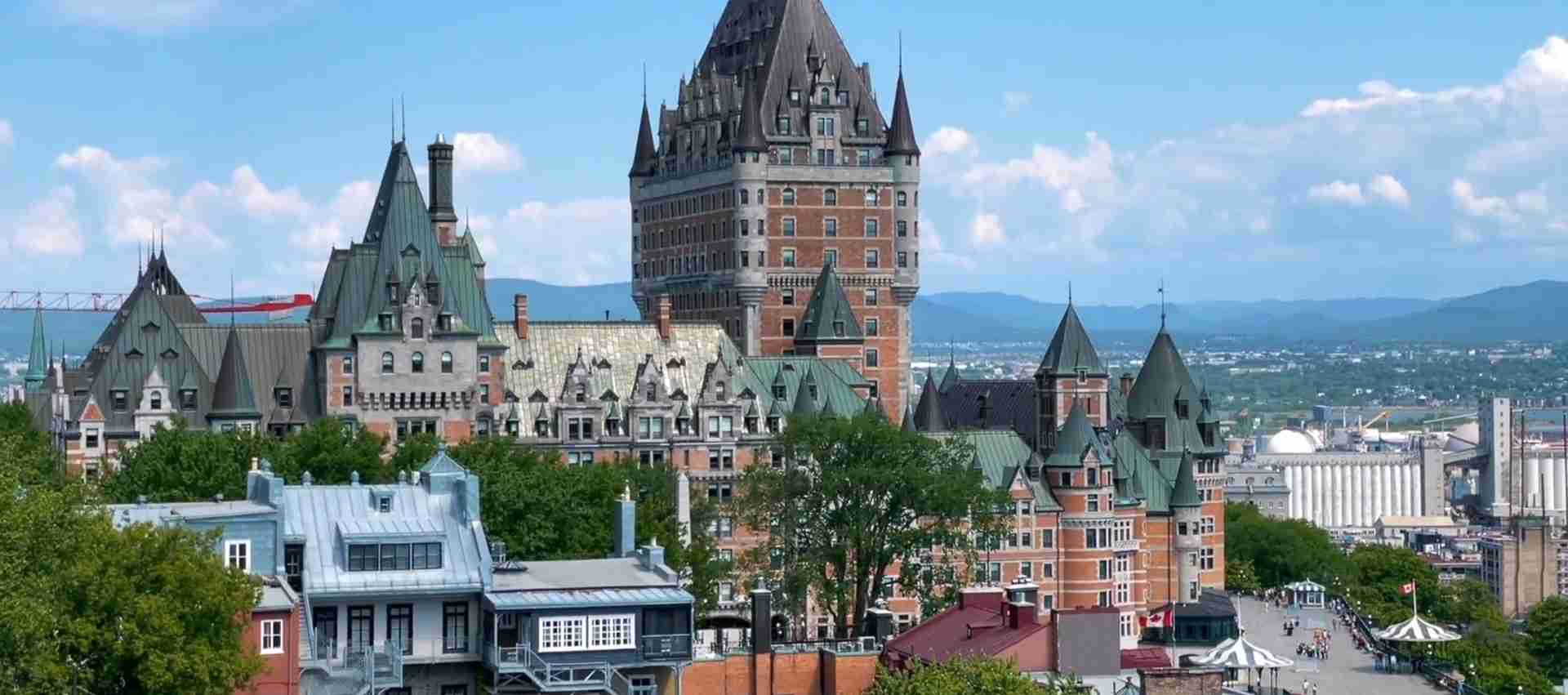
Quebec City’s luxury landscape centers on Fairmont Le Château Frontenac, the province’s most iconic hotel commanding the Old Town skyline since 1893. Château Frontenac rooms range CAD $400-800 ($292-584) nightly depending on views, seasonal demand, and room category, delivering not merely accommodation but immersion in Quebec’s signature architectural landmark. Alternative luxury options include Auberge Saint-Antoine CAD $300-500 ($219-365) with archaeological exhibits integrated into interior design, and Hotel Le Germain Quebec CAD $250-400 ($182-292) offering contemporary Nordic design sensibility within heritage building envelope.
Luxury properties justify premium pricing through distinctive experiences unavailable at lower tiers. Concierge services secure reservations at fully-booked restaurants, arrange private tours of closed-to-public sites, and provide insider access to cultural events. In-house spas, rooftop bars with panoramic city views, and turndown service with local artisan chocolates create memorable stays extending beyond mere lodging functionality. For travelers splitting costs, luxury accommodation runs CAD $125-250+ ($91-182+) per person nightly when sharing double rooms — substantial but delivering comprehensive experiences eliminating need for separate activity budgeting as properties themselves become destinations.
Alternative Accommodation Strategies 2026
Beyond traditional hotel categories, Quebec visitors access alternative accommodation models optimizing specific priorities. Apartment rentals through platforms deliver full kitchens enabling meal preparation savings CAD $40-60 ($29-44) daily on dining costs, with one-bedroom units CAD $90-160 ($66-117) nightly in Montreal neighborhoods and CAD $120-200 ($88-146) in Quebec City’s Old Town. Weekly rentals often reduce daily rates 15-25% compared to single-night bookings, making apartments particularly economical for stays exceeding five nights.
Bed and breakfast establishments provide middle-ground between hotel impersonality and home-sharing unpredictability, with hosts offering local recommendations, homemade breakfasts featuring Quebec specialties, and property character reflecting neighborhood architectural heritage. Montreal B&Bs including La Conciergerie and Chez Sophie charge CAD $110-180 ($80-131) nightly, while Quebec City options like Maison du Fort and B&B La Marquise command CAD $130-220 ($95-160) reflecting Old Town location premiums.
Religious order guesthouses present unique budget options particularly in Quebec City, where Catholic institutions including Monastery of Augustinian Sisters offer simple rooms CAD $70-110 ($51-80) nightly in contemplative environments near major attractions. These properties emphasize quiet reflection over luxury amenities, suiting travelers prioritizing location and budget over hotel services, though availability may restrict during religious observances and summer months when retreat programs occupy capacity.
Food and Dining Expenses Quebec 2026
Quebec’s culinary landscape delivers exceptional dining value through distinctive Québécois cuisine, diverse immigrant food communities, and farm-to-table movements emphasizing local ingredients. Daily food costs range CAD $30-50 ($22-36) for budget travelers preparing most meals, CAD $65-90 ($47-66) for mid-range dining mixing restaurant meals with strategic grocery purchases, and CAD $120-180+ ($88-131+) for food-focused travelers prioritizing Quebec’s renowned restaurant scene. The province’s French heritage manifests in café culture, bakery traditions, and multi-course dining conventions, while Montreal’s multicultural neighborhoods provide budget-friendly Vietnamese, Middle Eastern, and Latin American alternatives unavailable in Quebec City’s French-centric environment.
Budget Dining Quebec 2026 (CAD $30-50 / $22-36 Daily Per Person)
Budget-conscious travelers minimize food expenses through grocery purchases and selective restaurant meals, allocating CAD $30-50 ($22-36) daily per person. Montreal’s Jean-Talon Market and Atwater Market provide fresh produce, artisan cheeses, baked goods, and prepared foods at costs substantially below restaurant equivalents — a rotisserie chicken CAD $12 ($9), fresh baguette CAD $3 ($2), local cheeses CAD $8-12 ($6-9) per 250 grams, and seasonal vegetables CAD $3-6 ($2-4) per kilogram enable meal preparation under CAD $8 ($6) per serving when cooking for two travelers.
Strategic restaurant selection further extends budget dining capacity. Montreal’s Vietnamese community along Boulevard Saint-Laurent offers pho CAD $12-15 ($9-11) and banh mi sandwiches CAD $6-9 ($4-7), while Middle Eastern establishments in Parc-Extension serve shawarma plates CAD $10-14 ($7-10) and falafel wraps CAD $8-12 ($6-9). Quebec City lacks Montreal’s ethnic food diversity but maintains French-Canadian classics including poutine CAD $8-12 ($6-9), tourtière meat pies CAD $10-15 ($7-11), and sugar shack meals featuring maple-infused dishes CAD $18-28 ($13-20) delivering regional authenticity at budget-friendly pricing.
Breakfast preparation through hostel kitchens or apartment facilities costs CAD $3-5 ($2-3.65) per person using grocery purchases — yogurt CAD $5 ($3.65) per container serving two, granola CAD $6 ($4.38) per package yielding six servings, fresh fruit CAD $4-8 ($3-6) per pound depending on seasonal availability. Lunch options include grocery-prepared sandwiches CAD $6-10 ($4-7) or bakery purchases of baguette sandwiches CAD $7-12 ($5-9) from neighborhood boulangeries. Dinner represents the sole restaurant meal in budget dining strategies, with casual bistros charging CAD $18-28 ($13-20) for mains including regional specialties, enabling full-day food costs under CAD $40 ($29) per person while maintaining quality and cultural authenticity.
Mid-Range Dining Quebec 2026 (CAD $65-90 / $47-66 Daily Per Person)
Mid-range dining balances restaurant experiences with strategic meal preparation, allocating CAD $65-90 ($47-66) daily per person. This budget enables breakfast from neighborhood cafés CAD $12-18 ($9-13) including coffee and pastries or egg dishes, lunch from casual restaurants CAD $18-28 ($13-20), and dinner at mid-range bistros CAD $35-50 ($26-36) before beverages. Mid-range travelers experience Quebec’s culinary identity without luxury dining premiums, accessing regional specialties, local wines, and restaurant environments reflecting neighborhood character.
Montreal mid-range dining showcases the city’s culinary diversity. Brunch institutions including Olive et Gourmando and Lawrence Restaurant charge CAD $15-25 ($11-18) for signature dishes, while casual French bistros such as L’Express and Leméac offer prix-fixe menus CAD $30-45 ($22-33) including appetizer, main, and dessert. The Plateau Mont-Royal and Mile End neighborhoods concentrate independent restaurants delivering quality comparable to downtown establishments at costs 15-25% lower, with mains CAD $22-35 ($16-26) versus downtown’s CAD $28-42 ($20-31) for equivalent cuisine.
Quebec City mid-range dining centers on traditional Québécois cuisine within atmospheric Old Town settings. Restaurants including Aux Anciens Canadiens, Le Lapin Sauté, and Chez Muffy specialize in regional dishes — duck confit CAD $32-38 ($23-28), Quebec lamb CAD $35-42 ($26-31), tourtière CAD $28-34 ($20-25) — paired with local microbrewery beers CAD $7-10 ($5-7) or Quebec ciders CAD $8-12 ($6-9). Table d’hôte menus delivering three courses CAD $40-55 ($29-40) provide superior value versus à la carte ordering, particularly during weekday lunch service when identical dishes cost 25-35% less than dinner pricing.
Wine and beverage costs significantly impact mid-range dining budgets. Quebec wines from Eastern Townships including Domaine Pinnacle ice wine and Vignoble de l’Orpailleur table wines range CAD $10-18 ($7-13) per glass or CAD $45-75 ($33-55) per bottle at restaurants applying standard 2.5-3x retail markups. Local craft beers including Dieu du Ciel, Brasserie McAuslan, and Unibroue cost CAD $7-10 ($5-7) per pint, while cocktails at mid-range establishments run CAD $12-16 ($9-12). Travelers limiting alcohol to one beverage daily maintain total dining costs within CAD $80-95 ($58-69) including meals and drinks, while those preferring wine pairings or cocktails should budget additional CAD $20-35 ($15-26) daily.
Fine Dining and Culinary Experiences Quebec 2026
Quebec’s fine dining scene rivals major global culinary destinations, with Montreal hosting multiple Michelin-starred establishments and Quebec City maintaining haute cuisine traditions within Old Town’s historic buildings. Tasting menus at premier restaurants including Toqué! and Park Restaurant in Montreal or Saint-Amour and Laurie Raphaël in Quebec City range CAD $90-150 ($66-110) per person before beverages, wine pairings adding CAD $60-100 ($44-73) and premium selections exceeding CAD $150 ($110) for rare vintages.
Montreal’s culinary elite includes Joe Beef, Liverpool House, and Le Vin Papillon — restaurants focusing on ingredient quality, creative preparations, and unpretentious environments despite premium pricing. Mains range CAD $38-58 ($28-42), with full meals including appetizers and desserts totaling CAD $80-120 ($58-88) per person before wine. These establishments require reservations weeks in advance during peak season, with dinner seatings concentrating at 6:00 PM and 8:30 PM requiring punctuality as tables turn tightly scheduled.
Quebec City fine dining emphasizes regional terroir through relationships with local producers. Restaurants showcase Charlevoix lamb, Quebec foie gras, lobster from Îles de la Madeleine, and cheese from Fromagerie du Presbytère within tasting menus CAD $95-140 ($69-102) designed to demonstrate Quebec’s agricultural diversity. Sugar shack experiences during March-April maple season deliver traditional cabane à sucre meals CAD $35-50 ($26-36) featuring maple-infused dishes from tire sur neige (maple taffy on snow) through tourtière, beans, and ham — authentic cultural immersion at costs substantially below formal restaurant equivalents.
Transportation Costs Quebec 2026
Quebec Province’s compact urban cores and comprehensive public transit networks enable low-cost transportation throughout major destinations. Montreal and Quebec City maintain bus and metro systems charging CAD $3.50-3.75 ($2.55-2.75) single rides, with multi-day passes reducing per-ride costs to CAD $2-3 ($1.50-2.20) through unlimited travel periods. Inter-city transportation between Montreal and Quebec City costs CAD $35-75 ($26-55) via bus or train depending on booking timing and service class, while car rentals starting CAD $45-70 ($33-51) daily suit travelers exploring rural Quebec destinations including Charlevoix, Eastern Townships, or Laurentian regions beyond public transit reach.
Montreal Public Transportation 2026
Montreal’s Société de transport de Montréal operates integrated metro and bus networks covering the metropolitan region through four metro lines and 220+ bus routes. Single-ride fares cost CAD $3.75 ($2.75) purchased aboard buses with exact change or CAD $3.50 ($2.55) when pre-purchased through OPUS smart cards or the STM Nomade payment app. Transfers between buses and metro remain valid 120 minutes from initial validation, enabling multi-stage journeys under single-fare pricing — sufficient for reaching most tourist destinations from accommodation locations throughout the city.
Multi-day transit passes deliver substantial savings versus single rides. Montreal offers 1-day unlimited CAD $11 ($8), 3-day unlimited CAD $20 ($15), and weekend unlimited Friday 4 PM through Monday 5 AM CAD $14 ($10). Travelers using transit 4+ times daily benefit from unlimited passes, with 3-day access costing equivalent to just 5.7 single rides — achieved through morning departure to attractions, midday return for lunch, afternoon museum visits, and evening restaurant or nightlife excursions. Monthly passes CAD $105 ($77) suit extended stays exceeding two weeks, reducing effective daily costs to CAD $3.50 ($2.55) across 30-day periods.
The metro operates 5:30 AM to 12:30 AM weekdays (until 1:00 AM Fridays, 1:30 AM Saturdays), with bus service extending later on major routes. Key tourist lines include Orange Line connecting Berri-UQAM hub through Plateau Mont-Royal and Mile End, Green Line serving Old Montreal and downtown core, and bus 11 providing surface transit along Mont-Royal Avenue through hipster neighborhoods. Airport connection requires 747 express bus CAD $11 ($8) or 204/209 bus combinations under regular fares, with the express bus offering 24-hour transit access making it cost-effective for late arrivals planning immediate city exploration.
Quebec City Public Transportation 2026
Quebec City’s Réseau de transport de la Capitale operates extensive bus network connecting Old Town, downtown districts, and suburban neighborhoods through 230 routes including express Métrobus service. Single rides cost CAD $3.75 ($2.75) cash aboard buses or CAD $3.50 ($2.55) when purchased through occasional smart cards or the RTC Nomade payment app. Unlike Montreal’s metro system, Quebec City relies exclusively on bus transit due to smaller population and compact geography making underground rail economically impractical.
Multi-day passes provide superior value for visitors concentrating activities within Quebec City boundaries. The RTC offers 1-day unlimited CAD $9 ($7), 2-day unlimited CAD $18 ($13), and 3-day unlimited CAD $26 ($19) — exceptional value considering single rides cost CAD $3.50-3.75 ($2.55-2.75) and typical tourist days involve 4-6 transit journeys between accommodation, attractions, restaurants, and evening activities. Weekly passes CAD $30 ($22) suit longer stays, though monthly options CAD $97 ($71) deliver marginal additional savings unless residence exceeds 12 days given weekly pass coverage.
Key tourist routes include Métrobus 800 and 801 high-frequency lines connecting Sainte-Foy, downtown, and Beauport neighborhoods, bus 11 serving Plains of Abraham and museum district, and bus 80 providing airport connections CAD $3.50 ($2.55) regular fare. Old Town’s compact scale enables walking for intra-neighborhood movement, with public transit most valuable for reaching accommodation outside fortification walls, connecting to Montmorency Falls, or accessing suburban attractions including Wendake Huron-Wendat reserve. Free tourist shuttle service operates summer months between major hotels and Old Town attractions, though limited frequency makes RTC buses more practical for flexible scheduling.
Inter-City Travel Between Montreal and Quebec City 2026
Travel between Montreal and Quebec City spanning 250 kilometers involves bus, train, or car options with varying cost-convenience tradeoffs. Orléans Express coaches operate hourly departures CAD $35-55 ($26-40) depending on booking timing and day of week, with 3-hour journey times and WiFi-equipped buses. Advance online bookings secure lowest fares, while same-day purchases approach upper pricing tiers. VIA Rail trains offer comfortable alternative CAD $50-75 ($36-55) for economy class or CAD $90-130 ($66-95) for business class including lounge access, meal service, and spacious seating, though 3.5-hour duration slightly exceeds bus travel time.
Car rentals provide flexibility for exploring destinations between Montreal and Quebec City including Trois-Rivières, or extending to Charlevoix region and Eastern Townships. Compact cars rent CAD $45-70 ($33-51) daily through major agencies, with weekly rates reducing daily costs to CAD $35-55 ($26-40). Fuel expenses add CAD $35-45 ($26-33) for Montreal-Quebec City round-trip given 500 kilometers total distance and gasoline prices CAD $1.70-1.90 ($1.24-1.39) per liter. Highway tolls remain minimal in Quebec compared to Ontario or U.S. routes, though parking in Old Quebec City costs CAD $20-35 ($15-26) daily at commercial lots near major attractions.
Ride-sharing services including Uber and Lyft operate throughout Montreal and Quebec City at costs comparable to traditional taxis — approximately CAD $12-18 ($9-13) for short trips within central zones or CAD $25-40 ($18-29) for longer distances connecting downtown cores to airports or suburban neighborhoods. These services provide practical late-night transportation when public transit ceases operation, airport connections with luggage, or point-to-point travel when bus routes require multiple transfers. However, regular ride-sharing use quickly exhausts transportation budgets as costs exceed public transit 3-4x on per-trip basis.
Attraction and Activity Costs Quebec 2026
Quebec Province balances free public spaces with ticketed cultural institutions, enabling flexible activity budgets from CAD $0 daily for park and neighborhood exploration through CAD $50-80+ ($36-58+) for comprehensive museum visits, paid tours, and special experiences. Montreal and Quebec City concentrate free attractions including Mount Royal Park, Old Port waterfront access, Plains of Abraham battleground, and architectural heritage throughout Old Town districts. Major museums charge CAD $15-20 ($11-15) entrance fees while offering free admission first Sunday monthly for Quebec residents, and combination tickets reduce individual site costs 20-30% when visiting multiple institutions within the same cultural network.
Free Attractions and Public Spaces Quebec 2026
Montreal delivers world-class free experiences throughout its diverse neighborhoods. Mount Royal Park provides 470 acres of forested hillside with hiking trails, Kondiaronk Belvedere viewpoint overlooking downtown skyline, and year-round recreational programming from summer picnics through winter ice skating at Beaver Lake. The park’s accessibility via metro (Mont-Royal station) or bus routes enables visits without car rental expenses, with Sunday afternoon tam-tam drum circles and weekend food festivals creating cultural immersion at zero cost.
Old Montreal preserves 18th-century architecture throughout cobblestone streets accessible without admission fees. Place Jacques-Cartier hosts street performers and outdoor cafés, while Notre-Dame Basilica exterior and Old Port waterfront deliver architectural and urban waterscape experiences free of charge. Canal Lachine pathway extends 13.5 kilometers from Old Port through southwestern neighborhoods to Lachine Rapids, providing walking and cycling routes past former industrial sites converted to cultural spaces, restaurants, and public art installations. Plateau Mont-Royal and Mile End neighborhoods reward aimless wandering through murals, independent boutiques, and café culture defining Montreal’s creative identity.
Quebec City’s compact Old Town functions as open-air museum with fortification walls, gates, and historic buildings viewable without ticket purchases. Dufferin Terrace boardwalk stretches 425 meters alongside Château Frontenac delivering panoramic St. Lawrence River views, while Petit-Champlain Quarter’s narrow streets preserve 17th-century merchant district atmosphere. Plains of Abraham battlefield where French and British forces contested North American control offers 108 hectares of public parkland with interpretation panels explaining 1759 conflict. Quartier Saint-Roch beyond Old Town walls showcases contemporary Quebec City through street art, microbreweries, and working-class neighborhood gradually gentrifying while maintaining authentic character absent from tourist-centric Upper Town.
Paid Attractions Montreal 2026
Montreal’s major museums charge CAD $15-22 ($11-16) standard admission with reduced rates for students, seniors, and children. Montreal Museum of Fine Arts maintains CAD $18 ($13) general admission while offering free access to permanent collections and charging separately for special exhibitions — an unusual structure enabling budget-conscious visitors to experience core holdings without full ticket expense. Pointe-à-Callière archaeology museum in Old Montreal costs CAD $22 ($16) adults with underground archaeological sites preserving Montreal’s founding settlement and multimedia presentations explaining city development across four centuries.
Biodome, Insectarium, Botanical Garden, and Planetarium operate as Space for Life museum complex with combination tickets CAD $26 ($19) providing access to all four institutions versus CAD $22-23 ($16-17) individual admissions — worthwhile savings when visiting two or more facilities. The Biodome’s recreated ecosystems including tropical rainforest and Laurentian forest deliver immersive environments particularly compelling for families with children, while Botanical Garden’s 75 hectares include 30 thematic gardens and 10 exhibition greenhouses making it North America’s second-largest botanical garden.
Old Port observation wheel costs CAD $25 ($18) for 20-minute gondola ride providing aerial downtown and river views, while jet boating excursions through Lachine Rapids range CAD $70-90 ($51-66) per person for adrenaline-focused 45-minute experiences. Montreal Tower at Olympic Park charges CAD $25 ($18) for observatory access to the world’s tallest inclined tower at 165 meters, though views while impressive face competition from free Mount Royal Belvedere and paid Notre-Dame Basilica tower CAD $8 ($6) within more architecturally significant setting.
Paid Attractions Quebec City 2026
Quebec City’s Museum of Civilization charges CAD $15 ($11) standard admission covering permanent exhibitions including “This Is Our Story” exploring Indigenous Quebec and “People of Quebec… Then and Now” tracing four centuries of cultural development. Special exhibitions including 2026’s Titanic artifacts display require supplementary CAD $5-8 ($3.65-6) fees beyond base admission. The museum offers free access first Sunday monthly for Quebec residents and combination tickets with Museum of French America and Place-Royale Museum CAD $23 ($17) delivering 20% savings versus individual admissions when visiting all three institutions within two-week validity period.
La Citadelle fortification charges CAD $16 ($12) guided tour admission with English or French language options exploring star-shaped fortress constructed 1820-1850 and still serving as active military installation. Tours include Changing of the Guard ceremony summer months and Royal 22nd Regiment Museum displaying military artifacts spanning three centuries. Observatory tour CAD $22 ($16) adds rooftop access to views across Quebec City, St. Lawrence River, and Île d’Orléans, though free viewpoints from Dufferin Terrace provide comparable panoramas without admission expense.
Montmorency Falls Park enables free viewing from base and riverside trails, with cable car ascent CAD $17 ($12) round-trip or suspension bridge access CAD $6 ($4) for elevated waterfall perspectives. Via Ferrata climbing routes introduce rock climbing techniques through guided experiences CAD $45-70 ($33-51) depending on difficulty level, while zip-lining across falls gorge costs CAD $25 ($18) for adrenaline-focused activity. Winter visits transform falls into icy spectacle with illumination programming, though free viewing areas maintain appeal without paid attraction purchases.
Guided Tours and Experiences Quebec 2026
Walking tours provide cultural context and historical narratives enhancing independent exploration. Montreal free walking tours operate tip-based models with guides expecting CAD $10-20 ($7-15) per person for 2-3 hour neighborhood explorations of Old Montreal, Plateau Mont-Royal, or Mile End districts. Paid food tours range CAD $60-90 ($44-66) per person including tastings at 5-7 establishments showcasing bagels, smoked meat, poutine, and multicultural cuisines defining Montreal’s culinary identity. Ghost tours and historical walks cost CAD $25-35 ($18-26) for 90-minute experiences emphasizing entertaining storytelling over academic rigor.
Quebec City walking tours similarly divide between free tip-based options and paid specialized experiences. Old Town historical walks cost CAD $25-35 ($18-26) for two-hour guided narratives connecting fortifications, French colonial architecture, and Battle of Plains of Abraham into cohesive city development story. Ghost tours emphasizing paranormal legends and historical murders charge CAD $30-40 ($22-29) for atmospheric evening walks through narrow streets and hidden courtyards. Food tours CAD $75-95 ($55-69) include cheese tastings, maple products, and traditional Québécois dishes at locations from Petit-Champlain boutiques through Saint-Roch neighborhood contemporary restaurants.
Seasonal activities add Quebec-specific experiences outside standard museum admissions. Sugar shack visits March-April cost CAD $35-50 ($26-36) including traditional cabane à sucre meals and maple syrup production demonstrations. Winter Carnival in Quebec City February requires CAD $15-20 ($11-15) general admission for festival site access with individual activities including ice slides, snow sculptures, and cultural performances priced separately CAD $5-10 ($3.65-7) each. Summer outdoor concerts through Montreal Jazz Festival and Just for Laughs comedy festival deliver free programming on public stages, with ticketed headliner shows CAD $40-100+ ($29-73+) requiring advance purchase during July peak season.
Sample Daily Budgets Quebec Province 2026
These sample budgets demonstrate realistic daily costs across budget, mid-range, and luxury travel tiers in Quebec Province for 2026. All amounts reflect per-person expenses assuming two travelers sharing accommodation, with costs broken down by major expense categories to enable customization based on individual priorities and travel styles.
Budget Daily Costs Quebec 2026 (CAD $55-95 / $40-70 Per Person)
Budget travel in Quebec emphasizes hostel dormitories, meal preparation, public transportation passes, and free attractions. Accommodation CAD $30-50 ($22-36) per person in hostel dormitories including free WiFi and communal kitchen access. Food costs CAD $25-35 ($18-26) through grocery purchases for breakfast and lunch with single budget restaurant dinner. Transportation CAD $0-10 ($0-7) when walking central neighborhoods or purchasing day passes for broader exploration. Activities CAD $0-10 ($0-7) focusing on free public spaces, parks, and architectural heritage with selective museum visits on free admission days.
Total budget daily costs range CAD $55-95 ($40-70) per person enabling Quebec cultural immersion while minimizing expenses. This tier requires flexibility regarding accommodation comfort, willingness to prepare meals, and prioritization of free experiences over ticketed attractions. Budget travelers maximize value through winter shoulder season visits reducing accommodation costs 30-40%, multi-day transit passes eliminating per-ride expenses, and market-based meal preparation cutting food costs 40-50% versus restaurant dining. Strategic splurges on signature experiences including sugar shack visits or Montreal smoked meat sandwiches maintain cultural authenticity without overwhelming daily budgets.
Mid-Range Daily Costs Quebec 2026 (CAD $155-265 / $113-193 Per Person)
Mid-range travel balances comfort with value through three-star hotels, restaurant meals mixing casual and moderate establishments, comprehensive public transit use, and selective paid attractions. Accommodation CAD $60-125 ($44-91) per person when sharing mid-range hotel double rooms in central locations. Food costs CAD $65-90 ($47-66) including café breakfast, casual lunch, and mid-range restaurant dinner before beverages. Transportation CAD $10-15 ($7-11) through multi-day unlimited transit passes or combination of walking with selective transit use. Activities CAD $20-35 ($15-26) enabling 1-2 museum admissions daily or combination of free attractions with paid specialized tours.
Total mid-range daily costs reach CAD $155-265 ($113-193) per person delivering optimal value-to-experience ratio for most Quebec visitors. This budget tier enables walkable accommodation locations saving transit time, restaurant experiences showcasing regional cuisine without luxury premiums, and comprehensive attraction access through museum visits and selective guided tours. Mid-range travelers optimize value through weekday travel reducing weekend accommodation surcharges 15-25%, table d’hôte lunch specials delivering three-course meals at costs 30% below dinner equivalents, and combination museum tickets saving 20-30% versus individual admissions.
Luxury Daily Costs Quebec 2026 (CAD $315-550+ / $230-401+ Per Person)
Luxury travel prioritizes exceptional experiences through heritage hotels, fine dining, private tours, and comprehensive cultural programming. Accommodation CAD $125-250+ ($91-182+) per person when sharing luxury hotel double rooms in signature properties including Château Frontenac or Ritz-Carlton Montreal. Food costs CAD $120-180+ ($88-131+) including upscale breakfast, lunch at mid-range establishments, and fine dining dinner with wine pairings. Transportation CAD $20-40 ($15-29) through combination of public transit, taxis, and ride-sharing services eliminating wait times and schedule constraints. Activities CAD $50-80+ ($36-58+) for comprehensive museum visits, private guided tours, and special experiences including Via Ferrata or helicopter tours.
Total luxury daily costs exceed CAD $315-550+ ($230-401+) per person, delivering immersive Quebec experiences through distinctive accommodation, culinary excellence, and cultural depth impossible at lower budget tiers. Luxury travelers benefit from concierge services securing reservations at fully-booked restaurants, private guides providing deeper historical context, and signature properties functioning as destinations themselves through architectural heritage and exceptional service. This tier justifies premium costs through time efficiency, exclusive access, and memorable experiences forming lasting impressions of Quebec’s cultural richness.
Money-Saving Strategies Quebec 2026
Strategic planning enables substantial Quebec travel savings without sacrificing experience quality. These proven approaches reduce costs 25-45% across accommodation, dining, transportation, and activities while maintaining authentic cultural immersion and comprehensive destination coverage.
Seasonal Timing Optimization 2026
Winter travel November through March delivers the most significant savings opportunity, reducing accommodation costs 30-40% below summer peaks. Quebec City mid-range hotels charging CAD $220-280 ($160-204) nightly July-August drop to CAD $140-180 ($102-131) January-February, saving couples CAD $80-120 ($58-88) nightly or CAD $560-840 ($409-613) weekly. Montreal accommodation follows similar patterns with shoulder season rates 25-35% below peak pricing. These savings substantially exceed cold-weather gear expenses estimated CAD $150-300 ($110-220) for quality winter jackets, boots, and accessories required for comfortable February exploration but usable across multiple trips.
Spring April-May and fall September-October provide moderate 15-25% accommodation savings versus summer while avoiding winter’s extreme cold. These shoulder seasons deliver optimal value-to-experience ratios with pleasant weather, reduced crowding at major attractions, and autumn foliage or spring bloom aesthetics. Festival programming including Montreal Jazz Festival July and Quebec Winter Carnival February justify peak-season premiums for culture-focused travelers, though general sightseeing and culinary exploration achieve equivalent satisfaction at lower shoulder season costs.
Accommodation Location Strategy
Selecting properties 15-20 minute transit rides from central tourist zones reduces accommodation costs 25-40% while maintaining excellent public transportation access. Montreal’s Verdun, Rosemont-Petite-Patrie, and Villeray neighborhoods offer mid-range hotels CAD $100-150 ($73-110) nightly versus downtown’s CAD $180-250 ($131-182), with direct metro connections delivering travelers to Old Montreal, Plateau Mont-Royal, or Mile End within 20-30 minutes door-to-door. Quebec City properties in Sainte-Foy or Beauport cost CAD $120-170 ($88-124) nightly compared to Old Town’s CAD $200-280 ($146-204), with frequent bus service reaching city center in 15-25 minutes.
Weekly apartment rentals reduce daily accommodation costs 20-30% versus nightly hotel rates while providing full kitchens enabling meal preparation savings. Montreal apartments with separate bedrooms, living spaces, and kitchens rent CAD $700-1,100 ($511-803) weekly in neighborhoods including Mile End or Plateau Mont-Royal, equivalent to CAD $100-157 ($73-115) nightly when amortized across seven days versus hotels CAD $150-200 ($110-146) for comparable neighborhood locations. Kitchen access enables breakfast preparation costing CAD $3-5 ($2-3.65) per person and lunch assembly CAD $6-10 ($4-7), delivering CAD $30-40 ($22-29) daily food savings per couple or CAD $210-280 ($153-204) weekly when replacing restaurant meals.
Transportation Pass Optimization
Pre-purchasing multi-day unlimited transit passes eliminates per-ride decision-making while reducing effective transportation costs to CAD $2-3 ($1.50-2.20) per journey. Montreal’s 3-day unlimited pass CAD $20 ($15) costs equivalent to just 5.7 single rides at CAD $3.50 ($2.55) per trip, achieved through 2-3 daily journeys typical for visitors exploring multiple neighborhoods. Quebec City’s 3-day pass CAD $26 ($19) similarly delivers value at 7.4 single rides, with typical tourist itineraries involving 4-6 daily trips between accommodation, attractions, restaurants, and evening activities.
Walking replaces short-distance transit when weather permits, particularly within Old Montreal’s compact 1.5 kilometer diameter and Quebec City’s 2 kilometer Old Town walkable area. Comfortable footwear enables 20-30 minute walks connecting major sites, saving CAD $3.50-3.75 ($2.55-2.75) per eliminated transit ride while providing architectural detail observation and neighborhood character immersion impossible from moving buses. Strategic transit use for longer distances or inclement weather maintains mobility while maximizing walking-based cost elimination.
Dining Cost Management
Table d’hôte lunch menus deliver identical dishes at costs 25-35% below dinner pricing at the same establishments. Quebec restaurants offering three-course lunches CAD $25-35 ($18-26) charge CAD $40-55 ($29-40) for equivalent dinner service, enabling fine dining experiences at mid-range lunch budgets. This strategy proves particularly effective in Quebec City where traditional restaurants maintain formal lunch service traditions, less common in Montreal’s casual dining landscape.
Ethnic neighborhood dining in Montreal provides exceptional value through Vietnamese, Middle Eastern, and Latin American establishments charging CAD $10-18 ($7-13) for complete meals versus French bistros CAD $25-35 ($18-26) for comparable satisfaction. Mile End’s bagel shops, Saint-Laurent Boulevard’s Vietnamese pho restaurants, and Parc-Extension’s Indian cuisine deliver authentic immigrant community food culture at prices reflecting local rather than tourist clientele, enabling budget-conscious travelers to experience Montreal’s multicultural identity while minimizing costs.
Market-based meal assembly combines quality with economy through purchases at Jean-Talon Market Montreal or Marché du Vieux-Port Quebec City. Artisan cheeses CAD $8-15 ($6-11) per 250 grams, charcuterie CAD $12-20 ($9-15) per 250 grams, fresh baguettes CAD $3-4 ($2-3), and seasonal produce enable picnic meals CAD $20-30 ($15-22) serving two people — 40-50% savings versus equivalent restaurant meals while providing authentic ingredient exposure and flexible dining locations including urban parks, riverside walkways, or accommodation terraces.
Multi-Day Trip Cost Examples Quebec 2026
These comprehensive trip cost examples demonstrate complete Quebec Province visit expenses including accommodation, food, transportation, and activities across popular itinerary lengths. All costs reflect per-person expenses assuming two travelers sharing accommodation, with specific line items enabling customization based on individual preferences and budget constraints.
Three-Day Quebec City Weekend 2026
A three-day Quebec City weekend enables comprehensive Old Town exploration, museum visits, and regional dining experiences within compact timeframe suitable for long-weekend travelers. Mid-range three-day costs per person when sharing accommodation reach approximately CAD $525-765 ($383-558).
Accommodation costs for two nights in mid-range Old Town hotel at CAD $100-140 ($73-102) per person nightly total CAD $200-280 ($146-204). Food expenses assuming café breakfasts, casual lunches, and mid-range restaurant dinners total approximately CAD $195-270 ($142-197) across three full days. Transportation including arrival bus CAD $3.50 ($2.55), 3-day RTC transit pass CAD $26 ($19), and departure bus CAD $3.50 ($2.55) totals CAD $33 ($24). Activities including Museum of Civilization CAD $15 ($11), La Citadelle CAD $16 ($12), Montmorency Falls cable car CAD $17 ($12), plus incidental fees CAD $10-15 ($7-11) total approximately CAD $60-65 ($44-47).
Three-day Quebec City weekend total encompasses accommodation CAD $200-280 ($146-204), food CAD $195-270 ($142-197), transportation CAD $33 ($24), activities CAD $60-65 ($44-47), totaling approximately CAD $525-765 ($383-558) per person for comprehensive Old Town experience.
Five-Day Montreal Visit 2026
Five days in Montreal enables thorough neighborhood exploration, museum visits across multiple institutions, and diverse dining experiences showcasing the city’s multicultural food scene. Mid-range five-day costs per person when sharing accommodation reach approximately CAD $775-1,325 ($566-967).
Accommodation costs for four nights in mid-range hotel outside downtown core at CAD $60-100 ($44-73) per person nightly total CAD $240-400 ($175-292). Food expenses across five full days at CAD $65-90 ($47-66) daily total CAD $325-450 ($237-329). Transportation using 3-day unlimited pass CAD $20 ($15) plus two single-day passes CAD $11 each totals CAD $42 ($31). Activities including Museum of Fine Arts CAD $18 ($13), Space for Life complex CAD $26 ($19), Pointe-à-Callière CAD $22 ($16), Notre-Dame Basilica CAD $18 ($13), Montreal food tour CAD $75 ($55), plus incidentals CAD $10-15 ($7-11) total approximately CAD $170-175 ($124-128).
Five-day Montreal visit encompasses accommodation CAD $240-400 ($175-292), food CAD $325-450 ($237-329), transportation CAD $42 ($31), activities CAD $170-175 ($124-128), totaling approximately CAD $775-1,325 ($566-967) per person for comprehensive city exploration.
Seven-Day Quebec Province Combined Tour 2026
One week exploring both Montreal and Quebec City provides comprehensive Quebec Province experience combining urban diversity with colonial heritage. Mid-range seven-day combined trip costs per person when sharing accommodation reach approximately CAD $1,085-1,855 ($792-1,354).
Accommodation costs for three nights Montreal mid-range hotel at CAD $60-100 ($44-73) per person nightly totaling CAD $180-300 ($131-219), plus three nights Quebec City mid-range hotel at CAD $100-140 ($73-102) per person nightly totaling CAD $300-420 ($219-307), combined accommodation total CAD $480-720 ($350-526). Food expenses across seven full days averaging CAD $65-90 ($47-66) daily total CAD $455-630 ($332-460). Transportation including Montreal 3-day pass CAD $20 ($15), Montreal-Quebec City bus CAD $45 ($33), Quebec City 3-day pass CAD $26 ($19), plus incidental transit CAD $15-20 ($11-15) totals CAD $105-110 ($77-80). Activities across both cities including multiple museums, tours, and experiences total approximately CAD $140-200 ($102-146).
Seven-day Quebec Province combined tour encompasses accommodation CAD $480-720 ($350-526), food CAD $455-630 ($332-460), transportation CAD $105-110 ($77-80), activities CAD $140-200 ($102-146), totaling approximately CAD $1,180-1,660 ($861-1,212) per person. Rounding to nearest CAD $5 yields final range CAD $1,085-1,855 ($792-1,354) per person for comprehensive dual-city exploration.
Currency and Payment Considerations 2026
Quebec Province operates within Canadian dollar payment ecosystem with comprehensive credit card acceptance, limited need for cash transactions, and favorable exchange rates for United States visitors. Understanding payment mechanics, currency conversion, and gratuity expectations prevents budget surprises and enables smooth financial navigation throughout travel experience.
Currency Exchange and Rates 2026
The Canadian dollar trades at approximately CAD $1.39 per United States dollar in 2026, delivering favorable conversion rates for American visitors with US $100 purchasing CAD $139 of goods and services. This represents stronger Canadian dollar positioning versus 2020-2022 period when CAD approached $1.45 per USD, though weaker than pre-2015 parity eras. European travelers face less advantageous exchange rates with EUR trading approximately CAD $1.50-1.55, requiring mindful budget management relative to eurozone baseline costs.
Currency exchange options include banks, dedicated exchange bureaus, and ATM withdrawals with varying fee structures. Major Canadian banks including RBC, TD, and BMO provide competitive exchange rates with transparent fee disclosure, though requiring account holders or accepting walk-in customers during limited hours. Dedicated exchange offices throughout tourist areas including Old Montreal and Quebec City’s Petit-Champlain Quarter charge 3-5% commissions plus unfavorable exchange rates, making them convenience options rather than optimal value choices.
ATM withdrawals deliver most favorable exchange rates for travelers with cards waiving international transaction fees. Institutions including Charles Schwab, Capital One, and select credit unions reimburse ATM fees while applying wholesale exchange rates without markup, making Canadian ATM withdrawals cost-equivalent to home country usage. Standard banking cards typically charge foreign transaction fees 1-3% plus ATM operator fees CAD $3-5 ($2-3.50) per withdrawal, making larger single withdrawals CAD $300-500 ($219-365) more economical than multiple small transactions.
Payment Methods and Card Acceptance
Credit and debit cards receive near-universal acceptance throughout Quebec Province urban areas, with contactless payment terminals enabling tap transactions under CAD $250 ($182) without PIN entry or signature. Visa and Mastercard function equivalently across all merchant categories, while American Express maintains selective acceptance at restaurants and shops that find 3% merchant fees prohibitive compared to Visa/Mastercard’s 1.5-2% rates. Discover card acceptance remains limited to major hotel chains and car rental agencies, requiring backup Visa or Mastercard for comprehensive payment coverage.
Cash requirements diminish to minimal levels given comprehensive card infrastructure. The CAD $150-300 ($110-220) weekly cash recommendation covers market vendors preferring cash, street food purchases, service staff tips, and backup contingencies for rare card system failures. Many Quebec businesses now accept only card payments post-COVID, eliminating cash handling and speeding transaction processing. Farmers markets represent primary remaining cash-preferred environment, though even Jean-Talon Market and Atwater Market increasingly offer card readers at individual vendor stalls.
Mobile payment systems including Apple Pay and Google Pay function identically to physical card tap payments, providing convenient phone-based transactions accepted wherever contactless terminals exist. These services eliminate need to carry physical cards for routine purchases, though maintaining backup cards prevents payment disruption if phone battery depletes or technical issues emerge. Quebec follows Canadian payment protocols supporting both chip-and-PIN and contactless technologies, contrasting with lingering United States signature-based systems.
Tipping Customs and Service Charges 2026
Quebec follows North American tipping conventions with restaurant gratuity expectations 15-20% of pre-tax bill for satisfactory service, 18-22% for exceptional attention. Restaurant bills present pre-tax subtotal with separate tax lines, requiring calculation of percentage tip on pre-tax amount rather than post-tax total. Many restaurants add suggested tip percentages to printed bills — typically 15%, 18%, and 20% — calculated on pre-tax amounts to guide gratuity decisions, though these suggestions represent starting points rather than mandatory amounts.
Service staff including bartenders receive CAD $1-2 ($0.75-1.50) per drink for simple orders or 15-18% of tab for elaborate cocktails and extended bar service. Hotel porters expect CAD $2-3 ($1.50-2.20) per bag, housekeeping staff CAD $3-5 ($2-3.65) per night for multi-day stays with tip left in envelope on final day, and concierge services warrant CAD $5-10 ($3.65-7) for securing difficult reservations or arranging special requests. Taxi and ride-sharing services follow 10-15% tipping convention with CAD $2-3 ($1.50-2.20) minimum for short rides.
Quebec’s sales tax structure adds 5% federal GST plus 9.975% provincial QST for combined 14.975% tax rate on most goods and services. This substantial tax rate requires budget adjustment compared to lower-tax United States jurisdictions, with CAD $100 ($73) restaurant bill reaching CAD $115 ($84) after tax before gratuity consideration. Some prices particularly for accommodation and attractions include taxes in displayed rates, while others present pre-tax pricing requiring mental calculation of 15% addition to determine actual outlay.
Practical Budget Planning Tips Quebec 2026
Effective Quebec budget management combines pre-trip research with flexible on-ground adaptation, realistic expense projections accounting for hidden costs, and strategic choices maximizing value across accommodation, dining, and activity categories. These practical approaches prevent budget overruns while maintaining comprehensive cultural experience and destination enjoyment.
Pre-Trip Planning and Booking Strategy
Advance accommodation booking secures lower rates and preferred locations while enabling price comparison across multiple platforms. Quebec hotels typically release inventory 12-18 months ahead with early-bird rates 15-30% below last-minute pricing, particularly for summer peak season when Old Town Quebec City and downtown Montreal properties approach capacity. Booking platforms including Hotels.com, Booking.com, and Expedia enable price comparison with member discounts and loyalty rewards reducing effective costs, while direct hotel websites occasionally match or beat third-party pricing when contacted for rate matching requests.
Transit pass pre-purchase through official STM and RTC websites or mobile apps prevents arrival-day scrambling while ensuring immediate transportation from airports or train stations. Montreal’s 3-day unlimited pass CAD $20 ($15) and Quebec City’s 3-day pass CAD $26 ($19) deliver immediate savings versus single-ride purchases, with advance digital loading onto OPUS cards or smartphone apps eliminating physical ticket acquisition logistics. Pre-planning optimal pass duration based on arrival and departure dates prevents waste from purchasing 3-day passes usable for only 2.5 days due to late arrival or early departure timing.
Restaurant reservation planning prevents disappointment at fully-booked establishments while enabling budget allocation for signature dining experiences. Quebec’s most acclaimed restaurants including Toqué!, Joe Beef, and Laurie Raphaël require reservations 2-4 weeks advance during peak season, with some establishments opening booking windows exactly 30 days ahead necessitating calendar monitoring. OpenTable and Resy platforms aggregate availability across participating restaurants, though many Quebec establishments maintain independent reservation systems requiring direct website or phone contact.
Hidden Costs and Budget Contingencies
Travelers frequently underestimate gratuity expenses when budgeting Quebec visits. The 15-20% restaurant service expectations plus bartender, hotel staff, and guide tips accumulate to CAD $30-60 ($22-44) daily beyond base meal and service costs. A couple dining at mid-range restaurants three times daily face CAD $155 ($113) pre-tax food costs expanding to CAD $178 ($130) after 14.975% sales tax and CAD $205-215 ($150-157) including 15-18% gratuity. Budget projections omitting gratuity understate actual costs 15-25%, leading to premature fund depletion or reduced dining frequency maintaining budget discipline.
Incidental expenses including bottled water, coffee purchases, convenience store snacks, pharmacy items, and souvenir impulse buys typically add CAD $15-30 ($11-22) daily beyond planned budgets. A morning coffee CAD $5 ($3.65), afternoon gelato CAD $6 ($4), and evening nightcap CAD $10 ($7) total CAD $21 ($15) without conscious spending decisions. These seemingly minor purchases compound across week-long trips to CAD $105-210 ($77-153) representing 8-12% of total mid-range travel budgets, making contingency allocation essential for realistic projection accuracy.
Weather-related expenses vary dramatically by season. Summer visits require minimal additional purchases beyond normal vacation wardrobes, while winter travel necessitates investment in cold-weather gear for travelers lacking extreme-cold experience. Quality winter jacket CAD $150-300 ($110-220), insulated boots CAD $100-200 ($73-146), warm gloves CAD $40-80 ($29-58), and wool hat CAD $25-50 ($18-36) total CAD $315-630 ($230-460) for comprehensive winter gear, though these items provide multi-year utility across multiple cold-climate trips rather than single-use expense allocation.
Daily Expense Tracking and Budget Adaptation
Active expense tracking through smartphone apps or spreadsheets enables mid-trip budget adjustment before overspending becomes irreversible. Applications including Trail Wallet, Splitwise, or simple phone calculator notes record actual daily expenses against projected budgets, highlighting categories exceeding plans and enabling compensating reductions in other areas. Tracking reveals spending patterns invisible without documentation — repeated CAD $5 ($3.65) coffees accumulating to CAD $35 ($26) weekly, CAD $15 ($11) attraction admissions totaling CAD $105 ($77) across multiple museums, or CAD $12 ($9) taxi rides compounding to CAD $84 ($61) replacing intended transit use.
Flexible budget reallocation optimizes satisfaction by prioritizing high-value experiences while reducing low-impact spending. Travelers discovering museum visits provide minimal enjoyment can redirect attraction budgets toward preferred dining experiences or guided tours, while those finding restaurant meals disappointing can shift food allocations toward grocery-based meal preparation and increased activity spending. This adaptive approach maintains total budget discipline while maximizing personal satisfaction through spending pattern optimization rather than rigid category adherence regardless of actual experience quality.
Strategic splurge identification enables controlled budget exceeding for truly exceptional experiences while maintaining overall financial discipline. Allocating CAD $150 ($110) for signature tasting menu at Toqué! or CAD $75 ($55) for Montreal food tour delivers memorable experiences justifying premium costs, offset through accommodation downgrades, transit pass optimization, or meal preparation substituting restaurant lunches. This intentional splurge approach differs from budget drift through unconscious spending accumulation, as predetermined exceptional experience investment represents conscious value prioritization rather than planning failure.
Frequently Asked Questions: Quebec Province Budget 2026
What is a realistic budget for first-time visitors to Quebec in 2026?
First-time Quebec visitors should budget CAD $775-1,325 ($566-967) per person for a five-day mid-range visit encompassing comprehensive accommodation, dining, transportation, and attraction access. This allocation covers four nights in centrally-located three-star hotels when sharing double rooms CAD $240-400 ($175-292), three meals daily averaging CAD $65-90 ($47-66) per person including café breakfasts and restaurant lunches and dinners, multi-day transit passes plus inter-city bus if visiting both Montreal and Quebec City CAD $55-75 ($40-55), and museum admissions plus selective guided tours CAD $140-180 ($102-131). Budget-conscious first-timers reduce costs to CAD $385-665 ($281-485) weekly through hostel dormitories and meal preparation, while luxury seekers invest CAD $2,205-3,850+ ($1,609-2,810+) for premium hotels and fine dining experiences.
Does Quebec accept United States dollars, or must I exchange currency?
Quebec Province businesses rarely accept United States dollars despite geographical proximity, requiring currency exchange to Canadian dollars for virtually all transactions. Some tourist-oriented establishments near border crossings or major attractions may accept USD but apply unfavorable exchange rates 10-15% worse than official rates, making this convenience option economically disadvantageous. Optimal currency strategy uses Canadian ATM withdrawals with no-fee debit cards applying wholesale exchange rates, or pre-trip currency exchange through home country banks providing better rates than airport kiosks or tourist-district exchange bureaus. Credit cards with no foreign transaction fees process payments at competitive wholesale rates without manual currency exchange, making them practical for most purchases while maintaining CAD $150-300 ($110-220) cash for market vendors and service gratuities.
How much cheaper is Quebec compared to traveling in France or other European destinations?
Quebec Province delivers 30-45% cost savings versus equivalent French or Western European travel when accounting for transatlantic airfare, accommodation, dining, and activity expenses. Round-trip transatlantic flights from eastern United States cities to Paris cost CAD $700-1,200 ($511-876) versus CAD $200-400 ($146-292) for flights to Montreal or Quebec City, immediately establishing CAD $500-800 ($365-584) savings. Accommodation prices in Quebec City’s Old Town average CAD $180-250 ($131-182) nightly mid-range compared to Paris hotels CAD $280-400+ ($204-292+) for comparable central locations. Restaurant meals in Quebec cost CAD $40-60 ($29-44) for mid-range three-course dinners versus Paris CAD $65-90+ ($47-66+) for equivalent quality, while museum admissions CAD $15-20 ($11-15) undercut European equivalents CAD $18-28 ($13-20). A week-long Quebec trip totals CAD $1,085-1,855 ($792-1,354) per person mid-range versus France CAD $2,100-3,200+ ($1,533-2,336+) including airfare differential.
Is it possible to visit Quebec Province without speaking French?
English-speaking visitors navigate Quebec Province successfully without French fluency, particularly in Montreal where 60% of residents speak English and service industry workers default to English when detecting anglophone accents. Quebec City presents greater French-language immersion with 95% francophone population, though major hotels, restaurants near tourist attractions, and museum staff provide English service. Learning basic French courtesies including “Bonjour,” “Merci,” “S’il vous plaît,” and “Parlez-vous anglais?” demonstrates cultural respect and often prompts friendly assistance from locals who appreciate the effort despite limited proficiency. Translation apps including Google Translate enable menu comprehension, direction requests, and basic communication when encountering French-only environments. The Quebec experience enriches substantially through French engagement rather than linguistic avoidance, though practical navigation remains feasible for English monolinguals willing to engage courteously with cultural differences.
What free activities exist in Quebec beyond walking tours and parks?
Quebec Province offers diverse free experiences extending beyond standard park walks and self-guided neighborhood exploration. Montreal’s McGill University campus provides architectural heritage and Mount Royal viewpoints accessible without admission fees, while Lachine Canal pathway delivers 13.5 kilometers of waterfront cycling and walking through former industrial districts. Quebec City’s fortification walls, gates, and ramparts function as open-air museum with interpretation panels explaining military engineering and colonial history, while Place Royale archaeology site reveals foundation remnants of Samuel de Champlain’s 1608 settlement. Many museums including Montreal Museum of Fine Arts offer free admission to permanent collections, while Quebec residents access major institutions free first Sunday monthly. Summer outdoor concerts, festivals’ free programming, public library access, architectural heritage observation throughout historic districts, farmers market browsing, and seasonal events including winter light installations provide comprehensive cultural experiences at zero cost beyond transportation.
How does winter travel reduce Quebec costs, and what challenges does it present?
Winter visits November through March reduce Quebec accommodation costs 30-40% below summer peaks while presenting cold-weather challenges requiring preparation and appropriate gear investment. Quebec City mid-range hotels charging CAD $220-280 ($160-204) nightly July-August drop to CAD $140-180 ($102-131) January-February, saving couples CAD $80-120 ($58-88) nightly or CAD $560-840 ($409-613) weekly — substantial reductions justifying winter travel’s physical demands. Montreal follows similar seasonal pricing patterns with downtown hotels CAD $180-250 ($131-182) summer reducing to CAD $110-160 ($80-117) winter. However, winter travel requires investment in cold-weather gear CAD $315-630 ($230-460) for jacket, boots, gloves, and accessories if lacking extreme-cold experience. January-February temperatures average -10°C to -15°C (14°F to 5°F) with wind chills reaching -25°C (-13°F), necessitating layered clothing, insulated footwear, and limited outdoor exposure during extreme conditions. Indoor attractions, museum visits, and restaurant experiences maintain accessibility regardless of weather, while Quebec Winter Carnival, ice skating, and winter sports deliver season-specific cultural experiences justifying cold-weather challenges for appropriately prepared visitors.
Are grocery stores significantly cheaper than restaurants for budget travelers?
Grocery-based meal preparation delivers 40-50% cost savings versus restaurant dining while maintaining food quality through Quebec’s excellent market infrastructure and artisan food culture. A couple preparing breakfast from grocery purchases costs CAD $17 ($12) total or CAD $8.50 ($6) per person versus café breakfasts CAD $12-18 ($9-13) per person, saving CAD $3.50-9.50 ($2.55-7) per person daily. Lunch assembly using purchased ingredients costs CAD $25 ($18) serving two or CAD $12.50 ($9) per person versus restaurant lunches CAD $18-28 ($13-20), saving CAD $5.50-15.50 ($4-11) per person. These daily breakfast and lunch preparation savings total CAD $18-50 ($13-36) per couple or CAD $126-350 ($92-256) weekly, substantially offsetting accommodation costs or enabling splurge dining at signature restaurants. However, grocery strategy requires accommodation with kitchen facilities, time investment in shopping and preparation, and willingness to forgo restaurant social experiences — tradeoffs unsuitable for all travelers but financially compelling for budget-conscious visitors.
Which city offers better budget value: Montreal or Quebec City?
Montreal and Quebec City present comparable overall costs with strategic advantages depending on travel priorities. Montreal delivers superior budget dining diversity through Vietnamese, Middle Eastern, and Latin American neighborhoods offering complete meals CAD $10-18 ($7-13) versus Quebec City’s French-focused restaurants starting CAD $18-25 ($13-18), saving budget-conscious travelers CAD $15-30 ($11-22) daily on food expenses. Montreal’s larger accommodation inventory including hostels and budget hotels in emerging neighborhoods provides more sub-CAD $100 ($73) nightly options than Quebec City where proximity to Old Town commands premium pricing. However, Quebec City’s compact walkability eliminates CAD $20-30 ($15-22) weekly transit costs required for Montreal’s spread-out attractions, while comprehensive sightseeing achieves in three days versus Montreal’s five-day exploration timeline saving two nights accommodation CAD $120-250 ($88-182). For week-long dual-city visits, starting in budget-friendly Montreal for 4 days then concluding with 3 days in Quebec City optimizes value while delivering comprehensive Quebec experience across both cities’ distinctive identities.
Do Quebec hotels charge resort fees or other mandatory additional charges?
Quebec Province hotels rarely impose resort fees or mandatory surcharges common in United States leisure destinations, with quoted nightly rates typically representing total accommodation costs before taxes. Some hotels add optional charges including parking CAD $20-40 ($15-29) daily at downtown properties where street parking proves challenging, breakfast upgrades CAD $15-25 ($11-18) per person at hotels not including morning meals in base rates, and WiFi fees CAD $10-15 ($7-11) daily at older properties not yet offering complimentary internet access standard at contemporary hotels. Quebec City’s Fairmont Le Château Frontenac charges CAD $50 ($36) daily for valet parking given Old Town location constraints, while Montreal downtown hotels typically offer self-parking CAD $25-35 ($18-26) or valet service CAD $35-50 ($26-36). These optional add-ons appear separately during booking process rather than hidden until checkout, enabling informed cost comparison. Budget travelers avoid parking fees through properties offering free parking in suburban locations or relying exclusively on public transit, while breakfast preparation or café purchases circumvent hotel meal surcharges.
How much should I budget for souvenirs and shopping in Quebec?
Souvenir budgets vary dramatically based on shopping priorities and gift obligations, with typical allocations ranging CAD $50-150 ($36-110) for casual purchasers through CAD $300-600+ ($219-438+) for serious collectors or travelers with extensive gift lists. Quebec artisan specialties including maple syrup products, local cheeses, ice cider, craft chocolates, and Indigenous art represent authentic purchases reflecting regional culture rather than generic tourist trinkets. Quality maple syrup costs CAD $15-30 ($11-22) for 500ml bottles, artisan chocolates CAD $25-40 ($18-29) per box, ice cider CAD $20-35 ($15-26) per bottle, and Indigenous art pieces CAD $50-500+ ($36-365+) depending on medium and artist recognition. Jean-Talon Market and Atwater Market in Montreal plus Petit-Champlain boutiques in Quebec City concentrate authentic locally-produced items, while avoiding airport shops applying 30-50% markup on identical products. Travelers shipping purchases home should budget additional CAD $30-75 ($22-55) for Canada Post international parcels weighing 2-5 kilograms, though hand-carrying items in checked luggage eliminates shipping costs while requiring careful packing of fragile goods including glass-bottled maple syrup and ice cider.