Alberta Budget Guide 2026: Saving in the Canadian Rockies
Alberta’s Canadian Rockies region combines world-class mountain scenery with surprisingly accessible pricing for strategic travelers. Summer 2026 brings unprecedented savings through the Canada Strong Pass offering free national park admission from June 19 to September 7, eliminating a major expense category while peak-season hiking, wildlife viewing, and alpine lake access remain at their finest. This comprehensive budget guide breaks down accommodation, dining, transportation, and attraction costs across Calgary, Banff, Jasper, and Lake Louise, revealing how informed planning reduces total trip expenses by 30-50% while maintaining quality Rocky Mountain experiences.
Key Takeaways
- Budget travelers experience Alberta’s Rockies for $85-175 per person daily (assuming two sharing accommodation) using camping or hostel dormitories, self-prepared meals from grocery stores, and free hiking across 2,500 kilometers of maintained trails, with summer 2026’s free park admission eliminating typical $12 daily entry fees
- Mid-range visitors spend $270-415 per person daily (two sharing hotel rooms) including comfortable hotels, restaurant meals, and guided activities, with strategic booking six months ahead securing rates 15-25% below walk-in prices during peak July-August demand
- The Canada Strong Pass saves every visitor $12-84 per person between June 19 and September 7, 2026, providing free admission to Banff, Jasper, Yoho, Kootenay, Waterton Lakes, and all other Parks Canada sites, plus 25% discounts on campground reservations during this period
- Calgary-based exploration reduces accommodation costs 40-60% versus staying in Banff townsite, with downtown Calgary hotels at $140-220 per night providing full amenities while maintaining 90-minute access to Lake Louise and two-hour drives to most Rockies destinations
- Canmore offers the optimal value-location balance with hotels 20-35% cheaper than Banff, vacation rentals with full kitchens enabling meal preparation savings, and 20-minute positioning to Banff National Park gates without Banff’s premium tourist-district pricing
- Self-catering reduces food expenses 60-70% from restaurant dining, with grocery stores in Banff, Canmore, and Calgary offering provisions at $25-40 per person daily versus $70-120 for three restaurant meals, particularly effective for multi-day backcountry trips and road-tripping families
People Also Ask About Alberta Budget 2026
How much does a week in the Canadian Rockies cost in 2026?
A seven-day Alberta Rockies trip costs $595-1,225 per person for budget camping adventures, $1,890-2,905 for mid-range hotel experiences, or $3,255-5,670+ for luxury accommodations and premium activities. Budget travelers spending $85-175 daily combine Parks Canada campgrounds at $28-35 per night, self-prepared meals from grocery provisions at $25-40 daily, shared vehicle fuel costs of $15-25 per person daily, and free hiking activities across Banff and Jasper’s trail networks. Mid-range visitors at $270-415 daily include hotel rooms at $250-450 nightly (divided between two travelers), restaurant meals totaling $65-100 daily, one paid attraction like gondola rides at $74-81, and rental vehicle costs of $43-65 daily split between occupants. The Canada Strong Pass eliminates park entry fees entirely from June 19 through September 7, 2026, saving an additional $84 per person across seven days during this peak summer window.
Is Alberta more expensive than other Canadian provinces in 2026?
Alberta’s overall cost of living ranks among Canada’s highest alongside British Columbia and Ontario, with Calgary and Edmonton groceries approximately 5-10% above national averages and restaurant prices 15-20% higher than Quebec or Maritime provinces. However, Alberta’s Rocky Mountain destinations offer specific budget advantages including no provincial sales tax on purchases, competitive campground rates at $28-43 nightly matching or undercutting comparable US national parks, and robust public transit options in Banff townsite eliminating parking fees. Hotel accommodation in Banff ranks as North America’s most expensive mountain resort destination during peak season at $300-500+ nightly, substantially exceeding Yosemite ($180-350) or Grand Canyon ($200-380) comparables, but strategic travelers staying in Canmore or Calgary reduce lodging expenses 30-50% while maintaining full Rockies access within 90-minute drives.
What free activities are available in Banff and Jasper 2026?
Free outdoor activities dominate Alberta’s national parks offerings with 2,500+ kilometers of maintained hiking trails, wildlife viewing from roadside pullouts along Bow Valley Parkway and Icefields Parkway, shoreline access to Lake Louise and Moraine Lake (parking reservation required), Johnston Canyon lower falls viewing, Maligne Canyon rim walks, and Athabasca Falls observation platforms all requiring zero admission fees beyond park entry. The Canada Strong Pass makes even park entry free from June 19 to September 7, 2026. Towns of Banff and Jasper provide free Parks Canada shuttle systems eliminating downtown parking fees, visitor centers offering ranger programs and interpretive exhibits at no charge, and public library facilities with internet access. Photography opportunities span iconic viewpoints including Bow Lake, Peyto Lake, and Two Jack Lake accessible directly from highway pullouts, while historic sites like Cave and Basin National Historic Site and Banff Park Museum offer free admission for youth under 18 year-round.
When are the cheapest months to visit Alberta Rockies in 2026?
Shoulder seasons of May and September-October deliver optimal value with hotel rates 30-45% below July-August peaks, reduced crowding at major attractions, and operational facilities still providing full services before winter closures. May 2026 brings average Banff hotel rates of $180-300 nightly versus $350-500+ in July, with hiking trails snow-free at lower elevations, wildflower blooms beginning in valley meadows, and longer daylight hours enabling extended exploration. September combines fall color displays with hotel pricing returning to $200-350 nightly after Labor Day weekend, campground availability improving dramatically, and wildlife viewing intensifying as elk enter rutting season and bears forage actively before hibernation. October extends value pricing through mid-month before snow closes Icefields Parkway and higher-elevation campgrounds, though unpredictable weather requires flexible itineraries. January-March offers winter sports enthusiasts the lowest accommodation rates at $140-250 nightly with exceptional skiing and northern lights viewing opportunities, though limited daylight hours and extreme cold temperatures suit only cold-weather-prepared travelers.
Extended multi-day tours – 5+ days
Featured Alberta Multi-Day Tour Packages
4 days
Rockies Summer Classic Tour
- ✓ Comprehensive Alberta tour
- ✓ Expert local guides included
- ✓ All accommodation arranged
- ✓ Transportation provided

7 days
Classic Canadian Rockies
- ✓ Comprehensive Alberta tour
- ✓ Expert local guides included
- ✓ All accommodation arranged
- ✓ Transportation provided
4 days
Rockies Classic Summer Tour
- ✓ Comprehensive Alberta tour
- ✓ Expert local guides included
- ✓ All accommodation arranged
- ✓ Transportation provided
7 days
Canada's Rockies (7 Days)
- ✓ Comprehensive Alberta tour
- ✓ Expert local guides included
- ✓ All accommodation arranged
- ✓ Transportation provided
Multi-day tour packages powered by TourRadar. Prices and availability subject to change.
Introduction: Strategic Budget Planning for 2026 Rockies Travel
Alberta’s Canadian Rockies present North America’s most dramatic mountain scenery alongside a reputation for premium pricing that causes many travelers to assume the region exceeds their budget capabilities. This perception stems from high-season Banff accommodation rates that genuinely rank among the continent’s most expensive resort destinations, but dismisses the region’s extensive budget infrastructure including 18 Parks Canada campgrounds, hostel networks spanning Banff to Jasper, and unlimited free hiking across landscapes that rival any paid attraction.
Summer 2026 introduces game-changing economics through the Canada Strong Pass initiative providing free admission to all national parks from June 19 through September 7. This eliminates what typically amounts to $84 per person across a week-long trip while simultaneously offering 25% camping discounts during the period when weather conditions, wildlife activity, and trail accessibility reach their annual peak. Strategic travelers capitalizing on this unprecedented opportunity while combining it with shoulder-season positioning, alternative accommodation bases, and self-catering approaches discover that comprehensive Rockies experiences cost substantially less than equivalent trips to US national parks or European Alps destinations.
This budget guide provides granular cost breakdowns across accommodation tiers from $28 campsites to $800 luxury suites, dining options spanning $6 grocery meal preparation to $150 fine dining experiences, and transportation choices from $50 daily rental vehicles to $165 weekly Parks Canada shuttle passes. Real-world budget scenarios demonstrate how different spending levels translate into specific daily experiences, while money-saving strategies reveal how informed timing, booking, and planning choices reduce total costs by 30-60% without compromising core mountain experiences. Whether planning shoestring adventure camping or comfortable hotel-based exploration, accurate financial frameworks enable confident Rockies trip planning matched to actual available budgets.
Understanding Alberta Rockies Costs in 2026
Alberta’s mountain tourism economy operates as a supply-constrained market where limited development inside national park boundaries creates permanent accommodation shortages during peak demand periods. Banff National Park’s 6,641-square-kilometer wilderness contains just one townsite with approximately 900 hotel rooms, creating pricing pressure that pushes summer rates to $350-500+ nightly for standard mid-range properties. This artificial scarcity combined with the region’s international bucket-list destination status generates pricing dynamics unlike other Canadian travel destinations.
Exchange rates significantly impact international visitor costs in 2026. The Canadian dollar trades at approximately 0.71-0.74 USD throughout early 2026, meaning CAD prices translate 26-29% lower for American visitors compared to equivalent USD pricing. A CAD $350 hotel room costs approximately USD $250-260, while a CAD $75 restaurant meal translates to USD $53-56. European and other international visitors should calculate conversions from their home currencies recognizing that CAD typically trades 10-15% weaker than EUR and 40-45% weaker than GBP.
Seasonal pricing variation creates dramatic cost differences across identical experiences. A Fairmont Banff Springs standard room commands $400-500 CAD nightly during July-August peak season, drops to $280-350 in September shoulder season, and bottoms at $220-280 during January-March winter excluding holiday weeks. Campground rates remain relatively stable year-round at Parks Canada sites, but private campgrounds near park boundaries implement 30-40% summer premiums. Restaurant prices stay consistent throughout the year, though some establishments close entirely during November and April shoulder periods.
Geographic positioning creates substantial price variations within the greater Rockies region. Calgary hotels 130 kilometers east of Banff cost $140-220 nightly for comparable quality properties charging $300-450 in Banff townsite. Canmore positioned 20 minutes outside Banff National Park’s east gate offers hotels at $200-350 versus Banff’s $300-500 range while providing identical mountain views and better restaurant diversity. Lake Louise village 58 kilometers north of Banff charges premium rates matching or exceeding Banff itself due to extremely limited accommodation inventory, while Jasper 290 kilometers north maintains pricing 10-15% below Banff equivalents despite comparable scenery and attraction quality.
The region’s premium pricing reflects genuine cost structures including high labor expenses in isolated mountain communities, limited competition from regulatory restrictions on new development, and seasonal operating models where businesses generate annual revenue during six-month summer and winter peaks. Understanding these underlying economics helps travelers recognize where costs stem from supply constraints versus where strategic choices unlock significant savings opportunities.
Park Entry Fees and Passes 2026
Parks Canada operates Banff, Jasper, Yoho, Kootenay, Waterton Lakes, and six other Alberta national parks under a user-fee system where daily admission or annual passes fund visitor services, trail maintenance, and conservation programs. Standard 2026 admission costs $12.25 CAD ($9 USD) per adult daily for Rocky Mountain national parks, $24.50 CAD ($17 USD) for families or groups up to seven people arriving in one vehicle, and free for youth aged 17 and under year-round.
The Parks Canada Discovery Pass provides unlimited 12-month admission to over 80 national parks, national historic sites, and national marine conservation areas across Canada. Adult passes cost $83.50 CAD ($59 USD), senior passes for ages 65+ cost $71.50 CAD ($51 USD), and family or group passes covering up to seven people cost $167.50 CAD ($119 USD). The Discovery Pass pays for itself after seven days of adult admission at standard $12.25 daily rates, making it cost-effective for trips lasting one week or longer in national parks, or for multiple visits throughout the pass’s 12-month validity period.
The 2026 Canada Strong Pass represents the most significant budget opportunity for Alberta Rockies visitors in recent years. From June 19 through September 7, 2026, Parks Canada provides completely free admission to all national parks, national historic sites, and national marine conservation areas across Canada. No pass purchase is required during this 81-day window, and all visitors regardless of age or group size enter parks at zero cost. This initiative additionally offers 25% discounts on camping fees and overnight accommodation at Parks Canada facilities during the same period, though reservations remain required for popular campgrounds where capacity limits continue applying.
Travelers visiting exclusively during the Canada Strong Pass period save $12.25 daily per adult or $84 across a typical seven-day trip. A family of four adults saves $49 daily or $343 weekly. These savings apply automatically without requiring any registration, application, or advance booking. Visitors planning trips outside the June 19 to September 7 window should purchase Discovery Passes if their total park time exceeds seven days, or pay daily admission for shorter visits. Single-location annual passes exist for individual parks but rarely offer better value than the comprehensive Discovery Pass for Rockies-focused trips spanning multiple parks.
Highway 1 travelers passing through national parks without stopping except for fuel or food do not require park passes provided they use through lanes at park gates and avoid stopping at viewpoints, pullouts, or parking areas. However, stopping anywhere within park boundaries including highway shoulders technically requires valid admission. The Icefields Parkway connecting Banff and Jasper national parks specifically requires park passes for all vehicles regardless of stopping intentions, as this scenic mountain highway qualifies as a park attraction in itself rather than a through route.
Accommodation Costs 2026: Budget Options
Budget accommodation in Alberta’s Rockies region centers on Parks Canada campgrounds and hostel dormitories providing basic shelter at $28-50 CAD nightly per bed or campsite. This tier requires accepting rustic facilities, shared spaces, and self-service amenities while delivering full access to mountain landscapes and trail networks at prices enabling extended multi-week trips on limited budgets.
Parks Canada operates 18 campgrounds across Banff and Jasper national parks at $28-35 CAD ($20-25 USD) per night for unserviced tent sites, $33-39 CAD ($24-28 USD) for sites with electrical hookups, and $39-43 CAD ($28-30 USD) for full-service sites with electrical, water, and sewer connections. Facilities include vault or flush toilets, potable water, picnic tables, fire pits with firewood available for purchase, and food storage lockers protecting provisions from bears and other wildlife. Popular campgrounds like Two Jack Lakeside, Tunnel Mountain Village, and Whistlers Campground in Jasper provide additional amenities including hot showers, kitchen shelters, and evening interpretive programs. The Canada Strong Pass reduces these rates by 25% from June 19 through September 7, 2026, dropping standard tent sites to $21-26 CAD ($15-19 USD) nightly during peak summer season.
Campground reservations open January 8, 2026, for the full summer season and sell out within hours for July-August dates at marquee locations like Lake Louise and Tunnel Mountain. Booking exactly at the 8:00 AM MST opening time on January 8 provides the only realistic path to securing preferred dates at these high-demand campgrounds. Less popular locations like Protection Mountain or Rampart Creek maintain availability throughout summer for travelers with flexible itineraries. All reservations carry $12 CAD non-refundable booking fees plus campsite nightly rates.
HI-Banff Alpine Centre provides dormitory beds at $48-58 CAD ($34-41 USD) per night for Hostelling International members, $52-62 CAD ($37-44 USD) for non-members, with shared bathroom facilities, communal kitchens enabling meal preparation, common lounges, and downtown Banff location within walking distance of restaurants and services. Private rooms with shared bathrooms cost $140-180 CAD ($100-128 USD) nightly. HI-Lake Louise Alpine Centre 58 kilometers north offers comparable dormitory pricing in a more remote wilderness setting with exceptional trail access. HI-Castle Mountain Wilderness Hostel provides the most rustic experience at $36-42 CAD ($26-30 USD) for members with no electricity, propane heating, and wilderness positioning requiring private vehicle access.
Budget hotel options cluster in Canmore rather than Banff townsite, with properties like Coast Canmore Hotel offering rooms at $140-200 CAD ($100-142 USD) nightly during shoulder seasons, $200-280 CAD ($142-199 USD) during summer. These properties provide private bathrooms, basic amenities, parking, and 20-minute drives to Banff National Park gates. Calgary-based accommodation drops further to $110-180 CAD ($78-128 USD) for Holiday Inn-level properties with full services but requiring 90-minute drives to Lake Louise and two-hour positioning to most Rockies destinations.
Budget travelers camping or using hostels spend $28-58 CAD ($20-41 USD) nightly per person including accommodation only, achieving total daily costs of $100-165 per person when combined with self-catered meals, shared vehicle expenses, and free hiking activities. This tier requires accepting primitive conditions, lack of privacy in shared facilities, and manual camp meal preparation, but provides authentic mountain immersion and extends travel budgets sufficiently for 2-3 week trips matching or exceeding the experience depth possible during one-week hotel-based visits at triple the daily cost.
Accommodation Costs 2026: Mid-Range Hotels
Mid-range accommodation in Banff, Canmore, and Jasper delivers private rooms, modern bathrooms, climate control, parking, and on-site amenities at $250-450 CAD ($177-320 USD) nightly depending on location, season, and property standard. This tier represents the most popular choice for Canadian and American visitors seeking comfort and convenience without luxury pricing.
Banff townsite mid-range properties include Banff Aspen Lodge, Banff Ptarmigan Inn, and Brewster Mountain Lodge at $280-400 CAD ($199-284 USD) nightly during July-August peak season, dropping to $220-320 CAD ($156-227 USD) in May and September shoulder periods. Standard rooms provide queen or king beds, private bathrooms, cable television, WiFi, and typically include hot tubs or small fitness facilities. Downtown locations enable walking access to restaurants, shops, and Parks Canada visitor centers, eliminating vehicle movements once checked in. Parking costs $15-25 CAD daily at most properties despite room rates already commanding premium prices.
Canmore alternatives 20 kilometers east of Banff offer 15-30% cost savings with comparable or superior quality. Properties like Malcolm Hotel, Stoneridge Mountain Resort, and Malcolm Hotel provide rooms at $200-350 CAD ($142-248 USD) during peak season with modern construction, full amenities, and mountain views matching anything available in Banff itself. Canmore’s position outside national park boundaries enables more competitive pricing through fewer development restrictions and higher accommodation inventory. The 20-minute drive to Banff National Park’s east gate adds minimal inconvenience compared to substantial nightly savings across multi-day stays.
Lake Louise offers extremely limited mid-range options with most properties commanding luxury pricing due to severe accommodation scarcity. Lake Louise Inn represents the closest approximation to mid-range at $300-450 CAD ($213-320 USD) nightly, though facilities and services lag properties charging half this rate in Canmore. Travelers prioritizing Lake Louise proximity should strongly consider camping at Lake Louise Campground instead, as the village itself offers minimal dining or entertainment justifying premium accommodation costs.
Jasper townsite maintains mid-range hotel pricing 10-15% below Banff equivalents despite comparable scenery and attractions. Properties like Sawridge Inn, Marmot Lodge, and Jasper Inn cluster around $220-350 CAD ($156-248 USD) during peak season with full services and central locations. Jasper’s larger townsite footprint creates slightly more competition and accommodation capacity compared to space-constrained Banff, though the 290-kilometer distance from Calgary adds three-hour driving time compared to Banff’s 130-kilometer positioning.
Strategic booking timing dramatically impacts mid-range accommodation costs. Reservations made 6-12 months ahead of travel dates secure early-bird discounts of 10-20% versus booking within three months of arrival. Summer 2026 reservations opening in August 2025 provide optimal savings opportunities combined with maximum selection before properties sell out entirely during January-February booking rush. Last-minute bookings within two weeks of travel face extremely limited availability and frequently encounter 30-50% price premiums versus advance rates.
Mid-range travelers spending $250-450 nightly for hotel rooms achieve daily per-person costs of $205-280 when dividing accommodation between two occupants and combining with restaurant meals, rental vehicles, and selective paid attractions. This tier provides comfortable mountain experiences without extreme budgets, though costs still substantially exceed typical North American travel destinations due to Alberta Rockies’ supply-constrained accommodation market and international destination status.
Accommodation Costs 2026: Luxury Properties
Luxury accommodation in Alberta’s Rockies delivers world-class mountain resort experiences at $400-800+ CAD ($284-568+ USD) nightly for hotels and $600-1,500+ CAD ($426-1,065+ USD) for resort suites and chalets. This tier provides exceptional service, premium locations, full-service spas, fine dining restaurants, and signature mountain resort ambiance justifying rates comparable to top international destinations.
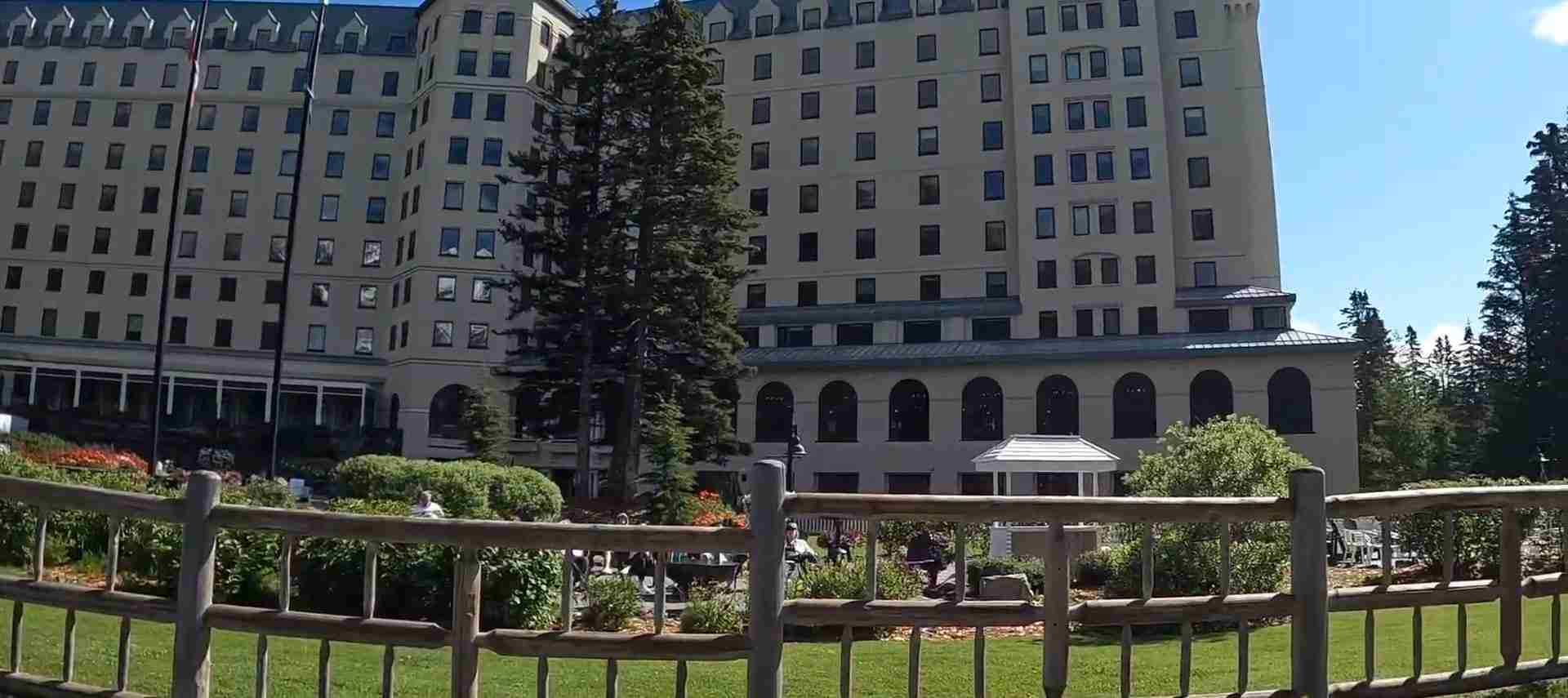
Fairmont Banff Springs stands as the region’s most iconic luxury property with 764 rooms ranging from $400-600 CAD ($284-426 USD) for standard rooms during shoulder seasons to $800-1,200+ CAD ($568-852+ USD) for premium suites during July-August peaks. This Scottish Baronial castle built in 1888 provides historic architecture, 27-hole golf course, world-class Willow Stream Spa, multiple restaurants including 1888 Chop House fine dining, and signature views across Bow Valley. The property’s legacy status and unique architecture justify pricing far exceeding standard luxury hotel rates, though reviews increasingly note aging facilities requiring renovation investments.
Fairmont Chateau Lake Louise commands the region’s highest rates at $500-900+ CAD ($355-639+ USD) nightly for standard rooms, $1,200-2,000+ CAD ($852-1,420+ USD) for suites, reflecting direct lakefront positioning and limited accommodation competition at Lake Louise village. Rooms deliver floor-to-ceiling windows overlooking turquoise glacial waters with Victoria Glacier as backdrop, though luxury pricing largely reflects unmatched location rather than exceptional service or facilities that lag other Fairmont properties. Booking 12+ months ahead provides the only realistic path to securing preferred summer dates, as the property sells out entirely year-round with waitlists spanning hundreds of reservations.
Rimrock Resort Hotel positioned on Sulphur Mountain above Banff townsite offers luxury at $350-600 CAD ($248-426 USD) nightly with contemporary mountain architecture, Eden spa facilities, extensive conference space, and free gondola-style shuttle to downtown Banff eliminating parking hassles. Rooms provide mountain or valley views from elevated vantage points and larger floor plans than cramped downtown properties. The 10-minute shuttle ride creates slight inconvenience but delivers substantial rate savings versus downtown luxury competitors.
Buffalo Mountain Lodge represents rustic luxury at $250-450 CAD ($177-320 USD) nightly with log construction, individual cabin buildings scattered through forest settings, and intimate 108-room capacity creating boutique ambiance. Rooms feature stone fireplaces, custom log furniture, and private patios, while Sleeping Buffalo Dining Room specializes in Rocky Mountain cuisine emphasizing wild game and regional ingredients. This property appeals to travelers seeking authentic mountain lodge character rather than resort-style facilities.
Luxury vacation rentals in Canmore and surrounding areas provide alternatives to hotel stays with 3-4 bedroom chalets commanding $600-1,200+ CAD ($426-852+ USD) nightly but accommodating 6-8 guests and including full kitchens enabling significant food cost savings. These properties particularly suit multi-family groups or extended stays where total rental cost divided among multiple occupants generates per-person pricing competitive with mid-range hotels while delivering substantially more space and amenities.
Luxury travelers investing $400-800+ nightly in accommodation typically spend $350-550+ per person daily when combining premium hotel rates divided between two occupants with fine dining, private guided experiences, and spa services. This tier delivers exceptional comfort and service but requires substantial budgets that push one-week Rockies trips into $5,000-8,000+ per person territory excluding flights, effectively limiting this experience tier to high-income travelers or special-occasion trips.
Daily Food and Dining Expenses 2026
Food costs in Alberta’s mountain region span extreme ranges from $25-40 CAD ($18-28 USD) daily for grocery-based self-catering to $120-180+ CAD ($85-128+ USD) for three restaurant meals with moderate wine or cocktail consumption. Strategic food choices represent the single largest budget variable under direct traveler control, with daily food expenses potentially varying by $100+ CAD depending on dining approach.
Grocery stores in Banff include Nesters Market downtown and Safeway on Banff Avenue providing full supermarket selections at prices 15-20% above Calgary urban rates but comparable to other Canadian resort communities. A typical day’s groceries for self-catered meals includes breakfast supplies of oatmeal, eggs, bread, and coffee totaling $6-10 CAD ($4-7 USD), lunch items of deli meat, cheese, bread, fruit, and snacks costing $10-15 CAD ($7-11 USD), and dinner provisions of pasta or rice with protein and vegetables totaling $12-20 CAD ($9-14 USD). This generates complete daily nutrition for $28-45 CAD ($20-32 USD) per person with unlimited portions, picnic lunch capability for trail days, and flexibility for dietary preferences or restrictions.
Canmore grocery shopping through Save-On-Foods, Safeway, or independent markets reduces costs 10-15% versus Banff pricing while offering superior selection including ethnic ingredients and organic options. Calgary supermarkets 90 minutes east provide the lowest pricing matching Canadian urban averages, making bulk grocery purchases before heading to the mountains economically efficient for road-tripping travelers with vehicle storage capacity and coolers. Jasper’s two grocery stores maintain pricing slightly above Banff levels due to increased distance from supply chain distribution centers.
Fast food and casual dining in Banff costs $12-18 CAD ($9-13 USD) for McDonald’s or A&W combo meals, $15-25 CAD ($11-18 USD) for Subway or Starbucks lunches, and $18-28 CAD ($13-20 USD) for pizza slices, food truck meals, or quick-service Asian restaurants. These options suit travelers wanting prepared food without sit-down restaurant time commitments and prices, delivering convenience and variety while maintaining moderate costs well below full-service dining.
Mid-range restaurant dining dominates Banff’s 100+ establishments with average dinner entrees costing $24-38 CAD ($17-27 USD), appetizers $12-18 CAD ($9-13 USD), and desserts $10-14 CAD ($7-10 USD). A complete dinner for two including appetizers, entrees, one shared dessert, and non-alcoholic beverages totals $90-140 CAD ($64-99 USD) before tax and gratuity. Adding 5% GST and expected 15-20% gratuity pushes this to $110-175 CAD ($78-124 USD) per couple or $55-88 CAD ($39-63 USD) per person. Three daily restaurant meals at this tier generate $140-220 CAD ($99-156 USD) daily per person food expenses.
Upscale dining at establishments like The Bison Restaurant, Park Distillery, or Eden Restaurant elevates entree prices to $38-58 CAD ($27-41 USD) with wine pairings adding $50-100+ CAD ($35-71+ USD) per person. Complete fine dining experiences total $120-200+ CAD ($85-142+ USD) per person for multi-course meals with beverages. Fairmont hotel restaurants including 1888 Chop House command the region’s highest prices at $50-85 CAD ($35-60 USD) for premium steaks and entrees, though service quality and dining room ambiance justify pricing for special-occasion meals.
Alcohol significantly impacts dining expenses with restaurant wine starting at $45-65 CAD ($32-46 USD) per bottle for basic selections, craft cocktails costing $14-18 CAD ($10-13 USD) each, and domestic beer priced at $8-11 CAD ($6-8 USD) per pint. Two-person restaurant dinners including alcohol regularly exceed $150-200 CAD ($107-142 USD) with moderate consumption. Budget-conscious travelers purchasing alcohol from liquor stores for cabin or campsite consumption dramatically reduce beverage costs compared to restaurant markup pricing.
Strategic dining approaches combining grocery breakfast and lunch preparation with one restaurant dinner daily generate balanced food budgets of $60-90 CAD ($43-64 USD) per person while maintaining dining-out experience value. This hybrid model particularly suits families where restaurant costs multiply per person, enabling substantial savings on two meals while preserving social dining atmosphere for evening meals. Travelers prioritizing budget minimization achieve complete food costs of $25-40 CAD ($18-28 USD) daily through exclusive grocery self-catering, though this requires access to cooking facilities and willingness to dedicate vacation time to meal preparation.
Transportation Costs 2026: Vehicle Rentals and Fuel
Private vehicle access fundamentally shapes Alberta Rockies travel experiences by enabling flexible timing, multi-destination itineraries, and independence from shuttle schedules. Rental vehicles, fuel expenses, and parking fees combine to form a major budget category requiring strategic planning and informed provider selection.
Economy car rentals from Calgary International Airport cost $35-55 CAD ($25-39 USD) daily during summer peak season, $25-40 CAD ($18-28 USD) during shoulder seasons, with one-week rentals generating modest 10-15% per-day discounts versus daily rates. Compact sedans like Toyota Corolla or Hyundai Elantra provide adequate highway comfort, trunk space for two travelers’ luggage, and excellent fuel economy of 6-7 liters per 100 kilometers. Booking 6-8 weeks ahead of pickup dates secures lowest rates through major providers including Enterprise, Budget, and National, while last-minute bookings within two weeks regularly encounter 40-60% price premiums and limited vehicle availability during peak summer periods.
Mid-size vehicles and SUVs better suit Rockies terrain with all-wheel drive capability, increased cargo capacity, and improved visibility. Standard SUVs like Ford Escape or Toyota RAV4 cost $60-90 CAD ($43-64 USD) daily during peak season, $45-70 CAD ($32-50 USD) in shoulder periods, delivering practical benefits including space for four adults with luggage, camping gear storage capability, and confident winter driving when snow arrives at higher elevations. Full-size SUVs like Chevrolet Tahoe or Ford Expedition command $110-160 CAD ($78-114 USD) daily but provide seating for six-seven passengers with luggage, making group travel economically efficient when splitting costs among multiple adults.
Additional rental fees significantly impact total costs including young driver surcharges of $25-35 CAD ($18-25 USD) daily for renters aged 21-24, additional driver fees of $10-15 CAD ($7-11 USD) per person daily, winter tire packages of $15-20 CAD ($11-14 USD) daily during October-April periods, and GPS navigation units at $12-18 CAD ($9-13 USD) daily. Collision damage waiver insurance adds $25-40 CAD ($18-28 USD) daily but eliminates potential thousands in liability for vehicle damage, making it effectively mandatory for most travelers lacking existing coverage through credit cards or personal auto policies.
Fuel costs for typical Rockies road trips spanning Calgary-Banff-Lake Louise-Jasper circuits total $180-280 CAD ($128-199 USD) depending on vehicle fuel economy and total kilometers driven. Gasoline prices in Alberta average $1.45-1.65 CAD ($1.03-1.17 USD) per liter during 2026, with mountain communities adding 5-10 cents per liter above Calgary urban pricing. A Calgary-to-Jasper return trip covering 840 kilometers consumes approximately 60-70 liters in economy vehicles totaling $90-115 CAD ($64-82 USD) in fuel. Daily driving including in-park exploration adds 80-150 kilometers consuming $12-25 CAD ($9-18 USD) fuel daily per vehicle regardless of occupancy.
Parking fees apply at specific high-demand locations including Lake Louise village at $12 CAD ($9 USD) per vehicle daily, Moraine Lake requiring advance shuttle reservations rather than private vehicle access during peak season, and downtown Banff metered parking at $3-5 CAD ($2-4 USD) hourly. Most trailhead parking, campgrounds, and hotel properties include parking at no additional charge beyond base rates. Banff townsite’s free ROAM Transit system eliminates downtown parking needs entirely for travelers staying at hotels along bus routes, though service frequency of 15-30 minute intervals creates some schedule dependence.
One-way rental between Calgary and Vancouver enables efficient Trans-Canada road trip itineraries traversing the Rockies, Okanagan wine country, and coastal British Columbia without backtracking. One-way fees typically add $150-400 CAD ($107-284 USD) to base rental costs depending on vehicle class and season, but eliminate 8-10 hours of redundant driving retracing the Calgary-Vancouver route. This option particularly suits travelers with flexible return flights or those combining Alberta with broader Western Canada exploration.
Rental vehicle costs for a typical seven-day Rockies trip total $245-385 CAD ($174-273 USD) for economy vehicles, $420-630 CAD ($298-447 USD) for mid-size SUVs, plus $180-280 CAD ($128-199 USD) fuel, generating combined transportation costs of $425-665 CAD ($302-472 USD) divided among vehicle occupants. Two travelers sharing vehicle costs spend $213-333 CAD ($151-236 USD) per person for week-long transportation, while four-person groups reduce individual shares to $106-166 CAD ($75-118 USD) per person, demonstrating substantial per-person economies from group travel splitting.
Transportation Costs 2026: Public Transit and Shuttles
Alberta Rockies public transportation options enable car-free travel through regional bus services, town transit systems, and specialized shuttle providers, though limited frequency and seasonal operations constrain flexibility compared to private vehicles. These alternatives suit budget travelers, solo visitors, and environmentally-conscious tourists willing to accept schedule dependencies and advance planning requirements.
Brewster Express operates daily scheduled motorcoach service connecting Calgary International Airport to Banff ($74 CAD / $53 USD one-way), Lake Louise ($90 CAD / $64 USD), and Jasper ($140 CAD / $99 USD) with comfortable highway cruising, WiFi, and multiple departure times year-round. Return tickets cost $148 CAD ($105 USD) Calgary-Banff, $180 CAD ($128 USD) Calgary-Lake Louise, and $280 CAD ($199 USD) Calgary-Jasper, delivering cost-effective airport transfers for travelers staying primarily in one destination without requiring multi-destination road trips. Advance online booking secures seats during peak summer periods when services frequently sell out days ahead of departure dates.
On-It Regional Transit provides affordable Calgary-Canmore-Banff service at $10 CAD ($7 USD) one-way with frequent departures throughout the day, though travel time extends to 2-3 hours due to multiple stops compared to 90-minute private vehicle driving. This ultra-budget option suits travelers staying in Calgary or Canmore while making day trips to Banff without overnight accommodation costs, though limited evening return schedules constrain full-day exploration possibilities.
Banff ROAM Transit operates free year-round town shuttle service covering downtown, Tunnel Mountain accommodation areas, Banff Gondola base, and Cave and Basin historic site with 15-30 minute frequencies depending on route and season. Route 1 Sulphur Mountain service connects downtown to Banff Gondola and Upper Hot Springs enabling car-free access to major attractions, while Route 2 Tunnel Mountain serves extensive hotel clusters eliminating vehicle needs for downtown dining and shopping. Winter ski shuttle routes connect downtown to Mount Norquay, Sunshine Village, and Lake Louise ski areas at no charge for skiers.
Parks Canada operates free shuttle service between Banff townsite and Lake Louise during summer months with stops at Johnston Canyon and Castle Junction, though limited to one morning departure and one afternoon return trip daily creating significant scheduling constraints. This service best suits backpackers making one-way point-to-point trips rather than return day visits requiring specific timing flexibility.
Moraine Lake Bus Company provides essential summer shuttle access to Moraine Lake after Parks Canada banned private vehicle parking from dawn to early afternoon due to overwhelming demand creating dangerous highway congestion. Shuttle tickets cost $8-10 CAD ($6-7 USD) per person round-trip with departures every 15-20 minutes during morning peak hours, advance booking mandatory through online reservation system. Lake Louise parking reservations offer alternative private vehicle access but sell out within seconds of release dates three days before each use date, making commercial shuttles the practical access method for most visitors.
Sundog Tours operates seasonal sightseeing tours combining transportation with guided commentary including full-day Icefields Parkway excursions at $220-280 CAD ($156-199 USD) per person covering Banff to Jasper with stops at major viewpoints, Columbia Icefield, and Athabasca Falls. These tours deliver narrated education and eliminate driving responsibilities, though fixed schedules and group timing reduce independent flexibility compared to private vehicle exploration.
Public transit-dependent travel requires accepting significant constraints including limited evening services after 9-10 PM, seasonal schedule reductions during shoulder periods, and advance booking necessities for popular routes. Budget travelers willing to work within these limitations achieve substantial cost savings by eliminating $425-665 CAD ($302-472 USD) weekly vehicle rental and fuel expenses, though transportation time typically doubles or triples compared to private driving while constraining spontaneous itinerary adjustments and evening activity options.
Major Attraction Admission Prices 2026
Paid attraction admissions in Alberta Rockies deliver unique mountain experiences beyond free hiking, ranging from aerial gondola rides providing dramatic elevation gains without physical exertion to historic sites, hot springs, and interpretive centers. Strategic attraction selection balances costs against value delivered by specific experiences.
Banff Gondola transports visitors 2,281 meters vertical to Sulphur Mountain summit in 8-minute enclosed cabin rides showcasing six mountain ranges, Bow Valley views, and access to ridgetop boardwalk, interpretive center, and summit restaurants. Adult tickets cost $74 CAD ($53 USD), seniors $65 CAD ($46 USD), youth ages 6-15 $37 CAD ($26 USD), with family packages for two adults and two youth at $186 CAD ($132 USD) in 2026. Check official website for current rates as pricing varies seasonally. Advance online booking 48+ hours before visit date provides modest 5-10% discounts and guarantees specific time slots, critical during July-August when same-day capacity sells out by mid-morning. The experience delivers unparalleled 360-degree panoramas impossible to access via hiking without multi-hour strenuous climbs, justifying premium pricing for time-constrained or physically-limited visitors.
Lake Louise Gondola lifts visitors 2,088 meters to Mount Whitehorn’s alpine zone with prime grizzly bear viewing opportunities in meadows below gondola cabins, mountaintop Wildlife Interpretive Centre, and ridge hiking trails. Adult admission costs $81 CAD ($57 USD), seniors $70 CAD ($50 USD), youth $45 CAD ($32 USD), children ages 6-12 $22 CAD ($16 USD) in 2026. Ride and Dine packages combining gondola tickets with breakfast or lunch at summit restaurant cost $68-73 CAD ($48-52 USD) per adult, offering better value than separate ticket and meal purchases. This attraction emphasizes wildlife viewing over pure scenic panoramas, with staff maintaining active bear sighting reports and spotting scopes available for visitor use.
Upper Hot Springs provides year-round thermal soaking at 39°C (102°F) in mountain-sourced mineral waters with Sulphur Mountain backdrop views. Adult admission costs $9.60 CAD ($7 USD), seniors and youth $8.30 CAD ($6 USD), children $6.20 CAD ($4 USD) for pool access only, with vintage swimsuit rentals adding $2.50 CAD ($2 USD) and towel rentals $2.20 CAD ($2 USD). Lockers cost $1 CAD coin deposit, refunded upon return. This budget-friendly attraction delivers authentic hot springs experience at a fraction of gondola or other major attraction pricing, though facilities show their age with dated changing rooms and limited depth pools preventing swimming. Peak summer afternoon crowds reduce relaxation quality, making early morning or evening visits preferable.
Columbia Icefield Glacier Adventure combines all-terrain Ice Explorer vehicle transport onto Athabasca Glacier surface with Skywalk glass-bottomed platform overlooking Sunwapta Valley. Combined tickets cost $134 CAD ($95 USD) for adults, $117 CAD ($83 USD) for seniors, $67 CAD ($48 USD) for youth ages 6-15 in 2026. Check official website for current rates. The Glacier Adventure alone costs $120 CAD ($85 USD) for adults, while Skywalk-only tickets run $39 CAD ($28 USD) for adults. This marquee Icefields Parkway attraction enables walking on ancient glacial ice and delivers dramatic chasm overlooks, though glacier recession continues steadily with scientists predicting complete disappearance within 70-100 years making current visits time-sensitive opportunities.
Banff Park Museum National Historic Site showcases Victorian-era natural history collection in 1903 log building at no admission charge for all ages year-round, making it an ideal poor-weather activity delivering hour-long browsing through taxidermied wildlife displays, historic interpretive panels, and architecture appreciation. Cave and Basin National Historic Site similarly provides free admission to birthplace of Canada’s national parks system with historic pools, cultural exhibits, and short interpretive trails, though swimming is prohibited in the heritage pools.
Whyte Museum of the Canadian Rockies in downtown Banff presents rotating art exhibitions, cultural heritage displays, and heritage home tours at $15 CAD ($11 USD) adult admission, $10 CAD ($7 USD) seniors and students, free for ages 17 and under. Collections emphasize mountain culture, Indigenous history, and alpine art, providing worthwhile indoor alternative during poor weather while delivering deeper cultural context than pure outdoor recreation focus.
Strategic attraction budgeting prioritizes one signature paid experience like Banff Gondola or Columbia Icefield Glacier Adventure while relying primarily on unlimited free hiking, viewpoint access, and wildlife observation for remaining days. This approach limits paid attraction costs to $74-134 CAD ($53-95 USD) per person for entire trips while maintaining diverse activity portfolios mixing dramatic elevation experiences with ground-level trail exploration.
Activity and Tour Costs 2026
Guided tours, equipment rentals, and specialized activities expand Rocky Mountain experiences beyond self-directed hiking and driving, delivering expert knowledge, technical skill instruction, or access to locations unreachable independently. These optional enhancements span $65-350+ CAD ($46-248+ USD) per person depending on activity intensity and duration.
Half-day guided hiking tours through companies like Discover Banff Tours or Yamnuska Mountain Adventures cost $85-120 CAD ($60-85 USD) per person for 3-4 hour excursions covering moderate trails like Johnston Canyon, Larch Valley, or Plain of Six Glaciers. Guides provide wildlife expertise, ecological interpretation, and safety oversight particularly valuable for solo travelers or families with children. Full-day hikes including lunch extend to $140-190 CAD ($99-135 USD) per person reaching more remote destinations like Egypt Lake or Consolation Lakes backcountry zones.
Wildlife viewing tours aboard specialized vehicles scan roadside areas, valley bottoms, and meadows for bears, elk, bighorn sheep, and wolves. Morning excursions of 2-3 hours cost $85-110 CAD ($60-78 USD) per person with expert naturalist guides maximizing sighting probabilities through knowledge of seasonal animal movement patterns and current observation reports. Evening tours targeting dusk wildlife activity periods command similar pricing. These tours particularly benefit families with young children who lack patience for independent wildlife watching or travelers with limited mountain experience unsure where to look for animals.
Canoe and kayak rentals at $45-75 CAD ($32-53 USD) for 2-3 hour sessions enable paddling on Bow River, Two Jack Lake, or Moraine Lake (when accessible). Bow River float trips through Banff’s whitewater sections with commercial rafting companies cost $85-115 CAD ($60-82 USD) per person for 2-3 hour guided adventures including equipment and transportation. Stand-up paddleboard rentals run $40-65 CAD ($28-46 USD) for half-day periods at accessible lakes.
Horseback riding tours through Warner Stables or Banff Trail Riders deliver 1-hour valley rides at $75-95 CAD ($53-68 USD) per person, 2-hour forest trails at $120-155 CAD ($85-110 USD), or full-day backcountry rides including lunch at $250-320 CAD ($177-227 USD). These experiences suit travelers seeking authentic western mountain ambiance and access to trails unsuitable for hiking, though riding requires reasonable fitness for multi-hour saddle time and tolerance for large animals.
Mountain biking rentals in Banff and Canmore cost $55-85 CAD ($39-60 USD) for full-day bike use including helmet, with electric-assist mountain bikes commanding $85-120 CAD ($60-85 USD) daily. Legacy Trail, a paved 26-kilometer pathway connecting Banff and Canmore, provides perfect terrain for casual cycling with minimal traffic and moderate elevation change. Technical single-track trails require skill and confidence but deliver thrilling descents and challenging climbs for experienced riders.
Winter activities dominate November through April with ski lift tickets at $125-165 CAD ($89-117 USD) daily for adults at Banff’s three ski resorts including Sunshine Village, Lake Louise Ski Resort, and Mount Norquay. Multi-day passes provide 10-15% per-day discounts versus single-day tickets. Ski and snowboard rentals add $50-75 CAD ($35-53 USD) daily for standard equipment packages, $75-110 CAD ($53-78 USD) for high-performance gear. Ice walk tours through frozen Johnston Canyon or Maligne Canyon cost $75-95 CAD ($53-68 USD) per person for 2-3 hour guided excursions with traction devices provided.
Photography tours and workshops range from 3-hour landscape sessions at $120-180 CAD ($85-128 USD) per person teaching composition and camera techniques at iconic locations, to multi-day wildlife photography workshops at $600-1,200+ CAD ($426-852+ USD) combining instruction with prime shooting opportunities during optimal lighting conditions. These specialized tours deliver immense value for serious photographers seeking local knowledge and expert guidance unavailable through self-directed exploration.
Most budget-conscious itineraries limit guided activities to 0-2 experiences during week-long trips, containing activity costs to $0-250 CAD ($0-177 USD) per person total while investing majority of time in free hiking and self-guided exploration. Mid-range travelers incorporating 2-4 guided experiences spend $250-500 CAD ($177-355 USD) per person on activities, while intensive adventure-focused trips selecting multiple guided days plus equipment rentals push activity budgets to $600-1,200+ CAD ($426-852+ USD) per person weekly.
Budget Breakdown 2026: Budget Tier
Budget-tier travel delivers comprehensive Alberta Rockies mountain experiences at $100-165 CAD ($71-117 USD) per person daily assuming two travelers sharing basic accommodation. This tier prioritizes outdoor activities, self-sufficiency, and strategic choices trading convenience for cost savings, while maintaining access to all natural landscapes and trail networks differentiating the region.
Accommodation costs dominate budget allocations with Parks Canada campgrounds at $28-35 CAD ($20-25 USD) per night per site divided between two campers generating $14-18 CAD ($10-13 USD) per person, or hostel dormitory beds at $48-58 CAD ($34-41 USD) nightly. Camping requires owning or renting equipment including tent, sleeping bags, cooking gear, and camp stove, with rental packages available at Banff and Canmore outdoor shops for $40-65 CAD ($28-46 USD) daily for complete setups. Hostels eliminate equipment needs while providing indoor shelter, though shared facilities reduce privacy and cooking access compared to campsite independence.
Food expenses total $25-40 CAD ($18-28 USD) daily through exclusive grocery provisions and meal preparation. Breakfast of oatmeal, eggs, and coffee costs $5-8 CAD ($4-6 USD), trail lunches of sandwiches with fruit and energy bars run $8-12 CAD ($6-9 USD), and dinner combining pasta, rice, or canned goods with fresh vegetables totals $12-20 CAD ($9-14 USD). This approach requires dedicated meal preparation time consuming 1-2 hours daily across breakfast cooking, lunch packing, and dinner preparation plus cleanup, but enables unlimited portions and dietary flexibility while generating food costs 60-70% below restaurant dining.
Transportation costs assume shared rental vehicle expenses split between two travelers or use of public transit options. A weekly economy car rental at $245-385 CAD ($174-273 USD) plus $180-280 CAD ($128-199 USD) fuel totals $425-665 CAD ($302-472 USD), divided by two occupants yielding $213-333 CAD ($151-236 USD) per person for complete seven-day transportation, or $30-48 CAD ($21-34 USD) daily per person. Alternative public transit approaches using Brewster Express Calgary-Banff service at $148 CAD ($105 USD) return plus ROAM Transit free town shuttles reduce costs further but constrain schedule flexibility and eliminate multi-destination road trip possibilities.
Activity budgets focus exclusively on free hiking, viewpoint photography, wildlife observation from roadside pullouts, and exploration of historic sites charging no admission. This generates $0 daily activity costs while accessing 2,500+ kilometers of maintained trails, unlimited shoreline time at glacial lakes, and comprehensive mountain scenery requiring no paid admission. Budget travelers occasionally splurging on single signature experiences like Banff Gondola at $74 CAD ($53 USD) amortize this across multi-day trips yielding minimal per-day impact.
Daily budget breakdown for camping-based travel totals $85-130 CAD ($60-92 USD) per person: accommodation $14-18 CAD ($10-13 USD) per person at campsites (two sharing), meals $25-40 CAD ($18-28 USD), transport $30-48 CAD ($21-34 USD) when sharing rental vehicle, attractions $0 free activities, plus $15-25 CAD ($11-18 USD) miscellaneous including campground firewood, parking fees, and incidental supplies. The Canada Strong Pass eliminates park entry fees from June 19 through September 7, providing additional daily savings of $12 CAD ($9 USD) per person during this prime summer season.
Hostel-based budget travel increases to $125-175 CAD ($89-124 USD) per person daily: accommodation $48-58 CAD ($34-41 USD) dormitory bed, meals $30-45 CAD ($21-32 USD) with limited cooking access requiring more convenience foods, transport $30-48 CAD ($21-34 USD), activities $0 free hiking, plus $15-25 CAD ($11-18 USD) miscellaneous expenses. This tier trades campsite primitive conditions for indoor shelter and town location convenience while maintaining focus on low-cost outdoor activities as primary experiences.
A seven-day budget Rockies trip costs $595-1,225 CAD ($422-870 USD) per person spanning accommodation, food, shared transportation, and free activities. This enables comprehensive mountain park exploration including Banff, Lake Louise, Jasper, and connecting Icefields Parkway scenic drive while camping in prime locations like Two Jack Lakeside and Whistlers Campground. Multi-week trips extending to 14-21 days remain affordable at $1,190-2,450 CAD ($845-1,740 USD) per person, delivering depth of immersion impossible during brief stays while maintaining budget constraints suitable for students, young adults, or anyone prioritizing experience duration over luxury comfort.
Budget Breakdown 2026: Mid-Range Tier
Mid-range travel delivers comfortable Alberta Rockies experiences at $270-415 CAD ($192-295 USD) per person daily assuming two travelers sharing hotel accommodation. This tier balances convenience, comfort, and occasional splurges with cost consciousness, enabling diverse activity portfolios without extreme budgets or significant deprivation.
Accommodation costs drive mid-range budgets with hotel rooms at $250-450 CAD ($177-320 USD) nightly in Banff, Jasper, or quality Canmore properties. When divided between two occupants, this generates $125-225 CAD ($89-160 USD) per person nightly for private rooms with modern bathrooms, climate control, WiFi, parking, and typically hot tub or pool amenities. Strategic booking 6-12 months ahead secures lower rates within this range, while shoulder season May or September visits reduce costs 25-35% versus July-August peaks without sacrificing weather quality or trail access.
Food budgets combine selective restaurant dining with strategic grocery supplementation. A typical day includes continental breakfast at hotel included in room rate or quick café meal at $10-15 CAD ($7-11 USD), trail lunch of deli sandwiches and snacks prepared from grocery purchases at $10-15 CAD ($7-11 USD), and restaurant dinner for two totaling $90-140 CAD ($64-99 USD) before tax and gratuity, divided between two diners yielding $45-70 CAD ($32-50 USD) per person. This generates daily food costs of $65-100 CAD ($46-71 USD) per person providing restaurant experience value while containing expenses below full restaurant-dining scenarios costing $140-220 CAD ($99-156 USD) daily.
Transportation assumes shared rental vehicle costs with mid-size SUV at $420-630 CAD ($298-447 USD) weekly plus $180-280 CAD ($128-199 USD) fuel, totaling $600-910 CAD ($426-646 USD) divided by two occupants generating $300-455 CAD ($213-323 USD) per person for complete seven-day transportation, or $43-65 CAD ($30-46 USD) daily. SUV selection provides all-weather capability, increased comfort for multi-hour Icefields Parkway drives, and cargo capacity for luggage plus shopping or activity equipment.
Activity and attraction budgets incorporate 1-2 paid experiences during week-long trips. Selecting Banff Gondola at $74 CAD ($53 USD) plus one half-day guided hike at $100 CAD ($71 USD) totals $174 CAD ($123 USD) per person amortized across seven days yielding $25 CAD ($18 USD) daily average, while remaining days focus on free hiking, viewpoint photography, and self-guided exploration. This approach delivers diverse experience portfolio mixing signature paid attractions with unlimited outdoor activities requiring no admission.
Daily mid-range budget breakdown totals $270-415 CAD ($192-295 USD) per person: accommodation $125-225 CAD ($89-160 USD) per person (two sharing hotel), meals $65-100 CAD ($46-71 USD), transport $43-65 CAD ($30-46 USD) when sharing SUV rental, attractions $25 CAD ($18 USD) averaged across selective paid experiences, plus $15-25 CAD ($11-18 USD) miscellaneous including parking, supplies, and incidental expenses. This tier provides comfortable mountain experiences without luxury pricing while maintaining financial discipline preventing runaway costs.
A seven-day mid-range Rockies trip costs $1,890-2,905 CAD ($1,342-2,063 USD) per person including all accommodation, food, shared transportation, and selective activities. This enables comprehensive exploration staying in quality Banff or Jasper hotels, dining at recommended restaurants nightly, driving the complete Icefields Parkway with flexibility for spontaneous stops, and incorporating 1-2 guided experiences or major paid attractions. The experience quality substantially exceeds budget camping approaches through private hotel facilities, elimination of meal preparation time demands, and climate-controlled comfort during weather extremes, while costs remain well below luxury tier requiring $4,000-6,500+ CAD ($2,840-4,615+ USD) per person weekly.
Mid-range travel represents the most popular choice among Canadian and American visitors seeking authentic mountain experiences with reasonable comfort but lacking unlimited budgets for luxury indulgence. This tier optimizes experience-per-dollar value through strategic choices like Canmore basing versus Banff townsite hotels, hybrid restaurant-grocery dining approaches, and selective rather than comprehensive paid activity participation, delivering memorable Rockies adventures without financial stress or post-trip budget regret.
Budget Breakdown 2026: Luxury Tier
Luxury travel in Alberta’s Rockies delivers premium mountain resort experiences at $465-810+ CAD ($330-575+ USD) per person daily assuming two travelers sharing luxury accommodation. This tier prioritizes comfort, convenience, exclusive experiences, and fine dining without budget constraints limiting choices or activities.
Accommodation dominates luxury budgets with rooms at iconic properties like Fairmont Banff Springs or Fairmont Chateau Lake Louise costing $500-1,200+ CAD ($355-852+ USD) nightly. Divided between two occupants, this generates $250-600+ CAD ($177-426+ USD) per person for signature mountain resort experiences including world-class spa facilities, multiple on-site restaurants, concierge services, and locations directly accessing premier natural attractions. Alternative luxury options like Buffalo Mountain Lodge or Rimrock Resort provide comparable quality at $350-600 CAD ($248-426 USD) nightly, or $175-300 CAD ($124-213 USD) per person when sharing, delivering authentic mountain ambiance with exceptional service at rates modestly below Fairmont properties.
Fine dining expenses assume restaurant meals for all nutrition with emphasis on high-quality establishments, wine pairings, and premium menu selections. Daily food costs total $120-200+ CAD ($85-142+ USD) per person including hotel breakfast or upscale café at $25-35 CAD ($18-25 USD), casual lunch at recommended establishments totaling $30-45 CAD ($21-32 USD), and fine dining dinners for two at restaurants like The Bison, Park Distillery, or hotel dining rooms costing $200-350+ CAD ($142-248+ USD) with wine, divided between two diners yielding $100-175+ CAD ($71-124+ USD) per person. This tier enables spontaneous dining choices without price consideration and full beverage enjoyment including craft cocktails and premium wine selections.
Transportation assumes either luxury vehicle rental including full-size SUVs or premium sedans at $110-180 CAD ($78-128 USD) daily, or private driver services eliminating all driving responsibilities. Weekly luxury vehicle rental with comprehensive insurance totals $770-1,260 CAD ($547-895 USD) plus $220-300 CAD ($156-213 USD) premium fuel (luxury vehicles consume more), combining to $990-1,560 CAD ($703-1,108 USD) divided by two occupants generating $495-780 CAD ($351-554 USD) per person weekly, or $71-111 CAD ($50-79 USD) daily. Alternative private driver services cost $400-600+ CAD ($284-426+ USD) daily but eliminate parking hassles, enable full alcohol enjoyment during meals, and provide expert local knowledge through professional guides.
Activity budgets embrace comprehensive guided experience portfolios including private tours, premium equipment, and exclusive access. A typical luxury week incorporates private guided hiking or wildlife tours at $300-500 CAD ($213-355 USD) per day for two people or $150-250 CAD ($107-177 USD) per person daily, Columbia Icefield Glacier Adventure at $134 CAD ($95 USD) per person, Banff Gondola experiences at $74 CAD ($53 USD) per person, and spa treatments at $150-300+ CAD ($107-213+ USD) per person for 90-minute services. This generates activity costs of $75-150+ CAD ($53-107+ USD) per person daily providing diverse experiences without activity budget limitations.
Daily luxury budget breakdown totals $465-810+ CAD ($330-575+ USD) per person: accommodation $175-300+ CAD ($124-213+ USD) per person (two sharing luxury hotel), meals $120-200+ CAD ($85-142+ USD), transport $71-111+ CAD ($50-79+ USD) when sharing luxury vehicle, activities $75-150+ CAD ($53-107+ USD) including guided experiences and spa services, plus $25-50 CAD ($18-35 USD) miscellaneous including premium parking, gratuities, and incidental expenses. This tier eliminates all budget constraints while maintaining reasonable rather than utterly extravagant spending patterns.
A seven-day luxury Rockies trip costs $3,255-5,670+ CAD ($2,311-4,026+ USD) per person including premium accommodation, comprehensive fine dining, luxury transportation, and diverse guided activities. Extreme luxury approaches incorporating helicopter tours at $600-1,200+ CAD ($426-852+ USD) per person, multi-course tasting menu dinners at $200-350+ CAD ($142-248+ USD) per person, and top-tier Fairmont suite accommodation push weekly costs to $6,000-10,000+ CAD ($4,260-7,100+ USD) per person, effectively limiting this experience level to high-net-worth travelers or once-in-lifetime special occasion trips.
Luxury tier travelers gain meaningful benefits including priority access eliminating wait times, exclusive experiences unavailable to budget travelers, complete convenience through concierge services and private transportation, and exceptional comfort during weather extremes. However, the natural landscape experiences differentiating Alberta Rockies remain identical across all budget tiers, with free hiking trails, glacial lake shorelines, and wildlife viewing opportunities accessible equally to campers and Fairmont guests. The luxury premium purchases comfort, convenience, and fine dining rather than superior natural scenery or exclusive environmental access, making budget approaches equally valid for travelers prioritizing experience depth over accommodation quality.
Regional Cost Variations: Calgary, Canmore, Banff, Jasper
Geographic cost differences within greater Alberta Rockies region create opportunities for strategic positioning reducing accommodation and dining expenses 20-50% while maintaining quality mountain access. Understanding these variations enables informed lodging choices optimizing value without sacrificing experience quality.
Calgary prices reflect major Canadian city economics with downtown hotels at $140-220 CAD ($99-156 USD) nightly for mid-range properties, $80-130 CAD ($57-92 USD) for budget chains, and $280-450+ CAD ($199-320+ USD) for luxury accommodations. Restaurant dining costs 10-15% below Banff equivalents with greater diversity spanning Ethiopian, Vietnamese, Indian, and other international cuisines rarely available in mountain communities. Grocery shopping at multiple supermarket chains delivers lowest regional pricing matching Canadian urban averages. Calgary’s 130-kilometer distance from Banff creates 90-minute one-way drives limiting practicality for day trips but enabling cost-conscious travelers to base entire Rockies trips from Calgary hotels, investing 3-4 hours daily in driving while saving $100-250 CAD ($71-177 USD) nightly on accommodation versus Banff townsite rates.
Canmore occupies optimal value-location balance positioned 20 minutes or 23 kilometers from Banff National Park’s east gate. Mid-range hotels cost $200-350 CAD ($142-248 USD) nightly compared to Banff’s $280-450 CAD ($199-320 USD) range, delivering 20-35% savings for comparable quality properties with identical mountain views. Vacation rental condos and townhomes provide kitchen-equipped alternatives at $180-320 CAD ($128-227 USD) nightly for 2-3 bedroom units accommodating 4-6 guests and enabling meal preparation savings. Canmore’s larger footprint outside national park development restrictions creates more accommodation inventory, restaurant competition driving better pricing and variety, and grocery shopping through multiple supermarkets. The town’s local character exceeds Banff’s tourist-district commercialization while 20-minute positioning to national park gates adds minimal inconvenience compared to substantial cost savings.
Banff townsite commands premium regional pricing with mid-range hotels at $280-450 CAD ($199-320 USD) nightly, luxury properties at $400-800+ CAD ($284-568+ USD), and even budget options starting at $180-260 CAD ($128-185 USD) for basic motel-level accommodation. Restaurant meals cost 15-20% above Canmore and Calgary equivalents with limited ethnic diversity favoring steakhouses, pubs, and tourist-oriented establishments. Grocery shopping concentrates at two stores charging 15-20% premiums over Calgary urban pricing. These inflated costs reflect artificial supply constraints from national park development limitations creating permanent hotel room shortages during peak demand periods, combined with captive-market dynamics where tourist-dependent businesses price to international visitor budgets rather than local resident purchasing power. Banff’s central location advantage enables walking access to services and eliminates daily vehicle movements once checked into accommodation, justifying premium pricing for travelers prioritizing convenience and minimizing driving during mountain vacations.
Jasper maintains pricing 10-15% below Banff equivalents across accommodation and dining despite comparable natural scenery, trail access, and attraction quality. Mid-range hotels cost $220-350 CAD ($156-248 USD) nightly versus Banff’s $280-450 CAD ($199-320 USD) range, while restaurant dining averages $5-10 CAD ($4-7 USD) less per person for equivalent quality meals. This pricing advantage stems from slightly larger townsite footprint enabling more accommodation inventory, reduced international tourist concentration compared to Banff’s global bucket-list status, and greater distance from Calgary creating minor access inconvenience deterring casual day-trippers. Jasper’s 290-kilometer position from Calgary adds 60-90 minutes driving time versus Banff’s 130-kilometer proximity, but travelers spending multiple nights in mountain communities find this initial positioning investment negligible compared to ongoing accommodation cost savings across multi-day stays.
Lake Louise village commands highest regional rates matching or exceeding Banff due to extremely limited accommodation inventory restricted to one luxury hotel (Fairmont Chateau Lake Louise), one mid-range property (Lake Louise Inn), and handful of small lodges. Room rates start at $300 CAD ($213 USD) for basic accommodations and escalate to $500-1,200+ CAD ($355-852+ USD) for Chateau Lake Louise rooms. The village offers minimal dining diversity beyond hotel restaurants and one general store, creating captive-market pricing without competitive pressure. Strategic travelers recognize Lake Louise camping at Parks Canada campgrounds as the only affordable overnight option, or base from Banff or Canmore making day trips to Lake Louise and Moraine Lake while avoiding village accommodation premiums entirely.
Accommodation cost comparison for identical seven-night stays demonstrates regional savings magnitude: Calgary basing costs $980-1,540 CAD ($696-1,094 USD) total for two sharing room, Canmore costs $1,400-2,450 CAD ($994-1,741 USD), Banff costs $1,960-3,150 CAD ($1,392-2,237 USD), Jasper costs $1,540-2,450 CAD ($1,094-1,741 USD), creating potential savings of $980-1,610 CAD ($696-1,144 USD) for seven nights through strategic positioning. These savings fund substantial portions of total trip budgets including multiple days of additional travel, premium guided activities, or fine dining experiences that would otherwise exceed available budgets.
Money-Saving Strategies 2026
Strategic planning and informed choices reduce Alberta Rockies total trip costs by 30-60% without sacrificing core mountain experiences or compromising travel quality. These money-saving approaches span timing, booking, positioning, and consumption decisions delivering measurable budget impact.
Shoulder season travel during May and September-October reduces accommodation costs 30-45% versus July-August peaks while maintaining excellent weather, operational facilities, and superior wildlife viewing during elk rut and pre-hibernation bear foraging periods. A Banff hotel charging $400 CAD ($284 USD) nightly in July drops to $250-300 CAD ($177-213 USD) in May or September, saving $700-1,050 CAD ($497-746 USD) across week-long stays. Campground availability improves dramatically during shoulder periods, eliminating advance booking stress and enabling spontaneous itinerary flexibility impossible during peak summer when reservations sell out months ahead. September additionally delivers fall color displays and reduced crowding at major attractions, creating superior overall experiences alongside substantial cost savings.
Advance booking 6-12 months before travel dates secures early-bird hotel discounts of 10-25% versus last-minute reservations while guaranteeing availability at preferred properties. A $350 CAD ($248 USD) nightly summer hotel rate booked in August for following July travel potentially drops to $280-315 CAD ($199-224 USD) with advance purchase, saving $35-70 CAD ($25-50 USD) nightly or $245-490 CAD ($174-348 USD) weekly for two sharing. This strategy requires firm date commitments and accepts potential cancellation penalties, but delivers substantial savings for travelers with confirmed schedules.
Alternative accommodation basing in Calgary or Canmore rather than Banff generates $80-200 CAD ($57-142 USD) nightly savings for comparable quality properties. A family of four spending seven nights saves $560-1,400 CAD ($398-994 USD) total through Canmore positioning versus Banff hotels, funding multiple days of rental vehicle costs, gondola admissions, or restaurant meals that would otherwise exceed budget allocations. The 20-minute Canmore commute adds minimal daily time investment compared to accommodation cost reductions, while Calgary basing works effectively for travelers visiting multiple Alberta destinations beyond concentrated Rockies focus.
Self-catering through grocery meal preparation eliminates 60-70% of food costs versus restaurant dining. A couple spending seven days self-catering all meals at $30-45 CAD ($21-32 USD) per person daily totals $420-630 CAD ($298-447 USD) versus restaurant dining at $100-150 CAD ($71-107 USD) per person daily totaling $1,400-2,100 CAD ($994-1,491 USD), generating food savings of $980-1,470 CAD ($696-1,044 USD) weekly. Even hybrid approaches combining grocery breakfasts and lunches with one restaurant dinner daily reduce costs $500-800 CAD ($355-568 USD) weekly while maintaining dining-out social experiences.
The Canada Strong Pass delivers automatic savings of $12.25 CAD ($9 USD) per adult daily from June 19 through September 7, 2026, totaling $86 CAD ($61 USD) per person across week-long trips. A family of four adults saves $344 CAD ($244 USD) weekly through this initiative, effectively funding one gondola ride or half-day guided tour per family. Strategic trip timing aligning with this free admission window maximizes budget efficiency without requiring any advance registration or special effort beyond calendar planning.
Parks Canada Discovery Pass economics favor trips lasting 7+ days in national parks, with adult passes at $83.50 CAD ($59 USD) breaking even after seven daily admissions at standard $12.25 CAD ($9 USD) rates. A couple purchasing family pass at $167.50 CAD ($119 USD) breaks even after seven days and generates ongoing savings for any additional park visits throughout the pass’s 12-month validity. Travelers planning 10-14 day Rockies trips save $39-110 CAD ($28-78 USD) per adult through Discovery Pass purchases versus daily admission payments.
Equipment rental versus ownership economics depend on usage frequency, with camping gear rental packages at $40-65 CAD ($28-46 USD) daily costing less than purchasing budget equipment for single-trip users. However travelers camping 5+ nights during one trip or making multiple camping trips annually should invest in owned equipment generating long-term savings. Mid-quality camping setups including tent, sleeping bags, and cooking gear cost $400-700 CAD ($284-497 USD) total, paying for themselves after 10-15 rental days and providing unlimited future use.
Group travel dramatically reduces per-person transportation costs through shared rental vehicle and fuel expense division. Four travelers splitting mid-size SUV rental at $420-630 CAD ($298-447 USD) weekly plus $180-280 CAD ($128-199 USD) fuel totals $600-910 CAD ($426-646 USD) divided four ways yielding $150-228 CAD ($107-162 USD) per person versus $300-455 CAD ($213-323 USD) for two-person splits. This creates opportunities for upgrading to larger, more comfortable vehicles at minimal per-person cost increases or simply banking transportation savings for activity budgets.
Free activity emphasis maximizes mountain immersion while eliminating attraction admission costs. Alberta Rockies trail networks span 2,500+ kilometers with unlimited hiking requiring zero fees beyond park entry. Wildlife viewing from roadside pullouts, glacial lake shoreline access, waterfall observation platforms, and historic site exploration provide comprehensive experiences costing nothing beyond transportation to trailheads. Strategic travelers limiting paid attractions to 1-2 signature experiences like gondola rides allocate remaining days to free activities, reducing weekly activity costs from $350-700 CAD ($248-497 USD) for comprehensive guided tour participation to $75-200 CAD ($53-142 USD) for selective signature experiences supplemented by unlimited self-directed exploration.
Seasonal Budget Considerations
Alberta Rockies costs fluctuate substantially across seasons with summer commanding premium pricing, shoulder periods offering optimal value, and winter presenting unique economics trading warm-weather accessibility for snow sports opportunities. Understanding seasonal patterns enables strategic timing decisions matching available budgets to preferred experience types.
Summer peak season spanning late June through early September delivers highest costs across all categories with mid-range Banff hotels at $350-500+ CAD ($248-355+ USD) nightly, campground reservations requiring six-month advance booking selling out within hours of availability, and rental vehicle rates elevated 30-40% above shoulder season pricing. Tourist crowding peaks during July-August creating parking challenges at major attractions, trailhead congestion on popular routes, and service demands occasionally overwhelming restaurant and retail capacity. However, summer provides guaranteed trail accessibility, warm daytime temperatures enabling comfortable hiking without specialized cold-weather gear, longest daylight hours extending exploration time to 9 PM or later, and most reliable weather patterns minimizing trip-disrupting storms. The Canada Strong Pass from June 19 to September 7, 2026 makes summer surprisingly cost-effective despite peak accommodation pricing through free park admission and 25% camping discounts.
Shoulder seasons during May and September-October deliver optimal value-experience balance with hotel rates dropping 30-45% versus summer peaks, campground availability improving dramatically enabling spontaneous reservations, and significantly reduced crowding at all attractions. May brings wildflower blooms in valley meadows, snow-free hiking on lower elevation trails, increasing daylight hours, and migrating wildlife including bears emerging from hibernation. Average daytime temperatures reach 10-18°C (50-64°F) with occasional rain requiring flexible itineraries but rarely preventing outdoor activities. September combines fall color displays particularly dramatic in larch forests, elk rutting season creating prime wildlife viewing, reliable weather patterns, and nostalgic end-of-summer atmosphere. Average temperatures of 8-16°C (46-61°F) remain comfortable for hiking with light layers, while first snowfalls occasionally dust higher elevations creating dramatic alpine scenery.
Late fall spanning mid-October through November sees further rate reductions to $180-300 CAD ($128-213 USD) for mid-range hotels as many establishments close for annual maintenance before winter ski season begins. Trail accessibility declines as snow accumulates at higher elevations, daylight hours contract to 8-9 hours limiting exploration time, and weather unpredictability increases with multi-day storms becoming common. However, travelers accepting these constraints experience empty parks, deeply discounted accommodation, and dramatic seasonal transition scenery including heavy snow on peaks contrasting with colorful valley forests. This period suits flexible travelers willing to adapt itineraries to conditions rather than following rigid advance plans.
Winter from December through March transforms economics and experiences entirely. Ski resort accommodation and lift ticket packages dominate with three-day ski packages including lodging and lifts costing $800-1,400+ CAD ($568-994+ USD) per person at Banff’s resorts. However, non-skiing winter visitors access deeply discounted hotel rates at $140-280 CAD ($99-199 USD) nightly for properties catering to summer tourism. Winter activities including ice walks through frozen Johnston Canyon and Maligne Canyon, nordic skiing on groomed trail networks, and snowshoeing across snow-covered meadows provide free or low-cost alternatives to expensive downhill skiing. Extreme cold temperatures reaching -20 to -30°C (-4 to -22°F) during January-February require specialized clothing and equipment, limiting appeal to cold-weather-experienced travelers. Northern lights viewing opportunities increase during long winter nights, providing unique experiences unavailable during summer.
Spring from April through mid-May represents transitional period with mixed snow and rain, highly variable temperatures swinging from below freezing to 15°C (59°F), and uncertain trail conditions as snowpack melts. Hotels maintain winter low rates at $160-280 CAD ($114-199 USD) as ski season ends but summer bookings haven’t begun, creating bargain opportunities for flexible travelers accepting weather volatility. Higher elevation trails remain snow-covered requiring avalanche awareness and potentially specialized equipment, while valley trails become muddy from snowmelt. Wildlife activity intensifies as bears emerge from hibernation and ungulates migrate to lower elevations, creating excellent viewing opportunities for patient observers. This period suits budget-focused travelers comfortable with limited activity options and indoor backup plans during multi-day storm systems.
Holiday periods including Christmas-New Year, Family Day long weekend in February, and Easter week see temporary pricing spikes even during otherwise low-demand seasons. Advance booking becomes critical during these compressed high-demand windows when limited accommodation inventory sells out months ahead at rates approaching or matching summer peaks. Strategic travelers avoiding holiday periods while targeting non-peak dates within shoulder seasons maximize value through lowest accommodation costs combined with operational facilities and reasonable weather.
Sample Budget Itineraries 2026
Real-world itinerary examples demonstrate how different budget levels translate into specific daily experiences, accommodation choices, and activity portfolios across typical seven-day Alberta Rockies trips.
Budget Camping Itinerary: $595-895 per person for 7 days
Day 1: Arrive Calgary afternoon, pick up rental economy car, grocery shop for week’s provisions, drive to Banff, camp at Tunnel Mountain Campground. Day 2: Hike Johnston Canyon to upper falls, afternoon explore Banff townsite, evening campfire. Day 3: Drive Bow Valley Parkway to Lake Louise, hike Plain of Six Glaciers trail, camp at Lake Louise Campground. Day 4: Sunrise at Moraine Lake (shuttle reservation required), afternoon hike Larch Valley and Sentinel Pass, return Lake Louise camping. Day 5: Drive Icefields Parkway north to Jasper, stops at Bow Lake, Peyto Lake, Athabasca Falls, camp at Whistlers Campground. Day 6: Hike Maligne Canyon, afternoon Pyramid Lake paddling, evening wildlife viewing on Maligne Lake Road. Day 7: Morning Valley of Five Lakes hike, afternoon return drive to Calgary, evening flight departure.
Costs breakdown: Camping seven nights at $28-35 CAD per site totals $196-245 CAD ($139-174 USD), divided between two travelers yields $98-123 CAD per person, plus $84 CAD ($60 USD) total reservation fees divided by two equals $42 CAD per person, combining to $140-165 CAD ($99-117 USD) per person for accommodation. Groceries for complete self-catered meals total $175-280 CAD ($124-199 USD) per person for the week. Rental economy car at $245-280 CAD ($174-199 USD) plus fuel $180-240 CAD ($128-170 USD) totals $425-520 CAD ($302-369 USD), divided between two occupants yields $213-260 CAD ($151-185 USD) per person. Parks Canada Discovery Pass purchased outside Canada Strong Pass period costs $84 CAD ($60 USD) per person, or $0 from June 19 to September 7, 2026. Moraine Lake shuttle reservation $8 CAD ($6 USD) per person. Total with Discovery Pass: $720-895 CAD ($511-636 USD) per person. Total during Canada Strong Pass period: $636-811 CAD ($452-576 USD) per person.
This itinerary maximizes hiking and natural scenery exposure while eliminating all paid attractions and restaurant dining. Camping in prime Parks Canada locations delivers authentic wilderness immersion with evening campfires, stargazing, and early morning wildlife encounters impossible from hotel accommodations.
Mid-Range Hotel Itinerary: $1,890-2,440 per person for 7 days
Day 1: Arrive Calgary afternoon, pick up rental SUV, drive to Canmore, check into mid-range hotel, dinner at local restaurant. Day 2: Drive to Banff, morning Banff Gondola ride, afternoon explore Banff townsite and visit Whyte Museum, dinner downtown Banff. Day 3: Full-day Lake Louise area with morning hike to Lake Agnes Tea House, lunch at Chateau Lake Louise, afternoon drive to Moraine Lake, return Canmore for evening. Day 4: Morning drive Icefields Parkway to Columbia Icefield, afternoon Glacier Adventure and Skywalk experience, continue to Jasper, overnight Jasper hotel. Day 5: Full-day Jasper area with morning Maligne Lake cruise, afternoon Maligne Canyon hike, evening downtown Jasper dining. Day 6: Morning return drive via Icefields Parkway with stops at Athabasca Falls and Sunwapta Falls, overnight Canmore hotel. Day 7: Morning Canmore area hike on Grassi Lakes trail, afternoon return to Calgary, evening flight departure.
Costs breakdown: Hotels six nights at Canmore averaging $240 CAD ($170 USD) nightly equals $1,440 CAD ($1,023 USD), plus one night Jasper at $270 CAD ($192 USD), totaling $1,710 CAD ($1,215 USD) divided between two occupants yields $855 CAD ($607 USD) per person for accommodation. Restaurant meals with hybrid grocery lunches average $85 CAD ($60 USD) per person daily, totaling $595 CAD ($422 USD) weekly. Rental mid-size SUV at $455 CAD ($323 USD) plus fuel $235 CAD ($167 USD) totals $690 CAD ($490 USD), divided between two occupants yields $345 CAD ($245 USD) per person. Paid attractions include Banff Gondola $74 CAD ($53 USD), Columbia Icefield experience $134 CAD ($95 USD), and Maligne Lake cruise $85 CAD ($60 USD), totaling $293 CAD ($208 USD) per person. Parks Canada Discovery Pass costs $84 CAD ($60 USD) per person outside Canada Strong Pass period, or $0 from June 19 to September 7, 2026. Total with Discovery Pass: $2,172 CAD ($1,543 USD) per person. Total during Canada Strong Pass period: $2,088 CAD ($1,483 USD) per person.
This itinerary balances comfort and experience diversity through quality hotel accommodation, selective paid attractions showcasing signature Rockies experiences, comprehensive scenic drives, and mix of guided versus self-directed activities. The Canmore basing strategy saves $400-800 CAD ($284-568 USD) versus equivalent Banff hotel stays while maintaining excellent park access.
Luxury Resort Itinerary: $5,115-7,135 per person for 7 days
Day 1: Private transfer from Calgary to Fairmont Banff Springs, afternoon spa treatment, evening fine dining at 1888 Chop House. Day 2: Private guided wildlife viewing tour, afternoon leisure at hotel including golf or spa, evening drinks and dinner at hotel. Day 3: Private transfer to Lake Louise, check into Fairmont Chateau Lake Louise, afternoon shoreline walk and hotel exploration, evening fine dining overlooking lake. Day 4: Morning private guided hike to Plain of Six Glaciers with gourmet picnic lunch, afternoon leisure at hotel spa, evening resort dining. Day 5: Full-day private Icefields Parkway tour with Columbia Icefield Glacier Adventure, lunch at Num-Ti-Jah Lodge, continue to Jasper, overnight Fairmont Jasper Park Lodge. Day 6: Morning private Maligne Lake boat tour, afternoon return to Banff via Icefields Parkway with photography stops, evening at leisure. Day 7: Morning optional activity, afternoon private transfer to Calgary, evening flight departure.
Costs breakdown: Hotels six nights split between Fairmont Banff Springs three nights at $3,200 CAD ($2,272 USD), Chateau Lake Louise two nights at $2,300 CAD ($1,633 USD), and Jasper Park Lodge one night at $1,600 CAD ($1,136 USD) total $7,100 CAD ($5,041 USD) divided between two occupants yields $3,550 CAD ($2,521 USD) per person for accommodation. Fine dining meals average $170 CAD ($121 USD) per person daily, totaling $1,190 CAD ($845 USD) weekly. Private transfer services and guided tours total $1,600 CAD ($1,136 USD) divided between two yielding $800 CAD ($568 USD) per person. Spa treatments $450 CAD ($320 USD) per person. Columbia Icefield Glacier Adventure $134 CAD ($95 USD) per person. Total: $6,124 CAD ($4,349 USD) per person for complete luxury experience.
This itinerary emphasizes complete comfort and convenience through iconic resort properties, private guided experiences, comprehensive concierge services, and fine dining throughout. Natural scenery viewing occurs from luxury vantage points including resort windows, private vehicle tours, and premium attraction experiences rather than strenuous hiking or primitive camping.
Special Considerations: Solo Travelers and Families
Solo travelers and family groups face unique budget dynamics requiring modified approaches compared to couple-based itinerary planning. Understanding these special circumstances enables realistic cost projections and strategic choices optimizing value for non-traditional travel configurations.
Solo travelers incur higher per-person accommodation costs through inability to split hotel room rates between two occupants. A $300 CAD ($213 USD) nightly hotel room costs $150 CAD ($107 USD) per person when shared but remains $300 CAD ($213 USD) for solo occupancy, effectively doubling accommodation costs per person. This penalty applies across budget tiers with even budget hotels and hostels charging solo supplements. Strategic solo travel approaches include hostel dormitory beds at $48-58 CAD ($34-41 USD) nightly avoiding solo room premiums, camping where per-site rather than per-person pricing benefits solo campers, or vacation rental entire apartments sometimes costing less than solo hotel rooms while providing kitchen facilities enabling meal preparation savings.
Solo travelers gain transportation flexibility through freedom from group coordination but face full vehicle rental costs without cost-splitting benefits. Weekly economy car rental at $245-385 CAD ($174-273 USD) plus $180-280 CAD ($128-199 USD) fuel totals $425-665 CAD ($302-472 USD) borne entirely by solo drivers versus splitting between two-four occupants in group travel. Alternative public transit reliance through Brewster Express services and ROAM Transit eliminates vehicle costs but constrains itinerary flexibility and spontaneity critical to many solo travel experiences.
Solo dining generates 30-40% higher per-person food costs versus couples due to inability to split appetizers, share desserts, or split bottles of wine, while restaurant portion sizes designed for average appetites create food waste or insufficient nutrition depending on individual needs. Strategic solo diners prioritize lunch specials offering better value than dinner menus, embrace picnic lunches from grocery deli sections, and order creatively combining appetizer portions rather than full entrees.
Family groups with children achieve transportation economies through vehicle cost division among 4-6 occupants but face multiplied accommodation and activity admission costs. A family of two adults and two teenagers requiring two hotel rooms at $300 CAD ($213 USD) each totals $600 CAD ($426 USD) nightly versus $300 CAD ($213 USD) for couple accommodation. Vacation rental apartments or suites with multiple bedrooms frequently cost less than dual hotel rooms while providing kitchens enabling substantial meal preparation savings critical for budget-conscious family travel.
Youth ages 17 and under enter Parks Canada sites free year-round, eliminating park entry costs for children and generating family savings of $50-100+ CAD ($35-71+ USD) weekly depending on trip duration and family size. This policy extends to Discovery Pass purchases where family/group passes at $167.50 CAD ($119 USD) cover up to seven people including unlimited children, making multi-child family travel extremely cost-effective for park admission. However, gondola rides, boat tours, and other paid attractions charge per-person including children, with typical family of four paying $250-400 CAD ($177-284 USD) for experiences costing couples $130-200 CAD ($92-142 USD).
Family camping dramatically reduces accommodation costs with single campsites at $28-35 CAD ($20-25 USD) nightly accommodating entire families versus $600-900+ CAD ($426-639+ USD) for dual hotel rooms. Families camping seven nights save $4,000-6,000+ CAD ($2,840-4,260+ USD) on accommodation alone compared to hotel stays, though camping with children requires extensive equipment, organizational effort, and tolerance for primitive facilities many families find overwhelming.
Family self-catering becomes economically essential with four-person restaurant meals totaling $120-200 CAD ($85-142 USD) versus grocery meal preparation at $40-70 CAD ($28-50 USD) feeding everyone. This generates daily food savings of $240-390 CAD ($170-277 USD) or weekly savings of $1,680-2,730 CAD ($1,193-1,939 USD) making vacation rental accommodation with full kitchens effectively mandatory for budget-conscious family travel.
Teen and young adult travelers ages 18-24 face vehicle rental age restrictions with most companies charging young driver surcharges of $25-35 CAD ($18-25 USD) daily adding $175-245 CAD ($124-174 USD) to weekly rental costs. Some budget rental companies prohibit rentals to drivers under 21 entirely, forcing reliance on public transit or older travel companions willing to serve as primary renters. This demographic particularly benefits from hostel dormitory accommodation and comprehensive camping approaches minimizing costs during early-career travel when budgets remain constrained.
Hidden Costs and Budget Buffers
Comprehensive Rockies trip budgeting requires accounting for numerous minor expenses easily overlooked during initial planning but cumulatively representing 10-20% of total costs. Strategic budget buffers prevent mid-trip financial stress and enable flexibility responding to unexpected opportunities or requirements.
Parking fees apply at specific high-demand locations beyond included hotel or campground parking. Lake Louise village charges $12 CAD ($9 USD) daily per vehicle with no time-limited options, Moraine Lake access requires advance shuttle reservations at $8-10 CAD ($6-7 USD) per person rather than private vehicle parking, and downtown Banff metered parking costs $3-5 CAD ($2-4 USD) hourly when hotel parking unavailable. A week-long trip potentially incurs $50-100 CAD ($35-71 USD) unexpected parking expenses when visiting multiple paid-parking locations.
Campground firewood costs $8-10 CAD ($6-7 USD) per bundle with evening campfires consuming 1-2 bundles nightly, totaling $56-140 CAD ($40-99 USD) weekly for fire-focused campers. While gathering firewood seems logical, Parks Canada prohibits collecting deadwood within national parks to preserve forest ecology, making purchased bundles the only legal option.
Laundry facilities at hotels, hostels, and campgrounds typically charge $3-5 CAD ($2-4 USD) per wash load plus $3-5 CAD ($2-4 USD) per dryer cycle. Multi-day trips generating 2-3 laundry cycles cost $12-30 CAD ($9-21 USD) for clothing maintenance, though strategic travelers packing sufficient clothing for entire trips eliminate this expense.
Alcohol purchases represent substantial discretionary costs with restaurant wine at $45-85 CAD ($32-60 USD) per bottle, craft cocktails at $14-18 CAD ($10-13 USD) each, and domestic beer at $8-11 CAD ($6-8 USD) per pint. Two adults enjoying moderate nightly alcohol consumption at restaurants spend $300-700+ CAD ($213-497+ USD) weekly versus $80-150 CAD ($57-107 USD) purchasing liquor store bottles for cabin or campsite consumption. This category alone creates 15-25% budget variance between abstaining and moderate-drinking travelers.
Equipment rentals including bear spray at $12-18 CAD ($9-13 USD) per week, trekking poles at $8-15 CAD ($6-11 USD) daily, backpacks at $12-20 CAD ($9-14 USD) daily, and camping gear packages at $40-65 CAD ($28-46 USD) daily accumulate substantial costs for travelers lacking owned equipment. A couple renting bear spray, hiking poles, and camping gear for one week spends $350-600 CAD ($248-426 USD) on equipment access beyond accommodation and food budgets.
Souvenir and gift purchases vary dramatically by personal shopping habits but often consume $100-300+ CAD ($71-213+ USD) for travelers purchasing regional crafts, books, clothing, or food items. Budget-conscious travelers strictly limiting souvenir spending preserve these funds for experiences and quality dining instead of material goods, though complete avoidance remains unrealistic for most visitors.
Medical and emergency expenses become reality for travelers experiencing altitude sickness, wildlife encounters requiring treatment, or activity injuries. While comprehensive travel insurance mitigates catastrophic costs, deductibles and co-pays still apply with typical policies requiring $100-500 CAD ($71-355 USD) out-of-pocket before coverage begins. Setting aside emergency funds ensures minor medical needs don’t derail trip budgets.
Gratuity expectations require budgeting 15-20% beyond base restaurant meal costs. A $120 CAD ($85 USD) dinner bill generates $18-24 CAD ($13-17 USD) expected gratuity, with seven restaurant dinners weekly adding $126-168 CAD ($89-119 USD) to pre-calculated food budgets. Hotel housekeeping gratuities of $3-5 CAD ($2-4 USD) per room nightly and valet parking tips of $3-5 CAD ($2-4 USD) per retrieval further increase service-industry gratuity totals.
Vehicle insurance deductibles and damage liability remain traveler responsibility for incidents during rental periods. Collision damage waiver purchases at $25-40 CAD ($18-28 USD) daily eliminate this risk but add $175-280 CAD ($124-199 USD) to weekly vehicle costs. Travelers declining CDW coverage accept potential $1,000-3,000+ CAD ($710-2,130+ USD) liability for vehicle damage from accidents, wildlife collisions, or vandalism, making CDW effectively mandatory for risk-averse travelers.
Strategic budget buffers allocate 15-25% beyond calculated accommodation, food, transportation, and activity costs to cover hidden expenses and unexpected opportunities. A calculated $2,000 CAD ($1,420 USD) weekly trip budget should include $300-500 CAD ($213-355 USD) buffer enabling spontaneous gondola rides during exceptional weather, restaurant meals when grocery fatigue sets in, or emergency equipment purchases when owned gear fails mid-trip. This buffer prevents financially-driven decisions limiting experience quality when unexpected costs or opportunities arise during irreplaceable mountain vacations.
Frequently Asked Questions About Alberta Rockies Costs 2026
What is the cheapest month to visit the Canadian Rockies in 2026?
January and early February deliver lowest accommodation rates at $140-280 CAD ($99-199 USD) nightly for mid-range properties as winter ski season crowds taper after holiday periods but before spring break rushes begin. However, extreme cold reaching -20 to -30°C (-4 to -22°F), limited daylight of 8-9 hours, and closed higher-elevation roads significantly constrain activities to winter-specific pursuits like ice walks and nordic skiing. For travelers prioritizing outdoor hiking and driving scenic routes, late April through mid-May offers optimal value at $160-300 CAD ($114-213 USD) nightly with transitional weather creating variable conditions but operational facilities and increasing trail accessibility as snowpack melts.
How much spending money should I budget per day in Banff 2026?
Budget travelers camping and self-catering need $100-165 CAD ($71-117 USD) per person daily covering accommodation, food, shared vehicle costs, and free hiking activities. Mid-range visitors staying in hotels and dining at restaurants require $205-280 CAD ($145-199 USD) per person daily assuming two sharing accommodation, incorporating selective paid attractions, and maintaining comfortable rather than luxury standards. Luxury travelers at resort properties with comprehensive fine dining and guided activities spend $350-550+ CAD ($248-390+ USD) per person daily. These ranges include all expenses within destination but exclude initial flight costs and pre-trip equipment purchases.
Is camping or hotel stays cheaper for families in Alberta Rockies?
Camping generates massive savings for families with single Parks Canada campsites at $28-35 CAD ($20-25 USD) nightly accommodating entire families versus $600-1,200+ CAD ($426-852+ USD) for multiple hotel rooms housing parents and children separately. A family of four camping seven nights spends $196-245 CAD ($139-174 USD) total accommodation plus $84 CAD ($60 USD) reservation fees, compared to $4,200-8,400 CAD ($2,983-5,964 USD) for dual hotel rooms. However, camping requires substantial equipment investment of $400-800 CAD ($284-568 USD) for quality tent, sleeping bags, pads, and cooking gear, plus organizational effort and tolerance for primitive facilities many families with young children find overwhelming. Vacation rental apartments with multiple bedrooms offer middle-ground solution at $200-400 CAD ($142-284 USD) nightly for 3-4 bedroom units accommodating entire families with kitchen facilities enabling meal preparation savings.
What are typical restaurant meal costs in Banff versus Canmore?
Mid-range dinner entrees in Banff cost $24-38 CAD ($17-27 USD) with complete two-person dinners including appetizers, entrees, and desserts totaling $90-140 CAD ($64-99 USD) before tax and gratuity. Canmore equivalent restaurants charge $20-32 CAD ($14-23 USD) for entrees with complete dinners at $75-115 CAD ($53-82 USD), representing 15-20% savings for comparable quality and portion sizes. Fast casual dining shows similar patterns with Banff lunch meals at $15-25 CAD ($11-18 USD) versus Canmore at $12-20 CAD ($9-14 USD). Calgary restaurants 90 minutes east offer additional 10-15% savings versus Canmore with substantially greater ethnic cuisine diversity. These differences reflect tourist-market pricing in Banff versus local-resident competitive dynamics in larger Canmore community.
Do I need a 4WD vehicle or is regular car sufficient for Rockies roads?
Regular economy sedans handle all major Rockies highways including Trans-Canada Highway, Icefields Parkway, and Bow Valley Parkway perfectly during May-October dry season with paved roads, moderate grades, and maintained surfaces requiring no special vehicle capabilities. However, all-wheel drive SUVs provide meaningful advantages including increased cargo space for camping gear or shopping, improved visibility from elevated seating position better spotting roadside wildlife, and confident handling during June morning frost or September first snowfalls at higher elevations. Winter travel from November-April mandates winter tires regardless of vehicle type with many rental companies refusing non-winter-equipped vehicles during snow season. Four-wheel drive becomes necessary only for unmaintained forestry roads or significant off-pavement exploration beyond typical tourist itineraries.
How far in advance should I book Banff accommodation for summer 2026?
Peak summer dates in July-August require booking 6-12 months ahead with January-February representing optimal timing for following summer reservations. Properties frequently sell out entirely by March-April for prime July weekends, forcing late bookers into limited availability at premium rates or settlement for less-preferred locations. Shoulder season May and September bookings made 3-6 months ahead typically secure good availability and reasonable rates. Last-minute summer bookings within 2-4 weeks of travel face extremely limited choices, frequent sold-out conditions at preferred properties, and 40-60% price premiums versus advance rates. The Banff market operates under permanent supply shortage dynamics making advance planning essential unlike most North American destinations where last-minute deals exist.
What costs does the Canada Strong Pass eliminate in 2026?
The Canada Strong Pass from June 19 through September 7, 2026 provides completely free admission to all Parks Canada national parks, national historic sites, and national marine conservation areas, eliminating standard daily admission of $12.25 CAD ($9 USD) per adult or $24.50 CAD ($17 USD) per family vehicle. This saves individual adult visitors $12 CAD ($9 USD) per day or $84 CAD ($60 USD) across typical seven-day trips, while families of four adults save $49 CAD ($35 USD) daily or $343 CAD ($244 USD) weekly. Additionally, the initiative provides 25% discounts on Parks Canada campground fees during the same period, reducing standard tent sites from $28-35 CAD ($20-25 USD) to $21-26 CAD ($15-19 USD) nightly. The pass does NOT cover paid attractions like Banff Gondola, Columbia Icefield tours, boat cruises, or commercial activities, nor does it include accommodation beyond campground discounts.
Are there budget alternatives to staying in Banff townsite?
Canmore positioned 23 kilometers or 20 minutes east of Banff National Park’s entrance delivers 20-35% accommodation savings with comparable or superior quality, full grocery shopping and restaurant diversity, and minimal commute inconvenience. Mid-range Canmore hotels at $200-350 CAD ($142-248 USD) nightly versus Banff’s $280-450 CAD ($199-320 USD) save $560-700 CAD ($398-497 USD) weekly for couples, effectively funding multiple days of activities or meals. Calgary basing extends savings further to $980-1,610 CAD ($696-1,144 USD) weekly for couples versus Banff hotels, though 90-minute commute each direction adds 3 hours daily travel time practical only for multi-destination Alberta trips beyond concentrated Rockies focus. Parks Canada campgrounds throughout Banff, Jasper, Yoho, and Kootenay national parks provide ultimate budget alternative at $28-35 CAD ($20-25 USD) per site nightly with prime wilderness positioning often superior to any hotel location.
What transportation costs should I expect beyond rental vehicle base rates?
Complete weekly transportation costs include vehicle base rental $245-630 CAD ($174-447 USD) depending on vehicle class, fuel $180-280 CAD ($128-199 USD) for typical Rockies road trip driving 800-1,200 kilometers, collision damage waiver insurance $175-280 CAD ($124-199 USD) eliminating accident liability, young driver surcharges $175-245 CAD ($124-174 USD) for renters aged 21-24, additional driver fees $70-105 CAD ($50-75 USD) when multiple adults share driving, and parking fees $50-100 CAD ($35-71 USD) at specific high-demand locations. Total transportation costs thus range $740-1,710 CAD ($525-1,214 USD) weekly depending on vehicle class and driver age, divided among vehicle occupants. Two-person groups spend $370-855 CAD ($263-607 USD) per person, while four-person groups reduce individual shares to $185-428 CAD ($131-304 USD) per person demonstrating substantial economies from group travel splitting.
How much does groceries cost versus restaurant dining for one week?
Complete grocery self-catering for one week costs $175-280 CAD ($124-199 USD) per person providing breakfast, packed trail lunches, and prepared dinners from supermarket ingredients at Canmore or Banff stores. This assumes cooking all meals from basic provisions including oatmeal, bread, deli meat, pasta, rice, canned goods, fresh vegetables, and fruit. Restaurant dining for three daily meals totals $100-150 CAD ($71-107 USD) per person daily or $700-1,050 CAD ($497-746 USD) weekly, representing 300-400% cost increase versus grocery preparation. Hybrid approaches combining grocery breakfasts and lunches with one restaurant dinner daily generate food costs of $60-90 CAD ($43-64 USD) per person daily or $420-630 CAD ($298-447 USD) weekly, delivering 40% savings versus full restaurant dining while maintaining evening social dining experiences. These calculations assume mid-range restaurant selections and moderate alcohol consumption, with upscale dining or extensive wine purchases pushing costs substantially higher.
What essential costs do first-time visitors often overlook?
Parking fees at Lake Louise and other high-demand locations total $50-100 CAD ($35-71 USD) weekly beyond included hotel parking. Campground firewood bundles at $8-10 CAD ($6-7 USD) nightly add $56-70 CAD ($40-50 USD) for fire-focused camping. Restaurant gratuities of 15-20% add $125-200 CAD ($89-142 USD) to calculated dining budgets across week-long trips. Bear spray rental at $12-18 CAD ($9-13 USD) weekly remains mandatory for backcountry hiking safety. Vehicle insurance collision damage waiver at $25-40 CAD ($18-28 USD) daily totals $175-280 CAD ($124-199 USD) weekly but eliminates $1,000-3,000+ CAD ($710-2,130+ USD) accident liability. Laundry facilities cost $12-30 CAD ($9-21 USD) for 2-3 load cycles during extended trips. Alcohol purchases represent wildly variable costs from $0 for abstainers to $300-700+ CAD ($213-497+ USD) weekly for moderate restaurant wine consumption. These hidden expenses cumulatively add $400-1,000+ CAD ($284-710+ USD) to base calculated budgets, requiring 15-25% contingency buffers preventing mid-trip financial stress.