Portugal Budget Guide 2026: Ultimate Travel Cost Breakdown
Portugal delivers Western Europe’s most compelling value proposition in 2026, combining Mediterranean coastal beauty, centuries-old architecture, and world-class cuisine at costs 30-50% below Spain, France, and Italy. Budget travelers sustain quality experiences at €55-90 daily, mid-range visitors enjoy comfort at €140-210, and luxury seekers access premium properties and experiences at €325-510 per person per day assuming two sharing accommodation. These figures position Portugal as the strategic entry point for travelers seeking authentic European experiences without the pricing structure of Paris, Barcelona, or Amsterdam.
Key Takeaways: Portugal Travel Costs 2026
- Budget Daily Costs 2026: Budget travelers need €55-90 per person daily when two share hostel dormitories or budget hotel rooms, covering accommodation, three meals from markets and budget restaurants, public transport passes, and selective attraction entry with emphasis on free experiences.
- Mid-Range Daily Costs 2026: Mid-range travelers spend €140-210 per person daily when two share mid-range hotels, allowing comfortable three-star properties, restaurant meals, Lisboa or Porto Card benefits, and comprehensive museum and attraction access across Portugal’s major destinations.
- Luxury Daily Costs 2026: Luxury visitors invest €325-510 per person daily when two share four- and five-star properties, enabling boutique hotels, fine dining, private tours, premium wine experiences, and exclusive coastal and countryside properties throughout Portugal.
- Weekly Trip Costs 2026: One-week Portugal trips range €385-630 for budget travelers, €980-1,470 for mid-range comfort, and €2,275-3,570 for luxury experiences, excluding international flights. Regional focus significantly impacts costs—Lisbon and Algarve peak season pricing exceeds Porto and Alentejo shoulder season rates by 40-60%.
- Transportation Value 2026: Portugal’s integrated transport system delivers exceptional value with Lisbon metro rides at €1.90, 24-hour passes at €7.25, intercity trains Lisbon-Porto at €30-50, and regional buses under €20 for most routes. Lisboa and Porto Cards bundle unlimited transport with attraction entry, breaking even within two days for active sightseers.
- Seasonal Pricing Dynamics 2026: Summer peak season commands 50-80% premiums over winter low season for coastal Algarve accommodation, while Lisbon and Porto show 30-45% seasonal swings. Strategic November-March travel reduces mid-range hotel costs from €180 summer peaks to €100-120 winter rates, with negligible weather compromises in southern regions.
People Also Ask About Portugal Travel Costs 2026
How much does Portugal cost per day in 2026?
Portugal costs €55-90 per person daily for budget travel when two share accommodation, €140-210 for mid-range comfort, and €325-510 for luxury experiences. Budget travelers combine hostel dormitories at €25-35 per night or budget hotel rooms at €50-100 total split between two people with market meals at €5-12, public transport day passes at €7.25, and free or low-cost attractions. Mid-range travelers occupy comfortable three-star hotels at €120-200 per room divided between two, dine at quality restaurants for €15-35 per meal, utilize Lisboa or Porto Cards for transport and attractions, and access Portugal’s UNESCO sites and museums comprehensively. Luxury travelers book four- and five-star properties at €300-500 per room for two, enjoy fine dining at €60-90 per dinner, arrange private tours and wine experiences, and access premium coastal properties and exclusive countryside estates. Lisbon and Porto align closely with these national averages, while Algarve summer peaks add 30-50% and Alentejo countryside reduces costs 20-30% below urban centers.
Is Portugal cheaper than Spain or Italy in 2026?
Portugal delivers 25-40% cost savings versus Spain and 30-50% versus Italy across accommodation, dining, and attraction categories in 2026. Lisbon mid-range hotels averaging €150-180 per night compare favorably against Barcelona’s €200-280 and Rome’s €180-250 for equivalent quality and location. Restaurant meals in Portuguese tascas and cervejarias cost €12-25 where comparable Spanish tapas bars charge €18-35 and Italian trattorias request €20-40 for similar portions and quality. Portugal’s prato do dia lunch specials at €8-12 including wine, soup, main course, and dessert represent exceptional value absent in most Spanish and Italian cities at these price points. Transportation costs favor Portugal significantly with Lisbon metro rides at €1.90 versus Barcelona’s €2.40 and Rome’s €1.50, though Italy edges ahead in specific transit categories. Museum and attraction pricing shows minimal differentiation with Portugal’s major UNESCO sites at €10-18 matching European averages, though Portugal’s extensive free museum days for residents and Sunday morning free entry programs exceed Spanish and Italian public access policies. The cost advantage concentrates in accommodation and dining categories where Portugal’s tourism infrastructure matured later than Mediterranean competitors, preserving better value-quality ratios through 2026.
What are the hidden costs in Portugal 2026?
Portugal’s hidden costs accumulate through tourist taxes, tipping expectations, attraction pre-booking fees, and seasonal transportation surcharges that add €10-25 daily to baseline budgets. Municipal tourist taxes range €1-2 per person per night in Lisbon, Porto, and Algarve municipalities—a €14-28 addition for week-long stays that booking platforms often exclude from advertised rates. Restaurant tipping expectations evolved toward 5-10% for table service despite no legal obligation, with locals rounding up bills and tourists increasingly leaving 10% at mid-range establishments—adding €5-12 daily for three restaurant meals. Major attraction pre-booking fees through third-party platforms add €2-5 per ticket above official prices, accumulating to €20-40 weekly for active sightseers visiting 6-8 paid sites. Summer Algarve beach parking charges €3-8 daily at popular coastal access points, rental car tolls on highways cost €10-25 for typical tourist routes, and Sintra palace combination tickets at €40-60 represent significant single-day expenses beyond daily baseline budgets. Wine tasting experiences in Douro Valley command €15-40 per person for guided sessions, Fado dinner shows in Lisbon Alfama district start at €50-80 including meal and performance, and surf lessons in Algarve or Peniche begin at €40-60 for group instruction—all representing discretionary but common tourist expenses frequently underestimated in pre-trip budgeting. ATM withdrawal fees from non-Portuguese banks add €3-5 per transaction, dynamic currency conversion at payment terminals costs 3-5% premiums, and travel insurance averaging €30-50 weekly provides essential medical coverage given Portugal’s public healthcare limitations for tourists.
Should I buy Lisboa Card or Porto Card in 2026?
Lisboa Card and Porto Card deliver excellent value for travelers visiting 4+ paid attractions and using public transport extensively during 48-72 hour city stays, breaking even by day two for active sightseers and providing convenience benefits beyond pure cost savings. Lisboa Card at €23 for 24 hours, €38 for 48 hours, and €49 for 72 hours includes unlimited metro, bus, and tram access plus free entry to 51 attractions including Jerónimos Monastery at €18, Belém Tower at €10, São Jorge Castle at €15, National Tile Museum at €7, and Gulbenkian Museum at €12—totaling €62 in single-attraction value before transport benefits. Porto Card at €13 for 24 hours, €20 for 48 hours, and €33 for 72 hours provides unlimited metro and bus transport plus discounts on 14 attractions and free entry to 6 museums—delivering breakeven value with 3-4 attraction visits and multiple daily transport segments. The cards eliminate per-ride payment hassles, enable spontaneous museum visits without individual ticket purchases, and include suburban trains to Sintra and Cascais for Lisboa Card holders extending exploration beyond city centers. Budget travelers limiting attraction entry and walking extensively may not achieve financial breakeven, while mid-range and luxury travelers maximizing museum access, using multiple daily transport segments, and appreciating convenience factors find cards deliver clear value beyond strict cost analysis. Purchase cards directly from official websites or airport tourist information offices rather than third-party resellers charging premiums, and activate cards strategically at morning start times to maximize hourly value windows across multi-day periods.
Extended multi-day tours – 5+ days
Featured Portugal Multi-Day Tour Packages
3 days
Portugal 3-Day Discovery Tour
- ✓ Comprehensive Portugal experience
- ✓ Expert local guides included
- ✓ All accommodation included
- ✓ Transportation provided
5 days
Portugal 5-Day Highlights Experience
- ✓ Comprehensive Portugal experience
- ✓ Expert local guides included
- ✓ All accommodation included
- ✓ Transportation provided

7 days
Portugal 7-Day Cultural Journey
- ✓ Comprehensive Portugal experience
- ✓ Expert local guides included
- ✓ All accommodation included
- ✓ Transportation provided

10 days
Portugal 10-Day Complete Adventure
- ✓ Comprehensive Portugal experience
- ✓ Expert local guides included
- ✓ All accommodation included
- ✓ Transportation provided
Multi-day tour packages powered by TourRadar. Prices and availability subject to change.
Introduction: Understanding Portugal Travel Economics in 2026
Portugal occupies a unique position in Western European tourism economics, delivering Mediterranean coastal access, Atlantic seafood cuisine, centuries-old architecture, and world-renowned wine regions at pricing structures 30-50% below neighboring Spain and Italy. This cost advantage stems from Portugal’s relatively late tourism infrastructure development compared to Mediterranean competitors, preserving value-quality ratios that disappeared decades ago in France, Spain, and Italy’s coastal regions. The country’s 2010s economic recovery following the European debt crisis established stable pricing across accommodation, dining, and transportation sectors while maintaining service quality standards matching Western European expectations.
Portugal’s geographic diversity creates distinct regional pricing tiers that strategic travelers leverage for budget optimization. Lisbon and Porto represent mid-tier pricing among European capitals—below Paris, Barcelona, and Amsterdam but above Prague and Budapest—with seasonal variations of 30-45% between July-August peaks and November-March lows. The Algarve coastal region commands premium summer pricing approaching Spanish Costa del Sol rates, while inland Alentejo and northern Minho deliver 25-35% cost savings versus coastal areas with negligible sacrifices in cultural richness or natural beauty. This regional pricing diversity enables travelers to construct variable-cost itineraries combining expensive coastal periods with budget-friendly interior exploration.
The Portuguese currency advantage disappeared with Euro adoption in 2002, eliminating historical exchange rate benefits that once made Portugal exceptional value for dollar, pound, and franc holders. Current value derives instead from absolute pricing levels, service quality exceeding price points, and integrated tourism infrastructure delivering efficiency benefits that reduce hidden costs plaguing less developed destinations. Portugal’s investment in high-speed rail connections, comprehensive metro systems in major cities, and English-language tourism services reduces the friction costs that inflate budgets in destinations requiring constant negotiation, translation, and navigation problem-solving.
Budget travel in Portugal differs fundamentally from budget travel in Southeast Asia or Latin America—Portugal delivers European infrastructure quality, safety standards, and hygiene expectations at prices merely lower than Western European peers rather than transformationally cheap in global context. Budget travelers in Portugal occupy hostel dormitories and budget hotels comparable to European standards, eat at local restaurants serving Portuguese cuisine rather than subsisting on supermarket provisions, and access UNESCO World Heritage sites with minor rather than prohibitive entrance fees. This positions Portugal as the optimal destination for travelers seeking European experiences at near-European budgets rather than backpackers pursuing maximum cost minimization regardless of experience quality compromises.
Understanding Portugal’s 2026 cost structure requires analyzing four primary expense categories that consume 85-95% of typical tourist budgets: accommodation representing 35-45% of total costs, food and dining consuming 25-35%, transportation absorbing 10-20%, and attractions and activities accounting for 10-15%. The remaining 5-15% disappears into miscellaneous categories including travel insurance, ATM fees, tipping, tourist taxes, and incidental purchases. Strategic budget management targets the dominant accommodation and dining categories where informed decisions generate the largest absolute savings, while transportation and attraction costs respond better to structural choices like city cards and advance booking rather than day-to-day optimization efforts.
Seasonal pricing dynamics in Portugal follow Mediterranean patterns with July-August peaks commanding 50-80% premiums over November-February lows for coastal accommodation, while shoulder seasons of April-May and September-October deliver near-peak weather at intermediate pricing 20-30% below summer rates. Lisbon and Porto show moderated seasonal swings of 30-45% given year-round business and cultural tourism demand, while Algarve beach destinations display extreme seasonality with winter closures reducing accommodation supply and summer peaks maximizing pricing power. Strategic travelers targeting cost efficiency book November-March periods for urban exploration and April-May or September-October for coastal access, avoiding the June-August window when prices peak and crowds overwhelm popular sites.
Accommodation Costs Across Portugal 2026
Accommodation represents the single largest expense category for Portugal travelers, consuming 35-45% of total trip budgets and displaying the widest pricing variance across seasons, regions, and property types. Budget travelers access hostel dormitories at €25-35 per night in Lisbon and Porto or budget hotel rooms at €50-100 that split to €25-50 per person when two share, mid-range travelers occupy comfortable three-star hotels at €120-200 per room providing €60-100 per person costs for couples, and luxury seekers book four- and five-star properties at €300-500 per room delivering €150-250 per person for shared occupancy. These rates concentrate in primary tourism destinations—regional towns and interior locations offer 20-30% discounts while maintaining comparable quality standards.
Hostel Accommodation in Portugal 2026
Portugal’s hostel infrastructure ranks among Western Europe’s highest quality, with modern properties in Lisbon, Porto, Lagos, and Faro offering ensuite dormitories, individual reading lights, power outlets, secure lockers, and included breakfast at rates competitive with Eastern European equivalents. Lisbon dormitory beds cost €25-35 per night in well-reviewed central properties, with premium hostels featuring pod beds, privacy curtains, and ensuite facilities commanding the upper range while basic dormitories with shared bathrooms occupy the lower tier. Porto hostels deliver marginal savings at €22-32 per night for equivalent quality, reflecting that city’s slightly lower overall cost structure compared to capital pricing.
Algarve beach hostels in Lagos, Albufeira, and Faro charge €30-40 per dormitory bed during July-August peaks, dropping to €20-28 during April-May and September-October shoulder seasons and plummeting to €15-22 during November-March when many beach-focused properties close entirely. These seasonal swings create opportunities for budget travelers flexible on timing, though winter Algarve weather brings increased rainfall and cooler temperatures that reduce beach viability for cold-sensitive visitors. Northern Portugal including Braga, Guimarães, and Coimbra maintains steadier year-round hostel pricing at €20-30 per night, reflecting lower seasonal tourism demand and smaller price elasticity in these culturally focused destinations.
Private rooms in Portuguese hostels provide budget-conscious couples and families an attractive middle ground between dormitory exposure and hotel costs. Ensuite private doubles in quality Lisbon hostels cost €50-70 per night providing €25-35 per person rates, basic private rooms with shared bathrooms reduce to €40-55 or €20-28 per person, and private family rooms accommodating 3-4 people reach €70-100 total or €18-25 per person for groups. These private hostel rooms deliver hotel-style privacy with hostel-level social atmosphere and included breakfast, appealing to travelers valuing both budget efficiency and social interaction opportunities.
Hostel quality in Portugal correlates strongly with review scores and booking platform ratings rather than pricing tiers—the €5-8 difference between budget and premium hostels primarily purchases location, design aesthetics, and social atmosphere rather than fundamental cleanliness or safety improvements. Budget travelers should prioritize properties scoring 8.5+ on Booking.com or 90%+ on Hostelworld, filter for “no party hostel” when seeking rest-focused environments, and book properties with included breakfast given the €5-8 typical breakfast cost elimination delivers near-immediate return on premium hostel rates. Most Portuguese hostels maintain high English proficiency among staff, provide extensive local recommendations, and facilitate social activities including walking tours, pub crawls, and day trip organization that enhance solo traveler experiences beyond pure accommodation functions.
Budget and Mid-Range Hotel Costs 2026
Budget hotels in Portugal occupy a broad category spanning family-run guesthouses, small independent properties, and two-star chains, with per-room nightly rates of €50-100 in Lisbon and Porto translating to €25-50 per person when two share. These properties provide private ensuite rooms, basic breakfast inclusions, central or well-connected locations, and cleanliness standards meeting Western European expectations without luxury amenities like gyms, pools, or 24-hour room service. Lisbon budget hotels in Baixa, Chiado, and Alfama districts charge €60-90 per room during shoulder seasons, escalating to €90-130 during summer peaks, while Porto’s Ribeira and Bolhão neighborhoods offer equivalent quality at €50-80 shoulder and €70-110 peak pricing.
Mid-range three-star hotels represent Portugal’s optimal value category, delivering comfortable rooms, excellent locations, included breakfast buffets, modern amenities, and professional service at €120-200 per room providing €60-100 per person for couples. Lisbon mid-range properties in prime neighborhoods cost €140-180 during April-May and September-October shoulders, rising to €180-250 during July-August peaks, while Porto equivalents run €120-160 shoulder and €160-220 peak seasons. These properties consistently deliver superior value compared to Spanish and Italian three-star hotels commanding €180-280 for comparable quality and location, with Portugal’s cost advantage particularly pronounced in historic center locations where most competitors charge location premiums.
Regional price variations create strategic accommodation opportunities beyond Lisbon and Porto. Algarve beach towns command premium pricing with Albufeira, Lagos, and Vilamoura mid-range hotels reaching €180-300 per room during peak summer, while inland Alentejo towns including Évora, Monsaraz, and Marvão deliver three-star quality at €80-120 year-round. Northern Minho region including Braga, Guimarães, and Viana do Castelo maintains moderate pricing at €90-140 for excellent mid-range properties, and central Portugal destinations like Coimbra, Tomar, and Óbidos charge €100-160 for quality accommodation in UNESCO-protected historic centers.
Neighborhood selection significantly impacts accommodation costs within Lisbon and Porto. Lisbon’s Mouraria and Graça districts deliver 20-30% savings versus Baixa and Chiado for equivalent hotel quality, requiring only 10-15 minute metro rides to central tourist areas. Porto’s Bonfim and Cedofeita neighborhoods similarly undercut Ribeira riverside pricing by 15-25% while offering authentic residential character and easy metro access. Budget travelers should investigate these adjacent neighborhoods for optimal value-location balance, while mid-range travelers often find the convenience premium for absolute center locations justifies the 20-30% cost increment.
Advance booking dramatically influences accommodation costs, with 4-6 week advance purchases saving 30-40% versus last-minute rates during shoulder seasons and 3+ month advance booking proving essential for summer peak periods when desirable properties sell out entirely. Portuguese hotels utilize dynamic pricing algorithms responding to demand fluctuations, creating opportunities for flexible travelers monitoring rates across booking platforms. Properties offering free cancellation policies enable strategic booking of attractive rates with continued monitoring for superior options, though budget hotels increasingly restrict cancellation flexibility to prevent speculative reservations.
Luxury and Boutique Properties 2026
Luxury accommodation in Portugal spans historic palaces, contemporary design hotels, coastal resorts, and countryside estates at €300-500 per room providing €150-250 per person for couples, with five-star flagship properties and exclusive boutiques exceeding €500-800 per room or €250-400 per person for premium categories. Lisbon luxury hotels in Baixa and Avenida da Liberdade districts charge €350-500 for four-star properties including spa facilities, rooftop pools, and Michelin-quality restaurants, while five-star icons like Ritz Four Seasons and Pestana Palace reach €500-800 with corresponding service levels and historic architectural significance.
Porto luxury properties concentrate in Ribeira riverside and Boavista districts, with four-star design hotels at €300-450 and five-star historic conversions at €450-700 delivering river views, contemporary Portuguese cuisine, and extensive wine programs featuring Douro Valley selections. The Yeatman Hotel represents Porto’s luxury pinnacle at €600-900 per room, combining Douro Valley wine hotel concept with Michelin two-star dining and comprehensive spa facilities overlooking Porto’s UNESCO historic center.
Algarve luxury resorts dominate Portugal’s premium accommodation landscape, with integrated golf, spa, and beach properties in Quinta do Lago, Vale do Lobo, and Vilamoura commanding €400-700 for four-star categories and €700-1,200 for five-star beachfront suites during peak summer. These properties target extended stays and golf-focused visitors, offering villa-style accommodations, multiple restaurants, championship golf courses, and comprehensive children’s programming that appeals to affluent families. Shoulder season rates drop 40-60% with April-May and September-October delivering near-peak weather at €300-500 for premium resort access.
Boutique hotels and heritage properties provide intimate luxury alternatives to chain hotels, with converted palaces, monasteries, and aristocratic estates throughout Portugal offering 10-30 rooms at €250-450 per room combining historic architecture with contemporary comfort. Évora, Monsaraz, Óbidos, and Guimarães host exceptional heritage properties where luxury manifests through historical authenticity and personalized service rather than spa facilities and multiple restaurants. These properties appeal to culture-focused luxury travelers valuing unique architectural experiences over standardized five-star amenities.
Portuguese pousadas represent state-managed historic properties combining luxury comfort with cultural significance, occupying converted castles, monasteries, and palaces at €180-350 for four-star categories. These properties deliver excellent value within luxury categories, providing historic settings, quality restaurants, and professional service at costs 30-40% below private boutique equivalents. The pousada network spans Portugal with properties in Óbidos, Évora, Bragança, and coastal locations, offering consistent quality standards and advance booking advantages through the central reservation system.
Vacation Rentals and Alternative Accommodation 2026
Vacation rental apartments through Airbnb, Vrbo, and local platforms present mixed value propositions in Portugal, with entire apartments costing €60-120 nightly in Lisbon and Porto for budget-oriented properties, €120-200 for mid-range quality, and €200-400 for luxury categories. Per-person costs for couples occupying these apartments approximate hotel rates when accounting for cleaning fees of €30-60, service fees of 10-14%, and occupancy taxes of €1-2 per person per night that booking platforms often exclude from advertised nightly rates. The true cost comparison emerges only after adding these surcharges to base rates.
Vacation rentals deliver value advantages for families and groups exceeding two travelers, where four people occupying a €150 apartment with €50 total fees pay €50 per person nightly versus €120-200 for two hotel rooms. The kitchen facilities enable grocery shopping and meal preparation that reduces dining costs €15-30 daily per person, potentially offsetting rental premiums and creating net savings for groups prioritizing self-catering flexibility. Single travelers and couples generally find hotel value superior given rental cleaning fees applying to all stays regardless of occupancy.
Location disadvantages plague many vacation rentals, with budget and mid-range properties concentrating in residential neighborhoods requiring 15-30 minute walks or metro rides to tourist centers. Portuguese hotels occupy central locations reflecting historical hospitality industry real estate acquisition, while vacation rental supply concentrates in affordable residential districts where property owners rent personal apartments or investment properties. Budget travelers prioritizing location convenience over apartment space typically find budget hotels in Alfama, Chiado, or Ribeira deliver superior walking access to attractions versus rental apartments in Graça, Mouraria, or Bonfim.
Quality consistency represents vacation rental’s primary risk factor, with listing photos frequently exceeding actual property conditions and amenity promises. Budget travelers should filter for properties with 20+ reviews scoring 4.7+ overall and 4.8+ for cleanliness, read recent negative reviews identifying persistent issues, and verify exact location coordinates preventing last-minute surprises about neighborhood character or transit access. Mid-range and luxury travelers often find boutique hotels deliver superior value-experience ratios given vacation rental quality at €200-400 nightly rarely matches four-star hotel standards at equivalent pricing.
Food and Dining Costs Throughout Portugal 2026
Portuguese cuisine delivers Western Europe’s strongest dining value proposition, with traditional tascas and cervejarias serving three-course lunches including wine for €8-12, quality restaurant dinners costing €18-30 per person, and fine dining experiences accessing Michelin quality at €60-90 versus €100-150 for equivalent standards in France or Italy. This value stems from Portugal’s preserved traditional dining culture, agricultural productivity maintaining fresh ingredient availability, and wine regions producing excellent bottles at €5-15 retail that would command €15-40 in most European markets.
Budget Dining Strategies 2026
Budget dining in Portugal centers on the prato do dia concept—daily lunch specials at local tascas offering soup, main course, dessert, wine or beer, and coffee for €8-12 per person. These meals provide authentic Portuguese cuisine at prices subsidized by local worker clientele, with quality often exceeding tourist-focused restaurants charging double. Lisbon and Porto tascas in residential neighborhoods like Campo de Ourique, Graça, or Cedofeita deliver consistent prato do dia value, while tourist-heavy areas like Baixa and Ribeira charge €15-20 for equivalent menus.
Bakery breakfast represents Portugal’s optimal morning meal value, with coffee at €0.90-1.20, pastel de nata at €1.20-1.50, and savory pastries at €1.50-2.50 totaling €3-5 per person for satisfying breakfast that matches hostel buffet nutrition at fraction of restaurant pricing. Portuguese breakfast culture emphasizes light morning meals, making substantial breakfast spending unnecessary for travelers comfortable with coffee and pastries before afternoon’s prato do dia. Budget travelers combining bakery breakfast with hearty lunch minimize daily food costs to €20-30 per person including modest dinner spending.
Supermarket self-catering provides maximum food savings for travelers with apartment kitchen access, with Pingo Doce and Continente chains selling fresh bread at €0.80-1.50, quality cheese at €4-8 per 200 grams, Portuguese ham at €5-9 per 200 grams, wine at €3-8 per bottle, fruit at €1-3 per kilo, and prepared meals at €3-6. Three daily meals prepared from supermarket provisions cost €15-25 per person, reducing food expenses 40-60% versus restaurant dining while sacrificing culinary discovery opportunities that represent significant Portugal travel value.
Traditional markets including Lisbon’s Campo de Ourique, Porto’s Bolhão, and regional mercados municipais offer prepared food sections with roasted chicken at €6-8, grilled fish at €8-12, and vegetable sides at €2-4 enabling assembled meals at €10-15 per person. These markets combine price efficiency with authentic atmosphere, local ingredient quality, and prepared food options addressing travelers without kitchen access. Market dining occupies strategic middle ground between supermarket self-catering and restaurant meals, delivering 30-40% savings versus restaurant pricing while maintaining sit-down meal convenience.
Mid-Range Restaurant Dining 2026
Mid-range Portuguese restaurants serve dinner at €18-30 per person for three courses without wine, €25-40 including bottle wine, with quality consistently exceeding price points through fresh seafood, traditional preparations, and generous portions. Lisbon restaurants in Alfama, Mouraria, and Campo de Ourique neighborhoods charge €20-30 for grilled fish, seafood rice, or meat dishes with sides, appetizers, and desserts, while Porto cervejarias deliver comparable meals at €18-28 per person. Tourist-focused establishments in Baixa and Ribeira add 30-50% premiums for identical dishes, making neighborhood exploration essential for value optimization.
Portuguese wine culture transforms mid-range dining economics, with restaurants selling quality regional bottles at €8-18 retail margins versus the €25-50 markups standard in most European markets. A €12 restaurant bottle of Douro red or Alentejo white delivers quality requiring €30-40 spending in Spanish or Italian restaurants, making wine inclusion cost-effective for couples splitting bottles. House wine by carafe costs €5-8 per half-liter providing acceptable table wine at minimal incremental cost over water ordering.
Seafood represents Portugal’s signature culinary category, with grilled sea bass, sea bream, or sole costing €18-28 per person, seafood rice dishes at €16-25, and grilled prawns or squid at €15-22. Coastal restaurants in Cascais, Setúbal, and Algarve charge marginal premiums of €3-8 versus Lisbon and Porto for superior freshness and harbor atmosphere, making occasional coastal splurges worthwhile for seafood-focused travelers. Traditional cataplana seafood stews in Algarve cost €25-35 per person but serve generous portions suitable for sharing, reducing effective per-person costs.
Francesinha represents Porto’s signature dish—a meat-filled sandwich covered in melted cheese and spicy beer-tomato sauce served with fries—costing €10-15 per person and providing filling lunch or dinner at value pricing. Dozens of Porto establishments compete on francesinha quality and preparation style, with locals debating optimal versions and tourists sampling multiple iterations. The dish’s caloric density makes it optimal value for active travelers burning substantial daily calories through walking tours and hill climbing.
Fine Dining and Luxury Restaurant Experiences 2026
Fine dining in Portugal accesses Michelin-quality cuisine at €60-90 per person for tasting menus versus €100-150 for equivalent experiences in France, Spain, or Italy. Lisbon’s Michelin-starred restaurants including Belcanto, Alma, and Eneko Lisboa serve 8-12 course tasting menus at €120-180 per person before wine pairings, while Porto’s Michelin establishments like The Yeatman and Pedro Lemos charge €100-160 for comparable menus. These prices deliver contemporary Portuguese cuisine, innovative techniques, premium ingredients, and professional service standards matching Europe’s finest dining cities.
Wine pairing additions cost €50-90 for standard pairings and €80-150 for premium selections, with Portuguese Michelin restaurants offering better wine value than French equivalents given direct Douro Valley and Alentejo access. The pairing quality justifies costs for wine-focused diners, while those prioritizing food over beverage can select individual glasses at €8-18 reducing wine spending to €25-50 per person. Portuguese fine dining emphasizes wine integration with cuisine, making pairing consideration worthwhile even for travelers moderating overall wine consumption.
Traditional fine dining establishments without Michelin stars deliver excellent multi-course meals at €50-80 per person, occupying the category between mid-range restaurants and starred establishments. Historic Lisbon restaurants like Tavares Rico and Gambrinus serve classic Portuguese cuisine with white-tablecloth service, extensive wine lists, and professional staff at prices 30-40% below Michelin equivalents. These restaurants appeal to luxury travelers seeking excellent traditional cuisine without contemporary tasting menu formats or molecular gastronomy techniques.
Seafood specialty restaurants in coastal locations provide luxury dining alternatives focusing on premium fish and shellfish rather than complex preparations. Cervejaria Ramiro in Lisbon and similar establishments charge €60-90 per person for generous seafood platters including prawns, clams, crab, and lobster with minimal preparation beyond grilling or steaming. These meals emphasize ingredient quality over culinary technique, appealing to seafood purists prioritizing freshness and portion size over plating sophistication.
Specialty Dining Experiences and Hidden Costs 2026
Fado dinner shows represent Lisbon and Coimbra’s signature tourist dining experience, combining traditional Portuguese music performances with prix fixe meals at €50-80 per person in Alfama district establishments. These experiences deliver authentic cultural immersion through fadista performances in intimate traditional houses, though meal quality typically falls below equivalent restaurant spending without entertainment. Budget-conscious travelers can watch fado performances in neighborhood bars for €10-15 minimum consumption, separating cultural experience from dining costs.
Wine tasting experiences in Douro Valley, Alentejo, and Dão regions cost €15-40 per person for guided tastings including 4-8 wines with food pairings, providing excellent value for wine education and premium sample access. Estate tastings at prestigious quintas charge €25-40 for comprehensive experiences including vineyard tours and winemaker discussions, while basic tasting room sessions at smaller producers cost €10-20. These experiences represent worthwhile discretionary spending for wine-interested travelers, though daily accumulation can significantly inflate overall budgets.
Pastéis de Belém represents Portugal’s most famous bakery destination, selling the original pastéis de nata recipe at €1.50 per tart with perpetual queues and tourist crowds. The €0.30 premium over standard bakery pricing buys historical authenticity and recipe distinction, though quality differences remain subtle for non-connoisseur palates. Budget travelers find equivalent satisfaction at neighborhood bakeries charging €1.20 for excellent pastéis, while completionist travelers often purchase single Belém pastry for comparison purposes.
Restaurant cover charges and bread service create minor hidden costs, with some establishments charging €1-2.50 per person for bread, olives, and cheese spreads brought to tables automatically. Portuguese custom considers these items optional—diners refusing service avoid charges, though tourist-focused restaurants employ aggressive presentation making refusal uncomfortable. Budget travelers should clarify cover charge policies and refuse unwanted items, while mid-range diners often accept charges given the €1-2.50 cost represents minimal increment on total bills.
Tipping evolution in Portugal moves toward 5-10% expectations in tourist areas despite no legal obligation, with locals continuing to round bills up by €1-3. Mid-range tourists commonly leave 8-10% for good table service, budget travelers stick with 5% or bill rounding, and luxury diners provide 10-15% matching international customs. This tipping inflation adds €5-15 daily for travelers eating three restaurant meals, representing 15-20% increment on baseline food budgets.
Transportation and Getting Around Portugal 2026
Portugal’s integrated transportation infrastructure delivers exceptional value through comprehensive urban metro systems, efficient intercity trains, extensive bus networks, and strategic city cards bundling transport with attraction access. Lisbon metro rides cost €1.90 per journey, 24-hour passes €7.25, Porto metro €1.85 per ride with day passes €7, and intercity trains connecting Lisbon-Porto run €30-50 for comfortable second-class seats covering the 300-kilometer journey in three hours. This pricing structure enables budget travelers to navigate cities for €7-10 daily, mid-range visitors to utilize comprehensive transport networks for €10-15 including occasional taxis, and luxury travelers to access private drivers and premium rail classes for €25-40 daily excluding long-distance transfers.
Lisbon Public Transportation 2026
Lisbon’s public transport integrates metro, buses, trams, funiculars, and suburban trains through the unified Navegante card system charging €0.50 for reusable cards accepting multiple fare types. Single metro and bus rides cost €1.90 when purchased through Navegante versus €2.30 for paper tickets, providing immediate 17% savings justifying card purchase for tourists using any public transport. The 24-hour unlimited pass at €7.25 covers metro, buses, trams, and funiculars across Lisbon proper, breaking even at four journeys and delivering value for tourists making 6-8 daily trips exploring multiple neighborhoods.
Lisbon metro comprises four lines connecting airport, downtown districts, and northern residential areas with trains running 6:30 AM to 1:00 AM daily. The system services primary tourist zones including Baixa, Chiado, Belém via connecting buses, and Parque das Nações, though historic Alfama district lacks direct metro access requiring bus connections or walking from Rossio and Santa Apolónia stations. Metro frequency averages 6-9 minutes throughout peak hours with 12-15 minute intervals during off-peak periods, providing reliable transport superior to surface traffic congestion.
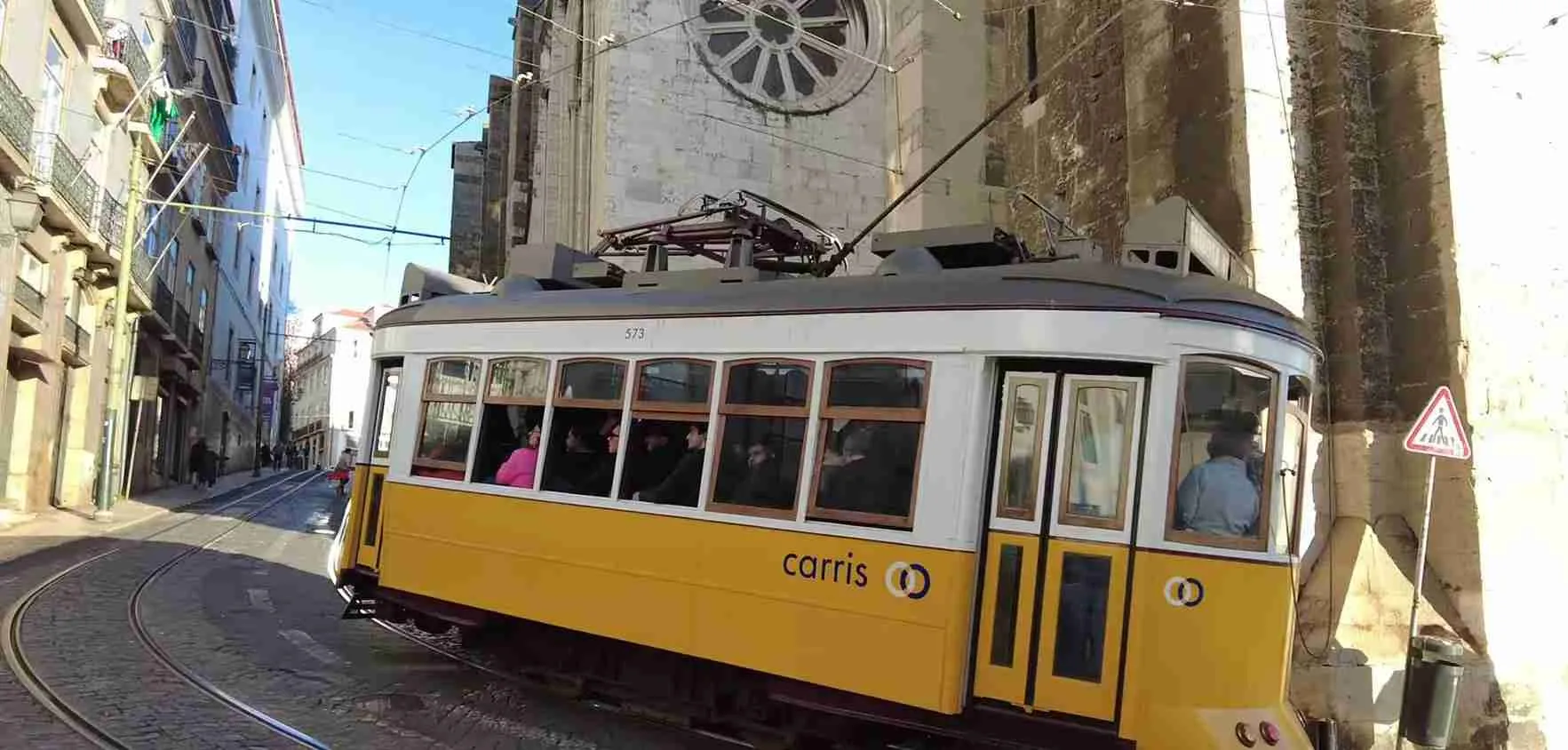
Tram 28 represents Lisbon’s most famous transport route, traversing Graça, Alfama, Baixa, and Estrela neighborhoods through narrow historic streets aboard vintage yellow trams. Single rides cost €3.10 when paid aboard versus €1.90 using Navegante cards, with 24-hour passes covering unlimited tram access eliminating per-ride decisions. The route carries extreme tourist volume with standing room predominating throughout midday hours—early morning 7:30-9:00 AM boarding provides seated rides and reduced pickpocketing risk plaguing crowded afternoon services.
Funiculars including Glória, Bica, and Lavra help navigate Lisbon’s steep hills, accepting Navegante cards and 24-hour passes at no additional charge beyond standard €1.90 per ride or included in daily pass. These short inclined railways significantly reduce physical exertion climbing from Baixa to Bairro Alto or from riverside to hilltop viewpoints, justifying minor route detours to access them versus direct but steep walking alternatives. Santa Justa Elevator similarly accepts transport cards at €5.30 per ride, though the observation deck requires separate €1.50 payment beyond transport access.
Suburban trains extend Lisbon transport to Sintra, Cascais, and Setúbal using separate CP rail network requiring different ticketing despite Navegante card compatibility. Trains to Sintra from Rossio station cost €2.35 each way, to Cascais from Cais do Sodré €2.35, with both routes included in expanded €11.40 24-hour passes covering metro, buses, trams, and suburban rail. Budget travelers making Sintra or Cascais day trips should purchase expanded passes given two return journeys at €4.70 plus urban transport approaching pass breakeven.
Porto Public Transportation 2026
Porto’s public transport revolves around the Andante card system integrating metro, buses, and historic tram lines through zone-based pricing. The metro charges €1.85 for single zone-1 rides covering central tourist areas, with rechargeable Andante cards costing €0.60 and accepting multiple fare types. Day passes at €7 for 24 hours and €15 for 72 hours provide unlimited metro and bus access, breaking even at four daily journeys and delivering value for tourists exploring Ribeira, Boavista, Matosinhos beach, and Vila Nova de Gaia wineries across multiple districts.
Porto metro connects airport, downtown, riverside Ribeira, and Vila Nova de Gaia through six lines covering the metropolitan area more comprehensively than Lisbon’s system. The A-line airport connection runs every 20-30 minutes with 25-minute journey times to central São Bento station at €2.15 for two-zone tickets, providing excellent value versus €25-35 taxis or €30-40 airport transfers. Metro frequency matches Lisbon standards with 6-10 minute intervals throughout peak periods and 12-18 minute waits during off-peak hours.
Historic tram line 1 operates along Douro riverside from Infante to Passeio Alegre, passing numerous port wine lodges and providing scenic transport between Ribeira and Foz waterfront districts. Single rides cost €4 when paid aboard versus €1.85 using Andante cards, with day passes including unlimited tram access. The route carries far lower tourist volume than Lisbon’s tram 28, enabling seated rides and photography opportunities throughout most daily periods.
Funicular dos Guindais connects riverside Ribeira with upper Batalha neighborhood, climbing the steep hillside in three minutes and accepting Andante cards at standard €1.85 pricing. This funicular provides essential value for travelers with mobility limitations or energy conservation priorities, eliminating the 150-step stairway climb separating Porto’s distinct elevation levels. The alternative Luís I bridge upper deck walk requires similar exertion without funicular assistance.
Intercity Train and Bus Transportation 2026
CP trains connect Portugal’s major cities through Alfa Pendular high-speed services and Intercidades conventional trains, with Lisbon-Porto routes costing €30-50 for second-class Alfa Pendular covering the journey in three hours. First-class upgrades add €15-25 providing complimentary beverages, power outlets, and dedicated quiet carriages appealing to business travelers and luxury tourists. Advance booking generates 30-50% savings versus walk-up fares, with 15-30 day advance purchases often accessing promotional fares under €30 for Lisbon-Porto routing.
Regional trains serve smaller destinations at lower speeds and prices, with Lisbon-Coimbra conventional trains costing €15-23 versus €25-35 for Alfa Pendular service covering the identical 200-kilometer route. These conventional services appeal to budget travelers prioritizing cost over time savings, adding 30-45 minutes to journey durations while providing identical destination access. Portuguese trains maintain high cleanliness and reliability standards regardless of service class, making second-class regional services entirely acceptable for budget-conscious visitors.
Rede Expressos operates Portugal’s primary intercity bus network connecting destinations lacking rail service or offering superior pricing. Lisbon-Faro Algarve routes cost €20-25 for 3.5-hour journeys versus €35-45 for trains requiring Tunes connection, making buses optimal for direct Algarve access. Bus comfort levels approximate train second class with similar legroom, onboard restrooms, and luggage capacity, though buses lack the dining car and walking space available on trains. Advance online booking through Rede Expressos website generates minor discounts of €2-4 per ticket versus bus station walk-up pricing.
Regional bus companies including EVA Transportes in Algarve and Transdev in northern regions serve local routes connecting smaller towns and villages. These services operate on limited schedules with 2-4 daily departures between many destinations, requiring careful timetable consultation and potential overnight stays in intermediate locations. Fares remain budget-friendly at €5-12 for most regional routes, though time consumption often makes rental cars more practical for travelers visiting multiple small towns.
Taxis, Rideshare, and Car Rental Economics 2026
Taxis in Portuguese cities charge metered rates with base fare €3.90 and per-kilometer charges of €0.60-0.80 depending on time and location, producing typical urban rides of €6-12 for 3-5 kilometer journeys. Lisbon airport to Baixa costs €15-20, Porto airport to Ribeira €25-30, with luggage surcharges of €1.50 per bag and nighttime premiums of 20% after 9:00 PM. These rates position taxis as occasional convenience transport for mid-range travelers rather than primary mobility solution given four daily taxi rides consuming entire public transport budgets.
Uber and Bolt operate throughout Portuguese cities with pricing 15-25% below traditional taxis and superior vehicle quality and payment convenience. Standard Uber rides cost €5-10 for typical urban journeys, €12-18 for Lisbon airport transfers, and €20-28 for Porto airport connections. The apps’ upfront pricing eliminates metered uncertainty and cash payment requirements while providing driver ratings and digital receipts appealing to international tourists. Budget travelers use rideshare for late-night transport when metro stops running, luggage-heavy grocery shopping, or time-constrained airport connections.
Car rental economics favor travelers visiting multiple regions beyond Lisbon and Porto metro networks, with week-long compact car rentals costing €150-250 including insurance, fuel consumption adding €80-120 for 1,000-kilometer driving, highway tolls totaling €20-40 for typical tourist routes, and parking fees of €5-15 daily in cities. The €250-425 weekly total exceeds train and bus costs for two travelers visiting 3-4 major cities but enables exploration of small towns, countryside estates, beaches, and mountain villages inaccessible via public transport.
Parking costs concentrate in city centers with Lisbon zones charging €1-2.50 per hour and daily maximums of €15-25, Porto rates of €0.80-2 hourly with €12-20 daily caps, and coastal Algarve towns requesting €3-8 for beach parking during summer. Budget travelers with rental cars should book accommodation with parking included, use peripheral park-and-ride metro stations for city center access, and time beach visits for early morning before parking enforcement begins. Many Portuguese destinations including Sintra, Évora, and smaller towns offer free parking in designated lots outside historic centers, requiring only 5-10 minute walks to primary attractions.
Lisboa Card and Porto Card Transportation Value 2026
Lisboa Card at €23 for 24 hours, €38 for 48 hours, and €49 for 72 hours bundles unlimited public transport including metro, buses, trams, funiculars, and suburban trains to Sintra and Cascais with free entry to 51 attractions. The transport-only value proposition delivers €7.25 daily in metro/bus/tram access, €4.70 in suburban train value for Sintra or Cascais visits, and €3-5 in funicular/elevator access totaling €15-17 daily before any attraction entry considerations. Active tourists making 10-15 daily transport segments achieve strong transport value alone, while sedentary visitors walking extensively may not reach transport breakeven.
Porto Card at €13 for 24 hours, €20 for 48 hours, and €33 for 72 hours includes unlimited metro and bus transport plus museum discounts rather than free entry to major attractions. The transport component delivers €7 daily value at 4+ journey breakeven, with card economics favoring tourists using frequent metro connections between Ribeira, Boavista, Vila Nova de Gaia, and outlying districts. The museum discount structure requires 3-4 paid museum visits approaching total card cost to achieve financial justification, making Porto Card less compelling than Lisboa Card for typical tourist itineraries.
Both cards eliminate per-ride payment hassles, enable spontaneous route changes without cost reconsideration, and include suburban connections that individual tourists might otherwise skip due to supplemental ticketing requirements. These convenience factors deliver value beyond pure cost analysis for travelers prioritizing streamlined logistics over budget optimization. Cards should be purchased directly from official websites or airport tourist offices rather than third-party resellers charging €2-5 premiums, and activated strategically at morning start times maximizing hourly value windows.
Attraction and Activity Costs Across Portugal 2026
Portugal’s UNESCO World Heritage sites, museums, palaces, and cultural attractions charge moderate entry fees of €10-18 for major monuments, €5-10 for most museums, and free access to numerous churches and viewpoints. Lisbon’s Jerónimos Monastery costs €18, Belém Tower €10, São Jorge Castle €15, National Tile Museum €7, while Porto’s Clérigos Tower charges €8, Palácio da Bolsa €12, and Livraria Lello bookstore €6. These prices position Portugal at European average levels—neither exceptional value like Eastern Europe nor premium pricing approaching Scandinavian rates—with Lisboa and Porto Cards providing 25-40% total savings for tourists visiting 6-8 paid attractions over 2-3 days.
Lisbon Major Attractions and Museum Costs 2026
Jerónimos Monastery represents Lisbon’s premier UNESCO monument at €18 adult entry providing access to the ornate Manueline cloisters and church nave where Vasco da Gama rests. The church portion offers free entry through separate access, enabling budget travelers to experience partial monument without paid ticket. Lines extend 1-3 hours during summer midday peaks, making advance online booking essential despite identical pricing to walk-up tickets. The monastery warrants 90-120 minute visits for comprehensive exploration, justifying the premium pricing through architectural significance and historical importance.
Belém Tower complements Jerónimos visits at €10 entry for the fortified tower providing Tagus River views and maritime history context. The narrow spiral staircases and small interior spaces create capacity constraints producing 30-60 minute queues during peak periods. Combined tickets bundling Jerónimos and Belém Tower reduce per-attraction costs by €2-3 though Lisboa Card inclusion renders combination redundant for cardholders. Budget travelers prioritizing architectural exteriors can photograph both monuments from public spaces without entry, though interior access provides superior understanding of Manueline style and maritime era significance.
São Jorge Castle charges €15 for hilltop fortress access providing Lisbon’s panoramic city views and medieval fortification exploration. The ticket includes archaeological museum, rampart walks, and observation points overlooking Baixa, Alfama, and Tagus estuary. Free viewpoints at Graça and Senhora do Monte miradouros deliver comparable panoramas without entry fees, though the castle’s interior courtyards and historical exhibits justify costs for history-focused visitors. Lisboa Card includes São Jorge, making the attraction essentially free for cardholders already committed to comprehensive city exploration.
National Tile Museum at €7 showcases Portugal’s azulejo ceramic tradition through historical panels, contemporary pieces, and decorative tile evolution across centuries. The former convent setting combines architectural interest with comprehensive collections, though the peripheral location requires dedicated 2-3 hour time allocation including transport. Budget travelers find the €7 admission excellent value for cultural education, while tile-indifferent tourists can skip without missing essential Lisbon experiences.
Gulbenkian Museum charges €12 for extensive collections spanning Egyptian antiquities, European painting, decorative arts, and founder Calouste Gulbenkian’s eclectic acquisitions. The modern purpose-built facility and serene gardens provide respite from crowded historic center, appealing to museum enthusiasts seeking world-class collections in comfortable viewing conditions. Lisboa Card inclusion makes Gulbenkian essentially free, though non-cardholders face cost-benefit calculation given Lisbon’s numerous alternative cultural attractions.
Porto Attraction and Museum Pricing 2026
Clérigos Tower offers Porto’s signature viewpoint at €8 entry providing 360-degree panoramas after climbing 240 steps through the baroque bell tower. The tower location in central shopping district enables convenient integration into walking routes, though multiple Porto hilltop positions deliver free equivalent views. Budget travelers substituting free viewpoints at Serra do Pilar monastery or Jardins do Palácio de Cristal save €8 without significant experience compromise.
Palácio da Bolsa charges €12 for guided tours through the neoclassical stock exchange building featuring the golden Arabian Hall and elaborate 19th-century craftsmanship. The mandatory guided format restricts independent exploration but ensures comprehensive historical context and access to restricted sections. The €12 pricing positions Bolsa at mid-tier value given 45-minute tour duration and limited exterior visibility without entry—budget travelers can skip, mid-range visitors often find the architectural significance worthwhile.
Livraria Lello bookstore implements €6 entry fee credited toward book purchases, monetizing the Instagram-famous Art Nouveau interior that attracts Harry Potter tourism and architectural photography. The fee manages overwhelming visitor volume while generating revenue from non-purchasing tourists. Book buyers effectively receive free entry through purchase credit, while photo-focused visitors pay €6 for 15-20 minutes of interior access and photography opportunities.
Porto Cathedral offers free nave access with €5 cloisters and treasury museum entry, enabling budget travelers to experience the hilltop cathedral’s gothic architecture and river views without payment. The cloisters add azulejo-decorated spaces and treasury collections justifying €5 supplement for comprehensive visits, though the free cathedral interior provides sufficient architectural exposure for cost-conscious travelers.
Port wine cellars in Vila Nova de Gaia charge €15-40 for guided tours and tastings, with premium quintas at the upper range and standard lodges at €15-20. These experiences provide essential Porto context, combining cellar architecture, aging barrel displays, production education, and 2-4 wine samples. Mid-range travelers should budget one cellar visit at €18-25, while enthusiasts can compare multiple properties. Free tastings exist at some commercial tasting rooms though sample quality and educational content suffer compared to paid tours.
Sintra Palace Combination Tickets and Costs 2026
Pena Palace commands €18 palace and park entry with park-only tickets at €10 for visitors limiting exploration to gardens and exterior views. The iconic Romanticist palace justifies €18 admission through colorful architecture, period interiors, and mountain setting, though summer crowds of 3,000-5,000 daily visitors create congested interior spaces reducing experience quality. Advance online booking proves essential for guaranteed entry during peak periods when walk-up tickets sell out by midday.
Quinta da Regaleira charges €12 for the elaborate estate featuring Initiation Wells, mystical gardens, underground tunnels, and romantic palace architecture. The property rewards 2-3 hour thorough exploration through hidden passages and symbolic garden elements, delivering superior value versus time-constrained palace tours. Budget travelers find Quinta da Regaleira essential Sintra visit given the unique experiences unavailable at other Portuguese locations.
Moorish Castle entry at €10 provides hilltop fortress wall walks and panoramic valley views with minimal interior structures beyond ramparts and observation points. The castle appeals to active travelers comfortable with steep climbs and open-air exploration in all weather conditions. Budget-conscious visitors can photograph castle exteriors from various Sintra viewpoints without entry, though wall walks provide perspectives unavailable from public areas.
National Palace of Sintra charges €12 for the medieval royal residence featuring distinctive twin chimneys, azulejo decoration, and chambers used by Portuguese monarchs across centuries. The central town location enables easy integration into Sintra itineraries, though the palace delivers less visual drama than Pena’s Romanticist excess or Quinta da Regaleira’s mystical gardens. Mid-range travelers visiting multiple Sintra properties often find National Palace expendable, while architecture enthusiasts appreciate the medieval origins and royal history absent from newer estates.
Combination tickets bundling multiple Sintra properties generate 15-25% savings versus individual entries, with four-monument passes at €45 versus €52 individual pricing. These combinations suit travelers spending full days in Sintra visiting numerous properties, though the physical demands of walking between sites and climbing steep hills often limit practical visits to 2-3 properties daily. Budget travelers should prioritize Pena Palace and Quinta da Regaleira as essential experiences, adding Moorish Castle only if energy and time permit.
Free and Low-Cost Experiences Throughout Portugal 2026
Lisbon’s Alfama neighborhood provides free exploration through medieval streets, hidden staircases, miradouro viewpoints, and neighborhood tascas without entry fees or guided tour requirements. Budget travelers spend 3-4 hours wandering Alfama’s maze-like alleys discovering architectural details, laundry-draped balconies, and local life scenes that encapsulate Lisbon’s authentic character. The neighborhood’s elevation changes require physical fitness for steep climbs, though the atmospheric rewards justify exertion for active travelers.
Porto’s Ribeira riverside offers free riverside promenades, bridge photography, colorful building facades, and street performer entertainment without costs beyond optional restaurant meals or drinks. The UNESCO-protected riverside represents Porto’s most photographed district, delivering postcard-perfect scenes through simple wandering and observation. Budget travelers allocate 2-3 hours for comprehensive Ribeira exploration including Dom Luís I bridge walks providing additional free viewpoints.
Portuguese beaches provide entirely free access without entrance fees, parking costs, or equipment requirements for travelers content with swimming and sunbathing. Lisbon area beaches in Cascais and Costa da Caparica reach via €2.35 train rides, Algarve beaches offer dramatic cliff formations and golden sand accessed through free coastal paths, and northern beaches near Porto deliver Atlantic surf conditions. Budget travelers substituting beach days for paid museum visits reduce daily costs €15-25 while experiencing Portugal’s coastal attractions.
Municipal gardens and parks throughout Portuguese cities offer free green spaces, ornamental plantings, and peaceful respite from urban exploration. Lisbon’s Jardim da Estrela, Porto’s Jardins do Palácio de Cristal, and Coimbra’s Botanical Garden provide manicured landscapes, viewpoints, and local life observation without costs. These spaces suit afternoon relaxation between morning and evening sightseeing, enabling energy recovery without accommodation returns or café spending.
Portuguese churches maintain free nave access with limited museum or sacristy fees, enabling architectural and artistic appreciation without payments. Lisbon’s Igreja de São Roque, Porto Cathedral, Braga’s Bom Jesus sanctuary, and countless parish churches throughout Portugal showcase baroque gilding, azulejo panels, and religious art accessible through simple entry and respectful observation. Budget travelers substitute church visits for paid museums, experiencing Portuguese religious artistic traditions without the €5-12 per museum costs.
Regional Cost Variations Across Portugal 2026
Portugal’s regional pricing divides into distinct tiers with Lisbon and Porto occupying mid-level positions, Algarve coastal areas commanding premium summer rates, Atlantic coastal towns delivering moderate year-round pricing, and interior Alentejo and northern regions offering 20-35% discounts versus capitals. Strategic itinerary construction combining expensive coastal periods with budget-friendly interior exploration optimizes overall trip costs while maintaining experience diversity across Portugal’s geographic and cultural regions.
Algarve Coastal Region Seasonal Pricing 2026
Algarve summer accommodation from June through September commands 50-80% premiums versus shoulder seasons, with Lagos, Albufeira, and Vilamoura mid-range hotels reaching €180-300 per room nightly during July-August peaks versus €100-160 during April-May and September-October. Budget hostels similarly escalate from €20-28 shoulder season to €30-40 summer peak, while luxury resorts increase from €300-500 spring rates to €500-800 summer positioning. These seasonal swings create significant budget impacts for travelers committed to summer coastal visits versus flexible timing enabling shoulder season savings.
Algarve dining costs approximate Lisbon pricing with tourist-focused restaurants charging €18-30 per person for dinner, local tascas away from beach zones delivering €12-20 meals, and fine dining reaching €60-90 for premium seafood and coastal cuisine. The beach town concentration of international tourists supports pricing power absent in interior regions, with establishments leveraging limited competition and captive beach-bound clientele. Budget travelers seeking dining value should explore inland villages including São Brás de Alportel, Loulé, and Silves where authentic Portuguese restaurants maintain traditional pricing.
Beach parking fees of €3-8 daily at popular Algarve strands add summer costs absent in off-season periods when enforcement relaxes. Lagos, Albufeira, Tavira, and Sagres implement paid parking during June-September peak season with variable enforcement quality and payment systems ranging from attended lots to pay-and-display machines accepting only coins. Budget travelers should arrive before 10:00 AM when free roadside parking remains available, use hotel parking when included, or visit beaches accessible via walking or cycling eliminating parking entirely.
Algarve off-season from November through March sees dramatic cost reductions with many properties closing entirely, those remaining open offering 40-60% discounts versus summer peaks at risk of reduced service quality, restaurant closures, and weather limitations. Budget travelers comfortable with cooler temperatures, occasional rain, and limited nightlife access should investigate November-February Algarve visits combining rock-bottom accommodation rates with empty beaches and authentic local atmosphere. March and October represent optimal balance delivering reasonable weather at substantial savings versus peak pricing.
Lisbon and Porto Cost Comparisons 2026
Porto maintains 10-20% lower pricing versus Lisbon across accommodation, dining, and local transport categories while delivering comparable quality and tourist infrastructure. Porto mid-range hotels charge €120-160 shoulder season versus Lisbon’s €140-180, Porto restaurant dinners cost €18-28 versus Lisbon’s €20-30, and Porto overall daily budgets run €55-85 for budget travelers versus Lisbon’s €60-90. These savings accumulate significantly over week-long Porto-focused trips, though most Portugal itineraries combine both cities minimizing regional price advantages.
Lisbon’s superior attraction density justifies marginal cost premiums through Belém UNESCO monuments, extensive museum collections, Sintra day trip access, and diverse neighborhood character exceeding Porto’s concentrated Ribeira-Boavista-Vila Nova de Gaia tourist zone. Budget travelers prioritizing sightseeing intensity over per-day costs often find Lisbon delivers better overall value despite 10-20% higher baseline expenses. Porto appeals to travelers prioritizing relaxed pacing, wine culture immersion, and riverside atmosphere over comprehensive museum and monument coverage.
Both cities implement Lisboa and Porto Cards with Lisbon’s version at €23-49 delivering superior attraction inclusion value versus Porto’s €13-33 providing primarily transport benefits with museum discounts rather than free entry. This card value disparity reflects Lisbon’s greater municipal monument network and tourism authority investment in comprehensive pass programs. Budget travelers visiting both cities should purchase Lisboa Card regardless while evaluating Porto Card necessity based on individual itinerary transport intensity.
Alentejo and Interior Region Budget Benefits 2026
Alentejo region including Évora, Monsaraz, Marvão, and Estremoz delivers 25-35% cost savings versus Lisbon and Porto while maintaining authentic Portuguese culture, UNESCO sites, wine regions, and countryside beauty. Évora mid-range hotels cost €90-130 versus Lisbon’s €140-180, regional restaurants serve exceptional Alentejo cuisine at €15-25 versus Lisbon’s €20-30, and overall daily budgets run €45-75 for budget travelers and €110-160 for mid-range compared to Lisbon’s €55-90 and €140-210 respectively.
Alentejo attractions charge €5-10 for most museums and Roman ruins with Évora’s Roman Temple offering free exterior viewing and cathedral entry at €5 with cloister access. The reduced attraction density versus Lisbon and Porto limits daily paid entry requirements to 1-2 sites, naturally reducing overall sightseeing costs €10-20 daily versus capital city itineraries visiting 3-4 paid attractions. Budget travelers allocate Alentejo days for recuperation between expensive Lisbon and Algarve periods, maintaining experience quality while reducing daily spending.
Northern interior regions including Braga, Guimarães, Viseu, and Douro Valley wine country similarly deliver 20-30% savings versus Porto with excellent cultural attractions, wine tourism opportunities, and authentic Portuguese town atmosphere. These regions appeal to budget-conscious travelers seeking Portuguese experiences beyond major tourist circuits, though reduced English language prevalence and public transport frequency require greater flexibility and problem-solving capacity compared to well-serviced Lisbon and Porto environments.
Seasonal Travel and Weather Cost Considerations 2026
Portugal’s seasonal pricing follows Mediterranean patterns with dramatic summer peaks, moderate shoulder seasons, and substantial winter discounts correlating with weather patterns, tourist volume, and service availability. Strategic travelers targeting optimal value-weather balance prioritize April-May and September-October shoulder periods delivering 70-85% of summer weather quality at 60-75% of summer pricing, while extreme budget travelers accept November-March weather compromises for 40-60% winter discounts on accommodation and reduced tourist congestion.
Summer Peak Season Economics June-August 2026
Summer peak season from mid-June through August commands 40-80% accommodation premiums versus spring-fall shoulders, with Algarve coastal hotels increasing most dramatically, Lisbon and Porto showing 30-45% escalation, and interior regions maintaining relatively stable year-round pricing. Mid-range Lisbon hotels reach €180-250 per room nightly versus €140-180 shoulder rates, Algarve beach properties escalate to €180-300 from €100-160 spring positioning, while Alentejo interior properties hold at €90-130 year-round with minimal seasonal adjustment.
Summer weather delivers reliable sunshine, minimal rainfall, and Mediterranean warmth with July-August temperatures of 28-32°C in Lisbon and Algarve, 25-28°C in Porto, and 30-35°C in interior Alentejo. These conditions optimize beach activities, outdoor dining, and extended daylight sightseeing hours maximizing daily activity capacity. The weather reliability reduces cancellation risks and eliminates contingency planning for rainy day alternatives, though extreme heat in southern interior regions can limit midday exploration comfort.
Summer crowds overwhelm popular attractions with Jerónimos Monastery lines extending 2-3 hours, Pena Palace selling out morning tickets by 11:00 AM, and Alfama trams operating at crush capacity throughout daylight hours. These congestion factors reduce experience quality even for travelers accepting premium pricing, making shoulder season alternatives increasingly attractive for quality-focused visitors prioritizing experience over schedule convenience. Budget travelers particularly suffer from summer congestion given limited ability to offset crowds through premium tour access or private experiences.
Summer necessitates 3-6 month advance booking for desirable accommodation in Algarve, Lisbon popular neighborhoods, and Porto Ribeira district, with last-minute availability restricted to peripheral locations or overpriced walk-up rates. This booking requirement eliminates spontaneous travel flexibility and commits travelers to fixed itineraries months before departure. Budget travelers booking summer trips should secure accommodation immediately upon destination decision, monitoring free cancellation periods for superior options while maintaining guaranteed fallback positions.
Shoulder Season Value April-May and September-October 2026
Spring shoulder season from April through May delivers 70-80% of summer weather quality at 60-75% of summer pricing, with reliable sunshine, moderate temperatures of 18-24°C, minimal rainfall, and significantly reduced tourist congestion versus peak months. Lisbon mid-range hotels drop to €140-180 from summer’s €180-250, Algarve properties decrease to €100-160 from €180-300, and attraction lines contract from 2-3 hours to 30-60 minutes enabling spontaneous entry without advance booking stress.
May represents optimal spring value with established warm weather, blooming landscapes, extended daylight hours approaching summer length, and pre-peak pricing still in effect through mid-month. Early April weather carries greater uncertainty with occasional cool periods and Atlantic low-pressure systems bringing rain to northern regions, though southern Algarve maintains relatively stable conditions. Budget travelers prioritizing weather reliability should target late April through May for spring visits, accepting marginal cost increases versus early April for superior weather confidence.
Fall shoulder season from September through mid-October provides Portugal’s strongest overall value proposition, combining summer-quality weather during September, reduced but comfortable October temperatures, minimal precipitation, and dramatic tourist volume reductions as families return to school schedules. Accommodation rates drop 25-40% below summer peaks while weather remains suitable for beach activities through September and outdoor sightseeing through October. Budget travelers find September delivers nearly equivalent experiences to July-August at substantially reduced costs with superior crowd conditions.
October weather introduces greater Atlantic influence with increased precipitation probability and cooling temperatures to 18-22°C daytime ranges, though southern Portugal maintains comfortable conditions for non-beach activities. This month appeals to culture-focused travelers prioritizing museum visits, city exploration, and wine tourism over beach time, with Douro Valley autumn colors and Alentejo harvest periods delivering unique seasonal attractions unavailable during summer. Mid-range travelers often find October represents optimal compromise between weather quality, pricing levels, and crowd conditions.
Winter Low Season Economics November-March 2026
Winter low season from November through March delivers Portugal’s deepest accommodation discounts at 40-60% below summer peaks, with Lisbon mid-range hotels dropping to €100-140 from summer’s €180-250, Algarve properties decreasing to €70-120 when remaining open, and luxury properties offering exceptional value at €200-350 versus summer’s €400-600. These dramatic savings enable budget travelers to upgrade accommodation tiers within fixed budgets or luxury travelers to reduce daily costs below shoulder season levels.
Winter weather in southern Portugal remains surprisingly mild with daytime temperatures of 12-16°C, regular sunshine between Atlantic frontal systems, and low humidity creating comfortable outdoor conditions for walking and sightseeing despite cooler evenings. Lisbon and Algarve maintain viable winter tourism with restaurants, attractions, and transport operating normally, though beach swimming suits only cold-tolerant individuals and some seasonal beach restaurants close November-March. Northern Portugal experiences wetter and cooler conditions with Porto and Douro Valley seeing frequent rainfall and temperatures of 8-14°C limiting outdoor comfort.
January-February represent winter’s deepest value period with accommodation at absolute minimum rates, attractions operating on reduced hours but with zero queues, and authentic local atmosphere as domestic tourism pauses. Budget travelers comfortable with 50% odds of rainy days and commitment to indoor activities find exceptional value during these months, particularly in Lisbon where cultural attractions, museums, and covered markets provide comprehensive programming regardless of weather conditions.
Winter Algarve visits suit golf-focused travelers and northern European winter escapees seeking mild temperatures rather than beach holidays, with many resorts catering specifically to extended-stay winter visitors from UK, Germany, and Scandinavia. These visitors access superior accommodation value, empty golf courses, and local Portuguese culture absent during summer international tourist peaks. Budget travelers should investigate coastal areas outside primary beach towns where year-round residential populations support restaurant and service availability throughout winter months.
Money-Saving Strategies for Portugal Travel 2026
Strategic cost management in Portugal targets high-impact decisions including accommodation neighborhood selection, dining category choices, city card purchases, and regional itinerary sequencing rather than penny-wise economizing on coffee purchases or walking versus short metro rides. Budget travelers achieve 30-50% savings versus naive spending through informed accommodation booking timing, prato do dia lunch maximization, free attraction substitution, and shoulder season travel, while maintaining experience quality approaching mid-range trip standards.
Accommodation Booking and Neighborhood Strategies 2026
Advance booking generates 30-40% accommodation savings during shoulder seasons and proves essential for summer peak periods when last-minute availability disappears entirely. Budget travelers should book 4-6 weeks ahead for spring-fall visits, 8-12 weeks for summer travel, and 2-4 weeks for winter periods, utilizing free cancellation policies to secure attractive rates while monitoring for superior options. This strategy requires platform account creation and regular rate monitoring commitment but delivers hundreds of euros in savings over week-long trips.
Neighborhood selection enables 20-30% accommodation savings within Lisbon and Porto through location sacrifice requiring 10-15 minute metro rides to central tourist zones. Lisbon’s Graça and Mouraria neighborhoods deliver excellent value versus Baixa and Chiado premium locations, Porto’s Bonfim and Cedofeita similarly undercut Ribeira riverside rates while offering authentic residential character and superior restaurant value. Budget travelers should investigate these adjacent zones for optimal price-quality-location triangulation.
Hostel private rooms provide budget-conscious couples and small groups superior value versus budget hotels through lower base rates of €50-70 versus €60-100, included breakfast saving €5-8 per person, and social atmosphere enabling tour-sharing and activity coordination with other travelers. These private hostel rooms eliminate dormitory exposure concerns while preserving hostel cost advantages, appealing to travelers prioritizing budget efficiency over hotel amenities like pools, gyms, and 24-hour reception.
Midweek stays generate 15-25% hotel savings versus Friday-Saturday premium pricing in tourist destinations, with business hotels in Lisbon and Porto offering superior midweek value given their corporate focus. Budget travelers should investigate Monday-Thursday positioning for city exploration, saving weekends for day trips to Sintra, Cascais, or countryside destinations where weekend pricing premiums apply less severely than urban accommodation.
Dining Cost Optimization Across Portugal 2026
Prato do dia lunch specials represent Portugal’s single strongest dining value, delivering authentic three-course meals with wine for €8-12 at neighborhood tascas versus €25-35 for inferior quality at tourist-focused restaurants. Budget travelers shifting primary meal consumption to lunch periods reduce daily food costs €15-25 while experiencing superior Portuguese cuisine, with light bakery breakfasts at €3-5 and modest dinners at €10-15 completing economical daily nutrition.
Neighborhood restaurant selection away from tourist concentration zones generates 30-50% savings versus establishments in Baixa, Alfama, Ribeira, and prime beach locations. Lisbon’s Campo de Ourique, Graça, and Marvila neighborhoods host excellent tascas charging €12-18 for dinners where Baixa restaurants request €20-30, Porto’s Cedofeita and Bonfim similarly deliver value versus Ribeira riverside premiums. Budget travelers should walk 5-10 minutes from tourist centers for optimal dining economics without quality sacrifice.
Supermarket integration for breakfast and occasional meals reduces daily food costs €10-20 for travelers with accommodation kitchen access or willingness to assemble picnic meals. Portuguese supermarkets sell quality bread, cheese, ham, wine, and fresh produce at prices enabling complete breakfast for €3-5 and assembled lunches for €8-12 per person. This strategy works particularly well for beach days, countryside drives, and apartment-based accommodation, though travelers should maintain restaurant frequency sufficient to experience Portuguese culinary traditions.
Water ordering instead of wine or beer at restaurants saves €5-10 per person per meal, with free tap water available upon request despite many establishments automatically serving bottled water. Portuguese wines offer such exceptional value at €8-18 restaurant bottles that moderate wine consumption represents good value, though budget travelers prioritizing maximum cost reduction should substitute water for alcohol during routine meals, reserving wine for special dining experiences at quality restaurants where wine-food pairing enhances overall meal value.
Transportation and Attraction Access Optimization 2026
Lisboa and Porto Card purchases deliver 25-40% savings for tourists visiting 6+ paid attractions and using public transport 8-12 times across 2-3 day periods, with Lisboa Card inclusion of Jerónimos, Belém Tower, São Jorge Castle, and suburban trains providing €40-50 value versus card’s €38-49 cost. Budget travelers should calculate expected attraction entry and transport usage against card pricing, purchasing when clear financial advantage exists while recognizing convenience and spontaneity benefits beyond strict cost analysis.
Walking substitution for short-distance transport saves €3-10 daily on metro and bus fares while enabling neighborhood discovery and street-level observation impossible from underground metro transit. Lisbon’s compact historic center enables 90% tourist attraction walking access within 30-45 minutes, Porto’s Ribeira to Boavista span covers pedestrian distance in 25-35 minutes, with both cities rewarding walking through architectural discovery and local life observation. Budget travelers should walk extensively while reserving public transport for longer distances, steep hills, and luggage transportation.
Free attraction substitution enables comprehensive Portuguese cultural exposure without entry fees through church visits replacing paid museums, free miradouros viewpoints substituting castle entries, and Alfama or Ribeira neighborhood wandering replacing guided walking tours. Budget travelers combining these free experiences with selective paid entry to 2-3 essential monuments achieve cultural education approaching mid-range visitor comprehensiveness at dramatically reduced costs.
Advance online attraction booking generates minimal cost savings of €0-2 per ticket versus walk-up purchases, with primary value deriving from guaranteed entry during peak periods and queue-skip benefits. Budget travelers should book major attractions including Pena Palace, Jerónimos, and Belém Tower advance tickets primarily for access assurance rather than cost reduction, accepting the identical or marginally increased pricing for entry certainty and time savings.
Regional and Seasonal Timing Strategies 2026
Shoulder season travel during April-May or September-October delivers 25-40% total trip cost savings versus summer peaks while maintaining 70-85% weather quality, with accommodation representing primary savings category and attraction crowds providing substantial experience quality improvements. Budget travelers gain most from shoulder season selection given their accommodation tier’s largest seasonal price swings, while luxury categories show moderated percentage savings though absolute amounts remain significant.
Winter travel from November-March enables 40-60% accommodation savings and nearly empty attractions at cost of weather uncertainty and reduced service availability in seasonal destinations. Budget travelers comfortable with indoor activity emphasis and 50% rain probability find exceptional value during January-February when Lisbon hotels drop to €80-120 versus summer’s €180-250, though northern Portugal’s winter climate proves less appealing given frequent precipitation and cooler temperatures.
Regional sequencing combining expensive coastal Algarve periods with budget-friendly interior Alentejo exploration optimizes overall trip costs while maintaining geographic and cultural diversity. Week-long itineraries allocating 3 nights Lisbon at moderate costs, 2 nights Évora at budget rates, and 2 nights Algarve at premium pricing achieve lower average daily costs than week-long single-region concentration in expensive zones. Budget travelers should construct itineraries maximizing time in lower-cost regions while sampling all major destination categories.
Weekday versus weekend timing within regions generates 15-25% hotel savings through business hotel discounts and reduced weekend leisure demand. Budget travelers visiting Lisbon and Porto should target Monday-Thursday accommodation, using weekends for countryside day trips or beach excursions where weekend premiums apply less severely. This strategy requires flexible scheduling incompatible with typical Friday arrival-Sunday departure tourist patterns but delivers significant savings for travelers with open itineraries.
Sample Budget Breakdowns for Different Travel Styles 2026
Comprehensive budget examples demonstrate how daily cost frameworks translate into realistic trip expenses across budget, mid-range, and luxury categories. These breakdowns account for accommodation, food, transport, attractions, and incidental costs while illustrating regional variations and activity choices influencing total spending. Each sample represents typical tourist behavior patterns within budget categories rather than extreme economizing or lavish spending at category boundaries.
Budget Backpacker Three-Day Lisbon Visit 2026
Three-day Lisbon budget itinerary demonstrates hosteling accommodation, prato do dia dining emphasis, walking-centric transport, and selective paid attractions totaling €185-275 per person for comprehensive capital city experience. Accommodation in central Lisbon hostel dormitory costs €28 per night totaling €84 for three nights, with hostel breakfast included eliminating separate breakfast spending. Lunches at neighborhood tascas utilizing prato do dia specials cost €10 per meal totaling €30 for three days, while dinners combining supermarket provisions €8, casual restaurant €15, and pizza takeaway €12 average €12 per meal totaling €35 for three dinners. Morning bakery coffee and pastry visits before hostel breakfast add €3 daily totaling €9 for three days.
Transportation costs include €0.50 Navegante card purchase, three 24-hour unlimited passes at €7.25 each totaling €22, and one return train to Sintra at €4.70. The 24-hour passes cover metro from airport, all urban transport across three days, and tram 28 rides, while walking covers 60-70% of actual locomotion needs. Attraction spending includes Lisboa Card 72-hour at €49 providing unlimited transport redundant with purchased passes but delivering free Jerónimos, Belém Tower, São Jorge Castle, and National Tile Museum worth €50 combined, plus convenience of spontaneous museum entry and included Sintra train.
Incidental costs include tourist tax at €2 per night totaling €6, bottle wine from supermarket for hostel terrace socializing €6, gelato during Belém exploration €3, beer at Bairro Alto evening out €5, total €20 miscellaneous spending. The three-day total reaches €84 accommodation, €74 food and drinks, €22 transport without Lisboa Card or €49 with card, €0 attractions with card or €50 without, plus €20 incidentals, producing €200-230 total or €185-275 per person depending on Lisboa Card purchase decision and exact meal choices.
This budget demonstrates how strategic accommodation selection, prato do dia lunch emphasis, extensive walking, and Lisboa Card optimization enable comprehensive Lisbon exploration including UNESCO sites, quality Portuguese dining, neighborhood discovery, and Sintra day trip at €60-90 daily per person. The experience quality exceeds typical budget travel stereotypes through authentic restaurant meals, comfortable hostel with included breakfast, and full major attraction access rather than compromised free-only sightseeing.
Mid-Range Couple Week-Long Portugal Tour 2026
Week-long Portugal mid-range itinerary covering Lisbon, Évora, and Porto demonstrates comfortable three-star hotels, quality restaurant dining, comprehensive attraction access, and mixed transport modes totaling €1,960-2,940 for couple or €980-1,470 per person. Accommodation allocates three nights Lisbon at €160 per room totaling €480, two nights Évora at €120 per room totaling €240, and two nights Porto at €140 per room totaling €280, for total €1,000 accommodation representing €500 per person or €71 per person per night. All hotels include breakfast eliminating separate morning meal costs.
Dining budget allocates €25 per person for lunches at quality restaurants featuring contemporary Portuguese cuisine, regional specialties, or fresh seafood, totaling €350 for seven days. Dinners average €35 per person including wine bottle split between couple, totaling €490 for seven days. Afternoon coffee and pastry breaks add €6 per person daily totaling €84 weekly, with occasional gelato or snack adding €20. Total food spending reaches €944 or €472 per person across week, averaging €67 per person daily excluding breakfast.
Transportation includes two Lisboa Card 72-hour passes at €49 each totaling €98, intercity train Lisbon to Évora at €15 per person totaling €30, rental car for Évora exploration and Porto transfer €180 for three days including insurance and fuel, Porto metro day passes two days at €7 each totaling €28 for couple, and miscellaneous taxis €40. Total transport spending reaches €376 for couple or €188 per person, averaging €27 per person daily across varied transport modes.
Attraction costs include Lisboa Card covering Lisbon attractions €98, Évora Cathedral and Chapel of Bones €10, Évora Roman Temple free, Porto wine cellar tour €36 for couple, Clérigos Tower €16 couple, Palácio da Bolsa €24 couple, and Livraria Lello €12 couple totaling €98 beyond Lisboa Card. Total attraction spending reaches €196 for couple or €98 per person, averaging €14 per person daily reflecting Lisboa Card value and selective paid entries in other destinations.
Incidental costs include tourist taxes €14 for couple, Sintra palace tickets beyond Lisboa Card €24, Douro Valley wine tasting €36, souvenir purchases €40, ATM fees €6, travel insurance €60, totaling €180 or €90 per person. Grand total reaches accommodation €1,000, food €944, transport €376, attractions €196, incidentals €180, producing €2,696 for couple or €1,348 per person, demonstrating mid-range comfort at €965 per person weekly or €193 daily including all expenses. Individual day costs vary €140-240 depending on accommodation pricing, restaurant choices, and paid attraction concentration, with the week-long average at €193 representing realistic mid-range Portugal touring costs.
Luxury Five-Day Lisbon and Algarve Experience 2026
Five-day luxury Portugal itinerary combining Lisbon cultural immersion with Algarve coastal relaxation demonstrates four-star properties, fine dining, private experiences, and comprehensive comfort totaling €3,250-4,100 for couple or €1,625-2,050 per person. Accommodation allocates three nights Lisbon four-star boutique hotel in Chiado at €380 per room totaling €1,140, and two nights Algarve luxury resort in Quinta do Lago at €520 per room totaling €1,040, for total €2,180 accommodation representing €1,090 per person or €218 per person per night. Both properties include breakfast buffets and premium amenities including pools, spas, and concierge service.
Dining budget emphasizes fine dining experiences and premium restaurants, with lunch at quality establishments averaging €50 per person totaling €500 for five days couple. Dinners include two Michelin-starred experiences at €160 per person totaling €640 couple, two premium seafood restaurants at €80 per person totaling €320 couple, and one casual upscale bistro at €60 per person totaling €120 couple, averaging €108 per person per dinner and totaling €1,080 for five dinners. Wine pairings at Michelin dinners add €140, premium bottles at other restaurants add €120, totaling €260 wine spending. Afternoon refreshments, beach club snacks, and sundry food costs add €120. Total food spending reaches €1,960 for couple or €980 per person, averaging €196 per person daily excluding breakfast.
Transportation includes private airport transfer Lisbon €50, luxury rental car for Algarve transfer and local exploration €380 for three days including premium vehicle, fuel, insurance, and resort parking, occasional Lisbon taxis for dinner returns €60, totaling €490 or €245 per person across five days. The rental car enables scenic coastal drives, beach access without parking concerns, and superior comfort versus train travel to Algarve.
Attraction and experience costs include private guided Belém tour €180 couple, Pena Palace premium entry €36, private Douro Valley wine tour with tastings €320 couple, Algarve spa treatments €280 couple, golf round at championship course €180, and miscellaneous entrance fees €60, totaling €1,056 or €528 per person. These premium experiences deliver superior access, private attention, and unique opportunities unavailable through standard tourist channels.
Incidental costs include tourist taxes €20, resort valet parking €30, premium sunscreen and beach items €40, souvenir purchases €80, comprehensive travel insurance €90, tips for guides and spa staff €100, totaling €360 or €180 per person. Grand total reaches accommodation €2,180, food €1,960, transport €490, experiences €1,056, incidentals €360, producing €6,046 for couple or €3,023 per person for five days, demonstrating luxury Portugal travel at €605 per person daily including all expenses. This rate enables four-star comfort, Michelin dining, private experiences, and premium properties while remaining 30-40% below equivalent luxury experiences in Paris, Barcelona, or Rome.
Hidden Costs and Budget Surprises 2026
Portugal travel involves numerous minor costs beyond primary accommodation, food, transport, and attraction categories that accumulate to significant budget impacts. Tourist taxes, tipping expectations, attraction booking fees, parking charges, and discretionary experiences add €10-25 daily to baseline budgets, with improper planning enabling these costs to balloon unpredictably. Informed travelers budget 10-15% contingency above calculated accommodation, food, transport, and attraction baselines to absorb these supplemental expenses without mid-trip financial stress.
Municipal Tourist Taxes and Accommodation Fees 2026
Municipal tourist taxes range €1-2 per person per night in Lisbon, Porto, and most Algarve municipalities, adding €14-28 to week-long trips that booking platforms often exclude from advertised rates. These taxes appear at checkout or check-in as separate line items, creating surprise costs for travelers budgeting strictly to displayed accommodation rates. Some municipalities cap tourist tax at seven nights or exempt children under 13, though most apply taxes universally across all commercial accommodation including hotels, hostels, and vacation rentals.
Vacation rental cleaning fees of €30-60 per stay create hidden per-night costs obscured by nightly rate advertising, with three-night rentals incurring €10-20 effective per-night premiums and week-long stays absorbing €4-9 per night. Platform service fees of 10-14% apply to vacation rentals with guest service fees separate from host service fees, adding €15-40 to mid-range rental bookings. Budget travelers should calculate total rental costs including cleaning fees, service fees, and tourist taxes before comparing against hotel rates to avoid misleadingly favorable apartment pricing.
Resort fees at some Algarve properties add €15-30 daily for pool access, beach equipment, Wi-Fi, and amenity usage that travelers assume as complimentary hotel services. These fees remain rare in Portuguese accommodation compared to US resort markets but appear at premium beach properties during peak summer. Budget travelers should verify total accommodation costs including all mandatory fees before booking, specifically questioning resort fees, parking charges, and tourist taxes at reservation time.
Restaurant and Service Tipping Evolution 2026
Tipping expectations in Portuguese restaurants evolved from traditional bill rounding toward 5-10% service charges in tourist areas, with locals maintaining minimal tipping while international visitors increasingly leave 8-10% following home country customs. Budget travelers can minimize tipping to 5% or €1-3 bill rounding without service quality impacts, though mid-range tourists often provide 8-10% at quality restaurants for good service. This tipping inflation adds €5-15 daily for travelers eating three restaurant meals, representing significant accumulation over week-long trips.
Café and bakery tipping remains minimal with bill rounding of €0.20-0.50 standard for coffee and pastry purchases at counters, though table service at outdoor seating increasingly sees 5% tips from international tourists. Budget travelers ordering at counters for self-service avoid tipping expectations entirely while maintaining identical product quality and faster service. Taxi tipping similarly follows rounding patterns of €1-2 for typical rides, with passengers comfortable skipping tips entirely without driver expectations or service degradation.
Tour guide and private experience tipping reaches €10-20 per person for half-day tours, €20-40 for full-day experiences, and €50-100 for multi-day private guides, with these amounts representing customary rather than mandatory gratuities. Luxury travelers budget 10-15% of tour costs for guide tips, mid-range tourists allocate 5-10%, and budget travelers tip €5-10 acknowledging service without matching percentage expectations. Wine tour and food tour guides similarly expect €10-20 tips for group tours, with private experiences commanding higher amounts.
Attraction Booking Fees and Premium Access Costs 2026
Third-party attraction booking platforms including GetYourGuide, Viator, and Tiqets add €2-5 per ticket above official prices while delivering convenience, English-language interfaces, and flexible cancellation policies. Budget travelers booking directly through official monument websites save these fees though sometimes sacrifice cancellation flexibility and encounter Portuguese-only interfaces. The fee premium totals €20-40 weekly for tourists visiting 8-12 paid attractions, creating significant percentage impacts on budget traveler attraction spending though minimal luxury category effects.
Skip-the-line and premium access tickets for major attractions charge €5-15 premiums above standard entry for guaranteed time slots, dedicated queues, and priority processing. These upgrades deliver genuine value during summer peak season when standard entry queues extend 2-3 hours, though shoulder and winter season low crowds render premium tickets redundant expense. Mid-range travelers should purchase skip-the-line tickets for Jerónimos, Pena Palace, and São Jorge Castle during June-August only, reverting to standard tickets during other periods when queues remain manageable.
Guided tour premiums versus self-guided entry range €10-30 per person depending on attraction and tour duration, with small group tours of Jerónimos and Belém costing €45-60 per person including monument entry versus €28 for independent tickets. These tours deliver expert commentary, historical context, and architectural interpretation exceeding independent audio guides, appealing to education-focused travelers valuing guided experiences over self-directed exploration. Budget travelers should allocate one guided experience for orientation then self-guide subsequent attractions, while luxury travelers often prefer comprehensive guided coverage despite premium costs.
Wine, Beach, and Activity Experience Costs 2026
Douro Valley wine tastings range €15-40 per person for estate tours including 4-8 wine samples with food pairings, representing worthwhile educational spending for wine-interested travelers though accumulating quickly across multiple quinta visits. Budget travelers should select 1-2 premium estate experiences at €25-40 for comprehensive education rather than sampling numerous basic tastings at €10-15, achieving better overall value through quality over quantity. Some estates waive tasting fees with wine purchases, creating opportunities for cost recovery through bottle acquisition at estate prices.
Beach equipment rentals including umbrellas at €8-15 daily and loungers at €6-12 add Algarve costs for travelers seeking organized beach comfort versus towel-on-sand alternatives. Budget travelers bring own beach equipment or select beaches with minimal commercial infrastructure avoiding rental requirements, while mid-range visitors often find the €15-25 daily beach setup cost worthwhile for full-day coastal relaxation. Some hotel packages include beach club access with complimentary equipment, creating value for resort guests versus day visitors paying commercial rates.
Surf lessons in Algarve, Peniche, and Ericeira begin at €40-60 per person for group sessions including board and wetsuit rental, with private instruction reaching €80-120 per hour. These experiences represent discretionary tourist activities frequently underestimated in pre-trip budgeting, with multi-day lesson packages reducing per-session costs to €35-50 for committed learners. Budget travelers should investigate local surf schools directly rather than hotel concierge bookings, achieving 20-30% savings through direct reservation versus marked-up intermediary arrangements.
Fado show dinner packages in Alfama district cost €50-80 per person for fixed menus with live performances, combining cultural experience with mediocre meal quality at pricing exceeding standalone restaurant and music bar options. Budget travelers can separate fado performance viewing at neighborhood bars for €10-15 minimum consumption from dining choices, optimizing both cultural exposure and meal quality while reducing combined costs. Mid-range travelers accepting inferior meal quality for packaged convenience often find the €50-80 all-inclusive pricing acceptable for one-time cultural experience.
Family, Solo, and Senior Travel Cost Considerations 2026
Family, solo, and senior travelers face distinct cost structures beyond typical couple-based budgeting, with families benefiting from shared accommodation and attraction discounts but incurring increased food costs, solo travelers absorbing full accommodation rates without splitting, and seniors accessing museum discounts while potentially requiring accessible transport and comfortable lodging. These demographic-specific factors require adjusted budget frameworks beyond standard per-person daily cost calculations.
Family Travel Costs and Economies of Scale 2026
Family accommodation delivers per-person savings through four-person room occupancy, with Lisbon family rooms at €120-180 versus €140-200 for standard doubles, producing €30-45 per person nightly versus €70-100 couple rates. Vacation rental apartments provide superior family value through multiple bedroom configurations and kitchen facilities, with three-bedroom Lisbon apartments at €150-250 nightly dividing to €38-63 per person for families of four versus €60-100 per person for hotel accommodations. The kitchen access enables breakfast and snack preparation reducing daily food costs €20-40 for families versus full restaurant reliance.
Restaurant costs increase linearly with child count despite kids’ menu discounts of 30-50%, with family of four spending €60-90 for mid-range dinners versus couple’s €40-60. Children’s portions reduce effective per-person costs below adult rates though total family spending exceeds couple budgets significantly. Budget-conscious families should emphasize picnic lunches, supermarket provisions, and apartment meal preparation to offset increased overall food spending, while mid-range families often find restaurant frequency sustainable given Portugal’s moderate dining costs.
Attraction entry provides family discounts with children under 12 typically free at Portuguese museums and monuments, teens 13-18 receiving 50% reductions, and family passes bundling two adults with children at 20-30% discounts versus individual entries. Lisboa Card family packages and combined tickets for Sintra palaces similarly discount youth pricing. These savings partially offset families’ higher baseline costs, with total attraction spending for family of four with teens reaching €80-120 for day including major monuments versus couple’s €40-60.
Transportation costs benefit from family metro day passes in Lisbon and Porto offering slight per-person savings versus individual tickets, though active families walking extensively often find individual journey tickets more economical than unlimited passes. Rental cars provide family-friendly transport at fixed costs regardless of occupancy, with week-long compact rentals at €200-300 plus fuel dividing to €50-75 per person for families of four versus €100-150 per person for couples. This transportation category advantage helps offset families’ accommodation and food premium costs.
Solo Traveler Single Supplement Economics 2026
Solo travelers absorb full accommodation rates without sharing benefits, with budget hotel private rooms at €50-100 or hostel private rooms at €50-70 producing identical nightly costs as couples pay, effectively doubling per-person accommodation expenses from couple’s €25-50 to solo’s €50-100. This single supplement represents solo travel’s primary cost disadvantage, adding €25-50 daily or €175-350 weekly to baseline budgets compared to couple travelers at equivalent accommodation tiers.
Hostel dormitory accommodation provides solo travelers optimal value at €25-35 per night in Lisbon and Porto, eliminating single supplement entirely and enabling budget-tier daily costs of €55-85 approaching couple rates. This accommodation choice requires acceptance of shared sleeping spaces and reduced privacy, though modern Portuguese hostels with pod beds, curtains, and ensuite dormitories deliver reasonable comfort for solo travelers prioritizing cost efficiency over private rooms. Solo travelers alternating dormitory and budget hotel nights achieve compromise between cost control and occasional privacy.
Restaurant dining economics marginally favor solo travelers through ordering flexibility, with single diner selecting precisely desired portions without couple compromise on wine bottles, appetizer sharing, or dessert courses. Portuguese restaurants accommodate solo diners without prejudice, providing identical service and welcome versus couple or group tables. Solo travelers can optimize dining costs through strategic lunch emphasis, occasional supermarket meals, and selective splurge dinners without negotiating companion preferences.
Activity and experience costs similarly benefit from solo flexibility, with individual travelers selecting precisely desired attractions without compromise. Tours and wine tastings charge per-person rates regardless of booking size, though private experiences including guides, drivers, and premium tours often carry minimum two-person rates forcing solo travelers to pay double or join scheduled group departures. Budget-conscious solo travelers should prioritize group tour formats and scheduled departures avoiding private minimum charges while accepting reduced scheduling flexibility.
Senior and Accessibility Considerations 2026
Senior travelers age 65+ receive 50% attraction discounts at most Portuguese museums and monuments including Jerónimos, Belém Tower, Sintra palaces, and municipal collections, significantly reducing attraction spending from standard €10-18 entries to €5-9 seniors rates. These savings accumulate to €30-60 weekly for active sightseers visiting 10-15 paid attractions, partially offsetting seniors’ potential premium accommodation preferences for comfortable properties and accessible facilities.
Accommodation accessibility varies substantially across Portuguese properties with modern three-star hotels generally providing elevators and accessible rooms, historic properties in converted palaces and monasteries often lacking elevator access, and budget accommodations frequently occupying upper floors without lifts. Senior travelers with mobility limitations should specifically verify elevator availability and accessible room features during booking, accepting that premium modern properties often deliver superior accessibility versus charming historic alternatives.
Transportation accessibility in Lisbon and Porto proves adequate with metro stations generally providing elevator access, buses equipped with low floors and ramps, and trams offering mixed accessibility depending on vintage versus modern units. Tram 28’s vintage cars require step climbing, while contemporary trams on other routes provide level boarding. Senior travelers with mobility limitations should investigate specific route accessibility and budget additional taxi costs of €10-20 daily for situations where public transport proves impractical.
Walking-intensive tourism models standard in Portuguese cities create challenges for seniors with limited walking capacity, with Lisbon and Porto’s steep hills and cobblestone streets complicating accessibility beyond elevator availability. These cities reward extensive walking for neighborhood discovery and attraction access, though strategic taxi usage, funicular riding, and selective attraction prioritization enable senior travelers with moderate mobility to experience essential highlights without excessive physical demands. Budget-conscious seniors should allocate €15-25 daily for supplemental taxi and convenience transport beyond baseline public transit costs.
Frequently Asked Questions: Portugal Travel Costs 2026
How much cash should I bring to Portugal in 2026?
Bring €200-400 cash for initial arrival period covering first 1-2 days before accessing ATMs, with ongoing cash needs of €20-50 daily for small purchases, markets, traditional restaurants, and backup payment capability. Portuguese businesses increasingly accept cards including small cafés and bakeries, though cash remains essential for pastry counters, some tascas, traditional markets, public transport from coin machines, and tourist tax payments at smaller accommodations. ATM withdrawal at arrival provides better exchange rates than currency exchange at airports or tourist areas, with Portuguese ATMs widely available and typically charging €0-5 withdrawal fees depending on home bank policies.
Plan ATM withdrawals of €100-200 once or twice weekly rather than frequent small withdrawals to minimize transaction fees, though verify personal bank’s international fee structure determining optimal withdrawal frequency. Portuguese merchants universally accept Visa and Mastercard credit and debit cards without minimum purchase amounts, with contactless payment widely available for transactions under €50. American Express acceptance remains limited to upscale hotels and restaurants. Inform credit card issuers of Portugal travel dates preventing security holds on foreign transactions.
Is tipping required in Portuguese restaurants in 2026?
Tipping remains optional in Portuguese restaurants with no legal obligation or service charge expectations, though tourist-area establishments increasingly expect 5-10% gratuities from international visitors following home country customs. Portuguese locals continue traditional bill rounding of €1-3 or 5% maximum, with service staff wages including baseline compensation rather than depending on tips. Budget travelers can round bills up €1-2 without negative service impacts, mid-range tourists commonly leave 8-10% for good service at quality restaurants, and luxury diners provide 10-15% matching international customs at fine dining establishments.
Table service restaurants warrant tipping consideration while counter service cafés and bakeries require only small bill rounding of €0.20-0.50. Taxis similarly follow €1-2 rounding rather than percentage calculations. Tour guides expect €10-20 for group half-day tours and €20-40 for full-day experiences, with private guides receiving higher amounts reflecting personalized service. Hotel porters receive €1-2 per bag, housekeeping €1-2 per night for extended stays, and concierge services €5-10 for special arrangements requiring significant effort.
What’s the best way to pay for things in Portugal 2026?
Credit and debit cards represent optimal payment methods for most Portuguese purchases, delivering competitive exchange rates, transaction records, and fraud protection superior to cash or currency exchange. Visa and Mastercard acceptance spans nearly universal coverage including small restaurants, shops, and tourist attractions. Contactless payment capabilities enable rapid transactions under €50 without PIN entry, though chip-and-PIN remains standard for larger amounts. Budget travelers should carry zero-foreign-transaction-fee cards maximizing exchange rate benefits, with premium travel cards offering additional protections and rewards.
Avoid dynamic currency conversion offers at payment terminals proposing conversion to home currency rather than local euros—this convenience generates 3-5% conversion premiums reducing effective exchange rates substantially. Always select “charge in euros” when prompted, enabling home bank conversion at superior rates. ATM withdrawals provide excellent euro acquisition rates when using zero-foreign-transaction-fee debit cards, with Portuguese banks charging €0-5 withdrawal fees and home banks potentially adding 1-3% foreign transaction fees depending on account type.
How much does a week in Portugal cost for two people in 2026?
Week-long Portugal trips for two people cost €770-1,260 for budget travel, €1,960-2,940 for mid-range comfort, and €4,550-7,140 for luxury experiences excluding international flights. Budget travelers occupy hostel dormitories at €50-70 nightly for couple, emphasize prato do dia lunches at €16-24 couple and modest dinners at €20-30, utilize public transport extensively with Lisboa or Porto Cards at €38-49 per person, and visit 4-6 paid attractions totaling €40-80 couple weekly. Daily costs average €110-180 for budget couples sharing accommodation and maximizing free experiences.
Mid-range travelers book three-star hotels at €120-200 nightly, dine at quality restaurants for lunch €40-50 couple and dinner €50-80 including wine, use comprehensive public transport with occasional taxis, purchase Lisboa and Porto Cards, and access major attractions totaling €80-140 couple weekly. Daily costs average €280-420 for mid-range couples balancing comfort, culinary experiences, and comprehensive sightseeing. Regional variations significantly impact these ranges with Algarve summer peaks adding 30-50% and interior Alentejo reducing costs 20-30% below averages.
Luxury travelers occupy four-star boutique hotels or five-star properties at €300-600 nightly, enjoy fine dining including 1-2 Michelin experiences weekly, utilize private drivers or premium rental cars, and access exclusive tours and premium wine tastings totaling €400-700 couple weekly. Daily costs average €650-1,020 for luxury couples prioritizing exceptional accommodation, culinary excellence, and private experiences. These luxury rates remain 30-40% below equivalent experiences in Paris, Barcelona, or Rome while maintaining comparable service and quality standards.
Is public transportation in Portugal expensive in 2026?
Portuguese public transportation delivers exceptional value with Lisbon metro rides at €1.90, Porto metro at €1.85, 24-hour unlimited city passes at €7-7.25, and intercity trains Lisbon-Porto at €30-50 for three-hour journeys. These rates position Portugal among Western Europe’s most affordable transport systems, enabling budget travelers to navigate major cities for €7-10 daily through unlimited day passes and mid-range visitors to access comprehensive networks including occasional taxis for €10-15 daily. The integrated Navegante and Andante card systems simplify payment across transport modes while delivering per-journey savings versus paper tickets.
Lisboa and Porto Cards at €23-49 bundle unlimited transport with attraction entry, breaking even at 4 metro rides plus 2-3 museum visits over 24-48 hours. These cards eliminate per-ride payment friction and enable spontaneous route changes optimizing tourist mobility. Suburban trains to Sintra and Cascais cost €2.35 each way, regional buses €5-15 for most routes, and intercity buses €20-30 for long-distance travel providing alternatives to trains at lower prices with similar comfort. Overall transport spending represents 10-15% of total Portugal trip budgets, significantly lower than accommodation and food categories dominating tourist expenses.
Can I travel Portugal on €50 per day in 2026?
Portugal travel at €50 per person daily proves achievable though requires strategic optimization including hostel dormitory accommodation at €25-30, self-catered breakfast and lunch from supermarkets at €8-12, one modest restaurant dinner at €12-15, walking-based transport minimizing metro costs to €2-5, and free attraction emphasis with one or two paid entries weekly at €3-8 daily average. This budget provides acceptable nutrition, safe accommodation, basic transport, and limited paid attraction access while sacrificing restaurant meals, comprehensive museum coverage, alcohol consumption, and most convenience factors.
Budget travelers targeting €50 daily should prioritize Lisbon and Porto for hostel availability and free attraction density, visit during shoulder seasons when hostel rates drop versus summer peaks, walk extensively between destinations, pack supermarket lunches for midday meals, and substitute free churches and viewpoints for paid museums when possible. The €50 daily target exceeds typical Southeast Asian or Latin American backpacking budgets but remains achievable in Western European context through informed trade-offs. Most budget travelers find €60-70 daily provides meaningful quality improvements through additional restaurant meals and paid attraction access without excessive sacrifice.
What costs do tourists always underestimate in Portugal 2026?
Tourists consistently underestimate cumulative small costs including tourist taxes at €1-2 per person per night totaling €14-28 weekly, tipping evolution toward 5-10% at tourist restaurants adding €5-15 daily, attraction booking fees of €2-5 per ticket accumulating to €20-40 weekly, Sintra palace combination tickets at €40-60 for multi-property visits, wine tasting experiences at €15-40 per person, and incidental purchases including water bottles, sunscreen, pharmacy items, and souvenirs adding €10-20 daily. These categories accumulate to €30-60 daily beyond baseline accommodation, food, transport, and attraction budgets, representing 15-25% supplements over calculated trip costs.
Additional underestimated costs include rental car parking fees of €5-15 daily in cities, highway tolls of €20-40 for typical tourist routes, beach parking at €3-8 during summer in Algarve, vacation rental cleaning fees of €30-60 often excluded from advertised nightly rates, and seasonal pricing swings with summer accommodation costing 40-80% more than shoulder periods. Budget travelers should add 15-20% contingency above calculated accommodation, food, transport, and attraction baselines to absorb these supplemental expenses without mid-trip financial stress or experience compromises.
Are credit cards widely accepted in Portugal in 2026?
Credit and debit cards enjoy near-universal acceptance throughout Portuguese cities, tourist areas, and chain establishments, with Visa and Mastercard coverage spanning 90%+ of businesses serving tourists including restaurants, hotels, museums, supermarkets, and shops. Contactless payment prevalence enables rapid transactions under €50, while chip-and-PIN remains standard for larger amounts. Small traditional tascas, neighborhood bakeries, traditional markets, and some family-run businesses maintain cash-only policies, requiring €20-50 daily cash reserves for these establishments and situations where card readers experience technical issues.
American Express acceptance remains limited to upscale hotels, fine dining restaurants, and international chain stores, making Visa or Mastercard essential primary cards for Portugal travel. Inform card issuers of travel dates preventing fraud holds on foreign transactions, verify international transaction fee structures with zero-foreign-transaction-fee cards delivering best value, and avoid dynamic currency conversion at payment terminals proposing charge in home currency rather than euros. ATM networks provide excellent euro cash access when needed, with Portuguese banks operating extensive ATM coverage including airports, tourist centers, and residential neighborhoods.
Do I need to buy travel insurance for Portugal in 2026?
Travel insurance remains essential for Portugal trips given emergency medical costs potentially reaching thousands of euros, trip cancellation coverage protecting non-refundable accommodation and flight expenses, and coverage for lost luggage, trip interruptions, and missed connections. Portugal’s public healthcare system provides limited emergency care for tourists though comprehensive medical treatment requires payment or insurance coverage, with private hospital emergency room visits costing €200-500 before treatment and specialized care reaching substantially higher amounts. European Health Insurance Card holders from EU countries access reduced-cost care though supplemental insurance remains advisable.
Standard travel insurance policies cost €30-50 for week-long Portugal trips covering €100,000 medical expenses, €5,000 trip cancellation, €2,000 baggage loss, and various supplemental coverages. Budget travelers should purchase at minimum emergency medical and evacuation coverage given potential costs vastly exceeding €30-50 premiums, while mid-range and luxury travelers benefit from comprehensive policies protecting larger accommodation and experience deposits. Purchase insurance immediately after booking flights and accommodation to maximize trip cancellation coverage windows, and verify policy exclusions regarding pre-existing conditions, adventure activities, and alcohol-related incidents.
How much do I need for one month in Portugal in 2026?
One-month Portugal extended stays cost €1,650-2,700 for budget travelers, €4,200-6,300 for mid-range comfort, and €9,750-15,300 for luxury experiences per person excluding international flights. Budget monthly travelers benefit from long-term accommodation discounts with hostel monthly rates at €550-750 versus €750-1,050 for nightly bookings, self-catering reducing food costs to €15-25 daily or €450-750 monthly, minimal transport needs through walking emphasis with occasional metro and bus use totaling €50-80 monthly, and selective attraction access focusing on free experiences with 8-12 paid entries totaling €80-140 monthly. Budget travelers should target Lisbon or Porto for optimal infrastructure, supplement Portuguese tourism with work exchange or volunteer programs, and investigate long-term rental apartments for superior monthly rates versus nightly accommodation.
Mid-range monthly travelers occupy furnished rental apartments at €1,200-2,000 monthly in Lisbon or Porto, balance restaurant dining with apartment meal preparation for €1,200-1,800 monthly food costs, utilize comprehensive public transport with monthly Navegante passes at €40 plus occasional taxis totaling €120-200 monthly, and visit attractions strategically with Lisboa or Porto Cards supplemented by selective entries totaling €200-350 monthly. Mid-range monthly budgets enable comfortable exploration, restaurant frequency, comprehensive cultural access, and day trip flexibility unavailable to budget travelers focused on cost minimization.
Luxury monthly travelers book serviced apartments or boutique hotels with monthly discounts at €4,500-7,500, emphasize restaurant dining including regular fine dining experiences at €2,400-3,600 monthly, utilize private drivers and premium transport at €600-1,200 monthly, and access extensive tours, wine experiences, and premium attractions at €1,200-2,400 monthly. These luxury monthly rates enable immersive Portuguese experiences, regional exploration, culinary excellence, and exclusive access while remaining substantially below equivalent luxury monthly costs in Paris, Barcelona, or Amsterdam.