
Plovdiv Travel Guide 2026: Europe’s Oldest Continuously Inhabited City
Plovdiv stands as Europe’s oldest continuously inhabited city, with archaeological evidence dating human settlement back over 8,000 years to the Neolithic period. This ancient Bulgarian city seamlessly weaves Roman amphitheaters, Ottoman mosques, Bulgarian Revival mansions, and contemporary art galleries into a living tapestry of civilizations. With Bulgaria’s adoption of the Euro on January 1, 2026, simplified pricing and the city’s ongoing recognition as a 2019 European Capital of Culture create an exceptional moment to discover this Balkan treasure before mass tourism arrives.
Key Takeaways About Visiting Plovdiv in 2026
- Currency Transition in 2026: Bulgaria adopts the Euro on January 1, 2026, replacing the Bulgarian Lev (BGN). This transition simplifies pricing for international travelers, with public transport tickets standardizing at €0.50 and restaurants displaying dual pricing through mid-2026. ATMs and payment systems fully support Euro transactions immediately.
- Budget-Friendly Travel Costs: Budget travelers spend BGN 90-105 ($54-63) per person daily assuming two sharing accommodation, mid-range travelers need BGN 170-220 ($100-130) per person daily, and luxury visitors invest BGN 400-490 ($240-295) per person daily. A week-long mid-range trip costs approximately BGN 1,190-1,540 ($715-925) per person, making Plovdiv one of Europe’s most affordable cultural capitals.
- Ancient Heritage Meets Modern Culture: The Roman Theatre of Philippopolis, built in the 2nd century AD under Emperor Trajan, remains Bulgaria’s most spectacular functioning amphitheater with admission at just BGN 8 ($4). The Old Town architectural reserve contains over 200 preserved Bulgarian Revival houses, Byzantine fortress walls, and Ottoman-era mosques accessible via free walking exploration. While Ancient Plovdiv appears on UNESCO’s Tentative List since 2004, the Bishop’s Basilica with Late-Antique mosaics was added to the Tentative List in 2018.
- Compact and Walkable Design: Plovdiv’s historic core spans just 2.5 kilometers from the Roman Stadium to Nebet Tepe Hill, making the city entirely explorable on foot. The pedestrianized Knyaz Alexander I shopping street, Old Town cobblestone lanes, and Seven Hills topography create natural walking circuits requiring no public transport for central attractions. Municipal buses cost only BGN 1-1.50 ($0.60-0.90) for reaching outlying neighborhoods or reducing walking fatigue.
- Seasonal Advantages in 2026: September through October and April through May offer optimal weather (15-25°C / 59-77°F), fewer crowds compared to Sofia, and significant accommodation savings over summer peaks. The Kapana Creative District hosts year-round festivals, while the Roman Theatre summer performance season runs June through September with opera, ballet, and concerts under ancient stars from BGN 30-150 ($18-90).
- Culinary Value and Authenticity: Traditional mehanas (taverns) serve complete three-course Bulgarian meals for BGN 35-45 ($21-27) per person including wine, while modern Kapana bistros offer international fusion at BGN 40-60 ($24-36) per person. The Thursday and Sunday Kapana Food Truck Fest showcases local street food from BGN 8-15 ($5-9), and neighborhood bakeries sell fresh banitsa pastries for BGN 2-3 ($1-2).
People Also Ask About Plovdiv 2026
How Much Does Visiting Plovdiv Cost Per Day in 2026?
Daily costs in Plovdiv range BGN 90-105 ($54-63) per person for budget travelers, BGN 170-220 ($100-130) for mid-range comfort, and BGN 400-490 ($240-295) for luxury experiences, all assuming two people sharing accommodation. Budget travelers stay in hostel dormitories at BGN 35-45 ($21-27) per person or budget hotels divided by two, eat at local mehanas spending BGN 45 ($27) daily on meals, use municipal buses at BGN 1-1.50 ($0.60-0.90) per ride, and visit affordable attractions like the Roman Theatre at BGN 8 ($4). Mid-range travelers book three-star hotels at BGN 120-180 per room providing BGN 60-90 ($36-54) per person, dine at contemporary Kapana restaurants spending BGN 80 ($48) daily, combine walking with occasional taxis at BGN 15-25 ($9-15) daily, and purchase combined attraction tickets at BGN 15-25 ($9-15) daily. Luxury visitors reserve boutique Old Town hotels at BGN 320-420 per room providing BGN 160-210 ($96-126) per person, enjoy fine dining at BGN 160 ($96) daily, hire private drivers spending BGN 40-60 ($24-36) daily, and book guided experiences at BGN 40-60 ($24-36) daily.
What Makes Plovdiv Europe’s Oldest Continuously Inhabited City?
Archaeological excavations document continuous human habitation in Plovdiv for over 8,000 years beginning with Neolithic settlements around 6000 BCE, making it demonstrably older than Athens, Rome, and Constantinople. The Thracians established the fortified settlement of Eumolpia by 1200 BCE, Philip II of Macedon captured and renamed it Philippopolis in 342 BCE, Romans transformed it into a major provincial capital from 46 CE onward, and unbroken occupation continued through Byzantine, Bulgarian, Ottoman, and modern Bulgarian periods without significant abandonment. The city’s strategic position at the intersection of ancient trade routes through the Balkan mountains and the Maritsa River valley ensured continuous economic importance regardless of ruling power. Unlike many ancient cities destroyed by warfare or natural disasters and later rebuilt, Plovdiv exhibits genuine stratigraphic continuity with successive civilizations building directly atop predecessors rather than relocating to new sites.
Is Bulgaria’s Euro Adoption in 2026 Affecting Travel Costs?
Bulgaria’s official Euro adoption on January 1, 2026, creates temporary price variations as businesses transition from Bulgarian Lev to Euro at the fixed conversion rate of 1.95583 BGN per Euro. Most establishments round prices to convenient Euro amounts (€0.50, €1, €5) rather than exact conversions, generally favoring slightly lower rounded figures to maintain competitiveness. Public transport tickets standardize at €0.50 (previously BGN 1), restaurant menus display dual BGN/EUR pricing through June 2026 before converting entirely to Euros, and accommodation booking platforms automatically convert reservations at official rates. Travelers benefit from simplified currency exchange, elimination of conversion fees when using Euro cash or cards, and easier price comparisons with other European destinations. The transition does not increase underlying costs; hospitality prices remain stable in real terms while nominal Euro figures appear lower than previous BGN amounts.
Should I Visit Plovdiv or Sofia First in 2026?
Plovdiv delivers superior tourist value for travelers seeking concentrated historical architecture, pedestrian-friendly exploration, and authentic cultural experiences compared to larger capital Sofia. Plovdiv’s compact 2.5-kilometer historic core allows visitors to walk the entire Roman Theatre-to-Nebet Tepe circuit in three hours, while Sofia’s attractions sprawl across 15+ kilometers requiring extensive metro and tram navigation. Plovdiv’s accommodation costs BGN 70-180 ($42-108) nightly compared to Sofia’s BGN 120-250 ($72-150) for equivalent quality, restaurant meals average BGN 25-40 ($15-24) versus Sofia’s BGN 35-55 ($21-33), and Old Town tourism saturation remains moderate while Sofia’s major sites face heavy crowds. However, Sofia provides superior international flight connections, overnight accommodation before mountain day trips to Rila Monastery or Borovets, and modern urban amenities including diverse international dining and shopping. Optimal itineraries allocate 2-3 days in Plovdiv for thorough Old Town exploration followed by 2 days in Sofia for museums, day trips, and departure logistics, rather than rushing between cities.
Extended multi-day tours – 5+ days
Featured Plovdiv Multi-Day Tour Packages
3 days
Plovdiv 3-Day Discovery Tour
- ✓ Comprehensive Plovdiv experience
- ✓ Expert local guides included
- ✓ All accommodation included
- ✓ Transportation provided

5 days
Plovdiv 5-Day Highlights Experience
- ✓ Comprehensive Plovdiv experience
- ✓ Expert local guides included
- ✓ All accommodation included
- ✓ Transportation provided
7 days
Plovdiv 7-Day Cultural Journey
- ✓ Comprehensive Plovdiv experience
- ✓ Expert local guides included
- ✓ All accommodation included
- ✓ Transportation provided

10 days
Plovdiv 10-Day Complete Adventure
- ✓ Comprehensive Plovdiv experience
- ✓ Expert local guides included
- ✓ All accommodation included
- ✓ Transportation provided
Multi-day tour packages powered by TourRadar. Prices and availability subject to change.
Introduction to Plovdiv: Ancient Crossroads of Civilizations
Plovdiv occupies an extraordinary position in human history as one of the rare cities where you literally walk through eight millennia of continuous civilization in a single afternoon. Unlike archaeological sites where ancient remains stand isolated behind barriers, Plovdiv integrates Roman theater seats, Byzantine fortress foundations, Ottoman minaret calls, and Bulgarian Revival painted ceilings into living neighborhoods where residents sleep above Thracian cellars and coffee shops operate inside 2nd-century Roman forum ruins. This seamless continuity creates an immersive historical experience unmatched elsewhere in Europe.
The city sprawls across seven hills (originally six before modern development) in the fertile Thracian Plain, where the Maritsa River creates a natural transport corridor between the Aegean Sea and the Danube River. This geography made Plovdiv inevitable: any army, merchant caravan, or migration wave crossing the Balkans passed through this valley, each leaving architectural DNA that remains visible today. The Thracians fortified the highest hills by 1200 BCE, creating the settlement of Eumolpia that controlled regional trade routes. Philip II of Macedon recognized this strategic value when he conquered the city in 342 BCE, renaming it Philippopolis and establishing the Hellenistic urban plan that still defines street patterns in the modern center.
Roman conquest in 46 CE transformed Philippopolis into Trimontium, the capital of the Roman province of Thrace and one of the empire’s most magnificent eastern cities. The Romans built the spectacular theater that remains Plovdiv’s signature monument, constructed a 30,000-seat stadium matching Rome’s Circus Maximus in scale, erected forum temples and public baths supplied by sophisticated aqueduct systems, and enclosed the city in massive defensive walls. Archaeological excavations reveal that Roman-era Plovdiv covered 120 hectares with an estimated population exceeding 100,000, making it the largest city in the Balkans outside Constantinople.
The Byzantine period beginning in 395 CE brought Christianity and church construction, followed by multiple Bulgarian empires between the 7th and 14th centuries that gave the city its modern name Plovdiv (derived from Slavic roots). Ottoman conquest in 1364 CE initiated nearly 500 years of Islamic rule that fundamentally reshaped the urban fabric through mosque construction, bazaar development, and the distinctive half-timbered konak houses that make the Old Town visually striking today. Significantly, Plovdiv never experienced wholesale population replacement or urban destruction during these transitions; Thracians became Romanized Greeks, who converted to Christianity, who coexisted with Ottoman Muslims, who eventually yielded to Bulgarian nationalism, each layer adding rather than replacing what came before.
Liberation from Ottoman rule in 1878 triggered the Bulgarian National Revival architectural explosion that defines Plovdiv’s contemporary identity. Wealthy Bulgarian merchants commissioned elaborate mansions featuring asymmetric facades in vivid ochre, cobalt, and crimson, overhanging upper stories supported by carved wooden brackets, and interior walls covered in geometric frescoes and trompe-l’oeil painting. The Regional Ethnographic Museum, Balabanov House, and Kuyumdzhioglu House exemplify this unique architectural style found nowhere else in Europe. This period also brought modern infrastructure including railways, electric trams, and commercial boulevards that connected the medieval Old Town to expanding industrial suburbs.
Bulgaria’s 20th-century Communist period preserved Plovdiv’s historic core through strict development regulations, inadvertently preventing the commercial demolition that destroyed old quarters in many European cities during the 1960s-70s. Post-communist development since 1990 has been managed through architectural heritage protections that require new construction to harmonize with historical context. The 2019 European Capital of Culture designation catalyzed major restoration projects, pedestrian street expansions, and cultural infrastructure improvements that dramatically enhanced the visitor experience without compromising authenticity.
Today’s Plovdiv balances preservation with vitality. Some 330,000 residents live and work among monuments spanning eight millennia, creating an organic urban environment where schoolchildren play football against Roman stadium walls and pension recipients sit on Byzantine fortress stones feeding pigeons. The Kapana Creative District, once a decaying Ottoman bazaar quarter, has transformed into Southeast Europe’s hottest arts neighborhood with 200+ studios, galleries, and experimental performance spaces. Universities bring 60,000 students who energize nightlife and dining scenes while working to decode archaeological mysteries still buried under city streets.
The city’s recognition as one of Europe’s oldest continuously inhabited settlements rests on unimpeachable archaeological evidence rather than legend. Excavations at Nebet Tepe have revealed 23 distinct cultural layers beginning with Neolithic pottery from 6000 BCE, continuing through Bronze Age fortifications, Iron Age Thracian artifacts, Hellenistic inscriptions, Roman construction phases, Byzantine modifications, medieval Bulgarian pottery, Ottoman architectural elements, and modern Bulgarian occupation. This stratigraphic continuity demonstrates that unlike many “ancient cities” where occupation occurred in disconnected phases with centuries-long gaps, humans have lived on Plovdiv’s hills every single year for over eight thousand years.
Understanding Plovdiv’s extraordinary historical depth requires rethinking what “ancient city” means. Athens and Rome are certainly ancient in that they contain ancient monuments, but both experienced periods of severe depopulation when they shrank to small villages surrounded by empty ruins before later revival. Plovdiv never contracted to insignificance; it remained a functioning city continuously through every historical transition. When the Western Roman Empire collapsed in 476 CE and Rome itself declined to perhaps 20,000 residents by 600 CE, Plovdiv thrived under Byzantine administration with a population exceeding 50,000. When Ottoman rule began in 1364, rather than destroying the city, sultans invested in magnificent mosques and charitable foundations that enhanced urban infrastructure.
This unbroken continuity creates a unique tourism proposition. You’re not visiting a preserved ancient site or a reconstructed historical simulation; you’re walking through a living city where modern life unfolds among eight millennia of architectural accumulation. Coffee shops occupy ground floors of Bulgarian Revival houses built atop Ottoman foundations incorporating Byzantine bricks reused from Roman public buildings that contained Thracian stone blocks in their core. The same streets you stroll for restaurant dinner once carried Roman chariots, Byzantine silk merchants, Ottoman spice caravans, and Bulgarian revolutionary conspirators. Every monument reveals this palimpsest quality when examined closely, with each civilization’s builders reusing and adapting what predecessors left rather than clearing sites for new construction.
Understanding Currency and Costs in Plovdiv 2026
Bulgaria’s transition to the Euro on January 1, 2026, represents the most significant currency change in the country’s modern history and fundamentally simplifies financial planning for international travelers. After 27 years using the Bulgarian Lev since its 1999 redenomination, Bulgaria becomes the 21st Eurozone member at a fixed conversion rate of 1.95583 BGN per Euro, eliminating currency exchange fees and enabling direct price comparisons with other European destinations. For travelers arriving in Plovdiv during 2026, this transition creates both opportunities and temporary adjustments requiring awareness.
The Bulgarian Lev historically operated as a stable currency pegged to the Euro since 1999, meaning exchange rates remained constant rather than fluctuating daily like most currencies. This peg made financial planning reliable, but travelers still faced exchange fees, confusing dual-price displays, and mental currency conversion calculations. Euro adoption eliminates these friction points entirely for travelers arriving from Eurozone countries, who now use their home currency without conversion. For American, British, Canadian, and other non-Euro travelers, you now exchange dollars, pounds, or other currencies directly into Euros rather than into the less-familiar Lev.
During the first half of 2026, expect to encounter dual-price displays throughout Plovdiv as businesses complete their transition. Restaurant menus show both BGN and EUR prices, hotel booking sites might display rates in either currency with conversion notes, and some smaller establishments (particularly traditional mehanas operated by older proprietors) may continue mentally calculating in Lev even while accepting Euro payments. By July 2026, dual pricing ends, and all transactions occur exclusively in Euros. ATMs fully support Euro withdrawals from January 1, credit and debit cards process Euro transactions at official interbank rates, and foreign exchange offices throughout central Plovdiv readily convert major currencies at competitive rates without the previous Lev intermediate step.
The fixed conversion rate of 1.95583 BGN per Euro creates slightly awkward numbers during the transition period. A hotel room previously priced at BGN 150 converts to €76.72 at the official rate, but businesses generally round to convenient Euro amounts like €75 or €80. Public transport provides the clearest example: a bus ticket previously cost BGN 1, which converts to €0.51 at the official rate, but the city standardized the new price at €0.50 for simplicity. These rounding decisions typically favor slightly lower prices to maintain perceived affordability and competitive positioning, though some premium establishments may round upward. In practice, this means travelers often find Euro prices marginally lower than strict mathematical conversions would suggest.
The Euro adoption does not make Bulgaria significantly more expensive in real purchasing power terms. Hotels, restaurants, attractions, and services maintain stable prices relative to local wages and costs; only the currency denomination changes. A mid-range restaurant meal costing BGN 40 in December 2025 becomes approximately €20 in February 2026 – the same price expressed in different currency, not a price increase. Bulgaria remains substantially cheaper than Western European destinations regardless of currency, with Plovdiv restaurant prices 40-60% lower than equivalent establishments in Prague, Vienna, or Athens, and accommodation costs 30-50% below comparable Western European cities.
For American travelers specifically, the practical impact of Euro adoption involves two exchange steps: dollars to Euros before arrival or at Bulgarian ATMs, then spending Euros in Plovdiv. Exchange rates fluctuate between USD and EUR based on international currency markets, meaning Plovdiv’s cost in dollar terms varies with the exchange rate. As of early 2026, one Euro equals approximately $1.10-1.15 USD, though this rate changes daily. Using this conversion, a hotel room at €80 costs $88-92, a restaurant meal at €25 costs $27-29, and a Roman Theatre admission at €4 costs $4.40-4.60. Travelers should check current USD/EUR rates when budgeting trips, as a 10% exchange rate movement significantly impacts total costs.
ATM strategy in Plovdiv follows standard European best practices. Major banks including UBB (United Bulgarian Bank), First Investment Bank, and DSK Bank operate ATMs throughout the city center and Old Town accepting Visa, Mastercard, Maestro, and Cirrus network cards. Withdrawal fees depend on your home bank’s international policies rather than Bulgarian bank charges, with most US banks charging $3-5 flat fees per withdrawal plus possible percentage fees. Withdraw larger amounts (€200-300) in single transactions rather than multiple small withdrawals to minimize fee impact. Always decline dynamic currency conversion when offered at ATMs or payment terminals – select “Euro” as the transaction currency rather than your home currency to avoid unfavorable conversion rates.
Credit and debit card acceptance in Plovdiv has improved dramatically over the past decade, with contactless payment terminals standard in restaurants, shops, museums, and taxis. Visa and Mastercard work universally, American Express less commonly, and Discover rarely. However, cash remains essential for certain situations: municipal buses require cash for ticket purchases directly from drivers, small traditional mehanas in residential neighborhoods may accept only cash, market vendors and street food sellers operate cash-only, and some churches request cash donations rather than card payments. Plan to carry €50-100 cash for a typical day exploring Plovdiv, with the ability to withdraw more from convenient ATMs as needed.
Tipping culture in Bulgaria historically differs from American and British practices, operating on smaller percentages and less universal expectations. In restaurants, locals round up the bill or leave 5-10% for exceptional service, but 20% American-style tipping is unnecessary and marks you as a confused tourist. Taxi drivers receive no tip; simply pay the metered fare. Hotel porters appreciate €1-2 per bag, housekeeping receives €2-3 daily, and tour guides earn €5-10 per person for half-day tours or €10-15 for full days depending on group size and quality. The Euro transition hasn’t fundamentally changed these expectations, though some establishments frequented by Western tourists have adapted to higher international tipping norms. When uncertain, observe Bulgarian customers’ behavior or ask if service charge is included in the bill.
Price comparison with other European destinations reveals Plovdiv’s exceptional value despite Euro adoption. A three-course meal with wine for two costs €40-50 in Plovdiv mid-range restaurants versus €80-120 in Prague, €100-140 in Barcelona, or €120-180 in Amsterdam. Hotel accommodation runs €60-120 nightly for quality three-star properties versus €100-180 in Prague, €120-200 in Barcelona, or €140-250 in Amsterdam. Museum and attraction admission averages €3-8 in Plovdiv versus €10-20 in major Western European cities. Public transport costs €0.50 per ride versus €2-3 in most European capitals. Overall, Plovdiv offers 40-60% cost savings compared to popular Western European cultural destinations while delivering comparable historical richness and tourism infrastructure.
The practical daily spending breakdown in Plovdiv reveals where your Euros actually go. Budget travelers allocating €50-60 daily spend approximately €20-25 on accommodation (hostel bed or budget hotel divided by two), €20-25 on three meals and coffee, €2-3 on transport (4-5 bus rides or walking), and €5-7 on attraction admissions. Mid-range travelers spending €100-130 daily allocate €35-50 on accommodation (three-star hotel divided by two), €40-50 on meals at better restaurants with wine, €10-15 on mixed walking and taxis, and €10-15 on attractions and activities. Luxury travelers at €240-295 daily spend €95-125 on accommodation (boutique hotel divided by two), €80-100 on fine dining, €25-35 on private drivers and comfortable transport, and €40-60 on guided tours and premium experiences. Understanding this breakdown helps adjust spending priorities to your preferences.
Accommodation Costs and Options Plovdiv 2026
Plovdiv’s accommodation landscape spans eight thousand years of architectural evolution, from boutique hotels inside restored Bulgarian Revival mansions to modern business hotels near the International Fair Plovdiv. The city offers approximately 150 hotels and guesthouses ranging from €20 hostel beds to €180+ luxury suites, with the majority clustered in the €60-120 mid-range segment providing excellent value for quality. Euro adoption simplifies pricing, eliminates currency conversion confusion, and enables direct comparison with other European destinations, revealing Plovdiv as one of the continent’s most affordable cities for quality accommodation.
Budget Accommodation Plovdiv (€20-45 Per Person Nightly)
Budget travelers find excellent options centering on hostel dormitories, guesthouses, and budget hotels that deliver clean, safe accommodation at exceptionally low prices compared to Western Europe. Hostel dormitories in central locations cost €20-28 per bed nightly in 4-8 bed rooms, with private twin rooms in these same hostels ranging €40-60 total (€20-30 per person). The Old Town Hostel and Hostel Plovdiv City Center exemplify this category, offering beds from €20 with free WiFi, shared kitchens, common lounges, and proximity to major attractions within 500-meter walking radius.
Budget hotels and guesthouses provide private rooms with ensuite bathrooms at €35-50 per person nightly based on two sharing double rooms. These properties typically occupy converted residential buildings in neighborhoods surrounding the Old Town, requiring 10-15 minute walks to Roman Theatre or Kapana but offering authentic residential atmosphere away from tourist concentration. Hotel Ego, Hotel Odeon, and Hotel Residence Hebros operate in this segment, providing modernized rooms with air conditioning, WiFi, breakfast options, and helpful staff at prices unimaginable for equivalent quality in Western European cities.
Budget accommodation booking strategy emphasizes advance reservations for optimal prices, with booking platforms offering early-bird rates 10-15% below walk-in pricing. Peak season (June through September) sees hostel dormitories fill completely during weekends and cultural festivals, requiring reservations 2-4 weeks ahead. Off-season (November through March excluding Christmas) creates opportunities for negotiated rates and last-minute deals, with some properties offering 20-30% discounts for multi-night stays or direct booking bypassing platform commissions. Budget travelers should verify included amenities, particularly breakfast, as adding restaurant breakfast separately costs €5-8 daily while included breakfast typically provides substantial buffets worth €8-12.
Mid-Range Accommodation Plovdiv (€60-120 Per Room Nightly)
Mid-range accommodation in Plovdiv delivers remarkable quality for prices that seem impossibly low to travelers familiar with Western European hotel costs. Three-star and boutique hotels in this segment provide spacious rooms averaging 25-30 square meters with modern bathrooms, air conditioning, flat-screen televisions, work desks, quality bedding, and often balconies overlooking cobblestone Old Town streets or the Rhodope Mountains. At €60-120 per room nightly (€30-60 per person for couples), these properties offer Western European four-star amenities at Eastern European three-star prices.
Location within this segment determines prices, with Old Town properties commanding premium rates while establishments in adjacent Kapana or residential Trakiya neighborhoods offer identical quality at 20-30% savings. Hotel Residence Hebros occupies a magnificently restored 1847 Bulgarian Revival mansion in the heart of Old Town, charging €90-110 nightly for historically appointed rooms with period furniture, painted ceilings, and views over Nebet Tepe. This represents extraordinary value considering equivalent heritage hotels in Prague or Krakow charge €180-250 for comparable properties. Hotel Hello Plovdiv provides contemporary design-focused accommodation at €70-85 nightly with minimalist aesthetics, peaceful courtyards, and celebrated homemade lemonade that guests rave about in reviews.
Chain hotels including Holiday Inn Plovdiv and Ramada Plovdiv operate in the €80-100 range, delivering predictable international standards with larger rooms, business centers, fitness facilities, on-site restaurants, and parking – valuable for travelers arriving by car or requiring reliable amenities. These properties locate slightly outside the historic center, requiring 15-20 minute walks or short taxi rides to Old Town attractions, but provide more spacious parking and modern infrastructure than Old Town heritage buildings permit. Business travelers appreciate these hotels for their proximity to International Fair Plovdiv and conference facilities.
Breakfast inclusion significantly impacts mid-range accommodation value. Properties including substantial buffet breakfast effectively save travelers €8-12 per person daily versus purchasing equivalent meals at cafes, making €85 room-with-breakfast more economical than €70 room-only. Bulgarian breakfast buffets typically feature local specialties including banitsa cheese pastry, kashkaval cheese, shopska salad, lyutenitsa pepper spread, fresh bread, cured meats, yogurt, fresh fruit, and eggs prepared to order alongside international cereals, pastries, and coffee. Hotels like Ramada and Holiday Inn excel at breakfast variety, while boutique properties emphasize quality over quantity with curated selections showcasing local products.
Seasonal pricing variation affects mid-range accommodation more dramatically than budget options, with summer peaks (July-August) seeing rates increase 30-40% over spring and fall shoulder seasons. However, even peak-season mid-range prices at €100-120 nightly remain substantially below comparable Western European city hotels. Advance booking secures best rates, with 30-45 days ahead typically offering 15-20% savings over last-minute reservation. Some properties provide free cancellation until 48 hours before arrival, enabling travelers to monitor prices and rebook if lower rates appear, though non-refundable advance-purchase rates offer additional 10-15% discounts for travelers with firm plans.
Luxury Accommodation Plovdiv (€140-300+ Per Room Nightly)
Plovdiv’s luxury accommodation segment remains remarkably affordable compared to Western European standards while delivering five-star quality and unique heritage experiences unavailable elsewhere. Boutique hotels in restored Bulgarian Revival mansions, modern design hotels with rooftop pools, and premium international chains with executive lounges provide sophisticated accommodation at €140-300+ nightly, approximately 30-50% below equivalent properties in Vienna, Barcelona, or Amsterdam.
The Emporium Plovdiv stands as the city’s premier luxury address, occupying a stunning 19th-century building meticulously restored with contemporary interiors, gourmet restaurant, spa facilities, and rooms appointed with Italian linens, rainfall showers, Nespresso machines, and panoramic Old Town views. At €180-220 nightly, this property delivers experience and service matching €300-400 Western European five-star hotels. Hotel Residence Hebros represents heritage luxury at €120-150 nightly, with antique-filled rooms in a National Revival architectural monument where sleeping arrangements include hand-carved wooden beds and frescoed ceilings original to the 1847 construction.
Luxury travelers should consider apartment rentals in restored Old Town houses as alternatives to hotels, providing entire residences with period architectural details, modern kitchens, multiple bedrooms, and authentic neighborhood immersion. Three-bedroom apartments sleeping six rent for €180-250 nightly (€30-42 per person), offering superior space and historical atmosphere compared to standard hotel rooms. These properties work exceptionally well for families or small groups seeking independence, meal preparation capability, and the experience of “living” in Plovdiv rather than merely visiting.
Luxury accommodation booking requires advance planning, particularly for signature properties with limited inventory. The Emporium contains just 12 rooms, Residence Hebros offers only 10 units, and the finest Old Town apartments number perhaps 15-20 available for short-term rental. Summer weekends and cultural festival periods (Opera Open Festival in June, Gala Plovdiv in September) book 4-8 weeks ahead, with properties often requiring minimum 2-3 night stays during peak demand. However, this advance planning rewards travelers with guaranteed accommodation in Plovdiv’s most distinctive spaces at prices that remain exceptional value relative to luxury hotel costs throughout Europe.
Strategic Accommodation Location Decisions
Location fundamentally shapes Plovdiv accommodation experiences and costs. Old Town placement maximizes atmospheric immersion, minimizes walking to major attractions, and delivers architectural authenticity but limits parking, increases prices 20-30%, and concentrates tourist activity. Kapana Creative District provides hip artistic atmosphere, excellent dining and nightlife walking distance, and slightly lower prices than Old Town while maintaining easy attraction access. Trakiya residential neighborhood offers authentic Bulgarian life, lowest accommodation prices, and good bus connections but requires 15-20 minute commutes to tourist sites. Business districts near International Fair Plovdiv deliver modern hotels with parking, corporate amenities, and value pricing but sacrifice historic atmosphere.
For first-time Plovdiv visitors on 2-3 day trips, Old Town or Kapana accommodation maximizes limited time by eliminating transport logistics and placing every major sight within 10-15 minute walks. Longer stays benefit from Kapana or Trakiya locations that provide authentic neighborhood experiences, lower meal costs at local restaurants frequented by residents rather than tourists, and opportunity to observe daily Bulgarian life beyond tourist performances. Budget travelers should compare Kapana guesthouses versus Old Town hostels, as private rooms in Kapana sometimes cost less than Old Town dormitory beds while delivering superior comfort and authenticity.
Food and Dining Costs Plovdiv 2026
Plovdiv’s culinary scene seamlessly integrates eight millennia of cultural influences, blending Thracian wine traditions, Roman feast customs, Byzantine spice routes, Ottoman mehana culture, and contemporary Bulgarian innovation into one of the Balkans’ most exciting dining destinations. Bulgaria’s adoption of the Euro simplifies menu pricing and eliminates currency confusion, revealing Plovdiv as exceptionally affordable for both traditional Bulgarian cuisine and modern international fusion, with complete meals costing 40-60% less than equivalent quality in Western European cities.
Budget Dining Plovdiv (€15-25 Per Person Daily)
Budget-conscious travelers eat exceptionally well in Plovdiv by combining traditional mehanas, neighborhood bakeries, and market purchases. A typical budget daily food allocation of €15-25 per person covers breakfast banitsa from bakeries at €2-3, lunch at local mehanas for €6-9 including main dish and soft drink, dinner at similar establishments for €8-12, plus coffee and snacks totaling €2-3. This budget delivers abundant food substantially exceeding what €25 purchases in Western European cities, with generous portions reflecting Bulgarian hospitality traditions.
Breakfast options begin with bakeries selling fresh banitsa, the signature Bulgarian cheese pastry that locals eat for breakfast throughout their lives. These crispy phyllo layers filled with sirene white cheese cost €2-3 for portions large enough to constitute complete breakfast when paired with yogurt or ayran buttermilk drink at €1. Klek bakery near Dzhumaya Mosque and various neighborhood bakeries throughout Trakiya produce outstanding banitsa from 6 AM when they emerge hot from ovens, with lines of locals proving quality. Mekitsa, deep-fried dough topped with powdered sugar or sirene cheese, provides alternative breakfast at €1-2 per piece from street vendors and bakeries.
Lunch at budget mehanas centers on traditional Bulgarian dishes that showcase local ingredients and centuries-old recipes. Shopska salad (tomatoes, cucumbers, peppers, sirene cheese) costs €3-4 as substantial side dish, Thracian bean soup (bob chorba) provides hearty sustenance at €3-4 per bowl, kebapcheta (grilled minced meat sausages) with lyutenitsa pepper spread and French fries costs €6-8, and various stews (kavarma, gyuvech) range €7-10. These dishes deliver protein, vegetables, and carbohydrates in portions designed for manual laborers, leaving tourists satisfied on single-course meals. Mehanas frequented by locals rather than tourists (identified by Bulgarian-only menus and worker clientele at lunch) offer best value, typically in Trakiya and residential neighborhoods beyond immediate Old Town vicinity.
Dinner budget dining follows identical mehana principles, perhaps upgrading to larger portions or adding beer at €2-3 per 500ml domestic draft. Muskatova Melnitsa near the fairgrounds exemplifies budget mehanas serving complete dinners for €10-12 including appetizer, main course, and drink, with outdoor garden seating and live folk music weekends. Happy Bar & Grill franchise locations throughout Plovdiv provide reliable international options (pizza, pasta, burgers) at €7-11 per main course when travelers seek familiar food.
Market shopping extends budget food resources further, with Central Market Hall (Tsentralni Hali) offering fresh produce, cheese, cured meats, bread, and prepared foods at wholesale prices enabling picnic assembly for €5-8 per person. Bulgarian tomatoes, cucumbers, and peppers burst with flavor during summer months (June through September), making simple market salads memorable. Sirene white cheese costs €4-6 per kilogram, kashkaval yellow cheese €8-10, bread €1-2 per loaf, creating components for budget apartment meals when available.
Mid-Range Dining Plovdiv (€40-60 Per Person Daily)
Mid-range dining budgets of €40-60 per person daily unlock Plovdiv’s increasingly sophisticated restaurant scene, including contemporary Bulgarian cuisine, international fusion restaurants in Kapana, and upscale traditional mehanas with curated wine programs. This allocation covers breakfast at hotel buffets or better cafes at €8-12, lunch at contemporary restaurants for €12-18, dinner at finest establishments for €20-30, plus afternoon coffee and evening drinks totaling €8-10, delivering variety and quality substantially exceeding what equivalent budgets provide in Western European cities.
Breakfast at mid-range level upgrades to specialty cafes and hotel restaurants serving European breakfast standards alongside Bulgarian elements. Pavaj in Kapana provides excellent breakfast plates with eggs, avocado, smoked salmon, and fresh bread for €8-10, accompanied by specialty coffee €3-4. Hotel breakfast buffets included with accommodation typically worth €10-12 independently offer extensive selections justifying stay decisions partly on breakfast quality. Rahat Tepe at Nebet Tepe hilltop delivers spectacular breakfast views over Plovdiv with traditional Bulgarian options at €10-15 per person.
Lunch dining in the €12-18 range accesses Kapana’s creative restaurant cluster where young chefs experiment with Bulgarian ingredients through international techniques. Hemingway Restaurant on General Gurko Street serves Mediterranean-influenced dishes featuring local produce at €15-18 per main course in Art Nouveau interior or street-front terrace. Smokini on Otets Paisiy Street provides plant-based cuisine at €12-16, appealing to vegetarian and health-conscious diners while showcasing seasonal Bulgarian vegetables. These establishments offer wine pairings from Bulgarian regions (Thracian Valley, Struma Valley) at €5-8 per glass, introducing travelers to excellent local viticulture often unknown internationally.
Dinner represents the day’s culinary highlight, with €20-30 per person budgets accessing Plovdiv’s finest traditional and contemporary restaurants. Philippopolis Restaurant inside Hotel Residence Hebros provides upscale traditional cuisine in magnificent National Revival mansion setting, with mains at €18-25 and three-course dinners totaling €35-40 per person with wine. Pavaj Kapana (separate from Pavaj breakfast location) delivers innovative fusion cuisine at €18-22 per main, featuring surprising combinations like Balkan spices with Asian techniques. Hebros Hotel Restaurant specializes in elevated Bulgarian classics including duck with quince, lamb with rosemary, and freshwater fish from Maritsa River at €20-28 per main course.
Wine appreciation forms essential component of mid-range dining experiences, with Bulgarian wines offering extraordinary quality-to-price ratios. Boutique wineries produce excellent Mavrud (indigenous red grape), Melnik (bold red), and Misket (aromatic white) at €15-30 per bottle in restaurants, well below equivalent quality wines in Western European markets. Knowledgeable servers guide selections, enthusiastically promoting Bulgarian viticulture pride while explaining regional characteristics. A €40-60 daily dining budget easily accommodates bottle wine with dinner, elevating meals into memorable experiences showcasing why ancient Thracians worshiped Dionysus in these valleys.
Luxury Dining Plovdiv (€80-120+ Per Person Daily)
Luxury dining in Plovdiv centers on exceptional traditional mehanas with heritage architectural settings, boutique hotel restaurants showcasing contemporary Bulgarian gastronomy, and creative fusion establishments reimagining Balkan ingredients. At €80-120+ daily per person, diners access chef’s tasting menus, premium Bulgarian wines, and atmospheric venues that compete internationally while costing 40-60% less than equivalent Western European experiences.
Breakfast at luxury level means leisurely hotel service with a la carte options, champagne, fresh-pressed juices, and imported delicacies beyond standard buffet offerings. The Emporium Plovdiv’s breakfast service exemplifies this category at €18-25 per person with custom omelets, local honey, artisanal cheeses, and personalized attention. Rahat Tepe hilltop restaurant delivers luxury breakfast with panoramic Plovdiv views at €20-28 per person, combining traditional Bulgarian elements with international selections in memorable setting worth the splurge for special occasions.
Lunch and dinner luxury dining showcases Plovdiv’s finest chef-driven establishments where culinary ambition matches Bulgaria’s emerging gastronomic reputation. At The Emporium Restaurant, Chef’s tasting menus range €45-70 per person featuring seasonal Bulgarian ingredients through modernist techniques, paired with premium Bulgarian wines at €30-60 per bottle from boutique producers. Pavaj Sunset (evening service) provides Kapana’s most ambitious cuisine at €25-35 per main course with innovative presentations and unexpected flavor combinations.
Traditional mehanas achieve luxury status through exceptional ingredients, extensive wine cellars, heritage settings, and impeccable service rather than molecular gastronomy. Puldin Restaurant occupies magnificent National Revival building serving elevated Bulgarian classics at €25-40 per main course, with wild mushroom kavarma, Rhodope lamb specialties, and freshwater fish preparations unavailable at standard mehanas. Wine lists feature 150+ Bulgarian labels spanning all major regions, enabling deep exploration of Bulgarian viticulture across multiple bottles during extended dinners.
Luxury dining allocation of €80-120 daily enables breakfast at premium cafes €20-25, lunch at creative restaurants €30-40 including wine and appetizers, dinner at finest establishments €40-60 for complete multi-course meal with premium wine, plus afternoon coffee and digestif drinks €10-15. This budget delivers experiences comparable to €150-200 daily dining costs in Barcelona, Prague, or Vienna, revealing Plovdiv as exceptional value for serious food enthusiasts seeking quality without Western European price premiums.
Market Shopping and Self-Catering Options
Travelers with apartment accommodation access substantial savings through market shopping and meal preparation. Central Market Hall operates Monday through Saturday selling exceptional produce, meats, cheeses, bread, and prepared foods at wholesale prices 40-60% below restaurant costs. Summer tomatoes cost €1-2 per kilogram, peppers €2-3, cucumbers €1-2, creating shopska salad ingredients for €4-5 serving four people. Sirene cheese essential for authentic banitsa costs €5-7 per kilogram, kashkaval yellow cheese €8-12, feta €6-9. Cured meats including lukanka dried sausage and banitsa (cured pork fat) cost €12-18 per kilogram, though smaller purchases suffice for travelers.
Neighborhood supermarkets including Kaufland, Billa, and Fantastico chains provide international grocery selection with prices 30-50% below Western European equivalents. Complete meal ingredients for four people cost €15-25 including protein, vegetables, bread, wine, and dessert compared to €60-100 equivalent restaurant dinner. Prepared foods including rotisserie chicken, fresh salads, and packaged meals cost €3-8 per portion, offering convenient alternatives when cooking motivation fails.
Transportation Costs and Options Plovdiv 2026
Plovdiv’s compact geography makes walking the primary transportation method for tourists, with the entire Roman Theatre-to-Nebet Tepe historic circuit covering just 2.5 kilometers requiring 30-40 minutes at leisurely pace. The city’s Seven Hills topography creates some steep climbs, particularly approaching Old Town from the commercial center, but cobblestone pedestrian streets, architectural discoveries around every corner, and frequent cafe rest stops make walking the most rewarding exploration method. Bulgaria’s Euro adoption simplifies public transport pricing, with standardized €0.50 bus tickets eliminating previous currency confusion.
Walking as Primary Transportation Method
Walking dominates tourist movement in Plovdiv due to the historic core’s pedestrianized design and compact scale. From Roman Stadium at the commercial district’s southern end to Nebet Tepe fortress foundations at Old Town’s highest point measures just 1.8 kilometers horizontally, though elevation gain approaches 150 meters creating cardiovascular workout. The primary tourist circuit follows Knyaz Alexander I pedestrian boulevard from Roman Stadium northward, ascends via cobblestone lanes through Old Town architectural reserve past Bulgarian Revival mansions and Byzantine fortress walls, reaches Nebet Tepe summit for panoramic views, descends westward past Roman Theatre, and returns to starting point via Kapana Creative District – total distance approximately 4 kilometers requiring 2.5-3 hours including attraction stops and photo pauses.
Walking infrastructure in Plovdiv ranges from excellent to challenging depending on location. Knyaz Alexander I shopping street features smooth brick paving designed for comfortable strolling, while Old Town cobblestones replicate centuries-old paving techniques creating uneven surfaces requiring sturdy footwear and attention. Steep sections between commercial center and Old Town include stone stairways worn smooth by eight millennia of foot traffic, demanding caution particularly during rain when marble steps become slippery. Sidewalks in Kapana and residential neighborhoods vary widely, with some modern concrete paths and others crumbling sections requiring street-side walking.
Optimal walking strategy involves morning ascent to Old Town and Nebet Tepe when temperatures remain cool and light illuminates eastern-facing facades, midday retreat to shaded Kapana cafes during summer heat, and late afternoon return to Roman Theatre for golden hour photography. This schedule aligns with site opening hours (most attractions operate 9 AM-6 PM summer, 9 AM-5 PM winter) and Bulgarian meal traditions (lunch 1-3 PM, dinner after 8 PM). Walking maps available from Tourist Information Center at Roman Stadium mark primary routes, though Plovdiv’s small scale makes getting lost nearly impossible – simply head uphill for Old Town, downhill for commercial center.
Municipal Bus System Plovdiv 2026
Plovdiv’s municipal bus network provides comprehensive coverage of outlying neighborhoods, residential zones, and transport hubs at exceptional value following Euro adoption, with single tickets standardizing at €0.50 regardless of distance. The system operates approximately 30 routes serving virtually every district, running frequent service 5:30 AM-11 PM weekdays with reduced weekend schedules. Tourists primarily use buses for reaching accommodations in Trakiya or business districts, connecting to Central Bus Station for day trips, or reducing walking fatigue during hot summer days, though walking remains preferable for central historic zone access.
Route numbers relevant for tourists include Line 1 connecting Central Railway Station, commercial center, Old Town periphery, and Trakiya residential areas; Line 4 serving International Fair Plovdiv, Kapana edge, and northern neighborhoods; Lines 20 and 26 linking Central Bus Station, Roman Theatre vicinity via tunnel station, and residential zones. Detailed route maps appear at bus stops and on EasyWay.bg website, though most tourists rely on Google Maps transit directions providing real-time bus locations, arrival predictions, and step-by-step navigation eliminating need for route memorization.
Ticket purchase occurs directly from bus driver or conductor upon boarding, with €0.50 single fare payment accepted in coins or small Euro notes. Drivers provide change for €5 notes but appreciate exact fare. Tickets must be validated in orange punch machines inside buses immediately after purchase, producing date/time stamp proving valid fare. Inspectors conduct random checks imposing fines for invalid tickets, though enforcement remains less rigorous than Western European systems. Transfers between routes require new ticket purchases as Plovdiv doesn’t operate integrated fare systems allowing free transfers within time windows.
Bus travel strategy emphasizes Google Maps over attempting to memorize complex route networks, as the app accurately tracks bus positions and provides foolproof navigation. Download offline Plovdiv maps before arrival enabling navigation without cellular data, though city-center free WiFi from cafes and hotels provides sufficient connectivity. Budget 15-20 minutes for typical bus journey across city versus 25-35 minutes walking equivalent distance, meaning buses provide modest time savings primarily valuable when carrying luggage, suffering fatigue, or facing extreme weather.
Taxi Services and Ride-Hailing Plovdiv 2026
Taxi services in Plovdiv operate reliably through both traditional meter cabs and ride-hailing apps, providing convenient transport for luggage transfers, late-night returns, or eliminating walking during hot summer days at reasonable costs following Euro adoption. Typical 5-kilometer urban taxi ride costs €6-8 compared to €15-25 equivalent journeys in Western European cities, making taxis affordable for occasional use even on moderate budgets.
Official licensed taxis operate with roof-mounted signs displaying “TAXI” and illuminated vacancy indicators, with metered fares starting €1-1.50 flagfall plus €0.60-0.80 per kilometer depending on company. Reputable companies including OK Supertrans (phone +359 32 988 88), Maxim Taxi (+359 700 13 000), and Yellow Taxi (+359 700 20 220) provide reliable service without common tourist scams. Meters must display current fare visibly; drivers attempting to negotiate fixed prices before departure likely aim to overcharge tourists, warranting polite refusal and seeking alternative cab.
Ride-hailing via Bolt (Europe’s Uber equivalent) operates extensively in Plovdiv, offering app-based booking with upfront pricing, cashless payment, and driver ratings eliminating negotiation and scam risk. Bolt typically costs 10-20% less than metered taxis for identical routes while providing superior transparency and convenience. Download app before arrival, link credit card payment, and enjoy seamless transport without currency exchange or language barriers. Bolt serves particularly valuable for airport transfers (€15-18 from Plovdiv Airport to city center), late-night returns after dining (€5-8 from Old Town to outlying accommodation), and luggage-heavy movements between accommodation and bus stations.
Taxi timing considerations affect availability and pricing. Weekday mornings 7-9 AM and evenings 5-7 PM see highest demand from commuters, potentially requiring 10-15 minute waits for available cabs. Late nights after 11 PM especially weekends face taxi shortages near popular Kapana bars, sometimes necessitating walking or patient waiting. Calling taxi companies directly rather than hailing street cabs sometimes provides faster service during peak demand, though language barriers can complicate phone orders for non-Bulgarian speakers. Bolt app eliminates these challenges through English interface and GPS-based pickup coordination.
Long-Distance Bus and Train Connections 2026
Plovdiv’s Central Bus Station (Avtogara Yug) operates comprehensive coach services connecting to Sofia, Black Sea resorts, Greek border, and all major Bulgarian cities, providing affordable alternatives to car rental for day trips and multi-city itineraries. Sofia connections run hourly 7 AM-8 PM covering 145 kilometers in 2-2.5 hours at €8-12 per ticket via modern air-conditioned coaches. Buses to Bansko ski resort (240 kilometers south) cost €12-15 running 3-4 hours. Rila Monastery tours from Plovdiv typically include round-trip bus transport to this UNESCO World Heritage site at €25-35 per person including admission, though independent bus travel requires Sofia connection and local transport coordination.
Bulgarian State Railways operates frequent trains connecting Plovdiv Central Railway Station to Sofia (2-2.5 hours, €5-8 second class), Burgas (4 hours, €8-12), and various regional cities. Train travel provides comfortable alternative to buses with more legroom, onboard toilets, and scenic countryside views, though schedules sometimes require longer journey times than direct buses. First class tickets cost €2-3 supplement over second class, delivering reserved seats with more space worth the modest upcharge on longer routes. Purchase tickets at station windows (English spoken at major stations) or online via Bulgarian State Railways website, though booking rarely necessary outside peak summer weekends and holidays.
Day trip transportation strategy depends on destination. Sofia day trips work equally well via bus or train at similar costs, with buses offering more frequent departures but trains providing more comfortable experience. Black Sea coast trips to Nessebar or Sozopol require bus connections, no direct rail options. Rila Monastery is best reached via organized tour including transport and guide rather than complex independent bus connections. Budget €15-25 daily for day trip transport plus €10-25 for destination attraction admissions when planning multi-city Bulgaria exploration anchored in Plovdiv.
Airport Transfers and Plovdiv Airport 2026
Plovdiv Airport (PDV) operates 15 kilometers southeast of city center serving limited commercial flights including charter operations and select international routes, though most travelers arrive via Sofia Airport (SOF) located 145 kilometers northwest with extensive European connections. Transfer options from Sofia Airport to Plovdiv include private driver (€70-90, 1.75 hours door-to-door), shared shuttle (€15-20 per person, 2-2.5 hours with hotel pickups), bus connection via Sofia city center (€12-15 total, 3-3.5 hours), and rental car (€35-50 daily plus fuel).
Private driver transfers provide maximum convenience for groups of 2-4 travelers splitting costs, with advance booking through hotel concierges or transfer companies like Bulgaria Private Transfer guaranteeing English-speaking drivers, modern vehicles, and flight delay accommodation. Cost per person for couples equals €35-45, comparable to hassle-filled public transport alternatives while saving 1.5 hours. Shared shuttle services require advance booking online through companies like Plovdiv Shuttle, picking up multiple passengers from Sofia Airport terminals and delivering to Plovdiv hotels at prearranged times.
Public transport Sofia Airport to Plovdiv involves metro from airport to Sofia Central Bus Station (Line 1 extension, €1.60, 30 minutes), then frequent buses to Plovdiv (€8-12, 2.5 hours). This routing works for budget travelers comfortable navigating complex transfers with luggage, though metro crowding during rush hours and bus terminal walking distances create physical challenges with rolling bags. Purchase bus tickets at terminal windows rather than online, with multiple competing companies offering similar prices and schedules throughout the day.
Major Attractions and Activities Plovdiv 2026
Plovdiv concentrates eight millennia of architectural and cultural treasures into a compact 2.5-kilometer historic core, enabling visitors to walk from 2nd-century Roman theaters to 19th-century Bulgarian Revival mansions to 21st-century contemporary art galleries within single afternoon. Admission costs remain exceptionally affordable following Euro adoption, with major monuments charging €3-8 and many outdoor attractions accessible free via public streets and viewpoints.
Roman Theatre of Philippopolis: Ancient Entertainment Venue
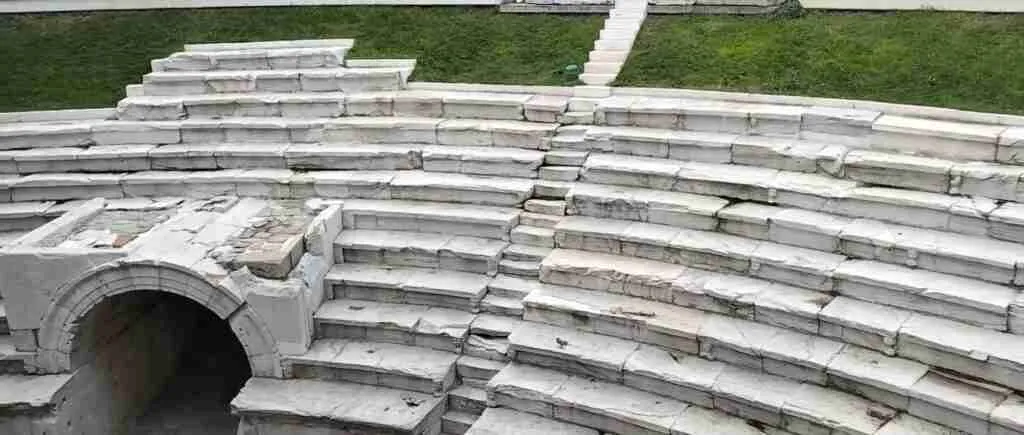
The Ancient Theatre of Philippopolis dominates Plovdiv’s architectural hierarchy as the most spectacular and complete Roman theater surviving in the Balkans. Constructed during Emperor Trajan’s reign in the early 2nd century CE, this magnificent marble amphitheater originally seated 6,000-7,000 spectators in 28 concentric semicircular rows carved into the natural saddle between Taksim and Dzhambaz hills. An earthquake sometime after the 4th century buried the structure under landslide debris, preserving it through centuries until archaeological excavation following a 1972 landslide rediscovered the monument in remarkable condition.
The theater’s architectural sophistication reveals Roman engineering mastery. The cavea (seating area) divides into two tiers separated by diazoma walkway, with marble seats precisely angled to provide sightlines to orchestra and stage from every position. The stage building once rose three stories with elaborate Corinthian columns, sculptural reliefs, and painted decorations, though only ground-floor elements survive today. Inscriptions on seats identify sections reserved for various civic groups and social classes, providing fascinating evidence of Roman social hierarchy. The orchestra floor displays geometric marble inlay patterns partially reconstructed from surviving fragments.
Modern theater continues ancient tradition, with the venue hosting Opera Open Festival each June, Verdi Festival in August, and various concerts, plays, and performances June through September. Attending opera or ballet under stars with the Rhodope Mountains providing dramatic backdrop creates unforgettable cultural experience, with ticket prices €25-90 depending on performance and seating location. The venue’s acoustic design, though partially compromised by stage building loss, still projects performers’ voices remarkably well to upper seating tiers.
Visiting the Roman Theatre costs €4 adult admission (students/seniors receive discounts), with operating hours 9 AM-6 PM summer season (April through October) and 9 AM-5 PM winter. Allow 45-60 minutes for thorough exploration including climbing to upper seating rows for panoramic Plovdiv views, photographing stage building details, and reading informational panels explaining construction techniques and historical context. The site operates as open-air monument without air conditioning or shelter, requiring sun protection during summer visits and warm layers for early spring or late fall.
Ancient Stadium of Philippopolis: Athletic Competition Site
The Ancient Stadium of Philippopolis matched Rome’s Circus Maximus in design and scale, creating a 180-meter-long by 30-meter-wide athletics arena capable of seating approximately 30,000 spectators for foot races, jumping competitions, discus throwing, and other ancient Olympic-style events. Built during the 2nd century CE reign of Emperor Hadrian, the stadium occupied the valley between Taksim Hill and Sahat Tepe, integrated into the Roman urban plan as part of the city’s athletic complex. Today, only the northern curved section (sphendone) remains visible, with the vast majority buried under Knyaz Alexander I shopping street and surrounding buildings.
The exposed northern section reveals remarkable preservation, with 13 rows of marble seating intact and visible infrastructure including vomitoria (entrance passages) and substructure chambers where athletes prepared for competitions. Archaeological excavation exposed approximately 200 meters of the original 700-meter perimeter, creating an unexpected juxtaposition where shoppers in modern commercial district walk directly above ancient athletics venue. A 3D visualization center inside a commercial building on the stadium’s eastern sector presents digital reconstructions showing the structure’s original appearance, complete with cheering crowds and athletic competitions.
Visiting the Ancient Stadium involves two separate components: the freely accessible exposed sphendone viewable from Dzhumaya Mosque plaza, and the paid Eastern Sector with 3D cinema requiring €3-5 admission. The free viewing provides sufficient experience for most tourists, offering photos of preserved seating, inscriptions identifying stadium benefactors, and scale comprehension of this massive structure mostly hidden beneath modern city. The paid sector adds educational value through multimedia presentations explaining Roman athletic culture and stadium construction techniques, worthwhile for Roman history enthusiasts but skippable for general tourists on limited time.
Old Town Architectural Reserve: Bulgarian Revival Masterpieces
Plovdiv’s Old Town (Staria Grad) constitutes the largest and finest preserved ensemble of Bulgarian National Revival architecture surviving anywhere in Bulgaria, with over 200 historically protected buildings clustering on the three ancient hills (Nebet Tepe, Dzhambaz Tepe, Taksim Tepe) that formed the original Thracian settlement. These magnificent 18th and 19th-century mansions represent the zenith of Bulgarian architectural achievement, combining Ottoman structural techniques with emerging Bulgarian national identity expression through distinctive asymmetric facades, overhanging upper floors, carved wooden ornamentation, and interior walls covered in geometric and floral frescoes.
Key architectural exemplars open as house museums providing insight into wealthy Bulgarian merchant lifestyle during Ottoman rule’s final decades. Balabanov House showcases Classical proportions with symmetrical three-story facade, marble columns, and restored furniture reflecting 1830s-1850s prosperity. The Ethnographic Museum in Kuyumdzhioglu House displays the asymmetric Bulgarian Revival style at its most exuberant, with projecting oriels, painted exterior walls in ochre and blue, and interior rooms preserving traditional crafts including weaving, woodcarving, copper working, and costume-making. Georgiadi House demonstrates wealthy merchant mansion from 1840s-1860s featuring reception halls with painted ceilings, winter and summer apartments utilizing natural climate control, and carved wooden detailing throughout.
Walking the Old Town requires no admission charges for exploring pedestrian streets, photographing exteriors, and accessing public viewpoints. Individual house museums charge €3-5 each, with combination tickets covering multiple sites available at reduced rates. The Regional Ethnographic Museum in Argir Kuyumdzhioglu House merits priority at €5 admission, providing comprehensive Bulgarian folk culture education plus magnificent architecture. Budget 3-4 hours minimum for thorough Old Town exploration including multiple house museums, cafe breaks, and photo opportunities at scenic viewpoints.
Nebet Tepe: Fortress Foundations and Panoramic Views
Nebet Tepe (Watchtower Hill) rises as Plovdiv’s highest summit and the location of the original Thracian fortified settlement dating to at least 5000 BCE based on archaeological evidence. The strategic hilltop commanded views across the entire Thracian Plain, enabling defenders to spot approaching armies from tremendous distances while natural steep slopes on three sides created nearly impregnable defensive position requiring fortification only on the western approach. Successive civilizations – Thracians, Macedonians, Romans, Byzantines, Bulgarians, Ottomans – reinforced and rebuilt fortifications, creating stratigraphic puzzle where modern visitors see walls incorporating stones from multiple eras.
Archaeological excavations exposed substantial sections of ancient fortifications including massive stone foundation walls reaching 3-4 meters thickness, entrance gates flanked by defensive towers, residential structure foundations showing domestic life of fortress occupants, and water cisterns crucial for withstanding sieges. Excavated pottery, tools, coins, and jewelry demonstrate continuous occupation from Neolithic through Ottoman periods, providing tangible evidence of Plovdiv’s claim as Europe’s longest continuously inhabited city. The eastern fortress wall preserves Byzantine-era construction with Roman spolia (reused stones from earlier buildings) visible in lower courses, topped by medieval Bulgarian repairs, illustrating the site’s multi-millennial building history.
Visiting Nebet Tepe requires no admission; the fortress remains an open archaeological site accessible via steep cobblestone lanes climbing from Old Town residential areas. The climb involves considerable physical effort, ascending approximately 100 vertical meters over 400-500 meters horizontal distance on uneven cobblestones and stone stairways, but rewards with spectacular 360-degree panoramas over Plovdiv, the Maritsa River valley, and Rhodope Mountains. Sunset visits provide optimal photography conditions with golden light illuminating Old Town’s orange-tiled roofs and the Maritsa River winding through the valley. Allow 30-45 minutes exploring fortress foundations plus photography time, with on-site informational panels explaining archaeological findings and historical significance.
Dzhumaya Mosque: Ottoman Architectural Monument
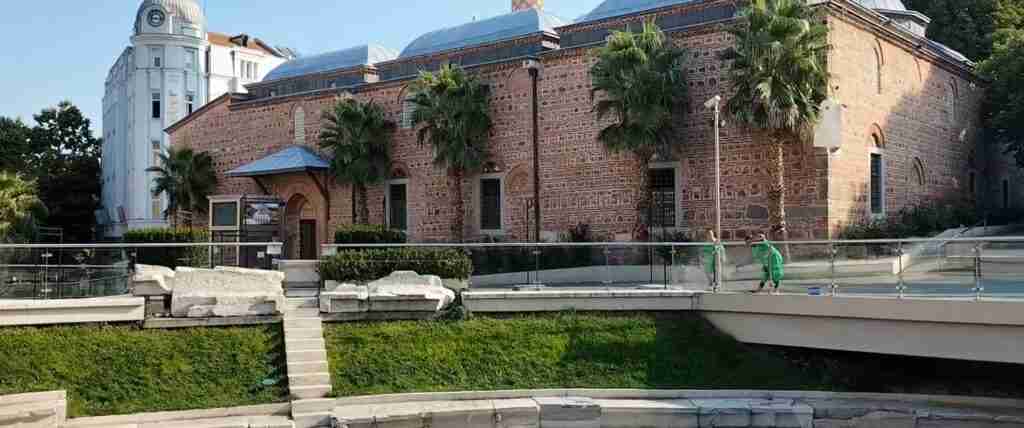
The Dzhumaya Mosque (also Ulu Dzhumaya Mosque or Friday Mosque) dominates the commercial center at the junction of Knyaz Alexander I pedestrian street and the ancient Roman Forum ruins, representing one of the oldest and most significant Ottoman religious buildings surviving in the Balkans. Constructed between 1363-1364 CE immediately after Sultan Murad I’s conquest of Plovdiv, the mosque served as the city’s principal Friday congregation mosque under Ottoman rule, accommodating thousands of worshippers in its massive prayer hall and courtyard. The structure incorporated stones and columns from demolished Roman temples and Byzantine churches, creating material continuity connecting Ottoman Islam to preceding civilizations.
The mosque’s architectural design reflects early Ottoman style before the development of the monumental domed mosques that later characterized imperial Istanbul. The prayer hall measures 33 by 27 meters with nine domed compartments supported by massive stone pillars, creating Byzantine-influenced spatial organization rather than the single large dome characteristic of later Ottoman architecture. The minaret rises 23 meters with diamond-pattern brick decoration and lead-covered conical roof. Interior decoration includes geometric arabesques and calligraphic inscriptions, though much original decoration was lost during 19th-century renovations and 20th-century restorations following earthquake damage.
The mosque remains an active place of worship, requiring visitors to respect religious practices including modest dress (covered shoulders and knees), shoe removal before entering, and avoiding visits during five daily prayer times (dawn, midday, afternoon, sunset, evening) when the space serves worshippers rather than tourists. Outside prayer times, non-Muslim visitors welcome to enter the courtyard and view the prayer hall from entrance, though photography inside requires permission and discretion. Admission is free, though voluntary donations support mosque maintenance. Visit early morning or late afternoon to avoid midday prayer interruptions and tour group congestion.
Kapana Creative District: Contemporary Arts Quarter
The Kapana (The Trap) Creative District transformed from decaying Ottoman-era bazaar quarter into Southeast Europe’s most vibrant arts neighborhood through grassroots cultural activism beginning in the early 2010s. This dense labyrinth of narrow pedestrian lanes, crumbling workshops, and abandoned warehouses spanning eight city blocks northeast of Dzhumaya Mosque became magnet for artists, designers, musicians, and entrepreneurs seeking affordable studio space and authentic urban character. Municipal support including tax incentives, facade restoration grants, and cultural programming catalyzed transformation into 200+ galleries, design studios, craft workshops, experimental theaters, independent bookshops, contemporary cafes, and alternative bars.
Walking Kapana reveals continuous creative ferment, with street art murals covering virtually every available wall surface, artisan shops displaying handmade ceramics and jewelry in tiny storefronts, vintage clothing boutiques occupying former tailor workshops, and design studios with floor-to-ceiling windows revealing creative processes to passersby. The quarterly Kapana Fest brings performances, exhibitions, and street parties transforming the entire district into open-air cultural venue with free programming. Thursday evening gallery openings and Saturday afternoon craft markets create optimal visiting times for engaging with artists and experiencing neighborhood vitality.
Exploring Kapana costs nothing beyond cafe and shopping purchases, as the experience centers on atmospheric wandering rather than paid attractions. However, the neighborhood’s creative output rewards purposeful exploration of specific venues including Small Epiphanies independent bookshop specializing in Bulgarian literature and regional writing, Art Shop Plovdiv showcasing contemporary Bulgarian artists, Kapana Contemporary Space hosting rotating exhibitions, and various craft workshops where artisans welcome visitors observing traditional techniques. Budget 2-3 hours for thorough Kapana exploration including cafe breaks, gallery browsing, and shopping, recognizing that serendipitous discovery forms the neighborhood’s essential appeal rather than checklist tourism.
Day Trips and Excursions from Plovdiv 2026
Plovdiv’s central location in the Thracian Plain creates exceptional day trip opportunities, with UNESCO World Heritage monasteries, ancient Thracian tombs, mountain hiking, and Black Sea beaches all accessible within 1-3 hours by bus or organized tour. These excursions reveal Bulgaria’s diverse landscapes and historical depth while utilizing Plovdiv as convenient base for multi-day exploration avoiding frequent accommodation changes.
Bachkovo Monastery: Active Spiritual Center
Bachkovo Monastery ranks as Bulgaria’s second-largest monastery after Rila and arguably surpasses it for visitor experience due to smaller crowds, active monastic community, spectacular Rhodope Mountain setting, and magnificent 17th-century frescoes in the refectory considered masterpieces of Bulgarian religious art. Founded in 1083 CE by Byzantine military commanders Gregory and Abassius Bakuriani, the monastery survived Ottoman conquest, several destructive fires, and Communist-era pressure to remain one of Bulgaria’s most important spiritual and cultural centers, with 10-15 resident monks maintaining daily Orthodox liturgical practices.
The monastery complex spreads across hillside terraces above Chepelare River, with main church featuring dark interior completely covered in frescoes depicting biblical scenes, saints’ lives, and monastery history in vivid blues, reds, and gold. The refectory (trapezna) provides artistic highlight, its walls and ceilings covered in 1643 frescoes by master painter Alexi Atanasov showing Last Judgment, monastery benefactors, and elaborate geometric patterns in remarkable preservation. The monastery museum displays precious icons, liturgical objects, and historical manuscripts explaining monastic life through centuries. Cypress-shaded courtyards, bubbling fountains, and mountain silence create profoundly peaceful atmosphere contrasting with tourist-crowded urban attractions.
Visiting Bachkovo Monastery independently requires bus from Plovdiv’s Central Bus Station to Asenovgrad (30 minutes, €1.50), then local bus or taxi to monastery (15 minutes, €1 bus or €8-10 taxi). Organized tours from Plovdiv cost €25-35 per person including round-trip transport, English-speaking guide, and structured visit, eliminating transport coordination while providing historical context often missing from independent visits. The monastery operates daily 7 AM-8 PM (winter 7 AM-6 PM) with free admission, though modest dress requirements apply (covered shoulders and knees, no shorts). Budget 2-3 hours at the monastery plus 1.5 hours round-trip transport for 4-5 hour total excursion.
Plovdiv to Sofia Day Trip: Capital City Exploration
Sofia, Bulgaria’s capital and largest city, lies 145 kilometers northwest of Plovdiv connected by frequent bus and train service enabling comfortable day trips for travelers seeking urban diversity, major museums, and significantly larger metropolitan atmosphere. The journey takes 2-2.5 hours via modern coach or train, with buses departing hourly 7 AM-7 PM (€8-12 round-trip) and trains running similar frequency (€6-10 round-trip second class). Sofia offers Alexander Nevsky Cathedral (Balkans’ largest Orthodox church), National History Museum, Boyana Church UNESCO World Heritage Site with medieval frescoes, Mount Vitosha cable car, and vibrant café culture in pedestrianized central boulevards.
Optimal Sofia day trip strategy departs Plovdiv at 8-9 AM, arrives Sofia 10:30-11:30 AM for full day exploration, and returns evening 6-8 PM reaching Plovdiv by 9-10 PM. This schedule provides 6-7 hours in Sofia sufficient for major monument visits, lunch at quality restaurant, and casual city center strolling without excessive rushing. Priority sights include Alexander Nevsky Cathedral (free admission, 30-45 minutes), National Archaeological Museum (€6, 1-1.5 hours), Boyana Church if time permits (€10, 1 hour including travel to suburb), and atmospheric lunch in Doctor’s Garden vicinity (€15-25 per person). Pre-booking return transport ensures seats during busy periods, though frequent departures create flexibility for spontaneous schedule adjustments.
Koprivshtitsa: National Revival Architecture Gem
Koprivshtitsa preserves Bulgaria’s finest collection of National Revival architecture in pristine mountain setting 110 kilometers north of Plovdiv, showcasing the colorful mansions, cobblestone lanes, and revolutionary history that defined Bulgarian cultural identity during Ottoman rule’s final decades. This tiny town of 2,500 residents maintains six house museums, numerous historic churches, and over 380 architectural monuments in a valley that witnessed the 1876 April Uprising sparking Bulgaria’s liberation from Ottoman Empire. The entire town operates as living architectural reserve where residents inhabit these preserved buildings, creating authentic rather than theme-park atmosphere.
Visiting Koprivshtitsa requires early departure via bus connection through Plovdiv-Sofia highway to Koprivshtitsa turnoff, then local bus into town (total 3-3.5 hours, €12-15), or organized tour from Plovdiv at €45-60 per person including transport, guide, and house museum admissions. Independent visitors purchase combined ticket (€7-10) covering all six house museums and several churches, then explore at leisure following marked walking route connecting major sites. The house museums display revolutionary leaders’ homes, wealthy merchant mansions, and traditional Bulgarian interiors spanning 18th-19th centuries. Budget full day (8-10 hours) for Koprivshtitsa day trip due to transport time, though the mountain scenery and architectural wealth justify the journey for serious Bulgarian culture enthusiasts.
Seasonal Planning and Best Time to Visit Plovdiv 2026
Plovdiv’s continental Mediterranean climate creates distinct seasonal advantages and challenges, with summer opera festivals and pleasant weather balanced against crowds and heat, while winter off-season delivers budget prices and museum access with cold temperatures and limited outdoor activity appeal. Understanding seasonal patterns enables strategic visit timing optimizing weather, costs, and cultural programming.
Spring Season March-May 2026: Optimal Conditions
Spring represents Plovdiv’s ideal visiting season, combining comfortable temperatures (15-25°C / 59-77°F), blooming gardens throughout the Old Town, fewer tourists than summer peaks, and accommodation prices 20-30% below July-August highs. March weather remains variable with occasional cold snaps and rain requiring flexible wardrobe, but April and May deliver consistently pleasant conditions perfect for walking exploration and outdoor dining. The Old Town’s numerous gardens burst with roses, wisteria, and spring flowers creating photogenic backdrops, while longer daylight hours (sunset extending from 6 PM in March to 8:30 PM in May) allow extended afternoon and evening exploration.
Cultural programming accelerates during spring as venues restart outdoor performance schedules and museums extend operating hours. However, spring precedes the major summer festivals, meaning fewer special events compared to June-September but also fewer crowds competing for accommodation and restaurant reservations. Spring visitors enjoy authentic local atmosphere with Bulgarian families and domestic tourists predominating over international tour groups that flood summer season. Plovdiv’s university students remain active through May, energizing Kapana nightlife and cultural venues before summer exodus.
Spring booking strategy emphasizes advance accommodation reservations for Easter week and early May when Bulgarian holidays generate domestic travel surges, while other spring dates allow spontaneous booking. Hotel prices average €70-140 for mid-range properties versus €90-180 summer peaks, creating 20-30% savings. Restaurant availability improves dramatically compared to summer when popular venues require reservations days ahead. Spring enables relaxed exploration pace with shorter admission lines at Roman Theatre and house museums, uncrowded photo opportunities at scenic viewpoints, and generally more authentic cultural encounters with fewer tourist-focused performances.
Summer Season June-September 2026: Peak Festival Period
Summer brings Plovdiv’s cultural calendar peak, international tourist concentration, highest accommodation costs, and intense heat requiring strategic activity timing. Temperatures regularly exceed 30°C (86°F) during July-August with occasional 35-38°C (95-100°F) heat waves creating physical stress during midday walking tours. However, summer justifies these challenges through spectacular cultural programming led by Opera Open Festival (June), Verdi Festival (August), and continuous performances at Roman Theatre creating once-in-a-lifetime opportunities to experience ancient venues as Romans did – under stars with dramatic entertainment.
The Roman Theatre summer performance season represents Plovdiv’s signature cultural attraction, with opera, ballet, classical music, and theatrical productions staged June through early September in the ancient amphitheater. Ticket prices range €25-90 depending on performance caliber and seating location, with advance booking essential for major productions. Attending performance requires arriving Plovdiv by late afternoon, dining at Old Town restaurant, and walking to 9 PM performance start as temperatures moderate. Performances typically end 11 PM-midnight, with audiences departing into warm night air perfect for post-show drinks at Kapana bars open until 2 AM.
Summer accommodation demands require booking 4-8 weeks ahead for quality Old Town or Kapana properties, particularly during major festival weeks when rooms sell out entirely. Hotels increase rates 30-50% over spring/fall levels, with mid-range properties reaching €100-180 nightly versus €70-120 shoulder season. Budget accommodation including hostels fills completely requiring advance reservations rather than walk-in availability. Summer restaurant demand necessitates reservations for dinner at popular establishments, particularly in Kapana and Old Town where outdoor terrace seating attracts overwhelming demand during pleasant evenings.
Heat management becomes essential summer survival skill, requiring early morning exploration (7-10 AM) when temperatures remain tolerable, midday retreat to air-conditioned museums or shaded Kapana cafes, and resumed outdoor activity after 5 PM as temperatures moderate. The Roman Theatre and Old Town fortress foundations lack shade, requiring sun protection including hats, sunscreen, and water bottles for midday visits. Many tourists adopt Mediterranean siesta schedules, exploring actively early morning, resting 12-4 PM, then resuming evening cultural activities and dining that extends past midnight as locals embrace cool nighttime temperatures.
Fall Season September-November 2026: Cultural Programming Continues
September extends summer’s cultural programming and outdoor dining appeal while moderating temperatures and beginning crowd reduction, creating arguably Plovdiv’s optimal month balancing weather, culture, and tourism intensity. Early September (first two weeks) operates essentially as summer extension with 25-30°C (77-86°F) temperatures, full Roman Theatre schedule, and significant international tourism, while late September transitions into true fall with 18-23°C (64-73°F) temperatures, thinning crowds, and accommodation price reductions beginning. October continues pleasant conditions (12-20°C / 54-68°F) with golden fall foliage accenting Old Town gardens, though cultural programming scales back and some outdoor venues close for winter preparation.
The Gala Plovdiv international theatre festival dominates early September cultural calendar, bringing performances from dozens of countries and transforming the city into outdoor theater venue with stages in squares, parks, and historical sites. This event rivals summer opera festivals for cultural significance while offering more diverse international programming. November brings significant cooling (8-15°C / 46-59°F) with frequent rain, shortened daylight (sunset 5 PM by month-end), and decidedly off-season atmosphere as tourism drops dramatically. However, November’s budget pricing (hotels 30-40% below summer peaks) and uncrowded museums appeal to culture-focused travelers unbothered by cold weather and limited outdoor appeal.
Fall booking allows more spontaneity than spring or summer, with quality accommodation available on short notice except during Gala Plovdiv festival week (early September). Mid-range hotels average €70-120 September, dropping to €60-100 October and €50-90 November, creating significant savings versus summer while maintaining service standards. Restaurant reservations become optional outside major festival weekends, with walk-in seating readily available at establishments requiring days-ahead booking during summer. Fall enables authentic local cultural engagement as international tourist concentration diminishes and Bulgarian visitors predominate, creating opportunity to observe local customs and interact with residents operating businesses for domestic rather than international clientele.
Winter Season December-February 2026: Budget-Conscious Off-Season
Winter transforms Plovdiv into budget traveler paradise, with accommodation costs dropping 40-50% below summer peaks, empty museums enabling leisurely examination without crowds, and authentic local atmosphere as tourism almost disappears. However, these advantages come with significant compromises: cold temperatures (0-8°C / 32-46°F) with occasional snow, extremely short daylight (sunset 5 PM), closed outdoor venues including Roman Theatre, and reduced cultural programming limiting appeal beyond hardcore museum enthusiasts and budget-conscious travelers prioritizing costs over optimal conditions.
December features Christmas markets in central squares, festive Old Town illumination, and end-year celebrations providing some cultural animation, though nothing approaching Western European Christmas market scale. January and February operate as true off-season with minimal tourism, though Bulgarian and international visitors seeking winter hiking in nearby Rhodope Mountains use Plovdiv as base. Museums maintain full operating hours with extended attention from staff grateful for any visitors breaking monotonous winter days, creating opportunities for in-depth questions and private guided tours sometimes offered spontaneously.
Winter accommodation bargains reach extreme levels, with quality three-star hotels available €40-70 nightly and luxury properties €90-140 – prices that seem impossible for European cities but reflect genuine market conditions when occupancy drops below 30%. Many smaller guesthouses close entirely November-March, though sufficient options remain operating for available tourists. Winter visitors should verify specific hotel heating adequacy, as some older buildings operate marginal heating systems uncomfortable during cold snaps. Winter dining shifts entirely indoors, with outdoor terraces closed and restaurant atmospheres turning cozy through candlelight and fireplaces replacing summer’s alfresco vibrancy.
Practical Planning and Travel Tips Plovdiv 2026
Successfully navigating Plovdiv requires understanding practical details including visa requirements, communication resources, health precautions, cultural customs, and booking strategies that differ from Western European destinations. Bulgaria’s Euro adoption simplifies financial planning but doesn’t eliminate all practical challenges facing international visitors to this emerging tourism destination.
Visa Requirements and Border Formalities 2026
Bulgaria remains outside the Schengen Area as of early 2026 despite European Union membership since 2007, requiring separate border controls when arriving from or departing to Schengen countries including Greece and Romania. However, visa requirements follow EU standards, meaning US, Canadian, UK, Australian, and most Western passport holders enjoy visa-free entry for tourism stays up to 90 days within 180-day period. This 90-day calculation runs independently from Schengen 90-day allowance, enabling travelers to spend 90 days in Schengen zone plus additional 90 days in Bulgaria without visa requirements during six-month period.
Border crossing procedures involve passport control at Sofia Airport or land borders with passport stamp recording entry date. Travelers must demonstrate sufficient funds for stay (though rarely checked), return ticket, and travel insurance meeting EU minimum coverage €30,000. Bulgaria plans Schengen Area accession pending political approval, likely occurring sometime 2026-2027 based on current negotiations, which would eliminate border controls entirely when arriving from Greece or Romania. Until Schengen entry occurs, plan 30-60 minutes for border crossing procedures when traveling by bus or train between Bulgaria and neighboring countries, with passport stamps required for each crossing.
Language and Communication Resources
Bulgarian uses Cyrillic alphabet creating reading challenges for Western visitors unfamiliar with this script, though younger Bulgarians increasingly speak English and tourism establishments operate with English menus and signage. Street signs typically display Bulgarian only, though major monuments and tourist sites provide English translations. Learning basic Cyrillic letter recognition enables reading essential signs (hotel, restaurant, entrance, exit, toilet) and reduces navigation confusion, though Google Translate’s camera function instantly translates Cyrillic text through smartphone camera making alphabet learning less critical than previously.
English proficiency concentrates in hotels, restaurants, museums, and shops frequenting tourists, while neighborhood bakeries, local mehanas, and residential areas operate Bulgarian-only. Younger generation (under 40) generally speaks conversational English learned through education system and internet exposure, while older Bulgarians (50+) rarely speak English though some speak Russian from Communist-era education. Learning basic Bulgarian phrases including “hello” (zdra-VEY-te), “thank you” (bla-go-da-RYA), “please” (mo-LYA), and “cheers” (NAZ-dra-ve) demonstrates cultural respect and often generates enthusiastic appreciation from locals delighted by foreigners attempting their language.
Mobile connectivity throughout Bulgaria operates on standard European GSM networks with 4G/5G coverage excellent in cities and adequate in rural areas. EU visitors enjoy free roaming under EU regulations, while non-EU travelers should verify international roaming costs or purchase local Bulgarian SIM card providing data at €10-15 for 10GB lasting typical two-week visit. Free WiFi appears throughout Plovdiv at hotels, restaurants, cafes, and public squares, though mobile data enables reliable Google Maps navigation and translation essential for optimal exploration. Download offline Plovdiv maps through Google Maps before arrival enabling navigation without cellular data during WiFi-only periods.
Health and Safety Considerations 2026
Plovdiv presents minimal health and safety risks to international travelers, with crime rates substantially below Western European capitals, no endemic tropical diseases, excellent emergency medical care, and generally high hygiene standards in hospitality establishments. Petty theft including pickpocketing occurs in crowded tourist areas, particularly Roman Theatre vicinity and Central Bus Station, requiring standard precautions like securing valuables, avoiding phone display while walking, and using hotel safes for passports and extra cash. Violent crime targeting tourists remains extremely rare, with walking Old Town streets safely possible even late at night, though standard urban awareness applies regarding deserted areas after midnight.
Tap water throughout Bulgaria meets EU drinking water standards and remains safe to drink, though mineral content causes different taste than visitors may expect, leading some travelers to prefer bottled water available everywhere at €0.50-1 per liter. Summer heat creates dehydration risk during extended walking tours, requiring conscious water consumption and sun protection including hats and sunscreen. Bulgarian food safety standards generally meet international expectations in licensed restaurants and hotels, though travelers with sensitive digestion should exercise caution with street food and market vendors during hot summer months when refrigeration becomes questionable.
Medical care in Plovdiv operates through both public hospitals and private clinics, with private facilities offering Western European standards at Bulgarian prices. European Union visitors should carry European Health Insurance Card (EHIC) enabling access to public healthcare at reduced rates under reciprocal agreements, though additional travel insurance remains advisable for private hospital access, medical evacuation, and comprehensive coverage. Non-EU visitors require private travel insurance, with policies costing €20-40 for two-week coverage providing €50,000+ medical coverage, evacuation, and trip cancellation protection. Pharmacies (apteka) appear frequently throughout city center, staffed by trained pharmacists dispensing common medications without prescription requirements applicable in many countries.
Cultural Customs and Etiquette
Bulgarian cultural customs differ from Western European norms in specific ways that sometimes confuse foreign visitors. Most notably, Bulgarians traditionally shake their heads side-to-side for “yes” and nod up-down for “no,” exactly opposite to most world cultures. However, this custom weakens among younger generations exposed to international media, creating confusion where some Bulgarians use traditional gestures while others adopt Western norms. When uncertain about agreement or refusal, visitors should rely on verbal confirmation rather than head gesture interpretation.
Orthodox Christianity deeply influences Bulgarian cultural identity despite Communist-era suppression, requiring modest dress and respectful behavior in active churches and monasteries. Women should cover shoulders and wear skirts extending below knees (or long pants) when visiting religious sites, while men should remove hats and avoid shorts. Photography inside churches typically requires permission and often prohibits flash photography that damages ancient frescoes and icons. Active services (liturgies, vespers, marriages, baptisms) are open to respectful observers but require silence and positioning that doesn’t obstruct worshippers’ participation.
Dining customs emphasize leisurely meals with multiple courses and conversation rather than efficient fuel consumption. Bulgarians typically order several meze (appetizers) for table sharing, followed by individual main courses, concluding with coffee and possible dessert or fruit. Servers don’t rush meal progress or present checks unbidden; guests must request bill when ready to depart. Split checks pose no problem at modern restaurants though older traditional mehanas sometimes struggle with separating payments. Tipping follows smaller percentages than American customs, with 5-10% standard for good service rather than automatic 15-20%, and direct cash tips to servers preferred over credit card additions.
Budget Planning: Sample Itineraries Plovdiv 2026
Understanding abstract cost categories transforms into actionable planning through concrete multi-day itinerary examples showing how budget allocations translate into actual travel experiences. The following sample itineraries demonstrate realistic daily schedules, specific spending amounts, and accumulated costs for budget, mid-range, and luxury travel styles across 3-5 day Plovdiv visits.
Three-Day Budget Itinerary: Plovdiv Essentials (€150-190 Total)
This compressed three-day itinerary covers Plovdiv’s essential attractions at rock-bottom costs through hostel accommodation, traditional mehana dining, public transport, and free or low-cost cultural experiences. Total cost: approximately €150-190 per person assuming two travelers sharing accommodation, providing proof that meaningful European cultural tourism remains accessible even on backpacker budgets.
Day 1 – Old Town and Roman Theatre (€50-65): Arrive morning via Sofia bus (included in transport budget). Check into Old Town Hostel dormitory €22. Morning walking tour of Old Town cobblestone streets, Bulgarian Revival mansion exteriors, and Nebet Tepe fortress ruins (free). Lunch at neighborhood mehana €8. Afternoon visit Roman Theatre €4, then Regional Ethnographic Museum €5. Dinner at traditional mehana €12. Evening Kapana exploration (free). Accommodation €22, meals €20, attractions €9, transport €4 (bus rides). Daily total: €55.
Day 2 – Ancient Stadium and Kapana District (€45-60): Breakfast banitsa from bakery €3. Morning Ancient Stadium free viewing and 3D cinema €3. Explore Kapana Creative District galleries and street art (free). Lunch at Kapana cafe €10. Afternoon visit Dzhumaya Mosque (free), then relaxation at Tsar Simeon’s Garden (free). Dinner at mehana €12. Evening drinks at Kapana bar €8. Accommodation €22, meals €23, attractions €3, drinks €8. Daily total: €56.
Day 3 – Bachkovo Monastery Day Trip (€55-65): Breakfast banitsa €3. Independent bus to Bachkovo Monastery via Asenovgrad €3.50 round-trip. Monastery visit and lunch at local restaurant €10. Return afternoon, final Old Town exploration including Balabanov House museum €3. Farewell dinner at mehana €15. Accommodation €22, meals €28, transport €3.50, attractions €3. Daily total: €56.50.
Three-day budget total: €167.50 per person. This demonstrates comfortable budget travel experiencing Plovdiv’s major attractions, traditional Bulgarian cuisine, and adequate accommodation without resorting to extreme deprivation or unsafe choices. Costs increase slightly during summer peak season when hostel beds rise to €25-28 and restaurant prices inflate 10-15%, potentially pushing total toward €190 per person.
Five-Day Mid-Range Itinerary: Comprehensive Plovdiv (€500-650 Total)
This five-day itinerary provides thorough Plovdiv exploration at comfortable mid-range standards including boutique hotel accommodation, excellent dining featuring contemporary Bulgarian cuisine, guided tours adding historical depth, and day trips to regional attractions. Total cost: approximately €500-650 per person based on two sharing rooms, demonstrating remarkable value compared to equivalent five-day Western European city breaks costing €1,000-1,500.
Day 1 – Arrival and Old Town Introduction (€100-130): Arrive Sofia Airport morning, private transfer to Plovdiv €40 per person. Check into Hotel Residence Hebros €45 per person. Afternoon self-guided Old Town walking exploration including free exterior viewing of Bulgarian Revival mansions, Nebet Tepe fortress, and panoramic viewpoints. Late afternoon visit Roman Theatre €4. Dinner at Philippopolis Restaurant €35 with wine. Accommodation €45, transport €40, meals €35, attractions €4. Daily total: €124.
Day 2 – Roman Heritage and Museums (€90-120): Hotel breakfast included. Morning walking tour with private guide covering Ancient Stadium, Roman Forum ruins, and historical context €30 per person. Lunch at Hemingway Restaurant €18. Afternoon visit Regional Ethnographic Museum €5 and Balabanov House €3. Evening exploration of Kapana Creative District galleries. Dinner at contemporary Smokini restaurant €28. Accommodation €45, meals €46, guide €30, attractions €8. Daily total: €129.
Day 3 – Bachkovo Monastery and Wine Tasting (€95-125): Breakfast included. Full-day organized tour to Bachkovo Monastery including round-trip transport, guided visit, and wine tasting at Thracian Valley winery €55 per person. Tour includes monastery admission and wine tasting; lunch at monastery vicinity €15. Return evening, light dinner at Kapana bistro €22. Accommodation €45, meals €37, tour €55. Daily total: €137.
Day 4 – Cultural Immersion and Local Experiences (€85-110): Breakfast included. Morning visit Dzhumaya Mosque (free) and covered market for authentic local atmosphere. Traditional cooking class learning banitsa preparation €40 per person including lunch. Afternoon relaxation and independent Kapana exploration. Evening opera or concert performance at Roman Theatre €35. Late dinner at mehana €25. Accommodation €45, meals €25, cooking class €40, performance €35. Daily total: €145.
Day 5 – Final Exploration and Departure (€85-100): Breakfast included. Morning visit remaining house museums including Georgiadi House €3 and Atanas Krastev House €3. Farewell lunch at upscale traditional restaurant €25. Afternoon free for last-minute shopping in Kapana. Private transfer to Sofia Airport €40 per person. Accommodation (last night) €0 if checking out, meals €25, attractions €6, transport €40. Daily total: €71.
Five-day mid-range total: €606 per person. This includes quality accommodation in heritage hotel, excellent dining showcasing Bulgarian cuisine diversity, professional guiding adding historical understanding, cultural performance attendance, and comfortable private transport eliminating hassles. The experience delivers substantially more value than equivalent budgets provide in Prague (€800-1,000), Barcelona (€900-1,200), or Amsterdam (€1,000-1,500) for similar itinerary comprehensiveness and accommodation quality.
Three-Day Luxury Itinerary: Premium Plovdiv Experience (€720-885 Total)
This compressed three-day luxury itinerary maximizes Plovdiv’s finest offerings through boutique accommodation, gourmet dining, private guides, premium cultural experiences, and exclusive access creating sophisticated travel experience at costs 30-50% below Western European equivalent luxury standards. Total cost: approximately €720-885 per person for complete premium experience.
Day 1 – Arrival and Premiere Experiences (€240-295): Private luxury transfer from Sofia Airport in Mercedes sedan €80 per person. Check into The Emporium Plovdiv €110 per person. Late afternoon private historian-guide provides personalized Old Town walking tour including normally closed Bulgarian Revival mansions €60 per person. Sunset viewing at Nebet Tepe followed by private wine tasting featuring rare Bulgarian boutique wines €45 per person. Gourmet dinner at The Emporium Restaurant chef’s tasting menu €65 with wine pairings. Accommodation €110, transport €80, experiences €105, dining €65. Daily total: €360.
Day 2 – Cultural Depth and Gastronomic Excellence (€220-270): Gourmet hotel breakfast included. Morning private museum visits with curator access at Regional Ethnographic Museum and lesser-known Old Town mansions €50 per person. Luxury lunch at Philippopolis with wine sommelier service €55. Afternoon wellness at hotel spa treatments €70. Evening premium opera performance at Roman Theatre VIP seating €65. Late dinner at atmospheric rooftop restaurant €45. Accommodation €110, experiences €120, dining €100. Daily total: €330.
Day 3 – Regional Exploration and Farewell (€220-270): Breakfast included. Full-day private chauffeured tour to Bachkovo Monastery and Thracian Valley boutique wineries with sommelier-guided tastings €120 per person. Gourmet lunch at winery restaurant €50. Return afternoon for final Old Town stroll and artisan shopping. Farewell dinner featuring Bulgarian haute cuisine at contemporary fusion restaurant €60. Private luxury transfer to Sofia Airport €80 per person. Accommodation €0 (checkout), experiences €120, dining €110, transport €80. Daily total: €310.
Three-day luxury total: €855 per person. This delivers genuinely luxurious experience featuring Bulgaria’s finest accommodation, exclusive cultural access unavailable to standard tourists, premium dining showcasing Bulgarian gastronomic evolution, and private services eliminating all logistics stress. Equivalent luxury experiences in Vienna, Barcelona, or Florence cost €1,500-2,200 for three days, demonstrating Plovdiv provides world-class luxury hospitality at emerging-market pricing still prevailing throughout Eastern Europe.
Frequently Asked Questions About Plovdiv 2026
Is Plovdiv Safe for Solo Travelers in 2026?
Plovdiv ranks among Europe’s safest cities for solo travelers, with violent crime rates substantially below Western European averages and generally welcoming attitudes toward foreign visitors. Solo female travelers report feeling comfortable walking Old Town streets even late evening, though standard urban precautions apply regarding poorly lit areas after midnight and excessive alcohol consumption. Petty theft including pickpocketing occurs in crowded tourist zones (Roman Theatre vicinity, Central Bus Station), requiring awareness and securing valuables but not creating pervasive threat atmosphere. Hostels throughout city center facilitate solo traveler social connections, while locals frequently approach foreign visitors offering directions and recommendations with genuine friendliness rather than scam intentions. Overall, Plovdiv presents lower safety risks than major Western European tourist cities while requiring identical basic precautions regarding valuables and situational awareness.
How Many Days Should I Spend in Plovdiv?
Plovdiv’s compact geography enables comprehensive major-attraction coverage in 2-3 days for typical first-time visitors, though 4-5 days allows thorough exploration including day trips, leisure dining, and neighborhood immersion beyond tourist concentration. A rushed overnight visit manages Roman Theatre and brief Old Town walk but sacrifices atmosphere and depth that make Plovdiv special. Two full days provides minimum for adequate experience: Day 1 covers Old Town architectural reserve, Roman Theatre, and Nebet Tepe fortress; Day 2 explores Ancient Stadium, museums, and Kapana Creative District. Three days adds Bachkovo Monastery day trip or Sofia excursion. Four-five days enables multiple day trips, attending Roman Theatre performance, deeper museum engagement, and relaxed dining experiences showcasing Bulgarian culinary evolution. Visitors combining Plovdiv with broader Bulgaria exploration (Sofia, Black Sea coast, mountain regions) typically allocate 2-3 days here, while travelers focusing specifically on Thracian Plain history and culture justify 5-7 days using Plovdiv as base for extensive regional day trips.
Can I Visit Plovdiv as Day Trip from Sofia?
Yes, though it sacrifices significant atmospheric experience that makes Plovdiv memorable. Sofia-to-Plovdiv day trips operate via frequent buses (€8-12 round-trip, 2-2.5 hours each way) or trains (€6-10 round-trip, 2-2.5 hours), departing Sofia 8-9 AM and returning 6-8 PM providing 6-7 hours in Plovdiv. This schedule allows Roman Theatre visit, Old Town walking tour including 1-2 house museums, lunch at traditional mehana, and brief Kapana exploration before evening return. However, day-tripping eliminates evening Roman Theatre performances, sunset viewing from Nebet Tepe, atmospheric nighttime Old Town walks, and leisurely dining experiences that reveal Plovdiv’s full character. The 5 hours round-trip transport feels excessive for compressed single-day experience in city deserving slower exploration pace. Day trips make sense only for travelers with very limited Bulgaria time unable to include overnight Plovdiv stay; otherwise, plan minimum two nights experiencing the city properly rather than rushing through checklist tourism during compressed daylight-only visit.
What Should I Buy as Souvenirs in Plovdiv?
Bulgarian souvenirs emphasizing authentic local production rather than generic tourist kitsch include rose oil and rose-based cosmetics from Valley of Roses region (Plovdiv serves as gateway), handmade pottery and ceramics from artisan workshops in Kapana Creative District, traditional woodcarving and copper items reflecting centuries-old craft techniques, local wines from Thracian Valley showcasing indigenous grape varieties, and martenitsa (red-white decorative cords given in March celebrating spring) available year-round at craft shops. Rose oil products represent Bulgaria’s signature export, with pure rose oil costing €15-30 per small bottle and rose-infused soaps, creams, and perfumes ranging €5-15. Kapana artisan studios sell contemporary ceramics, jewelry, and textiles blending traditional Bulgarian motifs with modern design at €10-50 per piece. Avoid mass-produced “traditional” items in Old Town tourist shops likely imported from China; instead, seek artisan signatures and studio origins confirming Bulgarian manufacture. Regional wines cost €5-20 per bottle, with Mavrud and Melnik reds offering distinctive character unavailable internationally at any price.
Do I Need to Speak Bulgarian to Visit Plovdiv?
No, though basic Cyrillic reading ability and few Bulgarian phrases significantly enhance experience. English proficiency concentrates in hotels, tourist restaurants, museums, and young people (under 40), enabling successful navigation of standard tourist circuits without Bulgarian language skills. Google Translate’s camera function instantly translates Cyrillic text through smartphone, eliminating reading barriers for menus, signs, and labels. However, neighborhood bakeries, local mehanas frequented by residents, and older Bulgarians (50+) operate Bulgarian-only, requiring gesture communication, pointing at desired items, and translation apps for complex interactions. Learning basic phrases including “thank you” (blagodarya), “please” (molya), “hello” (zdraveite), and numbers 1-10 demonstrates cultural respect and often generates enthusiastic Bulgarian appreciation with locals delighted by foreigners attempting their language. Cyrillic alphabet basics enable reading street signs, bus routes, and restaurant categories improving autonomous navigation. Overall, non-Bulgarian speakers successfully visit Plovdiv using English, translation apps, and gesture communication, though some frustrating moments occur in authentic local establishments operating outside tourist infrastructure – these authentic interactions often become memorable travel highlights despite communication challenges.
What Currency Do I Need for Plovdiv in 2026?
Euros exclusively beginning January 1, 2026, when Bulgaria officially adopted the Euro replacing the Bulgarian Lev at fixed conversion rate 1.95583 BGN per Euro. All businesses, hotels, restaurants, attractions, and services now price in Euros and accept Euro cash and cards. During January-June 2026, some establishments may display dual BGN/EUR pricing during transition, but Euros represent the operational currency. ATMs throughout Plovdiv dispense Euros from international bank cards (Visa, Mastercard), credit cards process Euro transactions, and no currency exchange beyond USD/EUR or GBP/EUR conversion is necessary. American travelers exchange dollars to Euros either before departure or at Bulgarian ATMs, then spend Euros throughout stay. This simplifies previous situation where visitors needed Bulgarian Lev unfamiliar to international travelers and requiring double currency conversion (home currency to Euros to Lev). Euro adoption eliminates these complications, making Plovdiv financially identical to France, Spain, or any Eurozone destination from currency perspective.
Can I Drink Tap Water in Plovdiv?
Yes, tap water throughout Plovdiv and Bulgaria generally meets European Union drinking water standards and remains safe to drink for healthy adults. The municipal water supply sources from mountain reservoirs and receives modern treatment meeting bacteriological safety requirements, though mineral content creates different taste than visitors may expect – harder water with more dissolved minerals compared to soft water common in some regions. This taste difference, not safety concerns, leads many travelers to prefer bottled water available everywhere at €0.50-1 per liter. Restaurants provide tap water free when requested (though some apply small charges), while bottled water represents standard practice. Hotels confirm their water safety through information folders and staff, though some advise bottled water for guests with sensitive digestion as precautionary measure. Summer visitors should prioritize adequate water consumption regardless of source, as 30-35°C (86-95°F) heat combined with walking tours creates dehydration risk. Budget-conscious travelers safely drink tap water throughout stay, while cautious visitors or those with sensitive systems opt for bottled water at modest cost. Avoid drinking from outdoor fountains and springs unless clearly marked as drinking water sources.
What’s the Wi-Fi and Internet Situation in Plovdiv?
Excellent WiFi availability throughout Plovdiv’s tourist infrastructure, with hotels, restaurants, cafes, and many shops providing free wireless internet to customers. Connection speeds generally adequate for email, web browsing, messaging apps, and map navigation, though streaming video may experience buffering during peak usage periods. Hotels ranging from budget to luxury include complimentary WiFi as standard amenity, though some older properties maintain weaker signals in certain rooms or charge small supplements for high-speed access. Kapana Creative District cafes pride themselves on quality WiFi supporting digital nomads working remotely, with many explicitly advertising fast connections and laptop-friendly environments. Some central squares and parks provide municipal free WiFi, though connection quality and coverage vary. Mobile data through local Bulgarian SIM cards (now providing 4G/5G speeds) costs €10-15 for 10GB packages lasting typical two-week visit, purchased from providers including A1, Vivacom, and Yettel at kiosks throughout city center. EU visitors automatically enjoy roaming-free data usage under EU regulations, making mobile internet essentially free for German, French, Italian, and other EU residents. Download offline Google Maps and translation apps before departure enabling navigation and communication without constant internet dependency.
How Much Does a Week-Long Plovdiv Trip Cost in 2026?
Seven-day Plovdiv trips cost approximately BGN 630-735 ($380-440) per person for budget travel, BGN 1,190-1,540 ($715-925) for mid-range comfort, and BGN 2,800-3,430 ($1,680-2,060) for luxury experiences, all assuming two travelers sharing accommodation. Budget weekly costs include hostel dormitories or shared budget hotel rooms at BGN 245-315 ($147-190) total accommodation, traditional mehana meals at BGN 315 ($190) food budget, bus transport at BGN 20 ($12), and attraction admissions at BGN 50-100 ($30-60), enabling comprehensive Plovdiv exploration with one day trip to Bachkovo Monastery while staying in clean hostels and eating substantial Bulgarian food. Mid-range weekly costs upgrade accommodation to quality three-star hotels at BGN 420-630 ($250-380) total, contemporary restaurant dining at BGN 560 ($335), mixed walking and taxi transport at BGN 105-175 ($63-105), and attractions with guided tours at BGN 105-175 ($63-105), delivering comfortable experience in heritage properties with excellent dining and professional guiding. Luxury weekly costs provide boutique accommodation at BGN 1,120-1,470 ($670-880), gourmet dining at BGN 1,120 ($670), private drivers at BGN 280-420 ($170-250), and premium experiences including exclusive access and spa treatments at BGN 280-420 ($170-250). These weekly costs demonstrate Plovdiv’s extraordinary value compared to Western European cities where equivalent experiences cost 50-100% more.
Are There Direct Flights to Plovdiv in 2026?
Limited direct international flights serve Plovdiv Airport (PDV) from select European cities including London, Munich, Vienna, and Moscow, primarily charter operations and budget carriers with seasonal schedules concentrated in summer months. The majority of international travelers reach Plovdiv via Sofia Airport (SOF) located 145 kilometers northwest, which operates extensive connections throughout Europe and limited long-haul flights including seasonal transatlantic service. Sofia Airport serves as Bulgaria’s primary international gateway with major European carriers including Lufthansa, Austrian, British Airways, and Wizz Air providing daily flights from major cities. From Sofia Airport, travelers transfer to Plovdiv via private driver (€70-90, 1.75 hours), shared shuttle (€15-20, 2-2.5 hours), or public bus through Sofia city center (€12-15, 3-3.5 hours). Book Sofia-Plovdiv transfer simultaneously with flight to ensure coordinated arrivals and efficient connection. Travelers from North America typically route through Frankfurt, Munich, Vienna, or Istanbul on European carriers, connecting to Sofia, then continuing to Plovdiv by ground transport. While direct Plovdiv flights exist from several European cities, flight frequency and pricing generally favor Sofia routing even accounting for ground transfer costs and time.