
Perugia Budget Guide 2026: Ultimate Travel Cost Breakdown
Perugia stands apart from Italy’s headline destinations as a hilltop Umbrian capital where medieval architecture, world-class museums, and outstanding regional cuisine combine at a fraction of the cost of Florence or Rome. Sitting at the heart of Umbria with convenient rail connections to both cities, it rewards travelers who seek authentic Italian life without premium pricing. This 2026 cost breakdown covers every expense category — accommodation, food, transport, and attractions — so you can plan a Perugia visit at any budget level with complete financial clarity.
Key Takeaways
- Budget travelers in Perugia spend €55-80 per person daily (hostel dorm); mid-range travelers spend €135-190 per person daily (two sharing a hotel); luxury visitors invest €295-415 per person daily.
- Accommodation ranges from hostel dorms at €25-40 per night to budget hotels at €65-100 per room, mid-range properties at €110-165 per room, and luxury stays from €200 per room.
- Top paid attraction — the Galleria Nazionale dell’Umbria in Palazzo dei Priori — costs €10 standard or €12 during special exhibitions (check gallerianazionaledellumbria.it for current rates); many major sights including Rocca Paolina, Fontana Maggiore, and Arco Etrusco are free.
- Getting here: trains from Rome arrive in approximately 2 hours 15 minutes from €12; trains from Florence take around 1 hour 25 minutes from €10.
- A week in Perugia costs approximately €385-560 per person (budget), €945-1,330 per person (mid-range), or €2,065-2,905 per person (luxury).
- Book well ahead around Umbria Jazz (July 10-19, 2026) when hotel rates surge across the city; January through March delivers the lowest accommodation prices of the year.
People Also Ask About Perugia Budget 2026
How much does Perugia cost per day in 2026?
Daily costs in Perugia in 2026 depend on your travel style. Budget travelers using hostel dorms spend €55-80 per person daily, covering a dorm bed, bar breakfast, street food lunches, a cheap trattoria dinner, and one paid attraction. Mid-range travelers sharing a hotel room spend €135-190 per person daily, which covers a comfortable hotel, sit-down meals at proper osterie and trattatorie, local transport, and two to three paid museum visits spread over the day. Luxury visitors staying at four- and five-star properties and dining at Perugia’s finest restaurants spend €295-415 per person daily. All figures assume two people sharing hotel accommodation and are calculated on a per-person basis.
Is Perugia expensive compared to Florence and Rome in 2026?
Perugia delivers excellent value by Italian standards. A mid-range hotel room in Perugia costs €110-165 per night, while an equivalent standard in Florence or Rome regularly runs €180-260. Restaurant meals follow a similar pattern: a full trattoria dinner with pasta, main course, and house wine costs €30-45 per person in Perugia versus €45-70 for a comparable experience in Rome. The city’s major museums charge €4.50-12 per entry, substantially less than Florence’s major gallery fees. As a university city with over 30,000 students, Perugia maintains an active market in affordable cafés, set-menu lunches, and budget trattatorie that keeps daily costs genuinely low.
How much does a week in Perugia cost in 2026?
A week in Perugia costs approximately €385-560 per person for budget travelers (hostel dorms, street food, free attractions), €945-1,330 per person for mid-range travelers (comfortable hotel, restaurant dining, museum visits, day trips), and €2,065-2,905 per person at the luxury end (five-star hotels, fine dining, private tours). These figures cover seven nights’ accommodation, all daily meals, local transport, and a realistic mix of paid and free attractions. They do not include the train or flight to Perugia itself. Mid-range is the most popular tier and represents the best value for money given Perugia’s quality-to-cost ratio compared to other major Italian cities.
What is the cheapest time to visit Perugia in 2026?
January, February, and early March offer the lowest prices of the year. Hotels drop 30-40% below their peak summer rates, and the city operates at a calm pace with none of the festival crowds. April and October represent the next-best value: spring and autumn temperatures are ideal for walking the steep medieval streets, hotel rates sit at shoulder-season levels, and tourist pressure remains far below the summer peak. July is the most expensive month due to the Umbria Jazz Festival (July 10-19, 2026), which fills every hotel in the city and pushes nightly rates to their annual maximum. Avoid booking accommodation for that week unless you are attending the festival and have planned months in advance.
Extended multi-day tours – 5+ days
Featured Umbria Multi-Day Tour Packages
5 days
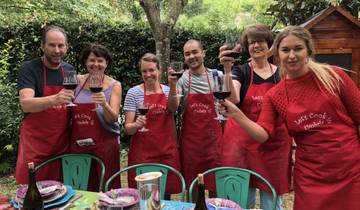
5 Days Italian Cookery Getaway in Umbria
- ✓ Comprehensive Umbria tour
- ✓ Expert local guides included
- ✓ All accommodation arranged
- ✓ Transportation provided

7 days
Authentic Umbria
- ✓ Comprehensive Umbria tour
- ✓ Expert local guides included
- ✓ All accommodation arranged
- ✓ Transportation provided

5 days
Italy: Authentic Puglia by E-Bike 🚴 – White Villages & Southern Flavors – 5 DAYS
- ✓ Comprehensive Umbria tour
- ✓ Expert local guides included
- ✓ All accommodation arranged
- ✓ Transportation provided
8 days
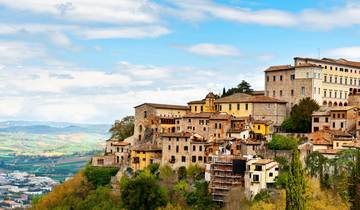
Hilltowns of Umbria, Self-Drive
- ✓ Comprehensive Umbria tour
- ✓ Expert local guides included
- ✓ All accommodation arranged
- ✓ Transportation provided
Multi-day tour packages powered by TourRadar. Prices and availability subject to change.
Why Perugia Delivers Exceptional Value in Italy
Perugia has been continuously inhabited since at least the seventh century BC, first as a major Etruscan city, then as a Roman municipium, then as a free commune that controlled much of central Umbria through the medieval period. The legacy of all three phases is visible throughout the city: Etruscan city walls and the underground Rocca Paolina blend with Roman-era structures and a magnificent medieval and Renaissance core that concentrates around Piazza IV Novembre. The Palazzo dei Priori — one of Italy’s finest Gothic civic buildings — houses the Galleria Nazionale dell’Umbria, which ranks among the country’s outstanding regional art collections. The Perugino frescoes of the Collegio del Cambio, painted between 1496 and 1500, represent one of the finest Renaissance decorative programs outside Florence.
Yet Perugia operates at a price level that sits noticeably below Italy’s headline tourist cities. Three factors explain this. First, the city is not itself a major package-tour destination — most international visitors come for Umbria Jazz or pass through on day trips from Rome, meaning hotels price for a domestic and semi-independent international market rather than the mass-market rates that inflate costs in Florence and Venice. Second, the Università degli Studi di Perugia, founded in 1308, and the Università per Stranieri, which welcomes over 1,500 international students, maintain a year-round population of young people who demand affordable food and services, keeping the restaurant and café market genuinely competitive. Third, Umbrian agriculture produces excellent ingredients locally — truffles, lentils, cured meats, olive oil, Sagrantino wine — so restaurants source well without expensive supply chains, and those savings partially pass to diners.
For international visitors planning in 2026, Perugia also works well as a base for Umbrian exploration. Assisi is 25 kilometres away by regional train. Spoleto, Orvieto, and Todi are all day-trip accessible. This hub function means a single accommodation base in Perugia unlocks a substantial amount of central Italy, multiplying the value of any per-night cost.
Accommodation Costs in Perugia 2026
Perugia’s accommodation market divides clearly between the historic centro storico — where most visitors want to stay given the concentration of sights and restaurants along Corso Vannucci — and the lower-town area around Fontivegge station, which offers lower prices in exchange for a ten-minute MiniMetrò or bus ride up to the old city. Both options are viable; the choice depends on your budget and how much you value stepping out of the door directly onto a medieval street.
Budget Accommodation in Perugia (€25-100 per Night)
Hostel dorm beds in Perugia start at €25-40 per night depending on season and hostel. Little Italy Hostel (near the centro storico) is the most centrally positioned option and charges in this range for mixed and single-sex dorms. Budget travelers who prefer a private room can find budget hotels and B&Bs from €65-100 per room per night, including options like Hotel Fortuna (three-star, consistently rated well for its central location on Via Bonazzi) which regularly prices at €85-100 for a double room in shoulder season. These budget hotel rates assume two people sharing, producing a per-person accommodation cost of €33-50 per night.
Private apartments on Airbnb and similar platforms offer another budget option in Perugia, particularly for stays of three or more nights. A clean apartment in the centro storico or Fontivegge costs €60-90 per night for a studio or one-bedroom, competitive with budget hotels and useful if you want a kitchen for self-catering.
Mid-Range Hotels in Perugia 2026 (€110-165 per Room)
Mid-range travelers have strong options in Perugia. Hotel Priori Secret Garden (four-star, Corso Vannucci area) and Locanda della Posta Boutique Hotel (four-star, in a beautifully restored palazzo on Corso Vannucci) both price in the €130-165 per room range during shoulder season, offering excellent service and historic settings. Hotel Sangallo Palace sits slightly lower at €110-140 per room with ample amenities and a location a short walk from the historic centre. Hotel Umbria, a long-established three-star on Via Boncambi, offers consistently good value at €100-130 per room.
At mid-range prices, many Perugia hotels include breakfast — always verify when booking, as included breakfast represents meaningful savings (€10-15 per person at a café). For two people sharing, mid-range accommodation costs €55-83 per person per night, which forms the base of the mid-range daily budget.
Luxury Accommodation in Perugia (from €200 per Room)
The Sina Brufani (five-star, Piazza Italia) is Perugia’s most prestigious address, with a colonnaded façade overlooking the Umbrian valley. Rates run €200-320 per room per night depending on season, with suites considerably higher. Castello di Monterone, a converted medieval castle on the outskirts of the city, offers boutique luxury at €180-280 per room with a pool and gardens. Both represent excellent value when benchmarked against five-star equivalents in Florence or Rome. For those willing to venture slightly outside the city, the Borgo dei Conti Resort (a Relais & Châteaux property in the Umbrian hills) positions itself at the upper end of the luxury market at €300-450 per room.
At the luxury level, accommodation for two people sharing costs €100-160 per person per night (based on a €200-320 per room range), which anchors the luxury daily budget.
Best Neighborhoods for Accommodation in Perugia 2026
The centro storico — specifically the area along Corso Vannucci, around Piazza IV Novembre, and on the side streets connecting to Porta Eburnea — is the most desirable base for first-time visitors. Walking to every major sight takes no more than ten minutes, restaurants are immediately accessible, and the evening passeggiata along Corso Vannucci is one of the most pleasant experiences the city offers. Expect to pay a 15-20% premium over equivalent properties in the Fontivegge area for the privilege of this location.
Fontivegge, the flat district around the main Trenitalia station, is the logical choice for budget travelers who prioritize per-night cost over convenience. The MiniMetrò connects Fontivegge (Pian di Massiano end) to the historic centre in about seven minutes for €1.50, making the location entirely practical. Hotels here run €10-25 per night less than equivalent properties in the old town.
Seasonal Accommodation Price Variations in Perugia 2026
Accommodation costs in Perugia follow a clear seasonal pattern in 2026. January through mid-March represents the low season: hotels across all tiers price 30-40% below their peak summer rates. A mid-range room that costs €130 in July is realistically available for €80-95 in February. Late March through May is shoulder season with moderate rates and excellent weather for walking. June prices rise as summer tourism begins. July 10-19, 2026 marks the Umbria Jazz Festival — the single most expensive period of the year. Hotels across all categories fill weeks or months in advance and charge peak-plus premiums; rates at well-located mid-range properties can reach €200-250 per room during the festival. August sees continued summer premium pricing though slightly lower than the festival week. September and October return to shoulder-season levels. November and December are quiet with low rates except for the pre-Christmas period and the Eurochocolate festival in October, which brings another surge in demand.
Food and Dining Costs in Perugia 2026
Perugia’s food scene reflects its position as both a university city and the capital of an agriculturally rich region. The result is a range of eating options broader than any similarly sized Italian city: student-oriented trattatorie with €10-12 lunch menus sit alongside serious osterie serving seasonal Umbrian dishes and a small number of ambitious restaurants exploring contemporary approaches to regional ingredients. For a city of fewer than 170,000 people, the quality ceiling is surprisingly high and the price floor is genuinely low.
Budget Eating in Perugia 2026 (€22-33 per Day)
The lowest-cost way to fuel a day in Perugia is to eat as the students eat. Breakfast at a bar costs €3-5: a cornetto (croissant) at €1-1.50 and a cappuccino at €1.30-1.80 together rarely exceed €3.50. Lunch from a rosticceria, forno (bakery), or street-food vendor costs €6-10. Perugia’s signature street food is torta al testo — a flatbread cooked on a flat stone griddle and filled with salumi, cheese, greens, or sausage — which costs €4-6 and fills a lunchtime hunger completely. Pizzerie offer lunchtime slices at €2-3.50 each. Budget pizza al taglio from Il Fornaio or similar bakeries along Corso Vannucci keeps lunch well under €8.
Dinner at a no-frills trattoria near the university district on Via Ulisse Rocchi or around Piazza Danti costs €12-18 per person including pasta, a secondo, and a quarter-litre of house wine. Dal Mi Cocco on Corso Garibaldi offers a fixed-price menu of several courses for around €20-25, legendary among budget travelers in Perugia for its generous portions and students-and-professors atmosphere. For even lower costs, supermarkets including Conad and Coop near Piazza Matteotti stock good-quality prepared foods and wine for self-assembly dinners.
Mid-Range Dining in Perugia 2026 (€58-83 per Day)
Mid-range dining in Perugia means proper sit-down meals at osterie and trattatorie with attentive service and a focus on seasonal Umbrian ingredients. Breakfast at a café slightly better than the corner bar costs €5-8 per person for pastries, coffee, and perhaps a fresh juice. A set-menu pranzo fisso at a mid-range osteria runs €18-25 per person and includes two courses, bread, and a small carafe of wine. Dinner at a solid trattoria — with antipasto, pasta, main course, and a half-litre of local Sagrantino or Rosso di Montefalco — costs €35-50 per person.
Specific mid-range recommendations: Ristorante Il Giurista (near Piazza della Repubblica) earns consistently strong reviews for Umbrian classics including strangozzi al tartufo nero (hand-rolled pasta with black truffle sauce) at €16-20. Osteria A Priori (Via dei Priori) specializes in natural wines and seasonal antipasti. For a more casual mid-range experience, Pizzeria Mediterranea on Corso Cavour offers authentic Neapolitan pizzas at €9-14 in a lively setting popular with both students and visitors.
Fine Dining and Upscale Restaurants in Perugia 2026
Perugia’s top restaurant tier offers significant value when compared to equivalent establishments in Florence or Rome. A full dinner at a serious restaurant — with tasting courses, excellent local wines, and professional service — runs €75-110 per person. Villa Taticchi, a restaurant in a restored villa outside the city centre, represents the upper end of Perugia’s fine dining with a focus on truffle-forward Umbrian tasting menus. Ristorante Cedri and other established names in the centro storico offer three-course dinners with wine at €55-75 per person. At the absolute top level, expect a full tasting menu experience to cost €80-120 per person including wine pairing.
Self-Catering and Market Shopping in Perugia
The Mercato Coperto (covered market) in Piazza Matteotti is Perugia’s central food market, selling local produce, cheese, cured meats, and freshly made pasta. A self-assembled picnic lunch — local bread, pecorino, Norcia salami, fresh tomatoes, and a small bottle of Umbrian white wine — costs €8-12 per person from the market and produces a meal that outperforms most tourist-area restaurants at twice the price. The market operates Tuesday through Saturday. Supermarkets (Conad, Coop, Carrefour) stock all essentials at standard Italian supermarket prices.
Essential Umbrian Dishes and Their Restaurant Costs
Umbrian cuisine is earthy, truffle-forward, and generous. Strangozzi al tartufo nero (thick hand-rolled pasta with black truffle) appears on almost every menu and costs €14-22 at a proper restaurant. Tagliatelle al ragù di cinghiale (wild boar ragù pasta) runs €12-18. Porchetta — roast pork flavoured with wild fennel, rosemary, and garlic — appears as a street food sandwich for €3-5 at the Mercato Coperto and in finer form at restaurants for €14-20 as a main course. Umbricelli (thick hand-rolled pasta) with various sauces costs €11-16. A full bistecca alla brace (grilled steak) from Chianina cattle runs €25-35 depending on size. Desserts including torcolo (a raisin and pine nut ring cake, the city’s symbol pastry) cost €4-6. Baci Perugina chocolates, made locally by Perugina/Nestlé since 1922, are available in the original packaging from the Perugina store on Corso Vannucci at €5-15 depending on size.
Transportation Costs to and Around Perugia 2026
Perugia sits at the geographic heart of central Italy, making it more accessible than its hilltop position might suggest. Rail connections to Rome and Florence are direct and straightforward. The city’s internal transport system — a combination of the distinctive MiniMetrò and conventional buses — covers the gap between the lower-city rail station and the hilltop historic centre efficiently and cheaply.
Getting to Perugia from Rome, Florence, and Beyond in 2026
From Rome Termini, direct Trenitalia Intercity trains reach Perugia in approximately 2 hours 15 minutes. One-way fares start at €12 when booked in advance on trenitalia.com; buying on the day at the station averages €20-25. Advance booking locks in the best fares and is strongly recommended for travel during peak summer and festival periods. From Florence Santa Maria Novella, regional trains via Terontola-Cortona and Lake Trasimeno reach Perugia in 1 hour 25 minutes. Fares start from €10 in advance and average €18-22 booked same-day (check trenitalia.com for current rates).
Long-distance buses offer a cheaper alternative on the Rome corridor. FlixBus and SULGA operate Rome-Perugia services that take around 2 hours 30 minutes and price at €8-18 depending on lead time and departure time. The bus terminus in Perugia is at Piazza Partigiani, one stop below the historic centre on the MiniMetrò.
From Milan, the fastest connection involves a Frecciarossa to Florence followed by a regional train to Perugia, totalling approximately 3 hours 45 minutes. Total fare from Milan runs €35-65 depending on booking time.
Perugia Airport Arrivals and Shuttle Costs 2026
Perugia San Francesco d’Assisi Airport (PEG), located 15 kilometres east of the city at Sant’Egidio, receives flights from a selection of Italian and European cities. The airport is small and connections are limited compared to Rome Fiumicino or Florence, but works well for travelers whose origin cities have direct service. The Umbria Airlink shuttle bus connects the airport to Perugia’s main bus station in approximately 30 minutes. Single tickets cost €5 for adults and €2.50 for children (check umbriamobilita.it for current timetables and rates). Taxis from the airport to the centro storico cost approximately €25-35 depending on traffic and exact destination.
Getting Around Perugia on a Budget 2026
The centro storico of Perugia is compact and best explored on foot; nearly all major sights lie within a fifteen-minute walk of Piazza IV Novembre. However, the city’s topography is steep, and the MiniMetrò provides a genuinely useful link between the lower city and the upper historic centre. Single MiniMetrò tickets cost €1.50, and the same ticket is valid for onward bus connections within 70 minutes. City buses operated by Umbria Mobilità charge €1.50-2 per journey; tickets are purchased in advance from tabacchi shops (tobacconists displaying the Umbria Mobilità sign) rather than on the bus, where a slight surcharge applies. For most visitors, daily transport costs within Perugia run €2-10 depending on how much the MiniMetrò and buses supplement walking.
Driving to the centro storico is not recommended. Perugia’s historic centre is a ZTL (Zona a Traffico Limitato) — a restricted traffic zone that operates throughout the day. Unauthorized entry triggers an automatic fine of €75-150, issued to the vehicle’s registered owner and collected from rental car companies. Visitors arriving by car should park at Piazza dei Partigiani car park (paid parking, €1-1.50 per hour) and use the escalators and MiniMetrò to ascend to the historic centre.
Day Trips from Perugia by Train in 2026
Perugia functions as an excellent base for Umbrian day trips, with regional train connections that keep day-trip costs low. Assisi (25 kilometres) is the most popular destination: regional trains run frequently and cost €4-5 single, making a return journey €8-10. The train station in Assisi is at Santa Maria degli Angeli, 5 kilometres below the hilltop town; a local bus connects the two for €1.30. Spoleto (50 kilometres) is reachable by train in 40-55 minutes at approximately €7-10 single. Foligno (35 kilometres) and Todi (reached via Terni or by regional bus) are also day-trip viable. Orvieto requires a connection through Orte or Terontola but remains do-able in a long day. For a day trip budget, add €8-20 per person to daily costs depending on destination.
Attractions and Activity Costs in Perugia 2026
Perugia’s attraction portfolio combines some genuinely important paid sites — the Galleria Nazionale dell’Umbria is a first-division Italian art museum by any measure — with a large number of outstanding free experiences. The Etruscan infrastructure visible throughout the city, the medieval street plan, the Fontana Maggiore, the Rocca Paolina underground network, and the panoramic views from the Giardini Carducci all cost nothing.
Free Attractions in Perugia
The following Perugia attractions are free to enter in 2026:
- Piazza IV Novembre — the city’s central square with the 13th-century Fontana Maggiore (Great Fountain), carved by Nicola and Giovanni Pisano between 1275 and 1278, one of Italy’s most significant medieval sculptures.
- Rocca Paolina — a vast underground network of medieval streets, towers, and palaces buried beneath a 16th-century Papal fortress. The escalators connecting the lower city to Corso Vannucci pass directly through it; the full exploration route is accessed through the main entrance and costs nothing.
- Arco Etrusco (Arco di Augusto) — one of the best-preserved Etruscan city gates in Italy, built in the third century BC and standing to its original height on Via Ulisse Rocchi.
- Etruscan city walls — segments of the massive Etruscan walls (third century BC) are visible throughout the city perimeter, particularly near Porta Trasimena and around the university campus.
- Giardini Carducci — public gardens immediately south of Piazza Italia with sweeping panoramic views over the Umbrian valley and the Apennines.
- Cattedrale di San Lorenzo (exterior and main nave) — the city’s main cathedral faces Piazza IV Novembre. Respectful free entry to the main nave is permitted during non-service hours.
- Oratorio di San Bernardino — the exterior of this 15th-century oratory on Piazza San Francesco al Prato features one of the finest polychrome marble reliefs in Italy, by Agostino di Duccio (1457-1461). Free to view from outside and free inside during visiting hours.
- Church of San Pietro — a 10th-century Benedictine church at the southern edge of the historic centre with a magnificent carved choir interior; free to enter during visiting hours.
- Corso Vannucci — the pedestrian main street of Perugia operates as the city’s daily passeggiata; the buildings lining it (Palazzo dei Priori, Cambio frontage, Palazzo della Penna) constitute an open-air medieval architecture lesson.
Paid Museums and Sites in Perugia: Full Price List 2026
Perugia’s paid sites are priced modestly by Italian standards:
- Galleria Nazionale dell’Umbria (Palazzo dei Priori, Corso Vannucci 19): €10 standard admission; €12 during special exhibitions. Reduced admission €2 for EU citizens aged 18-25. Free for under-18s and on the first Sunday of each month. Open Tuesday-Sunday 8:30-19:30; ticket office closes at 18:30. Closed Mondays November-June. Check gallerianazionaledellumbria.it for current rates and first-Sunday dates.
- Collegio del Cambio (Corso Vannucci 25): €4.50 standard admission for the UNESCO-quality Perugino frescoes in the Hall of the Audience. Open Monday-Saturday 9:00-13:00 and 14:30-17:30, Sundays 9:00-13:00.
- Nobile Collegio della Mercanzia (adjacent to the Cambio): individually around €3; a combined ticket covering both Collegio del Cambio and Collegio della Mercanzia is available for €7.
- “La Perugia del Perugino” combined ticket: €15 for entry to four sites — Museo del Capitolo della Cattedrale di San Lorenzo, Nobile Collegio della Mercanzia, Nobile Collegio del Cambio, and Museo di Palazzo Baldeschi al Corso. Valid for three days from purchase date and represents good value if you plan to visit all four.
- Pozzo Etrusco (Etruscan Well) (Piazza Danti): €3 per person. This third-century BC hydraulic engineering marvel descends 37 metres into the hilltop; one of Perugia’s most memorable experiences for the modest entry cost.
- Ipogeo dei Volumni e Necropoli del Palazzone (Ponte San Giovanni, 5km from centre): €3 adults, €1.50 for ages 18-25, free for under-18s. Open daily 9:00-18:30 (until 19:00 in July and August). An Etruscan family tomb hypogeum of the third to first century BC, one of the best-preserved in Italy. Note: as of 2025-2026 some restoration works have affected access; verify current status before visiting.
- Museo Storico Perugina (Via San Sisto, Nestlé Perugina factory): museum and chocolate-making history from the home of Baci Perugina. Check perugina.com for current admission prices and factory tour bookings; the experience combines museum exhibits with chocolate tasting.
Tours and Guided Experiences in Perugia 2026
Private guided tours of Perugia’s historic centre cost €60-120 per group of up to six, making them economical when split between several people. GetYourGuide and Viator list multiple options including underground Perugia tours (focusing on the Rocca Paolina tunnels and Etruscan substructures), art-history walking tours covering Perugino and the Umbrian School, and food tours combining Umbrian market visits with tastings. Cooking classes in Perugia covering pasta-making, torta al testo, and truffle preparations run €60-90 per person for a two- to three-hour session and include the meal produced. Wine tasting sessions focused on Sagrantino di Montefalco and Umbrian whites cost €25-45 per person at local enoteca venues.
Festivals and Special Events: Cost Planning for 2026
Umbria Jazz (July 10-19, 2026) is the dominant event. Free concerts take place throughout the city in piazzas and on Corso Vannucci from morning through late night. Headline ticketed concerts at the Arena Santa Giuliana cost €35-90 per person depending on the artist. The 2026 headline lineup includes Sting, Zucchero, John Legend, Norah Jones, Gregory Porter, and Esperanza Spalding. Festival atmosphere permeates the entire city; even visitors without ticketed concert access experience live music continuously during the ten days. Budget for accommodation costs of €50-100 above normal rates if staying during this period.
Eurochocolate, Italy’s largest chocolate festival, runs for approximately ten days in October each year in Perugia (exact 2026 dates to be confirmed on eurochocolate.com). Entry to the public areas is free; individual chocolate purchases vary. Perugia’s chocolate heritage runs through every corner of the city year-round: Perugina flagship stores, artisan chocolatiers along Corso Vannucci, and the Perugina museum at the factory in San Sisto all invite sampling.
Complete Daily Budget Breakdowns for Perugia 2026
The following breakdowns represent realistic daily per-person costs for three travel styles, assuming two people sharing hotel accommodation. All accommodation figures represent the per-person share of a shared room.
Budget Traveler Daily Costs in Perugia 2026 (€55-80 per Person)
Budget travelers in Perugia spending €55-80 per person daily can enjoy the city fully without financial stress. The breakdown: hostel dorm bed €25-35, bar breakfast (cornetto + cappuccino) €3-5, street food or market lunch €7-10, cheap trattoria or pizzeria dinner €12-18, local transport €2-4, and one paid attraction or a mix of free sites €4-8. The total comes to approximately €55-80 per person daily. At this tier, the Galleria Nazionale dell’Umbria (€10 standard) is the key paid attraction, with the Pozzo Etrusco (€3) adding a second visit on another day. Rocca Paolina, Fontana Maggiore, Arco Etrusco, the Giardini Carducci, and wandering the medieval streets fill the rest of the schedule without further cost.
Mid-Range Traveler Daily Costs in Perugia 2026 (€135-190 per Person)
Mid-range travelers sharing a hotel room at €110-150 per night spend €135-190 per person daily. The breakdown: accommodation per person (two sharing a mid-range room) €55-75, café breakfast €5-8, osteria set-menu lunch €18-25, full trattoria dinner with wine €35-50, local transport €5-10, and two to three paid museum or site visits €15-20. The total reaches approximately €135-190 per person daily, including comfortable accommodation and proper restaurant meals. The “La Perugia del Perugino” four-museum combined ticket (€15) and the GNU entry (€10-12) represent the core paid cultural experiences at this tier, spread across the length of the visit.
Luxury Traveler Daily Costs in Perugia 2026 (€295-415 per Person)
Luxury travelers staying at a four- or five-star property and dining at Perugia’s finest restaurants spend €295-415 per person daily. The breakdown: accommodation per person (two sharing, €200-300 per room) €100-150, restaurant or hotel breakfast €18-22, upscale lunch €45-65, fine dining dinner with regional wines €80-110, taxis and transport €20-30, premium guided tours and attractions €30-40. At this tier, Perugia genuinely competes with its luxury reputation: the Sina Brufani offers a level of service, history, and views over the Umbrian valley that justify its position as one of central Italy’s finest hotels, while the concentration of truffle-forward Umbrian cuisine nearby provides memorable restaurant experiences.
Sample Perugia Itineraries with 2026 Costs
The following sample itineraries provide day-by-day cost breakdowns at each budget tier. Costs represent per-person totals assuming two people travelling together. Arrival and departure transport to/from Perugia is excluded and should be added separately based on origin city.
3-Day Budget Itinerary for Perugia 2026 (Approximately €170-250 per Person)
Day 1 — Old City Foundations
Morning: arrive and check into hostel. Walk Corso Vannucci to Piazza IV Novembre, spend time with the Fontana Maggiore, view the Palazzo dei Priori exterior. Lunch from a forno or torta al testo vendor near Piazza Danti (€6-8). Afternoon: Galleria Nazionale dell’Umbria (€10-12); the collection is large enough to fill two to three hours without rushing. Evening: Pozzo Etrusco (€3, closes late afternoon — book morning if preferred). Dinner at a student-area trattoria on Via Ulisse Rocchi or Corso Garibaldi (€12-16). Accommodation: hostel dorm (€25-35).
Day 2 — Free Perugia and Rocca Paolina
Morning: Rocca Paolina underground complex (free). Continue up to Piazza Italia and through the Arco Etrusco quarter. Lunch: self-assembly from the Mercato Coperto, Piazza Matteotti (€7-10). Afternoon: walk the city walls perimeter, Oratorio di San Bernardino exterior, Church of San Pietro. Giardini Carducci for late-afternoon panoramic views. Evening: aperitivo on Corso Vannucci (most bars charge €5-8 for a drink with free snacks during aperitivo hour, which runs 18:00-20:00). Dinner at Dal Mi Cocco (€20-25 for the full fixed-price menu). Accommodation: hostel dorm (€25-35).
Day 3 — Day Trip to Assisi
Regional train to Assisi station (€4-5 one-way; bus from station to hilltop €1.30). Visit Basilica di San Francesco (free entry), Basilica di Santa Chiara (free), the Piazza del Comune, and the medieval centre. Market lunch or panino in Assisi (€6-10). Return to Perugia by train (€4-5). Final evening dinner and walk (€12-16). Accommodation: hostel dorm (€25-35).
Three-day cost summary: 3 nights hostel €75-105, meals €66-99, local transport €6-10, attractions €13-20, Assisi day trip €8-14. Total approximately €170-250 per person.
5-Day Mid-Range Itinerary for Perugia 2026 (Approximately €655-935 per Person)
Day 1 — Historic Centre Deep Dive
Morning: Galleria Nazionale dell’Umbria (€10-12). Afternoon: Collegio del Cambio and Collegio della Mercanzia combined ticket (€7). Dinner: osteria dinner on Corso Vannucci area (€35-45). Accommodation: mid-range hotel (per person €55-75).
Day 2 — Etruscan Perugia
Morning: Rocca Paolina, Arco Etrusco, and the Etruscan walls circuit. Pozzo Etrusco (€3). Lunch: Mercato Coperto or osteria set menu (€15-22). Afternoon: Cathedral of San Lorenzo interior and attached Museo Capitolare; included in “La Perugia del Perugino” combined ticket (€15 for four sites, purchased here). Evening: aperitivo bar and dinner (€35-50). Accommodation: mid-range hotel.
Day 3 — Assisi Day Trip
Full day in Assisi: Basilica di San Francesco (free), Basilica di Santa Chiara (free), Piazza del Comune, Rocca Maggiore (€5.50). Lunch in Assisi (€18-25). Return to Perugia for dinner (€30-40). Train costs: €8-10 return. Accommodation: mid-range hotel.
Day 4 — Ipogeo dei Volumni and Perugina
Morning: Ipogeo dei Volumni at Ponte San Giovanni by local bus or taxi (€3 entry). Afternoon: Museo Storico Perugina factory visit (check current prices on perugina.com). Return to centro. Cooking class option: afternoon pasta or torta al testo session (€65-85). Dinner: Ristorante Il Giurista (€40-55 per person). Accommodation: mid-range hotel.
Day 5 — Spoleto or Orvieto Day Trip
Train to Spoleto (€7-10 one-way). Roman theatre, Cattedrale di Spoleto (free), and the spectacular Ponte delle Torri aqueduct bridge. Lunch in Spoleto (€18-25). Return to Perugia. Final dinner at a trattoria (€30-45). Accommodation: mid-range hotel.
Five-day cost summary: 5 nights hotel per person €275-375, meals €290-415, local transport €25-40, attractions and tickets €50-75, day trips €16-28. Total approximately €655-935 per person.
3-Day Luxury Itinerary for Perugia 2026 (Approximately €880-1,250 per Person)
Day 1 — Arrival and Historic Core
Afternoon arrival at Sina Brufani or Locanda della Posta. Private walking tour of the historic centre including the GNU and Collegio del Cambio with a licensed art historian guide (€90-120 per group). Aperitivo at the Brufani terrace bar. Dinner at a fine restaurant with Umbrian tasting menu and Sagrantino wine pairing (€90-120 per person).
Day 2 — Truffle and Wine Excursion
Private car day trip to the Montefalco wine region (Sagrantino DOCG) with a guided cantina visit and wine tasting (€45-75 per person). Truffle-hunting experience in the Umbrian forest with a local truforicoltore and lunch of the truffle harvest at a rural agriturismo (€80-110 per person including lunch). Return to Perugia. Dinner at Villa Taticchi or Ristorante Cedri (€75-100 per person).
Day 3 — Assisi in Depth and Departure
Private transfer to Assisi (€40-60 one-way). Guided visit to the Basilica di San Francesco with an art-history expert (€45-70 per person), including the lower basilica Cimabue and Giotto fresco cycles. Lunch at an upscale Assisi restaurant (€45-60 per person). Transfer back to Perugia and departure.
Three-day cost summary: 3 nights hotel per person €300-450, meals €429-591, transport (taxis and private transfers) €60-90, guided tours and attractions €90-120. Total approximately €880-1,250 per person.
Seasonal Price Variations in Perugia 2026
Perugia’s pricing across accommodation, restaurants, and some activities follows distinct seasonal patterns. Understanding these patterns allows travelers to save substantially or plan around peak demand.
January-March (Low Season): The quietest and cheapest period. Hotel rates drop 30-40% below peak summer; a mid-range room available at €140 in July costs €80-95 in February. The university is in session so restaurants, bars, and cafés maintain normal service without summer tourist menus. Winter in Umbria brings cold but clear days ideal for museum visiting and focused cultural exploration. The Galleria Nazionale dell’Umbria is at its quietest and most contemplative.
April-May and September-October (Shoulder Season): The most balanced period. Temperatures of 14-22°C suit extended walking. Hotel rates sit at 15-25% below peak. Easter week (April 2026: Easter Sunday falls on April 5) brings brief price spikes. October’s Eurochocolate festival (exact dates to be confirmed) drives accommodation demand for one week and raises prices across all categories.
June and August (Summer High Season): Hotel rates reach their peak outside the festival week. The heat can make the afternoon climb through the steep medieval streets uncomfortable; mornings and evenings are when outdoor Perugia rewards visitors most. August sees Italian domestic tourism at its peak, with restaurants busiest later in the evening.
July 10-19, 2026 (Umbria Jazz Festival): The single most expensive period of the year for accommodation. Hotels across all categories book out months in advance, and rates reach their annual maximum — running 50-80% above the mid-season norm. Visitors planning to attend should book accommodation no later than late February 2026. Those not attending the festival should avoid this week entirely from a cost-efficiency perspective.
November-December (Late Season): A second quiet period with low prices. Perugia’s Christmas market (Piazza IV Novembre) in December brings modest additional visitors and some price movement at well-located properties. The period between mid-November and mid-December before the Christmas rush offers genuinely low hotel rates combined with pleasant cool temperatures and minimal crowds.
Money-Saving Strategies for Perugia 2026
Perugia rewards informed budget management. The following strategies apply across accommodation, food, and attraction spending.
Accommodation Savings in Perugia 2026
Book accommodation directly with hotels or through booking platforms at least three to four weeks in advance for shoulder season and three to four months in advance for Umbria Jazz. The Fontivegge area near the train station delivers mid-range quality at 15-20% less than identical properties in the historic centre; the MiniMetrò connection makes this a practical choice rather than a compromise. Consider visiting in January-March when mid-range rooms drop to prices that would qualify as budget in summer. For groups of three or more, apartments on Airbnb or similar platforms frequently beat per-person hotel costs while adding kitchen access for self-catering breakfasts.
Food and Dining Savings in Perugia 2026
Take breakfast at a bar standing at the counter rather than seated — the standard Italian surcharge for table service adds €1-2 per item. Lunch at a trattoria offering a fixed-price pranzo fisso (set menu, costs €10-18 for two courses, bread, and water) delivers the best cost-to-quality ratio in Italian dining; the same restaurant charging €35-50 for dinner will feed you as well at lunch for half the price. Buy torta al testo from street vendors rather than from the tourist-area sit-down restaurants. The Mercato Coperto in Piazza Matteotti sells superior local cheese, salumi, and bread for picnic lunches at supermarket prices. Aperitivo culture in Perugia is generous: most bars between 18:00 and 20:00 include a selection of small snacks (bruschetta, olives, crostini) with a €5-7 drink order, effectively providing a light early dinner.
The first Sunday of each month delivers free entry to the Galleria Nazionale dell’Umbria, eliminating the main paid attraction cost for the day. Time a longer Perugia visit to include this date and save €10-12 per person. Perugia also participates in national Italian museum-free days on certain public holidays (including the Festa della Repubblica on June 2, 2026), when all state museums open without charge.
Transport and Attraction Savings in Perugia 2026
Buy bus and MiniMetrò tickets at tabacchi shops before boarding rather than from drivers to avoid the on-bus surcharge. Purchase the “La Perugia del Perugino” combined ticket (€15) if you plan to visit three or more of its four included sites, as the individual entry total would be considerably higher. The Assisi day trip is most economical by regional train (€8-10 return) versus taxi (€60-80 each way) or private tour (€90-120 per group). Visit the Rocca Paolina early or late in the day when crowds are thinnest — this extensive free attraction rewards unhurried exploration and deserves more time than most itineraries allocate.
Hidden Costs and Fees in Perugia
Several costs regularly surprise first-time visitors to Perugia and Italy more broadly. Accounting for them in advance prevents unwelcome arithmetic at checkout.
Tourist Tax (Tassa di Soggiorno): Perugia applies a tourist tax of €1-2.50 per person per night depending on the accommodation category, capped at a maximum of seven nights. This tax is collected directly by accommodation providers at checkout and is not included in online booking prices. Budget approximately €10-20 per person for a week’s stay at a mid-range hotel; hostels charge less.
Cover Charge (Coperto) at Restaurants: Most Perugia restaurants charge a coperto of €1.50-3 per person — a cover charge for bread and table setting that appears as a line item on the bill. It is legal and standard practice throughout Italy, not an error. Budget accordingly when calculating per-person meal costs at sit-down restaurants.
Service Charge and Tipping: Service charges (servizio) at Perugia restaurants appear at some tourist-oriented establishments, at 10-15%. Unlike service charges in other countries, this is discretionary and can be queried. Tipping is not obligatory in Italy: rounding up a bill or leaving €1-2 on the table at a café or trattoria is common and appreciated but never expected.
ZTL Fines for Rental Car Drivers: Perugia’s historic centre ZTL operates throughout the day. Rental car companies relay camera-recorded fines — €75-150 per infraction — directly to the driver’s credit card weeks after the trip, with an administrative surcharge of €20-40 added by the rental company. The fine is automated and there is no appeal mechanism for straightforward infringements. Use the Piazza dei Partigiani car park and MiniMetrò for all access to the centro storico.
Booking Fees and Online Ticketing: Purchasing Galleria Nazionale dell’Umbria tickets through TicketOne (the official online booking platform) adds a small booking fee compared to purchasing at the gallery ticket desk. However, online booking for large special exhibitions guarantees entry without queuing. The Collegio del Cambio and most smaller Perugia sites do not require advance booking except during busy festival periods.
Public Toilet Access: Public toilets in the centro storico are limited; the bar system functions effectively as an alternative. Purchasing a €1-1.50 espresso at a bar gives access to facilities without awkwardness, and a coffee break every two to three hours is a natural part of the day regardless.
ATM Fees: Italian ATMs frequently offer dynamic currency conversion (paying in your home currency rather than euros). Always select “pay in EUR” to avoid conversion rates that add 3-5% to every cash withdrawal. Post or bank-owned ATMs (Poste Italiane, Unicredit, Intesa Sanpaolo) charge lower fees to foreign cardholders than airport or tourist-area standalone ATMs.
Planning Your Perugia Trip for 2026: Traveler-Specific Costs
Different traveler types encounter different cost structures in Perugia. The following section addresses the specific considerations for families, solo travelers, and senior visitors.
Families with Children in Perugia 2026
Perugia is an accessible city for families with children. The UNESCO-calibre Galleria Nazionale dell’Umbria is free for under-18s, and the Pozzo Etrusco and Ipogeo dei Volumni also offer free entry for minors, meaningfully reducing the adult attraction cost when children are part of the group. The Rocca Paolina underground complex, with its buried medieval streets, provides immediate atmosphere for children of all ages. The Eurochocolate festival in October (exact 2026 dates on eurochocolate.com) adds a very family-friendly event context. The MiniMetrò, with its automated pod-style carriages, is a novelty that most children find entertaining. The Giardini Carducci public gardens provide outdoor play space near the historic centre.
Family accommodation costs require room-configuration consideration. A family room or two-room suite at a mid-range Perugia hotel costs €150-220 per night, slightly more than two adult singles. Self-catering apartments for two adults and two children are the most economical option at €80-130 per night in the centro storico. Family meal costs increase proportionally but Perugia’s student-oriented pizza and pasta restaurants keep children’s meal costs low at €8-12 per child at budget trattatorie.
Solo Travelers in Perugia 2026
Solo travelers pay the full room rate rather than splitting it, which is the primary cost differential versus couple or group travel. A budget hotel single room in Perugia starts at €55-80 per night; mid-range singles run €90-130 per night. These rates represent a 30-50% increase over the per-person cost of the same room shared between two. Solo travelers at mid-range: expect approximately €175-250 per person daily — hotel (€90-130) plus food (€58-83) plus transport (€5-10) plus attractions (€15-20).
The hostel option neutralizes the single supplement: a hostel dorm bed costs the same whether you are alone or with others. Budget solo travelers using hostels pay the same €55-80 daily range as budget travelers sharing accommodation. Perugia’s hostel scene is small but its position as a university city means the social atmosphere is active; Little Italy Hostel in particular has a reputation for traveler-friendly common areas.
Solo travelers also benefit from Perugia’s walkable scale and safety. The centro storico is among the most walkable historic cores in Italy, compact enough that a solo visitor can cover the major sights on foot without relying on transport, minimizing daily transport costs.
Seniors in Perugia 2026
Senior visitors to Perugia navigate the city’s steep topography, which is the main practical challenge. The historic centre drops and rises continuously along Corso Vannucci and the connecting streets; the escalators linking the lower parking levels to the mid-town and the MiniMetrò to the main Fontivegge station area both assist significantly, but extended walking days require reasonable fitness. Accommodation in the centro storico eliminates the need to ascend and descend repeatedly; this is the most relevant factor for senior accommodation selection and justifies paying slightly more for a central location.
Regarding admission costs, Italian state museums offer concession pricing for Italian and EU citizens over 65; non-EU visitors should verify age-based concessions directly with each site, as policies vary. The Galleria Nazionale dell’Umbria’s reduced price of €2 applies only to EU citizens aged 18-25; there is no separate senior reduced rate published for non-EU visitors, and the standard €10 adult rate applies. The Collegio del Cambio offers concession rates for groups and certain categories; verify at the ticket desk. The Italian rail system (Trenitalia) offers a Senior Card for Italian residents, but international visitors on standard fares do not have access to this discount; checking advance-purchase prices online is the best senior saving strategy for rail.
Perugia Neighborhood Price Guide 2026
Understanding the price variation between Perugia’s distinct zones helps optimize accommodation budgets without sacrificing access or experience quality.
Centro Storico (Historic City Core): Premium Pricing, Maximum Convenience
The centro storico, defined broadly as the area within and immediately around the medieval walls above the Rocca Paolina level, commands the highest accommodation prices in Perugia. Prices run 15-25% above equivalent properties in the Fontivegge area. The premium is fully justified for first-time visitors: walking out of a hotel onto Corso Vannucci or into a side street off Piazza IV Novembre at seven in the morning before the day-trippers arrive is one of the genuinely distinctive pleasures of Perugia. Restaurant prices within the historic centre also trend slightly higher than in the university-area trattatorie on Via Ulisse Rocchi and Corso Garibaldi, though the differential narrows at lunch and for simple pasta dishes.
Fontivegge and Train Station Area: Budget-Friendly with MiniMetrò Access
Fontivegge, the modern commercial district around the Trenitalia station, offers noticeably lower accommodation costs. Hotels in this zone price €15-30 per room less than comparable historic-centre properties. The area lacks the charm of the old city but is entirely practical: the MiniMetrò runs from Pian di Massiano (effectively the Fontivegge end of the line, though the system layout places it south of the station) into the centro storico in seven minutes for €1.50. Supermarkets, pharmacies, and everyday services are more accessible at lower prices than in the old town. Budget travelers for whom the room is primarily for sleeping should strongly consider this zone.
Outlying Areas and Agriturismi: Most Economical for Rural Experience
The Umbrian countryside immediately surrounding Perugia offers agriturismo (farm stay) accommodation at €70-140 per room per night for properties with swimming pools, homemade breakfasts, and dinner options using farm-produced ingredients. These represent outstanding value for the quality and experience level, but require a rental car or taxi for access to the city. For travelers who plan to combine Perugia exploration with broader Umbrian touring by car, a countryside base can be the most cost-efficient and characterful option. Properties like Agriturismo San Felicissimo and Il Nido del Canterino (on the rural periphery) combine genuine country atmosphere with reasonable proximity to the city centre.
Frequently Asked Questions About Perugia 2026
How much should I budget per day for Perugia in 2026?
Your daily budget in Perugia in 2026 depends on travel style. Budget travelers using hostel dorms spend €55-80 per person daily, covering basic accommodation, bar meals, and free or low-cost attractions. Mid-range travelers sharing a hotel and eating at proper osterie and trattatorie spend €135-190 per person daily. Luxury visitors at four- and five-star hotels with fine dining spend €295-415 per person daily. All figures assume two people sharing hotel accommodation where applicable; solo travelers add the single room supplement to the accommodation component.
Is €100 per day enough for Perugia in 2026?
€100 per day per person covers Perugia comfortably at a mid-budget level. At this amount, you can afford a budget hotel or B&B room when split with a companion (around €60-70 per room), eat a proper lunch at a trattoria set menu, have a café breakfast, and enjoy a cheap dinner at a student-area osteria with wine. Entry to the Galleria Nazionale dell’Umbria (€10-12) fits within the day’s budget alongside free sites that fill the rest of the itinerary. Solo travelers at €100 per day need to use hostel dorms to keep accommodation within budget.
What is the best value accommodation area in Perugia 2026?
The Fontivegge area near Perugia’s main Trenitalia station delivers the best value: hotels price €15-30 per room lower than equivalent properties in the historic centre, and the MiniMetrò covers the seven-minute journey to the old city for €1.50. For travelers who want to be directly within the historic walls, Via Bonazzi and the streets west of Corso Vannucci offer mid-range properties at slightly lower prices than the most central Corso Vannucci frontage addresses. Agriturismo accommodation on the rural periphery — accessible only by car — offers the best value of all if a car is part of the travel plan.
How much do meals cost in Perugia in 2026?
A bar breakfast (cornetto and cappuccino) costs €3-5. A street-food lunch — torta al testo or pizza al taglio — runs €6-10. A trattoria set-menu pranzo fisso costs €10-18 per person for two courses with wine. A full sit-down dinner at a mid-range osteria runs €25-45 per person including antipasto, pasta, main, and house wine. Fine dining tasting menus cost €75-110 per person. Self-assembly picnic lunches from the Mercato Coperto in Piazza Matteotti produce excellent meals for €8-12 per person. Overall, daily food costs range from €22-33 (budget eating) to €58-83 (mid-range dining) to €143-197 (fine dining throughout).
Are there free things to do in Perugia in 2026?
Perugia is exceptionally generous with free attractions. The entire Rocca Paolina underground complex is free. Fontana Maggiore, one of Italy’s finest medieval fountains, is free to approach and examine closely. The Arco Etrusco, the best-preserved Etruscan gate in central Italy, costs nothing to visit. The Giardini Carducci public gardens with their valley panoramas are free. The city’s medieval street plan, the passeggiata along Corso Vannucci, the exterior of the cathedral and Palazzo dei Priori, the Oratorio di San Bernardino facade, and the Church of San Pietro main nave are all free. The first Sunday of each month provides free entry to the Galleria Nazionale dell’Umbria.
How much does the train from Rome to Perugia cost in 2026?
Trenitalia direct Intercity trains from Rome Termini to Perugia take approximately 2 hours 15 minutes. One-way fares start at €12 when booked well in advance on trenitalia.com; on-the-day prices run €20-25. FLIXBUS and SULGA coaches on the same route cost €8-18 per person with slightly longer journey times of about 2 hours 30 minutes. From Florence Santa Maria Novella, regional trains reach Perugia in about 1 hour 25 minutes from €10 advance purchase.
What are the most expensive times to visit Perugia in 2026?
Umbria Jazz (July 10-19, 2026) is the most expensive period by a significant margin. Hotel rates across all categories peak at their annual maximum, properties fill months in advance, and accommodation costs run 50-80% above the mid-season norm. The Eurochocolate festival in October (exact 2026 dates on eurochocolate.com) creates a secondary demand spike over about ten days. August represents high summer pricing without the festival premium. Easter week (April 5, 2026) and the Christmas-New Year period also see temporary price increases, particularly for accommodation in the centro storico.
Is Perugia worth visiting on a day trip or does it need multiple nights?
Perugia rewards a minimum of two nights and ideally three to five. A day trip from Rome or Florence covers the Galleria Nazionale dell’Umbria and Piazza IV Novembre but misses the early-morning and evening atmosphere that defines the city at its best, eliminates the Rocca Paolina, the Etruscan well, and the Collegio del Cambio, and prevents the slower rhythms of the city — the aperitivo culture, the student energy in the evening, the unhurried exploration of the medieval lanes — from registering properly. Perugia also functions best as a base for multi-day Umbrian exploration, a role that requires overnight stays.
What hidden costs do I need to budget for in Perugia 2026?
The most consistently underestimated costs in Perugia are: tourist tax (€1-2.50 per person per night, paid at checkout and not included in booking prices), restaurant coperto cover charges of €1.50-3 per person at sit-down establishments, and ZTL fines for rental car drivers who enter the historic centre without authorization (€75-150 per infraction, billed weeks later through the rental company). ATM dynamic currency conversion adds 3-5% to cash withdrawals if “pay in home currency” is selected instead of EUR. Budget an additional €15-25 per person per week to cover these incidentals reliably.
How does Perugia compare to other Umbrian cities in cost in 2026?
Perugia prices sit at the high end of the Umbrian range owing to its capital status, larger hotel inventory, and festival-driven demand. Assisi hotels price similarly or slightly less outside pilgrimage periods but spike dramatically around Easter, Calendimaggio (May), and the feast of San Francesco (October 4). Orvieto, a smaller hilltop town, has limited hotel inventory and prices for mid-range accommodation are broadly comparable to Perugia, occasionally higher for well-located properties. Spoleto, Todi, and Gubbio all price below Perugia for equivalent accommodation standards. For budget travelers, using Perugia as a base and making day trips to these smaller towns rather than staying in each is the optimal cost strategy for covering Umbria comprehensively.