Peninsula Valdés Day Trip from Puerto Madryn 2026: UNESCO Wildlife Guide
Key Takeaways
- Peninsula Valdés UNESCO World Heritage Site (designated 1999) hosts globally significant breeding populations of southern right whales, elephant seals, and sea lions across 360,000 hectares jutting into the Atlantic
- Full-day tours from Puerto Madryn in 2026 cost $80-120 including transportation and guide, plus $30-45 reserve entrance fee and optional $60-90 whale watching boat tour
- Tours depart 7:30-8:30 AM returning 5:30-6:30 PM, covering 200-250 kilometers round trip through Patagonian steppe to multiple wildlife viewing locations
- September and October 2026 offer optimal conditions combining peak whale activity with elephant seal breeding, sea lion colonies, and favorable weather
- The reserve’s unique ecosystem supports orcas using distinctive beach-hunting techniques, plus 180+ bird species including massive Magellanic penguin colonies
- Booking 2-4 weeks ahead secures spots during whale season (June-December), with tours operating daily except extreme weather conditions
Introduction to Peninsula Valdés in 2026
Peninsula Valdés stands as one of South America’s most spectacular wildlife destinations, a mushroom-shaped peninsula extending 100 kilometers into the South Atlantic Ocean creating protected gulfs that serve as critical breeding grounds for the world’s marine mammals. This 360,000-hectare UNESCO World Heritage Site, designated in 1999 under natural criteria (x) for its globally significant conservation value, hosts the largest breeding population of endangered southern right whales along with substantial colonies of southern elephant seals and southern sea lions.
The reserve’s exceptional biodiversity stems from its unique geography—connected to mainland Patagonia only through the narrow Carlos Ameghino Isthmus, the peninsula functions almost as an island ecosystem. Its approximately 400-kilometer coastline features dramatic rocky cliffs rising 100 meters, shallow protected bays perfect for whale calving, shifting coastal lagoons, and vast stretches of pebble beaches where pinnipeds congregate by the thousands.
Day trips from Puerto Madryn provide the primary access method for experiencing this natural wonder, with organized tours offering comprehensive coverage of the reserve’s highlights in single full-day excursions. The infrastructure supports sustainable tourism through carefully managed viewing platforms, designated trails, and strict regulations protecting wildlife while allowing millions of visitors to witness these extraordinary marine ecosystems without causing disturbance.
People Also Ask About Peninsula Valdés Day Trips 2026
How much does a Peninsula Valdés day trip cost in 2026?
Complete Peninsula Valdés day trips from Puerto Madryn in 2026 cost $195-255 per person including all components. Full-day tour packages with transportation and bilingual guide cost $80-120, the reserve entrance fee runs $30-45 for foreigners, whale watching boat tour adds $60-90 (June-December season), and lunch in Puerto Pirámides costs $20-35. Budget options exist by taking the daily public bus ($12-15 roundtrip) to Puerto Pirámides for independent visits, though this limits time and coverage compared to guided tours. Group tours provide best value with comprehensive itineraries including Carlos Ameghino Interpretation Center, multiple wildlife viewpoints, Puerto Pirámides whale watching, Caleta Valdés elephant seal colony, and return transfer covering 200-250 kilometers total distance.
What wildlife can you see at Peninsula Valdés in 2026?
Peninsula Valdés wildlife varies by season during 2026 visits. June-December brings southern right whales (peak September-October) with mothers, calves, and mating groups visible from boats and shore. Elephant seals appear year-round with December-March breeding peak when massive bulls battle for territory. Sea lion colonies inhabit rocky outcrops throughout the year, breeding September-January with thousands of pups born in December-January. Magellanic penguins nest September-March at Estancia San Lorenzo with 600,000+ breeding pairs. Orcas hunt along beaches March-April and October-December using unique stranding techniques at Punta Norte. Terrestrial wildlife includes guanacos, rheas, Patagonian maras, armadillos, and foxes visible along roads. Over 180 bird species inhabit the peninsula including flamingos, cormorants, oystercatchers, and numerous seabirds.
Is one day enough for Peninsula Valdés in 2026?
One full day provides comprehensive Peninsula Valdés experience covering major highlights through organized tours optimized for time efficiency. Tours visit Carlos Ameghino Interpretation Center, Puerto Pirámides for whale watching, Caleta Valdés elephant seal viewing, Punta Cantor coastal scenery, and Salina Grande salt flats, creating well-rounded wildlife encounters within 10-hour timeframe. However, the reserve’s vast 360,000-hectare size means single-day visits sample rather than exhaust possibilities. Wildlife enthusiasts and photographers benefit from 2-3 day visits allowing different times of day for lighting, multiple locations (adding Punta Norte orca viewing requires separate full day), and flexibility if weather affects specific activities. Staying overnight in Puerto Pirámides eliminates 2-hour round trip transfers from Puerto Madryn, maximizing reserve time.
When is the best time to visit Peninsula Valdés in 2026?
September and October 2026 deliver optimal Peninsula Valdés visits combining peak whale activity with pleasant weather and diverse wildlife. Southern right whales are most active during these spring months, with mothers teaching calves to breach and males competing for females in spectacular surface displays. Elephant seals occupy beaches in large numbers, sea lion colonies are fully active, and early penguin nesting begins at Estancia San Lorenzo. Weather improves significantly from winter’s harsh winds and cold, though Patagonian winds persist year-round. June-August offers unique shore-based whale watching at El Doradillo where whales approach within meters of beach, compensating for colder, windier conditions. December-February provides warmest weather but whales depart, shifting focus to penguin colonies (peak viewing), elephant seal breeding drama, and occasional orca sightings. March-April represents shoulder season with fewer crowds and lower prices, featuring orca hunting displays at Punta Norte as main attraction.
Extended multi-day tours – 5+ days
Featured Patagonia Multi-Day Tour Packages

12 days
Patagonia Highlights: Buenos Aires to Santiago | 12 Days – 4-Star W/All Hotel Pick-Ups
- ✓ Comprehensive Patagonia tour
- ✓ Expert local guides included
- ✓ All accommodation arranged
- ✓ Transportation provided

12 days
Argentina & Chile : El Calafate, Torre Del Paine W/local flights
- ✓ Comprehensive Patagonia tour
- ✓ Expert local guides included
- ✓ All accommodation arranged
- ✓ Transportation provided
14 days
End of the Earth
- ✓ Comprehensive Patagonia tour
- ✓ Expert local guides included
- ✓ All accommodation arranged
- ✓ Transportation provided

15 days
Full Patagonia Adventure Trip – GROUP TOUR
- ✓ Comprehensive Patagonia tour
- ✓ Expert local guides included
- ✓ All accommodation arranged
- ✓ Transportation provided
Multi-day tour packages powered by TourRadar. Prices and availability subject to change.
Essential Planning Information for 2026
Understanding the UNESCO World Heritage Significance
Peninsula Valdés achieved UNESCO World Heritage designation in 1999 under criterion (x), which identifies sites containing “the most important and significant natural habitats for in-situ conservation of biological diversity, including those containing threatened species of outstanding universal value.” The designation specifically recognizes the peninsula’s role as home to the world’s largest breeding population of southern right whales, an endangered species making remarkable recovery from near-extinction due to commercial whaling.
The site’s Outstanding Universal Value extends beyond whales to encompass breeding populations of southern elephant seals (one of world’s largest pinniped species) and southern sea lions, plus the remarkable behavioral adaptation of resident orcas that developed unique shore-hunting techniques to capture seal pups from beaches. This hunting strategy, where orcas intentionally strand themselves on sand to grab prey before returning to sea, occurs nowhere else globally with such regularity and refinement.
The UNESCO designation brings both protection and responsibility, establishing strict regulations for tourism activities, research protocols, and conservation management. Visitors contribute to the site’s preservation through entrance fees funding ranger patrols, scientific monitoring, and habitat restoration, while experiencing one of the planet’s most important marine mammal sanctuaries. The designation ensures Peninsula Valdés maintains its exceptional conservation value for future generations while allowing sustainable tourism that educates millions about marine ecosystem importance.
Geography and Climate in 2026
The peninsula extends roughly 100 kilometers eastward into the Atlantic Ocean, connected to mainland Patagonia only through the Carlos Ameghino Isthmus spanning barely 5 kilometers wide. This near-island geography creates two massive protected gulfs—Golfo Nuevo to the south (hosting Puerto Madryn) and Golfo San Matías to the north—providing calm, warm waters ideal for whale breeding and seal pupping compared to the open ocean’s harsher conditions.
The landscape consists predominantly of Patagonian steppe characterized by sparse grasslands, low shrubs, and sandy-rocky soils supporting limited vegetation. Elevations range from sea level to approximately 100 meters at coastal cliffs, with the interior featuring extensive salt flats including Salina Grande and Salina Chica. Notably, one depression reaches 42 meters below sea level, once thought to be South America’s lowest point until Laguna del Carbón’s discovery.
Climate follows cold desert patterns with strong westerly winds dominating year-round. Annual precipitation averages just 240mm (9.4 inches), falling fairly evenly throughout the year though April-June receives slightly more. Summer temperatures (December-February) reach 18-28°C (64-82°F) with occasional extremes near 40°C (104°F), while winter (June-August) brings 8-15°C (46-59°F) averages and frequent strong winds. The El Niño Southern Oscillation significantly influences weather patterns, with El Niño years bringing warmer, drier conditions and La Niña producing cooler, slightly wetter periods.
Tour Logistics and Scheduling for 2026
Full-day Peninsula Valdés tours from Puerto Madryn operate year-round with daily departures during peak season (June-December) and 4-5 weekly departures during shoulder season (January-May). Tours depart hotels 7:30-8:30 AM, with pickup at multiple locations throughout Puerto Madryn requiring 30-45 minutes to collect all passengers before departing for the peninsula.
The standard itinerary covers 200-250 kilometers total driving on combination of paved Route 2 and extensive gravel roads within the reserve. Morning departure reaches Carlos Ameghino Interpretation Center (77 kilometers from Puerto Madryn) by 9:00-9:30 AM for 30-minute orientation covering peninsula geology, wildlife, and conservation. Tours continue to Puerto Pirámides (20 kilometers farther) arriving 10:00-10:30 AM for whale watching boat tours or free time, with 2-3 hours allocated to this village stop including lunch.
Afternoon components visit Caleta Valdés (75 kilometers south of Puerto Pirámides) for elephant seal viewing from clifftop platforms, Punta Cantor for coastal scenery and geological formations, and occasionally Salina Grande for bird watching before returning to Puerto Madryn via the Interpretation Center. Tours arrive back in Puerto Madryn 5:30-6:30 PM depending on afternoon itinerary variations and wildlife sighting opportunities that cause schedule flexibility.
Wildlife Encounters by Season in 2026
June-August 2026: Early Whale Season
The southern right whales’ arrival in late May launches the wildlife season, with June-August representing the early period when mothers and newborn calves occupy protected Golfo Nuevo waters. These months offer unique shore-based viewing at El Doradillo Beach (15 kilometers north of Puerto Madryn) where whales approach within 20-50 meters of the coast, so close that viewers hear the explosive exhale through blowholes and observe detailed skin textures.
Weather during these winter months presents challenges with temperatures 8-15°C (46-59°F), strong winds, and occasional rain requiring serious cold-weather gear. However, fewer tourists create more intimate wildlife experiences, and tour pricing drops 15-25% compared to peak season September-October rates. Elephant seals maintain presence on beaches year-round during this period, with large bulls and females hauled out for rest between feeding expeditions.
Whale watching boat tours operate with slightly reduced frequency due to weather cancellations (occurring 10-15% of days versus 5% in spring), though successful tours provide equally spectacular sightings as later months. The quieter calves stay close to protective mothers, creating touching tableaux of maternal care visible from boats drifting with engines off to allow underwater communication listening.
September-October 2026: Peak Wildlife Activity
These spring months deliver Peninsula Valdés at its absolute finest, combining maximum whale activity with improving weather and diverse wildlife encounters. Southern right whale numbers peak with mothers and weaned calves, juvenile whales, and adult males competing for female attention in energetic surface displays. Breaching, tail-slapping, flipper-slapping, and spy-hopping occur frequently, creating photographer’s dream conditions and unforgettable memories for all visitors.
Elephant seals begin breeding activities with massive bulls (up to 4,000 kilograms) arriving to establish territories, fighting rival males in dramatic confrontations involving roaring, chest-bumping, and occasionally bloody battles. Females haul out in September preparing for December pupping peak. Sea lion colonies are fully active with year-round residents plus breeding males returning to coastal rookeries.
Weather improves dramatically from winter’s harsh conditions, with temperatures rising to 15-22°C (59-72°F) and winds decreasing slightly though remaining significant. These months command premium pricing (15-25% higher than shoulder season) and require advance booking 3-4 weeks ahead for tours and quality accommodation. The spectacular wildlife activity and pleasant weather justify the premium and crowds, making September-October the single best time window for Peninsula Valdés visits.
November-December 2026: Late Whale Season and Elephant Seal Breeding
November and December extend whale watching season into early summer, with whales beginning northern migration but substantial numbers remaining into mid-December. These months transition from whale focus to elephant seal breeding spectacle, as massive bulls defend harems of 20-100 females giving birth to pups on beaches throughout the peninsula, particularly at Caleta Valdés and Punta Norte.
Magellanic penguin colonies at Estancia San Lorenzo reach peak activity as parents feed growing chicks, with hundreds of thousands of birds covering coastal grasslands in noisy, active rookeries. Temperatures warm to summer levels (18-25°C/64-77°F) making full-day tours more comfortable, though increased heat requires sun protection and hydration.
Tour pricing begins declining from peak season rates as whale departure reduces demand, creating good value for visitors prioritizing elephant seal drama and penguin activity over whales. December school holidays bring Argentine families to the region, maintaining moderate tourist presence even as international whale-focused visitors decrease.
January-March 2027: Summer Wildlife Diversity
Summer months shift Peninsula Valdés entirely away from whales (completely departed by late December) toward breeding pinnipeds and penguins. Elephant seal pupping peaks in January with beaches covered in nursing mothers, curious black pups, and territorial bulls. Sea lions similarly concentrate at rookeries with December-January births creating thousands of pups learning to swim and interact.
The unique orca hunting displays occur at Punta Norte during March-April as the resident pod practices intentional beach strandings to capture seal pups exploring shallow waters. This remarkable behavior, developed and refined over generations, ranks among nature’s most spectacular hunting techniques. Success rates remain low (10-20% of attempts), but the drama of massive predators launching themselves onto sand mesmerizes witnesses.
Penguin colonies remain active through March as adults feed growing chicks before April migration departure. Temperatures peak during January-February at 20-28°C (68-82°F) with occasional extreme heat reaching 35-40°C (95-104°F), requiring significant water consumption and sun protection for full-day tours across exposed landscapes.
Standard Tour Itinerary Breakdown for 2026
Carlos Ameghino Interpretation Center (9:00-9:30 AM)
Every Peninsula Valdés tour begins at this excellent interpretation facility positioned at the isthmus connecting peninsula to mainland. The modern center features exhibits explaining the peninsula’s geological formation, marine ecosystem dynamics, and wildlife conservation challenges. Life-size whale skeleton suspended from ceiling provides dramatic visual centerpiece while educational displays detail southern right whale biology, breeding behavior, and recovery from commercial whaling.
Interactive exhibits cover elephant seals’ remarkable diving capabilities (reaching depths over 1,500 meters), sea lion breeding cycles, and the unique orca hunting strategies developed at Peninsula Valdés. Local geography displays show how the protected gulfs create ideal conditions for marine mammal breeding, with water temperatures 2-3°C warmer than open ocean supporting newborn survival.
The center includes gift shop offering field guides, wildlife books, and souvenirs supporting conservation programs, plus clean bathrooms (final facilities before Puerto Pirámides) and observation deck viewing both Golfo Nuevo and Golfo San Matías. Guides use the 30-minute stop to provide orientation ensuring visitors understand what they’ll encounter during the day, maximizing appreciation for upcoming wildlife experiences.
Puerto Pirámides (10:30 AM-1:30 PM)
This small ecological village (permanent population under 1,000) serves as Peninsula Valdés’ tourism center and the only licensed port for whale watching boat tours in Argentina. The town occupies a spectacular setting on Golfo Nuevo’s northern shore with pyramid-shaped rock formations giving the settlement its name. Restaurants, hotels, dive shops, and tour operators concentrate along the single main street paralleling the beach.
Whale watching boat tours (June-December) depart from Puerto Pirámides’ sheltered beach launching area, with tours lasting 90 minutes and operating 3-5 daily departures depending on season and demand. Traditional boats accommodate 30-40 passengers with open-air viewing, while newer semi-submersible vessels offer underwater viewing windows allowing observation of whales swimming beneath the surface. Boats motor 2-5 kilometers offshore before cutting engines to drift quietly when whales appear, with strict 50-meter minimum approach distances that whales often violate by swimming closer out of curiosity.
Lunch occupies 1-1.5 hours in Puerto Pirámides, with restaurants serving seafood, grilled meats, and pasta at $20-35 per meal. Many tours include free time after whale watching for beach walks, souvenir shopping, or relaxation before continuing to afternoon viewpoints. Some visitors choose to skip whale watching boat tours, spending this time exploring the village and enjoying longer lunch breaks before afternoon wildlife locations.
Caleta Valdés (2:30-3:30 PM)
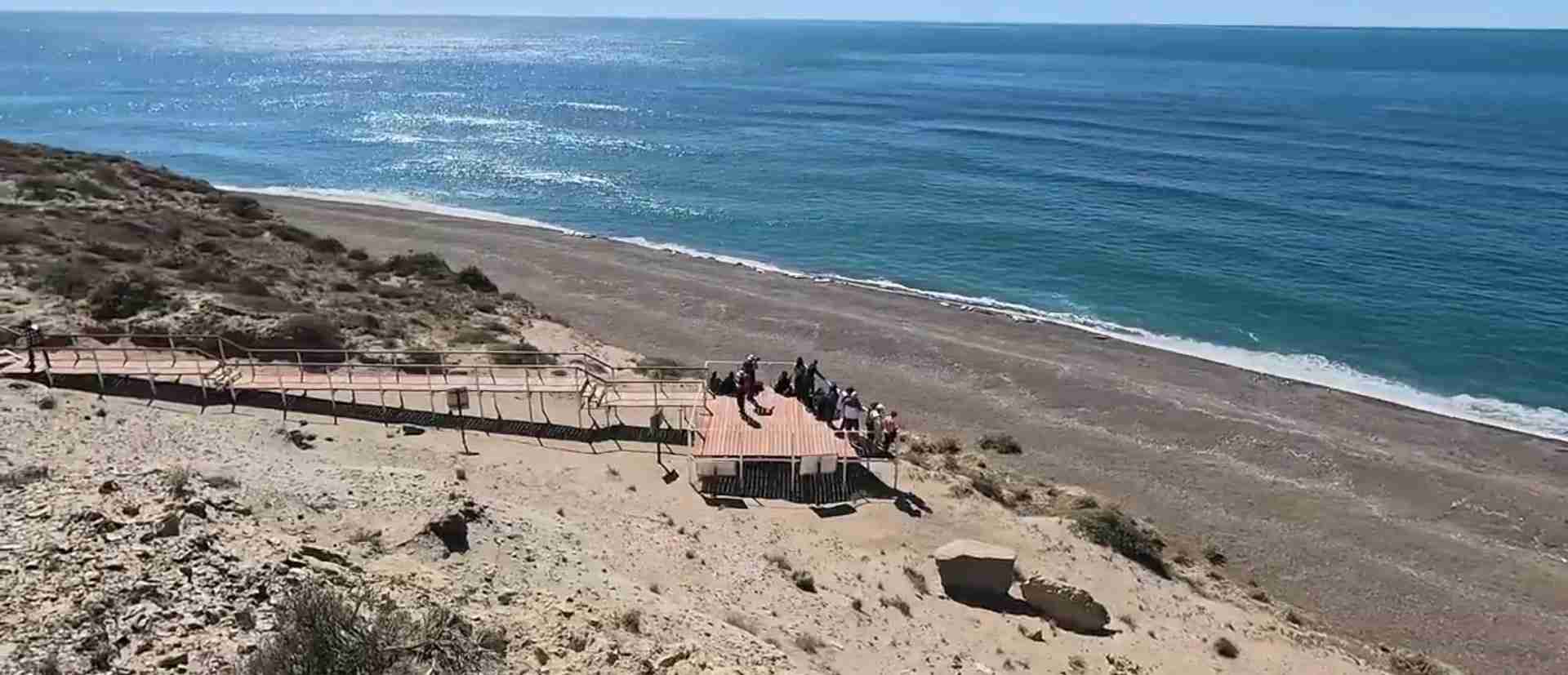
This dramatic 35-kilometer coastal inlet on Peninsula Valdés’ eastern shore creates a long, narrow bay separated from the Atlantic by a pebble barrier beach. The formation provides sheltered waters where elephant seals congregate in massive numbers, particularly during breeding season (December-March) when the beach hosts hundreds of seals including territorial bulls, nursing mothers, and playful pups.
Viewing occurs from clifftop platforms 30-50 meters above the beach, offering panoramic perspectives of the elephant seal colony spread across the shoreline. Telescopes and binoculars bring individual seals into detailed view, revealing the remarkable size difference between massive breeding bulls (up to 4,000 kg) and smaller females (800 kg). The sounds of the colony—roaring bulls, mother-pup communications, and the general cacophony of hundreds of animals—create an immersive sensory experience.
Interpretation signs explain elephant seal biology, breeding behavior, and conservation status. The species was hunted nearly to extinction for oil rendered from their thick blubber layer, with Peninsula Valdés populations recovering dramatically under protection. Visitors witness dramatic bull conflicts during breeding season as males battle for territory and female access, occasionally inflicting serious injuries during violent confrontations.
Punta Cantor and Return Journey (3:30-6:00 PM)
The tour’s final major stop showcases coastal scenery rather than specific wildlife concentrations, with viewpoints overlooking the Atlantic coastline’s dramatic geology. Rocky cliffs, pebble beaches, and wave-cut platforms demonstrate the peninsula’s dynamic coastal processes. Guanacos, rheas, and Patagonian maras often appear along roadside during the return journey, creating final wildlife photography opportunities.
Salina Grande, an extensive salt flat visible from Route 2, attracts flamingos and other water birds during seasons when rainfall creates shallow pools. The stark white salt surface contrasts dramatically with surrounding Patagonian steppe vegetation and distant ocean views. Some tours stop briefly for photos, while others pass en route to reaching Puerto Madryn before dark.
The return drive to Puerto Madryn covers approximately 100 kilometers on gravel and paved roads, arriving at hotels 5:30-6:30 PM depending on final stop selections and traffic. Guides provide summary commentary about the day’s sightings, conservation challenges, and Peninsula Valdés’ global significance as passengers reflect on extraordinary wildlife encounters.
Specialized Tour Options for 2026
Private Peninsula Valdés Tours
Private tour options provide customized Peninsula Valdés experiences with flexible schedules, personalized guiding, and ability to emphasize specific interests like photography, bird watching, or extended wildlife observation. Private vehicle tours for 2-4 people cost $280-400 per group for full-day excursions, excluding entrance fees and whale watching boats but including dedicated guide and flexible itinerary.
These tours depart at times convenient for clients rather than fixed 7:30 AM schedules, allow longer stops at productive wildlife locations, and can add destinations like Punta Norte (requiring 3-4 additional hours for 160-kilometer roundtrip from Puerto Pirámides) impractical for group tours. Photographers benefit enormously from private tours’ flexibility to position for optimal lighting, wait for behavioral moments, and revisit locations as conditions change.
The per-person cost premium over group tours ($280-400 for 2-4 people versus $80-120 per person for groups) provides worthwhile value for serious wildlife enthusiasts, photographers, and travelers with limited time requiring efficient customization. Private tours book directly with specialized operators rather than generic tour companies, requiring advance research to identify quality guides with deep wildlife knowledge and environmental commitment.
Photography-Focused Tours
Several operators offer Peninsula Valdés photography tours designed specifically for serious wildlife photographers, with emphasis on optimal positioning, behavioral anticipation, and technical guidance. These tours limit group size to 6-8 photographers maximum, use vehicles with larger windows and roof hatches for camera access, and employ guides with photography expertise understanding technical needs.
Photography tour itineraries prioritize lighting conditions, departing earlier (6:30-7:00 AM) to capture sunrise at strategic locations and scheduling afternoon stops for golden hour backlight on wildlife subjects. Extended stops (45-60 minutes versus 20-30 for standard tours) allow waiting for behavioral moments—elephant seal confrontations, whale breaches, bird interactions—rather than moving on fixed schedules.
These specialized tours cost $140-180 per person, the premium reflecting smaller groups, longer field time, and expert guidance. Most require serious camera equipment (DSLR or mirrorless with telephoto lenses 200mm+) rather than phone cameras, attracting dedicated enthusiast and professional photographers. Booking requires 4-8 weeks advance notice with limited departures, typically 2-3 weekly during peak season.
Multi-Day Peninsula Valdés Experiences
Travelers seeking deeper immersion stay overnight in Puerto Pirámides or peninsula estancias, eliminating the 2-hour round-trip transfer from Puerto Madryn and allowing dawn/dusk wildlife activity observation impossible on day tours. Puerto Pirámides accommodation ranges from budget hostels ($30-50) to mid-range hotels ($90-140) and luxury boutique properties ($180-250), all offering direct beach access and whale viewing from shore during season.
Estancia stays provide authentic Patagonian ranch experiences at properties within the reserve offering guided wildlife tours, traditional asado meals, and accommodations in restored ranch buildings. Estancia San Lorenzo ($200-300 per person including meals and activities) provides exclusive access to its massive Magellanic penguin colony plus private tours to remote peninsula locations. Rincón Chico ($250-350) emphasizes luxury lodge atmosphere with gourmet cuisine, spa services, and customized wildlife expeditions.
Two to three-day Peninsula Valdés experiences allow visiting both southern (Caleta Valdés) and northern (Punta Norte) sectors impossible to combine on single-day tours, with Punta Norte requiring separate full day due to remote location 80 kilometers from Puerto Pirámides. Multi-day stays also enable flexible scheduling around weather, with ability to reschedule activities if wind forces whale watching cancellations or rough seas prevent optimal boat tours.
Sample 2026 Day Trip Itineraries
Classic Whale Season Day Trip (September-October 2026)
7:45 AM: Hotel pickup in Puerto Madryn, 30-minute collection of passengers from multiple hotels before departing for Peninsula Valdés on Route 2. Guide provides orientation covering day’s schedule, wildlife expectations, and safety protocols for boat tours and viewing platforms.
9:15 AM: Arrive Carlos Ameghino Interpretation Center, 30-minute stop exploring exhibits, using facilities, and gaining educational foundation for peninsula wildlife and conservation. Observation deck offers first panoramic views of both Golfo Nuevo and Golfo San Matías.
10:30 AM: Arrive Puerto Pirámides, 90-minute whale watching boat tour departing beach area. Observe southern right whales breaching, tail-slapping, and spy-hopping in Golfo Nuevo waters, with mothers and calves creating spectacular displays. Semi-submersible option allows underwater whale viewing through transparent hull sections.
12:30 PM: Lunch in Puerto Pirámides (not included in tour price), with free time for village exploration, beach walks, or souvenir shopping. Restaurants serve seafood, grilled meats, and local specialties. Optional activities include visiting sea lion colony at Punta Pirámides promontory accessible via short walk from village.
2:00 PM: Depart Puerto Pirámides for southern peninsula route, driving 75 kilometers on gravel roads through Patagonian steppe landscape. Wildlife spotting along route includes guanacos, rheas, Patagonian maras, and various bird species.
3:15 PM: Arrive Caleta Valdés, 45-60 minute stop at clifftop viewing platforms overlooking elephant seal colony. During September-October, observe bulls establishing territories and early breeding activity, with hundreds of seals covering the beach. Photography opportunities from elevated positions provide unique perspectives on seal behavior and coastal scenery.
4:30 PM: Continue to Punta Cantor for coastal geology viewing and Atlantic Ocean panoramas, 15-20 minute stop. Return journey begins toward Puerto Madryn via interior route passing Salina Grande salt flats, where flamingos and other birds congregate if water conditions permit.
6:00 PM: Arrive Puerto Madryn hotels after comprehensive Peninsula Valdés experience covering 240 kilometers total driving and 10+ hours touring. Evening free for dinner and relaxation after full wildlife day.
Day Cost Summary: Full-day tour $100, reserve entrance $35, whale watching boat tour $75, lunch $25-35, snacks and drinks $10-15. Total day cost: $245-260 per person.
Summer Wildlife Focus (January-February 2027)
8:00 AM: Depart Puerto Madryn for Peninsula Valdés summer tour emphasizing elephant seal breeding, penguin colonies, and sea lion rookeries. No whale watching available, allowing more time at terrestrial wildlife locations.
9:30 AM: Carlos Ameghino Interpretation Center stop for orientation and exhibits, same as whale season but with different seasonal wildlife information highlighted.
10:45 AM: Estancia San Lorenzo penguin colony visit, walking among 600,000+ Magellanic penguins in one of South America’s largest colonies. Adults feed growing chicks while defending nests from predatory gulls, creating active, noisy spectacle. Two-kilometer trail through colony allows close observation and photography of penguin families.
12:30 PM: Lunch stop in Puerto Pirámides or at Estancia San Lorenzo restaurant, followed by beach time and village exploration. Summer temperatures make swimming possible for hardy visitors in still-cold Patagonian waters (18-20°C/64-68°F).
2:30 PM: Caleta Valdés elephant seal breeding colony observation, with peak activity during January as bulls defend harems, females nurse newborn pups, and battles occur between rival males. The breeding drama and sheer numbers of animals create impressive spectacle rivaling whale watching for visual impact.
4:00 PM: Punta Delgada lighthouse and sea lion colony visit, observing breeding activity at rocky outcrop hosting hundreds of sea lions. December-January timing shows newborn pups learning to swim alongside protective mothers.
5:30 PM: Return journey to Puerto Madryn via inland route, arriving hotels 6:30-7:00 PM. Longer daylight hours during summer allow extended afternoon viewing without darkness concerns.
Day Cost Summary: Full-day summer tour $85, reserve entrance $35, Estancia San Lorenzo penguin colony $15, lunch $22-32, snacks $10-15. Total day cost: $167-182 per person (no whale watching boat tour available/needed).
Practical Guidance for 2026 Visits
Booking Tours and Timing
Advance booking for Peninsula Valdés tours ranges from essential to optional depending on season and tour type. Peak whale watching months (September-October 2026) require 2-4 weeks advance booking for quality operators offering bilingual guides and comfortable vehicles. Budget operators with larger groups often have availability week-of, though quality varies significantly and last-minute bookings risk settling for inferior experiences.
Summer season (December-February) and shoulder periods (April-May, November) allow booking 1-2 weeks ahead, with walk-in booking sometimes possible day-before during quiet periods. However, any advance booking provides better vehicle selection and guide assignment, as operators prioritize advance reservations with their best guides and smallest-group vehicles.
Tours book directly with operators through websites, by email, or through hotels. Hotel booking desks add 10-20% commission but provide convenience and handle confirmations. Direct operator booking saves money but requires more communication effort. Reading reviews on TripAdvisor and Google helps identify reputable operators, as quality ranges dramatically from excellent professional services to mediocre tourist-volume operations.
What to Bring on Your Peninsula Valdés Day Trip
Layered clothing proves essential regardless of season, as microclimates vary dramatically across the peninsula and throughout the day. Summer visitors need light breathable layers for midday heat but warm jacket for early morning and evening coastal locations where wind creates significant chill. Winter travelers require serious cold-weather gear including insulated jacket, warm hat, gloves, and thermal base layers for extended outdoor viewing at exposed clifftop platforms.
Sun protection ranks critically important given Patagonia’s intense UV levels amplified by ozone hole effects. SPF 50+ sunscreen (apply generously before tour departure and reapply after whale watching boat tour), wide-brimmed hat, quality UV-blocking sunglasses, and lip balm prevent severe sunburn common even on cloudy days. The reflective ocean surface doubles UV exposure during boat tours.
Binoculars enhance every wildlife encounter, bringing distant animals into detailed view for behavior observation and species identification. Cameras with telephoto capability (200-300mm minimum) capture memorable photos, though phone cameras suffice for casual documentation. Whale watching photography requires fast shutter speeds (1/500+ second) and continuous shooting mode to capture breach moments. Extra camera batteries and memory cards prove wise given full-day shooting opportunities.
Snacks and water deserve packing despite tour stops for lunch and bathrooms, as long drives between locations and extended wildlife viewing create hunger and thirst. Tours provide limited snack stops, making self-sufficient provisioning valuable. Bathroom facilities exist at the Interpretation Center and Puerto Pirámides but nowhere else, requiring strategic use of available facilities.
Photography Tips for Peninsula Valdés Wildlife
Whale photography presents unique challenges combining movement, distance, boat rocking, and spray. Continuous shooting (burst mode) increases odds of capturing peak breach moments when whales launch from water, showing maximum body exposure. Fast shutter speeds (1/500-1/1000 second minimum) freeze motion, requiring higher ISO settings (800-1600) on cloudy days common in Patagonia. Image stabilization helps counteract boat movement, though still requires steady hands and good timing.
Elephant seal photography benefits from clifftop elevated positions at Caleta Valdés, allowing overview shots showing colony extent and detailed telephoto images isolating individual behavior. Wide-angle lenses (16-35mm) capture landscape context with seals as foreground elements, while telephoto (200-400mm) brings bulls’ battle sequences and mother-pup interactions into frame-filling compositions. The animals remain stationary for extended periods, allowing time to compose and perfect exposures unlike whales’ fleeting moments.
Penguin colony photography at Estancia San Lorenzo provides easiest wildlife photography given close bird approaches (1-2 meters from trail) and constant activity. Standard zoom lenses (24-105mm) handle most situations, with moderate telephoto (70-200mm) isolating individual penguin expressions and family interactions. Ground-level shooting positions (low angles) create eye-level penguin portraits showing personality, while standing shots emphasize colony numbers extending to horizon.
Respecting Wildlife and Conservation Rules
Peninsula Valdés operates under strict UNESCO World Heritage protection requiring specific tourist behavior protocols. Whale watching boats maintain mandatory 50-meter minimum approaches, with engines shut off when whales voluntarily swim closer. This regulation protects whales from harassment while allowing natural approaches driven by whale curiosity rather than tourist pressure. Passengers follow guide instructions regarding noise levels, flash photography prohibitions, and safe positioning during whale approaches.
Land-based wildlife viewing requires staying on marked trails and behind barriers at viewing platforms. Approaching elephant seals, sea lions, or penguins beyond designated limits creates stress causing mothers to abandon pups, bulls to charge perceived threats, or nesting birds to flee exposing eggs to predators. Rangers patrol heavily visited sites enforcing distance rules, with violations resulting in fines and potential ban from the reserve.
Litter prohibition applies absolutely throughout Peninsula Valdés, with zero tolerance for trash disposal outside designated bins. The pristine environment suffers severe impacts from plastic waste threatening wildlife through ingestion and entanglement. Tour vehicles carry trash bags for passenger waste disposal back in Puerto Madryn. Visitors help conservation by participating in beach cleanup efforts organized by local NGOs during Peninsula Valdés visits.
Frequently Asked Questions About Peninsula Valdés Day Trips 2026
Can you visit Peninsula Valdés without a tour?
Yes, independent Peninsula Valdés visits are possible using daily public bus service from Puerto Madryn to Puerto Pirámides ($12-15 roundtrip) departing 9:30 AM and returning 6:00 PM. This allows village exploration, whale watching boat tour booking, and beach time but limits access to remote viewpoints like Caleta Valdés and Punta Norte requiring private transportation. Rental cars ($50-70 daily) provide complete independence for exploring the reserve at personal pace, navigating gravel roads, and creating customized itineraries impossible on fixed bus schedules.
Is the reserve entrance fee per person or per vehicle?
Peninsula Valdés entrance fee charges per person not per vehicle, costing $30-45 for foreign visitors and significantly less for Argentine citizens. The fee provides 24-hour access valid until midnight following purchase, allowing multi-day stays in Puerto Pirámides without repayment. Payment accepts cash (Argentine pesos or US dollars), credit cards, and debit cards at the entrance station on Carlos Ameghino Isthmus. Tours typically collect entrance fees from passengers at tour departure, paying collectively at the gate.
What if whale watching boat tours are canceled?
Whale watching cancellations occur in approximately 5% of scheduled departures during peak season, increasing to 10-15% during winter months when stronger winds create unsafe sea conditions. Operators reschedule canceled tours for following days when possible or provide full refunds if rescheduling proves impossible. Tour companies build schedule flexibility allowing canceled whale watching to shift to next-day Peninsula Valdés tours, though this requires extending Puerto Madryn stays. Travel insurance rarely covers tour cancellations due to weather, making schedule buffer days wise precaution.
Can children participate in Peninsula Valdés tours?
Children are welcome on Peninsula Valdés tours with considerations for age-appropriate activities. Boat tours typically require minimum age 4-5 years, with life jackets provided in all sizes and strict safety protocols. The long day (10+ hours) challenges young children with attention spans and physical needs, though wildlife encounters captivate most kids. Family-focused operators offer shorter tour options (6-8 hours) skipping distant viewpoints while including whale watching and closer locations. Some families split days between parents taking Peninsula Valdés tours alternately while others stay with children in Puerto Madryn.
What are the bathroom facilities like on tours?
Tours provide bathroom access at Carlos Ameghino Interpretation Center (first stop), Puerto Pirámides village (lunch stop), and occasionally at Caleta Valdés seasonal facilities. The 2-3 hour stretches between facilities require planning, especially for children and elderly travelers. Operators advise using available bathrooms at each stop. No facilities exist along gravel roads between locations, with emergency stops limited to finding discrete spots behind vehicles in vast open landscape. Most visitors manage comfortably given advance notice and strategic facility use.
How rough are whale watching boat rides?
Whale watching boats operate in protected Golfo Nuevo waters calmer than open ocean, though Patagonian winds create choppy conditions ranging from gentle rocking to moderate waves depending on weather. Seasickness affects perhaps 10-15% of passengers, primarily those already prone to motion sickness. Preventive medications (Dramamine, ginger supplements) taken 30-60 minutes before departure help significantly. Boats pause or reduce speed during rough patches, and captains occasionally cancel tours if conditions exceed safe thresholds. Most passengers find the experience manageable, with whale excitement overcoming any discomfort.
Are tours conducted in English?
Major tour operators offer bilingual Spanish-English guides as standard for groups with international tourists, providing narration in both languages throughout the day. Smaller operators or budget tours may offer Spanish-only guides with printed English information sheets. Confirming language capabilities when booking prevents communication disappointments. Private tours guarantee preferred language guide (English, French, German, Portuguese) with advance arrangement. Puerto Pirámides village has limited English among restaurant and shop staff, requiring Spanish basics or translation apps for independent travelers.
Can you see whales in summer months?
Southern right whales depart Peninsula Valdés by mid-late December, making January-March whale-free months. Tour operators shift summer focus to elephant seal breeding, penguin colonies, sea lion rookeries, and potential orca sightings at Punta Norte rather than whale watching. Some tourists prefer summer wildlife diversity over single-species whale focus, enjoying warm weather and active pinniped breeding drama. Year-round visitors comparing seasons find whale months (June-December) deliver more iconic singular experiences, while summer provides broader wildlife exposure across multiple species.
How far in advance should you book for September-October 2026?
Peak whale watching months (September-October 2026) require booking quality tours 3-4 weeks ahead, with popular operators selling out earlier during holiday weekends and Argentine school vacation periods. Accommodation needs even earlier booking (8-12 weeks) for preferred hotels and room types, as Puerto Madryn’s limited quality inventory fills quickly. Last-minute bookings find availability with budget operators and inferior accommodations but sacrifice quality during the year’s single best wildlife window. Conservative planning suggests booking Peninsula Valdés components immediately after confirming flights to Argentina.
What is Punta Norte and why isn’t it on standard tours?
Punta Norte occupies the peninsula’s northern tip 80 kilometers from Puerto Pirámides, hosting important sea lion and elephant seal colonies plus the famous orca beach-hunting ground where killer whales intentionally strand themselves to capture seal pups. The remote location requires 3-4 additional driving hours making single-day combination with southern viewpoints impractical on standard tours. Dedicated Punta Norte tours operate separately (full-day excursions $100-140) focusing entirely on this location during orca hunting season (March-April, October-December). Multi-day Peninsula Valdés stays allow visiting both southern (Caleta Valdés) and northern (Punta Norte) sectors across separate days.