Colonia del Sacramento Day Trip from Buenos Aires 2026: UNESCO Historic Quarter
Key Takeaways
- Ferry pricing for 2026: Round-trip fast ferry tickets cost $80-170 USD with economy class averaging $100-120 and business class reaching $140-170, book 1-2 weeks ahead for best rates
- Journey duration: Fast ferries complete the 50-kilometer crossing in 50-75 minutes each way, while slow ferry services require 3 hours making them impractical for day trips
- UNESCO significance: Historic Quarter designated World Heritage Site in 1995 represents South America’s finest preserved Portuguese-Spanish colonial fusion architecture from 1680 founding
- Optimal timing: Book morning departures (8:00-9:00 AM) and evening returns (5:00-6:00 PM) allowing 7-8 hours exploration time in Colonia’s compact historic district
- Entry requirements: No advance visa needed for most nationalities – receive 90-day tourist stamp upon Uruguay entry, passport validity minimum 6 months required
- Budget planning: Day trip costs range $140-220 USD per person including ferry, meals, attractions, and walking tour for complete UNESCO quarter experience
Planning Your Colonia del Sacramento UNESCO Experience in 2026
Colonia del Sacramento stands as Uruguay’s oldest city and one of South America’s most remarkable colonial preservation success stories, earning UNESCO World Heritage designation in 1995 for its exceptionally preserved Portuguese-Spanish architectural fusion. Founded in 1680 by Portuguese settlers as Nova Colônia do Sacramento, this strategic military outpost on the Río de la Plata’s northern shore faced Buenos Aires across 50 kilometers of estuary waters, representing Portugal’s territorial ambitions against Spanish colonial dominance. The resulting century-long territorial dispute between European powers created Colonia’s unique architectural character – buildings reflecting successive Portuguese, Spanish, and later independent Uruguayan influences layered across generations of construction and reconstruction.
Your 2026 day trip from Buenos Aires to Colonia del Sacramento offers one of the world’s most convenient international border crossings, with modern high-speed ferries completing the journey in approximately one hour. This accessibility transformed Colonia into a premier Buenos Aires escape destination, attracting thousands of Argentine and international visitors seeking respite from urban intensity in Colonia’s tranquil cobblestone streets and colonial ambiance. The Historic Quarter (Barrio Histórico) encompasses roughly 12 compact blocks containing remarkably preserved 17th-19th century architecture, allowing thorough exploration in 6-8 hours making single-day visits entirely practical.
Understanding Colonia’s UNESCO significance enhances appreciation during exploration. The World Heritage designation specifically recognizes Colonia’s urban planning departure from rigid Spanish colonial grid patterns imposed throughout Latin America under “Laws of the Indies.” Instead, Portuguese founders adapted layout to natural topographical features, creating irregular street patterns, intimate plazas, and organic urban development contrasting sharply with geometric precision characterizing Spanish colonial cities. This planning philosophy, combined with successive architectural contributions from Portuguese, Spanish, and post-independence periods, created the distinctive heterogeneous urban fabric earning World Heritage recognition.
People Also Ask About Colonia del Sacramento 2026
How much does the Buenos Aires to Colonia ferry cost in 2026?
Round-trip fast ferry tickets between Buenos Aires and Colonia del Sacramento cost $80-170 USD in 2026 depending on operator, booking timing, and class selection. Check ferry company websites for current official rates as pricing may vary. Economy class averages $100-120 USD for advance bookings made 7-14 days ahead, while last-minute bookings (1-3 days before travel) may increase 20-30%. Business class offers premium seating, lounge access, and priority boarding for $140-170 USD. Children ages 4-11 receive 20-30% discounts, infants under 4 travel free. Prices exclude optional travel insurance ($8-12 USD) and premium seat selection fees ($5-10 USD).
How long does the ferry from Buenos Aires to Colonia take in 2026?
Fast ferry services complete the 50-kilometer crossing in 50-75 minutes depending on vessel type and weather conditions. Buquebus operates express catamarans completing crossings in 50-60 minutes, while Colonia Express services require 60-75 minutes. Slow ferry services take approximately 3 hours making them impractical for day trips – these mainly serve vehicles and cargo transport. For 2026 day trip planning, always book fast ferry services ensuring maximum exploration time in Colonia’s historic quarter.
Do you need a visa to visit Colonia del Sacramento from Buenos Aires in 2026?
No advance visa required for most nationalities including United States, Canada, European Union, United Kingdom, Australia, and New Zealand citizens. Visitors receive 90-day tourist entry stamp upon arrival in Uruguay during ferry immigration processing. Passport must show minimum 6 months validity from entry date. Return or onward travel documentation may be requested but rarely enforced for obvious day-trippers. Immigration processing occurs at ferry terminal before departure from Buenos Aires (Argentine exit) and upon arrival in Colonia (Uruguay entry), requiring 20-30 minutes total.
Is Colonia del Sacramento worth visiting as a day trip in 2026?
Yes, Colonia del Sacramento ranks among South America’s most rewarding day trips from any major city. The UNESCO Historic Quarter’s compact 12-block size allows complete exploration in 6-8 hours including lighthouse climbing, museum visits, waterfront walking, and leisurely meals at colonial-setting restaurants. Architectural preservation quality exceeds most Latin American colonial cities, with authentically maintained 17th-19th century buildings, cobblestone streets, and historic ambiance creating immersive experience. Ferry convenience (50-75 minute crossing) maximizes exploration time while minimizing travel fatigue compared to bus alternatives requiring 5+ hours via land route around Río de la Plata estuary.
Extended multi-day tours – 5+ days
Featured Uruguay Multi-Day Tour Packages

3 days
Uruguay 3-Day Discovery Tour
- ✓ Comprehensive Uruguay experience
- ✓ Expert local guides included
- ✓ All accommodation included
- ✓ Transportation provided

5 days
Uruguay 5-Day Highlights Experience
- ✓ Comprehensive Uruguay experience
- ✓ Expert local guides included
- ✓ All accommodation included
- ✓ Transportation provided

7 days
Uruguay 7-Day Cultural Journey
- ✓ Comprehensive Uruguay experience
- ✓ Expert local guides included
- ✓ All accommodation included
- ✓ Transportation provided

10 days
Uruguay 10-Day Complete Adventure
- ✓ Comprehensive Uruguay experience
- ✓ Expert local guides included
- ✓ All accommodation included
- ✓ Transportation provided
Multi-day tour packages powered by TourRadar. Prices and availability subject to change.
Essential Planning Information 2026
Ferry Operator Selection and Pricing 2026
Three major operators serve Buenos Aires-Colonia route in 2026: Buquebus (premium service leader), Colonia Express (competitive pricing), and Seacat Colonia (budget-focused option owned by Buquebus parent company). All three maintain comparable safety standards, vessel comfort, and departure reliability, with pricing differences primarily reflecting booking timing rather than service quality disparities.
Buquebus operates Buenos Aires’ main ferry terminal at Darsena Norte in Puerto Madero district, offering 3-5 daily departures depending on season. Fast ferry services (Francisco, Eladia Isabel vessels) complete crossings in 50-60 minutes carrying 350-450 passengers in economy and business class seating. Round-trip economy fares range $110-140 USD for 7-14 day advance bookings, increasing to $130-160 USD for last-minute purchases. Check buquebus.com for current official rates as pricing may vary. Business class premium adds $30-40 per person providing lounge access, priority boarding, premium refreshments, and forward-section seating with extra legroom.
Colonia Express operates from Terminal Internacional de Cruceros on Avenida Inmigrantes, offering 4-6 daily services with slightly more competitive base pricing than Buquebus. Round-trip economy tickets average $90-120 USD for advance bookings, though significant discounts (30-40% off) apply to very early bookings made 14+ days ahead. The company positions itself as value alternative to Buquebus premium pricing while maintaining modern vessels and professional service standards.
Seacat Colonia provides budget-conscious option sharing Buquebus terminal facilities but operating separate vessels. Round-trip fares start $80-100 USD for advance bookings, representing 20-30% savings versus Buquebus economy on comparable departure times. Service quality remains professional though vessels may show slightly more wear than Buquebus’ newer fleet. Budget travelers prioritizing cost savings over premium amenities find Seacat excellent value.
Immigration and Documentation Requirements 2026
Passport validity must extend minimum 6 months beyond planned Uruguay entry date. Expired or nearly-expired passports face entry denial – verify expiration dates well ahead of booking. Second nationality passport holders should use same document for both Argentine exit and Uruguay entry to avoid immigration system confusion.
Immigration processing occurs twice during day trip: Argentine departure control at Buenos Aires ferry terminal before boarding, and Uruguay entry control at Colonia terminal upon arrival. Argentine exit typically requires 5-10 minutes queuing for passport stamp and fingerprint scan. Uruguay entry involves similar process with tourist entry stamp granting 90-day stay. Total immigration time: 20-30 minutes combined both directions.
Return ferry boarding requires 30-40 minutes advance arrival at Colonia terminal for Uruguay exit processing before boarding. Arrive Colonia ferry terminal by 4:30 PM for 5:00 PM departure, 5:30 PM for 6:00 PM departure. Late arrivals may miss boarding with tickets forfeited – ferry schedules maintain strict punctuality.
Ferry Terminal Locations and Access 2026
Buquebus and Seacat Colonia depart Buenos Aires from Darsena Norte terminal at Cecilia Grierson and Avenida Antártida Argentina in Puerto Madero. Taxi access: 10-15 minutes from downtown microcentro hotels costing $8-12 USD. Subway access: Line H to Las Heras station requires 800-meter walk across railroad tracks (poorly signed and potentially unsafe with luggage). Recommendation: taxi provides safer, simpler access especially for early morning departures.
Colonia Express operates from Terminal Internacional de Cruceros at Avenida Inmigrantes 1700 in Buenos Aires port district. Taxi access: 8-12 minutes from downtown costing $7-10 USD. This terminal sits slightly north of Buquebus location but both serve Puerto Madero general area.
Colonia del Sacramento ferry terminal sits adjacent to historic quarter entrance, allowing immediate UNESCO site access upon Uruguay arrival. Taxi service unnecessary for historic quarter exploration – exit terminal, walk 100 meters, and enter Barrio Histórico through iconic Portón de Campo (Field Gate). This convenience eliminates post-arrival transportation planning, a significant practical advantage over other day trip destinations.
Onboard Ferry Experience and Amenities
Modern fast ferries provide comfortable 50-75 minute crossings with aircraft-style seating, large windows for Río de la Plata viewing, climate-controlled cabins, and smooth ride quality in normal weather conditions. Expect minor rocking in rough conditions though severe motion sickness remains rare on these large stabilized vessels.
Onboard amenities include duty-free shop selling Argentine wine, Uruguayan leather goods, electronics, and cosmetics at tax-exempt pricing competitive with airport duty-free. Small café serves coffee, sandwiches, snacks, and alcoholic beverages at moderate markup versus land prices. WiFi availability varies by operator and vessel – Buquebus typically provides complimentary connection while budget operators may charge $5-8 USD.
Seating assignments: None on economy tickets – board early for preferred window seats and forward cabin positions with reduced engine noise. Business class tickets may include assigned seating depending on operator. Luggage storage in overhead compartments (small bags) or designated luggage racks (large bags) similar to airline configuration.
Exploring the UNESCO Historic Quarter 2026
Barrio Histórico Layout and Navigation
Colonia’s UNESCO-designated Historic Quarter encompasses approximately 12 square blocks bounded by water on three sides, creating compact peninsula configuration ideal for walking exploration. The entire district measures roughly 400 meters north-south by 300 meters east-west, allowing complete perimeter circuit in 20-25 minutes leisurely walking pace. This extraordinary compactness means no attraction sits more than 10 minutes walking from any other, eliminating navigation stress and transportation needs.
Portuguese colonial planning rejected Spanish grid orthodoxy, instead creating organic street layout following natural topography and military defensive requirements. Result: Winding cobblestone streets, irregular plaza shapes, and unexpected visual discoveries around corners. The irregular pattern initially confuses visitors accustomed to geometric Latin American colonial city layouts, but small district size prevents genuine disorientation. Recommendation: Embrace exploratory wandering rather than strict route planning – getting “lost” in 12 compact blocks proves impossible and yields spontaneous architectural discoveries.
Main thoroughfare Calle de los Suspiros (Street of Sighs) runs from Portón de Campo entrance toward waterfront, showcasing Colonia’s most photographed colonial buildings with preserved Portuguese-style facades, wooden shutters, and clay tile roofs. This street serves as Historic Quarter “spine” connecting major attractions and providing orientation reference for navigation. Plaza Mayor (Main Square) anchors district center, surrounded by primary museums, Basílica del Santísimo Sacramento, and numerous cafés creating natural gathering point for rest breaks.
Key UNESCO Heritage Sites and Attractions 2026
Faro de Colonia (Colonial Lighthouse): Colonia’s most recognizable landmark rises from 17th-century San Francisco Convent ruins, built 1857 to guide Río de la Plata shipping. Climb narrow spiral staircase (approximately 110 steps) to observation platform offering panoramic views across historic quarter’s tile roofs, surrounding waters, and distant Buenos Aires skyline on clear days. Entrance fee: $3-5 USD. Operating hours: 10:00 AM-6:00 PM daily. Photography warning: Tight interior spaces challenge large camera equipment, but summit rewards effort with exceptional cityscape compositions. Allow 20-30 minutes including climb, viewing, and descent.
Basílica del Santísimo Sacramento: Uruguay’s oldest church traces foundations to original 1680 Portuguese settlement, though current structure largely dates from 18th-century Spanish reconstructions following repeated battle damage. Simple exterior conceals ornate baroque interior with gold-leaf altar work, colonial-era religious paintings, and historic artifacts. Free entry, respectful dress required. Active Catholic parish maintains daily mass schedule – check posted times to avoid service interruptions during tourist visits. Photography permitted without flash.
Portón de Campo (Field Gate): Massive stone gateway dating from 1745 served as Colonia’s primary fortified entrance when defensive walls surrounded settlement protecting against Spanish attacks. Original wooden drawbridge mechanism remains visible though no longer operational. This iconic structure provides perfect Historic Quarter introduction – most visitors enter through Portón de Campo arriving from ferry terminal. Free access, excellent photography location especially during golden hour when warm light illuminates honey-colored stone.
Plaza Mayor Museums: Four small museums surrounding main plaza preserve different aspects of colonial heritage. Museo Municipal (Municipal Museum) displays scale model of 1762 Colonia settlement showing complete defensive wall system, plus period furniture and household implements. Museo Portugués (Portuguese Museum) focuses on Portuguese colonial period with ceramics, weapons, and architectural fragments. Casa Nacarello exhibits colonial-era domestic life with preserved period rooms. Espacio Portugués showcases additional Portuguese porcelain and furniture collections. Combined entrance ticket: $8-12 USD covering all four museums. Individual museum visits: $3-5 USD each. Operating hours: 11:00 AM-5:00 PM (closed Mondays). Allow 90-120 minutes for comprehensive four-museum circuit.
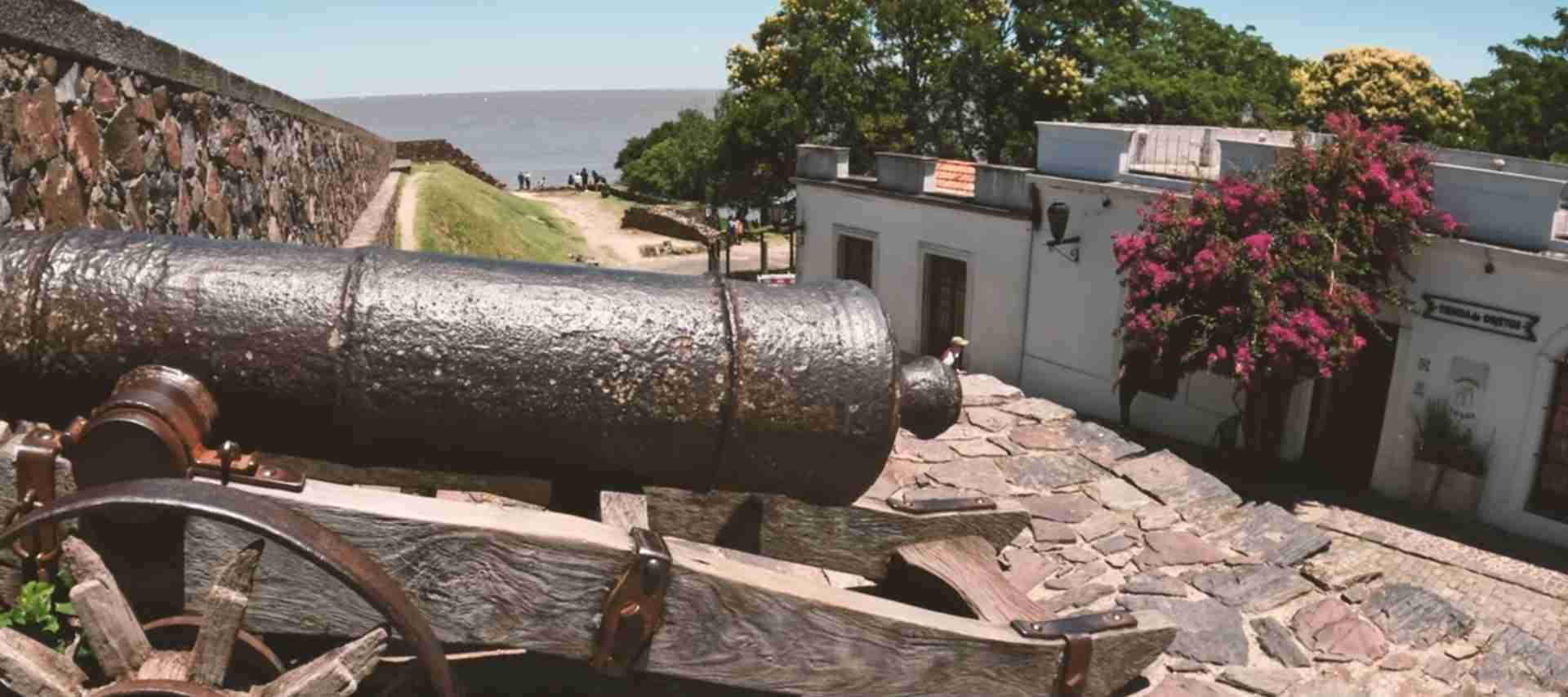
Calle de los Suspiros (Street of Sighs): Colonia’s most photographed street features exceptionally preserved Portuguese colonial architecture with single-story whitewashed houses, cobblestone paving, and flowering bougainvillea cascading over walls. Morning light (8:00-10:00 AM) provides optimal photography conditions with side-lighting emphasizing texture. Name origin: Multiple competing legends exist, most involving romantic separations during colonial military conflicts. Free access at all hours, though daytime visiting recommended for safety.
Waterfront Promenade (Rambla Costanera): Paved walkway encircles Historic Quarter peninsula offering Río de la Plata views, sunset watching, and distant Buenos Aires perspectives. Locals jog and walk dogs along this path creating pleasant community atmosphere. Benches at intervals provide rest spots. Free access 24 hours daily. Sunset timing: approximately 6:30-7:30 PM during summer months (December-February), 5:00-6:00 PM during winter (June-August). Budget 30-45 minutes for complete waterfront circuit.
Architectural Heritage and Colonial Fusion
Colonia’s UNESCO designation specifically recognizes unique Portuguese-Spanish architectural fusion resulting from contested colonial ownership. Portuguese building tradition emphasized practical military functionality, thick stone walls, small windows for defensive purposes, and modest scale reflecting Portugal’s more limited colonial resources compared to Spanish wealth. Spanish reconstruction periods introduced baroque ornamentation, larger window openings, ornate doorways, and more elaborate religious architecture reflecting Catholic Counter-Reformation aesthetics.
19th-century post-independence period added third architectural layer when European immigrant artisans (particularly Italians) settled in Colonia bringing Mediterranean building influences. Result: Individual buildings may show Portuguese foundations, Spanish baroque additions, and Italian neoclassical embellishments layered across 300 years of construction history. This temporal palimpsest creates Colonia’s distinctive character differentiating it from “pure” Portuguese or Spanish colonial cities.
Building materials reflect local availability and colonial technology: Sandstone quarried from Colonia peninsula for foundations and wall construction, clay tiles manufactured in local kilns for roofing, wooden structural elements imported from Uruguayan interior forests. These materials age beautifully, acquiring honey-gold patinas on stone surfaces and weathered textures on clay tiles contributing to Historic Quarter’s harmonious visual coherence.
Optimal Timing and Daily Schedule 2026
Recommended Ferry Schedule for 2026 Day Trips
Book morning departure 8:00-9:00 AM from Buenos Aires arriving Colonia 9:00-10:15 AM, combined with evening return 5:00-6:00 PM departing Colonia arriving Buenos Aires 6:00-7:15 PM. This schedule provides approximately 7-8 hours exploration time in Colonia, sufficient for thorough Historic Quarter coverage, leisurely meals, and relaxed museum visits without rushed itinerary stress.
Earlier departures (6:30-7:00 AM available on some operators) maximize Colonia time but require pre-dawn Buenos Aires hotel departure and breakfast aboard ferry or in Colonia. Benefit: Beat day-tripper crowds at major attractions, enjoy peaceful early-morning cobblestone street photography, and access museums immediately upon opening. Trade-off: Exhausting early start especially for travelers experiencing Buenos Aires nightlife previous evening.
Later departures (10:00-11:00 AM) allow relaxed Buenos Aires morning but reduce Colonia exploration to 5-6 hours making itinerary feel rushed. Avoid afternoon departures after 11:00 AM as return ferry timing forces 3:00-4:00 PM Colonia departure providing insufficient UNESCO quarter experience. Day trips require full-day commitment – half-day timing proves inadequate for 50-kilometer international crossing effort.
Sample Day Trip Itinerary 2026
7:00 AM: Depart Buenos Aires hotel by taxi heading to Darsena Norte ferry terminal. Morning traffic minimal allows 10-15 minute transfer from microcentro hotels. Grab coffee and light breakfast at hotel or wait for onboard café service.
7:30 AM: Arrive ferry terminal for 8:30 AM departure. Check-in counter opens 60-90 minutes before departure. Present passport and printed/digital ticket for boarding pass issuance. Proceed through Argentine immigration control including exit stamp and fingerprint scan (5-10 minutes queuing).
8:00-8:15 AM: Board ferry, store luggage, select seating (arrive early for window seats), and settle for crossing. Duty-free shopping and café browsing available during 50-75 minute journey.
9:00-9:15 AM: Arrive Colonia del Sacramento ferry terminal. Uruguay immigration processing provides entry stamp and tourist documentation (5-10 minutes). Exit terminal directly into Historic Quarter – no taxi or additional transport needed. Exchange Argentine pesos for Uruguayan pesos at terminal exchange office if needed for cash purchases (credit cards widely accepted in Historic Quarter).
9:30-10:30 AM: Initial Historic Quarter orientation walk starting from Portón de Campo entrance. Follow Calle de los Suspiros to Plaza Mayor, completing preliminary orientation circuit identifying lunch restaurant options, afternoon museum visits, and photography locations. Morning light provides optimal cobblestone street photography conditions – capture iconic shots before midday harsh overhead sun.
10:30-11:30 AM: Climb Faro de Colonia (lighthouse) for panoramic overview and orientation reference. Entrance fee $3-5 USD. Summit viewing platform provides 360-degree perspectives helping mental map construction. Photography timing ideal before harsh midday sun. Descend lighthouse, explore San Francisco Convent ruins at base structure.
11:30 AM-12:30 PM: Museo Municipal and Plaza Mayor museum circuit. Purchase combined ticket ($8-12 USD covering all four Plaza Mayor museums) or select priority museums based on interests. Air-conditioned museum interiors provide welcome relief from summer heat. Scale model of 1762 Colonia in Museo Municipal particularly helps visualizing complete defensive wall system no longer existing.
12:30-2:00 PM: Lunch at Historic Quarter restaurant. Budget options: $15-25 USD per person for traditional Uruguayan parrilla (grilled meats), chivito sandwiches, or pasta. Mid-range dining: $25-40 USD per person at colonial-setting restaurants with waterfront terraces and wine service. Uruguayan wine (Tannat varietal) pairs excellently with grilled meats – try half-bottle ($12-18 USD) avoiding afternoon alcohol overconsumption affecting remaining exploration energy.
2:00-3:30 PM: Post-lunch exploration focusing on photography, shopping, and discovering hidden corners. Artisan shops sell locally-made leather goods, ceramics, and traditional crafts (negotiate prices for better deals versus accepting marked prices). Wander secondary streets away from main tourist thoroughfares discovering residential areas, small neighborhood plazas, and local daily life. Waterfront promenade walk provides gentle post-lunch exercise with river views.
3:30-4:30 PM: Final museum visits, café stop for Uruguayan coffee and alfajores (caramel-filled cookies), or relaxed plaza sitting observing local life. Purchase small gifts and souvenirs for Buenos Aires friends. Make final photography passes at favorite locations capturing afternoon light angles.
4:30 PM: Begin walking toward ferry terminal for 5:30-6:00 PM departure. Allow 15-minute buffer for leisurely terminal arrival, restroom access, and Uruguay exit immigration processing before boarding. Purchase duty-free items at terminal if desired.
5:30-6:45 PM: Board return ferry to Buenos Aires. Sunset timing (summer months) may provide excellent Río de la Plata photography from ferry deck during crossing. Relax during return voyage reviewing day’s photos and planning Buenos Aires evening activities.
6:45-7:00 PM: Arrive Buenos Aires, process through Argentine re-entry immigration (usually faster than initial exit), collect belongings, and depart terminal. Taxi to dinner destination or hotel for rest before evening plans.
Day Cost Summary: Round-trip ferry $100-120 USD, lighthouse entrance $3-5 USD, museums $8-12 USD, lunch $25-40 USD, café/snacks $8-12 USD, artisan purchases $20-40 USD, dinner upon Buenos Aires return $20-35 USD. Total day cost: $184-264 USD per person (excluding accommodation).
Dining and Culinary Experiences 2026
Traditional Uruguayan Cuisine and Specialties
Uruguayan cuisine centers on exceptional beef quality rivaling Argentina’s legendary parrilla tradition. Uruguay’s grass-fed cattle production creates tender, flavorful meats with distinctive taste profiles. Chivito – Uruguay’s unofficial national dish – consists of thin-sliced beef steak, ham, cheese, lettuce, tomato, egg, and condiments on crusty bread, creating hearty sandwich exceeding typical proportions. Order chivito al plato (on plate) for knife-and-fork version with french fries, or chivito sandwich for portable eating. Price range: $12-18 USD in Historic Quarter restaurants.
Asado (mixed grill) platters showcase various beef cuts – bife de chorizo (sirloin), bife de lomo (tenderloin), tira de asado (short ribs), plus chorizo sausages and morcilla (blood sausage). Portions exceed typical North American/European serving sizes – single asado platter often suffices for two people sharing. Accompaniments include chimichurri sauce (parsley-garlic-olive oil condiment), mixed salads, and papas fritas (french fries). Asado pricing: $18-28 USD per person for comprehensive mixed grill.
Uruguayan wine focuses on Tannat varietal – robust red wine grape originally from southwestern France, now considered Uruguay’s signature wine. Tannat produces full-bodied wines with strong tannins pairing excellently with grilled meats. Restaurant wine lists feature numerous Uruguayan wineries – request half-bottle servings ($12-18 USD) allowing wine pairing without excessive alcohol consumption during day trip. Notable Uruguayan wine regions: Canelones, Montevideo, Maldonado.
Historic Quarter Restaurant Recommendations 2026
Parrillada El Portón: Traditional parrilla restaurant near Portón de Campo serving excellent grilled meats in colonial-building setting with interior courtyard dining. Mixed grill platters $22-32 USD per person, wine selection emphasizes Uruguayan Tannat producers. Lunch service 12:00 PM-3:30 PM, dinner 7:00 PM-11:00 PM. Reservations unnecessary for day-trip lunch timing but advisable for weekend visits. Cash and credit cards accepted.
Mesón de la Plaza: Plaza Mayor location providing convenient museum-circuit lunch option. Menu balances traditional Uruguayan parrilla with lighter pasta and seafood choices. Outdoor terrace offers plaza-facing tables ideal for people-watching. Chivito sandwiches $14-18 USD, pasta dishes $16-22 USD. Service quality variable during peak lunch rush (1:00-2:00 PM) – arrive 12:30 PM for better attention and seating selection.
El Drugstore: Casual café-restaurant hybrid serving breakfast, lunch, and afternoon snacks. Popular with locals creating authentic neighborhood atmosphere. Uruguayan coffee drinks $3-5 USD, sandwiches $8-12 USD, simple pasta plates $12-16 USD. No reservations, counter service, indoor and outdoor seating. Excellent choice for budget-conscious travelers or light lunch preferences.
La Florida: Waterfront location with Río de la Plata views, specializing in fresh seafood and river fish. More expensive than meat-focused competitors but quality justifies premium. Fresh catch of day $28-38 USD, mixed seafood platters $32-45 USD. Wine list emphasizes white and rosé options pairing with seafood. Reservations recommended for waterfront terrace tables especially sunset timing.
Café Culture and Afternoon Breaks
Uruguayan coffee culture follows Italian espresso tradition brought by 19th-century European immigrants. Coffee quality substantially exceeds typical South American standards. Cortado (espresso with small milk portion) serves as local default rather than American-style large milk coffee drinks. Café solo (straight espresso) $2-3 USD, cortado $2.50-3.50 USD, café con leche (coffee with milk) $3-4 USD.
Alfajores – traditional Argentine/Uruguayan dessert cookies with dulce de leche filling – pair excellently with afternoon coffee. Artisanal versions sold at Historic Quarter bakeries surpass mass-produced supermarket varieties. Purchase alfajores as gifts for Buenos Aires friends ($1-2 USD each for premium artisanal versions).
Café recommendations: Serrano Café near waterfront offers rooftop terrace with excellent Río de la Plata views, strong WiFi, and quality espresso drinks. Buen Suspiro on Calle de los Suspiros provides colonial-building setting with outdoor courtyard seating. Both locations welcome extended sitting for coffee and conversation – no rushed table turnover pressure typical of Buenos Aires cafés.
Practical Information and Travel Tips 2026
Currency and Payment Methods
Uruguay uses Uruguayan peso (UYU) as official currency, though United States dollars widely accepted at tourist-oriented businesses in Historic Quarter at slightly unfavorable exchange rates. Argentine pesos generally not accepted except occasional small shops. ATMs located throughout Historic Quarter dispense Uruguayan pesos – withdrawal fees $3-5 USD per transaction. Credit cards (Visa, Mastercard) accepted at most restaurants, shops, and attractions though small vendors may require cash.
Exchange strategy: Withdraw modest Uruguayan peso amount ($20-40 USD equivalent) at Colonia ferry terminal ATM upon arrival covering café, snacks, and small purchases. Use credit cards for restaurant meals and significant purchases avoiding currency conversion losses. Any remaining Uruguayan pesos convert back to Argentine pesos or USD at Buenos Aires ferry terminal exchange offices (unfavorable rates) or retain for future Uruguay visits.
Tipping customs: 10% restaurant gratuity standard for satisfactory service, 15% for exceptional service. Café purchases: Round up bill or leave small coins. Tour guides: $5-10 USD per person for quality guided walks.
Weather and Seasonal Considerations 2026
Colonia del Sacramento experiences temperate climate with four distinct seasons. Summer (December-February) brings 25-30°C temperatures (77-86°F), high humidity, occasional afternoon thunderstorms, and peak tourist crowds. Advantages: Long daylight hours, outdoor café dining comfortable, waterfront walking pleasant. Disadvantages: Accommodation premium pricing, heat intensity during midday hours, afternoon storms disrupting outdoor activities.
Autumn (March-May) provides ideal visiting conditions – 18-24°C temperatures (64-75°F), reduced humidity, stable weather patterns, and decreased tourist numbers. Fall foliage colors enhance Historic Quarter photography from late April through May. Shoulder season ferry pricing offers 10-15% savings versus summer peak rates.
Winter (June-August) sees 10-15°C temperatures (50-59°F), occasional rain, shorter daylight hours, and minimal tourist presence. Advantages: Lowest accommodation and ferry prices (20-30% below summer), intimate uncrowded Historic Quarter experience, restaurants offering winter comfort foods. Disadvantages: Cold waterfront winds, reduced outdoor café appeal, some attractions maintaining limited winter hours.
Spring (September-November) mirrors autumn advantages with pleasant 18-23°C temperatures (64-73°F), spring wildflowers, increasing daylight, and moderate tourist levels. October-November represent optimal timing balancing weather comfort, reasonable pricing, and manageable crowds.
Safety and Security Considerations
Colonia del Sacramento maintains exceptional safety standards compared to Buenos Aires or other South American cities. Violent crime against tourists remains extremely rare. Petty theft (pickpocketing, bag snatching) occurs occasionally in crowded ferry terminal areas and busy Plaza Mayor locations during peak season. Standard precautions suffice: maintain awareness of surroundings, secure valuables in front pockets or inner jacket compartments, avoid displaying expensive jewelry or electronics unnecessarily.
Historic Quarter cobblestone streets create tripping hazards especially for visitors wearing inappropriate footwear (high heels, smooth-soled shoes). Uneven stone surfaces, occasional gaps between cobblestones, and worn areas require attention while walking. Elderly visitors or those with mobility challenges should pack supportive walking shoes and consider slower exploration pace.
Ferry crossing safety: Modern vessels maintain excellent safety records with comprehensive emergency equipment and trained crews. Seasickness affects some passengers during rough Río de la Plata conditions – sit in central ferry areas (less motion than bow or stern), focus on horizon through windows, consider preventive medication if prone to motion sickness. Life jackets stored under seats, emergency exits clearly marked.
Mobile Connectivity and Internet Access
Argentine mobile phone plans typically include international roaming to Uruguay, though daily roaming fees ($5-10 USD per day) may apply depending on carrier. Check with provider before departure to understand roaming costs and data limits. Many travelers activate airplane mode using WiFi-only strategy avoiding roaming charges.
WiFi availability extensive throughout Historic Quarter – most cafés, restaurants, and hotels provide complimentary guest access with varying connection quality. Stronger, more reliable connections found at dedicated coffee shops (Serrano Café, Buen Suspiro) versus restaurants treating WiFi as secondary amenity. Ferry terminal offers free public WiFi covering waiting areas.
Data usage recommendations: Download offline maps (Google Maps, Maps.me) covering Colonia Historic Quarter before departure from Buenos Aires. Small district size minimizes navigation app requirements, but offline capability prevents disorientation if WiFi unavailable. Photography cloud backup: Utilize café WiFi for photo uploads rather than consuming expensive roaming data.
Accessibility and Special Requirements
Historic Quarter cobblestone streets present significant wheelchair and mobility device challenges. Uneven surfaces, lack of curb cuts at many intersections, and narrow sidewalks limit accessible route options. Lighthouse climb via spiral staircase impossible for wheelchair users or visitors with significant mobility limitations. Museums generally provide ground-floor access though upper floors may lack elevator service.
Accessible visiting strategies: Focus on main thoroughfares (Calle de los Suspiros, Plaza Mayor perimeter) where smoother surfaces and wider paths accommodate mobility devices better than secondary narrow lanes. Many restaurants provide ground-floor dining though elevated entries may require assistance. Ferry operators accommodate wheelchair passengers with advance notification – contact ferry company 24-48 hours before travel requesting boarding assistance.
Family travel with young children: Colonia’s compact, car-free Historic Quarter suits families well. Stroller navigation challenging on cobblestones – consider baby carriers for infants/toddlers. No specific children’s attractions beyond general historic exploration, though many families enjoy leisurely pace, outdoor café time, and waterfront walking. Family-friendly restaurants welcome children, though no dedicated kids’ menus common – request simple pasta or grilled chicken preparations.
Booking Strategies and Reservations 2026
Ferry Ticket Purchase Timing and Methods
Book ferry tickets 7-14 days ahead for optimal pricing balance securing reasonable rates without excessive advance planning. Very early bookings (30+ days ahead) sometimes offer promotional discounts (15-25% off standard rates) though availability limited to select departures. Last-minute bookings (1-3 days before travel) face 20-30% price premiums and potential sold-out situations during peak season weekends.
Online booking through operator websites (buquebus.com, coloniaexpress.com, seacatcolonia.com.ar) provides instant confirmation, digital ticket delivery, and seat selection capabilities. Third-party booking platforms (Direct Ferries, Bookaway) aggregate multiple operators allowing price comparison but may add service fees ($3-8 USD per ticket). Read cancellation policies carefully – most operators permit free cancellations 24-48 hours before departure with full refund, while later cancellations may incur 50-100% penalties.
In-person ticket purchases available at operator offices in Buenos Aires (Buquebus: Avenida Córdoba 867, Colonia Express: Avenida Córdoba 698) allowing questions and staff assistance but rarely offering better pricing than online bookings. Ferry terminal same-day purchases possible if capacity available but risk sold-out departures during weekends and holidays.
Accommodation Considerations
Single day trip from Buenos Aires eliminates accommodation requirements, though some travelers choose overnight Colonia stays for relaxed two-day exploration. Budget accommodation ($40-70 USD per night): Posadas (family-run guesthouses) in Historic Quarter providing simple rooms with shared or private bathrooms. Mid-range hotels ($80-140 USD per night): Historic Quarter boutique hotels offering colonial architecture, en-suite bathrooms, breakfast service. Luxury options ($160-280+ USD per night): Premium waterfront hotels with pools, full-service restaurants, spa facilities.
Day-trippers sometimes store luggage at Buenos Aires hotels while visiting Colonia, returning same evening. Confirm luggage storage availability when checking out – most hotels accommodate guest luggage storage free of charge on checkout days. Alternative: Colonia ferry terminal operates left-luggage facility ($3-5 USD per bag) for passengers carrying bags but not staying overnight.
Guided Tour versus Independent Exploration
Guided walking tours provide historical context, architectural explanations, and local legends enhancing appreciation beyond independent wandering. Two-hour Historic Quarter walking tours cost $25-40 USD per person, departing Plaza Mayor multiple times daily during peak season. Tours cover major attractions (lighthouse, museums, churches, Portón de Campo) with knowledgeable local guides sharing stories about Portuguese-Spanish conflicts, colonial daily life, and architectural evolution. Book tours through ferry company packages combining transport and guided walk, or arrange directly with Colonia tour operators upon arrival.
Independent exploration suits visitors preferring flexible pace, extended photography time at favored locations, and spontaneous route adjustments based on interests. Historic Quarter’s compact size and excellent preservation make self-guided touring completely viable with minimal preparation. Strategy: Purchase small UNESCO World Heritage guidebook ($8-12 USD at ferry terminal bookshop) providing attraction descriptions and historical background, then explore at personal pace.
Hybrid approach: Complete independent morning exploration establishing orientation and photographing preferred sites, then join early afternoon guided tour (1:00-2:00 PM departures common) filling knowledge gaps and discovering hidden details missed during self-guided wandering. This combination maximizes both flexibility and educational value.
Combining Colonia with Other Uruguay Destinations 2026
Extended Uruguay Travel Options
Multi-day Uruguay itineraries combine Colonia del Sacramento with Montevideo (180 kilometers east, 2.5 hours by bus) creating comprehensive introduction to Uruguay’s colonial heritage and modern capital. Montevideo offers Ciudad Vieja historic quarter (larger than Colonia but less preserved), Teatro Solís (South America’s oldest theater), Mercado del Puerto (market hall with traditional parrillas), and extensive waterfront rambla promenade. Combined Colonia-Montevideo itineraries require 3-4 days minimum providing adequate exploration time both cities.
Carmelo wine region sits 70 kilometers northwest of Colonia del Sacramento (1 hour drive) producing Uruguay’s finest wines including premium Tannat expressions rivaling European quality. Boutique wineries offer tastings and tours by appointment – arrange through Colonia travel agencies or directly contact wineries. Wine region visits require private car rental or organized tours from Colonia ($80-120 USD per person including transportation, winery visits, lunch).
Punta del Este beach resort (260 kilometers east of Colonia, 3.5 hours by bus) represents Uruguay’s premier summer destination attracting wealthy Argentine and Brazilian visitors. Known for modern architecture, upscale dining, contemporary art galleries, and Atlantic beaches. Combining Colonia’s colonial heritage with Punta del Este’s modern beach culture creates interesting Uruguay contrast requiring 5-7 days total.
Colonia as Montevideo-Buenos Aires Connector
Travelers routing between Buenos Aires and Montevideo strategically incorporate Colonia as natural stopover point rather than separate day trip destination. Buenos Aires-Colonia ferry (1 hour) plus Colonia-Montevideo bus (2.5 hours) provides scenic alternative to direct Buenos Aires-Montevideo ferry (3 hours) or Buenos Aires-Montevideo bus (8+ hours overland route). Stopover strategy allows Colonia overnight stay breaking journey into comfortable segments while experiencing UNESCO site without dedicated day-trip effort from Buenos Aires.
Bus service between Colonia and Montevideo operates hourly on COT and Turil companies costing $12-18 USD one-way. Modern coaches provide comfortable highway travel with onboard WiFi and restrooms. Purchase tickets at Colonia bus terminal (15-minute walk from Historic Quarter) or online through company websites. Combined ferry-bus routing Buenos Aires-Colonia-Montevideo costs approximately $120-140 USD total compared to $100-130 USD direct Buenos Aires-Montevideo ferry, making stopover financially viable with accommodation added cost offset by enhanced experience.
Money-Saving Strategies 2026
Ferry Cost Reduction Techniques
Very early booking discounts: Purchase tickets 14-30 days ahead accessing promotional rates 15-25% below standard pricing. Discount availability limited to select departures and dates – flexibility in travel timing required for maximum savings. Sign up for operator email newsletters receiving advance notice of flash sales and special offers.
Off-peak travel timing: Tuesday-Thursday departures cost 10-15% less than Friday-Sunday weekend services when operators implement weekend pricing premiums. March-May and September-November shoulder season rates run 15-20% below December-February summer peak. Winter months (June-August) offer deepest discounts (25-30% below summer) though weather trade-offs require consideration.
Budget operator selection: Seacat Colonia pricing typically undercuts Buquebus by 20-30% on comparable departure times while maintaining professional service standards. Colonia Express mid-priced position offers 10-20% savings versus Buquebus premium when booked sufficiently ahead. Service quality differences minimal for day-trip purposes where onboard time totals only 2 hours.
Dining and Attraction Cost Control
Supermarket picnic strategy: Purchase bread, cheese, charcuterie, and drinks at Colonia supermarkets ($8-12 USD total) creating waterfront promenade picnic lunch rather than restaurant dining ($25-40 USD per person). Small supermarkets exist just outside Historic Quarter perimeter offering standard food supplies at local rather than tourist pricing.
Museum visit selectivity: Skip combined museum ticket ($8-12 USD) focusing only on highest-interest museums ($3-5 USD individual entry). Lighthouse visit ($3-5 USD) provides best value for panoramic viewing and photography. Free attractions include Portón de Campo, Basílica del Santísimo Sacramento, cobblestone street wandering, waterfront promenade walking, and general historic district atmosphere absorption.
Café versus restaurant distinction: Morning coffee and afternoon breaks at cafés ($6-10 USD total) rather than sitting extended hours at restaurants reduces overall daily food spending while maintaining cultural café experience. Simple bocadillo (sandwich) and coffee at casual café costs $8-12 USD versus $25-40 USD restaurant lunch.
Package Deal Opportunities
Combined ferry-hotel packages bundled by tour operators sometimes offer 10-15% discounts versus booking components separately. Buenos Aires travel agencies provide Colonia overnight packages (ferry, hotel, guided tour) from $180-250 USD per person double occupancy representing modest savings but coordination convenience. Compare package pricing versus independent booking before committing – packages not always cheaper but do eliminate planning complexity.
Group travel: 4-6 person groups can negotiate private guided tour rates approaching per-person costs of standard group tours while gaining flexibility and personalized attention. Contact Colonia tour operators directly proposing group size and desired inclusions for custom quotes.
Frequently Asked Questions
What is the best day of the week to visit Colonia del Sacramento in 2026?
Tuesday through Thursday provide optimal visiting conditions balancing manageable crowds, potential weekday ferry discounts, and full attraction operating hours. Weekends (especially Sundays) bring maximum crowds with Argentine families and Buenos Aires day-trippers creating congested historic district experience. Monday closures affect some museums (check specific attraction schedules) though major sites remain open. Friday departures face weekend pricing premiums without weekend crowd avoidance benefits.
Can you walk everywhere in Colonia del Sacramento Historic Quarter?
Yes, entire UNESCO Historic Quarter covers only 12 compact blocks allowing complete walking exploration. Maximum distance between any two attractions approximately 600-700 meters (10-minute leisurely walk). Flat terrain and manageable distances suit all fitness levels. Taxis and buses unnecessary within historic district. Rental bicycles and golf carts available but provide minimal advantage given small exploration area. Comfortable walking shoes essential for cobblestone surfaces.
Do restaurants in Colonia accept Argentine pesos in 2026?
Most Historic Quarter restaurants accept US dollars at reasonable exchange rates but rarely accept Argentine pesos. Exception: Some tourist-oriented establishments may accept Argentine pesos at highly unfavorable conversion rates. Recommendation: Use credit cards for restaurant meals or withdraw Uruguayan pesos from ATMs. Currency exchange offices at ferry terminal convert Argentine pesos to Uruguayan pesos though rates less favorable than ATM withdrawals.
How much time do you need in Colonia del Sacramento?
6-8 hours provides adequate timing for thorough Historic Quarter exploration including major attractions, museums, lighthouse climb, meals, and relaxed wandering. Minimum 4-5 hours works for efficient visitors focusing only on highlights and skipping museums. Overnight stays allow sunset viewing, evening ambiance experience, and morning photography without ferry schedule constraints. Two days permits thorough UNESCO quarter exploration plus wine region excursion or beach time.
Is Colonia del Sacramento safe for solo travelers in 2026?
Yes, Colonia maintains excellent safety record for solo travelers including solo women. Violent crime against tourists extremely rare. Standard urban precautions suffice: maintain awareness in ferry terminal areas, avoid displaying expensive electronics unnecessarily, secure valuables in front pockets. Historic Quarter’s compact size, heavy tourist foot traffic, and visible police presence create secure environment. Solo dining at restaurants completely normal and comfortable – no social stigma attached.
What souvenirs should you buy in Colonia del Sacramento?
Leather goods (wallets, belts, bags) represent Uruguay’s traditional craft specialty with quality exceeding mass-produced alternatives. Artisan shops throughout Historic Quarter offer handcrafted leather items $20-80 USD depending on size and complexity. Uruguayan wool products (sweaters, scarves, blankets) provide practical souvenirs showcasing regional textile traditions. Dulce de leche products and artisanal alfajores make excellent gifts for Buenos Aires friends. Local wines, particularly Tannat bottles, transport well and represent Uruguay’s wine culture ($12-25 USD per bottle for quality producers).
Can you see Buenos Aires from Colonia del Sacramento?
Yes, on clear days Buenos Aires skyline appears as distant silhouette across 50-kilometer Río de la Plata expanse. Lighthouse summit provides best viewing angle, though atmospheric conditions significantly affect visibility. Winter months (June-August) generally offer clearest air quality enabling sharp Buenos Aires views. Summer haze and humidity often obscure distant perspectives. Waterfront promenade at sunset sometimes shows Buenos Aires lights beginning to twinkle as darkness falls.
What is the dress code for visiting Colonia del Sacramento?
Casual comfortable clothing appropriate for walking exploration. Colonia’s relaxed atmosphere doesn’t require formal dress even at upscale restaurants. Practical requirements: Comfortable walking shoes (cobblestones challenge fashion footwear), layers for variable weather (coastal winds common), sun protection (hat, sunglasses) during summer months. Churches require modest dress – cover shoulders and avoid very short skirts/shorts. Overall dress culture more casual than Buenos Aires – leave dressy Buenos Aires evening wear at hotel.
Are there ATMs in Colonia del Sacramento Historic Quarter?
Yes, multiple ATMs exist within and immediately adjacent to Historic Quarter dispensing Uruguayan pesos. Ferry terminal hosts several ATMs providing immediate cash access upon arrival. ATM withdrawal fees typically $3-5 USD per transaction. Daily withdrawal limits vary by bank and card type – international cards generally access $200-400 USD equivalent per transaction. Credit cards widely accepted reducing cash requirements for most purchases.
How far in advance should you book the Buenos Aires to Colonia ferry for 2026?
Book 7-14 days ahead for optimal pricing and availability balance. Very early bookings (30+ days) may access promotional discounts but require committed travel dates. Weekend departures and summer season (December-February) sell out 2-3 weeks ahead – book earlier for these peak periods. Weekday shoulder season travel allows 3-7 day advance booking. Last-minute same-day purchases possible if capacity available but face premium pricing and potential sold-out situations.