Penang Best Tours & Walking Routes 2026: Complete Guide
Penang’s UNESCO-listed George Town reveals its deepest character through walking tours that lead you down narrow lanes where five-generation hawker families still cook over charcoal fires, through clan jetties where wooden houses stretch over water unchanged since the 1800s, and into temples where incense smoke drifts through courtyards designed by master craftsmen two centuries ago. The island’s best tours balance structured guidance through heritage sites with spontaneous discoveries in hidden courtyards and back-alley workshops where traditional crafts survive only because passionate locals refuse to let them disappear.
Key Takeaways About Penang Tours and Walking Routes 2026
- Heritage walking routes cover 5-6 kilometers through George Town’s UNESCO core: Self-guided routes connect Fort Cornwallis, the Clan Jetties, Armenian Street’s street art district, and worship sites spanning five religions, requiring 3-4 hours at a moderate pace with heat and humidity breaks
- Food tours cost $45-68 USD and include 15+ tastings: Small-group tours limited to 8 guests access hole-in-the-wall vendors and multi-generation hawker stalls that independent travelers struggle to find, covering Hokkien char, Penang laksa, char kway teow, Indian banana leaf thalis, and Nyonya kueh with cultural context from local guides
- Penang Hill funicular costs RM30 standard or RM80 fast lane for tourists: The 5-minute ride ascends 821 meters to panoramic George Town views, colonial-era bungalows, and The Habitat rainforest canopy walk (RM60 separate admission), with fast lane tickets essential during peak periods when standard queue times exceed 90 minutes
- Blue Mansion guided tours run twice daily at 11am and 3:30pm: The 45-minute tours through Cheong Fatt Tze’s restored 19th-century mansion sell out days in advance, revealing Chinese courtyard architecture, Art Nouveau stained glass, and the merchant empire that made its owner the “Rockefeller of the East”
- Optimal tour sequencing combines morning heritage walking with afternoon specialized tours: Cool morning temperatures (7am-10am) suit self-guided walking routes and food tours, while midday heat drives visitors to air-conditioned Blue Mansion tours or Penang Hill’s cooler elevation, with evening hours ideal for night markets and street food exploration
- Booking 3-7 days advance secures spots for popular tours in 2026: Food tours with highly-rated guides, Blue Mansion slots, and Penang Hill fast lane tickets require advance booking during peak seasons (December-February, June-August), while self-guided walking routes offer flexibility for spontaneous exploration
People Also Ask About Penang Tours and Walking Routes 2026
What’s the Best Self-Guided Walking Route Through George Town in 2026?
The optimal self-guided route starts at Fort Cornwallis and forms a 5.5-kilometer loop covering George Town’s essential UNESCO heritage sites within 3-4 hours. Begin at Fort Cornwallis (free entry) on the northeastern waterfront where Francis Light first landed in 1786, then walk south along Lebuh Pantai past the colonial Penang Town Hall and Supreme Court. Turn right onto Lebuh Bishop to reach St. George’s Church (1818), Southeast Asia’s oldest Anglican church, and the adjacent Goddess of Mercy Temple (Kuan Yin Teng) where devotees burn joss sticks before ornate altars.
Continue to Kapitan Keling Mosque on Jalan Masjid Kapitan Keling, built in 1801 by Indian Muslim traders, then proceed to the nearby Sri Mahamariamman Temple with its towering gopuram featuring Hindu deities in vivid colors. This “Street of Harmony” concentration of Christian, Buddhist, Islamic, and Hindu worship sites within 200 meters demonstrates George Town’s multicultural heritage. Walk to Armenian Street (Lebuh Armenian) where Ernest Zacharevic’s famous “Kids on Bicycle” mural draws photographers to a once-residential street now filled with cafes and galleries.
Head to Chew Jetty, the most accessible of six clan jetties where Chinese immigrant families built wooden houses extending over water in the 19th century. The 200-meter walkway passes homes, a temple, and small shops before reaching the jetty’s end overlooking the Strait of Malacca. Return via Pengkalan Weld and turn onto Lebuh Leith to reach the Blue Mansion’s distinctive indigo facade. Complete the loop by walking north through Little India on Lebuh Pasar and Queen Street, where fabric shops and curry houses cluster around Sri Mahamariamman Temple, before returning to Fort Cornwallis. This route covers George Town’s core heritage without backtracking, passing 20+ significant sites with opportunities for food stops at hawker centers along Lebuh Chulia and Lebuh Campbell.
How Much Do Penang Food Tours Cost in 2026?
Penang food tours range $45-68 USD per person for 3-4 hour experiences including 15+ tastings from hawker stalls, coffee shops, and family-run eateries across George Town. The standard pricing of $45 USD applies to most small-group tours (maximum 8 guests) departing mornings or evenings with local guides. Tours at the $65-68 USD range offer dinner timing, more upscale tasting selections, or specialized itineraries focusing on specific cuisines like Peranakan Nyonya dishes or Indian Muslim fare.
These prices include all food tastings, water, and guide expertise but exclude transportation to the meeting point. Tours departing from central George Town locations like Pinang Peranakan Mansion or Penang Town Hall remain accessible by walking from most heritage district hotels. The value proposition centers on accessing vendors and dishes that independent travelers rarely discover—fourth-generation char kway teow stalls hidden in residential neighborhoods, banana leaf restaurants serving laborers at dawn, and Nyonya kueh makers producing traditional sweets in family kitchens unchanged for decades.
Premium cooking classes including market visits cost $95 USD, combining food tour elements with hands-on preparation of 3-4 Penang dishes under chef instruction. These extended experiences (5-6 hours) suit visitors wanting deeper culinary understanding beyond tasting, though standard food tours provide better value for those prioritizing breadth of flavors over cooking instruction. Children under 13 join most food tours at half price, making family participation affordable for introducing young travelers to Southeast Asian street food culture.
Should I Book Penang Hill Fast Lane Tickets or Standard Tickets in 2026?
Fast lane tickets (RM80 for tourists) prove worthwhile during peak periods when standard ticket queues exceed 90 minutes, particularly weekends, Malaysian public holidays, and the December-February high season when domestic and international visitors converge. The fast lane reduces wait times to 10-15 minutes and guarantees seating on the funicular, while standard ticket holders (RM30) often stand during the 5-minute ascent after lengthy queuing. During low-season weekdays (March-May, September-November excluding holidays), standard tickets suffice with wait times under 30 minutes.
The decision point hinges on your available time and heat tolerance. Penang Hill’s lower station lacks air conditioning, and the tropical sun beating down on queuing areas makes extended waits physically draining. Travelers on tight schedules visiting multiple attractions in one day benefit from fast lane efficiency, reclaiming an hour for other activities. Those spending multiple days in Penang with flexible itineraries can monitor queue conditions and return during quieter periods when standard tickets work well.
Consider that The Habitat canopy walk (separate RM60 admission) and Penang Hill’s summit attractions require 2-3 hours for full exploration, meaning total visit duration runs 3-4 hours including funicular wait times. Fast lane tickets justify their premium when queue time savings allow completing the entire Penang Hill experience plus another major attraction like the Blue Mansion in a single day. Purchase tickets online 1-2 days ahead to guarantee fast lane availability, as same-day purchases risk sold-out slots during peak demand.
Which Penang Walking Tours Provide the Best Value in 2026?
Small-group food tours at $45-48 USD deliver exceptional value by combining cultural education, hidden vendor access, and 15+ substantial tastings that constitute a full meal. Tours led by Penang natives like those offered by A Chef’s Tour or Heritage on a Plate include narratives about ingredient sourcing, cooking techniques, and the historical immigration patterns that created Penang’s fusion cuisine. Guides navigate language barriers with vendors, explain unfamiliar ingredients like belacan (shrimp paste) and cincalok (fermented krill), and ensure appropriate portion sizes so participants taste widely without waste.
The value extends beyond food cost (15 tastings approximating $3 per dish) to knowledge impossible to gain independently. Understanding why Hokkien char differs fundamentally from Cantonese cooking, why Penang laksa uses tamarind rather than coconut milk, or why certain hawker families guard recipes across five generations enriches every subsequent food experience in Malaysia. Tours stopping at 6-8 different locations also provide geographic orientation through George Town’s neighborhoods, identifying returning destinations for independent exploration.
Heritage walking tours focusing on architecture and history cost $45-65 USD for private or small-group 3-4 hour experiences. These suit visitors prioritizing historical depth over culinary immersion, particularly those interested in Straits Chinese (Peranakan) culture, colonial architecture, or religious diversity. The Street of Harmony tour visiting churches, mosques, and temples provides cultural context that static plaques and self-guided routes cannot match, though food tours ultimately offer better value for most travelers since they combine cultural narrative with practical sustenance and hidden vendor discovery.
Extended multi-day tours – 5+ days
Featured Western Malaysia Multi-Day Tour Packages
3 days
Western Malaysia 3-Day Discovery Tour
- ✓ Comprehensive Western Malaysia experience
- ✓ Expert local guides included
- ✓ All accommodation included
- ✓ Transportation provided
5 days
Western Malaysia 5-Day Highlights Experience
- ✓ Comprehensive Western Malaysia experience
- ✓ Expert local guides included
- ✓ All accommodation included
- ✓ Transportation provided
7 days
Western Malaysia 7-Day Cultural Journey
- ✓ Comprehensive Western Malaysia experience
- ✓ Expert local guides included
- ✓ All accommodation included
- ✓ Transportation provided

10 days
Western Malaysia 10-Day Complete Adventure
- ✓ Comprehensive Western Malaysia experience
- ✓ Expert local guides included
- ✓ All accommodation included
- ✓ Transportation provided
Multi-day tour packages powered by TourRadar. Prices and availability subject to change.
Understanding George Town UNESCO Heritage Walking Routes 2026
George Town’s 259-hectare UNESCO World Heritage core contains over 1,700 heritage buildings representing 500 years of trade settlement layering Malay, Chinese, Indian, Arab, and European influences into Southeast Asia’s most architecturally intact historic city. Walking routes through this protected zone require navigating narrow lanes designed for foot traffic and bicycles rather than automobiles, passing between five-story Chinese shophouses where businesses occupy ground floors and families live above in spaces connected by internal courtyards and spiral staircases. The street grid follows its original 1786 layout when Francis Light claimed Penang for the British East India Company, meaning modern visitors traverse the same paths that Hokkien merchants, Indian traders, and colonial administrators walked two centuries ago.
Effective route planning accounts for George Town’s tropical climate where temperatures reach 31-33°C (88-91°F) daily with 70-80% humidity. The heritage core concentrates along roughly 2 square kilometers between the waterfront and Jalan Penang, small enough for comprehensive walking coverage but dense enough that rushing through major sites shortchanges their significance. Quality routes space attractions to allow rest breaks in air-conditioned museums, temple courtyards, and coffee shops serving traditional kopi and kaya toast, preventing the heat exhaustion that undermines afternoon exploration.
The UNESCO designation protects both monumental architecture (clan houses, mansions, religious buildings) and quotidian structures (shophouses, workshops, residential lanes) that collectively demonstrate how multicultural communities shaped urban space through daily life rather than grand planning. Walking routes capturing this layered character move beyond Instagram-famous murals and landmark temples to residential areas where craftsmen still make incense coils by hand, fortune tellers read faces in open-air stalls, and mechanics repair motorcycles in shophouse workshops unchanged since the 1960s. These working heritage neighborhoods distinguish George Town from museum-piece historic districts where restoration prioritizes aesthetics over lived experience.
Heritage Walking Route Costs and Logistics 2026
Self-guided walking through George Town’s UNESCO core remains free, with most heritage sites, temples, and clan jetties open to visitors without admission fees. Notable paid attractions along walking routes include the Blue Mansion (RM25-30 for self-guided audio tour, guided tours separate), Pinang Peranakan Mansion (RM25 for adults), and Khoo Kongsi clan house (RM10 for adults). Fort Cornwallis charges RM20 admission though its historical significance relative to cost makes it optional for budget-conscious visitors who can appreciate its exterior walls and bastions from the free-access Esplanade waterfront.
Guided heritage walking tours cost $45-65 USD for 3-4 hour private or small-group experiences with English-speaking local guides. These tours typically include 4-6 major sites plus neighborhood exploration, bottled water, and sometimes light refreshments. Premium private tours reach $80-100 USD for customized itineraries accommodating specific interests like textile history, religious architecture, or colonial-era photography. Group tours through platforms like Viator and GetYourGuide maintain lower per-person pricing ($45-55 USD) by combining participants into groups of 8-15, though personalized attention decreases relative to private arrangements.
Practical costs beyond admission and tours include water (RM2-3 per bottle from convenience stores), coffee breaks (RM4-6 for traditional kopi at coffee shops), and snacks (RM3-8 for items like curry puffs or rojak from street vendors). Budget RM20-30 total for refreshments during a 4-hour self-guided walk, more if combining serious eating with sightseeing. Transportation to George Town’s heritage core costs RM10-15 via Grab from accommodation outside the UNESCO zone, though hotels within the heritage district allow walking directly from rooms to attractions.
The optimal walking route equipment requires minimal investment: comfortable walking shoes with grip for occasionally uneven pavements, a hat or umbrella for sun protection (temperatures peak 12pm-3pm), and a water bottle for constant hydration. Smartphone navigation using Google Maps works reliably throughout George Town, though downloading offline maps beforehand ensures functionality during data connectivity gaps. Many visitors find lightweight portable fans worthwhile for managing between-site heat, widely available at George Town convenience stores for RM15-25.
Classic George Town Heritage Walking Route 2026
The definitive heritage route begins at Fort Cornwallis (open 9am-7pm daily) on Jalan Tun Syed Sheh Barakbah at George Town’s northeastern corner. The star-shaped fort marks where Francis Light landed in 1786, establishing British control over Penang Island and initiating the settlement that became George Town. The fort’s interior contains a modest museum displaying colonial-era weaponry and historical photographs, though the structure’s real significance lies in its position as Penang’s foundational site. Spend 20-30 minutes walking the fort’s perimeter walls for waterfront views before proceeding.
Exit the fort and walk west along the Esplanade (Padang Kota Lama), a large open field hosting George Town’s major cultural events and festivals. The colonial-era Penang Town Hall (1880) and City Hall (1903) face the Padang’s southern edge, representing British administrative architecture adapted to tropical conditions through wide verandas and high ceilings. Continue to the Queen Victoria Memorial Clock Tower at the Padang’s northwest corner, an 1897 structure commemorating Queen Victoria’s Diamond Jubilee and now one of George Town’s most photographed landmarks.
Turn south onto Lebuh Light and walk one block to reach St. George’s Church at the intersection with Lebuh Farquhar. This 1818 Anglican church designed by Captain Robert Smith represents Southeast Asia’s oldest Anglican place of worship, featuring classical Greek Revival architecture unusual for a tropical setting. The church’s white-painted exterior and columned portico remain remarkably preserved, with original wooden pews and an elevated pulpit inside. Open for visits outside service times (check schedule at entrance), the church provides air-conditioned respite and historical context about British religious establishment in Penang.
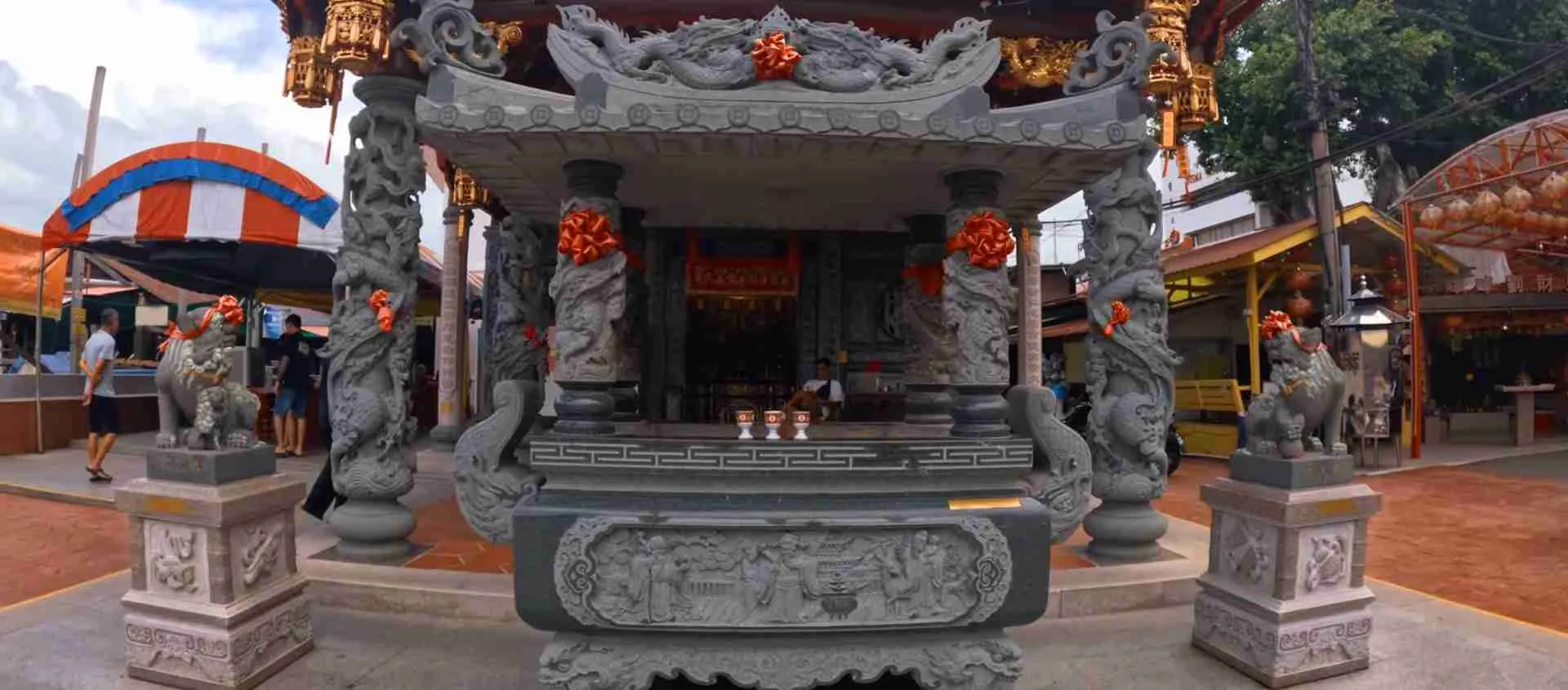
Directly across Jalan Masjid Kapitan Keling sits the Goddess of Mercy Temple (Kuan Yin Teng), established in 1728 by Hokkien Chinese immigrants and George Town’s oldest Chinese temple. The temple complex features elaborate roof decorations with guardian dragons and phoenixes, interior courtyards where devotees burn joss sticks before the Goddess of Mercy statue, and side altars honoring various deities from Chinese folk religion. The contrast between the orderly Anglican church and the vibrant, incense-filled Chinese temple demonstrates George Town’s religious diversity within a single block.
Walk west along Jalan Masjid Kapitan Keling to reach Kapitan Keling Mosque (1801), built by Indian Muslim traders from South India who dominated maritime trade in early Penang. The mosque’s golden dome and Moorish-style minarets represent Islamic architectural traditions adapted to Southeast Asian tropical conditions. While non-Muslims cannot enter during prayer times, the mosque opens for respectful visits outside these periods (dress modestly with covered shoulders and legs). The adjacent Sri Mahamariamman Temple (1833) completes the “Street of Harmony” quartet, its gopuram (entrance tower) decorated with hundreds of Hindu deity statues in vivid colors.
Continue south on Jalan Masjid Kapitan Keling, then turn left onto Lebuh Armenian to enter George Town’s famous street art district. Ernest Zacharevic’s 2012 mural series transformed previously declining shophouses into selfie destinations, with “Kids on Bicycle” (two children painted on a wall with an actual bicycle attached) becoming Penang’s most iconic image. Lebuh Armenian intersects with Lebuh Cannon and Lorong Muntri, creating a street art triangle containing 15+ major murals plus dozens of smaller pieces. Allocate 30-45 minutes for photography and exploration, as murals hide down side lanes and require attention to discover.
From Armenian Street, walk southeast to Pengkalan Weld waterfront where six clan jetties extend over the Strait of Malacca. Chew Jetty remains the most accessible, a 200-meter wooden walkway lined with houses where Chinese immigrant families from the same ancestral clan settled in the 19th century. Residents still live in these over-water homes, operating small shops and temples while maintaining their clan identity. Walk to the jetty’s end for waterfront views and fishing boat observations before returning. The other jetties (Lee, Lim, Tan, Yeoh, Mixed Surname) follow similar layouts though some restrict tourist access to preserve resident privacy.
Turn north onto Lebuh Leith to reach the Blue Mansion (Cheong Fatt Tze Mansion) at 14 Lebuh Leith, impossible to miss due to its distinctive indigo-blue exterior visible from a block away. The mansion’s exterior architecture warrants 15-20 minutes of photography even for visitors not taking the interior tour. Continue north through George Town’s Little India district centered on Lebuh Pasar and Queen Street, where Indian restaurants, fabric shops selling saris and traditional textiles, and Hindu temples cluster in a neighborhood retaining strong South Indian character. The route concludes back at Fort Cornwallis, forming a complete loop covering 5.5-6 kilometers in 3-4 hours at a moderate pace with stop times.
Alternative Specialized Walking Routes 2026
The Clan Houses and Jetties route focuses specifically on Chinese immigrant heritage through visits to Penang’s five major clan houses (kongsi) and their associated waterfront settlements. Start at Khoo Kongsi on Jalan Acheh, the island’s most elaborate clan house featuring carved stone pillars, intricate wall paintings, and a theater hall used for traditional Chinese opera. The RM10 admission includes access to the clan museum explaining Khoo family history and their role in Penang’s tin mining industry. Proceed to nearby Cheah Kongsi (smaller but free admission) and Yap Kongsi, each representing different Hokkien clan organizations.
Walk to the waterfront clan jetties to see where these same clan groups established residential communities over water. The contrast between the wealthy clan houses (demonstrating successful merchant prosperity) and the modest jetty homes (showing working-class clan solidarity) illustrates the full spectrum of Chinese immigrant experiences in colonial Penang. This specialized route covers approximately 3 kilometers and requires 2.5-3 hours, appealing particularly to visitors interested in diaspora history and Chinese architectural traditions.
The Street Food Discovery route integrates walking with serious eating, connecting George Town’s most significant hawker centers and street food landmarks rather than following heritage site sequences. Begin at Kimberly Street for breakfast at the famous Kimberly Street coffee shop complex where multiple vendors share space, sampling char kway teow, duck rice, and Hokkien prawn mee. Walk to Lebuh Chulia’s Indian Muslim restaurants for roti canai or murtabak, then proceed to Lebuh Campbell for Penang laksa at the legendary Laksa Janggus stall.
Continue to the UNESCO-listed hawker centers at New Lane (Lorong Baru) for apom manis (rice flour pancakes) and then Gurney Drive Hawker Center for waterfront dining including char kway kak, oyster omelet, and satay. This 4-kilometer food-focused route spans 3-4 hours but requires arriving hungry and pacing yourself across 10-12 different dishes. The route works best during cooler morning hours (7am-11am) when food stalls open fresh and walking between locations remains tolerable. Budget RM30-50 for food purchases, significantly less than restaurant meals while accessing more authentic local flavors.
Food Tour Options and Costs 2026
Penang food tours operate primarily during morning (8am-12pm) and evening (5pm-9pm) periods when street food stalls open and tropical temperatures drop to manageable levels. Morning tours emphasize breakfast and lunch dishes like char kway teow, Hokkien mee, and dim sum, while evening tours feature dinner items including nasi kandar, lok lok (skewered meats and vegetables dipped in boiling pots), and desserts like cendol and ais kacang. Both timing options provide equivalent value with 15+ tastings, though morning tours benefit from cooler temperatures and fresher ingredients as vendors open their daily operations.
Standard small-group food tours cost $45-48 USD per person for 3-4 hour experiences with English-speaking local guides. A Chef’s Tour operates both morning (starting 8:30am) and evening (starting 5:30pm) departures from central George Town meeting points, maintaining group sizes at maximum 8 guests to preserve access to smaller hawker stalls. The tour price includes all food tastings, bottled water, and guide expertise, with no hidden charges for additional dishes. Dietary accommodations for vegetarian, pescatarian, and common allergies work with advance notice, though severe allergies to shellfish or peanuts limit tasting options significantly due to trace contamination risks at shared cooking facilities.
Premium food tours at $65-68 USD per person offer enhanced elements like private group arrangements, specialized cuisine focus (Peranakan Nyonya dishes, Indian Muslim fare, Chinese banquet traditions), or extended 4-5 hour durations covering more locations. Heritage on a Plate’s dinner tour (RM315 / approximately $68 USD) departs from Little India and explores evening dining culture including nasi kandar restaurants, bamboo noodle shops, and dessert specialists serving leng chee kang (longan sweet soup). These premium tours suit visitors wanting deeper cultural context or specific culinary interests beyond general street food introduction.
Cooking classes with market components cost $95 USD for 5-6 hour experiences combining food tour elements with hands-on cooking instruction. PenangChiak’s morning class includes guided wet market shopping where participants select ingredients, breakfast tastings at market stalls, and then preparation of 3-4 Penang dishes (typically including char kway teow, curry, and a dessert) under chef supervision at a teaching kitchen. The class concludes with lunch featuring dishes prepared by participants. These extended experiences provide skills for recreating Penang flavors at home, though the higher cost and time commitment suit a different audience than standard food tours focused on tasting breadth.
Tour value calculations favor standard $45-48 USD options for most visitors. Fifteen tastings from vendors charging RM4-8 per dish if purchased independently total RM60-120 (approximately $15-30 USD), meaning tours provide roughly 50% of their value through food cost alone. The remaining value derives from vendor access (many stalls serve primarily Hokkien or Malay speakers), cultural education about ingredients and cooking methods, and geographic navigation through neighborhood streets where hawker centers hide in residential areas beyond tourist maps. Children under 13 join most tours at half price, making family participation economical at $22-34 USD per child for a substantial introduction to Southeast Asian food culture.
Penang Hill and Temple Tour Costs 2026
Penang Hill funicular railway charges RM30 return tickets for tourists (non-Malaysian passport holders) for standard boarding, while fast lane tickets cost RM80 return with priority queuing and guaranteed seating. Children ages 4-12 pay RM15 standard or RM40 fast lane, with children under 4 riding free. Malaysian citizens with MyKad identification receive discounted rates (RM12 adult, RM6 child) not available to foreign visitors. Senior citizens age 60+ pay full tourist rates (RM30 standard, RM60 fast lane) with discounts only for Malaysian citizens. One-way tickets cost approximately half the return price, purchased at ticket counters for visitors planning to walk down via the 5-kilometer trail through Penang Botanic Gardens.
The Habitat canopy walk and nature trails require separate admission of RM60 adult, RM45 child (ages 4-12) beyond the funicular ticket. This UNESCO-certified biosphere reserve protects ancient rainforest with a 1.6-kilometer trail system including elevated canopy walks 15-20 meters above forest floor and Curtis Crest Tree Top Walk offering 360-degree views across Penang Island. Combined Penang Hill and Habitat visits total RM90 per adult (RM30 funicular + RM60 Habitat) for standard access, rising to RM140 for fast lane funicular tickets. The elevated cost reflects substantial infrastructure maintenance and conservation efforts, with Habitat admission supporting rainforest preservation programs.
Penang Hill operates 6:30am-11pm with funicular trains departing every 30 minutes (additional trips added during peak demand). First ascent train departs 6:30am, last ascent 10pm, with the final descent train leaving the summit at 11pm. Sunrise tickets for dawn viewing (special 5:30am-6:30am departures) require purchase at ticket counters rather than online, popular with photographers capturing George Town awakening in first light. The 5-minute funicular ride ascends 821 meters through jungle canopy, passing through the world’s steepest tunnel at one point with 27-degree incline.
Temple tours combining Kek Lok Si and Penang Hill typically cost $60-80 USD for half-day private or small-group arrangements including hotel pickup. Kek Lok Si Buddhist temple in Air Itam (free admission to main complex, RM2 to climb pagoda levels, RM6 for incline lift to upper pavilions) sits adjacent to Penang Hill’s lower station, making combined visits logical for geographic efficiency. The temple complex covers over 12 hectares with multiple pavilions, prayer halls, and the seven-tier Pagoda of 10,000 Buddhas. Allow 1.5 hours for temple exploration before proceeding to Penang Hill funicular station 400 meters away.
Tour packages bundling Penang Hill, Kek Lok Si, and additional sites like Penang Botanic Gardens or Tropical Spice Garden range $75-100 USD for full-day private car tours with English-speaking drivers. These comprehensive island tours suit visitors prioritizing efficiency over in-depth exploration, covering multiple locations impossible to reach easily via public transport. The trade-off involves less time at each site and minimal walking relative to self-guided approaches, appealing to families with young children or mobility-limited visitors wanting overview coverage without extensive physical exertion.
Blue Mansion Tour Costs and Booking 2026
Guided tours of the Blue Mansion (Cheong Fatt Tze Mansion) cost RM30 per person for the standard 45-minute experience departing 11am and 3:30pm daily. Maximum group size of 24 participants per tour helps preserve the 130-year-old structure from excessive wear while allowing trained guides to provide detailed commentary about the mansion’s architecture, Cheong Fatt Tze’s biography, and restoration efforts. Tours cover the reception hall, famous courtyard (where the Crazy Rich Asians mahjong scene filmed), and museum exhibitions on the second floor explaining Chinese eclectic architecture blending Eastern and Western design principles.
Self-guided audio tours cost RM25 per person using the SmartGuide app accessible 11am-6pm daily with maximum 10 guests per hour admitted. Visitors download the app to personal smartphones (bring earphones) and follow the audio narrative at their own pace through mansion sections including facade details, main lobby, courtyard, ground floor rooms, and upstairs exhibitions. The self-guided option suits visitors preferring flexibility over structured group timing, though it provides less architectural and historical depth than trained guide commentary. Both tour types require advance online booking as same-day availability rarely exists during peak travel seasons.
Private group tours cost RM350 for groups up to 12 people, or RM25 per person for groups of 13-20 participants, scheduled 12pm-2pm daily by prior arrangement. Contact the mansion concierge or email reservations for private bookings accommodating specific language requirements (Mandarin, Japanese, and other languages available), photography needs, or educational groups wanting extended question periods. The premium for private arrangements reflects dedicated guide time and exclusive mansion access during normally closed afternoon hours.
The Blue Mansion functions simultaneously as a heritage site and operating boutique hotel, meaning only certain areas remain accessible during tours to preserve guest privacy. Visitors wanting complete access should consider overnight stays (rooms from RM450-900 per night) including complimentary mansion tour access, breakfast at Café Mangga, and full property exploration. Hotel guests can join the twice-daily tours free of charge, a significant value-add for those already planning George Town accommodation. Day visitors complete their experience by having cocktails at The Bar or meals at Indigo restaurant, both occupying mansion spaces showcasing original tilework, carved wooden screens, and stained glass windows.
Booking strategy requires securing Blue Mansion slots 3-7 days ahead during peak seasons (December-February, June-August) when tours sell out. The official website (cheongfatttzemansion.com) provides direct booking with QR code tickets sent via email for entrance. Tours purchased through platforms like Viator or GetYourGuide cost similar amounts but add middleman booking fees. Arrive 15 minutes before tour start time as groups depart promptly, with late arrivals forfeiting reserved spots. The mansion courtyard provides photo opportunities while waiting, though the truly spectacular blue exterior photography requires positioning on Lebuh Leith street for full façade perspective.
Cycling and Trishaw Tours 2026
Bicycle tours through Penang’s countryside and rural areas cost $60-75 USD for half-day (3-4 hours) small-group experiences escaping George Town’s urban density. Tours departing from Balik Pulau on Penang’s southwestern coast cycle through rice paddies, rubber plantations, fishing villages, and mangrove forests where traditional kampung (village) life continues unchanged by tourism development. The flat terrain suits moderate fitness levels, with e-bike options available for participants concerned about tropical heat exertion. Tours include bicycle rental, safety equipment, local guide, and sometimes fruit tastings at family orchards growing durian, mangosteen, and rambutan.
George Town trishaw tours combine cycling with local transport tradition, with drivers pedaling passengers through heritage district streets in colorful decorated trishaws. Standard routes cost RM40-60 ($10-15 USD) for 45-60 minute loops passing major landmarks like Armenian Street murals, Little India, and the Blue Mansion exterior. Trishaw tours prioritize photography and relaxed sightseeing over in-depth historical education, appealing to visitors wanting heritage district overview without walking exertion. Negotiate pricing before boarding and confirm route coverage to avoid misunderstandings about destinations included.
Hybrid bicycle-trishaw heritage tours cost $65-85 USD for half-day experiences combining both transport modes with cultural sites and food tastings. These family-friendly tours (children welcome) pedal through less-trafficked neighborhoods before switching to trishaws for dense heritage areas where bicycle navigation becomes challenging. The combination format provides exercise, cultural immersion, and local perspective from guides explaining how George Town neighborhoods function beyond tourist attractions. Tours include breakfast or lunch, heritage site visits, and street food samplings creating comprehensive half-day Penang introductions.
Self-guided bicycle rental costs RM15-25 per day from shops throughout George Town, though cycling the heritage core’s narrow one-way streets requires confidence navigating alongside cars, motorcycles, and pedestrians. Dedicated bicycle lanes remain rare, making casual cycling stressful for visitors uncomfortable in mixed traffic. Bicycle tours’ value lies in guided routing through safer streets and rural areas where independent cyclists risk getting lost without local knowledge.
Specialized Cultural and Heritage Tours 2026
Peranakan culture tours focus on Straits Chinese (Baba-Nyonya) heritage through visits to Pinang Peranakan Mansion, traditional costume photography experiences, and explanations of this unique fusion culture blending Chinese ancestry with Malay cultural practices over centuries of Malaccan Strait settlement. Tours cost $50-70 USD for half-day experiences including mansion admission, cultural storytelling, and often Nyonya cuisine components explaining how Peranakan cooking fuses Chinese ingredients with Malay spices and cooking techniques. Some tours offer traditional Baba-Nyonya costume rentals (kebaya for women, batik shirts for men) for heritage photography sessions in mansion courtyards.
Religious diversity tours explore George Town’s concentration of worship sites representing Islam, Hinduism, Buddhism, Taoism, Christianity, and Sikhism within walkable distances. The “Street of Harmony” provides foundation material, while extended tours visit Dhammikarama Burmese Buddhist Temple (1803), Thai Buddhist temple Wat Chaiya Mangkalaram housing a 33-meter reclining Buddha, and Sikh Gurdwara on Queen Street. Guides explain religious architectural symbolism, worship practices, and how different faith communities coexisted peacefully through colonial and post-independence periods. Half-day tours cost $45-60 USD with respectful dress codes required (covered shoulders and knees, headscarves for certain sites).
Night market and food tours operate 7pm-10pm visiting Batu Ferringhi Night Market, Padang Brown Night Market, or weekend Jalan Burmah Night Market where vendors sell street food, fresh fruits, clothing, handicrafts, and local snacks. These differ from daytime food tours by emphasizing market atmosphere and vendor interactions alongside tasting, incorporating cultural explanations about night market social functions in Malaysian life. Tours cost $45-55 USD including multiple food stops, market navigation, and transportation back to George Town hotels. The night market setting provides cooler temperatures and different food specialties (grilled seafood, fried snacks, desserts) than daytime hawker offerings.
Multi-Day and Island-Wide Tour Packages 2026
Full-day Penang island tours cost $80-120 USD for private car arrangements covering George Town heritage sites, Penang Hill, Kek Lok Si temple, Tropical Spice Garden, and either Batu Ferringhi beach or Penang National Park. These 8-10 hour tours suit visitors with limited time wanting comprehensive island overview, though the packed itinerary allows only 30-60 minutes per location. Tours include hotel pickup, English-speaking driver-guide, and sometimes lunch, but exclude attraction admission fees (budget additional RM100-150 for combined entry costs).
Two-day Penang experiences combining city heritage with natural attractions cost $200-300 USD per person including overnight accommodation, tours, some meals, and transportation. Day one covers George Town walking routes, food tours, and Blue Mansion, while day two explores Penang Hill, The Habitat, Tropical Spice Garden, and beach areas. These packages suit first-time visitors wanting professionally structured Penang introduction without independent planning logistics, though experienced travelers often find self-guided approaches more flexible and economical.
Specialty multi-day packages focusing on photography, culinary deep-dives, or heritage architecture cost $400-800 USD for 3-4 day small-group or private experiences with expert guides. Photography tours target optimal lighting times (dawn, dusk, blue hour) for street scenes, heritage buildings, and cultural events, often including access to restricted locations through guide connections. Culinary deep-dives combine cooking classes, market visits, farm tours, and multi-course restaurant experiences explaining Penang’s position as Malaysia’s food capital. Architecture-focused tours examine Chinese eclectic buildings, clan houses, colonial structures, and restoration techniques with heritage conservation specialists providing technical commentary beyond standard tour knowledge.
Self-Guided Tour Resources and Planning 2026
George Town’s compact heritage core (2 square kilometers) enables effective self-guided exploration using free resources and smartphone navigation. Download offline Google Maps for the heritage district before arrival to ensure navigation functionality during cellular data gaps. The map clearly marks major attractions including temples, clan houses, museums, and street art locations, with walking directions calculating accurate travel times accounting for George Town’s narrow street network.
ThinkCity Heritage Trail mobile app (free download on iOS and Android) provides detailed walking route suggestions with historical background, architectural explanations, and audio commentary at 40+ heritage sites. The app works offline after initial download, useful for conserving mobile data while accessing rich contextual information about buildings and neighborhoods. Multiple themed trails focus on specific topics like religious diversity, Peranakan heritage, or colonial architecture, allowing customization based on personal interests.
Printed walking route maps available free at George Town tourist information centers (Penang House of Music at Beach Street, Penang State Museum) show UNESCO heritage core boundaries and major attraction locations. While less detailed than smartphone apps, printed maps provide orientation without battery drain concerns and work during any weather conditions. Tourist information staff answer questions about attraction hours, current events, and transportation options, particularly valuable for clarifying temple visiting protocols or finding hawker centers serving specific dishes.
Self-guided tour planning should allocate 3-4 hours minimum for meaningful heritage core coverage, more for visitors wanting detailed exploration or extensive photography. Break afternoon walking during peak heat hours (12pm-3pm) by visiting air-conditioned sites like the Blue Mansion, Pinang Peranakan Mansion, or Straits Quay shopping complex. Carry water constantly and budget 15-minute rest breaks every 60-90 minutes of walking to prevent heat exhaustion affecting judgment and enjoyment. The tropical climate makes even moderate walking physically demanding for visitors accustomed to temperate conditions.
Booking Strategies and Timing Optimization 2026
Advance booking 3-7 days ahead secures spots for popular fixed-capacity tours including Blue Mansion guided tours (maximum 24 guests per departure), small-group food tours (maximum 8 guests), and Penang Hill fast lane tickets during peak seasons. Book directly through operator websites when possible to avoid platform booking fees charged by aggregators like Viator or GetYourGuide, though these platforms provide centralized booking and payment if managing multiple tour reservations simultaneously.
Peak season timing (December-February, June-August) requires longer advance booking windows as domestic Malaysian tourists, international winter escapees, and summer vacation families converge. The Chinese New Year period (late January/early February, varying annually by lunar calendar) brings particularly intense demand as Malaysian Chinese families travel, Malaysian schools close, and Chinese tourists visit during national holidays. Book 2-3 weeks ahead during these periods or accept limited tour availability and longer attraction queues.
Shoulder season visits (March-May, September-November excluding major holidays) offer better tour availability, shorter lines at attractions, and often discounted accommodation rates. Tourism infrastructure operates normally during these periods with all tours, restaurants, and attractions maintaining regular schedules, but reduced visitor numbers improve quality of experience particularly at crowded sites like Armenian Street murals and Chew Jetty. The weather remains tropical year-round with minimal seasonal temperature variation, though September-November brings increased rainfall from southwest monsoon patterns.
Daily timing optimization starts tours and walking routes early (7am-10am) when temperatures remain coolest and tourist crowds minimal. Food tours departing 8am-8:30am access breakfast specialties and catch hawkers at their freshest morning preparation. Blue Mansion 11am tours avoid afternoon heat, while the 3:30pm departure struggles with humidity peaking around that time. Penang Hill visits work best early morning (arriving by 8am) or late afternoon (after 4pm) when queue lengths decrease and summit temperatures moderate.
Sample Day Cost Breakdowns 2026
Heritage walking and food tour day costs total RM100-180 ($25-45 USD) per person excluding accommodation. Begin with self-guided heritage walking (free) departing 7:30am to cover Fort Cornwallis, Street of Harmony, Armenian Street murals, and Chew Jetty before 11am heat intensifies. Mid-morning coffee break at traditional kopitiam costs RM8-12 for kaya toast, soft-boiled eggs, and local coffee. Join afternoon food tour departing 5:30pm ($45 USD prepaid, includes 15+ tastings constituting full dinner). Budget additional RM15-20 for morning snacks or afternoon refreshments between walking and tour departure. Total day cost RM123-172 excluding accommodation.
Penang Hill and Blue Mansion combination day costs RM200-290 ($50-75 USD) per person excluding accommodation. Depart accommodation 8am for Blue Mansion 11am guided tour (RM30 prepaid online). Lunch at nearby Lebuh Chulia hawker stalls costs RM15-25 for char kway teow, drinks, and dessert. Take Grab (RM12-15) or bus 204 (RM2) to Penang Hill lower station, arriving 2pm-3pm for reduced queue times. Purchase Penang Hill funicular standard tickets (RM30) and The Habitat admission (RM60) for combined nature experience. Return to George Town by 6pm-7pm for dinner at Gurney Drive hawker center (RM20-30). Total RM167-187 plus transportation.
Comprehensive full-day private tour costs RM400-550 ($100-140 USD) per person excluding accommodation for all-inclusive island coverage. Book private car tour ($100-120 USD) covering George Town heritage walk, Blue Mansion exterior photography, Kek Lok Si temple, Penang Hill with fast lane tickets, and Tropical Spice Garden. Tour includes hotel pickup, English-speaking guide, and transportation, but excludes admission fees totaling approximately RM170 (Blue Mansion RM30, Kek Lok Si optional payments RM8, Penang Hill fast lane RM80, Tropical Spice Garden RM25, The Habitat RM60) plus lunch RM25-40 at guide-recommended restaurant. Total RM525-750 for truly comprehensive single-day Penang experience.
Transportation Between Tour Locations 2026
George Town heritage core locations connect via walking with distances under 2 kilometers between most sites. The Fort Cornwallis to Chew Jetty route covers 1.2 kilometers taking 15-20 minutes at moderate pace, while Armenian Street to Little India spans 800 meters requiring 10-12 minutes. Walking remains the most practical and economical transportation for heritage district exploration, though heat considerations require factoring rest breaks every 45-60 minutes during afternoon hours.
Rapid Penang public buses serve routes connecting George Town to Penang Hill (route 204), Batu Ferringhi beach (routes 101, 102), and island destinations for RM2-4 per journey using contactless payment cards or stored-value Rapid Pass cards. Buses run 6am-11pm with frequency varying by route (every 15-30 minutes on major routes, every 60 minutes on minor routes). The 204 bus from Komtar or Weld Quay to Air Itam (Penang Hill lower station) takes 30-40 minutes, significantly slower than Grab but dramatically cheaper for budget-conscious travelers.
Grab rideshare dominates private transportation with extensive George Town coverage and straightforward app-based booking. Fares run RM8-15 for trips within the heritage core or to nearby neighborhoods, RM15-25 for trips to Penang Hill, Batu Ferringhi, or airport. During peak demand (rain, evening hours, holidays), surge pricing increases fares 20-40% but ensures car availability when buses become inconvenient. Enable GrabPay for seamless cashless payment, avoiding change-making awkwardness with drivers.
Traditional taxis operate from ranks at major hotels and transportation hubs but lack metered service, requiring price negotiation before departure. Standard fares approximate Grab rates during non-surge periods, though tourists unfamiliar with appropriate pricing risk overpaying. Taxis suit groups of 4-5 passengers splitting costs where per-person rates become competitive with bus fares while maintaining Grab’s convenience. For airport transfers (RM45-60) or full-day hire (RM250-350), taxis and Grab offer similar value.
Weather and Seasonal Touring Considerations 2026
Penang’s equatorial climate maintains temperatures 30-33°C (86-91°F) year-round with minimal seasonal variation. The meaningful weather difference involves rainfall patterns rather than temperature swings, with southwest monsoon (May-September) bringing afternoon thunderstorms and northeast monsoon (November-March) delivering morning showers. Walking tours and outdoor activities proceed regardless of season since rain typically falls in concentrated 1-2 hour bursts rather than all-day downpours, though carrying compact umbrellas proves essential year-round.
December-February represents peak tourist season combining relatively drier weather with northern hemisphere winter escapees and Chinese New Year celebrations. Tours book solid during this period requiring advance reservations, while attractions experience maximum queuing and crowding. The festival atmosphere during Chinese New Year (late January/early February) adds cultural richness through temple ceremonies, lion dances, and family gatherings, though many local businesses close for 3-5 days around the actual holiday dates potentially limiting food tour options.
March-May shoulder season offers excellent touring conditions with decreased rainfall, smaller crowds, and moderate hotel rates. Heritage walking remains comfortable in morning and evening hours, while afternoon heat drives visitors toward air-conditioned attractions and indoor activities. This period suits visitors prioritizing authentic experiences over festival atmospheres, as fewer tourists mean more meaningful interactions with hawkers, craftsmen, and heritage site guides.
June-August monsoon period combines school holidays (bringing Malaysian domestic tourists) with afternoon thunderstorms requiring flexible scheduling. Morning tours proceed normally, while afternoon activities should focus on indoor options like Blue Mansion tours, museum visits, or air-conditioned shopping complexes. Food tours benefit from rain-cleared air and cooler post-storm temperatures when evening departures coincide with weather clearing. Budget extra time for weather delays affecting outdoor activities, particularly Penang Hill where funicular operations occasionally pause during lightning storms.
Tour Quality Evaluation and Selection 2026
Evaluate food tours based on group size (prefer maximum 8 guests for intimate vendor access), guide credentials (native Penangites provide superior cultural context), and tasting variety (minimum 15 distinct dishes covering multiple cuisines). Read recent reviews specifically mentioning guide names to identify consistently excellent tour leaders like those frequently praised across platforms (Grace, Ash, Soraya in food tour reviews). Small-group size proves crucial as larger tours (12+ participants) cannot access tiny hawker stalls and hole-in-wall vendors where Penang’s best food often hides.
Heritage walking tours warrant evaluation on historical accuracy, architectural expertise, and ability to access restricted locations through guide connections. The best heritage guides hold official tourism licenses, speak English fluently, and bring personal connections to clan houses, temples, and family businesses allowing behind-scenes access tourists cannot independently achieve. Avoid generic tours led by drivers or non-specialist guides who recite memorized scripts without deep heritage knowledge or ability to answer detailed architectural and historical questions.
Blue Mansion guided tours maintain consistent quality through Cheong Fatt Tze Mansion’s trained guide program, making individual tour leader evaluation less critical than timing selection. The 11am tour attracts fewer participants than 3:30pm (school groups and afternoon tour packages concentrate at later timing), providing better question opportunities and courtyard photography without crowds. Self-guided audio tours suit architecture enthusiasts wanting extended time examining decorative details, while guided tours benefit first-time visitors needing broader historical context about Penang’s merchant class and Straits Chinese culture.
Check tour operator insurance coverage and safety protocols for activities involving transportation (cycling tours, island-wide car tours, boat trips). Reputable operators carry liability insurance and maintain vehicles to Malaysian safety standards, while budget operators cutting prices through regulatory corners risk passenger safety. The price difference between legitimate licensed operators and unlicensed guides typically runs 20-30%, not worth the risk savings when insurance gaps could leave visitors financially liable for accidents or injuries.
Accessibility and Mobility Considerations 2026
George Town heritage walking routes present accessibility challenges through narrow sidewalks, uneven pavement, and frequent curbs lacking wheelchair ramps. The historic district’s 18th-19th century infrastructure prioritized pedestrian and bicycle traffic over wheeled accessibility, creating barriers for mobility-limited visitors. Wheelchair users should book private car tours allowing vehicle-based sightseeing with stops at accessible locations like Fort Cornwallis (mostly flat terrain), the Blue Mansion courtyard (ground-floor wheelchair access), and modern shopping complexes rather than attempting independent heritage walking.
Penang Hill funicular accommodates wheelchairs in designated carriage areas, though The Habitat’s elevated canopy walks and stairs limit accessibility beyond the main reception area. The Habitat offers wheelchair-accessible ground-level trails through rainforest sections, providing nature exposure without requiring stair navigation. Inform ticket staff about mobility requirements when booking to ensure appropriate carriage assignment and assistance boarding the funicular.
Food tours vary in accessibility based on venue selection. Tours visiting primarily coffee shops and restaurants with street-level access suit mobility-limited participants better than those accessing hawker centers requiring navigation through cramped stall layouts. Communicate mobility requirements during booking so tour operators can adjust routes to accessible vendors while maintaining food quality and cultural authenticity. Some premium food tours offer trishaw transportation between stops, reducing walking requirements for elderly or mobility-challenged participants.
Temple visits require removing shoes before entering worship areas, presenting challenges for visitors needing orthopedic footwear for medical conditions. Most temples provide shoe storage at entrances and accept visitors explaining medical requirements for keeping shoes, though respectful communication with temple staff prevents cultural misunderstandings. Sikh Gurdwaras strictly enforce head covering for all visitors regardless of gender or religion, provided through free head scarves at entrances for those arriving without appropriate covering.
Photography and Content Creation on Tours 2026
Heritage walking routes offer exceptional photography opportunities though most require basic smartphone capability rather than professional gear. The Blue Mansion’s indigo facade photographs best in morning light (9am-11am) when the sun illuminates the western-facing exterior without harsh shadows, while late afternoon (4pm-6pm) creates warm tones suitable for architectural detail shots. Street art murals receive optimal lighting 9am-3pm when direct sunlight illuminates the walls, though overcast conditions sometimes provide better color balance without harsh contrast.
Food tour photography requires consideration for vendor relationships and food presentation. Tour guides typically obtain permission for participant photography and explain appropriate timing (not during busy cooking periods when flash disturbs workflows). Use natural light when possible as hawker stalls often feature interesting ambient lighting from hanging bulbs, flames, and steam creating atmospheric conditions. Photograph dishes immediately when served as many Penang specialties like char kway teow and Hokkien mee lose visual appeal within minutes as ingredients settle and sauces absorb.
Temple photography follows specific protocols varying by religion and site. Chinese temples generally allow photography in courtyards and common areas but restrict images of primary deity statues during worship ceremonies. Hindu temples permit exterior photography but often prohibit images inside sanctums housing main deities, with priests indicating permitted areas through signage or verbal instruction. Islamic mosques restrict photography during prayer times, with respectful coverage requirements (shoulders and knees covered, headscarves for women) applying even for photography outside prayer times.
Commercial photography and videography for social media monetization, blogs, or publications requires permits at some heritage sites including Fort Cornwallis, clan houses, and the Blue Mansion. Amateur photography for personal use proceeds without permits, though tripods and professional lighting equipment trigger staff attention and potential permit requests. Content creators should contact site management in advance explaining commercial intent to avoid access denial or footage confiscation during filming.
Tour Combination and Itinerary Sequencing 2026
Effective three-day Penang tour sequencing balances heritage immersion, natural attractions, and cultural experiences without overwhelming daily schedules. Day one focuses on George Town heritage through morning self-guided walking (Fort Cornwallis, Street of Harmony, Armenian Street, Chew Jetty) followed by afternoon Blue Mansion 3:30pm tour and evening food tour departing 5:30pm-6pm. This combination introduces heritage architecture, religious diversity, and culinary culture within a single intensive day, with evening food tour providing dinner solving meal planning.
Day two combines Penang Hill morning ascent (arriving 8am-9am to avoid peak queues) with The Habitat exploration and afternoon return to George Town for Kek Lok Si temple visit on descent route. Take lunch at Penang Hill summit restaurants before hiking Habitat trails, allowing 4-5 hours total for combined experience. Afternoon Kek Lok Si visit (3pm-5pm) benefits from cooler temperatures and fewer tour bus groups, with the temple illuminated beautifully during evening hours for photography. This nature-focused day balances previous day’s urban heritage intensity.
Day three explores specialized interests through focused tours like Peranakan cultural deep-dive, cycling through rural Balik Pulau countryside, or beach relaxation at Batu Ferringhi with water sports. Alternatively, use morning for final heritage site visits (clan houses, museums, shopping for local crafts and nutmeg products) before afternoon departure. This three-day framework provides comprehensive Penang coverage while allowing flexibility adjusting day three to personal interests emerging from earlier exploration.
Extended stays (4-7 days) enable slower-paced exploration including day trips to mainland attractions like Butterworth (mainland ferry terminal), Bukit Mertajam (morning market), or Taiping (heritage town 90 kilometers south with colonial architecture and Malaysia’s oldest public garden). Multi-day stays also justify cooking class participation, repeated food tours exploring different cuisine specialties, and deeper neighborhood immersion in areas like Little India or the Armenian Street arts district where return visits reveal layers impossible to appreciate in single passes.
Safety and Health Considerations During Tours 2026
Food safety during street food tours relies on vendor selection by experienced guides who know which stalls maintain proper hygiene and ingredient freshness. Tour operators prioritize vendors with strong local reputations and consistent health inspection compliance, though Malaysian street food standards differ from Western expectations regarding refrigeration and workspace cleanliness. First-time visitors to Southeast Asia should expect minor digestive adjustment even with reputable vendors as new bacteria strains and spice levels challenge unaccustomed systems.
Heat management during walking tours requires constant hydration (drink 250ml water every 30 minutes even without thirst sensation), sun protection (hats, sunscreen SPF30+, lightweight long-sleeve clothing), and rest breaks in air-conditioned spaces every 60-90 minutes. Heat exhaustion symptoms include dizziness, nausea, excessive sweating, and confusion. Stop activity immediately if experiencing these symptoms, move to shade/air conditioning, drink electrolyte-containing beverages (available at all convenience stores), and seek medical attention if symptoms persist beyond 30 minutes of rest.
Traffic safety concerns center on George Town’s mixed-use streets where pedestrians, bicycles, motorcycles, and cars share narrow lanes designed before motor vehicle dominance. Cross streets at designated crossings when available, make eye contact with drivers before stepping into traffic, and expect vehicles to not yield to pedestrians despite crosswalk markings. The cultural norm prioritizes vehicle flow over pedestrian right-of-way, requiring defensive crossing strategies different from Western pedestrian expectations.
Petty theft targets distracted tourists photographing street art or examining market goods, with phone snatching from hands and bag slashing most common incidents. Keep phones secured to wrist straps during photography, wear bags across body with zippers facing inward, and avoid displaying expensive jewelry or watches in crowded market areas. George Town experiences minimal violent crime but opportunistic theft increases around major tourist concentrations like Armenian Street and Chew Jetty.
Frequently Asked Questions About Penang Tours and Walking Routes 2026
How Long Do Penang Walking Tours Typically Last?
Self-guided heritage walking routes require 3-4 hours for comprehensive coverage of George Town’s UNESCO core including Fort Cornwallis, Street of Harmony, Armenian Street murals, and Chew Jetty. This timing assumes moderate walking pace with photo stops and brief rest breaks but excludes extended museum visits or lengthy restaurant meals. Accelerated versions covering primary highlights complete in 2 hours, while detailed exploration with interior site visits extends to 5-6 hours. Guided heritage walking tours run 3-4 hours matching self-guided durations but include expert commentary, hidden location access, and sometimes light refreshments.
Food tours last 3-4 hours regardless of morning or evening timing, structured around 15+ tasting stops requiring digestive pacing between locations. Tours cover 3-4 kilometers of walking distance spread across this duration, with movement between vendors providing digestion time before next tastings. The longest gaps between tastings occur mid-tour when guides provide cultural narratives about neighborhoods and food traditions while participants process earlier dishes. Evening food tours sometimes extend 30-60 minutes longer than morning versions as night markets and dessert vendors operate leisurely schedules encouraging social interaction.
Blue Mansion guided tours last exactly 45 minutes from courtyard gathering through reception hall, exhibitions, and return to entrance. Self-guided audio tours take 45-90 minutes depending on visitor interest in architectural details and exhibition depth, with no time limits imposed on participants accessing the mansion 11am-6pm. Penang Hill visits require 3-4 hours total including funicular queuing, ascent/descent, summit exploration, and optional Habitat canopy walk addition. Kek Lok Si temple visits range 60-90 minutes for main complex coverage, extending to 2 hours when including pagoda climbs and upper pavilion areas.
Are Penang Tours Suitable for Young Children and Families?
Food tours accommodate families with children though age appropriateness varies by child’s eating adventurousness and attention span. Children comfortable trying unfamiliar flavors and textures enjoy sampling exotic dishes like char kway teow, roti canai, and colorful Nyonya kueh, while picky eaters struggle with limited familiar options. Most tours include plain rice, simple noodles, and sweet items (desserts, fresh tropical fruits) providing fallback options for hesitant young eaters. Children under 13 typically join tours at half price ($22-34 USD), economical for families introducing kids to Asian food culture through professional guidance.
Heritage walking routes challenge young children through distance requirements (5-6 kilometers), heat exposure, and limited child-focused content at temples and clan houses designed for adult historical interest. Families with children under 8 should shorten routes to 2-3 kilometers covering high-interest sites like Chew Jetty (kids enjoy walking over water, seeing fishing boats), Armenian Street murals (visual appeal to all ages), and Fort Cornwallis (open space for running, cannons to examine). Bring strollers for children under 5 though uneven pavements and curbs create navigation challenges requiring patience and occasional stroller carrying over obstacles.
Penang Hill and The Habitat excel for families offering nature experiences, wildlife spotting opportunities (monkeys, birds, insects), canopy walks providing adventure elements, and cooler temperatures than sea-level George Town. The funicular railway itself thrills children through jungle ascent and tunnel passages, while summit areas provide food options, souvenir shops, and viewing platforms. The Habitat’s Curtis Crest Tree Top Walk 40 meters above forest floor appeals to older children (8+) comfortable with heights, while younger children prefer ground-level trails with easier wildlife observation.
Trishaw tours and private car tours suit families wanting sightseeing without extensive walking demands. Trishaws delight children through novel transportation mode and colorful decorations, though safety considerations (no seatbelts, open sides, traffic exposure) concern some parents. Private car tours allow flexible pacing, air-conditioned comfort, and bathroom/snack breaks on family schedules rather than group tour timing. Factor higher costs for family-appropriate private arrangements versus joining standard group tours designed for adult participants.
What Should I Wear for George Town Walking Tours?
Lightweight, breathable clothing in natural fabrics (cotton, linen) or moisture-wicking synthetic materials manages tropical heat during walking tours. Avoid heavy jeans, dark colors absorbing sun, and restrictive clothing limiting air circulation. Loose-fitting pants or knee-length shorts work for most heritage sites, though temple visits require respectful coverage with shoulders covered and pants/skirts extending below knees. Women should bring light scarves serving dual purposes as sun protection and temple covering when entering worship sites requiring modest dress.
Footwear for George Town walking requires closed-toe shoes with cushioning and grip handling 3-6 kilometers on concrete and uneven pavements. Athletic walking shoes or quality sandals with arch support and ankle straps prevent blisters during extended walking in heat. Avoid flip-flops lacking support and retention, new shoes requiring breaking in, and high heels unsuitable for walking distances. Remember shoes must be removed before entering temples and the Blue Mansion, so choose footwear easily removed and worn without extensive lacing or buckling.
Sun protection essentials include wide-brimmed hats (baseball caps insufficient for neck protection), sunscreen SPF30+ reapplied every 2 hours, and sunglasses protecting eyes from tropical glare. The equatorial sun intensity between 10am-3pm causes sunburn within 20-30 minutes on unprotected skin despite cloud cover. Light long-sleeve shirts provide better sun protection than sleeveless tops while remaining cool through ventilation. Some visitors wear arm sleeves (popular in Asian markets) specifically for sun protection without full clothing coverage.
Rain protection through compact folding umbrellas or lightweight rain jackets proves essential year-round as afternoon thunderstorms arrive with minimal warning. Umbrellas serve dual purposes providing sun shade during dry periods and rain coverage during storms, making them more versatile than dedicated rain gear. Waterproof phone cases or plastic bags protect electronics during downpours, as brief but intense rain can damage exposed devices.
Can I Book Penang Tours Last-Minute or Same-Day?
Same-day booking availability depends on tour type and season. Self-guided walking routes require no booking, executed spontaneously any time during daylight hours. Food tours sometimes accept same-day bookings during low seasons (March-May, September-November) when small-group capacity (maximum 8 guests) doesn’t fill, though popular time slots (morning departures, weekend tours) typically sell out 2-4 days ahead. Contact tour operators directly via phone or WhatsApp for last-minute availability as online booking systems may show tours as sold out while operators maintain flexibility adding participants to groups under maximum capacity.
Blue Mansion guided tours rarely have same-day availability due to limited capacity (24 guests per tour, only 2 daily departures) and advance online booking trends. Tours sell out 3-7 days ahead during peak seasons, 1-3 days ahead during shoulder periods. The self-guided audio tour option provides more last-minute flexibility with maximum 10 guests per hour admitted, though popular visiting times (11am-2pm) may reach capacity. Check the official website or visit the ticket office directly to inquire about current-day audio tour availability when guided tours show sold out online.
Penang Hill funicular standard tickets allow same-day purchase at the lower station though expect significant queue times (60-120 minutes) during peak periods. Fast lane tickets sell out online days in advance during high season but sometimes have same-day availability at ticket counters if purchasing immediately upon arrival before daily allocation exhausts. The risk with same-day fast lane attempts involves wasting time waiting only to discover sold-out status, better mitigated through advance online booking or accepting standard ticket queue times.
Private car tours and specialized experiences (cooking classes, photography tours, Peranakan cultural tours) typically require 24-48 hours minimum notice for operator logistics arranging guides and reservations. Last-minute requests (same-day or next-day) occasionally succeed when operators have cancellations or schedule gaps, particularly during low season. Expect premium pricing for rush arrangements as operators prioritize advance-booked tours paying standard rates over last-minute requests requiring schedule disruption. WhatsApp communication works better than email for urgent booking inquiries as operators typically respond within hours rather than days.
How Do Penang Tours Handle Dietary Restrictions and Food Allergies?
Food tours accommodate common dietary restrictions (vegetarian, pescatarian, no pork, no beef, halal) with advance notice during booking. Penang’s multicultural cuisine includes substantial vegetarian traditions from Indian and Chinese Buddhist communities, providing numerous meatless options at tour stops. However, vegetarian modifications often include eggs, dairy, and seafood-based condiments (shrimp paste, fish sauce) that strict vegetarians may need to avoid, requiring explicit communication with guides about acceptable ingredients. Pescatarian diets work easily as seafood features prominently in Penang cooking with multiple dishes centering on fish, prawns, squid, and shellfish.
Severe allergies to peanuts, tree nuts, shellfish, or gluten present significant challenges in Penang street food culture where shared cooking equipment, cross-contamination, and hidden ingredients carrying allergy risks. Most hawker stalls lack separate preparation areas, use peanut oil for frying, and incorporate shrimp paste in base sauces without specific ingredient disclosure. Tour operators honestly assess whether severely allergic participants can be safely accommodated, sometimes recommending against tour participation when contamination risks outweigh tasting benefits. Participants with severe allergies should carry emergency medication (EpiPens) and discuss detailed ingredient questions with guides before consuming any dishes.
Gluten-free diets face moderate difficulty in Penang as soy sauce (containing wheat) features in many Chinese dishes and wheat noodles dominate multiple signature foods (Hokkien mee, char kway teow uses rice noodles but contaminates with wheat-fried items on same griddles). Rice-based dishes, Indian cuisine using rice and lentil flours, and Malay cooking emphasizing coconut and spices provide gluten-free foundations, though complete gluten avoidance requires extensive ingredient verification. Celiac disease sufferers should carefully discuss cross-contamination concerns with tour operators evaluating whether safe participation proves feasible.
Religious dietary requirements including halal (Islamic), kosher (Jewish), and vegetarian (Hindu, Buddhist) receive accommodation through Penang’s multicultural food landscape naturally segmenting by religious community. Halal food tours exclusively visit Muslim-operated stalls certified by Malaysian halal authorities, covering Malay and Indian Muslim cuisine including nasi kandar, roti canai, and murtabak. Standard food tours include mix of halal, non-halal Chinese, and vegetarian options, requiring halal-observant participants to book specifically halal-focused tours or accept skipping non-halal stops. Kosher observance proves challenging as Penang lacks kosher-certified facilities, leaving observant Jewish visitors dependent on vegetarian options, fresh fruits, and packaged products with reliable certification.
Are Group Tours or Private Tours Better Value in Penang?
Small-group tours (6-8 participants) provide better value than private arrangements for solo travelers and couples prioritizing cost efficiency over personalized attention. Food tours at $45-48 USD per person deliver identical tasting experiences whether joining established groups or booking private tours at $200-300 USD for two people. The group setting adds social dimension as participants from different countries share reactions to unfamiliar flavors, creating camaraderie around food discovery. Guides adapt commentary to group interests while maintaining fixed routes accessing their established vendor relationships and tasting sequences.
Private tours justify premium pricing for families (4+ people) splitting per-person costs to levels approaching group tour rates while gaining flexibility around children’s needs, pacing preferences, and schedule timing. A family of four paying $200-240 USD for private food tour ($50-60 USD per person) receives customized routing, flexible start times, extended stops at favorite vendors, and accommodation for dietary restrictions or adventurous eating limits difficult in fixed group tours. Private heritage walking tours similarly benefit families with young children requiring bathroom breaks, rest stops, and simplified historical narratives maintaining kid attention better than adult-focused group commentary.
Photography-focused visitors prefer private tours allowing extended time at photogenic locations without group pressure to maintain schedule pace. Standard group tours allocate 10-15 minutes at major stops sufficient for casual photography but inadequate for composition work, lighting consideration, and crowd clearing for clean shots. Private arrangements let photographers return to promising locations, revisit sites at optimal lighting times (golden hour, blue hour), and pursue specific visual themes impossible under group tour time constraints. The premium cost ($80-120 USD for private heritage walking) spreads efficiently across 2-4 people serious about photography outputs.
Specialized interest tours (Peranakan culture deep-dives, architecture focused, religious diversity exploration) often function better privately as niche interests may not generate sufficient participant numbers for regular group tour scheduling. Private arrangements guarantee tour execution regardless of other participant availability, allowing booking flexibility matching personal travel schedules. Experts willing to guide specialized topics frequently charge premium rates ($100-150 USD for half-day private experiences) reflecting their specialized knowledge and limited audience, though participants genuinely interested in these subjects consider the information access worth premium pricing over generic group tours.
What’s the Best Order for Visiting Penang’s Major Attractions?
Optimal attraction sequencing for first-time Penang visitors starts with George Town heritage walking establishing foundational understanding of Penang’s multicultural history and UNESCO significance. Spend day one walking the heritage core (Fort Cornwallis, Street of Harmony, Armenian Street, Chew Jetty) developing orientation to neighborhood layouts, architectural styles, and religious site protocols. This ground-level immersion provides context making subsequent specialized tours (Blue Mansion, food tours, Peranakan experiences) more meaningful as visitors recognize references to streets, buildings, and cultural practices encountered during initial walking.
Follow heritage walking with Blue Mansion interior tour combining architectural education with the merchant-class lifestyle that built George Town’s prosperity. The mansion visit naturally extends heritage understanding from religious sites and clan houses to elite residential architecture, demonstrating the full spectrum from community institutions to private wealth. Schedule Blue Mansion early in multi-day visits as insights about Straits Chinese culture, feng shui principles, and 19th-century commerce inform subsequent food tours where Nyonya cuisine and clan-based business networks gain deeper meaning with Blue Mansion context.
Position food tours mid-visit (day 2-3) after heritage foundations establish but before taste fatigue from eating extensively in George Town restaurants. Food tours maximize value when participants understand enough heritage context to appreciate how immigration patterns, colonial trade, and multicultural exchange created fusion cuisines, but haven’t yet independently discovered the best hawker stalls and dishes that food tour guides access. Tours function as both eating experience and vendor guide for return visits during remaining Penang days when participants independently seek favorite dishes discovered under guide direction.
Schedule Penang Hill and natural attractions (The Habitat, Tropical Spice Garden, beaches) after heritage and food immersion provides urban intensity relief. The elevation change, jungle canopy, cooler temperatures, and wildlife observation at Penang Hill create meaningful contrast after days walking hot streets and eating rich foods. This sequencing also frontloads culturally specific experiences requiring guide interpretation (heritage sites, food traditions) early when visitor energy and attention levels peak, reserving more self-explanatory natural attractions for later when accumulated heat and information processing reduce capacity for complex cultural learning.
Can I Combine Multiple Penang Tours in One Day?
Combining morning heritage walking with afternoon Blue Mansion tour and evening food tour creates feasible single-day immersion totaling 8-9 hours of scheduled activity. Begin self-guided walking 8am-11am covering heritage core major sites, rest midday during peak heat at hotel or air-conditioned cafe, attend Blue Mansion 3:30pm tour (45 minutes), rest briefly, then join evening food tour departing 5:30pm-6pm. This intensive schedule works for limited-time visitors (cruise passengers, quick stopover travelers) wanting comprehensive Penang exposure in compressed timeframe, though it produces significant physical fatigue requiring good fitness and heat tolerance.
Morning Penang Hill ascent combining with afternoon Kek Lok Si temple visit provides natural pairing as both locations share Air Itam neighborhood proximity. Arrive Penang Hill lower station 8am-9am, ascend via funicular, explore summit and The Habitat 3-4 hours, descend early afternoon, walk or Grab 400 meters to Kek Lok Si for 90-minute temple visit. Complete both attractions by 4pm-5pm leaving evening available for George Town dinner and optional night market exploration. This combination suits day two of multi-day visits after day one heritage walking, creating balanced cultural and natural attraction coverage.
Avoid combining two different walking-intensive tours (heritage walking plus food tour) in single days as cumulative heat exposure and walking distance (8-10 kilometers total) risks exhaustion undermining afternoon activity quality. Similarly, combining two separate food tours in one day (morning plus evening) proves excessive as tasting 30+ dishes over 6-8 hours exceeds most participants’ digestive comfort and appreciation capacity. Tour operators discourage these combinations recommending spacing food experiences 24+ hours apart to maintain palate freshness and stomach capacity.
Private car tours explicitly designed for multiple-attraction coverage combine George Town heritage, Penang Hill, temples, and sometimes beaches in single 8-10 hour days. These packaged combinations trade depth for breadth, allocating 30-60 minutes per location versus 2-3 hours in focused individual visits. The compressed timing suits visitors prioritizing comprehensive island overview over deep engagement with any specific site, though meaningful cultural learning and photography opportunities suffer relative to dedicated single-attraction focus. Consider full-day car tours as reconnaissance missions identifying return priorities for subsequent deeper exploration rather than substitute for immersive individual attraction experiences.
How Do I Find the Best Local Tour Guides in Penang?
Identify excellent tour guides through recent reviews mentioning specific guide names and detailed experience descriptions on platforms like TripAdvisor, Google Reviews, and GetYourGuide. Reviews praising “Grace,” “Ash,” “Soraya,” “Tiger,” or other frequently mentioned names indicate consistently high-performing guides whose expertise, storytelling ability, and local knowledge exceed standard tour experiences. Read multiple reviews for each name checking for pattern recognition around specific strengths (photography assistance, accommodating dietary needs, historical depth, humor, cultural sensitivity) matching your tour priorities.
Licensed tour guides display official Malaysia Tourism Board credentials distinguishing trained professionals from unlicensed operators. Licensed guides pass examinations demonstrating historical knowledge, language proficiency, and cultural competency before receiving credentials permitting commercial tour operation. Ask operators about guide licensing status during booking, particularly for heritage and cultural tours where historical accuracy and respectful religious site protocol understanding prove essential. Licensed guides also carry proper insurance and emergency training, critical safety considerations for organized activities.
Native Penangites provide superior local food and heritage tours compared to expatriate or mainland Malaysian guides lacking deep generational George Town roots. Guides born and raised in Penang possess family connections to hawker stall owners, clan house communities, and neighborhood histories enabling behind-scenes access and stories impossible for outsider guides to replicate. When researching food tours, specifically seek operators emphasizing “local born” or “Penang native” guide qualifications as this heritage knowledge fundamentally differentiates authentic immersion from tourist-oriented surface coverage.
Small tour companies maintaining roster of 2-5 guides often deliver more consistent quality than large operators employing dozens of guides with variable training and experience. Small operations invest heavily in guide training, vendor relationships, and quality control as their reputation depends on every guide interaction. Large operators spread quality control across extensive guide networks where some excel while others provide mediocre experiences depending on assignment luck. Book directly with small operators through their websites or WhatsApp for best guide assignment rather than through aggregator platforms randomly assigning guides from large operator pools.
What Makes Penang Different from Other Malaysian Heritage Cities?
George Town represents Southeast Asia’s most intact multicultural heritage city through 1,700+ preserved buildings within its UNESCO core spanning Malay, Chinese, Indian, Arab, and European influences from 1786 colonial founding through present. Malacca shares UNESCO heritage status with stronger Portuguese colonial character and Peranakan culture concentration, while George Town excels in religious diversity density (temples, mosques, churches clustered along “Street of Harmony”), Chinese clan architecture (elaborate kongsi buildings), and living heritage where traditional businesses (metalworkers, incense makers, fortune tellers) operate unchanged in historic shophouses rather than museum-ified reconstructions.
Penang’s food culture deserves distinct heritage recognition as Malaysia’s undisputed culinary capital where Hokkien, Malay, Indian, and Peranakan cuisines evolved unique island variations impossible to replicate elsewhere. Penang char kway teow, Penang laksa (asam laksa), and local specialties like nutmeg products and Nyonya kueh represent island-specific food traditions drawing domestic food tourism pilgrimage from across Malaysia. Other Malaysian cities contain excellent food scenes, but Penang’s concentration of multi-generation hawker families, fusion cuisine innovation, and culinary diversity density creates eating experiences unavailable in Kuala Lumpur, Ipoh, or Malacca despite those cities’ individual food strengths.
The island’s compact geography concentrates heritage, nature, and beach attractions within 30-kilometer radius accessible via short transport connections. Visitors base themselves in George Town heritage district while day-tripping to Penang Hill rainforests (8 kilometers), Batu Ferringhi beaches (12 kilometers), and rural Balik Pulau villages (18 kilometers) without lengthy transfers or overnight stays required for multi-destination coverage. This accessibility enables comprehensive Penang experiences in 3-4 days versus week-long itineraries needed for comparable diversity in larger Malaysian states like Sabah or Sarawak where attractions scatter across hundreds of kilometers.
George Town’s walking-scale heritage core (2 square kilometers) allows meaningful exploration on foot unlike sprawling modern Malaysian cities requiring constant vehicle transport. The pedestrian-friendly street grid, short block distances, and attraction density within 10-15 minute walking radius create European-style urban exploration impossible in automobile-dependent Kuala Lumpur or Johor Bahru. This walkability particularly appeals to international visitors accustomed to pedestrian-oriented European cities finding Southeast Asian vehicle dependence disorienting, while enabling spontaneous discovery through strolling side lanes and investigating curiosities glimpsed while walking between planned destinations.