
Patagonia Budget Guide 2026: Complete Cost Breakdown
This comprehensive budget guide breaks down all major expense categories for 2026 Patagonian travel, providing specific costs for budget, mid-range, and luxury travel styles across both Argentine and Chilean sectors. Understanding where money goes and which expenses offer flexibility versus fixed costs empowers travelers to customize budgets matching their priorities and financial constraints.
Key Takeaways
- Budget Patagonia travel costs $100-150 daily per person using hostels, self-catering, and public transportation, while mid-range travelers spend $180-280 daily for comfortable hotels and regular restaurant meals
- International flights represent 25-35% of total trip costs at $800-1,400 from North America to Buenos Aires or Santiago, with domestic connections adding $250-450 to Patagonian gateways
- Torres del Paine W Circuit camping costs $400-550 total for 4 days including campsites, meals, and park entry, versus $1,200-1,800 for refugio accommodations with full meal service
- Advance booking 5-6 months ahead for December-February 2026 saves 20-30% on accommodation and secures availability for sold-out destinations like Torres del Paine campsites
- Self-catering reduces meal expenses from $60-90 daily to $25-35 daily, saving $250-400+ per week for budget-conscious travelers staying in hostels with kitchens
- Cross-border Argentina-Chile itineraries require budgeting in two currencies with Argentine pesos fluctuating more than Chilean pesos, affecting real-time purchasing power
Introduction: Understanding 2026 Patagonia Costs
Planning a Patagonian adventure requires realistic budget assessment covering substantial costs for this remote, infrastructure-limited region spanning southern Argentina and Chile. The 2026 travel season brings enhanced services and improved access alongside predictable price increases reflecting inflation, tourism demand, and the logistical challenges of operating in one of Earth’s most isolated wilderness areas.
Patagonia’s cost structure differs dramatically from typical South American destinations due to limited competition, expensive logistics, and seasonal operation concentrating visitor services into 4-5 month windows. A basic understanding of expense categories and realistic daily costs prevents budget shock and allows proper financial preparation for this bucket-list journey.
Exchange rate considerations add complexity to Patagonian budget planning as Argentina and Chile use different currencies with distinct inflation rates and volatility patterns. The Argentine peso experiences significant annual devaluation making budget estimates challenging, while the Chilean peso maintains relative stability. Smart currency management and strategic spending timing across borders optimizes purchasing power throughout cross-border itineraries.
The budget breakdowns provided reflect mid-season pricing (December-February) with notations for shoulder season savings and peak holiday premiums. All costs appear in US dollars for consistency, with notes on favorable exchange strategies and payment methods maximizing value.
People Also Ask About Patagonia Budget 2026
How much does a 2-week Patagonia trip cost in 2026?
A 14-day Patagonia journey costs $2,500-3,500 for budget travelers camping and using hostels, $4,500-6,500 for mid-range travelers preferring hotels and regular restaurant meals, and $8,000-15,000 for luxury travelers in premium lodges with guided experiences. These totals include international flights from North America ($800-1,400), domestic flights within Argentina or Chile ($250-450), accommodation across budget levels ($700-3,500), meals ($350-1,200), activities and park entries ($400-800 budget, $1,500-3,000 luxury), and local transportation ($200-400). Check current exchange rates for Argentine pesos and Chilean pesos as currency fluctuations affect purchasing power throughout the trip.
What’s the cheapest way to visit Patagonia in 2026?
Minimize costs by traveling during shoulder season (November or March) saving 30-40% on accommodation, camping throughout Torres del Paine W Circuit ($15-25 per night) rather than using refugios ($130-160 per night), cooking all meals at hostel kitchens reducing food costs to $25-35 daily versus $60-90 for restaurants, using public buses between destinations ($35-65) instead of rental cars ($70-110 daily total costs), and focusing on free hiking activities rather than paid tours. A bare-bones 2-week Patagonia trip runs $2,200-2,800 total for disciplined budget travelers willing to camp, cook, and prioritize hiking over expensive tours. Hitchhiking opportunities reduce transportation costs further for adventurous travelers.
How much should I budget daily for food in Patagonia during 2026?
Budget $25-35 daily for self-catering groceries and occasional budget restaurant meals, $60-90 daily for regular restaurant dining mixing lunch and dinner out, or $100-150 daily for quality restaurants with wine. Supermarket groceries cost $8-12 for breakfast supplies, $12-18 for packed lunch ingredients, and $15-25 for dinner ingredients when cooking. Restaurant meals run $15-25 for lunch and $30-50 for dinner at mid-range establishments, with budget options like empanadas and pizza available for $8-15. Argentine beef and Chilean seafood at quality restaurants cost $40-65 per person including wine. Stock up on groceries in major towns before entering national parks where food options disappear and prices increase.
Are there ATMs in Patagonian towns for 2026?
El Calafate, El Chaltén, Puerto Natales, and Punta Arenas feature ATMs accepting international cards with daily withdrawal limits typically $200-300 equivalent in local currency. Banco de la Nación, Banco Santander, and regional banks operate ATMs charging $4-8 foreign transaction fees per withdrawal. No ATMs exist within Torres del Paine, Los Glaciares, or other national parks, requiring sufficient cash before entering remote areas. Credit cards work at most hotels and tour operators but cash remains essential for restaurants, hostels, and shops. Bring backup debit cards from different banks as ATM malfunctions and cash shortages occur occasionally, particularly during peak season when demand exceeds machine capacity.
Extended multi-day tours – 5+ days
Featured Patagonia Multi-Day Tour Packages

12 days
Patagonia Highlights: Buenos Aires to Santiago | 12 Days – 4-Star W/All Hotel Pick-Ups
- ✓ Comprehensive Patagonia tour
- ✓ Expert local guides included
- ✓ All accommodation arranged
- ✓ Transportation provided

12 days
Argentina & Chile : El Calafate, Torre Del Paine W/local flights
- ✓ Comprehensive Patagonia tour
- ✓ Expert local guides included
- ✓ All accommodation arranged
- ✓ Transportation provided
14 days
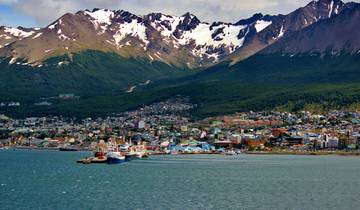
End of the Earth
- ✓ Comprehensive Patagonia tour
- ✓ Expert local guides included
- ✓ All accommodation arranged
- ✓ Transportation provided

15 days
Full Patagonia Adventure Trip – GROUP TOUR
- ✓ Comprehensive Patagonia tour
- ✓ Expert local guides included
- ✓ All accommodation arranged
- ✓ Transportation provided
Multi-day tour packages powered by TourRadar. Prices and availability subject to change.
International Flight Costs for 2026
North America to Argentina Routes
Direct and connecting flights from major North American cities to Buenos Aires cost $800-1,400 round-trip booking 3-4 months ahead for 2026 travel. Check airline websites for current official rates as pricing varies by departure city, season, and booking timeline. United, American Airlines, LATAM, and Aerolíneas Argentinas operate routes with competitive pricing during shoulder seasons and premium rates during December-January holidays.
Miami serves as the primary US gateway to Buenos Aires with multiple daily direct flights taking 9-10 hours at $750-1,200 round-trip. New York JFK offers direct United flights around $850-1,300, while Los Angeles routes connect through Lima, Bogotá, or Panama City adding 4-6 hours total travel time at $900-1,400. Canadian departures from Toronto connect through US hubs or direct with Air Canada at $950-1,500.
Booking strategies maximize value by purchasing international tickets 4-5 months ahead when airline pricing algorithms offer lowest rates. Last-minute bookings within 30 days command 40-60% premiums during high season. Flexible date searches reveal $100-200 savings shifting departure dates by 2-3 days around peak demand periods. Consider one-way tickets with different return cities if exploring multiple Patagonian gateways justifies routing flexibility.
North America to Chile Routes
US and Canadian flights to Santiago Chile cost $750-1,300 round-trip with multiple daily options through major carriers. LATAM dominates Chile routes with extensive networks and competitive pricing from Miami ($700-1,100), Los Angeles ($800-1,200), and New York ($850-1,250). United and American Airlines provide alternatives with similar pricing and routing through their hub cities.
Santiago’s international airport connects seamlessly to domestic terminals for onward flights to Punta Arenas and Chilean Patagonia destinations. Build 3-4 hour minimum connection time between international arrival and domestic departure as immigration, baggage claim, and terminal transfer consume time during peak season congestion. Overnight layovers in Santiago allow city exploration and reduce travel fatigue for long Patagonia journeys.
Europe and Asia to Patagonia Routes
European travelers find Buenos Aires connections through Madrid (Iberia, Air Europa), Paris (Air France), and London (British Airways) at €650-1,100 round-trip booking 3-5 months ahead. Santiago routes from Europe cost €700-1,200 with similar carriers plus LATAM’s extensive European network. Frankfurt and Amsterdam function as additional hub options with competitive pricing during shoulder seasons.
Asian departures route through US West Coast gateways or connect via multiple stops through Middle Eastern or European hubs. Total travel time from Tokyo, Seoul, or Shanghai exceeds 24-30 hours with prices running $1,400-2,200 round-trip. Australian and New Zealand travelers enjoy shorter routing through Santiago at $900-1,500 with direct LATAM and Qantas services taking 12-14 hours from Sydney.
Domestic Flight Costs Within Patagonia 2026
Argentina Domestic Connections
Buenos Aires to El Calafate flights operate multiple times daily with Aerolíneas Argentinas, LATAM, and Flybondi charging $180-320 round-trip booking 6-8 weeks ahead for 2026 travel. The 3.5-hour flight crosses Argentine Patagonia’s vast steppes arriving at El Calafate’s modern airport 15 miles from town center. Shuttle buses cost $5-8 per person while taxis charge $15-25 for the 20-minute transfer into town.
Buenos Aires to Ushuaia routes serve Tierra del Fuego access at $220-380 round-trip with similar carriers and advance booking benefits. The 3.5-hour flight provides dramatic views descending over the Beagle Channel and Martial Mountains before landing at the world’s southernmost commercial airport. These routes fill quickly during December-February requiring 2-3 month advance reservations for preferred schedules.
Budget carrier Flybondi offers lowest fares ($140-240 round-trip Buenos Aires-El Calafate) with restrictions including no checked baggage allowance, no seat selection, and limited schedule flexibility. Baggage fees add $25-40 each way for checked bags, meal costs $8-15, and change fees reach $50-80 per modification. Calculate total costs including fees when comparing against full-service carriers offering checked bags and meals included in base fares.
Chile Domestic Connections
Santiago to Punta Arenas flights cost $200-350 round-trip with LATAM and Sky Airline operating multiple daily departures taking 3.5 hours over the Andes and Chilean Patagonia. Book 6-8 weeks ahead for best availability and pricing during December-February peak season. Punta Arenas airport sits 12 miles north of downtown with taxi transfers costing $12-18 and shared vans running $5-8 per person.
Puerto Montt serves northern Patagonian Lake District access with flights from Santiago at $150-280 round-trip. The 2-hour flight positions travelers for Chiloé Island, Osorno volcano, and Chilean Andes exploration before continuing south to Torres del Paine region. Consider Puerto Montt stopover adding 2-3 days to comprehensive Patagonia itineraries.
Regional Flight Options
El Calafate to Ushuaia direct flights operate seasonally with LATAM charging $180-280 one-way for the 1-hour journey. This route eliminates 11-12 hour bus rides through Argentine Patagonia and Chilean Tierra del Fuego, valuable for time-limited travelers completing southern Patagonia circuits. Flights operate 3-4 times weekly during high season only.
Punta Arenas to Ushuaia flights cross Chilean and Argentine Patagonia in 1.5 hours at $200-320 one-way. The spectacular route provides aerial perspectives of the Strait of Magellan, Tierra del Fuego’s dramatic topography, and Beagle Channel before landing in Argentina’s southernmost city. Book these regional connections simultaneously with international tickets maximizing routing options.
Accommodation Costs Breakdown 2026
Budget Accommodation: Hostels and Camping
Hostel dormitory beds throughout Patagonian towns cost $25-45 per person per night during December-February high season, dropping to $18-32 during November and March shoulder season. El Calafate hostels like América del Sur ($32-42 dorm bed), Calafate Hostel ($28-38), and I Keu Ken ($30-40) provide equipped kitchens, hot showers, common areas, and often free breakfast. Book 2-3 months ahead for peak season availability as 8-12 bed dorms fill quickly with trekkers and budget travelers.
El Chaltén hostels charge premium rates reflecting limited bed inventory and enormous demand. Rancho Grande ($35-45 dorm), Condor de los Andes ($32-42), and Aylen Aike ($30-40) offer excellent facilities including gear drying rooms, trail information, and social atmospheres. The village’s 15-20 hostels concentrate along San Martín street within easy walking of restaurants and trailheads. Reserve 3-4 months ahead for December-January prime hiking season.
Puerto Natales budget accommodation includes Erratic Rock ($28-38 dorm), Hostel Natales ($25-35), and Amerindia Hostel ($30-40). These properties provide Torres del Paine planning assistance, equipment rentals, and often free pasta dinners creating community among trekkers. The town’s 25+ hostels compete aggressively on pricing and services with shoulder season deals reaching $20-28 per bed.
Camping represents the lowest-cost option at $8-15 per person per night at established campgrounds. El Chaltén features several in-town campgrounds with covered cooking areas protecting from wind, hot showers, and basic facilities. Torres del Paine camping requires advance reservations through park concessionaire websites at $15-25 per person per night including campsite access and gear storage but excluding meals. National park camping saves $110-140 per night versus refugio accommodation while maintaining trail access.
Mid-Range Hotel Pricing 2026
Mid-range hotels charging $100-180 per night for double occupancy provide comfortable private rooms, ensuite bathrooms, breakfast, and often WiFi throughout Patagonian destinations. El Calafate options include Hotel Schilling ($110-150), Kau Yatun ($115-155), and Sierra Nevada ($100-140) offering mountain or lake views, tour booking assistance, and central locations within walking distance of restaurants and shops.
El Chaltén’s limited hotel inventory commands premium pricing with Destino Sur ($140-190), Hostería Senderos ($130-170), and Los Cerros ($120-160) providing mountain views and breakfast service. These properties fill 4-5 months ahead for December-February requiring early booking discipline. The town’s 10-12 mid-range hotels concentrate demand creating seller’s market conditions during peak season.
Puerto Natales mid-range hotels like Altiplánico Sur ($130-180), Noi Indigo ($140-190), and Simple Patagonia ($110-150) balance comfort with value featuring design aesthetics, quality restaurants, and knowledgeable staff assisting with Torres del Paine logistics. The waterfront location near Last Hope Sound adds scenic value justifying marginally higher rates than inland properties.
Punta Arenas hotels provide better value than smaller Patagonian towns with Dreams Hotel ($120-160), Hotel Cabo de Hornos ($110-150), and Diego de Almagro ($100-140) offering business-hotel amenities at competitive rates. The city’s larger scale supports 40+ hotels creating price competition absent in remote mountain towns.
Luxury Lodge Experiences and Costs
Premium Patagonian lodges cost $400-1,200+ per night with all-inclusive packages covering accommodation, gourmet meals, guided activities, and ground transportation for 3-7 day minimum stays. These properties target travelers prioritizing comfort, expert guiding, and privileged access over budget considerations.
Eolo Patagonia’s Spirit near El Calafate ($650-950 per night all-inclusive for 3-night minimum) features 17 suites overlooking Patagonian steppes with daily activities including private estancia visits, horseback riding, and exclusive glacier access. The property arranges customized photography expeditions and gourmet meals featuring Patagonian lamb and Argentine wines. Total cost for 3-night stay runs $1,950-2,850 per person double occupancy including all meals and activities.
Explora Patagonia in Torres del Paine ($900-1,400 per night all-inclusive for 4-night minimum) operates year-round luxury trekking programs with daily guided hikes, hotel-to-hotel porterage eliminating backpack carrying, and comprehensive meals in modernist lodge overlooking Paine Massif. Four-night packages total $3,600-5,600 per person covering accommodation, all meals, daily activities with expert guides, and ground transfers from Punta Arenas airport.
Awasi Patagonia ($1,000-1,600 per night all-inclusive) provides private guides and 4×4 vehicles dedicated to each villa’s occupants for completely customized daily programs. The 14-villa property emphasizes personalization and flexibility with activities designed around guest interests, fitness levels, and photography goals. Three-night minimum stays total $3,000-4,800 per person including all meals, drinks, and exclusive guiding.
Tierra Patagonia ($800-1,200 per night all-inclusive) balances luxury with value offering 4-night packages at $3,200-4,800 per person including accommodation, meals, daily activities, and transfers. The lakefront property features contemporary design, excellent wine cellar, and comprehensive activity menu from gentle nature walks to challenging summit attempts on nearby peaks.
Food and Dining Costs 2026
Self-Catering and Grocery Shopping
Budget travelers cooking meals at hostel kitchens spend $25-35 daily on groceries purchasing breakfast supplies, packed lunch ingredients, and dinner makings at supermarkets. El Calafate’s La Anónima and Carrefour Express stock complete selections at reasonable prices: bread $2-3 per loaf, cheese $6-8 per pound, deli meats $8-12 per pound, pasta $2-3 per package, pasta sauce $3-5 per jar, eggs $4-5 per dozen, milk $3-4 per liter, and fresh vegetables $2-4 per pound.
El Chaltén’s Viento Oeste supermarket charges 15-20% premiums over El Calafate prices reflecting transportation costs and limited competition. Stock up on non-perishables in El Calafate before transferring to El Chaltén where grocery selection decreases and prices increase. The small market carries basics but specialized items disappear during peak season when stock sells faster than resupply arrives.
Puerto Natales features Unimarc supermarket offering good selection at Chilean prices lower than Argentine equivalents after exchange rate adjustments. Chilean wine costs $5-10 per bottle for quality Carmenere and Cabernet Sauvignon, bread $1-2 per loaf, cheese $5-7 per pound, and fresh produce at seasonal rates. Stock Torres del Paine trekking supplies here purchasing dehydrated meals ($8-12), energy bars ($2-3 each), trail mix ($6-8 per pound), and instant coffee ($5-8 per container.
Sample daily self-catering budget breakdown: breakfast ingredients $3-5 (oatmeal, fruit, yogurt), packed lunch components $5-8 (bread, cheese, meat, snacks), dinner supplies $12-18 (pasta, sauce, salad, protein), beverages $3-5 (water, juice, wine). Total daily grocery cost $23-36 per person provides substantial meals with variety and nutrition supporting active hiking schedules.
Restaurant Meal Pricing
Mid-range restaurant dining costs $15-25 for lunch and $30-50 for dinner per person before drinks throughout Patagonian towns. El Calafate restaurants like Pura Vida ($25-40 dinner entrees), Casimiro Biguá ($30-45 entrees), and La Tablita ($28-42 entrees) specialize in Argentine beef, Patagonian lamb, and empanadas. Add $8-15 for house wine by the glass or $25-45 per bottle for Argentine Malbec or Cabernet Sauvignon.
El Chaltén dining runs slightly higher with limited restaurant competition driving prices up during peak season. Estépa ($28-48 entrees), Ahonikenk ($25-42 entrees), and Rancho Grande restaurant ($22-38 entrees) serve hiking-sized portions recognizing clientele’s caloric needs after 8-12 hour trail days. Budget options include Patagotitan pizzeria ($18-28 pizzas feeding 2 people), Domo Blanco empanadas ($4-6 each), and Poincenot sandwiches ($8-12).
Puerto Natales restaurants offer better value with Afrigonia ($25-40 entrees), Santolla ($28-45 entrees), and Mesita Grande ($20-35 entrees) providing Chilean seafood specialties including king crab, sea bass, and salmon. The town’s competitive restaurant scene supports 40+ dining options creating price discipline and quality competition. Set lunch menus (menu del día) at budget restaurants cost $12-18 for soup, main course, and dessert.
Typical restaurant budget breakdown: breakfast at café $8-15 (coffee, pastry, eggs), lunch $15-25 (sandwich or set menu with drink), dinner $30-50 (entree, side, dessert), drinks $10-20 (wine, beer, cocktails). Total daily restaurant costs $63-110 per person eating all meals out without splurging on premium wine or multiple courses.
Alcohol and Beverage Costs
Beer costs $4-7 at restaurants and bars for Argentine Quilmes or Chilean Kunstmann, $2-3 at supermarkets for six-packs. Wine represents excellent value throughout Patagonia with Argentine Malbec and Chilean Carmenere bottles costing $5-12 at shops for quality regional wines, $18-35 at restaurants for same bottles. Splurge-worthy wines from Mendoza (Argentina) or Colchagua Valley (Chile) run $30-60 retail, $80-150 in restaurants.
Coffee drinks cost $3-5 for espresso-based beverages at cafés throughout Patagonian towns. Specialty coffee culture thrives in El Calafate and Puerto Natales with dedicated cafés roasting beans and offering pour-over options. Instant coffee packets for camping cost $0.50-1 each at supermarkets, adequate for trail energy needs if not gourmet standards.
Bottled water costs $1-2 per liter at stores, $3-5 at restaurants. Tap water in towns meets safe drinking standards allowing free refills at accommodations. Bring reusable water bottles reducing plastic waste and cutting beverage costs throughout the trip.
Activity and Tour Costs 2026
Glacier Tours and Boat Excursions
Perito Moreno Glacier standard tours from El Calafate cost $75-95 per person including round-trip transportation and 3-4 hours at boardwalks facing the glacier. Los Glaciares National Park charges separate entry at $30-40 per day for foreign visitors (check official park website for current rates as pricing may vary). The combined cost of $105-135 provides access to Argentina’s most famous natural attraction with guaranteed views of the 240-foot ice wall and frequent calving events.
Glacier walking tours adding 90 minutes on Perito Moreno ice using crampons and guides cost $120-150 per person including park entry, transportation, and specialized glacier equipment. These small-group tours (maximum 10-12 people) run twice daily during high season requiring advance booking 4-6 weeks ahead. The experience provides intimate glacier encounters impossible from distant boardwalk viewpoints.
Upsala Glacier boat tours navigate Lago Argentino’s north arm visiting Spegazzini and Upsala glaciers over 9-10 hour excursions at $180-220 per person including lunch onboard. The full-day journey passes icebergs, approaches glacier fronts, and provides perspectives on southern Patagonian ice field extent. Book 2-3 weeks ahead for preferred dates during December-February.
Torres del Paine Costs and Planning
Torres del Paine National Park entrance fees cost $35-45 per day for foreign visitors during high season (December-February), dropping to $25-35 during shoulder season. Multi-day passes don’t exist, so 5-day W Circuit trekkers pay $175-225 total park entry. Purchase at park gates or online through official park website avoiding lines at entrance stations.
Camping throughout W Circuit costs $15-25 per person per night at designated campsites operated by Vertice Patagonia and Fantastico Sur concessionaires. Reserve all nights simultaneously 5-6 months ahead for December-February dates as popular campsites sell out completely. Four-night W Circuit camping totals $60-100 per person for campsites only, excluding gear, food, and park entry.
Refugio accommodation with full meal service (breakfast, packed lunch, dinner) costs $130-160 per person per night throughout W Circuit. Four nights total $520-640 per person representing W Circuit’s largest expense for travelers prioritizing comfort over budget. Refugios provide bunk beds in shared rooms, hot showers, charging stations, and social dining areas. Book 6 months ahead as refugio spaces sell faster than campsites.
Optional glacier kayaking at Grey Glacier adds $120-150 per person for 3-hour excursions paddling among icebergs and approaching the glacier terminus. Ice hiking on Grey Glacier costs $160-200 per person including equipment, guides, and crampons for 4-hour glacier trekking. These activities enhance W Circuit experiences but aren’t essential for completing the route.
El Chaltén Hiking and Activities
El Chaltén hiking trails require no entrance fees or permits for Los Glaciares National Park northern sector providing free access to Laguna de los Tres, Laguna Torre, and other signature routes. The town functions as Argentina’s trekking capital offering world-class hiking without activity costs beyond time and physical effort.
Guided day hikes cost $80-120 per person for full-day excursions with expert naturalist guides explaining geology, ecology, and mountain history while leading groups to major viewpoints. These tours suit less-confident hikers wanting route-finding assistance and environmental interpretation. Independent hiking eliminates these costs for self-sufficient trekkers comfortable with navigation and wilderness travel.
Ice trekking on Viedma Glacier operates as El Chaltén’s premium guided experience at $180-250 per person for full-day excursions including boat transport across Viedma Lake, glacier approach, and 3-4 hours cramponing across blue ice formations. Book 3-4 weeks ahead during peak season as small group sizes (10-12 participants) limit daily capacity.
Optional Activities and Experiences
Horseback riding at Patagonian estancias costs $95-140 per person for half-day experiences including transportation from El Calafate, riding instruction, asado (barbecue) lunch, and demonstrations of gaucho traditions and sheep shearing. Full-day estancia visits run $140-200 with extended riding and comprehensive cultural immersion.
Penguin colony tours from Punta Arenas to Magdalena Island cost $70-90 per person for half-day boat excursions visiting 120,000 nesting Magellanic penguins during October-March breeding season. The 2-hour navigation crosses Strait of Magellan before landing on the island for 1-hour walking among nesting burrows and photo opportunities.
Mountain biking rentals in El Chaltén cost $25-40 per day for quality bikes with front suspension, disc brakes, and panniers. Several trails including Laguna Torre approach allow cycling portions before continuing on foot. Longer rentals receive daily rate discounts with 3-day packages running $60-90 total.
Transportation Costs Within Patagonia 2026
Bus Services and Schedules
Long-distance buses connecting major Patagonian destinations cost $15-65 depending on route distance and service level. El Calafate to El Chaltén takes 3 hours via Ruta 40 with Taqsa, Chaltén Travel, and Cal-Tur operating 3-4 daily departures at $35-45 per person each way. Book tickets 1-2 weeks ahead during peak season through company websites or at bus terminals avoiding sold-out departures.
Cross-border El Calafate to Puerto Natales buses operate daily at 8 AM taking 5-6 hours including border formalities and charging $45-65 per person. Bus Sur and Cootra operate this route with comfortable coaches, WiFi, and onboard bathrooms. The journey crosses vast Patagonian steppes with occasional guanaco sightings before entering Chilean lake country approaching Puerto Natales.
Puerto Natales to Punta Arenas buses run multiple times daily covering 3 hours at $20-30 per person. Buses Fernández and other carriers provide this service connecting Torres del Paine base town with regional airport city. The route follows coastal areas along Last Hope Sound before turning north through Chilean Patagonian grasslands.
El Chaltén to Bariloche long-distance buses operate 3 times weekly during high season taking 18-22 hours along legendary Ruta 40 at $80-110 per person. The journey crosses remote Patagonian landscapes with occasional stops in tiny settlements. Only adventurous travelers with time flexibility choose this marathon bus ride versus flying between regions.
Rental Car Costs and Considerations
Compact car rentals cost $50-75 per day during December-February high season, dropping to $35-55 during shoulder season. Add mandatory insurance at $15-25 per day bringing total daily costs to $65-100 for economy vehicles. SUVs suitable for gravel roads and weather extremes run $80-120 per day before insurance, $95-145 total with coverage. Book 2-3 months ahead for high season availability as El Calafate and Puerto Natales rental fleets sell out weeks ahead.
Fuel costs $1.20-1.50 per liter ($4.50-5.70 per gallon) throughout Patagonia with gas stations spaced 60-100 miles apart on major routes requiring careful tank management. Budget $40-70 daily for fuel on active driving days covering 200-300 miles. El Calafate to El Chaltén consumes $15-20 fuel round-trip, while cross-border El Calafate to Puerto Natales uses $35-45.
International driving permits supplement standard licenses for some rental agencies particularly when crossing borders. Obtain IDP before departure ($15-20 processing fee) avoiding rental complications. Border crossings require rental company authorization documents permitting vehicles to leave origin country and enter neighboring nation. Confirm cross-border permission during reservation process as some companies prohibit international travel with their fleets.
Rental car advantages include schedule flexibility, trailhead access, photography stopping freedom, and grocery transport capacity. Daily total costs of $105-170 (rental, insurance, fuel) exceed bus alternatives but provide value for 2-4 person groups splitting costs. Calculate break-even comparing bus tickets for planned routes against rental costs for trip duration.
Local Transportation and Transfers
Airport transfers from El Calafate airport to downtown hotels cost $5-8 per person via shared shuttle vans, $15-25 for private taxis. Puerto Natales and Punta Arenas transfers run similar rates with shared services saving money for solo travelers and taxis working better for families and groups. Book shuttle services online before arrival guaranteeing spots on crowded high-season runs.
Torres del Paine park shuttles operate between entrance gates, visitor centers, and major trailheads at $15-25 per route. Hotel Lago Grey to Refugio Paine Grande catamaran crossing costs $30-40 per person for boat transport across Lago Pehoé. These internal park transportation options eliminate need for rental vehicles within Torres del Paine boundaries.
El Chaltén free shuttle services to popular trailheads reduce erosion and parking congestion during high season. Laguna de los Tres trailhead shuttle departs town center 6:30-8:30 AM with return pickups 3-7 PM, eliminating 3-mile road walk each direction. These volunteer-run shuttles accept donations ($5-10 suggested) supporting local trail maintenance and conservation efforts.
Taxis within Patagonian towns charge $4-8 for typical rides between accommodation and restaurants or bus stations. El Calafate and Puerto Natales operate metered taxis with standardized pricing, while El Chaltén’s compact size makes taxis largely unnecessary for travelers staying centrally.
Sample Budget Breakdowns for 2026
14-Day Budget Traveler Itinerary
Total estimated cost: $2,500-3,200 per person from North America
International Flights: $800-1,200 (North America to Buenos Aires round-trip, booked 4 months ahead)
Domestic Flights: $180-280 (Buenos Aires to El Calafate return with Flybondi including baggage fees)
Accommodation (13 nights): $370-520 (hostel dorms $28-40 per night)
Food (14 days): $350-490 (self-catering $25-35 daily)
Torres del Paine W Circuit (4 days): $360-520 (camping $15-25 per night, park entry $35-45, groceries for meals)
Activities: $315-450 (Perito Moreno standard tour $75 + park entry $30, Laguna de los Tres free hiking, Laguna Torre free hiking, Torres del Paine free hiking, optional penguin tour $70-90)
Transportation: $180-280 (El Calafate-El Chaltén buses $70-90 round-trip, El Calafate-Puerto Natales bus $45-65, Puerto Natales-Punta Arenas bus $20-30, local transfers $45-95)
Contingency Buffer (10%): $250-320
Daily Breakdown Example – El Chaltén Budget Day: Hostel dorm $35, breakfast groceries $4, packed lunch ingredients $6, dinner cooking $15, snacks $5, beer $3, laundry $12. Total day cost: $80 per person (excluding major activity costs).
14-Day Mid-Range Traveler Itinerary
Total estimated cost: $4,800-6,800 per person from North America
International Flights: $900-1,300 (North America to Buenos Aires round-trip, booked 3-4 months ahead)
Domestic Flights: $280-380 (Buenos Aires to El Calafate return with LATAM including checked bags)
Accommodation (13 nights): $1,400-2,100 (mid-range hotels $110-160 per night double occupancy = $55-80 per person)
Food (14 days): $840-1,260 (restaurant meals $60-90 daily)
Torres del Paine W Circuit (4 days): $700-940 (refugios with meals $130-160 per night, park entry $35-45)
Activities: $545-800 (Perito Moreno glacier walk $120-150, Upsala boat tour $180-220, Torres del Paine glacier kayaking $120-150, penguin tour $70-90, optional estancia visit $95-140)
Transportation: $280-380 (same bus routes as budget but with flexibility for taxis, transfers, optional rental car days)
Contingency Buffer (10%): $480-680
Daily Breakdown Example – El Calafate Mid-Range Day: Hotel double room $140 ($70 per person), breakfast included, lunch restaurant $22, dinner $42, coffee/drinks $12, souvenir $20, glacier tour $120, park entry $30. Total day cost: $316 per person including major activity.
14-Day Luxury Traveler Itinerary
Total estimated cost: $11,000-17,000 per person from North America
International Flights: $2,500-4,000 (business class North America to Buenos Aires round-trip)
Domestic Flights: $450-650 (business class Buenos Aires to El Calafate return)
Accommodation: $4,500-7,500 (3 nights Eolo $1,950-2,850, 4 nights Explora $3,600-5,600, remaining nights luxury hotels $1,000-2,000)
Food: Included in lodge packages, $500-900 additional for independent dining days
Activities: Included in lodge packages covering all guided excursions, glacier tours, horseback riding, and equipment
Transportation: $800-1,400 (private transfers, rental 4×4 SUV, helicopter flights, boat charters)
Guides and Tips: $800-1,200 (gratuities for lodge guides, drivers, hotel staff at 10-15% service level)
Contingency Buffer (10%): $1,100-1,700
Money-Saving Strategies for 2026
Booking and Timing Optimization
Travel during November or March shoulder season saves 30-40% on accommodation costs while maintaining reasonable weather conditions. November brings emerging wildflowers and active wildlife (penguin breeding season starts October), while March offers autumn colors and calmer winds than peak summer. Some high-altitude trails and mountain refugios close during extreme shoulder season timing (early October, late March) requiring itinerary flexibility.
Book flights 4-5 months ahead for optimal pricing when airline algorithms offer lowest published fares. Monitor flight aggregators setting price alerts for target routes. Consider positioning flights departing from cheaper gateway cities if driving or cheap domestic connections from home region make financial sense. Miami and Santiago often provide lowest South American connection costs from US origins.
Package accommodation with tours through hotel properties combining room rates with Perito Moreno tours, estancia visits, or penguin excursions at 10-15% discounts versus booking components separately. Puerto Natales hotels frequently bundle Torres del Paine logistics including camping reservations, meal plans, and transportation creating one-stop planning convenience with modest savings.
Self-Catering and Cooking
Hostels with full kitchens enable self-catering reducing meal costs from $60-90 daily to $25-35 daily for groceries and supplies. This strategy saves $35-55 per person per day ($245-385 per week) allowing budget reallocation toward activities and experiences. Most Patagonian hostels feature well-equipped cooking facilities with stoves, cookware, utensils, and refrigeration supporting serious meal preparation.
Shop supermarkets in larger towns (El Calafate, Puerto Natales, Punta Arenas) before heading to smaller destinations or national parks where selection decreases and prices increase 20-30%. Stock non-perishables buying bulk quantities split among travel companions. Organize group cooking at hostels sharing ingredient costs and preparation duties while creating social dining experiences.
Pack breakfast and lunch rather than purchasing at restaurants or cafés saving $15-30 daily on meal costs. Prepare next-day lunches previous evening after dinner cleanup when kitchen facilities remain available. Trail mix, energy bars, cheese, crackers, chocolate, and dried fruit provide excellent hiking nutrition at supermarket prices versus tourist shop markups.
Free and Low-Cost Activities
Prioritize free hiking throughout El Chaltén accessing Laguna de los Tres, Laguna Torre, Laguna Capri, and other signature trails without entrance fees or permits. These world-class routes rival paid tour experiences while eliminating guide costs of $80-120 per person. Confident hikers comfortable with navigation and wilderness travel save hundreds of dollars choosing independent trekking over guided alternatives.
Walk El Calafate’s Laguna Nimez nature reserve ($5 entry) for bird watching and lake views rather than paid estancia tours. Explore Puerto Natales waterfront and Milodon Cave ($5 entry) as budget-friendly cultural experiences. Many towns offer free museums, historical sites, and walking routes providing cultural immersion without activity costs.
Join free hostel activities including group dinners, hiking meetups, and information sessions about trails and travel strategies. Connect with other budget travelers organizing ride-sharing, equipment pooling, and expense splitting reducing individual costs across transportation, cooking, and gear rentals.
Transportation Savings
Use buses for all major routes eliminating rental car costs of $105-170 daily total (rental, insurance, fuel). El Calafate to El Chaltén buses ($35-45) cost one-third of rental car equivalents while providing rest during 3-hour transit. Cross-border buses ($45-65) eliminate international vehicle permit complications and fuel costs.
Consider hitchhiking along Ruta 40 and near national parks during high season when traffic increases and ride-sharing culture thrives among tourists and locals. Offer fuel contributions ($10-15) respecting regional customs while reducing transportation expenses for flexible travelers comfortable with uncertain schedules. This option works best combining with occasional bus tickets maintaining forward progress when rides don’t materialize.
Walk within towns rather than using taxis eliminating $4-8 ride costs multiple times daily. El Chaltén’s compact size makes walking practical for all destinations, while El Calafate and Puerto Natales concentrate hotels and services within 15-20 minute walks. Exercise contributes to acclimatization and fitness preparation for upcoming hiking days.
Currency and Payment Strategies 2026
Exchange Rate Management
Monitor Argentine peso and Chilean peso exchange rates before departure understanding volatility patterns and timing currency exchange strategically. Argentine peso experiences significant annual devaluation (20-50%+ in recent years) creating favorable exchange rates for visitors while complicating long-term budget predictions. Chilean peso maintains relative stability with seasonal fluctuations of 5-15% creating more predictable costs.
Bring US dollar cash ($500-800 for 2-week trips) exchanging gradually at optimal rates when pesos weaken versus holding all currency in dollars waiting for perfect timing. Exchange half your anticipated cash needs upon arrival securing funds for immediate expenses while retaining flexibility adjusting to real-time rate movements. Banks and official exchange houses provide better rates than hotels and airports despite convenience factors.
Use ATMs for emergency currency access accepting daily withdrawal limits ($200-300 equivalent) and foreign transaction fees ($4-8 per withdrawal plus 1-3% bank charges). Withdraw maximum allowed amounts minimizing fee frequency. Notify your bank before departure preventing card blocks from suspicious foreign activity patterns. Bring backup debit cards from different banks as ATM malfunctions and cash shortages occur occasionally.
Credit Card Usage and Fees
Credit cards work at hotels, tour operators, and larger restaurants but cash remains essential for hostels, small shops, and budget dining. Visa and Mastercard acceptance exceeds American Express and Discover throughout Patagonia. Dynamic currency conversion offerings at point-of-sale terminals usually disadvantage travelers versus accepting charges in local currency and allowing home bank conversion at interbank rates.
Foreign transaction fees of 1-3% add to credit card purchases making cash preferable for smaller transactions where practical. Some cards eliminate foreign transaction fees (Capital One, certain Chase products) providing value for travelers using cards extensively. Calculate total costs including fees when comparing payment methods for major purchases like tours and accommodation.
Tipping Customs and Expectations
Restaurant tipping follows 10-15% standards for good service throughout Argentina and Chile, similar to North American expectations. Check bills for included service charges (“servicio incluido”) before adding tips avoiding double payment. Budget an additional $40-80 for 2-week trips covering restaurant gratuities when dining out regularly.
Guide tipping for day tours runs $10-20 per person for full-day excursions, $5-10 for half-day trips, with adjustments for group sizes and service quality. Multi-day guided treks expect $50-80 per person total distributed among guides and support staff at trip conclusion. These amounts represent suggested ranges rather than mandatory requirements with actual tips varying based on experience quality and personal budgets.
Hotel and hostel staff appreciate $1-2 per bag for porter service, $3-5 daily for housekeeping on extended stays, and $10-20 per week for exceptional concierge assistance. These gratuities remain optional but demonstrate appreciation for quality service enhancing your Patagonian experience.
FAQ: Patagonia Budget Planning 2026
Is Patagonia expensive compared to other South American destinations?
Patagonia costs 40-60% more than northern Argentina destinations like Buenos Aires or northwestern regions, and 30-50% more than Chilean cities like Santiago or Valparaíso. Remote location, limited infrastructure, seasonal operation, and high tourism demand drive elevated pricing throughout the region. Budget $100-150 daily versus $60-90 daily for destinations further north. The unique landscapes and wilderness experiences justify premium costs for travelers prioritizing natural beauty over budget minimization. Advance planning and self-catering strategies mitigate but don’t eliminate the price premium.
Can I use US dollars directly in Patagonia or must I exchange to local currency?
Argentine and Chilean pesos serve as primary transaction currencies throughout Patagonia with US dollars rarely accepted directly at point-of-sale. Exchange dollars to pesos upon arrival using banks, official exchange houses (casas de cambio), or ATMs. Some hotels and tour operators accept dollar payments but provide unfavorable exchange rates versus official channels. Budget travelers exchange $100-200 at a time matching near-term spending needs, while maintaining dollar reserves for optimal rate timing. Never exchange money with street changers despite seemingly attractive rates, as counterfeit bills and scams target tourists regularly.
How much should I budget for unexpected expenses and emergencies in 2026?
Add 10-15% contingency buffer to total budget covering weather delays, medical issues, equipment failures, and unplanned opportunities. A $4,000 trip requires $400-600 contingency allocation, while $8,000 trips need $800-1,200 reserves. Patagonia’s unpredictable weather can ground flights, close trails, and strand travelers for days requiring extra accommodation and meals. Keep contingency funds accessible via credit card limits or emergency cash reserves. Travel insurance with trip interruption coverage provides additional financial protection against major emergencies forcing trip modifications or early departure.
Are there budget airlines serving Patagonia routes in 2026?
Flybondi operates as Argentina’s primary budget carrier serving El Calafate routes from Buenos Aires at $140-240 round-trip versus $180-320 for full-service LATAM and Aerolíneas Argentinas. Budget fares exclude checked baggage ($25-40 each way), seat selection ($8-15), meals ($8-15), and flight changes ($50-80). Calculate total costs including fees before assuming budget carriers save money, as full-service carrier base fares sometimes match budget totals after fee additions. JetSMART serves some Chilean routes but doesn’t operate Punta Arenas connections critical for Patagonia access. Sky Airline provides mid-range pricing in Chile between budget and full-service carriers.
How much does camping equipment rental cost if I don’t want to bring my own gear?
Outdoor shops in El Calafate, El Chaltén, and Puerto Natales rent complete camping and trekking equipment for Torres del Paine and Los Glaciares adventures. Sleeping bags cost $15-25 per day, tents $20-35 per day for 2-person models, backpacks $12-18 per day, and trekking poles $8-12 per day. Week-long W Circuit rentals total $280-450 for complete gear set (sleeping bag, tent, backpack, poles, mat) versus buying equipment at $600-1,000 for quality gear. Rental makes financial sense for one-time Patagonia trips, while purchasing suits travelers planning multiple camping adventures. Reserve rental equipment 2-3 weeks ahead during peak season as availability decreases when demand exceeds inventory.
What’s the cost difference between camping and staying in refugios in Torres del Paine?
Camping throughout W Circuit totals $60-100 for 4 nights ($15-25 per night) plus $200-300 for self-catered meals and cooking equipment, totaling $260-400 before park entry. Refugio accommodation with full meal service (breakfast, packed lunch, dinner) runs $520-640 for 4 nights ($130-160 per night), totaling $520-640 before park entry. The $260-320 difference represents the comfort premium for hot showers, prepared meals, charging stations, and lighter backpack loads without tent and cooking equipment. Budget-focused trekkers choose camping saving $65-80 per night while carrying heavier packs and managing meal preparation. Comfort-prioritizing travelers gladly pay refugio premiums for superior facilities and simplified logistics.
Are there any free activities in Patagonia worth doing?
El Chaltén offers completely free access to world-class hiking trails including Laguna de los Tres (16 miles, views of Fitz Roy), Laguna Torre (12 miles, Cerro Torre perspectives), Laguna Capri (8 miles, accessible viewpoints), and Chorillo del Salto (5 miles, waterfall). These routes rival paid guided experiences while eliminating tour costs of $80-120 per person. El Calafate’s Laguna Nimez nature reserve charges only $5 entry for bird watching and lake views. Puerto Natales waterfront walks, historical cemetery visits, and town museums provide cultural immersion without costs. Free activities create opportunities for budget travelers to experience Patagonia’s majesty without sacrificing quality for financial constraints.
Should I pre-book all accommodation or find places upon arrival to save money?
Book accommodation 3-4 months ahead for December-February high season avoiding sold-out properties and securing better advance purchase rates. Last-minute availability virtually disappears in El Chaltén during Christmas-New Year period, while Torres del Paine campsites and refugios sell out 5-6 months ahead for entire peak season. Walk-in rates don’t exist when properties reach full occupancy, forcing travelers to expensive backup options in neighboring towns requiring costly transportation. Shoulder season (November, March) allows more flexibility with 2-3 week advance booking maintaining good availability. Budget travelers balance advance booking security with flexibility maintaining 2-3 open nights for weather-dependent itinerary adjustments.