
Paris History: Complete Historical Guide
Key Takeaways
- Paris evolved from the Celtic Parisii settlement on Île de la Cité in 250 BCE through Roman Lutetia, medieval capital, Renaissance glory, and revolutionary transformation into modern metropolis
- The city’s strategic Seine River location enabled 2,000+ years of continuous occupation, trade dominance, and political power as capital of France since 987 CE
- UNESCO World Heritage designation protects 20 kilometers of Seine riverbanks containing monuments spanning Roman baths, medieval cathedrals, Renaissance palaces, and 19th-century boulevards
- Paris served as epicenter for five major historical movements: medieval scholasticism, Renaissance arts, Enlightenment philosophy, French Revolution, and Belle Époque culture
- The city’s architectural layers reveal distinct construction periods including Gallo-Roman ruins, Gothic masterpieces, classical royal projects, Haussmann’s 19th-century boulevards, and 20th-century modernization
- Major historical events transformed Paris through Revolution (1789-1799), Napoleon’s Empire (1804-1814), Haussmann renovation (1853-1870), and two World Wars establishing modern democratic republic
Understanding Paris Historical Significance
Paris stands as one of Europe’s oldest continuously inhabited cities, with archaeological evidence documenting human settlement on Île de la Cité dating to 4500 BCE. The city’s historical significance derives from its sustained role as political capital, intellectual center, artistic hub, and economic powerhouse across more than two millennia. Unlike many European cities that experienced periods of decline or abandonment, Paris maintained continuous importance through Roman occupation, medieval growth, Renaissance flowering, revolutionary upheaval, and modern transformation.
The historical narrative of Paris interweaves political power, intellectual achievement, artistic innovation, and architectural ambition into a complex story of urban evolution. From Celtic tribal settlement through contemporary European Union capital, the city absorbed, adapted, and transformed successive waves of cultural influence while maintaining distinct identity and global significance. Understanding Paris history requires examining multiple overlapping chronologies: political dynasties and regime changes, artistic and intellectual movements, physical urban development, and social transformations.
Paris received UNESCO World Heritage recognition in 1991 for the Banks of the Seine designation protecting the historic core from Pont de Sully to Pont d’Iéna, encompassing Île de la Cité, Île Saint-Louis, and both riverbanks. This designation acknowledges the exceptional concentration of monuments representing major periods of European history, architectural styles, and cultural achievements within a compact urban landscape. The protected zone contains over 200 individual monuments and structures bearing witness to Paris’s role in shaping Western civilization.
People Also Ask About Paris History
When was Paris founded and by whom?
The Celtic tribe known as the Parisii established the first significant settlement on Île de la Cité around 250 BCE, creating a fortified oppidum (Celtic town) controlling Seine River crossing and trade routes between northern and southern Gaul. The Parisii were part of the larger Gallic confederation and controlled regional river commerce until Roman conquest in 52 BCE. The settlement’s strategic location at the Seine’s navigable head and intersection of north-south and east-west trade routes determined its future importance as the site grew into Roman Lutetia.
Roman forces under Titus Labienus (Julius Caesar’s lieutenant) conquered the Parisii settlement during the Gallic Wars, with the decisive battle occurring at what is now Nanterre in 52 BCE. The Romans rebuilt and expanded the settlement as Lutetia Parisiorum, constructing classic Roman infrastructure including forum, amphitheater, aqueduct, and bath complexes. The Roman city initially focused on the Left Bank (modern Latin Quarter), with remains of Roman baths visible today at the Musée de Cluny and amphitheater ruins in Rue Monge.
Why did Paris become the capital of France?
Paris established itself as France’s permanent capital through the convergence of geography, royal preference, and political necessity. Clovis I, first king of the Franks to convert to Christianity, selected Paris as his capital in 508 CE, recognizing the city’s central location, defensible island core, and river transportation advantages. The Capetian dynasty, beginning with Hugh Capet in 987 CE, solidified Paris as the undisputed capital and royal residence, with successive monarchs making the city the center of political authority, justice, and administration.
The medieval period saw Paris emerge as France’s unquestioned capital through construction of royal residences (Louvre fortress, Palais de la Cité), establishment of government institutions, and growth of ecclesiastical power (Notre-Dame, Sainte-Chapelle). The Sorbonne’s founding in 1257 made Paris Europe’s leading university city, attracting scholars and establishing intellectual authority complementing political power. By the 14th century, Paris functioned as France’s administrative, judicial, religious, economic, and cultural center, a concentration of authority that persisted through subsequent regime changes.
What major historical events happened in Paris?
The French Revolution (1789-1799) transformed not only France but European political order through events centered in Paris. The Storming of the Bastille on July 14, 1789 began revolutionary upheaval, followed by the Women’s March on Versailles October 5-6, 1789 forcing the royal family to Paris. The Revolution’s most dramatic events unfolded in Paris including Louis XVI’s execution at Place de la Concorde (January 21, 1793), the Reign of Terror coordinated from the Conciergerie, and Napoleon’s coup d’état of November 9, 1799 establishing Consulate rule.
Paris experienced additional revolutionary movements including the July Revolution of 1830 (depicted in Delacroix’s Liberty Leading the People), the June Rebellion of 1832 (described in Victor Hugo’s Les Misérables), the February Revolution of 1848 establishing the Second Republic, and the Paris Commune of 1871 following France’s defeat in the Franco-Prussian War. World War I saw Paris threatened by German advance in 1914 (repelled at Battle of the Marne) and again in 1918, while World War II brought occupation by Nazi Germany 1940-1944 and liberation by Allied forces in August 1944. The May 1968 student protests represented the last major social upheaval centered in Paris.
How did Paris become a center of art and culture?
Paris established cultural dominance through sustained royal, aristocratic, and later state patronage of arts beginning in the medieval period and accelerating through Renaissance and Baroque eras. François I (reigned 1515-1547) brought Leonardo da Vinci to France and established royal collections forming the Louvre nucleus. Louis XIV (1643-1715) founded the Académie Royale de Peinture et de Sculpture (1648) and the Académie Royale d’Architecture (1671), creating institutional frameworks that attracted artists throughout Europe and established aesthetic standards.
The 19th century witnessed Paris become the undisputed art capital through several developments: the Louvre’s transformation from palace to public museum (1793), growth of commercial art market with galleries and dealers, emergence of art movements including Romanticism, Realism, Impressionism, and Post-Impressionism, and the city’s international expositions showcasing arts and technology. Artists from across Europe and America migrated to Paris to study, exhibit, and participate in artistic ferment, while cafés, salons, and studios in Montmartre and Montparnasse became legendary centers of bohemian creativity.
Extended multi-day tours – 5+ days
Featured Paris Multi-Day Tour Packages
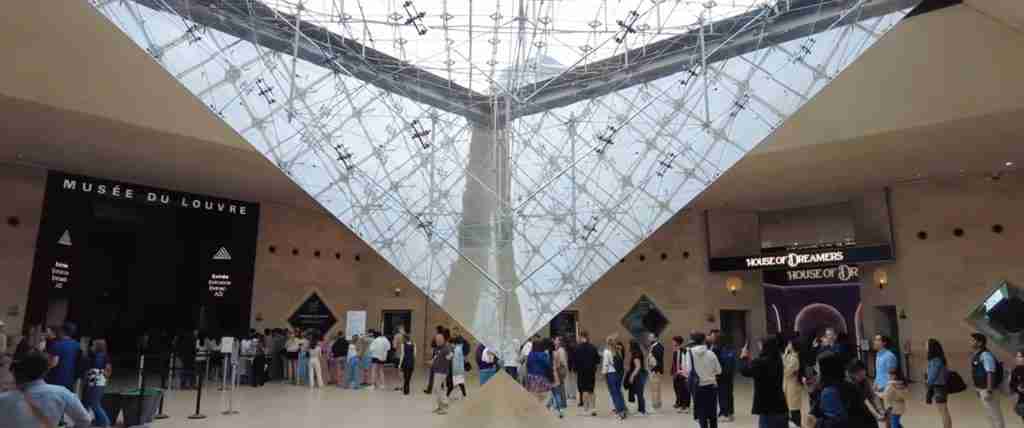
3 days
Paris 3-Day Discovery Tour
- ✓ Comprehensive Paris experience
- ✓ Expert local guides included
- ✓ All accommodation included
- ✓ Transportation provided
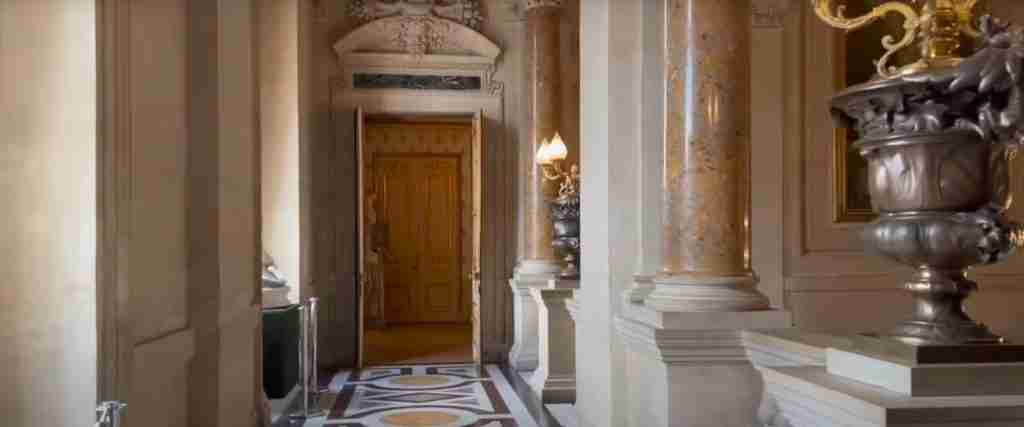
5 days
Paris 5-Day Highlights Experience
- ✓ Comprehensive Paris experience
- ✓ Expert local guides included
- ✓ All accommodation included
- ✓ Transportation provided

7 days
Paris 7-Day Cultural Journey
- ✓ Comprehensive Paris experience
- ✓ Expert local guides included
- ✓ All accommodation included
- ✓ Transportation provided
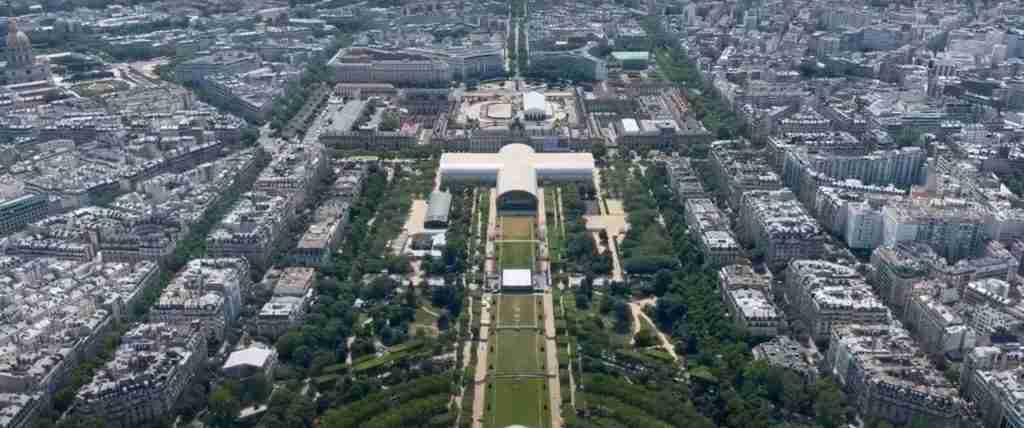
10 days
Paris 10-Day Complete Adventure
- ✓ Comprehensive Paris experience
- ✓ Expert local guides included
- ✓ All accommodation included
- ✓ Transportation provided
Multi-day tour packages powered by TourRadar. Prices and availability subject to change.
Celtic and Roman Foundations
The Parisii Settlement and Celtic Origins
The Parisii tribe emerged as a significant Gallic power during the 3rd-1st centuries BCE, controlling a territory roughly corresponding to modern Île-de-France. Archaeological excavations on Île de la Cité reveal Celtic settlement patterns including defensive ramparts, residential structures, and evidence of metalworking and trade activities. The Parisii minted their own coins showing Celtic artistic motifs and establishing the tribe’s political independence and economic sophistication before Roman conquest.
The Parisii settlement thrived as a river trading center where goods transferred between overland routes and Seine river transport. The strategic location at the Seine’s navigable head meant all upriver trade passed through Parisii-controlled territory, generating wealth through tolls, commerce, and craft production. Celtic fortifications on the island provided security while the surrounding marshes and river branches created natural defensive barriers. This geographic advantage—combining protection with economic opportunity—explained why every subsequent regime maintained and expanded the settlement.
Celtic culture left lasting marks on Paris despite Roman transformation. The tribal name Parisii evolved into Paris (the Roman “Lutetia Parisiorum” eventually shortened to Paris in the 4th century CE), creating direct continuity between Celtic founders and modern city. Celtic religious practices focused on natural features, particularly sacred springs and groves, influences persisting in early Christian period when churches arose on former Celtic holy sites. Archaeological evidence suggests the Celtic settlement population reached several thousand by the time of Roman conquest, substantial for the period.
Roman Lutetia and Classical Development
Roman Lutetia developed primarily on the Left Bank (Rive Gauche) after conquest in 52 BCE, with urban planning following standard Roman colonial patterns. The cardo maximus (main north-south street) ran along what is now Rue Saint-Jacques, intersecting with the decumanus maximus (main east-west street) at the forum near present-day Rue Soufflot. This grid system organized the Gallo-Roman city into organized blocks (insulae) containing shops, workshops, and residences, while public monuments occupied prominent locations on slight hillsides.
Major Roman constructions included an amphitheater (Arènes de Lutèce) accommodating 15,000 spectators for gladiatorial contests and theatrical performances, thermal baths (visible today at the Musée de Cluny) featuring caldarium, tepidarium, and frigidarium pools with sophisticated heating systems, and an aqueduct carrying water 26 kilometers from Wissous springs. The forum served as administrative and commercial center where merchants traded, officials conducted business, and public announcements occurred. Residential insulae ranged from modest craftsmen’s dwellings to elaborate aristocratic domus with mosaic floors and wall paintings.
Lutetia grew prosperous during the Pax Romana (27 BCE-180 CE), reaching a population estimated at 8,000-10,000 residents by the 2nd century CE. The city functioned as regional administrative center (civitas capital) for the Parisii territory, with governor’s residence, tax collection offices, and garrison quarters. Romanization transformed local Gallic culture through Latin language adoption, Roman religious practices (though Celtic traditions persisted), and integration into empire-wide trade networks. Stone carving workshops produced sculptures and architectural elements, potters created ceramic vessels, and metalworkers crafted bronze implements and jewelry for local and regional markets.
The Late Roman period (3rd-5th centuries CE) brought challenges including Germanic invasions and economic instability. Around 275 CE, Alemanni raids forced residents to retreat to Île de la Cité, abandoning the Left Bank settlement and refortifying the island with stone ramparts constructed from dismantled public buildings. This defensive contraction marked a fundamental shift from expansive Roman urbanism to fortified medieval patterns. Christianity arrived during this period, with Saint Denis converting the first Christians and becoming Paris’s patron saint after his martyrdom around 250 CE at Montmartre.
Medieval Paris and Capetian Capital
Merovingian and Carolingian Periods
Clovis I’s selection of Paris as Frankish capital in 508 CE initiated the city’s medieval transformation from provincial Roman town to political center of emerging French kingdom. Clovis established a palace on Île de la Cité near the present-day Palais de Justice, while his conversion to Catholic Christianity strengthened ties between Frankish monarchy and Church authority. The construction of the first Church of Sainte-Geneviève (later the Panthéon site) honored Paris’s patron saint who, according to tradition, saved the city from Attila’s Huns through prayer and negotiation in 451 CE.
The Merovingian dynasty (481-751) faced succession instabilities that sometimes diminished Paris’s political importance when kingdoms divided among heirs. However, the city maintained ecclesiastical significance through monastic foundations including the Abbey of Saint-Germain-des-Prés (founded 558 CE), which grew into major intellectual and economic center controlling extensive agricultural lands. The abbey church became royal burial site, establishing pattern of monarchs using religious institutions to project power and ensure dynastic memory.
The Carolingian period (751-987) saw Paris overshadowed by new capitals including Aachen (Charlemagne’s seat). Viking raids posed severe threats during the 9th century, with Seine-based attacks reaching Paris in 845, 856-857, and culminating in the Siege of Paris (885-886) when Odo, Count of Paris, successfully defended the city against Danish forces. This defense elevated Paris’s military reputation and Odo’s political stature, leading to his election as King of West Francia in 888. The Viking threat prompted construction of stronger fortifications on Île de la Cité and bridges with defensive towers controlling river access.
Capetian Dynasty and Gothic Flowering
Hugh Capet’s election as King of France in 987 CE established Paris as the permanent capital of a dynasty lasting until 1328 (direct male line) and 1848 (through Capetian branches). The Capetians made Paris the fixed center of royal authority rather than a mobile court, constructing administrative institutions, royal residences, and legal structures that concentrated power in the capital. Philippe Auguste (reigned 1180-1223) transformed Paris through massive building projects including the Louvre fortress (1190s), new city walls encompassing Left and Right Banks, paved streets, Les Halles market complex, and Hôtel-Dieu hospital expansion.
The Gothic architectural revolution originated in the Île-de-France region, with Paris becoming the primary showcase for this innovative style. Maurice de Sully, Bishop of Paris, initiated Notre-Dame Cathedral construction in 1163, creating a masterpiece of early Gothic architecture completed by 1345 with its flying buttresses, rose windows, and soaring 33-meter nave height. Sainte-Chapelle, commissioned by Louis IX (Saint Louis) and built 1242-1248, demonstrated Gothic style at its most refined with walls dissolved into luminous stained glass supported by minimal stone framework. The cathedral expressed theological concepts through architecture, with light symbolizing divine presence and vertical emphasis directing worshippers’ thoughts heavenward.
Paris emerged as medieval Europe’s intellectual capital through University of Paris development. Cathedral schools evolved into organized university structure, with the Sorbonne College founded by Robert de Sorbon in 1257 becoming the theology faculty’s home. Thousands of students from across Europe studied in the Latin Quarter (named for the required Latin language), creating vibrant intellectual community that produced major theological and philosophical works. Peter Abelard, Albertus Magnus, and Thomas Aquinas taught in Paris, making the university the center of Scholastic philosophy that dominated medieval thought.
Medieval Paris grew rapidly, with population reaching approximately 200,000 by 1300, making it Europe’s largest city along with Constantinople. The Right Bank developed as commercial center with merchant guilds, craft workshops, and Les Halles market supplying the city. The Left Bank maintained educational and religious character dominated by university colleges, monasteries, and churches. Île de la Cité served as political and religious heart containing royal palace, Notre-Dame, and Sainte-Chapelle. This tripartite organization—commercial Right Bank, intellectual Left Bank, political island center—established spatial patterns persisting into modern times.
Renaissance and Royal Splendor
Late Medieval Crisis and Recovery
The 14th-15th centuries brought severe challenges including the Hundred Years’ War (1337-1453), Black Death plague (1348-1350 killing perhaps 40% of Paris’s population), and civil conflicts between Armagnac and Burgundian factions. The English occupied Paris 1420-1436, with Henry VI of England crowned King of France at Notre-Dame in 1431. Joan of Arc’s failed attempt to liberate Paris in 1429 demonstrated the city’s strategic importance, while Charles VII’s eventual recapture in 1436 marked turning point in French recovery. Population declined to perhaps 100,000 by mid-15th century.
Recovery accelerated under Louis XI (1461-1483) and his successors, who rebuilt royal authority and sponsored economic revival. The invention of printing reached Paris in 1470, with the Sorbonne establishing one of Europe’s first printing shops. Book production transformed intellectual life, making classical texts and contemporary scholarship widely available. Paris printers and publishers became renowned throughout Europe for quality and scholarly rigor, while bookshops concentrated along Rue Saint-Jacques created Europe’s largest book market.
François I and Renaissance Transformation
François I (1515-1547) brought Italian Renaissance culture to France following his military campaigns in Italy, where he encountered Leonardo da Vinci, whom he invited to France (Leonardo died at Amboise in 1519). François acquired Italian paintings forming core of the royal collection displayed today in the Louvre, including Leonardo’s Mona Lisa. The king patronized French artists and architects, initiating architectural projects blending French Gothic traditions with Italian Renaissance principles of classical proportion, symmetry, and humanist ornament.
The Louvre underwent significant Renaissance modifications under François I and his son Henri II, transforming the medieval fortress into a more comfortable palace with Renaissance-style facades designed by Pierre Lescot and sculptures by Jean Goujon. The reconstruction began in 1546 and continued under subsequent monarchs, gradually replacing fortifications with elegant residential wings arranged around courtyards. Renaissance architecture also appeared in aristocratic hôtels particuliers (urban mansions) built in the Marais district, where nobles constructed elegant residences near the royal court.
Religious conflicts erupted during this period, culminating in the St. Bartholomew’s Day Massacre (August 24, 1572) when Catholic forces killed thousands of Huguenots (French Protestants) in Paris and throughout France. The Wars of Religion (1562-1598) devastated France, with Paris experiencing sieges and political instability. Henri IV (1589-1610), a former Protestant who converted to Catholicism to secure the throne (reportedly stating “Paris is worth a Mass”), ended the wars through the Edict of Nantes (1598) granting Protestants limited religious tolerance.
The Bourbon Dynasty and Classical Age
Henri IV initiated major urban improvements including the first residential square, Place des Vosges (then Place Royale, built 1605-1612), featuring harmonious brick-and-stone facades creating unified architectural ensemble. The king commissioned Pont Neuf (1578-1607), Paris’s first bridge without houses built upon it, providing open views of the Seine and monumental sculpture honoring the monarchy. These projects demonstrated new approaches to urban planning emphasizing regular geometry, visual harmony, and civic space rather than medieval organic growth patterns.
Louis XIII (1610-1643) and his chief minister Cardinal Richelieu continued royal building projects, though Paris expansion slowed during the Thirty Years’ War (1618-1648). Richelieu founded the Académie Française in 1635 to regulate French language and literature, establishing institutional framework for state cultural oversight. The cardinal’s palace (later Palais-Royal) demonstrated classical architectural principles with its symmetrical wings, regular facades, and formal gardens designed by Jacques Lemercier.
Louis XIV (1643-1715), the “Sun King,” transformed French culture and monarchy while creating ambivalent relationship with Paris. The young king experienced the Fronde rebellions (1648-1653) when Paris revolted against royal authority, creating lasting distrust of the capital. Nevertheless, Louis XIV commissioned major Paris projects early in his reign including completion of the Louvre’s Cour Carrée (Square Court) by architect Louis Le Vau, creation of the Collège des Quatre-Nations (now Institut de France), and expansion of Les Invalides military hospital and chapel complex.
The king’s decision to move the court to Versailles in 1682 had profound implications for Paris. While the move diminished the city’s political importance, it freed Paris from intensive royal surveillance and allowed urban society to develop its own cultural institutions. Salons hosted by educated aristocratic women became centers of intellectual exchange where philosophers, writers, artists, and scientists discussed ideas with greater freedom than possible at rigidly hierarchical Versailles. This salon culture proved crucial for Enlightenment development in the 18th century.
Enlightenment and Revolutionary Upheaval
Enlightenment Paris and Intellectual Capital
Eighteenth-century Paris functioned as Enlightenment headquarters where philosophers developed revolutionary ideas about reason, natural rights, religious tolerance, and government legitimacy. Voltaire, Denis Diderot, Jean-Jacques Rousseau, Baron de Montesquieu, and other philosophes published works challenging traditional authority and proposing social reforms. The monumental Encyclopédie edited by Diderot and Jean le Rond d’Alembert (1751-1772) synthesized Enlightenment knowledge across sciences, arts, and crafts, becoming instrument of intellectual transformation.
Parisian salons hosted weekly gatherings where intellectuals, aristocrats, and eventually wealthy bourgeois discussed literature, philosophy, and politics. Prominent salonnières including Madame Geoffrin, Madame du Deffand, and Mademoiselle de Lespinasse facilitated conversations that shaped public opinion and advanced new ideas. Cafés supplemented salons as venues for discussion, with Café Procope (founded 1686) becoming legendary meeting place for writers and philosophers. This vibrant intellectual culture operated relatively free from royal censorship through network of manuscript circulation, clandestine publications, and coded discussions.
Paris population grew to approximately 650,000 by 1789, making it Europe’s second-largest city after London. Urban growth created severe social tensions as wealthy aristocrats and financiers lived in splendid hôtels particuliers while artisans and laborers crowded into unhealthy tenements. Food shortages and rising bread prices hit working Parisians hard, creating volatile political atmosphere. The intellectual questioning of traditional authority combined with economic hardship and political crisis to produce revolutionary explosion.
French Revolution and Terror
The Revolution began May 5, 1789 with the Estates-General meeting at Versailles, but Paris quickly became the center of revolutionary action. The Storming of the Bastille on July 14, 1789 started when Parisians seeking weapons attacked the medieval fortress-prison, killing its garrison and liberating prisoners. The Bastille’s destruction symbolized overthrow of royal despotism, and July 14 remains France’s national holiday. The Women’s March on Versailles (October 5-6, 1789) forced Louis XVI and Marie Antoinette to Paris, making the royal family hostages to revolutionary sentiment.
Revolutionary Paris witnessed dramatic political and social transformations. The National Assembly abolished feudalism (August 4, 1789), adopted the Declaration of the Rights of Man and of the Citizen (August 26, 1789), and restructured France’s political system. The Tuileries Palace became royal residence and political theater where the Legislative Assembly and later National Convention met. Revolutionary crowds filled the Tuileries Garden and adjacent streets during crucial moments, providing physical pressure reinforcing radical political decisions.
The Revolution radicalized progressively through foreign war, economic crisis, and factional conflict. The monarchy fell after the August 10, 1792 insurrection that stormed the Tuileries. Louis XVI faced trial at the Temple and execution at Place de la Révolution (now Place de la Concorde) on January 21, 1793. The Reign of Terror (1793-1794) saw revolutionary tribunals condemn thousands to execution, with the Conciergerie serving as antechamber to the guillotine. Marie Antoinette, Danton, and Robespierre all spent final days in Conciergerie cells before execution.
The Terror ended with Robespierre’s overthrow and execution (July 28, 1794), followed by more conservative Directory government (1795-1799). Revolutionary Paris exhausted itself through political violence and economic hardship, creating conditions for Napoleon Bonaparte’s military coup d’état on November 9, 1799 establishing Consulate government. Napoleon claimed to stabilize the Revolution while preserving its essential principles, though in practice he created authoritarian regime that eliminated revolutionary democracy while maintaining revolutionary social transformations.
Napoleon, Haussmann, and Modern Transformation
Napoleonic Paris and Empire Building
Napoleon Bonaparte (First Consul 1799-1804, Emperor 1804-1814/1815) transformed Paris into imperial capital through ambitious building programs designed to rival ancient Rome. The Arc de Triomphe (commissioned 1806, completed 1836) honored Napoleon’s military victories and provided focal point for ceremonial avenue system radiating from the Place de l’Étoile. The Arc du Carrousel, Vendôme Column, and Madeleine Church (converted from church to Temple of Glory for the Grand Army, later restored as church) demonstrated Neoclassical architectural style emphasizing Roman grandeur and imperial power.
Napoleon improved Paris infrastructure through practical projects including new bridges (Pont des Arts, first cast-iron bridge), quays along the Seine, covered markets, and the Ourq Canal bringing fresh water. The emperor reorganized Paris administration by creating the Prefecture of Police and Prefect of the Seine, centralized authorities controlling urban development and security. The Louvre became Imperial Museum displaying art treasures confiscated from conquered territories, transforming the former palace into one of Europe’s greatest public museums.
The Napoleonic period established Paris’s position in the modern French state through creation of centralized institutions including Banque de France, Bourse (stock exchange), and elite educational establishments like École Polytechnique. The Napoleonic Code (1804) reformed French law, and Paris administrative innovations served as model for provincial cities. Despite Napoleon’s exile after Waterloo (1815) and Bourbon restoration, his institutional legacy persisted, maintaining Paris as center of highly centralized French state.
Restoration, Revolution, and Second Empire
The restored Bourbon monarchy (1815-1830) and subsequent July Monarchy under Louis-Philippe (1830-1848) brought relative stability punctuated by revolutionary outbursts. The July Revolution of 1830 overthrew the conservative Charles X after he suspended constitutional liberties, replacing him with the more liberal Louis-Philippe. Delacroix’s Liberty Leading the People immortalized the three days of street fighting (“Trois Glorieuses”) that produced this change. The 1832 June Rebellion, described in Victor Hugo’s Les Misérables, represented republican frustration with Louis-Philippe’s constitutional monarchy.
The February Revolution of 1848 established France’s Second Republic through street demonstrations and barricades forcing Louis-Philippe’s abdication. The revolution inspired similar uprisings across Europe, making Paris the symbolic center of democratic aspiration. However, conservative reaction followed initial republican enthusiasm, leading to Louis-Napoleon Bonaparte’s election as president (December 1848) and his self-proclaimed transformation into Emperor Napoleon III after the coup of December 2, 1851.
Haussmann’s Transformation and Modern Paris
Baron Georges-Eugène Haussmann, appointed Prefect of the Seine by Napoleon III in 1853, revolutionized Paris through the most extensive urban transformation in modern history. Haussmann demolished medieval neighborhoods to create broad boulevards, spacious squares, and unified architectural facades designed to modernize circulation, improve public health, and enhance state control. The transformation destroyed much medieval Paris but created the monumental city of wide avenues, elegant six-story buildings, and regular public spaces recognized as classical Paris today.
Haussmann’s projects included 137 kilometers of new boulevards cutting through dense medieval quarters, unified building regulations requiring harmonious facades with continuous balconies and standard heights (usually six stories), comprehensive sewer system (visited today as tourist attraction), aqueducts bringing clean water from distant sources, and new parks including Bois de Boulogne, Bois de Vincennes, Parc des Buttes-Chaumont, and Parc Montsouris. The transformation also included major monuments: Charles Garnier’s Opéra (1862-1875), Victor Baltard’s Les Halles market pavilions, and numerous churches, town halls, and schools.
Critics attacked Haussmannization for destroying historic neighborhoods, displacing working-class Parisians to suburbs, creating sterile monumental spaces serving state power rather than human needs, and accumulating crushing municipal debt. The demolitions erased irreplaceable medieval and Renaissance buildings, while uniform building codes created monotonous architectural conformity. Nevertheless, Haussmann’s Paris became international model for urban modernization, influencing city planning worldwide. The project cost approximately 2.5 billion francs (roughly €11 billion today) and restructured half of Paris’s building stock between 1853 and 1870.
The Franco-Prussian War (1870-1871) interrupted Haussmann’s work and brought severe crisis. Prussian forces besieged Paris (September 1870-January 1871), creating famine and hardship before France surrendered. The Paris Commune (March-May 1871) established revolutionary government controlling Paris for 72 days before national troops reconquered the city in “Bloody Week” (May 21-28, 1871) street fighting that killed perhaps 20,000 Parisians and destroyed numerous buildings including the Tuileries Palace (never rebuilt) and parts of the Hôtel de Ville (rebuilt 1873-1882).
Belle Époque, World Wars, and Contemporary Paris
Belle Époque and Artistic Flowering
The Belle Époque (“Beautiful Era,” 1871-1914) saw Paris achieve zenith as cultural capital through extraordinary artistic, intellectual, and technological achievements. The construction of the Eiffel Tower (1887-1889) for the 1889 Exposition Universelle demonstrated French engineering prowess while creating Paris’s most iconic monument, despite initial criticism from artists and writers who considered the iron tower an eyesore. The tower rose 300 meters (324 meters with antenna), making it the world’s tallest structure until 1930 while showcasing modern materials and construction techniques.
Impressionism and Post-Impressionism revolutionized art through painters including Monet, Renoir, Degas, Cézanne, Van Gogh, Gauguin, and Seurat working in Paris and its surroundings. Montmartre became legendary bohemian quarter where artists lived in poverty while creating revolutionary artworks. The Moulin Rouge opened in 1889, Toulouse-Lautrec designed its posters, and cabaret culture flourished. Art Nouveau style transformed Paris architecture and decorative arts through Hector Guimard’s metro entrances (1900), Castel Béranger apartment building, and numerous commercial buildings featuring organic forms and innovative materials.
Paris hosted Universal Expositions in 1878, 1889, and 1900, showcasing technological progress and colonial power to millions of visitors. The 1900 exposition left permanent legacies including the Grand Palais and Petit Palais (both now museums), Alexandre III Bridge connecting the palaces to Les Invalides, and the Gare d’Orsay railway station (now Musée d’Orsay). These monumental Beaux-Arts structures demonstrated French architectural achievement while providing venues for ongoing cultural programs. The metro system began operation in 1900, revolutionizing urban transportation and enabling expansion to suburbs.
The Belle Époque combined aristocratic elegance, bourgeois prosperity, working-class dynamism, and avant-garde innovation into unique cultural moment. Department stores including Le Bon Marché (1852), Printemps (1865), and Galeries Lafayette (1893) revolutionized shopping through fixed prices, wide selection, and palatial architecture. Cafés, restaurants, theaters, and music halls provided entertainment across social classes. Literary and artistic movements including Symbolism, Fauvism, and Cubism emerged from Paris studios and salons, while scientific achievements including Pasteur’s breakthroughs in bacteriology (Institut Pasteur founded 1887) and Pierre and Marie Curie’s radioactivity research (Nobel Prizes 1903, 1911) advanced human knowledge.
World Wars and Liberation
World War I (1914-1918) devastated France but spared Paris direct combat after French forces stopped German advance at the First Battle of the Marne (September 1914). The city served as command center coordinating Allied operations while enduring food shortages, air raids, and long-range artillery bombardment from “Big Bertha” guns in 1918. Victory parades on the Champs-Élysées (July 14, 1919) celebrated French survival, though the war killed 1.4 million Frenchmen and traumatized the nation.
The interwar period brought cultural brilliance through the 1920s “années folles” when Paris attracted international artists, writers, and intellectuals including Ernest Hemingway, F. Scott Fitzgerald, Gertrude Stein, James Joyce, and Pablo Picasso. Montparnasse replaced Montmartre as artistic center, with cafés like La Rotonde, Le Dôme, and Le Select hosting creative communities. Jazz music arrived from America, Art Deco style appeared in architecture and decorative arts, and Surrealism emerged as major artistic movement through André Breton, Salvador Dalí, and others. The 1925 Exposition Internationale des Arts Décoratifs et Industriels Modernes gave Art Deco its name while showcasing modern design principles.
World War II brought catastrophe as German forces occupied Paris June 1940-August 1944. The Nazi occupation imposed severe restrictions including Jewish persecution, food rationing, censorship, and forced labor deportations. The city suffered physical damage including destruction of bridges during liberation fighting, though far less than many European cities. Resistance activities continued throughout occupation, culminating in the Paris uprising (August 19-25, 1944) when Parisians revolted before Allied forces arrived. General Charles de Gaulle marched down the Champs-Élysées on August 26, 1944 in triumphant liberation ceremony.
Post-War Modernization and Contemporary City
Post-war Paris reconstructed slowly given national poverty, maintaining historic character in central districts while building modern suburbs (banlieues) housing population growth through high-rise social housing projects. Charles de Gaulle’s return as president (1958-1969) brought renewed national confidence and ambitious projects. André Malraux, de Gaulle’s culture minister, initiated landmark preservation program (Loi Malraux, 1962) protecting historic districts including the Marais from demolition and requiring restoration respecting architectural heritage.
Georges Pompidou (president 1969-1974) commissioned the controversial Centre Pompidou (opened 1977) designed by Renzo Piano and Richard Rogers with exposed mechanical systems creating industrial aesthetic. The center revitalized the Beaubourg district while providing major contemporary art museum, public library, and cultural venue. François Mitterrand (1981-1995) launched ambitious Grands Projets including the Louvre’s glass pyramid entrance by I.M. Pei (1989), new Opéra Bastille (1989), Musée d’Orsay conversion from railway station (1986), La Défense Grande Arche (1989), and new Bibliothèque Nationale de France (1995). These projects demonstrated French architectural ambition while modernizing cultural institutions.
Contemporary Paris maintains central importance to France and Europe as capital of the Fifth Republic, European Union headquarters, international financial center, and cultural capital attracting millions of visitors annually. The city preserved historic core through UNESCO protection while adapting to modern needs through transportation improvements (RER regional rail, expanded metro, high-speed TGV trains), adaptive reuse of historic structures (Musée d’Orsay, Musée du Quai Branly), and ongoing cultural programming. Paris remains city of extraordinary historical layering where Celtic foundations, Roman baths, medieval cathedrals, Renaissance palaces, 19th-century boulevards, and contemporary architecture coexist within compact urban landscape.
Conservation and Historical Preservation
UNESCO World Heritage Recognition and Protection
Paris received UNESCO World Heritage designation in 1991 for “Paris, Banks of the Seine” protecting the historic core from Pont de Sully to Pont d’Iéna including Île de la Cité, Île Saint-Louis, and both riverbanks. The designation recognizes the outstanding universal value of this urban landscape containing masterpieces of medieval, Renaissance, and modern architecture representing major stages in European history. The protected zone contains Notre-Dame Cathedral, Sainte-Chapelle, Conciergerie, Louvre, Institut de France, Musée d’Orsay, Grand Palais, Petit Palais, Eiffel Tower, and dozens of other monuments of international significance.
The World Heritage listing requires French authorities to maintain and protect the site’s integrity and authenticity through conservation policies, development controls, and ongoing maintenance programs. Construction projects within the protected zone face strict review ensuring compatibility with historic character. Modern additions must respect scale, materials, and architectural language of surroundings while allowing contemporary design quality. The I.M. Pei glass pyramid at the Louvre exemplifies successful modern intervention combining functional improvement with architectural distinction while respecting historic context.
Conservation work continues constantly across Paris’s historic monuments through specialized restoration workshops, archival research, and scientific analysis of materials and techniques. Notre-Dame’s restoration following the 2019 fire represents the most significant current project, employing traditional timber framing methods combined with modern structural analysis and fire prevention systems. The restoration respects the cathedral’s architectural integrity while incorporating necessary safety improvements and preserving remaining medieval fabric. Similar ongoing conservation affects virtually every historic monument, maintaining Paris’s architectural heritage for future generations.
Challenges and Future Preservation
Paris faces ongoing tension between preservation and adaptation as a living city requiring modern infrastructure, housing, and services. The historic center’s UNESCO protection prevents dramatic transformations but requires creative solutions for contemporary needs including transportation improvements, accessibility enhancements, climate adaptation, and housing production. Successful strategies include adaptive reuse of historic structures (converted railway stations, industrial buildings, former hospitals), underground infrastructure placement avoiding visual impact, and careful integration of modern elements using high-quality design.
Tourism pressure creates challenges as annual visitor numbers approaching 30 million strain historic sites through wear, crowding, and impact on resident quality of life. Management strategies include timed entry systems, visitor routing to distribute crowds, enhanced maintenance programs, and development of attractions in less-visited districts to spread tourism benefits more equitably. The balance between tourism economy and livable city remains ongoing negotiation requiring careful policy making and community input.
Climate change poses emerging threats to Paris’s heritage through increased flooding risk (Seine floods reach the city periodically, most recently in 2016 and 2018), heat stress affecting historic buildings with inadequate ventilation and cooling systems, and pollution damage to stone facades and sculptural details. Adaptation measures include enhanced flood defenses, climate control improvements in museums and historic buildings, pollution reduction through vehicle restrictions, and ongoing monitoring of environmental impacts on historic fabric. Paris’s historical resilience through previous challenges suggests capacity to address contemporary threats while maintaining the extraordinary urban heritage accumulated across more than two millennia.
FAQ Section
When did Paris become France’s capital?
Paris became France’s capital gradually rather than through single decisive moment. Clovis I selected Paris as his Frankish capital in 508 CE, giving the city early political importance. Hugh Capet’s election as King of France in 987 CE established Paris as the fixed seat of royal power and permanent capital, a status maintained through subsequent dynasties and regime changes. The Capetian choice reflected Paris’s central location, defensible position, economic importance, and growing prestige as intellectual and religious center.
What is the oldest building still standing in Paris?
The Arènes de Lutèce (Roman amphitheater) contains Paris’s oldest surviving structures, with construction dating to the 1st century CE during Roman occupation. The Roman baths at the Musée de Cluny also preserve significant 1st-2nd century CE elements including the frigidarium (cold bath hall). For complete buildings remaining in use, the oldest is likely Saint-Germain-des-Prés church, with portions of the nave and bell tower dating to the 11th century. Notre-Dame Cathedral (1163-1345) represents the most significant medieval structure, though extensively damaged in the 2019 fire.
How did Paris get its name?
Paris derives its name from the Parisii, the Celtic tribe inhabiting the region when Romans conquered Gaul in 52 BCE. The Romans initially called the settlement Lutetia Parisiorum (Lutetia of the Parisii), combining the original Gallic name with the tribal designation. Over time, the “Lutetia” portion disappeared and the settlement became known simply as Paris by the 4th century CE. The Parisii tribal name likely derived from a Celtic word meaning “the commanders” or “the craftsmen,” though etymological uncertainty remains regarding the precise original meaning.
Which famous artists lived and worked in Paris?
Paris attracted virtually every major Western artist from the medieval period through the 20th century. Medieval illuminators, Gothic sculptors, and Renaissance painters worked on royal and ecclesiastical commissions. The 19th century brought Ingres, Delacroix, Courbet, Manet, Monet, Renoir, Degas, Cézanne, Van Gogh, Gauguin, Toulouse-Lautrec, and Seurat. The 20th century added Matisse, Picasso, Braque, Chagall, Modigliani, Brancusi, Giacometti, and countless others who made Paris their home and creative center. The concentration of artistic talent in Paris from the 1860s through 1960s remains unmatched in modern history.
What was the Bastille and why was it stormed?
The Bastille served as medieval fortress and later state prison holding political prisoners detained by royal authority without trial through lettres de cachet (sealed royal orders). The imposing structure symbolized royal despotism and arbitrary power. On July 14, 1789, Parisian crowds seeking weapons and gunpowder attacked the fortress, killing its garrison and liberating prisoners (only seven inmates, mostly common criminals, were found inside). The Bastille’s storming marked the Revolution’s beginning and the triumph of popular sovereignty over royal authority. The fortress was demolished immediately after capture, with its stones sold as souvenirs throughout France.
How did Haussmann’s renovation change Paris?
Baron Haussmann’s transformation (1853-1870) demolished approximately 60% of central Paris buildings to create wide boulevards, unified architecture, modern infrastructure, and monumental public spaces. The renovation cut new streets through dense medieval quarters, displaced thousands of working-class residents to suburbs, installed comprehensive sewer and water systems, planted thousands of trees, created parks, and established building regulations producing the characteristic six-story buildings with continuous balconies and mansard roofs. The transformation destroyed irreplaceable historic neighborhoods but created the monumental city of grand avenues and elegant architecture recognized as classical Paris today.
When was the Eiffel Tower built and what was its original purpose?
Gustave Eiffel’s engineering firm constructed the tower 1887-1889 as temporary entrance arch for the 1889 Exposition Universelle celebrating the French Revolution centennial. The 300-meter (984-foot) wrought-iron structure demonstrated French engineering capabilities and served as observation platform and restaurant complex. Initial opposition from artists and intellectuals who considered it an eyesore gradually transformed into acceptance and eventual embrace as the tower proved structurally sound and visually striking. The structure avoided planned 1909 demolition by becoming valuable radio transmission tower, a purpose justifying its preservation and ensuring its survival as Paris’s most recognizable monument.
Was Paris heavily damaged during World War II?
Paris escaped the massive destruction affecting many European cities during World War II. German forces occupied the city 1940-1944 without major combat when French military command declared Paris an “open city” to prevent destruction. Liberation in August 1944 brought limited fighting and German demolitions of several bridges, but Allied commander General Dwight Eisenhower diverted forces to liberate Paris intact partly due to its cultural significance. Hitler ordered Paris destroyed as German forces retreated, but German commander Dietrich von Choltitz refused to execute the order, saving the city’s architectural heritage. Some buildings suffered damage from shelling and fires during liberation fighting, but Paris preserved its historic character far better than cities like Berlin, Warsaw, or Rotterdam.
How many times has Paris hosted the Olympic Games?
Paris hosted the Summer Olympic Games in 1900 and 1924, with the 2024 Games marking the third time the city serves as Olympic host. The 1900 Games occurred during the Universal Exposition, with events spread across various exposition venues rather than centralized stadium. The 1924 Games proved more organized, introducing the Olympic Village concept and using dedicated sports facilities. The 2024 Games utilize both historic venues (Grand Palais for fencing, Palace of Versailles for equestrian events) and contemporary facilities, combining athletic competition with cultural heritage.
What is the significance of the Latin Quarter name?
The Latin Quarter (Quartier Latin) received its name because Latin served as the required language for instruction and discussion at the medieval University of Paris, which dominated the Left Bank neighborhood. Students from across Europe converged on Paris to study theology, philosophy, law, and medicine, conducting all academic activities in Latin regardless of native language. This linguistic requirement created international scholarly community united through common language. The name persists today even though Latin instruction ended long ago, identifying the historic university district containing the Sorbonne, Panthéon, and numerous colleges and lycées maintaining the area’s educational character.