Paris 6-Day Itinerary 2026: Tips & Best Experiences
Paris rewards methodical planning with unforgettable experiences, and a six-day visit provides the perfect balance between iconic landmarks and authentic neighborhood exploration. This comprehensive itinerary combines essential attractions with local favorites, structured to minimize backtracking while maximizing your time in the City of Light. Whether you’re a first-time visitor or returning to explore deeper, these six carefully planned days will transform your Paris experience from overwhelming to extraordinary.
Key Takeaways for Your Paris 6-Day Itinerary 2026
- Strategic day structure: This itinerary arranges attractions by neighborhood proximity, reducing transit time and maximizing exploration efficiency across six distinct daily themes from iconic landmarks to hidden neighborhoods.
- Verified 2026 pricing: All costs reflect confirmed 2026 rates including Metro tickets at €2.55, Louvre admission at €32 for non-EU visitors, and Versailles Passport at €35 high season with detailed budget breakdowns per day.
- Transportation optimization: The Paris Visite 5-day pass (€78) covers most travel needs including the Versailles day trip, while strategic timing avoids peak crowds at major museums and monuments.
- Accommodation zones: Saint-Germain-des-Prés, Marais, and Latin Quarter neighborhoods provide optimal access to itinerary highlights with hotel rates ranging €180-450 per night depending on season and category.
- Booking timeline: Reserve Eiffel Tower summit tickets 60 days in advance, Louvre and Versailles timed entries 2-3 weeks ahead, and restaurant reservations 1-2 weeks before arrival to secure preferred time slots.
- Flexibility built-in: Each day includes 2-3 hours of unscheduled time allowing spontaneous discoveries, rest breaks, or extended visits to attractions that captivate you beyond planned durations.
People Also Ask About Paris 6-Day Itinerary 2026
How much does a 6-day Paris trip cost in 2026?
A 6-day Paris trip in 2026 costs €1,680-3,420 per person for mid-range travel, excluding flights. Budget breakdown: accommodation €180-280 nightly (€1,080-1,680 total for 6 nights), daily expenses €70-120 for meals and attractions (€420-720 total for 6 days), transportation €80-100 including Paris Visite pass and airport transfers, and additional costs €100-920 for souvenirs and contingencies. Luxury travelers spending on high-end hotels, Michelin dining, and private experiences can expect €5,000-8,000+ per person, while budget travelers using hostels, street food, and free attractions may manage €800-1,200 per person.
What is the best time to visit Paris in 2026?
The best times to visit Paris in 2026 are April-May and September-October when weather remains pleasant with temperatures 15-22°C, crowds thin after peak summer, and accommodation rates drop 20-30% below July-August pricing. Spring (April-May) offers blooming gardens and longer daylight hours, while autumn (September-October) provides comfortable walking weather and harvest season produce in markets. Winter (November-March) brings lowest hotel rates (€180-280 vs €300-450 summer) and minimal queues at attractions, though shorter days (8-9 hours daylight) require tighter scheduling. Summer (June-August) guarantees extended museum hours and outdoor events but faces peak crowds requiring 2-3 hour wait times at major attractions without advance bookings.
Is 6 days enough time to see Paris in 2026?
Six days provides sufficient time to experience Paris’s essential attractions and authentic neighborhoods without rushing, covering major museums (Louvre, Musée d’Orsay), iconic monuments (Eiffel Tower, Arc de Triomphe, Notre-Dame), historic districts (Marais, Latin Quarter, Montmartre), and a Versailles day trip while maintaining comfortable pacing with built-in flexibility. This duration allows 2-3 major activities per day with lunch breaks, evening exploration, and spontaneous discoveries that define memorable Paris experiences. Extending to 8-10 days enables deeper neighborhood immersion, additional day trips (Giverny, Fontainebleau), and more museum time, while condensing to 3-4 days forces difficult choices between must-see attractions and local atmosphere exploration.
What should I book in advance for Paris 2026?
Book Eiffel Tower summit tickets 60 days before your visit as sunset slots sell out within hours during spring-autumn seasons, followed by timed-entry reservations for Louvre and Versailles 2-3 weeks ahead to guarantee preferred morning time slots avoiding afternoon crowds. Reserve restaurant tables at popular venues (L’Ami Jean, Le Comptoir du Relais, Septime) 1-2 weeks in advance, book accommodation 2-3 months ahead for optimal selection in central neighborhoods, and purchase Paris Visite transport passes online before arrival to avoid ticket machine queues. Same-day purchases work for Musée d’Orsay, Sainte-Chapelle, and most secondary attractions, though arriving at opening (9-10 AM) minimizes wait times significantly.
Extended multi-day tours – 5+ days
Featured Paris Multi-Day Tour Packages
3 days
Paris 3-Day Discovery Tour
- ✓ Comprehensive Paris experience
- ✓ Expert local guides included
- ✓ All accommodation included
- ✓ Transportation provided
5 days
Paris 5-Day Highlights Experience
- ✓ Comprehensive Paris experience
- ✓ Expert local guides included
- ✓ All accommodation included
- ✓ Transportation provided
7 days
Paris 7-Day Cultural Journey
- ✓ Comprehensive Paris experience
- ✓ Expert local guides included
- ✓ All accommodation included
- ✓ Transportation provided
10 days
Paris 10-Day Complete Adventure
- ✓ Comprehensive Paris experience
- ✓ Expert local guides included
- ✓ All accommodation included
- ✓ Transportation provided
Multi-day tour packages powered by TourRadar. Prices and availability subject to change.
Introduction: Planning Your Perfect Week in Paris 2026
Paris demands more than superficial landmark-hopping to reveal its authentic character. A six-day visit provides the ideal timeframe to balance iconic attractions with neighborhood immersion, allowing both efficient sightseeing and spontaneous wandering that uncovers hidden courtyards, local bistros, and unexpected moments of Parisian magic. This itinerary structures your days by geographic proximity rather than arbitrary themes, minimizing Metro transfers while maximizing street-level exploration through distinct quartiers that each tell unique stories of Parisian history and contemporary life.
The rhythm alternates between intensive museum days and lighter neighborhood exploration days, preventing cultural fatigue while maintaining engagement throughout your week. Day One introduces iconic Paris through the Eiffel Tower and Arc de Triomphe, establishing orientation and excitement. Day Two dedicates full attention to world-class museums requiring mental stamina and advance planning. Day Three explores historic Île de la Cité and the Marais at pedestrian pace, while Day Four ventures to artistic Montmartre and bohemian Canal Saint-Martin. Day Five commits entirely to Versailles, France’s most spectacular palace, and Day Six combines final must-see attractions with open time for personal discoveries or return visits to favorite spots encountered earlier.
This structure respects physical and mental energy levels that fluctuate across extended travel. Museum-heavy days position lighter activities afterward, outdoor exploration days precede indoor-focused days, and the Versailles excursion falls mid-itinerary when you’ve established Paris confidence but retain enthusiasm for elaborate palace touring. Each day includes 2-3 hours unscheduled, recognizing that guidebook efficiency cannot predict which café terrace will demand a two-hour people-watching session or which vintage shop will require extended browsing.
Practical considerations shape daily timing recommendations. Museums and monuments receive morning priority, when energy peaks and crowds remain manageable. Afternoons accommodate secondary attractions, shopping, or park lounging. Evenings transition to dining and neighborhood strolls, when Paris shifts from tourist efficiency to local rhythm. This pattern prevents the exhaustion that plagues itineraries attempting too many major attractions daily, while ensuring you experience Paris at multiple paces and times revealing different aspects of city character.
The geographical logic groups attractions requiring similar Metro routes or walkable distances. Day One’s western arrondissements, Day Two’s Right Bank museums, Day Three’s central islands and Marais, Day Four’s northern hills and eastern canals, Day Five’s western palace excursion, and Day Six’s flexible southern and Latin Quarter options create coherent daily territories reducing transit time and increasing actual experience time. This organization also builds familiarity with different Paris neighborhoods, transforming initial disorientation into confident navigation by week’s end.
Budget considerations receive attention throughout, with specific cost breakdowns reflecting verified 2026 pricing for attractions, dining, and transportation. The itinerary assumes mid-range preferences balanced between comfort and value, though alternate options suit both budget travelers and luxury seekers at each decision point. Accommodation recommendations focus on central neighborhoods providing easy access to daily starting points, while dining suggestions span from authentic bistros to casual cafés matching various spending levels and culinary interests.
Day 1: Iconic Paris Introduction – Eiffel Tower and Western Landmarks 2026
Day One establishes immediate Paris immersion through its most recognizable monuments concentrated in western arrondissements, building excitement and orientation that frames the remaining five days. This intensive introduction balances structured landmark visits with spontaneous Parisian atmosphere absorption, setting expectations for how the city reveals itself through both grand architecture and intimate street-level details. Starting with the Eiffel Tower capitalizes on first-day energy while completing Paris’s most essential experience early, preventing disappointment if weather or closures complicate later attempts.
Morning: Eiffel Tower Ascent (9:00 AM – 12:00 PM)
Begin at Trocadéro Metro station arriving by 8:45 AM for the iconic Eiffel Tower view across the Seine before crossing Pont d’Iéna to your pre-booked 9:00 AM summit ticket. The Eiffel Tower tickets range €14.80-36.70 for adults in 2026, with summit access via lift costing €36.70 and second floor access €29.40 (check official site for current rates as pricing may vary). Early morning timing avoids afternoon crowds that create 2-3 hour waits for non-ticket holders while providing optimal photography light across the 1st floor (57m), 2nd floor (116m), and summit (276m) observation levels.
The 1st floor features the transparent glass floor offering vertigo-inducing views straight down, along with exhibitions detailing the tower’s 1889 construction by Gustave Eiffel. The 2nd floor provides the ideal viewing height balancing elevation with detail recognition of landmarks including Arc de Triomphe, Sacré-Cœur, Notre-Dame, and the Louvre spreading across Paris’s rooftops. The summit demands clear weather justifying the additional €7.30 cost over 2nd floor tickets, as low clouds obscure distant views despite the 276-meter elevation advantage. Budget 2.5-3 hours total including security checks, elevator waits, and time exploring each level before descending.
Note: The Eiffel Tower summit closes January 5 – February 6, 2026 for maintenance and renovation work. If visiting during this closure period, book 2nd floor tickets instead and allocate the saved €7.30 toward extended Trocadéro Gardens exploration or nearby Musée du Quai Branly visit featuring non-European arts and cultures.
Midday: Champ de Mars and Lunch (12:00 PM – 2:00 PM)
Descend from the Eiffel Tower to Champ de Mars park stretching south toward École Militaire, offering perfect post-tower relaxation with unobstructed tower views from ground level. This 780-meter green space provides ideal picnic territory if you’ve purchased provisions from nearby Rue Cler market street (parallel to the park, 10-minute walk), where bakeries, cheese shops, and prepared food vendors supply authentic Parisian lunch components. Alternatively, Café Constant at 139 Rue Saint-Dominique serves traditional French cuisine at €18-28 for main courses, while Les Cocottes nearby offers Christian Constant’s casual rotisserie cooking at €15-25 per dish.
Rue Cler itself deserves 30-45 minutes exploration as a pedestrian market street embodying Parisian neighborhood shopping culture, with morning vendors displaying produce, flowers, and artisanal products attracting local residents rather than tourists. This authentic glimpse contrasts sharply with the Eiffel Tower’s international atmosphere, illustrating Paris’s dual character as both global landmark repository and collection of intimate villages preserving traditional French daily rhythms.
Afternoon: Arc de Triomphe and Champs-Élysées (2:30 PM – 6:00 PM)
Take Metro Line 6 from Bir-Hakeim station (near Eiffel Tower) to Charles de Gaulle-Étoile station reaching Arc de Triomphe at the western terminus of Champs-Élysées avenue. The Arc de Triomphe rooftop access costs €13 for adults in 2026, providing 360-degree Paris panoramas from the 50-meter terrace crowning Napoleon’s victory monument commissioned in 1806. The 284 steps to the top pass exhibitions detailing the arch’s history and Unknown Soldier tomb ceremonies held daily at 6:30 PM when the eternal flame receives ceremonial rekindling.
The Arc de Triomphe rooftop perspective differs fundamentally from Eiffel Tower views, offering lower elevation balanced by central position revealing twelve radiating avenues designed by Baron Haussmann’s 19th-century urban planning creating the Étoile (Star) configuration. Looking east down Champs-Élysées toward Place de la Concorde and the Louvre beyond provides the iconic Parisian axis perspective featured in countless photographs and films. Allocate 1-1.5 hours for Arc de Triomphe visit including queue time, rooftop exploration, and crypt viewing.
Descend to Champs-Élysées for the obligatory stroll down Paris’s most famous avenue, though recognize that heavy commercialization has transformed this street into an international shopping corridor resembling Fifth Avenue or Oxford Street more than authentic Paris neighborhoods. Focus on architectural appreciation and people-watching rather than shopping, saving retail exploration for Marais boutiques and Saint-Germain galleries offering more distinctive Parisian character. The 1.9-kilometer walk from Arc de Triomphe to Place de la Concorde requires 30-40 minutes at tourist pace with window-browsing pauses.
Evening: Seine River Walk and Dinner (6:30 PM – 9:30 PM)
From Place de la Concorde, descend to the Seine riverside promenade following the Right Bank eastward toward Pont Alexandre III, the city’s most ornate bridge featuring gilded sculptures and Art Nouveau lampposts constructed for the 1900 World’s Fair. This golden-hour walk captures Paris’s romantic atmosphere as sunset light reflects off the Seine’s surface and historic bridges frame river perspectives unchanged since the 18th century. The promenade remains pedestrian-only, allowing relaxed strolling without vehicle traffic interruption.
Cross Pont Alexandre III to the Left Bank reaching the 7th arrondissement restaurant district surrounding Invalides and Saint-Germain-des-Prés. L’Ami Jean at 27 Rue Malar serves robust Basque-influenced French cuisine at €35-50 per main course, requiring reservations 1-2 weeks ahead for popular 8:00-9:00 PM slots. Alternatively, Le Comptoir du Relais at 9 Carrefour de l’Odéon offers Yves Camdeborde’s market-driven bistro cooking at similar pricing with slightly easier walk-in availability for early (7:00 PM) or late (10:00 PM) seating.
Day 1 Cost Summary 2026
Eiffel Tower summit ticket €36.70, Arc de Triomphe admission €13, lunch €15-25, dinner €35-50, Metro tickets €7.65 (3 trips). Total day cost: €107.35-132.35 per person (excluding accommodation). Add €25-40 for mid-morning coffee/pastry and afternoon refreshments if desired.
Day 2: World-Class Museums – Louvre and Musée d’Orsay 2026
Day Two dedicates full attention and energy to Paris’s two essential art museums housing world-famous masterpieces spanning ancient civilizations through Impressionist revolution, requiring advance timed-entry reservations and strategic touring to avoid overwhelming the limited museum stamina even enthusiastic visitors possess. This museum-intensive day positions lighter neighborhood exploration for subsequent days, preventing cultural fatigue while capitalizing on early-trip enthusiasm for concentrated artistic immersion. The geographical proximity of Louvre and Musée d’Orsay along the Seine enables efficient single-day pairing connected by scenic riverside walking.
Morning: Louvre Museum (9:00 AM – 1:00 PM)
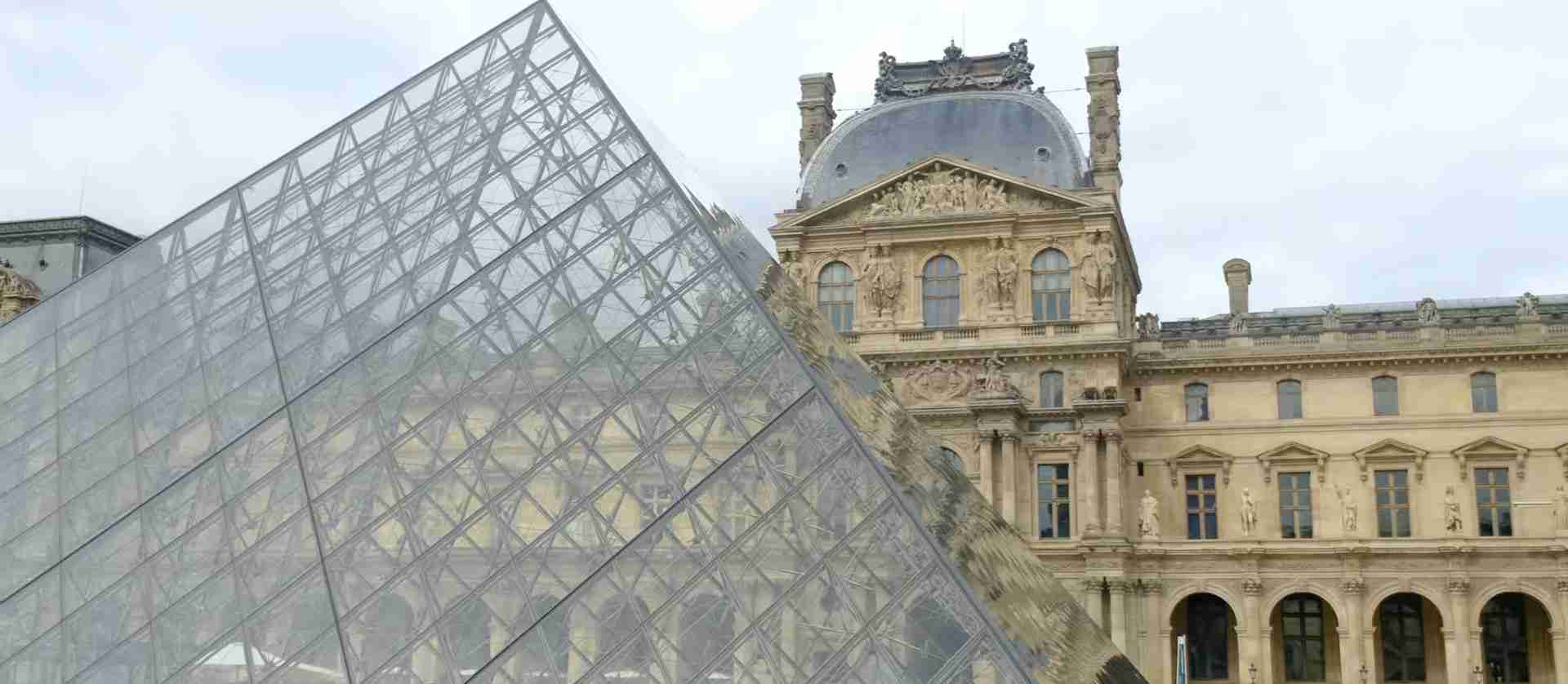
Arrive at the Louvre’s Pyramid entrance by 8:45 AM with your pre-booked 9:00 AM timed-entry ticket avoiding the notorious ticket-purchase queues that build to 90-minute waits by 11:00 AM during peak season. Louvre admission costs €32 for non-EU visitors in 2026 following the January 14, 2026 price increase, while EU residents under 26 and all visitors under 18 enter free with timed-entry reservations still required. The museum opens at 9:00 AM Wednesday through Monday (closed Tuesdays), with Wednesday and Friday extending hours until 9:00 PM for reduced-crowd evening visits if you prefer shifting this museum day later in your itinerary.
Four hours barely scratches the Louvre’s 35,000 artworks across eight curatorial departments spanning 72,735 square meters of gallery space, requiring ruthless prioritization focused on personal interests rather than attempting comprehensive coverage guaranteeing exhaustion and diminished appreciation. Essential highlights most first-time visitors prioritize include Leonardo da Vinci’s Mona Lisa in the Denon Wing (arriving early minimizes the permanent crowd surrounding this 77cm x 53cm Renaissance masterpiece), Winged Victory of Samothrace commanding the Daru staircase, Venus de Milo representing classical Greek sculpture at its apex, and the vast collection of Egyptian antiquities including sarcophagi, hieroglyphic tablets, and the monumental Seated Scribe dating to 2500 BCE.
Beyond these crowd-magnets, the Louvre rewards wandering through less-trafficked departments revealing unexpected treasures matching niche interests. The Napoleon III Apartments showcase Second Empire decorative arts in sumptuously preserved royal chambers. The Islamic Art wing’s contemporary glass roof shelters sophisticated medieval ceramics and manuscripts. Northern European paintings galleries display Vermeer’s intimate domestic scenes and Rembrandt’s psychologically penetrating portraits with minimal crowds compared to Italian Renaissance rooms. Download the free Louvre app before arrival for self-guided tour routes and object information avoiding the €5 audio guide rental fee.
Exit the Louvre by 1:00 PM preventing museum fatigue that transforms masterpieces into blurred impressions after four-hour exposure, even for dedicated art enthusiasts. The Tuileries Garden immediately west of the museum provides recovery territory with tree-lined paths, ornamental ponds, and scattered metal chairs offering rest before afternoon activities.
Midday: Tuileries Garden and Lunch (1:00 PM – 2:30 PM)
Stroll through Tuileries Garden reaching Place de la Concorde at the western terminus, passing André Le Nôtre’s formal French garden design featuring geometric flowerbeds, classical sculptures, and the octagonal Grand Bassin pond where Parisians sail toy boats on summer afternoons. The garden stretches 1 kilometer connecting Louvre to Place de la Concorde, requiring 20-30 minutes at relaxed pace with photography pauses for the central axis perspective framing Arc de Triomphe in the distance.
Angelina tearoom at 226 Rue de Rivoli (along the garden’s northern edge) serves their legendary hot chocolate (€9.50) and pastries (€8-14) in Belle Époque interiors attracting Parisian socialites since 1903, though expect tourist crowds and 30-45 minute waits for tables during peak lunch hours. For faster, equally authentic alternatives, cross to the Left Bank via Pont de la Concorde reaching Boulevard Saint-Germain’s café strip where Café de Flore and Les Deux Magots offer classic French café lunches (€18-28 main courses) at historic literary haunts, or continue to nearby Rue de Buci market street providing casual crêpe stands, falafel shops, and boulangerie sandwiches at €6-12.
Afternoon: Musée d’Orsay (3:00 PM – 6:00 PM)
Walk along the Left Bank Seine promenade reaching Musée d’Orsay housed in the spectacular Gare d’Orsay Beaux-Arts railway station converted to art museum in 1986, focusing on French art 1848-1914 when Impressionism and Post-Impressionism revolutionized artistic tradition. Musée d’Orsay admission costs €16 for adults in 2026 with timed-entry reservations recommended though same-day tickets remain available for mid-afternoon arrival when morning crowds thin. The museum opens 9:30 AM-6:00 PM Tuesday through Sunday (9:00 PM Thursday), closed Mondays.
Three hours permits thorough exploration of the museum’s highlights concentrated on the 5th floor housing the world’s finest Impressionist collection. Monet’s water lilies series, Renoir’s Bal du moulin de la Galette capturing Montmartre’s festive atmosphere, Degas’s ballet dancers in motion, and Van Gogh’s explosive Starched Night variations demonstrate the revolutionary techniques transforming 19th-century painting from academic precision to expressive color and light experimentation. The ground floor features earlier Realist works by Courbet and Millet establishing context for Impressionism’s radical departure, while the middle level displays Rodin sculptures, Art Nouveau furniture, and decorative arts illustrating broader cultural movements shaping the period.
The museum’s architectural framework itself deserves attention, with the vast central nave’s glass barrel vault flooding galleries with natural light ideal for viewing Impressionist works painted outdoors capturing fleeting atmospheric effects. The ornate station clock faces at either end frame Seine views through floor-to-ceiling windows, while the former railway platform now hosts sculpture gardens with Rodin’s masterpieces including smaller versions of The Thinker and Gates of Hell displayed beneath the soaring vault.
Evening: Saint-Germain-des-Prés and Dinner (6:30 PM – 9:30 PM)
Exit Musée d’Orsay to the surrounding Saint-Germain-des-Prés neighborhood, Paris’s intellectual and artistic heart during the post-war existentialist era when Sartre and de Beauvoir held court at local cafés. Boulevard Saint-Germain and smaller side streets radiating from Saint-Germain-des-Prés church offer concentrated shopping, gallery browsing, and atmospheric wandering through streets preserving 18th-century building facades and narrow cobblestone passages untouched by Haussmann’s urban transformation.
Rue de Buci market street transitions from daytime food vendors to evening restaurant terraces, while Rue Saint-André-des-Arts and Rue de Seine showcase art galleries, antique shops, and specialty bookstores epitomizing Left Bank intellectual character. This neighborhood rewards aimless wandering more than directed sightseeing, allowing spontaneous discoveries of hidden courtyards, wine bars, and the bookshops and galleries that define Saint-Germain’s enduring cultural significance beyond tourist checklist items.
Dinner options span from classic bistros to contemporary wine bars matching various preferences and budgets. Semilla at 54 Rue de Seine offers modern French cuisine at €28-42 main courses emphasizing seasonal vegetables and natural wines, while Le Relais de l’Entrecôte at 20 Rue Saint-Benoît serves their single menu of walnut salad followed by unlimited steak-frites portions with secret sauce at €27 per person, requiring patience for inevitable queues at this no-reservations institution. For lighter alternatives, Compagnie des Vins Surnaturels at 7 Rue Lobineau provides wine-focused small plates (€8-18) in a 17th-century vaulted cellar atmosphere ideal for relaxed post-museum recovery.
Day 2 Cost Summary 2026
Louvre admission €32, Musée d’Orsay admission €16, lunch €18-28, dinner €27-42, Metro tickets €5.10 (2 trips). Total day cost: €98.10-123.10 per person (excluding accommodation). Museum days require substantial walking (12,000-15,000 steps typical) making comfortable shoes essential for full-day touring.
Day 3: Historic Paris and Marais – Île de la Cité Through Medieval Streets 2026
Day Three shifts from museum intensity to pedestrian-paced neighborhood exploration through Paris’s historic core on Île de la Cité and the surrounding Marais district, where medieval street patterns and Renaissance mansions preserve architectural layers spanning eight centuries of continuous occupation. This relaxed walking day requires minimal advance planning beyond Sainte-Chapelle timed-entry reservation, allowing spontaneous diversions into boutiques, courtyards, and cafés that reveal Paris’s intimate neighborhood character beyond monumental landmarks. The compact geography enables entirely on-foot exploration without Metro transfers, building familiarity with central Paris’s walkable scale and interconnected quartiers.
Morning: Île de la Cité and Sainte-Chapelle (9:00 AM – 12:00 PM)
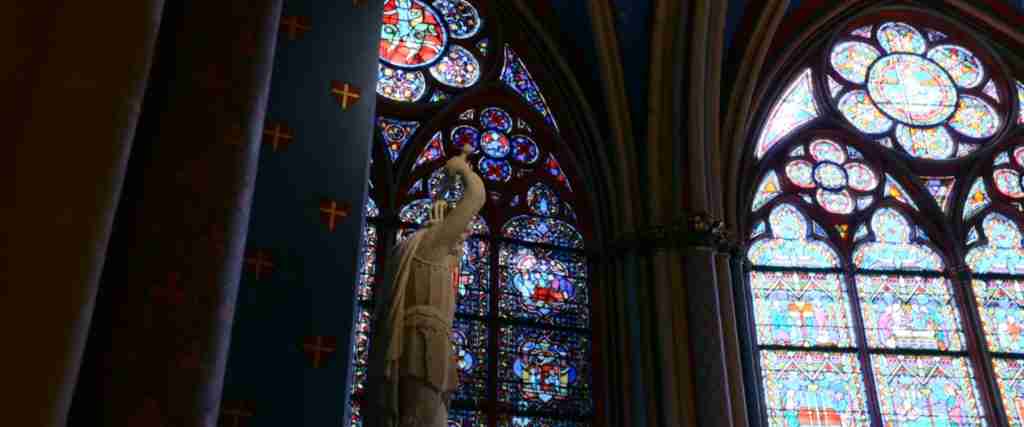
Begin at Cité Metro station emerging on Île de la Cité, the Seine river island where Paris originated as the Gaulish settlement Lutetia in the 3rd century BCE. Walk to Sainte-Chapelle arriving by 9:00 AM with your pre-booked timed-entry ticket (€13 adults, €11 reduced rate) avoiding midday queues at this Gothic architectural masterpiece commissioned by Louis IX in 1248 to house Christ’s Crown of Thorns and other sacred relics. The chapel divides into two levels with the modest lower chapel serving palace staff contrasting dramatically with the soaring upper chapel where 15 towering stained-glass windows spanning 600 square meters flood the space with colored light creating the sensation of standing inside a jewel box.
The 1,113 biblical narrative scenes depicted across these 13th-century windows remain largely original despite revolutionary damage and modern restoration, reading left to right in vertical panels recounting Genesis through Revelation in luminous reds, blues, and golds that transform sunlight into sacred atmosphere. Visit on sunny mornings when oblique light creates the most dramatic color projections across white stone walls, though overcast days produce more even illumination revealing subtle artistic details. Budget 45-60 minutes for Sainte-Chapelle visit including security screening and time absorbing the extraordinary stained glass that justifies the chapel’s reputation as Gothic art’s supreme achievement.
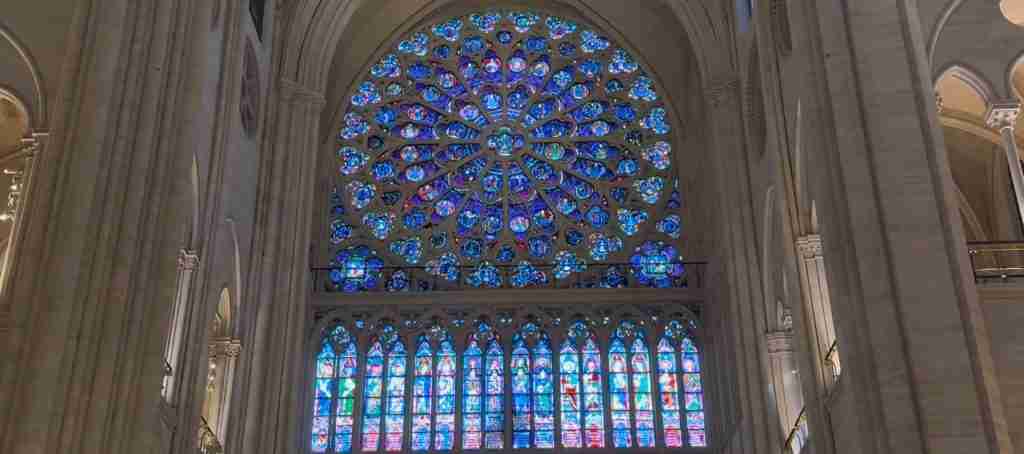
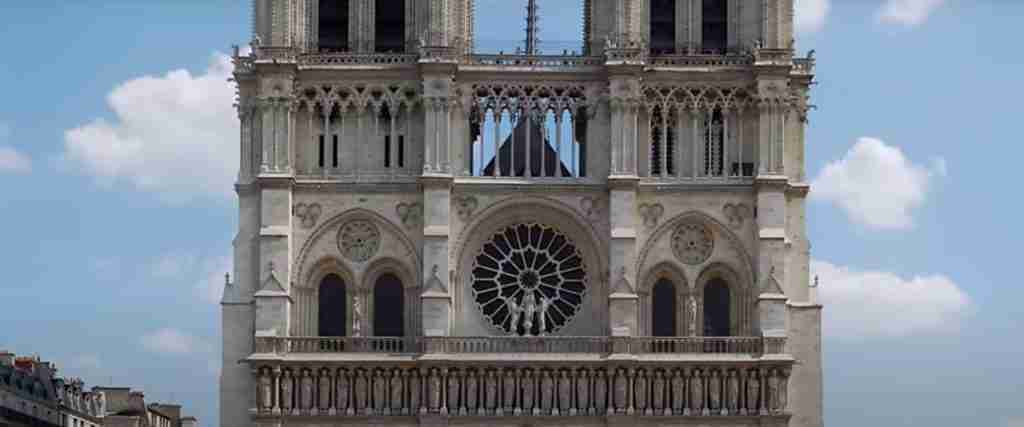
Exit Sainte-Chapelle to explore Île de la Cité’s remaining historic core, though recognize that Baron Haussmann’s 19th-century renovations demolished most medieval buildings replacing them with administrative offices surrounding the Palais de Justice law courts. Notre-Dame Cathedral’s exterior remains viewable from the square and Seine riverbanks, though the interior stays closed throughout 2026 as reconstruction continues following the devastating April 2019 fire that destroyed the spire and roof while miraculously preserving the stone structure, towers, and rose windows. The cathedral’s western facade and twin towers demonstrate Gothic architectural principles through pointed arches, flying buttresses, and sculptural programs illustrating biblical narratives to medieval congregations, while scaffolding and cranes document ongoing restoration work scheduled for completion in 2027.
Midday: Marais Exploration and Lunch (12:00 PM – 3:00 PM)
Cross Pont Saint-Louis to Île Saint-Louis, the smaller island immediately east of Cité preserving 17th-century residential character with tree-lined quais and Berthillon ice cream shop at 31 Rue Saint-Louis-en-l’Île serving Paris’s most celebrated glacé and sorbets (€3-6 per scoop) justifying queues extending down the block on warm afternoons. Rue Saint-Louis-en-l’Île’s shops, galleries, and cafés maintain village atmosphere despite tourist traffic, offering authentic glimpses of Parisian island living rare in central arrondissements.
Continue northeast across Pont Marie to the Marais, Paris’s best-preserved medieval neighborhood where aristocratic hôtels particuliers (private mansions) built during the 16th-17th centuries now host museums, boutiques, and galleries amid narrow streets retaining irregular medieval layouts predating Haussmann’s grid system. The Marais spans the 3rd and 4th arrondissements encompassing diverse subcommunities including the historic Jewish quarter around Rue des Rosiers (famous for L’As du Fallafel’s legendary €8 falafel sandwiches attracting perpetual queues), the gay village centered on Rue Sainte-Croix-de-la-Bretonnerie, and upscale boutique corridors along Rue des Francs-Bourgeois where concept stores and designer fashion populate converted mansion ground floors.
Place des Vosges, Paris’s oldest planned square completed in 1612 under Louis XIII, anchors the southern Marais with perfectly symmetrical red-brick facades surrounding a formal garden where locals lounge on benches and children play in sandboxes beneath shaded arcades housing galleries and the Victor Hugo museum occupying the writer’s former apartment at number 6. The square’s harmonious proportions and human scale exemplify classical French urban planning creating elegant public space balancing residential privacy with communal gathering areas.
Lunch options throughout the Marais reflect neighborhood diversity. Breizh Café at 109 Rue Vieille du Temple serves authentic Breton crêpes (€12-18) with quality ingredients and proper buckwheat galettes, while Chez Janou at 2 Rue Roger Verlomme offers Provençal specialties (€18-28 main courses) in a charming bistro atmosphere with excellent value lunch formulas. For lighter eating, the covered Marché des Enfants Rouges at 39 Rue de Bretagne (Paris’s oldest covered market dating to 1628) hosts diverse food stalls serving Moroccan tagines, Japanese bento boxes, and Italian pasta at €10-15 per plate consumed at communal tables under the historic market roof.
Afternoon: Museums and Shopping (3:00 PM – 6:00 PM)
The Marais concentrates numerous specialized museums housed in historic mansions, allowing selective visits based on specific interests rather than comprehensive touring. Musée Carnavalet chronicles Paris history through revolutionary artifacts, period rooms, and paintings documenting the city’s evolution from Roman settlement to modern metropolis, with free admission making it accessible for quick visits. Musée Picasso in the Hôtel Salé showcases the 20th century’s most influential artist through paintings, sculptures, ceramics, and personal archives (€14 adults), while Musée National d’Art et d’Histoire du Judaïsme traces Jewish cultural contributions through French history in the elegant Hôtel de Saint-Aignan (€10 adults).
Alternatively, dedicate afternoon hours to the Marais’s exceptional shopping spanning from vintage clothing boutiques on Rue de Turenne to concept stores along Rue de Bretagne, antique dealers in Village Saint-Paul’s hidden courtyards, and Sunday afternoon brocante (flea market) stalls around Rue des Francs-Bourgeois selling vintage posters, retro fashion, and collectible ephemera. This district rewards aimless browsing more than destination shopping, with frequent discoveries in unexpected shops tucked down narrow passages or behind nondescript doorways.
Evening: Sunset at Pont des Arts and Dinner (6:30 PM – 9:30 PM)
Walk west through the Marais reaching the Seine at Pont des Arts pedestrian bridge connecting Louvre to Institut de France, famous for sunset gatherings when Parisians and visitors claim spots along the wooden deck planks watching golden light illuminate river facades and Île de la Cité’s silhouette downstream. Though the bridge’s love locks tradition ended in 2015 when city authorities removed the padlocks overwhelming the structure, the location retains romantic atmosphere enhanced by street musicians, wine-sipping groups, and boats passing beneath the seven iron arches dating from 1804.
Dinner in the surrounding Latin Quarter offers concentrated restaurant choices. Le Comptoir du Relais at 9 Carrefour de l’Odéon maintains its reputation for excellent bistro cooking at €35-45 main courses, while nearby Café de Flore and Les Deux Magots provide classic brasserie dining (€28-38 main courses) in historic literary settings where Hemingway, Fitzgerald, and Sartre once held regular tables. For contemporary alternatives, Clown Bar at 114 Rue Amelot serves inventive small plates (€14-24) in a preserved Belle Époque circus-themed interior, or Septime at 80 Rue de Charonne offers modern French tasting menus (€85 five courses) requiring reservations weeks in advance for this Michelin-starred neighborhood favorite.
Day 3 Cost Summary 2026
Sainte-Chapelle admission €13, lunch €12-18, optional museum admission €0-14, dinner €28-45, Metro tickets €2.55 (1 trip), ice cream/snacks €6-10. Total day cost: €61.55-102.55 per person (excluding accommodation). This pedestrian-heavy day covers 15,000-18,000 steps across central Paris’s compact historic core.
Day 4: Montmartre and Northeast Paris – Artistic Hills and Canal Culture 2026
Day Four ventures to Paris’s northern heights and eastern neighborhoods preserving bohemian artistic heritage and contemporary local culture beyond tourist circuits, offering authentic Parisian atmosphere in Montmartre’s hilltop village and Canal Saint-Martin’s waterside cafés. This day balances Sacré-Cœur’s religious grandeur with neighborhood wandering through streets retaining the artistic character that attracted Picasso, Toulouse-Lautrec, and generations of struggling painters to Montmartre’s cheap studios and cabarets. The geographical arc from hilltop to canal creates natural morning-to-evening progression from elevated viewpoints to ground-level neighborhood immersion.
Morning: Montmartre and Sacré-Cœur (9:00 AM – 1:00 PM)
Take Metro Line 12 to Abbesses station (Paris’s deepest platform requiring elevator or 285-step spiral staircase), emerging in Montmartre’s lower village where tree-lined Place des Abbesses hosts the distinctive Art Nouveau Metro entrance designed by Hector Guimard and preserved as architectural heritage. Walk uphill along Rue des Abbesses and Rue Lepic passing bakeries, wine shops, and café terraces displaying authentic neighborhood character before mass tourism transforms the atmosphere higher on the butte (hill).
Sacré-Cœur Basilica crowns Montmartre’s summit at 130 meters elevation, its white Romano-Byzantine domes visible across Paris attracting 10 million annual visitors to this relatively recent structure consecrated in 1919 after 40-year construction following the Franco-Prussian War. Free basilica entry permits interior viewing of the vast mosaic apse depicting Christ in Glory surrounded by golden tesserae, though the true attraction remains the frontal terrace overlooking Paris spreading southward with Eiffel Tower, Panthéon dome, and Tour Montparnasse punctuating the urban expanse. Dome and crypt access costs €7 additional, climbing 300 steps to the basilica’s highest point at 140 meters offering 360-degree perspectives across the city and surrounding suburbs on clear days.
Descend through Place du Tertre immediately west of Sacré-Cœur, where portrait artists and caricaturists perpetuate Montmartre’s artistic legacy in commercialized form, offering €25-40 portraits to tourists occupying the square’s café tables. While overtly touristy, Place du Tertre preserves visible connection to Montmartre’s Belle Époque art colony when Picasso, Braque, and Modigliani rented studios in these now-expensive buildings. Authentic artistic heritage survives better in surrounding streets where Bateau-Lavoir studio complex at Place Émile-Goudeau marks Picasso’s early Cubist period workspace, and Musée de Montmartre at 12 Rue Cortot documents neighborhood history through paintings, posters, and reconstructed artist studios (€12 adults including charming Renoir gardens).
Rue Lepic descends Montmartre’s western slope passing the Café des Deux Moulins featured in the film Amélie, Van Gogh’s former residence at number 54, and neighborhood bakeries and produce markets supplying local residents rather than tourists. This commercial street illustrates Montmartre’s dual character as both international landmark and functioning Parisian quartier preserving authentic community despite surrounding tourist infrastructure. Follow Rue Lepic downhill to Blanche Metro station passing Moulin Rouge cabaret’s iconic red windmill marking Pigalle’s historic entertainment district.
Midday: Canal Saint-Martin (1:00 PM – 4:00 PM)
Take Metro from Blanche to République station, walking north along Rue du Faubourg du Temple to Canal Saint-Martin, a 4.5-kilometer waterway constructed under Napoleon linking the Seine to Bassin de la Villette through nine double locks creating the picturesque stepped water levels that attracted working-class industry during the 19th century. Contemporary gentrification transformed warehouse districts into cafés, boutiques, and cultural spaces while preserving the canal’s tree-lined quais and iron footbridges creating an distinctly Parisian landscape appreciated more by local residents than international tourists.
Lunch along Canal Saint-Martin reflects neighborhood informality and value compared to tourist-zone pricing. Ten Belles at 10 Rue de la Grange aux Belles serves excellent coffee and simple lunch plates (€10-16) in a minimalist space attracting laptop workers and local artists, while Chez Prune at 36 Rue Beaurepaire offers classic café fare (€14-22 main courses) with prime canal-side terrace seating observing boat traffic passing through the Rue de la Grange aux Belles double lock. For takeaway options, Du Pain et des Idées bakery at 34 Rue Yves Toudic produces exceptional viennoiserie and savory tarts (€4-8) perfect for canalside picnicking on the stone quais where locals gather on sunny afternoons.
Canal Saint-Martin’s appeal lies in atmosphere rather than specific monuments or museums, encouraging leisurely afternoon hours browsing vintage shops, concept stores, and independent boutiques clustered along Rue de Marseille and Quai de Valmy. Sunday afternoons activate the canal banks when Parisians claim spots along the water for picnics, pétanque games, and impromptu guitar sessions creating spontaneous community gatherings exemplifying authentic Paris neighborhood culture beyond curated tourist experiences.
Afternoon: République to Belleville (4:00 PM – 6:00 PM)
Walk east from Canal Saint-Martin through République square and along Rue Oberkampf entering Belleville, a historically working-class immigrant neighborhood transformed by recent artistic and culinary energy while retaining grittier character than gentrified Marais or polished Saint-Germain. Belleville’s steep streets climbing toward Parc de Belleville reward exploration for expansive Paris views from the park’s terraces at 108 meters elevation, matching Montmartre’s panoramas without tourist crowds or commercial development.
Rue Denoyez hosts legal street art galleries where graffiti artists continuously update building facades with colorful murals, creating an outdoor museum documenting contemporary urban art trends. The surrounding streets around Rue de Belleville preserve Chinese, Vietnamese, and North African immigrant communities whose restaurants, grocery stores, and cultural centers maintain multicultural character increasingly rare in central Paris arrondissements experiencing gentrification pressure. This neighborhood exploration reveals Paris’s diversity beyond postcard monuments, illustrating how the city continues evolving through immigration and cultural mixing rather than remaining frozen in Belle Époque nostalgia.
Evening: Return to Central Paris and Dinner (6:30 PM – 9:30 PM)
Return to central Paris via Metro from Belleville station, selecting dinner based on Day 4’s lower organized activity level allowing flexibility for preferred neighborhood revisits or new restaurant explorations. Le Marais’s concentrated dining options around Rue de Bretagne and Rue Vieille du Temple provide reliable mid-range choices, while Latin Quarter standards along Rue Mouffetard offer more casual student-oriented atmosphere at budget-friendly pricing (€15-25 main courses).
Alternatively, remain in northeast Paris for dinner experiencing local restaurants beyond tourist circuits. Le Baratin at 3 Rue Jouye-Rouve near Belleville serves exceptional market-driven French cuisine (€35-45 main courses) favored by chefs on their nights off, while Septième at 80 Rue de Charonne offers modern French small plates (€14-24) in a casual wine bar atmosphere. These neighborhood restaurants reward the metro journey with authentic Parisian dining culture at better value than equivalent-quality central establishments.
Day 4 Cost Summary 2026
Sacré-Cœur dome access €7, optional Musée de Montmartre €12, lunch €10-22, dinner €25-45, Metro tickets €10.20 (4 trips), coffee/snacks €6-10. Total day cost: €58.20-106.20 per person (excluding accommodation). This varied-terrain day involves significant uphill walking in Montmartre requiring comfortable shoes and moderate fitness.
Day 5: Palace of Versailles Day Trip 2026
Day Five dedicates the entire day to Versailles, France’s most spectacular palace complex requiring 6-8 hours exploring the château’s opulent state apartments, vast formal gardens, and Marie Antoinette’s private estate illustrating absolute monarchy’s architectural expression and eventual excesses contributing to revolutionary upheaval. This full-day excursion positioned mid-itinerary provides welcome change from urban Paris density while demanding sufficient energy for extensive walking across the 800-hectare estate combining indoor palace touring with outdoor garden exploration. Early departure and advance ticket reservation prove essential for maximizing Versailles time and avoiding crowds that intensify throughout the day.
Getting to Versailles (Depart Paris 8:00 AM)
Take RER C train from central Paris stations (Saint-Michel-Notre-Dame, Musée d’Orsay, Invalides, or Champ de Mars-Tour Eiffel) to Versailles Château-Rive Gauche station, a 35-40 minute journey costing €3.65 each way with standard RER tickets or included in Paris Visite pass coverage. Trains depart every 15-20 minutes throughout the day, though morning rush (8:00-9:30 AM) brings crowding requiring patience during the suburban commute. Exit Versailles Château-Rive Gauche station following clearly marked signs on the 10-minute walk to the palace entrance gates.
Alternative transportation includes SNCF trains from Paris Montparnasse to Versailles Chantiers station (15 minutes, €3.90) or Transilien trains from Paris Saint-Lazare to Versailles Rive Droite (35 minutes, €3.65), both requiring additional 15-20 minute walks to the palace compared to RER C’s more direct routing. Tour buses from Paris to Versailles cost €60-90 including transportation and admission but impose rigid timing constraints preventing flexible palace exploration at your preferred pace.
Palace of Versailles Morning Visit (9:00 AM – 1:00 PM)
Arrive at Versailles palace entrance A (Cour d’Honneur left side) by 9:00 AM with your pre-booked Passport ticket providing timed entry to the entire estate. The Versailles Passport costs €35 in high season (April-October) or €25 in low season (November-March) for non-EEA visitors, with €3 discount for European Economic Area nationals and residents (€32 high season / €22 low season). This all-access ticket includes the Palace state apartments, Hall of Mirrors, King’s and Queen’s chambers, Estate of Trianon palaces, Marie Antoinette’s Hamlet, and Gardens including Musical Fountains shows on select days (check official website for current rates and fountain show schedules).
The palace visit follows a designated circuit through the King’s State Apartments, Queen’s State Apartments, and Hall of Mirrors preserving Louis XIV’s architectural vision of absolute monarchy’s splendor. The King’s Grand Apartment consists of seven themed salons named for classical gods (Apollo, Mars, Mercury, Venus) displaying sumptuous painted ceilings by Charles Le Brun, intricate parquet floors, and original furnishings illustrating court ceremony’s elaborate protocols. The Hall of Mirrors stretches 73 meters featuring 357 mirrors reflecting light from 17 arched windows overlooking the gardens, creating the dazzling effect that astonished 17th-century visitors and continues impressing modern tourists despite perpetual crowding around this signature space where the Treaty of Versailles ended World War I in 1919.
The Queen’s Apartments contrast the King’s martial symbolism with more intimate scaled rooms preserving Marie Antoinette’s private quarters before revolutionary violence forced the royal family back to Paris in 1789. Allow 2.5-3 hours for thorough palace touring including inevitable queues at the Hall of Mirrors and security checkpoints controlling visitor flow through the most popular chambers. The free Versailles app provides audio tours eliminating the €5 rental fee while offering historical context and artwork explanations throughout the palace circuit.
Lunch and Garden Exploration (1:00 PM – 4:00 PM)
Exit the palace to the Gardens extending westward across 800 hectares of formal French landscaping designed by André Le Nôtre establishing geometric perfection through precisely aligned allées (tree-lined paths), ornamental ponds, sculptural fountains, and trimmed hedges demonstrating human control over nature matching absolute monarchy’s political philosophy. The central perspective from the palace terrace stretches 1.6 kilometers along the Grand Canal where Louis XIV staged elaborate nautical entertainments including gondolas imported from Venice.
Lunch options within Versailles estate include La Flottille restaurant at the Grand Canal’s far end serving traditional French cuisine (€25-40 main courses) in a peaceful waterside setting, or Angelina tearoom at the palace’s left wing offering the Parisian institution’s signature hot chocolate and pastries (€8-14) in more convenient if touristy surroundings. Budget alternatives include bringing picnic provisions from Paris for consumption on garden lawns permitted outside formal parterre areas, or exiting the estate to Versailles town center where casual restaurants along Rue de Satory serve €15-25 lunch formulas.
The Gardens themselves require 2-3 hours minimally for exploring the main axes, major fountain installations including the Apollo Fountain and Latona Fountain, and extensive groves (bosquets) hidden behind hedge walls designed for intimate court gatherings. On Musical Fountains show days (Saturdays and Sundays April-October, plus Tuesdays during summer months), baroque music accompanies water displays creating the sensory spectacle Louis XIV intended, though crowds intensify significantly during these popular events requiring early arrival for optimal viewing positions.
Estate of Trianon Afternoon Visit (4:00 PM – 6:00 PM)
The Estate of Trianon occupies the northwest palace grounds accessible via 30-minute walk from the main palace or 10-minute ride on the Versailles tourist train (€8.50 round trip) saving energy for exploring the Grand Trianon pink marble palace, Petit Trianon neoclassical château, and Marie Antoinette’s Hamlet rustic village. These structures provided royal family retreats from oppressive court ceremony, with the Grand Trianon serving Louis XIV’s intimate entertaining needs and the Petit Trianon becoming Marie Antoinette’s personal domain where she cultivated a fantasy peasant lifestyle complete with working farm buildings, flower gardens, and the artificial village where the Queen played shepherdess while actual French peasants starved during the economic crises precipitating revolution.
The Hamlet (Hameau de la Reine) particularly fascinates for its disconnect from 1780s French realities, with picturesque thatched cottages surrounding an ornamental pond creating a theatrical pastoral scene allowing Marie Antoinette to escape into romanticized rural fantasies while remaining sheltered from actual agricultural hardship. The disconnect between this privileged fantasy and contemporary peasant misery symbolizes the ancien régime’s fatal detachment from social realities, making the Hamlet historically significant beyond its surface charm as an 18th-century theme park.
Budget 2 hours minimum for Trianon estate exploration, though rushed visitors can complete abbreviated tours in 60-90 minutes if palace fatigue sets in. The Trianon palaces and gardens offer more intimate scale and fewer crowds than the main palace, making them welcome respite from the Hall of Mirrors mob scenes and monumental state apartments’ overwhelming grandeur.
Return to Paris (Depart Versailles 6:30 PM)
Exit the palace estate via the main gates reaching Versailles Château-Rive Gauche RER station for return journey to Paris arriving 7:30-8:00 PM depending on central Paris station selection. The full Versailles day typically accumulates 20,000-25,000 steps combining palace touring, garden walking, and Trianon exploration, making dinner near your accommodation more appealing than additional cross-city travel to distant restaurants. Light evening meals in neighborhood bistros or simple takeaway options match post-Versailles exhaustion levels better than elaborate multi-course dining requiring sustained social energy.
Day 5 Cost Summary 2026
Versailles Passport ticket €35 (high season), RER transportation €7.30 round trip, lunch €15-40, optional tourist train €8.50, dinner €20-35. Total day cost: €77.30-125.80 per person (excluding accommodation). Versailles demands comfortable walking shoes and weather-appropriate clothing for extensive outdoor garden exploration.
Day 6: Latin Quarter and Flexible Final Day 2026
Day Six combines essential attractions you may have missed during earlier days with final shopping, neighborhood revisits, or spontaneous discoveries based on personal interests developed throughout the week. This flexible structure acknowledges that six days reveal individual preferences favoring certain Paris aspects over others, whether art, food, shopping, or atmospheric wandering, allowing the final day to emphasize your discovered priorities rather than forcing predetermined activities. The Latin Quarter’s concentrated landmarks provide solid morning framework before afternoon freedom pursues personal Paris obsessions.
Morning: Latin Quarter Landmarks (9:00 AM – 12:00 PM)
Begin at the Panthéon crowning the Latin Quarter’s highest hill, commissioned by Louis XV in 1764 as a church dedicated to Saint Geneviève but secularized during the Revolution as a mausoleum for France’s great citizens including Voltaire, Rousseau, Victor Hugo, Marie Curie, and more recent inductees like Simone Veil and Joséphine Baker. Panthéon admission costs €11.50 for adults in 2026, providing access to the impressive neoclassical interior featuring Foucault’s Pendulum demonstrating Earth’s rotation, elaborate murals depicting Saint Geneviève’s miracles and French history, and the crypt containing elaborate tombs of national heroes. The dome climb (included in admission) ascends to panoramic terraces offering 360-degree Paris views from the Left Bank’s commanding elevation.
Descend from the Panthéon to the surrounding Sorbonne neighborhood, Paris’s historic student quarter where narrow medieval streets preserve Latin Quarter atmosphere despite modern university renovation and commercial development. Rue Mouffetard, one of Paris’s oldest streets dating to Roman times, descends south from Place de la Contrescarpe market square through authentic neighborhood atmosphere with morning produce vendors, cheese shops, bakeries, and cafés serving university students and long-term residents. This commercial street illustrates working-class Paris character contrasting sharply with bourgeois Marais or elegant Saint-Germain, offering authentic glimpses of daily Parisian life beyond tourist zones.
The Jardin des Plantes botanical garden stretches east of Rue Mouffetard, providing 28 hectares of themed gardens, greenhouses, and the National Museum of Natural History’s galleries displaying evolution, paleontology, and mineralogy collections (€10 adults for Grande Galerie de l’Évolution featuring dramatic mammal displays). The garden itself remains free, offering peaceful recovery territory after five intensive Paris days with alpine gardens, rose collections, and historic tree specimens planted during the 18th century when royal botanists established this scientific research institution.
Midday: Saint-Germain-des-Prés Return or Shopping (12:00 PM – 3:00 PM)
Options diverge based on personal interests developed during the week. Return to Saint-Germain-des-Prés for deeper exploration of galleries along Rue de Seine, antique dealers on Rue Jacob, and the historic Saint-Germain-des-Prés church dating to the 11th century as Paris’s oldest surviving church building. Alternatively, cross to the Right Bank for concentrated shopping along Rue de Rivoli, department stores Galeries Lafayette and Printemps near Opéra (both featuring spectacular Art Nouveau architecture and rooftop terraces), or luxury boutiques along Avenue Montaigne and Faubourg Saint-Honoré for window-shopping designer flagship stores.
Lunch in the Latin Quarter spans from student-oriented budget options (€10-15 crêpes, falafel, Vietnamese pho) to more refined bistros. Le Comptoir du Relais maintains its position as reliable bistro choice at €35-45 main courses, while nearby Café de Flore and Les Deux Magots offer historic literary café atmosphere at premium pricing (€28-38 main courses) compensated by people-watching and association with Hemingway, Sartre, and other Lost Generation legends who made these establishments famous during the 1920s-1950s.
Afternoon: Personal Priorities and Final Explorations (3:00 PM – 6:00 PM)
The afternoon permits pursuing activities deferred during structured earlier days or returning to favorite discoveries encountered earlier in the week. Options include:
Museum additions: Musée Rodin (€13 adults) in the 7th arrondissement showcasing The Thinker, The Kiss, and Gates of Hell sculptures in the artist’s former workshop and surrounding sculpture garden, Musée de l’Orangerie (€12.50 adults) in Tuileries Garden displaying Monet’s monumental water lilies panels in purpose-built oval rooms, or Centre Pompidou (€15 adults) featuring modern art collections and industrial architecture with external escalators providing elevated Paris views.
Neighborhood deep-dives: Extended time in previously visited neighborhoods allowing deeper boutique browsing in the Marais, gallery exploration in Saint-Germain, or Canal Saint-Martin relaxation claiming waterside spots for afternoon reading and people-watching matching local rhythms rather than tourist efficiency.
Market visits: Sunday morning Marché d’Aligre flea market and food market in the 12th arrondissement, Wednesday and Saturday Marché Président Wilson on Avenue du Président Wilson showcasing high-end produce and artisanal vendors, or daily Marché des Enfants Rouges covered market for international food stalls and neighborhood atmosphere.
Park relaxation: Luxembourg Gardens south of the Panthéon offering formal French garden design, toy sailboat pond, tennis courts, and metal chairs scattered throughout 23 hectares for afternoon lounging, or Parc des Buttes-Chaumont in northeast Paris featuring dramatic topography with artificial cliffs, waterfalls, and temple follies built during the Second Empire on former quarry land.
Evening: Farewell Dinner and Final Paris Night (6:30 PM – 10:00 PM)
Reserve your final Paris evening for a memorable dinner at a restaurant representing personal culinary preferences discovered during the week, whether traditional bistro classics, modern French innovation, or international cuisines reflecting Paris’s multicultural character. Splurge-worthy options include L’Ami Jean’s robust Basque-French cooking (€45-60 main courses), Septime’s contemporary tasting menus (€85-125 depending on courses), or classic bistros like Chez l’Ami Louis (€60-90 main courses) serving unchanged recipes for decades to devoted regulars.
After dinner, consider a final Seine riverside walk capturing evening atmosphere as illuminated bridges and monuments reflect off dark water, or ascend Tour Montparnasse (€18 adults for 56th floor observation deck open until 11:30 PM) for elevated farewell views across Paris’s nighttime cityscape with the Eiffel Tower’s hourly light show visible to the west. These contemplative final hours provide emotional closure to an intensive week of Paris immersion, allowing reflection on experiences gained and inevitable acknowledgment of attractions deferred to future visits.
Day 6 Cost Summary 2026
Panthéon admission €11.50, lunch €15-38, optional museum admission €10-15, farewell dinner €35-90, Metro tickets €5.10-7.65, optional observation deck €18. Total day cost: €66.60-180.15 per person (excluding accommodation). Final day flexibility allows budget adjustment matching remaining funds and priorities.
Transportation in Paris 2026: Getting Around Efficiently
Paris public transportation combines Metro subway lines, RER regional trains, buses, and trams into an integrated network covering central Paris and surrounding suburbs efficiently at reasonable costs compared to taxis or car rentals. The Metro’s 16 lines and 300+ stations provide primary transportation reaching neighborhoods and attractions throughout the city, while RER trains serve longer distances including airports and Versailles making public transit viable for nearly all Paris travel needs. Understanding ticket options and system navigation prevents common tourist frustrations while minimizing transportation costs across your six-day visit.
Paris Metro and RER Ticket Prices 2026
As of January 2025, Paris simplified its fare structure into two flat-rate tickets regardless of distance traveled within Île-de-France region. The Metro-Train-RER ticket costs €2.55 per journey covering unlimited distance on Metro, RER trains, and Transilien trains across the region excluding airports. The Bus-Tram ticket costs €2.00 per journey on buses and most tram lines. These tickets load onto Navigo Easy cards (€2 one-time purchase for the reusable contactless card) or smartphones via transit apps, as physical paper tickets phased out in 2025.
Single ticket purchases prove inefficient for six-day visits requiring 20-30 Metro trips totaling €51-76.50 at individual ticket rates. The Paris Visite pass offers better value for tourists making frequent daily trips across the city. Paris Visite all-zones passes valid for consecutive days cost €30.60 for 1 day, €45.40 for 2 days, €63.80 for 3 days, and €78 for 5 days in 2026, including airport transfers and Versailles access making the 5-day pass optimal for this itinerary when combined with single-day tickets for arrival and departure days.
Alternative options include Navigo Jour day passes (€12.30 for unlimited travel across all zones excluding airports) suitable for single intensive sightseeing days, or Navigo Semaine weekly passes (€30.75 Monday-Sunday for all zones) offering best value for week-long stays coinciding with calendar weeks. The Navigo Liberté+ pay-as-you-go system charges €2.04 per Metro trip with automatic daily caps at €12.30, though this option requires French bank accounts making it impractical for most international visitors despite attractive per-trip pricing.
Metro Navigation and Best Practices
Metro lines identify by number (1-14) and color, with direction indicated by terminal station names displayed on platform signs. Study Metro maps before descending to platforms preventing wrong-direction boarding that wastes time backtracking through station corridors. Download offline Paris Metro maps to smartphones ensuring navigation capability without data connection, as many underground stations lack cellular service.
Rush hours (8:00-9:30 AM and 5:30-7:30 PM weekdays) bring severe crowding on major commuter lines, with packed trains making tourist navigation with luggage extremely difficult. Schedule major cross-city movements outside these windows when possible, or allow extra time for inevitable delays and uncomfortable conditions during peak periods. Weekend Metro service runs less frequently than weekdays, with 10-15 minute waits normal compared to 3-5 minute weekday intervals on major lines.
Security awareness remains important despite Paris Metro’s generally safe environment. Pickpockets target obvious tourists in crowded trains and station corridors, particularly on tourist-heavy lines connecting major attractions. Keep valuables secured in front pockets or bags worn across body rather than accessible backpack outer pockets. Avoid displaying expensive cameras, phones, or jewelry attracting attention in crowded Metro environments.
Alternative Transportation Options
Buses provide scenic surface-level transportation revealing Paris street life while reaching destinations inaccessible by Metro, though traffic congestion makes bus trips slower than underground equivalents. Bus route maps posted at stops show surrounding street layouts and numbered routes serving each location, with digital displays indicating next arrival times. The same tickets valid for Metro work on buses, though remember that Metro-Bus connections require separate tickets unless using unlimited Paris Visite passes.
Taxis remain readily available at designated taxi stands near major attractions and hotels, with fares averaging €15-25 for typical central Paris trips though metered rates increase significantly during traffic congestion. Uber and other ride-sharing services operate throughout Paris at comparable or slightly lower rates than traditional taxis, offering cashless convenience and English-language app interfaces simplifying communication barriers.
Vélib’ bicycle-sharing stations throughout Paris offer 30-minute free rides (with pass purchase) followed by incrementally increasing costs for longer rentals, providing efficient transportation for confident cyclists comfortable navigating Paris traffic. The expanding network of protected bike lanes makes cycling progressively safer and more practical, though heavy tourist backpacks and luggage make bicycles impractical for airport transfers or accommodation changes.
Where to Stay in Paris 2026: Optimal Accommodation Neighborhoods
Accommodation location determines daily logistics throughout your Paris visit, with central neighborhoods providing walking access to major attractions while peripheral locations require additional Metro time and potential late-night safety concerns. The sweet spot balances central accessibility, neighborhood character, reasonable pricing, and Metro connectivity to areas beyond walking range, with three districts offering particularly strong combinations of these factors for six-day first-time visits.
Saint-Germain-des-Prés (6th Arrondissement)
Saint-Germain-des-Prés occupies prime Left Bank territory between the Seine and Luxembourg Gardens, providing walking access to Musée d’Orsay, Notre-Dame, Latin Quarter, and Luxembourg Gardens while maintaining authentic Parisian neighborhood character with local cafés, bakeries, and markets serving residents beyond tourist infrastructure. The district’s literary and artistic heritage from post-war existentialist era preserves intellectual atmosphere in bookshops, galleries, and historic cafés where Sartre and Simone de Beauvoir held regular court.
Hotels in Saint-Germain-des-Prés range €220-450 per night for mid-range properties during spring-autumn high season, dropping to €180-320 during winter months when tourist demand decreases. Budget travelers find limited options below €150 nightly given the neighborhood’s prime location and upscale character, though small boutique hotels and renovated older properties occasionally offer €180-200 rates for compact rooms without extensive amenities. Luxury properties exceed €500-800 nightly for renowned addresses like Hôtel d’Aubusson or L’Hôtel where Oscar Wilde spent his final days.
Marais (3rd and 4th Arrondissements)
The Marais combines central location with village atmosphere, historic architecture, diverse communities, and exceptional dining-shopping density making it Paris’s most complete neighborhood for extended stays. Walking distance reaches Île de la Cité, Louvre, Pompidou Center, and Bastille while the district’s own attractions justify spending entire days exploring medieval streets, Jewish quarter around Rue des Rosiers, gay village cafés, and aristocratic mansions housing museums and boutiques.
Marais accommodation costs €200-420 per night for mid-range hotels during high season, with better value available than equivalent Saint-Germain properties given the neighborhood’s larger inventory and competition. Apartment rentals provide particularly good value for groups or families, with one-bedroom flats available €150-250 nightly and larger two-bedroom units €220-350 offering kitchen facilities reducing dining costs through occasional self-prepared meals using market produce and bakery bread.
Latin Quarter (5th Arrondissement)
The Latin Quarter’s student character maintains relatively affordable accommodation while providing central access to major Left Bank attractions including Panthéon, Luxembourg Gardens, Musée de Cluny, and Notre-Dame. The neighborhood’s university focus supports budget-oriented restaurants, casual cafés, and international food options matching student spending levels, making the district particularly suitable for cost-conscious travelers willing to sacrifice some luxury for value and authentic local atmosphere.
Latin Quarter hotels range €160-350 per night for mid-range properties, with genuine budget options available €120-180 for basic rooms in older buildings without elevators or extensive renovations. The trade-off accepts smaller rooms and fewer amenities in exchange for central location and neighborhood character preserving authentic Parisian student life despite increasing gentrification pressure transforming surrounding districts into premium tourist zones.
Neighborhoods to Avoid or Consider Carefully
Areas immediately surrounding Gare du Nord and Gare de l’Est train stations attract budget hotel concentration given proximity to transportation hubs, but these neighborhoods lack charm and present elevated petty crime rates making them poor choices despite low room rates. Similarly, districts near Pigalle and northern Montmartre offer cheap accommodation but require caution navigating red-light district streets after dark, particularly for solo female travelers or families with children.
Peripheral arrondissements (15th-20th) provide authentic residential Paris at reduced costs but demand Metro dependence for reaching central attractions, adding 20-40 minutes daily travel time each direction. These areas suit longer stays when neighborhood immersion justifies the transportation trade-off, but prove inefficient for six-day visits maximizing limited time across multiple districts.
Dining and Food Budget Guide Paris 2026
Paris dining spans from €4 baguette sandwiches to €300+ Michelin tasting menus, with quality available across the entire price spectrum when you know where to look and what to expect at different budget levels. Understanding French meal structure, tipping customs, and neighborhood pricing variations prevents common tourist traps while maximizing culinary satisfaction within allocated budgets, whether you’re economizing with street food and bistros or splurging on haute cuisine experiences justifying their premium costs.
Budget Dining Options (€10-20 Per Meal)
Bakeries (boulangeries) throughout Paris sell fresh baguette sandwiches (€4-7) featuring ham, cheese, or various prepared fillings providing quick authentic lunches consumed on park benches or riverbanks. Crêperies offer sweet and savory buckwheat galettes (€8-14) as filling meals, while falafel shops particularly concentrated around Rue des Rosiers in the Marais serve excellent sandwiches (€7-10) satisfying vegetarian needs. University district cafeterias near the Sorbonne and other campuses permit public access for simple hot meals (€8-12) matching student budgets through subsidized pricing.
Covered markets including Marché des Enfants Rouges host diverse international food stalls serving Moroccan tagines, Japanese bento boxes, Italian pasta, and French rotisserie chicken (€10-15 per plate) consumed at communal tables creating convivial atmosphere. These markets provide excellent value while offering cultural variety beyond traditional French cuisine, making them ideal for extended stays when daily bistro dining grows monotonous or budgets require economizing without sacrificing food quality.
Mid-Range Bistros and Brasseries (€20-40 Per Meal)
Traditional bistros serve classic French dishes including steak-frites, duck confit, coq au vin, and seasonal market vegetables at €18-32 main courses with three-course formulas (starter-main-dessert) offered €25-38 during lunch service providing excellent value compared to à la carte ordering. Look for handwritten chalkboard menus indicating daily market shopping rather than laminated tourist menus suggesting industrial kitchen operations and reheated preparations.
Wine-focused bistros emphasizing natural wines and seasonal small plates charge €12-24 per dish with recommended 2-3 plates per person creating €30-40 meals including wine by the glass (€6-10). These contemporary establishments attract local clientele rather than tourists, guaranteeing authenticity and quality matching traditional bistros while offering lighter, more varied eating compared to heavy classic preparations.
Special Occasion Dining (€60+ Per Person)
Paris’s Michelin-starred restaurants range from one-star bistros offering accessible fine dining at €60-90 per person to three-star temples of haute cuisine commanding €250-400+ for elaborate tasting menus. Consider allocating one special dinner during your six-day visit experiencing French culinary excellence justifying international reputation, whether that means Septime’s modern market cuisine (€85 five-course tasting menu), L’Ami Jean’s robust Basque cooking (€50-70 main courses), or splurging on Alain Ducasse or Guy Savoy for once-in-lifetime three-star experiences.
Reserve Michelin-starred tables 2-4 weeks ahead for one-star establishments, 4-8 weeks for two-stars, and 2-3 months for three-star restaurants during high season. Many top restaurants offer more accessible lunch menus at 30-40% discount from dinner pricing, providing entry points to fine dining without full evening commitment and cost.
Daily Food Budget Estimates 2026
Budget conscious travelers managing €35-50 daily food costs combine bakery breakfasts (€5-8 coffee and croissant), casual lunch (€10-15 sandwiches or market plates), affordable bistro dinner (€20-30), and occasional café refreshments (€3-5). Mid-range budgets of €70-100 daily permit café breakfasts (€10-15), bistro lunches (€20-30), quality restaurant dinners (€35-50), and afternoon coffee stops (€5-10) throughout the day. Luxury dining budgets exceeding €150 daily accommodate high-end restaurant experiences, Michelin lunches or dinners, premium wine selections, and multiple daily café stops without concern for accumulated costs.
Practical Tips for Paris 2026: Essential Planning Advice
Successful Paris visits balance advance planning with spontaneous flexibility, preparing logistical essentials while maintaining openness to unexpected discoveries that often provide trip highlights beyond guidebook recommendations. These practical considerations address common questions and challenges first-time visitors encounter, covering booking timelines, money matters, seasonal factors, and cultural nuances that smooth daily experiences when understood beforehand.
Booking Timeline and Advance Reservations
Book accommodation 2-3 months before arrival for optimal selection in preferred neighborhoods, particularly during spring (April-May) and autumn (September-October) shoulder seasons when moderate weather and reduced crowds create Paris’s most pleasant visiting conditions. Last-minute hotel availability exists year-round but forces acceptance of peripheral locations or premium pricing at remaining central properties during peak demand periods.
Eiffel Tower summit tickets sell out 60 days before popular dates, with sunset time slots disappearing within hours of becoming available during summer months. Book the maximum advance window (60 days) for preferred dates and times, particularly if visiting April-October when extended daylight hours and pleasant weather increase demand. Louvre and Versailles timed-entry tickets require 2-3 weeks advance booking during high season for morning slots avoiding afternoon crowds, though same-day availability often exists for afternoon entries if you’re flexible on timing.
Restaurant reservations at popular bistros and Michelin-starred establishments should occur 1-2 weeks ahead for mid-range venues like Le Comptoir du Relais or L’Ami Jean, extending to 4-8 weeks for acclaimed one-star restaurants like Septime or Frenchie, and 2-3 months for prestigious multi-star destinations. Many excellent bistros maintain no-reservation policies, rewarding early (7:00 PM) or late (10:00 PM) arrivals with shorter waits than prime 8:30 PM dinner hours.
Money, Tipping, and Payment Methods
Credit cards function universally throughout Paris at hotels, restaurants, museums, and shops, with contactless payment widely accepted for transactions under €50. Notify your bank of international travel preventing fraud alerts that freeze cards during foreign use, and verify your card’s chip-and-PIN functionality as magnetic stripe cards occasionally encounter acceptance issues at automated ticket machines and unstaffed payment terminals.
ATMs throughout central Paris dispense euros at reasonable exchange rates superior to airport currency exchange kiosks charging excessive fees and poor rates. Withdraw larger amounts (€200-300) minimizing repeated ATM fees, and select the “decline conversion” option when machines offer dynamic currency conversion showing costs in your home currency, as this service applies unfavorable exchange rates benefiting the ATM operator rather than you.
Tipping customs differ from American expectations, as French service charges (service compris) include gratuity in restaurant bills. Round up bills to the nearest euro or leave small change (€1-2) at casual establishments, add 5-10% at mid-range restaurants for exceptional service, and tip €10-20 at fine dining venues where staff provided memorable experiences. Taxi drivers receive rounding up to nearest euro or €1-2 for typical fares, while hotel porters deserve €1-2 per bag for luggage assistance.
Seasonal Considerations and Weather Planning
Spring (April-May) brings unpredictable weather alternating between sunny 20°C days and cold rainy 12°C stretches requiring layered clothing and umbrella carrying. Gardens bloom spectacularly during these months with tulips in Luxembourg Gardens and cherry blossoms along Seine riverbanks creating photogenic settings, while Easter week and May holidays bring European visitor influx increasing crowds at major attractions without reaching summer peak levels.
Summer (June-August) guarantees warmest weather (22-28°C typical) and longest daylight hours (9:00 PM sunset in June) permitting extended evening explorations, though peak tourist crowds transform major attractions into patience-testing queues and popular restaurants into reservation competitions. Many Parisians vacation in August depopulating the city and closing neighborhood restaurants, creating strange contrast between tourist-zone chaos and residential district ghost-town atmosphere.
Autumn (September-October) provides Paris’s optimal visiting conditions with comfortable temperatures (15-22°C), thinning tourist crowds, and harvest season produce appearing in markets and restaurant menus. September maintains summer warmth without August crowds, while October brings fall colors to parks and gardens though earlier sunset (6:30-7:00 PM) shortens outdoor exploration hours compared to summer’s extended evenings.
Winter (November-March) brings Paris’s lowest accommodation rates (30-40% below summer pricing) and shortest museum queues, though cold temperatures (5-10°C typical), frequent rain, and limited daylight (8-9 hours December-January) require adjusting expectations and itineraries. Christmas markets and decorations compensate for weather challenges during December, while January-February prove genuinely quiet months ideal for museum focus and indoor cultural activities when outdoor strolling loses appeal.
Safety and Common Sense Precautions
Paris maintains general safety comparable to other major European capitals, with violent crime rare particularly in tourist areas though petty theft targeting distracted visitors remains common around major attractions, Metro stations, and crowded markets. Keep valuables secured in front pockets or crossbody bags rather than vulnerable backpack outer pockets, avoid displaying expensive cameras and phones unnecessarily, and maintain awareness in crowded environments where pickpockets exploit tourist distraction.
Common scams include petition signature requests (distraction enabling pickpocketing), friendship bracelet sellers (aggressive harassment for payment), found gold ring schemes (claiming to discover valuable jewelry requesting reward), and restaurant bill padding (adding unrequested items or calculating incorrect totals). Politely decline unsolicited interactions, verify restaurant bills before payment, and trust instincts when situations feel uncomfortable or pressured.
Metro safety after 11:00 PM varies by line and neighborhood, with well-lit tourist routes generally safe while peripheral stations in 18th-20th arrondissements require increased caution particularly for solo travelers. Taxis or Uber provide reliable late-night transportation eliminating Metro concerns, though costs increase 15-20% during night tariff hours (7:00 PM-7:00 AM).
Frequently Asked Questions About Paris 6-Day Itinerary 2026
Should I buy a Paris Museum Pass for a 6-day visit in 2026?
The Paris Museum Pass offers diminishing value for first-time visitors following the 2026 itinerary structure, as the pass covers unlimited entry to 60+ museums but costs €80 for 4 consecutive days while this itinerary visits only 4-5 major museums (Louvre €32, Musée d’Orsay €16, Versailles €35, Arc de Triomphe €13, optional Rodin €13) totaling €96-109 in admission fees but spread across six days exceeding the pass’s maximum 6-day validity. The pass’s skip-the-line benefit applies only at select museums and proves irrelevant with advance timed-entry reservations already bypassing ticket queues. Purchase individual tickets for better flexibility and actual cost savings given this itinerary’s pacing rather than attempting to maximize pass value through exhausting marathon museum days contradicting the balanced exploration rhythm.
What’s the best way to get from Paris airport to city center in 2026?
RER B train from Charles de Gaulle Airport to central Paris (Châtelet-Les Halles, Saint-Michel-Notre-Dame stations) provides fastest, cheapest transportation at €13 per person taking 35-45 minutes versus €55-70 taxi fares through traffic congestion extending to 60-90 minutes during rush hours. The RER B departs every 10-15 minutes from Terminals 2 and 3 (Terminal 1 requires shuttle bus to Terminal 3 RER station), running 5:00 AM-midnight with clear signage and English announcements easing navigation concerns for first-time Paris visitors. Taxis or Uber make sense for groups of 3-4 people when per-person costs approach RER pricing while providing door-to-door hotel delivery eliminating Metro transfers with luggage, or late-night arrivals after RER service ends requiring alternative transportation regardless of cost preferences.
Can I visit Paris attractions for free on certain days in 2026?
The Louvre offers free admission to all visitors on the first Friday evening of each month (6:00-9:45 PM), while many national museums including Musée d’Orsay, Musée Rodin, and Arc de Triomphe grant free entry to EU residents under 26 year-round and all visitors on the first Sunday of each month November-March. These free-entry opportunities require advance planning around specific dates and willingness to navigate increased crowds attracted by zero admission costs, making them attractive for extended stays when scheduling flexibility permits multiple visits but impractical for fixed six-day itineraries requiring specific attraction timing. Free entry categories always include visitors under 18 (regardless of nationality) and EU residents under 26 at most national museums, making age and residence verification documents essential for eligible travelers claiming discounted or free admission.
How much walking should I expect during this 6-day Paris itinerary?
This itinerary averages 15,000-20,000 steps daily (approximately 11-15 kilometers) combining museum touring, neighborhood exploration, and transit walking between Metro stations and attractions, with peak days reaching 20,000-25,000 steps during Versailles (Day 5) and museum-intensive days (Days 2-3). Comfortable, broken-in walking shoes prove essential rather than optional, as cobblestone streets, museum standing, and multi-hour touring sessions punish inadequate footwear through blisters and foot pain degrading experience quality. Build rest breaks into each afternoon schedule, alternate intensive walking days with lighter neighborhood days, and consider occasional taxis for cross-city movements when accumulated fatigue justifies the €15-20 cost avoiding additional Metro transfers and street navigation.
What phrases should I learn before visiting Paris in 2026?
Master basic courtesies including “Bonjour” (hello), “Merci” (thank you), “S’il vous plaît” (please), “Pardon” (excuse me), and “Parlez-vous anglais?” (do you speak English?) demonstrating respect for French language and culture that transforms Parisian receptivity to English-speaking tourists. Always greet shopkeepers, restaurant staff, and service personnel with “Bonjour” before launching into English requests, as this simple courtesy acknowledges French cultural norms expecting polite greetings rather than immediate transactional exchanges typical in American service interactions. Most central Paris service personnel speak functional English making extensive French unnecessary beyond courtesies, though attempting French demonstrates goodwill appreciated even when staff immediately switch to English recognizing your limited vocabulary. Download Google Translate or similar apps for menu reading and complex communications, enabling restaurant ordering beyond pointing at incomprehensible menu items and facilitating questions requiring vocabulary exceeding basic tourist phrases.
Is six days enough to visit both Paris and other French destinations in 2026?
Six days permits focused Paris exploration or Paris combined with a single day trip (Versailles, Giverny, Fontainebleau), but proves insufficient for adding Loire Valley castles, Normandy D-Day beaches, or other multi-day French destinations requiring 2-3 additional days minimum for meaningful visits. Attempting to compress Paris plus external regions into six days forces superficial attraction-checking rather than genuine experiences, sacrificing Paris neighborhood immersion and spontaneous discoveries that distinguish memorable visits from rushed itinerary completion. Extend to 8-10 days if combining Paris with Loire châteaux touring (2-3 days), Normandy historical sites (2 days), or Champagne region vineyard visits (1-2 days), or accept that six days demands choosing between comprehensive Paris or abbreviated Paris plus external day trips.
What should I do if it rains during my Paris visit in 2026?
Rain redirects daily plans toward museum-heavy days rather than neighborhood wandering and garden exploration, with the Louvre, Musée d’Orsay, Musée Rodin’s indoor galleries, and covered passages like Galeries Vivienne and Passage des Panoramas providing attractive rainy-day alternatives. Parisian café culture thrives during rain when outdoor terraces close and interior tables fill with locals lingering over coffee and books, making café afternoons authentic cultural experiences rather than weather compromises. Purchase compact umbrellas (€10-15) from any Paris tabac or convenience store rather than bulky rain jackets occupying luggage space throughout your trip, and embrace the romantic Paris-in-the-rain atmosphere featured in countless films rather than treating precipitation as itinerary disaster requiring indoor hibernation.
How safe is Paris for solo travelers in 2026?
Paris maintains safety levels comparable to other major European capitals with solo travelers of all genders generally safe throughout tourist areas and central neighborhoods during daytime and evening hours, though standard urban precautions apply including awareness in crowded Metro cars, avoiding peripheral neighborhoods after dark, and maintaining visible confidence deterring opportunistic criminals targeting obviously lost or distracted tourists. Solo female travelers report generally positive experiences with occasional unwanted attention in tourist zones or late-night Metro rides managed through assertive boundary-setting, traveling in well-lit areas, and using taxis for late-night accommodation returns when Metro safety feels questionable. Join walking tours, cooking classes, or wine tastings for organic social opportunities meeting fellow travelers if complete solo exploration feels isolating, or embrace Paris’s café culture where solo dining and drinking carries zero social stigma unlike American norms treating restaurant tables-for-one as unusual or pitiable.
Should I buy skip-the-line tickets for Paris attractions in 2026?
Skip-the-line tickets justify their premium costs at the Eiffel Tower where walk-up visitors face 2-3 hour security queues versus pre-booked timed-entry accessing elevators within 30 minutes, and potentially at the Louvre during peak summer months when advance reservations bypass 60-90 minute ticket purchase lines. Versailles skip-the-line tickets provide minimal advantage as all visitors enter through the same security checkpoints and Palace circuit regardless of ticket purchase method, with time savings occurring only during ticket purchasing for those arriving without advance reservations. Most Paris museums including Musée d’Orsay, Musée Rodin, and Sainte-Chapelle maintain reasonable queue times (15-30 minutes typical) making skip-the-line premiums unjustified when advance online purchase already provides similar queue reduction through dedicated entrance lanes for pre-ticketed visitors.
What vaccinations or health preparations do I need for Paris 2026?
Paris requires no special vaccinations for international travelers from North America, Western Europe, or Australia, with standard routine immunizations (MMR, tetanus, etc.) sufficient for safe travel assuming current vaccination compliance. European health insurance cards (EHIC) provide reciprocal coverage for EU citizens, while non-EU travelers should verify international coverage through existing health insurance or purchase travel medical insurance (€40-80 for week-long coverage) protecting against unexpected medical costs and emergency evacuations. Pharmacies (identified by green cross signs) throughout Paris provide over-the-counter medications for common ailments including pain relievers, cold medicines, and digestive remedies, with English-speaking pharmacists available at major locations like Pharmacie des Champs near the Arc de Triomphe offering travel-specific medical advice and prescription consultations for minor health concerns arising during your visit.