
Paphos Travel Tips 2026: Essential Planning & Practical Advice
Paphos combines ancient archaeological treasures with Mediterranean beaches, making it Cyprus’s most historically significant coastal destination. This UNESCO World Heritage city offers practical advantages for 2026 travelers including visa-free access for most visitors, affordable local dining options, and excellent value accommodation outside peak summer months. Understanding seasonal pricing patterns, local transportation systems, and cultural expectations transforms a standard beach holiday into an immersive exploration of one of the Mediterranean’s most rewarding destinations.
Key Takeaways for Paphos 2026
- UNESCO Heritage Access: The €8.50 combination ticket covers all UNESCO archaeological sites in Paphos including the Archaeological Park, Tombs of the Kings, and Palaepaphos at Kouklia, delivering exceptional value for history enthusiasts visiting in 2026.
- Visa-Free Entry Advantage: EU/EEA/Swiss citizens enter without visas, while visitors from over 60 countries including the US, UK, Canada, and Australia enjoy visa-free stays up to 90 days, though ETIAS authorization (€20) becomes mandatory from late 2026.
- Seasonal Pricing Impact: Accommodation costs fluctuate dramatically between seasons, with June-August rates running 30-50% higher than shoulder season pricing, making April-May and September-October the optimal value windows for 2026 visits.
- Local Dining Savings: Traditional tavernas away from Paphos Harbour charge €12-18 per person compared to €20-30 at tourist-facing restaurants, while authentic meze meals for two cost €30-45 versus €50-75 at harbor-front establishments.
- Transportation Efficiency: The €6.50 daily bus pass provides unlimited travel across Paphos, eliminating the need for rental cars for travelers staying in coastal areas and visiting primarily UNESCO sites and major beaches.
- Weather Predictability: Paphos delivers 300+ sunny days annually with sea temperatures reaching 27°C in August, though July-August heat (32-35°C) challenges midday sightseeing, making early morning and evening the preferred exploration windows in 2026.
People Also Ask About Paphos Travel 2026
Do I need a visa to visit Paphos in 2026?
EU, EEA, and Swiss citizens enter Paphos without visas using valid passports or national identity cards. Citizens from over 60 countries including the United States, United Kingdom, Canada, Australia, Japan, South Korea, and United Arab Emirates enjoy visa-free access for stays up to 90 days within any 180-day period. Starting late 2026, the European Travel Information and Authorization System (ETIAS) becomes mandatory for visa-exempt travelers, requiring online pre-approval costing €20 with validity for three years or until passport expiration. The application process takes 10-15 minutes through the official ETIAS website or mobile app, with approval typically granted within 72 hours. Turkish and Azerbaijani citizens require visas regardless of ETIAS status. Travelers planning stays exceeding 90 days or visiting for work or study must apply for appropriate long-stay visas through Cyprus consulates before departure, as ETIAS only covers tourist and business visits.
What’s the best time to visit Paphos in 2026?
April through May and September through October represent the optimal windows for visiting Paphos in 2026, combining comfortable temperatures of 20-28°C with 30-50% lower accommodation costs compared to peak summer rates. These shoulder seasons deliver Mediterranean warmth perfect for archaeological site exploration without July-August heat that pushes midday temperatures to 32-35°C. Sea temperatures reach 19-21°C in May and 24-26°C in September, warm enough for swimming while avoiding summer crowds at popular beaches like Coral Bay. March and November extend the shoulder season for budget-conscious travelers, though sea temperatures drop to 16-18°C making beach activities less appealing. June and early September offer compromise positioning with summer weather but slightly reduced crowds, while July-August deliver guaranteed sunshine and peak beach conditions at premium prices. Winter months (December-February) provide the lowest accommodation rates at 40-60% below summer peaks, attracting long-stay visitors and retirees who prioritize cost savings over swimming, though temperatures range 15-18°C with occasional rainfall limiting beach appeal.
How much money should I budget per day for Paphos in 2026?
Budget travelers spending €75-105 per person daily (two sharing budget accommodation) cover €20-25 hostel beds or budget hotel shares, €25-35 for three meals at local tavernas and bakeries, €10-15 for bus transport and attraction entries, and €20-30 for miscellaneous expenses including drinks and snacks. Mid-range travelers allocating €140-190 per person daily (two sharing mid-range hotels) spend €70-95 per person for hotel shares, €45-60 for restaurant meals balancing tavernas with tourist venues, €15-25 for transportation including occasional taxis, and €10-15 for paid attractions beyond the UNESCO combination ticket. Luxury travelers investing €280-380 per person daily (two sharing upscale hotels) dedicate €140-190 per person to hotel shares, €70-95 to fine dining and waterfront restaurants, €30-40 to private transportation and premium experiences, and €40-55 to spa treatments, water sports, and exclusive activities. These ranges assume two people sharing accommodation, with solo travelers adding €20-40 daily for single-occupancy premiums at most hotels. Weekly stays reduce daily averages by 10-15% through apartment self-catering options, while all-inclusive resort packages ranging €90-180 per person daily provide predictable budgeting by covering accommodation, meals, and basic drinks in single upfront payments.
Is Paphos safe for tourists in 2026?
Paphos maintains exceptional safety standards for international visitors in 2026, with violent crime against tourists remaining virtually nonexistent and petty theft rates significantly lower than most Mediterranean resort destinations. The primary safety concerns involve minor pickpocketing in crowded tourist areas like Paphos Harbour and Kings Avenue Mall, easily prevented through standard precautions including securing valuables in hotel safes and maintaining awareness in dense crowds. Beach safety requires attention to flag systems indicating swimming conditions, with lifeguarded beaches like Municipal Beach and Coral Bay providing supervised areas during summer months, while isolated beaches demand respect for undertow warnings particularly during winter when rougher seas create dangerous conditions. Road safety presents greater concerns than crime, as Cyprus drives on the left (British system) and local driving styles include aggressive overtaking and casual speed limit interpretation, making pedestrian vigilance essential when crossing roads even at marked crossings. Sun exposure constitutes the most common health risk, with intense Mediterranean sun from May through September causing dehydration and sunburn among unprepared visitors, mitigated through sunscreen application every two hours, afternoon shade breaks between 12:00-16:00, and consuming 2-3 liters of water daily. Emergency services operate efficiently with English-speaking staff at 112 (European emergency number), while private medical clinics in Kato Paphos provide excellent care for minor issues at reasonable costs, though comprehensive travel insurance remains essential for potential hospitalization or medical evacuation scenarios.
Extended multi-day tours – 5+ days
Featured Paphos Multi-Day Tour Packages

3 days
Paphos 3-Day Discovery Tour
- ✓ Comprehensive Paphos experience
- ✓ Expert local guides included
- ✓ All accommodation included
- ✓ Transportation provided
5 days
Paphos 5-Day Highlights Experience
- ✓ Comprehensive Paphos experience
- ✓ Expert local guides included
- ✓ All accommodation included
- ✓ Transportation provided

7 days
Paphos 7-Day Cultural Journey
- ✓ Comprehensive Paphos experience
- ✓ Expert local guides included
- ✓ All accommodation included
- ✓ Transportation provided
10 days
Paphos 10-Day Complete Adventure
- ✓ Comprehensive Paphos experience
- ✓ Expert local guides included
- ✓ All accommodation included
- ✓ Transportation provided
Multi-day tour packages powered by TourRadar. Prices and availability subject to change.
Introduction: Planning Your Paphos Experience in 2026
Paphos stands as Cyprus’s premier destination for travelers seeking authentic Mediterranean experiences beyond generic beach resorts. This coastal city combines UNESCO World Heritage archaeological sites dating to the 4th century BC with modern tourism infrastructure, creating a unique balance where ancient Roman mosaics and rock-cut tombs coexist with contemporary hotels, restaurants, and recreational facilities. Unlike Cyprus’s eastern resort towns dominated by package tourism, Paphos retains genuine character through its working harbor, traditional market, and residential neighborhoods where Cypriot daily life continues undisturbed by tourist presence.
The city’s UNESCO designation recognizes Paphos as the legendary birthplace of Aphrodite and a major center of Hellenistic and Roman civilization. The archaeological sites concentrated in Kato Paphos (lower town) rank among the Mediterranean’s finest preserved Roman remains, particularly the mosaic floors in the Houses of Dionysos, Theseus, Aion, and Orpheus which display exceptional artistry and preservation after 2,000 years. Beyond the main archaeological park, the Tombs of the Kings necropolis presents impressive underground burial chambers carved from solid rock, while Palaepaphos at nearby Kouklia village contains remnants of Aphrodite’s ancient temple and sanctuary.
Modern Paphos divides into two distinct zones serving different purposes for 2026 visitors. Kato Paphos along the coast concentrates tourist facilities including hotels, restaurants, bars, and the archaeological park, while Ktima Paphos on the plateau above functions as the administrative and commercial center where Cypriots conduct daily business. This division creates practical advantages: coastal areas deliver convenient beach and site access with comprehensive tourist services, while the upper town offers authentic Cypriot dining, shopping, and cultural experiences at local rather than tourist prices.
Transportation infrastructure supports independent exploration in 2026 through an efficient bus network connecting all major areas, though service frequency varies significantly between coastal routes (every 15-20 minutes summer) and peripheral connections (hourly or less). Paphos International Airport lies 15 kilometers southeast of the city center with year-round European connections, while summer charters add seasonal capacity from major UK and northern European cities. The compact coastal zone from Coral Bay to Geroskipou spans just 10 kilometers, manageable through bus transport or bicycle rental for active travelers.
Climate patterns strongly influence optimal visit timing and daily schedules. Paphos delivers Mediterranean weather with hot, dry summers (May-October) and mild, occasionally rainy winters (November-April). Summer temperatures regularly reach 32-35°C with minimal rainfall, creating perfect beach conditions but challenging midday archaeological exploration. Shoulder seasons (April-May, September-October) combine comfortable temperatures, lower accommodation costs, and reduced crowds, making them ideal for balanced cultural and beach experiences. Winter months attract long-stay visitors seeking warm escapes from northern European cold, though sea temperatures dropping to 16-18°C limit swimming appeal.
The 2026 travel landscape introduces important changes affecting Paphos visitors. The ETIAS (European Travel Information and Authorization System) launches in late 2026, requiring pre-approval for visa-exempt travelers from countries including the United States, United Kingdom, Canada, and Australia. While not a visa, this €20 authorization system adds a mandatory planning step requiring completion before departure. Simultaneously, ongoing infrastructure improvements including coastal promenade extensions and archaeological site enhancements continue transforming Paphos’s visitor experience, while accommodation capacity expansion moderates peak season pricing pressure compared to previous years.
Understanding local pricing structures prevents budget surprises. Paphos operates on two parallel pricing systems: local establishments serving Cypriots and savvy tourists charge fair rates reflecting actual costs, while tourist-facing venues near Paphos Harbour and hotel strips apply 40-60% premiums for identical quality. This disparity creates significant savings opportunities for travelers willing to venture beyond immediate harbor surroundings to residential neighborhoods where authentic tavernas deliver superior food at lower prices. Similarly, accommodation rates vary dramatically by season and location, with beachfront hotels charging premium rates while inland properties just 500 meters from the coast offer 30-40% savings with minimal convenience sacrifice.
Cultural sensitivity enhances local interactions. Cypriots appreciate visitors making basic language efforts, though English proficiency remains widespread due to British colonial history and tourism exposure. Conservative dress expectations apply at religious sites and away from beach areas, while dining customs including late meal times (lunch 13:00-15:00, dinner after 20:00) and extended social eating reflect Mediterranean culture. Tipping practices follow moderate European standards with 5-10% for good restaurant service, though many establishments include service charges making additional tips discretionary.
Understanding Paphos’s UNESCO World Heritage Status
Paphos received UNESCO World Heritage designation in 1980 as a single site encompassing multiple archaeological components across two main locations. The inscription recognizes exceptional universal value stemming from the city’s role as the legendary birthplace of Aphrodite and its preservation of outstanding Hellenistic and Roman architectural and artistic remains. The UNESCO property consists of three primary components: the Archaeological Park of Nea Paphos (New Paphos) in Kato Paphos, the Tombs of the Kings necropolis located two kilometers north, and Palaepaphos (Old Paphos) at Kouklia village 15 kilometers east.
The Archaeological Park of Kato Pafos forms the centerpiece of the UNESCO designation, containing ruins spanning the 4th century BC through medieval periods. Four Roman villas containing extraordinary mosaic floors constitute the park’s primary attraction. The House of Dionysos displays 556 square meters of detailed floor mosaics depicting Greek mythology scenes including Dionysus’s procession, the Four Seasons, and hunting scenes executed in vibrant tesserae. The House of Theseus, likely the Roman governor’s palace, features mosaics showing Theseus slaying the Minotaur along with Achilles’s bath scene. The House of Aion presents exceptional artistry in its five-panel mosaic composition, while the House of Orpheus completes the quartet with depictions of Orpheus charming animals and Amazon warriors.
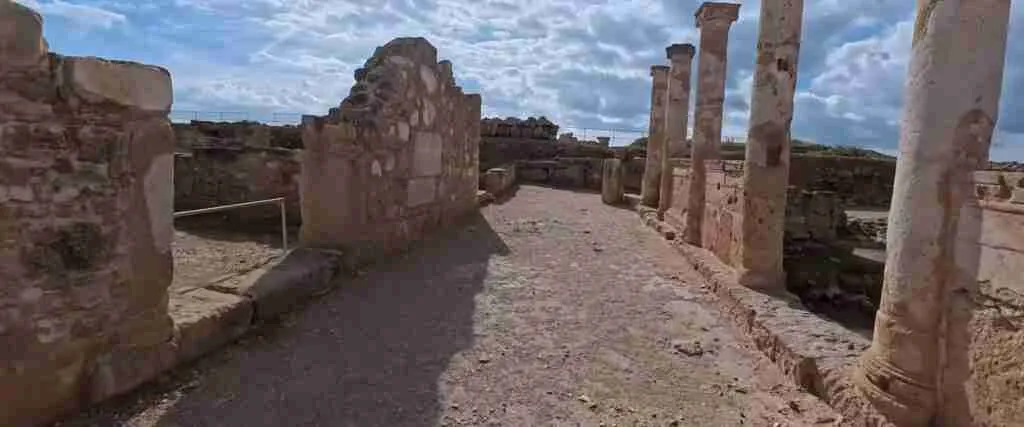
Beyond the villa mosaics, the archaeological park encompasses the Hellenistic theater, Roman odeon (small theater), agora (marketplace), Asklepieion (medical sanctuary), Saranta Kolones fortress (Forty Columns), and various churches including the Chrysopolitissa Basilica with St. Paul’s Pillar where Christian tradition places the apostle’s flogging. These structures span multiple historical periods, illustrating Paphos’s continuous importance from Hellenistic through Byzantine and Lusignan eras. The site’s exceptional preservation results from centuries of burial under coastal sand dunes, protecting delicate mosaics from weathering until systematic excavations began in the 1960s.
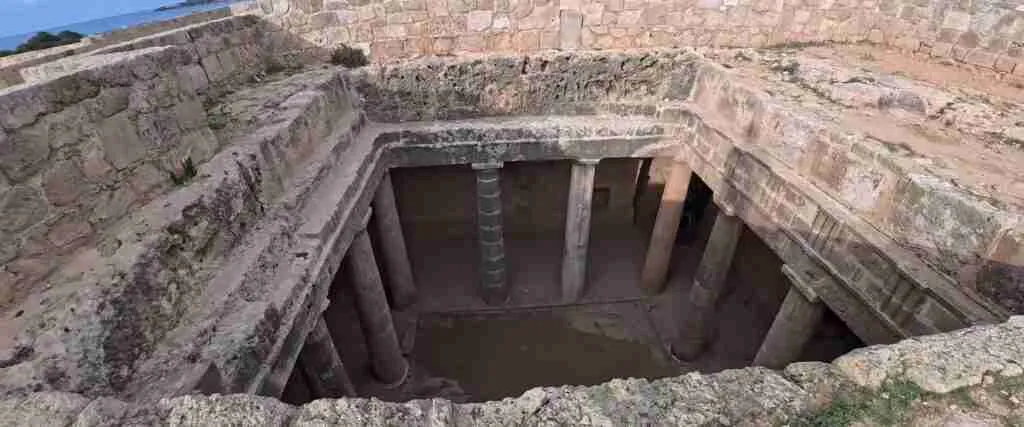
The Tombs of the Kings necropolis demonstrates remarkable funerary architecture carved directly into solid rock during the Hellenistic and Roman periods (3rd century BC to 4th century AD). Despite the name, no actual kings occupied these tombs; rather, wealthy Paphian aristocrats and officials commissioned elaborate underground burial complexes mimicking contemporary residential architecture. The tombs feature peristyle courtyards with Doric columns, multiple burial chambers, and frescoed walls (mostly deteriorated), reflecting ancient Egyptian influences on Cypriot funerary practices. The eight major tomb complexes open to visitors span 200 meters along the coastline, each accessible through rock-cut staircases descending to courtyard levels.
Palaepaphos at Kouklia village preserves remnants of Old Paphos, the original settlement predating New Paphos’s foundation in the late 4th century BC. The Temple of Aphrodite sanctuary served as the cult center for Aphrodite worship from the 12th century BC through Roman times, drawing pilgrims throughout the ancient Mediterranean world. While extensive ruins visible today date primarily from Roman rebuilding, the temple’s sacred conical stone—symbol of the goddess—received veneration from Mycenaean through Roman periods. The Lusignan manor house now serving as the site museum displays artifacts excavating from the temple complex, including votive offerings, inscriptions, and architectural fragments documenting 2,000 years of religious activity.
UNESCO inscription criteria emphasized three aspects: Paphos’s direct association with Aphrodite worship and pre-Hellenic fertility cult traditions (Criterion vi), the exceptional quality of Nea Paphos mosaics ranking among the world’s finest Roman floor art (Criterion iii), and the site’s testimony to cultural exchange between Mediterranean civilizations during Hellenistic and Roman periods (Criterion ii). The mosaics particularly impressed UNESCO evaluators through their artistic sophistication, preservation quality, and comprehensive representation of Greco-Roman mythological themes. Modern art historians recognize these floors as masterworks of Roman mosaic technique, displaying advanced perspective, color blending, and narrative composition skills.
Practical visitor access to UNESCO components requires the €8.50 combination ticket valid for one day covering the Archaeological Park, Tombs of the Kings, and Palaepaphos sites. Individual site tickets cost €4.50 for the Archaeological Park, €2.50 for Tombs of the Kings, and €2.50 for Palaepaphos, making the combination ticket worthwhile for visitors exploring all three locations. Winter opening hours (November-March) run 08:30-17:00 daily, extending to 08:30-19:30 during summer months (April-October), though last entries occur 30 minutes before closing. Major holidays including Greek Orthodox Easter, Christmas, and New Year’s Day see closures, requiring schedule verification through official Cyprus tourism channels before visit dates.
Site accessibility varies across the three components. The Archaeological Park features extensive paved pathways connecting major structures, though uneven ancient floors and steps create challenges for wheelchair users and visitors with mobility limitations. Modern shelter structures protect the most significant mosaics from sun and rain, allowing year-round viewing in climate-controlled conditions. The Tombs of the Kings present greater accessibility challenges through rock-cut staircases and uneven surfaces, with several tomb complexes completely inaccessible to wheelchairs. Palaepaphos at Kouklia offers moderate accessibility through its museum and immediate temple area, though exploring wider archaeological zones requires navigating unimproved terrain.
Conservation efforts continue protecting these 2,000-year-old remains from environmental damage and visitor impact. Climate-controlled shelters over major mosaics regulate temperature and humidity while filtering UV radiation that fades ancient pigments. Raised walkways prevent foot traffic damage to delicate floors, while security cameras and site guards discourage prohibited touching or photography with flash that deteriorates pigments. Ongoing excavations gradually expand visible areas—recent work at the Theseus villa uncovered additional mosaic rooms, while systematic documentation creates digital archives preserving detailed records even as originals weather.
Understanding the historical context enriches site visits. Paphos served as Cyprus’s capital during Roman rule (58 BC to 330 AD), explaining the concentration of administrative and wealthy residential structures. The mosaics date primarily to the 2nd-4th centuries AD when the Roman Empire’s eastern provinces enjoyed peak prosperity, allowing wealthy citizens to commission elaborate home decorations. The sudden abandonment following 4th-century earthquakes buried these structures under debris and windblown sand, inadvertently preserving them for modern discovery. Archaeological work beginning systematically in 1962 gradually exposed these treasures, with major excavations continuing today as funding permits.
Entry Requirements and Visa Information for 2026
Cyprus immigration operates under European Union aligned policies despite not yet joining the Schengen Area, creating straightforward entry procedures for most international visitors in 2026. EU and EEA citizens (European Union plus Iceland, Liechtenstein, and Norway) along with Swiss nationals enter Cyprus without visas using valid national identity cards containing photographs or passports. These travelers face no stay duration limits and enjoy full freedom of movement rights, though EU citizens remaining longer than 90 days should register with the Civil Registry and Migration Department for administrative purposes rather than legal requirements.
Citizens from over 60 visa-exempt countries enter Cyprus for tourist or business visits up to 90 days within any 180-day period without advance visa applications. This extensive list includes the United States, United Kingdom, Canada, Australia, New Zealand, Japan, South Korea, Singapore, Brazil, Argentina, Chile, Mexico, Israel, United Arab Emirates, and others. Travelers should verify current status through official Cyprus government sources before booking as bilateral agreements occasionally change. These visa-exempt visitors must present passports valid for at least three months beyond intended departure dates, though this requirement receives lenient enforcement for visitors from major source countries departing on scheduled return flights.
The European Travel Information and Authorization System (ETIAS) launches in late 2026, fundamentally changing entry procedures for visa-exempt travelers. ETIAS requires online pre-authorization costing €20 with validity for three years or until passport expiration, whichever comes first. The application process involves providing biographical information, travel details, and answering security questions through the official ETIAS website or mobile application, typically taking 10-15 minutes. Approval generally occurs within 72 hours, though complex cases requiring additional screening extend to 30 days. Travelers should complete ETIAS applications well before departure rather than relying on instant approval.
ETIAS authorization permits multiple entries during its three-year validity period, each stay limited to 90 days within any 180-day window matching current visa-free access rules. The system aims to enhance security through advance passenger screening rather than restricting legitimate tourism, making approval straightforward for travelers without criminal records or security concerns. Minors under 18 and adults over 70 receive ETIAS fee exemptions, though they must still complete application processes. Turkish and Azerbaijani citizens remain excluded from ETIAS benefits, requiring traditional visa applications regardless of purpose or duration.
Holders of valid Schengen visas (multiple entry or long-stay) or residence permits issued by Schengen member states bypass Cyprus visa requirements entirely, entering freely for up to 90 days without additional documentation. This provision benefits non-EU nationals studying or working in Schengen countries who wish to visit Cyprus during breaks or holidays. The reciprocal arrangement reflects Cyprus’s commitment to eventual Schengen membership, currently expected by 2028 following completion of technical requirements and external border strengthening.
Border control procedures at Paphos International Airport move efficiently for most travelers, with EU passport holders using automated e-gates bypassing immigration officers entirely. Non-EU visitors proceed through staffed immigration desks where officers verify passport validity and entry eligibility, typically completed within 2-3 minutes per passenger. Peak arrival periods (morning European flights) create 20-40 minute queues, while afternoon and evening flights process more quickly. Immigration officers rarely question legitimate tourists extensively, though they may verify accommodation bookings or return tickets for visitors from countries with higher overstay rates.
Visitors planning extended stays exceeding 90 days must apply for appropriate long-stay visas through Cyprus embassies or consulates in their home countries before departure. Long-stay categories include work permits, study visas, family reunification, and residency permits, each requiring specific documentation and processing periods ranging from several weeks to months. The short-stay visa waiver and ETIAS authorization systems do not extend to employment, education, or permanent relocation purposes, making advance planning essential for anyone considering longer Cyprus experiences.
Special provisions apply to family members (spouses, children, dependent parents) of EU citizens, who enjoy simplified entry even if they hold non-EU passports. These family members enter visa-free when traveling with or joining the EU citizen in Cyprus, though they should carry marriage certificates, birth certificates, or other relationship proof to facilitate border processing. After arrival, family members of EU citizens can apply for five-year residence cards through Cyprus migration authorities, providing long-term stay rights exceeding ETIAS or visa-free limitations.
Airport transit visas affect citizens of 13 countries including Afghanistan, Bangladesh, DR Congo, Eritrea, Ethiopia, Ghana, Iran, Iraq, Nigeria, Pakistan, Somalia, Sri Lanka, and Turkey who transit through Paphos airport without entering Cyprus. These travelers must obtain airport transit visas valid for under 24 hours in airport international zones, though this requirement applies only to passengers not continuing immediately on connecting flights. Most transit passengers actually enter Cyprus during connections, requiring regular entry authorization rather than transit-specific documentation.
British citizens and UK passport holders continue enjoying visa-free access to Cyprus following Brexit, maintaining the same 90-day visa-free privileges as other non-EU visa-exempt countries. The historical relationship between Cyprus and the United Kingdom (former British colony) ensures continued favorable treatment for British travelers, though they now face the same ETIAS requirement as other third-country nationals starting late 2026. British passport holders should verify ETIAS registration well before travel to avoid boarding denials on Cyprus-bound flights.
Passport validity requirements mandate documents remain valid for at least three months beyond intended departure dates from Cyprus, with most countries requiring 10-year maximum age on passports at entry. Travelers should verify their specific passport meets these criteria well before departure, as some passport types (emergency passports, temporary travel documents) face additional scrutiny or restrictions. Children traveling on parent passports rather than individual documents should confirm Cyprus accepts this arrangement, as increasing numbers of countries mandate individual passports for minors regardless of age.
Best Time to Visit Paphos in 2026: Weather and Seasonal Guide
Paphos enjoys a Mediterranean climate delivering over 300 sunny days annually, though seasonal variations in temperature, rainfall, tourist crowds, and pricing create distinct advantages for different travel priorities. Understanding these patterns allows 2026 visitors to select optimal timing matching their preferences for weather, crowds, costs, and activities.
Peak summer season (July-August) delivers guaranteed sunshine with temperatures reaching 32-35°C, minimal rainfall, and sea temperatures peaking at 26-27°C creating perfect beach conditions. These months attract maximum crowds particularly from UK and northern European families during school holidays, filling hotels to capacity and creating premium pricing across accommodation and flights. Midday heat makes archaeological site exploration uncomfortable between 12:00-16:00, forcing early morning or evening visits to avoid sun exposure risks. Restaurants around Paphos Harbour fill completely by 20:00, requiring reservations at popular venues. Accommodation rates reach annual peaks, with beachfront hotels charging 40-60% premiums over shoulder season pricing while budget options vanish due to advance bookings.
Shoulder seasons (April-May and September-October) represent optimal windows for balanced weather, costs, and crowds. April-May temperatures range 20-26°C with occasional brief showers not significantly disrupting plans, while September-October maintains 24-30°C with negligible rainfall and sea temperatures remaining comfortable at 23-26°C. These months deliver 30-50% lower accommodation costs compared to peak summer, with availability across all hotel categories and frequent last-minute deals. Archaeological sites operate under extended summer hours (08:30-19:30) without overwhelming crowds, allowing leisurely exploration without queueing. Local restaurants operate at normal rather than tourist capacity, providing better service quality and more authentic dining atmospheres. The primary disadvantage involves slightly cooler sea temperatures in May (20-22°C) that some swimmers find brisk, though most visitors acclimate quickly.
Early summer (June) and late summer (September) offer compromise positioning combining summer weather advantages with moderate crowd levels and pricing between shoulder and peak ranges. June temperatures climb to 28-31°C as summer weather establishes consistently, while September maintains summer warmth as northern European schools resume, reducing family tourism. Hotels charge intermediate rates 20-30% below July-August peaks, while flight prices remain reasonable outside school holiday surcharges. These months suit travelers prioritizing warm beach weather who maintain schedule flexibility avoiding fixed summer vacation periods.
Spring (March) extends the shoulder season for budget-conscious visitors accepting trade-offs. Temperatures range 17-21°C providing comfortable archaeological exploration weather, though sea temperatures at 16-18°C limit swimming appeal for all except cold-water enthusiasts. Occasional rainfall averages 3-4 days monthly, typically brief showers rather than day-long systems. Accommodation rates drop 40-50% below summer peaks with extensive availability, while many hotels undergo maintenance before summer season, limiting options in some areas. March suits visitors prioritizing cost savings and archaeological interests over beach activities, while wildflowers blooming across countryside create exceptional landscape photography conditions.
Winter months (November-February) attract long-stay visitors and retirees seeking warm Mediterranean escapes from northern European cold, though Cyprus standards qualify as mild rather than warm. Daytime temperatures range 15-18°C with nighttime lows dropping to 8-10°C, requiring light jackets and long sleeves. Rain occurs more frequently with 5-7 rainy days monthly, though precipitation totals remain modest and sunny periods dominate. Sea temperatures decline to 16-18°C, effectively ending swimming season except for hardy individuals. Accommodation rates reach annual lows at 50-60% below summer peaks, attracting budget travelers and extended-stay visitors amortizing costs over weeks or months. Cultural activities, hiking, and archaeological exploration remain pleasant during winter, while restaurants and shops in tourist zones reduce hours or close entirely limiting dining and services.
Public holidays and festival periods create temporary price surges and availability constraints within seasonal patterns. Greek Orthodox Easter (varying dates in April or early May) brings maximum local crowds as Cypriots take extended holidays, filling coastal hotels and restaurants while locals from Nicosia and other inland cities vacation in Paphos. Christmas and New Year periods see accommodation prices spike as northern Europeans book warm-weather holiday escapes, while many restaurants implement special gala dinner menus with mandatory participation at premium pricing. The Paphos Aphrodite Festival (September) featuring outdoor opera at the medieval castle creates several days of accommodation pressure in luxury categories as international opera enthusiasts book in advance.
Month-by-month optimal visit timing guidance considers multiple factors:
January-February deliver lowest annual prices and minimal crowds, suitable for extended-stay visitors and budget travelers accepting cooler weather without swimming opportunities. Archaeological site exploration occurs in comfortable conditions without summer heat or crowds.
March transitions toward spring with warming temperatures and wildflower blooms, offering improved weather over winter at continued off-season prices. Sea temperatures remain too cool for most swimmers, limiting beach appeal.
April represents the year’s first optimal window, combining comfortable 20-24°C temperatures with shoulder season pricing 35-45% below summer. Archaeological sites operate extended hours as summer schedules begin, while coastal walking trails offer pleasant conditions before summer heat.
May continues excellent conditions with warming toward summer temperatures (24-28°C) and sea temperatures reaching swimmable 20-22°C for most visitors. Accommodation availability remains excellent with pricing still 30-40% below peak summer, while British school half-term creates brief late-May pressure.
June transitions to full summer with reliable hot weather (28-32°C) and warm seas (23-25°C), though early June pricing remains 20-30% below July-August peaks before school holidays begin driving family demand.
July-August provide peak summer conditions with guaranteed hot weather, maximum crowds, and highest annual pricing. These months suit families constrained by school schedules and sun-seekers prioritizing beach weather over cost considerations.
September ranks as the single optimal month combining continued summer weather (26-30°C), warm seas (25-27°C), reduced crowds as schools resume, and accommodation pricing declining 25-35% from August peaks. Archaeological site crowds moderate significantly after mid-September.
October extends excellent conditions with temperatures moderating to 24-28°C and seas remaining comfortable at 23-25°C. Pricing continues declining through the month as season winds down, while services maintain full summer schedules through mid-month before some seasonal closures begin late October.
November transitions toward winter with cooling temperatures (18-22°C) and increased rainfall probability, though many sunny days continue. Accommodation prices drop sharply as season ends, while reduced tourist services begin limiting restaurant and activity options.
December marks full winter season with cool temperatures (15-18°C) and Christmas holiday booking pressure in luxury categories as northern Europeans seek warm escapes. Budget travelers find excellent value outside Christmas week itself.
Overall optimal visit timing for balanced weather, costs, and experiences places April-May and September-October as the ideal 2026 windows for Paphos, with September ranking as the single best month combining summer weather advantages with shoulder season pricing and crowd levels.
Money, Currency, and Banking in Paphos 2026
Cyprus adopted the euro (EUR) as official currency in 2008, eliminating exchange rate concerns for visitors from eurozone countries and simplifying financial planning for international travelers familiar with euro denominations. ATMs distribute euros throughout Paphos in denominations including €5, €10, €20, and €50 notes, with €100 and €200 notes available at banks though often refused by small merchants due to counterfeiting concerns and limited change availability. Coins circulate in €1 and €2 along with cent denominations (€0.01, €0.02, €0.05, €0.10, €0.20, €0.50), though smallest cent coins see limited practical use as most retailers round prices to nearest €0.05.
ATMs operate extensively throughout Paphos with concentrations along Poseidonos Avenue in Kato Paphos, around Paphos Harbour, and throughout Ktima’s commercial center. Major Cypriot banks (Bank of Cyprus, Hellenic Bank) maintain numerous ATMs accepting international cards bearing Visa, Mastercard, Maestro, or Cirrus logos. Standard withdrawal limits range €300-400 per transaction, with most machines permitting multiple consecutive withdrawals if needed. ATM fees involve two potential charges: the Cypriot bank operator fee (typically €2-3 per withdrawal) and any foreign transaction fees imposed by the user’s home bank. International travelers should verify their bank’s foreign ATM policies before departure to understand total withdrawal costs.
Dynamic currency conversion represents a significant ATM trap requiring awareness. When withdrawing cash, ATMs often offer to complete transactions in the user’s home currency rather than euros, claiming convenience through immediate exchange rate knowledge. This “convenience” costs 3-8% through unfavorable exchange rates built into the conversion calculation. Travelers should always decline dynamic currency conversion and select withdrawal in euros, allowing their home bank to process the conversion at standard interbank rates providing substantially better value. The same principle applies to card payments at merchants offering dynamic currency conversion during checkout—always insist on euro charges rather than home currency conversion.
Credit and debit cards see widespread acceptance throughout Paphos at hotels, restaurants, shops, car rental agencies, and larger supermarkets. Visa and Mastercard dominate acceptance with near-universal recognition, while American Express cards work at many but not all establishments, particularly smaller businesses finding Amex’s higher merchant fees prohibitive. Contactless payments function efficiently for transactions under €50, while chip-and-PIN security applies to larger purchases. Despite wide card acceptance, cash remains essential for small tavernas, bakeries, produce markets, bus fares, parking meters, and smaller shops preferring cash to avoid card processing fees.
Currency exchange services operate in tourist areas including near Paphos Harbour and Kings Avenue Mall, though rates consistently disadvantage consumers compared to ATM withdrawals at interbank exchange rates. Exchange bureaus apply 5-8% margins between buy and sell rates, effectively charging that percentage as service fees hidden within exchange calculations. Hotel front desks offering currency exchange convenience charge even higher margins of 8-12%, making them emergency-only options. International visitors should exchange minimal amounts at airports or borders, relying instead on ATM withdrawals after arrival for optimal rates.
Banking hours operate Monday-Friday 08:30-13:30 for public transactions, with many bank branches reopening 15:30-16:30 on Monday-Friday afternoons for limited services. Banks close weekends and public holidays, though ATMs function continuously. Travelers requiring in-person banking services such as emergency replacement cards or large sum transactions should plan around these restricted hours, particularly avoiding Friday afternoons when weekend closures prevent urgent matters until Monday.
Tipping customs follow moderate European standards without the North American expectation of automatic gratuity. Restaurant bills frequently include service charges (typically 5-10%) noted on menus or receipts, though supplementary tips for exceptional service remain appreciated at 5-10% additional amounts. When service charges don’t appear on bills, leaving 10% demonstrates satisfaction while 5% acknowledges basic service. Small tavernas sometimes refuse card payments specifically because chip readers automatically add service charges they prefer keeping discretionary, explaining cash preferences despite accepting cards physically. Taxi drivers receive no mandatory tips though rounding up fares to the nearest euro or adding €1-2 for helpful service demonstrates appreciation. Hotel housekeeping merits €1-2 per night left in rooms, while bellhops and concierges receive €2-5 depending on service complexity.
Budget planning in euros eliminates conversion calculation needs during transactions, though travelers from non-euro countries should establish rough exchange rate reference points for spending decisions. Mobile currency converter apps provide instant calculations, while most smartphones offer built-in calculator functions sufficient for approximate conversions. Conservative budget planning should add 5-10% cushions above average spending estimates to accommodate spontaneous expenses, higher-than-expected costs at specific venues, or occasional splurges without exceeding overall budget limits.
ATM safety precautions prevent card fraud and security risks. Use ATMs located inside bank branches during business hours whenever possible, as these monitored machines face lower skimming risks than standalone outdoor units. Shield PIN entry from nearby individuals and security cameras potentially recording keypad inputs. Verify ATM card slots and PIN pads show no unusual attachments or looseness suggesting skimming device installation. Check bank account activity regularly through mobile banking apps during travel to identify unauthorized transactions quickly. Report lost or stolen cards immediately to issuing banks to prevent unauthorized use.
Daily cash carrying strategies balance access convenience against theft risk. Carrying €50-100 provides sufficient funds for daily purchases, meals, and incidentals without risking large losses if pickpocketing occurs. Store larger amounts and backup cards in hotel safes, withdrawing additional cash as needed rather than carrying entire trip budgets simultaneously. Distribute cash and cards across multiple pockets or bags so that losing one item doesn’t eliminate all payment options. Consider photographing card numbers and bank contact information stored separately from actual cards to facilitate replacement if necessary.
Mobile payment systems including Apple Pay, Google Pay, and Samsung Pay function at contactless payment terminals throughout Paphos, providing convenient alternatives to physical card carrying. These systems add security through transaction tokenization preventing actual card numbers from transmitting during payments. However, acceptance remains less universal than physical cards particularly at smaller merchants and traditional establishments, making mobile payments supplementary rather than replacement options for travelers.
Foreign transaction fees charged by home banks significantly impact travel budgets for extended stays or high spenders. Many banks impose 1-3% fees on international purchases and ATM withdrawals, adding €1-3 per €100 spent. Travelers should review their cards’ international fee structures before departure, with some credit cards specifically marketed as travel cards waiving foreign transaction fees entirely. For extended Paphos stays, evaluating total projected spending against potential foreign transaction fee costs may justify acquiring no-foreign-fee cards before departure.
Emergency funds access through services like Western Union or MoneyGram provides backup options if cards fail or theft eliminates access to bank accounts. Multiple money transfer service locations operate in Paphos including near the harbor and Ktima commercial district, allowing emergency fund transfers from home contacts within hours. While expensive (fees typically 5-15% of transfer amounts), these services provide reliable alternatives when standard banking fails. Travelers should note contact information for their home bank’s 24-hour card replacement services and money transfer recipient locations before departure to facilitate rapid responses to financial emergencies.
Transportation in Paphos 2026: Getting Around Efficiently
Paphos operates comprehensive public bus networks complemented by taxis, rental cars, and bicycle options, creating transportation flexibility matching various travel styles and budgets. Understanding each system’s strengths, limitations, and cost structures allows optimal mobility choices throughout 2026 visits.
Public buses operated by OSEA provide the most economical transportation covering routes connecting Kato Paphos, Ktima, Coral Bay, archaeological sites, and nearby villages. Standard single-journey tickets cost €2 purchased from drivers, while daily passes priced €6.50 deliver unlimited travel across all routes for 24 hours from first validation. Weekly passes costing €25 provide further savings for extended stays, while monthly passes (€40) target long-term visitors and residents. Exact change speeds boarding though drivers accept bills for single-journey tickets. Daily and weekly passes require purchase at OSEA offices located at Karavella bus station in Kato Paphos or at Ktima municipal market area.
Route 615 provides the most useful connection for tourists, running continuously between Coral Bay and Kato Paphos harbor through Tombs of the Kings and Kings Avenue Mall with 15-20 minute frequency during summer (May-October) and 30-minute intervals winter months. Route 610 connects Kato Paphos with Ktima’s commercial center, climbing the escarpment to the upper town with 20-minute summer frequency and 30-40 minute winter service. Route 631 serves Paphos Archaeological Park directly, while Route 645 connects to Geroskipou beach and village. Comprehensive route maps and schedules appear at major bus stops and online through OSEA’s website, though actual service occasionally runs 5-10 minutes behind published schedules requiring buffer time for connections.
Bus advantages include low costs, frequent service on main routes during summer, and driver announcements for major stops assisting unfamiliar passengers. Limitations involve reduced winter frequencies making some connections inconvenient, limited service to villages beyond main tourist areas, and complete cessation of operations on major holidays. Buses operate air conditioning during summer maintaining comfortable interiors despite external heat, while spacious luggage areas accommodate shopping bags and beach equipment. Accessibility features include low-floor entries and designated wheelchair spaces on newer vehicles, though some older buses require step climbing.
Airport connections operate through dedicated Airport Express buses (Route 612) running between Paphos International Airport and Kato Paphos harbor (Karavella bus station) every 45-60 minutes throughout the day. Journey time spans 30-40 minutes depending on traffic, with €2 single-journey fares matching standard bus pricing. Service operates 06:00-22:00 covering most flight times, though late-night arrivals require taxis as no public transport operates overnight. Buses provide luggage storage in holds beneath passenger compartments, accommodating standard suitcases without difficulty.
Taxis offer convenient point-to-point transportation at premium prices compared to public buses. Metered rates within Paphos urban areas typically range €8-15 for common journeys (Kato Paphos to Ktima, harbor to Tombs of the Kings, hotel to archaeological park), while airport transfers cost €30-40 to most Paphos hotels through official taxi ranks at airport arrivals. Telephone-ordered taxis charge additional €1-2 pickup fees above metered fares. Drivers accept cash preferentially though card payments function at some vehicles particularly newer fleet additions. Tipping remains discretionary with most passengers rounding fares up to the nearest euro or adding €1-2 for helpful service.
Ride-sharing applications including Bolt operate in Paphos providing smartphone-based alternatives to traditional taxis generally costing 15-25% below metered taxi rates. The application handles payment automatically through registered credit cards, eliminating cash transaction needs while providing fare estimates before confirming bookings. Bolt coverage extends throughout Paphos urban area with typical wait times of 5-10 minutes for pickups, though availability varies by location and time with reduced vehicle numbers late evenings. The service suits travelers comfortable with smartphone applications and preferring transparent upfront pricing over metered taxi uncertainty.
Car rental provides maximum flexibility for exploring Paphos region including villages, mountain areas, and Akamas Peninsula beyond public transport reach. Rental costs range €25-40 daily for economy vehicles during summer season with discounts of 20-30% winter months, while booking advance through international aggregator websites typically delivers better rates than airport counter walk-ups. International rental companies (Hertz, Avis, Europcar) operate alongside local agencies offering similar vehicles at marginally lower prices. Rental requirements include valid driver’s licenses held for minimum one year, minimum age of 25 years at most companies (some accept 21+ with surcharges), and major credit cards for security deposits of €500-1,000 held during rental periods.
Cyprus drives on the left following British traffic conventions, creating challenges for visitors from right-hand drive countries requiring adjustment periods. Urban Paphos features roundabouts and narrow streets demanding attention, while rural areas present sharp curves and occasional unpaved sections requiring careful navigation. Parking in Kato Paphos proves challenging during summer with metered street parking (€1 per hour) filling early mornings, while shopping center parking lots (Kings Avenue Mall, Paphos Municipal Market) provide free alternatives within walking distance of coastal attractions. Archaeological sites offer designated free parking lots, though spaces fill by mid-morning summer months.
Bicycle rental suits active travelers exploring coastal areas between Kato Paphos and Coral Bay along relatively flat routes with designated cycle lanes in some sections. Rental shops near Paphos harbor charge €8-15 daily for basic city bikes and €20-30 for quality mountain bikes, with weekly rentals delivering 30-40% per-day savings. The 10-kilometer coastal stretch between Paphos Archaeological Park and Coral Bay offers pleasant cycling on moderate gradients, though summer heat makes morning and evening rides preferable to midday cycling. Helmet use remains optional legally but advisable for safety, with rental shops providing them on request.
Electric scooters and e-bikes have emerged as new rental options in 2026, with shared mobility providers establishing small fleets in Kato Paphos allowing smartphone app rentals for short trips. Typical costs reach €0.30-0.40 per minute with maximum daily caps around €15-20, making them economical for brief journeys like harbor to archaeological park but expensive for extended use compared to daily bus passes. Users should verify insurance coverage through rental applications as scooter accidents occur regularly among inexperienced riders.
Walking represents the most practical transportation for visitors staying in Kato Paphos’s compact coastal zone. The distance from Paphos harbor to the archaeological park spans just 1.5 kilometers (20-minute walk), while harbor to Kings Avenue Mall reaches 2.5 kilometers (30-35 minutes). Coastal promenades provide pleasant walking routes with sea views, though summer midday heat makes morning and evening walks more comfortable than afternoon treks. Sensible walking shoes prove essential as sidewalks feature uneven paving and occasional gaps requiring attention to avoid trips and falls.
Inter-city buses connect Paphos with other Cyprus cities including Limassol (€6, 1 hour 15 minutes), Nicosia (€8, 2 hours 30 minutes), and Larnaca (€10, 2 hours 45 minutes) through Intercity Bus services operating from Karavella station. These services suit day trips or travelers moving between cities without rental cars, operating 2-4 times daily depending on routes. Advance online booking ensures seat availability though walk-up tickets usually remain available except holiday periods.
Accommodation Strategies in Paphos 2026: Where to Stay
Paphos offers diverse accommodation options ranging from €40 budget hostels through €400+ per night luxury resorts, with pricing, location, and amenities varying significantly across neighborhoods and seasons. Strategic accommodation selection balancing cost, convenience, and preferences optimizes 2026 visit experiences.
Kato Paphos (lower coastal area) concentrates tourist accommodation within walking distance of beaches, archaeological sites, restaurants, and harbor. This zone delivers maximum convenience for visitors prioritizing beach access and main attractions, though premium pricing reflects tourist demand. Hotels here range from budget studios (€50-70 per night) through mid-range properties (€90-140) to upscale beachfront hotels (€200-350). Many establishments in Kato Paphos offer all-inclusive packages popular with British tourists, though independent travelers often find better value combining room-only rates with restaurant diversity outside hotel properties.
Budget accommodation in Kato Paphos includes hostels (€20-30 per dormitory bed, €50-70 private rooms), basic hotels (€50-75), and older apartment studios (€60-90). These properties typically lack elevators, pools, and extensive amenities but deliver clean functional rooms within walking distance of beaches and sites. Axiothea Hotel, located slightly inland from the harbor, offers exceptional budget value at €60-80 with airport shuttle service, garden, and positive reviews from independent travelers. Dionysos Central Hotel near the municipal park provides comfortable budget-mid-range accommodation at €70-95 with pool and kitchen facilities appealing to families and longer stays.
Mid-range hotels (€90-180) dominate Kato Paphos providing pools, restaurants, air conditioning, and beachfront or near-beach locations. Properties in this category include well-established hotels like Alexander the Great, Amphora Hotel & Suites, and Pyramos Hotel, delivering reliable standards at €110-150 summer rates. These hotels typically include breakfast buffets, maintain pools and sun terraces, and position within 100-300 meters of beaches. Mid-range properties suit couples and families seeking comfortable facilities without luxury pricing, particularly when booked advance during shoulder seasons securing 25-35% discounts below peak summer rates.
Luxury hotels (€200-400+) concentrate along the coastal strip toward Coral Bay, offering extensive facilities including multiple pools, spas, kids clubs, water sports, landscaped grounds, and direct beach access. Elysium, Annabelle, and Almyra hotels represent Paphos’s premium tier, charging €280-450 summer nights for superior rooms with sea views. These properties target couples seeking romantic getaways and families willing to invest in comprehensive facilities keeping children entertained throughout stays. All-inclusive options at properties like Olympic Lagoon Resort (€150-250 per person including meals and drinks) appeal to travelers preferring predictable budgeting over restaurant flexibility.
Ktima (upper town) offers alternative accommodation at 20-30% lower rates than equivalent Kato Paphos properties, suitable for budget-conscious travelers and those prioritizing authentic Cypriot atmosphere over beach proximity. Small hotels and guesthouses in Ktima charge €50-90 per night for comfortable rooms, with frequent bus connections (Route 610) delivering 15-minute access to coastal attractions. Ktima accommodation places visitors within walking distance of authentic tavernas, the municipal market, and local shops charging local rather than tourist prices. However, the daily commute to beaches and lack of swimming pools at most Ktima properties diminish appeal for beach-focused visitors.
Coral Bay area (5 kilometers north of Kato Paphos) provides additional accommodation options near Paphos’s best swimming beach. Hotels and apartment complexes here serve primarily package tourists though independent bookings remain possible. Accommodation costs match Kato Paphos rates (€90-200 for mid-range properties) while beach quality exceeds crowded Kato Paphos strands. However, Coral Bay’s distance from archaeological sites and harbor dining requires bus or car transportation, reducing convenience for visitors prioritizing cultural exploration over beach time.
Self-catering apartments suit longer stays (5+ days) where grocery shopping and meal preparation reduce dining costs significantly. Apartment studios with kitchenettes cost €70-110 per night in Kato Paphos, while full apartments with separate bedrooms range €110-180. Supermarkets including Lidl and Papantoniou near tourist zones stock international products alongside local items, with weekly grocery costs of €75-120 for two people cooking most meals. Apartments work particularly well for families with children requiring flexible meal schedules and avoiding restaurant costs for every meal.
Vacation rental platforms (Airbnb, Booking.com, Vrbo) offer alternatives to traditional hotels, particularly for groups or families needing multiple bedrooms. Whole apartments in Kato Paphos range €90-180 per night depending on size, location, and amenities, often delivering better space-per-euro value than hotel rooms. However, vacation rentals lack daily housekeeping, reception services, and immediate maintenance assistance, making them better suited to independent travelers than those expecting hotel-style service. Reviews require careful evaluation as property conditions and locations sometimes disappoint despite attractive listing photos.
Booking timing significantly affects costs and availability. Advance bookings (3-6 months ahead for summer travel) secure better rates and choice across all accommodation categories, with early-bird discounts of 15-25% common at many hotels. Last-minute bookings (2-4 weeks before arrival) occasionally deliver deals as hotels reduce prices filling remaining inventory, though availability shrinks particularly in premium categories. Shoulder season booking (April-May, September-October) allows shorter booking windows (4-8 weeks advance) while maintaining good availability and rates 30-50% below peak summer.
Cancellation policies demand attention when booking. Flexible rates allowing free cancellation until 2-7 days before arrival typically cost 10-20% more than non-refundable rates, though the flexibility justifies premium costs for travelers with uncertain schedules. Many hotels offer middle-ground options with partial refunds (50-80% return if cancelling 2-4 weeks advance) balancing price and flexibility. Non-refundable rates deliver lowest prices but risk total loss if plans change, making them suitable only for confirmed travel dates.
Hotel amenities affecting value include air conditioning (essential May-September), pools (important for families and beach-alternative relaxation), breakfast inclusion (worth €8-15 per person daily at local cafes), WiFi (standard across all categories), and parking (worth €5-10 daily at paid lots if driving). All-inclusive packages bundling accommodation, meals, and drinks cost €90-180 per person daily at mid-range resorts, appealing to travelers preferring predictable budgeting though limiting restaurant exploration and often delivering mediocre food quality compared to independent taverna dining.
Accommodation location versus cost trade-offs create strategic decisions. Beachfront hotels charge 30-50% premiums over properties 200-400 meters inland, with minimal practical difference as Kato Paphos’s compact size places all accommodation within 5-10 minute walks of beaches. Similarly, sea-view rooms command 20-40% premiums over identical garden-view rooms at the same hotels, with guests spending most time outside rooms during active holiday schedules. Budget-conscious travelers should prioritize location over views and direct beach access, maximizing value without significant convenience sacrifice.
Safety and security vary minimally across Paphos accommodation categories, with crime against tourists rare throughout the city. All licensed hotels maintain basic security including reception staff, door locks, and often electronic key cards at mid-range and luxury properties. In-room safes appear standard in mid-range and luxury hotels, while budget properties sometimes charge €2-3 per day for safe rental. Neighborhood safety remains consistent across Kato Paphos and Ktima, with no areas posing unusual risks to visitors exercising normal precautions.
Dining and Food in Paphos 2026: Eating Well on Any Budget
Paphos delivers exceptional dining experiences spanning traditional Cypriot tavernas through international cuisines and upscale restaurants, with strategic venue selection dramatically affecting costs while maintaining quality. Understanding local food culture, pricing patterns, and optimal dining locations maximizes culinary experiences within various budget parameters.
Traditional Cypriot cuisine emphasizes grilled meats, fresh vegetables, halloumi cheese, and generous olive oil use reflecting Mediterranean dietary patterns. Signature dishes include souvlaki (grilled meat skewers), moussaka (layered eggplant and meat casserole), kleftiko (slow-roasted lamb), halloumi (grilled local cheese), and various mezze (small sharing plates). Cypriot meze represents the pinnacle dining experience, featuring 15-30 small dishes delivered in sequence over 2-3 hours, combining cold appetizers, salads, grilled vegetables, seafood, and multiple meat courses. Authentic tavernas serving meze charge €15-20 per person for comprehensive spreads, delivering exceptional value and memorable cultural experiences.
Budget dining (€5-15 per meal) thrives through strategic venue selection. Local bakeries across Paphos sell freshly-made pies (tyropita with cheese, spanakopita with spinach) for €2-3 each, providing substantial breakfast or lunch options. Souvlaki shops concentrated in Ktima and residential Kato Paphos areas serve generous portions including meat, pita, salad, and chips for €5-7, dramatically undercutting tourist restaurant prices for similar items. Small tavernas away from Paphos Harbour deliver filling traditional meals at €10-15 per person including main courses, sides, and drinks, versus €18-28 for identical dishes at harbor-front establishments. Supermarket purchases of bread, cheese, tomatoes, cucumbers, and olives create picnic lunches costing €5-8 for two people, perfect for beach days or archaeological site visits.
Mid-range dining (€15-30 per person) provides comfortable restaurant experiences with expanded menu choices and pleasant atmospheres. Tavernas in Ktima’s old town and residential Kato Paphos neighborhoods deliver excellent traditional Cypriot cooking at these price points, with main courses (€12-18), salads (€4-6), and drinks bringing totals to €18-25 per person for leisurely dinners. These establishments offer superior food quality compared to tourist-zone venues at equivalent or lower prices, requiring just 10-15 minute walks from harbor concentrations. International restaurants including Italian, Chinese, and Mediterranean fusion operate throughout Kato Paphos charging €15-28 per person for satisfying meals with wine or beer, providing variety during extended stays.
Upscale dining (€30-55+ per person) concentrates around Paphos Harbour waterfront and luxury hotel restaurants, delivering refined cooking with sea views at premium prices. Fine dining venues including Imogen’s, Oinomageireion, and hotel restaurants serve creative Mediterranean cuisine at €35-55 per person including starters, mains, and wine. These establishments justify costs through superior ingredients, skilled preparation, and sophisticated presentations alongside romantic ambiance and attentive service. However, comparable food quality exists at traditional tavernas for 40-50% lower costs, making upscale dining optional rather than necessary for excellent meals in Paphos.
Breakfast strategies significantly impact daily food budgets. Hotel breakfast buffets included in room rates provide good value at €8-12 per person when purchased separately, though many budget and mid-range hotels charge €8-15 per person for breakfast additions of questionable value given local alternatives. Bakeries sell fresh pastries, cheese pies, and coffee for €3-5, while cafes serve continental breakfasts (coffee, juice, pastries) for €6-9. Traditional Cypriot breakfasts featuring halloumi, tomatoes, cucumber, olives, and bread appear at local cafes for €6-8, delivering hearty starts to active days at reasonable costs.
Lunch versus dinner pricing patterns favor lunch for budget optimization. Many tavernas offer lunch specials (mezze or set menus) at €10-15 per person providing identical food to dinner menus charging €15-25 per person evening service. The substantial Cypriot lunch tradition means locals often consume main meals midday, making lunch service at traditional tavernas livelier and more authentic than dinner. However, summer heat makes outdoor lunch dining uncomfortable 12:00-15:00, explaining why most tourists default to evening dining despite cost premiums.
Meze experiences deserve priority for visitors seeking authentic Cypriot dining. Ordering “meze for two” at traditional tavernas initiates extended multi-course meals featuring 15-30 dishes delivered in traditional sequences: cold mezze (hummus, tahini, olives, salads), hot vegetable dishes, grilled halloumi, seafood (if near coast), and multiple grilled meats concluding with fruit. Costs range €15-20 per person at authentic tavernas versus €25-35 at tourist venues, with food quality and portion sizes inversely correlating to prices—expensive harbor restaurants serve smaller portions than neighborhood establishments. Meze requires 2-3 hours for complete experiences, making it unsuitable for rushed diners but perfect for leisurely cultural immersion.
Location-based pricing reveals dramatic cost variations for identical food. Restaurants facing Paphos Harbour charge 40-60% premiums over venues one block inland, justified through sea views rather than food quality improvements. The commercial reality of harbor-front rents creates pricing pressure passed to diners, making short walks to parallel streets worthwhile for budget-conscious eaters. Similarly, establishments near Kings Avenue Mall and archaeological park main entrances charge tourist rates while neighborhood tavernas 400-800 meters away serve locals at substantially lower prices.
Beverage costs significantly impact meal totals. Local beer (KEO, Carlsberg Cyprus) costs €2.50-3.50 at tavernas versus €4-6 at tourist restaurants, while house wine ranges €3-4 per glass (€12-18 per liter) at local establishments versus €5-8 per glass at upscale venues. Soft drinks uniformly cost €2-3 across all restaurant categories, while bottled water ranges €1-2 (often provided complimentary at traditional tavernas). Coffee culture thrives in Paphos with excellent cappuccinos and espressos costing €2-3 at cafes versus €3.50-5 at tourist venues. Alcohol significantly inflates bills with wine or beer adding €8-20 per person to meals, explaining why many budget travelers limit alcohol consumption to occasional rather than daily indulgences.
Self-catering through supermarket shopping slashes food costs for travelers with apartment accommodations. Lidl and Papantoniou supermarkets near tourist areas sell fresh produce, meats, dairy products, and packaged goods at prices 50-70% below restaurant equivalents. A typical weekly grocery purchase for two people cooking breakfasts and some lunches costs €75-120, dramatically reducing €25-40 per person daily restaurant dining. Local produce markets including Paphos Municipal Market (Wednesday and Saturday mornings) offer fresh fruits and vegetables at prices 20-30% below supermarket rates, though requiring early arrival (before 10:00) for best selection.
Dietary accommodations span vegetarian, vegan, and special diets with varying ease. Traditional Cypriot cuisine includes numerous vegetarian options (stuffed vegetables, salads, legume dishes) making vegetarian dining straightforward at most tavernas. Vegan diners face greater challenges as dairy products (especially halloumi and yogurt) appear throughout Cypriot cooking, though grilled vegetables, legume dishes, and salads provide adequate options when communicating dietary requirements clearly. Gluten-free options exist through naturally wheat-free dishes (grilled meats, salads) though dedicated gluten-free awareness remains limited at traditional establishments. International restaurants including Italian venues provide familiar options for travelers finding Cypriot cuisine too adventurous.
Free water arrives automatically at traditional Cypriot tavernas, a pleasant custom distinguishing authentic establishments from tourist traps. The complementary practice of bringing small appetizers (olives, bread, tahini) before ordering demonstrates similar hospitality though isn’t universal. These gestures indicate establishments prioritizing customer satisfaction over maximum profit extraction, serving as useful quality indicators when selecting restaurants.
Recommended dining venues balancing quality and value include:
Budget category: Souvlaki stands in Ktima old town (€5-8 per person), bakeries citywide (€2-4), supermarket picnics (€5-10 for two).
Mid-range traditional: Tavernas along Ledra Street in Ktima (€15-22 per person), residential Kato Paphos neighborhood tavernas away from harbor (€18-25 per person).
Mid-range international: Italian restaurants near Kings Avenue Mall (€18-28 per person), Ktima ethnic restaurants (€15-25 per person).
Upscale: Mandra Tavern between Paphos and Coral Bay (€28-40 per person with excellent mezze), hotel fine dining venues (€35-55 per person).
Meal timing considerations: Traditional lunch service operates 13:00-15:00 with many tavernas closing 15:00-18:00 before dinner service beginning 19:00-20:00. Tourist restaurants maintain continuous service though locals dining before 20:00 remain rare, creating quiet dinner atmospheres 18:00-20:00 before local crowds arrive after 21:00. Kitchen closing times vary by establishment with tourist venues serving until 23:00-00:00 while traditional tavernas often stop accepting orders by 22:00-22:30.
Tipping practices follow the guidance provided in the Money section, with 5-10% appreciation for good service at full-service restaurants while small tavernas and cafes see tip jars for spare change rather than percentage-based gratuities. The Cypriot custom of rounding bills to convenient amounts (€37 bill receives €40, keep change) demonstrates satisfaction without calculating precise percentages.
Safety, Health, and Practical Essentials for Paphos 2026
Paphos maintains excellent safety records making it one of Europe’s safest tourist destinations, though basic health precautions and practical awareness optimize trouble-free visits. Understanding local healthcare systems, common health challenges, and safety protocols prevents issues while building confidence for independent exploration.
Personal safety standards remain exceptional throughout Paphos with violent crime against tourists virtually nonexistent. The primary security concern involves petty theft including pickpocketing in crowded areas like Paphos Harbour, Kings Avenue Mall, and bus stations during peak tourist season. Standard precautions suffice: secure valuables in hotel safes rather than carrying them unnecessarily, maintain awareness in crowded spaces, avoid displaying expensive jewelry or cameras conspicuously, and keep bags closed and positioned front-facing in crowds. Bag snatching and aggressive theft remain rare compared to other Mediterranean destinations, with most theft involving opportunistic pickpocketing of unattended items rather than confrontational robbery.
Beach safety requires attention to several factors. Lifeguarded beaches including Municipal Beach, Coral Bay, and Lighthouse Beach provide supervised swimming areas marked by flags: green indicating safe conditions, yellow advising caution, and red prohibiting swimming due to dangerous conditions. Respect flag systems as Mediterranean currents and undertows create genuine drowning risks particularly during rougher winter seas. Unsupervised beaches demand greater caution with swimmers assessing conditions independently and understanding personal limitations. Jellyfish appear occasionally during summer, though encounters remain infrequent and local species rarely cause serious injuries beyond temporary discomfort. Rinse jellyfish stings with seawater (not fresh water) and seek medical attention if severe reactions occur.
Road safety presents greater risks than crime for Paphos visitors. Cyprus drives on the left (British system) creating confusion for visitors from right-side driving countries, particularly when crossing roads where instincts mislead about traffic direction. Local driving styles emphasize speed and aggressive overtaking, making pedestrian vigilance essential even at marked crossings where vehicles don’t always yield. Walking along roads lacking sidewalks requires extra attention, while rural areas feature narrow roads with blind curves demanding careful navigation if driving.
Sun exposure constitutes the most common health challenge affecting Paphos visitors. Mediterranean summer sun intensity (May-September) causes sunburn, heat exhaustion, and dehydration among unprepared tourists within 30-60 minutes of unprotected exposure. Essential sun safety measures include applying SPF 30+ sunscreen 30 minutes before sun exposure and reapplying every 2 hours, seeking shade during peak intensity hours (12:00-16:00), wearing wide-brimmed hats and UV-protective sunglasses, and consuming 2-3 liters of water daily. Heat exhaustion symptoms including dizziness, nausea, rapid heartbeat, and confusion require immediate action: move to shade, drink water, apply cool compresses, and seek medical help if symptoms persist. Archaeological site exploration demands early morning or evening timing during summer when temperatures exceed 32°C making midday visits uncomfortable and potentially dangerous.
Water safety throughout Paphos follows EU standards with tap water safe for drinking, tooth brushing, and food preparation. However, high mineral content creates slightly brackish taste many visitors find unpleasant, leading most tourists to purchase bottled water (€0.50-1 per liter at supermarkets, €2-3 at tourist venues). Bottled water provides familiar taste while supporting hydration goals essential in Mediterranean heat. Ice in drinks comes from potable sources presenting no health risks at licensed establishments.
Healthcare facilities include the new Paphos General Hospital providing comprehensive emergency services, plus numerous private medical clinics throughout Kato Paphos offering English-speaking doctors for minor issues. Emergency services respond to 112 calls (European emergency number) with ambulances, police, and fire services, while private clinics handle non-emergency medical needs at reasonable costs (€40-80 for consultations, prescriptions at European rates). Comprehensive travel insurance remains essential covering potential hospitalization, specialist treatments, or medical evacuation, as healthcare costs escalate rapidly for serious conditions despite reasonable basic care prices.
Common travel health issues include minor stomach upset from dietary changes (Cyprus food causes few problems for most visitors), sunburn (preventing it proves easier than treating it), and alcohol-related dehydration exacerbated by heat exposure. Pharmacies (identifiable by green crosses) operate throughout Paphos dispensing many medications over-the-counter that require prescriptions in other countries, including antibiotics for bacterial infections. Pharmacists provide basic medical advice for minor ailments, directing visitors to doctors when conditions exceed their scope.
Travel insurance deserves priority consideration before departure. Comprehensive policies costing €40-80 for week-long trips cover medical treatment, emergency evacuation, trip cancellation, lost luggage, and other mishaps. EU citizens should carry European Health Insurance Cards (EHIC) providing reciprocal healthcare access though supplementary travel insurance adds valuable coverage gaps including repatriation and non-emergency treatments. UK citizens retain EHIC benefits in Cyprus through post-Brexit arrangements. Non-EU visitors require full travel insurance as medical costs without coverage quickly reach thousands of euros for serious conditions.
Prescription medications should accompany travelers in original packaging with doctor’s letters documenting necessity, preventing customs issues and facilitating replacement if medications are lost. Carry sufficient supplies for entire trip durations plus 2-3 day buffers against travel delays. Medication availability in Cyprus mirrors other EU countries with most common prescriptions fillable at local pharmacies, though brand names differ requiring active ingredient knowledge for pharmacist identification.
Insect protection becomes relevant during summer months when mosquitoes emerge at dusk, particularly near gardens and pools with standing water. Mosquito-borne diseases remain virtually absent from Cyprus making protection comfort rather than health priority. Standard insect repellents containing DEET effectively prevent bites, while accommodation air conditioning and screens provide indoor protection. Most hotels and apartments include electrical mosquito repellent devices in rooms.
COVID-19 protocols evolved significantly by 2026 with Cyprus lifting most restrictions though international travel requirements fluctuate. Travelers should verify current entry requirements through official Cyprus government sources before departure as pandemic-related rules change periodically. Vaccination certificates remain advisable though requirements vary by origin country and current infection rates. Face masks no longer appear mandatory in public spaces though individual businesses retain rights to require them.
Alcohol consumption deserves measured approach given Mediterranean heat intensifying dehydration and impairment. Cypriot wines and local beers encourage overindulgence particularly at all-inclusive resorts with unlimited drinks, but combining alcohol with sun exposure creates dangerous conditions. Alternating alcoholic drinks with water maintains hydration while limiting impairment. Public drunkenness attracts police attention though enforcement targets disruptive behavior rather than moderate intoxication.
Women travelers face minimal safety concerns specific to gender, with solo female visitors routinely exploring Paphos without harassment or unusual risks. Standard precautions apply: avoiding isolated areas after dark, maintaining awareness of surroundings, and trusting instincts when situations feel uncomfortable. Cypriot culture respects women travelers with unwanted attention rare compared to some Mediterranean destinations. Conservative dress at religious sites (covered shoulders and knees) demonstrates respect though beachwear remains perfectly acceptable in coastal tourist zones.
LGBTQ+ travelers encounter generally accepting attitudes in tourist areas though Cyprus remains socially conservative compared to western European countries. Public displays of affection between same-sex couples may attract attention in traditional areas though no legal restrictions exist. Paphos gay scene remains modest with few dedicated venues compared to larger cities, though general hospitality extends to all visitors regardless of orientation.
Emergency contacts include 112 for ambulance, police, and fire services (English-speaking operators), plus specific numbers: 1420 for tourist police, 1400 for coast guard emergencies, and embassy contacts for nationals requiring consular assistance. Program these numbers into mobile phones before departure to facilitate quick access if needed. Hotel receptions provide assistance contacting emergency services when language barriers complicate direct calling.
Communication, Language, and Cultural Etiquette in Paphos 2026
Greek serves as Cyprus’s official language with the Cypriot dialect differing noticeably from mainland Greek through distinct pronunciation, vocabulary, and some grammatical variations. However, English functions as the de facto second language throughout Paphos with exceptional proficiency levels reflecting decades of British colonial influence (1878-1960), ongoing British military presence at Akrotiri base, and heavy British tourism concentrations. This linguistic reality makes Paphos among Europe’s most English-friendly destinations where language barriers rarely impede basic travel activities.
English proficiency spans age groups and service sectors with near-universal understanding among tourism industry workers including hotel staff, restaurant servers, bus drivers, shop employees, and tour operators. Younger Cypriots often demonstrate native-level English through education system emphasis and media exposure, while older residents maintain functional English adequate for most transactions. Signs, menus, and information boards appear in both Greek and English throughout tourist areas, though Greek-only signage dominates residential neighborhoods and rural villages. This English prevalence creates comfortable environments for English-speaking visitors while occasionally insulating them from authentic Cypriot cultural immersion requiring deliberate effort to engage beyond tourist-English interfaces.
Basic Greek phrases demonstrate respect and enhance interactions despite English’s widespread use. Essential courtesy expressions include: “kalimera” (good morning), “kalispera” (good evening), “efharisto” (thank you), “parakalo” (please/you’re welcome), “signomi” (excuse me/sorry), and “adio” (goodbye). Attempting these simple phrases before defaulting to English earns appreciative responses from locals who recognize efforts to engage with their culture. Learning basic food terms (“psomi” for bread, “nero” for water, “logariasmo” for bill) facilitates restaurant interactions, while numbers 1-10 in Greek assist with market purchases and price negotiations.
Mobile phone connectivity operates reliably throughout Paphos with Cyprus’s three networks (Cyta, MTN, Primetel) providing 4G coverage across urban areas and major roads. EU residents benefit from EU roaming regulations eliminating additional charges when using home country plans within Cyprus, allowing calls, texts, and data at domestic rates. Non-EU visitors should verify international roaming costs with home carriers before departure as charges quickly accumulate without appropriate plans. Prepaid local SIM cards purchased at airport kiosks, mobile shops, or supermarkets provide cost-effective alternatives for extended stays, costing €10-20 for tourist packages including 5-10GB data and local calling.
WiFi availability reaches saturation levels throughout Paphos with free access at hotels, restaurants, cafes, and many shops. Connection quality varies from excellent hotel systems to occasionally unreliable cafe networks, though speeds generally support web browsing, email, and social media. Video streaming and large downloads work better on hotel networks than public cafe connections. Major archaeological sites lack WiFi requiring offline maps and information downloads before visits. Mobile data provides backup when WiFi proves inadequate, with 4G coverage sufficient for navigation apps and web browsing throughout urban areas.
Navigation apps including Google Maps and Maps.me function reliably for Paphos street-level guidance, though minor errors occur on newest developments where mapping updates lag construction. Offline map downloads prevent data consumption and enable navigation without connectivity. The Paphos Bus app (OSEA Cyprus) provides route information and real-time tracking for public transport, while ride-sharing apps including Bolt offer alternatives to traditional taxis. Translation apps assist with Greek language challenges though English prevalence makes them rarely necessary in tourist contexts.
Cultural etiquette emphasizes warmth, hospitality, and relationship-building reflecting broader Mediterranean social patterns. Greeks and Cypriots value personal connections over transactional efficiency, making small talk, inquiries about family, and relationship development normal even in business contexts. Rushing conversations or appearing impatient contradicts local norms, with successful interactions allowing time for social pleasantries before business matters. This cultural difference sometimes frustrates northern European and North American visitors accustomed to task-focused efficiency, but adapting to Cyprus’s pace demonstrates respect and facilitates smoother interactions.
Greetings involve handshakes for initial meetings with double cheek-kissing common among friends and after relationship development. Physical contact during conversations including arm touches and shoulder pats occurs more frequently than northern European norms though remains modest compared to some Mediterranean cultures. Personal space standards allow closer conversational distances than Anglo-American comfort zones, with retreating signaling aloofness rather than appropriate boundary maintenance.
Dining etiquette follows relaxed Mediterranean customs with meals serving social functions extending beyond eating. Arriving punctually for dinner reservations matters less than northern European contexts, with 15-20 minute delays accepted normally. Meals progress slowly with multiple courses and extended conversation, making dining experiences span 2-3 hours for complete traditional meals. Rushing through courses or requesting bills immediately after finishing disappoints servers expecting leisurely dining rhythms. The Cypriot custom of offering additional food demonstrates hospitality, with polite refusals requiring gentle insistence as initial declinations receive encouragement to reconsider.
Tipping practices deserve understanding to avoid social awkwardness. Restaurant bills sometimes include service charges (check carefully) making additional tips discretionary rather than mandatory. When service charges don’t appear, 5-10% demonstrates satisfaction with higher amounts (12-15%) reserved for exceptional service. Small tavernas sometimes refuse tips or accept only rounding up bills to convenient amounts. Taxi drivers appreciate rounding up fares though formal tipping remains uncommon. Hotel housekeepers merit €1-2 per night left in rooms, while bellhops and porters receive €2-5 depending on service complexity.
Religious respect applies at churches and monasteries requiring modest dress covering shoulders and knees. Many churches provide wraps for shoulders and skirts for shorts-wearing visitors at entrances. Photography inside churches often requires permission or prohibitions on flash photography, with signs or staff indicating restrictions. Religious services welcome respectful observation though participation in communion or other rituals remains reserved for Orthodox Christians. Removing hats inside churches demonstrates respect following Christian customs.
Dress codes remain casual throughout Paphos with beachwear perfectly acceptable in coastal resort areas though restaurants, shops, and urban Ktima expect street clothes rather than swimsuits. Evening dining welcomes smart casual attire at upscale restaurants though formal dress rarely appears necessary. Topless sunbathing occurs at some beaches though remains less common than mainland Europe with many Cypriot women preferring modest swimwear. Nude sunbathing is illegal in Cyprus with enforcement occurring if complaints arise.
Shopping customs involve potential price flexibility at markets and smaller shops, though major stores and restaurants maintain fixed pricing. The Cypriot market tradition includes gentle negotiation particularly for purchases of local crafts, though aggressive haggling feels inappropriate. Building rapport before discussing prices yields better results than immediate price challenges. Shops in tourist areas expect some negotiation on souvenirs and crafts, offering 10-15% discounts for larger purchases or friendly repeat customers. However, food shops, supermarkets, and restaurants never negotiate published prices.
Photography generally receives acceptance in public spaces including streets, beaches, and exteriors, though photographing military installations, airports, and police remains prohibited with clear signage. Respectful photography inside archaeological sites allows personal documentation though commercial photography requires special permits. Locals generally accept being photographed in public contexts though requesting permission before close-up portraits demonstrates courtesy. Some Orthodox monks and nuns prefer avoiding photographs requiring sensitivity to individual preferences.
Public behavior standards emphasize moderation with loud or boisterous conduct drawing negative attention. Cypriots value dignity and composure in public spaces, making excessive public intoxication, shouting, or aggressive behavior socially unacceptable. The relaxed atmosphere shouldn’t be confused with tolerance for disruptive conduct, with police intervention possible if tourists disturb public order. Smoking prohibits in enclosed public spaces including restaurants, bars, and shopping centers following EU regulations, though outdoor terraces and streets permit smoking.
Business hours follow Mediterranean patterns with shops opening 09:00-13:00 and 16:00-19:00 Monday-Friday, closing for afternoon siestas. Tourist-area shops often maintain continuous hours though traditional businesses still observe afternoon closures. Banks operate 08:30-13:30 weekdays with limited afternoon reopening 15:30-16:30. Restaurants typically serve lunch 12:30-15:00 and dinner 19:00-23:00, with kitchen closing times varying by establishment. Supermarkets generally open 08:00-21:00 daily including Sundays for visitor convenience.
Seasonal Festivals and Events in Paphos 2026
Paphos hosts cultural festivals, religious celebrations, and sporting events throughout 2026, creating opportunities for cultural immersion beyond standard tourist activities. Understanding major event schedules allows coordination with travel dates or strategic avoidance if seeking quieter periods.
The Paphos Aphrodite Festival stands as the city’s premier cultural event, occurring annually in September at Paphos Medieval Castle. This internationally renowned opera festival stages three performances of a single opera production against the dramatic backdrop of the harbor castle and Mediterranean Sea, attracting opera enthusiasts from across Europe. The 2026 festival (exact dates announced early in the year) typically schedules performances over one weekend in early September. Tickets range €50-150 depending on seating sections, selling well in advance. The festival creates temporary accommodation pressure in luxury categories as international visitors book early, while restaurants near the harbor see maximum crowds before and after performances requiring reservations.
Green Monday marks the beginning of Greek Orthodox Lent occurring seven weeks before Easter (date varies annually, typically February-March). This major public holiday sees Cypriots taking to countryside and beaches for traditional picnics featuring fasting foods (no meat or dairy) including lagana flatbread, olives, tahini, and seafood. Kite flying traditions bring families outdoors with colorful kites filling skies across Paphos. Many restaurants and shops close for the holiday as locals prioritize family celebrations, creating quiet conditions for tourists though limiting dining and shopping options. The festive atmosphere provides cultural insight for visitors interested in Orthodox traditions.
Greek Orthodox Easter represents the year’s most significant religious celebration, eclipsing Christmas in importance for Greek Orthodox Cypriots. Easter dates vary annually (typically March-May) following the Orthodox calendar often differing from Western Easter dates. Holy Week involves daily church services culminating in midnight Saturday Resurrection services attended by most Cypriots. Easter Sunday features lamb roasting on outdoor spits throughout neighborhoods, with aromatic smoke filling the air and families hosting extended meals. Tourist areas remain open serving visitors though many local businesses close for multi-day family celebrations. Accommodation rates spike during Easter week as Cypriots from other cities vacation in Paphos, requiring advance booking to secure reasonable rates.
The Kataklysmos Festival (Festival of the Flood) occurs seven weeks after Orthodox Easter (typically June) celebrating Noah’s flood through seaside events including boat races, swimming competitions, water fights, and cultural performances. The harbor area hosts main festival activities with food stalls, music, and crowds creating festive atmospheres Monday (official holiday) through surrounding weekend. This uniquely Cypriot celebration combining Orthodox tradition with ancient water cult practices provides authentic cultural experiences, though harbor-area crowds and noise may deter visitors seeking quiet relaxation.
Paphos Wine Festival takes place annually in September at Paphos Municipal Gardens, celebrating Cyprus’s ancient wine-making traditions. The multi-day festival offers wine tastings from Cypriot wineries, traditional music and dance performances, local food vendors, and cultural exhibitions. Entry fees (€5-8) include tasting glass with wine samples purchased separately (typically €2-4 per taste). The relaxed afternoon-evening event attracts both tourists and locals creating pleasant social atmospheres without the formality of formal wine tastings. Accommodation impact remains modest as the festival primarily draws local attendees.
The Cyprus Marathon occurs annually in March featuring full marathon, half marathon, 10-kilometer, and 5-kilometer races starting and finishing in Paphos. The relatively flat coastal route passing archaeological sites and beaches attracts international runners combining race participation with Cyprus vacations. The event draws 2,000-3,000 participants creating noticeable hotel booking pressure particularly in budget and mid-range categories as runners seek economical accommodations. Non-running visitors should note road closures Sunday morning affecting coastal route access for several hours.
Pharos International Chamber Music Festival presents world-class chamber music performances in January-February at various Paphos venues. This sophisticated cultural event attracts serious music enthusiasts though maintains lower profiles than the Aphrodite Festival. Ticket prices (€15-30) provide excellent value for internationally recognized performers, though advance booking often proves necessary as chamber music venues seat fewer attendees than outdoor opera settings.
Ancient Greek Drama Festival revives classical Greek theater through outdoor performances at the Paphos ancient odeon, typically scheduled July-August. Professional theater companies present famous Greek tragedies and comedies in evening performances taking advantage of the atmospheric ancient setting. Tickets cost €10-20 with performances conducted in Greek though dramatic presentations remain accessible to non-Greek speakers. The festival creates cultural depth beyond standard archaeological visits, allowing visitors to experience ancient spaces as performance venues rather than merely historical ruins.
Paphos New Year’s celebrations concentrate around the harbor with restaurants offering special gala dinners (€50-150 per person mandatory participation for seated diners) and outdoor countdown festivities. Fireworks displays at midnight create spectacular harbor views though crowds reach peak density requiring early positioning for optimal viewing. Hotels implement minimum stay requirements (3-5 nights) over New Year period with rates spiking 40-60% above normal winter pricing. Visitors seeking budget options should book well in advance or avoid New Year period entirely as last-minute availability disappears.
Religious feast days for local patron saints create neighborhood celebrations throughout the year, particularly at village churches near Paphos. These events feature church services followed by community meals, traditional music, and dancing open to visitors willing to venture beyond main tourist zones. Local participation makes these authentic cultural experiences though tourist awareness remains limited without local contacts indicating event schedules.
Public holidays affecting businesses include January 1 (New Year), January 6 (Epiphany), Green Monday, March 25 (Greek Independence Day), April 1 (Cyprus National Day), May 1 (Labor Day), Orthodox Easter Monday, Pentecost Monday (Kataklysmos), August 15 (Assumption), October 1 (Cyprus Independence Day), October 28 (Greek National Day), December 24-26 (Christmas). Many shops and restaurants close these days while tourist-serving establishments maintain operations though potentially with reduced hours.
What to Pack for Paphos 2026: Essential Items
Strategic packing for Paphos balances Mediterranean climate requirements with archaeological site exploration needs, beach activities, and seasonal weather variations. Comprehensive packing lists prevent last-minute purchases at inflated tourist prices while ensuring comfort across various activities.
Clothing requirements emphasize lightweight, breathable fabrics suitable for hot Mediterranean summers. Cotton and linen materials provide maximum comfort in heat while synthetic technical fabrics offer quick-drying advantages for beach and pool activities. Summer visits (May-September) require minimal clothing: 3-4 t-shirts or tops, 2-3 shorts or light pants, 1-2 sundresses or skirts for women, swimwear, beach cover-up, light cardigan or long-sleeve shirt for air-conditioned spaces and evening breezes, comfortable walking sandals, flip-flops for beach and pool, closed-toe walking shoes for archaeological sites. Shoulder season visits (April, October) add light jacket or sweater for cool evenings, long pants for cooler days, and possibly light rain jacket for brief showers. Winter visitors (November-March) require long pants, long-sleeve shirts, light jacket or fleece, closed shoes, with additional warm layers if sensitive to cool weather.
Sun protection constitutes essential packing priorities preventing painful sunburn and heat-related illness. Required items include broad-spectrum SPF 30-50 sunscreen (100ml+ for week-long visits, reapplication every 2 hours during sun exposure), wide-brimmed hat providing face and neck shade, quality UV-protective sunglasses (UV400 rating minimum), and lip balm with SPF protection. Purchasing sunscreen in Cyprus costs €8-15 per bottle versus €5-8 at home, making advance purchase worthwhile. After-sun lotion or aloe vera gel treats minor burns, while staying hydrated through water consumption (2-3 liters daily in summer) prevents heat exhaustion.
Footwear choices significantly impact comfort during archaeological site exploration. Comfortable closed-toe walking shoes with good arch support enable hours of standing on ancient mosaic-viewing platforms and navigating uneven archaeological terrain. Sandals with ankle support provide alternatives to athletic shoes for less intensive walking, while flip-flops suit beach and pool use but prove inadequate for extended walking or site visits. Many archaeological sites feature polished ancient marble and stone surfaces becoming slippery when wet, making shoes with grippy soles important safety features. Breaking in new shoes before travel prevents blisters during vacation exploring.
Beach and swimming gear includes swimwear (2 sets allow one drying while wearing the other), beach towel (most hotels provide these though quality varies), waterproof phone case for beach photography and water protection, beach bag for daily essentials, and snorkeling equipment if desired (rental available but personal equipment ensures proper fit). Reef-safe sunscreen protects marine environments increasingly adopted as Cyprus expands marine conservation efforts. Waterproof sandals or water shoes benefit rocky beach exploration though aren’t necessary at sandy beaches like Coral Bay.
Electronics and technology requirements remain modest with smartphones serving as cameras, guidebooks, maps, and communication devices. Essential items include smartphone, charging cables, universal power adapter (Cyprus uses UK-style three-prong plugs Type G, 240V), portable power bank for full-day excursions, camera if preferring dedicated photography equipment, and e-reader or tablet for entertainment. Laptop computers remain unnecessary for most tourists though helpful for extended stays requiring work access or detailed trip planning.
Travel documents checklist includes passport (valid minimum 3 months beyond departure), ETIAS authorization (when system launches late 2026), travel insurance policy documents and emergency contact numbers, accommodation confirmations, flight tickets (digital copies acceptable), driver’s license (international if renting car), vaccination records if required, and credit cards (minimum 2 from different providers for backup). Photocopies of passports and key documents stored separately from originals facilitate replacement if documents are lost or stolen. Digital copies stored in cloud email accounts provide additional backup access.
Health and hygiene items include prescription medications in original packaging with doctor’s letters, basic first-aid supplies (bandages, antiseptic, pain relievers), insect repellent for evening mosquito protection, hand sanitizer and wet wipes, feminine hygiene products (available locally but preferred brands may differ), contact lens solution if applicable, and contraceptives (available locally but preferred types may vary). Cyprus pharmacies stock most common items though specific brands differ from home countries, making stocking up on essentials advisable for particular preferences.
Day bag essentials for archaeological sites and daily excursions include reusable water bottle (1-2 liter capacity critical for hydration), sunscreen for reapplication, hat and sunglasses, small umbrella (useful for both sun shade and occasional rain), tissue packets (public restrooms sometimes lack toilet paper), hand sanitizer, snacks (granola bars, nuts) for energy between meals, camera or smartphone for photography, light cardigan or shawl for entering churches requiring covered shoulders, and small denominations of euro cash for entrance fees and snacks.
Optional items adding convenience include travel-size laundry detergent for hand washing quick-dry clothes, clothesline or travel hangers for drying swimwear and hand-washed items, guidebook (print or digital) with detailed Paphos information, phrasebook with Greek expressions (though English suffices), binoculars for bird watching or distant archaeological viewing, and daypack or small backpack for excursions beyond primary beach bag needs.
Items to leave home include expensive jewelry (unnecessary for beach holidays and security risk), excessive clothing (laundry facilities or hand washing enable repeating core items), full-size toiletries (travel sizes suffice and replacements purchase locally if needed), and multiple pairs of shoes beyond essential walking shoes, sandals, and beach footwear. Overpacking creates luggage challenges while most forgotten items can be purchased in Paphos, though potentially at premium tourist prices.
Packing strategies maximize luggage space and organization. Rolling clothes instead of folding reduces wrinkles and saves space, while packing cubes organize items by category (shirts, shorts, underwear, toiletries) enabling quick access without unpacking entirely. Placing heavier items (shoes, toiletries) at wheeled luggage bottom distributes weight properly, while fragile items nestle within clothing for protection. Wearing bulkiest items during flights (walking shoes, jacket) minimizes packed luggage weight and volume.
Seasonal packing variations adjust core lists for weather conditions. Summer visits require maximum sun protection and minimal clothing layers, while spring and fall trips add light jacket and long pants for variable weather. Winter visits need substantially warmer clothing including jacket, long pants, closed shoes, and warm layers for cool Cyprus winters ranging 15-18°C. Rain gear becomes more relevant March-April and November-January when occasional showers occur, though Cyprus rarely experiences sustained rainy periods disrupting outdoor plans.
Common Mistakes and How to Avoid Them
Understanding frequent traveler errors allows proactive prevention, avoiding frustration and unnecessary expenses during Paphos visits. These common mistakes span planning, budgeting, logistics, and cultural interactions, with simple awareness preventing most issues.
Underestimating summer heat intensity leads many visitors to schedule midday archaeological visits resulting in exhaustion, sunburn, and unpleasant experiences. The mistake: planning 10:00-15:00 site visits during July-August when temperatures exceed 32°C. The solution: visit archaeological sites early morning (08:30-10:30) or evening (17:00-19:30) when temperatures moderate 5-8°C below midday peaks. Reserve midday hours for indoor museums, air-conditioned shopping, swimming, or hotel relaxation, scheduling outdoor cultural exploration for cooler periods maximizing comfort and enjoyment.
Overpaying for tourist-area dining while believing proximity to attractions justifies premium pricing creates unnecessarily inflated food budgets. The mistake: eating all meals around Paphos Harbour or immediate archaeological park surroundings. The solution: walk 5-10 minutes to residential neighborhoods finding authentic tavernas charging €12-18 per person for meals costing €20-30 in harbor locations. Quality often improves as authentic local establishments serve Cypriots rather than tourists, creating win-win scenarios of better food at lower prices. Research neighborhood taverna locations through review apps before arrival, targeting venues with predominantly local clientele rather than tourist crowds.
Renting cars unnecessarily for Paphos-only stays wastes €175-280 weekly plus fuel costs when public buses provide adequate transportation for beach and site access. The mistake: assuming cars are essential for Paphos exploration. The solution: evaluate actual needs versus public transport capabilities. The €6.50 daily bus pass covers unlimited travel including Coral Bay, archaeological sites, and city connections sufficient for most tourist activities. Rent cars only for specific day trips to Troodos Mountains, Akamas Peninsula, or visiting multiple villages beyond bus routes, potentially using rental for 2-3 days rather than full week stays.
Booking peak summer travel (July-August) when shoulder seasons deliver better value creates budget strain and crowds diminishing experience quality. The mistake: defaulting to summer holidays without considering alternative months. The solution: schedule April-May or September-October visits combining comfortable weather, 30-50% lower accommodation costs, reduced tourist crowds at archaeological sites, and fuller availability across hotels and restaurants. Unless absolutely constrained by school holiday schedules, shoulder season timing dramatically improves value propositions.
Failing to apply sunscreen properly or frequently enough causes painful sunburns affecting remaining holiday enjoyment. The mistake: single morning application expecting all-day protection. The solution: apply sunscreen 30 minutes before sun exposure allowing absorption, reapply every 2 hours regardless of product claims, and increase frequency after swimming despite “water-resistant” labeling. Don’t forget ears, back of neck, tops of feet, and other easily-missed areas suffering worst burns from neglect. Mediterranean sun intensity exceeds most visitors’ home climates requiring more diligent protection than feels necessary based on previous experience.
Attempting comprehensive Cyprus island tours while based in Paphos leads to exhausting driving days diminishing both destination experiences. The mistake: planning daily trips to Nicosia, Troodos, Larnaca, and Ayia Napa from single Paphos base. The solution: accept that week-long Paphos stays suit regional exploration (Paphos district, Akamas, nearby villages) without attempting full island coverage. Consider split-base strategies spending 3-4 days Paphos and 3-4 days elsewhere if wanting broader island exposure, or focus exclusively on western Cyprus depth rather than superficial island-wide rushing.
Missing ETIAS registration deadlines (once system launches late 2026) creates boarding denials at departure airports. The mistake: assuming visa-free access continues unchanged. The solution: complete ETIAS application 2-4 weeks before travel allowing processing time, keep digital and printed authorization copies accessible, and verify passport validity extends 3+ months beyond departure as required for ETIAS approval. The €20 authorization remains valid 3 years for multiple Cyprus visits, making advance completion worthwhile even for uncertain future travel plans.
Carrying insufficient water during archaeological site visits leads to dehydration-related discomfort and health risks. The mistake: entering sites with small water bottles expecting quick visits that extend 2-3 hours. The solution: carry minimum 1 liter water per person during summer site visits, purchasing additional bottles at park entrances if bringing less from hotels. Dehydration symptoms including headache, dizziness, and fatigue appear quickly in Mediterranean heat, transforming enjoyable cultural exploration into uncomfortable ordeals. Prevention through proper hydration proves far easier than treating heat exhaustion after onset.
Expecting extensive Paphos nightlife comparable to Ayia Napa or Ibiza disappoints party-focused travelers who misunderstand the destination’s character. The mistake: choosing Paphos for clubbing and late-night entertainment. The solution: recognize Paphos attracts family vacations, cultural tourists, and couples rather than party crowds. Limited nightlife centers on harbor bars closing by 01:00-02:00 rather than clubs operating until dawn. Party seekers should base in Ayia Napa (1.5 hours east) while choosing Paphos for archaeological, beach, and relaxation priorities matching the destination’s actual strengths.
Attempting winter swimming without checking sea temperatures (16-18°C) creates unpleasant surprises for visitors expecting Mediterranean warmth year-round. The mistake: assuming Cyprus’s warm reputation means comfortable winter swimming. The solution: verify sea temperatures before booking winter trips if swimming constitutes primary activity, recognizing November-April sees temperatures most swimmers find uncomfortably cold. Winter Paphos suits cultural exploration, hiking, golf, and warm-weather escapes from northern European cold rather than beach holidays, adjusting expectations to seasonal realities.
Rushing archaeological park visits trying to cover everything in 90-120 minutes misses the depth making these sites world-renowned. The mistake: treating archaeological sites as quick checkboxes on sightseeing lists. The solution: allocate 3-4 hours for comprehensive Archaeological Park visits allowing time to study mosaic details, read information panels, explore multiple structures, and absorb historical significance. Consider multiple visits across different times or purchasing annual passes (if staying extended periods) enabling return visits. The mosaics reward slow, careful observation revealing artistic details and narrative complexity visible only through patient study rather than rushed photography sessions.
Buying combination UNESCO tickets immediately upon arrival without verifying whether visiting all sites included actually makes economic sense wastes money for visitors with limited cultural interests. The mistake: automatically purchasing €8.50 combination tickets assuming they represent best value. The solution: honestly assess interests and schedule. Visitors certain they’ll explore Archaeological Park, Tombs of the Kings, and Palaepaphos should buy combinations tickets saving €3.50 versus individual entries. However, casual visitors interested only in Archaeological Park save money through €4.50 single entry rather than purchasing combinations tickets for sites they’ll never visit. Don’t feel obligated to visit all included sites simply because tickets covered them.
Neglecting travel insurance purchases to save €40-80 creates enormous financial risks if medical emergencies, accidents, or trip cancellations occur. The mistake: skipping insurance betting nothing will go wrong. The solution: purchase comprehensive coverage including medical treatment, emergency evacuation, trip cancellation, and lost luggage protection. Medical evacuations alone cost €20,000-50,000 while hospitalization reaches thousands daily. The modest insurance premium prevents potentially catastrophic expenses, making it essential rather than optional protection particularly for travelers over 50 or with preexisting health conditions.
Arriving at popular restaurants during peak dinner hours (20:30-22:00) without reservations results in turned-away disappointment or lengthy waits. The mistake: assuming restaurants always have available tables. The solution: make reservations for popular harbor restaurants and upscale venues particularly Friday-Saturday evenings and throughout July-August. Alternatively, dine early (18:30-19:30) or late (after 22:00) when tables remain available without booking. Off-season visits rarely require reservations though calling ahead prevents disappointment when specific venues are desired.
Converting currency through hotels or airport exchanges rather than using ATMs costs 5-12% through unfavorable exchange rates. The mistake: exchanging substantial amounts at convenient but expensive locations. The solution: withdraw euros from bank ATMs at interbank rates typically 3-5% better than exchange bureaus after accounting for modest withdrawal fees. Exchange only enough at airports for immediate needs (taxi fare, snacks) while relying on ATM withdrawals after arrival for better rates.
Budget Planning: Comprehensive Cost Examples 2026
Understanding realistic daily and total trip costs allows accurate budget planning preventing unpleasant financial surprises during Paphos visits. This section provides detailed cost breakdowns across budget tiers helping travelers set appropriate spending levels matching their preferences and constraints.
Budget travelers sharing accommodation require €75-105 per person daily covering all expenses through strategic choices and cost-conscious decisions. Accommodation ranges €20-25 per person for hostel dormitory beds or budget hotel shares (€40-50 rooms divided by two), breakfast costs €5-8 at bakeries (pastries and coffee), lunch reaches €8-12 at souvlaki shops or supermarket picnics, dinner runs €12-18 at authentic neighborhood tavernas, with €10-15 remaining for bus transport (€6.50 daily pass), UNESCO site entries (€8.50 combination ticket amortized over multiple days), drinks, and snacks. This tier requires consistent cost discipline: avoiding tourist-area restaurants, limiting alcohol consumption, self-catering some meals from supermarkets, and walking when possible instead of taxis. Weekly trips cost €525-735 per person, with accommodation representing the largest expense category absorbing 25-30% of budgets.
Mid-range travelers spending €140-190 per person daily (two sharing hotel accommodation) enjoy comfortable experiences balancing value and quality. Hotel costs reach €70-95 per person for shares of €140-190 nightly mid-range properties with pools and breakfast buffets, breakfast sometimes included or purchased at hotels for €8-12, lunch ranges €15-20 at casual restaurants mixing tavernas with cafes, dinner runs €25-35 including starter or dessert and drinks at good restaurants beyond immediate harbor area, with remaining €25-35 covering transport including occasional taxis (€10-15 per ride), site entries, water sports rentals, and miscellaneous purchases. This tier permits relaxed spending without constant cost calculations, quality dining without seeking cheapest options, and comfort amenities including pools and sea views. Weekly trips cost €980-1,330 per person providing substantial comfort for moderate budgets.
Luxury travelers investing €280-380 per person daily (two sharing upscale hotels) access premium experiences including finest dining, exclusive activities, and comprehensive amenities. Accommodation reaches €140-190 per person sharing €280-380 nightly beachfront hotels with spas, multiple restaurants, and upscale facilities, breakfast buffets typically included in rates, lunch costs €25-40 at waterfront restaurants or hotel venues, dinner runs €40-65 at fine dining establishments including wine, with remaining €70-95 covering private transportation, spa treatments, premium water sports, exclusive tours, and shopping. This tier emphasizes convenience, quality, and indulgence without price sensitivity, selecting venues based on experience quality rather than cost considerations. Weekly trips cost €1,960-2,660 per person delivering comprehensive luxury across all travel aspects.
Solo travelers face daily cost premiums of €20-40 compared to couples sharing accommodation as single-occupancy rates typically reach 70-85% of double occupancy rates rather than 50%. Budget solo travelers require €95-130 daily rather than €75-105 for pairs, mid-range solos need €160-210 versus €140-190 for couples, and luxury solos invest €300-410 compared to €280-380 for pairs. The accommodation surcharge represents the primary differential as meal costs, transport, and activities don’t vary by traveler number. Solo travelers should prioritize hostels offering true single-person pricing (dormitories or dedicated single rooms) or consider apartment rentals avoiding hotel single supplements entirely.
Family costs (two adults, two children) create different dynamics through shared accommodation (typically one family room or two-bedroom apartment) and varied meal costs (children eat less expensively). Budget families require €200-280 daily total (€50-70 per person average) through €70-100 accommodation (large room or apartment), €50-70 combined meals (children’s portions cost 30-50% less than adults), €15-20 transport (children under 6 ride free, under 12 ride half-price), and €25-35 attractions and activities. Mid-range families spend €320-450 daily (€80-113 per person average) for €150-200 accommodation, €80-120 meals, €20-30 transport, and €40-60 activities. Luxury families invest €600-850 daily (€150-213 per person average) for €300-400 accommodation, €150-220 meals, €40-60 private transport, and €100-140 premium activities. Family economies of scale in accommodation offset higher activity costs (children’s attraction fees, equipment rentals) creating per-person averages between solo and couple figures.
All-inclusive resort packages costing €90-180 per person daily provide alternative budget models bundling accommodation, meals, and drinks in fixed pricing. Budget all-inclusives (€90-120) typically offer 3-star facilities with adequate food and local drinks, mid-range packages (€130-160) deliver 4-star quality with better dining and premium spirits, while luxury all-inclusives (€170-250+) feature 5-star amenities with gourmet dining and top-shelf drinks. These packages appeal to travelers preferring predictable budgeting and on-site convenience though often deliver lower quality dining than independent restaurant exploration and limit cultural immersion by encouraging resort-based vacations. Additional costs for off-site excursions, premium activities (spa, water sports), and outside dining still apply despite all-inclusive coverage.
Transportation significantly affects overall budgets depending on mobility choices. Daily bus passes (€6.50) provide economical transport for staying within Paphos urban area, while car rentals adding €25-40 daily plus €20-35 fuel weekly elevate costs substantially. Travelers basing entire stays in Kato Paphos walking to most attractions keep transport costs minimal (€0-15 daily for occasional buses or taxis), while those exploring wider regions through rental cars add €45-75 daily to budgets. Optimal strategies match transportation costs to actual needs: bus passes for beach and site access, occasional taxis for heavy shopping or late returns, and rentals only for specific day trips or if extensively touring villages and countryside.
Activity costs beyond basic sightseeing vary dramatically based on interests. Beach-focused holidays keeping activity budgets low (€10-20 daily for sunbed rentals, occasional snacks) contrast with adventure-oriented trips adding water sports (€30-60 per activity), boat tours (€40-80), guided archaeological tours (€30-50), and specialty experiences (wine tours €60-90, spa treatments €50-120) elevating daily activity spending to €50-150. Cultural visitors can maintain modest activity budgets through self-guided archaeological exploring using free or low-cost resources, while thrill-seekers and luxury travelers expecting multiple paid activities daily should budget accordingly.
Shopping and souvenirs represent discretionary spending ranging from minimal (€20-40 weekly for small mementos) to substantial (€200-500+ for quality crafts, jewelry, specialty foods). Local products including olive oil, wine, halloumi cheese, and traditional sweets make excellent affordable gifts (€5-15 per item), while handmade lace, pottery, and silver jewelry target higher budgets (€30-150+ per piece). Avoiding tourist-trap shops near harbor in favor of Ktima craftsmen or village artisans delivers better quality at lower prices, with authentic products providing better value than mass-produced imports despite slightly higher costs.
Sample detailed budget breakdown for mid-range couple (€140-190 per person daily, 7-day trip): accommodation €980-1,330 (€140-190 nightly for 7 nights divided by two), meals €455-595 (breakfast €56-84 at €8-12 daily, lunch €105-140 at €15-20 daily, dinner €175-245 at €25-35 daily, drinks and snacks €119-126), transport €105-168 (airport transfers €60-80, bus passes €45-48, occasional taxis €0-40), attractions €60-85 (UNESCO combination ticket €8.50, additional museum entries €12-20, water sports or boat tour €40-50), miscellaneous €175-245 (sunscreen, pharmacy items, small souvenirs, contingency). Total: €1,775-2,423 per person including flights from European cities (€150-350 depending on origin and booking timing). This comprehensive breakdown accounts for all spending categories providing realistic trip cost estimates.
Currency and payment method considerations affect actual spending as ATM withdrawal fees, credit card foreign transaction fees, and dynamic currency conversion surcharges add 2-5% to costs when travelers make poor payment choices. Using fee-free ATM cards, declining dynamic currency conversion, and paying in euros rather than home currencies minimizes these invisible costs preserving budget allocations for actual expenses rather than banking fees.
Contingency buffers of 10-15% above calculated budgets provide cushions against unexpected expenses including medical needs, spontaneous excursions, higher-than-expected costs at specific venues, or emergency purchases. Building contingency into initial budgets prevents financial stress if actual costs exceed estimates, while unused contingency amounts provide pleasant surplus rather than unwelcome surprises requiring last-minute economizing.
Frequently Asked Questions About Paphos Travel 2026
Do I need to speak Greek to visit Paphos?
No, English proficiency throughout Paphos reaches exceptional levels making Greek language skills unnecessary for comfortable travel. Tourism industry workers including hotel staff, restaurant servers, bus drivers, shop employees, and tour operators speak English fluently, while signs, menus, and information boards appear in both Greek and English across tourist areas. Learning basic Greek courtesy phrases (“kalimera” for good morning, “efharisto” for thank you) demonstrates respect and enhances interactions though conversations quickly switch to English once locals recognize visitors’ limited Greek. This English dominance reflects decades of British colonial influence and ongoing British tourism concentrations making Paphos among Europe’s most accessible destinations for English speakers.
Can I drink tap water in Paphos?
Yes, Paphos tap water meets EU safety standards making it completely safe for drinking, tooth brushing, food preparation, and ice making. However, high mineral content creates slightly brackish taste many visitors find unpleasant compared to home water supplies, leading most tourists to purchase bottled water (€0.50-1 per liter at supermarkets) for drinking while using tap water for brushing teeth and showering. Hotels, restaurants, and bars use tap water for ice without health concerns, while all licensed establishments serve safe drinking water regardless of source. The taste preference drives bottled water popularity rather than safety concerns, with visitors’ sensitive palates distinguishing mineral content through slightly salty or hard-water flavors not present in filtered home supplies.
What’s the best way to get from Paphos Airport to hotels?
Airport Express buses (Route 612) provide the most economical transfers between Paphos International Airport and Kato Paphos hotels, operating 06:00-22:00 with 45-60 minute frequencies. The 30-40 minute journey costs €2 per person (standard bus fare), stopping at Karavella bus station near the harbor where most hotels lie within walking distance or short taxi rides. Travelers arriving outside bus operating hours require taxis costing €30-40 for most Paphos hotels, while pre-booked private transfers arranged through hotels or booking platforms cost €35-50 providing door-to-door service without waiting. Budget-conscious travelers with daytime arrivals should use buses saving €28-38 compared to taxis, while night arrivals, families with young children, or travelers with excessive luggage justify taxi convenience despite higher costs.
Is Paphos suitable for families with young children?
Yes, Paphos delivers excellent family vacation experiences through safe environments, quality beaches, engaging attractions, and family-friendly infrastructure. Many hotels offer kids clubs, children’s pools, and family rooms, while restaurants welcome children with dedicated menus and tolerant atmospheres. Beaches including Coral Bay and Municipal Beach provide lifeguard supervision and gentle water entry suitable for young swimmers, while attractions like Paphos Zoo and Aphrodite Waterpark specifically target family entertainment. Archaeological sites fascinate older children through hands-on history and mythology connections, though very young children may find mosaic viewing less engaging requiring strategic visit timing and interactive approaches. The primary family challenges involve summer heat requiring sun protection vigilance and midday activity adjustments, plus limited public changing facilities at smaller beaches necessitating planning for diaper changes and clothing changes.
Can I use credit cards everywhere in Paphos?
Visa and Mastercard credit and debit cards work at most Paphos establishments including hotels, larger restaurants, shops, car rental agencies, and supermarkets. However, small tavernas, bakeries, produce markets, and family-run shops often prefer cash to avoid card processing fees, while bus fares, parking meters, and small purchases under €5-10 frequently require cash payments. Carry €50-100 cash daily for small transactions, meals at traditional tavernas, and situations where card machines malfunction or minimum purchase requirements apply (some venues require €10-15 minimums for card payments). American Express sees less universal acceptance particularly at smaller businesses, making Visa or Mastercard primary payment methods with Amex serving backup roles. Contactless payments function smoothly for transactions under €50, though chip-and-PIN verification applies to larger purchases requiring knowing card PINs rather than relying solely on signatures.
What should I do in case of medical emergency in Paphos?
Call 112 (European emergency number) for ambulance service dispatching to Paphos General Hospital equipped with emergency departments, intensive care, and comprehensive medical services. English-speaking emergency operators facilitate communication, while ambulance services respond rapidly throughout Paphos urban areas. For non-emergency medical needs, numerous private clinics throughout Kato Paphos offer English-speaking doctors for consultations (€40-80) treating minor illnesses and injuries without emergency department waits. Pharmacies identifiable by green crosses provide over-the-counter medications and basic medical advice for minor conditions, while pharmacists direct visitors to doctors when conditions require professional diagnosis. Comprehensive travel insurance remains essential covering emergency treatment, hospitalization, and medical evacuation as healthcare costs escalate rapidly for serious conditions despite reasonable basic care pricing. EU citizens should carry European Health Insurance Cards (EHIC) providing reciprocal healthcare access though supplementary travel insurance adds valuable coverage beyond EHIC basics.
How much should I tip in Paphos restaurants?
Restaurant tipping in Paphos follows moderate European standards with 5-10% demonstrating satisfaction for good service. Check bills carefully as some establishments include service charges (typically 5-10%) making additional tips discretionary rather than mandatory. When service charges don’t appear, leaving 10% shows appreciation for excellent service while 5% acknowledges satisfactory basic service. Small traditional tavernas sometimes refuse tips or accept only bill rounding to convenient amounts (€37 bill receives €40, keeping change) following local customs. Tourist restaurants around Paphos Harbour expect standard 10% tips more consistently than neighborhood establishments, while upscale dining venues warrant 10-15% for exceptional experiences. Cafes and bars see minimal tipping with spare change left in tip jars rather than percentage-based gratuities. The key principle: tipping demonstrates appreciation rather than obligation, with amounts reflecting service quality and venue type.
Can I visit Paphos as a day trip from other Cyprus cities?
Yes, though distances and driving times make Paphos better suited to overnight stays for comprehensive exploration. From Limassol (75 kilometers east), drives reach 75-90 minutes allowing feasible day trips covering Archaeological Park and Tombs of the Kings before returning evening. From Nicosia (150 kilometers), 2.5-hour drives make day trips possible but exhausting, consuming 5 hours total driving for limited site time. From Larnaca (160 kilometers) or Ayia Napa (180 kilometers), day trips prove impractical requiring 6-7 hours round-trip driving leaving insufficient exploration time. Intercity buses connect major cities though infrequent schedules (2-4 daily depending on routes) constrain departure and return timing limiting flexibility. Optimal strategies involve either basing 2-3 nights in Paphos for relaxed exploration or allocating full days to round-trip excursions from Limassol accepting limited time at destinations.
What are the typical opening hours for shops and restaurants in Paphos?
Tourist-area shops in Kato Paphos generally maintain continuous hours 09:00-21:00 daily including Sundays for visitor convenience. Traditional businesses in Ktima follow Mediterranean patterns opening 09:00-13:00 and 16:00-19:00 Monday-Friday with afternoon closures (siesta), plus Saturday morning hours, closing Sundays. Supermarkets operate 08:00-21:00 daily including Sundays. Banks open 08:30-13:30 weekdays with some branches reopening 15:30-16:30 Monday-Friday afternoons. Restaurants typically serve lunch 12:30-15:00 and dinner 19:00-23:00, though tourist venues often maintain continuous service. Archaeological sites operate 08:30-17:00 winter (November-March) extending to 08:30-19:30 summer (April-October). These patterns require planning around closures, particularly Wednesday and Saturday afternoons when Ktima market operates mornings only, and Sundays when many traditional businesses close entirely.
Is Paphos wheelchair accessible?
Paphos accessibility varies significantly by location and facility age. Modern hotels particularly in mid-range and luxury categories provide wheelchair-accessible rooms, ramps, and elevators meeting contemporary accessibility standards, while older budget properties often feature stairs without elevators creating access challenges. The Archaeological Park offers paved pathways connecting major structures with wheelchair access to many but not all areas, as ancient building foundations and raised walkway systems create unavoidable barriers. Protective shelters over major mosaics provide excellent viewing access through elevated walkway platforms. The Tombs of the Kings presents substantial accessibility challenges through rock-cut staircases and uneven terrain making most tomb complexes inaccessible to wheelchairs. Coastal promenades feature smooth surfaces suitable for wheelchair navigation, while many restaurants provide ground-level access though bathrooms sometimes involve narrow doorways or steps. Overall, Paphos delivers moderate accessibility sufficient for visitors with limited mobility willing to accept some activity restrictions, though comprehensive accessibility matching northern European standards remains inconsistent.