
Palermo Best Walking Routes & Tours 2026: Complete Travel Guide
Palermo reveals itself best on foot and through expert-led experiences that unlock layers of Arab-Norman heritage, Baroque splendor, and vibrant street life spanning three millennia. Sicily’s capital offers everything from UNESCO World Heritage walking routes through medieval quarters to street food tours in ancient markets, guided explorations of golden-mosaicked cathedrals, and day trips to coastal gems like Cefalù and hilltop Monreale.
Key Takeaways
- UNESCO Arab-Norman Heritage Route: Eight UNESCO World Heritage monuments in Palermo’s historic center can be explored via self-guided walking routes covering 3-5 kilometers, showcasing the unique fusion of Norman, Islamic, and Byzantine architecture from the 12th century
- Tour Pricing in 2026: Group walking tours cost €35 per person including street food tastings, private tours €200 for three hours, and free walking tours operate on tip-basis with €10-20 typical gratuities—all prices verified for current 2026 season
- Historic Center Walkability: All major landmarks cluster within Palermo’s compact historic center between Teatro Massimo and the waterfront, making the city exceptionally walkable with self-guided routes requiring 2-4 hours depending on stops and interior visits
- Day Trip Combinations: Monreale Cathedral (8 kilometers from Palermo) and coastal Cefalù (70 kilometers east) form the most popular day trip pairing, with half-day and full-day tour options departing daily from central Palermo hotels
- Guided vs Self-Guided Strategy: Book guided walking tours for your first day to orient yourself and gain local insider knowledge, then explore self-guided routes on subsequent days once familiar with Palermo’s layout and hidden alleyways
- Best Booking Approach 2026: Reserve UNESCO site tours and Palatine Chapel visits at least 48 hours in advance due to capacity limits, while free walking tours and self-guided routes require no advance booking and offer maximum flexibility
People Also Ask About Palermo Tours and Walking Routes 2026
How much do walking tours cost in Palermo in 2026?
Walking tours in Palermo in 2026 range from tip-based free tours to €35 for group tours with street food included, up to €200 for three-hour private tours. Group walking tours combining history and street food cost €35 per person and include tastings at historic markets like Ballarò—these three-hour tours cover approximately 5 kilometers and visit major landmarks. Free walking tours operate on a pay-what-you-wish model with typical tips of €10-20 per person, occasionally reaching €50 for exceptional guides. Private tours cost €200 for three hours and offer fully customizable itineraries with dedicated attention. UNESCO-focused guided tours typically fall in the €40-60 range per person depending on inclusions.
Can you walk to all the UNESCO sites in Palermo in one day in 2026?
You can walk to six of the eight UNESCO Arab-Norman monuments in central Palermo in one day covering approximately 3-5 kilometers, though you’ll need transportation to reach La Zisa Palace and Admiral’s Bridge on the periphery. The central UNESCO walking route includes the Norman Palace and Palatine Chapel, Palermo Cathedral, San Giovanni degli Eremiti, La Martorana church, and San Cataldo—all within 2 kilometers of each other in the historic center. Walking between these six sites takes 2-3 hours, plus 3-4 additional hours for interior visits if you tour each monument thoroughly. The complete nine-monument UNESCO designation includes Monreale Cathedral (8 kilometers away requiring bus or taxi) and Cefalù Cathedral (70 kilometers away requiring train or organized tour), which cannot be visited on foot from central Palermo.
What are the best self-guided walking routes in Palermo for 2026?
The best self-guided walking routes in Palermo for 2026 include the Arab-Norman UNESCO Heritage Route (3-4 hours, 3.1 kilometers), the Historic Markets Route exploring Ballarò and Capo markets (2-3 hours, 2.5 kilometers), the Quattro Canti to Waterfront Route (2 hours, 2 kilometers), and the Kalsa Quarter Art and Culture Walk (2.5 hours, 3 kilometers). The Arab-Norman route starts at San Giovanni degli Eremiti, continues through the Norman Palace, visits Palermo Cathedral, and concludes at Piazza Bellini with La Martorana and San Cataldo churches. The Markets Route begins at Teatro Massimo, descends through Capo Market on Via Volturno, crosses to Ballarò Market via Quattro Canti, and ends at the Norman Palace. The Quattro Canti route explores the Baroque heart from the city’s central crossroads to Piazza Pretoria, through Vucciria Market, and reaches the waterfront at Piazza Marina. All routes are downloadable via free apps like GPSmyCity or available as printed maps from tourist information centers.
Should I book Palermo tours in advance for 2026 or wait until arrival?
Book guided tours of the Palatine Chapel and Norman Palace at least 48 hours in advance for 2026 due to strict capacity limits, while general walking tours and free tours can be booked upon arrival for maximum flexibility. The Palatine Chapel restricts entry to timed slots and advance reservations ensure access to this UNESCO masterpiece—same-day tickets often sell out, especially March through October. Day trips to Monreale and Cefalù benefit from advance booking to secure departure times and avoid sold-out tours during peak summer months. Free walking tours and self-guided routes require no advance reservation and allow you to adjust plans based on weather and energy levels. Private tours should be booked 3-7 days ahead to ensure guide availability and customize itineraries, particularly for specialized interests like Arab-Norman architecture or street food culture.
Extended multi-day tours – 5+ days
Featured Palermo Multi-Day Tour Packages

3 days
Palermo 3-Day Discovery Tour
- ✓ Comprehensive Palermo experience
- ✓ Expert local guides included
- ✓ All accommodation included
- ✓ Transportation provided
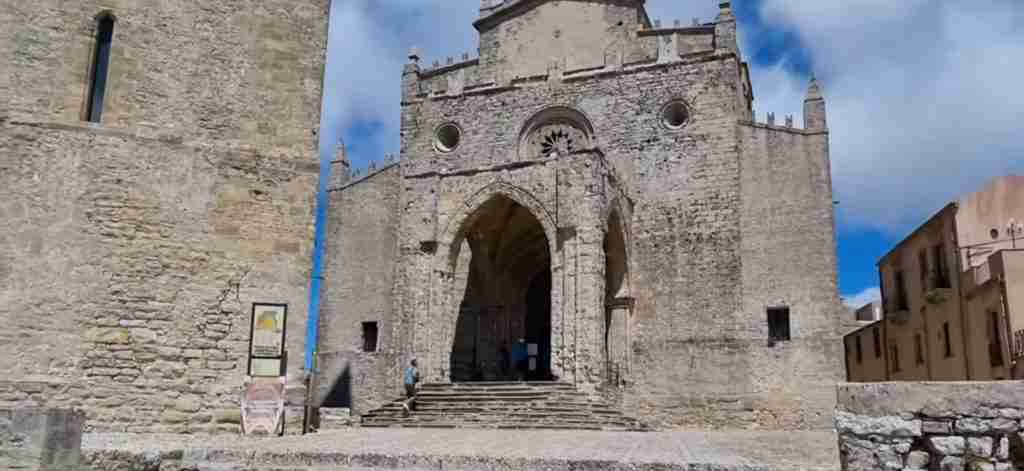
5 days
Palermo 5-Day Highlights Experience
- ✓ Comprehensive Palermo experience
- ✓ Expert local guides included
- ✓ All accommodation included
- ✓ Transportation provided
7 days
Palermo 7-Day Cultural Journey
- ✓ Comprehensive Palermo experience
- ✓ Expert local guides included
- ✓ All accommodation included
- ✓ Transportation provided
10 days
Palermo 10-Day Complete Adventure
- ✓ Comprehensive Palermo experience
- ✓ Expert local guides included
- ✓ All accommodation included
- ✓ Transportation provided
Multi-day tour packages powered by TourRadar. Prices and availability subject to change.
Introduction to Palermo’s Tours and Walking Routes in 2026
Palermo stands as one of Europe’s most walkable historic capitals, where three thousand years of continuous habitation compressed into compact medieval quarters create an urban landscape best experienced on foot. The city’s designation as a UNESCO World Heritage Site in 2015—recognizing eight Arab-Norman monuments within the historic center—established a world-class walking route through golden-mosaicked chapels, austere Norman palaces, and Baroque churches that represent the 12th-century fusion of Western, Islamic, and Byzantine civilizations. Beyond UNESCO monuments, Palermo’s labyrinthine alleys conceal vibrant street markets unchanged for centuries, hidden courtyards adorned with majolica tiles, and neighborhood trattorias where locals gather for lunch at shared tables.
The tour landscape in 2026 offers remarkable diversity: free walking tours led by passionate local guides operate daily from Teatro Massimo, premium group tours combine architectural exploration with street food tastings in historic markets, private guides craft customized itineraries exploring everything from Baroque oratories to contemporary street art, and self-guided routes allow independent travelers to set their own pace through clearly marked heritage trails. Day trip tours extend beyond city limits to Monreale’s cathedral—whose 6,500 square meters of golden mosaics represent the pinnacle of Arab-Norman art—and coastal Cefalù, where a massive Norman cathedral rises above a medieval fishing village framed by dramatic cliffs.
What distinguishes Palermo’s walking experience from other Italian cities is the absence of heavily trafficked tourist corridors separating visitors from authentic urban life. Major monuments like the Palatine Chapel and Palermo Cathedral sit embedded within residential neighborhoods where laundry hangs from wrought-iron balconies and corner bakeries sell sfincione (Sicilian focaccia) to morning commuters. Markets like Ballarò and Capo operate as they have for eight centuries—open-air bazaars where vendors shout prices for swordfish steaks, eggplants pile in purple pyramids, and the scent of grilling meat mixes with sea salt and citrus. Walking tours led by Palermo natives navigate these layers of daily life while explaining how Arab hydraulic engineers designed the city’s medieval water systems, how Norman kings commissioned Byzantine craftsmen to create chapel mosaics, and how Spanish viceroys imposed Baroque facades onto earlier Gothic structures.
The 2026 touring season benefits from recent infrastructure improvements: expanded pedestrian zones around Quattro Canti and Via Maqueda reduce vehicle traffic in the historic center, new multilingual signage marks UNESCO sites and self-guided routes, and restored monuments including portions of the Norman Palace now welcome visitors to previously closed chambers. Tour operators report that English-language tours have doubled in availability compared to five years ago, reflecting Palermo’s rising profile on international itineraries. Free walking tours—a relatively recent phenomenon in Palermo—now operate multiple daily departures with guides trained in art history and archaeology, offering budget-conscious travelers high-quality experiences in exchange for gratuities.
This guide provides comprehensive information for planning your Palermo walking and touring experience in 2026: detailed routes with kilometer distances and time requirements, current pricing for all tour categories from free to private options, booking strategies for popular experiences like the Palatine Chapel, transportation connections to day trip destinations, and practical considerations including best departure times, comfortable footwear recommendations, and seasonal factors affecting tour availability and crowd levels. Whether you have one day or one week in Sicily’s capital, the combination of guided expertise and independent exploration allows you to craft an experience matching your interests and pace.
Arab-Norman UNESCO Heritage Walking Route in Palermo 2026
The Arab-Norman Palermo UNESCO World Heritage designation encompasses nine monuments across Palermo, Monreale, and Cefalù, with eight structures within walking distance in Palermo’s historic center. This self-guided route covers the six most accessible UNESCO sites in central Palermo, spanning approximately 3.1 kilometers and requiring 2-3 hours for walking between monuments, plus 3-4 additional hours for interior visits.
The route begins at San Giovanni degli Eremiti on Via dei Benedettini, recognizable by five red domes revealing Moorish architectural influence. This 12th-century monastery built for Benedictine monks under Norman King Roger II stands surrounded by tranquil gardens planted with jasmine and pomegranate trees. The church’s austere interior contrasts with the elaborate decoration found in later stops on the route. From San Giovanni degli Eremiti, walk north 400 meters (5 minutes) toward Piazza del Parlamento to reach the Norman Palace and Palatine Chapel.
The Palazzo dei Normanni (Norman Palace) represents Palermo’s most significant monument—a royal residence constructed over Punic fortifications in the 9th century, expanded under Norman rule, and modified by Spanish viceroys through the 17th century. The Palatine Chapel (Cappella Palatina) within the palace complex contains the most extensive Byzantine mosaic cycle outside Constantinople: 6,500 square meters of golden tesserae depicting Old and New Testament scenes, created by craftsmen brought from Byzantium under Roger II. The chapel’s wooden ceiling displays Islamic muqarnas (honeycomb vaulting) carved by Arab artisans, while the floor features opus sectile marble inlay in geometric patterns. Advance ticket purchase for the Palatine Chapel is highly recommended for 2026—same-day access cannot be guaranteed, especially March through October.
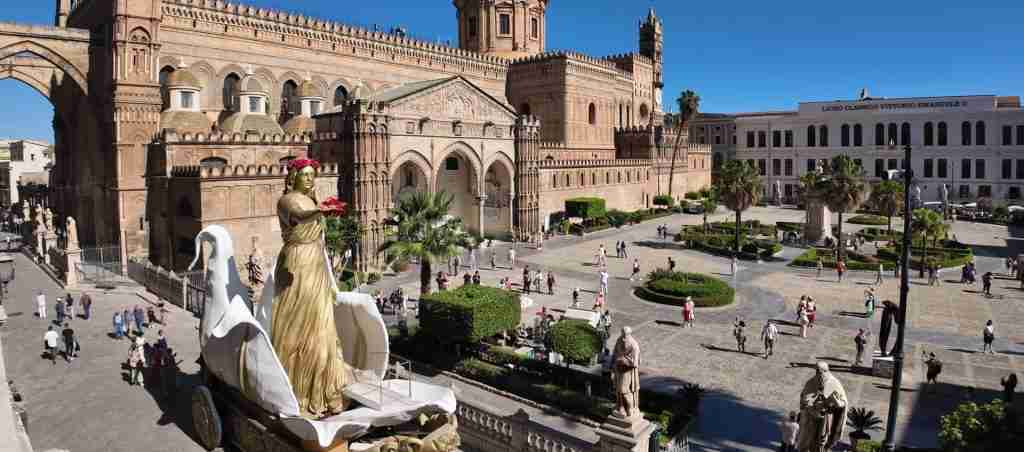
From the Norman Palace, walk east 500 meters (7 minutes) along Corso Vittorio Emanuele to Palermo Cathedral at Corso Vittorio Emanuele 90040. The cathedral’s exterior presents a textbook in architectural evolution: Norman foundations from 1184, Gothic arches, Catalan Gothic portico, Baroque additions, and Neoclassical dome added in the 18th century. An inscription from the Quran remains visible on one interior column—remnant of the mosque that previously occupied this site. The cathedral houses royal tombs including Roger II and Frederick II, the crown of Constance of Aragon, and treasury items. Roof access (separate ticket) provides panoramic views across Palermo to Monte Pellegrino.
Continue east on Corso Vittorio Emanuele 550 meters (8 minutes) to reach Quattro Canti, the octagonal Baroque intersection dividing Palermo’s historic quarters. From Quattro Canti, walk 100 meters south on Via Maqueda to Piazza Bellini, where two UNESCO monuments sit side by side: the Church of Santa Maria dell’Ammiraglio (La Martorana) and the Church of San Cataldo.
La Martorana, built in 1143 by Roger II’s admiral George of Antioch, preserves the finest Byzantine mosaics in Sicily after the Palatine Chapel. The church’s golden mosaics depicting Christ Pantocrator and the Twelve Apostles prompted an Arabic traveler in 1184 to declare it “the most beautiful monument in the world.” Later Baroque modifications added frescoes and stucco decoration that create striking juxtaposition with the medieval mosaics. San Cataldo next door maintains its 12th-century Norman austerity—three red domes crown a simple rectangular plan, and the interior preserves original stone floors and minimal decoration. The contrast between La Martorana’s opulence and San Cataldo’s restraint illustrates the range of Norman architectural expression.
The central UNESCO walking route concludes at Piazza Bellini, though two additional UNESCO monuments—La Zisa Palace and Admiral’s Bridge—lie outside the compact historic center. La Zisa sits 2 kilometers northwest in Piazza Zisa and houses the Museum of Islamic Art within a Norman palace designed with Arab hydraulic engineering for natural cooling. Admiral’s Bridge spans the Oreto River near Piazza Scaffa, 2.5 kilometers southeast of the cathedral—this medieval bridge demonstrates Norman infrastructure engineering.
For visitors with limited time, prioritize the Norman Palace/Palatine Chapel and Piazza Bellini’s two churches—these four monuments contain the most spectacular mosaics and represent the UNESCO designation’s architectural highlights. Dedicated architecture enthusiasts should allocate a full day to visit all six central monuments plus La Zisa, while casual visitors can complete the Norman Palace, Cathedral, and Piazza Bellini churches in a half-day walking tour.
Historic Center Walking Routes for Self-Guided Exploration 2026
Beyond the UNESCO Arab-Norman route, Palermo’s historic center rewards exploration through additional self-guided walking routes that reveal neighborhood markets, Baroque squares, and hidden churches. These routes complement the UNESCO monuments by immersing you in daily Palermitan life.
Teatro Massimo to Quattro Canti via Capo Market Route (2.5 kilometers, 2-3 hours)
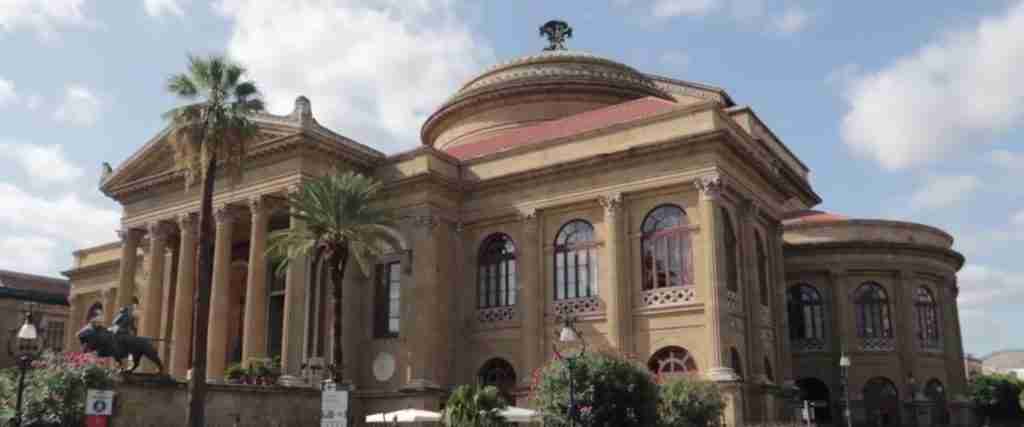
This route begins at Teatro Massimo, Europe’s third-largest opera house and one of Italy’s grandest Neoclassical buildings. Completed in 1897 after 22 years of construction, the theater seats 1,400 and gained international fame as the filming location for the final scene of The Godfather Part III. Guided tours operate daily 9:30 AM-6:00 PM (€12, final entry 5:30 PM) showcasing the ornate auditorium’s golden stucco, red velvet, and crystal chandeliers. The theater’s perfect acoustics result from architect Giovanni Battista Basile’s mathematical calculations of the dome’s proportions.
From Teatro Massimo, walk south on Via Maqueda 300 meters to enter Capo Market, one of Palermo’s three historic outdoor markets. Capo Market sprawls along Via Sant’Agostino and side alleys, operating Monday-Saturday 7:00 AM-2:00 PM with peak activity 9:00 AM-noon. Vendors display swordfish steaks on ice, pile eggplants and tomatoes in colorful pyramids, and grill arancine (stuffed rice balls) and panelle (chickpea fritters) at portable stands. The market atmosphere captures authentic Palermitan daily life—locals haggle over fish prices, elderly women select vegetables for lunch, and the dialect conversations and shouted prices create a sensory immersion in Sicilian market culture unchanged for centuries.
Continue south through the market 400 meters to reach the Church of Sant’Agostino, a 13th-century Augustinian complex with Gothic-Baroque fusion architecture. The church’s rose window and portal exemplify Sicilian Gothic, while 18th-century stucco decoration by Giacomo Serpotta adorns the interior. From Sant’Agostino, walk east 200 meters on Via Maqueda to arrive at Quattro Canti, the Baroque crossroads where Via Maqueda intersects Corso Vittorio Emanuele. Each of the four corner buildings features identical facades with three tiers: fountains representing the four seasons at ground level, statues of four Spanish Habsburg kings in the middle tier, and patron saints of Palermo’s four historic quarters at the top.
Quattro Canti divides Palermo into four mandamenti (quarters): Kalsa to the southeast, Seralcadi to the southwest, Albergaria to the northwest, and Castellammare to the northeast. The intersection’s octagonal shape creates a “Theater of the Sun”—as the sun moves across the sky, each facade receives direct sunlight in sequence throughout the day. Visit at different times to observe this lighting effect. From Quattro Canti, the route can extend 150 meters east to Piazza Pretoria with its controversial 16th-century fountain featuring nude statues (nicknamed “Fountain of Shame” by scandalized churchgoers), or 100 meters south to Piazza Bellini with the UNESCO churches La Martorana and San Cataldo.
Ballarò Market to Norman Palace Route (1.8 kilometers, 2 hours)
Palermo’s oldest and most authentic market, Ballarò sprawls through the Albergaria quarter south of Corso Vittorio Emanuele. Access the market from multiple entry points: Via Ballarò from Quattro Canti heading southwest, or Piazza Carmine at the market’s southern terminus. Ballarò operates Monday-Saturday 7:00 AM-8:00 PM with peak activity 8:00 AM-1:00 PM. Unlike tourist-oriented Vucciria, Ballarò remains genuinely local—90% of customers are Palermo residents shopping for daily meals.
The market’s character differs from Capo: Ballarò specializes in street food alongside produce, with permanent grills preparing stigghiola (grilled lamb intestines), panelle and crocchè (potato croquettes), and quarume (stewed offal). Vendors operate from both permanent shops and portable carts, creating a labyrinthine atmosphere where navigation requires asking locals for directions. The market’s social function extends beyond commerce—elderly men gather at corner bars for morning espresso and card games, women exchange neighborhood gossip while selecting vegetables, and the constant activity creates a village atmosphere within the urban core.
From Ballarò’s Piazza Carmine, walk northwest 500 meters up Via dei Benedettini to reach the Norman Palace and Palatine Chapel. This approach reveals the palace from its western side, where Spanish-era fortifications and medieval towers dominate the facade. The route passes through residential neighborhoods where crumbling palazzi reveal frescoed ceilings through broken shutters, children play football in tiny squares, and corner shrines to neighborhood patron saints receive fresh flowers from local devotees. This 15-minute walk encapsulates Palermo’s layers: ancient markets serving contemporary needs, medieval architecture housing modern families, and sacred and secular spaces coexisting in compact proximity.
Kalsa Quarter Art and Culture Walk (3 kilometers, 2.5 hours)
The Kalsa quarter east of Via Roma represents Palermo’s most atmospheric neighborhood—heavily bombed during World War II, slowly gentrifying, and rich with contemporary art spaces, restored churches, and hidden gardens. The route begins at Piazza Marina, Palermo’s largest square, dominated by Palazzo Chiaramonte (Steri), a 14th-century fortress-palace that served as Spanish Inquisition headquarters. The square’s central garden features enormous Ficus macrophylla trees with aerial roots creating natural sculptures.
From Piazza Marina, walk south 300 meters on Via Alloro to Palazzo Abatellis, housing the Regional Gallery of Sicily. This 15th-century Catalan-Gothic palace contains Sicily’s most important art collection including Antonello da Messina’s Annunciation and Francesco Laurana’s Bust of Eleanor of Aragon. The building itself exemplifies Catalan Gothic civil architecture with its courtyard and external staircase.
Continue east 200 meters to reach the Church of Santa Maria dello Spasimo, a roofless Gothic church converted into a cultural center and jazz venue. The church’s open sky creates a romantic ruin atmosphere—concerts held within these walls benefit from natural acoustics and moonlit ambiance. From Spasimo, walk north 400 meters through narrow Kalsa alleys to reach the Church of Santa Maria della Catena, a Renaissance jewel at the old city gate. The church’s elegant portico and three-nave interior demonstrate the transition from Gothic to Renaissance aesthetics in early 16th-century Palermo.
The Kalsa walk concludes at the Botanical Garden (Orto Botanico) 300 meters southeast of Santa Maria della Catena. Established in 1789, the garden contains rare tropical species, massive banyan trees, and Neoclassical greenhouses. The garden provides respite from dense urban exploration and connects to Villa Giulia park along the waterfront.
Waterfront and New City Walking Route (4 kilometers, 2.5 hours)
This route explores Palermo beyond the medieval core, following the waterfront from the Kalsa to modern neighborhoods. Begin at Piazza Marina and walk east to Foro Italico, Palermo’s waterfront promenade. Recent pedestrianization projects transformed this area into a linear park where locals jog, families picnic on weekends, and teenagers gather at sunset. The promenade offers views across the harbor to Monte Pellegrino.
From Foro Italico, walk west along the waterfront 1.5 kilometers to reach the modern harbor area with cruise ship terminals and ferry docks. Continue west past the harbor to reach the Liberty-style Palazzina Cinese and its surrounding park—a Neoclassical villa built by King Ferdinand IV in Chinese-inspired style, now housing a museum of decorative arts. The surrounding English-style park provides green space rare in central Palermo.
This waterfront route works particularly well at sunset when golden light illuminates Monte Pellegrino and fishing boats return to harbor. The route suits travelers seeking contemporary Palermo beyond baroque churches and medieval markets, revealing how the city relates to the sea and how modern Palermo residents use public space for recreation.
Guided Walking Tour Options and Prices in Palermo 2026
Guided walking tours in Palermo range from tip-based free tours to premium private experiences, each offering distinct advantages depending on budget, group size, and desired depth of exploration. All prices reflect current 2026 rates verified through tour operator websites and booking platforms.
Free Walking Tours (Tip-Based, €10-20 Typical)
Free walking tours operate daily from Teatro Massimo with morning departures at 9:00 AM and 10:00 AM, typically lasting 2-2.5 hours and covering approximately 2 kilometers. These tours follow a pay-what-you-wish model—no upfront payment, with gratuities collected at tour conclusion. Typical tips range €10-20 per person, with €50 occasionally given for exceptional guides. Multiple companies operate free tours including GuruWalk and SANDEMANs partnerships with local operators like Agorà Tours.
Free tours typically cover Teatro Massimo exterior, Quattro Canti, Piazza Pretoria, quick market visit (usually Ballarò), Palermo Cathedral exterior, and occasional stops at lesser-known churches. Guides focus on general Palermo history, anti-Mafia movement stories, and practical recommendations for restaurants and street food. Group sizes vary 5-25 participants—larger groups reduce individual interaction but provide social atmosphere appealing to solo travelers. No advance booking required for most free tours, though online registration ensures meeting point details and guide contact information.
Free tours excel as orientation on your first day in Palermo, providing neighborhood layout, local customs explanation, and insider recommendations for your remaining stay. The informal, story-driven approach suits travelers seeking authentic local perspectives rather than academic art history lectures. English-language tours operate daily, while Italian, Spanish, and occasionally German tours run on varying schedules.
Group Walking Tours with Street Food (€35 Per Person, 3 Hours)
Group walking tours combining history and street food cost €35 per person for three-hour experiences covering approximately 5 kilometers. These tours include 4-6 street food tastings at market stalls and historic shops, making the price effectively €20 for guiding plus €15 for food. Check the tour operator’s official website for current rates as pricing may vary seasonally.
Popular group tour operators include Palermo Walking Tour (founded by photographer and licensed guide Domenico Aronica, recommended in Rick Steves guidebooks) and various operators on platforms like Viator and GetYourGuide. Tours typically start 9:00 AM or 9:30 AM from central meeting points like Teatro Massimo or Quattro Canti. Maximum group sizes range 12-18 participants—small enough for guide interaction but large enough to create market atmosphere when food tastings begin.
Typical itineraries visit Norman Palace/Palatine Chapel exterior (tour concludes before palace opening time, avoiding entry fees and wait times), Palermo Cathedral, Quattro Canti, Ballarò Market for street food tastings including panelle, arancine, stigghiola, cannoli, and granita. Guides explain Arab-Norman architecture while walking between monuments, then shift to food culture and market traditions during tastings. Street food tours provide lunch-level food quantity—participants generally skip formal lunch after completing the tour.
These tours balance efficiency with comprehensiveness: three hours allows substantive monument explanation without museum fatigue, while included food tastings provide authentic culinary experience without restaurant expense. The €35 price point offers excellent value considering guide expertise, curated food stops local visitors would struggle to identify independently, and the combination of cultural education with sensory immersion.
UNESCO Heritage Focused Tours (€40-60 Per Person, 3-4 Hours)
Specialized UNESCO Arab-Norman heritage tours cost €40-60 per person depending on inclusions, duration, and whether Palatine Chapel entry is included. Tours run 3-4 hours covering the six central UNESCO monuments or extended versions including La Zisa Palace. Some tours include Palatine Chapel entry tickets (€12-15 value) in the total price, while others require participants to purchase monument tickets separately.
UNESCO tours target architecture and history enthusiasts seeking deeper exploration than general walking tours provide. Guides typically hold art history or archaeology degrees and deliver detailed explanations of Byzantine mosaic techniques, Islamic architectural influence on Norman design, and the political context of 12th-century Sicily’s multicultural society. Group sizes stay smaller (6-12 participants) than general tours, allowing more question-and-answer interaction.
Premium UNESCO tours offer exclusive or early access to certain monuments, allowing photography in optimal light conditions and avoiding peak tourist crowds. Some operators arrange priority entry to the Palatine Chapel, bypassing general admission queues during summer months when wait times reach 30-45 minutes. The €50-60 price range for these enhanced experiences reflects guide specialization and access benefits.
When selecting UNESCO tours, verify whether monument entry tickets are included in the stated price—some €40 tours require €25-30 additional spending on entrance fees, while €60 all-inclusive tours provide better overall value. Read tour descriptions carefully regarding interior visits versus exterior-only viewing, as some tours show UNESCO monuments from outside while others include guided interior exploration.
Private Walking Tours (€200 for 3 Hours, Fully Customizable)
Private walking tours cost €200 for three hours with a dedicated licensed guide, accommodating 1-10 participants at the same rate (larger groups require advance notice and may incur surcharges). Private tours offer complete itinerary customization—you determine monuments visited, time spent at each location, walking pace, and special interests emphasized.
Private guides meet you at your hotel or preferred starting point, eliminating navigation to group meeting locations. Three-hour private tours typically cover either intensive UNESCO monument exploration with detailed historical commentary, or broader historic center coverage touching markets, churches, squares, and neighborhoods according to your interests. Extended private tours (5-7 hours, €300-400) allow comprehensive coverage including both UNESCO monuments and market experiences, or day trips to Monreale and Cefalù with private transportation.
Private tours excel for specific interests that group tours cannot accommodate: photography-focused itineraries with optimal shooting locations and lighting times, family tours with child-friendly pacing and storytelling, accessibility-adapted routes for mobility limitations, or specialized themes like Baroque art, contemporary street art, or filming locations (Palermo appears in numerous films including The Godfather Part III and Cinema Paradiso).
When booking private tours, clarify what services the €200 base rate includes: guide time only, or also monument entry tickets, transportation, and refreshments. Most private tours include guide expertise only—you pay monument admissions and any food/drink separately. For private day trips beyond Palermo, transportation is typically arranged separately or quoted as additional cost beyond the guiding fee.
Specialized Thematic Tours (€45-75 Per Person, 2.5-4 Hours)
Specialized thematic tours target specific aspects of Palermo culture: street food tours focusing exclusively on culinary traditions (€45-55, 3 hours), photography tours visiting optimal shooting locations at ideal lighting times (€60, 3 hours), anti-Mafia tours explaining organized crime’s influence and civic resistance movement (€50, 3 hours), Baroque art tours focusing on oratory decoration by Giacomo Serpotta (€55, 2.5 hours), and Jewish Palermo tours tracing the medieval Jewish quarter’s history (€65, 3 hours).
These specialized experiences suit return visitors who completed general orientation tours on previous trips, or dedicated enthusiasts with deep interest in specific topics. Photography tours, for example, visit lesser-known locations like rooftop terraces, hidden courtyards, and atmospheric alleyways rather than repeating major monument circuits. Street food tours dedicated exclusively to culinary culture include 8-10 tastings at carefully selected vendors, teaching participants to distinguish authentic from tourist-oriented products.
Anti-Mafia tours represent particularly powerful experiences—guides explain the Cosa Nostra’s historical control of Palermo, the assassination of judges Giovanni Falcone and Paolo Borsellino in 1992, and the grassroots anti-racket movement where shopkeepers refuse extortion payments (pizzo) and display “Addiopizzo” stickers signaling refusal to cooperate with organized crime. These tours visit sites significant to anti-Mafia resistance including memorial locations and businesses participating in the legal economy campaign.
Day Trip Tours from Palermo in 2026
Day trip tours from Palermo extend exploration to Monreale Cathedral, coastal Cefalù, medieval Castelbuono, and archaeological sites at Segesta and Selinunte. Tours range from half-day excursions to full-day combinations, with prices varying by destinations included, group size, and transportation type.
Monreale and Cefalù Combined Tours (Half-Day and Full-Day Options)
The most popular day trip from Palermo combines Monreale Cathedral (8 kilometers southwest) and Cefalù (70 kilometers east), offered as half-day tours (5-6 hours, €50-70 per person) or full-day versions (8-9 hours, €80-120 per person). Half-day tours allocate approximately one hour at Monreale Cathedral followed by 1.5 hours in Cefalù with minimal beach time, while full-day versions provide 2-3 hours in Cefalù allowing beach relaxation and lunch at waterfront restaurants.
Monreale Cathedral represents the pinnacle of Arab-Norman art—its interior contains 6,500 square meters of golden Byzantine mosaics depicting Old and New Testament scenes in extraordinary detail. William II commissioned the cathedral in 1174, employing craftsmen from Byzantium to create mosaic cycles that surpass even the Palatine Chapel in scale and preservation. The adjacent cloister features 228 twin columns, each uniquely carved with biblical scenes, geometric patterns, and floral motifs. Cathedral admission is free, while cloister entry costs €6 and rooftop access €3.
Cefalù captivates with its dramatic setting—a medieval town pressed between mountains and Mediterranean, dominated by La Rocca cliff (270 meters) and a massive Norman cathedral facing the sea. The cathedral’s apse mosaic of Christ Pantocrator ranks among Sicily’s finest Byzantine works, created by the same workshops that decorated Palermo’s royal chapels. Beyond the cathedral, Cefalù offers sandy beaches, winding medieval streets with artisan shops, and waterfront restaurants serving fresh seafood. Full-day tours typically allow 2-3 hours free time for beach visits, shopping, and lunch at personal expense.
Tour prices for Monreale-Cefalù combinations vary by format: group tours with 15-25 participants cost €50-70 for half-day and €80-100 for full-day, small group tours (8-12 participants) range €70-90 half-day and €100-120 full-day, and private tours accommodating 1-8 participants cost €200-400 depending on duration and whether a dedicated guide accompanies you at each site (versus driver-only with free exploration time). Most tours include air-conditioned transportation, bottled water, and hotel pickup/dropoff, but monument entry fees and meals are typically excluded from base prices.
Monreale, Cefalù, and Castelbuono Three-Destination Tours (Full-Day, €100-150)
Extended full-day tours add medieval Castelbuono to the Monreale-Cefalù itinerary, creating 9-10 hour experiences priced €100-150 per person. Castelbuono sits in the Madonie Mountains 30 kilometers south of Cefalù—a medieval village centered on the 14th-century Ventimiglia Castle, surrounded by hazelnut groves and home to renowned pastry shops including Fiasconaro (famous for panettone production).
Three-destination tours typically follow this sequence: morning departure 8:00 AM from Palermo hotels, one hour at Monreale Cathedral (9:00-10:00 AM), drive to Castelbuono arriving 11:00 AM for castle visit and pastry tasting, continue to Cefalù arriving 1:00 PM for cathedral visit and 2-3 hours free time including lunch and beach, return to Palermo 5:00-6:00 PM. This ambitious itinerary suits travelers with limited Sicily time who want maximum destination coverage, though the pace allows only surface exploration of each location.
When evaluating three-destination tours, check whether the tour is truly “guided” or functions as “driver-only with free time at each stop.” Some €100-120 tours provide English-speaking drivers who share general information during transit but leave you to explore monuments independently, while €130-150 tours include a dedicated guide who accompanies you inside cathedrals and provides historical commentary. For independent travelers comfortable with self-guided exploration, driver-only tours offer excellent value by solving transportation logistics while maintaining exploration freedom. Travelers preferring structured guidance should verify guide accompaniment before booking.
Segesta and Erice Archaeological and Medieval Tour (Full-Day, €90-130)
Western Sicily day trips from Palermo visit the Greek temple at Segesta and hilltop medieval town of Erice, priced €90-130 per person for 9-10 hour full-day tours. Segesta’s Doric temple (430 BC) ranks among the Mediterranean’s best-preserved Greek temples, sitting in complete isolation on a hillside 75 kilometers west of Palermo. The temple’s 36 columns remain standing, and the absence of surrounding modern development creates a timeless atmosphere. A separate ancient theater 1.5 kilometers uphill hosts summer performances against mountain and sea views.
Erice perches at 751 meters atop Monte San Giuliano, 15 kilometers from Segesta. This perfectly preserved medieval town features Norman castle ruins, maze-like cobblestone streets, artisan ceramics shops, and Maria Grammatico pastry shop (made famous by Mary Taylor Simeti’s book “Bitter Almonds”). On clear days, Erice’s ramparts provide views extending to the Egadi Islands and African coast.
Segesta-Erice tours depart Palermo 8:00 AM, spend 1.5 hours at Segesta (temple and optional theater), drive to Erice for 2-3 hours free time including lunch, and return to Palermo 6:00-7:00 PM. This route suits travelers interested in Greek archaeology and medieval architecture more than beaches and cathedrals. Transportation covers longer distances than Monreale-Cefalù tours, justifying similar pricing despite visiting only two locations.
Agrigento Valley of the Temples Day Trip (Full-Day, €120-180)
The Valley of the Temples at Agrigento—Sicily’s most famous archaeological site and a UNESCO World Heritage site—sits 130 kilometers south of Palermo, requiring full-day tours of 10-12 hours priced €120-180 per person. The site contains eight Greek temples from the 5th century BC including the exceptionally preserved Temple of Concordia, Temple of Juno, and partially standing Temple of Heracles. The archaeological park extends 1,300 hectares along a ridge overlooking the Mediterranean.
Valley of the Temples tours typically depart Palermo 7:30 AM, arrive Agrigento 9:30 AM for 3-4 hours guided exploration of the archaeological park, break for lunch in Agrigento town or nearby fishing village (lunch not included), and return to Palermo 7:00-8:00 PM. The long travel time (2 hours each way) limits time at destination, making this tour most suitable for travelers who cannot visit Agrigento independently or who prefer structured group experiences over independent travel.
Some premium Agrigento tours combine the Valley of the Temples with Villa Romana del Casale at Piazza Armerina (Roman villa with extensive floor mosaics), creating intensive archaeological days priced €180-220. These extended tours require 12-14 hours and appeal specifically to archaeology enthusiasts willing to endure long coach rides for comprehensive ancient site coverage.
Boat Tours and Coastal Excursions (Half-Day, €60-90)
Palermo’s coastal position enables boat tours exploring nearby coves, marine reserves, and fishing villages. Half-day boat tours (4-5 hours, €60-90 per person) depart from Palermo harbor visiting Mondello Beach, Capo Gallo nature reserve, and occasionally Ustica Island (requiring full-day extension). Tours include swimming stops in turquoise coves, snorkeling equipment, and often light refreshments or aperitivo.
Boat tours operate April-October with peak season June-September. Morning departures (9:00 AM) provide calmer seas and better swimming conditions than afternoon tours. These tours suit beach-focused travelers seeking coastal scenery and swimming opportunities rather than cultural monuments and historical sites. The boat tour experience complements monument-heavy itineraries by providing active outdoor contrast to church and palace interiors.
How to Book Tours in Palermo for 2026
Booking strategies for Palermo tours in 2026 balance advance planning to secure popular experiences with flexibility for weather-dependent activities and spontaneous discoveries. Different tour categories require different booking approaches.
Palatine Chapel and Norman Palace Tour Reservations
The Palatine Chapel enforces strict capacity limits requiring timed entry slots—advance reservation 48-72 hours minimum ensures access during peak season (March-October). Same-day tickets sell out regularly, especially May-September when cruise ship groups and tour buses arrive simultaneously. Book directly through the Norman Palace official website or reputable tour platforms like GetYourGuide and Viator that guarantee entry time.
If you want guided exploration of the Palatine Chapel rather than independent visit, book UNESCO heritage tours or private tours that include chapel admission. Verify that tour price includes chapel entry ticket (€12-15 value) rather than requiring separate purchase. Tours with pre-arranged chapel access bypass general admission queues, saving 20-45 minutes during busy periods.
The Norman Palace’s other chambers (Royal Apartments, Sala di Ruggero) maintain more flexible access, though weekend and holiday visits still benefit from advance tickets. Cathedral admission is free for general access, with paid tickets (€3-5) for treasury, crypt, and roof—these rarely require advance booking except during major religious festivals when the cathedral may close to tourists.
Free Walking Tour Registration
Free walking tours accept walk-up participants, though online registration (via GuruWalk, SANDEMANs, or operator websites) provides meeting point details, guide contact information, and booking confirmation. Register 1-24 hours in advance to receive email confirmation with precise meeting location and guide description. No payment required at registration—gratuities collected at tour conclusion.
Popular free tours occasionally reach capacity during peak summer weeks (July-August), in which case registered participants receive priority over walk-ups. If registration is full, arrive at meeting point 15 minutes early as guides often accommodate additional participants if group size permits. Multiple companies operate overlapping free tour schedules, so if one tour fills, alternatives typically depart within 30-60 minutes.
Group Walking and Food Tour Bookings
Group walking tours with street food (€35 range) benefit from 24-48 hour advance booking to secure preferred departure times and ensure tour operates (some require minimum participants). Book through operator websites for best prices, or comparison platforms like Viator, GetYourGuide, and TripAdvisor that sometimes offer early booking discounts or bundle deals.
Read cancellation policies carefully—most tours allow free cancellation 24-48 hours before departure, but non-refundable discount rates may restrict cancellation to 72+ hours advance. Given Palermo’s generally reliable weather (250+ sunny days annually), standard cancellation policies provide adequate flexibility without requiring premium flexible-rate pricing.
For popular tour operators recommended in guidebooks (Rick Steves, Lonely Planet), book 5-7 days ahead during peak season as these tours fill quickly from guidebook readers following identical itineraries. Lesser-known operators offer equivalent quality with better last-minute availability.
Private Tour Arrangements
Private tours require 3-7 days advance booking to ensure guide availability and allow itinerary customization. Contact operators directly via email or websites like Palermo Wonders, Palermo Walking Tour, or general platforms offering private options. Provide your preferred date, group size, special interests, mobility considerations, and requested tour length.
Expect 1-2 email exchanges to finalize itinerary details—good private guides ask questions about your interests, previous Sicily knowledge, and specific goals to craft meaningful experiences rather than delivering generic scripts. Confirm exactly what the quoted price includes: guide time only, or also monument entries, transportation, meals. Most private tours quote guide services only with additional expenses (admissions, lunch, taxi between distant sites) paid directly during tour.
Private guides typically request 30-50% deposit via bank transfer or PayPal with remainder paid cash at tour conclusion. Verify cancellation terms—reputable operators allow full refund for cancellations 72+ hours in advance, partial refund 24-72 hours, no refund for same-day cancellations (excepting documented emergencies).
Day Trip Tour Bookings
Day trips to Monreale-Cefalù benefit from advance booking to secure preferred departure dates and avoid sold-out tours during July-August peak season. Book 3-7 days ahead for summer travel, 1-3 days ahead for shoulder seasons (April-May, September-October). Tour operators confirm meeting locations and pickup times 24 hours before departure via email or SMS.
When comparing day trip tours on booking platforms, verify pickup/dropoff included in price versus meeting at central departure point. Hotel pickup adds convenience but sometimes increases tour price €5-10 per person compared to central meeting point versions of identical tours. For travelers staying in walkable historic center, meeting point tours offer better value; for accommodations in peripheral areas (Mondello, outskirts), pickup service justifies premium.
Day trip cancellation policies vary more than city walking tours—some allow free cancellation 24 hours ahead, others require 48-72 hours. Weather-dependent boat tours typically offer full refund or rescheduling for cancellations due to dangerous sea conditions, even on departure morning. Check specific policies before booking non-refundable discount rates.
Best Time to Visit Palermo for Tours and Walking in 2026
Palermo’s Mediterranean climate provides year-round touring feasibility, with distinct seasonal advantages depending on crowd tolerance, temperature preferences, and activity priorities. The 2026 calendar influences optimal visit timing based on Easter dates, summer peak season, and shoulder season sweet spots.
Peak Season Considerations: June-September 2026
Summer months June-September deliver guaranteed sunshine and full tour schedule operation but bring maximum crowds and intense heat. July-August temperatures reach 30-35°C (86-95°F) with limited afternoon shade in exposed squares like Quattro Canti and Piazza Pretoria. Heat intensity makes midday walking uncomfortable—successful summer touring requires early morning starts (8:00-11:00 AM) and late afternoon resumption (5:00-8:00 PM) with siesta breaks during peak heat.
Cruise ships dock Palermo regularly June-September, releasing 2,000-5,000 passengers simultaneously onto shore excursions. Palatine Chapel wait times extend 45-60 minutes without advance tickets when cruise groups arrive. Popular monuments like Monreale Cathedral experience significant crowding 10:00 AM-2:00 PM during cruise days. Check cruise ship schedules (available online) and visit major sites early morning before group tours arrive, or late afternoon after groups return to ships.
Summer advantages include extended monument opening hours (many sites stay open until 7:00-8:00 PM versus 5:00-6:00 PM off-season), full restaurant and shop operation (some businesses close August for owner vacations), and maximum tour frequency with English-language departures multiple times daily. Beach-focused activities at Mondello and boat tours operate at peak capacity with reliable daily departures.
Shoulder Seasons: April-May and September-October 2026
Spring (April-May) and autumn (September-October) provide ideal touring conditions: comfortable temperatures 18-25°C (64-77°F), reduced crowds at monuments, and lower accommodation prices than summer peak. These months offer Palermo’s best weather-comfort-crowds balance.
Easter 2026 falls April 20, creating a high-demand week (April 17-26) when Italians and Europeans travel during school holidays. Easter week brings fuller churches during religious services and increased restaurant reservations required for Holy Thursday-Easter Monday. Book accommodations and tours farther in advance for Easter period compared to regular April dates.
May represents optimal spring visiting: temperatures warm enough for beach visits at Mondello, wildflowers blooming in countryside day trip destinations like Segesta, and monument hours extending but crowds not yet reaching summer levels. September similarly provides summer warmth (average 26°C/79°F) with Mediterranean water temperatures at annual peak (24-25°C/75-77°F), making it ideal for tours combining cultural sites and beach time.
October brings occasional rain but remains largely pleasant—expect 6-8 rainy days across the month with showers typically brief and afternoon-focused. Pack light rain jacket but don’t let October precipitation fear deter visits. Reduced tourist numbers create intimate monument experiences, restaurant reservations become unnecessary except weekends, and locals return from August vacations making neighborhoods feel more authentically inhabited.
Winter Season: November-March 2026
Winter touring (November-March) suits travelers prioritizing cultural immersion over guaranteed sunshine, offering lowest prices and most authentic local atmosphere. Temperatures average 12-16°C (54-61°F) with occasional 8-10°C (46-50°F) days requiring layered clothing. Rain increases to 8-12 days monthly December-February, though precipitation rarely lasts full days—touring remains feasible with waterproof footwear and compact umbrella.
Winter advantages include minimal crowds at all monuments (Palatine Chapel often accessible without advance booking except weekends), significantly lower accommodation rates (40-60% below summer prices), and opportunity to experience Palermo’s authentic daily rhythm without tourist season distortion. Christmas markets December 1-January 6 add festive atmosphere around Politeama Theater and city center, while January-February citrus harvest brings fresh blood oranges and mandarins to markets.
Some tour operators reduce winter schedules—free walking tours may operate once daily versus 2-3 summer departures, and day trip tours to Cefalù and Segesta require minimum participants so occasional cancellations occur. Verify tour operation when booking November-March. Beach-focused boat tours cease October-March, though coastal hiking and nature-focused excursions continue year-round.
Local Events and Festivals Affecting 2026 Touring
Palermo’s festival calendar creates both opportunities for cultural immersion and challenges for touring logistics. Major events include:
July 10-15, 2026 – Festino di Santa Rosalia: Palermo’s largest festival honoring the patron saint features street processions, concerts, fireworks, and city-wide celebrations. The July 14-15 peak brings massive crowds, street closures affecting walking routes, and hotel price surges. Book accommodations 2-3 months ahead for Festino dates. Cultural tours incorporating festival events provide unique experiences, though standard sightseeing becomes complicated by closures and crowds.
Easter Week April 17-20, 2026: Holy Week processions include elaborate religious ceremonies at major churches. Good Friday (April 18) features traditional processions through historic quarters. Churches close to tourists during major services, affecting UNESCO route touring. Easter Monday (April 21) is Italian public holiday with business closures and increased domestic tourism.
November 1-2, 2026 – All Saints/All Souls Days: Traditional cemetery visits and special pastries (frutta martorana) sold at pastry shops create local cultural immersion opportunities. Some monuments maintain reduced hours November 1.
Practical Information for Tours and Walking in Palermo 2026
Successful Palermo touring requires attention to practical details including comfortable footwear, hydration strategies, safety considerations, and monument access logistics. These operational factors significantly impact touring enjoyment.
Footwear and Physical Requirements
Palermo’s historic center features uneven cobblestone streets, worn marble steps in churches, and occasional broken pavement requiring sturdy, comfortable walking shoes with good ankle support and non-slip soles. Avoid sandals without back straps, high heels, or brand-new unworn shoes. Standard walking tours cover 3-6 kilometers over 2-4 hours—moderate fitness suffices for most routes, though prolonged standing inside monuments (Palatine Chapel visits average 45 minutes standing while viewing mosaics) challenges those with leg or back issues.
Church visits require covered shoulders and knees—keep lightweight scarf or shawl accessible for quick compliance at entry points. Some churches (notably Palatine Chapel) enforce dress codes strictly and refuse entry for shorts, short skirts, or bare shoulders regardless of temperature. Locals navigate dress codes with loose long pants or maxi skirts paired with sleeveless tops plus scarf/cardigan for church coverage.
Hydration and Heat Management
Summer touring demands proactive hydration—carry reusable water bottle and refill at public fountains marked “acqua potabile” (drinking water) throughout the historic center. Fountains appear at Quattro Canti, Piazza Bellini, Norman Palace courtyard, and major squares. Avoid walking in exposed sun 12:00-3:00 PM July-August when heat peaks—schedule church interiors, museum visits, or lunch during this period.
Watch for heat exhaustion symptoms during summer walking tours: dizziness, nausea, excessive fatigue. Free walking tours and group tours rarely provide water—guides assume participants bring personal supplies. If heat discomfort develops, inform guide immediately rather than pushing through distress. Most guides carry basic first aid supplies and know nearby pharmacies.
Street Food Safety and Dietary Considerations
Palermo’s street food traditions provide authentic culinary experiences but require awareness of food safety and dietary restrictions. Street food tours include tastings at multiple vendors—communicate allergies and dietary restrictions (vegetarian, vegan, gluten-free, kosher, halal) to guides before tour begins. Many traditional Palermo street foods contain meat or seafood, limiting vegan options.
Judge street food vendor hygiene by local customer volume—stalls with constant lines of Palermo residents buying lunch demonstrate food safety through rapid turnover and community trust. Avoid vendors with minimal customers or exposed food sitting unrefrigerated for extended periods. Arancine, panelle, and sfincione are typically safe choices as they’re fried immediately before serving. Raw seafood street offerings require more caution.
Cash, Payment, and Tipping
Bring cash (euros) for street food, small churches charging €1-3 admission, public restroom fees (€0.50-1), and tour gratuities. Many street vendors and small monuments accept cash only—ATMs appear frequently in historic center but relying solely on cards creates payment challenges. Tour operators accept credit cards for advance online bookings, though private guides may prefer cash payment for balance at tour conclusion.
Tipping norms: tip-based free walking tours typically receive €10-20 per person, exceptional guides €30-50; group tours with fixed pricing don’t require tips though €5-10 per person for excellent guides is appreciated; private tours don’t require gratuity beyond agreed fee though €20-30 cash bonus for exceptional service shows appreciation. Restaurant bills include service charge (coperto) so additional tipping is optional—round up to next €5 or add 5-10% for exceptional service.
Safety and Navigation
Palermo ranks as moderately safe for tourists with standard urban precautions sufficient: keep valuables secured in front pockets or cross-body bags, maintain awareness in crowded markets where pickpocketing occasionally occurs, and avoid displaying expensive jewelry or electronics. Evening walking remains safe in well-lit tourist areas (Quattro Canti, Via Maqueda, Teatro Massimo vicinity) though some peripheral neighborhoods become poorly lit after dark.
Historic center streets follow medieval layouts with irregular patterns confusing first-time visitors. Download offline maps (Google Maps, Maps.me) before arrival as cellular data may be limited. Key orientation points: Quattro Canti marks the center where Via Maqueda crosses Corso Vittorio Emanuele; Teatro Massimo anchors the northern edge; the waterfront (Foro Italico) defines the eastern boundary; Norman Palace sits in the western elevated zone. Master these cardinal points and navigation becomes manageable.
Restroom Access
Public restrooms appear infrequently in Palermo’s historic center—major squares and monuments lack facilities. Plan restroom access at bars/cafes (purchase espresso or water to use facilities politely), inside monuments that charge admission (Palatine Chapel, Norman Palace apartments, Cathedral treasury), or at restaurants during lunch breaks. Some outdoor markets have paid public toilets (€0.50-1) though cleanliness varies. Carrying tissues/hand sanitizer proves wise as soap and paper supplies sometimes run low in public facilities.
Photography Guidelines and Restrictions
Photography policies vary by monument: Palatine Chapel prohibits flash photography but permits non-flash photos with smartphones and cameras; Palermo Cathedral allows general photography except during religious services; most churches permit photography without flash though some charge €1-3 photography fees. Baroque oratories with Serpotta stucco work often prohibit photography to protect delicate sculptures from cumulative light exposure. Ask permission or check posted signs before photographing church interiors.
Markets welcome photography of general scenes though vendors sometimes object to close-up portraits—ask permission with “Posso fare una foto?” before photographing individual vendors. Some food tour guides arrange photos with friendly vendors who expect tour groups. Street photography of monuments, architecture, and public squares is unrestricted.
Language Considerations
English proficiency varies in Palermo: tour guides, hotel staff, and restaurants in tourist zones speak functional English; neighborhood trattorias, market vendors, and bus drivers often speak Italian/Sicilian dialect only. Basic Italian phrases improve interactions and demonstrate respect for local culture. Free walking tour guides typically offer English, Italian, Spanish, and occasionally German or French tours. Private guides can be requested in specific languages with advance notice.
Menu Italian helps at neighborhood restaurants: antipasti (appetizers), primi (pasta/risotto courses), secondi (meat/fish main courses), contorni (vegetable sides), dolci (desserts). Market vendors appreciate attempts at Italian numbers for price negotiation. Download translation apps (Google Translate) with offline Italian for emergency communication needs.
Combining Tours and Self-Guided Walking in 2026
Optimal Palermo exploration balances guided tours providing expert context with independent walking allowing personal discovery pace and spontaneous neighborhood encounters. Strategic combinations maximize both depth and flexibility.
Recommended 2-3 Day Palermo Touring Strategy
Day 1 – Guided Orientation: Begin with morning free walking tour (9:00-11:30 AM) providing historic center overview, local recommendations, and neighborhood layout familiarity. Use afternoon for self-guided UNESCO route focusing on Norman Palace/Palatine Chapel (advance tickets essential) and Palermo Cathedral. Conclude with evening passeggiata (traditional stroll) along Via Maqueda observing local social customs.
Day 2 – Specialized Tour Plus Independent Exploration: Morning street food tour (9:00 AM-12:00 PM) or UNESCO heritage tour with art historian guide provides specialized knowledge and insider access. Afternoon self-guided exploration in Kalsa quarter visiting churches, galleries, and Botanical Garden at personal pace. Evening free for restaurant dinner and exploring nightlife in Vucciria or Piazza Marina.
Day 3 – Day Trip: Full-day tour to Monreale and Cefalù (8:00 AM-6:00 PM) extends beyond Palermo while maintaining guided structure for unfamiliar destinations requiring transportation logistics. Alternatively, dedicate Day 3 to self-guided neighborhood immersion: morning at Ballarò Market observing vendors and daily life, afternoon exploring peripheral UNESCO sites (La Zisa, Admiral’s Bridge) plus contemporary neighborhoods locals frequent.
This progression—from guided orientation establishing knowledge foundation, through specialized tours deepening specific interests, to confident independent exploration—creates comprehensive Palermo understanding while maintaining energy balance between structured group experiences and leisurely personal discovery.
Solo Traveler Strategies
Solo travelers benefit particularly from free walking tours and group tours providing instant social connections with fellow travelers while exploring Palermo. Free tours attract predominantly solo travelers and couples, creating natural conversation opportunities during walking breaks and continuing to shared meals after tours conclude. Group street food tours similarly facilitate social interaction through shared tasting experiences and guide-facilitated introductions.
Solo travelers confident in independent exploration can bypass all guided tours, using detailed self-guided routes and monument audio guides for historical context. This approach maximizes schedule flexibility and personal pace control, though lacks social dimension and insider recommendations guided tours provide. Compromise strategy: book single guided tour (free walking tour or street food tour) on arrival day for orientation and social connection, then pursue self-guided exploration armed with guide recommendations for subsequent days.
Solo dining in Palermo presents no social awkwardness—counter seating at street food stalls, communal tables at market trattorias, and casual osteria atmospheres welcome individual diners. Book private tours when seeking dedicated attention and customized pacing impossible in group settings.
Family Touring with Children
Families with children 6-12 find standard walking tours challenging due to length (2-4 hours sustained walking), historical content complexity (Byzantine mosaic symbolism doesn’t engage most elementary-age children), and group pacing (tours maintain steady movement incompatible with child energy fluctuations). Private tours solve these challenges through customizable pacing, child-friendly storytelling, and strategic gelato/play breaks maintaining engagement.
Family-adapted Palermo touring emphasizes markets, interactive elements, and outdoor spaces over church interiors: Ballarò Market exploration identifying produce and watching vendors creates sensory engagement; Mondello Beach combines cultural touring with swimming/sandcastle time; Botanical Garden provides running space after cathedral visits; street food tastings (arancine, cannoli) turn culinary education into delicious game. Self-guided touring with families allows spontaneous ice cream breaks, playground stops, and shortened monument visits when child attention wanes.
For families committed to guided experiences, seek tour operators specifically offering family tours with child-focused storytelling, treasure hunt elements, and appropriate pacing. Some operators provide family private tours at €250-300 (versus €200 adult-focused rate) including specialized content preparation for children.
Accessibility Considerations
Palermo’s medieval street layout creates accessibility challenges: cobblestones, narrow sidewalks, stairs into churches, and limited wheelchair access at monuments. Norman Palace includes elevator reaching Palatine Chapel level, though some palace chambers require stairs. Palermo Cathedral provides ground-floor access though treasury and roof are stairs-only. Many smaller churches lack ramps or elevators.
Travelers with mobility limitations should book private tours allowing customized routes avoiding stairs and problematic surfaces, slower pacing for limited mobility, and strategic vehicle use for longer distances between monuments. Communicate specific accessibility needs when booking—experienced guides know which churches have ramps, which routes minimize stairs, and where vehicle access allows close monument approaches.
Wheelchair users find self-guided historic center navigation extremely challenging without advance route research identifying accessible paths. Contact hotels for accessibility maps showing ramped routes and elevator-equipped monuments. Some monuments require advance notice for wheelchair access through alternative entries—call directly (or have hotel call) to arrange accessibility accommodations 24-48 hours before visiting.
UNESCO World Heritage Designation Context for Palermo 2026
Understanding Palermo’s 2015 UNESCO World Heritage designation enriches monument visits by providing historical framework for the Arab-Norman architectural synthesis. The designation “Arab-Norman Palermo and the Cathedral Churches of Cefalù and Monreale” recognizes nine structures across three municipalities demonstrating unique 12th-century cultural fusion.
Sicily under Norman rule (1130-1194) created unprecedented conditions for artistic innovation: Norman kings employed Byzantine mosaic craftsmen, Arab engineers and architects, and Latin stonemasons simultaneously, directing them to collaborate on royal monuments. This politically mandated cooperation—unthinkable in most medieval contexts where religious and cultural differences precluded artistic exchange—generated hybrid architecture incorporating Islamic geometric patterns with Byzantine iconography within Norman structural frameworks.
The Palatine Chapel exemplifies this synthesis: Byzantine mosaics cover walls and dome depicting Christian theological scenes in Greek artistic tradition; Islamic muqarnas (honeycomb vaulting) carved by Arab craftsmen adorns wooden ceiling in Fatimid style; Norman architects designed basilica floor plan and structural elements; Latin inscriptions identify royal patronage. No single cultural tradition dominates—each contributes equally to create something entirely new, possible only in 12th-century Sicily’s unique political environment.
UNESCO designation emphasizes the historical context enabling this fusion: Norman kings ruling Muslim-majority populations required architectural propaganda demonstrating royal authority transcending religious divisions. Churches and palaces proclaiming Christian kingship through Byzantine mosaics simultaneously employed Islamic decorative programs and Arab engineering techniques, sending political messages of inclusive rule. Jewish communities contributed to commercial and intellectual life, while Lombard and French settlers brought Western European perspectives. This multicultural society produced monuments that European contemporaries found bewildering—how could Christian churches display Islamic architecture?—but Sicilians accepted as normal manifestations of their hybrid culture.
The nine UNESCO monuments represent specific aspects of this Arab-Norman synthesis: Palatine Chapel and Monreale Cathedral showcase peak mosaic artistry; Norman Palace demonstrates royal residence adaptation of Islamic palatial traditions; Cefalù Cathedral illustrates Norman Romanesque church architecture; La Zisa Palace exemplifies Arab pleasure pavilion design; Admiral’s Bridge demonstrates Islamic hydraulic engineering applied to infrastructure. Together they document how Norman Sicily’s political conditions enabled artistic innovation impossible elsewhere in medieval Europe.
Contemporary Palermo’s UNESCO designation carries economic and cultural implications: international recognition drove tourism growth, monument conservation funding, and local pride in Arab-Norman heritage. Some Palermitans cite UNESCO status when advocating for historic center preservation against modern development pressures. Tour guides emphasize UNESCO designation as validation of Palermo’s global significance, though scholars note the sites’ importance predates UNESCO recognition by eight centuries.
Frequently Asked Questions About Palermo Tours and Walking Routes 2026
How many days do I need to explore Palermo’s walking routes and tours?
Two to three days allows comprehensive coverage of Palermo’s main walking routes and essential tours without overwhelming pace. A condensed one-day visit can cover the Arab-Norman UNESCO route and one market on foot, while three days enables guided tours, self-guided neighborhood exploration, and a day trip to Monreale and Cefalù. Five days permits in-depth exploration including peripheral UNESCO sites, multiple market visits, specialized thematic tours, and additional day trips to Segesta or Agrigento. Most visitors find 2-3 days optimal for balancing major monuments with authentic neighborhood immersion and departure day trips.
Are Palermo walking tours safe for solo female travelers in 2026?
Palermo walking tours are safe for solo female travelers using standard urban precautions: join reputable tour operators with online reviews, maintain awareness in crowded markets where pickpocketing occasionally occurs, return to accommodations via well-lit main streets after evening tours, and avoid displaying expensive jewelry or electronics. Free walking tours and group tours provide instant social connections with fellow travelers, reducing solo vulnerability. Daytime walking in historic center areas covered by standard tours (Quattro Canti, Via Maqueda, major churches) presents minimal safety concerns. Nighttime walking remains safe in tourist zones though peripheral neighborhoods become poorly lit—take taxis from peripheral areas after dark rather than walking unfamiliar streets.
Can I visit Palermo’s UNESCO sites without joining tours?
All Palermo UNESCO sites can be visited independently without joining tours, though Palatine Chapel benefits from advance ticket reservation due to capacity limits. Self-guided visitors using detailed guidebooks, audio guides available at major monuments, and online resources access identical monuments as tour groups while maintaining personal pacing and schedule flexibility. The trade-off involves missing expert historical context, architectural detail explanations, and insider recommendations that knowledgeable guides provide. Optimal strategy combines self-guided visits to larger monuments like the Cathedral (where architectural impact speaks for itself) with guided tours of complex sites like the Palatine Chapel where mosaic iconography requires expert interpretation for full appreciation.
What’s the difference between free walking tours and paid group tours in Palermo?
Free walking tours operate on tip-based payment (€10-20 typical) with no upfront cost, cover general historic center highlights in 2-2.5 hours, accommodate larger groups (10-25 participants), and provide excellent value for budget travelers seeking orientation. Paid group tours (€35-60) include specific themes like street food with included tastings, specialized content like UNESCO heritage with art historian guides, smaller groups (8-15 participants) allowing more interaction, and guaranteed English-language guiding versus potential multi-language mixing on free tours. Free tours excel for first-day orientation and social connections; paid tours deliver deeper expertise and enhanced experiences like culinary immersion. Both formats provide quality guiding—the choice depends on budget constraints and desired depth.
Should I book Palermo day trips in advance or upon arrival?
Book Monreale and Cefalù day trips 3-5 days in advance during peak summer season (June-August) when tours sell out, but arrival-day booking typically works for shoulder seasons (April-May, September-October). Tours requiring minimum participants sometimes cancel with insufficient bookings during low season (November-March), making advance booking advisable to secure guaranteed departures. Private day trip tours require 5-7 days advance booking to ensure vehicle and guide availability. Hotel concierges can arrange last-minute day trip bookings, though online platforms often offer better prices than concierge arrangements. For maximum flexibility, book refundable tour rates allowing cancellation 24-48 hours ahead if weather, energy levels, or schedule changes require adjustment.
How do I avoid crowds at Palermo’s most popular monuments in 2026?
Visit the Palatine Chapel at 8:30 AM opening time or 5:00-6:00 PM late afternoon to avoid mid-morning cruise ship groups and midday tour bus peak. Check Palermo cruise ship schedules online and avoid major monument visits 10:00 AM-2:00 PM on days when multiple large ships dock simultaneously. Monreale Cathedral experiences lightest crowds before 9:30 AM and after 4:00 PM—morning visits benefit from east-facing apse mosaic’s natural lighting. Choose Tuesday-Thursday for UNESCO route walking as weekends bring Italian domestic tourists and Monday closures at some smaller churches. Book tours for shoulder season months (April-May, September-October) rather than peak July-August when all major sites reach maximum capacity. Consider late-afternoon/evening tours when available, as most groups cluster morning departures.
What should I wear for Palermo walking tours?
Wear comfortable walking shoes with non-slip soles and good ankle support for cobblestone streets, breathable layered clothing allowing temperature adjustment as you move between sunny squares and cool church interiors, and bring lightweight scarf or shawl for church shoulder/knee coverage required at major monuments. Summer tours (June-September) require sun protection: wide-brim hat, sunglasses, high-SPF sunscreen, and light long-sleeve shirt or coverage for intense midday exposure. Avoid new unworn shoes, high heels unsuitable for cobblestones, and strictly enforced church restrictions like shorts, short skirts, or bare shoulders. Small backpack or cross-body bag carries water bottle, sun protection, camera, and coverage garments while keeping hands free for walking. Dress modestly by Mediterranean standards—shorts/skirts covering knees and shoulders covered with at least cap sleeves satisfy most church entry requirements.
Can children under 10 enjoy Palermo walking tours?
Standard adult-oriented walking tours challenge children under 10 due to sustained walking duration (2-4 hours), complex historical content about Norman-Byzantine architecture, and group pacing incompatible with child energy patterns. Private family tours adapt pacing and content for children through treasure hunt elements, interactive storytelling, strategic playground breaks, and abbreviated monument visits maintaining engagement. Self-guided family exploration works better than group tours: markets provide sensory engagement kids enjoy, street food tastings create delicious experiences, shorter self-directed monument visits prevent fatigue, and spontaneous gelato breaks sustain motivation. Focus family touring on outdoor elements (Mondello Beach, Botanical Garden), market exploration, and hands-on experiences rather than church interior appreciation requiring sustained attention beyond most young children’s capacity.
What are the best walking routes for photography in Palermo?
The Kalsa Quarter route provides exceptional photography opportunities: atmospheric crumbling palazzi with frescoed ceilings visible through broken shutters, laundry-draped wrought-iron balconies, street art murals on ancient walls, and golden-hour lighting along Via Alloro creating dramatic architectural shadows. Early morning (7:00-9:00 AM) Ballarò Market captures vendors arranging displays, shafts of light penetrating market canopies, and authentic daily life before tourist crowds arrive. Quattro Canti’s Baroque facades photograph beautifully as sun moves across the sky illuminating different corners—visit at 9:00 AM, 12:00 PM, 3:00 PM, and 6:00 PM to capture this “Theater of the Sun” effect. Norman Palace rooftop and Cathedral roof provide panoramic city views and sunset photography over Monte Pellegrino. Book specialized photography tours with local photographers who know optimal shooting locations, timing for light conditions, and permit access to private courtyards and rooftops unavailable to general visitors.
How much walking distance should I expect on Palermo tours?
Free walking tours cover 2-2.5 kilometers over 2-2.5 hours at leisurely pace with frequent stops for guide explanations. Group walking tours with street food span 3-5 kilometers over 3 hours including market visits and extended food tasting stops reducing continuous walking. UNESCO heritage tours focused on major monuments cover 3-4 kilometers over 3-4 hours with significant standing time inside churches viewing mosaics. Self-guided Arab-Norman route spans 3.1 kilometers walking distance between monuments, requiring 2-3 hours at moderate pace plus 3-4 hours for interior visits totaling 5-7 hours overall. Day trips involve minimal walking (500-1,000 meters) between vehicle parking and monuments, though Cefalù beach access and Monreale hilltop approach add extra walking. Visitors with mobility limitations should request distance details when booking and communicate any pacing needs for customized tour arrangements.
Practical Information for Tours and Walking in Palermo 2026
Essential Contact Information and Resources
Palermo tourist information centers provide free maps, monument opening hours, event schedules, and tour booking assistance. Main tourist office sits at Via Principe di Belmonte 92-100 near Teatro Politeama, operating Monday-Friday 9:00 AM-6:00 PM with reduced Saturday hours. Additional information points operate at Palermo Airport arrivals hall, Palermo Centrale train station, and temporary kiosks at Quattro Canti during peak season.
Download Palermo tourism official website resources including PDF walking route maps, audio guide apps for self-guided UNESCO routes, and current event calendars. Google Maps offline download ensures navigation functionality without cellular data, while Maps.me provides detailed historic center mapping including footpaths not shown on standard maps. WhatsApp facilitates communication with tour operators for booking confirmations and meeting coordination.
Emergency and Support Services
Emergency services dial 112 (Europe-wide emergency number) for police, ambulance, or fire response. Police stations (Questura) operate at Via Dogali near Politeama with English-speaking staff during business hours. Pharmacies (farmacia) marked with green cross signs appear throughout historic center, with 24-hour locations rotating nightly—check pharmacy windows for “farmacia di turno” (on-duty pharmacy) listings showing current overnight locations.
Hospital emergency rooms (pronto soccorso) operate at Ospedale Civico (Via Carmelo Lazzaro) and Policlinico Paolo Giaccone (Via del Vespro) with 24/7 emergency services. Travel insurance providing medical coverage is strongly recommended as non-EU visitors face significant healthcare costs without insurance. Consulates for major countries operate in Palermo including US Consulate (Via Vaccarini 1) and British Honorary Consul (Via Marchese di Villabianca) providing passport replacement and emergency assistance for citizens.
Money and Banking
ATMs (bancomat) appear frequently throughout historic center at major banks including Unicredit, Intesa Sanpaolo, and Banco di Sicilia. Withdraw cash in €20-50 increments to avoid large denomination bills that small vendors cannot change. Credit cards widely accepted at hotels, restaurants in tourist areas, and tour operators, though many markets, small churches, and neighborhood trattorias remain cash-only. Exchange rates at currency exchange offices (cambio) are typically poor—use ATMs for best rates.
Daily cash budget for tours and walking: €40-60 covers free walking tour tip (€15), street food lunch (€12-15), church entrance fees (€8-12), afternoon aperitivo and snacks (€8-10). Add monument admission costs (Palatine Chapel €12-15, Cathedral roof €3, museum entries €5-10) to base walking expenses. Tour payments made online in advance reduce daily cash needs.
Mobile Connectivity and Internet Access
Free WiFi appears at most hotels, many restaurants and cafes (ask for password—”la password per il WiFi?”), tourist information centers, and increasingly at major squares. WiFi quality varies—expect functional speeds for messaging and map downloads but unreliable connection for streaming or large downloads. Purchase Italian SIM card with data plan (€15-25 for 10-20GB monthly data) at phone shops near Palermo Centrale station or at airport TIM/Vodafone/Wind stores if your phone is unlocked and supports European frequencies. Activate before leaving shop to ensure functionality.
Download offline resources before arriving in areas with limited connectivity: Google Maps offline download of greater Palermo area, translation apps with offline Italian language pack, and saved tour booking confirmations including operator contact numbers. WhatsApp functions on WiFi without cellular service, enabling tour operator communication from hotel/cafe WiFi even without local SIM.
Luggage Storage Options
Left luggage facilities (deposito bagagli) operate at Palermo Centrale train station charging €5-7 per bag per day, useful for day trip touring without returning to hotel. Some hotels offer luggage storage for guests checking out morning of day trips, allowing retrieval after tour return. Private luggage storage services near major tourist areas charge €5-8 daily and sometimes offer longer hours than station facilities. Avoid leaving valuables in stored luggage—carry passports, electronics, and important documents during day activities.
Seasonal Weather Considerations for Walking Tours 2026
Weather patterns significantly impact touring comfort and appropriate tour selection throughout the year. Understanding seasonal conditions allows strategic planning for optimal experiences.
Summer Heat Management (June-September)
Summer temperatures 28-35°C (82-95°F) require heat mitigation strategies for comfortable touring. Schedule intensive walking tours early morning (8:00-11:00 AM) when temperatures remain relatively mild and sun angles create shade along narrow streets. Reserve midday hours (12:00-3:00 PM) for indoor monument visits, museum exploration, or lunch breaks in air-conditioned restaurants. Resume walking 4:00-7:00 PM when temperature drops and golden-hour lighting enhances photography.
Afternoon summer activities best suited to heat: Palatine Chapel’s climate-controlled interior provides cool respite during mosaic viewing; museums like Regional Gallery offer air-conditioned art appreciation; shopping on Via Libertà’s tree-lined boulevard benefits from shade; waterfront walking along Foro Italico catches sea breezes. Avoid extended standing in exposed squares like Quattro Canti during peak heat—appreciate from café seating with cold drinks rather than midday photo sessions in direct sun.
Spring and Autumn Comfort (April-May, September-October)
Shoulder season temperatures 18-26°C (64-79°F) provide ideal walking conditions requiring only light layering. Morning temperatures may start cool (15-18°C) warming to pleasant afternoon highs (24-26°C)—carry lightweight cardigan or jacket removable as day warms. These months enable all-day touring without heat management breaks, making them optimal for ambitious itineraries combining multiple neighborhoods and extended walking routes.
Occasional spring rain (6-8 days monthly April-May) requires light rain jacket or compact umbrella but rarely disrupts touring significantly. Showers typically pass quickly (30-60 minutes), creating dramatic lighting for photography and refreshing air quality. October brings increased rain probability (8-10 days monthly) though Mediterranean precipitation patterns favor brief afternoon showers rather than all-day rain. Waterproof footwear becomes advisable for autumn visits.
Winter Touring Adaptations (November-March)
Winter touring requires layered clothing for temperatures 10-16°C (50-61°F): base layer, warm mid-layer (fleece or light sweater), and windproof outer layer. Morning starts may require heavier jacket (8-10°C) shed as day warms. Churches maintain cool interior temperatures year-round—keep warm layer accessible for extended indoor visits even when outdoor temperature is moderate.
Winter advantages include crisp air enhancing visibility for photography, reduced crowds creating intimate monument experiences, and authentic local atmosphere in markets and neighborhoods frequented by residents rather than tourists. Rain gear essential November-February when 8-12 monthly rainy days are typical—waterproof jacket and shoes allow comfortable touring despite occasional precipitation. Shorter daylight (sunset 5:00-5:30 PM December-January) compresses touring window but still permits 7-8 hours daylight exploration.