Visiting San Gimignano: Medieval Town Guide
San Gimignano rises from the Tuscan hills 56 kilometers south of Florence, its skyline dominated by 14 medieval stone towers that earned the town its nickname “Manhattan of the Middle Ages.” This UNESCO World Heritage Site preserves Italy’s finest example of medieval urban architecture, where authentic 13th and 14th-century buildings, squares, and towers create an unmatched journey into feudal Tuscany’s artistic and social world.
Key Takeaways
- San Gimignano’s Historic Centre achieved UNESCO World Heritage status in 1990, recognized for preserving exceptional medieval urban fabric including 14 surviving tower-houses from an original 72 built by rival noble families
- The San Gimignano Pass costs €15 for adults (€12 reduced) and grants two consecutive days’ access to all civic museums, Torre Grossa, and the Duomo, offering comprehensive exploration at excellent value
- Torre Grossa, the town’s tallest tower at 54 meters, provides panoramic views across Tuscany’s Val d’Elsa and remains one of the few medieval towers visitors can climb
- The Collegiata di Santa Maria Assunta houses extraordinary fresco cycles by Renaissance masters including Domenico Ghirlandaio, Benozzo Gozzoli, and Taddeo di Bartolo covering every interior surface
- Vernaccia di San Gimignano, Tuscany’s first wine to receive DOC designation, has been produced in the surrounding countryside since medieval times
- The town served as a crucial relay point on the Via Francigena pilgrimage route connecting northern Europe to Rome, establishing its medieval prosperity before 14th-century decline preserved its authentic character
People Also Ask About San Gimignano
Why is San Gimignano famous for its medieval towers?
San Gimignano’s towers represent physical symbols of wealth and power constructed by rival noble families during the town’s 12th and 13th-century prosperity. Patrician families built approximately 72 tower-houses, some reaching 50 meters in height, competing to construct the tallest structures as demonstrations of family prestige and economic strength. These residential towers served dual purposes as fortified family dwellings and defensive strongholds during factional conflicts that characterized medieval Italian city-states. A 1255 regulation prohibited private towers from exceeding the Torre Rognosa’s height, though powerful families including the Ardinghelli and Salvucci circumvented restrictions by building towers nearly equal to the limit. Following San Gimignano’s 1353 submission to Florentine control and subsequent economic decline, the town’s frozen development prevented the urban renewal that demolished towers elsewhere in Tuscany. Today, 14 towers survive intact alongside other scapitozzate (shortened) towers visible within the urban fabric, creating the unmistakable skyline that defines San Gimignano’s visual character and UNESCO World Heritage significance.
How long should I spend visiting San Gimignano?
A thorough San Gimignano visit requires a full day to appreciate the major monuments, museums, towers, and atmospheric medieval streets without rushing. Half-day visits allow seeing the main highlights including Piazza della Cisterna, Piazza del Duomo, the Collegiata’s fresco cycles, climbing Torre Grossa, and walking the town walls, though this pace sacrifices depth for coverage. Overnight stays enable experiencing the town’s authentic medieval atmosphere after day-trippers depart, when late afternoon and evening light creates magical conditions for photography and the streets regain their residential character. The San Gimignano Pass’s two-day validity encourages extended visits, allowing travelers to spread major sites across two days while including time for wine tasting at local vineyards, exploring the surrounding countryside, or making excursions to nearby medieval fountains and viewpoints. Visitors combining San Gimignano with other Tuscan destinations often allocate one full day, while those making it their base for regional exploration benefit from two to three nights to fully absorb the town’s character and use it as a hub for Val d’Elsa and Chianti excursions.
What makes San Gimignano a UNESCO World Heritage Site?
UNESCO inscribed San Gimignano’s Historic Centre on the World Heritage List in 1990 under three criteria recognizing its exceptional universal value. Criterion i acknowledges San Gimignano as a masterpiece of human creative genius, particularly the extraordinary fresco cycles by Domenico Ghirlandaio, Benozzo Gozzoli, Taddeo di Bartolo, and other Renaissance masters that remain in their original architectural contexts. Criterion iii recognizes the town as bearing exceptional testimony to medieval civilization, as it preserves within a compact area all structures typical of urban life including squares, streets, houses, palaces, wells, and fountains that together illustrate feudal society’s complete social and physical organization. Criterion iv identifies San Gimignano as an outstanding example of a building type and landscape illustrating a significant stage in human history, specifically the preservation of 14 tower-houses that embody Tuscan feudal towns controlled by rival factions, a characteristic lost in similar cities including Florence, Siena, and Bologna despite their extraordinary monuments. The town’s architectural homogeneity and original urban layout survived intact because economic decline following the 1348 plague and 1353 Florentine annexation prevented the urban renewal that transformed other Italian historic centers after the Middle Ages.
Can I climb the towers in San Gimignano?
Torre Grossa remains the only medieval tower in San Gimignano open for public climbing, as the other 13 surviving towers serve as private residences or are structurally unsafe for visitor access. Standing 54 meters tall, Torre Grossa was completed in 1311 adjacent to the Palazzo Comunale and offers spectacular 360-degree panoramic views across the town’s terracotta rooftops, surrounding medieval towers, and the Tuscan countryside extending to the Val d’Elsa hills. Access to Torre Grossa requires purchasing the combined ticket with the Civic Museum (€9-10 for adults or included in the San Gimignano Pass), and the climb involves ascending narrow medieval staircases without elevators. The tower’s height and original medieval construction mean the climb proves physically demanding, with steep steps and low clearances characteristic of 14th-century architecture. However, the panoramic reward justifies the effort, providing the definitive San Gimignano vista that allows visitors to appreciate the town’s complete urban structure, understand the defensive and symbolic purposes towers served, and capture photographs impossible from ground level. Opening hours follow the Civic Museum schedule, with seasonal variations requiring verification before visits.
Extended multi-day tours – 5+ days
Featured Tuscany Multi-Day Tour Packages

4 days
The Best of Tuscany: Florence, Chianti & Cinque Terre Escape | 4 Days
- ✓ Comprehensive Tuscany tour
- ✓ Expert local guides included
- ✓ All accommodation arranged
- ✓ Transportation provided
3 days
Taste of Tuscany: A San Gimignano Wine Escape | 3 Days
- ✓ Booking needs min. 2 travelers
7 days
Tuscany to Cinque Terre: Wines, Villages & Unforgettable Walks
- ✓ Comprehensive Tuscany tour
- ✓ Expert local guides included
- ✓ All accommodation arranged
- ✓ Transportation provided
5 days
5 Day Tuscan Food & Wine Tour Package
- ✓ Comprehensive Tuscany tour
- ✓ Expert local guides included
- ✓ All accommodation arranged
- ✓ Transportation provided
Multi-day tour packages powered by TourRadar. Prices and availability subject to change.
Introduction
San Gimignano occupies a hilltop position in Tuscany’s Val d’Elsa region, where its dramatic skyline of medieval stone towers creates one of Italy’s most recognizable and photographed historic townscapes. The settlement’s origins trace to Etruscan times, though its current character reflects the medieval prosperity period when San Gimignano functioned as a crucial waypoint on the Via Francigena pilgrimage route connecting northern Europe to Rome. Named after the Bishop of Modena who reputedly saved the town from barbarian invasion in 450 AD, San Gimignano achieved independence in 1199 and entered a golden age lasting until mid-14th century.
The town’s medieval wealth derived from its strategic location on the pilgrim route and its role as a center for agricultural trade, particularly saffron cultivation and textile production. Noble families competed for political and economic dominance, expressing their power through construction of residential tower-houses that transformed San Gimignano’s skyline. At the height of this building fever, approximately 72 towers punctuated the urban landscape, each representing a family’s wealth, defensive capability, and social status. The tallest towers reached 50 meters, creating a vertical cityscape unmatched anywhere in medieval Europe.
This prosperity ended catastrophically in 1348 when the Black Death decimated San Gimignano’s population. The town’s weakened economic and political position led to voluntary submission to Florentine control in 1353, ending its independence and beginning a period of gradual decline. Ironically, this economic stagnation preserved San Gimignano’s medieval character by preventing the urban renewal and modernization that transformed other Tuscan cities during the Renaissance and subsequent centuries. The town remained effectively frozen in its 14th-century form, maintaining its tower-studded skyline, narrow medieval streets, and Gothic and Romanesque architectural fabric.
Recognition of San Gimignano’s exceptional preservation came in 1990 when UNESCO inscribed the Historic Centre on the World Heritage List. The designation acknowledged not merely the surviving towers but the complete medieval urban organism including squares, public buildings, churches, residential architecture, and urban planning that together create an unparalleled window into feudal Italian civilization. Today, San Gimignano welcomes visitors seeking authentic medieval atmosphere, outstanding Renaissance art, and the celebrated Vernaccia wine produced in surrounding vineyards for over seven centuries.
The town’s compact size allows comprehensive exploration on foot, as the historic center measures less than one square kilometer within its intact 13th-century walls. Major monuments concentrate around two connected squares, Piazza della Cisterna and Piazza del Duomo, while medieval streets radiate outward to the walls and gates. Despite heavy tourist traffic during peak seasons, San Gimignano retains its residential character with approximately 7,800 inhabitants maintaining vibrant community life. The challenge for contemporary visitors lies in experiencing the town’s authentic medieval fabric beyond its touristic fame, discovering quiet corners, understanding the artistic and architectural details, and appreciating the complete urban ecosystem that UNESCO recognized as exceptional testimony to medieval civilization.
UNESCO World Heritage Significance
The Historic Centre of San Gimignano achieved UNESCO World Heritage status during the 14th session held in Banff, Alberta, Canada, in December 1990, making it among the first Italian sites to receive this international recognition. The inscription acknowledged San Gimignano’s status as a cultural site of exceptional universal value meeting three specific criteria from UNESCO’s framework for evaluating properties for World Heritage designation. These criteria address different aspects of the town’s significance, collectively establishing why San Gimignano deserves protection and recognition as heritage belonging to all humanity rather than merely one nation.
Criterion i recognizes San Gimignano as representing a masterpiece of human creative genius, specifically the extraordinary artistic achievements preserved within the medieval architectural context. The town houses remarkable fresco cycles created by leading 14th and 15th-century Italian masters working at the height of their powers. Taddeo di Bartolo’s Last Judgment fresco in the Collegiata, completed in 1393, demonstrates sophisticated theological iconography and dramatic narrative power. Benozzo Gozzoli’s 1465 Martyrdom of Saint Sebastian showcases Renaissance mastery of perspective, anatomy, and emotional expression. Most celebrated, Domenico Ghirlandaio’s fresco cycle in the Santa Fina Chapel, painted in 1475, represents Renaissance art’s highest achievement in narrative clarity, compositional elegance, and technical perfection. These masterpieces remain in their original architectural settings, creating the integrated artistic-architectural experience medieval patrons intended.
Criterion iii acknowledges San Gimignano as bearing exceptional testimony to medieval civilization through its complete preservation of urban structures typical of feudal life. Unlike cities where later development obscured medieval patterns, San Gimignano maintains legible evidence of how medieval society organized itself spatially. The town preserves public squares for commerce and political assembly, residential tower-houses expressing family power hierarchies, religious buildings serving spiritual and social functions, wells and fountains addressing water infrastructure, and defensive walls protecting the urban community. Memmo di Filippuccio’s frescoes in the Palazzo del Popolo’s Camera del Podestà, depicting 14th-century domestic life scenes, provide rare visual documentation of medieval private sphere activities. This comprehensive urban fabric allows contemporary visitors to understand medieval civilization’s complete social, economic, political, and spatial organization.
Criterion iv recognizes San Gimignano as an outstanding example of a building type and landscape illustrating a significant stage in human history. The 14 surviving towers from the original 72 constitute unique testimony to the Tuscan feudal period’s architectural expression of social competition and political fragmentation. While other medieval Italian cities including Florence, Siena, and Bologna once possessed similar tower-house skylines, urban renewal demolished their vertical architecture during later centuries. San Gimignano alone preserves this building typology in substantial numbers, maintaining the feudal character that defined medieval Tuscan urban experience. The towers’ survival results from the town’s post-1353 economic stagnation that prevented demolition for modernization, creating an accidental preservation of authentic medieval urbanism.
The UNESCO designation imposed responsibilities alongside recognition, requiring Italian authorities to protect the site’s integrity and authenticity through appropriate management, conservation, and planning controls. San Gimignano operates under multiple protection layers including national cultural heritage regulations, regional landscape laws, and municipal urban planning instruments designed specifically to preserve the historic center’s character. These protections regulate building modifications, land use changes, and new construction to prevent alterations compromising the site’s outstanding universal value. The municipal administration coordinates with Italy’s Ministry of Cultural Heritage and Activities to ensure all interventions respect conservation principles while allowing the town to function as a living community rather than a museum.
Tourism management presents ongoing challenges for San Gimignano, as the UNESCO designation and the town’s fame attract substantial visitor numbers that strain the historic center’s capacity and threaten its authentic character. Annual visitor counts exceed several million, creating congestion particularly during summer months and potentially transforming the town into a tourist-focused commercial environment divorced from genuine community life. Conservation strategies attempt balancing tourism’s economic benefits against preservation of the residential character and intangible heritage that give San Gimignano its meaning beyond architectural surfaces. Initiatives promoting sustainable rural tourism, supporting traditional agricultural production including Vernaccia wine and saffron cultivation, and engaging local youth in heritage stewardship aim to maintain the living cultural landscape that provides context for the medieval urban center.
The Medieval Towers: San Gimignano’s Defining Feature
The tower-houses that create San Gimignano’s unmistakable skyline originated in the 12th and 13th centuries as expressions of power, wealth, and factional allegiance during the town’s period of independence and prosperity. Noble families controlling San Gimignano’s political and economic life constructed these vertical structures as combined residences and defensive fortifications, with height serving as the primary indicator of family status and resources. Historical records document approximately 72 towers and tower-houses at the medieval city-state’s peak, though some scholars suggest the number may have reached higher when including lesser structures and fortified houses with tower-like features.
Tower construction required enormous financial investment and technical expertise, as medieval builders erected stone structures reaching 40 to 50 meters without modern engineering tools or materials. The tallest towers consumed years of construction time and vast quantities of dressed stone, lime mortar, timber scaffolding, and skilled mason labor. Families viewed this expenditure as worthwhile investment in tangible demonstrations of power that dominated the urban landscape and intimidated rivals. The vertical competition escalated as families attempted to overtop each other’s constructions, creating the increasingly tall skyline that characterized medieval San Gimignano and earned modern comparisons to Manhattan’s vertical urbanism.
Recognizing that unchecked tower construction threatened civic order and family bankruptcies, municipal authorities enacted a 1255 regulation prohibiting private towers from exceeding the Torre Rognosa’s height, then San Gimignano’s tallest structure. This sumptuary law aimed to limit competitive extravagance and assert communal authority over private family ambitions. However, the town’s two most powerful families, the Ardinghelli and Salvucci, circumvented the regulation by constructing paired towers of nearly equal height just below the legal limit, demonstrating their power through coordinated building programs that maintained their status while technically complying with civic restrictions. These towers survive as prominent skyline features adjacent to Piazza della Cisterna.
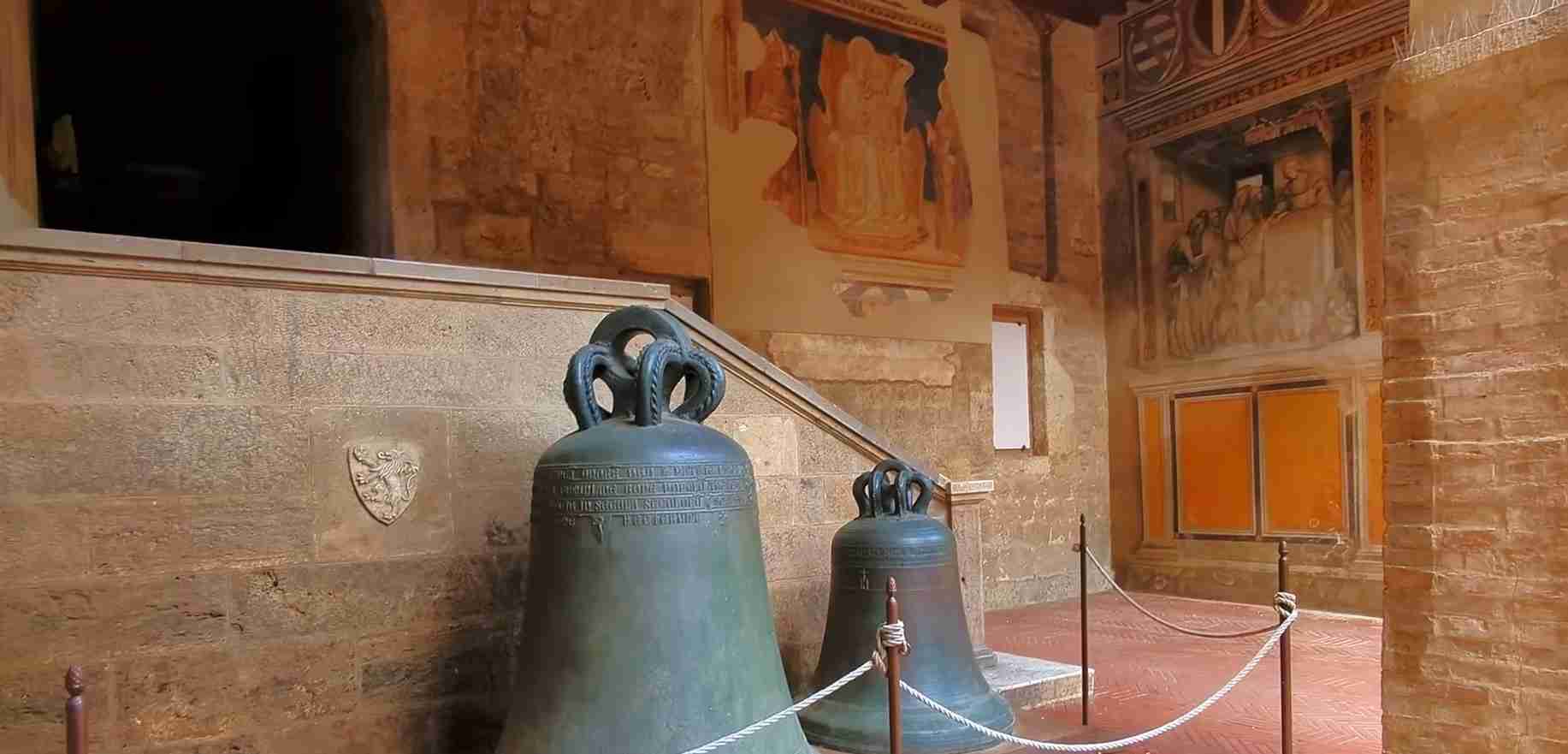
Torre Grossa represents the ultimate expression of San Gimignano’s tower-building tradition. Constructed between 1300 and 1311 adjacent to the Palazzo Comunale, this civic tower reached 54 meters to establish the municipality’s dominance over private family constructions. Unlike privately-owned residential towers, Torre Grossa served public functions as defensive watchtower, bell tower for civic ceremonies, and symbol of communal authority. Its exceptional height and association with civic government rather than private interests explains why Torre Grossa alone remains accessible for public climbing, offering panoramic views that reveal San Gimignano’s complete urban structure and its relationship to the surrounding Tuscan landscape.
The tower inventory declined dramatically after San Gimignano’s 1353 submission to Florence and subsequent economic stagnation. A 1580 survey documented only 25 surviving towers, indicating that nearly two-thirds had already been demolished or collapsed during the two centuries following the town’s independence loss. Abandonment, structural failure, deliberate demolition to reuse materials, and earthquake damage all contributed to tower losses. The towers that survived generally belonged to families maintaining wealth and social status sufficient to afford ongoing maintenance, or were incorporated into civic buildings receiving communal upkeep. By the 19th century, awareness of San Gimignano’s unique architectural heritage encouraged conservation efforts that stabilized remaining towers and prevented further losses.
Today’s 14 surviving towers represent varying construction periods, heights, and conditions. Besides Torre Grossa, notable examples include the Torre Rognosa attached to the Palazzo del Podestà, the twin Salvucci towers, the Ardinghelli tower group, and the Torre del Diavolo (Devil’s Tower) associated with legends about supernatural height increases occurring during the owner’s absence. Most surviving towers serve as private residences, offices, or are integrated into larger building complexes, making them inaccessible to public entry. Their preservation depends on private owners maintaining structural integrity while respecting heritage protection regulations governing interventions to historic buildings. Some towers show evidence of scapitozzatura (topping), where upper portions were deliberately shortened for structural stability or to reduce maintenance burdens.
The towers’ cultural significance extends beyond their individual architectural merits to their collective role in defining San Gimignano’s urban character and visual identity. The vertical skyline creates immediate recognition and establishes the town’s medieval authenticity more powerfully than any other single feature. Viewing angles throughout San Gimignano frame compositions including multiple towers, while external viewpoints from surrounding hills present the complete tower ensemble rising above the urban fabric. This three-dimensional relationship between towers, buildings, streets, and landscape constitutes the essential character that UNESCO recognized as exceptional testimony to medieval urban civilization. Modern conservation priorities emphasize maintaining not merely individual tower structures but the complete spatial and visual relationships that give San Gimignano its outstanding universal value.
Getting to San Gimignano
San Gimignano occupies a hilltop location approximately 56 kilometers south of Florence and 38 kilometers northwest of Siena, positioned between these major Tuscan cities in the Val d’Elsa region. The town’s historic center excludes automobiles, requiring visitors to park in designated lots outside the medieval walls and walk approximately 5 to 10 minutes to reach the main squares. This pedestrian arrangement preserves the historic fabric while creating logistical considerations for travelers, particularly those carrying luggage or with mobility limitations. Understanding transportation options and parking arrangements proves essential for smooth San Gimignano visits.
Train service does not reach San Gimignano directly, as the nearest railway station is Poggibonsi located approximately 11 kilometers from the medieval town. Travelers from Florence take trains from Santa Maria Novella station to Poggibonsi, with journey times averaging 60 to 90 minutes depending on train type. Siena to Poggibonsi trains require approximately 30 minutes. From Poggibonsi station, bus line 130 operated by Tiemme Toscana provides connections to San Gimignano with frequencies varying by season and day of week. The bus journey requires 25 to 35 minutes, following winding roads through vineyard countryside to reach the hilltop town. Complete train-plus-bus journeys from Florence to San Gimignano total approximately 2 to 2.5 hours including connection times.
Direct bus service connects San Gimignano to Florence and Siena, offering alternatives to train-bus combinations. Tiemme operates routes requiring approximately 80 to 90 minutes from Florence and 60 to 75 minutes from Siena, with timetables varying seasonally. These direct buses eliminate transfers but may operate less frequently than train services, requiring schedule verification before travel. All buses arrive at San Gimignano’s bus terminal located just outside Porta San Giovanni, one of the main gates into the historic center. This terminal provides the most convenient public transport access point, placing visitors within immediate walking distance of the medieval core.
Automobile travel offers maximum flexibility for reaching San Gimignano and exploring surrounding countryside, though driving involves navigating narrow Tuscan roads and dealing with limited parking availability during peak tourist periods. From Florence, the most direct route follows the Fi-Pi-Li highway (E76) toward Pisa, exiting at Poggibonsi and following signs for San Gimignano through approximately 11 kilometers of provincial roads. Alternative scenic routes through Chianti wine country add distance but provide spectacular vineyard vistas and opportunities to visit medieval villages and wineries. From Siena, drivers take the Siena-Firenze highway (SR2) northbound, exiting at Poggibonsi and following the same provincial road approach.
Parking in San Gimignano concentrates in several lots outside the medieval walls, with pricing, capacity, and walking distances varying by location. P1 (Giubileo) offers the largest capacity and closest proximity to Porta San Giovanni, with rates approximately €2 per hour or €20 for full days. P2 (Montemaggio) and P3 (Bagnaia) provide additional capacity at similar pricing structures, though requiring slightly longer walks to the historic center. During summer weekends and holidays, all lots may fill by late morning, forcing visitors to use more distant overflow parking with shuttle bus service. Arriving before 10:00 AM substantially improves parking availability, while afternoon arrivals may encounter congestion. Some hotels within or near the historic center offer parking privileges for guests, though spaces are extremely limited and advance arrangements prove essential.
Organized tours from Florence, Siena, and other Tuscan cities provide convenient San Gimignano access without transportation logistics responsibilities. Day trips typically combine San Gimignano with other destinations including Siena, Volterra, or Chianti wineries, allocating 2 to 3 hours for the medieval town. Tour operators handle all transportation, provide guided commentary, and eliminate parking concerns, though this convenience comes with reduced flexibility regarding time allocation and itinerary control. Tours prove particularly valuable for travelers without automobile access or those preferring not to navigate Italian roads and parking situations. Booking through reputable operators ensures reliable service and knowledgeable guides who can provide historical context enhancing the San Gimignano experience.
Visiting Information and Practical Details
San Gimignano’s major monuments and museums operate under coordinated management by the municipal government and religious authorities, with ticket options designed to facilitate comprehensive visits while offering value for travelers planning extended exploration. Understanding pricing structures, opening hours, and access policies proves essential for maximizing time and budget in this compact medieval town where numerous significant sites concentrate within walking distance.
The San Gimignano Pass represents the optimal ticket choice for visitors planning to see multiple sites during their stay. Priced at €15 for adults and €12 for children ages 6 to 17, this combined ticket grants unlimited access for two consecutive days to all civic museums including Palazzo Comunale with its art gallery, Torre Grossa, the Archaeological Museum, the Spezieria di Santa Fina historic pharmacy, the Modern and Contemporary Art Gallery, and the Chiesa di San Lorenzo in Ponte. The pass also includes entry to the Duomo (Collegiata di Santa Maria Assunta) and its Religious Art Museum. This comprehensive ticket provides exceptional value compared to purchasing individual site admissions, particularly for visitors allocating a full day or overnight stay to thoroughly explore San Gimignano’s cultural offerings.
Individual ticket prices vary by site for travelers visiting selectively. The Civic Museum combined with Torre Grossa costs €9 to €10 for adults, while the Duomo alone requires separate admission. Reduced-price tickets apply to children ages 6 to 17, seniors over 65, and organized groups of 20 or more people. Free admission benefits residents of San Gimignano, children under 6, people with disabilities and their necessary companions, licensed tourist guides, and ICOM card holders. Advance online booking through official channels proves advisable during peak tourist seasons from April through October, as popular sites including Torre Grossa limit capacity and may sell out during busy periods. Reservations can be made via telephone (+39 0577 286300) or email ([email protected]).
Opening hours follow seasonal schedules reflecting tourist demand patterns and daylight availability. The Civic Museum, Torre Grossa, and related civic cultural sites operate from 9:00 AM to 7:00 PM during the high season running April 1 through September 30, and from 11:00 AM to 5:00 PM during the November 1 through March 31 winter period. January 1 features special hours from 12:30 PM to 5:30 PM. The Duomo maintains distinct schedules, opening Monday through Saturday from 10:00 AM to 5:00 PM and Sunday from 12:30 PM to 5:00 PM during the November 1 to March 31 winter season, with last admission at 4:30 PM. The Duomo closes for extended periods including November 16 to 30, December 25, January 16 to 31, and March 12, requiring travelers to verify current status before planning visits during these dates.
The Church of Sant’Agostino, located in the quieter northern section of the historic center, maintains more limited hours varying by season. November through March operation runs from 9:00 AM to 12:00 PM and 3:00 PM to 6:00 PM on weekdays, with Sunday hours beginning at 10:30 AM. April through October extends afternoon hours to 7:00 PM closing. Winter schedule variations may occur, making verification advisable before visits specifically planned around this church’s Benozzo Gozzoli fresco cycle. Unlike the Duomo and civic museums, Sant’Agostino typically does not charge admission, though donations supporting maintenance and conservation are welcome.
Visitors should allocate minimum time periods for thorough site exploration. Torre Grossa climbing requires 30 to 45 minutes including the ascent, time at the summit for photography and view appreciation, and descent. The Civic Museum and Pinacoteca merit 60 to 90 minutes for comprehensive examination of the fresco cycles, paintings, and decorative arts collections. The Duomo demands at least 45 to 60 minutes to properly appreciate the complete fresco programs covering the nave walls, the Santa Fina Chapel, and related artworks. Sant’Agostino requires 30 to 45 minutes for the Gozzoli frescoes and architectural appreciation. Combined with time for walking between sites, exploring the atmospheric medieval streets, and breaks for refreshment, a thorough San Gimignano cultural visit realistically requires 5 to 7 hours excluding meals.
Photography policies vary by site but generally permit non-flash photography for personal purposes in churches and museums. Commercial photography requires advance permission and may involve fees. The Duomo typically prohibits photography during religious services, and visitors should respect worship activities by maintaining appropriate quiet and refraining from tourist behavior during masses. Modest dress codes apply in religious buildings, requiring covered shoulders and knees for both men and women. Audio guides are available at major sites for self-guided tours providing detailed artwork explanations, historical context, and architectural information in multiple languages. Guided tours led by licensed professionals can be arranged through the tourist information office or advance booking services, offering deeper insights than self-guided visits.
Piazza della Cisterna and Piazza del Duomo
San Gimignano’s civic and religious life concentrates around two interconnected squares that form the historic center’s heart and stage for the town’s most important architectural monuments. Piazza della Cisterna and Piazza del Duomo occupy adjacent spaces along the main north-south axis, creating unified urban theater where medieval political assemblies, religious processions, commercial activities, and social interactions unfolded for centuries. Understanding these squares’ spatial relationships, architectural programs, and historical functions provides essential context for appreciating San Gimignano’s urban character and the buildings surrounding them.
Piazza della Cisterna takes its name from the 13th-century well occupying the square’s center, which historically provided water for the town’s population and served as gathering point for daily social exchange. The triangular-shaped piazza features herringbone brick paving and is surrounded by medieval palaces and tower-houses representing San Gimignano’s most powerful families. The Ardinghelli tower complex dominates one side, while the twin Salvucci towers rise on another, physically expressing the rival factions’ competing powers through vertical architectural assertion. These noble residences feature ground-floor commercial arcades that originally housed shops and workshops, maintaining the mixed residential-commercial character typical of medieval Italian urban squares.
The square’s irregular triangular geometry results from organic medieval development rather than geometric planning, as buildings followed property boundaries and topographical contours rather than abstract design principles. This asymmetry creates dynamic spatial experiences as visitors move through the piazza, with different vantage points revealing changing compositions of towers, facades, and architectural details. The intimate scale and human proportions make Piazza della Cisterna feel welcoming despite the imposing tower presence, balancing monumental architecture with comfortable public space suitable for daily activities ranging from market transactions to casual socializing.
Piazza del Duomo opens adjacent to Piazza della Cisterna, accessed through the Arco dei Becci, a gateway remnant from San Gimignano’s first wall circuit. This second square assumes more formal rectangular configuration reflecting its role as religious and political ceremonial space. The Collegiata di Santa Maria Assunta dominates the western side, its simple Romanesque facade belying the extraordinary fresco-covered interior. The church’s elevated position requires ascending steps from the piazza level, reinforcing the hierarchical relationship between earthly civic space and sacred religious architecture.
The Palazzo Comunale (also called Palazzo del Popolo or Palazzo Nuovo del Podestà) occupies the south side of Piazza del Duomo, serving as the seat of civic government and currently housing the Civic Museum and art gallery. This Gothic palace features elegant stone construction with characteristic crenellated roofline and the attached Torre Grossa rising to its 54-meter height. The palace facade includes external staircases and the famous Loggia, creating semi-public space for official proclamations and ceremonies linking government authority to the public square. Inside, the palace preserves important fresco cycles including Lippo Memmi’s 1317 Maestà in the Sala di Dante, named for the room where the great poet allegedly appeared in 1300 during his diplomatic missions.
The Palazzo Vecchio del Podestà and Torre Rognosa complete Piazza del Duomo’s architectural ensemble on the eastern side. This older palace, predating the Palazzo Comunale, served initial civic administrative functions before being converted to prison and later to theater use during the 16th century. Torre Rognosa, attached to this older palace, dates to the early 13th century and established the height limit that the 1255 regulation attempted to enforce for private towers. The tower’s squat proportions compared to the soaring Torre Grossa reflect different construction periods and technological capabilities, while its medieval nickname “Rognosa” (scabby) refers either to original surface treatment or later deterioration.
The two squares function as complementary urban spaces creating San Gimignano’s essential public realm. Piazza della Cisterna maintains more relaxed commercial-social character, surrounded by gelaterias, wine shops, restaurants, and cafes occupying ground-floor spaces where medieval shops once operated. Contemporary tourism has transformed some commercial functions while maintaining the fundamental mixed-use character that animated medieval squares. Piazza del Duomo preserves more formal civic-religious atmosphere, though it too sees tourist activity including tour groups gathering before cultural site visits and merchants selling local products. Together, the squares demonstrate medieval urban design’s sophistication in creating varied public spaces serving distinct social functions while maintaining visual and physical connections enabling fluid movement between religious, political, and commercial realms of civic life.
The Collegiata: Romanesque Jewel and Fresco Treasury
The Collegiata di Santa Maria Assunta, commonly called simply the Duomo despite technically holding Collegiate rather than Cathedral status, ranks among Tuscany’s most artistically significant churches and serves as San Gimignano’s spiritual heart. The structure’s origins trace to the 10th century, though the current Romanesque building dates primarily to the 12th century with subsequent 14th and 15th-century modifications and artistic enrichments. The church’s plain travertine facade, marked only by a simple portal and rose window, provides no indication of the extraordinary fresco cycles covering virtually every interior surface, creating one of medieval and Renaissance art’s most overwhelming visual experiences.
The Collegiata follows basilica plan with three naves separated by massive stone columns supporting Romanesque arches. The relatively dark interior, lit by small windows in keeping with Romanesque architectural traditions, creates atmospheric conditions that heighten the fresco cycles’ dramatic impact. As eyes adjust to reduced light, the painted narratives emerge from walls and vaults, transforming architectural surfaces into continuous biblical storytelling that educated illiterate medieval congregations while inspiring devotional contemplation. The comprehensive fresco program represents accumulated artistic patronage across two centuries, as successive generations commissioned leading painters to contribute to the Collegiata’s decoration.
The nave’s left wall features Bartolo di Fredi’s Old Testament cycle painted in the late 14th century, depicting stories from Genesis through Job in continuous narrative bands reading horizontally from entrance to altar. These frescoes illustrate the Creation of Adam and Eve, Noah’s Ark and the Flood, the Tower of Babel, Abraham and Isaac, Moses receiving the Ten Commandments, and Job’s tribulations, among other scenes. Di Fredi’s Gothic style emphasizes narrative clarity and decorative richness, using vivid colors, elaborate architectural backgrounds, and expressive figure gestures to communicate religious narratives to congregants. The cycle’s relatively good preservation allows appreciation of 14th-century fresco technique and iconographic programs that educated medieval Christians in biblical history.
Barna da Siena’s New Testament cycle occupies the nave’s right wall, though attribution remains scholarly debate as some experts assign these frescoes to other Sienese masters. Painted mid-14th century, these scenes depict Christ’s life from the Annunciation through the Crucifixion and Resurrection, including the Nativity, Epiphany, Baptism, Raising of Lazarus, Entry into Jerusalem, Last Supper, Crucifixion, and other pivotal gospel moments. The narrative progresses from entrance to altar, encouraging viewers to follow Christ’s earthly ministry chronologically as they move through the sacred space toward the high altar where the Eucharistic sacrifice recreates Christ’s redemptive death.
Taddeo di Bartolo’s Last Judgment fresco dominates the entrance wall, confronting departing worshippers with dramatic eschatological imagery warning of eternal consequences for earthly choices. Completed in 1393, this monumental fresco depicts Christ in majesty surrounded by angels and saints, with the blessed ascending to heaven on the left while the damned descend to elaborately detailed hell scenes on the right. Di Bartolo’s hell imagery includes devils tormenting sinners in punishments specifically matching their crimes, reflecting medieval theological understanding of divine justice and serving didactic purposes warning viewers against specific sins. The fresco’s prominent entrance wall position ensured maximum visibility, making final judgment imagery the last thing congregants saw before returning to worldly activities.
The Santa Fina Chapel represents the Collegiata’s Renaissance masterpiece and San Gimignano’s most artistically significant single space. Designed by Giuliano da Maiano with sculptures by his brother Benedetto da Maiano and frescoes by Domenico Ghirlandaio, this architectural jewel dates to 1468 to 1475 and demonstrates perfect synthesis of architecture, sculpture, and painting serving unified devotional purpose. The chapel honors Santa Fina, San Gimignano’s beloved patron saint who died at age 15 in 1253 after spending her final years lying paralyzed on a wooden plank in acceptance of Christ’s passion. The chapel’s elegant Renaissance architecture features harmonious proportions, classical decorative vocabulary, and Benedetto da Maiano’s sculpture creating trompe-l’oeil curtains appearing to reveal the altar beneath.
Ghirlandaio’s fresco cycle illustrating Santa Fina’s life covers the chapel walls in two main scenes. The Annunciation of Death shows the young saint receiving vision of Saint Gregory announcing her impending death, while the Funeral of Santa Fina depicts the miraculous events surrounding her burial when the wooden plank on which she lay bloomed with yellow violets. These frescoes demonstrate Ghirlandaio’s mature Renaissance style including sophisticated perspective construction, naturalistic figure portrayal, contemporary Florentine costume and architecture updating the 13th-century story to 15th-century context, and individual portrait characterization of witnesses depicted as Ghirlandaio’s contemporary patrons. The yellow violets commemorated in the fresco still bloom around San Gimignano each March, maintaining living connection between medieval saint and contemporary devotional practice.
The Collegiata’s artistic treasures extend beyond the major fresco cycles to include numerous individual artworks, liturgical furnishings, and architectural details meriting careful attention. The high altar features important sculptures and paintings, while side chapels preserve additional frescoes and panel paintings by various masters. The church also possesses significant treasury holdings including sacred vessels, vestments, reliquaries, and illuminated manuscripts, some displayed in the adjacent Religious Art Museum. Comprehensive Collegiata visits require patience to let eyes adjust to interior lighting conditions, systematic examination of individual fresco panels to appreciate narrative details and artistic techniques, and time to absorb the cumulative spiritual and aesthetic impact of this extraordinary artistic ensemble that remains among Tuscany’s unmissable cultural experiences.
Torre Grossa and the Civic Museum
The Palazzo Comunale’s dual function as government headquarters and cultural repository makes it essential destination for visitors seeking to understand San Gimignano’s political history and artistic achievements. The palace’s combined ticket with Torre Grossa encourages comprehensive visits experiencing both the museum collections and the panoramic tower ascent, creating complete perspective on the medieval town from ground-level artistic treasures to bird’s-eye urban overview. The Civic Museum occupies rooms where San Gimignano’s medieval government conducted official business, lending authentic historical atmosphere to the art gallery’s function.
The museum’s collection focuses on Sienese and Florentine school paintings from the 13th through 15th centuries, reflecting San Gimignano’s position between these rival artistic centers and its patronage relationships with masters from both traditions. Panel paintings, frescoes, sculptures, and decorative arts document the town’s medieval prosperity and the artistic commissions that prosperity funded. Among notable works, two large circular panels depicting the Annunciation demonstrate sophisticated compositional handling of the tondo format’s challenges, while various Madonna and Child paintings show stylistic evolution across the Gothic and early Renaissance periods as San Gimignano artists absorbed influences from Florence and Siena’s leading workshops.
The Sala di Dante ranks among the palace’s most historically and artistically significant spaces. Named for the room where Dante Alighieri allegedly appeared in 1300 as Florentine ambassador seeking San Gimignano’s alliance in Guelph-Ghibelline conflicts, the hall features Lippo Memmi’s 1317 Maestà fresco as its centerpiece. This large composition depicts the Virgin Mary enthroned in majesty surrounded by angels and saints, following the iconographic program Simone Martini established in Siena’s Palazzo Pubblico. Memmi’s fresco served political functions beyond religious devotion, as the Virgin’s protective authority legitimized civic government operating beneath her painted presence while communicating San Gimignano’s allegiance to the Guelph faction supporting papal authority.
The Camera del Podestà preserves the palace’s most unusual and revealing fresco cycle. Painted by Memmo di Filippuccio in the early 14th century, these scenes depict secular subjects including courtship, bathing, and matrimonial intimacy rarely portrayed in medieval Italian art. The frescoes’ subject matter reflects the room’s function as the podestà’s private chamber, where the magistrate conducting San Gimignano’s government resided during his term of office. The cycle’s frank depiction of domestic and romantic activities provides invaluable visual evidence about medieval private life’s sensuality and material culture, complementing the religious and political subjects dominating most surviving medieval art. These frescoes remain somewhat controversial for their intimate content, though their artistic quality and documentary value are undisputed.
Torre Grossa dominates the Palazzo Comunale complex and the entire San Gimignano skyline. Constructed between 1300 and 1311 during the period when Dante visited and the commune enjoyed its final years of prosperity before plague and Florentine annexation, the tower served multiple functions including defensive watchtower, bell tower signaling civic events, and prestige symbol demonstrating communal authority surpassing private family towers. At 54 meters, Torre Grossa substantially exceeds the Torre Rognosa height limit applied to private construction, reinforcing the hierarchy between public and private power in medieval political thought. The tower’s name “Grossa” (large/great) acknowledges its exceptional dimensions rather than any specific patron or architectural feature.
Climbing Torre Grossa requires physical fitness and comfort with heights, as the ascent involves narrow medieval staircases without modern safety accommodations beyond basic handrails and barrier chains. The stone steps, worn by seven centuries of use, can be slippery and uneven, requiring careful foot placement and awareness of tight spaces, low doorways, and sections where climbers must squeeze past descending visitors in confined passages. The effort proves worthwhile for views that reveal San Gimignano’s complete urban structure, the relationship between surviving towers and the surrounding building fabric, and vistas extending across the Val d’Elsa to Volterra, Siena, and on clear days the Apennine Mountains. Photography from the tower summit produces definitive San Gimignano images, particularly during golden hour when warm light illuminates terracotta roofs and medieval stone.
The tower ascent passes through several levels offering different perspectives and pausing points for those requiring breaks. Intermediate levels provide glimpses of internal construction techniques, bell mechanisms, and partial views before reaching the summit platform. The top level features crenellated parapets characteristic of medieval defensive architecture, though the openings between merlons are now protected with metal grates preventing accidental falls while maintaining the tower’s authentic medieval appearance. Visitors should allocate 30 to 45 minutes for the complete Torre Grossa experience including the climb, summit time for photography and view appreciation, and descent, though crowds during peak summer periods may extend these times through congestion in the narrow passages.
Sant’Agostino and the Northern Quarter
The Church of Sant’Agostino occupies Piazza Sant’Agostino in San Gimignano’s quieter northern section, removed from the tourist concentration around Piazza della Cisterna and Piazza del Duomo. This 13th-century church houses one of San Gimignano’s most important fresco cycles yet receives less visitor attention than the Collegiata, creating opportunities for contemplative art appreciation without crowds. The church’s location encourages exploration beyond the central tourist zone into residential neighborhoods maintaining more authentic community character and revealing additional medieval architectural details including lesser-known towers, palaces, and street perspectives.
Sant’Agostino’s simple Romanesque-Gothic exterior features unadorned brick and stone construction culminating in a bell tower that contributes to San Gimignano’s composite skyline. The single-nave interior follows typical mendicant order architectural programs prioritizing acoustic clarity for preaching and visual accessibility for devotional imagery over the spatial complexity characteristic of major cathedrals. This functional simplicity creates effective backdrop for the artistic treasures decorating the walls and chapels, particularly Benozzo Gozzoli’s fresco cycle depicting scenes from the life of Saint Augustine, the church’s patron and one of Christianity’s most influential theological doctors.
Benozzo Gozzoli painted the Sant’Agostino frescoes in 1465, bringing his mature Renaissance style’s sophisticated narrative techniques and naturalistic observation to the church’s apse and choir area. The cycle illustrates Augustine’s life from childhood in Roman North Africa through his conversion under Saint Ambrose’s influence to his career as Bishop of Hippo defending Christian orthodoxy against heretical movements. Gozzoli’s compositions demonstrate advanced perspective construction, individualized portrait characterization, detailed architectural and landscape backgrounds, and the narrative clarity that made his work accessible to broad audiences while satisfying sophisticated viewers’ aesthetic expectations.
Individual fresco scenes merit careful examination for their artistic and narrative qualities. The young Augustine’s departure for school in Carthage shows Gozzoli’s skill in depicting complex urban environments and multiple figure groups engaged in varied activities. Augustine’s conversion scene portrays the saint’s spiritual crisis in a garden setting rendered with botanical accuracy and atmospheric depth. The death of Saint Monica, Augustine’s mother, demonstrates Gozzoli’s ability to convey emotional content through gesture and facial expression while maintaining compositional dignity appropriate to religious subject matter. These and other scenes create comprehensive visual biography educating viewers about Augustine’s significance while displaying late 15th-century fresco technique at high levels of accomplishment.
Beyond the Gozzoli cycle, Sant’Agostino preserves additional artworks including altarpieces, sculptures, and decorative elements spanning multiple centuries. The Cappella di San Bartolo houses a marble altar and tomb by Benedetto da Maiano honoring San Gimignano’s other major patron saint, demonstrating the sculptural skills that complemented Benedetto’s architectural work in the Collegiata’s Santa Fina Chapel. Various side chapels feature frescoes and panel paintings by lesser-known artists whose work nonetheless contributes to understanding regional artistic production and devotional practices. The church’s treasury holdings include liturgical objects and vestments, some of significant artistic and historical value though not always on public display.
The northern quarter surrounding Sant’Agostino rewards exploratory walking beyond the church visit itself. Medieval streets including Via San Matteo, one of San Gimignano’s primary commercial arteries, feature well-preserved stone buildings, small shops selling local products, and fewer tourist-oriented businesses than streets near Piazza della Cisterna. This area maintains more residential character with apartments, community facilities, and daily life activities providing glimpses of San Gimignano’s functioning as a living town rather than merely tourist destination. Walking these streets reveals architectural details including decorative stone carving, medieval doorways and windows, external staircases, and building techniques illustrating how ordinary medieval citizens lived alongside the noble families whose towers dominated the skyline.
Vernaccia Wine and Tuscan Cuisine
San Gimignano’s cultural identity extends beyond medieval architecture and Renaissance frescoes to include culinary traditions rooted in Tuscan agricultural heritage and the celebrated Vernaccia white wine produced in surrounding vineyards for over seven centuries. Understanding local food and wine culture enriches the San Gimignano experience beyond visual and historical dimensions, engaging visitors in living traditions that connect contemporary community life to medieval economic foundations while offering sensory pleasures that complement the town’s aesthetic treasures.
Vernaccia di San Gimignano holds distinction as Tuscany’s first wine to receive DOC (Denominazione di Origine Controllata) designation in 1966, later upgraded to DOCG (Denominazione di Origine Controllata e Garantita) status in 1993. These legal protections certify that wines labeled Vernaccia di San Gimignano originate from designated vineyard areas surrounding the medieval town, use approved grape varieties dominated by the indigenous Vernaccia grape, and meet quality standards enforced through tasting panels and chemical analysis. The regulations preserve viticultural traditions while ensuring consistency and authenticity for consumers purchasing wines bearing San Gimignano’s name.
Vernaccia grapes thrive in San Gimignano’s terroir, where well-drained soils, hillside exposure, and favorable microclimate create optimal conditions for producing crisp, mineral-driven white wines with characteristic almond and citrus notes. Historical records document Vernaccia cultivation and wine production in the area since at least the 13th century, with medieval merchants trading San Gimignano wine throughout Italy and Europe. Dante mentioned Vernaccia in his Divine Comedy, referencing Pope Martin IV’s taste for the wine in a passage suggesting its prestigious reputation among medieval connoisseurs. This historical depth distinguishes Vernaccia from newer wine regions lacking comparable documentation of continuous viticultura production across centuries.
Contemporary Vernaccia production balances tradition with modern winemaking technology. Producers maintain traditional vineyard practices including hand harvesting and careful grape selection while employing temperature-controlled fermentation, stainless steel tanks, and scientific yeast management to achieve consistent quality and fresh, fruit-forward flavor profiles appealing to international markets. Some producers experiment with oak aging and extended lees contact creating fuller-bodied Vernaccia Riserva wines offering different stylistic expressions than classic versions’ crisp minerality. This diversity within the denomination provides wine enthusiasts options ranging from everyday drinking wines to complex bottles suitable for cellaring and special occasions.
Wine tasting experiences in San Gimignano range from informal sampling at wine shops and enotecas within the historic center to comprehensive vineyard tours with production facility visits and food pairings at estates surrounding the town. Many wineries welcome visitors for tastings showcasing their Vernaccia alongside other wines including Chianti, Rosso di San Gimignano, and Vin Santo dessert wine. These experiences often include vineyard walks explaining grape cultivation, cellar tours demonstrating production processes from crushing through bottling, and food pairings highlighting Vernaccia’s versatility with local cuisine. Advance reservations prove advisable for winery visits, particularly during harvest season and peak tourist periods when capacities fill quickly.
San Gimignano’s culinary traditions reflect broader Tuscan gastronomy emphasizing simple preparations of high-quality ingredients, seasonal vegetable dishes, bread-based preparations utilizing unsalted Tuscan bread, and hearty meat preparations suited to agricultural society’s protein needs. Local specialties include pappa al pomodoro (tomato and bread soup), ribollita (vegetable and bread soup), panzanella (bread salad with tomatoes and vegetables), pici pasta with various sauces, wild boar preparations, and roasted meats including bistecca alla fiorentina when available. These dishes pair naturally with Vernaccia and local red wines, creating complete gastronomic experiences rooted in terroir and tradition.
Saffron cultivation represents another distinctive San Gimignano agricultural tradition, though production has declined substantially from medieval levels when the spice generated significant trade income. Contemporary producers have revived small-scale saffron cultivation, harvesting crocus flowers by hand and extracting the precious red stigmas that become the world’s most expensive spice. Saffron appears in local preparations including risotto allo zafferano and various pasta dishes, while shops sell pure San Gimignano saffron in small quantities for travelers seeking authentic local products. The spice’s medieval importance and contemporary revival exemplify efforts to maintain agricultural diversity and cultural heritage beyond wine monoculture.
Gelateria Dondoli on Piazza della Cisterna has achieved international fame for its award-winning gelato, with proprietor Sergio Dondoli earning multiple world championship titles for innovative flavors and technical excellence. The shop attracts queues throughout the day as visitors sample creative combinations alongside traditional flavors, all produced using high-quality ingredients and artisanal methods. While commercial gelato may seem incongruous with medieval heritage, San Gimignano’s gelato excellence demonstrates how contemporary culinary achievement can coexist with historical preservation, providing modern pleasures that enhance rather than compromise the medieval experience. The gelato pilgrimage has become as essential to many San Gimignano visits as climbing Torre Grossa or viewing the Collegiata frescoes.
Walking the Walls and Lesser-Known Sites
San Gimignano’s medieval fortifications encircle the historic center, defining the urban limits while providing elevated perspectives on the town’s architecture and surrounding countryside. The walls’ 13th-century construction established defensive perimeter protecting approximately one square kilometer of urban fabric, with the circuit measuring approximately 2,177 meters and incorporating five cylindrical towers reinforcing key positions. While substantial portions survive in good condition, particularly along the southern and eastern sections, some wall segments have been obscured by later construction or damaged through centuries of neglect and stone reuse. Walking the wall perimeter, whether atop remaining rampart sections or following streets paralleling the fortifications, offers alternative perspectives on San Gimignano’s urban structure beyond the central tourist concentration.
The Rocca di Montestaffoli occupies the town’s highest point, providing commanding views across San Gimignano and the Val d’Elsa countryside. This fortress dates to 1353, constructed immediately following the town’s submission to Florence as physical symbol of Florentine control and military garrison securing the newly subject population. The fortress represents typical 14th-century military architecture with massive walls, defensive towers, and strategic positioning controlling access routes. Though substantially ruined today, with only partial walls and one tower surviving intact, the Rocca remains accessible as public park and viewpoint. The site’s elevation and unobstructed sightlines create exceptional photography opportunities, particularly at sunset when warm light illuminates the medieval skyline and surrounding hills.
San Gimignano’s four main gates pierce the medieval walls at cardinal points, each preserving distinctive architectural character and historical associations. Porta San Giovanni provides the southern entrance from the parking areas and bus terminal, making it most visitors’ first encounter with the medieval town. The gate features typical defensive architecture including machicolations for dropping projectiles on attackers and heavy wooden doors that once closed nightly to seal the town. Porta San Matteo occupies the northern wall section, aligned with Via San Matteo’s commercial corridor connecting the gate to the central squares. Porta delle Fonti opens onto steep slopes descending to the medieval public fountains that supplied water for residents and travelers. Porta San Jacopo completes the circuit, providing access to agricultural lands and roads toward Volterra.
The medieval fountains below Porta delle Fonti represent San Gimignano’s most important water infrastructure, addressing the hilltop settlement’s fundamental challenge of securing reliable water supply distant from rivers or springs. The 14th-century fountain complex features multiple basins and washing areas constructed above an earlier 9th-century Longobard water source, demonstrating continuous use across centuries. Medieval women gathered here for laundry and water collection, creating social space and daily ritual that continued into the 20th century before modern plumbing eliminated dependence on public fountains. The descent to the fountains requires navigating steep stone stairways outside the walls, rewarding the effort with atmospheric medieval infrastructure rarely visited by casual tourists and excellent upward views toward the town’s towers and buildings cascading down the hillside.
Lesser-known churches scattered through San Gimignano’s residential quarters preserve additional artistic and architectural treasures meriting attention from visitors with time for comprehensive exploration. The Chiesa di San Lorenzo in Ponte, included in the San Gimignano Pass, features Romanesque architecture and important fresco fragments. The Chiesa di San Pietro occupies a quiet location with views across the countryside, while the Chiesa di San Bartolo on Via San Matteo honors another local saint in modest Gothic structure. These smaller churches lack the Collegiata’s overwhelming artistic wealth but provide intimate spaces for encountering authentic neighborhood religious life and architectural details revealing how ordinary medieval parishes functioned alongside major monuments.
The Archaeological Museum housed in the former Conservatory of Santa Chiara presents findings from San Gimignano’s territory documenting Etruscan and Roman settlement patterns predating the medieval town. Ceramic vessels, bronze objects, architectural fragments, and funerary materials trace regional habitation from prehistoric periods through classical antiquity, establishing the deep historical context within which medieval San Gimignano emerged. The museum’s Modern and Contemporary Art Gallery occupies adjacent spaces, creating somewhat jarring juxtaposition between ancient artifacts and 20th-century paintings though reflecting municipal cultural programming’s breadth. The Spezieria di Santa Fina, also within the complex, preserves a historic pharmacy with ceramic drug jars, medical instruments, and furnishings documenting pharmaceutical practice from the 18th century onward.
Systematic exploration of San Gimignano’s residential streets beyond the main tourist routes reveals architectural details and authentic neighborhood character impossible to appreciate from superficial visits limited to famous monuments. Exterior building details including stone window frames, medieval doorways with period hardware, heraldic shields marking noble family residences, external staircases characteristic of Tuscan urban architecture, and fragmentary fresco remains on building facades all reward patient observation. Via San Giovanni, Via San Matteo, and the narrow lanes connecting them preserve medieval street configurations and building density creating the physical environment where medieval residents conducted daily life amid the towers and palaces whose grandeur commanded attention then as now.
Seasonal Considerations and Crowd Management
San Gimignano experiences dramatic seasonal variations in visitor numbers, weather conditions, agricultural landscapes, and community life patterns, creating significantly different experiences depending on travel timing. Understanding these seasonal characteristics helps travelers select optimal visit periods matching their priorities for weather comfort, crowd tolerance, photography conditions, cultural events, and authentic local atmosphere. No single season proves universally “best” for all visitors, as individual preferences regarding these factors vary considerably and each period offers distinct advantages alongside specific challenges.
Summer months from June through August bring peak tourist crowds, warmest temperatures, longest daylight hours, and intense Mediterranean sun creating harsh midday light conditions. The historic center becomes congested particularly during midday hours when day-trippers from Florence and cruise ships converge, filling Piazza della Cisterna, creating queues at Torre Grossa, and making restaurants and gelaterias crowded. Temperatures frequently exceed 30°C (86°F), with limited natural shade in the medieval streets and stone surfaces radiating heat, creating physical discomfort for extended outdoor exploration. However, summer also provides reliable sunny weather, extended museum hours, outdoor dining opportunities, and vibrant atmosphere as San Gimignano functions at full capacity with all services operating and cultural programming including concerts and festivals enriching the visit.
Spring months of April and May offer increasing warmth, wildflower blooms in surrounding countryside, moderate crowds, and fresh green landscapes following winter rains. Easter weekend brings significant visitor numbers but outside this peak, spring provides comfortable exploration conditions with pleasant temperatures, longer daylight than winter, and fewer tourists than summer. Vineyard landscapes show new growth, restaurants feature seasonal vegetables and spring lamb on menus, and San Gimignano assumes more relaxed character than summer intensity. March witnesses the blooming of yellow violets associated with Santa Fina legend, creating botanical connection to the patron saint’s devotional traditions. Spring weather proves somewhat unpredictable with occasional rain showers requiring flexible planning and appropriate clothing.
Autumn from September through October rivals spring as optimal visiting period, with harvest season bringing viticultural activity, autumn colors transforming vineyard landscapes, pleasant temperatures, and substantially reduced crowds compared to summer peak. Grape harvest typically occurs in late September and early October, creating opportunities to witness traditional agricultural processes and visit wineries during their busiest production period. The vendemmia (harvest) season features special events, harvest dinners, and wine tastings celebrating new vintage releases. Clear autumn light creates excellent photography conditions, particularly during golden hour when warm sun illuminates stone architecture against deep blue skies. Temperatures remain comfortable for walking, though September can still be quite warm while late October brings increasing coolness requiring layers.
Winter months from November through February bring the smallest visitor numbers, coldest temperatures, reduced daylight hours, and modified operating schedules for some attractions and restaurants. The Duomo closes for extended periods in November and January, while some hotels and restaurants shut completely or reduce hours outside peak season. However, winter provides authentic local atmosphere with San Gimignano returning to residential character as tourists disappear and community life proceeds without tourist industry domination. Clear winter days offer crystalline light and dramatic skies, while occasional snow transforms the medieval skyline into fairy-tale landscape rarely photographed. Visitors comfortable with cold temperatures, shorter days, and limited services discover intimate San Gimignano experience impossible during tourist seasons, though requiring advance verification that desired attractions remain open.
Crowd management strategies prove essential during high-season visits from April through October. Arriving before 10:00 AM allows experiencing major sites before tour buses arrive, with Piazza della Cisterna and monuments relatively quiet during early morning hours. Alternatively, staying past 5:00 PM when day-trippers depart creates evening opportunities to explore the town in peaceful conditions, though this requires overnight accommodation. Visiting on weekdays rather than weekends significantly reduces congestion, as Italian domestic tourists concentrate weekend visits. Allocating midday hours to activities beyond the central tourist zone, including vineyard visits, countryside walks, or museum sites like the Archaeological Museum receiving fewer visitors, spreads tourism pressure across time and space while providing respite from crowds.
Weather considerations extend beyond temperature to include sunlight angles affecting photography and fresco visibility. Summer’s high sun creates harsh shadows unsuitable for architectural photography during midday hours but produces beautiful warm light during extended golden hours in early morning and late evening. Winter’s lower sun angle provides more consistent light throughout the day but with reduced intensity affecting interior photography in churches where natural light illuminates frescoes. Overcast conditions, while generally avoiding tourism promotional materials, actually create excellent diffused light for fresco photography eliminating harsh shadows and allowing cameras to capture the complete tonal range without blown highlights or blocked shadows. Serious photographers may prefer winter or spring’s variable weather over summer’s reliable sunshine for this reason.
Day Trips and Regional Connections
San Gimignano’s central Tuscany location positions it ideally for combining visits with other significant medieval towns, art cities, wine regions, and UNESCO World Heritage Sites, creating comprehensive regional itineraries that maximize travel value while experiencing the cultural landscape’s extraordinary density and variety. Understanding transportation connections, realistic time allocations, and thematic relationships between destinations helps travelers create coherent multi-day Tuscan explorations using San Gimignano as either day-trip destination from Florence or Siena, overnight base for regional touring, or waypoint in extended itineraries connecting Tuscany’s diverse attractions.
Volterra sits approximately 30 kilometers west of San Gimignano, occupying a dramatic hilltop position commanding sweeping views across the Tuscan countryside toward the Mediterranean coast. This Etruscan and medieval town preserves extraordinary archaeological remains including Etruscan walls and gates, Roman theater ruins, and medieval architecture rivaling San Gimignano’s historical atmosphere. Volterra’s Guarnacci Etruscan Museum houses Italy’s finest collection of Etruscan funerary urns, bronze votives, and artifacts documenting pre-Roman civilization’s sophisticated culture. The town’s alabaster craft tradition continues from Etruscan times through contemporary artisan workshops. Combined San Gimignano-Volterra day trips create comprehensive medieval-Etruscan cultural experiences, though each town merits minimum half-day allocations for thorough exploration requiring full-day excursions or overnight stays to avoid rushed superficial visits.
Siena lies approximately 38 kilometers southeast, offering complete contrast to San Gimignano’s intimate medieval village scale through its Gothic cathedral, expansive Campo square, and sophisticated urban sophistication reflecting the powerful medieval republic’s wealth and cultural achievements. Siena’s UNESCO World Heritage historic center preserves extraordinary artistic treasures including Duccio’s Maestà in the Opera del Duomo Museum, Simone Martini and Ambrogio Lorenzetti frescoes in the Palazzo Pubblico, and the Cathedral’s elaborate facade, Piccolomini Library frescoes, and marble floor creating comprehensive artistic experiences requiring full days for adequate appreciation. Siena’s famous Palio horse race twice annually in July and August attracts enormous crowds but offers unique cultural spectacle for travelers timing visits to coincide with these historic celebrations. Bus and train connections make Siena-San Gimignano combinations practical for independent travelers, though each city deserves overnight stays rather than rushed day-trip treatment.
Florence dominates Tuscany as the Renaissance birthplace housing incomparable artistic collections including the Uffizi Gallery, Accademia’s Michelangelo David, Palazzo Pitti, and countless churches preserving Brunelleschi architecture and fresco cycles by Masaccio, Fra Angelico, Ghirlandaio, and others. Florence’s scale and artistic density require multiple days for comprehensive visits, making it impractical as same-day combination with San Gimignano for most travelers. Instead, San Gimignano functions effectively as day trip from Florence-based itineraries, allowing travelers to maintain Florence hotel bases while experiencing contrasting medieval atmosphere 56 kilometers away. Train-bus combinations or organized tours facilitate these excursions, though automobile rental provides maximum flexibility for travelers interested in exploring Chianti wine country between the two destinations.
The Chianti wine region sprawls between Florence and Siena, its undulating vineyard landscapes, cypress-lined roads, and medieval villages creating the quintessential Tuscan countryside imagery that attracts photographers, wine enthusiasts, and travelers seeking rural tranquility. Key Chianti towns including Greve in Chianti, Radda in Chianti, and Castellina in Chianti offer wine tasting opportunities, restaurants serving traditional Tuscan cuisine, and atmospheric medieval centers maintaining authentic character despite tourism development. San Gimignano’s position west of the Chianti Classico heartland places it slightly removed from main tourist circuits, though travelers with automobiles can easily incorporate Chianti visits into itineraries combining the wine country with San Gimignano’s Vernaccia production and medieval urban experience.
The Val d’Orcia landscape southeast of San Gimignano toward Montalcino and Montepulciano represents Tuscany’s most photographed agricultural region, where gentle hills, isolated cypresses, golden wheat fields, and Renaissance ideal landscape planning converge creating scenes reproduced on countless calendars and tourism promotions. This UNESCO World Heritage cultural landscape preserves Renaissance humanist landscape design principles manifested in agricultural improvement, town planning, and aesthetic arrangement of natural and built elements. Towns including Pienza, Montepulcino, and Montalcino combine medieval and Renaissance architecture with renowned wines including Brunello di Montalcino and Vino Nobile di Montepulciano. The Val d’Orcia’s distance from San Gimignano (approximately 70 kilometers to Pienza) makes same-day round trips possible but rushed, suggesting overnight stays for travelers prioritizing this region.
Lucca and Pisa provide additional Tuscan destinations accessible from San Gimignano, though distances approaching 60 to 80 kilometers make them better suited to automobile tours or separate multi-day itineraries than day trips combined with thorough San Gimignano visits. Lucca’s intact Renaissance walls encircle extraordinary medieval and Renaissance architecture in remarkably preserved urban fabric, while Pisa’s UNESCO World Heritage Piazza dei Miracoli concentrates the famous Leaning Tower, Cathedral, Baptistry, and Camposanto in single extraordinary monumental complex. These destinations merit dedicated time rather than being rushed appendages to San Gimignano visits, though travelers with extended Tuscan stays and automobiles can create comprehensive regional tours incorporating all these major sites across week-long itineraries.
Photography and Artistic Inspiration
San Gimignano’s vertical skyline, medieval architecture, and Tuscan setting create extraordinary photography opportunities ranging from iconic tower compositions to intimate architectural details, with lighting conditions, seasonal variations, and crowd management significantly affecting image results. Understanding optimal vantage points, ideal timing for different subjects, and technical considerations for architectural and landscape photography helps photographers capture San Gimignano’s visual character effectively while moving beyond clichéd postcard reproductions toward personal interpretations of this extensively photographed subject.
External viewpoints from surrounding countryside provide classic San Gimignano vistas showing the complete medieval skyline rising above vineyards and agricultural landscapes. Roads approaching the town from Poggibonsi and Certaldo offer various pull-off points where photographers can frame tower silhouettes against sky, capture twilight compositions with illuminated buildings, or record seasonal agricultural variations including spring wildflowers, summer wheat fields, autumn grape harvest, or occasional winter snow. These external perspectives work best during golden hour in early morning or late afternoon when warm angled light illuminates the tower facades while creating depth through shadows and atmospheric haze. Sunset positions west of town allow silhouette compositions, while sunrise eastern positions provide front-lit tower details.
Torre Grossa summit provides the definitive elevated viewpoint within San Gimignano, offering 360-degree coverage of the medieval town’s terracotta rooftops, surrounding towers at eye level or below, and distant Tuscan hills extending to horizons. The summit’s elevation reveals urban spatial relationships invisible from ground level, showing how buildings cluster along medieval streets, how towers punctuate the urban fabric, and how the town’s compact footprint contrasts with surrounding agricultural openness. Wide-angle lenses capture comprehensive urban panoramas, while telephoto focal lengths isolate individual tower groups, compress perspective to enhance the vertical density, or reach distant landmarks including Volterra’s towers or the Apennine ridgelines. Midday’s overhead sun proves challenging for rooftop photography’s flat surfaces, making morning or afternoon visits preferable for dimensional modeling through shadowing.
Piazza della Cisterna provides ground-level photography combining architectural composition, human activity, and medieval atmosphere. Wide-angle positions from various square edges capture tower groups framing the central well, with careful attention to vertical perspective control preventing keystoning that makes buildings appear to lean backward. The square’s irregular triangular geometry creates varied compositions from different positions, rewarding patient exploration to find optimal angles balancing architectural elements, avoiding modern intrusions including signage and parked vehicles, and incorporating human figures for scale and narrative interest. Early morning light before tour groups arrive allows photography emphasizing architectural forms, while midday crowds transform the square into documentary subject showing contemporary tourism’s relationship to medieval heritage.
Narrow medieval streets including Via San Matteo create linear perspective compositions where building facades, cobblestone paving, and tower terminations converge toward vanishing points, enhanced by choosing positions that align street axes with tower locations visible along the corridor. These urban canyon photographs benefit from diffused overcast light eliminating harsh shadows in confined spaces where bright sunlight creates extreme contrast impossible to capture in single exposures. Human figures walking through medieval streets provide scale, movement, and contemporary narrative connecting past architecture to present use. Detail-oriented photographers find endless subjects in stone carving, decorative ironwork, wooden shutters, ceramic street numbers, commercial signage, and architectural fragments revealing construction techniques and material deterioration patterns.
Interior photography in the Collegiata and other churches confronts challenging low-light conditions, mixed illumination sources, and cultural sensitivities regarding flash use and tripod restrictions. Modern cameras’ improved high-ISO performance allows handheld fresco photography impossible with earlier technology, though results still require understanding exposure relationships between sunlit windows, shadowed architectural elements, and frescoed surfaces receiving moderate indirect light. Stabilization systems enable slower shutter speeds, while wide apertures increase light gathering at the cost of reduced depth of field potentially problematic for architectural subjects. Some photographers prefer multiple exposures blending different exposure values in post-processing rather than attempting single exposures capturing the complete dynamic range. Permission for tripod use varies by site and typically requires advance arrangements with church authorities.
Seasonal and weather variations transform San Gimignano’s photographic character beyond merely recording the same subjects under different conditions. Spring’s green landscapes and wildflower displays create vibrant color contrasts against medieval stone, while summer’s golden wheat fields provide warm earth tones harmonizing with architecture. Autumn grape harvest introduces human agricultural activity and seasonal produce as photographic subjects, while winter’s occasional snow creates rare transformations of the familiar skyline into unfamiliar fairytale landscape. Overcast skies that tourists avoid often provide photographers optimal diffused light, saturated colors without harsh sun’s desaturation, and atmospheric moisture creating depth through aerial perspective. Storm light with dramatic cloud formations and directional sun breaking through creates powerful theatrical illumination though requiring patience and weather monitoring to capture fleeting conditions.
Night photography transforms San Gimignano when artificial illumination creates entirely different character from daylight appearance. Strategic tower and monument floodlighting emphasizes architectural forms while deep shadow conceals modern elements, creating somewhat artificial medieval atmosphere nonetheless photographically compelling. Long exposures record light trails from vehicle traffic outside the walls, while extended shutter times allow photography in very dim ambient illumination using only medieval street lamps and window light. The Milky Way rising above tower silhouettes requires moonless clear nights, extremely wide apertures, high ISO, and extended exposures managed to avoid star trailing, creating images connecting medieval architecture to cosmic perspective rare in tourist photography portfolios.
Frequently Asked Questions About San Gimignano
How many towers originally existed in San Gimignano?
Historical records document approximately 72 tower-houses and fortified towers at San Gimignano’s medieval peak during the 12th and 13th centuries, though some scholars suggest the total may have reached higher when including lesser structures and houses with tower-like features. These towers belonged to patrician families who constructed them as combined residential fortifications and status symbols, with height serving as the primary indicator of family wealth and power. The intense building competition led municipal authorities to enact a 1255 regulation prohibiting private towers from exceeding the Torre Rognosa’s height, attempting to limit extravagance and assert communal authority over private ambitions. By 1580, only 25 towers survived according to period surveys, with the number declining to today’s 14 remaining structures through abandonment, structural collapse, deliberate demolition for material reuse, and earthquake damage across subsequent centuries. This survival rate of approximately 19 percent preserves sufficient tower density to maintain San Gimignano’s characteristic vertical skyline while documenting the medieval tower-building phenomenon that once characterized many Tuscan cities but survived only here in substantial numbers.
Is San Gimignano worth visiting if I only have a few hours?
San Gimignano rewards even brief visits, as the compact historic center allows seeing major highlights including Piazza della Cisterna, Piazza del Duomo, the Collegiata exterior, and atmospheric medieval streets within 2 to 3 hours. However, this rushed pace sacrifices the Collegiata’s fresco interior requiring 45 to 60 minutes for proper appreciation, Torre Grossa climbing and views needing 30 to 45 minutes, the Civic Museum meriting 60 to 90 minutes, and leisurely exploration discovering quiet corners and authentic neighborhood character. Visitors with only half-day availability should prioritize one major monument (either Collegiata interior frescoes or Torre Grossa ascent with Civic Museum) alongside walking the atmospheric streets and experiencing the town’s medieval urban fabric rather than attempting comprehensive coverage resulting in superficial engagement with all sites. The ideal San Gimignano visit spans a full day or includes overnight stay allowing thorough cultural exploration without time pressure, experiencing the town after day-trippers depart when authentic atmosphere emerges. Travelers choosing between shallow sampling of many Tuscan destinations versus deeper engagement with fewer locations generally report greater satisfaction from the focused approach that San Gimignano’s concentrated medieval character particularly rewards.
What is the best way to avoid crowds in San Gimignano?
Arriving before 10:00 AM provides the most effective crowd avoidance strategy, as the historic center remains relatively quiet during early morning hours before tour buses from Florence and cruise ships arrive around mid-morning. Piazza della Cisterna, the Collegiata, and Torre Grossa experience minimal congestion from 8:00 AM to 10:00 AM, allowing peaceful exploration and photography without tourist masses. Alternatively, staying past 5:00 PM when day-trippers depart creates evening opportunities to experience San Gimignano in tranquil conditions, though this requires overnight accommodation and willingness to visit cultural sites during morning or early afternoon before returning to atmospheric evening street walks after monuments close. Weekday visits prove significantly less crowded than weekends when Italian domestic tourists concentrate visits. Winter months from November through February bring the smallest overall visitor numbers though modified attraction schedules and reduced services, creating authentic local atmosphere for travelers comfortable with cold weather and shorter daylight. Allocating midday hours to activities beyond the central tourist zone including vineyard visits, countryside walks, or the Archaeological Museum receiving fewer visitors distributes tourism pressure while providing respite from peak concentration.
Can I visit San Gimignano as a day trip from Florence?
San Gimignano functions effectively as day trip from Florence, with train-bus combinations requiring approximately 2 to 2.5 hours each direction including connections at Poggibonsi, leaving 4 to 6 hours for actual site visits when allocating a standard 8 to 10-hour excursion day. Travelers take trains from Florence’s Santa Maria Novella station to Poggibonsi (60 to 90 minutes), then bus line 130 to San Gimignano (25 to 35 minutes), reversing this routing for returns. Alternatively, direct bus services operate between Florence and San Gimignano requiring 80 to 90 minutes without transfers. Organized tours from Florence provide convenient transportation eliminating logistics planning and parking challenges, typically combining San Gimignano with Siena or Chianti wine country in comprehensive day excursions. Automobile rental offers maximum flexibility for travelers interested in exploring countryside and smaller villages en route, though parking availability in San Gimignano requires arriving early during peak seasons. The practical day-trip constraints mean visitors must prioritize selective site coverage focusing on one or two major monuments plus atmospheric street exploration rather than attempting comprehensive visits including all museums, churches, and tower climbs that thorough coverage requires. Overnight stays in or near San Gimignano allow experiencing the town’s authentic evening character and spreading cultural visits across two days at relaxed pace impossible during rushed single-day excursions.
What are the main differences between visiting San Gimignano and Siena?
San Gimignano and Siena offer fundamentally different medieval experiences despite sharing Tuscan Gothic architecture and UNESCO World Heritage status. San Gimignano presents intimate village scale with compact one-square-kilometer historic center explorable in single day, dramatic vertical skyline of 14 surviving medieval towers creating instantly recognizable visual identity, and cohesive preservation of 13th and 14th-century urban fabric frozen by economic decline that prevented later development. Siena operates at sophisticated city scale with extensive historic center requiring multiple days for comprehensive visits, horizontal Gothic architecture dominated by the Cathedral and Palazzo Pubblico rather than vertical tower competition, and continuous urban development layering medieval, Renaissance, and later periods into complex palimpsest. San Gimignano’s artistic treasures concentrate in the Collegiata’s fresco cycles and Civic Museum’s collections, accessible to general visitors in several hours. Siena’s artistic wealth spans the Cathedral complex including Opera Museum housing Duccio’s Maestà, the Palazzo Pubblico frescoes by Simone Martini and Ambrogio Lorenzetti, Santa Maria della Scala hospital complex, and numerous churches requiring days of systematic exploration. San Gimignano maintains quieter residential character outside peak hours, while Siena functions as active provincial capital with university, administrative offices, and substantial year-round population creating urban energy. Neither proves superior; they represent complementary medieval experiences with San Gimignano offering concentrated picturesque authenticity while Siena provides comprehensive cultural depth.
Is the San Gimignano Pass worth buying?
The San Gimignano Pass represents excellent value for visitors planning to see multiple major sites during their stay. Priced at €15 for adults (€12 for children ages 6 to 17), the pass grants unlimited two-day access to all civic museums including Palazzo Comunale and Torre Grossa, the Archaeological Museum, Spezieria di Santa Fina, Modern Art Gallery, Chiesa di San Lorenzo in Ponte, plus the Duomo and Religious Art Museum. Purchasing these sites individually would substantially exceed the pass price, making the combined ticket economically advantageous for anyone visiting three or more included attractions. The two-day validity encourages extended visits rather than rushed single-day coverage, allowing travelers to spread major sites across morning and afternoon sessions with breaks for meals, rest, and atmospheric street exploration. However, visitors with severely limited time focusing solely on one or two highlights (perhaps only Torre Grossa or only the Collegiata) might find individual tickets more appropriate, though the modest price difference makes the pass worthwhile even for partial use given the comprehensive access it provides. The pass does not include some sites like Sant’Agostino which typically requires no admission, nor does it cover food, wine tastings, or transportation, but for the cultural monuments it encompasses, the San Gimignano Pass delivers clear financial and logistical benefits through simplified ticketing and flexible multi-day validity.
What time of year do the Santa Fina violets bloom?
The yellow violets associated with Santa Fina legend bloom in March, creating botanical connection to the patron saint’s death when her wooden plank miraculously sprouted flowers. These violets appear throughout San Gimignano including on ancient towers, in cracks in medieval stonework, and in surrounding countryside, maintaining living tradition linking contemporary natural cycles to 13th-century hagiography. The blooms typically appear in early to mid-March depending on weather conditions, with peak flowering lasting several weeks before fading as spring advances. Visitors timing March travels to coincide with the violet season can witness this unique botanical phenomenon while experiencing San Gimignano during shoulder season offering moderate crowds, pleasant temperatures, and spring landscapes awakening after winter dormancy. The violets’ appearance reinforces Santa Fina’s continuing importance in local religious devotion and cultural identity, as the annual flowering recalls the miracle commemorated in Ghirlandaio’s fresco cycle in the Collegiata’s Santa Fina Chapel. March visitors should verify current bloom status before planning trips specifically around the violets, as annual variations in temperature and precipitation affect exact timing and abundance of flowering displays.
Are there guided tours available in San Gimignano?
Guided tours provide valuable context for understanding San Gimignano’s history, architecture, and artistic treasures beyond what self-guided visits typically achieve. Official licensed guides offer walking tours of the historic center explaining medieval urban development, tower-house construction and social significance, major monuments including the Collegiata and Palazzo Comunale, and the broader historical context of feudal Tuscany and Via Francigena pilgrimage routes. These tours typically last 1.5 to 2.5 hours and can be arranged through the tourist information office, by advance booking through guide associations, or through hotels and tour operators. Specialized tours focus on specific themes including Renaissance frescoes with art historical analysis, wine and gastronomy combining town visits with vineyard tastings, or photography workshops emphasizing optimal viewpoints and lighting conditions. Group tours organized from Florence, Siena, and other Tuscan cities include San Gimignano as destination with professional guide providing transportation, historical commentary, and structured itineraries, though this convenience comes with less flexibility than independent visits. Audio guides available at major monuments offer self-paced alternative to live guides, providing detailed information about artworks and architecture in multiple languages through smartphone apps or dedicated devices rented at site ticket offices. The value of guided experiences depends on individual learning preferences, with some travelers appreciating expert interpretation while others prefer independent exploration at personal pace discovering San Gimignano’s character through unstructured wandering.
How does San Gimignano’s Vernaccia wine compare to other Tuscan whites?
Vernaccia di San Gimignano occupies distinctive position among Tuscan white wines through its indigenous grape variety, mineral-driven character, and historical credentials extending back seven centuries. Unlike Tuscany’s dominant white grape Trebbiano which produces neutral wines often used for blending, the Vernaccia grape creates more distinctive wines with characteristic almond and citrus notes, crisp acidity, and subtle mineral qualities reflecting the terroir of volcanic and marine sedimentary soils surrounding San Gimignano. The wine’s DOCG designation ensures quality standards and authentic origin, distinguishing serious producers’ bottlings from generic whites. Vernaccia’s flavor profile tends toward fresher, lighter styles compared to oak-aged Chardonnays from other Italian regions, though some producers create fuller-bodied Vernaccia Riserva through extended aging and oak contact offering different expressions. The wine pairs naturally with Tuscan cuisine particularly seafood, fresh vegetables, and lighter pastas, though its versatility extends to various preparations. Compared to more internationally recognized Italian whites like Soave or Pinot Grigio, Vernaccia offers more regional specificity and terroir expression, rewarding travelers interested in understanding local wine culture and supporting traditional production. Contemporary Vernaccia quality has improved substantially through modern winemaking techniques, temperature control, and careful grape selection, creating wines that compete favorably with Italian whites at similar price points while offering San Gimignano’s unique historical and cultural associations that generic wines lack.
Can I walk to vineyards from San Gimignano’s historic center?
Walking to vineyards from San Gimignano’s historic center proves feasible for travelers comfortable with countryside hiking, though distances, route-finding challenges, and lack of infrastructure make this approach less practical than automobile transportation or organized tours. Vineyard properties begin approximately 1 to 2 kilometers outside the medieval walls, requiring 20 to 40 minutes of walking along roads lacking dedicated pedestrian paths in some sections. These routes descend from the hilltop town through agricultural landscapes offering scenic views but also vehicle traffic, summer heat exposure, and navigation requiring maps or GPS-enabled devices. Some closer properties may welcome walk-in visitors for wine purchases, though comprehensive tastings with vineyard tours typically require advance reservations and occur at estates farther from town center necessitating automotive transport. Travelers specifically interested in wine-focused visits find automobile rental, organized wine tours, or taxi services more efficient for accessing multiple producers, maintaining schedule flexibility, and avoiding the logistics of walking substantial distances in summer heat while potentially purchasing wine requiring transportation back to accommodations. However, countryside walking between San Gimignano and surrounding villages or viewpoints offers rewarding hiking experiences for travelers prioritizing landscape appreciation over systematic wine tasting, with various trails and minor roads enabling circular routes returning to town after several hours of pastoral exploration through Tuscany’s characteristic vineyard, olive grove, and wheat field mosaic.