Palenque vs Tikal 2026: Which Maya Ruins to Visit?
This comprehensive comparison examines every aspect of visiting both sites in 2026 – from entry costs and transportation logistics to temple architecture and wildlife encounters. Whether you’re planning a focused Maya culture trip, backpacking Central America, or choosing one site during limited vacation time, this guide provides the detailed analysis you need to make the right decision for your travel style, budget, and interests.
Key Takeaways:
- Palenque costs $80 entry fee in Mexico, Tikal costs 250 GTQ ($32) in Guatemala – check official sites for current rates
- Tikal offers more pyramids and climbing opportunities across 575 square kilometers
- Palenque features superior architectural preservation and detailed stone carvings
- Palenque requires 4-5 hours to explore, Tikal demands full day visit of 6-8 hours
- Both sites provide exceptional jungle atmosphere with howler monkeys and exotic birds
- Transportation access differs significantly – Palenque town vs Flores base for Tikal
Introduction: Choosing Between Two Maya Masterpieces in 2026
The decision between Palenque and Tikal ranks among the most challenging choices for travelers exploring ancient Maya civilization in 2026. Both UNESCO World Heritage sites represent pinnacles of Maya achievement, yet each offers distinctly different experiences that appeal to different traveler priorities and circumstances.
Palenque, nestled in the Chiapas jungle of southern Mexico, captivates visitors with its refined architecture, intricate hieroglyphic inscriptions, and dramatic rainforest setting against mountain backdrop. The site’s compact layout concentrates remarkable temples within walking distance, making it accessible for travelers with limited time or mobility considerations.
Tikal, deep within Guatemala’s Petén Basin, overwhelms with sheer scale and jungle immersion. The site sprawls across 575 square kilometers of dense rainforest, with five massive temple pyramids rising above the canopy. Climbing Temple IV at dawn to watch sunrise over the jungle remains one of Central America’s most iconic experiences.
People Also Ask About Palenque vs Tikal 2026
Which is better Palenque or Tikal in 2026?
Tikal is better for travelers seeking extensive climbing, vast jungle exploration, and multiple massive pyramids. The site offers 3,000 structures across 575 square kilometers with opportunities to climb several temples including the 65-meter Temple IV. Palenque is better for those prioritizing architectural detail, hieroglyphic inscriptions, and compact site layout that can be thoroughly explored in half a day. Palenque’s preservation quality surpasses Tikal, with superior stone carving detail and more intact structures. Choose Tikal if you want adventure and scale, Palenque if you prefer refined architecture and efficient touring.
How much does it cost to visit Palenque vs Tikal in 2026?
Palenque entry costs $80 MXN (approximately $5 USD) for the archaeological zone, with additional costs for on-site museum at $65 MXN. Check INAH official website for current rates as pricing may vary. Tikal entry costs 250 GTQ (approximately $32 USD) for international visitors. Total visit costs differ significantly – Palenque day trips from Palenque town cost $60-80 including guide, while Tikal day trips from Flores cost $40-60 for transportation plus separate guide fees of $50-80. Accommodation in Palenque town ranges $30-80 per night, while Flores hotels cost $40-100 per night.
Can you visit both Palenque and Tikal in one trip in 2026?
Yes, visiting both sites in one trip is feasible but requires careful planning and sufficient time. The overland route from Palenque to Tikal involves traveling through Chiapas to the Mexico-Guatemala border at Frontera Corozal, then continuing to Flores – a journey of 8-10 hours. Direct buses operate between Palenque and Flores for $35-45, departing early morning. Flying between destinations is not practical due to limited regional connections. Plan minimum 5-6 days total: 2 days Palenque area, 1 day travel, 2-3 days Tikal/Flores area. This combination works well for travelers exploring the Maya Route or backpacking Central America.
Which site has better wildlife viewing in 2026?
Tikal offers superior wildlife diversity and encounter frequency due to its massive protected jungle area of 575 square kilometers. Visitors reliably spot howler monkeys, spider monkeys, coatimundis, toucans, and occasionally jaguars in early morning hours. The vast forest canopy supports over 300 bird species. Palenque provides excellent wildlife viewing in more concentrated area, with guaranteed howler monkey sightings and regular observations of parrots, toucans, and diverse tropical birds. Palenque’s jungle setting is more manicured with cleared paths, while Tikal maintains wilder character with denser vegetation. For dedicated wildlife enthusiasts, Tikal’s scale and biodiversity edge ahead, but Palenque delivers satisfying encounters in shorter timeframe.
Extended multi-day tours – 5+ days
Featured Palenque Multi-Day Tour Packages
4 days
Magic Chiapas
- ✓ Comprehensive Palenque tour
- ✓ Expert local guides included
- ✓ All accommodation arranged
- ✓ Transportation provided
4 days
Escape to Paradise in the Heart of Chiapas
- ✓ Booking needs min. 2 travelers

5 days
5 Days Mayan Heritage: Turquoise Waterfalls & Ancient Mysteries
- ✓ Comprehensive Palenque tour
- ✓ Expert local guides included
- ✓ All accommodation arranged
- ✓ Transportation provided
7 days
Best of Chiapas & Yucatan with the Maya Train
- ✓ Comprehensive Palenque tour
- ✓ Expert local guides included
- ✓ All accommodation arranged
- ✓ Transportation provided
Multi-day tour packages powered by TourRadar. Prices and availability subject to change.
Essential Planning Information for 2026 Comparison
Location and Geographic Context
Understanding the geographic separation between these sites is fundamental to trip planning. Palenque sits in Chiapas state, Mexico, approximately 290 kilometers from San Cristóbal de las Cobán and 220 kilometers from Villahermosa. The archaeological zone lies 8 kilometers south of Palenque town, accessible via frequent colectivos for $10 MXN or taxis for $100-150 MXN.
Tikal occupies the Petén region of northern Guatemala, 65 kilometers north of Flores and Santa Elena. The site’s remote location in dense rainforest means all visitors base themselves in Flores, connected to Tikal via 1-hour shuttle rides on well-maintained highway. Guatemala City sits 550 kilometers south, requiring domestic flights or grueling 8-10 hour bus journeys.
The distance between Palenque and Tikal spans approximately 400 kilometers through challenging terrain including border crossing, making overland travel a full-day commitment. This separation means most travelers choose one site based on broader itinerary through Mexico or Guatemala rather than attempting both on short trips.
Climate and Seasonal Considerations for 2026
Both sites experience tropical rainforest climate with distinct wet and dry seasons affecting visit quality. Palenque’s dry season runs November through April, with peak visiting conditions December through March when temperatures range 22-30°C with minimal rainfall. May through October brings heavy afternoon rains, high humidity above 85%, and temperatures climbing to 35°C. Morning visits during wet season remain viable as rain typically arrives post-noon.
Tikal’s dry season extends November through April, offering optimal conditions with temperatures 25-32°C and clear skies for temple climbing and photography. The wet season from May through October delivers intense afternoon thunderstorms, muddy trails, and oppressive humidity. However, wet season visits reward travelers with fewer crowds, lush green jungle, and dramatic cloud formations over temple peaks.
For 2026 planning, book dry season visits (December-March) 2-3 months in advance as hotels fill quickly. Wet season travelers enjoy 30-40% lower accommodation rates and near-empty temples but must accept afternoon rain and slippery pyramid steps.
UNESCO World Heritage Recognition
Both sites earned UNESCO World Heritage status recognizing their outstanding universal value. Palenque gained inscription in 1987 for its exceptional architecture, astronomical observations, and hieroglyphic texts providing crucial insights into Maya civilization. The site’s relatively small inscribed area of 1,780 hectares concentrates remarkable density of significant structures.
Tikal achieved UNESCO status in 1979 as one of Guatemala’s first World Heritage sites, recognized for monumental ceremonial architecture, urban planning sophistication, and its role as major Classic Period power center. Tikal National Park’s 57,600 hectares protect both archaeological remains and critical rainforest ecosystem, earning mixed cultural and natural heritage designation.
These designations ensure rigorous conservation standards, though implementation differs between countries. Mexico’s INAH (National Institute of Anthropology and History) maintains Palenque with regular restoration programs, while Guatemala’s park service manages Tikal with combination of government and international funding.
Comprehensive Cost Comparison 2026
Entry Fees and On-Site Costs
Palenque archaeological zone charges $80 MXN (approximately $5 USD) entry fee, with separate $65 MXN charge for the Alberto Ruz Lhuillier Site Museum housing artifacts from Pakal’s tomb. Check INAH official website for current rates as pricing may vary. Combined entry costs $145 MXN ($8-9 USD), representing exceptional value for a World Heritage site of this caliber. No additional fees apply for photography, though professional video equipment requires special permits costing $50 MXN.
Tikal charges 250 GTQ (approximately $32 USD) for international visitors, significantly higher than Palenque but still reasonable considering site scale and maintenance costs. Guatemalan nationals pay 25 GTQ. Sunrise or sunset visits require purchasing two-day passes at 300 GTQ ($38 USD) to enter before 6 AM or after 3 PM. The on-site museum (Museo Lítico) includes no additional charge with entrance ticket.
Guided tours add substantially to costs at both sites. Palenque guides charge $500-800 MXN ($30-45 USD) for 2-3 hour tours covering main temples. Tikal guides command $400-600 GTQ ($50-80 USD) for comprehensive 4-6 hour tours. Private guides cost 50-80% more than joining group tours. Both sites permit self-guided visits with detailed maps available at entrance.
Transportation Costs to Each Site
Reaching Palenque involves flying to Villahermosa (VIL) or Tuxtla Gutiérrez (TGZ), then ground transportation. Villahermosa to Palenque costs $350-450 MXN via ADO first-class bus (2.5 hours) or $120-180 MXN via second-class bus (3 hours). Shared van services charge $200 MXN per person with 4-6 passenger minimum. From San Cristóbal de las Cobán, direct buses cost $200-280 MXN (5 hours). Once in Palenque town, colectivos to the archaeological site run $10 MXN, taxis $100-150 MXN.
Tikal access requires reaching Flores/Santa Elena, served by domestic flights from Guatemala City on TAG Airlines and Avianca for $120-180 USD roundtrip. Overnight buses from Guatemala City to Santa Elena cost $25-40 USD (8-10 hours) on Línea Dorada or ADN. From Flores to Tikal, shared shuttle services charge 80-100 GTQ ($10-13 USD) roundtrip, departing 4:30-8:30 AM with return pickups 1-5 PM. Private transport costs 300-400 GTQ ($38-50 USD) for car and driver, beneficial for sunrise visits.
Day tour packages from Palenque town including transportation and guide cost $600-900 MXN ($35-50 USD). Tikal day tours from Flores with transport and guide run $300-400 GTQ ($40-55 USD), not including entry fee. These organized options provide convenience but limit exploration time compared to independent visits.
Accommodation Budget Comparison
Palenque town offers diverse accommodation across all budgets. Budget travelers find hostel dorms for $150-250 MXN ($8-14 USD) per night, with private rooms in budget hotels costing $300-500 MXN ($18-28 USD). Mid-range hotels with pools and tropical gardens charge $800-1,400 MXN ($45-80 USD). Boutique jungle properties reach $2,000-3,500 MXN ($110-200 USD). Book 4-6 weeks ahead for dry season visits to secure preferred properties.
Flores island provides charming colonial setting with lake views. Budget hostels charge 80-120 GTQ ($10-15 USD) for dorms, 150-250 GTQ ($19-32 USD) for private rooms. Mid-range hotels cost 300-500 GTQ ($38-65 USD) with amenities including breakfast and lake access. Upscale lakefront hotels command 600-900 GTQ ($75-115 USD). Santa Elena on mainland offers slightly lower rates with less atmospheric setting.
Jungle lodges near both sites provide immersive experiences at premium prices. Near Palenque, properties like Chan-Kah Resort Village charge $1,800-2,800 MXN ($100-160 USD). Around Tikal, jungle lodges including Jaguar Inn and Jungle Lodge Tikal cost 400-700 GTQ ($50-90 USD), offering proximity for sunrise visits without returning to Flores.
Meal and Daily Expense Comparison
Palenque town delivers excellent value for meals. Street food tacos and tortas cost $30-60 MXN ($2-3 USD), market comedores serve full lunches for $80-120 MXN ($4-7 USD), and mid-range restaurants charge $150-280 MXN ($8-16 USD) for dinner with drinks. Daily food budget runs $300-600 MXN ($18-35 USD) for three meals ranging from budget to comfortable spending.
Flores restaurants cater to tourist market with higher prices than Mexican equivalents. Budget meals at comedores cost 40-60 GTQ ($5-8 USD), mid-range restaurants charge 80-150 GTQ ($10-19 USD) for main courses, and waterfront dining reaches 150-250 GTQ ($19-32 USD) with cocktails. Daily food expenses total 200-400 GTQ ($25-50 USD) depending on dining choices. Flores lacks the street food culture abundant in Mexico.
Additional expenses at Palenque include museum entry ($65 MXN), guidebooks ($150-200 MXN), and bottled water/snacks ($50-80 MXN daily). At Tikal, budget for water and snacks brought from Flores as on-site options are limited and expensive, with bottles costing 15-20 GTQ vs 5-8 GTQ in town.
Site Scale and Layout Comparison 2026
Palenque Site Organization
Palenque archaeological zone spans compact 2.5 square kilometers with approximately 200 catalogued structures, of which 34 have been excavated and restored. The site’s greatest strength lies in concentrated architectural excellence within walkable area, allowing thorough exploration in 4-5 hours without exhaustion.
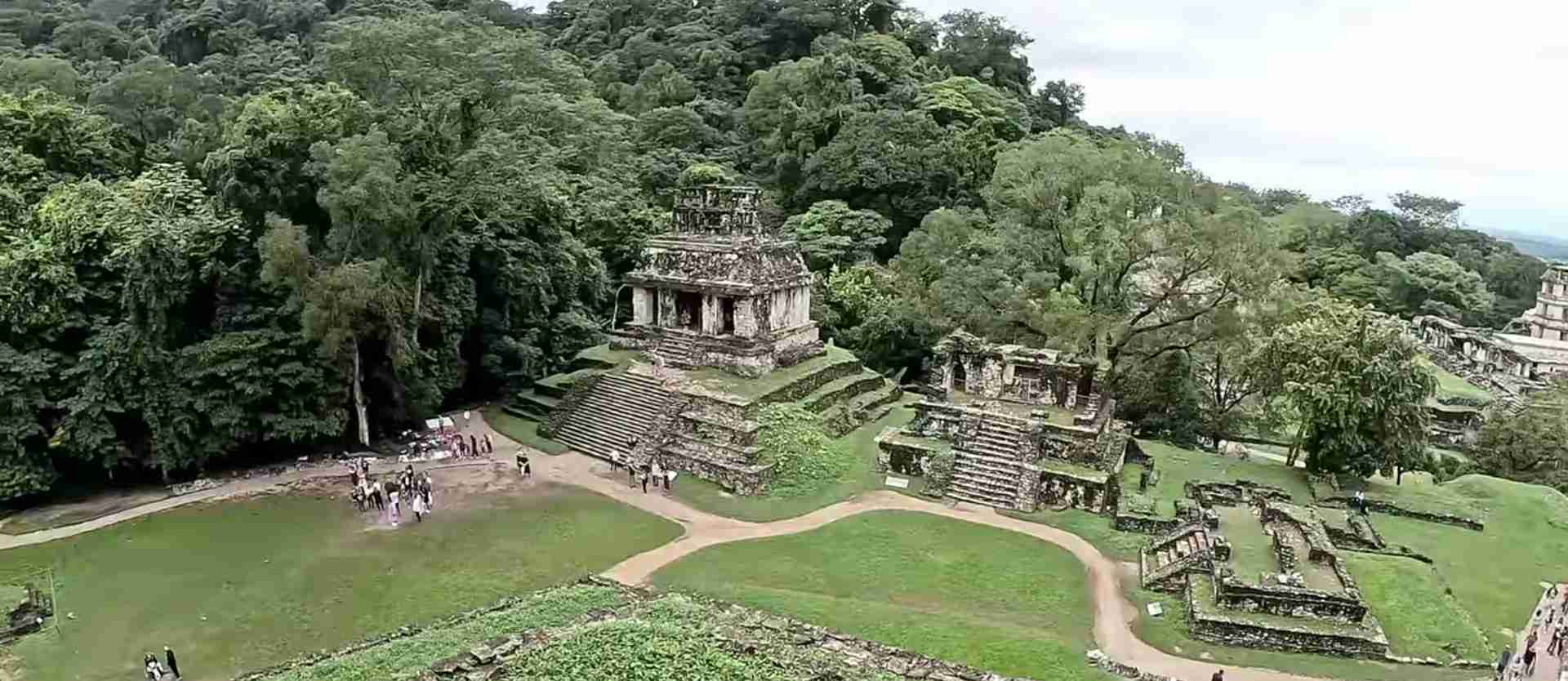
The ceremonial center arranges around main plaza (Gran Plaza) with Palace complex dominating the eastern side. The Palace’s four-story tower, unique in Maya architecture, rises above surrounding galleries and courtyards decorated with intricate stucco reliefs. West of the plaza, three primary temples crown ascending terraces: Temple of the Inscriptions (Pakal’s tomb), Temple XIII (Red Queen), and Temple of the Cross Group including Temple of the Cross, Temple of the Sun, and Temple of the Foliated Cross.
Paved paths connect all major structures with gentle gradients manageable for most fitness levels. The furthest structures (Group C residential complex) sit 800 meters from entrance, reachable via 15-minute walk through jungle. Viewing platforms provide excellent photography angles without climbing temples, as climbing is prohibited on most structures to preserve delicate decorations.
The site integrates naturally with surrounding landscape, where jungle vegetation creates dramatic backdrop of ceiba trees, mahogany, and strangler figs. The Otulum River flows through the site in stone channels, with small waterfalls adding atmospheric sound. This compact intensity means visitors experience numerous significant structures without the fatigue of sprawling site navigation.
Tikal’s Massive Extent
Tikal overwhelms with scale – 575 square kilometers of protected area containing over 3,000 structures dating from 600 BC to 900 AD. The core archaeological zone accessible to visitors spans 16 square kilometers with marked trails connecting major temple groups. Exploring all main structures requires 6-8 hours of steady walking covering 8-10 kilometers.
Five monumental temple pyramids define the visitor experience: Temple I (Temple of the Great Jaguar, 47 meters), Temple II (38 meters), Temple III (55 meters), Temple IV (65 meters – tallest structure in pre-Columbian Americas), and Temple V (57 meters). These massive pyramids rise above jungle canopy, visible from each other when climbing to their summits. Temple IV provides the iconic view featured in countless photographs and films, including Star Wars filming location.
The site organizes around Great Plaza flanked by Temples I and II, with North Acropolis containing 12 temples and Central Acropolis featuring palace complexes. Marked trails lead to South Acropolis, Temple IV via Tozzer Causeway, Temple III along Mendez Causeway, and peripheral complex groups including Group G and Lost World Pyramid (Mundo Perdido).
Navigation requires stamina and planning. The walk from entrance to Temple IV alone covers 2.5 kilometers through dense jungle, climbing from 230 to 280 meters elevation. Heat, humidity, and challenging terrain mean many visitors skip peripheral structures, focusing on Great Plaza, Temples I-IV, and one or two additional complexes. Tikal demands full day commitment with early start to accomplish comprehensive visit.
Climbing and Access Differences
This represents one of the most significant distinctions between sites. Palenque prohibits climbing on nearly all major structures to protect intricate stucco decorations and hieroglyphic inscriptions. Visitors view Temple of the Inscriptions, Palace, and Cross Group temples from ground level or designated viewing platforms. Only a few peripheral structures permit limited climbing to appreciate site views.
The climbing prohibition frustrates some visitors seeking adventurous exploration but results from necessary conservation. Palenque’s delicate stucco facades and carved panels would deteriorate rapidly under foot traffic that Tikal’s limestone structures better withstand.
Tikal encourages climbing on several major temples. Temple IV’s wooden stairway allows tourists to scale to summit platform 65 meters above jungle floor, providing breathtaking 360-degree views over forest canopy with temple peaks emerging like islands. Temple II permits climbing via steep original stairs to 38-meter summit. Temple V’s recently constructed wooden staircase enables access to 57-meter height. Lost World Pyramid welcomes climbers to its 32-meter summit.
Climbing Tikal’s temples requires reasonable fitness, comfort with heights, and caution on steep stairs lacking handrails. The Temple IV climb involves 15-20 minutes ascending through jungle then wooden ladder-stairs to summit platform. Early morning and late afternoon crowds pack these stairs, requiring patience. The physical challenge and triumphant summit views rank among Central America’s most memorable experiences for adventure-oriented travelers.
Architecture and Artistic Achievement Comparison 2026
Palenque’s Architectural Refinement
Palenque distinguishes itself through exceptional architectural sophistication and artistic detail unmatched at other Maya sites. The Palace complex exemplifies Maya engineering excellence with mansard roof techniques, internal aqueduct system, and multi-story construction. The four-story tower, astronomically aligned for solar observations, demonstrates advanced mathematical knowledge applied to ceremonial architecture.
The site’s stucco relief work represents the pinnacle of Maya artistry. Elaborate portraits of rulers, deities, and mythological scenes adorn temple facades, staircases, and interior walls. The Temple of the Inscriptions features the second-longest hieroglyphic text in the Maya world with 617 glyphs recounting Palenque’s dynastic history. These inscriptions provided crucial breakthroughs in Maya script decipherment, revealing detailed political history spanning 200 years.
Interior design achieves remarkable sophistication. The Palace includes separate bathing areas with steam baths (temazcales), private residential quarters, throne rooms for audiences, and underground chambers for storage and rituals. Corbeled arch construction creates spacious interiors with vaulted ceilings, some reaching 7-8 meters height. Ventilation systems and light shafts demonstrate environmental adaptation for tropical climate.
The Cross Group temples preserve Maya cosmological concepts in stone. Temple of the Cross, Temple of the Sun, and Temple of the Foliated Cross each contain interior sanctuaries with elaborate carved panels depicting creation mythology, divine genealogy of Palenque’s rulers, and religious ceremonies. These narrative panels provide unparalleled insights into Maya religious thought and political ideology.
Conservation quality enhances appreciation. Protected from elements and carefully restored, Palenque’s structures retain original details visitors can examine closely from viewing platforms. The crispness of hieroglyphic inscriptions, facial features in stucco portraits, and architectural proportions remain clearly visible, unlike many sites where erosion obscures artistic achievement.
Tikal’s Monumental Grandeur
Tikal overwhelms through monumentality and engineering ambition. Temple IV’s 65-meter height required transporting millions of limestone blocks up steep terrain and constructing supporting foundation reaching 15 meters below ground. The entire structure weighs an estimated 100,000 tons, testament to massive labor mobilization and organizational capacity of Classic Period Maya states.
The temples feature steep pyramid bases topped by temple structures with characteristic roof combs – ornamental vertical extensions rising above sanctuary roofs. These roof combs, reaching 10-15 meters additional height, carried enormous stucco masks and texts visible from great distances, serving both aesthetic and propagandistic functions. While most stucco decoration has eroded, Temple IV retains portions allowing reconstruction of original appearance.
Architectural evolution is visible across site chronology. Early structures like Lost World Pyramid demonstrate Preclassic construction techniques, while Classic Period temples show refined engineering. Temple I (690 AD) showcases Late Classic pinnacle with nine terraces representing nine levels of Xibalba (underworld), symbolic architecture encoding Maya cosmology in stone.
Interior tomb chambers reveal sophisticated funerary practices. Temple I contains the tomb of Jasaw Chan K’awiil I, one of Tikal’s greatest rulers, buried with jade ornaments, shells, and inscribed bones providing historical records. Though tombs are closed to public, artifacts in on-site museum demonstrate burial wealth and artistic achievement.
The North Acropolis presents dense concentration of temples built and rebuilt over 1,000 years, creating archaeological layer cake revealing construction sequence. Twelve temples crowd onto platform spanning 100 x 80 meters, showing successive rulers’ attempts to surpass predecessors’ monuments. This architectural palimpsest provides crucial data for understanding Maya city development.
Hieroglyphic Inscriptions and Historical Records
Palenque preserves Central America’s richest corpus of hieroglyphic texts outside Copán. The Temple of the Inscriptions alone contains 617 glyphs recording Palenque’s dynastic history, astronomical calculations, and mythological narratives. These texts enabled epigraphers to reconstruct detailed chronology spanning 80-743 AD, identifying specific rulers, their accomplishments, and political relationships with rival cities.
The discovery of Pakal the Great’s tomb in 1952 revealed inscribed sarcophagus lid depicting ruler’s descent into underworld, surrounded by extensive hieroglyphic text. These inscriptions transformed understanding of Maya religion and political ideology, showing rulers claimed divine descent and served as intermediaries between human and supernatural realms.
Stucco panels throughout the site bear additional inscriptions describing ceremonies, conquests, and astronomical events. The Cross Group texts explain Maya creation mythology, linking Palenque’s ruling dynasty to primordial gods. This textual richness makes Palenque invaluable for scholars and provides general visitors with accessible historical narratives.
Tikal features abundant hieroglyphic inscriptions but many have eroded due to limestone weathering. Stelae in Great Plaza record royal accessions, military victories, and ritual performances dating 292-869 AD. Lintel inscriptions in temple doorways describe building dedications and ruler genealogies. While significant, Tikal’s textual record lacks Palenque’s preservation quality and density.
Tikal’s inscriptions document its role as superpower competing with Calakmul for regional dominance. Star Wars between these cities lasted centuries, documented through military victory texts. These historical records transformed understanding of Maya political organization from peaceful theocracy to competitive state system with warfare, alliance-building, and dynastic marriages.
Jungle Experience and Wildlife Viewing 2026
Palenque’s Tropical Setting
Palenque occupies dramatic junction where Chiapas mountains meet Gulf Coast plains, creating microclimate supporting exceptional biodiversity. The site sits within dense tropical rainforest receiving 2,500mm annual rainfall, nourishing towering ceiba trees, wild figs, and mahogany. Morning mist often shrouds temples, creating ethereal atmosphere that enhances sense of ancient mystery.
Wildlife encounters happen consistently throughout visits. Troops of howler monkeys inhabit forest surrounding temples, their deep roars echoing across archaeological zone especially at dawn and dusk. These encounters require no special effort – monkeys often feed in trees overhanging main paths. Spider monkeys appear occasionally in more peripheral areas. Tropical birds provide constant soundtrack with toucans, parrots, motmots, and trogons spotted regularly by attentive observers.
Butterflies swarm the site with extraordinary diversity. Morpho butterflies flash iridescent blue wings along shaded paths. Owl butterflies, some with 15cm wingspans, cluster on fallen fruit. During wet season (May-October), butterfly abundance increases dramatically with hundreds visible simultaneously in particularly rich areas.
The forest maintains managed character with cleared undergrowth around main structures and maintained paths. This semi-wild state balances visitor access with ecosystem preservation. While less wild than Tikal, Palenque provides immersive jungle experience without navigation challenges. The Otulum River flowing through site adds water element with associated wildlife including herons, kingfishers, and occasionally caimans in quiet pools.
Night visits are prohibited, preventing observation of nocturnal wildlife, though sunset hours near closing time offer increasing animal activity as diurnal creatures settle and crepuscular species emerge.
Tikal’s Wild Rainforest
Tikal National Park protects 57,600 hectares of Maya Biosphere Reserve, creating Central America’s largest protected tropical forest. This vast wilderness extends far beyond archaeological zone, supporting jaguars, pumas, ocelots, margays, tapirs, white-lipped peccaries, and all five species of Central American monkeys. The archaeological zone functions as wildlife sanctuary where animals habituated to human presence appear regularly.
Howler monkey troops number in dozens across the site, with some troops exceeding 15 individuals. Their dawn chorus creates unforgettable soundscape, especially when climbing Temple IV for sunrise as calls echo from all directions through misty forest. Spider monkeys travel in large troops through canopy, often crossing paths overhead or feeding in fruiting trees near temples. White-nosed coatis wander temple plazas searching for dropped food, showing little fear of tourists.
Bird diversity astonishes with over 300 recorded species. Ocellated turkeys strut across Great Plaza pecking insects. Toucans, aracaris, and motmots perch on temple roof combs. Ornate hawk-eagles and king vultures soar above canopy. Serious birders record 50-80 species during single visit, with dawn hours providing peak activity. The forest canopy view from Temple IV enables eye-level observation of canopy-dwelling species impossible from ground.
Mammal encounters happen unpredictably but with sufficient frequency to satisfy wildlife enthusiasts. Early morning visitors (before 8 AM) maximize chances of spotting gray foxes, coatimundis, and occasionally brocket deer. Jaguar sightings occur 2-3 times monthly according to park rangers, typically at dawn or dusk on remote trails. Tapir tracks appear regularly near water sources though animals themselves rarely show.
The forest maintains authentic wilderness character. Dense undergrowth presses against paths, strangler figs envelope ancient structures, and ceiba trees tower 60+ meters overhead. This wildness means navigation requires attention to trail markers and occasional wildlife encounters include venomous snakes (fer-de-lance, coral snakes) requiring path vigilance. The authentic jungle experience appeals to nature enthusiasts willing to accept minor hazards.
Seasonal Wildlife Variation
Both sites experience seasonal shifts in wildlife visibility. Dry season (November-April) concentrates animals near water sources, increasing encounter reliability but reducing overall densities. Wet season (May-October) disperses animals across wider areas as water becomes abundant, though lush vegetation makes observation more challenging.
At Palenque, wet season delivers peak butterfly abundance, blooming orchids attracting hummingbirds, and increased bird nesting activity. However, afternoon rains limit comfortable exploration hours. Dry season provides optimal conditions for extended photography and wildlife observation despite slightly reduced animal densities.
Tikal’s wet season transforms the forest. Amphibian choruses fill night air at jungle lodges, migrant birds arrive from North America (October-March), and tree flowering attracts abundant pollinators. Jaguar sightings increase slightly during wet season as cats hunt increased prey populations. Dry season concentrates animals around limited water sources including artificial reservoirs (aguadas) Maya engineers constructed, creating reliable wildlife viewing locations.
For pure wildlife photography and observation, Tikal’s May-June period offers optimal balance – lush vegetation after first rains but before peak wet season flooding, with animal populations active during mating seasons. Palenque’s January-February window provides comfortable conditions with good wildlife activity and minimal rain interference.
Visitor Experience and Practical Considerations 2026
Crowd Levels and Peak Tourism Patterns
Palenque receives approximately 650,000 annual visitors concentrated heavily in dry season months December through March. Peak visitation occurs during Mexican holiday periods: Christmas-New Year (December 20-January 6), Semana Santa (Easter week), and July-August school vacations. During these peaks, arrive before 9 AM to explore major temples before tour bus groups arrive 10 AM-2 PM. Afternoons often quiet down as groups depart.
Low season months May-June and September-October offer nearly empty site experiences. Midweek visits even during high season encounter 50-60% fewer visitors than weekends. The compact site means crowding affects ambiance more than access – you’ll still see all structures, just with more people in photographs.
Tikal sees approximately 250,000 annual visitors, fewer than Palenque despite larger international reputation. Crowds concentrate on Great Plaza, Temples I-IV, and sunrise/sunset viewing platforms. The vast site disperses crowds effectively – peripheral structures like Temple III, Group G, and Lost World Pyramid often have 10 or fewer simultaneous visitors even during peak season.
Sunrise at Temple IV attracts 100-200 people daily during high season (December-March), creating crowded wooden stairway and packed summit platform. Book sunrise tours or arrive independently by 5:30 AM to secure good viewing position. Midday visits (10 AM-2 PM) see peak crowds on Great Plaza but empty conditions on distant structures. Late afternoon (3-5 PM) offers excellent balance of good light, fewer crowds, and comfortable temperatures.
Both sites benefit from overnight stays in adjacent towns enabling early arrival before day-trippers and late afternoon visits after tour groups depart. At Tikal, staying at jungle lodges inside park boundaries permits dawn access 45-60 minutes before Flores day tours arrive.
Physical Demands and Accessibility
Palenque accommodates visitors with moderate mobility limitations. The main plaza and all primary temples connect via paved or improved gravel paths with gradual slopes. The climb from parking lot to Palace complex involves ascending approximately 40 meters elevation over 400 meters distance – challenging in heat but manageable with rest breaks. No climbing is required to see major structures as viewing platforms provide optimal perspectives.
The 4-5 hour visit timeline assumes normal walking pace with frequent photo stops. Air temperatures reaching 30-35°C during midday combined with 70-90% humidity create exhausting conditions – bring 2-3 liters water per person. Shaded paths provide relief but open plazas offer no sun protection. Wheelchair access is extremely limited, though determined visitors with mobility aids can access Palace area with assistance.
Tikal demands significantly higher fitness levels. The 8-10 kilometer walking circuit through archaeological zone includes uneven terrain, exposed roots, and several moderate climbs. The trek to Temple IV from Great Plaza spans 2.5 kilometers with 50 meters elevation gain, manageable for most but requiring 35-40 minutes each way in humid heat.
Temple climbing presents serious physical challenges. Temple IV’s wooden stairway climbs 60+ meters at steep angle (approximately 60 degrees in sections), taking 15-20 minutes for fit climbers. Some sections lack handrails, requiring comfort with exposure and heights. Temple V stairs are even steeper. Anyone with knee problems, fear of heights, or cardiovascular concerns should avoid climbing.
The full-day visit involves 5-7 hours of walking with limited shade between temple groups. Temperatures reach 32-35°C, humidity stays above 80%, and trail exposure to direct sun can be intense. Plan for 4-5 liters of water per person. Rest areas with benches exist at major temple groups but disappear on connecting trails. Visitors with mobility limitations can explore Great Plaza and Temple I/II area thoroughly but cannot access distant structures without considerable difficulty.
Facilities and Visitor Services
Palenque provides solid visitor infrastructure. The entrance complex includes clean restrooms, drinking water stations, snack vendors selling agua fresca and fruit, and gift shops with guidebooks, sunscreen, and insect repellent. The Alberto Ruz Lhuillier Site Museum near entrance displays original artifacts including replicas of Pakal’s jade death mask and sarcophagus lid, providing essential historical context before entering archaeological zone.
Inside the site, shaded rest areas with benches appear at regular intervals. Information panels in Spanish and English explain major structures. Minimal food or water available once inside – bring adequate supplies. Official tour guides congregate at entrance offering services in Spanish, English, French, and occasionally German for $500-800 MXN per group. Guide quality varies significantly – request credentials and references.
Tikal’s visitor center at entrance offers comprehensive facilities including clean restrooms, restaurant serving breakfast and lunch ($50-100 GTQ), gift shop, and excellent museum (Museo Lítico) displaying original stelae, carved wooden lintels, and tomb artifacts. The museum visit takes 30-45 minutes and provides crucial historical context enhancing site appreciation.
Inside the archaeological zone, facilities are minimal. The Great Plaza has small visitor center with restrooms, water station, and emergency first aid. The Jungle Lodge and Jaguar Inn restaurants serve meals to all visitors, not just hotel guests, offering refuge during midday heat for lunch and cold drinks. Otherwise bring all food, water, and supplies. Cell phone coverage is non-existent in most of park.
Camping is permitted at designated areas near entrance with basic facilities for $25-40 GTQ per tent site. This enables budget travelers to access sunrise without expensive jungle lodge rates. Security at both sites is adequate with police presence and generally safe conditions even for solo travelers.
Sample 2026 Itineraries and Time Requirements
Palenque One-Day Visit Plan
6:30 AM – Depart Palenque town via colectivo or taxi to archaeological zone entrance ($10-150 MXN depending on transport choice). Arrive 7:00 AM when site opens to beat heat and crowds.
7:00-7:45 AM – Visit Alberto Ruz Lhuillier Site Museum first while mind is fresh. The museum’s artifacts and explanatory displays establish essential context for understanding structures. Entry $65 MXN separate from site ticket.
7:45 AM-8:00 AM – Enter archaeological zone (ticket $80 MXN). Proceed directly to Temple of the Inscriptions. Morning light illuminates western facade beautifully for photography. Spend 25-30 minutes examining hieroglyphic texts on interior tablets and contemplating Pakal’s tomb (visible only through protective window).
8:00-8:45 AM – Explore Palace complex thoroughly. Wander through courtyard, examine stucco reliefs in galleries, climb to tower viewing platform for aerial perspective of entire site. The Palace rewards detailed exploration with hidden chambers and intricate decorative elements.
8:45-9:30 AM – Visit Temple of the Cross Group. Allocate 10-15 minutes each at Temple of the Cross, Temple of the Sun, and Temple of the Foliated Cross. Interior carved panels display Maya cosmology in stone – bring binoculars for detail viewing.
9:30-10:00 AM – Walk to Group C residential area through jungle path. Fewer tourists venture here, offering peaceful forest experience with excellent wildlife spotting (howler monkeys, parrots, butterflies).
10:00-10:30 AM – Return to main plaza area. Take break at shaded rest area with cold drinks and snacks brought from town or purchased from vendors near entrance.
10:30-11:15 AM – Photograph main structures from various angles as morning light continues improving. Temple of the Inscriptions from Palace tower provides iconic shot. Explore Temple XIII and Ball Court if energy permits.
11:15 AM-12:00 PM – Final walk through site, revisiting favorite structures. Exit archaeological zone.
Colectivo/taxi $10-150, museum entry $65, site entry $80, snacks/drinks $50-80, optional guide $500-800 (if hired). Total day cost: $205-1,075 MXN ($12-60 USD) per person depending on transport and guide choices.
Tikal Full-Day Comprehensive Visit
4:00 AM – For sunrise visitors, depart Flores hotel via pre-arranged private transport ($300-400 GTQ) or jungle lodge. Sunrise shuttle tours from Flores cost $80-100 GTQ for transport only.
5:00 AM – Arrive Tikal entrance. Purchase entry ticket $250 GTQ for international visitors. Two-day ticket required for sunrise access costs $300 GTQ. Proceed directly to Temple IV via Tozzer Causeway using flashlight/headlamp (essential for predawn visit).
5:45 AM – Reach Temple IV base. Climb wooden stairway to summit platform (15-20 minutes). Secure viewing position before crowds arrive.
6:15-7:00 AM – Sunrise over rainforest canopy with temple peaks emerging from mist. Temple I, II, III, and V visible across jungle. Howler monkey dawn chorus provides soundtrack. This ranks among Central America’s most spectacular experiences.
7:00-8:00 AM – Descend Temple IV. Walk to Great Plaza via Tozzer Causeway (30 minutes), enjoying jungle awakening with peak bird and wildlife activity. Stop at Aguada Tikal reservoir where coatis and birds gather.
8:00-9:30 AM – Great Plaza exploration. Climb Temple II for elevated perspective. Temple I closed to climbing but viewable from multiple angles. Explore North Acropolis temples and Central Acropolis palace complex. Photograph structures in excellent morning light.
9:30-10:00 AM – Visit Museo Lítico (included with entry ticket). Original carved stelae, Temple I wooden lintels, and jade artifacts provide historical depth. Air conditioning offers welcome relief from heat building outside.
10:00-11:00 AM – Walk Mendez Causeway to Temple III (30-minute roundtrip). This massive pyramid sees few visitors despite impressive scale. Quiet jungle trail offers likely wildlife encounters.
11:00 AM-12:00 PM – Trek to Mundo Perdido (Lost World Pyramid) complex. The Preclassic pyramid permits climbing for panoramic views over southern site areas. Adjacent structures show early architectural development.
12:00-1:00 PM – Lunch break at Jungle Lodge or Jaguar Inn restaurant. Typical meal costs $80-120 GTQ. Rest during peak midday heat while hydrating and regaining energy for afternoon exploration.
1:00-2:00 PM – Explore Temple V. Recently installed wooden stairway enables access to 57-meter summit with spectacular views across forest. Less crowded than Temple IV.
2:00-3:00 PM – Visit peripheral groups if energy permits – Group G with five-story palace remains fascinating but requires additional 45-minute walk from main zone. Alternatively, revisit Great Plaza for different afternoon light angles.
3:00-4:00 PM – Return walk to entrance via main trail, stopping for final wildlife viewing as animals become active during cooling afternoon. Purchase souvenirs at gift shop.
Entry $250 GTQ, two-day sunrise pass $300 GTQ, lunch $80-120 GTQ, water/snacks $40-60 GTQ, optional private guide $400-600 GTQ. Total day cost: $370-1,080 GTQ ($47-138 USD) per person excluding Flores-Tikal transportation.
Combined Visit Multi-Day Itinerary
For travelers attempting both sites in single trip, allocate minimum 6-7 days:
Day 1: Arrive Palenque town. Afternoon acclimatization and town exploration. Accommodation $300-800 MXN, meals $300-600 MXN.
Day 2: Full Palenque archaeological zone visit following one-day itinerary above. Afternoon visit to Palenque waterfalls (Misol-Ha or Agua Azul) if desired. Accommodation $300-800 MXN, site costs $145 MXN, meals $300-600 MXN, waterfall tour $400-600 MXN optional.
Day 3: Early departure Palenque to Flores via ADO bus ($450-550 MXN) or shuttle service. 8-10 hour journey through Chiapas and across Guatemala border at Frontera Corozal. Arrive Flores evening. Accommodation $150-500 GTQ, meals $200-350 GTQ.
Day 4: Tikal full-day visit following comprehensive itinerary. Return to Flores evening. Accommodation $150-500 GTQ, Tikal costs $250 GTQ + transport $80-100 GTQ, meals $300-450 GTQ.
Day 5: Optional second Tikal visit (two-day ticket $300 GTQ enables return) or explore Flores/Santa Elena and Petén Itzá Lake activities. Accommodation $150-500 GTQ, meals $250-400 GTQ.
Day 6: Flores to next destination or return travel. Optional Yaxhá archaeological site visit (80 GTQ entry, $150-200 GTQ tour) for additional Maya experience.
Total estimated costs for combined 6-day itinerary: $4,500-7,500 MXN plus $1,300-2,500 GTQ (approximately $320-570 USD combined), excluding international flights and major transportation between regions.
Photography and Documentation Comparison 2026
Palenque Photography Advantages
Palenque rewards photographers with exceptional opportunities for architectural detail and artistic composition. The site’s compact layout enables thorough coverage with standard zoom lenses (24-70mm range). Wide-angle lenses (16-35mm) capture Temple of the Inscriptions with Palace complex in single frame from main plaza, creating classic Palenque vista.
The morning light schedule favors Palenque’s orientation. Temple of the Inscriptions faces west, photographing beautifully in early morning when eastern light illuminates facade without harsh shadows. Palace complex receives excellent light 7-9 AM for textures on stucco reliefs and carved panels. Cross Group temples photograph best 8-10 AM before intense overhead sun flattens three-dimensional details.
Macro photography excels at Palenque. Hieroglyphic inscriptions photograph crisply with 100mm macro or 70-200mm telephoto, enabling detailed documentation of carved texts. Stucco relief work rewards close-up photography showing artistic craftsmanship. The viewing platform prohibition on climbing actually benefits photography – designed viewing angles provide optimal composition positions discovered through years of photographer experimentation.
Jungle integration creates atmospheric compositions. Temple emerging from rainforest vegetation, morning mist swirling through plazas, and ceiba trees framing ancient stone create ethereal Maya mystique. Butterfly photography opportunities abound with vibrant morphos and owl butterflies predictably feeding in sunny patches.
Restrictions are minimal. Photography permitted throughout site with no fees for non-professional equipment. Tripods allowed though rarely necessary in bright tropical light. Drone photography requires special permits from INAH and faces strict limitations, but ground-level photography unrestricted. Video recording welcomed including for personal YouTube and social media content.
Tikal Photography Opportunities
Tikal provides dramatic photography opportunities impossible at other Maya sites. The Temple IV sunrise shot – silhouetted temple peaks emerging from misty jungle as sun rises – ranks among archaeology photography’s most iconic images. This composition requires wide-angle lens (16-24mm) to capture sweeping forest canopy with temple peaks, taken from wooden platform atop Temple IV.
Telephoto lenses (70-200mm or longer) excel at Tikal for isolating distant temples across jungle. From Temple IV summit, telephoto compression brings Temple I, II, and III into dramatic alignment. From Great Plaza, telephoto lenses capture Temple I facade details and roof comb ornamental carvings with precision impossible closer due to climbing prohibition.
The vast scale enables composition variety. Wide-angle establishes monumental pyramid scale against human visitors for perspective. Standard range captures temple facades and architectural details. Telephoto isolates carved stelae texts and eroded roof comb masks. The site rewards photographers who pack varied focal lengths.
Wildlife photography opportunities exceed Palenque significantly. Howler monkeys in trees near temples, toucans perched on ancient structures, coatis wandering plazas, and distant raptors soaring over canopy create dynamic animal-architecture compositions. Early morning and late afternoon provide peak wildlife activity coinciding with ideal light.
Sunset photography from Temple IV offers alternative to sunrise. Western sky ignites orange and purple behind Temple I-III pyramids visible across jungle. Fewer crowds than sunrise make sunset logistically easier, though afternoon heat creates haze reducing atmospheric clarity compared to dawn’s crisp air.
Photography restrictions parallel Palenque – personal photography unrestricted, professional equipment requires permits. Tripods allowed. Drones prohibited except with advance authorization rarely granted. The climbing access enables first-person perspective photos impossible at Palenque – looking down steep stairs, standing atop ancient pyramid summit, and aerial views over forest canopy.
Optimal Photography Timing for Both Sites
At Palenque, optimal photography window runs 7:30-10:30 AM. Arrive when site opens (7 AM in dry season, 8 AM wet season) for empty temples and ideal morning light. Clouds during wet season (May-October) create diffused light excellent for eliminating harsh shadows on white limestone but reduce dramatic lighting effects. Dry season (November-April) delivers clear skies with strong directional light enhancing texture and three-dimensional forms.
Tikal’s photography timing splits into two prime windows. Sunrise sessions (6:00-8:30 AM) provide magical light, mist effects, and wildlife activity. The sunrise commitment requires pre-dawn wake-up and jungle lodge accommodation or expensive private transport, but rewards are substantial. Morning sessions (8:00 AM-11:00 AM) offer excellent general photography after sunrise crowds disperse.
Afternoon photography at Tikal (3:00-5:30 PM) becomes viable during dry season when air clarity improves and temperature cools slightly. West-facing Temple I facade catches warm afternoon light. However, morning sessions consistently outperform afternoon for both light quality and wildlife activity.
Wet season photography at both sites requires weather adaptation. Rain typically arrives afternoon (1-5 PM), meaning morning photography remains viable. Heavy clouds create dramatic skies behind temples – when breaks in weather allow. Pack rain covers for cameras and be prepared to protect equipment during sudden downpours. The wet season rewards patient photographers with lush green vegetation, dramatic cloud formations, and empty sites due to reduced tourism.
Making Your Decision: Recommendations by Traveler Profile 2026
Choose Palenque If:
You prioritize architectural refinement and artistic detail over monumentality and scale. Palenque’s hieroglyphic inscriptions, stucco reliefs, and palace complex sophistication exceed any other Maya site for close examination of artistic achievement and architectural engineering.
You have limited time or mobility constraints. The compact site allows thorough exploration in 4-5 hours without exhaustive walking. No climbing required to appreciate major structures, with excellent viewing platforms providing optimal perspectives.
You’re interested in Maya history and deciphered hieroglyphic texts. Palenque’s extensive inscriptions provide detailed political history, ruler genealogies, and religious concepts accessible through interpretive panels and guidebooks.
You prefer efficient travel logistics. Palenque town offers diverse accommodation, restaurants, and services within easy access of archaeological zone. No need for complex transportation coordination or remote jungle lodges.
Your budget is tighter. Entry costs ($5 USD vs $32 USD), accommodation rates, and meal expenses all favor Palenque significantly. Total visit costs run 40-60% less than equivalent Tikal experience.
You’re traveling Mexico’s Yucatan/Chiapas route. Palenque integrates perfectly with itineraries including San Cristóbal de las Cobán, Oaxaca, Merida, and Caribbean coast destinations without country-crossing complications.
Choose Tikal If:
You want adventurous jungle exploration and climbing experience. Scaling Temple IV to watch sunrise over rainforest canopy ranks among Central America’s most thrilling archaeological experiences. Multiple temples permit climbing for varied perspectives.
Scale and monumentality inspire you more than detail. Tikal’s five massive pyramids, vast ceremonial plazas, and 3,000-structure site create overwhelming sense of Maya civilization’s power and organizational capacity.
Wildlife observation is priority. Tikal’s 57,600-hectare protected forest supports jaguar, five monkey species, 300+ bird species, and abundant tropical fauna providing consistent wildlife encounters impossible at smaller sites.
You have full day to dedicate. Tikal rewards unhurried exploration with 8+ hours allowing thorough coverage of major temple groups, peripheral structures, and jungle trails at relaxed pace.
You’re exploring Guatemala’s Maya heartland. Tikal combines naturally with itineraries including Lake Atitlán, Antigua, and Río Dulce. Add-on visits to Yaxhá and other Petén sites enhance Maya cultural immersion.
The iconic sunrise photo is must-have. That Temple IV sunrise vista appears in every Central America photography collection for good reason – it’s genuinely spectacular and unique to Tikal.
Attempt Both Sites If:
You have 6+ days for Maya culture focus. The combined experience showcases Maya civilization breadth – Palenque’s artistic refinement and Tikal’s political/military power. Together they provide comprehensive understanding impossible from single site.
You’re backpacking Central America long-term. Multi-week or multi-month trips easily accommodate both sites separated by 8-10 hour overland journey with interesting stops en route (Frontera Corozal river crossing, Flores colonial town).
You’re dedicated Maya culture enthusiast. Serious students of Maya civilization benefit immensely from comparing architectural styles, hieroglyphic texts, urban planning, and regional variations visible only through multi-site visits.
Budget isn’t primary constraint. Combined visits require substantial investment in transportation, accommodation across two countries, and 6-7 days of trip time. Worthwhile for passionate travelers but significant commitment.
Final Recommendations for 2026 Planning
For first-time Maya site visitors with single destination choice, Tikal edges ahead for its combination of climbing adventure, wildlife richness, and iconic status. The sunrise experience and jungle immersion create memories lasting lifetime. However, Palenque delivers superior artistic appreciation, historical insight, and value for money.
Mexico itinerary travelers should absolutely visit Palenque – it’s the country’s finest Maya site combining archaeological significance with tropical beauty. Guatemala itinerary travelers must visit Tikal as the country’s premier attraction and Central America’s largest Maya site.
Photography enthusiasts face difficult choice. Palenque offers superior architectural detail, preserved reliefs, and hieroglyphic documentation. Tikal provides dramatic scale, jungle landscapes, and that incomparable sunrise composition. Photographers prioritizing architectural work choose Palenque; those seeking landscape and adventure shots choose Tikal.
Families with children favor Palenque for easier logistics, shorter visit duration, and engaging wildlife in compact area. Tikal’s extensive walking and climbing challenges young children but excites adventurous teenagers.
Budget travelers strongly favor Palenque where total 2-day visit including accommodation, meals, and site costs runs $1,200-2,000 MXN ($70-115 USD). Equivalent Tikal experience costs $1,000-1,800 GTQ ($125-230 USD) – roughly 50% higher.
The ideal scenario combines both sites in comprehensive Maya exploration. If forced to choose only one, select based on your primary interest: artistic refinement and history (Palenque) or adventure and natural setting (Tikal). Either choice delivers world-class archaeological experience showcasing Maya civilization at its zenith.
Frequently Asked Questions
Is Palenque or Tikal easier to visit in 2026?
Palenque is significantly easier to visit. The site sits 8 kilometers from Palenque town with frequent colectivo service for $10 MXN or taxis for $100-150 MXN. The compact layout allows thorough 4-5 hour visits without extensive walking. Tikal requires basing in Flores 65 kilometers away with shuttle coordination and demands 6-8 hours of walking covering 8-10 kilometers through jungle. Palenque’s easier logistics suit travelers with limited time or preferring straightforward access.
Which site has better infrastructure in 2026?
Both sites maintain good visitor infrastructure but with different strengths. Palenque offers excellent on-site museum (Alberto Ruz Lhuillier) displaying Pakal’s tomb artifacts, clean restrooms, water stations, and information panels in multiple languages. Tikal’s infrastructure includes comprehensive visitor center, excellent Museo Lítico with original stelae, and two restaurants (Jungle Lodge and Jaguar Inn) serving meals throughout day. Tikal’s remote location means facilities are more spread out, while Palenque concentrates services near entrance. Overall infrastructure quality is comparable with slight edge to Tikal for restaurant options.
Can you swim at either Palenque or Tikal in 2026?
Swimming is not permitted at either archaeological site. However, Palenque area offers excellent swimming opportunities at nearby waterfalls. Misol-Ha waterfall (20 kilometers from Palenque) features swimming pool beneath 35-meter cascade with tour packages costing $400-600 MXN including transportation and entrance. Agua Azul cascades (64 kilometers) provide stunning turquoise pools, though swimming conditions vary by season and water levels. Tikal area lacks swimming opportunities near the archaeological zone, though Flores town on Lake Petén Itzá offers lake swimming and water activities.
Which site is safer for solo travelers in 2026?
Both sites maintain good safety standards with police presence and generally low crime rates. Palenque has reputation for occasional petty theft in parking areas – use paid lots and don’t leave valuables visible in vehicles. Inside archaeological zone, solo travelers encounter no significant safety concerns with regular ranger patrols. Tikal’s remote jungle setting feels isolated but park rangers patrol regularly and visitor density on main trails provides security. Solo women travelers report feeling safe at both sites during daylight hours. Avoid isolated peripheral areas alone and stay on marked trails. Overall, both sites rank as safe for solo travel with standard precautions.
Are guides necessary at Palenque and Tikal in 2026?
Guides are not required but significantly enhance understanding at both sites. Palenque’s complex hieroglyphic inscriptions, architectural symbolism, and historical narratives benefit from expert interpretation that self-guided visitors miss. Guides cost $500-800 MXN for 2-3 hour tours. Tikal’s vast scale makes guides valuable for efficient navigation and wildlife spotting – guides know animal locations and hidden architectural details. Guides charge $400-600 GTQ for 4-6 hour comprehensive tours. Self-guided visits work fine with quality guidebooks and site maps – both sites have clear signage and established paths. Choose guides if you want deeper historical context and cultural insights.
What should I bring to each site in 2026?
For Palenque bring: 2-3 liters water per person, sunscreen SPF 50+, wide-brim hat, insect repellent (mosquitoes active in jungle areas), comfortable walking shoes, rain jacket if visiting May-October, camera with telephoto lens for hieroglyphics, binoculars for wildlife and architectural detail viewing. For Tikal bring: 4-5 liters water per person (critical for full-day visit), high-energy snacks and lunch if not using restaurant, sunscreen, hat, insect repellent (essential in jungle), hiking shoes with good tread for steep pyramid stairs, rain gear, headlamp if doing sunrise visit, telephoto camera lens for distant temples, binoculars for wildlife. Both sites: bring Mexican pesos/Guatemalan quetzales cash as credit cards not accepted.
How do the sites compare for sunset and sunrise in 2026?
Tikal vastly surpasses Palenque for sunrise and sunset experiences. Temple IV sunrise ranks among Central America’s most spectacular sights – watching temple peaks emerge from misty jungle as sun rises with howler monkey chorus. Requires pre-dawn arrival and two-day ticket ($300 GTQ) but worth every quetzal. Sunset from Temple IV also impressive with orange sky behind Temple I-III. Palenque does not permit sunrise or sunset access – site closes 5 PM daily with no exceptions. The jungle setting means Palenque views would be limited anyway due to surrounding forest. For sunrise/sunset priority, choose Tikal without question.
Which site works better for cruise ship excursions in 2026?
Neither site works well for cruise excursions as both are inland archaeological sites requiring overland travel. Palenque sits 220 kilometers from Villahermosa port requiring 2.5-3 hours each way – too distant for typical cruise day stops. Tikal is completely landlocked in northern Guatemala with no nearby ports. Cruise ships calling at Caribbean Mexico or Belize instead visit Tulum, Coba, or Chichen Itza which are coastal or near-coastal sites. Travelers must visit Palenque and Tikal as separate land-based trips independent of cruise itineraries.
Can you visit Palenque or Tikal with small children in 2026?
Palenque works better for families with small children. The compact site allows 2-3 hour abbreviated visits covering main highlights without exhausting young travelers. Paved paths accommodate strollers on main routes, though some areas require carrying. No climbing required to appreciate temples. Heat and humidity challenge children – visit early morning and bring adequate snacks/water. Tikal presents difficulties for small children – 6-8 hour walking circuit, steep pyramid climbs, jungle heat, and limited facilities strain young travelers. Children under 8 typically struggle with Tikal’s demands. Families with children 10+ can manage Tikal if children have hiking experience and stamina. For families with children under 8, choose Palenque.
How do admission prices compare long-term?
Palenque maintains remarkably stable pricing as Mexican government-controlled INAH site – entry has cost $80 MXN (approximately $5 USD) for several years with minimal increases. Guatemala’s Tikal has seen gradual price increases from 150 GTQ in 2018 to current 250 GTQ ($32 USD) in 2026. The trend suggests Tikal prices will continue rising 10-15% every 2-3 years as park maintenance costs increase. Palenque’s government subsidy keeps prices artificially low, while Tikal operates more on cost-recovery model. Long-term, Tikal will likely cost 5-7x more than Palenque rather than current 6x difference.