
Oslo Travel Guide 2026: Best Things to Do & See
Oslo combines striking modern architecture with Viking heritage, world-class museums, and stunning fjord landscapes accessible right from the city center. As Norway’s capital transforms into an increasingly sustainable and visitor-friendly destination, 2026 offers the perfect time to explore this Nordic gem with its exceptional blend of culture, nature, and urban sophistication.
Key Takeaways
- The Oslo Pass provides exceptional value for 2026, offering free entry to 30+ museums and unlimited public transport in zones 1-4, including Vy trains to Oslo Airport
- Oslo’s main attractions cluster in walkable neighborhoods, from the waterfront Opera House to the historic Akershus Fortress, making efficient sightseeing easy
- Museums like MUNCH, the National Museum, and the Viking Ship Museum showcase Norway’s artistic and maritime heritage with world-class collections
- The Bygdøy peninsula concentrates five major museums within walking distance, making it ideal for a dedicated cultural day
- Oslo’s compact size allows visitors to combine city culture with nature experiences, from the Oslo Fjord to nearby forests, all within short public transport rides
- Winter and summer offer distinct experiences: midnight sun and outdoor activities versus northern lights proximity and winter sports at Holmenkollen
People Also Ask About Oslo Travel 2026
How many days do you need in Oslo in 2026?
Three to four days allows comfortable exploration of Oslo’s main attractions in 2026. This timeframe provides sufficient time to visit major museums (MUNCH, National Museum, Viking Ship Museum), explore neighborhoods like Grünerløkka and Aker Brygge, take a fjord cruise, and enjoy day trips to nearby destinations like the Vigeland Sculpture Park or Bygdøy museums. A 72-hour Oslo Pass maximizes value for this duration. Shorter visits of two days can cover highlights but require strategic planning, while five to seven days allows deeper exploration including hiking in Nordmarka forest, visiting the Holmenkollen Ski Jump, and taking extended day trips to places like Drøbak or the Oslo Islands.
Is the Oslo Pass worth buying in 2026?
The Oslo Pass delivers strong value for museum-focused visitors in 2026. The 72-hour pass costs NOK 945 (approximately €84) and includes free entry to 30+ attractions plus unlimited public transport. Visiting just the MUNCH Museum (NOK 200), National Museum, Fram Museum (NOK 160), and Norwegian Folk Museum (NOK 180), combined with airport transfers on Vy trains (NOK 258 roundtrip), already exceeds the pass cost. The pass proves most economical for visitors planning to see three or more paid museums daily and using public transport extensively. However, travelers preferring a slower pace or focusing on free attractions like Vigeland Sculpture Park, the Opera House plaza, and waterfront walks may find individual tickets more suitable.
What is Oslo most famous for in 2026?
Oslo gains international recognition for several distinctive features in 2026. The city houses the world’s most comprehensive Edvard Munch collection, including multiple versions of The Scream, in the striking MUNCH museum. Oslo’s Viking heritage shines through the Viking Ship Museum and historical maritime museums on Bygdøy peninsula. The waterfront Oslo Opera House, where visitors walk on the roof, exemplifies the city’s commitment to accessible contemporary architecture. The Vigeland Sculpture Park, featuring 200+ bronze and granite sculptures, stands as the world’s largest sculpture park created by a single artist. Additionally, Oslo’s position as the Nobel Peace Prize city, sustainable urban planning initiatives, and spectacular fjord setting contribute to its international profile.
How expensive is Oslo for tourists in 2026?
Oslo ranks among Europe’s most expensive cities for tourists in 2026, though strategic planning significantly reduces costs. Museum admission ranges NOK 140-200 (€12-18) per attraction, restaurant meals cost NOK 200-400 (€18-35) for mid-range dining, and accommodation averages NOK 1,200-2,000 (€107-178) nightly for mid-range hotels. However, numerous free attractions exist, including Vigeland Sculpture Park, the Opera House plaza, Akershus Fortress grounds, and waterfront promenades. The Oslo Pass (NOK 550-945 / €49-84 for 24-72 hours) provides substantial savings for active sightseers. Budget-conscious visitors can reduce expenses by staying in hostels or apartments, shopping at supermarkets like Rema 1000, and balancing paid museums with free outdoor activities. Public transport operates efficiently but requires planning, with single tickets costing NOK 44-64 (€4-6).
Extended multi-day tours – 5+ days
Featured Oslo Multi-Day Tour Packages

3 days
Oslo 3-Day Discovery Tour
- ✓ Comprehensive Oslo experience
- ✓ Expert local guides included
- ✓ All accommodation included
- ✓ Transportation provided
5 days
Oslo 5-Day Highlights Experience
- ✓ Comprehensive Oslo experience
- ✓ Expert local guides included
- ✓ All accommodation included
- ✓ Transportation provided

7 days
Oslo 7-Day Cultural Journey
- ✓ Comprehensive Oslo experience
- ✓ Expert local guides included
- ✓ All accommodation included
- ✓ Transportation provided
10 days
Oslo 10-Day Complete Adventure
- ✓ Comprehensive Oslo experience
- ✓ Expert local guides included
- ✓ All accommodation included
- ✓ Transportation provided
Multi-day tour packages powered by TourRadar. Prices and availability subject to change.
Introduction: Discovering Oslo in 2026
Norway’s capital stands apart from other Scandinavian cities through its unique combination of urban sophistication and immediate access to nature. While Copenhagen draws visitors with royal palaces and Stockholm showcases medieval charm, Oslo distinguishes itself through world-class museums housing Viking ships and Edvard Munch masterpieces, cutting-edge contemporary architecture like the Oslo Opera House, and a stunning fjord setting that brings wilderness directly into the city center.
The city’s compact layout proves remarkably visitor-friendly. Most major attractions concentrate within walking distance or short public transport rides from the central Oslo S station. The waterfront area transforms from the historic Akershus Fortress through the modern Aker Brygge development to the architectural marvel of the Opera House, creating a continuous cultural corridor. Meanwhile, the Bygdøy peninsula consolidates five world-class museums within a concentrated area accessible by ferry, allowing efficient cultural immersion.
Oslo’s character reflects Norway’s broader values of sustainability, equality, and connection to nature. The city invests heavily in pedestrian-friendly infrastructure, electric public transport, and green spaces. Residents embrace outdoor activities year-round, from kayaking in the fjord to cross-country skiing in Nordmarka forest, just minutes from downtown. This integration of urban culture and natural environment creates a distinctive atmosphere where world-class museums coexist with swimming beaches and hiking trails.
In 2026, Oslo continues evolving as a cultural destination. The MUNCH museum, opened in 2021, has established itself as a must-visit attraction housing the world’s largest Edvard Munch collection in a striking contemporary building. The National Museum consolidates Norway’s art, architecture, and design collections in one spectacular facility. These modern institutions complement historic sites like the Viking Ship Museum and the Norwegian Folk Museum, creating comprehensive cultural offerings.
The Oslo Pass system significantly impacts visit planning and budgeting. This city card provides free entry to 30+ museums and attractions, unlimited public transport access including Vy trains to Oslo Airport, and discounts on tours and dining. Given Oslo’s high individual attraction costs (typically NOK 140-200 per museum), the pass delivers substantial value for visitors planning intensive sightseeing. Understanding when the pass proves economical versus when pay-per-visit makes more sense forms a crucial planning consideration.
Seasonal variations dramatically affect the Oslo experience. Summer brings extended daylight hours, outdoor festivals, waterfront dining, and comfortable temperatures for walking and cycling. The Oslo Fjord comes alive with boat traffic, swimming areas open, and island hopping becomes popular. Winter transforms the city into a Nordic wonderland, with Christmas markets, ice skating, northern lights possibilities, and world-class skiing at Holmenkollen. Spring and fall offer fewer crowds, lower accommodation costs, and pleasant weather for museum visits and urban exploration.
This comprehensive guide provides detailed, practical information for planning your 2026 Oslo visit. From navigating the public transport system and maximizing Oslo Pass value to discovering hidden gems beyond the main tourist trail, we cover essential knowledge for both first-time visitors and those seeking deeper exploration of Norway’s multifaceted capital.
Essential Planning Information for Oslo 2026
Understanding Oslo’s Layout and Neighborhoods
Oslo’s geography radiates from the central Oslo S (Central Station) area, with distinct neighborhoods offering different experiences. The city center encompasses Karl Johans gate, Oslo’s main thoroughfare connecting the Royal Palace to Oslo S, lined with shops, restaurants, and historic buildings. This area provides convenient access to major attractions but tends toward tourist-focused businesses and higher prices.
The waterfront district stretches from Aker Brygge’s modern development through Tjuvholmen’s contemporary art scene to the Opera House. Aker Brygge transforms the former shipyard into upscale restaurants, shops, and residential spaces, while maintaining authentic maritime character through preserved dock structures. The Oslo Opera House anchors the eastern waterfront, its distinctive white marble exterior and accessible roof walk creating Oslo’s most photographed contemporary landmark.
Grünerløkka represents Oslo’s bohemian quarter northeast of the center, characterized by vintage shops, independent cafes, street art, and multicultural restaurants. The neighborhood attracts younger residents and visitors seeking authentic local atmosphere away from tourist concentrations. Markveien, the main street, hosts weekend markets and diverse dining options reflecting Oslo’s international character.
The Bygdøy peninsula, accessible by ferry or bus, consolidates cultural institutions in a parkland setting. Five major museums cluster within walking distance: the Viking Ship Museum, Norwegian Folk Museum, Fram Museum (polar exploration), Kon-Tiki Museum (Thor Heyerdahl expeditions), and Maritime Museum. This concentration allows dedicated cultural days while providing beach access and natural surroundings.
Frogner district combines residential elegance with major attractions, notably Vigeland Sculpture Park. This western neighborhood showcases Oslo’s prosperity through grand 19th and early 20th-century architecture, boutique shopping, and upscale dining. The area provides quieter accommodation alternatives while maintaining excellent public transport connections to central attractions.
Oslo Pass Strategy for 2026
The Oslo Pass operates as Oslo’s official tourist card, providing three main benefits: free entry to 30+ museums and attractions, unlimited public transport in zones 1-4, and discounts on selected tours and dining. Understanding when this pass delivers value versus when individual tickets prove more economical requires analyzing your planned activities.
Pass pricing for 2026 remains competitive: the 24-hour pass costs NOK 550 (approximately €49), the 48-hour pass NOK 800 (€71), and the 72-hour pass NOK 945 (€84). Children under 18 pay half price, while seniors (67+) receive 20% discounts. The pass activates upon first use and runs for continuous hours, not calendar days.
Value calculation requires comparing individual costs. Major museums charge NOK 140-200 per adult: MUNCH Museum NOK 200, Fram Museum NOK 160, Norwegian Folk Museum NOK 180, with similar pricing across most attractions. A 24-hour public transport pass costs NOK 90, while the Vy train to Oslo Airport runs NOK 129 each way. Visiting three museums plus using public transport and airport transfer already exceeds the 72-hour pass cost.
The pass proves most valuable for visitors planning intensive museum days. A typical high-value day might include: morning at the National Museum, afternoon at MUNCH, evening at the Nobel Peace Center, with public transport throughout. This single day generates approximately NOK 800 in value, already covering most of the 24-hour pass cost. Adding a second museum day and airport transfers easily justifies the 72-hour pass.
Conversely, the pass delivers limited value for visitors focusing on free attractions or selective museum visits. Oslo offers extensive free experiences: Vigeland Sculpture Park, Opera House plaza and roof walk, Akershus Fortress grounds, waterfront promenades, and neighborhood exploration. Visitors planning one or two paid museums total, limited transport use, and taxi airport transfers may find individual tickets more economical.
Strategic pass usage maximizes value. Activate the pass early morning to capture full 24-hour periods. Prioritize expensive attractions like MUNCH and the National Museum. Use the included Bygdøy ferry (otherwise NOK 70 roundtrip) to visit the peninsula museums. Take advantage of free Vy trains to the airport rather than the expensive Flytoget express (NOK 230). Combine included walking tours on weekends for added value.
Purchase options include online advance booking through the official Oslo Pass website or at Oslo Visitor Centre next to Oslo S. Online purchases require exchange for physical cards at the Visitor Centre, while the Oslo Pass app provides fully digital options. The card covers one person only and cannot be shared or transferred.
Transportation in Oslo 2026
Oslo’s public transport system, operated by Ruter, integrates metro (T-bane), trams, buses, and ferries into a unified ticketing network. The system covers all city areas and extends into surrounding municipalities, providing comprehensive access to attractions, neighborhoods, and natural areas.
The metro network comprises six lines identified by numbers and colors, all passing through central stations including Nationaltheatret, Stortinget, and Jernbanetorget (Oslo S). Line 1 reaches Holmenkollen, Line 2 serves the Munch Museum area, while Lines 3-6 connect residential areas. Trains run every 5-10 minutes during peak hours, extending to 30-minute intervals evenings and weekends. Service operates approximately 5:30 AM to midnight daily.
Trams provide surface transport through central Oslo and inner neighborhoods, offering scenic routes through historic areas. Six tram lines operate, with Line 12 connecting major shopping streets and Line 13 serving Vigeland Park. Trams run frequently during daylight hours, with reduced evening service.
Buses extend coverage to areas without metro or tram access, including Bygdøy museums (Line 30) and peripheral neighborhoods. Comprehensive bus networks connect metro stations to residential areas, while express buses provide faster service on major routes. Real-time arrival information displays at stops and through the Ruter app enhance reliability.
Ferry services operate from Aker Brygge to Bygdøy peninsula year-round, providing the most scenic museum access. Ferry 91 runs every 20-30 minutes during summer, with reduced winter schedules. Island ferries serve the Oslo Fjord islands from Vippetangen pier, popular for summer recreation. Oslo Pass includes all Ruter ferries; standard tickets apply otherwise.
Ticketing operates through multiple channels. The Ruter app provides the most convenient option, allowing single tickets, period passes, and real-time planning. Single tickets for Zone 1 (all of Oslo) cost NOK 44-64 depending on purchase method, valid 60 minutes with unlimited transfers. Twenty-four-hour passes cost NOK 90, offering value for three or more journeys. Tickets purchased from drivers cost premium rates; app or machine purchases provide standard pricing.
Airport access requires Zone 1-4 tickets. The economical Vy local train costs NOK 129 and takes 28 minutes to Oslo S, running every 10 minutes during peak hours. The Oslo Pass includes this service. The premium Flytoget Airport Express costs NOK 230 but saves only 9 minutes, proving poor value for budget-conscious travelers. Airport buses (Flybussen) cost NOK 200 and take 40-50 minutes, stopping at multiple city locations.
Cycling provides excellent warm-weather transport. Oslo’s bike share system, Oslo Bysykkel, operates April-November with 250+ stations. Day passes cost NOK 69, allowing unlimited 45-minute trips. The city maintains 230 kilometers of bike lanes, though winter ice makes cycling impractical December-March.
Top Museums and Attractions in Oslo 2026
MUNCH Museum
The MUNCH museum, opened in 2021 in the Bjørvika waterfront district, houses the world’s most comprehensive Edvard Munch collection. The 13-story building contains over 28,000 artworks, including multiple versions of The Scream, spanning Munch’s entire career from early works to final paintings. The museum represents Norway’s largest investment in a single artist institution.
Admission costs NOK 200 for adults in 2026, with reduced rates for students and seniors. The Oslo Pass includes free entry. The museum opens daily 10 AM-6 PM, extending to 9 PM Thursdays. Audio guides cost NOK 50, providing detailed artwork context and Munch’s biographical information.
The permanent collection occupies multiple floors, organized thematically rather than chronologically. Major works include The Scream (multiple versions), Madonna, The Dance of Life, and Self-Portrait in Hell. The museum rotates displays regularly due to the massive collection, ensuring return visits reveal different works. Contemporary exhibitions on upper floors complement the permanent collection.
The building itself merits attention. Architect Juan Herreros designed the distinctive tilted structure to maximize natural light while protecting artworks. The top floor offers panoramic Oslo views, including the fjord, Opera House, and surrounding neighborhoods. The museum café and restaurant provide quality dining with waterfront views.
Plan 2-3 hours for thorough exploration. Begin with The Scream and major masterpieces, then explore thematic rooms showing Munch’s development. The museum can overwhelm with its vast collection; focused visits on specific periods or themes often prove more satisfying than attempting comprehensive coverage. Weekday mornings offer the quietest visiting conditions.
National Museum of Art, Architecture and Design
The National Museum consolidates Norway’s premier art collections in a purpose-built facility opened in 2022 near the Royal Palace. The largest museum in the Nordic countries contains 400,000 objects spanning fine art, decorative arts, architecture, and design from antiquity to contemporary works.
Free admission makes this museum essential for all visitors. The Oslo Pass includes it, though everyone enters without charge. The museum opens Tuesday-Friday 10 AM-6 PM, extending to 8 PM Thursdays, and 11 AM-5 PM weekends. Mondays see closures year-round.
Highlights include Norway’s national romantic paintings featuring dramatic fjord landscapes and rural scenes by artists like Johan Christian Dahl and Adolph Tidemand. The museum houses important Edvard Munch works complementing the MUNCH collection, including The Sick Child. European masters represented include Monet, Renoir, and Picasso in the international collection.
The architecture and design sections showcase Norwegian contributions to modernist design and contemporary architecture. The decorative arts collection features Viking-age treasures, medieval ecclesiastical art, and comprehensive Norwegian folk art. Temporary exhibitions occupy dedicated galleries, often featuring international loans and contemporary artists.
The building’s central “Light Hall” creates a spectacular interior space with natural illumination from the glass roof. Museum shops stock high-quality art books, Norwegian design objects, and exhibition catalogues. The café serves Norwegian specialties in surroundings designed by leading architects.
Allow 3-4 hours for thorough visits. The museum’s size can overwhelm; consider focusing on specific areas of interest. The Norwegian art collection and architecture sections prove most distinctive, while international collections rival but don’t exceed major European museums. Free admission encourages multiple shorter visits rather than marathon sessions.
Viking Ship Museum
The Viking Ship Museum on Bygdøy peninsula preserves three 9th-century Viking ships excavated from burial mounds, representing the world’s best-preserved Viking vessels. The museum provides direct connection to Norway’s Viking Age heritage through these extraordinary archaeological discoveries.
Admission costs NOK 150 for adults in 2026, included in the Oslo Pass. The museum opens daily 10 AM-5 PM May-September, with reduced hours 10 AM-4 PM October-April. Plan visits early or late to avoid cruise ship crowds during peak summer months.
The Oseberg ship dominates the main hall, a remarkably preserved oak vessel used as a burial ship for two high-status women around 834 AD. The intricate wood carvings demonstrate Viking craftsmanship, while grave goods including textiles, wooden carts, and everyday objects illuminate Viking life. The Gokstad ship, built around 890 AD, represents a seaworthy ocean-going vessel that influenced Viking ship reconstructions used for Atlantic crossings.
The smaller Tune ship, less well-preserved than the others, still demonstrates shipbuilding techniques. Display cases contain grave goods, tools, weapons, and personal items buried with the ships, providing archaeological context for Viking society, trade networks, and burial practices.
Museum explanations detail the excavation processes, preservation challenges, and historical significance of each vessel. Interactive displays show how Vikings navigated, the ships’ construction methods, and their role in Viking expansion across Europe. The gift shop stocks Viking-themed books, replicas, and Norwegian handicrafts.
The museum building dates from 1926, designed specifically to house the ships in a church-like setting emphasizing their cultural significance. This historical presentation style differs from contemporary museum design but preserves the ships’ mystique. Photography is permitted, allowing documentation of these remarkable artifacts.
Combine the Viking Ship Museum with other Bygdøy museums for efficient full-day cultural immersion. The Norwegian Folk Museum sits within walking distance, while the Fram Museum and Kon-Tiki Museum cluster nearby. Ferry access from Aker Brygge provides scenic transport, or bus 30 offers year-round service.
Norwegian Folk Museum (Norsk Folkemuseum)
The Norwegian Folk Museum, established in 1894, comprises Norway’s largest open-air museum with 160 historic buildings relocated from throughout Norway. The 14-hectare site preserves Norwegian vernacular architecture, traditional crafts, and cultural heritage from 1500-present.
Admission costs NOK 180 for adults in 2026, included in the Oslo Pass. The museum opens daily 10 AM-5 PM June-August, with reduced hours and building closures September-May. Indoor exhibitions remain open year-round, while outdoor areas function best in warmer months when buildings can be accessed.
The Gol Stave Church, relocated in 1884, represents the museum’s centerpiece. This 13th-century wooden church demonstrates medieval Norwegian carpentry, with dragon-head decorations and intricate wood carvings. The church remains consecrated and hosts occasional services and concerts.
Historic buildings from different regions and periods create a walkable timeline of Norwegian architecture and rural life. Farmhouses, workshops, storehouses, and urban buildings showcase regional variations in construction, decoration, and function. Costumed interpreters demonstrate traditional crafts including weaving, rosemaling (decorative painting), and woodworking during summer months.
Indoor exhibitions cover Sami culture, Norwegian folk costumes (bunads), daily life through centuries, and Norway’s social history. The modern wing houses extensive textile collections, furniture, and temporary exhibitions on cultural topics. The Sami collection provides important representation of Norway’s indigenous culture often overlooked in traditional Norwegian heritage narratives.
The museum café serves traditional Norwegian dishes including open-faced sandwiches, waffles, and seasonal specialties. Museum shops stock Norwegian handicrafts, books on Norwegian culture, and reproduction historical items. The Christmas market in November-December ranks among Oslo’s finest, with traditional decorations, food, and crafts.
Plan 2-3 hours for comprehensive visits. Summer visits allow building interiors access and craft demonstrations, while winter focuses on indoor exhibitions and the magical snow-covered outdoor setting. The museum provides excellent Norwegian cultural context, particularly valuable for understanding regional differences and historical development beyond Viking stereotypes.
Vigeland Sculpture Park
Vigeland Sculpture Park, part of larger Frogner Park, contains over 200 bronze and granite sculptures by Gustav Vigeland, making it the world’s largest sculpture park created by a single artist. The park operates as Oslo’s most-visited free attraction, accessible 24 hours daily year-round.
The Monolith, a 17-meter granite column carved from a single stone, anchors the park’s central plaza. The sculpture comprises 121 human figures climbing toward the sky, representing Vigeland’s meditation on human aspiration and struggle. Surrounding terraces contain 36 granite figure groups depicting various life stages from infancy to old age.
The bridge leading to the Monolith plateau features 58 bronze sculptures on stone parapets, including the famous angry boy (Sinnataggen) that has become an Oslo icon. These figures explore human emotions, relationships, and life cycles through Vigeland’s distinctive style combining realism with symbolic expression.
The Wheel of Life (Livshjulet), a circular granite sculpture showing intertwined human figures, represents eternity and human interconnection. The Fountain, depicting life forces and human cycles, creates the park’s secondary focal point with bronze trees supporting a massive basin surrounded by figure groups.
The park’s formal layout, designed by Vigeland himself, creates axial organization connecting different sculpture areas. Mature trees, manicured lawns, and seasonal flower plantings provide beautiful settings regardless of season. Summer brings picnicking locals, outdoor concerts, and maximum visitor numbers, while winter snow coverage creates dramatic aesthetic contrast to the sculptures.
The nearby Vigeland Museum, housed in the artist’s former studio, displays additional sculptures, sketches, and information about his creative process. Museum admission costs NOK 110, included in the Oslo Pass. However, the park itself provides comprehensive Vigeland experience without museum entry.
Visit early morning or late evening for optimal photography lighting and fewer crowds. Spring and fall offer pleasant temperatures with fewer visitors than peak summer. The park requires 1-2 hours for thorough exploration, easily combined with other Frogner attractions or as a peaceful break from intensive museum visits.
Oslo Opera House
The Oslo Opera House, opened in 2008, stands as Norway’s national opera and ballet venue while functioning as Oslo’s most accessible architectural landmark. The building’s distinctive marble-clad exterior slopes from ground to roof, inviting public access to the roof for panoramic city and fjord views.
Public access to exterior areas remains free 24 hours daily. The roof walk requires no tickets, providing spectacular views across Oslo Fjord, the city center, and surrounding hills. The building’s location at the waterfront allows dramatic photographs combining architecture with maritime settings.
Interior tours cost NOK 150 in 2026, offering access to the main auditorium, rehearsal spaces, and backstage areas. Tours run daily in summer, with reduced winter schedules. Performance tickets vary by production, typically ranging NOK 200-800 for opera and ballet performances. The seasonal program includes Norwegian and international productions.
The building’s architecture, designed by Norwegian firm Snøhetta, won numerous international awards including the EU Prize for Contemporary Architecture. The white Carrara marble exterior references icebergs and glacier landscapes, while the interior uses Norwegian oak for warmth and acoustic optimization. The main auditorium seats 1,364 in a horseshoe configuration providing excellent sightlines.
The public restaurant and café offer quality dining with waterfront terraces operating May-September. Menu emphasis on Norwegian ingredients and New Nordic cuisine reflects contemporary Scandinavian food trends. The gift shop stocks opera-related items, Norwegian design objects, and architectural books.
Evening visits provide magical atmosphere with dramatic lighting and stunning sunset views over the fjord. Winter offers clear weather advantages for photography and northern lights possibilities, though colder roof access. The building’s central location makes it easily accessible by metro (Jernbanetorget station) or waterfront walks from other attractions.
Akershus Fortress
Akershus Fortress, constructed in the 1290s, represents Oslo’s most significant medieval structure. The fortress dominates the eastern harbor entrance, combining defensive military architecture with royal residence functions. The complex remains in military use while providing free public access to grounds and museums.
Fortress grounds open daily sunrise to sunset with free admission. Visitors can walk the ramparts, explore courtyards, and enjoy panoramic harbor views from defensive positions. The setting provides excellent photography opportunities combining medieval architecture with modern waterfront development.
Akershus Castle within the fortress complex offers guided tours (NOK 120, included in Oslo Pass) showcasing royal apartments, medieval halls, and the fortress chapel. The castle underwent numerous renovations, particularly during Christian IV’s rule, blending medieval foundations with Renaissance updates. The royal mausoleum contains Norwegian royal remains, though access varies based on state functions.
The Norwegian Resistance Museum occupies fortress buildings, documenting Norway’s World War II experience including the German occupation, Norwegian resistance movements, and liberation. Admission costs NOK 80, included in the Oslo Pass. Exhibits cover resistance operations, daily life under occupation, and the war’s impact on Norwegian society through photographs, artifacts, and personal stories.
The Armed Forces Museum, also within the fortress, displays Norwegian military history from Viking times through modern conflicts. Free admission provides access to weapons collections, uniforms, vehicles, and historical documentation. The museum emphasizes Norwegian military development, peacekeeping roles, and the armed forces’ relationship with Norwegian society.
Summer brings guided walking tours, historical reenactments, and special events within the fortress grounds. The Fortress Information Centre provides historical context, maps, and event schedules. Fortress restaurants and cafés offer quality dining in historic settings, though at premium prices.
The fortress location on the waterfront allows combination with other harbor attractions including Aker Brygge, the Nobel Peace Center, and City Hall. Plan 2-3 hours for comprehensive exploration including museums, or 30-60 minutes for grounds and views only. The free access and central location make the fortress valuable for budget-conscious visitors seeking quality historical experiences.
Outdoor Activities and Nature Experiences 2026
Oslo Fjord Island Hopping
The Oslo Fjord contains numerous islands accessible by public ferries, providing beach access, hiking, and peaceful escapes within 20 minutes of central Oslo. Island visits operate best May-September when swimming conditions allow, though year-round ferry service enables off-season exploration.
Hovedøya, the most visited island, offers beaches, medieval monastery ruins, and hiking trails through mixed forest. The island’s 19th-century military buildings create interesting exploration, while swimming beaches on the western shore provide summer recreation. Public ferries from Vippetangen operate year-round (20-minute crossing), included in Ruter tickets and the Oslo Pass.
Langøyene presents the best beaches in the inner fjord, with sandy shores and grassy areas for picnicking. The island permits camping May-September, providing Oslo’s only legal wild camping accessible by public transport. Volleyball courts, nature trails, and café services enhance summer visits. Ferry access from Vippetangen runs every 30 minutes during summer.
Gressholmen combines beach access with nature trails and excellent bird-watching opportunities. The island’s compact size (300 meters across) allows complete circuit hiking in 30-45 minutes, while beaches on the eastern shore provide swimming and sunbathing. A seasonal café operates June-August serving simple meals and refreshments.
Lindøya features private cabins owned by Oslo residents, but public beaches, a small shop, and trails remain accessible. The island’s residential character provides interesting insight into Norwegian cabin culture and island living. Ferry connections from Vippetangen operate year-round with summer frequency increases.
Island etiquette requires respecting private property, packing out all trash, and following swimming safety guidelines. No lifeguards operate on island beaches; swimming remains at personal risk. Drinking water availability varies by island; carry adequate supplies. Weather can change rapidly; pack appropriate clothing even on sunny days.
Holmenkollen Ski Jump and Nordmarka Forest
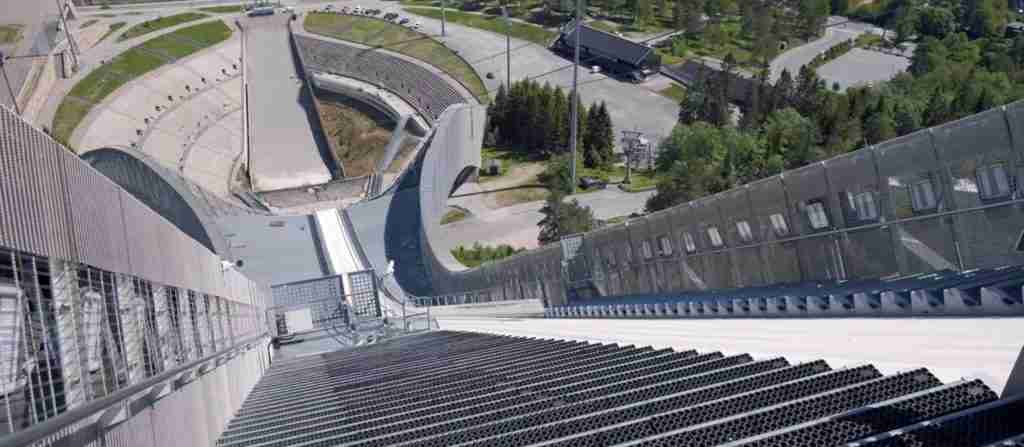
Holmenkollen represents Norway’s most famous ski jump and winter sports venue, hosting World Cup competitions and serving as a national sporting landmark. The facility includes a ski museum, observation deck, and extensive cross-country ski trails in surrounding Nordmarka forest.
The ski jump tower offers panoramic views across Oslo, the fjord, and surrounding forests from the observation deck. Admission costs NOK 160 in 2026, included in the Oslo Pass. The museum traces Norwegian skiing history from 4,000-year-old skis through modern Olympic achievements, displaying equipment, photographs, and interactive exhibits. A ski simulator provides virtual jumping experiences for visitors.
Metro Line 1 reaches Holmenkollen station directly, making access simple from central Oslo (30-minute ride). The ski jump and museum open daily 10 AM-5 PM May-September, with reduced winter hours. Summer visits provide excellent weather for the observation deck, while winter brings authentic ski jumping atmosphere when competitions occur.
Nordmarka forest, surrounding Holmenkollen, offers 350 square kilometers of wilderness within Oslo’s municipal boundaries. The area provides exceptional hiking, mountain biking, and berry picking in summer, transforming into cross-country skiing paradise in winter. The forest maintains 2,600 kilometers of marked trails, ranging from easy forest walks to challenging mountain routes.
Sognsvann lake, accessible by metro to Sognsvann station, provides the most popular Nordmarka starting point. The 3.3-kilometer lake circuit offers easy walking suitable for all fitness levels, while trails extend from the lake into deeper forest areas. Swimming areas around the lake operate during summer, though water temperatures remain cool (typically 15-18°C).
Frognerseteren, near Holmenkollen, features a historic restaurant serving traditional Norwegian fare with spectacular views. The building’s location at 419 meters elevation provides panoramic vistas across Oslo and the fjord. Mountain trails begin from Frognerseteren, including routes to Tryvannstårnet observation tower (NOK 80 admission) offering 360-degree views from 529 meters elevation.
Winter transforms Nordmarka into Norway’s most accessible cross-country skiing area. Over 2,000 kilometers of groomed ski trails operate December-April, illuminated for evening skiing on major routes. Equipment rental available at multiple locations including Frognerseteren and Sognsvann. Oslo residents use Nordmarka extensively for winter recreation, creating lively trail atmosphere weekends.
Oslo Waterfront and Harbor Areas
Oslo’s waterfront transformation from industrial docklands to public recreation and cultural spaces creates continuous walkable areas from the Opera House through Aker Brygge to Tjuvholmen. The waterfront provides free access to quality urban experiences, architectural landmarks, and fjord atmosphere.
The Opera House plaza includes public seating, waterfront access, and architectural photography opportunities. The building’s sloped white marble surfaces invite climbing to roof areas, creating unique urban interaction with monumental architecture. Summer brings street performers, food vendors, and outdoor cultural events to the plaza.
The waterfront promenade extends west from the Opera House past Akershus Fortress toward Aker Brygge. This paved path provides level walking with constant fjord views, passing City Hall, Nobel Peace Center, and various maritime monuments. The route serves joggers, cyclists, and tourists, functioning as Oslo’s primary waterfront public space.
Aker Brygge transforms the former shipyard into upscale dining, shopping, and residential development while preserving historical dock structures and maritime character. Outdoor restaurants and bars operate May-September, providing waterfront dining with fjord views. The area maintains authentic maritime atmosphere despite modern development, successfully balancing preservation and renewal.
Tjuvholmen extends beyond Aker Brygge on a small island developed around the Astrup Fearnley Museum of contemporary art. The museum (admission NOK 150, included in Oslo Pass) houses important private collections of Norwegian and international contemporary art. The surrounding waterfront sculpture park provides free access to significant outdoor artworks, including installations by international artists.
Sørenga, east of the Opera House, features Oslo’s newest waterfront development with swimming facilities, restaurants, and modern architecture. The area includes a popular saltwater swimming pool (free) with diving platforms, particularly busy during summer months. Surrounded by contemporary residential buildings, Sørenga demonstrates Oslo’s commitment to public waterfront access despite private development.
Summer harbor swimming operates at multiple locations including Sørenga, Tjuvholmen, and designated areas near Bygdøy. Water quality remains excellent due to strict pollution controls and the fjord’s tidal circulation. Water temperatures reach 18-20°C during July-August, comfortable for swimming though cooler than Mediterranean destinations.
Day Trips from Oslo 2026
Drøbak Christmas Town
Drøbak, located 40 kilometers south of Oslo on the Oslofjord, operates as Norway’s Christmas town year-round while functioning as a charming coastal village. The town’s wooden architecture, narrow streets, and waterfront setting create picturesque Scandinavian atmosphere particularly magical during the Christmas season.
The Tregaarden Christmas House operates year-round, maintaining Christmas atmosphere 365 days annually. The multi-story shop stocks Norwegian Christmas decorations, ornaments, traditional foods, and crafts. Visiting provides insight into Norwegian Christmas traditions and extensive shopping opportunities for unique holiday items. The shop itself functions as a tourist attraction, with elaborately decorated rooms and comprehensive product displays.
Drøbak’s historic center features preserved 18th and 19th-century wooden buildings housing cafés, restaurants, galleries, and boutiques. The town maintains small-scale character with no chain stores, emphasizing local businesses and traditional crafts. Summer brings art galleries, maritime atmosphere, and outdoor dining, while winter emphasizes Christmas markets and festive decorations.
Oscarsborg Fortress, located on an island in the fjord, played a crucial role in World War II by sinking the German cruiser Blücher in April 1940. Ferry access to the fortress operates year-round from Drøbak harbor (NOK 120 roundtrip). The fortress provides historical exhibitions, guided tours, and panoramic fjord views. A hotel operates within the fortress for overnight stays.
Transportation from Oslo uses bus route 500 from Oslo Bus Terminal, running hourly with 50-minute journey time (NOK 120 roundtrip). The Oslo Pass does not include this service. Driving takes 40 minutes via E6 highway, with parking available near the town center. Summer boat services occasionally operate from Oslo harbor, providing scenic fjord transport though irregular schedules.
Plan 4-6 hours for comprehensive Drøbak visits. Morning departure allows full day exploring the town, visiting Oscarsborg Fortress, and returning to Oslo for dinner. The Christmas season (November-January) provides maximum festive atmosphere but brings crowds, particularly weekends. Summer visits offer pleasant weather, waterfront activities, and fewer tourists.
Fredrikstad Medieval Town
Fredrikstad, located 80 kilometers south of Oslo, contains Northern Europe’s best-preserved fortified town from the 1600s. The Gamlebyen (Old Town) sits on an island in the Glomma River, surrounded by complete defensive ramparts and moats maintained in original configuration.
The fortified town operates as a living community with residents, shops, restaurants, and craftspeople working within the historical walls. This authentic character distinguishes Fredrikstad from museum-piece reconstructions, creating genuine atmosphere where history remains functional rather than purely touristic. Narrow cobblestone streets, wooden buildings, and defensive walls create remarkably preserved 17th-century urban environment.
Key attractions include walking the complete ramparts circuit (2.5 kilometers), providing elevated views across the town and river. The Old Town Museum (NOK 80) documents Fredrikstad’s military history, showing defensive strategies and daily life within the fortress. Craft workshops demonstrate traditional techniques including glassblowing, pottery, and woodworking, many with sales galleries.
The town’s restaurants emphasize Norwegian cuisine in historical settings. Café and restaurant patios operate within the ramparts during summer, providing atmospheric outdoor dining. The Christmas market in November-December ranks among Norway’s best, with authentic historical setting enhancing traditional decorations and crafts.
Transportation from Oslo uses frequent trains from Oslo S to Fredrikstad station (70-minute journey, NOK 320 roundtrip). The Old Town sits 2 kilometers from the train station, accessible by local bus (included in Ruter tickets) or ferry across the river. Summer bicycle rentals at the station enable scenic transport to the Old Town and riverfront cycling.
Plan full-day visits combining the fortified Old Town with Fredrikstad’s modern downtown across the river. The modern section features shopping, additional restaurants, and the Fredrikstad Museum documenting regional history. Summer visits allow comfortable ramparts walking and outdoor activities, while winter brings atmospheric historical setting enhanced by snow.
Practical Information for Oslo 2026
Best Time to Visit Oslo
Oslo experiences dramatic seasonal variations affecting activities, costs, and atmosphere. Summer (June-August) brings peak tourist season with extended daylight hours, comfortable temperatures averaging 15-22°C, and full activity schedules. All attractions operate maximum hours, outdoor restaurants open, and island ferries run frequent schedules. However, summer also brings highest accommodation costs, larger crowds, and premium pricing for activities.
Spring (April-May) offers increasing daylight, blooming nature, and pleasant temperatures without peak-season crowds. Oslo residents embrace outdoor activities after winter, creating lively atmosphere in parks and waterfront areas. Accommodation costs remain moderate, though attractions may maintain reduced hours early in the season. Weather variability requires flexible planning and appropriate clothing layers.
Fall (September-October) provides beautiful foliage, comfortable temperatures, and significantly fewer tourists than summer. Museums become easier to enjoy without crowds, accommodation costs drop, and restaurants offer better availability. Early fall maintains most summer services, while late fall sees transition to winter schedules and reduced outdoor activities. September proves particularly attractive for balanced weather and service availability.
Winter (November-March) transforms Oslo into Nordic winter destination with Christmas markets, skiing at Holmenkollen, and potential northern lights viewing. Snow covers Nordmarka forest, creating extensive cross-country skiing opportunities. However, daylight hours reduce dramatically (6 hours daily in December), many outdoor attractions close, and temperatures frequently drop below freezing. Accommodation costs reach annual lows January-February, providing budget opportunities for winter enthusiasts.
Accommodation Planning 2026
Oslo accommodation costs rank among Europe’s highest, requiring strategic planning for budget management. Central hotels average NOK 1,200-2,000 (€107-178) nightly for mid-range properties, with luxury options exceeding NOK 3,000. Budget alternatives include hostels (NOK 400-700 for dorms, NOK 800-1,200 for private rooms) and Airbnb apartments (NOK 800-1,500 nightly).
Location impacts both convenience and cost. Central areas (near Karl Johans gate, Oslo S) provide walking access to major attractions but command premium rates. Grünerløkka offers more affordable options with authentic neighborhood atmosphere, requiring short metro rides to central attractions. Areas near metro stations outside the center (Majorstuen, Bislett) balance affordability with convenient transport access.
Booking timing significantly affects rates. Summer advance booking (3-4 months) secures better rates and availability, while last-minute deals occasionally appear for unsold inventory. Winter booking (except Christmas/New Year) allows greater flexibility with generally lower rates. Many hotels reduce prices Friday-Sunday when business travel decreases.
Dining and Food Costs
Oslo restaurant costs reflect Norway’s high cost of living. Mid-range dinner with drinks averages NOK 400-600 per person, while fine dining easily exceeds NOK 1,000. Lunch menus typically cost 30% less than dinner service, providing better value. Many restaurants offer lunch specials (dagens rett) around NOK 150-200 for complete meals.
Budget dining strategies include supermarket shopping at chains like Rema 1000, Kiwi, or Coop for self-catering. Norwegian supermarkets stock quality prepared foods, fresh ingredients, and bakery items at 40-60% below restaurant costs. Food halls like Mathallen offer diverse options with moderate pricing in atmospheric settings.
Café culture provides affordable alternatives to full restaurant meals. Norwegian cafés serve substantial sandwiches, salads, and pastries for NOK 100-150, with excellent coffee culture throughout the city. Traditional Norwegian specialties like waffles with jam and sour cream offer authentic experiences at reasonable costs.
Money and Payments
Norway operates as a nearly cashless society. Most establishments prefer card payments, with many refusing cash entirely. Credit and debit cards using PIN authentication work universally. Contactless payment limits reach NOK 500, eliminating PIN requirements for most transactions.
Currency exchange proves expensive and largely unnecessary. ATMs provide Norwegian kroner at favorable rates though bank fees apply. Most visitors find credit card use sufficient without cash withdrawal. For small amounts needed, exchange at airports or banks rather than exchange bureaus charging higher commissions.
Tipping practices differ from American standards. Service charges include in restaurant bills, making additional tips optional. Norwegians typically round up bills or add 5-10% for exceptional service, not the 15-20% American standard. Taxi fares include service; rounding to nearest 10 kroner suffices.
Sample Oslo Itineraries 2026
Three-Day Oslo Itinerary: First-Time Visitors
Day 1: Central Oslo and Waterfront
Begin at the Oslo Opera House, walking the roof for panoramic city views and photographing the distinctive architecture. Cross to Akershus Fortress, exploring the grounds and medieval castle. Walk the waterfront promenade to Aker Brygge for lunch, then visit the Nobel Peace Center (NOK 120, included in Oslo Pass).
Afternoon continues to the National Museum, Norway’s premier art collection with free admission. Allow 2-3 hours for Norwegian national romantic paintings, Munch works, and international collections. Walk Karl Johans gate to the Royal Palace, passing Oslo Cathedral and parliament building. End at the Palace gardens for late afternoon relaxation.
Evening options include dinner in Grünerløkka’s diverse restaurants (NOK 250-400) or waterfront dining at Tjuvholmen. The Opera House plaza offers free outdoor concerts during summer months. Estimated costs: Museum free, lunch NOK 150-200, dinner NOK 300-400, transport NOK 90 (24-hour pass). Total: approximately NOK 540-590 excluding accommodation.
Day 2: Bygdøy Museums
Take the ferry from Aker Brygge to Bygdøy (included in Oslo Pass, otherwise NOK 70 roundtrip). Begin at the Viking Ship Museum (NOK 150, Oslo Pass included), spending 1-2 hours with Norway’s finest Viking Age artifacts. Walk to the Norwegian Folk Museum (NOK 180, Oslo Pass included) for 2-3 hours exploring historic buildings and exhibitions.
Lunch at the Folk Museum café offers traditional Norwegian dishes (NOK 150-200). Afternoon visits the Fram Museum (NOK 160, Oslo Pass included), dedicated to polar exploration, and the nearby Kon-Tiki Museum (NOK 140, Oslo Pass included) showcasing Thor Heyerdahl’s expeditions.
Return to central Oslo for evening at Vigeland Sculpture Park, free and spectacular during golden hour lighting. Dinner in Frogner neighborhood near the park offers quality restaurants in elegant surroundings. Estimated costs with Oslo Pass: lunch NOK 150-200, dinner NOK 300-400, ferry free. Total: approximately NOK 450-600. Without Oslo Pass: add NOK 700 for museum admissions.
Day 3: MUNCH Museum and Oslo Neighborhoods
Morning at the MUNCH Museum (NOK 200, Oslo Pass included) provides 2-3 hours with the world’s largest Edvard Munch collection. The museum café offers quality lunch with fjord views (NOK 180-250). Afternoon explores Grünerløkka neighborhood, walking along Akerselva River past street art, vintage shops, and cafés.
Alternative afternoon activities include the Holmenkollen Ski Jump (NOK 160, Oslo Pass included) with panoramic views and ski museum, accessed by metro Line 1. Or explore Oslo’s shopping districts around Karl Johans gate and Aker Brygge.
Final evening considers Oslo’s dining scene with options from traditional Norwegian (fish, reindeer, elk) to international cuisines reflecting Oslo’s multicultural character. The waterfront provides sunset views for memorable Oslo conclusion. Estimated costs: MUNCH Museum NOK 200 (free with Oslo Pass), lunch NOK 180-250, transport included in pass, dinner NOK 350-500. Total: approximately NOK 530-750.
Budget-Focused Two-Day Itinerary
Day 1: Free Attractions
Start at Vigeland Sculpture Park, Oslo’s premier free attraction with over 200 sculptures in beautiful park setting. Walk to the nearby National Museum (free admission) for 2-3 hours exploring Norwegian and international art. Pack lunch from supermarket (NOK 80-100) to eat in Palace gardens.
Afternoon walks Karl Johans gate to the Opera House, exploring Oslo’s main street and ending with the Opera roof walk. Continue to Akershus Fortress grounds for free access to ramparts, courtyards, and harbor views. Evening sunset at Sørenga waterfront swimming area (free) provides local atmosphere.
Dinner from supermarket supplies or budget Asian restaurants in Grünerløkka (NOK 120-150) keeps costs minimal. Total day cost: food NOK 200-250, transport NOK 90 (24-hour pass). Approximately NOK 290-340 excluding accommodation.
Day 2: Selective Museum Day
Purchase Oslo Pass 24-hour (NOK 550) for this museum-intensive day. Ferry to Bygdøy, visiting Viking Ship Museum and Norwegian Folk Museum in morning. Packed lunch reduces costs while allowing more museum time. Afternoon adds Fram Museum and quick Kon-Tiki visit.
Evening returns to central Oslo for walk through harbor areas and dinner at budget restaurants. The Oslo Pass covers all transport and museums, providing excellent value. Total day cost: Oslo Pass NOK 550, food NOK 150-200. Approximately NOK 700-750 excluding accommodation. Two-day total: approximately NOK 990-1,090.
Frequently Asked Questions
Is English widely spoken in Oslo?
English proficiency in Oslo ranks among the world’s highest, with nearly all residents under 60 speaking fluent English. All tourist services, museums, restaurants, and transportation systems provide English information, signage, and communication. Young Norwegians often speak English at native-speaker levels. Tourism workers universally speak English, while older residents may have more limited proficiency but still communicate effectively. Visitors require no Norwegian language skills for comfortable Oslo travel, though learning basic Norwegian greetings enhances local interaction and appreciation.
Do I need to book Oslo attractions in advance for 2026?
Most Oslo attractions accept walk-up visitors year-round without advance booking, though specific situations benefit from reservations. The MUNCH Museum and National Museum can develop lines during peak summer mornings; advance tickets eliminate waiting. Opera and ballet performances require advance booking, particularly for popular productions. Restaurants, especially fine dining establishments, should be reserved 1-3 days ahead during summer. The Oslo Pass can be purchased online for pickup in Oslo or directly through the app, though last-minute purchases work fine. General sightseeing requires minimal advance planning except during major events or holidays.
How safe is Oslo for tourists?
Oslo ranks among Europe’s safest capitals with minimal violent crime and low petty theft rates. Tourist areas, public transport, and central neighborhoods operate safely day and night. Standard precautions apply: watch belongings in crowded areas, avoid displaying expensive items unnecessarily, and stay aware in nightlife districts late evening. The city’s extensive street lighting, active nightlife, and visible public presence create secure environment for solo travelers and families. Emergency services respond quickly, and most locals assist tourists readily. Women traveling alone report feeling comfortable and safe throughout Oslo.
Can I visit Oslo on a budget?
Budget Oslo travel requires strategic planning but remains feasible. Free attractions include Vigeland Sculpture Park, the Opera House plaza and roof walk, Akershus Fortress grounds, waterfront promenades, and the National Museum. Supermarket shopping at Rema 1000 or Kiwi reduces food costs dramatically compared to restaurants. Hostels and budget hotels outside the center, combined with excellent public transport, provide affordable accommodation. The Oslo Pass delivers value for intensive museum days, while free walking tours operate on tip basis. Island hopping costs only standard transport fare, providing natural experiences cheaply. Oslo on €50-70 daily proves possible with careful budgeting, accommodation in hostels, supermarket meals, and focus on free attractions.
What’s the best way to get from Oslo Airport to the city center?
The economical Vy local train provides the best value at NOK 129 (approximately €11.50) for the 28-minute journey to Oslo S, running every 10 minutes during peak hours. This service is included in the Oslo Pass. The premium Flytoget Airport Express costs NOK 230 but saves only 9 minutes, making it poor value for budget travelers. Airport buses (Flybussen, Flybussekspressen) cost NOK 200 and take 40-50 minutes with multiple city stops. Taxis cost NOK 700-900 to central Oslo, appropriate for groups splitting costs or those with excessive luggage. The Vy train offers optimal balance of cost and convenience for most travelers.
Should I rent a car in Oslo?
Car rental proves unnecessary and counterproductive for Oslo visits. The city’s comprehensive public transport network reaches all major attractions efficiently and economically. Parking costs NOK 40-60 hourly in central areas with limited availability. Traffic congestion, one-way systems, and tolls (including the Oslo city toll ring) complicate driving. Most attractions cluster in central areas easily reached by walking, metro, or trams. Day trips to Drøbak or Fredrikstad work well via train or bus. Cars become useful only for extensive rural exploration outside Oslo or multi-city Norway tours. Save rental costs and avoid parking hassles by relying on excellent public transport.
What Norwegian foods should I try in Oslo?
Oslo offers excellent opportunities for Norwegian cuisine. Traditional dishes include rakfisk (fermented trout), lutefisk (dried cod in lye), and fårikål (lamb and cabbage stew, Norway’s national dish). More approachable specialties include fresh seafood (salmon, cod, shrimp), brunost (brown cheese with caramel flavor), and various preserved fish preparations. Norwegian waffles (vafler) served with jam and sour cream provide delicious traditional snacks. Contemporary Norwegian cuisine emphasizes New Nordic principles: local ingredients, seasonal preparations, and minimalist presentations. Restaurants like Maaemo (three Michelin stars) showcase high-end Norwegian cuisine, while traditional restaurants serve classic preparations. Food halls like Mathallen offer diverse Norwegian products and dishes in casual settings.
Can you see northern lights from Oslo?
Northern lights occasionally appear in Oslo during strong geomagnetic activity, particularly during solar maximum periods. However, Oslo’s southern latitude (60°N), urban light pollution, and frequent cloud cover make sightings rare and unpredictable. Nordmarka forest provides darker skies than central Oslo, improving chances slightly. Serious northern lights viewing requires traveling to northern Norway (Tromsø, Lofoten, Finnmark) above the Arctic Circle where auroras appear regularly September-March. Oslo visitors should treat northern lights as possible bonus rather than expected experience, focusing instead on the city’s cultural attractions and accessible nature.
What COVID-19 or health requirements exist for visiting Norway in 2026?
As of 2026, Norway has removed all COVID-19 entry restrictions, requiring no vaccination proof, testing, or quarantine for international visitors. However, travel requirements can change; checking the Norwegian government’s official entry requirements before travel remains advisable. Standard European health insurance or travel insurance provides adequate medical coverage, though Norway operates outside the EU (in the Schengen Area). Oslo’s healthcare system operates to high standards with English-speaking medical professionals. Pharmacies (apotek) stock international medications, though prescriptions may require doctor consultations. No specific vaccinations are required for Norway travel.
How do I handle Norwegian prices and currency?
Norway uses Norwegian kroner (NOK), not the Euro. Exchange rates typically run NOK 10-11 per Euro or NOK 9-10 per US dollar, though fluctuations occur. Oslo’s near-cashless society makes credit/debit cards the primary payment method, accepted universally with contactless payment up to NOK 500. Cash becomes largely unnecessary; most visitors complete entire trips without withdrawing kroner. ATMs provide kroner at favorable exchange rates though bank fees may apply. Credit cards charge foreign transaction fees unless specifically waived. Notify banks of Norway travel to prevent card blocks. Prices include VAT (MVA); no additional charges appear at payment. Visitors from outside Norway can reclaim VAT on purchases over NOK 315 through Tax Free shopping schemes at departure.