Ohrid Travel Guide 2026: North Macedonia’s UNESCO Lake Town Complete Guide
Nestled on the shores of one of Europe’s oldest and deepest lakes, Ohrid is North Macedonia’s most beloved destination and one of the world’s few cities recognized by UNESCO for both its exceptional natural environment and its extraordinary cultural heritage. Dating back more than two thousand years, this lakeside town pairs Byzantine frescoes and medieval fortresses with crystal-clear waters harboring endemic species found nowhere else on Earth. This guide delivers verified 2026 prices, transport logistics, accommodation costs, attraction fees, and daily budget breakdowns for every travel style — from hostel backpacker to lakefront luxury.
Key Takeaways
- UNESCO Mixed World Heritage Site: The “Natural and Cultural Heritage of the Ohrid Region” was first inscribed in 1979 for its outstanding natural values and extended in 1980 to include cultural criteria (i), (iii), and (iv), making it one of the world’s first mixed UNESCO World Heritage properties. A 2019 extension added the Albanian portion of Lake Ohrid, creating a transboundary site covering approximately 94,729 hectares shared between North Macedonia and Albania.
- Budget range for 2026: Budget travelers staying in hostel dormitories and eating at local tavernas need MKD 1,820-3,120 ($35-60) per person daily. Mid-range travelers sharing a hotel room spend MKD 4,420-7,020 ($85-135) per person daily. Luxury visitors sharing an upscale lakefront hotel invest MKD 9,100-15,080 ($175-290) per person daily.
- Getting there in 2026: The most common route is bus from Skopje — a 3 to 3.5-hour journey costing MKD 780-1,200 ($15-23) one way on multiple operators. Ohrid’s own St. Paul the Apostle Airport (OHD) receives seasonal direct flights from London, Vienna, and other European cities, with a 15-to-20-minute taxi into the Old Town.
- Top paid attraction in 2026: Samuel’s Fortress charges MKD 150 ($3) for foreign visitors and closes at 4 PM in summer — earlier than many travelers expect, ruling out sunset visits from the battlements. The majority of Ohrid’s most photogenic sights, including the Old Town streets, lakeshore promenade, and Ancient Theatre exterior, are free.
- Best time to visit in 2026: May through June and September through October offer pleasant temperatures, lower prices, and far fewer crowds than July and August peak. Summer brings the acclaimed Ohrid Summer Festival but also higher accommodation costs and busier streets.
- Weekly trip cost in 2026: Budget travelers: MKD 12,740-21,840 ($245-420) per person; mid-range: MKD 30,940-49,140 ($595-945) per person; luxury: MKD 63,700-105,560 ($1,225-2,030) per person — all figures per person with two sharing accommodation.
People Also Ask About Ohrid 2026
How much does a trip to Ohrid cost per day in 2026?
Daily costs in Ohrid in 2026 range from MKD 1,820-3,120 ($35-60) per person for budget travelers staying in hostel dormitories and eating at bakeries and local tavernas. Mid-range travelers sharing a hotel room spend MKD 4,420-7,020 ($85-135) per person daily, covering a comfortable hotel, sit-down restaurant meals including Ohrid trout, and entrance fees at the main sights. Luxury travelers sharing an upscale lakefront hotel spend MKD 9,100-15,080 ($175-290) daily, incorporating premium dining, guided tours, and private boat excursions. Ohrid ranks among the most affordable UNESCO destinations in Europe, costing 50-70% less per day than comparable heritage towns in Italy, France, or Croatia. All figures include accommodation divided between two people, all meals, local transport, and standard attraction entry fees.
What is the best time to visit Ohrid in 2026?
The ideal window for visiting Ohrid in 2026 is May through June or September through October. These shoulder months offer daytime temperatures of 18-26°C (64-79°F), calm lake conditions ideal for swimming and boat trips, and accommodation prices 30-40% lower than July and August peaks. July and August bring the Ohrid Summer Festival, crowded beaches, and temperatures regularly reaching 32-35°C (90-95°F), which suits sun-seekers but makes Old Town sightseeing uncomfortable during midday hours. November through April sees many budget guesthouses close entirely, sharply reduced ferry services to St. Naum, and cold and rainy conditions — though the town regains its unhurried authenticity and accommodation drops to annual minimum pricing for travelers who don’t mind the weather.
How do I get from Skopje to Ohrid in 2026?
Multiple bus companies operate the Skopje to Ohrid route in 2026, covering approximately 170 km in 3 to 3.5 hours for MKD 780-1,200 ($15-23) one way. Galeb, Classic Company, and Biserprom all run departures from Skopje’s main bus terminal (Transporten Centar) with roughly 8-10 daily services. FlixBus also connects the two cities from around MKD 730 ($14). Travelers arriving at Skopje Airport (SKP) take a shuttle to the city center — MKD 180 ($3.50) — then connect to Ohrid, for a total journey of 4-5 hours and MKD 960-1,380 ($18-27) combined. Private airport-to-Ohrid transfers run approximately MKD 5,200 ($100) for the vehicle and are worth considering for families or late-night arrivals.
What are the top UNESCO sites and cultural attractions to visit in Ohrid in 2026?
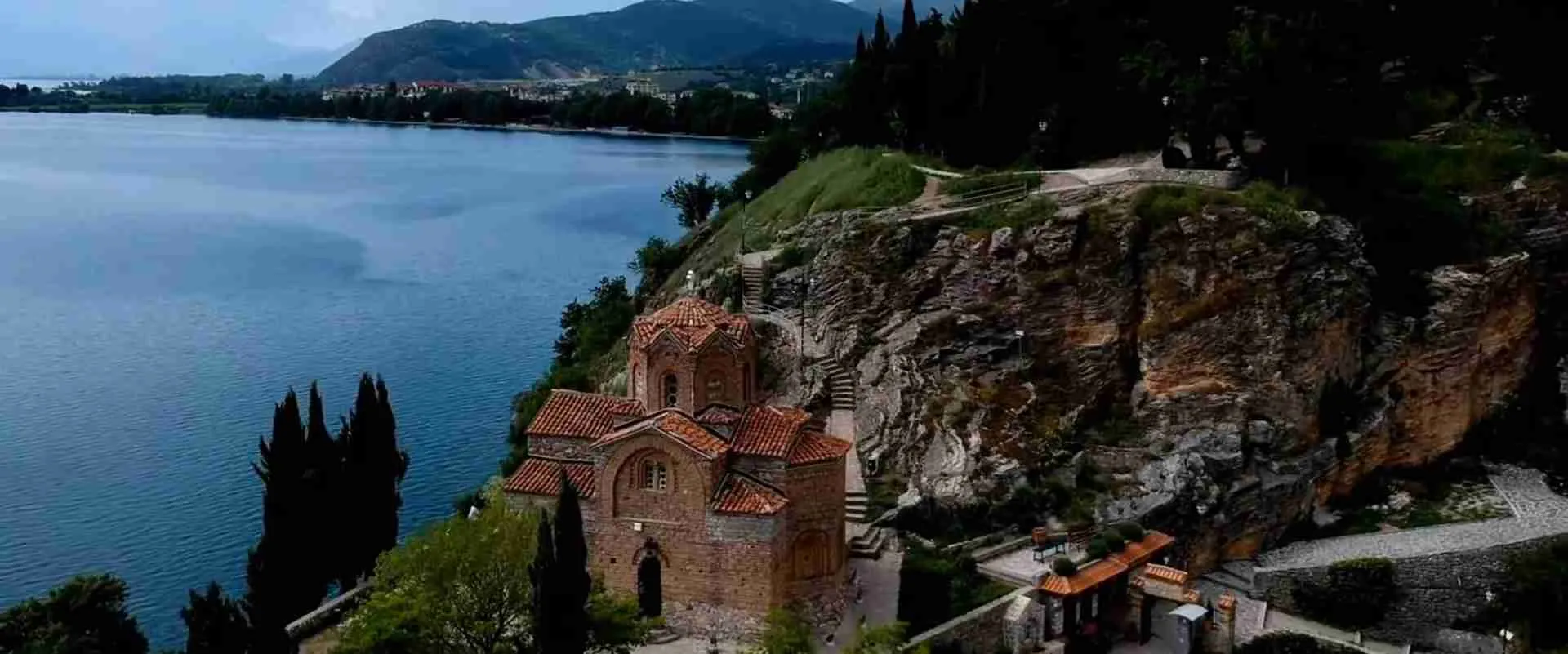
Ohrid’s UNESCO heritage spans an extraordinary range. Samuel’s Fortress (MKD 150/$3) stands as the hilltop anchor of the Old Town, offering panoramic views over the entire lake. The Church of St. John at Kaneo (MKD 60-100/$1-2) is Ohrid’s most photographed monument, perched dramatically on a cliff above turquoise water. The Church of Saint Sophia (MKD 100-150/$2-3), an 11th-century basilica, houses some of the Balkans’ finest surviving Byzantine frescoes. The Plaošnik archaeological complex and reconstructed Church of Saints Clement and Panteleimon marks where St. Clement founded one of Europe’s earliest schools in 886 AD. The Bay of Bones Museum (MKD 300/$6) recreates a prehistoric lake dwelling on original archaeological foundations. The Hellenistic Ancient Theatre from 200 BC charges no entry for general daytime visits and still hosts performances during the summer festival season.
Extended multi-day tours – 5+ days
Featured Macedonia Multi-Day Tour Packages

3 days
Macedonia 3-Day Discovery Tour
- ✓ Comprehensive Macedonia experience
- ✓ Expert local guides included
- ✓ All accommodation included
- ✓ Transportation provided

5 days
Macedonia 5-Day Highlights Experience
- ✓ Comprehensive Macedonia experience
- ✓ Expert local guides included
- ✓ All accommodation included
- ✓ Transportation provided
7 days
Macedonia 7-Day Cultural Journey
- ✓ Comprehensive Macedonia experience
- ✓ Expert local guides included
- ✓ All accommodation included
- ✓ Transportation provided

10 days
Macedonia 10-Day Complete Adventure
- ✓ Comprehensive Macedonia experience
- ✓ Expert local guides included
- ✓ All accommodation included
- ✓ Transportation provided
Multi-day tour packages powered by TourRadar. Prices and availability subject to change.
Introduction: Why Ohrid Rewards Planning in 2026
Few destinations in Europe pack as much heritage into as few square kilometres as Ohrid. The ancient town, built on a peninsula jutting into Lake Ohrid on the western edge of North Macedonia, has been continuously inhabited for more than 2,000 years. It served as the capital of the First Bulgarian Empire under Tsar Samuel at the turn of the 11th century, hosted one of Europe’s earliest centres of learning when St. Clement of Ohrid founded his school here in 886 AD, and developed a tradition of icon painting so refined that art historians speak of a distinct Ohrid School of Illumination. The lake itself predates human civilization here by millions of years — a tectonic body of water estimated at two to three million years old, deeper in places than the Adriatic Sea.
In 2026, Ohrid occupies a unique position among Balkan destinations. North Macedonia’s profile has risen sharply among Western European travelers over the past decade, drawn by a combination of extraordinary heritage, genuinely affordable prices, and a warm hospitality culture that hasn’t been commodified by mass tourism in the same way as Dubrovnik or the Croatian coast. The lake town is the country’s undisputed flagship destination and the one that rewards planning most: quality accommodation in the Old Town fills fast in summer, boat cruises to St. Naum run on fixed schedules, and the best-value restaurants are easy to miss if you simply follow the tourist stream to the lakefront promenade.
UNESCO attention adds important context for 2026 travelers. In 2025, the World Heritage Committee’s advisory bodies recommended listing the Ohrid property as “World Heritage in Danger” due to uncontrolled construction along the lakeside that has compromised buffer zones. The Committee overruled this recommendation and gave North Macedonia a further year to implement corrective measures. The site is not currently on the In Danger list, visitor access is unchanged, and the core Old Town heritage remains fully intact. Travelers with an interest in heritage conservation, however, will find this context sharpens the experience — you are visiting a place actively fighting to protect what makes it worth visiting.
For practical purposes, Ohrid in 2026 delivers exceptional value. The Macedonian Denar (MKD) gives Western European and North American visitors significant purchasing power: a sit-down lakeside meal with grilled trout and local wine costs roughly the same as a fast-food meal in Paris, a comfortable mid-range hotel room runs a fraction of equivalent accommodation in Croatia or Greece, and the main cultural sights charge admission fees that feel almost token by Western standards. This guide provides verified pricing for every aspect of a 2026 visit, from the bus fare from Skopje to the daily cost of accommodation and meals at three different budget levels.
Ohrid’s UNESCO Heritage: Natural and Cultural Legacy
The “Natural and Cultural Heritage of the Ohrid Region” holds a rare status in the UNESCO World Heritage List. Mixed sites — those recognized for both natural and cultural outstanding universal value — number fewer than 40 globally out of more than 1,100 inscribed properties. Ohrid earned this distinction twice over, and on both counts the case is compelling.
Lake Ohrid: A Living Natural Laboratory
Lake Ohrid is one of the oldest lakes on Earth, formed by tectonic forces approximately two to three million years ago. Most lakes are geological youngsters that accumulate sediment and disappear within a few thousand years; Lake Ohrid has persisted long enough to develop an ecosystem found nowhere else on the planet. The lake reaches a maximum depth of 288 metres, making it the second deepest lake in the Balkans after Lake Ohrid’s neighbour Lake Prespa, and its oligotrophic (nutrient-poor) waters are so clear that sunlight penetrates to remarkable depths. This combination of stability, age, and water clarity produced over 200 endemic species — organisms that evolved in the lake and exist nowhere else. These include 17 species of fish (among them two unique trout varieties, the Ohrid trout and the Belvica), ancient sponges, flatworms, snails, crustaceans, and freshwater algae that form a living record of evolutionary time. The lakeshore reed beds and wetlands provide critical wintering habitat for hundreds of thousands of migratory water birds.
UNESCO first recognized Lake Ohrid for these natural values in 1979. A 2019 extension brought the Albanian portion of the lake — roughly one-third of the total surface area — within the inscribed property, creating a transboundary World Heritage Site. The total inscribed area now covers approximately 94,729 hectares across both countries.
The Ancient Town: Layers of Civilisation
The cultural criteria added in 1980 recognize Ohrid as a place of outstanding historical significance across multiple civilizations. Archaeological evidence confirms continuous human settlement for at least two millennia. The town became a major centre of the Byzantine world, and the density and quality of Byzantine-era monuments here is unmatched in the region outside Constantinople itself. Ohrid’s nickname — the “Jerusalem of the Balkans” — derives from the historical tradition that the town once maintained 365 churches, one for each day of the year. Most have not survived, but those that remain contain medieval frescoes, icons, and architectural details of the highest quality.
Ohrid is also the birthplace of systematic Slavic literacy. Saints Cyril and Methodius created the Glagolitic script, but it was their disciple St. Clement of Ohrid who established the school at Plaošnik in 886 AD and disseminated written literacy across the Slavic world from this town — more than two centuries before the founding of the first Western European universities. The literacy tradition produced the Ohrid School of illuminated manuscripts and icon painting, whose works now hang in museums from New York to Moscow. The Church of Saint Sophia, built in the 11th century on the foundations of an earlier basilica, preserves a cycle of Byzantine frescoes that scholars rank among the finest remaining examples in the Balkans. The Church of St. John at Kaneo, perched on a rocky cliff above the lake, exemplifies Byzantine church architecture in perfect dialogue with its natural setting.
Conservation Status in 2026
As noted above, the Ohrid World Heritage property is under active review for development pressures. The 2024 and 2025 World Heritage Committee sessions both scrutinized lakeside construction activity, particularly hotel development and infrastructure works within designated buffer zones. North Macedonia’s authorities are implementing a corrective management framework to address these concerns before the next review cycle. Travelers visiting in 2026 will not find their experience restricted, but the ongoing management situation is worth understanding as context for what Ohrid is and why its protection matters.
Getting to Ohrid in 2026: Complete Transport Options and Costs
Ohrid sits in the southwestern corner of North Macedonia, approximately 170 km from Skopje. Transport access has improved substantially in recent years with expanded bus connections and resumed direct flights from several European cities during the summer season.
By Bus from Skopje (Most Common Route)
The bus from Skopje to Ohrid is the standard route for most travelers and the one with the greatest frequency and best value. Multiple operators — including Galeb, Classic Company, Biserprom, and Makedonija Soobrakaj — run services from Skopje’s main bus terminal (Transporten Centar, centrally located near the city center) throughout the day. Tickets cost MKD 780-1,200 ($15-23) one way depending on the operator and departure time. The journey takes 3 to 3.5 hours along the A2/E65 highway through mountainous terrain with spectacular highland scenery above Kičevo. FlixBus also operates the Skopje-Ohrid route bookable online in advance for MKD 730-1,040 ($14-20) depending on availability. Departures run roughly every one to two hours during peak season, with 5-8 daily services in winter. The bus station in Ohrid (Avtobusna Stanica) sits just below the Old Town, five to ten minutes on foot from most central guesthouses.
By Air to Ohrid Airport (OHD)
St. Paul the Apostle Airport (OHD), located approximately 10 km from the Old Town, receives direct flights from several European cities on a seasonal basis. Wizz Air operates London Luton–Ohrid routes in summer, and Austrian Airlines connects Vienna to Ohrid with regular seasonal service. Additional seasonal charter services operate from Swiss, German, and Scandinavian cities during peak summer months. The airport is small — expect minimal facilities — but its proximity to the destination saves the Skopje transit entirely. From the airport to the Old Town, a taxi costs approximately MKD 600-800 ($11-15) and takes 15-20 minutes. No public bus connects the airport to the town center; taxis are the only practical option on arrival.
From Skopje International Airport (SKP)
Travelers flying into Skopje Airport face a two-stage journey to Ohrid. The WTransporter shuttle from Skopje Airport to the city center costs MKD 180 ($3.50) and takes 35-40 minutes. From the city bus terminal, buses to Ohrid cost MKD 780-1,200 ($15-23) as above. Combined cost: MKD 960-1,380 ($18-27) for a journey of 4-5 hours including typical waiting time between services. Private transfers from Skopje Airport directly to Ohrid cost approximately MKD 5,200 ($100) for up to four passengers and take under 3 hours — the most practical option for families, groups, or late-night arrivals when bus services are reduced.
From Tirana and Albania
Regular bus services connect Tirana to Ohrid via the Albanian-Macedonian border crossing, with journey times of approximately 4-5 hours. Eurobus and several other operators run this service daily in summer, with tickets at approximately MKD 1,500-2,000 ($29-38). The border crossing at Sveti Naum (passing near the monastery) is the most scenic option; other buses use the Qafë Thanë crossing further north. This route is increasingly popular with travelers combining Albania’s south — particularly Berat and Gjirokastër — with North Macedonia in a single regional itinerary.
From Thessaloniki, Greece
Travelers arriving from Greece connect via Bitola (the closest major North Macedonian town to the Greek border), then onward bus to Ohrid — approximately 4-5 hours total from Thessaloniki city center. Shared taxis and private operators also cover this corridor. This route suits travelers entering North Macedonia from Thessaloniki airport (SKG), which has far better international connections than either Skopje or Ohrid airports for some origin cities.
By Car
Driving from Skopje to Ohrid via the A2 motorway takes approximately 2 hours 45 minutes. Car rental in Skopje starts from around MKD 1,400-2,080 ($27-40) per day for a compact vehicle. Roads are in good condition, mountain passes are well-maintained, and having a car unlocks flexibility for reaching Galičica National Park, the remote western lakeshore, and St. Naum without depending on tour schedules or infrequent buses. Parking in Ohrid’s Old Town is limited; most visitors use the lots near the lakefront or below the Old Town walls.
Getting Around Ohrid in 2026
Ohrid’s Old Town is one of the most walkable heritage neighborhoods in the Balkans. The area from the Old Bazaar and Church of St. Sophia to Samuel’s Fortress and the Kaneo promontory spans roughly 1.5 km on foot — under 30 minutes at a leisurely pace, and shorter once you learn the cobblestone shortcuts. Most visitors find a car entirely unnecessary for the main sights, and in the narrow lanes of the Old Town, a car is actively inconvenient.
Walking
On foot is the definitive way to experience the Old Town. Narrow cobblestone lanes wind between Ottoman-era timber-framed houses, connecting the Lower Gate and Old Bazaar to the Upper Gate beneath Samuel’s Fortress. The lakeside promenade (Kej Makedonija) runs east from the Kaneo cliff along the town beach, offering sunset walks with fortress views behind and the lake in front. The walk from the bus station to the Old Town entrance gate takes about 10 minutes uphill.
Local Buses
Urban bus services operate within Ohrid and to nearby suburbs for MKD 60 ($1.10) per ride — useful for reaching accommodation outside the central area or the beaches further south along the lake. Cash payment on board is standard; there are no transport cards for tourists. Frequency varies seasonally, with more reliable service during summer months.
Taxis
Taxis in Ohrid are inexpensive by Western European standards. The starting price is MKD 50 ($0.95) and the per-kilometre rate is MKD 35 ($0.70). A ride across the Old Town costs MKD 150-200 ($3-4). Longer trips — such as to St. Naum Monastery 29 km south — cost approximately MKD 1,000-1,500 ($19-29) one way by taxi. Confirm the price before getting in, or ask the driver to use the meter (taksimetar).
Boat and Ferry
Several boat operators work from the main port south of the Old Town center. Boat Ohrid runs round trips to St. Naum for MKD 600 ($11-12) per person. Shared cruise operators such as Armada run morning departures for approximately MKD 1,100 ($21) per person round trip with a 1 hour 20 minute crossing each way. Full-day guided boat tours including commentary, monastery entry, and rowing boat time in the springs cost approximately MKD 3,100 ($60) per person through Viator-listed operators. Water taxis provide on-demand transfers between lakeshore hotels and the port for negotiated prices starting around MKD 300-500 ($6-10) per person.
Car and Scooter Rental
Rental agencies in Ohrid offer cars from around MKD 1,560-2,340 ($30-45) per day and scooters from MKD 1,500-2,000 ($29-38) per day. A car is most useful for reaching Galičica National Park or for day trips to Bitola and Struga independently of tour schedules.
Where to Stay in Ohrid 2026: Accommodation by Neighborhood and Budget
Ohrid offers accommodation across all price points, concentrated in three main areas with distinct characters. Book well in advance for July and August — quality Old Town properties routinely fill six to eight weeks ahead during peak season. All room rate ranges below reflect double-occupancy standard rates; single-traveler rates for private rooms run 50-80% of the double price.
Old Town (Staro Nasel): Best for Heritage Travelers
The Old Town occupies the peninsula between the lake and the lower slopes of Samuel’s Fortress. Staying here puts you within minutes of every major cultural attraction, with cobblestone alleys, terracotta rooflines, and lake views from private balconies available even at modest guesthouses. The tradeoff in peak season is noise: the main square and restaurant strip stay lively until midnight in July and August. Properties to note include Villa Old Town (mid-range, 150 metres from the main square, lake-view balconies, MKD 3,120-4,160/$60-80 per room in shoulder season), Villa Varosh (apartments, excellent for self-catering couples, MKD 2,600-3,900/$50-75), and Travel Hub Hostel (social atmosphere, centrally located, dormitory beds from MKD 520/$10).
Kaneo and Upper Town: Most Scenic, Quietest
The Kaneo area, clustered around the famous clifftop church at the western edge of the Old Town, offers the most dramatic views in Ohrid — some rooms look directly across the water toward Albania. Small family-run guesthouses predominate here. Access to the main Old Town square requires a 10-15 minute walk or short taxi. Quieter than the square area, particularly on weekday evenings. Prices compare to Old Town rates: MKD 1,560-2,600 ($30-50) per room for simple guesthouses, MKD 3,120-5,200 ($60-100) for well-appointed properties with terraces and lake views.
Lakefront Boulevard: Beach Access and Resort Infrastructure
The Boulevard Saint Naum runs south from the Old Town for several kilometres past hotel complexes, resort properties, and public beaches. This corridor suits travelers prioritizing swimming and relaxation over heritage walking, with full amenities and private beaches at the larger establishments. The Inex Olgica Hotel and Spa — Ohrid’s flagship five-star property with its own beach, spa, and pools — commands MKD 10,400-15,600 ($200-300) per room in July and August, with shoulder-season rates dropping to MKD 5,720-9,360 ($110-180). Hotel Metropol, a storied lakeside property with an attractive mid-century character, runs MKD 5,200-9,360 ($100-180) per room depending on season. Standard mid-range boulevard hotels: MKD 2,600-4,680 ($50-90) per room in shoulder season, MKD 4,160-7,800 ($80-150) at peak.
Accommodation Price Summary by Tier (2026)
- Hostel dormitory beds: MKD 300-625 ($6-12) per person/night. Year-round options include Hostel Laguna, Iris Agata Hostel, and Golden Age Hostel (noted for social atmosphere). Several hostels operate May-October only; verify availability before booking for low-season visits.
- Budget private rooms and guesthouses: MKD 1,150-2,080 ($22-40) per room/night in shoulder season; MKD 1,560-2,860 ($30-55) in July-August. Many excellent family-run properties in this tier, particularly in the Old Town.
- Mid-range hotels and apartments: MKD 2,860-4,420 ($55-85) per room/night in shoulder season; MKD 3,900-6,240 ($75-120) at peak. The sweet spot for most European and North American travelers.
- Upscale and luxury hotels: MKD 5,200-9,360 ($100-180) per room/night in shoulder season; MKD 8,320-15,600 ($160-300) at peak. Primarily on the boulevard with lake access and full resort facilities.
Note: check Booking.com and direct hotel websites for current 2026 rates, as prices update continuously and early-booking discounts are available at most properties.
Neighborhood Comparison: Where to Stay Based on Priorities
- First-time visitors wanting maximum heritage immersion: Old Town, ideally on Car Samoil Street or within the Upper Gate. Walk to every sight, absorb the medieval atmosphere, accept summer noise.
- Couples seeking scenic quietude: Kaneo area, with clifftop views and the famous church as your morning backdrop.
- Beach-focused travelers and families: Boulevard hotels with private beaches and poolside facilities, accepting a 20-30 minute walk or short taxi to the Old Town sights.
- Budget backpackers: Any of the three hostels in the Old Town area — all are within 15 minutes walk of the main square and the fortress.
Ohrid Attraction Costs and Opening Hours 2026
Ohrid’s main cultural sites cluster within the Old Town and are accessible on foot within a single day. Most churches collect a small entry fee at the door; these fees support heritage maintenance for monuments with no other funding source. Several of the most memorable spots in Ohrid are entirely free.
Paid Attractions in Ohrid 2026
- Samuel’s Fortress (Tsar Samuel’s Fortress): MKD 150 ($3) for foreign visitors; MKD 120 for Macedonian nationals. Check signage for any adjustments on arrival. Hours: Summer (June-August) daily 9 AM–4 PM. Spring and autumn: 9 AM–5 PM. Winter: 10 AM–4 PM. The early 4 PM summer closing is frequently noted by visitors as a disappointment for sunset seekers. Allow 45-60 minutes to walk the surviving circuit of walls and battlements and absorb the panorama of town and lake below. The fortress dates to foundations from the 4th century BC and was rebuilt by Tsar Samuel at the turn of the 11th century.
- Church of St. John at Kaneo (Sveti Jovan Kaneo): MKD 60-100 ($1-2). Open approximately 9 AM–6 PM in summer, shorter hours in shoulder and low seasons. Photography inside the church is not permitted. The cliff-edge setting and the exterior, reflected in the lake below, is one of the most frequently reproduced images in North Macedonia and the single most photographed spot in Ohrid.
- Church of Saint Sophia (Sveta Sofija): MKD 100-150 ($2-3). Open approximately 9 AM–6 PM in summer; closes during religious services and some evenings when the space is used for Ohrid Summer Festival concerts. An 11th-century basilica built on earlier foundations, this church preserves a cycle of Byzantine frescoes that art historians rank among the finest surviving examples in the Balkans — the entry fee represents extraordinary value for what is inside.
- Plaošnik Archaeological Site and Church of Saints Clement and Panteleimon: MKD 100-150 ($2-3). Open daily 9 AM–6 PM in summer. The combination of visible archaeological excavations from multiple eras, the reconstructed early Christian basilica (rebuilt on original 5th-century foundations), and the elevated position with lake views makes this the most historically layered single site in Ohrid.
- Bay of Bones Museum (Muzej na Vode): MKD 300 ($6) for adults, check the official site for current rates. Open 10 AM–6 PM in summer (verify seasonal hours). Located approximately 10 km south of Ohrid on the St. Naum road. This reconstructed Bronze-Age and Iron-Age pile-dwelling settlement sits on its original archaeological foundations in the lake shallows. The visit runs 30-45 minutes and offers something genuinely unlike anything else in the region — a house-on-stilts reconstruction with underwater foundations you can observe from the walkways.
- National Icon Gallery (Ohrid Icons Workshop): MKD 100 ($2). Located near the Lower Gate area. Holds a permanent collection of Ohrid School icons spanning several centuries — the most accessible introduction to this distinctive artistic tradition for visitors without specialist knowledge.
- St. Naum Monastery (Sveti Naum): MKD 120 ($2) entry to the monastery grounds. Located 29 km south of town. The 9th-century monastery complex sits at the spring of the Black Drim River, where water bubbles up from the lake floor and can be observed from wooden rowing boats. The monastery grounds are serene, with peacocks roaming freely and a beach immediately adjacent. Entry to the monastery is separate from the cost of transport to reach it.
Free Attractions in Ohrid
- Ohrid Old Town and Old Bazaar (Čaršija): No entry fee. Walking through the Ottoman-era bazaar, along Car Samoil Street, and through the ancient Upper Gate is the core Ohrid experience and entirely free. Allow at least two hours to explore without a fixed itinerary.
- Ancient Theatre of Ohrid: Free general daytime access. Performance tickets are sold separately when events are scheduled — the Ohrid Summer Festival uses this venue for open-air concerts and theatre, with tickets at MKD 600-2,000 ($11-38) for performances. The theatre dates to the 3rd-2nd century BC and is one of the oldest surviving performance venues in the Balkans.
- Lakeshore promenade (Kej Makedonija): Free. The waterfront walkway stretching east from the Kaneo cliff along the town beach offers sunset views, open-air cafés, and the ambient lakeside atmosphere that defines Ohrid in summer. The best free evening activity in the city.
- Cyril and Methodius Statue and Main Square: Free. The central meeting point of town and the natural start for any walking route through the Old Town.
- Public Lake Ohrid beaches: Free. Multiple public beaches stretch along the town coast and the road south toward St. Naum. Lake water is clean and swimmable from June through September, with water temperatures reaching 22-24°C (72-75°F) in July-August.
- Galičica National Park (trail access): Free for standard hiking. The mountain ridge separating Lake Ohrid from Lake Prespa rises to 2,255 metres and offers the extraordinary experience of seeing both UNESCO lakes simultaneously from the summit. No trail entry fee.
Sample Day Cost: Full Paid Attractions Circuit
A dedicated single day visiting every major paid attraction in the Old Town — Samuel’s Fortress, St. John at Kaneo, Saint Sophia, Plaošnik, and the Icon Gallery — costs MKD 510-650 ($10-12) in attraction fees combined. Add a lakefront coffee, a sit-down lunch, and a shared boat trip some day during a longer stay, and even a thorough cultural itinerary remains genuinely affordable by any European comparison.
Food and Dining in Ohrid 2026: Costs, Cuisine, and Best Value Areas
Ohrid’s food scene combines traditional Macedonian cuisine with Balkan standards and a robust café culture along the lakefront. The Ohrid trout (pastrmka), farmed in the lake and served simply grilled or fried with seasonal vegetables, is the definitive local dish and the one meal every visitor should try at least once. Prices follow predictable geography: the Old Bazaar side streets offer significantly better value than the lakefront terrace restaurants, which charge a view premium of 20-30% for the same dishes.
Local Cuisine and Price Guide
- Ohrid Trout (pastrmka): MKD 500-1,000 ($10-19) at lakeside restaurants for a grilled trout main course with sides. Note that wild-caught Ohrid trout is protected under conservation measures; restaurant trout is farmed locally and of excellent quality regardless.
- Tavče Gravče: North Macedonia’s national dish — baked bean casserole in a clay pot with peppers and spices. MKD 200-350 ($4-7). The definitive budget meal and a genuinely delicious one; found at every traditional taverna.
- Burek: Flaky filo pastry filled with cheese, spinach, or minced meat, sold at bakeries (furna) throughout the Old Bazaar from early morning. MKD 60-100 ($1.20-2) per portion. The standard and best-value breakfast in Ohrid.
- Shopska Salad: Tomatoes, cucumbers, and onions topped with grated white cheese (sirene). MKD 150-250 ($3-5). Ordered as a side or starter at virtually every restaurant; the salad that defines Balkan table culture.
- Grilled Meats (mešano meso): Mixed grills with kebabs, sausages, and medallions. MKD 400-700 ($8-13) as a main course at traditional restaurants.
- Rakija: Local fruit brandy — plum (slivovica) and grape (lozova) varieties are excellent in North Macedonia. MKD 100-180 ($2-3.50) per glass. Many family-run guesthouses offer a complimentary glass as a welcome gesture.
- Local Wine: MKD 100-180 ($2-3.50) per glass for house wine; bottles from MKD 500-900 ($10-17). The Tikveš wine region’s output — particularly its red Vranec grape — is widely available in Ohrid and excellent value.
- Coffee culture: Espresso MKD 77-100 ($1.50-2); cappuccino MKD 110-150 ($2.10-3). Macedonians treat the afternoon coffee as a social ritual, and Ohrid’s lakefront cafés are outstanding venues for it.
Dining Costs by Budget Level
Budget dining — MKD 1,040-1,560 ($20-30) per day per person: Burek and coffee at a bakery for breakfast (MKD 150-250/$3-5), tavče gravče or a shopska salad and bread at an Old Bazaar taverna for lunch (MKD 400-600/$8-11), and a simple grilled dish plus beer at a neighborhood restaurant off the tourist strip for dinner (MKD 500-750/$10-14). Supermarket shopping at Vero or Tinex — both within 10 minutes of the Old Town — provides self-catering options for breakfasts and packed lunches at lower cost still.
Mid-range dining — MKD 2,080-3,120 ($40-60) per day per person: A café breakfast with eggs and coffee (MKD 300-500/$6-10), a proper sit-down lunch with salad and a main course at a restaurant on Car Samoil Street (MKD 650-900/$12-17), and an Ohrid trout dinner with a glass of local wine at a restaurant with lake views (MKD 900-1,500/$17-29), plus afternoon coffees and a snack (MKD 250-350/$5-7). At this spending level you eat exceptionally well.
Luxury dining — MKD 3,900-5,720 ($75-110) per day per person: Hotel or high-end café breakfast with fresh pastries and juice, a lakefront lunch with wine (MKD 1,300-1,900/$25-36), and dinner at one of Ohrid’s best-regarded fish restaurants with a full mezze selection, trout, and local wine pairings (MKD 2,000-3,200/$38-62). At luxury dining level you eat as well as in comparable European heritage towns at 40-50% lower cost.
Best Value Dining Areas in Ohrid
The Old Bazaar (Čaršija) offers the densest concentration of budget and traditional restaurants. Car Samoil Street and its parallel alleyways host mid-range options with character and atmosphere. The streets immediately inland from the lake in the lower residential district between the Old Town and the boulevard hold some of the best value-for-quality restaurants in Ohrid — less tourist-facing, frequented by locals, with consistently lower prices than the lakefront. The Kej (lakefront promenade) commands a view premium; expect to pay 20-30% more for the same dish simply for the water outlook, which in summer is genuinely worth it once or twice.
Daily Budget Breakdowns for Ohrid 2026
The following per-person daily costs reflect three traveler profiles in Ohrid. All accommodation figures are already divided by two for travelers sharing a room; hostel dorm beds are inherently per-person and require no division.
Budget Traveler Daily Costs in Ohrid 2026
Budget travelers in Ohrid in 2026 — hostel dormitories, bakery breakfasts, local tavernas, free and low-cost sights — spend MKD 1,820-3,120 ($35-60) per person daily.
- Accommodation: Hostel dorm bed MKD 400-625 ($8-12) per person — already per-person rate, no division needed
- Meals: Bakery breakfast MKD 150-250 ($3-5), taverna lunch MKD 350-520 ($7-10), local dinner with beer MKD 500-780 ($10-15)
- Daily food total: MKD 1,000-1,550 ($19-30)
- Local transport — buses and occasional taxi: MKD 150-300 ($3-6)
- Attractions — entry fees averaged over multi-day stay: MKD 260-625 ($5-12)
- Daily total: MKD 1,810-3,105 ($35-60) per person
A week in Ohrid at budget level costs MKD 12,740-21,840 ($245-420) per person. At the lower end of this range, a careful budget traveler eating bakery food and visiting primarily free sights can spend an entire week in Ohrid for less than two nights of mid-range accommodation in Venice, Barcelona, or Amsterdam.
Mid-Range Traveler Daily Costs in Ohrid 2026
Mid-range travelers sharing a hotel room with private facilities, eating at sit-down restaurants twice daily, and visiting the main paid attractions spend MKD 4,420-7,020 ($85-135) per person daily (two sharing hotel).
- Accommodation: Hotel room MKD 2,860-4,420 ($55-85) per night ÷ 2 = MKD 1,430-2,210 ($28-43) per person
- Meals: Café breakfast, restaurant lunch, trout dinner, coffees: MKD 2,080-3,120 ($40-60)
- Local transport — buses, shared boats on excursion days, some taxis: MKD 260-625 ($5-12)
- Attractions — Samuel’s Fortress, churches, Bay of Bones averaged over stay: MKD 520-1,040 ($10-20)
- Daily total: MKD 4,290-6,995 ($85-135) per person (two sharing)
A week at mid-range level costs MKD 30,940-49,140 ($595-945) per person. This is thoroughly comfortable travel — excellent restaurant meals, attractive Old Town accommodation, all major attractions visited — at a total cost that many comparable Mediterranean destinations charge for four nights.
Luxury Traveler Daily Costs in Ohrid 2026
Luxury travelers sharing an upscale lake hotel, dining at the best restaurants, taking private guides and charter boats, and experiencing Ohrid at leisure spend MKD 9,100-15,080 ($175-290) per person daily (two sharing luxury hotel).
- Accommodation: Luxury hotel room MKD 6,240-10,400 ($120-200) per night ÷ 2 = MKD 3,120-5,200 ($60-100) per person
- Meals: Hotel breakfast, upscale lakeside lunch, premium dinner with wine: MKD 3,900-5,720 ($75-110)
- Transport: Taxis, private transfers, charter boat: MKD 780-1,560 ($15-30)
- Attractions: Private guided tours, premium experiences: MKD 1,300-2,600 ($25-50)
- Daily total: MKD 9,100-15,080 ($175-290) per person (two sharing)
A week at luxury level costs MKD 63,700-105,560 ($1,225-2,030) per person. This delivers private guide services at all major monuments, outstanding restaurant experiences, and genuinely luxurious lake hotels at rates that in Western Europe would purchase a mid-range experience.
Sample Itineraries for Ohrid 2026
3-Day Budget Itinerary 2026
Day 1: Arrival and Fortress
Take the morning bus from Skopje (MKD 780-1,200/$15-23 one way, departs from Transporten Centar, journey approximately 3.5 hours). Check into a hostel in the Old Town (dorm bed MKD 400-625/$8-12). Walk up to Samuel’s Fortress (MKD 150/$3) in the early afternoon for an orientation of the town layout and lake from above before the 4 PM closing. Descend through the Upper Gate into the Old Bazaar. Late afternoon exploration of Car Samoil Street and the church exteriors. Dinner at a traditional taverna on a side street off the Old Bazaar (tavče gravče, shopska salad, local wine: MKD 700/$13 per person). Day cost per person excluding Skopje bus: approximately MKD 1,820-2,340 ($35-45).
Day 2: Kaneo and Plaošnik
Burek and coffee at a bakery (MKD 200/$4). Walk to the Church of St. John at Kaneo (MKD 80/$1.50) before 9 AM when the light on the water is best and before the day-trip groups arrive. Continue along the cliff path to the Plaošnik archaeological complex (MKD 120/$2.50). Visit Saint Sophia Church (MKD 120/$2.50). Swim at the town beach (free) through the early afternoon. Lunch from the supermarket on the lakeside (MKD 300/$6 for provisions). Late afternoon at the Icon Gallery (MKD 100/$2). Evening on the lakefront promenade with a local beer (MKD 120/$2.50) and a simple grilled dinner (MKD 600/$11.50). Day cost per person approximately MKD 1,820-2,340 ($35-45).
Day 3: St. Naum and Departure
Take the public bus from Ohrid bus station to St. Naum Monastery (MKD 260/$5 one way, return MKD 520/$10 per person total). Visit the monastery grounds and springs (MKD 120/$2). Swim at the Monastery Beach, which offers some of the clearest water on the lake. Return bus to Ohrid in the early afternoon. Final dinner at a lakeside restaurant — splurge on the Ohrid trout (MKD 700/$13). Late-evening bus back to Skopje (MKD 780-1,200/$15-23) or onward to Tirana. Day cost per person including return buses to/from St. Naum: approximately MKD 2,340-2,860 ($45-55).
3-day budget total per person including round-trip Skopje buses: approximately MKD 7,280-11,700 ($140-225).
5-Day Mid-Range Itinerary 2026
Day 1: Arrival and Old Town Orientation
Arrive by bus or seasonal direct flight. Check into mid-range hotel in the Old Town (MKD 2,860-4,420/$55-85 per room). Afternoon walk through the Bazaar and along the Kej promenade. Dinner at a respected Old Town restaurant — Ohrid trout, shopska salad, local wine (MKD 1,200/$23 for two people, MKD 600/$11.50 per person). Day cost per person approximately MKD 4,160-5,460 ($80-105) including accommodation share and arrival transport.
Day 2: Full Heritage Circuit
Full day of paid attractions: Samuel’s Fortress, Saint Sophia Church, Plaošnik complex, St. John at Kaneo, Icon Gallery — MKD 570-720 ($11-14) total in entry fees per person. Café breakfast (MKD 400/$8). Lunch near the Old Bazaar (MKD 700/$13). Afternoon: the Ancient Theatre and town square walk (free). Dinner at a car-side-street restaurant with Macedonian specialties (MKD 1,000/$19). Day cost per person approximately MKD 4,680-5,980 ($90-115).
Day 3: Boat Trip to St. Naum
Take the shared morning cruise to St. Naum Monastery (MKD 1,100/$21 per person round trip with Armada or Boat Ohrid, departing 10:15 AM from main port). Visit monastery grounds and springs (MKD 120/$2), swim at the Monastery Beach, return afternoon boat. Café lunch on site or bring provisions. Dinner at a lakeside restaurant (MKD 1,000/$19). Day cost per person approximately MKD 5,200-6,500 ($100-125).
Day 4: Day Trip to Bay of Bones and Struga
Morning: take the bus south and ask the driver to stop at the Bay of Bones (en route to St. Naum, MKD 120/$2.50 one way). Visit the museum (MKD 300/$6). Return bus to Ohrid, then minibus to Struga (MKD 80/$1.50 each way). Walk the pedestrian centre, coffee along the Drim channel (MKD 150/$3), return to Ohrid by early evening. Dinner at an Old Town restaurant (MKD 900/$17). Day cost per person approximately MKD 4,420-5,460 ($85-105).
Day 5: Leisure and Departure
Final morning in the Old Bazaar browsing local honey, rakija, and Ohrid pearl jewelry. Coffee and pastry at a lakeside café (MKD 250/$5). Afternoon departure by bus to Skopje (MKD 780-1,200/$15-23). Day cost per person (excluding final-night accommodation) approximately MKD 1,560-2,600 ($30-50).
5-day mid-range total per person including round-trip Skopje buses: approximately MKD 22,880-35,620 ($440-685).
Day Trips from Ohrid 2026: Distances, Transport, and What to See
Ohrid’s southwestern position in North Macedonia makes it an excellent hub for day trips that reveal very different landscapes and historical layers within an hour or two of travel time.
St. Naum Monastery (29 km south) — Essential
The most compelling day trip from Ohrid, St. Naum combines a 9th-century monastery, a spectacular spring where the Black Drim River emerges from the lake floor, peacock-inhabited monastery gardens, and one of the finest beaches on Lake Ohrid at the Albanian border. Transport options: public bus from Ohrid bus station (MKD 260/$5 one way, approximately 40 minutes, several departures daily in summer), shared lake cruise (MKD 1,100/$21 per person round trip with Armada or Boat Ohrid, approximately 1 hour 20 minutes each way with panoramic lake crossing), or taxi (MKD 1,000-1,500/$19-29 one way for the vehicle). The boat crossing is worth the additional cost for the lake scenery; the road is fine but the boat route past the Bay of Bones and along the eastern shore is the visual highlight of the journey. At the monastery, the springs produce crystal-clear water that wells up from the lake floor — rowing over them in the monastery’s small wooden boats is a highlight, included in some full-day tour packages or arranged locally for MKD 100-200 ($2-4). Monastery entry: MKD 120 ($2). Budget a full day.
Bay of Bones Museum (10 km south, on the St. Naum road) — Recommended
Easily combined with the St. Naum trip or visited as a half-day outing, the Bay of Bones Museum (MKD 300/$6) presents a reconstructed Bronze-Age and Iron-Age pile-dwelling village built on original archaeological foundations in the lake at Gradište bay. Archaeological investigation confirmed habitation as far back as 1200 BC. The reconstruction places wooden platforms and stilt-supported huts over the actual underwater pile foundations — unusually honest reconstruction by Balkan archaeological site standards. Access by public bus toward St. Naum (tell the driver Gradište or Bay of Bones). Allow 45 minutes.
Struga (14 km north) — Half-Day
North Macedonia’s other lakeside town, Struga sits where the Black Drim River flows out of Lake Ohrid on its way through Albania to the Adriatic. A far quieter destination than Ohrid, Struga has a pleasant pedestrian center, a small old quarter, and the Drim River channel lined with cafés — a mellow, unhurried contrast to Ohrid’s summer intensity. Minibus from Ohrid: MKD 70-80 ($1.50) per person one way, 20-25 minutes. The town hosts the Struga Poetry Evenings, a celebrated international literary festival in late August attended by poets from across the world. Half a day is sufficient for a relaxed visit.
Bitola (70 km north) — Full Day
North Macedonia’s second city and its most Ottoman-flavored urban space, Bitola rewards travelers who want to see beyond the lake. The pedestrianized Sirok Sokak boulevard, the sprawling bazaar, and the lanes of late-Ottoman consular mansions and merchant houses create an atmosphere unlike anything in Ohrid. The archaeological site of Heraclea Lyncestis — a Roman city founded by Philip II of Macedon, father of Alexander the Great, and later an early Christian episcopal centre with stunning 5th-century mosaic floors — sits five minutes by foot from the city center. Heraclea entry: MKD 200 ($4). Regular buses connect Ohrid and Bitola: MKD 400-600 ($8-11) per person one way, approximately 1.5 hours. Allow a full day; a guided day tour from Ohrid with transport costs approximately MKD 2,600-4,000 ($50-77) per person.
Galičica National Park (access from lakeside road) — Half-Day or Full Day
Galičica is the mountain ridge separating Lake Ohrid from Lake Prespa, rising to 2,255 metres. The national park offers hiking routes through beech and pine forest, ridgeline trails with views over both UNESCO lakes simultaneously, and extraordinary biodiversity including brown bears, wolves, and rare Balkan lynx in the deeper sections. No park entry fee for standard hiking. Accessible by car or taxi from Ohrid (MKD 800-1,500/$15-29 for the vehicle return to a trailhead). The summit ridge in clear conditions provides what many hikers consider the finest panoramic view in the western Balkans — the two lakes visible on either side with no other land destination in sight. A full-day loop is possible; the Trpejca village access road from the Ohrid shore is viable in a standard vehicle.
Seasonal Pricing and Best Time to Visit Ohrid 2026
Ohrid’s tourism season compresses intensely into the summer months when lake temperatures permit swimming. Understanding the seasonal rhythm determines both the experience quality and the budget you need.
Peak Season: July–August 2026
July and August bring Ohrid’s highest temperatures (regularly 30-35°C/86-95°F), the liveliest beach scene, and the Ohrid Summer Festival — a prestigious programme of classical music, opera, theatre, and folk performances staged at the Ancient Theatre, Saint Sophia Church, and the lakefront. The festival runs approximately mid-July through mid-August; performance tickets cost MKD 600-2,000 ($11-38) depending on the event, and popular concerts sell out weeks ahead. Booking them through the official Ohrid Summer Festival website in spring is strongly advised. Accommodation in the Old Town fills far in advance and commands 30-50% premiums over shoulder prices. Mid-range hotels on the boulevard hold more availability but still see significant summer uplift. The lake reaches 22-24°C (72-75°F) — ideal for swimming. Visitor numbers peak and the town’s main square and lakeshore promenade are crowded from early afternoon. Budget travelers find hostel beds harder to secure last-minute. For the full festival and beach experience despite the cost and crowds, July and August deliver it.
Shoulder Season: May–June and September–October 2026
These four months offer the best conditions for heritage-focused travel. Temperatures in May and June run 18-26°C (64-79°F) — comfortable for walking the cobblestone Old Town without midday heat exhaustion. The lake is swimmable by late June, reaching about 18-20°C by that point and warming further into July. September and October see temperatures holding at 20-28°C (68-82°F), the lake still warm from summer, local produce at its peak in the markets, and a marked reduction in crowds and pricing. Accommodation drops 30-40% below peak. All guesthouses and hostels are open. Restaurants and boat services operate full schedules. Book a week to two weeks ahead rather than months in advance.
Low Season: November–April 2026
Ohrid in winter returns to an authentic local character. Most tourist-facing businesses close. Several hostels shut entirely and boat services to St. Naum operate on reduced or suspended schedules depending on the month. Temperatures drop to 0-8°C (32-46°F) with occasional snow on the surrounding mountains. Accommodation prices hit annual lows — MKD 800-1,560 ($15-30) per room at budget properties that remain open. The town’s character shifts entirely: heated kafanas (traditional taverns) with locally produced rakija and the particular quietude of an off-season heritage town replace the summer café scene. The churches and fortress remain accessible, the views across the lake become atmospheric in mist and low winter light, and the lakeshore promenade belongs to local dog-walkers and joggers rather than tourist groups.
Ohrid Accommodation Price Variation by Season
- Low season (Nov–Apr): Budget beds MKD 300-400 ($6-8); mid-range rooms MKD 1,560-2,600 ($30-50); upscale rooms MKD 2,600-4,160 ($50-80).
- Shoulder season (May–Jun, Sep–Oct): Budget beds MKD 400-625 ($8-12); mid-range rooms MKD 2,860-4,420 ($55-85); upscale rooms MKD 5,200-9,360 ($100-180).
- Peak season (Jul–Aug): Budget beds MKD 520-780 ($10-15); mid-range rooms MKD 3,900-6,240 ($75-120); upscale rooms MKD 8,320-15,600 ($160-300).
Money-Saving Strategies for Ohrid 2026
Ohrid is already one of Europe’s most affordable UNESCO destinations. These specific strategies bring costs lower still without sacrificing the essential experiences.
- Visit in shoulder season: May through June and September through October deliver pleasant weather, fully open businesses, and accommodation prices 30-40% below July-August. The heritage sights are identical; the Old Town is calmer and more enjoyable for walking.
- Take the public bus to St. Naum: MKD 260 ($5) one way versus MKD 1,100 ($21) for a shared lake cruise. The monastery visit is identical. Save MKD 840 ($16) per person, per round trip. The lake crossing is the visual advantage of the boat — if budget is the priority, the bus is the right call.
- Eat away from the Kej promenade: The same Ohrid trout costs 20-30% less at restaurants on Car Samoil Street or in the Old Bazaar than at lakefront terraces. The food at off-strip tavernas is consistently better — more local, more frequently ordered, fresher preparation.
- Buy breakfast at a bakery (furna): A burek and yoghurt from one of the Old Bazaar bakeries costs MKD 150-200 ($3-4) and outperforms most café breakfasts on both taste and value. The bakeries open from 6-7 AM and the freshest burek sells fast in the morning.
- Self-cater for lunch with supermarket provisions: Vero and Tinex supermarkets carry quality local bread, cheese, olives, and seasonal produce at supermarket prices. A lakeside picnic assembled from these provisions costs under MKD 300 ($6) per person and can be enjoyed at the public beaches with lake views that restaurants charge heavily for.
- Walk the Old Town rather than taking taxis: Every major heritage site is within a 20-25 minute walk of every other. There is no practical need for taxis within the central area for any visitor in reasonable walking condition. Save MKD 200-500 ($4-10) per day versus frequent short taxi rides.
- Book guesthouses directly or with Booking.com’s flexible rate: Family-run guest rooms in the Old Town offer the same location as comparable hotels at 20-40% lower prices. Booking direct and mentioning a longer stay sometimes unlocks discounts not reflected on booking platforms.
- Use ATMs rather than exchange bureaux: Withdraw MKD from ATMs widely available in the Old Town and on the boulevard for the best available exchange rates. Notify your home bank before traveling to avoid cards being blocked. Airport exchange offices and hotel exchange desks consistently offer inferior rates.
- Visit Samuel’s Fortress in the morning: The 4 PM summer closing is fixed and early. Visiting at 9 AM when it opens means the full experience with better light, fewer people, and no risk of being rushed by closing time.
Hidden Costs and Practical Financial Notes for Ohrid 2026
Ohrid is transparent in its pricing, but a few costs catch first-time visitors unprepared.
- Bus station entry fee: Several operators charge MKD 50 ($0.95) as a bus station fee on top of the ticket price. FlixBus and at least one Macedonian operator levy this charge; confirm with your chosen operator before assuming the ticket covers the full cost.
- Photography fees at churches: Some churches technically maintain a separate photography fee (MKD 50-100/$1-2) beyond the entry ticket. Collection is inconsistent but worth budgeting if you plan to photograph interiors.
- Cash dependency: The Old Town operates largely on cash. While larger hotels, lakefront restaurants, and some shops accept cards, bakeries, market stalls, small tavernas, boat operators, and bus ticket purchases are cash-only. Carry at least MKD 2,000-3,000 ($38-57) in cash at all times; replenish at ATMs rather than waiting until you’re short.
- Mobile data: North Macedonia is not an EU member. EU roaming packages do not apply. A local SIM from T-Mobile or A1 North Macedonia (available at the airport and in-town phone shops) provides a 7-day tourist data package for approximately MKD 400-600 ($8-11). International data roaming on your home plan can be extremely expensive for non-EU carriers; check before relying on it.
- Ohrid pearl authenticity: The souvenir market has significant variability in quality. Genuine Ohrid pearls use an emulsion derived from Bleak fish scales, producing a distinctive slightly-irregular lustre. Cheap imitations are glass or plastic. Ask for a certificate of authenticity at established jeweler shops near the Old Bazaar. Authentic strands: MKD 1,500-5,000 ($29-96) for simple designs; MKD 10,000-25,000+ ($192-480) for elaborate necklaces.
- Taxi pricing without the meter: Some drivers offer flat rates for tourist routes that are higher than metered prices. Ask for the taksimetar before departure or agree on a price explicitly. Standard rate for a short Old Town crossing: MKD 150-200 ($3-4); to St. Naum by taxi: MKD 1,000-1,500 ($19-29) one way for the vehicle.
- Seasonal business closures: In low season (November-April), a meaningful number of guesthouses, restaurants, and boat operators close entirely. Research specific properties for November-April availability before booking, and accept that the town will have a smaller active dining scene during winter months.
Practical Tips for Ohrid 2026
Language: Macedonian is the official language; English is widely spoken among hotel and restaurant staff under 40 throughout tourist areas. A few Macedonian words earn disproportionate warmth from locals: zdravo (hello), blagodaram (thank you), molam (please), vkusno (delicious).
Currency: The Macedonian Denar (MKD) is the official currency, and all transactions outside the largest hotels occur in MKD. EUR is accepted at most hotels and some restaurants, but change is given in MKD at rates that may be less favorable than ATM exchange. The US dollar is not commonly accepted. Withdraw MKD from ATMs on arrival.
Electricity: North Macedonia uses 230V, 50Hz, with European two-pin (Type C/F) plugs. UK travelers need an adaptor; US travelers need an adaptor and a voltage converter for non-dual-voltage devices.
Tipping: Rounding up to the nearest MKD 50-100 is standard at sit-down restaurants. Ten percent is generous and warmly received at better establishments. Taxi drivers do not expect tips but appreciate rounding up to a whole number.
Dress code at churches: Covered shoulders and knees for entry to all Ohrid churches. Scarves and wraps are available to borrow at the main churches — bringing your own avoids any uncertainty.
Water: Tap water in Ohrid is potable. Drinking from the tap is standard practice among locals and removes the cost and environmental footprint of bottled water.
Connectivity: WiFi is reliable at hotels and cafés throughout the town center. Mobile data coverage is strong along the main lakeside road south toward St. Naum. Coverage in Galičica National Park interior is limited once away from the access roads.
Ohrid Summer Festival tickets: The 2026 festival programme is released in late spring on the official Ohrid Summer Festival website. Tickets for headline Ancient Theatre concerts and Saint Sophia interior performances sell quickly. Book online once the programme is announced if you’re visiting in July or August and want guaranteed access to specific events.
Swimming safety: Lake Ohrid is clean and swimmable at all public beaches. The lake bottom drops steeply in some areas near the older town walls and the Kaneo cliff. Non-swimmers should stay in shallower designated beach areas. The beaches south of town and at St. Naum have gentler entry gradients.
Frequently Asked Questions About Ohrid 2026
How many days should I spend in Ohrid in 2026?
Three days is the practical minimum for experiencing Ohrid’s key attractions at a relaxed pace — one day for the Old Town heritage circuit and fortress, one for the Kaneo and Plaošnik sites with an afternoon swim, and one for a day trip to St. Naum. Five days allows you to add a day trip to Bitola or Struga, take the scenic lake boat to St. Naum rather than the bus, and settle into the unhurried lakeside rhythm without feeling rushed between sights. A week is genuinely rewarding for travelers wanting to hike Galičica, explore the less-visited western shore by car, and experience the town at different times of day — the fortress at dawn and the lakefront after midnight — rather than hitting the circuit efficiently and moving on. Ten or more days suits travelers using Ohrid as a base for wider North Macedonian and northern Albanian exploration.
Is Ohrid safe for solo travelers in 2026?
Ohrid is among the safest destinations in the Balkans for solo travelers of any background. Violent crime is rare, the Old Town is compact and well-lit at night, and the tourist infrastructure is well-established. Solo female travelers consistently report feeling comfortable throughout the town and Old Town at all hours during the summer season. The main practical consideration for solo budgeters is accommodation cost: hotel rooms priced per room rather than per person make solo travel 50-80% more expensive per person than traveling in a pair for the same property. Budget this accordingly by using dormitory accommodation or seeking guesthouses that offer single-room pricing. The hostel scene is sociable in summer, with communal areas and organized activities making it straightforward to meet other travelers.
What currency should I use in Ohrid in 2026?
The Macedonian Denar (MKD) is the currency for day-to-day spending. Euros are accepted at hotels, larger restaurants, and tour operators but change is given in MKD at rates that favor the business over the traveler. US dollars are not accepted outside a handful of hotels. Withdraw MKD from ATMs on arrival — several are available within the Old Town and on the lakefront boulevard. Keep MKD 2,000-3,000 ($38-57) in cash at all times for markets, bakeries, small tavernas, and bus fares. The Denar is not convertible outside North Macedonia; spend down your remaining MKD before leaving the country rather than attempting to exchange it abroad, as most international exchange services don’t accept it.
How do I get from Ohrid to Tirana or Albania in 2026?
Direct daily buses from Ohrid to Tirana take approximately 4-5 hours and cost MKD 1,500-2,000 ($29-38), operating via the Qafë Thanë or Lin border crossing. Travelers visiting St. Naum Monastery can walk 15 minutes through forest from the monastery grounds to the Sveti Naum border crossing and briefly enter Albania — useful for passport stamp collectors and those connecting onward to Pogradec or the Albanian south. Shared furgon taxis also operate cross-border from Ohrid bus station at negotiated prices around MKD 600-1,000 ($11-19) to Pogradec. Car rental opens Albania’s southwest — including Berat, Gjirokastër, and the Albanian Riviera — as a natural extension of an Ohrid-based itinerary, covering some of the most scenically dramatic terrain in Europe.
Are there direct flights to Ohrid from major European cities in 2026?
Ohrid’s St. Paul the Apostle Airport (OHD) operates seasonal direct routes from London Luton on Wizz Air and from Vienna on Austrian Airlines during the summer season (approximately May-October). Additional seasonal charter services operate from Swiss, German, Dutch, and Scandinavian cities during peak summer. Outside the summer window, direct international services are minimal; most year-round travelers route through Skopje International Airport (SKP), which has far better connectivity through Turkish Airlines (Istanbul hub), Wizz Air, and Ryanair. Flying into Tirana (TIA) is an increasingly popular option that adds scenic Albanian landscapes to the arrival journey and delivers lower fares from Western European cities than either Macedonian airport.
What is the Ohrid pearl and where should I buy one?
The Ohrid pearl is a piece of local cultural heritage with a specific and traceable origin. In the 1930s, a local craftsman developed a technique for coating small round forms with an emulsion derived from the scales of the endemic Bleak fish (Alburnus belvica), producing an iridescent pearl with a distinctive slightly-irregular lustre that differs visibly from standard cultured pearls. The technique remains in use in a small number of workshops in Ohrid and is recognized as an intangible cultural heritage of the city. Authentic strands range from MKD 1,500-5,000 ($29-96) for simple pieces to MKD 10,000-25,000+ ($192-480) for elaborate necklaces. Buy from established workshops or shops with written certificates of authenticity — several well-regarded jewelers operate near the Old Bazaar. The souvenir market also sells cheap imitations in plain glass or plastic without the fish-scale iridescence; examine the lustre under natural light and ask for documentation before purchasing.
How much do guided tours of Ohrid cost in 2026?
Walking tours of the Old Town with a qualified local guide run MKD 1,300-2,600 ($25-50) per person for a 2-3 hour circuit covering all major monuments with historical context — particularly valuable for first-time visitors who want the Byzantine, Ottoman, and Slavic layers explained in place rather than read about in advance. Private guided tours covering the Old Town, Kaneo, Plaošnik, fortress, and a lake cruise to St. Naum cost approximately MKD 5,200-8,000 ($100-154) per person for a full day. Guided day trips to Bitola including Heraclea cost approximately MKD 2,600-4,000 ($50-77) per person with transport. Viator and Getyourguide list vetted operators for 2026 with verified reviews. Booking 48-72 hours ahead is sufficient outside peak season; in July-August, book the same week you arrive at minimum.
What are the most common mistakes first-time visitors make in Ohrid?
Arriving with only a credit card and no cash — the Old Town functions largely on MKD cash and many of its best establishments don’t accept cards. Visiting Samuel’s Fortress without accounting for the 4 PM summer closing, which is fixed and early and rules out the sunset visit many travelers had planned. Booking lakefront boulevard hotels without realizing the Old Town heritage circuit requires a 20-30 minute walk or short taxi from that location. Leaving July-August accommodation booking too late — quality Old Town options routinely fill weeks ahead. Overlooking the Plaošnik complex in favour of the more photographed Kaneo church — Plaošnik is the most historically significant single site in Ohrid and rarely crowded. Taking the Kej promenade restaurant as the benchmark for Ohrid dining prices rather than exploring the side streets where the same dishes cost 20-30% less and the food is consistently better.
What is the difference between visiting Ohrid in summer and shoulder season?
The fundamental difference is scale. In July and August, the Old Town square fills by 10 AM with tour groups, the lakefront promenade is a continuous flow of visitors by mid-afternoon, the Kej restaurants require reservations, accommodation availability is tight, and prices are at annual peaks. In May, June, September, and October, the same monuments and same lake and same restaurants and same boat trips to St. Naum exist with a fraction of the visitors, 30-40% lower accommodation costs, no reservation requirements, and the experience of cobblestone streets that belong to you and a handful of other travelers rather than coordinated tour groups. The lake in May and early June is cooler for swimming (16-19°C) but perfectly acceptable by late June. The tradeoff: no Ohrid Summer Festival performances, which are genuinely worth attending if the programme includes events that interest you.
How does Ohrid compare to other Balkan UNESCO destinations on cost and experience?
Among the Balkans’ major UNESCO World Heritage sites, Ohrid occupies a unique position for value: it offers more concentrated heritage per square kilometre than most comparable destinations at a daily cost that undercuts its regional peers significantly. Dubrovnik’s Old Town — also a UNESCO site — costs three to four times more per day at mid-range level and delivers crowds far beyond Ohrid’s summer peaks. Kotor in Montenegro is cheaper than Dubrovnik but still roughly twice the mid-range daily cost of Ohrid. Albania’s Berat and Gjirokastër are comparable in daily cost to Ohrid and far less visited, but their heritage, while outstanding, lacks the concentrated density of monuments that Ohrid’s Old Town presents. For travelers making a first Balkan trip on a limited budget, Ohrid delivers the most impressive UNESCO-certified heritage experience per dollar spent anywhere in southeastern Europe.