
Novi Sad Travel Guide 2026: Serbia’s Second City & EXIT Festival Home
Novi Sad rewards every traveler who ventures beyond Belgrade: this compact Danubian city pairs Habsburg grandeur with Balkan soul, an extraordinary clifftop fortress with café-lined boulevards, and one of Europe’s most storied music festival legacies with a deeply liveable everyday character. For 2026, the city is navigating a significant chapter — EXIT Festival has moved to a global tour format and will not be held at Petrovaradin Fortress this year — making it an ideal moment to discover Novi Sad on its own terms, quieter but no less compelling, and among the most affordable urban destinations in Europe.
Key Takeaways for Novi Sad 2026
- Budget travelers need approximately $30–55 per person daily (two sharing budget accommodation), making Novi Sad one of the most affordable city-break destinations in Europe.
- Mid-range comfort runs $70–110 per person daily (two sharing mid-range hotel), covering well-rated hotels, restaurant meals, and paid attractions.
- Luxury visitors invest $155–255 per person daily (two sharing luxury hotel), accessing boutique properties, fine dining, and private tours of the fortress and Fruška Gora.
- A week in Novi Sad costs approximately $245–385 (budget), $490–770 (mid-range), or $1,085–1,785 (luxury) per person, all figures assuming two sharing accommodation.
- EXIT Festival is not in Novi Sad in 2026 — after 25 years at Petrovaradin Fortress, the festival departed due to political pressure and is now running a global tour. Petrovaradin Fortress remains open to visitors year-round and is the city’s defining attraction.
- Visa-free entry applies to EU, US, UK, Canadian, Australian, and New Zealand passport holders for stays up to 90 days. Serbia is not part of the Schengen Area, so this is a separate quota from Schengen allowances — a bonus for European travelers.
People Also Ask About Novi Sad 2026
How much does a trip to Novi Sad cost per day in 2026?
Daily costs in Novi Sad in 2026 vary sharply by travel style. Budget travelers (two sharing a guesthouse or budget hotel) spend approximately $30–55 per person per day, covering accommodation, street food and local restaurants, public buses, and the city’s many free attractions. Mid-range travelers sharing a comfortable hotel spend $70–110 per person daily, with meals at good restaurants, occasional taxis, and paid museum entries. Luxury visitors investing in boutique hotels and fine dining spend $155–255 per person daily. Novi Sad is 30–57% cheaper than equivalent Western European destinations across most spending categories — the Serbian dinar goes far, and the city’s relatively compact size means transport costs stay very low.
Is EXIT Festival happening in Novi Sad in 2026?
No — EXIT Festival will not be held at Petrovaradin Fortress in Novi Sad in 2026. After 25 years at the fortress, the festival departed following political pressure from Serbian authorities related to the festival’s public support for student protests sparked by the 2024 Novi Sad railway station roof collapse that killed 16 people. For 2026, EXIT is running a global tour titled “The First Chapter,” with events in Croatia, Macedonia, Malta, Egypt, India, and Belgrade. Petrovaradin Fortress itself remains fully open to visitors year-round, and Novi Sad continues to host numerous other festivals and cultural events throughout the year. Travelers who specifically want the EXIT experience in 2026 should check exitfest.org for global tour locations.
What is the best time to visit Novi Sad in 2026?
May and September are the best months to visit Novi Sad in 2026: temperatures are warm (18–24°C / 64–75°F), crowds are manageable, and accommodation prices are 25–40% below peak summer rates. June and July bring the warmest weather and the liveliest outdoor café scene but also the highest prices and, historically, the EXIT Festival crowds — absent in 2026, meaning accommodation will be significantly easier to find and cheaper than in previous July peak weeks. August is hot (often above 32°C / 90°F) with full summer pricing. October is pleasant for cultural tourism and wine tourism in nearby Sremski Karlovci, with autumn colors on Fruška Gora. December brings festive markets and the lowest prices of the year.
How do I get from Belgrade to Novi Sad in 2026?
The most practical connection is by bus from Belgrade Bus Station (Lasta BG Prevoz and other operators), with 30+ daily departures running from early morning to late evening. The journey takes 1 hour to 1 hour 15 minutes, and tickets cost 500–970 RSD ($5–9) each way. Intercity trains also connect the two cities on the high-speed line opened in 2022, reducing journey time to approximately 36 minutes at speeds up to 200 km/h — tickets from around 800–1,200 RSD ($7–11). Driving is straightforward on the A1 motorway (approximately 80 km, under one hour). From Belgrade Nikola Tesla Airport, the most direct route is the A1 motorway by car or taxi (approximately 70 km, 45–60 minutes); no direct airport bus to Novi Sad runs, so a change in Belgrade or a private transfer is required.
Extended multi-day tours – 5+ days
Featured Serbia Multi-Day Tour Packages
3 days
Serbia 3-Day Discovery Tour
- ✓ Comprehensive Serbia experience
- ✓ Expert local guides included
- ✓ All accommodation included
- ✓ Transportation provided
5 days
Serbia 5-Day Highlights Experience
- ✓ Comprehensive Serbia experience
- ✓ Expert local guides included
- ✓ All accommodation included
- ✓ Transportation provided
7 days
Serbia 7-Day Cultural Journey
- ✓ Comprehensive Serbia experience
- ✓ Expert local guides included
- ✓ All accommodation included
- ✓ Transportation provided
10 days
Serbia 10-Day Complete Adventure
- ✓ Comprehensive Serbia experience
- ✓ Expert local guides included
- ✓ All accommodation included
- ✓ Transportation provided
Multi-day tour packages powered by TourRadar. Prices and availability subject to change.
Introduction: Novi Sad in 2026
Serbia’s second city sits at a confluence of rivers, histories, and cultures that few European destinations match. Founded in the 17th century on the Danube opposite the Ottoman-held Petrovaradin Fortress, Novi Sad grew as a merchant city within the Habsburg Empire, earning the nickname “Serbian Athens” for its intellectual and cultural vitality. That layered identity — Orthodox and Catholic, Serbian and Hungarian, Balkan and Central European — is visible in every street of the old town, from Liberty Square’s neo-Renaissance City Hall to the Orthodox Cathedral of Saint George a few steps away, from Hungarian-language café menus to the Vojvodina Museum’s multilingual exhibition panels.
For most of the past two decades, Novi Sad’s global identity was inseparable from EXIT Festival, which transformed the massive 18th-century Petrovaradin Fortress into one of the world’s most atmospheric music venues each July. The festival’s absence from the fortress in 2026 is not a footnote but a major news story, rooted in Serbia’s ongoing political turbulence following the November 2021 railway station roof collapse in Novi Sad that killed 16 people, the student protests that followed, and EXIT’s public support for those protesters. The Serbian government withdrew state funding; EXIT responded by launching a global tour. The story is worth understanding both to set accurate expectations for 2026 and because it illuminates exactly the kind of civic passion that has always defined this city.
What visitors find in 2026 is a Novi Sad freed from festival-week pressure: hotel prices the city hasn’t seen in a decade during what was previously peak EXIT week, Petrovaradin Fortress walkable without thousands of wristband-wearing revelers, and a city that reveals itself best through unhurried days. The old town is eminently explorable on foot. The fortress repays several hours of wandering. The café culture along Dunavska Street rivals anything in Zagreb or Ljubljana at a fraction of the price. And Fruška Gora — the gentle mountain ridge south of the city, dotted with medieval monasteries and vineyards — offers the kind of day trip that would be a headline attraction in any other country.
Understanding Novi Sad’s Costs in 2026
Novi Sad operates on the Serbian dinar (RSD), and as of 2026, approximately €1 exchanges for 117 RSD and $1 for around 108 RSD. The practical implication is remarkable value: a budget comparable to a midrange afternoon in Paris or Amsterdam funds a full day of eating, sightseeing, and transport in Novi Sad. Most travelers from Western Europe or North America experience a genuine adjustment in expectations — prices that look like typos are real, and the quality-to-price ratio consistently delivers more than comparable spending elsewhere.
Cash is king at local markets, smaller restaurants, and street-level shops, though ATMs (bankomats) are widely available throughout the city center and accept international cards without issue. Withdraw Serbian dinars on arrival — exchange offices (menjačnica) are also common and typically offer better rates than hotel desks. Cards work at supermarkets, larger restaurants, and hotels. No VAT refund scheme applies to tourist purchases in Serbia in the same way as EU countries. Tipping is appreciated but not compulsory: rounding up the bill or leaving 10% at sit-down restaurants is the local standard.
Accommodation Costs in Novi Sad 2026
Novi Sad’s accommodation market is smaller than Belgrade’s but covers every budget tier well, with the clearest value concentrated in centrally located apartments and boutique guesthouses rather than international hotel chains.
Budget Accommodation in Novi Sad 2026 ($13–23 Per Person Sharing)
The budget tier in Novi Sad breaks into private rooms in guesthouses and apartments rather than dormitory hostel beds — the city has fewer hostels than Belgrade, but small family-run guesthouses fill the gap effectively. Expect to pay 3,500–5,500 RSD ($32–51) per night for a private double room in a clean, centrally located guesthouse, translating to $16–26 per person when two are sharing. Apartments on Airbnb and Booking.com in the old town and Liman neighborhoods run 4,000–6,500 RSD ($37–60) per night for a one-bedroom, often including a kitchenette that allows self-catering breakfasts and reduces daily food costs considerably. Budget travelers happy to stay a few minutes’ walk from the city core find consistently better value than those seeking to be directly on Dunavska Street.
Several apartment-hotels near the bus and train station area offer clean rooms from 2,800–4,000 RSD ($26–37) per night, acceptably located for visitors using the city as a base for day trips. During what was historically EXIT Festival week (early to mid July), prices in 2026 will not spike as they have in previous years — a rare window when central Novi Sad accommodation is available at normal summer rates.
Mid-Range Hotels in Novi Sad 2026 ($28–45 Per Person Sharing)
Mid-range travelers find the best value at three- and four-star hotels priced well below Western European equivalents. The average mid-range hotel costs 6,000–9,500 RSD ($56–88) per room per night in the city center, placing the per-person cost at $28–44 for two sharing. Several well-regarded options cluster near Zmaj Jovina Street and the Danube riverbank: Hotel Park, Hotel Prezident, and Hotel Vojvodina offer contemporary rooms, breakfast options, and central positioning at consistently competitive rates. The four-star Hotel Terme Ilidža and similar wellness-oriented properties at the city’s edges command slightly higher rates but include pool and spa access.
Boutique properties within converted Habsburg-era buildings represent particularly strong value: renovated townhouse hotels on and around Liberty Square charge 8,000–13,000 RSD ($74–120) per room but deliver atmosphere and location that far exceed their price point by Western standards. Book two to three months ahead for summer months and check Booking.com alongside direct hotel websites — Novi Sad hotels frequently offer better rates through direct booking during non-peak periods.
Luxury Accommodation in Novi Sad 2026 ($65–100 Per Person Sharing)
The luxury tier in Novi Sad is compact but genuine. Hotel Leopold I, located directly within the Petrovaradin Fortress walls and classed as a five-star property, charges 14,000–21,000 RSD ($130–194) per room per night — the most dramatic hotel position in the city and arguably in Serbia, with fortress rampart views and direct access to the underground galleries. Several design hotels and premium serviced apartments in the old town operate in the 12,000–18,000 RSD ($111–167) range per night, offering contemporary interiors, concierge service, and breakfast. Two sharing a luxury room in Novi Sad pay $65–100 per person per night — roughly equivalent to a mid-range hotel in Prague or Vienna.
High season (June–August) rates apply a 20–35% premium over shoulder season. During what was historically EXIT Festival week in July, luxury hotels in previous years charged three to four times normal rates; in 2026, those same properties are available at standard summer pricing.
Food and Dining Costs in Novi Sad 2026
Eating in Novi Sad combines the hearty meat-forward traditions of Serbian cuisine with strong Central European and Hungarian influences from centuries of Vojvodina’s multicultural heritage. The result is a food scene that punches above its price: roštilj (grilled meats), fresh fish from the Danube and Tisa rivers, kajmak (clotted cream), fresh cheeses, and excellent paprika-inflected stews sit alongside Hungarian-style gulyás, Austrian-influenced pastries, and growing contemporary dining options.
Budget Dining in Novi Sad ($16–25 Per Day)
Budget eating in Novi Sad is genuinely satisfying rather than a compromise. Bakeries (pekare) serve fresh burek — flaky pastry filled with meat, cheese, or spinach — for 60–120 RSD ($0.55–$1.10) per piece, making a hearty breakfast available for under $3. Local konoba-style restaurants (kafanas) in side streets off the main tourist zone serve grilled meat plates, bean stews, and roasted vegetables for 700–1,200 RSD ($6–11) at lunch. A fresh juice, local beer, or soft drink adds another 150–250 RSD ($1.40–2.30). Budget dinner at a neighborhood restaurant runs 900–1,500 RSD ($8–14).
The Zmaj Jovina pedestrian street and covered market (Subotička pijaca) are the best places to find cheap, high-quality street food and fresh produce. Self-catering from the market — cheeses, cured meats, bread, seasonal vegetables — reduces daily food costs dramatically. A solid mid-day meal at a self-service restaurant (samousluga) costs 500–800 RSD ($5–7). Budget travelers eating predominantly at local kafanas and buying breakfast from bakeries comfortably spend $16–25 per day on food and drink.
Mid-Range Dining in Novi Sad ($33–51 Per Day)
Mid-range dining in Novi Sad delivers remarkable quality per dinar spent. Restaurant lunches in the old town and along the Danube riverside run 1,200–2,000 RSD ($11–19) per person for two courses and a drink. Dinner at a well-regarded restaurant — Rooster, Šangaj, Bela Lađa (White Ship, a floating restaurant on the Danube), or the fort-side restaurants within Petrovaradin Fortress — costs 2,000–3,500 RSD ($19–32) per person including wine or beer. A mid-range day covering a bakery breakfast ($3–5), a proper lunch ($11–15), coffee and cake ($3–5), and a dinner with drinks ($16–26) totals $33–51 per person.
Vojvodina wine is an underappreciated highlight: the Fruška Gora winemaking tradition produces Riesling, Chardonnay, and Tamjanika (Muscat Blanc) at local restaurant prices that seem improbably affordable — a glass of good regional wine at dinner costs 300–600 RSD ($3–6). A bottle of the same wine at a good restaurant runs 1,500–3,500 RSD ($14–32).
Upscale Dining in Novi Sad ($60–100 Per Day)
Fine dining in Novi Sad remains an exceptional value by international standards. The city’s handful of upscale restaurants — including some within the Petrovaradin Fortress complex and riverside establishments — serve contemporary Serbian and European cuisine at 3,500–6,000 RSD ($32–56) per person for a full dinner with wine pairings. A tasting menu with wine at the most ambitious Novi Sad restaurant is unlikely to exceed 8,000 RSD ($74) per person — less than a mainstream bistro dinner in most Western European capitals. Lunch at an upscale venue, including wine, typically runs 2,500–4,000 RSD ($23–37). Luxury travelers spending across all meals — a proper hotel breakfast, a long restaurant lunch, aperitivo hour, and dinner — comfortably fit within $60–100 per person daily.
Transportation Costs in Novi Sad 2026
Getting to Novi Sad in 2026
Novi Sad does not have a commercial airport; all flights arrive into Belgrade Nikola Tesla Airport (BEG), approximately 70–80 km to the southeast. From the airport, options to reach Novi Sad include: private transfer services (book in advance through local agencies, typically €35–55 / $38–60 total for up to four passengers); shared shuttles where available ($10–18 per person); taxi to Belgrade city center followed by bus to Novi Sad; or the A1 motorway by rental car. Belgrade’s city bus network has direct routes to the city center, where buses and the high-speed train depart for Novi Sad.
The high-speed rail line connecting Belgrade and Novi Sad, opened in 2022, reduces the journey to approximately 36 minutes. Tickets cost 800–1,200 RSD ($7–11) in standard class, purchased at Belgrade Prokop station or online via srbvoz.rs. The bus network runs more frequently, with 30+ departures daily from Belgrade Bus Station (BAS) to Novi Sad Bus Station; tickets cost 500–970 RSD ($5–9) one way, and the journey takes 1 hour to 1 hour 15 minutes depending on stops. Multiple operators — SP Lasta, Severtrans, Niš Ekspres, and others — serve the route. Buses from Budapest (approximately 3 hours, €15–25 / $16–27) and Zagreb, Vienna, and other European cities also terminate at Novi Sad Bus Station.
Getting Around Novi Sad in 2026 ($1–6 Per Person Daily)
Novi Sad’s old town and most tourist attractions are walkable from one another — the distance from Liberty Square to the entrance road to Petrovaradin Fortress is roughly 25 minutes on foot across the Varadin Bridge. The city’s public bus network, operated by JGSP Novi Sad, covers the wider city and suburban areas with a flat fare purchased from the driver in cash. Single-journey bus tickets cost approximately 100–150 RSD ($0.90–1.40) per ride; a monthly pass (practical for longer stays) costs around 2,230 RSD ($21). Most visitors spending three to five days in Novi Sad walk to the major sights and use buses or taxis for the Petrovaradin Fortress ascent and trips to outlying neighborhoods.
Taxis are inexpensive by Western standards: a typical cross-city journey costs 400–800 RSD ($4–7), and an 8 km taxi ride averages around 670 RSD ($6). Apps including CarGo and Naxis operate in Novi Sad and function similarly to Bolt or Uber — request from the app, pay by card or cash, and avoid negotiating. Traditional metered taxis are available at taxi stands near the bus station and Liberty Square; always confirm the meter is running at trip start. Bicycle hire is available through the city’s growing cycling infrastructure; several rental points operate near the fortress and riverside for 500–800 RSD ($5–7) per half-day.
Day Trips from Novi Sad: Transport Costs 2026
Sremski Karlovci, the charming wine village 8 km south of Novi Sad, is reachable by local bus (line 61 or 62 from the city center, approximately 100 RSD / $0.90 each way) or taxi (350–500 RSD / $3–5 each way). The Fruška Gora monasteries are best reached by organized tour or rental car — local buses serve the larger villages but the monasteries themselves are spread across a 70 km ridge; a rental car for a day costs 4,000–7,000 RSD ($37–65). Belgrade is 80 km away and served by frequent buses and the high-speed train (see above). Subotica, Serbia’s charming Art Nouveau city near the Hungarian border, is 80 km north; buses run several times daily for approximately 700 RSD ($6) each way.
Attraction Costs in Novi Sad 2026
Novi Sad’s most compelling attractions are either free or very affordably priced, which is part of why the city delivers such strong value even without festival-season entertainment. A realistic two-day cultural itinerary covering the fortress, major museums, churches, and the old town can be completed for under $20 in admission fees per person.
Petrovaradin Fortress: Free Grounds, Paid Museum
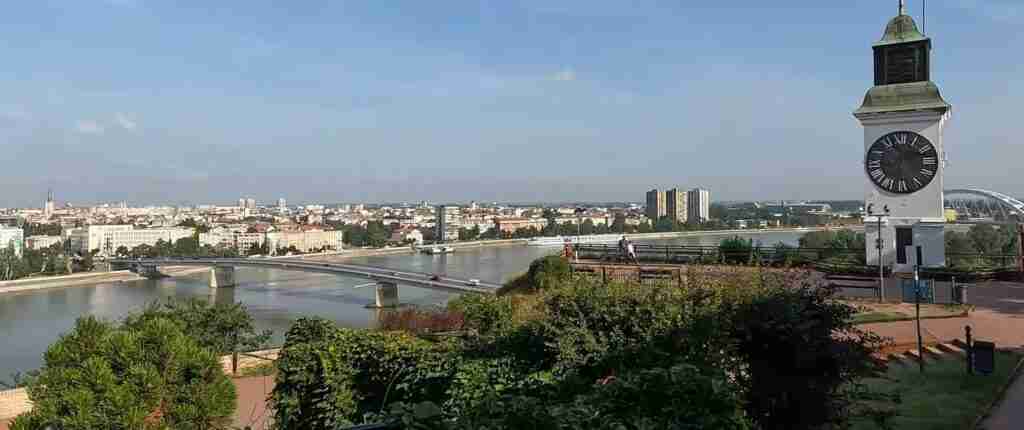
The fortress grounds — including the vast outer walls, ramparts, panoramic Danube views, the famous clock tower (whose hands are reversed, with the hour hand longer than the minute hand, designed to be read from the river), courtyards, and open-air pathways — are accessible 24 hours a day at no charge. The City Museum of Novi Sad, housed within the fortress in the former Cannon and Ammunition Storage, charges 400 RSD ($4) for entry and runs Tuesday through Sunday (closed Mondays). The museum holds two permanent exhibitions: “Petrovaradin Fortress in the Past” and “Novi Sad from the 18th to the 20th Century.” Guided tours of the Underground Military Galleries (the catacombs) — a 16 km four-storey network of tunnels completed in 1783 — are bookable through the City Museum and run at set times; tickets for catacombs tours are additional and should be confirmed directly with the museum on arrival or via their website.
Museums and Galleries in Novi Sad 2026
The Museum of Vojvodina, on Dunavska Street in the old town, is the region’s principal history and ethnography museum, covering the area’s prehistoric, Roman, medieval, and modern layers. Entry costs 200–400 RSD ($2–4). The Gallery of Matica Srpska, one of Serbia’s most important fine art collections with works spanning the 18th to 20th centuries, is housed in a grand building on Trg galerija and charges 300 RSD ($3) for adults. The Pavle Beljanski Memorial Collection of modern Serbian art and the Natural History Museum (Prirodnjački muzej) are additional options, each charging 200–300 RSD ($2–3).
The Novi Sad Synagogue on Jevrejska Street — a 1909 building blending Moorish, Art Nouveau, and Romanticism influences — operates as a concert venue and exhibition space; entry is free when open. Numerous small galleries within Petrovaradin Fortress operate free of charge, including tapestry workshops where artisans work in full view of visitors. The total cost of a thorough museum day in Novi Sad, covering three or four institutions, rarely exceeds 1,200 RSD ($11) per person.
Free Attractions and Green Spaces
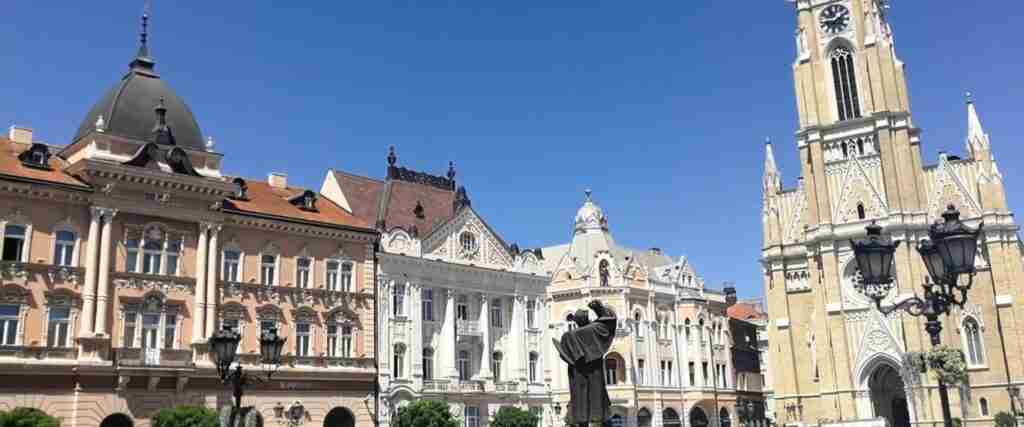
Liberty Square (Trg slobode) at the city’s heart is the social and architectural focus of Novi Sad — the neo-Renaissance City Hall (1895), the Roman Catholic Name of Mary Church with its striking Gothic Revival towers, and the surrounding 19th-century merchant townhouses create an ensemble of real architectural quality, all free to walk and admire. Dunavska Street, the old town’s main pedestrian artery, is lined with eclectic 19th-century facades and connects the square to the riverfront. Danube Park (Dunavski park) is the city’s most elegant green space, designed in the English landscape style, with mature trees, a bandstand, and easy access to the riverside promenade.
The Danube riverfront promenade (Kej) stretches several kilometres along the southern bank, passing the floating river restaurants (splavovi) and café-bars that are a distinctly Serbian form of nightlife — wide barges converted into bars and clubs, moored along the shore and especially active from May through September. Most are free to enter; drinks run 250–450 RSD ($2–4) per round.
Daily Budget Breakdowns for Novi Sad 2026
Budget Traveler Daily Costs in Novi Sad 2026
Budget travelers in Novi Sad covering accommodation, food, transport, and attractions at the most affordable tier spend approximately $30–55 per person daily, assuming two people sharing a guesthouse or budget hotel room.
- Accommodation: budget guesthouse or apartment $32–45/room → $16–23 per person (two sharing)
- Meals: bakery breakfast $2–3, kafana lunch $5–8, dinner at local restaurant $8–12 → $15–23/day
- Transport: public bus $1–2/day
- Attractions: free fortress grounds, free churches and squares; occasional museum $2–4
- Coffee and drinks: 2–3 coffees at local kafanas $2–4
Total: approximately $35–55 per person daily. A week on a budget costs $245–385 per person. This is entirely achievable and does not require significant sacrifice — the free attractions (fortress, old town, riverside, churches) are genuinely the city’s highlights.
Mid-Range Traveler Daily Costs in Novi Sad 2026
Mid-range travelers sharing a three- to four-star hotel and eating at good restaurants spend approximately $70–110 per person daily.
- Accommodation: mid-range hotel $56–88/room → $28–44 per person (two sharing)
- Meals: café breakfast $5–8, restaurant lunch $11–15, dinner with wine $17–28 → $33–51/day
- Transport: mix of walking, buses, and occasional taxi $3–6/day
- Attractions: city museum, gallery, or tour $5–10/day
Total: approximately $70–110 per person daily. A week at mid-range costs $490–770 per person — genuinely comfortable sightseeing with daily restaurant meals and no significant cost pressure.
Luxury Traveler Daily Costs in Novi Sad 2026
Luxury travelers sharing a boutique or five-star hotel and dining at upscale restaurants invest approximately $155–255 per person daily.
- Accommodation: Hotel Leopold I or equivalent boutique $130–194/room → $65–97 per person (two sharing)
- Meals: hotel breakfast or upscale café $12–18, long restaurant lunch $23–35, dinner with wine $25–47 → $60–100/day
- Transport: taxis and private transfers $15–25/day
- Attractions and tours: private fortress guide, winery tours, etc. $15–30/day
Total: approximately $155–255 per person daily. A week at luxury level costs $1,085–1,785 per person — still substantially below equivalent spending in Prague, Vienna, or Budapest at similar quality tiers.
The EXIT Festival Situation in 2026: What Visitors Need to Know
For two and a half decades, EXIT Festival defined Novi Sad’s identity for international visitors. Founded in 2000 as a student movement fighting for democracy in Serbia, the festival outgrew its university campus origins and settled at Petrovaradin Fortress in 2001, winning the Best Major European Festival award at the EU Festival Awards in 2013 and 2017, drawing 200,000 visitors over four July nights at its 2025 peak, and staging over 1,000 artists across 40 stages and zones at its fortress venue.
In June 2025, EXIT confirmed it would not return to Petrovaradin Fortress after its 25th edition, citing what it described as “undemocratic pressures” from Serbian authorities. The political context: in November 2024, a concrete roof canopy at Novi Sad’s newly renovated central railway station collapsed, killing 16 people. The tragedy sparked student protests and a general strike across Serbia, with widespread accusations of government negligence and corruption in overseeing public construction contracts. EXIT Festival publicly supported the protesters. The Serbian government subsequently withdrew all state funding from the festival. EXIT launched a €1.5 million crowdfunding campaign and simultaneously announced a global tour for 2026.
The “First Chapter” global tour for 2026 takes EXIT to Sea Star Festival in Croatia (May), Macedonia (June), Malta (August), Egypt’s Pyramids of Giza (October), Mumbai, India (November), and Belgrade’s No Sleep Festival (November). There is no EXIT Festival at Petrovaradin Fortress in 2026. Travelers who have visited Novi Sad specifically for EXIT in previous years should be aware that July 2026 at the fortress will be a very different experience — quieter, cheaper, and available — which will suit some visitors very well and disappoint others.
What remains in Novi Sad is the full year-round cultural calendar: the Novi Sad International Theatre Festival (Sterija Theatre, June), the Novi Sad Film Festival (June–July), the Street Musicians Festival (September), the Novi Sad Agricultural Fair (May), the Wine Festival in Sremski Karlovci (autumn), and the Music Festival of Classical Music (Novi Sad, October). The fortress continues operating as a cultural center with gallery shows, outdoor concerts, and the annual clock tower light shows through the summer months.
Seasonal Price Variations in Novi Sad 2026
Accommodation prices in Novi Sad follow a pronounced seasonal curve, with summer commanding the strongest rates and the EXIT Festival week historically creating a price spike that will be absent in 2026.
Low season (November–February): Accommodation prices drop 30–45% below peak. A mid-range double room available for $56–88 in summer might be $35–55 in January. Restaurants are less crowded, museums are quiet, and the city operates at a genuine local pace. The Christmas and New Year period (late December to early January) brings mild festive activity and a slight uptick in prices, but nothing approaching summer rates. Weather is cold and occasionally foggy, with temperatures averaging 0–5°C (32–41°F); the fortress is dramatic in winter mist.
Shoulder season (March–May and September–October): The best overall value-to-experience ratio. Accommodation prices sit 15–25% below summer peak. May brings blooming Fruška Gora hillsides, warm café terraces opening for the season, and the city’s outdoor social life fully reactivated. September and October deliver the wine harvest season in Sremski Karlovci and Fruška Gora, cooler comfortable temperatures, and significantly thinner crowds. Both months offer the full Novi Sad experience without summer pricing or summer heat.
High season (June–August): Peak prices and peak energy. Mid-range hotel doubles run $70–120 per room at this time. Outdoor café culture is at its fullest, the Danube riverside bars are lively nightly, and day-trip options to the Fruška Gora national park and local beaches are at their most appealing. In 2026, July specifically — traditionally the EXIT Festival week — will see hotels available at normal high-season rates rather than the three-to-four-times-normal spike of previous years. This is a one-time opportunity for visitors who wanted to see Novi Sad in summer but were previously priced out of the festival-week period.
Hidden Costs and Fees in Novi Sad 2026
Serbia imposes a tourist tax (boravišna taksa) on all accommodation stays, typically collected by hotels alongside the room charge. The rate is modest — generally 150–300 RSD ($1.40–2.80) per person per night — and is sometimes included in the quoted rate, sometimes added at checkout. Confirm this when booking.
Police registration is legally required within 24 hours of arrival for all foreign visitors. Hotels handle this automatically on check-in. If staying in a private apartment or with locals, the host is responsible for registering guests; in practice, this is widely not enforced for short stays, but travelers in apartments should confirm with their host. Failure to register is technically a fine but is rarely enforced for tourists.
ATM fees: Serbian bank ATMs generally allow international card withdrawals, but some charge withdrawal fees of 200–400 RSD ($1.85–3.70) per transaction in addition to any home bank foreign transaction fees. Withdrawing larger amounts less frequently minimizes these charges. ProCredit Bank and UniCredit ATMs have the most widespread network and tend to be reliable.
Tipping: Not compulsory, but 10% is appreciated at sit-down restaurants. Rounding up taxi fares is standard. Coffee shop and street-food vendors do not expect tips. For guided tours — catacombs guides, private fortress tours — a tip of 300–500 RSD ($3–5) per person is appreciated.
Entrance to the underground tunnels (catacombs) at Petrovaradin Fortress requires booking through the City Museum rather than simply turning up; the guided tours run at set times and have limited capacity. Travelers who arrive and find the day’s tours fully booked may need to return the following morning. The 400 RSD ($4) museum entry is separate from the catacomb tour fee.
Sample Itineraries with Cost Breakdowns 2026
Budget Weekend in Novi Sad (2 Days, 2 People Sharing)
Day 1 — Old Town and Fortress: Arrive at bus station, walk to guesthouse (central, $32–45/room). Morning: Liberty Square, Name of Mary Church (free), Dunavska Street, Museum of Vojvodina (400 RSD / $4 per person). Lunch at kafana — 700 RSD ($6.50) per person. Afternoon: walk to Petrovaradin Fortress across Varadin Bridge (free); explore walls and ramparts; City Museum entry 400 RSD ($4). Coffee on the fortress terrace — 250 RSD ($2.30). Evening: walk back to old town, dinner at Ulica Laze Teleckog kafana — 1,000 RSD ($9.30) per person. Total day per person (excluding accommodation): approximately $26.
Day 2 — Riverside, Market, Departure: Breakfast from bakery — 200 RSD ($1.85). Morning: Danube Park, riverside promenade (free). Subotička market for local cheese and fruit — 500 RSD ($4.65) per person. Afternoon: Gallery of Matica Srpska — 300 RSD ($2.80). Coffee and dessert — 400 RSD ($3.70). Bus to Belgrade — 600 RSD ($5.55). Total day per person (excluding accommodation): approximately $18.
Weekend total per person (2 nights accommodation $16–23 per person/night + $44 activities/food/transport): approximately $76–90 per person for the weekend.
Mid-Range 4-Day Itinerary in Novi Sad 2026
Day 1 — Arrival and Old Town: Arrive by high-speed train from Belgrade ($9). Hotel check-in (mid-range, $28–44/person). Liberty Square architecture walk, cathedral visit (free). Dinner at Šangaj restaurant — approximately $22 per person with wine. Day total per person: approximately $59–75.
Day 2 — Petrovaradin Fortress Deep Dive: Fortress walk and City Museum ($4). Catacombs guided tour — check current pricing at museum. Lunch in fortress café — $15. Afternoon gallery browsing, Dunavska Street. Dinner at floating river restaurant (splav) — approximately $25 with wine. Day total per person: approximately $55–70.
Day 3 — Sremski Karlovci Day Trip: Local bus to Sremski Karlovci ($1 each way). Town walk, Patriarch’s Palace, Four Lions Fountain (free). Winery visit with tasting — $12–18. Lunch in town — $12–15. Return bus. Evening: craft beer bar in Novi Sad old town — $8–12. Day total per person: approximately $45–60.
Day 4 — Fruška Gora and Departure: Rental car or organized tour — $20–25 per person for a half-day organized trip. Visit to Novo Hopovo and Fruška Gora viewpoints. Lunch at roadside konoba — $10–14. Afternoon city walk, final shopping on Zmaj Jovina Street. Bus or train to Belgrade or onward destination. Day total per person: approximately $40–50.
4-day mid-range total per person (three nights accommodation $28–44/night/person + approximately $200 activities/food/transport): approximately $285–330 per person. This covers a genuinely full itinerary with daily restaurant meals, paid attractions, a day trip, and comfortable accommodation.
Traveler Type Guides for Novi Sad 2026
Solo Travelers in Novi Sad 2026
Solo travelers in Novi Sad face one significant cost reality: accommodation is priced per room, not per person, so solo travelers pay the full room rate without division. A budget guesthouse at $32–45/room becomes $32–45 per night for a solo traveler rather than $16–23. This pushes solo daily costs to approximately $55–85 (budget tier), $85–130 (mid-range), or $145–270 (luxury). Practically speaking, the city’s excellent value means these figures remain competitive — a solo mid-range day in Novi Sad at $85–130 is less than a solo budget day in Amsterdam or Paris.
Solo travelers benefit from Novi Sad’s compact, walkable old town and the natural sociability of its café culture. The floating river bars on the Kej are informal enough that arriving alone is perfectly normal. Several guesthouses and apartment-hotels offer smaller single rooms at reduced rates — worth requesting directly rather than accepting double-room rates automatically.
Families with Children in Novi Sad 2026
Novi Sad is a family-friendly destination with some practical advantages: the fortress grounds are vast and freely explorable, the Danube Park is ideal for children, and Serbian hospitality toward families with children is genuine and warm. Museum admission for children under 7 is typically free; reduced rates apply to children 7–14 at most institutions.
The catacombs tour is a genuinely exciting experience for older children (from around age 8 upwards) — the underground tunnels and their history are presented engagingly by guides. Sremski Karlovci makes an easy family half-day: the small town is pedestrian-friendly, the wine culture is adult-oriented but the scenery and ice cream shops are universal. Accommodation costs for families benefit from the availability of one-bedroom apartments with kitchenettes, often available for 6,000–9,000 RSD ($56–83) per night — similar to a hotel room but with self-catering capacity that significantly reduces food costs for families. Daily family costs (two adults, two children, mid-range) run approximately $110–160 total per day.
Seniors and Accessibility in Novi Sad 2026
Novi Sad’s old town is mostly flat and walkable, with Dunavska Street and Liberty Square posing no accessibility challenges. Petrovaradin Fortress presents more difficulty: the approach from the lower town involves a climb, most easily managed by taking a taxi to the upper fortress gate (350–500 RSD / $3–5) rather than ascending on foot. The fortress grounds at the upper level are largely flat once reached. Most museums offer concessionary admission for seniors, typically 50% of adult pricing. The high-speed train to and from Belgrade is modern, comfortable, and accessible. Organized day trips to Sremski Karlovci and Fruška Gora remove the navigation complexity of self-drive day trips.
Money-Saving Strategies for Novi Sad 2026
The city’s most compelling attractions — the fortress exterior, the old town, the riverside promenade, and the park system — are entirely free, which means thoughtful itinerary planning puts very little behind paywalls. Several strategies reduce costs further without compromising the experience.
Stay slightly off-center: guesthouses and apartments two to five minutes’ walk from Dunavska Street are 20–35% cheaper than equivalent properties directly on the tourist spine, and the difference in walking time is negligible given the city’s scale. Self-catering breakfast from the Subotička market — fresh bread, cheese, cured meats, and seasonal fruit — costs 400–600 RSD ($3.70–5.55) per person compared to $8–12 at a hotel or café. The midday kafana meal is the city’s best value format: the full Serbian lunch menu (two courses plus a drink) runs 800–1,400 RSD ($7.40–13) at good local restaurants outside the immediate tourist zone.
Visit Sremski Karlovci independently by public bus (100 RSD / $0.90 each way) rather than on a paid day-trip package ($20–35 per person). The bus journey takes 15–20 minutes and deposits passengers at the town center. For Fruška Gora, organizing a self-drive rental car split among three or four travelers is cheaper than individual tour packages — a day rental costs 4,000–7,000 RSD ($37–65) total and gives complete flexibility over monastery stops and winery visits. Fuel for the mountain ridge circuit adds 1,000–1,500 RSD ($9–14).
Exchange currency at menjačnica (exchange offices) rather than airport kiosks or hotel desks: rates are consistently 3–7% better. Withdraw larger amounts from ATMs less frequently to minimize per-transaction fees. The local beer (Lav, Jelen, Pivo) at a kafana costs 200–280 RSD ($1.85–2.60) per pint — order local rather than imported for significant savings at bars.
Practical Travel Information for Novi Sad 2026
Visa and Entry Requirements 2026
Citizens of European Union and EEA countries, the United States, the United Kingdom, Canada, Australia, and New Zealand enter Serbia without a visa for stays up to 90 days within any 180-day period. A valid passport is required (national ID cards are accepted for EU citizens). Serbia is not a member of the Schengen Area, so the 90-day allowance in Serbia is entirely separate from — and does not count against — any Schengen Area allowance. This is a practical advantage for European travelers: a two-week Serbia visit adds no Schengen days to the counter. Holders of valid Schengen, UK, EU member state, or US visas can also enter Serbia visa-free for short stays.
Proof of sufficient funds for the stay is technically required at border control — €50 per day or the equivalent is the stated standard. Visitors should register their accommodation within 24 hours of arrival; hotels handle this automatically, while apartment and private hosts are legally responsible for registering their guests. Serbia introduced a Digital Travel Authorization system in April 2025 for citizens of 46 specific nationalities — check current requirements for your passport at the Serbian Ministry of Foreign Affairs website before traveling.
Currency and Payments 2026
The Serbian dinar (RSD) is the sole official currency. As of 2026, €1 exchanges for approximately 117 RSD and $1 for approximately 108 RSD. Cash is widely used for local restaurants, markets, street vendors, and smaller shops. Cards are accepted at hotels, supermarkets, and larger restaurants. Contactless payment is increasingly available but not universal. Euros are informally accepted at some tourist-facing businesses near the fortress and on Dunavska Street — the rate offered will typically be inferior to official exchange. Exchange offices (menjačnica) throughout the city center and near the bus station offer competitive rates; bring cash from home or withdraw from ATMs for the best practical rate.
Language and Communication 2026
Serbian is the official language, written in both Cyrillic and Latin scripts. Vojvodina is officially multilingual, and Hungarian has co-official status in many municipalities; Hungarian-language signage and menus are common. English is widely spoken among younger residents, hotel and restaurant staff, and most businesses catering to visitors — communication is straightforward in the tourist areas without Serbian language knowledge, though learning a few basic Serbian phrases (hvala = thank you, molim = please, dobar dan = good day) is appreciated. The Cyrillic alphabet is the main challenge for navigation; most key signage in the city center uses both scripts.
Safety in Novi Sad 2026
Novi Sad is a safe city for travelers by any European standard. Petty theft is the primary concern in crowded tourist areas and on the riverfront bars; standard urban precautions (don’t leave bags unattended, use inside pockets in crowds) are sufficient. The city center is lively and populated late into the evening; solo walking after midnight is generally safe in the old town and along the main streets. Medical facilities are available at the Clinical Center of Vojvodina (Klinički centar Vojvodine), with emergency services accessible via the standard European emergency number 112. Travel insurance covering medical evacuation to an EU country is recommended for visitors from countries without bilateral health agreements with Serbia.
Connectivity and SIM Cards 2026
Serbia is not part of the EU roaming area, meaning EU mobile plans’ free roaming does not apply. Roaming charges for EU visitors using home SIM cards in Serbia can be significant. The most cost-effective solution for stays of more than one or two days is a local SIM card: Telekom Srbija, A1 Serbia, and mts all offer tourist SIM cards with data packages available at the bus station, airport transfer points in Belgrade, and phone shops throughout Novi Sad for approximately 500–1,500 RSD ($5–14) for 5–15 GB of data. eSIM options are also available for compatible devices. Free Wi-Fi is widely available in hotels, cafés, and restaurants throughout the city center.
Novi Sad Neighborhoods: Where to Stay and What to Expect
City Center (Centar) — Best for First-Time Visitors
The compact core around Liberty Square, Dunavska Street, and Zmaj Jovina pedestrian zone contains the highest concentration of restaurants, cafés, bars, and cultural institutions. Hotels and apartments here command a 15–25% premium over equivalent properties elsewhere in the city but deliver immediate walkability to every major sight. The area is lively until midnight on weekends and quieter on weeknights outside of summer. Most visitors exploring Novi Sad for two to three days are well-served by staying here and walking everywhere.
Liman — Residential Character, Park Access
The Liman district southwest of the city center is primarily residential with a strong university presence — the University of Novi Sad campus anchors this area. Several well-regarded mid-range hotels and apartment-hotels operate here at 10–20% below city center rates. Liman Park is one of the city’s most attractive green spaces. The walk to Liberty Square takes 15–20 minutes; bus line 4 connects the area directly to the center. A good choice for longer stays and travelers who prefer a less touristic atmosphere.
Petrovaradin — The Fortress Side
The settlement of Petrovaradin, technically a separate town but now incorporated into Novi Sad city, sits directly beneath and within the fortress complex on the right bank of the Danube. Hotels here — most prominently Hotel Leopold I within the fortress walls — offer a genuinely extraordinary sense of place. The area has fewer restaurant and café options than the main city, and crossing the Varadin Bridge to the old town takes 25–30 minutes on foot or 10 minutes by taxi. Well-suited for visitors prioritizing the fortress experience and willing to trade convenience for atmosphere.
Frequently Asked Questions About Novi Sad 2026
How much money do I need per day in Novi Sad in 2026?
Daily budgets in Novi Sad range from approximately $30–55 per person (budget, two sharing a guesthouse), $70–110 per person (mid-range, two sharing a hotel), to $155–255 per person (luxury, two sharing a five-star property). These figures cover accommodation, three meals, local transport, and paid attractions. The city is among the most affordable in Europe, and even mid-range spending feels generous compared to what the same money buys in Western European destinations.
Is Novi Sad worth visiting without EXIT Festival?
Absolutely — Novi Sad’s quality as a destination rests on foundations independent of the festival: the Petrovaradin Fortress is one of Europe’s most impressive and undervisited heritage sites, the Habsburg old town is architecturally compelling, the café culture is excellent, Fruška Gora and Sremski Karlovci are outstanding day trips, and the city’s affordability is remarkable. EXIT’s absence in 2026 means July accommodation is available at normal summer rates rather than festival-period spikes, and the fortress is explorable without crowds of 200,000 festival-goers. Many visitors will find 2026 a preferable time to discover the city on its own terms.
What language is spoken in Novi Sad?
Serbian is the primary language, written in both Cyrillic and Latin scripts. Hungarian is widely spoken in Vojvodina, with co-official status in some municipalities; Hungarian-language menus and signs are common in Novi Sad. English is spoken by most younger locals and tourist-sector workers throughout the city center. Basic Serbian phrases — hvala (thank you), molim (please), izvinite (excuse me) — are warmly received but not required for navigating the city as a visitor.
Do I need a visa to visit Novi Sad from the EU, US, or UK?
No. EU, EEA, US, UK, Canadian, Australian, and New Zealand passport holders all enter Serbia visa-free for stays up to 90 days within any 180-day period. For EU citizens, this is entirely separate from the Schengen 90-day allowance — Serbia is not in the Schengen Area, so time spent in Serbia does not count against any Schengen entitlement. Carry a valid passport; EU national ID cards are also accepted for EU citizens.
How do I get around Novi Sad?
The old town is walkable — the major sights between Liberty Square, the riverside, and Petrovaradin Fortress (via the bridge) are all within 25–30 minutes of each other on foot. City buses run on a flat fare of approximately 100–150 RSD ($0.90–1.40) per journey, paid in cash to the driver. Taxis and ride-hailing apps (CarGo, Naxis) are inexpensive — typical cross-city fare of 400–800 RSD ($4–7). The most practical approach for most visitors is to walk the city center daily and take taxis for the fortress approach and any suburban excursions.
What is the best neighborhood to stay in Novi Sad?
The city center (Centar) around Liberty Square and Dunavska Street is the best choice for short visits — everything is walkable and the atmosphere is at its most lively. The Liman district offers 10–20% lower accommodation rates with a pleasant residential character and a 15-minute walk to the old town. For an unmatchable sense of place, Hotel Leopold I within Petrovaradin Fortress is a splurge worth considering for one or two nights, though it requires taxis to reach restaurants and the old town.
When is the cheapest time to visit Novi Sad?
November through February delivers the lowest prices, with mid-range hotel rooms 30–45% below summer rates and minimal tourist crowds. The shoulder months of May and September–October offer the best combination of value, weather, and atmosphere. In 2026, the traditionally expensive EXIT Festival week in July will not see a price spike — accommodation that previously cost three to four times normal rates during that week is available at standard summer pricing, making July 2026 a one-time value opportunity for summer visitors.
Is Novi Sad safe for tourists?
Novi Sad is safe by any European comparison. The city center, old town, and riverside areas are busy and well-lit through the evening hours. Standard urban precautions are sufficient: keep bags aware of in crowded areas, use inside pockets or crossbody bags in busy market areas, and be sensible about valuables on the floating river bars. The emergency number is 112. Political protest activity related to the ongoing student movement against the Serbian government is a feature of Serbian cities in 2026 — demonstrations in Novi Sad have been peaceful, and visitor safety has not been affected, but travelers should be aware of any gatherings and follow local guidance.
What food is Novi Sad known for?
Vojvodina’s cuisine reflects the region’s multicultural history. Roštilj — grilled meats including ćevapi (minced meat sausages), pljeskavica (grilled patties), and skewered mixed grills — is the dominant local tradition. Čorba (thick stews) and pasulj (bean soup) are traditional warming dishes. Kajmak, a richly fatty clotted cream spread, accompanies almost everything. The region’s Hungarian heritage shows in fish stew (riblja čorba) prepared with fresh Danube and Tisa catch, and paprika-inflected gulyás. Fruška Gora vineyards produce Riesling, Tamjanika (Muscat Blanc), and Chardonnay available throughout the city at very affordable prices. Rakija (fruit brandy, often plum or apricot) is the local spirit offered at the start or end of almost every meal.
How many days should I spend in Novi Sad?
Two full days covers the city’s major attractions comfortably: the old town, fortress, main museums, and riverside. Three to four days allows the addition of Sremski Karlovci, a Fruška Gora excursion, and a more unhurried engagement with the café culture. Visitors combining Novi Sad with Belgrade typically allocate two nights in Novi Sad alongside three to four in Belgrade on a one-week Serbia trip — this is a natural and well-balanced pairing, with the high-speed train making the two cities mutually accessible. Longer stays of five to seven days work well for travelers wanting to explore Vojvodina more broadly, including Subotica’s Art Nouveau architecture and the Fruška Gora monasteries in depth.
What currency does Serbia use and can I pay with euros?
Serbia uses the Serbian dinar (RSD). As of 2026, €1 exchanges for approximately 117 RSD and $1 for approximately 108 RSD. Euros are not officially accepted and are not legal tender in Serbia. Some tourist-facing businesses near the fortress and on Dunavska Street will informally accept euros, but the exchange rate offered is typically worse than official rates. Withdraw Serbian dinars from ATMs using an international debit or credit card, or exchange cash at menjačnica (exchange offices) throughout the city center for the best practical rates. Credit cards work at hotels, supermarkets, and most sit-down restaurants; smaller kafanas and markets are cash-only.