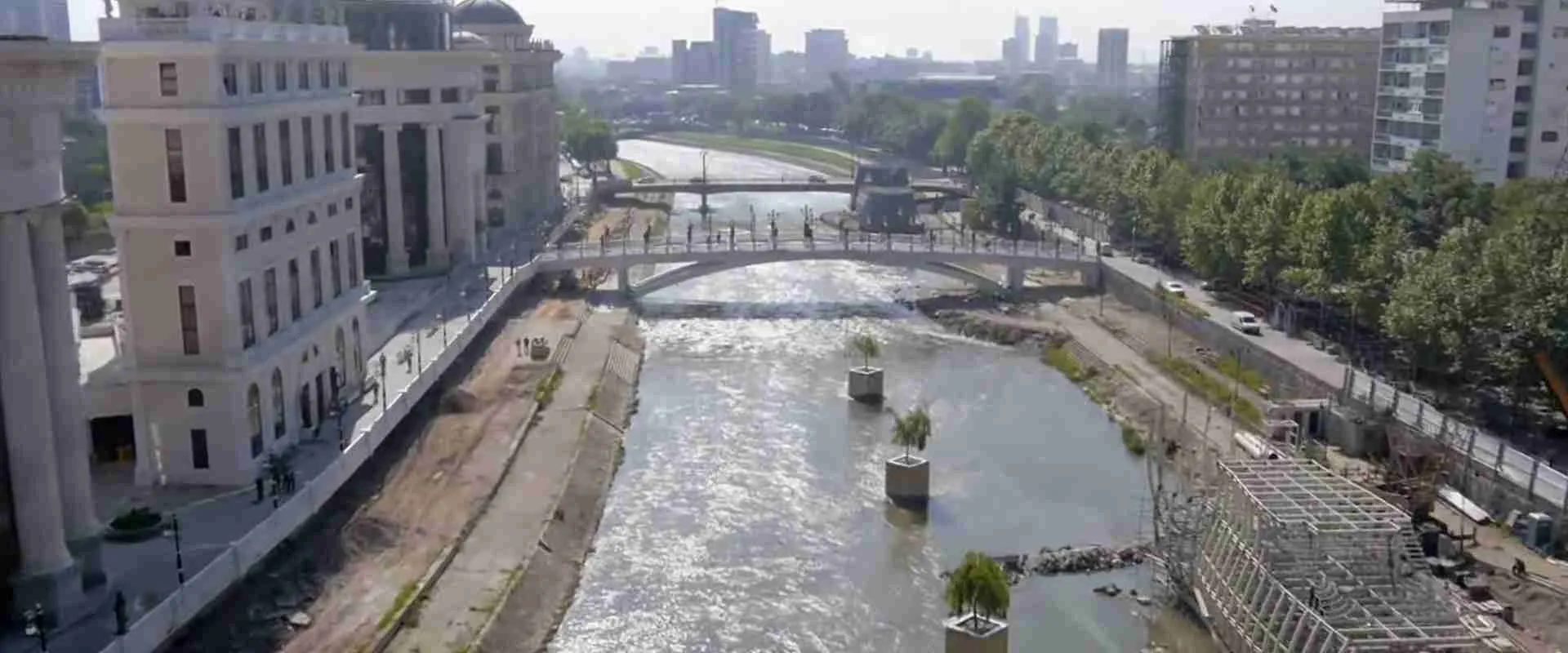
North Macedonia Budget Guide 2026: Complete Cost Breakdown
North Macedonia stands as one of Europe’s last great budget travel secrets, stacking Ottoman bazaars, Byzantine monasteries, and the continent’s oldest lake against prices that feel almost impossibly low by Western European standards. In 2026, a full day of travel here costs between $30 and $290 per person depending on travel style — a range that places it comfortably ahead of Albania, Kosovo, and even Serbia for sheer value. This guide breaks down every cost category with verified 2026 prices so you can plan an accurate, realistic budget before you board a single flight.
- Budget travelers spend $30–55 per person daily (hostel dorm or cheap guesthouse, two sharing)
- Mid-range travelers spend $75–135 per person daily (two sharing a 3-star hotel)
- Luxury travelers spend $175–290 per person daily (two sharing a 4–5 star property)
- A week in North Macedonia costs $210–385 on a budget, $525–945 mid-range, or $1,225–2,030 luxury per person (excluding flights)
- Skopje to Ohrid by bus costs $10–20 one way — the primary intercity route and the most affordable connection
- Shoulder season (April–May and September–October) reduces accommodation costs 20–30% compared to July and August peak pricing
People Also Ask About North Macedonia Budget 2026
How much does North Macedonia cost per day in 2026?
North Macedonia costs $30–55 per person daily on a budget (hostel dorms, local restaurants, buses), $75–135 mid-range (sharing a 3-star hotel, sit-down restaurants, some paid attractions), or $175–290 luxury (sharing a 4–5 star hotel, upscale dining, private transport). These figures are per person assuming two people sharing hotel accommodation, with hotel rates divided before per-person totals are calculated. Skopje and Ohrid cost comparably, with Ohrid running 10–15% higher in peak summer due to lake tourism demand.
What is the average hotel price in North Macedonia in 2026?
Budget accommodation in North Macedonia costs 800–1,600 MKD ($15–30) for hostel dorms or basic private rooms. Mid-range hotels run 3,200–5,300 MKD ($60–100) per room per night, making them among the cheapest mid-range hotels in Europe. Luxury 4–5 star properties in Skopje (Marriott, DoubleTree by Hilton) run 6,400–10,600 MKD ($120–200) per room. Peak summer rates in Ohrid can climb 30–50% above these baseline figures, particularly for lakefront properties in July and August.
How much does it cost to get from Skopje to Ohrid in 2026?
The Skopje–Ohrid bus costs $10–20 one way (approximately 530–1,060 MKD), with the journey taking 3 hours. Multiple operators including AD Galeb and Classic Company run 4–5 services daily from Skopje’s central bus terminal. A private taxi covers the same route in around 2.5 hours and costs 5,300–6,900 MKD ($100–130) one way — worth considering for groups of four splitting the fare. Budget transfers organized through guesthouses run $30–50 per person for shared minivan services.
Is North Macedonia cheaper than other European countries in 2026?
North Macedonia is one of the five cheapest countries in Europe for travel in 2026, alongside Albania, Kosovo, Moldova, and Bosnia-Herzegovina. Daily mid-range costs of $75–135 per person compare with $120–180 in Bulgaria, $150–220 in Greece, and $200–300 in Croatia. The gap widens for accommodation: a solid 3-star hotel in Skopje costs $60–100 per room versus $120–200 for equivalent quality in Zagreb or Athens. Food and transport widen the gap further — a full sit-down dinner in Skopje costs $13–20 versus $35–50 in similar Adriatic destinations.
Extended multi-day tours – 5+ days
Featured Macedonia Multi-Day Tour Packages
5 days
Explore the capital of North Macedonia
- ✓ Comprehensive Macedonia tour
- ✓ Expert local guides included
- ✓ All accommodation arranged
- ✓ Transportation provided
8 days
Scenic Macedonia in 8 days
- ✓ Comprehensive Macedonia tour
- ✓ Expert local guides included
- ✓ All accommodation arranged
- ✓ Transportation provided
8 days
Best of North Macedonia; Semi – Private Tour with Dedicated Tour Leader & Car
- ✓ Comprehensive Macedonia tour
- ✓ Expert local guides included
- ✓ All accommodation arranged
- ✓ Transportation provided
1 days
Day Tour of Ohrid from Tirana
- ✓ Comprehensive Macedonia tour
- ✓ Expert local guides included
- ✓ All accommodation arranged
- ✓ Transportation provided
Multi-day tour packages powered by TourRadar. Prices and availability subject to change.
Introduction to North Macedonia as a Budget Destination 2026
North Macedonia punches far above its weight as a travel destination. The country’s capital Skopje delivers a disorienting blend of neoclassical statuary, Ottoman minarets, Byzantine churches, and concrete socialist architecture, most of it concentrated in a walkable city centre that requires no transport budget to explore. A 90-minute drive southwest brings you to Ohrid, whose cobbled medieval old town sits above one of Europe’s oldest and deepest lakes — a lake so ancient and ecologically distinct that UNESCO inscribed the entire region as both a cultural and natural World Heritage Site back in 1979, with an extension to the Albanian shoreline added in 2019.
What makes North Macedonia exceptional for budget planning in 2026 is the stability of its pricing. The country saw 25% tourism growth in 2025, yet hospitality prices have remained broadly flat because the service infrastructure has expanded in parallel. Unlike Croatia or Slovenia, which have seen steep post-pandemic price corrections toward Western European norms, North Macedonia still operates at roughly half the cost of the EU average for hotels and restaurants. The Macedonian Denar (MKD) is pegged to the euro at a fixed rate of approximately 61.5 MKD per euro, eliminating exchange rate risk and providing pricing stability that makes advance budget planning reliable.
North Macedonia is also compact. The entire country measures roughly 260 kilometres across, meaning every major destination — Skopje, Ohrid, Bitola, Matka Canyon, Heraclea Lyncestis, the Tikveš wine region — sits within 3 hours of travel. This compactness dramatically reduces internal transport costs, one of the largest variables in Balkan travel budgets. A traveller spending 7 days in North Macedonia can see the essential highlights without a single overnight train or expensive domestic flight.
The country uses the Macedonian Denar (MKD) as its official currency, though euros are informally accepted in many tourist-facing businesses, particularly accommodation and tour operators in Ohrid. ATMs are widely available in Skopje and Ohrid, and most mid-range hotels and restaurants in cities accept Visa and Mastercard. Cash remains essential for local buses, street food, small guesthouses, and markets. The current exchange rate in 2026 is approximately 53 MKD per US dollar.
Accommodation Costs in North Macedonia 2026
Accommodation is the largest single cost for most travellers in North Macedonia, but it remains dramatically affordable by European standards across every tier. Budget beds start under $20 per person and the finest hotels in Skopje rarely exceed $200 per room. The key pricing variable for 2026 is season: summer demand from July to August pushes Ohrid rates up by 30–50%, while Skopje stays more consistent year-round as a business travel hub with lower leisure seasonality.
Budget Stays: Hostels and Guesthouses in Skopje and Ohrid
Hostel dormitory beds in Skopje and Ohrid cost 800–1,060 MKD ($15–20) per person per night in 2026. Private rooms in budget guesthouses — typically family-run properties with shared bathrooms — run 1,590–2,650 MKD ($30–50) per room, or $15–25 per person for two sharing. This tier delivers extraordinary value: most budget properties in both cities include free Wi-Fi, common areas, and kitchen access, with many adding complimentary breakfast for an additional 150–250 MKD ($3–5).
In Skopje, budget-friendly areas to look include Debar Maalo, a bohemian neighbourhood west of the city centre with cafes and good transport links, and the Old Bazaar area, where guesthouses occupy converted Ottoman-era buildings and deliver considerable character at budget prices. Properties like BSV Hostel offer dorm beds from 800 MKD ($15) and private double rooms from around 2,100 MKD ($40). In Ohrid, lakeside guesthouses in the old town — including Villa Old Town and Villa Varosh — provide lake views and terrace access at prices between 1,600–2,600 MKD ($30–50) per room, making them exceptional value for the setting.
Mid-Range Hotels in North Macedonia 2026
Mid-range hotels in North Macedonia cost 3,180–5,300 MKD ($60–100) per room per night in 2026, with two sharing translating to $30–50 per person. This tier covers comfortable 3-star properties with private bathrooms, air conditioning, Wi-Fi, and breakfast included. Quality in this category consistently exceeds Western European equivalents at the same price point — a $70 hotel room in Skopje delivers amenities typical of a $130–150 room in Prague or Vienna.
In Skopje, reliable mid-range properties include Hotel Pine ($42–65/night), Hotel De Koka ($51–75/night), and Super 8 Hotel, which sits near the Old Bazaar with easy access to both the Ottoman and modern sides of the city. The Panoramika Design Hotel offers contemporary boutique styling near Macedonia Square for $70–100 per room. In Ohrid, mid-range options cluster along the lakefront and in the old town, with properties like Hotel Villa Dislievski and Villa Dea both offering lake-view rooms for $55–85 per room. The Solun Hotel & Spa in Skopje delivers four-star amenities at mid-range prices, running $90–110 per room.
Luxury Hotels and Boutique Properties 2026
Luxury accommodation in North Macedonia costs 6,350–10,600 MKD ($120–200) per room per night for 4–5 star properties, with two sharing translating to $60–100 per person. This tier delivers full international luxury standards at a price point 50–60% below comparable rooms in Western Europe. Skopje’s flagship luxury properties include the Skopje Marriott (running $150–200/night) and the DoubleTree by Hilton Skopje ($130–175/night), both located within a short walk of Macedonia Square and offering spa access, rooftop dining, and premium amenities.
In Ohrid, the Inex Olgica Hotel & Spa stands as the premier luxury address, with lakefront rooms and indoor pool facilities running $120–180 per room per night in shoulder season, climbing to $200–250 in peak July–August. Lago Hotel & Spa offers a newer alternative with an adult-oriented atmosphere and private beach access at similar rates. For those seeking boutique luxury outside the main cities, Villa & Winery Mal Sveti Kliment in the wine-producing countryside offers an exceptional wine country retreat at $55–80 per room — one of the best luxury values in the Balkans.
Seasonal Accommodation Price Variations 2026
North Macedonia’s accommodation pricing follows a clear seasonal structure. Winter months (November through March) deliver the lowest rates, with mid-range hotels in Skopje dropping to $40–65 per room — roughly 30–40% below peak rates. Skopje operates year-round and sees minimal leisure seasonality, making it consistently affordable.
Ohrid follows a sharply different seasonal pattern driven by its status as North Macedonia’s premier summer destination. From late June through August, demand from domestic and regional tourists (particularly from Kosovo, Serbia, and Greece) pushes lakefront accommodation up 30–50%. A guesthouse that costs $50/room in May can climb to $70–80 in July. Shoulder season in Ohrid — April to mid-June and September to October — offers the best combination of weather, crowd levels, and pricing. September in particular coincides with harvest festivals and warm lake temperatures, making it arguably the best month to visit Ohrid on a controlled budget.
Neighborhood Price Guide for Skopje and Ohrid 2026
Where you stay within each city influences nightly costs meaningfully. Central and lakefront locations command premiums of 20–40% over peripheral neighbourhoods with similar facilities.
Best Neighborhoods to Stay in Skopje 2026
The city centre around Macedonia Square and the Stone Bridge sits at the premium end of Skopje’s accommodation market, with mid-range rooms running $80–120 per room versus $60–90 in the broader city. The Old Bazaar area (Čaršija) offers atmospheric accommodation in restored buildings at slightly lower prices, $55–90 per room, and delivers immediate access to the best cafes, restaurants, and Ottoman-era sights on foot.
Debar Maalo, west of the city centre and uphill toward the Vodno cable car station, houses many of Skopje’s most appealing boutique guesthouses at $50–80 per room. The area has a strong local cafe culture, excellent restaurants, and good city bus links. Travelers on strict budgets achieve the best value by staying in Prolet, a central neighbourhood popular with longer-stay visitors, where reliable apartments rent from 2,100–3,200 MKD ($40–60) per night for two.
Where to Stay in Ohrid 2026
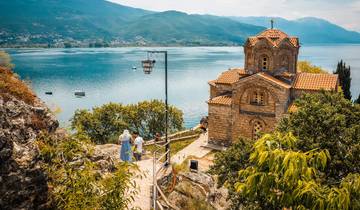
Ohrid’s Old Town commands the highest premium, with lakefront guesthouses along the Kaneo hill and the pedestrian-only Tsar Samuil Street running $70–120 per room in peak season. The views justify the premium — Kaneo is home to the iconic St. Jovan Kaneo church, perched above the lake on a rocky promontory, and guests wake to lake views from stone-walled rooms with carved wooden balconies.
The beach area stretching south of town toward Biljanini Izvori offers newer purpose-built hotels at $60–100 per room with better parking and easier access to sandy beaches, though less atmosphere. Budget travellers find the best value in the streets behind the waterfront promenade, where family guesthouses charge $35–60 per room with breakfast. The village of Struga, 14 kilometres north of Ohrid on the same lake, offers $20–40 per room guesthouses for travellers prioritising price above all else, with regular minivans connecting it to central Ohrid.
Food and Dining Costs in North Macedonia 2026
Macedonian cuisine is hearty, flavourful, and remarkably affordable. The national dishes — tavče gravče (baked white beans in earthenware), ajvar (roasted pepper and aubergine relish), shopska salad (tomatoes, cucumbers, and white cheese), and kebapi (grilled minced meat rolls) — appear on menus across the country at prices that feel almost absurdly low. A full lunch in a local kafana (traditional tavern) rarely exceeds 600–800 MKD ($11–15). Daily food costs range from $10–18 for disciplined budget travellers to $22–38 for those eating full sit-down meals three times a day.
Budget Eating: Bakeries, Kafanas, and Street Food
Budget eating in North Macedonia centres on the pekara (bakery), an institution found on virtually every street in Skopje and Ohrid. A burek (flaky pastry filled with meat or cheese) costs 60–120 MKD ($1–2.25) and constitutes a filling breakfast or mid-morning snack. Coffee in a street-side pekara costs 77–100 MKD ($1.50–2). This combination — burek plus coffee — runs 150–200 MKD ($3–4) and sets up a budget traveller comfortably until midday.
Lunch at a local kafana or grill restaurant costs 350–600 MKD ($6.60–11). Destan in Skopje’s Old Bazaar serves the city’s most famous kebapi for around 400 MKD ($7.60) for a full plate with bread and onions. Fast food in Skopje — a combo meal at international chains — runs 300 MKD ($5.60), but local grills are better quality and comparably priced. Dinner at a traditional Macedonian restaurant, including a starter (shopska salad at 200–300 MKD), a main course (300–500 MKD), and a local beer (150 MKD), comes to 700–1,000 MKD ($13–19) per person.
Budget travellers eating two meals at local spots plus a pekara breakfast can contain daily food costs to 700–950 MKD ($13–18).
Mid-Range Dining: Traditional Macedonian Restaurants
Mid-range dining in North Macedonia means a step up in atmosphere and service rather than a dramatic price jump. Sit-down restaurants with tablecloths, wine lists, and lake views in Ohrid charge $15–25 per person for a full meal with a glass of local Tikveš wine. In Skopje, atmospheric dining venues in the Old Bazaar — including the Kan on the Square restaurant, set in a restored Ottoman caravanserai — serve full dinners for 900–1,500 MKD ($17–28) per person including wine.
Fresh lake trout from Ohrid is the regional highlight and one of the finest dining experiences in the Balkans. A grilled trout at a lakeside restaurant runs 800–1,300 MKD ($15–25) per person including salad and bread, representing excellent value for fresh fish in a world-class setting. Macedonian wines are an underrated pleasure: a bottle of quality Vranec (the national red grape variety) from the Tikveš region costs 600–1,500 MKD ($11–28) in a restaurant, with decent options starting around 800 MKD ($15).
Upscale Dining and Wine Experiences 2026
Fine dining in North Macedonia costs a fraction of Western European equivalents. Dinner for two at Skopje’s best restaurants — including Dal Met Fu near Macedonia Square or the rooftop restaurant at the Skopje Marriott — runs 3,000–6,000 MKD ($55–110) for two people including wine. Per person with a full bottle of premium Macedonian wine, expect 1,500–3,000 MKD ($28–55).
Wine tasting experiences at established Tikveš region wineries cost $40–100 per person depending on the programme. The Skopje Wine Tasting Experience at Zaharchev Winery runs approximately 2,330 MKD ($44) per person and includes guided tastings of five to six wines with local food pairings. A private wine tour of Chateau Sopot from Skopje costs approximately 5,100 MKD ($96) per person. Ohrid’s wine and fish combination — trout dinner with lake views followed by a bottle of local white wine — delivers one of the most memorable dining experiences in the Balkans for $25–35 per person.
Supermarket and Self-Catering Costs 2026
Self-catering in North Macedonia dramatically reduces food budgets. A week’s worth of basic groceries for one person costs approximately $20–30 at Skopje’s well-stocked supermarkets including Vero, Tinex, and Ramstore. Key grocery prices: bread (60–80 MKD/$1–1.50 for a loaf), eggs (130–180 MKD/$2.50–3.40 per dozen), local yoghurt (40–60 MKD/$0.75–1.10 per 400g), seasonal vegetables (15–40 MKD per item at markets), and local cheese/feta (150–250 MKD/$2.80–4.70 per 400g).
Open-air markets (pazar) in both Skopje and Ohrid sell fresh produce at prices 30–40% below supermarket costs. Skopje’s Bit Pazar near the Old Bazaar operates daily and offers the freshest seasonal vegetables, herbs, dried fruit, and spices — budget 200–300 MKD ($3.75–5.65) for a full day’s worth of raw ingredients. Travellers staying in guesthouses with kitchen access cut food costs to $8–12 per day through a combination of self-catering and selective eating out.
Transportation Costs Across North Macedonia 2026
North Macedonia’s compact geography keeps transport costs low. The entire country is served by an affordable bus network, urban transport costs under $1 per ride, and car rental rates that are among the cheapest in Europe. Transport accounts for $3–50 of a daily budget depending on style, with the average traveller spending $8–20 per day including at least one intercity trip during their stay.
City Transit: Buses and Taxis in Skopje
Skopje’s city bus network (JSP) covers the entire metropolitan area with fares of 40 MKD ($0.75) per ride, paid directly to the driver in exact change. The main routes for tourists — connecting the bus station, Macedonia Square, the Old Bazaar, and Debar Maalo — run frequently throughout the day. City bus 60 runs directly from Skopje’s city centre to Matka Canyon, the most popular day trip from the capital, making it possible to visit entirely without a taxi or tour.
Taxis in Skopje start at 60 MKD ($1.10) and charge approximately 35 MKD ($0.66) per kilometre. A ride from Macedonia Square to the Old Bazaar costs 80–120 MKD ($1.50–2.25). From the city centre to the Vodno cable car station runs 300–400 MKD ($5.65–7.55). The ride-sharing app Bolt operates in Skopje and undercuts traditional metered taxis by 15–20%. Agree on the fare before entering unmetered taxis, particularly those near the airport and central tourist areas. A taxi to Matka Canyon from the city centre costs approximately 600 MKD ($11) one way.
Ohrid is compact and almost entirely walkable for tourists. The old town, lakefront promenade, Samuel’s Fortress, and main beach areas all fall within a 1–2 kilometre stretch navigable on foot. Taxis within Ohrid start at 100 MKD ($1.90) for minimum fares and are useful primarily for reaching the Bay of Bones Museum, the Monastery of Saint Naum, and the bus station, all of which sit outside the walking centre.
Intercity Travel: Bus Network and Schedules 2026
North Macedonia’s intercity bus network provides affordable, comfortable connections between all major cities. Buses operate from Skopje’s central bus terminal (Transporten Centar) and cover the key tourist routes efficiently.
- Skopje to Ohrid: 530–1,060 MKD ($10–20) one way, 4–5 daily departures, 3–3.5 hour journey. Multiple operators including AD Galeb and Classic Company.
- Skopje to Bitola: 400–600 MKD ($7.50–11) one way, 4 times daily, approximately 2.5 hours.
- Skopje to Tetovo: 150–250 MKD ($3–5) one way, frequent departures, 45 minutes.
- Ohrid to Struga: 120–150 MKD ($2.25–3) one way, minivans run throughout the day.
- Ohrid to Saint Naum Monastery: The bus toward the Albanian border stops 16 kilometres south at Bay of Bones and continues to Saint Naum for approximately 60 MKD ($1.10) from central Ohrid.
Train services are limited in North Macedonia and primarily useful for the scenic Skopje–Bitola route, which takes 3 hours 24 minutes and costs approximately 640–2,100 MKD ($12–40). The train journey through the Demir Kapija gorge and across the agricultural plains offers spectacular scenery, but infrequent schedules (4 trains daily) mean most travellers default to the bus for flexibility.
Car Rental in North Macedonia 2026
Car rental unlocks the full depth of North Macedonia — the Pelister and Mavrovo national parks, remote canyon monasteries, the Tikveš wine region, and mountain villages inaccessible by public transport. Rental rates in Skopje run $20–45 per day for a compact car (Chevrolet Spark or Škoda Fabia class) in shoulder season, rising to $40–65 per day in peak July–August. SUVs for mountain roads rent from $45–80 per day. Multiple companies operate at Skopje airport including Avis, Europcar, Surprice, and local provider Autounion, which consistently offers the lowest daily rates from $8–15 per day for economy models (check carefully for CDW insurance inclusion).
Driving in North Macedonia is straightforward outside Skopje city traffic. Roads between major cities are in good condition, speed limits are consistently signposted, and fuel costs approximately 95–105 MKD ($1.80–2) per litre for petrol. The Skopje–Ohrid drive via the E65 motorway takes 2.5–3 hours. Mountain roads to Mavrovo and Pelister national parks are paved but winding — a small SUV is preferable to a compact car for these routes.
One important note: a rental car covers roughly the same cost as four one-way intercity bus tickets while offering complete schedule flexibility. For two or more travellers planning to visit national parks and remote monasteries, rental almost always delivers better value than a combination of buses and taxis.
Airport Transfers and Getting to Skopje City Centre
Skopje Alexander the Great Airport sits approximately 20 kilometres from the city centre. The dedicated Vardar Express airport bus runs the route in 35–50 minutes and costs 150 MKD ($2.80) — by far the most affordable option. Buses depart regularly throughout the day from both the airport and the Skopje city bus terminal. A taxi from the airport to the city centre costs 1,000–1,500 MKD ($19–28) in official metered taxis. Bolt and other rideshare apps run 700–1,000 MKD ($13–19) for the airport transfer.
Ohrid Airport (St. Paul the Apostle) sits 10 kilometres from central Ohrid. A taxi from the airport to the town centre costs 500–800 MKD ($9–15), with the short distance making it the only practical option given the absence of airport bus services. Most Ohrid guesthouses offer free airport pickup for guests booking directly, which is worth requesting at the time of reservation.
Attraction and Sightseeing Costs in North Macedonia 2026
North Macedonia’s most famous sights cost surprisingly little to enter — and several of its most celebrated experiences cost nothing at all. Skopje’s outdoor spectacle of baroque statuary, Ottoman bazaars, and Byzantine-era fortress walls requires no admission. Ohrid’s UNESCO-designated old town and its lakefront churches are free to walk and largely free to enter. The total attraction spend for a 7-day trip covering all major highlights rarely exceeds $50–80 per person.
Free Attractions in Skopje
Skopje delivers one of Europe’s most extraordinary free urban experiences. The vast public plaza around Macedonia Square — populated with over-the-top neoclassical fountains, equestrian statues, and the looming Warrior on a Horse monument — requires zero admission. The 15th-century Stone Bridge linking the modern city to the Ottoman old town is free to cross and one of the most photographed spots in the Balkans.
The Old Bazaar (Čaršija), one of the largest Ottoman bazaars in the Balkans, sprawls across several city blocks and is entirely free to wander. Its hundred-year-old craftsmen’s workshops, mosques, caravanserais, and tea houses constitute an entire afternoon’s exploration at no cost. The 6th-century Skopje Fortress (Kale), perched above the Vardar River with city-wide views, charges no admission for the exterior walls and park area. The Art Bridge and Eye Bridge, both loaded with bronze statues of Macedonian cultural figures, run along the Vardar riverbank as free public promenades.
Paid Attractions in Skopje and Surroundings
Paid attractions in Skopje are modest in price and genuinely worth their admission:
- Museum of Macedonia (Skopje): approximately 100–150 MKD ($1.90–2.85) — check official site for current rates and hours
- Memorial House of Mother Teresa: small admission approximately 50–100 MKD ($1–1.90)
- Vodno Cable Car (round trip): 160 MKD ($3) to the mid-station, offering panoramic views over Skopje and the Millennium Cross above
- Matka Canyon entrance: Free; boat ride to Vrelo Cave: 500 MKD ($9); Church of St. Panteleimon: 120 MKD ($2.25)
Matka Canyon, 16 kilometres west of Skopje, represents one of the region’s outstanding day trips. The canyon walls rise dramatically from an emerald artificial lake, with a network of hiking trails, medieval monasteries, and the deepest cave in the Balkans (Vrelo Cave, 212 metres deep). Entrance to the canyon and the lakeside hiking trails is free. The popular boat tour to Vrelo Cave departs when boats fill and costs 500 MKD ($9) per person, covering the 30-minute return journey through the canyon. A taxi from central Skopje costs 600 MKD ($11), or take city bus 60 for 40 MKD ($0.75). The canyon is a half-day excursion that totals $12–15 per person including transport and the cave boat.
Ohrid’s UNESCO Heritage Sites: Admission Prices 2026
Ohrid’s UNESCO-listed old town, founded as the religious and educational centre of the first Slavic university in the 9th century by Saints Clement and Naum, charges minimal admission for its key monuments:
- Tsar Samuel’s Fortress: approximately 150 MKD ($3) — check the official site for current rates as prices may vary seasonally. The hilltop fortification offers the best panoramic views over Lake Ohrid and the town.
- Bay of Bones Museum (Museum on Water): 150 MKD ($3) for adults, 60 MKD ($1.10) for children. Cash only, Macedonian Denar only, no cards accepted. Closed Mondays year-round, open 9:00–16:00.
- Ancient Theatre of Ohrid: small admission approximately 100–150 MKD ($1.90–2.85). The only Hellenistic theatre in North Macedonia, now used for summer concerts.
- St. Jovan Kaneo Church: Free entry, though donations are encouraged at this iconic 13th-century church perched on a lake promontory — one of the most-photographed buildings in the Balkans.
- Plaoshnik and the Church of St. Clement of Ohrid: small entrance fee approximately 100–150 MKD ($1.90–2.85); includes access to the archaeological excavations beneath the church.
- Saint Sophia Cathedral: small admission; the interior’s 11th-century Byzantine frescoes are among the finest medieval paintings in the Balkans.
The Bay of Bones Museum, located 16 kilometres south of Ohrid, is a reconstructed Bronze and Iron Age pile-dwelling village built on stilts above the lake — one of the most unusual museum experiences in Europe. The 150 MKD ($3) entry covers access to both the floating reconstruction and the shore exhibition of underwater excavation finds. A local bus heading toward the Albanian border stops here en route to Saint Naum for 60 MKD ($1.10) from central Ohrid, or a taxi shared for the combined Saint Naum and Bay of Bones excursion runs approximately 850 MKD ($16) per taxi.
Guided Tours and Day Trips from Skopje and Ohrid 2026
Guided tour prices in North Macedonia are among the most reasonable in the Balkans. Standard walking tours of Skopje’s old town run 800–2,650 MKD ($15–50) depending on duration and inclusion. Viator and GetYourGuide list half-day Skopje city tours from $20–35 per person. A Matka Canyon half-day excursion from Skopje, including transport and guide, runs $50–80 per person. A full-day Ohrid day trip from Skopje (3 hours each way by bus or car, 5–6 hours in Ohrid) costs $60–100 per person through organized tour operators.
For wine enthusiasts, a private wine tour of Chateau Sopot from Skopje costs approximately $96 per person and includes transport, guided winery visit, and tasting of four to six wines. A group wine tasting at Zaharchev Winery runs $44 per person. The S&S Winery tasting experience in Ohrid costs $40 per person. These wine experiences compare extraordinarily favourably with equivalent experiences in Tuscany or Bordeaux at five to ten times the price.
Daily Budget Breakdowns for North Macedonia 2026
The following per-person daily breakdowns are calculated for two people travelling and sharing accommodation. Hotel and guesthouse room rates are divided by two before being added to individual per-person costs. All figures are per person, per day.
Budget Traveler Daily Costs 2026 (Hostel or Sharing Cheap Guesthouse)
Budget accommodation in North Macedonia operates on a per-person basis for hostel dorms, eliminating the need to divide room rates. For budget guesthouses, the per-person share is calculated from a $30–50 room rate divided by two.
- Accommodation: 800–1,060 MKD ($15–20) per person (hostel dorm) or $15–25 sharing budget guesthouse
- Meals (pekara breakfast, grill lunch, kafana dinner): 530–950 MKD ($10–18)
- Transport (city buses, one occasional taxi): 160–420 MKD ($3–8)
- Attractions (free sights plus 1–2 small entries): 160–420 MKD ($3–8)
Total: approximately $30–55 per person daily for budget travel. A week on this budget costs approximately $210–385 per person, excluding international flights — making North Macedonia one of the few European countries where budget travellers can genuinely stretch to two full weeks on $400.
Mid-Range Traveler Daily Costs 2026 (Two Sharing 3-Star Hotel)
Mid-range daily costs assume two people sharing a 3-star hotel at $60–100 per room, dividing to $30–50 per person.
- Accommodation (per person, two sharing $60–100 room): $30–50
- Meals (full sit-down meals three times, including dinner with wine): $22–38
- Transport (bus plus taxis plus one intercity segment): $10–20
- Attractions (paid museum entries, boat tours, guided experience): $15–25
Total: approximately $75–135 per person daily for mid-range travel. A week at this level costs approximately $525–945 per person, positioning a North Macedonia mid-range trip among the cheapest genuinely comfortable European itineraries of comparable scope. Even including international flights from Western Europe ($100–250 return), a week’s total outlay rarely exceeds $1,100–1,200 per person.
Luxury Traveler Daily Costs 2026 (Two Sharing Premium Hotel)
Luxury daily costs assume two people sharing a 4–5 star hotel at $120–200 per room, dividing to $60–100 per person.
- Accommodation (per person, two sharing $120–200 room): $60–100
- Meals (upscale restaurants, wine, lakeside dining): $50–80
- Transport (private taxis, hired driver for national parks): $30–50
- Attractions (guided tours, wine experiences, spa): $35–60
Total: approximately $175–290 per person daily for luxury travel in North Macedonia. This places the luxury North Macedonia experience at roughly one-third to half the cost of an equivalent quality trip to Croatia, Montenegro, or Greece. A week at luxury level costs approximately $1,225–2,030 per person excluding flights — comparable to a weekend at a luxury hotel in Paris.
Sample Itineraries with Verified Cost Totals 2026
The following sample itineraries provide day-by-day breakdowns with specific line-item costs. These represent single-scenario examples; totals will vary depending on exact accommodation choice, meal selection, and transport method.
3-Day Budget Itinerary: Skopje and Matka Canyon
Day 1 — Arrival and Skopje Orientation: Vardar Express airport bus 150 MKD ($3), hostel dorm 1,000 MKD ($18), pekara breakfast 200 MKD ($4), Old Bazaar lunch 400 MKD ($7.50), kafana dinner 700 MKD ($13), city buses 80 MKD ($1.50). Day 1 total: approximately $47 per person.
Day 2 — Old Town, Fortress, Matka Canyon: Hostel 1,000 MKD ($18), city bus 60 to Matka 40 MKD ($0.75), Vrelo Cave boat 500 MKD ($9), Church of St. Panteleimon 120 MKD ($2.25), pekara breakfast 200 MKD ($4), packed lunch at canyon 250 MKD ($4.70), dinner near Old Bazaar 800 MKD ($15), city buses 80 MKD ($1.50). Day 2 total: approximately $55 per person.
Day 3 — Departure Half-Day: Hostel checkout, late breakfast 300 MKD ($5.65), final walkthrough of Macedonia Square (free), airport bus 150 MKD ($3). Day 3 total: approximately $9 per person (to departure).
3-day budget total: approximately $111 per person, excluding international flights. Covering Skopje’s main sights, the Old Bazaar, and Matka Canyon comfortably.
5-Day Mid-Range Itinerary: Skopje, Day Trip, and Ohrid
Day 1 — Skopje Arrival: Hotel (two sharing $75/room, per person share $38), airport bus $3, Old Bazaar dinner $18, orientation walk (free), taxi to hotel $5. Day 1: $64 per person.
Day 2 — Skopje Full Day: Hotel $38, breakfast included, city museum $3, Macedonia Square walking (free), Vodno cable car round-trip $3, dinner with wine $22, taxis and buses $8. Day 2: $74 per person.
Day 3 — Matka Canyon Full Day: Hotel $38, taxi to Matka $11, Vrelo Cave boat $9, church entry $2, packed lunch from supermarket $5, kafana dinner back in Skopje $18, buses $4. Day 3: $87 per person.
Day 4 — Skopje to Ohrid: Hotel Ohrid (two sharing $70/room, per person share $35), bus ticket Skopje–Ohrid $15, Samuel’s Fortress $3, lakefront dinner with trout $22, taxi within Ohrid $4. Day 4: $79 per person.
Day 5 — Ohrid Full Day: Hotel $35, Bay of Bones Museum bus $1.10, Bay of Bones entry $3, Kaneo boat cruise $9, St. Jovan Kaneo church (free), lunch at lakeside restaurant $15, dinner with local wine $25, Ohrid old town walk (free). Day 5: $88 per person.
5-day mid-range total: approximately $392 per person, equivalent to $78 average per day — within the $75–135 mid-range range. Excluding international flights.
7-Day Comprehensive Itinerary: Best of North Macedonia
A 7-day itinerary covering Skopje (2 nights), Bitola and Heraclea Lyncestis (1 night), Ohrid (3 nights), and a wine country detour through Tikveš (1 night) spans the country’s core cultural highlights. At mid-range pricing ($75–135 per person daily), a 7-day trip costs approximately $525–945 per person excluding flights. At budget level ($30–55 per day), 7 days costs $210–385. At luxury level ($175–290 per day), 7 days costs $1,225–2,030 per person.
Within this 7-day framework, the key transport expenditures are: Skopje airport arrival ($3 by bus), Skopje–Bitola bus or train ($7.50–11), Bitola–Ohrid bus via Resen ($10–15), Ohrid–Tikveš region by rental car ($30–40 for the day), Tikveš–Skopje for departure ($10–15 by bus). Total internal transport for 7 days: $60–85 per person — a fraction of equivalent costs in Greece or Croatia for comparable coverage.
Seasonal Price Variations and Best Time to Visit 2026
Understanding North Macedonia’s seasonal pricing is one of the most effective tools for budget control. The country has three distinct price seasons with meaningful cost differences across all categories.
Peak season (July–August): Ohrid accommodation climbs 30–50% above baseline. Lake-facing guesthouses that cost $50–60 per room in May reach $75–90 in July. Restaurant prices in Ohrid’s tourist zone edge up 10–20%, though local eateries away from the waterfront hold steady. Skopje is less affected, seeing only 10–15% increases driven by regional visitors transiting through the capital. Peak season brings festivals — the Ohrid Summer Festival runs from July through August with outdoor concerts at the Ancient Theatre and lakefront venues.
Shoulder season (April–June and September–October): The optimal budget-value window. Lake Ohrid water temperatures reach 20–24°C by late June and remain warm through October. Accommodation prices sit 20–30% below peak rates, crowds are significantly thinner, and the countryside rewards hikers with spring wildflowers (April–May) or autumn harvest colours (September–October). The Tikveš grape harvest in late September offers wine region access at its most atmospheric. September genuinely combines peak summer conditions with shoulder-season pricing — arguably the single best month to visit.
Low season (November–March): North Macedonia’s cheapest window. Hostel beds drop to 530–800 MKD ($10–15) per person, mid-range hotels fall to $40–65 per room, and luxury properties become aggressively affordable. Skopje continues functioning as a capital city year-round with full restaurant and attraction access. Ohrid quietens significantly — many lake-facing restaurants and tourist businesses close from November to March — but the old town, fortress, and churches remain accessible. Mountain areas including Mavrovo and Pelister see snow from December through February, attracting domestic ski visitors rather than international tourists.
For flights: the cheapest international air connections to North Macedonia come in November (average from the US: $600–700 round-trip) and February (low season discount of approximately 17% versus the annual average). Peak flight prices from North America run $1,300–1,440 in May and June. European connections from budget carriers (Wizz Air, Ryanair) provide Skopje access from under $50 one way from multiple western European hubs year-round, making it one of the most flight-accessible Balkan capitals for European travellers.
Hidden Costs and Tourist Fees in North Macedonia 2026
North Macedonia is genuinely low on hidden costs by European standards, but several line items catch first-time visitors off guard. Budgeting 10–15% above your base daily estimates provides a comfortable buffer.
Tourist Tax and Municipal Charges
North Macedonia levies a small tourist (sojourn) tax on overnight accommodation guests. The municipal tourist tax in Skopje amounts to approximately 40–50 MKD ($0.75–1) per person per night, added to hotel bills automatically. In Ohrid, the tax may be slightly higher at 50–80 MKD ($1–1.50) per person per night given the UNESCO-site status. Most guesthouses include this in their quoted rate, but budget properties sometimes add it as a separate line item at checkout. Over a week’s stay, the tax adds roughly $5–10 per person — a negligible amount but worth noting.
The Skopska Card (essentially a payment/transit card for Skopje) charges an initial fee of approximately 150 MKD ($2.80) for the card itself if you choose to use the public transport stored-value system, though paying cash directly to drivers is also accepted and no card is required.
Tipping Culture in North Macedonia
Tipping in North Macedonia is appreciated but not structurally expected as it is in the United States. A 10% tip for good restaurant service is genuinely generous by local standards. Rounding up a taxi fare to the nearest 50 MKD is the typical custom. Budget travellers often leave small coins on table service; mid-range travellers adding 100–150 MKD ($1.90–2.85) to a dinner bill will be warmly received. Tipping is not expected at bakeries, street food stalls, or local kafanas. Guide gratuities for day tours run $5–15 per person as a customary gesture of appreciation.
Currency, ATMs, and Payment Methods 2026
ATMs (bankomati) are readily available throughout Skopje and in the tourist centre of Ohrid. Visa and Mastercard work reliably across both cities. American Express has limited acceptance. The currency is the Macedonian Denar (MKD); the current 2026 rate is approximately 53 MKD per US dollar and approximately 61–62 MKD per euro. North Macedonia is not in the Eurozone and the Denar is not convertible outside the country, so do not bring home large amounts of cash.
International card ATM withdrawal fees run $3–5 per transaction at local banks including Stopanska Banka, NLB Banka, and Komercijalna Banka. Avoid dynamic currency conversion (DCC) at ATMs and card terminals — always select payment in MKD rather than your home currency, as DCC rates inflate the true cost by 3–5%. Currency exchange offices (menjačnica) are common in both cities and offer competitive rates, within 1–2% of the interbank rate without additional fees. Exchange at banks or licensed exchange offices; avoid hotel lobbies and airport exchange desks, which offer the worst rates.
A local SIM card from A1 (the leading operator) costs approximately 600 MKD ($11) for 20GB of data — excellent value compared to roaming charges and available at the airport and city centre kiosks. Telekom Macedonia offers comparable packages. Both networks cover Skopje and Ohrid with strong 4G signal; coverage thins in rural mountain areas.
Budget Strategies for Different Traveler Types 2026
Family Travel Costs in North Macedonia 2026
North Macedonia is an underrated family destination, combining genuine archaeological spectacle, outdoor activities, and an extraordinarily welcoming attitude toward children with costs well below family-oriented European alternatives. The Bay of Bones Museum in particular delivers exceptional educational value for children, bringing Bronze Age lake-dwelling culture to life in a visually dramatic setting at $3 per adult and $1.10 per child.
Family accommodation costs shift the economics somewhat. A family of four requires either a two-room arrangement or a larger guesthouse apartment. Family apartments in Ohrid and Skopje run 3,200–6,350 MKD ($60–120) per night for self-contained units sleeping four — cheaper per person than booking two separate hotel rooms. Many Macedonian guesthouses welcome children warmly and provide cribs and extra bedding without charge.
Children’s meal portions at local kafanas are generous and the cuisine — grilled meats, white bean dishes, shopska salad, fresh bread — is family-friendly. A family of two adults and two children eating at local restaurants spends approximately 2,000–3,500 MKD ($37–66) per meal. The outdoor activities at Matka Canyon, Lake Ohrid’s beaches, and the Vodno hiking trails above Skopje are entirely free and engage children thoroughly.
Budget-conscious families traveling to North Macedonia in shoulder season can realistically cover all major sights, 7 nights’ accommodation in a mix of Skopje and Ohrid, full internal transport, and three daily meals for approximately $600–900 total for two adults and two children — making it one of the most affordable family cultural destinations in Europe.
Solo Traveler Costs and Safety 2026
Solo travellers pay a meaningful premium over the per-person costs quoted throughout this guide, because hotel and guesthouse room rates are not divided. A mid-range hotel room at $60–100/night becomes a $60–100 per person daily cost rather than $30–50. Solo travellers substantially reduce this premium by staying in hostel dorms ($15–20/person), booking guesthouses with single room pricing ($35–55 for a single), or using platforms like Couchsurfing or Workaway for hosted accommodation.
Solo mid-range travel accounting for the full single room rate runs approximately $105–185 per person daily (hotel $60–100, meals $25–40, transport $10–20, attractions $15–25), compared to $75–135 for the same traveller sharing a room. The gap closes in the budget tier where hostel pricing is inherently per-person. Solo budget travel at $30–55/day remains achievable through hostels.
Safety for solo travellers, including solo women, is generally good in North Macedonia by Balkan and European standards. Skopje’s centre and tourist areas in Ohrid are well-lit, well-trafficked, and low in street crime by regional comparison. Standard urban precautions apply: avoid walking unlit side streets late at night, use Bolt rather than unmarked taxis, keep valuables in a hotel safe. The main practical challenge for solo travellers is the language barrier outside tourist areas, where Macedonian and Albanian are spoken; most hospitality workers in cities speak serviceable English.
Money-Saving Strategies for North Macedonia 2026
The following strategies extract maximum value from North Macedonia’s already competitive pricing and can reduce daily costs by $15–30 per person without sacrificing meaningful experiences.
Book direct with guesthouses. Family-run guesthouses in Ohrid and Skopje offer rates 10–20% below what booking platforms charge when contacted directly. Many offer free airport pickup for direct bookings. Search platforms to identify properties, then email or WhatsApp directly. This practice is widely accepted and straightforward in North Macedonia.
Travel shoulder season. April–May and September–October deliver summer-quality experiences at 20–30% lower accommodation costs. September specifically combines warm lake water (24°C), post-peak pricing, harvest festival access, and lower visitor volumes — the single best budget decision for Ohrid.
Eat away from the lakefront. Restaurants with direct lake views in Ohrid charge 30–50% more than equivalent quality establishments one or two blocks inland. The food is identical or better at kafanas serving local clientele. The splurge of one lakefront trout dinner is worth budgeting for — every other meal is not.
Use the bus for Skopje–Ohrid. The $10–20 bus comprehensively outperforms the $100–130 taxi for solo and duo travellers. Only groups of four or more — splitting the taxi fare — make private transport economical on this route. The 3-hour bus journey is comfortable on modern coaches.
Matka Canyon by city bus. City bus 60 from central Skopje to Matka Canyon costs 40 MKD ($0.75) each way, versus 600 MKD ($11) by taxi. The journey takes slightly longer and requires navigating the local bus system, but saves $10 round-trip per person with minimal inconvenience.
Pick up local wine from a pazar or supermarket. A quality bottle of Tikveš Vranec from a supermarket or market vendor costs 350–700 MKD ($6.60–13), versus 800–1,500 MKD ($15–28) for the same wine in a restaurant. Macedonian wine is an outstanding regional product that deserves attention; it simply does not need to be drunk in a tourist restaurant to be appreciated.
Combine Saint Naum and Bay of Bones in a single trip. The monastery of Saint Naum and the Bay of Bones Museum both sit on the southern shore of Lake Ohrid, 16 and 13 kilometres from central Ohrid respectively. A single shared taxi or the local south-shore bus visits both in a half-day, eliminating the need for separate excursions on separate days. The combined shared taxi serving both sites runs 800–1,200 MKD ($15–23) per taxi, or 60 MKD ($1.10) by bus.
Carry cash for local transactions. Street markets, local buses, small guesthouses, and the Bay of Bones Museum exclusively accept Macedonian Denar cash. Withdrawing a larger lump sum (5,000–10,000 MKD/$94–188) at a bank ATM using your card once reduces per-transaction ATM fees compared to multiple small withdrawals. Exchange leftover MKD back to your home currency before departure at a city exchange office rather than at the airport, where rates are considerably worse.
Frequently Asked Questions About North Macedonia Budget 2026
How much money do I need for a week in North Macedonia?
A week in North Macedonia costs $210–385 per person on a budget (hostel dorms, local restaurants, buses), $525–945 mid-range (sharing a 3-star hotel), or $1,225–2,030 luxury per person. These figures exclude international flights. For most mid-range travellers combining Skopje and Ohrid, $600–700 per person provides a comfortable week with paid attractions, decent restaurants, and occasional taxis.
Is North Macedonia safe for tourists in 2026?
North Macedonia is generally safe for tourists. The country has a low rate of violent crime against foreigners, and tourist areas in Skopje and Ohrid see regular police presence. Petty theft (pickpocketing in crowded markets, bag snatching) requires standard urban vigilance, particularly in the Old Bazaar during peak summer. Road driving requires care, particularly on mountain roads at night. North Macedonia does not appear on any major travel advisory watchlists for security concerns in 2026.
What is the local currency and can I use euros in North Macedonia?
The official currency is the Macedonian Denar (MKD), pegged to the euro at approximately 61.5 MKD per euro. The USD/MKD rate in 2026 is approximately 53 MKD per dollar. Euros are informally accepted by many hotels, tour operators, and larger restaurants, particularly in Ohrid, but change is given in MKD at potentially unfavourable rates. ATMs, city buses, local markets, and smaller businesses exclusively use MKD. Carrying local currency avoids rounding disadvantages and is essential for the Bay of Bones Museum, which accepts only MKD cash.
What are the UNESCO World Heritage Sites in North Macedonia?
North Macedonia has two UNESCO World Heritage Sites. The Natural and Cultural Heritage of the Ohrid Region, first inscribed in 1979 for its natural values and 1980 for its cultural heritage, covers Lake Ohrid and the surrounding landscape across both North Macedonia and Albania (extended in 2019). This dual-criteria inscription recognises both the lake’s exceptional biodiversity — home to over 200 endemic species — and the region’s extraordinary concentration of medieval churches, Byzantine frescoes, and archaeological sites. The second inscription is part of the transnational Ancient and Primeval Beech Forests of the Carpathians and Other Regions of Europe, covering beech forest tracts within Mavrovo National Park.
How do I get from the airport to Skopje city centre?
The Vardar Express airport bus runs from Skopje Alexander the Great Airport to the city’s central bus terminal in 35–50 minutes and costs 150 MKD ($2.80). Buses run regularly throughout the day from early morning to late evening. A metered taxi covers the same route in 20–30 minutes for 1,000–1,500 MKD ($19–28). Rideshare apps including Bolt operate in Skopje and run 700–1,000 MKD ($13–19) for the airport transfer — a worthwhile saving versus traditional taxis if you have a local SIM card.
What is the best time of year to visit North Macedonia on a budget?
September offers the optimal combination of weather, pricing, and experience. Lake Ohrid water temperatures remain at 22–24°C, summer crowds have thinned, accommodation prices drop 20–30% below August peaks, and the Tikveš grape harvest provides wine-region access at its most atmospheric. April and May are the second-best budget window, with spring weather, blooming landscapes, and shoulder-season pricing across both Skopje and Ohrid. July and August are the most expensive months, particularly in Ohrid, and are best avoided by strict budget travellers.
Are there free things to do in North Macedonia?
North Macedonia offers an exceptional array of free experiences. In Skopje: the entire Macedonia Square spectacle, the Old Bazaar (Čaršija), the Stone Bridge, the Skopje Fortress exterior and park, the Art Bridge statues, the Vodno hiking trails, and all riverside promenades are free. In Ohrid: the lakefront promenade, Kaneo hillside walk, the Church of St. Jovan Kaneo exterior, the old town pedestrian streets, Lake Ohrid beaches, and the Galicica National Park hiking trails are all free to access. Matka Canyon’s main hiking trail and lakeside walking are free; only the cave boat tour and monastery entry carry small fees.
What is traditional Macedonian food and how much does it cost?
Traditional Macedonian cuisine centres on grilled meats (kebapi, pljeskavica), slow-cooked bean dishes (tavče gravče), roasted pepper relish (ajvar), fresh white cheese, shopska salad, and fresh-baked bread. Meals are hearty, generous in portion, and extremely affordable. A full tavče gravče with bread at a kafana costs 350–500 MKD ($6.60–9.40). Kebapi with onions and bread at the famous Destan in the Old Bazaar runs approximately 400 MKD ($7.60). A grilled fresh trout at a lakeside Ohrid restaurant costs 800–1,300 MKD ($15–25) including salad. Budget travellers can eat well for $13–18 per day; mid-range diners spend $22–38 including wine.
Is it cheaper to visit Skopje or Ohrid?
Skopje runs marginally cheaper than Ohrid year-round, primarily because it functions as a capital city with diverse accommodation supply and less lake-tourism seasonality. The gap widens in peak summer (July–August), when Ohrid accommodation prices jump 30–50% above Skopje equivalents as demand from regional holiday-makers saturates lakefront properties. In shoulder season, the two cities cost comparably, with Ohrid offering slightly better restaurant value for fish and wine. Budget travellers using hostels see minimal price differences between the two cities.
What should I budget for a day trip to Matka Canyon from Skopje?
A self-organised Matka Canyon day trip from Skopje costs approximately $12–20 per person. City bus 60 from central Skopje costs 40 MKD ($0.75) each way. Canyon entrance is free. The Vrelo Cave boat tour costs 500 MKD ($9). The Church of St. Panteleimon charges 120 MKD ($2.25). A packed lunch or snacks from a nearby cafe adds approximately $5–8. The total half-day excursion runs $12–15 by bus or $20–25 if arriving by taxi ($11 one way). Organised half-day tours from Skopje operators run $50–80 per person including guide and transport — substantially more, but worthwhile for travellers wanting historical and geological context.