
North Macedonia Best Tours & Walking Routes 2026: Complete Travel Guide
North Macedonia rewards visitors who look beyond the obvious, revealing a country where a UNESCO-listed lake town, dramatic canyon landscapes, Ottoman bazaars, and mountain national parks coexist within a geography no larger than Vermont. Whether you start the day on a free walking tour through Skopje’s 12th-century Old Bazaar, float past stalactites in Matka Canyon, or trace medieval church trails above the crystalline waters of Lake Ohrid, this guide covers every tour and walking route worth your time in 2026 — with verified prices, departure logistics, and honest comparisons between group and private options.
- Free tip-based walking tours depart daily from Skopje’s Macedonia Square, covering the Old Bazaar, Stone Bridge, and Kale Fortress in 2.5–4 hours — multiple operators compete for your custom, and English-speaking guides consistently rank among the most knowledgeable in the Balkans.
- Mount Vodno’s cable car costs just 120 MKD ($2) return, making panoramic views of Skopje and the surrounding valleys one of the best-value experiences available in any European capital.
- Group day tours from Skopje to UNESCO-listed Ohrid start at 2,600 MKD ($49) per person; private car hire for the same route costs approximately 9,800 MKD ($183) per vehicle accommodating up to four passengers.
- Matka Canyon boat tours to Vrelo Cave cost 500–600 MKD ($9–11) per person — outstanding value for one of the most dramatic guided natural experiences in the Balkans, accessible in under 30 minutes from central Skopje.
- Multi-day guided tours of North Macedonia range from $50 to $190 per person daily depending on accommodation tier, with budget packages running in 3-star hotels and luxury options delivering 4-star half-board comfort with expert guides throughout.
- All three accessible national parks — Mavrovo, Galičica, and Pelister — charge no entry fee, with self-guided hiking freely available year-round and certified mountain leader-guided summit packages starting at 3,200 MKD ($60) per person.
People Also Ask About Macedonia Tours and Walking Routes 2026
What are the best guided tours in North Macedonia for 2026?
The top guided tours in North Macedonia for 2026 are the full-day Ohrid excursion from Skopje, the Matka Canyon boat and Vodno Mountain combo, the Tikveš Wine Region and Stobi archaeological day tour, and the Mavrovo and Bigorski Monastery circuit. The Ohrid full-day group tour runs 2,600–5,300 MKD ($49–99) per person depending on the operator and package level. The Matka Canyon and Vodno combo covers both canyon and mountain scenery in six hours for 1,450–1,900 MKD ($27–35) per person. Multi-day hiking tours of Mavrovo National Park start at approximately $50 per person daily and represent exceptional value for some of the Balkans’ most dramatic alpine landscapes. Pre-booking is strongly recommended from June through August, when group tours fill quickly.
How much do day tours from Skopje cost in 2026?
Day tours from Skopje in 2026 range from free tip-based walking tours of the city centre to approximately 5,300 MKD ($99) per person for a premium full-day Ohrid excursion including transport and lunch. The Matka Canyon and Vodno Mountain combo tour runs 1,450–1,900 MKD ($27–35) per person on a shared group basis. Tikveš Wine Region tours with a winery lunch cost 2,650–3,750 MKD ($50–70) per person. Private car tours are priced per vehicle: an Ohrid day trip by dedicated car costs 9,800 MKD ($183) per vehicle regardless of passenger count, dropping to approximately 2,450 MKD ($46) per person when split across four travellers. Check operator websites for current rates as prices carry seasonal variation.
What is the best self-guided walking route through Ohrid old town in 2026?
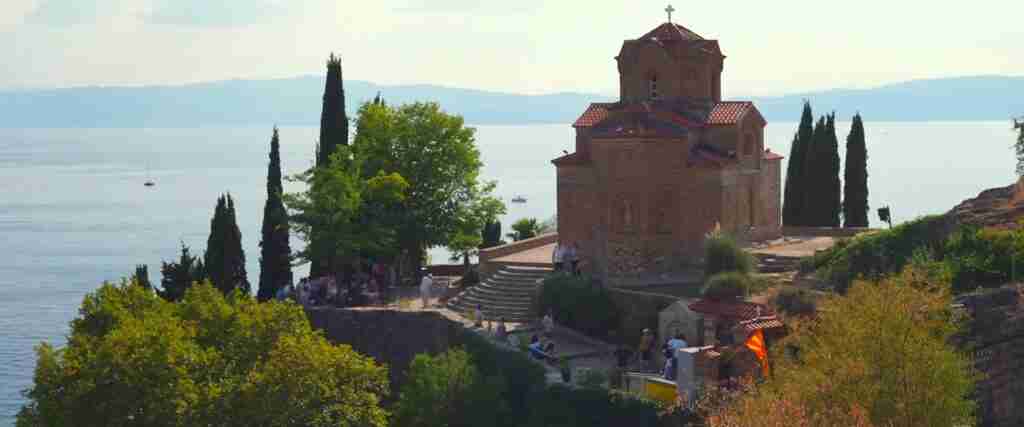
The best Ohrid walking route starts at St. Sophia Cathedral on Plaošnik Square, continues uphill to the Ancient Theatre of Ohrid, then follows the ridge through the Plaošnik church complex to Samuel’s Fortress (120–150 MKD / $2–3 entry; check the official site for current rates). From the fortress walls, the trail descends through the old town lanes to the Church of St. John at Kaneo, the most photographed viewpoint in North Macedonia, perched on a cliff above the lake. The Ohrid Boardwalk then provides a scenic lakeside return to the town harbour. The full circuit covers approximately 5 km and takes 2.5–3 hours at a comfortable pace with time inside the main monuments. Carry cash in MKD as several sites are cash-only.
How do I visit Matka Canyon and what tours run there in 2026?
Matka Canyon sits 17 km west of Skopje and is accessible by public bus (line 60 from the central bus station, approximately 35–40 MKD / $1) or taxi (700 MKD / $13 one way). Canyon entry is free. Two types of boat tours depart from the main dock: a short lake circuit of 30 minutes costing 200 MKD ($4) per person, and a one-hour guided tour to Vrelo Cave costing 500–600 MKD ($9–11) per person. Kayak rental runs approximately 2,650 MKD ($50) for a full day. From Skopje, organised half-day tours combining Matka with the Vodno cable car and an Etno Village stop cost 1,450–1,900 MKD ($27–35) per person with hotel pickup included. Boats depart once full — arrive early in peak summer months to avoid long waits.
Extended multi-day tours – 5+ days
Featured Macedonia Multi-Day Tour Packages
3 days
Macedonia 3-Day Discovery Tour
- ✓ Comprehensive Macedonia experience
- ✓ Expert local guides included
- ✓ All accommodation included
- ✓ Transportation provided

5 days
Macedonia 5-Day Highlights Experience
- ✓ Comprehensive Macedonia experience
- ✓ Expert local guides included
- ✓ All accommodation included
- ✓ Transportation provided

7 days
Macedonia 7-Day Cultural Journey
- ✓ Comprehensive Macedonia experience
- ✓ Expert local guides included
- ✓ All accommodation included
- ✓ Transportation provided
10 days
Macedonia 10-Day Complete Adventure
- ✓ Comprehensive Macedonia experience
- ✓ Expert local guides included
- ✓ All accommodation included
- ✓ Transportation provided
Multi-day tour packages powered by TourRadar. Prices and availability subject to change.
North Macedonia as a Tour Destination in 2026
Few countries in Europe compress the density of historical, natural, and cultural experience that North Macedonia delivers within its 25,713 square kilometres. The country sits at the intersection of Byzantine ecclesiastical culture, Ottoman mercantile civilisation, and Slavic mountain tradition, and its 2026 tourism infrastructure reaches the point where visitors access everything from UNESCO heritage walks to certified alpine climbing — without the crowds that have overwhelmed more celebrated Balkan destinations further west.
Skopje, the capital, combines one of the Balkans’ most atmospheric Ottoman bazaars with the extraordinary spectacle of the Skopje 2014 urban renewal project, which deposited hundreds of neoclassical statues and colonnaded facades across the city centre between 2010 and 2014. The result is simultaneously bewildering and fascinating — a city that invites walking, questioning, and conversation in equal measure. Free tip-based walking tours from Macedonia Square provide the most effective introduction to this architectural contradiction, and the operators consistently earn the highest walking-tour ratings in the Balkans.
Ohrid, 170 km southwest of Skopje on the shores of Europe’s oldest lake, is the country’s crown jewel. The UNESCO-inscribed Natural and Cultural Heritage of the Ohrid Region encompasses 365 historic churches, a lakeside old town of considerable medieval character, and a lake so ancient and so clear that its endemic species include a unique subspecies of trout. Day trips from Skopje to Ohrid take approximately 2.5 hours each way by bus; most visitors prefer an overnight stay to experience the old town after day-trip coaches depart in the late afternoon.
Matka Canyon, just 17 km from Skopje’s centre, delivers dramatic karst scenery, accessible boat tours to spectacular caves, and canyon hiking trails that contrast sharply with the urban landscape surrounding the capital. Mavrovo National Park, 115 km west, contains North Macedonia’s highest peak, a partly submerged medieval church visible above the Mavrovo reservoir, and the magnificent carved-wood iconostasis of Bigorski Monastery. The Tikveš wine region, an hour south of Skopje, has produced wine since the 4th century BC and now offers professional winery visits combining 2nd-century Roman archaeology at Stobi with structured tasting sessions at contemporary cellars.
The 2026 season continues a trajectory of improving English-language guide availability. Several Skopje-based operators now offer guaranteed daily departures on key routes regardless of group size — a significant change from earlier years when tours were cancelled if bookings fell below a minimum threshold. The exchange rate — approximately 53.5 MKD to the dollar in mid-2026 — places North Macedonia firmly among the most affordable guided-tour destinations in Europe, with full-day experiences costing a fraction of equivalent tours in Greece, Croatia, or Austria.
Skopje Walking Routes 2026: The Capital’s Essential Itineraries
Skopje rewards walking in a way few Balkan capitals manage. Within a single compact circuit, the city offers the Ottoman mercantile world of Čaršija, the Byzantine ecclesiastical architecture of Gorno Nerezi, the Soviet-era monumentalism of Macedonia Square, the bizarre neoclassical excess of Skopje 2014, and the sixth-century ramparts of Kale Fortress. The city’s flat central district keeps most key sites within 15 minutes on foot from any central hotel, and multiple free walking tour operators ensure that even first-time visitors develop an interpretive framework quickly and efficiently.
The Classic Skopje Central Walking Circuit
The classic Skopje circuit begins at Macedonia Square — the neoclassical hub of the Skopje 2014 project — dominated by the Warrior on a Horse monument at its centre and flanked by colonnaded government buildings, fountains, and a striking arched bridge. Walking east along the Vardar riverfront promenade passes the Memorial House of Mother Teresa (150 MKD / $3 entry; check the official site for current rates), built on the site where Agnes Gonxha Bojaxhiu was baptised in 1910. The Ottoman-era Stone Bridge, a 15th-century structure spanning the Vardar on 13 arches, connects the new city with the Old Bazaar.
Crossing the Stone Bridge enters the world of Čaršija — the Old Bazaar — one of the largest and oldest Ottoman marketplaces in the Balkans, dating to the 12th century. The covered arcade of Bit Pazar and the surrounding lanes of silversmiths, textile traders, tea houses, and spice sellers stretch north from the Stone Bridge for nearly a kilometre. Within Čaršija, the Daut Pasha Hammam — a 15th-century bathhouse now housing the National Gallery of Macedonia — and the Kapan Han caravanserai provide architectural anchors, while the Saat Kula clock tower and the Isa Bey Mosque represent the finest surviving Ottoman civic monuments.
The Old Bazaar connects northward to Kale Fortress, a sixth-century Byzantine citadel on the hill above the Vardar. Kale is freely accessible and provides panoramic views over the city, the Vardar valley, and the Šar Mountains on the horizon. The complete circuit from Macedonia Square through the Stone Bridge, the Old Bazaar, and up to Kale covers approximately 3.5 km and takes 2–2.5 hours at a relaxed pace, including brief stops at key monuments.
The Old Bazaar Self-Guided Route: Stone Bridge to Kale
For visitors who prefer independent exploration, the dedicated Old Bazaar walking route from the Stone Bridge north to Kale Fortress passes a series of distinct stops: the Kapan Han, the Saat Kula clock tower, the Isa Bey Mosque, the Daut Pasha Hammam and National Gallery, the Church of the Holy Saviour (containing an extraordinary 19th-century carved wooden iconostasis), and finally the ascent to Kale. The route covers approximately 2 km and takes 1.5–2.5 hours depending on time spent inside individual structures. The bazaar operates at full energy on weekday mornings; Sunday afternoons many shops close and the lanes offer a quieter, more contemplative atmosphere.
The Museum of the Old Bazaar, housed in a restored 18th-century merchant building on Čaršija’s main lane, provides contextual history of the bazaar’s development from its 12th-century origins through the Ottoman period to the present. Entry to the museum costs 100 MKD ($2). The Church of the Holy Saviour charges 100 MKD ($2) entry; photographs inside are not permitted. Both are optional additions to the self-guided route that add 30–45 minutes total.
The Gorno Nerezi Detour: Byzantine Frescoes Above the City
The Church of St. Panteleimon at Gorno Nerezi, on the lower slopes of Vodno Mountain 8 km south of Skopje’s centre, contains 12th-century Komnenian frescoes that art historians rank among the finest Byzantine wall paintings in Europe — preceding the Western Renaissance by nearly two centuries in their naturalism and emotional depth. The Lamentation of Christ fresco in the naos is particularly remarkable, with a compositional and human expressiveness entirely absent from contemporary Romanesque painting. A taxi from central Skopje costs approximately 320–480 MKD ($6–9) one way, or the church pairs naturally with an afternoon visit to Vodno Mountain — the cable car station is accessible from Gorno Nerezi by a short uphill drive or steep 20-minute walk. A small entry fee applies to enter the church interior; visiting before 10 AM ensures the interior is undisturbed by groups.
Free Walking Tour Operators in Skopje 2026
Three operators consistently deliver the highest-quality free tip-based walking tours of Skopje in 2026: Free Skopje Walking Tours, Skopje Walks, and Lena’s Free Walking Tours. All three depart from Macedonia Square or the Memorial House of Mother Teresa. Summer schedules (May–September) offer departures at 10:00 AM and 5:00 PM; winter schedules (October–April) operate at 10:00 AM and 3:00 PM.
Tours last 2.5–4 hours and cover Macedonia Square, Stone Bridge, Old Bazaar, Parliament Building, Old Train Station (devastated by the 1963 earthquake), and Kale Fortress, with guides providing running commentary on Skopje’s architectural contradictions, political history, and local food culture. The afternoon departure requires advance contact with the operator — the morning tour accepts walk-up participants without prior booking and departs even with a single registered visitor.
A suggested tip of 500–1,000 MKD ($10–20) per person sustains the service and reflects the guides’ depth of knowledge. Free Skopje Walking Tours holds three consecutive TripAdvisor Travelers’ Choice Awards; Skopje Walks (led by guides including Aleksandra and Dino) receives particular praise on GuruWalk for small group sizes. Book the afternoon departure via the operator’s website or through GuruWalk at least 24 hours ahead during peak summer months.
Skopje 2014 Walking Circuit: Architecture and Controversy
The Skopje 2014 project, which transformed the city’s main public spaces between 2010 and 2014, is now a significant tourist attraction in its own right — a subject of guided interpretation, architectural criticism, and genuine curiosity. The dedicated Skopje 2014 walking circuit covers Macedonia Square, the Art Bridge (adorned with bronze statues of artists and scientists), the Warrior on a Horse monument (66 metres including the fountain base), the neoclassical facades applied to government ministries, the Triumphal Arch at the western end of Macedonia Street, and the Museum of the Macedonian Struggle. The circuit covers approximately 1.5 km and takes 45–60 minutes without entering buildings. Free walking tour guides provide the most insightful interpretation of the project’s political motivations and contested legacy.
Guided Day Tours from Skopje 2026: Best Operators and Prices
Skopje functions as North Macedonia’s primary tour hub, with every major attraction in the country reachable on a day trip or short overnight. The operator market has matured significantly since 2020: several companies now guarantee daily departures that run with a single booking, online English-language booking is standard, and real-time availability through international platforms ensures last-minute planning is feasible outside peak summer. Prices below reflect standard group rates unless otherwise stated; private options consistently deliver 3–4 times the cost but provide complete control over timing and itinerary depth.
Matka Canyon and Vodno Mountain Combo Tour 2026
The Matka Canyon and Vodno Mountain combo runs daily from Skopje and covers both canyon and mountain summit within a 5–6 hour window. Group departures leave at approximately 9:00 AM from Macedonia Square and include hotel pickup, the cable car ascent to the Millennium Cross on Vodno, free time at Matka Canyon (boat and kayak rental are not included in the base tour price and cost extra on arrival), and a stop at a traditional Macedonian Etno Village complex recreating rural architecture and crafts. Group tour prices run 1,450–1,900 MKD ($27–35) per person; check operator websites for current rates. Skopje Daily Tours is the most established operator on this route, with ratings above 4.8 across more than 2,000 combined reviews on TripAdvisor and GetYourGuide.
Independent travellers combining the same sites separately pay significantly less: bus #25 to Sredno Vodno costs 35–40 MKD ($1), the cable car return is 120 MKD ($2), then a taxi to Matka Canyon from Vodno runs approximately 800–1,070 MKD ($15–20). The combined independent cost sits at approximately 960–1,130 MKD ($18–21) per person, saving money at the cost of planning flexibility and the efficiency of hotel-to-hotel transfers.
Full-Day Ohrid Group Tours from Skopje 2026
The full-day Ohrid group tour is North Macedonia’s most popular guided excursion, running approximately 10 hours and covering the principal sites of the UNESCO-listed old town with a professional English-speaking guide, round-trip transport in an air-conditioned vehicle, and hotel pickup. Standard group tours depart at 8:00–9:00 AM and visit the Ancient Theatre, Samuel’s Fortress, the Church of St. John at Kaneo, St. Sophia Cathedral, and the lakeshore boardwalk. Group tour prices start at 2,600 MKD ($49) per person; premium packages including a traditional restaurant lunch reach 5,300 MKD ($99) per person. Check operator websites for current rates. Skopje Daily Tours, Fibula Tours, and multiple Viator-listed operators all run this route with 4.8+ star ratings across hundreds of verified reviews.
Private day trips to Ohrid are priced per vehicle rather than per person: a standard car accommodating up to four passengers costs approximately 9,800 MKD ($183) with operators including Skopje Tours and Skopje Daily Tours, making the per-person cost around 2,450 MKD ($46) when shared by four — competitive with the group tour price while offering complete flexibility to extend time at Bigorski Monastery en route, visit the Bay of Bones Museum, or add a St. Naum boat tour on the lake. Vans accommodating up to seven passengers cost approximately 11,700 MKD ($219) per vehicle.
The direct Skopje–Ohrid intercity bus offers the most economical independent option: multiple daily departures from Skopje Central Bus Station, approximately 3 hours of journey time, and a fare of 750–900 MKD ($14–17) per person one way. Travellers arriving independently in Ohrid by bus find the old town, Plaošnik, and the boardwalk walk all reachable on foot from the bus station in under 15 minutes.
Tikveš Wine Region and Stobi Archaeological Day Tour 2026
The Tikveš and Stobi day tour combines North Macedonia’s most significant wine region with its most impressive Roman ruins in a single full-day itinerary. Tours depart Skopje at 9:00 AM and include a stop at the Church of St. Panteleimon at Gorno Nerezi on Vodno’s slopes, the Roman city of Stobi near Gradsko (200 MKD / $4 entry per person; check the official site for current rates), and two to three winery visits in the Kavadarci or Negotino area including a structured tasting and traditional Macedonian lunch. The Tikveš Winery, Stobi Winery, and Popova Kula Estate all accept tour groups by appointment. Tour prices run 2,650–3,750 MKD ($50–70) per person for a full day with lunch and tasting included; check operator websites for current rates.
Self-drivers complete the Stobi–Tikveš circuit independently with ease: the A1 motorway from Skopje reaches the Stobi exit in approximately 50 minutes; the Tikveš wine estates cluster around Kavadarci 30 km south of Stobi. Car hire from Skopje International Airport starts at approximately 2,150 MKD ($40) per day for a basic economy vehicle, making the self-drive option attractive for couples or groups of three or more who want to set their own tasting room pace.
Kosovo Day Trip from Skopje 2026
The Kosovo day trip from Skopje consistently ranks among the most reviewed and highest-rated day excursions in the country, combining the contemporary energy of Pristina with the breathtaking Ottoman architecture of Prizren in a 10-hour itinerary. The tour crosses the Blace border checkpoint between North Macedonia and Kosovo, adding 15–30 minutes of processing time. In Pristina, the National Museum and the compelling context of the newest state in Europe anchor the visit; Prizren’s covered bazaar and cluster of riverside mosques represent one of the finest intact Ottoman urban landscapes in the Balkans. Group tour prices run approximately 3,700 MKD ($69) per person; private tours cost 6,100–6,350 MKD ($114–119) per person. Check operator websites for current rates.
Kratovo Medieval Village Day Tour 2026
Kratovo, 90 km east of Skopje, was built within the crater of an extinct volcano and connected internally by a system of 13th-century stone bridges, medieval watchtowers, and underground tunnels. The town is among the most architecturally atmospheric destinations in North Macedonia, with largely intact Ottoman-era houses lining the crater walls. Day tours from Skopje combine Kratovo with the Kokino megalithic observatory — a Bronze Age astronomical site approximately 3,800 years old and listed by NASA among the most significant ancient observatories in the world — and the forested scenery of eastern Macedonia. Group tours run approximately 3,200–4,000 MKD ($60–75) per person for a full day; check operator websites for current rates. Kratovo is particularly striking in October when the crater fills with autumn colour.
Ohrid Walking Routes and Boat Tours 2026: UNESCO Heritage on Foot
Ohrid’s old town is one of the most walkable heritage districts in the Balkans: compact enough to cover in half a day yet layered with 2,000 years of successive civilisations dense enough to reward multiple visits. The pedestrianised lanes of the upper old town wind between 10th-century fortifications, Byzantine frescoed churches, Ottoman merchant houses, and Bronze Age archaeological sites at a scale that rewards wandering rather than rushing between monument checkboxes. All of the major walking routes radiate from the central axis of Tsar Samoil Street and the Church of St. Sophia.
The Ohrid Old Town Heritage Walk
The Ohrid Heritage Walk starts at the Church of St. Sophia, an 11th-century cathedral built by Byzantine Archbishop Leo on the foundations of an earlier basilica. Entry costs 100–150 MKD ($2–3) per person; check the official site for current rates. No photography is permitted inside; modest dress covering shoulders and knees is required as at all active religious sites in North Macedonia. The interior contains some of the finest surviving Byzantine fresco programmes in the Balkans, dating from the 11th to 14th centuries.
Walking uphill from St. Sophia past the Icon Gallery (200 MKD / $4 entry) leads to Plaošnik, where the recently restored Basilica of St. Clement and Panteleimon stands on the site of the 9th-century monastery founded by Saint Clement of Ohrid — the scholar credited with creating the Glagolitic script and establishing the first Slavic university at this location in 886 AD. Plaošnik is freely accessible; the church interior welcomes visitors during regular hours.
From Plaošnik, a short uphill path arrives at the Ancient Theatre of Ohrid, a 3rd-century BC Hellenistic theatre later expanded by Rome and now fully restored for summer performances during the Ohrid Summer Festival. The theatre exterior and seating area are freely accessible at all times; performances require tickets from the festival box office. Continuing uphill for five minutes reaches the main gate of Samuel’s Fortress. The fortress is open daily except Mondays (shorter hours in winter, approximately 9:00 AM to 3:00 PM; summer hours extend to 6:00 PM); entry costs 120–150 MKD ($2–3) per person. The fortress walls are fully walkable and deliver panoramic views over the lake, the Albanian mountains to the southwest, and the full sweep of the old town below.
The descent from the fortress to the Church of St. John at Kaneo takes 10–15 minutes through the old town lanes past artisan workshops and 18th-century Ohrid-style houses. St. John at Kaneo — a 13th-century Byzantine church on a rock promontory above the lake — is the most photographed building in North Macedonia and best seen in early morning or late afternoon when the light strikes the warm stone at oblique angles and day-trip coach visitors have not yet arrived. The exterior, surrounding terrace, and the view are freely accessible at all times.
The complete Old Town Heritage Walk covers approximately 3 km and takes 2–2.5 hours including time inside the main monuments. Adding the Icon Gallery and the National Museum of Ohrid on Tsar Samoil Street (200 MKD / $4 entry each) extends the circuit by 45–60 minutes.
The Ohrid Boardwalk Route: Lake to Fortress
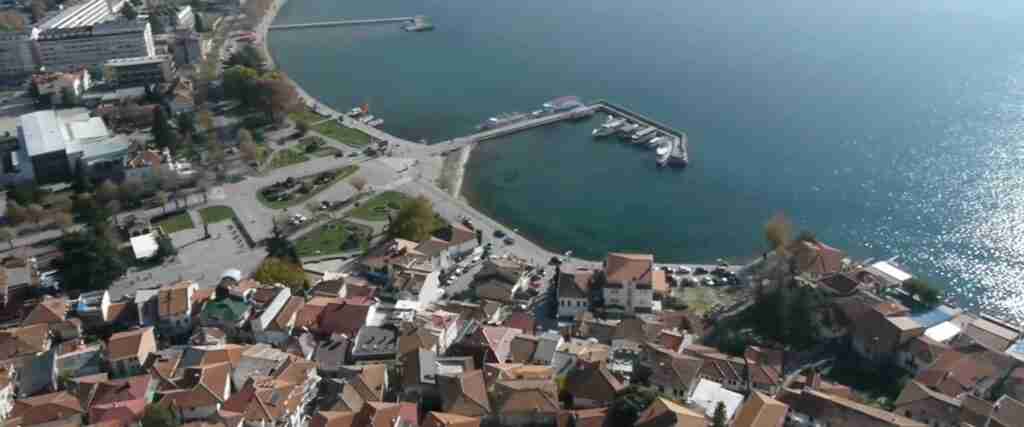
The Ohrid Boardwalk is the most scenic approach to Samuel’s Fortress and the lakeside churches, running south from the town harbour along the lakeshore through a forested section before ascending to the upper old town. The boardwalk section hugs the water’s edge under a canopy of mature trees, passes small fishing docks and natural swimming platforms, and connects to the base of the cliff below the Church of St. John at Kaneo. From the church, the route ascends through old town lanes to Samuel’s Fortress and then loops back through Plaošnik and the upper bazaar to the harbour starting point. The full boardwalk circuit covers 5–6 km and takes 2.5–3 hours at a comfortable walking pace, making it the best introductory Ohrid walk for visitors arriving fresh in the morning. No charge applies to the boardwalk itself.
Lake Ohrid Boat Tour to St. Naum Monastery 2026
The Lake Ohrid boat tour to St. Naum Monastery is the defining day-trip experience of the Ohrid region, combining a 2-hour scenic cruise along the lake’s eastern shoreline with a visit to the 9th-century monastery founded by Saint Naum of Preslav on the Albanian border. Multiple boat companies operate from Ohrid harbour, including Armada Boat and several competitors. The standard return ferry costs 600 MKD ($11) per person and departs at 10:00 AM, returning from St. Naum at 3:15 PM — providing approximately 3 hours at the monastery complex. Children under 5 travel free. Full-day organised excursion tours from the harbour, which add a rowboat tour through the crystal-clear Black Drim springs and a stop at the Bay of Bones Museum en route, cost approximately 3,200 MKD ($60) per person; check operator websites for current rates.
St. Naum Monastery itself charges 120 MKD ($2) entry. The rowboat tour of the Black Drim springs — where the underground water emerges through a series of channels at constant temperature year-round — is an additional cost negotiated with the rowboat operators on arrival at the monastery dock. In peak summer (July–August), boats fill quickly: arrive at Ohrid harbour by 9:30 AM to guarantee a seat on the 10:00 AM departure.
Bay of Bones Museum: Boat and Walking Access 2026
The Bay of Bones Museum, 16 km south of Ohrid on the eastern lake shore, reconstructs a Bronze Age pile-dwelling settlement above the lake surface on a platform supported by replica wooden piles. The museum contains 24 replica houses furnished with Bronze Age tools, ceramics, and domestic implements, alongside a museum building housing original archaeological finds including bone tools, pottery, and bronze artifacts from excavations dated to 1200–700 BC. Entry costs 150 MKD ($3) per person; only cash in MKD is accepted. The site is open daily from 9:00 AM to 6:00 PM in summer.
By road: drive south from Ohrid or take the southbound bus toward St. Naum (55 MKD / $1) and alight at the Bay of Bones car park. By boat: organised St. Naum excursion tours stop here with approximately 30–40 minutes included. An hour at the site is sufficient to see the village reconstruction, the Roman castrum above the lakeshore, and the connected museum building.
Matka Canyon: Boat Tours, Caves and Hiking Trails 2026
Matka Canyon, carved by the Treska River 17 km west of Skopje, concentrates within a single gorge the most dramatic landscape in the greater Skopje area: vertical limestone cliffs rising 200 metres above the canyon floor, a chain of artificial reservoirs created by early 20th-century hydroelectric dams, eight medieval churches and monasteries embedded in the canyon walls, and Vrelo Cave — a flooded cavern system claimed to be the deepest underwater cave on Earth at more than 330 metres. Canyon entry is free. The site operates year-round, with boat queues from June through August extending to 45–60 minutes at peak midday hours.
Vrelo Cave Boat Tour 2026
The Vrelo Cave boat tour is the primary guided activity at Matka Canyon, departing from the second boat dock — further up the canyon past the main restaurant complex, approximately 10 minutes on foot from the car park. The tour runs approximately 1 hour in total: the boat traverses the length of the main reservoir, turns into a narrower tributary canyon, and docks at the base of a steep staircase leading to Vrelo Cave. A guide accompanies the boat and provides commentary; inside the cave, illuminated chambers contain stalactites and a resident colony of bats. The tour costs 500–600 MKD ($9–11) per person; check the operator on arrival for current rates. Boats depart when full, requiring 15–30 minutes of waiting in shoulder season and up to 60 minutes in July and August.
The first boat dock, nearest the car park, runs a shorter lake-only circuit of 30 minutes for 200 MKD ($4) per person — this tour does not approach the cave but delivers excellent views of the canyon cliffs and the lakeside churches. Visitors intent on the cave tour walk past this dock to the second departure point further up the canyon path.
Canyon Rim Walking Trail: Matka to St. Nikola Monastery
The canyon rim trail from the car park area at Matka to the Monastery of St. Nikola Shishevski climbs sharply from lake level on a well-marked path through oak and juniper forest, reaching the monastery after approximately 45–60 minutes of uphill walking. The monastery dates to the 14th century and contains preserved medieval frescoes within its main church. The surrounding terrace and the canyon view from the monastery’s position are alone worth the climb. The trail continues beyond the monastery connecting with higher routes across the canyon plateau; experienced walkers complete a full canyon rim traverse in 3–4 hours.
The descent from the monastery back to lake level takes approximately 20 minutes on a steep but clear path; an alternative return uses the water taxi — a large metal gong mounted at the monastery’s lakeside dock summons a boat for 50 MKD ($1) per person crossing. No trail entry fee applies; carry at least 1 litre of water per person as no facilities exist beyond the monastery kitchen, which serves basic refreshments to visitors.
Kayaking the Treska River Gorge 2026
Kayak rental at Matka Canyon costs approximately 2,650 MKD ($50) for a full day of independent paddling, with single and double kayaks available from operators beside the main car park. The lower canyon below the first dam offers calm flat-water paddling with dramatic cliff scenery accessible to beginners; the narrower upper section above the second dam is more technical. For visitors new to kayaking, guided half-day kayak tours from Skopje including transport, equipment, and guide instruction run approximately 3,200–4,250 MKD ($60–80) per person; check operator websites for current rates. The kayaking season runs April through October; water levels are highest in spring and early summer from snowmelt feeding the Treska.
Mount Vodno: Cable Car and Walking Routes
Mount Vodno rises immediately south of Skopje to 1,066 metres at Krstovar Peak, crowned by the 66-metre Millennium Cross erected in 2002 to mark 2,000 years of Christianity in Macedonia. The mountain forms the city’s natural southern boundary and serves as Skopje’s primary recreational mountain, accessible by public transport and cable car on a half-day excursion from the city centre. The combination of cable car access and multiple signed hiking trails makes Vodno equally attractive to visitors seeking a scenic urban escape and those wanting a more demanding alpine experience.
Cable Car to the Millennium Cross
The Vodno cable car departs from Sredno Vodno (Middle Vodno) station at an altitude of 570 metres, reached by city bus #25 from near Skopje’s central bus station. Bus #25 costs 35–40 MKD ($1) per journey and takes approximately 25–30 minutes. The cable car — a gondola system operated by JSP Skopje — covers 1,600 metres horizontally with 480 metres of vertical gain in approximately 7 minutes, delivering panoramic views over the Skopje valley on clear days. Return tickets cost 120 MKD ($2) for adults and 60 MKD ($1) for children; tickets are purchased only at the Sredno Vodno station booth. The cable car operates daily from 10:00 AM to 8:00 PM (May through September) and 10:00 AM to 5:00 PM (October through April), closed Mondays for maintenance. Services pause during strong winds — verify operating status before the trip if weather is unsettled.
At the summit, the Millennium Cross stands at the edge of the plateau with unobstructed views east over Skopje, north toward the Šar Mountains on the North Macedonia–Kosovo border, and southwest across the Vodno–Karadzica massif. Two small cafes operate seasonally at the summit. No admission fee applies at the cross; total transport costs (bus plus cable car return) amount to 155–160 MKD ($3) per person.
Vodno Hiking Trails from Sredno Vodno
Multiple marked trails depart from Sredno Vodno station for visitors preferring to hike the summit section or explore the mountain’s forested slopes independently. The direct trail from Sredno Vodno to the Millennium Cross takes 45–60 minutes uphill on a wide, well-maintained path through pine and oak forest, joining the cable car arrival point at the summit. A longer alternative follows the southern ridge, adding 30 minutes with more dramatic open terrain above the treeline. Mountain biking is popular on Vodno’s lower slopes; several cafes near Sredno Vodno rent basic bikes for approximately 530–800 MKD ($10–15) per hour. All trails are free of charge and clearly signposted from the Sredno Vodno base station without requiring navigation apps or printed maps.
The Church of St. Panteleimon at Gorno Nerezi (see Skopje Walking Routes section) is accessible from the cable car base by a 20-minute drive or taxi and pairs naturally with a Vodno mountain excursion for visitors interested in Byzantine art. The lower forest trails on Vodno’s western slopes, accessed from the residential area of Dolno Nerezi, offer quieter walking than the main summit path and are particularly pleasant on weekday mornings.
Mavrovo National Park: Guided Hikes and Cultural Routes 2026
Mavrovo is North Macedonia’s largest national park at 730 square kilometres, encompassing three mountain ranges — Šar, Korab, and Bistra — the artificial Mavrovo reservoir, the deeply incised Radika River gorge, and a constellation of traditional Mijak villages preserving centuries of pastoral culture in stone-built houses and hilltop churches. The park lies 115 km west of Skopje — approximately 1.5 hours by car — and functions equally well as a full-day excursion or a two-night base for serious hiking. The free access policy applies to all park areas including summit trails, the monastery, and the village circuits.
Day Trip to Mavrovo and Bigorski Monastery from Skopje 2026
The most popular guided day trip from Skopje to Mavrovo combines the scenic drive through Tetovo and the Radika Canyon with a walk around the Mavrovo reservoir — where the partly submerged dome of the Church of St. Nicholas emerges above the waterline — and a visit to the Monastery of St. John Bigorski. Founded in 1020 AD on a terrace above the Radika River, Bigorski Monastery is North Macedonia’s most revered Orthodox site. Its iconostasis, carved between 1829 and 1835 by master craftsmen Makarij Frčkoski and Filipovski from Debar, is considered the finest example of Macedonian woodcarving and rivals the best Baroque decorative work anywhere in Europe in its intricate density and virtuosity. The monastery is freely accessible; donations are welcomed and the guest house within the complex accepts overnight visitors. The surrounding village of Janche, perched on a clifftop above the Radika, adds a 45-minute detour for visitors interested in traditional Mijak stone architecture.
Group day tours from Skopje to Mavrovo run 2,650–4,800 MKD ($50–90) per person depending on duration and included stops; check operator websites for current rates. Private vehicle hire costs 9,800–11,700 MKD ($183–219) per vehicle. For independent travellers, public buses connect Skopje with Mavrovi Anovi via Tetovo and Gostivar, taking approximately 2.5–3 hours, but run on limited timetables that complicate day-trip planning. Car hire provides the most flexibility for exploring the park’s dispersed attractions: the Duf Waterfall near the village of Rostuša — a 30-metre cascade in a narrow gorge, reached on a 45-minute marked trail — is difficult to include on a guided group tour and straightforward by car.
Mount Korab Summit Hike: North Macedonia’s Highest Peak
Mount Korab at 2,764 metres is the highest point in both North Macedonia and Albania, lying precisely on the border between the two countries. The standard ascent route starts from the village of Mavrovica, one of the Korab mountain range villages accessible by car from the Mavrovo area, and takes 5–7 hours round trip through alpine meadows, boulder fields, and the final rocky approach to the summit. The terrain is demanding but technically straightforward in dry summer conditions; the summit is unambiguously the finest viewpoint in the country, with the Albanian highlands spreading to the west and the entire North Macedonian mountain chain visible to the east on clear days.
Certified mountain guide services for the Korab ascent run approximately 3,200–5,300 MKD ($60–100) per person for a full-day guided climb including equipment check, transport from Skopje, and a packed lunch; check with operators Hiking in Macedonia and Explore Share for current 2026 season rates. The climbing season is June through September; snow fields persist on the upper slopes into mid-June and an ice axe is required for the summit before the snow clears. Weekend packages combining Korab with the Medenica Peak ascent and overnight accommodation in mountain huts start at approximately 6,400–8,500 MKD ($120–160) per person including all meals, guiding, and transport.
Galičnik Village and the Radika Valley Walk
Galičnik, on a terrace above the upper Radika Valley at 1,400 metres, is the finest-preserved example of traditional Mijak architecture in North Macedonia — a village of two-storey stone houses, broad external staircases, and carved wooden balconies whose design evolved specifically for the harsh winters and strong Radika winds. The village is internationally known for the annual Galičnik Wedding Festival, held each July, during which a couple selected from a pool of applicants undergoes a three-day traditional Mijak wedding ceremony with full pre-Ottoman costume, music, and ritual. Outside festival time, Galičnik is almost entirely deserted — most residents emigrated to Skopje or abroad during the mid-20th century — and its silent lanes and hilltop church provide a contemplative contrast to the dramatic canyon below.
The walk from Galičnik village downhill to Bigorski Monastery covers 2.5 km on a marked trail and takes approximately 50–60 minutes, making it the most atmospheric pedestrian approach to the monastery for visitors arriving by car and choosing to walk the final descent. The trail passes traditional beehive sites and forested slopes before joining the monastery lane above the Radika River.
Tikveš Wine Region Day Tours 2026
Tikveš is the largest wine-producing region in the Balkans, stretching along the Vardar River valley between Veles and Gevgelija at latitudes equivalent to Bordeaux and Tuscany. Wine production here dates to the 4th century BC — Stobi Winery, one of the modern region’s most celebrated producers, operates its cellars on the site of a 2nd-century AD Roman provincial city. The dominant indigenous grape variety, Vranec, produces deeply pigmented, high-tannin reds with dark fruit character and sufficient body for the grilled meat traditions of Macedonian cuisine; the white Smederevka produces crisp, aromatic dry whites that rarely leave the country but represent compelling value when tasted in the region. The wine estates cluster 70–90 km south of Skopje — accessible as a half-day or full-day excursion with minimal planning.
Winery Highlights: Tikveš, Stobi, and Popova Kula 2026
Three wineries dominate the visitor-ready Tikveš experience in 2026: Tikveš Winery in Kavadarci, Stobi Winery at Gradsko, and Popova Kula Estate in Demir Kapija. Tikveš Winery is the largest wine producer in North Macedonia, with underground cellars dating to the 1880s and a production portfolio spanning 22 varieties. Guided cellar tours and tastings are available by appointment; contact the winery directly to arrange visits and confirm current tasting fee schedules. Stobi Winery occupies a purpose-built 5,000 m² facility adjacent to the ancient city of Stobi, combining the sensory experience of modern viticulture with the historical weight of 2,000 years of winemaking on the same soil; guided cellar tours with a tasting of three wines run approximately 800–1,070 MKD ($15–20) per person when booked directly with the winery. Popova Kula Estate at Demir Kapija, a boutique property designed with a striking angular façade, welcomes individual visitors for tasting by appointment and offers overnight accommodation in themed rooms from approximately 7,000 MKD ($130) per room per night — an exceptional base for a Tikveš overnight.
Stobi Archaeological Site 2026
The ancient city of Stobi, where the Crna River meets the Vardar at Gradsko, was one of the most significant Roman provincial cities in the Balkans from the 2nd century BC through the 6th century AD, serving successively as a Paeonian town, a Macedonian stronghold, a Roman administrative centre, and a Byzantine episcopal see. The excavated site includes a 2nd-century AD Roman theatre seating approximately 7,600 spectators in its original stone seating — unusually intact without reconstruction — several early Christian basilicas, the palatial House of Peristeria with extraordinary mosaic floors, and a substantial civic forum complex. Entry costs 200 MKD ($4) per person; check the official site for current rates. The site is open daily from 8:00 AM to 8:00 PM in summer, with reduced hours in winter.
The combination of Stobi in the morning and Tikveš winery lunch in the afternoon is the most efficient way to combine archaeology and wine in a single day from Skopje. Stobi Winery sits approximately 500 metres from the archaeological site; the Tikveš Winery and Popova Kula Estate are both within a 25-km drive. Guided day tours from Skopje covering both Stobi and a winery visit with lunch run 2,650–3,750 MKD ($50–70) per person, check operator websites for current rates.
Multi-Day Guided Tours of North Macedonia 2026
North Macedonia’s compact geography — the entire country fits within a radius of roughly 200 km centred on Skopje — makes multi-day tours unusually practical. No journey between major attractions exceeds 3 hours by road; a 5–7 day itinerary covers Skopje, Mavrovo, Ohrid, Tikveš, and Bitola without feeling rushed. The 2026 multi-day tour market ranges from budget packages using 3-star accommodation and shared group transport to fully customised private itineraries with 4-star half-board comfort and dedicated guides, with multiple Skopje-based operators servicing both ends of the market and all points between.
Classic 5–7 Day North Macedonia Highlights Tour 2026
The classic North Macedonia highlights itinerary follows a circuit that effectively captures the country’s principal dimensions: Skopje (2 nights) — Mavrovo and Bigorski Monastery (1 night) — Ohrid (2 nights) — Tikveš and Bitola day circuit — return to Skopje. This programme covers the Old Bazaar and Kale Fortress in Skopje, the Bigorski iconostasis and Galičnik in Mavrovo, the full Ohrid heritage walk and St. Naum boat tour, a Tikveš winery lunch, and the Roman ruins of Heraclea Lyncestis at Bitola — one of the finest and least-visited archaeological sites in the Balkans, containing extraordinary late antique mosaic floors and a well-preserved small theatre (entry 200 MKD / $4).
Small-group guided tours on this circuit start at approximately $50 per person daily for budget 3-star accommodation with breakfast included, rising to approximately $190 per person daily for 4-star half-board packages with expert guides throughout and private transport. Operators including Nature Trips North Macedonia and Macedonia Experience both offer this circuit with licensed guides and established infrastructure. Book through TourRadar or directly with operators for current 2026 availability and pricing.
Hiking Multi-Day Tours 2026: National Parks Circuit
For active travellers, a 7–9 day hiking circuit of North Macedonia’s accessible national parks combines Mavrovo (2 days including Korab or Bistra ascent), Galičica (1 day on the ridge trail between Ohrid and Prespa), and Pelister (1–2 days including the Large Lake at 2,218 metres). Certified mountain leader-guided hiking tours on this circuit start at approximately $120–150 per person daily including mountain hut accommodation, all guided hikes, and transport between parks. Explore Share, Hiking in Macedonia, and Walks Worldwide all offer departures on this circuit with verified UIMLA-standard certified mountain leaders and guaranteed small groups of 8–12 participants.
Independent hikers undertake sections of the same circuit freely: the parks charge no entry fees, trail maps are available at information centres in Mavrovi Anovi (Mavrovo), Trpejca (Galičica), and the Molika resort (Pelister), and guesthouses in park villages charge approximately 1,600–2,650 MKD ($30–50) per person per night including a traditional Macedonian breakfast. The Janche guesthouse Tutto in Mavrovo and the lakeside guesthouses of Trpejca on Ohrid’s eastern shore both offer exceptional base-camp accommodation for park exploration.
Private vs Group Tours in North Macedonia 2026
Group tours deliver the strongest value for solo travellers and couples following well-established circuits: the Ohrid day trip at 2,600–5,300 MKD ($49–99) per person on a group basis compares favourably with private alternatives costing 9,800–11,700 MKD ($183–219) per vehicle regardless of how many passengers share the car. Private tours justify their cost for families of four or more (where per-person costs converge), travellers with specific depth interests such as Byzantine art or Macedonian wine, and anyone who needs itinerary flexibility — stopping longer at Bigorski’s iconostasis, adding an impromptu winery visit, or adjusting departure times to beat coach buses to Ohrid’s old town by arriving before 9:00 AM.
Booking directly with local Skopje operators consistently delivers better prices and more responsive customisation than booking through international platforms. Skopje Daily Tours, Fibula Tours (particularly for Ohrid-based boat excursions), and Kajak.mk lead the group tour market; Skopje Tours, Macedonia Car Rental, and multiple WhatsApp-bookable drivers offer competitive private vehicle services. For multi-day tours, Nature Trips North Macedonia and Macedonia Experience provide the most established infrastructure with licensed guides.
Hiking in North Macedonia’s Three National Parks
North Macedonia’s three accessible national parks — Mavrovo (730 km²), Galičica (227 km²), and Pelister (171 km²) — offer hiking terrain ranging from lakeside forest walks to serious alpine routes on 2,700-metre peaks, all without entry fees. Mavrovo is the largest and most developed for hiking tourism, with a range of routes from an easy circuit of the reservoir to the demanding ascent of Mount Korab. Galičica runs along the ridge between Lake Ohrid and Lake Prespa in the southwest, providing some of the most dramatic dual-lake panoramas anywhere in Europe. Pelister, above the city of Bitola, is the oldest protected area in the former Yugoslav states (designated 1948) and the habitat of the endemic Macedonian pine — Pinus peuce — and a recovering population of brown bears.
Galičica National Park: The Ridge Between Two Lakes
Galičica National Park occupies the mountain spine between Lake Ohrid and Lake Prespa, and the ridge walk between the two provides a visual payoff unmatched elsewhere in the country. The most visited route ascends Magaro Peak (1,895 m) via the marked trail from the village of Trpejca on Lake Ohrid’s southern shore; the climb takes 3–4 hours round trip and delivers simultaneous views of both lakes from the ridge crest — Lake Ohrid a deep sapphire blue to the west, Lake Prespa a paler azure to the east, both visible at once. Guided day hikes to Magaro with a certified mountain leader run approximately 2,650 MKD ($50) per person from Ohrid; check with local operators and the Ohrid-based hiking providers for current rates. No park entry fee applies; carry 1.5 litres of water per person as the ridge is fully exposed with no water sources above the treeline.
The lower trails above Trpejca village are accessible to independent hikers of all experience levels, providing excellent 1–2 hour morning walks through oak and beech forest before the afternoon heat intensifies. The village of Trpejca itself — a lakeside fishing settlement accessible only by boat from Ohrid or on a rough unsealed road — functions as the best base for Galičica hiking and holds several family guesthouses charging approximately 1,600–2,120 MKD ($30–40) per person per night including breakfast.
Pelister National Park: The Mountain Above Bitola
Pelister National Park rises immediately above the Ottoman-era city of Bitola, 170 km south of Skopje. Its centrepiece is the Large Lake (Golemo Ezero) at 2,218 metres — one of only two glacial lake pairs known as the Eyes of Pelister — the primary destination for day hikes within the park. The marked trail from the Molika resort entrance to the Large Lake takes approximately 2.5–3 hours of steady uphill walking through stands of the endemic Macedonian pine, among the rarest conifers in Europe, and open alpine meadows rich in wildflowers from June through August. Guided hiking packages from Bitola include transport from Bitola city centre, a certified mountain leader, and a packed lunch for approximately 2,650–3,200 MKD ($50–60) per person; check with Bitola-based operators for current rates.
Bitola itself merits a half-day visit as the base for Pelister hiking. The Roman ruins of Heraclea Lyncestis on the city’s northern edge — a city founded by Philip II of Macedon in the 4th century BC and later an important early Christian episcopal centre — are among the finest and least-visited archaeological sites in the Balkans. Entry costs 200 MKD ($4) per person. The principal treasures are extraordinary late antique mosaic floors depicting hunting scenes and geometric designs, and a small but well-preserved theatre used for performances in the 2nd and 3rd centuries AD.
Practical Hiking Information for North Macedonia
All three national parks are accessible year-round; the alpine zones of Mavrovo and Pelister carry deep snow from November through May and summit routes require ice axes and crampons outside the summer window. The official summer hiking season for major summit routes runs June through September. Lower valley trails, lakeside circuits, and the Ohrid Boardwalk operate year-round without seasonal restriction.
Trail marking quality varies significantly by location. Mavrovo’s routes around the reservoir and the trails to Bigorski Monastery are well-signed in Cyrillic and Latin script with standard European hiking waymarks. Higher alpine routes on Korab and Bistra are marked with cairns and paint blazes that experienced mountain walkers follow reliably in clear conditions but are difficult for beginners to interpret in cloud cover or after fresh snow. Hiring a UIMLA-certified mountain leader is strongly recommended for any summit attempt on Korab, Bistra, or Pelister’s Large Lake in unfamiliar weather. The Mountain Rescue Service operates out of Skopje and Ohrid; register your planned route with your accommodation before any serious mountain day and carry a fully charged mobile phone as signal coverage extends to most of the park areas in 2026.
Practical Tour Planning Tips for North Macedonia 2026
North Macedonia’s growing tourism profile in 2026 means that advance planning provides a material advantage over the walk-in improvisation that worked well in the less-visited years before 2020. The Ohrid day trip and multi-day hiking tours in July and August sell out routinely; wine region visits require winery-specific advance bookings; and accommodation in Ohrid’s old town fills from mid-June through early September. None of this requires extensive lead time — two to three weeks ahead is sufficient outside the peak summer core — but leaving planning until arrival in Skopje risks disappointment on the most popular experiences.
When to Book Tours and Experiences in 2026
Book any Ohrid full-day group tour from Skopje at least two weeks ahead for July and August travel. Multi-day guided hiking tours — particularly the Korab summit packages and the national parks circuit — require booking 3–4 weeks ahead during the summer season. Free walking tours in Skopje accept morning walk-up participants without advance booking; the afternoon departure needs direct contact with the operator at least 24 hours prior. Cave boat tours at Matka Canyon require no booking — arrive early to minimise queuing time. Tikveš winery visits require advance reservation directly with the winery — 48–72 hours ahead minimum for group visits. The Galičnik Wedding Festival in July and the Ohrid Summer Festival (July–August) both require accommodation bookings 3–6 months ahead in the immediate area; accommodation in Skopje or Ohrid town for those travelling to the events as day visitors remains bookable closer to the dates.
Tour Booking Platforms and Local Operators 2026
International platforms — GetYourGuide, Viator, TourRadar, and Klook — list the majority of English-language guided tours in North Macedonia and provide secure booking with standardised cancellation policies. Prices on these platforms reflect a 10–15% platform surcharge over direct-with-operator rates. For cost-conscious travellers, booking directly via operator websites (skopjedailytours.com, fibula.tours, kajak.mk, hiking-in-macedonia.com) delivers lower prices and allows more flexible customisation.
GuruWalk lists all tip-based free walking tour operators in Skopje with real-time availability and reviews — the simplest single resource for comparing the three main Skopje walking tour providers. For certified mountain guiding on alpine routes, Explore Share and Hiking in Macedonia both verify UIMLA qualification levels for all listed guides. For the St. Naum boat tour from Ohrid, checking Fibula Tours’ website alongside the harbour-based operators on GetYourGuide gives a full market view of current scheduling and pricing.
Transport and Logistics Between Destinations 2026
The Skopje–Ohrid intercity bus departs multiple times daily from Skopje Central Bus Station via two routes: the faster Kičevo road (approximately 2.5–3 hours, 750–900 MKD / $14–17 one way) and the longer southern route via Bitola (approximately 4 hours). Tickets are purchased at the counter without advance booking for most departures. The Ohrid–Bitola bus takes approximately 1.5 hours. For Mavrovo, public buses connect Skopje with Mavrovi Anovi via Tetovo and Gostivar in approximately 2.5–3 hours but operate on limited daily timetables — rental cars provide far greater flexibility for park exploration. Car hire from Skopje International Airport starts at approximately 2,150–3,750 MKD ($40–70) per day for a basic economy vehicle, with no 4WD required for any of the main park attractions including Bigorski Monastery, Duf Waterfall, and Galičnik village.
Skopje International Airport (SKP) lies 25 km from the city centre; licensed taxis cost approximately 1,600–2,100 MKD ($30–40) and take 20–30 minutes to the centre. The airport bus runs less frequently but costs approximately 160–210 MKD ($3–4) per person. Rideshare apps operate in Skopje and substantially reduce taxi costs for city-to-city journeys within the capital’s metropolitan area.
Frequently Asked Questions About Macedonia Tours and Walking Routes 2026
What is the best time of year for guided tours in North Macedonia?
May, June, and September are the best months for guided tours in North Macedonia. May and June offer mild temperatures, blooming vegetation, and pre-peak-season prices on accommodation and tours; September brings the grape harvest across Tikveš, quieter crowds in Ohrid, and ideal conditions for hiking. July and August are the busiest months, particularly in Ohrid, where accommodation and boat tours fill rapidly and boat queues at Matka Canyon extend to an hour at peak midday periods. Winter from November through March sees the fewest visitors; most day tour operators continue to run on reduced schedules, boat services on Lake Ohrid carry fewer departures, and alpine routes in Mavrovo require winter mountaineering equipment.
Is North Macedonia safe for independent walking and hiking in 2026?
North Macedonia is safe for independent walking and hiking in 2026. The walking routes in Skopje’s old town and city centre, the Ohrid boardwalk and heritage circuit, and the main trails at Matka Canyon are entirely safe for solo travellers and families without guides. Higher alpine routes in Mavrovo, Pelister, and Galičica carry the standard mountain risks present across European alpine terrain — weather deteriorates rapidly above 1,800 metres, unmarked route sections require map-reading ability, and dehydration from long ridge approaches without water sources is a genuine concern in summer. Hiring a certified mountain leader for summit routes on Korab, Bistra, or Pelister’s high circuits is strongly advisable regardless of hiking experience. Trail signage is adequate on the major routes and continues to improve with each season.
Do I need to book Skopje free walking tours in advance?
The morning free walking tour in Skopje (10:00 AM departure) accepts walk-up visitors without advance booking and departs even with a single registered participant. The afternoon departure — 5:00 PM in summer and 3:00 PM in winter — requires advance contact with the operator, as it is confirmed only when a minimum group size forms. Contact Free Skopje Walking Tours, Skopje Walks, or Lena’s Free Walking Tours directly via their websites or through GuruWalk to book the afternoon session. A suggested tip of 500–1,000 MKD ($10–20) per person is expected and appropriate at the tour’s conclusion. All three operators are English-language; guides also provide commentary in other European languages on request when given sufficient advance notice.
Can I visit Ohrid as a day trip from Skopje without joining a guided tour?
Visiting Ohrid independently as a day trip from Skopje is entirely practical. Intercity buses depart Skopje Central Bus Station for Ohrid multiple times daily, taking approximately 3 hours and costing 750–900 MKD ($14–17) per person one way. On arrival in Ohrid, the old town, boardwalk, Samuel’s Fortress, and the Church of St. John at Kaneo are all walkable from the main bus stop in under 15 minutes. The Bay of Bones Museum (16 km south) and St. Naum Monastery (29 km south) require a separate local bus or taxi from Ohrid. Most visitors who spend the day independently in Ohrid find they prefer to stay overnight in the old town, as the atmosphere after day coaches depart at 4–5 PM is considerably more serene.
What does the Matka Canyon boat tour include?
The Matka Canyon boat tour to Vrelo Cave runs approximately 1 hour and includes transit along the main canyon reservoir, the approach to Vrelo Cave through the narrower tributary gorge, entry into the cave itself with a guide providing English commentary, and the return journey. The tour costs 500–600 MKD ($9–11) per person; check the operator on arrival for current rates. Canyon entry is free. Boat admission does not include kayak rental, meals at the canyon restaurants, or access to the canyon rim hiking trails above. A shorter 30-minute lake circuit without cave access departs from the first dock (nearer the car park) for 200 MKD ($4) per person. Boats on both docks depart when full; no advance booking is accepted.
What is the cheapest independent way to visit Ohrid from Skopje?
The cheapest way to visit Ohrid from Skopje independently is the intercity bus: 750–900 MKD ($14–17) each way from Skopje Central Bus Station. Paired with self-guided walking of Ohrid’s old town — where Samuel’s Fortress costs 120–150 MKD ($2–3) and St. Sophia Cathedral costs 100–150 MKD ($2–3) — a full day in Ohrid including return transport and the main monument entries costs approximately 2,650–3,200 MKD ($50–60) per person total. The guided group day tour from Skopje starting at 2,600 MKD ($49) per person is competitive with this independent cost once transport and entry fees are counted, while adding the value of guided interpretation and hotel-door pickup.
Are there tours in North Macedonia suitable for families with children?
Several North Macedonia tours are well-suited to families with children. The Matka Canyon boat tour (standard lake circuit boats accept all ages; cave tours have minimum age requirements that vary by operator — confirm before booking), the Vodno cable car (children under 6 ride free on JSP Skopje services), the Bay of Bones open-air museum in Ohrid, and the Ohrid Boardwalk are all accessible and engaging for children of most ages. The Ohrid full-day group tour from Skopje is listed as suitable for ages 8 and above. The Korab summit hike, the Matka canyon rim traverse, and any technical alpine route are not appropriate for children under 12 without specific prior mountaineering experience and fitness. Multi-day tours through TourRadar label several North Macedonia itineraries as family-rated for ages 8 and above.
Which tour operators in North Macedonia offer the best value?
For day tours from Skopje, Skopje Daily Tours consistently provides the best combination of quality, guaranteed departures, and competitive pricing, with 4.8+ ratings across multiple route types on both TripAdvisor and GetYourGuide. Fibula Tours is the benchmark operator for Ohrid-based excursions, particularly the St. Naum full-day boat tour. For free walking tours in Skopje, Free Skopje Walking Tours holds the longest track record with three consecutive TripAdvisor Travelers’ Choice Awards; Skopje Walks receives particular praise for small group size and depth of guide knowledge on history and politics. For certified mountain guiding on Mavrovo and Pelister routes, Hiking in Macedonia and Explore Share offer verified UIMLA standards at competitive rates.
What is the difference between a private and a group tour to Ohrid?
A private Ohrid day tour allows complete itinerary flexibility: stopping longer at Bigorski Monastery en route, adding the Bay of Bones Museum and St. Naum boat tour, extending the day to dinner in Ohrid, or departing at a chosen time to beat the morning coach rush. Private car tours from Skopje to Ohrid cost approximately 9,800 MKD ($183) per vehicle for up to four passengers — approximately 2,450 MKD ($46) per person at full capacity, directly competitive with the group tour rate. Group tours follow a fixed 9:00 AM–7:00 PM schedule visiting 4–5 key sites with 30–60 minutes at each, and provide an efficient, social experience for solo travellers and couples who gain the practical benefit of hotel-to-hotel service without the full private vehicle cost. Premium group packages at 5,300 MKD ($99) per person add a traditional restaurant lunch and smaller vehicle sizes of 8–10 passengers.
Is North Macedonia easy to navigate independently for walking and tours?
North Macedonia is straightforward to navigate independently for walking and tours within the main destinations. Skopje’s central attractions are compact and well-signed in English and Macedonian. Ohrid’s old town requires no navigation beyond an awareness of the hill-to-lake topography, and the boardwalk path is impossible to miss. Intercity buses connect all major destinations reliably and cheaply. The main challenge for independent travellers is accessing the national parks and smaller attractions — Kratovo, Galičnik village, Korab base camp, and the Duf Waterfall — which require either a rental car or a guided tour vehicle. Car hire from Skopje International Airport costs 2,150–3,750 MKD ($40–70) per day for a standard economy vehicle and transforms the logistics of exploring Mavrovo National Park and the Tikveš wine region in a single day.