
Visiting North Macedonia: Ultimate Planning Resource & Travel Guide 2026
North Macedonia stands among Europe’s most rewarding Balkan discoveries, combining Ottoman bazaars, Byzantine monasteries, and some of the continent’s most arresting lakeside scenery at prices that put Western Europe firmly to shame. Skopje, the energetic and endlessly photogenic capital, and Ohrid, a UNESCO World Heritage lake town that traces human settlement back three millennia, anchor most itineraries — yet the country’s mountains, wine valleys, Roman ruins, and national parks reward those who venture deeper. This complete 2026 planning guide delivers verified prices, transport options, itinerary frameworks, and destination insight to help you arrive, navigate, and travel confidently from day one.
- Local currency: Macedonian Denar (MKD); exchange rate approximately 53 MKD per $1 USD. ATMs from major banks (NLB, Stopanska, Komercijalna) dispense MKD in all cities; smaller villages require cash drawn from city ATMs before departing the urban centers.
- Budget travel in 2026: $35-55 per person daily (two sharing a hostel dormitory or budget private room), covering accommodation, three meals, local bus transport, and free or low-cost attractions across Skopje and Ohrid.
- Mid-range travel in 2026: $85-130 per person daily (two sharing a mid-range hotel), including sit-down restaurant dining at all three meals, occasional taxis, and paid museum and guided tour entry.
- Luxury travel in 2026: $175-275 per person daily (two sharing a luxury or boutique property), covering fine-dining restaurants, private transfers, spa access, and premium guided experiences.
- UNESCO heritage: The Natural and Cultural Heritage of the Ohrid Region carries UNESCO World Heritage status first inscribed in 1979, making Lake Ohrid and its medieval townscape one of the Balkans’ defining combined natural and cultural destinations.
- Best travel seasons 2026: May through June and September through October offer temperatures of 15-25°C, open national park trails, and accommodation prices 25-35% below the July-August peak; book Ohrid summer properties well in advance as the town fills with regional tourists from mid-July onward.
People Also Ask About Visiting North Macedonia in 2026
How much does a trip to North Macedonia cost per day in 2026?
Budget travelers spend $35-55 per person daily in North Macedonia in 2026, sharing a hostel dormitory or budget private room and eating at local restaurants and bakeries. Mid-range travelers need $85-130 per person daily sharing a 3-4 star hotel, while luxury visitors invest $175-275. A one-week trip costs approximately $245-385 per person on a budget, $595-910 at mid-range, or $1,225-1,925 for luxury travel — all figures excluding international flights. These totals cover accommodation, three daily meals, local transport, and attraction entry, making North Macedonia one of Europe’s most accessible destinations for value-conscious travelers of every budget tier.
What are the best places to visit in North Macedonia in 2026?
Skopje’s historic Old Bazaar (Stara Čaršija), free Kale Fortress, and monumental Macedonia Square form the capital’s essential core, while the Mother Teresa Memorial House and Debar Maalo café district add depth to a two-day city stay. Ohrid is the country’s crown jewel: a medieval lakeside town inscribed on the UNESCO World Heritage List, with Samuel’s Fortress, a 2nd-century amphitheater, and dozens of ancient churches within easy walking distance of each other. Matka Canyon, 15 km from Skopje, delivers boat tours, Vrelo Cave visits, and canyon hiking. Regional highlights include Bitola’s Roman ruins at Heraclea Lyncestis, Mavrovo National Park’s mountain scenery, and the Stobi archaeological site — all within day-trip reach of Skopje.
Is North Macedonia easy to travel around independently in 2026?
North Macedonia is straightforward to navigate independently in 2026. Intercity buses depart reliably from Skopje’s central bus station to Ohrid (3 hours, 450-1,100 MKD / $9-21), Bitola (2.5 hours, 550-750 MKD / $10-14), and all other major towns. Skopje’s urban buses serve most attractions for 40 MKD ($1) per ride. Taxis use meters throughout the capital, and the Bolt ride-hailing app operates in Skopje. English is widely understood in hotels, restaurants, and tourist attractions in both Skopje and Ohrid. Car rental from 1,600 MKD ($30) per day provides flexibility for national park access and rural monastery visits that buses do not conveniently serve.
When is the best time to visit North Macedonia in 2026?
May through early June and September through October are the optimal months to visit North Macedonia in 2026. Spring delivers wildflower hillsides, comfortable hiking temperatures of 18-24°C, and uncrowded attractions; early autumn offers wine harvest festivals, warm lake water in Ohrid through late September, and accommodation prices 25-35% below peak summer levels. July and August bring intense heat (35-40°C in Skopje) and strong regional tourism pressure around Lake Ohrid — book accommodation months in advance for this window. Winter from December through February suits skiers heading to Popova Šapka or Mavrovo resort but offers limited access to outdoor attractions elsewhere in the country.
Extended multi-day tours – 5+ days
Featured Macedonia Multi-Day Tour Packages
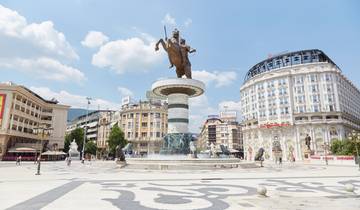
5 days
Explore the capital of North Macedonia
- ✓ Comprehensive Macedonia tour
- ✓ Expert local guides included
- ✓ All accommodation arranged
- ✓ Transportation provided
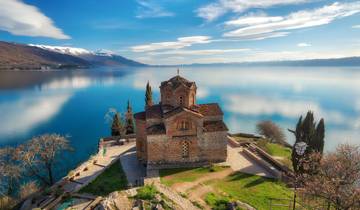
8 days
Scenic Macedonia in 8 days
- ✓ Comprehensive Macedonia tour
- ✓ Expert local guides included
- ✓ All accommodation arranged
- ✓ Transportation provided
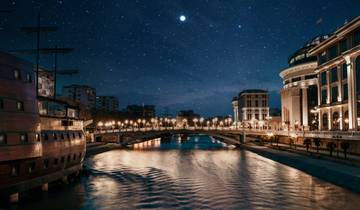
8 days
Best of North Macedonia; Semi – Private Tour with Dedicated Tour Leader & Car
- ✓ Comprehensive Macedonia tour
- ✓ Expert local guides included
- ✓ All accommodation arranged
- ✓ Transportation provided
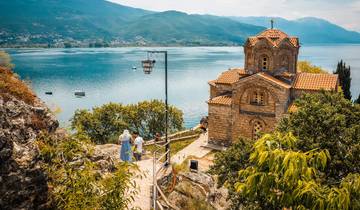
1 days
Day Tour of Ohrid from Tirana
- ✓ Comprehensive Macedonia tour
- ✓ Expert local guides included
- ✓ All accommodation arranged
- ✓ Transportation provided
Multi-day tour packages powered by TourRadar. Prices and availability subject to change.
Introduction: Why North Macedonia Belongs on Your 2026 European Itinerary
North Macedonia sits at Europe’s underrated heart, sandwiched between Kosovo, Serbia, Bulgaria, Greece, and Albania, yet visited by a fraction of the travelers who crowd its neighbors. The country’s small size — roughly the area of Vermont — means it rewards compact, efficient travel: most visitors cover the essential highlights within five to ten days without backtracking. What makes North Macedonia stand out in 2026 is not any single headline attraction but the layered density of its history. Illyrian, Greek, Roman, Byzantine, Ottoman, and Yugoslav histories have all left tangible marks here, and those marks remain affordable to visit, genuinely authentic, and largely free of the overcommercialization that has reshaped better-known Balkan destinations like Dubrovnik and Kotor.
The country formally renamed itself North Macedonia in 2019 following the Prespa Agreement with Greece, ending a decades-long naming dispute and opening the door to both NATO membership (achieved in 2020) and renewed EU accession negotiations. For travelers, the practical effects are positive: improved infrastructure investment, clearer visa entry for most Western passport holders (visa-free for up to 90 days for EU, UK, US, Canadian, and Australian citizens), and growing international air connections. North Macedonia saw 25% tourism growth in 2025, yet prices remained stable — a combination that rarely persists for long, making 2026 an excellent year to visit before the destination reaches mainstream awareness and its pricing adjusts accordingly.
Two cities anchor almost every visit. Skopje, the capital of approximately 600,000 people, is a fascinating paradox: the dramatic “Skopje 2014” neoclassical monuments and fountains watch over a very real, very lived-in Ottoman bazaar quarter that has functioned continuously for five centuries. Ohrid, three hours southwest along a mountain highway, is everything Skopje is not — intimate, ancient, and built for slow enjoyment along a lakefront that has drawn visitors since Roman times. Together they form one of Europe’s great two-city combinations, and the route between them, through mountain passes past Lake Prespa and the Mavrovo valley, rewards those who take it by road rather than the direct highway.
This guide covers the Republic of North Macedonia throughout. Where “Macedonia” appears in common usage (in titles, traditional references, or local names), it refers to the same destination. Prices are given in Macedonian Denar (MKD) with US dollar conversions at the current rate of approximately 53 MKD per $1 USD. Euro conversions appear only where official local signage uses euros.
Getting to North Macedonia in 2026
North Macedonia has two international airports serving different visitor profiles. Skopje Alexander the Great Airport (SKP) is the main gateway, handling the majority of year-round international arrivals. Ohrid St. Paul the Apostle Airport (OHD) serves seasonal charter and scheduled traffic, operating primarily from May through October for European leisure travelers with direct routes from several Western European cities. For most independent travelers, Skopje is the practical entry and exit point for the country.
Direct flights to Skopje expand steadily each year. Wizz Air serves the capital from London Luton at approximately 3 hours 20 minutes flying time, with three flights weekly; the airline also connects Skopje with several other European cities. Connecting options via Vienna on Austrian Airlines, Istanbul on Turkish Airlines, and Munich on Lufthansa bring Skopje within one-stop reach of virtually any global origin. Travelers positioned already in southeastern Europe have strong overland alternatives: international buses connect Skopje with Belgrade (5-6 hours), Sofia (4-5 hours), Tirana (4-5 hours), and Thessaloniki in Greece (approximately 3 hours). Thessaloniki’s international airport, significantly larger and better connected than Skopje’s, is a practical entry point for visitors planning to combine North Macedonia with northern Greece, with frequent buses and car rental options covering the border crossing efficiently.
Skopje Airport to City Center 2026
Skopje Alexander the Great Airport sits 22 km southeast of the city center. Three transfer options cover this journey with markedly different costs and convenience levels.
- Airport bus (Vardar Express) — recommended for budget travelers: Departs from outside arrivals in coordination with flight schedules. One-way fare 250 MKD ($5); journey time 30-40 minutes to the Holiday Inn stop near the city center. Buses do not operate overnight. Note: the bus drops passengers at a single fixed location; if your accommodation is elsewhere in Skopje, add 100-200 MKD ($2-4) for a short local taxi or bus from the stop.
- Metered taxi: Official airport taxi ranks outside arrivals; insist on the meter. Fare to central Skopje 1,500-2,000 MKD ($25-35) depending on destination and traffic. Journey time 25-35 minutes.
- Pre-booked private transfer: Meet-and-greet service with fixed pricing. Standard sedan to central Skopje $20-35; same or marginally less than a metered taxi for single travelers, meaningfully cheaper per person for couples splitting the cost.
Transport and Getting Around North Macedonia in 2026
North Macedonia’s intercity bus network is the backbone of independent travel in 2026, connecting all major cities and towns reliably and inexpensively. The central bus station in Skopje (Transporten Centar), located just west of the city center, is the hub for all intercity routes. Tickets are purchased at station counters; for most routes outside peak summer, buying same-day or next-day tickets is practical. Online booking exists for some operators but is not widely used; arriving at the station 30-45 minutes before departure is sufficient for all major routes.
Within Skopje, the urban bus network covers all major attractions. A single city bus ride costs 40 MKD ($1), paid in cash to the driver or loaded onto the rechargeable Skopska card, which costs a one-time 150 MKD ($3) to issue and is worthwhile for stays of three days or longer. The Bolt ride-hailing app operates in Skopje and quotes fares 15-20% below metered street taxis; it is the practical choice for night travel or when carrying luggage across the city. Metered taxis start at 60 MKD ($1) and charge 35-38 MKD ($0.65-0.70) per kilometer. In Ohrid, the town is compact enough to walk almost everywhere; taxis are available for the uphill climb to Samuel’s Fortress or trips along the lake to beaches south of town.
Car rental unlocks the national parks, wine regions, and rural monastery routes that bus schedules cannot conveniently serve. International operators (Avis, Europcar, Budget) and local companies maintain desks at Skopje Airport. Rates start from approximately 1,600 MKD ($30) per day for a small vehicle with basic insurance. Main highways (the A1 south to Ohrid and the Greek border, the A2/A3 east toward Bulgaria) are in good condition. Mountain roads to Mavrovo, Pelister, and Galičica are paved but winding and require confidence on tight corners. Citizens of most Western countries enter and drive in North Macedonia on their national driving license; verify for your specific nationality before travel.
Skopje City Transport Quick Reference 2026
- Urban bus (single ride): 40 MKD ($1)
- Skopska card (one-time issuance): 150 MKD ($3)
- Taxi starting price: 60 MKD ($1)
- Taxi per km: 35-38 MKD ($0.65-0.70)
- Bolt app (average city-center ride): 200-350 MKD ($4-7)
- Bus 60 to Matka Canyon (each way): 40 MKD ($1)
Intercity Bus Routes and Fares 2026
- Skopje to Ohrid (3 hours): 450-1,100 MKD ($9-21) — 4-5 daily departures
- Skopje to Bitola (2.5 hours): 550-750 MKD ($10-14) — multiple daily
- Skopje to Tetovo (1 hour): 200-300 MKD ($4-6)
- Ohrid to Bitola (2 hours): 400-600 MKD ($8-11)
- Bus station departure fee (Ohrid): 50 MKD ($1) — paid separately at counter
- Car rental (per day, economy): from 1,600 MKD ($30)
Exploring Skopje in 2026: The Capital City Guide
Skopje rewards visitors who embrace its contradictions. The city center, reshaped by the “Skopje 2014” urban redevelopment project, presents a theatre of neoclassical monuments, fountains, bronze statues, and colonnaded facades that divides opinion but undeniably creates an environment unlike any other European capital. Cross the Ottoman Stone Bridge over the Vardar River from this manufactured grandeur and within five minutes you enter the Old Bazaar (Stara Čaršija), where cobblestone lanes, wood-fronted artisan shops, hammam steam, and the call from Mustafa Pasha Mosque have changed little since the 15th century. This ten-minute walk between two entirely different worlds is Skopje’s defining experience, and it costs nothing to make.
Free Attractions in Skopje 2026
- Macedonia Square (Ploštad Makedonija): The central plaza, dominated by the 22-meter Warrior on a Horse fountain-statue, is the natural starting point for Skopje exploration. Free to visit at any hour; the waterfront terraces and evening promenade between 7-10 PM draw the entire city out to walk and socialize.
- Stone Bridge (Kameni Most): The 15th-century Ottoman bridge connecting Macedonia Square to the Old Bazaar is one of Skopje’s defining images and a quick walk from the central square. Free to cross.
- Old Bazaar (Stara Čaršija): The largest surviving Ottoman bazaar in the western Balkans covers several hectares of lanes, caravanserai courtyards, mosques, jewelers, and cafés. Free to explore; budget separately for coffee (70-100 MKD / $1-2), traditional crafts, and souvenir shopping.
- Skopje Kale Fortress: The medieval fortress perched above the Old Bazaar offers panoramic views over the entire city and the Vardar valley. Free entry; open daily during daylight hours.
- Mother Teresa Memorial House: A thoughtful museum honoring the Skopje-born saint and Nobel laureate, located in the modern city center near the main square. Free entry; open daily except Monday.
- Holocaust Memorial Center for the Jews of Macedonia: A moving tribute to the 7,144 Macedonian Jews deported to Treblinka in 1943, housed in the former transport depot through which they were moved. Free entry.
Paid Attractions in Skopje 2026
- National Archaeological Museum: 300 MKD ($6), check the official museum website for current rates. Houses significant finds from the country’s Greek and Roman archaeological sites, including sculpture from Stobi and mosaics from Heraclea Lyncestis.
- Museum of the Macedonian Struggle: 150 MKD ($3); chronicles the country’s 19th and early 20th-century road to independence through detailed period interiors and exhibits.
- Millennium Cross Cable Car (Vodno Mountain): 200-300 MKD ($4-6) return; ascends to the 66-meter Millennium Cross atop Vodno Mountain for aerial views across Skopje and the surrounding ranges.
- Mustafa Pasha Mosque (interior): Small donation requested, approximately 50-100 MKD ($1-2); one of the finest 15th-century Ottoman religious buildings in the Balkans, located in the Old Bazaar.
Skopje’s free core — the Kale Fortress, Old Bazaar, Macedonia Square, Stone Bridge, Mother Teresa Memorial, and Holocaust Center — absorbs a full day comfortably and costs nothing in entry fees. Adding the Archaeological Museum and the cable car extends the visit to a second day and adds approximately 500-600 MKD ($9-11) per person in total admission costs. Allow a full evening for the Skopje waterfront promenade and the Old Bazaar café district, where a coffee at an outdoor terrace costs 70-100 MKD ($1-2).
Ohrid: Exploring the UNESCO World Heritage Town in 2026
Ohrid is the single most compelling reason to visit North Macedonia. The lakeside town of 40,000 people sits above Lake Ohrid, one of Europe’s oldest and deepest lakes — a body of water approximately two to three million years old that harbors over 200 endemic species found nowhere else on Earth. The Natural and Cultural Heritage of the Ohrid Region received UNESCO World Heritage inscription in 1979 for its natural values (under criterion vii) and in 1980 for its cultural significance (under criteria i, iii, and iv), making it a rare mixed heritage designation. The property covers approximately 94,729 hectares and extended to include the Albanian portion of Lake Ohrid in 2019 — the lake itself now carries transboundary World Heritage status shared by North Macedonia and Albania.
The old town contains an extraordinary concentration of medieval architecture. By tradition, 365 churches stand within the municipality — one for each day of the year — and dozens are accessible to visitors. The Church of St. John at Kaneo, perched on a cliff above the lake’s edge, is among the most photographed scenes in the entire Balkans. Samuel’s Fortress crowns the upper old town, its walls dating to the 10th-century Bulgarian Empire and commanding sweeping views across terracotta rooftops to the water below. A Roman amphitheater from the 2nd century BC stands on the hillside below the fortress, its ancient tiers hosting the Ohrid Summer Festival of classical music and theatre each July and August. Walking the entire old town circuit — fortress to amphitheater to Kaneo church and back along the lakefront — takes three to four hours and spends less than 500 MKD ($9) in total entry fees.
Ohrid Attraction Costs 2026
- Samuel’s Fortress: 150 MKD ($3); check at the entrance gate for the current official rate as pricing is subject to periodic review.
- Church of St. Sophia (Sveta Sofija): 100-150 MKD ($2-3); contains extensive Byzantine frescoes dating from the 11th through 14th centuries, considered among the finest surviving examples in the Balkans.
- Church of Saints Clement and Panteleimon: 100 MKD ($2)
- Ohrid Amphitheater: Free; accessible from the hillside path below the fortress.
- Church of St. John at Kaneo: Free exterior access and beach below; small donation of 50-100 MKD requested inside.
- Ohrid lakefront promenade (Kej): Free; the social heart of summer Ohrid, lined with café terraces and restaurants for 2 km along the waterfront.
- Classical Bay of Bones museum (lake dwelling reconstruction): 100 MKD ($2); a reconstructed Bronze Age lake settlement built on platforms above the water, located 6 km south of Ohrid town.
Getting from Skopje to Ohrid in 2026
- Bus (recommended): Skopje Transporten Centar to Ohrid bus station; 3-hour journey through mountain highway; 450-1,100 MKD ($9-21) per person; 4-5 departures daily beginning around 7:00 AM.
- Private transfer: 5,300-7,400 MKD ($100-140) for the full vehicle (not per person); economical for groups of 3-4 splitting the cost.
- Car rental: 2.5-3 hour drive (approximately 172 km). The direct A2/A3 highway route is fast; the scenic route via Mavrovo National Park adds 40 minutes but delivers dramatically different mountain landscapes.
Ohrid demands a minimum of two full days. The first covers Samuel’s Fortress, the Church of St. Sophia, the amphitheater, and the evening lakefront promenade. The second allows for the Church of St. John at Kaneo, a swim at Kaneo beach, an excursion south toward the Monastery of St. Naum (25 km at the Albanian border), and a slow afternoon in the upper old town lanes. Visitors who spend only one night consistently wish they had stayed longer; two nights is the practical minimum, three nights is ideal for those who want to genuinely absorb the lake’s atmosphere.
Matka Canyon: Skopje’s Essential Day Trip in 2026
Matka Canyon delivers one of North Macedonia’s most dramatic natural landscapes within 15 km of central Skopje. The canyon emerged from the 1938 damming of the Treska River, creating an artificial lake hemmed by limestone cliffs reaching 700 meters, its emerald waters threading between medieval monasteries and the mouth of Vrelo Cave — one of Europe’s deepest underwater cave systems, with its submerged passages measured to over 203 meters and believed to descend considerably further. Canyon entrance is free; the two main payable experiences are the boat tour to Vrelo Cave and the Church of St. Panteleimon.
The full boat tour to Vrelo Cave is the activity not to miss. Boats carry groups of six to ten passengers and depart when full rather than on a fixed timetable; arriving before 10:00 AM secures an earlier departure and avoids the late-morning crowd. The motorized boat ride takes approximately 20-30 minutes each way through the canyon, with the cave visit adding another 20-30 minutes inside the chamber. Bring a light layer: temperatures inside drop to 8-10°C regardless of the heat outside. Public bus 60 from central Skopje reaches Matka Canyon in approximately 30-40 minutes for 40 MKD ($1) each way, making independent access straightforward and inexpensive.
Matka Canyon Costs 2026
- Canyon entrance: Free
- Short boat tour (canyon only, 30 minutes): 200 MKD ($4) per person
- Full boat tour including Vrelo Cave (approx. 60 minutes): 500-600 MKD ($9-11) per person
- Church of St. Panteleimon: 120 MKD ($2)
- Kayak rental: 200-300 MKD ($4-6) per hour
- Bus 60 from Skopje (each way): 40 MKD ($1)
A complete half-day at Matka — bus from Skopje, full cave boat tour, Church of St. Panteleimon, and lunch at the canyon restaurant — costs approximately 750-950 MKD ($14-18) per person including all transport and fees. The canyon restaurant charges noticeably higher prices than Skopje establishments (400-700 MKD / $8-13 per meal); packing lunch from a Skopje supermarket reduces costs for budget travelers.
Regional Destinations Worth Visiting in 2026
North Macedonia’s highlights extend well beyond Skopje and Ohrid. Three regional destinations in particular — Bitola, Mavrovo National Park, and Stobi — belong on any itinerary with more than five days, and the Tikveš wine region rewards those with a specific interest in Macedonian wine culture.
Bitola: The City of Consuls in 2026
Bitola, 125 km south of Skopje and 65 km north of the Greek border, is North Macedonia’s second city and arguably its most graceful. The Ottoman-era pedestrian boulevard Širok Sokak runs through a townscape of 19th-century consulate buildings, each a reminder of the era when European powers maintained diplomatic missions in this commercially strategic city on the Via Egnatia trade route. Two kilometers south of the center, the ruins of Heraclea Lyncestis — a Macedonian and later Roman city founded by Philip II of Macedon in the 4th century BC — preserve extraordinarily detailed floor mosaics, a Roman theatre, thermae, and basilica remains spanning six centuries of occupation. Admission to Heraclea Lyncestis is 120 MKD ($2), includes a QR-code audio guide at eleven marked checkpoints, and represents one of the best-value archaeological experiences in the Balkans. Direct buses from Skopje depart several times daily (2.5 hours, 550-750 MKD / $10-14); connections from Ohrid take approximately 2 hours (400-600 MKD / $8-11).
Mavrovo National Park in 2026
Mavrovo, 80 km west of Skopje, is North Macedonia’s largest national park at 780 square kilometers of forested mountain terrain, glacial lakes, and river gorges. The park’s iconic image is the half-submerged Church of St. Nicholas in the center of Mavrovo Lake — a surreal and widely photographed sight when summer water levels drop to reveal the bell tower and upper walls rising from the still water. In summer, Mavrovo serves hikers, mountain bikers, and road-trippers; no entrance fee applies to the park itself. In winter, Mavrovo ski resort operates over 30 km of slopes at day pass prices of 800-1,200 MKD ($15-23) depending on the season and day of week. The village of Mavrovo offers guesthouse accommodation from 2,000-3,500 MKD ($38-66) per room per night, making it a viable overnight stop on the Skopje-Ohrid road.
Stobi Archaeological Site in 2026
Stobi, 90 km south of Skopje at the confluence of the Crna and Vardar rivers, is the country’s most significant archaeological excavation — a Roman provincial capital that functioned from the 1st through 6th centuries AD and served as the seat of Macedonia Salutaris province. The excavated city reveals intricate floor mosaics, a theatre, bishop’s palace, civic basilicas, and bath complexes across a large open-air site. Admission is 120 MKD ($2) and includes access to the on-site museum. Stobi sits directly on the main Skopje-Thessaloniki highway, making it an effortless half-day stop for travelers crossing into Greece; regular buses from Skopje reach Gradsko (the nearest town) in approximately 1.5 hours, with Stobi a short taxi ride from the drop-off.
Tikveš Wine Region in 2026
Macedonia’s premier wine-growing territory stretches across the warm Vardar valley between Kavadartsi and Negotino, 100-120 km south of Skopje. The region produces Vranec, the country’s flagship red grape — deeply colored, full-bodied, and genuine European quality at prices from 500-1,500 MKD ($9-28) per bottle in local wine shops. Winery visits with tasting sessions run 500-1,500 MKD ($9-28) per person depending on the producer and tasting package; Popova Kula, Bovin Winery, and Skovin are among the most visitor-ready operations with English-language tours available. The Tikveš Wine Carnival in late August fills the streets of Kavadartsi with harvest festivities and festival tastings from 300 MKD ($6) per glass.
Tetovo and the Painted Mosque in 2026
Tetovo, 45 km northwest of Skopje in the Polog valley, is worth a half-day for a single extraordinary monument: the Šarena Džamija (Painted Mosque), one of the finest surviving Ottoman decorative interiors anywhere in the western Balkans. The exterior and interior walls of this 15th-century mosque are covered floor to ceiling in floral and geometric paintwork in brilliant original colors — an entirely free experience that most travelers between Skopje and Kosovo overlook. Buses from Skopje run frequently (1 hour, 200-300 MKD / $4-6). Tetovo’s broader ethnic Albanian-majority character and Šar Mountain backdrop above the town make the full day worthwhile for those interested in North Macedonia’s multicultural fabric.
Accommodation Costs in North Macedonia 2026
North Macedonia accommodation costs run 50-65% below Western European equivalents for comparable quality. Skopje offers the widest selection, from central hostel dormitories to internationally branded hotels; Ohrid’s accommodation skews toward family-run guesthouses, lake-view villas, and smaller boutique properties with personal character that larger hotels cannot replicate. Both cities have ample stock at every price point, though Ohrid from mid-July through August fills quickly with regional tourists from Serbia, Kosovo, Bulgaria, and Albania — book Ohrid summer accommodation at least 6-8 weeks in advance, and 8-12 weeks for peak July-August lake-view properties.
Budget Accommodation in North Macedonia 2026
Hostel dormitories in Skopje’s Old Bazaar area and around Macedonia Square cost 900-1,325 MKD ($17-25) per person per night, with most properties offering functional, clean facilities and common kitchens for self-catering. Private budget guesthouses in the same neighborhoods provide double rooms for 2,000-3,175 MKD ($38-60) per room. In Ohrid, family-run budget guesthouses in the Old Town and New Town areas rent private rooms for 1,475-3,000 MKD ($28-57) per room, frequently including a simple breakfast and access to a shared kitchen. Budget accommodation in both cities receives consistently strong reviews for value: the standard of cleanliness and helpfulness at North Macedonian guesthouses, particularly in Ohrid, genuinely exceeds what the same budget achieves in Western European cities. Sleepyn Hostel in Skopje and various unnamed family guesthouses on Ohrid’s upper town streets represent the practical standard for budget travelers.
Mid-Range Accommodation in North Macedonia 2026
Mid-range hotels in Skopje — 3-4 star boutique properties and business hotels near Macedonia Square, the Old Bazaar, and the central riverside — range from 3,975-5,300 MKD ($75-100) per room per night during shoulder seasons (spring and autumn), rising to 4,770-6,890 MKD ($90-130) during peak summer. Properties including Hotel Senigallia (4-star, steps from the Old Bazaar), Hotel Alexandar Square Boutique, Hotel Pine, and Hotel De Koka consistently earn strong guest ratings in the $75-110 range. In Ohrid, mid-range properties and 3-4 star lakeside hotels run 3,175-5,300 MKD ($60-100) per room, with lake-view rooms and properties in the Old Town at the upper end of this range. Breakfast is frequently included in Ohrid guesthouses; verify inclusion at booking for Skopje properties, as practice varies.
Luxury Accommodation in North Macedonia 2026
Luxury in North Macedonia means internationally branded hotels in Skopje and boutique villa properties in Ohrid. The Skopje Marriott (from 8,215 MKD / $155/night), Holiday Inn Skopje (5,300-7,950 MKD / $100-150/night), and several independent 5-star properties anchor the capital’s premium segment at 5,300-11,200 MKD ($100-210+) per room. In Ohrid, the Inex Olgica resort, Ioanna Palace, and private lakeside villas offer spa facilities, private beach access, and lake panoramas from 5,000-8,500 MKD ($94-160) per room — dramatically less expensive than comparable lakeside accommodation in Croatia or Montenegro. Villa rentals with private lake frontage reach 10,600-16,000 MKD ($200-300+) per night but remain exceptional value by western Mediterranean standards.
Accommodation Cost Summary by Tier 2026
- Hostel dormitory (Skopje or Ohrid): 900-1,325 MKD ($17-25) per person per night
- Budget private guesthouse room: 2,000-3,175 MKD ($38-60) per room per night
- Mid-range 3-4 star hotel: 3,975-6,890 MKD ($75-130) per room per night (season-dependent)
- Luxury 5-star or boutique hotel: 5,300-11,200 MKD ($100-210+) per room per night
- Lakeside Ohrid villa (private): 10,600-16,000 MKD ($200-300+) per night
Food and Dining Costs in North Macedonia 2026
Dining in North Macedonia delivers exceptional value at every tier. A full sit-down lunch at a mid-range Old Bazaar restaurant — lentil soup, a grilled meat main, shopska salad, and a beer — costs 700-900 MKD ($13-17) per person. The national cuisine draws from Ottoman, Slavic, and Mediterranean influences: tavče gravče (slow-baked white beans in a clay pot with peppers and tomato, the closest thing the country has to a national dish) costs 300-450 MKD ($6-8); grilled kebapi (small beef and pork sausages with raw onion and flatbread) run 200-350 MKD ($4-7) per portion at Old Bazaar grill houses. Shopska salad — chopped tomato, cucumber, and onion under a mound of grated white cheese — accompanies most meals for 150-250 MKD ($3-5). Burek, the phyllo pastry filled with cheese or minced meat that functions as North Macedonia’s universal breakfast street food, costs 80-120 MKD ($1.50-2.25) per portion from bakeries opening from 6 AM.
Food Cost Breakdown by Category 2026
- Bakery breakfast (burek + espresso): 120-160 MKD ($2-3)
- Budget lunch (local kafana, main + bread): 320-430 MKD ($6-8)
- Mid-range restaurant lunch (two courses + drink): 640-900 MKD ($12-17)
- Budget dinner (local tavern, grilled main + salad): 375-530 MKD ($7-10)
- Mid-range dinner (restaurant, two courses + glass of wine): 900-1,430 MKD ($17-27)
- Upscale dinner (fine dining, per person with wine pairing): 1,500-2,800 MKD ($28-53)
- Espresso: 70-100 MKD ($1-2)
- Local beer (0.5L draught or bottle in bar): 100-170 MKD ($2-3)
- House wine (glass, mid-range restaurant): 150-265 MKD ($3-5)
- Macedonian Vranec (bottle at restaurant): 530-1,060 MKD ($10-20)
- Supermarket daily groceries (self-catering, per person): 400-690 MKD ($8-13)
Where to Eat in Skopje and Ohrid 2026
In Skopje, the Old Bazaar concentrates the best-value traditional restaurants, including the long-established Destan grill house (full kebapi plate with sides and drink 550-700 MKD / $10-13) and several worker kafanas on the lanes behind the main tourist-facing streets, where three-course set lunches cost 350-500 MKD ($7-9). The Debar Maalo neighborhood, a 10-minute walk west of the center, functions as the city’s craft beer and specialty coffee district — relaxed, affordable, and frequented almost entirely by locals rather than organized tour groups. In Ohrid, lakefront restaurants along Kej Marshal Tito charge a 15-20% premium for the lake view; the best value combines a lakefront perch for drinks with a dinner table on the upper old town streets where identical menus cost less. Ohrid trout from the lake — the endemic pastrmka is protected from wild harvest but farmed lake-area trout appears widely — runs 600-900 MKD ($11-17) per portion at lakeside restaurants.
Attraction and Activity Costs in North Macedonia 2026
North Macedonia’s major landmarks and outdoor attractions charge very modest admission fees, and the most visited sites in Skopje are entirely free. A full two-day Ohrid heritage circuit through the fortress, major churches, and amphitheater costs under 600 MKD ($11) per person in total entry fees. Guided tours and organized day trips add significant cost but provide transport, narrative depth, and logistical convenience for visitors with limited time or interest in independent navigation.
Complete Attraction Price Reference 2026
- Skopje Kale Fortress: Free
- Macedonia Square and Stone Bridge: Free
- Old Bazaar, Skopje: Free to explore
- Mother Teresa Memorial House: Free
- Holocaust Memorial Center: Free
- National Archaeological Museum, Skopje: 300 MKD ($6)
- Museum of the Macedonian Struggle: 150 MKD ($3)
- Vodno Cable Car (Millennium Cross, return): 200-300 MKD ($4-6)
- Matka Canyon entrance: Free
- Matka Canyon full boat tour + Vrelo Cave: 500-600 MKD ($9-11)
- Church of St. Panteleimon, Matka: 120 MKD ($2)
- Samuel’s Fortress, Ohrid: 150 MKD ($3)
- Church of St. Sophia, Ohrid: 100-150 MKD ($2-3)
- Church of Saints Clement and Panteleimon, Ohrid: 100 MKD ($2)
- Ohrid Amphitheater: Free
- Heraclea Lyncestis, Bitola: 120 MKD ($2)
- Stobi Archaeological Site: 120 MKD ($2)
- Monastery of St. Naum (exterior): Free
- Mavrovo National Park (entry): Free
- Mavrovo ski pass (day): 800-1,200 MKD ($15-23)
Guided Tours and Day Trips 2026
Full-day guided Skopje city tours covering the Old Bazaar, Kale, major monuments, and key museums run 1,590-3,185 MKD ($30-60) per person depending on group size and tour scope. Day trip packages from Skopje to Matka Canyon with activities (bike transfer, boat, kayak, canyon hike) cost 5,300-8,500 MKD ($100-160) per person through operators like E-bike Tours Macedonia for all-inclusive guided versions. Skopje-to-Ohrid day tours (though an overnight stay is strongly recommended) start from 3,700 MKD ($70) per person with transport and Old Town walking included. Winery day trips to Tikveš from Skopje run 2,650-4,770 MKD ($50-90) per person including transport and multiple tastings.
Complete Daily Budget Breakdown for North Macedonia 2026
Daily costs in North Macedonia vary considerably by accommodation choice, dining habits, and activity selection, but all three budget tiers deliver outstanding value by European standards. All figures below are per person per day, assuming two people sharing hotel or guesthouse accommodation; all hotel rates represent the per-person share of a double room (room rate divided by two). Hostel dormitory prices are already per-person and require no division. Components are expressed as ranges; the daily total reflects the sum of low-end components and the sum of high-end components calculated separately.
Budget Tier: Daily Costs in North Macedonia 2026
Budget travel in North Macedonia builds around hostel dormitories or budget private guesthouses, bakery breakfasts, local kafana lunches and tavern dinners, city buses for transport, and North Macedonia’s extensive free-attraction circuit.
- Accommodation (hostel dorm or budget private room per person): 950-1,325 MKD ($18-25)
- Breakfast (bakery burek + espresso): 120-160 MKD ($2-3)
- Lunch (local kafana, main dish): 320-430 MKD ($6-8)
- Dinner (local tavern, kebapi or main): 375-530 MKD ($7-10)
- Transport (1-4 city bus rides): 40-215 MKD ($1-4)
- Attractions (mostly free; occasional museum or fortress): 105-265 MKD ($2-5)
Budget total: approximately $35-55 per person daily (two sharing hostel or budget room). A full week in North Macedonia on a budget — covering Skopje including a Matka Canyon day trip, the bus to Ohrid, and three nights at Ohrid’s lakeside guesthouses — runs approximately $245-385 per person, excluding international flights.
Mid-Range Tier: Daily Costs in North Macedonia 2026
Mid-range travel in North Macedonia combines comfortable 3-4 star hotel accommodation with full restaurant dining at all three meals, occasional taxis alongside city buses, and a mix of paid museum entry, guided elements, and the free-admission core attractions.
- Accommodation (mid-range hotel, per person two sharing): 2,015-2,650 MKD ($38-50)
- Breakfast (hotel or café): 425-640 MKD ($8-12)
- Lunch (restaurant, two courses with drink): 640-850 MKD ($12-16)
- Dinner (restaurant, two courses with wine or beer): 900-1,430 MKD ($17-27)
- Transport (city buses + 1-2 taxis or Bolt): 265-530 MKD ($5-10)
- Attractions (museums, paid entry, guided elements): 265-795 MKD ($5-15)
Mid-range total: approximately $85-130 per person daily (two sharing a mid-range hotel). A seven-day mid-range trip covering three nights in Skopje, one Matka Canyon day trip, two nights in Ohrid, and a Bitola excursion runs approximately $595-910 per person, excluding flights. At roughly $100 per person per day, North Macedonia delivers four-star accommodation, full-service restaurant dining, and a complete heritage and activities programme at a fraction of comparable Western European costs.
Luxury Tier: Daily Costs in North Macedonia 2026
Luxury travel in North Macedonia puts internationally branded Skopje hotels and boutique Ohrid lake villas together with fine dining, private transfers, and premium guided experiences across the country’s heritage and wine highlights.
- Accommodation (luxury hotel, per person two sharing): 3,975-5,565 MKD ($75-105)
- Breakfast (hotel restaurant or specialty café): 900-1,325 MKD ($17-25)
- Lunch (upscale restaurant): 1,325-2,120 MKD ($25-40)
- Dinner (fine dining, with wine): 2,120-3,185 MKD ($40-60)
- Transport (private taxi or transfer): 530-1,325 MKD ($10-25)
- Attractions (private guides, premium tours): 425-1,060 MKD ($8-20)
Luxury total: approximately $175-275 per person daily (two sharing a luxury hotel). A 7-day luxury itinerary covering the Skopje Marriott, a private Ohrid lakeside villa, and private day tours of Matka, Bitola, and the Tikveš wine region runs approximately $1,225-1,925 per person, excluding flights — a fraction of what equivalent luxury travel costs in France, Italy, Greece, or Croatia.
Sample Itineraries with Day-by-Day Costs 2026
Budget 3-Day Skopje Itinerary 2026
Three days in Skopje, staying in a hostel near the Old Bazaar, covering the city’s free-admission core, one Matka Canyon day trip, and the Vodno cable car. All figures per person; hostel assumed at $22/night based on mid-range hostel dorm pricing.
Day 1 — Skopje Old Town, Bazaar, and City Center
Macedonia Square, Stone Bridge, Old Bazaar exploration, Kale Fortress panoramic views, Mother Teresa Memorial, evening Debar Maalo promenade. Hostel 1,160 MKD ($22). Burek breakfast 160 MKD ($3). Old Bazaar grilled lunch 400 MKD ($8). Archaeological Museum 300 MKD ($6). Local tavern dinner 530 MKD ($10). City bus transport 80 MKD ($2). Day 1 total: $51 per person.
Day 2 — Matka Canyon Day Trip
Bus 60 from central Skopje to Matka Canyon, full Vrelo Cave boat tour, Church of St. Panteleimon, canyon walk, picnic lunch, return to Skopje by bus. Hostel 1,160 MKD ($22). Bakery breakfast before departure 160 MKD ($3). Bus to canyon and return 80 MKD ($2). Full boat tour + cave 530 MKD ($10). St. Panteleimon church 120 MKD ($2). Canyon lunch (packed from Skopje supermarket) 425 MKD ($8). Skopje tavern dinner 530 MKD ($10). Day 2 total: $57 per person.
Day 3 — Vodno Mountain, Old Bazaar Shopping, Departure
Morning cable car up Vodno for city panorama, afternoon Old Bazaar for coffee and browsing, pre-departure local dinner. Hostel 1,160 MKD ($22). Bakery breakfast 160 MKD ($3). Cable car return 265 MKD ($5). Lunch (Old Bazaar kafana) 425 MKD ($8). Dinner (local restaurant) 530 MKD ($10). Transport 160 MKD ($3). Day 3 total: $51 per person.
3-day budget total: approximately $159 per person — consistent with the $35-55 daily range over three days ($105-165 expected range).
Mid-Range 5-Day Skopje and Ohrid Itinerary 2026
Three nights in a Skopje mid-range hotel, followed by two nights in an Ohrid mid-range guesthouse or lakeside hotel. Restaurant dining at all meals; mix of paid and free attractions throughout.
Day 1 — Arrival Skopje
Airport taxi (split with travel partner) 900 MKD ($17 per person). Mid-range hotel 2,120 MKD ($40). Exploration of Macedonia Square and Old Bazaar on foot. Dinner at Old Bazaar restaurant with house Vranec 1,060 MKD ($20). Coffee and evening promenade 270 MKD ($5). Transport 530 MKD ($10). Day 1 total: $92 per person.
Day 2 — Full Skopje Sightseeing
Hotel 2,120 MKD ($40). Breakfast at café near hotel 530 MKD ($10). Archaeological Museum and Museum of the Macedonian Struggle 450 MKD ($8). Lunch Old Bazaar (mid-range) 795 MKD ($15). Vodno cable car 265 MKD ($5). Debar Maalo dinner with wine 1,060 MKD ($20). Transport 640 MKD ($12). Day 2 total: $110 per person.
Day 3 — Matka Canyon Morning then Bus to Ohrid
Ohrid mid-range guesthouse 2,120 MKD ($40). Morning Matka Canyon: bus 40 MKD ($1), full boat tour 530 MKD ($10). Packed lunch before bus 640 MKD ($12). Afternoon bus Skopje to Ohrid 795 MKD ($15). Ohrid arrival dinner on lakefront 1,060 MKD ($20). Day 3 total: $98 per person.
Day 4 — Full Ohrid Heritage Day
Hotel 2,120 MKD ($40). Café breakfast 530 MKD ($10). Samuel’s Fortress 150 MKD ($3). Church of St. Sophia 150 MKD ($3). Church of St. John at Kaneo (donation) 50 MKD ($1). Lakefront lunch 795 MKD ($15). Afternoon lake boat excursion 530 MKD ($10). Lakeside dinner with Ohrid trout and wine 1,325 MKD ($25). Transport 265 MKD ($5). Day 4 total: $112 per person.
Day 5 — Monastery of St. Naum and Departure
Breakfast 530 MKD ($10). Minibus or shared boat south to St. Naum Monastery 530 MKD ($10). Lunch near the monastery 740 MKD ($14). Return bus Ohrid to Skopje for flight 795 MKD ($15). Airport snacks 265 MKD ($5). Day 5 total: $54 per person (no accommodation this night; departure day is below the daily range as expected).
5-day mid-range total: approximately $466 per person — within the $425-650 expected range for five days at $85-130 per day. Excludes international flights.
Luxury 4-Day Highlights Itinerary 2026
Two nights at the Skopje Marriott (8,215 MKD / $155 per room per night) and two nights at an Ohrid lakeside boutique villa (7,420-8,480 MKD / $140-160 per room), with private airport-hotel transfers (2,650 MKD / $50 each way), private guided Skopje city tour with historian (3,185 MKD / $60 per person), wine dinner at an upscale Old Bazaar restaurant (2,650 MKD / $50 per person), private boat tour to St. Naum on Lake Ohrid (3,185 MKD / $60 per person), and fine lakeside dinner with Tikveš wine pairing (2,650 MKD / $50 per person). 4-day luxury total: approximately $700-1,100 per person, consistent with the $175-275 daily range over four days, excluding international flights.
Best Time to Visit North Macedonia in 2026
North Macedonia’s climate creates four distinct travel windows, each with clear trade-offs for independent travelers. The country’s inland continental geography — elevated terrain surrounded by mountain ranges on three sides — means summer heat is intense, spring and autumn are genuinely mild, and winter brings cold temperatures to the valleys while the mountains accumulate substantial snow for skiing.
Spring 2026 (April-June): Primary Recommended Window
April through early June is the optimal travel period for most visitor priorities. Temperatures in Skopje and Ohrid range from 15-25°C with low humidity and long daylight hours. Wildflowers blanket the slopes of Mavrovo, Pelister, and Galičica national parks; Lake Ohrid reaches swimmable temperatures (18-20°C) by mid-June. Accommodation prices run 20-30% below peak summer levels across both cities, and availability is good even without advance booking except for the most sought-after Ohrid properties. The Ohrid Summer Festival begins preparation in May; visiting in late May or early June provides the last window for an uncrowded Ohrid experience before regional summer tourism takes hold from late June. May alone is widely regarded as the single best month to visit North Macedonia: the light, the wildflowers, the open trails, and the uncrowded heritage sites combine to deliver the destination at its most rewarding.
Summer 2026 (July-August): Peak Season
July and August transform Ohrid significantly. The Ohrid Summer Festival fills the ancient amphitheater with classical concerts and theatrical performances from late June through August. Lake Ohrid beach areas including Gradište and Lagadin fill with regional visitors from Serbia, Kosovo, Albania, and Bulgaria, and the lakefront promenade reaches peak social intensity — late-night café culture, waterfront dining, and festival atmosphere that has no equivalent at other times of year. Accommodation prices rise 25-40% above spring levels; the best properties require booking months ahead. Temperatures in Skopje regularly reach 37-40°C, making midday city sightseeing physically demanding. For Ohrid specifically, summer’s energy is part of its appeal for certain travelers; arrive with advance bookings, a higher budget tolerance, and a preference for early morning and evening activity.
Autumn 2026 (September-October): Second Recommended Window
September through October is the second-best travel window, offering warm temperatures (20-25°C in September, 15-20°C in October), grape harvest festivals throughout the Tikveš wine region, and lake water warm enough for swimming through mid-September. Ohrid accommodation prices drop sharply after the first weekend of September as regional summer tourism ends; October brings a 30-40% price reduction from peak. The Galičica hills above Lake Ohrid turn gold through October; Mavrovo’s beech forests peak in autumn color during the same window. October’s transformed Ohrid — quiet, local, and atmospheric rather than crowded — is considered by many experienced visitors to be preferable to the summer experience.
Winter 2026 (November-March): Skiing Season
Winter visitors travel to North Macedonia specifically for skiing. Popova Šapka, 25 km above Tetovo, operates lifts serving 12 km of groomed pistes at day pass prices of 800-1,200 MKD ($15-23). Mavrovo ski resort offers a smaller but more scenic alternative at similar prices, with guesthouse accommodation from 1,600-2,650 MKD ($30-50) per room per night. Skopje winter temperatures average 2-6°C; the city’s bowl geography creates smog inversions in January and February that reduce air quality noticeably. Ohrid is cold, quiet, and largely oriented toward local life rather than tourism from November through February — not recommended for first-time visitors in this season unless combining with a ski trip to Mavrovo nearby.
Money-Saving Strategies for North Macedonia in 2026
North Macedonia is already among Europe’s most affordable destinations, but several targeted strategies reduce costs further without any meaningful sacrifice to the quality of the experience.
Accommodation Savings 2026
- Book Ohrid summer accommodation early: Ohrid in July-August operates on supply scarcity. Booking 6-8 weeks ahead secures mid-range guesthouses at their listed rates; last-minute availability in peak summer brings the same rooms 20-35% higher, or forces a downgrade to budget options that may not include the lake view that defines the Ohrid experience.
- Stay in family guesthouses over hotels: Family-run guesthouses in Skopje’s Old Town area and throughout Ohrid consistently outperform hotels on value, offering private rooms at 1,600-2,650 MKD ($30-50) with personal service and often a home-cooked breakfast included in the price. The quality difference versus a mid-range hotel is often minimal; the service difference frequently favors the guesthouse.
- Consider Bitola as an Ohrid alternative: Accommodation in Bitola runs 20-30% cheaper than Ohrid equivalents throughout all seasons, and direct bus connections to Ohrid (2 hours, 400-600 MKD) make it a practical base for exploring the lake region without paying Ohrid Old Town premiums.
Transport Savings 2026
- Take the Vardar Express airport bus: The bus from Skopje Airport to the city center costs 250 MKD ($5) versus 1,500-2,000 MKD ($25-35) for a metered taxi — a saving of $20-30 per person on each airport transfer. For a couple making two airport journeys (arrival and departure), the combined saving covers a full day’s accommodation in a budget guesthouse.
- Use Bolt instead of street taxis in Skopje: The Bolt app quotes fares 15-20% below metered street taxis for identical journeys throughout Skopje, with the added security of a confirmed price before boarding.
- Bus for all intercity travel: The Skopje-Ohrid bus at 450-1,100 MKD ($9-21) per person delivers the same journey in the same time as a private taxi (which costs 5,300-7,950 MKD / $100-150 for the vehicle) at one-tenth the price for solo travelers.
- Bus 60 to Matka Canyon: The public bus costs 40 MKD ($1) each way; a taxi charges 530-795 MKD ($10-15) for the same 15 km journey. The bus option saves approximately $18-28 round trip for two people.
Food Savings 2026
- Start every day with burek from a bakery: Bakeries throughout Skopje and Ohrid open from 6:00 AM and sell burek and coffee for 120-200 MKD ($2-4) per person — a genuinely filling and delicious breakfast that costs less than a quarter of the equivalent at a mid-range hotel breakfast buffet (530-800 MKD / $10-15).
- Eat lunch in the worker kafanas behind the bazaar: The tourist-facing restaurants on the Old Bazaar’s main lanes charge 640-900 MKD per meal. The kafanas on the lanes directly behind them, serving the same cuisine to local workers, charge 350-500 MKD ($7-9) for a full set lunch including soup, main, and bread. A five-minute walk from the visible tourist circuit saves 30-40% on lunch every day.
- Buy Macedonian wine rather than imported beer: Local Vranec and Temjanika wines cost 150-265 MKD ($3-5) per glass in restaurants, often less per unit than imported lager at 170-220 MKD ($3-4). The quality of Macedonian wine at this price point is genuine and worthy of the recommendation on its own merits.
- One supermarket meal per day in Ohrid: Ohrid’s lakefront restaurant terrace is a pleasure, but daily costs add up in summer. Buying picnic supplies from a supermarket — local white cheese, olives, bread, tomatoes, and a small bottle of Vranec — for 400-600 MKD ($8-11) per person and eating on the old town walls or Kaneo beach delivers the same lake view at a fraction of the restaurant cost.
Attraction Savings 2026
- North Macedonia’s free circuit is genuinely world-class: Macedonia Square, the Stone Bridge, the Old Bazaar, Kale Fortress, the Mother Teresa Memorial, Ohrid waterfront, the Ohrid Amphitheater, and Matka Canyon entrance together represent a significant share of the country’s finest experiences at zero entry cost. Budget travelers who focus primarily on these attractions lose nothing essential.
- In Ohrid, combine paid churches strategically: Samuel’s Fortress (150 MKD / $3), Church of St. Sophia (150 MKD / $3), and the Church of Saints Clement and Panteleimon (100 MKD / $2) together cost 400 MKD ($8) and represent the essential paid cultural circuit. Additional church visits at 100 MKD each are genuine optional enhancements rather than must-sees — select based on architectural or artistic interest rather than completion anxiety.
Hidden Costs and Practical Tips for North Macedonia 2026
North Macedonia has few hidden costs by Balkan regional standards, but several specific fees and practical realities affect the final travel budget and benefit from advance awareness.
Fees and Taxes 2026
- City tourist tax (Skopje): 40 MKD ($1) per person per night; charged at check-in by most accommodation. Inexpensive in absolute terms but occasionally omitted from quoted room rates online — budget for it separately.
- Ohrid bus station departure tax: 50 MKD ($1) per person; payable at the station counter when departing Ohrid, in addition to the ticket price. Buy both together at the counter to avoid a separate queue.
- ATM fees: Use NLB or Stopanska ATMs in central Skopje and Ohrid, which charge no surcharge for foreign cards. Avoid Euronet ATMs, which charge up to 300 MKD ($6) per withdrawal above the bank’s own foreign transaction fees.
- Currency exchange: Exchange offices (menjačnica) in Skopje’s center offer rates close to the interbank rate with no commission charges. Airport exchange rates are less favorable — exchange only what you need for the taxi or bus on arrival and top up in the city.
Cash vs. Card in 2026
Cash in Macedonian Denar is essential in North Macedonia in 2026. Mid-range and upscale restaurants in Skopje and Ohrid accept cards, as do most hotels; but local kafanas, market stalls, bus tickets, church entry, boat operators at Matka Canyon, and the majority of guesthouses outside the main tourist circuit accept cash only. Draw 5,000-10,000 MKD ($94-189) upon arrival at the airport and replenish from NLB or Stopanska ATMs as needed. The Skopje airport arrivals hall has both ATMs and a currency exchange desk immediately after baggage claim.
Tipping Culture 2026
Tipping is appreciated but not culturally obligatory in North Macedonia. Rounding up the restaurant bill or leaving 10% for good service is standard practice among local diners; the amount is left in cash on the table rather than added to a card payment. Café tipping involves rounding up to the nearest 50 MKD ($1). Taxi tips are not expected; rounding to the nearest 50 MKD is appreciated. Private tour guides receive 500-1,000 MKD ($9-19) per person per day from satisfied clients; group tour guides 200-500 MKD ($4-9) per person.
Connectivity and SIM Cards 2026
International eSIM cards covering North Macedonia (from providers including Airalo and Holafly) cost $5-15 for 1-5 GB of data and activate immediately upon arrival, providing mapping, translation, and app access from the airport. Local SIM cards from Telekom Macedonia (T-Mobile) or A1 are available in the Skopje airport arrivals hall for 530-800 MKD ($10-15) with data packages included; local SIMs offer superior coverage in rural and mountain areas compared to eSIM roaming plans. Free Wi-Fi is available in virtually all hotels, most cafés in Skopje and Ohrid, and the major shopping centers.
Safety and Health 2026
North Macedonia is a safe destination for independent travelers in 2026. Petty theft in crowded areas of Skopje — particularly around the central bus station, busy market areas, and Macedonia Square during peak evening hours — warrants standard vigilance with bags, phones, and wallets. Violent crime affecting tourists is rare. Road driving is generally safe on main highways; mountain roads require care and reduced speed, particularly at night and in winter. Tap water in Skopje and Ohrid meets national drinking standards and is safe to drink; bottled water costs 30-50 MKD ($0.60-1) per 0.5L in supermarkets. Medical facilities in Skopje handle most situations adequately; serious medical emergencies may require transfer to private clinics or neighboring countries for specialist care. Travel insurance covering emergency medical treatment and repatriation is strongly recommended. The emergency number for all services in North Macedonia is 112.
Visa and Entry Requirements 2026
Citizens of EU member states, the United Kingdom, the United States, Canada, Australia, New Zealand, Japan, and most Western countries enter North Macedonia visa-free for up to 90 days within any 180-day period. No advance visa application is required. Passport validity of at least six months beyond the planned departure date applies. Land border crossings with all six neighbors (Kosovo, Serbia, Bulgaria, Greece, Albania, and by road via Serbia to Bosnia) are operational and generally efficient. The Blace crossing between North Macedonia and Kosovo and the Bogorodica crossing into Greece are the busiest land borders, with the Greek crossing particularly important for travelers arriving overland from Thessaloniki.
Frequently Asked Questions About Visiting North Macedonia in 2026
What currency is used in North Macedonia and can I use euros?
The official currency is the Macedonian Denar (MKD), pegged to the euro at approximately 61.5 MKD per euro. The USD exchange rate runs approximately 53 MKD per dollar. Euros are informally accepted at some tourist-facing businesses in Ohrid during summer — Samuel’s Fortress entrance signs typically list prices in euros — but official transactions, local shops, restaurants, transport, and most accommodation use MKD. Always withdraw MKD from ATMs on arrival; NLB and Stopanska ATMs in central Skopje and Ohrid offer the most favorable withdrawal rates without surcharges. Paying everywhere in denar avoids unfavorable informal euro conversion rates applied by some businesses.
How many days should I plan for North Macedonia in 2026?
Five to seven days covers the essential itinerary comfortably: two to three days in Skopje including a Matka Canyon day trip, two nights in Ohrid with time for the old town and a lake boat excursion, and one day for either Bitola or Mavrovo depending on preference. A ten-day itinerary adds the Tikveš wine region, Stobi archaeological site, Tetovo’s Painted Mosque, and deeper Galičica or Pelister hiking. Three days represents the absolute minimum for a meaningful Skopje visit; treating Ohrid as an overnight stop is technically possible but misses the experience that makes it the country’s most compelling destination — two nights in Ohrid is the practical minimum for a worthwhile stay.
Is North Macedonia expensive compared to other Balkan countries?
North Macedonia is among the two or three most affordable countries in the Balkans. Daily costs run approximately 20-30% below Croatia and Montenegro, 10-15% below Serbia and Bulgaria, and 40-50% below Slovenia. Albania presents the only regional comparison where budget traveler daily costs are sometimes reported lower; however, North Macedonia’s quality-to-price ratio — particularly for mid-range hotels and restaurant dining — is widely considered superior. A mid-range hotel in Ohrid at $75-100 per room delivers lake views and four-star comfort that costs $180-250 in comparable Croatian or Montenegrin lakeside and coastal properties.
What is the UNESCO World Heritage status of the Ohrid region?
The Natural and Cultural Heritage of the Ohrid Region is inscribed on the UNESCO World Heritage List under reference number 99. Initial inscription occurred in 1979 for the lake’s exceptional natural values, including its status as one of Europe’s oldest lakes (approximately two to three million years old) and its role as refuge for over 200 endemic species. Cultural inscription followed in 1980, recognizing the medieval townscape of Ohrid as one of the best-preserved complete ensembles of ancient and medieval European settlement. The property meets four UNESCO criteria: (i) human creative genius in its religious architecture; (iii) testimony to a cultural tradition across multiple civilizations; (iv) outstanding example of a settlement illustrating significant historical eras; and (vii) exceptional natural beauty. The property extended to include the Albanian portion of Lake Ohrid in 2019, making it a transboundary World Heritage site shared by North Macedonia and Albania.
What are the best day trips from Skopje in 2026?
Matka Canyon (15 km west, 30-40 minutes by bus 60) is the essential day trip: the Vrelo Cave boat tour, canyon hiking, and St. Panteleimon monastery visit fill a half to full day at very low cost. Stobi archaeological site (90 km south, approximately 1.5 hours by bus) delivers Roman floor mosaics and a substantial excavated city for 120 MKD ($2) entry. Tetovo (45 km northwest, 1 hour by bus) offers the extraordinary Painted Mosque free of charge. Bitola (125 km south, 2.5 hours by bus) pairs elegant neoclassical streets with the Heraclea Lyncestis Roman ruins at 120 MKD ($2). A full-day Ohrid trip from Skopje is operationally possible (3 hours each way) but is genuinely better treated as an overnight — the return bus after a full Ohrid day leaves the lake experience substantially unexplored.
What Macedonian food should I try in 2026?
Tavče gravče is the national dish: white beans slow-cooked in a clay pot with peppers, onion, and tomato, arriving bubbling from the oven and costing 300-450 MKD ($6-8) at traditional restaurants. Kebapi — small grilled beef-and-pork sausages served with raw onion and flatbread — are found at grill houses in Skopje’s Old Bazaar from 200-350 MKD ($4-7) per portion. Shopska salad of chopped tomato, cucumber, and onion under grated white cheese accompanies nearly every meal. Ohrid trout (farmed from the lake ecosystem) appears on lakeside restaurant menus at 600-900 MKD ($11-17). Macedonian Vranec red wine from the Tikveš region — full-bodied, deeply colored, and genuinely good — is available in restaurants at 530-900 MKD ($10-17) per bottle. Burek from a morning bakery at 80-120 MKD ($1.50-2.25) is the best-value food experience in the country.
How do I get between Skopje and Ohrid without a car?
The intercity bus is the standard option: four to five daily departures leave from Skopje’s Transporten Centar bus station and arrive at Ohrid bus station in approximately 3 hours. Galeb (galeb.mk) and Classic Company are the primary operators; tickets cost 450-1,100 MKD ($9-21) and are purchased at station counters. First morning departures typically leave around 7:00 AM; the last service departs in the early evening. Ridesharing via local Facebook groups occasionally lists private cars on the Skopje-Ohrid corridor at prices between bus and taxi fares. A private taxi for the full vehicle runs 5,300-7,400 MKD ($100-140) and makes economic sense for groups of three or four splitting the cost.
Is Ohrid worth visiting in winter in 2026?
Ohrid in winter — November through February — is a quiet, atmospheric, and dramatically different experience from the summer destination. Most tourist-oriented restaurants reduce hours or close entirely; boat tours stop running; lakeside beaches are deserted. What remains is an intimate medieval town where daily local life is fully visible, accommodation prices drop 40-50% from summer levels, and the lake’s winter light on the Byzantine church facades creates genuinely beautiful photography conditions. Mavrovo ski resort, 50 km northeast of Ohrid, operates from December through March; combining winter Ohrid with Mavrovo skiing makes for a genuinely unusual Balkan winter trip. For first-time visitors, winter Ohrid is best appreciated after an initial summer visit provides context.
Do I need travel insurance for North Macedonia?
Travel insurance is strongly recommended. North Macedonia is safe and medical facilities in Skopje handle most situations adequately, but emergency medical treatment, hospitalization, and medical evacuation generate significant costs without insurance. Standard Balkan travel insurance for a one-week trip runs approximately $35-80 per person depending on provider and coverage tier; comprehensive annual multi-trip policies covering North Macedonia under Balkan or European coverage run $200-400. Hiking, skiing at Mavrovo or Popova Šapka, kayaking at Matka Canyon, and rock climbing all qualify as adventure activities requiring either standard adventure coverage or a specific sports add-on — verify your policy terms before engaging in these activities.
What are the best neighborhoods to stay in Skopje in 2026?
The Old Bazaar area (Stara Čaršija) places guests in the most atmospheric part of Skopje within walking distance of the Kale Fortress, the bazaar lanes, and the main monuments; budget hostels and guesthouses concentrate here at 900-2,650 MKD ($17-50) per room per night. The area around Macedonia Square and the central riverside is the logical mid-range base: hotel options at 3,975-7,400 MKD ($75-140) per room are within a 10-minute walk of all major attractions in both directions. Debar Maalo, the café-bar district west of the center, suits travelers who prioritize nightlife and the local social scene; accommodation here runs slightly cheaper than the central area. For the airport transit-focused traveler, the area near the Holiday Inn (the airport bus terminus) simplifies early-morning departures without requiring a taxi across the city.