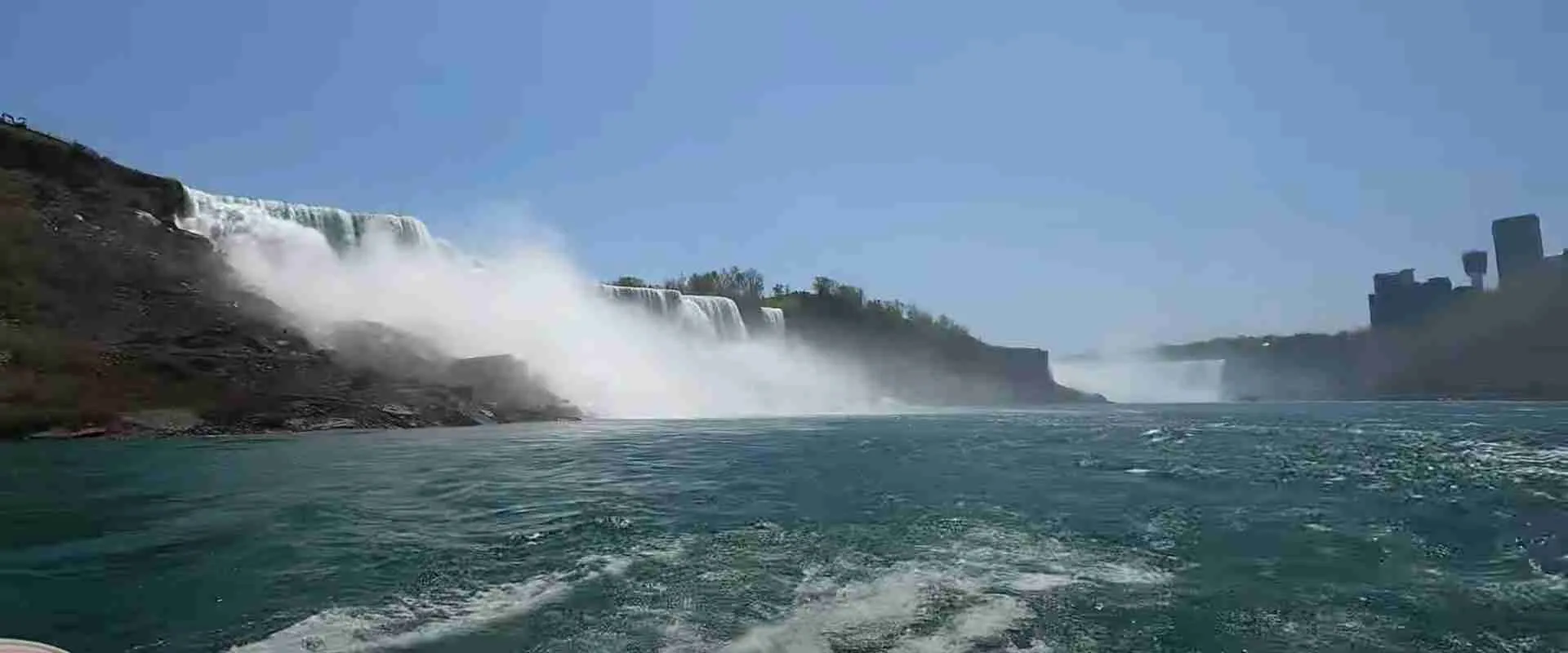
Niagara Falls Complete History Guide
Niagara Falls stands as one of North America’s most powerful natural monuments, representing far more than cascading water at the border between Ontario, Canada and New York, United States. The falls embody 12,000 years of geological evolution, millennia of indigenous spiritual connection, centuries of industrial innovation, and decades of international conservation cooperation. This complete history guide explores how these three waterfalls—Horseshoe Falls, American Falls, and Bridal Veil Falls—shaped human civilization, inspired technological advancement, and became symbols of natural power and beauty.
Key Takeaways
- Niagara Falls formed approximately 12,000 years ago during the retreat of glaciers at the end of the last Ice Age, creating one of Earth’s most powerful waterfalls
- Indigenous peoples, particularly the Haudenosaunee Confederacy, held the falls sacred for thousands of years before European contact in the 17th century
- The falls became the birthplace of hydroelectric power in 1896, revolutionizing industrial development and establishing principles still used worldwide
- International cooperation between the United States and Canada preserved the falls from complete industrial exploitation, creating one of the world’s first major conservation movements
- Daredevil stunts over the falls, beginning in 1901, created a unique cultural phenomenon that continues to fascinate millions of visitors annually
- Modern preservation efforts maintain the falls’ natural beauty while supporting tourism infrastructure that hosts over 30 million visitors each year
Introduction: Understanding Niagara Falls’ Historical Significance
The historical significance of Niagara Falls extends across multiple dimensions. Geologically, the falls demonstrate ongoing erosion processes that continue reshaping the landscape. Culturally, they represent sacred indigenous territories, European exploration ambitions, and modern tourism development. Technologically, they mark the birthplace of commercial hydroelectric power. Politically, they exemplify successful international cooperation in natural resource management. Each dimension reveals layers of human interaction with one of nature’s most spectacular displays of power and beauty.
Understanding Niagara Falls’ history requires examining how different cultures, time periods, and civilizations interpreted and utilized this natural wonder. From indigenous spiritual ceremonies to Victorian honeymoon destinations, from industrial power generation to contemporary environmental conservation, the falls have continuously evolved in meaning while maintaining their physical majesty. This guide presents comprehensive historical analysis spanning geological formation through modern preservation efforts, providing context for appreciating Niagara Falls’ enduring significance in North American history and culture.
People Also Ask About Niagara Falls History
How Old Are Niagara Falls and How Did They Form?
Niagara Falls formed approximately 12,000 years ago during the retreat of the Wisconsin Glacier at the end of the last Ice Age. As massive ice sheets melted, enormous volumes of water carved the Niagara River channel through sedimentary rock layers, eventually encountering the resistant Lockport Dolostone caprock overlying softer shale and sandstone. This geological structure creates the dramatic vertical drop characteristic of the falls.
The falls originally formed seven miles downstream near Queenston-Lewiston, at the edge of the Niagara Escarpment. Continuous erosion causes the falls to recede upstream at varying rates—historically averaging four to five feet per year before flow diversion for hydroelectric power reduced erosion to approximately one foot per year. The three distinct waterfalls visible today—Horseshoe Falls (Canadian), American Falls, and Bridal Veil Falls—represent different stages of this ongoing geological process, with Horseshoe Falls retreating faster due to greater water volume and flow dynamics.
What Role Did Niagara Falls Play in Indigenous History?
The Haudenosaunee Confederacy (Iroquois) and their predecessors maintained deep spiritual and practical connections to Niagara Falls for thousands of years before European contact. The Neutral Nation, Seneca, and other indigenous peoples considered the falls a sacred site, incorporating them into creation stories and spiritual practices. The thundering water—called “Onguiaahra” meaning “thundering water” in the Neutral language—represented powerful spiritual forces requiring respect and ceremonial acknowledgment.
Indigenous peoples used the Niagara River corridor as a crucial transportation and trading route connecting Lake Erie to Lake Ontario. The falls themselves necessitated portage routes around the cataract, creating strategic control points for commerce and military movements. Archaeological evidence reveals sustained indigenous occupation and resource utilization throughout the Niagara region spanning thousands of years. European colonization disrupted these long-standing relationships, though indigenous communities maintain spiritual and cultural connections to the falls today through ongoing ceremonies and advocacy for land rights recognition.
When Did Europeans First Discover Niagara Falls?
French explorer Étienne Brûlé likely became the first European to witness Niagara Falls around 1615, though no written record of his visit survives. The first documented European description came from Father Louis Hennepin in 1678, whose accounts—though wildly exaggerated in estimating the falls’ height at 600 feet—introduced Niagara to European imagination. Hennepin’s descriptions, published in 1683, sparked intense European interest in North American natural wonders and the strategic importance of the Great Lakes region.
Following Hennepin’s reports, French military and religious expeditions increasingly utilized the Niagara portage route. Father Paul Ragueneau provided more accurate measurements in 1648, though his reports reached Europe later than Hennepin’s popular accounts. These early European encounters with Niagara Falls occurred within broader contexts of colonial competition for North American territories, fur trade control, and missionary activities among indigenous populations. The falls quickly became strategic military positions during conflicts between French, British, and indigenous forces throughout the 17th and 18th centuries.
How Did Niagara Falls Become an Industrial Power Center?
Niagara Falls transformed into an industrial power center through gradual development of water-powered mills beginning in the late 18th century, culminating in the world’s first large-scale alternating current hydroelectric power plants in the 1890s. Early mills used direct mechanical power from water wheels, limited to immediate vicinity of the falls. The revolutionary breakthrough came when Nikola Tesla’s alternating current system, backed by George Westinghouse, demonstrated the ability to transmit electricity over long distances, making Niagara’s power accessible to distant cities.
The Niagara Falls Power Company completed the first major hydroelectric installation in 1896, initially powering local aluminum and chemical plants. By 1896, Buffalo received Niagara electricity via high-voltage transmission lines—a watershed moment proving commercial hydroelectric power’s viability. This success sparked global hydroelectric development and established engineering principles still fundamental to modern power generation. The industrial boom attracted major corporations including Union Carbide, Carborundum Company, and numerous electrochemical plants, transforming Niagara Falls into a significant manufacturing center through the mid-20th century while raising concerns about environmental impacts and aesthetic degradation of the natural wonder.
Extended multi-day tours – 5+ days
Featured Niagara Falls Multi-Day Tour Packages
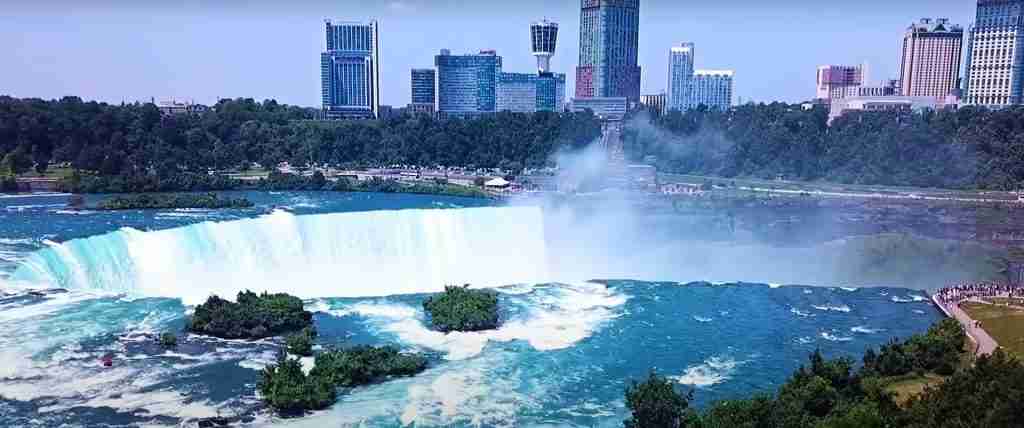
3 days
Niagara Falls 3-Day Discovery Tour
- ✓ Comprehensive Niagara Falls experience
- ✓ Expert local guides included
- ✓ All accommodation included
- ✓ Transportation provided

5 days
Niagara Falls 5-Day Highlights Experience
- ✓ Comprehensive Niagara Falls experience
- ✓ Expert local guides included
- ✓ All accommodation included
- ✓ Transportation provided

7 days
Niagara Falls 7-Day Cultural Journey
- ✓ Comprehensive Niagara Falls experience
- ✓ Expert local guides included
- ✓ All accommodation included
- ✓ Transportation provided
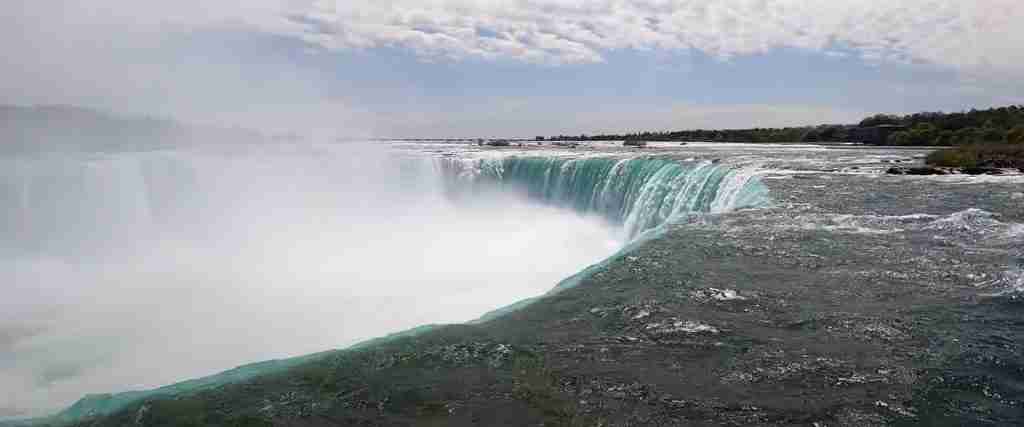
10 days
Niagara Falls 10-Day Complete Adventure
- ✓ Comprehensive Niagara Falls experience
- ✓ Expert local guides included
- ✓ All accommodation included
- ✓ Transportation provided
Multi-day tour packages powered by TourRadar. Prices and availability subject to change.
Geological Formation and Ancient History
The geological history of Niagara Falls begins with sedimentary rock formation during the Silurian and Ordovician periods, approximately 400-450 million years ago. Ancient tropical seas deposited limestone, dolostone, and shale in horizontal layers across the region. These rock strata—particularly the resistant Lockport Dolostone caprock overlying softer Rochester Shale and Queenston Shale—created the geological conditions necessary for waterfall formation. The varying hardness of these rock layers determines erosion patterns that shape the falls’ distinctive features.
The Wisconsin Glacier, part of the Laurentian Ice Sheet, covered the Niagara region until approximately 12,000 years ago. As Earth’s climate warmed and glaciers retreated northward, massive meltwater volumes carved new drainage channels. The ancestor of modern Niagara River flowed from Lake Erie seeking outlets to Lake Ontario, eventually encountering the Niagara Escarpment—a prominent cliff line extending from New York through Ontario into Michigan and Wisconsin. Where the river crossed this escarpment near present-day Queenston-Lewiston, Niagara Falls began.
Initial waterfall formation occurred at the escarpment’s northern edge, approximately seven miles downstream from the current location. Continuous erosion processes drove gradual upstream migration. Water cascading over the caprock undermined softer shale layers beneath, causing periodic rockfalls that maintained the vertical cliff face while moving the falls’ location southward. Geological studies reveal this recession occurred faster during periods of higher water volume, particularly immediately following glacial retreat when Great Lakes levels exceeded modern elevations.
The falls’ recession created the Niagara Gorge, a spectacular canyon extending from the falls to Queenston-Lewiston. This seven-mile gorge exposes geological history through its cliff walls, revealing rock strata deposited over millions of years. The gorge’s width and depth variations reflect changing water volumes and flow patterns throughout post-glacial history. The Whirlpool, located approximately two miles downstream from the falls, marks the point where the retreating falls encountered an ancient buried river valley, creating turbulent flow conditions.
Different sections of the falls erode at varying rates due to geological and hydrological factors. Horseshoe Falls, carrying approximately 90% of the Niagara River’s flow, recedes faster than American Falls. Historical recession rates averaged four to five feet annually before modern flow control measures. American Falls experienced slower recession due to lower water volume and eventual talus accumulation at its base. In 1969, engineers temporarily dewatered American Falls, revealing massive rock piles accumulated from previous collapses and allowing detailed geological study of erosion processes and structural stability.
Modern geological monitoring reveals ongoing erosion continues reshaping the falls, though at reduced rates due to water diversion for hydroelectric power generation. The International Joint Commission regulates water flow to balance preservation with power generation—maintaining minimum aesthetic flows while diverting substantial volumes through underground tunnels to generating stations. Despite these interventions, Niagara Falls remains geologically active, with small rockfalls occurring periodically and erosion processes continuing their inexorable upstream march. Scientists project the falls will eventually reach Lake Erie in approximately 50,000 years, though numerous factors make such long-term predictions uncertain.
Indigenous Peoples and Pre-European History
Archaeological evidence places indigenous peoples in the Niagara region for at least 11,000 years, coinciding with glacial retreat and falls formation. Paleo-Indian cultures hunted megafauna in post-glacial landscapes, gradually adapting to changing environments as climate stabilized. These early inhabitants witnessed Niagara Falls’ geological evolution, experiencing the cataract as it receded through the gorge creating the landscape familiar today. Their oral traditions likely preserved knowledge of the falls’ changing locations, though these stories were not recorded before disruption from European colonization.
The Neutral Nation, an Iroquoian-speaking people, controlled the Niagara region when Europeans arrived. The Neutrals maintained their name through diplomatic policies balancing relationships among powerful neighbors including the Huron Confederacy and Five Nations Iroquois. Niagara Falls held profound spiritual significance in Neutral cosmology, featuring in creation narratives and serving as sites for ceremonies and spiritual practices. The thundering water represented powerful supernatural forces requiring respectful interaction through proper rituals and offerings.
The portage route around Niagara Falls became a crucial element in indigenous transportation networks connecting Lake Erie to Lake Ontario. This portage enabled canoe-based travel throughout the Great Lakes while requiring overland transport around the impassable cataract. Control of the portage granted strategic advantages for trade and military movements, making the Niagara region politically significant. The well-worn paths indicated sustained heavy use, with indigenous peoples developing efficient portage systems including established campsites and supply caches.
Seneca peoples of the Haudenosaunee Confederacy gained control over the Niagara region following the dispersal of the Neutral Nation during the mid-17th century Beaver Wars. The Seneca maintained the area’s spiritual significance while adapting to changing political circumstances created by European colonization. They negotiated treaties with French, British, and later American governments regarding access to and control over Niagara lands. These negotiations reflected indigenous peoples’ sophisticated understanding of legal and diplomatic processes, though European powers often violated agreements or imposed unfavorable terms through military superiority.
Indigenous spiritual traditions associated Niagara Falls with powerful manitou—spiritual beings inhabiting natural features. Ceremonies conducted at the falls sought blessings for hunting success, safe travel, or healing. Offerings—sometimes including valuable goods—were made to honor these spirits and maintain proper relationships with supernatural forces. The falls’ thunderous sound represented the spirits’ voices, while mist rising from the cataract manifested their presence. These beliefs persisted despite missionary efforts to convert indigenous peoples to Christianity, with some communities maintaining traditional practices into modern times.
European colonization dramatically disrupted indigenous relationships with Niagara Falls. Military conflicts, territorial dispossession, and disease epidemics devastated native populations. Treaties progressively confined indigenous peoples to smaller territories, often removing them entirely from ancestral lands around the falls. By the 19th century, most indigenous inhabitants had been displaced, though they never relinquished spiritual and cultural claims to the region. Contemporary indigenous communities continue advocating for recognition of historical injustices and meaningful involvement in Niagara Falls management decisions, asserting ongoing connections to this sacred landscape despite centuries of displacement.
European Exploration and Colonial Period (1600-1800)
The first documented European encounter with Niagara Falls occurred when Father Louis Hennepin, accompanying René-Robert Cavelier, Sieur de La Salle’s expedition, witnessed the cataract in December 1678. Hennepin’s published accounts, “Description de la Louisiane” (1683), introduced Niagara Falls to European readers with dramatic descriptions—though he wildly overestimated the height at 600 feet compared to the actual 167-foot drop of Horseshoe Falls. Despite inaccuracies, Hennepin’s descriptions sparked European fascination with North American natural wonders and reinforced French territorial claims to the Great Lakes region.
French military and commercial interests quickly recognized the Niagara portage’s strategic importance. The French constructed Fort Conti at the river’s mouth in 1679, the first of several military installations controlling access to the portage route. These fortifications protected French fur trade interests and restricted British access to upper Great Lakes regions. The portage became a critical component of French imperial infrastructure, with military engineers improving trails and establishing supply depots to facilitate movement of troops, trade goods, and supplies.
British-French colonial rivalry focused heavily on Niagara throughout the 18th century. During the French and Indian War (1754-1763), British forces captured Fort Niagara in 1759, securing control over this strategic corridor. The Treaty of Paris (1763) transferred French possessions to British authority, making Niagara Falls part of the British Empire. British military engineers upgraded fortifications and improved portage infrastructure, recognizing continued strategic value. The Revolutionary War temporarily threatened British control, though the Treaty of Paris (1783) established the Niagara River as the international boundary between the new United States and remaining British territories.
Throughout the colonial period, few Europeans visited the falls purely for tourism. Military personnel, traders, missionaries, and government officials comprised most visitors, typically viewing the falls as obstacles requiring portage rather than attractions meriting extended visits. However, some visitors recorded detailed observations contributing to growing geographical knowledge. Swedish botanist Peter Kalm visited in 1750, providing scientifically accurate descriptions. His measurements—estimating Horseshoe Falls at 137 feet and American Falls at 158 feet—approached actual heights much more closely than earlier accounts.
Indigenous peoples continued inhabiting the Niagara region throughout the colonial period, though under increasingly constrained circumstances. The Seneca negotiated treaties with both French and British authorities, attempting to maintain autonomy while managing relationships with competing European powers. The Sullivan Expedition (1779) during the Revolutionary War devastated Seneca communities, destroying villages and crops throughout western New York. Subsequent treaties imposed by the United States government progressively reduced indigenous landholdings, setting precedents for continued territorial dispossession throughout the 19th century.
By the late 18th century, Niagara Falls began attracting scientific interest. Naturalists and geologists visited to study the cataract’s formation and ongoing geological processes. These early scientific investigations established frameworks for understanding waterfall erosion, sedimentary rock formation, and post-glacial landscape evolution. The falls became subjects for emerging geological theories, with scientists debating erosion rates, historical water levels, and long-term landscape changes. This scientific attention laid groundwork for future systematic studies while contributing to growing European knowledge of North American natural features.
Rise of Tourism and the Romantic Era (1800-1860)
The early 19th century witnessed Niagara Falls’ transformation from remote frontier location to internationally famous tourist destination. Improved transportation infrastructure—particularly the Erie Canal’s completion in 1825—made the falls accessible to wealthy Eastern seaboard residents and European travelers. What required weeks of difficult travel became a relatively comfortable journey measured in days. This accessibility explosion coincided with Romantic movement sensibilities emphasizing sublime natural beauty, dramatic landscapes, and emotional responses to nature’s power—aesthetics perfectly embodied by Niagara Falls’ thundering spectacle.
Artists played crucial roles in popularizing Niagara Falls as a tourist destination. Painters including John Trumbull, Frederic Edwin Church, and numerous others created dramatic landscapes emphasizing the falls’ sublime power and beauty. Church’s masterwork “Niagara” (1857) achieved particular fame, touring American and European cities where thousands paid admission to view this massive canvas. These paintings circulated widely through prints and engravings, creating visual expectations that drew tourists seeking to experience the falls personally. Literary figures including Charles Dickens, Nathaniel Hawthorne, and numerous travel writers published descriptions reinforcing Niagara’s reputation as an essential stop for cultured individuals.
The falls quickly became North America’s premier honeymoon destination, a reputation lasting into the 21st century. This association developed partly from high-profile couples visiting on wedding trips, partly from deliberate marketing by hotel operators recognizing lucrative opportunities. The combination of natural beauty, romantic associations, and improving accommodations made Niagara Falls ideal for newlyweds seeking memorable experiences. The honeymoon tradition created self-reinforcing cycles—couples visited because others did, establishing cultural expectations that sustained the pattern across generations.
Tourism development brought significant landscape changes. Entrepreneurs constructed hotels, viewing platforms, museums, and various attractions capitalizing on visitor interest. Competition for prime viewpoints led to private landowners erecting fences and charging admission to approach the falls—practices that increasingly restricted public access to the natural spectacle. By the 1860s, the Canadian and American sides featured cluttered commercial developments, aggressive souvenir vendors, and deteriorating aesthetic conditions that prompted growing calls for public intervention to preserve the falls’ natural beauty.
The first Maid of the Mist boat began operations in 1846, offering thrilling close approaches to the base of Horseshoe Falls. These vessels—named for an indigenous legend—became iconic Niagara experiences, providing unique perspectives on the falls’ power. The boat service survived various ownership changes and temporarily ceased during American Civil War disruptions, but ultimately established itself as an enduring attraction operating continuously into modern times. The close encounters with thundering water, drenching spray, and surrounding cliffs created memorable experiences contributing to Niagara’s tourism appeal.
Daredevils began attempting spectacular stunts at Niagara Falls, creating dangerous entertainment that attracted huge crowds. The first major spectacle occurred in 1829 when hotel owner William Forsyth sent the condemned ship Michigan over Horseshoe Falls filled with animals—a grotesque publicity stunt watched by thousands. Tightrope walker Jean François Gravelet, known as “Blondin,” crossed the gorge multiple times in 1859-1860, performing increasingly dangerous variations including cooking meals, carrying his manager, and crossing blindfolded. These stunts generated enormous publicity while establishing patterns of death-defying performances that continued for decades.
Industrial Development and Power Generation (1860-1920)
The transformation of Niagara Falls into an industrial power center began with small-scale water-powered mills in the late 18th century but accelerated dramatically following the American Civil War. Entrepreneurs recognized the falls’ potential to generate mechanical power for manufacturing. The Niagara Falls Hydraulic Power and Manufacturing Company, incorporated in 1853, constructed canals and waterways diverting water from the river upstream of the falls to power mills below. These early developments utilized direct mechanical power through water wheels and turbines, limiting industries to immediate vicinity of power generation sites.
The revolutionary breakthrough came with electrical power transmission development in the 1890s. The International Niagara Commission, established in 1890, solicited proposals for harnessing the falls’ power. After evaluating various schemes, commissioners selected the Westinghouse Electric Company’s alternating current system based on Nikola Tesla’s patents. This decision proved momentous—AC power could be transmitted efficiently over long distances, making Niagara’s energy accessible to Buffalo, Toronto, and beyond. The Niagara Falls Power Company completed the first major AC power plant in 1896, initially generating 5,000 horsepower for local industry.
Successful power transmission to Buffalo in 1896 demonstrated commercial viability of long-distance electrical distribution. High-voltage AC transmission—initially at 11,000 volts, later increased to 60,000 volts—carried electricity 22 miles to Buffalo factories and streetcar systems. This achievement revolutionized electrical engineering, proving hydroelectric power could serve distant cities. The success sparked global interest in hydroelectric development, with engineers worldwide studying Niagara’s systems. Niagara Falls became synonymous with electrical power, featuring prominently in public imagination as humanity harnessed natural forces for industrial progress.
Massive industrial expansion followed proven electrical generation capabilities. Major corporations including Alcoa Aluminum, Union Carbide, Carborundum Company, and numerous chemical manufacturers established plants near Niagara Falls, attracted by abundant cheap electricity. These electrochemical and electrometallurgical industries required enormous power inputs, making Niagara locations economically advantageous. By 1920, Niagara Falls had become one of North America’s leading industrial centers, with dozens of factories producing aluminum, calcium carbide, chlorine, graphite, and other products essential to modern manufacturing.
Industrial development created significant environmental and aesthetic concerns. Factories discharged pollutants into the Niagara River, degrading water quality. Massive water diversions for power generation reduced flow over the falls, diminishing the spectacle tourists traveled to witness. The landscape surrounding the falls featured proliferating power plants, factories, and infrastructure that clashed with natural beauty. These conditions sparked growing conservation movements demanding government intervention to preserve the falls from complete industrial exploitation.
Canadian and American governments negotiated international agreements regulating water diversion to balance industrial use with aesthetic preservation. The Boundary Waters Treaty (1909) established the International Joint Commission to oversee shared water resources. Subsequent agreements limited total water diversion and guaranteed minimum aesthetic flows over the falls—particularly during daylight hours and tourist season. These regulations represented pioneering efforts in international environmental cooperation, establishing precedents for managing shared natural resources while accommodating competing interests in industrial development and natural preservation.
Conservation Movement and Park Establishment (1870-1920)
Growing public concern about commercial exploitation and aesthetic degradation surrounding Niagara Falls sparked one of North America’s first major conservation movements. By the 1860s, private landowners controlled most vantage points, erecting barriers and charging fees for falls access. Aggressive vendors, deteriorating landscapes, and unregulated development prompted calls for public intervention. Landscape architect Frederick Law Olmsted emerged as a leading advocate, arguing that such natural wonders belonged to all people and required protection from private exploitation. Olmsted’s vision combined aesthetic preservation with democratic access principles—parks should be beautiful public spaces accessible to all social classes.
The Free Niagara movement gained momentum through the 1870s and 1880s, supported by artists, writers, and civic leaders. Prominent advocates included painter Frederic Edwin Church, landscape architect Calvert Vaux, and New York Governor Hamilton Fish. These reformers published articles, organized exhibitions, and lobbied legislators, building public support for government acquisition of lands surrounding the falls. Comparable movements emerged in Ontario, where similar commercial development threatened Canadian viewing areas. The parallel advocacy created opportunities for coordinated international conservation efforts.
New York established the Niagara Reservation in 1885, creating one of America’s first state parks. The state purchased lands along the American side through eminent domain, removing commercial structures and restoring naturalistic landscapes under Olmsted’s design supervision. Olmsted emphasized preserving and enhancing natural features while providing appropriate access infrastructure. His designs incorporated winding paths, strategic viewpoints, and landscape plantings that framed falls views while screening industrial development. The Niagara Reservation provided free public access, revolutionary at a time when private operators charged for approaching the cataract.
Ontario established Queen Victoria Park in 1888, creating protected Canadian parklands mirroring New York’s reservation. The Niagara Falls Park Commission acquired private holdings and removed obstructive structures, opening magnificent Horseshoe Falls views to public access. The commissioners implemented Olmsted-influenced designs emphasizing natural beauty and public accessibility. These parallel park creations represented unprecedented international cooperation in conservation, with American and Canadian authorities coordinating policies and sharing design principles. The joint efforts established models for managing shared natural resources transcending political boundaries.
Park establishment faced significant challenges including funding limitations, legal disputes with dispossessed landowners, and debates over appropriate development levels. Some critics argued that parks should remain entirely natural with minimal infrastructure, while others advocated for extensive visitor facilities. The final compromises provided basic amenities—paths, viewpoints, restrooms—while restricting commercial development and maintaining landscape aesthetics. These decisions balanced competing visions of park purposes, establishing precedents influencing park management philosophies throughout North America.
The conservation success at Niagara Falls inspired broader movements protecting natural wonders. The coordinated efforts demonstrated that public will could overcome commercial interests when mobilized effectively. Lessons learned at Niagara influenced subsequent campaigns establishing national and state parks throughout North America. The integration of professional landscape design, democratic access principles, and international cooperation created templates for modern conservation practices. While industrial development continued adjacent to parks, the protected viewsheds preserved opportunities for millions to experience Niagara Falls’ natural grandeur free from admission charges and commercial obstruction.
The Daredevil Era and Stunts (1901-1995)
The daredevil tradition at Niagara Falls reached its apex when Annie Edson Taylor became the first person to survive going over the falls in a barrel on October 24, 1901—her 63rd birthday. Taylor, a schoolteacher seeking fame and fortune, designed a custom barrel with cushions and straps, then plunged over Horseshoe Falls before thousands of spectators. She emerged with minor injuries, achieving instant fame though not the financial success she anticipated. Taylor’s survival demonstrated the possibility—however dangerous—of conquering the falls, inspiring numerous imitators over subsequent decades.
Bobby Leach followed Taylor in 1911, surviving the plunge in a steel barrel though sustaining serious injuries including broken kneecaps and a fractured jaw. Leach spent months recovering but capitalized on fame through lectures and appearances. Ironically, he died years later from complications after slipping on an orange peel in New Zealand—surviving Niagara Falls only to succumb to mundane accident. Charles Stephens attempted the feat in 1920 but died when his barrel disintegrated on impact, illustrating the extreme dangers. Most of his body was never recovered, serving as grim warning that attracted as many thrill-seekers as it deterred.
The daredevil era entered a new phase with improved barrel designs and some successful attempts. Jean Lussier used a rubber ball lined with inner tubes in 1928, emerging unscathed. However, George Stathakis died in 1930 when his barrel became trapped behind the falls for 14 hours, depleting his oxygen supply. William Fitzgerald, known as “Nathan Boya,” successfully went over in 1961 using a fabric-and-steel ball. These stunts generated enormous publicity but increasing government concern, leading both Canadian and American authorities to ban such attempts, imposing heavy fines for violations.
Despite legal prohibitions, stunts continued sporadically. Karel Soucek used a barrel in 1984, surviving the falls but dying months later attempting to recreate the feat by dropping from the Houston Astrodome roof. Steven Trotter survived in 1985, returning in 1995 with Lori Martin—making them the only married couple to go over together. Dave Munday successfully plunged twice (1985 and 1993), and Peter DeBernardi went over in 1989. Kirk Jones became the first person to survive without a protective device in 2003, going over with only the clothes on his back—though he died attempting to repeat the stunt in 2017, this time using an inflatable ball.
Tightrope walking across the gorge represented another daredevil tradition. Following Blondin’s famous 1859-1860 crossings, numerous performers attempted similar feats. Nik Wallenda received special permission in 2012 for a televised crossing directly over the falls—the first legal tightrope walk in over a century. Watched by millions, Wallenda successfully crossed 1,800 feet in 25 minutes on a two-inch cable, demonstrating continued public fascination with death-defying Niagara stunts while adhering to safety regulations and official oversight.
The daredevil legacy remains controversial. Survivors rarely achieved lasting financial success despite temporary fame. Many attempts ended in death or serious injury. Authorities consistently oppose such stunts as reckless endangerment requiring expensive rescue operations. Yet the tradition persists in public imagination, contributing to Niagara Falls’ mystique as a site where humans challenge nature’s power. Museums and attractions feature daredevil exhibits, artifacts, and stories, acknowledging this bizarre cultural phenomenon while discouraging imitation. The stunts represent peculiar intersections of courage, foolishness, showmanship, and human desire to conquer natural forces—themes deeply embedded in North American frontier mythology and entertainment culture.
Modern Preservation and International Cooperation (1920-Present)
The 20th century witnessed increasing sophistication in international cooperation managing Niagara Falls’ competing demands—hydroelectric power generation, industrial use, aesthetic preservation, and tourism development. The Boundary Waters Treaty (1909) established the International Joint Commission (IJC) to oversee shared water resources between the United States and Canada. The IJC provided frameworks for negotiating agreements balancing these interests while preventing unilateral actions damaging the falls or creating international disputes. This institutional structure enabled complex discussions producing compromises neither nation could achieve independently.
The Niagara River Water Diversion Treaty (1950) represented a landmark agreement regulating water flow over the falls. The treaty allocated specific volumes for power generation—split between American and Canadian facilities—while guaranteeing minimum aesthetic flows during daylight hours and tourist seasons. The agreement specified 100,000 cubic feet per second flowing over the falls during tourist season daytime hours (April-October, 8 AM-10 PM), reduced to 50,000 cubic feet per second during nighttime and winter. These regulations balanced power generation’s economic benefits with tourism’s requirements for impressive visual displays.
Major hydroelectric development followed the 1950 treaty. The Robert Moses Niagara Power Plant (American) opened in 1961, and the Sir Adam Beck Generating Stations (Canadian) expanded capacity through the 1950s-1960s. These facilities diverted enormous water volumes through underground tunnels and conduits, generating electricity for millions of customers. Combined generating capacity exceeded 4 gigawatts, making Niagara one of North America’s most productive hydroelectric sites. The developments required massive engineering projects including the creation of reservoirs, tunnels carved through bedrock, and sophisticated control systems managing water distribution between power generation and aesthetic flows.
The temporary dewatering of American Falls in 1969 provided unprecedented opportunities for geological study and engineering assessment. Engineers diverted the American channel completely, leaving the falls dry for several months while scientists examined rock formations, erosion patterns, and structural stability. The studies revealed massive talus accumulations at the base resulting from repeated rockfalls. Debates ensued about whether to remove this debris to restore vertical plunge aesthetics. Ultimately, authorities decided against removal, concluding that natural processes should continue unimpeded. The dewatering generated enormous public interest, with thousands visiting to witness the unusual sight of Niagara Falls shut off.
Environmental concerns increasingly influenced Niagara management starting in the 1970s. Discoveries of industrial pollution—particularly toxic waste at Love Canal near Niagara Falls, New York—raised awareness about environmental degradation from decades of unregulated chemical manufacturing. The Niagara River became a focus for cleanup efforts, with both nations implementing stricter pollution controls and remediation programs for contaminated sites. These efforts improved water quality while establishing stronger environmental protection frameworks governing future development.
Modern preservation efforts balance multiple objectives. Parks on both sides received ongoing improvements—upgraded visitor centers, enhanced accessibility, restored natural areas, and improved viewing platforms. Illumination systems installed in the 20th century allow nighttime viewing, with LED technology enabling sophisticated light shows. Tourism infrastructure continues evolving with hotels, restaurants, attractions, and transportation systems serving over 30 million annual visitors. Management agencies coordinate efforts ensuring the falls remain accessible, beautiful, and economically productive while preserving natural features for future generations.
Climate change presents emerging challenges for Niagara Falls management. Changing precipitation patterns, extreme weather events, and Great Lakes water level fluctuations require adaptive management strategies. Scientists monitor erosion rates, water quality, ecosystem health, and visitor safety concerns. The IJC facilitates discussions about climate adaptation measures, ensuring both nations coordinate responses to environmental changes. These forward-looking efforts build on century-long traditions of international cooperation, adapting historical institutional frameworks to address contemporary challenges.
Niagara Falls in Cultural History
Niagara Falls occupies a unique position in North American cultural history, serving as symbol, inspiration, and metaphor across multiple artistic and literary traditions. The falls embodied sublime nature for Romantic era artists and writers, representing natural forces dwarfing human scale and inspiring emotional, even spiritual responses. This aesthetic framework shaped how generations of Americans and Canadians conceptualized relationships between humanity and nature, civilization and wilderness, progress and preservation. The falls became archetypal natural wonder, defining categories that influenced perceptions of landscapes throughout the continent.
Visual artists produced countless Niagara Falls depictions spanning styles and periods. Early 19th-century painters emphasized dramatic sublime qualities—towering mist, thundering waters, tiny human figures dwarfed by nature’s majesty. Frederic Edwin Church’s monumental “Niagara” (1857) represented the pinnacle of this tradition, combining meticulous detail with overwhelming scale. Later artists adopted different approaches—impressionistic treatments emphasizing light and atmosphere, modernist abstractions exploring formal qualities, photographic documentation capturing specific moments. This artistic diversity reflected evolving aesthetic sensibilities while maintaining the falls’ centrality in North American visual culture.
Literary treatments ranged from travel narratives and scientific descriptions to poetry and fiction incorporating Niagara imagery. Charles Dickens devoted memorable passages to the falls in “American Notes” (1842), contrasting natural grandeur with commercial tawdriness. Nathaniel Hawthorne used honeymoon settings at Niagara in several stories, exploring themes of romance, mortality, and nature’s power. Walt Whitman composed poems celebrating the falls’ democratic accessibility and natural magnificence. These literary representations shaped public understanding while contributing to ongoing dialogues about nature, progress, and American identity.
The honeymoon tradition created lasting cultural associations between Niagara Falls and romantic love. This connection—established in the mid-19th century and sustained through deliberate marketing—made the falls symbolic of new beginnings, passionate relationships, and shared experiences. The tradition generated countless cultural references—jokes, cartoons, advertisements, films—that reinforced associations between Niagara and romance. Even as actual honeymoon patterns diversified, the symbolic connection persisted in cultural memory, maintaining Niagara’s reputation as a romantic destination.
Film and popular culture discovered Niagara Falls as dramatic setting and symbolic location. The 1953 film “Niagara” starring Marilyn Monroe used the falls as noir backdrop, contrasting natural beauty with human darkness. Numerous other films featured Niagara scenes, utilizing the falls’ visual impact and cultural associations. Television shows, advertisements, and music videos regularly incorporated Niagara imagery. Superman comics and films used the falls as settings for dramatic rescues. These popular culture appearances maintained Niagara’s visibility in public consciousness across changing entertainment media and audience preferences.
The falls inspired technological and industrial progress narratives celebrating humanity’s ability to harness natural power. The hydroelectric development represented triumph of engineering and scientific knowledge, transforming natural force into productive energy serving human needs. This narrative framed Niagara as testament to American and Canadian industrial capabilities, progressive values, and technological advancement. Promotional materials, educational programs, and public discourse emphasized these themes, positioning the falls as symbols of modernity and progress rather than merely natural wonders. This industrial symbolism coexisted with tourism imagery, creating complex cultural meanings simultaneously celebrating nature and its conquest.
UNESCO World Heritage Consideration and Global Significance
While Niagara Falls has not received UNESCO World Heritage designation despite its undeniable global significance, the site embodies many qualities characterizing World Heritage properties. The falls represent outstanding natural phenomena of exceptional beauty, demonstrating ongoing geological processes in spectacular fashion. They possess profound cultural significance across indigenous traditions, colonial history, industrial development, conservation movements, and tourism evolution. The international cooperation managing the shared resource exemplifies principles underlying World Heritage concepts of universal value transcending national boundaries.
Several factors complicate potential World Heritage nomination. The extensive industrial development surrounding the falls—power plants, factories, urban areas—creates challenges for demonstrating pristine natural conditions. The heavy tourism infrastructure, while necessary for managing millions of visitors, alters natural settings. These human modifications might conflict with criteria requiring outstanding universal value in natural settings. However, the falls’ cultural landscape dimensions—incorporating industrial heritage, conservation history, and ongoing management cooperation—could support nominations under cultural criteria recognizing exceptional testimony to human interaction with spectacular natural phenomena.
Niagara Falls’ significance extends beyond North America, influencing global hydroelectric development, conservation practices, and tourism patterns. The successful AC power transmission from Niagara to Buffalo inspired worldwide electrical infrastructure development. Engineers from many nations studied Niagara systems, adapting principles for hydroelectric projects globally. The pioneering park establishment and international management cooperation provided models for other shared natural resources. These global influences demonstrate the falls’ importance transcending regional significance, supporting arguments for recognition at highest international levels.
The geological significance merits particular emphasis. Niagara Falls provides exceptional opportunities for studying waterfall erosion processes, post-glacial landscape evolution, and sedimentary rock structure. The ongoing recession enables real-time observation of geological changes occurring on human timescales rather than requiring millions of years. The exposed rock strata in the gorge offer educational access to Earth history spanning hundreds of millions of years. These scientific values complement aesthetic and cultural significance, creating multi-dimensional importance supporting potential World Heritage recognition.
Indigenous cultural heritage adds crucial dimensions often underemphasized in Niagara Falls narratives. The millennia of indigenous spiritual connection, the site’s role in indigenous trade and transportation networks, and the ongoing cultural significance for native communities deserve greater recognition. Incorporating indigenous perspectives more fully into Niagara Falls interpretation and management would strengthen understanding of the site’s complete cultural significance while honoring relationships predating European colonization by thousands of years. Such inclusion would align with contemporary World Heritage emphases on indigenous heritage and community-based conservation.
Whether or not Niagara Falls receives formal UNESCO designation, its significance as natural wonder, cultural landscape, and symbol of human-nature relationships remains undiminished. The falls continue inspiring millions of visitors annually, supporting economic development through tourism, generating clean hydroelectric power, and providing opportunities for recreation, education, and scientific study. The ongoing successful binational management demonstrates possibility of international cooperation protecting shared natural resources while accommodating diverse human uses. These achievements position Niagara Falls among Earth’s most significant natural and cultural landscapes regardless of official designations.
FAQ: Niagara Falls History
What causes Niagara Falls to erode and move upstream?
Niagara Falls erodes through hydraulic action and rock collapse processes. Water cascading over the hard Lockport Dolostone caprock gradually undermines softer shale layers beneath through constant impact and erosion. Eventually, the unsupported caprock collapses in periodic rockfalls, maintaining the vertical cliff face while moving the falls’ location upstream. This process has driven the falls approximately seven miles from their original formation point near Queenston-Lewiston over the past 12,000 years. Modern flow control for hydroelectric power has reduced erosion rates from historical averages of 4-5 feet annually to approximately one foot per year.
Why are there three separate waterfalls at Niagara?
The three waterfalls—Horseshoe Falls, American Falls, and Bridal Veil Falls—formed due to geological variations and different erosion patterns. Goat Island divides the Niagara River, sending approximately 90% of flow over Horseshoe Falls on the Canadian side and 10% over American Falls. Luna Island further separates the smaller Bridal Veil Falls from American Falls. The varying flow volumes cause different erosion rates—Horseshoe Falls recedes faster and maintains a distinctive curved shape, while American Falls erodes more slowly and has accumulated talus at its base, reducing its dramatic vertical drop compared to earlier periods.
Did Niagara Falls ever freeze completely?
Niagara Falls never freezes completely solid, though ice formations can dramatically reduce visible water flow. During extreme cold, ice accumulates around the base forming ice bridges—frozen surfaces across the lower river that were once popular for crossing (now prohibited due to safety concerns). The most famous “freeze” occurred in March 1848 when an ice jam on Lake Erie temporarily halted water flow, leaving the falls nearly dry for 30-40 hours. Ice jams formed at the entrance to the Niagara River, blocking water until the jam broke and flow resumed. Even in severe winters, water continues flowing beneath ice formations, though reduced flow during winter months (under the 1950 treaty) creates more extensive ice accumulation.
How did Niagara Falls become famous for honeymoons?
Niagara Falls became North America’s premier honeymoon destination during the early 19th century through a combination of factors. The falls’ romantic sublime aesthetics appealed to cultural sensibilities valuing dramatic natural beauty. Improved transportation via the Erie Canal (1825) made the falls accessible to Eastern seaboard populations. High-profile couples visiting on wedding trips established social precedents that others emulated. Hotel operators recognized economic opportunities and deliberately marketed Niagara as ideal honeymoon destination. The tradition became self-reinforcing—couples visited because it was expected, establishing cultural patterns that persisted across generations despite changing travel habits.
What happened during the 1969 dewatering of American Falls?
In June 1969, the U.S. Army Corps of Engineers temporarily diverted the Niagara River’s American channel, completely stopping flow over American Falls for five months. Engineers built a 600-foot cofferdam redirecting water over Horseshoe Falls while allowing unprecedented access to the exposed falls face. Scientists studied rock formations, erosion patterns, and structural stability. The investigation revealed massive talus accumulations—approximately 185,000 tons of rock—at the base from centuries of rockfalls. Debates occurred about removing this debris to restore the vertical plunge, but authorities ultimately decided against intervention, allowing natural processes to continue. The dewatering attracted thousands of visitors curious to witness the unusual sight of dry waterfalls.
How much electricity does Niagara Falls generate?
Niagara Falls hydroelectric facilities generate over 4.5 gigawatts combined capacity, split between American and Canadian installations. The Robert Moses Niagara Power Plant (USA) generates approximately 2.4 gigawatts, while Canada’s Sir Adam Beck Generating Stations produce over 2.1 gigawatts. This makes Niagara among North America’s most productive hydroelectric sites, generating electricity for millions of customers in Ontario and New York. The 1950 Niagara River Water Diversion Treaty regulates how much water can be diverted for power generation while maintaining minimum aesthetic flows over the falls—100,000 cubic feet per second during tourist season days, 50,000 cubic feet per second at night and in winter.
Who was the first person to go over Niagara Falls in a barrel?
Annie Edson Taylor became the first person to go over Niagara Falls in a barrel and survive on October 24, 1901—her 63rd birthday. Taylor, a 63-year-old schoolteacher, designed a custom barrel with cushions and straps, hoping fame would provide financial security. She plunged over Horseshoe Falls before thousands of spectators, emerging with minor injuries. Despite achieving instant celebrity, she never attained the fortune she anticipated, spending her later years impoverished. Taylor’s survival demonstrated the possibility—however dangerous—of conquering the falls, inspiring numerous imitators over subsequent decades, though many attempts ended in death or serious injury.
What role did Niagara Falls play in the development of electrical power?
Niagara Falls served as the birthplace of commercial alternating current electrical power distribution. In 1896, the first major AC power plant began operation using Nikola Tesla’s system backed by George Westinghouse. The revolutionary achievement came when electricity transmitted 22 miles to Buffalo proved long-distance power distribution economically viable. This success demonstrated that hydroelectric power could serve distant cities, revolutionizing electrical engineering and inspiring worldwide hydroelectric development. The Niagara project established technical principles still fundamental to modern power generation and transmission. The installation transformed Niagara Falls into a major industrial center while proving that harnessing natural forces could provide clean, renewable energy for urban and industrial use.
Are there indigenous legends about Niagara Falls?
The Haudenosaunee and other indigenous peoples maintain numerous legends about Niagara Falls spanning thousands of years. One well-known story describes Lelawala, a maiden sacrificed to the Thunder Being dwelling beneath the falls, who revealed the serpent threatening her people. The Seneca tell of He-No, the Thunder Spirit, who resided in caves behind the falls and protected indigenous peoples. These legends reflect deep spiritual significance indigenous communities attributed to the falls, viewing the thundering water as manifestation of powerful supernatural forces requiring respect and ceremonial acknowledgment. The stories encode cultural knowledge, moral teachings, and spiritual relationships with the landscape predating European colonization by millennia.
Why did industrial development around Niagara Falls eventually decline?
Niagara Falls industrial prominence declined due to multiple factors beginning in the mid-20th century. Changing manufacturing economics reduced advantages of on-site power generation as electrical transmission improved and energy costs equalized across regions. Environmental regulations increased costs for chemical and electrochemical industries that previously operated with minimal pollution controls. Global competition, particularly from facilities with lower labor costs, made Niagara-area manufacturing less competitive. Additionally, exhaustion of some raw materials and shifts in product demand reduced market viability for certain industries. By the late 20th century, many major facilities closed or significantly reduced operations, leaving economic challenges that communities continue addressing through efforts diversifying toward tourism, technology, and service sectors.
Conclusion: Niagara Falls’ Enduring Historical Significance
Niagara Falls’ history encompasses geological time spans measuring millennia, indigenous cultural traditions extending thousands of years, European colonial conflicts shaping modern borders, industrial revolutions transforming energy production, conservation movements establishing environmental protection principles, and ongoing international cooperation managing shared natural resources. This extraordinary convergence of natural phenomena and human history creates layers of significance extending far beyond the spectacular visual display that first captures visitors’ attention. Understanding Niagara Falls requires appreciating how geological forces, cultural meanings, technological achievements, and political negotiations intertwine across centuries of human interaction with natural power.
The falls remain geologically active, continuing erosion processes that will ultimately carry them to Lake Erie tens of thousands of years in the future. They continue serving as symbols of natural beauty, romantic destinations, sources of clean hydroelectric power, economic engines driving regional tourism, and subjects for artistic and scientific investigation. The successful binational management demonstrates that competing interests—power generation, industrial use, aesthetic preservation, tourism development—can be balanced through cooperation, negotiation, and commitment to shared values. These achievements position Niagara Falls as model for managing other natural wonders facing similar challenges worldwide.
Future stewardship will require addressing emerging challenges including climate change impacts, evolving tourism patterns, aging infrastructure maintenance, and ensuring inclusive recognition of all cultural communities connected to the falls. The principles established through centuries of Niagara Falls management—public access, aesthetic preservation, sustainable resource use, international cooperation—provide foundations for meeting these challenges. As Niagara Falls enters its third century of intensive human interaction, the accumulated historical experience offers guidance for maintaining this natural wonder as source of power, beauty, inspiration, and cross-border cooperation for generations to come.