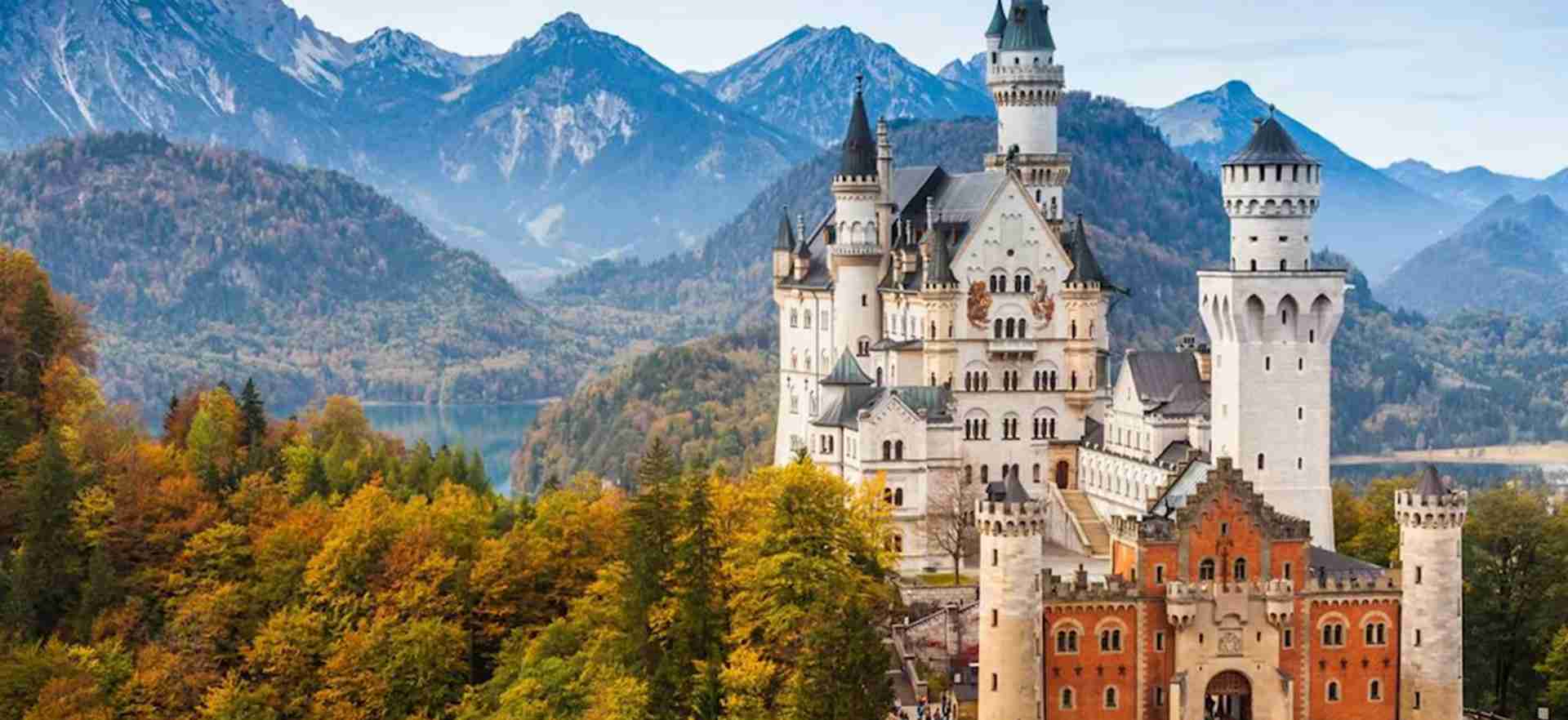
Neuschwanstein Castle Travel Guide 2026: Essential Planning & Practical Advice
This comprehensive guide provides the detailed planning information needed to maximize your Neuschwanstein Castle experience in 2026. From advance booking strategies and transportation options to budget planning and day trip itineraries, this resource covers every aspect of visiting Bavaria’s most iconic landmark. Whether planning a quick day trip from Munich or an extended exploration of the Bavarian Alps, understanding these logistics transforms a potentially stressful visit into the magical experience that Neuschwanstein Castle deserves.
Key Takeaways
- Book castle tickets 2-3 months ahead for 2026 visits through the official ticket center—entry costs €17.50 for adults with timed admission slots selling out quickly during peak season
- Plan arrival in Hohenschwangau village 90-120 minutes before your castle entry time to account for parking, ticket collection, and the 30-40 minute uphill walk or shuttle ride to the castle entrance
- Summer months (June-August 2026) bring massive crowds but best weather, while shoulder seasons (April-May, September-October) offer better crowd balance with variable weather conditions
- Transportation from Munich takes 2-2.5 hours via train and bus combination, with the Bayern Ticket providing economical unlimited regional travel at €29-35 for groups in 2026
- Budget €100-150 per person for a full day trip from Munich including transportation, castle admission, meals, and shuttle services—multi-day stays require €180-350 per night for accommodation
- The castle tour lasts only 30-35 minutes with strictly enforced entry times, making Marienbrücke viewpoint, Hohenschwangau Castle, and surrounding hiking trails essential for a complete experience
Introduction: Planning Your 2026 Neuschwanstein Castle Adventure
Neuschwanstein Castle stands as Germany’s most photographed building and one of Europe’s most visited tourist attractions, drawing over 1.5 million visitors annually to its dramatic mountaintop setting in the Bavarian Alps. Built by King Ludwig II of Bavaria between 1869 and 1886, this fairy-tale castle inspired Walt Disney’s Sleeping Beauty Castle and represents the pinnacle of 19th-century Romantic architecture. Planning a successful visit in 2026 requires navigating complex logistics, strict timed entry systems, and seasonal crowd variations that can make or break the experience.
The castle’s remote location in Hohenschwangau village near Füssen presents specific challenges that catch unprepared visitors off guard. The mandatory timed entry tickets, the steep uphill approach to the castle entrance, and the brief 30-minute guided tour create a tightly orchestrated experience that leaves little room for spontaneity. Visitors who arrive without advance planning often face sold-out tickets, long waits for shuttle buses, and rushed experiences that fail to capture the magic of this extraordinary location.
The 2026 visiting season brings several considerations for optimal planning. Summer months deliver perfect weather but overwhelming crowds that can result in 2-3 hour waits for shuttle buses and completely sold-out admission tickets weeks in advance. Spring and autumn shoulder seasons offer more manageable crowd levels with the risk of unpredictable Alpine weather that can obscure the castle views and make outdoor activities challenging. Winter visits provide snow-covered fairy-tale landscapes but extremely limited daylight hours and potential closures due to severe weather.
People Also Ask About Neuschwanstein Castle 2026
How much does it cost to visit Neuschwanstein Castle in 2026?
Castle admission tickets cost €17.50 for adults, €14.50 for seniors, and €9.50 for students in 2026, with children under 18 entering free when accompanied by parents (check hohenschwangau.de for current official rates as pricing may vary). These prices include the mandatory 30-minute guided tour but do not cover transportation to the castle entrance or parking fees. The shuttle bus from Hohenschwangau village to the castle entrance costs €3 uphill and €2 downhill, while horse-drawn carriages charge €8 uphill and €4 downhill per person.
A complete day trip from Munich costs €100-150 per person including transportation (€29-35 for Bayern Ticket split among group members), castle admission, meals, and local transportation. The Bayern Ticket provides unlimited regional train and bus travel throughout Bavaria, making it the most economical transportation option for groups of 2-5 people. Single travelers pay full regional train fares of €45-55 round trip from Munich to Füssen.
Additional costs include parking at €8-10 for all-day lots in Hohenschwangau village, museum admissions if visiting related attractions, and optional audio guides or supplementary tours. Budget travelers can minimize costs by bringing packed lunches, walking instead of taking shuttle buses, and using the Bayern Ticket for group travel. Luxury visitors should expect €200-300 per person for guided private tours, premium dining, and comfortable transportation arrangements.
When is the best time to visit Neuschwanstein Castle in 2026?
The optimal visiting windows in 2026 fall during late April through May and September through early October, when shoulder season conditions balance manageable crowd levels with favorable weather patterns. These periods avoid the summer crush while providing longer daylight hours and better visibility than winter months. September particularly offers stunning fall foliage colors around the castle and surrounding lakes, creating exceptional photographic opportunities without the peak summer crowds.
Summer months (June-August 2026) bring the most reliable weather and longest daylight hours but generate overwhelming tourist volumes. The castle admission tickets sell out 2-3 months ahead during this period, shuttle buses run 30-45 minute waits, and the Marienbrücke viewpoint becomes dangerously crowded. Visitors who can only travel during summer should book tickets immediately when they become available and plan weekday visits to slightly reduce crowd pressure.
Winter visits (December-February) transform Neuschwanstein into a snow-covered fairy-tale setting with dramatically reduced crowds and lower accommodation costs. However, daylight hours shrink to 8-9 hours daily, the Marienbrücke viewpoint closes for safety, and severe weather can force complete castle closure. Winter visitors should maintain flexible schedules, book refundable accommodations, and prepare for potential plan changes due to weather conditions.
Early morning arrival times (first entry slots at 9:00-9:30 AM) provide the best overall experience regardless of season. These slots feature fewer crowds on the uphill approach, better lighting conditions for interior photography during tours, and leave full afternoons for exploring surrounding attractions. The castle becomes progressively more crowded as the day advances, with afternoon entry slots facing the longest shuttle waits and most congested paths.
Do you need advance bookings for Neuschwanstein Castle in 2026?
Advance booking is essential for 2026 visits, with tickets available up to 60 days before the visit date through the official Ticket Center Hohenschwangau website and phone reservations. Summer season tickets (June-August) sell out within hours of becoming available 60 days ahead, making immediate booking upon release absolutely critical for summer visitors. Even shoulder season visits benefit from advance booking to secure preferred entry times and avoid disappointment from sold-out dates.
The castle operates on strict timed entry with specific admission slots assigned during booking. Missing your designated entry time results in forfeited admission with no refunds or rescheduling options. This system requires careful planning to ensure arrival in Hohenschwangau village with sufficient time for parking, ticket collection (physical tickets must be collected from the ticket center before entry), and the 30-40 minute uphill journey to the castle entrance.
Walk-up same-day tickets exist in limited quantities but sell out by mid-morning during peak season and offer no guarantee of availability. Relying on same-day tickets risks wasted travel time and expense if admission isn’t available. The €2.50 per ticket online booking fee represents worthwhile insurance against trip disappointment, particularly for visitors traveling significant distances specifically to see Neuschwanstein Castle.
Group bookings require special arrangements through the ticket center’s group reservation system for parties of 15 or more people. Private tour operators offer packages combining transportation, skip-the-line admission, and guided experiences, though these cost significantly more than independent visits. Budget-conscious travelers booking independently should set calendar reminders for exactly 60 days before their intended visit date to book tickets the moment they become available.
How do you get to Neuschwanstein Castle from Munich in 2026?
The most economical route from Munich to Neuschwanstein involves taking regional trains from Munich Hauptbahnhof to Füssen (2 hours), then connecting buses to Hohenschwangau village (10 minutes). The Bayern Ticket covers this entire journey at €29 for one person or €35 for groups up to 5 people traveling together, making it the optimal choice for groups and families. Trains depart hourly throughout the day, with the earliest departures around 6:00-7:00 AM allowing first entry castle visits.
Direct bus tours from Munich provide door-to-door service without navigation stress but cost €50-65 per person and operate on fixed schedules that limit flexibility at the castle. These tours include transportation and sometimes castle admission but force visitors into tight timeframes that may not align with preferred entry slots. Independent travelers gain more control over timing and can combine Neuschwanstein with other Bavarian Alps destinations like Linderhof Palace or Oberammergau.
Driving from Munich takes 1.5-2 hours via the A95 and B17 highways, offering maximum flexibility for multi-destination itineraries and family groups with luggage. Parking in Hohenschwangau village costs €8-10 for all-day lots located 15-20 minutes walking distance from the ticket center. Early arrival (before 9:00 AM) secures closer parking spots and avoids the gridlock that develops during mid-morning peak arrival times. Rental cars cost €40-80 daily depending on vehicle size and booking timing.
The transportation journey becomes part of the Neuschwanstein experience, with the final approach through the Bavarian Alps revealing progressively dramatic mountain scenery. The bus ride from Füssen to Hohenschwangau passes the turquoise Alpsee and Schwansee lakes that frame the castle’s setting. Visitors should factor the uphill walk or shuttle ride from Hohenschwangau village to the castle entrance into their transportation planning—this final leg requires 30-40 minutes walking uphill or 10-15 minutes via paid shuttle services.
Extended multi-day tours – 5+ days
Featured Munich Multi-Day Tour Packages

3 days
Munich 3-Day Discovery Tour
- ✓ Comprehensive Munich experience
- ✓ Expert local guides included
- ✓ All accommodation included
- ✓ Transportation provided
5 days
Munich 5-Day Highlights Experience
- ✓ Comprehensive Munich experience
- ✓ Expert local guides included
- ✓ All accommodation included
- ✓ Transportation provided

7 days
Munich 7-Day Cultural Journey
- ✓ Comprehensive Munich experience
- ✓ Expert local guides included
- ✓ All accommodation included
- ✓ Transportation provided
10 days
Munich 10-Day Complete Adventure
- ✓ Comprehensive Munich experience
- ✓ Expert local guides included
- ✓ All accommodation included
- ✓ Transportation provided
Multi-day tour packages powered by TourRadar. Prices and availability subject to change.
Essential Planning Information 2026
Current Costs and Pricing Breakdown for 2026
Understanding the complete cost structure for a Neuschwanstein Castle visit helps visitors budget accurately and avoid unexpected expenses that can strain travel budgets. The admission pricing follows a tiered system designed to accommodate different visitor categories while maintaining revenue for ongoing castle preservation.
Standard admission tickets cost €17.50 for adults, with reduced rates of €14.50 for seniors over 65 and €9.50 for students with valid ID in 2026 (check hohenschwangau.de for current official rates). Children under 18 enter free when accompanied by parents, making family visits relatively economical despite the adults’ admission costs. The online booking fee adds €2.50 per ticket regardless of category, but this small charge guarantees admission and preferred entry times worth far more than the nominal fee.
Combination tickets covering both Neuschwanstein and nearby Hohenschwangau Castle provide modest savings at €31 for adults, €27 for seniors, and €17 for students. This combination makes sense for visitors with sufficient time, though the tours and experiences are quite different—Hohenschwangau offers a more intimate, lived-in atmosphere compared to Neuschwanstein’s theatrical romanticism. The combination ticket requires visiting both castles on the same day, which creates a tight schedule requiring 4-5 hours minimum at the location.
Transportation costs from Munich vary significantly based on group size and travel method. The Bayern Ticket at €29 for one person or €35 for up to 5 people traveling together provides unlimited regional train and bus travel throughout Bavaria. This ticket delivers exceptional value for groups—a family of four pays just €8.75 per person for round-trip Munich-Füssen transportation. Solo travelers alternatively use point-to-point regional tickets at €45-55 round trip or consider organized bus tours at €50-65 including transportation and sometimes admission.
Local transportation in Hohenschwangau adds €5-10 per person for the uphill and downhill shuttle bus journeys, or €12 round trip via horse-drawn carriage for those seeking a more romantic approach. These costs are entirely optional—the uphill walk takes fit visitors 30-40 minutes and costs nothing while providing better photo opportunities and a more immersive experience of the castle’s dramatic setting.
Parking fees reach €8-10 for all-day lots in Hohenschwangau village, with closer lots filling by 9:00-9:30 AM during peak season. Street parking exists in limited quantities but requires careful attention to restrictions and time limits that can result in expensive tickets if exceeded. Visitors arriving by public transportation eliminate parking costs entirely while avoiding the stress of finding spaces during busy periods.
Meal costs in Hohenschwangau reflect the location’s captive audience dynamics, with restaurant meals ranging €15-25 for main courses and cafeteria-style options at €8-12 for sandwiches and snacks. The Schlossrestaurant Neuschwanstein near the castle entrance charges premium prices (€12-18 for basic meals) but offers the only dining option at the castle level. Budget-conscious visitors bring packed lunches to consume at designated picnic areas or in the village before ascending to the castle.
Transportation Options and Schedules for 2026
Regional trains from Munich Hauptbahnhof to Füssen depart hourly throughout the day, with early morning services beginning around 6:00-6:30 AM to accommodate first entry castle visits. The journey requires 2 hours with most routes involving one change at Buchloe or traveling direct depending on the specific service. Deutsche Bahn operates these services with modern regional trains offering comfortable seating, luggage storage, and onboard facilities.
The Bayern Ticket provides unlimited travel on regional trains, S-Bahn, and buses throughout Bavaria from 9:00 AM on weekdays or from midnight on weekends and holidays. This restriction requires early travelers to purchase regular point-to-point tickets or wait for the 9:00 AM validity period to begin. The ticket remains valid until 3:00 AM the following day, allowing flexible return travel and potential stops at other Bavarian destinations during the journey.
Buses connect Füssen train station to Hohenschwangau village with coordinated schedules meeting arriving trains. The RVO bus lines 73 and 78 make the 10-minute journey every 30-60 minutes depending on season, with more frequent service during summer peak times. The Bayern Ticket covers these bus services, creating seamless transportation from Munich to the castle village. Bus stops in Hohenschwangau locate within 5-10 minutes walking distance of the castle ticket center.
Private bus tour operators offer direct Munich to Neuschwanstein service with departures from central pickup points around 8:00-9:00 AM and returns in late afternoon. These tours include round-trip transportation and sometimes castle admission but operate on fixed schedules that may not align with individual preferences. Tours typically provide 3-4 hours at the castle location, sufficient for the castle tour and Marienbrücke viewpoint but limiting exploration of surrounding attractions.
Driving from Munich follows the A95 autobahn to Murnau, then B2 to Oberau, and B23 to Füssen, continuing on minor roads to Hohenschwangau. Total driving time ranges 1.5-2 hours depending on traffic conditions and driver familiarity with the route. The scenic drive through the Bavarian Alps provides flexibility for stops at Wieskirche (UNESCO pilgrimage church) or other destinations but requires navigating parking challenges at Hohenschwangau and paying associated fees.
The final approach from Hohenschwangau village to the castle entrance offers three options: walking (free, 30-40 minutes uphill), shuttle bus (€3 uphill, €2 downhill, 10-15 minutes), or horse-drawn carriage (€8 uphill, €4 downhill, 20-25 minutes). The paved path switchbacks through forest with rest benches and improving castle views as elevation increases. Shuttle buses depart every few minutes when full during peak season but can involve 30-45 minute waits during busy afternoon periods.
Return transportation planning requires factoring the minimum time needed at the castle location. A basic visit including just the castle tour requires 2.5-3 hours minimum (ticket collection, uphill journey, tour, downhill return). Adding the Marienbrücke viewpoint and basic exploration extends this to 3.5-4 hours. Visitors combining Neuschwanstein with Hohenschwangau Castle need 5-6 hours minimum. These timeframes dictate return transportation booking for organized tours or train schedules for independent travelers.
Best Time to Visit Neuschwanstein Castle 2026
Seasonal Analysis for 2026 Planning
Spring season (April-May 2026) offers compelling advantages for Neuschwanstein visits despite weather unpredictability. The castle emerges from winter closure with manageable crowd levels and tickets remaining available closer to visit dates than summer peak season. Alpine meadows bloom with wildflowers, creating photogenic foreground elements for castle photographs. Weather patterns bring frequent changes—sunny mornings can transform into afternoon rain or even snow at higher elevations, requiring flexible clothing layers and backup planning.
Easter and May holidays create temporary crowd surges during spring months, with German school vacation periods driving domestic tourism. Avoiding these specific holiday weeks (check German state school calendars for 2026 dates) maintains the shoulder season advantages while escaping the holiday crush. Late April through mid-May represents the sweet spot before summer tourism intensifies but after unpredictable early spring weather moderates.
Summer season (June-August 2026) guarantees the most reliable weather conditions with minimal rain risk and warm temperatures ideal for the uphill approach to the castle. The extended daylight hours (sunset after 9:00 PM in June) provide flexibility for late afternoon visits and evening photography around the nearby lakes. However, these advantages come at the cost of overwhelming tourist volumes that can diminish the experience quality through long waits, crowded viewpoints, and rushed castle tours.
Summer advance booking becomes absolutely critical, with tickets selling out 60 days ahead within hours of release. The Marienbrücke viewpoint reaches dangerous crowding levels during peak summer hours (10:00 AM – 4:00 PM), sometimes requiring temporary closures when visitor numbers exceed safe capacity. The village of Hohenschwangau transforms into a congested tourist hub with limited parking, full restaurants, and inflated prices reflecting supply-demand dynamics.
Autumn (September-October 2026) rivals spring as the optimal visiting season, with September offering particularly attractive conditions. Fall foliage transforms the surrounding forests into brilliant orange and gold displays that enhance castle photographs and hiking experiences. The crowds thin considerably after summer school breaks end in early September, though weekends remain busy through October. Weather conditions stay generally favorable into late September before deteriorating in October as winter approaches.
October brings increasing weather unpredictability with potential snow at higher elevations and shorter daylight hours that limit afternoon visit options. The Marienbrücke viewpoint typically remains open through October but may face temporary closures during severe weather. Accommodation prices drop significantly in autumn compared to summer rates, providing budget advantages for multi-day stays. The autumn shoulder season ends abruptly in early November when many area attractions reduce hours or close for winter maintenance.
Winter (December-February 2026) creates a fairy-tale snow-covered castle straight from a storybook, with dramatically reduced crowds and the lowest accommodation prices of the year. The winter magic comes with significant limitations—daylight hours shrink to 8-9 hours daily, the Marienbrücke viewpoint closes for safety, and severe weather can force complete castle closure with little advance notice. Winter visitors need flexible schedules and backup plans for days when weather prevents castle access.
Christmas markets in nearby Füssen add cultural experiences to winter visits, while the January-February period offers the quietest visiting conditions of the entire year. The uphill path to the castle entrance can become treacherously icy despite regular maintenance, making proper winter footwear essential. The dramatic winter landscapes and absence of crowds create unique photographic opportunities unavailable during other seasons, rewarding properly prepared visitors willing to accept weather-related uncertainties.
Weather Patterns and Crowd Predictions for 2026
Alpine weather patterns create significant microclimates between Hohenschwangau village and the castle elevation 200 meters higher. Conditions can differ dramatically over this short distance—sunny weather in the village doesn’t guarantee clear skies at the castle or on the Marienbrücke viewpoint. Weather forecasting for the specific Hohenschwangau location provides more accurate predictions than general Bavarian forecasts, with specialized mountain weather services offering detailed altitude-specific predictions.
Summer thunderstorms develop rapidly in the Alps during afternoon hours, particularly in July and August. Morning visits reduce exposure to these weather events while providing better lighting conditions for photography. The castle tour occurs entirely indoors with minimal weather impact, but the uphill approach and Marienbrücke viewpoint become unpleasant or dangerous during storms. Visitors should monitor weather forecasts carefully and maintain flexibility to adjust plans based on developing conditions.
Visibility conditions critically impact the Neuschwanstein experience, with low clouds or fog completely obscuring castle views from surrounding viewpoints. The Marienbrücke viewpoint loses its purpose when fog prevents seeing the castle just 100 meters away. Weather patterns generally favor morning hours for clear visibility, with afternoon clouds and haze developing as temperatures rise. Winter inversion conditions can create spectacular clear skies at castle elevation while valleys remain fog-filled below.
Crowd pattern predictions for 2026 follow established historical trends with peak congestion occurring July-August, moderate crowds during June and September, and lighter attendance in shoulder months. Weekdays experience 30-40% fewer visitors than weekends during peak season, making Tuesday-Thursday visits optimal for crowd avoidance. German and European school holidays drive significant crowd surges—Easter week, Pentecost, and autumn breaks create busy periods outside the main summer season.
The daily crowd pattern builds gradually from opening at 9:00 AM, reaching peak congestion between 11:00 AM and 3:00 PM when day-trippers from Munich arrive en masse. Late afternoon visits (3:00-5:00 PM final entry slots) encounter reduced crowds on the uphill path and at viewpoints, though photography lighting becomes more challenging as the castle falls into shadow. The first entry slots at 9:00-9:30 AM provide the best overall experience with minimal crowds and optimal lighting.
Asian tour group patterns significantly impact certain seasons, with peak volumes during cherry blossom season (late April-early May) and autumn foliage (September-October). These groups concentrate during mid-day hours, making early morning or late afternoon visits preferable for avoiding tour bus congestion. European tour groups peak during summer school vacation months, while American visitors cluster in June-August following academic calendars.
Accommodation Strategies for 2026
Hohenschwangau village offers limited accommodation within walking distance of the castle ticket center, with prices reflecting the premium location and high demand. Hotels like Alpenstuben and Lisl charge €150-250 per night for double rooms during peak season, dropping to €100-180 in shoulder periods. These properties provide the ultimate convenience of walking to the ticket center in minutes and enjoying evening castle views after day-trippers depart, but the premium prices and limited availability require booking months ahead for summer visits.
Füssen, located 4 kilometers from Hohenschwangau, provides broader accommodation options at more reasonable prices. Mid-range hotels cost €80-140 per night for double rooms, with breakfast typically included in rates. The town offers better restaurant variety, shopping options, and evening activities compared to the tourist-focused Hohenschwangau village. The trade-off involves either driving to the castle (with parking challenges) or taking the RVO bus connection that adds 15-20 minutes to the journey each way.
Budget accommodations cluster in Füssen and surrounding villages, with hostels offering beds from €25-40 per person in shared rooms and budget hotels providing double rooms at €60-90 nightly. These options work well for young travelers or families willing to sacrifice convenience for cost savings. Some properties offer free parking and include breakfast, creating better overall value than premium locations despite the additional transportation requirements.
Apartment rentals through platforms like Airbnb or Booking.com provide space and kitchen facilities for families or groups staying multiple days. Prices range €100-180 nightly for properties sleeping 4-6 people, creating per-person rates competitive with hostels while offering more privacy and comfort. Apartments work particularly well for families with children who benefit from separate sleeping areas and the ability to prepare some meals rather than dining out exclusively.
The Schwangau municipality surrounding Hohenschwangau contains numerous guesthouses (Pensionen) offering traditional Bavarian hospitality at moderate prices. These family-run properties charge €70-120 for double rooms with breakfast and often provide local knowledge and booking assistance for castle visits and area activities. The personal service and authentic atmosphere create memorable stays beyond what chain hotels offer, though amenities may be more basic than standard hotel expectations.
Booking timing significantly impacts both availability and pricing for 2026 visits. Summer season accommodations sell out 2-3 months ahead, particularly for properties in Hohenschwangau village and central Füssen locations. Early booking captures the best properties and rates, while last-minute searches face limited selection and inflated prices. Shoulder season offers more flexibility with acceptable properties available 3-4 weeks before arrival, though popular weekends still benefit from early reservation.
Multi-day stays unlock the region’s full potential beyond Neuschwanstein Castle alone. Visitors can explore Hohenschwangau Castle, hike to Tegelberg summit via cable car, visit Wieskirche pilgrimage church, or take day trips to Linderhof Palace and Oberammergau. A 2-3 day itinerary provides relaxed pacing compared to rushed day trips and allows weather flexibility—if morning brings poor visibility, visitors can delay castle visits until conditions improve later in the day.
Money-Saving Strategies for 2026
The Bayern Ticket delivers the single greatest savings opportunity for groups visiting Neuschwanstein from Munich. At €35 for up to 5 people, a family of four pays just €8.75 per person for unlimited regional transportation compared to €45-55 per person for regular point-to-point tickets. The ticket covers trains to Füssen, buses to Hohenschwangau, and even allows stops at other Bavarian destinations during the same day. Groups should purchase one Bayern Ticket rather than individual tickets to maximize savings.
Walking instead of taking shuttle buses saves €5 per person round trip while providing better photo opportunities and a more immersive experience of the castle’s dramatic setting. The paved path switchbacks through forest with benches for rest stops and progressively improving castle views. Fit visitors accomplish the uphill walk in 30-40 minutes, just 20 minutes longer than waiting for and riding the shuttle bus during busy periods. This savings adds up significantly for families—a family of four saves €20 by walking.
Bringing packed lunches eliminates the inflated meal costs in Hohenschwangau where restaurant prices reflect captive tourist audiences. Visitors can purchase supplies at supermarkets in Munich or Füssen before arriving at the castle, then consume packed meals at designated picnic areas or in the village park. This strategy saves €10-15 per person compared to restaurant meals while allowing more flexible meal timing around castle tour schedules.
Booking the earliest entry slots (9:00-9:30 AM) provides indirect savings through reduced shuttle bus wait times, better parking availability in closer lots, and less crowded conditions that allow efficient movement. Early visitors complete their castle experience by noon, leaving full afternoons free for other activities or return travel to Munich. The time savings translate to more efficient use of expensive vacation days and reduced stress from fighting crowds.
Visiting on weekdays instead of weekends creates both better experience quality and sometimes modest accommodation savings. Tuesday through Thursday sees 30-40% fewer visitors than Saturday-Sunday during peak season, meaning shorter waits, less crowding, and more enjoyable overall experiences. Some hotels offer lower midweek rates, particularly during shoulder seasons when weekend demand drives pricing.
Combining Neuschwanstein with other attractions using the same transportation connections maximizes the Bayern Ticket value. The Wieskirche (UNESCO pilgrimage church) sits just 20 kilometers from Füssen on the return route to Munich, requiring minimal detour time. Visitors can stop, explore this baroque masterpiece, then continue to Munich—all covered by the same Bayern Ticket with no additional transportation costs. Similarly, Linderhof Palace and Oberammergau make feasible combinations for multi-day itineraries.
Avoiding organized bus tours in favor of independent travel saves €20-30 per person compared to tour packages. While tours provide convenience and eliminate navigation stress, independent travelers gain schedule flexibility, can extend or shorten stays as desired, and avoid being herded through experiences on fixed timetables. The modest planning effort required for independent visits pays dividends in cost savings and personalized experiences.
Booking accommodations in Füssen rather than Hohenschwangau village saves €50-100 per night for comparable quality properties while providing better restaurant variety and evening activities. The 10-minute bus connection or short drive represents minimal inconvenience compared to the significant cost savings, particularly for multi-night stays. The trade-off makes sense for budget-conscious travelers who don’t require the premium convenience of walking to the castle ticket center.
Sample 2026 Itineraries for Neuschwanstein Castle
One-Day Munich to Neuschwanstein Round Trip
Departure from Munich Hauptbahnhof on the 6:30 AM regional train to Füssen allows arrival at Hohenschwangau village by 9:00-9:15 AM for a 10:00 AM castle entry slot. This early start avoids crowds and secures parking in close lots for drivers or positions independent travelers ahead of the mid-morning rush. The Bayern Ticket becomes valid at 9:00 AM on weekdays, requiring either point-to-point tickets for the early departure or delayed departures accepting later castle entry times.
Upon arrival in Füssen at 8:30 AM, the RVO bus departs for Hohenschwangau at 8:45 AM, reaching the village at 9:00 AM. Visitors collect their pre-booked tickets at the Ticket Center Hohenschwangau, then begin the uphill walk or board shuttle buses for the 30-40 minute journey to the castle entrance. Arriving at the castle by 9:30-9:45 AM provides cushion time before the 10:00 AM entry slot, allowing bathroom breaks and reading the information displays at the castle entrance level.
The 30-minute guided tour begins precisely at 10:00 AM, showcasing the opulent throne room, singers’ hall, and Ludwig II’s private chambers. Photography inside the castle is prohibited, forcing visitors to mentally absorb the spectacular interiors during the brief tour. The tour exits at 10:30 AM, allowing immediate walk to Marienbrücke viewpoint (15 minutes) for the iconic castle photograph from the bridge perspective. Morning light illuminates the castle facade perfectly for photography at this timing.
Return to Hohenschwangau village by 11:30 AM-noon via the downhill walk (30 minutes) or shuttle bus (10 minutes plus potential wait time) leaves the afternoon free for additional activities. Options include visiting Hohenschwangau Castle (requires separate ticket and 30-minute tour), hiking around Alpsee lake (1-2 hours), or having lunch at village restaurants before return transportation. Most visitors complete the core Neuschwanstein experience by noon and depart for return travel to Munich.
Return trains from Füssen to Munich depart hourly, with the 1:00-2:00 PM departures allowing relaxed lunch in Füssen before travel. The 2-hour return journey arrives Munich by 3:00-4:00 PM, completing the day trip with evening hours remaining in Munich. Day cost summary: Bayern Ticket €29-35 split among group, castle admission €17.50, shuttle bus €5 (optional), lunch €15-20. Total day cost: €61-75 per person (excluding accommodation).
Two-Day Bavarian Alps Exploration
Day One begins with late morning arrival in Füssen around 11:00 AM-noon, allowing direct check-in to accommodation and relaxed preparation for afternoon activities. The Tegelberg cable car operates until 5:00 PM (summer hours), providing panoramic views of Neuschwanstein and the surrounding Alps from 1,720 meters elevation. The cable car costs €24 round trip for adults with hiking trails at the summit for those wanting afternoon mountain exploration. Return to Füssen by 6:00-7:00 PM allows dinner at local restaurants serving traditional Bavarian cuisine.
Day Two focuses on the core Neuschwanstein experience with 9:00 AM castle entry, completing the tour and Marienbrücke viewpoint by 11:00 AM. The afternoon visits Hohenschwangau Castle at 1:00 PM (combination ticket purchased in advance), followed by hiking around Alpsee or Schwansee lakes. These circular hikes take 1-1.5 hours and provide beautiful alpine lake scenery with castle views from distance. Return to Füssen by 4:00-5:00 PM leaves evening free for relaxation, dinner, and exploring Füssen’s historic old town.
Accommodation €80-140 per night (mid-range double occupancy). Day One: cable car €24, dinner €20-30, incidentals €10-15. Day Two: combination castle ticket €31, lunch €15-20, dinner €20-30. Total two-day cost: €185-255 per person (excluding accommodation €80-140).
Three-Day Romantic Road and Castles Circuit
Day One travels from Munich to Füssen via Wieskirche, stopping for 45-minute exploration of this UNESCO baroque pilgrimage church. Arrival in Füssen by 2:00 PM allows afternoon relaxation, town exploration, and early dinner before the next day’s intensive castle visits. The evening stroll around Füssen’s old town reveals medieval architecture and provides sunset views from the high castle ruins overlooking the Lech River.
Day Two tackles both castles with 9:00 AM Neuschwanstein entry followed by 1:00 PM Hohenschwangau tour. This intensive castle day requires good physical conditioning for the uphill approaches to both locations. The combination ticket saves money while providing comprehensive experience of both castles’ contrasting styles—Neuschwanstein’s theatrical romanticism versus Hohenschwangau’s lived-in historical authenticity. Evening return to Füssen accommodation allows recovery from the physically demanding day.
Day Three drives the Romantic Road north to Oberammergau (30 minutes) for exploration of this famous wood-carving village, then continues to Linderhof Palace (15 minutes) for 11:00 AM tour. Linderhof represents Ludwig II’s completed palace (unlike Neuschwanstein which remained unfinished), showcasing the king’s vision fully realized. The palace tour and gardens require 2-3 hours, with return via scenic mountain roads to Munich by late afternoon. This routing creates a perfect circuit through Bavaria’s most iconic royal sites.
Accommodation €160-280 for two nights (mid-range double occupancy). Day One: Wieskirche donation €2-5, dinner €20-30. Day Two: combination castle ticket €31, shuttle buses €10, meals €40-50, incidentals €10-15. Day Three: Linderhof admission €12, lunch €15-20. Total three-day cost: €240-360 per person (excluding accommodation €80-140 per night).
Booking and Reservations for 2026
The official Ticket Center Hohenschwangau (hohenschwangau.de) provides the only authorized ticket sales for Neuschwanstein Castle, with tickets available online or by phone (+49 8362 930830) up to 60 days before the visit date. Online booking opens at midnight German time (CET/CEST) exactly 60 days before the visit date, with summer peak season tickets selling out within hours of release. Visitors should set calendar reminders and prepare to book immediately when their preferred date becomes available.
The booking process requires selecting specific entry time slots in 5-minute intervals throughout the day. Entry times range from 9:00 AM to 3:00-4:00 PM depending on season, with each slot admitting a limited group size. The system displays available slots in green with sold-out times grayed out—summer dates often show mostly sold-out slots within days of release. Visitors must collect physical tickets from the ticket center before entry, requiring arrival at least 60-90 minutes before the entry slot time.
Combination tickets for Neuschwanstein and Hohenschwangau require visiting both castles on the same day with separate timed entry slots for each. The booking system coordinates timing to allow feasible movement between locations, but the tight schedule requires efficiency and minimal dawdling. Visitors attempting to visit both castles should book early Neuschwanstein entry (9:00-10:00 AM) to complete that experience by noon, leaving afternoon for Hohenschwangau visit.
Cancellation and refund policies permit cancellations up to 2 hours before the scheduled entry time with partial refund of the ticket price (booking fee non-refundable). This relatively flexible policy allows weather-based cancellations or last-minute plan changes without total financial loss. However, visitors should purchase travel insurance covering pre-paid non-refundable expenses like accommodation if planning trips months in advance with uncertainty about personal circumstances.
Third-party booking platforms and tour operators sometimes offer Neuschwanstein tickets as part of packages, but these cost significantly more than direct booking while providing questionable additional value. “Skip-the-line” ticket claims mislead visitors—everyone enters at their designated timed slot regardless of booking source, and no true skip-the-line privileges exist at Neuschwanstein. Direct booking through the official ticket center guarantees authenticity and best value while supporting the castle’s preservation work.
Group reservations for parties of 15+ people require special booking through the ticket center’s group coordination office. Groups receive discounted admission rates and coordinated entry slots but must commit to minimum numbers and pay deposits. Educational groups from schools and universities qualify for additional discounts with proper documentation. Individual travelers cannot access group rates regardless of party size below the 15-person minimum threshold.
Language options for guided tours cover German and English as standard, with audio guides providing additional language options including French, Italian, Spanish, Portuguese, Japanese, Chinese, Korean, Russian, Czech, Hungarian, and Polish. The audio guides cost €2.50 and enhance the basic guided tour with additional historical context and detailed descriptions. Visitors with specific language needs should verify availability when booking rather than assuming all languages are available for all entry times.
Planning Your 2026 Neuschwanstein Visit
Creating a successful Neuschwanstein visit requires balancing multiple competing factors—weather preferences, crowd tolerance, budget constraints, and personal physical capabilities. The castle’s magnificent appearance remains constant across seasons, but the surrounding experience varies dramatically between summer crowds and winter solitude, requiring visitors to prioritize their values when selecting visit dates.
Physical preparation for the castle visit proves important for visitors with limited mobility or cardiovascular fitness. The uphill walk to the castle entrance gains 200 meters elevation over 1.5 kilometers distance, creating a moderate but sustained climb. The paved path provides good footing and rest benches, but the continuous uphill grade challenges inactive visitors. Those unable to manage this walk should budget for shuttle bus costs and accept the additional waiting time during busy periods.
Photography planning determines optimal visit timing and positioning strategies. The iconic Marienbrücke viewpoint photograph requires morning light for properly illuminated castle facade, with afternoon light creating backlighting and shadow problems. The viewpoint itself photographs better from various angles around Hohenschwangau village and surrounding trails, creating opportunities for unique perspectives beyond the standard bridge shot that everyone captures.
Weather contingency planning becomes essential given the Alpine climate’s unpredictability. Visitors should pack clothing layers suitable for temperature variations between village and castle elevation, waterproof outer layers for potential rain, and comfortable walking shoes with good traction for potentially wet paths. The castle tour occurs entirely indoors, providing weather refuge during storms, but the approach walks and viewpoint visits become unpleasant in poor conditions.
Time management at the castle requires understanding the fixed points that cannot change—the timed entry slot and the 30-minute tour duration—and building flexible time around these constraints. Arriving 90-120 minutes before entry time provides cushion for parking challenges, ticket collection, and the uphill journey. Adding Marienbrücke viewpoint requires 45-60 additional minutes including walk time and viewing. The complete Neuschwanstein experience from arrival to departure typically spans 3-4 hours minimum.
Combining Neuschwanstein with other Bavarian attractions creates more comprehensive regional experiences beyond the single castle visit. Hohenschwangau Castle, Wieskirche, Linderhof Palace, Oberammergau, and Füssen’s old town all merit attention for visitors with multi-day availability. The Bayern Ticket enables unlimited regional travel, making same-day multi-stop itineraries economically feasible for those with rented cars or using public transportation efficiently.
Children and family considerations include the reality that young children may not appreciate the historical and architectural significance that adults find compelling. The 30-minute guided tour moves efficiently through rooms with minimal explanation suitable for short attention spans. The uphill walk becomes an adventure for active children but may overwhelm very young kids who need carrying. Family visits benefit from early entry slots before heat and crowds build, with plans for relaxing activities (lake swimming, playground time) following the castle tour.
Frequently Asked Questions About Visiting Neuschwanstein Castle
Can you go inside Neuschwanstein Castle without a guided tour?
No, all castle interior access requires participation in a guided tour with assigned entry time. Visitors cannot independently explore the interior spaces or choose their own pace through the rooms. The 30-minute guided tour follows a fixed route through approximately 15 of the castle’s 200 rooms, with the guide providing historical context in German and English. This restriction exists to manage visitor flow, protect the delicate interiors, and ensure comprehensive historical information rather than allowing wandering exploration.
How difficult is the walk up to Neuschwanstein Castle?
The paved uphill path from Hohenschwangau village to the castle entrance gains 200 meters elevation over 1.5 kilometers, creating a moderate but sustained climb. Fit individuals complete the walk in 30-40 minutes at a steady pace, while less active visitors may require 45-60 minutes with rest stops. The path remains paved throughout with benches positioned at regular intervals and no technical climbing or scrambling required. The downhill return takes 20-30 minutes with significantly less exertion than the uphill journey.
Is photography allowed inside Neuschwanstein Castle?
Photography and video recording are strictly prohibited inside Neuschwanstein Castle to protect the historic interiors from flash damage and maintain visitor flow during tours. Guards enforce this rule consistently, requiring visitors to store cameras before entering the castle rooms. Exterior photography from the castle courtyard, terrace, and surrounding areas remains fully permitted and encouraged. The Marienbrücke viewpoint provides the classic exterior photograph from across the gorge showing the castle’s full facade.
What happens if you miss your scheduled entry time at Neuschwanstein?
Missing your designated entry time results in forfeited admission with no refunds or rescheduling options available. The strict timed entry system requires punctual arrival at the castle entrance with physical ticket in hand. The ticket center recommends arriving at the castle entrance 10 minutes before your entry time to account for final approach and any unexpected delays. Visitors who anticipate missing their slot due to transportation delays or other emergencies should contact the ticket center by phone, though accommodation policies remain at staff discretion.
Are there lockers or bag storage available at Neuschwanstein?
No locker facilities exist at either the castle entrance or in Hohenschwangau village, requiring visitors to carry all belongings throughout their visit or leave items in vehicles. Large backpacks and oversized bags face restrictions during the castle tour due to narrow passages and potential damage to furnishings. Visitors should travel light with only essential items—cameras, water bottles, and small bags manage comfortably during the uphill walk and tour. The lack of storage facilities necessitates careful packing decisions before leaving accommodations or vehicles.
Can you visit Neuschwanstein Castle in winter?
Yes, Neuschwanstein Castle remains open throughout winter except for occasional closures due to severe weather conditions. Winter visits offer snow-covered fairy-tale landscapes with dramatically reduced crowds but bring challenges including shorter daylight hours (sunset around 4:30-5:00 PM), closure of the Marienbrücke viewpoint for safety, and potentially icy conditions on the uphill path. Visitors should check the official website for current operating status during winter months and maintain flexible plans accommodating potential weather-related closures.
How much time should you allocate for a complete Neuschwanstein visit?
A basic visit including only the castle tour requires minimum 2.5-3 hours from arrival in Hohenschwangau village to departure (ticket collection, uphill journey, tour, downhill return). Adding the Marienbrücke viewpoint extends this to 3.5-4 hours. Visitors combining Neuschwanstein with Hohenschwangau Castle should allocate 5-6 hours minimum. Day trips from Munich typically span 8-10 hours door-to-door including 4 hours round-trip transportation and 4-6 hours at the castle location depending on activities included.
Is Neuschwanstein Castle wheelchair accessible?
Neuschwanstein Castle offers limited accessibility for visitors with mobility challenges. While the shuttle bus can accommodate wheelchairs and the castle itself has some accessible areas, significant portions of the tour route include stairs without elevator access. The uphill path from the village presents challenges for manual wheelchair users, though powered wheelchairs manage the paved incline. Visitors requiring accessibility accommodations should contact the ticket center in advance to arrange appropriate entry times and discuss specific needs for their situation.
What other attractions are located near Neuschwanstein Castle?
Hohenschwangau Castle, located 1 kilometer from the Neuschwanstein ticket center, offers a contrasting castle experience in the childhood home of King Ludwig II. The Alpsee and Schwansee lakes provide hiking trails and swimming opportunities during summer months. The Tegelberg cable car transports visitors to mountain summits for panoramic views and hiking access. Füssen’s historic old town features medieval architecture, museums, and shopping. Wieskirche (30 kilometers) presents a UNESCO baroque pilgrimage church, while Linderhof Palace and Oberammergau make feasible day trips from the Füssen area.
Can you see Neuschwanstein Castle without entering it?
Yes, excellent external views exist from multiple free vantage points without requiring castle admission. The Marienbrücke viewpoint provides the iconic photograph across the gorge showing the complete castle facade. Various hiking trails around the castle offer different perspectives from distance. The area around the Hohenschwangau ticket center presents upward views of both castles on their respective hillsides. The Alpsee lake shore creates reflection photographs with the castle in background. These free viewpoints allow visitors on tight budgets or unable to secure admission tickets to still experience the castle’s visual magnificence.