Netherlands Best Tours & Walking Routes 2026: Complete Travel Guide
The Netherlands combines canal-ringed cities, UNESCO windmill landscapes, and medieval architecture into one of Europe’s most walkable destinations. Whether you join organized tours led by expert guides or explore self-guided walking routes through historic city centers, the 2026 travel season offers diverse experiences from Amsterdam’s canal belt to Kinderdijk’s 19 windmills, all accessible within compact geographic areas that maximize your exploration time.
Key Takeaways
- Organized walking tours range €15-75 per person in 2026, while multi-day packages cost $2,200-6,250 including accommodation and guided experiences across major Dutch cities
- Self-guided walking routes span Amsterdam’s historic center (3-5 km loops), Utrecht’s canal districts (4-8 km trails), and Rotterdam’s modern architecture zones (2-6 km circuits) with free mobile apps providing audio guides
- Kinderdijk UNESCO site offers 1.5 km windmill walks accessible by waterbus from Rotterdam (€15-20 round-trip), with boat tours €12-18 available April-October for those preferring water perspectives
- Best tour value combines 5-7 day packages visiting Amsterdam, Rotterdam, Utrecht, Delft, and Keukenhof at $300-450 per day including hotels, most meals, and all transportation versus individual bookings at $450-600 daily
- Spring (April-May) and autumn (September-October) provide optimal walking conditions with 12-18°C temperatures, fewer crowds than summer peaks, and extended daylight for evening canal strolls
- I amsterdam City Card at €67-140 for 1-5 days covers 70+ attractions plus unlimited public transport, delivering savings for intensive touring versus individual GVB passes (€10-43 for 1-7 days) and museum tickets (€15-25 each)
People Also Ask About Netherlands Tours & Walking Routes 2026
What’s the best tour company for Netherlands travel in 2026?
Trafalgar leads multi-day Netherlands tours in 2026 with their “Best of Holland” 7-day package at $2,205 per person (reduced from $2,450), visiting Amsterdam, Delft, Volendam, and Keukenhof with luxury coaches, 6 breakfasts, 3 dinners, and expert guides. Rick Steves offers 6-day Netherlands-Belgium tours combining cultural depth with efficient itineraries, while Backroads provides active walking tours at $6,049-6,249 for 6 days featuring premiere hotels and levels 1-3 difficulty ratings. For budget-conscious travelers, local operators like GetYourGuide and Viator offer Amsterdam walking tours €15-75 and day trips €45-95, allowing customized experiences without package commitments. TourRadar aggregates 270+ Netherlands tours with verified reviews, enabling comparison shopping across operators, durations (3-14 days), and price points ($1,000-8,000 per person). Premium private tours through Grand European Travel provide personalized 5-14 day itineraries with dedicated guides, skip-the-line access, and flexible scheduling at higher investment levels reflecting exclusive service.
How long should I spend on walking routes in Amsterdam versus other Dutch cities in 2026?
Amsterdam walking routes demand 2-3 days minimum in 2026 for comprehensive coverage of the UNESCO canal belt (3 km historic center loop), Jordaan neighborhood (2.5 km artisan quarter), Museum Quarter (4 km cultural circuit), and De Pijp district (3 km multicultural zone) without rushing through experiences. Utrecht requires 1 full day for its distinctive wharf cellar canal system (4 km Oudegracht loop), Dom Tower climb (465 steps, 30-40 minutes), and Alley Walk route (3 km through medieval passages), plus optional half-day for Amelisweerd estate forests (6-10 km trails). Rotterdam warrants 1-2 days combining architecture walks (2-4 km modern landmarks), Kinderdijk excursion (1.5 km windmill path plus 1-hour travel each way), and Old Harbor exploration (2 km waterfront circuit). Delft and Haarlem each merit half-day walks (2-3 km compact historic centers) integrated into broader itineraries. First-time visitors balancing all destinations need 7-10 days, while focused Amsterdam-Utrecht-Rotterdam circuits function in 5-6 days. Intensive walkers covering 8-12 km daily can consolidate experiences into shorter timeframes, though this sacrifices museum visits, canal cruises, and culinary exploration that define Netherlands travel character.
Are Netherlands walking tours suitable for families with children in 2026?
Netherlands walking tours accommodate families effectively in 2026 through flat terrain, compact distances, and child-focused attractions integrated into routes. Amsterdam family tours (€25-45 per child ages 4-12) include Anne Frank House context adapted for ages 10+, NEMO Science Museum interactive exhibits, canal boat breaks reducing walking fatigue, and Albert Cuyp Market food sampling maintaining engagement. Utrecht’s family-friendly routes feature Dom Tower climbs (children 6+ with stamina), Railway Museum visits, and Amelisweerd forest trails with play areas. Rotterdam family walks incorporate Kinderdijk windmill exploration (children fascinated by engineering), Cube Houses architecture, and Maritime Museum ship boarding. Children under 4 travel free on public transport, ages 4-11 pay €5 daily GVB passes, simplifying logistics. Stroller-accessible routes exist in Amsterdam center and major cities, though cobblestones require sturdy wheels. Dutch bike culture enables family cycling as walking alternative, with child seats and cargo bikes rental available €15-25 daily. Tour operators increasingly offer family-specific departures with adjusted pacing, playground breaks, and age-appropriate commentary. Spring tulip tours particularly engage children through colorful gardens, while summer extends evening exploration hours. Family accommodation near central stations minimizes transit time, and supermarket picnics reduce restaurant costs while providing flexibility for picky eaters.
What’s included in typical Netherlands multi-day tour packages for 2026?
Standard Netherlands tour packages in 2026 include accommodation (typically 4-star hotels in city centers), daily breakfast, select dinners (40-60% of evenings), luxury air-conditioned coach transportation with Wi-Fi, professional tour directors and local guides, and entrance fees to major attractions like Rijksmuseum, Keukenhof Gardens (seasonal), and Royal Delft Pottery. Trafalgar’s “Best of Holland” encompasses 6 nights hotels, 6 breakfasts, 3 dinners, all inter-city transport, guided Amsterdam walking tour, Volendam cheese farm visit, and optional Keukenhof access (March-May). Backroads active tours provide premiere hotel accommodation, all meals (breakfast, lunch, dinner), professional guides, bike rentals, route support vehicles, and luggage transfers between hotels. River cruises add cabin accommodation, all meals and beverages, onboard entertainment, shore excursions, and bike use at ports. Tours exclude international flights, travel insurance, lunches on most days (unless specified), alcoholic beverages beyond included dinners, personal expenses, tips for guides and drivers (€5-8 per person daily suggested), and optional excursions beyond base itinerary. Single supplements range $200-1,200 depending on tour category and duration. Premium packages increase inclusions to 100% meals, private guides, skip-the-line museum access, and flexible free time scheduling. Budget tours reduce inclusions to accommodation and transportation only, requiring independent meal planning and attraction tickets.
Extended multi-day tours – 5+ days
Featured Netherlands Multi-Day Tour Packages
5 days
Around Amsterdam in 5 Days
- ✓ Comprehensive Netherlands tour
- ✓ Expert local guides included
- ✓ All accommodation arranged
- ✓ Transportation provided
6 days
6 Day Amsterdam and Beyond Self-Adventure
- ✓ Comprehensive Netherlands tour
- ✓ Expert local guides included
- ✓ All accommodation arranged
- ✓ Transportation provided
7 days
Best of Holland
- ✓ Comprehensive Netherlands tour
- ✓ Expert local guides included
- ✓ All accommodation arranged
- ✓ Transportation provided
5 days
5-Day Amsterdam Including Rotterdam and Giethoorn
- ✓ Comprehensive Netherlands tour
- ✓ Expert local guides included
- ✓ All accommodation arranged
- ✓ Transportation provided
Multi-day tour packages powered by TourRadar. Prices and availability subject to change.
Introduction: Discovering the Netherlands Through Tours & Walking Routes in 2026
The Netherlands transforms the European travel experience through its unique combination of preserved medieval city centers, revolutionary water management systems, and compact geographic scale that enables comprehensive exploration within single vacation weeks. Unlike sprawling European capitals requiring strategic prioritization, Dutch cities cluster within 50-80 kilometer radiuses, connected by 12-minute train intervals and integrated public transport networks that eliminate rental car necessities while maximizing daily experiences across multiple UNESCO World Heritage sites and cultural landmarks.
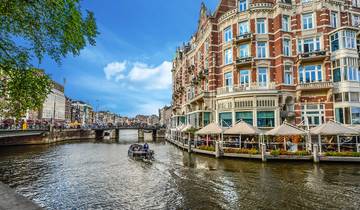
Amsterdam’s 165 canal network intersects with 1,500+ bridges throughout a historic center measuring just 3 by 5 kilometers – entirely walkable in 90 minutes yet containing museums, architecture, and neighborhoods worthy of multi-day exploration. Utrecht’s medieval core compresses 2,000 years of Roman, religious, and commercial history into 2.5 square kilometers surrounding Europe’s only two-level canal system with medieval wharf cellars. Rotterdam’s post-war reconstruction created pedestrian-friendly architecture zones showcasing contemporary Dutch design within 15-minute walks from central station. These compact urban fabrics make the Netherlands ideal for both organized walking tours providing expert context and self-guided exploration following mapped routes through distinct neighborhoods.
The 2026 travel season builds upon Netherlands tourism infrastructure improvements including expanded I amsterdam City Card coverage (now 70+ attractions versus 60 in 2024), upgraded GVB multi-day transport passes with contactless payment integration, and enhanced digital audio guides for UNESCO sites like Kinderdijk windmills and canal belt districts. Spring tulip season (late March through mid-May) coincides with Keukenhof Gardens’ 8-week flowering period featuring 7 million bulbs, while autumn delivers fewer crowds, comfortable walking temperatures, and peak museum availability without summer reservation pressures.
Tour options span budget €15 Amsterdam walking tours through €75 specialized food tours to $6,000+ multi-week Netherlands-Belgium-Germany packages combining coaches, river cruises, and active walking components. Self-guided route networks provide free alternatives through official tourism apps offering GPS navigation, historical audio commentary, and real-time attraction information. Understanding which combination of organized tours versus independent walking maximizes your Netherlands experience depends on travel style, time availability, physical capabilities, and interest depth in Dutch culture, history, and architecture.
Understanding Netherlands Tour Options for 2026
Multi-Day Package Tours
Comprehensive Netherlands tours in 2026 range 5-14 days, combining major cities with countryside excursions through structured itineraries eliminating planning stress while maximizing UNESCO site coverage. Trafalgar’s signature “Best of Holland” 7-day tour at $2,205 per person represents mid-range value, including 6 nights accommodation in Amsterdam, Arnhem area, and regional hotels; 6 breakfasts and 3 dinners; luxury coach transportation; professional tour director; visits to Aalsmeer flower auction or Keukenhof (seasonal), Royal Delft pottery factory, Volendam cheese producer, Airborne Museum Arnhem, and Amsterdam Rijksmuseum; plus a Be My Guest family farm dinner experience and MAKE TRAVEL MATTER sustainable tourism component. The package delivers $315 daily value when breaking down accommodation ($120-180 hotel equivalents), meals ($40-50 per covered dining), transport ($30-40 daily coach operation), guide services ($25-35 allocation), and attraction entries ($30-45 combined).
Premium operators like Backroads elevate active walking tours to $6,049-6,249 for 6-day Netherlands-Belgium combinations featuring premiere boutique hotels, all meals including wine pairings, professional guides leading 4-8 km daily walks through storybook villages and canal towns, support vehicles for luggage transfers and optional ride assistance, and activity levels 1-3 accommodating moderate fitness requirements without extreme exertion. These packages target travelers prioritizing accommodation quality, culinary experiences, and small group intimacy (typically 16-24 maximum participants) over budget optimization. Daily costs approaching $1,000 reflect premiere positioning but include comprehensive services eliminating surprise expenses beyond tips and personal purchases.
River cruise options provide distinct Netherlands touring through waterway perspectives, with 5-14 day itineraries aboard vessels like MS Gerard Schmitter, Avalon Panorama, and Emerald Luna sailing Amsterdam-Basel routes via Rhine connections. Cruises include cabin accommodation, all meals and most beverages, shore excursions to Kinderdijk, Keukenhof, and historic towns, onboard entertainment and enrichment programs, and bike rentals at ports. Pricing spans $1,000-5,000 per person depending on cabin category (interior versus balcony suites), cruise line positioning (budget Viva Cruises versus luxury Tauck), and itinerary length. River cruises suit mobility-limited travelers appreciating unpacking once while visiting multiple destinations, though sacrifice urban immersion compared to city-based hotel tours.
Day Tours & Excursions 2026
Amsterdam-based travelers access extensive day tour networks exploring Netherlands highlights without accommodation changes. Popular configurations include Zaanse Schans windmill village, Volendam fishing town, and Marken island combination tours (€45-65, 6-8 hours) departing Amsterdam at 9:00-9:30 AM, visiting operational windmills, cheese-making demonstrations, clog crafting workshops, and traditional architecture before returning 4:00-5:00 PM. Keukenhof Gardens tours (March 20-May 11) cost €55-75 including transport and admission, operating extended hours during peak tulip bloom periods in mid-April. Rotterdam and Delft combination tours (€65-85, 8-9 hours) contrast modern architecture with medieval heritage, incorporating Kinderdijk windmills via waterbus connections.
Premium private day tours range €300-600 for 2-6 person groups, providing dedicated guides, luxury vehicle transport, flexible scheduling, and customized itineraries emphasizing specific interests like photography, architecture, or culinary exploration. Private options eliminate group coordination delays and enable spontaneous itinerary adjustments responding to weather, crowd levels, or discovered interests. GetYourGuide and Viator platforms aggregate 500+ Netherlands day tour options with verified reviews, real-time availability, and competitive pricing through operator competition.
Self-drive day trips using rental cars (€40-70 daily) or NS train networks provide budget alternatives, though require independent navigation, parking management in historic centers (€4-8 hourly), and attraction research replacing guided commentary. Utrecht sits 25 minutes from Amsterdam by train (€8-12 off-peak), Delft 60 minutes (€15-20), and Rotterdam 75 minutes (€18-24), enabling independent full-day or half-day excursions integrated into broader itineraries. Train travel eliminates parking hassles while allowing work or relaxation during transit, though lacks guided insights and requires self-paced exploration.
Walking Tours Amsterdam 2026
Amsterdam walking tours segment by focus, duration, and group size, accommodating diverse interests from general orientation to specialized deep dives. Free walking tours operate daily at 10:00 AM and 2:00 PM from Dam Square, covering 2-3 hours through historic center highlights including Royal Palace, Anne Frank House exterior, Jordaan neighborhood, and canal belt while operating on tip-based compensation (€10-15 per person suggested). Professional paid tours deliver enhanced context through credentialed guides, smaller groups (maximum 12-15 participants), and specialized themes.
General Amsterdam walking tours (€25-35, 2-2.5 hours) provide comprehensive introductions to canal belt history, Golden Age commerce, religious heritage, and modern urban culture through Dam Square, Red Light District context (historical perspective without explicit content), Jewish Quarter remnants, and Rembrandt House vicinity. Food tours (€65-95, 3-4 hours) combine walking with 8-12 Dutch specialty tastings including stroopwafels, herring, cheese varieties, craft beers, and bitterballen while explaining culinary traditions, market culture, and contemporary gastronomy. Architecture tours (€45-65, 2.5-3 hours) emphasize canal house construction, Amsterdam School modernism, and UNESCO World Heritage significance through technical analysis appealing to design professionals and serious enthusiasts.
Evening tours capitalize on Amsterdam’s illuminated charm through twilight canal walks (€35-45, 1.5-2 hours starting 7:00-8:00 PM seasonally) and combination walking-canal cruise experiences (€55-75, 2.5-3 hours) pairing land exploration with water perspectives. Photography tours (€75-95, 3-4 hours) occur during golden hour periods, teaching compositional techniques, optimal viewpoints, and seasonal lighting characteristics while visiting Instagram-famous locations and hidden photographic gems. Private walking tours (€150-300, 2-4 hours for groups up to 6) enable customized routing, flexible pacing, and specific interest accommodation whether family-friendly modifications, accessibility considerations, or niche historical focuses.
Self-Guided Walking Routes 2026
Amsterdam Historic Center Walk
The Amsterdam UNESCO Canal Belt route encompasses 4-5 kilometers circular loop requiring 2-3 hours walking time plus 2-4 hours attraction stops, museum visits, and cafe breaks for comprehensive experience. Begin at Amsterdam Centraal Station’s grand Beaux-Arts facade (1889), proceeding south through Damrak’s commercial corridor to Dam Square’s Royal Palace (1655) and National Monument. Continue west into the Jordaan neighborhood via Raadhuisstraat, exploring narrow alleys, antique shops, and brown cafes along Prinsengracht’s picturesque canalside before reaching Anne Frank House at Prinsengracht 263 (advance tickets required, €16 in 2026, check official site for current rates).
From the Jordaan, cross into the Nine Streets (De Negen Straatjes) shopping district, navigating boutique-lined lanes connecting Herengracht, Keizersgracht, and Prinsengracht canals. Proceed east toward Spui Square’s book market (Fridays), continuing to the Begijnhof’s 14th-century courtyard housing historic almshouses and Amsterdam’s oldest preserved wooden house (circa 1420). The route concludes via Kalverstraat pedestrian shopping street returning to Dam Square, with optional extensions to Museumplein (Rijksmuseum €22.50, Van Gogh Museum €22) adding 2 km south and 1-2 hours.
Download the free I amsterdam app providing GPS navigation, 50+ audio tour points explaining architecture, history, and cultural significance, plus real-time updates on attraction wait times, museum hours, and event schedules. The route remains accessible year-round, though spring tulip displays (April-May) in Bloemenmarkt and autumn foliage (October-November) add seasonal visual interest. Cobblestone surfaces require sturdy footwear, while frequent bench placement enables rest stops for mobility-limited walkers. Allow 5-7 hours total for leisurely exploration incorporating museum visits and dining breaks.
Utrecht Canal & Dom Tower Circuit
Utrecht’s signature walking route follows the Oudegracht (Old Canal) unique two-level wharf cellar system through 4 kilometers of medieval and Renaissance architecture requiring 1.5-2 hours walking plus 2-3 hours attraction time. Begin at Utrecht Centraal Station, heading south through Vredenburg square to Lange Viestraat’s shopping corridor entering the historic core. Descend to Oudegracht’s lower wharf level at Vismarkt, walking east along canal-level pathways through former storage cellars now housing cafes and boutiques, while observing brick vaulted ceilings and original mooring rings revealing Utrecht’s Golden Age commerce.
Climb to street level at Zandbrug, proceeding to Domplein (Cathedral Square) for Dom Tower ascent (€12-15, 465 steps, 30-40 minutes including guided tour explaining 600-year history and offering panoramic Netherlands views from 112-meter height). Circle the square examining medieval brickwork marking the destroyed nave footprint before continuing through the Pandhof courtyard’s cloister gardens into the Alley Walk section navigating Utrecht’s narrowest medieval passages including Korte Nieuwstraat and Achter de Dom.
The route concludes via the University Quarter’s historic buildings, Museum Quarter featuring Catharijneconvent religious art collection and Railway Museum (optional €17 entry), and return to Centraal Station through Hoog Catharijne shopping complex. Download free Discover Utrecht app for audio tour narration, historical photographs comparing past and present, and insider recommendations for authentic brown cafes, specialty shops, and hidden courtyards. Spring and autumn provide comfortable walking temperatures (12-18°C), while summer extends evening exploration opportunities with 10:00 PM sunsets. The compact route enables morning departure from Amsterdam (30-minute train journey), full-day Utrecht exploration, and evening return, though overnight stays unlock dinner opportunities in canal-level restaurants and evening Dom Tower illumination.
Rotterdam Modern Architecture Walk
Rotterdam’s post-war reconstruction creates Europe’s premier modern architecture walking laboratory through 5-6 kilometer circuits requiring 2.5-3 hours walking plus 1-2 hours building interiors and observation decks. Begin at Rotterdam Centraal Station’s dramatic angular glass-and-steel facade (2014), proceeding west through Weena’s commercial district to the Groothandelsgebouw’s functionalist mass (1953). Cross via the innovative Luchtsingel pedestrian bridge (2015) elevated above street level, accessing Rotterdam’s regenerated Schiebroek district before descending to Laurenskerk (St. Lawrence Church), the sole medieval structure surviving 1940 bombing.
Continue to Markthal’s horseshoe-shaped apartment-and-market hall (2014) featuring 11,000-square-meter ceiling artwork, sampling Dutch specialties from 100+ food stalls (€8-15 lunch budget). Adjacent Cube Houses (1984) invite interior museum visits (€3 entry) demonstrating tilted living spaces, while the Old Harbor (Oude Haven) preserves maritime heritage through historic ships and waterfront cafes. Walk south to Witte de Withstraat’s art gallery corridor, proceeding to Museum Boijmans Van Beuningen (€17.50 entry) if art interests warrant, or continue to Erasmus Bridge’s white swan asymmetric design spanning Nieuwe Maas river.
Optional extensions include Kinderdijk windmill excursion via Waterbus 202 from Erasmusbrug terminal (20-minute journey, €8-10 one-way, runs April-October), allowing 1.5-2 hour windmill exploration before return. Download free Rotterdam Routes app for architecture background, construction dates, architect biographies, and thematic route variations (brutalism, contemporary, sustainability). The walking network functions year-round, though summer enables rooftop bar experiences and winter delivers dramatic grey-sky photography. Half-day Rotterdam visits from Amsterdam (70-minute train journey, €18-24 round-trip) provide architecture appreciation without overnight accommodation, while full-day itineraries add Kinderdijk UNESCO excursion and maritime museum visits.
Kinderdijk Windmill Route
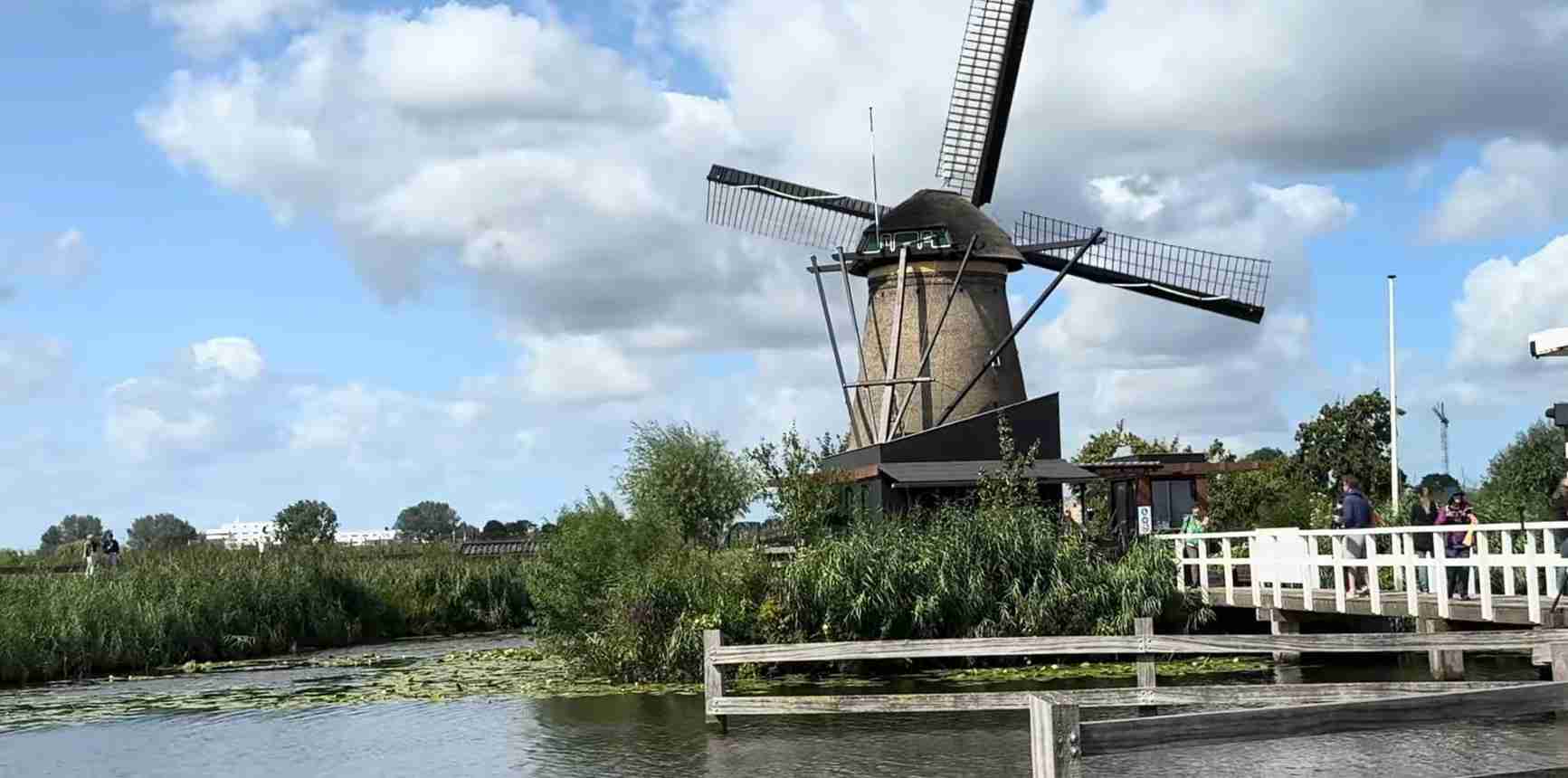
Kinderdijk UNESCO World Heritage site preserves 19 windmills along 1.5 kilometer canal paths demonstrating 18th-century Dutch water management through operational engineering accessible April through October. Access via Waterbus 202 from Rotterdam Erasmusbrug (30 minutes, €15-20 round-trip) or bus connections from Rotterdam Zuidplein and Utrecht Centraal requiring advance schedule verification. Site entrance costs €12 adults, €6.50 children ages 4-12 (check official kinderdijk.com for current rates), including visitor center exhibitions, walking path access, and free mobile app download providing audio guides for 19 windmill stations.
The main walking route follows Molenkade’s north-south trajectory past windmills in their original polders (reclaimed land), with interpretive panels explaining pumping mechanisms, keeper residences, and flood prevention history. Museum windmills Nederwaard and Blokweer open for interior visits (included in admission), demonstrating living quarters, milling machinery, and grinding stones through guided tours. The flat 1.5 km linear path requires 30-40 minutes continuous walking, though full site appreciation with photo stops, museum interiors, and cafe breaks extends to 2-3 hours. Waterbus cruises (€12-18 additional, 30 minutes) provide canal perspectives and hop-on/hop-off access reducing walking distance for mobility-limited visitors.
Bicycle rental at the entrance (€8-10 for 3-4 hours) enables faster windmill coverage while maintaining outdoor immersion, though walking provides superior photography opportunities and mechanical detail observation. Spring visits coincide with surrounding tulip field blooms creating windmill-and-flower combinations, while autumn delivers dramatic skies enhancing photography. Summer peak hours (11:00 AM-3:00 PM) bring coach tour groups; early morning (9:00-10:00 AM) or late afternoon (4:00-6:00 PM) arrivals reduce crowds. Budget 4-5 hours total from Amsterdam including round-trip Rotterdam train connections (€18-24), Rotterdam-Kinderdijk waterbus transfers, and site exploration, making Kinderdijk ideal for full-day excursions or half-day trips combined with Rotterdam city walking.
Seasonal Walking Considerations 2026
Spring Walking Season (March-May)
Spring represents Netherlands’ premier walking season through moderate temperatures (10-18°C), extended daylight (sunset advancing from 6:30 PM in March to 9:30 PM in May), and tulip bloom periods creating vibrant landscape backdrops. Keukenhof Gardens operates March 20-May 11 showcasing 7 million bulbs across 79 acres, requiring advance tickets (€25-30) and early arrival (9:00-10:00 AM) avoiding 11:00 AM-2:00 PM peak crowds. Amsterdam’s canal belt tulip displays emerge mid-April along Prinsengracht and Keizersgracht, while Bloemenmarkt flower market maximizes variety during April’s core season.
Weather variability demands layered clothing strategies combining windbreakers, light sweaters, and rain protection responding to sudden showers common in April-early May. Canal boat combinations relieve walking fatigue while capitalizing on spring light reflecting off water surfaces during golden hour periods (7:00-8:30 PM in May). Spring shoulder season (March and late May) delivers 20-30% lower accommodation costs than peak April rates, though Keukenhof’s late-March opening and early-May closure constrain tulip tourism optimization.
Advance reservations become essential for Anne Frank House (2-3 weeks ahead), Rijksmuseum weekend slots (1-2 weeks), and popular restaurants (3-7 days), while weekday museum visits provide walk-up availability except Easter week. Public transport maintains regular schedules with GVB passes (€21.50 for 3-day) covering unlimited tram/metro/bus access throughout spring exploration. Pack sturdy waterproof shoes for cobblestone navigation and rain puddles, sunglasses for bright canal reflections, and portable phone chargers maintaining GPS navigation and photography capabilities throughout full-day walks.
Summer Walking Patterns (June-August)
Summer extends Netherlands walking through maximum daylight (10:00 PM sunsets in June), warmest temperatures (18-25°C), and activated street life including outdoor cafe terraces, canal-side dining, and evening festivals, balanced against peak tourist crowds and maximum accommodation prices. Amsterdam crowds concentrate July-August when advance museum reservations become mandatory rather than recommended, restaurant waits extend to 30-60 minutes without bookings, and popular walking routes like Jordaan attract continuous pedestrian flow reducing photography opportunities and neighborhood atmosphere.
Heat management strategies include early morning starts (7:00-9:00 AM) completing 60-70% of daily walking before midday temperatures peak, midday canal cruise or museum breaks escaping outdoor heat, and resumed evening exploration from 5:00-9:00 PM during cooling periods. Hydration becomes critical with water fountains scattered through major cities and cafes providing free tap water upon request. The I amsterdam City Card’s climate-controlled museum access provides heat relief while maximizing daily attraction coverage justifying €67-115 investment.
Summer festivals including Amsterdam Pride (late July-early August), Rotterdam Summer Carnival (July), and Utrecht cultural programming add entertainment value but create crowd pressures and temporary route closures requiring itinerary flexibility. Beach extensions to Zandvoort (30 minutes from Amsterdam, €8-10 train) or Scheveningen (The Hague vicinity, 45 minutes, €12-15) provide coastal relief from urban heat and walking intensity. Accommodation books 6-12 weeks ahead for summer peaks, with hostel dorms (€40-60) and budget hotels (€150-250) filling first while premium canal houses maintain availability at €300-500 nightly rates.
Autumn & Winter Walking (September-February)
Autumn delivers Netherlands’ optimal walking value through comfortable temperatures (12-18°C September-October), reduced crowds enabling museum walk-up entry, 30-40% lower accommodation costs versus summer peaks, and dramatic lighting during shortened days enhancing photography. September maintains summer hours at major attractions while eliminating peak season waits, creating ideal conditions for intensive itineraries covering multiple cities without reservation stress. October’s autumn foliage transforms canal banks and city parks into golden corridors, while November’s earlier darkness (4:30 PM sunset) concentrates walking into compressed daylight windows.
Winter walking (December-February) requires cold tolerance (2-8°C typical, occasional -5°C extremes) and rain resilience (15-20 precipitation days monthly), rewarded through authentic local atmosphere, minimal tourist interference, and accommodation bargains (€100-180 mid-range hotels versus €180-350 summer equivalents). Christmas markets (late November-December) activate Dam Square, Utrecht Domplein, and regional centers with festive ambiance, mulled wine, and seasonal shopping. New Year’s Eve brings unique experiences but service disruptions including restaurant closures and limited public transport December 31-January 1.
Winter walking strategies emphasize waterproof layering (base thermal, insulating mid-layer, windproof outer shell), quality footwear with grippy soles managing wet cobblestones, and strategic indoor breaks through museum visits, cafe warming stops, and covered shopping arcade shortcuts like Amsterdam’s Magna Plaza or Utrecht’s Hoog Catharijne. Darkness by 5:00 PM encourages evening activity planning around illuminated attractions including canal light displays, though limits photography to blue hour periods (4:00-5:00 PM). The GVB network maintains full winter schedules enabling tram-assisted route modifications when weather deteriorates, while heated ferries provide sheltered IJ river crossings connecting Amsterdam Noord’s restaurants and cultural venues.
Transportation Integration for Walking Routes 2026
Public Transport for Walkers
GVB multi-day passes provide unlimited Amsterdam tram, metro, bus, and ferry access at €10 (1-day), €16 (2-day), €21.50 (3-day), €27.50 (4-day), or €43 (7-day) in 2026, functioning as walking route enhancers rather than replacements. Strategic pass usage enables morning tram rides to distant starting points like Amsterdam Noord or Oost neighborhoods, midday metro shortcuts between walking circuits avoiding backtracking, and evening bus returns to accommodation following extended explorations. Children ages 4-11 pay flat €5 daily rates, while under-4s travel free simplifying family budget calculations.
The I amsterdam City Card at €67 (24-hour), €94 (48-hour), €115 (72-hour), €130 (96-hour), or €140 (120-hour) combines GVB unlimited transport with 70+ museum entries including Rijksmuseum, Van Gogh Museum, canal cruises, and Amsterdam Museum. Value calculations favor intensive cultural itineraries visiting 3+ major museums daily (€15-25 each) plus constant public transport use versus separate GVB passes and individual tickets. The card excludes Anne Frank House but provides 25% discounts at participating restaurants and attractions. Purchase online for digital delivery avoiding tourist office lines, with activation beginning at first use rather than purchase time enabling flexible travel date alignment.
NS train network connects Amsterdam-Utrecht (25 minutes, €8-12 off-peak), Amsterdam-Rotterdam (75 minutes, €18-24), and Utrecht-Rotterdam (40 minutes, €12-16) facilitating multi-city walking itineraries without accommodation changes. Train tickets purchased through NS app or station machines cost 6.5% more in 2026 following fare increases, though group tickets (4+ travelers) provide 10% discounts and weekend returns offer savings versus single purchases. OV-chipkaart rechargeable cards (€7.50 initial purchase plus loaded credit) deliver per-kilometer rates of €1.16 boarding fee plus €0.217/km, functioning best for residents and extended-stay visitors versus tourists making 5-10 journeys maximum.
Walking-Tour Transportation Combinations
Hybrid strategies combining organized tours with self-guided walks maximize Netherlands experiences through structured introduction followed by independent deeper exploration. Book 3-hour Amsterdam walking tours for first-day orientation establishing geographic understanding, historical context, and neighborhood character, then execute self-guided routes on subsequent days applying learned frameworks to personal discoveries. The €25-35 tour investment delivers expertise justifying costs through enriched independent experiences and avoided wrong-turn frustrations.
Morning organized tours (9:00 AM-12:00 PM) followed by afternoon self-guided exploration create full-day Amsterdam circuits covering 8-12 kilometers total. Afternoon tours (2:00-5:00 PM) enable morning independent canal walks and museum visits before joining guided Jordaan or Jewish Quarter deep dives. Evening twilight tours provide day-ending experiences after independent morning and afternoon walking, creating three-segment days maximizing daily ground coverage.
Day tour packages to Zaanse Schans, Keukenhof, or Kinderdijk resolve transportation logistics for destinations poorly served by public transit or requiring complex connections. The €45-75 tour costs compare favorably against independent transport (€20-30), entrance fees (€12-25), and navigation time (90+ minutes each way including transfers), while adding guided commentary and guaranteed timing. Reserve tours 1-2 weeks ahead in spring peak season, allowing walk-up availability in autumn-winter shoulder periods.
Budget Planning for Tours & Walking 2026
Daily Walking Cost Breakdowns
Independent Amsterdam walking budgets range €75-250 per person daily excluding accommodation depending on attraction intensity and dining choices. Budget scenario costs include GVB day pass €10, breakfast cafe €8-12, lunch Albert Cuyp Market €12-18, dinner casual restaurant €25-35, one major museum €20-25, canal cruise €15-20, total €90-120 per person. Mid-range scenario costs include GVB day pass €10, breakfast hotel included (€0 additional), lunch cafe €15-25, dinner quality restaurant €40-60, two museums €40-50, canal cruise €15-20, optional walking tour €25-35, total €145-200 per person. Premium scenario costs include I amsterdam City Card €67-140 (multi-day), breakfast premium hotel included, lunch fine dining €35-50, dinner Michelin-level €80-150, three museums (card covers), private walking tour €150-300 group split, total €200-300+ per person.
Utrecht walking days cost €60-180 per person excluding accommodation through reduced museum density and lower dining prices than Amsterdam. Budget scenario costs include train from Amsterdam €8-12, lunch cafe €10-15, Dom Tower €12-15, dinner casual €20-30, snacks €8-12, total €60-85 per person. Mid-range scenario costs include train €8-12, breakfast cafe €10-15, lunch quality restaurant €20-30, Dom Tower €12-15, museum visit €15-20, dinner upscale €35-50, total €100-140 per person. Rotterdam walking days cost €70-200 per person through architecture focus and optional Kinderdijk addition. Budget scenario costs include train from Amsterdam €18-24, lunch Markthal €10-15, Cube Houses €3, dinner casual €25-35, total €60-80 excluding Kinderdijk. Kinderdijk addition costs include waterbus €15-20 round-trip, site admission €12, lunch cafe €10-15, total additional €40-50, bringing Rotterdam-Kinderdijk day total €100-130.
Tour Package Value Analysis
Multi-day tour packages deliver value through bundled accommodation, transport, attractions, and guide services versus independent component booking. Trafalgar’s $2,205 7-day package breaks down to $315 daily including accommodation ($120-180 hotel equivalent), included meals ($30-40 daily average covering 6 breakfasts and 3 dinners across 7 days), luxury coach transport ($30-40 operational costs), professional guide ($25-35 per-person allocation), and attraction entries ($30-45 combined). Independent equivalent costs total $280-360 daily through €120-180 mid-range hotels ($130-195 USD at 1.08 exchange), €40-60 daily food budget covering breakfast and dinner ($43-65 USD), €30-45 train tickets between cities ($32-49 USD), and €30-45 attraction entries ($32-49 USD), minus guide services valued $25-35.
Tour packages provide certainty through fixed pricing eliminating currency fluctuation risks, guaranteed accommodation in preferred locations, and included experiences versus sold-out independent bookings. Hidden costs include single supplements ($200-1,200 for solo travelers), tips for tour director and driver (€5-8 per person daily suggested totaling €70-112 for 7-day tour), excluded lunches (€15-25 daily, €105-175 weekly), alcoholic beverages beyond included dinners (€20-40 weekly for moderate consumption), and optional excursions (€30-60 each). Total tour investment approaches $2,600-2,900 per person including supplements and on-tour expenses.
Independent travelers achieve savings through hostel accommodation (€40-60 dormitory, €80-120 private rooms versus $130-195 package hotel allocations), self-catered breakfast (€5-8 supermarket versus €12-18 cafe), market lunches (€8-15 versus €15-25 restaurant), and selective museum visits (€20-40 daily versus €30-45 comprehensive attraction coverage). Seven-day independent Netherlands itineraries cost $1,400-2,200 per person including accommodation, all meals, inter-city transport, and major attractions, representing $800-1,200 savings versus package tours while requiring planning effort, navigation management, and self-guided exploration without expert commentary. Solo travelers benefit most from independent approaches avoiding single supplements, while couples and families balance savings against tour convenience and stress reduction.
Physical Preparation & Accessibility 2026
Fitness Requirements for Walking Routes
Netherlands walking routes demand moderate fitness through flat terrain, paved surfaces, and manageable daily distances averaging 5-10 kilometers for casual explorations and 12-18 kilometers for intensive full-day circuits. Urban walking emphasizes endurance over strength through sustained periods on feet (4-8 hours including breaks) rather than elevation gain or technical terrain. Build baseline fitness through 30-60 minute daily walks during the 6-8 weeks before Netherlands travel, gradually increasing distance and duration while testing footwear comfort and identifying potential blister zones requiring preventive care.
Cobblestone surfaces throughout historic centers require ankle stability and sturdy footwear with supportive soles managing uneven surfaces and gaps between stones. Canal-side paths occasionally narrow to single-file widths reducing passing opportunities and requiring spatial awareness. Crowds in peak areas like Dam Square and Jordaan create slow-progress zones where distance covered per minute drops significantly below open-pathway rates. Weather impacts include wind exposure on waterfront sections and rain creating slippery cobblestones demanding careful foot placement.
Rest strategies include frequent cafe stops (30-60 minute breaks every 2-3 hours), museum visits providing seated experiences between walking segments, and canal cruise integrations offering 60-75 minute floating rest periods. The GVB pass enables strategic tram use reducing cumulative daily walking when fatigue develops, while accommodation location near central stations minimizes end-of-day return walking. Travelers with mobility concerns successfully navigate Netherlands through selective route planning, shorter daily distances (3-5 km focus areas versus 8-12 km comprehensive circuits), and tour options including canal cruises, bus components, and hop-on/hop-off services.
Accessibility Features & Accommodations
Amsterdam accessibility varies significantly between modern developments and historic canal houses through UNESCO preservation requirements limiting elevator installations and doorway modifications. Modern hotels provide wheelchair-accessible rooms, elevators, and ground-floor common areas, while historic properties feature narrow staircases (often 40-50 cm width), steep angles (70-80 degree inclines), and doorway thresholds incompatible with standard wheelchairs. Request accommodation details including entrance accessibility, elevator availability, and room floor location when booking historic center properties.
Public transport wheelchair accessibility includes modern metro stations with elevators, low-floor trams accommodating wheelchair boarding, and accessible buses throughout the network. GVB ferries provide wheelchair ramps and designated spaces, while NS trains offer dedicated wheelchair sections and assistance upon advance notification through customer service. Cobblestone surfaces create wheelchair navigation challenges though major routes through Damrak, Rokin, and Kalverstraat maintain relatively smooth paving. Canal bridges include ramps though steep angles (15-20% grades) require assistance on many crossings.
Museum accessibility meets modern standards including Rijksmuseum elevators to all floors, Van Gogh Museum wheelchair routes avoiding stairs, and Anne Frank House limited accessibility (notify in advance for alternative routing). Walking tour operators provide seated alternatives through canal cruise combinations, while private tours accommodate specific mobility requirements including adjusted pacing, strategic rest stops, and wheelchair-compatible routes. Utrecht and Rotterdam offer superior accessibility through modern reconstruction incorporating universal design principles, though historic quarters maintain similar challenges to Amsterdam’s canal belt. Request accessibility maps from I amsterdam visitor centers or download through official apps identifying accessible routes, facilities, and attractions.
Frequently Asked Questions About Netherlands Tours & Walking Routes 2026
What’s the best month to visit the Netherlands for walking tours in 2026?
April and September represent optimal Netherlands walking months in 2026 through comfortable temperatures (12-18°C), manageable crowds, and distinct seasonal advantages. April delivers peak tulip displays throughout Keukenhof Gardens (open March 20-May 11), canal-side flower beds, and Bloemenmarkt maximum variety, while maintaining 30% fewer visitors than July-August peaks and 20-30% lower accommodation costs than summer rates. September provides autumn color transformations along canals and city parks, comfortable all-day walking temperatures without midday heat management, immediate museum access without advance reservations, and 35-40% accommodation savings versus peak season. Both months offer 13-15 daylight hours enabling morning starts through evening exploration without darkness constraints before 6:00-7:00 PM. May and early October function as secondary choices delivering similar benefits with reduced tulip intensity (May) or occasional cold snaps (October). Avoid July-August unless tolerant of crowds, heat, and maximum prices, or December-February unless comfortable with 2-8°C temperatures and 4:30 PM darkness limiting walking windows.
Do I need to book walking tours in advance for 2026?
Amsterdam walking tours require 1-7 days advance booking in 2026 depending on season, tour type, and group size. Spring peak season (April) and summer months (July-August) demand 5-7 days advance reservations for popular food tours, specialized architecture walks, and small-group experiences limited to 12-15 participants, while general orientation tours maintain 2-3 day availability through multiple daily departures and 20-25 person capacity. Autumn (September-October) and winter (November-March) enable walk-up or same-day bookings for most tour types excluding special events and holiday periods. Free walking tours accept unlimited participants though arrive 15-20 minutes early securing position near guides for audibility. Private tours require 3-14 days notice depending on customization complexity and guide availability. Day tours to Keukenhof, Kinderdijk, and regional destinations sell out 1-2 weeks ahead during spring tulip season but maintain next-day availability in autumn-winter. Book online through operator websites or aggregator platforms like GetYourGuide and Viator for instant confirmation, customer reviews, and competitive pricing. Utrecht and Rotterdam walking tours allow greater spontaneity through lower tourism intensity, though confirm Saturday availability when weekend visitors from Amsterdam increase demand. Museum combination tours including Rijksmuseum or Van Gogh require matching tour timing with pre-reserved museum entry slots, necessitating coordinated booking 2-3 weeks ahead in peak season.
Are Netherlands walking routes safe for solo travelers in 2026?
Netherlands walking routes rank among Europe’s safest for solo travelers through low crime rates, well-lit streets, 24-hour public transport, and strong English fluency enabling communication assistance. Amsterdam’s tourist areas maintain heavy foot traffic from early morning through late evening creating natural safety through crowd presence, while residential neighborhoods like Jordaan, De Pijp, and Oud-West feature local populations and active street life. Bicycle awareness becomes primary safety consideration as bikes travel 15-25 km/h in dedicated lanes requiring pedestrian vigilance when crossing, listening for bell warnings, and checking both directions before stepping into bike paths. Red-painted bike lanes indicate crossing zones demanding extra caution especially in unfamiliar areas. Pickpocketing concentrates in crowded tourist zones including Dam Square, Centraal Station, and popular tram lines during peak hours (11:00 AM-4:00 PM, 6:00-8:00 PM); maintain awareness of backpacks and accessible pockets, avoid displaying expensive cameras carelessly, and keep valuables secured in front-facing bags or interior pockets. Evening safety extends through midnight in central areas, though exercise standard urban caution in quieter neighborhoods after 10:00 PM including staying on main streets, using well-lit routes, and maintaining awareness of surroundings. Solo female travelers report comfortable experiences through respectful local culture and accessible assistance, though avoid Red Light District walking alone late evening when alcohol consumption peaks. Join organized walking tours for automatic social connections with fellow travelers, or connect through hostel meetups and free walking tour groups forming natural companionship for extended exploration. Utrecht and Rotterdam provide even greater safety through lower tourist intensity reducing pickpocket risks, while maintaining similar infrastructure quality and English accessibility. Emergency number 112 reaches police, medical, and fire services, while most Netherlands residents provide English assistance for navigation or concern situations.
Can I combine walking tours with public transportation passes in 2026?
GVB multi-day passes and I amsterdam City Cards integrate seamlessly with walking tours through unlimited public transport enabling strategic combinations of organized experiences and self-guided exploration. Purchase 3-day GVB pass (€21.50) or I amsterdam City Card (€115 including 70+ attractions) on arrival, using morning tram rides to tour meeting points across the city, afternoon metro shortcuts between walking circuits, and evening bus returns to accommodation. The unlimited nature eliminates per-journey cost calculations encouraging experimental route building and spontaneous detour exploration without budget impact. Walking tour meeting points typically locate near major tram stops (Dam Square, Leidseplein, Museumplein) accessible within 10-15 minutes from any central accommodation, with tour operators providing detailed directions including tram numbers and stop names. Tours ending at different locations than starting points benefit from pass coverage enabling direct returns versus retracing walking routes. Multi-day passes support day trip integrations where morning Amsterdam walking tours (ending noon) combine with afternoon Utrecht excursions via NS train (separate ticket required), evening return, and next-day Amsterdam exploration continuing pass utilization. The I amsterdam City Card particularly rewards combination strategies through morning museum visits (Rijksmuseum 9:00-11:00 AM using card entry), midday walking tour (paid separately), afternoon Van Gogh Museum (card entry), and evening canal cruise (included) creating comprehensive daily experiences maximizing €67-115 card investment. Weekend passes prove especially valuable when Saturday and Sunday walking tours bookend multi-day card periods covering Friday evening arrival through Monday morning departure. GVB app integration provides real-time tram arrival information, route planning, and digital ticket storage simplifying logistics while maintaining smartphone battery through downloadable offline maps reducing constant data usage. Children’s GVB passes (€5 daily flat rate ages 4-11) extend family value when adult walking tours include kid-friendly versions or allow children under 12 at reduced rates (typically 50% adult pricing).
What should I wear for walking tours in the Netherlands in 2026?
Netherlands walking attire prioritizes comfort, weather protection, and cobblestone-appropriate footwear over fashion through variable climate conditions and extended periods on feet. Footwear demands sturdy walking shoes or sneakers with thick supportive soles managing cobblestone impact (surfaces feel 40-50% harder than smooth pavement), ankle support preventing rolling on uneven stones, and waterproof treatment handling puddles and rain. Avoid fashion sneakers with thin soles creating foot fatigue after 2-3 hours, and absolutely skip heels, sandals, or flip-flops creating injury risk on irregular surfaces. Break in shoes during 2-3 weeks before travel through daily 30-60 minute walks identifying blister zones requiring preventive moleskin application. Layer clothing for temperature management starting with moisture-wicking base layer (long-sleeve shirt or light sweater), insulating mid-layer (fleece or light jacket spring-autumn, heavier coat winter), and windproof outer shell responding to frequent breezes off canals and open squares. Spring (March-May) requires rain jacket or compact umbrella with 40-50% chance of showers, while summer (June-August) emphasizes sun protection through wide-brim hat, sunglasses, and SPF 30+ sunscreen reapplied every 3-4 hours. Autumn (September-November) demands versatile layering responding to 12-22°C daily temperature ranges, removing and adding pieces throughout day. Winter (December-February) necessitates warm base layers (thermal long underwear for 0-5°C days), insulated coat, gloves, and scarf managing wind chill near water. Pack small daypack (15-20 liter capacity) carrying water bottle (refill at cafes), rain protection, removed layers, snacks, phone/camera, and personal items without shoulder strain. Avoid large backpacks creating crowd navigation difficulties and increasing pickpocket vulnerability. Dress neutrally matching local casual-smart aesthetic through dark jeans or slacks, solid-color tops, and understated accessories avoiding obvious tourist markers like fanny packs, athletic wear beyond active tours, or excessive camera equipment. Museums and churches maintain lenient dress codes though cover shoulders and knees showing respect, while upscale restaurants require smart-casual minimum (closed-toe shoes, collared shirt or equivalent). Weather changes frequently within single days; check forecasts daily and adjust layers rather than committing to single outfit strategy. Carry small microfiber towel for unexpected rain or sweaty periods, and consider moisture-wicking socks preventing blisters during extended walking.
Are walking tours suitable for children in 2026?
Netherlands walking tours accommodate children effectively through flat terrain, compact distances, and family-specific tour options, though success depends on child age, attention span, and tour selection. Children ages 8-12 manage standard 2-3 hour walking tours covering 3-5 km through sufficient endurance and moderate historical interest, particularly when tours include interactive elements like scavenger hunts, canal boat segments, or food tastings maintaining engagement beyond narrative content. Ages 5-7 benefit from family-specific tours featuring shorter distances (2-3 km), frequent breaks, playground stops, and child-oriented storytelling adjusting complexity to attention capabilities. Under age 5 presents challenges through limited walking endurance, short attention spans (15-20 minutes maximum sustained focus), and nap schedule conflicts, though baby carrier backpacks enable parent participation while toddlers observe or sleep. Teen ages 13+ successfully participate in adult tours through mature engagement with content, though specialized teen tours focusing on Anne Frank, WWII history, or contemporary culture topics deliver superior resonance than general historical walks. Family tour operators like Free Walking Tour Amsterdam and local specialists provide dedicated family departures with guides trained in child engagement, adjusted pacing (slower walking, more breaks), and age-appropriate content delivery. Pricing typically discounts children 50% under age 12, while under age 6 often free. Private family tours (€200-400 for groups up to 6) enable custom pacing, interest-based routing (emphasizing canals, boats, animals at markets versus architecture details), and immediate response to child energy levels without group constraints. Self-guided walking alternatives using free apps let families control pace entirely, incorporating playground breaks, snack stops, and museum visits (NEMO Science Museum, Maritime Museum, Artis Zoo) as interest warrants. Spring tulip tours particularly engage children through colorful Keukenhof displays, while Kinderdijk windmill excursions combine boat rides, outdoor space, and mechanical demonstrations maintaining attention. Pack entertainment backup including tablets, books, or small toys for unexpected waiting periods at museums or restaurants following walking segments. Bring substantial snacks (children consume 40-50% more calories during active walking days), maintain flexible expectations around completion of planned routes, and celebrate participation rather than demanding perfect behavior throughout extended periods on feet.
How do I navigate between cities for walking routes in 2026?
NS train network provides primary inter-city transportation for Netherlands walking itineraries through 12-minute frequencies on major routes, 25-75 minute journey times between principal cities, and seamless integration with urban walking exploration. Amsterdam-Utrecht trains depart every 10-15 minutes throughout the day requiring no advance booking (off-peak €8-12, peak €10-14 one-way), arriving Utrecht Centraal 25 minutes later within 400 meters of historic center walking routes. Amsterdam-Rotterdam service operates similar frequency reaching Rotterdam Centraal in 75 minutes (€18-24 depending on timing) positioned for immediate architecture walk commencement. Utrecht-Rotterdam connections run every 15-20 minutes completing 40-minute journeys (€12-16) enabling combined city explorations within single days. Purchase tickets through NS app providing English interface, real-time departure boards, and digital ticket storage eliminating paper handling, or buy at station yellow ticket machines accepting credit cards and offering English menus. Validate digital tickets once before boarding but avoid early activation allowing schedule flexibility; physical tickets require no validation though remain valid only for listed travel dates. Off-peak discounts apply before 6:30 AM, between 9:00 AM-4:00 PM, and after 6:30 PM weekdays, plus all day weekends, delivering 10-15% savings versus peak surcharges during 6:30-9:00 AM and 4:00-6:30 PM commuter periods. Group tickets (4+ travelers journeying together) provide additional 10% discounts worth requesting at staffed ticket counters rather than machines. Tourist Day Ticket (€66 weekdays, €44 weekends covering entire Netherlands unlimited travel) rarely proves cost-effective versus point-to-point pricing unless completing Amsterdam-Rotterdam-Utrecht-Amsterdam circuits in single days. First-class upgrade costs 40% premium for assigned seating, quieter cars, and larger seats though second-class maintains high comfort standards and better atmosphere observation. Station arrival typically positions within 5-15 minute walks of historic center starting points; download city walking maps before departure utilizing train WiFi, or follow clearly marked tourist pedestrian routes from station exits. Return journey flexibility allows open tickets enabling spontaneous schedule adjustments responding to weather, energy levels, or discovered interests extending or shortening city explorations. Alternative intercity buses via Flixbus provide budget options (€5-12 between major cities) though journey times increase 30-45 minutes versus trains and arrive at peripheral bus stations requiring additional local transport reaching city centers. Rental cars create parking challenges (€4-8 hourly, limited availability) and navigation stress in historic centers, functioning better for countryside destinations like Kinderdijk, Zaanse Schans, or Giethoorn accessed less directly by public transport.
Can I do self-guided walking tours without a guide in 2026?
Self-guided walking tours through mobile apps, downloaded maps, and audio guides provide comprehensive Netherlands exploration without organized tour costs while maintaining informational depth approaching guided experiences. Free apps include I amsterdam official app offering 50+ audio tour points throughout canal belt, historic center, and major neighborhoods with GPS navigation, historical photographs, and architectural explanations; Discover Utrecht app providing similar coverage for Utrecht’s canal system, Dom Tower history, and medieval quarters; and Rotterdam Routes app focusing modern architecture, reconstruction history, and contemporary design. Download apps before arrival using hotel WiFi avoiding data charges, though most function offline once maps loaded. Audio content ranges 2-4 minutes per stop totaling 1.5-3 hours full route completion, accessible in English, Dutch, German, French, and Spanish depending on app. Free content quality approaches paid equivalents through professional narration, expert consultation, and municipal tourism office funding eliminating compromises associated with budget productions. Paid premium apps like Rick Steves Audio Europe (free but limited Netherlands content), GPSmyCity ($5-10 per route), and Context Travel ($15-25 per route) add deeper historical analysis, architecture details, and cultural insights beyond free municipal offerings. Combine apps with physical guidebooks from Lonely Planet, Rick Steves, or DK Eyewitness providing overview context, practical tips, and suggestion frameworks apps cannot replicate through static route structures. Self-guided advantages include complete schedule control (pause for cafe breaks, extend museum visits, skip less interesting sections), unlimited replay of audio content, and zero group coordination managing differing walking speeds or interest levels. Disadvantages include missing guide expertise responding to questions, absence of insider recommendations for restaurants and shops off standard routes, and reduced social interaction losing conversation opportunities with fellow travelers. Photography benefits from self-pacing allowing optimal lighting waits and composition experimentation versus group schedules demanding continuous movement. Create hybrid approaches using guided tours for complex historical topics (Anne Frank background, WWII resistance, Golden Age commerce) building foundational understanding, then applying frameworks through self-guided exploration of related neighborhoods and sites. Print emergency paper maps as backup for technology failures, though Netherlands’ compact historic centers and frequent English signage enable navigation recovery from most wrong turns within 10-15 minutes. Tourist information offices (I amsterdam stores, Utrecht Visitor Center, Rotterdam Info) provide free paper walking route maps, current event schedules, and staff assistance when self-guided exploration needs human input.
What’s the typical group size for organized walking tours in 2026?
Amsterdam organized walking tour groups average 15-25 participants for standard public tours, 8-12 for premium small-group experiences, and 1-6 for private custom tours, impacting intimacy, guide interaction, and maneuverability through crowded areas. Free walking tours accept unlimited participants often reaching 30-50 during peak season (April, July-August) creating challenges hearing guide commentary, viewing demonstrated architectural details, and maintaining group cohesion through busy pedestrian zones. Large groups fragment into sub-groups losing continuity, though skilled guides use amplification systems and strategic positioning maximizing information delivery to 30-person spreads. Paid walking tours (€25-45) cap at 18-25 participants balancing economic viability against experience quality, enabling direct question exchanges, clear sight lines to architectural features, and responsive pacing adapting to group energy levels. Premium small-group tours (€55-95) limit to 8-12 participants delivering near-private experiences through extensive guide interaction, personalized recommendations, insider access to courtyards and hidden locations, and flexible routing responding to group interests. Private tours serve designated groups (families, friends, corporate teams) from 2-10 participants at €150-400 total cost split among attendees, functioning most economically for 4-6 person groups where per-person costs (€25-65 each) approach premium small-group rates while providing complete customization. Group dynamics impact enjoyment significantly; smaller groups foster conversation and camaraderie building travel friendships, while larger groups maintain anonymity suiting introverts preferring minimal social interaction. Maneuverability through Amsterdam’s narrow streets, crowded bridges, and packed squares favors groups under 15 participants maintaining tighter formations navigating pedestrian flows without fragmenting. Guide audibility varies by group size and amplification; verify whether tours over 15 participants provide headset systems or rely on voice projection potentially limiting information delivery to participants toward group rear. Book small-group or private options during peak season when standard tours reach maximum capacity and crowding impacts experience quality, or choose free/budget tours in shoulder seasons (September-October, March-May excluding tulip weeks) when natural participation drops create intimate experiences at minimal cost. Utrecht and Rotterdam organized tours typically run 8-15 participants reflecting lower tourism intensity, delivering enhanced interaction without premium pricing. Photography considerations include large groups creating unwanted people in background shots and delaying optimal composition setup, versus small groups providing better photographic freedom and guide patience for camera work. Families with children benefit from private tours avoiding concerns about disturbing other participants, enabling child-paced breaks, and focusing content appropriately. Solo travelers gain social opportunities through standard group sizes meeting fellow travelers, though private joining tours for solo participants exists through platforms matching individuals into small shared-cost private experiences.
Do I need travel insurance for Netherlands walking tours in 2026?
Travel insurance provides valuable protection for Netherlands walking tours in 2026 through coverage of medical emergencies, trip cancellations, and unexpected disruptions, though necessity varies by individual risk tolerance, trip cost, and existing coverage. Comprehensive policies ($60-150 per person for week-long Netherlands trips) cover emergency medical treatment including hospital stays, ambulance transport, and medical evacuation if serious injury or illness occurs, plus trip cancellation reimbursement for pre-paid tour deposits, accommodation, and flights if illness, family emergency, or other covered events prevent travel. Netherlands healthcare maintains high standards though costs quickly accumulate for uninsured visitors; basic emergency room visit with X-rays costs €300-600, while hospitalization reaches €1,500-3,000 daily and medical evacuation flights exceed €50,000. Standard health insurance through US employers typically excludes international coverage or provides minimal emergency protection with high deductibles and reimbursement delays requiring upfront payment. Medicare provides zero international coverage necessitating supplemental policies for retirees. Credit cards sometimes include limited travel insurance for trips purchased entirely on the card, though review coverage carefully as exclusions and claim processes create complications. Walking-specific considerations include coverage for minor injuries (sprained ankles from cobblestones, knee strain from extended distances, falls on wet surfaces) requiring medical attention, plus trip interruption benefits if injuries prevent continuing planned activities. European Health Insurance Card (EHIC) provides EU residents with coverage matching domestic health systems though Americans require separate insurance. Policy selection prioritizes medical coverage ($50,000-100,000 minimum) over low-priority benefits like lost luggage or flight delays, though comprehensive packages address multiple contingencies. Pre-existing condition waivers require purchasing insurance within 14-21 days of initial trip deposit, critical for travelers with chronic conditions potentially complicating coverage. Adventure activity exclusions rarely impact walking tours (considered low-risk activities), though verify bicycle rental, canal boat tours, and other supplementary experiences fall within covered activities. Compare policies through InsureMyTrip, Squaremouth, or direct insurers like Allianz, World Nomads (popular with younger travelers), and IMG providing Netherlands-specific coverage. Calculate whether trip cost and personal health status justify insurance expense; a $3,000 tour with $150 insurance (5% of trip cost) provides peace of mind cancellation protection, while a $600 budget hostel trip with $100 insurance (17% increase) may not warrant coverage for lower-stakes investment. Read policies thoroughly understanding exclusions, deductibles, claim procedures, and 24-hour emergency assistance availability before purchasing. Purchase directly through insurance companies versus tour operators (who receive commissions) ensuring objective policy selection matching your actual needs rather than sales incentives.