
Nazaré Travel Guide 2026: Big Waves & Fishing Village Charm
Nazaré transforms from traditional Portuguese fishing village to world-renowned big wave capital each winter, drawing surfers and spectators to witness nature’s most spectacular ocean show while preserving centuries-old maritime traditions along Portugal’s Atlantic coast. This comprehensive planning guide equips you with current 2026 pricing, seasonal strategies, and insider knowledge to experience both the adrenaline of record-breaking surf and the authentic charm of cobblestone streets lined with colorful fishing boats.
Key Takeaways About Visiting Nazaré 2026
- Big Wave Season Peak 2026: Giant waves appear October through March, with November to February offering the highest probability of 10+ meter swells at Praia do Norte, where the TUDOR Nazaré Big Wave Challenge competition window runs through March 31, 2026
- Budget Planning 2026: Daily costs range €50-85 per person for budget travelers using hostels and casual dining, €100-160 for mid-range comfort with 3-star hotels and seafood restaurants, and €210-350 for luxury experiences with premium accommodations and fine dining
- Prime Viewing Location: Fort of São Miguel Arcanjo lighthouse on the Sítio cliff provides unobstructed views of Praia do Norte’s giant waves with €2 entry fee, accessible via historic funicular from lower town at €4 round-trip
- Dual Character: Summer months (June-September) showcase the traditional beach resort with calm swimming conditions at Praia da Nazaré, while winter (October-March) brings international surf culture and dramatic Atlantic storms creating the famous canyon-amplified waves
- Location Advantage: Just 90 minutes north of Lisbon by car or express bus, Nazaré serves as an ideal base for exploring the Leiria District including UNESCO World Heritage Alcobaça Monastery 10 kilometers away and medieval Óbidos 27 kilometers distant
- Authentic Culture Preservation: Despite international fame, fishmongers still dry fish on the beach, traditional boats line the harbor, and older residents maintain the distinctive seven-skirt costume creating photo opportunities alongside modern surf culture
People Also Ask About Nazaré 2026
What is the best time to see big waves in Nazaré in 2026?
November through February 2026 offers the highest probability of giant waves at Praia do Norte, with peak conditions typically occurring when North Atlantic winter storms generate swells exceeding 15 meters. The big wave season technically runs October through March, but the core winter months deliver the most consistent and spectacular surf. Wave forecasting becomes reliable only 5-7 days in advance, so flexible travel planning maximizes your chances of witnessing record-breaking conditions. The TUDOR Nazaré Big Wave Challenge competition window extends through March 31, 2026, with the event date announced just 48 hours before activation when forecasts predict optimal giant wave conditions.
How much does a trip to Nazaré cost per day in 2026?
Daily costs in Nazaré range €50-85 per person for budget travelers staying in hostels and eating casual meals, €100-160 per person for mid-range comfort with 3-star hotels and seafood restaurant dining, and €210-350 per person for luxury experiences including premium oceanfront hotels and fine dining establishments. These estimates assume two travelers sharing accommodation costs. Budget travelers benefit from abundant self-catering options at the local market, free beach access, and inexpensive public transport via the funicular. Mid-range visitors enjoy excellent value in Portuguese seafood restaurants averaging €15-25 per meal, while luxury travelers access boutique properties and upscale dining with Atlantic views.
Is Nazaré worth visiting outside big wave season in 2026?
Nazaré absolutely merits a visit year-round, with summer months (June-September) offering an entirely different but equally compelling experience focused on traditional beach culture, calm swimming conditions, and authentic Portuguese fishing village atmosphere without the international surf crowds. Summer temperatures reach 25-28°C with minimal rainfall, creating ideal conditions for beach relaxation, coastal walks, and exploring the historic Sítio district. The funicular, lighthouse fort, and cultural attractions operate throughout the year. Local festivals celebrate maritime heritage with processions, traditional costumes, and seafood feasts. Hotel rates drop significantly outside winter big wave season, and restaurant reservations become unnecessary, allowing for more spontaneous exploration of this charming Atlantic coast destination.
Where exactly do you watch the big waves in Nazaré 2026?
The Fort of São Miguel Arcanjo lighthouse at the western tip of the Sítio headland provides the premier viewing location for Praia do Norte’s giant waves, positioned directly above the underwater Nazaré Canyon where waves amplify to record heights. The fort charges €2 entry and opens 10:00-18:00 daily, with last admission 30 minutes before closing. Inside, exhibits detail the canyon’s geology and surf history while the clifftop terrace offers unobstructed views of surfers challenging 20-30 meter faces. The Miradouro do Suberco viewpoint 500 meters east provides free alternative viewing with panoramic perspectives of both Praia do Norte and the main Praia da Nazaré beach. On the biggest wave days, access roads to the lighthouse area can experience restrictions, making early arrival essential for securing viewing positions and parking.
Extended multi-day tours – 5+ days
Featured Nazare Multi-Day Tour Packages
5 days
Best of Lisbon with Sintra, Nazaré, Fátima and Évora – 5 Days
- ✓ Comprehensive Nazare tour
- ✓ Expert local guides included
- ✓ All accommodation arranged
- ✓ Transportation provided
3 days
Wonders of Portugal
- ✓ Comprehensive Nazare tour
- ✓ Expert local guides included
- ✓ All accommodation arranged
- ✓ Transportation provided

2 days
Religious Portugal
- ✓ Comprehensive Nazare tour
- ✓ Expert local guides included
- ✓ All accommodation arranged
- ✓ Transportation provided
3 days
Portugal Highlights in 3 Days – Private Tour
- ✓ Comprehensive Nazare tour
- ✓ Expert local guides included
- ✓ All accommodation arranged
- ✓ Transportation provided
Multi-day tour packages powered by TourRadar. Prices and availability subject to change.
Introduction: Portugal’s Big Wave Capital Meets Authentic Fishing Village 2026
Nazaré occupies a singular position in global surf culture as home to the world’s largest rideable waves while simultaneously preserving centuries-old Portuguese fishing traditions that predate its international fame. The underwater Nazaré Canyon—a 5-kilometer-deep Atlantic trench extending 200 kilometers offshore before terminating abruptly at Praia do Norte beach—creates the geological conditions that transform ordinary winter swells into 30-meter giants that have redefined big wave surfing records since American surfer Garrett McNamara’s viral 2011 ride brought worldwide attention to this central Portugal coastal town.
The town’s dual identity manifests geographically through two distinct zones connected by a historic funicular railway: the lower beachfront town centered on Praia da Nazaré where traditional fishing culture thrives alongside summer beach resort amenities, and the clifftop Sítio district crowned by the baroque Sanctuary of Our Lady of Nazaré and the São Miguel Arcanjo fort lighthouse that serves as the iconic viewing platform for giant wave spectacles. This vertical division allows visitors to experience both the adrenaline of watching professional big wave surfers challenge nature’s extremes and the quieter pleasures of exploring cobblestone streets where fishmongers still dry catch in the sun and elderly women maintain the traditional costume of seven colorful petticoats.
Planning a 2026 visit requires understanding Nazaré’s seasonal transformation. Winter months October through March bring the big waves, international surf media, and crowds of spectators creating an electric atmosphere focused on Praia do Norte, while summer June through September returns the town to its traditional beach resort character with calm swimming conditions, family-friendly activities, and authentically Portuguese cultural experiences. Both seasons offer compelling reasons to visit, with winter delivering once-in-a-lifetime natural spectacles and summer providing relaxed coastal living at its finest. The shoulder months of April-May and September-October present moderate weather, smaller crowds, and lower prices while maintaining access to all cultural attractions and outdoor activities.
Modern Nazaré balances tourism development with cultural preservation more successfully than many Portuguese coastal destinations. Despite accommodating thousands of winter wave watchers and summer beachgoers, the town retains its working fishing harbor, traditional fish market, and local customs including religious processions honoring Nossa Senhora da Nazaré. The influx of international surfers has added cosmopolitan elements—specialty coffee shops, international restaurants, surf equipment rental facilities—without overwhelming the essential Portuguese character. Hotels and restaurants range from budget-friendly family guesthouses to boutique properties, all maintaining architectural harmony with the traditional white-washed buildings and terracotta roofs that cascade down the hillside toward the Atlantic.
Location advantages position Nazaré as an excellent base for exploring central Portugal’s Atlantic coast and historic inland sites. Lisbon sits 90 minutes south via A8 motorway or express bus service, making Nazaré accessible for day trips or weekend escapes from the capital. The UNESCO World Heritage Alcobaça Monastery lies just 10 kilometers inland, while the medieval walled town of Óbidos and the pilgrimage site of Fátima are both within easy driving distance for cultural day trips. The nearby town of São Martinho do Porto offers a sheltered bay with calm waters ideal for families with young children, providing contrast to Nazaré’s powerful Atlantic surf. This network of attractions allows visitors to combine big wave watching with monastery architecture, castle exploration, and traditional Portuguese town experiences within a compact geographic area.
The 2026 big wave season promises continued world-record attempts as the TUDOR Nazaré Big Wave Challenge competition window runs through March 31, with event activation announced only when forecasts predict giant wave conditions. Brazilian surfers Lucas Chianca and Pedro Scooby, Portuguese favorites Nic von Rupp and Vitor Faria, and French athletes Justine Dupont and Clement Roseyro headline the roster of professionals ready to challenge waves that can reach the height of 10-story buildings. Beyond competitive surfing, the winter season attracts photographers, filmmakers, marine scientists, and ocean enthusiasts from every continent, all drawn by the spectacle of humans confronting nature’s most powerful maritime force in a setting that combines natural drama with Portuguese coastal charm.
Understanding Nazaré’s Geography and Big Wave Phenomenon 2026
The Nazaré Canyon represents one of Europe’s most dramatic underwater geological features, descending to 5,000 meters depth through a narrow submarine trench that channels Atlantic Ocean energy directly toward the Portuguese coastline. This canyon extends approximately 200 kilometers offshore before terminating abruptly just 500 meters from Praia do Norte beach, creating the unique hydrodynamic conditions responsible for the world’s largest surfable waves. When North Atlantic winter storms generate powerful swells with periods exceeding 15 seconds, wave energy traveling across the deep canyon meets shallower continental shelf waters, causing wave height amplification through constructive interference that can triple the original swell size.
The town itself divides into three interconnected districts each serving distinct functions and offering different visitor experiences. The lower beachfront area surrounding Praia da Nazaré contains the majority of hotels, restaurants, shops, and the working fishing harbor where traditional wooden boats still launch daily. This zone buzzes with activity year-round as both tourist center and authentic fishing community, with the fish market operating early mornings and beachfront promenade providing evening paseo culture. The cobblestone streets radiating from the main square feature traditional Portuguese architecture, family-run guesthouses, and seafood restaurants serving the daily catch with minimal preparation—grilled whole fish, seafood rice, cataplana stews—representing coastal Portuguese cuisine at its most authentic.
Sítio occupies the clifftop 110 meters above sea level, accessible via the historic Ascensor da Nazaré funicular or the steep Ladeira do Sítio walking path. This elevated district centers on the baroque Sanctuary of Nossa Senhora da Nazaré housing the revered Black Madonna statue, with the adjacent Largo da Nossa Senhora square surrounded by cafés, souvenir shops, and viewpoints offering panoramic Atlantic perspectives. The Miradouro do Suberco viewpoint on the eastern cliff edge provides sweeping vistas encompassing both the main beach and Praia do Norte, making it the most photographed location in Nazaré. Walking west along the clifftop path from the sanctuary leads 1 kilometer to the São Miguel Arcanjo fort and lighthouse complex that serves as ground zero for big wave watching.
Praia do Norte occupies a separate beach north of the Sítio promontory, reached by descending a dirt road from near the lighthouse or driving around via the coastal road. This beach remains relatively deserted except during big wave season when it transforms into the stage for surf history’s most dramatic moments. The beach itself stretches for several kilometers with powerful year-round surf conditions that make swimming dangerous even in summer. During giant wave days, access can be restricted for safety as waves exceeding 20 meters generate tremendous spray and run-up that can reach far beyond normal high tide lines. The lighthouse fort positioned on the cliff directly above the break provides the safest and most dramatic viewing angle, allowing spectators to witness both the enormous wave faces and the jet ski tow-in operations that position surfers for their rides.
The Nazaré Canyon’s geological history dates back millions of years to tectonic activity and erosion processes that carved the submarine valley through the continental shelf. Marine geologists study the canyon as a unique natural laboratory for understanding wave dynamics, sediment transport, and deep-sea ecosystems. The canyon also influences local marine biodiversity by creating upwelling zones that bring nutrient-rich deep water to the surface, supporting productive fishing grounds that have sustained Nazaré’s economy for centuries before tourism development. This connection between the geological feature creating giant waves and the traditional fishing economy that preceded surf tourism represents one of Nazaré’s most compelling narrative threads.
Weather patterns driving big wave formation originate with winter storm systems tracking across the North Atlantic from North America toward Europe. These low-pressure systems generate wind fields that create ocean swells, with the largest waves resulting from storms positioned thousands of kilometers offshore that produce sustained high winds over extended periods. Swell direction matters critically—northwest to west swells align optimally with the Nazaré Canyon’s orientation, while southerly swells bypass the canyon and produce less dramatic results. Wind conditions at Nazaré itself determine whether giant swells become surfable; light offshore winds from the east or southeast groom wave faces into rideable walls, while strong onshore winds create chaotic, unsurfable conditions regardless of swell size.
Tidal influences moderate wave height and shape, with mid-tide conditions generally producing the most dramatic sets. Extreme low tides can expose shallow rocks and create hazardous conditions, while very high tides may allow waves to run up the beach with dangerous force. The interaction between swell size, period, direction, local wind, and tide creates complex forecasting challenges even for expert meteorologists. Services like Magicseaweed, Surfline, and Windguru provide detailed predictions, but conditions can change rapidly as storms shift position or local weather patterns evolve. This forecasting uncertainty adds to the excitement—and planning challenges—of witnessing giant waves, as even perfectly predicted swells can disappoint if wind conditions deteriorate at the critical moment.
Big Wave Season 2026: When and How to Experience the Giants
The 2026 big wave season at Nazaré runs officially from October through March, with peak giant wave probability concentrated in November, December, January, and February when North Atlantic storm activity reaches maximum intensity. Statistical analysis of past seasons shows November and February typically deliver the highest frequency of swells exceeding 2 meters in the open ocean—translating to 15-25 meter faces at Praia do Norte when canyon amplification occurs under optimal conditions. Early season waves in October can surprise with unexpected size, while late March occasionally produces powerful swells, but the core winter months offer the most consistent giant wave action that brings professional surfers and international media to this Portuguese coastal town.
The TUDOR Nazaré Big Wave Challenge competition window opened in mid-December 2025 and extends through March 31, 2026, with the World Surf League monitoring daily forecasts to identify the optimal day for the one-day tow-in format event. Competition activation requires forecasts predicting waves over 8 meters with suitable wind and tide conditions, announced with just 48 hours notice to allow athletes and spectators to reach Nazaré. The short activation window reflects the precision required for giant wave surfing competitions—conditions must align across multiple variables simultaneously, occurring perhaps 2-4 times per winter season. Following the successful December 13, 2025 event won by Team Nic von Rupp and Clement Roseyro for team performance and Lucas Chianca and Justine Dupont for individual honors, the remaining 2026 window anticipates additional record-breaking attempts as athletes chase the elusive 100-foot wave benchmark.
Witnessing giant waves requires flexibility and patience even during peak season. A recommended strategy involves booking accommodation for 2-3 weeks during core months while monitoring surf forecasts from 7-10 days out. Wave prediction models track developing storm systems across the Atlantic, identifying promising swells 5-7 days before arrival. As forecast confidence increases 2-3 days before expected peak conditions, finalize viewing plans including early morning arrival at the lighthouse area before crowds and potential access restrictions. The largest swells often arrive in multi-day sets with the first day producing maximum wave height while subsequent days maintain impressive but gradually diminishing size as the swell energy dissipates.
Alternative viewing strategies for visitors unable to commit extended periods include monitoring the nazarewaves.com alert system that sends email notifications when forecasts predict giant waves. These alerts categorize threat levels—yellow alerts indicate developing swells worth watching, green alerts confirm high probability of significant waves warranting travel plans, and red alerts signal imminent giant wave conditions. Combining forecast monitoring with last-minute flight availability from major European cities allows wave enthusiasts to reach Nazaré within 24 hours of confirmed giant wave predictions. Lisbon Airport serves as the primary gateway, with rental car availability or express bus service to Nazaré providing rapid access once weather windows open.
Big wave days transform Nazaré into an international spectacle attracting thousands of spectators, professional photographers with telephoto lenses, film crews documenting surf culture, and the global big wave surfing community. The lighthouse area and clifftop viewpoints fill early, often by 08:00-09:00 on forecasted giant wave mornings. Parking near the fort becomes extremely limited, necessitating arrival via funicular from lower town, walking from distant parking areas, or utilizing taxi services. The atmosphere combines festival energy with athletic reverence as crowds watch humans challenge waves the size of apartment buildings. Surfers use jet ski tow-in techniques to position themselves on wave faces moving too fast for traditional paddle surfing, with safety teams monitoring every ride ready to rescue riders from violent wipeouts.
Between giant wave sets, Nazaré offers compelling experiences for visitors committed to multi-week big wave watching stays. The lower town provides traditional Portuguese coastal culture with excellent restaurants, historic churches, the fish market, and the authentic fishing harbor. Day trips to nearby Alcobaça Monastery, Óbidos medieval town, or Fátima pilgrimage site fill non-wave days with cultural experiences. The Sítio district rewards exploration with its baroque architecture, traditional shops, and quieter atmosphere away from beachfront crowds. Even moderate surf days at Praia do Norte deliver impressive waves by any standard other than Nazaré’s giants, maintaining interest during lulls between major swells. This combination of world-class natural spectacle with authentic Portuguese culture creates a uniquely rich travel experience unavailable at purpose-built surf destinations.
Equipment and preparation for big wave watching includes warm, waterproof clothing essential for comfort during hours on exposed clifftops. Winter temperatures range 8-15°C with strong winds common, particularly the Nortada north wind that can make conditions feel significantly colder. Layer waterproof jacket over fleece or wool mid-layers with wind-resistant pants, gloves, and hat protecting against persistent Atlantic breezes. Binoculars or cameras with telephoto zoom capability bring distant wave action closer—many spectacular rides occur 200-300 meters offshore where detail remains difficult to observe with naked eye. Portable phone chargers maintain battery life for photography and social media sharing, while small backpacks carry water, snacks, and extra layers for all-day viewing sessions.
Safety considerations become paramount on giant wave days. Spectators must remain behind designated barriers and respect closure signs—rogue waves can send spray far up cliffs and create dangerous run-up zones. The power of 20-30 meter waves generates tsunami-like surge that has previously caught unwary observers, resulting in injuries and fatalities. Praia do Norte beach itself becomes extremely hazardous during big swells with access often restricted by local authorities. The lighthouse fort provides the safest elevated viewing position with barriers protecting spectators from wave spray while maintaining clear sightlines to the break. Miradouro do Suberco offers additional safe viewing with protective walls separating observers from cliff edges. Never approach cliff edges for better photos—the force and spray from giant waves create slippery, unstable conditions that have caused tragic accidents in previous seasons.
Accommodation Options in Nazaré 2026: Where to Stay for Big Waves and Beach Culture
Nazaré accommodation ranges from budget hostels charging €25-35 per bed in shared dormitories to boutique hotels reaching €200-300 per night for oceanfront rooms with balconies overlooking Praia da Nazaré or Praia do Norte. The majority of properties fall into the mid-range category with 3-star hotels, family-run guesthouses, and self-catering apartments dominating the market at €80-140 per night. This relatively limited luxury tier reflects Nazaré’s evolution as an authentic fishing village rather than a purpose-built resort destination, with emphasis on comfortable, clean, family-friendly properties over five-star international chains. Booking well in advance becomes essential for big wave season November through February and summer peak July-August when occupancy approaches capacity and prices increase accordingly.
The beachfront Praia da Nazaré area offers maximum convenience with hotels, restaurants, and evening entertainment concentrated along Avenida da República and surrounding streets. Hotel Praia anchors the beachfront with 4-star comfort, rooftop pool with sea views, direct beach access, and family amenities including kids’ club at approximately €120-180 per night mid-range season. Hotel Mar Bravo occupies prime position facing both the beach and main square with contemporary interiors, balconies, and excellent on-site seafood restaurant at similar pricing. Hotel Oceano provides reliable 3-star comfort steps from the beach with rooms ranging €90-140 depending on sea view and season. These beachfront properties command premium rates but deliver unmatched location allowing guests to maximize beach time and evening promenade access without requiring transport.
Mid-town properties set back 2-3 blocks from the beachfront offer better value while maintaining easy walking access to all amenities. Hotel Miramar Sul features seasonal outdoor pool, family rooms, and hillside location with panoramic views at €100-150 per night. Apartments and self-catering options proliferate in this zone with one-bedroom units at €60-100 per night providing kitchen facilities ideal for extended stays or families wanting flexibility with meal preparation. These properties typically lack the beach views and immediate access of waterfront hotels but compensate with lower rates, quieter surroundings, and often include free parking—valuable during big wave season when beachfront parking becomes impossible.
Sítio district accommodation positions visitors near the lighthouse viewing area and clifftop attractions while requiring funicular or walking access to lower town beaches and restaurants. This elevated neighborhood appeals to visitors prioritizing big wave watching over beach activities, though fewer hotel options exist compared to lower town. Small guesthouses and renovated historic buildings offer charming character with €70-120 rates for rooms often featuring traditional Portuguese tile work and period details. The trade-off involves steeper walks, less dining variety, and quieter evening atmosphere compared to the livelier beachfront zone. However, waking up within walking distance of the lighthouse on forecasted giant wave mornings provides significant advantage avoiding early morning parking challenges and crowded funicular rides.
Budget travelers find excellent value in Nazaré’s hostel scene with Lab Hostel Nazaré and Nazaré Hostel offering dormitory beds at €25-35 per night and private rooms at €50-70. These social properties attract the international backpacker and young surfer demographic with communal kitchens, organized activities, and central locations near the beach. Hostel facilities typically include free Wi-Fi, luggage storage, tour booking assistance, and common areas facilitating interaction between guests. The budget tier extends to simple guesthouses and rooms in private homes where elderly Portuguese owners rent spare bedrooms at €40-60 per night, providing authentic local interaction though amenities remain basic compared to hotel standards.
Booking strategies for 2026 require understanding seasonal price variations. Big wave season November through February sees rates increase 30-50 percent above shoulder season, with weekend nights and forecasted giant wave days commanding maximum prices. Summer July-August matches or exceeds winter pricing as traditional Portuguese beach holiday season brings domestic tourists and European families for extended stays. The best value windows occur April-May and September-October when weather remains pleasant, beaches accessible, all attractions operating, but tourist crowds diminish and hotel rates drop significantly. Early booking 3-6 months advance for big wave season ensures choice of properties and locks rates before last-minute demand surges when forecasts predict giant waves.
Alternative accommodation strategies include basing in nearby São Martinho do Porto 10 kilometers south where a sheltered bay provides calm swimming and family-friendly atmosphere with day trip access to Nazaré for wave watching. Alcobaça 12 kilometers inland offers budget hotel options and proximity to the UNESCO monastery while maintaining easy driving access to Nazaré beaches. These satellite base strategies work particularly well for families wanting both giant wave spectacle and safe swimming conditions or budget travelers willing to sacrifice immediate beach access for significantly lower nightly rates. Rental cars become necessary for this approach but provide flexibility for exploring the broader central Portugal region including Óbidos, Fátima, and coastal towns north toward Peniche.
Apartment rentals through platforms like Booking.com and Airbnb offer excellent value for groups or families staying 5+ nights, with full kitchens allowing self-catering and reducing overall food expenses. Two-bedroom apartments sleeping four range €80-140 per night, dropping below €100 in shoulder seasons—competitive with hostel private rooms when cost divided among multiple travelers. These properties typically include washing machines, living rooms, and often balconies or terraces, creating comfortable temporary homes for extended big wave watching stays. Location matters significantly for apartments with beachfront units commanding premiums while hillside properties 10-15 minutes walk from the beach offer 30-40 percent savings on comparable space and amenities.
Dining and Food Experiences in Nazaré 2026
Nazaré’s culinary identity centers on extraordinarily fresh seafood harvested from Atlantic waters by the town’s working fishing fleet and prepared with minimal fuss in traditional Portuguese styles emphasizing quality ingredients over elaborate techniques. The beachfront promenade and surrounding streets contain dozens of restaurants ranging from simple grilled fish taverns to refined seafood specialists, with most establishments displaying daily catch on ice near entrances allowing diners to select their fish for grilling or preparation in cataplana copper pots. Average meal costs hover around €15 per person for casual lunch at neighborhood taverns, €25-35 for dinner at mid-range seafood restaurants with ocean views, and €50-80 for upscale dining at establishments like Mar Bravo in the Hotel Mar Bravo featuring creative preparations and premium wine selections.
Traditional Portuguese seafood specialties dominate menus with grilled whole fish—sea bream, sea bass, mackerel, sardines—served with boiled potatoes, salad, and olive oil representing the quintessential Nazaré dining experience. Restaurants price fish by weight with typical portions running €12-18 for individual servings of quality specimens. Octopus prepared à lagareiro style with roasted potatoes, garlic, and olive oil appears on virtually every menu at €14-20 per portion. Seafood rice (arroz de marisco) bubbling in traditional copper pans serves two at €30-45 depending on seafood selection—typically includes prawns, clams, mussels, and chunks of fish in rich tomato-based broth. Cataplana dishes named for the hinged copper vessel cook seafood with potatoes, tomatoes, onions creating intensely flavored stews priced €25-40 per cataplana serving two.
Budget dining strategies leverage the local market and bakeries for self-catering options. The fish market operating early mornings near the harbor sells incredibly fresh seafood at prices far below restaurant rates—whole sea bream €6-10 per kilogram, sardines €3-5 per kilogram, prawns €15-25 per kilogram depending on size. Apartments with kitchen facilities allow cooking restaurant-quality seafood at fraction of dining-out costs. Bakeries throughout town offer pastéis de nata custard tarts at €1-1.50 each, crusty bread loaves €1-2, and savory pastries filled with cod or meat at €1.50-2.50 making excellent breakfast or lunch assembled from multiple items. Cafés serve espresso €0.80-1 with simple breakfast of coffee, pastry, and fresh-squeezed orange juice totaling €5-7.
Mid-range restaurant recommendations include Restaurante A Tasquinha on Rua Adrião Batalha where family ownership maintains high standards for seafood rice, grilled octopus, and fresh fish at moderate prices with mains €12-20. Taberna d’Adélia on Rua das Traineiras serves traditional Portuguese cuisine in cozy atmosphere with daily specials typically €10-15 showcasing seasonal ingredients. Maria do Mar on Rua Guilhim offers authentic fishing village cooking with paper tablecloths and grandmother-style preparations delivering remarkable value—full meals with soup, main course, wine, and dessert often under €20 per person. These neighborhood taverns attract Portuguese families and local workers, signal of quality and fair pricing compared to tourist-focused beachfront establishments.
Upscale dining centers on Mar Bravo restaurant within Hotel Mar Bravo featuring floor-to-ceiling windows overlooking the Atlantic, creative seafood preparations, and extensive Portuguese wine list. The tuna tataki with wild arugula, balsamic, and mango demonstrates contemporary approach at €18, while traditional seafood cataplana for two with lobster, prawns, and local fish costs €55-70. Shrimp risotto with seaweed and Parmesan represents fusion of Italian technique with Portuguese ingredients at €22. Reservations become essential for window tables during big wave season when international visitors and media fill the restaurant. Sitiado in Sítio district offers tapas-style dining with creative small plates focusing on regional ingredients and Portuguese wines at €8-15 per dish, requiring 3-4 plates per person for substantial meal.
International cuisine options supplement Portuguese seafood dominance with Restaurante Little India providing welcome alternative for travelers experiencing seafood fatigue. Curry dishes range €10-15 with naan bread, rice, and generous portions receiving praise from Indian cuisine enthusiasts. Eat Thai – Nazaré serves authentic Thai preparations at similar pricing, particularly welcome after days of grilled fish. These ethnic restaurants maintain high standards appealing to discerning international surfers who spend months in Nazaré during big wave season, ensuring quality comparable to major cities rather than tourist approximations of Asian cuisine.
Breakfast culture in Nazaré follows Portuguese patterns with simple café service offering espresso, pastries, and sometimes toast with butter and jam. Hotels include continental breakfast in rates ranging €7-12 per person when purchased separately—typically bread, cheese, ham, fruit, yogurt, cereal, juice, coffee or tea. Café breakfast of coffee €1, pastéis de nata €1.50, and fresh orange juice €2-3 totals €5-6 providing satisfying start. Weekend brunch culture remains underdeveloped compared to international cities with most restaurants opening for lunch service 12:00-15:00 after morning café closures. Self-catering breakfast purchased from supermarkets or bakeries offers substantial savings for budget travelers and families, with cereal, milk, fruit, bread, and coffee supplies for week-long stays costing €20-30 total versus €50-80 daily for restaurant breakfast.
Dining timing follows Portuguese conventions with lunch served 12:00-15:00 and dinner beginning 19:00 but peak activity occurring 20:00-21:30. Restaurants frequented by locals fill later than those catering to international tourists who often dine 19:00-20:00. Arriving before 19:30 guarantees table availability even at popular establishments during high season, while post-21:00 diners may face waits at top restaurants lacking reservations. Many traditional taverns close Sunday evenings or Monday entirely, requiring flexibility in dining plans. The beachfront promenade restaurants maintain longest hours serving continuously afternoon through late evening during summer, accommodating tourists’ varied schedules.
Transportation and Getting Around Nazaré 2026
Nazaré sits 125 kilometers north of Lisbon along Portugal’s Atlantic coast, accessible by car via A8 motorway in approximately 90 minutes or via express bus service connecting Lisbon’s Sete Rios terminal to Nazaré in 2 hours with several daily departures. Lisbon Humberto Delgado Airport serves as the primary international gateway, with rental car pickup immediately available or metro connection to bus terminals for onward travel. The A8 toll motorway provides fastest routing with electronic toll collection via rental car transponders or post-rental billing, while alternative coastal N242 road follows the scenic route through fishing villages and coastal towns requiring 2.5-3 hours but offering superior views and cultural stops in Ericeira, Peniche, or São Martinho do Porto.
Express bus service operated by Rede Expressos connects Lisbon to Nazaré with comfortable coaches featuring air conditioning, luggage storage, and onboard restrooms at €12-15 one-way depending on booking advance and departure time. The service terminates at Nazaré bus station on the eastern edge of town within 10 minutes walk of beachfront hotels or short taxi ride for more distant accommodations. Return journeys to Lisbon depart throughout the day allowing flexible scheduling for day trips or departures coordinating with flight times. Advance online booking guarantees seats during high season when buses can sell out, particularly weekends and during forecasted big wave events bringing surge of spectators.
Regional bus connections link Nazaré to nearby towns including Alcobaça, Caldas da Rainha, and Leiria providing public transport access to day trip destinations without rental car. These local services operate less frequently than express routes with 4-6 daily departures typical, requiring schedule coordination for same-day return trips. The Alcobaça bus runs multiple times daily for the 15-minute journey to the UNESCO monastery town at €2-3 per direction, making this the easiest car-free day trip from Nazaré. Óbidos lacks direct bus connection necessitating change in Caldas da Rainha, making this medieval town more practical as car-based excursion despite its proximity.
Rental cars provide maximum flexibility for exploring central Portugal region beyond Nazaré itself, with major international agencies maintaining desks at Lisbon airport and competitive rates starting €25-40 per day for economy vehicles during non-peak periods. Insurance requirements and fuel policies vary by company, with full coverage typically adding €15-20 per day but providing peace of mind for international drivers navigating unfamiliar roads. Parking in Nazaré presents minimal challenge outside big wave season with free street parking abundant in residential areas 5-10 minutes walk from beachfront. Several paid parking lots near Praia da Nazaré charge €1-2 per hour or €8-12 daily. During giant wave days, all parking near Sítio and lighthouse fills extremely early with restrictions sometimes preventing access, making early arrival essential or alternative transport to viewing areas necessary.
The Ascensor da Nazaré funicular represents Nazaré’s most iconic transport connecting lower beachfront town to Sítio clifftop district via 42-percent gradient track covering 318 meters vertical rise. Operating since 1889 with modern electric system replacing original steam power, the funicular departs every 15 minutes from 07:00-midnight during summer, 07:00-20:00 winter months. Tickets cost €2.50 one-way, €4 round-trip purchased at either lower or upper station. The 3-minute journey offers spectacular views over orange-tiled roofs toward the Atlantic with both cabins passing mid-track on dual railway. Crowds during big wave season can create waits of 2-3 cycles, adding 30-45 minutes to upper town access. The alternative Ladeira do Sítio walking path climbs the same route via steep switchbacks taking 20-25 minutes for reasonably fit walkers, with handrails, periodic benches, and increasingly impressive views rewarding the cardiovascular effort.
Walking serves as primary transport within both lower town and Sítio district, with compact layouts placing hotels, restaurants, beach, and attractions within 15-20 minutes maximum on foot. The beachfront promenade extends the full length of Praia da Nazaré providing level walking with ocean views, beach access points, and passing parade of locals and tourists. Sítio district centers on the main square near funicular upper station with the lighthouse fort 1 kilometer west via level clifftop path offering magnificent Atlantic vistas the entire route. Comfortable walking shoes become essential navigating cobblestone streets, particularly in Sítio where uneven surfaces and occasional steep gradients challenge poorly shod visitors.
Taxi service operates from ranks near the bus station and main square with short trips within town costing €5-8 and rides to Sítio area or lighthouse €8-12. During big wave season demand exceeds supply creating difficulty securing rides during peak morning viewing hours. Ride-sharing services remain underdeveloped in Nazaré compared to major Portuguese cities, with traditional taxis dominating the local transport market. For visitors without cars needing transport to nearby towns or return to Lisbon outside bus schedules, taxi rates to Alcobaça run €15-20, Óbidos €40-50, and Lisbon €120-150, with advance booking recommended for longer journeys.
Bicycle rental exists but limited utility given Nazaré’s compact walkable core and steep gradient separating lower town from Sítio. The beachfront promenade accommodates cycling, but most streets feature narrow dimensions, cobblestone surfaces, and regular car traffic reducing cycling appeal. For fit cyclists, the coastal roads north toward São Martinho do Porto or south toward Foz do Arelho provide scenic riding on paved surfaces with light traffic and ocean views, though dedicated bike lanes remain sparse. Rental shops near the beach offer standard bikes at €10-15 daily, primarily utilized by families for promenade cruising rather than serious transportation.
Top Attractions and Activities in Nazaré 2026
Fort of São Miguel Arcanjo and the Nazaré Lighthouse command the western tip of Sítio headland, providing the premier viewing platform for Praia do Norte’s giant waves while housing exhibits documenting big wave surf culture and the geological phenomena creating Nazaré’s unique conditions. The 16th-century fortress originally defended against North African and European pirates before the lighthouse installation in 1903 transformed it into navigation aid and contemporary surf spectacle venue. Entry costs €2 with operating hours 10:00-18:00 daily, last admission 17:30. Inside, surfboards from record-breaking rides line walls alongside photographs capturing historic moments, meteorological displays explaining the Nazaré Canyon’s wave amplification, and the compact lighthouse tower itself accessible via narrow spiral stairs rewarding climbers with 360-degree views from the service balcony.
The clifftop terrace surrounding the fort provides unobstructed sightlines to Praia do Norte where surfers challenge waves during winter season. Even on non-giant wave days, the location offers dramatic perspectives on Atlantic power with constant surf breaking against the beach, spray rising from impacts, and the vast ocean stretching to the horizon. Interpretive panels detail the underwater canyon’s dimensions and explain how deepwater swells transform into surfable mountains. The fort museum includes video footage from previous record attempts showing the scale and violence of wipeouts when surfers lose control on 25-meter faces. During big wave season, the terrace fills with spectators, photographers, and film crews creating festival atmosphere as jet skis tow surfers into position and safety teams monitor every ride.
Sanctuary of Nossa Senhora da Nazaré anchors Sítio district’s main square, housing the venerated Black Madonna statue believed carved in Nazareth and brought to Portugal in the 4th century, though current structure dates to baroque renovation in 17th century. The church interior dazzles with azulejo tile panels depicting biblical scenes, gilded woodwork surrounding the altar, and painted ceiling representing heavenly glory. The sacred statue occupies a specially constructed alcove visible behind the main altar, with €1 donation granting closer access through the sacristy where the Black Madonna’s delicate features and traditional clothing demonstrate centuries of devotion. Religious processions honoring Nossa Senhora occur throughout the year, with the September festival bringing thousands of pilgrims for celebrations combining Catholic ritual with Portuguese folk traditions.
Hermitage of Memory (Ermida da Memória) sits perched on the cliff edge east of the sanctuary, marking the legendary site where nobleman Dom Fuas Roupinho’s horse stopped miraculously at cliff edge during 1182 fog-shrouded deer hunt, attributed to intervention by the Virgin Mary preventing his death plunge to the rocks below. The tiny chapel constructed on the exact spot contains 17th-century azulejo tiles illustrating the miracle story and a deep impression purportedly left by the horse’s hoof. The cliff-edge setting offers vertiginous views straight down to Praia da Nazaré beach 110 meters below, with protective walls preventing the fate Dom Fuas escaped. The legend connects intimately to Nazaré’s identity, explaining the town’s name derived from Nazareth and the sacred statue’s importance in local religious culture.
Miradouro do Suberco viewpoint occupies the eastern cliff edge in Sítio providing spectacular panoramas encompassing both Praia da Nazaré sweeping south and Praia do Norte stretching north beyond the lighthouse promontory. The viewpoint features protective walls, benches, and the Instagram-famous wooden swing suspended over the cliff edge creating dramatic photo opportunities for visitors willing to brave the exposure. Sunset viewing from this orientation provides optimal lighting across the Atlantic with sun descending into ocean west of the lighthouse, painting sky and sea in orange and pink hues. The viewpoint remains free to access with surrounding cafés and souvenir shops capitalizing on the steady tourist traffic arriving via funicular or the adjacent walking path from the sanctuary.
Praia da Nazaré beach extends for nearly 2 kilometers of golden sand sheltered by the Sítio promontory from strongest Atlantic currents, creating relatively safe swimming conditions during summer months when lifeguards patrol designated swimming zones. The beach width varies dramatically with tide, narrowing at high water to 30-40 meters but expanding to 100+ meters during low tide when vast sand flats appear. Traditional colorful fishing boats still line the upper beach where fishermen mend nets and prepare equipment, maintaining authentic working beach character alongside tourist sunbathers. Beach amenities include shower facilities, changing rooms, equipment rental for umbrellas and loungers at €5-10 per day, and seasonal restaurants serving grilled fish and cold drinks directly on the sand.
The fishing harbor and fish market (Lota) on the southern end of Praia da Nazaré operate as working facilities rather than tourist attractions, yet offer fascinating glimpses of traditional Portuguese fishing culture persisting amid tourism development. The fish auction occurs early morning 07:00-08:00 when fishing boats return with overnight catches of sardines, mackerel, horse mackerel, octopus, and various other species. Wholesale buyers bid on lots with rapid Portuguese banter and hand signals determining prices before fish distribution to local restaurants and regional markets. Tourists observing quietly from designated areas witness economic relationships unchanged for generations, with fishermen’s livelihoods still depending on Atlantic bounty and skill reading ocean conditions.
The dried fish racks lining the beach near the harbor preserve centuries-old preservation technique where abundant catches are split, salted, and sun-dried on wooden frames creating the distinctive seco (dried) fish essential to Portuguese cuisine. Dozens of racks hold thousands of fish during peak drying season creating impressive visual display and pungent oceanic aroma. The practice serves both practical preservation and cultural tradition maintenance, with dried fish sold in markets and consumed in homes throughout Portugal. Photography opportunities abound as the geometric patterns of fish-covered racks contrast against blue sky and ocean, while elderly fisherwomen wearing traditional costumes maintain the racks representing living connection to Nazaré’s pre-tourism identity.
Forno de Orca cave occupies the cliff base north of Praia do Norte beach, accessible only during low tide via steep trail descending from near the lighthouse fort. The natural sea cave features circular opening in the roof creating dramatic lighting effects when sunlight penetrates to illuminate the rocky chamber. The trail demands careful footing on loose rocks and uneven surfaces with rope handrails assisting steeper sections. Timing visits requires consulting tide tables and allowing 2-3 hours around low water when beach access becomes safe—incoming tide fills the cave rapidly creating dangerous conditions for anyone inside. The cave rewards adventurous visitors with unique geological formations, echo chamber acoustics, and solitude rarely found at Nazaré’s more accessible attractions.
Day Trips and Nearby Attractions from Nazaré 2026
Alcobaça Monastery, just 10 kilometers inland from Nazaré, ranks among Portugal’s most important UNESCO World Heritage Sites as one of Europe’s finest examples of Cistercian Gothic architecture and repository of Portuguese royal history. The monastery founded in 1153 features a church with 106-meter length making it Portugal’s largest, containing the elaborate Gothic tombs of King Pedro I and Inês de Castro whose tragic love story resonates through Portuguese literature and cultural memory. The monastery complex extends beyond the church to include two cloisters, kitchen with monumental chimney, monks’ dormitory, and chapter house all preserving medieval architecture in remarkable condition. Entry costs €6 with guided tours available explaining the monastery’s role in Portuguese history and the Cistercian order’s influence on agriculture, wine production, and manuscript preservation. The Alcobaça town surrounding the monastery offers pleasant cafés and restaurants for lunch, making this an easy half-day excursion reachable by car in 15 minutes or local bus in 20 minutes.
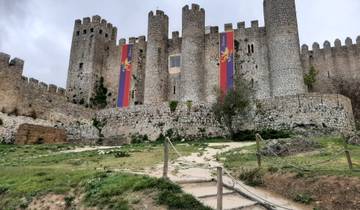
Óbidos medieval walled town sits 27 kilometers south of Nazaré, presenting one of Portugal’s most picturesque historic villages with whitewashed houses, cobblestone lanes, and intact 13th-century castle walls encircling the hilltop settlement. The town measures barely 500 meters across allowing complete exploration in 2-3 hours walking the rampart circuit, browsing artisan shops selling ceramics and textiles, and sampling the local ginja cherry liqueur served in edible chocolate cups. The castle converted to luxury pousada hotel retains original stone walls and towers, while the main gate Porta da Vila features 18th-century azulejo tiles depicting religious scenes. Óbidos hosts medieval festivals, chocolate festivals, and Christmas markets throughout the year, though summer weekends bring crowds that diminish the town’s intimate atmosphere. The drive from Nazaré requires 40 minutes via coastal N8-5 road or 35 minutes via A8 motorway inland route.
Batalha Monastery, another UNESCO World Heritage Site 35 kilometers from Nazaré, commemorates Portugal’s victory at the 1385 Battle of Aljubarrota that secured independence from Castilian Spain. The monastery represents Portuguese Gothic architecture’s pinnacle with the Founder’s Chapel containing elaborately carved tombs of King João I and Queen Philippa of Lancaster, the Unfinished Chapels featuring soaring open-air columns that were never completed, and intricate stone tracery decorating windows and doorways. The complex rewards 2-3 hour visits with guided tours explaining the historical context and architectural innovations. Entry costs €6, and the nearby town offers limited dining options making combined day trips pairing Batalha with Alcobaça practical for history and architecture enthusiasts.
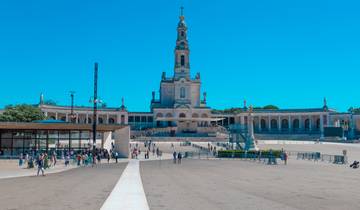
Fátima pilgrimage site lies 33 kilometers east of Nazaré, attracting millions of Catholic pilgrims annually to the location where three shepherd children reported Virgin Mary apparitions in 1917. The vast plaza accommodates 300,000 worshippers with the Basilica of Our Lady of the Rosary and modern Basilica of the Holy Trinity flanking the space where prayer services and processions occur throughout the year. The site holds deep significance in Catholic tradition, though non-religious visitors may find limited appeal beyond architectural interest in the basilicas and observation of pilgrims’ devotion. Fátima functions better as component of multi-site day trip rather than sole destination unless timed with major feast days May 13 or October 13 when hundreds of thousands of pilgrims converge creating remarkable cultural spectacle.
São Martinho do Porto occupies a nearly landlocked bay 10 kilometers south of Nazaré, creating Portugal’s safest swimming beach with warm, shallow waters protected from Atlantic waves. The scallop-shell-shaped bay measures 2 kilometers across with only a narrow channel connecting to the ocean, resulting in lake-like conditions ideal for families with young children, stand-up paddleboarding, and kayaking. The town curves around the bay with beachfront promenade, cafés, and restaurants offering more relaxed atmosphere than Nazaré’s busier beach scene. This makes an excellent afternoon excursion particularly for visitors with children wanting calm water swimming impossible at Nazaré’s wave-exposed beaches, with the drive requiring just 15 minutes and parking typically available near the beach.
Peniche fishing port and historic fortress town sits 38 kilometers south along the coast, serving as departure point for boat trips to the Berlengas Islands nature reserve and offering its own surf culture focused on consistent year-round waves at several beaches surrounding the peninsula. The 16th-century Fortaleza de Peniche functioned as political prison during the Estado Novo dictatorship before conversion to museum documenting Portugal’s resistance movement history. Peniche’s working harbor maintains authenticity with fishing fleet operations, morning fish auctions, and excellent seafood restaurants serving ultra-fresh catches at prices below more touristic Nazaré. The town serves as alternative base for visitors wanting more working-class Portuguese atmosphere with day trip access to Nazaré’s giant waves, though Peniche itself offers substantial attractions meriting full-day visits for those interested in maritime culture and coastal scenery.
Coastal walks north from Nazaré toward Paredes da Vitória follow clifftop paths offering spectacular Atlantic vistas, though trail maintenance varies and some sections require scrambling over rough terrain. The 8-kilometer route reaches the small fishing village of Paredes in 2-3 hours one-way through areas of dramatic erosion creating wind-sculpted cliffs, natural arches, and isolated cove beaches. Proper hiking boots, water, sun protection, and careful attention to path conditions prove essential as some cliff-edge sections lack barriers. The route rewards experienced hikers with solitude and natural beauty but remains unsuitable for casual walkers or families with young children. Return requires either retracing the route or arranging pickup in Paredes, as public transport connections remain limited.
Budget Planning: Daily Costs in Nazaré 2026
Budget travelers visiting Nazaré in 2026 can experience the town’s authentic fishing village culture and witness giant waves while spending €50-85 per person daily by combining hostel dormitory accommodation, self-catered meals from markets and bakeries, and strategic use of free attractions. Hostel beds in shared dormitories cost €25-35 per night at properties like Lab Hostel Nazaré or Nazaré Hostel, both offering communal kitchens, social atmosphere, and central locations near the beach. Breakfast assembled from bakery purchases—coffee €1, pastéis de nata €1.50, bread and cheese €2-3—totals €5-8. Lunch created from supermarket supplies or simple café sandwich costs €8-12, while dinner prepared in hostel kitchen using fish market purchases or eaten at casual taverns ranges €10-15. The funicular to Sítio adds €4 round-trip, lighthouse entry €2, with beaches, viewpoints, and wandering historic streets remaining free. Total daily budget: hostel €25-35, meals €23-35, transport and attractions €4-10, reaching €52-80 per person depending on dining choices and attraction visits, rounded to €50-85 range.
Mid-range travelers enjoying comfortable 3-star hotels, seafood restaurant dining, and organized activities spend €100-160 per person daily assuming two sharing accommodation. Hotel rooms at properties like Hotel Oceano, Hotel Miramar Sul, or mid-tier guesthouses cost €80-140 per night divided by two travelers equals €40-70 per person for accommodation. Hotel breakfast or café service adds €10-15, lunch at beachfront restaurant with fish of the day and wine costs €15-20, dinner at quality seafood establishments featuring fresh catches and traditional preparations ranges €25-35. Transport via funicular, taxis for convenience, and walking totals €5-10 daily. Attraction entries including lighthouse, possibly a boat tour or surf lesson, add €5-10. Component breakdown: accommodation €40-70, meals €50-70, transport €5-10, attractions €5-10, summing to €100-160 per person daily for mid-range comfort with flexibility for occasional splurges at upscale restaurants or additional activities.
Luxury visitors prioritizing premium beachfront hotels, fine dining, and curated experiences invest €210-350+ per person daily. Boutique hotels and best-positioned properties like Hotel Praia or Hotel Mar Bravo with ocean-view rooms cost €180-300 per night divided by two equals €90-150 per person accommodation. Upscale breakfast service at hotel or specialty café runs €15-25, refined lunch at restaurants like Mar Bravo with creative preparations costs €30-45, dinner at top establishments with wine pairings reaches €50-80. Private transport via taxis and rental car convenience adds €15-30 daily. Premium activities including private surf lessons, boat charters, or guided tours contribute €10-20. Category totals: accommodation €90-150, meals €95-150, transport €15-30, activities €10-20, reaching €210-350 per person daily, with upper end accommodating finest dining, best rooms, and most exclusive experiences Nazaré offers.
Weekly budget projections multiply daily costs by seven with slight economies possible through apartment rentals and reduced dining expenses: budget travelers spend €350-595 per person weekly, mid-range visitors €700-1,120, and luxury travelers €1,470-2,450. These weekly totals assume consistent spending patterns though most visitors alternate budget and splurge days, bringing averages closer to the middle of stated ranges. Three-day weekend visits cost budget travelers €150-255, mid-range €300-480, luxury €630-1,050 per person, practical for Lisbon-based visitors or those incorporating Nazaré into broader Portugal itineraries.
Seasonal price variations affect accommodation most significantly, with summer July-August and big wave season November-February commanding 30-50 percent premiums over shoulder season April-May and September-October rates. A €100 per night hotel in May increases to €140-150 in February during giant wave forecasts or August peak summer demand. Advance booking 2-3 months ahead locks lower rates before seasonal surges, while last-minute bookings during forecasted big wave events face maximum prices and limited availability. Restaurants maintain relatively stable pricing year-round with fresh fish market-driven rather than season-driven, though beachfront establishments may add 10-15 percent to prices during peak summer weeks.
Money-saving strategies include self-catering breakfast and occasional lunches using supermarket and market purchases, choosing taverns popular with Portuguese families over beachfront tourist restaurants, visiting during shoulder seasons when hotel rates drop significantly while weather remains pleasant and all attractions operate normally, and basing in nearby towns like Alcobaça or São Martinho do Porto with day trip access to Nazaré for lower accommodation costs. Sharing bottles of wine rather than ordering by glass saves substantially at restaurants, walking between lower town and Sítio via Ladeira path eliminates repeated funicular costs, and the abundance of free attractions—beaches, viewpoints, historic streets—allows rich experiences without constant expenditure.
Hidden costs warranting budgeting include rental car fuel and tolls for regional exploration adding €15-25 daily for moderate driving, parking fees during big wave season when convenient lots charge €10-15 daily, tourist tax €1-2 per person nightly at some accommodations, and the tendency to spend on souvenirs, photo opportunities, or spontaneous experiences like boat trips or surf lessons that exceed planned budgets. Travel insurance, international data plans or local SIM cards, and occasional taxi rides when funicular queues grow excessive contribute modest additional expenses. Budgeting 10-15 percent cushion above calculated daily costs accommodates these extras without requiring strict penny-counting that diminishes travel enjoyment.
Cultural Insights: Nazaré’s Fishing Village Heritage 2026
Nazaré’s identity remains fundamentally rooted in Atlantic fishing traditions despite international fame for giant waves transforming tourism economics. The working fishing fleet launches daily from the harbor with boats ranging from small open vessels painted bright colors to larger trawlers pursuing offshore catches. Fishermen maintain skills and knowledge passed through generations regarding Atlantic currents, seasonal fish migrations, weather pattern interpretation, and traditional fishing techniques predating modern technology. This authentic maritime culture persists visibly through dried fish racks on the beach, early morning fish auctions, net mending along the waterfront, and the community of families whose livelihoods depend on ocean harvests rather than tourist expenditure.
The traditional costume worn by some elderly women represents Nazaré’s most distinctive cultural symbol with the famous seven skirts (sete saias) layered over each other in various colors creating voluminous silhouette. These skirts traditionally served practical purposes—multiple layers provided warmth during long hours waiting at the beach for fishing boats’ return, while different skirts could be removed to cover head, shoulders, or wrap packages. The complete traditional dress includes black scarf, knitted shawl, and sometimes colorful apron, though the seven skirts remain the most recognizable element. Modern wearers are predominantly elderly residents maintaining customs from their youth, creating poignant visual connection to pre-tourism Nazaré when fishing village life centered entirely on Atlantic cycles rather than international visitors.
Religious devotion permeates Nazaré culture through the Sanctuary of Nossa Senhora da Nazaré and associated legends connecting the town to miraculous interventions by the Virgin Mary. The September festival honoring Nossa Senhora brings thousands of pilgrims and locals for processions carrying the sacred Black Madonna statue through decorated streets, combining Catholic ritual with folk traditions including music, dancing, and communal meals. The religious calendar structures community life with numerous smaller festivals honoring various saints throughout the year, each featuring church services, processions, and traditional Portuguese celebrations. This deep Catholic tradition reflects broader Portuguese rural culture where religious identity and social community remain inseparable despite modernization and secular trends in urban areas.
The fishing community maintains distinct social structures and economic relationships unchanged by tourism development. Fishing boat ownership passes through families with sons expected to continue maritime work if physical capable, though younger generations increasingly pursue education and careers in tourism, hospitality, or urban employment. The auction system connecting fishermen to wholesale buyers and restaurant owners operates on trust relationships built over decades with prices negotiated rapidly in Portuguese fishing vocabulary incomprehensible to outsiders. Women historically dominated the marketing of catches, selling fish door-to-door or in markets, giving them unusual economic autonomy in traditionally patriarchal society. These gender roles evolved from necessity when husbands spent extended periods at sea, creating female-managed household economies and decision-making authority.
Language remains Portuguese-dominant particularly among older residents and fishing community members, though younger generations working in tourism often speak functional English, Spanish, or French. The local dialect includes vocabulary and expressions specific to maritime life, fishing techniques, and weather conditions forming specialized terminology unknown even to Portuguese from inland regions. Visitors making effort to speak basic Portuguese—greetings, please, thank you, numbers—receive warm responses even when conversations revert to English for complex exchanges. The tourist industry has created English menu availability and basic communication capacity at hotels and popular restaurants, but genuine cultural exchange occurs through Portuguese language even at elementary level demonstrating respect for local culture.
The fishing culture faces generational transition challenges as younger people pursue opportunities beyond maritime work requiring long hours, physical labor, and income uncertainty dependent on catches and market prices. Tourism provides alternative employment with more predictable schedules and potentially higher earnings in hospitality roles, threatening continuation of traditional fishing knowledge. European Union fishing regulations limit catches to protect stocks, constraining income potential and forcing fleet consolidation toward fewer, larger boats with modern equipment rather than the traditional small-scale operations that defined Nazaré fishing for centuries. This economic transition creates tension between preservation of authentic culture attracting tourists and modernization providing better livelihoods for local residents.
Gastronomy reflects fishing heritage through seafood-centric cuisine emphasizing freshness and simplicity rather than elaborate preparations masking ingredient quality. The traditional caldeirada fish stew combines multiple species with potatoes, tomatoes, and peppers cooked in large pots and shared communally, representing both practical use of varied catches and social dining culture. Dried fish preparations particularly cod and sardines remain staples connecting contemporary cooking to preservation techniques essential before refrigeration. The açorda thick bread soup enriched with egg, garlic, and cilantro demonstrates peasant cooking creativity transforming humble ingredients into satisfying meals. These traditional dishes appear alongside tourist-oriented seafood platters and international cuisine, with family-run taverns maintaining authentic preparations while beachfront restaurants adapt to international palates.
Contemporary Nazaré balances preservation and change with varying success. The giant wave fame brought international recognition and tourism revenue supporting local economy but also created pressure to modify authentic character to meet visitor expectations. The town has largely resisted mass development maintaining low-rise traditional architecture rather than constructing high-rise hotels that would fundamentally alter the coastal skyline. However, souvenir shops selling identical made-in-China products and restaurants serving generic international food compete for space with traditional bakeries and fishing supply stores. The challenge for 2026 and beyond involves maintaining economic viability through tourism while preserving the authentic fishing village culture that makes Nazaré worth visiting beyond just the giant waves occurring only a few months annually.
Practical Travel Tips for Nazaré 2026
Currency and payment systems in Nazaré follow Portuguese standards with euros accepted universally and credit cards widely but not universally accepted. Major hotels, established restaurants, and tourism-oriented businesses process Visa and Mastercard without issue, though American Express acceptance remains limited. Cash remains essential for market purchases, small cafés, taxis, and some traditional family-run restaurants particularly in the fishing community where card processing infrastructure hasn’t penetrated. ATMs concentrate around the main square and beachfront promenade dispensing euros with standard international network fees, typically €3-5 per withdrawal making larger withdrawals more economical than multiple small transactions. Carrying €50-100 cash covers daily incidentals while credit cards handle larger expenses.
Mobile connectivity and internet access meets modern standards with 4G coverage throughout Nazaré and 5G deployment expanding in central areas. Portuguese mobile networks MEO, Vodafone, and NOS offer tourist SIM cards at airport kiosks and mobile shops with data packages from €10-20 providing 5-15GB suitable for 1-2 week stays. These prepaid SIMs work in unlocked phones and provide significantly cheaper data than international roaming rates for non-EU visitors. EU residents benefit from roam-like-at-home regulations allowing domestic data allowances to function in Portugal without additional charges. Wi-Fi availability is universal in hotels, common in restaurants and cafés, though connection quality varies with budget establishments offering slower speeds than upscale properties. The lighthouse and outdoor attractions lack connectivity requiring offline map downloads or printed materials for navigation.
Weather patterns differ dramatically between summer and winter requiring distinct packing strategies. Summer June-September brings temperatures 22-28°C with minimal rainfall, necessitating light cotton clothing, sun protection including high-SPF sunscreen and hat, and swimming attire for beach days. Winter November-February ranges 8-15°C with frequent rain and strong winds particularly on exposed clifftops, demanding waterproof jacket, warm layers including fleece or wool, wind-resistant pants, gloves, and sturdy waterproof footwear for muddy paths and wet conditions. The shoulder seasons April-May and September-October require adaptable wardrobes with layers accommodating temperature swings and occasional rain. Big wave watching specifically requires serious wind protection as clifftop exposure creates harsh conditions even on relatively mild days.
Photography equipment considerations for big wave season include telephoto zoom lenses essential for capturing surfers on distant wave faces—200mm minimum focal length recommended, 300mm+ ideal for detailed action shots. The lighthouse terrace positions photographers 100-150 meters from nearest wave action with optimal moments occurring 200-300 meters offshore where largest waves break. Weather sealing on camera bodies and lenses protects against salt spray and rain common during winter storms. Tripods stabilize long lens photography though crowded viewing conditions may prevent setup. Smartphone photography captures wide scenic shots and personal moments but lacks reach for detailed surf action. Drone photography faces restrictions near the lighthouse and during professional surf sessions with local regulations requiring verification before flight operations.
Health and safety considerations remain minimal in Nazaré with no endemic diseases, tap water safe for drinking, and modern medical facilities adequate for routine needs. The Centro de Saúde de Nazaré provides primary care with English-speaking staff often available, while serious medical issues require transfer to Caldas da Rainha hospital 25 kilometers distant. Travel insurance covering medical evacuation and treatment proves valuable given distance from major medical centers. Pharmacies identified by green cross signs stock standard medications and pharmacists offer basic health consultation for minor ailments. Sun protection becomes critical during summer with Atlantic reflections intensifying UV exposure creating faster burning than expected. Ocean safety requires respect for Atlantic power with lifeguarded swimming zones marked during summer, though Praia da Nazaré’s sheltered position creates relatively benign conditions compared to exposed northern beaches where swimming remains dangerous year-round.
Family travel with children finds Nazaré suitable though requiring adaptations based on age. The Sítio funicular delights young children, beaches provide endless sand play opportunities, and the working fishing harbor offers authentic experiences watching nets mended and catches unloaded. However, big wave viewing holds limited appeal for young children who tire quickly of standing on exposed cliffs watching distant surfers, while the steep streets and walking distances between attractions challenge families with strollers. Nearby São Martinho do Porto’s sheltered bay offers superior swimming for young children compared to Nazaré’s wave-exposed beaches. Restaurants welcome families with children’s menus rare but staff accommodating simple pasta or grilled fish preparations suitable for young palates. Budget-conscious families benefit from apartment rentals providing kitchen facilities and multiple bedrooms unavailable in budget hotel categories.
Solo traveler safety remains excellent with violent crime rare and petty theft limited to opportunistic pickpocketing in crowded areas during big wave events or summer peak season. Standard urban precautions—securing valuables, awareness in crowds, avoiding isolated areas after dark—provide adequate protection. Solo female travelers report minimal harassment issues with Portuguese culture generally respectful though occasional catcalling occurs in tourist areas. The hostel scene facilitates solo traveler social connections with organized activities, common areas, and international backpacker community creating easy friendships. Solo dining remains comfortable at casual establishments though upscale restaurants cater primarily to couples and groups making solo diners occasionally conspicuous.
Environmental responsibility and sustainable tourism practices deserve visitor attention given tourism pressure on this small coastal community. Reef-safe sunscreen prevents chemical pollution damaging marine ecosystems, reusable water bottles reduce plastic waste visible on Portuguese beaches, and supporting locally-owned restaurants and shops over international chains maintains community economic benefits from tourism. The fishing culture preservation depends partly on tourist interest creating economic value for traditional practices, incentivizing younger generations to maintain heritage rather than abandoning it for generic tourism development. Beach cleanup participation through informal initiatives helps combat plastic pollution, while choosing seafood from sustainable Portuguese fisheries over imported species supports local maritime economy.
Sample Nazaré Itineraries 2026
Three-day big wave focused itinerary maximizes giant wave viewing while sampling Nazaré’s cultural attractions. Day one begins with morning arrival from Lisbon, hotel check-in at beachfront property, and funicular ride to Sítio for lighthouse visit and Praia do Norte wave watching assuming winter season timing. Afternoon explores the Sanctuary of Nossa Senhora and Hermitage of Memory before returning to lower town for seafood dinner at traditional tavern like A Tasquinha. Day two dedicates morning to monitoring wave forecasts and returning to lighthouse during predicted peak swell conditions with binoculars and cameras for extended viewing session. Afternoon visits the fish market and harbor to observe fishing culture, followed by beach walk along Praia da Nazaré. Evening splurges on upscale dining at Mar Bravo restaurant with ocean views. Day three takes a half-day trip to Alcobaça Monastery returning mid-afternoon for final beach time or shopping in lower town before evening departure to Lisbon. Estimated costs per person: accommodation €120-180 total (€40-60 nightly × 3 mid-range hotel two sharing), meals €75-105 (budget lunches, one upscale dinner), transport €15 (funicular, local buses), attractions €10 (lighthouse, monastery), totaling €220-310 per person for three days.
Five-day comprehensive itinerary balances giant wave hunting with regional exploration during winter season. Day one mirrors the three-day arrival with Sítio orientation and initial wave viewing. Day two reserves entire day for big wave watching if forecasts predict giant conditions, including morning lighthouse session, lunch break in Sítio, and afternoon return as new swell sets arrive. Day three takes full-day excursion to Óbidos medieval town (1 hour) and Batalha Monastery (45 minutes from Óbidos) with lunch in Óbidos and dinner return to Nazaré. Day four explores Peniche (40 minutes) including fortress visit, harbor tour, and potentially boat trip to Berlengas Islands if weather permits, returning evening to Nazaré. Day five enjoys relaxed morning with beach walk, market shopping, and souvenir hunting before early afternoon departure. Rental car essential for days 3-4. Estimated costs per person: accommodation €200-350 (€40-70 nightly × 5), meals €125-175 (mix of casual and restaurant dining), transport €60-80 (rental car share, fuel, tolls, funicular), attractions €25-35 (lighthouse, monasteries, fortress entries, possible boat tour), totaling €410-640 per person for five days mid-range comfort.
Week-long summer beach holiday itinerary focuses on traditional beach resort experience with day trip variety. Day one arrives afternoon with beach orientation and casual beachfront dinner. Days two and three dedicate to beach leisure with morning swimming at Praia da Nazaré, lunch at beachside tavern, afternoon beach activities or coastal walks, and evening promenade dining. Day four takes morning trip to São Martinho do Porto for calmer swimming with afternoon return via coastal route stopping at viewpoints. Day five visits Alcobaça morning, Óbidos afternoon with dinner in medieval town before return. Day six explores Nazaré cultural sites including funicular to Sítio, lighthouse and fort, sanctuary, and fish market with afternoon beach time. Day seven enjoys final morning beach session before checkout and Lisbon return. This relaxed pace suits families with children or visitors prioritizing beach relaxation over extensive sightseeing. Estimated costs per person: accommodation €280-490 (€40-70 nightly × 7), meals €175-245 (regular restaurant dining), transport €40-60 (funicular, possible rental car for day trips), attractions €15-20 (lighthouse, monastery entries), totaling €510-815 per person for week-long beach-focused visit.
Budget weekend intensive concentrates Nazaré highlights into two days with hostel accommodation and self-catering. Friday evening arrives Lisbon bus, checks into hostel dorm, and explores lower town with sunset beach walk and budget tavern dinner. Saturday morning takes funicular to Sítio, visits lighthouse and fort, explores sanctuary and viewpoints before afternoon beach time and self-catered hostel kitchen dinner. Sunday morning visits fish market and harbor, final beach walk, shopping for souvenirs before midday bus return to Lisbon. Estimated costs per person: accommodation €50-70 (€25-35 nightly × 2 hostel dorms), meals €30-50 (bakery breakfasts, market lunches, casual dinners), transport €30-40 (Lisbon roundtrip bus, funicular), attractions €4 (lighthouse only), totaling €114-164 per person for weekend escape from Lisbon on tight budget.
Best Time to Visit Nazaré 2026
November through February 2026 delivers peak big wave season with highest probability of giant Atlantic swells transforming Praia do Norte into the world’s most spectacular surf theater. These core winter months coincide with maximum North Atlantic storm activity generating the powerful northwest swells that amplify through the Nazaré Canyon into 15-30 meter faces. Weather conditions remain cold with temperatures 8-15°C, frequent rain, and strong winds creating challenging viewing comfort requiring serious cold-weather gear. However, the potential to witness once-in-lifetime natural phenomena and world-record surf attempts justifies the weather challenges for visitors prioritizing the giant wave experience. Hotel availability becomes constrained during forecasted big wave days with rates surging 40-50 percent above baseline, necessitating advance booking or flexible accommodation strategies accepting last-minute availability at premium prices.
March and April 2026 extend big wave possibilities into shoulder season with diminishing but still impressive surf potential, warming temperatures reaching 12-18°C, and reduced tourist crowds compared to peak winter. The TUDOR Nazaré Big Wave Challenge window remains active through March 31 maintaining professional surfer presence and possibility of competition activation. Spring flowers bloom across the surrounding countryside creating attractive landscape photography beyond wave watching, while Easter timing in April brings Portuguese domestic tourists for religious celebrations at the Sanctuary of Nossa Senhora. Hotel rates drop 20-30 percent below winter peaks once big wave season officially ends, offering better value for visitors willing to accept lower giant wave probability in exchange for more pleasant weather and cost savings.
May through June represents optimal shoulder season combining pleasant weather—temperatures 16-22°C, minimal rainfall, long daylight hours—with uncrowded beaches, normal hotel rates, and full operational status of attractions and restaurants. These months suit visitors prioritizing traditional beach resort experience, cultural exploration, and authentic Portuguese atmosphere over giant wave spectacles. The ocean remains too cold for most swimmers at 15-17°C without wetsuits, but beach walking, coastal hikes, and outdoor dining become delightful as spring transitions to summer. Portuguese domestic tourists haven’t yet arrived in force, leaving Nazaré relatively quiet while maintaining full service levels unlike winter when some restaurants reduce hours or close entirely. This window provides excellent value with mid-range hotels at €70-100 per night and restaurants operating without summer surcharges or crowds.
July and August deliver peak summer season with guaranteed warm weather—temperatures 24-28°C—and warmest ocean temperatures 18-20°C making swimming comfortable without wetsuits. Praia da Nazaré reaches capacity on weekends and August weeks when Portuguese families take traditional summer holidays, creating lively beach atmosphere with umbrellas covering available sand and promenade buzzing late into evenings. This period suits families with children wanting safe swimming conditions and traditional beach holiday activities, though sacrifices the authentic fishing village character somewhat to peak tourist season dynamics. Hotel rates match or exceed winter big wave season pricing with properties often requiring minimum 3-7 night stays during August peak. Advance booking 3-4 months ahead secures preferred properties before sellout, particularly for beachfront locations. Cultural events and summer festivals add local color though primarily serve Portuguese domestic tourism rather than international visitors.
September through October brings autumn shoulder season with warm weather extending through September—temperatures 20-25°C, warm ocean 18-19°C—before cooling into October’s 16-20°C air and 17-18°C water. These months offer the best overall conditions for visitors wanting beach activities without extreme summer crowds, cultural exploration with pleasant walking weather, and substantial cost savings as hotel rates drop 30-40 percent from summer peaks. September particularly delivers near-summer conditions with fraction of summer crowds once schools resume and Portuguese domestic tourists depart. October witnesses early-season Atlantic swells beginning to build, occasionally producing impressive if not giant waves at Praia do Norte creating hybrid experience combining beach resort amenities with developing surf season. The first big wave surfers arrive testing equipment and studying conditions, adding international surf culture flavor without winter’s full spectacle and associated crowds.
Seasonal activity variations guide timing decisions beyond weather considerations. Big wave competition windows October-March bring professional surfers, media crews, and international spectators creating cosmopolitan atmosphere and sometimes difficult logistics during predicted giant wave days. Summer beach season July-August offers traditional Portuguese coastal culture with families, evening promenades, and reliably calm swimming conditions. Shoulder months provide quietest periods for visitors wanting uncrowded exploration of cultural sites, photography without tourist obstacles, and opportunities to interact with local fishing community rather than tourism infrastructure. Religious festivals particularly September Nossa Senhora celebration attract pilgrims creating cultural immersion unavailable during secular summer beach season. Each period offers distinct advantages making “best time” dependent on priorities: giant waves favor November-February, beach resort favors July-August, value and comfort favor May-June or September-October, cultural authenticity favors shoulder seasons avoiding both wave crowds and summer masses.
Frequently Asked Questions About Visiting Nazaré 2026
Do I need a car to visit Nazaré in 2026?
Cars provide convenience for regional day trips to Alcobaça, Óbidos, Batalha, and Peniche but remain unnecessary for experiencing Nazaré itself, which functions excellently as car-free destination with compact walkable layout, funicular connecting lower town to Sítio, and regular express bus service from Lisbon. Visitors basing exclusively in Nazaré save rental costs, parking fees reaching €10-15 daily during big wave season, and navigation challenges on narrow cobblestone streets. Those wanting to explore surrounding central Portugal region benefit from rental car flexibility allowing spontaneous stops at coastal viewpoints, inland villages, and cultural sites beyond public transport routes. The hybrid strategy involves Lisbon airport car pickup, Nazaré hotel parking for 2-3 days while exploring the town on foot, then using the car for regional excursions before return—combining walkable Nazaré advantages with broader Portugal access.
Is Nazaré safe for swimming in 2026?
Praia da Nazaré offers relatively safe swimming conditions during summer months June-September when lifeguards patrol designated swimming zones and the Sítio promontory provides shelter from strongest Atlantic currents, though swimmers should always respect flag warnings and avoid areas outside lifeguard supervision. Praia do Norte remains dangerous for swimming year-round with powerful currents, undertow, and irregular wave patterns creating hazardous conditions even during summer calm periods—this beach serves as observation venue for giant waves rather than recreational swimming location. Families with young children find superior swimming conditions at nearby São Martinho do Porto’s sheltered bay where virtually landlocked configuration creates lake-like calm unsuitable for surf but ideal for safe water play. Water temperatures reach maximum 18-20°C in August requiring most swimmers to acclimate gradually or use wetsuits for extended sessions.
Can I surf at Nazaré as a beginner or intermediate in 2026?
Nazaré offers diverse surf conditions with Praia da Nazaré providing beginner-friendly waves during summer months when Atlantic swells remain moderate and beach break waves suit learning fundamentals, with several surf schools operating lessons at €30-50 for 2-hour group sessions including board and wetsuit rental. Intermediate surfers find consistent waves year-round requiring skill assessment of current conditions as even Praia da Nazaré can produce challenging surf exceeding intermediate capabilities during autumn and winter swells. Praia do Norte remains exclusively expert-only territory even on smaller days due to powerful currents, rocky bottom in places, and wave patterns requiring advanced ocean reading skills—attempting to surf Praia do Norte without extensive big wave experience and proper equipment risks serious injury or death. Surf equipment rental at shops near the beach charges €15-25 daily for board and wetsuit combinations with quality gear maintained for tourist and local surfer markets.
What language do people speak in Nazaré?
Portuguese serves as the universal language in Nazaré with English spoken functionally by many hotel staff, restaurant servers in tourist-oriented establishments, and younger generation working in hospitality, though fluency levels vary and complex conversations often challenge non-Portuguese speakers. The older fishing community and traditional shopkeepers typically speak only Portuguese with occasional French or Spanish from decades of European tourism before English dominance. Learning basic Portuguese phrases—greetings, numbers, please/thank you, simple food vocabulary—demonstrates respect and facilitates warmer interactions even when conversations ultimately require gestures or translation apps. Menus at popular restaurants include English translations though traditional taverns frequented by Portuguese locals may offer Portuguese-only menus where pointing at neighboring table’s appealing dishes often communicates orders effectively. Spanish speakers often comprehend written Portuguese given linguistic similarities though pronunciation differs substantially requiring patience and mutual effort for verbal communication.
Are there ATMs and banks in Nazaré?
Several ATMs operate throughout Nazaré’s lower town particularly concentrated around the main square and beachfront area dispensing euros in denominations of €20 and €50 notes from major Portuguese banks including Caixa Geral de Depósitos, Millennium BCP, and Novo Banco. These machines accept Visa, Mastercard, Maestro, and Cirrus cards with standard international withdrawal fees typically €3-5 per transaction charged by card-issuing banks rather than Portuguese ATMs. Bank branches maintain limited hours generally 09:00-15:00 Monday-Friday with Wednesday afternoon closures common, though ATM availability 24/7 eliminates need for branch access for most tourist needs. Carrying some euros from arrival city avoids immediate ATM necessity while larger withdrawals of €200-300 minimize transaction fee proportions for extended Nazaré stays. Credit cards work widely for hotel, restaurant, and shop purchases though traditional market vendors and some family taverns remain cash-only operations.
How crowded does Nazaré get during big wave season 2026?
Big wave season brings dramatic crowds specifically on forecasted giant wave days when thousands of spectators converge on the lighthouse area and Sítio district creating festival atmosphere but also parking challenges, full restaurants, and crowded viewing platforms requiring early arrival for optimal positions. Between major swells, even during peak season November-February, Nazaré maintains manageable tourist levels with hotel availability, restaurant seating accessible, and normal small-town rhythms. The TUDOR Nazaré Big Wave Challenge competition activation generates maximum crowding with international media, professional photographers, surf industry personnel, and wave enthusiasts overwhelming the compact lighthouse viewing area—arriving before 08:00 on competition days secures viewing positions before access restrictions sometimes prevent additional spectators reaching the fort. Non-wave days during winter season deliver surprisingly quiet atmosphere as the town’s 10,000 permanent residents reclaim streets between tourist surges, creating opportunities for authentic cultural interactions impossible during peak summer or giant wave spectacles.
What should I pack for big wave watching in Nazaré winter 2026?
Winter big wave watching demands serious cold-weather and wind-protection gear as clifftop exposure during November-February creates harsh conditions regardless of stated temperatures with wind chill making 12°C feel like 5°C or colder. Essential items include waterproof jacket with hood (not merely water-resistant), warm fleece or wool mid-layers, thermal base layer for extended outdoor sessions, wind-resistant pants, waterproof hiking boots with good traction on wet surfaces, winter gloves, warm hat covering ears, and scarf for neck protection. Binoculars or camera with telephoto lens capability bring distant wave action closer as many spectacular rides occur 200-300 meters offshore. Portable phone battery pack maintains photography capacity through all-day viewing sessions, small backpack carries extra layers and snacks, and reusable water bottle avoids expensive purchases at limited clifftop facilities. Sunglasses remain necessary despite winter season as Atlantic light reflection intensifies glare even on overcast days.
Can I visit Nazaré as a day trip from Lisbon in 2026?
Nazaré functions excellently as day trip from Lisbon located 125 kilometers north requiring 90 minutes by car via A8 motorway or 2 hours by express bus from Lisbon’s Sete Rios terminal, allowing 5-6 hours on-site before returning same day—sufficient time for funicular ride to Sítio, lighthouse and fort visit, beach walk, and seafood lunch though insufficient for in-depth exploration of all cultural sites and nearby day trip destinations. The express bus departs Lisbon multiple times daily with earliest departures around 07:00-08:00 and final returns 19:00-20:00 providing full day access. Car rental offers additional flexibility for including stops at Alcobaça Monastery en route or combining with Óbidos visit creating rich cultural day trip covering multiple UNESCO and historic sites. The day trip strategy works particularly well for Lisbon-based travelers wanting to sample Nazaré before committing to overnight stays or witnessing forecasted giant waves without booking advance accommodation. However, overnight stays reward visitors with sunset lighthouse photography, evening promenade culture, and reduced time pressure allowing deeper cultural immersion impossible during rushed day trips.
What is the Nazaré Canyon and why does it create giant waves?
The Nazaré Canyon represents one of Europe’s deepest submarine geological features descending 5,000 meters through narrow underwater trench extending 200 kilometers offshore before terminating abruptly just 500 meters from Praia do Norte beach, creating unique hydrodynamic conditions that amplify Atlantic Ocean swells to record heights. When powerful winter storm systems track across the North Atlantic generating long-period swells, wave energy traveling across the deep canyon encounters the abrupt transition to shallow continental shelf waters at the canyon terminus. This bathymetric configuration causes constructive wave interference where deepwater swell energy combines with refracted wave energy that traveled over shallower adjacent areas, stacking wave heights through the amplification effect. The phenomenon can triple original swell size transforming 8-10 meter open ocean swells into 25-30 meter faces under optimal conditions of swell direction, period, and local wind patterns. The Fort of São Miguel Arcanjo houses exhibits explaining this geological process with diagrams and multimedia presentations making the complex physics accessible to non-scientists.
Are there any festivals or special events in Nazaré 2026?
The major cultural event calendar centers on the September Nossa Senhora da Nazaré festival celebrating the town’s patron saint with religious processions, traditional costumes, folk music and dancing, seafood feasts, and pilgrimage activities drawing thousands of devotees and cultural tourists for multi-day celebrations typically mid-September around the 8th. The TUDOR Nazaré Big Wave Challenge competition window October-March creates sport-focused events with professional big wave surfing contest activating on 48-hours notice when forecasts predict optimal giant wave conditions—not a fixed-date festival but rather weather-dependent spectacle that may occur once or multiple times during the season. Summer months feature smaller local festivals celebrating various saints with neighborhood processions, traditional music, and communal meals primarily serving Portuguese domestic tourism rather than international visitors. The fishing culture maintains calendar of blessings and celebrations tied to maritime patron saints throughout the year, though these remain community events with limited tourist infrastructure compared to the major September festival when Nazaré fully embraces its religious heritage with pageantry accessible to all visitors.