Nafplio Day Trip from Athens 2026 Peloponnese Circuit: Mycenae & Epidaurus Complete Guide
This essential Peloponnese circuit combines three UNESCO World Heritage sites and Greece’s most romantic town in a single full-day excursion from Athens, covering Bronze Age citadels, ancient theaters with perfect acoustics, and Venetian waterfront architecture across 10-11 hours of transportation and guided exploration. Tour options range from €29 budget group experiences to €420+ private excursions, with strategic timing and booking decisions significantly impacting both cost and quality of this intensive archaeological journey.
Key Takeaways Nafplio Day Trip 2026
- Day trips operate 10-11 hours departing Athens 7:45-8:30 AM with returns 6:00-7:30 PM, visiting Corinth Canal, Mycenae (€12 entrance), Nafplio lunch stop, and Epidaurus (€12 entrance) in that sequence
- Group tours cost €29-36 basic (transport only), €50-65 including entrance fees and guide, while private tours range €420 (1-3 persons) to €550 (8-14 persons) with customizable timing
- Organized tours provide superior value compared to independent rental car day trips when factoring €140 daily car rental, €24 entrance fees, fuel €25-30, parking, and navigation stress
- Site time allocations typically include 90-120 minutes at Mycenae, 90 minutes free time in Nafplio, 90 minutes at Epidaurus, with 20-minute Corinth Canal photo stop and 3+ hours total driving
- Booking 4-7 days advance secures best availability during peak season (June-August), while last-minute bookings often succeed September-May except Greek Orthodox Easter week
- Virtual reality devices and multilingual audio guides (10 languages) enhance modern tour experiences, replacing traditional live guides on many budget options while maintaining historical context
People Also Ask About Nafplio Day Trips from Athens 2026
Is a day trip from Athens to Nafplio and Epidaurus worth it in 2026?
A day trip to Nafplio, Mycenae, and Epidaurus delivers exceptional value for travelers prioritizing UNESCO World Heritage sites and ancient Greek history over beach relaxation or leisurely exploration. The circuit covers Greece’s most significant Bronze Age citadel (Mycenae), best-preserved ancient theater (Epidaurus), and most romantic mainland town (Nafplio) in a single efficient 10-11 hour journey. However, the intensive schedule provides only 4-5 hours total at sites and Nafplio combined, with 3+ hours spent on highway driving and bus transfers. First-time visitors to Greece gain comprehensive archaeological overview justifying the long day, while travelers preferring slow-travel immersion should consider multi-day Peloponnese stays based in Nafplio for more thorough exploration.
How much does a Nafplio day trip from Athens cost in 2026?
Nafplio day trip costs from Athens in 2026 range €29-550 depending on tour type and group size. Budget group tours with multilingual audio guides cost €29-36 per person excluding entrance fees, mid-range group tours with live guides and included tickets run €50-65 per person, and premium group tours with lunch included reach €75-90 per person. Private tours cost €420 for 1-3 persons, €460 for 4-7 persons, or €550 for 8-14 persons, excluding entrance fees (€24 per adult for both sites). Independent travelers using rental cars spend €140+ daily (car rental €35-60, fuel €25-30, entrance fees €24, meals €30-40, parking €5-10, tolls €14) making organized tours more economical for solo travelers and pairs.
What is the typical itinerary for a Nafplio, Mycenae, Epidaurus day trip in 2026?
Standard itineraries depart Athens 7:45-8:30 AM from central pickup points (Syntagma Square, Omonoia Square, select hotels), drive 1 hour to Corinth Canal for 20-minute photo stop, continue 30 minutes to Mycenae for 90-120 minute guided tour and museum visit, drive 30 minutes to Nafplio for 90-minute lunch break and Old Town exploration, proceed 40 minutes to Epidaurus for 90-minute theater and sanctuary visit, then return 2 hours to Athens arriving 6:00-7:30 PM. Total breakdown: 3-3.5 hours driving, 20 minutes Corinth Canal, 2 hours Mycenae, 1.5 hours Nafplio, 1.5 hours Epidaurus, with remaining time for bathroom breaks and transitions between sites.
Can I visit Nafplio, Mycenae, and Epidaurus independently without a tour in 2026?
Independent visits using rental cars provide maximum flexibility but require full-day commitment matching organized tour duration while adding navigation challenges, parking logistics, and entrance ticket purchases at each site. The route follows clear highways (Athens → Corinth Canal A8/E94 → Mycenae via Argos → Nafplio coastal road → Epidaurus → return Athens), but archaeological sites lack on-site historical interpretation beyond basic plaques, making guide context valuable for understanding significance. Solo travelers and pairs find organized tours more economical when factoring all costs, while groups of 4+ persons sharing rental car costs achieve similar pricing to budget tours while gaining schedule control. Independent travelers should download offline maps, verify site opening hours, plan meal stops in Nafplio advance, and allocate extra time for inevitable navigation delays in unfamiliar territory.
Extended multi-day tours – 5+ days
Featured Peloponnese Islands Multi-Day Tour Packages
3 days
Peloponnese Islands 3-Day Discovery Tour
- ✓ Comprehensive Peloponnese Islands experience
- ✓ Expert local guides included
- ✓ All accommodation included
- ✓ Transportation provided
5 days
Peloponnese Islands 5-Day Highlights Experience
- ✓ Comprehensive Peloponnese Islands experience
- ✓ Expert local guides included
- ✓ All accommodation included
- ✓ Transportation provided
7 days
Peloponnese Islands 7-Day Cultural Journey
- ✓ Comprehensive Peloponnese Islands experience
- ✓ Expert local guides included
- ✓ All accommodation included
- ✓ Transportation provided
10 days
Peloponnese Islands 10-Day Complete Adventure
- ✓ Comprehensive Peloponnese Islands experience
- ✓ Expert local guides included
- ✓ All accommodation included
- ✓ Transportation provided
Multi-day tour packages powered by TourRadar. Prices and availability subject to change.
Introduction to Nafplio Day Trip Planning from Athens 2026
The classic Peloponnese circuit from Athens combines three UNESCO World Heritage designations—Mycenae’s Bronze Age citadel, Epidaurus’s perfectly-preserved ancient theater, and the Archaeological Site of Olympia (though not visited on this specific route)—with Greece’s first capital city Nafplio in what tour operators market as “Ancient Greece in a Day.” This ambitious itinerary has operated for decades as Athens’s most popular full-day excursion, evolving from basic bus tours with minimal explanation to sophisticated experiences incorporating virtual reality reconstructions, multilingual audio guides, and carbon-neutral transport options responding to modern traveler expectations.
The 2026 tourism landscape presents travelers with unprecedented tour variety ranging from ultra-budget €29 self-guided experiences using smartphone apps to €550 private chauffeured excursions with licensed archaeologist guides. This price range reflects genuine differences in experience quality—larger buses versus luxury minivans, recorded audio versus live expert narration, rushed schedules versus flexible timing—rather than simply branding premiums. Understanding these distinctions enables strategic booking decisions matching tour type to travel style, budget constraints, and archaeological interest levels.
Geographic reality shapes the day’s intensive schedule. The 137-kilometer Athens-to-Nafplio distance requires 2 hours highway driving each direction, while Mycenae lies 25 kilometers northwest of Nafplio and Epidaurus 30 kilometers east. This routing creates a logical circuit—Athens → Mycenae → Nafplio → Epidaurus → Athens—minimizing backtracking while sequencing sites chronologically from Bronze Age (Mycenae 1600-1100 BCE) through Classical period (Epidaurus 4th century BCE) to modern Greek independence (Nafplio first capital 1823-1834). The geographic spread necessitates organized transportation whether through commercial tours or private vehicles, as public buses serve individual destinations but lack coordinated schedules enabling single-day multi-site visits.
This guide provides comprehensive planning information for 2026 day trips including detailed tour option comparisons, pricing breakdowns, booking strategies, realistic expectations for time at each site, Nafplio lunch recommendations maximizing limited free time, photography tips for capturing each location’s highlights, and strategies for enhancing the experience through advance preparation. Whether selecting budget group tours or premium private options, proper planning transforms this intensive day from exhausting bus marathon into rewarding immersion in ancient Greek civilization’s most significant sites.
Understanding Day Trip Logistics and Duration 2026
The Nafplio-Mycenae-Epidaurus circuit operates as a full-day commitment requiring 10-11 hours from Athens hotel pickup through return drop-off. This extended duration reflects both geographic distances and site exploration requirements, with tour operators balancing adequate time at each location against traveler fatigue and Athens return timing for evening plans. Understanding hour-by-hour breakdown helps set realistic expectations and plan appropriate packing for the long day.
Standard Day Trip Timeline Athens to Nafplio 2026
Most tours follow this approximate schedule in 2026. Departure 7:45-8:30 AM from Athens central meeting points with hotel pickups beginning 7:15-7:45 AM for properties within pickup zones. Drive 60-70 minutes to Corinth Canal arriving 9:00-9:30 AM for 20-minute photo and bathroom stop viewing the engineering marvel connecting Gulf of Corinth to Saronic Gulf. Continue 30-35 minutes to Mycenae arriving 9:45-10:15 AM for 90-120 minute guided tour including Lion Gate, Treasury of Atreus, archaeological museum, and citadel exploration.
Depart Mycenae 11:30 AM-12:15 PM, drive 30 minutes to Nafplio arriving 12:00-12:45 PM for 90-minute free time designated for lunch and brief Old Town exploration. Depart Nafplio 1:30-2:15 PM, drive 40 minutes to Epidaurus arriving 2:15-2:45 PM for 90-minute visit covering ancient theater, museum, and sanctuary ruins. Depart Epidaurus 4:00-4:30 PM for 2-hour return drive to Athens arriving 6:00-7:00 PM at original pickup locations.
This schedule concentrates activity in morning-early afternoon hours when temperatures remain moderate (critical May-September when midday heat at exposed archaeological sites reaches 32-38°C), provides lunch timing aligned with Greek dining customs (1:00-2:30 PM), and returns Athens travelers by early evening enabling dinner plans or evening flights after 9:00 PM. However, the compressed timeline means rushed site visits for travelers desiring thorough exploration, with guides often moving groups through key highlights rather than allowing independent wandering.
Time Allocation at Each Stop 2026
Corinth Canal receives 20 minutes for photos from the viewing bridge spanning the 6.4-kilometer waterway cutting through the Isthmus of Corinth. This brief stop provides stretch break, bathroom access, and panoramic views of the 1893 engineering project, though insufficient time for canal-level exploration or nearby Ancient Corinth archaeological site (requiring separate 3-4 hour excursion if desired).
Mycenae allocates 90-120 minutes total including guided walking tour of the archaeological site, independent time at Treasury of Atreus tholos tomb, and optional museum visit. Groups follow guides through the Lion Gate, up to the citadel summit, past grave circles, and around palace foundations (45-60 minutes walking), then receive 20-30 minutes for museum browsing and 15-20 minutes at the Treasury of Atreus 500 meters down the road. This timing enables photography at major monuments but limits detailed artifact examination in the museum or extended citadel exploration.
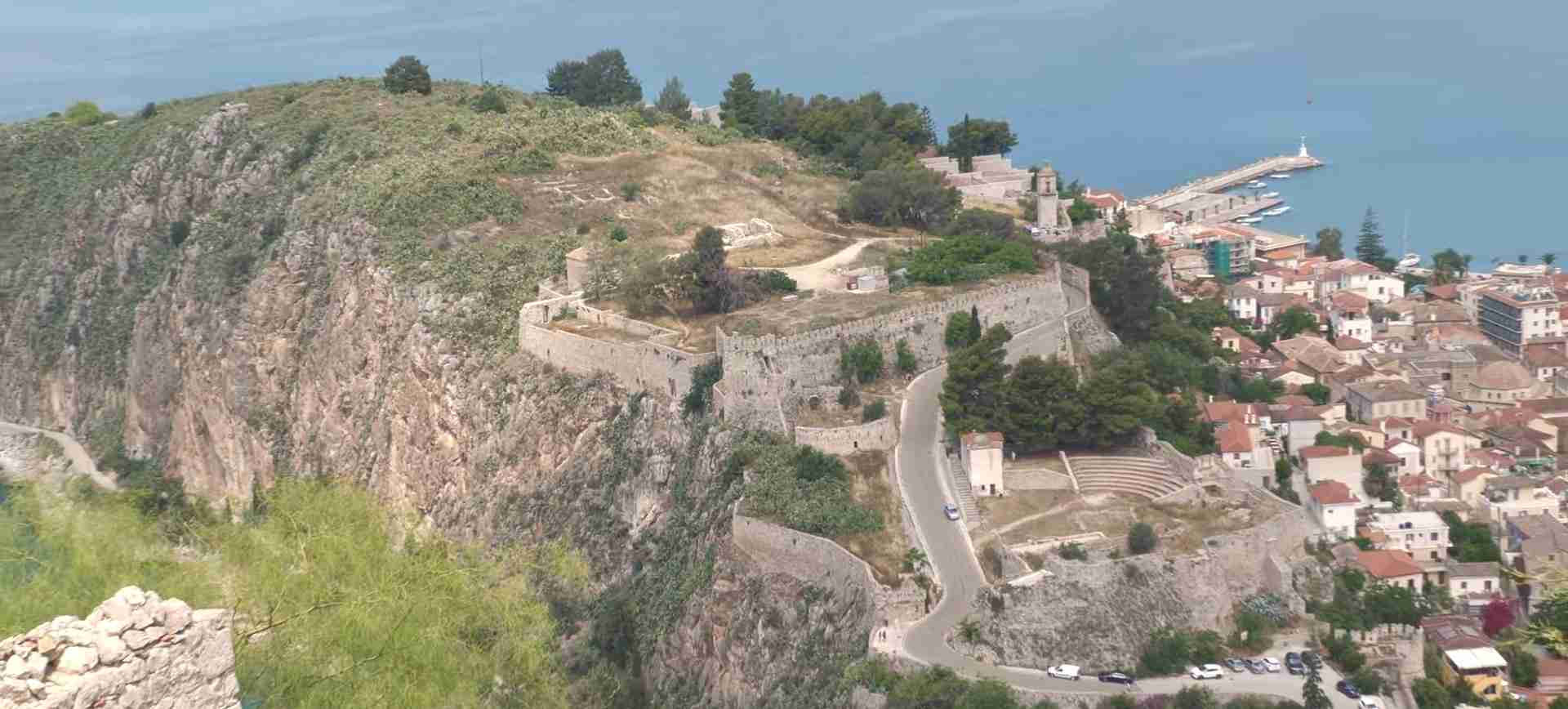
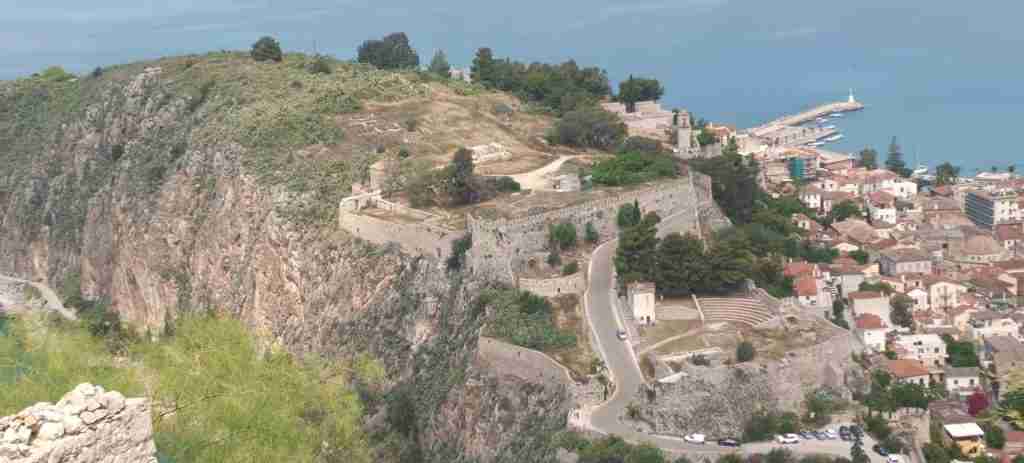
Nafplio provides 90 minutes designated as lunch break and free exploration time. Most travelers allocate 45-60 minutes for seated taverna lunch, leaving 30-45 minutes for waterfront stroll viewing Bourtzi fortress, brief Syntagma Square visit, or shopping along Staikopoulou Street. The compressed schedule prevents Palamidi Fortress ascent (requires minimum 60 minutes round trip via stairs or 40 minutes including drive to upper entrance and exploration), relegating Nafplio to lunch stop rather than proper sightseeing destination. This represents the itinerary’s major compromise—Greece’s most romantic town reduced to brief glimpse rather than thorough appreciation.
Epidaurus receives 90 minutes for ancient theater testing (coin-dropping acoustics demonstrations), Archaeological Museum viewing medical instruments and votive offerings from the healing sanctuary, and walking through sanctuary ruins including the Tholos circular building foundations and ancient stadium. The theater alone merits 30-40 minutes for climbing to upper tiers, photographing the perfect semicircle, and participating in group acoustic experiments. Remaining time splits between museum (30 minutes) and sanctuary grounds (20-30 minutes), providing overview rather than comprehensive exploration of the extensive site.
Tour Options and Pricing Comparison Athens to Nafplio 2026
The 2026 market offers five distinct tour categories for the Nafplio-Mycenae-Epidaurus circuit, each targeting different traveler profiles with corresponding price points and experience levels. Understanding category differences enables informed selection matching personal priorities between budget, group size preference, guide quality, and schedule flexibility.
Budget Group Tours with Audio Guides 2026 (€29-36 per Person)
Budget tours operate large coaches (40-50 passengers) with multilingual audio guides delivered via smartphone apps or provided devices rather than live tour leaders. Pricing starts €29-36 per person excluding entrance fees (€24 additional at sites), including only air-conditioned coach transport, driver, and audio guide access. These tours pioneered virtual reality integration, providing VR headsets recreating Mycenae palaces and Epidaurus in original glory through 3D reconstructions visible during bus rides between sites.
The budget category suits independent travelers comfortable with self-paced exploration using app narration, budget-conscious visitors prioritizing site access over guided interpretation, and travelers speaking languages beyond English/Spanish/French covered by live guides (audio guides typically offer 10 languages: English, French, German, Italian, Spanish, Portuguese, Russian, Polish, Chinese, Japanese). Group sizes exceeding 40 passengers create crowding during bathroom stops and slower museum entry/exit transitions, though sites themselves provide ample space avoiding congestion.
Major operators in this category include KeyTours, GetYourGuide partners, and Viator-listed budget options. Reviews consistently praise audio guide quality and VR immersion while noting absence of real-time question answering and limited flexibility for travelers wanting extended time at particular sites. The €29-36 pricing (€53-60 total with entrance fees) represents exceptional value for comprehensive three-site access from Athens, though travelers should prepare for large group logistics and self-directed learning rather than intimate guided experiences.
Standard Group Tours with Live Guides 2026 (€50-65 per Person)
Standard tours operate medium coaches (25-35 passengers) with English-speaking licensed tour guides providing live historical narration, answering questions, and offering personalized recommendations during free time. Pricing ranges €50-65 per person with entrance fees included, covering transport, guide services, archaeological site tickets, and sometimes bottled water or snacks. Tours at the higher end (€60-65) may include Nafplio lunch at designated tavernas or upgraded coaches with premium seating and enhanced amenities.
Live guides significantly enhance archaeological site understanding through detailed historical context, mythological storytelling connecting sites to Homer’s epics, architectural explanations revealing construction techniques, and anecdotes humanizing ancient civilizations beyond dry facts. The real-time question-and-answer format addresses specific interests—some travelers focus on military history and fortifications, others emphasize daily life and culture, while many seek connections to broader Greek mythology. Quality guides adapt emphasis based on group composition and interests.
This category represents optimal value for most travelers balancing cost and experience quality. The €50-65 price point (including entrance fees) costs only €26-41 more than budget audio guide tours yet adds substantial educational value through expert guidance. Group sizes remain manageable for hearing guides without amplification in outdoor archaeological sites, while coach comfort matches budget options. Major operators include established Athens companies with decades of experience (KeyTours, CHAT Tours, Fantasy Travel).
Premium Group Tours with Lunch Included 2026 (€75-90 per Person)
Premium group tours operate small coaches (15-20 passengers) with enhanced services including three-course lunch in Nafplio, premium guide expertise (often certified archaeologists rather than general tour guides), luxury coach seating with extra legroom, and occasionally wine tastings at Nemea vineyards en route. Pricing reaches €75-90 per person all-inclusive, covering transport, guide, entrance fees, lunch with wine, and enhanced amenities.
The premium category targets travelers prioritizing comfort and comprehensive service over budget considerations, older adults appreciating smaller groups and included meals eliminating lunch logistics, and visitors seeking maximum historical insight from specialist guides. Lunch typically occurs at pre-arranged tavernas offering set menus showcasing Greek cuisine (Greek salad, moussaka or grilled meats, dessert, house wine) rather than requiring menu navigation and payment handling during limited free time.
Smaller group sizes enable more intimate guide interaction, easier question asking without disrupting larger groups, and faster site entry/exit transitions. However, the €75-90 pricing represents significant premium over standard €50-65 tours, with main added value coming from included lunch (€15-20 value) and smaller group atmosphere rather than fundamentally different site access or dramatically superior guides. Cost-conscious travelers can achieve similar experience quality selecting standard tours and independently handling Nafplio lunch.
Private Tours Athens to Nafplio 2026 (€420-550 Total)
Private tours provide dedicated vehicle (luxury sedan, minivan, or small bus depending on group size) with English-speaking driver-guide or separate driver plus licensed guide, fully customizable timing and itinerary sequence, and flexible pickup/drop-off anywhere in greater Athens. Pricing structures as €420 for 1-3 persons, €460 for 4-7 persons, or €550 for 8-14 persons (total prices, not per person), excluding entrance fees €24 per adult but including all transport, guide services, and bottled water.
Private tours deliver maximum value for groups of 4+ persons where per-person costs (€105-140 before entrance fees) approach or undercut premium group tour pricing while gaining complete schedule control. Benefits include custom departure timing (early starts for photography or later departures suiting late risers), extended time at preferred sites (history enthusiasts spending extra time at Mycenae museum, theater lovers extending Epidaurus visits), meal flexibility (selecting specific Nafplio restaurants rather than assigned group dining), and optional itinerary additions like Nemea wine estates, Tiryns archaeological site, or Akronafplia fortress in Nafplio.
The private category particularly suits families with children requiring flexible pacing and bathroom stops, travelers with mobility limitations needing adapted schedules, photography enthusiasts wanting optimal lighting timing, and groups with specific historical interests desiring customized guide emphasis. Booking requires 7-14 days advance notice during peak season as quality private operators maintain limited vehicle fleets, though last-minute availability often exists September-May.
Independent Rental Car Option 2026 (€140-180 per Day Total)
Independent travelers can replicate the tour circuit using Athens-based rental cars, though total costs typically exceed group tour pricing except for groups of 3+ persons sharing expenses. Daily breakdown: rental car €35-60 (economy to mid-size), fuel €25-30 (approximately 350 kilometers round trip at 6-7 liters/100km with €1.65-1.85 per liter petrol), highway tolls €14 (Athens-Corinth €11.60, local tolls €2-3), parking €5-10 (Mycenae and Epidaurus charge parking), entrance fees €24 per person, and meals/refreshments €30-40 per person. Total: €133-158 per person solo, €79-94 per person as couple, €56-70 per person for three sharing.
Rental car advantages include complete schedule flexibility, ability to visit additional sites (Ancient Corinth, Tiryns, Nemea wineries), leisurely Nafplio exploration including Palamidi Fortress, restaurant selection freedom, and no group waiting. Disadvantages encompass navigation challenges in unfamiliar territory, parking logistics at archaeological sites, lack of historical context without guide (downloadable audio tours partially address this), and driving stress after full day of sightseeing reducing enjoyment of return journey.
Booking Strategies and Timing for Nafplio Day Trips 2026
Strategic booking significantly impacts availability, pricing, and overall experience quality for this popular excursion. Understanding seasonal demand patterns, optimal booking windows, and tour operator practices enables securing preferred dates at best rates while avoiding sold-out frustration or premium last-minute pricing.
Seasonal Demand Patterns Nafplio Tours 2026
Peak season extends May-October with absolute peak July-August when Greek domestic summer holidays overlap with international tourism. Daily tours operate with full or near-full buses, advance booking 5-10 days minimum proves essential for guaranteed seats, and pricing holds at maximum rates throughout the period. Budget tours (€29-36) maintain stable pricing year-round as their business model depends on volume rather than premium rates, while standard and premium tours occasionally add €5-10 summer supplements during absolute peak weeks.
Shoulder seasons (April, November) see reduced but consistent demand from international visitors enjoying moderate weather and avoiding peak crowds. Tours operate daily with higher availability, booking 2-3 days ahead typically suffices except Greek Orthodox Easter week (variable dates, usually April) when Greek domestic tourism spikes dramatically. Pricing remains at standard rates without peak supplements. Weather reliability improves compared to winter with minimal rain probability and comfortable temperatures (15-22°C) ideal for archaeological site exploration.
Winter (December-March) brings lowest demand outside Christmas-New Year week, with tour operators occasionally consolidating multiple bookings onto single departures when insufficient participants book particular dates. Booking 1-2 days ahead generally succeeds, though travelers should confirm tour operation 24 hours prior as some operators cancel when bookings fall below minimum thresholds (typically 8-12 passengers). Winter pricing drops €5-10 on some tours with promotional rates appearing for early booking. However, reduced daylight hours (sunrise 7:30 AM, sunset 5:30 PM January) compress comfortable site visiting windows, and rain probability increases to 40-50% monthly requiring backup plan flexibility.
Optimal Booking Windows by Tour Type 2026
Budget group tours with audio guides accept bookings up to 24 hours before departure year-round, though summer peak (June-August) demands 4-7 days advance for guaranteed availability. These high-volume operators run multiple daily departures during peak season, creating flexible inventory management where sold-out morning tours still have afternoon departure availability. Last-minute booking fees rarely apply given automated online systems, making flexible travelers comfortable booking 2-3 days ahead outside absolute peak weeks.
Standard group tours with live guides require 3-5 days advance booking during peak season, 1-2 days shoulder season, and sometimes accept 24-hour advance bookings winter months. Live guide availability creates capacity constraints beyond simple bus seats, as quality guides maintain busy schedules across multiple tour operators and routes. Tours with particularly popular guides (those accumulating hundreds of five-star reviews) sell out 7-10 days ahead July-August, while less-established operators maintain availability closer to departure dates.
Premium tours and private excursions demand 7-14 days advance booking during summer peak as vehicle availability and specialist guide scheduling create genuine capacity limits. High-quality private tour operators maintain 5-15 vehicles total, with popular dates accumulating multiple bookings quickly. The economics of private tours (fewer daily departures, higher per-booking value) incentivize operators to confirm schedules early rather than maintaining flexible last-minute capacity. Shoulder and winter seasons allow 3-5 days advance booking for private tours, occasionally with 48-hour availability when operators maintain lighter schedules.
Price Optimization and Booking Platforms 2026
Tour pricing remains remarkably stable across booking platforms (GetYourGuide, Viator, direct operator websites) as most Athens day tour companies fix rates and distribute through multiple channels rather than creating platform-specific pricing. However, strategic platform selection provides marginal advantages. GetYourGuide and Viator frequently offer “Reserve Now, Pay Later” options maintaining free cancellation until 24-48 hours before departure, enabling tentative booking while finalizing broader Greece itineraries without immediate payment commitment.
Direct operator booking occasionally yields €2-5 per person discounts as companies avoid 12-20% commission fees charged by aggregator platforms. However, this saving comes at expense of consolidated customer protection—aggregator platforms process refunds faster for weather cancellations or operator no-shows, maintain English-language customer service for booking changes, and often honor price guarantees if identical tours appear cheaper elsewhere. For €50-90 tours, the potential €5 saving rarely justifies losing aggregator protection and flexibility.
Multi-tour bundle discounts emerge when booking Athens city tours plus day trips through same operator, typically saving 10-15% on second and third tours. Travelers planning multiple organized excursions (Delphi day trip, Meteora overnight, Cape Sounion sunset tour) should evaluate bundle offerings from operators like KeyTours or CHAT, though bundle commitment reduces flexibility if individual tour quality disappoints on first experience.
What to Expect at Mycenae During Day Trips 2026
Mycenae represents the day trip’s archaeological centerpiece as capital of legendary King Agamemnon and epicenter of Bronze Age Mycenaean civilization dominating the Aegean 1600-1100 BCE. The 90-120 minute visit concentrates on the citadel’s most dramatic monuments while providing context for understanding this culture’s influence on Greek mythology, Homeric epics, and subsequent Classical Greek civilization.
Mycenae Archaeological Site Tour Sequence 2026
Tours typically begin outside the main entrance where guides provide 10-15 minute overview of Mycenaean civilization, Bronze Age timeline, and Agamemnon’s role in Trojan War mythology before entering the archaeological zone. The path leads immediately to the Lion Gate, Mycenae’s iconic entrance featuring two massive limestone lions (or lionesses) in heraldic pose above a relieving triangle—the earliest known monumental sculpture in European history (circa 1250 BCE). Groups pause for photographs and close examination of the cyclopean masonry technique using massive unworked limestone blocks fitted without mortar.
Ascending through the Lion Gate, the path passes Grave Circle A where Heinrich Schliemann discovered the famous death masks (including the incorrectly-named “Mask of Agamemnon” now in Athens National Archaeological Museum) in 1876. Modern protective fencing prevents close approach, but guides explain the significance of shaft grave burials containing extraordinary gold artifacts demonstrating Mycenaean wealth and craftsmanship. The steep climb continues to the citadel summit where palace foundations survive, offering panoramic views across the Argolid plain toward Argos and understanding of Mycenae’s strategic position controlling interior Peloponnese trade routes.
Descending via the northern route passes additional fortification walls, cistern access (usually closed for safety), and postern gate demonstrating Mycenaean defensive sophistication. The circuit exits near the Archaeological Museum (20-30 minutes allocated) displaying pottery, weapons, jewelry, and architectural fragments from excavations. While major treasures reside in Athens, the site museum provides essential context for understanding daily life, religious practices, and artistic achievements beyond royal burials’ spectacular gold.
The final stop visits the Treasury of Atreus (also called Tomb of Agamemnon), an enormous tholos tomb 500 meters from the main site reached by short drive or 10-minute walk. This beehive-shaped structure, built circa 1250 BCE, demonstrates remarkable engineering with its 13.5-meter diameter interior dome constructed from precisely-cut limestone blocks. Groups enter the chamber to experience the acoustic properties and architectural scale, though the treasury itself was looted in antiquity leaving only the impressive structure rather than burial goods.
Maximizing Limited Time at Mycenae 2026
Organized tour schedules provide insufficient time for thorough museum exploration plus complete citadel investigation, forcing prioritization choices. History enthusiasts should allocate 40-50 minutes following guides through the citadel, then spend remaining 30-40 minutes in the museum examining pottery evolution, Linear B tablets (early Greek writing), and weaponry while skipping or minimizing Treasury of Atreus (which groups visit en masse creating crowding). Photography enthusiasts reverse priorities—quick citadel transit (25-30 minutes) reaches the Treasury of Atreus before tour bus crowds, enabling dramatic interior photos without people, then allocate 20 minutes for Lion Gate and summit photography during optimal morning lighting.
The site layout spreads across uneven terrain with continuous uphill walking from entrance to palace summit. Comfortable walking shoes prove essential as polished limestone pathways become slippery, particularly morning dew or afternoon heat. Summer visitors should carry water (limited shade at exposed citadel summit) and consider sun protection (hat, sunscreen) as Mediterranean sun reflecting off pale limestone intensifies exposure. Winter visitors navigate occasional muddy patches after rain, requiring shoes with grip rather than smooth-soled casual footwear.
Nafplio Free Time Strategies During Day Trips 2026
The 90-minute Nafplio stop serves dual purposes as lunch break and brief introduction to Greece’s most romantic town, though compressed timing prevents thorough exploration relegating Nafplio to appetizer rather than main course. Strategic use of this limited window enables sampling the town’s essential character while managing lunch logistics efficiently.
Nafplio Lunch Options for Day Trip Groups 2026
Tours arriving Nafplio 12:00-12:45 PM position travelers for lunch during prime Greek dining hours, with restaurants prepared for midday service unlike earlier Northern European lunch timing. Budget-conscious travelers should target traditional tavernas one street back from premium waterfront locations, where tourist menus offer complete meals (salad, main course, beverage) for €15-22 versus €25-35 at harborfrontrestaurants. Recommended quick-service options include Gyro Souvlaki shops along Staikopoulou Street (€8-12 for substantial wraps), bakeries selling spanakopita and tiropita (€3-5), and Kentrikon Café on Syntagma Square for coffee and pastries if skipping full meals.
Seated taverna service typically requires 45-60 minutes from ordering through bill payment, consuming most of the allocated free time and leaving 30 minutes maximum for walking. Travelers prioritizing sightseeing over leisurely dining should employ strategic ordering—arrive restaurant immediately upon bus arrival 12:00-12:15 PM, review menu during walk rather than at table, order immediately when seated, and request bill with main course delivery to enable prompt payment. This aggressive approach cuts seated time to 35-40 minutes, providing 50-55 minutes for post-lunch exploration.
The optimal compromise involves quick gyros wraps (10 minutes purchase and consumption) eaten while walking waterfront promenade, maximizing exploration time while experiencing authentic Greek street food quality. This approach enables 75-80 minutes total walking covering Bourtzi waterfront views, Syntagma Square architecture, partial Staikopoulou shopping street, and Church of Agios Spyridon (where Ioannis Kapodistrias was assassinated—visible bullet hole in wall). Budget allocation: €8-10 gyros, €3-4 gelato from Koustenis (1.50€ per scoop), total €12-15 versus €15-35 seated restaurant meals.
What You Can See in 90 Minutes Nafplio 2026
Realistic 90-minute Nafplio exploration covers waterfront promenade from tour bus drop-off to Syntagma Square (10-minute walk), viewing Bourtzi island fortress from multiple angles, circling Syntagma Square examining neoclassical architecture and Archaeological Museum exterior (insufficient time for museum entry requiring 45-60 minutes), walking Staikopoulou pedestrian street (main shopping thoroughfare with tourist shops, bakeries, cafés), and visiting Church of Agios Spyridon with its assassination historical marker. This circuit provides photographic overview and architectural sampling without reaching Palamidi Fortress, Akronafplia castle, or residential upper town neighborhoods requiring extended walking.
Photography priorities during limited time include Bourtzi harbor views with town backdrop (accessible from multiple waterfront vantage points), colorful Venetian buildings along Syntagma Square, bougainvillea-draped balconies throughout Old Town lanes, and Palamidi Fortress dominating the skyline (though climbing requires minimum 60-minute allocation impossible within day trip timing). Golden hour lighting (early morning or late afternoon) rarely aligns with midday Nafplio arrival, making harsh overhead sun a photographic challenge—seek shaded side streets for architectural detail shots avoiding blown highlights.
Travelers finding Nafplio’s 90-minute glimpse inadequate frequently cite this as primary day trip weakness in reviews, noting the town merits overnight stays for proper appreciation. The brief exposure serves effectively as reconnaissance for future extended visits, identifying hotels for booking return trips, flagging restaurants for evening dining, and motivating multi-day Peloponnese itineraries based in Nafplio rather than limiting exposure to rushed day trip windows.
Epidaurus Theater and Sanctuary Experience 2026
Epidaurus concludes the day trip circuit with ancient Greece’s best-preserved theater and one of its most significant healing sanctuaries, dedicated to Asclepius god of medicine. The 90-minute allocation balances theater acoustic demonstrations, Archaeological Museum viewing, and sanctuary grounds exploration, though many tours concentrate heavily on theater at expense of equally significant sanctuary ruins.
Epidaurus Theater Acoustics and Tour Demonstrations 2026
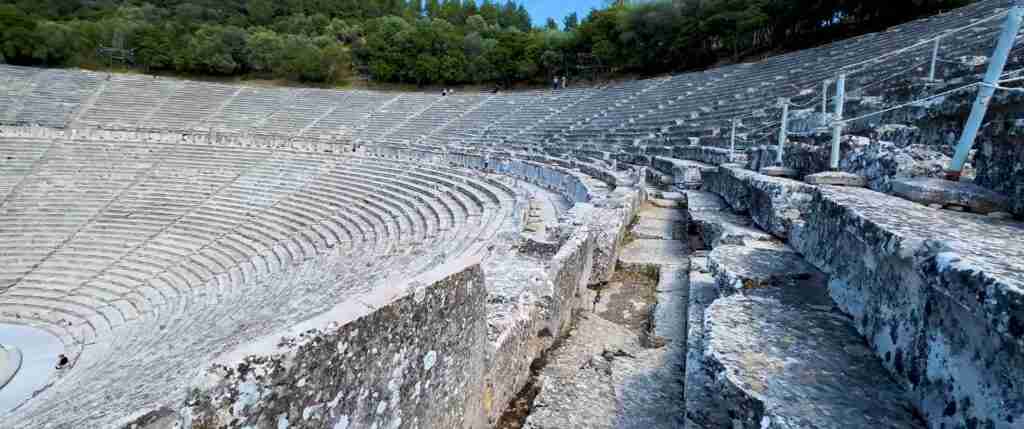
The 4th-century BCE theater seating 14,000 spectators maintains extraordinary acoustic properties enabling voices from the circular orchestra to reach the highest tier seats with clarity rivaling modern amplification systems. Tour groups inevitably participate in acoustic demonstrations—guides standing at orchestra center drop coins, tear paper, speak normally, or have group members recite poetry/sing while others climb to top rows confirming perfect audibility. This participatory experience creates memorable engagement with ancient engineering rather than passive monument viewing.
The acoustic phenomenon derives from multiple architectural factors including the theater’s semicircular geometry focusing sound waves toward seating areas, tiered seating design reflecting sound upward, and limestone material properties dampening low-frequency background noise while transmitting higher-frequency voices. Modern studies using ultrasonic measurements confirmed Renaissance-era theories that the theater’s design intentionally optimized acoustics rather than achieving this effect accidentally. Understanding the engineering sophistication enhances appreciation beyond simple “wow, I can hear him!” reactions during demonstrations.
Photography opportunities span wide-angle shots capturing the complete semicircle from upper tiers, detail shots of the Corinthian pilasters at the parodos entrances, and people shots with subjects positioned at orchestra center demonstrating scale. Midday lighting creates harsh shadows across the white limestone seating, while morning or late afternoon side-lighting reveals three-dimensional texture and tier divisions more dramatically. Tours arriving 2:15-3:00 PM encounter variable lighting depending on season—favorable in spring/fall, harsh in summer, increasingly dim in winter’s shorter days.
Epidaurus Archaeological Museum and Sanctuary Ruins 2026
The Archaeological Museum adjacent to the theater entrance houses extraordinary collections of architectural fragments, medical instruments from the healing sanctuary, and votive offerings depicting body parts cured through Asclepius worship (stone and clay representations of legs, eyes, breasts indicating afflictions healed). The limited 25-30 minute museum allocation forces selective viewing—prioritize the surgical instrument display demonstrating ancient medical sophistication, architectural models reconstructing the sanctuary in its 4th-century glory, and inscription translations explaining healing practices and rituals performed at the site.
Beyond the theater and museum, the sanctuary grounds preserve foundations of multiple significant structures though tourists often skip these in favor of extended theater time. The Tholos (circular building) foundations reveal intricate floor patterns with concentric circles and spirals, believed to have served ceremonial purposes in the healing cult. The Stadium where ancient athletic games occurred (smaller and less famous than Olympia’s) shows clear starting lines, turning posts, and seating areas. The Abaton (dormitory where patients slept awaiting divine dream-healing) and various smaller temples and administrative buildings create extensive archaeological zone worthy of 45-60 minutes exploration though tour schedules rarely allocate sufficient time.
The healing sanctuary context elevates Epidaurus beyond simple theater tourism—this was ancient Greece’s equivalent to modern medical centers, combining religious ritual, therapeutic rest, dietary regimens, and early scientific medicine in holistic healing approach. Patients traveled from across the Mediterranean seeking cures for ailments ranging from infertility to chronic pain, participating in purification rituals, offering sacrifices, sleeping in the Abaton hoping for divine healing dreams, then consulting priest-physicians who interpreted dreams and prescribed treatments. This sophisticated system operated for nearly 1000 years (6th century BCE through 4th century CE) before Christian emperors closed pagan temples, demonstrating remarkable cultural continuity.
Practical Planning Tips for Nafplio Day Trips 2026
What to Pack for the Full Day 2026
Essential items for comfortable day trip experience include comfortable walking shoes with ankle support and grip (3-4 kilometers total walking across uneven archaeological sites), sun protection (hat, sunglasses, sunscreen SPF 30+) for exposed limestone sites May-September, reusable water bottle (1-liter minimum, refillable at stops—Mediterranean summer heat requires constant hydration), camera or smartphone with charged battery plus backup power bank (10+ hours away from hotel charging), light jacket or sweater for air-conditioned bus (can feel cold after site visits in summer heat), and small backpack keeping hands free for climbing and photography.
Optional but valuable items include downloaded offline maps (Google Maps offline areas covering Argolid region), guidebook sections on Mycenae and Epidaurus for deeper context than brief tour narration provides, earphones for audio guide tours, antihistamine medication for travelers with dust or pollen allergies (archaeological sites disturb settled dust, spring wildflowers trigger allergies), motion sickness medication if prone to bus travel nausea on winding roads, and hand sanitizer/wet wipes (bathroom facilities at archaeological sites vary in cleanliness and soap availability).
Money and Payment Logistics During Tours 2026
Tours operate cashless for main payment (credit card booking online), but cash euros prove essential for incidentals throughout the day. Recommended cash allocation: €15-25 for Nafplio lunch at tavernas or gyros shops (most accept cards but small establishments prefer cash), €5-10 for coffee/refreshments during stops, €2-3 for site bathroom tips (official bathrooms free but attendants appreciate small gratuities for maintaining facilities), €5-10 buffer for unexpected purchases (artisan products at Nafplio shops, bottled water if personal bottle depleted). Total recommended: €30-50 per person in small denominations (€5, €10, €20 notes plus €1-2 coins).
Entrance fees for travelers booking budget tours excluding tickets require €24 per adult payable at Mycenae and Epidaurus site entrances. Both sites accept credit cards at ticket offices, but cash payment proves faster avoiding card reader delays with large tour groups. ATMs at Corinth Canal stop and Nafplio town center enable cash withdrawal if needed, though using Athens hotel area ATMs before departure avoids tour-day banking stress.
Weather Considerations and Seasonal Variations 2026
Summer tours (June-August) face intense Mediterranean heat with temperatures regularly exceeding 32°C (90°F) at exposed archaeological sites by midday. The tour’s scheduling mitigates worst heat—Mycenae visit 10:00 AM-12:00 PM avoids peak afternoon temperatures, Nafplio lunch occurs during hottest hours with restaurant air conditioning providing respite, and Epidaurus visit 2:30-4:00 PM benefits from lengthening shadows as sun angles lower. However, travelers sensitive to heat should prepare for challenging conditions, particularly at Mycenae’s exposed citadel summit lacking shade.
Spring and fall tours (April-May, September-October) offer optimal conditions with moderate temperatures (18-26°C), minimal rain probability, comfortable site walking, and wildflower blooms (spring) or golden autumn landscapes enhancing photography. These shoulder seasons represent ideal timing for archaeology-focused tours prioritizing site conditions over beach weather, with added benefits of reduced crowds at UNESCO sites and lower accommodation costs for travelers extending stays in Nafplio.
Winter tours (November-March) confront rain probability (40-50% monthly), shorter daylight limiting photography windows, occasional site closures during storms, and cold morning departures from Athens (5-10°C at 8:00 AM pickup). However, dramatic winter light creates exceptional photography when weather cooperates, sites operate free from summer crowds, and reduced tourism creates intimate experiences. Winter tour participants should pack waterproof jacket, layers for temperature fluctuation (cold morning bus, warmer midday sites, cooling return evening), and flexible attitudes accepting weather-related schedule adjustments.
Enhancing the Experience Through Advance Preparation 2026
Strategic advance preparation transforms day trips from passive bus tourism to actively engaged historical exploration. The compressed 10-11 hour schedule leaves minimal time for on-site research or spontaneous learning, making pre-trip study particularly valuable for maximizing limited site time.
Recommended Pre-Trip Reading and Resources 2026
Essential background reading includes Homer’s Iliad (particularly Book 1-9 covering Agamemnon’s role in Trojan War, available in readable modern translations by Robert Fagles or Emily Wilson) providing mythological context for Mycenae’s significance and understanding why this Bronze Age citadel captivated 19th-century archaeologists. Heinrich Schliemann’s autobiographical accounts of discovering Mycenae (available in abbreviated excerpts online) reveal Victorian-era archaeology’s romantic enthusiasm and questionable methodology while explaining how artifacts ended in Athens rather than remaining in situ.
For Epidaurus context, accessible medical history texts explaining Asclepius cult and ancient Greek healing practices (available in podcast form through BBC “In Our Time” Asclepius episode or Yale’s “Introduction to Ancient Greek History” lecture series) illuminate why wealthy patients traveled hundreds of miles seeking cures. Understanding ancient theater’s role in religious festivals and civic education (Peter Arnott’s “Public and Performance in the Greek Theatre” provides brief accessible overview) deepens appreciation for Epidaurus theater beyond acoustic novelty.
Watching documentary content including BBC’s “The Mycenaeans” (YouTube availability varies by region) and “Secrets of the Aegean Apocalypse” covering Bronze Age collapse circa 1200 BCE provides visual context for understanding Mycenae’s cyclopean walls and eventual abandonment. Virtual reality “recreations” of ancient Mycenae and Epidaurus (searchable on YouTube) preview sites’ original appearance before centuries of deterioration, though these should be viewed critically as artists’ interpretations rather than archaeological certainties.
Photography Strategy for Day Trip Sites 2026
Limited time at each site demands efficient photography strategy rather than extensive shooting sessions. For Mycenae, prioritize Lion Gate frontal view (morning side-lighting creates dimensional modeling), citadel summit panorama (360-degree views merit both landscape orientation across Argolid plain and portrait orientation emphasizing vertical drama), and Treasury of Atreus interior (wide-angle lens 16-24mm captures full dome, though interior darkness requires high ISO 1600-3200 or tripod for longer exposures if tour allows positioning time).
Epidaurus theater photography benefits from climbing to top tiers for compressed perspective showing complete semicircle (though steep climb consumes 5-10 minutes of limited time), capturing acoustic demonstrations with foreground subjects at orchestra and background groups in upper tiers demonstrating scale, and close detail shots of Corinthian capitals at parodos entrances. Midday overhead sun creates harsh lighting with blown highlights on white limestone—embrace high contrast rather than fighting conditions, use fill flash for foreground subjects against bright backgrounds, or convert to black-and-white in post-processing emphasizing geometry over color.
For Nafplio’s 90-minute window, photograph Bourtzi fortress from waterfront positions at multiple distances (telephoto compression 70-200mm emphasizes fortress detail, wide-angle 16-35mm shows harbor context), capture colorful Venetian architecture along Syntagma Square (saturation boost enhances weathered pastel walls), and seize candid street photography opportunities in pedestrian lanes (slower shutter speeds 1/30-1/60 second with stabilization create slight motion blur conveying energy while maintaining sharpness on stationary architectural elements).
Comparing Day Trips to Multi-Day Nafplio Stays 2026
Day trips from Athens provide efficient exposure to Peloponnese highlights for time-limited travelers, but multi-day stays based in Nafplio offer qualitatively superior experiences for visitors with flexible schedules. Understanding tradeoffs helps allocate limited Greece vacation time optimally between different touring approaches.
When Day Trips Make Strategic Sense 2026
Day trips suit travelers with limited Greece time (3-5 days total) prioritizing Athens and islands over Peloponnese depth, visitors uncomfortable driving in unfamiliar countries who prefer organized transport, solo travelers and pairs finding tour economics favorable compared to private car rentals, and first-time visitors seeking overview of classical Greek sites before committing extended time to particular regions. The compressed 10-11 hour format introduces major destinations efficiently, identifies sites meriting return visits, and eliminates accommodation changes while maintaining Athens hotel as base for broader city exploration.
Day trip scheduling flexibility benefits travelers with unpredictable work schedules booking Greece trips on short notice, allowing tour selection 2-5 days before travel without hotel commitment risks. Last-minute Athens arrivals can add Peloponnese exposure without pre-booked accommodation in secondary cities, then use tour experience to inform whether extended Peloponnese returns merit future trip planning. Tours also eliminate luggage management challenges for travelers continuing to Greek islands after Athens—no need to pack/unpack for single-night Nafplio stays, carry belongings on transportation, or coordinate ferry schedules from Peloponnese ports.
When Multi-Day Nafplio Stays Deliver Superior Value 2026
Multi-day stays (minimum 2 nights/3 days, optimal 3 nights/4 days) enable leisurely Palamidi Fortress exploration including 857-step staircase climb and extended rampart wandering impossible in day trip schedules, thorough Nafplio architecture appreciation wandering residential neighborhoods beyond tourist core, beach time at Karathona or Arvanitia, multiple UNESCO site visits without rushed transitions (Mycenae and Tiryns day one, Epidaurus and Ancient Corinth day two), evening waterfront dining experiences sampling Nafplio’s exceptional restaurant scene, and authentic immersion in Greek rhythms beyond organized tour timetables.
The economic comparison favors multi-day stays for groups and budget-flexible travelers—€110-180 nightly accommodation plus €80-120 daily costs (meals, site admissions, activities) totals €380-600 for two-person three-day stay versus €100-130 per person Athens day trip tour plus €300-400 Athens hotel costs during same period, delivering comparable total expense with dramatically enhanced experience quality. Rental cars amplify multi-day value through access to archaeological sites beyond tour routes (Tiryns, Ancient Nemea, Ancient Messene), wine tourism in Nemea, beach exploration beyond Nafplio, and mountain villages preserving traditional architecture.
Multi-day photography particularly benefits from sunrise/sunset timing impossible in midday-focused day trips—Palamidi Fortress at golden hour, Bourtzi with dawn colors reflected in harbor calm, Nafplio streets in blue hour twilight, and Mycenae citadel summit at sunrise (site opens 8:00 AM year-round enabling early photography before tour groups). The temporal flexibility transforms from rushed snapshots to patient composition, optimal lighting pursuit, and return visits when weather improves after initial disappointing conditions.
Frequently Asked Questions Nafplio Day Trips from Athens 2026
What should I wear on a Nafplio day trip from Athens in summer 2026?
Wear comfortable walking shoes with ankle support and grip for uneven archaeological site terrain (avoid sandals, flip-flops, high heels), lightweight breathable clothing covering shoulders and knees for sun protection and modest church entry, sun hat with brim shading face and neck, and bring light jacket for air-conditioned bus that feels cold after outdoor heat exposure. Avoid wearing new shoes causing blisters during 3-4 kilometers total walking, or restrictive clothing limiting climbing mobility at Mycenae’s steep citadel and Epidaurus theater tiers. Layers work better than single-temperature outfits as you transition between cool morning bus departure, hot midday sites, air-conditioned Nafplio restaurants, and cooling evening return. Women should note that flowing skirts or dresses create challenges climbing ancient stone steps (Mycenae, Epidaurus theater)—fitted shorts or pants provide better mobility and modesty.
Can I bring children on Nafplio, Mycenae, Epidaurus day trips in 2026?
Day trips accommodate children age 6+ who can handle 10-11 hours away from hotel, extensive bus riding (3+ hours total), walking 3-4 kilometers across uneven terrain, and maintaining attention during historical narration. EU citizens under 25 and all children under 18 receive free archaeological site admission, making tour costs for families only transport and guide services. However, young children struggle with extended bus confinement, heat exposure at summer archaeological sites, and limited playground/activity variety across the day. Most tours provide no children’s programming—standard adult historical narration continues regardless of participant ages. Family tours designed for children (offered by some premium operators) incorporate mythology storytelling, hands-on activities, shorter site visits, and kid-friendly lunch options, though these command significant price premiums €90-120 per person. Realistic assessment: children interested in ancient history, Greek mythology, and comfortable with significant walking thrive on these tours, while children preferring beaches, playgrounds, and shorter attention spans find the day exhausting and boring.
What happens if it rains on my scheduled Nafplio day trip in 2026?
Tours operate in light-moderate rain with participants expected to manage personal rain protection (umbrellas, waterproof jackets, waterproof shoes). Heavy rain causing dangerous conditions at archaeological sites (slippery marble stairs, flash flooding in valleys, lightning proximity) triggers tour modifications—operators may abbreviate outdoor site time while extending museum visits, reverse itinerary sequence hoping weather improves, or rarely cancel tours entirely with full refunds or alternate date rebooking. Winter tours (November-March) face highest cancellation probability during severe storms, while summer rain remains brief and tours continue with minimal disruption. Travelers booking flexible “free cancellation until 24-48 hours before” options through GetYourGuide or Viator can monitor extended weather forecasts and cancel/rebook if multi-day rain systems approach. Tour operators contact participants via email/phone morning of departure (5:00-7:00 AM) announcing weather cancellations, though this late notice challenges travelers who’ve cleared full day schedules specifically for the excursion.
Should I book a tour including entrance fees or purchase tickets separately in 2026?
Book tours including entrance fees (€50-65 range) rather than budget tours excluding tickets (€29-36 plus €24 fees separately) for three key reasons. First, total cost difference proves minimal (€53-60 versus €50-65, only €3-10 premium) making the decision marginal on economics. Second, included tickets eliminate on-site purchasing delays where tour groups queue at ticket offices rather than proceeding directly through gates—5-10 minute delays per site accumulate into 15-20 minutes lost from already-limited exploration time. Third, large tour operators negotiate direct access arrangements with site management enabling skip-the-line entry during peak season when general admission lines extend 15-30 minutes at popular Mycenae entrance July-August. The only scenario favoring separate ticket purchase involves travelers holding valid credentials for free admission (EU students under 25 with student ID, EU citizens over 65, archaeology professionals with ICOM cards) where budget tour price plus €0 tickets beats all-inclusive tour pricing significantly.
Can I extend my stay in Nafplio instead of returning to Athens with the tour in 2026?
Most organized tours require return to Athens with the group as buses operate fixed round-trip schedules, luggage remains on board throughout the day, and operator insurance covers participants only during scheduled tour duration. However, private tours (€420-550) enable flexible drop-off arrangements—book Athens hotel pickup but request Nafplio drop-off, paying only modest surcharge €30-50 for one-way service versus round-trip. This strategy works perfectly for travelers with accommodation pre-booked in Nafplio wanting guided UNESCO site visits before independent town exploration, or those continuing Peloponnese circuits toward Sparta, Monemvasia, or western Peloponnese after Nafplio stays. Coordinate luggage logistics carefully—pack separate day bag for tour with overnight bags arranged for Nafplio hotel transfer, or request morning hotel checkout with afternoon Nafplio hotel check-in enabling direct transfer without returning Athens. The private tour modification adds significant value for travelers with flexible itineraries, converting rushed day trip into efficient transport plus guided touring combination serving dual purposes.
How physically demanding is the Nafplio day trip for seniors or less mobile travelers in 2026?
Day trips involve moderate physical demands: 3-4 kilometers total walking across uneven ancient paving stones and dirt paths, climbing 50-100 steep stone steps at Mycenae citadel, ascending/descending 100+ theater steps at Epidaurus (optional—bottom tier seating provides acoustic demonstration without climbing), standing 15-20 minutes during guide narrations at each site, and enduring 3+ hours seated on buses. Mobility-limited travelers can participate with modifications—remain near site entrances photographing monuments from distance while groups climb higher, sit in bus during strenuous citadel summit sections, request front-row bus seating with easier entry/exit, and pace walks to personal comfort rather than matching group speed. However, tours cannot accommodate wheelchairs at archaeological sites due to ancient pathways lacking ramp access, and walkers/canes navigate rough terrain with difficulty requiring assistance. Travelers with significant mobility limitations should book private tours enabling completely customized pacing, optional skip-the-step alternatives, and flexible rest breaks matching energy levels. Standard group tours maintain schedules expecting all participants to keep reasonable pace—falling significantly behind risks missing bus departures or forcing entire group to wait.
What’s the best season for Nafplio day trips balancing weather and crowds in 2026?
April-May and September-October represent optimal timing combining comfortable temperatures (18-26°C ideal for extensive walking), minimal rain probability (15-25% monthly), wildflower blooms or autumn colors enhancing landscapes, and moderate crowds at UNESCO sites allowing unobstructed photography and relaxed exploration. These shoulder months avoid summer heat stress (32-38°C July-August), winter rain frequency (40-50% November-March), and absolute peak tourist congestion when multiple large tour groups converge simultaneously at Mycenae and Epidaurus requiring patient queuing for photo opportunities. Spring edges ahead of fall for photography due to vibrant green countryside, blooming wildflowers across archaeological sites, and crystal-clear post-winter air enhancing distance visibility across the Argolid plain from Mycenae citadel. However, Greek Orthodox Easter week (variable April dates) brings exceptional Greek domestic tourism creating hotel scarcity and inflated pricing—verify Easter dates before booking spring trips and avoid the specific week for optimal conditions.
Do Nafplio day trips include time for swimming at beaches in 2026?
Standard Nafplio day trips do not allocate beach time as itineraries concentrate on archaeological sites and brief Nafplio town exploration, with the 90-minute Nafplio stop scheduled as lunch break rather than recreation period. Arvanitia Beach sits 10-minute walk from where tour buses park, but attempting swimming consumes 40-50 minutes minimum (walking 10 minutes each way, changing clothes, actual swimming 15-20 minutes, rinsing/drying) leaving insufficient time for lunch unless skipping meals entirely. Summer travelers desperate for swimming should bring swimsuits and towels in day bags, purchase quick gyros lunch (€8-10, 10 minutes), then allocate remaining 70-75 minutes for rushed beach visit—though this frantic schedule defeats the relaxation purpose of beach time. Premium private tours can incorporate beach stops when requested, typically adding 60-90 minutes Karathona Beach time after Nafplio lunch at expense of reducing archaeological site duration or extending total tour length to 12-13 hours. Realistic expectation: treat Nafplio day trips as archaeological focused excursions, save beach time for dedicated beach days on Greek islands or coastal Athens suburbs (Vouliagmeni, Glyfada) during multi-day Athens stays.
Can I visit Ancient Corinth in addition to Mycenae and Epidaurus on day trips in 2026?
Few standard tours include Ancient Corinth archaeological site as fourth stop because adding this extensive site (requiring 90+ minutes exploration) extends total tour duration to 12-13 hours creating exhausting schedules and late Athens returns (8:00-9:00 PM). Some premium tours offer Ancient Corinth-Mycenae-Nafplio-Epidaurus combinations at €90-110 per person pricing, departing Athens earlier (7:00-7:30 AM) and returning later (7:30-8:30 PM), suitable for travelers prioritizing comprehensive archaeological exposure over comfortable pacing. Private tours easily incorporate Ancient Corinth when requested, typically routing Athens → Corinth Canal → Ancient Corinth → Mycenae → Nafplio → Epidaurus → Athens for logical geographic sequencing. The Ancient Corinth addition merits consideration for New Testament history enthusiasts (St. Paul established early Christian community here, referenced in Corinthians epistles), Roman archaeology fans (site preserves extensive Roman city remains versus Bronze Age/Classical Greek focus at Mycenae/Epidaurus), and completist travelers wanting maximum archaeological site concentration per day. However, four-site itineraries risk superficial exposure rushing through each location rather than thorough engagement—three-site standard tours provide better balance between breadth and depth for most travelers.
What COVID-related requirements or restrictions apply to Nafplio day trips in 2026?
As of 2026, Greece has eliminated COVID-specific entry requirements, mask mandates, and capacity restrictions that affected tourism during 2020-2023. Day trips operate without vaccination proof requirements, mask wearing, or social distancing protocols, returning to pre-pandemic normal operations with full-capacity buses, unrestricted site access, and standard group sizes. However, tour operators maintain enhanced cleaning protocols developed during pandemic as permanent improvements—buses receive thorough sanitization between tours, hand sanitizer stations remain available on coaches, and operators honor flexible cancellation policies enabling last-minute rebooking if travelers develop illness (COVID or otherwise) rather than forcing attendance while sick. Individual travelers with heightened health concerns can request window seats for better ventilation, wear masks during bus portions if desired (personal choice, not required), and maintain physical distance during outdoor archaeological site portions where space allows. The post-pandemic tourism landscape has normalized, but valuable health-conscious practices persist as customer service improvements rather than mandated restrictions.