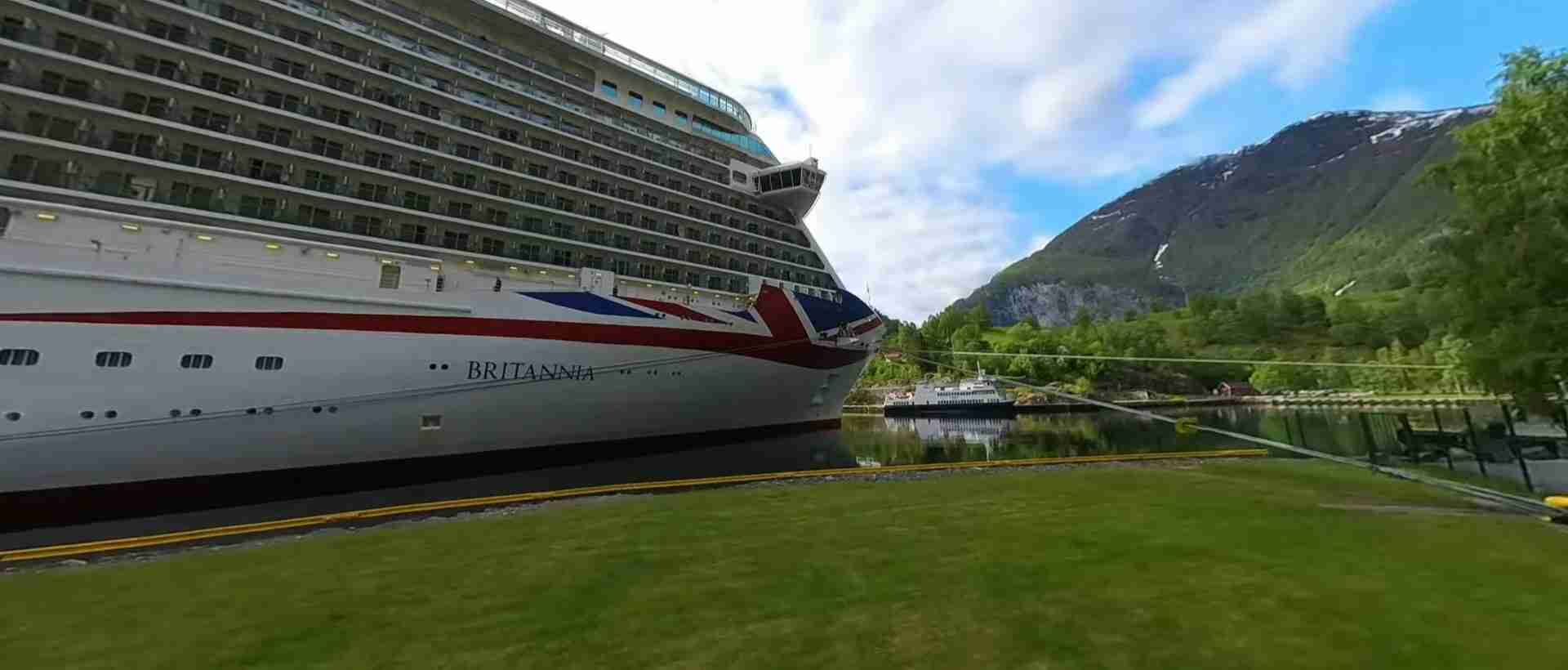
Nærøyfjord Cruise: UNESCO World Heritage Fjord Experience
Nærøyfjord represents Norway’s most dramatic fjord landscape, earning UNESCO World Heritage status in 2005 for its exceptional natural beauty and pristine character. This 17-kilometer branch of Sognefjord narrows to just 500 meters wide between vertical rock walls soaring 1,400 meters above the water, creating an almost overwhelming sense of scale best experienced from the deck of a cruise vessel gliding through its sheltered waters.
Key Takeaways
- UNESCO Recognition: Nærøyfjord shares World Heritage designation with Geirangerfjord as part of the West Norwegian Fjords listing, recognized for exceptional natural beauty and geological significance representing Earth’s finest fjord landscapes
- Extreme Proportions: The fjord measures only 500 meters wide at its narrowest section while vertical walls rise 1,400 meters above the water and extend 500 meters below sea level, creating Norway’s most dramatic ratio of width to height
- Pristine Character: No roads penetrate Nærøyfjord, preserving completely natural character accessible only by boat, maintaining landscapes virtually unchanged for centuries
- Classic Route: The Gudvangen-Flåm cruise covers the entire 17-kilometer Nærøyfjord length plus neighboring Aurlandsfjord during a 2-hour journey, forming the centerpiece of the famous Norway in a Nutshell tour
- Living Heritage: Traditional farms cling impossibly to steep mountainsides, representing centuries of continuous habitation and agricultural practices preserved alongside natural landscapes
- Wildlife Encounters: Seals, sea eagles, mountain goats, and waterfalls create constant points of interest during cruises, with crew providing commentary identifying features and explaining geological processes
People Also Ask About Nærøyfjord Cruises
How long is a Nærøyfjord cruise?
The classic Nærøyfjord cruise between Gudvangen and Flåm takes approximately 2 hours covering 17 kilometers through Nærøyfjord and continuing through neighboring Aurlandsfjord. This duration allows comfortable viewing of landscape features, wildlife, and traditional farms while maintaining forward progress through the entire fjord length. Some cruise operators offer extended versions with additional commentary or stops, reaching 2.5-3 hours. Round-trip cruises from either Gudvangen or Flåm require 4-5 hours total. The relatively short cruise duration makes Nærøyfjord accessible as part of day tours from Bergen or Oslo, though many visitors prefer slower itineraries allowing overnight stays in Flåm, Aurland, or Gudvangen to fully appreciate the region’s landscapes and cultural attractions.
What makes Nærøyfjord different from other Norwegian fjords?
Nærøyfjord’s distinctive character emerges from its extreme narrowness relative to wall height, creating almost claustrophobic grandeur unmatched in other Norwegian fjords. At 500 meters wide between walls rising 1,400 meters, the height-to-width ratio exceeds 2.5:1, far surpassing broader fjords. The complete absence of roads and minimal modern development preserves pristine natural character, with traditional farms representing the only significant human presence visible from cruise vessels. This preservation earned UNESCO recognition alongside Geirangerfjord as the finest examples of fjord landscapes. National Geographic rated Nærøyfjord and Geirangerfjord as the world’s number one natural heritage site, surpassing competitors globally. The fjord’s narrow configuration creates unique acoustic properties, with waterfalls’ sounds echoing between rock walls and boat engines resonating dramatically. Many visitors describe Nærøyfjord as more intimate and overwhelming than wider, deeper fjords, despite smaller absolute dimensions.
Can I take a Nærøyfjord cruise year-round?
Nærøyfjord cruises operate throughout the year, though schedules vary substantially between seasons. Summer months from May through September bring multiple daily departures in both directions between Gudvangen and Flåm, with some operators running hourly service during peak July-August periods. Spring and autumn see reduced schedules with 2-4 daily departures, while winter maintains minimum service with typically 1-2 daily cruises. Winter operations face challenges including reduced daylight hours, potential ice formation in shallow areas, and weather conditions occasionally forcing cancellations. However, winter cruises offer unique experiences including snow-covered mountains, frozen waterfalls, and dramatic lighting unavailable during summer. Booking ahead becomes essential during summer peak season, while winter typically permits last-minute bookings. Weather impacts operations year-round, with strong winds occasionally preventing departures even during summer months.
What should I wear on a Nærøyfjord cruise?
Layered clothing provides essential flexibility for changing conditions during Nærøyfjord cruises regardless of season. Temperatures on the water run consistently cooler than on land, with wind chill effects from boat movement and fjord breezes further reducing comfort. Even summer cruises require windproof jackets over lighter layers, as deck temperatures often feel 5-10 degrees cooler than sheltered land areas. Winter cruising demands warm jackets, hats, and gloves, as temperatures drop substantially below freezing when wind chill factors apply. Waterproof outer layers protect against spray and occasional rain regardless of forecast, as weather changes rapidly in fjord environments. Comfortable, non-slip footwear ensures safe movement on potentially wet decks while standing for extended viewing periods. Sunglasses help during summer months when sun reflects intensely off water, while winter months require less sun protection but greater cold-weather preparation. Indoor heated areas on most vessels provide warming opportunities, though viewing from outdoor decks maximizes experience quality.
Extended multi-day tours – 5+ days
Featured Norway Multi-Day Tour Packages
3 days
Norway 3-Day Discovery Tour
- ✓ Comprehensive Norway experience
- ✓ Expert local guides included
- ✓ All accommodation included
- ✓ Transportation provided
5 days
Norway 5-Day Highlights Experience
- ✓ Comprehensive Norway experience
- ✓ Expert local guides included
- ✓ All accommodation included
- ✓ Transportation provided
7 days
Norway 7-Day Cultural Journey
- ✓ Comprehensive Norway experience
- ✓ Expert local guides included
- ✓ All accommodation included
- ✓ Transportation provided
10 days
Norway 10-Day Complete Adventure
- ✓ Comprehensive Norway experience
- ✓ Expert local guides included
- ✓ All accommodation included
- ✓ Transportation provided
Multi-day tour packages powered by TourRadar. Prices and availability subject to change.
Introduction: Discovering Norway’s Most Dramatic Fjord
Nærøyfjord cuts through the heart of western Norway’s mountain landscape, creating a water corridor so narrow and deep that vertical rock walls seem to close overhead despite the open sky. This 17-kilometer tributary of Sognefjord represents the ultimate expression of glacial carving power, where ice age glaciers ground through solid rock creating passages barely wide enough for modern cruise vessels to navigate comfortably between towering walls.
The fjord’s inscription on UNESCO’s World Heritage List in 2005 recognized its status as an archetypical fjord landscape demonstrating exceptional natural beauty. The designation paired Nærøyfjord with Geirangerfjord, 120 kilometers to the north, acknowledging both fjords as the finest examples of their type globally. UNESCO evaluators emphasized the fjords’ relatively undisturbed character, noting that modern development remained minimal compared to more accessible Norwegian fjords.
Nærøyfjord extends from the village of Gudvangen, nestled at the fjord’s innermost reach where steep mountains converge, to its junction with Aurlandsfjord near the hamlet of Dyrdal. From there, the combined waterway continues another 12 kilometers to Flåm, creating a continuous cruise route totaling approximately 29 kilometers through two interconnected fjords. Most cruise services traverse the entire Nærøyfjord-Aurlandsfjord corridor, providing comprehensive viewing of both landscapes within single journeys.
The fjord’s extreme proportions create unique viewing experiences impossible in wider fjords. At the narrowest section, just 500 meters separate opposing rock walls, while those same walls rise 1,400 meters to mountain peaks often obscured in low-hanging clouds. Below the surface, the fjord bed descends another 500 meters below sea level, creating total vertical dimensions approaching 2,000 meters from peak to bottom. These proportions compress massive vertical distances into narrow horizontal spaces, producing almost overwhelming visual impact.
Traditional farms perched on impossibly steep slopes represent the only significant human presence within the fjord, demonstrating centuries of adaptation to extreme environments. These farms, many still active, cling to narrow ledges and gentle slopes wherever rock walls permit sufficient flat ground for buildings and small pastures. Some farms remain accessible only by boat, with residents relying on fjord transportation for all access to outside communities. This isolation preserves traditional lifestyles and agricultural practices increasingly rare in modern Norway.
The complete absence of roads along Nærøyfjord’s length maintains pristine character distinguishing it from more developed Norwegian fjords. Without road infrastructure, the landscape shows minimal evidence of 21st-century presence beyond cruise vessels themselves and small tourist facilities at Gudvangen and Flåm. This preservation enables viewers to imagine the landscape much as it appeared to early explorers and settlers encountering the fjord centuries or millennia ago.
Geological Formation and Landscape Evolution
Nærøyfjord’s dramatic proportions resulted from millions of years of glacial erosion concentrated through a relatively narrow valley. During successive ice ages, glaciers thousands of meters thick covered Scandinavia, with ice flowing from high mountain plateaus toward the coast following pre-existing river valleys. These glaciers carried enormous erosive power derived from their mass, ice movement, embedded rock particles, and subglacial meltwater streams.
The valley that became Nærøyfjord channeled particularly concentrated ice flow because surrounding mountain topography funneled glaciers toward this corridor. This concentration increased erosion rates, enabling the glacier to carve deeper and maintain steeper walls than less constrained ice flows. The underlying bedrock structure also influenced fjord formation, as harder crystalline rocks resisted erosion while softer zones eroded more rapidly, creating the irregular profile visible today.
Glacial erosion carved the valley far below current sea level through several mechanisms working simultaneously. The glacier’s immense weight created enormous pressure at its base, enabling it to grind through solid rock. Ice moved continuously downslope, carrying rock fragments that abraded the valley floor and walls like massive sandpaper. Meltwater flowing beneath the glacier exploited cracks and weaknesses in bedrock, loosening material subsequently removed by ice movement. Freeze-thaw cycles in rock exposed to surface conditions further fractured the stone, facilitating glacial removal.
The fjord’s characteristic U-shaped cross-section demonstrates glacial carving’s distinctive signature. Glaciers eroded valley floors and lower walls more intensively than upper walls, creating flat bottoms and steep sides contrasting sharply with V-shaped river valleys. This profile remains clearly visible where rock walls descend vertically to the waterline before continuing at similar angles beneath the surface.
When the last ice age ended approximately 10,000 years ago, retreating glaciers left behind deeply carved valleys extending far below contemporary sea level. Rising ocean levels following ice sheet melting flooded these valleys rapidly in geological terms, transforming glacial valleys into seawater-filled fjords. The speed of this transition preserved glacial landscape features with minimal modification, creating the dramatic scenery visible today.
Waterfalls cascading down Nærøyfjord’s walls demonstrate ongoing erosion processes continuing since glacial retreat. These falls occur where tributary streams encounter the main fjord valley’s steep walls, plunging from hanging valleys carved less deeply than the main glacier’s pathway. The hanging valleys represent smaller glaciers that failed to erode as deeply as the primary ice flow, leaving their valleys suspended high above the main fjord bottom when ice retreated.
Rock walls show visible striations and grooves carved by glacier movement, particularly in lower sections occasionally exposed during extreme low tides or visible from boats passing close to walls. These scratches record ice flow direction and demonstrate the abrasive power of glaciers carrying rock fragments. In some locations, erratic boulders transported by ice remain perched on narrow ledges, deposited when surrounding ice melted, providing tangible evidence of glacial processes.
UNESCO World Heritage Recognition
The West Norwegian Fjords’ inscription on UNESCO’s World Heritage List in 2005 recognized Nærøyfjord and Geirangerfjord as exceptional examples of fjord landscapes possessing outstanding universal value. The designation acknowledged both fjords as archetypical representatives of their landscape type, demonstrating the geological processes creating fjords in their most dramatic and pristine forms.
UNESCO’s evaluation emphasized two principal criteria justifying World Heritage status. First, the fjords demonstrate exceptional natural beauty derived from their narrow, steep-sided crystalline rock walls rising to 1,400 meters from the Norwegian Sea while extending 500 meters below sea level. The sheer walls feature numerous waterfalls and free-flowing rivers crossing deciduous and coniferous forests toward glacial lakes, glaciers, and rugged mountains. Second, the fjords represent outstanding examples of significant ongoing geological and biological processes, serving as natural laboratories for understanding landscape formation and climate change impacts.
The World Heritage designation specifically noted that Nærøyfjord and Geirangerfjord remain among the world’s longest and deepest fjords while being considered the most scenically outstanding anywhere. Their exceptional natural beauty derives from narrow passages and spectacular vertical landscapes unmatched by other fjords globally. The evaluation recognized these fjords as defining examples against which others are measured.
The listing required both fjords meet stringent integrity requirements demonstrating adequate size, minimal human impact, and effective protection measures. Nærøyfjord’s lack of road infrastructure and limited modern development satisfied these criteria, showing the landscape remained largely unaltered by 20th and 21st-century activities. The presence of traditional farms enhanced rather than diminished the designation’s value, demonstrating sustainable human adaptation to extreme environments over centuries.
Protected area designations supplement UNESCO recognition, with Nærøyfjorden Protected Landscape Area established in 2002 encompassing the fjord and surrounding mountains. This protected status restricts development activities including new construction, resource extraction, and infrastructure projects that might compromise the landscape’s natural character. The protection scheme balances preservation with continued habitation and traditional land uses including farming and tourism.
Nærøyfjorden World Heritage Park, established in 2008 as one of Norway’s first regional parks, coordinates conservation efforts across multiple municipalities and stakeholder groups connected to the World Heritage site. The foundation managing the park focuses on sustainable development balancing nature conservation, cultural landscape preservation, and economic opportunities supporting local communities. This management approach recognizes that successful preservation requires local support and economic viability alongside regulatory protection.
National Geographic Society’s rating of Nærøyfjord and Geirangerfjord as the world’s number one natural heritage site reinforced UNESCO’s evaluation, providing independent confirmation of the fjords’ exceptional qualities. This recognition from a leading geographic organization brought additional international attention while validating preservation efforts’ importance.
The Classic Gudvangen-Flåm Cruise Route
The standard Nærøyfjord cruise route begins at Gudvangen, a small village occupying the only significant flat ground at the fjord’s innermost reach. Here, where the Nærøydalselvi River enters the fjord after draining surrounding mountains, cruise vessels load passengers before departing into the narrow fjord corridor. The village serves as a transportation hub where buses from Bergen, Voss, and other population centers connect with fjord cruises, enabling day-trip access from major cities.
Departing Gudvangen, vessels immediately enter Nærøyfjord’s most dramatic section, where walls close to their narrowest separation and rise most steeply. Within minutes of departure, the landscape transforms from village-scale human environments to overwhelming natural grandeur. Mountain walls seem to lean inward overhead, creating almost canyon-like atmospheres despite the open sky above. The acoustic properties of this narrow corridor amplify sounds, with waterfall roar and boat engine noise echoing between rock faces.
The first farms appear clinging to slopes north of the fjord, their red-painted wooden buildings standing out against gray rock and green vegetation. These farms, some still active, demonstrate the remarkable adaptation enabling habitation in seemingly impossible locations. Small pastures occupy every viable slope, with stone walls preventing livestock from tumbling down mountainsides. Hay storage sheds perch on stilts above the terrain’s natural slope, preserving precious winter fodder from moisture and allowing air circulation.
Waterfalls punctuate the cruise experience, with numerous falls plunging from hanging valleys high above current fjord level. Some flows prove substantial enough to maintain consistent volume year-round, while others appear only during spring snowmelt or heavy rainfall. The most impressive falls create substantial spray even when vessels pass at respectful distances, with mist occasionally drifting across the entire fjord width in light wind conditions.
Wildlife sightings occur regularly throughout cruises, with seals representing the most commonly observed marine mammals. Harbor seals and gray seals haul out on rocks along the shoreline or swim near boats with apparent curiosity. These animals show relatively little fear of vessels maintaining respectful distances, often approaching within tens of meters before diving beneath the surface. White-tailed sea eagles patrol the fjord regularly, their enormous wingspans unmistakable as they soar along cliff faces or perch in shoreline trees scanning water for fish.
Mountain goats descended from escaped domestic stock generations ago inhabit impossibly steep rock faces where they graze on vegetation clinging to narrow ledges. These feral populations maintain themselves without human intervention, demonstrating remarkable adaptation to vertical terrain. Cruise passengers occasionally spot goats traversing cliff faces that appear completely vertical from water level, moving with confidence across terrain where fall would prove fatal.
The narrowest section near Bakka village, approximately midway along Nærøyfjord’s length, creates the cruise experience’s visual climax. Here the fjord constricts to barely 500 meters wide while walls rise highest and steepest. The psychological impact intensifies as vertical rock seemingly closes overhead, creating sensations ranging from awe to mild claustrophobia depending on individual responses. This section demonstrates the full power of glacial erosion, showing how ice carved through solid mountains creating corridors barely wide enough for modern navigation.
Emerging from Nærøyfjord’s narrowest sections, the landscape gradually opens as the fjord widens approaching its junction with Aurlandsfjord. This transition provides relief from the compressed grandeur of Nærøyfjord proper while revealing new landscape perspectives. Aurlandsfjord, though still dramatic by most standards, appears almost spacious compared to Nærøyfjord’s extreme confinement.
The cruise continues through Aurlandsfjord toward Flåm, passing beneath Stegastein viewpoint perched 650 meters above the water on sheer mountainsides. Cruise passengers looking upward can sometimes spot the viewing platform extending from the cliff, though distance and perspective make it appear insignificant against the massive landscape. The village of Aurland appears along the southern shore, its protected harbor and fertile delta providing one of the fjord region’s most productive agricultural areas.
Approaching Flåm, the landscape transitions further from vertical rock walls to more gentle slopes where vegetation covers greater proportions of visible terrain. Flåm village occupies a rare extensive flat area where the Flåm River delta built substantial ground over centuries of sediment deposition. This transition from Nærøyfjord’s extreme vertical landscape to Flåm’s relatively gentle topography demonstrates the diverse environments created by varying glacial erosion patterns and subsequent landscape evolution.
Cruise Vessel Options and Technologies
Multiple operators provide Nærøyfjord cruise services using vessels ranging from traditional ferries to modern electric-powered boats designed specifically for UNESCO World Heritage fjord environments. Vessel selection significantly impacts passenger experience, comfort levels, and environmental considerations.
Future of The Fjords, launched in 2018, represents the most environmentally advanced cruise vessel operating on Nærøyfjord. This fully electric, carbon-fiber catamaran runs on battery power exclusively, eliminating both exhaust emissions and engine noise pollution. The silent operation provides fundamentally different cruise experiences compared to traditional diesel vessels, enabling passengers to hear waterfall roar, bird calls, and natural sounds usually masked by engine noise. Battery charging occurs at docks in Gudvangen and Flåm during passenger loading/unloading, requiring approximately 20 minutes for full charge capacity.
The vessel’s low environmental impact aligns with UNESCO World Heritage protection requirements, demonstrating how modern technology enables tourism while minimizing ecological disruption. The quiet operation benefits both passengers and wildlife, reducing stress on marine mammals and birds while enhancing visitor experience quality. The futuristic design featuring carbon fiber construction and panoramic windows creates striking visual contrast against the ancient landscape, though some passengers prefer more traditional vessel aesthetics.
Traditional ferries continue operating alongside newer vessels, providing higher passenger capacity and year-round service reliability tested through decades of operation. These conventional vessels feature both indoor heated seating areas and outdoor decks, enabling passengers to choose comfort levels appropriate to weather conditions. Large windows in indoor areas permit comfortable viewing during rain, cold, or wind while maintaining protection from elements. Multiple deck levels create options for viewing angles and photography perspectives.
Smaller tour boats offer more intimate experiences with reduced passenger numbers enabling closer approaches to shorelines and waterfalls. These vessels provide greater flexibility for wildlife viewing, as captains can adjust speeds and routes responding to seal sightings or eagle activity. However, smaller boats prove more susceptible to weather-induced cancellations, as their limited size makes them uncomfortable in conditions easily handled by larger ferries.
Premium tour operators provide enhanced services including multilingual audio guides, onboard refreshments, and expert commentary from crew members with extensive local knowledge. These services help passengers understand the landscape’s geological formation, identify wildlife species, recognize traditional farm architecture, and appreciate cultural significance. The educational component transforms cruises from simple sightseeing into learning experiences deepening appreciation for the environment’s complexity.
Photography considerations influence vessel selection for dedicated photographers. Open deck access without glass interference enables unobstructed photography, though weather exposure creates challenges during poor conditions. Indoor viewing through windows introduces glass reflections and reduced image quality compared to direct photography. Vessels with both options enable photographers to adjust strategies responding to lighting conditions and weather while maintaining protection when needed.
Seasonal Variations and Weather Impacts
Nærøyfjord’s appearance transforms dramatically across seasons, creating fundamentally different cruise experiences depending on visit timing. Understanding seasonal variations enables appropriate expectation setting and activity planning maximizing satisfaction with available conditions.
Summer months from June through August provide the warmest temperatures, longest daylight hours, and most reliable weather for cruising. Average temperatures reach 15-20 degrees Celsius at fjord level, though wind and boat movement reduce perceived warmth. Waterfalls achieve maximum flow during early summer as mountain snowmelt peaks, creating spectacular cascades though sometimes obscuring rock walls behind sheets of falling water. Vegetation displays full green coverage, with deciduous trees creating bright green contrast against gray rock walls. Long daylight extends usable viewing time, with sunset occurring after 10 PM during midsummer enabling evening cruises revealing different lighting conditions.
Crowds reach maximum density during July-August peak tourism season, with multiple cruise vessels simultaneously traversing Nærøyfjord. While the fjord’s scale prevents overcrowding in the sense experienced at land-based attractions, multiple vessels reduce opportunities for contemplative solitude some visitors seek. Booking ahead becomes essential during this peak period, as popular departure times fill weeks in advance. Weather proves most reliable during summer, though rain remains possible and fog occasionally obscures upper mountain portions.
Spring months of April-May bring transitional conditions as winter releases its grip on high mountains while lower elevations warm substantially. Snowmelt feeds waterfalls with tremendous volumes, creating thunderous cascades potentially surpassing summer flows. However, temperatures remain cool requiring warm clothing, and precipitation occurs frequently as spring weather patterns prove notoriously unstable. Deciduous trees display fresh green leaves by late May, while snow coverage persists on upper slopes creating dramatic black-white-green color combinations.
Fewer tourists visit during spring, enabling more peaceful cruise experiences with reduced passenger numbers and scheduling flexibility. This shoulder season provides excellent value for visitors prioritizing landscape appreciation over guaranteed comfortable weather. The landscape’s raw power shows most dramatically during spring conditions, as high water flows and dramatic weather create more dynamic environments than summer’s relative calm.
Autumn transforms vegetation colors as deciduous trees turn golden yellow and orange during September-October. These warm tones contrast beautifully with dark evergreen forests and gray rock, creating especially photogenic conditions. Temperatures cool substantially, though remaining comfortable with appropriate clothing. Waterfall flows decrease compared to spring levels but maintain sufficient volume for impressive displays. Crowds thin dramatically after mid-September as summer tourism season ends, returning Nærøyfjord to quieter conditions.
Early autumn weather proves unpredictable, with stable high-pressure systems creating beautiful conditions alternating with Atlantic storms bringing wind, rain, and dramatic cloud formations. This variability requires flexible scheduling and weather monitoring, though the potential rewards include stunning lighting conditions and dynamic atmospheres impossible during calmer periods.
Winter cruising from November through March presents Nærøyfjord’s most dramatic appearance but demands greatest cold tolerance and schedule flexibility. Snow covers mountains to relatively low elevations, creating monochromatic black-and-white landscapes of rock and snow. Many waterfalls freeze partially or completely, forming ice sculptures ranging from delicate icicle curtains to massive frozen cascades. Reduced daylight limits cruise scheduling, though winter light’s lower angles create exceptional illumination quality when conditions permit.
Temperatures regularly drop below freezing at fjord level, with wind chill from boat movement potentially creating severe conditions requiring extensive cold-weather clothing. The fjord itself rarely freezes due to salinity and depth, though shallow bays and tributary streams may develop ice cover. Service frequency decreases substantially during winter, with typically 1-2 daily departures compared to summer’s multiple hourly options. Weather-related cancellations occur more frequently, requiring schedule flexibility and backup plans.
Winter cruise passengers often describe uniquely powerful experiences, as the stark landscape and challenging conditions create intense connections with the environment. The absence of crowds enables contemplative appreciation impossible during busy summer periods, while dramatic weather conditions reveal the landscape’s raw power. However, winter cruising demands serious preparation, cold tolerance, and acceptance of potential schedule disruptions.
Traditional Farms and Cultural Landscapes
Approximately 30 traditional farms occupy viable land along Nærøyfjord’s length, representing continuous habitation extending back centuries. These farms demonstrate remarkable human adaptation to extreme environments where cultivable land measures in small fractions of total area and terrain slopes make conventional agriculture impossible. The farms’ survival to present day reflects both historical necessity and contemporary preservation efforts valuing cultural heritage.
Farm buildings typically cluster on the only available flat or gently sloping ground, often occupying narrow ledges or small deltas where tributary streams deposited sediments. Traditional Norwegian farm architecture emphasizes timber construction, with log buildings featuring characteristic red paint derived from iron oxide pigments. Multiple structures serve distinct functions including dwelling houses, barns, hay storage sheds, and livestock shelters, creating compact farmyards utilizing every available square meter.
Hay production dominated traditional agriculture, as farms needed winter fodder for livestock during months when pasture grazing proved impossible. Steep slopes unsuitable for structures became hay meadows where farmers manually harvested grass using scythes. The harvested hay required careful storage preventing moisture damage while ensuring air circulation. Specialized storage sheds (låve) built on stilts elevated hay above ground moisture while creating open sides enabling air movement. These distinctive structures remain characteristic features of traditional Norwegian farm architecture.
Access to many farms remains possible only by boat, as terrain prevents road construction at reasonable cost. Families living on such isolated farms relied completely on fjord transportation for accessing schools, shops, medical services, and social connections. This isolation created self-reliant communities where farms produced most necessities locally while occasional boat trips to villages provided essential supplies and maintained social networks.
Modern life brought substantial changes to fjord farm economies and populations. Many farms no longer maintain year-round residents, instead serving as summer homes for descendants of original farming families. Active agriculture declined as mechanization proved impossible on steep slopes and economic opportunities concentrated in towns and cities. However, some farms continue traditional land use practices, maintaining livestock on summer pastures and producing hay using methods changed little across generations.
Stone walls constructed without mortar delineate property boundaries and prevent livestock from dangerous slopes, representing generations of labor moving rocks cleared from limited cultivable land. These walls, some centuries old, persist as landscape features even where active farming ceased. The walls’ continued presence demonstrates construction quality while serving as monuments to intensive labor investment creating viable agricultural land from marginal terrain.
Several farms welcome visitors, offering accommodations, meals featuring local products, and opportunities to experience traditional farm life. These agritourism operations provide economic alternatives to conventional agriculture while preserving farm buildings and cultural landscapes. Visitors gain authentic experiences of fjord farm life, sampling traditional foods, learning about historical practices, and understanding the challenges families faced maintaining these isolated homesteads.
Goat cheese production represents one traditional farm product maintaining economic viability and cultural significance. Goats prove well-adapted to steep terrain, grazing effectively where cattle struggle. Their milk produces distinctive brown cheese (brunost or geitost) deeply embedded in Norwegian culinary traditions. Several Nærøyfjord farms continue goat husbandry and cheese production, supplying local markets while providing tourists with authentic traditional products.
The Undredal goat cheese gained particular fame, with the village’s cheese-making traditions attracting visitors and inspiring Disney’s depiction of Arendelle in the Frozen movies. This recognition brought international attention to traditional practices while demonstrating how cultural heritage creates tourism value complementing natural landscape attractions.
Wildlife Viewing Opportunities
Nærøyfjord’s combination of marine environment, vertical rock walls, and minimal human disturbance creates habitat supporting diverse wildlife populations visible during cruise passages. Understanding likely species and optimal viewing conditions enhances cruise experiences while enabling appropriate preparation including binoculars, cameras with telephoto capabilities, and awareness of identification characteristics.
Harbor seals represent the most commonly observed marine mammals, with populations maintaining established haul-out sites along rocky shorelines throughout Nærøyfjord’s length. These seals show relatively little fear of cruise vessels maintaining respectful distances, often remaining on rocks as boats pass within 50-100 meters. Seal viewing proves most reliable during low tide when more rocks emerge above water level providing preferred haul-out sites. Morning hours typically show higher seal numbers as animals rest after night feeding activities.
Gray seals, substantially larger than harbor seals, occur less frequently but provide impressive sightings when encountered. These animals demonstrate greater wariness of boats, often sliding into water when vessels approach. Both seal species feed primarily on fish populations within the fjord, diving to substantial depths pursuing prey. Underwater visibility occasionally permits observations of seals hunting, their streamlined bodies moving with surprising agility pursuing fish schools.
Porpoises visit Nærøyfjord occasionally when pursuing fish migrations, though sightings remain unpredictable and brief. These small cetaceans surface quickly to breathe before diving again, making photography challenging. Cruise crew members familiar with local waters recognize breathing patterns and typical occurrence areas, often alerting passengers to porpoise presence. However, guaranteeing porpoise sightings proves impossible given their mobility and irregular fjord visits.
White-tailed sea eagles patrol Nærøyfjord regularly, their impressive 2-2.5 meter wingspans making them unmistakable in flight. These birds hunt fish from the water surface using spectacular dives, plunging talons-first to grasp prey before laboring back to altitude carrying their catch. Eagles nest in tall trees along the fjord, with active nests visible as large stick structures in tree crowns. Adults show white tail feathers contrasting with dark brown bodies, while immature birds display mottled brown plumage before achieving adult coloration after 4-5 years.
Eagle viewing proves most reliable during morning hours when birds actively hunt, though sightings occur throughout the day. Cruise crew members often recognize individual eagles and their preferred perching trees, increasing chances of observations during transit. The eagles’ recovery from near-extinction during the 20th century represents a conservation success, with healthy populations now established throughout Norwegian coastal regions.
Common gulls, black-backed gulls, and various other seabird species frequent Nærøyfjord seeking fish and scavenging opportunities. These birds follow cruise vessels hoping for food waste, though modern vessels maintain strict waste disposal preventing this behavior. Cormorants diving for fish provide entertaining viewing, their submarine pursuits sometimes lasting 30-60 seconds before surfacing with captured prey.
Mountain goats descended from domestic stock inhabit vertical rock faces where they graze on vegetation inaccessible to ground-based herbivores. These feral populations show remarkable climbing ability, traversing seemingly vertical terrain with confidence. Spotting goats requires patient observation of rock faces, as their gray-brown coloration camouflages them against rock backgrounds. Binoculars prove essential for adequate viewing given the distances typically separating boats from goat locations.
The goats’ presence on impossible slopes fascinates cruise passengers, raising questions about how animals access such locations and survive falls from tremendous heights. In reality, goats possess specialized hooves providing exceptional grip and demonstrate careful route selection avoiding truly dangerous terrain. Falls prove rare, and the animals’ agility enables navigation of slopes appearing completely vertical from water level.
Seasonal migrations affect wildlife populations, with some species appearing primarily during specific months. Salmon and sea trout migrations through Nærøyfjord toward spawning rivers occur during summer and autumn, attracting eagles and seals to feeding opportunities. Winter brings different species compositions as some birds migrate south while hardy residents remain year-round. Understanding these seasonal patterns helps visitors target specific species during appropriate periods.
Photography and Filming Considerations
Nærøyfjord’s dramatic vertical landscape creates exceptional photography opportunities while presenting technical challenges requiring specific approaches for optimal results. Understanding lighting conditions, camera settings, and composition strategies enables capturing images adequately representing the landscape’s overwhelming scale and beauty.
The extreme vertical proportions make wide-angle lenses essential for compositions showing the full height from water surface to mountain peaks. Lenses in the 14-24mm range (full-frame equivalent) enable including both foreground fjord waters and distant peaks in single frames. However, wide-angle distortion can minimize the walls’ dramatic height, requiring careful composition maintaining vertical lines and including scale references like boats or buildings helping viewers comprehend the landscape’s massive dimensions.
Telephoto lenses from 70-200mm excel for isolating waterfalls, compressing distant landscape layers, and photographing wildlife at respectful distances maintaining animal welfare. The perspective compression created by long focal lengths emphasizes the landscape’s layered quality, stacking successive ridges and valleys to demonstrate depth. Wildlife photography particularly benefits from 300mm or longer focal lengths enabling tight compositions without disturbing subjects.
Lighting challenges arise from the deep, narrow fjord configuration creating dramatic shadows contrasting with brightly lit mountain peaks. Midday sun illuminates peaks while leaving lower walls and water in deep shadow, often exceeding camera sensors’ dynamic range capabilities. Graduated neutral density filters help balance exposure between bright sky and darker foreground, though digital blending from multiple exposures provides greater control and flexibility.
Overcast conditions often produce superior results compared to bright sun in Nærøyfjord’s confined environment. Diffused light reduces contrast, enabling balanced exposures showing detail throughout the tonal range. Waterfalls photograph particularly well under overcast skies, with soft light preventing blown highlights in white water while maintaining detail in surrounding rock. The moody atmosphere many associate with Norwegian fjords typically occurs under these cloud-covered conditions.
Long exposures using neutral density filters create ethereal effects by smoothing water surfaces into mirror-like reflections while blurring waterfall flow into silky curtains. However, achieving truly calm water requires windless conditions occurring most reliably during early morning hours before thermal convection generates breezes. The contrast between smooth water and solid rock walls emphasizes the landscape’s permanent versus transient elements.
Boat movement creates additional challenges for photography, as vibration and changing positions affect compositions and sharpness. Fast shutter speeds exceeding 1/500 second minimize blur from boat movement and enable sharp images despite unstable platforms. Image stabilization in lenses or camera bodies helps but cannot completely eliminate movement effects. Outdoor deck positions suffer greater vibration than indoor areas, though avoiding glass interference requires outdoor shooting.
Composition approaches specific to vertical landscapes include emphasizing leading lines created by rock walls, waterfalls, or shorelines guiding viewers’ eyes through frame depth. Including foreground elements like boat railings, other passengers, or water patterns establishes depth and scale preventing flat-appearing images failing to convey three-dimensional landscape structure. Vertical frame orientations often work better than horizontal formats for fjord photography, matching the landscape’s proportions and emphasizing dramatic height differences.
Wildlife photography requires patience, fast autofocus systems, and continuous shooting modes capturing action sequences. Seals moving between water and rocks, eagles diving for fish, and goats traversing cliff faces create brief opportunities demanding immediate response. Pre-focusing on likely activity areas and using continuous autofocus tracking modes increase success rates for moving subjects.
Drone photography offers unique aerial perspectives showing Nærøyfjord’s layout impossible from water level, though regulations restrict drone use within the UNESCO World Heritage area. Operators must obtain specific permits for commercial drone operations, while recreational use faces similar restrictions protecting wildlife and visitor experiences. Understanding current regulations before attempting drone photography prevents legal problems while respecting preservation goals.
Video recording captures the cruise experience’s dynamic quality, showing boat movement through the landscape, waterfall sounds, and changing perspectives impossible in still images. However, video’s technical demands including stabilization, audio quality, and sustained composition challenge even experienced operators. Action cameras with wide fields of view and effective stabilization systems provide accessible entry points for cruise video documentation.
Frequently Asked Questions
Do I need to book Nærøyfjord cruises in advance?
Advance booking proves essential during summer peak season from late June through August when popular departure times fill weeks ahead. The classic morning departure from Gudvangen connecting with Norway in a Nutshell tours sells out particularly quickly, often requiring bookings 2-4 weeks in advance during July. Afternoon departures and less popular times show greater availability but can still fill during peak periods. Spring, autumn, and winter generally permit last-minute bookings, though confirming availability before finalizing other travel arrangements prevents disappointment. Online booking systems show real-time availability enabling flexible scheduling around preferred times. Walk-up tickets remain possible during shoulder seasons but risk missing preferred departures or finding cruises fully booked.
Can I take the cruise with mobility limitations?
Most Nærøyfjord cruise vessels provide wheelchair accessibility with ramps or lifts enabling boarding from docks. However, accessibility features vary between vessels, with newer ships offering better facilities than older ferries. Future of The Fjords provides excellent wheelchair access throughout passenger areas including outdoor decks, while some traditional ferries limit wheelchair users to indoor areas. Advance notification when booking enables operators to confirm specific vessel accessibility and arrange necessary assistance. Restroom facilities on most vessels accommodate wheelchairs, though space proves tight on smaller boats. Passengers with mobility limitations should verify specific accessibility features for their booked vessel rather than assuming standard accommodations, as the fleet’s variety creates substantial differences in available facilities.
What happens if weather cancels my cruise?
Weather-related cancellations occur primarily during winter months when strong winds or rare ice formation prevent safe navigation. Summer cancellations prove infrequent though remain possible during severe storms. Operators typically offer rebooking on alternative departures when available, or full refunds if rescheduling proves impossible. Most operators contact passengers in advance when cancellations appear likely, enabling plan adjustments before arriving at departure points. Travel insurance covering weather-related disruptions provides financial protection for visitors whose broader travel plans depend on completing the cruise. During marginal conditions, departures may occur with warnings about rougher water or reduced visibility, enabling passengers to decide whether proceeding seems appropriate. Building schedule flexibility and backup plans proves wise during winter months when cancellation risks increase substantially.
Are there restrooms and refreshments on cruise vessels?
All vessels operating regular Nærøyfjord cruises provide restroom facilities, though quality and quantity vary between ships. Larger ferries offer multiple restrooms distributed throughout the vessel, while smaller boats may provide single facilities requiring patience during busy periods. Most vessels operate cafés selling hot and cold beverages, sandwiches, pastries, and light meals, though menus vary substantially between operators. Premium services provide complimentary refreshments, while standard ferries sell items at café prices. Outside food and beverages typically cannot be consumed aboard, with operators requiring passengers to purchase refreshments from onboard services. Bringing water bottles proves acceptable on most vessels, though extensive outside picnics generally violate policies. Dietary restrictions should be communicated when booking premium tours that include meals, enabling operators to provide appropriate alternatives.
Can I see the Northern Lights from Nærøyfjord cruises?
Northern Lights appear occasionally at Nærøyfjord’s latitude (approximately 61 degrees north) during strong geomagnetic activity, though less frequently than locations farther north near or above the Arctic Circle. The aurora oval typically centers around 65-70 degrees north, placing Nærøyfjord at the southern edge of regular activity. Displays occur most commonly during solar maximum periods when increased solar activity drives auroras toward lower latitudes. However, Nærøyfjord’s deep, narrow configuration limits northern sky visibility necessary for aurora viewing, as vertical rock walls obstruct substantial sky portions. Evening or night cruises during winter months provide necessary dark conditions, though standard daytime schedules occur when auroras remain invisible. Dedicated Northern Lights tours operate from more northerly Norwegian locations offering better viewing probability and sky visibility than Nærøyfjord provides.
How close do cruise vessels approach waterfalls?
Vessels typically maintain 50-100 meter distances from major waterfalls, balancing close viewing with safety considerations including submerged rocks, water currents, and spray intensity. Smaller tour boats sometimes approach closer than large ferries, offering more intimate waterfall experiences while accepting greater spray exposure. During high water flow periods, spray from major waterfalls can drift across the entire fjord width, soaking outdoor deck passengers even at respectful distances. Captains adjust approach distances based on water flow rates, wind direction carrying spray, and vessel capabilities. Some waterfall locations permit very close approaches where deep water extends close to shore, enabling impressive viewing without safety concerns. However, passengers seeking close waterfall encounters should expect potential spray exposure requiring waterproof clothing protection for cameras and electronic devices.
Is Nærøyfjord cruise suitable for children?
The 2-hour Nærøyfjord cruise duration suits most children capable of maintaining attention through scenic experiences, though individual patience varies substantially. The constantly changing landscape, wildlife sightings, and waterfall spectacles provide sufficient variety preventing boredom for engaged young viewers. However, children expecting theme park-style entertainment may find landscape viewing insufficiently stimulating. Indoor heated areas provide refuge when outdoor deck time becomes uncomfortable, enabling family members to alternate between environments based on comfort. Safety railings protect deck edges, though supervising children near railings remains essential. Most vessels lack specific children’s programs or entertainment beyond the landscape itself. Family groups should consider children’s typical attention spans and interest in nature when deciding whether the cruise matches their group’s needs. Some operators offer reduced children’s rates though policies vary.
Can I swim in Nærøyfjord during cruises?
Swimming stops do not occur during standard Nærøyfjord cruises, as the vessels maintain scheduled routes connecting Gudvangen and Flåm without intermediate stops. Water temperatures ranging 8-13 degrees Celsius even during summer months make extended swimming uncomfortable without wetsuits. The fjord’s great depth and cold temperatures create challenging swimming conditions best avoided by inexperienced swimmers. However, kayaking tours and private boat charters sometimes include swimming opportunities for participants accepting cold water challenges. Shore-based swimming access exists at Gudvangen and Flåm where beaches and gradual entries provide safer conditions than Nærøyfjord’s typical vertical walls descending directly into deep water. Visitors interested in swimming should pursue dedicated swimming opportunities separate from cruise experiences rather than expecting swim stops during scheduled services.
What is the best time of day for photography during Nærøyfjord cruises?
Morning departures from Gudvangen between 8-10 AM generally provide optimal photography conditions, with relatively calm water, active wildlife, and favorable light angles illuminating eastern fjord walls. However, Nærøyfjord’s deep, narrow configuration means direct sunlight reaches water level only during midday hours when overhead sun penetrates between vertical walls. Early morning and late afternoon light may illuminate mountain peaks while leaving lower walls and water in shadow, creating dramatic contrasts though challenging exposure requirements. Overcast conditions often produce more balanced, photographically friendly lighting than bright sun by reducing contrast between shadowed and illuminated areas. Winter’s lower sun angles provide better sidelight illumination of rock walls compared to summer’s high sun, though shorter days limit shooting time. Ultimately, photography quality depends more on weather and personal skill than specific departure times, as exceptional images prove possible under various conditions with appropriate techniques.
How does Nærøyfjord compare to Geirangerfjord for cruise experiences?
Nærøyfjord and Geirangerfjord share UNESCO World Heritage designation while offering distinctly different cruise experiences. Nærøyfjord’s extreme narrowness creates more intimate, almost claustrophobic atmospheres as vertical walls seem to close overhead, while Geirangerfjord’s wider configuration permits more expansive views across greater distances. Geirangerfjord features more dramatic waterfalls including the famous Seven Sisters and Bridal Veil falls, while Nærøyfjord showcases more traditional farms clinging to impossible slopes. Both fjords demonstrate exceptional natural beauty through different landscape proportions and features. Geirangerfjord attracts larger cruise ships during summer, creating more crowded conditions, while Nærøyfjord’s narrowness limits vessel sizes maintaining more peaceful experiences. Visitors prioritizing extreme vertical drama and intimate scale prefer Nærøyfjord, while those seeking spectacular waterfalls and broader landscape views favor Geirangerfjord. Ideally, experiencing both fjords provides comprehensive understanding of Norwegian fjord landscape diversity.