Flåm Railway Guide: World’s Most Beautiful Train Journey
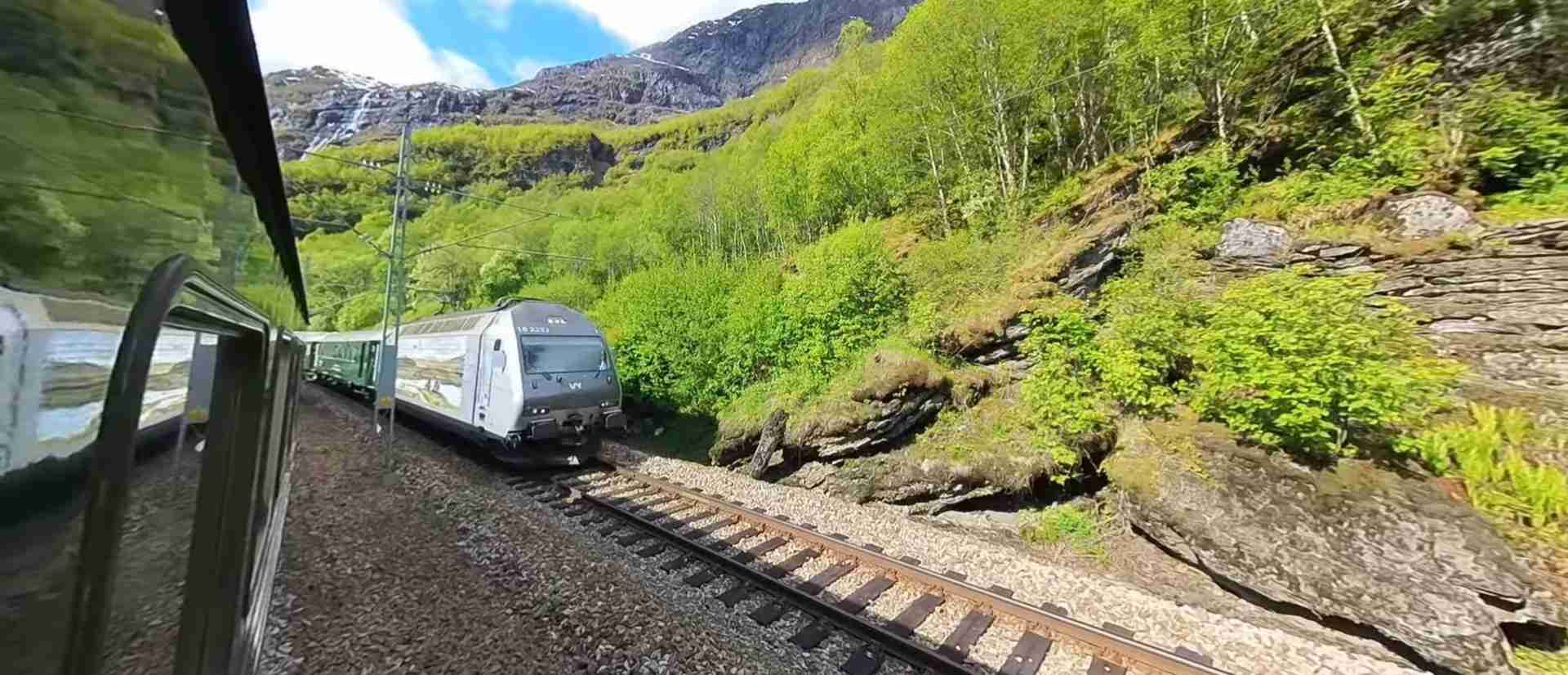
The Flåm Railway stands as one of the world’s steepest and most spectacular standard-gauge rail lines, descending 863 meters through Norway’s dramatic Flåm valley in just 20 kilometers. This engineering masterpiece, completed in 1940 after 17 years of hand-drilled construction, transforms what was once an isolated farming community into an accessible showcase of Norwegian natural beauty and technical achievement. The journey captures the essence of Norway’s vertical landscape—waterfalls cascading from hanging valleys, farms clinging to impossible slopes, and the gradual transition from alpine plateau to sheltered fjord.
Key Takeaways
- Extreme Gradient: The railway’s 5.5% average gradient, reaching 5.9% at steepest sections, makes it one of the world’s steepest adhesion railways operating without rack-and-pinion assistance.
- Hand-Built Marvel: Construction from 1923 to 1940 required hand-drilling 20 tunnels through solid rock, totaling 6 kilometers of mountain passage, representing pre-mechanization era engineering at its peak.
- Concentrated Scenery: The 20-kilometer route compresses Norway’s characteristic landscapes—from barren alpine heights to lush valley floor—into an hour-long journey of continuous visual drama.
- Kjosfossen Highlight: The scheduled stop at Kjosfossen waterfall, plunging 93 meters in thundering cascades, provides the journey’s centerpiece and opportunity for close waterfall engagement.
- Year-Round Operation: Unlike many mountain railways, Flåm Railway operates daily throughout the year, offering dramatically different experiences across seasons from summer’s midnight sun to winter’s snow-covered fairy tale.
- Cultural Monument: Beyond tourist attraction, the railway represents Norwegian determination to connect isolated communities and stands as a protected cultural heritage monument recognized for engineering and historical significance.
People Also Ask About Flåm Railway
Why is the Flåm Railway considered one of the world’s steepest railways?
The Flåm Railway achieves its steep classification through operating at a 5.5% average gradient over its entire 20-kilometer length, with maximum sections reaching 5.9%, all accomplished using standard adhesion technology without rack-and-pinion assistance. This places it among the world’s steepest standard-gauge adhesion railways—comparable to routes in the Swiss Alps but exceeding most Norwegian and international mountain railways. The steepness becomes visceral during the journey as the train negotiates hairpin curves, spirals through mountain-boring tunnels to lose elevation, and emerges onto ledges where the valley floor appears hundreds of meters below. What makes the gradient particularly remarkable is the consistency—rather than brief steep sections between level stretches, the Flåm Railway maintains relentless descent from Myrdal to Flåm, creating the sensation of controlled falling through a continuously changing landscape. Engineers achieved this without modern tunneling equipment, relying instead on hand-drilling, careful surveying, and ingenious routing that balanced maximum gradient against safety and operational requirements. The 5.9% maximum sections approach the theoretical limit for adhesion railways operating in wet conditions with occasional snow and ice, requiring special braking systems and operational protocols that distinguish the Flåm Railway from more conventional mountain lines.
What engineering challenges did the Flåm Railway construction face?
Construction confronted extraordinary challenges stemming from the extreme terrain, Norway’s climate, and the era’s technological limitations. The most fundamental challenge involved creating a route that descended 863 meters while maintaining gradients within adhesion railway capability. This required extensive tunneling—20 tunnels totaling 6 kilometers, nearly one-third of the total route length. Many tunnels spiral inside mountains, allowing the track to lose elevation through circular routing rather than requiring impossibly steep surface gradients. Workers hand-drilled these tunnels between 1923-1940, a period predating mechanized boring equipment, meaning every meter of rock removal required manual drilling, black powder blasting, and hand-removal of debris. The granite and gneiss rock formations, while providing stable tunnel walls, proved extremely hard, slowing progress. Avalanche danger threatened both construction and future operations, requiring extensive surveys to identify safe routing and construction of protective galleries and walls. Workers endured harsh conditions—winter temperatures far below freezing, limited daylight during winter months, and accommodation in primitive camps with minimal amenities. The project employed up to 400 workers simultaneously during peak years, many recruited from local valleys with experience in mountain construction. Funding challenges plagued the project, with economic difficulties in the 1920s-1930s causing multiple work stoppages and budget revisions. The final challenge involved maintaining alignment precision despite the complex three-dimensional routing through tunnels and curves—small errors would accumulate into serious problems, requiring meticulous surveying with era-appropriate equipment.
How does the Flåm Railway compare to other famous scenic railways worldwide?
The Flåm Railway occupies a unique position among the world’s scenic railways through its combination of extreme gradient, concentrated drama, and single-purpose route design. Swiss railways like the Bernina Express or Glacier Express traverse longer distances with more varied landscapes but generally employ gentler gradients and rack-and-pinion assistance on steepest sections. The Flåm Railway’s pure adhesion operation at 5.5% average gradient exceeds most Alpine routes’ continuous steepness. India’s Darjeeling Himalayan Railway and Peru’s railway to Machu Picchu offer similar mountain environments but use narrow gauge, allowing tighter curves but limiting speed and capacity. The Flåm Railway’s standard gauge, while requiring more complex engineering, permits modern comfortable carriages and higher operational speeds. Australia’s Kuranda Scenic Railway and Sri Lanka’s Kandy-Ella line provide tropical mountain scenery contrasting with Flåm’s Nordic character. The closest comparison might be Switzerland’s Pilatus Railway, though that route uses rack-and-pinion technology and serves primarily recreation while Flåm originated as practical transportation. What distinguishes Flåm is the concentrated intensity—20 kilometers and one hour deliver continuous dramatic scenery without the transitional sections common on longer routes. The engineering story adds depth beyond pure scenery; passengers experience not just beautiful landscapes but the triumph of human determination over formidable natural obstacles. The journey’s integration into the Norway in a Nutshell route provides context, transforming the railway from isolated attraction into part of a larger narrative about Norwegian nature and engineering.
What is the best time of year to experience the Flåm Railway?
The Flåm Railway operates year-round with each season offering distinct advantages depending on traveler priorities. Summer (June-August) provides maximum daylight, warmest temperatures, and the most dramatic waterfalls fed by mountain snowmelt. The extended Nordic summer daylight—nearly 24 hours in June—means even evening departures occur in full light, revealing every detail of the valley. Vegetation reaches peak lushness, and weather stability reaches annual highs, though rain remains possible. However, summer also brings maximum crowds—trains often fill to capacity and stations become congested. Spring (April-May) delivers the year’s most powerful waterfalls as snowmelt reaches maximum flow, sending cascades thundering over cliffs at volumes several times their autumn levels. Kjosfossen becomes particularly spectacular, often splitting into multiple channels. Crowds remain moderate, and the transition from snow-covered upper valley to green lower valley creates visual drama. Autumn (September-October) transforms the valley with color—birch forests turn golden, and mountain heather purples the high slopes. Waterfalls remain substantial from summer precipitation, and visitor numbers decline significantly after mid-September. Winter (November-March) creates a Nordic wonderland with snow covering mountains, frozen waterfalls forming ice sculptures, and the austere beauty of the stripped-down landscape. Limited daylight (6-7 hours in December-January) means afternoon departures may end in twilight, but the potential for Northern Lights adds unexpected magic. Winter trains carry far fewer passengers, creating opportunities for contemplative experiences impossible during summer. The “best” season ultimately depends on priorities: scenery maximalists choose spring for waterfalls or autumn for colors; solitude seekers select winter; photography enthusiasts debate autumn light versus spring drama; and families often prefer summer’s weather reliability despite crowds.
Extended multi-day tours – 5+ days
Featured Norway Multi-Day Tour Packages
5 days
Norway in a Nutshell (Oslo to Bergen via Flam)
- ✓ Comprehensive Norway tour
- ✓ Expert local guides included
- ✓ All accommodation arranged
- ✓ Transportation provided
9 days
Best of Norway
- ✓ Comprehensive Norway tour
- ✓ Expert local guides included
- ✓ All accommodation arranged
- ✓ Transportation provided
7 days
The beautiful Norway End Oslo
- ✓ Comprehensive Norway tour
- ✓ Expert local guides included
- ✓ All accommodation arranged
- ✓ Transportation provided
8 days
Trip Through the Lofoten Islands
- ✓ Booking needs min. 2 travelers
Multi-day tour packages powered by TourRadar. Prices and availability subject to change.
Introduction: The Railway That Shouldn’t Exist
The Flåm Railway represents a triumph of determination over geography. When Norwegian engineers first surveyed the Flåm valley in the early 1900s, they confronted terrain that seemed to prohibit railway construction. The valley plunges from the high Hardangervidda plateau to Aurlandsfjord level in a distance of just 20 kilometers, creating gradients that exceeded conventional railway engineering limits. Waterfalls cascade from cliffs, loose rock threatens avalanches, and winter conditions bring snow depths measured in meters. Yet the vision of connecting isolated Flåm valley to the national railway network persisted, driven by local communities’ economic needs and Norway’s post-independence (1905) drive to unite the nation through infrastructure.
The solution required abandoning conventional railway thinking. Engineers designed a route that spiraled through tunnel complexes, emerged onto ledges with vertiginous views, crossed bridges over thundering cataracts, and maintained gradients at the absolute limit of adhesion railway technology. The resulting line operates at average gradients that would be considered impossible on most railways, requiring special braking systems, operational protocols, and train configurations. What emerged from 17 years of hand-drilled tunneling and careful construction was less a conventional railway than a vertical corridor through mountain terrain—a controlled descent that combines engineering audacity with intimate engagement with one of Norway’s most spectacular valleys.
Today the Flåm Railway serves primarily tourism, having shifted from its original transportation purpose as road access improved and rural population declined. Yet this transformation enhances rather than diminishes the experience. Free from purely utilitarian function, the railway can operate at speeds that maximize scenic appreciation, make scheduled stops at the best viewpoints, and maintain historic rolling stock that preserves the journey’s character. Passengers experience not just beautiful scenery but the embodiment of a specific historical moment when Norway believed railways could and should reach even the most remote valleys, and when workers possessed the skill and determination to realize that vision through hand labor and mechanical simplicity.
Historical Context: Birth of an Impossible Dream
The Flåm Railway’s origin story begins with the Bergen Railway, completed in 1909 to connect Norway’s two largest cities across the formidable barrier of the Hardangervidda plateau. This main line passed through Myrdal, a high-altitude junction point where nothing existed except railway infrastructure. Yet 20 kilometers away and 863 meters below, the village of Flåm occupied a fertile spot at the head of Aurlandsfjord, accessible only by boat or difficult mountain tracks.
Flåm valley residents recognized the economic opportunity if they could connect to the national railway network. Agricultural products, timber, and eventually tourists could flow both directions, ending the isolation that characterized valley life. Local lobbying secured government support for a feasibility study in 1908, which initially produced discouraging conclusions—the terrain appeared too steep, the costs too high, and the technical challenges beyond contemporary railway practice.
Revised studies in the 1910s, conducted by engineer Geelmuyden, developed more optimistic assessments. Geelmuyden proposed extensive tunneling to achieve necessary elevation loss while maintaining operable gradients. His plan called for 20 tunnels, many spiraling inside mountains to create a three-dimensional corkscrew descent. The Norwegian parliament approved construction funding in 1923, though with limited budget reflecting the project’s speculative nature—nobody could guarantee the line would generate enough traffic to justify its costs.
Construction began in 1923 with challenges immediately apparent. The terrain offered few flat work areas, requiring materials and equipment to be lowered by cable from Myrdal or brought by boat to Flåm and carried up the valley. Workers lived in primitive camps, enduring winter temperatures that could drop to -30°C while drilling through solid granite with hand-operated equipment. Progress averaged just hundreds of meters per year as each tunnel required months of drilling, blasting, and debris removal.
The project faced multiple suspensions as funding dried up during Norway’s economic difficulties of the 1920s and 1930s. Work stopped entirely for periods, resuming when budgets allowed or political pressure mounted from valley communities frustrated by the slow progress. The Great Depression further complicated funding, and by the late 1930s, the project had consumed far more time and money than original estimates suggested.
Completion finally arrived in 1940, just weeks before Germany invaded Norway. The railway that had been planned to boost a remote valley’s economy suddenly served a nation at war, though its steep gradients and dead-end location prevented significant military usage. Post-war, the line served its intended local transportation purpose, connecting Flåm valley farms and villages to the broader Norwegian economy. Passengers could board at Flåm, reach Myrdal in an hour, and transfer to the Bergen Railway for connections to Oslo or Bergen.
The transformation to tourist attraction began in the 1950s and accelerated through subsequent decades. As car ownership spread and road access to Flåm improved via tunnels, the railway’s practical transportation role diminished. Simultaneously, Norway’s tourism industry recognized the line’s scenic value. The Norwegian State Railways began marketing the Flåm Railway as an attraction, timing departures to connect with cruise ship arrivals and promoting the route internationally. By the 1990s, when the Norway in a Nutshell package formalized the railway’s place in Western Norway tourism, the Flåm Railway carried far more tourists than local passengers, fulfilling a destiny its original planners never imagined.
Engineering Excellence: How the Impossible Became Routine
The Flåm Railway’s engineering solutions represent early 20th-century railway practice pushed to its limits. Understanding the technical achievements enhances appreciation of the journey itself.
Gradient Management and Adhesion Limits
The fundamental challenge involved creating a railway route that descended 863 meters in 20 kilometers while maintaining gradients within adhesion railway capability. Adhesion railways rely on friction between steel wheels and steel rails—increasing gradient eventually reaches a point where wheels slip rather than grip, particularly in wet or icy conditions. Theoretical limits for adhesion operation in good conditions approach 10%, but practical operation in Norwegian weather required more conservative design.
Engineers set maximum gradient at 5.9%, achieved on only the steepest sections, with 5.5% average throughout. Even this required special precautions. All trains descending from Myrdal to Flåm use at least five independent braking systems: air brakes on the locomotive, automatic brakes on carriages, hand brakes for emergency use, and track brakes that grip the rails directly. Operational protocols require speed restrictions, with maximum speeds of 40 km/h on steeper sections. Trains ascending from Flåm to Myrdal must maintain specific power settings and speeds to prevent wheel slip on wet rails.
The route’s curvature adds complexity to gradient challenges. Sharp curves reduce the effective gradient as trains navigate turns, but they also increase friction and wear. The Flåm Railway employs curves as tight as 130-meter radius—very sharp for standard gauge—creating the serpentine character visible from valley viewpoints. These curves often appear within tunnels, where passengers experience the disorienting sensation of darkness combined with the train’s lean and the pull of both gradient and centrifugal force.
Tunnel Engineering and the Spiral Solution
Twenty tunnels totaling 6 kilometers—nearly one-third the route length—represent the Flåm Railway’s most significant engineering achievement. These tunnels serve multiple functions: they allow the route to maintain operable gradients by creating longer horizontal distance, they protect against avalanches, and they enable the spiral routing that loses elevation inside mountains rather than on exposed surface track.
The longest tunnels—Nåli tunnel at 1,342 meters and Vatnahalsen tunnel at 1,345 meters—spiral inside mountains, entering at one elevation and emerging at a significantly lower point despite limited horizontal progression. Walking these tunnels’ surface equivalent would involve tight circular paths that seem impossible for railway operation, yet inside the mountain the track follows grand sweeping curves that passengers experience as gentle bends.
Tunnel construction between 1923-1940 relied on hand labor and black powder explosives. Crews drilled shot holes using pneumatic hammers powered by compressed air lines running from Myrdal. After drilling a pattern of holes, workers loaded them with explosives, retreated to safety, and detonated the charges. The resulting broken rock—blasted from solid granite and gneiss—required hand-loading into wagons for removal. This cycle of drilling, blasting, and mucking out repeated endlessly, advancing just 2-3 meters per cycle. A tunnel might require 400-500 such cycles to complete, each taking several days of hard physical labor.
Modern tunnel boring machines accomplish in weeks what took Flåm Railway workers months or years. Yet the hand-drilled tunnels display remarkable precision—alignment deviations rarely exceed a few centimeters over hundreds of meters, testament to the surveyors’ skill working with mechanical theodolites and without modern GPS or electronic measuring equipment. The tunnel walls remain largely unlined, displaying the drill marks and blast patterns from 1920s-1930s construction—historical documents visible to passengers passing through.
Avalanche Protection and Risk Management
The Flåm valley’s steep terrain creates constant avalanche risk during winter and spring. Snow accumulations on slopes above the railway can release as destructive slides, particularly during temperature fluctuations or heavy snowfall events. Engineers addressed this threat through multiple strategies.
Route selection avoided the most dangerous avalanche paths where possible. Sections that must cross avalanche zones utilize protective galleries—reinforced concrete or stone structures that cover the track, allowing slides to pass overhead without reaching trains. Several gallery sections appear as short tunnels on routes otherwise exposed; their roofs slope to deflect avalanche snow and debris around and over the railway.
Active avalanche control measures include regular monitoring of snow conditions and preventive releases of dangerous accumulations. When conditions suggest avalanche risk, railway personnel close the line, preventing trains from entering dangerous sections. Helicopter surveys after heavy snowfall assess snow stability. In extreme cases, explosives trigger controlled releases before natural avalanches occur. These measures virtually eliminate avalanche risk to passengers, though they occasionally force temporary service suspensions during the most dangerous conditions.
Modern risk assessment uses sophisticated modeling to predict avalanche paths and runout zones. This analysis informs ongoing track maintenance and guides decisions about protective structure upgrades. The avalanche regime changes with climate—warmer winters alter snow accumulation patterns, requiring updated risk models and potentially modified protection strategies.
Braking Systems and Safety Protocols
Operating safely on 5.5% gradients requires redundant, reliable braking far beyond conventional railway needs. Flåm Railway locomotives employ multiple independent braking systems:
Air brakes provide primary control, using compressed air to apply brake shoes to wheel treads. These brakes can bring a fully loaded train to a complete stop from operating speeds within safe distances even on maximum gradient sections. Automatic brakes activate if air pressure drops—a fail-safe design ensuring that any failure of the air system causes braking rather than brake release.
Track brakes supplement wheel brakes, particularly during descents from Myrdal. These devices grip the rails directly, creating friction independent of wheel adhesion. Track brakes prove especially valuable in wet conditions where wheel-rail adhesion decreases. Hand brakes provide emergency backup, allowing manual brake application if all powered systems fail.
Operational protocols require specific procedures for both ascents and descents. Descending trains must test brakes before departing Myrdal, verifying all systems function properly. Speeds remain limited to 40 km/h maximum, lower in curves or reduced visibility. Ascending trains face different challenges—maintaining traction to prevent wheel slip while climbing. Drivers apply power smoothly, avoiding sudden acceleration that could break wheel-rail adhesion. Sand dispensers allow spreading sand on rails ahead of driving wheels when conditions threaten grip.
The combination of engineering safeguards and operational discipline creates exceptional safety records. Despite operating since 1940 through countless descents in all weather conditions, the Flåm Railway has never experienced a fatal accident due to brake failure or loss of adhesion. This safety record reflects both the engineering quality built into the line and the professional standards maintained by successive generations of railway personnel.
The Journey Experience: Descending Through Norwegian Nature
The Flåm Railway journey—typically experienced as a descent from Myrdal to Flåm—compresses remarkable landscape diversity into 20 kilometers and approximately one hour of travel time. The experience builds progressively as the train descends from exposed plateau toward sheltered valley floor.
Myrdal to Vatnahalsen: The Upper Valley
Departing Myrdal station at 867 meters elevation, trains immediately enter steep descent. Myrdal itself occupies harsh terrain near treeline, with stunted birch and mountain willow representing the limit of tree growth. The landscape appears austere—rock, sparse vegetation, and distant views across the Hardangervidda plateau. In summer, alpine flowers dot the ground; in winter, snow creates a monochromatic white expanse.
The descent begins with views opening across the upper valley. The train passes through the first tunnels, emerging onto ledges where the valley floor appears far below. Waterfalls become visible—distant white streaks against dark rock walls. The Rjoandefossen cascade, among the valley’s highest, plunges 140 meters in stepped falls visible from several points along the route.
Vatnahalsen station appears after approximately 15 minutes, serving a small mountain hotel popular with hikers. From here the landscape begins transitioning—vegetation increases slightly, and the valley’s V-shape becomes more apparent. The railway enters the long Vatnahalsen tunnel, spiraling inside the mountain to lose elevation while maintaining acceptable gradient. Passengers experience several minutes of darkness, the train leaning into curves that cannot be visually perceived, creating disorienting sensations of motion without visible reference.
Kjosfossen: The Journey’s Centerpiece
Emerging from tunnel darkness, the train decelerates for its scheduled stop at Kjosfossen waterfall. This viewing platform, approximately halfway through the descent, provides the journey’s only passenger stop between Myrdal and Flåm. The waterfall plunges 93 meters in multiple cascades, fed by the Kjos River draining mountain lakes above.
During spring and early summer, Kjosfossen achieves maximum power as snowmelt swells the river to several times its autumn volume. The waterfall splits into multiple channels, creating a curtain of falling water hundreds of meters wide. The roar becomes overwhelming as passengers step from the train—sound reverberating from valley walls, making conversation difficult. Mist generated by the falling water drifts across the viewing platform, coating visitors in fine spray that requires waterproof clothing to avoid thorough soaking.
The stop typically lasts 5-10 minutes, allowing passengers to walk to viewing platforms at multiple levels. Photography challenges include the waterfall’s brightness against shadowed valley walls, creating exposure difficulties, and the mist that can coat lenses. The spray also provides opportunities—rainbows form regularly when sun angle aligns properly, creating dramatic arcs across the cascade.
During summer months, performers stage a presentation featuring the Huldra, a figure from Norwegian mythology said to inhabit wild places. A dancer appears on rocks near the waterfall, dressed in flowing fabric, performing movements synchronized to music played from train speakers. This theatrical element, while clearly tourist-oriented, references genuine Norwegian folklore and provides entertainment between photographic opportunities.
Reboarding the train, passengers notice their progress—Kjosfossen now appears above the continuing route, with the valley opening below. The remaining descent will drop another 400+ meters to reach Flåm at fjord level.
Mid-Valley: Increasingly Lush Landscapes
Below Kjosfossen, the valley character transforms. Trees reappear—first hardy birch and mountain ash, then eventually mixed forest. The valley walls, while still steep, show more vegetation and less bare rock. Historic mountain farms become visible, their red-painted wooden buildings clinging to ledges that seem impossibly steep for agriculture.
The Otternes farm complex, visible from the train, represents the cultural landscape the railway traverses. These buildings, some dating to the 1700s, demonstrate how Norwegian farmers adapted to vertical terrain. Terraced fields maximize usable land, stone walls prevent erosion, and buildings cluster on whatever flat ground exists. The farm maintained self-sufficient operation until the mid-1900s, with families moving livestock between valley floor winter quarters and mountain summer pastures (seter) in vertical transhumance patterns characteristic of Norwegian mountain agriculture.
The railway continues its serpentine descent, alternating between short tunnels and exposed track sections. Waterfalls appear regularly—some named and famous, others anonymous cascades that exist only during wet seasons. The Brekkefossen falls, though smaller than Kjosfossen, create picturesque scenes where water breaks over rock ledges before disappearing into forested slopes below.
Train speed remains moderate—40 km/h maximum—allowing detailed observation of passing landscapes. The slow pace also reflects operational caution; the gradient demands careful speed control to maintain safety margins. Yet the moderate speed proves perfect for the journey’s purpose—fast enough to maintain forward momentum and schedule, slow enough to appreciate constantly changing views.
Approaching Flåm: Valley Floor and Fjord Connection
The descent’s final section shows the valley opening and flattening. The Flåm River, a small stream in upper reaches, becomes substantial as tributaries join from side valleys. Agricultural land increases—hayfields, pastures, and eventually modern farms with barn complexes replace the historic mountain farms of higher elevations.
The gradient gradually lessens as the railway approaches sea level. The train negotiates final curves before arriving at Flåm station, situated just meters from the Aurlandsfjord shoreline. The arrival provides visual closure—passengers have descended from the barren Myrdal environment at 867 meters to a sheltered fjord village surrounded by deciduous forest and intensively cultivated land. The elevation change, 863 meters, represents the vertical equivalent of descending from a respectable mountain summit to sea level, yet compressed into one hour’s rail travel.
Looking back up the valley from Flåm station, the route’s character becomes apparent. The railway appears as a thin line climbing the valley wall, visible in sections where it runs on ledges between tunnels. The height difference seems impossible for railway operation—yet passengers have just descended that vertical corridor, experiencing the engineering triumph that turns impossible terrain into a routine rail journey.
Seasonal Transformations: Four Distinct Journeys
The Flåm Railway’s year-round operation means the same physical route offers dramatically different experiences depending on season. Understanding these variations helps travelers choose timing aligned with their priorities.
Spring: Maximum Water Power
April and May transform the Flåm valley into a waterfall showcase. Mountain snowmelt reaches peak flow, sending previously dry streambeds cascading over cliffs and swelling permanent waterfalls to several times their autumn volume. Kjosfossen becomes particularly spectacular, often splitting into 3-4 parallel channels that create a curtain of falling water. The roar intensifies, and mist generation increases to the point that the viewing platform becomes thoroughly wet within minutes.
The landscape shows transition—snow remains deep at Myrdal while Flåm enjoys early spring conditions. This creates the year’s maximum contrast between upper and lower valley. Bare trees gradually leaf out as the season progresses, creating the bright green of new growth that photographs beautifully against dark rock and white waterfalls. Weather remains highly variable, with rain, snow, sunshine, and wind often occurring in rapid succession.
Summer: Lush Abundance
June through August presents the Flåm Railway at its most accessible and crowded. Vegetation reaches maximum lushness—forests cover valley walls in dense green, wildflowers carpet alpine meadows near Myrdal, and farms along the route display cultivated fields and grazing livestock. Waterfalls, while reduced from spring peaks, remain impressive. The extended Nordic daylight means even evening departures occur in full sunshine, revealing every detail of the landscape.
Weather stability improves relative to other seasons, though rain remains possible. Temperatures at Myrdal typically range 5-15°C, while Flåm enjoys 15-25°C—a significant difference that illustrates the climate zones traversed during the descent. The warmth allows comfortable viewing from open train windows, creating connection with the landscape impossible through closed glass.
Summer crowds represent the season’s primary drawback. Trains often fill to capacity, stations become congested, and the Kjosfossen stop transforms into a mass gathering of hundreds of passengers photographing the same scene. Early morning or evening departures encounter fewer crowds than midday popular times, though schedule limitations may prevent choosing ideal timing.
Autumn: Color and Atmosphere
September and October bring autumn colors that transform the visual experience. Birch forests turn golden yellow, creating contrast against dark green conifers and gray rock. Mountain vegetation—heather, willow, and alpine grasses—adds purple, red, and brown tones. The color peak typically occurs in late September at lower elevations and mid-September at higher elevations, though exact timing varies with weather.
Light quality changes with autumn’s lower sun angle. Golden hour—the period around sunrise and sunset when light becomes warm and directional—extends longer than summer’s more vertical light. Photography benefits from this enhanced light, though the shorter days mean fewer hours of optimal conditions. Waterfalls maintain substantial flow from summer and autumn precipitation.
Crowds diminish dramatically after mid-September when European school holidays end and North American visitors decrease. This reduction creates more peaceful experiences—the Kjosfossen stop might host 50 passengers instead of 200, allowing unhurried photography and contemplation. Weather becomes more variable, with increased precipitation and occasional early snow at higher elevations, but clear days deliver spectacular visibility and dramatic cloud formations.
Winter: Nordic Fairytale
November through March transforms the Flåm Railway into a Nordic winter experience. Snow covers mountains, coats valley walls, and blankets the landscape in white that reflects available light. Waterfalls freeze partially or completely, creating ice sculptures and icicles that hang from cliff faces. The austere beauty of winter—stripped of summer’s lush vegetation and reduced to essential elements of rock, snow, and water—achieves sublime quality.
Limited daylight constrains the experience during midwinter. December and January offer just 6-7 hours between sunrise and sunset, meaning afternoon departures may end in twilight or darkness. However, trains maintain lighting that allows viewing, and the darkness creates opportunities impossible during summer—the Northern Lights occasionally appear over the valley, creating magical displays that reward winter travelers.
Winter operations require special precautions. Heated carriages maintain comfort, but platforms and outdoor viewing at Kjosfossen require serious cold-weather clothing. Temperatures at Myrdal can drop to -20°C, while Flåm remains somewhat milder at -5 to -10°C. The temperature gradient during descent becomes palpable—passengers board in bitter cold at Myrdal and arrive at merely cold conditions in Flåm.
Snow accumulation and avalanche risk occasionally force service suspensions, though these remain relatively rare. The railway maintains extensive snow-clearing equipment and avalanche protection systems that allow operation through most winter conditions. Winter travelers must accept the possibility of delays or cancellations, building flexibility into schedules.
The rewards of winter travel include solitude—passenger numbers drop to a fraction of summer levels, creating opportunities for contemplative experiences. The winter landscape photographs beautifully, especially during the brief hours of low-angle light that create long shadows and warm tones on snow-covered scenes. For travelers seeking authentic Nordic winter rather than summer’s crowded accessibility, winter Flåm Railway journeys deliver unforgettable experiences.
Photography Guide: Capturing the Journey
The Flåm Railway presents exceptional photography opportunities complicated by technical challenges. Success requires understanding both the visual possibilities and the limitations imposed by train motion, changing light, and limited stop time.
Equipment Considerations
Versatile zoom lenses prove more practical than multiple prime lenses given the journey’s constantly changing perspectives and limited time at stops. A 24-70mm or 24-105mm range covers most situations—wide enough for valley views and narrow enough for isolating waterfalls or farms. A 70-200mm telephoto adds value for compressing landscape layers and photographing distant features, though its bulk may prove burdensome in crowded train conditions.
Image stabilization becomes essential whether in-lens or in-camera. Train motion creates vibration that blurs images at slower shutter speeds. Stabilization allows handholding at 1/60 to 1/125 second—marginal but sometimes sufficient when light levels prevent faster speeds. Fast shutter speeds (1/500 second minimum) remain preferable for shooting through moving train windows, freezing both train motion and subject movement.
Polarizing filters reduce reflections when shooting through train windows and enhance colors in outdoor scenes. However, polarizers reduce light transmission by 1-2 stops, potentially forcing higher ISO settings or slower shutter speeds. Balance the polarizer’s benefits against its light loss, using it selectively when conditions justify. Graduated neutral density filters help balance bright skies against shadowed valleys during outdoor stops.
In-Train Photography
Shooting through train windows requires techniques that minimize reflections and motion blur. Position the lens directly against the glass, creating a light seal that reduces interior reflections. Polarizing filters help, though they’re not perfect—some reflections persist regardless. Clean windows photograph better; choosing window seats on the valley side maximizes opportunities, though competition for these positions can be intense during peak season.
Use fast shutter speeds—1/500 second minimum, 1/1000 better—to freeze both train motion and landscape. This often requires higher ISO settings, but modern cameras handle ISO 1600-3200 well. Continuous autofocus helps maintain focus on moving landscapes. Anticipate scenes—identify interesting features ahead and prepare to shoot as the train approaches, since windows of opportunity pass quickly.
Frame compositions to exclude window frames and interior train elements. Shoot straight through the glass perpendicular to the train’s side to minimize distortion. Wide-angle lenses exaggerate distortion when shooting obliquely through windows; stick to normal to moderate telephoto focal lengths for cleanest results.
Kjosfossen Stop Photography
The 5-10 minute Kjosfossen stop allows tripod photography and careful composition, though time pressure remains. The waterfall’s extreme dynamic range—bright falling water against dark rock walls—challenges exposure. Expose for the waterfall highlights and accept that shadows will go near-black, or use graduated neutral density filters to compress the range.
Multiple exposures at different shutter speeds provide creative options. Fast speeds (1/500-1/1000 second) freeze water droplets, emphasizing the waterfall’s power and creating texture in the falling water. Slow speeds (1-4 seconds) blur water into silk, creating ethereal effects. Extremely long exposures (10+ seconds, requiring neutral density filters) transform the waterfall into ghostly veils. No single approach proves superior—each creates different moods and emphasis.
Protect equipment from spray, which can coat lenses within minutes near the base viewing platforms. UV filters provide lens protection without optical degradation. Bring microfiber cloths for wiping lenses and water-absorbent towels for camera bodies. Some photographers use rain sleeves or plastic bags with cutouts for lenses, creating waterproof protection while maintaining operational access.
Compositions should emphasize the waterfall’s scale and power. Include foreground elements—rocks, railings, or other passengers—to provide scale reference. The vertical format suits the waterfall’s shape better than horizontal, though horizontal frames work for capturing the amphitheater of cliffs surrounding the cascade. Experiment with perspectives—photos from the upper platform differ dramatically from those taken near the waterfall base.
Landscape Composition Throughout the Journey
The Flåm Railway’s descent creates natural compositional structures. The serpentine track provides leading lines that draw viewers into images. The valley’s V-shape creates strong geometric forms. Waterfalls provide vertical elements that contrast with horizontal landscape layers. Historic farms offer human-scale subjects that emphasize the landscape’s vastness.
Look for moments of transition—entering or exiting tunnels creates light-to-dark or dark-to-light sequences. Curves provide anticipation as the train’s front carriages disappear around bends while rear carriages remain visible. Weather variations—shafts of sunlight breaking through clouds, fog filling the valley, or rainbows forming in waterfall spray—create atmospheric drama worth waiting for.
Seasonal considerations affect light and color. Summer’s overhead sun creates harsh contrast; early morning or evening departures provide better light. Autumn color peak requires timing trips to coincide with foliage changes—late September typically optimal. Winter’s low sun angle creates dramatic light even at midday, though limited daylight hours constrain shooting times. Spring’s dramatic waterfalls justify accepting variable weather and occasional mediocre light in exchange for maximum water flow.
Cultural Significance and Heritage Protection
The Flåm Railway represents more than engineering achievement or scenic attraction—it embodies Norwegian cultural values and historical developments that shaped the nation’s 20th-century identity.
Symbol of Post-Independence Ambition
Norway achieved independence from Sweden in 1905 after centuries of union with Denmark and then Sweden. The young nation sought to demonstrate competence through infrastructure projects that connected the country and showcased Norwegian engineering capability. The Bergen Railway (completed 1909) and Flåm Railway (completed 1940) represented this ambition—railways across terrain that defeated conventional approaches, built despite economic challenges, and serving both practical and symbolic purposes.
The Flåm Railway particularly embodies determination over rational calculation. The economic justification remained weak—Flåm valley’s population and agricultural output never warranted the enormous construction costs from purely financial perspectives. Yet the cultural calculation—connecting an isolated community to the nation, demonstrating that no valley was too remote for Norwegian engineering—justified the expenditure in terms beyond pure economics.
Labor History and Social Change
The railway’s construction from 1923-1940 occurred during a period of significant social change in Norway. Many workers came from agricultural backgrounds, experiencing industrial wage labor and organized union activity for the first time. The difficult conditions—dangerous work, harsh weather, primitive camps—created solidarity and labor activism that influenced broader Norwegian labor movements.
The workers who hand-drilled tunnels through solid granite possessed skills increasingly rare in modern mechanized construction. Stone masons, powder men who handled explosives, surveyors using mechanical instruments, and blacksmiths maintaining tools represented craft traditions that largely disappeared as construction mechanized. The Flåm Railway stands as perhaps the last major Norwegian railway built primarily through hand labor and mechanical simplicity rather than modern equipment.
Heritage Designation and Preservation
Norwegian heritage authorities recognize the Flåm Railway as a protected cultural monument. This designation prohibits alterations that would compromise the line’s historical character while allowing modifications necessary for safe modern operation. The railway maintains original route alignment, tunnel profiles, and much of the infrastructure built during 1923-1940 construction.
Rolling stock preservation reflects similar priorities. While modern safety standards require updated braking systems and passenger amenities, the carriages maintain visual character compatible with historical operation. Some original wooden carriages from the 1940s-1950s receive periodic service, allowing passengers to experience travel in rolling stock from the railway’s early operational years.
The heritage designation creates tension between preservation and tourism development. Increasing visitor numbers generate revenue that funds maintenance and staffing, yet excessive tourism threatens the authentic character that attracts visitors. Managing this balance—maintaining the Flåm Railway as a functioning heritage railway rather than a theme park while accommodating modern tourism scale—remains an ongoing challenge.
Environmental Sustainability and Future Challenges
Operating a mountain railway creates environmental impacts that modern awareness demands addressing. The Flåm Railway faces challenges balancing heritage preservation, tourism revenue, and environmental protection.
Energy and Emissions
The Flåm Railway operates using electric locomotives powered by Norway’s predominantly hydroelectric grid, creating minimal direct emissions. This represents significant environmental advantage over diesel-powered tourist trains common elsewhere. The steep gradients mean descending trains generate electricity through regenerative braking, which returns power to the grid. Ascending trains consume substantial electricity to overcome gravity, but Norway’s renewable energy production minimizes the carbon impact.
Future challenges include potential electrification improvements to increase efficiency and reduce losses during power transmission and conversion. Battery-electric or hybrid locomotives might provide backup power during grid disruptions while maintaining zero operational emissions.
Tourism Impact Management
The Flåm Railway’s success creates concentrated tourism pressure on the village of Flåm and surrounding areas. Cruise ships disgorge thousands of passengers who board the railway, creating peaks that stress infrastructure and natural areas. Managing this impact requires coordination between railway operators, cruise ship companies, local government, and environmental authorities.
Strategies include limiting cruise ship arrivals to prevent overwhelming surges, encouraging visitors to extend stays rather than making brief railway-only visits, and developing alternative attractions that distribute tourism pressure across wider areas. The goal involves maintaining tourism revenue while preventing the degradation that mass tourism can cause.
Climate Change Adaptation
Climate change affects mountain railways through multiple pathways. Changing precipitation patterns alter waterfall flows and increase flash flood risk. Warmer temperatures shift snowlines, potentially reducing the dramatic snow-covered landscapes that attract winter visitors. Modified avalanche patterns—with wet heavy snow replacing lighter powder snow, and increased rain-on-snow events—require updated avalanche protection strategies.
Glacial recession in surrounding mountains, while not directly impacting railway operations, changes the landscape that provides context for the journey. The Hardangervidda plateau and surrounding peaks may eventually lose permanent snowfields and glaciers that currently define the high-altitude environment. These changes, while gradual from human timescales, represent fundamental landscape transformation that future generations will experience differently than current visitors.
Planning Your Flåm Railway Journey
Integration with Broader Itineraries
The Flåm Railway rarely stands alone in Norwegian itineraries. Most travelers experience it as part of the Norway in a Nutshell route, which combines the railway with Bergen Railway segments, fjord cruises, and bus connections to create a circular journey showcasing Western Norway’s landscapes. This integration provides context—the railway becomes not an isolated attraction but part of a larger narrative about Norwegian geography and engineering.
Alternative approaches include basing in Flåm for several days and using the railway for day trips to Myrdal, perhaps combining it with cycling the Rallarvegen trail (descending by bike, returning by train). Hikers use the railway to access trailheads at Myrdal or intermediate stations, hiking down valleys while the railway provides return transportation. These variations transform the railway from passive viewing experience into a functional tool for active mountain exploration.
Accommodation and Extended Stays
Flåm offers accommodation ranging from hostels to luxury hotels. Staying overnight allows experiencing the railway during less crowded early morning or evening departures and provides time for valley exploration. The village itself, while tourist-oriented, maintains enough authenticity to reward multi-day stays. Hiking trails access waterfalls and mountain farms visible from the railway, allowing ground-level engagement with landscapes seen from train windows.
Myrdal offers extremely limited accommodation—essentially a single mountain lodge—but provides access to Hardangervidda hiking and the opportunity to board the railway from its upper terminus. This allows experiencing the journey in both directions, which reveals different perspectives as landscapes appear from reversed viewpoints.
Beyond the Standard Journey
The Flåm Railway’s fame as a tourist attraction sometimes obscures its continuing practical function. Local residents use the railway for access to Myrdal and connections beyond. Hikers, mountain bikers, and cross-country skiers employ it for backcountry access. These utilitarian uses coexist with tourism, creating a living railway rather than a museum piece.
Travelers seeking deeper engagement can volunteer for railway maintenance and restoration projects that occasionally recruit international participants. These programs combine physical labor preserving historical infrastructure with educational components about Norwegian railway history and mountain engineering. Participants experience the railway from workers’ perspectives rather than as passive passengers, gaining appreciation for the ongoing effort required to maintain 1920s-1940s infrastructure to modern safety standards.
Frequently Asked Questions
How long does the Flåm Railway journey take and can it be done as a round trip?
The Flåm Railway journey between Myrdal and Flåm takes approximately 50 minutes to one hour in each direction. The descent from Myrdal to Flåm typically runs slightly faster than the ascent—gravity assists the downward journey while trains ascending from Flåm must work against both gradient and the tendency for wheels to slip on steep grades. Round-trip journeys are absolutely possible and popular, allowing passengers to experience the route from both directions. Many travelers incorporate the round trip into day itineraries—perhaps arriving in Flåm via ferry, ascending the railway to Myrdal, then descending again before departing Flåm. The reversed perspective creates different viewing experiences; features that appear on the left during descent show on the right during ascent, and the landscape reveals different aspects depending on direction. Some find the ascent more dramatic as the valley gradually opens beneath them, while others prefer the descent’s sensation of controlled falling into increasingly sheltered terrain. The round trip total of roughly two hours seems substantial for covering just 20 kilometers, but the slow pace reflects the railway’s purpose—this isn’t transportation in the conventional sense but rather a moving viewpoint designed to maximize scenic appreciation of one of Norway’s most spectacular valleys.
What are the best seats on the Flåm Railway for optimal views?
The Flåm Railway’s route design means excellent views appear on both sides throughout the journey, though strategic seat selection enhances specific segments. During descent from Myrdal to Flåm, seats on the left side (when facing downhill) provide direct views of major waterfalls including Kjosfossen and perspectives across the valley toward Rjoandefossen. The right side offers views into side valleys and toward historic mountain farms. For the Kjosfossen stop—the journey’s highlight—seat position matters less since all passengers disembark for viewing from platforms. Window seats naturally prove preferable to aisle positions, offering direct glass access and avoiding the need to shoot over other passengers. However, the trains maintain good visibility even from aisle seats, with large windows and relatively low interior partition heights. The front and rear carriages sometimes experience less crowding than middle carriages, though this varies by season and departure time. Advance reservations guarantee seats but not specific positions—seat selection occurs at boarding on a first-come basis. Early boarders claim choice window seats; those boarding later must accept remaining positions. For photographers particularly concerned about window access, arriving early for boarding and politely negotiating with fellow passengers for periodic window access often works better than hoping for specific seat assignments. Some travelers book round-trip journeys specifically to experience both sides—descending on one side, ascending on the other—ensuring comprehensive valley views without missing features visible only from particular orientations.
How does the Flåm Railway handle different languages and international visitors?
The Flåm Railway accommodates international visitors through multilingual announcements, signage, and staff. Onboard announcements during the journey appear in Norwegian, English, and German at minimum, sometimes including additional languages during peak season when Japanese or Chinese tour groups create significant passenger segments. These announcements identify approaching features—waterfalls, historic sites, and points of interest—allowing passengers to prepare cameras and direct attention appropriately. Printed information in train carriages appears in multiple languages, explaining the railway’s history, engineering, and environmental context. Station signage at both Flåm and Myrdal includes English translations, and ticket office staff speak English fluently with many also managing German and basic phrases in other major European languages. The onboard experience itself transcends language—the visual drama requires no translation, and the Kjosfossen stop’s obvious purpose (photograph the waterfall) needs no verbal explanation. However, understanding the historical and engineering context enhances the experience beyond pure scenery appreciation, making the multilingual information valuable rather than merely courtesy. Audio guides available through smartphone apps provide detailed narrative in numerous languages, offering far more comprehensive commentary than brief onboard announcements. These guides sync with GPS position, triggering explanations as the train passes relevant features. For travelers seeking deeper understanding, these apps transform the journey from passive viewing into educational experience. Overall, language barriers create minimal difficulty for English speakers and manageable challenges for other language visitors, reflecting Norway’s general accommodation of international tourism and the railway’s specific focus on serving global audiences.
What weather conditions might force cancellation or delay of Flåm Railway service?
The Flåm Railway operates in remarkably challenging conditions given its mountain location, maintaining service through weather that would ground many tourist railways. However, certain conditions do force delays or cancellations. Heavy snowfall combined with high winds creates avalanche risk that requires service suspension until conditions improve or preventive avalanche releases can be safely conducted. These events occur most frequently during winter and spring, perhaps 5-10 days per season. Lightning strikes during severe thunderstorms can disable signaling or communication systems, forcing temporary stops until repairs complete or backup systems activate. Such delays typically last hours rather than days. Extreme wind at Myrdal—which sits exposed on the plateau edge—occasionally prevents safe passenger boarding or creates concerns about train stability, though modern rolling stock handles considerable wind better than historic equipment. Flooding in the Flåm valley, while rare, has historically forced suspensions when the Flåm River overwhelms bridges or undermines track foundations. Climate change may increase flood frequency, requiring enhanced drainage and flood protection infrastructure. Rockfalls and landslides triggered by heavy rain or rapid snowmelt can block track until cleared, though protective measures prevent most such events from reaching the railway. What’s remarkable is the service reliability despite extreme conditions—the railway operates successfully through weather that would paralyze many mountain transport systems. Norwegian engineering conservatism, redundant safety systems, and extensive operational experience create robustness that allows functioning through most conditions. Travelers should recognize that delays and occasional cancellations represent responsible safety management rather than operational failures. Building schedule flexibility—especially during winter and spring when weather becomes most unpredictable—proves wise for travelers depending on the railway for crucial connections. Most disruptions resolve within hours as weather improves or maintenance crews address issues, with full cancellations for entire days remaining quite rare even during the most challenging seasons.
Can bicycles be transported on the Flåm Railway and how does this work?
The Flåm Railway accommodates bicycles in designated carriage sections, enabling popular combinations of cycling and rail travel. The most famous bicycle route involves cycling the Rallarvegen—the historic navvy road that follows the Bergen Railway from Haugastøl to Flåm via Myrdal. Cyclists typically bring bikes on the Bergen Railway from Oslo or Bergen to either Haugastøl or Myrdal, then cycle downhill to Flåm, using the Flåm Railway for return to Myrdal if desired. The descent via Rallarvegen follows a different route than the railway, crossing higher terrain with dramatic views, then dropping through switchbacks to reach Flåm valley. This creates a different perspective on the same landscape showcased by the railway. Bicycle capacity on Flåm Railway trains is limited—space exists for approximately 10-15 bikes per departure depending on carriage configuration. During peak cycling season (July-August particularly), this space fills quickly, requiring advance reservations. Cyclists without reservations risk being denied boarding if capacity is exceeded. Loading bikes requires maneuvering through carriage doors and securing them in designated racks or spaces—a process that adds several minutes to station stops. The railway charges fees for bicycle transport separate from passenger tickets. These fees remain modest by Norwegian standards but add to overall travel costs. E-bikes and standard bicycles both qualify for transport, though capacity limits remain the same regardless of bike type. For mountain bikers and cycling tourists, the railway’s bicycle accommodation transforms it from passive tourism into active adventure tool. The combination of cycling effort with railway comfort and security creates optimal experiences—challenging descents without the need to carry heavy packs or worry about mechanical failures far from assistance. Families with children often cycle portions of routes, using the railway to bypass sections exceeding their abilities or to provide rest during multi-day trips. Overall, the bicycle transport service extends the railway’s utility beyond sightseeing, supporting active tourism that generates deeper engagement with the landscape than possible through windows alone.
What facilities exist at Myrdal station and is it worth exploring?
Myrdal station functions primarily as a railway junction rather than a destination, offering limited facilities but unique high-altitude character. The station complex includes waiting rooms, restrooms, a small cafeteria, and platform areas, but no tourist shops or significant infrastructure. The cafeteria serves hot drinks, sandwiches, and simple meals—valuable given Myrdal’s remote location and harsh climate. During Flåm Railway and Bergen Railway connection waits, which sometimes extend 30-60 minutes, this cafeteria provides shelter from weather that can shift rapidly from sunshine to snow squalls even in summer. Accommodation exists at Myrdal Fjelstugu, a mountain lodge adjacent to the station offering simple rooms primarily for hikers and cross-country skiers using Myrdal as a trailhead for Hardangervidda access. The lodge operates seasonally, with full services during summer hiking season and winter cross-country periods, but limited availability during shoulder seasons. Exploring Myrdal beyond the station involves walking the immediate area around the junction point. Short walks reveal views across the plateau toward distant peaks and provide appreciation of the exposed high-altitude environment. The contrast between sheltered station buildings and the windswept open terrain meters away illustrates why Myrdal never developed beyond its railway function—this is genuinely harsh mountain climate where summer warmth proves fleeting and winter dominance extends from October through May. For travelers with connection time to fill, these brief walks transform waiting from boredom into engagement with the landscape. The station itself displays historical photographs and information panels explaining the Bergen Railway and Flåm Railway construction, providing context for the engineering achievement passengers are experiencing. What Myrdal lacks in facilities it compensates through authenticity—this remains a functional high-mountain railway junction without tourism development, offering glimpses of Norwegian mountain environment in its unmodified state. Those seeking Norwegian nature in raw form find Myrdal refreshing; those expecting tourist amenities may find it disappointingly basic. The value comes from recognizing Myrdal as a working piece of infrastructure rather than tourist attraction, appreciating its utilitarian character as part of the Flåm Railway’s broader narrative.
How accessible is the Flåm Railway for travelers with mobility limitations?
The Flåm Railway provides moderate accessibility for mobility-limited travelers, though some challenges remain due to the infrastructure’s historical nature and mountain terrain. Modern carriages include designated spaces for wheelchairs, with staff assistance available for boarding at both Flåm and Myrdal stations. However, the platforms maintain relatively high positions relative to carriage floors, requiring either portable ramps or staff assistance for wheelchair boarding. Advance notice helps ensure staff prepare appropriate equipment and allocate suitable carriage positions. Inside carriages, wide aisles allow wheelchair movement, and accessible restrooms exist in most modern rolling stock. The seating configuration permits wheelchair users to remain in their chairs or transfer to standard seats with assistance, depending on preference and capability. The primary accessibility challenge involves the Kjosfossen stop. The viewing platforms include stairs and uneven surfaces that prove difficult for wheelchair users or those with significant mobility limitations. Lower platforms offer some waterfall views without climbing stairs, but optimal perspectives require navigating steps. The platforms become wet from waterfall spray, creating slip hazards that demand careful movement. Some mobility-limited travelers choose to remain on the train during the Kjosfossen stop, viewing the waterfall through carriage windows—less ideal than platform viewing but avoiding the physical challenges of disembarking. Myrdal station accessibility varies seasonally. Summer operations maintain staffed services with assistance available, while winter and shoulder seasons may see reduced personnel, requiring advance arrangements for guaranteed assistance. Flåm station, being larger and more tourist-focused, maintains better consistent accessibility services. For visually impaired travelers, audio descriptions and tactile models at stations provide context about railway history and engineering. Hearing assistance systems exist in newer carriages for passengers with hearing aids. Service animals receive accommodation without restrictions. Overall accessibility assessment depends on specific mobility limitations. Wheelchair users with upper body strength and balance navigate the journey successfully with advance planning and realistic expectations. Those requiring extensive assistance or unable to manage any stairs should contact the railway operator beforehand to arrange appropriate support and determine if the journey suits their capabilities. The railway’s management works toward improving accessibility while balancing heritage preservation requirements that limit extensive modifications to historical infrastructure.
What educational opportunities does the Flåm Railway offer for children and students?
The Flåm Railway provides rich educational content spanning engineering, geology, ecology, and cultural history, making it valuable for student groups from elementary through university level. The journey illustrates engineering principles in visceral form—gradient calculation, tunnel construction, braking system requirements, and the relationship between topography and infrastructure design all become tangible rather than abstract. Teachers can develop lessons around the railway’s 5.5% gradient, having students calculate elevation changes, understand force vectors on inclined planes, or explore how friction enables adhesion railway operation. The construction history—hand-drilling tunnels through solid granite, working in extreme conditions, and completing massive projects without modern equipment—provides human context for engineering education. Primary school students engage with simpler concepts: how trains climb mountains, why tunnels are necessary, and what makes waterfalls form. The visible evidence throughout the journey allows immediate verification of concepts being taught. Geology becomes accessible through the exposed rock faces, glacial valley formation evidence, and the landscape’s obvious creation through ice sheet erosion. The U-shaped valley profile, hanging valleys producing waterfalls, and the fjord at Flåm as a drowned glacial valley all demonstrate geological processes clearly. Biology and ecology lessons address alpine vegetation zones, the tree line transition visible during descent, and adaptation strategies that allow plants and animals to survive in harsh mountain environments. The agricultural landscape—particularly the historic mountain farms—illustrates cultural adaptation to extreme terrain. Students learn how vertical transhumance worked, why buildings cluster on scarce flat ground, and how isolated communities maintained self-sufficiency before modern transportation. Norwegian language students practice reading signage and announcements, engaging with a functional Norwegian-language environment. Geography classes use the journey to understand concepts like elevation effects on climate, orographic precipitation creating waterfalls, and how topography constrains human settlement patterns. Several educational programs exist specifically for student groups. The Norwegian Railway Museum offers materials coordinating with Flåm Railway visits, providing pre-trip preparation and post-trip assessment tools. Some tour operators design student-specific journeys incorporating stops for field measurements, photography projects, or guided discussions about engineering and environmental topics. The combination of visual drama, technical interest, and accessible complexity makes the Flåm Railway exceptional educational tool—students remember lessons taught through direct engagement with spectacular landscapes and impressive engineering far better than classroom-only instruction.
How does the Flåm Railway contribute to local economy and community?
The Flåm Railway transformed from practical infrastructure serving isolated valley residents into a tourism economic engine supporting the modern Flåm community. This transformation created both benefits and challenges for local populations. Tourism generated by the railway supports hundreds of jobs—not just railway employees but hotel staff, restaurant workers, tour guides, transportation providers, and retail employees serving the hundreds of thousands of annual visitors. Flåm village, which might otherwise have declined as rural depopulation affected Norwegian mountain valleys, maintains viability through tourism revenue. Young people find employment without needing to migrate to cities, helping preserve community continuity. Local businesses—family-run hotels, restaurants featuring local ingredients, and craft shops selling regional products—generate income that circulates within the valley economy. However, the tourism focus creates challenges. Seasonal employment patterns mean winter brings reduced opportunities, forcing workers to find alternative income or manage finances to span quiet months. Cruise ship arrivals create intense but brief surges—thousands of visitors for a few hours who spend money on railway tickets but limited amounts on local accommodations or extended dining. This pattern provides less economic benefit than overnight tourists who book hotels, eat multiple meals, and purchase more extensively from local businesses. Housing affordability becomes problematic as properties convert to tourist accommodations, reducing available housing for year-round residents and driving prices beyond local wage earners’ means. The cultural character of Flåm shifts from authentic farming village to tourism-oriented destination, raising questions about authenticity and whether the place being sold to visitors still exists beyond marketing materials. The railway itself employs primarily Norwegian State Railway personnel, many from outside the valley, limiting direct local employment benefits. Local authorities work to balance tourism economics with community preservation through regulations limiting certain development, encouraging longer visitor stays, and supporting businesses that provide year-round employment rather than purely seasonal operations. Programs training local youth for tourism industry positions help ensure economic benefits remain within the community rather than flowing to external workers. The railway’s contribution proves substantial but complex—undeniably supporting the local economy while simultaneously transforming community character in ways that create nostalgia for the pre-tourism era even among those benefiting economically from current conditions.
Are there alternative activities in Flåm valley for visitors wanting more than just the railway journey?
Flåm valley offers numerous activities beyond the railway, transforming potential quick visits into multi-day explorations. Hiking trails range from gentle valley walks to challenging mountain routes, with the Flåm valley-to-Myrdal hiking trail following roughly the railway route, allowing ground-level engagement with landscapes viewed from train windows. This hike takes 4-6 hours depending on fitness and trail conditions, descending from Myrdal to Flåm through increasingly lush terrain while passing Kjosfossen and other waterfalls at close range. More ambitious hikers tackle the Aurlandsdalen valley, a 20-kilometer wilderness route descending from the high plateau to Aurland village, considered one of Norway’s finest mountain hikes. Cycling attracts visitors who rent bikes in Flåm and pedal the valley roads, which maintain relatively gentle grades compared to the railway’s extreme descent. The Flåm valley cycle route extends 13 kilometers from Flåm to Myrdal with multiple scenic stops, though the full climb proves challenging for casual cyclists. E-bike rentals make this route accessible to less fit riders while maintaining the satisfaction of powered rather than passive transport. The Rallarvegen cycling route, while technically starting from Haugastøl or Myrdal on the main Bergen Railway, frequently combines with Flåm visits as cyclists descend the famous navvy road before finishing in Flåm. Fjord kayaking provides water-level perspectives on Aurlandsfjord, with guided tours and rentals available. Kayaking allows accessing quiet coves, approaching waterfalls from below, and experiencing the fjord’s scale from the intimate perspective of a small boat. In winter, the valley transforms into cross-country ski terrain, with groomed trails suitable for both classic and skate skiing. The Flåm Railway Museum, housed in historic station buildings, displays artifacts and photography documenting construction and early operation. Interactive exhibits allow visitors—especially children—to understand engineering principles through hands-on demonstrations. The Otternes farm, visible from the railway, offers guided tours showing traditional Norwegian mountain farming practices, historic buildings, and perspectives on how communities adapted to vertical terrain. Cultural experiences include traditional Norwegian meals at restaurants featuring local ingredients, evening presentations about valley history, and occasional folk music performances. The Stegastein viewpoint, a dramatic cantilevered platform extending from the mountainside 650 meters above Aurlandsfjord, rewards the 30-minute drive from Flåm with spectacular panoramas. Combined with the railway journey, these activities transform Flåm from a half-day stop into a destination warranting 2-4 days of exploration, appealing to active travelers seeking engagement beyond passive viewing.