
Mostar Travel Tips 2026: Essential Planning & Practical Advice
Mostar captivates travelers with its iconic Ottoman bridge arcing over the emerald Neretva River, a UNESCO World Heritage masterpiece that has defined this Herzegovinian city since 1566. Planning a successful 2026 visit requires understanding practical realities — from visa-free entry for most Western visitors to navigating cobblestone streets that become treacherously slippery when wet, from the fixed-rate convertible mark currency to the summer heat that can reach extreme levels by midday. This comprehensive guide provides essential planning strategies, safety protocols, cultural insights, and money-saving techniques to help you experience Mostar’s blend of Ottoman heritage, recent history, and natural beauty with confidence and efficiency.
Key Takeaways About Visiting Mostar in 2026
- Visa-Free Entry for Most Visitors: EU, Schengen, US, UK, Canadian, and Australian citizens enter Bosnia & Herzegovina visa-free for 90 days within 180 days. Passport must be valid 3 months beyond planned departure. Registration with local police within 24 hours of arrival is mandatory.
- Cash-Dominant Currency System: Bosnia & Herzegovina uses the Convertible Mark (BAM/KM), pegged at 1 EUR = 1.95583 BAM. While cards work in larger establishments, cash remains essential for small shops, taxis, markets, and family-run restaurants. ATMs widespread but may charge withdrawal fees.
- Compact Walkable Old Town: Mostar’s historic center crosses in 10 minutes on foot, making comfortable walking shoes with good grip your most important equipment. Cobblestone streets become extremely slippery when wet. The bus station sits 1 kilometer from Old Town.
- Extreme Summer Heat Protocol: June through August temperatures regularly exceed 35°C (95°F). Avoid midday exploration between 11 AM and 4 PM. Visit attractions early morning or late afternoon. Stay hydrated constantly. Pack sun protection including hat, sunscreen, and sunglasses.
- Budget-Friendly Destination: Mostar offers exceptional value. Budget travelers manage on 49-88 BAM ($29-52) daily including hostel accommodation, local meals, and walking tours. Mid-range visitors spend 98-166 BAM ($58-98) daily for hotel rooms, restaurant dining, and paid attractions.
- Day Trip vs Overnight Decision: A full day suffices for exploring Old Town, Stari Most, Kujundžiluk Bazaar, and Koski Mehmed Pasha Mosque. Overnight stays enable visits to Blagaj Tekke (20 minutes), Kravice Waterfalls (40 minutes), and Počitelj medieval village (30 minutes).
People Also Ask About Mostar Travel Planning 2026
Do I need a visa to visit Mostar in 2026?
Most Western visitors do not need a visa for Bosnia & Herzegovina in 2026. Citizens of EU member states, Schengen Area countries, United States, United Kingdom, Canada, Australia, New Zealand, Japan, South Korea, and many other nations enter visa-free for tourism purposes up to 90 days within any 180-day period. Your passport must be valid for at least 3 months beyond your planned departure date from Bosnia & Herzegovina. EU and Schengen citizens can enter using national ID cards instead of passports. Upon arrival, ensure border officials stamp your passport with the entry date — this stamp is essential for exit procedures and any potential visa extensions. All foreign visitors must register with local police within 24 hours of arrival in Bosnia & Herzegovina; hotels and guesthouses typically handle this registration automatically for their guests. If staying with friends or in private accommodation, you must register yourself at the nearest police station.
What currency should I bring to Mostar in 2026?
Bring euros for easiest and cheapest exchange to Bosnia & Herzegovina’s official currency, the Convertible Mark (BAM, also written as KM locally). The BAM is pegged to the euro at a fixed rate of 1 EUR = 1.95583 BAM, meaning currency exchange booths offer this official rate with only a small fee of typically 0.7 percent. British pounds and US dollars can be exchanged but involve both a spread between buying and selling rates plus a fee, effectively charging double exchange costs. You cannot obtain BAM in most Western countries before departure, so plan to exchange on arrival or use ATMs. Euros are widely accepted informally in Mostar’s tourist areas, though you’ll receive change in BAM and the exchange rate may be less favorable than official booths. ATMs are plentiful throughout Mostar and accept Visa, Mastercard, Maestro, Plus, and Cirrus cards, though withdrawal fees vary by bank. Always choose to be charged in BAM rather than your home currency when using ATMs or card machines to get the fairest rate.
How much cash do I need daily in Mostar 2026?
Budget travelers need 49-88 BAM ($29-52) per person daily in 2026, covering hostel dormitory beds at 15-30 BAM, traditional aščinica meals at 8-12 BAM, local bus transport at 2 BAM per ride, and free or low-cost attractions like walking the Old Town and bridge viewpoints. Mid-range visitors should budget 98-166 BAM ($58-98) daily for hotel accommodation at 100-150 BAM per room (50-75 BAM per person when sharing), restaurant meals at 20-40 BAM, taxis at 5-10 BAM per ride, and paid attractions including the Koski Mehmed Pasha Mosque minaret climb at 12 BAM. Specific attraction costs in 2026: Blagaj Tekke monastery 10 BAM, Kravice Waterfalls 20 BAM, organized day tours 49-78 BAM. Cash remains essential despite growing card acceptance — many small family restaurants, market stalls, traditional craft shops in Kujundžiluk Bazaar, and taxis accept only BAM cash. Carry small denominations for bus fares and small purchases, as drivers and vendors often lack change for large bills.
Is Mostar safe for tourists in 2026?
Mostar is generally safe for tourists in 2026, with most visits trouble-free and the Old Town well-patrolled during peak hours. Standard urban precautions apply: watch for pickpocketing in crowded areas like Kujundžiluk Bazaar and bus stations, avoid displaying expensive cameras or jewelry conspicuously, and stay aware of your surroundings especially in crowds. The city’s unique safety concern involves slippery cobblestones — the historic Old Town features uneven stone surfaces that become treacherously slick when wet from rain or river spray. Wear shoes with excellent grip and walk carefully, particularly when crossing Stari Most bridge or exploring after rainfall. Bosnia & Herzegovina still contains landmines and unexploded ordnance from the 1990s conflict in rural areas outside cities. Stay strictly on hard-surfaced roads and paved paths. Never enter abandoned buildings or wander off marked trails in countryside areas. The Bosnia & Herzegovina Mine Action Center maintains current maps showing suspected hazardous areas. Tourist areas in Mostar including Old Town, Blagaj, and Kravice Waterfalls are completely safe and fully cleared. General emergency number: 112. Police: 122. Ambulance: 124. Fire: 123.
Extended multi-day tours – 5+ days
Featured Mostar Multi-Day Tour Packages
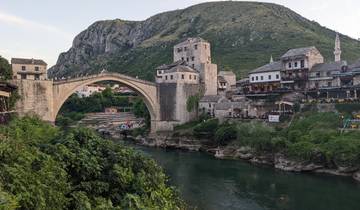
7 days
Bosnia and Herzegovina: Wild Horses & City Sights
- ✓ Comprehensive Mostar tour
- ✓ Expert local guides included
- ✓ All accommodation arranged
- ✓ Transportation provided
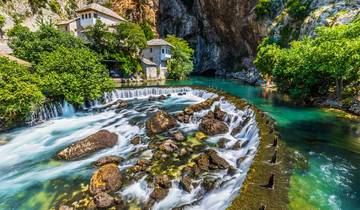
4 days
Bosnia & Hercegovina and Montenegro; Semi – Private Tour with Dedicated Tour Leader & Car
- ✓ Booking needs min. 2 travelers
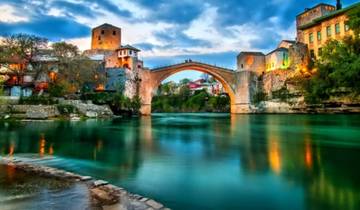
4 days
Dubrovnik Gateway – 3 nights 3 countries
- ✓ Comprehensive Mostar tour
- ✓ Expert local guides included
- ✓ All accommodation arranged
- ✓ Transportation provided
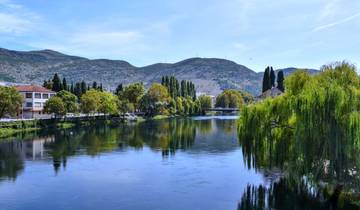
2 days
Mostar Discovery Tour
- ✓ Comprehensive Mostar tour
- ✓ Expert local guides included
- ✓ All accommodation arranged
- ✓ Transportation provided
Multi-day tour packages powered by TourRadar. Prices and availability subject to change.
Introduction: Essential Context for Mostar Travel Planning 2026
Mostar occupies a unique position in Balkan travel — a compact city of just over 100,000 residents that punches far above its weight in historical significance, architectural drama, and photographic appeal. The reconstructed Stari Most bridge, destroyed in 1993 during the Bosnian War and rebuilt stone-by-stone using original 16th-century Ottoman techniques, earned UNESCO World Heritage status in 2005 and serves as both the city’s geographical center and its powerful symbol of reconciliation. The bridge’s graceful 29-meter limestone arch spans the Neretva River at a height of 24 meters, connecting the predominantly Bosniak east bank with the predominantly Croat west bank in a city still visibly marked by ethnic division and wartime scars.
Unlike larger Balkan capitals that require days to explore, Mostar’s essential attractions cluster within a 10-minute walking radius. The cobblestoned Kujundžiluk Old Bazaar runs directly from Stari Most’s eastern approach, its copper-working workshops hammering trays and coffee sets using techniques unchanged for 500 years. The Koski Mehmed Pasha Mosque rises just steps from the bridge’s eastern bank, its 1618 minaret offering the definitive bridge viewpoint for anyone willing to climb the tight spiral staircase. Bullet holes and mortar damage remain visible on buildings throughout the Old Town, preserved intentionally as testament to the 1992-1995 siege that destroyed roughly 60 percent of the city’s Ottoman architectural heritage.
The city serves dual purposes for 2026 visitors. Day-trippers arriving by bus from Dubrovnik, Split, or Sarajevo spend 4-6 hours photographing the bridge from multiple angles, climbing the mosque minaret, browsing the bazaar, watching traditional bridge divers, and sampling ćevapi and Bosnian coffee before departing. Overnight visitors gain access to nearby attractions that day-trippers miss: Blagaj Tekke, a 16th-century Sufi dervish monastery built directly into a cliff face at the Buna River’s source 14 kilometers south; Kravice Waterfalls, a spectacular travertine cascade system 40 kilometers southwest ideal for swimming May through September; and Počitelj, a fortified Ottoman village 30 kilometers south with stone houses clinging to a hillside overlooking the Neretva.
Mostar’s location in Herzegovina — the southern region of Bosnia & Herzegovina — creates a climate distinctly different from Sarajevo’s continental weather patterns. Summer heat routinely exceeds 35°C (95°F) from June through August, with the stone buildings and narrow Old Town lanes amplifying temperatures through solar radiation and restricted airflow. The Neretva River’s emerald-green color comes from karst limestone geology, the same calcium carbonate deposits that form the nearby waterfalls and create the river’s signature turquoise hue. Local swimming spots along the riverbanks beneath Stari Most become crowded gathering places on hot days, making swimwear a surprisingly essential packing item despite the city’s inland location 50 kilometers from the Adriatic coast.
Infrastructure challenges that defined Mostar’s early post-war tourism years have largely resolved by 2026. Hotels range from budget guesthouses at 50-80 BAM per room to renovated Ottoman houses offering boutique experiences at 150-250 BAM. Restaurant options span traditional aščinica cafeterias serving home-cooked Bosnian dishes for 8-12 BAM to riverside establishments charging 25-45 BAM for full meals with Stari Most views. Transportation connections improved significantly with the Sarajevo-Mostar train resuming regular service and bus routes linking Croatia’s Dalmatian coast cities. The city’s compact size eliminates complex navigation challenges — you can walk from the bus station to Old Town in 20 minutes, though taxis covering the same route cost just 5-10 BAM.
Understanding Mostar requires acknowledging its layered identity. The Ottoman period (1468-1878) left the architectural foundation visible in mosques, bridges, and bazaars. Austro-Hungarian rule (1878-1918) introduced Central European building styles in the wider city beyond Old Town. Yugoslav socialism (1945-1992) constructed the concrete apartment blocks on the city’s periphery. The 1992-1995 war destroyed much of the historic core and created ethnic divisions that persist in parallel school systems, separate municipal services, and invisible but very real boundaries between neighborhoods. Recent history remains close to the surface — conversations with older residents inevitably touch on wartime experiences, and restored buildings often display before-and-after photographs showing destruction and reconstruction.
This guide addresses practical planning considerations that determine whether your Mostar visit succeeds or frustrates. Entry requirements, visa policies, and registration procedures for 2026 appear straightforward on paper but contain nuances that trip up unprepared visitors. Currency exchange strategies make substantial differences to your budget given Bosnia & Herzegovina’s unique convertible mark system. Weather patterns and seasonal tourism flows dictate optimal visiting times and daily activity scheduling. Cultural protocols, dress codes, and behavioral expectations vary between secular Old Town areas and active religious sites. Transportation choices between walking, taxis, local buses, organized tours, and rental cars each suit different itineraries and budgets. Safety considerations range from obvious precautions against pickpocketing to lesser-known hazards like slippery cobblestones and residual landmines in countryside areas.
The following sections provide detailed, actionable information organized by topic rather than chronological itinerary format. Whether you’re planning a quick day trip from Croatia or a week-long Herzegovina exploration using Mostar as your base, these tips equip you to navigate practicalities efficiently and focus attention on the city’s extraordinary blend of Ottoman heritage, natural beauty, and living history.
Entry Requirements and Documentation for Mostar 2026
Bosnia & Herzegovina maintains relatively open visa policies aligned with EU standards while maintaining specific requirements that travelers must understand before arrival. The country’s position as an EU candidate nation means visa regulations closely mirror Schengen rules, though Bosnia & Herzegovina remains outside both the EU and Schengen Area as of 2026.
Visa-Free Entry: Who Qualifies and Duration Limits
Citizens of all EU member states, Schengen Area countries, United States, United Kingdom, Canada, Australia, New Zealand, Japan, South Korea, Brazil, Argentina, Chile, Israel, Turkey, Serbia, Montenegro, North Macedonia, Albania, and Kosovo enter Bosnia & Herzegovina without visas for tourism purposes. The standard allowance permits stays up to 90 days within any 180-day period. This calculation method mirrors Schengen rules — your total time in Bosnia & Herzegovina cannot exceed 90 days when counted across the previous 180 days at any point during your stay. EU and Schengen citizens enjoy an additional privilege: entry using national ID cards instead of passports, including the Irish passport card. This exemption applies only to EU and Schengen nationals; all other visa-free visitors must present valid passports.
Passport validity requirements are strict. Your passport must remain valid for at least 3 months beyond your planned departure date from Bosnia & Herzegovina. If your passport expires within 3 months of your intended exit, border officials can deny entry regardless of visa-free status. Additionally, passports must contain at least two blank pages for entry and exit stamps. Border control officers take these requirements seriously — arriving with an expiring passport or insufficient blank pages creates significant problems.
Special Provisions for Schengen Visa Holders
Travelers who don’t qualify for visa-free entry but hold valid multiple-entry Schengen visas or residence permits from EU member states, United Kingdom, or United States can enter Bosnia & Herzegovina without separate Bosnian visas for stays up to 30 days within 180 days. This provision benefits many travelers already touring Europe on Schengen visas. Requirements: your Schengen visa must be multiple-entry (not single-entry), must remain valid for your entire Bosnia & Herzegovina stay, and must have been previously used for entry into at least one Schengen country before arriving in Bosnia & Herzegovina. This exemption creates convenient opportunities for side trips to Mostar from Croatian coastal cities like Dubrovnik or Split.
Mandatory Police Registration Within 24 Hours
All foreign visitors must register with local police within 24 hours of arrival in Bosnia & Herzegovina. This requirement applies regardless of visa-free status or stay duration. Hotels, hostels, and registered guesthouses handle registration automatically for their guests — when you check in, the accommodation provider submits your registration to local authorities electronically or via paper form. You typically sign the registration form as part of check-in procedures without visiting police stations yourself. However, if staying in private accommodation with friends, family, or through informal arrangements, you must register yourself at the nearest police station. Bring your passport, proof of accommodation address, and expected departure date. Registration generates a confirmation document you should keep with your passport for the duration of your Bosnia & Herzegovina stay. Failure to register can result in fines upon exit and potential difficulties with future Bosnia & Herzegovina visits.
Border Crossing Procedures and Entry Stamps
Bosnia & Herzegovina shares land borders with Croatia (EU and Schengen member), Serbia, and Montenegro. Most travelers arrive via Croatia, either driving from Dubrovnik or Split or taking buses from Croatian coastal cities. Border crossing procedures are straightforward but require specific attention to entry stamps. Present your passport (or EU national ID card if applicable) to Bosnian border control officers. Answer basic questions about visit purpose, duration, accommodation, and financial means. Be prepared to show return tickets and proof of accommodation if requested, though these checks are less common for Western tourists with return tickets clearly visible in booking confirmations.
Critical requirement: ensure border officials stamp your passport with the entry date. Without this entry stamp, you may face difficulties at exit or if extending your stay. Bosnia & Herzegovina does not participate in Schengen’s borderless travel system — every entry and exit receives a stamp regardless of your previous Schengen stamps. If arriving by air at Sarajevo, Banja Luka, or Mostar airports, immigration procedures occur at the airport. Land border crossings from Croatia can experience delays during summer peak season when buses from Dubrovnik arrive simultaneously. Budget extra time for potential queues.
Special Considerations for Different Traveler Types
Families traveling with children under 14 face additional requirements. Minors need their own passports — they cannot travel on parents’ passports. If a child travels with only one parent or with guardians, carry a notarized letter of consent from the non-traveling parent(s) giving permission for the journey. While not always checked, this document prevents potential complications if questioned by border authorities. Birth certificates proving relationship between traveling adult and child are helpful supporting documents.
Pet owners bringing dogs or cats must present EU pet passports or health certificates showing microchip identification, rabies vaccination at least 21 days before travel, and tapeworm treatment for dogs. Specific requirements vary based on your country of origin — verify current regulations on Bosnia & Herzegovina Ministry of Foreign Trade and Economic Relations website before departure.
Travelers with previous Israeli stamps in passports face no entry restrictions in Bosnia & Herzegovina, unlike some other countries in the region. Bosnia & Herzegovina does not refuse entry based on evidence of Israel visits. Similarly, citizens of countries requiring traditional visas can check specific requirements through Bosnia & Herzegovina diplomatic missions, though the visa application process typically requires 7-30 business days.
Extending Your Stay Beyond Initial Period
Tourist visa-free stays can be extended at local police stations before your initial 90-day period expires. For stays exceeding 90 days, you must apply for temporary residence permits through the Department for Foreigners of the Bosnia & Herzegovina Ministry of Security. This process is complex and requires substantial documentation including FBI background checks or local police reports proving no criminal record, apostilled and certified by official authorities. Submit temporary residence applications at least 15 days before your initial 90-day visa-free period expires. Extended stays for work, study, family reunification, or property ownership involve separate permit categories with specific requirements.
Currency, Banking, and Money Management in Mostar 2026
Understanding Bosnia & Herzegovina’s currency system prevents expensive mistakes and ensures smooth financial operations throughout your Mostar visit. The country’s unique monetary arrangement combines euro-pegged stability with cash-dominant local culture.
The Convertible Mark: Fixed Exchange and Dual Designs
Bosnia & Herzegovina’s official currency is the Convertible Mark, abbreviated BAM internationally and KM locally (from the local-language term konvertibilna marka). The currency’s defining feature is its absolutely fixed exchange rate to the euro: 1 EUR = 1.95583 BAM, a peg established in 1998 and maintained through a currency board arrangement where every BAM issued is fully backed by euro reserves held by the Central Bank of Bosnia & Herzegovina. This rate has never been adjusted and cannot float — you’ll receive exactly this exchange rate at any official currency exchange booth, subject only to small service fees.
The Convertible Mark subdivides into 100 fening (similar to cents). Coins come in denominations of 5, 10, 20, and 50 fening, plus 1 and 2 marks. Banknotes appear in 10, 20, 50, 100, and 200 KM denominations. Unique aspect: Bosnia & Herzegovina’s two political entities — the Federation of Bosnia & Herzegovina and Republika Srpska — issue different designs for banknotes, with Federation notes using Latin script and featuring Bosniak and Croat cultural figures, while Republika Srpska notes use Cyrillic script and feature Serb cultural figures. Both versions are legal tender throughout the entire country with identical value. You’ll receive a mix of both designs in normal circulation without any practical difference.
For travelers, the euro peg creates simple mental math. Since 1 EUR = 1.95583 BAM (essentially 2 BAM per euro), you can quickly estimate that 20 BAM equals roughly 10 EUR, 100 BAM equals roughly 50 EUR, and so forth. For US dollar conversions, the BAM/USD rate fluctuates with EUR/USD exchange rates. As of early 2026, approximately 1 USD = 1.69-1.78 BAM, meaning 100 BAM equals roughly $56-59. These rates shift with broader foreign exchange markets but remain predictable through the euro peg.
Cash Versus Card: Payment Realities in Mostar
Despite growing card acceptance, Mostar remains fundamentally cash-oriented, particularly for travelers. Visa and Mastercard work reliably at hotels, larger restaurants, chain stores, and modern cafes in tourist areas. However, cash is essential for: family-run restaurants and traditional aščinica cafeterias, shops and copper workshops in Kujundžiluk Bazaar, local markets and street vendors, most taxis (though some newer vehicles accept cards), small guesthouses and private accommodations, entrance fees at some smaller attractions, and public bus fares. Plan to conduct perhaps 60-70 percent of transactions in cash even if you prefer cards.
This cash preference stems from several factors. Small businesses avoid credit card processing fees of 2-3 percent on already thin margins. Family operations prefer immediate payment without waiting for electronic settlement. Traditional establishments simply never installed card terminals. The practical implication: carry adequate BAM cash daily for meals, transport, small purchases, and spontaneous expenses, while reserving cards for larger hotel bills and pre-booked tours.
ATM Strategy: Locations, Fees, and Best Practices
ATMs are widespread in Mostar’s central areas, with reliable machines at UniCredit Bank, Raiffeisen Bank, Sparkasse Bank, and other major banks. Most ATMs accept Visa, Mastercard, Maestro, Plus, and Cirrus cards. American Express, JCB, UnionPay, Diners, Discover, and Rupay cards have limited acceptance — carry Visa or Mastercard as backup. Some ATMs accept only Visa/Visa Plus while others accept only Mastercard/Cirrus, so having both card networks provides maximum flexibility.
Withdrawal fees vary significantly by bank. Euronet ATMs, identifiable by yellow machines at tourist locations, charge notoriously high fees and poor exchange rates — avoid these aggressively. Look instead for ATMs inside bank branches or attached to bank buildings, which typically charge lower fees. Your own bank may impose foreign transaction fees and out-of-network ATM charges on top of local ATM fees, potentially creating combined fees of 3-5 percent or more. International travel debit cards from providers like Wise or Revolut often eliminate or reduce these fees substantially.
Critical ATM setting: when withdrawing cash, always choose to be charged in BAM rather than your home currency. ATMs offer “dynamic currency conversion” where they convert to your home currency at the machine — this service uses terrible exchange rates that cost you 3-8 percent extra. Selecting BAM triggers conversion through your card network’s wholesale rate, typically much better. This choice appears as “Charge me in BAM” versus “Charge me in USD/EUR/GBP” or similar wording. Always pick the local currency option.
Withdrawal strategy: make fewer, larger withdrawals rather than multiple small ones to minimize total fees. Carrying large amounts increases theft risk, so balance convenience against security. Withdraw 200-400 BAM at a time rather than 50-100 BAM daily. Keep the bulk secure in your accommodation, carrying only that day’s expected expenses. Request smaller denominations when possible — getting a 200 KM note creates change problems at small vendors. Some ATMs allow denomination selection; choose mixed denominations when offered.
Currency Exchange: Where and How to Exchange Euros, Dollars, or Pounds
You cannot obtain BAM before departure from most Western countries — the currency isn’t stocked by typical exchange services. Plan to exchange on arrival or use ATMs. If bringing foreign currency to exchange, euros are dramatically better than other currencies. Exchange booths offer the official fixed rate of 1 EUR = 1.95583 BAM minus a small service fee typically 0.7 percent, with no spread between buying and selling rates. British pounds or US dollars involve both a spread between buying and selling rates AND a service fee, effectively charging double exchange costs and reducing your value 3-5 percent below fair rates.
Currency exchange booths (mjenjačnica) are abundant in central Mostar, with multiple options along the approaches to Old Town and within Kujundžiluk Bazaar. Check rates displayed in windows before entering — all reputable booths must display current buy and sell rates clearly. The rate should be very close to 1.95583 BAM per EUR with the fee listed separately. Avoid booths claiming “no commission” if their rates differ significantly from 1.95583 — they’re hiding fees in poor rates. Also avoid airport exchange booths which charge premium fees despite convenient locations.
Banks can exchange currency but typically involve longer queues, limited opening hours, and sometimes higher fees than exchange booths. If you have euros, exchange booths are faster and equally reliable. If you have pounds or dollars, consider using ATMs instead of exchanging cash — you’ll likely get better effective rates despite withdrawal fees, and you avoid carrying large cash amounts during travel.
Informal Euro Acceptance and Payment Strategies
Euros are widely accepted informally in Mostar’s tourist areas, particularly at hotels, tourist restaurants, and some shops in Old Town. However, this convenience comes with downsides. Vendors accepting euros typically use rounded conversion rates like 1 EUR = 2 BAM (official rate is 1.95583) and give change in BAM at these less favorable rates, costing you 2-3 percent. Only BAM is legal tender, so businesses can refuse euros without explanation. Paying in euros also leaves you without small denominations for taxis, buses, and market purchases that require exact or near-exact change.
Optimal strategy: exchange euros to BAM on arrival, then use BAM for all transactions. This gives you proper rates, correct change, and eliminates any payment difficulties. If you run low on BAM mid-trip, make ATM withdrawals rather than using euros directly — the exchange rate and fees work out better overall. Reserve euros only for emergency backups if you somehow exhaust BAM sources.
Tipping Culture and Expected Practices 2026
Tipping in Bosnia & Herzegovina is customary but not mandatory, with expectations lower than North American standards but present nonetheless. In restaurants, rounding up the bill or leaving 10 percent for good service represents standard practice. For a 35 BAM meal, leaving 40 BAM is appropriate. For a 75 BAM meal, adding 5-8 BAM shows appreciation. Service staff wages remain relatively low by European standards, making these tips meaningful supplements to base pay.
For taxis, rounding up the fare suffices. A 7 BAM ride rounded to 10 BAM is generous. For longer rides like 25 BAM from the bus station to accommodation, adding 2-3 BAM is appropriate. If taking guided tours to Blagaj, Kravice, or other sites, 5-10 BAM per person for full-day tours shows appreciation for guides’ knowledge and service. For hotel staff, 1-2 BAM per bag for porters and 5-10 BAM per night for housekeeping in higher-end hotels are suitable amounts, though not expected in budget accommodations.
These small outlays add up across a trip. Budget an additional 5-10 percent of your daily spending for tips and small courtesies. Track these cash amounts if monitoring budgets carefully — they disappear easily from awareness without records.
Money-Saving Strategies and Hidden Cost Avoidance
Several specific tactics reduce expenses without sacrificing experience quality. Eat at aščinica — traditional cafeterias serving home-cooked Bosnian food. A hearty meal of dolma, bosanski lonac, or sarma costs 8-12 BAM compared to 25-45 BAM at tourist restaurants with river views. The food quality often exceeds tourist establishments, and you’ll eat alongside locals rather than exclusively other tourists. Use public buses when they serve your route — a bus ride costs 1.5-2 BAM versus 5-10 BAM for taxis. The number 11 bus to Blagaj from the central bus station costs just 2.10 BAM and takes 20 minutes, a fraction of taxi costs.
Free and low-cost attractions balance paid experiences. Walking Old Town, crossing Stari Most, exploring Kujundžiluk Bazaar, and viewing the bridge from riverbank rocks costs nothing. The Fortica Skywalk walkway above the city offers panoramic views for free. Sunset light on Stari Most creates the day’s best photographs without admission fees. Swimming in the Neretva beneath the bridge is free and popular with locals on hot days. These experiences cost zero BAM but deliver authentic Mostar experiences.
For multiple paid attractions, calculate whether organized tours save money versus independent visits. A full-day tour to Blagaj Tekke, Kravice Waterfalls, and Počitelj costs 49-78 BAM per person including transport and guide. Independent visits via buses and taxis cost: Blagaj bus 2.10 BAM each way plus 10 BAM entry, Kravice bus or taxi 25-40 BAM total plus 20 BAM entry, Počitelj bus or taxi 15-25 BAM total. Adding these reaches 70-100 BAM per person without guide commentary. Tours provide value if visiting all three sites in one day, while independent travel makes sense if selecting only one or two sites at leisurely pace.
Shop strategically in Kujundžiluk Bazaar. Vendors expect negotiation, particularly for higher-priced items like hand-hammered copper trays, Turkish coffee sets, and handwoven rugs. Starting prices often include 20-30 percent negotiating room. Ask prices at multiple shops before committing to establish reasonable ranges. Buying multiple items from one vendor strengthens your negotiating position for package discounts. Avoid first-shop-of-the-day purchases — prices often decrease as day progresses and vendors become more flexible to close sales.
Transportation: Getting to and Around Mostar 2026
Mostar’s compact Old Town makes walking the primary mode for sightseeing, but reaching the city from international locations and accessing nearby attractions requires understanding available transport options.
Arriving in Mostar: Airport, Bus, Train, and Driving Routes
Most international travelers reach Mostar via connection through larger transport hubs rather than direct flights. Mostar International Airport (OMO) operates limited seasonal flights from a handful of European cities, making it a minor entry point. Sarajevo International Airport (SJJ), 130 kilometers north, serves as the primary air gateway with connections to European hubs. From Sarajevo, buses depart regularly for the 2.5-3 hour journey to Mostar at costs around 20-25 BAM. Alternatively, the Sarajevo-Mostar train runs at least once daily, taking approximately 2.5 hours through spectacular mountain scenery and proving popular with travelers seeking scenic routes.
Travelers combining Bosnia & Herzegovina with Croatian coastal visits often arrive via bus from Dubrovnik or Split. Dubrovnik to Mostar buses run frequently during tourist season (April-October), covering the 140 kilometers in approximately 3 hours at costs around 29 BAM ($17). Split to Mostar buses operate less frequently but provide the connection in 4-4.5 hours. These routes cross the Croatia-Bosnia & Herzegovina border twice due to the unusual geography of Bosnia’s narrow access corridor to the sea at Neum. Have passports ready for border control stops.
Driving from Croatia to Mostar involves excellent roads but requires awareness of potential issues. The main route from Dubrovnik follows well-maintained highways through dramatic karst mountain scenery. Warning: corrupt traffic stops by police have been reported on roads around Mostar, with officers falsely claiming speeding violations and demanding on-the-spot cash “fines” of 50-100 EUR that go directly into officers’ pockets without official tickets. While not universal, this problem occurs frequently enough to warrant caution. Strategies: drive at exact posted speed limits even if this seems excessively slow, install a dashcam that records speed and interactions, and firmly (but politely) insist on receiving an official ticket at a police station rather than paying roadside cash. Some travelers avoid this entirely by taking buses or booking Mostar as part of organized day tours from Croatia.
Getting from Bus Station to Old Town
Mostar’s main bus station (Autobuska Stanica) sits approximately 1 kilometer north of Old Town, a 15-20 minute walk for travelers with light daypacks or 25-30 minutes with wheeled luggage over uneven sidewalks. The walk is straightforward but uphill toward Old Town, which makes return trips downhill easier. Taxis wait at the bus station charging 5-10 BAM for the short ride to Old Town accommodations — confirm prices before entering the vehicle. Many hotels and guesthouses offer free pickup from the bus station if you call upon arrival; ask about this service when booking.
Walking route from bus station to Old Town: Exit the station and turn right (south) onto Kralja Tomislava street. Continue straight as the street becomes Boulevard. After approximately 700 meters, turn left onto Onešćukova street which leads directly into the Old Town pedestrian zone near Kriva Ćuprija (Crooked Bridge). Total distance roughly 1.1 kilometers. Google Maps navigation works reliably in Mostar for those preferring digital guidance.
Walking Old Town: Primary Transportation Mode
Once in Old Town, walking dominates all movement. The entire UNESCO-protected historic area measures roughly 400 meters east to west and 300 meters north to south — you can cross it completely in 10 minutes at moderate pace. All major attractions cluster within this compact zone: Stari Most bridge, Kujundžiluk Bazaar, Koski Mehmed Pasha Mosque, Karadoz Beg Mosque, riverbank viewpoints, Crooked Bridge, museums, restaurants, and shops. The area is entirely pedestrianized with no vehicles permitted except delivery vehicles in early morning hours.
Critical footwear requirement: Mostar’s Old Town features historic cobblestone streets and uneven stone surfaces that become extremely slippery when wet. Wear shoes with excellent grip and ankle support. Athletic shoes with treaded rubber soles work well. Avoid smooth-soled dress shoes, sandals without grip, or high heels which create genuine fall risks. The cobblestones combine polished wear from centuries of foot traffic with irregular spacing and height variations. Rain or river spray makes these surfaces treacherously slick within minutes.
Stari Most bridge itself deserves particular caution. The reconstructed limestone surface is smooth and develops a polished patina from thousands of daily visitors. The bridge’s signature arch creates a steep upward slope from both banks to the center crown, then a steep descent to the opposite bank. Walking up requires attention to footing; descending requires even more care as downward slopes on slick stone challenge balance. Use the handrails if conditions are wet or if you feel unsteady. Watch traditional bridge divers leaping from the 24-meter height to gauge the bridge’s dramatic elevation change.
Local Bus Service: Limited but Functional
Mostar operates limited public bus routes serving residential neighborhoods and nearby towns. For tourists, the most useful route is bus number 11 to Blagaj, departing from the central bus station toward Blagaj Španski Trg. Tickets cost approximately 2.10 BAM and the journey takes 20 minutes. Buses run on variable schedules that change seasonally — confirm current times at the bus station information desk or ask hotel staff for updated schedules. Frequency ranges from hourly during peak season to every 2-3 hours in off-season.
Purchase bus tickets directly from drivers upon boarding. Have exact change or small bills ready — drivers carry limited change and may refuse large denominations. Single-journey tickets are standard; multi-ride passes aren’t typically available for tourists. Buses don’t announce stops audibly, so track your location via Google Maps or ask the driver to notify you when reaching your destination. Most drivers speak at least basic English and help tourists reach correct stops.
Other bus routes serve outer neighborhoods but hold little interest for short-term visitors focused on Old Town and nearby attractions. The compact nature of tourist areas makes buses unnecessary for most movements within the city itself.
Taxis: Availability, Fair Pricing, and Negotiation
Taxis are abundant in Mostar and relatively inexpensive by Western European standards. Look for official taxis — usually yellow or white vehicles with rooftop taxi signs and company names/phone numbers displayed. Taxi stands exist at the bus station, near Old Town entrances, and at hotels. You can also hail taxis on the street or call companies directly for pickup.
Critical practice: confirm fares before starting journeys or ensure meters are running. Agreed-upon prices prevent disputes at destination. Typical 2026 fares: bus station to Old Town 5-10 BAM, Old Town to Blagaj Tekke 25-30 BAM (one way), Old Town to Kravice Waterfalls 60-80 BAM (one way), airport to Old Town 20-25 BAM. Shorter trips within the city typically run 5-15 BAM. If a driver claims the meter is broken, agree on specific price before the vehicle moves. If the price seems excessive compared to these ranges, politely exit and find another taxi.
International rideshare apps like Uber or Bolt do not operate in Mostar as of 2026. Traditional taxi services remain the only option for on-demand private transport. Local taxi apps may exist but lack user-friendly English interfaces and require local phone numbers for registration, making them impractical for short-term international visitors. Hotel staff can reliably call trusted taxi companies if you prefer arranged pickups over street hailing.
For full-day excursions to multiple sites, negotiate daily rates with taxi drivers. A driver willing to take you to Blagaj, wait while you explore, continue to Kravice Waterfalls, wait again, then return to Mostar might charge 150-200 BAM for the entire day. This can work out more economical than organized tours if you’re a group of 3-4 people splitting costs, and provides flexibility to spend as much time as you want at each location rather than adhering to tour group schedules.
Organized Tours: Day Trips to Blagaj, Kravice, Počitelj, and Herzegovina Region
Numerous tour operators offer half-day and full-day excursions from Mostar to surrounding attractions. Standard full-day tours typically combine Blagaj Tekke, Kravice Waterfalls, and Počitelj medieval village in 7-8 hour itineraries costing 49-78 BAM ($29-46) per person. Tours include transport in air-conditioned minibuses or vans, English-speaking guides providing historical and cultural commentary, and pickup/dropoff at Mostar hotels or central meeting points. Entrance fees are sometimes included and sometimes extra — verify what’s covered before booking.
Advantages of organized tours: convenient pickup eliminates navigation worries, guides provide context and answer questions, social aspect of meeting other travelers, efficiency of visiting multiple sites in optimized sequence without planning logistics. Tours work particularly well for solo travelers or couples without rental cars, and for those prioritizing convenience over flexibility. Disadvantages: fixed schedules determine duration at each site, possible language barriers if other tour participants speak different languages, larger group sizes can feel rushed at popular viewpoints, less flexibility to explore unexpected discoveries.
Book tours through your accommodation, at tour agency offices in Old Town, or online via platforms like GetYourGuide or Viator. Booking directly with local agencies often costs slightly less than international platforms but offers less refund protection. Read recent reviews checking for reliability, punctuality, guide quality, and transparency about included versus extra costs. Tours marked “private” or “small group” typically cost more but offer better experiences than large-group budget tours packing 40-50 people into buses.
Rental Cars: Freedom and Challenges
Renting cars in Bosnia & Herzegovina provides maximum flexibility for exploring Herzegovina region’s dispersed attractions at your own pace. International rental agencies including Europcar, Sixt, and Budget operate in Sarajevo and at major airports. Local agencies exist in Mostar offering competitive rates. Expect costs around 30-50 EUR per day for economy vehicles, 50-80 EUR for SUVs or larger cars suitable for groups. Book online in advance for better rates and guaranteed availability during summer peak season.
Driving in Herzegovina features good main roads but winding mountain routes requiring confident driving skills. Road surfaces on major routes (Mostar-Sarajevo, Mostar-Dubrovnik) are well-maintained. Secondary roads to smaller villages may have narrow lanes, sharp curves, and limited shoulders. GPS navigation works reliably with up-to-date maps. Download offline maps before departure to ensure coverage in areas with limited mobile signals.
Parking in Old Town Mostar is impossible — the pedestrian zone prohibits vehicles. Most accommodations in or near Old Town lack parking, though some hotels slightly outside the historic center offer parking at 5-15 BAM per night. Public parking exists near the bus station and on the Old Town periphery. If staying overnight in Mostar, verify parking availability when booking accommodation. For day trips using Mostar as a base, parking near Blagaj Tekke costs 2 EUR in the upper lot (free spaces available slightly farther), Kravice Waterfalls charges 5-10 BAM for parking, and Počitelj offers free parking near the village entrance.
The previously mentioned corrupt police stop problem affects rental cars as much as private vehicles. Some travelers conclude that buses and organized tours offer better value and less stress than dealing with potential police harassment on rural roads.
Weather, Climate, and Best Times to Visit Mostar 2026
Understanding Mostar’s Mediterranean-influenced continental climate helps you pack appropriately and schedule activities for maximum comfort and minimum frustration.
Seasonal Patterns and Monthly Breakdowns
Mostar experiences hot, dry summers and mild, wet winters characteristic of Herzegovina’s position between the Adriatic coast and Balkan mountain ranges. Summer (June-August) brings intense heat with daytime temperatures routinely exceeding 35°C (95°F) and occasionally reaching 40°C (104°F) during heat waves. The stone buildings and narrow Old Town lanes amplify these temperatures through solar radiation and restricted airflow. Rain is rare from June through August, creating dry conditions ideal for outdoor exploration if you can tolerate the heat.
Spring (March-May) and autumn (September-November) offer the most comfortable conditions for sightseeing. May temperatures typically range 18-28°C (64-82°F), perfect for walking tours, climbing mosque minarets, and exploring countryside attractions without oppressive heat. September and early October mirror May’s pleasant temperatures while featuring clearer skies and lower humidity. Late October and November bring increasing rain as autumn transitions to winter, though temperatures remain mild enough for comfortable sightseeing with appropriate rain gear.
Winter (December-February) sees cool temperatures typically 5-12°C (41-54°F) with higher rainfall than other seasons. Snow is rare in Mostar itself but falls regularly in surrounding mountains, creating scenic backdrops of white peaks against the green Neretva valley. Winter brings the year’s lowest tourist numbers and correspondingly lowest hotel prices, making it attractive for budget travelers willing to endure occasionally damp, cool conditions. Many outdoor restaurants close for winter, and swimming in the Neretva becomes impossible for most people.
Optimal Visiting Months for Different Priorities
May, June, September, and October represent ideal months balancing weather, crowd levels, and attraction access. May offers spring freshness with wildflowers in countryside, manageable temperatures, and growing daylight hours. June provides reliable sunny weather before peak summer heat and crowds arrive. September delivers summer’s warmth with declining tourist numbers as European school terms resume. October features autumn colors, comfortable temperatures, and further reduced crowds, though late October sees increasing rain.
July and August bring peak crowds and peak heat. Day-trip buses from Croatian coast cities arrive by the dozens, creating congestion at Stari Most bridge between 10 AM and 4 PM. Temperatures make midday exploration unpleasant to dangerous depending on your heat tolerance. However, these months also offer the longest daylight hours (sunrise around 5 AM, sunset after 8 PM), enabling early morning and evening sightseeing while avoiding midday heat. Kravice Waterfalls are at their best for swimming during July-August. If visiting in peak summer, structure days around heat: explore 7-11 AM, rest through midday heat, resume activities 4-8 PM.
March-April and November appeal to travelers prioritizing budget over perfect weather. Hotel prices drop 30-50 percent compared to summer peaks. Restaurants, shops, and attractions remain open but operate on reduced schedules. Rain gear and layered clothing become essential rather than optional. These shoulder months suit travelers with flexible itineraries who can adapt to weather conditions.
December-February work best for hardy budget travelers or winter photography enthusiasts. You’ll have Old Town practically to yourself many days, especially weekdays. Restaurants and cafes stay open year-round in the Old Town core. However, day trip buses run reduced schedules or cease entirely, organized tours may be unavailable, and some smaller attractions close for winter. The compensation is dramatic winter light for photography, snow-capped mountains framing the green valley, and authentic local life with minimal tourist influence.
Daily Weather Patterns and Activity Planning
Summer mornings start surprisingly cool, with temperatures in the low 20s°C (low 70s°F) around sunrise. This creates the day’s best conditions for photography when soft morning light illuminates Stari Most from the east. Plan active exploration for 7-11 AM when temperatures remain manageable, Old Town stays relatively uncrowded, and harsh shadows haven’t yet developed. The daily tour buses from Croatia typically arrive 10 AM-noon, creating congestion that peaks 11 AM-3 PM.
Midday (11 AM-4 PM) from June through August becomes genuinely dangerous for heat exposure. The stone surfaces reflect and radiate heat, creating oven-like conditions in narrow bazaar lanes. Many locals retreat indoors during these hours. Follow their lead: return to air-conditioned accommodation, find shaded riverside restaurants for extended lunches, or seek out museums and mosques that offer relief from direct sun. Swimming in the Neretva beneath Stari Most becomes particularly appealing during midday heat.
Late afternoon and evening (4-8 PM) bring renewed activity as temperatures moderate. Sunset light creates golden hour photography opportunities, particularly from the western bank looking east toward Stari Most with warm light on the limestone. The Old Town becomes more pleasant for browsing bazaar shops, climbing minaret stairs, and exploring without heat exhaustion risks. Most tour buses have departed by 5 PM, returning relative calm to main viewing areas. Many travelers find sunset timing ideal for the classic Stari Most photographs combining warm light, long shadows, and fewer crowds.
What to Pack for Different Seasons
Summer visitors require sun protection as highest priority. Wide-brimmed hats or caps shield faces from intense UV exposure. Sunscreen rated SPF 30+ prevents burns during extended outdoor time. Sunglasses protect eyes from glare off stone surfaces and water. Light-colored, loose-fitting clothing in breathable fabrics (cotton, linen) stays cooler than dark or tight synthetics. Pack at least one swimsuit — river swimming becomes essential cooling strategy on hot days, and many visitors don’t expect this inland city to offer swimming opportunities. Bring refillable water bottles to stay hydrated; fountains providing potable water exist around Old Town.
Spring and autumn require layering systems accommodating 15°C (27°F) daily temperature swings. Mornings may start cool enough for light jackets, while afternoons warm to t-shirt weather. Light rain jackets or packable umbrellas handle occasional showers without excessive bulk. Closed-toe walking shoes with good grip prove essential year-round but particularly important during spring and autumn when cobblestones stay wet for hours after rain. One warm layer (fleece or sweater) handles cool evenings, especially in September-October.
Winter visitors need more substantial layers. Waterproof jackets with hoods provide rain protection during Herzegovina’s wettest season. Warm base layers, sweaters, and potentially light down jackets handle temperatures that can drop to freezing on coldest winter nights, though usually staying 5-12°C during daylight. Waterproof boots with good grip prevent slipping on wet cobblestones. Gloves and warm hats benefit early morning and evening walks. Despite winter’s relative mildness, stone buildings retain cold, and accommodations may have limited heating.
All seasons benefit from: comfortable walking shoes with excellent grip and ankle support, small daypack for carrying water/layers/purchases, basic first aid kit including blister treatment, modest clothing for mosque visits (covered shoulders and knees minimum), and power adapters for European outlets (Bosnia & Herzegovina uses Type C and F plugs at 230V).
Cultural Protocols and Behavioral Expectations 2026
Navigating Mostar’s cultural landscape requires understanding the complex intersection of Ottoman Islamic heritage, European secular influence, and recent wartime history that continues shaping daily life and social interactions.
Religious Sites: Dress Codes and Respectful Behavior
Mostar contains numerous active mosques that welcome visitors while maintaining religious functions for local Muslim communities. Koski Mehmed Pasha Mosque, the most-visited religious site in Old Town, allows tourists to enter the prayer hall and climb the minaret for 12 BAM admission. Entry requires removing shoes before stepping onto carpeted prayer areas — leave shoes in the racks provided at entrances. Women must cover heads with scarves (provided at entrance if you don’t have your own), cover shoulders and knees completely, and some sites provide long wrap skirts for women wearing shorts or short skirts. Men must wear long pants covering knees; tank tops are discouraged though short-sleeve shirts are acceptable.
Respectful behavior includes speaking quietly inside prayer halls, avoiding walking in front of people actively praying, refraining from photography of worshippers without permission, and not touching religious texts or artifacts. Friday midday prayers (Jumu’ah) bring larger congregations and some mosques restrict tourist access during prayer times, typically 12-2 PM on Fridays. If visiting during prayer times, wait for prayers to conclude rather than entering mid-service.
These protocols apply to active religious sites. Historical museums and cultural centers without active worship functions have fewer restrictions, though basic modesty remains appropriate. When uncertain whether a site is active worship space or historical museum, observe other visitors or ask staff at entrance.
Photography Etiquette: People, War Damage, and Sensitive Sites
Photographing Stari Most bridge, Old Town architecture, bazaar scenes, and landscapes raises no concerns — these subjects are publicly visible and tourism authorities encourage photography. However, several situations require more consideration. Photographing local people, particularly women in traditional dress or older residents, should involve asking permission first. A friendly gesture and questioning look usually communicates intent; many locals smile and agree while others politely decline. Respect declinations without argument.
War damage and memorials require thoughtful approaches. Bullet holes and shelling scars visible on buildings throughout Old Town are historically significant remnants of the 1992-1995 conflict. Photographing this damage for educational or documentary purposes is acceptable and even encouraged by some residents who want the world to remember. However, avoid treating war damage as purely aesthetic backdrop for tourist selfies — this trivializes genuine trauma experienced by the community. The Partisan Memorial Cemetery and other war memorials deserve particularly respectful treatment with no selfies, no playful poses, and consideration for any locals visiting to remember lost family members.
Inside mosques, photography of architecture is generally permitted but always ask permission first and never photograph people praying without explicit consent. Some mosques prohibit flash photography to protect historic decorative elements from light damage. Museums typically allow photography without flash but check signage or ask staff. The bridge diving show from Stari Most is public performance and freely photographable, though photographers blocking the optimal viewing spots for extended periods frustrate other tourists.
Navigating Ethnic Divisions with Sensitivity
Mostar remains divided along ethnic lines between predominantly Bosniak east bank neighborhoods and predominantly Croat west bank areas. This division manifests in parallel institutions: separate school systems teaching different curricula in different languages, separate municipal services, and separate political structures despite nominally unified city government. Travelers notice this most obviously in alternate street signs showing different names in Latin and Cyrillic scripts, and in neighborhoods featuring either mosques or Catholic churches as dominant religious architecture.
Visitors are not targets of ethnic tension and travel safely in all areas. However, awareness of this division influences conversational topics and behavioral appropriateness. Avoid making casual comparisons suggesting one ethnic group is more authentic or more welcoming than others — these judgments reflect incomplete understanding of extraordinarily complex history. If locals raise topics of ethnicity, war history, or politics, listen respectfully and ask clarifying questions from genuine curiosity, but don’t position yourself as arbitrator of “who was right” in the conflict. Most residents appreciate sincere interest in understanding their experiences while resenting outsiders making simplistic judgments about situations they don’t fully comprehend.
The reconstruction of Stari Most itself serves as powerful symbol of reconciliation — funding came from international sources, traditional Ottoman construction techniques were researched and reapplied, and both Bosniak and Croat workers participated in rebuilding. This collaborative effort represents the path forward many residents hope for, even as political divisions persist.
Language Considerations and Communication Strategies
Bosnia & Herzegovina has three official languages: Bosnian, Croatian, and Serbian. These are mutually intelligible and differ primarily in vocabulary, script (Latin versus Cyrillic), and linguistic terminology rather than fundamental communication barriers. Most residents are multilingual within this local language system. For practical purposes, travelers can think of them as variants of a shared Serbo-Croatian language system, though using this term risks causing offense due to political sensitivities about language independence.
English proficiency in Mostar varies substantially by age and occupation. Young people, particularly those working in tourism, generally speak functional to fluent English. Staff at hotels, restaurants in Old Town, tour operators, and shops catering to tourists communicate adequately in English. Older residents, particularly those who came of age during Yugoslav era, more commonly speak German as a second language than English. Taxi drivers, bus drivers, and workers at family-run establishments outside tourist areas may speak limited or no English.
Useful phrases in Bosnian smooth interactions: “Zdravo” (ZDRAH-voh, hello), “Hvala” (HVAH-lah, thank you), “Molim” (MOH-leem, please/you’re welcome), “Koliko košta?” (KOH-lee-koh KOSH-tah, how much does it cost?), “Račun, molim” (RAH-choon MOH-leem, the bill, please), and “Ne razumijem” (neh rah-ZOO-mee-yem, I don’t understand). Learning these basics demonstrates respect and often elicits warmer interactions, even if conversations ultimately switch to English or hand gestures.
Translation apps including Google Translate function reliably with internet connections and can photograph menu text or signs for instant translation. Download offline language packs before travel for functionality without data connections. In practice, most tourist transactions manage through combination of basic phrases, English fragments, pointing, and calculator displays for prices.
Hospitality Culture and Social Interactions
Bosnian hospitality traditions run deep, with hosts taking pride in welcoming guests and ensuring comfort. This manifests in extended coffee ceremonies where traditional Bosnian coffee served in džezva copper pots on metal trays becomes vehicle for leisurely conversation rather than quick caffeine delivery. If invited to share coffee at a copper workshop or craft stall, this represents genuine hospitality rather than hard sales tactic — though purchasing something small afterward is polite if the interaction was pleasant.
Meal times follow Mediterranean patterns with later dining than Northern European or American norms. Lunch typically runs 1-3 PM, dinner 8-10 PM. Restaurants remain open across these spans but locals concentrate dining in these windows. Sharing food is common cultural practice — ordering several dishes for communal sampling rather than individual entrees reflects local customs and enables trying more variety.
Greetings involve handshakes for both men and women in business contexts. Cheek kissing (typically two kisses alternating cheeks) occurs among friends and family but not with strangers or new acquaintances. Personal space distances are closer than Northern European or American norms but not as close as Mediterranean standards. Directness in conversation is valued — Bosnians appreciate straightforward communication over excessive politeness that obscures meaning.
Safety and Security Considerations for Mostar 2026
Mostar presents generally low crime risks for tourists but requires awareness of specific hazards ranging from ordinary urban theft to unique post-conflict dangers.
Petty Crime and Theft Prevention
Pickpocketing and bag snatching occur in Mostar primarily in predictable locations: crowded sections of Kujundžiluk Bazaar during peak midday tourist hours, bus station areas during arrival and departure times, and crowded restaurants with bags left on chair backs or under tables. Thieves target distracted tourists photographing Stari Most or watching bridge divers. Standard urban precautions substantially reduce risks: wear daypacks on your front in crowds, keep valuables in front pockets or money belts rather than back pockets, maintain awareness of surroundings especially when stopped to photograph or consult maps, and avoid displaying expensive cameras, jewelry, or large amounts of cash conspicuously.
Violent crime against tourists is rare. Mostar’s small size and community nature means criminals face high identification risks, deterring serious crimes. Police presence increases during summer tourist season. However, availability of firearms remaining from the war means any confrontation has potentially serious escalation risks. If threatened during a robbery attempt, comply with demands for possessions — no camera or wallet justifies physical resistance against potentially armed criminals.
Accommodation security varies by establishment type. Hotels and registered guesthouses maintain reasonable security with locked doors and sometimes safes for valuables. Budget hostels in shared dormitories require standard backpacker precautions: use lockers if provided, keep valuables with you rather than leaving in room, and use combination locks on bags. Private accommodations arranged through informal channels may lack proper security — verify locks on doors and windows before leaving belongings unattended.
The Cobblestone Hazard: Most Common Injury Risk
Slippery cobblestones cause more tourist injuries than crime in Mostar. The polished limestone paving throughout Old Town combines smooth surfaces with irregular height variations and spacing gaps. When dry, these cobblestones present moderate challenge requiring attention to foot placement. When wet from rain or river spray, they become genuinely dangerous with extremely low friction. Injuries from falls on wet cobblestones include sprained ankles, wrist fractures from catching falls, hip injuries in older visitors, and head injuries from uncontrolled falls.
Prevention strategies: wear shoes with aggressive tread patterns and ankle support, walk slowly and deliberately on wet surfaces, use handrails on stairs and the Stari Most bridge when available, avoid running or quick direction changes on cobblestones, and watch foot placement rather than only looking at scenery or camera screens. If it has rained or if you’re walking near the river where spray keeps surfaces damp, triple your caution level. Consider wearing hiking shoes with Vibram soles rather than casual sneakers if visiting during rainy season or if you have balance concerns.
Landmines and Unexploded Ordnance: Rural Hazard
Bosnia & Herzegovina contains an estimated 80,000 remaining landmines from the 1992-1995 conflict concentrated in rural and forested areas. Several people die or suffer serious injuries from mine explosions annually, though these incidents almost exclusively affect people who ignore warning signs or deliberately enter marked hazardous areas. Tourist areas including Mostar’s Old Town, Blagaj Tekke, Kravice Waterfalls, and Počitelj are completely cleared and safe. Main roads between these sites are safe.
The danger zone begins when leaving hard-surfaced areas in countryside locations. Follow these absolute rules: stay strictly on paved roads and marked trails, never enter abandoned buildings in rural areas (these may contain unexploded ordnance or have unstable structures), observe all mine warning signs which use triangular red markers with skull-and-crossbones symbols, and never pick up military-looking objects including bullet casings or suspicious metal items in countryside areas. The Bosnia & Herzegovina Mine Action Center maintains current hazard maps showing suspected contaminated areas; consult these if planning any hiking or rural exploration beyond established tourist sites.
This hazard should not create paranoia or prevent countryside visits. Millions of tourists visit Herzegovina annually without incident by following these basic rules. The restriction is simple: stick to established paths and roads, avoid exploring randomly in forests or fields, and treat any mine warning sign as absolute barrier.
Traffic and Road Safety
Pedestrians in Old Town face minimal traffic risks in the car-free zone. Outside Old Town, traffic hazards increase substantially. Drivers in Herzegovina can be aggressive by Northern European or American standards, with frequent speeding, tailgating, and impatient passing maneuvers on mountain roads. Pedestrian crosswalks receive variable respect — don’t assume cars will stop at marked crossings, make eye contact with drivers, and cross only when you’re certain vehicles are yielding.
If driving yourself, defensive driving skills are essential. Expect other drivers to pass on blind curves, ignore speed limits substantially, and follow at uncomfortably close distances. Maintain your own safe speeds regardless of pressure from tailgating, use hazard lights when driving slower than local traffic to improve visibility, and pull over to let aggressive drivers pass rather than succumbing to pressure to speed. Mountain roads feature dramatic scenery that tempts distracted driving — designate one person as photographer while the driver maintains road focus, or stop at marked viewpoints rather than attempting photography while driving.
Health and Medical Considerations
Tap water in Mostar is generally safe to drink according to local authorities. However, travelers with sensitive stomachs may prefer bottled water during initial adjustment period. Bottled water costs 1-2 BAM per liter at supermarkets, substantially cheaper than tourist area shops charging 3-4 BAM. Restaurants and cafes serve tap water if requested, sometimes free and sometimes for nominal charges.
Summer heat creates genuine health risks beyond mere discomfort. Heat exhaustion symptoms include dizziness, nausea, excessive thirst, headache, and decreased urination. Prevention requires drinking water consistently throughout the day (at least 2-3 liters daily in summer heat), taking regular breaks in shaded or air-conditioned spaces, and avoiding alcohol during peak heat hours as it accelerates dehydration. Heat stroke is medical emergency requiring immediate treatment — symptoms include confusion, rapid heartbeat, hot dry skin despite heat, and loss of consciousness. If you or someone with you shows these signs, call 124 (ambulance) immediately.
Sun exposure at Mostar’s elevation and latitude creates strong UV radiation. Apply sunscreen rated SPF 30+ every 2-3 hours when outdoors during summer. Hats and sunglasses provide essential protection. River reflection intensifies UV exposure for people spending time on riverbanks.
Pharmacies (apoteka) are well-stocked for minor ailments including pain relievers, antihistamines, anti-diarrheal medications, and basic first aid supplies. Pharmacists often speak English and can recommend appropriate over-the-counter treatments. For serious medical issues, the main hospital (Univerzitetski Klinički Centar Mostar) provides emergency care. Quality of care meets basic European standards though facilities may seem older than Western European hospitals. Comprehensive travel insurance including medical evacuation coverage is strongly recommended — medical care costs are reasonable but emergency evacuation to Western European facilities can reach tens of thousands of dollars.
Emergency Services and Important Numbers
Emergency services in Bosnia & Herzegovina use separate numbers for different services unlike unified 911 or 999 systems in some countries. Memorize or save these numbers: 112 (general emergency from mobile phones), 122 (police), 124 (ambulance), 123 (fire). English-speaking operators are not guaranteed, particularly outside major cities. If facing language barriers during emergencies, speak slowly and clearly in English; operators often understand basic emergency terms even if they can’t converse fluently. Having your accommodation address written in local language helps communicate your location during emergencies.
Hotel staff can assist calling emergency services if needed and can serve as translators. For non-emergency police matters (reporting lost passports, filing theft reports for insurance purposes), the main police station in Mostar sits outside Old Town — ask your accommodation for directions and potentially someone to accompany you as translator.
Accommodation Selection Strategies and Neighborhood Guide 2026
Choosing where to stay in Mostar significantly impacts your experience given the city’s compact size but distinct neighborhood characters.
Old Town Historic Center: Maximum Atmosphere, Some Trade-offs
Staying directly in Old Town places you steps from Stari Most, Kujundžiluk Bazaar, riverside restaurants, and mosques. Accommodations here include renovated Ottoman houses transformed into boutique hotels or guesthouses with traditional architecture, modern amenities, and atmospheric courtyards. Advantages include zero commute to attractions, atmospheric surroundings with historic buildings and cobblestone lanes, evening and early morning access to Old Town when day-trippers have left or not yet arrived, and immersive cultural experience.
Trade-offs: higher prices than peripheral locations (expect 100-250 BAM per room in summer for mid-range options), no parking availability requiring guests with cars to use paid lots 500+ meters away, noise from late-night restaurants and bars during peak season, and limited room sizes in historic buildings not designed for modern hotel conversions. Stairs are common and elevators rare in these centuries-old structures — problematic for visitors with mobility limitations or heavy luggage.
Near Old Town: Balance of Convenience and Value
Areas within 5-10 minute walks of Old Town offer modern hotels with parking, elevators, and larger rooms at 70-150 BAM rates while maintaining easy access to attractions. Neighborhoods like the area around the bus station or along Boulevard provide this middle ground. Advantages include modern amenities, parking availability, quieter nighttime environment, and better value for facilities offered compared to cramped Old Town rooms at similar prices.
Disadvantages center on losing the atmospheric immersion of waking up inside the historic zone and requiring short walks to reach attractions — minor inconvenience for most travelers but worth considering for those with mobility limitations or who prioritize absolute minimal walking distances.
Budget Options: Hostels and Guesthouses
Mostar offers several backpacker hostels with dormitory beds priced 15-30 BAM per person nightly. These concentrate in areas just outside Old Town with easy walking access. Standard hostel amenities include shared kitchens enabling meal self-preparation for budget savings, common areas facilitating meeting other travelers, laundry facilities, and English-speaking staff familiar with backpacker needs. Hostel quality varies substantially — read recent reviews checking for cleanliness, bed comfort, noise levels, and actual distances to Old Town (some hostels describe “5-minute walk” that realistically takes 15-20 minutes with luggage).
Private guesthouses (pension, privatni smještaj) operated by local families offer simple rooms with private bathrooms at 40-80 BAM rates, positioned between dormitory hostels and hotels. These provide more privacy than hostels at prices below hotels, often including breakfast and local tips from hosts. Booking these requires more advance research since they typically lack English websites and don’t appear on major international booking platforms. Look for them on Booking.com using filters for “guest house” or “bed & breakfast” accommodation types.
Booking Strategies and Timing
Summer months (June-August) require advance booking, particularly for Old Town accommodations. Book 2-4 weeks ahead for summer weekend stays, 1-2 weeks ahead for summer weekdays. Spontaneous travelers arriving without reservations in July-August may find limited availability or inflated walk-in rates. Shoulder seasons (April-May, September-October) provide more flexibility — booking several days to one week ahead suffices for most properties. Winter travelers (November-March) find abundant availability and can often book 1-2 days before arrival.
Price comparison across booking platforms (Booking.com, Hostelworld, Airbnb, direct hotel websites) can reveal significant differences. Booking.com dominates the market in Bosnia & Herzegovina with deepest selection. Airbnb offers fewer listings but sometimes reveals private accommodations not available elsewhere. Direct booking by email or phone sometimes yields 5-10 percent discounts compared to platform rates as properties avoid commission fees.
Read recent reviews (within past 6 months) checking for: actual walking distance to Old Town, cleanliness standards, noise levels from bars/restaurants/mosques, parking availability and costs, English proficiency of staff, water pressure and hot water reliability, air conditioning functionality during summer, and heating capability during winter. Reviews mentioning “great location” without specifics may mean “distant from Old Town but near a bus stop” — verify actual distances via maps.
Food and Dining: What, Where, and How to Eat in Mostar 2026
Understanding Mostar’s food landscape helps you balance authentic local experiences with tourist-oriented dining while managing costs effectively.
Essential Bosnian Dishes to Try
Ćevapi (also written ćevapčići) are Bosnia & Herzegovina’s unofficial national dish — small grilled minced meat sausages (beef, lamb, or mixed) served in somun flatbread with raw onions, kajmak (dairy spread similar to clotted cream), and optional ajvar (red pepper relish). Authentic portions contain 5-10 ćevapi pieces at traditional aščinica cafeterias for 6-12 BAM or 10+ pieces at tourist restaurants for 12-18 BAM. Quality varies substantially — the best ćevapi feature properly proportioned lean meat with light char from wood-fire grills, soft fresh somun, and house-made kajmak.
Burek is flaky phyllo pastry filled with meat (meso), cheese (sir), spinach (zeljanica), or potatoes (krompir), baked in large circular pans and sold by weight at bakeries. Authentic Bosnian burek contains only meat filling — other fillings are technically pita despite common usage of “burek” as generic term. Order by gram or by full portions, typically 150-200 grams serving one person for 3-5 BAM at bakeries versus 8-12 BAM at restaurants.
Bosanski lonac is traditional Bosnian pot stew combining multiple meats (beef, lamb, chicken), vegetables (cabbage, carrots, potatoes), and long slow-cooking creating tender ingredients in rich broth. This home-cooking staple appears at aščinica cafeterias for 8-12 BAM per portion, rarely at tourist restaurants.
Begova čorba (Bey’s soup) is thick soup of chicken, okra, and vegetables enriched with roux, reflecting Ottoman culinary influences. Dolma are vegetables (bell peppers, zucchini, eggplant) or cabbage/grape leaves stuffed with rice and meat mixture. Klepe are Bosnian dumplings similar to manti, filled with meat and served with garlic yogurt sauce. Pljeskavica is large spiced beef and pork patty (similar to burger) grilled and served with flatbread and accompaniments.
Bosnian Coffee Ceremony: More Than Just Caffeine
Bosnian coffee differs from Turkish coffee despite similar preparation in džezva copper pots. The key distinction lies in grinding method (Bosnian ground slightly coarser) and serving ritual. Coffee arrives in the džezva alongside a small cup (fildžan), sugar cubes, and often a piece of lokum (Turkish delight). Pour small amounts repeatedly rather than filling the cup once — this maintains temperature and allows sugar adjustment between pours. The grounds settle at cup bottom; don’t drink the last sip which contains sediment.
The ritual emphasizes conversation over quick consumption. Cafes expect coffee drinkers to linger 30-60 minutes or longer. This makes coffee ordering the price of admission for extended people-watching, Old Town atmosphere absorption, and rest breaks during walking tours. Bosnian coffee costs 2-4 BAM at traditional cafes, 5-7 BAM at prime Old Town tourist locations. It’s an excellent value for the time and space it provides.
Aščinica Cafeterias: Budget Eating Secret
Aščinica (plural: aščinice) are no-frills cafeterias serving home-cooked Bosnian food to locals at prices 40-60 percent below tourist restaurants. These establishments feature steam tables displaying prepared dishes — you select what appeals, portions are served onto plates, and you pay at the counter. Typical offerings include bosanski lonac stew, dolma, sarma (stuffed cabbage rolls), roasted meats, vegetable sides, and daily specials. A filling meal costs 8-12 BAM including main dish, side, and bread.
Aščinice concentrate in neighborhoods outside immediate Old Town tourist zone, though a few exist on the Old Town periphery. Ask locals or hotel staff for recommendations — these establishments cater to working Mostar residents and signage may be minimal. Advantages beyond price include authentic local atmosphere, generous portions, home-cooking quality, and rotation of dishes reflecting seasonal ingredients and weekly specialties. Disadvantages include limited English (pointing works fine), variable opening hours (many close by 5-6 PM), and basic seating without scenic views.
Tourist Restaurant Selection: Navigating Quality and Price
Restaurants with river views and Stari Most terrace seating command premium prices 30-50 percent above non-view establishments for comparable food quality. A grilled meat plate with sides costs 12-18 BAM at restaurants without views versus 20-30 BAM at riverside terraces. You’re paying for location and atmosphere rather than superior cooking. This trade-off makes sense for one memorable meal enjoying bridge views at sunset, less justifiable for every meal.
Quality indicators: menus printed in multiple languages suggest tourist focus but don’t automatically mean poor quality; check for local diners (though their absence doesn’t prove bad food since many locals avoid tourist-priced Old Town restaurants); inspect portions and ingredients at occupied tables before sitting; and read recent online reviews mentioning food quality specifically rather than just location praise.
Avoid restaurants with aggressive touts approaching in the street — quality establishments rely on reputation rather than harassment. Similarly, suspicion rises when menus list dozens of dishes from multiple cuisines (Bosnian, Italian, Mexican) suggesting frozen industrial ingredients rather than fresh daily cooking.
Markets, Bakeries, and Self-Catering Options
The open-air market (pijaca) operates mornings near the Bulevar area, selling fresh produce, cheeses, cured meats, bread, honey, and local products. Prices run 50-70 percent below restaurant ingredient costs, making markets excellent for picnic supplies or self-catering. Local bakeries (pekara) produce fresh burek, pita, bread, and pastries daily. A complete breakfast of burek and yogurt costs 3-5 BAM from bakeries versus 8-15 BAM at cafes.
Supermarkets including Konzum and Bingo chains stock familiar European products plus local specialties. Use these for bottled water (1-2 BAM per liter), snacks, breakfast supplies if your accommodation includes kitchen facilities, and emergency food during restaurant closure days. Supermarket prepared foods section offers salads, sandwiches, and ready-meals at substantial savings versus restaurants.
Dietary Restrictions and Vegetarian Options
Traditional Bosnian cuisine is meat-centric, creating challenges for vegetarians and vegans. However, options exist. Vegetarian-suitable dishes include zeljanica (spinach pita), krompiruša (potato pita), various salads (shopska, Greek, seasonal), baked vegetables, pizzas at Italian restaurants, and pasta dishes. Some restaurants prepare vegetables dolma using rice-only filling without meat on request. Many aščinice offer one or two vegetable-based dishes daily.
Communicating dietary restrictions: “Jesam vegetarijanac” (I am vegetarian) or “Nisam jeo meso” (I don’t eat meat) covers vegetarian needs. Vegans face steeper challenges since dairy (cheese, kajmak, yogurt) appears in most vegetarian options. “Nema mlijeko, jaja, ili sir” (no milk, eggs, or cheese) communicates vegan requirements, though this severely limits menu options. Gluten-free dining is possible through meat and vegetable dishes avoiding bread, but dedicated gluten-free facilities are rare.
Day Trips and Nearby Attractions from Mostar 2026
Mostar’s position in Herzegovina region provides base for exploring spectacular natural and cultural sites within 15-60 minute drives.
Blagaj Tekke: Riverside Monastery in Cliff Face
Blagaj village sits 14 kilometers south of Mostar at the source of the Buna River, where impossibly turquoise water emerges from a karst cave beneath a 200-meter cliff. The Blagaj Tekke, a 16th-century Sufi dervish monastery, sits built directly into the cliff face above the spring, creating dramatic architecture merging natural and human elements. This site appears on UNESCO’s tentative list for Bosnia & Herzegovina World Heritage inscription.
The tekke interior functions as museum displaying prayer rooms, semahane (ceremonial hall), living quarters, and Ottoman-era furnishings. Entrance costs 10 BAM. Dress codes apply: women receive floor-length wrap skirts and headscarves at entrance, both men and women remove shoes before entering carpeted areas. Visits typically last 30-45 minutes including time photographing the exterior from multiple angles along the riverside path.
Transportation from Mostar: bus number 11 from central bus station toward Blagaj Španski Trg, costing 2.10 BAM with 20-minute journey time on variable schedules (hourly to every 2-3 hours depending on season). Taxis charge 25-30 BAM one way or 50-60 BAM round trip with waiting time. Organized half-day tours cost 25-35 BAM per person including transport and guide. By rental car, drive south on M17 highway for 15 minutes; free parking exists in upper lot, paid parking (2 EUR) available closer to monastery.
The site pairs well with riverside restaurants serving fresh trout from the Buna. Budget 10-15 BAM for simple grilled trout meals or 20-30 BAM for full meals at restaurants with terrace seating overlooking the spring. Visit early morning (8-10 AM) or late afternoon (4-6 PM) to avoid midday tour bus crowds that peak 11 AM-2 PM during summer.
Kravice Waterfalls: Swimming and Natural Beauty
Kravice Waterfalls cascade approximately 25 meters over a 120-meter-wide travertine barrier on the Trebižat River, 40 kilometers southwest of Mostar. The amphitheater-like formation creates multiple tiers of waterfalls surrounding a large pool suitable for swimming from May through September when water levels remain deep enough and temperatures warm enough for comfortable swimming. The site is managed as nature park with entrance fees.
Admission costs 20 BAM for adults in 2026. Facilities include changing rooms, restrooms, small café serving drinks and simple foods, and picnic areas in surrounding forest. Swimming is the primary activity — bring swimwear, towels, and water shoes for walking on slippery rocks. The pool depth varies by location, with shallow areas near edges and deeper sections beneath the main falls reaching 3-5 meters. Strong swimmers can approach the falling water; less confident swimmers should stay in calmer pool areas away from the current.
Best visiting months are June through early September when water temperature reaches comfortable levels for extended swimming. May and late September feature beautiful scenery but cold water temperatures limiting swimming to brief dips. October through April sees reduced water flow and no swimming facilities. Avoid summer weekends and holidays when domestic tourists crowd the site; weekday mornings offer better experiences with smaller crowds.
Transportation from Mostar: no direct public buses serve Kravice, requiring either rental car (45-minute drive via M6 and local roads, parking 5-10 BAM), taxi (60-80 BAM one way, 120-160 BAM round trip with waiting, or negotiated day rate 150-200 BAM), or organized tours (40-60 BAM per person including round trip transport, sometimes combined with Blagaj and Počitelj). Bring all food and water since on-site café offers limited selection at inflated prices. Picnicking is permitted and popular with local visitors.
Počitelj: Fortified Ottoman Village
Počitelj clings to a hillside 30 kilometers south of Mostar on the Neretva River, a fortified village dating to the 14th century with Ottoman-era mosques, stone houses, fortress ruins, and defensive walls. The village earned UNESCO World Heritage tentative list status and functions as open-air museum where the entire settlement represents the architectural ensemble rather than individual buildings.
Entry to the village itself is free — you walk from the parking area directly into the stone lanes climbing the hillside. The Hadži Alija Mosque (1562-1563) sits at the village center with distinctive hexagonal base and minaret offering views over the Neretva valley for nominal entry fee 2-3 BAM. The Sahat Kula clock tower and fortress ruins crown the hilltop requiring 10-15 minute steep climb on stone stairs and paths — wear good shoes and bring water for the ascent.
The compact village explores in 1-2 hours including climbs to viewpoints. Handicraft shops line the lower lanes selling ceramics, textiles, and souvenirs. A few simple restaurants serve drinks and basic meals at moderate prices. Optimal timing combines Počitelj with Blagaj and/or Kravice as multi-stop day trip rather than visiting Počitelj alone.
Transportation from Mostar: buses heading south toward Čapljina stop at Počitelj (15-20 BAM, 25-30 minutes), but return buses run on inconvenient schedules making this impractical for same-day visits. Taxis charge 40-50 BAM round trip with waiting time. Most visitors access Počitelj via organized tours combining it with other Herzegovina sites. By rental car, drive south on M17 highway for 25 minutes; free parking exists at village entrance.
Međugorje: Pilgrimage Site
Međugorje, 25 kilometers southwest of Mostar, attracts millions of Catholic pilgrims annually following reported Marian apparitions beginning in 1981. The Vatican has not confirmed the apparitions as authentic but permits organized pilgrimages. The town features St. James Church, Apparition Hill where initial visions allegedly occurred, Cross Mountain with white cross visible for kilometers, and numerous religious souvenir shops, hotels, and facilities catering to pilgrims.
Interest in Međugorje breaks sharply along religious lines. Catholic visitors, particularly those with pilgrimage motivations, find profound meaning in the site. Secular tourists or non-Catholic visitors often report the commercialized religious tourism atmosphere feels inauthentic or uninteresting. This clear divide means Međugorje suits specific visitor profiles rather than being universal recommendation.
Transportation from Mostar: frequent buses (30 minutes, 6-8 BAM) serve Međugorje given the pilgrimage traffic. Taxis charge 40-50 BAM round trip. Organized tours from Mostar cost 25-40 BAM per person. The site requires several hours minimum if participating in religious services or climbing the hills; quick drive-through visits miss the point for pilgrims and offer little for secular tourists.
Frequently Asked Questions About Visiting Mostar 2026
How many days do I need in Mostar in 2026?
A full day (8-10 hours) suffices for exploring Mostar’s Old Town, Stari Most bridge, Kujundžiluk Bazaar, Koski Mehmed Pasha Mosque with minaret climb, riverbank viewpoints, and lunch at a traditional restaurant. This schedule works well for day-trippers arriving by bus from Dubrovnik or Split who depart the same evening. Two days enables a more relaxed pace with time for multiple meals in different restaurants, sunset photography from various angles, shopping in the bazaar without rush, and exploring secondary attractions like Crooked Bridge, museums, and walking to Partisan Memorial Cemetery. Three days allows visiting Mostar plus day trips to Blagaj Tekke, Kravice Waterfalls, and Počitelj while maintaining leisurely exploration pace. Four or more days suits travelers using Mostar as base for extensive Herzegovina region exploration including Međugorje, Vjetrenica Cave, wine regions, and remote mountain villages. Most visitors find 1-2 days optimal balancing thorough Mostar coverage with efficient travel time allocation.
Can I use euros in Mostar or do I need convertible marks in 2026?
You legally need convertible marks (BAM) since only BAM is legal tender in Bosnia & Herzegovina. However, euros are widely accepted informally at hotels, many tourist restaurants, and some shops in Old Town, though vendors use rounded conversion rates like 1 EUR = 2 BAM (official rate is 1.95583) and give change in BAM, costing you 2-3 percent in unfavorable exchanges. More importantly, many essential transactions require BAM cash: buses only accept BAM, most taxis accept only BAM, small family restaurants accept only BAM, bazaar shops prefer or require BAM, and aščinica cafeterias serving the best budget meals accept only BAM. ATMs are plentiful throughout Mostar accepting international cards; withdrawing BAM as needed provides better exchange rates and ensures you can pay for all purchases without complications. If bringing foreign currency to exchange, euros exchange at best rates (official peg rate minus ~0.7 percent fee) compared to pounds or dollars which involve both spread and fees. Optimal strategy: arrive with euros, exchange 100-200 EUR to BAM on arrival, use ATMs for additional BAM as needed during your stay, keep credit cards as backup for larger hotel and restaurant bills.
Is Mostar safe for solo female travelers in 2026?
Mostar is generally safe for solo female travelers with standard urban precautions observed. Women travel independently throughout Bosnia & Herzegovina without systemic harassment or unusual risks. The tourist areas including Old Town, Kujundžiluk Bazaar, restaurants, and accommodations present minimal concerns during daylight hours and evening dining times when crowds provide natural safety. Solo women should follow the same precautions applicable anywhere: avoid isolated areas after dark, stay aware of surroundings in crowded spaces where pickpockets operate, inform your accommodation of your daily plans, keep phone charged and accessible, and trust instincts if situations feel uncomfortable. Conservative dress (covered shoulders and knees) is required for mosque visits and generally reduces attention in this Muslim-majority city, though Mostar’s tourist areas are cosmopolitan enough that typical Western casual wear draws no particular notice. Unwanted attention or catcalling occurs occasionally as in most Mediterranean and Balkan countries but typically stays at verbal level without escalation. Women traveling alone report positive experiences overall, with locals often offering helpful directions or assistance when they appear uncertain. Solo female travelers choosing budget hostel accommodations should read recent reviews specifically mentioning safety and security measures, as hostel quality varies substantially regarding door locks, lighting, and general atmosphere.
What should I wear when visiting Mostar in summer 2026?
Summer in Mostar requires balancing heat management with cultural appropriateness and practical considerations for walking on cobblestones. Temperature basics: lightweight, loose-fitting clothing in breathable natural fabrics (cotton, linen) stays cooler than tight synthetic materials; light colors reflect sun better than dark colors; and layers allowing adjustment as you move between sunny streets and air-conditioned interiors provide flexibility. Essential items: wide-brimmed hat or cap for sun protection, sunglasses protecting against glare off stone surfaces and water, sunscreen SPF 30+ reapplied every 2-3 hours, and closed-toe walking shoes with excellent grip and ankle support for cobblestone streets — athletic shoes with treaded rubber soles work well, while smooth-soled dress shoes or sandals without grip create fall risks on polished limestone. Modesty considerations: mosque visits require covered shoulders and knees for both men and women, so pack at least one outfit meeting these requirements — lightweight long pants or long skirt plus t-shirt suffices. Tank tops and very short shorts are acceptable in secular Old Town areas but may draw attention; covering shoulders in general public areas reduces any unwanted notice and allows spontaneous mosque entries. Swimsuit essential: pack at least one swimsuit even though Mostar sits inland — river swimming beneath Stari Most provides crucial cooling on hot days, and day trips to Kravice Waterfalls center on swimming in natural pools. Additional useful items: small daypack for carrying water bottles and purchases, light rain jacket for occasional summer thunderstorms, modest scarf women can use as mosque head covering to avoid using venue-provided scarves.
Can I drink tap water in Mostar or should I buy bottled water in 2026?
Tap water in Mostar meets local safety standards and local residents drink it without concerns. International travelers typically tolerate Mostar tap water without problems, though those with sensitive stomachs may experience minor digestive adjustments during the first 1-2 days as with any destination change. If you regularly drink tap water at home and have traveled internationally before, Mostar tap water should cause no issues. However, if you have particularly sensitive digestion or prefer eliminating all risk, bottled water costs 1-2 BAM per liter at supermarkets (substantially cheaper than 3-4 BAM at tourist area shops), making it economical enough to use bottled water exclusively if desired. Restaurants and cafes serve tap water if requested, sometimes free and sometimes for nominal charges 1-2 BAM. During summer heat requiring 2-3 liters daily consumption, buying bottled water exclusively adds 10-15 BAM daily to budgets — reasonable for some travelers, wasteful for others. Practical compromise: use tap water for brushing teeth and drinking in accommodations, buy one bottle daily for carrying during sightseeing, refill that bottle from accommodation taps. Water fountains providing potable water exist in several Old Town locations marked with “za piće” (drinking water) signs. Herzegovina’s limestone geology creates naturally filtered water with distinctive mineral taste some visitors find appealing, others find unusual compared to home water sources.
How do I get from Dubrovnik to Mostar in 2026?
Buses provide the primary connection between Dubrovnik and Mostar, with multiple daily departures during tourist season (April-October) and reduced schedules in off-season. Journey time approximates 3 hours covering 140 kilometers through dramatic karst mountain scenery. Buses depart from Dubrovnik’s main bus station (Autobusni Kolodvor Dubrovnik) near Gruž port, typically offering morning departures (8-10 AM), midday options (12-2 PM), and afternoon services (3-5 PM) with exact times varying by season. Tickets cost approximately 29 BAM or 15 EUR when purchased at the station, slightly more if bought from bus companies’ online booking systems which allow advance reservation during busy summer period when buses can sell out. The route crosses the Croatia-Bosnia & Herzegovina border twice due to Bosnia’s narrow Neum corridor accessing the sea, requiring passport control stops adding 15-30 minutes depending on queue lengths. Keep passports accessible rather than buried in luggage, and ensure you have both Croatian and Bosnian entry stamps. Private transfer services cost 150-250 EUR for vehicles accommodating 1-4 passengers, worthwhile for groups splitting costs or those prioritizing door-to-door convenience over budget efficiency. Rental cars follow the same route with excellent road quality but face the previously mentioned police corruption risks on Herzegovina roads near Mostar. Organized day tours from Dubrovnik visit Mostar with 4-6 hours of free time in the city before returning same day, costing 50-80 EUR per person including transport and guide — these suit travelers wanting quick Mostar visits without overnight stays.
Are there still landmines near Mostar in 2026?
Mostar city including the entire Old Town, Blagaj Tekke, Kravice Waterfalls, Počitelj, and all established tourist sites are completely cleared of landmines and perfectly safe. Main roads between these locations are safe. The landmine danger exists only in rural and forested areas away from tourist zones where remaining mines from the 1992-1995 conflict are marked with warning signs showing triangular red markers with skull-and-crossbones symbols. Several people are killed or injured by mines annually in Bosnia & Herzegovina, but these incidents almost exclusively involve people who deliberately ignore warning signs, enter marked hazardous areas, or explore off established paths in countryside locations. Tourist areas have been prioritized for complete clearance and receive regular monitoring to ensure ongoing safety. The simple rule eliminates virtually all risk: stay strictly on paved roads and marked trails, never enter abandoned buildings in rural areas, observe all mine warning signs as absolute barriers, and avoid exploring randomly in forests or fields outside designated tourist sites. The Bosnia & Herzegovina Mine Action Center maintains current hazard maps showing suspected contaminated areas — consult these if planning any hiking beyond established tourist destinations. This hazard should not create paranoia or prevent countryside visits since millions of tourists visit Herzegovina annually without incident by following basic precautions. The restriction is straightforward: stick to where other people go, avoid pioneering new routes through wilderness, and treat warning signs as non-negotiable boundaries.
What time do restaurants and shops close in Mostar 2026?
Operating hours vary substantially between tourist-oriented establishments in Old Town and local businesses serving residents. Restaurants in Old Town tourist zone typically open 8-9 AM for breakfast service and remain open until 10-11 PM during peak summer season (June-August), later on weekend nights when crowds linger. Shoulder season (April-May, September-October) sees earlier closures around 9-10 PM, while winter (November-March) brings even shorter hours with some restaurants closing as early as 7-8 PM or operating weekends only. Traditional aščinica cafeterias serving local workers open early (7-8 AM) but close mid-afternoon (2-4 PM) or early evening (5-6 PM) after lunch rush, making them unsuitable for dinner. Shops and bazaar stalls in Kujundžiluk generally operate 9 AM-7 PM during summer, 10 AM-6 PM in shoulder seasons, with reduced hours or closure in winter. Some copper workshops and craft studios keep irregular hours based on artisan availability rather than fixed schedules. Supermarkets including Konzum and Bingo operate extended hours 7 AM-10 PM or 8 AM-9 PM depending on location, seven days per week. Banks maintain limited hours typically 8 AM-4 PM or 9 AM-5 PM on weekdays only, closed weekends and holidays. Currency exchange booths in tourist areas stay open longer including weekends, roughly 9 AM-7 PM in summer. Fridays see modified schedules at some Muslim-owned businesses observing Jumu’ah prayer times 12-2 PM, and many establishments reduce hours during Ramadan (dates vary annually by lunar calendar). For essential services like dining or currency exchange, verify specific venue hours before assuming availability — asking hotel staff or checking establishment websites/social media prevents disappointments from unexpected closures.
Do I need travel insurance for visiting Mostar in 2026?
Comprehensive travel insurance including medical coverage, emergency evacuation, trip cancellation, and theft protection is strongly recommended though not legally required for Bosnia & Herzegovina entry. Medical care costs in Bosnia & Herzegovina are reasonable compared to Western Europe or North America — hospital emergency room visits might cost 100-300 BAM and medications remain affordable. However, serious injuries requiring emergency medical evacuation to advanced Western European facilities can reach tens of thousands of dollars, costs few travelers can absorb without insurance. European Health Insurance Card (EHIC) from EU countries does not work in Bosnia & Herzegovina since the country remains outside the EU, leaving EU visitors without the automatic coverage they enjoy in EU member states. Travel insurance typically covers: emergency medical treatment and hospitalization, emergency dental care, medical evacuation to home country or nearest advanced facility if local treatment is inadequate, trip cancellation or interruption due to illness or family emergencies, lost or stolen belongings including passports and valuables, missed connections and travel delays, and 24-hour emergency assistance hotlines. Given that comprehensive annual travel insurance policies cost 50-150 EUR depending on coverage levels and age, the protection far exceeds the premium for any visit involving international flights and multi-day accommodations. Read policy details carefully checking that Bosnia & Herzegovina is covered territory (some policies exclude Balkans), that coverage limits are adequate (minimum 100,000 EUR medical coverage recommended), and that activities you plan are covered (some policies exclude “adventure sports” which might include activities like bridge jumping or whitewater rafting if you pursue these).
Can I visit Mostar as a day trip from Sarajevo in 2026?
Yes, Mostar makes a feasible though long day trip from Sarajevo, with 130 kilometers distance requiring 2.5-3 hours each direction by bus or train. Morning buses from Sarajevo typically depart 7-9 AM, arriving Mostar 10 AM-12 PM. Return buses leave Mostar 4-6 PM, arriving Sarajevo 6:30-9 PM. This schedule provides approximately 4-6 hours in Mostar sufficient for seeing Old Town, Stari Most bridge, Kujundžiluk Bazaar, Koski Mehmed Pasha Mosque with minaret climb, riverside lunch, and basic souvenir shopping. The trade-off involves spending 5-6 hours total in transit for 4-6 hours actual sightseeing time — sustainable for energetic travelers who appreciate train/bus scenery through Neretva canyon but exhausting for those less enthusiastic about long bus rides. The Sarajevo-Mostar train route deserves particular mention for spectacular mountain and river canyon views making the journey itself part of the experience; train schedules are more limited than buses (typically one or two departures daily) but the scenic value exceeds buses following the same route at highway speeds. Organized day tours from Sarajevo cost 50-80 BAM per person including round trip transport and guide, offering convenience but limiting Mostar time to tour company schedules typically 3-4 hours in the city. Overnight stays in Mostar enable seeing the city without bus schedules dictating your movements, experiencing evening atmosphere after day-trippers depart, and accessing nearby Blagaj, Kravice, and Počitelj without additional long-distance travel. The day trip works for time-constrained travelers; overnight stays work better for those with schedule flexibility prioritizing thorough exploration over checklist coverage.