Mostar on a Budget 2026: Free Things to Do & Money-Saving Tips
Bosnia and Herzegovina’s most photogenic city delivers exceptional value for budget travelers in 2026, combining UNESCO World Heritage architecture with remarkably affordable prices. This comprehensive guide reveals how to experience Mostar’s Ottoman-era bridges, war history museums, and riverside cafés while spending as little as $15-30 per person daily through strategic planning and local knowledge.
Key Takeaways: Mostar Budget Planning 2026
- Ultra-Budget Travel: Spend $15-30 per person daily by staying in hostel dormitories 8-15 BAM ($5-9), eating burek breakfasts and street food, walking everywhere, and focusing exclusively on Mostar’s abundant free attractions including Stari Most viewing, Fortica Skywalk panoramas, and riverside walks.
- Mid-Range Comfort 2026: Expect $50-70 per person daily for budget hotel accommodation (two sharing), restaurant meals, occasional taxis, and admission to paid museums like the War and Genocide Museum 20 BAM ($12) and Koski Mehmed Pasha Mosque 15 BAM ($9).
- Free Experiences Dominate: Mostar’s top attractions cost nothing—walking across the iconic Old Bridge, climbing to Fortica Skywalk for panoramic city views, exploring the Ottoman Old Bazaar, photographing Kriva Ćuprija crooked bridge, and attending tip-based walking tours all deliver world-class experiences at zero admission cost.
- Drinking Water Savings: Skip bottled water entirely by filling reusable bottles at public stone fountains (česma) throughout the Old Town, saving 2-3 BAM ($1-2) daily while staying hydrated with clean, free mountain water.
- Currency Advantage: The BAM (Convertible Mark) exchange rate of approximately 1.67 BAM per USD makes Bosnia and Herzegovina one of Europe’s best-value destinations, with restaurant meals costing $4-15 and coffee just $1.20 compared to Western European prices.
- Strategic Timing Cuts Costs: Visit off-peak months (November-March) for accommodation savings of 30-50% compared to summer rates, though winter temperatures average 5-10°C requiring warm layers for outdoor exploration.
People Also Ask About Mostar Budget Travel 2026
How much does Mostar cost per day on a budget in 2026?
Mostar costs $15-30 per person daily for ultra-budget travelers in 2026. This includes hostel dormitory beds 8-15 BAM ($5-9), burek breakfasts and street food meals totaling $11-18, walking as primary transport with occasional 2 BAM ($1.20) bus rides, and experiencing free attractions exclusively. Mid-range travelers spending $50-70 daily enjoy budget hotel rooms (two sharing), restaurant meals, taxi rides, and paid museum admissions while maintaining excellent value compared to Western European destinations.
What are the best free things to do in Mostar 2026?
Mostar’s premier free experiences include walking across the UNESCO-listed Stari Most Old Bridge for iconic photographs, climbing Fortica Skywalk for panoramic city views without admission fees, exploring the Ottoman-era Kujundžiluk Old Bazaar’s copper workshops and craft stalls, photographing the smaller Kriva Ćuprija crooked bridge, strolling riverside paths along the turquoise Neretva River, attending tip-based walking tours (typically 10-15 BAM tip per person), and filling water bottles at public česma stone fountains. Multiple churches and viewpoints throughout the city offer free entry and stunning vantage points.
Is Mostar cheap to visit in 2026?
Mostar ranks among Europe’s most affordable cities for travelers in 2026. Restaurant meals cost 15-25 BAM ($9-15), hostel beds start at 8 BAM ($5), coffee costs 2 BAM ($1.20), and local bus rides are 2 BAM ($1.20). The city’s most iconic attraction—the Old Bridge—charges no admission, and numerous free viewpoints, riverside walks, and historic neighborhoods provide world-class sightseeing at zero cost. Budget travelers easily spend less than Western European hotel breakfast prices on an entire day’s exploration.
How can I save money visiting Mostar 2026?
Maximize savings in Mostar 2026 by staying in hostel dormitories or budget guesthouses outside peak season, eating burek pastries 2-4 BAM ($1-2.50) for breakfast at local bakeries, purchasing ćevapi and other street foods 7-12 BAM ($4-7) instead of dining in tourist-area restaurants, walking everywhere in the compact Old Town, filling water bottles at free public fountains, timing museum visits for less-crowded mornings, taking the 12 BAM ($7) train to Sarajevo instead of 17 BAM ($10) buses, and joining tip-based free walking tours rather than paying for organized excursions.
Extended multi-day tours – 5+ days
Featured Mostar Multi-Day Tour Packages
7 days
Bosnia and Herzegovina: Wild Horses & City Sights
- ✓ Comprehensive Mostar tour
- ✓ Expert local guides included
- ✓ All accommodation arranged
- ✓ Transportation provided
4 days
Bosnia & Hercegovina and Montenegro; Semi – Private Tour with Dedicated Tour Leader & Car
- ✓ Booking needs min. 2 travelers
4 days
Dubrovnik Gateway – 3 nights 3 countries
- ✓ Comprehensive Mostar tour
- ✓ Expert local guides included
- ✓ All accommodation arranged
- ✓ Transportation provided
2 days
Mostar Discovery Tour
- ✓ Comprehensive Mostar tour
- ✓ Expert local guides included
- ✓ All accommodation arranged
- ✓ Transportation provided
Multi-day tour packages powered by TourRadar. Prices and availability subject to change.
Introduction: Budget Travel Excellence in Mostar 2026
Mostar rewrites the economics of European travel. While Western European cities demand $100-200 daily budgets for basic comfort, Mostar delivers UNESCO World Heritage architecture, Ottoman-era mosques, war history museums, and riverside dining for a fraction of the cost. The city’s tourism infrastructure caters brilliantly to budget travelers—hostel dormitories start at $5 nightly, street food feeds visitors for under $5, and the most photographed attraction in the Balkans charges absolutely nothing for access.
The value equation extends beyond mere affordability. Mostar’s budget accommodations occupy converted Ottoman houses with historic character rather than sterile chain hotels. Street food isn’t compromise dining—it’s authentic ćevapi prepared by families who’ve grilled the same recipe for generations. Free walking tours aren’t rushed group marches but intimate explorations led by locals who survived the 1990s war and share firsthand accounts unavailable elsewhere. Budget travel in Mostar means immersive, authentic experiences at prices that allow extended stays rather than rushed visits.
Bosnia and Herzegovina’s Convertible Mark (BAM) exchange rate creates immediate savings. At approximately 1.67 BAM per USD, restaurant bills that would cost $30 in Rome or Paris total $15 in Mostar for comparable quality. The psychological shift matters—travelers stop calculating every expense and start experiencing the city. Coffee on a riverside terrace costs less than vending machine drinks in Western airports. Museum admissions run lower than Western European parking fees. This pricing structure democratizes travel, making extraordinary experiences accessible regardless of budget constraints.
The city’s compact geography eliminates transportation costs almost entirely. The Old Bridge sits 15 minutes’ walk from the bus station. Every major attraction clusters within a 20-minute radius on foot. Climbing to Fortica Skywalk for panoramic views requires no cable car fees—just functioning legs and 20 minutes of uphill walking. This walkability isn’t merely convenient; it’s budget-preserving infrastructure that lets visitors allocate spending toward experiences rather than taxis or transit passes.
Mostar’s free attractions rival paid experiences elsewhere. The Stari Most bridge, rebuilt after war destruction using original 16th-century stones, would command admission fees in most European cities. Here, visitors walk across freely, photograph from countless angles, and watch local divers leap from the 24-meter arch into the Neretva River below. The Old Bazaar’s copper workshops, leather craftsmen, and traditional cafés offer cultural immersion without entry tickets. War-damaged buildings throughout the city present stark historical education at no cost beyond the emotional investment of witnessing conflict’s aftermath.
Budget travel in Mostar in 2026 means strategic resource allocation. Savings on accommodation, meals, and transport free up funds for experiences that genuinely matter—hiring local guides who share personal war stories, dining at family-run restaurants serving grandmother’s recipes, purchasing handicrafts directly from artisans rather than souvenir shops, or extending stays from rushed day trips to multi-day explorations. The city rewards budget consciousness not with deprivation but with authenticity, delivering experiences that expensive package tours cannot replicate.
Understanding Mostar Costs in 2026
Mostar operates on the Convertible Mark (BAM), pegged to the Euro at a fixed rate but converting favorably for USD travelers at approximately 1.67 BAM per dollar. This exchange rate persists through 2026, creating predictable budgeting advantages. Cash remains the preferred payment method outside major hotels and tour operators, though cards gain acceptance in Old Town restaurants and shops. ATMs dispense BAM without excessive fees, but travelers should avoid Euronet machines charging 10 BAM ($6) withdrawal fees and instead use bank-operated ATMs throughout the city center.
Daily costs vary dramatically by travel style but consistently undercut Western European equivalents. Ultra-budget backpackers spending exclusively on hostel beds, street food, and free attractions manage on $15-30 per person daily. Mid-range travelers enjoying budget hotel rooms (two sharing), restaurant meals, occasional taxis, and museum admissions spend $50-70 daily. Even luxury-oriented visitors allocating funds toward upscale hotels, fine dining, and private tours rarely exceed $90-145 per person daily—a fraction of comparable Western European city costs.
Accommodation represents the most variable expense. Hostel dormitories in family-run guesthouses start at 8-15 BAM ($5-9) per night, providing clean beds, shared bathrooms, free WiFi, and often complimentary breakfast. Budget hotels and guesthouses offering private rooms with ensuite bathrooms range 37-62 BAM ($22-37) per room, though prices drop 30-50% outside peak summer months. Mid-range hotels in renovated Ottoman buildings command 88-150 BAM ($52-90) per room with historic character, central locations, and breakfast buffets included. Luxury properties rarely exceed 186 BAM ($110) per room even during high season.
Food costs remain remarkably low compared to Western standards. Burek pastries—flaky phyllo dough filled with cheese or meat—cost 2-4 BAM ($1-2.50) at local bakeries and provide substantial breakfast fuel. Street food vendors sell ćevapi (grilled meat sausages) with flatbread, onions, and ajvar for 7-12 BAM ($4-7), feeding travelers hearty lunches or dinners. Sit-down restaurant meals range 15-25 BAM ($9-15) per person for traditional Bosnian dishes including grilled meats, stuffed vegetables, and local wines. Coffee costs 2 BAM ($1.20) at riverside cafés with Old Bridge views—less than Western vending machines.
Transportation costs barely register for budget-conscious travelers. Mostar’s Old Town, containing the bridge, bazaar, mosques, and most attractions, sits entirely within 20-minute walking radius from the bus station. Local buses charging 2 BAM ($1.20) per ride connect outer neighborhoods but remain unnecessary for typical tourist itineraries. Taxis start at 3 BAM ($1.80) with 1 BAM ($0.60) per kilometer, making even cross-town rides affordable. Regional buses to day-trip destinations like Blagaj Tekke cost 2.10 BAM ($1.25) for the 20-minute journey.
Attraction admissions separate Mostar from expensive European cities. The iconic Stari Most bridge, Kriva Ćuprija crooked bridge, Old Bazaar, riverside walks, Fortica Skywalk viewpoint, and multiple churches charge zero admission. Paid attractions include the Museum of War and Genocide Victims at 20 BAM ($12) for adults offering profound 1990s war education through personal artifacts and testimonies, and Koski Mehmed Pasha Mosque at 15 BAM ($9) granting access to climb the minaret for panoramic Old Town photography. Even travelers visiting every paid museum rarely exceed 50 BAM ($30) total admission costs for comprehensive city exploration.
Hidden costs remain minimal but worth noting. A city tourist tax of 2 BAM ($1.20) per person per night applies to all accommodations, typically collected during check-out. Intercity bus luggage fees add approximately 2 BAM ($1.20) per checked bag. Restaurant service charges rarely appear on bills—tipping conventions suggest rounding up bills by 2-6 BAM ($1-4) for good service rather than percentage-based calculations. These ancillary expenses total perhaps 10-15 BAM ($6-9) daily, barely impacting overall budget calculations.
Seasonal price variation affects accommodation primarily, with summer (June-August) commanding premium rates and winter (December-February) offering discounts of 30-50%. Restaurant and attraction prices remain stable year-round. Budget travelers visiting during shoulder seasons (April-May, September-October) enjoy optimal weather, smaller crowds, and moderate pricing. Off-peak winter visits sacrifice some warmth but maximize accommodation savings while maintaining full access to free outdoor attractions and indoor museums.
The purchasing power advantage becomes evident in international comparisons. A hostel bed in Mostar costs less than a pizza in Rome. A full restaurant meal with wine runs cheaper than a sandwich in Paris. Museum admission prices match Western coffee shop purchases. This pricing structure doesn’t reflect inferior quality—Mostar’s accommodations occupy historic buildings, its food represents authentic regional cuisine, and its museums present world-class historical education. The city simply operates on economic fundamentals that prioritize accessibility over premium pricing.
Free Attractions and Experiences in Mostar 2026
Stari Most Old Bridge: UNESCO Icon Without Admission Fees
The 16th-century Stari Most arching 29 meters across the Neretva River represents Mostar’s defining landmark and delivers zero-cost access to world-class photography and historical contemplation. Commissioned by Suleiman the Magnificent in 1566 and destroyed during 1993 war shelling, the bridge underwent painstaking reconstruction using original stones recovered from the riverbed, reopening in 2004 as a UNESCO World Heritage Site. Visitors walk across freely, photograph from countless angles along both riverbanks, and witness local divers performing traditional leaps from the 24-meter arch into the turquoise waters below.
The bridge’s strategic value extends beyond the structure itself. The approaches from both banks thread through the Ottoman Old Town’s narrow cobblestone lanes, passing stone houses with wooden balconies, artisan workshops, and centuries-old mosques. Early morning visits (before 9 AM) capture the bridge in golden light without day-tripper crowds. Evening illumination after sunset creates dramatic photography opportunities as spotlights illuminate the pale stone against darkening skies. The area around the bridge functions as Mostar’s social center, where locals and travelers mingle without spending requirements beyond optional coffee purchases.
Fortica Skywalk: Panoramic City Views Without Cable Car Fees
The Fortica hilltop fortification rising above Mostar’s Old Town provides the city’s premier panoramic viewpoint at zero admission cost. A 20-minute uphill walk from the bridge through residential neighborhoods leads to the transparent Skywalk platform jutting from the hillside, offering 360-degree views encompassing the Old Bridge, Neretva River valley, surrounding mountains, and the patchwork of Ottoman-era stone buildings and modern reconstruction. The free access distinguishes this experience from European cities charging cable car or observation deck fees for comparable vantage points.
The climb itself rewards effort with neighborhood glimpses unavailable from the tourist-concentrated Old Town. Stone walls still bear bullet holes from 1990s conflict, providing stark visual education about war’s impact. Residential streets reveal daily life beyond tourism—laundry hanging between houses, neighbors conversing over garden fences, cats sunning on stone steps. The Skywalk platform accommodates multiple visitors simultaneously while maintaining safety through sturdy railings. Sunset timing (check local sunset schedules varying by season) delivers optimal photography as golden light bathes the city and shadows lengthen across the valley.
Kriva Ćuprija Crooked Bridge: Miniature Ottoman Architecture
The smaller Kriva Ćuprija spanning the Radobolja River predates its famous sibling and offers intimate photography opportunities free from the Stari Most’s perpetual crowds. Built in the 16th century using similar Ottoman engineering techniques, this single-arch bridge connects the Old Bazaar with residential neighborhoods, maintaining original stone construction and organic asymmetry that inspired its “crooked” designation. The bridge’s modest scale creates approachable photographic compositions unavailable at the grander Stari Most, while the quieter surroundings permit contemplative appreciation of Ottoman craftsmanship.
The immediate vicinity rewards exploration. Stone mills along the Radobolja River operated for centuries before falling into disuse, their water wheels now silent but structures intact. Small cafés near the bridge offer affordable drinks with seating overlooking the water. The surrounding neighborhood preserves traditional architecture less commercialized than the main Old Town, providing authentic glimpses of local residential life. Photography enthusiasts position themselves on the bridge for Stari Most views framed by the Kriva Ćuprija’s arch, creating layered compositions unique to this vantage point.
Old Bazaar Kujundžiluk: Ottoman-Era Commerce Without Entry Fees
The Kujundžiluk bazaar occupying cobblestone lanes between the Old Bridge and Crooked Bridge recreates centuries-old Ottoman commercial traditions through copper workshops, leather craftsmen, jewelry makers, and traditional coffee roasters. Visitors browse freely without purchase obligations, watching artisans hammer copper trays, tool leather bags, and roast coffee beans using methods unchanged for generations. The car-free pedestrian zone preserves authentic atmosphere despite tourism presence, with workshop owners often demonstrating techniques and explaining traditional crafts to interested observers.
The bazaar’s value lies in cultural immersion rather than souvenir acquisition. Copper workshops display hundreds of hand-hammered trays, coffee sets, and decorative items with prices marked transparently, allowing travelers to compare costs and craftsmanship without pressure. Leather goods range from traditional čokanjke (traditional footwear) to modern bags and wallets. Coffee roasters sell beans by weight, offering samples of traditionally prepared Bosnian coffee. Photography opportunities abound—craftsmen at work, merchandise displays creating geometric patterns, architectural details of stone buildings housing workshops.
Neretva River Walks: Turquoise Water Path Exploration
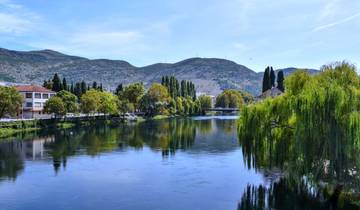
The Neretva River threading through Mostar provides kilometers of free riverside walking paths offering bridge views, swimming spots, and escape from Old Town crowds. The distinctive turquoise color results from glacial minerals carried from mountains upstream, creating photographic opportunities as sunlight illuminates the translucent water. Paths extend both upstream and downstream from the Old Bridge, connecting parks, swimming areas, and residential neighborhoods without requiring specific destinations or admissions.
Summer months (June-August) see locals swimming in designated areas where the current slows and depth remains manageable. The rocky beach below the Old Bridge becomes an informal gathering spot where families picnic and swimmers sunbathe. Upstream paths lead toward quieter stretches where the river widens and the canyon walls recede. Downstream routes pass working neighborhoods and smaller bridges offering alternative photography angles. The riverbanks function as communal spaces where Mostar residents and budget travelers share the same free resource without economic segregation.
Public Stone Fountains (Česma): Free Drinking Water All Day
Traditional stone fountains throughout Mostar’s Old Town dispense clean, cold mountain water at no cost, eliminating bottled water expenses entirely. These česma fountains, built during Ottoman rule and maintained continuously, provide safe drinking water from the same mountain springs feeding the Neretva River. Travelers fill reusable bottles repeatedly throughout the day, saving 2-3 BAM ($1-2) per person daily compared to purchasing bottled water while staying properly hydrated during walking-intensive sightseeing.
Multiple fountains operate throughout the Old Town, with prominent examples near Koski Mehmed Pasha Mosque, in the Old Bazaar, and along riverbank paths. The water runs continuously, cold even during summer heat, directly from mountain aquifers without treatment chemicals. Local residents utilize the same fountains, validating water quality through daily personal consumption. This infrastructure represents Ottoman-era urban planning wisdom—providing essential resources publicly rather than commercializing basic human needs.
Tip-Based Free Walking Tours: Local Perspectives and War Stories
Free walking tours led by Mostar residents operate on tip-based models, providing professional historical and cultural education at pay-what-you-value pricing. Guides typically survived the 1990s war as children or young adults, sharing firsthand accounts of the siege, bridge destruction, ethnic divisions, and reconstruction impossible to find in guidebooks or museum displays. Tours last approximately 2-3 hours, covering the Old Bridge, bazaar, mosques, war-damaged buildings, and viewpoints while explaining Ottoman history, war context, and contemporary reconciliation efforts.
The tip-based structure allows budget travelers to participate while maintaining guide quality. Standard tips range 10-15 BAM ($6-9) per person for good tours, though travelers determine amounts based on value received and budget constraints. Guides remain motivated by performance rather than guaranteed wages, resulting in engaging presentations rather than scripted recitations. Tour content adapts to group interests—history-focused visitors receive detailed Ottoman-era context, while architecture enthusiasts explore building techniques and reconstruction methods. The personal narratives distinguish these tours from commercial alternatives, offering perspectives unavailable through impersonal audio guides or self-guided exploration.
War-Damaged Buildings: Free Historical Education Throughout the City
Buildings throughout Mostar bearing visible bullet holes, shelling damage, and destroyed facades provide stark historical education at no admission cost beyond the emotional investment of witnessing war’s aftermath. The city preserves selected damaged structures as unofficial memorials, particularly along former front lines dividing Bosnian and Croatian neighborhoods. These visual reminders communicate conflict’s reality more powerfully than museum displays, showing ordinary apartments, shops, and homes transformed into combat zones.
The damaged buildings cluster along specific streets marking former front lines. Walking tours point out significant structures, but independent travelers easily identify damage through obvious shell impacts, missing walls, and fire blackening. Some buildings remain inhabited despite visible damage, illustrating residents’ determination to rebuild lives rather than abandon homes. Others stand empty, slowly weathering while politicians debate preservation versus redevelopment. The unvarnished presentation—damage left visible rather than hidden or prettified—creates authentic historical engagement impossible in sanitized memorial sites.
Church Viewpoints: Free Panoramic Photography Locations
Multiple churches throughout Mostar offer free entry and viewpoint access, providing panoramic photography opportunities from bell towers and elevated grounds. The Franciscan Church of St. Peter and Paul features a 107-meter bell tower visible throughout the city, though climbing access varies by season and religious services schedule. Other churches scattered through residential neighborhoods occupy hilltop positions offering unobstructed views across the Old Town, river valley, and surrounding mountains without admission fees or viewing platform charges.
These viewpoints serve dual purposes—religious significance for local congregations and practical observation points for visitors. The architectural variety spans Ottoman-era structures, Austro-Hungarian construction, and Yugoslav-period buildings, each reflecting different historical layers shaping Mostar’s development. Photography from church grounds captures unique angles impossible from the Old Bridge or Fortica Skywalk, including aerial perspectives of neighborhood layouts and distant mountain backdrops framing the city.
Budget Accommodation Strategies for Mostar 2026
Hostel Dormitories: Social Budget Accommodation from $5 Nightly
Hostel dormitory beds throughout Mostar start at 8-15 BAM ($5-9) per night in 2026, providing clean sleeping quarters, shared bathrooms, free WiFi, communal kitchens, and social common areas where budget travelers exchange recommendations and travel stories. Family-run hostels occupy converted Ottoman houses with historic character unavailable in chain establishments, often including complimentary breakfast (typically bread, jam, eggs, and coffee) that eliminates morning meal costs. Properties like Hostel Majda, Hostel Nina, and Taso’s House maintain high ratings through personal hospitality rather than sterile professionalism.
Location choice impacts value significantly. Hostels within 5-minute walk of the Old Bridge command slight premiums but eliminate transportation costs and maximize time for sightseeing. Properties 10-15 minutes from the center offer savings of 2-3 BAM ($1-2) nightly while remaining easily walkable. Summer months (June-August) require advance booking as beds fill with international backpackers, while off-season (November-March) offers walk-in availability and occasional negotiated discounts for multi-night stays. Many hostels provide luggage storage after checkout, allowing final-day sightseeing before evening departures.
The social atmosphere creates value beyond mere lodging. Common rooms facilitate travel information exchange—which restaurants offer best value, which tours deliver authentic experiences, which buses arrive on time. Some hostels organize group activities including free walking tours, pub crawls, and day trips with cost-sharing among participants. Kitchen access permits self-catering, crucial for minimizing food expenses. The communal structure suits solo travelers seeking conversation and small groups willing to trade privacy for dramatic cost savings.
Budget Guesthouses: Private Rooms Starting $22 per Room
Budget guesthouses and small hotels offering private rooms with ensuite bathrooms range 37-62 BAM ($22-37) per room in 2026, accommodating couples or travel partners seeking privacy while maintaining budget consciousness. Dividing room costs between two occupants produces per-person rates of $11-19 nightly—barely more expensive than hostel dormitories but with private facilities. Family-run properties dominate this segment, often occupying traditional stone houses with Ottoman architectural details, garden courtyards, and breakfast included in rates.
Seasonal pricing variation creates substantial savings opportunities. July-August high season commands peak rates, while November-March off-season delivers discounts of 30-50% as properties compete for reduced tourist traffic. Shoulder seasons (April-May, September-October) balance moderate prices with optimal weather and manageable crowds. Direct booking through property websites or phone contact often produces better rates than booking platforms, as owners avoid commission fees and can negotiate multi-night discounts or breakfast inclusion. Some properties offer shared bathroom options at reduced rates for travelers prioritizing cost over ensuite convenience.
Neighborhood location expands options beyond the immediate Old Town. Properties in residential areas 10-20 minutes walk from the bridge offer superior value while maintaining easy access to attractions. The walk through neighborhoods provides authentic local atmosphere unavailable in tourist-concentrated zones. Evening returns from restaurants or late sightseeing remain safe, as Mostar maintains low crime rates and well-lit streets. Budget guesthouses often provide local expertise—owners recommend neighborhood restaurants avoiding tourist markups, explain bus schedules to day-trip destinations, and share insights about optimal timing for popular attractions.
Airbnb and Apartment Rentals: Self-Catering Budget Solutions
Apartment rentals through Airbnb and local agencies provide self-catering facilities crucial for minimizing food costs, with studio apartments starting around 50-80 BAM ($30-48) per night for units accommodating 2-4 people. Kitchen access enables grocery shopping at local markets where produce, dairy, bread, and meats cost fractions of restaurant prices. For groups of 3-4 travelers, per-person costs rival hostel dormitories while providing living space, privacy, and cooking capability. Apartments typically include washing machines (eliminating laundry service costs), WiFi, and local neighborhood locations offering authentic residential experiences.
The grocery shopping advantage extends beyond mere cost savings. Local markets selling fresh produce, cheeses, meats, and bread operate daily in neighborhoods surrounding the Old Town. A typical market haul—bread, cheese, tomatoes, cucumbers, peppers, yogurt, and coffee—costs perhaps 15-20 BAM ($9-12) and provides breakfast and lunch for two people across multiple days. Cooking traditional Bosnian dishes using market ingredients becomes a cultural activity rather than mere expense reduction. Evening meals prepared in apartments cost 20-30% of equivalent restaurant dining while offering relaxed consumption without service pressures.
Location considerations differ from hotel bookings. Apartments in residential neighborhoods 15-25 minutes walk from the Old Town offer superior space and value compared to cramped Old Town units at equivalent prices. The surrounding infrastructure—local bakeries, small groceries, neighborhood cafés—serves resident needs rather than tourist traffic, delivering authentic pricing and atmosphere. Weekly rentals often negotiate discounts of 10-20% compared to nightly rates, making extended Mostar stays economically viable for budget travelers willing to trade constant movement for deeper single-destination immersion.
Affordable Dining and Food Strategies 2026
Burek Breakfasts: Traditional Pastries Under $3
Burek pastries sold at local bakeries throughout Mostar provide substantial breakfasts for 2-4 BAM ($1-2.50), filling travelers with flaky phyllo dough layers encasing cheese (sir), meat (meso), or spinach (zeljanica) fillings. These traditional Balkan pastries, baked fresh throughout morning hours, offer superior value and authentic taste compared to hotel breakfast buffets. Bakeries operate from early morning (6-7 AM) until midday, with the freshest offerings available shortly after opening when steam still rises from newly baked trays.
The burek eating experience extends beyond mere fueling. Small bakeries scattered through residential neighborhoods offer standing-room consumption areas where locals gather for quick breakfasts before work. Travelers join this routine, ordering burek by pointed finger if language barriers exist, receiving warm pastry wrapped in paper, and consuming while observing morning neighborhood rhythms. Some bakeries pair burek with yogurt drinks (2 BAM / $1.20 additional) that complement the pastry’s richness. The entire breakfast—burek plus drink—totals less than a single coffee in Western European cafés.
Quality variation matters. The best burek emerges from bakeries where dough preparation happens on-site rather than delivered frozen. Signs of quality include visible phyllo dough preparation areas, multiple filling options indicating regular turnover, and steady local customer flow rather than tourist-targeted locations. Asking hostel owners or guesthouse staff for neighborhood bakery recommendations produces better results than defaulting to Old Town commercial establishments. The walking distance to reach neighborhood bakeries—typically 10-15 minutes from tourist areas—adds minimal time while delivering authentic atmosphere and superior value.
Street Food and Ćevapi: Filling Meals for $4-7
Street food vendors and small eateries selling ćevapi (grilled meat sausages), pljeskavica (meat patties), and other Bosnian specialties provide filling meals for 7-12 BAM ($4-7), substantially undercutting sit-down restaurant prices while maintaining authentic flavor. Ćevapi arrives served with somun flatbread, raw onions, and ajvar (roasted red pepper spread), creating complete meals that satisfy hunger for hours. Small establishments operating from windows or simple counters focus on food quality rather than atmosphere, passing savings to customers through reduced overhead costs.
The concentration of affordable eateries clusters in specific areas. The Old Bazaar contains multiple small restaurants serving traditional dishes at moderate prices. The area around the main bus station offers working-class eateries catering to local residents rather than tourists, with ćevapi portions often larger and prices 20-30% lower than Old Town equivalents. Residential neighborhoods feature family-run spots where grandmothers prepare traditional recipes and grandchildren serve customers in casual, unpretentious environments. Menu diversity extends beyond ćevapi—stuffed peppers (punjene paprike), various grilled meats, burek variations, and traditional stews all maintain similar pricing structures.
Timing affects both availability and freshness. Lunch hours (12-2 PM) see peak production as workers break for midday meals, ensuring fresh-cooked food rather than reheated remnants. Evening service (6-9 PM) maintains quality but may face limited selection as popular items sell out. Weekend mornings often find reduced operating hours, as family-run establishments close for personal time. The informal nature of these eateries permits casual consumption—ordering takeaway for riverside picnics, purchasing multiple portions for group sharing, or combining items to create varied plates rather than defaulting to set menus.
Restaurant Budget Strategies: $9-15 Full Meals
Sit-down restaurant meals throughout Mostar range 15-25 BAM ($9-15) per person for traditional dishes including grilled meats, fish, stuffed vegetables, salads, and non-alcoholic drinks. Strategic restaurant selection and ordering maximize value without sacrificing dining experience. Family-run establishments in residential neighborhoods typically offer 20-30% lower prices than Old Town riverside locations while maintaining equivalent or superior food quality. Lunch specials (dnevno jelo) at local restaurants provide complete meals—soup, main course, side dishes—for fixed prices around 12-18 BAM ($7-11).
Menu navigation reduces costs significantly. Traditional Bosnian dishes—ćevapi, grilled chicken, stuffed peppers, bean stews—consistently price lower than international menu items like pasta or pizza. Large mixed grill platters designed for 2-3 people offer better per-person value than individual portions, ideal for couples or small groups willing to share. Salad portions often suffice for two diners when paired with bread (typically free with meals). Water requests specify tap water (voda iz česme) at no charge rather than defaulting to bottled water adding 2-3 BAM ($1-2) to bills.
Location strategy extends beyond obvious tourist-area avoidance. Restaurants facing the Old Bridge or river command premium prices for views. Walking 2-3 minutes away from the bridge into side streets reveals equivalent cuisine at 20-30% discounts. The west bank (Croatian side) generally prices slightly lower than the east bank (Bosnian side) due to less concentrated tourist traffic. Asking locals for restaurant recommendations—hostel staff, guesthouse owners, shopkeepers—produces authentic suggestions avoiding tourist traps. Online reviews help verify recommendations, though travelers should weigh local Google reviews more heavily than international travel site ratings potentially skewed by uninformed visitors.
Self-Catering from Local Markets: 50% Food Cost Reduction
Shopping at local markets and groceries reduces food costs by approximately 50% compared to restaurant dining while providing cultural immersion through Mostar’s food retail infrastructure. The main market (pijaca) operates daily in the city center, selling fresh produce, cheeses, meats, bread, eggs, dairy, and prepared foods at prices targeting local residents rather than tourists. Typical market purchases—bread 1-2 BAM ($0.60-1.20), cheese 3-5 BAM ($2-3) per 200g, tomatoes 2-3 BAM ($1-2) per kilo, cucumbers 1-2 BAM ($0.60-1.20) per kilo—assemble complete meals for costs rivaling single restaurant appetizers.
Product quality at markets often exceeds supermarket equivalents. Vendors sell produce from family farms, cheeses from traditional dairies, and meats from local butchers rather than industrial suppliers. The shopping experience permits taste-testing, price comparison among vendors, and conversation with sellers who often speak basic English or communicate through gestures and pointing. Morning hours (7-10 AM) offer widest selection as vendors display full inventories. Afternoon shopping finds reduced selection but occasional discounts as sellers avoid carrying unsold produce home.
Grocery stores and supermarkets provide packaged goods, cleaning supplies, and non-perishable items unavailable at markets. Small neighborhood groceries price competitively while offering convenient locations near accommodations. Larger supermarkets on city outskirts require transportation but stock international products for travelers requiring familiar brands. Strategic shopping patterns emerge—markets for fresh produce, bread, cheese, and meats; groceries for pasta, rice, oils, condiments, coffee, and packaged goods. Combined with apartment or hostel kitchen access, self-catering reduces daily food costs to 15-25 BAM ($9-15) per person while maintaining nutritional variety and portion control.
Coffee Culture on a Budget: $1.20 Café Experiences
Traditional Bosnian coffee costs 2 BAM ($1.20) at cafés throughout Mostar, creating affordable opportunities to occupy riverside terraces with Old Bridge views while participating in Bosnia’s coffee ritual culture. The preparation method—finely ground coffee boiled in a džezva pot and served in small cups with foam on top—transforms coffee from mere caffeine delivery into 30-minute cultural experiences. Cafés permit extended sitting without consumption pressure, making single coffee orders stretch into hour-long bridge-watching sessions or conversation platforms with fellow travelers.
The coffee quality-to-price ratio surpasses Western European standards remarkably. Two BAM purchases fresh-roasted, expertly prepared coffee in historic settings along the Neretva River—less than automated vending machine prices in Paris or Rome. The ritual presentation includes the džezva pot allowing self-service refills, a small cup of water to cleanse palate between sips, and often a piece of Turkish delight or sugar cube. Café locations span from touristy riverside terraces to residential neighborhood spots where locals conduct morning business discussions, with pricing remaining remarkably consistent across quality levels.
Budget travelers extend café value through strategic timing and selection. Morning hours (8-11 AM) see locals occupying tables for extended breakfasts, creating authentic atmosphere unavailable during afternoon tourist peaks. Some cafés include small pastries with coffee orders. Neighborhood cafés away from the Old Bridge often charge identical 2 BAM prices while offering locals-dominated clientele providing observation opportunities of daily Mostar rhythms. The social acceptability of solo café sitting—reading, writing, people-watching—makes coffee purchases double as workspace rental for travelers managing trip planning or journaling without explicit consumption requirements beyond the initial order.
Money-Saving Transportation Tips 2026
Walking as Primary Transport: Zero-Cost City Navigation
Mostar’s compact Old Town geography makes walking the optimal transportation mode for budget travelers, eliminating daily transport costs entirely while maximizing attraction access and neighborhood discovery. The distance from the bus station to the Old Bridge measures approximately 15 minutes on foot through increasingly historic neighborhoods. Every major attraction—Stari Most, Old Bazaar, Koski Mehmed Pasha Mosque, Kriva Ćuprija, riverside paths—clusters within 20-minute walking radius. Even outlying viewpoints like Fortica Skywalk require only 25-30 minutes uphill walking from the bridge.
The walking infrastructure supports pedestrian navigation through car-free zones, cobblestone lanes, and riverbank paths connecting key areas without vehicle traffic concerns. The Old Town’s maze-like layout initially seems confusing but follows logical river orientation—the Neretva River provides constant directional reference, the Old Bridge marks the central hub, and the enclosing mountains create visible landmarks preventing serious disorientation. Smartphone navigation apps function reliably but become unnecessary after one day’s familiarization as the intuitive layout reveals itself through repeated traversing.
Walking delivers experiences impossible from vehicles or transit. The gradual transition from modern bus station architecture through mixed-era neighborhoods into preserved Ottoman lanes provides historical context unavailable when jumping between attractions via taxis. Spontaneous discoveries—interesting shops, unexpected viewpoints, neighborhood cafés, resident conversations—emerge only through unhurried pedestrian exploration. The exercise component matters less than the immersion, though travelers appreciate the calorie burn countering heavy Bosnian meal consumption. Budget benefits extend beyond eliminated transport costs—walking pace permits continuous photography, encourages exploration of side streets and alternative routes, and enables flexible schedules unconstrained by vehicle availability or transit timetables.
Local Bus System: $1.20 Rides to Day-Trip Destinations
Mostar’s public bus system provides economical connections to day-trip destinations and outer neighborhoods at 2 BAM ($1.20) per ride, though Old Town visitors rarely need local buses for attraction access. The most valuable route for budget travelers runs to Blagaj Tekke monastery, with number 11 buses departing from the central bus station toward Blagaj Španski Trg approximately every 30-60 minutes. The 20-minute journey costs 2.10 BAM ($1.25) and deposits passengers near the monastery built into cliffsides above the Buna River source.
Bus information presents challenges for non-local speakers. Schedules posted at bus stations show departure times but often lack English translations or clear route maps. Drivers typically speak limited English, making communication reliant on destination name recognition or written addresses. The system operates primarily for local residents commuting to work or school rather than tourist convenience, resulting in reduced weekend service and occasional schedule irregularities. Despite these limitations, the 2 BAM fare creates dramatic savings compared to taxis charging 20-30 BAM ($12-18) for equivalent journeys.
Ticket purchase varies by route and bus type. Some buses require pre-purchase from kiosks at major stations, while others accept cash payment directly to drivers. Having exact change in BAM smooths transactions, as drivers may lack change for large bills. For day trips to Blagaj, purchasing round-trip tickets before boarding eliminates concerns about ticket availability for return journeys. The bus itself provides cultural experience—observing local commuters, overhearing Bosnian conversations, experiencing public infrastructure designed for residents rather than tourists—that private taxis cannot replicate regardless of price.
Taxi Strategies: Affordable Door-to-Door When Necessary
Mostar taxis operate on metered fares starting at 3 BAM ($1.80) plus 1 BAM ($0.60) per kilometer, creating affordable door-to-door transport for specific scenarios—late arrivals when walking with luggage seems burdensome, groups splitting costs making per-person rates competitive with buses, or day trips to destinations lacking public transport. Cross-town rides within Mostar rarely exceed 10-12 BAM ($6-7), while journeys to nearby attractions like Blagaj or Počitelj cost 25-35 BAM ($15-21) one-way.
Fare negotiation replaces meter usage for many tourist-oriented rides, creating opportunities for both cost savings and potential overcharging. Establishing prices before entering vehicles prevents disputes at destinations. Reasonable rates for common routes—bus station to Old Town 5-8 BAM ($3-5), Old Town to Fortica Skywalk 8-12 BAM ($5-7), Mostar to Blagaj Tekke 25-30 BAM ($15-18)—provide benchmarks for negotiation. Groups of 3-4 passengers sharing taxis achieve per-person costs rivaling buses while gaining time savings and door-to-door convenience.
Taxi availability concentrates at obvious tourist locations—bus station, Old Bridge area, major hotels—but thins in residential neighborhoods requiring phone calls through hostel reception or guesthouse owners. Smartphone apps like Uber do not operate in Mostar, leaving traditional street hailing or phone booking as primary methods. Evening returns from restaurants or late sightseeing warrant taxi consideration over walking through unfamiliar neighborhoods in darkness, though Mostar’s low crime rates make late walking generally safe. The modest costs—perhaps 8-15 BAM ($5-9) for evening returns to accommodations—represent reasonable safety and convenience premiums for budget travelers willing to allocate small amounts for specific situations.
Intercity Bus vs. Train: Sarajevo Connection Strategy
Traveling between Mostar and Sarajevo presents strategic choice between buses costing approximately 17 BAM ($10) and trains at 12 BAM ($7), with the 5 BAM ($3) savings favoring rail despite longer journey times. The train route follows one of Europe’s most scenic rail lines, threading through mountain valleys and alongside rivers for 2.5-3 hours compared to buses completing the journey in 2-2.5 hours via highway. The additional 30-60 minutes transforms from inconvenience to value-add when considering the dramatic mountain scenery, historic stations, and authentic local transport experience unavailable on commercial bus routes.
Train scheduling operates less frequently than buses—typically 2-3 departures daily versus buses every 1-2 hours—requiring advance planning and accommodation flexibility. Booking train tickets requires visiting the station in person, as online booking infrastructure remains undeveloped. The train itself maintains basic comfort levels without premium amenities, but the older rolling stock and unhurried pace create nostalgic appeal unavailable in modern buses. Luggage storage space, seat availability without reservations, and bathroom facilities meet basic needs without luxury expectations.
The broader principle extends beyond Sarajevo routes—evaluating all intercity transport options for cost-versus-time tradeoffs rather than defaulting to fastest alternatives. Buses to coastal Croatian cities (Split, Dubrovnik) run 20-30 BAM ($12-18) depending on destination and operator, with booking through station windows the day before departure typically securing seats without advance online purchasing. Shared minivans serving popular tourist routes often negotiate competitive per-person pricing when full, creating opportunities for organized travelers willing to coordinate departures with fellow hostelers.
Strategic Museum and Attraction Planning 2026
Prioritizing Free vs. Paid Experiences
Mostar’s attraction landscape permits complete city exploration relying primarily on free experiences while strategically allocating limited funds toward 2-3 paid museums delivering unique value impossible to replicate elsewhere. The free Stari Most bridge viewing, Fortica Skywalk panoramas, Old Bazaar exploration, and riverside walks provide world-class sightseeing without admission costs. Paid museums—War and Genocide Museum 20 BAM ($12), Koski Mehmed Pasha Mosque 15 BAM ($9), Peace Bell Tower 5 BAM ($3)—add specialized historical and architectural content justifying costs through experiences unavailable through external observation.
The strategic approach evaluates each paid attraction’s incremental value beyond free alternatives. The War Museum delivers firsthand accounts, personal artifacts, and multimedia presentations communicating 1990s conflict realities impossible to grasp from damaged building observation alone. The 20 BAM ($12) admission purchases 2-3 hours of profound historical education unavailable elsewhere. The Koski Mosque’s 15 BAM ($9) fee grants interior access and minaret climbing for panoramic photography distinct from free Fortica viewpoint angles. The Peace Bell Tower’s 5 BAM ($3) admission seems reasonable for elevator-assisted climbing to additional city vistas, though travelers having visited Fortica may skip this for budget preservation.
Budget allocation strategy depends on personal interests and length of stay. Short-visit travelers (1-2 days) often skip paid museums entirely, maximizing free attraction time and allocating budgets toward quality dining experiences or regional day trips. Extended-stay visitors (3-5+ days) find value in paid museums breaking up repetitive free activity cycles. History enthusiasts prioritize the War Museum regardless of budget constraints, while architecture-focused travelers emphasize the mosque. The absence of admission to Mostar’s defining attraction—the Old Bridge itself—fundamentally changes the calculus compared to cities where flagship sites command premium entry fees.
Museum of War and Genocide Victims: Justifying $12 Admission
The Museum of War and Genocide Victims 1992-1995 charges 20 BAM ($12) adult admission for comprehensive documentation of Mostar’s siege, ethnic cleansing, and reconstruction through personal testimonies, artifacts, photographs, and video footage unavailable in free outdoor exploration. The 2-3 hour visit provides context transforming visible war damage throughout the city from abstract destruction into personal tragedies affecting named individuals whose possessions and stories fill museum displays. Budget travelers questioning the 20 BAM ($12) cost should recognize this represents one of Europe’s most important contemporary conflict museums, delivering education comparable to far more expensive Western European institutions.
The museum’s presentation prioritizes individual human experiences over political narratives. Displays include personal belongings recovered from destroyed homes, letters written during the siege, photographs documenting daily life under shelling, and first-person accounts from survivors describing concentration camp experiences, family separations, and post-war trauma. Video stations show news footage from the period, UN peacekeeping failures, and documentary interviews with victims and perpetrators. The chronological organization guides visitors from pre-war multi-ethnic coexistence through conflict escalation, wartime atrocities, peace implementation, and ongoing reconciliation challenges.
Admission cost-benefit analysis favors inclusion in any Mostar budget exceeding bare survival minimums. The 20 BAM ($12) equals approximately two restaurant meals or one night’s hostel dormitory bed—modest sacrifice for historical education transforming superficial tourism into meaningful engagement with recent trauma. Student discounts reduce admission to 17 BAM ($10) with valid identification. The museum’s central location permits easy integration into walking routes without additional transport costs. Photography prohibitions inside protect victim dignity but don’t diminish educational value derived from attentive observation and reading.
Koski Mehmed Pasha Mosque: $9 for Minaret Views
Koski Mehmed Pasha Mosque charges 15 BAM ($9) admission granting access to the 17th-century prayer hall’s intricate interior decorations and narrow minaret stairs leading to a viewing platform offering the Old Town’s most photographed Old Bridge perspective. The admission represents premium pricing by Mostar standards but delivers experiences justifying costs—architectural details invisible from street level, spiritual atmosphere unavailable in secular buildings, and elevated photography angles creating Instagram-worthy compositions impossible from ground-level positions or distant Fortica Skywalk.
The minaret climb requires moderate physical fitness and tolerance for narrow, steep stairs. The spiral staircase accommodates single-file traffic only, creating potential congestion during peak hours when multiple tour groups visit simultaneously. Morning hours (8-10 AM) or late afternoon (4-6 PM) avoid mid-day crowds. The viewing platform itself accommodates 4-6 people simultaneously, sometimes requiring brief waits for photography opportunities when busy. The distinctive vantage point—elevated above the Old Town but closer than Fortica Skywalk—frames the Old Bridge against Neretva River valley backgrounds impossible to capture elsewhere.
Budget travelers evaluate the 15 BAM ($9) cost against free viewpoint alternatives. Fortica Skywalk provides comparable elevation without admission fees but from greater distance producing different photographic perspectives. Street-level Old Bridge photography costs nothing but lacks the elevated angle revealing surrounding Ottoman architecture patterns. The mosque’s value proposition combines multiple elements—architectural education, religious cultural exposure, photographic opportunity—rather than photography alone. Visitors interested primarily in Instagram shots might substitute free viewpoints, while those valuing Ottoman architecture history and Islamic cultural experience find the admission justified beyond mere photography.
Combination Visit Strategy: Maximizing Value Across Multiple Days
Multi-day Mostar visits permit strategic attraction scheduling spreading costs across budgets while maintaining daily variety preventing free-activity fatigue. Day one focuses entirely on free experiences—walking tour, bridge viewing, bazaar exploration, Fortica Skywalk, riverside walks—establishing geographic orientation and historical context without expenditure. Day two introduces selective paid admissions—War Museum in morning, Koski Mosque in afternoon—after free foundation provides appreciation framework enhancing paid experience value. Day three expands to regional day trips using budget transport to Blagaj Tekke or other nearby destinations.
The multi-day structure recognizes that Mostar’s free attractions actually deserve extended engagement rather than rushed completion. The Old Bridge merits multiple visits at different times—dawn light, midday crowds observing divers, sunset illumination, evening spotlights. The Old Bazaar rewards repeated browsing as different workshops open on different days and artisan availability varies unpredictably. Riverside paths reveal different perspectives during various weather conditions, water levels, and seasonal vegetation changes. Spacing paid museum visits across multiple days prevents museum fatigue while maintaining budget pacing.
Cost averaging across extended stays reduces daily budget requirements. A 5-day Mostar visit spending 50 BAM ($30) total on museum admissions averages 10 BAM ($6) daily—easily absorbed into $20-30 ultra-budget constraints when combined with hostel dormitories and self-catering meals. The extended timeline also permits weather-dependent scheduling, reserving paid indoor museums for rainy days while maximizing outdoor free activity time during sunshine. Budget travelers often discover that stretching Mostar visits beyond typical 1-2 day allocations actually reduces total costs through decreased daily pace, elimination of rushed expensive meals, and transformation from tourist consumption to temporary residence rhythms.
Regional Day Trip Budget Strategies 2026
Blagaj Tekke: $1.25 Bus to Riverside Monastery
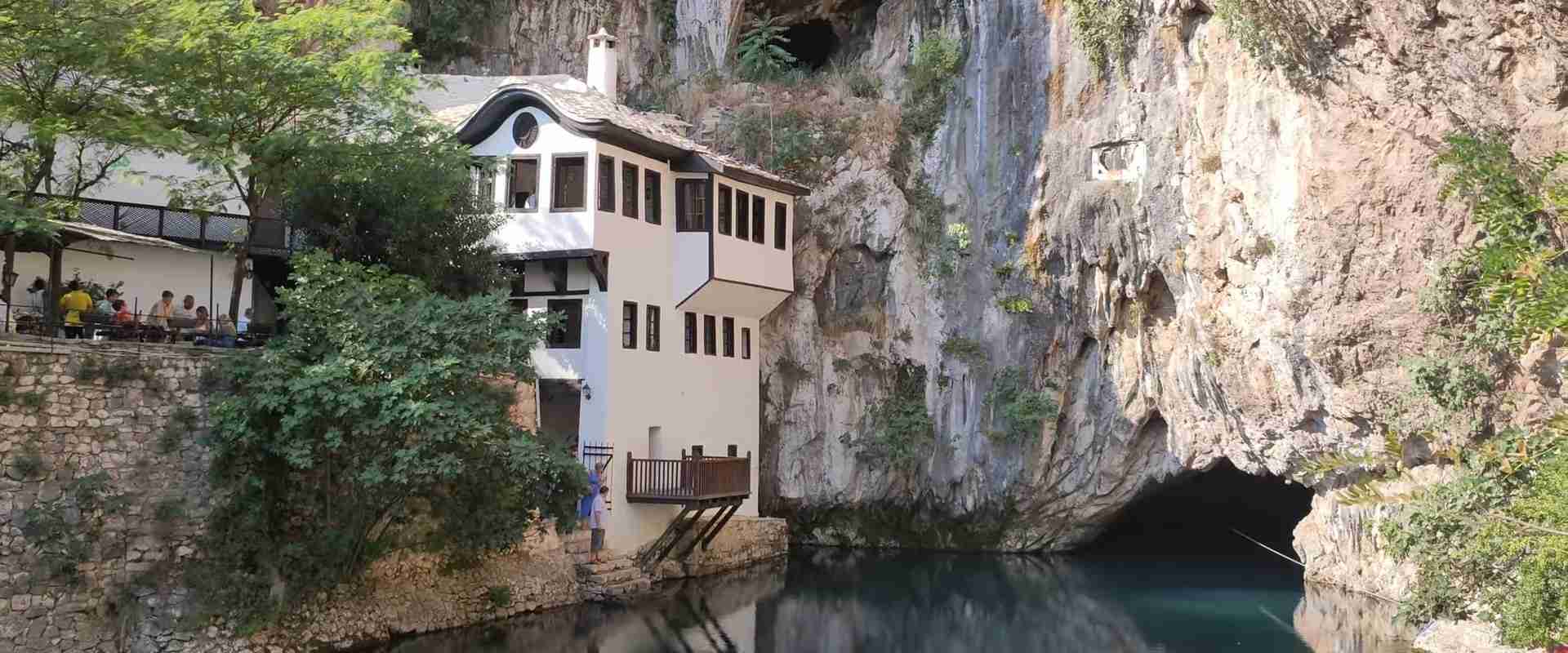
Blagaj Tekke Dervish monastery built into cliffs above the Buna River source ranks among Bosnia’s most photographed sites and sits just 12 kilometers from Mostar via 2.10 BAM ($1.25) bus number 11. The 20-minute journey departs approximately every 30-60 minutes from Mostar’s central bus station, delivering budget travelers to one of Europe’s most dramatic religious architecture settings for less than a single Western European coffee. The monastery itself charges no admission—visitors freely explore grounds, photograph the distinctive white building against cliff backdrops, and walk riverside paths where crystal-clear water emerges from underground caves.
The village surrounding the monastery offers additional budget-friendly activities. Riverside restaurants serve fresh trout caught daily from the Buna, with meals costing 15-25 BAM ($9-15)—slightly elevated from Mostar prices but justified by waterfront ambiance and specialty ingredients. A short walk upstream from the monastery reveals the actual river source cave entrance where the Buna emerges from underground. The surrounding area permits hiking along clifftop paths, swimming in designated river areas during summer, and picnicking on grassy banks. Return buses to Mostar operate until early evening, allowing 3-4 hour visits without requiring overnight accommodation.
Budget optimization strategies include packing lunch from Mostar rather than dining at riverside restaurants, timing visits for morning departures allowing full-day exploration without rushing, and combining Blagaj with nearby Počitelj village for multi-destination value from single-day outing. The total day trip cost—round-trip bus 4.20 BAM ($2.50), packed lunch from market 5-8 BAM ($3-5), optional restaurant meal if budget permits 15-25 BAM ($9-15)—ranges 10-35 BAM ($6-21) depending on dining choices while delivering world-class natural beauty and cultural immersion impossible in Mostar itself.
Kravice Waterfalls: Balancing Cost vs. Experience
Kravice Waterfalls, located 40 kilometers south of Mostar, create spectacular 120-meter-wide natural amphitheaters where the Trebižat River plunges 25 meters over tufa formations. The site delivers Croatia’s Plitvice Lakes-level scenery without the crowds or premium pricing, though reaching Kravice on public transport proves challenging compared to Blagaj’s easy bus access. Budget travelers face strategic choices—expensive organized tours (typically 60-80 BAM / $36-48 per person), shared taxi arrangements (25-35 BAM / $15-21 per person when splitting among 4 passengers), or complicated public bus combinations requiring transfers and extended travel times.
The waterfall entrance fee adds 17 BAM ($10) during peak season (May-September), though arriving before 8 AM or after 8 PM permits free access as fee collectors operate limited hours. This timing strategy rewards early risers with crowd-free photography and swimming opportunities while eliminating admission costs. The site permits full-day visits with picnicking areas, swimming zones, and hiking trails exploring upper and lower cascade viewpoints. Budget travelers bringing packed meals avoid expensive on-site restaurants and cafés charging premium prices for captive-audience convenience.
Cost-benefit analysis requires honest assessment. Solo budget travelers struggling to justify 60+ BAM ($36+) tours or taxi costs might skip Kravice entirely, allocating those funds toward extended Mostar stays or other regional destinations more accessible via cheap public transport. Groups of 3-4 travelers sharing taxi costs achieve reasonable per-person expenses around 40-50 BAM ($24-30) total including transport and admission when avoiding early/late free entry timing. The decision ultimately balances individual budget constraints against desires for natural beauty experiences beyond Mostar’s urban offerings.
Počitelj Medieval Village: Free Exploration, 50-Cent Bus Access
Počitelj medieval village perched on hillsides 30 kilometers from Mostar offers Ottoman-era architecture, fortress ruins, and Neretva River valley views via buses costing approximately 3-5 BAM ($2-3) from Mostar’s bus station. The village itself charges no admission—visitors freely climb stone streets, explore mosque ruins, photograph defensive towers, and enjoy panoramic vistas from clifftop positions. The half-day excursion delivers historical immersion and architectural photography rivaling far more expensive European castle visits while maintaining ultra-budget accessibility.
The village layout encourages unhurried exploration. Stone houses cascade down hillsides following medieval street patterns, many still inhabited by families maintaining traditional lifestyles. The ruined fortress crowning the hill requires moderate climbing but rewards effort with 360-degree views encompassing the Neretva valley, surrounding mountains, and the village’s stone rooftops spreading below. A 16th-century mosque maintains intact prayer hall and courtyard available for respectful free viewing. Small shops sell handicrafts at prices lower than Mostar tourist areas, though purchasing remains optional rather than obligatory for access.
Budget considerations extend beyond mere transport and admission. The village contains limited dining options, mostly small cafés and a few restaurants pricing slightly above Mostar equivalents due to visitor captivity. Budget travelers packing water and snacks from Mostar eliminate food expenses entirely while maintaining energy for climbing. The village’s small size permits thorough exploration in 2-3 hours, making it ideal for combination day trips—visiting Blagaj in morning, Počitelj in afternoon, returning to Mostar for evening. Total day costs rarely exceed 15-20 BAM ($9-12) including round-trip transport and incidental water purchases.
Seasonal Budget Considerations 2026
Summer Season (June-August): Peak Prices, Maximum Crowds
Summer months bring Mostar’s highest accommodation rates, largest tourist crowds, and warmest temperatures averaging 28-35°C creating both advantages and challenges for budget travelers. Hotel and guesthouse rates increase 30-50% compared to off-season pricing as European visitors flood the city during vacation periods. Hostel dormitory beds maintain year-round pricing stability but fill rapidly, requiring advance booking rather than walk-in availability. The crowding affects free attractions significantly—the Old Bridge becomes photography obstacle courses navigating selfie-taking tourists, Fortica Skywalk viewing platforms accommodate waiting queues, and riverside paths lose tranquil appeal.
Budget advantages during summer include extended daylight hours (sunset around 8:30 PM) maximizing sightseeing time without artificial lighting costs, warm temperatures eliminating heating expenses in basic accommodations, and peak swimming season at Neretva River spots and nearby waterfalls adding free recreational activities. Food costs remain stable year-round, though summer heat encourages increased beverage consumption—mitigated by free česma fountain water rather than purchased bottles. Street life intensifies as locals and tourists occupy outdoor café tables, creating vibrant atmosphere some travelers value over quiet contemplation.
Heat management becomes budget consideration. Budget accommodations often lack air conditioning, making afternoon hours in non-air-conditioned rooms uncomfortable. Strategic scheduling shifts intensive walking to morning hours (6-11 AM) and evenings (5-9 PM), reserving midday heat for museum visits in climate-controlled buildings or riverside resting. The War Museum’s indoor environment provides afternoon refuge from heat while justifying admission costs through extended occupation time. Increased water consumption requirements make free fountain access crucial—the alternative of purchasing bottled water adds 6-10 BAM ($4-6) daily to budgets.
Shoulder Seasons (April-May, September-October): Optimal Value Balance
Shoulder seasons deliver Mostar’s best budget value equation, combining moderate accommodation pricing, manageable crowds, and pleasant weather averaging 15-25°C. Hotel rates run 15-25% below peak summer pricing while remaining above winter minimums. Hostel dormitory availability permits walk-in bookings without advance reservations. Tourist volumes thin sufficiently that free attractions regain peaceful atmosphere—the Old Bridge accommodates photography without crowding, Fortica Skywalk viewing platforms remain accessible without waits, and riverside paths provide contemplative rather than congested walking experiences.
Weather during shoulder seasons varies but generally supports full-day outdoor activities. April and May bring spring blooms, longer days, and occasional rain showers requiring lightweight rain jackets but rarely disrupting sightseeing. September and October deliver late summer warmth transitioning toward autumn, with September maintaining swimming-suitable temperatures at river locations. The temperature ranges permit comfortable walking without heat exhaustion risks or cold weather gear requirements. Accommodation heating needs remain minimal, avoiding winter heating cost concerns affecting budget properties.
Seasonal transitions create specific budget opportunities. Late April and early May mark transitions from winter to summer pricing, with properties sometimes maintaining off-season rates while weather improves to summer quality. Late September and October see rate decreases as operators shift toward winter pricing while temperatures remain comfortable. Flexible travelers monitoring weather forecasts and maintaining adaptable schedules capture optimal windows. The reduced competition for budget accommodation permits negotiation opportunities—multi-night discounts, breakfast inclusion, or upgraded rooms at standard rates become more achievable when properties seek occupancy rather than selecting among multiple booking requests.
Winter Season (November-March): Maximum Savings, Minimal Tourists
Winter delivers Mostar’s lowest costs but tests budget travelers’ tolerance for cold, rain, and reduced tourism services. Accommodation prices drop 40-60% below summer peaks as hotels and guesthouses compete for minimal winter tourists. Hostel dormitories offering beds at 8-10 BAM ($5-6) nightly—already economical—sometimes negotiate even lower multi-night rates for guests filling otherwise empty rooms. The city’s tourist infrastructure contracts—some restaurants reduce hours, certain tour operators suspend operations, and hostel common areas may lack heating—but core attractions remain accessible and the dramatic cost savings appeal to extreme budget travelers or those seeking winter solitude.
Weather realities require honest assessment. December through February bring temperatures averaging 5-10°C with frequent rain and occasional snow. Budget accommodations rarely provide heating matching Western European standards, making warm sleeping bags valuable additions to packing lists. The cold affects sightseeing comfort—walking tours become less pleasant, riverside strolls lose appeal without warm sun, and outdoor photography requires gloves and layered clothing. Museum visits gain relative value as warm indoor spaces providing extended occupation justifying admission costs beyond pure educational interest.
The tourist absence creates unique value beyond cost savings. Mostar reverts to local rhythms as international visitors disappear, revealing authentic daily life impossible to observe during summer crowds. Residents reclaim the Old Bridge and riverside areas for personal recreation rather than tourist servicing. Cafés cater to local customers instead of passing visitors, often adjusting prices downward and quality upward. Budget travelers willing to embrace cold weather challenges discover Mostar’s genuine character—the city as it exists for residents rather than the performance staged for tourism consumption. The winter experience trades comfort for authenticity, warmth for economy, crowds for solitude.
Additional Money-Saving Strategies 2026
Avoiding Common Tourist Traps and Inflated Pricing
Tourist-oriented businesses throughout Mostar’s Old Town implement pricing strategies targeting uninformed visitors, creating opportunities for budget-conscious travelers to avoid inflated costs through awareness and strategic selection. Restaurants directly facing the Old Bridge charge premiums of 20-40% compared to establishments two streets removed offering equivalent food quality. Souvenir shops near major attractions mark handicrafts 30-50% above prices at identical items sold in Old Bazaar workshops three minutes’ walk away. Currency exchange bureaus in tourist zones advertise rates 5-10% worse than small shops in residential neighborhoods.
Recognition patterns help identify tourist traps before committing funds. Restaurants with aggressive sidewalk solicitation, menus displaying food photographs, and multilingual signs targeting multiple nationalities typically price higher than modest establishments with handwritten daily specials and local clientele. Shops prominently displaying credit card acceptance logos and English signage often charge premiums over family operations accepting cash only and communicating through basic English plus gestures. The presence of tour buses outside restaurants signals tourist-oriented pricing rather than local value.
Strategic avoidance involves minimal effort for substantial savings. Walking 2-3 minutes beyond immediate Old Bridge proximity reduces restaurant costs 20-30% while maintaining food quality or improving it as kitchens shift from volume tourist processing to satisfying discerning regular customers. Purchasing handicrafts directly from artisan workshops in the Old Bazaar rather than general souvenir shops near the bridge ensures authentic products at fair prices while supporting craftspeople directly. Asking hostel staff or guesthouse owners for restaurant recommendations produces genuine local favorites rather than tourist trap defaults.
Negotiation Strategies for Tours and Services
Mostar’s tourism economy permits negotiation on many services, particularly tours, taxi fares, and multi-day accommodation bookings. Tour operators offering day trips to Kravice Waterfalls, Počitelj, or regional combinations quote initial prices targeting tourists unfamiliar with local costs—countering with lower figures or walking away often produces discounts of 10-20%. Taxi drivers negotiating fares rather than using meters accept reasonable offers when business appears slow. Guesthouse owners booking multi-night stays sometimes reduce nightly rates or include breakfasts when approached directly rather than through booking platforms.
Successful negotiation requires understanding local context. Aggressive haggling Western travelers might attempt in Asian markets creates offense in Bosnian culture—polite expressions of budget constraints and gentle counter-offers work better than combative bargaining. Demonstrating knowledge of reasonable local prices (“I’ve heard taxis to Blagaj typically cost 25-30 BAM”) establishes informed customer status preventing excessive markups. Group bookings inherently create negotiation leverage—four travelers seeking same-day Kravice tours present business worth minor price concessions rather than holding out for higher individual rates.
Timing affects negotiation success substantially. Off-season periods when tourism slows give customers strong positions—hotels seek any paying guest rather than empty rooms, taxi drivers welcome reduced-rate passengers over no passengers, tour operators accept lower margins over cancelled departures. Late afternoon or evening negotiations for next-day tours sometimes secure better rates than morning bookings. Multi-night accommodation negotiations work best at check-in when property owners already committed to initial night can easily extend discounted additional nights rather than seeking new guests.
Leveraging Hostel Resources Beyond Sleeping
Hostel facilities and services extend well beyond bed provision, offering resources that reduce daily expenses substantially when fully utilized. Communal kitchens permit breakfast preparation, packed lunch assembly, and dinner cooking—transforming 40-60 BAM ($24-36) daily restaurant meal costs into 15-20 BAM ($9-12) grocery expenses. Common areas provide workspace for trip planning, free WiFi eliminating data roaming charges, and social interaction facilitating cost-sharing for group activities. Many hostels maintain book exchanges, local transportation information, and washing machines (typically 5-8 BAM / $3-5 per load) substantially undercutting commercial laundry services.
Social dynamics in quality hostels create organic cost-saving opportunities. Meeting fellow travelers heading to identical day-trip destinations permits taxi cost splitting, reducing per-person Kravice waterfall transport from 60 BAM ($36) solo to 15-20 BAM ($9-12) when sharing among four passengers. Shared dining arrangements allow bulk grocery purchasing and cooking cost division—group pasta dinners costing 5-7 BAM ($3-4) per person including wine compared to 20-25 BAM ($12-15) restaurant equivalents. Information exchange reveals money-saving discoveries—which free walking tour guides deliver best value, which restaurants offer lunch specials, which times avoid museum crowds.
Hostel staff knowledge represents underutilized budget resource. Front desk employees and owners possess intimate local knowledge often surpassing tourist information centers. They recommend authentic restaurants avoiding tourist traps, explain public bus schedules to regional destinations, identify free event occurrences, and sometimes arrange informal group tours at costs below commercial operators. Building rapport through brief conversations and respectful behavior encourages staff to share insights reserved for appreciated guests rather than transactional customers. The investment of 5-10 minutes daily chatting with staff often yields savings far exceeding the time cost through superior recommendations and insider information.
ATM and Currency Exchange Optimization
Currency exchange and ATM usage strategies significantly impact overall budgets through cumulative fees and exchange rate differentials. Euronet ATMs throughout Mostar charge excessive withdrawal fees of 10 BAM ($6) per transaction while offering poor exchange rates—avoiding these yellow machines in favor of bank-operated ATMs (recognizable through major bank logos) eliminates punitive fees. Currency exchange bureaus in tourist areas offer rates 3-8% worse than competitive exchangers in residential neighborhoods or small shops advertising exchange services. Credit card usage at restaurants and shops incurs foreign transaction fees (typically 2-3% of purchase value) unless travelers possess fee-free international cards.
Optimal strategies involve planning withdrawals to minimize fee occurrences while maintaining reasonable cash security. Large single withdrawals of 500-800 BAM ($300-480) from bank ATMs reduce fee frequency compared to multiple small withdrawals, though carrying excessive cash creates theft risk. Splitting withdrawals between arrival and mid-stay permits emergency reserve maintenance while limiting single-time exposure. Using ATMs located inside bank branches during business hours allows immediate problem resolution if card issues arise, versus isolated machines requiring phone support to resolve malfunctions.
Currency planning begins before departure. Bringing small amounts of Euros (50-100 EUR) provides exchange buffer upon arrival before locating favorable ATMs, and offers backup if ATM cards malfunction. Some Mostar businesses accept Euros directly but calculate exchange rates unfavorably—paying EUR 50 for a BAM 80 item effectively accepts 1.6 BAM/EUR versus more favorable 1.95 BAM/EUR bank rates. Tracking daily spending helps determine appropriate cash needs preventing excessive withdrawals accumulating unspent currency requiring reconversion at journey’s end. The goal balances convenience, security, and cost minimization through strategic planning rather than reactive emergency exchanges at unfavorable rates.
Sample Budget Breakdowns by Travel Style 2026
Ultra-Budget Backpacker: $15-30 Daily
Ultra-budget backpackers experience Mostar’s UNESCO heritage, war history, Ottoman architecture, and riverside ambiance for $15-30 per person daily through strategic accommodation, self-catering meals, walking-only transport, and exclusive focus on free attractions. Accommodation in hostel dormitory beds costs 8-15 BAM ($5-9) nightly at properties like Hostel Majda or Hostel Nina. Daily food expenses of 19-29 BAM ($11-18) cover burek breakfast pastries 2-4 BAM ($1-2.50), street food ćevapi lunches 7-10 BAM ($4-6), and simple self-prepared dinners from market ingredients 10-15 BAM ($6-9). Transportation costs remain minimal at 2-4 BAM ($1-2.50) for occasional local buses, primarily to Blagaj day trip. All daily activities focus on free attractions—Stari Most viewing, Fortica Skywalk, Old Bazaar exploration, riverside walks, tip-based walking tours (10-15 BAM / $6-9 optional gratuity).
This budget level requires conscious choices but delivers authentic experiences rather than deprivation. Hostel dormitories provide social interaction with fellow travelers, often leading to group activities and cost-sharing opportunities. Self-catering from local markets creates cultural engagement through shopping experiences, interaction with vendors, and preparation of regional dishes. Walking everywhere transforms transport limitation into immersion advantage, revealing neighborhood details and authentic street life invisible from vehicles. The exclusive focus on free attractions proves feasible because Mostar’s premier sights—Old Bridge, Ottoman architecture, war-damaged buildings, panoramic viewpoints—genuinely cost nothing to access.
Daily routine might unfold: wake at 7 AM in hostel dormitory, prepare burek breakfast purchased previous evening (2 BAM), depart for Fortica Skywalk climb capturing sunrise over Old Town (free), return to Old Bridge area for morning photography and walking tour (10 BAM tip), purchase ćevapi lunch from street vendor (8 BAM), explore Old Bazaar watching artisans (free), walk riverside paths (free), shop at local market for dinner ingredients (8 BAM), prepare pasta dinner in hostel kitchen, socialize in common room (free), retire to dormitory. Total: approximately $17-22 daily including hostel bed, meals, walking tour tip, and incidental expenses.
Mid-Range Comfort Traveler: $50-70 Daily
Mid-range travelers balance budget consciousness with comfort preferences, spending $50-70 per person daily for private room accommodation (two sharing budget hotel), restaurant meals, occasional taxis, and selective paid museum admissions. Accommodation in budget hotels offering private ensuite rooms costs 37-62 BAM ($22-37) per room, dividing to $11-19 per person. Daily food expenses of 40-58 BAM ($24-35) include café breakfast 5-8 BAM ($3-5), restaurant lunch 15-20 BAM ($9-12), and sit-down dinner with wine 20-30 BAM ($12-18). Transport costs of 5-10 BAM ($3-6) cover walking as primary mode plus occasional taxis for convenience or weather avoidance. Attraction admissions average 18 BAM ($11) daily when spreading major museum costs—War Museum 20 BAM ($12), Koski Mosque 15 BAM ($9)—across two-day visit.
This budget tier maintains comfort while respecting fiscal constraints. Private hotel rooms offer morning shower privacy, personal luggage security, and retreat space for couples or friends traveling together. Restaurant dining provides atmospheric experiences—riverside tables with Old Bridge views, traditional music performances, leisurely meals without kitchen duty—while remaining affordable by Western European standards. The selective museum admission policy balances free attraction emphasis with recognition that certain paid experiences (War Museum’s firsthand testimonies, Koski Mosque’s architectural interior) deliver value justifying costs.
Daily routine might unfold: wake at 8 AM in private hotel room, enjoy café breakfast (6 BAM) at riverside terrace, visit War Museum for morning historical education (20 BAM admission divided across 2 days = 10 BAM daily allocation), walk to Old Bridge for photography (free), restaurant lunch with traditional dishes (18 BAM), afternoon Koski Mosque visit climbing minaret (15 BAM admission divided across 2 days = 7.50 BAM daily allocation), explore Old Bazaar (free), early evening walk to Fortica Skywalk for sunset (free), dinner at family-run restaurant (25 BAM), evening stroll across illuminated bridge (free). Total: approximately $52-67 daily including hotel share, all meals, museums, and minor incidentals.
Comfortable Luxury Experience: $90-145 Daily
Luxury-oriented travelers maintaining budget awareness spend $90-145 per person daily for mid-range hotel accommodation (two sharing), upscale restaurant meals, convenient taxi usage, comprehensive museum admissions, and organized day trip participation. Accommodation in renovated Ottoman hotels or modern properties costs 88-150 BAM ($52-90) per room, dividing to $26-45 per person. Daily food expenses of 60-90 BAM ($36-54) include hotel breakfast buffets typically included, quality restaurant lunch 25-35 BAM ($15-21), and upscale dinner with wine 35-55 BAM ($21-33). Transport costs of 15-25 BAM ($9-15) cover taxi convenience for morning museum arrivals, afternoon accommodation returns, and evening restaurant access. Attraction and activity costs of 30-50 BAM ($18-30) include all museum admissions plus optional organized tours or experiences.
This spending level delivers maximum comfort while remaining dramatically below Western European luxury equivalents. Mid-range Mostar hotels occupying converted Ottoman mansions provide historical atmosphere impossible in modern Western chains, with breakfast buffets featuring local specialties, central locations eliminating walking distances, and service standards meeting international expectations. Upscale dining experiences cost less than casual meals in Paris or Rome while offering riverside ambiance, traditional live music, and exceptional local wines. Even “luxury” daily totals of $90-145 equal single-night Western European mid-range hotel rates without including meals or activities.
Daily routine might unfold: wake at 9 AM in Ottoman hotel, enjoy included breakfast buffet, taxi to War Museum (10 BAM transport + 20 BAM admission), comprehensive 3-hour visit, restaurant lunch at recommended upscale establishment (30 BAM), afternoon organized walking tour with private guide (40 BAM), late afternoon Koski Mosque visit (15 BAM), taxi return to hotel (8 BAM), evening rest and preparation, dinner at fine dining riverside restaurant with local wines (45 BAM), post-dinner stroll across illuminated bridge (free). Total: approximately $95-135 daily including hotel share, all meals, transport, museums, private tour, and wine.
Frequently Asked Questions About Budget Travel in Mostar 2026
Is Mostar safe for budget travelers in 2026?
Mostar maintains excellent safety for budget travelers in 2026, with low crime rates, well-lit tourist areas, and friendly local populations accustomed to international visitors. The city’s compact geography keeps budget accommodations, free attractions, and dining options within walkable proximity, minimizing late-night transport through unfamiliar areas. Petty theft remains rare compared to Western European cities, though standard precautions—securing valuables in hostel lockers, avoiding excessive cash carrying, maintaining awareness in crowded tourist zones—apply. Former war divisions between ethnic neighborhoods no longer create safety concerns for visitors, and damaged buildings preserved as memorials pose no structural hazards despite visible deterioration.
Can I survive on $20 daily in Mostar 2026?
Surviving on $20 daily in Mostar proves challenging but achievable for experienced budget travelers willing to maximize free resources and minimize variable costs. Hostel dormitory beds starting at 8 BAM ($5) consume one-quarter of budget, leaving 12 BAM ($7) for food, transport, and activities. This requires burek breakfasts 2-4 BAM ($1-2.50), street food meals 7-10 BAM ($4-6), free drinking water from public fountains, walking-only transportation, and exclusive focus on free attractions. The budget eliminates restaurant dining, paid museum admissions, taxis, and day trips requiring transport costs. Multi-day $20 budgets become more sustainable than single-day attempts, as some expenses (museum admissions, walking tour tips) get allocated across multiple days.
How much should I tip in Mostar 2026?
Tipping in Mostar follows modest conventions compared to Western standards, with restaurant bills typically rounded up by 2-6 BAM ($1-4) rather than percentage calculations. Excellent service warrants rounding up to nearest 5 or 10 BAM increment—a 23 BAM ($14) bill might become 25-30 BAM ($15-18) depending on quality. Budget restaurants and street food vendors don’t expect tips beyond small change rounding. Taxi drivers appreciate fare rounding but don’t require percentages. Free walking tour guides typically receive 10-15 BAM ($6-9) per person for quality tours, though amount remains discretionary based on budget constraints and satisfaction levels. Hostel staff don’t expect tips but appreciate small gratuities (5-10 BAM / $3-6) for exceptional service like arranging transportation or providing detailed local recommendations.
Are credit cards widely accepted in Mostar 2026?
Credit card acceptance in Mostar remains limited compared to Western European cities, with cash (BAM) preferred for most budget transactions. Major hotels, upscale restaurants, and established tour operators accept cards, but budget accommodations, street food vendors, local markets, small family restaurants, and public transport require cash. ATM availability throughout the city makes cash access convenient, though bank-operated machines offer better rates than Euronet’s expensive terminals. Budget travelers should maintain adequate BAM cash while carrying cards as backup. Foreign transaction fees on credit purchases (typically 2-3% unless using fee-free international cards) make cash usage economically preferable even where cards function.
What’s the best money-saving day trip from Mostar 2026?
Blagaj Tekke monastery represents Mostar’s best money-saving day trip in 2026, combining dramatic clifftop architecture, crystal-clear river scenery, and spiritual atmosphere via 2.10 BAM ($1.25) public bus access. The round-trip transport totals 4.20 BAM ($2.50), the monastery charges no admission, and riverside exploration costs nothing beyond optional restaurant meals. Budget travelers packing lunch from Mostar market ingredients spend perhaps 10-12 BAM ($6-7) total for the entire day trip including transport and food. Počitelj medieval village offers similar budget accessibility at 3-5 BAM ($2-3) bus cost with free village exploration, making either destination dramatically cheaper than organized Kravice Waterfalls tours costing 60+ BAM ($36+).
How much does Mostar cost for a week in 2026?
A week in Mostar costs $105-210 per person for ultra-budget travelers, $350-490 for mid-range comfort, and $630-1,015 for luxury experiences. Ultra-budget seven-day totals assume hostel dormitories $35-63, self-catering and street food meals $77-126, walking transport with one Blagaj bus trip $2-4, and selective free walking tour participation $6-9. Mid-range weekly costs include budget hotel sharing $77-133, restaurant meals $168-245, mixed walking/taxi transport $21-42, and comprehensive paid museum admissions $21-42. Luxury weekly totals reflect mid-range hotel sharing $182-315, upscale dining $252-378, convenient taxi usage $63-105, and all museums plus organized tours $126-210. All ranges account for seasonal variations affecting accommodation pricing.
Can I drink tap water in Mostar 2026?
Tap water in Mostar meets safety standards and proves drinkable throughout the city, though many budget travelers prefer utilizing public stone fountains (česma) dispensing mountain spring water for superior taste and cultural experience. The česma water flows continuously from the same mountain sources feeding the Neretva River, providing cold, clean drinking water locals consume daily without filtration or treatment. Hostel and hotel tap water remains safe for tooth brushing, cooking, and emergency drinking when fountain access proves inconvenient. The free fountain water access eliminates bottled water expenses entirely, saving 2-3 BAM ($1-2) daily compared to purchasing commercial bottles while reducing plastic waste.
How much should I budget for souvenirs in Mostar 2026?
Souvenir budgets in Mostar vary dramatically based on preferences, but authentic handmade items from Old Bazaar workshops typically cost 10-50 BAM ($6-30)—far less than Western European handicraft equivalents. Hand-hammered copper trays range 15-40 BAM ($9-24), traditional leather goods 20-60 BAM ($12-36), and jewelry pieces 10-30 BAM ($6-18). Budget travelers limiting souvenir purchases to 1-2 meaningful items allocate perhaps 30-60 BAM ($18-36) total across week-long visits. The key money-saving strategy involves purchasing directly from artisan workshops in the Old Bazaar rather than general tourist shops near the bridge, ensuring authentic products at fair prices while supporting craftspeople directly. Avoiding souvenir purchases entirely remains viable—photography and experiences create lasting memories without luggage weight or budget impact.
Is Mostar cheaper than Sarajevo in 2026?
Mostar and Sarajevo maintain comparable budget pricing in 2026, with minor variations favoring Mostar for accommodation and Sarajevo for dining diversity. Mostar hostel dormitories cost 8-15 BAM ($5-9) versus Sarajevo’s 10-18 BAM ($6-11), creating slight accommodation advantage for Mostar. Restaurant meals cost similarly in both cities—15-25 BAM ($9-15) for traditional dishes—though Sarajevo’s larger size provides more diverse cuisine options at equivalent prices. Mostar’s compact walkable geography eliminates transport costs more completely than Sarajevo’s sprawling layout sometimes requiring buses or taxis. Both cities dramatically undercut Western European costs, making the choice between them depend more on attraction interests (Mostar’s bridge and war history versus Sarajevo’s broader cultural offerings) than budget differentials.
What hidden costs should budget travelers expect in Mostar 2026?
Hidden costs in Mostar remain minimal compared to Western cities but include city tourist tax 2 BAM ($1.20) per person nightly collected at accommodations during checkout, intercity bus luggage fees approximately 2 BAM ($1.20) per checked bag, and ATM withdrawal fees (10 BAM / $6 at Euronet machines, typically zero at bank ATMs). Restaurant bills rarely include automatic service charges, making tips discretionary based on satisfaction. Some accommodations charge extra for heating during winter months or air conditioning in summer, though this applies primarily to budget properties and gets disclosed at booking. Laundry services when available cost 5-8 BAM ($3-5) per load. These hidden costs total perhaps 15-25 BAM ($9-15) across week-long visits—notable but not budget-breaking when compared to substantial base cost savings versus Western European destinations.