
Montreal Best Tours & Walking Routes 2026: Complete Travel Guide
Montreal rewards both guided exploration and independent discovery, offering everything from free walking routes through cobblestone streets to immersive multimedia experiences in historic landmarks. This guide provides current pricing, optimal routing strategies, and insider knowledge to help you navigate Canada’s cultural capital efficiently in 2026.
Key Takeaways for Montreal Tours 2026
- Budget Planning 2026: Free walking tours operate daily in Old Montreal and Mile End neighborhoods, while the two-day hop-on hop-off bus pass costs CAD $69 ($50) providing unlimited access to 10 key stops. Expect CAD $16 ($12) for Notre-Dame Basilica entry and CAD $37+ ($28+) for evening AURA light shows.
- Self-Guided Walking Excellence: The Underground City network spans 33 kilometers connecting metro stations, shopping centers, and attractions entirely climate-controlled, making winter exploration comfortable. Mount Royal Park offers the city’s premier free walking route with panoramic viewpoints accessible via the 3.8-kilometer Olmsted Road trail.
- Best Tour Values 2026: Pay-what-you-wish tours through Spade & Palacio and local operators provide professional guides with no upfront costs, while small-group food tours in Mile End range CAD $80-120 ($60-90) including multiple tastings at authentic Montreal bagel shops, delis, and cafés.
- Seasonal Timing Advantage: Book May-June or September-October for optimal weather and reduced crowds, avoiding peak summer tour prices that increase 30-40% during July-August festival season. Winter tours operate year-round with Underground City routes providing weather-protected alternatives.
People Also Ask About Montreal Tours 2026
What is the Best Walking Tour in Montreal for 2026?
The best walking tour depends on your interests and budget. Free Montreal Tours operates highly-rated pay-what-you-wish tours of Old Montreal departing daily, covering 2.25 hours through historic sites including Place d’Armes, Notre-Dame Basilica exterior, Bonsecours Market, and the Old Port with professionally trained guides. For food enthusiasts, Local Montreal Food Tours offers Mile End neighborhood experiences at CAD $95 ($70) including fresh bagels, smoked meat, and artisanal cheese with cultural commentary. Solo travelers and first-time visitors benefit most from Spade & Palacio’s Essential 101 Non-Touristy Walking Tour exploring underground passages, local neighborhoods, and hidden courtyards beyond standard tourist circuits.
How Much Do Montreal Tours Cost in 2026?
Montreal tour pricing in 2026 ranges from free pay-what-you-wish options to premium experiences. Walking tours operate on gratuity basis with CAD $15-25 ($10-20) per person typical, while hop-on hop-off buses cost CAD $69 ($50) for two-day unlimited access. Specialized food tours range CAD $80-120 ($60-90) including tastings, Underground City exploration tours run CAD $30-40 ($22-30), and private guided experiences start CAD $150 ($110) per group. Major attraction tickets include Notre-Dame Basilica daytime visits at CAD $16 ($12) and AURA evening shows from CAD $37 ($28). Budget-conscious travelers can access excellent free walking routes independently using the resources detailed in this guide.
Can You Walk Around Montreal in 2026 Without a Tour?
Montreal excels for independent walking with exceptional infrastructure. The Old Montreal district covers just 1.5 square kilometers of pedestrian-friendly cobblestone streets with clear signage and free public maps available at tourist information points. The Underground City network provides 33 kilometers of climate-controlled walkways connecting metro stations, shopping complexes, and attractions with multilingual directional signs throughout. Mount Royal Park offers well-marked trails including the accessible 3.8-kilometer Olmsted Road to the Kondiaronk Belvedere viewpoint. Download offline maps via Google Maps or purchase detailed walking route guides at bookstores along Saint-Paul Street for CAD $12-18 ($9-14) showing self-guided itineraries with historical context.
Are Montreal Walking Tours Worth It in 2026?
Montreal walking tours deliver exceptional value for first-time visitors and those wanting deeper cultural context. Professional guides provide historical narratives, architectural analysis, and local recommendations impossible to glean from independent exploration alone. Pay-what-you-wish tours eliminate financial risk while small-group experiences justify their CAD $80-120 ($60-90) cost through exclusive access to artisan workshops, food tastings, and neighborhood insights. However, Montreal’s excellent public infrastructure, clear signage, and compact historic district make quality self-guided experiences entirely achievable. The optimal strategy combines one comprehensive walking tour on arrival for orientation followed by independent exploration using routes and insider knowledge gained from your guide.
Extended multi-day tours – 5+ days
Featured Montreal Multi-Day Tour Packages

7 days
Eastern Canada City Stay: Toronto and Montreal
- ✓ Comprehensive Montreal tour
- ✓ Expert local guides included
- ✓ All accommodation arranged
- ✓ Transportation provided
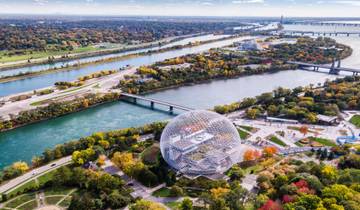
4 days
Montreal to Quebec Canadian Discovery – 4 days
- ✓ Comprehensive Montreal tour
- ✓ Expert local guides included
- ✓ All accommodation arranged
- ✓ Transportation provided
7 days
Essential East Coast (5 destinations)
- ✓ Comprehensive Montreal tour
- ✓ Expert local guides included
- ✓ All accommodation arranged
- ✓ Transportation provided
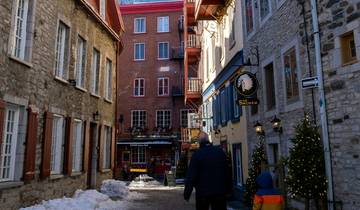
7 days
Christmas Markets of Montreal and Quebec City (2026)
- ✓ Comprehensive Montreal tour
- ✓ Expert local guides included
- ✓ All accommodation arranged
- ✓ Transportation provided
Multi-day tour packages powered by TourRadar. Prices and availability subject to change.
Introduction to Montreal Tours and Walking Routes in 2026
Montreal presents a rare combination of European architectural heritage and North American accessibility, creating one of the continent’s most walkable cities for both guided tours and independent exploration. The city’s compact historic core, extensive underground network, and exceptional public transit system enable visitors to experience centuries of cultural evolution without rental cars or complex navigation.
The tourism landscape in 2026 reflects Montreal’s bilingual character with tours conducted in both French and English, though English-language options dominate visitor-focused offerings. Post-pandemic tour operators have refined their offerings, emphasizing smaller groups, more interactive experiences, and flexible cancellation policies that provide travelers greater security and personalization than traditional mass-market tours.
This guide organizes Montreal’s tour and walking opportunities into actionable categories, providing current 2026 pricing, optimal routing strategies, and quality assessments based on recent visitor experiences. Whether you prefer structured group experiences with professional guides or independent exploration following proven routes, Montreal accommodates both approaches exceptionally well.
Understanding Montreal’s Tour Geography in 2026
Montreal’s tour infrastructure centers on five distinct geographical zones, each offering different experiences and requiring different navigation strategies. Understanding this geography helps you select appropriate tours and plan efficient self-guided routes.
Old Montreal (Vieux-Montréal) forms the historic heart spanning 1.5 square kilometers of cobblestone streets, 17th-19th century architecture, and the city’s densest concentration of tourist attractions. This entirely pedestrian-friendly zone hosts the majority of walking tours and contains Notre-Dame Basilica, Place Jacques-Cartier, Bonsecours Market, and the Old Port waterfront. Walking tours here typically cover 2-3 kilometers over 2-2.5 hours.
The Plateau Mont-Royal and Mile End neighborhoods extend north of downtown, representing Montreal’s bohemian cultural districts with street art, independent boutiques, legendary bagel shops, and vibrant café culture. These areas require either dedicated neighborhood tours or independent exploration via metro to Mont-Royal or Laurier stations. Food tours concentrate heavily in Mile End given its concentration of iconic Montreal establishments.
Downtown and the Underground City encompass Montreal’s modern commercial core with the massive RÉSO underground network connecting 33 kilometers of climate-controlled pedestrian passages, shopping centers, metro stations, and office buildings. Underground City tours operate year-round and prove particularly valuable during harsh winter months or summer heat waves.
Mount Royal Park rises 233 meters above downtown, offering Montreal’s premier outdoor walking experience with forest trails, scenic overlooks, and the iconic Kondiaronk Belvedere viewpoint providing panoramic city vistas. The park spans 190 hectares with multiple trail options ranging from the accessible 3.8-kilometer Olmsted Road to more challenging forest paths.
The Canal Lachine corridor stretches 14.5 kilometers southwest from the Old Port to Lac Saint-Louis, featuring paved cycling and walking paths alongside the historic canal with access to breweries, markets, and waterfront parks. This area attracts bike tours more than walking tours given the distances involved.
Free Walking Tours Montreal 2026
Montreal’s free walking tour scene operates on a pay-what-you-wish gratuity model, providing professionally guided experiences without upfront costs. These tours deliver exceptional value for budget-conscious travelers while maintaining quality through competitive guide performance incentives.
Free Montreal Tours operates the city’s most established pay-what-you-wish service with daily departures from Place d’Armes. Their Old Montreal tour covers 2.25 hours exploring the historic district’s founding story, French colonial heritage, British conquest period, and modern cultural identity. Guides receive professional training from Institut de tourisme et d’hôtellerie du Québec and work entirely for gratuity, creating strong motivation for engaging, informative presentations. Typical gratuities range CAD $15-25 ($10-20) per person based on group size and tour quality.
The route includes Place d’Armes with its monument to city founder Paul de Chomedey de Maisonneuve, Notre-Dame Basilica exterior (entry not included), Saint-Jacques Street’s historic financial district buildings, Place Jacques-Cartier market square, Bonsecours Market, and Old Port waterfront. Guides contextualize Montreal’s evolution from fur trading post to modern metropolis while pointing out architectural details, hidden courtyards, and local haunts tourists typically miss.
GuruWalk connects travelers with independent local guides offering various neighborhood tours beyond standard Old Montreal circuits. Mile End food and culture tours explore Montreal’s most creative neighborhood with stops at Saint-Viateur Bagel, Fairmount Bagel, Schwartz’s Deli area, and street art installations. These tours run 2-3 hours and include one complimentary fresh bagel with cream cheese, with guides recommending additional food stops for independent follow-up.
Toonie Tours provides alternative pay-what-you-wish options focusing on specific themes including street art in the Plateau, Underground City navigation, and Quartier des Spectacles entertainment district exploration. Their guides emphasize storytelling over chronological history, making tours particularly engaging for visitors less interested in dates and architectural terminology.
The free tour model works optimally when you come prepared with small bills for gratuity (CAD $20 and $10 denominations). While no mandatory payment exists, guides depend entirely on tips for income and typically receive CAD $15-25 ($10-20) per satisfied participant. Arriving 10-15 minutes early ensures you secure a spot, as popular time slots can fill quickly during summer months despite no reservation requirements.
Paid Walking Tours Montreal 2026
Paid walking tours in Montreal provide guaranteed guide quality, smaller group sizes, and specialized expertise justifying their premium pricing compared to free alternatives.
Guidatour operates Montreal’s longest-running professional walking tour company with fixed-price offerings starting CAD $40 ($30) per person for their Original Old Montreal Walking Tour. This 2-hour experience covers similar ground to free tours but limits groups to 15 participants maximum and employs guides with minimum 5 years experience. The company guarantees tour operation regardless of participant numbers, eliminating the uncertainty of free tours that occasionally cancel with insufficient attendance.
Spade & Palacio specializes in unconventional routes with their Essential 101 Non-Touristy Walking Tour priced CAD $55 ($40) per person. This 3-hour experience explores the Underground City, local neighborhoods, working-class historic districts, and contemporary cultural spaces tourists rarely discover independently. The tour includes metro transportation between locations and emphasizes Montreal’s living culture over historic sites, making it particularly valuable for repeat visitors or those seeking authentic local perspective.
Local Montreal Food Tours commands premium pricing at CAD $95-120 ($70-90) for their Mile End and Old Montreal food experiences. These 3-3.5 hour tours include 6-7 food tastings at establishments like Saint-Viateur Bagel (fresh bagel with cream cheese), Schwartz’s (smoked meat sample), artisanal cheese shops, craft chocolatiers, and specialty coffee roasters. The food quantities constitute a substantial lunch, making the pricing more reasonable when factoring meal replacement value. Group sizes max at 12 participants ensuring everyone can interact with artisans and ask questions.
Montreal Mural Tours offers street art and graffiti-focused walks through the Plateau and Saint-Laurent Boulevard corridor priced CAD $45 ($35) per person. These 2.5-hour tours cover works by local and international artists ranging from small installations to 10-story murals, explaining techniques, meanings, and the artists’ backgrounds. The company maintains relationships with the street art community, occasionally providing opportunities to meet working artists during tours.
Private guided tours start CAD $150 ($110) for 2-hour experiences accommodating 2-6 participants with customizable itineraries. Companies like Montreal Private Tours and With Locals offer personalized routing based on interests, walking pace preferences, and accessibility requirements. These justify their premium for families, seniors with mobility considerations, or travelers with specific historical or architectural interests poorly served by standard group tours.
Hop-On Hop-Off Bus Tours Montreal 2026
Montreal’s hop-on hop-off bus system provides weather-protected touring with flexibility to explore multiple neighborhoods without metro navigation or walking strain. Gray Line operates the city’s primary service with distinctive red double-decker buses and two-day passes priced CAD $69 ($50) for adults, representing one of North America’s best-value hop-on hop-off offerings.
The service covers 10 stops along a continuous loop requiring approximately 2 hours to complete without exiting. Buses depart from each stop every 15-30 minutes depending on season, with more frequent service during peak summer months. The route includes Dorchester Square departure point, Old Montreal, Old Port, Latin Quarter, Plateau Mont-Royal, Mount Royal Park lookout, Montreal Museum of Fine Arts, Crescent Street entertainment district, Saint Joseph’s Oratory, and Chinatown.
Tickets include two consecutive calendar days of unlimited hop-on hop-off access, allowing you to complete the full loop on day one for orientation then target specific neighborhoods on day two for deeper exploration. Audio guides provide bilingual narration in French and English with historical context, architectural details, and local recommendations throughout the circuit.
The two-day pricing structure makes this particularly cost-effective compared to individual metro trips if you plan extensive movement between dispersed neighborhoods. A single day requires CAD $7.50 ($5.50) for 10 metro trips using individual tickets, versus the CAD $69 ($50) bus pass providing unlimited rides plus narration across two days. The value proposition strengthens for families given children ages 5-11 ride for CAD $35 ($26) and children under 5 ride free.
However, the service experiences operational challenges that temper its appeal. Montreal’s heavy construction activity frequently requires route deviations with buses skipping advertised stops or taking alternate routes. Stop signage remains poorly marked throughout the city, making pickup points difficult to locate for first-time users. Tour guide quality varies significantly, with some providing engaging bilingual commentary while others offer minimal narration or heavily accented English difficult for non-French speakers to understand.
The optimal strategy treats the hop-on hop-off as an orientation tool rather than primary transportation. Complete the full loop on arrival for city layout understanding, noting which neighborhoods merit deeper exploration. Then use the bus selectively for long transfers like downtown to Mount Royal Park while relying on metro or walking for shorter distances in compact areas like Old Montreal.
Food Tours Montreal 2026
Montreal’s food tour landscape reflects the city’s position as one of North America’s premier culinary destinations, with tours emphasizing local specialties like bagels, smoked meat, poutine, and artisanal products that define Montreal’s distinctive food culture.
Local Montreal Food Tours operates the most comprehensive food experiences with two primary routes. Their Mile End tour explores Montreal’s most famous food neighborhood over 3 hours for CAD $95 ($70) including stops at Saint-Viateur Bagel for fresh-baked sesame bagels with cream cheese, Wilensky’s for the iconic Wilensky’s Special sandwich, artisanal cheese shops featuring Quebec products, and specialty coffee roasters. The tour concludes with samples at chocolate makers and pastry shops while guides explain the neighborhood’s Jewish immigrant history and its evolution into Montreal’s creative epicenter.
The Old Montreal food tour follows similar pricing at CAD $100 ($75) covering the historic district’s evolution from colonial French cuisine through British influence to contemporary fusion. Stops include traditional poutine at authentic local spots, artisanal charcuterie from Old Port market vendors, Quebecois cheese tastings, and craft beer samplings at microbreweries. This 3.5-hour experience includes enough food to constitute lunch, making the pricing more palatable when considering meal replacement value.
Montreal Food Tours offers alternative experiences including the Jewish Heritage Food Tour focusing exclusively on Montreal’s Jewish culinary contributions. This CAD $85 ($65) walking tour covers 3 hours through the Plateau visiting smoked meat delis, bagel bakeries, and traditional Jewish bakeries while explaining the community’s immigration history and cultural impact. Food quantities on this tour run particularly generous, often leaving participants unable to finish dinner later that evening.
Plateau Food Tour provides a DIY alternative with downloadable self-guided routes available CAD $18 ($14) including maps, restaurant recommendations, and suggested ordering strategies. While lacking live guide context, this option suits budget-conscious travelers comfortable navigating independently who simply want expert-curated routing to authentic establishments.
All food tours require advance booking given their small group sizes and food preparation coordination with participating establishments. Most operators offer 24-hour cancellation policies providing flexibility for weather or schedule changes.
Underground City Tours Montreal 2026
Montreal’s Underground City (RÉSO) represents one of the world’s largest underground pedestrian networks, spanning 33 kilometers connecting metro stations, shopping centers, office buildings, hotels, museums, and universities through climate-controlled passages. Navigating this maze independently proves challenging without local knowledge, making guided tours particularly valuable.
Spade & Palacio’s Underground City discovery tour operates year-round for CAD $35 ($26) covering 2 hours of navigation through the network’s most interesting sections. Guides explain the system’s 1960s origins, its expansion during Montreal’s building boom, and navigation strategies for independent future use. The route includes passages connecting Place-des-Arts to Complexe Desjardins, the metro system’s artistic stations featuring unique designs and murals, connections to major shopping centers, and architectural highlights visible only from underground vantage points.
The tour proves especially valuable during extreme weather months when January temperatures drop to -10°C (14°F) or July heat reaches 30°C (86°F). The underground network maintains consistent 20°C (68°F) year-round, making winter shopping, dining, and attraction access comfortable without exposure to harsh elements.
Alternative Underground City exploration through free self-guided navigation works well with printed maps available at metro ticket booths or downloadable PDF guides from the Montreal tourism website. The system includes directional signage, though it assumes familiarity with building names and Montreal geography that confuses first-time visitors. Key navigation tips include following the “S” symbol indicating underground metro access, using the color-coded metro lines as orientation anchors, and understanding that “Niveau” indicates floor level with negative numbers representing underground floors.
The network’s practical utility extends beyond tourism novelty. Serious winter visitors use underground passages for genuine transportation efficiency, avoiding coat checks, icy sidewalks, and weather exposure. Summer users escape heat and humidity while moving between air-conditioned spaces. The system includes full restaurant service, specialty retail, banking services, and pharmacy access creating genuinely functional underground city infrastructure.
Mount Royal Park Walking Routes 2026
Mount Royal Park provides Montreal’s premier outdoor walking experience with forest trails, scenic overlooks, and the city’s most photographed viewpoint accessible through multiple route options accommodating different fitness levels and time availability.
The Olmsted Road route represents the park’s most accessible option, following the wide paved path designed by Frederick Law Olmsted (also designer of New York’s Central Park) from the Peel Street entrance to Kondiaronk Belvedere viewpoint. This 3.8-kilometer round trip gains 170 meters elevation over gradual switchbacks suitable for average fitness levels, wheelchairs, and strollers. The paved surface remains maintained year-round with winter access via packed snow rather than ice, making this the only reliable winter route for casual walkers.
The complete ascent requires 45-60 minutes at moderate pace with the belvedere viewpoint providing 180-degree panoramas across downtown Montreal, the Saint Lawrence River, and southern suburbs. The viewpoint includes orientation panels identifying major landmarks and historical context about Montreal’s development. The return descent takes 30-40 minutes with most visitors completing the round trip in 1.5-2 hours including viewpoint time.
The Maison Smith trailhead offers alternative access from Chemin Remembrance with shorter distance but steeper grades. This route reduces distance to 2.4 kilometers round trip while maintaining similar elevation gain, creating more aggressive climbing suitable for faster-paced hikers. The trailhead includes parking, public restrooms, and a seasonal café making it preferable for visitors arriving by car.
Forest trail options extend throughout the park’s 190 hectares with dirt paths ranging from easy 2-kilometer loops to challenging 6-kilometer routes traversing the mountain’s multiple summits. The Sentier du Lac aux Castors circuit surrounds Beaver Lake with 1.4 kilometers of level trail perfect for families, while the Croix du Mont-Royal route climbs to the illuminated cross visible throughout Montreal. Trail maps are available at park entrances or downloadable from the city’s park website.
Seasonal considerations significantly impact trail conditions. Summer months (June-August) provide easiest access with dry trails and full services including café operation and public restroom availability. Fall (September-October) delivers spectacular foliage colors worth timing visits around, though trails become slippery with wet leaves. Winter transforms the park with cross-country ski trails, ice skating on Beaver Lake, and snowshoe routes, but limits casual walking to the maintained Olmsted Road. Spring (March-May) sees heavy trail erosion and mud requiring waterproof footwear.
Guided Mount Royal walks operate through Nature Expert Montreal priced CAD $45 ($35) for 2.5-hour natural history tours covering forest ecology, bird watching, and seasonal flora. These tours meet at designated trail entrances and accommodate maximum 8 participants ensuring everyone can hear naturalist guides and ask questions. The tours prove particularly valuable during bird migration periods (May and September) when the mountain hosts 180+ species passing through Montreal.
Old Montreal Self-Guided Walking Route 2026
Old Montreal’s compact 1.5-square-kilometer historic district enables excellent self-guided exploration using the following proven route covering major landmarks, hidden courtyards, and architectural highlights over approximately 3 hours at casual pace.
Begin at Place d’Armes facing Notre-Dame Basilica with the monument to city founder Paul de Chomedey de Maisonneuve in the square’s center. The surrounding buildings demonstrate Montreal’s architectural evolution including the New York Life Building (1887), the Bank of Montreal headquarters (1847) featuring ornate interior banking hall open to visitors, and modern office buildings showing contemporary development. Notre-Dame Basilica merits CAD $16 ($12) paid entry for its spectacular blue and gold interior, or observe the Gothic Revival exterior freely from the square.
Walk east along Saint-Jacques Street (Rue Saint-Jacques) through Montreal’s historic financial district preserving Canada’s most concentrated collection of early 20th-century bank buildings. The street earned the nickname “Wall Street of Canada” during the 1920s when Montreal served as the country’s financial capital. Notable buildings include the Royal Bank Tower (1928) and multiple former bank headquarters converted to office and residential use.
Turn south on Saint-Laurent Boulevard reaching Notre-Dame Street, then east toward Place Jacques-Cartier. This cobblestone public square hosts seasonal flower markets, street performers, and outdoor restaurant terraces year-round. The square slopes downhill toward the river with City Hall (Hôtel de Ville) dominating the northern end. Climb to City Hall’s entrance for views back across the square toward the waterfront.
Continue east to Bonsecours Market (Marché Bonsecours), the domed 1847 neoclassical building that served as Montreal’s main public market for over a century. The interior now houses boutiques and art galleries with free entry to browse. The building’s riverside facade provides exceptional photo opportunities capturing the silver dome against river and bridge backgrounds.
Walk south toward the Saint Lawrence River reaching the Old Port (Vieux-Port) waterfront with 2.5 kilometers of paved walkways, seasonal beach areas, and harbor views. The Clock Tower (Tour de l’Horloge) stands at the port’s eastern edge providing harbor panoramas from its top level, accessible via 192 stairs with no admission charge.
Return west along the waterfront promenade passing yacht clubs, canal locks, and waterfront restaurants. Turn north on Saint-Paul Street (Rue Saint-Paul), Old Montreal’s oldest street established in the 17th century. The cobblestone thoroughfare preserves the most intact historic streetscape with 18th and 19th-century commercial buildings housing galleries, restaurants, boutiques, and hotels.
Continue west on Saint-Paul encountering the Pointe-à-Callière Museum of Archaeology and History, Montreal’s premier historical institution built over excavated 17th-century settlement ruins. Museum entry costs CAD $22 ($17) with underground passages allowing visitors to walk through actual archaeological sites beneath modern Montreal streets.
Complete the circuit by turning north on Saint-Sulpice Street returning to Place d’Armes, having covered approximately 3 kilometers through Old Montreal’s essential landmarks. The entire route accommodates wheelchairs and strollers via smooth cobblestone surfaces and accessible crossings, though winter ice can create challenges requiring extra caution.
Enhanced exploration options include detours to Rue de la Commune waterfront restaurants, Rue Saint-Dizier’s art galleries, and Rue Saint-Vincent’s boutique hotels. Many historic buildings feature interior courtyards accessible through street entrances, providing hidden green spaces worth discovering. The best printed walking maps sell at Old Montreal bookstores for CAD $12-18 ($9-14) with detailed building histories and architectural notes exceeding free tourist maps’ basic information.
Specialized Theme Tours Montreal 2026
Montreal’s theme tours serve niche interests providing specialized knowledge and access beyond general walking tours’ scope.
Montreal Ghost Tours operates evening walking experiences through Old Montreal’s reportedly haunted locations for CAD $35 ($26) per person. These 1.5-hour tours cover atmospheric streets and alleyways while guides recount historical murders, executions, and unexplained phenomena in Montreal’s oldest buildings. The tours emphasize verified historical events over supernatural speculation, making them educational rather than purely theatrical. Summer evening departures (May-October) work best for comfortable outdoor walking in darkness.
Architecture-focused tours through Heritage Montreal showcase the city’s diverse building styles from French colonial through Victorian, Art Deco, and contemporary design. Their CAD $40 ($30) walking tours concentrate on specific neighborhoods or architectural periods with guides providing technical details about construction methods, stylistic influences, and preservation challenges. These prove particularly valuable for architecture students or enthusiasts wanting deeper technical knowledge than general tours provide.
Bike tours expand geographic range beyond walking tour capabilities, covering 15-25 kilometers over 3-4 hours. Fitz & Follwell Co. leads highly-rated cycling tours through the Canal Lachine corridor for CAD $65 ($50) including bike rental, helmet, and guide service. The canal route’s paved paths accommodate casual cyclists comfortably while accessing breweries, parks, and historic sites difficult to reach by walking or public transit. Tours include rest stops with information about canal history and Montreal’s industrial development.
Photography tours cater to both amateur and serious photographers wanting guidance on Montreal’s most photogenic locations. Montreal Photo Workshops offers CAD $95 ($70) half-day experiences with professional photographer guides providing technical instruction alongside location access. Tours adapt to participant skill levels, covering composition basics for beginners or advanced techniques like blue hour shooting and architectural detail work for experienced photographers. The tours time their routes for optimal lighting conditions, typically morning or late afternoon golden hour sessions.
Beer and brewery tours capitalize on Montreal’s craft beer renaissance with multiple operators offering tastings at microbreweries and brewpubs. Tours range CAD $80-95 ($60-70) including transportation between 3-4 breweries, beer samples, and brewery tour access. These prove particularly popular during winter months when brewery visits provide warm, comfortable environments between brief outdoor walks.
Tour Booking Strategies for Montreal 2026
Montreal tour booking follows seasonal patterns influencing both availability and pricing, with strategic timing delivering significant value advantages.
Peak season spans July-August when prices increase 30-40% above shoulder season rates and popular tours sell out days in advance. Montreal’s major festivals including Just for Laughs (late July) and International Jazz Festival (late June/early July) create extreme demand spikes with tour availability disappearing weeks ahead. Budget-conscious travelers avoid these periods entirely or book minimum 2-3 weeks advance to secure spaces.
Shoulder seasons May-June and September-October provide optimal conditions combining pleasant weather, reduced crowds, and lower prices. Tours operate full schedules during these months while maintaining off-season rates approximately 25% below peak pricing. September particularly delivers excellent value with warm days, fall colors beginning in late month, and festival crowds departed.
Winter season (November-March) sees dramatic price reductions with some operators offering 40-50% discounts compared to summer rates. However, outdoor walking tour quality suffers in harsh weather with guides rushing through routes to minimize cold exposure and many participants arriving unprepared for -15°C (5°F) temperatures. Underground City tours and indoor-focused experiences maintain quality year-round making them better winter choices than traditional outdoor walks.
Booking platforms include direct operator websites offering best pricing without third-party commissions, Viator and GetYourGuide providing consolidated inventory but adding 10-15% markup, and TripAdvisor presenting user reviews alongside booking links. Free tour reservations work through company websites or GuruWalk platform with no advance payment required, though arrival 15 minutes early ensures participation when popular time slots fill.
Cancellation policies vary significantly by operator. Pay-what-you-wish tours allow no-show without penalty but appreciate courtesy cancellation notifications. Paid tours typically offer full refunds with 24-48 hours notice, while premium food tours often require 72 hours given food preparation coordination. Travel insurance covering tour cancellations makes sense for expensive multi-day packages or high-value specialty tours where last-minute illness could forfeit significant prepayments.
Family-Friendly Tours Montreal 2026
Montreal’s family tour options accommodate children through shorter durations, interactive elements, and kid-focused content modifications that maintain adult interest while preventing child boredom.
Guidatour operates dedicated family walking tours limiting duration to 90 minutes with interactive elements including scavenger hunt components and child-friendly historical storytelling. Their Family Discovery Tour costs CAD $30 ($22) for adults with children under 12 free, covering Old Montreal highlights through games and activities rather than lecture-format narration. Guides carry props including historical costume pieces and period photographs allowing children tactile engagement with history.
The Biodôme, Insectarium, and Botanical Garden complex in Olympic Park offers combined tickets CAD $45 ($35) for adults providing full-day exploration through natural history exhibits, tropical environments, and seasonal garden displays. While not traditional tours, the facilities include guided feeding demonstrations, butterfly releases, and seasonal activities like Christmas garden illuminations creating structured experiences within self-paced exploration.
Boat tours on the Saint Lawrence River provide family-friendly alternatives to walking tours with 90-minute cruises departing from Old Port. Le Bateau-Mouche operates glass-enclosed boats with bilingual narration for CAD $40 ($30) adults, $25 ($19) children ages 6-12, children under 6 free. The river perspective showcases Montreal’s island geography, port operations, and landmark identification while children remain entertained by boat movement and water views.
Montreal Science Centre runs specialized family programming including IMAX theater screenings and interactive exhibits spanning physics, natural science, and technology. The center’s location in Old Port makes it easily combinable with harbor walking routes and boat tours for full-day family itineraries. Combined IMAX and exhibit tickets cost CAD $30 ($22) adults, $18 ($14) children with frequent discounts available through the Montreal Museums Pass.
Private family tours through companies like Montreal Private Tours customize content and pacing for children’s ages and interests. These CAD $200-250 ($150-190) experiences accommodate 2-6 family members with flexible timing, bathroom breaks, and routing adjustments based on real-time energy levels. The premium pricing justifies itself for families with young children or special needs requiring personalized attention impossible in standard group tours.
Accessible Tours Montreal 2026
Montreal’s accessibility infrastructure ranks among North America’s best cities for mobility-challenged visitors, with most major attractions, public transit, and tour operators providing wheelchair access and mobility accommodations.
The Montreal metro system includes elevator access at 71% of stations with the accessibility percentage improving annually as stations undergo renovation. The Orange Line serving downtown and Old Montreal provides best accessibility with Place-des-Arts, McGill, and Bonaventure stations fully elevator-equipped. Detailed accessibility maps download from the STM (Montreal transit authority) website showing exact elevator locations and accessible routing between stations.
Old Montreal’s cobblestone surfaces present challenges for wheelchair users and mobility-limited visitors despite the district’s overall flat topography. The smoothest routes follow Notre-Dame Street and Saint-Paul Street where cobblestones have been maintained in better condition than side streets. Many restaurants, shops, and attractions feature ramped entries or ground-level access, though older buildings may lack elevator service to upper floors.
Accessible tour options include specialized services through Kéroul, Quebec’s accessibility tourism organization maintaining detailed accessibility ratings for attractions, restaurants, and tour operators. Their website provides downloadable accessibility guides rating Montreal attractions on a 5-point scale covering physical access, adapted facilities, and staff training levels.
Private accessible tours operate through Montreal Accessible Tours providing wheelchair-accessible vehicle transportation combined with mobility-trained guides for CAD $250 ($190) per 3-hour tour accommodating up to 4 participants. These tours customize routes avoiding stairs, steep grades, and challenging surfaces while maintaining quality historical and cultural content. Guides receive training in mobility assistance and accessibility equipment operation ensuring comfortable experiences for participants with varying limitation levels.
The hop-on hop-off bus service includes wheelchair lift equipment on all buses with dedicated wheelchair positions on the lower deck. However, some stops lack paved loading areas requiring bus drivers to assist wheelchair users over grass or gravel surfaces when necessary. Advance notification to the operator helps ensure buses with best equipment arrive at scheduled pickup times.
Mount Royal Park accessibility varies by route with the Olmsted Road providing the only wheelchair-friendly path to the belvedere viewpoint. The paved surface maintains gradual grades throughout the 3.8-kilometer route, though the distance and elevation gain challenge some manual wheelchair users requiring significant upper body strength. Electric wheelchair users navigate the route comfortably with the park’s shuttle bus providing alternative lift-equipped transportation to the summit during peak season.
Montreal Museums Pass 2026
The Montreal Museums Pass provides cost-effective access to 45+ museums and attractions across the city, delivering value for visitors planning multiple cultural institution visits over several days.
The pass costs CAD $85 ($65) for 3 consecutive days providing one-time entry to each participating institution within the validity period. Major inclusions encompass Montreal Museum of Fine Arts, Pointe-à-Callière Museum, McCord Stewart Museum, Montreal Museum of Contemporary Art, Biodôme, Botanical Garden, and dozens of smaller specialized museums.
Value calculation requires planning museum visits during the 3-day window. A typical high-value itinerary might include Montreal Museum of Fine Arts (CAD $26), Pointe-à-Callière Museum (CAD $22), McCord Stewart Museum (CAD $20), Biodôme (CAD $22), and Botanical Garden (CAD $22) totaling CAD $112 in individual admission versus the CAD $85 pass cost. However, visitors planning only 2-3 museum visits save money purchasing individual tickets rather than the pass.
The pass includes priority access at many institutions allowing passholders to bypass general admission ticket lines. During peak summer season when museums experience 30-60 minute entry queues, this time-saving benefit adds significant value beyond pure cost calculation. The pass also provides discounts at museum shops and cafés though these savings remain minimal unless making substantial purchases.
Purchase locations include tourist information centers in Old Montreal, major metro stations, participating museums, and online through the Montreal Museums Pass website. Online purchase allows immediate digital pass delivery via email, eliminating need for physical pickup and enabling same-day usage upon arrival.
The pass works best for dedicated museum enthusiasts planning 4-5+ institution visits over 3 days or families visiting major attractions like the Biodôme, Insectarium, and Botanical Garden where child tickets at individual rates would exceed pass family pricing. Casual visitors planning 1-2 museum visits should skip the pass and pay individual admissions.
Day Trip Tours from Montreal 2026
Montreal’s geographic position enables excellent day trip opportunities to Quebec City, Laurentian Mountains, and regional attractions accessible via organized tours or independent travel.
Quebec City day tours represent the most popular excursion with full-day guided experiences departing Montreal 7:30-8:00 AM returning 6:00-7:00 PM. These CAD $135-165 ($100-125) tours include round-trip motor coach transportation, Old Quebec guided walking tour, Montmorency Falls visit, and optional river cruise additions. The 3-hour drive each direction limits Quebec City exploration to approximately 4 hours, enough for historic district highlights but insufficient for comprehensive discovery. Winter tours include ice hotel visits adding CAD $25 ($20) supplemental charges.
Mont-Tremblant ski resort excursions operate during winter season with day trips combining scenic Laurentian drive, resort village exploration, and lift ticket options. Summer and fall tours emphasize hiking, cycling, and fall foliage viewing with gondola rides providing mountain summit access and panoramic views. Full-day tours cost CAD $95-120 ($70-90) not including activity fees, making independent car rental potentially more economical for groups of 3-4 travelers.
Eastern Townships wine tours visit the region’s developing wine industry 90 minutes southeast of Montreal with tastings at 3-4 vineyards. These CAD $145 ($110) experiences include transportation, guided winery tours, wine education, and lunch at vineyard restaurants. The tours operate May-October when wineries maintain full operations and vineyard landscapes provide scenic rural Quebec countryside views.
Ottawa day trips cover the 2-hour drive to Canada’s capital with guided tours of Parliament Hill, National Gallery, and Rideau Canal landmarks. Full-day packages cost CAD $125 ($95) including transportation and walking tour service but excluding museum admissions which add CAD $30-45 ($22-35) to total costs. These tours make sense primarily for visitors without cars wanting to see Ottawa without overnight stays.
Independent day trip alternatives using intercity bus or train services provide budget options for confident travelers. VIA Rail operates hourly Montreal-Quebec City trains requiring 3 hours travel time with return same-day possible on late evening departures. Round-trip rail costs CAD $90-140 ($67-105) depending on booking advance and class selection, competitive with organized tour pricing while providing greater flexibility for independent Quebec City exploration.
Montreal Tour Costs Summary 2026
Understanding Montreal’s complete tour cost spectrum helps budget planning and value assessment across different experience types and operator quality levels.
Free pay-what-you-wish walking tours operate with typical gratuities CAD $15-25 ($10-20) per person for 2-2.5 hour experiences through Old Montreal or neighborhood routes. This represents Montreal’s best-value guided touring option with professional guides working entirely for tips creating strong performance incentives.
Standard paid walking tours range CAD $35-55 ($26-40) per person covering 2-3 hours with guaranteed guide quality, smaller groups, and specialized routing. These justify their premium versus free tours through expert knowledge, unique access to locations, and assured operation regardless of participant numbers.
Food tours command CAD $80-120 ($60-90) reflecting included tastings constituting meal replacement value. Mile End experiences emphasize iconic Montreal establishments including bagel bakeries and delis while Old Montreal tours feature market vendors and traditional Quebec cuisine. The food quantity typically satisfies lunch requirements making effective per-person cost lower than stated tour price when factoring avoided meal expenses.
Hop-on hop-off bus passes cost CAD $69 ($50) for two-day unlimited access representing strong value for visitors planning extensive movement between dispersed neighborhoods. Single-day use compares unfavorably to metro travel, but two-day validity with unlimited boarding creates cost efficiency versus individual transit tickets.
Private tours start CAD $150-250 ($110-190) for 2-6 participants with customizable routing, flexible timing, and personalized attention. These work best for families with young children, mobility-challenged visitors requiring accommodations, or travelers with specific interests poorly served by standard group experiences.
Specialty tours including photography instruction, architecture deep-dives, and beer tastings range CAD $65-95 ($50-70) targeting enthusiast audiences willing to pay premium pricing for expert guidance and exclusive access. These represent discretionary expenses beyond essential sightseeing rather than mandatory costs for understanding Montreal.
Museum admissions affect total touring costs with major institutions charging CAD $20-26 ($15-20) for adults. The Montreal Museums Pass at CAD $85 ($65) provides 3-day access to 45+ attractions but only delivers value for visitors planning 4+ institution visits within the validity window.
Day trip tours to Quebec City, Mont-Tremblant, and regional destinations cost CAD $95-165 ($70-125) with transportation included but activity fees and meals additional. Independent travelers using public transit or rental cars may save 30-50% versus organized tours while gaining scheduling flexibility and extended destination time.
Money-Saving Strategies for Montreal Tours 2026
Strategic planning and timing decisions significantly reduce Montreal touring costs while maintaining quality experiences.
Maximize free resources beginning with pay-what-you-wish walking tours providing professional guide service without upfront costs. Following one comprehensive Old Montreal tour on arrival, use the orientation knowledge for subsequent independent exploration eliminating need for additional paid tours in the same area. Free Montreal Tours and GuruWalk operate daily year-round with no reservation requirements allowing spontaneous participation.
Shoulder season timing (May-June, September-October) delivers 25-40% savings versus peak summer rates while providing superior weather compared to winter months. Tour operators reduce prices during these periods while maintaining full service levels making this the optimal value window for Montreal visits.
Combination ticket packages offer modest savings when purchased together rather than separately. The hop-on hop-off bus occasionally bundles with Notre-Dame Basilica admission or boat cruises saving CAD $10-15 ($7-10) versus individual component purchases. However, verify actual usage likelihood before purchasing bundles as unused components waste money regardless of bundled discount.
Early booking discounts apply to some premium tours with 7-14 day advance purchase reducing prices 10-15% below last-minute walk-up rates. Food tours and specialty experiences offer these discounts more frequently than standard walking tours which maintain consistent pricing regardless of booking timing.
Public transit passes deliver transportation savings with unlimited 3-day STM passes costing CAD $20 ($15) versus CAD $3.50 ($2.65) per individual metro trip. Visitors planning 7+ metro rides over 3 days save money with pass purchase while gaining simplified access without ticket machines or exact change requirements.
Self-guided routes using free online maps and resources eliminate tour costs entirely while providing comprehensive coverage. Download Montreal tourism office walking route PDFs showing Old Montreal circuits, Plateau neighborhood walks, and waterfront paths with basic landmark descriptions sufficient for independent navigation.
Group discounts apply when assembling 4+ travelers for paid tours with most operators reducing per-person rates 15-20% for parties of 6-10 participants. Solo travelers can request tour operators connect them with other solo participants to form discount-eligible groups, though success varies by operator policy and seasonal demand levels.
Student, senior, and family discounts reduce standard pricing 10-30% depending on operator and tour type. Always request these discounts when booking as many websites show adult pricing only without highlighting reduced rates available with proper identification.
Montreal Tour Safety and Practical Considerations 2026
Montreal ranks among North America’s safest major cities with low violent crime rates and minimal tourist-targeted theft, though basic precautions enhance security and prevent opportunistic incidents.
Walking tour safety concerns center on weather preparedness rather than crime. Summer heat waves occasionally push temperatures to 30°C (86°F) with high humidity creating heat exhaustion risks during multi-hour outdoor walks. Carry water bottles, wear sun protection, and communicate with guides if experiencing discomfort. Winter temperatures drop to -15°C (5°F) with wind chill reaching -25°C (-13°F) making proper layered clothing essential for outdoor tours exceeding 30 minutes.
Old Montreal’s cobblestone streets create trip hazards particularly in wet conditions or darkness. Wear appropriate footwear with ankle support and good tread rather than fashion-focused shoes. The uneven surfaces challenge wheeled luggage and strollers making these impractical for tour participation unless operators specifically advertise stroller-friendly routes.
Group tour dynamics occasionally include inconsiderate participants disrupting experiences through excessive questions, slow walking pace, or loud conversations during guide narration. Quality operators limit group sizes to 12-15 participants maximum ensuring guides can manage participant behavior and maintain cohesive group movement. Free tours sometimes attract groups of 30+ participants creating crowding and audio difficulties though guides typically subdivide large groups when numbers exceed manageable levels.
Tipping practices in Montreal follow North American standards with 15-20% expected for restaurant service and similar amounts appropriate for paid tour guides. Pay-what-you-wish tours typically see CAD $15-25 ($10-20) per person gratuity for satisfactory experiences with participants free to adjust based on guide quality. Carry small denomination bills (CAD $10, $20) for convenient gratuity payment rather than requesting guide change for larger bills.
Language considerations affect tour experiences in officially bilingual Montreal where French remains primary language. Most tourist-focused tours operate in English or bilingual format, though some guides present information first in French then English creating slower pacing and potential repetition fatigue. Confirm tour language during booking to ensure comfortable comprehension particularly for specialized tours where technical terminology in non-native language may reduce understanding.
Photography policies vary by tour type and location. Most walking tours encourage photos though request participants avoid blocking group movement or creating safety hazards while photographing. Notre-Dame Basilica and similar religious sites prohibit flash photography and may restrict photography during services. Museum tours typically prohibit photography in temporary exhibition spaces while allowing non-flash photography in permanent collections.
Health considerations include walking stamina requirements with most tours covering 2-4 kilometers over 2-3 hours. Operators rarely provide mid-tour rest stops beyond brief pauses for narration, making bathroom access and fatigue management important pre-tour considerations. Inform guides of medical conditions potentially affecting participation, as most operators accommodate reasonable adjustments including additional rest breaks or shortened routes.
Best Times for Montreal Tours in 2026
Montreal’s seasonal tourism patterns and weather variations create distinct touring windows each offering different advantages and challenges.
Summer peak season (July-August) delivers warmest weather with average high temperatures 26°C (79°F) and extended daylight hours providing comfortable outdoor touring conditions. However, this period brings maximum crowds at major attractions, highest tour prices, and increased humidity making afternoon walking tours uncomfortable during heat waves. Major festivals including Just for Laughs and International Jazz Festival create accommodation scarcity and tour availability challenges during late July.
Shoulder seasons May-June and September-October provide optimal touring conditions combining pleasant weather, manageable crowds, and reasonable pricing. May sees spring emergence with temperatures 15-20°C (59-68°F), though occasional rain showers require waterproof jacket preparation. June delivers consistently warm weather without July-August humidity extremes while maintaining spring’s reduced tourist density. September provides summer-like temperatures through mid-month with fall colors beginning late month, creating Montreal’s most photographically attractive touring window. October brings cooler temperatures 10-15°C (50-59°F) with peak fall foliage mid-month, though variable weather requires layered clothing flexibility.
Winter season (December-February) transforms Montreal into a snow-covered destination with average temperatures -5 to -10°C (14-23°F) and frequent snowfall creating atmospheric but challenging touring conditions. Outdoor walking tours operate with reduced schedules and abbreviated routes minimizing cold exposure. The Underground City network becomes essential infrastructure allowing comfortable indoor touring connections between metro stations and attractions. Montreal en Lumière festival in late February provides winter highlight with illuminated installations, outdoor activities, and food events justifying cold-weather visit timing.
Shoulder winter periods (November, March) offer worst touring conditions combining unpredictable weather, reduced tour schedules, and minimal cost savings versus peak winter discounts. November’s rain-snow transition creates slush and ice hazards without picturesque snow accumulation. March thaw brings similar conditions with muddy parks, dirty snowbanks, and variable temperatures ranging -5 to 10°C (23-50°F) requiring extensive clothing options.
Weekly patterns affect tour availability and pricing with weekends seeing increased demand particularly during summer season when advance booking becomes essential. Weekday tours often provide better guide-participant ratios with smaller groups enabling more personalized attention and question opportunities.
Time-of-day considerations influence experience quality significantly. Morning tours (9:00-11:00 AM) benefit from cooler temperatures, fresh energy levels, and smaller crowds at early-opening attractions. Afternoon tours (2:00-4:00 PM) face heat challenges in summer and fatigue effects regardless of season. Evening tours work well for ghost walks and illuminated monument experiences but create safety concerns when finishing after dark during winter’s early sunset times.
Montreal Tour Reviews and Quality Assessment 2026
Montreal’s tour quality varies substantially across operators, making review research essential for selecting experiences delivering value matching advertised promises.
Free Montreal Tours maintains consistently positive ratings across TripAdvisor, Google Reviews, and GuruWalk platforms with 4.8-5.0 average scores based on thousands of reviews. Common praise emphasizes guide knowledge depth, engaging storytelling approaches, and generous time allocation allowing thorough coverage without rushed pacing. Criticism centers on variable guide quality between different individuals, occasional overcrowding when groups exceed 25 participants, and guide behavior pressuring gratuity payments through repeated mentions.
Spade & Palacio’s Essential 101 Non-Touristy Tour receives exceptional ratings (4.9-5.0 average) with reviewers highlighting unique route selection, insider local knowledge, and small group sizes ensuring personalized attention. The premium CAD $55 ($40) pricing finds justification through specialized access to neighborhoods and perspectives unavailable on standard Old Montreal circuits. Negative feedback mentions occasional guide political commentary that some participants find inappropriate in tourism contexts.
Local Montreal Food Tours earns strong ratings (4.7-4.9 average) with food quality, generous portion sizes, and knowledgeable guides drawing consistent praise. However, pricing concerns appear frequently in reviews with some participants questioning CAD $95-120 ($70-90) value when tastings occur at establishments accessible independently. Tour pace receives criticism from slower walkers struggling to maintain group movement between frequent food stops.
Hop-on hop-off bus service generates mixed reviews (3.8-4.2 average) reflecting operational inconsistency. Positive experiences cite convenient routing, comfortable buses, and informative guides providing engaging bilingual commentary. Negative reviews emphasize route deviations due to construction, poor stop signage making pickups difficult, variable guide quality ranging from excellent to barely audible, and occasional mechanical breakdowns requiring mid-route bus transfers.
Guidatour’s professional tours maintain solid ratings (4.5-4.7 average) with guaranteed operation, small groups, and experienced guides justifying their premium pricing. Reviews note predictable quality making these reliable choices for risk-averse travelers valuing consistency over potential exceptional experiences from smaller operators.
Review interpretation requires filtering for relevant priorities. Budget-conscious travelers should weight comments about value and pricing while disregarding complaints from luxury-expectation reviewers. Active travelers can ignore pace concerns from participants requiring frequent rest breaks. Weather complaints prove less valuable than operational feedback about guide knowledge and route quality.
Recent review timing matters significantly given post-pandemic tour operator changes and guide turnover. Prioritize reviews from the past 12 months over older comments that may reflect different guide teams, route modifications, or pricing structures no longer current.
Frequently Asked Questions About Montreal Tours 2026
How Much Should I Budget for Tours in Montreal in 2026?
Budget CAD $30-50 ($22-38) per person daily for touring experiences combining free pay-what-you-wish walks, self-guided routes, and selective paid attractions. This covers one free walking tour with typical CAD $20 ($15) gratuity plus Notre-Dame Basilica entry or one neighborhood paid tour. Mid-range touring budgets of CAD $80-120 ($60-90) daily accommodate food tours, hop-on hop-off bus access, and multiple paid attractions. Premium touring reaching CAD $150-200 ($110-150) daily includes private guides, specialty experiences, and comprehensive attraction access. These estimates exclude accommodation, meals outside tours, and transportation which add CAD $150-300 ($110-225) daily depending on hotel category and dining preferences.
Are Montreal Tours Conducted in English in 2026?
Yes, most tourist-focused tours operate in English or bilingual English-French format given Montreal’s international visitor base. Major operators including Free Montreal Tours, Guidatour, Spade & Palacio, and Local Montreal Food Tours conduct English tours with many guides also offering French versions simultaneously. Some guides present information first in French then English creating longer tour durations and potential repetition, though this allows both language groups to participate together. Confirm tour language when booking to ensure comfortable comprehension. Smaller boutique operators may offer French-only tours requiring advance inquiry about English availability. Independent travelers navigating self-guided routes encounter bilingual signage throughout tourist areas with English information readily available.
Can I Do Montreal Tours in Winter 2026?
Montreal tours operate year-round with winter adaptations addressing harsh weather conditions. Outdoor walking tours continue through winter with abbreviated routes minimizing cold exposure, though quality varies significantly based on temperatures and snowfall levels. The Underground City becomes essential winter touring infrastructure providing 33 kilometers of climate-controlled passages connecting attractions, metro stations, and shopping areas with dedicated Underground City tours highlighting this unique network. Indoor-focused experiences including museum tours, Notre-Dame Basilica visits, and brewery tours maintain consistent quality regardless of weather. Winter tour pricing drops 30-50% versus summer peak season creating value opportunities for cold-tolerant visitors. However, expect shorter tour durations, fewer departure times, and guide focus on weather protection over comprehensive site coverage compared to warm-season experiences.
Do I Need to Book Montreal Tours in Advance for 2026?
Advance booking requirements vary by season and tour type. Summer months (July-August) and major festival periods require 1-2 weeks advance reservation for popular paid tours and food experiences, with last-minute bookings risking sold-out status. Shoulder seasons (May-June, September-October) allow 3-5 days advance booking for most tours while walk-up availability exists for many experiences. Winter season (November-March) rarely sells out with same-day booking often possible except during Montreal en Lumière festival in late February. Free pay-what-you-wish tours accept walk-up participants without reservation though arriving 15 minutes early ensures participation when popular time slots fill. Specialized tours including private guides, food tours, and day trips to Quebec City benefit from 7-14 days advance booking regardless of season given their small group sizes and coordination requirements.
What Are the Best Free Activities in Montreal for 2026?
Montreal offers exceptional free experiences beyond pay-what-you-wish tours. Mount Royal Park provides 190 hectares of forest trails, scenic overlooks, and the Kondiaronk Belvedere viewpoint accessible via the 3.8-kilometer Olmsted Road requiring no entry fees. The Old Montreal district enables comprehensive self-guided walking through 1.5 square kilometers of cobblestone streets, historic architecture, and waterfront areas using free tourism office maps. The Underground City network spans 33 kilometers of climate-controlled passages connecting metro stations and attractions with free access though businesses within charge normal prices. Jean-Talon Market operates year-round providing vibrant food market atmosphere with free browsing and people-watching though purchases obviously cost money. Notre-Dame Basilica offers free attendance at Mass services conducted in French, allowing interior viewing without the CAD $16 ($12) daytime admission charge.
How Long Do Montreal Walking Tours Last in 2026?
Standard walking tours run 2-2.5 hours covering 2-3 kilometers at moderate pace with brief stops for guide narration and photo opportunities. Free pay-what-you-wish tours typically maintain 2.25-hour schedules allowing thorough Old Montreal coverage without excessive duration. Paid neighborhood tours extend to 3 hours when covering areas like Mile End or Plateau requiring longer walking distances between points of interest. Food tours last 3-3.5 hours given eating time requirements at multiple tasting stops though actual walking distance remains modest. Specialty tours including photography instruction or architecture deep-dives may extend to 4 hours accommodating technical discussion and detailed examination. Family-focused tours abbreviate to 90 minutes preventing child fatigue while condensed express tours offer 60-minute highlights for time-constrained visitors.
What Should I Wear for Montreal Walking Tours in 2026?
Comfortable walking shoes with good ankle support and tread prove essential given Old Montreal’s cobblestone surfaces and typical 2-3 kilometer tour distances. Avoid fashion-focused footwear lacking proper support as uneven surfaces cause ankle strain and fatigue. Summer tours (June-August) require sun protection including hats and sunscreen plus light breathable clothing, though carry a light jacket for air-conditioned indoor stops. Spring and fall shoulder seasons (April-May, September-October) demand layered clothing allowing adjustment to variable temperatures ranging 10-20°C (50-68°F) with waterproof jacket preparation for occasional rain showers. Winter tours (December-February) necessitate serious cold-weather gear including insulated jacket, warm hat covering ears, gloves, and waterproof boots given -10 to -15°C (14-5°F) temperatures and snow-covered walking surfaces. Dress in layers allowing removal when entering heated buildings or metro stations to prevent overheating.
Can I Take Photos During Montreal Tours in 2026?
Photography policies permit personal photos on most walking tours with guides encouraging capture of landmarks, architecture, and scenic views. However, avoid blocking group movement or creating safety hazards while photographing, and respect guide requests for attention during narration rather than constant photo-taking. Notre-Dame Basilica prohibits flash photography and may restrict photography during religious services, though daytime sightseeing visits allow non-flash personal photos. Museum tours typically prohibit photography in temporary exhibition spaces while permitting non-flash photos in permanent collections, with specific restrictions varying by institution. Food tours welcome photos of dishes and establishments though request participants avoid flash photography disturbing other restaurant patrons. Professional photography equipment including tripods requires advance permission from tour operators and may face restrictions at heritage sites and religious buildings.
Are Montreal Tours Wheelchair Accessible in 2026?
Wheelchair accessibility varies significantly by tour type and route. Old Montreal’s cobblestone surfaces present challenges for manual wheelchairs though electric wheelchairs navigate more comfortably on the smoothest sections along Notre-Dame Street and Saint-Paul Street. The hop-on hop-off bus includes wheelchair lift equipment on all buses with dedicated positions on lower decks, though some stops lack proper loading areas requiring driver assistance. Mount Royal Park offers one wheelchair-accessible route via the paved Olmsted Road to the belvedere viewpoint, though the 3.8-kilometer distance and elevation gain challenge manual wheelchair users. Underground City tours provide excellent accessibility given the network’s elevator-equipped stations and level passages throughout. Private accessible tours through Montreal Accessible Tours offer wheelchair-accessible vehicles and mobility-trained guides for CAD $250 ($190) per 3-hour experience customizing routes avoiding stairs and challenging surfaces. Contact operators directly about specific accessibility needs as capabilities vary substantially between companies.
What Is the Best Tour for First-Time Montreal Visitors in 2026?
First-time visitors benefit most from comprehensive Old Montreal walking tours providing historical foundation and geographic orientation for subsequent independent exploration. Free Montreal Tours offers excellent introduction through their 2.25-hour pay-what-you-wish Old Montreal tour departing daily from Place d’Armes, covering essential landmarks while allowing budget flexibility through gratuity-based payment. Alternative paid options through Guidatour provide guaranteed quality and smaller groups for CAD $40 ($30) justifying premium for risk-averse travelers. Follow the initial walking tour with hop-on hop-off bus service on day two for broader geographic understanding across multiple neighborhoods, using the CAD $69 ($50) two-day pass to identify areas meriting deeper exploration. This combination provides comprehensive Montreal overview within 2 days enabling informed decisions about where to focus remaining visit time whether Old Montreal immersion, Plateau cultural experiences, or Mount Royal outdoor activities.