Montenegro UNESCO Sites Complete Guide: Bay of Kotor & Heritage
Montenegro protects four UNESCO World Heritage Sites spanning medieval fortified towns, alpine wilderness, ancient tombstone graveyards, and Venetian defensive architecture across its dramatic Adriatic and mountain landscapes. These sites represent outstanding examples of cultural and natural heritage recognized for their universal significance, from the fjord-like Bay of Kotor inscribed among the first 60 UNESCO properties in 1979 to the transnational Venetian fortifications added in 2017.
Key Takeaways: Montenegro UNESCO World Heritage Sites
- Four UNESCO Sites: Montenegro preserves four World Heritage properties including two standalone cultural and natural sites (Kotor and Durmitor) and participation in two transnational properties (Stećci tombstones and Venetian fortifications) shared with neighboring countries
- Bay of Kotor Historic Significance: The Natural and Culturo-Historical Region of Kotor received UNESCO designation in 1979 under cultural criteria i, ii, iii, and iv, recognizing its medieval architecture, maritime heritage, and harmonious integration of settlements within dramatic natural landscapes
- Durmitor Natural Wilderness: Durmitor National Park earned inscription in 1980 under natural criteria vii, viii, and x for its glacially-formed landscapes, Tara River Canyon (Europe’s deepest gorge), and exceptional biodiversity across 39,000 hectares of protected alpine terrain
- Medieval Tombstone Heritage: Montenegro contributes three sites to the transnational Stećci Medieval Tombstone Graveyards property inscribed in 2016, representing part of over 70,000 monolithic limestone tombstones dating from the 12th to 16th centuries scattered across the western Balkans
- Venetian Fortification Legacy: Kotor’s defensive fortress system received a second UNESCO designation in 2017 as part of the Venetian Works of Defence property, recognizing the military architecture innovations that protected the Adriatic Sea routes of the Venetian Republic
- Conservation Success Story: The Bay of Kotor overcame its placement on the List of World Heritage in Danger from 1979 to 2003 following earthquake damage, demonstrating successful international collaboration in heritage restoration and protection
People Also Ask About Montenegro UNESCO Sites
How Many UNESCO World Heritage Sites Does Montenegro Have?
Montenegro has four UNESCO World Heritage Sites inscribed on the official list. Two properties are standalone designations within Montenegro’s borders: the Natural and Culturo-Historical Region of Kotor (inscribed 1979) and Durmitor National Park (inscribed 1980). Montenegro also participates in two transnational serial properties shared with neighboring countries: Stećci Medieval Tombstone Graveyards (inscribed 2016, shared with Bosnia and Herzegovina, Croatia, and Serbia) and Venetian Works of Defence between the 16th and 17th Centuries (inscribed 2017, shared with Italy and Croatia). The country ratified the UNESCO World Heritage Convention on June 3, 2006, inheriting its existing sites from the former Yugoslavia while maintaining responsibility for their ongoing protection and management.
Which Montenegro UNESCO Site Was Inscribed First?
The Natural and Culturo-Historical Region of Kotor became Montenegro’s first UNESCO World Heritage Site when inscribed at the 3rd UNESCO session in 1979, making it one of the first 60 properties added to the World Heritage List. The site received its designation in the same year that a devastating earthquake registering 6.9 magnitude struck the region on April 15, 1979, causing severe damage to the Bay of Kotor’s cultural monuments and historic urban areas. UNESCO immediately placed Kotor on the List of World Heritage in Danger at the time of inscription, where it remained until 2003 following successful restoration efforts. Durmitor National Park followed one year later with inscription in 1980, becoming Montenegro’s second UNESCO property and its only natural heritage site.
What Makes the Bay of Kotor Culturally Significant?
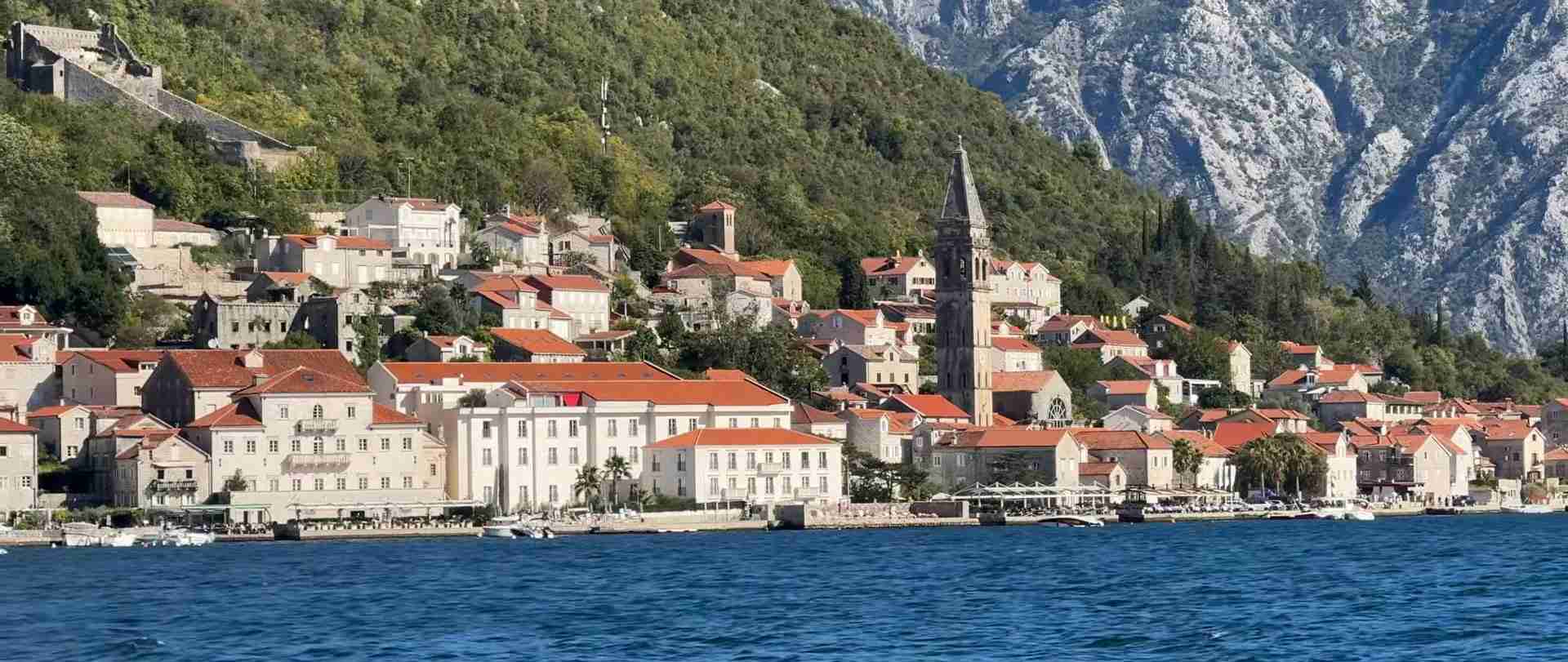
The Bay of Kotor represents outstanding universal value through its harmonious integration of medieval settlements within dramatic natural landscapes where mountains rise to nearly 1,500 meters directly from the Adriatic shoreline. The region functioned as an important artistic and commercial center during the Middle Ages, developing famous schools of masonry and iconography that influenced Mediterranean artistic traditions. The fortified towns of Kotor, Perast, and surrounding settlements preserve exceptional examples of Romanesque, Gothic, and Baroque architecture reflecting centuries of maritime prosperity and cultural exchange between Mediterranean civilizations and the Balkans. UNESCO recognized four cultural criteria in the site’s designation: criterion i for representing a masterpiece of human creative genius, criterion ii for exhibiting important interchange of human values, criterion iii for bearing exceptional testimony to a cultural tradition, and criterion iv for being an outstanding example of architectural ensemble illustrating significant stages in human history.
Why Is Durmitor National Park Protected as Natural Heritage?
Durmitor National Park earned UNESCO natural heritage designation under three criteria recognizing its exceptional geological formations, ecological significance, and aesthetic beauty. Criterion vii acknowledges the park’s superlative natural phenomena including the Tara River Canyon which creates Europe’s deepest gorge at 1,300 meters depth, glacial lakes including the iconic Black Lake, and dramatic limestone karst formations. Criterion viii recognizes outstanding examples of earth’s evolutionary history visible in Durmitor’s glacially-sculpted landscapes, extensive cave systems, and ongoing geological processes. Criterion x emphasizes the park’s importance for biodiversity conservation, protecting significant natural habitats for endemic Balkan flora species and providing refuge for threatened wildlife including brown bears, wolves, and golden eagles across diverse alpine, subalpine, and montane forest ecosystems spanning the park’s 39,000 hectares.
Extended multi-day tours – 5+ days
Featured Montenegro Multi-Day Tour Packages
3 days
Montenegro 3-Day Discovery Tour
- ✓ Comprehensive Montenegro experience
- ✓ Expert local guides included
- ✓ All accommodation included
- ✓ Transportation provided
5 days
Montenegro 5-Day Highlights Experience
- ✓ Comprehensive Montenegro experience
- ✓ Expert local guides included
- ✓ All accommodation included
- ✓ Transportation provided
7 days
Montenegro 7-Day Cultural Journey
- ✓ Comprehensive Montenegro experience
- ✓ Expert local guides included
- ✓ All accommodation included
- ✓ Transportation provided
10 days
Montenegro 10-Day Complete Adventure
- ✓ Comprehensive Montenegro experience
- ✓ Expert local guides included
- ✓ All accommodation included
- ✓ Transportation provided
Multi-day tour packages powered by TourRadar. Prices and availability subject to change.
Introduction: Montenegro Cultural and Natural Heritage
Montenegro’s four UNESCO World Heritage Sites showcase the country’s remarkable concentration of cultural and natural treasures within one of Europe’s smallest nations. Spanning from the Adriatic coastline’s medieval fortified towns through mountain wilderness preserving glacial landscapes and endemic biodiversity to ancient cemetery grounds bearing witness to medieval Balkan traditions, these properties represent diverse facets of universal heritage value. The sites reflect Montenegro’s position at the crossroads of Mediterranean, Alpine, and Balkan cultural spheres, where Venetian maritime power, Orthodox Christian traditions, medieval kingdoms, and dramatic natural landscapes converged to create distinctive heritage landscapes.
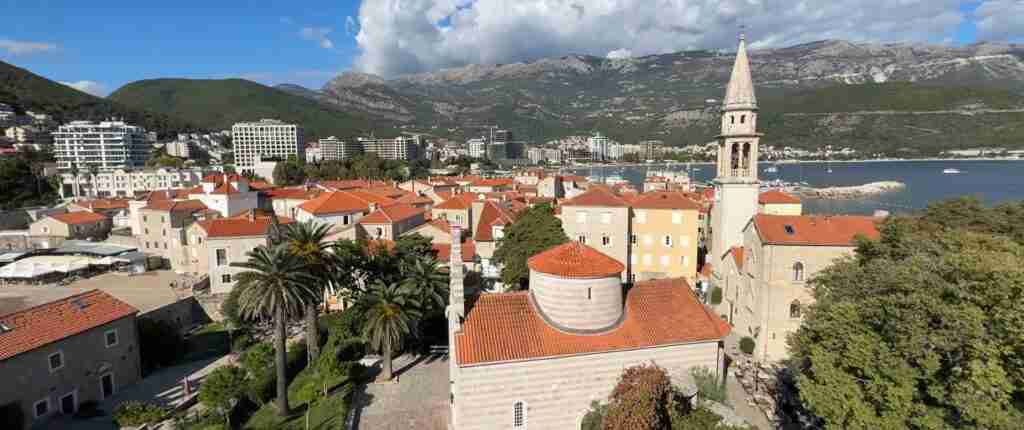
The Natural and Culturo-Historical Region of Kotor stands as Montenegro’s flagship heritage property, inscribed among the first wave of UNESCO designations in 1979. The site encompasses the entire Bay of Kotor region where medieval settlements nestle beneath towering limestone peaks, their stone architecture and fortification systems preserving centuries of maritime commerce and artistic achievement. Kotor itself developed as a crucial Adriatic port controlling trade routes between Venice and the Ottoman Empire, accumulating wealth that funded construction of churches, palaces, and public buildings showcasing Romanesque, Gothic, and Baroque artistic movements. The bay’s unique geography—resembling a Norwegian fjord yet situated in the Mediterranean climate zone—creates dramatic visual contrasts between azure waters, vertical mountain walls, and compact stone settlements that appear to grow organically from the rocky terrain.
Durmitor National Park represents Montenegro’s natural heritage contribution, protecting 39,000 hectares of alpine wilderness in the country’s northern mountains. The park preserves landscapes shaped by Pleistocene glaciation, with ice sheets carving the Tara River Canyon to depths exceeding 1,300 meters while leaving 18 glacial lakes scattered across mountain valleys. Dense pine forests blanket lower elevations while alpine meadows carpet high plateaus beneath 50 peaks exceeding 2,000 meters elevation. The park’s geological diversity extends underground through extensive cave systems including Ice Cave, while surface karst formations create distinctive limestone pavements and sinkholes. Durmitor functions as crucial habitat for Balkan endemic plant species and provides refuge for large carnivores including brown bears, wolves, and lynx populations that have disappeared from much of southern Europe.
Montenegro participates in two transnational serial properties recognizing heritage shared across modern national boundaries. The Stećci Medieval Tombstone Graveyards property inscribed in 2016 includes three Montenegrin cemetery sites among 28 locations across Bosnia and Herzegovina, Croatia, Montenegro, and Serbia preserving over 70,000 medieval tombstones. These monolithic limestone monuments carved between the 12th and 16th centuries feature distinctive decorative motifs and inscriptions representing a unique funerary tradition developed within medieval Balkan kingdoms. The Venetian Works of Defence property inscribed in 2017 recognizes Kotor’s fortress system as part of six fortified sites spanning Italy, Croatia, and Montenegro that showcase military architecture innovations developed by the Venetian Republic during the 16th and 17th centuries to protect Adriatic trade routes and territorial possessions.
Montenegro’s UNESCO sites face ongoing conservation challenges balancing heritage protection with tourism development, urban growth pressures, and climate change impacts. The Bay of Kotor region experiences intense visitation from cruise ships and coastal tourism development that threatens the visual integrity and authenticity of historic settlements. Durmitor confronts challenges from proposed hydroelectric dam projects along the Tara River, unregulated tourism activities, and forest management practices affecting wilderness values. All four properties operate under national protection frameworks established by Montenegro’s commitment to the World Heritage Convention, with management plans coordinating conservation efforts among multiple stakeholder groups including national authorities, local communities, tourism operators, and international partners. Six additional sites appear on Montenegro’s Tentative List awaiting potential future nomination, indicating the country’s continued engagement with UNESCO heritage designation processes.
Natural and Culturo-Historical Region of Kotor: Medieval Maritime Heritage
The Natural and Culturo-Historical Region of Kotor encompasses 14,600 hectares along Montenegro’s southwestern coast where the Bay of Kotor penetrates 28 kilometers inland from the Adriatic Sea. The property includes the fortified old town of Kotor, surrounding medieval settlements of Perast, Prčanj, Risan, and Dobrota, plus the natural landscape of mountains, bays, and cultivated terraces that form an integrated cultural landscape. UNESCO inscription recognizes the region’s outstanding universal value demonstrated through its well-preserved medieval architecture, maritime cultural traditions, and harmonious relationship between human settlements and dramatic natural topography where limestone peaks rise nearly vertically from sea level to 1,749 meters at Mount Lovćen.
Kotor functioned as the Bay’s principal settlement and administrative center from antiquity through the modern era, with archaeological evidence indicating continuous occupation since the Iron Age. The current fortified city walls enclosing the medieval core date primarily to the Venetian period between the 15th and 18th centuries, though foundations incorporate earlier Byzantine and medieval Serbian fortifications. The walls stretch 4.5 kilometers around the old town and climb the mountainside to San Giovanni Fortress positioned 280 meters above sea level, requiring 1,350 steps to reach the summit. The fortification system employed state-of-the-art military architecture integrating natural terrain features with bastions, gates, and defensive towers that successfully repelled Ottoman siege attempts while facilitating maritime commerce through protected harbor facilities.
The old town preserves exceptional architectural heritage within its compact 30-hectare area densely packed with historic buildings. The Cathedral of Saint Tryphon, constructed in 1166 and rebuilt following earthquakes in 1667 and 1979, represents one of the Adriatic’s finest examples of Romanesque architecture with its distinctive twin bell towers, richly decorated facade, and interior preserving valuable frescoes and religious art. The cathedral houses relics of Saint Tryphon, Kotor’s patron saint, whose feast day celebrations on February 3 continue centuries-old maritime traditions including the Boka Navy procession featuring historic boats and traditional costumes. Numerous other churches dot the old town including the Orthodox Church of St. Luke built in 1195, the Church of St. Mary dating to 1221, and the Franciscan Church of St. Clare constructed in the 18th century, illustrating the religious diversity that characterized Kotor’s history.
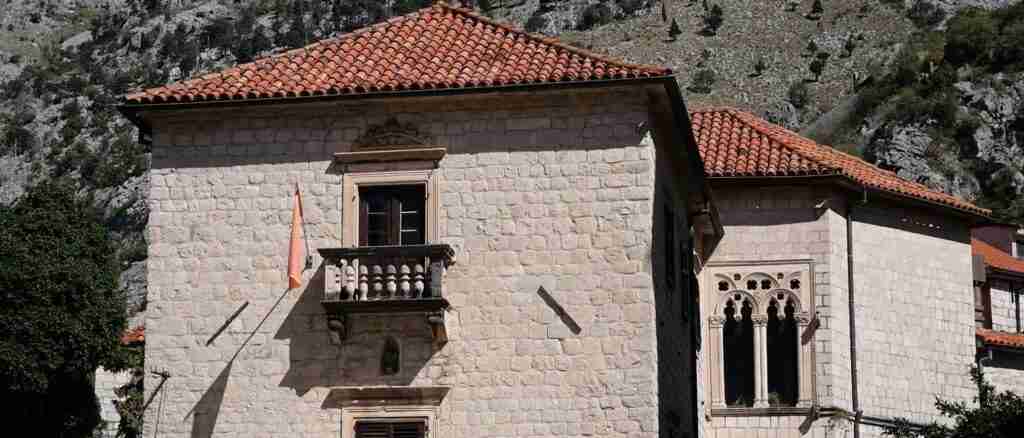
Kotor’s medieval palaces and public buildings demonstrate the wealth accumulated through maritime commerce when the city served as a crucial link between Venetian trading networks and Balkan interior markets. The Pima Palace, Bizanti Palace, and Drago Palace showcase Gothic and Renaissance architectural styles adapted to the narrow urban fabric and defensive requirements. The Clock Tower built in 1602 marks the main square where merchants gathered to conduct business, while the Maritime Museum occupies the baroque Grgurina Palace preserving three centuries of seafaring artifacts including ship models, navigation instruments, maritime paintings, and historical documents. The town’s narrow stone-paved streets follow an irregular medieval layout optimized for defense rather than traffic efficiency, creating an atmospheric maze that preserves authentic urban character despite modern tourism pressures.
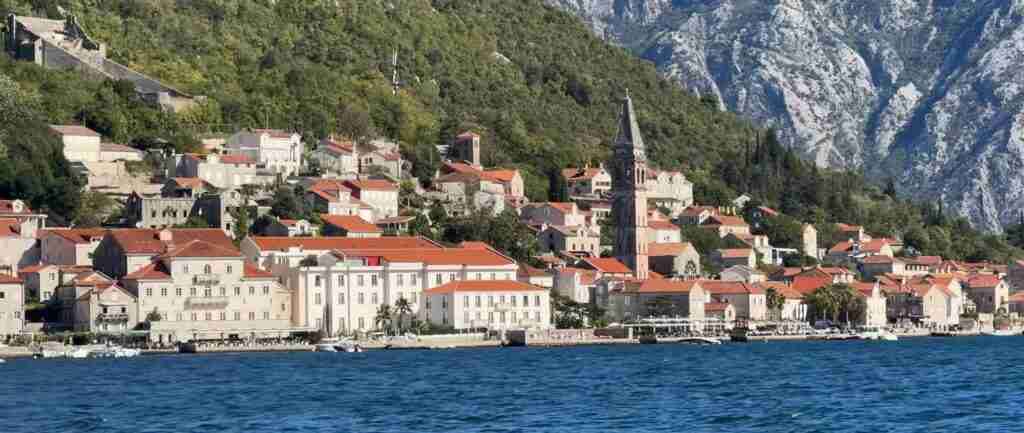
Perast represents the Bay of Kotor’s most elegant baroque settlement, positioned 12 kilometers northwest of Kotor on a narrow coastal strip beneath Mount St. Elijah. The town developed as a center for sea captains and shipowners during the 17th and 18th centuries when Perast’s maritime academy trained naval officers for the Venetian fleet. Perast’s waterfront displays 17 baroque palaces and 16 churches packed into a settlement stretching only 400 meters, creating one of the Mediterranean’s most architecturally cohesive historic townscapes. The Bujović Palace houses a museum preserving Perast’s maritime heritage, while the St. Nicholas Church tower rising 55 meters dominates the skyline and offers panoramic views across the bay to the two iconic islets of Our Lady of the Rocks and St. George.
Our Lady of the Rocks represents a unique cultural monument situated on an artificial island created by Perast residents who sank rocks and seized ships over 200 years beginning in 1452 around a natural reef where an icon of the Virgin Mary reportedly appeared. The island supports a Catholic church constructed in 1630 and repeatedly renovated, containing 68 paintings by baroque master Tripo Kokolja plus an extensive collection of silver votive tablets offered by sailors. The tradition of throwing rocks into the sea continues today during the annual “Fasinada” celebration on July 22 when Perast residents row boats loaded with stones to add to the island. St. George Island, situated adjacent, features a Benedictine monastery dating to the 12th century and ancient cemetery, though the island remains closed to public access under ecclesiastical administration.
The earthquake of April 15, 1979, struck the Bay of Kotor region with devastating force, registering 6.9 magnitude and causing severe damage to historic structures throughout the UNESCO property. The Cathedral of Saint Tryphon lost its twin bell towers, numerous medieval churches suffered collapsed vaults and damaged frescoes, palace facades cracked and partially collapsed, and sections of fortification walls required emergency stabilization. UNESCO responded by immediately placing the site on the List of World Heritage in Danger simultaneous with its inscription, mobilizing international technical and financial assistance for restoration efforts. The recovery program lasted 24 years, coordinating expertise from UNESCO specialists, Italian and French conservation teams, and Montenegrin authorities to restore damaged monuments using traditional materials and construction techniques while implementing seismic reinforcement measures.
The Bay of Kotor’s removal from the Danger List in 2003 marked successful completion of the restoration program while establishing ongoing management frameworks for heritage protection. The Institute for the Protection of Cultural Monuments in Kotor coordinates conservation efforts across the property, implementing protective regulations controlling new construction, building modifications, and commercial activities within the historic core. The management plan addresses challenges including cruise ship visitation that brings thousands of tourists into Kotor’s compact old town during peak summer months, waterfront development pressures along the bay shoreline, and traffic congestion affecting historic street patterns. Conservation priorities focus on maintaining authentic architectural character, preserving traditional building materials and techniques, protecting sight lines between historic settlements and surrounding mountains, and supporting local communities whose continued residence sustains intangible cultural traditions.
The property’s buffer zone extends across 36,491 hectares surrounding the core protected area, encompassing mountain slopes, agricultural terraces, and coastal settlements that form the visual setting for the historic towns. Buffer zone regulations restrict development that would impact views toward or from the UNESCO property, protect forested mountain slopes from clearance, and preserve traditional agricultural landscapes of olive groves, vineyards, and vegetable gardens that have characterized the bay’s cultivated terraces for centuries. The buffer zone concept recognizes that the Natural and Culturo-Historical Region of Kotor’s outstanding universal value derives from the integrated relationship between medieval settlements and their dramatic natural setting, requiring landscape-scale protection extending well beyond the historic town boundaries.
Durmitor National Park: Alpine Wilderness and Glacial Landscapes
Durmitor National Park protects 39,000 hectares of mountain wilderness in northwestern Montenegro where the Durmitor massif rises above the Tara River basin. The park received UNESCO natural heritage designation in 1980 recognizing its outstanding geological formations, exceptional beauty, and ecological significance under natural criteria vii, viii, and x. The property encompasses the Durmitor mountain range featuring 50 peaks exceeding 2,000 meters elevation including Bobotov Kuk summit at 2,523 meters, plus the Tara River Canyon that carves Europe’s deepest gorge through limestone formations, and 18 glacial lakes scattered across high-elevation valleys. The park was extended in 2005 to coincide with the expanded boundaries of Durmitor National Park established by Montenegrin legislation, increasing protected area coverage and strengthening conservation management.
The Durmitor massif showcases exceptional examples of glacial geomorphology resulting from Pleistocene ice sheets that sculpted the limestone plateau into dramatic alpine landscapes. Valley glaciers carved deep U-shaped valleys radiating from the central peaks, leaving moraines, cirques, and polished bedrock surfaces documenting ice age advances and retreats. The Tara River Canyon represents the park’s most spectacular geological feature, cutting 1,300 meters deep through limestone strata over 78 kilometers between the Durmitor and Sinjajevina mountain ranges. The canyon achieves its greatest depth at the Durdevica Tara Bridge section where vertical walls rise directly from the river to canyon rims towering above. The canyon’s geology exposes Paleozoic to Mesozoic rock layers including Permian, Triassic, and Jurassic limestone formations plus Paleozoic schist and sandstone, providing scientific value for geological research.
The 18 glacial lakes scattered across Durmitor’s high-elevation valleys represent the park’s most distinctive landscape feature, with Black Lake (Crno Jezero) serving as the most accessible and visited. Black Lake sits 1,416 meters above sea level just three kilometers from Žabljak town, consisting of two connected bodies of water called Big Lake and Small Lake that merge during spring snowmelt then separate into distinct basins by late summer as water levels drop. The lake occupies a glacial depression surrounded by dense pine forest, with trails circling the shoreline providing hiking access through pristine mountain scenery. Ice Cave Lake (Ledeno Jezero), Fish Lake (Riblje Jezero), and Devil’s Lake (Vražje Jezero) scatter across remote valleys requiring longer hiking approaches but rewarding visitors with solitude and wilderness immersion.
Durmitor’s karst geology creates extensive cave systems including Ice Cave, one of Europe’s southernmost locations preserving permanent ice formations. The cave entrance opens at 2,110 meters elevation beneath Obla Glava peak, descending 100 meters through passages decorated with ice stalagmites, frozen columns, and translucent ice formations that persist year-round despite relatively southern latitude. The ice accumulates from winter snow filtering through limestone fissures then freezing in subterranean chambers where cold air circulation maintains subfreezing temperatures even during summer. Additional caves including Šuplja Stijena (Hollow Rock) and Ledena Pećina contain paleontological deposits, underground streams, and speleothem formations documenting karst development processes.
The park protects exceptional biodiversity spanning alpine, subalpine, and montane forest ecosystems distributed across elevation gradients from 450 meters in the Tara River Canyon bottom to 2,523 meters at Bobotov Kuk summit. Black pine (Pinus nigra) forests dominate lower mountain slopes between 1,000 and 1,600 meters elevation, forming dense stands mixed with European beech, maple, and ash. Spruce and fir forests occupy higher elevations between 1,600 and 1,800 meters, while dwarf mountain pine shrublands colonize the subalpine zone above treeline. Alpine meadows carpet high-elevation plateaus above 2,000 meters, supporting diverse herbaceous communities including endemic Balkan species such as Durmitor bellflower (Campanula hercegovina), Balkan anemone (Pulsatilla montana), and endemic buttercups adapted to harsh mountain conditions.
Durmitor provides crucial habitat for large carnivores that have largely disappeared from southern European mountain ranges. Brown bears maintain resident populations in remote forest areas, particularly along the northern park boundaries adjacent to Bosnia and Herzegovina where habitat connectivity supports seasonal movements. Wolf packs hunt throughout the park’s forests and alpine zones, preying on roe deer, chamois, and wild boar populations. Lynx inhabit dense forest areas though remain rarely observed due to low population densities and cryptic behavior. Golden eagles nest on remote cliff faces, hunting across alpine meadows for marmots, hares, and ground-nesting birds. The park supports over 130 bird species including rock partridge, black grouse, three-toed woodpecker, and significant raptor populations.
The Tara River flows 144 kilometers from its source springs on the Montenegro-Bosnia border through Durmitor National Park, creating conditions for whitewater rafting recognized internationally as one of Europe’s premier river adventure destinations. The river descends through 21 major rapids including several class IV and V sections requiring technical navigation skills during spring runoff periods when snowmelt swells flows to maximum volumes. The river season extends from April through October, with May and June offering peak water levels ideal for expedition rafting trips lasting multiple days. Rafting outfitters operate from Šćepan Polje, Brstanovica, and other access points along the canyon, providing guided trips ranging from half-day introductory floats through three-day wilderness expeditions camping on river beaches beneath canyon walls.
Durmitor faces ongoing conservation challenges from hydroelectric development proposals threatening the Tara River’s free-flowing character and the canyon’s wilderness values. Multiple dam projects have been proposed along the Tara and its tributaries, particularly at Buk Bijela location on the Bosnia-Herzegovina border where reservoir inundation would impact scenic and ecological resources within the UNESCO property. UNESCO World Heritage Committee issued decisions urging both Montenegro and Bosnia-Herzegovina to abandon dam proposals affecting the park, emphasizing that hydroelectric development would compromise the outstanding universal value that justified World Heritage designation. Conservation groups including European Rivers Network and NGO coalitions work to protect the Tara as Europe’s last major free-flowing alpine river, advocating for alternative renewable energy sources and emphasizing the river’s tourism value.
The park supports winter sports including downhill skiing and snowshoeing centered on Žabljak town, which transforms into Montenegro’s primary ski resort from December through March. Savin Kuk ski area operates lifts accessing slopes between 1,450 and 2,010 meters elevation, offering 12 kilometers of marked runs suitable for beginner through advanced skiers. Cross-country skiing trails traverse the Jezerine plateau and connect glacial lakes through pine forests carpeted with snow depths reaching two meters during peak winter. Snowshoeing routes explore remote valleys inaccessible in summer due to dense vegetation, while ski touring opportunities attract backcountry skiers climbing to high peaks for powder descents. The combination of reliable snow conditions, uncrowded slopes, and dramatic mountain scenery positions Durmitor as an emerging winter destination distinct from overcrowded Alpine resorts.
Park management coordinates between the Public Enterprise Nacionalni Parkovi Crne Gore (National Parks of Montenegro) responsible for protected area administration, municipalities with jurisdiction over settlements and infrastructure within park boundaries, tourism operators conducting commercial activities, and local communities whose traditional land use practices predate park establishment. The management plan divides Durmitor into three zones: a strictly protected zone covering 10 percent of the park where human activities are prohibited except for research and monitoring; a protection zone encompassing 75 percent of the area allowing traditional agriculture, forestry, and low-impact tourism; and a sustainable use zone covering 15 percent including Žabljak town and ski facilities where controlled development supports tourism infrastructure. Ranger patrols monitor wilderness areas, trail maintenance crews upgrade hiking infrastructure, and scientific research programs document ecosystem changes including climate change impacts on glacial features and alpine vegetation communities.
Stećci Medieval Tombstone Graveyards: Balkan Funerary Heritage
Montenegro contributes three cemetery sites to the transnational Stećci Medieval Tombstone Graveyards UNESCO property inscribed in 2016 under cultural criteria iii and vi. The serial property encompasses 28 selected graveyards across Bosnia and Herzegovina, Croatia, Montenegro, and Serbia preserving approximately 4,000 medieval tombstones chosen to represent the outstanding universal value of a funerary tradition that produced over 70,000 monolithic stone monuments across the western Balkans. The stećci appeared during the second half of the 12th century, reached maximum production intensity during the 14th and 15th centuries, and ceased production in the 16th century following Ottoman conquest of the region. The tombstones bear exceptional testimony to medieval European artistic and archaeological heritage while representing a distinctive regional tradition developed within the unique historical and cultural context of medieval Balkan kingdoms.
The three Montenegrin sites included in the UNESCO inscription are Novakovići and Bare Žugića graveyards near Žabljak in the Durmitor region, plus the Grčko Groblje (Greek Cemetery) site also near Žabljak. These locations were selected from numerous stećci sites scattered across northwestern Montenegro based on their state of preservation, the representativeness of tombstone forms and decorative motifs, and their contribution to demonstrating the geographic distribution of the stećci phenomenon. The sites provide access to this medieval heritage within Montenegro’s most visited mountain tourism destination, facilitating visitor interpretation while operating under protection frameworks established by the Institute for the Protection of Cultural Monuments.
Novakovići graveyard contains approximately 30 stećci arranged across an elevated meadow site offering panoramic views toward the Durmitor peaks. The tombstones display typical forms including monolithic slabs, chest-shaped monuments, and gabled roof structures carved from local limestone. Decorative motifs include geometric patterns, stylized vine ornaments, arcades, rosettes, and abstract designs characteristic of the stećci tradition. Several stones feature inscriptions in Cyrillic script using the distinctive Bosančica alphabet employed throughout medieval Bosnia and surrounding regions, though weathering has eroded many texts making interpretation challenging. The site demonstrates the pattern common throughout the stećci zone of positioning cemeteries on elevated terrain overlooking valleys and settlements, selecting locations with visibility and prominence in the landscape.
Bare Žugića graveyard showcases exceptional examples of decorated stećci including monuments carved with hunting scenes, rider figures, and elaborate geometric borders. The site contains chest-shaped tombstones featuring relief carvings on multiple faces, with decorated panels depicting bows and arrows, hand symbols, and architectural motifs representing doorways or building facades. The decorative program reflects both Christian religious symbolism and pre-Christian traditions that merged within the syncretic funerary practices of medieval Balkan populations. The variety of motifs present at Bare Žugića illustrates the artistic vocabulary employed by medieval stonemasons who developed regional workshops and transmitted techniques through apprenticeship systems operating across the stećci production zone.
Grčko Groblje (Greek Cemetery) spreads across an elongated ellipsoidal surface covering approximately 500 square meters at elevated terrain near Žabljak. The site preserves 49 registered stećci including 10 slab-type monuments, 27 chest forms, and 12 gabled roof structures oriented along an east-west axis following medieval Christian burial customs. Decorative elements appear on 22 tombstones including arcades, twisted bands, friezes, vine ornaments with spirals and trefoils, and palmette motifs. The name “Greek Cemetery” reflects folk traditions that attributed the mysterious ancient stones to various legendary origins including Greeks, giants, or heretics, demonstrating how stećci became embedded in oral traditions and local folklore even after knowledge of their original creators and purposes faded following Ottoman period cultural disruptions.
The stećci tradition originated within the complex religious and political landscape of medieval Bosnia and surrounding regions where Catholic, Orthodox Christian, and the distinctive Bosnian Church coexisted. Scholarly debate continues regarding which religious communities produced stećci, with evidence suggesting all three Christian traditions employed these monuments while incorporating elements from earlier pre-Christian funerary practices. The tombstones served primarily for nobility and wealthy families who could afford commissioning skilled stonemasons to carve elaborate monuments marking burial locations. Inscriptions on stećci preserving legible text provide valuable historical documentation of medieval Balkan society, recording names, titles, family relationships, property boundaries, and occasionally historical events or moral maxims.
The decorative motifs carved on stećci represent a unique artistic tradition blending Christian symbolism with abstract geometric patterns, figural representations of daily life, and symbolic elements including solar disks, celestial bodies, spirals, and architectural features. Common Christian symbols include crosses of various forms, crescents, and hand gestures representing prayer or blessing. Secular motifs depict hunting scenes with mounted riders pursuing game animals, archery scenes showing bows and arrows, swords and shields reflecting military status, and dancing figures suggesting ritual celebrations. The combination of sacred and secular imagery reflects the multifunctional nature of stećci as religious monuments, status symbols, property markers, and artistic expressions communicating social identity and cosmological beliefs.
The stećci provide evidence for medieval stonemason workshops that developed specialized skills passed through master-apprentice relationships. Stone carvers traveled across the region executing commissions for wealthy patrons, creating stylistic clusters where similar decorative approaches and technical execution patterns suggest workshop connections. The limestone employed for stećci carving came from local quarries, with stonemasons selecting material based on grain quality, workability, and durability. The carving process began with roughing out the basic form using hammers and chisels, followed by detailed relief carving of decorative motifs, and finishing with surface smoothing and inscription of texts. Unfinished stećci found at some cemetery sites preserve evidence of carving techniques and production sequences.
Conservation challenges for Montenegro’s stećci sites include natural weathering processes eroding limestone surfaces and obscuring carved details, biological growth of lichens and mosses on stone faces, vegetation encroachment threatening to conceal monuments, and human impacts from visitor touching, climbing on stones, or unauthorized rubbings of decorated surfaces. The Institute for the Protection of Cultural Monuments implements conservation measures including documentation photography and 3D scanning to preserve digital records of current conditions, vegetation management to prevent damaging root growth, and visitor management strategies balancing public access with monument protection. The transnational coordination framework established through the UNESCO serial property facilitates knowledge exchange among Bosnia and Herzegovina, Croatia, Montenegro, and Serbia regarding conservation best practices and scientific research on stećci preservation techniques.
The inscription of stećci on the UNESCO World Heritage List emphasizes their outstanding universal value as exceptional testimony to medieval European culture developed within the distinctive historical context of the western Balkans. The monuments demonstrate important artistic interchange between Mediterranean, Central European, and Byzantine cultural spheres that met and merged in the medieval Balkan kingdoms. The stećci preserve evidence of medieval literacy extending beyond royal courts and monastic scriptoria to reach lower nobility and wealthier strata of society, documenting the spread of written culture. The monuments embody associations with cultural traditions, beliefs, and toponyms that continue resonating in regional heritage consciousness, connecting contemporary populations with medieval ancestors who created this unique monumental tradition across the landscapes of Bosnia and Herzegovina, Croatia, Montenegro, and Serbia.
Venetian Works of Defence: Military Architecture Heritage
Montenegro’s Kotor fortress system participates in the Venetian Works of Defence between the 16th and 17th Centuries transnational property inscribed in 2017 under cultural criteria iii and iv. The serial property comprises six fortification components across Italy, Croatia, and Montenegro that showcase military architecture innovations developed by the Venetian Republic to protect its territorial possessions and maritime trade routes spanning over 1,000 kilometers from Lombardy to the eastern Adriatic coast. The inscription recognizes the exceptional testimony these fortifications provide to the alla moderna bastion system that revolutionized military architecture following the introduction of gunpowder artillery, spreading from Italy throughout Europe and beyond during the Renaissance period.
The six inscribed components include three sites in Italy (the fortified cities of Bergamo, Peschiera del Garda, and Palmanova), two in Croatia (Zadar’s defensive walls and the St. Nikola fortress in Šibenik), and one in Montenegro (Kotor’s fortification system). These locations represent different aspects of Venetian defensive architecture adapted to varied topographic conditions and strategic requirements. The Stato da Terra fortifications (Bergamo, Peschiera, Palmanova) protected the Venetian Republic’s land territories from European powers threatening from the northwest, while the Stato da Mar defenses (Zadar, Šibenik, Kotor) secured sea routes and ports along the Adriatic from Venice to the Levant.
Kotor’s fortifications evolved over four centuries from medieval origins through successive building campaigns reflecting advances in military technology and changing defensive requirements. The earliest fortification phases date to the Byzantine period around the 9th century, with substantial expansions during the medieval Serbian kingdom in the 13th and 14th centuries. The Venetian period beginning in 1420 brought systematic reconstruction employing the latest military engineering principles, with major building campaigns in the 15th, 16th, and 17th centuries creating the fortification ensemble visible today. The walls extend 4.5 kilometers encircling the old town and climbing Mount St. John to defensive positions 280 meters above sea level, creating one of the Mediterranean’s most dramatic fortification landscapes where defensive architecture integrates seamlessly with challenging mountain terrain.
The fortification system consists of three integrated defensive lines: the sea walls protecting the waterfront and harbor facilities; the town walls enclosing the medieval settlement; and the mountain walls climbing to elevated bastions and the San Giovanni (St. John) fortress crowning the summit ridge. The sea walls feature massive stone construction resistant to artillery bombardment, with thickness reaching 16 meters at critical points and openings limited to three defended gates controlling access from the harbor. The main Sea Gate, constructed in 1555, showcases Venetian architectural symbolism with its relief sculpture depicting the Lion of St. Mark flanked by coats of arms, while the inscription above the entrance records construction dates and Venetian authorities responsible for the building program.
The town walls incorporate 10 bastions employing the alla moderna design principles that define Venetian defensive architecture. These bastions feature low, thick walls oriented to deflect rather than stop cannonballs, angular projections creating fields of overlapping fire to eliminate dead zones where attackers could shelter, and earthen backfill behind stone facings to absorb artillery impact. The bastions bear names including Bembo, Valier, Kampana, and Riva reflecting Venetian noble families who financed construction or commanded garrison forces. The Citadel bastion occupying the northeastern corner represents the most massive defensive structure within the town walls, serving as the last fallback position and housing military quarters, ammunition magazines, and command facilities during wartime.
The mountain fortification section ascends the steep slope behind Kotor through a series of defensive walls, bastions, and the upper fortress complex that required extraordinary engineering solutions to anchor stone walls on near-vertical terrain. The fortification route follows natural ridge lines and rock outcrops that enhance defensive advantages while requiring builders to overcome extreme topographic challenges. Construction materials were hauled up the mountain using human and animal labor, with limestone quarried locally then shaped by stonemasons into precisely fitted blocks requiring minimal mortar. The mountain walls include numerous defensive features including loopholes for firearms, machicolations for dropping projectiles on attackers, and salients projecting from the main wall line to provide flanking fire along wall faces.
San Giovanni fortress crowns the mountain fortification system at 280 meters elevation, occupying a commanding position providing panoramic surveillance across the entire Bay of Kotor and advance warning of approaching threats from sea or land. The fortress contains a small church dedicated to San Giovanni (St. John the Baptist), barracks for garrison forces, cisterns storing rainwater to supply the hilltop position during sieges, and observation platforms where lookouts monitored the bay for enemy naval movements. The climb to San Giovanni requires ascending 1,350 stone steps winding up the mountain face, creating an exhausting approach that served defensive purposes while enabling fit defenders to rapidly reach upper fortification positions when threats materialized.
The fortifications successfully defended Kotor against numerous Ottoman siege attempts during the 15th through 17th centuries when Ottoman forces sought to capture the strategic port and extend Turkish control over the Adriatic coastline. The mountain fortress positions prevented Ottoman armies from investing the city from elevated terrain, while the massive sea and town walls withstood artillery bombardment technologies of the period. The combination of natural defensive advantages provided by Kotor’s position at the bay’s innermost reach surrounded by mountains, plus engineered fortifications employing the latest Venetian military architecture, created an impregnable defensive system that remained intact through centuries of conflict.
The fortifications embody the alla moderna design principles developed in Italy during the Renaissance in response to gunpowder artillery that rendered medieval castle walls obsolete. Traditional high, thin walls could be demolished by cannon fire, prompting military architects to design low-profile fortifications with thick walls built from earth and stone that absorbed artillery impact. The angled bastion trace created overlapping fields of fire eliminating dead zones and enabling defenders to mass firepower against attackers. These principles, perfected by Italian military engineers including Francesco di Giorgio Martini and Michele Sanmicheli, spread throughout Europe and beyond, influencing fortification design worldwide from colonial America to Asian trading posts.
The Venetian defensive network along the Stato da Mar protected the maritime trade routes that sustained the Venetian Republic’s commercial prosperity, securing sea lanes connecting Venice with grain supplies from Apulia, trade connections with Ottoman territories, and maritime routes to the Levant. Kotor served as a crucial link in this defensive chain, positioned at the Adriatic’s eastern shore to monitor and control commercial and naval movements between the northern and southern Mediterranean. The fortifications housed garrison forces, provided secure anchorage for Venetian naval vessels, stored military supplies and foodstuffs to sustain defensive operations, and projected Venetian military power into contested waters disputed with Ottoman naval forces.
The inscription of Venetian Works of Defence as a transnational serial property reflects UNESCO’s recognition that certain cultural heritage transcends modern national boundaries, representing shared historical experiences across regions now divided into separate countries. The fortifications demonstrate how the Venetian Republic’s military architecture program created an integrated defensive system spanning its entire territorial extent, with individual fortification components functioning as interconnected elements of a strategic network. The property’s outstanding universal value derives not from any single fortification but from the ensemble of defensive works collectively representing the spread of alla moderna military architecture principles and the Venetian Republic’s geopolitical strategy during the Renaissance period.
Montenegro UNESCO Tentative List and Future Nominations
Montenegro maintains a Tentative List of six properties under consideration for potential future UNESCO World Heritage nomination, indicating the country’s continued engagement with heritage designation processes beyond the four currently inscribed sites. The Tentative List serves as an inventory identifying properties the State Party intends to consider for nomination during the following five to ten years, allowing UNESCO and the international community to understand national heritage priorities and assess potential nominations before formal submission. Montenegro’s Tentative List properties span natural areas, cultural landscapes, monastic heritage, and archaeological sites representing diverse aspects of national heritage not yet covered by existing World Heritage designations.
The tentative list entry for extension of the Ancient and Primeval Beech Forests of the Carpathians and Other Regions of Europe World Heritage property proposes adding Montenegrin beech forest stands to this transnational serial property. The existing property, which spans multiple European countries, protects outstanding examples of old-growth European beech forests representing natural ecological processes. Montenegro’s proposed addition would incorporate beech forest stands in Biogradska Gora National Park and potentially other locations where ancient beech forests preserve biodiversity and ecosystem functions increasingly rare across Europe’s heavily managed forests. The inclusion would strengthen the property’s representation of beech forest ecosystems across southeastern Europe’s mountain ranges.
Montenegro’s tentative list includes additional natural heritage sites beyond the beech forest extension proposal, though specific details regarding boundaries, criteria, and nomination timelines remain under development. The country’s diverse natural landscapes spanning Mediterranean coastal ecosystems through alpine mountain environments provide numerous opportunities for natural heritage designation recognizing exceptional biodiversity, geological features, or aesthetic values. Future natural heritage nominations could highlight limestone karst formations, glacial landscapes beyond those currently protected in Durmitor, coastal wetlands supporting migratory bird populations, or endemic species habitats found nowhere else globally.
Monastic heritage represents significant tentative list potential given Montenegro’s numerous medieval Orthodox monasteries preserving architectural, artistic, and spiritual traditions spanning centuries. Monasteries including Ostrog, carved dramatically into vertical cliff faces and serving as a pilgrimage destination attracting hundreds of thousands of Orthodox Christians annually, exemplify the monastic tradition combining natural settings with religious architecture and continuing cultural practices. Monastic complexes preserve frescoes, icons, manuscripts, and religious objects representing artistic achievement while functioning as living cultural institutions maintaining Orthodox Christian traditions through liturgical practices, hospitality, and community engagement.
Archaeological sites on Montenegro’s tentative list could include Roman period settlements, medieval fortifications beyond those already inscribed at Kotor, prehistoric hilltorts, or other archaeological complexes providing evidence of human occupation and cultural development across millennia. The country’s position at the crossroads of Mediterranean, Balkan, and Alpine cultural spheres created diverse archaeological heritage reflecting Greek colonization, Roman expansion, Byzantine administration, Slavic settlement, medieval kingdoms, and Ottoman conquest. Systematic archaeological investigation continues revealing sites that could merit World Heritage consideration pending documentation of outstanding universal value and establishment of adequate protection and management frameworks.
The nomination process from Tentative List to World Heritage inscription requires substantial preparation including comprehensive documentation of the property’s outstanding universal value, preparation of detailed management plans demonstrating adequate protection measures, completion of comparative analysis positioning the site within global context, stakeholder consultation ensuring broad support among communities and authorities, and technical review by UNESCO advisory bodies. This process typically spans several years from initial Tentative List placement through formal nomination submission and World Heritage Committee decision. Montenegro works with UNESCO technical advisors and international heritage experts to develop nomination dossiers meeting the rigorous documentation and protection standards required for successful inscription.
Conservation Management and Challenges
Montenegro’s four UNESCO World Heritage Sites operate under national protection frameworks established through legislation including the Law on Protection of Cultural Properties, the Law on National Parks, and the Law on Nature Protection. These legal instruments provide the statutory basis for heritage designation, establish prohibited activities within protected areas, authorize management institutions, and define enforcement mechanisms for violations. The Ministry of Culture oversees cultural heritage sites including Kotor, the Stećci graveyards, and Kotor’s fortifications, while the Ministry of Ecology, Spatial Planning and Urbanism coordinates natural heritage protection for Durmitor National Park. Multiple government agencies, research institutions, local authorities, and civil society organizations collaborate on World Heritage site management through coordinating committees and consultative processes.
The Institute for the Protection of Cultural Monuments in Kotor serves as the primary management authority for the Natural and Culturo-Historical Region of Kotor, implementing conservation programs, reviewing development proposals, enforcing protective regulations, and coordinating with municipal authorities, property owners, and tourism operators. The Institute employs architects, archaeologists, art historians, and conservation specialists who document historic structures, design restoration interventions, supervise construction work affecting heritage properties, and conduct research expanding knowledge of the region’s cultural significance. Regular monitoring programs assess the condition of monuments, document environmental impacts including weathering and biological growth, and identify emerging conservation priorities requiring attention.
Durmitor National Park operates under management of the Public Enterprise Nacionalni Parkovi Crne Gore, which administers all four of Montenegro’s national parks through a centralized organizational structure. The park director coordinates operations including ranger patrols, visitor services, research programs, infrastructure maintenance, and enforcement of protective regulations prohibiting activities incompatible with conservation objectives. Scientific research programs document ecosystem changes, monitor wildlife populations, study climate change impacts on glacial features and alpine vegetation, and investigate visitor impacts on sensitive areas. The park collaborates with international conservation organizations including IUCN and regional protected area networks to implement best practices in mountain wilderness protection.
Tourism represents both an opportunity and challenge for Montenegro’s World Heritage sites, generating economic benefits supporting conservation while creating pressures from visitor impacts, infrastructure development, and commercial activities. The Bay of Kotor experiences intense tourism concentration during summer months when cruise ships bring thousands of daily visitors into Kotor’s compact old town, creating crowding pressures on narrow streets, overwhelming local services, and generating waste management challenges. The tourism surge drives demand for hotels, restaurants, and shops within historic buildings, raising concerns about commercial activities overwhelming residential functions and authentic community character. Management strategies aim to disperse visitation temporally and spatially by promoting shoulder season travel, developing alternative attractions beyond Kotor town, implementing cruise ship limits, and encouraging sustainable tourism practices.
Durmitor faces tourism pressures from growing visitation to accessible areas including Black Lake, the Tara Canyon bridge viewpoint, and Žabljak ski facilities. Popular hiking trails experience erosion from concentrated foot traffic, parking areas overflow during peak summer weekends, and dispersed camping creates waste disposal issues in wilderness areas. The park responds through trail hardening projects using sustainable construction techniques, parking reservation systems limiting vehicle numbers, designated camping areas with waste collection facilities, and visitor education programs promoting Leave No Trace principles. Balancing wilderness protection with recreation access requires ongoing adjustments as visitation patterns evolve and recreational activities diversify including mountain biking, rock climbing, and paragliding emerging alongside traditional hiking and skiing.
Climate change impacts threaten natural heritage values at Durmitor where rising temperatures affect glacial features, alpine vegetation, and snow-dependent recreation. The park’s glacial lakes formed during Pleistocene ice ages, and while permanent glaciers no longer exist in Montenegro, warming trends affect seasonal snow accumulation, snowmelt timing, and perennial ice formations in underground caves. Alpine plant communities face pressure from upward migration of lower-elevation species competing for habitat as temperature zones shift. Ski season duration and snow reliability affect winter tourism viability, with warming trends potentially requiring snowmaking infrastructure that increases energy consumption and water demands. Scientific monitoring programs track these changes, documenting baseline conditions and measuring rates of ecological transformation.
Development pressures around World Heritage sites require careful planning to prevent degradation of setting, visual integrity, and authenticity that justify outstanding universal value. The Bay of Kotor confronts proposals for new hotels, residential developments, and infrastructure projects along the shoreline and on mountain slopes visible from the UNESCO property. Buffer zone regulations establish development controls, though enforcement challenges arise when economic pressures and political interests favor growth over conservation. Hydroelectric dam proposals threatening Durmitor’s Tara River Canyon persist despite UNESCO World Heritage Committee recommendations opposing such projects. Development decisions require balancing heritage protection with legitimate community needs for housing, employment, and infrastructure improvements, often involving difficult tradeoffs between conservation and development goals.
International cooperation supports Montenegro’s World Heritage site management through technical assistance, capacity building, financial support, and knowledge exchange. UNESCO provides technical advisory missions assessing conservation challenges and recommending management improvements. International heritage organizations including ICOMOS (International Council on Monuments and Sites) and IUCN (International Union for Conservation of Nature) contribute expertise in cultural and natural heritage conservation. European Union programs fund restoration projects, training initiatives, and institutional development strengthening management capacities. Transnational coordination mechanisms for the Stećci and Venetian fortifications properties facilitate cooperation among Bosnia and Herzegovina, Croatia, Italy, Montenegro, and Serbia, establishing frameworks for sharing conservation approaches and coordinating protection measures across shared heritage.
Visiting Montenegro UNESCO World Heritage Sites
The Bay of Kotor region serves as Montenegro’s most accessible and visited World Heritage destination, positioned along the Adriatic coast with good road connections from neighboring Croatia and year-round tourism infrastructure. Kotor old town occupies a compact area easily explored on foot within several hours, though a full day allows time for wall climbing, museum visits, and leisurely exploration of churches, palaces, and atmospheric squares. The ascent to San Giovanni fortress requires approximately two hours round trip for moderately fit visitors, rewarding the effort with spectacular panoramic views but involving steep climbs that challenge those unaccustomed to mountain walking. Early morning or late afternoon visits avoid midday crowds and heat during summer months.
Perast requires a half-day visit including boat trips to Our Lady of the Rocks island church, exploration of baroque palaces, and waterfront dining experiencing the town’s elegant character. The boat ride to Our Lady of the Rocks operates on demand from Perast’s harbor, taking 10 minutes each way with opportunities to view the church interior and museum collection. The annual Fasinada celebration on July 22 features traditional boats carrying stones to add to the island, processions in historical costumes, and evening festivities drawing regional participants and visitors to witness this unique cultural tradition continuing 500 years after its establishment.
Durmitor National Park access centers on Žabljak town, Montenegro’s highest settlement at 1,450 meters elevation, which provides accommodation, restaurants, shops, visitor information, and services including mountain guide services, equipment rental, and tour operators. Black Lake sits three kilometers from Žabljak’s center, accessible via paved road then easy walking trails circling the lakeshore through pine forest. The lake trail requires approximately one hour to complete, suitable for all fitness levels and providing access to swimming beaches, picnic areas, and photography viewpoints. Additional glacial lakes require longer hikes on mountain trails navigating elevation changes and sometimes rough terrain best attempted with proper footwear, weather-appropriate clothing, and topographic maps or GPS navigation.
The Tara River Canyon offers adventure tourism focused on multi-day rafting expeditions that rank among Europe’s premier whitewater experiences. Rafting trips typically begin at Splavište or Brstanovica put-in points, running 18 to 82 kilometers depending on itinerary and concluding at Šćepan Polje near the Bosnia-Herzegovina border. Two-day trips cover approximately 45 kilometers with one overnight camping on river beaches, while three-day expeditions complete the full canyon traverse navigating 21 major rapids. The rafting season extends from April through October with peak conditions from May through June when snowmelt maintains high water volumes ideal for Class III-IV rapids. Multiple commercial operators provide guided trips including equipment, meals, and camping gear, with trip difficulty ranging from family-friendly floats through technical expeditions requiring strong swimming skills.
Hiking opportunities throughout Durmitor range from easy forest walks through challenging alpine ascents. The Bobotov Kuk summit climb from Škrčka Lakes trailhead represents the park’s most popular mountain objective, requiring approximately 8 hours round trip with 1,200 meters elevation gain navigating rocky terrain, scree slopes, and exposed ridges where summer snow patches persist into July. The Sušica Canyon trail descends through dramatic limestone gorges with waterfalls and swimming pools, covering 8 kilometers from Mlinski Potok to Vražje Lake with return shuttle arrangements required. The Zminje Lake trail explores remote high-alpine terrain circling a pristine glacial lake beneath towering peaks, demonstrating the wilderness character preserved across Durmitor’s roadless backcountry zones.
Winter transforms Durmitor into Montenegro’s primary ski destination with Žabljak ski area operating from December through March depending on snow conditions. The small resort features 12 kilometers of groomed runs serviced by ski lifts reaching 2,010 meters on Savin Kuk peak, catering primarily to beginner and intermediate skiers seeking uncrowded slopes and affordable lift tickets compared to Alps resorts. Cross-country skiing trails wind through pine forests connecting Black Lake with Zminje Lake plateau, while snowshoeing routes explore winter wilderness landscapes where deep snow and frozen lakes create pristine conditions. Ice climbing opportunities attract technical climbers to frozen waterfalls and ice formations in Sušica Canyon and other mountain valleys.
The Stećci Medieval Tombstone sites near Žabljak integrate easily with Durmitor National Park visits, positioned along roads connecting Žabljak with regional destinations. The sites lack extensive visitor facilities or interpretation infrastructure beyond basic informational signs, reflecting their character as open-air heritage sites integrated within rural landscapes. Visitors should wear sturdy walking shoes for uneven terrain, bring binoculars for viewing carved details, and allow approximately 30 minutes at each cemetery for photography and examination of different tombstone forms and decorative motifs. The sites reward history enthusiasts and heritage travelers interested in medieval Balkan culture, though may disappoint those expecting extensive facilities or guided interpretation.
Accommodation options span from budget hostels through luxury hotels concentrated in coastal areas including Kotor, Perast, and other Bay settlements, plus Žabljak serving as the Durmitor region base. Kotor’s old town contains numerous small hotels occupying restored historic buildings, while larger hotels cluster along the waterfront outside the UNESCO core. Perast offers boutique hotels in converted baroque palaces providing intimate luxury experiences, though limited number of rooms requires advance booking during summer season. Žabljak provides traditional mountain lodges, modest hotels, and growing number of vacation apartments, with highest-quality properties booking early for winter ski season and summer hiking months.
Montenegro Heritage in Regional Context
Montenegro’s World Heritage properties contribute to broader patterns of cultural and natural heritage distribution across southeastern Europe where multiple countries protect related heritage types. The Bay of Kotor shares characteristics with other Adriatic coastal heritage sites including Croatia’s Dubrovnik and Split, Albania’s Butrint, and Albania-North Macedonia Lake Ohrid region where medieval settlements combine cultural achievements with distinctive natural settings. These Adriatic cultural landscapes reflect common historical experiences under Venetian, Byzantine, and Ottoman influences that shaped urban development, architectural styles, and maritime traditions across the eastern Mediterranean and Adriatic regions.
Durmitor’s alpine wilderness protection aligns with efforts across the Dinaric Alps mountain chain extending through Bosnia and Herzegovina, Croatia, Albania, and Kosovo where governments establish national parks protecting mountain landscapes, karst formations, and biodiversity hotspots. The Dinaric Arc encompasses one of Europe’s most significant karst systems with extensive underground drainage, cave networks, and distinctive surface landforms including poljes, dolines, and limestone pavements. Regional cooperation initiatives including the Dinaric Arc Parks Network facilitate knowledge exchange among protected area managers, coordinate wildlife corridor protection for wide-ranging species, and promote sustainable tourism development benefiting local communities while conserving natural heritage.
The Stećci Medieval Tombstone Graveyards exemplify transnational serial properties that recognize shared cultural heritage transcending modern national boundaries. The 28 cemetery sites across Bosnia and Herzegovina, Croatia, Montenegro, and Serbia demonstrate how UNESCO’s evolving nomination approaches accommodate heritage distributed across regions historically unified but now divided among independent nation-states. Similar transnational inscriptions including the Venetian fortifications recognize that certain heritage phenomena operated at scales exceeding any single modern country, requiring coordinated international cooperation for adequate protection and interpretation.
Montenegro participates in regional heritage networks including the Southeast Europe Heritage Network, UNESCO’s Category 2 Center on World Heritage and Sustainable Development in Southeast Europe, and Balkan heritage cooperation initiatives addressing shared challenges including sustainable tourism development, climate change adaptation, conflict prevention, and economic development compatible with heritage conservation. These regional frameworks facilitate technical cooperation, coordinate research programs, support capacity building through professional training exchanges, and advocate for heritage considerations in national development planning processes. Regional cooperation proves particularly valuable for addressing transboundary challenges including wildlife corridor protection, watershed management affecting heritage sites, and tourism circuit development connecting multiple countries’ heritage attractions.
The Yugoslav succession process created unique heritage management situations as multiple new countries inherited UNESCO World Heritage sites originally inscribed while forming part of the Socialist Federal Republic of Yugoslavia. Montenegro’s Kotor and Durmitor sites transitioned from Yugoslav to Montenegrin administration following independence in 2006, requiring establishment of new management institutions, legal frameworks, and reporting procedures while maintaining continuity in site protection. Similar succession challenges affected Bosnia and Herzegovina, Croatia, North Macedonia, Serbia, and Slovenia as each country assumed responsibility for World Heritage sites within its territory while coordinating on transnational properties crossing newly independent borders.
Cultural Traditions and Intangible Heritage
Montenegro’s UNESCO World Heritage sites preserve not only tangible monuments and natural landscapes but also intangible cultural heritage manifested through traditional practices, knowledge systems, performing arts, and social customs maintained by local communities. The Bay of Kotor region sustains maritime cultural traditions including the Boka Navy, a ceremonial maritime organization founded in Kotor in 809 that continues organizing traditional celebrations, maintaining historic boats, and preserving seafaring knowledge passed through generations. The Boka Navy’s Saint Tryphon Festival on February 3 features processions of boats decorated with historical banners, sailors wearing traditional costumes, and religious ceremonies honoring the saint’s relics housed in Kotor Cathedral.
Traditional boat building techniques survive among Kotor Bay craftsmen who construct wooden boats using methods transmitted through apprenticeship and family traditions. The distinctive boat types developed for Bay of Kotor conditions include small fishing vessels optimized for navigating the bay’s calm waters and transporting goods between settlements, plus traditional gajeta boats featuring ornate decoration employed in ceremonial contexts. Boat building knowledge encompasses selection of appropriate wood species, hull design principles adapting Mediterranean boat types to local conditions, joinery techniques creating strong waterproof construction without modern materials, and maintenance practices preserving wooden vessels operating in marine environments.
Traditional agricultural practices persist on cultivated terraces surrounding Bay of Kotor settlements where families maintain olive groves, vineyards, and vegetable gardens employing techniques adapted to steep mountain slopes and Mediterranean climate conditions. Olive cultivation provides economic foundation for many households, with traditional knowledge encompassing variety selection suited to local microclimates, pruning techniques maximizing production, olive oil production methods using stone mills and traditional presses, and preservation techniques maintaining quality. The agricultural landscape contributes to the Bay of Kotor’s cultural heritage value, demonstrating centuries of adaptation transforming natural terrain into productive cultivated slopes while creating visual harmony between settlements and surrounding landscapes.
Music and performing arts traditions include klapa singing groups performing traditional a cappella harmonies, mandolin orchestras playing folk melodies and composed pieces, and folk dance ensembles maintaining choreography and costume traditions reflecting regional variations. The Perast kolo represents a distinctive group dance performed during festivals and celebrations, while other dances vary between coastal communities and mountain villages based on historical influences and local preferences. Traditional musical instruments including gusle (single-stringed fiddle), frula (wooden flute), and various percussion instruments accompany epic poetry recitations and dance performances, with instrument-making knowledge transmitted through craftsman traditions.
Religious festivals and celebrations maintain spiritual traditions integrating Orthodox Christian, Catholic, and secular customs reflecting the Bay of Kotor’s historical religious diversity. In addition to Saint Tryphon’s feast celebrated with particular intensity in Kotor, communities observe patron saint days with church services, processions carrying religious icons and relics, communal meals, and traditional music and dance. The Fasinada celebration at Our Lady of the Rocks uniquely combines religious observance with the practical tradition of adding stones to the artificial island, creating a distinctive annual event attracting participants and spectators experiencing this living cultural practice continuing across centuries.
Durmitor region preserves mountain pastoral traditions including seasonal livestock migration to high-altitude summer pastures, traditional cheese-making techniques producing distinctive local products, and architectural heritage of katuns (mountain dairy settlements). Families traditionally maintained permanent valley settlements for winter residence while spending summers at elevated katuns where livestock grazed alpine meadows and family members produced cheese, kajmak (dairy spread), and other preserved products. Though full-time pastoral transhumance has declined with economic modernization, some families maintain simplified versions of traditional practices while others convert katuns into mountain tourism facilities preserving architectural forms while adapting functions.
Traditional ecological knowledge maintained by mountain communities encompasses understanding of plant uses for food, medicine, and household purposes; weather prediction based on observation of natural indicators; animal behavior patterns informing hunting and herding practices; and resource management principles sustaining forests, pastures, and water sources across generations. Elders preserve knowledge of hundreds of plant species and their applications, forest management practices maintaining timber supply and biodiversity, and landscape features bearing traditional names encoding historical events, natural phenomena, or mythological associations. This knowledge represents valuable cultural heritage and practical wisdom applicable to contemporary conservation and sustainable resource management challenges.
Economic Significance and Sustainable Development
UNESCO World Heritage designation creates economic opportunities and challenges for Montenegro’s heritage regions through tourism development, international attention, branding value, and investment attraction balanced against conservation requirements and sustainable development considerations. Tourism represents the primary economic benefit derived from World Heritage status, with UNESCO recognition enhancing destination marketing, influencing visitor motivations, and supporting higher-value tourism positioning compared to non-designated sites. The Bay of Kotor leverages its UNESCO status in tourism promotion campaigns, while Durmitor positions itself as Montenegro’s premier mountain wilderness destination attracting nature-oriented visitors seeking authentic experiences distinct from coastal mass tourism.
Tourism employment supports thousands of Montenegrin families through direct jobs in hotels, restaurants, tour operations, and visitor services, plus indirect employment in construction, food supply chains, transportation, and professional services. Small businesses operate within Kotor’s old town providing accommodation, dining, shops, and services that would not be economically viable without tourism demand generated partly by UNESCO designation. Local guides, rafting operators, mountain guides, and cultural interpreters derive income from facilitating visitor experiences, while craft producers sell traditional products to tourists seeking authentic souvenirs and local specialties.
Infrastructure investment accompanying heritage protection generates additional economic activity including restoration projects employing skilled craftsmen, archaeological research supporting academic institutions, conservation initiatives creating professional opportunities for architects and specialists, and visitor facility development ranging from museums through trailhead improvements. Government heritage protection budgets, UNESCO technical assistance, European Union structural funds, and private sector investment collectively support heritage conservation infrastructure producing economic multiplier effects beyond direct construction expenditures.
Brand value derived from UNESCO designation extends beyond tourism to support export products, investment attraction, and international reputation building. Montenegro markets itself internationally as a destination of exceptional natural beauty and cultural heritage, with UNESCO sites serving as flagship examples validating these claims. Agricultural products from the Bay of Kotor region including olive oil and wine benefit from geographic association with UNESCO heritage, commanding premium prices based on perceived quality and authenticity. Durmitor’s protected status attracts international conservation funding, research partnerships, and environmental organizations that contribute resources and expertise strengthening Montenegro’s conservation capacities.
Sustainable development challenges require balancing economic growth aspirations with heritage conservation imperatives to avoid degrading the outstanding universal value that justifies protection. Uncontrolled tourism growth risks overtourism impacts including overcrowding, infrastructure strain, environmental degradation, and authenticity loss as commercial activities overwhelm residential functions and traditional community character. Development pressures from hotel construction, residential expansion, and infrastructure projects threaten heritage sites when inadequate controls permit inappropriate developments impacting visual settings, archaeological resources, or ecological systems.
Management approaches promoting sustainable tourism include visitor dispersal strategies directing tourists toward less-crowded heritage sites and time periods, interpretation programs enriching visitor experiences while building appreciation for conservation values, quality over quantity positioning that attracts higher-spending visitors generating greater economic benefits per capita, and community benefit mechanisms ensuring local populations benefit equitably from tourism rather than experiencing only negative impacts. These approaches aim to optimize heritage sites’ economic contributions while preventing degradation that would undermine long-term heritage values and tourism sustainability.
Community engagement processes involve residents, property owners, business operators, and local authorities in heritage management decisions affecting their daily lives and economic opportunities. Consultation mechanisms provide forums for discussing management proposals, soliciting local knowledge about heritage sites, identifying community priorities, and negotiating solutions balancing diverse stakeholder interests. Successful heritage management requires community buy-in and active participation, recognizing that heritage site populations are not merely passive beneficiaries of conservation efforts but active agents whose cooperation and knowledge contribute essentially to effective protection.
Climate change adaptation strategies increasingly influence heritage management as rising temperatures, changing precipitation patterns, and extreme weather events threaten both cultural and natural heritage values. Coastal heritage sites including the Bay of Kotor face risks from sea level rise, storm surge intensification, and coastal erosion processes that may accelerate under climate change scenarios. Mountain heritage sites experience glacier retreat, permafrost degradation, changing snow patterns, and altered ecosystem dynamics affecting biodiversity and landscape features that justify natural heritage designation. Adaptation planning requires integrating climate projections into heritage management, implementing monitoring programs detecting early warning signals, developing response strategies for climate-driven changes, and incorporating resilience principles into conservation approaches.
Scientific Research and Documentation
Scientific research programs operating within Montenegro’s UNESCO World Heritage sites generate knowledge supporting conservation management, document heritage values, train specialists, and contribute to international scholarship across disciplines including archaeology, architectural conservation, ecology, geology, and climate science. Research initiatives range from long-term monitoring programs tracking ecosystem changes through specialized studies investigating specific heritage features or conservation challenges. Academic partnerships connect Montenegrin institutions with international universities and research organizations, facilitating knowledge exchange, capacity building, and collaborative investigations addressing complex heritage questions.
Archaeological research within the Bay of Kotor region continues revealing evidence of human occupation spanning millennia from prehistoric settlements through Roman, Byzantine, medieval, and Venetian periods. Excavations document construction sequences of fortifications and public buildings, recover artifacts informing understanding of daily life and trade connections, investigate harbor infrastructure and maritime activities, and uncover burials providing evidence of historical populations and social organization. Non-invasive survey techniques including ground-penetrating radar, magnetometry, and LiDAR remote sensing detect subsurface archaeological features without excavation, enabling comprehensive documentation of archaeological potential across the UNESCO property.
Architectural conservation research employs technical analysis methods investigating historic building materials, construction techniques, structural systems, and deterioration processes affecting heritage structures. Studies analyze stone types used in construction to identify quarry sources and evaluate weathering resistance, examine mortar composition to develop compatible repair materials, assess structural stability of fortification walls and historic buildings, and evaluate conservation interventions determining effective approaches for preserving architectural heritage under challenging environmental conditions. This technical research informs conservation specifications ensuring restoration projects employ appropriate materials and methods respecting authenticity while addressing deterioration.
Ecological research in Durmitor National Park documents biodiversity, monitors ecosystem dynamics, investigates climate change impacts, and supports evidence-based conservation management. Botanical surveys catalogue plant species including endemic taxa found only in Durmitor or restricted Balkan mountain ranges, establishing baseline biodiversity inventories against which future changes can be measured. Wildlife monitoring programs employ camera traps, track surveys, and acoustic monitoring to document mammal and bird populations, with particular focus on threatened species including large carnivores, raptors, and endemic amphibians. Long-term vegetation monitoring plots track changes in plant community composition, forest regeneration patterns, and treeline position, providing evidence of ecological responses to climate change.
Geological research investigates Durmitor’s glacial geomorphology, karst processes, and landscape evolution through Quaternary period. Studies reconstruct ice age glaciation patterns documenting maximum ice extent, glacial retreat chronologies, and climate conditions during glacial advances. Cave research explores underground drainage systems, speleothem formations providing paleoclimate proxies, and karst development processes creating the region’s distinctive limestone landscapes. Paleoenvironmental investigations analyze sediment cores from glacial lakes, pollen records preserving vegetation history, and geomorphological evidence documenting landscape changes over millennia.
Climate change monitoring programs established within Durmitor collect meteorological data, measure glacial and periglacial feature changes, document phenological shifts in plant and animal life cycles, and assess hydrological patterns including snowpack duration and stream discharge. Temperature recording stations positioned across elevation gradients detect warming trends and altitudinal temperature variations, while precipitation monitoring documents changes in total annual precipitation and seasonal distribution. Glacial lake monitoring measures water levels, temperature profiles, and ice cover duration tracking responses to climate trends. These monitoring programs provide empirical evidence of climate change impacts on mountain ecosystems informing adaptive management strategies.
Documentation projects employ digital technologies including 3D laser scanning, photogrammetry, drone aerial photography, and geographic information systems to create comprehensive records of heritage sites supporting conservation planning, condition assessment, and public interpretation. High-resolution 3D models of historic buildings preserve detailed architectural information documenting current conditions and detecting changes over time through repeat surveys. Digital documentation provides baseline records valuable for disaster recovery following earthquakes, fires, or other destructive events, enables virtual tourism experiences reducing pressures on physical sites, and creates educational resources reaching global audiences unable to visit in person.
Historical research continues investigating archival documents, travelers’ accounts, historical maps, and other textual sources illuminating the Bay of Kotor’s development, trade networks, governance structures, and social organization. Scholars examine Kotor’s archive containing documents dating from 1309 to present, analyzing commercial contracts revealing trade patterns, legal records documenting social relations and governance practices, religious documents illustrating spiritual life, and correspondence connecting Kotor with Mediterranean and European centers. This historical research reconstructs the region’s past, contextualizes architectural and archaeological remains, and demonstrates Kotor’s significance within broader Mediterranean and European historical narratives.
International Cooperation and Knowledge Exchange
Montenegro participates in international heritage networks facilitating cooperation among countries managing UNESCO World Heritage sites, sharing expertise addressing common conservation challenges, coordinating protection of transnational properties, and contributing to global heritage conservation movement. Multilateral frameworks including the UNESCO World Heritage Convention provide platforms for knowledge exchange, technical assistance, capacity building, and collective action addressing threats to heritage sites worldwide. Regional cooperation initiatives focus on challenges specific to southeastern European contexts including post-conflict heritage recovery, tourism management in rapidly developing destinations, and integration of heritage conservation with sustainable development goals.
The transnational serial properties linking Montenegro with neighboring countries require ongoing coordination mechanisms ensuring consistent protection standards, harmonized management approaches, and collaborative conservation initiatives across participating nations. The Stećci Medieval Tombstone Graveyards property establishes coordination frameworks among Bosnia and Herzegovina, Croatia, Montenegro, and Serbia through joint management committees, regular working group meetings, and collaborative research and conservation programs. These coordination mechanisms address challenges including developing compatible conservation standards, coordinating interpretation strategies presenting coherent narratives across sites, sharing expertise and resources, and reporting collectively to UNESCO World Heritage Committee on property status.
The Venetian Works of Defence coordination structures connect Italy, Croatia, and Montenegro in managing this distributed property spanning over 1,000 kilometers. Joint initiatives include coordinated marketing of the property as an integrated cultural route, development of shared interpretation materials explaining the Venetian defensive network concept, exchange programs enabling managers from different sites to learn from each other’s experiences, and collaborative grant applications seeking funding supporting conservation projects across multiple components. The lead site designation rotating among participating countries facilitates coordination while distributing administrative responsibilities.
Bilateral partnerships connect Montenegro with individual countries providing technical assistance, professional training opportunities, and financial support for heritage conservation. Italian expertise in Renaissance fortification conservation assists Kotor’s maintenance of Venetian defensive works, French specialists contribute to cultural landscape management knowledge, Austrian conservators share skills in alpine natural area protection applicable to Durmitor, and partnerships with Balkan neighbors address shared challenges including regional tourism development and transboundary ecosystem management. These bilateral relationships complement multilateral frameworks, enabling targeted cooperation addressing specific technical needs.
International conservation organizations including ICOMOS (International Council on Monuments and Sites), IUCN (International Union for Conservation of Nature), and ICCROM (International Centre for the Study of the Preservation and Restoration of Cultural Property) provide technical advisory services, training programs, and expertise supporting Montenegro’s heritage management efforts. ICOMOS conducts evaluation missions assessing UNESCO World Heritage nominations, offers guidance on conservation standards and best practices, and facilitates professional networks connecting heritage specialists globally. IUCN provides natural heritage expertise including ecological monitoring protocols, protected area management guidance, and biodiversity conservation strategies. ICCROM delivers training programs building conservation skills among professionals from developing countries and countries in transition.
European Union funding programs support heritage conservation projects in Montenegro through instruments including the Instrument for Pre-accession Assistance (IPA) providing financial resources and technical assistance to candidate and potential candidate countries. EU funding supports infrastructure improvements at heritage sites, professional training programs for heritage managers and conservators, cross-border cooperation projects connecting Montenegrin sites with partners in EU member states, and institutional capacity building strengthening national heritage agencies. The integration of heritage considerations into broader EU policy frameworks including rural development programs, regional development funds, and environmental protection initiatives creates opportunities for heritage conservation financing beyond dedicated cultural programs.
Professional exchanges and study visits enable Montenegrin heritage practitioners to gain international experience, learn from innovative approaches implemented at sites worldwide, and build professional networks supporting ongoing knowledge exchange. Conservation architects from Kotor visit restoration projects at comparable heritage sites in Italy, Croatia, and other countries observing techniques and approaches applicable to Bay of Kotor challenges. Durmitor park managers participate in training programs at established national parks in Western Europe and North America, learning approaches to wilderness protection, visitor management, and sustainable tourism. These exchanges build individual expertise while strengthening institutional capacities as returning practitioners share acquired knowledge with colleagues and implement new approaches adapted to Montenegrin contexts.
Academic partnerships link Montenegrin universities and research institutions with international counterparts collaborating on research projects, graduate student training, and scientific publications advancing heritage knowledge. Joint research initiatives combine Montenegrin local expertise and site access with international technical resources, analytical capabilities, and theoretical perspectives, producing studies neither partner could accomplish independently. Student exchanges enable Montenegrin students to pursue specialized training abroad while bringing international students to Montenegro for fieldwork experience at UNESCO sites. Academic publications disseminate research findings to global scholarly communities while establishing Montenegro’s contributions to international heritage scholarship.
Education and Public Engagement
Education and public engagement programs build awareness of Montenegro’s UNESCO World Heritage sites among domestic and international audiences, develop appreciation for heritage values, encourage conservation support, and inspire the next generation of heritage professionals and advocates. Educational initiatives target diverse audiences including schoolchildren learning about national heritage, university students pursuing heritage-related careers, local communities living within or near heritage sites, domestic tourists discovering Montenegro’s cultural and natural treasures, and international visitors seeking in-depth understanding beyond superficial sightseeing. These programs employ varied approaches including school curricula integration, interpretive exhibits, guided tours, publications, digital media, and experiential learning opportunities.
School education programs integrate UNESCO World Heritage concepts into curricula at primary and secondary levels, introducing students to heritage protection principles, Montenegro’s specific World Heritage sites, and connections between local heritage and global conservation movements. Field trips bring students to heritage sites for hands-on learning experiences examining archaeological remains, historic architecture, natural ecosystems, and conservation challenges directly. Educational materials developed specifically for classroom use include lesson plans, activity guides, multimedia presentations, and student projects investigating heritage themes through research, creative expression, and community engagement. These educational foundations build long-term heritage stewardship values among young Montenegrins who represent future generations of heritage professionals, decision-makers, and informed citizens.
University programs prepare heritage professionals through specialized degree programs and professional training courses offered by Montenegrin higher education institutions. Architecture and engineering programs include conservation specializations training specialists in historic building restoration, structural stabilization, and materials conservation. Biology and environmental science programs prepare natural area managers, ecological researchers, and conservation biologists. Tourism and hospitality programs incorporate heritage interpretation, sustainable tourism management, and cultural resource protection preparing graduates for tourism industry careers balancing commercial success with conservation responsibility. Professional development courses serve practicing heritage managers, municipal officials, tour guides, and others seeking specialized knowledge applicable to heritage-related work responsibilities.
Visitor interpretation programs at heritage sites provide information, context, and meaning enriching tourism experiences while building conservation awareness. The Bay of Kotor’s museums including the Maritime Museum, the Heritage Museum, and various church collections display artifacts, historical documents, artwork, and interpretive exhibits explaining the region’s development, maritime traditions, artistic achievements, and UNESCO designation significance. Durmitor National Park operates visitor centers in Žabljak and other locations providing orientation materials, natural history exhibits, topographic maps, trail information, and ranger-led programs introducing visitors to the park’s geological features, ecosystems, and conservation mission. Interpretive signage along trails, at viewpoints, and within historic sites offers information accessible to independent visitors exploring without guides.
Guided tour programs employ professional guides trained in heritage interpretation, historical knowledge, ecological concepts, and communication skills enabling effective engagement with diverse visitor groups. Official guides certified through professional training programs and examination processes ensure baseline quality standards, though interpretation approaches vary from academic scholarly presentations appealing to intellectually curious visitors through entertaining storytelling reaching general audiences. Specialized thematic tours focus on particular aspects of heritage sites including architecture, natural history, photography, adventure activities, or cultural traditions, serving diverse visitor interests while deepening engagement beyond superficial site visits.
Digital media platforms extend heritage site reach to global audiences unable to visit in person while providing advance information helping prospective visitors plan trips. Official heritage site websites offer comprehensive information including history, conservation initiatives, visitor practical details, educational resources, and virtual tour capabilities. Social media channels share images, videos, stories, and updates building online communities interested in Montenegro’s heritage. Mobile applications provide GPS-guided tours, augmented reality experiences overlaying historical information onto current site views, and interactive features engaging tech-savvy visitors accustomed to digital information sources. Virtual reality experiences enable immersive exploration of heritage sites from anywhere globally, demonstrating conservation values and inspiring support from people who may never physically visit Montenegro.
Publications targeting diverse audiences disseminate heritage knowledge through books, magazines, academic journals, and popular media. Scholarly monographs present research findings to specialist audiences, advancing academic discourse on architectural history, archaeological discoveries, ecological processes, and conservation methodologies. Popular guidebooks serve travelers seeking practical visitor information combined with accessible historical and natural history content. Coffee table books showcase heritage sites through photography and engaging text reaching general audiences interested in culture and nature. Children’s books introduce young readers to heritage concepts through age-appropriate stories, illustrations, and activities. These diverse publication formats collectively build awareness, appreciation, and support for heritage conservation across society.
Community engagement initiatives recognize that local residents living within or near heritage sites possess unique knowledge, face direct impacts from conservation policies, and play essential roles in heritage protection success. Community consultation processes involve residents in management decisions affecting their properties, livelihoods, and daily activities, incorporating local perspectives into planning. Heritage skills training programs teach traditional building techniques, craft production methods, and cultural practices to community members, supporting continuity of intangible heritage while creating livelihood opportunities. Community-based tourism initiatives enable residents to offer services including accommodation, meals, guiding, and cultural demonstrations, distributing tourism economic benefits while providing authentic experiences valued by culturally-interested visitors.
Frequently Asked Questions
What criteria did UNESCO use to designate Montenegro’s heritage sites?
Montenegro’s four UNESCO World Heritage Sites received designation under different criteria reflecting their specific values. The Natural and Culturo-Historical Region of Kotor met all four cultural criteria available at the time of 1979 inscription: criterion i for representing a masterpiece of human creative genius in its architecture and urban design; criterion ii for exhibiting important interchange of human values through Mediterranean maritime culture; criterion iii for bearing exceptional testimony to cultural traditions; and criterion iv for being an outstanding example of architectural ensemble illustrating significant historical stages. Durmitor National Park qualified under three natural criteria: criterion vii for containing superlative natural phenomena including Europe’s deepest canyon and pristine glacial landscapes; criterion viii for representing outstanding examples of earth’s evolutionary history through glacial geomorphology; and criterion x for containing significant natural habitats for biodiversity conservation. The Stećci Medieval Tombstone Graveyards transnational property met criterion iii for bearing exceptional testimony to medieval European cultural tradition and criterion vi for associations with living cultural traditions. The Venetian Works of Defence property qualified under criterion iii for exceptional testimony to military architecture tradition and criterion iv for being outstanding examples of fortification types.
How did the 1979 earthquake impact Kotor’s UNESCO designation?
The devastating earthquake that struck the Bay of Kotor region on April 15, 1979, registering 6.9 magnitude, occurred in the same year UNESCO inscribed the site on the World Heritage List, creating an unusual situation where the property received designation simultaneously with placement on the List of World Heritage in Danger. The earthquake caused severe damage to historic structures including collapse of the Cathedral of Saint Tryphon’s twin bell towers, damaged church vaults and frescoes, cracked palace facades, and threatened sections of fortification walls requiring emergency stabilization. UNESCO responded by mobilizing international technical and financial assistance for restoration efforts, coordinating expertise from conservation specialists worldwide to repair damaged monuments using traditional materials and construction techniques while implementing seismic reinforcement measures. The restoration program lasted 24 years until 2003 when UNESCO removed Kotor from the Danger List following successful completion of major conservation work. The earthquake and subsequent recovery demonstrated international heritage cooperation principles while establishing management frameworks and conservation standards that continue guiding site protection today. The experience shows how UNESCO designation can mobilize resources and expertise responding to heritage emergencies, transforming disaster into opportunity for strengthening protection measures.
Can visitors climb to the top of Kotor’s fortifications?
Visitors can climb to San Giovanni fortress at the summit of Kotor’s mountain fortifications, accessing the fortress via 1,350 stone steps ascending 280 meters elevation gain from the old town. The climb requires approximately one to two hours ascending depending on fitness level and rest stop frequency, with steep sections and uneven stone steps demanding reasonable physical condition. The pathway begins inside Kotor’s town walls near the Church of Our Lady of Remedy, marked by signage indicating the fortress trail. Multiple rest platforms with benches positioned along the route provide opportunities to catch breath while enjoying progressively expansive views across the bay. The fortress trail passes through restored sections of fortification walls, defensive bastions, and the Church of Our Lady of Remedy positioned partway up the mountainside. The summit rewards the climb with panoramic vistas encompassing the entire Bay of Kotor, surrounding mountains, the old town spread below, and Adriatic coastline stretching toward Croatia. Sunrise and sunset represent ideal climbing times avoiding midday heat during summer while experiencing optimal lighting conditions for photography. The trail remains open year-round though winter conditions can create slippery surfaces requiring caution. Modest entrance fees collected at the trailhead support fortification maintenance and conservation work.
What wildlife might visitors see in Durmitor National Park?
Durmitor National Park protects diverse wildlife across elevation gradients from canyon bottoms through alpine summits, though many species remain elusive requiring patience, luck, and sometimes specialized knowledge for observation. Large mammals include brown bears inhabiting remote forest areas, particularly in northern park sections, though bear encounters remain rare as these animals avoid human presence and maintain low population densities. Wolves travel across the park in small packs hunting roe deer, chamois, and wild boar, occasionally leaving tracks visible in snow or mud but rarely seen directly. Chamois, mountain goats adapted to steep rocky terrain, inhabit cliffs and boulder fields above treeline where their agility and camouflage coloring provide protection from predators. Wild boar root in forest floor vegetation, particularly near streams and meadow edges. Roe deer browse throughout forested areas, most visible during dawn and dusk feeding periods. European pine marten, weasels, foxes, and badgers represent smaller carnivores inhabiting various park zones. Golden eagles soar above ridgelines and alpine meadows hunting marmots, hares, and ground-nesting birds, while peregrine falcons nest on remote cliff faces. Rock partridge inhabit alpine zones, black grouse occupy forest edges, and three-toed woodpeckers drum on dead standing trees in mature forests. The Tara River and glacial lakes support brown trout and Danube salmon providing fishing opportunities. Butterfly diversity peaks in alpine meadows during summer when wildflower blooms attract numerous species including endemic Balkan taxa. Observation success increases through early morning or evening wildlife watching, hiring experienced local guides familiar with animal movement patterns, maintaining quiet behavior minimizing disturbance, and employing binoculars or telephoto lenses enabling viewing from respectful distances.
Are the Stećci tombstone sites accessible to visitors?
Montenegro’s three Stećci Medieval Tombstone Graveyard sites near Žabljak remain accessible to visitors as open-air heritage sites integrated within rural landscapes without entrance fees, restricted hours, or extensive visitor facilities. The sites can be reached via roads connecting Žabljak with surrounding areas, though specific directions benefit from local knowledge or GPS coordinates as signage may be limited. The graveyards occupy elevated terrain positions offering views toward Durmitor peaks, with tombstones arranged across meadow or forested surfaces creating atmospheric settings combining cultural heritage with natural landscapes. Visitors should wear sturdy walking shoes for uneven terrain, potentially wet grass, and occasionally muddy conditions. No guided tour services operate regularly at the sites, requiring independent exploration using informational signage providing basic context about stećci tradition, specific site features, and conservation requirements. Photography remains permitted and encouraged as documentation tool, though visitors should avoid touching, climbing on, or otherwise physically contacting tombstones as oils, pressure, and abrasion accelerate weathering of carved surfaces and decorative motifs. Binoculars aid examination of carved details, inscriptions, and decorative elements without requiring close physical approach. Site visits integrate readily with Durmitor National Park exploration, positioned along routes between Žabljak and regional destinations. Heritage enthusiasts, history travelers, and those interested in medieval Balkan culture find particular value in these atmospheric sites representing a unique funerary tradition spanning centuries. Casual tourists expecting extensive facilities or dramatic presentation may find the sites underwhelming, as their power derives from authenticity, landscape integration, and opportunities for contemplative engagement with medieval heritage in undeveloped natural settings.
What is the best time of year to visit Durmitor National Park?
Durmitor National Park offers distinct seasonal experiences with optimal timing depending on preferred activities and tolerance for crowds versus solitude. Summer from June through September provides ideal conditions for hiking, with trails typically snow-free by late June, comfortable temperatures in alpine zones, long daylight hours enabling extended mountain days, and wildflower displays peaking in July through early August. July and August attract maximum visitation, particularly around accessible features including Black Lake, creating crowded conditions at popular sites but leaving remote backcountry trails relatively empty. September brings autumn colors transforming forests while cooler temperatures and fewer visitors create pleasant conditions for those avoiding summer crowds. May and early June offer uncrowded hiking conditions though high-elevation routes remain snowbound and weather patterns transition from spring storms toward summer stability. Winter from December through March transforms Durmitor into skiing destination, with January and February providing most reliable snow conditions and coldest temperatures. April and November represent shoulder seasons with unstable weather, limited services as businesses close between winter and summer operations, and challenging trail conditions from snowmelt or early snow accumulation. Spring runoff from April through June creates optimal conditions for Tara River rafting, with May and June offering highest water levels and most dramatic rapids. Wildlife observation peaks during spring and autumn migration periods, though large mammals including bears maintain year-round presence. Photography enthusiasts favor dawn and dusk light year-round, though autumn colors and winter snowscapes provide dramatic visual conditions. Visitors should match timing to priorities: summer for hiking access, winter for skiing, spring for rafting, autumn for solitude and colors, understanding that Durmitor’s mountain environment creates weather unpredictability requiring flexibility regardless of season chosen.
How long does it take to explore the Bay of Kotor UNESCO property?
Comprehensive exploration of the Natural and Culturo-Historical Region of Kotor UNESCO property requires minimum three to five days covering the old town, fortification climb, surrounding settlements, and cultural attractions spread across the bay region. Kotor old town deserves a full day for thorough exploration including the Cathedral of Saint Tryphon, Maritime Museum, churches scattered throughout the compact medieval core, shopping in boutiques and galleries, dining experiences, and atmospheric wandering through narrow streets discovering hidden squares and architectural details. The San Giovanni fortress climb adds three to four hours including ascent, time at the summit appreciating panoramic views, and descent. Perast requires half-day visit encompassing the baroque waterfront, Our Lady of the Rocks boat trip and island church tour, and relaxed dining at waterfront restaurants. Additional bay settlements including Risan with Roman mosaics, Prčanj with its oversized baroque church, and Dobrota’s seafront promenade each merit several hours for those interested in comprehensive bay exploration. Boat excursions around the bay provide water-level perspectives on coastal settlements and mountain scenery, typically lasting two to four hours depending on itinerary. Visitors with limited time can see highlights in one very full day: morning in Kotor old town, afternoon fortress climb, evening in Perast, though this rushed schedule sacrifices depth for breadth. Those staying three to five days can explore thoroughly while maintaining relaxed pace appreciating the region’s atmosphere rather than racing between sites. A week or longer enables deep immersion including multiple hikes in mountain areas behind the bay, extensive museum visits, participation in traditional activities if timing coincides with festivals or celebrations, day trips to nearby attractions beyond the UNESCO property boundaries, and adoption of local rhythm integrating with community life rather than maintaining tourist separation. The bay region rewards slow travel and repeated visits, revealing layers of history, culture, and beauty that superficial encounters miss entirely.
What makes the Tara River Canyon significant?
The Tara River Canyon achieves significance through its status as Europe’s deepest canyon reaching 1,300 meters maximum depth, its outstanding natural beauty combining vertical limestone walls with pristine river ecosystems, its geological value documenting earth’s evolutionary history, and its ecological importance protecting endemic species and free-flowing river dynamics increasingly rare across developed European landscapes. The canyon carves through Paleozoic and Mesozoic rock formations including Permian, Triassic, and Jurassic limestone plus older schist and sandstone layers, exposing geological history spanning hundreds of millions of years. The 78-kilometer-long canyon between Durmitor and Sinjajevina mountain ranges creates dramatic landscapes where vertical walls rise directly from the turquoise river to towering rims, with side canyons, waterfalls, and hanging valleys adding complexity to the terrain. The Tara River maintains exceptional water quality supporting endemic fish species including Danube salmon adapted to cold, oxygen-rich mountain waters, while riverside forests of alder, willow, and poplar provide habitat for diverse wildlife. The river’s free-flowing character without major dams represents increasing rarity as hydroelectric development fragments river systems throughout Europe, positioning the Tara as continent’s last major undammed alpine river. This status attracts conservation attention while creating conflict with development interests proposing hydroelectric projects that would compromise the canyon’s wilderness values and justify removal from UNESCO World Heritage protection. The canyon provides world-class whitewater rafting opportunities recognized internationally as premier river adventure destination, with 21 major rapids creating thrilling descents through pristine wilderness settings. The combination of geological, ecological, aesthetic, and recreational values positions the Tara River Canyon as Durmitor National Park’s most iconic feature, representing outstanding universal value justifying UNESCO natural heritage designation while embodying ongoing conservation challenges balancing protection with economic development pressures.
How does Montenegro protect its transnational UNESCO properties?
Montenegro’s participation in two transnational UNESCO properties—the Stećci Medieval Tombstone Graveyards and Venetian Works of Defence—requires coordination with partner countries through joint management frameworks, harmonized protection standards, and collaborative conservation initiatives ensuring consistent safeguarding across national boundaries. The transnational serial property concept recognizes heritage phenomena distributed across regions now divided among independent nation-states, requiring coordinated international cooperation for adequate protection impossible through any single country acting alone. Montenegro establishes domestic legal protection for the three stećci sites and Kotor fortress component through cultural heritage legislation, designation as national monuments, and enforcement of protective regulations controlling activities that might damage sites or compromise their values. These national protections align with international commitments under the UNESCO World Heritage Convention obligating State Parties to ensure identification, protection, conservation, presentation, and transmission to future generations of World Heritage properties within their territories. Joint management committees bring together representatives from participating countries to coordinate protection approaches, establish common conservation standards, share technical expertise, develop collaborative research programs, and prepare consolidated monitoring reports documenting site conditions across all components. Regular working group meetings facilitate ongoing communication among site managers, addressing emerging challenges, coordinating interpretation strategies, and developing joint funding applications supporting conservation projects benefiting multiple sites. The Institute for the Protection of Cultural Monuments in Kotor manages Montenegro’s components, implementing national protection measures while participating in transnational coordination mechanisms. Collaborative research initiatives investigate stećci conservation techniques, medieval funerary traditions, Venetian military architecture evolution, and other topics requiring comparative analysis across sites to understand fully. Joint interpretation materials present coherent narratives explaining how individual components contribute to overall outstanding universal value, helping visitors comprehend transnational properties spanning thousands of kilometers rather than perceiving disconnected sites. Tourism promotion positions the properties as cultural routes connecting heritage attractions across multiple countries, encouraging visitors to explore beyond single locations while distributing economic benefits. The transnational approach demonstrates how UNESCO heritage designation facilitates international cooperation transcending political boundaries to protect shared cultural legacy, building diplomatic relationships and mutual understanding through collaborative heritage stewardship.
What accommodation options exist near Montenegro’s UNESCO sites?
Accommodation options near Montenegro’s UNESCO World Heritage Sites span from budget hostels through luxury hotels, with concentrations in Kotor old town and waterfront areas serving the Bay of Kotor property, and Žabljak town providing base for Durmitor National Park access. Kotor old town contains numerous small hotels occupying restored historic buildings, offering atmospheric lodging within walking distance of all cultural attractions though potentially affected by noise from bars and restaurants operating late into night during summer season. Room sizes tend smaller in historic building conversions compared to purpose-built hotels, while architectural character and convenient location compensate for space constraints. Waterfront areas outside the old town walls accommodate larger hotels with modern amenities, swimming pools, parking facilities, and sea views, positioned within short walking distance or brief drive from Kotor center. Perast offers boutique hotels converted from baroque palaces providing intimate luxury experiences with typically 5 to 15 rooms, waterfront dining, and elegant historic interiors, though limited accommodation inventory requires advance booking particularly during July and August peak season. Other bay settlements including Prčanj, Dobrota, Risan, and Herceg Novi provide hotel and apartment options serving visitors seeking quieter bases while remaining within the UNESCO property region. Prices range from budget accommodations around €30-50 per night in simple guesthouses through mid-range hotels €80-150 nightly, to luxury properties exceeding €200-400 nightly in restored palaces or five-star waterfront hotels. Žabljak serves as primary accommodation base for Durmitor National Park, offering mountain lodges, modest hotels, and growing inventory of vacation rental apartments. Traditional mountain lodges provide rustic character with simple amenities, while newer hotels offer more comfort and modern facilities. Prices typically lower than coastal areas, ranging €40-70 for budget accommodations through €100-180 for better properties. Accommodation availability peaks during summer hiking season July-August and winter ski season January-February, requiring advance reservations particularly for higher-quality properties. Shoulder seasons offer better availability and discounted rates while maintaining access to sites and activities, though some establishments close November through April outside Žabljak’s year-round operations. Vacation rental apartments provide economical options for longer stays and groups, offering cooking facilities reducing dining expenses, more space than equivalent hotel rooms, and local neighborhood experiences. Booking platforms including Booking.com, Airbnb, and local agency websites facilitate reservation and comparison shopping, though direct contact with smaller properties occasionally yields better rates. Visitors should match accommodation selection to priorities: location convenience versus quiet setting, historic character versus modern amenities, budget constraints versus comfort preferences, recognizing that all options provide access to UNESCO sites within reasonable travel distances given Montenegro’s compact geography.