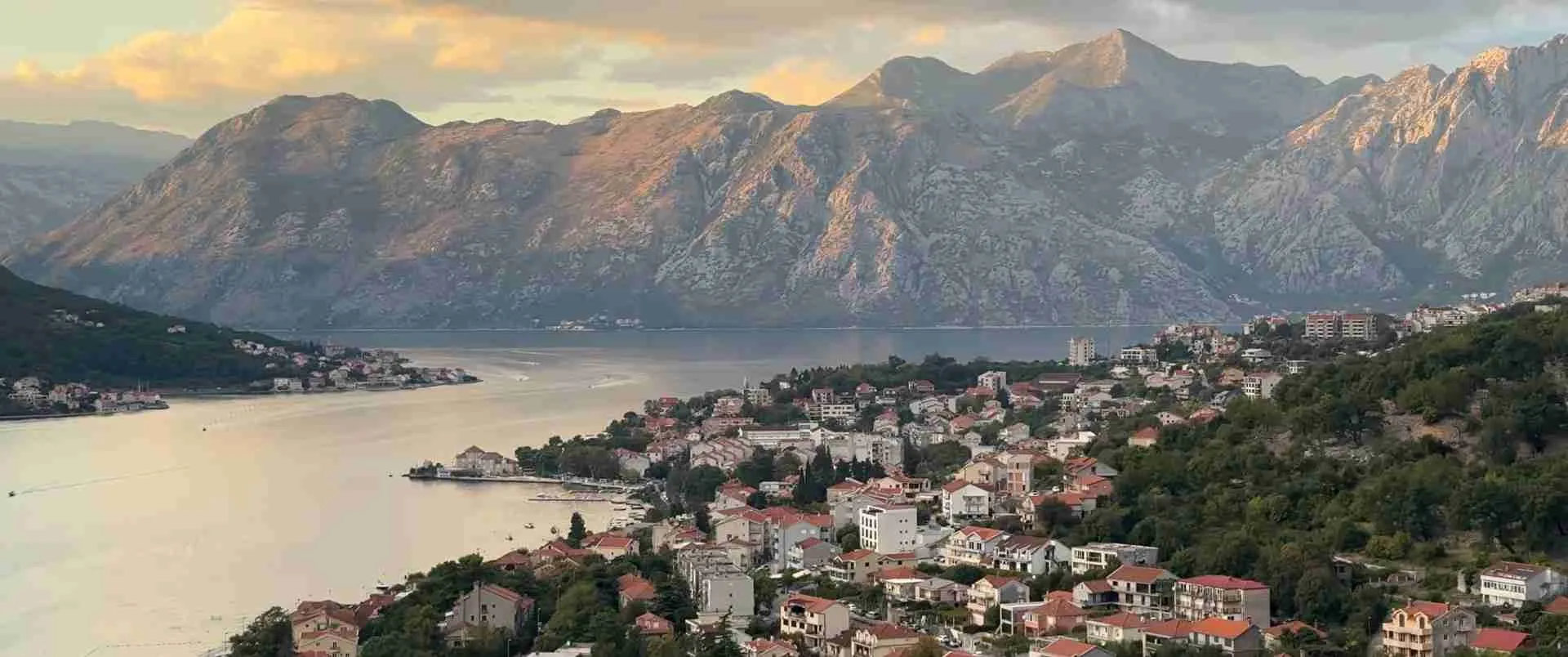
Kotor Travel Guide 2026: Bay of Kotor & UNESCO Old Town Guide
Kotor, Montenegro presents one of Europe’s most dramatic coastal landscapes where medieval walls snake 280 meters up limestone cliffs above a fjord-like bay. This UNESCO World Heritage site inscribed in 1979 combines Venetian architecture, Byzantine fortifications, and Adriatic beauty into a compact Old Town that transforms from cruise-crowded midday hub to romantic evening retreat. Planning a 2026 visit requires understanding seasonal patterns, accommodation strategies across the bay’s various towns, and the physical demands of the famous 1,350-step fortress climb that rewards with panoramic views across red-tiled roofs and emerald waters.
Key Takeaways: Kotor Travel Planning 2026
- UNESCO Heritage Significance 2026: The Natural and Culturo-Historical Region of Kotor was inscribed in 1979 as one of the first 60 UNESCO World Heritage Sites, encompassing 14,600 hectares of medieval Old Town, Venetian fortifications extending 4.5 kilometers, and the inner Bay of Kotor with its historic coastal settlements including Perast and Risan. The site was on the UNESCO Danger List from 1979-2003 following a devastating earthquake but has been fully restored.
- Budget Expectations 2026: Budget travelers need €52-83 per person daily assuming two sharing budget accommodation, mid-range visitors spend €136-214 per person daily, and luxury travelers invest €275-435 per person daily. Weekly costs range €365-580 budget, €950-1,500 mid-range, and €1,925-3,045 luxury.
- Best Timing for 2026 Visits: May-June and September-October offer optimal conditions with pleasant temperatures, manageable crowds, and 10-20% lower accommodation costs than peak July-August. Cruise ships create midday congestion April-October; early morning before 8 AM or evening after 6 PM provides quieter Old Town experiences.
- City Walls Strategy 2026: The fortress climb requires 45-60 minutes ascending 1,350 steps to San Giovanni Fortress 280 meters above sea level. Entrance costs €8-15 with ticket booths operating 8 AM-8 PM peak season. Arrive before 8 AM for free entry and cooler temperatures, or use the alternative Ladder of Kotor trail which bypasses ticket checkpoints.
- Accommodation Location Planning 2026: Staying inside Kotor Old Town walls costs €90-400 per room nightly but offers medieval atmosphere and evening charm after day-trippers depart. Dobrota (2 kilometers north) and Perast (13 kilometers northwest) provide quieter waterfront alternatives at €70-180 per room with authentic Montenegrin character and easier parking.
- Bay Exploration Beyond Kotor 2026: The UNESCO World Heritage property extends beyond Kotor Old Town to encompass Perast’s baroque palaces, Our Lady of the Rocks island church, Risan’s Roman mosaics, and numerous coastal settlements. Boat tours to Perast and the two islands cost €20-40, while renting a car to explore the entire bay runs €30-50 daily.
People Also Ask About Kotor Travel 2026
How much does a trip to Kotor cost in 2026?
A trip to Kotor in 2026 costs €52-83 per person daily for budget travelers sharing accommodation, €136-214 daily for mid-range comfort, or €275-435 daily for luxury experiences. Weekly trips range €365-580 budget, €950-1,500 mid-range, and €1,925-3,045 luxury. Budget costs include hostel dormitories or basic guesthouses divided by two, simple konoba meals, public buses, and the city walls entrance. Mid-range covers comfortable Old Town hotels, waterfront restaurant dining, occasional taxis, and boat tours to Perast. Luxury encompasses boutique palace hotels, upscale seafood restaurants, private transfers, and premium sailing experiences.
Is Kotor worth visiting in 2026?
Kotor in 2026 justifies a visit for travelers seeking dramatic natural scenery combined with authentic medieval architecture within one of Europe’s deepest fjord-like bays. The UNESCO Old Town packs centuries of Venetian, Byzantine, and Orthodox heritage into a compact 0.4 square kilometer walled area, while the fortress walls climbing to 280 meters elevation offer unmatched Adriatic panoramas. However, cruise tourism brings 500+ ships annually creating midday congestion April-October. The destination suits history enthusiasts, photographers, and active travelers willing to climb 1,350 steps, but disappoints those expecting sandy beaches or seeking undiscovered locations.
What is the best time to visit Kotor in 2026?
The best time to visit Kotor in 2026 spans May through June and September through October when temperatures reach comfortable 20-25°C, cruise crowds diminish, and accommodation costs drop 10-20% below peak season rates. July and August bring 28-32°C heat making the fortress climb challenging, maximum tourist density, and highest accommodation prices. Winter November-March sees many businesses close and temperatures fall to 5-15°C, though budget travelers benefit from €30-70 per room nightly hotels. For fortress climbing specifically, arrive before 8 AM April-October to avoid heat and crowds while potentially accessing walls before ticket booth operation begins.
How many days do you need in Kotor in 2026?
Kotor requires 2-3 days in 2026 for thorough exploration covering the Old Town’s churches and palaces, the fortress walls climb, a boat trip to Perast and Our Lady of the Rocks, and either the Ladder of Kotor hike or a scenic drive around the bay. One day allows only cursory Old Town wandering and fortress climbing. Three days enables adding Lovćen National Park excursion, Risan Roman mosaics visit, multiple restaurant experiences, and leisurely waterfront promenades in Dobrota. Travelers combining Kotor with Dubrovnik typically allocate 2 days, while those exploring coastal Montenegro comprehensively dedicate 3-4 days including Budva and Sveti Stefan.
Extended multi-day tours – 5+ days
Featured Kotor Multi-Day Tour Packages
2 days
From Tirana, 2 Days: Budva – Kotor
- ✓ Comprehensive Kotor tour
- ✓ Expert local guides included
- ✓ All accommodation arranged
- ✓ Transportation provided
1 days
From Tirana/Durres/Golem -> Montenegro: Budva & Kotor day tour
- ✓ Comprehensive Kotor tour
- ✓ Expert local guides included
- ✓ All accommodation arranged
- ✓ Transportation provided
2 days
Tour of Montenegro and Kosovo in 2 days from Tirana or Durres
- ✓ Comprehensive Kotor tour
- ✓ Expert local guides included
- ✓ All accommodation arranged
- ✓ Transportation provided
3 days
All seasons 3 days micro tour to Montenegro and Bosnia from Dubrovnik. Visit Venetians towns, monasteries, taste Herzegovina wines. Gorgeous scenery!
- ✓ Comprehensive Kotor tour
- ✓ Expert local guides included
- ✓ All accommodation arranged
- ✓ Transportation provided
Multi-day tour packages powered by TourRadar. Prices and availability subject to change.
Introduction: Kotor and the Bay of Kotor in 2026
The Natural and Culturo-Historical Region of Kotor represents one of the Mediterranean’s most exceptional cultural landscapes where human settlement and natural grandeur achieve remarkable synthesis. Inscribed on the UNESCO World Heritage List in 1979 as one of the first 60 sites to receive this designation, the property encompasses 14,600 hectares of the inner Bay of Kotor—a dramatic fjord-like inlet where limestone mountains plunge nearly 1,500 meters to sea level, creating one of Europe’s most spectacular coastal configurations. The designation extends beyond Kotor Old Town itself to include the historic settlements of Perast, Risan, Dobrota, Prčanj, and numerous smaller coastal communities, each contributing distinctive elements to the region’s cultural and architectural heritage.
Kotor’s significance derives from its role as the principal Venetian stronghold on the eastern Adriatic coast from the 15th through 18th centuries, serving as the maritime republic’s strategic bridge between Western Europe and the Balkans. The fortifications visible today—4.5 kilometers of walls, towers, bastions, and gates culminating in San Giovanni Fortress at 280 meters elevation—represent European defensive architecture’s pinnacle, constructed primarily during the Venetian period from the 15th to 17th centuries atop foundations dating to Illyrian and Roman times. These fortifications successfully repelled Ottoman invasions, most notably the 1539 assault led by Hayreddin Barbarossa, establishing Kotor as one of the few Adriatic ports never to fall under Ottoman control.
The Old Town within the walls preserves an essentially medieval street plan where narrow marble-paved alleys designed to confuse invaders still perplex modern visitors navigating between 12th-century Romanesque churches, Renaissance palaces adorned with Venetian lions, and baroque facades rebuilt after successive earthquakes. St. Tryphon Cathedral, constructed in 1166 and rebuilt following the devastating 1667 earthquake, anchors the main square with its twin bell towers and Romanesque portal. The cathedral’s treasury contains relics of the city’s patron saint whose remains were brought from Constantinople in 809, establishing Kotor’s early connection to Byzantine Christianity. Surrounding the cathedral, palaces belonging to Kotor’s merchant aristocracy—the Pima, Drago, Bizanti, and Grgurina families—display the wealth generated through centuries of maritime trade connecting Venice with the Ottoman interior.
Planning a 2026 visit to Kotor requires understanding the destination’s dramatic seasonal fluctuations driven by cruise tourism. Between April and October, an average of 500 cruise ships dock at the nearby port, disgorging 5,000-8,000 passengers daily who flood the Old Town’s 0.4 square kilometers between 10 AM and 4 PM. This creates intense midday congestion where narrow medieval streets designed for 1,000 residents accommodate 10 times that number. However, this same seasonality creates opportunity for informed travelers: early morning visits before 8 AM reveal the Old Town in serene emptiness with golden light illuminating limestone facades, while evenings after 6 PM transform the space into an intimate Venetian dream occupied primarily by the 961 residents who actually live within the walls.
Accommodation strategy significantly impacts the Kotor 2026 experience. Staying inside the Old Town walls in converted medieval palaces like Boutique Hotel Astoria provides unmatched atmospheric immersion and convenient access to restaurants and evening ambiance, but comes with premium pricing €180-400 per room nightly, potential noise from late-night revelry in squares, and challenging luggage transport through car-free cobblestone alleys. Alternative bases in Dobrota 2 kilometers north or Perast 13 kilometers northwest offer authentic waterfront settings, easier parking, significantly lower costs €70-180 per room, and quick bus or car access to Kotor Old Town. Many experienced travelers optimize by splitting their stay—2 nights inside Kotor walls for atmosphere, 2-3 nights in Dobrota or Perast for relaxation and bay exploration.
The fortress walls climb represents Kotor’s signature experience and significant physical challenge. The 1,350 stone steps ascending 280 meters vertical gain require 45-60 minutes climbing for moderately fit adults, with the route passing the 16th-century Church of Our Lady of Remedy at the halfway point and culminating in San Giovanni Fortress ruins commanding 360-degree panoramas across the bay, Old Town, and surrounding peaks. Summer midday heat transforms this into a strenuous ordeal; early morning or late afternoon timing proves essential. The €8-15 entrance fee supports preservation efforts, though savvy travelers arrive before 8 AM when ticket booths open or utilize the alternative Ladder of Kotor trail—an ancient mule track bypassing official entrances and providing equally spectacular views without the fee.
Beyond the fortress and Old Town, the UNESCO property encompasses remarkable diversity warranting exploration. Perast, a baroque jewel 13 kilometers northwest, preserves perfectly intact 17th and 18th-century palaces lining a waterfront promenade, with boat taxis departing continuously to the two UNESCO-protected islands: St. George’s monastery island and Our Lady of the Rocks, an artificial island created by sinking captured pirate ships loaded with rocks. Risan, the bay’s oldest settlement at the innermost point, protects 2nd-century Roman floor mosaics depicting Hypnos, the god of sleep. The entire bay circumference offers scenic driving with coastal villages, hidden beaches, and mountain viewpoints revealing the property’s geographic magnificence.
Practical 2026 planning begins with Tivat Airport 8 kilometers south providing direct seasonal flights from numerous European cities, though many visitors arrive via Dubrovnik Airport 45 kilometers north in Croatia. Buses connect both airports to Kotor for €5-10, while taxis cost €30-60 depending on negotiation. Within Kotor, walking suffices for Old Town exploration, though local buses running along the bay cost €1 per ride and provide access to Dobrota, Perast, and other settlements. Renting a car €30-50 daily enables comprehensive bay exploration and excursions to Lovćen National Park or Budva, though parking within Kotor Old Town remains impossible—designated lots outside the walls charge €2-3 hourly.
Understanding Kotor’s UNESCO World Heritage Status in 2026
The Natural and Culturo-Historical Region of Kotor achieved UNESCO World Heritage inscription in 1979 during the convention’s third session, placing it among the first 60 sites globally to receive this designation and establishing Montenegro’s inaugural entry on the World Heritage List. The inscription occurred under dramatic circumstances: on April 15, 1979, just months before the UNESCO committee met, a 6.9 magnitude earthquake struck the Bay of Kotor region causing extensive damage to the medieval Old Town, Romanesque churches, and historic fortifications. The earthquake destroyed or severely damaged four Romanesque churches, caused partial collapses in the city walls, and left St. Tryphon Cathedral’s twin bell towers structurally compromised. UNESCO responded by simultaneously inscribing the property and placing it on the List of World Heritage in Danger, recognizing both its outstanding universal value and its imperiled condition.
The property met four of UNESCO’s ten cultural criteria for inscription, a comprehensive recognition reflecting its multifaceted significance. Criterion (i) acknowledges the extraordinary concentration of monuments along the gulf coast, their harmony with the dramatic natural landscape, and their integration into urban planning of exceptional quality. The Venetian defensive system extending 4.5 kilometers from sea level to mountain peaks represents military engineering at its most ambitious, while the baroque palaces of Perast and Renaissance facades of Kotor demonstrate architectural achievement adapted to both seismic risk and Mediterranean climate. Criterion (ii) recognizes Kotor and its neighboring settlements as the principal Venetian bridge-heads on the southern Adriatic coast, serving as the heart of the region’s creative movement for centuries and facilitating the exchange of artistic and architectural ideas between Venice, Byzantium, and the Balkans.
Criterion (iii) highlights the property as a unique testimony to a maritime culture based on Catholic and Orthodox religious traditions that flourished from the Middle Ages through the 18th century. Kotor’s famous masonry and iconography schools trained artisans whose work spread throughout the Balkans, while the town’s merchant aristocracy—families whose palaces still dominate the Old Town—accumulated wealth rivaling Venice’s own nobility through control of trade routes connecting the Adriatic with the Ottoman interior. Criterion (iv) emphasizes the fortifications as an outstanding example of a fortified medieval town preserving its original form, with the urban fabric maintaining its Venetian-era street plan, building density, and architectural character despite multiple earthquakes and changing political control from Venice to Austria-Hungary to Yugoslavia to independent Montenegro.
The 24-year period on the UNESCO Danger List from 1979 to 2003 catalyzed one of the most successful heritage restoration efforts in UNESCO history. With financial and technical assistance primarily from UNESCO itself, supplemented by Italian and Austrian expertise, Montenegro undertook comprehensive reconstruction of damaged monuments. St. Tryphon Cathedral received complete structural reinforcement, new foundations, and restoration of its Romanesque portal and interior frescoes. The four severely damaged Romanesque churches—St. Luke’s, St. Mary’s Collegiate, St. Anna, and St. Paul’s—were rebuilt using traditional techniques and materials. City wall sections that had collapsed were reconstructed following original construction methods, maintaining the visual integrity of the defensive system. By 2003, the World Heritage Committee determined that restoration had progressed sufficiently to remove the property from the Danger List, though monitoring continues to ensure preservation standards are maintained.
The UNESCO property boundaries encompass far more than Kotor Old Town itself, extending to 14,600 hectares including the entire inner bay area—Kotor Bay and Risan Bay—surrounded by mountains rising to nearly 1,500 meters. The inscribed area includes the complete historic centers of Kotor, Perast, and Risan, the fortification systems protecting these towns, numerous smaller coastal settlements including Dobrota, Prčanj, Orahovac, Muo, and Stoliv, the two islands of St. George and Our Lady of the Rocks, and portions of the bay’s mountain hinterland that form the visual backdrop to the cultural landscape. A buffer zone of 36,491 hectares defined in 2011 encompasses the remainder of the Bay of Kotor including the outer Tivat and Herceg Novi bays, recognizing that the entire Boka Kotorska functions as an integrated geographic and cultural unit.
Contemporary challenges to the property’s Outstanding Universal Value center on development pressure driven by tourism growth and concerns about proposed infrastructure projects. The Verige Bridge proposal—a 2.3 kilometer span across the bay’s narrowest strait—has generated controversy since its initial proposal in the 2000s, with opponents arguing it would irrevocably damage the property’s visual integrity and setting while supporters emphasize economic benefits from improved traffic flow. UNESCO has repeatedly expressed concern about the bridge’s potential impact. Urban development pressure within the buffer zone, particularly luxury hotel and marina projects in Tivat, raises questions about maintaining the harmonious relationship between the historic settlements and their natural setting that forms a core element of the property’s Outstanding Universal Value.
For 2026 visitors, understanding the UNESCO designation provides context for appreciating what makes Kotor exceptional beyond its undeniable photogenic qualities. The property represents not merely a pretty medieval town but one of the Mediterranean’s most complete examples of defensive military architecture adapted to extreme topography, a remarkably intact maritime cultural landscape preserving centuries of architectural layers from Romanesque to baroque, and a living community where contemporary life continues within medieval urban fabric. The UNESCO designation imposes strict controls on building modifications, new construction, and commercial development within the Old Town, preserving authenticity while sometimes creating tension with residents’ desire for modern amenities. The restoration following the 1979 earthquake demonstrates international cooperation’s potential to save imperiled heritage, establishing Kotor as a model for post-disaster cultural property recovery.
Kotor Old Town Exploration Strategy 2026
Kotor Old Town encompasses 0.4 square kilometers of densely packed medieval urban fabric where 961 permanent residents live among 12 churches, 17 palaces, numerous smaller noble houses, and the commercial infrastructure supporting 500+ annual cruise ship visits. The triangular layout between the fortification walls and the bay follows a deliberate defensive design—narrow streets meeting at irregular angles create confusion for invaders while facilitating resident movement once the pattern is learned. Modern visitors experience this same disorientation, making strategic planning essential to efficient exploration while maintaining space for serendipitous discovery in hidden squares and unexpected alleys.
The Sea Gate constructed in 1555 serves as the main entrance and natural starting point for exploration. This Venetian-era portal originally displayed the winged Lion of St. Mark—Venice’s emblem—above the archway, but this was replaced during Yugoslav rule with the date of Kotor’s 1944 liberation from Nazi occupation and Josip Broz Tito’s famous quotation carved in stone: “Tuđe nećemo, svoje ne damo” (What belongs to others we don’t want, what is ours we will never surrender). The gate opens onto the Square of Arms (Trg od Oružja), Kotor’s largest open space and the heart of civic life. This irregular square hosts the Clock Tower built in 1602, the Duke’s Palace with its renaissance facade, the Napoleonic Theater building, and the Pillory Column where criminals were publicly shamed during Venetian rule. Early morning before 8 AM, this square lies in shadow with empty cafe tables awaiting the day’s first cappuccinos, while by 10 AM cruise passengers fill every square meter.
St. Tryphon Cathedral (Katedrala Svetog Tripuna) dominates Cathedral Square 100 meters north of the Sea Gate, representing Kotor’s most significant architectural monument and religious heart. Constructed in 1166 on the site of an earlier 9th-century church, the cathedral exemplifies Romanesque architecture adapted to seismic risk—thick walls, low profile, and twin bell towers rebuilt multiple times following earthquakes. The 1667 earthquake destroyed the original towers; the current baroque-topped replacements date from the 18th century reconstruction. The €2 entrance fee provides access to the remarkably preserved interior where Romanesque columns support gothic vaults added during 14th-century modifications. The cathedral treasury contains Kotor’s most valuable religious artifacts including Byzantine icon relics of St. Tryphon brought from Constantinople in 809, medieval liturgical implements, and elaborately embroidered vestments. The cathedral functions as an active Catholic parish serving Kotor’s Catholic minority—approximately 40% of Old Town residents—with regular masses held in Croatian.
The Orthodox Church of St. Nicholas (Crkva Svetog Nikole) stands in contrasting relationship to the Catholic cathedral, representing the Serbian Orthodox faith practiced by approximately 55% of Old Town residents and the majority of contemporary Montenegrin population. Built between 1902 and 1909 during the period of Austro-Hungarian rule, this neo-Byzantine structure with its twin towers and Orthodox crosses intentionally matches the Catholic cathedral’s scale, symbolizing the religious equilibrium that defines Montenegrin society. The interior follows Orthodox liturgical arrangement with an iconostasis separating the nave from the sanctuary, icon-covered walls, and the distinctive Orthodox multi-voiced chanting during services. Entry is free with appropriate modest dress required—shoulders and knees covered for both men and women.
St. Luke’s Church (Crkva Svetog Luke), a compact Romanesque structure from 1195, preserves Kotor’s architectural history through its unusual dual-faith past. Originally constructed as a Catholic church, it served that community until 1657 when Orthodox residents gained permission to share the space, leading to 140 years where both Catholic and Orthodox services occurred in the same building—Catholic in the morning, Orthodox in the afternoon. After the Catholic community moved to the new cathedral, St. Luke’s became exclusively Orthodox. The church survived the 1979 earthquake with minimal damage due to its simple construction and low height. The interior maintains both faiths’ artistic heritage with Orthodox frescoes covering Byzantine-era walls alongside Catholic architectural elements—a physical manifestation of Kotor’s religious coexistence.
The Cats Museum (Muzej Mačaka) provides quirky counterpoint to religious monumentality, celebrating Kotor’s remarkable feline population. Cats have inhabited Kotor since medieval times when they protected grain stores from rodents on merchant ships, and contemporary Old Town hosts an estimated 200 semi-feral cats that residents and businesses feed communally. The museum occupies a medieval space displaying cat-themed artwork, historical photographs of Kotor’s cats, and information about the cats’ role in maritime culture. The €1 entrance fee supports local cat welfare including spaying/neutering programs. While admittedly a minor attraction, the museum reflects an authentic aspect of Kotor life—visitors who spend evening hours in the Old Town will observe how cats occupy every outdoor restaurant table, stone ledge, and marble step as if they own the place, which in a sense they do.
The Maritime Museum (Pomorski Muzej) occupies the 18th-century Grgurina Palace near the Sea Gate, chronicling Kotor’s 2,000-year maritime history through models of historical ships, navigation instruments, paintings of Kotor’s merchant vessels, maritime maps, and artifacts from the Venetian and Austro-Hungarian periods. The €4 entrance fee provides access to three floors documenting Kotor’s evolution from Roman port Ascrivium through Venetian maritime republic to Austro-Hungarian naval base. The museum maintains English descriptions for most exhibits and offers particularly strong coverage of the 18th and 19th centuries when Kotor’s merchant fleet numbered over 300 ships engaged in Mediterranean and transatlantic trade. The palace’s baroque architecture with original ceiling frescoes and ornate staircases merits attention equal to the exhibits themselves.
Strategic exploration requires understanding crowd patterns driven by cruise ship schedules. Cruise passengers typically flood the Old Town 10 AM-4 PM creating sidewalk congestion where movement slows to shuffling pace and photographing monuments becomes an exercise in waiting for gaps in human traffic. The fortress walls entrance experiences queues of 30-60 minutes mid-morning. Restaurant lunch service 12 PM-2 PM sees every seat occupied and kitchens stretched to capacity. However, dramatic transformation occurs by 6 PM when ships depart. The Old Town population drops from 10,000+ visitors to perhaps 2,000-3,000, streets empty, restaurant terraces welcome guests without reservation, and the medieval atmosphere reasserts itself. Locals emerge for their evening passegiata along the waterfront promenade, cafe tables fill with residents rather than tourists, and the town’s authentic character becomes visible.
The optimal exploration strategy for 2026 divides Old Town activities between early morning pre-cruise arrival and evening post-departure periods. Arrive by 7:30 AM when only handful of visitors populate the streets, golden morning light illuminates west-facing facades, and shops prepare to open. Complete the fortress walls climb 7:30-9:30 AM avoiding both crowds and heat while potentially accessing walls before €8-15 ticket booth opens at 8 AM. Return to Old Town 9:30 AM for cathedral visits and museum exploration before cruise passengers arrive in force around 10 AM. Depart the Old Town 11 AM-5 PM to explore Dobrota waterfront, drive to Perast, swim at Orahovac beach, or rest at accommodation. Return 6 PM for dinner, evening strolling, and nighttime photography when floodlit walls create dramatic backdrop to emptied squares and marble streets glistening from evening cleaning.
Navigation within the Old Town benefits from understanding its triangular structure and principal routes. The main east-west axis runs from the Sea Gate through the Square of Arms to Cathedral Square and continues to the North River Gate, providing the primary pedestrian thoroughfare connecting major monuments. Parallel alleys to the north and south offer quieter alternatives and access to residential areas where Kotor’s actual inhabitants live in apartments created by subdividing merchant palaces. The southern wall area near St. Mary’s Collegiate Church and the fortification gates remains less trafficked, providing respite when the main squares feel overwhelmed. Multiple small squares—Trg od Salate, Trg od Brašna, Trg Sv. Luke—punctuate the dense urban fabric, each with its own character, local cafe, and architectural focus.
City Walls and San Giovanni Fortress Climbing Guide 2026
The fortress walls ascending from Kotor Old Town to San Giovanni (St. John’s) Fortress at 280 meters elevation represent the destination’s signature physical challenge and unmatched viewpoint. The 1,350 stone steps wind 4.5 kilometers along fortifications constructed primarily during the 15th-17th centuries atop earlier Byzantine and Illyrian defensive positions, creating what many travelers rank among Europe’s most dramatic fortress walks. However, this experience demands proper planning, realistic fitness assessment, and strategic timing to transform from potential ordeal into highlight of any 2026 Kotor visit.
The climbing route begins from two official entrances within the Old Town. The northern entrance opposite the Church of St. Mary Collegiate near the North River Gate provides the most direct access and clear signage. The alternative southern entrance near Konoba Scala Santa restaurant in the eastern Old Town section offers a slightly less trafficked starting point. Both routes converge within 10 minutes at the main ticket booth where the €8-15 entrance fee is collected—sources conflict on exact pricing with most recent reports suggesting €8-10 standard fee, though some indicate €15. Payment requires cash euros with no credit card option available. The ticket booth operates approximately 8 AM-8 PM during peak season April-October with reduced winter hours.
The ascent breaks naturally into three sections of increasing difficulty. The first 500 steps climb moderately through lower fortification walls with multiple bastions, gates, and defensive positions revealing Venetian military engineering adapted to mountainous terrain. Stone steps vary from regular to irregular, some with handrails installed during modern safety improvements, others maintaining their original rough condition. Multiple switchbacks reduce the gradient but lengthen the route. This section takes 15-20 minutes for moderately fit climbers and provides the last opportunity to turn back without significant descent challenges—after this point, continuing upward often proves easier than reversing.
The Church of Our Lady of Remedy (Gospa od Zdravlja) marks the halfway point at approximately 650 steps and serves as the primary rest station. This 16th-century Catholic chapel integrated into the fortification walls offers the first truly spectacular viewpoint, a shaded terrace with stone benches, and psychological relief seeing the Old Town and bay spread below while recognizing half the challenge is complete. Many climbers pause here 10-15 minutes for water, photographs, and fitness reassessment. The church remains nominally active with occasional masses, though its primary function today is rest stop for fortress climbers. A small donation box suggests €1-2 contribution for those utilizing the terrace. From this midpoint, the final 700 steps to San Giovanni Fortress become visible as a steep stone ribbon ascending the bare karst cliffs above.
The second half intensifies significantly. Steps grow steeper and more irregular, handrails disappear for extended sections, and exposure increases as the path narrows along cliff edges with substantial drops. The final 200 meters ascend nearly vertical sections where the route becomes part staircase, part scramble, with hands occasionally needed for balance on particularly steep pitches. This section requires 25-35 minutes depending on fitness level and rest frequency. Multiple unofficial rest spots offer shade under ruined wall sections and improvised stone benches. Local entrepreneurs sometimes position themselves at strategic points selling bottled water for €3-5, capitalizing on climbers who underestimated hydration needs in summer heat.
San Giovanni Fortress crowns the climb at 280 meters, though calling it a fortress overstates what remains today. The structure consists of ruins—partial walls, foundations of buildings that once housed garrison troops, and stone platforms that supported defensive artillery. The Venetians abandoned this highest section following earthquake damage and artillery’s decreased defensive relevance in the 18th century. However, the structural ruins fade to insignificance against the panoramic vista. The 360-degree view encompasses the entire inner bay from Kotor at your feet through Perast to Risan, the outer bay extending toward Tivat and the Adriatic beyond, the mountainous Lovćen range rising behind, and the complete fortification system snaking down the mountainside to the Old Town’s red-tiled roofs. On clear days, visibility extends 30-40 kilometers revealing the full breadth of the Bay of Kotor’s geographic drama.
The descent requires 30-40 minutes and presents its own challenges distinct from the ascent. Downward movement stresses knees significantly, particularly on steep irregular sections where footing requires constant attention. Loose stones and dust on steps create slip hazards. Many climbers find descent more difficult than ascent despite the cardiovascular advantage. Trekking poles or hiking staffs substantially ease descent stress on knees, though carrying these upward adds weight. Some climbers combat descent difficulty by taking the alternative Ladder of Kotor route down—a 4-kilometer trail descending the back side of the mountain through forest and meadows—though this requires either pre-arranged taxi pickup from the bottom or a 3-kilometer road walk back to Kotor.
Strategic timing proves crucial for optimal fortress experience. Summer midday 11 AM-3 PM transforms the climb into a heat challenge where exposed stone steps in full sun radiate temperatures exceeding 35°C, water consumption doubles, and heat exhaustion becomes genuine risk. Early morning before 9 AM offers coolest temperatures, softest light for photography, and thinnest crowds—plus the possibility of free entry if ticket booths haven’t opened yet at 8 AM. Late afternoon 4 PM-7 PM provides the second-best timing with setting sun illuminating the bay, golden hour photography opportunities, and cruise passengers departed. However, descending as darkness falls requires headlamp and increases navigation difficulty on irregular steps.
The official €8-15 entrance fee funds preservation and maintenance of the fortification system, supporting stone repairs, vegetation management, and safety improvements. However, the Ladder of Kotor alternative trail provides a legitimate fee-avoidance option while offering equally spectacular views. This ancient mule track begins at the North Gate outside the walls, ascending the mountain parallel to but separate from the fortress walls through a series of 50+ switchbacks. At approximately 600 meters elevation, a “window” in the fortress walls allows passage into the San Giovanni ramparts system, providing access to the fortress and views without passing through official ticket checkpoints. The Ladder of Kotor presents a longer route (approximately 4 kilometers one-way versus 2.3 kilometers via the official fortress path) with more total elevation gain but gentler sustained gradient, making it physically easier for some climbers despite the extra distance.
Essential equipment for the fortress climb includes minimum 1.5 liters water per person (2 liters recommended for summer), sun protection (hat, sunglasses, SPF 50+ sunscreen), appropriate footwear with ankle support and grippy soles (hiking boots or trail runners, not sandals or casual shoes), lightweight breathable clothing, and small first-aid kit with blister treatment. Bringing snacks provides energy mid-climb though vendors sometimes sell at inflated prices. Camera or smartphone with charged battery captures views. Trekking poles significantly ease descent strain though add carrying weight during ascent. Starting with full water bottles and emptying throughout the climb avoids carrying unnecessary weight to the summit.
Accommodation Guide Kotor 2026: Where to Stay in the Bay
Accommodation strategy fundamentally shapes the Kotor 2026 experience, with location choice impacting daily costs by 30-50%, convenience, atmospheric immersion, and practical logistics. The Bay of Kotor region offers accommodation across three primary zones—inside Kotor Old Town walls, Kotor surroundings including Dobrota and Škaljari, and northwestern bay settlements particularly Perast—each presenting distinct advantages and trade-offs that suit different traveler priorities, budgets, and visit durations.
Staying inside Kotor Old Town walls delivers unmatched medieval atmosphere and maximum convenience for evening exploration when day-trippers depart and the town transforms. Properties occupy converted merchant palaces, monastery buildings, and historic stone houses with original ceiling frescoes, exposed stone walls, and architectural details spanning Venetian to Austro-Hungarian periods. Boutique Hotel Astoria represents the luxury standard occupying a 13th-century palace near the Clock Tower with nine rooms featuring minimalist modern interiors within ancient stone walls, rates €280-400 per room nightly peak season. Hotel Vardar sits directly on the Square of Arms in a renaissance palace with traditional furnishings, ornate baroque details, and breakfast terrace overlooking the main square, rates €180-280 per room. Hotel Monte Cristo near the Sea Gate offers mid-range comfort in an 18th-century building with 12 rooms, rates €120-180 per room.
Budget accommodation inside the walls centers on apartments and guesthouses rather than traditional hotels. Apartments Wine House Old Town provides self-catering units in medieval buildings with kitchens, washing machines, and traditional decor, rates €80-120 per apartment for 2-4 people. Kotor Nest offers basic rooms in a converted residence near the cathedral, rates €60-90 per room with shared bathroom options reducing costs further. These Old Town accommodations share common challenges: cobblestone streets prevent luggage rolling requiring carrying bags 200-500 meters from nearest parking to property entrance, noise from restaurant terraces and late-night bar crowds affects sleep particularly Friday-Saturday when locals party until 2-3 AM, and parking costs €2-3 hourly in designated lots outside walls. The atmospheric benefits justify these inconveniences for 1-2 nights, though longer stays benefit from quieter base outside walls.
Dobrota provides the optimal compromise between Kotor access and peaceful waterfront setting. This neighborhood extends 2 kilometers north of Kotor along the bay shore, connected by continuous promenade ideal for morning walks and evening passegiate. Baroque stone palaces converted to guesthouses line the waterfront, locals fish from stone jetties, and authentic konoba restaurants serve residents rather than tourists. Local buses connect Dobrota to Kotor Old Town every 20 minutes for €1 per ride, while walking requires 25-30 minutes along the scenic promenade. Parking proves easier and cheaper than Kotor center with street parking often free and guesthouse-provided spots standard.
Villa Milena in Dobrota exemplifies the area’s accommodation character—a renovated stone villa with six apartments, each featuring kitchen, private terrace with bay views, and traditional furnishings, rates €70-110 per apartment. Hotel Libertas occupies an authentic 18th-century stone house with private beach area, outdoor pool, and rooms with sea views, rates €140-200 per room. These properties cost 30-40% less than equivalent quality inside Kotor walls while providing parking, larger rooms, and genuine neighborhood character. Dobrota appeals particularly to travelers staying 4+ days who value having a peaceful base for morning coffee and evening relaxation separate from Kotor’s tourist intensity.
Perast 13 kilometers northwest represents the most characterful bay accommodation option for travelers with rental cars or comfortable using buses (€2-3 to Kotor, 25-minute journey). This baroque jewel town preserves perfectly intact 17th-18th century palaces, hosts just 300 permanent residents, and provides the bay’s most romantic waterfront atmosphere. Hotel Conte on the main square occupies a restored captain’s palace with 11 rooms featuring period furniture, frescoed ceilings, and waterfront terraces, rates €160-240 per room. Heritage Grand Perast by Rixos represents the luxury extreme—a 5-star resort in restored palaces with spa, infinity pool, and rates €350-550 per room. Budget travelers find family-run guesthouses and apartments along back streets for €50-80 per night.
Perast accommodation trades Kotor’s convenience for unmatched charm and tranquility. The 13-kilometer distance requires car or bus commitment for each Kotor visit, though many travelers find spending full days in Perast’s peaceful setting with boat trips to the islands, waterfront dining, and baroque ambiance more relaxing than Kotor’s intensity. The town lacks supermarkets—only small shops—and restaurants close by 10 PM even in summer. This isolation appeals to couples seeking romantic escape and travelers wanting immersion in small-town Montenegrin life rather than tourist infrastructure.
Accommodation costs in 2026 vary significantly by season and location. Peak season July-August sees Kotor Old Town hotels charging €180-400 per room nightly, Dobrota properties €100-200, and Perast hotels €160-350. Shoulder season May-June and September-October reduces rates 20-30% with Kotor Old Town dropping to €120-280, Dobrota to €70-140, and Perast to €110-240. Winter November-March brings dramatic reductions with many properties closed but those operating charging €60-150 even for prime locations. Budget travelers booking guesthouses and apartments can find accommodation year-round for €40-80 per room sharing, making Kotor accessible across income levels with strategic property selection.
Booking strategy for 2026 depends on travel timing and flexibility. Peak season July-August requires booking 2-3 months advance for desirable Old Town properties which reach capacity. Shoulder season allows 2-4 weeks advance booking with good selection remaining. Last-minute deals appear regularly on booking platforms, particularly for properties with cancellations, though this gambles on availability. Direct property contact sometimes secures lower rates than booking platforms for stays exceeding 3-4 nights, particularly in family-run guesthouses. Properties offering free cancellation until 24-48 hours before arrival enable flexible booking without commitment, allowing weather-dependent or schedule-dependent adjustments.
Alternative accommodation models serve specific traveler needs. Hostels including Montenegro Lodge and Centrum Old Town provide dormitory beds €18-30 per night and private rooms €50-70, appealing to solo budget travelers and those seeking social atmosphere. Luxury yachts moored in Kotor marina offer unique floating accommodation with deck space and marina facilities, rates €200-500 nightly. Camping and glamping sites operate in the hills behind Kotor with tent sites €10-20 and glamping pods €60-100, suiting outdoor enthusiasts and travelers with vehicles.
Food and Dining Guide Kotor 2026
Kotor’s dining landscape in 2026 reflects Montenegro’s position at the crossroads of Mediterranean and Balkan culinary traditions, with coastal seafood preparation influenced by Venetian techniques, grilled meats following Balkan tradition, and Italian pasta and pizza ubiquitous due to geographic and cultural proximity. Budget travelers successfully navigate costs through strategic choices, mid-range diners enjoy waterfront seafood in atmospheric konobase, while luxury seekers access upscale restaurants emphasizing Adriatic catch and regional wines. Understanding restaurant categories, timing patterns, and value indicators enables optimal dining experiences across all budget levels.
Budget dining €20-35 per person daily relies on bakeries, market produce, pizza slices, and simple konoba meals. Bakeries throughout Kotor including those lining streets approaching the Sea Gate offer burek (flaky pastry filled with cheese, meat, or spinach) €2-4 per large portion sufficient for breakfast or lunch, pizza slices €2-3, sandwiches €3-5, and sweet pastries including Kotor cake €1-2. These provide the most economical eating option with quality comparable to Italy given the cultural proximity. The Gradska Pijaca (city market) just outside the Sea Gate operates mornings 7 AM-1 PM selling fresh produce, Njeguški prošut (smoked ham), local cheeses, olives, and bread. Market purchases enable self-catering breakfast and lunch for apartment-based travelers, reducing daily food costs to €10-15.
Simple konobase—traditional family-run restaurants—serve satisfying meals €8-15 per person for main course with drink. These establishments cluster in back streets away from main squares, identified by local clientele outnumbering tourists. Typical konoba offerings include ćevapi (grilled minced meat cylinders) €6-8 with bread and raw onion, grilled fish charged by weight at €12-18 per kilogram (typical portion 300-400 grams), pasulj (bean stew) €5-7, and simple pasta dishes €6-9. Adding 500ml domestic beer €2-3 or house wine €3-4 per glass creates complete meal under €15. Pizza restaurants serve 12-inch pies €7-12 comparable in quality to Italian standards, with margherita €7-8 and seafood toppings €11-14.
Mid-range dining €50-85 per person daily accesses waterfront restaurant terraces, fresh seafood, and elevated preparation. Restaurants lining the Kotor-Dobrota waterfront promenade and Perast’s main square offer three-course meals with wine €25-40 per person. Typical mid-range meal begins with octopus salad or marinated anchovies €8-12, continues with grilled sea bass or sea bream €18-25 per kilogram (expect 400-500 grams per person), and concludes with panna cotta or local honey cake €6-8. Adding house white wine €4-5 per glass (ordering bottle €18-25 improves value) and cappuccino €2-3 creates total bill €35-45 per person before tips.
Konoba Scala Santa inside Kotor Old Town receives consistent recommendations for quality-price balance, serving traditional Montenegrin dishes in 15th-century stone interior with mains €12-20. Galion restaurant sits on the water just outside Old Town walls with extensive fish menu, grilled octopus €16, risotto nero (black risotto with seafood) €14-18, and exceptional wine list emphasizing Montenegrin selections. Reservations recommended peak season evenings. Restaurant Ribar in Dobrota specializes in Adriatic catch with simple preparation focusing on fish quality, grilled fish charged €20-30 per kilogram, located directly on the promenade with bay views. These mid-range establishments deliver memorable dining experiences combining food quality, atmospheric settings, and reasonable pricing that justify splurging beyond budget meals.
Luxury dining €100-150+ per person daily provides upscale seafood restaurants, tasting menus, and premium wine cellars. Restaurant Galini in Perast occupies a baroque palace with refined Adriatic cuisine, lobster dishes €45-65, tasting menu €80-100 per person, extensive regional wine selection. Three-Michelin-key-rated establishments including Forza Terra near Kotor specialize in farm-to-table Mediterranean cuisine with ingredients sourced from property’s own farm, tasting menus €90-120. Hotel restaurant terraces including Heritage Grand Perast serve upscale interpretations of traditional dishes with premium ingredients, mains €35-55, though hotel dining typically provides more ambiance than value compared to independent restaurants.
Montenegrin cuisine centers on several signature dishes worth seeking. Njeguški pršut (air-dried smoked ham from the Njeguši village 15 kilometers inland) rivals Italian prosciutto in quality, served as appetizer €10-15 per plate with local cheese and olives. Black risotto (risotto cooked with cuttlefish ink) represents coastal Montenegro’s signature dish €14-18 for generous portion. Grilled or baked sea bream (orada) and sea bass (brancin) receive simple preparation letting fish quality shine, charged by weight €20-30 per kilogram at mid-range restaurants. Pasulj (white bean stew often with smoked pork) provides hearty Balkan comfort food €6-8. Vranac and Krstač wines from Montenegro’s Plantaže winery offer excellent quality-price ratio at €15-25 per bottle in restaurants.
Strategic dining timing impacts both cost and atmosphere. Lunch service 12 PM-3 PM at many konobase offers daily specials (dnevni meni) providing soup, main course, and drink €8-12, substantially below dinner prices for identical dishes. Early dinner seating before 7 PM sometimes receives discounts 10-15% at tourist-oriented restaurants trying to fill tables before prime 8-9 PM rush. Late dining after 9:30 PM provides quieter atmosphere but risks menu items selling out at popular restaurants. Market purchases early morning 7-8 AM secure best produce selection before prime items disappear. Bakeries sell previous day’s pastries at 50% discount after 6 PM, suitable for budget-conscious breakfast next morning.
Tipping customs in Montenegro restaurants follow European standards with service charge rarely included in the bill. Rounding up to nearest €5 or €10 suffices for simple konoba meals under €20. For mid-range restaurants and good service, 10% tip is customary and appreciated. Luxury restaurant service quality justifies 10-15% though checking bill for included service charge avoids double-tipping. Cash tips directly to servers ensure they receive the gratuity. Montenegro uses the euro, eliminating currency conversion concerns for travelers from eurozone countries.
Water and beverage notes: tap water in Kotor is safe to drink, allowing restaurant patrons to request free tap water (voda iz česme) rather than ordering bottled water €2-3. Many locals drink tap water without issues. Domestic beer brands include Nikšićko (€2-3 in restaurants) and Montenegrin craft beers increasingly available €3-4. Coffee culture follows Italian standards with excellent espresso, cappuccino, and macchiato €1.50-3 depending on location. Wine by the glass €4-6 in restaurants, though ordering bottles €18-30 improves value for groups. Rakia (fruit brandy) serves as traditional digestif offered free at konoba meals or purchased €2-3 per shot in bars.
Transportation Guide Kotor 2026: Getting There and Getting Around
Kotor’s transportation network in 2026 connects the bay to international gateways through two airports, links to Croatian coastal cities via efficient bus routes, and provides internal mobility through local buses, taxis, and walkable distances. Strategic transportation planning impacts both budget and convenience, with choices between airport locations, rental car necessity, and public versus private transfer affecting total trip costs by €100-300 for typical week-long visits.
Tivat Airport (TIV) 8 kilometers south of Kotor serves as the primary gateway with seasonal direct flights from major European cities including London, Paris, Moscow, Belgrade, and Istanbul during summer April-October. Low-cost carriers including Ryanair, Wizz Air, and EasyJet operate summer routes, while Montenegro Airlines (Air Montenegro) provides year-round connections through Belgrade. Flight costs vary dramatically by booking timing and route—budget carriers offer €40-120 return fares booking 2-3 months advance from Western European cities, while last-minute summer bookings reach €200-400 return. Winter sees substantially reduced service with many routes suspended November-March.
Tivat Airport to Kotor transportation offers three options. Taxi ranks outside the terminal charge fixed rates €15-25 to Kotor Old Town depending on negotiation, with 15-minute journey time. Pre-booking airport transfers through accommodation or transfer companies secures rates €18-30 for private car, particularly valuable for groups where per-person cost decreases. Local bus route connects Tivat to Kotor via the coastal road for €2-3 with buses departing hourly during daytime, requiring 25-30 minutes. The bus proves most economical for solo budget travelers but involves carrying luggage and potential standing during crowded summer periods. Rental car pickup at Tivat Airport costs €30-50 daily for basic models from international agencies including Hertz, Europcar, and Sixt.
Dubrovnik Airport (DBV) in Croatia 45 kilometers north serves as alternative gateway particularly for travelers combining Kotor with Dubrovnik visits or when Tivat flight options prove limited or expensive. Major airlines and low-cost carriers operate year-round service to Dubrovnik with greater frequency and route diversity than Tivat. However, the international border crossing between Croatia and Montenegro adds complexity. Direct buses from Dubrovnik Airport to Kotor operate 3-4 times daily summer season charging €10-15 for the 90-minute journey including border crossing time. Pre-booked private transfers cost €60-90 for car accommodating up to 4 passengers, justified for groups or travelers with substantial luggage. Rental cars picked up at Dubrovnik Airport for use in Montenegro require explicit cross-border permission from the rental company with additional insurance fees €15-25 daily.
Podgorica Airport (TGD) 65 kilometers northeast provides Montenegro’s capital city gateway with year-round connections to European cities. This option suits travelers planning broader Montenegro exploration including the interior regions, though reaching coastal Kotor requires 90-minute drive or bus journey. Buses from Podgorica to Kotor operate hourly during daytime charging €6-8 for the journey through mountainous terrain offering spectacular scenery. Rental car from Podgorica enables stopping at Skadar Lake and Cetinje historical capital en route to coast.
Long-distance bus connections link Kotor to Croatian coastal cities, Belgrade, and other Balkan destinations. Dubrovnik-Kotor buses operate 6-8 times daily year-round charging €10-12 for the 2-3 hour journey depending on border crossing wait. These provide convenient option for travelers combining both destinations without rental car. Split-Kotor direct buses run 2-3 times daily summer season (€25-35, 8-10 hours) though most travelers prefer flying or driving. Belgrade-Kotor overnight buses operate daily year-round (€25-35, 10-12 hours) serving budget travelers and backpackers. International bus bookings through GetByBus or BusTicket4.me websites enable advance reservation though walk-up tickets usually available except peak summer weekends.
Within Kotor, walking suffices for all Old Town exploration with the 0.4 square kilometer walled area requiring maximum 10 minutes to traverse. The fortress walls climb represents the major walking challenge covered in previous section. Kotor-Dobrota waterfront promenade extends 2 kilometers as flat, scenic walk taking 25-30 minutes and providing pleasant alternative to vehicular transport. Local buses connect Kotor bus station outside the Old Town with Dobrota, Perast, Risan, and other bay settlements. Route 1 serves Dobrota and continues to Perast (€1-2 depending on distance), operating every 20-30 minutes during daytime with reduced evening and Sunday service. Bus schedules and routes at the Kotor bus station information counter.
Taxis in Kotor operate without meters, requiring price negotiation before entering vehicle to avoid disputes. Standard rates: Kotor Old Town to Tivat Airport €15-20, Kotor to Perast €10-15, short trips within Kotor €5-8. English-speaking taxi drivers available via hotel or restaurant call, though street-hailed taxis often involve negotiation challenges for non-local speakers. Bolt rideshare service operates in Kotor as of 2025 with smartphone app booking, transparent pricing typically 10-20% below traditional taxis, and English-language interface. However, Bolt vehicle availability fluctuates and may prove limited outside peak tourist season.
Rental car decision involves cost-benefit analysis specific to intended activities. For travelers planning to explore only Kotor, Perast, and immediate Bay of Kotor settlements, rental car proves unnecessary given adequate bus service and walkable distances. Taxis or pre-booked transfers handle airport connections economically for 2+ travelers. However, rental car unlocks significant flexibility for exploring Lovćen National Park (30 kilometers), Budva (24 kilometers), Sveti Stefan (32 kilometers), Skadar Lake (50 kilometers), and the Montenegrin coast. Daily rental costs €30-50 for basic manual transmission compact car, fuel approximately €15 per day for 100 kilometers driving, parking in Kotor €10-15 daily. Three-day rental totals approximately €135-195, justified for travelers maximizing regional exploration but unnecessary overhead for Kotor-focused visits.
Driving in Montenegro follows right-hand traffic with speed limits 50 km/h urban, 80 km/h rural, 130 km/h limited highways. Roads around Bay of Kotor are narrow, winding, and heavily trafficked in summer with limited overtaking opportunities creating slow-moving convoys behind nervous drivers. Parking in Kotor Old Town is impossible—only designated lots outside walls at €2-3 hourly. Dobrota and Perast offer street parking often free or €1-2 daily, though summer congestion creates competition for spaces. Rental car insurance requires purchasing zero-excess coverage €10-15 daily unless credit card provides comprehensive coverage—narrow mountain roads with stone walls create scrape risk.
Boat transportation within the Bay of Kotor provides scenic alternatives to road travel. Water taxis from Kotor to Perast operate on demand charging €30-50 for the boat (capacity up to 8 passengers), making this economical for groups and providing unique perspective on the bay’s geography. Organized boat tours departing Kotor promenade offer bay circuits including Our Lady of the Rocks and Perast for €15-25 per person with 2-3 hour duration. These tours include swimming stops at secluded beaches and Blue Cave depending on route. Private boat rental for self-guided exploration costs €80-150 per day for small motor boats, requiring boating license for vessels above certain power threshold.
Daily Budget Breakdowns Kotor 2026: Three Budget Tiers
Understanding realistic daily costs for Kotor 2026 requires examining three traveler profiles—budget backpackers maximizing value, mid-range tourists seeking comfort without luxury, and high-end visitors prioritizing premium experiences. All calculations present per-person costs assuming two people sharing accommodation, the standard assumption for couples and traveling companions. Solo travelers face 40-60% higher accommodation costs paying full room rates without splitting, though other expenses remain comparable.
Budget travelers achieve €52-83 per person daily through strategic cost-cutting while maintaining enjoyable experiences. Accommodation in hostel dormitories or basic guesthouses outside the Old Town walls costs €30-50 per room nightly, equaling €15-25 per person sharing. These properties provide clean beds, shared bathrooms, basic breakfast, and often kitchen access enabling additional savings. Hostels including Montenegro Lodge near the bus station and Centrum Old Town Hostel within the walls offer this price range with prime locations and social atmosphere appealing to solo travelers and backpackers.
Budget food strategy combines self-catering breakfast and lunch with one simple restaurant dinner daily. Bakery breakfast of burek and coffee costs €4-6. Lunch assembled from market produce, bread, cheese, and fruit totals €5-8, eaten on waterfront benches or apartment. Simple konoba dinner with grilled meat or pasta and local beer costs €10-15. Total daily food €22-33 per person. Transportation relies on walking and occasional local buses €2-5 daily for reaching Perast or Dobrota. Attractions focus on free Old Town wandering, swimming at public beaches, and limited paid entries—the city walls climb €8-10 represents the major expense with most churches and viewpoints free. Budget travelers complete a full Kotor experience without luxury €52-83 daily per person sharing accommodation.
Mid-range travelers spending €136-214 per person daily access comfort, convenience, and varied dining while avoiding luxury prices. Accommodation in well-located hotels or apartments inside Old Town or Dobrota waterfront costs €90-160 per room nightly, equaling €45-80 per person sharing. Properties at this level provide private bathrooms, air conditioning, excellent locations, often breakfast, and helpful staff arranging tours and transfers. Hotel Marija, Pana-Eustahije 253, and waterfront Dobrota guesthouses exemplify this category.
Mid-range dining includes cafe breakfast with cappuccino and pastries €8-12, lunch at casual waterfront restaurant with mains and drinks €15-22, and dinner at better konoba or seafood restaurant with wine €25-35. Total daily food €48-69 per person allowing varied restaurants and spontaneous gelato or drinks. Transportation mixes walking with taxis for convenience and evening returns from Perast €8-15 daily. Attractions include city walls €10, organized boat tour to Our Lady of the Rocks €20-25, and entrance to cathedral and maritime museum €6-8, plus budget for occasional cocktails or wine bar visits €10-15. This tier provides thoroughly comfortable Kotor experience without budgeting anxiety €136-214 daily per person sharing accommodation.
Luxury travelers investing €275-435 per person daily prioritize premium properties, upscale dining, and convenience. Accommodation in boutique palace hotels inside Old Town or 5-star resorts costs €250-400 per room nightly, equaling €125-200 per person sharing. Boutique Hotel Astoria, Hotel Vardar, and Heritage Grand Perast represent this category with exceptional service, historical atmosphere, and prime locations. These properties provide extensive breakfasts, concierge services, and often spa facilities or private beach access.
Luxury dining emphasizes upscale restaurants with refined preparations and premium wines—breakfast at hotel €0 (included), lunch at waterfront restaurants €30-40, dinner at top-tier seafood restaurant with wine pairing €50-80. Total daily food €80-120 per person. Transportation relies on pre-booked private transfers, taxis, and rental car for maximum convenience €20-35 daily. Attractions include not just standard entries but premium experiences—private boat tour with captain €50-80 per person, wine tasting excursion €30-50, spa treatment €40-80. This tier creates seamless, stress-free Kotor experience with every comfort €275-435 daily per person sharing accommodation.
Sample budget trip total costs illustrate real-world expenses for typical visit durations. Three-day budget weekend in Kotor requires €156-249 per person covering 2 nights accommodation €30-50 per person, 3 days food €66-99, transport including Tivat airport transfers and local buses €30-45, and attractions €30-55. Mid-range three-day trip costs €408-642 per person including 2 nights €90-160 per person, food €144-207, transport €24-45, attractions €120-180, and miscellaneous €30-50. Luxury three-day escape runs €825-1,305 per person with 2 nights €250-400 per person, dining €240-360, transport €60-105, premium activities €150-240, and extras €125-200.
Week-long stays demonstrate costs for thorough Bay of Kotor exploration. Budget week totals €364-581 per person (7 days averaging €52-83 daily) enabling comprehensive bay exploration with strategic savings. Mid-range week costs €952-1,498 per person (7 days averaging €136-214 daily) providing comfortable base, varied dining, and full activity participation without luxury. Luxury week reaches €1,925-3,045 per person (7 days averaging €275-435 daily) with premium accommodation throughout, upscale dining, private tours, and maximum convenience.
Money-saving strategies applicable across budget tiers include visiting shoulder season May-June or September-October for 20-30% lower accommodation costs while retaining good weather. Booking accommodation directly with properties for stays exceeding 3 nights often secures 10-15% discounts versus booking platforms. Utilizing apartments with kitchens for self-catering breakfast and some lunches saves €15-25 daily versus restaurant meals. Climbing city walls before 8 AM potentially avoids €8-15 entrance fee. Using local buses €1-2 rather than taxis €10-15 for Perast and Dobrota trips saves significantly for solo travelers. Purchasing wine and beer at supermarkets for apartment consumption rather than restaurant prices saves 60-70%. Swimming at free public beaches rather than paid beach clubs eliminates €10-20 daily beach charges.
Best Time to Visit Kotor 2026: Seasonal Planning Guide
Kotor’s dramatically different seasonal characteristics create optimal visit windows for specific traveler priorities, with weather, cruise tourism patterns, accommodation pricing, and operational hours varying substantially between high summer, shoulder seasons, and winter. Strategic timing maximizes value, comfort, and authentic experience while avoiding peak season’s downsides of intense crowds and premium pricing.
May through June represents the first optimal window combining warm comfortable temperatures 20-25°C, reduced but present tourist infrastructure, blooming Mediterranean vegetation, and 20-30% lower accommodation costs than July-August peaks. Sea temperatures reach 19-22°C by June, suitable for swimming though not yet the bathwater warmth of late summer. Cruise ship arrivals begin increasing in May but remain 30-40% below peak July-August levels, creating midday crowds without overwhelming the Old Town. Most restaurants, tour operators, and seasonal businesses operate full schedules by mid-May. June brings increasingly reliable sunny weather with occasional spring rainfall, though nothing like April’s frequent storms. Daylight extends to 15+ hours enabling full-day exploration and late evening dining on terraces.
September through October provides the second optimal window with conditions many experienced Mediterranean travelers consider superior to peak summer. Temperatures remain warm 22-27°C in September declining to 18-23°C in October, while sea temperatures peak at 24-26°C in early September creating ideal swimming conditions. Cruise traffic decreases 40-50% compared to July-August with significant reduction in midday crowds starting mid-September as the cruise season winds down. Accommodation costs drop 20-30% from peak while most businesses maintain full operation through September, beginning limited closures in October. September sunshine averages 8-9 hours daily with minimal rainfall, while October introduces autumn weather patterns with increased precipitation and occasional storms though many beautifully clear days.
July and August constitute peak season bringing maximum tourist density, highest accommodation costs, most intense heat, and complete operational infrastructure. Temperatures regularly exceed 30°C with occasional spikes to 35°C+ particularly in the exposed fortress walls climb where afternoon heat becomes genuinely dangerous. Sea temperatures reach perfect 25-27°C for extended swimming. However, cruise tourism peaks with 3-4 ships daily disgorging 15,000-20,000 passengers flooding the 0.4 square kilometer Old Town creating congested conditions resembling theme park rather than historic monument. Accommodation pricing reaches annual maximum with Old Town hotels €200-400 per room and quality properties selling out weeks ahead requiring advance booking. Despite these challenges, July-August provides guaranteed sunshine, longest daylight hours, fullest operational schedule, and vibrant peak-season energy that some travelers prefer over shoulder season calm.
April and early May present the shoulder season’s challenging edge with unreliable weather, limited tourist infrastructure, but lowest prices and smallest crowds. Temperatures range 15-20°C with frequent April rainfall and occasional cold fronts. Sea temperatures 14-17°C remain too cold for most swimmers. Many seasonal restaurants, tour operators, and some hotels remain closed until mid-May. However, accommodation costs reach annual lows €60-120 per room for properties that operate, and Old Town exploration occurs with minimal tourist presence revealing authentic local rhythm. April suits budget travelers accepting weather risk and travelers focused on photography and exploration rather than beach activities.
November through March comprises low season with most limited tourist infrastructure, cheapest accommodation, but challenging weather and many business closures. Temperatures range 5-15°C with November-January receiving highest annual rainfall. Few cruise ships visit November-March eliminating that congestion factor entirely. Most seasonal restaurants close, boat tours cease operation, and even some hotels shutter for winter maintenance. However, properties remaining open offer spectacular deals €40-100 per room even for prime locations. Tivat Airport maintains reduced flight schedules with many routes suspended. Winter Kotor suits hardy travelers seeking cultural immersion over beach activities, photographers drawn to dramatic winter light and stormy bay conditions, and extreme budget travelers maximizing lodging savings.
Strategic seasonal selection requires matching personal priorities to seasonal trade-offs. Beach and swimming activities require June-September with July-August providing warmest seas but densest crowds, September balancing warm water with fewer tourists. Photography benefits from shoulder seasons May-June and September-October when softer light, occasional dramatic clouds, and manageable crowds enable capturing atmospheric images—early morning any season provides best light for fortress views. Cultural exploration and museum visits suit any season though April-May and October-November provide uncrowded access to monuments without summer’s midday tourist crush. Budget priorities favor April-May and October-March despite weather trade-offs. Fortress climbing requires cooler temperatures making May-June and September-October ideal, while July-August midday climbs risk heat exhaustion.
Special events influence specific dates. Kotor Carnival in early February brings Mediterranean’s northernmost carnival celebration with parades, costumes, and festivities filling the Old Town—limited tourist infrastructure operates but carnival creates unique experience. Boka Night in early August celebrates the bay’s maritime history with illuminated boat processions and waterfront festivities. Summer music festivals including Kotor Art Festival run July-August with performances in historic squares. These events create blackout dates where accommodation books months ahead and prices surge 50-100%, requiring planning far in advance for attendance or avoidance depending on interest.
Weather patterns provide more specific guidance for monthly planning. May: 20-23°C daytime, 12-15°C nights, 6-7 hours sunshine, occasional rain, sea 18-19°C. June: 25-28°C daytime, 16-19°C nights, 9-10 hours sunshine, minimal rain, sea 21-23°C. July: 29-33°C daytime, 20-23°C nights, 11-12 hours sunshine, rare rain, sea 25-26°C. August: 30-33°C daytime, 21-23°C nights, 10-11 hours sunshine, rare rain, sea 26-27°C. September: 25-28°C daytime, 17-20°C nights, 7-8 hours sunshine, increasing rain late month, sea 24-25°C. October: 20-23°C daytime, 13-16°C nights, 5-6 hours sunshine, regular rain, sea 21-22°C. These patterns show May-June and September offering the sweet spot of warmth without extreme heat, sufficient sunshine, and manageable precipitation.
Practical visit window recommendations by traveler type: first-time visitors balancing weather and value should target September or June. Budget travelers prioritizing lowest costs choose April-May or October-November accepting weather variability. Beach-focused visitors require July-September with September providing best balance. Photography enthusiasts favor May-June or September-October for light quality and dramatic clouds. Cultural travelers avoiding crowds optimize with April-May or October-November. Active travelers planning fortress climbing, Lovćen hikes, and physical activities prefer May-June or September avoiding summer heat. Luxury travelers seeking premium service and full infrastructure operation target June-September when all businesses operate fully.
Day Trips and Bay Exploration 2026
The UNESCO World Heritage property extends far beyond Kotor Old Town encompassing the entire inner Bay of Kotor with numerous historic settlements, baroque architecture, island churches, and coastal villages warranting dedicated exploration. Day trips from Kotor base enable experiencing the bay’s architectural and natural diversity while maintaining convenient Old Town accommodation. Strategic day trip selection transforms a Kotor-only visit into comprehensive bay cultural immersion.
Perast represents the essential day trip 13 kilometers northwest of Kotor, preserving one of the Adriatic’s most perfectly intact baroque townscapes. This settlement of 300 residents peaked in the 17th-18th centuries as home to wealthy sea captains and ship owners who constructed 17 palaces and 9 churches during the period of Venetian rule. Today’s waterfront displays this heritage completely preserved—pale stone facades, ornate balconies, baroque portals, and bell towers reflected in calm bay waters create scenes resembling an outdoor architectural museum. Unlike Kotor’s dense medieval fabric, Perast spreads along a single waterfront promenade where every building faces the sea and two iconic islands—St. George and Our Lady of the Rocks—dominate the view offshore.
Reaching Perast from Kotor requires bus or car. Local buses depart Kotor bus station hourly during daytime heading to Risan with Perast stop, €2-3 for the 25-minute journey. Return buses operate similarly though confirming schedule at Perast bus stop prevents extended waits. Driving takes 20 minutes along the scenic coastal road hugging the bay, though summer traffic creates congestion and Perast parking proves challenging with limited street spaces near the waterfront. Water taxi from Kotor provides alternative €30-50 for the boat (split among passengers) with 30-minute ride offering unique perspective on the bay’s geography and fortress systems protecting various settlements.
Perast exploration centers on waterfront promenade walking and island visits. The Our Lady of the Rocks island church, one of the bay’s iconic images, rests on an artificial island created over centuries by residents sinking captured pirate ships and rocks. The baroque church constructed in 1630 contains remarkable religious art including 68 paintings by Tripo Kokolja and icons decorated with Madonna’s hair woven by local women. Boat taxis depart Perast waterfront continuously €5 per person return with 30-minute island visit allowance. The experience provides unique combination of baroque art, maritime tradition, and dramatic setting. St. George island with its Benedictine monastery remains closed to visitors but provides photogenic backdrop to the scene.
Perast’s palaces merit closer examination though most remain private residences or boutique hotels rather than museums. The Bujović Palace houses a museum dedicated to Perast’s maritime history with ship models, navigation instruments, and artifacts from the town’s seafaring golden age. The Smekja Palace and Zmajević Palace along the waterfront showcase baroque architecture adapted to the bay’s seismic risk with thick walls and relatively simple decoration compared to Venice itself. The Church of St. Nicholas dominates the waterfront with its baroque bell tower, while the smaller Church of Our Lady of the Rosary presents more intimate baroque styling. Both churches maintain active Catholic parishes serving the predominantly Catholic Perast population.
Practical Perast visit timing requires 3-4 hours minimum for thorough exploration—1 hour waterfront walking and palace viewing, 1.5 hours for Our Lady of the Rocks visit including boat travel, 1 hour for museum and churches, plus meal time at one of the waterfront restaurants. Full-day visits enable relaxed dining, swimming from small beaches east of town center, and simply sitting at waterfront cafes absorbing the baroque atmosphere without the time pressure of half-day excursions. Perast restaurants serve excellent seafood with waterfront terraces, though prices run 10-20% above Kotor due to the captive tourist audience and premium setting. Budget €25-40 per person for three-course waterfront lunch with wine.
Risan at the bay’s innermost point 23 kilometers from Kotor preserves the region’s oldest continuous settlement with origins in Illyrian times before Roman conquest. While lacking Kotor and Perast’s architectural drama, Risan protects remarkable 2nd-century AD Roman floor mosaics discovered in 1930 during excavation of a Roman villa. The mosaics depict Hypnos (god of sleep) reclining in exceptional detail and preservation, representing one of Montenegro’s finest Roman artifacts. The small archaeological site charges €2-3 entrance with explanatory signage in English. Beyond the mosaics, Risan presents authentic small-town Montenegrin character without tourist infrastructure, appealing to travelers seeking to escape the bay’s more commercial destinations. Local buses from Kotor reach Risan in 40 minutes for €3.
Lovćen National Park rising behind Kotor offers mountain scenery contrasting dramatically with coastal bay landscapes. The serpentine road from Kotor climbs through 25 hairpin turns gaining 1,000 meters elevation to reach Lovćen’s peaks, offering spectacular aerial views down over the bay throughout the ascent. The park protects Montenegro’s historical and spiritual center with the Njegoš Mausoleum crowning Mount Lovćen’s 1,657-meter peak. This monumentalist structure houses the tomb of Petar II Petrović-Njegoš, Montenegro’s greatest poet-philosopher and prince-bishop. The €3 entry fee provides access to the mausoleum with its black granite interior and panoramic terrace revealing views across Montenegro to the Adriatic. The drive from Kotor takes 45-60 minutes with the final section passing through Njeguši village famous for its prošut (smoked ham) and cheese sold at roadside shops. This half-day excursion suits travelers with rental cars seeking mountain scenery and Montenegro’s cultural heart beyond the coastal focus.
Budva 24 kilometers southeast along the coast combines Kotor’s medieval old town atmosphere with extensive sandy beaches creating Montenegro’s premier beach resort destination. Budva Old Town occupies a fortified peninsula with Venetian walls, marble-paved streets, and Orthodox churches, though on smaller scale than Kotor and reconstructed following 1979 earthquake damage. However, Budva’s beaches extend several kilometers north and south of the old town with fine sand and excellent swimming infrastructure—beach clubs, water sports, restaurants—that Kotor’s rocky coastline lacks. The town serves as Montenegro’s summer party capital with nightclubs, beach bars, and festival scene attracting regional tourists particularly from Serbia and Russia. Buses connect Kotor to Budva every 30 minutes during summer charging €3-4 for the 35-minute journey. Full-day trip enables old town exploration, beach time, and evening return to Kotor, though some travelers prefer basing in Budva for beach access while day-tripping to Kotor for cultural sights.
Sveti Stefan, Montenegro’s iconic image of a fortified island village converted to luxury resort, lies 8 kilometers beyond Budva. While the island itself operates as Aman Sveti Stefan resort accessible only to guests at €600+ per room nightly, the public beach north of the island provides excellent swimming with the fortified islet creating dramatic backdrop. The beach charges €50-100 per day for sunbed and umbrella sets on prime sections (free towel spaces exist at the edges), reflecting Sveti Stefan’s upscale positioning. This half-day addition to a Budva day trip appeals to travelers seeking the perfect Adriatic beach experience with Montenegro’s most photographed landmark as backdrop.
Skadar Lake National Park 50 kilometers east represents Montenegro’s interior natural wonder contrasting with coastal bay landscapes. This 40-kilometer-long freshwater lake shared with Albania protects Balkans’ largest bird reserve with pelicans, cormorants, and herons among 280 recorded species. Boat tours departing from Virpazar village navigate channels through water lily fields, visit island monasteries, and provide swimming opportunities in crystal-clear lake water. The day trip from Kotor requires rental car (60-minute drive) or organized tour (€40-60 per person including transport and boat). The experience suits nature enthusiasts and travelers seeking diversity beyond coastal heritage sites, though the distance and time requirements make this best suited for visitors with 4+ days in the Kotor region.
Practical Travel Tips Kotor 2026
Successful Kotor travel in 2026 requires understanding practical details spanning currency and payments, language considerations, safety, connectivity, shopping, and local customs that smooth daily interactions and prevent common tourist frustrations. These operational elements, while less glamorous than fortress views and baroque palaces, determine whether a visit proceeds seamlessly or involves repeated minor difficulties.
Currency and payment systems use the euro despite Montenegro’s non-EU status, simplifying transactions for travelers from eurozone countries who avoid currency conversion entirely. ATMs throughout Kotor Old Town and bay settlements dispense euros with typical withdrawal limits €200-400 per transaction. Major international cards (Visa, Mastercard) function widely, though smaller establishments, market vendors, and taxi drivers require cash euros. Card payment in restaurants works reliably at mid-range and above establishments, though budget konobase often remain cash-only. Currency exchange services operate near the Sea Gate and bus station for travelers arriving with non-euro currency, though ATM withdrawal typically provides better rates than exchange offices. Notify your bank of Montenegro travel to prevent fraud blocks on cards—several frustrated travelers report cards frozen for suspicious foreign transactions when they forgot this step.
Language dynamics present less challenge than many European destinations given widespread English proficiency in tourism-facing businesses. Most hotel staff, restaurant waiters in tourist areas, tour operators, and shop employees speak functional to fluent English. However, outside tourist zones and among older residents, Serbian/Montenegrin remains the only language. Learning basic phrases enhances interactions: “Dobar dan” (good day), “Hvala” (thank you), “Molim” (please), “Koliko košta?” (how much?). Cyrillic and Latin scripts both appear on signage reflecting Montenegro’s linguistic complexity, though Latin predominates in coastal tourist areas. Menus in Old Town restaurants provide English translations, though budget konobase in back streets may require pointing and improvisation. Italian proves surprisingly useful given the Venetian heritage and geographic proximity—many residents speak Italian as a second language particularly in older generations.
Safety considerations rank Kotor among Europe’s safer destinations with violent crime rare and petty theft rates low by Mediterranean resort standards. The primary risks involve pickpockets targeting crowded cruise ship periods in the Old Town’s narrowest passages and during fortress walls climbs when bags hung on wall hooks or placed on ground during photo stops prove vulnerable. Standard precautions suffice—money belt or secure interior pocket for passport and main cash, watch bags in crowded areas, secure valuables at accommodation rather than carrying while sightseeing. Swimming safety requires awareness of boat traffic in the bay—stay close to shore when swimming from beaches and respect buoys marking swimming areas separate from vessel channels. The fortress walls climb presents greater risk than crime, with inadequate footwear, dehydration, and overexertion causing falls and injuries particularly during midday summer heat. Heed warning signs about unguarded cliff edges and crumbling wall sections.
Connectivity and communications benefit from Montenegro’s EU-integrated mobile networks enabling EU travelers to use domestic mobile data under roaming agreements. Non-EU visitors find local SIM cards readily available from Telenor, Crnogorski Telekom, and m:tel shops near the bus station and in shopping centers with prepaid data packages €10-20 for 5-10GB. WiFi coverage extends throughout Old Town with most restaurants, cafes, and hotels providing free access—passwords typically posted or provided with service. Public WiFi operates in the main squares though security considerations favor using VPN for sensitive transactions. Internet speeds support video streaming and work tasks for digital nomads, though evening peak hours may see slower performance in heavily-used areas.
Shopping opportunities center on local products, souvenirs, and maritime-themed items reflecting the bay’s heritage. Kotor’s market near the Sea Gate sells local produce, Njeguški prošut, handmade cheeses, honey, and rakija (fruit brandy) suitable as gifts or self-provisioning. The Old Town’s narrow streets host numerous souvenir shops selling reproductions of Venetian masks, ship models, decorative tiles, textiles, and standard tourist trinkets. More distinctive purchases include local wines from Montenegro’s Plantaže winery (€12-30 per bottle), traditional woven textiles from interior regions, and sea-themed jewelry crafted by local artisans. Bargaining proves unnecessary and often offensive in established shops, though market vendors selling produce and souvenirs expect friendly negotiation particularly for multiple-item purchases. Shopping hours typically run 9 AM-9 PM during summer tourist season with many shops maintaining daily operation including Sundays, though winter sees reduced hours and widespread Monday closures.
Tipping customs follow European standards with service charges rarely included. Restaurant tips of 10% satisfy expectations for good service at sit-down establishments, while rounding up the bill or leaving small change suffices at casual cafes. Taxi tips beyond negotiated fare remain optional—rounding to nearest €5 proves appreciated. Hotel porters carrying bags to rooms in Old Town properties (given car-free access limitations) merit €2-5 depending on distance carried and luggage quantity. Tour guides receive €5-10 per person for full-day excursions, €2-5 for half-day trips. These gratuities, while not mandatory in the American sense, show appreciation for service and support tourism workers whose base wages remain modest.
Local customs worth observing include modest dress when visiting religious sites—shoulders and knees covered for both men and women entering Orthodox and Catholic churches, though this relaxes slightly in Kotor’s major tourist churches compared to active monasteries. Shoes must be removed when entering mosques (the Old Town has none but nearby settlements have Ottoman-era mosques open to visitors). Photographing interiors of churches generally requires requesting permission or small donation, while fortress walls and public spaces permit unrestricted photography. Montenegrin culture values hospitality and respect—greeting shopkeepers and restaurant staff appropriately, saying thank you, and avoiding loud demanding behavior builds positive interactions. The relaxed Mediterranean pace extends to service timing where rushing or showing impatience proves counterproductive.
Practical miscellany worth noting: pharmacies (apoteke) throughout Kotor stock standard medications, contraceptives, sunscreen, and first aid supplies with pharmacists speaking basic English. Prescription medications require doctor consultation though minor ailments receive over-counter treatment. Public restrooms in Kotor charge €0.50 entrance including at the bus station—restaurants expect you to be a customer before using facilities. Drinking water from taps is safe though tastes slightly mineralized—bottled water widely available for preference. Electrical outlets use European two-pin plugs at 220V requiring adapters for non-European devices. Mobile phones work on European GSM networks. Smoking remains common in outdoor cafe areas and some indoor establishments despite EU-style restrictions theoretically applying—non-smokers should confirm restaurant section preferences when booking. Dogs occasionally accompany owners into restaurants and shops reflecting relaxed pet policies compared to stricter Northern European standards.
Frequently Asked Questions About Kotor Travel 2026
Can you swim in the Bay of Kotor?
Yes, swimming is possible throughout the Bay of Kotor with water quality generally good despite the enclosed bay geography. The bay’s fjord-like structure creates calm protected waters ideal for swimming particularly during summer months May-October when temperatures reach 21-27°C. However, swimming locations require careful selection—avoid areas near Kotor’s port where cruise ships dock and ferry traffic operates, as boat congestion and fuel residue compromise water quality. The best swimming spots cluster around the bay’s perimeter away from the port: Orahovac beach 4 kilometers north of Kotor offers pebble beach with clear water, Bajova Kula beach 12 kilometers north provides another quality swimming location, and Plavi Horizonti on Luštica peninsula 15 kilometers southwest features one of the bay’s few sandy beaches with excellent clarity. Many hotels and restaurants along the Dobrota waterfront maintain swimming platforms with ladders providing easy water access. The bay lacks strong currents or significant waves due to its enclosed nature, making conditions suitable for all swimming abilities, though boat traffic requires attention in busy areas.
Do cruise ships ruin Kotor?
Cruise ships significantly impact Kotor during peak season April-October bringing intense midday congestion but not ruining the experience for travelers who adjust timing strategically. On average 3-4 cruise ships dock daily during summer months disgorging 15,000-20,000 passengers who flood the 0.4 square kilometer Old Town primarily between 10 AM and 4 PM. This creates conditions where narrow medieval streets designed for 1,000 residents accommodate 10 times that number, restaurant kitchens stretch to capacity, fortress walls develop long queues, and photographing monuments without humans in frame becomes nearly impossible. However, cruise passengers depart by 5-6 PM, and ships rarely dock before 9 AM, creating dramatic transformation where early morning before 8 AM and evening after 6 PM reveal the Old Town in relative emptiness with authentic atmosphere reasserting itself. Travelers who arrive before cruise passengers, depart the Old Town during midday peak hours for Dobrota, Perast, or beaches, and return for evening exploration experience minimal cruise impact. Shoulder season visits May-June and September-October see 30-50% fewer ships improving the situation considerably. Winter November-March eliminates cruise traffic entirely. The cruise phenomenon represents a manageable inconvenience requiring schedule awareness rather than a complete experience-destroyer.
Is Kotor better than Dubrovnik?
Kotor and Dubrovnik offer distinct experiences that prevent direct quality comparisons though they share Adriatic coastal, medieval walled city, and UNESCO World Heritage characteristics. Dubrovnik presents larger scale with 2-kilometer walls circumnavigating 0.9 square kilometers of Old Town, more extensive museums and palaces, and polished tourism infrastructure supporting 1.5+ million annual visitors. However, this popularity brings intense crowds, substantially higher costs—accommodation €250-500 per room nightly peak season versus Kotor’s €180-400, restaurant meals 20-30% more expensive—and somewhat commercialized atmosphere where tourism has overwhelmed residential character. Kotor maintains smaller scale with more intimate Old Town, rawer less-polished edges, substantially lower costs across accommodation and dining, and the dramatic fortress walls climb offering physical challenge and views Dubrovnik’s more walkable ramparts cannot match. The Bay of Kotor’s fjord-like geography creates more spectacular natural setting than Dubrovnik’s exposed Adriatic coast. Dubrovnik suits travelers prioritizing museums, polished infrastructure, and comprehensive English-language services, while Kotor appeals to those seeking authentic edges, dramatic natural scenery, physical challenges, and better value. Many travelers visit both—they’re 45 kilometers apart—optimizing by experiencing both destinations’ strengths.
What should I not miss in Kotor?
The essential Kotor experiences that define a successful visit include the city walls climb to San Giovanni Fortress for panoramic bay views, thorough Old Town exploration wandering narrow alleys discovering hidden churches and baroque palaces, boat trip to Perast and Our Lady of the Rocks experiencing the bay’s baroque architectural heritage, evening dining at Dobrota waterfront restaurants after cruise ships depart, and early morning photography when golden light illuminates the bay before crowds arrive. Beyond these mainstream experiences, swimming at Orahovac or Bajova Kula beaches reveals the bay’s natural appeal, the Ladder of Kotor hike provides alternative perspective on the fortifications with fewer crowds, dining at back-street konobase rather than tourist-oriented restaurants exposes authentic Montenegrin cuisine and prices, attending Orthodox or Catholic services shows religious coexistence, and simply sitting with coffee at dawn in the Square of Arms watching the town awaken demonstrates life beyond the tourist veneer. The temptation to rush through Kotor as checklist item between Dubrovnik and Budva wastes the destination’s essence—minimum 2 full days allows experiencing both tourist highlights and quieter authentic moments that create memorable connection to the place.
Is Kotor safe for solo female travelers?
Kotor ranks among Europe’s safer destinations for solo female travelers with low violent crime rates, minimal harassment compared to some Mediterranean cities, and tourism infrastructure accustomed to independent travelers of all genders. The primary safety concerns involve standard precautions applicable universally—avoiding extreme intoxication leaving bars late night, keeping valuable belongings secure in crowded cruise periods when pickpockets operate, and maintaining awareness on the fortress walls where isolated sections might feel vulnerable during early morning or late evening hours when few others climb. However, Kotor sees enough year-round visitor traffic that complete isolation rarely occurs even off-peak. Evening Old Town exploration presents minimal safety concerns with well-lit streets, residents and tourists populating public spaces until midnight, and cafe and restaurant terraces remaining active. Solo female travelers report feeling comfortable walking alone after dark, dining solo without harassment, and generally moving freely without the unwanted attention common in some Southern European destinations. The standard recommendations apply: communicate your whereabouts to someone, trust instincts if a situation feels uncomfortable, book accommodation in central well-reviewed locations, and perhaps save extreme solo adventures like pre-dawn fortress climbs for times when other visitors will be present. Overall, Kotor’s safety profile suits solo travelers including women traveling alone.
How much time do you need in Kotor Old Town?
Thorough Old Town exploration requires 4-6 hours allowing time to wander narrow streets discovering hidden squares, visit the cathedral and museum, photograph architectural details, pause for coffee breaks, and absorb the medieval atmosphere without rushing. Superficial visits completing just the main sights take 2-3 hours covering the Square of Arms, Cathedral Square, St. Tryphon Cathedral interior, and basic street wandering, though this pace misses numerous smaller churches, palaces, and atmospheric back alleys where authentic character emerges. The fortress walls climb adds 2-3 hours to Old Town time depending on fitness level and photography stops, requiring separate time allocation rather than inclusion in Old Town walking estimate. Strategic visitors divide Old Town exploration across multiple sessions rather than marathon single visit—early morning 1-2 hours before crowds for photography and atmospheric exploration, midday departure avoiding cruise congestion, and evening 2-3 hours for dinner, people-watching, and nighttime ambiance when floodlit walls create dramatic setting. This approach totaling 5-6 hours spread across morning, evening, and possibly a second day provides comprehensive Old Town experience while avoiding the fatigue and crowd stress of continuous presence during peak periods.
What is the best area to stay in Kotor?
The optimal accommodation area depends on priorities and visit duration. Staying inside Kotor Old Town walls provides maximum atmospheric immersion, evening ambiance after day-trippers depart, and zero commute to sights, justified for travelers prioritizing medieval character, romance, and convenience who can accept premium pricing €180-400 per room and potential late-night noise from bars and restaurants. This location suits couples, first-time visitors, and those staying 1-2 nights wanting complete immersion. Dobrota 2 kilometers north offers the best overall compromise balancing access, cost, and character—authentic waterfront promenade, numerous guesthouses and apartments €70-150 per room, easy walking or quick bus to Kotor Old Town, and peaceful residential atmosphere. Dobrota suits mid-range travelers, longer stays 3+ nights, and those prioritizing good value with character. Perast 13 kilometers northwest provides maximum charm in the bay’s most photogenic baroque setting though requires car or bus commitment for each Kotor visit, appealing to travelers with vehicles, those seeking quiet bases, and visitors planning equal time exploring the broader bay rather than Kotor-focused stays. Škaljari and Muo neighborhoods adjacent to Old Town but outside walls offer budget options €50-90 per room with walking access to Kotor but less character than Dobrota, suiting budget travelers accepting bland residential settings for proximity.
Can you do Kotor and Dubrovnik in one day?
Combining Kotor and Dubrovnik in a single day proves technically possible but delivers unsatisfying superficial experiences of both destinations better appreciated separately. The 45-kilometer distance requires 75-90 minutes driving each direction or 2-3 hours by bus including border crossing wait times, consuming 3-4 hours of a day on transportation. This leaves perhaps 2-3 hours maximum in each destination—barely sufficient for rushed Old Town wandering and certainly inadequate for the fortress walls climb in either city, any museum visits, meal breaks, or absorbing atmosphere. However, circumstances where this makes sense include cruise passengers with limited shore time visiting both destinations on different days, travelers with pre-booked accommodation in one city making day trips to the other across multiple days, or travelers assessing which destination to prioritize for future longer stays. The superior strategy involves allocating minimum 2 full days to each destination—Day 1 Kotor fortress climb and Old Town exploration, Day 2 Perast and bay exploration; Day 3 Dubrovnik walls walk and Old Town, Day 4 Dubrovnik cable car and Lokrum island. This 4-day approach delivers meaningful experiences of both cities rather than exhausting blur of rushing between them in a single day.
What currency does Kotor use?
Montenegro uses the euro as official currency despite not being European Union member, a unique arrangement dating from the Yugoslav dinar’s collapse and Montenegro’s unilateral euro adoption in 2002. This simplifies transactions for visitors from eurozone countries who use their home currency without conversion. Non-eurozone travelers should obtain euros before arrival or upon arrival via ATMs throughout Kotor which dispense euros using international cards with typical foreign transaction fees 2-3% plus ATM charges €3-5 per withdrawal. Currency exchange offices operate near major tourist areas but generally provide worse rates than ATM withdrawals. Credit cards widely accepted at hotels, restaurants, and shops though cash remains essential for markets, small konobase, taxis, and the fortress walls entrance fee. Visitors should carry mixed denominations as change-making proves challenging for €50 and €100 notes particularly at small vendors. The euro usage eliminates currency confusion and enables price comparison with Western European destinations revealing Kotor’s relative value—mid-range restaurant dinner costing €25-40 versus €60-80 in comparable French or Italian coastal towns.
Is Kotor Montenegro worth visiting in winter?
Winter visits to Kotor November-March appeal to specific traveler profiles despite challenges including cold weather, rain, reduced tourist infrastructure, and business closures that make summer the objectively optimal season. Advantages include dramatically lower costs with hotels €40-100 per room even in prime Old Town locations, complete absence of cruise ship crowds revealing authentic residential character, atmospheric misty mornings and dramatic storm conditions ideal for moody photography, and access to Montenegro’s cultural heart without the veneer of mass tourism. The Old Town’s churches, cathedral, and public spaces remain accessible year-round, the fortress walls stay open weather permitting, and enough restaurants operate to prevent starvation though selection narrows considerably. However, temperatures range 5-15°C requiring winter clothing, November-January receive highest annual rainfall with frequent storms, boat tours cease operation eliminating Our Lady of the Rocks visits, Tivat Airport reduces flight schedules substantially, and the bay’s beach and swimming appeal disappears. Winter Kotor suits budget travelers maximizing accommodation savings, photography enthusiasts seeking dramatic weather and empty streets, cultural travelers focused on architecture and museums over outdoor activities, and adventurous visitors accepting trade-offs for authentic off-season experiences. Casual beach-oriented tourists should absolutely avoid winter and rebook for May-October when Montenegro’s coastal appeal reaches full expression.