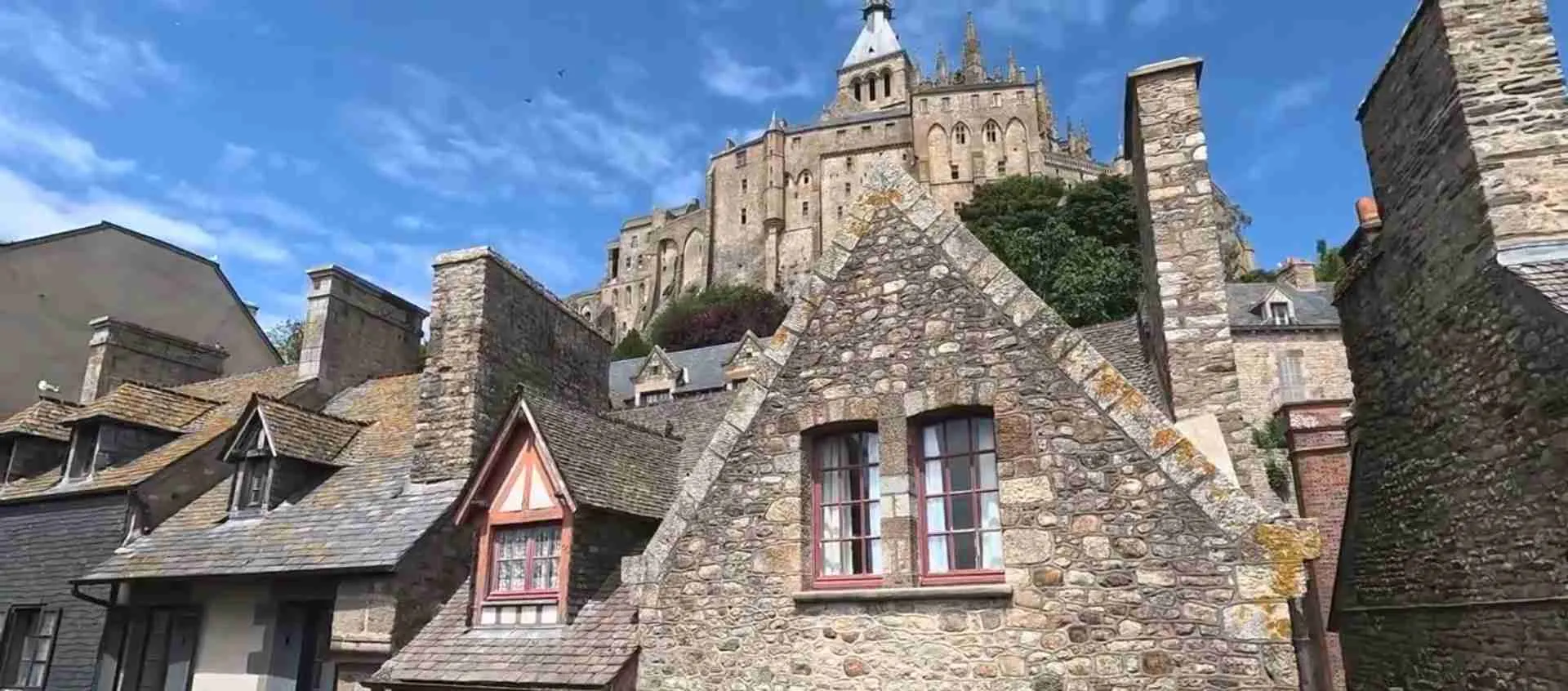
Mont Saint-Michel Photography Guide: Best Shots
Key Takeaways
- Tidal Transformation Photography: Mont Saint-Michel offers completely different photographic opportunities during high and low tides, with the island appearing isolated in vast waters or surrounded by exposed sandbanks creating mirror-like reflections
- Golden Hour Mastery: The abbey’s Gothic spire and medieval architecture create dramatic silhouettes during sunrise (east-facing shots) and warm-toned compositions during sunset (west-facing perspectives)
- Long Exposure Techniques: Use 10-30 second exposures during tidal movements to create ethereal water effects around the island, with ND filters essential for daytime long exposure work
- Aerial Perspective Opportunities: The causeway, surrounding bay, and geometric patterns of the fortified village provide exceptional drone photography compositions from 50-120 meters altitude
- Interior Architecture Challenges: The abbey’s dim Gothic spaces require high ISO settings (1600-3200), wide apertures (f/2.8-f/4), and careful white balance management to capture the interplay of stone architecture and stained glass light
- Seasonal Light Variations: Winter low-angle sunlight creates dramatic shadows across medieval stonework, while summer extended daylight hours allow multiple golden hour sessions and nighttime photography with ambient light
Understanding Mont Saint-Michel’s Photographic Appeal
Mont Saint-Michel stands as one of Europe’s most photographed UNESCO World Heritage sites, presenting photographers with a unique combination of architectural grandeur, dramatic natural setting, and ever-changing environmental conditions. The island abbey’s iconic silhouette rising from Normandy’s tidal flats creates compositions that blend medieval architecture with dynamic coastal landscapes, offering photographic opportunities that range from sweeping landscape panoramas to intimate architectural details.
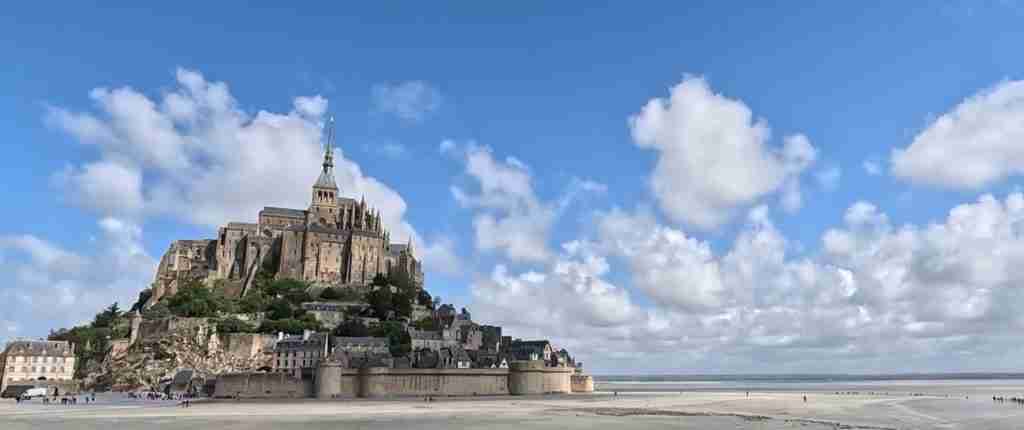
The site’s photographic complexity stems from its tidal environment, with water levels changing up to 14 meters between high and low tides. This dramatic transformation creates fundamentally different compositions throughout each day, as the island alternates between appearing as an isolated fortress surrounded by vast waters and a accessible monument connected to mainland by exposed sandbanks. Understanding these tidal rhythms and their interaction with natural light patterns forms the foundation of successful Mont Saint-Michel photography.
The abbey’s Gothic architecture, crowned by a gilded statue of Saint Michael at 170 meters above sea level, provides a powerful focal point for compositions at all scales. The medieval village clustered beneath the abbey creates layered architectural compositions, with narrow streets, rampart walls, and historic buildings offering rich detail work and texture studies. The surrounding bay’s vast horizontal expanse contrasts dramatically with the vertical thrust of the abbey, creating natural compositional tension that strengthens photographic impact.
Light behavior at Mont Saint-Michel varies significantly throughout the year, with the site’s northern latitude creating extended golden hours during summer months and low-angle winter sunlight that emphasizes architectural relief and creates long shadows across medieval stonework. The bay’s reflective properties during calm conditions double visual elements, creating symmetrical compositions that enhance the island’s ethereal qualities. Atmospheric conditions including morning mists, dramatic storm systems, and clear coastal light each offer distinct photographic moods and technical challenges.
People Also Ask About Mont Saint-Michel Photography
What makes Mont Saint-Michel exceptional for photography?
Mont Saint-Michel offers photographers a rare combination of dramatic architectural subject matter set within a constantly changing natural environment. The island’s tidal setting creates twice-daily transformations that fundamentally alter compositional possibilities, while the abbey’s Gothic architecture provides strong vertical elements that anchor compositions across multiple photographic genres from landscape to architectural photography.
The site’s photographic value extends beyond its iconic long-distance views to include rich opportunities for detail work, interior architecture, texture studies, and environmental portraiture. Medieval stonework provides excellent subjects for macro photography and texture exploration, while the village’s narrow streets create natural frames and leading lines for compositional work. The combination of natural landscape, historic architecture, and dynamic environmental conditions creates photographic complexity that rewards both single-visit documentation and extended photographic projects.
Which photographic equipment performs best at Mont Saint-Michel?
Wide-angle lenses (14-24mm range) excel for capturing the island’s full architectural sweep and its relationship to the surrounding bay, particularly for compositions that emphasize the dramatic scale relationship between the abbey and its environment. Mid-range zooms (24-70mm) provide versatility for architectural details and village documentation, while telephoto lenses (70-200mm or longer) compress perspective to create powerful compositions isolating the abbey against sky or water backgrounds.
A sturdy tripod proves essential for long exposure work during tidal movements, golden hour photography in low light, and interior abbey shots where stability ensures sharpness during longer exposures. Neutral density filters (3-stop and 10-stop) enable long exposure techniques during daylight hours, while graduated ND filters help balance exposure between bright skies and darker foreground elements during golden hour sessions. Circular polarizing filters reduce water surface glare and enhance sky saturation, particularly effective during midday photography when direct sunlight creates strong reflections.
How do tidal conditions affect photographic compositions?
High tide creates isolation compositions where Mont Saint-Michel appears as a fortress rising from vast water expanses, with the abbey’s reflection visible during calm conditions. These compositions emphasize the island’s defensive architecture and create minimalist frames focusing on the relationship between architecture and water. Wave action during high tide adds dynamic elements to foreground areas, while the water’s presence creates natural leading lines directing viewer attention toward the abbey.
Low tide exposes extensive sandbanks that serve as massive reflective surfaces during calm weather, creating mirror-image compositions that double the visual impact of the abbey’s silhouette. The exposed sand creates textural foreground interest with ripple patterns, tide pools, and winding water channels that provide natural compositional elements. Low tide also enables access to shooting positions on the bay floor, offering unique low-angle perspectives that emphasize the island’s height and architectural verticality impossible to achieve from elevated viewpoints.
What technical challenges does abbey interior photography present?
The abbey’s medieval stone construction creates extremely low ambient light levels in many interior spaces, requiring ISO settings between 1600-3200 even with wide apertures. Gothic architecture features high contrast scenes where bright stained glass windows exist alongside deeply shadowed stone vaulting, challenging both exposure metering and dynamic range capture. Successful interior work requires careful exposure bracketing or HDR techniques to preserve detail in both highlight and shadow areas.
Color temperature varies dramatically between different interior spaces, from warm candlelit chapels to cool daylight filtering through stained glass, requiring frequent white balance adjustments or RAW capture for flexible post-processing. The abbey’s restricted areas and visitor flow patterns limit tripod use in many locations, making image stabilization and high ISO performance critical camera features. Architectural distortion from wide-angle lenses requires careful perspective correction in post-processing to maintain vertical lines and architectural authenticity.
Extended multi-day tours – 5+ days
Featured Mont Saint Michel Multi-Day Tour Packages
3 days
Mont Saint Michel 3-Day Discovery Tour
- ✓ Comprehensive Mont Saint Michel experience
- ✓ Expert local guides included
- ✓ All accommodation included
- ✓ Transportation provided
5 days
Mont Saint Michel 5-Day Highlights Experience
- ✓ Comprehensive Mont Saint Michel experience
- ✓ Expert local guides included
- ✓ All accommodation included
- ✓ Transportation provided
7 days
Mont Saint Michel 7-Day Cultural Journey
- ✓ Comprehensive Mont Saint Michel experience
- ✓ Expert local guides included
- ✓ All accommodation included
- ✓ Transportation provided

10 days
Mont Saint Michel 10-Day Complete Adventure
- ✓ Comprehensive Mont Saint Michel experience
- ✓ Expert local guides included
- ✓ All accommodation included
- ✓ Transportation provided
Multi-day tour packages powered by TourRadar. Prices and availability subject to change.
Technical Foundations for Mont Saint-Michel Photography
Successful Mont Saint-Michel photography requires mastering specific technical approaches adapted to the site’s unique environmental and architectural characteristics. Understanding exposure management across extreme dynamic range scenes forms the foundation of quality capture, particularly during golden hour periods when bright skies contrast sharply with shadowed island elements. The abbey’s vertical architecture creates compositional opportunities for both horizontal landscape-oriented frames and vertical portrait-oriented compositions that emphasize the structure’s soaring height.
Camera settings must adapt to rapidly changing light conditions as weather systems move across the bay and tidal states alter reflective surfaces. Matrix or evaluative metering modes provide starting points for exposure determination, but photographers must understand exposure compensation techniques to prevent underexposure of architectural subjects against bright skies or overexposure when capturing dramatic sunset backlighting. Histogram analysis becomes critical for ensuring proper exposure across the full tonal range, with particular attention to preserving highlight detail in sky areas and shadow detail in architectural elements.
Depth of field management balances the need for foreground sharpness in near-distance elements like tide pools or rampart walls with background clarity maintaining the abbey’s architectural detail. Apertures between f/8 and f/11 provide optimal sharpness for landscape compositions incorporating both near and distant elements, while wider apertures (f/2.8-f/5.6) work better for isolating specific architectural details or creating selective focus effects in village street photography. Hyperfocal distance focusing techniques maximize depth of field for wide-angle landscape work, ensuring sharpness from immediate foreground through distant abbey elements.
White balance requires careful attention due to mixed lighting conditions throughout the site. Daylight white balance (5500K) works well for most exterior photography during clear conditions, but overcast weather benefits from cloudy presets (6500K) to add warmth. Golden hour photography requires custom white balance or RAW capture to preserve the warm color cast while maintaining natural sky tones. Interior abbey photography challenges automatic white balance systems with mixed light sources, making RAW format essential for flexible color temperature adjustment during post-processing.
Golden Hour Mastery: Dawn and Dusk Photography
Sunrise photography at Mont Saint-Michel offers east-facing compositions where the sun rises behind the abbey, creating dramatic silhouette opportunities and rim lighting that outlines the Gothic architecture’s intricate details. The period beginning 30 minutes before sunrise provides soft pre-dawn light that illuminates the sky in graduated blue tones while the island remains in shadow, creating high-contrast scenes ideal for capturing the abbey’s architectural form. As sunrise progresses, direct sunlight strikes the abbey’s eastern facades, golden statue, and spire, creating warm highlights that contrast with cool shadowed western elements.
The bay’s eastern exposure means sunrise light reflects off wet sandbanks during low tide periods, creating natural reflectors that fill shadowed areas with soft, warm-toned illumination. This reflected light reduces overall scene contrast and adds dimensional modeling to architectural elements. Photographers position along the causeway’s western side or on elevated viewpoints south of the island to capture sunrise compositions that emphasize the abbey’s silhouette against colorful dawn skies while incorporating foreground elements like tide pools, exposed sand patterns, or the causeway’s modern bridge structure.
Sunset photography creates western-facing opportunities where the abbey appears backlit against warm evening skies, with the sun setting over the Brittany coastline to the island’s west. The period beginning 45 minutes before sunset provides extended golden hour illumination that bathes the abbey’s western facades in warm, directional light while eastern elements remain in cooler shadow tones. This side-lighting emphasizes architectural relief, creating dramatic shadows that reveal the medieval stonework’s texture and depth. Sunset compositions from eastern viewpoints capture the abbey against warm orange and red sky tones, creating classic postcard-style images.
Advanced sunset techniques incorporate the sun as a compositional element, positioning it either behind the abbey’s spire for starburst effects (requiring apertures of f/16 or smaller) or alongside the island to create balanced compositions that include both architectural and celestial subjects. The extended twilight period following sunset continues to provide photographic opportunities as blue hour conditions create subtle graduated sky tones and artificial lighting begins illuminating the abbey’s architecture, creating magical transitional scenes that blend natural and artificial illumination.
Long Exposure Techniques for Tidal Waters
Long exposure photography transforms Mont Saint-Michel’s tidal waters into ethereal compositional elements, smoothing wave action into misty surfaces that create dreamy, otherworldly atmospheres. Exposure times between 10-30 seconds during high tide periods blur incoming waves into smooth gradients that emphasize the island’s stability against the water’s fluid motion. These extended exposures create minimalist compositions where simplified water surfaces direct full attention to the abbey’s architectural details while adding artistic interpretation beyond literal documentation.
Neutral density filters enable long exposure techniques during daylight hours when natural light levels would otherwise create overexposed images during multi-second exposures. A 10-stop ND filter allows 30-second exposures even during bright midday conditions, while 3-6 stop ND filters provide more moderate exposure extensions suitable for golden hour work. Stacking multiple ND filters creates even stronger light reduction, enabling exposure times extending into minutes for extreme smoothing effects, though filter quality becomes critical to prevent color casts and reduced sharpness.
Low tide long exposures capture the movement of water through channels across exposed sandbanks, creating flowing patterns that guide viewer attention toward the island. These compositions benefit from 1-4 second exposures that retain some texture in moving water while creating distinct separation between static sand elements and fluid water movement. The technique emphasizes the bay’s dynamic tidal nature while creating visually interesting foreground elements that add depth and movement to compositions focused on the stationary abbey architecture.
Technical execution of long exposure work requires solid tripod support, remote shutter release to prevent camera movement during exposure, and mirror lock-up or electronic first curtain shutter modes to eliminate vibration. Live view mode enables precise manual focusing and composition refinement without mechanical vibration from mirror movement. Exposure calculation with ND filters requires either manual calculation (adding stops to base exposure) or smartphone apps that compute adjusted settings, as camera metering systems often struggle with extreme ND filter density.
Aerial Perspective and Drone Photography
Drone photography reveals Mont Saint-Michel’s geometric complexity and its relationship to the surrounding landscape from perspectives impossible through ground-based photography. Aerial viewpoints between 50-120 meters altitude capture the abbey’s complete architectural layout, the medieval village’s concentric circular development pattern, and the island’s strategic position within the bay’s tidal zone. These elevated perspectives transform the three-dimensional subject into graphic compositions emphasizing patterns, symmetry, and spatial relationships.
The causeway’s straight line cutting across the bay creates powerful leading line compositions when photographed from above, directing viewer attention directly toward the island while demonstrating the modern access infrastructure’s relationship to the historic site. Aerial perspectives also reveal the parking areas, visitor facilities, and shuttle system that remain invisible from traditional ground-level viewpoints, providing comprehensive documentary coverage of the complete visitor experience and modern site management.
Tidal conditions create dramatically different aerial compositions, with high tide images showing the island’s water isolation and low tide revealing the vast expanse of exposed bay floor surrounding the monument. Sunrise and sunset aerial work captures long shadows extending across the bay, creating dramatic relief that emphasizes the abbey’s height and the landscape’s subtle topographic variations. The warm side-lighting during golden hours adds dimensional modeling to the architecture and creates rich color saturation in both sky and water elements.
Regulatory compliance requires understanding French drone regulations, including registration requirements, no-fly zone restrictions, and altitude limitations. Mont Saint-Michel’s status as a protected UNESCO site creates specific operational constraints, and photographers must verify current regulations before flight operations. Weather conditions including wind speed and rain significantly affect drone stability and image quality, with calm morning conditions generally providing optimal flight safety and image sharpness. Battery management becomes critical for extended sessions, with multiple fully-charged batteries enabling comprehensive aerial coverage during brief optimal light windows.
Interior Architecture Photography
The abbey’s Gothic interior spaces present dramatic photographic opportunities characterized by soaring vaulted ceilings, elaborate stone carving, and strategic manipulation of natural light through architectural design. The church’s nave creates powerful perspective compositions where parallel columns create converging lines directing attention toward the altar and eastern apse. These compositions benefit from wide-angle lenses (14-24mm range) that capture the full vertical sweep of Gothic architecture while maintaining architectural authenticity through careful perspective management.
Natural light enters interior spaces primarily through stained glass windows and high clerestory openings, creating dramatic directional illumination that emphasizes architectural relief and creates pools of colored light across stone floors. Photographing these light effects requires exposing for highlight detail while accepting deep shadows, or employing HDR techniques that capture multiple exposures for later blending. The colored light from stained glass creates unique photographic opportunities during specific times of day when direct sunlight streams through windows, projecting colored patterns onto interior architectural elements.
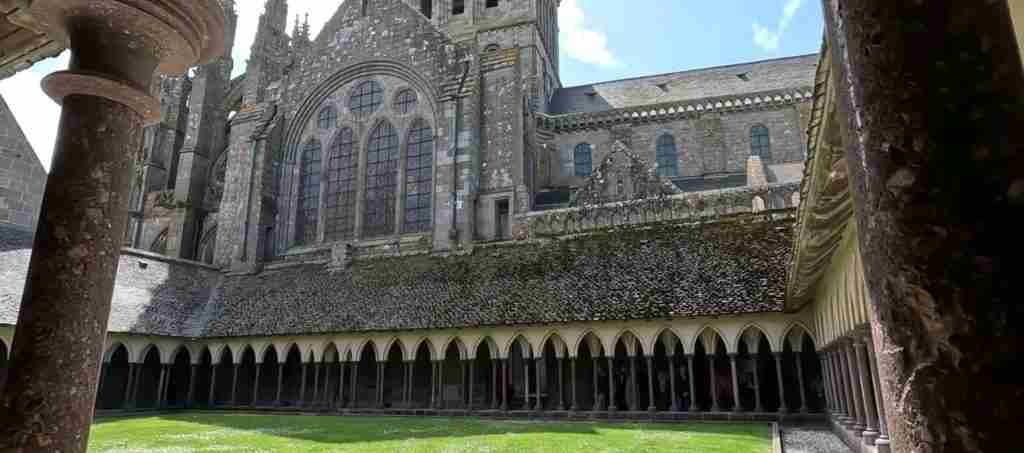
The cloisters present exceptional architectural photography challenges and opportunities, with repetitive Gothic arches creating strong geometric patterns and the open courtyard providing natural illumination that contrasts with shadowed arcade areas. These spaces work well for symmetrical compositions that emphasize architectural rhythm and repetition, with careful framing that highlights the intricate stone carving details in column capitals and arch decorations. The interplay between light and shadow in cloister spaces creates strong tonal contrast that emphasizes depth and three-dimensional form.
Technical considerations for interior work include managing high ISO noise through careful exposure and noise reduction techniques, using wide apertures to maximize available light gathering while maintaining acceptable depth of field for architectural subjects, and employing image stabilization or tripod support for sharp capture during extended exposure times. White balance management proves critical for maintaining neutral color in stone architecture while preserving the warm or cool color casts that contribute to atmospheric mood. Post-processing work focuses on perspective correction to maintain vertical lines, local contrast enhancement to reveal architectural detail, and careful noise reduction that preserves texture in stone surfaces.
Village Street Photography and Architectural Details
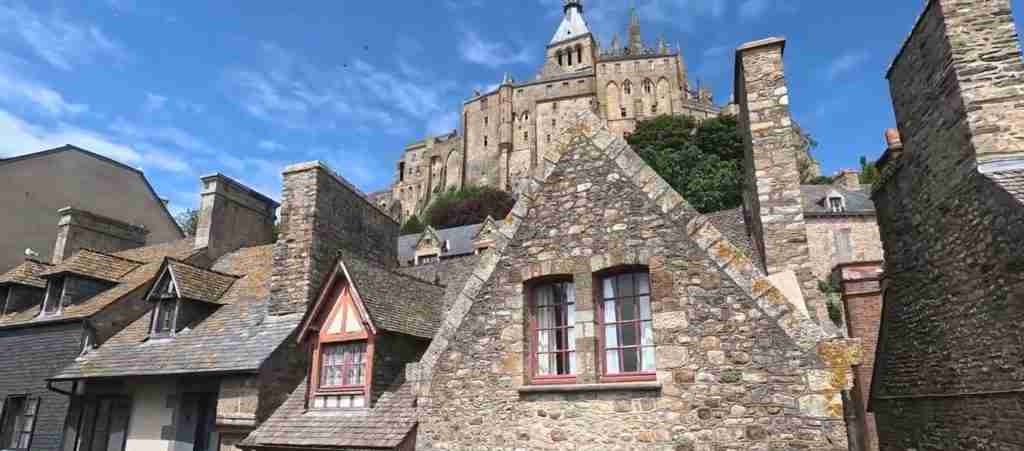
The medieval village clustered beneath the abbey offers intimate photographic opportunities contrasting with the grand architectural compositions of the abbey itself. Narrow cobblestone streets, historic stone buildings, and traditional Norman architecture create atmospheric scenes that convey the settlement’s medieval character. These confined spaces benefit from moderate wide-angle lenses (24-35mm range) that capture environmental context without the extreme distortion of ultra-wide lenses, maintaining architectural authenticity while conveying spatial relationships.
The Grande Rue, the main street ascending through the village, creates natural leading line compositions directing viewer attention upward toward the abbey. Photographing along this route during early morning or late evening hours avoids crowd congestion while capturing warm directional light that emphasizes the street’s texture and architectural details. Side streets and alleyways offer quieter compositions showcasing traditional half-timbered buildings, medieval doorways, and architectural details that illustrate vernacular Norman building traditions predating the abbey’s construction.
Architectural detail photography focuses on specific elements that reveal construction techniques, decorative arts, and material qualities. Stone textures, wooden beam joinery, wrought iron hardware, and weathered surfaces provide rich subjects for close-up documentation. Macro lenses or close-focusing standard lenses enable detailed capture that reveals craftsmanship and material aging processes. These detail studies complement wider architectural documentation by providing intimate views that convey human scale and artisan skill.
The village’s rampart walls create elevated viewpoints for photographing both the abbey complex and the surrounding bay landscape. These defensive structures provide stable elevated platforms for tripod work and enable compositions that frame the abbey through medieval archways or incorporate rampart architecture as foreground elements. The walls’ stone construction and weathered surfaces also serve as excellent subjects for texture and material studies, particularly during side-lit conditions that emphasize surface relief and material character.
Seasonal Light and Weather Variations
Winter photography at Mont Saint-Michel benefits from low-angle sunlight that creates long shadows and dramatic relief across architectural surfaces throughout the day. The sun’s reduced altitude means golden hour conditions extend for longer periods, providing ample time for composition refinement and multiple shooting opportunities. Winter storms create dramatic atmospheric conditions with fast-moving cloud systems, shafts of sunlight breaking through dark clouds, and powerful wave action during high tides that adds dynamic foreground elements to compositions.
Clear winter days produce sharp, high-contrast light that emphasizes architectural detail and creates deep blue skies that contrast powerfully with the abbey’s golden stone. These conditions favor midday photography that would create harsh lighting during summer months, as the winter sun’s lower angle maintains acceptable contrast even during noon hours. Cold weather reduces atmospheric haze, increasing visibility for long-distance views and enhancing clarity in wide-angle landscape compositions that incorporate distant coastal features.
Summer photography features extended daylight hours that provide multiple golden hour sessions and enable nighttime photography using ambient twilight illumination. The sun’s higher altitude creates overhead lighting during midday that flattens architectural relief and creates harsh shadows, making early morning and evening sessions most productive for quality architectural documentation. Summer also brings increased visitor traffic that complicates photography requiring empty scenes or minimized human presence, necessitating very early morning sessions before visitor arrivals.
Spring and autumn shoulder seasons offer optimal combinations of favorable weather, moderate visitor levels, and varied lighting conditions. Spring weather patterns create dramatic cloud formations and occasional mist conditions that add atmospheric mystery to compositions, while autumn light quality combines summer’s clarity with lower sun angles that enhance architectural modeling. These transitional seasons also feature rapidly changing weather that creates varied photographic opportunities within single days, from dramatic storm photography to clear sunset sessions.
Night Photography and Artificial Illumination
Mont Saint-Michel’s nighttime illumination creates dramatically different photographic opportunities compared to daylight sessions, with artificial lighting emphasizing specific architectural features while creating strong contrasts between illuminated elements and dark shadows. The abbey’s uplighting system highlights the Gothic architecture’s vertical lines and creates glowing presence visible across the bay, while village lighting creates warm tones that contrast with cooler blue twilight tones during blue hour periods.
Blue hour photography, occurring 20-40 minutes after sunset, provides balanced exposure between remaining natural light in the sky and artificial illumination of the architecture. This brief window creates magical transitional scenes where deep blue skies remain visible while architectural lighting reaches optimal intensity, enabling single exposures that capture both sky detail and illuminated building surfaces without extreme contrast. These compositions create atmospheric interpretations emphasizing the abbey’s mystical qualities and spiritual significance.
Full darkness photography requires longer exposures ranging from 15-30 seconds to gather sufficient light, necessitating sturdy tripod support and careful composition. The abbey’s illumination creates strong focal points against dark skies, enabling minimalist compositions that isolate the architecture against simplified backgrounds. Water reflections during calm high tide periods double the illuminated architecture’s visual impact, creating symmetrical compositions with enhanced light presence and dramatic visual weight.
Light painting techniques enable creative enhancement of foreground elements during long exposures, using handheld flashlights or LED panels to add selective illumination to tide pools, rock formations, or architectural elements. This approach creates dimensional modeling in areas that would otherwise remain completely black, adding depth and interest to compositions while maintaining the natural appearance of artificially lit abbey architecture. Advanced techniques incorporate multiple exposures with different light painting positions, later combined in post-processing for comprehensive foreground illumination.
Composition Strategies and Creative Approaches
Foreground interest plays critical roles in successful Mont Saint-Michel compositions, preventing empty expanses of sand or water from creating dead space in landscape frames. Tide pools, ripple patterns in wet sand, exposed rocks, seaweed formations, and wooden posts all serve as effective foreground elements that create depth and lead viewer attention toward the island. These elements work best when positioned in the lower third of the frame, creating layered compositions that guide the eye progressively from immediate foreground through middle distance to the abbey background.
Reflection compositions during calm water conditions create symmetrical frames that double architectural elements and enhance visual impact. These require careful positioning to align the island’s reflection with its actual structure, creating perfect mirror images that emphasize the scene’s tranquility and balanced composition. Slight ripples in water surfaces create broken reflections that add texture and visual interest while maintaining recognizable reflection patterns, offering variations between perfect mirror images and more abstract interpretations.
Silhouette photography against bright skies creates graphic compositions emphasizing the abbey’s distinctive profile and architectural form. These high-contrast images work particularly well during sunrise and sunset when colorful skies provide dramatic backgrounds for black architectural silhouettes. Exposure management for silhouettes requires metering from bright sky areas while accepting complete shadow detail loss in architectural elements, creating bold graphic images with powerful visual impact and immediately recognizable subject matter.
Minimalist approaches isolate the abbey against simplified backgrounds of sky, water, or mist, removing contextual elements to create focused attention on architectural form and spiritual presence. These compositions benefit from telephoto compression that simplifies spatial relationships and removes distracting elements, creating meditative images that emphasize the monument’s iconic status and timeless qualities. Minimalist work requires patience for optimal atmospheric conditions and careful composition that balances subject placement with negative space.
Post-Processing Workflow and Enhancement Techniques
RAW format capture provides maximum flexibility for post-processing Mont Saint-Michel images, enabling significant adjustments to exposure, white balance, and color rendition without image quality degradation. Initial processing steps focus on global adjustments including exposure optimization, contrast enhancement, and white balance correction to establish the image’s overall tonal foundation. Highlight recovery techniques restore detail in bright sky areas while shadow lifting reveals architectural detail in darker building elements, expanding the captured dynamic range beyond what single exposures can achieve.
Local adjustment tools enable selective enhancement of specific image areas, brightening foreground elements while maintaining proper sky exposure, or adding contrast to architectural details while preserving tonal smoothness in water surfaces. Graduated filters recreate the effect of physical graduated ND filters, darkening bright skies while leaving foreground elements unaffected. Radial filters create selective vignetting that draws attention to the abbey while subtly darkening peripheral areas, strengthening compositional focus without obvious manipulation.
Perspective correction removes wide-angle lens distortion and corrects converging vertical lines that create the appearance of buildings leaning backward. These adjustments maintain architectural authenticity and create professional-quality results essential for serious architectural photography. However, some converging lines may be intentionally retained for dramatic effect in certain compositions, with the decision depending on creative intent and the image’s specific use.
Color grading establishes mood and atmospheric qualities, warming golden hour images to emphasize the light’s natural warmth or cooling blue hour scenes to create nocturnal mood. Split toning adds color to highlights and shadows independently, creating sophisticated color relationships that enhance tonal separation and atmospheric depth. Saturation adjustments intensify sky colors and architectural stone tones, though restraint prevents oversaturated results that appear artificial. Luminance adjustments modify brightness of specific colors, enabling sky darkening through blue channel luminance reduction while maintaining natural color saturation.
Equipment Recommendations and Technical Preparation
Camera body selection prioritizes dynamic range performance for handling the extreme contrast between bright skies and shadowed architectural elements, high ISO capability for low-light interior work and blue hour photography, and weather sealing for protection against coastal moisture and occasional rain. Full-frame sensors provide optimal performance across these requirements, though modern APS-C cameras deliver excellent results with appropriate lens selections and shooting techniques adapted to their specific characteristics.
Lens selection balances coverage across wide-angle landscape work, standard range architectural documentation, and telephoto compression effects. A 14-24mm ultra-wide lens captures the full sweep of bay landscapes and abbey architecture in single frames, while a 24-70mm standard zoom provides versatility for both architectural details and general documentation. A 70-200mm telephoto enables compressed perspective compositions and isolates specific architectural elements against simplified backgrounds. Prime lenses in the 35mm and 50mm range offer maximum aperture performance for low-light work and selective focus effects.
Support equipment includes a sturdy tripod capable of stable operation in sandy tidal environments and coastal winds, with spiked feet for soft ground and rapid leg adjustment mechanisms for working on uneven surfaces. A remote shutter release eliminates camera shake during long exposures, while an L-bracket enables rapid switching between horizontal and vertical orientations without repositioning the tripod head. A sturdy camera bag protects equipment during outdoor work and provides organized storage for multiple lenses, filters, and accessories.
Filter systems include circular polarizers for managing water reflections and sky saturation, neutral density filters for long exposure work, and graduated ND filters for balancing sky and foreground exposure during golden hour sessions. A complete ND filter set includes both moderate (3-6 stop) and strong (10 stop) options, enabling creative control across varied lighting conditions. Quality filters maintain image sharpness and color accuracy, justifying investment in professional filter systems over budget alternatives that compromise optical performance.
Conservation Through Photography
Documentary photography serves important conservation functions by recording Mont Saint-Michel’s current condition, architectural details, and material states for future reference and restoration planning. Systematic documentation of specific architectural elements creates visual archives that support conservation decision-making and provide before-and-after comparisons documenting restoration work effectiveness. These images contribute to broader heritage preservation efforts by creating permanent visual records of architectural details that may deteriorate or require intervention.
Environmental change documentation captures the evolving relationship between the island and its bay environment, recording sediment patterns, tidal flow changes, and vegetation development that affect the site’s setting and long-term stability. Multi-year photographic projects from consistent viewpoints create time-lapse sequences revealing environmental changes otherwise too gradual for casual observation. These visual records support scientific understanding of coastal processes and inform management decisions regarding the site’s environmental protection.
Public awareness photography creates compelling images that communicate Mont Saint-Michel’s cultural significance and conservation needs to broad audiences. Powerful visual storytelling through photography generates public support for preservation efforts and helps justify conservation funding by demonstrating the site’s exceptional universal value. Educational photography illustrates architectural features, construction techniques, and artistic achievements for museum displays, publications, and digital platforms that advance public understanding of cultural heritage.
FAQ: Mont Saint-Michel Photography
Do I need special permits for photography at Mont Saint-Michel?
Standard personal photography requires no permits for general access areas of the island and bay. Commercial photography requiring extensive equipment, model releases, or disruption to visitor flow requires advance permission from site management. Drone operations require compliance with French aviation regulations and specific authorization for flights near protected heritage sites.
What time of day offers the best light for photography?
Golden hours around sunrise and sunset provide optimal natural lighting, with warm directional illumination that emphasizes architectural relief and creates dramatic skies. Blue hour periods following sunset create atmospheric twilight scenes with balanced natural and artificial lighting. Midday light works best during winter months when low sun angles maintain acceptable contrast, while summer midday produces harsh overhead lighting better suited for interior abbey photography.
How do I capture sharp images in the abbey’s dim interior spaces?
Use high ISO settings (1600-3200) combined with wide apertures (f/2.8-f/4) to gather maximum available light while maintaining acceptable shutter speeds for handholding. Image stabilization or tripod support enables longer exposures for optimal image quality at lower ISO settings. Expose for highlights in stained glass windows and use shadow recovery in post-processing to reveal detail in darker stone elements.
What are the best viewpoints for photographing Mont Saint-Michel?
The causeway provides classic frontal views showing the island’s complete profile, while viewpoints south of the island create side-lit compositions during sunrise and sunset. The bay floor during low tide enables unique low-angle perspectives emphasizing the abbey’s height. Elevated positions on the rampart walls offer views combining abbey architecture with bay landscapes.
How do tides affect my photography opportunities?
High tide creates water isolation compositions and enables reflection photography during calm conditions, while low tide exposes vast sandbanks providing textured foregrounds and access to unique shooting positions on the bay floor. Tidal schedules vary daily, so check local tide tables to plan specific photographic approaches aligned with desired water levels and timing relative to golden hour periods.
Can I use tripods throughout the site?
Tripods operate freely in exterior areas including the causeway, bay, and rampart viewpoints. Interior abbey spaces restrict or prohibit tripod use during visitor hours due to space constraints and crowd management, though early morning access or special permissions may enable tripod work in select interior locations. Always respect visitor flow and safety requirements when setting up equipment.
What weather conditions create the most dramatic photographs?
Partially cloudy skies create dynamic lighting with intermittent sunlight, while storm conditions produce dramatic wave action and atmospheric cloud formations. Morning mist creates ethereal atmospheric effects, and clear conditions provide optimal clarity for long-distance views and star photography. Each weather type offers distinct photographic opportunities requiring adapted technical approaches and creative interpretation.
How do I protect my camera equipment from coastal conditions?
Use weather-sealed camera bodies and lenses when possible, and protect equipment with rain covers during precipitation. Keep gear elevated above sandy surfaces to prevent sand infiltration into mechanical components, and regularly clean equipment to remove salt spray residue. Store equipment in sealed bags with desiccant packets when not actively shooting to manage humidity exposure.
What focal length works best for landscape compositions?
Wide-angle lenses (14-24mm) capture the expansive bay and full island architecture in single frames, while mid-range lenses (24-50mm) provide balanced perspectives maintaining natural spatial relationships. Telephoto lenses (70-200mm or longer) compress distance and isolate specific architectural elements against simplified backgrounds, creating varied interpretations from the same general viewpoint.
Should I shoot in RAW or JPEG format?
RAW format provides maximum post-processing flexibility essential for challenging lighting conditions including high contrast scenes, mixed color temperatures, and low-light situations. RAW files preserve all sensor data enabling significant exposure and color adjustments without quality loss, critical for optimizing Mont Saint-Michel’s complex lighting scenarios. JPEG format works for straightforward lighting conditions when in-camera processing produces acceptable results without extensive editing requirements.